Galactic Guide: Croshaw System
Spectrum Dispatch Undefined Galactic GuideContent
The jump that changed the course of Humanity.
In 2271, after ten years investigating the space anomaly in Sol System known as the Neso Triangle, scientist and explorer Nick Croshaw became the first known Human to traverse a jump point and enter a new star system. As a tribute to his monumental accomplishment, the system he discovered would come to bear his name.
The aftermath was a different matter. While Humans had figured out how to reach the stars, they were still struggling with how to inhabit them. It was a contentious hundred years between Croshaw’s discovery and when a planet in the system was terraformed. Lacking an organization to oversee expansion into the system created a plethora of issues. At first, a number of private and state-owned terraforming companies raced into Croshaw to lay claim to its planets. None of them succeeded. Each company had failed to calculate exactly how expensive it would be to continually transport supplies to maintain their operations. It was obvious that a cohesive Human response was needed, but instead of focusing on a solution, countries and corporations squabbled over how land rights and mineral resources should be divided once terraforming was complete.
At the same time, there was still a good deal of fear and danger around inter-system travel. Many people who entered the jump point between Croshaw and Sol vanished. With jump drive technology still in its infancy, ships had to be manually piloted between the two systems. Out of this, a new breed of pilot was born. Nicknamed “Jumpers,” these pilots sold themselves as the only reliable way to get between the two systems, and charged handsomely for their services. It was only after flight assisted navdrives were able to utilize the recorded flight paths through the jump points that “Jumpers” changed their focus to discovering new jump points, making them the forefathers of the “NavJumpers” that still exist today.
Amidst all the chaos and confusion, a committee appointed by the World Summit, a gathering of Earth’s leaders, finally took control of expansion into the Croshaw System. The committee organized resources from various countries and companies to tackle the terraforming of Croshaw II and Croshaw III, established a lottery to grant land and mineral rights once the process was complete, and most importantly, figured out how to pay for it all.
The committee’s masterstroke was the Freeman Act, a piece of legislation that helped fund the terraforming of Croshaw while also populating it through the sale of one-way tickets. Not only were people buying passage aboard government-subsidized shuttles, they were guaranteed a place to live on the new planet. Sales were slow at first. While the public had acclimated to the notion of living on another planet, the thought of living in a new system entirely proved to be a truly scary concept. Intensive marketing initiatives and firsthand accounts from the developing system eased their fears and gradually got the public excited at the prospect. The influx of ticket sales kept the committee’s terraforming fund solvent and created an entire class of people who counted down the days until they could start a new life as Humanity’s first interstellar settlers.
The committee’s successful stewardship of Croshaw convinced Humanity’s leaders that a cohesive voice and vision was needed to aid our ascension out to the stars. In 2380, the World Summit ended with a historic announcement that created the United Nations of Earth (UNE). For the first time, we stopped thinking of ourselves as many and started seeing ourselves as one.
Croshaw I
This smog planet is known for its colorful yellow and orange clouds. What makes this tiny planet beautiful also makes it deadly, since the dense atmosphere is highly corrosive and toxic.
Croshaw II: Angeli
Angeli’s natural beauty is as much of a marvel today as it was when it was first terraformed. The planet’s biosphere is reminiscent of Earth’s, featuring massive bodies of water and large expanses of land dotted by mountain ranges.
Angeli’s natural beauty does not come without its dangers. Geologists continue to classify the planet as a severe seismic hazard. Strict engineering codes require buildings on the planet to have extremely thick foundations and tuned mass dampers to counteract earthquakes. Even if most of the native population is apathetic about the big one, most scientists believe it is not a question of if a large earthquake will happen, but when. Due to this seismic instability, mining is severely restricted on Angeli.
Connoisseurs of fine food and spirits consider Angeli a must-stop destination. The eclectic mix of Earth’s cultures and classes during the planet’s early days created a unique cuisine. Angeli’s trademark dish is boumbo, a thick stew usually featuring either meat or seafood.
Considered a sign of true luxury, Angeli produces some of the ’verse’s most expensive whiskeys. Distilled and barreled on Earth, they are then sent to Angeli to complete the aging process. Bottles of Angeli whiskey sold on Earth are stamped with a special ‘round trip’ label signifying its long journey. Aficionados claim that Angeli’s light, temperature and air gives its whiskey a distinct and complex taste profile. Special facilities have been built just to store the barrels and best control their exposure to those elements.
Croshaw III: Vann
Vann is far from an ideal planet for Human habitation. Located on the outer edge of Croshaw’s habitable zone, the planet’s arctic temperatures make it less than optimal for Human habitation. Yet since mining was restricted on Angeli, terraforming Vann became essential to create a source of commodities in the system.
As the Empire expanded, many residents left Vann for greener pastures. Jele City remains the planet’s most populated city, though its most prosperous days are considered long past. All things considered, it still does brisk business as an affordable tourist destination for winter sport enthusiasts.
Vann’s night skies feature a stunning curtain of colorful aurora, the result of strong solar activity reacting with the planet’s magnetosphere. Inspired by the phenomenon, a burgeoning artistic culture has made a name for itself on Vann. Many artists have set up studios in large, long-abandoned buildings. Some bought the real estate cheap, while others are simply squatting. The self-proclaimed “SpartVann” style features a minimalist aesthetic and prominent use of colors displayed in the aurora.
Croshaw IV
Planetary analysis indicates that Croshaw IV is a super-Earth that lost its atmosphere. After most of its resources were exhausted, locals stopped using the planet’s colloquial name and it subsequently faded from memory — a good indicator of exactly how much Croshaw IV has left to offer.
Icarus and Daedalus Clusters
Current scientific research suggests that the Icarus and Daedalus Clusters are debris left over from the system’s early protoplanetary disk. Located in two lagrange points of Croshaw IV, the clusters are some of the Empire’s oldest mining fields. Centuries of prospecting mean there is little of value left here.
Travel Warning
Before setting out to enjoy Vann’s beautiful auroras, please make sure to wear gear that is safety-rated for extreme cold. With nighttime temperatures regularly reaching -50° Celsius, frostbite is the least of your concerns.
Heard in the Wind
“Though we might not know exactly what makes Angeli-aged whiskeys stand out, it is easy to distinguish what makes them so special. Their rich and dignified flavors excite the palette but never overpower it. It is almost as if their flavors were granted a crisp subtlety with age that has yet to be achieved anywhere else in the ’verse.”
– David Kurtz, A Beginner’s Guide to Angeli-Aged Whiskey, 2912
“What we do here will shape the future of interstellar expansion. Let’s make sure we get this right.”
– Clarence Ludwig, Chair of the Croshaw Expansion Committee, 06.23.2281
Der Sprung, der den Kurs der Menschheit verändert hat.
Im Jahr 2271, nach zehn Jahren der Erforschung der Weltraumanomalie im Sol-System, bekannt als Neso-Dreieck, wurde der Wissenschaftler und Forscher Nick Croshaw der erste bekannte Mensch, der einen Sprungbrett überquerte und in ein neues Sternensystem eintrat. Als Hommage an seine monumentale Leistung würde das von ihm entdeckte System seinen Namen tragen.
Die Folgen waren eine andere Sache. Während die Menschen herausgefunden hatten, wie man die Sterne erreicht, kämpften sie immer noch damit, wie man sie bewohnt. Es waren hundert Jahre zwischen Croshaws Entdeckung und der Terraform eines Planeten im System. Das Fehlen einer Organisation, die die Expansion in das System überwacht, führte zu einer Vielzahl von Problemen. Zuerst rasten eine Reihe von privaten und staatlichen Terrassenbauunternehmen nach Croshaw, um ihre Planeten zu beanspruchen. Keiner von ihnen war erfolgreich. Jedes Unternehmen hatte nicht genau berechnet, wie teuer es sein würde, kontinuierlich Lieferungen zu transportieren, um seinen Betrieb aufrechtzuerhalten. Es war offensichtlich, dass eine kohärente menschliche Antwort erforderlich war, aber anstatt sich auf eine Lösung zu konzentrieren, stritten Länder und Unternehmen darüber, wie Landrechte und Bodenschätze nach Abschluss der Terraform aufgeteilt werden sollten.
Gleichzeitig gab es aber auch noch viel Angst und Gefahr rund um das Reisen zwischen den Systemen. Viele Leute, die den Sprungpunkt zwischen Croshaw und Sol erreichten, verschwanden. Da die Sprungantriebstechnik noch in den Kinderschuhen steckte, mussten die Schiffe zwischen den beiden Systemen manuell gesteuert werden. Daraus entstand eine neue Art von Piloten. Diese Piloten mit dem Spitznamen "Jumper" verkauften sich als einziger zuverlässiger Weg, um zwischen den beiden Systemen zu gelangen, und zogen für ihre Dienste eine hohe Gebühr auf. Erst nachdem flugunterstützte Navdrives die aufgezeichneten Flugwege durch die Sprungbretter nutzen konnten, änderten "Jumper" ihren Fokus auf die Entdeckung neuer Sprungbretter und wurden so zu den Vorfahren der noch heute existierenden "NavJumper".
Inmitten all des Chaos und der Verwirrung übernahm ein Komitee, das vom Weltgipfel, einem Treffen der führenden Politiker der Erde, eingesetzt wurde, schließlich die Kontrolle über die Expansion in das Croshaw-System. Das Komitee organisierte Ressourcen aus verschiedenen Ländern und Unternehmen, um das Terraforming von Croshaw II und Croshaw III anzugehen, richtete eine Lotterie ein, um nach Abschluss des Prozesses Land- und Mineralrechte zu gewähren, und vor allem, um herauszufinden, wie man alles bezahlen kann.
Die Meisterleistung des Komitees war der Freeman Act, ein Gesetz, das dazu beitrug, das Terraforming von Croshaw zu finanzieren und es gleichzeitig durch den Verkauf von One-Way-Tickets zu füllen. Die Menschen kauften nicht nur die Passage an Bord von staatlich subventionierten Shuttles, sondern erhielten auch einen Platz zum Leben auf dem neuen Planeten. Die Umsätze waren zunächst verhalten. Während sich die Öffentlichkeit an die Vorstellung gewöhnt hatte, auf einem anderen Planeten zu leben, erwies sich der Gedanke, in einem neuen System zu leben, als ein wirklich beängstigendes Konzept. Intensive Marketinginitiativen und Erfahrungsberichte aus erster Hand aus dem Entwicklungssystem bauten ihre Ängste ab und sorgten nach und nach für Begeisterung bei der Öffentlichkeit. Der Zufluss von Ticketverkäufen hielt den Terraforming-Fonds des Komitees zahlungsfähig und schuf eine ganze Gruppe von Menschen, die die Tage bis zum Beginn eines neuen Lebens als die ersten interstellaren Siedler der Menschheit mitzählten.
Die erfolgreiche Leitung von Croshaw durch das Komitee überzeugte die Führer der Menschheit davon, dass eine kohärente Stimme und Vision erforderlich war, um unseren Aufstieg zu den Sternen zu unterstützen. Im Jahr 2380 endete der Weltgipfel mit einer historischen Erklärung, mit der die Vereinten Nationen der Erde (UNE) gegründet wurden. Zum ersten Mal hörten wir auf, uns selbst als so viele zu betrachten und begannen, uns als eine Einheit zu sehen.
Croshaw I
Dieser Smogplanet ist bekannt für seine bunten gelben und orangefarbenen Wolken. Was diesen winzigen Planeten schön macht, macht ihn auch tödlich, denn die dichte Atmosphäre ist hochkorrosiv und giftig.
Croshaw II: Angeli
Die natürliche Schönheit von Angeli ist heute so wunderbar wie damals, als sie zum ersten Mal terrassiert wurde. Die Biosphäre des Planeten erinnert an die der Erde, mit riesigen Wassermassen und großen Landflächen, die von Bergketten gesäumt sind.
Angelis natürliche Schönheit ist nicht ohne ihre Gefahren. Geologen stufen den Planeten weiterhin als schwere seismische Gefahr ein. Strenge Bauvorschriften verlangen, dass Gebäude auf dem Planeten über extrem dicke Fundamente und abgestimmte Massendämpfer verfügen, um Erdbeben entgegenzuwirken. Auch wenn die meisten der einheimischen Bevölkerung gegenüber der großen apathisch sind, glauben die meisten Wissenschaftler, dass es nicht darum geht, ob ein großes Erdbeben stattfindet, sondern wann. Aufgrund dieser seismischen Instabilität ist der Abbau auf Angeli stark eingeschränkt.
Kenner von Feinkost und Spirituosen halten Angeli für ein Muss. Die eklektische Mischung der Kulturen und Klassen der Erde in den frühen Tagen des Planeten schuf eine einzigartige Küche. Angeli's Markenzeichen ist Boumbo, ein dicker Eintopf, der normalerweise entweder Fleisch oder Meeresfrüchte enthält.
Angeli gilt als Zeichen für wahren Luxus und produziert einige der teuersten Whiskys der Strophe. Auf der Erde destilliert und in Fässern gelagert, werden sie dann zu Angeli geschickt, um den Alterungsprozess abzuschließen. Flaschen mit Angeli-Whiskey, die auf der Erde verkauft werden, sind mit einem speziellen "Round Trip"-Label versehen, das die lange Reise symbolisiert. Aficionados behaupten, dass das Licht, die Temperatur und die Luft von Angeli dem Whiskey ein ausgeprägtes und komplexes Geschmacksprofil verleihen. Spezielle Einrichtungen wurden nur gebaut, um die Fässer zu lagern und ihre Exposition gegenüber diesen Elementen bestmöglich zu kontrollieren.
Croshaw III: Vann
Vann ist weit entfernt von einem idealen Planeten für die menschliche Lebensweise. Am äußeren Rand der bewohnbaren Zone von Croshaw gelegen, ist der Planet aufgrund der arktischen Temperaturen nicht optimal für die menschliche Lebensweise. Doch da der Abbau auf Angeli beschränkt war, wurde das Terraforming Vann unerlässlich, um eine Quelle für Rohstoffe im System zu schaffen.
Als das Imperium expandierte, verließen viele Einwohner Vann, um grünere Weiden zu erreichen. Jele City ist nach wie vor die bevölkerungsreichste Stadt des Planeten, obwohl ihre wohlhabendsten Tage als längst vorbei gelten. Alles in allem ist es immer noch ein reges Geschäft als erschwingliches Reiseziel für Wintersportler.
Vanns Nachthimmel zeichnet sich durch einen atemberaubenden Vorhang aus farbenfroher Aurora aus, das Ergebnis einer starken Sonnenaktivität, die mit der Magnetosphäre des Planeten reagiert. Inspiriert von diesem Phänomen hat sich eine aufkeimende Kunstkultur auf Vann einen Namen gemacht. Viele Künstler haben sich Studios in großen, längst verlassenen Gebäuden eingerichtet. Einige kauften die Immobilie billig, während andere einfach nur hocken. Der selbsternannte "SpartVann"-Stil zeichnet sich durch eine minimalistische Ästhetik und die markante Verwendung von Farben in der Aurora aus.
Croshaw IV
Die Planetenanalyse zeigt, dass Croshaw IV eine Super-Erde ist, die ihre Atmosphäre verloren hat. Nachdem die meisten Ressourcen erschöpft waren, hörten die Einheimischen auf, den umgangssprachlichen Namen des Planeten zu verwenden, und er verschwand anschließend aus dem Gedächtnis - ein guter Indikator dafür, wie viel Croshaw IV noch zu bieten hat.
Ikarus und Daedalus Cluster
Aktuelle wissenschaftliche Untersuchungen deuten darauf hin, dass die Ikarus- und Daedalus-Cluster Trümmer sind, die von der frühen protoplanetarischen Scheibe des Systems übrig geblieben sind. Die Cluster befinden sich an zwei Lagrange-Punkten von Croshaw IV und gehören zu den ältesten Minenfeldern des Imperiums. Jahrhunderte der Prospektion bedeuten, dass hier wenig Wert mehr vorhanden ist.
Reisewarnung
Bevor Sie sich auf den Weg machen, um die schönen Auren von Vann zu genießen, sollten Sie unbedingt eine Ausrüstung tragen, die für extreme Kälte geeignet ist. Bei Nachttemperaturen von regelmäßig -50° Celsius ist Frostbeulen das geringste Problem.
Im Wind gehört
"Obwohl wir vielleicht nicht genau wissen, was Whiskeys im Alter von Angeli auszeichnet, ist es leicht zu unterscheiden, was sie so besonders macht. Ihre reichen und würdevollen Aromen begeistern die Palette, überwältigen sie aber nie. Es ist fast so, als ob ihre Aromen mit dem Alter eine knackige Subtilität erhalten würden, die in dem Vers noch nirgendwo sonst erreicht werden konnte.
- David Kurtz, A Beginner's Guide to Angeli-Aged Whiskey, 2912
"Was wir hier tun, wird die Zukunft der interstellaren Expansion prägen. Lasst uns sicherstellen, dass wir das richtig machen."
- Clarence Ludwig, Vorsitzende des Croshaw Expansion Committee, 06.23.2281
The jump that changed the course of Humanity.
In 2271, after ten years investigating the space anomaly in Sol System known as the Neso Triangle, scientist and explorer Nick Croshaw became the first known Human to traverse a jump point and enter a new star system. As a tribute to his monumental accomplishment, the system he discovered would come to bear his name.
The aftermath was a different matter. While Humans had figured out how to reach the stars, they were still struggling with how to inhabit them. It was a contentious hundred years between Croshaw’s discovery and when a planet in the system was terraformed. Lacking an organization to oversee expansion into the system created a plethora of issues. At first, a number of private and state-owned terraforming companies raced into Croshaw to lay claim to its planets. None of them succeeded. Each company had failed to calculate exactly how expensive it would be to continually transport supplies to maintain their operations. It was obvious that a cohesive Human response was needed, but instead of focusing on a solution, countries and corporations squabbled over how land rights and mineral resources should be divided once terraforming was complete.
At the same time, there was still a good deal of fear and danger around inter-system travel. Many people who entered the jump point between Croshaw and Sol vanished. With jump drive technology still in its infancy, ships had to be manually piloted between the two systems. Out of this, a new breed of pilot was born. Nicknamed “Jumpers,” these pilots sold themselves as the only reliable way to get between the two systems, and charged handsomely for their services. It was only after flight assisted navdrives were able to utilize the recorded flight paths through the jump points that “Jumpers” changed their focus to discovering new jump points, making them the forefathers of the “NavJumpers” that still exist today.
Amidst all the chaos and confusion, a committee appointed by the World Summit, a gathering of Earth’s leaders, finally took control of expansion into the Croshaw System. The committee organized resources from various countries and companies to tackle the terraforming of Croshaw II and Croshaw III, established a lottery to grant land and mineral rights once the process was complete, and most importantly, figured out how to pay for it all.
The committee’s masterstroke was the Freeman Act, a piece of legislation that helped fund the terraforming of Croshaw while also populating it through the sale of one-way tickets. Not only were people buying passage aboard government-subsidized shuttles, they were guaranteed a place to live on the new planet. Sales were slow at first. While the public had acclimated to the notion of living on another planet, the thought of living in a new system entirely proved to be a truly scary concept. Intensive marketing initiatives and firsthand accounts from the developing system eased their fears and gradually got the public excited at the prospect. The influx of ticket sales kept the committee’s terraforming fund solvent and created an entire class of people who counted down the days until they could start a new life as Humanity’s first interstellar settlers.
The committee’s successful stewardship of Croshaw convinced Humanity’s leaders that a cohesive voice and vision was needed to aid our ascension out to the stars. In 2380, the World Summit ended with a historic announcement that created the United Nations of Earth (UNE). For the first time, we stopped thinking of ourselves as many and started seeing ourselves as one.
Croshaw I
This smog planet is known for its colorful yellow and orange clouds. What makes this tiny planet beautiful also makes it deadly, since the dense atmosphere is highly corrosive and toxic.
Croshaw II: Angeli
Angeli’s natural beauty is as much of a marvel today as it was when it was first terraformed. The planet’s biosphere is reminiscent of Earth’s, featuring massive bodies of water and large expanses of land dotted by mountain ranges.
Angeli’s natural beauty does not come without its dangers. Geologists continue to classify the planet as a severe seismic hazard. Strict engineering codes require buildings on the planet to have extremely thick foundations and tuned mass dampers to counteract earthquakes. Even if most of the native population is apathetic about the big one, most scientists believe it is not a question of if a large earthquake will happen, but when. Due to this seismic instability, mining is severely restricted on Angeli.
Connoisseurs of fine food and spirits consider Angeli a must-stop destination. The eclectic mix of Earth’s cultures and classes during the planet’s early days created a unique cuisine. Angeli’s trademark dish is boumbo, a thick stew usually featuring either meat or seafood.
Considered a sign of true luxury, Angeli produces some of the ’verse’s most expensive whiskeys. Distilled and barreled on Earth, they are then sent to Angeli to complete the aging process. Bottles of Angeli whiskey sold on Earth are stamped with a special ‘round trip’ label signifying its long journey. Aficionados claim that Angeli’s light, temperature and air gives its whiskey a distinct and complex taste profile. Special facilities have been built just to store the barrels and best control their exposure to those elements.
Croshaw III: Vann
Vann is far from an ideal planet for Human habitation. Located on the outer edge of Croshaw’s habitable zone, the planet’s arctic temperatures make it less than optimal for Human habitation. Yet since mining was restricted on Angeli, terraforming Vann became essential to create a source of commodities in the system.
As the Empire expanded, many residents left Vann for greener pastures. Jele City remains the planet’s most populated city, though its most prosperous days are considered long past. All things considered, it still does brisk business as an affordable tourist destination for winter sport enthusiasts.
Vann’s night skies feature a stunning curtain of colorful aurora, the result of strong solar activity reacting with the planet’s magnetosphere. Inspired by the phenomenon, a burgeoning artistic culture has made a name for itself on Vann. Many artists have set up studios in large, long-abandoned buildings. Some bought the real estate cheap, while others are simply squatting. The self-proclaimed “SpartVann” style features a minimalist aesthetic and prominent use of colors displayed in the aurora.
Croshaw IV
Planetary analysis indicates that Croshaw IV is a super-Earth that lost its atmosphere. After most of its resources were exhausted, locals stopped using the planet’s colloquial name and it subsequently faded from memory — a good indicator of exactly how much Croshaw IV has left to offer.
Icarus and Daedalus Clusters
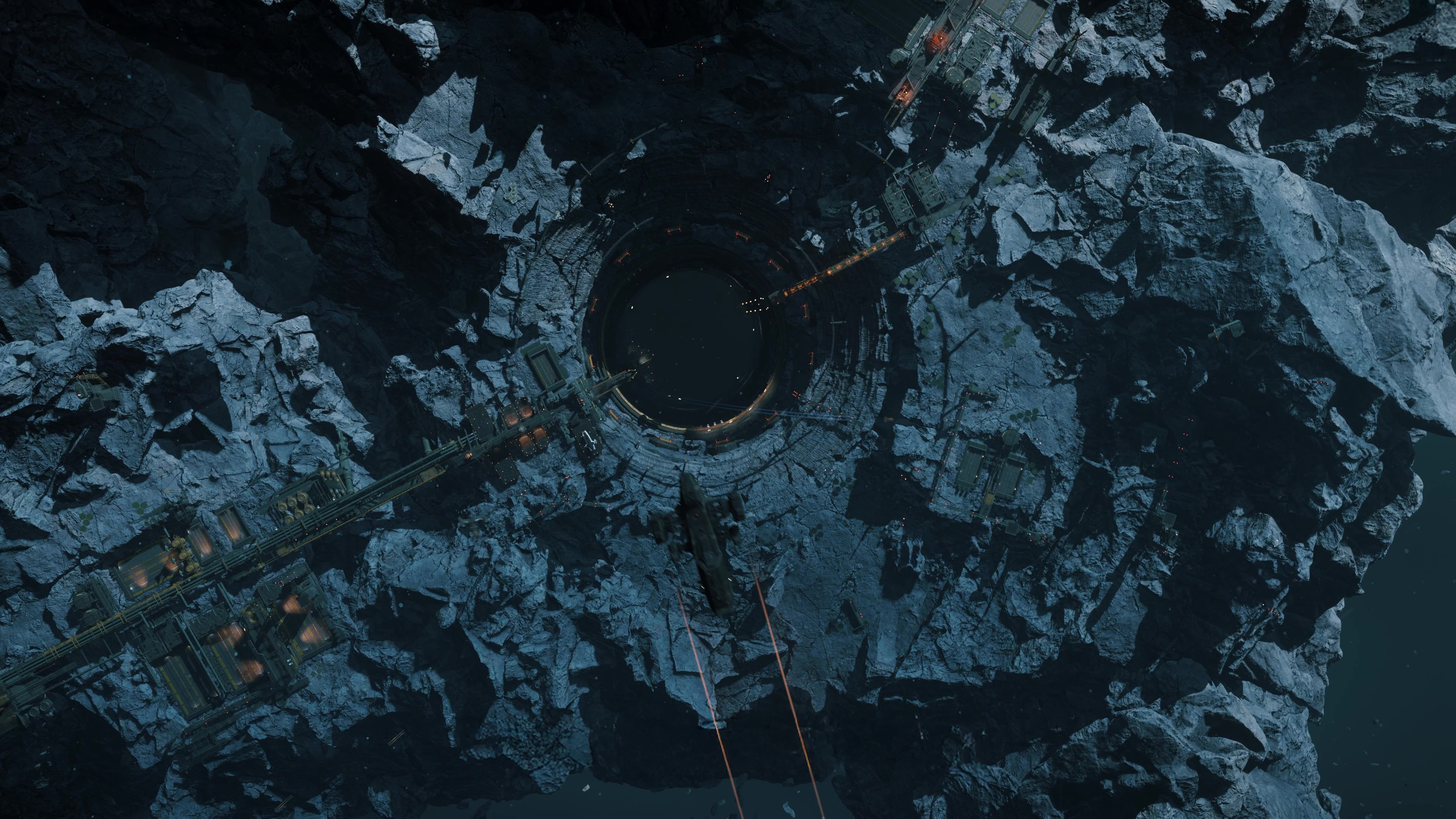
Current scientific research suggests that the Icarus and Daedalus Clusters are debris left over from the system’s early protoplanetary disk. Located in two lagrange points of Croshaw IV, the clusters are some of the Empire’s oldest mining fields. Centuries of prospecting mean there is little of value left here.
Travel Warning
Before setting out to enjoy Vann’s beautiful auroras, please make sure to wear gear that is safety-rated for extreme cold. With nighttime temperatures regularly reaching -50° Celsius, frostbite is the least of your concerns.
Heard in the Wind
“Though we might not know exactly what makes Angeli-aged whiskeys stand out, it is easy to distinguish what makes them so special. Their rich and dignified flavors excite the palette but never overpower it. It is almost as if their flavors were granted a crisp subtlety with age that has yet to be achieved anywhere else in the ’verse.”
– David Kurtz, A Beginner’s Guide to Angeli-Aged Whiskey, 2912
“What we do here will shape the future of interstellar expansion. Let’s make sure we get this right.”
– Clarence Ludwig, Chair of the Croshaw Expansion Committee, 06.23.2281
The jump that changed the course of Humanity.
In 2271, after ten years investigating the space anomaly in Sol System known as the Neso Triangle, scientist and explorer Nick Croshaw became the first known Human to traverse a jump point and enter a new star system. As a tribute to his monumental accomplishment, the system he discovered would come to bear his name.
The aftermath was a different matter. While Humans had figured out how to reach the stars, they were still struggling with how to inhabit them. It was a contentious hundred years between Croshaw’s discovery and when a planet in the system was terraformed. Lacking an organization to oversee expansion into the system created a plethora of issues. At first, a number of private and state-owned terraforming companies raced into Croshaw to lay claim to its planets. None of them succeeded. Each company had failed to calculate exactly how expensive it would be to continually transport supplies to maintain their operations. It was obvious that a cohesive Human response was needed, but instead of focusing on a solution, countries and corporations squabbled over how land rights and mineral resources should be divided once terraforming was complete.
At the same time, there was still a good deal of fear and danger around inter-system travel. Many people who entered the jump point between Croshaw and Sol vanished. With jump drive technology still in its infancy, ships had to be manually piloted between the two systems. Out of this, a new breed of pilot was born. Nicknamed “Jumpers,” these pilots sold themselves as the only reliable way to get between the two systems, and charged handsomely for their services. It was only after flight assisted navdrives were able to utilize the recorded flight paths through the jump points that “Jumpers” changed their focus to discovering new jump points, making them the forefathers of the “NavJumpers” that still exist today.
Amidst all the chaos and confusion, a committee appointed by the World Summit, a gathering of Earth’s leaders, finally took control of expansion into the Croshaw System. The committee organized resources from various countries and companies to tackle the terraforming of Croshaw II and Croshaw III, established a lottery to grant land and mineral rights once the process was complete, and most importantly, figured out how to pay for it all.
The committee’s masterstroke was the Freeman Act, a piece of legislation that helped fund the terraforming of Croshaw while also populating it through the sale of one-way tickets. Not only were people buying passage aboard government-subsidized shuttles, they were guaranteed a place to live on the new planet. Sales were slow at first. While the public had acclimated to the notion of living on another planet, the thought of living in a new system entirely proved to be a truly scary concept. Intensive marketing initiatives and firsthand accounts from the developing system eased their fears and gradually got the public excited at the prospect. The influx of ticket sales kept the committee’s terraforming fund solvent and created an entire class of people who counted down the days until they could start a new life as Humanity’s first interstellar settlers.
The committee’s successful stewardship of Croshaw convinced Humanity’s leaders that a cohesive voice and vision was needed to aid our ascension out to the stars. In 2380, the World Summit ended with a historic announcement that created the United Nations of Earth (UNE). For the first time, we stopped thinking of ourselves as many and started seeing ourselves as one.
Croshaw I
This smog planet is known for its colorful yellow and orange clouds. What makes this tiny planet beautiful also makes it deadly, since the dense atmosphere is highly corrosive and toxic.
Croshaw II: Angeli
Angeli’s natural beauty is as much of a marvel today as it was when it was first terraformed. The planet’s biosphere is reminiscent of Earth’s, featuring massive bodies of water and large expanses of land dotted by mountain ranges.
Angeli’s natural beauty does not come without its dangers. Geologists continue to classify the planet as a severe seismic hazard. Strict engineering codes require buildings on the planet to have extremely thick foundations and tuned mass dampers to counteract earthquakes. Even if most of the native population is apathetic about the big one, most scientists believe it is not a question of if a large earthquake will happen, but when. Due to this seismic instability, mining is severely restricted on Angeli.
Connoisseurs of fine food and spirits consider Angeli a must-stop destination. The eclectic mix of Earth’s cultures and classes during the planet’s early days created a unique cuisine. Angeli’s trademark dish is boumbo, a thick stew usually featuring either meat or seafood.
Considered a sign of true luxury, Angeli produces some of the ’verse’s most expensive whiskeys. Distilled and barreled on Earth, they are then sent to Angeli to complete the aging process. Bottles of Angeli whiskey sold on Earth are stamped with a special ‘round trip’ label signifying its long journey. Aficionados claim that Angeli’s light, temperature and air gives its whiskey a distinct and complex taste profile. Special facilities have been built just to store the barrels and best control their exposure to those elements.
Croshaw III: Vann
Vann is far from an ideal planet for Human habitation. Located on the outer edge of Croshaw’s habitable zone, the planet’s arctic temperatures make it less than optimal for Human habitation. Yet since mining was restricted on Angeli, terraforming Vann became essential to create a source of commodities in the system.
As the Empire expanded, many residents left Vann for greener pastures. Jele City remains the planet’s most populated city, though its most prosperous days are considered long past. All things considered, it still does brisk business as an affordable tourist destination for winter sport enthusiasts.
Vann’s night skies feature a stunning curtain of colorful aurora, the result of strong solar activity reacting with the planet’s magnetosphere. Inspired by the phenomenon, a burgeoning artistic culture has made a name for itself on Vann. Many artists have set up studios in large, long-abandoned buildings. Some bought the real estate cheap, while others are simply squatting. The self-proclaimed “SpartVann” style features a minimalist aesthetic and prominent use of colors displayed in the aurora.
Croshaw IV
Planetary analysis indicates that Croshaw IV is a super-Earth that lost its atmosphere. After most of its resources were exhausted, locals stopped using the planet’s colloquial name and it subsequently faded from memory — a good indicator of exactly how much Croshaw IV has left to offer.
Icarus and Daedalus Clusters
Current scientific research suggests that the Icarus and Daedalus Clusters are debris left over from the system’s early protoplanetary disk. Located in two lagrange points of Croshaw IV, the clusters are some of the Empire’s oldest mining fields. Centuries of prospecting mean there is little of value left here.
Travel Warning
Before setting out to enjoy Vann’s beautiful auroras, please make sure to wear gear that is safety-rated for extreme cold. With nighttime temperatures regularly reaching -50° Celsius, frostbite is the least of your concerns.
Heard in the Wind
“Though we might not know exactly what makes Angeli-aged whiskeys stand out, it is easy to distinguish what makes them so special. Their rich and dignified flavors excite the palette but never overpower it. It is almost as if their flavors were granted a crisp subtlety with age that has yet to be achieved anywhere else in the ’verse.”
– David Kurtz, A Beginner’s Guide to Angeli-Aged Whiskey, 2912
“What we do here will shape the future of interstellar expansion. Let’s make sure we get this right.”
– Clarence Ludwig, Chair of the Croshaw Expansion Committee, 06.23.2281
Links
No links available.


Metadata
- CIG ID
- 15019
- Channel
- Spectrum Dispatch
- Category
- Undefined
- Series
- Galactic Guide
- Comments
- 87
- Published
- 10 years ago (2015-10-20T00:00:00+00:00)