Squadron 42 Monthly Report: October 2019
Transmission Undefined Monthly ReportsContent
This is a cross-post of the report that was recently sent out via the monthly Squadron 42 newsletter. We’re publishing this a second time as a Comm-Link to make it easier for the community to reference back to. Attention Recruits,
What you are about to read is the latest information on the continuing development of Squadron 42 (SCI des: SQ42).
Operatives around the world collected the intel needed to provide you with this progress report. Intelligence suggests we’ve uncovered intel on animation improvements, phase two of asteroid sets, and the dangers of combining too many heads into a DNA system.
The information contained in this communication is extremely sensitive and it is of paramount importance that it does not fall into the wrong hands. Purge all records after reading.
UEE Naval High Command
AI
October’s report kicks off with the AI Character Combat Team, who spent time iterating on NPC aiming. They simplified the ability to control if and when they want the lower body turning while aiming at a target and improved the way aim-tracking works. This makes it easier to determine when the movement should blend slowly or snap quickly. They also fixed a look-target synchronization bug that was causing general issues. On the behaviors side, they improved cover selection during combat by introducing new ways to weight cover locations based on target direction. NPCs can now choose between using a weapon’s predefined fire mode or actively selecting auto, burst, or single shot. They added more wild lines and flavor to the behaviors too, such as NPCs taunting a target before they start investigating.
Ship AI moved the first pass of their new 3D pathfinding functionality into the main game-development branch. This approach is based on a non-canonical A* implementation that uses the signed distance field (SDF) to incrementally compute a path in a 3D environment. Progress is currently being made on the first version of 3D ORCA implementation and is getting close to a first working version.
A new way for the designers to request that a ship follow a ‘spline’ (a tunnel that guides a ship’s movement rather than a prescriptive track) was exposed. At runtime, the calculation automatically adjusts the tunnel size based on the environment and the information reported by the SDF. They also added new nodes to monitor target distance and the vehicle’s relative state and make decisions according to the reported values.
Social AI optimized the ‘usable search’ function and are now able to cache the location of usables on the navmesh. This means they don’t have to constantly recalculate the time an object is static in one location. They also continued the unification of operator and generic seats so that behaviors can utilize them regardless of height.
Implementation of generic vendors continued, which employs usables that can ‘provide’ or ‘accept’ specific object types. This allows designers to create many different object types. For example, drinks bartenders can offer to patrons. They’re currently progressing on the patrol functionality that defines paths for AI to follow. This path will carry information on which types of logic to activate while hitting the different path nodes.
Regarding core services, the team now have navmesh support on planetary locations and are moving towards a more dynamic creation of navigation data on planet surfaces. They’re also working on different bug fixes and optimizations, including multithreading the AI audio component to enable them to process audio events quicker on the servers.
Animation
In October, the team developed melee and stealth takedown animations, effort-movement sets, and reaction animations for NPCs that aren’t holding stocked weapons. They also made progress on animations for scripted events and cinematics.
Art (Characters)
The Art Team’s work last month predominately revolved around hair and included finishing two new styles. They also began updating character costumes, accessories, and faces.
Art (Environment)
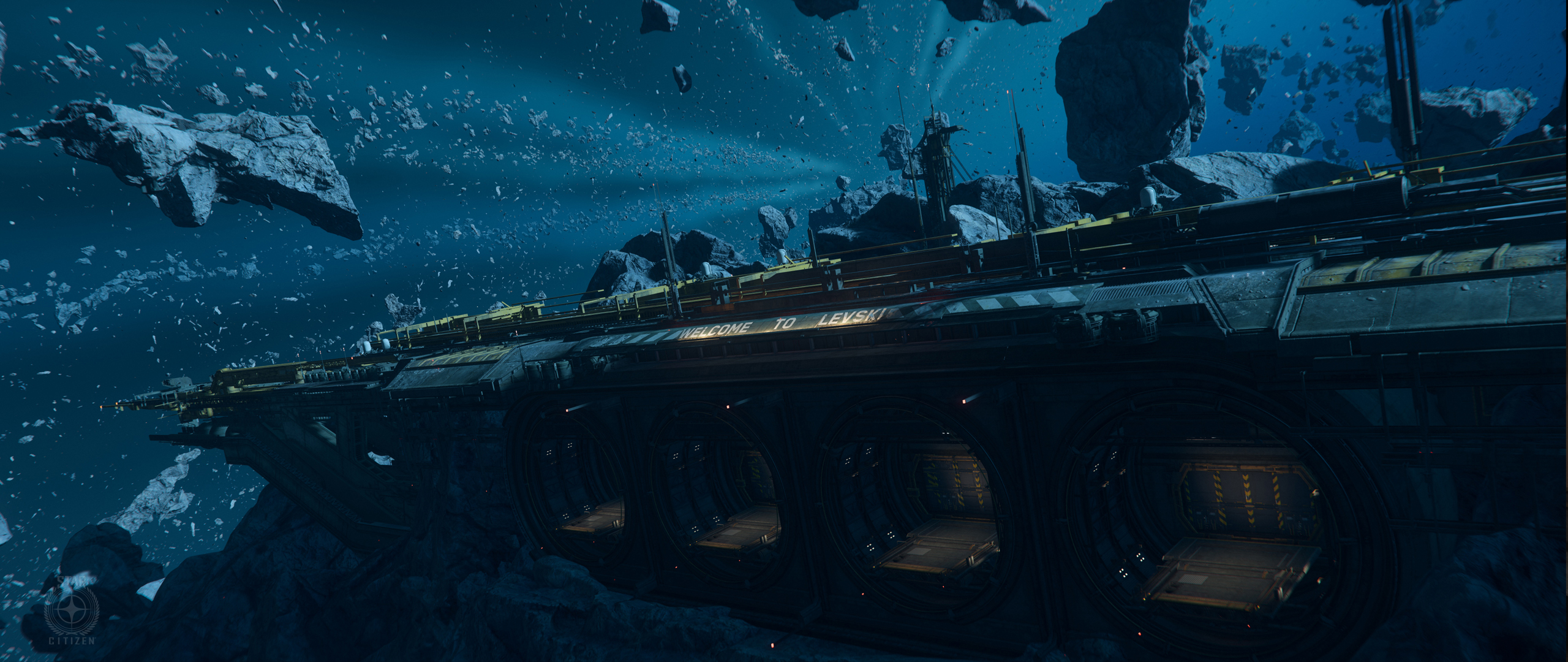
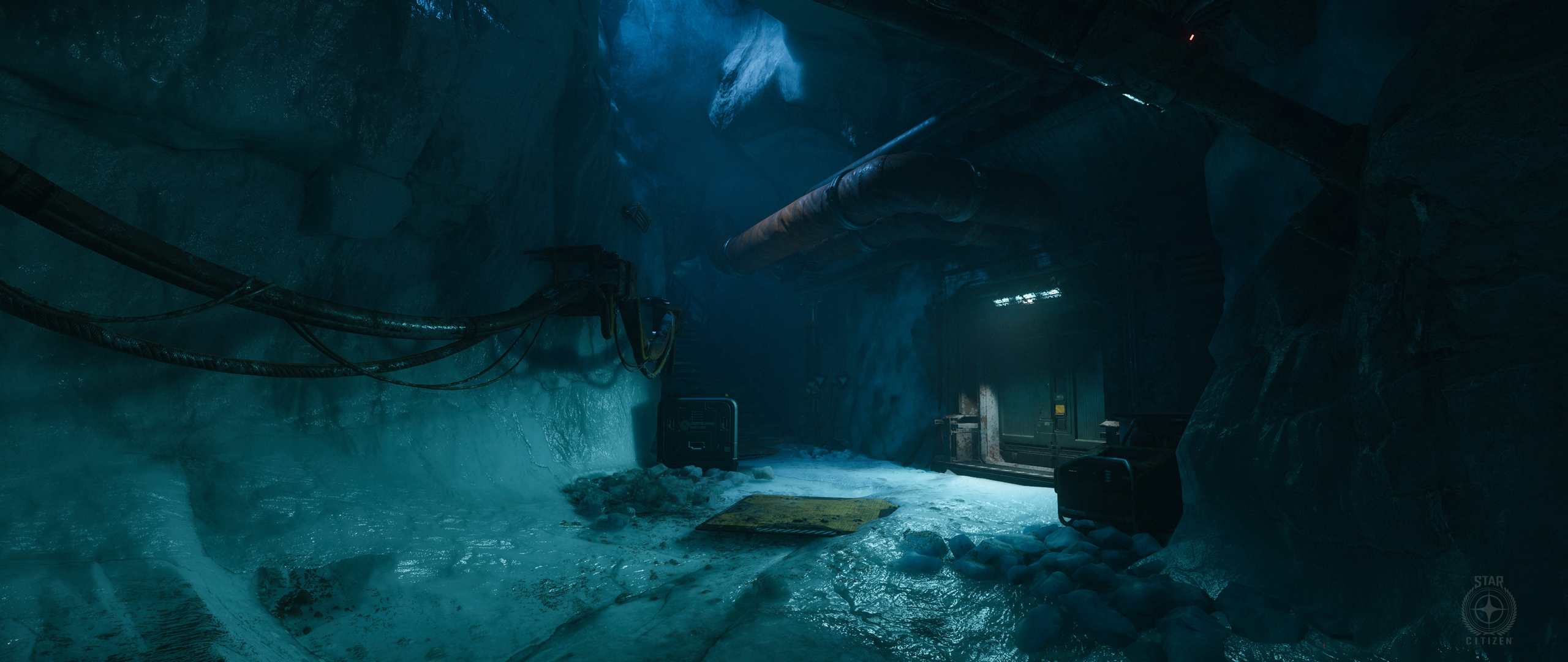
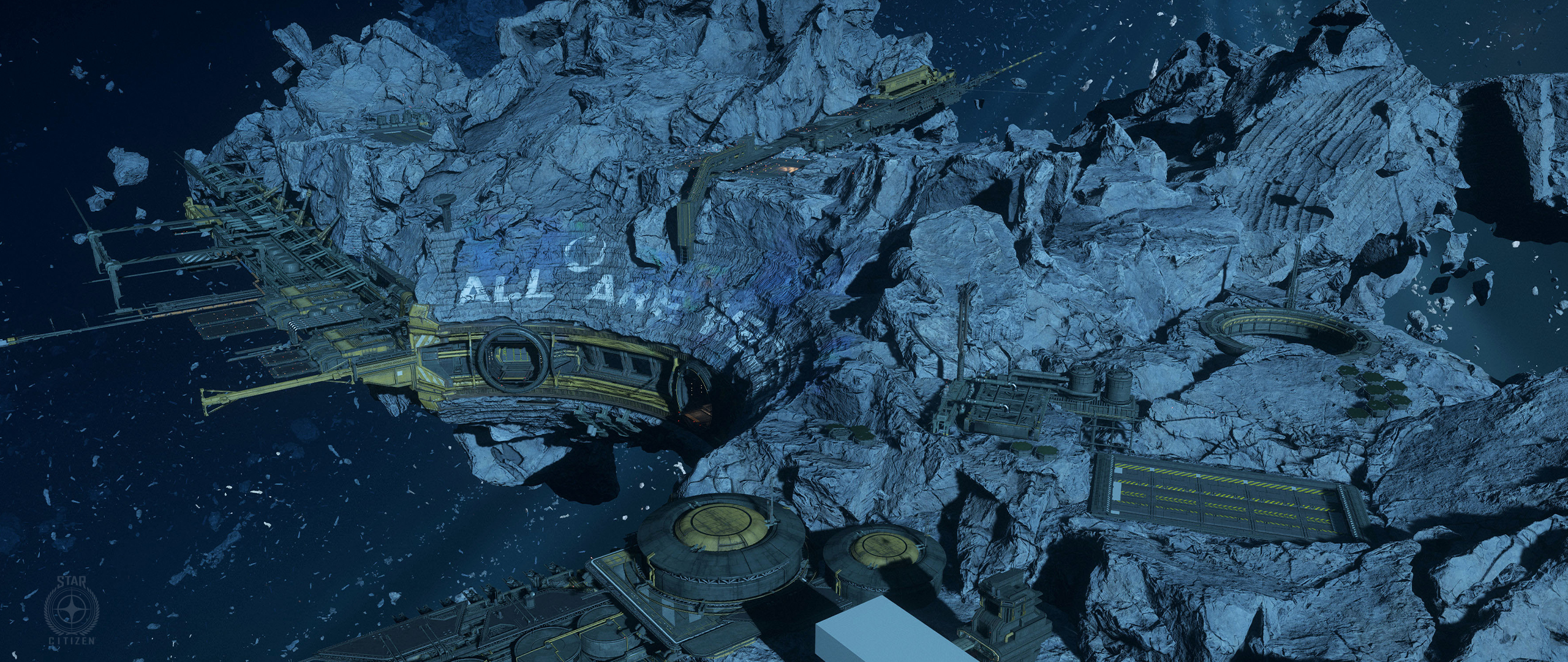
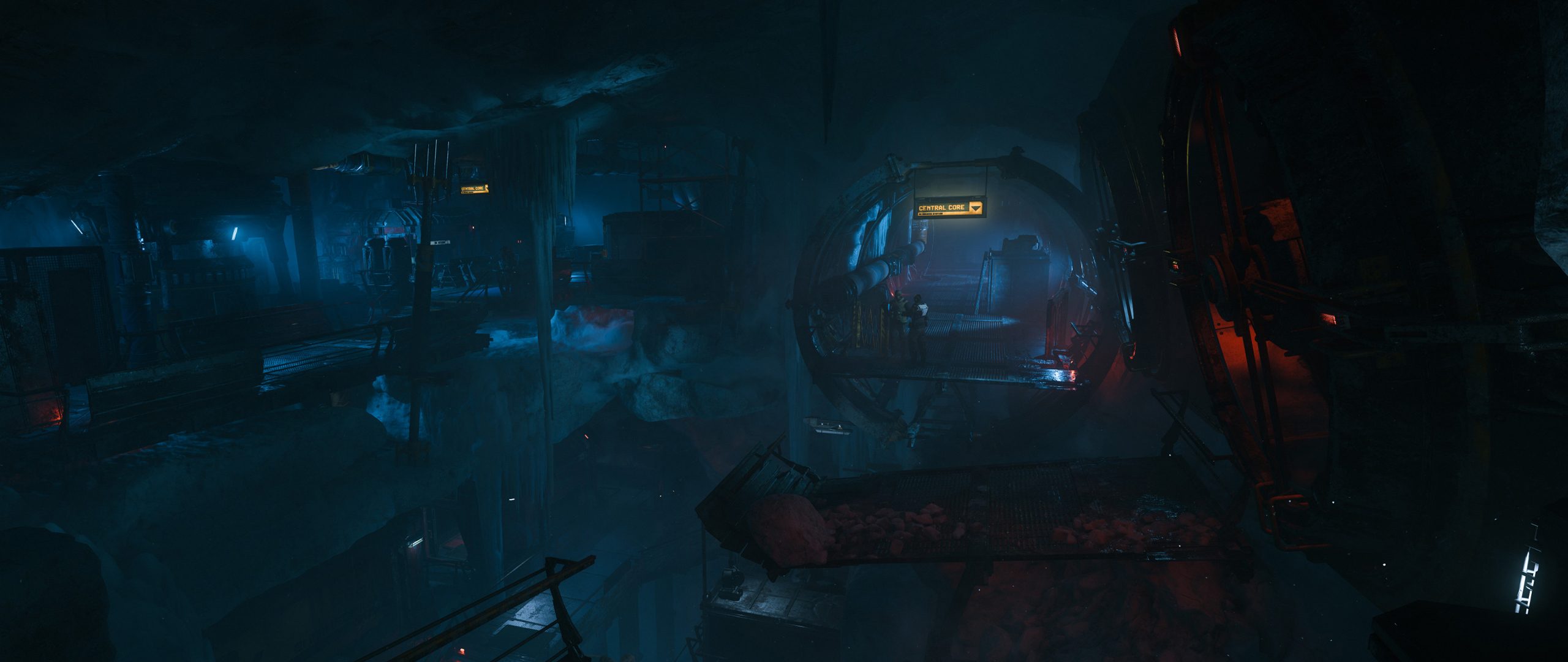
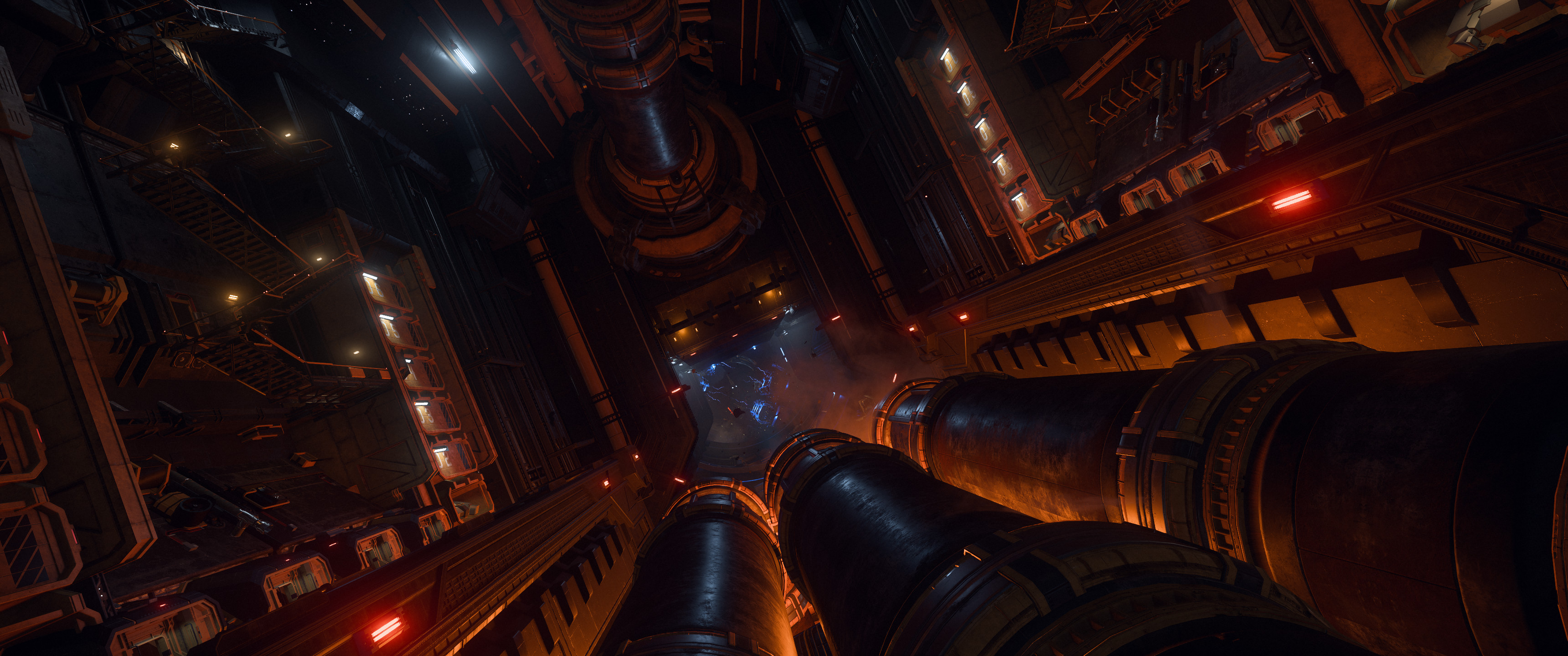
Archon Station progressed throughout the month, with attention going to the engineering sections and ‘arms’ of the station. Players will travel through several different archetypes, with each one needing its own distinct feel. The comms arrays made progress too – the ‘hero’ station is in the final development stages, with smaller variants coming soon. The new asteroid set mentioned in previous reports reached phase two. To complement the asteroid set, a kit of infrastructure parts left behind by previous operations/settlements is in development. Alongside being visually interesting, the kit gives the Flight Design Team interesting shapes and spaces to work with. Several new developments to lighting tech meant certain areas received improvements too.
Finally, gas clouds are progressing well, with new tech and lighting tools being made specifically for them.
Cinematics
The Cinematics Team worked on an important visual flow prototype. This will allow the Actor Feature Team to align their work on dependent mechanics and show other teams how the scene will unfold. They also finished testing the female player pipeline and prepped for an upcoming female-focused mo-cap shoot. The comms RTT pipeline is being more widely used, so the cinematic designers dialed in new cameras for air traffic control seats and other consoles to improve non-cockpit calls. With the hair pipeline finalized, hairstyles for certain key characters were updated. The Cinematics Team takes them and shows work-progress-renders of sequences to the Character Team so they can see how the new and higher-detailed hair looks in situ. They also prepared for work on a big EVA set-piece.
Engineering
In the UK, Engineering helped improve helmet interactions, including putting them on, taking them off, placing them somewhere, and inspecting them. They also fleshed out and began implementing the interrupt/rejoin tech worked on in September. Actor Animation added environment-based procedural character overlays. For example, a character in a windy environment will lean depending on the direction and strength of the wind and cover their face.
The Actor Team made several small improvements to the close-combat system, including triggering reactions on both local and remote clients, adding camera shake on successful hits, blocking with knives, damage and stamina impact, and updated animations. They also evolved the temperature status system that allows clothing to have insulating properties, adding hypothermia and concussion statuses.
In Frankfurt, the team spent time on the physics proxy refactor, including stream integration support. They also continued work on character and cloth soft-body physics simulation and added physics-level support to planetary wind.
For the renderer, they continued to work on the new graphics pipeline and render interface (Gen12). This included adding: an improved render pass handling and pipeline state setup, support for compute, a pipeline teardown, improved DXC compatibility for shaders, simplified resource layout setup, improved support for pooled render targets and resolution changes, support for reflected shader constant arrays, and porting DOF to the render pass system. They global render state removal also began.
Planet-side, they refactored and extended multi-cascade support for terrain height maps so dependent effects can better incorporate it for their own purposes (such as terrain shadows), and worked on cascade debug visualization to allow artists to efficiently tweak important height map properties. Regarding planet terrain shadows, they added a simple code interface and shared shader code for the application on the client side, provided support for temporal anti-aliasing, and completed the initial code and logic support for multi cascades. Work on planetary ground fog continued too. This involved adjusting code to cope with very large objects, making exception handler improvements, and adding API to asynchronously create a core dump without affecting the calling process. This will be mainly used to take snapshots of the DGS process state in case of non-fatal errors for efficient debugging without interrupting its service and affecting clients (previously, it was forced to crash).
For Animation, the team created a new dual quaternion skinning/elastic blend wrap deformer for CPU and GPU skinning. They also completed tangent reconstruction – a pixel perfect version for software and compute skinning (both protos and original skins).
Gameplay Story
The Gameplay Story Team continued to work on a range of scenes during October, including building several for chapter five that were captured earlier this year. They also continued to work with Design to prototype how players interrupt scenes from different angles. Several prop setups were finalized, including cups, utensils, datapads, mops, and buckets. Existing scenes were checked to make sure the new props worked as intended. They’re currently making sure they work seamlessly with the new console usable behavior.
Level Design
The Social Team spent October working with the interrupt, break-out, and re-join tech mentioned last month, applying it to each narrative scene on a case-by-case basis. This gives a higher level of fidelity and immersion for the cinematic delivery of the story elements. They’re also working with the Social AI Team to further develop various crew behaviors. Level Design (alongside Art and AI) continued with the FPS intensive chapters, focusing on defining the systemic behaviors needed for the AI to realistically traverse environments depending on their loadouts.
The space and dogfight teams also focused on systemic AI behaviors, with the take-off and landing systems receiving polish to get them closer to their final state. The Tech Team finalized some of the prototype level mechanics that were added to several FPS-heavy levels.
Narrative
The Narrative Team continued its progress on tackling the in-game text that players will encounter throughout the course of the game. This covers everything from mission specific information to the text that may scroll across a screen in a particular environment. Additionally, Narrative consulted with UI Art on theming for several groups and organizations featured in the story so that they can receive a proper branding pass. There was also time spent on pre-production for a performance capture session scheduled for early next month. This session’s focus will be on gathering additional Female Player recordings to bring her further into parity with the Male Player now that other departments like cinematics have completed successful tests with the earlier data that was captured.
QA
QA started learning the subsumption visualizer to better debug cinematic cutscenes and player-NPC interactions. They began creating new cinematic-focused test suites that will help them check cutscenes are playing correctly in the editor. Testing of the game’s various wild lines continued and documentation was made to explain how these cutscenes should be tested going forward. Further improvements to usables went into game-dev, which will be tested to ensure the correct animations are being used and that the AI is using them appropriately. These new usables will eventually be added to the PU, where they will become part of the team’s regular social AI testing.
Tech Animation
The Tech Animation Team refined the Visio-to-Mannequin pipeline to make it easier to import state machines straight to Mannequin, which will save a lot of time. They also worked with the props and usable teams on several new and old usables, implementing new animations and providing animation-ready templates in Maya for quicker authoring. A socket addition to the pipeline was also created to give animators the possibility of swapping props around between different attach points on the character rig. They also investigated and fixed several small bugs in weapons content, usables, cinematics, gameplay animations, props, and design.
Tech Art
Last month, Tech Art laid the foundation for converting all T0 hero character heads to the DNA system. While the DNA system was primarily designed to allow the blending of individual face parts for facial customization, other advantages are reduced memory footprint and the ability to share unified attachments between heads regardless of their shape and gender. The efficiency gains will be significant too – the lower-tier DNA heads combined consume only a fraction more memory than Admiral Bishop’s non-DNA head alone (one of the most complex rigs). While this new functionality is being implemented primarily for its efficiency gains, it can be used internally for facial blending too. During testing, the team found that combining portions of Gary Oldman, Mark Hamill, and John Rhys-Davies into one head produced “interesting” results.
User Interface (UI)
The UI Team focused on finalizing the visual style for two important elements of the player’s kit – a new-look visor (what the player sees from inside their helmet) and a new style for the mobiGlas (particularly the local area map). When the concepts are complete, they’ll make functional versions in-game.
VFX
In the UK, the VFX artists continued to work on several locations, collaborating as always with the art and design teams. They also helped Design to prototype new ideas to make traversing open space in EVA more fun. The VFX tech artists implemented several improvements to gas clouds, including softer, blocky shadows to make them appear more natural. The Frankfurt-based team continued to work on gameplay effects and made improvements to the particle system. One of these improvements was proper depth-sorting for GPU particles. Previously, GPU particles were sorted with the newest spawned particle layered on top. This led to issues with how the particles moved in relation to the camera, making the effect appear inverted. Now the particles have proper depth sorting, this is no longer an issue.
WE’LL SEE YOU NEXT MONTH…
Dies ist ein Querverweis auf den Bericht, der kürzlich über den monatlichen Squadron 42 Newsletter verschickt wurde. Wir veröffentlichen dies ein zweites Mal als Comm-Link, um es der Community zu erleichtern, auf die man zurückgreifen kann.
Achtung Rekruten,
Was Sie hier lesen werden, sind die neuesten Informationen über die Weiterentwicklung der Squadron 42 (SCI des: SQ42).
Mitarbeiter auf der ganzen Welt sammelten die notwendigen Informationen, um Ihnen diesen Fortschrittsbericht zur Verfügung zu stellen. Die Intelligenz deutet darauf hin, dass wir Informationen über Animationsverbesserungen, Phase zwei der Asteroiden-Sets und die Gefahren der Kombination von zu vielen Köpfen in einem DNA-System entdeckt haben.
Die in dieser Mitteilung enthaltenen Informationen sind äußerst sensibel, und es ist von größter Bedeutung, dass sie nicht in die falschen Hände geraten. Alle Datensätze nach dem Lesen löschen.
UEE Naval Oberkommando
KI
Der Bericht vom Oktober beginnt mit dem KI Character Combat Team, das Zeit damit verbrachte, über das Zielen von NSCs nachzudenken. Sie vereinfachten die Fähigkeit zu kontrollieren, ob und wann sie wollen, dass sich der Unterkörper dreht, während er auf ein Ziel zielt, und verbesserten die Art und Weise, wie das Zielverfolgen funktioniert. Dadurch ist es einfacher zu bestimmen, wann die Bewegung langsam überblenden oder schnell abbrechen soll. Sie beheben auch einen Look-Target-Synchronisationsfehler, der allgemeine Probleme verursacht. Auf der Verhaltensseite verbesserten sie die Deckungsauswahl im Kampf, indem sie neue Möglichkeiten zur Gewichtung der Deckungspositionen basierend auf der Zielrichtung einführten. NSCs können nun wählen, ob sie den vordefinierten Feuermodus einer Waffe verwenden oder aktiv Auto, Burst oder Einzelschuss wählen möchten. Sie fügten den Verhaltensweisen auch mehr wilde Linien und Geschmacksrichtungen hinzu, wie z.B. NSCs, die ein Ziel verspotten, bevor sie mit der Untersuchung beginnen.
Ship AI hat den ersten Durchgang seiner neuen 3D-Pfadfindungsfunktionalität in den Hauptgeschäftsbereich der Spieleentwicklung verschoben. Dieser Ansatz basiert auf einer nicht-kanonischen A*-Implementierung, die das signed distance field (SDF) verwendet, um einen Pfad in einer 3D-Umgebung schrittweise zu berechnen. Derzeit werden Fortschritte bei der ersten Version der 3D ORCA-Implementierung erzielt und nähern sich einer ersten funktionierenden Version.
Eine neue Möglichkeit für die Konstrukteure, ein Schiff einer "Spline" folgen zu lassen (ein Tunnel, der eine Schiffsbewegung und nicht eine vorgeschriebene Spur führt), wurde freigelegt. Zur Laufzeit passt die Berechnung die Tunnelgröße automatisch an die Umgebung und die vom SDF gemeldeten Informationen an. Sie haben auch neue Knoten hinzugefügt, um die Soll-Distanz und den relativen Zustand des Fahrzeugs zu überwachen und Entscheidungen anhand der gemeldeten Werte zu treffen.
Social AI hat die Funktion "Usable Search" optimiert und kann nun die Position von Usables auf dem Navmesh zwischenspeichern. Das bedeutet, dass sie nicht ständig die Zeit neu berechnen müssen, in der ein Objekt an einem Ort statisch ist. Sie setzten auch die Vereinheitlichung von Operator- und generischen Sitzen fort, so dass Verhaltensweisen sie unabhängig von der Höhe nutzen können.
Die Implementierung von generischen Anbietern wurde fortgesetzt, bei der Usables verwendet werden, die bestimmte Objekttypen "bereitstellen" oder "akzeptieren" können. Dies ermöglicht es Designern, viele verschiedene Objekttypen zu erstellen. Beispielsweise können Getränke-Barkeeper den Gästen anbieten. Sie arbeiten derzeit an der Patrouillenfunktionalität, die Wege für die KI definiert. Dieser Pfad enthält Informationen darüber, welche Arten von Logik beim Auftreffen auf die verschiedenen Pfadknoten aktiviert werden müssen.
Was die Kerndienstleistungen betrifft, so verfügt das Team nun über Navmesh-Unterstützung für Planetenstandorte und bewegt sich in Richtung einer dynamischeren Erstellung von Navigationsdaten auf Planetenoberflächen. Sie arbeiten auch an verschiedenen Bugfixes und Optimierungen, darunter das Multithreading der KI-Audiokomponente, damit sie Audioereignisse auf den Servern schneller verarbeiten können.
Animation
Im Oktober entwickelte das Team Nahkampf- und Stealth-Takedown-Animationen, Effortbewegungssets und Reaktionsanimationen für NSCs, die keine Waffen im Lager haben. Sie machten auch Fortschritte bei Animationen für Drehbücher und Kinofilme.
Kunst (Charaktere)
Die Arbeit des Art Teams im vergangenen Monat drehte sich hauptsächlich um Haare und beinhaltete die Fertigstellung zweier neuer Styles. Sie begannen auch, die Charakterkostüme, Accessoires und Gesichter zu aktualisieren.
Kunst (Umwelt)
Die Archon Station entwickelte sich den ganzen Monat über, wobei das Augenmerk auf die technischen Bereiche und die "Arme" der Station gerichtet war. Die Spieler werden durch mehrere verschiedene Archetypen reisen, wobei jeder einzelne sein eigenes Gefühl braucht. Auch die Comms-Arrays machten Fortschritte - die "Helden"-Station befindet sich in der Endphase der Entwicklung, kleinere Varianten folgen in Kürze. Der neue Asteroiden-Set, der in früheren Berichten erwähnt wurde, erreichte Phase zwei. Als Ergänzung zum Asteroiden-Set befindet sich ein Satz von Infrastrukturteilen in der Entwicklung, die durch frühere Operationen/Siedlungen zurückgelassen wurden. Der Bausatz ist nicht nur optisch interessant, sondern gibt dem Flight Design Team auch interessante Formen und Räume zur Arbeit. Mehrere Neuentwicklungen in der Beleuchtungstechnik führten dazu, dass auch bestimmte Bereiche verbessert wurden.
Schließlich kommen die Gaswolken gut voran, wobei neue Technologien und Beleuchtungswerkzeuge speziell für sie entwickelt wurden.
Kinematiken
Das Cinematics-Team arbeitete an einem wichtigen visuellen Flow-Prototypen. Dies wird es dem Actor Feature Team ermöglichen, seine Arbeit auf abhängige Mechaniker auszurichten und anderen Teams zu zeigen, wie sich die Szene entwickeln wird. Sie haben auch die Pipeline der weiblichen Spieler getestet und sich auf einen bevorstehenden weiblich fokussierten Mo-Cap-Shoot vorbereitet. Die RTT-Pipeline wird immer häufiger eingesetzt, so dass die Filmdesigner neue Kameras für Flugsicherungssitze und andere Konsolen einbauten, um die Anrufe außerhalb des Cockpits zu verbessern. Mit dem Abschluss der Haarpipeline wurden die Frisuren für bestimmte Schlüsselpersonen aktualisiert. Das Cinematics-Team nimmt sie mit und zeigt dem Character-Team Work-Progress-Renderings von Sequenzen, damit sie sehen können, wie das neue und höherdetaillierte Haar vor Ort aussieht. Sie bereiteten sich auch auf die Arbeit an einem großen EVA-Set-Stück vor.
Ingenieurwesen
Im Vereinigten Königreich trug Engineering zur Verbesserung der Helmwechselwirkungen bei, einschließlich des Aufsetzens, Ausziehens, Platzierens und Inspektierens. Sie konkretisierten sich auch und begannen mit der Implementierung der im September erarbeiteten Unterbrechungs- und Wiedereinsteiger-Technologie. Actor Animation hat umgebungsbasierte prozessuale Charakterüberlagerungen hinzugefügt. Zum Beispiel lehnt sich ein Charakter in einer windigen Umgebung je nach Richtung und Stärke des Windes und bedeckt sein Gesicht.
Das Schauspielerteam machte mehrere kleine Verbesserungen am Nahkampfsystem, darunter das Auslösen von Reaktionen bei lokalen und entfernten Kunden, das Hinzufügen von Kameraverwacklungen bei erfolgreichen Treffern, das Blockieren mit Messern, Schäden und Ausdauerwirkungen sowie aktualisierte Animationen. Sie entwickelten auch das Temperatur-Statussystem, das es der Kleidung ermöglicht, isolierende Eigenschaften zu haben, indem sie Hypothermie- und Erschütterungszustände hinzufügen.
In Frankfurt verbrachte das Team Zeit mit dem Physik-Proxy-Refaktor, einschließlich der Unterstützung der Stream-Integration. Sie setzten auch ihre Arbeit an der Simulation der Charakter- und Stoffweichkörperphysik fort und fügten dem planetarischen Wind Unterstützung auf Physikebene hinzu.
Für den Renderer arbeiteten sie weiter an der neuen Grafikpipeline und dem Renderinterface (Gen12). Dazu gehörten: ein verbessertes Renderpasshandling und die Einrichtung des Pipelinestatus, Unterstützung für die Berechnung, ein Pipeline-Teardown, verbesserte DXC-Kompatibilität für Shader, vereinfachtes Ressourcen-Layout, verbesserte Unterstützung für gepoolte Renderziele und Auflösungsänderungen, Unterstützung für reflektierte Shader-Konstanten-Arrays und die Portierung von DOF auf das Renderpasssystem. Sie begannen auch mit der Entfernung des globalen Renderstatus.
Auf der Planetenseite haben sie die Multi-Cascade-Unterstützung für Geländehöhenkarten überarbeitet und erweitert, so dass abhängige Effekte sie besser für ihre eigenen Zwecke (z.B. Geländeschatten) integrieren können, und an der Visualisierung von Cascade Debug gearbeitet, um es Künstlern zu ermöglichen, wichtige Höhenkarteneigenschaften effizient zu optimieren. In Bezug auf Planeten-Terrain-Schatten fügten sie eine einfache Codeschnittstelle und gemeinsamen Shader-Code für die Anwendung auf der Clientseite hinzu, unterstützten zeitliches Anti-Aliasing und ergänzten die anfängliche Code- und Logikunterstützung für mehrere Kaskaden. Die Arbeiten am planetarischen Bodennebel wurden ebenfalls fortgesetzt. Dazu gehörte das Anpassen des Codes an sehr große Objekte, das Verbessern des Ausnahmebehandlers und das Hinzufügen von APIs zum asynchronen Erstellen eines Core Dumps, ohne den aufrufenden Prozess zu beeinträchtigen. Dies wird hauptsächlich verwendet, um Momentaufnahmen des DGS-Prozesszustands im Falle von nicht schwerwiegenden Fehlern zu machen, um effizientes Debugging zu ermöglichen, ohne den Service zu unterbrechen und die Clients zu beeinträchtigen (vorher war es zum Absturz gezwungen).
Für die Animation entwickelte das Team einen neuen Dual-Quaternion Skinning/elastische Blend Wrap Deformer für die CPU- und GPU-Hautung. Sie haben auch die Tangentenrekonstruktion abgeschlossen - eine pixelgenaue Version für Software und Compute Skinning (sowohl Protos als auch Originalskins).
Gameplay-Geschichte
Das Gameplay Story Team arbeitete im Oktober weiter an einer Reihe von Szenen, darunter auch an der Erstellung von mehreren für Kapitel fünf, die Anfang des Jahres aufgenommen wurden. Sie arbeiteten auch weiterhin mit Design zusammen, um einen Prototyp zu erstellen, wie Spieler Szenen aus verschiedenen Blickwinkeln unterbrechen. Mehrere Requisiten-Setups wurden fertiggestellt, darunter Cups, Utensilien, Datenpads, Mops und Eimer. Bestehende Szenen wurden überprüft, um sicherzustellen, dass die neuen Requisiten wie vorgesehen funktionieren. Sie stellen derzeit sicher, dass sie nahtlos mit dem neuen konsolentauglichen Verhalten arbeiten.
Leveldesign
Das Social Team verbrachte den Oktober damit, mit der Unterbrechung, dem Ausbruch und der Wiedereingliederung der im letzten Monat erwähnten Technologie zu arbeiten und sie von Fall zu Fall auf jede Erzählszene anzuwenden. Dies führt zu einer höheren Treue und Immersion für die filmische Umsetzung der Story-Elemente. Sie arbeiten auch mit dem Social AI Team zusammen, um verschiedene Verhaltensweisen der Crew weiterzuentwickeln. Level Design (neben Art und AI) setzte sich mit den FPS-Intensivkapiteln fort und konzentrierte sich auf die Definition des systemischen Verhaltens, das die KI benötigt, um Umgebungen je nach Auslastung realistisch zu durchlaufen.
Die Raum- und Luftkampfteams konzentrierten sich auch auf systemisches KI-Verhalten, wobei die Start- und Landeanlagen poliert wurden, um sie näher an ihren Endzustand zu bringen. Das Tech Team hat einige der Mechaniken auf Prototyp-Ebene fertiggestellt, die zu mehreren FPS-starken Levels hinzugefügt wurden.
Narrativ
Das Narrative Team setzte seine Fortschritte bei der Bewältigung des Textes im Spiel fort, dem die Spieler im Laufe des Spiels begegnen werden. Dies umfasst alles, von missionsspezifischen Informationen bis hin zu dem Text, der in einer bestimmten Umgebung über einen Bildschirm scrollen kann. Zusätzlich konsultierte Narrative mit UI Art über Thematisierung für mehrere Gruppen und Organisationen, die in der Geschichte vorgestellt wurden, damit sie einen richtigen Branding-Pass erhalten können. Es wurde auch Zeit für die Vorproduktion einer Performance Capture Session aufgewendet, die für Anfang nächsten Monats geplant war. Der Schwerpunkt dieser Sitzung liegt auf der Sammlung zusätzlicher Aufnahmen von weiblichen Spielern, um sie weiter in die Parität mit dem männlichen Spieler zu bringen, nachdem andere Abteilungen wie die Filmkunst erfolgreiche Tests mit den früheren erfassten Daten abgeschlossen haben.
QA
QA begann, den Subsumption Visualizer zu erlernen, um filmische Zwischensequenzen und Spieler-NPC-Interaktionen besser zu debuggen. Sie begannen mit der Entwicklung neuer kinofokussierter Testsuiten, die ihnen helfen sollen, die korrekte Wiedergabe von Cutscenes im Editor zu überprüfen. Die Tests der verschiedenen Wildlinien des Spiels wurden fortgesetzt und es wurde eine Dokumentation erstellt, um zu erklären, wie diese Zwischensequenzen in Zukunft getestet werden sollten. Weitere Verbesserungen an den Usables gingen in die Game-Dev, die getestet werden, um sicherzustellen, dass die richtigen Animationen verwendet werden und dass die KI sie angemessen verwendet. Diese neuen Usables werden schließlich der PU hinzugefügt, wo sie Teil des regelmäßigen sozialen KI-Tests des Teams werden.
Technische Animation
Das Tech Animation Team hat die Visio-to-Mannequin-Pipeline weiterentwickelt, um den Import von Zustandsmaschinen direkt nach Mannequin zu erleichtern, was viel Zeit spart. Sie arbeiteten auch mit den Requisiten und brauchbaren Teams an mehreren neuen und alten Usables, implementierten neue Animationen und stellten in Maya animationsreife Vorlagen für ein schnelleres Authoring zur Verfügung. Außerdem wurde ein Socket-Additiv für die Pipeline geschaffen, um Animateuren die Möglichkeit zu geben, Requisiten zwischen verschiedenen Befestigungspunkten auf dem Charaktergerät auszutauschen. Sie untersuchten und beheben auch mehrere kleine Fehler in Waffeninhalten, Gebrauchsgegenständen, Filmen, Gameplay-Animationen, Requisiten und Design.
Technische Kunst
Letzten Monat legte Tech Art den Grundstein für die Umwandlung aller T0-Heldenköpfe in das DNA-System. Während das DNA-System in erster Linie darauf ausgelegt war, die Mischung einzelner Gesichtsteile für die Gesichtsanpassung zu ermöglichen, sind weitere Vorteile der reduzierte Speicherbedarf und die Möglichkeit, einheitliche Anhänge zwischen den Köpfen unabhängig von ihrer Form und ihrem Geschlecht zu teilen. Die Effizienzgewinne werden auch signifikant sein - die untergeordneten DNA-Köpfe verbrauchen zusammen nur einen Bruchteil mehr Speicher als Admiral Bishops Nicht-DNA-Kopf allein (eines der komplexesten Rigs). Während diese neue Funktionalität in erster Linie wegen ihrer Effizienz implementiert wird, kann sie intern auch für die Gesichtsmischung genutzt werden. Während der Tests stellte das Team fest, dass die Kombination von Teilen von Gary Oldman, Mark Hamill und John Rhys-Davies in einem Kopf zu "interessanten" Ergebnissen führte.
Benutzeroberfläche (UI)
Das UI-Team konzentrierte sich darauf, den visuellen Stil für zwei wichtige Elemente des Spielerkits zu finalisieren - ein Visier mit neuem Look (was der Spieler aus seinem Helm sieht) und einen neuen Stil für das mobiGlas (insbesondere die lokale Umgebungskarte). Wenn die Konzepte fertig sind, werden sie funktionale Versionen im Spiel erstellen.
VFX
In Großbritannien arbeiteten die VFX-Künstler weiterhin an mehreren Orten und arbeiteten wie immer mit den Kunst- und Designteams zusammen. Sie halfen Design auch dabei, neue Ideen zu entwickeln, um das Durchqueren des Freiraums in EVA mehr Spaß zu machen. Die VFX-Techniker haben mehrere Verbesserungen an Gaswolken vorgenommen, darunter weichere, blockige Schatten, um sie natürlicher erscheinen zu lassen. Das Frankfurter Team arbeitete weiter an Gameplay-Effekten und verbesserte das Partikelsystem. Eine dieser Verbesserungen war die richtige Tiefensortierung von GPU-Partikeln. Bisher wurden GPU-Partikel sortiert, wobei die neuesten Spawn-Partikel darauf geschichtet wurden. Dies führte zu Problemen bei der Bewegung der Partikel in Bezug auf die Kamera, so dass der Effekt invertiert erscheint. Jetzt, da die Partikel eine korrekte Tiefensortierung haben, ist dies kein Problem mehr.
WIR SEHEN UNS NÄCHSTEN MONAT.....
This is a cross-post of the report that was recently sent out via the monthly Squadron 42 newsletter. We’re publishing this a second time as a Comm-Link to make it easier for the community to reference back to. Attention Recruits,
What you are about to read is the latest information on the continuing development of Squadron 42 (SCI des: SQ42).
Operatives around the world collected the intel needed to provide you with this progress report. Intelligence suggests we’ve uncovered intel on animation improvements, phase two of asteroid sets, and the dangers of combining too many heads into a DNA system.
The information contained in this communication is extremely sensitive and it is of paramount importance that it does not fall into the wrong hands. Purge all records after reading.
UEE Naval High Command
AI
October’s report kicks off with the AI Character Combat Team, who spent time iterating on NPC aiming. They simplified the ability to control if and when they want the lower body turning while aiming at a target and improved the way aim-tracking works. This makes it easier to determine when the movement should blend slowly or snap quickly. They also fixed a look-target synchronization bug that was causing general issues. On the behaviors side, they improved cover selection during combat by introducing new ways to weight cover locations based on target direction. NPCs can now choose between using a weapon’s predefined fire mode or actively selecting auto, burst, or single shot. They added more wild lines and flavor to the behaviors too, such as NPCs taunting a target before they start investigating.
Ship AI moved the first pass of their new 3D pathfinding functionality into the main game-development branch. This approach is based on a non-canonical A* implementation that uses the signed distance field (SDF) to incrementally compute a path in a 3D environment. Progress is currently being made on the first version of 3D ORCA implementation and is getting close to a first working version.
A new way for the designers to request that a ship follow a ‘spline’ (a tunnel that guides a ship’s movement rather than a prescriptive track) was exposed. At runtime, the calculation automatically adjusts the tunnel size based on the environment and the information reported by the SDF. They also added new nodes to monitor target distance and the vehicle’s relative state and make decisions according to the reported values.
Social AI optimized the ‘usable search’ function and are now able to cache the location of usables on the navmesh. This means they don’t have to constantly recalculate the time an object is static in one location. They also continued the unification of operator and generic seats so that behaviors can utilize them regardless of height.
Implementation of generic vendors continued, which employs usables that can ‘provide’ or ‘accept’ specific object types. This allows designers to create many different object types. For example, drinks bartenders can offer to patrons. They’re currently progressing on the patrol functionality that defines paths for AI to follow. This path will carry information on which types of logic to activate while hitting the different path nodes.
Regarding core services, the team now have navmesh support on planetary locations and are moving towards a more dynamic creation of navigation data on planet surfaces. They’re also working on different bug fixes and optimizations, including multithreading the AI audio component to enable them to process audio events quicker on the servers.
Animation
In October, the team developed melee and stealth takedown animations, effort-movement sets, and reaction animations for NPCs that aren’t holding stocked weapons. They also made progress on animations for scripted events and cinematics.
Art (Characters)
The Art Team’s work last month predominately revolved around hair and included finishing two new styles. They also began updating character costumes, accessories, and faces.
Art (Environment)
Archon Station progressed throughout the month, with attention going to the engineering sections and ‘arms’ of the station. Players will travel through several different archetypes, with each one needing its own distinct feel. The comms arrays made progress too – the ‘hero’ station is in the final development stages, with smaller variants coming soon. The new asteroid set mentioned in previous reports reached phase two. To complement the asteroid set, a kit of infrastructure parts left behind by previous operations/settlements is in development. Alongside being visually interesting, the kit gives the Flight Design Team interesting shapes and spaces to work with. Several new developments to lighting tech meant certain areas received improvements too.
Finally, gas clouds are progressing well, with new tech and lighting tools being made specifically for them.
Cinematics
The Cinematics Team worked on an important visual flow prototype. This will allow the Actor Feature Team to align their work on dependent mechanics and show other teams how the scene will unfold. They also finished testing the female player pipeline and prepped for an upcoming female-focused mo-cap shoot. The comms RTT pipeline is being more widely used, so the cinematic designers dialed in new cameras for air traffic control seats and other consoles to improve non-cockpit calls. With the hair pipeline finalized, hairstyles for certain key characters were updated. The Cinematics Team takes them and shows work-progress-renders of sequences to the Character Team so they can see how the new and higher-detailed hair looks in situ. They also prepared for work on a big EVA set-piece.
Engineering
In the UK, Engineering helped improve helmet interactions, including putting them on, taking them off, placing them somewhere, and inspecting them. They also fleshed out and began implementing the interrupt/rejoin tech worked on in September. Actor Animation added environment-based procedural character overlays. For example, a character in a windy environment will lean depending on the direction and strength of the wind and cover their face.
The Actor Team made several small improvements to the close-combat system, including triggering reactions on both local and remote clients, adding camera shake on successful hits, blocking with knives, damage and stamina impact, and updated animations. They also evolved the temperature status system that allows clothing to have insulating properties, adding hypothermia and concussion statuses.
In Frankfurt, the team spent time on the physics proxy refactor, including stream integration support. They also continued work on character and cloth soft-body physics simulation and added physics-level support to planetary wind.
For the renderer, they continued to work on the new graphics pipeline and render interface (Gen12). This included adding: an improved render pass handling and pipeline state setup, support for compute, a pipeline teardown, improved DXC compatibility for shaders, simplified resource layout setup, improved support for pooled render targets and resolution changes, support for reflected shader constant arrays, and porting DOF to the render pass system. They global render state removal also began.
Planet-side, they refactored and extended multi-cascade support for terrain height maps so dependent effects can better incorporate it for their own purposes (such as terrain shadows), and worked on cascade debug visualization to allow artists to efficiently tweak important height map properties. Regarding planet terrain shadows, they added a simple code interface and shared shader code for the application on the client side, provided support for temporal anti-aliasing, and completed the initial code and logic support for multi cascades. Work on planetary ground fog continued too. This involved adjusting code to cope with very large objects, making exception handler improvements, and adding API to asynchronously create a core dump without affecting the calling process. This will be mainly used to take snapshots of the DGS process state in case of non-fatal errors for efficient debugging without interrupting its service and affecting clients (previously, it was forced to crash).
For Animation, the team created a new dual quaternion skinning/elastic blend wrap deformer for CPU and GPU skinning. They also completed tangent reconstruction – a pixel perfect version for software and compute skinning (both protos and original skins).
Gameplay Story
The Gameplay Story Team continued to work on a range of scenes during October, including building several for chapter five that were captured earlier this year. They also continued to work with Design to prototype how players interrupt scenes from different angles. Several prop setups were finalized, including cups, utensils, datapads, mops, and buckets. Existing scenes were checked to make sure the new props worked as intended. They’re currently making sure they work seamlessly with the new console usable behavior.
Level Design
The Social Team spent October working with the interrupt, break-out, and re-join tech mentioned last month, applying it to each narrative scene on a case-by-case basis. This gives a higher level of fidelity and immersion for the cinematic delivery of the story elements. They’re also working with the Social AI Team to further develop various crew behaviors. Level Design (alongside Art and AI) continued with the FPS intensive chapters, focusing on defining the systemic behaviors needed for the AI to realistically traverse environments depending on their loadouts.
The space and dogfight teams also focused on systemic AI behaviors, with the take-off and landing systems receiving polish to get them closer to their final state. The Tech Team finalized some of the prototype level mechanics that were added to several FPS-heavy levels.
Narrative
The Narrative Team continued its progress on tackling the in-game text that players will encounter throughout the course of the game. This covers everything from mission specific information to the text that may scroll across a screen in a particular environment. Additionally, Narrative consulted with UI Art on theming for several groups and organizations featured in the story so that they can receive a proper branding pass. There was also time spent on pre-production for a performance capture session scheduled for early next month. This session’s focus will be on gathering additional Female Player recordings to bring her further into parity with the Male Player now that other departments like cinematics have completed successful tests with the earlier data that was captured.
QA
QA started learning the subsumption visualizer to better debug cinematic cutscenes and player-NPC interactions. They began creating new cinematic-focused test suites that will help them check cutscenes are playing correctly in the editor. Testing of the game’s various wild lines continued and documentation was made to explain how these cutscenes should be tested going forward. Further improvements to usables went into game-dev, which will be tested to ensure the correct animations are being used and that the AI is using them appropriately. These new usables will eventually be added to the PU, where they will become part of the team’s regular social AI testing.
Tech Animation
The Tech Animation Team refined the Visio-to-Mannequin pipeline to make it easier to import state machines straight to Mannequin, which will save a lot of time. They also worked with the props and usable teams on several new and old usables, implementing new animations and providing animation-ready templates in Maya for quicker authoring. A socket addition to the pipeline was also created to give animators the possibility of swapping props around between different attach points on the character rig. They also investigated and fixed several small bugs in weapons content, usables, cinematics, gameplay animations, props, and design.
Tech Art
Last month, Tech Art laid the foundation for converting all T0 hero character heads to the DNA system. While the DNA system was primarily designed to allow the blending of individual face parts for facial customization, other advantages are reduced memory footprint and the ability to share unified attachments between heads regardless of their shape and gender. The efficiency gains will be significant too – the lower-tier DNA heads combined consume only a fraction more memory than Admiral Bishop’s non-DNA head alone (one of the most complex rigs). While this new functionality is being implemented primarily for its efficiency gains, it can be used internally for facial blending too. During testing, the team found that combining portions of Gary Oldman, Mark Hamill, and John Rhys-Davies into one head produced “interesting” results.
User Interface (UI)
The UI Team focused on finalizing the visual style for two important elements of the player’s kit – a new-look visor (what the player sees from inside their helmet) and a new style for the mobiGlas (particularly the local area map). When the concepts are complete, they’ll make functional versions in-game.
VFX
In the UK, the VFX artists continued to work on several locations, collaborating as always with the art and design teams. They also helped Design to prototype new ideas to make traversing open space in EVA more fun. The VFX tech artists implemented several improvements to gas clouds, including softer, blocky shadows to make them appear more natural. The Frankfurt-based team continued to work on gameplay effects and made improvements to the particle system. One of these improvements was proper depth-sorting for GPU particles. Previously, GPU particles were sorted with the newest spawned particle layered on top. This led to issues with how the particles moved in relation to the camera, making the effect appear inverted. Now the particles have proper depth sorting, this is no longer an issue.
WE’LL SEE YOU NEXT MONTH…
This is a cross-post of the report that was recently sent out via the monthly Squadron 42 newsletter. We’re publishing this a second time as a Comm-Link to make it easier for the community to reference back to. Attention Recruits,
What you are about to read is the latest information on the continuing development of Squadron 42 (SCI des: SQ42).
Operatives around the world collected the intel needed to provide you with this progress report. Intelligence suggests we’ve uncovered intel on animation improvements, phase two of asteroid sets, and the dangers of combining too many heads into a DNA system.
The information contained in this communication is extremely sensitive and it is of paramount importance that it does not fall into the wrong hands. Purge all records after reading.
UEE Naval High Command
AI
October’s report kicks off with the AI Character Combat Team, who spent time iterating on NPC aiming. They simplified the ability to control if and when they want the lower body turning while aiming at a target and improved the way aim-tracking works. This makes it easier to determine when the movement should blend slowly or snap quickly. They also fixed a look-target synchronization bug that was causing general issues. On the behaviors side, they improved cover selection during combat by introducing new ways to weight cover locations based on target direction. NPCs can now choose between using a weapon’s predefined fire mode or actively selecting auto, burst, or single shot. They added more wild lines and flavor to the behaviors too, such as NPCs taunting a target before they start investigating.
Ship AI moved the first pass of their new 3D pathfinding functionality into the main game-development branch. This approach is based on a non-canonical A* implementation that uses the signed distance field (SDF) to incrementally compute a path in a 3D environment. Progress is currently being made on the first version of 3D ORCA implementation and is getting close to a first working version.
A new way for the designers to request that a ship follow a ‘spline’ (a tunnel that guides a ship’s movement rather than a prescriptive track) was exposed. At runtime, the calculation automatically adjusts the tunnel size based on the environment and the information reported by the SDF. They also added new nodes to monitor target distance and the vehicle’s relative state and make decisions according to the reported values.
Social AI optimized the ‘usable search’ function and are now able to cache the location of usables on the navmesh. This means they don’t have to constantly recalculate the time an object is static in one location. They also continued the unification of operator and generic seats so that behaviors can utilize them regardless of height.
Implementation of generic vendors continued, which employs usables that can ‘provide’ or ‘accept’ specific object types. This allows designers to create many different object types. For example, drinks bartenders can offer to patrons. They’re currently progressing on the patrol functionality that defines paths for AI to follow. This path will carry information on which types of logic to activate while hitting the different path nodes.
Regarding core services, the team now have navmesh support on planetary locations and are moving towards a more dynamic creation of navigation data on planet surfaces. They’re also working on different bug fixes and optimizations, including multithreading the AI audio component to enable them to process audio events quicker on the servers.
Animation
In October, the team developed melee and stealth takedown animations, effort-movement sets, and reaction animations for NPCs that aren’t holding stocked weapons. They also made progress on animations for scripted events and cinematics.
Art (Characters)
The Art Team’s work last month predominately revolved around hair and included finishing two new styles. They also began updating character costumes, accessories, and faces.
Art (Environment)
Archon Station progressed throughout the month, with attention going to the engineering sections and ‘arms’ of the station. Players will travel through several different archetypes, with each one needing its own distinct feel. The comms arrays made progress too – the ‘hero’ station is in the final development stages, with smaller variants coming soon. The new asteroid set mentioned in previous reports reached phase two. To complement the asteroid set, a kit of infrastructure parts left behind by previous operations/settlements is in development. Alongside being visually interesting, the kit gives the Flight Design Team interesting shapes and spaces to work with. Several new developments to lighting tech meant certain areas received improvements too.
Finally, gas clouds are progressing well, with new tech and lighting tools being made specifically for them.
Cinematics
The Cinematics Team worked on an important visual flow prototype. This will allow the Actor Feature Team to align their work on dependent mechanics and show other teams how the scene will unfold. They also finished testing the female player pipeline and prepped for an upcoming female-focused mo-cap shoot. The comms RTT pipeline is being more widely used, so the cinematic designers dialed in new cameras for air traffic control seats and other consoles to improve non-cockpit calls. With the hair pipeline finalized, hairstyles for certain key characters were updated. The Cinematics Team takes them and shows work-progress-renders of sequences to the Character Team so they can see how the new and higher-detailed hair looks in situ. They also prepared for work on a big EVA set-piece.
Engineering
In the UK, Engineering helped improve helmet interactions, including putting them on, taking them off, placing them somewhere, and inspecting them. They also fleshed out and began implementing the interrupt/rejoin tech worked on in September. Actor Animation added environment-based procedural character overlays. For example, a character in a windy environment will lean depending on the direction and strength of the wind and cover their face.
The Actor Team made several small improvements to the close-combat system, including triggering reactions on both local and remote clients, adding camera shake on successful hits, blocking with knives, damage and stamina impact, and updated animations. They also evolved the temperature status system that allows clothing to have insulating properties, adding hypothermia and concussion statuses.
In Frankfurt, the team spent time on the physics proxy refactor, including stream integration support. They also continued work on character and cloth soft-body physics simulation and added physics-level support to planetary wind.
For the renderer, they continued to work on the new graphics pipeline and render interface (Gen12). This included adding: an improved render pass handling and pipeline state setup, support for compute, a pipeline teardown, improved DXC compatibility for shaders, simplified resource layout setup, improved support for pooled render targets and resolution changes, support for reflected shader constant arrays, and porting DOF to the render pass system. They global render state removal also began.
Planet-side, they refactored and extended multi-cascade support for terrain height maps so dependent effects can better incorporate it for their own purposes (such as terrain shadows), and worked on cascade debug visualization to allow artists to efficiently tweak important height map properties. Regarding planet terrain shadows, they added a simple code interface and shared shader code for the application on the client side, provided support for temporal anti-aliasing, and completed the initial code and logic support for multi cascades. Work on planetary ground fog continued too. This involved adjusting code to cope with very large objects, making exception handler improvements, and adding API to asynchronously create a core dump without affecting the calling process. This will be mainly used to take snapshots of the DGS process state in case of non-fatal errors for efficient debugging without interrupting its service and affecting clients (previously, it was forced to crash).
For Animation, the team created a new dual quaternion skinning/elastic blend wrap deformer for CPU and GPU skinning. They also completed tangent reconstruction – a pixel perfect version for software and compute skinning (both protos and original skins).
Gameplay Story
The Gameplay Story Team continued to work on a range of scenes during October, including building several for chapter five that were captured earlier this year. They also continued to work with Design to prototype how players interrupt scenes from different angles. Several prop setups were finalized, including cups, utensils, datapads, mops, and buckets. Existing scenes were checked to make sure the new props worked as intended. They’re currently making sure they work seamlessly with the new console usable behavior.
Level Design
The Social Team spent October working with the interrupt, break-out, and re-join tech mentioned last month, applying it to each narrative scene on a case-by-case basis. This gives a higher level of fidelity and immersion for the cinematic delivery of the story elements. They’re also working with the Social AI Team to further develop various crew behaviors. Level Design (alongside Art and AI) continued with the FPS intensive chapters, focusing on defining the systemic behaviors needed for the AI to realistically traverse environments depending on their loadouts.
The space and dogfight teams also focused on systemic AI behaviors, with the take-off and landing systems receiving polish to get them closer to their final state. The Tech Team finalized some of the prototype level mechanics that were added to several FPS-heavy levels.
Narrative
The Narrative Team continued its progress on tackling the in-game text that players will encounter throughout the course of the game. This covers everything from mission specific information to the text that may scroll across a screen in a particular environment. Additionally, Narrative consulted with UI Art on theming for several groups and organizations featured in the story so that they can receive a proper branding pass. There was also time spent on pre-production for a performance capture session scheduled for early next month. This session’s focus will be on gathering additional Female Player recordings to bring her further into parity with the Male Player now that other departments like cinematics have completed successful tests with the earlier data that was captured.
QA
QA started learning the subsumption visualizer to better debug cinematic cutscenes and player-NPC interactions. They began creating new cinematic-focused test suites that will help them check cutscenes are playing correctly in the editor. Testing of the game’s various wild lines continued and documentation was made to explain how these cutscenes should be tested going forward. Further improvements to usables went into game-dev, which will be tested to ensure the correct animations are being used and that the AI is using them appropriately. These new usables will eventually be added to the PU, where they will become part of the team’s regular social AI testing.
Tech Animation
The Tech Animation Team refined the Visio-to-Mannequin pipeline to make it easier to import state machines straight to Mannequin, which will save a lot of time. They also worked with the props and usable teams on several new and old usables, implementing new animations and providing animation-ready templates in Maya for quicker authoring. A socket addition to the pipeline was also created to give animators the possibility of swapping props around between different attach points on the character rig. They also investigated and fixed several small bugs in weapons content, usables, cinematics, gameplay animations, props, and design.
Tech Art
Last month, Tech Art laid the foundation for converting all T0 hero character heads to the DNA system. While the DNA system was primarily designed to allow the blending of individual face parts for facial customization, other advantages are reduced memory footprint and the ability to share unified attachments between heads regardless of their shape and gender. The efficiency gains will be significant too – the lower-tier DNA heads combined consume only a fraction more memory than Admiral Bishop’s non-DNA head alone (one of the most complex rigs). While this new functionality is being implemented primarily for its efficiency gains, it can be used internally for facial blending too. During testing, the team found that combining portions of Gary Oldman, Mark Hamill, and John Rhys-Davies into one head produced “interesting” results.
User Interface (UI)
The UI Team focused on finalizing the visual style for two important elements of the player’s kit – a new-look visor (what the player sees from inside their helmet) and a new style for the mobiGlas (particularly the local area map). When the concepts are complete, they’ll make functional versions in-game.
VFX
In the UK, the VFX artists continued to work on several locations, collaborating as always with the art and design teams. They also helped Design to prototype new ideas to make traversing open space in EVA more fun. The VFX tech artists implemented several improvements to gas clouds, including softer, blocky shadows to make them appear more natural. The Frankfurt-based team continued to work on gameplay effects and made improvements to the particle system. One of these improvements was proper depth-sorting for GPU particles. Previously, GPU particles were sorted with the newest spawned particle layered on top. This led to issues with how the particles moved in relation to the camera, making the effect appear inverted. Now the particles have proper depth sorting, this is no longer an issue.
WE’LL SEE YOU NEXT MONTH…
Links
No links available.
Images
17


Metadata
- CIG ID
- 17349
- Channel
- Transmission
- Category
- Undefined
- Series
- Monthly Reports
- Comments
- 10
- Published
- 6 years ago (2019-11-13T00:00:00+00:00)