Star Citizen Monthly Report: May 2023
Transmission Undefined NoneContent
PU Monthly Report
May 2023
Welcome to the latest PU Monthly Report! Last month, Cloud Imperium’s dev teams continued working towards Alpha 3.20 and beyond, including making updates to Arena Commander, new vehicles, and more. Read on for everything done across our global studios throughout May.
AI (Tech)
Last month, AI Tech continued to improve the collision-avoidance system to give better results when ground vehicles pass each other or NPCs. They also added support for driving along a predefined route, similar to how NPCs can move along a path. For this case, the designers can specify certain properties for the route, like the maximum permitted speed, which direction it should be driven, and if it should loop.
Work then began on a dynamic pathfinding regeneration feature to improve how NPCs find and follow alternative routes. For example, if a hazard (tree falling, vehicle stopping, fire hazard, etc.) impacts a navigation mesh triangle, the navigation volume will notify all related paths and check if new requests are submitted. The first stage of this was implementing an anchor structure to keep track of a location's navigation meshes and triangles, which is notified when a triangle is changed. These navigation anchors are then used to understand when parts of a triangle are modified and to check if new pathfinding is needed.
May also saw AI Tech begin investigating and implementing a solution for NPCs entering and exiting ships from EVA using the external doors of an airlock system. For this, they set up ship and seat access as a usable to allow NPCs to find their closest entry position, fly to it, and trigger the right interaction. They also had to account for a ship’s rotational velocity and allow NPCs to adjust their orientation as they approach.
On the AI tools side, improvements continued for both the usable coordinator and Apollo Subsumption. For the usable coordinator, optimizations were made to the code and logic flow. They updated the visuals and changed to a new usable data view too. For Apollo, the team implemented ‘find references’ functionality with support for Subsumption functions.
AI Tech also completed various support tasks, including creating flowgraph nodes for all Subsumption assignments to help the designers create scripted AI behaviors. More variable types for use as assignment inputs were added alongside support for the usable system, tactical point system, and Alpha 3.19.
Animation
The Facial Animation team continued to create assets for PU-specific character types, this time relating to missions and gameplay.
Art (Characters)
In May, the Character Art team began work on two outfits for the Dusters gang and one for the Headhunters. Alongside this, Character Concept Art prepared hand-off documents for further Dusters outfits.
Art (Ships)
In the UK, the Vehicle Content team moved an as-yet-unannounced ship through the whitebox stage; it’s currently in greybox, with both the interior and exterior progressing well. A new ground-vehicle variant progressed through the greybox stage too.
The team approached the end of their pass on vehicle tractor beams. This included work on the Origin 315p, Drake Caterpillar and Cutlass Black, Consolidated Outland Nomad, and MISC Hull C.
Development of the Crusader Spirit continued – the C1 is almost greybox complete, while the A1 had its LOD0 review scheduled for early June.
The MISC Freelancer’s component rework progressed through the final-art stage, with LODs mostly finished and some polish tasks outstanding; it’s due to finish final art this month.
Last month, the team began preparing the RSI Polaris for whitebox.
“Because this is a sizeable capital ship, we have been breaking the vehicle down and planning a resource pack so that an interior can be constructed out of reusable elements. We also spent time reviewing the concept to highlight any areas that would need additional design time due to new gold-standard requirements.” EU Vehicle Team
In the US, the Tumbril Storm approached the end of the LOD0 greybox stage, with the team applying materials, poms, and decals to the exterior and interior. This is currently in the polishing stage, with the devs tuning the visual balance. They also applied wear to the entire exterior and prepared to begin customization work with various paints. The vehicle’s interior lighting is nearly complete, with an upcoming pass planned for the exterior.
Greybox on the Aopoa San'tok.yāi is mostly complete, with only dashboard work remaining.
“We have been generating a new set of textures to be used for labeling and the dashboard buttons as well as creating a new damage map to show through the gaps in the armor, which will be unique to Aopoa. We are also creating a new pom sheet, which will also be unique to Aopoa.” US Vehicle Team
Community
In May, the Community team supported the completion of the Alpha 3.18 patch cycle and the launch of Alpha 3.19: Call to Adventure by providing the developers with a wealth of feedback from the community. This involved working alongside the Player Experience team to collect, collate, and implement feedback to further improve the overall player experience. They also continued tracking, reporting, and following up on the more common bugs and performance issues the community was facing.
In preparation for Alpha 3.19, the Community Team released another edition of Patch Watch to highlight new features not on the roadmap, as well as a contest welcoming the community to ArcCorp.
May also saw the culmination of months of preparation as the doors of the Bevic Convention Center opened for Invictus Launch Week 2953. To set players up for success and ensure that both newcomers and veterans got the most out of the military-themed event, the team compiled a comprehensive collection of information, including the ILW FAQ, New Player Guide, Welcome Hub, Welcome Back Pilot Page, and a Spectrum catch-all post.
To add to the festivities, the community-favorite manufacturer screenshot challenges returned. Invictus Launch Week also saw the unveiling of several new vehicles, and to share more information with the community directly from the designers, the team published separate Q&As for the Tumbril Storm, RSI Lynx, and Mirai Fury series.
Furthermore, the team supported and attended community-driven events and met players in person at the Be@Con event in Belgium and the Sacramento Bar Citizen as part of their Bar Citizen World Tour.
Lastly, the team continued preparing for several upcoming real-life events, such as CitizenCon and the upcoming International Bar Citizen Weekend.
“International Bar Citizen Weekend 2023 will take place June 17 through 18 at venues near all our studios, and we would love to see you there for some beverages and banter!” Community Team
Engine
Part of the Core Engine team’s work last month was supporting Alpha 3.19. A major element of this was enabling Design to overwrite density lifetime manager settings based on spatial markup. Once Design utilize this, the Engine team will be able to add specific ‘cleanup’ rules to different areas of the game. For example, some areas could be cleaned up more aggressively to prevent persistent items from negatively affecting gameplay.
The team also progressed with their work on StarBuild, adding the remaining Linux support. StarBuild is now on feature parity with the old code build system and will be rolled out to other departments soon.
For the renderer, the team started removing legacy Gen-12 code. There is a lot to remove, but this will result in leaner and easier-to-maintain renderer code when complete.
The Core Engine team also progressed with the generic shape system, adding editor support to save generic as well as remaining shapes. Multiple segments will be added before it’s handed to the designers to use.
For MemReplay 2.0, the team are currently adding more features, including file open dialog, faster loading, and async symbol resolving to get it ready for wider use. They’re also adding optimizations and continuing to stabilize their feature stream to integrate it back into the main development stream.
Last month, the Physics team focused on improving and bug-fixing the new method for tracking unique geometry parts.
They then improved cloth simulation for better simulation results, updated the rope and pulley systems, and added cantilever simulation support.
Finally, Physics supported Vehicles on tech issues and investigated performance issues with Alpha 3.19 for the Release team.
Features (Arena Commander)
Last month, the Engineering team began a full refactor of how the game-rules system serializes network variables and communicates with the server, which will make it compatible with Server Meshing. Work also continued on a full refactor of the spawning module.
Initial work was completed on a new game rule difficulty module. This was handed off to the Squadron 42 team for expansion, as it will initially be used to allow them to set varying parameters based on the selected difficulty mode. However, the Features team is expecting to pick it up again after Alpha 3.20 for use in Arena Commander's PvE game modes.
A refactor was also done on how loading screens are utilized. The team are currently experimenting with having separate game mode load screens that update to show the map once a response from the server confirms where the client is heading. This will fix a long-standing issue of load screens inaccurately showing the map players are about to enter.
A rework of team balancing and competitive scoring also began last month. This will enable groups of players to stay together more consistently, balance teams based on leaderboard stats, and enable a new mechanic allowing players to volunteer to switch teams if an imbalance is detected during a match. For competitive scoring, the team are currently experimenting with various adjustments, including awarding higher scores based on the KDA/rankings of opponents and awarding lower scores for killing the same player repeatedly.
Finally, Engineering began experimenting with increasing max server FPS, decreasing the actor delay buffer, and increasing packet rate in an effort to reduce latency and desync in Star Marine.
In May, Arena Commander’s Design team began converting the Theaters of War spawn screen to most other game modes. This will allow players to select their general spawn area, customize FPS loadouts from within matches, and select FPS and vehicle loadouts on the fly.
Work also progressed on an upgrade to Vanduul Swarm, with the team experimenting with new gameplay mechanics. The conversion of Security Post Kareah was also completed, which will be added as a new map to all game modes except Classic Race. The team also polished the track layout for the fourth new addition to the New Horizon Speedway collection, Halloran Circuit, while putting the finishing touches to the first atmospheric arena. The arena, Winner's Circle, will be available in all dogfighting game modes.
Finally, the Design and VFX teams completed a pass of all locations featured in Arena Commander to increase their overall visual quality.
Features (Characters & Weapons)
Last month, the Features team worked on ammo re-pooling, which allows players to redistribute the ammunition stored in their suit and inventory to maximize the number of full magazines. Once complete, it will make it less likely a player is left with a large number of magazines containing a few bullets each, as it will prioritize filling up the magazine in the weapon first.
The team also explored a new negative actor status triggered by radiation. Radiation can be generated from a point emitter, which has a bigger impact on characters the closer they are to the source, or can be ambient within a room. Irradiated water was also explored, which affects an actor based on how submerged they are. When a character is affected by radiation, the protection of their outfit will start to decay. Once protection is gone, the actor will suffer radiation sickness and will need to seek medical aid to recover. The outfit will regenerate its protective layer over time.
Features (Gameplay)
Montreal’s PU team focused on proof-of-concept investigations for the entity-removal/destruction/trash-bin feature. The feature’s test-driven development will be based on these investigation results and proof-of-concept findings, the latter of which was completed last month.
The team also supported the ‘VehicleDied’ event, which is used by Soft Death and vehicle destruction, and made quality-of-life bug fixes for Alpha 3.19.1, staging content, and game dev.
Plus, an issue with the RSI Constellation series’ co-pilot seat UI not connecting properly to IFCS was fixed in the content files. This was combined with a code fix aimed at the UI rules to prevent it from only tracking the pilot. These changes also create the potential for other ships to have their co-pilot UI updated properly if needed.
Features (Mission)
The Mission Feature team continued to work on the ship escort, data heist, and consignment retrieval missions and added the finishing touches to a new unlawful salvage mission where a ship must be stripped of an incriminating paint job before law enforcement arrives.
“Another exciting development is that we’re exploring a new lightweight PVP/PVE event set aboard a modified version of the Siege of Orison barge, in which players must figure out how to open shipping containers in order to steal the items within, all while Nine Tails outlaws hold down the location for themselves.” Mission Features Team
For Alpha 3.19.1, the team rebalanced cargo generation within ships across various mission types, including salvage, assassination, and bounty hunting. This involved removing unsellable commodities and ensuring the profit fits the risk involved.
Mission Features actively worked on refactoring old missions into the current modular library, including Missing Person. Alongside this, they refactored how the 'destroy drugs' missions work and made parts of them modular. For example, the previous versions spawned hundreds of individual boxes but, with the help of new code, they can now simply spawn pallets that come with drug box ‘load outs.’ Alongside significantly improved performance and reliability, this method allows the team to control the number of pallets spawned for different mission difficulties.
Mission Features' ongoing work on Bounty Hunting v2 progressed well too. The designers are currently working with Systemic Services and Tools to develop the systems required to have virtual NPC bounties traveling around the system. One of the engineers, with help from the Interactables team, is also developing a method for pods to attach to points in the world so they can seamlessly enter and exit the game space.
Finally, the designers supported Invictus Launch Week, which involved fixing bugs and maintaining the expo-hall-transition system, the Javelin tour, and Bengal fly-by.
Graphics, VFX Programming & Planet Tech
The Graphics Feature team spent the month working on performance improvements and new features, including screen space shadows, improvements to quantum jump tunnels, and render-to-texture zone culling. A GPU memory allocator and an upgraded ResourceCache compiler were among the new performance-boosting upgrades, while the evolving Temporal Super Resolution (an automated upscaling system that can now up-sample opaque objects) officially passed its first milestone.
Global Illumination is well underway. So far, the first iterations of a hash-map-based radiance cache, ray-generation code, and a ray-tracing prototype were completed.
Improvements to Gen12’s validation error debugger were made to improve the accuracy of bug detection for faster issue assessment. In preparation for deferred Rendergraph execution, Vulkan’s frame synchronization was improved. Issues with gaps in pipeline-resource sets at bind time were resolved with a remapping update that uses continuous resource-set layouts.
The Planet Tech team started finalizing quantum obstacle generation with generic shapes in asteroid fields. A collision issue detector and wear, dirt, and paint modifiers were also added to the RaStar tool.
Ongoing improvements to the BiomeBuilder will reduce constant spawn/despawning, which in turn will relieve the Physics team of large destruction queues. Water can now be simulated in-engine and features the new disturbance component improvements.
Finally, recent VFX features and bug fixes saw several direct improvements to both the editor and core-tech framework. For example, the new master VFX library can re-save and export in the P4 format, and particles can now be found in a dedicated effects browser. Bugs related to damage maps, particle effect placement, and in-editor crashes were solved too.
In-Game Branding (Montreal)
The In-Game Branding team continued working on interior and exterior signage for Ruin Station and supported the EU Locations team.
Lighting
In May, the Lighting team worked on Invictus Launch Week and continued to produce content for the Pyro system. This was mainly focused on Ruin Station's exterior and lighting modules for its interior.
Live Tools
The Live Tools Team continued to study the usability of the network operation center and are now starting to collect the results. This will allow them to establish an action to highlight improvement needs and priorities for the future.
The team also released a new version of the internal error-handling pipeline, which featured significant improvements over its predecessor.
Locations
In May, the Locations teams continued working on Pyro, making good progress on Ruin Station. They supported Invictus Launch Week too. Between major tasks, one of the artists worked on new racetracks, which was shown in a recent episode of Inside Star Citizen.
The Sandbox team further developed planetary content for Pyro and continued to support the Montreal-based team on the new underground facilities.
The Organics team created new fauna for Pyro and are currently reworking come of the upcoming system’s planets to bring them up to current expectations.
“We also have some very cool content that we are working on alongside all this and will share more info at a later date!” Organics Team
Narrative
Over the course of May, the Narrative team continued working on several of the mission initiatives started in previous months, including data heist, package extraction, and consignment retrieval. They also worked with the various design teams to brainstorm new mission ideas.
Narrative also kicked off further discussions on Pyro, specifically going over the areas of influence of the system's various factions, as well as defining which groups are allies and rivals.
During a recent motion-capture session, the team recorded the first air-traffic-control assistant for cargo and will be looking to review and refine the wider experience in future months. The team also began polishing and implementing a new tourist behavior that will debut in an upcoming patch.
Narrative also dedicated several of their weekly 'jams’ to exploring some of the verse’s alien cultures and answering questions for some upcoming xeno-language development.
Finally, on the dispatch front, the team released a Portfolio outlining the history of Invictus Launch Week, a Whitley’s Guide to the Prospector mining ship, and wrapped up the month with another batch of Galactapedia entries.
Online services (Montreal)
In May, the Online Services team applied fixes to the character-repair system, enabling players to fix some log-in and other issues without requiring CIG support. They also provided bug fixes and optimizations for ASOP terminals.
The remainder of the month was spent optimizing Persistent Entity Streaming to improve the performance of its backend database.
Research & Development
In May, the R&D team continued improving the temporal render mode for atmospheric and volumetric clouds.
Additionally, planetary terrain height-map generation was optimized to eliminate frame-rate hitches that were reported by players. Aside from using a more suitable partitioning scheme for the tessellation of terrain patches, the changes also include terrain quad viewport culling before further tessellation by the GPU. The resulting height maps are later used to render large-scale planet terrain shadows and to spawn GPU particles on the ground.
Systemic Services & Tools
Systemic Services & Tools spent the month working towards Bounty Hunting v2, including finalizing upstream work on the character creation service, R&D for bounty contract missions, a bounty-marker prototype, and connecting the NPC tracker service to the game server. Additionally, a new C# service wrapper was completed.
The team also continued working on the Quantum/Odin tool, including making progress on the data-driven economy, Quanta state, Quanta life, and the battle matrix and battle system.
Finally, SST continued to support the recent live release, including several bug fixes and ship-price modifications.
UI
In May, the UI team’s artists and designers worked on the user interface for bounty hunting as well as concepts for upcoming gameplay features, while the Arena Commander team upgraded the multiplayer game’s frontend menus.
The UI Tech team continued improving their tools, including making performance fixes and improvements to the debugging of complex UI screens. They also continued to work on the new interior and mini-map feature. This is initially for Squadron 42 but will eventually be added to the PU, making navigating caves and landing zones a much smoother experience.
VFX
Last month, the VFX team revisited several old particle libraries to take advantage of newer attributes that didn’t exist when they were originally created. For example, Alpha Erosion is a setting that ‘erodes’ a particle’s alpha channel, reducing overall transparency in the process and helping to optimize the game’s visuals. This was used effectively in Lorville’s recently updated chimney smoke effects.
Work also continued on several new derelicts and the modular kits for various Pyro locations.
Image by
daftdigit Image by
MaitreLancelotImage by
daftdigitImage by
MaitreLancelot
PU-Monatsbericht
Mai 2023
Willkommen zum aktuellen PU-Monatsbericht! Im letzten Monat haben die Entwicklerteams von Cloud Imperium weiter an der Alpha 3.20 und darüber hinaus gearbeitet und Updates für Sever Meshing, Arena Commander, neue Fahrzeuge und mehr veröffentlicht. Lies weiter, um zu erfahren, was in unseren globalen Studios im Mai passiert ist.
KI (Tech)
Im letzten Monat hat die KI-Abteilung das System zur Kollisionsvermeidung weiter verbessert, um bessere Ergebnisse zu erzielen, wenn Bodenfahrzeuge einander oder NSCs überholen. Außerdem wurde die Unterstützung für das Fahren entlang einer vordefinierten Route hinzugefügt, ähnlich wie NPCs sich entlang eines Pfades bewegen können. In diesem Fall können die Designer/innen bestimmte Eigenschaften für die Route festlegen, z. B. die zulässige Höchstgeschwindigkeit, die Richtung, in die sie gefahren werden soll, und ob sie eine Schleife fahren soll.
Anschließend wurde an einer dynamischen Pfadfindungs-Regenerationsfunktion gearbeitet, mit der die NSCs alternative Routen finden und verfolgen können. Wenn z. B. eine Gefahr (ein umstürzender Baum, ein anhaltendes Fahrzeug, eine Feuergefahr usw.) ein Navigationsmaschendreieck beeinträchtigt, benachrichtigt das Navigationsvolumen alle damit verbundenen Wege und prüft, ob neue Anfragen gestellt werden. In einem ersten Schritt wurde eine Ankerstruktur implementiert, um die Navigationsmaschen und -dreiecke eines Standorts zu verfolgen. Sie wird benachrichtigt, wenn ein Dreieck geändert wird. Diese Navigationsanker werden dann verwendet, um zu verstehen, wenn Teile eines Dreiecks verändert werden und um zu prüfen, ob eine neue Pfadfindung erforderlich ist.
Im Mai hat die KI-Abteilung außerdem damit begonnen, eine Lösung für NSCs zu untersuchen und zu implementieren, die über die Außentüren eines Luftschleusensystems in ein Schiff ein- und aussteigen. Dazu wurde der Zugang zu Schiff und Sitzplatz so eingerichtet, dass die NSCs die nächstgelegene Einstiegsposition finden, dorthin fliegen und die richtige Interaktion auslösen können. Sie mussten auch die Rotationsgeschwindigkeit des Schiffes berücksichtigen und den NSCs erlauben, ihre Orientierung anzupassen, während sie sich nähern.
Auf der Seite der KI-Tools wurden die Verbesserungen sowohl für den nutzbaren Koordinator als auch für die Apollo Subsumption fortgesetzt. Für den nutzbaren Koordinator wurden Optimierungen am Code und am logischen Ablauf vorgenommen. Außerdem wurden die Grafiken aktualisiert und eine neue Ansicht für die nutzbaren Daten eingeführt. Für Apollo implementierte das Team die Funktion "Referenzen finden" mit Unterstützung für Subsumption-Funktionen.
AI Tech erledigte auch verschiedene unterstützende Aufgaben, darunter die Erstellung von Flowgraph-Knoten für alle Subsumption-Zuweisungen, um den Designern bei der Erstellung von geskripteten KI-Verhaltensweisen zu helfen. Weitere Variablentypen zur Verwendung als Zuweisungsinputs wurden hinzugefügt, ebenso wie die Unterstützung für das nutzbare System, das taktische Punktesystem und Alpha 3.19.
Animation
Das Team für Gesichtsanimation hat weiter an der Erstellung von Assets für PU-spezifische Charaktertypen gearbeitet, dieses Mal in Bezug auf Missionen und Gameplay.
Kunst (Charaktere)
Im Mai begann das Character Art Team mit der Arbeit an zwei Outfits für die Dusters-Gang und einem für die Headhunters. Außerdem erstellte das Character Concept Art-Team Übergabedokumente für weitere Dusters-Outfits.
Kunst (Schiffe)
In Großbritannien hat das Team für Fahrzeuginhalte ein noch nicht angekündigtes Schiff durch die Whitebox-Phase gebracht; es befindet sich derzeit in der Greybox-Phase, wobei sowohl das Innere als auch das Äußere gute Fortschritte machen. Eine neue Variante des Bodenfahrzeugs hat ebenfalls die Greybox-Phase durchlaufen.
Das Team näherte sich dem Ende der Arbeit an den Traktorstrahlen für Fahrzeuge. Dazu gehörten die Origin 315p, Drake Caterpillar und Cutlass Black, Consolidated Outland Nomad und MISC Hull C.
Die Entwicklung der Crusader Spirit wurde fortgesetzt - die C1 ist fast fertiggestellt, während die LOD0-Überprüfung der A1 für Anfang Juni geplant war.
Die Überarbeitung der MISC Freelancer-Komponenten hat die Final-Art-Phase erreicht. Die LODs sind größtenteils fertiggestellt, aber es stehen noch einige Feinarbeiten aus; die Final-Art soll noch diesen Monat abgeschlossen werden.
Im letzten Monat hat das Team damit begonnen, den RSI Polaris für die Whitebox vorzubereiten.
"Da es sich um ein großes Raumschiff handelt, haben wir das Fahrzeug zerlegt und ein Ressourcenpaket geplant, damit der Innenraum aus wiederverwendbaren Elementen gebaut werden kann. Wir haben auch Zeit damit verbracht, das Konzept zu überprüfen, um alle Bereiche herauszustellen, die aufgrund der neuen Gold-Standard-Anforderungen zusätzliche Entwicklungszeit benötigen." EU-Fahrzeug-Team
In den USA näherte sich der Tumbril Storm dem Ende der LOD0-Greybox-Phase, in der das Team Materialien, Bommeln und Aufkleber auf das Äußere und Innere aufbrachte. Zurzeit befindet er sich in der Polishing-Phase, in der die Entwickler an der optischen Balance arbeiten. Außerdem haben sie das gesamte Äußere mit Abnutzungserscheinungen versehen und sich darauf vorbereitet, das Fahrzeug mit verschiedenen Farben zu gestalten. Die Innenbeleuchtung des Fahrzeugs ist fast fertig, und für die Außenbeleuchtung ist ein weiterer Durchgang geplant.
Die Greybox des Aopoa San'tok.yāi ist größtenteils fertiggestellt, es fehlen nur noch die Arbeiten am Armaturenbrett.
"Wir haben neue Texturen für die Beschriftung und die Knöpfe auf dem Armaturenbrett sowie eine neue Schadenskarte für die Lücken in der Panzerung erstellt, die es nur bei der Aopoa geben wird. Außerdem erstellen wir ein neues Pom Sheet, das ebenfalls nur für Aopoa gilt." US-Fahrzeug-Team
Community
Im Mai unterstützte das Community-Team den Abschluss des Alpha 3.18 Patch-Zyklus und den Start von Alpha 3.19: Call to Adventure, indem es den Entwicklern eine Fülle von Feedback aus der Community lieferte. Dabei arbeiteten sie mit dem Team für Spielerfahrungen zusammen, um das Feedback zu sammeln, zusammenzufassen und umzusetzen, um das Spielerlebnis insgesamt weiter zu verbessern. Außerdem haben sie die häufigsten Bugs und Leistungsprobleme, mit denen die Community konfrontiert war, verfolgt, gemeldet und weiterverfolgt.
In Vorbereitung auf die Alpha 3.19 veröffentlichte das Community-Team eine weitere Ausgabe von Patch Watch, um auf neue Funktionen hinzuweisen, die nicht auf der Roadmap standen, sowie einen Wettbewerb, mit dem die Community bei ArcCorp willkommen geheißen wurde.
Der Mai war auch der Höhepunkt der monatelangen Vorbereitungen, als sich die Türen des Bevic Convention Center für die Invictus Launch Week 2953 öffneten. Um die Spieler auf den Erfolg vorzubereiten und sicherzustellen, dass sowohl Neulinge als auch Veteranen das Beste aus dem militärischen Event herausholen, hat das Team eine umfassende Sammlung von Informationen zusammengestellt, darunter die ILW-FAQ, den Leitfaden für neue Spieler, den Welcome Hub, die Welcome Back Pilot Page und einen Spectrum Catch-All-Post.
Um die Feierlichkeiten abzurunden, kehrten die bei der Community beliebten Hersteller-Screenshot-Herausforderungen zurück. In der Invictus Launch Week wurden außerdem mehrere neue Fahrzeuge vorgestellt. Um die Community direkt von den Designern zu informieren, veröffentlichte das Team separate Fragen und Antworten zu den Serien Tumbril Storm, RSI Lynx und Mirai Fury.
Darüber hinaus unterstützte das Team Veranstaltungen der Community und traf Spieler/innen persönlich auf der Be@Con in Belgien und auf der Bar Citizen in Sacramento im Rahmen der Bar Citizen World Tour.
Und schließlich bereitete sich das Team auf mehrere bevorstehende reale Veranstaltungen vor, wie die CitizenCon und das kommende International Bar Citizen Weekend.
"Das International Bar Citizen Weekend 2023 findet vom 17. bis 18. Juni an Orten in der Nähe unserer Studios statt, und wir würden uns freuen, dich dort bei ein paar Getränken und einem Plausch zu sehen! Community-Team
Engine
Ein Teil der Arbeit des Core Engine Teams im letzten Monat war die Unterstützung der Alpha 3.19. Ein wichtiges Element dabei war, dass das Design die Einstellungen des Density Lifetime Managers auf der Grundlage von räumlichen Markierungen überschreiben kann. Sobald das Design diese Möglichkeit nutzt, kann das Engine-Team spezifische "Aufräumregeln" für verschiedene Bereiche des Spiels hinzufügen. Zum Beispiel könnten einige Bereiche aggressiver bereinigt werden, um zu verhindern, dass sich langlebige Gegenstände negativ auf das Spielgeschehen auswirken.
Das Team hat auch die Arbeit an StarBuild vorangetrieben und die verbleibende Linux-Unterstützung hinzugefügt. StarBuild ist jetzt auf dem gleichen Stand wie das alte Code-Build-System und wird bald auch in anderen Abteilungen eingeführt werden.
Für den Renderer hat das Team damit begonnen, den alten Gen-12-Code zu entfernen. Es gibt noch viel zu entfernen, aber das wird zu einem schlankeren und leichter zu wartenden Renderer-Code führen, wenn er fertig ist.
Das Core-Engine-Team hat auch das System für generische Formen weiterentwickelt und einen Editor hinzugefügt, mit dem sowohl generische als auch andere Formen gespeichert werden können. Es werden noch mehrere Segmente hinzugefügt, bevor es den Designern zur Verfügung gestellt wird.
Für MemReplay 2.0 fügt das Team derzeit weitere Funktionen hinzu, z. B. einen Dialog zum Öffnen von Dateien, schnelleres Laden und asynchrones Auflösen von Symbolen, um es für einen breiteren Einsatz bereit zu machen. Außerdem fügen sie Optimierungen hinzu und arbeiten weiter an der Stabilisierung ihrer Funktionen, um sie wieder in die Hauptentwicklung zu integrieren.
Im letzten Monat konzentrierte sich das Physik-Team auf die Verbesserung und Fehlerbehebung der neuen Methode zur Verfolgung einzigartiger Geometrieteile.
Außerdem wurde die Stoffsimulation verbessert, um bessere Simulationsergebnisse zu erzielen, das Seil- und Flaschenzugsystem aktualisiert und Unterstützung für die Simulation von Auslegern hinzugefügt.
Schließlich unterstützte das Physik-Team die Fahrzeuge bei technischen Problemen und untersuchte Leistungsprobleme mit Alpha 3.19 für das Release-Team.
Funktionen (Arena Commander)
Im letzten Monat begann das Ingenieurteam mit einer vollständigen Überarbeitung der Art und Weise, wie das Spielregelsystem Netzwerkvariablen serialisiert und mit dem Server kommuniziert, wodurch es mit dem Server Meshing kompatibel wird. Außerdem wurde die Arbeit an der Überarbeitung des Spawning-Moduls fortgesetzt.
Die ersten Arbeiten an einem neuen Modul für den Schwierigkeitsgrad der Spielregeln wurden abgeschlossen. Dieses wurde zur Erweiterung an das Team von Squadron 42 übergeben, da es ihnen zunächst ermöglichen wird, je nach ausgewähltem Schwierigkeitsmodus unterschiedliche Parameter einzustellen. Das Feature-Team wird es aber voraussichtlich nach Alpha 3.20 wieder aufgreifen, um es in den PvE-Spielmodi von Arena Commander einzusetzen.
Auch die Verwendung von Ladebildschirmen wurde überarbeitet. Das Team experimentiert derzeit mit separaten Ladebildschirmen für die Spielmodi, die sich aktualisieren und die Karte anzeigen, sobald eine Antwort des Servers bestätigt, wohin sich der Client bewegt. Damit wird ein seit langem bestehendes Problem behoben, bei dem die Ladebildschirme die Karte, die die Spieler gerade betreten, nicht korrekt anzeigen.
Im letzten Monat wurde auch mit der Überarbeitung des Team-Balancings und der Punktevergabe begonnen. Dadurch können Spielergruppen besser zusammenbleiben, die Teams werden anhand der Ranglistenstatistiken ausbalanciert und es gibt eine neue Mechanik, die es den Spielern ermöglicht, freiwillig das Team zu wechseln, wenn während eines Matches ein Ungleichgewicht festgestellt wird. Für die Wettkampfwertung experimentiert das Team derzeit mit verschiedenen Anpassungen, z. B. mit der Vergabe höherer Punktzahlen auf der Grundlage der KDA/Ranglistenwerte der Gegner und der Vergabe niedrigerer Punktzahlen für das wiederholte Töten desselben Spielers.
Schließlich experimentiert die Technik mit der Erhöhung der maximalen Server-FPS, der Verringerung des Verzögerungspuffers für Schauspieler und der Erhöhung der Paketrate, um Latenz und Desynchronisation in Star Marine zu verringern.
Im Mai begann das Design-Team von Arena Commander damit, den Spawn-Bildschirm von Theaters of War auf die meisten anderen Spielmodi umzustellen. Dadurch können die Spieler/innen ihr allgemeines Spawngebiet auswählen, FPS-Loadouts innerhalb von Matches anpassen und FPS- und Fahrzeug-Loadouts während des Spiels auswählen.
Auch die Arbeit an einem Upgrade für Vanduul Swarm wurde fortgesetzt, wobei das Team mit neuen Spielmechaniken experimentierte. Die Umwandlung des Sicherheitspostens Kareah wurde ebenfalls abgeschlossen, der als neue Karte zu allen Spielmodi außer Classic Race hinzugefügt wird. Das Team hat außerdem das Streckenlayout für die vierte neue Erweiterung der New Horizon Speedway Collection, Halloran Circuit, ausgefeilt und der ersten atmosphärischen Arena den letzten Schliff gegeben. Die Arena, Winner's Circle, wird in allen Dogfighting-Spielmodi verfügbar sein.
Schließlich haben die Design- und VFX-Teams alle Schauplätze in Arena Commander überarbeitet, um ihre visuelle Qualität zu verbessern.
Features (Charaktere und Waffen)
Im letzten Monat hat das Feature-Team an der Umverteilung von Munition gearbeitet, die es den Spielern ermöglicht, die in ihrem Anzug und Inventar gelagerte Munition neu zu verteilen, um die Anzahl der vollen Magazine zu maximieren. Sobald dies abgeschlossen ist, wird es weniger wahrscheinlich sein, dass ein Spieler eine große Anzahl von Magazinen mit jeweils nur wenigen Kugeln übrig hat, da das Magazin in der Waffe zuerst gefüllt wird.
Das Team hat auch einen neuen negativen Akteursstatus erforscht, der durch Strahlung ausgelöst wird. Die Strahlung kann von einem Punktstrahler ausgehen, der sich umso stärker auf die Charaktere auswirkt, je näher sie sich an der Strahlungsquelle befinden, oder sie kann in der Umgebung eines Raumes liegen. Auch bestrahltes Wasser wurde erforscht, das sich auf einen Akteur auswirkt, je nachdem, wie tief er untergetaucht ist. Wenn eine Figur von der Strahlung betroffen ist, beginnt der Schutz ihrer Kleidung zu schwinden. Wenn der Schutz nicht mehr vorhanden ist, leidet der/die Schauspieler/in an der Strahlenkrankheit und muss medizinische Hilfe in Anspruch nehmen, um sich zu erholen. Die Schutzschicht der Kleidung regeneriert sich mit der Zeit.
Features (Gameplay)
Das PU-Team in Montreal konzentrierte sich auf Proof-of-Concept-Untersuchungen für das Feature Entity-Removal/Destruction/Mülltonne. Die testgetriebene Entwicklung des Features wird auf diesen Untersuchungsergebnissen und Proof-of-Concept-Ergebnissen basieren, wobei letztere im letzten Monat abgeschlossen wurden.
Das Team unterstützte außerdem das Ereignis "VehicleDied", das für den Soft Death und die Fahrzeugzerstörung verwendet wird, und nahm Fehlerbehebungen zur Lebensqualität in der Alpha 3.19.1, den Staging-Inhalten und der Spielentwicklung vor.
Außerdem wurde in den Inhaltsdateien ein Problem behoben, bei dem die Benutzeroberfläche des Copilotensitzes der RSI Constellation-Serie nicht richtig mit dem IFCS verbunden werden konnte. Dies wurde mit einem Code-Fix für die UI-Regeln kombiniert, um zu verhindern, dass sie nur den Piloten verfolgen. Diese Änderungen ermöglichen es auch anderen Schiffen, ihre Co-Piloten-Benutzeroberfläche bei Bedarf zu aktualisieren.
Features (Mission)
Das Team für Missionsfeatures hat weiter an den Missionen "Schiffseskorte", "Datenraub" und "Beschlagnahmung von Sendungen" gearbeitet und einer neuen illegalen Bergungsmission den letzten Schliff gegeben, bei der ein Schiff von einem belastenden Anstrich befreit werden muss, bevor die Polizei eintrifft.
"Eine weitere aufregende Entwicklung ist, dass wir ein neues leichtes PVP/PVE-Event an Bord einer modifizierten Version des Belagerungsschiffs von Orison erforschen, in dem die Spieler herausfinden müssen, wie sie Frachtcontainer öffnen können, um die darin befindlichen Gegenstände zu stehlen, während die Nine Tails Outlaws den Ort für sich behalten. Team der Missionsmerkmale
Für die Alpha 3.19.1 hat das Team die Frachtgenerierung in den Schiffen für verschiedene Missionstypen neu ausbalanciert, darunter Bergung, Meuchelmord und Kopfgeldjagd. Dabei wurden unverkäufliche Waren entfernt und sichergestellt, dass der Gewinn dem Risiko entspricht.
Bei den Missionsmerkmalen wurde aktiv daran gearbeitet, alte Missionen in die aktuelle modulare Bibliothek zu integrieren, darunter auch Missing Person. Außerdem haben sie die Funktionsweise der "Drogen zerstören"-Missionen überarbeitet und Teile davon modularisiert. In den vorherigen Versionen wurden zum Beispiel Hunderte von einzelnen Kisten gespawnt, aber mit Hilfe des neuen Codes können sie jetzt einfach Paletten spawnen, die mit Drogenkisten "beladen" werden. Neben einer deutlich verbesserten Leistung und Zuverlässigkeit ermöglicht diese Methode dem Team, die Anzahl der gespawnten Paletten für verschiedene Missionsschwierigkeiten zu steuern.
Die Arbeit von Mission Features an Bounty Hunting v2 kam ebenfalls gut voran. Die Designer arbeiten derzeit mit Systemic Services and Tools zusammen, um die Systeme zu entwickeln, die erforderlich sind, damit virtuelle NSC-Kopfgelder im System unterwegs sind. Einer der Ingenieure entwickelt außerdem mit Hilfe des Interactables-Teams eine Methode, mit der Pods an Punkten in der Welt befestigt werden können, damit sie nahtlos in den Spielraum ein- und ausfahren können.
Schließlich unterstützten die Designer die Invictus Launch Week, in der Fehler behoben und das Expo-Hall-Übergangssystem, die Javelin-Tour und der bengalische Vorbeiflug gewartet wurden.
Grafik, VFX-Programmierung und Planet Tech
Das Team für die Grafikfunktionen arbeitete den ganzen Monat über an Leistungsverbesserungen und neuen Funktionen, wie z. B. Schatten im Bildschirmraum, Verbesserungen an Quantensprungtunneln und Render-to-Texture-Zone-Culling. Ein GPU Memory Allocator und ein verbesserter ResourceCache Compiler gehörten zu den neuen leistungssteigernden Upgrades, während die sich entwickelnde Temporal Super Resolution (ein automatisches Upscaling-System, das jetzt auch undurchsichtige Objekte hochskalieren kann) offiziell ihren ersten Meilenstein erreichte.
Global Illumination ist in vollem Gange. Bisher wurden die ersten Iterationen eines hash-map-basierten Strahlungscaches, eines Strahlenerzeugungscodes und eines Raytracing-Prototyps abgeschlossen.
Der Validierungsfehler-Debugger von Gen12 wurde verbessert, um die Genauigkeit der Fehlererkennung zu erhöhen und eine schnellere Fehlerbewertung zu ermöglichen. In Vorbereitung auf die verzögerte Rendergraph-Ausführung wurde die Frame-Synchronisierung von Vulkan verbessert. Probleme mit Lücken in Pipeline-Ressourcensets zur Bindungszeit wurden mit einem Remapping-Update behoben, das kontinuierliche Ressourcenset-Layouts verwendet.
Das Planet Tech-Team begann mit der Fertigstellung der Quanten-Hindernisgenerierung mit generischen Formen in Asteroidenfeldern. Das RaStar-Tool wurde um einen Kollisionsdetektor und Modifikatoren für Abnutzung, Schmutz und Farbe ergänzt.
Laufende Verbesserungen am BiomeBuilder werden das ständige Spawnen/Despawning reduzieren, was wiederum das Physikteam von großen Zerstörungswarteschlangen entlastet. Wasser kann jetzt in-engine simuliert werden und verfügt über die neuen Verbesserungen der Störungskomponente.
Bei den VFX-Funktionen und Fehlerbehebungen gab es einige direkte Verbesserungen sowohl im Editor als auch im Core-Tech-Framework. So kann die neue Master-VFX-Bibliothek im P4-Format gespeichert und exportiert werden, und Partikel sind jetzt in einem eigenen Effektbrowser zu finden. Außerdem wurden Fehler im Zusammenhang mit Schadenskarten, der Platzierung von Partikeleffekten und Abstürzen im Editor behoben.
In-Game Branding (Montreal)
Das In-Game Branding Team arbeitete weiter an der Innen- und Außenbeschilderung für Ruin Station und unterstützte das EU Locations Team.
Beleuchtung
Im Mai arbeitete das Beleuchtungsteam an der Invictus Launch Week und produzierte weiterhin Inhalte für das Pyro-System. Dabei ging es vor allem um das Äußere der Ruin Station und die Beleuchtungsmodule für ihr Inneres.
Live Tools
Das Live-Tools-Team untersuchte weiterhin die Benutzerfreundlichkeit des Netzwerkbetriebszentrums und beginnt nun, die Ergebnisse zu sammeln. Dies wird es ihnen ermöglichen, eine Aktion zu starten, um Verbesserungsbedarf und Prioritäten für die Zukunft aufzuzeigen.
Das Team hat außerdem eine neue Version der internen Fehlerbehandlungspipeline veröffentlicht, die erhebliche Verbesserungen gegenüber der Vorgängerversion aufweist.
Standorte
Im Mai arbeiteten die Locations-Teams weiter an Pyro und machten gute Fortschritte bei der Ruinenstation. Sie unterstützten auch die Invictus Launch Week. Zwischen den großen Aufgaben arbeitete einer der Künstler an neuen Rennstrecken, die in einer neuen Folge von Inside Star Citizen gezeigt wurden.
Das Sandbox-Team entwickelte die planetarischen Inhalte für Pyro weiter und unterstützte das Team in Montreal bei den neuen unterirdischen Anlagen.
Das Organics-Team hat eine neue Fauna für Pyro entwickelt und überarbeitet derzeit die Planeten des kommenden Systems, um sie an die aktuellen Erwartungen anzupassen.
"Wir haben außerdem einige sehr coole Inhalte, an denen wir arbeiten, und werden zu einem späteren Zeitpunkt mehr darüber verraten!" Organics Team
Narrative
Im Mai arbeitete das Narrative-Team weiter an verschiedenen Missionsinitiativen, die in den vorangegangenen Monaten begonnen worden waren, wie z. B. dem Datenraub, der Paketextraktion und der Rückholung von Sendungen. Außerdem arbeiteten sie mit den verschiedenen Designteams zusammen, um neue Missionsideen zu entwickeln.
Das Narrative-Team hat außerdem weitere Diskussionen über Pyro angestoßen, insbesondere über die Einflussbereiche der verschiedenen Fraktionen des Systems und darüber, welche Gruppen Verbündete und welche Rivalen sind.
Während einer kürzlichen Motion-Capture-Sitzung hat das Team den ersten Assistenten für die Luftverkehrskontrolle aufgenommen und wird in den kommenden Monaten die weitere Erfahrung überprüfen und verfeinern. Außerdem hat das Team damit begonnen, ein neues Touristenverhalten zu verbessern und zu implementieren, das in einem der nächsten Patches eingeführt wird.
Narrative widmete einige seiner wöchentlichen "Jams" der Erkundung einiger fremder Kulturen im Vers und der Beantwortung von Fragen für die bevorstehende Entwicklung der Xeno-Sprache.
An der Versandfront veröffentlichte das Team eine Mappe mit der Geschichte der Invictus Launch Week, einen Whitley's Guide für das Bergbauschiff Prospector und beendete den Monat mit einer weiteren Reihe von Galactapedia-Einträgen.
Online-Dienste (Montreal)
Im Mai nahm das Team der Online-Dienste Korrekturen am Charakter-Reparatursystem vor, so dass die Spieler/innen einige Login- und andere Probleme beheben konnten, ohne den CIG-Support in Anspruch nehmen zu müssen. Außerdem wurden Fehlerbehebungen und Optimierungen für ASOP-Terminals vorgenommen.
Der Rest des Monats wurde damit verbracht, das Persistent Entity Streaming zu optimieren, um die Leistung der Backend-Datenbank zu verbessern.
Forschung & Entwicklung
Im Mai setzte das F&E-Team die Verbesserung des zeitlichen Rendering-Modus für atmosphärische und volumetrische Wolken fort.
Außerdem wurde die Generierung von Höhenkarten für planetarisches Terrain optimiert, um die von Spielern gemeldeten Framerate-Einbrüche zu beseitigen. Neben der Verwendung eines geeigneteren Partitionierungsschemas für die Tesselierung von Geländefeldern umfassen die Änderungen auch das Culling von Gelände-Quad-Viewports vor der weiteren Tesselierung durch die GPU. Die daraus resultierenden Höhenkarten werden später verwendet, um großflächige Terrainschatten zu rendern und GPU-Partikel auf dem Boden zu spawnen.
Systemische Dienste & Tools
Systemic Services & Tools hat den Monat damit verbracht, an Bounty Hunting v2 zu arbeiten. Dazu gehörten die Fertigstellung des vorgelagerten Dienstes zur Charaktererstellung, Forschung und Entwicklung für Kopfgeldaufträge, ein Kopfgeldmarker-Prototyp und die Anbindung des NPC-Tracker-Dienstes an den Spielserver. Außerdem wurde ein neuer C# Service Wrapper fertiggestellt.
Das Team arbeitete außerdem weiter am Quantum/Odin-Tool und machte Fortschritte bei der datengesteuerten Wirtschaft, dem Quanta-Status, dem Quanta-Leben sowie der Kampfmatrix und dem Kampfsystem.
Schließlich unterstützte SST auch die jüngste Live-Veröffentlichung, einschließlich mehrerer Fehlerbehebungen und Änderungen an den Schiffspreisen.
UI
Im Mai arbeiteten die Künstler und Designer des UI-Teams an der Benutzeroberfläche für die Kopfgeldjagd sowie an Konzepten für kommende Gameplay-Features, während das Arena Commander-Team die Frontend-Menüs des Multiplayer-Spiels überarbeitete.
Das UI Tech-Team hat seine Tools weiter verbessert und unter anderem Leistungsverbesserungen und Verbesserungen beim Debuggen komplexer UI-Bildschirme vorgenommen. Außerdem arbeiteten sie weiter an der neuen Innenraum- und Minikartenfunktion. Diese Funktion ist zunächst für Squadron 42 gedacht, wird aber später auch in die PU integriert werden, um die Navigation in Höhlen und Landezonen zu vereinfachen.
VFX
Im letzten Monat hat das VFX-Team mehrere alte Partikelbibliotheken überarbeitet, um die Vorteile neuerer Attribute zu nutzen, die es bei ihrer ursprünglichen Erstellung noch nicht gab. Alpha Erosion ist zum Beispiel eine Einstellung, die den Alphakanal eines Partikels "erodiert" und so die Gesamttransparenz verringert, was zur Optimierung der Spielgrafik beiträgt. Dies wurde bei Lorvilles kürzlich aktualisierten Schornsteinrauch-Effekten wirkungsvoll eingesetzt.
Außerdem wurde die Arbeit an mehreren neuen Wracks und den modularen Kits für verschiedene Pyro-Standorte fortgesetzt.
PU Monthly Report
May 2023
Welcome to the latest PU Monthly Report! Last month, Cloud Imperium’s dev teams continued working towards Alpha 3.20 and beyond, including making updates to Arena Commander, new vehicles, and more. Read on for everything done across our global studios throughout May.
AI (Tech)
Last month, AI Tech continued to improve the collision-avoidance system to give better results when ground vehicles pass each other or NPCs. They also added support for driving along a predefined route, similar to how NPCs can move along a path. For this case, the designers can specify certain properties for the route, like the maximum permitted speed, which direction it should be driven, and if it should loop.
Work then began on a dynamic pathfinding regeneration feature to improve how NPCs find and follow alternative routes. For example, if a hazard (tree falling, vehicle stopping, fire hazard, etc.) impacts a navigation mesh triangle, the navigation volume will notify all related paths and check if new requests are submitted. The first stage of this was implementing an anchor structure to keep track of a location's navigation meshes and triangles, which is notified when a triangle is changed. These navigation anchors are then used to understand when parts of a triangle are modified and to check if new pathfinding is needed.
May also saw AI Tech begin investigating and implementing a solution for NPCs entering and exiting ships from EVA using the external doors of an airlock system. For this, they set up ship and seat access as a usable to allow NPCs to find their closest entry position, fly to it, and trigger the right interaction. They also had to account for a ship’s rotational velocity and allow NPCs to adjust their orientation as they approach.
On the AI tools side, improvements continued for both the usable coordinator and Apollo Subsumption. For the usable coordinator, optimizations were made to the code and logic flow. They updated the visuals and changed to a new usable data view too. For Apollo, the team implemented ‘find references’ functionality with support for Subsumption functions.
AI Tech also completed various support tasks, including creating flowgraph nodes for all Subsumption assignments to help the designers create scripted AI behaviors. More variable types for use as assignment inputs were added alongside support for the usable system, tactical point system, and Alpha 3.19.
Animation
The Facial Animation team continued to create assets for PU-specific character types, this time relating to missions and gameplay.
Art (Characters)
In May, the Character Art team began work on two outfits for the Dusters gang and one for the Headhunters. Alongside this, Character Concept Art prepared hand-off documents for further Dusters outfits.
Art (Ships)
In the UK, the Vehicle Content team moved an as-yet-unannounced ship through the whitebox stage; it’s currently in greybox, with both the interior and exterior progressing well. A new ground-vehicle variant progressed through the greybox stage too.
The team approached the end of their pass on vehicle tractor beams. This included work on the Origin 315p, Drake Caterpillar and Cutlass Black, Consolidated Outland Nomad, and MISC Hull C.
Development of the Crusader Spirit continued – the C1 is almost greybox complete, while the A1 had its LOD0 review scheduled for early June.
The MISC Freelancer’s component rework progressed through the final-art stage, with LODs mostly finished and some polish tasks outstanding; it’s due to finish final art this month.
Last month, the team began preparing the RSI Polaris for whitebox.
“Because this is a sizeable capital ship, we have been breaking the vehicle down and planning a resource pack so that an interior can be constructed out of reusable elements. We also spent time reviewing the concept to highlight any areas that would need additional design time due to new gold-standard requirements.” EU Vehicle Team
In the US, the Tumbril Storm approached the end of the LOD0 greybox stage, with the team applying materials, poms, and decals to the exterior and interior. This is currently in the polishing stage, with the devs tuning the visual balance. They also applied wear to the entire exterior and prepared to begin customization work with various paints. The vehicle’s interior lighting is nearly complete, with an upcoming pass planned for the exterior.
Greybox on the Aopoa San'tok.yāi is mostly complete, with only dashboard work remaining.
“We have been generating a new set of textures to be used for labeling and the dashboard buttons as well as creating a new damage map to show through the gaps in the armor, which will be unique to Aopoa. We are also creating a new pom sheet, which will also be unique to Aopoa.” US Vehicle Team
Community
In May, the Community team supported the completion of the Alpha 3.18 patch cycle and the launch of Alpha 3.19: Call to Adventure by providing the developers with a wealth of feedback from the community. This involved working alongside the Player Experience team to collect, collate, and implement feedback to further improve the overall player experience. They also continued tracking, reporting, and following up on the more common bugs and performance issues the community was facing.
In preparation for Alpha 3.19, the Community Team released another edition of Patch Watch to highlight new features not on the roadmap, as well as a contest welcoming the community to ArcCorp.
May also saw the culmination of months of preparation as the doors of the Bevic Convention Center opened for Invictus Launch Week 2953. To set players up for success and ensure that both newcomers and veterans got the most out of the military-themed event, the team compiled a comprehensive collection of information, including the ILW FAQ, New Player Guide, Welcome Hub, Welcome Back Pilot Page, and a Spectrum catch-all post.
To add to the festivities, the community-favorite manufacturer screenshot challenges returned. Invictus Launch Week also saw the unveiling of several new vehicles, and to share more information with the community directly from the designers, the team published separate Q&As for the Tumbril Storm, RSI Lynx, and Mirai Fury series.
Furthermore, the team supported and attended community-driven events and met players in person at the Be@Con event in Belgium and the Sacramento Bar Citizen as part of their Bar Citizen World Tour.
Lastly, the team continued preparing for several upcoming real-life events, such as CitizenCon and the upcoming International Bar Citizen Weekend.
“International Bar Citizen Weekend 2023 will take place June 17 through 18 at venues near all our studios, and we would love to see you there for some beverages and banter!” Community Team
Engine
Part of the Core Engine team’s work last month was supporting Alpha 3.19. A major element of this was enabling Design to overwrite density lifetime manager settings based on spatial markup. Once Design utilize this, the Engine team will be able to add specific ‘cleanup’ rules to different areas of the game. For example, some areas could be cleaned up more aggressively to prevent persistent items from negatively affecting gameplay.
The team also progressed with their work on StarBuild, adding the remaining Linux support. StarBuild is now on feature parity with the old code build system and will be rolled out to other departments soon.
For the renderer, the team started removing legacy Gen-12 code. There is a lot to remove, but this will result in leaner and easier-to-maintain renderer code when complete.
The Core Engine team also progressed with the generic shape system, adding editor support to save generic as well as remaining shapes. Multiple segments will be added before it’s handed to the designers to use.
For MemReplay 2.0, the team are currently adding more features, including file open dialog, faster loading, and async symbol resolving to get it ready for wider use. They’re also adding optimizations and continuing to stabilize their feature stream to integrate it back into the main development stream.
Last month, the Physics team focused on improving and bug-fixing the new method for tracking unique geometry parts.
They then improved cloth simulation for better simulation results, updated the rope and pulley systems, and added cantilever simulation support.
Finally, Physics supported Vehicles on tech issues and investigated performance issues with Alpha 3.19 for the Release team.
Features (Arena Commander)
Last month, the Engineering team began a full refactor of how the game-rules system serializes network variables and communicates with the server, which will make it compatible with Server Meshing. Work also continued on a full refactor of the spawning module.
Initial work was completed on a new game rule difficulty module. This was handed off to the Squadron 42 team for expansion, as it will initially be used to allow them to set varying parameters based on the selected difficulty mode. However, the Features team is expecting to pick it up again after Alpha 3.20 for use in Arena Commander's PvE game modes.
A refactor was also done on how loading screens are utilized. The team are currently experimenting with having separate game mode load screens that update to show the map once a response from the server confirms where the client is heading. This will fix a long-standing issue of load screens inaccurately showing the map players are about to enter.
A rework of team balancing and competitive scoring also began last month. This will enable groups of players to stay together more consistently, balance teams based on leaderboard stats, and enable a new mechanic allowing players to volunteer to switch teams if an imbalance is detected during a match. For competitive scoring, the team are currently experimenting with various adjustments, including awarding higher scores based on the KDA/rankings of opponents and awarding lower scores for killing the same player repeatedly.
Finally, Engineering began experimenting with increasing max server FPS, decreasing the actor delay buffer, and increasing packet rate in an effort to reduce latency and desync in Star Marine.
In May, Arena Commander’s Design team began converting the Theaters of War spawn screen to most other game modes. This will allow players to select their general spawn area, customize FPS loadouts from within matches, and select FPS and vehicle loadouts on the fly.
Work also progressed on an upgrade to Vanduul Swarm, with the team experimenting with new gameplay mechanics. The conversion of Security Post Kareah was also completed, which will be added as a new map to all game modes except Classic Race. The team also polished the track layout for the fourth new addition to the New Horizon Speedway collection, Halloran Circuit, while putting the finishing touches to the first atmospheric arena. The arena, Winner's Circle, will be available in all dogfighting game modes.
Finally, the Design and VFX teams completed a pass of all locations featured in Arena Commander to increase their overall visual quality.
Features (Characters & Weapons)
Last month, the Features team worked on ammo re-pooling, which allows players to redistribute the ammunition stored in their suit and inventory to maximize the number of full magazines. Once complete, it will make it less likely a player is left with a large number of magazines containing a few bullets each, as it will prioritize filling up the magazine in the weapon first.
The team also explored a new negative actor status triggered by radiation. Radiation can be generated from a point emitter, which has a bigger impact on characters the closer they are to the source, or can be ambient within a room. Irradiated water was also explored, which affects an actor based on how submerged they are. When a character is affected by radiation, the protection of their outfit will start to decay. Once protection is gone, the actor will suffer radiation sickness and will need to seek medical aid to recover. The outfit will regenerate its protective layer over time.
Features (Gameplay)
Montreal’s PU team focused on proof-of-concept investigations for the entity-removal/destruction/trash-bin feature. The feature’s test-driven development will be based on these investigation results and proof-of-concept findings, the latter of which was completed last month.
The team also supported the ‘VehicleDied’ event, which is used by Soft Death and vehicle destruction, and made quality-of-life bug fixes for Alpha 3.19.1, staging content, and game dev.
Plus, an issue with the RSI Constellation series’ co-pilot seat UI not connecting properly to IFCS was fixed in the content files. This was combined with a code fix aimed at the UI rules to prevent it from only tracking the pilot. These changes also create the potential for other ships to have their co-pilot UI updated properly if needed.
Features (Mission)
The Mission Feature team continued to work on the ship escort, data heist, and consignment retrieval missions and added the finishing touches to a new unlawful salvage mission where a ship must be stripped of an incriminating paint job before law enforcement arrives.
“Another exciting development is that we’re exploring a new lightweight PVP/PVE event set aboard a modified version of the Siege of Orison barge, in which players must figure out how to open shipping containers in order to steal the items within, all while Nine Tails outlaws hold down the location for themselves.” Mission Features Team
For Alpha 3.19.1, the team rebalanced cargo generation within ships across various mission types, including salvage, assassination, and bounty hunting. This involved removing unsellable commodities and ensuring the profit fits the risk involved.
Mission Features actively worked on refactoring old missions into the current modular library, including Missing Person. Alongside this, they refactored how the 'destroy drugs' missions work and made parts of them modular. For example, the previous versions spawned hundreds of individual boxes but, with the help of new code, they can now simply spawn pallets that come with drug box ‘load outs.’ Alongside significantly improved performance and reliability, this method allows the team to control the number of pallets spawned for different mission difficulties.
Mission Features' ongoing work on Bounty Hunting v2 progressed well too. The designers are currently working with Systemic Services and Tools to develop the systems required to have virtual NPC bounties traveling around the system. One of the engineers, with help from the Interactables team, is also developing a method for pods to attach to points in the world so they can seamlessly enter and exit the game space.
Finally, the designers supported Invictus Launch Week, which involved fixing bugs and maintaining the expo-hall-transition system, the Javelin tour, and Bengal fly-by.
Graphics, VFX Programming & Planet Tech
The Graphics Feature team spent the month working on performance improvements and new features, including screen space shadows, improvements to quantum jump tunnels, and render-to-texture zone culling. A GPU memory allocator and an upgraded ResourceCache compiler were among the new performance-boosting upgrades, while the evolving Temporal Super Resolution (an automated upscaling system that can now up-sample opaque objects) officially passed its first milestone.
Global Illumination is well underway. So far, the first iterations of a hash-map-based radiance cache, ray-generation code, and a ray-tracing prototype were completed.
Improvements to Gen12’s validation error debugger were made to improve the accuracy of bug detection for faster issue assessment. In preparation for deferred Rendergraph execution, Vulkan’s frame synchronization was improved. Issues with gaps in pipeline-resource sets at bind time were resolved with a remapping update that uses continuous resource-set layouts.
The Planet Tech team started finalizing quantum obstacle generation with generic shapes in asteroid fields. A collision issue detector and wear, dirt, and paint modifiers were also added to the RaStar tool.
Ongoing improvements to the BiomeBuilder will reduce constant spawn/despawning, which in turn will relieve the Physics team of large destruction queues. Water can now be simulated in-engine and features the new disturbance component improvements.
Finally, recent VFX features and bug fixes saw several direct improvements to both the editor and core-tech framework. For example, the new master VFX library can re-save and export in the P4 format, and particles can now be found in a dedicated effects browser. Bugs related to damage maps, particle effect placement, and in-editor crashes were solved too.
In-Game Branding (Montreal)
The In-Game Branding team continued working on interior and exterior signage for Ruin Station and supported the EU Locations team.
Lighting
In May, the Lighting team worked on Invictus Launch Week and continued to produce content for the Pyro system. This was mainly focused on Ruin Station's exterior and lighting modules for its interior.
Live Tools
The Live Tools Team continued to study the usability of the network operation center and are now starting to collect the results. This will allow them to establish an action to highlight improvement needs and priorities for the future.
The team also released a new version of the internal error-handling pipeline, which featured significant improvements over its predecessor.
Locations
In May, the Locations teams continued working on Pyro, making good progress on Ruin Station. They supported Invictus Launch Week too. Between major tasks, one of the artists worked on new racetracks, which was shown in a recent episode of Inside Star Citizen.
The Sandbox team further developed planetary content for Pyro and continued to support the Montreal-based team on the new underground facilities.
The Organics team created new fauna for Pyro and are currently reworking come of the upcoming system’s planets to bring them up to current expectations.
“We also have some very cool content that we are working on alongside all this and will share more info at a later date!” Organics Team
Narrative
Over the course of May, the Narrative team continued working on several of the mission initiatives started in previous months, including data heist, package extraction, and consignment retrieval. They also worked with the various design teams to brainstorm new mission ideas.
Narrative also kicked off further discussions on Pyro, specifically going over the areas of influence of the system's various factions, as well as defining which groups are allies and rivals.
During a recent motion-capture session, the team recorded the first air-traffic-control assistant for cargo and will be looking to review and refine the wider experience in future months. The team also began polishing and implementing a new tourist behavior that will debut in an upcoming patch.
Narrative also dedicated several of their weekly 'jams’ to exploring some of the verse’s alien cultures and answering questions for some upcoming xeno-language development.
Finally, on the dispatch front, the team released a Portfolio outlining the history of Invictus Launch Week, a Whitley’s Guide to the Prospector mining ship, and wrapped up the month with another batch of Galactapedia entries.
Online services (Montreal)
In May, the Online Services team applied fixes to the character-repair system, enabling players to fix some log-in and other issues without requiring CIG support. They also provided bug fixes and optimizations for ASOP terminals.
The remainder of the month was spent optimizing Persistent Entity Streaming to improve the performance of its backend database.
Research & Development
In May, the R&D team continued improving the temporal render mode for atmospheric and volumetric clouds.
Additionally, planetary terrain height-map generation was optimized to eliminate frame-rate hitches that were reported by players. Aside from using a more suitable partitioning scheme for the tessellation of terrain patches, the changes also include terrain quad viewport culling before further tessellation by the GPU. The resulting height maps are later used to render large-scale planet terrain shadows and to spawn GPU particles on the ground.
Systemic Services & Tools
Systemic Services & Tools spent the month working towards Bounty Hunting v2, including finalizing upstream work on the character creation service, R&D for bounty contract missions, a bounty-marker prototype, and connecting the NPC tracker service to the game server. Additionally, a new C# service wrapper was completed.
The team also continued working on the Quantum/Odin tool, including making progress on the data-driven economy, Quanta state, Quanta life, and the battle matrix and battle system.
Finally, SST continued to support the recent live release, including several bug fixes and ship-price modifications.
UI
In May, the UI team’s artists and designers worked on the user interface for bounty hunting as well as concepts for upcoming gameplay features, while the Arena Commander team upgraded the multiplayer game’s frontend menus.
The UI Tech team continued improving their tools, including making performance fixes and improvements to the debugging of complex UI screens. They also continued to work on the new interior and mini-map feature. This is initially for Squadron 42 but will eventually be added to the PU, making navigating caves and landing zones a much smoother experience.
VFX
Last month, the VFX team revisited several old particle libraries to take advantage of newer attributes that didn’t exist when they were originally created. For example, Alpha Erosion is a setting that ‘erodes’ a particle’s alpha channel, reducing overall transparency in the process and helping to optimize the game’s visuals. This was used effectively in Lorville’s recently updated chimney smoke effects.
Work also continued on several new derelicts and the modular kits for various Pyro locations.
Image by
daftdigit Image by
MaitreLancelotImage by
daftdigitImage by
MaitreLancelot
PU Monthly Report
May 2023
Welcome to the latest PU Monthly Report! Last month, Cloud Imperium’s dev teams continued working towards Alpha 3.20 and beyond, including making updates to Arena Commander, new vehicles, and more. Read on for everything done across our global studios throughout May.
AI (Tech)
Last month, AI Tech continued to improve the collision-avoidance system to give better results when ground vehicles pass each other or NPCs. They also added support for driving along a predefined route, similar to how NPCs can move along a path. For this case, the designers can specify certain properties for the route, like the maximum permitted speed, which direction it should be driven, and if it should loop.
Work then began on a dynamic pathfinding regeneration feature to improve how NPCs find and follow alternative routes. For example, if a hazard (tree falling, vehicle stopping, fire hazard, etc.) impacts a navigation mesh triangle, the navigation volume will notify all related paths and check if new requests are submitted. The first stage of this was implementing an anchor structure to keep track of a location's navigation meshes and triangles, which is notified when a triangle is changed. These navigation anchors are then used to understand when parts of a triangle are modified and to check if new pathfinding is needed.
May also saw AI Tech begin investigating and implementing a solution for NPCs entering and exiting ships from EVA using the external doors of an airlock system. For this, they set up ship and seat access as a usable to allow NPCs to find their closest entry position, fly to it, and trigger the right interaction. They also had to account for a ship’s rotational velocity and allow NPCs to adjust their orientation as they approach.
On the AI tools side, improvements continued for both the usable coordinator and Apollo Subsumption. For the usable coordinator, optimizations were made to the code and logic flow. They updated the visuals and changed to a new usable data view too. For Apollo, the team implemented ‘find references’ functionality with support for Subsumption functions.
AI Tech also completed various support tasks, including creating flowgraph nodes for all Subsumption assignments to help the designers create scripted AI behaviors. More variable types for use as assignment inputs were added alongside support for the usable system, tactical point system, and Alpha 3.19.
Animation
The Facial Animation team continued to create assets for PU-specific character types, this time relating to missions and gameplay.
Art (Characters)
In May, the Character Art team began work on two outfits for the Dusters gang and one for the Headhunters. Alongside this, Character Concept Art prepared hand-off documents for further Dusters outfits.
Art (Ships)
In the UK, the Vehicle Content team moved an as-yet-unannounced ship through the whitebox stage; it’s currently in greybox, with both the interior and exterior progressing well. A new ground-vehicle variant progressed through the greybox stage too.
The team approached the end of their pass on vehicle tractor beams. This included work on the Origin 315p, Drake Caterpillar and Cutlass Black, Consolidated Outland Nomad, and MISC Hull C.
Development of the Crusader Spirit continued – the C1 is almost greybox complete, while the A1 had its LOD0 review scheduled for early June.
The MISC Freelancer’s component rework progressed through the final-art stage, with LODs mostly finished and some polish tasks outstanding; it’s due to finish final art this month.
Last month, the team began preparing the RSI Polaris for whitebox.
“Because this is a sizeable capital ship, we have been breaking the vehicle down and planning a resource pack so that an interior can be constructed out of reusable elements. We also spent time reviewing the concept to highlight any areas that would need additional design time due to new gold-standard requirements.” EU Vehicle Team
In the US, the Tumbril Storm approached the end of the LOD0 greybox stage, with the team applying materials, poms, and decals to the exterior and interior. This is currently in the polishing stage, with the devs tuning the visual balance. They also applied wear to the entire exterior and prepared to begin customization work with various paints. The vehicle’s interior lighting is nearly complete, with an upcoming pass planned for the exterior.
Greybox on the Aopoa San'tok.yāi is mostly complete, with only dashboard work remaining.
“We have been generating a new set of textures to be used for labeling and the dashboard buttons as well as creating a new damage map to show through the gaps in the armor, which will be unique to Aopoa. We are also creating a new pom sheet, which will also be unique to Aopoa.” US Vehicle Team
Community
In May, the Community team supported the completion of the Alpha 3.18 patch cycle and the launch of Alpha 3.19: Call to Adventure by providing the developers with a wealth of feedback from the community. This involved working alongside the Player Experience team to collect, collate, and implement feedback to further improve the overall player experience. They also continued tracking, reporting, and following up on the more common bugs and performance issues the community was facing.
In preparation for Alpha 3.19, the Community Team released another edition of Patch Watch to highlight new features not on the roadmap, as well as a contest welcoming the community to ArcCorp.
May also saw the culmination of months of preparation as the doors of the Bevic Convention Center opened for Invictus Launch Week 2953. To set players up for success and ensure that both newcomers and veterans got the most out of the military-themed event, the team compiled a comprehensive collection of information, including the ILW FAQ, New Player Guide, Welcome Hub, Welcome Back Pilot Page, and a Spectrum catch-all post.
To add to the festivities, the community-favorite manufacturer screenshot challenges returned. Invictus Launch Week also saw the unveiling of several new vehicles, and to share more information with the community directly from the designers, the team published separate Q&As for the Tumbril Storm, RSI Lynx, and Mirai Fury series.
Furthermore, the team supported and attended community-driven events and met players in person at the Be@Con event in Belgium and the Sacramento Bar Citizen as part of their Bar Citizen World Tour.
Lastly, the team continued preparing for several upcoming real-life events, such as CitizenCon and the upcoming International Bar Citizen Weekend.
“International Bar Citizen Weekend 2023 will take place June 17 through 18 at venues near all our studios, and we would love to see you there for some beverages and banter!” Community Team
Engine
Part of the Core Engine team’s work last month was supporting Alpha 3.19. A major element of this was enabling Design to overwrite density lifetime manager settings based on spatial markup. Once Design utilize this, the Engine team will be able to add specific ‘cleanup’ rules to different areas of the game. For example, some areas could be cleaned up more aggressively to prevent persistent items from negatively affecting gameplay.
The team also progressed with their work on StarBuild, adding the remaining Linux support. StarBuild is now on feature parity with the old code build system and will be rolled out to other departments soon.
For the renderer, the team started removing legacy Gen-12 code. There is a lot to remove, but this will result in leaner and easier-to-maintain renderer code when complete.
The Core Engine team also progressed with the generic shape system, adding editor support to save generic as well as remaining shapes. Multiple segments will be added before it’s handed to the designers to use.
For MemReplay 2.0, the team are currently adding more features, including file open dialog, faster loading, and async symbol resolving to get it ready for wider use. They’re also adding optimizations and continuing to stabilize their feature stream to integrate it back into the main development stream.
Last month, the Physics team focused on improving and bug-fixing the new method for tracking unique geometry parts.
They then improved cloth simulation for better simulation results, updated the rope and pulley systems, and added cantilever simulation support.
Finally, Physics supported Vehicles on tech issues and investigated performance issues with Alpha 3.19 for the Release team.
Features (Arena Commander)
Last month, the Engineering team began a full refactor of how the game-rules system serializes network variables and communicates with the server, which will make it compatible with Server Meshing. Work also continued on a full refactor of the spawning module.
Initial work was completed on a new game rule difficulty module. This was handed off to the Squadron 42 team for expansion, as it will initially be used to allow them to set varying parameters based on the selected difficulty mode. However, the Features team is expecting to pick it up again after Alpha 3.20 for use in Arena Commander's PvE game modes.
A refactor was also done on how loading screens are utilized. The team are currently experimenting with having separate game mode load screens that update to show the map once a response from the server confirms where the client is heading. This will fix a long-standing issue of load screens inaccurately showing the map players are about to enter.
A rework of team balancing and competitive scoring also began last month. This will enable groups of players to stay together more consistently, balance teams based on leaderboard stats, and enable a new mechanic allowing players to volunteer to switch teams if an imbalance is detected during a match. For competitive scoring, the team are currently experimenting with various adjustments, including awarding higher scores based on the KDA/rankings of opponents and awarding lower scores for killing the same player repeatedly.
Finally, Engineering began experimenting with increasing max server FPS, decreasing the actor delay buffer, and increasing packet rate in an effort to reduce latency and desync in Star Marine.
In May, Arena Commander’s Design team began converting the Theaters of War spawn screen to most other game modes. This will allow players to select their general spawn area, customize FPS loadouts from within matches, and select FPS and vehicle loadouts on the fly.
Work also progressed on an upgrade to Vanduul Swarm, with the team experimenting with new gameplay mechanics. The conversion of Security Post Kareah was also completed, which will be added as a new map to all game modes except Classic Race. The team also polished the track layout for the fourth new addition to the New Horizon Speedway collection, Halloran Circuit, while putting the finishing touches to the first atmospheric arena. The arena, Winner's Circle, will be available in all dogfighting game modes.
Finally, the Design and VFX teams completed a pass of all locations featured in Arena Commander to increase their overall visual quality.
Features (Characters & Weapons)
Last month, the Features team worked on ammo re-pooling, which allows players to redistribute the ammunition stored in their suit and inventory to maximize the number of full magazines. Once complete, it will make it less likely a player is left with a large number of magazines containing a few bullets each, as it will prioritize filling up the magazine in the weapon first.
The team also explored a new negative actor status triggered by radiation. Radiation can be generated from a point emitter, which has a bigger impact on characters the closer they are to the source, or can be ambient within a room. Irradiated water was also explored, which affects an actor based on how submerged they are. When a character is affected by radiation, the protection of their outfit will start to decay. Once protection is gone, the actor will suffer radiation sickness and will need to seek medical aid to recover. The outfit will regenerate its protective layer over time.
Features (Gameplay)
Montreal’s PU team focused on proof-of-concept investigations for the entity-removal/destruction/trash-bin feature. The feature’s test-driven development will be based on these investigation results and proof-of-concept findings, the latter of which was completed last month.
The team also supported the ‘VehicleDied’ event, which is used by Soft Death and vehicle destruction, and made quality-of-life bug fixes for Alpha 3.19.1, staging content, and game dev.
Plus, an issue with the RSI Constellation series’ co-pilot seat UI not connecting properly to IFCS was fixed in the content files. This was combined with a code fix aimed at the UI rules to prevent it from only tracking the pilot. These changes also create the potential for other ships to have their co-pilot UI updated properly if needed.
Features (Mission)
The Mission Feature team continued to work on the ship escort, data heist, and consignment retrieval missions and added the finishing touches to a new unlawful salvage mission where a ship must be stripped of an incriminating paint job before law enforcement arrives.
“Another exciting development is that we’re exploring a new lightweight PVP/PVE event set aboard a modified version of the Siege of Orison barge, in which players must figure out how to open shipping containers in order to steal the items within, all while Nine Tails outlaws hold down the location for themselves.” Mission Features Team
For Alpha 3.19.1, the team rebalanced cargo generation within ships across various mission types, including salvage, assassination, and bounty hunting. This involved removing unsellable commodities and ensuring the profit fits the risk involved.
Mission Features actively worked on refactoring old missions into the current modular library, including Missing Person. Alongside this, they refactored how the 'destroy drugs' missions work and made parts of them modular. For example, the previous versions spawned hundreds of individual boxes but, with the help of new code, they can now simply spawn pallets that come with drug box ‘load outs.’ Alongside significantly improved performance and reliability, this method allows the team to control the number of pallets spawned for different mission difficulties.
Mission Features' ongoing work on Bounty Hunting v2 progressed well too. The designers are currently working with Systemic Services and Tools to develop the systems required to have virtual NPC bounties traveling around the system. One of the engineers, with help from the Interactables team, is also developing a method for pods to attach to points in the world so they can seamlessly enter and exit the game space.
Finally, the designers supported Invictus Launch Week, which involved fixing bugs and maintaining the expo-hall-transition system, the Javelin tour, and Bengal fly-by.
Graphics, VFX Programming & Planet Tech
The Graphics Feature team spent the month working on performance improvements and new features, including screen space shadows, improvements to quantum jump tunnels, and render-to-texture zone culling. A GPU memory allocator and an upgraded ResourceCache compiler were among the new performance-boosting upgrades, while the evolving Temporal Super Resolution (an automated upscaling system that can now up-sample opaque objects) officially passed its first milestone.
Global Illumination is well underway. So far, the first iterations of a hash-map-based radiance cache, ray-generation code, and a ray-tracing prototype were completed.
Improvements to Gen12’s validation error debugger were made to improve the accuracy of bug detection for faster issue assessment. In preparation for deferred Rendergraph execution, Vulkan’s frame synchronization was improved. Issues with gaps in pipeline-resource sets at bind time were resolved with a remapping update that uses continuous resource-set layouts.
The Planet Tech team started finalizing quantum obstacle generation with generic shapes in asteroid fields. A collision issue detector and wear, dirt, and paint modifiers were also added to the RaStar tool.
Ongoing improvements to the BiomeBuilder will reduce constant spawn/despawning, which in turn will relieve the Physics team of large destruction queues. Water can now be simulated in-engine and features the new disturbance component improvements.
Finally, recent VFX features and bug fixes saw several direct improvements to both the editor and core-tech framework. For example, the new master VFX library can re-save and export in the P4 format, and particles can now be found in a dedicated effects browser. Bugs related to damage maps, particle effect placement, and in-editor crashes were solved too.
In-Game Branding (Montreal)
The In-Game Branding team continued working on interior and exterior signage for Ruin Station and supported the EU Locations team.
Lighting
In May, the Lighting team worked on Invictus Launch Week and continued to produce content for the Pyro system. This was mainly focused on Ruin Station's exterior and lighting modules for its interior.
Live Tools
The Live Tools Team continued to study the usability of the network operation center and are now starting to collect the results. This will allow them to establish an action to highlight improvement needs and priorities for the future.
The team also released a new version of the internal error-handling pipeline, which featured significant improvements over its predecessor.
Locations
In May, the Locations teams continued working on Pyro, making good progress on Ruin Station. They supported Invictus Launch Week too. Between major tasks, one of the artists worked on new racetracks, which was shown in a recent episode of Inside Star Citizen.
The Sandbox team further developed planetary content for Pyro and continued to support the Montreal-based team on the new underground facilities.
The Organics team created new fauna for Pyro and are currently reworking come of the upcoming system’s planets to bring them up to current expectations.
“We also have some very cool content that we are working on alongside all this and will share more info at a later date!” Organics Team
Narrative
Over the course of May, the Narrative team continued working on several of the mission initiatives started in previous months, including data heist, package extraction, and consignment retrieval. They also worked with the various design teams to brainstorm new mission ideas.
Narrative also kicked off further discussions on Pyro, specifically going over the areas of influence of the system's various factions, as well as defining which groups are allies and rivals.
During a recent motion-capture session, the team recorded the first air-traffic-control assistant for cargo and will be looking to review and refine the wider experience in future months. The team also began polishing and implementing a new tourist behavior that will debut in an upcoming patch.
Narrative also dedicated several of their weekly 'jams’ to exploring some of the verse’s alien cultures and answering questions for some upcoming xeno-language development.
Finally, on the dispatch front, the team released a Portfolio outlining the history of Invictus Launch Week, a Whitley’s Guide to the Prospector mining ship, and wrapped up the month with another batch of Galactapedia entries.
Online services (Montreal)
In May, the Online Services team applied fixes to the character-repair system, enabling players to fix some log-in and other issues without requiring CIG support. They also provided bug fixes and optimizations for ASOP terminals.
The remainder of the month was spent optimizing Persistent Entity Streaming to improve the performance of its backend database.
Research & Development
In May, the R&D team continued improving the temporal render mode for atmospheric and volumetric clouds.
Additionally, planetary terrain height-map generation was optimized to eliminate frame-rate hitches that were reported by players. Aside from using a more suitable partitioning scheme for the tessellation of terrain patches, the changes also include terrain quad viewport culling before further tessellation by the GPU. The resulting height maps are later used to render large-scale planet terrain shadows and to spawn GPU particles on the ground.
Systemic Services & Tools
Systemic Services & Tools spent the month working towards Bounty Hunting v2, including finalizing upstream work on the character creation service, R&D for bounty contract missions, a bounty-marker prototype, and connecting the NPC tracker service to the game server. Additionally, a new C# service wrapper was completed.
The team also continued working on the Quantum/Odin tool, including making progress on the data-driven economy, Quanta state, Quanta life, and the battle matrix and battle system.
Finally, SST continued to support the recent live release, including several bug fixes and ship-price modifications.
UI
In May, the UI team’s artists and designers worked on the user interface for bounty hunting as well as concepts for upcoming gameplay features, while the Arena Commander team upgraded the multiplayer game’s frontend menus.
The UI Tech team continued improving their tools, including making performance fixes and improvements to the debugging of complex UI screens. They also continued to work on the new interior and mini-map feature. This is initially for Squadron 42 but will eventually be added to the PU, making navigating caves and landing zones a much smoother experience.
VFX
Last month, the VFX team revisited several old particle libraries to take advantage of newer attributes that didn’t exist when they were originally created. For example, Alpha Erosion is a setting that ‘erodes’ a particle’s alpha channel, reducing overall transparency in the process and helping to optimize the game’s visuals. This was used effectively in Lorville’s recently updated chimney smoke effects.
Work also continued on several new derelicts and the modular kits for various Pyro locations.
Image by
daftdigit Image by
MaitreLancelotImage by
daftdigitImage by
MaitreLancelot
Links
No links available.
Images
8
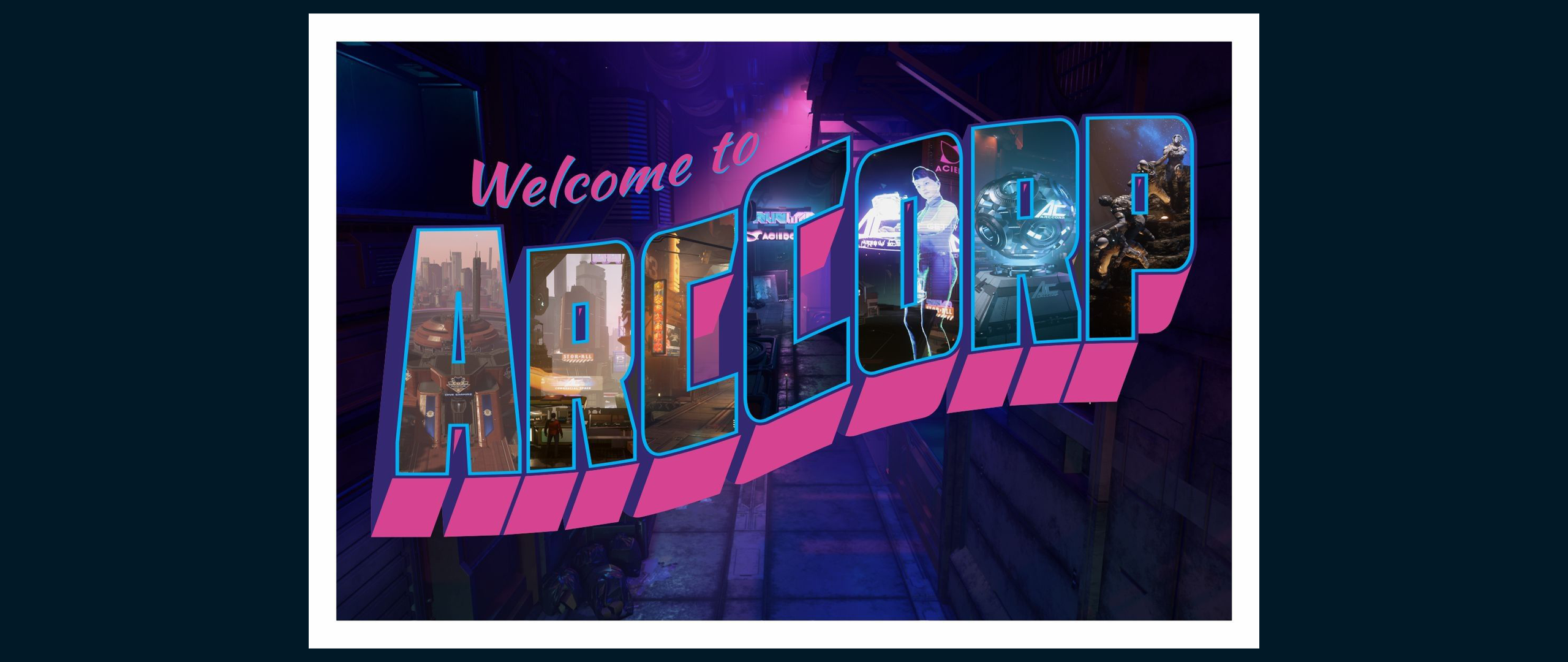
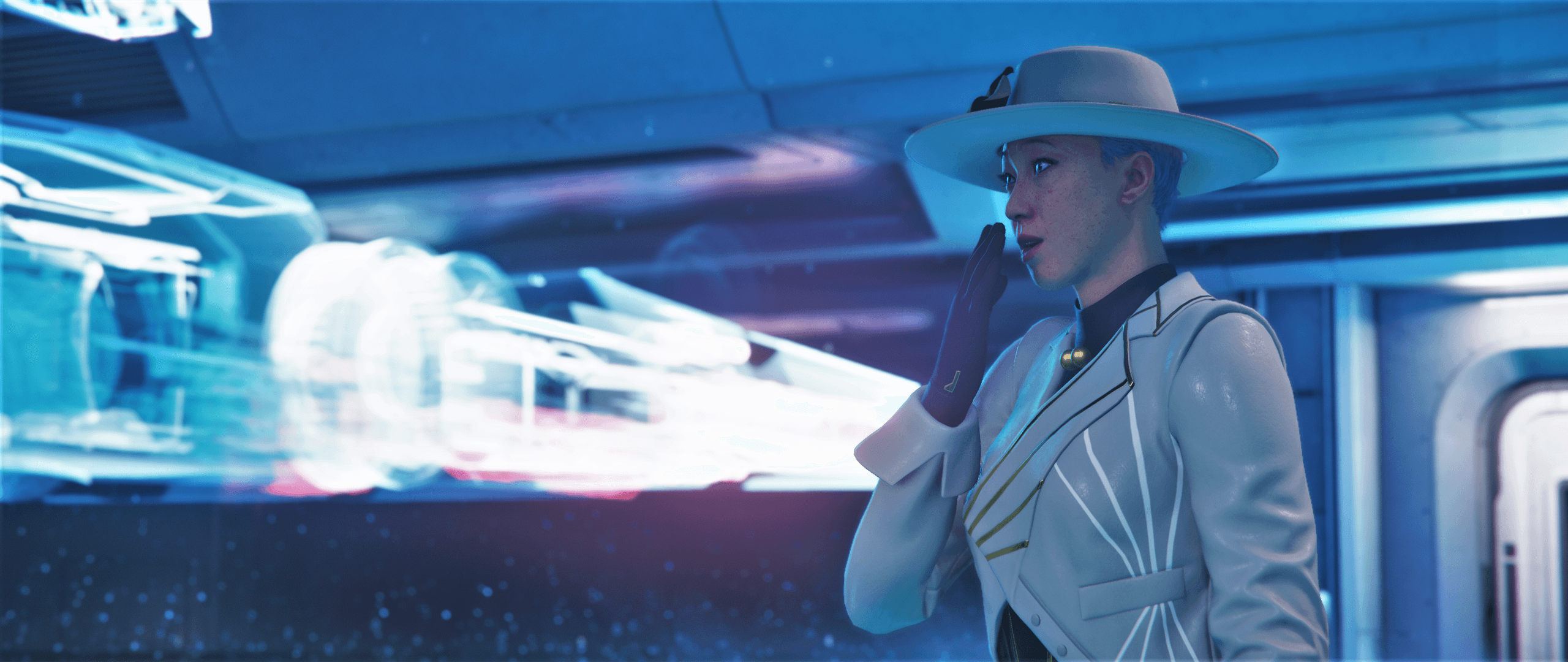
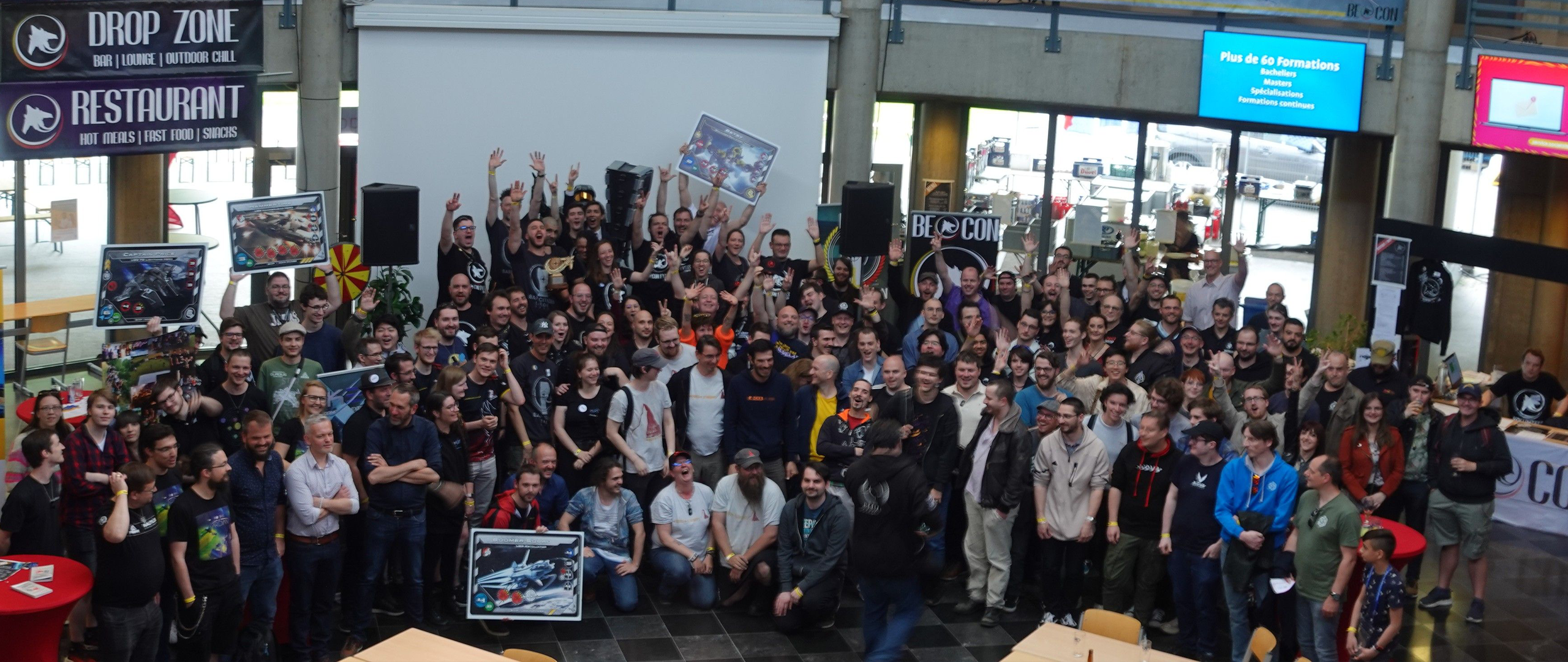
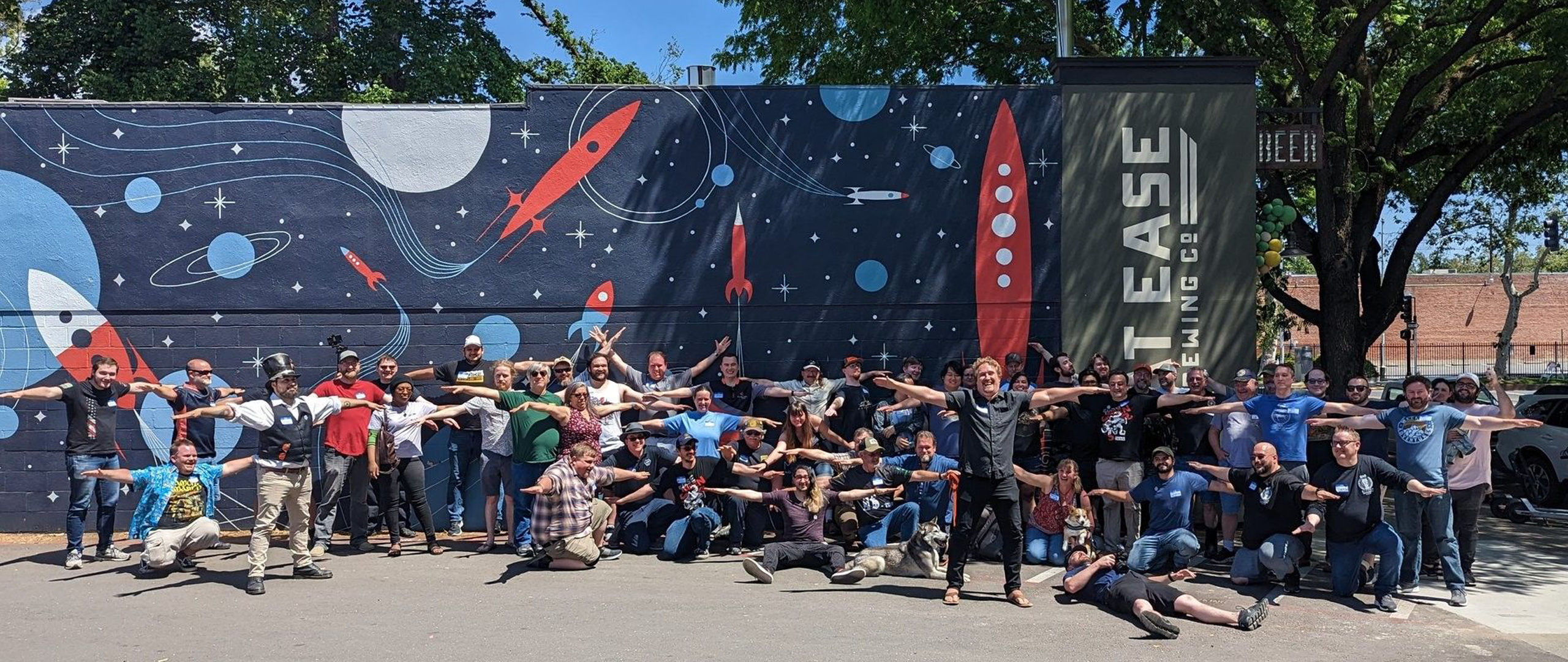
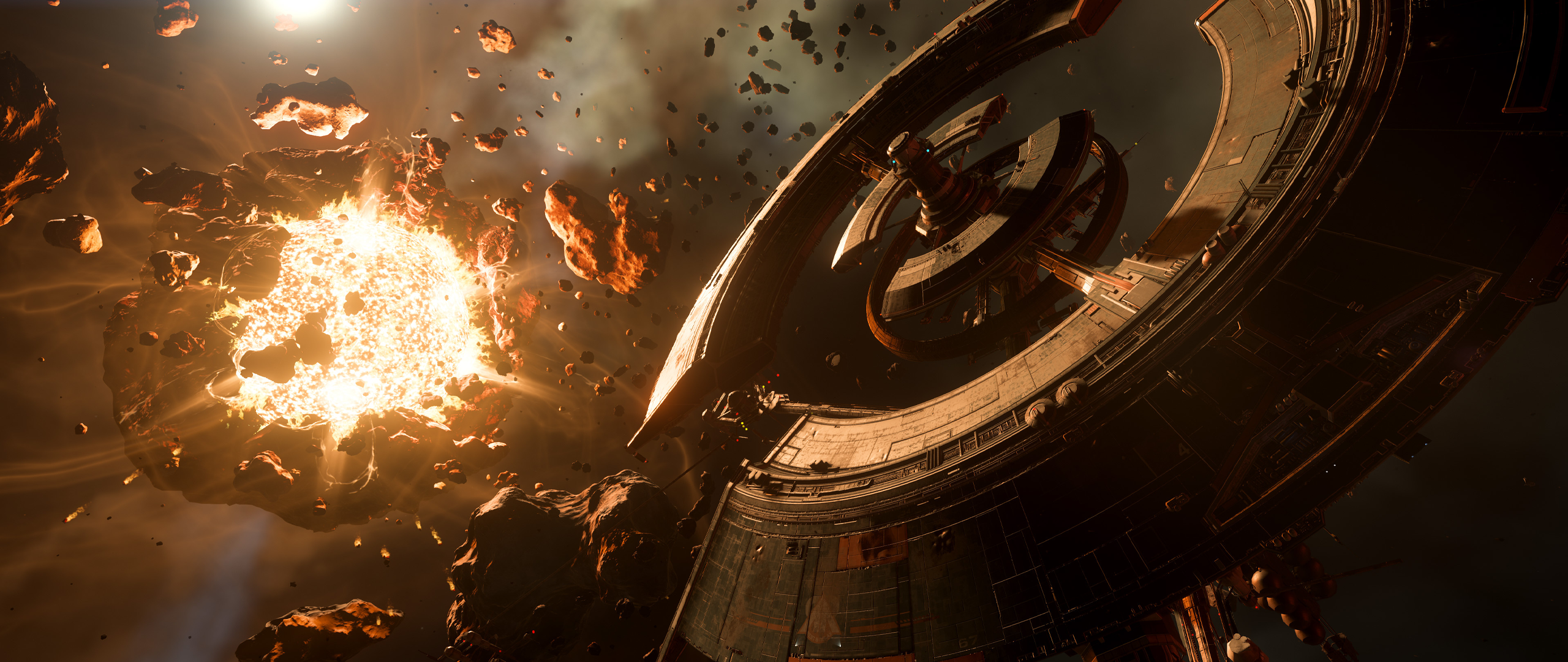
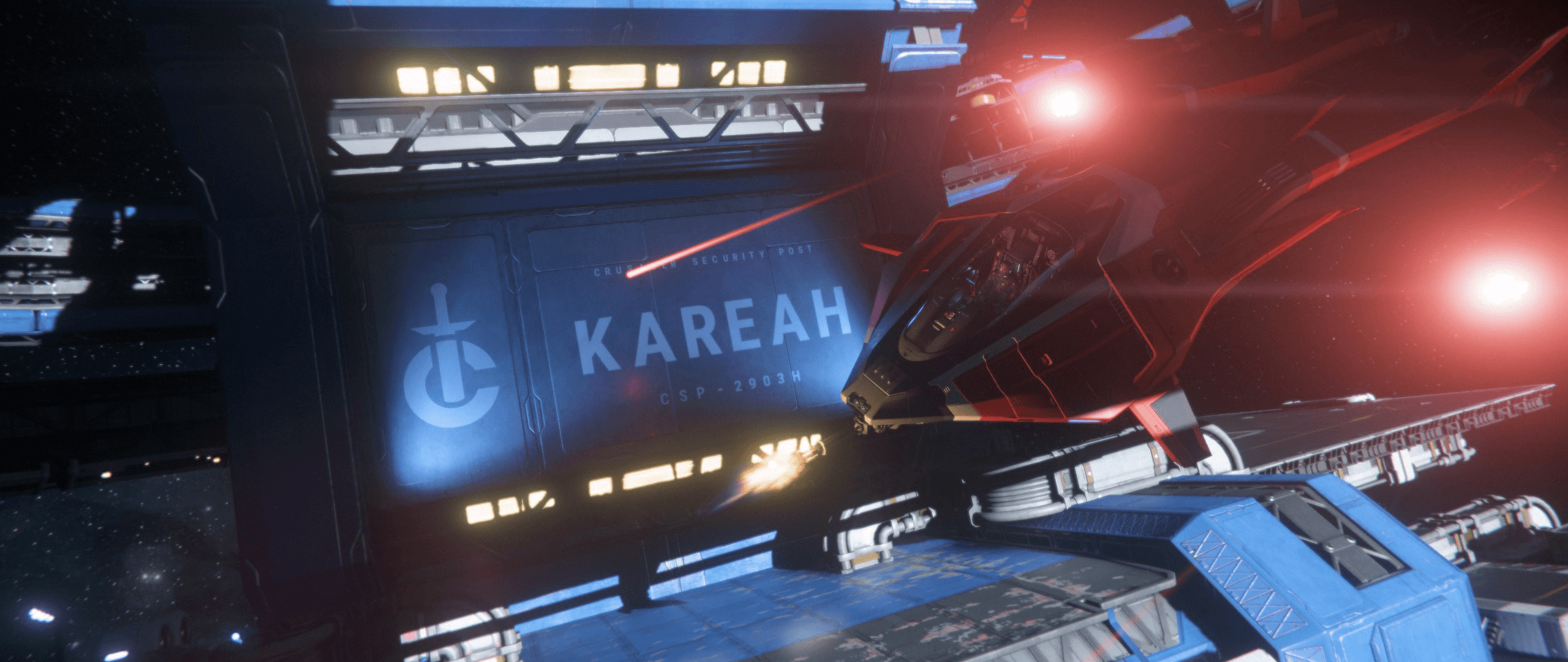
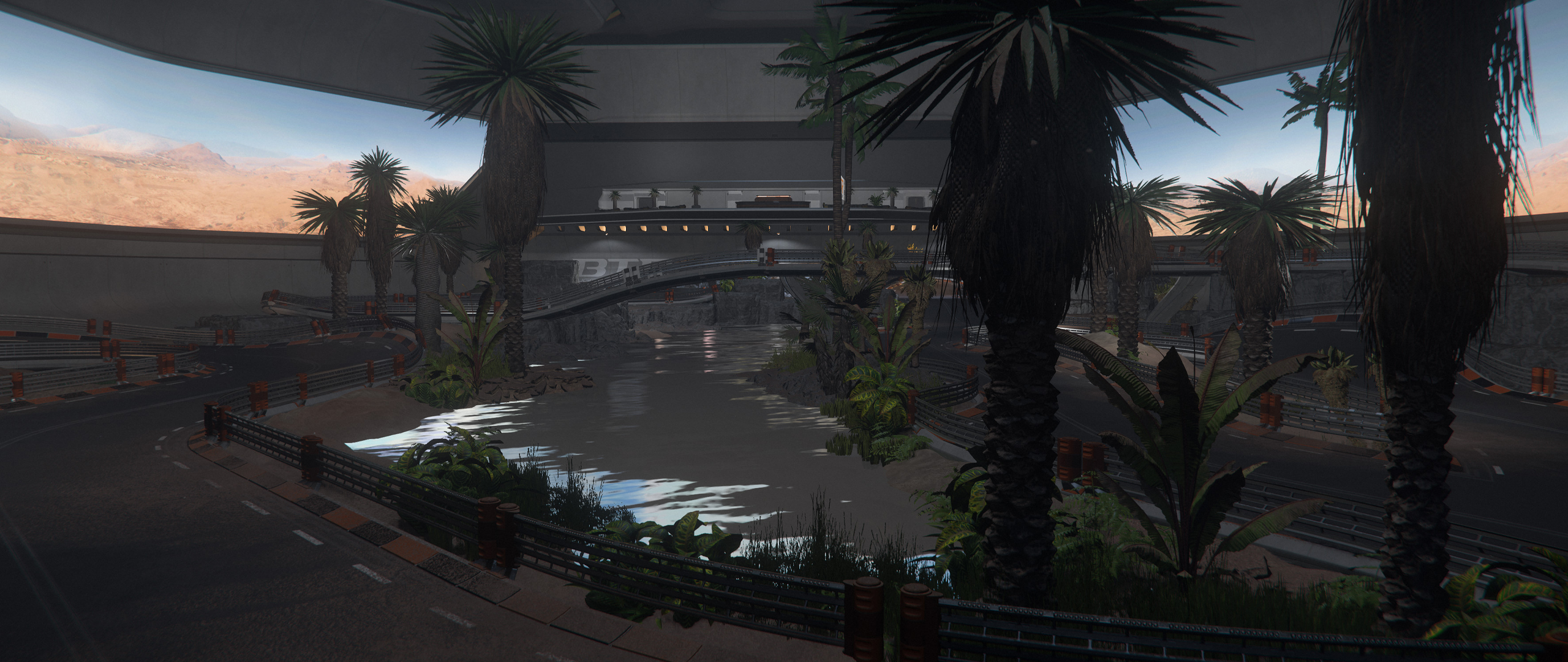
Metadata
- CIG ID
- 19317
- Channel
- Transmission
- Category
- Undefined
- Series
- None
- Comments
- 0
- Published
- 4 months ago (2026-05-25T13:00:00+00:00)