This Day in History: Battle for Centauri
Spectrum Dispatch Undefined News UpdateContent
THIS DAY IN HISTORY
JUNE 24, 2610 SET
The Battle for Centauri
Decimated at the end of their first Human war, the Tevarin military was scattered to the far corners of the universe, their homeworld, Elysium IV, was conquered for Human settlement, and war hero Ivar Messer was granted a position as the UPE’s inaugural (and final) First Citizen. Humanity, confident in their absolute victory, considered the Tevarin threat completely neutralized. They were wrong.
February 15, 2603 SET, a massive battle fleet entered the Fora System through a jump point from Banshee. Broadcasting on all frequencies, Corath’Thal, the new Tevarin Warlord, made his demands known. The Tevarin had returned to retake Elysium IV. Either the UEE could stand aside or Corath’Thal would burn a path to his ancestral home.
There were some in Congress who, hesitant to enter into another war, counseled for the concession of the planet, stating that the Tevarin’s plight was a sympathetic one. However, all debate was ended when the Imperator ordered a full attack. There would be no ceding UEE territory. The Second Tevarin War had begun.
In those first few battles, the military severely underestimated the Tevarin’s abilities. Expecting to fight against a similar show of force to what they had faced previously, the UEE’s initial losses were heavy. Corath’Thal had used the Tevarin’s time in the Fringe well, updating their technology through heavy trading with other species and reconfiguring their military strategy to take full advantage of the lessons learned from their prior defeat. Under his command, the Tevarin slowly forged through system after system. The UEE Navy, even in victory, was unable to force the invaders to retreat. Eventually, after seven long years of protracted fighting, the war had wound its way to the Centauri System, just one jump away from the Tevarin’s homeworld.
Repeated attempts had proven that direct attacks against the Tevarin fleet were in vain. Though the UEE had superior numbers, the Tevarin flew in a unique phalanx formation that relied on heavy shield-generating ships to present a near impregnable front. If they were going to be stopped, it was going to take more than brute firepower this time.
The UEE Navy set up the bulk of their forces around the Centauri-Elysium jump point, knowing that it was Corath’Thal’s main target, but the Warlord denied the UEE the chance to have an entrenched battle. He instead split his forces to strafe the populated city centers on Yar and Saisei. Taking severe civilian losses, the Navy maneuvered most of its carriers to stem the tide of the attack, while leaving a small contingent behind to continue to protect the jump. The decision to leave one carrier behind in particular, the UEES Countenance, is often cited by historians as the pivotal turning point in the Battle for Centauri. Why the Countenance was chosen and not some other vessel has been the subject of numerous academic debates, but one thing is certain, the fact that it was home to the then little-known Squadron 42 did not factor into the choice.
Squadron 42 was what was known as, in the military parlance of the time, a ‘keel squad.’ Founded during the First Tevarin War, it was designated as a disciplinary unit to handle problematic pilots. While often disruptive and not dependable, these highly trained starmen represented significant investments of the Navy’s time and credits, and were deemed too valuable, especially in the middle of a war, to simply lock up or discharge while they were still able to fly. Whereas in previous centuries they would have been keelhauled for their transgressions, they were instead assigned to Squadron 42 and charged with missions ‘too lowly’ for average pilots. While the squad had flown in many battles, they did so without distinction, often at the periphery of the fight. It wasn’t until the Battle for Centauri, when the squadron was under the command of the legendary Captain Alexandra Dunlevy, that the Squadron 42 we know today began to take shape.
Captain Dunlevy, a promising officer with a keen analytical mind, had been assigned to Squadron 42 after being found guilty of insubordination for calling her former commander’s attack plan “stupid.” At first, Captain Dunlevy tried running her new squadron as she would any other, but when what should have been simple supply runs kept taking twice as long as allotted due to infighting and hot-dogging, she realized that another approach was required. The problem wasn’t in their flight skills. She noted in her early reports that often these pilots were some of the best she had ever seen. However, the snap decision-making and self-confidence that made them great pilots often resulted in a resistance towards the Navy’s traditional command structure. More often than not, this attitude was what got them assigned to Squadron 42 in the first place. Determined to turn her squad around, Captain Dunlevy tried an experiment where, rather than outlining a specific flight path and mission plan for her pilots, she simply told them where the pickup point was. The experiment proved a success when the supply run finished hours earlier than her best estimates. Captain Dunlevy’s suspicions were confirmed; Squadron 42 could do anything you asked, as long as you didn’t care how they did it. Now all she had to do was convince Admiral Fraser how valuable her squad could really be. The opportunity presented itself soon after the attacks on Yar and Saisei had begun.
It was clear that the Tevarin were using the planetary attacks as a diversion in order to force the Navy to focus on defending the populace. The Countenance and other carriers left to defend the jump point aligned themselves directly in the Tevarin’s path, establishing a firing wall in preparation for the inevitable charge. Captain Dunlevy had seen this strategy before and knew that while it would possibly hold the Tevarin back long enough for the reinforcements to return, there would be a high number of casualties suffered by the Human forces while the Tevarin shield line would protect its own vessels from much of the damage. The result would be another stalemate, and the war would continue. Captain Dunlevy believed there was a better strategy: give up the jump point.
In an interview shortly before his death, Admiral Fraser was asked why he had gone along with Captain Dunlevy’s plan. After a moment’s consideration he replied simply, “I was tired.”
As Corath’Thal approached the jump point with his fleet, the carriers slowly gave way beneath the Tevarin barrage. Their long-sought goal finally in sight, Corath’Thal ordered the fleet through to Elysium. Since the jump point was not wide enough to accommodate the full Tevarin flotilla at once, they were required to stretch out their normal defensive formation as they neared the opening. Just as the first Tevarin ship was about to go through the jump, Squadron 42 powered up and began their attack.
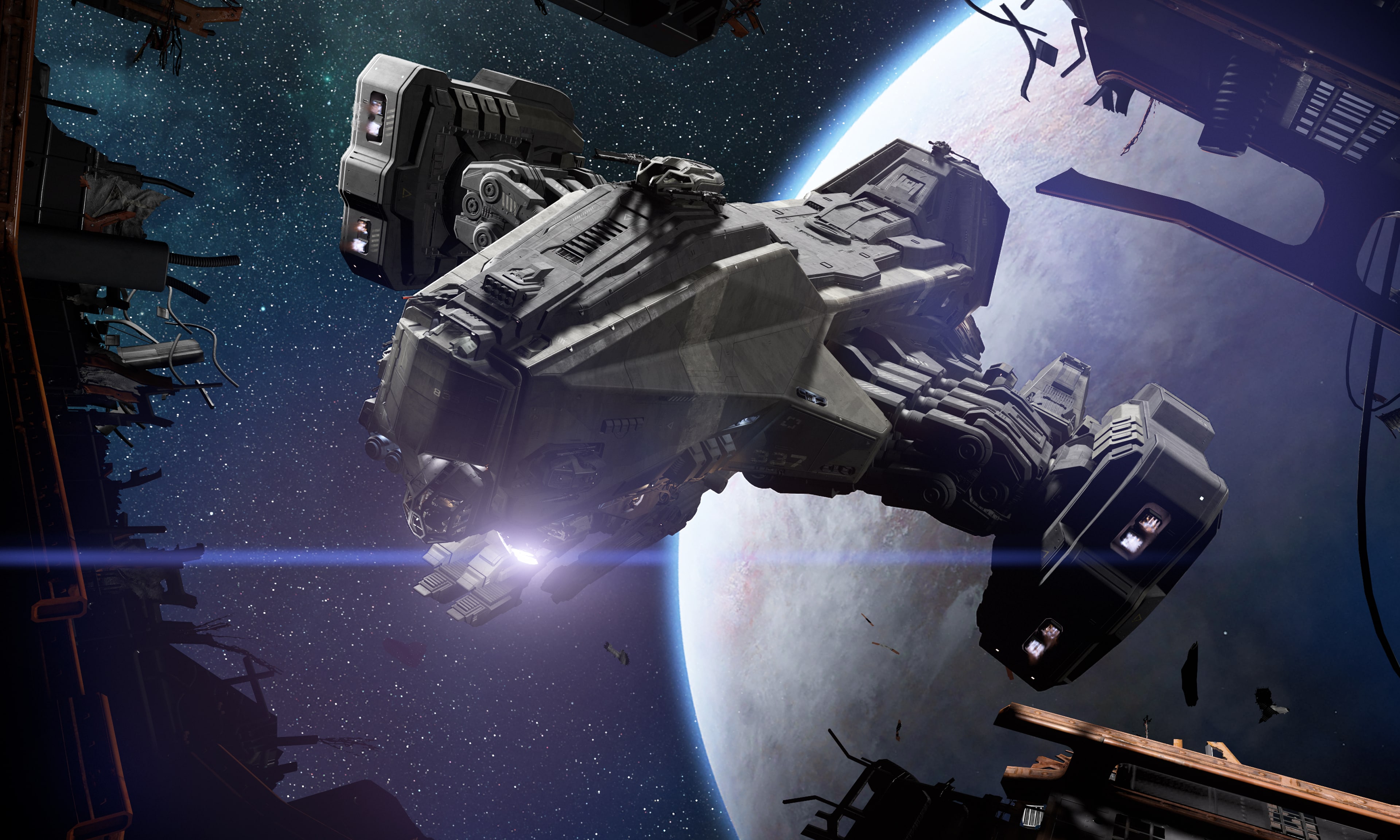
Captain Dunlevy and the rest of her pilots had been floating dead in their Retaliators, hiding amongst the debris and waiting for the Tevarin ships to surround them. Her simple order? Take out the shields. With the Tevarin fleet’s protection weakened by their attempting to enter the jump point, Squadron 42 was able to exploit a lethal chink in their enemy’s armor. The Tevarin were quick to send out fighters to deal with the foe suddenly in their midst, but the damage was already done. Squadron 42, in those few moments, managed to do what no one else in seven years of war had accomplished. With a significant portion of the Tevarin defensive capabilities now disabled, the UEE carriers renewed their attack in earnest, raining destruction upon the enemy that had plagued them for so long.
Though Corath’Thal managed to escape through the jump with a handful of ships, the Battle of Centauri had sounded the death knell for the Tevarin armada and paved the way for the final victory at Elysium IV. Captain Dunlevy and her fearless Squadron 42 received commendations from the Imperator himself, beginning their transformation into the most renowned squadron in military history.
AN DIESEM TAG IN DER GESCHICHTE
24. JUNI, 2610 SET
Die Schlacht um die Centauri
Am Ende ihres ersten menschlichen Krieges dezimiert, wurde das Tevarin-Militär in die entlegensten Winkel des Universums verstreut, ihre Heimatwelt, Elysium IV, wurde für die menschliche Besiedlung erobert, und Kriegsheld Ivar Messer erhielt eine Position als erster Bürger der UPE (und letzter). Die Menschheit, die auf ihren absoluten Sieg vertraut ist, hielt die Bedrohung durch Tevarin für völlig neutralisiert. Sie lagen falsch.
Am 15. Februar 2603 SET betrat eine riesige Kampfflotte das Forensystem durch einen bisher unbekannten Sprungpunkt. Corath'Thal, der neue Kriegsherr der Tevarin, übertrug seine Forderungen auf allen Frequenzen. Der Tevarin war zurückgekehrt, um Elysium IV wieder einzunehmen. Entweder könnte die UEE beiseite treten, oder Corath'Thal würde einen Weg zu seinem angestammten Zuhause brennen.
Es gab einige im Kongress, die, zögernd, in einen anderen Krieg einzutreten, um die Konzession des Planeten rieten und erklärten, dass die Notlage der Tevarin eine sympathische sei. Allerdings war jede Debatte beendet, als der Imperator einen vollständigen Angriff anordnete. Es gäbe kein abgetretenes UEE-Gebiet. Der Zweite Tevarinkrieg hatte begonnen.
In diesen ersten Schlachten unterschätzte das Militär die Fähigkeiten des Tevarin stark. In der Erwartung, gegen eine ähnliche Kraftprobe wie zuvor zu kämpfen, waren die anfänglichen Verluste der UEE hoch. Corath'Thal hatte die Zeit der Tevarin im Fringe gut genutzt, ihre Technologie durch intensiven Handel mit anderen Arten aktualisiert und ihre Militärstrategie neu gestaltet, um die Erfahrungen aus ihrer vorherigen Niederlage voll auszuschöpfen. Unter seinem Kommando schmiedeten sich die Tevarin langsam durch System um System. Die UEE Navy, selbst im Sieg, war nicht in der Lage, die Eindringlinge zum Rückzug zu zwingen. Schließlich, nach sieben langen Jahren langwieriger Kämpfe, hatte sich der Krieg zum Centauri-System entwickelt, nur einen Sprung von der Heimatwelt der Tevarin entfernt.
Wiederholte Versuche hatten bewiesen, dass direkte Angriffe auf die Tevarin-Flotte vergeblich waren. Obwohl die UEE eine Überzahl hatte, flog die Tevarin in einer einzigartigen Phalanxformation, die sich auf schwere, schildgenerierende Schiffe stützte, um eine nahezu unüberwindbare Front zu präsentieren. Wenn sie gestoppt werden sollten, brauchte es diesmal mehr als brutale Feuerkraft.
Die UEE Navy stellte den Großteil ihrer Streitkräfte um den Sprungpunkt Centauri-Elysium auf, da sie wusste, dass dies das Hauptziel von Corath'Thal war, aber der Kriegsherr verweigerte der UEE die Chance, eine festgefahrene Schlacht zu führen. Stattdessen teilte er seine Streitkräfte auf, um die bevölkerten Stadtzentren auf Yar und Saisei zu belasten. Unter schweren zivilen Verlusten manövrierte die Marine die meisten ihrer Träger, um die Flut des Angriffs aufzuhalten, während sie ein kleines Kontingent zurückließ, um den Sprung weiterhin zu schützen. Die Entscheidung, insbesondere einen Träger, den UEES-Blick, zu verlassen, wird von Historikern oft als Dreh- und Angelpunkt in der Schlacht um Centauri bezeichnet. Warum der Gesichtsausdruck gewählt wurde und nicht ein anderes Schiff Gegenstand zahlreicher wissenschaftlicher Debatten war, aber eines ist sicher, die Tatsache, dass es die damals wenig bekannte Staffel 42 war, spielte bei der Wahl keine Rolle.
Staffel 42 war das, was im militärischen Sprachgebrauch der damaligen Zeit als "Kieltruppe" bekannt war. Gegründet im Ersten Tevarinkrieg, wurde sie als Disziplinierungseinheit für problematische Piloten konzipiert. Obwohl oft störend und nicht zuverlässig, stellten diese gut ausgebildeten Starmen erhebliche Investitionen in die Zeit und die Kredite der Marine dar und wurden vor allem in der Mitte eines Krieges als zu wertvoll erachtet, um sie einfach einzusperren oder zu entladen, während sie noch fliegen konnten. Während sie in früheren Jahrhunderten wegen ihrer Übertretungen kielgeholt worden wären, wurden sie stattdessen der Staffel 42 zugewiesen und mit Missionen beauftragt, die für durchschnittliche Piloten "zu niedrig" waren. Während die Truppe in vielen Schlachten geflogen war, tat sie dies ohne Unterschied, oft am Rande des Kampfes. Erst in der Schlacht um Centauri, als die Staffel unter dem Kommando des legendären Kapitäns Alexandra Dunlevy stand, nahm die Staffel 42, die wir heute kennen, Gestalt an.
Captain Dunlevy, ein vielversprechender Offizier mit einem scharfen analytischen Verstand, war der Staffel 42 zugeteilt worden, nachdem er wegen Ungehorsams für schuldig befunden worden war, weil er den Angriffsplan ihrer ehemaligen Kommandantin als "dumm" bezeichnet hatte. Zuerst versuchte Captain Dunlevy, ihre neue Staffel wie jede andere zu führen, aber als die einfachen Versorgungsläufe immer wieder doppelt so lange dauerten, wie sie aufgrund von Infighting und Hot-Dogging zugeteilt wurden, wurde ihr klar, dass ein anderer Ansatz erforderlich war. Das Problem lag nicht in ihren Flugfähigkeiten. Sie bemerkte in ihren ersten Berichten, dass diese Piloten oft zu den besten gehörten, die sie je gesehen hatte. Die schnelle Entscheidungsfindung und das Selbstvertrauen, das sie zu großen Piloten machte, führten jedoch oft zu einem Widerstand gegen die traditionelle Kommandostruktur der Marine. Meistens war es diese Einstellung, die sie überhaupt der Staffel 42 zugewiesen hat. Captain Dunlevy war entschlossen, ihre Truppe umzudrehen und versuchte ein Experiment, bei dem sie nicht nur eine bestimmte Flugroute und einen bestimmten Missionsplan für ihre Piloten entwarf, sondern ihnen auch einfach sagte, wo sich der Treffpunkt befand. Das Experiment erwies sich als erfolgreich, als der Versorgungslauf Stunden früher als nach ihren besten Schätzungen beendet wurde. Captain Dunlevys Verdacht wurde bestätigt: Staffel 42 konnte alles tun, was Sie wollten, solange es Ihnen egal war, wie sie es taten. Jetzt musste sie nur noch Admiral Fraser davon überzeugen, wie wertvoll ihre Truppe wirklich sein könnte. Die Gelegenheit bot sich kurz nach Beginn der Angriffe auf Yar und Saisei.
Es war klar, dass die Tevarin die planetarischen Angriffe als Ablenkung nutzten, um die Marine zu zwingen, sich auf die Verteidigung der Bevölkerung zu konzentrieren. Der Gesichtsausdruck und andere Träger, die zur Verteidigung des Sprungpunktes übrig blieben, richteten sich direkt auf den Weg des Tevarin ein und errichteten eine Schussmauer zur Vorbereitung auf die unvermeidliche Ladung. Captain Dunlevy hatte diese Strategie schon einmal gesehen und wusste, dass, obwohl sie den Tevarin möglicherweise lange genug zurückhalten würde, damit die Verstärkungen zurückkehren könnten, es eine hohe Anzahl von Opfern geben würde, die von den menschlichen Streitkräften erlitten würden, während die Tevarin-Schildlinie ihre eigenen Schiffe vor einem Großteil der Schäden schützen würde. Das Ergebnis wäre eine weitere Pattsituation, und der Krieg würde weitergehen. Captain Dunlevy glaubte, es gäbe eine bessere Strategie: den Sprungpunkt aufzugeben.
In einem Interview kurz vor seinem Tod wurde Admiral Fraser gefragt, warum er sich dem Plan von Captain Dunlevy angeschlossen hatte. Nach einer kurzen Überlegung antwortete er einfach: "Ich war müde."
Als Corath'Thal sich mit seiner Flotte dem Startpunkt näherte, wichen die Träger langsam unter dem Staudamm von Tevarin. Ihr lang ersehntes Ziel war endlich in Sicht, Corath'Thal befahl die Flotte bis nach Elysium. Da der Sprungbereich nicht breit genug war, um die gesamte Tevarin-Flottille auf einmal unterzubringen, mussten sie ihre normale Abwehrformation ausstrecken, als sie sich der Öffnung näherten. Gerade als das erste Tevarin-Schiff im Begriff war, den Sprung zu überstehen, schaltete sich die Staffel 42 ein und begann ihren Angriff.
Captain Dunlevy und der Rest ihrer Piloten waren tot in ihren Vergeltern geschwommen, versteckten sich zwischen den Trümmern und warteten darauf, dass die Tevarin-Schiffe sie umgaben. Ihre einfache Bestellung? Nimm die Schilde heraus. Da der Schutz der Tevarin-Flotte durch den Versuch, den Sprungpunkt zu erreichen, geschwächt wurde, konnte die Staffel 42 eine tödliche Spalte in der Rüstung ihres Feindes ausnutzen. Die Tevarin schickten schnell Kämpfer los, um den Gegner plötzlich in ihrer Mitte zu bekämpfen, aber der Schaden war bereits angerichtet. Die Staffel 42 schaffte es in diesen wenigen Momenten, das zu tun, was niemand sonst in sieben Jahren Krieg erreicht hatte. Da ein beträchtlicher Teil der Verteidigungsfähigkeiten von Tevarin nun deaktiviert ist, erneuerten die UEE-Träger ihren Angriff ernsthaft und zerstörten den Feind, der sie so lange geplagt hatte.
Obwohl Corath'Thal es schaffte, mit einer Handvoll Schiffe durch den Sprung zu entkommen, hatte die Schlacht von Centauri die Todesglocke für die Tevarin-Armada geschlagen und den Weg für den endgültigen Sieg bei Elysium IV geebnet. Captain Dunlevy und ihre furchtlose Staffel 42 erhielten vom Imperator selbst Auszeichnungen und begannen ihre Verwandlung in die berühmteste Staffel der Militärgeschichte.
THIS DAY IN HISTORY
JUNE 24, 2610 SET
The Battle for Centauri
Decimated at the end of their first Human war, the Tevarin military was scattered to the far corners of the universe, their homeworld, Elysium IV, was conquered for Human settlement, and war hero Ivar Messer was granted a position as the UPE’s inaugural (and final) First Citizen. Humanity, confident in their absolute victory, considered the Tevarin threat completely neutralized. They were wrong.
February 15, 2603 SET, a massive battle fleet entered the Fora System through a jump point from Banshee. Broadcasting on all frequencies, Corath’Thal, the new Tevarin Warlord, made his demands known. The Tevarin had returned to retake Elysium IV. Either the UEE could stand aside or Corath’Thal would burn a path to his ancestral home.
There were some in Congress who, hesitant to enter into another war, counseled for the concession of the planet, stating that the Tevarin’s plight was a sympathetic one. However, all debate was ended when the Imperator ordered a full attack. There would be no ceding UEE territory. The Second Tevarin War had begun.
In those first few battles, the military severely underestimated the Tevarin’s abilities. Expecting to fight against a similar show of force to what they had faced previously, the UEE’s initial losses were heavy. Corath’Thal had used the Tevarin’s time in the Fringe well, updating their technology through heavy trading with other species and reconfiguring their military strategy to take full advantage of the lessons learned from their prior defeat. Under his command, the Tevarin slowly forged through system after system. The UEE Navy, even in victory, was unable to force the invaders to retreat. Eventually, after seven long years of protracted fighting, the war had wound its way to the Centauri System, just one jump away from the Tevarin’s homeworld.
Repeated attempts had proven that direct attacks against the Tevarin fleet were in vain. Though the UEE had superior numbers, the Tevarin flew in a unique phalanx formation that relied on heavy shield-generating ships to present a near impregnable front. If they were going to be stopped, it was going to take more than brute firepower this time.
The UEE Navy set up the bulk of their forces around the Centauri-Elysium jump point, knowing that it was Corath’Thal’s main target, but the Warlord denied the UEE the chance to have an entrenched battle. He instead split his forces to strafe the populated city centers on Yar and Saisei. Taking severe civilian losses, the Navy maneuvered most of its carriers to stem the tide of the attack, while leaving a small contingent behind to continue to protect the jump. The decision to leave one carrier behind in particular, the UEES Countenance, is often cited by historians as the pivotal turning point in the Battle for Centauri. Why the Countenance was chosen and not some other vessel has been the subject of numerous academic debates, but one thing is certain, the fact that it was home to the then little-known Squadron 42 did not factor into the choice.
Squadron 42 was what was known as, in the military parlance of the time, a ‘keel squad.’ Founded during the First Tevarin War, it was designated as a disciplinary unit to handle problematic pilots. While often disruptive and not dependable, these highly trained starmen represented significant investments of the Navy’s time and credits, and were deemed too valuable, especially in the middle of a war, to simply lock up or discharge while they were still able to fly. Whereas in previous centuries they would have been keelhauled for their transgressions, they were instead assigned to Squadron 42 and charged with missions ‘too lowly’ for average pilots. While the squad had flown in many battles, they did so without distinction, often at the periphery of the fight. It wasn’t until the Battle for Centauri, when the squadron was under the command of the legendary Captain Alexandra Dunlevy, that the Squadron 42 we know today began to take shape.
Captain Dunlevy, a promising officer with a keen analytical mind, had been assigned to Squadron 42 after being found guilty of insubordination for calling her former commander’s attack plan “stupid.” At first, Captain Dunlevy tried running her new squadron as she would any other, but when what should have been simple supply runs kept taking twice as long as allotted due to infighting and hot-dogging, she realized that another approach was required. The problem wasn’t in their flight skills. She noted in her early reports that often these pilots were some of the best she had ever seen. However, the snap decision-making and self-confidence that made them great pilots often resulted in a resistance towards the Navy’s traditional command structure. More often than not, this attitude was what got them assigned to Squadron 42 in the first place. Determined to turn her squad around, Captain Dunlevy tried an experiment where, rather than outlining a specific flight path and mission plan for her pilots, she simply told them where the pickup point was. The experiment proved a success when the supply run finished hours earlier than her best estimates. Captain Dunlevy’s suspicions were confirmed; Squadron 42 could do anything you asked, as long as you didn’t care how they did it. Now all she had to do was convince Admiral Fraser how valuable her squad could really be. The opportunity presented itself soon after the attacks on Yar and Saisei had begun.
It was clear that the Tevarin were using the planetary attacks as a diversion in order to force the Navy to focus on defending the populace. The Countenance and other carriers left to defend the jump point aligned themselves directly in the Tevarin’s path, establishing a firing wall in preparation for the inevitable charge. Captain Dunlevy had seen this strategy before and knew that while it would possibly hold the Tevarin back long enough for the reinforcements to return, there would be a high number of casualties suffered by the Human forces while the Tevarin shield line would protect its own vessels from much of the damage. The result would be another stalemate, and the war would continue. Captain Dunlevy believed there was a better strategy: give up the jump point.
In an interview shortly before his death, Admiral Fraser was asked why he had gone along with Captain Dunlevy’s plan. After a moment’s consideration he replied simply, “I was tired.”
As Corath’Thal approached the jump point with his fleet, the carriers slowly gave way beneath the Tevarin barrage. Their long-sought goal finally in sight, Corath’Thal ordered the fleet through to Elysium. Since the jump point was not wide enough to accommodate the full Tevarin flotilla at once, they were required to stretch out their normal defensive formation as they neared the opening. Just as the first Tevarin ship was about to go through the jump, Squadron 42 powered up and began their attack.
Captain Dunlevy and the rest of her pilots had been floating dead in their Retaliators, hiding amongst the debris and waiting for the Tevarin ships to surround them. Her simple order? Take out the shields. With the Tevarin fleet’s protection weakened by their attempting to enter the jump point, Squadron 42 was able to exploit a lethal chink in their enemy’s armor. The Tevarin were quick to send out fighters to deal with the foe suddenly in their midst, but the damage was already done. Squadron 42, in those few moments, managed to do what no one else in seven years of war had accomplished. With a significant portion of the Tevarin defensive capabilities now disabled, the UEE carriers renewed their attack in earnest, raining destruction upon the enemy that had plagued them for so long.
Though Corath’Thal managed to escape through the jump with a handful of ships, the Battle of Centauri had sounded the death knell for the Tevarin armada and paved the way for the final victory at Elysium IV. Captain Dunlevy and her fearless Squadron 42 received commendations from the Imperator himself, beginning their transformation into the most renowned squadron in military history.
THIS DAY IN HISTORY
JUNE 24, 2610 SET
The Battle for Centauri
Decimated at the end of their first Human war, the Tevarin military was scattered to the far corners of the universe, their homeworld, Elysium IV, was conquered for Human settlement, and war hero Ivar Messer was granted a position as the UPE’s inaugural (and final) First Citizen. Humanity, confident in their absolute victory, considered the Tevarin threat completely neutralized. They were wrong.
February 15, 2603 SET, a massive battle fleet entered the Fora System through a jump point from Banshee. Broadcasting on all frequencies, Corath’Thal, the new Tevarin Warlord, made his demands known. The Tevarin had returned to retake Elysium IV. Either the UEE could stand aside or Corath’Thal would burn a path to his ancestral home.
There were some in Congress who, hesitant to enter into another war, counseled for the concession of the planet, stating that the Tevarin’s plight was a sympathetic one. However, all debate was ended when the Imperator ordered a full attack. There would be no ceding UEE territory. The Second Tevarin War had begun.
In those first few battles, the military severely underestimated the Tevarin’s abilities. Expecting to fight against a similar show of force to what they had faced previously, the UEE’s initial losses were heavy. Corath’Thal had used the Tevarin’s time in the Fringe well, updating their technology through heavy trading with other species and reconfiguring their military strategy to take full advantage of the lessons learned from their prior defeat. Under his command, the Tevarin slowly forged through system after system. The UEE Navy, even in victory, was unable to force the invaders to retreat. Eventually, after seven long years of protracted fighting, the war had wound its way to the Centauri System, just one jump away from the Tevarin’s homeworld.
Repeated attempts had proven that direct attacks against the Tevarin fleet were in vain. Though the UEE had superior numbers, the Tevarin flew in a unique phalanx formation that relied on heavy shield-generating ships to present a near impregnable front. If they were going to be stopped, it was going to take more than brute firepower this time.
The UEE Navy set up the bulk of their forces around the Centauri-Elysium jump point, knowing that it was Corath’Thal’s main target, but the Warlord denied the UEE the chance to have an entrenched battle. He instead split his forces to strafe the populated city centers on Yar and Saisei. Taking severe civilian losses, the Navy maneuvered most of its carriers to stem the tide of the attack, while leaving a small contingent behind to continue to protect the jump. The decision to leave one carrier behind in particular, the UEES Countenance, is often cited by historians as the pivotal turning point in the Battle for Centauri. Why the Countenance was chosen and not some other vessel has been the subject of numerous academic debates, but one thing is certain, the fact that it was home to the then little-known Squadron 42 did not factor into the choice.
Squadron 42 was what was known as, in the military parlance of the time, a ‘keel squad.’ Founded during the First Tevarin War, it was designated as a disciplinary unit to handle problematic pilots. While often disruptive and not dependable, these highly trained starmen represented significant investments of the Navy’s time and credits, and were deemed too valuable, especially in the middle of a war, to simply lock up or discharge while they were still able to fly. Whereas in previous centuries they would have been keelhauled for their transgressions, they were instead assigned to Squadron 42 and charged with missions ‘too lowly’ for average pilots. While the squad had flown in many battles, they did so without distinction, often at the periphery of the fight. It wasn’t until the Battle for Centauri, when the squadron was under the command of the legendary Captain Alexandra Dunlevy, that the Squadron 42 we know today began to take shape.
Captain Dunlevy, a promising officer with a keen analytical mind, had been assigned to Squadron 42 after being found guilty of insubordination for calling her former commander’s attack plan “stupid.” At first, Captain Dunlevy tried running her new squadron as she would any other, but when what should have been simple supply runs kept taking twice as long as allotted due to infighting and hot-dogging, she realized that another approach was required. The problem wasn’t in their flight skills. She noted in her early reports that often these pilots were some of the best she had ever seen. However, the snap decision-making and self-confidence that made them great pilots often resulted in a resistance towards the Navy’s traditional command structure. More often than not, this attitude was what got them assigned to Squadron 42 in the first place. Determined to turn her squad around, Captain Dunlevy tried an experiment where, rather than outlining a specific flight path and mission plan for her pilots, she simply told them where the pickup point was. The experiment proved a success when the supply run finished hours earlier than her best estimates. Captain Dunlevy’s suspicions were confirmed; Squadron 42 could do anything you asked, as long as you didn’t care how they did it. Now all she had to do was convince Admiral Fraser how valuable her squad could really be. The opportunity presented itself soon after the attacks on Yar and Saisei had begun.
It was clear that the Tevarin were using the planetary attacks as a diversion in order to force the Navy to focus on defending the populace. The Countenance and other carriers left to defend the jump point aligned themselves directly in the Tevarin’s path, establishing a firing wall in preparation for the inevitable charge. Captain Dunlevy had seen this strategy before and knew that while it would possibly hold the Tevarin back long enough for the reinforcements to return, there would be a high number of casualties suffered by the Human forces while the Tevarin shield line would protect its own vessels from much of the damage. The result would be another stalemate, and the war would continue. Captain Dunlevy believed there was a better strategy: give up the jump point.
In an interview shortly before his death, Admiral Fraser was asked why he had gone along with Captain Dunlevy’s plan. After a moment’s consideration he replied simply, “I was tired.”
As Corath’Thal approached the jump point with his fleet, the carriers slowly gave way beneath the Tevarin barrage. Their long-sought goal finally in sight, Corath’Thal ordered the fleet through to Elysium. Since the jump point was not wide enough to accommodate the full Tevarin flotilla at once, they were required to stretch out their normal defensive formation as they neared the opening. Just as the first Tevarin ship was about to go through the jump, Squadron 42 powered up and began their attack.
Captain Dunlevy and the rest of her pilots had been floating dead in their Retaliators, hiding amongst the debris and waiting for the Tevarin ships to surround them. Her simple order? Take out the shields. With the Tevarin fleet’s protection weakened by their attempting to enter the jump point, Squadron 42 was able to exploit a lethal chink in their enemy’s armor. The Tevarin were quick to send out fighters to deal with the foe suddenly in their midst, but the damage was already done. Squadron 42, in those few moments, managed to do what no one else in seven years of war had accomplished. With a significant portion of the Tevarin defensive capabilities now disabled, the UEE carriers renewed their attack in earnest, raining destruction upon the enemy that had plagued them for so long.
Though Corath’Thal managed to escape through the jump with a handful of ships, the Battle of Centauri had sounded the death knell for the Tevarin armada and paved the way for the final victory at Elysium IV. Captain Dunlevy and her fearless Squadron 42 received commendations from the Imperator himself, beginning their transformation into the most renowned squadron in military history.
Links
No links available.


Metadata
- CIG ID
- 13970
- Channel
- Spectrum Dispatch
- Category
- Undefined
- Series
- News Update
- Comments
- 127
- Published
- 12 years ago (2014-06-25T00:00:00+00:00)