Galactic Guide: Taranis System
Spectrum Dispatch Undefined Galactic GuideContent
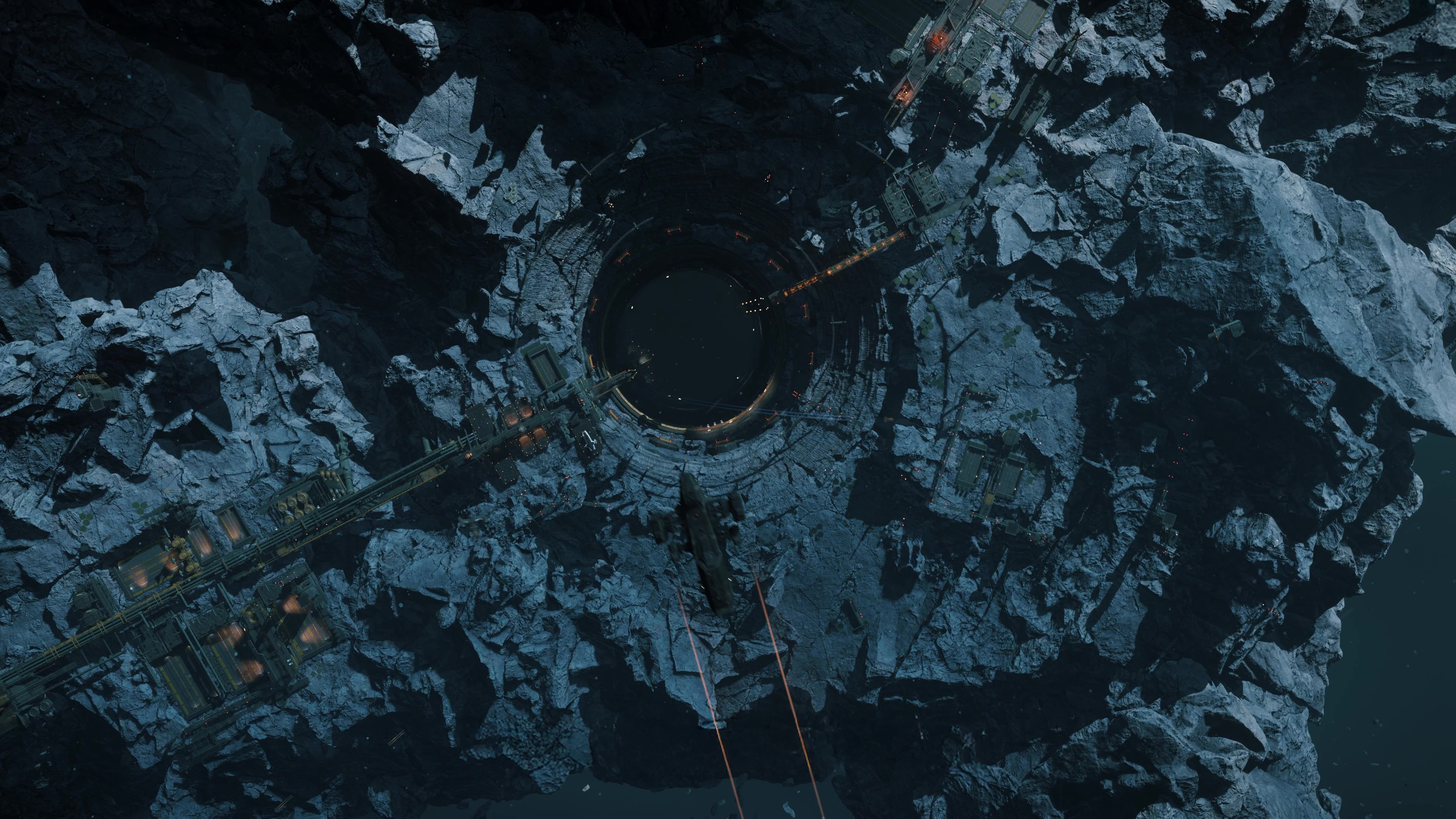
The rocky heart of the frontier! Taranis is best known as one of the systems of Kellar’s Run, but the asteroid and lunar debris fields of the Taranis system have proven to be more dangerous for many pilots who did not have the skill to negotiate such hazards.
Taranis was discovered in 2478 by the famed UNE survey ship Mythic Horizon. Home to a Type-A Main Sequence star and four planets, the system only had a single high risk candidate for terraforming in its initial scouting report. Shortly after discovery, the system was the site of a tragedy: one of Mythic Horizon’s survey boats was lost with all hands in a meteor strike.
Taranis has also recently entered the popular culture because of its role in Original Systems’ Arena Commander. The “Broken Moon of Taranis” map is one of two included in the massively popular simulator’s public demo. The setting pits players against one another in the debris field near Taranis II. Pilots dodge both flying rocks and massive pulsating terraformers as they fight it out in an ultra-realistic battle royale. The choice of Taranis in Arena Commander has even led to increased (and very dangerous) tourism in the system, as self-titled “Arena Nuts” travel from far and wide to have their holographs taken in front of the lunar remnants.
Taranis I
The first planet in the Taranis system is a typical sunkissed inner dwarf, too hot for Human settlement. The planetoid was the source of an unusual incident in the mid 26th century: a review of the initial survey data (radar scanning, interferometry and long range imaging) produced an image with what looked distinctly like a Human face superimposed on the planet’s north polar region. The so called “Face of Taranis” was a brief cultural craze in the Empire and ultimately inspired a privately funded expedition to the world to confirm that the picture was simply a mountain range photographed from an unusual position. The incident had its fair share of conspiracy theorists who continued to insist that the government had covered up evidence of an alien civilization living there.
Asteroid Belt Alpha & Beta
Beyond Taranis I is a pair of extremely dense asteroid belts which are notoriously difficult to traverse not only because of the sheer concentration of material in the belt, but because of how active the asteroids are. Asteroids frequently collide and eject material. Because the belts are so hazardous, few mining companies have felt it worth the risk to establish operations in the belts, though some smaller independent operations have attempted to turn a profit here. Smugglers and outlaws consider the Beta belt, with its proximity to the Green Zone, to be a good place to hide, and the occasional top level pirate will set up an ambush point in the belt. However, since this belt is denser with fewer safe approach vectors, even these types frequently find themselves the victim of rock strikes.
Taranis II
Now best known as the site of the “broken moon,” Taranis II was a victim of the gung ho terraforming craze of the Messer era. The coreless world was initially classified as a poor choice for terraforming and colonization, but Ophion Inc., a cheap geo development outfit, decided that it would be ideal place to test an experimental terraforming technique involving harnessing the energy in its orbiting moon. In the case of Taranis II, substandard parts and near slave labor on top of dubious science meant that Ophion managed to crack the mantle of Taranis’ small moon, splitting it into a million dangerous chunks. In addition to a deadly debris field that will continue to strike the planet for hundreds of years, the process super ignited the terraforming machinery in orbit. Several of the stacks continue to burn unabated to this day, further rendering the surface of the planet worthless slag.
Taranis III
Taranis III is a smoggy, stormy world located on the edge of the system’s habitable zone. The planet’s constant storms are the origin of the system’s name (Taranis, Celtic God of Thunder). The planet lacks a breathable atmosphere, but has nonetheless become the site of Human settlement. Bethor research station, established in 2536 to study weather control techniques, has organically expanded over the centuries to become a full fledged settlement of Tevarin refugees and Human expats. The initial corporate owners are long gone, and Bethor is now rumored to be in the control of a syndicate, although they keep their activities obscured from visitors.
Taranis IV
A distant world on the edge of the system, Taranis IV is a mid sized gas giant consisting predominantly of hydrogen and helium. It is an occasionally visited by harvester ships but such stopovers are few and far between. To date, all attempts at establishing orbiting stations have failed to materialize.
Travel Warning
Visitors to Taranis should be extremely cautious; transit through the system should be attempted only by top pilots and ship crews who are experienced in dense asteroid piloting.
Heard in the Wind
“It’s my hope that the sacrifice of our friends and colleagues in the pursuit of knowledge will make this system a beacon in the future expansion of Humanity.”
- Capt. Glen Whitacre’s eulogy for lost Mythic Horizon crew
“Ophion is committed to the advancement of science and sometimes, that means taking a chance. We know our geoengineers come from unconventional backgrounds, but to truly reach for greatness, one must be willing to take risks.”
- Excerpt from the Ophion terraforming presentation
Das felsige Herz der Grenze! Taranis ist am besten bekannt als eines der Systeme von Kellar's Run, aber die Asteroiden- und Mondschutzfelder des Taranis-Systems haben sich für viele Piloten, die nicht über die Fähigkeit verfügten, solche Gefahren zu überwinden, als gefährlicher erwiesen.
Taranis wurde 2478 vom berühmten UNE-Vermessungsschiff Mythic Horizon entdeckt. Das System, das einen Stern der Hauptsequenz vom Typ A und vier Planeten beherbergt, hatte in seinem ersten Scouting-Bericht nur einen einzigen Hochrisikokandidaten für Terraforming. Kurz nach der Entdeckung war das System Schauplatz einer Tragödie: Eines der Vermessungsboote von Mythic Horizon ging bei einem Meteoritenschlag mit allen Händen verloren.
Taranis ist auch vor kurzem in die Populärkultur eingetreten, weil es eine Rolle in Original Systems' Arena Commander spielt. Die Karte "Broken Moon of Taranis" ist eine von zwei Karten, die in der öffentlichen Demo des äußerst beliebten Simulators enthalten ist. Die Einstellung stellt die Spieler auf dem Trümmerfeld bei Taranis II gegeneinander aus. Piloten weichen sowohl fliegenden Felsen als auch massiven pulsierenden Terraformern aus, während sie in einem ultra-realistischen Kampf-Royale gegeneinander kämpfen. Die Wahl von Taranis in Arena Commander hat sogar zu einem verstärkten (und sehr gefährlichen) Tourismus im System geführt, da die selbstbetitelten "Arena Nuts" von weit her reisen, um ihre Hologramme vor den Mondresten aufnehmen zu lassen.
Taranis I.
Der erste Planet im Taranis-System ist ein typischer versunkener innerer Zwerg, der für die menschliche Besiedlung zu heiß ist. Der Planetoid war die Quelle eines ungewöhnlichen Vorfalls in der Mitte des 26. Jahrhunderts: Eine Überprüfung der ersten Vermessungsdaten (Radarscanning, Interferometrie und Langstreckenaufnahmen) ergab ein Bild, das deutlich wie ein menschliches Gesicht aussah, das der Nordpolarregion des Planeten überlagert war. Das so genannte "Gesicht der Taranis" war ein kurzer kultureller Wahn im Reich und inspirierte schließlich eine privat finanzierte Expedition in die Welt, um zu bestätigen, dass es sich bei dem Bild einfach um eine Bergkette handelte, die aus einer ungewöhnlichen Position fotografiert wurde. Der Vorfall hatte seinen angemessenen Anteil an Verschwörungstheoretikern, die weiterhin darauf bestanden, dass die Regierung Beweise für eine dort lebende fremde Zivilisation vertuscht hatte.
Asteroidengürtel Alpha & Beta
Jenseits von Taranis I befindet sich ein Paar extrem dichter Asteroidengürtel, die nicht nur wegen der schieren Materialkonzentration im Gürtel, sondern auch wegen der Aktivität der Asteroiden notorisch schwer zu durchqueren sind. Asteroiden kollidieren häufig und werfen Material aus. Da die Bänder so gefährlich sind, haben es nur wenige Bergbauunternehmen für sinnvoll gehalten, den Betrieb in den Bändern aufzunehmen, obwohl einige kleinere unabhängige Betriebe versucht haben, hier einen Gewinn zu erzielen. Schmuggler und Verbrecher halten den Beta-Gürtel mit seiner Nähe zur Grünen Zone für einen guten Ort zum Verstecken, und der gelegentliche hochrangige Pirat wird einen Hinterhalt im Gürtel einrichten. Da dieser Gürtel jedoch dichter ist und weniger sichere Annäherungsvektoren aufweist, werden auch diese Arten häufig Opfer von Steinschlag.
Taranis II
Taranis II, heute bekannt als Ort des "zerbrochenen Mondes", war ein Opfer des Gungho-Terraforming-Wahnsinns der Messerzeit. Die kernlose Welt wurde zunächst als schlechte Wahl für Terraforming und Kolonisation eingestuft, aber Ophion Inc., ein billiges Geoentwicklungs-Outfit, entschied, dass es der ideale Ort sein würde, um eine experimentelle Terraformtechnik zu testen, bei der die Energie in ihrem umlaufenden Mond genutzt wird. Im Falle von Taranis II bedeuteten minderwertige Teile und nahezu Sklavenarbeit neben zweifelhafter Wissenschaft, dass Ophion es schaffte, den Mantel von Taranis' kleinem Mond zu knacken und ihn in Millionen gefährliche Stücke zu teilen. Zusätzlich zu einem tödlichen Schuttfeld, das den Planeten noch für Hunderte von Jahren treffen wird, entzündete der Prozess die Terraform-Maschinerie im Orbit. Einige der Stapel brennen bis heute ununterbrochen weiter, was die Oberfläche des Planeten weiter wertlos macht.
Taranis III.
Taranis III ist eine smogige, stürmische Welt am Rande der bewohnbaren Zone des Systems. Die ständigen Stürme des Planeten sind der Ursprung des Systemnamens (Taranis, Celtic God of Thunder). Dem Planeten fehlt eine atmungsaktive Atmosphäre, er ist aber dennoch zum Ort der menschlichen Besiedlung geworden. Die Forschungsstation Bethor, die 2536 zur Erforschung von Wetterkontrolltechniken gegründet wurde, hat sich im Laufe der Jahrhunderte organisch zu einer vollwertigen Siedlung von Tevarin-Flüchtlingen und menschlichen Auswanderern entwickelt. Die ursprünglichen Firmeninhaber sind längst verschwunden, und Bethor soll nun unter der Kontrolle eines Syndikats stehen, obwohl sie ihre Aktivitäten vor Besuchern geheim halten.
Taranis IV
Taranis IV, eine entfernte Welt am Rande des Systems, ist ein mittelgroßer Gasriese, der überwiegend aus Wasserstoff und Helium besteht. Es ist ein gelegentlicher Besuch von Harvester-Schiffen, aber solche Zwischenstopps sind selten. Bislang sind alle Versuche, Orbitalstationen einzurichten, ausgeblieben.
Reisewarnung
Die Besucher von Taranis sollten äußerst vorsichtig sein; der Transit durch das System sollte nur von Spitzenpiloten und Schiffsbesatzungen durchgeführt werden, die Erfahrung mit dichter Asteroidenführung haben.
Im Wind gehört
"Es ist meine Hoffnung, dass das Opfer unserer Freunde und Kollegen bei der Suche nach Wissen dieses System zu einem Leuchtfeuer für die zukünftige Expansion der Menschheit macht."
- Die Laudatio von Captain Glen Whitacre auf die verlorene Mythic Horizon Crew.
"Ophion engagiert sich für den Fortschritt der Wissenschaft und manchmal bedeutet das, Risiken einzugehen. Wir wissen, dass unsere Geoingenieure aus unkonventionellen Verhältnissen kommen, aber um wirklich nach Größe zu greifen, muss man bereit sein, Risiken einzugehen."
- Auszug aus der Ophion Terraforming-Präsentation
The rocky heart of the frontier! Taranis is best known as one of the systems of Kellar’s Run, but the asteroid and lunar debris fields of the Taranis system have proven to be more dangerous for many pilots who did not have the skill to negotiate such hazards.
Taranis was discovered in 2478 by the famed UNE survey ship Mythic Horizon. Home to a Type-A Main Sequence star and four planets, the system only had a single high risk candidate for terraforming in its initial scouting report. Shortly after discovery, the system was the site of a tragedy: one of Mythic Horizon’s survey boats was lost with all hands in a meteor strike.
Taranis has also recently entered the popular culture because of its role in Original Systems’ Arena Commander. The “Broken Moon of Taranis” map is one of two included in the massively popular simulator’s public demo. The setting pits players against one another in the debris field near Taranis II. Pilots dodge both flying rocks and massive pulsating terraformers as they fight it out in an ultra-realistic battle royale. The choice of Taranis in Arena Commander has even led to increased (and very dangerous) tourism in the system, as self-titled “Arena Nuts” travel from far and wide to have their holographs taken in front of the lunar remnants.
Taranis I
The first planet in the Taranis system is a typical sunkissed inner dwarf, too hot for Human settlement. The planetoid was the source of an unusual incident in the mid 26th century: a review of the initial survey data (radar scanning, interferometry and long range imaging) produced an image with what looked distinctly like a Human face superimposed on the planet’s north polar region. The so called “Face of Taranis” was a brief cultural craze in the Empire and ultimately inspired a privately funded expedition to the world to confirm that the picture was simply a mountain range photographed from an unusual position. The incident had its fair share of conspiracy theorists who continued to insist that the government had covered up evidence of an alien civilization living there.
Asteroid Belt Alpha & Beta
Beyond Taranis I is a pair of extremely dense asteroid belts which are notoriously difficult to traverse not only because of the sheer concentration of material in the belt, but because of how active the asteroids are. Asteroids frequently collide and eject material. Because the belts are so hazardous, few mining companies have felt it worth the risk to establish operations in the belts, though some smaller independent operations have attempted to turn a profit here. Smugglers and outlaws consider the Beta belt, with its proximity to the Green Zone, to be a good place to hide, and the occasional top level pirate will set up an ambush point in the belt. However, since this belt is denser with fewer safe approach vectors, even these types frequently find themselves the victim of rock strikes.
Taranis II
Now best known as the site of the “broken moon,” Taranis II was a victim of the gung ho terraforming craze of the Messer era. The coreless world was initially classified as a poor choice for terraforming and colonization, but Ophion Inc., a cheap geo development outfit, decided that it would be ideal place to test an experimental terraforming technique involving harnessing the energy in its orbiting moon. In the case of Taranis II, substandard parts and near slave labor on top of dubious science meant that Ophion managed to crack the mantle of Taranis’ small moon, splitting it into a million dangerous chunks. In addition to a deadly debris field that will continue to strike the planet for hundreds of years, the process super ignited the terraforming machinery in orbit. Several of the stacks continue to burn unabated to this day, further rendering the surface of the planet worthless slag.
Taranis III
Taranis III is a smoggy, stormy world located on the edge of the system’s habitable zone. The planet’s constant storms are the origin of the system’s name (Taranis, Celtic God of Thunder). The planet lacks a breathable atmosphere, but has nonetheless become the site of Human settlement. Bethor research station, established in 2536 to study weather control techniques, has organically expanded over the centuries to become a full fledged settlement of Tevarin refugees and Human expats. The initial corporate owners are long gone, and Bethor is now rumored to be in the control of a syndicate, although they keep their activities obscured from visitors.
Taranis IV
A distant world on the edge of the system, Taranis IV is a mid sized gas giant consisting predominantly of hydrogen and helium. It is an occasionally visited by harvester ships but such stopovers are few and far between. To date, all attempts at establishing orbiting stations have failed to materialize.
Travel Warning
Visitors to Taranis should be extremely cautious; transit through the system should be attempted only by top pilots and ship crews who are experienced in dense asteroid piloting.
Heard in the Wind
“It’s my hope that the sacrifice of our friends and colleagues in the pursuit of knowledge will make this system a beacon in the future expansion of Humanity.”
- Capt. Glen Whitacre’s eulogy for lost Mythic Horizon crew
“Ophion is committed to the advancement of science and sometimes, that means taking a chance. We know our geoengineers come from unconventional backgrounds, but to truly reach for greatness, one must be willing to take risks.”
- Excerpt from the Ophion terraforming presentation
The rocky heart of the frontier! Taranis is best known as one of the systems of Kellar’s Run, but the asteroid and lunar debris fields of the Taranis system have proven to be more dangerous for many pilots who did not have the skill to negotiate such hazards.
Taranis was discovered in 2478 by the famed UNE survey ship Mythic Horizon. Home to a Type-A Main Sequence star and four planets, the system only had a single high risk candidate for terraforming in its initial scouting report. Shortly after discovery, the system was the site of a tragedy: one of Mythic Horizon’s survey boats was lost with all hands in a meteor strike.
Taranis has also recently entered the popular culture because of its role in Original Systems’ Arena Commander. The “Broken Moon of Taranis” map is one of two included in the massively popular simulator’s public demo. The setting pits players against one another in the debris field near Taranis II. Pilots dodge both flying rocks and massive pulsating terraformers as they fight it out in an ultra-realistic battle royale. The choice of Taranis in Arena Commander has even led to increased (and very dangerous) tourism in the system, as self-titled “Arena Nuts” travel from far and wide to have their holographs taken in front of the lunar remnants.
Taranis I
The first planet in the Taranis system is a typical sunkissed inner dwarf, too hot for Human settlement. The planetoid was the source of an unusual incident in the mid 26th century: a review of the initial survey data (radar scanning, interferometry and long range imaging) produced an image with what looked distinctly like a Human face superimposed on the planet’s north polar region. The so called “Face of Taranis” was a brief cultural craze in the Empire and ultimately inspired a privately funded expedition to the world to confirm that the picture was simply a mountain range photographed from an unusual position. The incident had its fair share of conspiracy theorists who continued to insist that the government had covered up evidence of an alien civilization living there.
Asteroid Belt Alpha & Beta
Beyond Taranis I is a pair of extremely dense asteroid belts which are notoriously difficult to traverse not only because of the sheer concentration of material in the belt, but because of how active the asteroids are. Asteroids frequently collide and eject material. Because the belts are so hazardous, few mining companies have felt it worth the risk to establish operations in the belts, though some smaller independent operations have attempted to turn a profit here. Smugglers and outlaws consider the Beta belt, with its proximity to the Green Zone, to be a good place to hide, and the occasional top level pirate will set up an ambush point in the belt. However, since this belt is denser with fewer safe approach vectors, even these types frequently find themselves the victim of rock strikes.
Taranis II
Now best known as the site of the “broken moon,” Taranis II was a victim of the gung ho terraforming craze of the Messer era. The coreless world was initially classified as a poor choice for terraforming and colonization, but Ophion Inc., a cheap geo development outfit, decided that it would be ideal place to test an experimental terraforming technique involving harnessing the energy in its orbiting moon. In the case of Taranis II, substandard parts and near slave labor on top of dubious science meant that Ophion managed to crack the mantle of Taranis’ small moon, splitting it into a million dangerous chunks. In addition to a deadly debris field that will continue to strike the planet for hundreds of years, the process super ignited the terraforming machinery in orbit. Several of the stacks continue to burn unabated to this day, further rendering the surface of the planet worthless slag.
Taranis III
Taranis III is a smoggy, stormy world located on the edge of the system’s habitable zone. The planet’s constant storms are the origin of the system’s name (Taranis, Celtic God of Thunder). The planet lacks a breathable atmosphere, but has nonetheless become the site of Human settlement. Bethor research station, established in 2536 to study weather control techniques, has organically expanded over the centuries to become a full fledged settlement of Tevarin refugees and Human expats. The initial corporate owners are long gone, and Bethor is now rumored to be in the control of a syndicate, although they keep their activities obscured from visitors.
Taranis IV
A distant world on the edge of the system, Taranis IV is a mid sized gas giant consisting predominantly of hydrogen and helium. It is an occasionally visited by harvester ships but such stopovers are few and far between. To date, all attempts at establishing orbiting stations have failed to materialize.
Travel Warning
Visitors to Taranis should be extremely cautious; transit through the system should be attempted only by top pilots and ship crews who are experienced in dense asteroid piloting.
Heard in the Wind
“It’s my hope that the sacrifice of our friends and colleagues in the pursuit of knowledge will make this system a beacon in the future expansion of Humanity.”
- Capt. Glen Whitacre’s eulogy for lost Mythic Horizon crew
“Ophion is committed to the advancement of science and sometimes, that means taking a chance. We know our geoengineers come from unconventional backgrounds, but to truly reach for greatness, one must be willing to take risks.”
- Excerpt from the Ophion terraforming presentation
Links
No links available.

Metadata
- CIG ID
- 14257
- Channel
- Spectrum Dispatch
- Category
- Undefined
- Series
- Galactic Guide
- Comments
- 103
- Published
- 11 years ago (2014-10-29T00:00:00+00:00)