Galactic Guide: Virgil System
Spectrum Dispatch Undefined Galactic GuideContent
The Virgil System was discovered entirely by chance in 2412. Famed astrophotographer Alaine Viktus was conducting a deep field survey roughly half an astronomical unit past the Vega system’s cometary cloud. Viktus had powered down his survey runabout’s thrusters to capture a maximum scan resolution. Upon attempting to activate his highly specialized stellar camera, he found it unable to lock. After running a diagnostic, he discovered that his ship was suffering from subtle gravitational shifts that were preventing the camera from focusing. Viktus turned on his scanners to look for the source of the disturbance and discovered that he was almost right on top of an uncharted jump point.
General amazement over Viktus’ incredible luck quickly turned to an unequaled passion for expanded space exploration. The K-type main sequence star was named Virgil after Viktus’ love of the ancient poet and the system’s discovery inspired further exploration of the Vega system as well as prospecting this new one. Within ten years, Virgil became a verdant, thriving Human colony and inside of a century it was considered a surefire choice for formal UNE representation. The rapid colonization of Virgil lead to Project: Far Star, the government-funded march ‘outward’ into the area of space now unlocked with Virgil’s discovery.
Then, as rapidly as it began, the situation reversed. The discovery of the Vanduul in 2681 and the onslaught of their increasingly devastating raids brought Far Star and westward galactic expansion to a full stop. Humanity was shocked by the complete fall (and subsequent UEE abandonment) of Orion. Virgil changed into a military outpost overnight, with entire fleets now operating out of the formerly quiet colony to reinforce the front line in Tiber.
After the prolonged and bloody Siege of Tiber, the Navy collapsed in full retreat and was unable to organize a secondary line as the Vanduul pushed relentlessly forward. Whereas the Vanduul had not pursued UEE forces after Orion fell, this Clan refused to let up the attack and chased the routed fleet. The Vanduul showed no mercy to the system, slaughtering military personnel and civilians wholesale. Virgil I’s idyllic biosphere was reduced to permanent clouds of ash, and some two hundred years of Human expansion were erased from history. Several transports escaped the carnage, protected by interceptors from the famed Squadron 214. Given the chance to escape the system with the transports they had saved, every member of the squadron chose to return to Virgil I and attempt rescue of more civilians.
In the ensuing years, Virgil had been visited by a number of Reconnaissance in Force missions until a network of surveillance buoys were covertly established by the Empire in 2790 to provide early warning of Vanduul clans entering the system.
Virgil I
There is a famous photograph taken on Virgil I. It shows the charred remnants of an Imperial customs house, wrecked white pillars framing a smoking, coal-black sky. A cracked signboard lies to the right of the image, its original proclamation of “EXPORTS” having had the word DEATH crudely scrawled under it. This image, along with various artists’ interpretations thereof, has appeared on UEE recruiting posters decrying the Vanduul threat for over a century.
Years earlier, the first planet in the Virgil system was the United Nations of Earth’s poster child for terraformation. If ever a world seemed custom-designed to support any easy transition to Human habitation, it was Virgil. The planet’s soil was found to contain super nutrients that would allow imported Human vegetation to thrive quickly. In a matter of years, the planet’s atmosphere had been equalized to Earth standards. Initially covered in swathes of lush tropical forest and seemingly endless plains, Virgil I quickly became both a high-productive ag-world and an exotic tourist destination. With the military buildup, the tenor of Virgil I’s society changed but the natural beauty remained. Antimatter stockpiles and spacecraft repair facilities stood naturally beside the massive trees that largely encircled the planet’s tropical and temperate regions.
Apparently viewing the target as a reward for their hard-fought victory in the Tiber system, the Vanduul ransacked Virgil I with a ferocity previously unseen. Despite the lack of fortifications (few of the Empire’s units had dug in, expecting the fleet at Tiber would be enough to keep the enemy away), the Vanduul pulverized the planet with catastrophic bombing raids that seemed intended more to establish their cruelty than to accomplish any particular strategic goal. Hundreds of thousands of Humans died in the attack, either killed in the bombing raids or churned apart by Harvesters launched onto the still-populated planet.
Today, Virgil is visited rarely. The atmosphere is poisonous, with enough ash kicked up in the bombings to leave the world in a state of permanent nuclear winter. Published reports of UEE spy expeditions have detailed the state of the planet: a harvested wasteland occasionally interspersed with the haunted skeletons of the titanic trees that once inspired awe and wonder. Those who have observed this unique hellscape are forced to ask themselves whether the Vanduul intentionally left them as reminders of the planet’s past.
Virgil II & III
The Virgil System contains two other worlds and an asteroid field, none of which has been significantly exploited. Virgil II is an uninhabitable smog planet with few worthwhile natural resources. Like Virgil I today, Virgil II’s surface is completely blocked by the natural layer of smog. Military reports have noted that the Vanduul pay Virgil II an especially wide berth, although the reasoning for this is unknown.
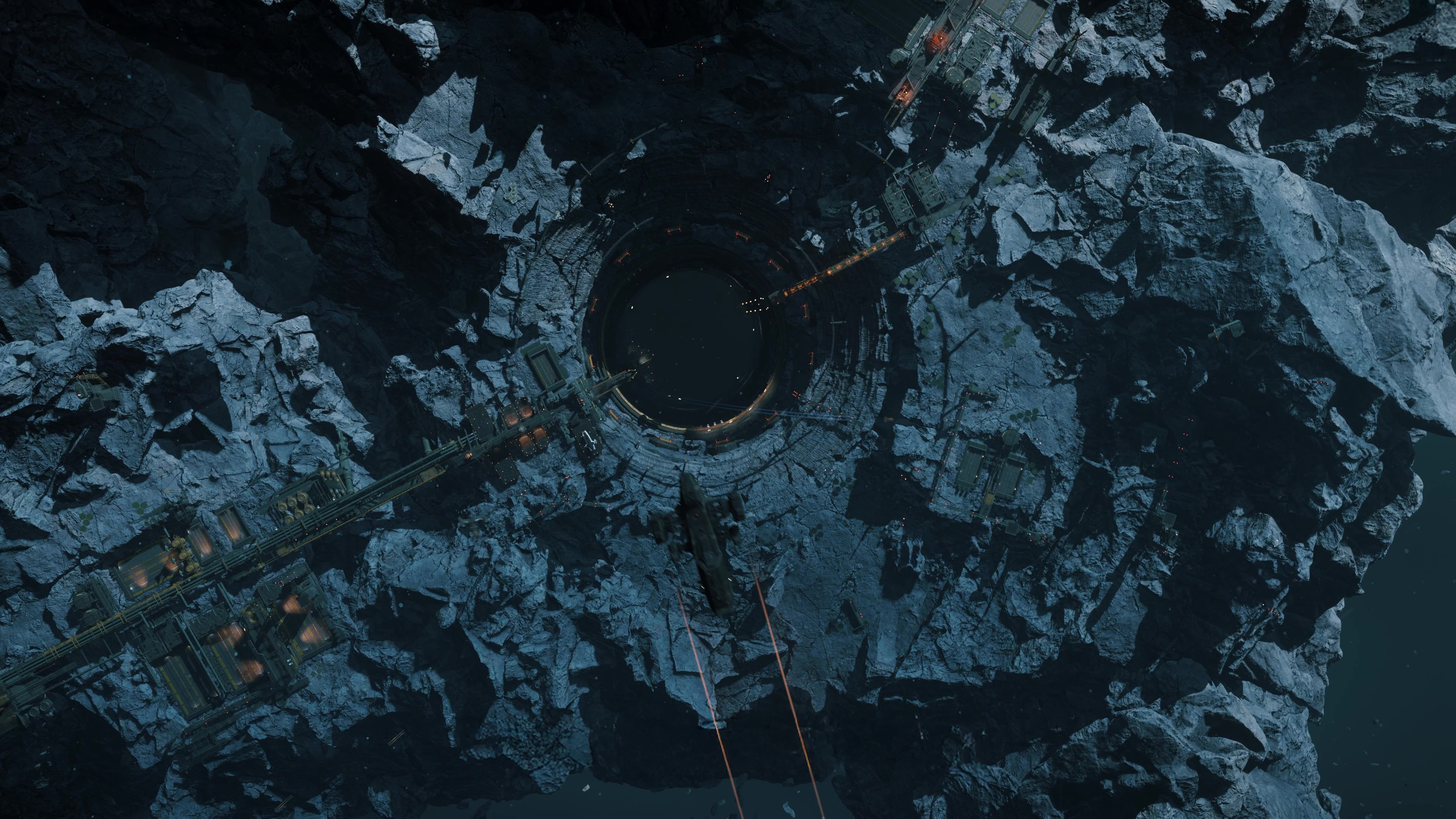
A moderate resolution asteroid field separates the second and third planet. Deposits of iron and titanium have been identified here, but never in sufficient quantities to establish mining operations during the system’s Human habitation. The final planet in the system, Virgil III, is an ice giant. This churning ball of water, ammonia and methane would have ultimately been used as a source of all three should the system have been further developed.
Travel Warning
The Virgil System is classified by the United Empire of Earth as a Vanduul system. Travelling to this system is seriously discouraged.
Heard in the Wind
“While the rest of the planets go all crazy for these Banu or whatever you call them, I’m reassured that I’m here, with my own kind, far away from whatever alien shenanigans they got going on.”
- Governor Jack Koch, served as Governor of Meyer from 2440-2446
“We won’t forget.”
- Tam Thackston, (Commander, UEEN) Squadron 214, Bravo Flight leader
Das Virgil-System wurde 2412 ganz zufällig entdeckt. Die berühmte Astrofotografin Alaine Viktus führte eine Tiefenfelduntersuchung durch, die etwa eine halbe astronomische Einheit an der Kometenwolke des Vega-Systems vorbeiführte. Viktus hatte die Triebwerke seines Vermessungsflugs abgeschaltet, um eine maximale Scanauflösung zu erreichen. Als er versuchte, seine hochspezialisierte Sternenkamera zu aktivieren, konnte er sie nicht fixieren. Nach der Durchführung einer Diagnose stellte er fest, dass sein Schiff unter subtilen Gravitationsverschiebungen litt, die die Fokussierung der Kamera verhinderten. Viktus schaltete seine Scanner ein, um nach der Ursache der Störung zu suchen, und entdeckte, dass er fast direkt auf einem unbekannten Sprungpunkt lag.
Das allgemeine Erstaunen über Viktus' unglaubliches Glück verwandelte sich schnell in eine beispiellose Leidenschaft für erweiterte Weltraumforschung. Der Hauptreihenstern vom Typ K wurde nach Viktus' Liebe zum alten Dichter Virgil benannt, und die Entdeckung des Systems inspirierte zur weiteren Erforschung des Vega-Systems und zur Erforschung dieses neuen. Innerhalb von zehn Jahren wurde Virgil zu einer grünen, blühenden menschlichen Kolonie und innerhalb eines Jahrhunderts galt sie als todsichere Wahl für die formelle Vertretung der UNE. Die schnelle Kolonisation von Virgil führte zu Project: Far Star, der von der Regierung finanzierte Marsch "nach außen" in das Gebiet des Weltraums, der nun mit Virgils Entdeckung freigeschaltet wurde.
Dann, so schnell wie es begann, kehrte sich die Situation um. Die Entdeckung der Vanduul im Jahr 2681 und der Ansturm ihrer immer verheerenderen Überfälle brachten Far Star und die galaktische Expansion nach Westen zum Stillstand. Die Menschheit war schockiert über den vollständigen Fall (und die anschließende Aufgabe der UEE) von Orion. Virgil verwandelte sich über Nacht in einen militärischen Außenposten, wobei ganze Flotten nun aus der ehemals ruhigen Kolonie operieren, um die Frontlinie im Tiber zu verstärken.
Nach der langen und blutigen Belagerung von Tiber brach die Marine in vollem Rückzug zusammen und konnte keine Nebenlinie organisieren, da die Vanduul unerbittlich vorankam. Während die Vanduul nach dem Fall Orions den UEE-Truppen nicht gefolgt waren, weigerte sich dieser Clan, den Angriff aufzugeben und verfolgte die geroutete Flotte. Die Vanduul zeigten keine Gnade gegenüber dem System und schlachteten Militärpersonal und Zivilisten im Großhandel. Die idyllische Biosphäre von Virgil I. wurde auf permanente Aschewolken reduziert, und etwa zweihundert Jahre der menschlichen Expansion wurden aus der Geschichte gelöscht. Mehrere Transporte entkamen dem Blutbad, geschützt durch Abfangjäger der berühmten Staffel 214. Angesichts der Möglichkeit, mit den gesparten Transporten aus dem System zu entkommen, entschied sich jedes Mitglied der Staffel, zu Virgil I zurückzukehren und die Rettung weiterer Zivilisten zu versuchen.
In den folgenden Jahren war Virgil von einer Reihe von Aufklärungsmissionen besucht worden, bis 2790 vom Imperium heimlich ein Netzwerk von Überwachungsbojen eingerichtet wurde, um frühzeitig vor dem Eintritt von Vanduul-Clans in das System zu warnen.
Jungfrau I.
Es gibt ein berühmtes Foto, das auf Virgil I. aufgenommen wurde. Es zeigt die verkohlten Überreste eines kaiserlichen Zollhauses, zerstörte weiße Säulen, die einen rauchenden, kohlschwarzen Himmel einrahmen. Rechts neben dem Bild befindet sich ein zerbrochenes Schild, dessen ursprüngliche Proklamation von "EXPORTS" das Wort TOD grob darunter gekritzelt hatte. Dieses Bild, zusammen mit den Interpretationen verschiedener Künstler, ist seit über einem Jahrhundert auf Plakaten der UEE zu sehen, die die Vanduul-Bedrohung ablehnen.
Jahre zuvor war der erste Planet im Virgil-System das Plakatkind der Vereinten Nationen für die Terraformation. Wenn jemals eine Welt maßgeschneidert schien, um einen einfachen Übergang zu menschlicher Behausung zu unterstützen, dann war es Virgil. Es wurde festgestellt, dass der Boden des Planeten Supernährstoffe enthält, die es der importierten menschlichen Vegetation ermöglichen würden, schnell zu gedeihen. In wenigen Jahren war die Atmosphäre des Planeten auf Erdniveau ausgeglichen. Ursprünglich von üppigen tropischen Wäldern und scheinbar endlosen Ebenen bedeckt, wurde Virgil I schnell zu einer hochproduktiven Ag-Welt und einem exotischen Reiseziel. Mit dem militärischen Aufbau änderte sich der Tenor der Gesellschaft von Virgil I., aber die natürliche Schönheit blieb erhalten. Antimaterievorräte und Reparaturanlagen für Raumfahrzeuge standen natürlich neben den massiven Bäumen, die die tropischen und gemäßigten Regionen des Planeten weitgehend umgaben.
Anscheinend betrachtete die Vanduul das Ziel als Belohnung für ihren hart umkämpften Sieg im Tiber-System und plünderte Virgil I mit einer bisher nicht gekannten Grausamkeit. Trotz des Fehlens von Befestigungen (einige der Einheiten des Imperiums hatten sich eingegraben, in der Erwartung, dass die Flotte am Tiber ausreichen würde, um den Feind fernzuhalten), pulverisierten die Vanduul den Planeten mit katastrophalen Bombenangriffen, die mehr dazu bestimmt schienen, ihre Grausamkeit zu etablieren als ein bestimmtes strategisches Ziel zu erreichen. Hunderttausende von Menschen starben bei dem Angriff, entweder getötet bei den Bombenangriffen oder auseinander gerissen von Erntehelfern, die auf dem immer noch bevölkerten Planeten gestartet wurden.
Heute wird Virgil nur noch selten besucht. Die Atmosphäre ist giftig, mit genug Asche, die bei den Bombenanschlägen aufgewirbelt wurde, um die Welt in einen Zustand des permanenten nuklearen Winters zu versetzen. Veröffentlichte Berichte über UEE-Spionageexpeditionen haben den Zustand des Planeten detailliert beschrieben: eine geerntete Ödnis, die gelegentlich mit den gespenstischen Skeletten der Titanenbäume durchsetzt ist, die einst Ehrfurcht und Staunen hervorriefen. Diejenigen, die diese einzigartige Höllenlandschaft beobachtet haben, sind gezwungen, sich zu fragen, ob die Vandule sie absichtlich als Erinnerung an die Vergangenheit des Planeten zurückgelassen haben.
Virgil II & III
Das Virgil-System enthält zwei weitere Welten und ein Asteroidenfeld, von denen keine wesentlich genutzt wurde. Virgil II ist ein unbewohnbarer Smogplanet mit wenigen wertvollen natürlichen Ressourcen. Wie Virgil I. wird die Oberfläche von Virgil II durch die natürliche Smogschicht vollständig blockiert. Militärberichte haben festgestellt, dass die Vanduul Virgil II. einen besonders weiten Liegeplatz zahlen, obwohl die Gründe dafür unbekannt sind.
Ein Asteroidenfeld mit mittlerer Auflösung trennt den zweiten und dritten Planeten. Hier wurden Eisen- und Titanvorkommen identifiziert, jedoch nie in ausreichender Menge, um während der menschlichen Besiedlung des Systems Minen zu betreiben. Der letzte Planet im System, Virgil III, ist ein Eisriese. Dieser wirbelnde Ball aus Wasser, Ammoniak und Methan wäre letztlich als Quelle für alle drei verwendet worden, wenn das System weiterentwickelt worden wäre.
Reisewarnung
Das Virgil-System wird vom Vereinigten Reich der Erde als Vanduul-System eingestuft. Das Reisen zu diesem System wird ernsthaft abgeraten.
Im Wind gehört
"Während der Rest der Planeten verrückt nach diesen Banu oder wie auch immer du sie nennst, bin ich beruhigt, dass ich hier bin, mit meiner eigenen Art, weit weg von jeglichem außerirdischen Schwindel, den sie veranstaltet haben."
- Gouverneur Jack Koch, diente von 2440-2446 als Gouverneur von Meyer.
"Wir werden es nicht vergessen."
- Tam Thackston, (Kommandant, UEEN) Staffel 214, Bravo-Flugleiterin
The Virgil System was discovered entirely by chance in 2412. Famed astrophotographer Alaine Viktus was conducting a deep field survey roughly half an astronomical unit past the Vega system’s cometary cloud. Viktus had powered down his survey runabout’s thrusters to capture a maximum scan resolution. Upon attempting to activate his highly specialized stellar camera, he found it unable to lock. After running a diagnostic, he discovered that his ship was suffering from subtle gravitational shifts that were preventing the camera from focusing. Viktus turned on his scanners to look for the source of the disturbance and discovered that he was almost right on top of an uncharted jump point.
General amazement over Viktus’ incredible luck quickly turned to an unequaled passion for expanded space exploration. The K-type main sequence star was named Virgil after Viktus’ love of the ancient poet and the system’s discovery inspired further exploration of the Vega system as well as prospecting this new one. Within ten years, Virgil became a verdant, thriving Human colony and inside of a century it was considered a surefire choice for formal UNE representation. The rapid colonization of Virgil lead to Project: Far Star, the government-funded march ‘outward’ into the area of space now unlocked with Virgil’s discovery.
Then, as rapidly as it began, the situation reversed. The discovery of the Vanduul in 2681 and the onslaught of their increasingly devastating raids brought Far Star and westward galactic expansion to a full stop. Humanity was shocked by the complete fall (and subsequent UEE abandonment) of Orion. Virgil changed into a military outpost overnight, with entire fleets now operating out of the formerly quiet colony to reinforce the front line in Tiber.
After the prolonged and bloody Siege of Tiber, the Navy collapsed in full retreat and was unable to organize a secondary line as the Vanduul pushed relentlessly forward. Whereas the Vanduul had not pursued UEE forces after Orion fell, this Clan refused to let up the attack and chased the routed fleet. The Vanduul showed no mercy to the system, slaughtering military personnel and civilians wholesale. Virgil I’s idyllic biosphere was reduced to permanent clouds of ash, and some two hundred years of Human expansion were erased from history. Several transports escaped the carnage, protected by interceptors from the famed Squadron 214. Given the chance to escape the system with the transports they had saved, every member of the squadron chose to return to Virgil I and attempt rescue of more civilians.
In the ensuing years, Virgil had been visited by a number of Reconnaissance in Force missions until a network of surveillance buoys were covertly established by the Empire in 2790 to provide early warning of Vanduul clans entering the system.
Virgil I
There is a famous photograph taken on Virgil I. It shows the charred remnants of an Imperial customs house, wrecked white pillars framing a smoking, coal-black sky. A cracked signboard lies to the right of the image, its original proclamation of “EXPORTS” having had the word DEATH crudely scrawled under it. This image, along with various artists’ interpretations thereof, has appeared on UEE recruiting posters decrying the Vanduul threat for over a century.
Years earlier, the first planet in the Virgil system was the United Nations of Earth’s poster child for terraformation. If ever a world seemed custom-designed to support any easy transition to Human habitation, it was Virgil. The planet’s soil was found to contain super nutrients that would allow imported Human vegetation to thrive quickly. In a matter of years, the planet’s atmosphere had been equalized to Earth standards. Initially covered in swathes of lush tropical forest and seemingly endless plains, Virgil I quickly became both a high-productive ag-world and an exotic tourist destination. With the military buildup, the tenor of Virgil I’s society changed but the natural beauty remained. Antimatter stockpiles and spacecraft repair facilities stood naturally beside the massive trees that largely encircled the planet’s tropical and temperate regions.
Apparently viewing the target as a reward for their hard-fought victory in the Tiber system, the Vanduul ransacked Virgil I with a ferocity previously unseen. Despite the lack of fortifications (few of the Empire’s units had dug in, expecting the fleet at Tiber would be enough to keep the enemy away), the Vanduul pulverized the planet with catastrophic bombing raids that seemed intended more to establish their cruelty than to accomplish any particular strategic goal. Hundreds of thousands of Humans died in the attack, either killed in the bombing raids or churned apart by Harvesters launched onto the still-populated planet.
Today, Virgil is visited rarely. The atmosphere is poisonous, with enough ash kicked up in the bombings to leave the world in a state of permanent nuclear winter. Published reports of UEE spy expeditions have detailed the state of the planet: a harvested wasteland occasionally interspersed with the haunted skeletons of the titanic trees that once inspired awe and wonder. Those who have observed this unique hellscape are forced to ask themselves whether the Vanduul intentionally left them as reminders of the planet’s past.
Virgil II & III
The Virgil System contains two other worlds and an asteroid field, none of which has been significantly exploited. Virgil II is an uninhabitable smog planet with few worthwhile natural resources. Like Virgil I today, Virgil II’s surface is completely blocked by the natural layer of smog. Military reports have noted that the Vanduul pay Virgil II an especially wide berth, although the reasoning for this is unknown.
A moderate resolution asteroid field separates the second and third planet. Deposits of iron and titanium have been identified here, but never in sufficient quantities to establish mining operations during the system’s Human habitation. The final planet in the system, Virgil III, is an ice giant. This churning ball of water, ammonia and methane would have ultimately been used as a source of all three should the system have been further developed.
Travel Warning
The Virgil System is classified by the United Empire of Earth as a Vanduul system. Travelling to this system is seriously discouraged.
Heard in the Wind
“While the rest of the planets go all crazy for these Banu or whatever you call them, I’m reassured that I’m here, with my own kind, far away from whatever alien shenanigans they got going on.”
- Governor Jack Koch, served as Governor of Meyer from 2440-2446
“We won’t forget.”
- Tam Thackston, (Commander, UEEN) Squadron 214, Bravo Flight leader
The Virgil System was discovered entirely by chance in 2412. Famed astrophotographer Alaine Viktus was conducting a deep field survey roughly half an astronomical unit past the Vega system’s cometary cloud. Viktus had powered down his survey runabout’s thrusters to capture a maximum scan resolution. Upon attempting to activate his highly specialized stellar camera, he found it unable to lock. After running a diagnostic, he discovered that his ship was suffering from subtle gravitational shifts that were preventing the camera from focusing. Viktus turned on his scanners to look for the source of the disturbance and discovered that he was almost right on top of an uncharted jump point.
General amazement over Viktus’ incredible luck quickly turned to an unequaled passion for expanded space exploration. The K-type main sequence star was named Virgil after Viktus’ love of the ancient poet and the system’s discovery inspired further exploration of the Vega system as well as prospecting this new one. Within ten years, Virgil became a verdant, thriving Human colony and inside of a century it was considered a surefire choice for formal UNE representation. The rapid colonization of Virgil lead to Project: Far Star, the government-funded march ‘outward’ into the area of space now unlocked with Virgil’s discovery.
Then, as rapidly as it began, the situation reversed. The discovery of the Vanduul in 2681 and the onslaught of their increasingly devastating raids brought Far Star and westward galactic expansion to a full stop. Humanity was shocked by the complete fall (and subsequent UEE abandonment) of Orion. Virgil changed into a military outpost overnight, with entire fleets now operating out of the formerly quiet colony to reinforce the front line in Tiber.
After the prolonged and bloody Siege of Tiber, the Navy collapsed in full retreat and was unable to organize a secondary line as the Vanduul pushed relentlessly forward. Whereas the Vanduul had not pursued UEE forces after Orion fell, this Clan refused to let up the attack and chased the routed fleet. The Vanduul showed no mercy to the system, slaughtering military personnel and civilians wholesale. Virgil I’s idyllic biosphere was reduced to permanent clouds of ash, and some two hundred years of Human expansion were erased from history. Several transports escaped the carnage, protected by interceptors from the famed Squadron 214. Given the chance to escape the system with the transports they had saved, every member of the squadron chose to return to Virgil I and attempt rescue of more civilians.
In the ensuing years, Virgil had been visited by a number of Reconnaissance in Force missions until a network of surveillance buoys were covertly established by the Empire in 2790 to provide early warning of Vanduul clans entering the system.
Virgil I
There is a famous photograph taken on Virgil I. It shows the charred remnants of an Imperial customs house, wrecked white pillars framing a smoking, coal-black sky. A cracked signboard lies to the right of the image, its original proclamation of “EXPORTS” having had the word DEATH crudely scrawled under it. This image, along with various artists’ interpretations thereof, has appeared on UEE recruiting posters decrying the Vanduul threat for over a century.
Years earlier, the first planet in the Virgil system was the United Nations of Earth’s poster child for terraformation. If ever a world seemed custom-designed to support any easy transition to Human habitation, it was Virgil. The planet’s soil was found to contain super nutrients that would allow imported Human vegetation to thrive quickly. In a matter of years, the planet’s atmosphere had been equalized to Earth standards. Initially covered in swathes of lush tropical forest and seemingly endless plains, Virgil I quickly became both a high-productive ag-world and an exotic tourist destination. With the military buildup, the tenor of Virgil I’s society changed but the natural beauty remained. Antimatter stockpiles and spacecraft repair facilities stood naturally beside the massive trees that largely encircled the planet’s tropical and temperate regions.
Apparently viewing the target as a reward for their hard-fought victory in the Tiber system, the Vanduul ransacked Virgil I with a ferocity previously unseen. Despite the lack of fortifications (few of the Empire’s units had dug in, expecting the fleet at Tiber would be enough to keep the enemy away), the Vanduul pulverized the planet with catastrophic bombing raids that seemed intended more to establish their cruelty than to accomplish any particular strategic goal. Hundreds of thousands of Humans died in the attack, either killed in the bombing raids or churned apart by Harvesters launched onto the still-populated planet.
Today, Virgil is visited rarely. The atmosphere is poisonous, with enough ash kicked up in the bombings to leave the world in a state of permanent nuclear winter. Published reports of UEE spy expeditions have detailed the state of the planet: a harvested wasteland occasionally interspersed with the haunted skeletons of the titanic trees that once inspired awe and wonder. Those who have observed this unique hellscape are forced to ask themselves whether the Vanduul intentionally left them as reminders of the planet’s past.
Virgil II & III
The Virgil System contains two other worlds and an asteroid field, none of which has been significantly exploited. Virgil II is an uninhabitable smog planet with few worthwhile natural resources. Like Virgil I today, Virgil II’s surface is completely blocked by the natural layer of smog. Military reports have noted that the Vanduul pay Virgil II an especially wide berth, although the reasoning for this is unknown.
A moderate resolution asteroid field separates the second and third planet. Deposits of iron and titanium have been identified here, but never in sufficient quantities to establish mining operations during the system’s Human habitation. The final planet in the system, Virgil III, is an ice giant. This churning ball of water, ammonia and methane would have ultimately been used as a source of all three should the system have been further developed.
Travel Warning
The Virgil System is classified by the United Empire of Earth as a Vanduul system. Travelling to this system is seriously discouraged.
Heard in the Wind
“While the rest of the planets go all crazy for these Banu or whatever you call them, I’m reassured that I’m here, with my own kind, far away from whatever alien shenanigans they got going on.”
- Governor Jack Koch, served as Governor of Meyer from 2440-2446
“We won’t forget.”
- Tam Thackston, (Commander, UEEN) Squadron 214, Bravo Flight leader
Links
No links available.
Images
4


Metadata
- CIG ID
- 14437
- Channel
- Spectrum Dispatch
- Category
- Undefined
- Series
- Galactic Guide
- Comments
- 76
- Published
- 11 years ago (2015-02-19T00:00:00+00:00)