Monthly Studio Report: January 2015
Transmission Undefined Monthly ReportsContent
Greetings Citizens,
New year, same job: make the Best Damn Space Sim Ever! In January, Star Citizen’s teams worked on all aspects of the game, with a focus on improving Arena Commander and preparing to launch First Person Shooter and the first ‘social module’ piece of the persistent universe (oh, wait: and Squadron 42! It’s the first month of a BIG year.)
We also held our first ever backer ‘town hall’ in San Antonio, and couldn’t be happier with how it went. You can see all five of the panels below, and the feedback we collected is already impacting Star Citizen’s long term plans.
Please read on for the latest from Cloud Imperium’s studios and outsource partners around the world.
Greetings Citizens!
Welcome back for another monthly report! The team came back from the holiday break refreshed and excited to continue the momentum from last year. January was an extremely productive month both on the development front and the planning front laying a solid foundation for 2015. Let’s continue to the discipline updates so we can let you know what all transpired and what we’re working on!
Engineering
With Engineering in January there was a fair amount of long term planning that was covered during a Technology Summit in the UK involving several members of the LA team. During the month of January our LA Engineering team has been working on quite a few things you will see being released over the next couple of months.
We’ve finalized our implementation of the paint system for all vehicles including the buggy. As many of you saw we released swappable buggy paint jobs during January. This was an important step because it finished off our implementation of the first pass of the vehicle paint system. Now that this technology has been finished, tested, and proven on the buggy the Art team can proceed with implementing swappable custom paint jobs for all of our ships which you’ll be seeing very soon. This was very important to us as it allows us to begin delivering on many of the custom skins sold or included with various packages during the original campaign.
Development has also continued on the missiles, countermeasures, and signals system. With the first introduction of this system in December there were some features that we weren’t able to quite finish such as emissive sources that can obscure sensors in a generalized area or direction. Things like nebulas or a star having impact in a broader way. For example you may in the future see that it is much harder to get an Heat lock on an enemy who is flying directly at the molten core on Dying Star because the of the heat from the core blinding the heat sensors on your ship and missiles relative to the lower output of the enemy ship you are attempting to target.
In addition to the features that weren’t quite ready for primetime there are also a fair number of gameplay balance issues and bugs that we’ve been working to resolve within these systems that were highlighted by players in 1.0.0 and 1.0.1. We’re continuing to improve and refine the system in Arena Commander so that by the time the PU comes about its polished and well balanced.
Another important focus for the Engineering team has been a refactor of the item port system. Sounds exciting right? Well it is! As you may or may not know we wrote a custom item way back towards the beginning of Star Citizens development. It is a system for handling networked, animating, and data driven items that are attached to other items or ship parts through what are called item ports. Stated differently, this is the system that makes it possible for your weapons, items, and ships to all attach to one another, update each other with their data (how much energy they draw, etc.), animate, and exhibit the same behavior on all clients over the network. This system is pretty cool and in use already, so why does it need a refactor you might ask… Well let’s explain!
As we’ve continued development on Star Citizen and moved on from the days when this system we’ve added a lot of new features that weren’t around back then. One of the things that we’re adapting the
item port system for is all the player characters. So when you’re Heavy Marine is running around in the upcoming FPS release he will be using the same unified system for his items and attachments as your ship. We’re defining item ports on the character just like ships that have rules about what size things can attach to them and hook up into the player’s data driven entity. So for example if you equip an energy pack to port 24 it feeds into the suit energy which can be drawn down by a personal shield in slot 15. This is just an example for illustrative purposes but it should convey the basic principles.
Where this gets really cool is as we move towards the integration of FPS and ship combat with things like multicrew ships. Because the characters and ships both use a unified item port system they can interact in ways that were never before possible. So for example now when you sit down in the cockpit of your Hornet we can plug in your character and attached items to the ship. I.E. if your EVA suit is low on power we can charge your suit off of your ships reactor via a plug in the cockpit. If you sit down into a turret that is supposed to display a physical screen if you don’t have a helmet the ship can now query your characters item ports and check against the presence of a helmet. If you have one it can pipe in the relevant targeting data from the ship to your visor or it can decide it needs to bring up a physical display instead. Pretty cool, right?
Speaking of the visor we’ve also been refactoring the current implementation of the HUD visor for ships so it is much more extensible, optimized, and completely unified and interchangeable with the FPS HUD. The idea being that you can now toggle between visor modes yourself or the game can switch you contextually based on what you are doing. Sitting in your ship and the ships HUD will pop up in your visor. Hop out and pull out your gun and the visor will flip over to FPS combat mode and bring up a different set of information within the same framework. All in all this will be a much more robust and optimized implementation of the HUD that supports the seamlessness that so critical for the immersion of Star Citizen.
Design
On the Design side, January saw the hiring of two additional Technical Designers here in LA, Matt Sherman and Kirk Tome. They’ve already proved invaluable at freeing up Design bandwidth to tackle some longer term goals without sacrificing continued iteration and polish on the currently released content. We’ve tackled the design and prototyping of several of the longer term systems during this month such as how cargo will work, not just a paper design but actual in-engine prototyping of the core principles of the system working based off the paper design. There has also been a fair amount of design focus on working with Engineering on the polish and development happening on the signature, missile, and countermeasure system that we covered above.
As you may know from the write up on the ship pipeline the Design team plays in important role in the development of every single ship that goes into the game from ideation all the way to final implementation. To that end we’ve kicked off a fair number of ships at the beginning of this year. Ships like the [REDACTED], [REDACTED], and [REDACTED] were all kicked off this month and are moving forward in the Concept phase and still more were greenlit to start moving into the Hangar and Flight Ready phases. The design team has been working diligently on whiteboxes and nailing down metrics for virtually every item onboard ships. This was a step that we added to the Ship Pipeline when we took it over here in LA back in September and it’s already been paying dividends in less mistakes and reworks down the pipe. It’s also proving to be one of the most important stages in ship development!
We’ve spent a lot of time in the past talking about the ship pipeline but what are ships without items? To this end the Design team has begun the large undertaking of mapping out the entirety of the long term plan for ship items. Not only all the functionality of each ship item/weapon but also what different items or weapons of the same type will do differently and mapping that to a particular manufacturer from brand consistency. So not only do we have a lot of new items and weapons designed coming out of January but there is a lot more focus on making them feel different from one another and have distinct advantages and disadvantages and having those relate to the various manufacturers across all the types of items and weapons they make. If it sounds like a massive undertaking, it has been, but we’re already seeing this time spent paying off as it creates a much more unified and interesting framework for items within Star Citizen.
Last but not least is the tuning! Virtually every day our Design team and QA team are discussing balance changes, scouring the forums reviewing player feedback, and discussing action plans for addressing the issues that are identified. It cannot be oversold how important this time spent iterating and collaborating with QA and the community is. During January there has been a lot of adjusting, tweaking, and tuning happening some of which you saw in 1.0.1 and a lot more that will be releasing with 1.0.2. The play experience of space combat is very important to us and very important to the game so just remember, if you don’t like something or have an idea for how we could improve something, voice your opinion and let us know. It may take some time to get feedback addressed but we are always changing and improving it.
Art
Our Art team has had an exciting January! This month we hosted all the global members of the ship team in LA for our first ever “Ship Summit”. It was a great opportunity for our global Art, Design, Animation, and Engineering leads on ships to get together and discuss the current pipeline, improvements/changes, best practices/techniques standardization and for some of them to meet in person for the first time. Coming out of the summit we’ve further refined our pipeline and established common gold standards and techniques around which everyone can align globally.
The fruits of this standardization and improvements to our modeling techniques are born out in the new items that are being introduced into the game. The new shield generators were all bit using the new pipeline for ship items/weapons and use the latest modeling and Tech Art techniques we’ve begun employing for all ship parts potentially other parts of the game as well. Our items have really come a long way from where they started and the visual improvement is pretty apparent, even for those who aren’t artistically inclined.
Furthering that our Art team has also been busy making use of the new paint system and the work done by Engineering and Design to get it so players can swap paintjobs. This is actually a great example of what makes open development so cool both for players and for developers. With the paint system
you’ve actually seen the first implementation for 1.0 with some ships having bespoke paintjobs using the new system. Then we iterated and for 1.0.1 added them to the buggy to prove the system was extensible and used that as an opportunity to put in the capability for swapping the paintjob at runtime. Once all that was complete we moved on to adding that swapping ability for players on the Aurora with some of the skins that we’ve promised as well as a fun one for the community in 1.0.2.
We’ve also begun concept, modeling, and flight readiness work on a number of upcoming ships. Some fan favorites like [REDACTED] and [REDACTED] are high on our list and progressing well towards hangar ready and flight ready respectively. Suffice to say that while January did not see the release of a new ship there are a lot of them running through the pipe right now and we’re excited to show them off once they’re ready!
Art, Design, and Engineering have been working collaboratively on some upcoming improvements to our damage system for ships that we look forward to sharing with you all once they’re all up and running. These improvements will vastly improve the fidelity of damage to ships while actually optimizing performance from the current state of the system. Coming out of the ship summit our internal team is looking forward to using the new system.
Last but certainly not least on the Art front are Characters. Following the Ship Summit we’ve been working on putting together a demo for the character team of where we can apply some of the best practices and techniques used by the Ship team to the character armors and other hard surface clothing/materials to continue to push the bar even higher for the visuals in Star Citizen and Squadron 42.
Animation
As many of you may already know, towards the end of last year we shot a lot of motion capture and performance capture at Imaginarium in London. What you may not know is that we’ve also created an entirely new and greatly improved rig for our characters this rig was created by the aptly named, John Riggs here in LA in close collaboration with the other members of the Character team globally. So, in the month of January we’ve spent a lot of time refining that rig with the new characters and new animation data from our recent shooting. So far progress has been great and the new visuals are looking very promising and we look forward to improving the animations in the game substantially for everyone as soon work concludes on this.
Well, that wraps up the department updates for this month and covers much of the progress that we’ve made this month. Before we let you go we just wanted to say that it is important to note that while each studio provides the community with a separate studio report much of what we’ve covered above wouldn’t be possible without our comrades around the globe. It cannot be stated enough that while there are multiple studios working on this project there is one team working together and it is only with each other that we’re able to make this the BDSSE.
Hi everyone!
The New Year is off to a great start and January has been a busy month as always. We’ve made some updates to Arena Commander, have been very focused on planning for the coming year’s development efforts, and we shared a ton of information at the PAX South event right in our back yard here in San Antonio. Many people from the Austin studio were able to attend and participate in the event, and I certainly enjoyed the time this gave to interact with many awesome members of our community. We had Ben and James here and filmed a lot of footage that you may have seen, or will see soon on Around the Verse! Here are some in-depth reports from other teams in the studio!
Persistent Universe Team
ART
Our Art Team this month has been primarily focusing on props, characters, and environments. Our character team, comprised of Megan Cheever, David Jennison, and Wilbur Lord, completed a few of the NPC’s you will be able to see ambling around ArcCorp Plaza when the Social Module launches soon. Specifically we finished up the Medic, Bartender, and one of the Bar Patrons. We’ve got a few more characters to finish up before the Social Module launches, but it is exciting getting to meet a few of the faces we will get to see in the Persistent Universe.
Some of our other artists are working on fleshing out some of the cool elements that will eventually be featured heavily when the game launches. Ted Beargeon has been spending much of his time concepting out a communication relay that will send information through Jump Points. Watch the PU Town Hall presentation to get a sneak peek! Patrick Thomas, our Sr. Artist, finished up modeling the Repair Drones that will appear outside of space stations. Ken Fairclough made some concepts of various medical props that will be found in the Medical Unit. Last but not least, our VFX artist Lee Amarakoon created some nifty fountains that will appear in Terra Tower on the Terra Prime landing zone.
This month we also played host to CIG’s Environment Summit. Artists and designers from Foundry 42, CIG LA, Behaviour, and Illfonic flew down to Austin to spend a week ironing out the kinks for how we build our environments across the project and solidifying crucial details for standardizing environment construction. The Art Directors all got together and spent some time discussing architectural styles for our environments. We’ve got some pretty interesting ideas for creating some interesting and diverse locales across the ‘verse.
DESIGN:
The Design Team spent much of this month creating LISTS! Between lists of props, lists of ship parts, and lists of NPC animations, there was plenty of list-making to go around. These lists will serve a variety of purposes, and all are beneficial. The props list will go to outsourcing to help provide direction when creating the art assets. The ship parts list will help when scheduling out the creation of ship parts and weapons to eventually get them into your hands this year. The NPC animations list will provide a basis for the upcoming motion capture shoots so our excellent animation team will be able to fill our universe with lively characters.
In other news, our alien language designs are now at a point where we can start recruiting graphic designers to help with establishing alphabets for each race. Pretty soon you guys will be able to not only speak Banu, but write it too!
We’ve also been heavily discussing implementation of player occupations, with the first one to garner focus being MINING. Establishing final design details for mining and the beginnings of implementation will be a major focus next month.
ENGINEERING
The Persistent Universe Engineering Team hit it out of the ballpark in January, setting the benchmark for their monthly milestones for the months to follow!
They have completed a proof-of-concept of the backend code for Multi-Player Hangars and getting hangars running on our servers. They still have their work cut out for them to get everything from this early stage to a playable first iteration…but they are extremely stoked for these next stages of development and making commendable progress working together with the UI Team over at Behaviour. All of this will be intertwined with the team’s first version of its Process Manager that is undergoing heavy early testing and iteration as you read this!
The team has also completed the initial backend work for a first version of our in-game Chat system, and is also working closely with the UI Team at Behaviour towards getting this feature ready for our Social Module coming early this year. If you are a chat “fiend” then this will be your dream come true!!
Meanwhile, our PU Engineering Team has been working closely with our boys over at Moon Collider in the UK on various editing tools to help give life to the NPCs that will populate our Social Module. This makes it an exciting time on both sides of the Atlantic.
And if all this didn’t keep the team busy enough…in conjunction with the brainiacs over at Wyrmbyte…they are also investigating methods to get more players into our maps, starting early work on Player Persistence and performing R&D on developing our Economy Server…truly essential elements that will contribute to making the Persistent Universe and Star Citizen a sincerely mind-blowing experience!
As for the upcoming month of February….love will definitely be in the air around the studio. The PU Engineering Team has every intention of focusing a lot of that loving energy into every bit of code that they write! We’re certain it will show through in their work! Have a great and romance-filled February!
Live Operations Team:
QA
Star Citizen QA hit the ground running for the month of January. Fresh from the break, everyone was determined to improve the state of Arena Commander. Immediately QA began sending daily emails to production reporting on the state of the build and highlighting the most severe issues.
The QA team from Foundry 42 in Manchester did an excellent job with an in depth investigation into missiles and counter measures. Jeffery Pease ensured all lobby issues were accounted for and Andrew Hesse worked closely with developers in Santa Monica reporting and testing ship related issues.
Christopher Hill and Tyler Witkin compiled and reported on feedback from the community which sparked some significant discussion by Chris and the rest of development.
Improvements have been made to how our two teams work together. We are now more aligned with our testing and processes. This has helped to make our QA coverage and hand-off process much more seamless.
Further developments have been made in automated testing. Melissa Estrada has made progress on the creation of custom Sandbox Editor levels that can be utilized to automate functionality. She is also currently training our Manchester team on this process as well as general use and testing of the Sandbox Editor.
This month we welcome our newest member to the QA team. Todd Raffray! Todd is a veteran of the industry. He has worked on such titles as Bioshock Infinite, Star Wars: The Old Republic, Wing Commander: Prophecy and Ultima Online. Todd will be working closely with design testing systems as they come online.
It is hard to believe January is already complete. We are incredibly happy we were able to fit so many bug fixes in release 1.0.1 and hotfix 1.0.1a. Now we look towards February with more bug fixing releases as well as FPS/Social Module testing.
IT/Operations
January has been a productive month for us. From providing the user support for multiple team wide summit meetings across multiple continents to designing new methods for reducing transport times for large data we feel like we’re making a difference. Our UK IT team headed up by Hassan has been providing support for our new office in Germany by acquiring, configuring, and installing all equipment from desks and workstations to servers and networking. Working closely with the rest of our IT teams, Hassan was able to bring that office on line on schedule which was no small task considering all the dependencies from outside vendors and suppliers.
We’re constantly working on ways to make life easier for the developers. This month we’ve rolled out a new VPN solution which has made a big impact in network performance for the remote users while further enhancing our overall network security. We’re also working very closely this month with the DevOps team on the ongoing project to improve our build/deployment cycle. This is an area that can be attacked from many different directions so we’re providing DevOps with volumes of analytics and data about all of our systems with one single goal in mind. “Make things faster!” We’ve already made dramatic improvements but we are just getting started. Without going in to too many details, early data is demonstrating modest reductions in build times and major improvements in deployment (takes way less time to upload a version for the public.)
While the largest improvements on this project will come from the DevOps team, all of us in IT find it highly rewarding to be a part of it.
Dev Ops:
The month of January has been a major planning and infrastructure testing time for the Dev Ops team. We have been evaluating configuration management tools, patching solutions, CDN solutions, metrics reporting, and continuous integration tools. Our team has built a plan to redesign and rebuild the Star Citizen build server and launcher. This should make developing the game easier and we will have faster turnaround times for our developers to review the changes they check into the game. We have also designed a plan to help the server team communicate more efficiently to our infrastructure layer which should reduce their work load and automate many of the manual process currently required with starting up and running our game server cluster.
With all the planning, testing, and evaluating going on, we also have launched the 1.0.1 PTU and 1.0.1 patch to live. We added a bunch of new analytic instrumentations and hooked them up to our own database so that our designers can begin looking at live player statistics to balance the game and make design decisions.
Finally, we have been working on a few new launcher versions that we hope to be releasing over the next couple weeks. The Dev Ops team has a bunch more projects they will be taking on over the next month, and are looking forward to releasing more content to the community in our upcoming patches!
Hi all,
Huge start to the new year. Not to waste time we worked over the Christmas period to set up a bunch of summits to kick off our plans for 2015, the first summit starting on our first day back from the holidays. In the UK we held both a Tech and Audio summit, which both went really well. We’ve broken down all our animation / cinematic needs for S42 in meetings this week, and the guys have been getting all the missions to a first pass playable state. Absolutely loads of new tech work going on, new environments and ship work, and we’re starting the big Wwise integration over the next weeks. This is going to be a big year with lots of updates and content to share with you guys throughout the year. Looking forward to sharing it with you all.
Cheers,
Erin
Programming
Happy New Year!!!!!!
Start of the year and straight back into it with a big tech summit over here in the UK. Over the Christmas period there was a last minute rush to get plane ticket and hotels booked for all the top tech engineers from the CIG Studios, Illfonic, BHVR and Wormbyte and getting everyone together for the first week of this month. One of the things that is great about these summits is that it gives us all a chance to meet up again in person and do some socialising with our far flung colleagues, and reinforce just what a great bunch of people we’ve got working on this project!
The summit itself was extremely productive, a full week discussing a multitude of topics from performance (general profiling, our new Zone system for spatializing everything from the universe down to each individual room in a ship, hierarchical LODs, GPU compute…), streaming, damage systems, UI, build systems, networking/backend, audio, perforce, new graphical effects, and much, much more. As you can see it was a busy, busy time! The upshot is we’ve now got a much better global overview and visibility of what the priorities are, both in terms of what needs to be worked on now, what is required in the medium and long term, and what is on the wish list. It also allows everybody to have a better understanding of which teams are working on what and how their work fits into the bigger picture.
Development side we’re doing various refactors of the code to help make it more reusable and maintainable. So for instance, seats in CryEngine have traditionally been tied very tightly with the vehicles, which is a pain if you want to use them in another location, say in a mining base or planetside. As a result we’re in the process ripping the seats from out of the vehicles and making them more generic. The vehicle seats will then become a specialised version of the new seat class.
Other than that it’s business as usual. Work has been progressing nicely on the various game mechanics such as the conversation system, take-off and landing, PAW, looting, and cameras, as well as continued work moving over to Wwise and general 1.0.1 support.
Design
A new year dawns on Star Citizen and it looks this will be a very interesting one for us. We are really pushing ahead with Squadron 42 and hope that we are zeroing in on what will be a very rewarding single player experience in the Star Citizen universe. The missions continue to get more layers of polish as they emerge from the White-Box stage and as new art work gets integrated they look more and more amazing. A lot of the systems that we require for Squadron 42 are starting to firm up well, and things like “Landing” and “Take-Off” are very close to being deliverable in Arena Commander. The conversation system has been getting a lot more design focus before Christmas and is coming along very nicely.
Arena Commander is in bug fix mode, and I know the guys working on this read the forums every day to pick up feedback from you all. There is a real challenge in getting the play balance right for a game that is in early development as I’m sure you are all aware. But having our community giving such precise feedback during its development is invaluable to us making this game what we all want it to be. Also, as the controls systems get more and more detailed, we have been working on a Tutorial for Arena Commander.
The Ship team have been working on balancing and we have a lot of new modules planned for existing ships like the Retaliator and the Redeemer that should allow players to customize their play experience to suit their style.
Overall a good month back after the Christmas break. Thanks again for all the marvellous support!
Art world!
It has been a fast and furious month, we had LA’s new Art Director visiting the studio followed by a visit from myself, Bjorn, Nathan and Ian to the USA to confirm pipeline updates and improvements; needless to say, all teams are moving in the same direction and we’re looking forward to seeing new content that not only beautiful but highly optimal!
Concept wise, we have hired two new artists who are already making great work for the team; the Cutlass variants and the personal Arc Welder PAW. Gavin has been continuing on the Starfarer interior and we’ll have more to show soon
Environment Art
The team has been working towards getting the Shubin Interstellar interior building set to Greybox complete. The main architectural elements are finished so now we are focusing on the smaller details. Our Vertical Slice level for Squadron 42 is looking really promising, we are still continuing to refine the layout as more assets get transformed from Whitebox to Greybox geometry and as design work on gameplay.
Characters
Barrelling along with creating the character pipeline, new base male, new base female, new base female head, 4 test heads to 3Lateral, Shubin miner and character customisation clothing limits, more
Ships and Weapons
Retaliator has continued to be worked on along with alterations to the ARGO Rescue Utility Vehicle, Idris exterior meshing tests and Gladiator damage preparation. As you know (or might not) we are underway with the development of new damage tech for the ships to help reduce memory bloat and art creation timescales, not long now till we have a final test up and running – can’t wait!
We have also started to look at FPS weapons and how to improve the pipeline and overall long term quality of assets, our first step being the PAW which is now concept complete!
VFX
There has been a major clean up and restructure happening with game content, this is never a glamourous task but always worth it in the end; With many of Sq42 levels being at a an early playable state (I mean early) we can now start to scope out the many VFX we’ll need to make this game shine – watch this space.
Animation
Been mostly organisation this month from animation. The re-target of skeleton on to the new final base character has taken up some time. There has been some behind the scenes naming convention changes and tidy up for handing ship animations back over to ATX with a flexible structure for moving forwards.
I have begun to break down our first animation drop from Imaginarium. We have also steadily continued work on the Gladius and Gladiator to get the landing gears etc in good working order for flight ready releases.
And of course we have been providing any support to AC we have been able to offer
Audio:
This month, the main event we had was a week long Audio Tech Summit that ran from Jan 19th to the 23rd. This was a whole week’s worth of in-depth discussion, gathering together our audio personnel from across multiple studio locations to meet here in Manchester (or video-conference where flying in wasn’t possible!).
This enabled us to hammer out ways to define or improve all aspects of our audio tech, from the ‘glamour’ of run-time audio systems (VoIP/porting, propagation, real-time effects, DSP, etc.) to implementation tools, to more mundane (but necessary) aspects like how best to build our Wwise project and roll it out internally, and other foundation work such as best practices for mapping out ships, planetside locations and so on. Readers of the audio thread on the ‘Ask A Developer’ forum will be pleased to know we included many concerns and questions raised there, in this summit, including how we might open things up to the modding community. We also looked at some third party tech solutions too for the likes of procedural audio and 3d audio solutions, of which there are many.
The overriding theme, if we can call it that, is the need for us to take system-driven approaches to the audio we deliver. With a game of indeterminate scale and potentially limitless quality and detail, we have to look to ensure whatever we do can expand and be built upon in a robust way. These systems need to be designed in a way that never compromises the quality we deliver, and need to allow us to override and apply an artistically-driven approach to sound wherever the system-lead doesn’t quite cut it.
We’ve welcomed another new sound designer to our ranks here in Manchester, which takes our audio ‘hub’ to five, not including a new audio programmer who’s based in Germany and a technical sound designer based in Austin. We’re still looking to expand, this year promises to be a very busy one.
As we’re concentrating on the move over to Wwise now, some of our next few updates (that are still in FMOD) may not be up to our usual quality bar; hopefully you’ll forgive us for that, we’ll try to make sure whatever we put out is as good as it can be but we hope you’ll all understand if things aren’t as good as they should be!
Otherwise in January we’ve been working on pre-prod and production for dialogue sessions, sound effects gathering, but mostly we’ve kept on keeping on with Fmod > Wwise migration. We’ll all be happier when we’re done with that so we can concentrate on making the ‘Best Damn Sounding Space Sim Ever’!
Design
Like we mentioned in the last report, elevators were a big push this month. These elevators are way more complex than they seem as they’ll allow you to go from your hangar to planetside and more importantly to other players’ hangars. In the same vein, design for the first iteration of the chat system and for the multiplayer experience in hangars has been defined.
More planetside locations have been whiteboxed, and they are now in the hands of our talented team of artists. Nyx is the next “planet”, or rather asteroid, we’ll tackle. We noticed that the pace is accelerating; the team’s hard work on the planning for reusable assets and locations is starting to pay off. While we’re on the subject, iterations on tools have also been made to help us work better and faster.
The mobiGlas AR design is changing quite a bit as we’re starting to implement it for realz. It’s really exciting to see these functions appearing in the game world. Progress on other apps have been slowed down due to our focus on other features.
On the Flair side, we’ve been working on the February Takuetsu Model and preparing a cool lineup for the future flairs that’ll allow subscribers to show off their dedication to the project.
Oh yeah, and don’t forget bug smashing, yeah we do that too! There are a lot of bugs in the ‘verse apparently.
UI
Back fresh from the holidays, the UI team has hit the ground running: chat UI, lobby work, elevator UI, loads of mobiGlas mock-ups, more control customization features, logos, banners…. the list goes on and on.
Engineering
We’ve continued working on CryEngine Tools that will help us create AI used for NPCs populating planetside locations, working specifically on allowing Game Designers to customize their activities based on a time schedule. We’ve also began to start investigating how to hook-up Conversations for those NPCs will have between themselves, as to provide a more immersive experience for the player. We’ve also been very hard at work on modifying the Hangars to allow you to invite friends over to your hangar. We are also working on new UI elements to support this invitation/joining process.
We’ve completed a prototype of the in-game star map, which will eventually be viewable inside your ship and also in your mobiGlas. We’ve fixed a great amount of bugs related to the Lobby and Contacts feature. We’ve also started integrating the possibility of doing FPS matches through a Lobby. Last but not least, we added some very cool Control Customization options, which will let you customize your control in a much more precise manner than before.
Concept
This month we focused on building one of the major tourism locations on Terra Prime: the Prime Tower.
Standing at a height of 2km, the Tower is definitely one of the most dominant landmarks on Terra III. It features a shopping mall with high-end shops and a park area at the top to rest and enjoy the view.
We’ve also started conceptualizing the Delamar landing zone, located in the NYX asteroid belt. It’s a former mining colony located under the asteroid surface, where rebels took refuge to hide from the UEE awhile ago. Nowadays, pirates have also settled in for the same reasons.
Finally, we’ve finished the Sim Pod concept arts and started the production so you can see it in your hangar soon!
Greeting Citizens! Has another month gone by already since the last report? I guess it has, but it sure doesn’t seem like it. The FPS team has been focused on getting all of the remaining features implemented and polished for the first release. We’re very close now and we’re super excited for all of you to play it and let us know what you think!
Engineering
The programmers have been putting the final touches on the zero-g push & pull system. This allows you to navigate an environment in zero-g without the need for a jetpack or other form of propulsion. You can grab and pull yourself along surfaces, then crumple your legs up and push off, headed towards another point in the level. This is all done procedurally so it can be done anywhere in any level, without the need for designers placing specific points to attach to. It’s all pretty slick but requires quite a bit of polish and bug-fixing to address all of the different edge cases involved.
Two new weapons were also hooked up, one large weapon that is capable of dealing damage to multiple foes and another that is good for taking out enemies at a distance. I will leave you to speculate over what they are. Work also continues on the HUD and making the 3D radar system work for players who are currently in zero-g, which should be finished soon.
Lastly, lots of bug-fixing has been happening. Mostly for the FPS module but we have also squashed a few of the bugs for the 1.0.1 release.
Animation
The animation team has been busy creating block-out animations for all of the new features, and they just received the brand-spanking-new mocap data from December’s shoot. They are now in the process of getting these animations hooked up in game, which should give us some much more realistic looking movements that are more fluid and natural than what was seen during the PAX Australia demo.
Design
The design team has been putting the final touches on our two whitebox Team Elimination maps. Playtesting and balancing now begins and final art added. Paper designs for future maps and game modes are in the works now. A balance pass is in the works for all of the weapons and gadgets along with the new grapple beam attachment which will be used in the zero-g specific Team Elimination map.
Art
Vents, that is the word of the month for the artists! Art assets are being modified to support the vent and crawlspace system… and there’s a lot of it. This basically entails taking a bunch of wall pieces and putting in vent spaces so they all fit together like nice puzzle pieces.
In addition to all the vent work, the artists have also been busy working on the zero-g specific level concept, which is now going in to full production.
The concept and block-out for the long range weapon I spoke of earlier has also been approved, and work has now begun on the high poly model and visual FX.
VFX
The biggest piece of news from the VFX department has been a new family member for one of our artists. Congratulations Matt! While his new little one has been keeping him busy, he has also managed to create visual FX for the new weaponry and the grappling beam. This work will be ongoing in to next month.
That about wraps it up for all of us here at IllFonic. Enjoy playing Arena Commander 1.0.1 and we will see you very soon!
Greetings, Citizens, From Terra’s snowiest landing zone.
It’s a new year, and it’s come with its changes. We’ve shown you a new homepage and tightened our integration with Arena Commander V1, we’ve wrapped up a lot of loose ends we’d had through 2014 and now we’re starting fresh with new goals and renewed excitement. Here’s a view of what we’ve been doing this month :
Community Hub
You’ve seen the new Homepage. It’s not final, we’ll be continuously tuning it based on you fans’ awesome feedback, but its goal will remain to appeal to newcomers and convey what Star Citizen is bound to become. That’s why we’re working on a new section, called the Community Hub (can you guess where it will be in the menu?). It will be able to cater to all SC fans, old and new alike. Function priming clearly over form, it will come packed with new features, that we’ll be detailing soon. Without spoiling it, we can say that if you already feel involved with Star Citizen, we’ll be taking it to a whole new level.
Starmap
Most of you caught a glimpse of the Starmap prototype we’ve been building during the holiday livestream. For now the prototype is Unity-based, and we’re working hard to make it as tightly linked to real-time game data as possible. This is a huge undertaking, conjointly with all teams involved in the Persistent Universe, and it will make sure that the Starmap is relevant and reliable. Once we’re done with linking the game and the map, and we’re confident that the map can answer questions like “Where am I?”, “Where can I re-sell my Stimulants shipment?” or “What’s the safest way to go from Goss II to Stanton I?”, we’ll port it into webGL and integrate it directly into the site, like the Holoviewer for ships.
What you can’t see
There’s also a lot of stuff that we do here that never shows up on the website, and it turns out that January has been pretty heavy with these operations. Since the website is also the Pledge gateway, we provide reports and financials to Cloud Imperium Games. We won’t go into any details, but every once in a while, like this month, we spend a bit of time reworking our business back-end system, our stats reporting engine, and the way we share player data with the game client.
Some stuff is not that obvious either but still has an impact : we’re setting up a global effort to optimize the website’s performance, and especially the way we handle smaller screen resolutions, mobile devices, and slower connections. Any feedback is welcome!
What’s to come
We’re always preparing for what’s ahead, and our Design team is already working on the next website updates. This includes new functionalities for Orgs, integrating Arena Commander stats into the Citizen Dossier, evolving the Contact List… and quite a few secrets we can’t really share right now. All to pave the way for the rest of the year and give the BDSSM a platform worthy of its scale. So stay tuned for more, and see you all in the ‘verse!
With major releases happening in multiple Star Citizen modules this year, all needing significant AI support, the Moon Collider team dived weapons hot into January in a way that would make John Woo proud. We’re really excited about all of the cool AI tech that will be featured in these upcoming releases.
One of the big challenges for us in the next few months is that with so much progress being made on all of the different modules, we need to make sure we get the necessary AI features in place in time for each module to make full use of them. In between Arena Commander, Squadron 42, and the persistent universe, it’s like we’re making the AI for three different games simultaneously! But this is Star Citizen, right? Ambitious goals are why we’re all here, so we’re working hard and we hope you’ll be thrilled with the results.
Design
We were able to send two people to join in on the tech summit in Manchester at the beginning of the month. I think all teams would agree that this was a really valuable event. Certainly on the AI side it was great to discuss some of the big tech challenges that we need to solve this year, and start making some progress towards working them out.
One of the main things we did design work on this month was working out how to support local coordinate systems inside Kythera. When an AI is standing inside a ship, we want to be able to define “up” in reference to the ship, which makes all kinds of calculations a lot easier. But what happens when that ship docks with a station or another ship where “up” is different? Or if an AI is standing on one ship aiming at something on another ship? We want to hide the complexity of the calculations in these situations as much as possible, so we did a lot of work towards figuring out how to make that happen.
On the FPS combat side, now that we have the AI able to perform basic combat, we’ve been working with the Squadron 42 designers to continue refining their behaviors and get them behaving more realistically. This means giving them a greater sense of self preservation, so that they stay in cover more and take fewer unnecessary risks, but without making combat frustrating for the player. We’re also looking at how the AI should work together as a group, such as with sharing information about where the player is, performing flanking actions, providing covering fire, and so on. We expect to do plenty more design work along these lines in the next couple of months as the Squadron 42 maps get refined.
Engineering
Foundry 42 has been doing great work on the Arena Commander tutorial and this month we were able to start providing some support for some specific features needed in particular places of the tutorial. Usually, we will try to identify when support for something specific can be implemented as a more generally useful feature, or if
it’s an opportunity to add a feature that’s already on our roadmap but we didn’t expect to need just yet.
So, for example, we can create a spline for AI to follow, but up to now, they weren’t using boost to help stay on track if the spline was too aggressively curved. Having them apply boost intelligently as needed is quite useful, and since a need for this arose in the tutorial (you’ll have to wait to find out what it is!), we’ve now added that support in. This now allows designers to author tight splines in places that the AI would have had difficulty flying through before.
There was a lot of persistent universe work done this month. I mentioned the local coordinate design work above, and a lot of this design was also implemented, along with increasing the precision of world positions from 32 to 64 bit, which will allow us to keep AI positions accurate in much larger spaces, something that is essential for the persistent universe. We solved all of this at once by refactoring the internal position/vector structures that Kythera uses. It was a big task and it has happened alongside a lot of similar work that other teams have been doing throughout the rest of the codebase. It’s always scary when you go and change one of the fundamental data structures in your code, but it actually went quite smoothly, largely thanks to taking the time to work out the design thoroughly up front. A big shout out to our resident uber-coder Mike Bell for making this happen!
Another big area of work for the persistent universe is the Usables system. This is the system that allows designers to mark up objects in the world to allow AI to interact with them, and to define what those objects do. It is a powerful system that forms one of the cornerstones for making AI in the persistent universe able to do interesting things. We’ve been relying on a simple prototype system up to now, but this month we were finally able to make real progress on getting the full Usable system in place for the designers to use. There’s still more features that we need to add, but it was great to make a solid start on it.
On the FPS combat side of things, we made various small improvements as we continue iterating on the behaviors of the AI and polishing the combat experience. This is being mostly driven by the needs of the Squadron 42 vertical slice at the moment. So last month we added the ability for AI to be tasked with defending a particular area. This month we added a couple more tasks for the AI: holding position, which makes them aggressively defend a specific spot; and combat move, which tells them to move to a particular place while intelligently taking cover and engaging with enemies along the way.
We also improved their standard combat behaviors to make them investigate the last known position of the player if they lose all trace of the player for a while. We still need to improve this behavior to make them coordinate as a group, and just send one or two poor unlucky guys out to find the player rather than several of them going, but that will come as we start to add various types of group coordination.
Up to now the AI characters have been far too accurate with their weapons, making it necessary to fight them in god mode for all but the most masochistic developers. So we added in some accuracy modification support, allowing designers now to tweak the accuracy of the AI and make fighting them a little fairer. It’s actually quite difficult to make AI inaccurate in a believable way, and our change isn’t quite there, so we will need to work on this some more in the future.
Finally, we did some general optimizations to the Kythera AI systems that will be useful across all of the Star Citizen modules. We now have enough core features in place and some good representative levels for each of the modules that we can get a good idea of performance troublespots under “real world” conditions, so we’ve been making significant reductions to the time per frame that Kythera is using when there are large numbers of AI in a level.
Hi Everyone! I’m incredibly excited to be able to add a Community section to this January report. I promise to keep these short and sweet, since by this point I’m just happy your eyeballs aren’t completely dried out. I hope to cover everything from past events to featured videos to inside jokes from our team, and grow this section with YOUR HELP. Like something? Want to see more? Let us know!
January’s ATV highlight comes from our community week in Austin. Ben, James and Thomas visited the Austin office and captured an extensive amount of PU goodness. On top of numerous interviews, Ben hosted an episode of Around the Verse with returning guest host Pete Mackay. Check out this special Texas-sized episode HERE.
After a quick drive down to San Antonio, our #StarCitizenTownHall during PAX South was a great success. Fans were treated to three panels, an ideas forum, and a special presentation by Chris Roberts. If you weren’t able to attend, or if you just want to relive all the Persistent Universe goodness, all five of the Town Hall panels are available HERE.
Beyond the panels, spending time with fellow citizens during the meet and greet was incredibly exciting. Meeting and talking with everyone in attendance only reinforced the fact that Star Citizen has the best community out there. Austin’s Ryan Archer snapped pics capturing the fun, and included his own blurb about the event. You can check that out HERE.
In the most comprehensive design post to-date, the Chairman presented mobiGlas. Immerse yourself in augmented reality using mobiGlas, and get your first taste of the Star Citizen universe through Chris Roberts’ vision. Words like “bonkers” and “stunning” can be found amongst the comments, but you need to check this one out for yourself HERE.
The forums added another piece of valuable info, thanks to moderator AngryPeas. He has created an info depot for new users that are looking to dig into Star Citizen. It was a great help to me, and I hope to pass along the knowledge to some of you. You can find it in the New Recruits section of the forums, or simply by clicking HERE.
Reverse the Verse is my personal highlight every week. Our team loves hanging out with the community in the immediacy created by Twitch. The #blamejames trend returned, and we’re actively working on getting the Austin office more integrated in RTV live streams. If you haven’t checked it out, we go live every Thursday…sometimes Friday. By following CIGcommunity on Twitch, you can be notified as soon as we go live! Come say hi! You can also check out past replays of Reverse the Verse HERE.
For our subscribers, we promise to bring you even more exclusive content in 2015. One aspect of that promise will be weekly updates to the Vault. Not a subscriber? Gain access by signing up HERE.
So much for keeping this “short.” Can’t wait to have more for you guys in February!
-Jenny
in Kürze
Umwelt Kunst
Das Team hat daran gearbeitet, den Innenausbau von Shubin Interstellar auf Greybox fertigzustellen. Die wichtigsten architektonischen Elemente sind fertig, so dass wir uns nun auf die kleineren Details konzentrieren. Unser Vertical Slice Level für Squadron 42 sieht wirklich vielversprechend aus, wir verfeinern das Layout immer noch weiter, da mehr Assets von Whitebox in Greybox-Geometrie umgewandelt werden und als Designarbeit im Gameplay.
Charaktere
Barrelling zusammen mit der Erstellung der Charakterpipeline, neuer Basis-Mann, neue Basis-Frau, neuer Basis-Frauenkopf, 4 Testköpfe zu 3Lateral, Shubin Miner und Charakter-Anpassung Bekleidungsgrenzen, mehr
Schiffe und Waffen
Der Vergelter wurde weiter bearbeitet, ebenso wie Änderungen am ARGO Rescue Utility Vehicle, Idris Außenvernetzungstests und Gladiator-Schadensvorbereitung. Wie Sie wissen (oder auch nicht), sind wir mit der Entwicklung einer neuen Schadenstechnologie für die Schiffe im Gange, um die Zeiträume für Gedächtnisaufblähungen und Kunstwerke zu verkürzen, nicht lange, bis wir einen abschließenden Test haben, der läuft - ich kann nicht warten!
Wir haben auch begonnen, uns mit FPS-Waffen zu befassen und zu untersuchen, wie wir die Pipeline und die langfristige Gesamtqualität der Vermögenswerte verbessern können, wobei unser erster Schritt die PAW ist, die nun das Konzept vollständig ist!
VFX
Es gab eine große Aufräum- und Umstrukturierungsaktion mit Spielinhalten, dies ist nie eine glamouröse Aufgabe, aber am Ende immer lohnenswert; da sich viele der Sq42-Level in einem frühen spielbaren Zustand befinden (ich meine früh), können wir jetzt anfangen, die vielen VFX zu analysieren, die wir brauchen, um dieses Spiel zum Leuchten zu bringen - siehe diesen Raum.
Animation
Wurde diesen Monat hauptsächlich von der Animation organisiert. Die Neuausrichtung des Skeletts auf den neuen endgültigen Basischarakter hat einige Zeit in Anspruch genommen. Es gab einige hinter den Kulissen, die Konventionsänderungen benannten und dafür sorgten, dass Schiffsanimationen wieder an ATX übergeben wurden, mit einer flexiblen Struktur für den Vorwärtsgang.
Ich habe begonnen, unseren ersten Animationsdrops von Imaginarium aufzulösen. Wir haben auch die Arbeit am Gladius und Gladiator kontinuierlich fortgesetzt, um die Fahrwerke usw. in einen guten Zustand zu versetzen, damit sie für die Freigabe zum Flug bereit sind.
Und natürlich haben wir AC, die wir anbieten konnten, in jeder Hinsicht unterstützt.
Audio:
In diesem Monat war das wichtigste Ereignis, das wir hatten, ein einwöchiger Audio Tech Summit, der vom 19. bis 23. Januar stattfand. Dies war eine ganze Woche lang eine ausführliche Diskussion, bei der sich unsere Audiomitarbeiter aus verschiedenen Studios zusammenfanden, um sich hier in Manchester zu treffen (oder eine Videokonferenz, bei der das Einfliegen nicht möglich war!).
Dies ermöglichte es uns, Möglichkeiten zur Definition oder Verbesserung aller Aspekte unserer Audiotechnologie auszuarbeiten, von der Glamour" der Laufzeit-Audiosysteme (VoIP/Portierung, Propagierung, Echtzeit-Effekte, DSP, etc.) über Implementierungswerkzeuge bis hin zu alltäglicheren (aber notwendigen) Aspekten wie der Frage, wie wir unser Wwise Projekt am besten aufbauen und intern ausrollen können, und anderen Grundlagen wie Best Practices für die Abbildung von Schiffen, Standorten auf Planeten usw.. Die Leser des Audio-Threads im Forum "Ask A Developer" werden sich freuen zu erfahren, dass wir viele Bedenken und Fragen, die dort aufgeworfen wurden, in diesen Gipfel aufgenommen haben, einschließlich der Frage, wie wir die Dinge für die Modding-Community öffnen können. Wir haben uns auch einige technische Lösungen von Drittanbietern angesehen, z.B. prozedurale Audio- und 3D-Audio-Lösungen, von denen es viele gibt.
Das übergeordnete Thema, wenn wir es so nennen können, ist die Notwendigkeit, dass wir systemgetriebene Ansätze für das von uns gelieferte Audio verfolgen. Mit einem Spiel von unbestimmter Größe und potenziell grenzenloser Qualität und Detailtreue müssen wir sicherstellen, dass alles, was wir tun, erweitert und auf eine robuste Weise aufgebaut werden kann. Diese Systeme müssen so konzipiert sein, dass sie die Qualität, die wir liefern, nicht beeinträchtigen, und es uns ermöglichen, einen künstlerisch geprägten Ansatz für den Klang überall dort außer Kraft zu setzen und anzuwenden, wo der Systemführer ihn nicht ganz erreicht.
Wir haben hier in Manchester einen weiteren neuen Sounddesigner in unseren Reihen begrüßt, der unseren Audio-Hub auf fünf erhöht, ohne einen neuen Audioprogrammierer mit Sitz in Deutschland und einen technischen Sounddesigner mit Sitz in Austin. Wir sind noch auf Expansionskurs, dieses Jahr verspricht ein sehr arbeitsreiches Jahr zu werden.
Da wir uns jetzt auf den Umstieg auf Wwise konzentrieren, werden einige unserer nächsten Updates (die noch in FMOD sind) vielleicht nicht unserer gewohnten Qualität entsprechen; hoffentlich werden Sie uns das verzeihen, wir werden versuchen sicherzustellen, dass das, was wir herausbringen, so gut wie möglich ist, aber wir hoffen, dass Sie alle verstehen werden, wenn die Dinge nicht so gut sind, wie sie sein sollten!
Ansonsten haben wir im Januar an der Vorproduktion und Produktion für Dialogsitzungen, Sound-Effekt-Sammlung gearbeitet, aber vor allem haben wir mit der Fmod > Wwise Migration weitergemacht. Wir werden alle glücklicher sein, wenn wir damit fertig sind, damit wir uns darauf konzentrieren können, die'Beste verdammt klingende Space Sim aller Zeiten' zu machen!
Design
Wie wir im letzten Bericht erwähnt haben, waren Aufzüge diesen Monat ein großer Schub. Diese Aufzüge sind viel komplexer, als es scheint, da sie es Ihnen ermöglichen, von Ihrem Hangar zum Planeten und vor allem zu den Hangars anderer Spieler zu gelangen. In gleicher Weise wurde das Design für die erste Iteration des Chatsystems und für das Mehrspielererlebnis in Hangars definiert.
Weitere Standorte auf den Planeten wurden in Whiteboxen zusammengefasst, und sie liegen nun in den Händen unseres talentierten Künstlerteams. Nyx ist der nächste "Planet", oder besser gesagt der Asteroid, den wir bekämpfen werden. Wir haben festgestellt, dass sich das Tempo beschleunigt; die harte Arbeit des Teams bei der Planung von wiederverwendbaren Anlagen und Standorten beginnt sich auszuzahlen. Während wir gerade beim Thema sind, wurden auch Iterationen an Tools durchgeführt, um uns zu helfen, besser und schneller zu arbeiten.
Das Design des mobiGlas AR ändert sich stark, da wir mit der Implementierung für realz beginnen. Es ist wirklich spannend zu sehen, wie diese Funktionen in der Spielwelt auftauchen. Der Fortschritt bei anderen Apps wurde verlangsamt, da wir uns auf andere Funktionen konzentrieren.
Auf der Flair-Seite haben wir an dem Februar-Takuetsu-Modell gearbeitet und ein cooles Lineup für die zukünftigen Flairs vorbereitet, das es den Abonnenten ermöglicht, ihr Engagement für das Projekt zu zeigen.
Oh ja, und vergiss nicht, Bug Smashing, ja, das machen wir auch! Es gibt anscheinend viele Fehler in der Strophe.
UI
Zurück frisch aus den Ferien, hat das UI-Team den Boden unter den Füßen erreicht: Chat-UI, Lobbyarbeit, Lift-UI, jede Menge mobiGlas-Modelle, mehr Anpassungsfunktionen, Logos, Banner..... die Liste geht weiter und weiter.
Ingenieurwesen
Wir haben die Arbeit an den CryEngine Tools fortgesetzt, die uns helfen werden, eine KI zu erstellen, die für NSCs verwendet wird, die Planetenstandorte bevölkern, und die speziell darauf abzielt, Spieldesignern zu ermöglichen, ihre Aktivitäten nach einem Zeitplan anzupassen. Wir haben auch damit begonnen, zu untersuchen, wie man Gespräche für diese NSCs untereinander führt, um dem Spieler ein intensiveres Erlebnis zu bieten. Wir haben auch sehr hart daran gearbeitet, die Hangars so zu modifizieren, dass du Freunde zu deinem Hangar einladen kannst. Wir arbeiten auch an neuen UI-Elementen, um diesen Einladungs-/Beitrittsprozess zu unterstützen.
Wir haben einen Prototyp der Sternenkarte im Spiel fertiggestellt, die schließlich in deinem Schiff und auch in deinem mobiGlas sichtbar sein wird. Wir haben eine große Anzahl von Fehlern im Zusammenhang mit der Lobby und den Kontakten behoben. Wir haben auch damit begonnen, die Möglichkeit, FPS-Spiele über eine Lobby durchzuführen, zu integrieren. Last but not least haben wir einige sehr coole Control Customization Optionen hinzugefügt, mit denen Sie Ihr Control viel präziser als bisher anpassen können.
Konzept
In diesem Monat haben wir uns auf den Bau eines der wichtigsten Tourismusstandorte auf Terra Prime konzentriert: den Prime Tower.
Mit einer Höhe von 2 km ist der Turm definitiv eines der dominierendsten Wahrzeichen auf Terra III. Es verfügt über ein Einkaufszentrum mit High-End-Läden und einen Parkbereich oben, um sich auszuruhen und die Aussicht zu genießen.
Wir haben auch mit der Konzeption der Delamar Landezone begonnen, die sich im Asteroidengürtel des NYX befindet. Es handelt sich um eine ehemalige Minenkolonie, die sich unter der Asteroidenoberfläche befindet, wo sich die Rebellen vor einiger Zeit vor der UEE versteckt haben. Heutzutage haben sich auch Piraten aus den gleichen Gründen angesiedelt.
Schließlich haben wir die Sim Pod Konzeptkunst fertiggestellt und die Produktion gestartet, so dass Sie sie bald in Ihrem Hangar sehen können!
Grüße an die Bürger! Ist seit dem letzten Bericht bereits ein weiterer Monat vergangen? Ich schätze, das hat es, aber es sieht nicht so aus. Das FPS-Team hat sich darauf konzentriert, alle verbleibenden Funktionen für das erste Release zu implementieren und zu verbessern. Wir sind jetzt sehr nah dran und wir sind super aufgeregt, dass ihr alle es spielt und uns sagt, was ihr denkt!
Ingenieurwesen
Die Programmierer haben das Zero-g Push & Pull-System verfeinert. Dies ermöglicht es Ihnen, eine Umgebung in Null-Gramm zu navigieren, ohne dass Sie ein Jetpack oder eine andere Form des Antriebs benötigen. Du kannst dich greifen und an Oberflächen ziehen, dann deine Beine hochknittern und abstoßen, auf einen anderen Punkt in der Ebene zugehen. Dies alles geschieht prozedural, so dass es überall auf jeder Ebene durchgeführt werden kann, ohne dass Designer bestimmte Punkte anbringen müssen. Es ist alles ziemlich glatt, erfordert aber einiges an Feinschliff und Fehlerbehebung, um all die verschiedenen Edge-Fälle zu lösen.
Zwei neue Waffen wurden ebenfalls angeschlossen, eine große Waffe, die in der Lage ist, mehreren Feinden Schaden zuzufügen, und eine andere, die gut geeignet ist, Feinde aus der Ferne auszuschalten. Ich überlasse es dir, darüber zu spekulieren, was sie sind. Auch am HUD wird weiter gearbeitet und das 3D-Radarsystem für Spieler, die sich derzeit in Null-Gramm befinden, funktioniert, was in Kürze abgeschlossen sein soll.
Schließlich sind viele Fehler behoben worden. Hauptsächlich für das FPS-Modul, aber wir haben auch einige der Fehler für die Version 1.0.1 beseitigt.
Animation
Das Animationsteam war damit beschäftigt, Block-Out-Animationen für alle neuen Features zu erstellen, und sie haben gerade die brandneuen Mocap-Daten vom Dezember-Shooting erhalten. Sie sind jetzt dabei, diese Animationen im Spiel anzuschließen, was uns einige viel realistischere Bewegungen geben sollte, die flüssiger und natürlicher sind als das, was während der PAX Australia Demo gesehen wurde.
Design
Das Designteam hat die letzten Feinheiten an unseren beiden Whitebox-Karten zur Team Eliminierung vorgenommen. Spieltest und Balancierung beginnen nun und die endgültige Kunst wird hinzugefügt. Papierdesigns für zukünftige Karten und Spielmodi sind in Arbeit. Ein Balance Pass für alle Waffen und Geräte ist in Arbeit, ebenso wie der neue Greiferbalkenaufsatz, der in der nullg-spezifischen Team Eliminationskarte verwendet wird.
Kunst
Lüftungsöffnungen, das ist das Wort des Monats für die Künstler! Kunstgegenstände werden modifiziert, um das Lüftungs- und Kriechstrecken-System zu unterstützen.... und es gibt eine Menge davon. Dies beinhaltet im Grunde genommen, einen Haufen Wandteile zu nehmen und Lüftungsräume einzubauen, so dass sie alle wie schöne Puzzleteile zusammenpassen.
Neben allen Vent-Arbeiten haben die Künstler auch an dem Zero-g-spezifischen Level-Konzept gearbeitet, das nun in die Vollproduktion geht.
Das Konzept und der Blockout für die Langstreckenwaffe, von der ich vorhin gesprochen habe, wurden ebenfalls genehmigt, und die Arbeiten am High-Poly-Modell und am visuellen Effekt haben nun begonnen.
VFX
Die größte Nachricht aus der VFX-Abteilung war ein neues Familienmitglied für einen unserer Künstler. Herzlichen Glückwunsch Matt! Während sein neuer Kleiner ihn beschäftigt hat, hat er es auch geschafft, visuelle Effekte für die neuen Waffen und den Greifbalken zu erzeugen. Diese Arbeiten werden bis zum nächsten Monat fortgesetzt.
Das war's dann für uns alle hier bei IllFonic. Viel Spaß beim Spielen von Arena Commander 1.0.1 und wir sehen uns sehr bald!
Grüße, Bürger, von Terras schneereichster Landezone.
Es ist ein neues Jahr, und es kommt mit seinen Änderungen. Wir haben Ihnen eine neue Homepage gezeigt und unsere Integration mit Arena Commander V1 intensiviert, wir haben viele offene Fragen geklärt, die wir bis 2014 hatten, und jetzt beginnen wir mit neuen Zielen und neuer Spannung. Hier ist ein Überblick darüber, was wir diesen Monat gemacht haben:
Community Hub
Du hast die neue Homepage gesehen. Es ist nicht endgültig, wir werden es kontinuierlich auf der Grundlage des großartigen Feedbacks Ihrer Fans anpassen, aber sein Ziel bleibt es, Neueinsteiger anzusprechen und zu vermitteln, was Star Citizen werden wird. Deshalb arbeiten wir an einem neuen Bereich, dem Community Hub (kannst du dir vorstellen, wo er im Menü sein wird?). Es wird in der Lage sein, alle SC-Fans zu bedienen, alte und neue gleichermaßen. Die Funktion, die deutlich über die Form hinausgeht, wird mit neuen Funktionen ausgestattet sein, die wir in Kürze näher erläutern werden. Ohne es zu verderben, können wir sagen, dass wir, wenn Sie sich bereits mit Star Citizen verbunden fühlen, es auf eine ganz neue Ebene bringen werden.
Starmap
Die meisten von euch haben einen Blick auf den Starmap-Prototyp geworfen, den wir während des Urlaubs-Livestreams gebaut haben. Im Moment ist der Prototyp Unity-basiert, und wir arbeiten hart daran, ihn so eng wie möglich mit Echtzeit-Spieldaten zu verknüpfen. Dies ist ein riesiges Unterfangen, gemeinsam mit allen Teams, die am Persistent Universe beteiligt sind, und es wird sicherstellen, dass die Starmap relevant und zuverlässig ist. Sobald wir mit der Verknüpfung von Spiel und Karte fertig sind und wir sicher sind, dass die Karte Fragen wie "Wo bin ich?", "Wo kann ich meine Stimulanzien-Versand weiterverkaufen?" oder "Was ist der sicherste Weg von Goss II zu Stanton I?" beantworten kann, werden wir sie in webGL portieren und direkt in die Website integrieren, wie den Holoviewer für Schiffe.
Was Sie nicht sehen können
Es gibt auch eine Menge Dinge, die wir hier tun, die nie auf der Website erscheinen, und es stellt sich heraus, dass der Januar ziemlich schwer mit diesen Operationen war. Da die Website auch das Pledge Gateway ist, stellen wir Berichte und Finanzdaten für Cloud Imperium Games zur Verfügung. Wir werden nicht ins Detail gehen, aber hin und wieder, wie in diesem Monat, verbringen wir etwas Zeit damit, unser Business-Backend-System, unsere Statistikberichts-Engine und die Art und Weise, wie wir Spielerdaten mit dem Spielclient teilen, zu überarbeiten.
Einige Dinge sind auch nicht so offensichtlich, haben aber dennoch Auswirkungen: Wir richten eine globale Initiative ein, um die Leistung der Website zu optimieren, und vor allem, wie wir mit kleineren Bildschirmauflösungen, mobilen Geräten und langsameren Verbindungen umgehen. Jedes Feedback ist willkommen!
Was kommt auf uns zu?
Wir bereiten uns immer auf die Zukunft vor, und unser Designteam arbeitet bereits an den nächsten Updates der Website. Dazu gehören neue Funktionalitäten für Orgs, die Integration von Arena Commander-Statistiken in das Bürgerdossier, die Weiterentwicklung der Kontaktliste.... und einige Geheimnisse, die wir im Moment nicht wirklich teilen können. Alles, um den Weg für den Rest des Jahres zu ebnen und dem BDSSM eine Plattform zu geben, die seiner Größe entspricht. Bleibt also dran für mehr und seht euch alle in der Strophe!
Mit Hauptversionen, die in diesem Jahr in mehreren Star Citizen-Modulen stattfinden und alle eine signifikante KI-Unterstützung benötigen, tauchte das Moon Collider-Team Waffen heiß in den Januar, auf eine Weise, die John Woo stolz machen würde. Wir sind wirklich begeistert von der ganzen coolen KI-Technologie, die in diesen kommenden Versionen zum Einsatz kommen wird.
Eine der großen Herausforderungen für uns in den nächsten Monaten besteht darin, dass wir bei so vielen Fortschritten bei allen verschiedenen Modulen sicherstellen müssen, dass wir die notwendigen KI-Features rechtzeitig einführen, damit jedes Modul sie voll ausschöpfen kann. Zwischen Arena Commander, Squadron 42 und dem persistenten Universum ist es, als würden wir die KI für drei verschiedene Spiele gleichzeitig erstellen! Aber das ist Star Citizen, richtig? Ehrgeizige Ziele sind der Grund, warum wir alle hier sind, also arbeiten wir hart und hoffen, dass Sie von den Ergebnissen begeistert sein werden.
Design
Wir konnten Anfang des Monats zwei Personen zum Tech Summit in Manchester schicken. Ich denke, alle Teams würden zustimmen, dass dies eine wirklich wertvolle Veranstaltung war. Sicherlich war es auf der KI-Seite großartig, einige der großen technischen Herausforderungen zu diskutieren, die wir in diesem Jahr lösen müssen, und einige Fortschritte bei der Ausarbeitung zu machen.
Eines der wichtigsten Dinge, an denen wir diesen Monat gearbeitet haben, war die Ausarbeitung, wie man lokale Koordinatensysteme in Kythera unterstützen kann. Wenn eine KI innerhalb eines Schiffes steht, wollen wir in der Lage sein, "up" in Bezug auf das Schiff zu definieren, was alle Arten von Berechnungen wesentlich erleichtert. Aber was passiert, wenn dieses Schiff an eine Station oder ein anderes Schiff andockt, wo "up" anders ist? Oder ob eine KI auf einem Schiff steht und auf etwas auf einem anderen Schiff zielt? Wir wollen die Komplexität der Berechnungen in diesen Situationen so weit wie möglich verbergen, und deshalb haben wir viel Arbeit geleistet, um herauszufinden, wie dies möglich ist.
Auf der FPS-Kampfseite, jetzt, da wir die KI in der Lage sind, grundlegende Kämpfe durchzuführen, haben wir mit den Designern der Staffel 42 zusammengearbeitet, um ihr Verhalten weiter zu verbessern und sie dazu zu bringen, sich realistischer zu verhalten. Das bedeutet, dass sie ein größeres Gefühl der Selbsterhaltung haben, so dass sie mehr in Deckung bleiben und weniger unnötige Risiken eingehen, ohne jedoch den Kampf für den Spieler frustrierend zu gestalten. Wir untersuchen auch, wie die KI als Gruppe zusammenarbeiten sollte, z.B. durch den Austausch von Informationen darüber, wo sich der Spieler befindet, durch flankierende Aktionen, durch die Bereitstellung von Feuerschutz und so weiter. Wir erwarten, dass wir in den nächsten Monaten noch viel mehr Designarbeit in dieser Richtung leisten werden, wenn die Karten der Staffel 42 verfeinert werden.
Ingenieurwesen
Die Gießerei 42 hat großartige Arbeit am Arena Commander-Tutorial geleistet, und in diesem Monat konnten wir damit beginnen, einige spezifische Funktionen zu unterstützen, die an bestimmten Stellen des Tutorials benötigt werden. Normalerweise werden wir versuchen herauszufinden, wann die Unterstützung für etwas Bestimmtes als allgemein nützliches Feature implementiert werden kann, oder wenn
es ist eine Gelegenheit, ein Feature hinzuzufügen, das bereits auf unserer Roadmap steht, aber wir haben nicht erwartet, dass wir es noch brauchen.
So können wir zum Beispiel eine Spline erstellen, der die KI folgen kann, aber bisher haben sie keinen Boost verwendet, um auf der Spur zu bleiben, wenn die Spline zu aggressiv gekrümmt war. Dass sie Boost bei Bedarf intelligent anwenden, ist sehr nützlich, und da im Tutorial ein Bedarf dafür entstanden ist (Sie müssen warten, um herauszufinden, was es ist!), haben wir nun diese Unterstützung in. Dies ermöglicht es Designern nun, enge Verzahnungen an Stellen zu erstellen, an denen die KI zuvor Schwierigkeiten gehabt hätte.
Es gab diesen Monat eine Menge hartnäckiger Universumsarbeit. Ich erwähnte die oben genannten lokalen Koordinatendesignarbeiten, und viel von diesem Design wurde auch implementiert, zusammen mit der Erhöhung der Genauigkeit der Weltpositionen von 32 auf 64 Bit, was es uns ermöglichen wird, die KI-Positionen in viel größeren Räumen genau zu halten, was für das persistente Universum unerlässlich ist. Wir haben all dies auf einmal gelöst, indem wir die internen Positions-/Vektorstrukturen, die Kythera verwendet, neu gestaltet haben. Es war eine große Aufgabe, und sie ist neben vielen ähnlichen Arbeiten passiert, die andere Teams im gesamten Rest der Codebasis geleistet haben. Es ist immer beängstigend, wenn Sie eine der grundlegenden Datenstrukturen in Ihrem Code ändern, aber es lief eigentlich ganz reibungslos, vor allem, weil Sie sich die Zeit genommen haben, das Design im Vorfeld gründlich auszuarbeiten. Ein großer Applaus an unseren ortsansässigen Übercodierer Mike Bell, weil er dies ermöglicht hat!
Ein weiteres großes Arbeitsfeld für das persistente Universum ist das Usables-System. Dies ist das System, das es Designern ermöglicht, Objekte in der Welt zu markieren, damit die KI mit ihnen interagieren und definieren kann, was diese Objekte tun. Es ist ein mächtiges System, das einen der Eckpfeiler bildet, um die KI im persistenten Universum in die Lage zu versetzen, interessante Dinge zu tun. Wir haben uns bisher auf ein einfaches Prototypensystem verlassen, aber in diesem Monat konnten wir endlich echte Fortschritte bei der Einführung des vollständigen verwendbaren Systems für die Designer machen. Es gibt noch mehr Funktionen, die wir hinzufügen müssen, aber es war toll, einen soliden Start zu machen.
Auf der Kampfseite des FÖD haben wir verschiedene kleine Verbesserungen vorgenommen, während wir weiterhin über das Verhalten der KI iterieren und die Kampferfahrung verbessern. Dies wird hauptsächlich durch die Bedürfnisse der Squadron 42 Vertikalscheibe im Moment bestimmt. So haben wir letzten Monat die Fähigkeit hinzugefügt, dass die KI mit der Verteidigung eines bestimmten Bereichs beauftragt werden kann. Diesen Monat haben wir ein paar weitere Aufgaben für die KI hinzugefügt: Position halten, was sie dazu bringt, einen bestimmten Punkt aggressiv zu verteidigen; und Kampfbewegung, die ihnen sagt, sich an einen bestimmten Ort zu bewegen, während sie intelligent Schutz suchen und unterwegs mit Feinden in Kontakt treten.
Wir haben auch ihr Standardkampfverhalten verbessert, damit sie die letzte bekannte Position des Spielers untersuchen können, wenn sie für eine Weile die Spur des Spielers verlieren. Wir müssen dieses Verhalten noch verbessern, damit sie sich als Gruppe koordinieren können, und einfach ein oder zwei arme Pechvogel losschicken, um den Spieler zu finden, anstatt mehrere von ihnen, aber das wird kommen, wenn wir anfangen, verschiedene Arten der Gruppenkoordination hinzuzufügen.
Bisher waren die KI-Charaktere mit ihren Waffen viel zu genau, so dass es notwendig war, sie im Gottesmodus für alle außer den masochistischsten Entwicklern zu bekämpfen. Deshalb haben wir eine Unterstützung für Genauigkeitsänderungen hinzugefügt, die es den Designern ermöglicht, die Genauigkeit der KI zu optimieren und den Kampf gegen sie ein wenig fairer zu gestalten. Es ist eigentlich ziemlich schwierig, die KI auf glaubwürdige Weise ungenau zu machen, und unsere Veränderung ist nicht ganz da, also werden wir in Zukunft noch etwas mehr daran arbeiten müssen.
Schließlich haben wir einige allgemeine Optimierungen an den Kythera-KI-Systemen vorgenommen, die für alle Star Citizen-Module nützlich sein werden. Wir haben jetzt genügend Kernfunktionen und einige gute repräsentative Ebenen für jedes der Module, um eine gute Vorstellung von Performance-Problemstellen unter "realen" Bedingungen zu bekommen, so dass wir die Zeit pro Frame, die Kythera verwendet, deutlich reduziert haben, wenn es eine große Anzahl von KI in einem Level gibt.
Hallo zusammen! Ich freue mich unglaublich, dass ich diesem Bericht vom Januar einen Gemeinschaftsabschnitt hinzufügen kann. Ich verspreche, diese kurz und bündig zu halten, denn zu diesem Zeitpunkt bin ich einfach nur froh, dass deine Augäpfel nicht ganz trocken sind. Ich hoffe, dass ich alles von vergangenen Veranstaltungen über Videos bis hin zu Insider-Witzen aus unserem Team abdecken kann und diesen Bereich mit IHRER HILFE erweitern kann. Gefällt dir etwas? Möchten Sie mehr sehen? Lasst es uns wissen!
Das ATV-Highlight vom Januar stammt von unserer Community Week in Austin. Ben, James und Thomas besuchten das Büro in Austin und nahmen eine große Menge an PU-Gute auf. Neben zahlreichen Interviews moderierte Ben eine Episode von Around the Vers mit dem wiederkehrenden Gastgeber Pete Mackay. Schau dir diese spezielle texanische Episode HIER an.
Nach einer kurzen Fahrt nach San Antonio war unsere #StarCitizenTownHall während der PAX South ein großer Erfolg. Die Fans wurden mit drei Panels, einem Ideenforum und einer Sonderpräsentation von Chris Roberts verwöhnt. Wenn du nicht teilnehmen konntest oder wenn du einfach nur die ganze Güte des Persistenten Universums erleben willst, sind alle fünf Rathaus-Panels HIER verfügbar.
Außerhalb der Panels war es unglaublich aufregend, während des Meet and Greet Zeit mit Mitbürgern zu verbringen. Treffen und Gespräche mit allen Anwesenden verstärkten nur die Tatsache, dass Star Citizen die beste Community da draußen hat. Austins Ryan Archer machte Bilder, die den Spaß festhielten, und enthielt seinen eigenen Klappentext über das Ereignis. Das kannst du HIER nachlesen.
In der bisher umfangreichsten Design-Nachbearbeitung präsentierte der Vorsitzende mobiGlas. Tauchen Sie mit mobiGlas in die Augmented Reality ein und erleben Sie durch die Vision von Chris Roberts den ersten Eindruck vom Star Citizen Universum. Wörter wie "verrückt" und "atemberaubend" finden Sie unter den Kommentaren, aber Sie müssen sich das HIER selbst ansehen.
Die Foren haben ein weiteres wertvolles Info hinzugefügt, dank Moderator AngryPeas. Er hat ein Infodepot für neue Benutzer eingerichtet, die sich mit Star Citizen beschäftigen wollen. Es war mir eine große Hilfe, und ich hoffe, das Wissen an einige von euch weiterzugeben. Sie finden es im Bereich Neue Rekruten in den Foren oder einfach, indem Sie HIER klicken.
Reverse the Vers ist mein persönliches Highlight jede Woche. Unser Team liebt es, mit der Community in der von Twitch geschaffenen Unmittelbarkeit zusammenzuhängen. Der Trend #blamejames ist zurückgekehrt, und wir arbeiten aktiv daran, das Büro in Austin stärker in die RTV-Livestreams zu integrieren. Wenn du es noch nicht ausgecheckt hast, gehen wir jeden Donnerstag... manchmal Freitag live. Wenn Sie die CIGcommunity auf Twitch verfolgen, können Sie benachrichtigt werden, sobald wir live gehen! Komm und sag hallo! Du kannst auch frühere Wiederholungen von Reverse the Vers HIER ansehen.
Für unsere Abonnenten versprechen wir, Ihnen im Jahr 2015 noch mehr exklusive Inhalte anzubieten. Ein Aspekt dieses Versprechens sind wöchentliche Updates des Tresors. Sie sind noch kein Abonnent? Erhalten Sie Zugang, indem Sie sich HIER anmelden.
So viel zum Thema "kurz halten". Ich kann es kaum erwarten, im Februar mehr für euch zu haben!
Jenny Grüße Bürger,
Neujahr, gleicher Job: Mach die beste verdammte Space Sim aller Zeiten! Im Januar arbeiteten die Teams von Star Citizen an allen Aspekten des Spiels, mit dem Schwerpunkt auf der Verbesserung des Arena Commander und der Vorbereitung auf den Start des First Person Shooters und des ersten "Sozialmoduls" im persistenten Universum (oh, warte: und Staffel 42! Es ist der erste Monat eines großen Jahres.).
Wir hielten auch unser erstes Geldgeber-Rathaus in San Antonio und könnten mit dem Verlauf nicht zufriedener sein. Sie können alle fünf der folgenden Panels sehen, und das gesammelte Feedback wirkt sich bereits auf die langfristigen Pläne von Star Citizen aus.
Bitte lesen Sie weiter für Neuigkeiten aus den Studios und Outsourcing-Partnern von Cloud Imperium auf der ganzen Welt.
Grüße Bürger!
Willkommen zurück zu einem weiteren Monatsbericht! Das Team kam erfrischt und aufgeregt aus der Ferienpause zurück, um die Dynamik des vergangenen Jahres fortzusetzen. Der Januar war ein äußerst produktiver Monat sowohl auf der Entwicklungs- als auch auf der Planungsseite, der ein solides Fundament für 2015 legte. Lasst uns mit den Aktualisierungen der Disziplin fortfahren, damit wir euch wissen lassen können, was alles passiert ist und woran wir arbeiten!
Ingenieurwesen
Mit Engineering im Januar gab es eine ganze Menge langfristiger Planung, die während eines Technologiegipfels in Großbritannien, an dem mehrere Mitglieder des LA-Teams teilnahmen, behandelt wurde. Im Januar hat unser LA Engineering Team an einigen Dingen gearbeitet, die in den nächsten Monaten veröffentlicht werden.
Wir haben unsere Implementierung des Lacksystems für alle Fahrzeuge einschließlich des Buggys abgeschlossen. Wie viele von euch gesehen haben, haben wir im Januar austauschbare Buggy-Lackierungen veröffentlicht. Dies war ein wichtiger Schritt, denn damit war unsere Implementierung des ersten Durchlaufs der Fahrzeuglackierung abgeschlossen. Nachdem diese Technologie fertiggestellt, getestet und auf dem Buggy getestet wurde, kann das Art-Team mit der Implementierung von austauschbaren kundenspezifischen Lackierungen für alle unsere Schiffe fortfahren, die Sie sehr bald sehen werden. Dies war für uns sehr wichtig, da es uns ermöglicht, viele der verkauften oder in verschiedenen Paketen enthaltenen Custom Skins während der ursprünglichen Kampagne zu liefern.
Auch die Entwicklung der Raketen, Gegenmaßnahmen und des Signalsystems wurde fortgesetzt. Mit der ersten Einführung dieses Systems im Dezember gab es einige Features, die wir nicht ganz fertig stellen konnten, wie z.B. emittierende Quellen, die Sensoren in einem verallgemeinerten Bereich oder einer Richtung verdecken können. Dinge wie Nebel oder ein Stern haben eine breitere Wirkung. Zum Beispiel kannst du in Zukunft sehen, dass es viel schwieriger ist, eine Wärmeschleuse auf einen Feind zu bekommen, der direkt am geschmolzenen Kern auf Dying Star fliegt, weil die Hitze vom Kern die Wärmesensoren auf deinem Schiff und die Raketen im Verhältnis zur niedrigeren Leistung des feindlichen Schiffes, auf das du zielst, blendet.
Zusätzlich zu den Features, die noch nicht ganz bereit für die Primetime waren, gibt es auch eine ganze Reihe von Problemen und Bugs, an deren Lösung wir innerhalb dieser Systeme gearbeitet haben, die von den Spielern in 1.0.0 und 1.0.1 hervorgehoben wurden. Wir verbessern und verfeinern das System in Arena Commander weiter, so dass die PU bis zu ihrem Ende poliert und ausgewogen ist.
Ein weiterer wichtiger Schwerpunkt für das Engineering-Team war ein Refactor des Item-Port-Systems. Klingt doch aufregend, oder? Nun, das ist es! Wie Sie vielleicht wissen oder auch nicht, haben wir einen benutzerdefinierten Artikel geschrieben, der auf den Beginn der Entwicklung von Star Citizens ausgerichtet ist. Es ist ein System zur Handhabung von vernetzten, animierten und datengesteuerten Elementen, die an andere Elemente oder Schiffsteile über sogenannte Item-Ports angehängt werden. Anders ausgedrückt, ist dies das System, das es ermöglicht, dass Ihre Waffen, Gegenstände und Schiffe alle aneinander hängen, sich gegenseitig mit ihren Daten aktualisieren (wie viel Energie sie verbrauchen, etc.), animieren und das gleiche Verhalten auf allen Clients über das Netzwerk zeigen. Dieses System ist ziemlich cool und bereits im Einsatz, also warum braucht es einen Refaktor, den man fragen könnte.... Nun, lassen Sie es uns erklären!
Im Zuge der Weiterentwicklung von Star Citizen und der Weiterentwicklung dieses Systems haben wir viele neue Funktionen hinzugefügt, die es damals noch nicht gab. Eines der Dinge, die wir anpassen, ist die Anpassung der
Item-Port-System für alle Spielercharaktere. Wenn du also Heavy Marine bist, der in der kommenden FPS-Version herumläuft, wird er das gleiche einheitliche System für seine Gegenstände und Anhänge verwenden wie dein Schiff. Wir definieren Item-Ports auf dem Charakter, genau wie Schiffe, die Regeln darüber haben, welche Größe Dinge an sie anhängen können und sich mit der datengesteuerten Einheit des Spielers verbinden. Wenn Sie also zum Beispiel ein Energiepack für den Anschluss 24 ausstatten, speist es Energie in den Anzug ein, die von einem persönlichen Schild in Schlitz 15 abgezogen werden kann. Dies ist nur ein Beispiel zur Veranschaulichung, sollte aber die Grundprinzipien vermitteln.
Wo das wirklich cool wird, ist, wenn wir uns in Richtung Integration von FPS und Schiffskampf mit Dingen wie Multicrew-Schiffen bewegen. Da die Charaktere und Schiffe beide ein einheitliches Item-Portsystem verwenden, können sie auf eine Art und Weise interagieren, die bisher nicht möglich war. So können wir zum Beispiel jetzt, wenn du dich in das Cockpit deiner Hornisse setzt, deinen Charakter und die angehängten Gegenstände an das Schiff anschließen. D.h. wenn Ihr EVA-Anzug wenig Strom hat, können wir Ihren Anzug über einen Stecker im Cockpit aus Ihrem Schiffsreaktor laden. Wenn du dich in einen Turm setzt, der einen physischen Bildschirm anzeigen soll, wenn du keinen Helm hast, kann das Schiff nun die Ports deiner Charaktere abfragen und gegen die Anwesenheit eines Helmes prüfen. Wenn du eines hast, kann es die relevanten Zieldaten vom Schiff zu deinem Visier leiten oder es kann entscheiden, dass es stattdessen eine physische Anzeige aufrufen muss. Ziemlich cool, oder?
Apropos Visier, wir haben auch die aktuelle Implementierung des HUD-Visors für Schiffe überarbeitet, so dass er viel erweiterbarer, optimierter und vollständig vereinheitlicht und mit dem FPS HUD austauschbar ist. Die Idee ist, dass du jetzt selbst zwischen den Visiermodi wechseln kannst oder das Spiel dich kontextuell wechseln kann, je nachdem, was du tust. Sitzen in Ihrem Schiff und die Schiffe HUD wird in Ihrem Visier erscheinen. Steigen Sie aus und ziehen Sie Ihre Waffe heraus, und das Visier dreht sich in den FPS-Kampfmodus um und bringt einen anderen Satz an Informationen innerhalb desselben Rahmens hervor. Alles in allem wird dies eine viel robustere und optimierte Implementierung des HUD sein, die die Nahtlosigkeit unterstützt, die für das Eintauchen von Star Citizen so entscheidend ist.
Design
Auf der Design-Seite wurden im Januar zwei weitere technische Designer hier in LA eingestellt, Matt Sherman und Kirk Tome. Sie haben sich bereits als unschätzbar wertvoll erwiesen, um die Designbandbreite freizusetzen, um einige längerfristige Ziele zu erreichen, ohne die kontinuierliche Wiederholung und den Ausbau der aktuell veröffentlichten Inhalte zu beeinträchtigen. Wir haben uns mit dem Design und dem Prototyping mehrerer der längerfristigen Systeme in diesem Monat beschäftigt, wie z.B. wie die Ladung funktionieren wird, nicht nur mit einem Papierdesign, sondern auch mit dem tatsächlichen Prototyping der Kernprinzipien des Systems, das auf dem Papierdesign basiert. Es gab auch einen ziemlich großen Designfokus auf die Zusammenarbeit mit dem Ingenieurwesen bei der Ausarbeitung und Entwicklung des Signatur-, Raketen- und Gegenmaßnahmensystems, das wir oben behandelt haben.
Wie Sie vielleicht aus der Beschreibung der Schiffspipeline wissen, spielt das Designteam eine wichtige Rolle bei der Entwicklung jedes einzelnen Schiffes, das von der Idee bis zur endgültigen Umsetzung ins Spiel kommt. Zu diesem Zweck haben wir zu Beginn dieses Jahres eine ganze Reihe von Schiffen gestartet. Schiffe wie die[REDACTED],[REDACTED] und[REDACTED] wurden diesen Monat alle gestartet und bewegen sich in der Konzeptphase vorwärts und noch mehr wurden grün beleuchtet, um in die Phasen Hangar und Flight Ready zu gelangen. Das Designteam hat fleißig an Whiteboxen gearbeitet und Metriken für praktisch jeden Gegenstand an Bord von Schiffen entwickelt. Dies war ein Schritt, den wir der Schiffspipeline hinzugefügt haben, als wir sie bereits im September hier in LA übernommen haben, und es hat sich bereits in weniger Fehlern und Nacharbeiten am Rohr ausgezahlt. Es erweist sich auch als eine der wichtigsten Phasen der Schiffsentwicklung!
Wir haben in der Vergangenheit viel Zeit damit verbracht, über die Schiffspipeline zu sprechen, aber was sind Schiffe ohne Gegenstände? Zu diesem Zweck hat das Designteam mit der großen Aufgabe begonnen, die Gesamtheit des langfristigen Plans für Schiffsgegenstände abzubilden. Nicht nur die gesamte Funktionalität jedes Schiffselements/Waffe, sondern auch welche verschiedenen Gegenstände oder Waffen desselben Typs sich unterschiedlich verhalten und diese auf einen bestimmten Hersteller aus der Markenkonsistenz abbilden. So haben wir nicht nur viele neue Gegenstände und Waffen, die ab Januar entworfen wurden, sondern es liegt auch viel mehr daran, dass sie sich voneinander unterschieden fühlen und deutliche Vor- und Nachteile haben und sich auf die verschiedenen Hersteller beziehen, und zwar über alle Arten von Gegenständen und Waffen, die sie herstellen. Wenn es sich nach einem massiven Unterfangen anhört, war es das, aber wir sehen bereits, dass sich diese aufgewendete Zeit auszahlt, da sie einen viel einheitlicheren und interessanteren Rahmen für Elemente innerhalb von Star Citizen schafft.
Last but not least ist das Tuning! Praktisch jeden Tag diskutieren unser Designteam und unser QS-Team über Gleichgewichtsveränderungen, durchsuchen die Foren, um das Feedback der Spieler zu überprüfen, und diskutieren Aktionspläne zur Lösung der identifizierten Probleme. Es kann nicht übersehen werden, wie wichtig diese Zeit ist, die damit verbracht wird, mit der Qualitätssicherung und der Community zu arbeiten. Im Januar gab es eine Menge Anpassungen, Optimierungen und Abstimmungen, von denen einige in 1.0.1 und viele weitere, die mit 1.0.2 veröffentlicht werden. Das Spielerlebnis des Weltraumkampfes ist sehr wichtig für uns und sehr wichtig für das Spiel, also denk einfach daran, wenn dir etwas nicht gefällt oder du eine Idee hast, wie wir etwas verbessern können, sag deine Meinung und lass es uns wissen. Es kann einige Zeit dauern, bis wir Feedback erhalten, aber wir ändern und verbessern es ständig.
Kunst
Unser Art-Team hatte einen aufregenden Januar! Diesen Monat haben wir alle globalen Mitglieder des Schiffsteams in LA zu unserem ersten "Ship Summit" eingeladen. Es war eine großartige Gelegenheit für unsere globalen Art, Design, Animation und Engineering Leads auf Schiffen, sich zu treffen und die aktuelle Pipeline, Verbesserungen/Änderungen, Best Practices/Techniken-Standardisierung zu diskutieren und einige von ihnen zum ersten Mal persönlich zu treffen. Als Ergebnis des Gipfels haben wir unsere Pipeline weiter verfeinert und gemeinsame Goldstandards und -techniken etabliert, an denen sich jeder global orientieren kann.
Die Früchte dieser Standardisierung und der Verbesserung unserer Modellierungstechniken liegen in den neuen Elementen, die in das Spiel eingeführt werden. Die neuen Schildgeneratoren nutzten die neue Pipeline für Schiffsgegenstände/Waffen und verwenden die neuesten Modellierungs- und Tech Art-Techniken, die wir für alle Schiffsteile, die möglicherweise auch andere Teile des Spiels betreffen, eingesetzt haben. Unsere Artikel sind wirklich weit davon entfernt, wo sie entstanden sind, und die visuelle Verbesserung ist ziemlich offensichtlich, selbst für diejenigen, die nicht künstlerisch orientiert sind.
Darüber hinaus war unser Art-Team auch damit beschäftigt, das neue Lacksystem und die Arbeit von Engineering und Design zu nutzen, um es so zu gestalten, dass die Spieler ihre Lackierungen austauschen können. Dies ist eigentlich ein großartiges Beispiel dafür, was offene Entwicklung sowohl für Spieler als auch für Entwickler so cool macht. Mit dem Lacksystem
Sie haben tatsächlich die erste Implementierung für 1.0 gesehen, wobei einige Schiffe maßgeschneiderte Lackierungen mit dem neuen System durchgeführt haben. Dann haben wir sie iteriert und für 1.0.1 dem Buggy hinzugefügt, um zu beweisen, dass das System erweiterbar ist, und das als Gelegenheit genutzt, die Möglichkeit zu nutzen, den Lackjob zur Laufzeit auszutauschen. Nachdem all das abgeschlossen war, fingen wir an, diese Tauschfunktion für Spieler auf der Aurora mit einigen der Skins, die wir versprochen haben, sowie einer lustigen für die Community in 1.0.2 hinzuzufügen.
Wir haben auch mit der Konzept-, Modellierungs- und Flugbereitschaftsarbeit für eine Reihe von zukünftigen Schiffen begonnen. Einige Fan-Favoriten wie[REDACTED] und[REDACTED] stehen ganz oben auf unserer Liste und kommen gut voran in Richtung Hangar- bzw. Flugbereitschaft. Es genügt zu sagen, dass, obwohl der Januar die Veröffentlichung eines neuen Schiffes nicht gesehen hat, im Moment viele von ihnen durch das Rohr laufen und wir sind begeistert, sie zu zeigen, sobald sie bereit sind!
Art, Design und Engineering haben gemeinsam an einigen anstehenden Verbesserungen unseres Schadenssystems für Schiffe gearbeitet, die wir gerne mit Ihnen allen teilen werden, sobald sie alle in Betrieb sind. Diese Verbesserungen werden die Genauigkeit der Schäden an Schiffen erheblich verbessern und gleichzeitig die Leistung aus dem aktuellen Zustand des Systems optimieren. Nach dem Schiffsgipfel freut sich unser internes Team auf den Einsatz des neuen Systems.
Last but not least gibt es auf der Kunstseite Charaktere. Nach dem Ship Summit haben wir daran gearbeitet, eine Demo für das Charakter-Team zusammenzustellen, in der wir einige der besten Praktiken und Techniken, die das Ship-Team verwendet, auf die Charakterrüstung und andere Hartbeläge anwenden können, um die Messlatte für die Visuals in Star Citizen und Squadron 42 noch höher zu legen.
Animation
Wie viele von Ihnen vielleicht schon wissen, haben wir Ende letzten Jahres im Imaginarium in London eine Menge Motion Capture und Performance Capture gedreht. Was du vielleicht nicht weißt, ist, dass wir auch ein völlig neues und stark verbessertes Rig für unsere Charaktere entwickelt haben. Dieses Rig wurde von dem passend benannten John Riggs hier in LA in enger Zusammenarbeit mit den anderen Mitgliedern des Character-Teams weltweit entwickelt. Im Januar haben wir also viel Zeit damit verbracht, dieses Rigg mit den neuen Charakteren und neuen Animationsdaten aus unserem letzten Shooting zu verfeinern. Bisher waren die Fortschritte großartig und die neuen Visuals sehen sehr vielversprechend aus und wir freuen uns darauf, die Animationen im Spiel für alle wesentlich zu verbessern, sobald die Arbeit damit abgeschlossen ist.
Nun, das schließt die Aktualisierungen der Abteilung für diesen Monat ab und deckt einen Großteil der Fortschritte ab, die wir diesen Monat gemacht haben. Bevor wir dich gehen lassen, wollten wir nur sagen, dass es wichtig ist zu beachten, dass, während jedes Studio der Community einen separaten Studiobericht zur Verfügung stellt, vieles von dem, was wir oben abgedeckt haben, ohne unsere Kameraden auf der ganzen Welt nicht möglich wäre. Es kann nicht genug gesagt werden, dass es zwar mehrere Studios gibt, die an diesem Projekt arbeiten, aber ein Team arbeitet zusammen und nur miteinander können wir dies zum BDSSE machen.
Hallo zusammen!
Das neue Jahr hat einen guten Start und der Januar war wie immer ein arbeitsreicher Monat. Wir haben einige Updates für Arena Commander gemacht, waren sehr konzentriert auf die Planung der Entwicklungsbemühungen für das kommende Jahr, und wir haben eine Menge Informationen beim PAX South Event direkt in unserem Hinterhof hier in San Antonio ausgetauscht. Viele Leute aus dem Austin-Studio konnten an der Veranstaltung teilnehmen, und ich genoss die Zeit, die dies ermöglichte, mit vielen großartigen Mitgliedern unserer Gemeinschaft zu interagieren. Wir hatten Ben und James hier und haben viele Aufnahmen gemacht, die Sie vielleicht gesehen haben oder bald auf Around the Vers sehen werden! Hier sind einige ausführliche Berichte von anderen Teams im Studio!
Hartnäckiges Universumsteam
KUNST
Unser Kunst-Team hat sich in diesem Monat vor allem auf Requisiten, Charaktere und Umgebungen konzentriert. Unser Charakter-Team, bestehend aus Megan Cheever, David Jennison und Wilbur Lord, hat einige der NSCs abgeschlossen, die man beim Start des Sozialmoduls sehen kann. Konkret haben wir den Medic, den Barkeeper und einen der Barpatronen fertig gestellt. Wir haben noch ein paar weitere Charaktere zu erledigen, bevor das Sozialmodul startet, aber es ist spannend, ein paar der Gesichter zu treffen, die wir im Persistent Universe sehen werden.
Einige unserer anderen Künstler arbeiten daran, einige der coolen Elemente herauszufiltern, die schließlich beim Start des Spiels stark zum Tragen kommen werden. Ted Beargeon hat einen Großteil seiner Zeit damit verbracht, ein Kommunikationsrelais zu konzipieren, das Informationen über Jump Points sendet. Schauen Sie sich die Präsentation des PU Rathauses an, um einen Einblick zu erhalten! Patrick Thomas, unser Sr. Künstler, hat die Modellierung der Repair Drones abgeschlossen, die außerhalb von Raumstationen erscheinen werden. Ken Fairclough hat einige Konzepte von verschiedenen medizinischen Requisiten erstellt, die in der Medizinischen Einheit zu finden sind. Last but not least hat unser VFX-Künstler Lee Amarakoon einige raffinierte Brunnen entworfen, die im Terra Tower auf der Terra Prime Landezone erscheinen werden.
In diesem Monat waren wir auch Gastgeber des Umweltgipfels der CIG. Künstler und Designer von Foundry 42, CIG LA, Behaviour und Illfonic flogen nach Austin, um eine Woche lang die Knotenpunkte für den Aufbau unserer Umgebungen im gesamten Projekt zu klären und wichtige Details für die Standardisierung des Umgebungsbaus zu festigen. Die Art Directors trafen sich alle und diskutierten einige Zeit über die Architekturstile für unsere Umgebung. Wir haben einige ziemlich interessante Ideen, um einige interessante und vielfältige Locales über den Vers hinweg zu erstellen.
DESIGN:
Das Designteam hat einen Großteil dieses Monats damit verbracht, LISTEN zu erstellen! Zwischen Listen von Requisiten, Listen von Schiffsteilen und Listen von NSC-Animationen gab es viele Listenerstellung. Diese Listen werden einer Vielzahl von Zwecken dienen, und alle sind von Vorteil. Die Requisitenliste geht an das Outsourcing, um bei der Erstellung der Kunstwerke Orientierung zu geben. Die Schiffsteilliste wird Ihnen bei der Planung der Erstellung von Schiffsteile und Waffen helfen, um diese in diesem Jahr schließlich in Ihre Hände zu bekommen. Die NSC-Animationsliste wird eine Grundlage für die kommenden Motion-Capture-Aufnahmen bilden, damit unser exzellentes Animationsteam unser Universum mit lebendigen Charakteren füllen kann.
In anderen Nachrichten sind unsere außerirdischen Sprachdesigns jetzt an einem Punkt, an dem wir anfangen können, Grafikdesigner zu rekrutieren, die uns bei der Erstellung von Alphabeten für jede Rasse helfen. Schon bald werdet ihr Jungs in der Lage sein, Banu nicht nur zu sprechen, sondern auch zu schreiben!
Wir haben auch intensiv über die Umsetzung von Spielerberufen diskutiert, wobei der erste, der sich auf den Bergbau konzentriert hat. Die Festlegung der endgültigen Planungsdetails für den Bergbau und der Beginn der Umsetzung wird im nächsten Monat ein Schwerpunkt sein.
MASCHINENBAU
Das Persistent Universe Engineering Team hat es im Januar aus dem Rahmen geräumt und den Maßstab für ihre monatlichen Meilensteine für die folgenden Monate gesetzt!
Sie haben einen Proof-of-Concept des Backend-Codes für Mehrspieler-Hangars erstellt und die Hangars auf unseren Servern zum Laufen gebracht. Sie haben immer noch ihre Arbeit vor sich, um alles von dieser frühen Phase bis zu einer spielbaren ersten Iteration zu bekommen.... aber sie sind extrem begeistert von diesen nächsten Entwicklungsstufen und machen lobenswerte Fortschritte in der Zusammenarbeit mit dem UI Team over at Behaviour. All dies wird mit der ersten Version des Process Managers des Teams verknüpft sein, die sich in einem frühen Test und einer Iteration befindet, während Sie dies lesen!
Das Team hat auch die ersten Backend-Arbeiten für eine erste Version unseres In-Game-Chat-Systems abgeschlossen und arbeitet auch eng mit dem UI-Team bei Behaviour zusammen, um diese Funktion für unser Sozialmodul Anfang dieses Jahres vorzubereiten. Wenn du ein Chat "Unhold" bist, dann wird dies dein Traum sein, der wahr wird!
In der Zwischenzeit hat unser PU-Engineering-Team eng mit unseren Jungs bei Moon Collider in Großbritannien an verschiedenen Bearbeitungswerkzeugen gearbeitet, um den NSCs, die unser Sozialmodul füllen werden, Leben einzuhauchen. Das macht es zu einer aufregenden Zeit auf beiden Seiten des Atlantiks.
Und wenn all dies das Team nicht genug beschäftigt hat....in Verbindung mit den Intelligenzbestien bei Wyrmbyte...sie untersuchen auch Methoden, um mehr Spieler in unsere Karten zu bekommen, beginnen mit der frühen Arbeit an der Spielerpersistenz und führen F&E bei der Entwicklung unseres Wirtschaftsservers durch...wirklich wichtige Elemente, die dazu beitragen werden, das Persistent Universe und Star Citizen zu einer aufrichtigen, atemberaubenden Erfahrung zu machen!
Was den kommenden Monat Februar betrifft.....die Liebe wird definitiv in der Luft rund um das Studio liegen. Das PU Engineering Team hat die Absicht, viel von dieser liebevollen Energie in jedes Stück Code zu stecken, das sie schreiben! Wir sind sicher, dass es sich in ihrer Arbeit zeigen wird! Ich wünsche dir einen schönen und romantischen Februar!
Live Operations Team:
QA
Star Citizen QA hat für den Monat Januar den ersten Schritt getan. Frisch aus der Pause waren alle entschlossen, den Zustand des Arena Commander zu verbessern. Sofort begann die Qualitätssicherung, täglich E-Mails an die Produktion zu senden, die über den Stand der Entwicklung berichteten und die schwerwiegendsten Probleme aufzeigten.
Das QS-Team von Foundry 42 in Manchester hat mit einer eingehenden Untersuchung von Raketen und Gegenmaßnahmen hervorragende Arbeit geleistet. Jeffery Pease stellte sicher, dass alle Fragen der Lobby berücksichtigt wurden und Andrew Hesse arbeitete eng mit Entwicklern in Santa Monica zusammen, die über Schiffsprobleme berichteten und diese prüften.
Christopher Hill und Tyler Witkin sammelten und berichteten über Feedback aus der Community, das einige wichtige Diskussionen von Chris und dem Rest der Entwicklung auslöste.
Die Zusammenarbeit zwischen unseren beiden Teams wurde verbessert. Wir sind nun stärker auf unsere Tests und Prozesse ausgerichtet. Dies hat dazu beigetragen, dass unser QA-Abdeckungs- und Übergabeprozess wesentlich reibungsloser geworden ist.
Im Bereich der automatisierten Prüfung wurden Weiterentwicklungen vorgenommen. Melissa Estrada hat Fortschritte bei der Erstellung benutzerdefinierter Sandbox Editor-Level gemacht, die zur Automatisierung der Funktionalität genutzt werden können. Sie schult derzeit auch unser Manchester-Team in diesem Prozess sowie in der allgemeinen Anwendung und im Testen des Sandbox Editors.
Diesen Monat begrüßen wir unser neuestes Mitglied im QA-Team. Todd Raffray! Todd ist ein Veteran der Branche. Er hat an Titeln wie Bioshock Infinite, Star Wars: The Old Republic, Wing Commander gearbeitet: Prophecy und Ultima Online. Todd wird eng mit Design-Testsystemen zusammenarbeiten, wenn sie online gehen.
Es ist schwer zu glauben, dass der Januar bereits abgeschlossen ist. Wir sind unglaublich glücklich, dass wir so viele Bugfixes in Release 1.0.1 und Hotfix 1.0.1a integrieren konnten. Jetzt schauen wir auf Februar mit weiteren Bugfixing-Releases sowie FPS/Social Module-Tests.
IT/Betrieb
Der Januar war für uns ein produktiver Monat. Von der Unterstützung der Benutzer für mehrere teamweite Gipfeltreffen auf mehreren Kontinenten bis hin zur Entwicklung neuer Methoden zur Verkürzung der Transportzeiten für große Datenmengen haben wir das Gefühl, dass wir etwas bewegen. Unser britisches IT-Team unter der Leitung von Hassan unterstützt unser neues Büro in Deutschland bei der Anschaffung, Konfiguration und Installation aller Geräte von Desks und Workstations über Server bis hin zu Netzwerken. In enger Zusammenarbeit mit dem Rest unserer IT-Teams konnte Hassan dieses Büro termingerecht in Betrieb nehmen, was keine leichte Aufgabe war, da alle Abhängigkeiten von externen Anbietern und Lieferanten berücksichtigt wurden.
Wir arbeiten ständig daran, den Entwicklern das Leben leichter zu machen. In diesem Monat haben wir eine neue VPN-Lösung eingeführt, die einen großen Einfluss auf die Netzwerkleistung für die Remote-Benutzer hat und gleichzeitig unsere gesamte Netzwerksicherheit weiter verbessert. Wir arbeiten auch diesen Monat sehr eng mit dem DevOps-Team an dem laufenden Projekt zur Verbesserung unseres Build/Deployment-Zyklus zusammen. Dies ist ein Bereich, der aus vielen verschiedenen Richtungen angegriffen werden kann, deshalb stellen wir DevOps eine Vielzahl von Analysen und Daten über alle unsere Systeme zur Verfügung, mit einem einzigen Ziel vor Augen. "Mach die Dinge schneller!" Wir haben bereits dramatische Verbesserungen vorgenommen, aber wir fangen gerade erst an. Ohne auf zu viele Details einzugehen, zeigen frühe Daten eine bescheidene Verkürzung der Bauzeiten und erhebliche Verbesserungen bei der Bereitstellung (benötigt viel weniger Zeit, um eine Version für die Öffentlichkeit hochzuladen.).
Während die größten Verbesserungen bei diesem Projekt vom DevOps-Team kommen werden, finden wir alle in der IT es sehr lohnend, Teil davon zu sein.
Dev Ops:
Der Monat Januar war eine wichtige Planungs- und Infrastruktur-Testzeit für das Dev Ops-Team. Wir haben Konfigurationsmanagement-Tools, Patches, CDN-Lösungen, Metrikenberichte und Tools für die kontinuierliche Integration evaluiert. Unser Team hat einen Plan zur Neugestaltung und zum Umbau des Star Citizen Build Servers und der Starteranlage erstellt. Dies sollte die Entwicklung des Spiels erleichtern und wir werden schnellere Durchlaufzeiten für unsere Entwickler haben, um die Änderungen, die sie in das Spiel einchecken, zu überprüfen. Wir haben auch einen Plan entworfen, um dem Serverteam zu helfen, effizienter mit unserer Infrastrukturschicht zu kommunizieren, was ihre Arbeitsbelastung reduzieren und viele der manuellen Prozesse automatisieren soll, die derzeit beim Start und Betrieb unseres Spielserverclusters erforderlich sind.
Im Zuge der gesamten Planung, Prüfung und Auswertung haben wir auch den 1.0.1 PTU- und 1.0.1-Patch in Betrieb genommen. Wir haben eine Reihe neuer analytischer Instrumente hinzugefügt und sie an unsere eigene Datenbank angeschlossen, so dass unsere Designer mit der Anzeige von Live-Spielerstatistiken beginnen können, um das Spiel auszugleichen und Designentscheidungen zu treffen.
Schließlich haben wir an einigen neuen Launcher-Versionen gearbeitet, die wir hoffentlich in den nächsten Wochen veröffentlichen werden. Das Dev Ops Team hat eine Reihe weiterer Projekte, die sie im Laufe des nächsten Monats übernehmen werden, und freut sich darauf, mehr Inhalte für die Community in unseren kommenden Patches zu veröffentlichen!
Hallo zusammen,
Großer Start ins neue Jahr. Um keine Zeit zu verschwenden, haben wir in der Weihnachtszeit daran gearbeitet, eine Reihe von Gipfeln zu organisieren, um unsere Pläne für 2015, den ersten Gipfel, der an unserem ersten Tag aus den Ferien beginnt, in Gang zu setzen. In Großbritannien veranstalteten wir sowohl einen Tech- als auch einen Audio-Gipfel, der beide sehr gut lief. Wir haben all unseren Animations- und Filmbedarf für S42 in den Meetings dieser Woche aufgeschlüsselt, und die Jungs haben alle Missionen in einen erstklassig spielbaren Zustand gebracht. Absolut jede Menge neue technische Arbeiten, neue Umgebungen und Schiffsarbeiten, und wir beginnen mit der großen Wwise Integration in den nächsten Wochen. Dies wird ein großes Jahr mit vielen Updates und Inhalten, die ihr das ganze Jahr über mit euch teilen könnt. Ich freue mich darauf, es mit euch allen zu teilen.
Prost,
Erin
Programmierung
Frohes neues Jahr!
Anfang des Jahres und gleich wieder zurück mit einem großen Tech-Gipfel hier drüben in Großbritannien. Während der Weihnachtszeit gab es einen Ansturm in letzter Minute, um Flugtickets und Hotels für alle Top-Tech-Ingenieure der CIG Studios, Illfonic, BHVR und Wormbyte zu buchen und alle für die erste Woche dieses Monats zusammenzubringen. Eines der Dinge, die an diesen Gipfeln großartig sind, ist, dass es uns allen die Möglichkeit gibt, uns persönlich wieder zu treffen und mit unseren weit entfernten Kollegen Kontakte zu knüpfen und zu verstärken, was für ein großartiger Haufen von Menschen wir an diesem Projekt haben!
Der Gipfel selbst war äußerst produktiv, eine ganze Woche lang diskutierten wir eine Vielzahl von Themen aus dem Bereich Performance (allgemeines Profiling, unser neues Zonensystem zur Verräumlichung vom Universum bis zu jedem einzelnen Raum in einem Schiff, hierarchische LODs, GPU-Berechnung....), Streaming, Schadenssysteme, UI, Build Systems, Networking/Backend, Audio, Performce, neue grafische Effekte und vieles mehr. Wie du sehen kannst, war es eine arbeitsreiche, arbeitsreiche Zeit! Das Ergebnis ist, dass wir jetzt einen viel besseren globalen Überblick und eine bessere Sichtbarkeit der Prioritäten haben, sowohl im Hinblick darauf, woran jetzt gearbeitet werden muss, was mittel- und langfristig erforderlich ist und was auf der Wunschliste steht. Es ermöglicht auch jedem ein besseres Verständnis dafür, welche Teams an was arbeiten und wie ihre Arbeit in das Gesamtbild passt.
Auf der Entwicklungsseite machen wir verschiedene Refactoren des Codes, um ihn wiederverwendbar und wartbarer zu machen. So sind beispielsweise die Sitze in der CryEngine traditionell sehr fest mit den Fahrzeugen verbunden, was sehr schmerzhaft ist, wenn man sie an einem anderen Ort, beispielsweise in einer Minenbasis oder auf einem Planeten, einsetzen möchte. Deshalb sind wir dabei, die Sitze aus den Fahrzeugen herauszureißen und sie allgemeiner zu gestalten. Die Fahrzeugsitze werden dann zu einer Spezialversion der neuen Sitzklasse.
Ansonsten ist es Business as usual. Die Arbeiten an den verschiedenen Spielmechanismen wie Konversationssystem, Start und Landung, PAW, Plünderung und Kameras sind gut vorangekommen, ebenso wie die weitere Arbeit an der Umstellung auf Wise und die allgemeine 1.0.1-Unterstützung.
Design
Ein neues Jahr beginnt für Star Citizen und es sieht so aus, als ob dies ein sehr interessantes Jahr für uns werden wird. Wir treiben die Staffel 42 wirklich voran und hoffen, dass wir uns auf eine sehr lohnende Einzelspieler-Erfahrung im Star Citizen-Universum einlassen werden. Die Missionen erhalten weiterhin mehr Schichten von Glanz, wenn sie aus der White-Box-Bühne kommen, und wenn neue Kunstwerke integriert werden, sehen sie immer erstaunlicher aus. Viele der Systeme, die wir für die Staffel 42 benötigen, beginnen sich gut zu behaupten, und Dinge wie "Landung" und "Start" sind sehr nahe daran, in Arena Commander verfügbar zu sein. Das Konversationssystem hat vor Weihnachten deutlich mehr Designfokus erhalten und kommt sehr gut voran.
Arena Commander ist im Bugfix-Modus, und ich weiß, dass die Jungs, die daran arbeiten, jeden Tag die Foren lesen, um Feedback von euch allen zu erhalten. Es gibt eine echte Herausforderung, die richtige Balance für ein Spiel zu finden, das sich in der frühen Entwicklung befindet, wie ich sicher bin, dass Sie alle wissen. Aber es ist von unschätzbarem Wert, dass unsere Community während ihrer Entwicklung so präzises Feedback gibt, dass wir dieses Spiel zu dem machen, was wir alle wollen. Da die Steuerungssysteme immer detaillierter werden, haben wir auch an einem Tutorial für Arena Commander gearbeitet.
Das Schiffsteam hat an der Balance gearbeitet und wir haben viele neue Module für bestehende Schiffe wie den Vergelter und den Erlöser geplant, die es den Spielern ermöglichen sollen, ihr Spielerlebnis an ihren Stil anzupassen.
Insgesamt einen guten Monat zurück nach der Weihnachtspause. Nochmals vielen Dank für die tolle Unterstützung!
Kunstwelt!
Es war ein schneller und wütender Monat, wir hatten den neuen Art Director von LA im Studio, gefolgt von einem Besuch von mir, Bjorn, Nathan und Ian in den USA, um die Updates und Verbesserungen der Pipeline zu bestätigen; natürlich bewegen sich alle Teams in die gleiche Richtung und wir freuen uns auf neue Inhalte, die nicht nur schön, sondern auch sehr optimal sind!
Konzeptmäßig haben wir zwei neue Künstler eingestellt, die bereits großartige Arbeit für das Team leisten: die Entermesser-Varianten und den persönlichen Lichtbogenschweißer PAW. Gavin hat das Innere des Starfarer fortgesetzt und wir werden mehr zu tun haben.
Greetings Citizens,
New year, same job: make the Best Damn Space Sim Ever! In January, Star Citizen’s teams worked on all aspects of the game, with a focus on improving Arena Commander and preparing to launch First Person Shooter and the first ‘social module’ piece of the persistent universe (oh, wait: and Squadron 42! It’s the first month of a BIG year.)
We also held our first ever backer ‘town hall’ in San Antonio, and couldn’t be happier with how it went. You can see all five of the panels below, and the feedback we collected is already impacting Star Citizen’s long term plans.
Please read on for the latest from Cloud Imperium’s studios and outsource partners around the world.
Greetings Citizens!
Welcome back for another monthly report! The team came back from the holiday break refreshed and excited to continue the momentum from last year. January was an extremely productive month both on the development front and the planning front laying a solid foundation for 2015. Let’s continue to the discipline updates so we can let you know what all transpired and what we’re working on!
Engineering
With Engineering in January there was a fair amount of long term planning that was covered during a Technology Summit in the UK involving several members of the LA team. During the month of January our LA Engineering team has been working on quite a few things you will see being released over the next couple of months.
We’ve finalized our implementation of the paint system for all vehicles including the buggy. As many of you saw we released swappable buggy paint jobs during January. This was an important step because it finished off our implementation of the first pass of the vehicle paint system. Now that this technology has been finished, tested, and proven on the buggy the Art team can proceed with implementing swappable custom paint jobs for all of our ships which you’ll be seeing very soon. This was very important to us as it allows us to begin delivering on many of the custom skins sold or included with various packages during the original campaign.
Development has also continued on the missiles, countermeasures, and signals system. With the first introduction of this system in December there were some features that we weren’t able to quite finish such as emissive sources that can obscure sensors in a generalized area or direction. Things like nebulas or a star having impact in a broader way. For example you may in the future see that it is much harder to get an Heat lock on an enemy who is flying directly at the molten core on Dying Star because the of the heat from the core blinding the heat sensors on your ship and missiles relative to the lower output of the enemy ship you are attempting to target.
In addition to the features that weren’t quite ready for primetime there are also a fair number of gameplay balance issues and bugs that we’ve been working to resolve within these systems that were highlighted by players in 1.0.0 and 1.0.1. We’re continuing to improve and refine the system in Arena Commander so that by the time the PU comes about its polished and well balanced.
Another important focus for the Engineering team has been a refactor of the item port system. Sounds exciting right? Well it is! As you may or may not know we wrote a custom item way back towards the beginning of Star Citizens development. It is a system for handling networked, animating, and data driven items that are attached to other items or ship parts through what are called item ports. Stated differently, this is the system that makes it possible for your weapons, items, and ships to all attach to one another, update each other with their data (how much energy they draw, etc.), animate, and exhibit the same behavior on all clients over the network. This system is pretty cool and in use already, so why does it need a refactor you might ask… Well let’s explain!
As we’ve continued development on Star Citizen and moved on from the days when this system we’ve added a lot of new features that weren’t around back then. One of the things that we’re adapting the
item port system for is all the player characters. So when you’re Heavy Marine is running around in the upcoming FPS release he will be using the same unified system for his items and attachments as your ship. We’re defining item ports on the character just like ships that have rules about what size things can attach to them and hook up into the player’s data driven entity. So for example if you equip an energy pack to port 24 it feeds into the suit energy which can be drawn down by a personal shield in slot 15. This is just an example for illustrative purposes but it should convey the basic principles.
Where this gets really cool is as we move towards the integration of FPS and ship combat with things like multicrew ships. Because the characters and ships both use a unified item port system they can interact in ways that were never before possible. So for example now when you sit down in the cockpit of your Hornet we can plug in your character and attached items to the ship. I.E. if your EVA suit is low on power we can charge your suit off of your ships reactor via a plug in the cockpit. If you sit down into a turret that is supposed to display a physical screen if you don’t have a helmet the ship can now query your characters item ports and check against the presence of a helmet. If you have one it can pipe in the relevant targeting data from the ship to your visor or it can decide it needs to bring up a physical display instead. Pretty cool, right?
Speaking of the visor we’ve also been refactoring the current implementation of the HUD visor for ships so it is much more extensible, optimized, and completely unified and interchangeable with the FPS HUD. The idea being that you can now toggle between visor modes yourself or the game can switch you contextually based on what you are doing. Sitting in your ship and the ships HUD will pop up in your visor. Hop out and pull out your gun and the visor will flip over to FPS combat mode and bring up a different set of information within the same framework. All in all this will be a much more robust and optimized implementation of the HUD that supports the seamlessness that so critical for the immersion of Star Citizen.
Design
On the Design side, January saw the hiring of two additional Technical Designers here in LA, Matt Sherman and Kirk Tome. They’ve already proved invaluable at freeing up Design bandwidth to tackle some longer term goals without sacrificing continued iteration and polish on the currently released content. We’ve tackled the design and prototyping of several of the longer term systems during this month such as how cargo will work, not just a paper design but actual in-engine prototyping of the core principles of the system working based off the paper design. There has also been a fair amount of design focus on working with Engineering on the polish and development happening on the signature, missile, and countermeasure system that we covered above.
As you may know from the write up on the ship pipeline the Design team plays in important role in the development of every single ship that goes into the game from ideation all the way to final implementation. To that end we’ve kicked off a fair number of ships at the beginning of this year. Ships like the [REDACTED], [REDACTED], and [REDACTED] were all kicked off this month and are moving forward in the Concept phase and still more were greenlit to start moving into the Hangar and Flight Ready phases. The design team has been working diligently on whiteboxes and nailing down metrics for virtually every item onboard ships. This was a step that we added to the Ship Pipeline when we took it over here in LA back in September and it’s already been paying dividends in less mistakes and reworks down the pipe. It’s also proving to be one of the most important stages in ship development!
We’ve spent a lot of time in the past talking about the ship pipeline but what are ships without items? To this end the Design team has begun the large undertaking of mapping out the entirety of the long term plan for ship items. Not only all the functionality of each ship item/weapon but also what different items or weapons of the same type will do differently and mapping that to a particular manufacturer from brand consistency. So not only do we have a lot of new items and weapons designed coming out of January but there is a lot more focus on making them feel different from one another and have distinct advantages and disadvantages and having those relate to the various manufacturers across all the types of items and weapons they make. If it sounds like a massive undertaking, it has been, but we’re already seeing this time spent paying off as it creates a much more unified and interesting framework for items within Star Citizen.
Last but not least is the tuning! Virtually every day our Design team and QA team are discussing balance changes, scouring the forums reviewing player feedback, and discussing action plans for addressing the issues that are identified. It cannot be oversold how important this time spent iterating and collaborating with QA and the community is. During January there has been a lot of adjusting, tweaking, and tuning happening some of which you saw in 1.0.1 and a lot more that will be releasing with 1.0.2. The play experience of space combat is very important to us and very important to the game so just remember, if you don’t like something or have an idea for how we could improve something, voice your opinion and let us know. It may take some time to get feedback addressed but we are always changing and improving it.
Art
Our Art team has had an exciting January! This month we hosted all the global members of the ship team in LA for our first ever “Ship Summit”. It was a great opportunity for our global Art, Design, Animation, and Engineering leads on ships to get together and discuss the current pipeline, improvements/changes, best practices/techniques standardization and for some of them to meet in person for the first time. Coming out of the summit we’ve further refined our pipeline and established common gold standards and techniques around which everyone can align globally.
The fruits of this standardization and improvements to our modeling techniques are born out in the new items that are being introduced into the game. The new shield generators were all bit using the new pipeline for ship items/weapons and use the latest modeling and Tech Art techniques we’ve begun employing for all ship parts potentially other parts of the game as well. Our items have really come a long way from where they started and the visual improvement is pretty apparent, even for those who aren’t artistically inclined.
Furthering that our Art team has also been busy making use of the new paint system and the work done by Engineering and Design to get it so players can swap paintjobs. This is actually a great example of what makes open development so cool both for players and for developers. With the paint system
you’ve actually seen the first implementation for 1.0 with some ships having bespoke paintjobs using the new system. Then we iterated and for 1.0.1 added them to the buggy to prove the system was extensible and used that as an opportunity to put in the capability for swapping the paintjob at runtime. Once all that was complete we moved on to adding that swapping ability for players on the Aurora with some of the skins that we’ve promised as well as a fun one for the community in 1.0.2.
We’ve also begun concept, modeling, and flight readiness work on a number of upcoming ships. Some fan favorites like [REDACTED] and [REDACTED] are high on our list and progressing well towards hangar ready and flight ready respectively. Suffice to say that while January did not see the release of a new ship there are a lot of them running through the pipe right now and we’re excited to show them off once they’re ready!
Art, Design, and Engineering have been working collaboratively on some upcoming improvements to our damage system for ships that we look forward to sharing with you all once they’re all up and running. These improvements will vastly improve the fidelity of damage to ships while actually optimizing performance from the current state of the system. Coming out of the ship summit our internal team is looking forward to using the new system.
Last but certainly not least on the Art front are Characters. Following the Ship Summit we’ve been working on putting together a demo for the character team of where we can apply some of the best practices and techniques used by the Ship team to the character armors and other hard surface clothing/materials to continue to push the bar even higher for the visuals in Star Citizen and Squadron 42.
Animation
As many of you may already know, towards the end of last year we shot a lot of motion capture and performance capture at Imaginarium in London. What you may not know is that we’ve also created an entirely new and greatly improved rig for our characters this rig was created by the aptly named, John Riggs here in LA in close collaboration with the other members of the Character team globally. So, in the month of January we’ve spent a lot of time refining that rig with the new characters and new animation data from our recent shooting. So far progress has been great and the new visuals are looking very promising and we look forward to improving the animations in the game substantially for everyone as soon work concludes on this.
Well, that wraps up the department updates for this month and covers much of the progress that we’ve made this month. Before we let you go we just wanted to say that it is important to note that while each studio provides the community with a separate studio report much of what we’ve covered above wouldn’t be possible without our comrades around the globe. It cannot be stated enough that while there are multiple studios working on this project there is one team working together and it is only with each other that we’re able to make this the BDSSE.
Hi everyone!
The New Year is off to a great start and January has been a busy month as always. We’ve made some updates to Arena Commander, have been very focused on planning for the coming year’s development efforts, and we shared a ton of information at the PAX South event right in our back yard here in San Antonio. Many people from the Austin studio were able to attend and participate in the event, and I certainly enjoyed the time this gave to interact with many awesome members of our community. We had Ben and James here and filmed a lot of footage that you may have seen, or will see soon on Around the Verse! Here are some in-depth reports from other teams in the studio!
Persistent Universe Team
ART
Our Art Team this month has been primarily focusing on props, characters, and environments. Our character team, comprised of Megan Cheever, David Jennison, and Wilbur Lord, completed a few of the NPC’s you will be able to see ambling around ArcCorp Plaza when the Social Module launches soon. Specifically we finished up the Medic, Bartender, and one of the Bar Patrons. We’ve got a few more characters to finish up before the Social Module launches, but it is exciting getting to meet a few of the faces we will get to see in the Persistent Universe.
Some of our other artists are working on fleshing out some of the cool elements that will eventually be featured heavily when the game launches. Ted Beargeon has been spending much of his time concepting out a communication relay that will send information through Jump Points. Watch the PU Town Hall presentation to get a sneak peek! Patrick Thomas, our Sr. Artist, finished up modeling the Repair Drones that will appear outside of space stations. Ken Fairclough made some concepts of various medical props that will be found in the Medical Unit. Last but not least, our VFX artist Lee Amarakoon created some nifty fountains that will appear in Terra Tower on the Terra Prime landing zone.
This month we also played host to CIG’s Environment Summit. Artists and designers from Foundry 42, CIG LA, Behaviour, and Illfonic flew down to Austin to spend a week ironing out the kinks for how we build our environments across the project and solidifying crucial details for standardizing environment construction. The Art Directors all got together and spent some time discussing architectural styles for our environments. We’ve got some pretty interesting ideas for creating some interesting and diverse locales across the ‘verse.
DESIGN:
The Design Team spent much of this month creating LISTS! Between lists of props, lists of ship parts, and lists of NPC animations, there was plenty of list-making to go around. These lists will serve a variety of purposes, and all are beneficial. The props list will go to outsourcing to help provide direction when creating the art assets. The ship parts list will help when scheduling out the creation of ship parts and weapons to eventually get them into your hands this year. The NPC animations list will provide a basis for the upcoming motion capture shoots so our excellent animation team will be able to fill our universe with lively characters.
In other news, our alien language designs are now at a point where we can start recruiting graphic designers to help with establishing alphabets for each race. Pretty soon you guys will be able to not only speak Banu, but write it too!
We’ve also been heavily discussing implementation of player occupations, with the first one to garner focus being MINING. Establishing final design details for mining and the beginnings of implementation will be a major focus next month.
ENGINEERING
The Persistent Universe Engineering Team hit it out of the ballpark in January, setting the benchmark for their monthly milestones for the months to follow!
They have completed a proof-of-concept of the backend code for Multi-Player Hangars and getting hangars running on our servers. They still have their work cut out for them to get everything from this early stage to a playable first iteration…but they are extremely stoked for these next stages of development and making commendable progress working together with the UI Team over at Behaviour. All of this will be intertwined with the team’s first version of its Process Manager that is undergoing heavy early testing and iteration as you read this!
The team has also completed the initial backend work for a first version of our in-game Chat system, and is also working closely with the UI Team at Behaviour towards getting this feature ready for our Social Module coming early this year. If you are a chat “fiend” then this will be your dream come true!!
Meanwhile, our PU Engineering Team has been working closely with our boys over at Moon Collider in the UK on various editing tools to help give life to the NPCs that will populate our Social Module. This makes it an exciting time on both sides of the Atlantic.
And if all this didn’t keep the team busy enough…in conjunction with the brainiacs over at Wyrmbyte…they are also investigating methods to get more players into our maps, starting early work on Player Persistence and performing R&D on developing our Economy Server…truly essential elements that will contribute to making the Persistent Universe and Star Citizen a sincerely mind-blowing experience!
As for the upcoming month of February….love will definitely be in the air around the studio. The PU Engineering Team has every intention of focusing a lot of that loving energy into every bit of code that they write! We’re certain it will show through in their work! Have a great and romance-filled February!
Live Operations Team:
QA
Star Citizen QA hit the ground running for the month of January. Fresh from the break, everyone was determined to improve the state of Arena Commander. Immediately QA began sending daily emails to production reporting on the state of the build and highlighting the most severe issues.
The QA team from Foundry 42 in Manchester did an excellent job with an in depth investigation into missiles and counter measures. Jeffery Pease ensured all lobby issues were accounted for and Andrew Hesse worked closely with developers in Santa Monica reporting and testing ship related issues.
Christopher Hill and Tyler Witkin compiled and reported on feedback from the community which sparked some significant discussion by Chris and the rest of development.
Improvements have been made to how our two teams work together. We are now more aligned with our testing and processes. This has helped to make our QA coverage and hand-off process much more seamless.
Further developments have been made in automated testing. Melissa Estrada has made progress on the creation of custom Sandbox Editor levels that can be utilized to automate functionality. She is also currently training our Manchester team on this process as well as general use and testing of the Sandbox Editor.
This month we welcome our newest member to the QA team. Todd Raffray! Todd is a veteran of the industry. He has worked on such titles as Bioshock Infinite, Star Wars: The Old Republic, Wing Commander: Prophecy and Ultima Online. Todd will be working closely with design testing systems as they come online.
It is hard to believe January is already complete. We are incredibly happy we were able to fit so many bug fixes in release 1.0.1 and hotfix 1.0.1a. Now we look towards February with more bug fixing releases as well as FPS/Social Module testing.
IT/Operations
January has been a productive month for us. From providing the user support for multiple team wide summit meetings across multiple continents to designing new methods for reducing transport times for large data we feel like we’re making a difference. Our UK IT team headed up by Hassan has been providing support for our new office in Germany by acquiring, configuring, and installing all equipment from desks and workstations to servers and networking. Working closely with the rest of our IT teams, Hassan was able to bring that office on line on schedule which was no small task considering all the dependencies from outside vendors and suppliers.
We’re constantly working on ways to make life easier for the developers. This month we’ve rolled out a new VPN solution which has made a big impact in network performance for the remote users while further enhancing our overall network security. We’re also working very closely this month with the DevOps team on the ongoing project to improve our build/deployment cycle. This is an area that can be attacked from many different directions so we’re providing DevOps with volumes of analytics and data about all of our systems with one single goal in mind. “Make things faster!” We’ve already made dramatic improvements but we are just getting started. Without going in to too many details, early data is demonstrating modest reductions in build times and major improvements in deployment (takes way less time to upload a version for the public.)
While the largest improvements on this project will come from the DevOps team, all of us in IT find it highly rewarding to be a part of it.
Dev Ops:
The month of January has been a major planning and infrastructure testing time for the Dev Ops team. We have been evaluating configuration management tools, patching solutions, CDN solutions, metrics reporting, and continuous integration tools. Our team has built a plan to redesign and rebuild the Star Citizen build server and launcher. This should make developing the game easier and we will have faster turnaround times for our developers to review the changes they check into the game. We have also designed a plan to help the server team communicate more efficiently to our infrastructure layer which should reduce their work load and automate many of the manual process currently required with starting up and running our game server cluster.
With all the planning, testing, and evaluating going on, we also have launched the 1.0.1 PTU and 1.0.1 patch to live. We added a bunch of new analytic instrumentations and hooked them up to our own database so that our designers can begin looking at live player statistics to balance the game and make design decisions.
Finally, we have been working on a few new launcher versions that we hope to be releasing over the next couple weeks. The Dev Ops team has a bunch more projects they will be taking on over the next month, and are looking forward to releasing more content to the community in our upcoming patches!
Hi all,
Huge start to the new year. Not to waste time we worked over the Christmas period to set up a bunch of summits to kick off our plans for 2015, the first summit starting on our first day back from the holidays. In the UK we held both a Tech and Audio summit, which both went really well. We’ve broken down all our animation / cinematic needs for S42 in meetings this week, and the guys have been getting all the missions to a first pass playable state. Absolutely loads of new tech work going on, new environments and ship work, and we’re starting the big Wwise integration over the next weeks. This is going to be a big year with lots of updates and content to share with you guys throughout the year. Looking forward to sharing it with you all.
Cheers,
Erin
Programming
Happy New Year!!!!!!
Start of the year and straight back into it with a big tech summit over here in the UK. Over the Christmas period there was a last minute rush to get plane ticket and hotels booked for all the top tech engineers from the CIG Studios, Illfonic, BHVR and Wormbyte and getting everyone together for the first week of this month. One of the things that is great about these summits is that it gives us all a chance to meet up again in person and do some socialising with our far flung colleagues, and reinforce just what a great bunch of people we’ve got working on this project!
The summit itself was extremely productive, a full week discussing a multitude of topics from performance (general profiling, our new Zone system for spatializing everything from the universe down to each individual room in a ship, hierarchical LODs, GPU compute…), streaming, damage systems, UI, build systems, networking/backend, audio, perforce, new graphical effects, and much, much more. As you can see it was a busy, busy time! The upshot is we’ve now got a much better global overview and visibility of what the priorities are, both in terms of what needs to be worked on now, what is required in the medium and long term, and what is on the wish list. It also allows everybody to have a better understanding of which teams are working on what and how their work fits into the bigger picture.
Development side we’re doing various refactors of the code to help make it more reusable and maintainable. So for instance, seats in CryEngine have traditionally been tied very tightly with the vehicles, which is a pain if you want to use them in another location, say in a mining base or planetside. As a result we’re in the process ripping the seats from out of the vehicles and making them more generic. The vehicle seats will then become a specialised version of the new seat class.
Other than that it’s business as usual. Work has been progressing nicely on the various game mechanics such as the conversation system, take-off and landing, PAW, looting, and cameras, as well as continued work moving over to Wwise and general 1.0.1 support.
Design
A new year dawns on Star Citizen and it looks this will be a very interesting one for us. We are really pushing ahead with Squadron 42 and hope that we are zeroing in on what will be a very rewarding single player experience in the Star Citizen universe. The missions continue to get more layers of polish as they emerge from the White-Box stage and as new art work gets integrated they look more and more amazing. A lot of the systems that we require for Squadron 42 are starting to firm up well, and things like “Landing” and “Take-Off” are very close to being deliverable in Arena Commander. The conversation system has been getting a lot more design focus before Christmas and is coming along very nicely.
Arena Commander is in bug fix mode, and I know the guys working on this read the forums every day to pick up feedback from you all. There is a real challenge in getting the play balance right for a game that is in early development as I’m sure you are all aware. But having our community giving such precise feedback during its development is invaluable to us making this game what we all want it to be. Also, as the controls systems get more and more detailed, we have been working on a Tutorial for Arena Commander.
The Ship team have been working on balancing and we have a lot of new modules planned for existing ships like the Retaliator and the Redeemer that should allow players to customize their play experience to suit their style.
Overall a good month back after the Christmas break. Thanks again for all the marvellous support!
Art world!
It has been a fast and furious month, we had LA’s new Art Director visiting the studio followed by a visit from myself, Bjorn, Nathan and Ian to the USA to confirm pipeline updates and improvements; needless to say, all teams are moving in the same direction and we’re looking forward to seeing new content that not only beautiful but highly optimal!
Concept wise, we have hired two new artists who are already making great work for the team; the Cutlass variants and the personal Arc Welder PAW. Gavin has been continuing on the Starfarer interior and we’ll have more to show soon
Environment Art
The team has been working towards getting the Shubin Interstellar interior building set to Greybox complete. The main architectural elements are finished so now we are focusing on the smaller details. Our Vertical Slice level for Squadron 42 is looking really promising, we are still continuing to refine the layout as more assets get transformed from Whitebox to Greybox geometry and as design work on gameplay.
Characters
Barrelling along with creating the character pipeline, new base male, new base female, new base female head, 4 test heads to 3Lateral, Shubin miner and character customisation clothing limits, more
Ships and Weapons
Retaliator has continued to be worked on along with alterations to the ARGO Rescue Utility Vehicle, Idris exterior meshing tests and Gladiator damage preparation. As you know (or might not) we are underway with the development of new damage tech for the ships to help reduce memory bloat and art creation timescales, not long now till we have a final test up and running – can’t wait!
We have also started to look at FPS weapons and how to improve the pipeline and overall long term quality of assets, our first step being the PAW which is now concept complete!
VFX
There has been a major clean up and restructure happening with game content, this is never a glamourous task but always worth it in the end; With many of Sq42 levels being at a an early playable state (I mean early) we can now start to scope out the many VFX we’ll need to make this game shine – watch this space.
Animation
Been mostly organisation this month from animation. The re-target of skeleton on to the new final base character has taken up some time. There has been some behind the scenes naming convention changes and tidy up for handing ship animations back over to ATX with a flexible structure for moving forwards.
I have begun to break down our first animation drop from Imaginarium. We have also steadily continued work on the Gladius and Gladiator to get the landing gears etc in good working order for flight ready releases.
And of course we have been providing any support to AC we have been able to offer
Audio:
This month, the main event we had was a week long Audio Tech Summit that ran from Jan 19th to the 23rd. This was a whole week’s worth of in-depth discussion, gathering together our audio personnel from across multiple studio locations to meet here in Manchester (or video-conference where flying in wasn’t possible!).
This enabled us to hammer out ways to define or improve all aspects of our audio tech, from the ‘glamour’ of run-time audio systems (VoIP/porting, propagation, real-time effects, DSP, etc.) to implementation tools, to more mundane (but necessary) aspects like how best to build our Wwise project and roll it out internally, and other foundation work such as best practices for mapping out ships, planetside locations and so on. Readers of the audio thread on the ‘Ask A Developer’ forum will be pleased to know we included many concerns and questions raised there, in this summit, including how we might open things up to the modding community. We also looked at some third party tech solutions too for the likes of procedural audio and 3d audio solutions, of which there are many.
The overriding theme, if we can call it that, is the need for us to take system-driven approaches to the audio we deliver. With a game of indeterminate scale and potentially limitless quality and detail, we have to look to ensure whatever we do can expand and be built upon in a robust way. These systems need to be designed in a way that never compromises the quality we deliver, and need to allow us to override and apply an artistically-driven approach to sound wherever the system-lead doesn’t quite cut it.
We’ve welcomed another new sound designer to our ranks here in Manchester, which takes our audio ‘hub’ to five, not including a new audio programmer who’s based in Germany and a technical sound designer based in Austin. We’re still looking to expand, this year promises to be a very busy one.
As we’re concentrating on the move over to Wwise now, some of our next few updates (that are still in FMOD) may not be up to our usual quality bar; hopefully you’ll forgive us for that, we’ll try to make sure whatever we put out is as good as it can be but we hope you’ll all understand if things aren’t as good as they should be!
Otherwise in January we’ve been working on pre-prod and production for dialogue sessions, sound effects gathering, but mostly we’ve kept on keeping on with Fmod > Wwise migration. We’ll all be happier when we’re done with that so we can concentrate on making the ‘Best Damn Sounding Space Sim Ever’!
Design
Like we mentioned in the last report, elevators were a big push this month. These elevators are way more complex than they seem as they’ll allow you to go from your hangar to planetside and more importantly to other players’ hangars. In the same vein, design for the first iteration of the chat system and for the multiplayer experience in hangars has been defined.
More planetside locations have been whiteboxed, and they are now in the hands of our talented team of artists. Nyx is the next “planet”, or rather asteroid, we’ll tackle. We noticed that the pace is accelerating; the team’s hard work on the planning for reusable assets and locations is starting to pay off. While we’re on the subject, iterations on tools have also been made to help us work better and faster.
The mobiGlas AR design is changing quite a bit as we’re starting to implement it for realz. It’s really exciting to see these functions appearing in the game world. Progress on other apps have been slowed down due to our focus on other features.
On the Flair side, we’ve been working on the February Takuetsu Model and preparing a cool lineup for the future flairs that’ll allow subscribers to show off their dedication to the project.
Oh yeah, and don’t forget bug smashing, yeah we do that too! There are a lot of bugs in the ‘verse apparently.
UI
Back fresh from the holidays, the UI team has hit the ground running: chat UI, lobby work, elevator UI, loads of mobiGlas mock-ups, more control customization features, logos, banners…. the list goes on and on.
Engineering
We’ve continued working on CryEngine Tools that will help us create AI used for NPCs populating planetside locations, working specifically on allowing Game Designers to customize their activities based on a time schedule. We’ve also began to start investigating how to hook-up Conversations for those NPCs will have between themselves, as to provide a more immersive experience for the player. We’ve also been very hard at work on modifying the Hangars to allow you to invite friends over to your hangar. We are also working on new UI elements to support this invitation/joining process.
We’ve completed a prototype of the in-game star map, which will eventually be viewable inside your ship and also in your mobiGlas. We’ve fixed a great amount of bugs related to the Lobby and Contacts feature. We’ve also started integrating the possibility of doing FPS matches through a Lobby. Last but not least, we added some very cool Control Customization options, which will let you customize your control in a much more precise manner than before.
Concept
This month we focused on building one of the major tourism locations on Terra Prime: the Prime Tower.
Standing at a height of 2km, the Tower is definitely one of the most dominant landmarks on Terra III. It features a shopping mall with high-end shops and a park area at the top to rest and enjoy the view.
We’ve also started conceptualizing the Delamar landing zone, located in the NYX asteroid belt. It’s a former mining colony located under the asteroid surface, where rebels took refuge to hide from the UEE awhile ago. Nowadays, pirates have also settled in for the same reasons.
Finally, we’ve finished the Sim Pod concept arts and started the production so you can see it in your hangar soon!
Greeting Citizens! Has another month gone by already since the last report? I guess it has, but it sure doesn’t seem like it. The FPS team has been focused on getting all of the remaining features implemented and polished for the first release. We’re very close now and we’re super excited for all of you to play it and let us know what you think!
Engineering
The programmers have been putting the final touches on the zero-g push & pull system. This allows you to navigate an environment in zero-g without the need for a jetpack or other form of propulsion. You can grab and pull yourself along surfaces, then crumple your legs up and push off, headed towards another point in the level. This is all done procedurally so it can be done anywhere in any level, without the need for designers placing specific points to attach to. It’s all pretty slick but requires quite a bit of polish and bug-fixing to address all of the different edge cases involved.
Two new weapons were also hooked up, one large weapon that is capable of dealing damage to multiple foes and another that is good for taking out enemies at a distance. I will leave you to speculate over what they are. Work also continues on the HUD and making the 3D radar system work for players who are currently in zero-g, which should be finished soon.
Lastly, lots of bug-fixing has been happening. Mostly for the FPS module but we have also squashed a few of the bugs for the 1.0.1 release.
Animation
The animation team has been busy creating block-out animations for all of the new features, and they just received the brand-spanking-new mocap data from December’s shoot. They are now in the process of getting these animations hooked up in game, which should give us some much more realistic looking movements that are more fluid and natural than what was seen during the PAX Australia demo.
Design
The design team has been putting the final touches on our two whitebox Team Elimination maps. Playtesting and balancing now begins and final art added. Paper designs for future maps and game modes are in the works now. A balance pass is in the works for all of the weapons and gadgets along with the new grapple beam attachment which will be used in the zero-g specific Team Elimination map.
Art
Vents, that is the word of the month for the artists! Art assets are being modified to support the vent and crawlspace system… and there’s a lot of it. This basically entails taking a bunch of wall pieces and putting in vent spaces so they all fit together like nice puzzle pieces.
In addition to all the vent work, the artists have also been busy working on the zero-g specific level concept, which is now going in to full production.
The concept and block-out for the long range weapon I spoke of earlier has also been approved, and work has now begun on the high poly model and visual FX.
VFX
The biggest piece of news from the VFX department has been a new family member for one of our artists. Congratulations Matt! While his new little one has been keeping him busy, he has also managed to create visual FX for the new weaponry and the grappling beam. This work will be ongoing in to next month.
That about wraps it up for all of us here at IllFonic. Enjoy playing Arena Commander 1.0.1 and we will see you very soon!
Greetings, Citizens, From Terra’s snowiest landing zone.
It’s a new year, and it’s come with its changes. We’ve shown you a new homepage and tightened our integration with Arena Commander V1, we’ve wrapped up a lot of loose ends we’d had through 2014 and now we’re starting fresh with new goals and renewed excitement. Here’s a view of what we’ve been doing this month :
Community Hub
You’ve seen the new Homepage. It’s not final, we’ll be continuously tuning it based on you fans’ awesome feedback, but its goal will remain to appeal to newcomers and convey what Star Citizen is bound to become. That’s why we’re working on a new section, called the Community Hub (can you guess where it will be in the menu?). It will be able to cater to all SC fans, old and new alike. Function priming clearly over form, it will come packed with new features, that we’ll be detailing soon. Without spoiling it, we can say that if you already feel involved with Star Citizen, we’ll be taking it to a whole new level.
Starmap
Most of you caught a glimpse of the Starmap prototype we’ve been building during the holiday livestream. For now the prototype is Unity-based, and we’re working hard to make it as tightly linked to real-time game data as possible. This is a huge undertaking, conjointly with all teams involved in the Persistent Universe, and it will make sure that the Starmap is relevant and reliable. Once we’re done with linking the game and the map, and we’re confident that the map can answer questions like “Where am I?”, “Where can I re-sell my Stimulants shipment?” or “What’s the safest way to go from Goss II to Stanton I?”, we’ll port it into webGL and integrate it directly into the site, like the Holoviewer for ships.
What you can’t see
There’s also a lot of stuff that we do here that never shows up on the website, and it turns out that January has been pretty heavy with these operations. Since the website is also the Pledge gateway, we provide reports and financials to Cloud Imperium Games. We won’t go into any details, but every once in a while, like this month, we spend a bit of time reworking our business back-end system, our stats reporting engine, and the way we share player data with the game client.
Some stuff is not that obvious either but still has an impact : we’re setting up a global effort to optimize the website’s performance, and especially the way we handle smaller screen resolutions, mobile devices, and slower connections. Any feedback is welcome!
What’s to come
We’re always preparing for what’s ahead, and our Design team is already working on the next website updates. This includes new functionalities for Orgs, integrating Arena Commander stats into the Citizen Dossier, evolving the Contact List… and quite a few secrets we can’t really share right now. All to pave the way for the rest of the year and give the BDSSM a platform worthy of its scale. So stay tuned for more, and see you all in the ‘verse!
With major releases happening in multiple Star Citizen modules this year, all needing significant AI support, the Moon Collider team dived weapons hot into January in a way that would make John Woo proud. We’re really excited about all of the cool AI tech that will be featured in these upcoming releases.
One of the big challenges for us in the next few months is that with so much progress being made on all of the different modules, we need to make sure we get the necessary AI features in place in time for each module to make full use of them. In between Arena Commander, Squadron 42, and the persistent universe, it’s like we’re making the AI for three different games simultaneously! But this is Star Citizen, right? Ambitious goals are why we’re all here, so we’re working hard and we hope you’ll be thrilled with the results.
Design
We were able to send two people to join in on the tech summit in Manchester at the beginning of the month. I think all teams would agree that this was a really valuable event. Certainly on the AI side it was great to discuss some of the big tech challenges that we need to solve this year, and start making some progress towards working them out.
One of the main things we did design work on this month was working out how to support local coordinate systems inside Kythera. When an AI is standing inside a ship, we want to be able to define “up” in reference to the ship, which makes all kinds of calculations a lot easier. But what happens when that ship docks with a station or another ship where “up” is different? Or if an AI is standing on one ship aiming at something on another ship? We want to hide the complexity of the calculations in these situations as much as possible, so we did a lot of work towards figuring out how to make that happen.
On the FPS combat side, now that we have the AI able to perform basic combat, we’ve been working with the Squadron 42 designers to continue refining their behaviors and get them behaving more realistically. This means giving them a greater sense of self preservation, so that they stay in cover more and take fewer unnecessary risks, but without making combat frustrating for the player. We’re also looking at how the AI should work together as a group, such as with sharing information about where the player is, performing flanking actions, providing covering fire, and so on. We expect to do plenty more design work along these lines in the next couple of months as the Squadron 42 maps get refined.
Engineering
Foundry 42 has been doing great work on the Arena Commander tutorial and this month we were able to start providing some support for some specific features needed in particular places of the tutorial. Usually, we will try to identify when support for something specific can be implemented as a more generally useful feature, or if
it’s an opportunity to add a feature that’s already on our roadmap but we didn’t expect to need just yet.
So, for example, we can create a spline for AI to follow, but up to now, they weren’t using boost to help stay on track if the spline was too aggressively curved. Having them apply boost intelligently as needed is quite useful, and since a need for this arose in the tutorial (you’ll have to wait to find out what it is!), we’ve now added that support in. This now allows designers to author tight splines in places that the AI would have had difficulty flying through before.
There was a lot of persistent universe work done this month. I mentioned the local coordinate design work above, and a lot of this design was also implemented, along with increasing the precision of world positions from 32 to 64 bit, which will allow us to keep AI positions accurate in much larger spaces, something that is essential for the persistent universe. We solved all of this at once by refactoring the internal position/vector structures that Kythera uses. It was a big task and it has happened alongside a lot of similar work that other teams have been doing throughout the rest of the codebase. It’s always scary when you go and change one of the fundamental data structures in your code, but it actually went quite smoothly, largely thanks to taking the time to work out the design thoroughly up front. A big shout out to our resident uber-coder Mike Bell for making this happen!
Another big area of work for the persistent universe is the Usables system. This is the system that allows designers to mark up objects in the world to allow AI to interact with them, and to define what those objects do. It is a powerful system that forms one of the cornerstones for making AI in the persistent universe able to do interesting things. We’ve been relying on a simple prototype system up to now, but this month we were finally able to make real progress on getting the full Usable system in place for the designers to use. There’s still more features that we need to add, but it was great to make a solid start on it.
On the FPS combat side of things, we made various small improvements as we continue iterating on the behaviors of the AI and polishing the combat experience. This is being mostly driven by the needs of the Squadron 42 vertical slice at the moment. So last month we added the ability for AI to be tasked with defending a particular area. This month we added a couple more tasks for the AI: holding position, which makes them aggressively defend a specific spot; and combat move, which tells them to move to a particular place while intelligently taking cover and engaging with enemies along the way.
We also improved their standard combat behaviors to make them investigate the last known position of the player if they lose all trace of the player for a while. We still need to improve this behavior to make them coordinate as a group, and just send one or two poor unlucky guys out to find the player rather than several of them going, but that will come as we start to add various types of group coordination.
Up to now the AI characters have been far too accurate with their weapons, making it necessary to fight them in god mode for all but the most masochistic developers. So we added in some accuracy modification support, allowing designers now to tweak the accuracy of the AI and make fighting them a little fairer. It’s actually quite difficult to make AI inaccurate in a believable way, and our change isn’t quite there, so we will need to work on this some more in the future.
Finally, we did some general optimizations to the Kythera AI systems that will be useful across all of the Star Citizen modules. We now have enough core features in place and some good representative levels for each of the modules that we can get a good idea of performance troublespots under “real world” conditions, so we’ve been making significant reductions to the time per frame that Kythera is using when there are large numbers of AI in a level.
Hi Everyone! I’m incredibly excited to be able to add a Community section to this January report. I promise to keep these short and sweet, since by this point I’m just happy your eyeballs aren’t completely dried out. I hope to cover everything from past events to featured videos to inside jokes from our team, and grow this section with YOUR HELP. Like something? Want to see more? Let us know!
January’s ATV highlight comes from our community week in Austin. Ben, James and Thomas visited the Austin office and captured an extensive amount of PU goodness. On top of numerous interviews, Ben hosted an episode of Around the Verse with returning guest host Pete Mackay. Check out this special Texas-sized episode HERE.
After a quick drive down to San Antonio, our #StarCitizenTownHall during PAX South was a great success. Fans were treated to three panels, an ideas forum, and a special presentation by Chris Roberts. If you weren’t able to attend, or if you just want to relive all the Persistent Universe goodness, all five of the Town Hall panels are available HERE.
Beyond the panels, spending time with fellow citizens during the meet and greet was incredibly exciting. Meeting and talking with everyone in attendance only reinforced the fact that Star Citizen has the best community out there. Austin’s Ryan Archer snapped pics capturing the fun, and included his own blurb about the event. You can check that out HERE.
In the most comprehensive design post to-date, the Chairman presented mobiGlas. Immerse yourself in augmented reality using mobiGlas, and get your first taste of the Star Citizen universe through Chris Roberts’ vision. Words like “bonkers” and “stunning” can be found amongst the comments, but you need to check this one out for yourself HERE.
The forums added another piece of valuable info, thanks to moderator AngryPeas. He has created an info depot for new users that are looking to dig into Star Citizen. It was a great help to me, and I hope to pass along the knowledge to some of you. You can find it in the New Recruits section of the forums, or simply by clicking HERE.
Reverse the Verse is my personal highlight every week. Our team loves hanging out with the community in the immediacy created by Twitch. The #blamejames trend returned, and we’re actively working on getting the Austin office more integrated in RTV live streams. If you haven’t checked it out, we go live every Thursday…sometimes Friday. By following CIGcommunity on Twitch, you can be notified as soon as we go live! Come say hi! You can also check out past replays of Reverse the Verse HERE.
For our subscribers, we promise to bring you even more exclusive content in 2015. One aspect of that promise will be weekly updates to the Vault. Not a subscriber? Gain access by signing up HERE.
So much for keeping this “short.” Can’t wait to have more for you guys in February!
-Jenny
Greetings Citizens,
New year, same job: make the Best Damn Space Sim Ever! In January, Star Citizen’s teams worked on all aspects of the game, with a focus on improving Arena Commander and preparing to launch First Person Shooter and the first ‘social module’ piece of the persistent universe (oh, wait: and Squadron 42! It’s the first month of a BIG year.)
We also held our first ever backer ‘town hall’ in San Antonio, and couldn’t be happier with how it went. You can see all five of the panels below, and the feedback we collected is already impacting Star Citizen’s long term plans.
Please read on for the latest from Cloud Imperium’s studios and outsource partners around the world.
Greetings Citizens!
Welcome back for another monthly report! The team came back from the holiday break refreshed and excited to continue the momentum from last year. January was an extremely productive month both on the development front and the planning front laying a solid foundation for 2015. Let’s continue to the discipline updates so we can let you know what all transpired and what we’re working on!
Engineering
With Engineering in January there was a fair amount of long term planning that was covered during a Technology Summit in the UK involving several members of the LA team. During the month of January our LA Engineering team has been working on quite a few things you will see being released over the next couple of months.
We’ve finalized our implementation of the paint system for all vehicles including the buggy. As many of you saw we released swappable buggy paint jobs during January. This was an important step because it finished off our implementation of the first pass of the vehicle paint system. Now that this technology has been finished, tested, and proven on the buggy the Art team can proceed with implementing swappable custom paint jobs for all of our ships which you’ll be seeing very soon. This was very important to us as it allows us to begin delivering on many of the custom skins sold or included with various packages during the original campaign.
Development has also continued on the missiles, countermeasures, and signals system. With the first introduction of this system in December there were some features that we weren’t able to quite finish such as emissive sources that can obscure sensors in a generalized area or direction. Things like nebulas or a star having impact in a broader way. For example you may in the future see that it is much harder to get an Heat lock on an enemy who is flying directly at the molten core on Dying Star because the of the heat from the core blinding the heat sensors on your ship and missiles relative to the lower output of the enemy ship you are attempting to target.
In addition to the features that weren’t quite ready for primetime there are also a fair number of gameplay balance issues and bugs that we’ve been working to resolve within these systems that were highlighted by players in 1.0.0 and 1.0.1. We’re continuing to improve and refine the system in Arena Commander so that by the time the PU comes about its polished and well balanced.
Another important focus for the Engineering team has been a refactor of the item port system. Sounds exciting right? Well it is! As you may or may not know we wrote a custom item way back towards the beginning of Star Citizens development. It is a system for handling networked, animating, and data driven items that are attached to other items or ship parts through what are called item ports. Stated differently, this is the system that makes it possible for your weapons, items, and ships to all attach to one another, update each other with their data (how much energy they draw, etc.), animate, and exhibit the same behavior on all clients over the network. This system is pretty cool and in use already, so why does it need a refactor you might ask… Well let’s explain!
As we’ve continued development on Star Citizen and moved on from the days when this system we’ve added a lot of new features that weren’t around back then. One of the things that we’re adapting the
item port system for is all the player characters. So when you’re Heavy Marine is running around in the upcoming FPS release he will be using the same unified system for his items and attachments as your ship. We’re defining item ports on the character just like ships that have rules about what size things can attach to them and hook up into the player’s data driven entity. So for example if you equip an energy pack to port 24 it feeds into the suit energy which can be drawn down by a personal shield in slot 15. This is just an example for illustrative purposes but it should convey the basic principles.
Where this gets really cool is as we move towards the integration of FPS and ship combat with things like multicrew ships. Because the characters and ships both use a unified item port system they can interact in ways that were never before possible. So for example now when you sit down in the cockpit of your Hornet we can plug in your character and attached items to the ship. I.E. if your EVA suit is low on power we can charge your suit off of your ships reactor via a plug in the cockpit. If you sit down into a turret that is supposed to display a physical screen if you don’t have a helmet the ship can now query your characters item ports and check against the presence of a helmet. If you have one it can pipe in the relevant targeting data from the ship to your visor or it can decide it needs to bring up a physical display instead. Pretty cool, right?
Speaking of the visor we’ve also been refactoring the current implementation of the HUD visor for ships so it is much more extensible, optimized, and completely unified and interchangeable with the FPS HUD. The idea being that you can now toggle between visor modes yourself or the game can switch you contextually based on what you are doing. Sitting in your ship and the ships HUD will pop up in your visor. Hop out and pull out your gun and the visor will flip over to FPS combat mode and bring up a different set of information within the same framework. All in all this will be a much more robust and optimized implementation of the HUD that supports the seamlessness that so critical for the immersion of Star Citizen.
Design
On the Design side, January saw the hiring of two additional Technical Designers here in LA, Matt Sherman and Kirk Tome. They’ve already proved invaluable at freeing up Design bandwidth to tackle some longer term goals without sacrificing continued iteration and polish on the currently released content. We’ve tackled the design and prototyping of several of the longer term systems during this month such as how cargo will work, not just a paper design but actual in-engine prototyping of the core principles of the system working based off the paper design. There has also been a fair amount of design focus on working with Engineering on the polish and development happening on the signature, missile, and countermeasure system that we covered above.
As you may know from the write up on the ship pipeline the Design team plays in important role in the development of every single ship that goes into the game from ideation all the way to final implementation. To that end we’ve kicked off a fair number of ships at the beginning of this year. Ships like the [REDACTED], [REDACTED], and [REDACTED] were all kicked off this month and are moving forward in the Concept phase and still more were greenlit to start moving into the Hangar and Flight Ready phases. The design team has been working diligently on whiteboxes and nailing down metrics for virtually every item onboard ships. This was a step that we added to the Ship Pipeline when we took it over here in LA back in September and it’s already been paying dividends in less mistakes and reworks down the pipe. It’s also proving to be one of the most important stages in ship development!
We’ve spent a lot of time in the past talking about the ship pipeline but what are ships without items? To this end the Design team has begun the large undertaking of mapping out the entirety of the long term plan for ship items. Not only all the functionality of each ship item/weapon but also what different items or weapons of the same type will do differently and mapping that to a particular manufacturer from brand consistency. So not only do we have a lot of new items and weapons designed coming out of January but there is a lot more focus on making them feel different from one another and have distinct advantages and disadvantages and having those relate to the various manufacturers across all the types of items and weapons they make. If it sounds like a massive undertaking, it has been, but we’re already seeing this time spent paying off as it creates a much more unified and interesting framework for items within Star Citizen.
Last but not least is the tuning! Virtually every day our Design team and QA team are discussing balance changes, scouring the forums reviewing player feedback, and discussing action plans for addressing the issues that are identified. It cannot be oversold how important this time spent iterating and collaborating with QA and the community is. During January there has been a lot of adjusting, tweaking, and tuning happening some of which you saw in 1.0.1 and a lot more that will be releasing with 1.0.2. The play experience of space combat is very important to us and very important to the game so just remember, if you don’t like something or have an idea for how we could improve something, voice your opinion and let us know. It may take some time to get feedback addressed but we are always changing and improving it.
Art
Our Art team has had an exciting January! This month we hosted all the global members of the ship team in LA for our first ever “Ship Summit”. It was a great opportunity for our global Art, Design, Animation, and Engineering leads on ships to get together and discuss the current pipeline, improvements/changes, best practices/techniques standardization and for some of them to meet in person for the first time. Coming out of the summit we’ve further refined our pipeline and established common gold standards and techniques around which everyone can align globally.
The fruits of this standardization and improvements to our modeling techniques are born out in the new items that are being introduced into the game. The new shield generators were all bit using the new pipeline for ship items/weapons and use the latest modeling and Tech Art techniques we’ve begun employing for all ship parts potentially other parts of the game as well. Our items have really come a long way from where they started and the visual improvement is pretty apparent, even for those who aren’t artistically inclined.
Furthering that our Art team has also been busy making use of the new paint system and the work done by Engineering and Design to get it so players can swap paintjobs. This is actually a great example of what makes open development so cool both for players and for developers. With the paint system
you’ve actually seen the first implementation for 1.0 with some ships having bespoke paintjobs using the new system. Then we iterated and for 1.0.1 added them to the buggy to prove the system was extensible and used that as an opportunity to put in the capability for swapping the paintjob at runtime. Once all that was complete we moved on to adding that swapping ability for players on the Aurora with some of the skins that we’ve promised as well as a fun one for the community in 1.0.2.
We’ve also begun concept, modeling, and flight readiness work on a number of upcoming ships. Some fan favorites like [REDACTED] and [REDACTED] are high on our list and progressing well towards hangar ready and flight ready respectively. Suffice to say that while January did not see the release of a new ship there are a lot of them running through the pipe right now and we’re excited to show them off once they’re ready!
Art, Design, and Engineering have been working collaboratively on some upcoming improvements to our damage system for ships that we look forward to sharing with you all once they’re all up and running. These improvements will vastly improve the fidelity of damage to ships while actually optimizing performance from the current state of the system. Coming out of the ship summit our internal team is looking forward to using the new system.
Last but certainly not least on the Art front are Characters. Following the Ship Summit we’ve been working on putting together a demo for the character team of where we can apply some of the best practices and techniques used by the Ship team to the character armors and other hard surface clothing/materials to continue to push the bar even higher for the visuals in Star Citizen and Squadron 42.
Animation
As many of you may already know, towards the end of last year we shot a lot of motion capture and performance capture at Imaginarium in London. What you may not know is that we’ve also created an entirely new and greatly improved rig for our characters this rig was created by the aptly named, John Riggs here in LA in close collaboration with the other members of the Character team globally. So, in the month of January we’ve spent a lot of time refining that rig with the new characters and new animation data from our recent shooting. So far progress has been great and the new visuals are looking very promising and we look forward to improving the animations in the game substantially for everyone as soon work concludes on this.
Well, that wraps up the department updates for this month and covers much of the progress that we’ve made this month. Before we let you go we just wanted to say that it is important to note that while each studio provides the community with a separate studio report much of what we’ve covered above wouldn’t be possible without our comrades around the globe. It cannot be stated enough that while there are multiple studios working on this project there is one team working together and it is only with each other that we’re able to make this the BDSSE.
Hi everyone!
The New Year is off to a great start and January has been a busy month as always. We’ve made some updates to Arena Commander, have been very focused on planning for the coming year’s development efforts, and we shared a ton of information at the PAX South event right in our back yard here in San Antonio. Many people from the Austin studio were able to attend and participate in the event, and I certainly enjoyed the time this gave to interact with many awesome members of our community. We had Ben and James here and filmed a lot of footage that you may have seen, or will see soon on Around the Verse! Here are some in-depth reports from other teams in the studio!
Persistent Universe Team
ART
Our Art Team this month has been primarily focusing on props, characters, and environments. Our character team, comprised of Megan Cheever, David Jennison, and Wilbur Lord, completed a few of the NPC’s you will be able to see ambling around ArcCorp Plaza when the Social Module launches soon. Specifically we finished up the Medic, Bartender, and one of the Bar Patrons. We’ve got a few more characters to finish up before the Social Module launches, but it is exciting getting to meet a few of the faces we will get to see in the Persistent Universe.
Some of our other artists are working on fleshing out some of the cool elements that will eventually be featured heavily when the game launches. Ted Beargeon has been spending much of his time concepting out a communication relay that will send information through Jump Points. Watch the PU Town Hall presentation to get a sneak peek! Patrick Thomas, our Sr. Artist, finished up modeling the Repair Drones that will appear outside of space stations. Ken Fairclough made some concepts of various medical props that will be found in the Medical Unit. Last but not least, our VFX artist Lee Amarakoon created some nifty fountains that will appear in Terra Tower on the Terra Prime landing zone.
This month we also played host to CIG’s Environment Summit. Artists and designers from Foundry 42, CIG LA, Behaviour, and Illfonic flew down to Austin to spend a week ironing out the kinks for how we build our environments across the project and solidifying crucial details for standardizing environment construction. The Art Directors all got together and spent some time discussing architectural styles for our environments. We’ve got some pretty interesting ideas for creating some interesting and diverse locales across the ‘verse.
DESIGN:
The Design Team spent much of this month creating LISTS! Between lists of props, lists of ship parts, and lists of NPC animations, there was plenty of list-making to go around. These lists will serve a variety of purposes, and all are beneficial. The props list will go to outsourcing to help provide direction when creating the art assets. The ship parts list will help when scheduling out the creation of ship parts and weapons to eventually get them into your hands this year. The NPC animations list will provide a basis for the upcoming motion capture shoots so our excellent animation team will be able to fill our universe with lively characters.
In other news, our alien language designs are now at a point where we can start recruiting graphic designers to help with establishing alphabets for each race. Pretty soon you guys will be able to not only speak Banu, but write it too!
We’ve also been heavily discussing implementation of player occupations, with the first one to garner focus being MINING. Establishing final design details for mining and the beginnings of implementation will be a major focus next month.
ENGINEERING
The Persistent Universe Engineering Team hit it out of the ballpark in January, setting the benchmark for their monthly milestones for the months to follow!
They have completed a proof-of-concept of the backend code for Multi-Player Hangars and getting hangars running on our servers. They still have their work cut out for them to get everything from this early stage to a playable first iteration…but they are extremely stoked for these next stages of development and making commendable progress working together with the UI Team over at Behaviour. All of this will be intertwined with the team’s first version of its Process Manager that is undergoing heavy early testing and iteration as you read this!
The team has also completed the initial backend work for a first version of our in-game Chat system, and is also working closely with the UI Team at Behaviour towards getting this feature ready for our Social Module coming early this year. If you are a chat “fiend” then this will be your dream come true!!
Meanwhile, our PU Engineering Team has been working closely with our boys over at Moon Collider in the UK on various editing tools to help give life to the NPCs that will populate our Social Module. This makes it an exciting time on both sides of the Atlantic.
And if all this didn’t keep the team busy enough…in conjunction with the brainiacs over at Wyrmbyte…they are also investigating methods to get more players into our maps, starting early work on Player Persistence and performing R&D on developing our Economy Server…truly essential elements that will contribute to making the Persistent Universe and Star Citizen a sincerely mind-blowing experience!
As for the upcoming month of February….love will definitely be in the air around the studio. The PU Engineering Team has every intention of focusing a lot of that loving energy into every bit of code that they write! We’re certain it will show through in their work! Have a great and romance-filled February!
Live Operations Team:
QA
Star Citizen QA hit the ground running for the month of January. Fresh from the break, everyone was determined to improve the state of Arena Commander. Immediately QA began sending daily emails to production reporting on the state of the build and highlighting the most severe issues.
The QA team from Foundry 42 in Manchester did an excellent job with an in depth investigation into missiles and counter measures. Jeffery Pease ensured all lobby issues were accounted for and Andrew Hesse worked closely with developers in Santa Monica reporting and testing ship related issues.
Christopher Hill and Tyler Witkin compiled and reported on feedback from the community which sparked some significant discussion by Chris and the rest of development.
Improvements have been made to how our two teams work together. We are now more aligned with our testing and processes. This has helped to make our QA coverage and hand-off process much more seamless.
Further developments have been made in automated testing. Melissa Estrada has made progress on the creation of custom Sandbox Editor levels that can be utilized to automate functionality. She is also currently training our Manchester team on this process as well as general use and testing of the Sandbox Editor.
This month we welcome our newest member to the QA team. Todd Raffray! Todd is a veteran of the industry. He has worked on such titles as Bioshock Infinite, Star Wars: The Old Republic, Wing Commander: Prophecy and Ultima Online. Todd will be working closely with design testing systems as they come online.
It is hard to believe January is already complete. We are incredibly happy we were able to fit so many bug fixes in release 1.0.1 and hotfix 1.0.1a. Now we look towards February with more bug fixing releases as well as FPS/Social Module testing.
IT/Operations
January has been a productive month for us. From providing the user support for multiple team wide summit meetings across multiple continents to designing new methods for reducing transport times for large data we feel like we’re making a difference. Our UK IT team headed up by Hassan has been providing support for our new office in Germany by acquiring, configuring, and installing all equipment from desks and workstations to servers and networking. Working closely with the rest of our IT teams, Hassan was able to bring that office on line on schedule which was no small task considering all the dependencies from outside vendors and suppliers.
We’re constantly working on ways to make life easier for the developers. This month we’ve rolled out a new VPN solution which has made a big impact in network performance for the remote users while further enhancing our overall network security. We’re also working very closely this month with the DevOps team on the ongoing project to improve our build/deployment cycle. This is an area that can be attacked from many different directions so we’re providing DevOps with volumes of analytics and data about all of our systems with one single goal in mind. “Make things faster!” We’ve already made dramatic improvements but we are just getting started. Without going in to too many details, early data is demonstrating modest reductions in build times and major improvements in deployment (takes way less time to upload a version for the public.)
While the largest improvements on this project will come from the DevOps team, all of us in IT find it highly rewarding to be a part of it.
Dev Ops:
The month of January has been a major planning and infrastructure testing time for the Dev Ops team. We have been evaluating configuration management tools, patching solutions, CDN solutions, metrics reporting, and continuous integration tools. Our team has built a plan to redesign and rebuild the Star Citizen build server and launcher. This should make developing the game easier and we will have faster turnaround times for our developers to review the changes they check into the game. We have also designed a plan to help the server team communicate more efficiently to our infrastructure layer which should reduce their work load and automate many of the manual process currently required with starting up and running our game server cluster.
With all the planning, testing, and evaluating going on, we also have launched the 1.0.1 PTU and 1.0.1 patch to live. We added a bunch of new analytic instrumentations and hooked them up to our own database so that our designers can begin looking at live player statistics to balance the game and make design decisions.
Finally, we have been working on a few new launcher versions that we hope to be releasing over the next couple weeks. The Dev Ops team has a bunch more projects they will be taking on over the next month, and are looking forward to releasing more content to the community in our upcoming patches!
Hi all,
Huge start to the new year. Not to waste time we worked over the Christmas period to set up a bunch of summits to kick off our plans for 2015, the first summit starting on our first day back from the holidays. In the UK we held both a Tech and Audio summit, which both went really well. We’ve broken down all our animation / cinematic needs for S42 in meetings this week, and the guys have been getting all the missions to a first pass playable state. Absolutely loads of new tech work going on, new environments and ship work, and we’re starting the big Wwise integration over the next weeks. This is going to be a big year with lots of updates and content to share with you guys throughout the year. Looking forward to sharing it with you all.
Cheers,
Erin
Programming
Happy New Year!!!!!!
Start of the year and straight back into it with a big tech summit over here in the UK. Over the Christmas period there was a last minute rush to get plane ticket and hotels booked for all the top tech engineers from the CIG Studios, Illfonic, BHVR and Wormbyte and getting everyone together for the first week of this month. One of the things that is great about these summits is that it gives us all a chance to meet up again in person and do some socialising with our far flung colleagues, and reinforce just what a great bunch of people we’ve got working on this project!
The summit itself was extremely productive, a full week discussing a multitude of topics from performance (general profiling, our new Zone system for spatializing everything from the universe down to each individual room in a ship, hierarchical LODs, GPU compute…), streaming, damage systems, UI, build systems, networking/backend, audio, perforce, new graphical effects, and much, much more. As you can see it was a busy, busy time! The upshot is we’ve now got a much better global overview and visibility of what the priorities are, both in terms of what needs to be worked on now, what is required in the medium and long term, and what is on the wish list. It also allows everybody to have a better understanding of which teams are working on what and how their work fits into the bigger picture.
Development side we’re doing various refactors of the code to help make it more reusable and maintainable. So for instance, seats in CryEngine have traditionally been tied very tightly with the vehicles, which is a pain if you want to use them in another location, say in a mining base or planetside. As a result we’re in the process ripping the seats from out of the vehicles and making them more generic. The vehicle seats will then become a specialised version of the new seat class.
Other than that it’s business as usual. Work has been progressing nicely on the various game mechanics such as the conversation system, take-off and landing, PAW, looting, and cameras, as well as continued work moving over to Wwise and general 1.0.1 support.
Design
A new year dawns on Star Citizen and it looks this will be a very interesting one for us. We are really pushing ahead with Squadron 42 and hope that we are zeroing in on what will be a very rewarding single player experience in the Star Citizen universe. The missions continue to get more layers of polish as they emerge from the White-Box stage and as new art work gets integrated they look more and more amazing. A lot of the systems that we require for Squadron 42 are starting to firm up well, and things like “Landing” and “Take-Off” are very close to being deliverable in Arena Commander. The conversation system has been getting a lot more design focus before Christmas and is coming along very nicely.
Arena Commander is in bug fix mode, and I know the guys working on this read the forums every day to pick up feedback from you all. There is a real challenge in getting the play balance right for a game that is in early development as I’m sure you are all aware. But having our community giving such precise feedback during its development is invaluable to us making this game what we all want it to be. Also, as the controls systems get more and more detailed, we have been working on a Tutorial for Arena Commander.
The Ship team have been working on balancing and we have a lot of new modules planned for existing ships like the Retaliator and the Redeemer that should allow players to customize their play experience to suit their style.
Overall a good month back after the Christmas break. Thanks again for all the marvellous support!
Art world!
It has been a fast and furious month, we had LA’s new Art Director visiting the studio followed by a visit from myself, Bjorn, Nathan and Ian to the USA to confirm pipeline updates and improvements; needless to say, all teams are moving in the same direction and we’re looking forward to seeing new content that not only beautiful but highly optimal!
Concept wise, we have hired two new artists who are already making great work for the team; the Cutlass variants and the personal Arc Welder PAW. Gavin has been continuing on the Starfarer interior and we’ll have more to show soon
Environment Art
The team has been working towards getting the Shubin Interstellar interior building set to Greybox complete. The main architectural elements are finished so now we are focusing on the smaller details. Our Vertical Slice level for Squadron 42 is looking really promising, we are still continuing to refine the layout as more assets get transformed from Whitebox to Greybox geometry and as design work on gameplay.
Characters
Barrelling along with creating the character pipeline, new base male, new base female, new base female head, 4 test heads to 3Lateral, Shubin miner and character customisation clothing limits, more
Ships and Weapons
Retaliator has continued to be worked on along with alterations to the ARGO Rescue Utility Vehicle, Idris exterior meshing tests and Gladiator damage preparation. As you know (or might not) we are underway with the development of new damage tech for the ships to help reduce memory bloat and art creation timescales, not long now till we have a final test up and running – can’t wait!
We have also started to look at FPS weapons and how to improve the pipeline and overall long term quality of assets, our first step being the PAW which is now concept complete!
VFX
There has been a major clean up and restructure happening with game content, this is never a glamourous task but always worth it in the end; With many of Sq42 levels being at a an early playable state (I mean early) we can now start to scope out the many VFX we’ll need to make this game shine – watch this space.
Animation
Been mostly organisation this month from animation. The re-target of skeleton on to the new final base character has taken up some time. There has been some behind the scenes naming convention changes and tidy up for handing ship animations back over to ATX with a flexible structure for moving forwards.
I have begun to break down our first animation drop from Imaginarium. We have also steadily continued work on the Gladius and Gladiator to get the landing gears etc in good working order for flight ready releases.
And of course we have been providing any support to AC we have been able to offer
Audio:
This month, the main event we had was a week long Audio Tech Summit that ran from Jan 19th to the 23rd. This was a whole week’s worth of in-depth discussion, gathering together our audio personnel from across multiple studio locations to meet here in Manchester (or video-conference where flying in wasn’t possible!).
This enabled us to hammer out ways to define or improve all aspects of our audio tech, from the ‘glamour’ of run-time audio systems (VoIP/porting, propagation, real-time effects, DSP, etc.) to implementation tools, to more mundane (but necessary) aspects like how best to build our Wwise project and roll it out internally, and other foundation work such as best practices for mapping out ships, planetside locations and so on. Readers of the audio thread on the ‘Ask A Developer’ forum will be pleased to know we included many concerns and questions raised there, in this summit, including how we might open things up to the modding community. We also looked at some third party tech solutions too for the likes of procedural audio and 3d audio solutions, of which there are many.
The overriding theme, if we can call it that, is the need for us to take system-driven approaches to the audio we deliver. With a game of indeterminate scale and potentially limitless quality and detail, we have to look to ensure whatever we do can expand and be built upon in a robust way. These systems need to be designed in a way that never compromises the quality we deliver, and need to allow us to override and apply an artistically-driven approach to sound wherever the system-lead doesn’t quite cut it.
We’ve welcomed another new sound designer to our ranks here in Manchester, which takes our audio ‘hub’ to five, not including a new audio programmer who’s based in Germany and a technical sound designer based in Austin. We’re still looking to expand, this year promises to be a very busy one.
As we’re concentrating on the move over to Wwise now, some of our next few updates (that are still in FMOD) may not be up to our usual quality bar; hopefully you’ll forgive us for that, we’ll try to make sure whatever we put out is as good as it can be but we hope you’ll all understand if things aren’t as good as they should be!
Otherwise in January we’ve been working on pre-prod and production for dialogue sessions, sound effects gathering, but mostly we’ve kept on keeping on with Fmod > Wwise migration. We’ll all be happier when we’re done with that so we can concentrate on making the ‘Best Damn Sounding Space Sim Ever’!
Design
Like we mentioned in the last report, elevators were a big push this month. These elevators are way more complex than they seem as they’ll allow you to go from your hangar to planetside and more importantly to other players’ hangars. In the same vein, design for the first iteration of the chat system and for the multiplayer experience in hangars has been defined.
More planetside locations have been whiteboxed, and they are now in the hands of our talented team of artists. Nyx is the next “planet”, or rather asteroid, we’ll tackle. We noticed that the pace is accelerating; the team’s hard work on the planning for reusable assets and locations is starting to pay off. While we’re on the subject, iterations on tools have also been made to help us work better and faster.
The mobiGlas AR design is changing quite a bit as we’re starting to implement it for realz. It’s really exciting to see these functions appearing in the game world. Progress on other apps have been slowed down due to our focus on other features.
On the Flair side, we’ve been working on the February Takuetsu Model and preparing a cool lineup for the future flairs that’ll allow subscribers to show off their dedication to the project.
Oh yeah, and don’t forget bug smashing, yeah we do that too! There are a lot of bugs in the ‘verse apparently.
UI
Back fresh from the holidays, the UI team has hit the ground running: chat UI, lobby work, elevator UI, loads of mobiGlas mock-ups, more control customization features, logos, banners…. the list goes on and on.
Engineering
We’ve continued working on CryEngine Tools that will help us create AI used for NPCs populating planetside locations, working specifically on allowing Game Designers to customize their activities based on a time schedule. We’ve also began to start investigating how to hook-up Conversations for those NPCs will have between themselves, as to provide a more immersive experience for the player. We’ve also been very hard at work on modifying the Hangars to allow you to invite friends over to your hangar. We are also working on new UI elements to support this invitation/joining process.
We’ve completed a prototype of the in-game star map, which will eventually be viewable inside your ship and also in your mobiGlas. We’ve fixed a great amount of bugs related to the Lobby and Contacts feature. We’ve also started integrating the possibility of doing FPS matches through a Lobby. Last but not least, we added some very cool Control Customization options, which will let you customize your control in a much more precise manner than before.
Concept
This month we focused on building one of the major tourism locations on Terra Prime: the Prime Tower.
Standing at a height of 2km, the Tower is definitely one of the most dominant landmarks on Terra III. It features a shopping mall with high-end shops and a park area at the top to rest and enjoy the view.
We’ve also started conceptualizing the Delamar landing zone, located in the NYX asteroid belt. It’s a former mining colony located under the asteroid surface, where rebels took refuge to hide from the UEE awhile ago. Nowadays, pirates have also settled in for the same reasons.
Finally, we’ve finished the Sim Pod concept arts and started the production so you can see it in your hangar soon!
Greeting Citizens! Has another month gone by already since the last report? I guess it has, but it sure doesn’t seem like it. The FPS team has been focused on getting all of the remaining features implemented and polished for the first release. We’re very close now and we’re super excited for all of you to play it and let us know what you think!
Engineering
The programmers have been putting the final touches on the zero-g push & pull system. This allows you to navigate an environment in zero-g without the need for a jetpack or other form of propulsion. You can grab and pull yourself along surfaces, then crumple your legs up and push off, headed towards another point in the level. This is all done procedurally so it can be done anywhere in any level, without the need for designers placing specific points to attach to. It’s all pretty slick but requires quite a bit of polish and bug-fixing to address all of the different edge cases involved.
Two new weapons were also hooked up, one large weapon that is capable of dealing damage to multiple foes and another that is good for taking out enemies at a distance. I will leave you to speculate over what they are. Work also continues on the HUD and making the 3D radar system work for players who are currently in zero-g, which should be finished soon.
Lastly, lots of bug-fixing has been happening. Mostly for the FPS module but we have also squashed a few of the bugs for the 1.0.1 release.
Animation
The animation team has been busy creating block-out animations for all of the new features, and they just received the brand-spanking-new mocap data from December’s shoot. They are now in the process of getting these animations hooked up in game, which should give us some much more realistic looking movements that are more fluid and natural than what was seen during the PAX Australia demo.
Design
The design team has been putting the final touches on our two whitebox Team Elimination maps. Playtesting and balancing now begins and final art added. Paper designs for future maps and game modes are in the works now. A balance pass is in the works for all of the weapons and gadgets along with the new grapple beam attachment which will be used in the zero-g specific Team Elimination map.
Art
Vents, that is the word of the month for the artists! Art assets are being modified to support the vent and crawlspace system… and there’s a lot of it. This basically entails taking a bunch of wall pieces and putting in vent spaces so they all fit together like nice puzzle pieces.
In addition to all the vent work, the artists have also been busy working on the zero-g specific level concept, which is now going in to full production.
The concept and block-out for the long range weapon I spoke of earlier has also been approved, and work has now begun on the high poly model and visual FX.
VFX
The biggest piece of news from the VFX department has been a new family member for one of our artists. Congratulations Matt! While his new little one has been keeping him busy, he has also managed to create visual FX for the new weaponry and the grappling beam. This work will be ongoing in to next month.
That about wraps it up for all of us here at IllFonic. Enjoy playing Arena Commander 1.0.1 and we will see you very soon!
Greetings, Citizens, From Terra’s snowiest landing zone.
It’s a new year, and it’s come with its changes. We’ve shown you a new homepage and tightened our integration with Arena Commander V1, we’ve wrapped up a lot of loose ends we’d had through 2014 and now we’re starting fresh with new goals and renewed excitement. Here’s a view of what we’ve been doing this month :
Community Hub
You’ve seen the new Homepage. It’s not final, we’ll be continuously tuning it based on you fans’ awesome feedback, but its goal will remain to appeal to newcomers and convey what Star Citizen is bound to become. That’s why we’re working on a new section, called the Community Hub (can you guess where it will be in the menu?). It will be able to cater to all SC fans, old and new alike. Function priming clearly over form, it will come packed with new features, that we’ll be detailing soon. Without spoiling it, we can say that if you already feel involved with Star Citizen, we’ll be taking it to a whole new level.
Starmap
Most of you caught a glimpse of the Starmap prototype we’ve been building during the holiday livestream. For now the prototype is Unity-based, and we’re working hard to make it as tightly linked to real-time game data as possible. This is a huge undertaking, conjointly with all teams involved in the Persistent Universe, and it will make sure that the Starmap is relevant and reliable. Once we’re done with linking the game and the map, and we’re confident that the map can answer questions like “Where am I?”, “Where can I re-sell my Stimulants shipment?” or “What’s the safest way to go from Goss II to Stanton I?”, we’ll port it into webGL and integrate it directly into the site, like the Holoviewer for ships.
What you can’t see
There’s also a lot of stuff that we do here that never shows up on the website, and it turns out that January has been pretty heavy with these operations. Since the website is also the Pledge gateway, we provide reports and financials to Cloud Imperium Games. We won’t go into any details, but every once in a while, like this month, we spend a bit of time reworking our business back-end system, our stats reporting engine, and the way we share player data with the game client.
Some stuff is not that obvious either but still has an impact : we’re setting up a global effort to optimize the website’s performance, and especially the way we handle smaller screen resolutions, mobile devices, and slower connections. Any feedback is welcome!
What’s to come
We’re always preparing for what’s ahead, and our Design team is already working on the next website updates. This includes new functionalities for Orgs, integrating Arena Commander stats into the Citizen Dossier, evolving the Contact List… and quite a few secrets we can’t really share right now. All to pave the way for the rest of the year and give the BDSSM a platform worthy of its scale. So stay tuned for more, and see you all in the ‘verse!
With major releases happening in multiple Star Citizen modules this year, all needing significant AI support, the Moon Collider team dived weapons hot into January in a way that would make John Woo proud. We’re really excited about all of the cool AI tech that will be featured in these upcoming releases.
One of the big challenges for us in the next few months is that with so much progress being made on all of the different modules, we need to make sure we get the necessary AI features in place in time for each module to make full use of them. In between Arena Commander, Squadron 42, and the persistent universe, it’s like we’re making the AI for three different games simultaneously! But this is Star Citizen, right? Ambitious goals are why we’re all here, so we’re working hard and we hope you’ll be thrilled with the results.
Design
We were able to send two people to join in on the tech summit in Manchester at the beginning of the month. I think all teams would agree that this was a really valuable event. Certainly on the AI side it was great to discuss some of the big tech challenges that we need to solve this year, and start making some progress towards working them out.
One of the main things we did design work on this month was working out how to support local coordinate systems inside Kythera. When an AI is standing inside a ship, we want to be able to define “up” in reference to the ship, which makes all kinds of calculations a lot easier. But what happens when that ship docks with a station or another ship where “up” is different? Or if an AI is standing on one ship aiming at something on another ship? We want to hide the complexity of the calculations in these situations as much as possible, so we did a lot of work towards figuring out how to make that happen.
On the FPS combat side, now that we have the AI able to perform basic combat, we’ve been working with the Squadron 42 designers to continue refining their behaviors and get them behaving more realistically. This means giving them a greater sense of self preservation, so that they stay in cover more and take fewer unnecessary risks, but without making combat frustrating for the player. We’re also looking at how the AI should work together as a group, such as with sharing information about where the player is, performing flanking actions, providing covering fire, and so on. We expect to do plenty more design work along these lines in the next couple of months as the Squadron 42 maps get refined.
Engineering
Foundry 42 has been doing great work on the Arena Commander tutorial and this month we were able to start providing some support for some specific features needed in particular places of the tutorial. Usually, we will try to identify when support for something specific can be implemented as a more generally useful feature, or if
it’s an opportunity to add a feature that’s already on our roadmap but we didn’t expect to need just yet.
So, for example, we can create a spline for AI to follow, but up to now, they weren’t using boost to help stay on track if the spline was too aggressively curved. Having them apply boost intelligently as needed is quite useful, and since a need for this arose in the tutorial (you’ll have to wait to find out what it is!), we’ve now added that support in. This now allows designers to author tight splines in places that the AI would have had difficulty flying through before.
There was a lot of persistent universe work done this month. I mentioned the local coordinate design work above, and a lot of this design was also implemented, along with increasing the precision of world positions from 32 to 64 bit, which will allow us to keep AI positions accurate in much larger spaces, something that is essential for the persistent universe. We solved all of this at once by refactoring the internal position/vector structures that Kythera uses. It was a big task and it has happened alongside a lot of similar work that other teams have been doing throughout the rest of the codebase. It’s always scary when you go and change one of the fundamental data structures in your code, but it actually went quite smoothly, largely thanks to taking the time to work out the design thoroughly up front. A big shout out to our resident uber-coder Mike Bell for making this happen!
Another big area of work for the persistent universe is the Usables system. This is the system that allows designers to mark up objects in the world to allow AI to interact with them, and to define what those objects do. It is a powerful system that forms one of the cornerstones for making AI in the persistent universe able to do interesting things. We’ve been relying on a simple prototype system up to now, but this month we were finally able to make real progress on getting the full Usable system in place for the designers to use. There’s still more features that we need to add, but it was great to make a solid start on it.
On the FPS combat side of things, we made various small improvements as we continue iterating on the behaviors of the AI and polishing the combat experience. This is being mostly driven by the needs of the Squadron 42 vertical slice at the moment. So last month we added the ability for AI to be tasked with defending a particular area. This month we added a couple more tasks for the AI: holding position, which makes them aggressively defend a specific spot; and combat move, which tells them to move to a particular place while intelligently taking cover and engaging with enemies along the way.
We also improved their standard combat behaviors to make them investigate the last known position of the player if they lose all trace of the player for a while. We still need to improve this behavior to make them coordinate as a group, and just send one or two poor unlucky guys out to find the player rather than several of them going, but that will come as we start to add various types of group coordination.
Up to now the AI characters have been far too accurate with their weapons, making it necessary to fight them in god mode for all but the most masochistic developers. So we added in some accuracy modification support, allowing designers now to tweak the accuracy of the AI and make fighting them a little fairer. It’s actually quite difficult to make AI inaccurate in a believable way, and our change isn’t quite there, so we will need to work on this some more in the future.
Finally, we did some general optimizations to the Kythera AI systems that will be useful across all of the Star Citizen modules. We now have enough core features in place and some good representative levels for each of the modules that we can get a good idea of performance troublespots under “real world” conditions, so we’ve been making significant reductions to the time per frame that Kythera is using when there are large numbers of AI in a level.
Hi Everyone! I’m incredibly excited to be able to add a Community section to this January report. I promise to keep these short and sweet, since by this point I’m just happy your eyeballs aren’t completely dried out. I hope to cover everything from past events to featured videos to inside jokes from our team, and grow this section with YOUR HELP. Like something? Want to see more? Let us know!
January’s ATV highlight comes from our community week in Austin. Ben, James and Thomas visited the Austin office and captured an extensive amount of PU goodness. On top of numerous interviews, Ben hosted an episode of Around the Verse with returning guest host Pete Mackay. Check out this special Texas-sized episode HERE.
After a quick drive down to San Antonio, our #StarCitizenTownHall during PAX South was a great success. Fans were treated to three panels, an ideas forum, and a special presentation by Chris Roberts. If you weren’t able to attend, or if you just want to relive all the Persistent Universe goodness, all five of the Town Hall panels are available HERE.
Beyond the panels, spending time with fellow citizens during the meet and greet was incredibly exciting. Meeting and talking with everyone in attendance only reinforced the fact that Star Citizen has the best community out there. Austin’s Ryan Archer snapped pics capturing the fun, and included his own blurb about the event. You can check that out HERE.
In the most comprehensive design post to-date, the Chairman presented mobiGlas. Immerse yourself in augmented reality using mobiGlas, and get your first taste of the Star Citizen universe through Chris Roberts’ vision. Words like “bonkers” and “stunning” can be found amongst the comments, but you need to check this one out for yourself HERE.
The forums added another piece of valuable info, thanks to moderator AngryPeas. He has created an info depot for new users that are looking to dig into Star Citizen. It was a great help to me, and I hope to pass along the knowledge to some of you. You can find it in the New Recruits section of the forums, or simply by clicking HERE.
Reverse the Verse is my personal highlight every week. Our team loves hanging out with the community in the immediacy created by Twitch. The #blamejames trend returned, and we’re actively working on getting the Austin office more integrated in RTV live streams. If you haven’t checked it out, we go live every Thursday…sometimes Friday. By following CIGcommunity on Twitch, you can be notified as soon as we go live! Come say hi! You can also check out past replays of Reverse the Verse HERE.
For our subscribers, we promise to bring you even more exclusive content in 2015. One aspect of that promise will be weekly updates to the Vault. Not a subscriber? Gain access by signing up HERE.
So much for keeping this “short.” Can’t wait to have more for you guys in February!
-Jenny
Links
Images
26


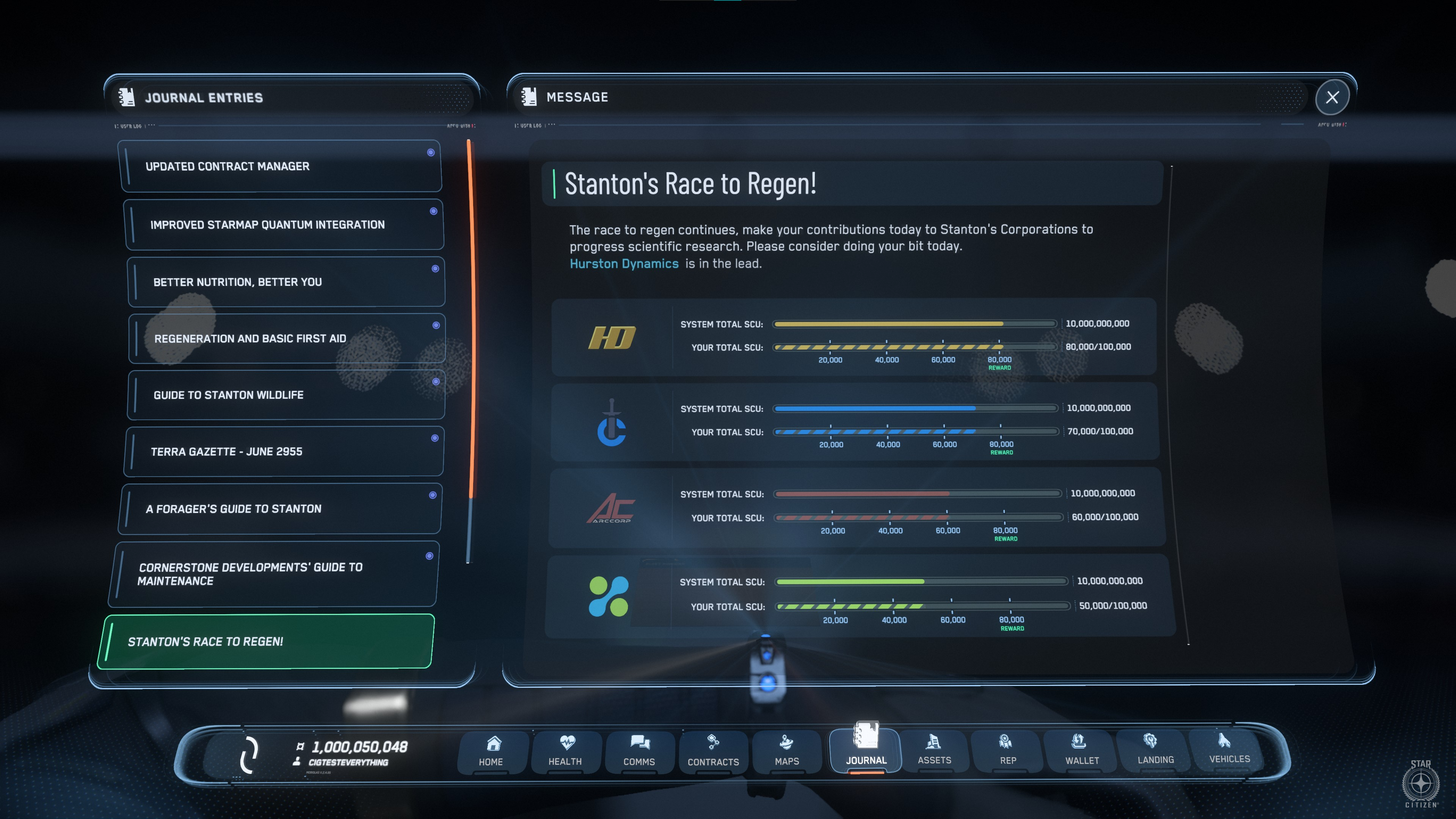
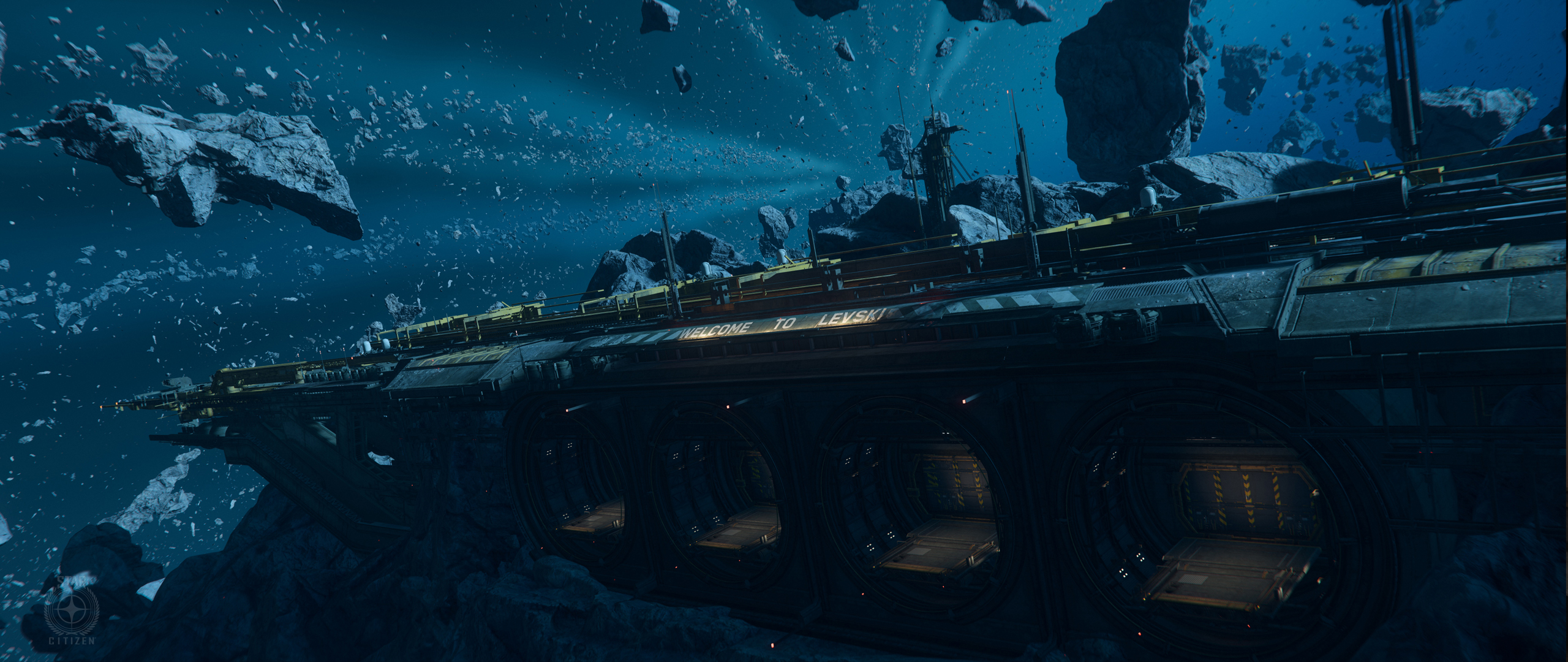
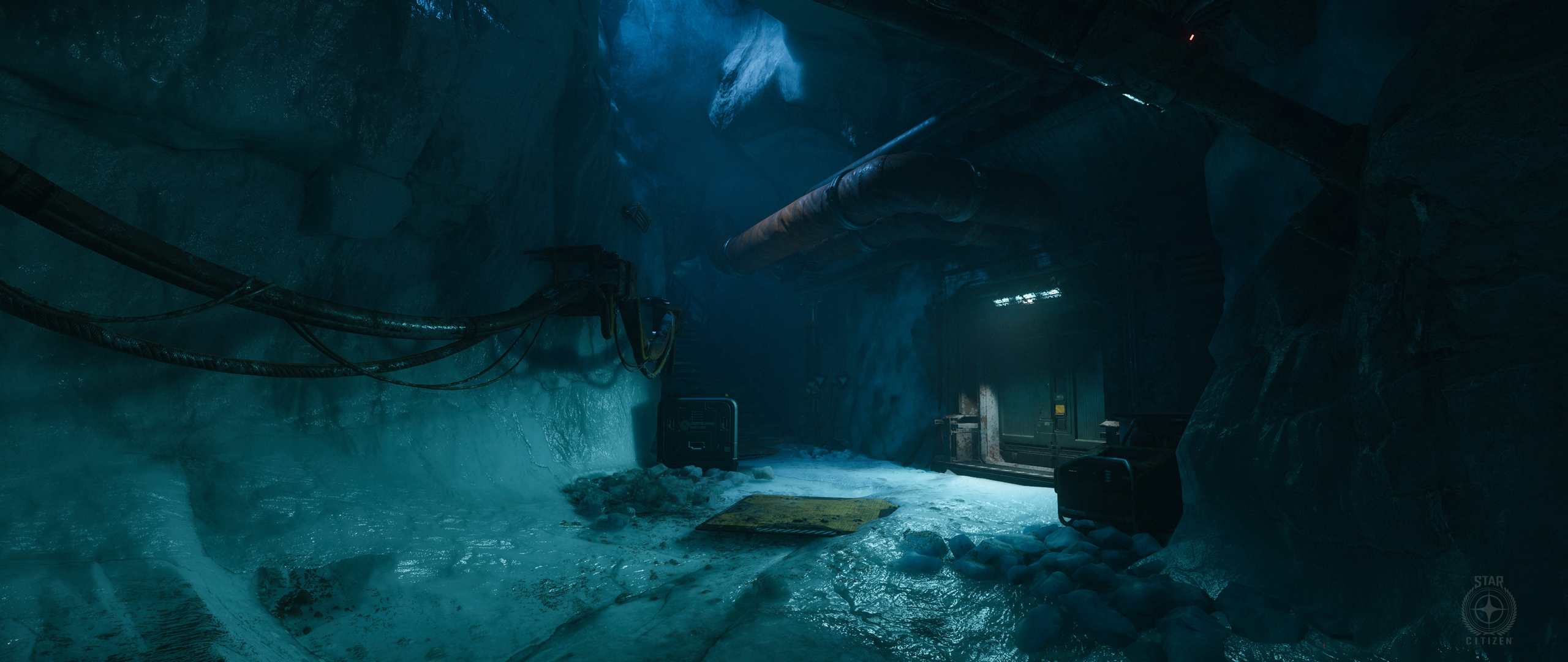
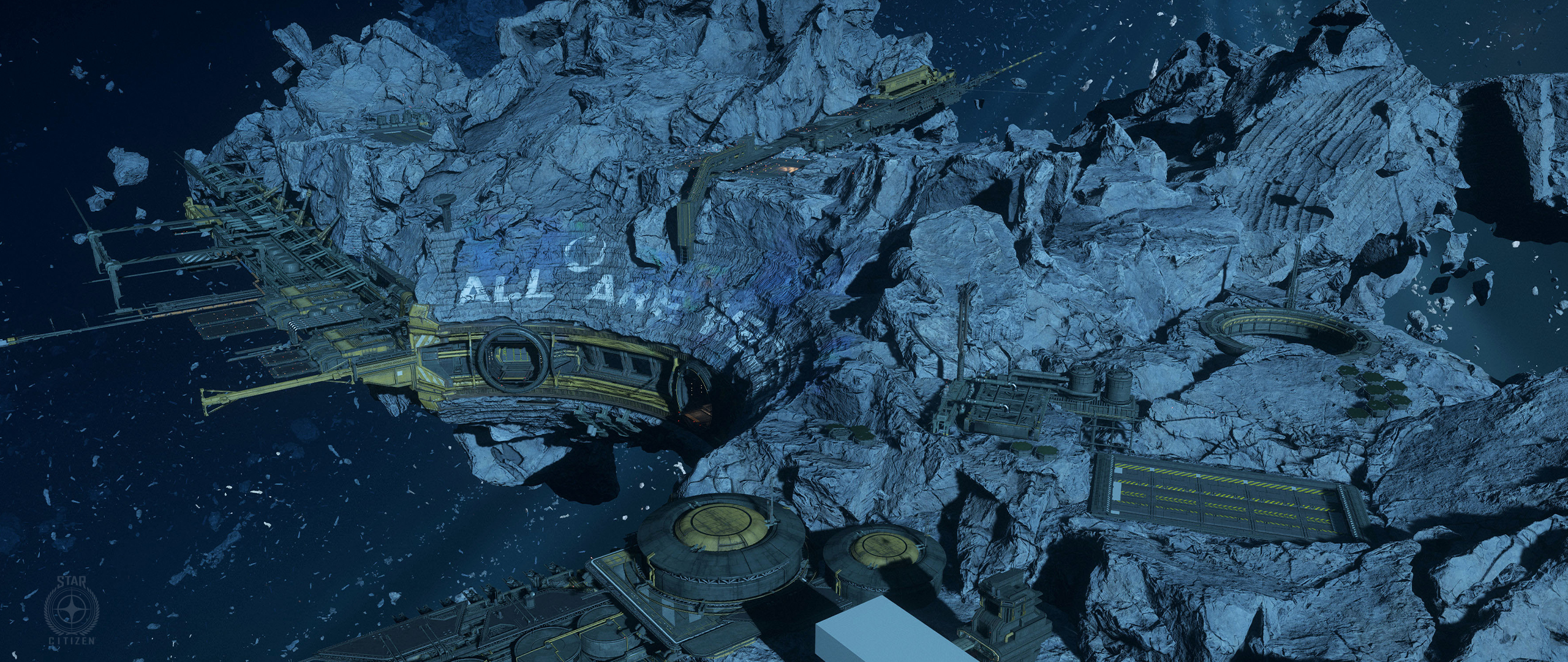
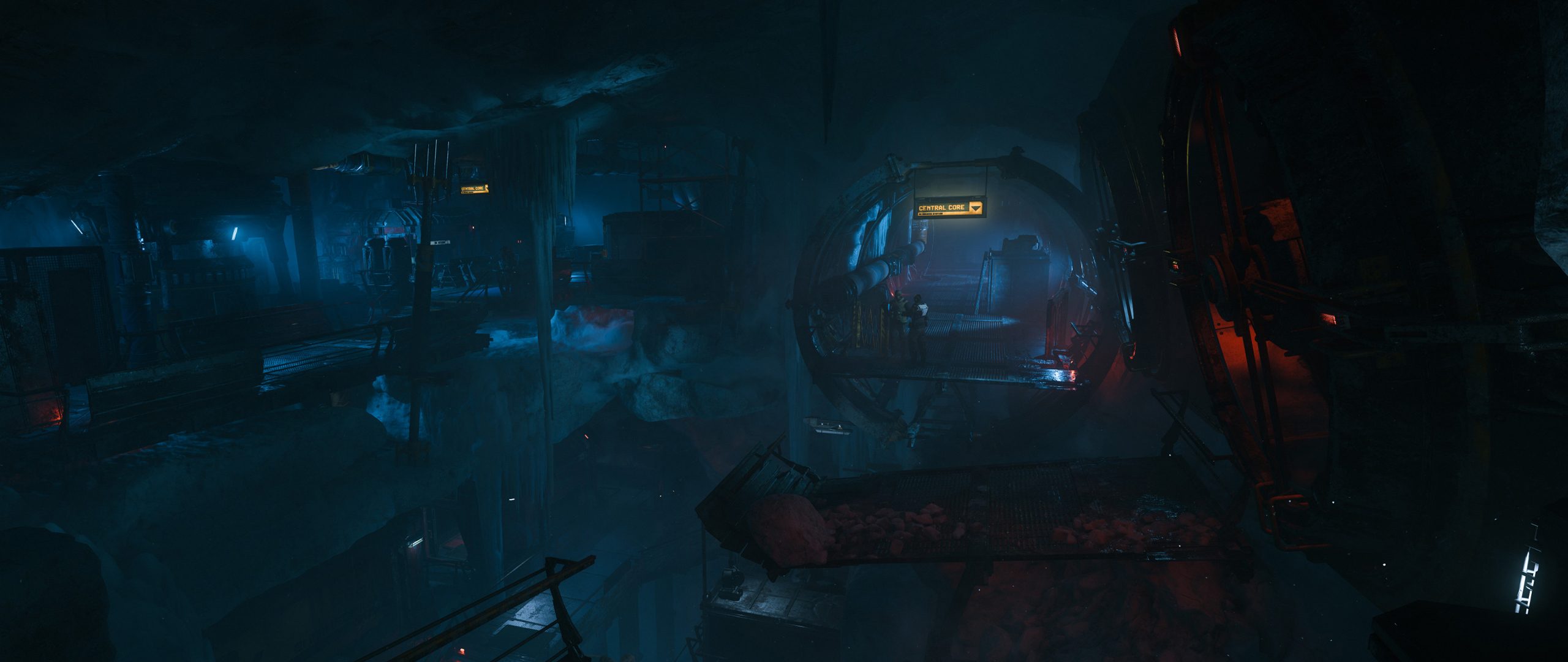
Metadata
- CIG ID
- 14481
- Channel
- Transmission
- Category
- Undefined
- Series
- Monthly Reports
- Comments
- 74
- Published
- 11 years ago (2015-02-07T00:00:00+00:00)