Galactic Guide: Helios System
Spectrum Dispatch Undefined Galactic GuideContent
Helios is the rare place in the settled galaxy where natural beauty can stand directly beside junkyards and military fortifications, with seemingly no overlap.
The star itself is partly to blame for this unusual variety of purposes. Helios is a Helium Strong type B star that produces powerful solar winds that wreak a peculiar type of havoc with ship sensors: even large capital ships are capable of ‘hiding’ in the star’s solar winds. Helios’ unusual photosphere also attracts countless scientists from around the Empire who have built a series of platforms close to the star to serve as labs and observation posts.
Helios’ discovery in 2529 certainly ranks as one of the livelier origin stories for a system and is the only one ever discovered by the Advocacy. An outlaw pack colorfully known as Daybreak Marauders had made a name for itself knocking over convoys in the Ellis System. As quickly and efficiently as the Marauders would attack and rob their prey, they would flee into the Taranis System then disappear without a trace. This went on for months. One business, Uros Shipping Concern, lost so much of their cargo that they went into debt hiring merc groups to safely escort their ships through the Ellis System — a debt that would ultimately drive the company into bankruptcy.
The Advocacy agents assigned to the case, Special Agents Avon Dorville and Gia Trask, were determined to hunt down this elusive pack. For months, the special agents tracked the Daybreak Marauders into Taranis only for them to escape again and again. When the Advocacy agents finally found their quarry, they were stunned to realize that the group hadn’t discovered a particularly effective route through Taranis’ asteroid belts. Instead, they had been using a previously unknown jump point to leave Taranis and hide out in what would come to be known as Helios.
Helios I
Helios I is a dead planet that has no atmosphere, with only limited minerals that are difficult to access due to the world’s proximity to the star. Helios I was the site of a brief flurry of activity in 2937, when a scientific survey station actually crashed onto the planet’s surface. A daring rescue by members of the local garrison (modifying their fighters for high heat protection) saved six lives from a horrific death.
Helios II (Tangaroa)
Helios II is an oceanic world with a greater circumference than Earth (though a lower overall gravity). It has a single ‘fast orbiting’ moon with a dense nickel/iron core. The low density of the ocean planet combined with the moon’s unusual orbit give rise to frequent and unpredictable volcanic activity, ultimately causing terrestrial islands to quickly form and then be reclaimed by the sea. Originally classified as mineral-rich, the planet was quickly inhabited and deep-sea mining rights sold to a variety of mining outfits. It wasn’t until decades later that the planet began to see an influx of the rich and famous who showed up for the beautiful oceanic vistas.
Despite the rapidly changing and erratic tidal and volcanic activity, it has become vogue to construct elaborate temporary housing on Tangaroa’s short-lived islands. More permanent housing is often established on or under the sea. For those who want to enjoy the planet without the risk, hospitality magnate Tyler Newman recently unveiled plans for a permanent undersea hotel.
Only the polar regions sustain standard populations. To the north, scientists and engineers typically call the planet home, supporting the cottage industry that has grown up around Helios’ odd star. In the south, the limited amount of land belongs to R&D facilities that support the nearby military forces. The planet’s capital and prime landing zone, located in the north, is officially named Mariana, although it is called Shorebreak by the natives as the city extends well past the land into the surrounding sea.
Not everybody lives in fear of the planet’s unique tidal nature. Native sub-surfers celebrate it as they pilot streamlined and maneuverable submarines in rides on thousand-foot waves.
INS Hephaestus Station
Perched in orbit above Helios II, Hephaestus Station is the most accessible military outpost in the system. Landing on the station’s main landing pad requires special permission, but a planetside outlet station allows traders to sell to the military forces assigned there.
The station acts as a general launching area for system security, but traveling battle groups will occasionally also use the station as an operational headquarters to stage wargaming scenarios and training exercises.
Helios III
The third planet in the Helios system is a large gas giant. Helios III is a source of readily accessible hydrogen with minimal impurities. Helios III does approach the upper bound for gas giants in terms of size, a fact that has attracted the occasional scientific survey. The planet itself lacks the distinct bands of color and the complicated lunar systems found on many Jovian planets.
Helios IV
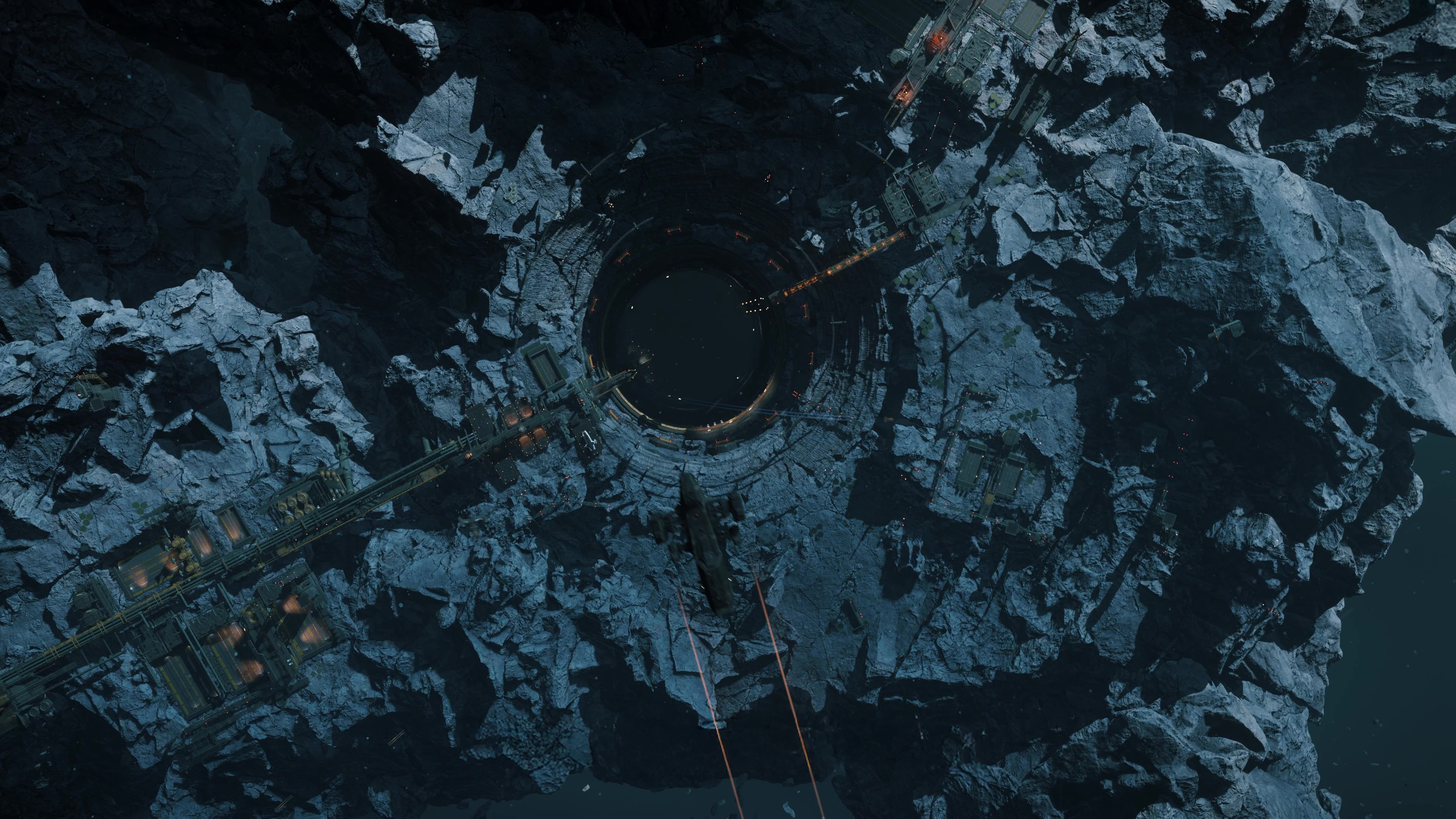
Helios IV is a common ice planet, much like those found in the outer systems of most stars. Its most notable feature is a massive military complex built into the planet’s glacial surface. Criticized as a notorious example of military waste, the military has never officially commented on the reasoning behind the huge amount of credits spent on the construction of such a remote outpost. While many in active duty see assignment to Helios IV as a sure sign of a stalled career, there are some who suspect that officials are not revealing the complex’s true strategic importance to the public and that it may be housing black-ops training facilities or top-secret research labs.
Travel Warning
Beware of the high-intensity solar winds. What can hide you from other ships can also hide lurking ships from you and can distort or even disable your sensors, leaving you blind.
Heard in the Wind
“With the great distances that separate Humanity as we expand through the stars, it is a great comfort to know you can still count on your neighbors for help.”
- Dr. Ariel Thario, survivor of the 2937 Helios I Disaster
“Amazingly that wasn’t even the most expensive item of the night. That distinction went to a package offered by interstellar hellraiser Ellroy Cass, who auctioned off his infamous private party pad in Tangaroa! This private paradise includes an estate that sleeps 16, two private beaches and a massive indoor pool connected to the famous grotto by a number of elaborate waterslides. If only those walls could talk, we would have enough StarWatch material for a millennium.”
- Callie C, StarWatch, 2945.11.04
Helios ist der seltene Ort in der besiedelten Galaxie, wo die natürliche Schönheit direkt neben Schrottplätzen und militärischen Befestigungen stehen kann, ohne scheinbar Überschneidungen.
Der Stern selbst ist mitverantwortlich für diese ungewöhnliche Vielfalt von Zwecken. Helios ist ein Helium Strong Typ B Stern, der starke Sonnenwinde erzeugt, die eine eigentümliche Art von Chaos mit Schiffssensoren anrichten: Selbst große Großkampfschiffe sind in der Lage, sich in den Sonnenwinden des Sterns zu "verstecken". Helios' ungewöhnliche Fotosphäre zieht auch unzählige Wissenschaftler aus dem ganzen Reich an, die eine Reihe von Plattformen in der Nähe des Sterns gebaut haben, um als Labore und Beobachtungsposten zu dienen.
Helios' Entdeckung im Jahr 2509 gilt sicherlich als eine der lebendigeren Entstehungsgeschichten eines Systems und ist die einzige, die jemals von der Advocacy entdeckt wurde. Ein Gesetzloser, bunt bekannt als Daybreak Marauders, hatte sich mit dem Umkippen von Konvois im Ellis-System einen Namen gemacht. So schnell und effizient die Marodeure angreifen und ihre Beute berauben würden, sie würden in das Taranis-System fliehen und spurlos verschwinden. Das ging monatelang so weiter. Ein Unternehmen, Uros Shipping Concern, verlor so viel von seiner Ladung, dass sie in Schulden gerieten und Söldnergruppen einstellten, um ihre Schiffe sicher durch das Ellis-System zu begleiten - eine Schuld, die das Unternehmen letztendlich in den Konkurs treiben würde.
Die dem Fall zugewiesenen Advocacy-Agenten, die Special Agents Avon Dorville und Gia Trask, wurden entschlossen, dieses schwer fassbare Paket zu jagen. Monatelang verfolgten die Spezialagenten die Daybreak Marauders in Taranis, nur damit sie immer wieder entkommen konnten. Als die Advocacy-Agenten schließlich ihren Steinbruch fanden, waren sie fassungslos, als sie feststellten, dass die Gruppe keinen besonders effektiven Weg durch Taranis' Asteroidengürtel gefunden hatte. Stattdessen hatten sie einen bisher unbekannten Sprungpunkt benutzt, um Taranis zu verlassen und sich in dem zu verstecken, was später als Helios bekannt wurde.
Helios I
Helios I ist ein toter Planet ohne Atmosphäre, mit nur wenigen Mineralien, die aufgrund der Nähe der Welt zum Stern schwer zugänglich sind. Helios I. war der Schauplatz eines kurzen Aktivitätsschubs im Jahr 2937, als eine wissenschaftliche Vermessungsstation tatsächlich auf die Oberfläche des Planeten stürzte. Eine gewagte Rettung durch Mitglieder der örtlichen Garnison (die ihre Kämpfer auf hohen Hitzeschutz umrüsten) rettete sechs Leben vor einem schrecklichen Tod.
Helios II (Tangaroa)
Helios II ist eine ozeanische Welt mit einem größeren Umfang als die Erde (allerdings mit einer geringeren Gesamtschwere). Er hat einen einzigen "schnell umkreisenden" Mond mit einem dichten Nickel-Eisen-Kern. Die geringe Dichte des Ozeanplaneten in Verbindung mit der ungewöhnlichen Umlaufbahn des Mondes führt zu häufigen und unvorhersehbaren vulkanischen Aktivitäten, die letztlich dazu führen, dass sich Landinseln schnell bilden und vom Meer zurückgewonnen werden. Ursprünglich als mineralreich eingestuft, war der Planet schnell bewohnt und die Tiefseeminenrechte wurden an eine Vielzahl von Bergbaueinrichtungen verkauft. Erst Jahrzehnte später begann der Planet einen Zustrom von Reichen und Berühmten zu sehen, die zu den schönen ozeanischen Aussichten auftauchten.
Trotz der sich schnell verändernden und unregelmäßigen Gezeiten- und Vulkantätigkeit ist es in Mode gekommen, auf Tangaroa's kurzlebigen Inseln aufwändige temporäre Wohnungen zu bauen. Häufig werden dauerhaftere Wohnungen auf oder unter dem Meer errichtet. Für diejenigen, die den Planeten ohne Risiko genießen wollen, hat der Hospitality-Magnat Tyler Newman kürzlich Pläne für ein permanentes Unterwasserhotel vorgestellt.
Nur die Polargebiete halten die Standardbevölkerung aufrecht. Im Norden nennen Wissenschaftler und Ingenieure den Planeten typischerweise ihr Zuhause und unterstützen die Hüttenindustrie, die um Helios' seltsamen Stern herum entstanden ist. Im Süden gehört die begrenzte Landfläche zu den Forschungs- und Entwicklungseinrichtungen, die die nahegelegenen Streitkräfte unterstützen. Die Hauptstadt und Hauptanlandezone des Planeten, die sich im Norden befindet, trägt offiziell den Namen Mariana, obwohl sie von den Einheimischen als Shorebreak bezeichnet wird, da sich die Stadt weit über das Land hinaus ins umliegende Meer erstreckt.
Nicht jeder lebt in Angst vor der einzigartigen Gezeiten-Natur des Planeten. Einheimische Sub-Surfer feiern es, während sie stromlinienförmige und wendbare U-Boote in Fahrten auf Tausend-Fuß-Wellen steuern.
INS Hephaestus Station
Die Hephaestus-Station befindet sich im Orbit über Helios II und ist der am besten zugängliche militärische Außenposten des Systems. Die Landung auf dem Hauptanleger der Station bedarf einer besonderen Genehmigung, aber eine planetenseitige Auslassstation ermöglicht es Händlern, an die dort eingesetzten Streitkräfte zu verkaufen.
Die Station fungiert als allgemeiner Startplatz für die Systemsicherheit, aber reisende Kampfgruppen werden die Station gelegentlich auch als Operationszentrale für Wargaming-Szenarien und Trainingsübungen nutzen.
Helios III.
Der dritte Planet im Helios-System ist ein großer Gasriese. Helios III ist eine Quelle für leicht zugänglichen Wasserstoff mit minimalen Verunreinigungen. Helios III. nähert sich in Bezug auf die Größe der oberen Grenze für Gasriesen, was gelegentlich wissenschaftliche Untersuchungen hervorgerufen hat. Dem Planeten selbst fehlen die ausgeprägten Farbbänder und die komplizierten Mondsysteme vieler jovianischer Planeten.
Helios IV
Helios IV ist ein gewöhnlicher Eisplanet, ähnlich wie die in den Außensystemen der meisten Sterne. Sein bemerkenswertestes Merkmal ist ein massiver Militärkomplex, der in die Gletscheroberfläche des Planeten integriert ist. Das Militär, das als berüchtigtes Beispiel für militärische Abfälle kritisiert wurde, hat sich nie offiziell zur Begründung der enormen Menge an Krediten geäußert, die für den Bau eines so abgelegenen Außenpostens ausgegeben wurden. Während viele im aktiven Dienst die Zuordnung zu Helios IV als sicheres Zeichen für eine festgefahrene Karriere sehen, gibt es einige, die vermuten, dass die Beamten die wahre strategische Bedeutung des Komplexes der Öffentlichkeit nicht offenbaren und dass er möglicherweise schwarze Trainingseinrichtungen oder streng geheime Forschungslabore beherbergt.
Reisewarnung
Achten Sie auf die hochintensiven Sonnenwinde. Was dich vor anderen Schiffen verstecken kann, kann auch lauernde Schiffe vor dir verstecken und deine Sensoren verzerren oder sogar deaktivieren, so dass du blind wirst.
Im Wind gehört
"Bei den großen Entfernungen, die die Menschheit trennen, während wir uns durch die Sterne ausdehnen, ist es ein großer Trost zu wissen, dass man sich immer noch auf seine Nachbarn verlassen kann."
- Dr. Ariel Thario, Überlebender der Katastrophe von 2937 Helios I.
"Erstaunlicherweise war das nicht einmal das teuerste Teil der Nacht. Diese Auszeichnung ging an ein Paket, das von der interstellaren Hellraiser Ellroy Cass angeboten wurde, die seinen berüchtigten privaten Partyblock in Tangaroa versteigerte! Dieses private Paradies umfasst ein Anwesen mit 16 Schlafplätzen, zwei Privatstrände und ein riesiges Hallenbad, das durch eine Reihe von aufwändigen Wasserrutschen mit der berühmten Grotte verbunden ist. Wenn nur diese Wände sprechen könnten, hätten wir genug StarWatch-Material für ein Jahrtausend."
- Callie C, StarWatch, 2945.11.04.04
Helios is the rare place in the settled galaxy where natural beauty can stand directly beside junkyards and military fortifications, with seemingly no overlap.
The star itself is partly to blame for this unusual variety of purposes. Helios is a Helium Strong type B star that produces powerful solar winds that wreak a peculiar type of havoc with ship sensors: even large capital ships are capable of ‘hiding’ in the star’s solar winds. Helios’ unusual photosphere also attracts countless scientists from around the Empire who have built a series of platforms close to the star to serve as labs and observation posts.
Helios’ discovery in 2529 certainly ranks as one of the livelier origin stories for a system and is the only one ever discovered by the Advocacy. An outlaw pack colorfully known as Daybreak Marauders had made a name for itself knocking over convoys in the Ellis System. As quickly and efficiently as the Marauders would attack and rob their prey, they would flee into the Taranis System then disappear without a trace. This went on for months. One business, Uros Shipping Concern, lost so much of their cargo that they went into debt hiring merc groups to safely escort their ships through the Ellis System — a debt that would ultimately drive the company into bankruptcy.
The Advocacy agents assigned to the case, Special Agents Avon Dorville and Gia Trask, were determined to hunt down this elusive pack. For months, the special agents tracked the Daybreak Marauders into Taranis only for them to escape again and again. When the Advocacy agents finally found their quarry, they were stunned to realize that the group hadn’t discovered a particularly effective route through Taranis’ asteroid belts. Instead, they had been using a previously unknown jump point to leave Taranis and hide out in what would come to be known as Helios.
Helios I
Helios I is a dead planet that has no atmosphere, with only limited minerals that are difficult to access due to the world’s proximity to the star. Helios I was the site of a brief flurry of activity in 2937, when a scientific survey station actually crashed onto the planet’s surface. A daring rescue by members of the local garrison (modifying their fighters for high heat protection) saved six lives from a horrific death.
Helios II (Tangaroa)
Helios II is an oceanic world with a greater circumference than Earth (though a lower overall gravity). It has a single ‘fast orbiting’ moon with a dense nickel/iron core. The low density of the ocean planet combined with the moon’s unusual orbit give rise to frequent and unpredictable volcanic activity, ultimately causing terrestrial islands to quickly form and then be reclaimed by the sea. Originally classified as mineral-rich, the planet was quickly inhabited and deep-sea mining rights sold to a variety of mining outfits. It wasn’t until decades later that the planet began to see an influx of the rich and famous who showed up for the beautiful oceanic vistas.
Despite the rapidly changing and erratic tidal and volcanic activity, it has become vogue to construct elaborate temporary housing on Tangaroa’s short-lived islands. More permanent housing is often established on or under the sea. For those who want to enjoy the planet without the risk, hospitality magnate Tyler Newman recently unveiled plans for a permanent undersea hotel.
Only the polar regions sustain standard populations. To the north, scientists and engineers typically call the planet home, supporting the cottage industry that has grown up around Helios’ odd star. In the south, the limited amount of land belongs to R&D facilities that support the nearby military forces. The planet’s capital and prime landing zone, located in the north, is officially named Mariana, although it is called Shorebreak by the natives as the city extends well past the land into the surrounding sea.
Not everybody lives in fear of the planet’s unique tidal nature. Native sub-surfers celebrate it as they pilot streamlined and maneuverable submarines in rides on thousand-foot waves.
INS Hephaestus Station
Perched in orbit above Helios II, Hephaestus Station is the most accessible military outpost in the system. Landing on the station’s main landing pad requires special permission, but a planetside outlet station allows traders to sell to the military forces assigned there.
The station acts as a general launching area for system security, but traveling battle groups will occasionally also use the station as an operational headquarters to stage wargaming scenarios and training exercises.
Helios III
The third planet in the Helios system is a large gas giant. Helios III is a source of readily accessible hydrogen with minimal impurities. Helios III does approach the upper bound for gas giants in terms of size, a fact that has attracted the occasional scientific survey. The planet itself lacks the distinct bands of color and the complicated lunar systems found on many Jovian planets.
Helios IV
Helios IV is a common ice planet, much like those found in the outer systems of most stars. Its most notable feature is a massive military complex built into the planet’s glacial surface. Criticized as a notorious example of military waste, the military has never officially commented on the reasoning behind the huge amount of credits spent on the construction of such a remote outpost. While many in active duty see assignment to Helios IV as a sure sign of a stalled career, there are some who suspect that officials are not revealing the complex’s true strategic importance to the public and that it may be housing black-ops training facilities or top-secret research labs.
Travel Warning
Beware of the high-intensity solar winds. What can hide you from other ships can also hide lurking ships from you and can distort or even disable your sensors, leaving you blind.
Heard in the Wind
“With the great distances that separate Humanity as we expand through the stars, it is a great comfort to know you can still count on your neighbors for help.”
- Dr. Ariel Thario, survivor of the 2937 Helios I Disaster
“Amazingly that wasn’t even the most expensive item of the night. That distinction went to a package offered by interstellar hellraiser Ellroy Cass, who auctioned off his infamous private party pad in Tangaroa! This private paradise includes an estate that sleeps 16, two private beaches and a massive indoor pool connected to the famous grotto by a number of elaborate waterslides. If only those walls could talk, we would have enough StarWatch material for a millennium.”
- Callie C, StarWatch, 2945.11.04
Helios is the rare place in the settled galaxy where natural beauty can stand directly beside junkyards and military fortifications, with seemingly no overlap.
The star itself is partly to blame for this unusual variety of purposes. Helios is a Helium Strong type B star that produces powerful solar winds that wreak a peculiar type of havoc with ship sensors: even large capital ships are capable of ‘hiding’ in the star’s solar winds. Helios’ unusual photosphere also attracts countless scientists from around the Empire who have built a series of platforms close to the star to serve as labs and observation posts.
Helios’ discovery in 2529 certainly ranks as one of the livelier origin stories for a system and is the only one ever discovered by the Advocacy. An outlaw pack colorfully known as Daybreak Marauders had made a name for itself knocking over convoys in the Ellis System. As quickly and efficiently as the Marauders would attack and rob their prey, they would flee into the Taranis System then disappear without a trace. This went on for months. One business, Uros Shipping Concern, lost so much of their cargo that they went into debt hiring merc groups to safely escort their ships through the Ellis System — a debt that would ultimately drive the company into bankruptcy.
The Advocacy agents assigned to the case, Special Agents Avon Dorville and Gia Trask, were determined to hunt down this elusive pack. For months, the special agents tracked the Daybreak Marauders into Taranis only for them to escape again and again. When the Advocacy agents finally found their quarry, they were stunned to realize that the group hadn’t discovered a particularly effective route through Taranis’ asteroid belts. Instead, they had been using a previously unknown jump point to leave Taranis and hide out in what would come to be known as Helios.
Helios I
Helios I is a dead planet that has no atmosphere, with only limited minerals that are difficult to access due to the world’s proximity to the star. Helios I was the site of a brief flurry of activity in 2937, when a scientific survey station actually crashed onto the planet’s surface. A daring rescue by members of the local garrison (modifying their fighters for high heat protection) saved six lives from a horrific death.
Helios II (Tangaroa)
Helios II is an oceanic world with a greater circumference than Earth (though a lower overall gravity). It has a single ‘fast orbiting’ moon with a dense nickel/iron core. The low density of the ocean planet combined with the moon’s unusual orbit give rise to frequent and unpredictable volcanic activity, ultimately causing terrestrial islands to quickly form and then be reclaimed by the sea. Originally classified as mineral-rich, the planet was quickly inhabited and deep-sea mining rights sold to a variety of mining outfits. It wasn’t until decades later that the planet began to see an influx of the rich and famous who showed up for the beautiful oceanic vistas.
Despite the rapidly changing and erratic tidal and volcanic activity, it has become vogue to construct elaborate temporary housing on Tangaroa’s short-lived islands. More permanent housing is often established on or under the sea. For those who want to enjoy the planet without the risk, hospitality magnate Tyler Newman recently unveiled plans for a permanent undersea hotel.
Only the polar regions sustain standard populations. To the north, scientists and engineers typically call the planet home, supporting the cottage industry that has grown up around Helios’ odd star. In the south, the limited amount of land belongs to R&D facilities that support the nearby military forces. The planet’s capital and prime landing zone, located in the north, is officially named Mariana, although it is called Shorebreak by the natives as the city extends well past the land into the surrounding sea.
Not everybody lives in fear of the planet’s unique tidal nature. Native sub-surfers celebrate it as they pilot streamlined and maneuverable submarines in rides on thousand-foot waves.
INS Hephaestus Station
Perched in orbit above Helios II, Hephaestus Station is the most accessible military outpost in the system. Landing on the station’s main landing pad requires special permission, but a planetside outlet station allows traders to sell to the military forces assigned there.
The station acts as a general launching area for system security, but traveling battle groups will occasionally also use the station as an operational headquarters to stage wargaming scenarios and training exercises.
Helios III
The third planet in the Helios system is a large gas giant. Helios III is a source of readily accessible hydrogen with minimal impurities. Helios III does approach the upper bound for gas giants in terms of size, a fact that has attracted the occasional scientific survey. The planet itself lacks the distinct bands of color and the complicated lunar systems found on many Jovian planets.
Helios IV
Helios IV is a common ice planet, much like those found in the outer systems of most stars. Its most notable feature is a massive military complex built into the planet’s glacial surface. Criticized as a notorious example of military waste, the military has never officially commented on the reasoning behind the huge amount of credits spent on the construction of such a remote outpost. While many in active duty see assignment to Helios IV as a sure sign of a stalled career, there are some who suspect that officials are not revealing the complex’s true strategic importance to the public and that it may be housing black-ops training facilities or top-secret research labs.
Travel Warning
Beware of the high-intensity solar winds. What can hide you from other ships can also hide lurking ships from you and can distort or even disable your sensors, leaving you blind.
Heard in the Wind
“With the great distances that separate Humanity as we expand through the stars, it is a great comfort to know you can still count on your neighbors for help.”
- Dr. Ariel Thario, survivor of the 2937 Helios I Disaster
“Amazingly that wasn’t even the most expensive item of the night. That distinction went to a package offered by interstellar hellraiser Ellroy Cass, who auctioned off his infamous private party pad in Tangaroa! This private paradise includes an estate that sleeps 16, two private beaches and a massive indoor pool connected to the famous grotto by a number of elaborate waterslides. If only those walls could talk, we would have enough StarWatch material for a millennium.”
- Callie C, StarWatch, 2945.11.04
Links
No links available.


Metadata
- CIG ID
- 14525
- Channel
- Spectrum Dispatch
- Category
- Undefined
- Series
- Galactic Guide
- Comments
- 87
- Published
- 11 years ago (2015-03-15T00:00:00+00:00)