Monthly Studio Report: July 2015
Transmission Undefined Monthly ReportsContent
Greetings Citizens,
From wrapping the Squadron 42 motion capture shoot to the all-hands-on-deck team effort to finish the Gamescom 2015 multicrew presentation, work on Star Citizen has been going at a fevered pace! We’re incredibly proud of how teams around the world have come together to create a live demonstration of Star Citizen’s future. If you missed the demo, the entire presentation will be available on the site next week. And if you’re interested in the work that went into making everything from large world to shared physics grids a reality, read on…
Happy Summer Everyone (well those in the Northern Hemisphere that is)! It’s been a little over a month since summer began so we filled it by sticking our heads up in space. We’ve had an incredible month full of defeated challenges and smashed bugs. Like always, we love sharing with everyone what we’ve been working on, so check it out and let us know if you have any questions.
Engineering
We’ve had a jam-packed month full of everything from updating seat animation controls and general streaming and optimization improvements to 1.1.5 bug fixing and optimization.
We were hard at work on our AI this month focusing on AI weapons targeting, AI module compatibility and general AI behavior for larger ships. Turrets were a big focus for us this month because we worked hard on turret attack behavior creation, turret IK (Inverse Kinematics) hookups and overall turret compatibility. This also allowed us to focus on turret rotation bugs and other kinds of bugs like projectile bugs and collision bugs. We established a clear working process for disabling and enabling gravity inside a ship. We’re also really excited by the CGA loading and cache improvements we made this month.
Some general ship work included a Merlin HUD bug we couldn’t wait to fix and a Gladius issue we found that was preventing it from following splines. General HUD support was on our list this month as was an interactor code fix we couldn’t wait to correct. With all the hard work going in to our new character pipeline, our own Okka Kyah has been hard a work implementing the multilayer material system that we hope will enhance our characters and take them to the next level. That wraps it up for engineering for this month. Thanks for reading!
Design
Much like our engineering brethren, we’ve had a myriad of 1.1.5 balance and bugs for this most recent patch, ship fixes, and new ideas we can’t wait for you to see. Let’s dig in!
As designers, balance is something we are always eager to do because we enjoy not only playing the game ourselves but also integrating your feedback and perspective. We were really looking forward to 1.1.5 because we finally got to implement a lot of long standing updates and balance adjustments to several elements.
These included Everything everything from tuning ships to retain momentum, to giving missiles disruption damage. We enjoyed working on specific ships like the Mustang Delta and bringing in ships like the Merlin and Scythe.
In addition to those updates, we worked on some HUD screens, shield proxies and general component retrofitting. We setup some torpedoes, updated some of our logic flowgraphs and fixed some spawning bugs. The Cutlass Blue got a little love this month when we addressed the hatch interactions. We established some new player loadouts and setup some new ships. With new ships always come updated loadouts, new stats, items and general flight balance.
This month was full of the kind of bugs fixing which you’re never short of when it comes to making a great big game! We did a lot of level flow review to give provide the best experiences possible as well. We also focused a bit on turrets such as general setup, usage and interactions. In addition, we worked hard on hatches, and doors.
We also wrapped up some additional Starliner documentation left over from the previous month and addressed a ton of new items for the Merlin and Scythe. That about does it for this month. Stay tuned for more in-depth breakdowns and details all month long.
Art
Phew. Another busy month for the art team. Even after creating a whole batch of new ships, components, characters, outfits, etc. we still find ourselves looking forward instead of back at all of our hard work most of the time, so let’s take a moment now, with you. Here’s what we worked on this hot month in Santa Monica, California.
Zane our local UI guru has been hard at work with all kinds of different ship screens. He worked heavily on engineering screens, the Merlin HUD and the Scythe HUD. We also had several bug fixing tasks to get 1.1.5 out the door as quickly as possible. We wanted it to look as good as it could before you downloaded everything to your computer.
Another part of our month has been helping clear out FPS character bugs to make sure those characters are all ready to go as soon as possible. We’ve also been looking at the general placement of flashlights on our characters. We needed a new design to make sure it lit the path ahead of your avatar as well as possible when going through dark areas. We don’t want you to get caught off guard!
We also continue to be hard at work on concepting characters to use in Star Citizen. This is no small feat. The sheer quantity of people, aliens, and creatures that inhabit this universe is immense and we’re not holding anything back when it comes to concepts. We want to make sure we’re giving this universe the best layout of characters possible. Everything from in-depth uniforms to advanced pilot helmets to organic creations. We’re doing it all.
On the ships side, as you know we spent a lot of time on the Merlin and Scythe this month. We’re also always working hard to get ships out to you as fast as possible, and next up on our list is the Herald. We made several steps forward on bringing that ship to your hangar as soon as possible. We also spent quite a bit of time developing Vanguard interior variant concepts to get those ships into production quickly. We did a lot of UV setup on multiple different ships including the Merlin and the Scythe. Our resident lighter, Marc Toscano worked on final lighting for the Cutlass Blue, the Merlin, and others.
Another part of our job as artists is to provide beautiful images for our community team to show you along the way, so we spend some of our time getting as much imagery out to you as possible. That does it for the art team for this month. It’s an honor to create art alongside you so keep your feedback coming.
Writing
Hello everyone.
Not much to report here…
Just kidding
The past few months have been a whirlwind of activity with the Squadron 42 performance capture shoot. Dave and Will were present on set to generate any rewrites that were needed as well as incorporate any changes to the level scripts based on work done by the Design team. In addition to that, we needed to generate wild lines and interactions for the secondary and supporting characters that you encounter in the story. Overall, it was a fantastic experience working with the amazing crew and tremendously exciting to see these performances come alive.
Meanwhile, Adam and Cherie have been holding down the fort (and even hosting a show) back in the States. Adam has been organizing the S42 scripts with our Production Office in the UK, helping out with wildlines and tackling the News Updates. Meanwhile, Cherie has been busy organizing the massive internal company database to make it more user-friendly and… well… organized. She’s also been helping lay the groundwork for the StarMap and the Galactapedia.
Now that we’re all back in the office, we’ve been getting back up to speed with the needs of the Persistent Universe, Marketing and pushing forward on Squadron 42.
Conclusion
And there you have it. Another busy month for the studio out in Santa Monica. We really appreciate you taking the time to read about all of our hard work and if anything intrigues you, please don’t hesitate to reach out if you want to know more! We always want to tell you how much you mean to us. Without you, we wouldn’t be able to make this great game. Thank you for everything and remember, we always value your feedback. Thanks for reading, now back to work!
Howdy from Texas!
The Austin team has been hard at work on many fronts through the month of July. We’ve had several updates to the live service with a number of game updates and a whole host of updates to our back end infrastructure. The team has been working tirelessly on many things that may be demo’d at Gamescom or soon thereafter. Here are detailed reports from each team!
Persistent Universe Team
Art
The PU Art Team has been busy this month preparing for Social Module v0 release and beyond. Our Environment Team has been full bore on the ArcCorp>Area18 environment. The level design has undergone a complete overhaul, and it has done wonders for the landing zone. We’ve added sweeping vista shots into the city, seedy back alleys for shady dealings, brushed up the shops to take them to the next level, and polished the VFX across the level. We’ve started from ground zero on the lighting over the whole level, updating the skybox, atmospherics, etc. to make a truly beautiful environment, which is saying something considering ArcCorp is supposed to be this gritty, grungy planet. Major kudos go to our internal Environment Team and the team at BHVR for making this environment truly something to behold.
Our Character Team has been working towards several goals this month. The FPS characters are in bug-fixing and optimization phase now, a few more fixes and these bad boys will be ready for release. We’ve also been updating our characters from the SXSW demo so that they will be ready for Social Module v0. Next month, we will start on creating some new clothing assets so that we can get some proper variety in place for the release of Social Module.
As ever, our Concept Team looks to the future busting out beautiful art that helps shape the PU. Ted Beargeon is wrapping up the Style Guide for the Stanton>MicroTech>New Babbage landing zone so that Ken Fairclough can take it and start working on some look/feel pieces for that particular environment. Ken has been fleshing out concepts for the Nyx>Delamar>Levski market bazaar area as well as finishing up a smaller version of the security turret prop he concepted a couple of months back. Character concept artist, Megan Cheever, has been helping to define the look for one of our clothing lines, Terra>Fashion Casual. This clothing line will likely be the most prominent line found in systems that fall within Terra’s sphere of influence. These are the types of clothes you’d find on planets like ArcCorp, Crusader, Odyssa, Mariana, and of course Terra itself.
Our Animation Team has been helping out on various areas of the project, as always. We’ve been lending a hand with animation tasks for our upcoming demo for GamesCom, and even though we can’t really reveal what exactly we’ve been doing for the event, we can say that we are extremely excited to show you guys what we’ve been doing. We’ve also been working on the revamped No-Weapon Locomotion set for the player character. We’re using mocap captured while at Imaginarium Studios, so with a little love from our Lead Animator, Bryan Brewer, we’re getting this locomotion set to the best it can be. On the PU side specifically, Vanessa Landeros has been implementing emote animations for our upcoming release. We’ve gotten 19 emotes hooked up so far including /taunt, /threaten, /cheer, /dance, and more.
Design
The first part of this month was spent wrapping up initial passes on design docs for the Smuggling, Piracy, and Mercenary occupations for the PU. Very early on, however, attention shifted to breathing life into the ArcCorp>Area18 environment for the purposes of a Social Module release. We’ve been setting up NPC activity on the landing pads, placing ship traffic around the city, and setting up NPC activity for various shops. We’ve also been hooking up emotes to the chat system via DataForge so that they can be viewed and tested in game.
Another task on the Design Team’s plate this month was discussions on standardization of object interaction points. We are trying to standardize several areas of our project to alleviate the workload required, and that includes standardizing how NPCs and players both pick up and put down objects such as crates, cups, weapons, tools, etc.
A few of our designers also spoke with the gameplay programmers multiple times this month with the purpose of brainstorming what tasks to include in Subsumption, our peaceful NPC AI System. Subsumption is now online and working, for all intents and purposes, but we are now going to be improving it by adding more NPC “tasks” for our designers to play with. This includes things like “Compare”, “Compute”, “Create Object”, “Destroy Object”, “Find Object”, “Pathfind”, “Use”, “Send Event”, “Wait”, and much more.
Engineering
The month of July was a wild ride for the PU Engineering Team, starting with the resonating bang of the Fourth of July celebrations!
The team put in some heavy support for the 1.1.5 release, which included the first iteration of our new Generic Instance Manager (GIM) as well as a lot of network optimization work to get our dogfighting matches up to 16 players (from 8) into a match together! Many thanks to our awesome QA department for helping us test this rigorously…we couldn’t have done it without them! As a part of this push to increase player count, we also implemented a lot of additional tools to help profile and monitor our network performance.
The team effort continues to make expansions and improvements to our GIM system for future releases, as well as updating and improving the many services that it interacts with such as our Persistence, Presence and Friends services. The Austin Team also enjoyed a visit from the LA studio’s Lead Engine Programmer Paul Reindell earlier in the month, who stopped by to work with our Lead Network Engineer Jason Ely on our Persistence service.
Our friends at Wyrmbyte have wrapped up the bugs with their iPredictor system, which helps out by reducing the amount of network traffic consumed by tracking ships, asteroids and missiles in real-time play. Feedback from that has been nothing but positive. Wyrmbyte has also been busy diving into network and animation improvements for characters as well, which will be essential for our upcoming Social and FPS modules. All the while, progress has continued on our Solar System Server and Universe Simulator, both of which will be needed to help bring the Persistent Universe to life.
Chugging away behind the scenes, some of our team continues to focus on internal tools for engineers, artists and designers. Continual updates, improvements and added functionality have been rolling out for our Dataforge, Asset Validation Tool, and our Useable and Character Archetype Editors.
Currently, the bulk of the team is supporting work planned to be shared with you all at Gamescom in August. For sake of not spoiling the surprises, we won’t go into detail here…just prepare yourself to be “wow’d.” The team is very excited to share the labors of their efforts and expect backer reaction to be enthusiastic. They have also been working towards new features and content for a big PTU release that will be incoming after Gamescom. We’re sure this has you all on the edge of your seats! We’re confident that the wait will be worth it.
On top of all this, the team continues on bug fixes and feature support for various features being focused on both inside and outside of Austin. There’s always a lot of moving parts and a variety of work to keep everyone busy, but it is part of what makes working in game development exciting. There’s definitely never a dull moment! Stay tuned for more action next month!
Live Operations
QA
The month of July has been very active on the QA front with multiple PTU and public releases as well as one hotfix. In addition to ensuring that these releases were properly tested, the team worked on many other tasks.
Andrew Hesse has been settling into his new role of being QA lead by overseeing all areas of testing. Andrew worked closely with our engineers to provide valuable profiling data during our 1.1.5 internal multiplayer playtests. This data was instrumental in helping developers identify some potential fixes which helped eliminate in most cases the frequent stalls that have been happening when ships are destroyed and respawn. In addition to this, Andrew tested a significant improvement to the way ships fly from Wyrmbyte called iPredictor which resulted in ships flying much smoother when viewed by others.
Jeffrey Pease has been working closely with engineers to test and monitor the new Generic Instance Manager. After the release of 1.1.5, Jeffrey continued to monitor connection issues over the weekend and reported any outages directly to our server engineers. We were able to identify multiple issues and promptly deployed a 1.1.5 hotfix the following Monday that included fixes to the Generic Instance Manager. These fixes helped to dramatically improve the lobby connection experience.
The team worked closely with designers Matt Sherman and Calix Reneau providing comprehensive feedback on any balance changes. This was a very iterative process that eventually resulted in some welcome changes to ship flight, health, weapon heating/cooling as well as missile and countermeasure effectiveness.
Robert Gaither is our newest addition to the QA team. Robert has extensive QA experience and has already been very effective in assisting Todd Raffray with Social Module and Persistent Universe testing.
Todd, Robert, and Melissa have been spearheading the testing for Gamescom. Each day they test each aspect of the presentation and at the end of the day provide a comprehensive break down of critical issues.
Todd has continued to ensure that any features related to multi-crew, Social Module and Persistent Universe are thoroughly tested. The latest of which is the Augmented Reality experience while shopping which is part of the shopping phase 1 deliverables for social module.
Tyler Witkin and Andrew Rexroth have been continually testing Star Marine. Tyler ensures that all open issues are current as well as verifying any issues are fixed that have been set as resolved by development. He also has been coordinating each company wide Star Marine playtest and gathering the resulting feedback for our design directors. Tyler also conducted a comprehensive analysis of the Star Marine juke system.
In addition to his Star Marine duties, Tyler captured video footage and screenshots that are being used by community, marketing, Turbulent, and production for various projects like advertisements, weekly FPS reports, and the background of the new launcher.
Some other things QA was working on that may not seem as exciting but are still very important are fielding special testing requests by individual developers, testing integrity of builds deployed by the new BuildBot system, testing the Cryengine version 3.7 integration into the project, and testing new deployments of the tool used to disseminate builds to developers we call CopyBuild.
This next month is going to be another big one for QA. We are currently focused on the Gamescom presentation, as well as some expected releases around the same time. Also we hope to roll out the new Issue Council by the end of August. This will dramatically improve the bug reporting experience for any members of the community that would like to assist in the testing process. See you at Gamescom!
Game Support
This has been an exciting month for the Game Support team, particularly since we got up and rolling with the 1.1.5 Publish(es) to the Live Service this month!
Our core mission is to represent the needs of the player base and to help make the service better, and we feel that we kept busy on that front. We worked very closely with designers and developers, as well as with a few of our more intrepid players in the modding community, to make 1.1.5 a more compelling experience. Not only did we do the normal job of triaging game-facing bugs, but we actively teamed up with DevOps and QA throughout the month to monitor the deployment and release of the new Launcher and the General Instance Manager (GIM), something we will continue to do for each publish.
The 1.1.5 release had a TON of new content and features, as well as several backend services, so we actively kept busy on our tickets as well as providing Live Service Notifications on our forums and on Reddit (both have which have proved very popular). Particularly helpful was working with the community in understanding the user experience from all over the globe. We spent a couple of weekends making sure everything was working smoothly, to which we received extremely kind messages thanking us for our service. We’d like to thank you in return as we are here for you… and we’re as excited about seeing Star Citizen grow as you are!
Speaking of, since we are back in the cycle of pushing out publishes, the Game Support team will be actively engaged managing further playtests, starting with testing the new Arena Commander 1.1.6 and Launcher 2.3 updates and all throughout August with Live concurrency playtests. We think there is a lot of value in working with players to improve the game, which fundamentally is the spirit of the entire project.
To that end, Game Support will also be creating a special “test group” to be named that’s made up of players who are dedicated to the meticulous and detail-oriented challenge of playtesting the game with us. We’ll expand what we have learned from running our playtests to having regularly scheduled sessions on PTU where we give you specific “missions” to test new content and features, and how to report that in a manner that is much improved from the current forum-based solution. More on that will come from our Turbulent team, but we’re very excited to team up with them for a new system that will be formally announced very shortly!
In addition, we had some really good times exploring and learning some of the Star Marine modules during our internal playtests (plus, it’s fun!). It’s great to “feel” the environment in which players are going to live and breathe, and only by walking through their steps can we best help them. We’ve got some great ideas on how players will be interfacing not only inside their module, but in the greater Star Citizen ecosystem. We’ll be excited to continue to learn along with you as the universe continues to grow and expand, and to better understand how we can best continue to serve you.
IT/Operations
Rapid builds and lots of developer support and testing for us in July. This month we’ve spread the team out to support multiple initiatives. Paul and Hassan completed the Frankfurt office move on time and on budget. Everything went smooth and the developers weren’t impacted by any down time; some commenting that they’ve never seen a move go this well in any other company. As soon as they returned to their studios Paul and Hassan continued planning, building, and testing for the GamesCom event in early August. Paul has already flown back to Manchester to help Hassan with final preparations and to help pack all our gear for the events.
Mike “Sniper” Pickett has directed his laser focus to enhancing and developing new internal tools to further improve the data delivery performance throughout the company. Much like our experience with the new launcher patcher development effort, he’s had to spend some time tuning down performance as he has now found ways of totally saturating a gigabit network to the point of failure. His work has been invaluable to the development effort though with some developers reporting as much as 120x improvement in delivery times for our largest assets used in development and testing, particularly for those who must switch back and forth supporting different branches of code throughout the day.
Dennis, Chris, and Kyle have been very busy supporting developers at each studio with hardware adjustments and upgrades. They’ve also been building and rebuilding test systems for the QA teams to help them work through various bugs seen on different hardware configurations.
With the major improvements made to the build system by the DevOps team, IT has also started the final pass of tuning on the build servers themselves. This project involves much greater use of parallel processing and caching on custom built compute and storage arrays. We’ve started work on the game server build processing by moving the major compiling workload away from the larger build servers to an array of smaller build workers. Early results are positive so testing will continue prior to an official roll out next month. We’ll be applying the same improvements to game client builds as well.
We’ll see you at GamesCom!
Dev Ops
The majority of July has been focused on two of the large projects the team was working on last month; the new launcher, and the new build server.
However, we have also shipped a few patches to PTU, released a test version of the new launcher also to PTU, and released the 1.1.4 and 1.1.5 patches to live.
The current public launcher is version 1.6 and uses a third party code base for the UI and patching. Our new launcher is written completely in house. Over the past couple of weeks, players have had a chance to use version 2.1 and version 2.2 on the PTU. Players have been testing out the new UI and speed increases, however we have gotten some complaints from players that the launcher hogs too much of their bandwidth! Version 2.3 will have options to allow the players to put bandwidth caps on the launcher which will hopefully grant a better experience. Version 2.3 is currently in testing with the company for playtests, and will be released very soon to the PTU, and if testing goes well we plan to begin using it with the Live service very soon as well!
We are now in testing with the new build server. This new build server architecture is built on BuildBot instead of Jenkins, and is completely redesigned from the ground up. This makes builds much more modular, easier to troubleshoot, and faster. We are close to switching to this server to build new builds going forward. The first builds from that system going out to the public in September. For the players, they shouldn’t see any difference at all from this switch over. Just as a reminder, not only should it allow us to run more builds at the same time, increasing the throughput of work, but by reducing the amount of time developers wait for build, it will also decrease overall build times. Currently, it takes about 4hrs to make one build on our Jenkins server and we usually make around 6-8 builds a day for development to progress. As you can probably quickly see from the math, this is more time in the day than we have. The new build server will allow us to run 2-4 builds at the same time, and should reduce the build time to around 1hr 40mins (this time is from our initial tests). This should improve performance for everyone in development!
The team is gearing up to support GamesCom and a bunch of upcoming releases that we are excited to share with our backers! August promises to be a very busy and productive month.
Art
Gamescom has taken a lot of focus this month and unfortunately we can’t share what was worked on otherwise that’ll blow the whole show! We have continued to staff up the art department, there are a lot of jobs going here in the UK Studio, so if you know good people, have them apply!
Ships
Idris interiors, Retaliator polish, Mining bot exterior materials, Xi’an Transport ship all are rocking along well. As for the Vanduul fleet – we are reducing production on this for a while so that we can solve some of the tech issues that the larger ships are causing, but fear not, there is a plan and it’s a matter of checking that it works! This will have implications for the large ships seen in Star Citizen and Squadron 42 and ideally pave the way to getting these massive hulking objects to look great and run at a good frame rate.
Environments
Gamescom; the team has been working hard at putting some new and special together, we’re looking forward to the reaction, next month we’ll be able to elaborate more!
UI
We have been working hard on redesigning the health system for FPS mode and creating the new and improved diegetic USE button design along with 3D artist support in the creation of decals and some cool assets to support holographic displays.
A lot of work has gone into multicrew UI screens. These screens include the Multi-Function Displays (MFD’s), Support screens (in three different aspect ratios), Turret screens and Engineering screens. Work has also gone on with overhead MFD screens. The UK and LA have been collaborating heavily on getting something special to see – watch this space!
VFX
What a busy month it’s been for the VFX team, even by CIG and F42 standards – but in a good way of course! We had a lot of fun getting the Merlin flight-ready effects in place, including the thrusters, weapons and damage. The Glaive has also had some attention, based on the effects we created for the recently flyable Scythe. We’ve also been giving lots of love to some of the larger ship effects, both interior and exterior; really can’t wait to show off these awesome ships. Oh, and if you think they look pretty in your hangar, just wait until you see them blow up!
Aside from ships, we’ve also been working hard on Star Marine effects. Lots of optimisation tasks – making sure we’re improving performance – while steadily improving the quality. We’ve been working closely with the designers and focusing on weapon readability too, to help create a consistent visual language. It’s not just about making the effect look pretty, they also need to make sense to the player from a gameplay perspective, especially in the heat of battle!
We’ve also been working on several environment effects, including experimenting with camera-bound particles trigger via proximity. So for example if you’re flying through an asteroid field, we can trigger particles based on your proximity to the centre of the field, getting denser the deeper you get. This approach can help us create extra detail without killing frame-rate.
Additional work has gone into the Quantum Travel effects. VFX art along with graphics engineers have provided a very impressive screen effect, with various parameters exposed which we can tweak and combine with the particle effects. This has been a real challenge due to the multiple camera views that this effect might be seen in. It’s not just the pilot in the cockpit; we need to consider what QT will look like to say, an engineer looking out of a side window in the cargo bay, or a spectator witnessing a ship entering/exiting QT.
Props
The prop team has mainly been focused on working up and polishing assets for the Gamescom demo, which also helps lay the foundation for the environment technology that will be used throughout the game, including Squadron 42.
Apart from Gamescom the focus has been documenting and planning. All the exciting things!
The new pipeline is in its final stages of being proven out with example assets underway. A full review of all the current assets in game is almost complete and this will be used to plan out the next few months of work, bringing assets in line with the new pipeline and filling in the gaps where required to build up the prop library.
Next on the cards is going to be planning out the universal prop backlog which will be used to dress the environments with all the human scale objects.
Design
It’s been a strange month on S42 Design. The company focus has very much been on the FPS Module and the Gamescom Demo, but we’re happy to make the effort, as all of these systems contribute to the development of S42’s gameplay regardless. This has been brilliant for us as it really focuses people on completing important modules of the game that have been worked on, but not nailed. We have seen the “Large World” functionality added, allowing us to create huge maps that you can fly around without the errors we were getting the further away you got from the origin point. The “Local Physics Grid” is in, allowing players to run around a ship while it is barrel rolling in space. But, as often happens in development, while focus is being directed on super important blocking issues for major components of the game, we find that general progress on the day-to-day issues get shuffled down the priority ladder. So to that end we juggled the Foundry 42 design resources around a bit this month to match with the companies priorities. People who would have been blocked on various level issues, left just moving crates around or playing with enemy ship numbers, have been given specific mini vertical slices to solve, such as Ship-to-EVA and back, looting, landing / take-off, the conversation system, radar, scanning and sub-target acquisition, etc. Basically, lots of things that have a design, but haven’t been taken closer to final due to other priorities. It has been great to get more focus on these issues and react to feedback from the community, this kind of development it where we stand apart from most games companies. We have you to tell us what you want to see from this awesome game.
QA
This month has been about ensuring thorough testing of the sc_alpha releases while supporting the development of Star Marine, S42, Social Module and the demo we’ll be showing off at Gamescom. So it’s been a busy one!
In the midst of all this as this we’ve been going through a bit of a transitional period within the department – as mentioned last time out, Steve Brennon has stepped into Chris Hill’s boots as Senior Tester here in the UK – something which he has done admirably – earning himself honorary CHill-cig status. Goodbye Chris, you’ll stay in our hearts…always. As well as this, Matthew Delanty has metamorphosed into a designer – after stepping out his cocoon he was quickly tasked with having to beef up the Vanduul Swarm difficulty as well as starting work on a new game mode for Arena Commander. So, in light of this, we’ve had to undertake a lot of interviews this month – expect to see further new voices and faces in the community very soon.
Also, UK and ATX QA have spent a lot of time giving feedback this month to the ship designers regarding the balancing of the game, which is important for the single-player game as well as the PU – this was quite an organic process that relied on us being able to provide information on a day to day basis. So hopefully you’ve been able to see the benefits of this in 1.1.5.
With the doubling of the player count from 8 to 16 in 1.1.5, we’ve had to rely on a lot more cross-studio playtesting during the crossover periods of the QA departments in ATX and UK. So these have become a more regular occurrence this month. As part of this, we’ve had to deal with reproducing the performance issues that were reported by the community – thanks for your continued feedback!
Without giving away anything that has not already been discussed regarding Gamescom, UK QA have been testing the new Largeworld map and dealing with the new can of worms of issues that come from Multi-Crew. Something that is a challenge in terms of team synchronization, but one we’re enjoying immensely.
Code
This month, as you’re probably already aware, was when we released the 1.1.5 version of Arena Commander, which is our first release with full Wwise support. This has been a herculean undertaking involving all our audio engineers and designers, and something which will give us the ability to move the audio onto the next level. With a change this big it has, of course, not been without its teething issues. Once we launched 1.1.5 it became clear there were a lot of people having major performance issues which were quickly tracked down to audio leaks and general over-use. On the code side this meant a big scramble to trace where the leaks were happening and then plug them up. A few patches later and it’s looking a lot better for everybody, and we’re optimistic we’ve caught all of them, although we’re still monitoring the release with our QA to make sure that is the case.
It was slightly unfortunate as we had also been involved in trying to fix some of the in game stalls which we know have been frustrating everybody playing in the multiplayer matches, and allowing us to double the number of players in an AC match. Of course getting the player count up then just starts to expose different bottlenecks in the code which will need to be looked into; such is the way of these things. Longer term we’ve got a lot of big engineering changes to the engine which will help improve performance drastically, things like the global resource manager which then unlocks the work required to get prefabs loading in the background, the zone system which will allow us to be able quickly cull entities from being rendered and updated which the local player isn’t concerned about, or our new entity component system which will be a much more efficient way of updating the entities and give us the ability to move them over to our job system.
The good news is that we’ve been making huge strides in all these areas. The global resource manager is pretty much complete and in our main development branch, so is getting tested regularly, and the same with the entity component system. We now just have to start moving the entities over to using it, and make sure they’re all nice and thread safe too, to really see the benefits. We’ve also been working very closely with the Frankfurt and Santa Monica studios to get the zone system implemented, and it’s great to see everything starting to come together there. Being able to walk around a ship whilst it’s flying, get out, get onto another ship, fly around, rinse and repeat, has been a long time coming but well worth the wait.
Audio
This month was our first Wwise release, which has been a long time coming but we’re very happy to finally get it out there. As those of you keeping tabs on the forums etc. will know it’s not been entirely without its problems, but it’s most of the way to being stable now. We’re optimising all the time in response to user and QA feedback however so if there any little niggles and foibles, we hope to iron these out as we progress!
Otherwise (there’s no pun there, hopefully) it’s been getting through work for the next few main releases. We have some recording sessions lined up for weapons and footstep Foley which will be great; we’ll try to get photos and video from those just so you know what’s coming. We have some new starters in August too.
The more eagle-eyed – well, bat-eared maybe, whatever the listening equivalent is – will have noticed that Origin’s ship computer returns to a familiar old friend.
If you need any more info on the audio side do look up the Wwise release write-up – sorry this one is so short, not our usual style but it’s all hands on deck right now! Thanks for listening.
Graphics
This month has all been about 1.1.5 and Gamescom for the graphics team. The release of 1.1.5 was the first to have the geometry streaming system enabled. This loads in only the required geometry that is close to the camera and allows more detailed meshes with an overall lower GPU memory footprint and therefore better performance. However many of our older ships and environments didn’t (and some still don’t) have the required low detail versions called LODs. This resulted in a LOT of bugs where these non-optimised meshes would take up too much of the overall available memory pool and not leave enough memory for everything else, which then results in meshes disappearing. We spent a lot of time helping the artists determine which meshes they needed to optimise and managed to bring most levels within the streaming budget, however there are some extreme cases which still have issues such as if you own many non-flight ready ships that don’t have LODs yet (Freelancer, Constellation etc). So for the next release we’ll be including some new streaming logic for the ships that reduces their memory cost and therefore the associated problems, and meanwhile the artists are working on bringing the older ships up to full/final spec as soon as possible.
The mesh merging system we’ve been working on for quite some time is now finished and is being tested by the artists and is looking promising. One of our test cases allows us to turn an asteroid field made of 6000 unique asteroids which costs 20 milliseconds of CPU time to process into a set of merged LODs that take less than 1 millisecond to process and this only costs a few megabytes of memory. This system will now be rolled out to all environments currently in production to vastly improve the memory usage, performance and art-workflow.
Some other bits of tech we’ve been working on for upcoming releases are planet shadows (perfect shadows with no blockiness at any range), multi-crew damage shader (extension of damage shader to work on ships made of multiple smaller parts such as the Retaliator), quantum drive effects (various blurs to convey the extreme speed), and various bug fixes with the recently completed large-world tech.
This month the Frankfurt team moved into our new office space. We were handed the keys on the 1st, spent a few days loading in the furniture, and officially started working in it on the 6th. The move went smooth, with only one day of downtime from production, and the team seems happy to finally have some more breathing room. We’re pushing our recruiting efforts again now since we have the additional space and the amount of applications has been positive and almost overwhelming. Shortly after we moved in we had Chris, Erin, and others visit to check out the new place, followed by 2 days of good planning meetings. The teams been busy this month, here’s a breakdown from most of the disciplines and what they were focused on For July.
Cinematics
The last couple of months we were busy prepping and then capturing all the story bits and pieces in our Squadron 42 script, which, with the branching included, clocks in at over 450 pages.
After coming back from the main story p-cap shoot at Imaginarium in London, we are starting to sort through performance selects which will be ongoing for some time. We are currently working on getting a particularly important character in-engine whose fate will kick-start the story of Squadron 42.
Without spoiling anything, our cinematic environment artist in Frankfurt is hard at work creating two unique environments that both play a major role in these opening cine scenes of the game, and our cinematic animator is busy with the mountain of material the shoot has created. We’re also doing Vanduul test animations for an upcoming pickup shoot where we will get the performance of a particularly important Vanduul. (I asked Hannes to share pictures, but it was too difficult to show something without spoiling anything)
Engineering
July has been an extremely busy month for Frankfurt engineering, with the team focusing on Multicrew and Gamescom. All systems developed during the last months came together for the first time into the Gamescom map: large world, rendering with camera relative system – the map is REALLY large… takes about a couple hours to fly through from one side to the other with a spaceship. It is now possible to operate a multicrew ship with physically correct simulation, interacting with a ship composed of thousands of individual parts moving through space efficiently leveraging the Zone system. This efficient moving of large, complex and interactive groups of physicalized objects is something that was impractical with CryEngine before.
The accompanying screenshots are showing various stages of Retaliator setup and integration with the Zone system, new vis areas and prefab systems: we have formalized the entire pipeline for ships content production, rendering and efficient integration with the engine and physics system. The debug colors are showing the various zones or areas the Retaliator interior is subdivided with, then you can see the final Retaliator in game setup with areas and zones, the camera culling looking from outside and the clipping of the camera view frustum through all visible Retaliator windows.
Some interesting assumptions that are not valid anymore when working with large worlds – for example sometimes in programming its common to calculate bounding volumes from a list of points by starting with setting maximum bounds to relative high values, values like 99999. However those values are now easily getting exceeded when working with large world spaces… a lot of systems and tools had to be reviewed since when moving to large world coordinates certain assumptions don’t hold anymore. A large amount of bug fixes and optimizations to the new systems were done – and a lot more are to come now that Star Citizen, and Squadron 42 starts making use of these new developed systems. During the next month we are expecting to be polishing these new systems and have them enabled by default.“
AI
We have made some very interesting progress during July regarding the AI in Star Citizen and Squadron 42. The studios in Frankfurt and Manchester have worked closely with big focus on human AI.
First of all we have focus on movement and navigation. As you already know last month we made a first pass on using the CryEngine MNM system and the multithreaded pathfinder. This allows us to handle a customizable amount of pathfinding requests that will run in parallel with the game update, and each of the separate tasks running the A* calculation can have a customizable quota they can use so that they won’t stall the job systems with long operations. This month we have continued iterating over this system, expanding the functionality provided in CryEngine to correctly support local navigation meshes. This is the first step for us to be able to handle AI NPCs moving inside a multicrew ship or any large moving object in the world. Next step is to integrate the navigation meshes into the zone system, so that all the required element of a zone are correctly handled by the engine.
Another item we have worked on is exact positioning and exact move. Squadron 42 and our Subsumption systems requires, in some situation, that an NPC would reach exactly a location facing a specific direction so that we can be sure that the requirements for a specific actions are fulfilled. In conjunction with that we have created a specific behavior node to provide the Move and ExactMove functionalities to the Behavior Tree so that also the systemic behavior can query to the Movement System these specific types of movement.
We have connected the Tactical Point System and the Cover System, so that we can query from the systemic behaviors cover location that respect specific functionalities. To prove the system we have developed a basic human behavior that moves around the map, searches for cover and shoots at the player. To achieve that also the CryEngine posture manager has been integrated into the query so that we are able to evaluate at run-time if different characters can have a proper posture to shoot from a specific cover to hit a precise target. The Cover System is also the first system being integrated into the zone system.
This will allow us to include covers inside moving space ships. We have also concentrated some efforts into integrating the Usables system into our Navigation code, so to allow designers to place Usable Objects in the world as a navigational link to perform systemic jumping, vaulting, etc.
In addition to the internal development, Frankfurt has also continued coordinating the work made by Moon Collider on the improvements of the DataForge/Behavior Tree connection, the addition of new events triggered by the perception system and the iterations on the space ships behaviors.
Design
As expected the design department in Frankfurt had its fingers in a lot of pies trying to help with everything from the FPS Module, AI Behaviours, Multicrew & Squadron42.
First of all this month we welcomed a new member to our design team: Clement Melendez. He quickly managed to get up to speed with the Star Citizen universe and the new tools we use and he is already now taking over one of the levels for Squadron42. Most of his work this month involved prototyping new layouts & gameplay scenarios that fit best inside the main storyline script for the Squadron 42 mission.
The other level for Squadron 42 that is in the works in Frankfurt is progressing nicely but we can’t say much about it without spoiling the plot! Suffice to say, Andreas, our Lead Level Designer, has been hard at work on it trying to give you some pretty unique and memorable encounters & environments that you will hopefully enjoy and remember for a long while.
Todd has been in overdrive mode this whole month, working tirelessly with the UK Design team and the Illfonic guys to bring you an FPS experience that plays as smooth as possible for 1.2.0. The new juke system has proved a worthy challenge and being something no one attempted before in the FPS world, it gave us quite a headache to begin with. Now things are starting to look a lot smoother and most of the kinks have now been phased out of the system. We hope this will give the player a greater sense of immersion as their avatar will have weight, inertia, starting, stopping and every little change of direction will cause the proper animations to play rather than just sliding the character in an unrealistic, cheap way.
Chris Nolan and Dan Trufin have been working very closely with our internal AI Programmers and the Moon Collider guys setting the foundations of our FPS AI. There is a lot of refactoring going on when it comes to AI code and our job is to make sure that these foundation systems are built in such a way that we can build the AI that Star Citizen and all its modules needs, from enemies to friendly ones, from single player campaign to story character and persistent universe.
There is a lot of iteration going on when it comes to the tools the designers use to build the behaviours for these AI and we are trying to make sure we get things just right from the beginning as we do not want to have to perform massive reworks with every new module added. Besides the tools, we are looking specifically in how different AI react to different stimuli for example: how does a trained UEE marine react to hearing a box fall behind him, or a bullet whizzing past his head, the player jumping right in front of them out of nowhere or how would a civilian miner, or reckless pirate deal with the same situations.
In short we are trying to add soul to these AI so when you see them move, attack, react in game you instantly understand who they are and what they are capable of. There is a lot of experimentation going on but we’re sure that eventually the results will be worth it :)
Towards the end of this month, as our tech guys made the Zone System available, they needed someone to help with the Retaliator Multi-Crew setup so since we were in the same locations as them we were the obvious choice for the job. This involved setting up interior VisAreas and Portals for the Retaliator and a lot of back and forth between us and Tech trying to iron out all the issues that popped up from us using this first implementation of our “universe” tech. We use these VisAreas to make sure that, while you are in a room inside the ship, the game renders only the objects you actually see in that room rather than the entire exterior of the ship and other ships around you that you might not actually see. The portals on the other hand help us create holes in these VisAreas for stuff like windows/doors. The tech guys also provided us with new tech for VisAreas that allows us to do more complex shapes as the old ones CryEngine comes with are basically square-ish rooms that don’t really fit with our sleek Retaliator Hull. Merging the old VisAreas with the new ones brought its own set of problems but it was nothing that we couldn’t fix between us and Tech.
Build Engineering
Been working on some tools that will be later on embedded in our auto testing pipeline. The idea is to have an external app that can fire and then connect to an instance of the game. Once the connection (implemented as a named pipe) has been established, messages can be sent to and received from the channel to allow controlling of the game at runtime. It’s possible to get or set cvars, exec commands against the game, get crash dumps and much more. All this gets then exposed to Python (thanks IronPython!) so it’s possible to write tests by using a powerful scripting language.
Audio
Sorting out a large variety of issues in preparation for our first release with the new Wwise-based audio system. Lots of minor bugfixes and tweaks, working together with the sound designers to optimize the audio assets and make sure we stay within our memory and performance budgets. Finished the first pass on a Managed Audio Object system that allows the sound designers to place a large number of positional sound sources in the game world efficiently, without degrading the engine performance. This is an absolute must for the worlds of out scale in order to achieve the level of detail we are aiming for.
Greeting again Citizens,
We are always eager to send you guys our monthly updates. A lot is going on in the office, and all 40 of us developers can’t wait to reveal all the work we’ve done. However, as with any major game development, things take time to complete, especially as we work to achieve a high level of quality.
Here’s what the team has been working for July:
Design
Casaba Outlet now has a new layout to give you a more immersive shopping experience, and we will apply all that we have learnt to all the other shops.
The Million Mile High Club is also in the works. This will be a great place to meet your fellow citizens. We also hope you enjoy your July Subscriber Flair object: the Vanduul Scythe Armor Plating, a part of the Puglisi Collection.
Art
So close, so close. We are currently applying final touches and optimizing Area18 of Arc Corp. Over the past months, we worked on Terra and NYX … and other planets we can’t yet talk about, but in July we put all our efforts into ArcCorp. New graphical development from UK and Frankfurt allowed us to bring the visual fidelity to the next step. Kuddos to their work!
UI
This month there has been a big push as we try to wrap up the first iteration of the chat UI, as well as update the look of the contact list, review its current functionalities as well as develop a plan for the next round of features. We are also starting work on a collapsed version of the chat UI, which will help keep your screen uncluttered as you explore the galaxy.
We also continued making steady progress on polishing mobiGlas AR mode, AR labels, as well as some of the shopping interfaces.
Engineering
This month we’ve worked on a lot of exciting stuff! We’ve worked on making sure the transition from your private Hangar to a Multiplayer Planetside Location is a smooth process. We’ve also been working on improving the Shopping Experience by adding Augmented Reality (AR) functionalities as well as building a new Ship Shopping Kiosk for Astro Armada. To improve immersion, we’ve been working a system that will replicate certain UI Elements (i.e. mobiGlas) of one player to other players. This way you’ll be able to see what are friends are doing when they access their cool mobiGlas applications. We’ve also added a lot of functionality to our Chat system and improved the existing ones.
We’ve also put in a lot of effort to make sure your sweet hangar flairs are functional in a multiplayer environment as well as adding functionality to the HoloTable so you can manipulate ships and items without having to spawn them, a much needed performance improvement. We’ve been providing support for new lobby features required for the FPS Game Mode as well as providing general lobby fixes. We’ve also put in place a new engine framework to greatly improve the performance of various holographic UI elements that you find in the game (i.e. Ship Visor). For example, in Arena Commander Free Flight, we’ve seen situations where we were able to pass from 60fps to 75fps! :)
Last but not least, we’ve been providing support to prepare the Gamescom Demo that you guys will be able to see and enjoy very soon!
Howdy Citizens!
It’s that time again folks! Another month, another FPS update. The team here has been working hard on finishing up the juke system, and are now mostly focused on bug fixing. We have also been addressing a host of tweaks and reworks to gameplay and level design from the CIG folks.
Engineering
The engineers have been fixing up the remaining issues with the juke system, and we’re just about there. There are still some minor issues to address, but for the most part the system is in and working with very little popping or mistakes in the animations. We have also been addressing the remaining issues with the procedural cover system. In addition, we have been making tools for designers so that they can easily tweak where the weapon is in the game view. For most games with lower fidelity and interactivity requirements, this would be a fairly trivial task, but due to the shared 1st and 3rd person animations, a little more work was required. A charge shot mechanic for the sniper rifle was also implemented. This presents the risk of taking a bit more time with your shot, with the reward of dealing more damage.
Design
The design team has mostly been focused on reworking the Gold Horizon level. Feedback was received from the Frankfurt studio and internal playtesting to take some areas of the level and restructure them to reduce long sight lines and add in some geometry to fill in much of the open space. Tweaks to the ladder object have also been made so that it gels with the new ladder implementation and animation work that has been taking place over at Foundry 42.
Art
The environment art team has been doing a pass on the Gold Horizon level focused on signage and color coding. This involves adding signs throughout the level that point towards key locations like the med bay and the security office. This is mostly achieved through iconography instead of text, and a system of color bars traveling down hallways and throughout rooms so you can easily get a visual read on your current location within the level. Work also continues on porting over the Gold Horizon level to new standards and metrics that will be consistent with all future assets from all studios. Some small changes have also been made to the weapons, mostly focused on the sights and scope attachments.
Animation
The animation team worked really close with the engineers and Steve Bender over the last month to finish out the juke system. Now that most of the engineering work is done and the bugs addressed, they are fixing things on the asset side and adding polish to each and every animation in the game. Animations overall are looking really good now, much better than what has been shown in the past!
Thanks again for the continued support and well wishes Citizens. We really appreciate the community as a whole, you guys are awesome!
Greetings from sunny Montreal! Here’s what we’ve been up to in this last month:
Jump Point – Behind the Scenes
Our team was featured again in Jump Point Magazine (July issue), this time for the web version of the Starmap. We sat down with Michel Labelle (Creative Director) and Anderson Bordim (UX Designer) to talk about the project in broad strokes – inspiration, goals and challenges. At this point, we can’t share any final screenshots, but we did provide a photo of some sketches of the interface. Thanks to David Ladyman for putting it all together!
Starmap
This month, we worked on the WebGL viewer, which is what you will use to browse the Verse. Right now, we’re focused on the Galaxy and System views, and how we transition between the two. At the same time, we’re building the 3D animated versions of the celestial objects – for example, planets, stars and asteroid belts. The final web stack for the starmap is now constructed, as we have our first viewer implementation running using technologies like Typescript, Three.js and a lot of GLSL shader code. (We’ll be doing a tech deep-dive on this setup once we’re totally happy with it.)
Even though we’re still in the early stages of development, we think you will be impressed when you see the final result. Next up is integration of the UI.
On the art front, we are working on 2D versions of other celestial objects – for example, space stations, and gas planet. The UI is engineered to be able to show receptacles for space objects that have no model or textures yet. There’s also something we have code-named “Control Disc”, which will allow you to retrieve information about a particular celestial object that will become the primary driver for action on any objects in the map.
On the data API side, we continued to work on the data model for the Verse, that is, all the objects found in the Verse and all of their attributes. We are working closely with CIG to ensure our data model contains all the relevant data provided by the game itself; this is a huge endeavour to catalog, categorize, input and verify all of the universe data.
Issue Council
All of the revised design layouts and user flows have been approved, so we’re in the final stretch of development. (In order to save time, we had started coding before all layouts were finished.) QA will begin early next month, so we’ll be able to run a full test cycle with CIG QA. Normally, we would allow access to the community at the same time, but since we’re integrated with CIG’s bug-tracking system we first need to control the flow of test bugs via the Issue Council.
Community Hub
The Community Hub is feature complete. This month, we built a reusable submission tool that allows you to upload pictures and galleries of your own creations, embed your YouTube play sessions, submit your Twitch or podcast feed URL, or report interesting links you’ve found on the web. This tool was integrated into the Community Hub, and potentially can be used elsewhere on the RSI website if the need arises.
QA has begun already, and will continue into next month. We will soon give access to community moderators for beta testing their toolset for these new features.
If you were lucky enough to get a ticket for Gamescom in Cologne, Germany, then keep an eye out for our demo video in which we preview the Issue Council and Community Hub. Migration to Google’s GCE
This month we finished rebuilding the web architecture in preparation for our move to Google’s GCE (Google’s Compute Engine). Historically, the web stack has been at Rackspace for a long time (since the first days of the campaign). The new setup there is a fully deployed and orchestrated set of docker containers. Containerizing the web stack has been a big endeavour but the final gains will be a tremendous benefit – in ease of deployment, requirement management and isolation of the different parts that comprise the RSI Platform.
Ship Happens
This month saw two highly-anticipated ships introduced into the store and Electronic Access: the Merlin is now a full standalone ship, and Imperator subscribers can try out the captured Vanduul Scythe in Arena Commander.
Launcher
The first release of Star Citizen’s “Launcher v.2” was sent to the PTU for testing. Thanks to everyone who contributed feedback! Even though this launcher looks very similar to the previous one on the UI side, it has been totally re-implemented from the ground up using a more modern Javascript/HTML stack. What we’re all trying to prove here is that a peer to peer based launcher can perform better than a patch/diff system (upon which the Launcher v.1 was based).
In this last week (we are currently deploying the code to production) we are bringing a major improvement to the launcher by allowing seamless account authentication between Production and PTU. This required a new security sub-system to allow authentication APIs across the RSI environments to talk to each other securely. The end result is that “Launcher v.2” should have a neat toggle to switch from LIVE to PTU without all the hoops that were required with Launcher v.1.
If all goes according to plan, Launcher v.2.3 is what you will be using to patch the game starting with 1.1.6.
Game-triggered Reward system
A new game-triggered reward system was introduced in the platform. Players will be able to obtain rewards based on certain game conditions and events. Can’t reveal any more information at this point; you’ll have to wait until our next monthly report!
What you didn’t see
This month, we built an Android application that enables CIG staff to support special promotions and pledge offerings at special events or remote venues such as Gamescom and other shows. It has a simple interface and streamlined payment flow, so that the staff can, for example, quickly choose the relevant ship(s) or offerings and have the user complete payment with a couple of taps.
This was an important month here at Moon Collider for multiple reasons, not least of which was that the Nucl.ai Conference (previously Game/AI Conference) was held in Vienna this month, which is one of the most important conferences for games AI. Always wanting to keep at the cutting edge of games AI, of course we sent some people to attend, and as hoped, there was plenty of good knowledge to be gained there. Don’t worry, though, that didn’t stop us from churning out a bunch of cool features for Star Citizen!
Engineering
One of the big focuses (foci? focaccia?) this month was the Star Citizen Alpha 1.1.5 release, and making various improvements to the AI in Vanduul Swarm. We worked with the designers to do a pass on all of the behavior profiles for the various enemy ships, helping them tweak all of the values that combine to give each enemy its unique personality. These different parameters can sometimes interact in subtle ways so it can take a bit of experimentation to get a balance that feels right for the kind of behavior that you’re going for.
We also did some improvements to overall ship behaviors. There was some initial experimentation in making the AI behave in a way that makes it a little easier to get on their tail and chase them. We ended up dropping this change when it turned out not to make the combat more enjoyable overall, and instead opted for some improvements that make the AI a little more aggressive. For example, now when they do a fly-by they will tend to turn and get on your tail faster. They are also now better in general at avoiding obstacles such as asteroids.
There was what appeared to be a minor bug that came up in the tutorial, where an AI ship would not perform a roll correctly. This ended up leading us to find some subtle issues with the AI ship handling in various cases, and the fixes we did as a result not only solved that particular problem, but have improved their overall flying stability and orientation when maneuvering.
Moving away from 1.1.5 but still on the topic of ships, we made a really nice improvement to the AI’s ability to follow splines. We’ve written about the coolness of splines in the last couple of monthly reports so check back on those if you need a catchup on what we’re using them for. One nice feature of splines is that designers can specify the speed that they want ships to fly along them at, and this can change at different points along the spline too. The problem is, what happens when a ship can’t maintain the requested speed, or is not maneuverable enough to stay on the spline at that speed?
Up to now, ships would do their best to keep to the spline, but could come off it if it was too aggressive for their capabilities. A designer could set up a spline and know that a certain type of ship flew fine along it, but not know if a different ship, such as a bigger, slower one would be able to stay on it. The feature we added this month was an improvement to the way ships follow splines so that now, if they can’t stay on the spline at the requested speed, they will slow down as needed in order to stay on it. This means that designers can make a spline go through tight spaces and be confident that every AI ship that tries to use it will be able to successfully get through and not unexpectedly crash into something along the way.
A neat side benefit of this feature is that designers can also now request that all ships fly on a spline as fast as possible, rather than setting a particular speed. So now they can just say “as quick as you can”, without having to tune to specific ship types, and know that all AIs will stay on it.
Continuing with the work of the past couple of months on the behavior tree editor for designers, we did more general improvements to this feature based on their feedback so far. In particular, we added some validation and error handling support, which checks over any behavior tree before running it and tells designers if it’s been misconfigured in some way, such as nodes on the tree missing an input value.
We also added in a bunch of new signals that designers can set their behavior trees to listen for, such as if the AI hears a weapon fired, or if they see an enemy. This was a fairly simple thing to add in theory, but it required having a general ability to send information signals from anywhere in the game code to the AI system to tell it that some interesting game event had occurred, so a lot of the work was in adding this ability to the code.
I mentioned last month that we were working on a solution to unify the Kythera string hash feature with the one used by the rest of the Star Citizen code. We managed to solve it by allowing Kythera to switch between its own version or an external one if desired. This required some fiddly refactoring in order to get it right, since the string hash is such a central class in Kythera, but we sorted it out in the end.
Finally, we’ve been working on an improved logging mechanism to aid debugging which we call a personal log. This is an ability to log information of interest from places such as within the code or from behavior trees, and have it be associated with a particular AI. It then allows you to filter your logging to see all of the events of interest that have happened for that AI if you’re trying to track down a problem. It also allows log messages to be placed above the heads/cockpits of AI, which can be a really handy tool for designers when they are working on behaviors, since they can annotate their behavior trees with messages like, “I’m moving to cover!”, and then instantly see this while playing the game without having to tab out of the game to check the state of the AI.
We did most of the work on implementing the feature this month, and we expect to get it finalized and into the hands of designers early next month. As always with new features, we look forward to seeing the results once they put it to good use!
Hello Everyone!
We have been really busy this month, we always are but every month brings a different set of challenges and opportunities.
We launched a new show! Chris Roberts: Game Commander has gone over very well and we are proud of that. The show was designed to give backers a more intimate look at some of the day to day operations of the man himself. Chris Roberts isn’t afraid to get his hands dirty when it comes to making a game. I remember one of my first days here I stayed late and watched as he helped code part of the then unreleased Arena Commander, this was a big moment for me and we wanted to share that with you.
The Wonderful World of Star Citizen returned after a long hiatus, this is a personal favorite of ours as it is a fun way to highlight some of the best content from the ‘Verse. You guys are awesome and we are so happy to be able to share your work. Keep it up Citizens, our fan content and relationship with our backers is the single most special aspect of Star Citizen, also it is shaping up to be a pretty amazing game!
We have a new editor! Justin Chambers joined us and he has taken over editing ATV, 10 FTC, MTD, etc. He and Hennessy have been teaching each other a few things, which has allowed us non editors to be more active on the forums.
We now have a ship status page on the official announcements forum! This has been requested a lot over the past couple months and we finally were able to share it with you. A couple unknown ships were announced and we hope you have a better understanding of where each ship falls in the pipeline. I personally worked really hard on this and I plan on updating it monthly. Head over HERE to check it out it may answer a few lingering questions.
The ground work for a complete rework of the ‘Ask a Dev’ forum has been set and we plan on rolling this out in the near future. We took a look at what worked and what didn’t and we have a pretty good plan. We will hard reset all the Ask a Dev threads soon. Some CIG employees are very active in the forum, and some are not, our current plan is to curate questions in less active threads and get them to the people that can answer the questions. You will be hearing a lot more from the community team in these threads as we will be relaying the information back. Please let us know if you have a suggestions or concerns.
That about wraps it up for the community team. We are eager to spend another month with everyone and we shall see you all, in the ‘Verse!
Wir verbessern die Leistung - bei gleichzeitiger stetiger Verbesserung der Qualität. Wir haben eng mit den Designern zusammengearbeitet und uns auch auf die Lesbarkeit der Waffen konzentriert, um eine einheitliche Bildsprache zu schaffen. Es geht nicht nur darum, den Effekt schön aussehen zu lassen, sie müssen auch für den Spieler aus der Perspektive des Gameplays Sinn machen, besonders in der Hitze des Kampfes!
Wir haben auch an mehreren Umgebungseffekten gearbeitet, darunter das Experimentieren mit kamerabgebundenen Partikeln, die über die Nähe ausgelöst werden. Wenn du zum Beispiel durch ein Asteroidenfeld fliegst, können wir Partikel auslösen, die auf deiner Nähe zur Feldmitte basieren und je tiefer du kommst, desto dichter werden. Dieser Ansatz kann uns helfen, zusätzliche Details zu erstellen, ohne die Bildrate zu beeinträchtigen.
Zusätzliche Arbeit wurde in die Quantenreise-Effekte gesteckt. VFX-Kunst zusammen mit Grafikingenieuren haben einen sehr beeindruckenden Bildschirmeffekt erzeugt, mit verschiedenen Parametern, die wir optimieren und mit den Partikeleffekten kombinieren können. Dies war eine echte Herausforderung, da dieser Effekt in mehreren Kameraperspektiven zu sehen ist. Es ist nicht nur der Pilot im Cockpit; wir müssen darüber nachdenken, wie QT aussehen wird, ein Ingenieur, der aus einem Seitenfenster im Frachtraum schaut, oder ein Zuschauer, der ein Schiff beim Ein- und Aussteigen aus QT beobachtet.
Requisiten
Das Requisitenteam konzentrierte sich hauptsächlich auf das Aufarbeiten und Polieren von Assets für die Gamescom-Demo, die auch den Grundstein für die Umwelttechnologie legt, die im gesamten Spiel eingesetzt wird, einschließlich Squadron 42.
Neben der Gamescom liegt der Schwerpunkt auf der Dokumentation und Planung. All die aufregenden Dinge!
Die neue Pipeline befindet sich in der Endphase der Erprobung mit laufenden Beispielanlagen. Eine vollständige Überprüfung aller aktuellen Assets im Spiel ist fast abgeschlossen und wird verwendet, um die nächsten Monate der Arbeit zu planen, die Assets mit der neuen Pipeline in Einklang zu bringen und die Lücken zu schließen, wenn dies für den Aufbau der Requisitenbibliothek erforderlich ist.
Als nächstes wird geplant, den universellen Requisiten-Backlog zu erstellen, mit dem die Umgebung mit allen Objekten in menschlicher Größe ausgestattet wird.
Design
Es war ein seltsamer Monat auf S42 Design. Der Fokus des Unternehmens lag sehr stark auf dem FPS-Modul und der Gamescom-Demo, aber wir freuen uns, diese Bemühungen zu unternehmen, da alle diese Systeme unabhängig davon zur Entwicklung des Gameplays von S42 beitragen. Das war brillant für uns, denn es konzentriert die Leute wirklich darauf, wichtige Module des Spiels zu vervollständigen, die zwar bearbeitet, aber nicht genagelt wurden. Wir haben gesehen, wie die "Large World"-Funktionalität hinzugefügt wurde, die es uns ermöglicht, riesige Karten zu erstellen, die Sie ohne die Fehler fliegen können, die wir bekommen haben, je weiter Sie vom Ursprungspunkt entfernt sind. Das "Local Physics Grid" ist in Betrieb und ermöglicht es den Spielern, um ein Schiff herumzulaufen, während es im Weltraum im Laufen ist. Aber, wie es in der Entwicklung oft der Fall ist, während der Fokus auf super wichtige Blockierungsprobleme für wichtige Komponenten des Spiels gerichtet ist, stellen wir fest, dass der allgemeine Fortschritt bei den alltäglichen Problemen auf der Prioritätsleiter nach unten verschoben wird. Zu diesem Zweck haben wir die Designressourcen der Gießerei 42 in diesem Monat um ein wenig herum jongliert, um mit den Prioritäten des Unternehmens übereinzustimmen. Personen, die auf verschiedenen Ebenen blockiert worden wären, nur Kisten bewegen oder mit feindlichen Schiffsnummern spielen, erhielten spezifische vertikale Mini-Schichten, die sie lösen mussten, wie Ship-to-EVA und zurück, Plünderung, Landung / Start, das Konversationssystem, Radar, Scannen und Subzielerfassung, etc. Im Grunde genommen viele Dinge, die ein Design haben, aber aufgrund anderer Prioritäten nicht näher an das Finale herangeführt wurden. Es war großartig, sich mehr auf diese Themen zu konzentrieren und auf das Feedback der Community zu reagieren, diese Art der Entwicklung, wo wir uns von den meisten Spieleunternehmen unterscheiden. Wir haben dich, um uns zu sagen, was du von diesem tollen Spiel sehen willst.
QA
In diesem Monat ging es darum, einen gründlichen Test der sc_alpha-Versionen zu gewährleisten und gleichzeitig die Entwicklung von Star Marine, S42, Social Module und der Demo, die wir auf der Gamescom präsentieren werden, zu unterstützen. Es war also sehr viel los!
Inmitten all dessen haben wir eine kleine Übergangszeit innerhalb der Abteilung durchlaufen - wie letztes Mal erwähnt, ist Steve Brennon als Senior Tester hier in Großbritannien in die Fußstapfen von Chris Hill getreten - was er bewundernswert getan hat - und hat sich den Status einer ehrenamtlichen CHill-Zigarette verdient. Auf Wiedersehen Chris, du wirst in unseren Herzen bleiben.... immer. Außerdem hat sich Matthew Delanty zu einem Designer entwickelt - nachdem er seinen Kokon herausgetreten hatte, war er schnell damit beauftragt, die Vanduul-Schwarmschwierigkeit zu verstärken und mit der Arbeit an einem neuen Spielmodus für Arena Commander zu beginnen. In Anbetracht dessen mussten wir diesen Monat viele Interviews führen - erwarten Sie, dass sehr bald weitere neue Stimmen und Gesichter in der Community zu sehen sind.
Außerdem haben Großbritannien und ATX QA in diesem Monat viel Zeit damit verbracht, den Schiffsentwicklern Feedback über die Ausgewogenheit des Spiels zu geben, was sowohl für das Einzelspieler-Spiel als auch für die PU wichtig ist - dies war ein ganz organischer Prozess, der darauf beruhte, dass wir in der Lage waren, Informationen von Tag zu Tag zur Verfügung zu stellen. Hoffentlich konnten Sie die Vorteile davon in 1.1.5 sehen.
Mit der Verdoppelung der Spielerzahl von 8 auf 16 in 1.1.5 mussten wir uns während der Übergangszeiten der QA-Abteilungen in ATX und UK auf viel mehr Cross-Studio-Playtests verlassen. So sind diese in diesem Monat zu einem regelmäßigeren Ereignis geworden. In diesem Zusammenhang mussten wir uns mit der Reproduktion der Performance-Probleme befassen, die von der Community gemeldet wurden - danke für Ihr anhaltendes Feedback!
Ohne etwas zu verraten, was noch nicht über die Gamescom diskutiert wurde, hat UK QA die neue Largeworld-Karte getestet und sich mit der neuen Dose Würmer von Problemen, die von Multi-Crew kommen, beschäftigt. Etwas, das eine Herausforderung in Bezug auf die Synchronisation der Teams ist, aber eine, die uns sehr viel Spaß macht.
Code
Diesen Monat, wie du wahrscheinlich schon weißt, haben wir die Version 1.1.5 von Arena Commander veröffentlicht, die unsere erste Version mit voller Wwise Unterstützung ist. Dies war ein Herkulesprojekt, an dem alle unsere Toningenieure und Designer beteiligt waren, und etwas, das uns die Möglichkeit geben wird, das Audio auf die nächste Ebene zu bringen. Bei einer so großen Veränderung ist sie natürlich nicht ohne ihre Anfangsprobleme geblieben. Als wir 1.1.5 auf den Markt brachten, wurde klar, dass es viele Leute mit großen Leistungsproblemen gab, die schnell auf Audiolecks und allgemeine Übernutzung zurückzuführen waren. Auf der Codeseite bedeutete dies eine große Verschlüsselung, um zu verfolgen, wo die Lecks auftraten, und sie dann zu schließen. Ein paar Patches später und es sieht für alle viel besser aus, und wir sind optimistisch, dass wir sie alle erwischt haben, obwohl wir die Veröffentlichung immer noch mit unserer QA überwachen, um sicherzustellen, dass dies der Fall ist.
Es war etwas unglücklich, da wir auch an dem Versuch beteiligt waren, einige der Spielstände zu reparieren, von denen wir wissen, dass sie alle, die in den Mehrspielerspielen spielen, frustriert haben und es uns ermöglichten, die Anzahl der Spieler in einem AC-Spiel zu verdoppeln. Natürlich beginnt es dann, verschiedene Engpässe im Code aufzudecken, die es zu untersuchen gilt; so ist die Art und Weise dieser Dinge. Längerfristig haben wir viele große technische Änderungen an der Engine, die dazu beitragen werden, die Leistung drastisch zu verbessern, Dinge wie den globalen Ressourcenmanager, der dann die Arbeit freischaltet, die erforderlich ist, um das Laden von Prefabs im Hintergrund zu erhalten, das Zonensystem, das es uns ermöglicht, schnell Entitäten aus dem Rendering und der Aktualisierung zu entfernen, um die es dem lokalen Spieler nicht geht, oder unser neues Entity-Komponenten-System, das eine viel effizientere Möglichkeit darstellt, die Entitäten zu aktualisieren und uns die Möglichkeit gibt, sie in unser Jobsystem zu verschieben.
Die gute Nachricht ist, dass wir in all diesen Bereichen große Fortschritte gemacht haben. Der globale Ressourcenmanager ist ziemlich vollständig und in unserer Hauptentwicklungsabteilung, ebenso wie das regelmäßige Testen und das gleiche mit dem Entity-Komponenten-System. Wir müssen jetzt nur noch damit beginnen, die Elemente in die Verwendung zu verschieben, und sicherstellen, dass sie alle schön und threadsicher sind, um die Vorteile wirklich zu sehen. Wir haben auch sehr eng mit den Studios in Frankfurt und Santa Monica zusammengearbeitet, um das Zonensystem zu implementieren, und es ist schön zu sehen, dass dort alles zusammenkommt. In der Lage zu sein, um ein Schiff herumzulaufen, während es fliegt, auszusteigen, auf ein anderes Schiff zu steigen, herumzufliegen, zu spülen und zu wiederholen, war eine lange Zeit, die aber das Warten wert war.
Audio
Dieser Monat war unsere erste Wwise Veröffentlichung, die schon lange auf sich warten lässt, aber wir sind sehr glücklich, sie endlich auf den Markt zu bringen. Da diejenigen von euch, die die Foren usw. im Auge behalten, wissen werden, dass es nicht ganz ohne Probleme war, aber es ist der beste Weg, um jetzt stabil zu sein. Wir optimieren die ganze Zeit als Reaktion auf Benutzer- und QA-Feedback, aber wenn es kleine Niggles und Foibles gibt, hoffen wir, diese im Laufe der Zeit zu beseitigen!
Ansonsten (da gibt es hoffentlich kein Wortspiel) hat es die Arbeit an den nächsten Hauptversionen hinter sich gebracht. Wir haben einige Aufnahmesessions für Waffen und Foley, die großartig sein werden; wir werden versuchen, Fotos und Videos von diesen zu bekommen, nur damit du weißt, was kommt. Auch im August haben wir einige Neueinsteiger.
Die Adleraugen - nun, vielleicht mit geschlagenen Ohren, was auch immer das Äquivalent zum Hören ist - werden bemerkt haben, dass Origin's Schiffscomputer zu einem vertrauten alten Freund zurückkehrt.
Wenn Sie weitere Informationen auf der Audioseite benötigen, schauen Sie sich das Wwise Release Skript an - sorry, dass dieses so kurz ist, nicht unser üblicher Stil, aber es sind alle Hände an Deck! Danke fürs Zuhören.
Grafiken
In diesem Monat waren alle etwa 1.1.5 und Gamescom für das Grafik-Team. Die Veröffentlichung von 1.1.5 war die erste, bei der das Geometrie-Streaming-System aktiviert wurde. Dadurch wird nur die erforderliche Geometrie in Kameranähe geladen, die detailliertere Meshes mit insgesamt weniger GPU-Speicherbedarf und damit mehr Leistung ermöglicht. Viele unserer älteren Schiffe und Umgebungen hatten jedoch nicht (und einige immer noch nicht) die erforderlichen Low-Detail-Versionen, die LODs genannt werden. Dies führte zu einer Vielzahl von Fehlern, bei denen diese nicht optimierten Meshes zu viel vom gesamten verfügbaren Speicherpool einnehmen und nicht genügend Speicher für alles andere übrig lassen würden, was dann dazu führt, dass Meshes verschwinden. Wir haben viel Zeit damit verbracht, den Künstlern dabei zu helfen, festzustellen, welche Netze sie optimieren müssen, und es geschafft, die meisten Ebenen in das Streaming-Budget zu integrieren, aber es gibt einige extreme Fälle, die immer noch Probleme haben, wie z.B. wenn Sie viele nicht flugfähige Schiffe besitzen, die noch keine LODs haben (Freelancer, Constellation etc.). Daher werden wir für die nächste Version eine neue Streaming-Logik für die Schiffe einbauen, die ihre Speicherkosten und damit die damit verbundenen Probleme reduziert, und während die Künstler daran arbeiten, die älteren Schiffe so schnell wie möglich auf die volle/endgültige Spezifikation zu bringen.
Das Mesh Merging System, an dem wir schon seit geraumer Zeit arbeiten, ist nun fertig und wird von den Künstlern getestet und sieht vielversprechend aus. Einer unserer Testfälle erlaubt es uns, ein Asteroidenfeld aus 6000 einzigartigen Asteroiden, das 20 Millisekunden CPU-Zeit kostet, um es zu einem Satz zusammengeführter LODs zu verarbeiten, die weniger als 1 Millisekunde für die Verarbeitung benötigen und nur wenige Megabyte Speicher kosten. Dieses System wird nun in alle derzeit in Produktion befindlichen Umgebungen eingeführt, um die Speichernutzung, die Leistung und den Kunst-Workflow erheblich zu verbessern.
Einige weitere technische Details, an denen wir für die nächsten Releases gearbeitet haben, sind Planetenschatten (perfekte Schatten ohne Blockade in irgendeiner Entfernung), Multi-Crew-Schadenshader (Erweiterung des Schadenshaders auf Schiffe aus mehreren kleineren Teilen wie dem Vergelter), Quantenantriebseffekte (verschiedene Unschärfen, um die extreme Geschwindigkeit zu vermitteln) und verschiedene Bugfixes mit der kürzlich fertiggestellten Groß-Welttechnologie.
In diesem Monat hat das Frankfurter Team unsere neuen Büroräume bezogen. Uns wurden am 1. Januar die Schlüssel übergeben, wir verbrachten ein paar Tage damit, die Möbel zu verladen, und begannen offiziell am 6. Januar damit, darin zu arbeiten. Der Umzug verlief reibungslos, mit nur einem Tag Ausfallzeiten durch die Produktion, und das Team scheint glücklich zu sein, endlich etwas mehr Freiraum zu haben. Wir forcieren unsere Rekrutierungsbemühungen jetzt wieder, da wir den zusätzlichen Platz haben und die Anzahl der Bewerbungen positiv und fast überwältigend war. Kurz nachdem wir eingezogen waren, besuchten Chris, Erin und andere den neuen Ort, gefolgt von 2 Tagen guter Planung. Die Teams waren diesen Monat sehr beschäftigt, hier ist eine Übersicht über die meisten Disziplinen und worauf sie sich im Juli konzentriert haben.
Kinematiken
In den letzten Monaten waren wir damit beschäftigt, alle Geschichten in unserem Skript Squadron 42 festzuhalten, das mit der Verzweigung über 450 Seiten umfasst.
Nachdem wir vom Hauptstory-P-Cap-Shooting bei Imaginarium in London zurückgekehrt sind, beginnen wir, Performance-Auswahlen zu sortieren, die noch einige Zeit laufen werden. Wir arbeiten derzeit daran, einen besonders wichtigen Charakter in den Motor zu bekommen, dessen Schicksal die Geschichte der Staffel 42 in Gang setzen wird.
Ohne etwas zu verderben, arbeitet unser Frankfurter Filmkünstler hart daran, zwei einzigartige Umgebungen zu schaffen, die beide eine wichtige Rolle in diesen Eröffnungsszenen des Spiels spielen, und unser filmischer Animator ist mit dem Berg an Material beschäftigt, den der Dreh geschaffen hat. Wir machen auch Vanduul-Testanimationen für ein bevorstehendes Pickup-Shooting, bei dem wir die Leistung eines besonders wichtigen Vanduul erhalten. (Ich habe Hannes gebeten, Bilder zu teilen, aber es war zu schwierig, etwas zu zeigen, ohne etwas zu verderben).
Ingenieurwesen
Der Juli war ein sehr arbeitsreicher Monat für den Frankfurter Maschinenbau, wobei sich das Team auf Multicrew und Gamescom konzentrierte. Alle in den letzten Monaten entwickelten Systeme sind erstmals in der Gamescom-Karte zusammengeführt worden: Große Welt, Rendering mit kamerarelativem System - die Karte ist WIRKLICH groß.... dauert etwa ein paar Stunden, um mit einem Raumschiff von einer Seite zur anderen zu fliegen. Es ist nun möglich, ein Multicrew-Schiff mit physikalisch korrekter Simulation zu betreiben, das mit einem Schiff interagiert, das aus Tausenden von Einzelteilen besteht und sich effizient durch den Raum bewegt und das Zonensystem nutzt. Dieses effiziente Bewegen großer, komplexer und interaktiver Gruppen von physisierten Objekten ist etwas, was mit der CryEngine bisher unpraktisch war.
Die beigefügten Screenshots zeigen verschiedene Phasen des Aufbaus und der Integration des Vergelters mit dem Zonensystem, neuen Vis-Bereichen und vorgefertigten Systemen: Wir haben die gesamte Pipeline für die Produktion von Schiffsinhalten, die Darstellung und die effiziente Integration mit dem Motor- und Physiksystem formalisiert. Die Debug-Farben zeigen die verschiedenen Zonen oder Bereiche, in denen das Innere des Vergelters unterteilt ist, dann können Sie den endgültigen Vergelter im Spiel-Setup mit Bereichen und Zonen sehen, die Kamera, die von außen aussortiert wird, und das Ausschneiden des Kamerablicks durch alle sichtbaren Vergelterfenster.
Einige interessante Annahmen, die bei der Arbeit mit großen Welten nicht mehr gültig sind - zum Beispiel manchmal bei der Programmierung der gemeinsamen Berechnung von Begrenzungsvolumina aus einer Liste von Punkten, beginnend mit dem Setzen von Maximalgrenzen auf relativ hohe Werte, Werte wie 9999999. Allerdings werden diese Werte nun bei der Arbeit mit großen Welträumen leicht überschritten.... viele Systeme und Werkzeuge mussten überprüft werden, da beim Umzug in die große Welt bestimmte Annahmen nicht mehr gelten. Eine große Anzahl von Bugfixes und Optimierungen an den neuen Systemen wurden durchgeführt - und viele weitere werden folgen, nachdem Star Citizen und Squadron 42 beginnen, diese neu entwickelten Systeme zu nutzen. Im Laufe des nächsten Monats erwarten wir, dass wir diese neuen Systeme polieren und standardmäßig aktivieren werden."
KI
Wir haben im Juli sehr interessante Fortschritte bei der KI in Star Citizen und Squadron 42 gemacht. Die Studios in Frankfurt und Manchester arbeiten eng zusammen, wobei der Schwerpunkt auf der menschlichen KI liegt.
Zuerst einmal haben wir uns auf Bewegung und Navigation konzentriert. Wie Sie bereits im letzten Monat wissen, haben wir einen ersten Durchlauf mit dem CryEngine MNM-System und dem Multithreaded Pathfinder durchgeführt. Dies ermöglicht es uns, eine anpassbare Anzahl von Pfadfinderanfragen zu bearbeiten, die parallel zum Spielupdate ausgeführt werden, und jede der einzelnen Aufgaben, die die A*-Berechnung ausführen, kann eine anpassbare Quote haben, die sie verwenden können, so dass sie die Arbeitssysteme nicht mit langen Operationen blockieren. In diesem Monat haben wir die Iteration über dieses System fortgesetzt und die in CryEngine bereitgestellte Funktionalität erweitert, um lokale Navigationsnetze korrekt zu unterstützen. Dies ist der erste Schritt für uns, um mit KI-NSCs umgehen zu können, die sich innerhalb eines Mehrbesatzungsschiffes oder eines großen beweglichen Objekts der Welt bewegen. Im nächsten Schritt werden die Navigationsnetze in das Zonensystem integriert, so dass alle erforderlichen Elemente einer Zone vom Motor korrekt behandelt werden.
Ein weiterer Punkt, an dem wir gearbeitet haben, ist die genaue Positionierung und das genaue Bewegen. Die Staffel 42 und unsere Subsumptionssysteme erfordern in einigen Situationen, dass ein NSC genau einen Ort erreicht, der einer bestimmten Richtung zugewandt ist, so dass wir sicher sein können, dass die Anforderungen für eine bestimmte Aktion erfüllt sind. In Verbindung damit haben wir einen speziellen Verhaltensknoten erstellt, um dem Verhaltensbaum die Funktionalitäten Move und ExactMove zur Verfügung zu stellen, so dass auch das systemische Verhalten diese spezifischen Arten von Bewegungen an das Bewegungssystem abfragen kann.
Wir haben das Taktische Punktesystem und das Deckungssystem verbunden, so dass wir vom systemischen Verhalten aus Abfragen zum Deckungsstandort durchführen können, die bestimmte Funktionalitäten berücksichtigen. Um das System zu beweisen, haben wir ein grundlegendes menschliches Verhalten entwickelt, das sich auf der Karte bewegt, nach Deckung sucht und auf den Spieler schießt. Um dies zu erreichen, wurde auch der CryEngine Haltungsmanager in die Abfrage integriert, so dass wir zur Laufzeit auswerten können, ob verschiedene Charaktere eine richtige Haltung haben können, um von einer bestimmten Abdeckung aus auf ein präzises Ziel zu schießen. Das Abdeckungssystem ist auch das erste System, das in das Zonensystem integriert wird.
Dies wird es uns ermöglichen, Abdeckungen in beweglichen Raumschiffen mit einzubeziehen. Wir haben auch einige Anstrengungen unternommen, um das Usables-System in unseren Navigationscode zu integrieren, damit Designer Usable Objects in der Welt als Navigationslink platzieren können, um systemisches Springen, Voltigieren usw. durchzuführen.
Neben der internen Entwicklung hat Frankfurt auch die Arbeit von Moon Collider an der Verbesserung der DataForge/Behavior Tree Verbindung, der Hinzufügung neuer, durch das Wahrnehmungssystem ausgelöster Ereignisse und der Iterationen im Verhalten von Raumschiffen weiter koordiniert.
Design
Wie erwartet, hatte die Designabteilung in Frankfurt viele Finger in der Hand, um bei allem zu helfen, von FPS Module, KI Behaviours, Multicrew & Squadron42.
Zuerst haben wir in diesem Monat ein neues Mitglied in unserem Designteam begrüßt: Clement Melendez. Er schaffte es schnell, sich mit dem Star Citizen Universum und den neuen Werkzeugen, die wir benutzen, vertraut zu machen, und er übernimmt bereits jetzt eine der Ebenen für Squadron42. Die meisten seiner Arbeiten in diesem Monat betrafen das Prototyping neuer Layouts und Gameplay-Szenarien, die am besten in das Hauptgeschäftsskript der Squadron 42 Mission passen.
Die andere Ebene für die Staffel 42, die sich in Frankfurt im Bau befindet, schreitet gut voran, aber wir können nicht viel darüber sagen, ohne die Handlung zu zerstören! Es genügt zu sagen, dass Andreas, unser Lead Level Designer, hart daran gearbeitet hat, um Ihnen einige ziemlich einzigartige und unvergessliche Begegnungen und Umgebungen zu bieten, die Sie hoffentlich lange in Erinnerung behalten und genießen werden.
Todd war den ganzen Monat im Overdrive-Modus und arbeitete unermüdlich mit dem britischen Designteam und den Illfonic-Jungs zusammen, um Ihnen ein FPS-Erlebnis zu bieten, das für 1.2.0 so reibungslos wie möglich abläuft. Das neue Juke-System hat sich als würdige Herausforderung erwiesen und da es in der FPS-Welt noch nie zuvor versucht wurde, bereitete es uns zunächst Kopfschmerzen. Jetzt fangen die Dinge an, viel glatter auszusehen, und die meisten der Knicke wurden nun aus dem System entfernt. Wir hoffen, dass dies dem Spieler ein größeres Gefühl des Eintauchens vermittelt, da sein Avatar Gewicht, Trägheit, Start, Stopp und jede kleine Richtungsänderung dazu führt, dass die richtigen Animationen gespielt werden, anstatt nur den Charakter auf eine unrealistische, billige Weise zu verschieben.
Chris Nolan und Dan Trufin haben sehr eng mit unseren internen KI-Programmierern und den Moon Collider Jungs zusammengearbeitet und die Grundlagen für unsere FPS KI gelegt. Es gibt eine Menge Refactoring, wenn es um KI-Code geht, und unsere Aufgabe ist es, sicherzustellen, dass diese Basissysteme so aufgebaut sind, dass wir die KI aufbauen können, die Star Citizen und alle seine Module brauchen, von Feinden bis hin zu freundlichen, von Einzelspielerkampagnen bis hin zu Story-Charakter und persistentem Universum.
Es gibt eine Menge Iterationen, wenn es um die Tools geht, mit denen die Designer das Verhalten für diese KI aufbauen, und wir versuchen sicherzustellen, dass wir die Dinge von Anfang an richtig machen, da wir nicht mit jedem neu hinzugefügten Modul massive Nacharbeiten durchführen müssen. Neben den Werkzeugen untersuchen wir insbesondere, wie verschiedene KI auf unterschiedliche Reize reagieren: Wie reagiert ein trainierter UEE-Marine, wenn er hört, dass eine Kiste hinter ihm liegt, oder eine Kugel an seinem Kopf vorbeiflitzt, der Spieler direkt vor ihnen aus dem Nichts springt oder wie ein ziviler Bergarbeiter oder ein rücksichtsloser Pirat mit den gleichen Situationen umgehen würde?
Kurz gesagt, wir versuchen, dieser KI Seele hinzuzufügen, so dass, wenn man sieht, wie sie sich bewegen, angreifen, reagieren, man im Spiel sofort versteht, wer sie sind und wozu sie fähig sind. Es wird viel experimentiert, aber wir sind sicher, dass sich die Ergebnisse letztendlich lohnen werden :)
Gegen Ende dieses Monats, als unsere Techniker das Zonensystem zur Verfügung stellten, brauchten sie jemanden, der ihnen bei der Einrichtung des Gegenmasken-Multi-Crew half, so dass wir, da wir uns an den gleichen Orten wie sie befanden, die naheliegende Wahl für den Job waren. Dies beinhaltete die Einrichtung von inneren Visaflächen und Portalen für den Vergelter und viel Hin und Her zwischen uns und der Tech, um all die Probleme zu lösen, die bei dieser ersten Implementierung unserer "Universum"-Technologie von uns auftauchten. Wir verwenden diese Visaflächen, um sicherzustellen, dass, während du dich in einem Raum innerhalb des Schiffes befindest, das Spiel nur die Objekte rendert, die du tatsächlich in diesem Raum siehst, und nicht die gesamte Außenseite des Schiffes und anderer Schiffe um dich herum, die du vielleicht nicht wirklich siehst. Die Portale hingegen helfen uns, Löcher in diesen Visabereichen für Dinge wie Fenster/Türen zu schaffen. Die Tech-Jungs haben uns auch neue Technologien für VisAreas zur Verfügung gestellt, die es uns ermöglichen, komplexere Formen zu erstellen, da die alten, mit denen CryEngine ausgestattet ist, im Grunde quadratische Räume sind, die nicht wirklich zu unserem eleganten Vergeltungsrumpf passen. Die Zusammenführung der alten Visabereiche mit den neuen brachte ihre eigenen Probleme mit sich, aber es war nichts, was wir nicht zwischen uns und Tech lösen konnten.
Gebäudetechnik
Ich habe an einigen Tools gearbeitet, die später in unsere Auto-Test-Pipeline integriert werden. Die Idee ist, eine externe App zu haben, die feuern und sich dann mit einer Instanz des Spiels verbinden kann. Sobald die Verbindung (implementiert als Named Pipe) hergestellt ist, können Nachrichten an den Kanal gesendet und vom Kanal empfangen werden, um die Steuerung des Spiels zur Laufzeit zu ermöglichen. Es ist möglich, Cvars zu erhalten oder zu setzen, exec-Befehle gegen das Spiel, Crash-Dumps und vieles mehr. All dies wird dann mit Python (danke IronPython!) behandelt, so dass es möglich ist, Tests mit einer leistungsfähigen Skriptsprache zu schreiben.
Audio
Wir kümmern uns um eine Vielzahl von Problemen in Vorbereitung auf unsere erste Version mit dem neuen Wwise-basierten Audiosystem. Viele kleine Bugfixes und Optimierungen, die in Zusammenarbeit mit den Sound Designern die Audio Assets optimieren und sicherstellen, dass wir unser Speicher- und Leistungsbudget einhalten. Den ersten Durchlauf eines Managed Audio Object Systems, das es den Sound Designern ermöglicht, eine große Anzahl von positionellen Klangquellen effizient in der Spielwelt zu platzieren, ohne die Motorleistung zu beeinträchtigen. Dies ist ein absolutes Muss für die Welten unserer Größe, um den angestrebten Detaillierungsgrad zu erreichen.
Wieder Begrüßung der Bürger,
Wir sind immer gerne bereit, euch unsere monatlichen Updates zu schicken. Im Büro passiert viel, und alle 40 Entwickler von uns können es kaum erwarten, die ganze Arbeit, die wir geleistet haben, zu enthüllen. Wie bei jeder größeren Spieleentwicklung dauert es jedoch einige Zeit, bis die Dinge abgeschlossen sind, zumal wir daran arbeiten, ein hohes Qualitätsniveau zu erreichen.
Hier ist, was das Team für Juli gearbeitet hat:
Design
Casaba Outlet hat jetzt ein neues Layout, um Ihnen ein noch intensiveres Einkaufserlebnis zu bieten, und wir werden alles, was wir gelernt haben, auf alle anderen Geschäfte anwenden.
Der Million Mile High Club ist ebenfalls in Arbeit. Dies wird ein großartiger Ort sein, um Ihre Mitbürger zu treffen. Wir wünschen Ihnen auch viel Spaß mit Ihrem Juli Subscriber Flair: die Vanduul Scythe Armor Plating, ein Teil der Puglisi Collection.
Kunst
So nah, so nah, so nah. Wir arbeiten derzeit an der Fertigstellung und Optimierung von Area18 der Arc Corp. In den letzten Monaten haben wir an Terra und NYX... und anderen Planeten gearbeitet, über die wir noch nicht sprechen können, aber im Juli haben wir alle unsere Kräfte in ArcCorp investiert. Neue grafische Entwicklungen aus Großbritannien und Frankfurt ermöglichten es uns, die Bildtreue in den nächsten Schritt zu bringen. Kuddos für ihre Arbeit!
UI
Diesen Monat gab es einen großen Schub, als wir versuchten, die erste Iteration der Chat-Benutzeroberfläche abzuschließen, das Aussehen der Kontaktliste zu aktualisieren, ihre aktuellen Funktionalitäten zu überprüfen und einen Plan für die nächste Runde von Funktionen zu entwickeln. Wir beginnen auch mit der Arbeit an einer zusammengebrochenen Version der Chat-Oberfläche, die dazu beitragen wird, Ihren Bildschirm übersichtlich zu halten, während Sie die Galaxie erkunden.
Auch beim Polieren des mobiGlas AR-Modus, der AR-Etiketten sowie einiger Einkaufsschnittstellen haben wir kontinuierliche Fortschritte erzielt.
Ingenieurwesen
Diesen Monat haben wir an einer Menge aufregender Dinge gearbeitet! Wir haben daran gearbeitet, sicherzustellen, dass der Übergang von Ihrem privaten Hangar zu einem Multiplayer-Planetenstandort ein reibungsloser Prozess ist. Wir haben auch daran gearbeitet, das Einkaufserlebnis durch Hinzufügen von Augmented Reality (AR)-Funktionalitäten zu verbessern und einen neuen Ship Shopping Kiosk für Astro Armada zu bauen. Um das Eintauchen zu verbessern, haben wir ein System entwickelt, das bestimmte Oberflächenelemente (z.B. mobiGlas) eines Spielers auf andere Spieler repliziert. Auf diese Weise kannst du sehen, was Freunde tun, wenn sie auf ihre coolen mobiGlas-Anwendungen zugreifen. Wir haben auch unser Chat-System um viele Funktionen erweitert und die bestehenden verbessert.
Wir haben uns auch sehr bemüht, sicherzustellen, dass Ihre süßen Hangar-Flairs in einer Multiplayer-Umgebung funktionsfähig sind, und dem HoloTable Funktionalität hinzugefügt, damit Sie Schiffe und Gegenstände manipulieren können, ohne sie zu spawnen, was eine dringend benötigte Leistungssteigerung darstellt. Wir haben Unterstützung für neue Lobby-Funktionen bereitgestellt, die für den FPS-Spielmodus erforderlich sind, sowie allgemeine Korrekturen in der Lobby. Wir haben auch ein neues Engine Framework eingeführt, um die Leistung verschiedener holografischer Oberflächenelemente, die Sie im Spiel finden (z.B. Ship Visor), erheblich zu verbessern. Zum Beispiel haben wir in Arena Commander Free Flight Situationen gesehen, in denen wir von 60fps auf 75fps wechseln konnten! :)
Last but not least haben wir euch bei der Vorbereitung der Gamescom-Demo unterstützt, die ihr bald sehen und genießen könnt!
Hallo Bürger!
Es ist wieder soweit, Leute! Ein weiterer Monat, ein weiteres FPS-Update. Das Team hier hat hart an der Fertigstellung des Juke-Systems gearbeitet und konzentriert sich nun hauptsächlich auf die Fehlerbehebung. Wir haben auch eine Vielzahl von Optimierungen und Überarbeitungen zum Gameplay und Leveldesign von den CIG-Leuten vorgenommen.
Ingenieurwesen
Die Ingenieure haben die restlichen Probleme mit dem Juke-System behoben, und wir sind fast da. Es gibt noch einige kleinere Probleme zu lösen, aber zum größten Teil ist das System in Betrieb und arbeitet mit sehr wenig Knallen oder Fehlern in den Animationen. Wir haben auch die noch offenen Fragen mit dem Verfahrensdeckungssystem angesprochen. Darüber hinaus haben wir Werkzeuge für Designer entwickelt, damit sie leicht an der Stelle, an der sich die Waffe in der Spielansicht befindet, optimieren können. Für die meisten Spiele mit geringeren Anforderungen an Genauigkeit und Interaktivität wäre dies eine ziemlich triviale Aufgabe, aber aufgrund der gemeinsamen Animationen der ersten und dritten Person war etwas mehr Arbeit erforderlich. Eine Ladeschussmechanik für das Scharfschützengewehr wurde ebenfalls implementiert. Dies birgt das Risiko, sich etwas mehr Zeit mit dem Schuss zu nehmen, mit der Belohnung, mehr Schaden zu verursachen.
Design
Das Designteam hat sich hauptsächlich auf die Überarbeitung des Gold Horizon Levels konzentriert. Das Frankfurter Studio und interne Spieletests haben Feedback erhalten, um einige Bereiche des Levels zu übernehmen und umzustrukturieren, um lange Sichtlinien zu reduzieren und eine Geometrie hinzuzufügen, die einen Großteil des Freiraums ausfüllt. Änderungen am Leiterelement wurden ebenfalls vorgenommen, so dass es mit der neuen Leiterimplementierung und den Animationsarbeiten, die in der Gießerei 42 stattgefunden haben, übereinstimmt.
Kunst
Das Environment Art Team hat einen Pass auf der Gold Horizon Ebene gemacht, der sich auf Beschilderung und Farbcodierung konzentriert. Dazu werden im gesamten Stockwerk Schilder angebracht, die auf Schlüsselpositionen wie die Med-Bucht und das Sicherheitsbüro hinweisen. Dies wird meist durch Ikonographie anstelle von Text erreicht, und ein System von Farbbalken, die durch die Flure und durch die Räume wandern, so dass Sie leicht eine visuelle Darstellung Ihrer aktuellen Position innerhalb der Ebene erhalten können. Die Arbeiten zur Portierung über die Gold Horizon-Ebene hinaus auf neue Standards und Kennzahlen, die mit allen zukünftigen Assets aus allen Studios konsistent sind, werden ebenfalls fortgesetzt. Einige kleine Änderungen wurden auch an den Waffen vorgenommen, die sich hauptsächlich auf die Visiere und Zielfernrohre konzentrierten.
Animation
Das Animationsteam arbeitete in den letzten Monaten sehr eng mit den Ingenieuren und Steve Bender zusammen, um das Juke-System fertigzustellen. Jetzt, da die meiste technische Arbeit erledigt ist und die Fehler behoben sind, beheben sie die Dinge auf der Asset-Seite und fügen jeder einzelnen Animation im Spiel Glanz hinzu. Die Animationen insgesamt sehen jetzt wirklich gut aus, viel besser als das, was in der Vergangenheit gezeigt wurde!
Nochmals vielen Dank für die anhaltende Unterstützung und alles Gute für die Bürger. Wir schätzen die Community als Ganzes sehr, ihr seid großartig!
Grüße aus dem sonnigen Montreal! Hier ist, was wir letzten Monat in dieser Sache gemacht haben:
Jump Point - Hinter den Kulissen
Unser Team wurde erneut im Jump Point Magazine (Ausgabe Juli) vorgestellt, diesmal für die Web-Version der Starmap. Wir haben uns mit Michel Labelle (Creative Director) und Anderson Bordim (UX Designer) zusammengesetzt, um über das Projekt in großen Zügen zu sprechen - Inspiration, Ziele und Herausforderungen. An dieser Stelle können wir keine endgültigen Screenshots veröffentlichen, aber wir haben ein Foto von einigen Skizzen des Interfaces zur Verfügung gestellt. Vielen Dank an David Ladyman, dass er alles zusammengefügt hat!
Starmap
Diesen Monat haben wir an dem WebGL-Viewer gearbeitet, mit dem Sie den Vers durchsuchen können. Im Moment konzentrieren wir uns auf die Galaxie- und Systemansicht und wie wir zwischen den beiden wechseln. Gleichzeitig bauen wir die 3D-animierten Versionen der Himmelsobjekte - zum Beispiel Planeten, Sterne und Asteroidengürtel. Der endgültige Webstapel für die Starmap ist nun erstellt, da wir unsere erste Viewer-Implementierung haben, die mit Technologien wie Typescript, Three.js und viel GLSL-Shader-Code arbeitet. (Wir werden einen Tech-Tieftauchgang zu diesem Setup durchführen, sobald wir damit völlig zufrieden sind.)
Auch wenn wir uns noch in einem frühen Entwicklungsstadium befinden, denken wir, dass Sie beeindruckt sein werden, wenn Sie das Endergebnis sehen. Als nächstes folgt die Integration der Benutzeroberfläche.
Auf der Kunstseite arbeiten wir an 2D-Versionen anderer Himmelsobjekte - zum Beispiel Raumstationen und Gasplaneten. Die Benutzeroberfläche ist so konzipiert, dass sie Aufnahmen für Raumobjekte anzeigen kann, die noch kein Modell oder Texturen haben. Es gibt auch etwas, das wir mit dem Codenamen "Control Disc" versehen haben, mit dem Sie Informationen über ein bestimmtes Himmelsobjekt abrufen können, das zum wichtigsten Treiber für Aktionen auf allen Objekten in der Karte wird.
Auf der Seite der Daten-API haben wir weiter an dem Datenmodell für den Vers gearbeitet, d.h. an allen Objekten, die in dem Vers und all seinen Attributen gefunden wurden. Wir arbeiten eng mit der CIG zusammen, um sicherzustellen, dass unser Datenmodell alle relevanten Daten des Spiels selbst enthält; dies ist ein großes Bestreben, alle Universumsdaten zu katalogisieren, zu kategorisieren, einzugeben und zu überprüfen.
Issue Council
Alle überarbeiteten Design-Layouts und Benutzerabläufe wurden genehmigt, so dass wir uns im Endstadium der Entwicklung befinden. (Um Zeit zu sparen, hatten wir mit der Programmierung begonnen, bevor alle Layouts fertig waren.) Die QA wird Anfang nächsten Monats beginnen, so dass wir einen kompletten Testzyklus mit CIG QA durchführen können. Normalerweise würden wir gleichzeitig Zugang zur Community gewähren, aber da wir in das Bug-Tracking-System der CIG integriert sind, müssen wir zunächst den Ablauf von Testfehlern über den Issue Council kontrollieren.
Community Hub
Der Community Hub ist komplett. Diesen Monat haben wir ein wiederverwendbares Einreichungstool entwickelt, mit dem Sie Bilder und Galerien Ihrer eigenen Kreationen hochladen, Ihre YouTube-Abspielsitzungen einbetten, Ihre Twitch- oder Podcast-URL einreichen oder interessante Links melden können, die Sie im Internet gefunden haben. Dieses Tool wurde in den Community Hub integriert und kann bei Bedarf an anderer Stelle auf der RSI-Website eingesetzt werden.
Die Qualitätssicherung hat bereits begonnen und wird bis in den nächsten Monat hinein fortgesetzt. Wir werden den Community-Moderatoren in Kürze Zugang geben, um ihr Toolset für diese neuen Funktionen zu testen.
Wenn Sie das Glück hatten, ein Ticket für die Gamescom in Köln zu bekommen, dann halten Sie Ausschau nach unserem Demo-Video, in dem wir den Issue Council und den Community Hub vorstellen. Migration auf Googles GCE
In diesem Monat haben wir den Umbau der Webarchitektur abgeschlossen, um uns auf unseren Wechsel zu Googles GCE (Googles Compute Engine) vorzubereiten. Historisch gesehen ist der Webstapel schon lange bei Rackspace (seit den ersten Tagen der Kampagne). Das neue Setup besteht aus einem vollständig ausgelieferten und orchestrierten Satz von Docker-Containern. Die Containerisierung des Webstacks war ein großes Unterfangen, aber die endgültigen Vorteile werden ein enormer Vorteil sein - in Bezug auf die einfache Bereitstellung, das Anforderungsmanagement und die Isolierung der verschiedenen Teile, aus denen die RSI-Plattform besteht.
Schiff passiert
In diesem Monat wurden zwei mit Spannung erwartete Schiffe in den Shop und Electronic Access eingeführt: Die Merlin ist nun ein vollwertiges eigenständiges Schiff, und Imperator-Abonnenten können die gefangene Vanduul Scythe in Arena Commander ausprobieren.
Launcher
Die erste Version von Star Citizen's "Launcher v.2" wurde zur Überprüfung an die PTU geschickt. Vielen Dank an alle, die Feedback gegeben haben! Obwohl dieser Launcher auf der Benutzeroberfläche dem vorherigen sehr ähnlich sieht, wurde er von Grund auf mit einem moderneren Javascript/HTML-Stack neu implementiert. Was wir alle hier zu beweisen versuchen, ist, dass ein Peer-to-Peer-basierter Launcher besser funktionieren kann als ein Patch/Diff-System (auf dem der Launcher v.1 basiert).
In dieser letzten Woche (wir stellen den Code derzeit in der Produktion bereit) bringen wir eine wesentliche Verbesserung für den Launcher, indem wir eine nahtlose Kontoauthentifizierung zwischen Produktion und PTU ermöglichen. Dies erforderte ein neues Sicherheitssubsystem, damit Authentifizierungs-APIs in den RSI-Umgebungen sicher miteinander kommunizieren können. Das Endergebnis ist, dass "Launcher v.2" einen sauberen Umschalter haben sollte, um von LIVE auf PTU zu wechseln, ohne alle Reifen, die mit Launcher v.1 benötigt wurden.
Wenn alles nach Plan läuft, ist Launcher v.2.3 das, was Sie verwenden werden, um das Spiel ab 1.1.6 zu patchen.
Spielgetriebenes Belohnungssystem
Ein neues, spielgetriebenes Belohnungssystem wurde in der Plattform eingeführt. Die Spieler können Belohnungen erhalten, die auf bestimmten Spielbedingungen und Ereignissen basieren. Mehr Informationen können wir an dieser Stelle nicht verraten; Sie müssen bis zu unserem nächsten Monatsbericht warten!
Was du nicht gesehen hast.
Diesen Monat haben wir eine Android-Anwendung entwickelt, die es den CIG-Mitarbeitern ermöglicht, spezielle Werbeaktionen und Verpflegungsangebote bei besonderen Veranstaltungen oder entfernten Orten wie der Gamescom und anderen Shows zu unterstützen. Es verfügt über eine einfache Benutzeroberfläche und einen optimierten Zahlungsablauf, so dass die Mitarbeiter z.B. schnell die relevanten Schiffe oder Angebote auswählen und der Benutzer mit ein paar Antippen die Zahlung abschließen kann.
Dies war ein wichtiger Monat hier bei Moon Collider aus mehreren Gründen, nicht zuletzt, weil in diesem Monat die Nucl.ai Conference (ehemals Game/AI Conference) in Wien stattfand, die eine der wichtigsten Konferenzen für Spiele-KI ist. Um immer auf dem neuesten Stand der Spiele-KI zu bleiben, haben wir natürlich einige Leute zur Teilnahme geschickt, und wie erhofft, gab es dort viele gute Kenntnisse zu erwerben. Aber keine Sorge, das hat uns nicht davon abgehalten, eine Reihe von coolen Features für Star Citizen zu entwickeln!
Ingenieurwesen
Einer der großen Schwerpunkte (focci? focaccia?) in diesem Monat war das Star Citizen Alpha 1.1.5 Release, das verschiedene Verbesserungen an der KI in Vanduul Swarm vorgenommen hat. Wir haben mit den Designern zusammengearbeitet, um alle Verhaltensprofile für die verschiedenen feindlichen Schiffe weiterzugeben und ihnen zu helfen, alle Werte zu optimieren, die zusammengenommen jedem Feind seine einzigartige Persönlichkeit verleihen. Diese verschiedenen Parameter können manchmal auf subtile Weise interagieren, so dass es ein wenig Experimentierarbeit erfordern kann, um ein Gleichgewicht zu erreichen, das sich für die Art des Verhaltens, das Sie anstreben, richtig anfühlt.
Wir haben auch einige Verbesserungen am allgemeinen Schiffsverhalten vorgenommen. Es gab einige erste Experimente, um die KI so zu verhalten, dass es etwas einfacher ist, auf den Schwanz zu steigen und sie zu verfolgen. Wir haben diese Änderung aufgegeben, als sich herausstellte, dass es nicht darum ging, den Kampf insgesamt angenehmer zu gestalten, sondern uns für einige Verbesserungen entschieden, die die KI ein wenig aggressiver machen. Zum Beispiel, wenn sie jetzt einen Vorbeiflug machen, neigen sie dazu, sich zu drehen und schneller auf deinen Schwanz zu steigen. Sie sind jetzt auch generell besser darin, Hindernisse wie Asteroiden zu vermeiden.
Es gab einen scheinbar kleinen Fehler, der im Tutorial auftauchte, wo ein KI-Schiff einen Wurf nicht korrekt ausführen konnte. Dies führte dazu, dass wir in verschiedenen Fällen einige subtile Probleme mit der Handhabung des KI-Schiffes fanden, und die Korrekturen, die wir dadurch vorgenommen haben, haben nicht nur dieses spezielle Problem gelöst, sondern auch ihre allgemeine Flugstabilität und Ausrichtung beim Manövrieren verbessert.
Abseits von 1.1.5, aber immer noch beim Thema Schiffe, haben wir die Fähigkeit der KI, Splines zu folgen, wirklich schön verbessert. Wir haben in den letzten paar Monatsberichten über die Coolness von Splines geschrieben, also schaue dir diese an, wenn du einen Überblick darüber brauchst, wofür wir sie verwenden. Ein schönes Merkmal von Splines ist, dass Designer die Geschwindigkeit angeben können, mit der Schiffe an ihnen entlang fliegen sollen, und das kann sich auch an verschiedenen Stellen entlang der Spline ändern. Das Problem ist, was passiert, wenn ein Schiff die geforderte Geschwindigkeit nicht einhalten kann oder nicht manövrierfähig genug ist, um mit dieser Geschwindigkeit auf der Spline zu bleiben?
Bisher taten die Schiffe ihr Bestes, um sich an die Spline zu halten, konnten sich aber davon lösen, wenn sie zu aggressiv für ihre Fähigkeiten waren. Ein Designer könnte eine Spline einrichten und wissen, dass ein bestimmter Schiffstyp entlang der Spline gut geflogen ist, aber er weiß nicht, ob ein anderes Schiff, wie z.B. ein größeres, langsameres, auf ihm bleiben kann. Die Funktion, die wir diesen Monat hinzugefügt haben, war eine Verbesserung der Art und Weise, wie Schiffe Splines folgen, so dass sie nun, wenn sie nicht mit der gewünschten Geschwindigkeit auf der Spline bleiben können, bei Bedarf langsamer werden, um auf ihr zu bleiben. Das bedeutet, dass Designer einen Spline durch enge Räume ziehen können und sicher sein können, dass jedes KI-Schiff, das versucht, es zu benutzen, in der Lage sein wird, erfolgreich durchzukommen und nicht unerwartet auf etwas auf dem Weg zu stoßen.
Ein weiterer Vorteil dieser Funktion ist, dass Designer nun auch verlangen können, dass alle Schiffe so schnell wie möglich auf einer Spline fliegen, anstatt eine bestimmte Geschwindigkeit einzustellen. So können sie jetzt einfach "so schnell wie möglich" sagen, ohne sich auf bestimmte Schiffstypen einstellen zu müssen, und wissen, dass alle KIs darauf bleiben werden.
In Fortführung der Arbeit der letzten Monate an dem Behavior Tree Editor für Designer haben wir weitere allgemeine Verbesserungen an dieser Funktion vorgenommen, die auf dem bisherigen Feedback basieren. Insbesondere haben wir einige Validierungs- und Fehlerbehandlungsunterstützung hinzugefügt, die jeden Verhaltensbaum vor der Ausführung überprüft und Designern mitteilt, ob er in irgendeiner Weise falsch konfiguriert wurde, z.B. Knoten im Baum, die einen Eingabewert vermissen lassen.
Wir haben auch eine Reihe neuer Signale hinzugefügt, auf die Designer ihre Verhaltensbäume einstellen können, um darauf zu achten, z.B. wenn die KI eine abgefeuerte Waffe hört oder wenn sie einen Feind sehen. Dies war eine ziemlich einfache Sache, die theoretisch hinzugefügt werden konnte, aber es erforderte eine allgemeine Fähigkeit, Informationssignale von überall im Spielcode an das KI-System zu senden, um ihm zu sagen, dass ein interessantes Spielereignis stattgefunden hatte, so dass ein Großteil der Arbeit darin bestand, diese Fähigkeit dem Code hinzuzufügen.
Ich habe letzten Monat erwähnt, dass wir an einer Lösung zur Vereinheitlichung des Kythera-String-Hash-Features mit demjenigen arbeiten, das vom Rest des Star Citizen-Codes verwendet wird. Wir haben es geschafft, es zu lösen, indem wir Kythera erlaubt haben, zwischen seiner eigenen Version und einer externen Version zu wechseln, wenn gewünscht. Dies erforderte einiges an Refactoring, um es richtig zu machen, da der String Hash eine so zentrale Klasse in Kythera ist, aber wir haben es am Ende geklärt.
Schließlich haben wir an einem verbesserten Protokollierungsmechanismus gearbeitet, um das Debuggen zu erleichtern, das wir ein persönliches Protokoll nennen. Dies ist eine Fähigkeit, interessante Informationen von Orten wie z.B. innerhalb des Codes oder aus Verhaltensbäumen zu protokollieren und mit einer bestimmten KI verknüpft zu sein. Es ermöglicht Ihnen dann, Ihre Protokollierung zu filtern, um alle Ereignisse von Interesse zu sehen, die für diese KI stattgefunden haben, wenn Sie versuchen, ein Problem zu finden. Es ermöglicht auch, Logmeldungen über den Köpfen/Cockpits der KI zu platzieren, was für Designer ein wirklich nützliches Werkzeug sein kann, wenn sie an Verhaltensweisen arbeiten, da sie ihre Verhaltensbäume mit Meldungen wie "I'm moving to cover" kommentieren können, und dies dann sofort sehen, während sie das Spiel spielen, ohne aus dem Spiel aussteigen zu müssen, um den Zustand der KI zu überprüfen.
Wir haben die meiste Arbeit an der Implementierung des Features in diesem Monat geleistet, und wir erwarten, dass es Anfang nächsten Monats fertig gestellt und in die Hände der Designer gelangt. Wie immer mit neuen Features, freuen wir uns auf die Ergebnisse, sobald sie sie sinnvoll eingesetzt werden!
Hallo zusammen!
Wir waren diesen Monat sehr beschäftigt, wir sind es immer, aber jeder Monat bringt eine Reihe von Herausforderungen und Möglichkeiten mit sich.
Wir haben eine neue Show gestartet! Chris Roberts: Game Commander hat sich sehr gut bewährt und wir sind stolz darauf. Die Show wurde entwickelt, um den Geldgebern einen intimeren Blick auf einige der täglichen Abläufe des Mannes selbst zu ermöglichen. Chris Roberts hat keine Angst davor, sich die Hände schmutzig zu machen, wenn es darum geht, ein Spiel zu machen. Ich erinnere mich an einen meiner ersten Tage hier, an dem ich lange blieb und zusah, wie er half, einen Teil des damals unveröffentlichten Arena Commander zu programmieren, das war ein großer Moment für mich und wir wollten das mit dir teilen.
The Wonderful World of Star Citizen kehrte nach einer langen Pause zurück, dies ist ein persönlicher Favorit von uns, da es eine lustige Möglichkeit ist, einige der besten Inhalte aus dem Vers hervorzuheben. Ihr seid großartig und wir sind so glücklich, eure Arbeit teilen zu können. Bleiben Sie dran Bürger, unser Fan-Inhalt und die Beziehung zu unseren Geldgebern ist der einzige besondere Aspekt von Star Citizen, auch wenn es sich zu einem ziemlich erstaunlichen Spiel entwickelt!
Wir haben einen neuen Editor! Justin Chambers kam zu uns und hat die Bearbeitung von ATV, 10 FTC, MTD, etc. übernommen. Er und Hennessy haben sich gegenseitig ein paar Dinge beigebracht, was es uns Nicht-Editoren ermöglicht hat, aktiver in den Foren zu sein.
Wir haben jetzt eine Schiffsstatusseite im offiziellen Ankündigungsforum! Dies wurde in den letzten Monaten sehr oft nachgefragt und wir konnten es endlich mit dir teilen. Ein paar unbekannte Schiffe wurden angekündigt und wir hoffen, dass Sie ein besseres Verständnis dafür haben, wo jedes Schiff in die Pipeline fällt. Ich habe persönlich sehr hart daran gearbeitet und plane, es monatlich zu aktualisieren. Gehen Sie HIER hinüber, um es zu überprüfen, es kann ein paar verweilende Fragen beantworten.
Die Grundlagen für eine komplette Überarbeitung des "Ask a Dev"-Forums sind gelegt und wir planen, diese in naher Zukunft umzusetzen. Wir haben uns angesehen, was funktioniert hat und was nicht und wir haben einen ziemlich guten Plan. Wir werden alle Ask a Dev-Threads bald hart zurücksetzen. Einige CIG-Mitarbeiter sind sehr aktiv im Forum, andere nicht, unser aktueller Plan ist es, Fragen in weniger aktiven Threads zu kuratieren und sie an die Personen weiterzugeben, die die Fragen beantworten können. Sie werden in diesen Threads viel mehr vom Community-Team hören, da wir die Informationen zurückgeben werden. Bitte lassen Sie es uns wissen, wenn Sie Anregungen oder Bedenken haben.
Das war's dann für das Community-Team. Wir sind begierig darauf, einen weiteren Monat mit allen zu verbringen, und wir werden euch alle sehen, im Vers! Grüße Bürger,
Von der Verpackung des Staffel 42 Motion Capture Shoot bis hin zur Teamarbeit, die alle Hände auf dem Deck beschäftigt, um die Multicrew-Präsentation der Gamescom 2015 abzuschließen, laufen die Arbeiten an Star Citizen in einem rasanten Tempo! Wir sind unglaublich stolz darauf, wie Teams auf der ganzen Welt zusammengekommen sind, um eine Live-Demonstration der Zukunft von Star Citizen zu erstellen. Wenn Sie die Demo verpasst haben, wird die gesamte Präsentation nächste Woche auf der Website verfügbar sein. Und wenn Sie an der Arbeit interessiert sind, die dazu beigetragen hat, alles von der großen Welt bis hin zu gemeinsamen physikalischen Netzen zu verwirklichen, lesen Sie weiter.....
Frohe Sommer für alle (also auch für die auf der Nordhalbkugel)! Es ist etwas mehr als einen Monat her, seit der Sommer begann, also haben wir ihn gefüllt, indem wir unsere Köpfe im Weltraum hochgehalten haben. Wir hatten einen unglaublichen Monat voller besiegter Herausforderungen und zerschlagener Käfer. Wie immer teilen wir gerne mit allen, woran wir gearbeitet haben, also schaue es dir an und lass es uns wissen, wenn du irgendwelche Fragen hast.
Ingenieurwesen
Wir hatten einen überfüllten Monat voller Dinge, von der Aktualisierung der Sitzanimationssteuerung über allgemeine Streaming- und Optimierungsverbesserungen bis hin zur Fehlerbehebung und -optimierung nach 1.1.5.
Wir haben diesen Monat hart an unserer KI gearbeitet, die sich auf KI-Waffenziele, KI-Modulkompatibilität und allgemeines KI-Verhalten für größere Schiffe konzentriert. Turrets waren für uns in diesem Monat ein großer Schwerpunkt, da wir hart an der Erstellung des Angriffsverhaltens von Turms, den Anschlüssen von Turms IK (Inverse Kinematics) und der allgemeinen Turmkompatibilität gearbeitet haben. Dies ermöglichte es uns auch, uns auf Turmdrehfehler und andere Arten von Fehlern wie Projektilwanzen und Kollisionswanzen zu konzentrieren. Wir haben einen klaren Arbeitsprozess für die Deaktivierung und Aktivierung der Schwerkraft innerhalb eines Schiffes etabliert. Wir sind auch wirklich begeistert von den Verbesserungen beim CGA-Laden und Cache, die wir diesen Monat vorgenommen haben.
Einige allgemeine Schiffsarbeiten umfassten einen Merlin HUD-Fehler, den wir nicht abwarten konnten, und ein Gladius-Problem, das wir fanden, das ihn daran hinderte, Splines zu folgen. Der allgemeine HUD-Support stand diesen Monat auf unserer Liste, ebenso wie ein Interaction-Code Fix, den wir nicht erwarten konnten zu korrigieren. Mit all der harten Arbeit, die in unsere neue Charakterpipeline fließt, war unsere eigene Okka Kyah eine harte Arbeit, die das mehrschichtige Materialsystem implementiert hat, von dem wir hoffen, dass es unsere Charaktere verbessern und auf die nächste Stufe bringen wird. Damit ist es für die Konstruktion für diesen Monat erledigt. Danke fürs Lesen!
Design
Ähnlich wie unsere Entwicklungsbrüder hatten wir eine Unzahl von 1.1.5 Balance und Bugs für diesen letzten Patch, Schiffskorrekturen und neue Ideen, die wir nicht erwarten können, dass du sie siehst. Lasst uns reinhauen!
Als Designer ist Balance etwas, das wir immer gerne tun, weil wir nicht nur das Spiel selbst spielen, sondern auch Ihr Feedback und Ihre Perspektive integrieren. Wir haben uns sehr auf 1.1.5 gefreut, weil wir endlich viele langjährige Updates und Balance-Anpassungen an mehreren Elementen vornehmen konnten.
Dazu gehörte alles, vom Tuning der Schiffe, um den Schwung zu erhalten, bis hin zum Verursachen von Störungen durch Raketen. Wir genossen es, auf bestimmten Schiffen wie dem Mustang-Delta zu arbeiten und Schiffe wie die Merlin und die Scythe einzubringen.
Zusätzlich zu diesen Updates haben wir an einigen HUD-Bildschirmen, Abschirmproxies und der allgemeinen Komponentennachrüstung gearbeitet. Wir haben einige Torpedos eingerichtet, einige unserer logischen Flussdiagramme aktualisiert und einige Spawning-Bugs behoben. Der Entermesser Blau hat diesen Monat ein wenig Liebe bekommen, als wir uns mit den Wechselwirkungen zwischen den Luken beschäftigten. Wir haben einige neue Spielerauslastungen und einige neue Schiffe eingerichtet. Mit neuen Schiffen kommen immer aktualisierte Auslastungen, neue Statistiken, Gegenstände und die allgemeine Flugbilanz.
Dieser Monat war voll von der Art von Bugs, die Sie nie vermissen werden, wenn es darum geht, ein tolles großes Spiel zu machen! Wir haben viele Level-Flow-Überprüfungen durchgeführt, um auch die bestmöglichen Erfahrungen zu ermöglichen. Wir haben uns auch ein wenig auf Türme wie den allgemeinen Aufbau, die Nutzung und die Interaktionen konzentriert. Darüber hinaus haben wir hart an Luken und Türen gearbeitet.
Wir haben auch einige zusätzliche Starliner-Dokumentationen aus dem Vormonat zusammengetragen und uns mit einer Menge neuer Artikel für den Merlin und die Scythe beschäftigt. Das war's dann für diesen Monat. Bleiben Sie den ganzen Monat über auf dem Laufenden, um tiefere Aufschlüsse und Details zu erhalten.
Kunst
Puh. Ein weiterer arbeitsreicher Monat für das Kunstteam. Auch nachdem wir eine ganze Reihe neuer Schiffe, Komponenten, Charaktere, Outfits usw. geschaffen haben, freuen wir uns immer noch darauf, anstatt auf unsere harte Arbeit zurückzublicken, also nehmen wir uns jetzt einen Moment Zeit, mit dir. Hier ist, was wir an diesem heißen Monat in Santa Monica, Kalifornien, gearbeitet haben.
Zane, unser lokaler UI-Guru, war sehr fleißig bei der Arbeit mit allen Arten von Schiffsbildschirmen. Er arbeitete intensiv an technischen Bildschirmen, dem Merlin HUD und dem Scythe HUD. Wir hatten auch mehrere Fehlerbehebungsaufgaben, um 1.1.5 so schnell wie möglich aus der Tür zu bekommen. Wir wollten, dass es so gut wie möglich aussieht, bevor Sie alles auf Ihren Computer heruntergeladen haben.
Ein weiterer Teil unseres Monats war es, FPS-Charakterbugs zu beseitigen, um sicherzustellen, dass diese Charaktere so schnell wie möglich einsatzbereit sind. Wir haben uns auch mit der allgemeinen Platzierung von Taschenlampen auf unseren Figuren beschäftigt. Wir brauchten ein neues Design, um sicherzustellen, dass es den Weg vor deinem Avatar so gut wie möglich beleuchtet, wenn er durch dunkle Bereiche geht. Wir wollen nicht, dass du unvorbereitet erwischt wirst!
Wir arbeiten auch weiterhin intensiv an der Konzeption von Charakteren, die in Star Citizen verwendet werden sollen. Das ist keine leichte Aufgabe. Die schiere Menge an Menschen, Außerirdischen und Kreaturen, die dieses Universum bewohnen, ist immens und wir halten nichts zurück, wenn es um Konzepte geht. Wir wollen sicherstellen, dass wir diesem Universum das bestmögliche Layout der Charaktere geben. Alles von tiefgründigen Uniformen über fortschrittliche Pilotenhelme bis hin zu organischen Kreationen. Wir machen alles.
Auf der Schiffsseite, wie Sie wissen, haben wir diesen Monat viel Zeit auf der Merlin und Scythe verbracht. Wir arbeiten auch immer hart daran, die Schiffe so schnell wie möglich zu Ihnen zu bringen, und als nächstes steht der Herald auf unserer Liste. Wir haben mehrere Schritte unternommen, um dieses Schiff so schnell wie möglich in Ihren Hangar zu bringen. Wir haben auch viel Zeit damit verbracht, Vanguard Interieur-Variantenkonzepte zu entwickeln, um diese Schiffe schnell in Produktion zu bringen. Wir haben eine Menge UV-Setup auf mehreren verschiedenen Schiffen durchgeführt, darunter die Merlin und die Scythe. Unser Feuerzeug Marc Toscano arbeitete an der Endbeleuchtung für den Cutlass Blue, den Merlin und andere.
Ein weiterer Teil unserer Arbeit als Künstler ist es, schöne Bilder für unser Community-Team zur Verfügung zu stellen, die Sie auf dem Weg dorthin begleiten, so dass wir einen Teil unserer Zeit damit verbringen, Ihnen so viele Bilder wie möglich zur Verfügung zu stellen. Das war's für das Kunstteam dieses Monats. Es ist eine Ehre, gemeinsam mit Ihnen Kunst zu schaffen, also lassen Sie Ihr Feedback kommen.
Schreiben
Hallo zusammen.
Nicht viel zu berichten hier.....
Ich mache nur Spaß.
Die letzten Monate waren ein Wirbelwind der Aktivität mit dem Squadron 42 Performance Capture Shooting. Dave und Will waren am Set anwesend, um alle notwendigen Neuschreibungen zu generieren und Änderungen an den Level-Skripten vorzunehmen, die auf der Arbeit des Design-Teams basieren. Darüber hinaus mussten wir wilde Linien und Interaktionen für die sekundären und unterstützenden Charaktere erzeugen, denen Sie in der Geschichte begegnen. Insgesamt war es eine fantastische Erfahrung, mit der fantastischen Crew zusammenzuarbeiten und es war unglaublich aufregend, diese Auftritte lebendig werden zu sehen.
In der Zwischenzeit haben Adam und Cherie die Stellung gehalten (und sogar eine Show veranstaltet), damals in den Staaten. Adam hat die S42-Skripte mit unserem Produktionsbüro in Großbritannien organisiert, bei Wildlines geholfen und die News Updates angegangen. In der Zwischenzeit war Cherie damit beschäftigt, die massive interne Firmendatenbank zu organisieren, um sie benutzerfreundlicher und.... gut.... organisiert zu machen. Sie hat auch geholfen, die Grundlagen für die StarMap und die Galactapedia zu schaffen.
Jetzt, da wir alle wieder im Büro sind, sind wir wieder auf dem Laufenden mit den Bedürfnissen des Persistent Universe, des Marketings und der Weiterentwicklung der Staffel 42.
Fazit
Und da haben Sie es. Ein weiterer arbeitsreicher Monat für das Studio in Santa Monica. Wir freuen uns sehr, dass Sie sich die Zeit nehmen, über all unsere harte Arbeit zu lesen, und wenn Sie etwas fasziniert, zögern Sie bitte nicht, sich an uns zu wenden, wenn Sie mehr wissen möchten! Wir wollen dir immer sagen, wie viel du uns bedeutest. Ohne dich wären wir nicht in der Lage, dieses großartige Spiel zu machen. Vielen Dank für alles und denken Sie daran, wir schätzen immer Ihr Feedback. Danke fürs Lesen, jetzt zurück an die Arbeit!
Hallo aus Texas!
Das Austin-Team hat im Juli an vielen Fronten hart gearbeitet. Wir haben mehrere Updates für den Live-Service mit einer Reihe von Spiel-Updates und einer ganzen Reihe von Updates für unsere Backend-Infrastruktur erhalten. Das Team hat unermüdlich an vielen Dingen gearbeitet, die auf der Gamescom oder kurz darauf vorgeführt werden können. Hier sind detaillierte Berichte von jedem Team!
Hartnäckiges Universumsteam
Kunst
Das PU Art Team war diesen Monat damit beschäftigt, sich auf die Veröffentlichung von Social Module v0 und darüber hinaus vorzubereiten. Unser Umweltteam hat sich intensiv mit der Umgebung von ArcCorp>Area18 beschäftigt. Das Level-Design wurde komplett überarbeitet und hat für die Landezone Wunder bewirkt. Wir haben ausgedehnte Aussichtsaufnahmen in die Stadt hinzugefügt, schäbige Hinterhöfe für dunkle Geschäfte, die Geschäfte aufgeräumt, um sie auf die nächste Stufe zu bringen, und den VFX über das gesamte Level poliert. Wir haben von Grund auf mit der Beleuchtung über das gesamte Niveau begonnen, die Skybox, die Atmosphären usw. aktualisiert, um eine wirklich schöne Umgebung zu schaffen, was bedeutet, dass etwas, wenn man bedenkt, dass ArcCorp dieser kiesige, schmutzige Planet sein soll. Großes Lob gebührt unserem internen Umweltteam und dem Team des BHVR, dass es diese Umgebung wirklich zu etwas Besonderem macht.
Unser Charakter-Team hat in diesem Monat an mehreren Zielen gearbeitet. Die FPS-Charaktere befinden sich nun in der Fehlerbehebungs- und Optimierungsphase, ein paar weitere Korrekturen und diese bösen Jungs werden zur Veröffentlichung bereit sein. Wir haben auch unsere Charaktere aus der SXSW-Demo aktualisiert, damit sie für das Social Module v0 bereit sind. Nächsten Monat werden wir mit der Erstellung einiger neuer Kleidungsstücke beginnen, damit wir eine angemessene Vielfalt für die Veröffentlichung des Social Module schaffen können.
Wie immer blickt unser Konzeptteam in die Zukunft und bricht schöne Kunst hervor, die die PU mitgestaltet. Ted Beargeon verpackt den Style Guide für die Stanton>MicroTech>New Babbage Landezone, damit Ken Fairclough ihn nehmen und mit der Arbeit an einigen Look/Feel-Stücken für diese spezielle Umgebung beginnen kann. Ken hat Konzepte für den Basarbereich des Nyx>Delamar>Levski-Marktes ausgearbeitet und eine kleinere Version der von ihm vor einigen Monaten konzipierten Sicherheitsturmstütze fertig gestellt. Die Charakter-Konzeptkünstlerin Megan Cheever hat geholfen, den Look für eine unserer Bekleidungslinien Terra>Fashion Casual zu definieren. Diese Bekleidungslinie wird wahrscheinlich die prominenteste Linie in Systemen sein, die in den Einflussbereich von Terra fallen. Dies sind die Arten von Kleidung, die man auf Planeten wie ArcCorp, Crusader, Odyssa, Mariana und natürlich Terra selbst finden würde.
Unser Animationsteam hat wie immer in verschiedenen Bereichen des Projekts geholfen. Wir haben uns mit Animationsaufgaben für unsere kommende Demo für GamesCom beschäftigt, und obwohl wir nicht wirklich verraten können, was genau wir für die Veranstaltung getan haben, können wir sagen, dass wir uns sehr freuen, euch zu zeigen, was wir getan haben. Wir haben auch an dem überarbeiteten No-Weapon Locomotion Set für den Spielercharakter gearbeitet. Wir verwenden Mocap, die während der Zeit in den Imaginarium Studios aufgenommen wurde, also bringen wir mit ein wenig Liebe von unserem Lead-Animator, Bryan Brewer, dieses Lokomotionsset auf das Beste, was es sein kann. Auf der PU-Seite hat Vanessa Landeros speziell für unser nächstes Release Emote-Animationen implementiert. Wir haben bisher 19 Emotes angeschlossen, darunter /taunt, /threaten, / cheer, /dance und mehr.
Design
Der erste Teil dieses Monats wurde damit verbracht, erste Übergaben von Designunterlagen für die Berufe Schmuggel, Piraterie und Söldner für die PU abzuschließen. Sehr früh verlagerte sich jedoch die Aufmerksamkeit auf das Einatmen von Leben in die ArcCorp>Area18-Umgebung für die Zwecke einer Veröffentlichung des Sozialmoduls. Wir haben NSC-Aktivitäten auf den Landeplätzen eingerichtet, den Schiffsverkehr in der Stadt verteilt und NSC-Aktivitäten für verschiedene Geschäfte eingerichtet. Wir haben auch Emotes über DataForge an das Chat-System angeschlossen, damit sie im Spiel angesehen und getestet werden können.
Eine weitere Aufgabe, die das Designteam in diesem Monat auf dem Tisch hatte, waren Diskussionen über die Standardisierung von Objektinteraktionspunkten. Wir versuchen, mehrere Bereiche unseres Projekts zu standardisieren, um den Arbeitsaufwand zu verringern, und dazu gehört auch die Standardisierung, wie NSCs und Spieler Objekte wie Kisten, Tassen, Waffen, Werkzeuge usw. aufnehmen und ablegen.
Einige unserer Designer sprachen diesen Monat auch mehrmals mit den Gameplay-Programmierern, um herauszufinden, welche Aufgaben in Subsumption, unserem friedlichen NPC-KI-System, enthalten sein sollten. Die Unterordnung ist jetzt online und funktioniert praktisch, aber wir werden sie jetzt verbessern, indem wir weitere NSC- "Aufgaben" hinzufügen, mit denen unsere Designer spielen können. Dazu gehören Dinge wie "Vergleichen", "Vergleichen", "Objekt erstellen", "Objekt zerstören", "Objekt suchen", "Pfadfinder", "Verwenden", "Ereignis senden", "Warten" und vieles mehr.
Ingenieurwesen
Der Monat Juli war für das PU Engineering Team eine wilde Fahrt, beginnend mit dem resonanten Knall der Feierlichkeiten am 4. Juli!
Das Team hat die Version 1.1.5 stark unterstützt, die die erste Iteration unseres neuen Generic Instance Managers (GIM) sowie viele Netzwerkoptimierungen beinhaltete, um unsere Luftkampfspiele mit bis zu 16 Spielern (von 8) zu einem gemeinsamen Spiel zu bringen! Vielen Dank an unsere großartige QA-Abteilung, die uns geholfen hat, dies rigoros zu testen.... wir hätten es ohne sie nicht geschafft! Als Teil dieses Vorhabens, die Spielerzahl zu erhöhen, haben wir auch viele zusätzliche Tools implementiert, um unsere Netzwerkleistung zu analysieren und zu überwachen.
Das Team arbeitet weiterhin an Erweiterungen und Verbesserungen unseres GIM-Systems für zukünftige Releases sowie an der Aktualisierung und Verbesserung der vielen Dienste, mit denen es interagiert, wie z.B. unserer Persistenz, Präsenz und Freunde. Das Austin Team genoss auch einen Besuch des Lead Engine Programmers Paul Reindell vom LA Studio Anfang des Monats, der vorbeikam, um mit unserem Lead Network Engineer Jason Ely an unserem Persistenzdienst zu arbeiten.
Unsere Freunde bei Wyrmbyte haben die Fehler mit ihrem iPredictor-System eingepackt, das hilft, den Netzwerkverkehr zu reduzieren, der durch die Verfolgung von Schiffen, Asteroiden und Raketen in Echtzeit verbraucht wird. Das Feedback daraus war einfach nur positiv. Wyrmbyte war auch damit beschäftigt, sich mit Netzwerk- und Animationsverbesserungen auch für Charaktere zu beschäftigen, was für unsere kommenden Social- und FPS-Module unerlässlich sein wird. In der Zwischenzeit sind die Fortschritte bei unserem Sonnensystem-Server und unserem Universums-Simulator fortgesetzt worden, die beide benötigt werden, um das persistente Universum zum Leben zu erwecken.
Ein Teil unseres Teams konzentriert sich weiterhin auf interne Tools für Ingenieure, Künstler und Designer. Kontinuierliche Updates, Verbesserungen und neue Funktionen wurden für unsere Dataforge, unser Asset Validation Tool und unsere Useable and Character Archetype Editors eingeführt.
Derzeit unterstützt der Großteil des Teams die geplanten Arbeiten, die im August auf der Gamescom mit euch allen geteilt werden sollen. Um die Überraschungen nicht zu verderben, werden wir hier nicht ins Detail gehen.... bereiten Sie sich einfach darauf vor, "wow'd" zu sein. Das Team ist sehr erfreut, die Arbeit ihrer Bemühungen zu teilen und erwartet, dass die Reaktion der Unterstützer enthusiastisch ist. Sie haben auch an neuen Features und Inhalten für ein großes PTU-Release gearbeitet, das nach der Gamescom kommen wird. Wir sind sicher, dass das euch alle auf der Kante eurer Plätze hat! Wir sind zuversichtlich, dass sich das Warten lohnen wird.
Darüber hinaus arbeitet das Team weiterhin an Bugfixes und Feature-Support für verschiedene Features, die sich sowohl innerhalb als auch außerhalb von Austin konzentrieren. Es gibt immer viele bewegliche Teile und eine Vielzahl von Aufgaben, die jeden beschäftigen, aber es ist Teil dessen, was die Arbeit in der Spieleentwicklung spannend macht. Es gibt definitiv nie einen langweiligen Moment! Bleiben Sie dran für mehr Action im nächsten Monat!
Live-Betrieb
QA
Der Monat Juli war auf der QA-Front mit mehreren PTU- und öffentlichen Releases sowie einem Hotfix sehr aktiv. Neben der Sicherstellung, dass diese Releases ordnungsgemäß getestet wurden, arbeitete das Team an vielen anderen Aufgaben.
Andrew Hesse hat sich in seine neue Rolle als QS-Leiter eingelebt, indem er alle Bereiche des Testens beaufsichtigte. Andrew arbeitete eng mit unseren Ingenieuren zusammen, um wertvolle Profildaten während unserer 1.1.5 internen Multiplayer-Playtests bereitzustellen. Diese Daten halfen den Entwicklern, einige potenzielle Fehlerbehebungen zu identifizieren, die in den meisten Fällen dazu beitrugen, die häufigen Stillstände zu beseitigen, die beim Zerstören und Wiederbeleben von Schiffen aufgetreten sind. Darüber hinaus testete Andrew eine signifikante Verbesserung der Art und Weise, wie Schiffe von Wyrmbyte aus fliegen, den iPredictor, der dazu führte, dass Schiffe viel ruhiger fliegen, wenn sie von anderen gesehen werden.
Jeffrey Pease hat eng mit Ingenieuren zusammengearbeitet, um den neuen Generic Instance Manager zu testen und zu überwachen. Nach der Veröffentlichung von 1.1.5 überwachte Jeffrey weiterhin am Wochenende Verbindungsprobleme und meldete alle Ausfälle direkt an unsere Serveringenieure. Wir konnten mehrere Probleme identifizieren und am folgenden Montag umgehend einen 1.1.5-Hotfix mit Korrekturen für den Generic Instance Manager bereitstellen. Diese Korrekturen halfen, das Verbindungserlebnis in der Lobby drastisch zu verbessern.
Das Team arbeitete eng mit den Designern Matt Sherman und Calix Reneau zusammen und gab ein umfassendes Feedback zu allen Veränderungen der Balance. Dies war ein sehr iterativer Prozess, der schließlich zu einigen willkommenen Änderungen in den Bereichen Schiffsflug, Gesundheit, Waffenheizung/-kühlung sowie Raketen- und Gegenmaßnahmen führte.
Robert Gaither ist unser neuester Mitarbeiter im QS-Team. Robert verfügt über umfangreiche QS-Erfahrung und hat Todd Raffray bereits sehr effektiv bei der Unterstützung von Social Module und Persistent Universe Tests unterstützt.
Todd, Robert und Melissa haben die Tests für die Gamescom angeführt. Jeden Tag testen sie jeden Aspekt der Präsentation und bieten am Ende des Tages eine umfassende Auflistung kritischer Themen.
Todd hat weiterhin sichergestellt, dass alle Funktionen im Zusammenhang mit Multi-Crew, Social Module und Persistent Universe gründlich getestet werden. Das letzte davon ist das Augmented Reality Erlebnis beim Einkaufen, das Teil der Einkaufsphase 1 Leistungen für das Sozialmodul ist.
Tyler Witkin und Andrew Rexroth haben Star Marine kontinuierlich getestet. Tyler stellt sicher, dass alle offenen Probleme aktuell sind, und überprüft, ob alle Probleme behoben sind, die von der Entwicklung als gelöst eingestuft wurden. Er hat auch jeden unternehmensweiten Star Marine Spieltest koordiniert und das resultierende Feedback für unsere Design-Direktoren gesammelt. Tyler führte auch eine umfassende Analyse des Star Marine Juke-Systems durch.
Zusätzlich zu seinen Aufgaben bei Star Marine hat Tyler Videomaterial und Screenshots aufgenommen, die von Community, Marketing, Turbulent und Produktion für verschiedene Projekte wie Werbung, wöchentliche FPS-Berichte und den Hintergrund des neuen Starters verwendet werden.
Einige andere Dinge, an denen QA gearbeitet hat, die vielleicht nicht so spannend erscheinen, aber dennoch sehr wichtig sind, sind das Einreichen von speziellen Testanfragen einzelner Entwickler, das Testen der Integrität von Builds, die vom neuen BuildBot-System bereitgestellt werden, das Testen der Integration der Cryengine Version 3.7 in das Projekt und das Testen neuer Implementierungen des Tools, das zur Verbreitung von Builds an Entwickler verwendet wird, die wir CopyBuild nennen.
Dieser nächste Monat wird ein weiterer großer Monat für die Qualitätssicherung sein. Wir konzentrieren uns derzeit auf die Präsentation der Gamescom sowie einige erwartete Veröffentlichungen etwa zur gleichen Zeit. Außerdem hoffen wir, den neuen Themenrat bis Ende August einzuführen. Dies wird die Fehlerberichterstattung für alle Mitglieder der Community, die den Testprozess unterstützen möchten, erheblich verbessern. Wir sehen uns auf der Gamescom!
Spielunterstützung
Dies war ein aufregender Monat für das Game Support Team, besonders seit wir mit den 1.1.5 Publish(s) zum Live Service in diesem Monat aufgestanden sind!
Unsere Kernaufgabe ist es, die Bedürfnisse der Spielerbasis zu repräsentieren und dazu beizutragen, den Service zu verbessern, und wir haben das Gefühl, dass wir an dieser Front beschäftigt waren. Wir haben sehr eng mit Designern und Entwicklern sowie mit einigen unserer unerschrockeneren Spieler in der Modding-Community zusammengearbeitet, um 1.1.5 zu einem überzeugenderen Erlebnis zu machen. Wir haben nicht nur die übliche Arbeit der Ausprobierung von Spiel-Fehlern erledigt, sondern wir haben uns den ganzen Monat über aktiv mit DevOps und QA zusammengetan, um die Bereitstellung und Veröffentlichung des neuen Launcher und des General Instance Managers (GIM) zu überwachen, was wir weiterhin für jede Veröffentlichung tun werden.
Die Version 1.1.5 hatte einen TON an neuen Inhalten und Funktionen sowie mehrere Backend-Dienste, so dass wir uns aktiv mit unseren Tickets beschäftigten und Live-Service Benachrichtigungen in unseren Foren und auf Reddit zur Verfügung stellten (beide haben sich als sehr beliebt erwiesen). Besonders hilfreich war die Zusammenarbeit mit der Community beim Verständnis der User Experience aus aller Welt. Wir verbrachten ein paar Wochenenden damit, sicherzustellen, dass alles reibungslos funktionierte, und erhielten äußerst freundliche Nachrichten, in denen wir uns für unseren Service bedankten. Wir möchten uns im Gegenzug bei Ihnen bedanken, da wir für Sie da sind.... und wir sind genauso begeistert, dass Star Citizen wächst wie Sie!
Apropos, da wir wieder im Zyklus der Veröffentlichung sind, wird sich das Game Support Team aktiv um die Verwaltung weiterer Playtests kümmern, beginnend mit dem Testen der neuen Updates Arena Commander 1.1.6 und Launcher 2.3 und den gesamten August mit Live Concurrency Playtests. Wir denken, dass es sehr wertvoll ist, mit den Spielern zusammenzuarbeiten, um das Spiel zu verbessern, was im Grunde genommen der Geist des gesamten Projekts ist.
Zu diesem Zweck wird der Game Support auch eine spezielle "Testgruppe" bilden, die sich aus Spielern zusammensetzt, die sich der akribischen und detailorientierten Herausforderung widmen, das Spiel mit uns zu testen. Wir werden das, was wir vom Ausführen unserer Spieltests gelernt haben, auf regelmäßige, geplante Sitzungen auf PTU ausdehnen, in denen wir Ihnen spezifische "Missionen" geben, um neue Inhalte und Funktionen zu testen, und wie Sie dies in einer Weise berichten können, die gegenüber der aktuellen forumsbasierten Lösung deutlich verbessert wird. Mehr dazu wird von unserem turbulenten Team kommen, aber wir freuen uns sehr, mit ihnen zusammenzuarbeiten, um ein neues System zu entwickeln, das in Kürze offiziell angekündigt wird!
Außerdem hatten wir einige wirklich gute Zeiten, um einige der Star Marine Module während unserer internen Spieltests zu erkunden und zu lernen (plus, es macht Spaß!). Es ist großartig, die Umgebung zu "fühlen", in der die Spieler leben und atmen werden, und nur wenn wir durch ihre Schritte gehen, können wir ihnen am besten helfen. Wir haben einige großartige Ideen, wie Spieler nicht nur innerhalb ihres Moduls, sondern auch im größeren Star Citizen Ökosystem zusammenarbeiten können. Wir werden begeistert sein, weiterhin mit euch zu lernen, während das Universum weiter wächst und expandiert, und um besser zu verstehen, wie wir euch am besten weiterhin dienen können.
IT/Betrieb
Schnelle Builds und viel Entwickler-Support und Tests für uns im Juli. Diesen Monat haben wir das Team verteilt, um mehrere Initiativen zu unterstützen. Paul und Hassan haben den Umzug des Frankfurter Büros termingerecht und im Rahmen des Budgets abgeschlossen. Alles lief reibungslos und die Entwickler wurden nicht von Ausfallzeiten beeinflusst; einige kommentierten, dass sie noch nie gesehen haben, dass ein Zug in einem anderen Unternehmen so gut läuft. Sobald sie in ihre Studios zurückgekehrt waren, planten, bauten und testeten Paul und Hassan weiter für das GamesCom-Event Anfang August. Paul ist bereits nach Manchester zurückgeflogen, um Hassan bei den letzten Vorbereitungen zu helfen und unsere gesamte Ausrüstung für die Veranstaltungen zu packen.
Mike "Sniper" Pickett hat seinen Laserfokus auf die Verbesserung und Entwicklung neuer interner Tools gerichtet, um die Datenlieferleistung im gesamten Unternehmen weiter zu verbessern. Ähnlich wie unsere Erfahrungen mit der Entwicklung des neuen Launcher-Patcher musste er einige Zeit damit verbringen, die Leistung zu reduzieren, da er nun Wege gefunden hat, ein Gigabit-Netzwerk bis zum Ausfall zu sättigen. Seine Arbeit war jedoch für die Entwicklungsarbeit von unschätzbarem Wert, da einige Entwickler über eine bis zu 120-fache Verbesserung der Lieferzeiten für unsere größten Assets berichten, die in der Entwicklung und im Testen verwendet werden, insbesondere für diejenigen, die den ganzen Tag über hin und her wechseln müssen und verschiedene Codezweige unterstützen.
Dennis, Chris und Kyle waren sehr damit beschäftigt, die Entwickler in jedem Studio bei Hardwareanpassungen und Upgrades zu unterstützen. Sie haben auch Testsysteme für die QA-Teams entwickelt und umgebaut, um ihnen zu helfen, verschiedene Fehler zu beheben, die bei verschiedenen Hardwarekonfigurationen auftreten.
Mit den wesentlichen Verbesserungen, die das DevOps-Team am Build-System vorgenommen hat, hat die IT auch mit dem letzten Schritt des Tunings der Build-Server selbst begonnen. Dieses Projekt beinhaltet eine viel stärkere Nutzung der Parallelverarbeitung und des Caching auf speziell entwickelten Rechen- und Speicher-Arrays. Wir haben mit der Arbeit an der Build-Verarbeitung des Spielservers begonnen, indem wir den großen Kompilierungs-Workload von den größeren Build-Servern auf eine Reihe kleinerer Build-Arbeiter verschoben haben. Die ersten Ergebnisse sind positiv, so dass die Tests vor der offiziellen Einführung im nächsten Monat fortgesetzt werden. Wir werden die gleichen Verbesserungen auch auf die Builds der Spiele-Clients anwenden.
Wir sehen uns auf der GamesCom!
Dev Ops
Die Mehrheit des Monats Juli konzentrierte sich auf zwei der großen Projekte, an denen das Team letzten Monat gearbeitet hat: den neuen Launcher und den neuen Build-Server.
Wir haben jedoch auch ein paar Patches an PTU ausgeliefert, eine Testversion des neuen Launcher auch an PTU veröffentlicht und die Patches 1.1.4 und 1.1.5 zum Leben erweckt.
Der aktuelle öffentliche Launcher ist Version 1.6 und verwendet eine Codebasis von Drittanbietern für die Benutzeroberfläche und das Patchen. Unser neuer Launcher wird komplett im Haus geschrieben. In den letzten Wochen hatten die Spieler die Möglichkeit, die Versionen 2.1 und 2.2 auf der PTU zu nutzen. Die Spieler haben die neue Benutzeroberfläche ausprobiert und die Geschwindigkeit erhöht, aber wir haben einige Beschwerden von Spielern erhalten, dass der Launcher zu viel von ihrer Bandbreite nutzt! Version 2.3 wird Optionen haben, die es den Spielern ermöglichen, Bandbreitenkappen auf den Launcher zu setzen, was hoffentlich ein besseres Erlebnis bietet. Die Version 2.3 befindet sich derzeit in der Testphase mit der Firma für Spieltests und wird sehr bald zur PTU freigegeben, und wenn der Test gut läuft, planen wir, sie auch mit dem Live-Service zu nutzen!
Wir sind gerade dabei, mit dem neuen Build-Server zu testen. Diese neue Build-Serverarchitektur basiert auf BuildBot anstelle von Jenkins und wurde von Grund auf neu konzipiert. Dies macht die Builds viel modularer, einfacher zu beheben und schneller. Wir sind kurz davor, auf diesen Server zu wechseln, um in Zukunft neue Builds zu erstellen. Der erste Build aus diesem System ging im September an die Öffentlichkeit. Für die Spieler sollten sie bei diesem Wechsel überhaupt keinen Unterschied sehen. Zur Erinnerung: Es sollte uns nicht nur ermöglichen, mehr Builds gleichzeitig auszuführen und so den Arbeitsdurchsatz zu erhöhen, sondern durch die Reduzierung der Zeit, die Entwickler auf den Build warten, wird es auch die Gesamtzeit des Build verkürzen. Derzeit dauert es etwa 4 Stunden, bis ein Build auf unserem Jenkins-Server erstellt wurde, und wir machen normalerweise etwa 6-8 Builds pro Tag, damit die Entwicklung voranschreitet. Wie du wahrscheinlich schnell aus der Mathematik ersehen kannst, ist dies mehr Zeit am Tag als wir haben. Der neue Build-Server wird es uns ermöglichen, 2-4 Builds gleichzeitig auszuführen, und sollte die Buildzeit auf ca. 1 Stunde 40 Minuten reduzieren (diesmal aus unseren ersten Tests). Dies sollte die Leistung für alle in der Entwicklung verbessern!
Das Team bereitet sich darauf vor, GamesCom und eine Reihe von kommenden Versionen zu unterstützen, die wir gerne mit unseren Geldgebern teilen werden! Der August verspricht ein sehr arbeitsreicher und produktiver Monat zu werden.
Kunst
Die Gamescom hat diesen Monat viel Aufmerksamkeit erregt und leider können wir nicht teilen, woran gearbeitet wurde, sonst würde das die ganze Show ruinieren! Wir haben die Kunstabteilung weiter besetzt, es gibt viele Jobs hier im UK Studio, also wenn Sie gute Leute kennen, lassen Sie sie sich bewerben!
Schiffe
Idris Innenräume, Vergeltungspolitur, Mining Bot Außenmaterialien, Xi'an Transportschiffe schaukeln alle gut. Was die Vanduul-Flotte betrifft - wir reduzieren die Produktion hierauf eine Weile, damit wir einige der technischen Probleme lösen können, die die größeren Schiffe verursachen, aber fürchten Sie nicht, es gibt einen Plan, und es geht darum, zu überprüfen, ob er funktioniert! Dies wird Auswirkungen auf die großen Schiffe haben, die in Star Citizen und Squadron 42 zu sehen sind, und im Idealfall den Weg dafür ebnen, dass diese massiven sperrigen Objekte gut aussehen und mit einer guten Bildrate laufen.
Umgebungen
Gamescom; das Team hat hart daran gearbeitet, etwas Neues und Besonderes zusammenzustellen, wir freuen uns auf die Reaktion, nächsten Monat können wir mehr herausfinden!
UI
Wir haben hart daran gearbeitet, das Gesundheitssystem für den FPS-Modus neu zu gestalten und das neue und verbesserte Design der diegetischen USE-Taste zusammen mit der Unterstützung des 3D-Künstlers bei der Erstellung von Decals und einigen coolen Objekten zur Unterstützung holografischer Displays zu entwickeln.
Es wurde viel Arbeit in die mehrköpfige Benutzeroberfläche gesteckt. Zu diesen Bildschirmen gehören die Multifunktionsanzeigen (MFD's), Unterstützungsbildschirme (in drei verschiedenen Seitenverhältnissen), Turmsiebe und technische Bildschirme. Auch an Überkopf-MFD-Bildschirmen wurde gearbeitet. Großbritannien und LA haben intensiv zusammengearbeitet, um etwas Besonderes zu sehen - schauen Sie sich diesen Platz an!
VFX
Was für ein arbeitsreicher Monat für das VFX-Team, selbst nach CIG- und F42-Standards - aber natürlich auf eine gute Art und Weise! Es hat uns viel Spaß gemacht, die Merlin-Flugtauglichkeitseffekte zu installieren, einschließlich der Triebwerke, Waffen und Schäden. Auch das Glaive hat einige Aufmerksamkeit erregt, basierend auf den Effekten, die wir für die kürzlich fliegende Sense geschaffen haben. Wir haben auch einigen der größeren Schiffseffekte, sowohl innen als auch außen, viel Liebe geschenkt; ich kann es kaum erwarten, diese fantastischen Schiffe zu zeigen. Oh, und wenn du denkst, dass sie in deinem Hangar hübsch aussehen, warte einfach, bis du sie explodieren siehst!
Neben den Schiffen haben wir auch hart an den Effekten von Star Marine gearbeitet. Viele Optimierungsaufgaben - stellen Sie sicher.
Greetings Citizens,
From wrapping the Squadron 42 motion capture shoot to the all-hands-on-deck team effort to finish the Gamescom 2015 multicrew presentation, work on Star Citizen has been going at a fevered pace! We’re incredibly proud of how teams around the world have come together to create a live demonstration of Star Citizen’s future. If you missed the demo, the entire presentation will be available on the site next week. And if you’re interested in the work that went into making everything from large world to shared physics grids a reality, read on…
Happy Summer Everyone (well those in the Northern Hemisphere that is)! It’s been a little over a month since summer began so we filled it by sticking our heads up in space. We’ve had an incredible month full of defeated challenges and smashed bugs. Like always, we love sharing with everyone what we’ve been working on, so check it out and let us know if you have any questions.
Engineering
We’ve had a jam-packed month full of everything from updating seat animation controls and general streaming and optimization improvements to 1.1.5 bug fixing and optimization.
We were hard at work on our AI this month focusing on AI weapons targeting, AI module compatibility and general AI behavior for larger ships. Turrets were a big focus for us this month because we worked hard on turret attack behavior creation, turret IK (Inverse Kinematics) hookups and overall turret compatibility. This also allowed us to focus on turret rotation bugs and other kinds of bugs like projectile bugs and collision bugs. We established a clear working process for disabling and enabling gravity inside a ship. We’re also really excited by the CGA loading and cache improvements we made this month.
Some general ship work included a Merlin HUD bug we couldn’t wait to fix and a Gladius issue we found that was preventing it from following splines. General HUD support was on our list this month as was an interactor code fix we couldn’t wait to correct. With all the hard work going in to our new character pipeline, our own Okka Kyah has been hard a work implementing the multilayer material system that we hope will enhance our characters and take them to the next level. That wraps it up for engineering for this month. Thanks for reading!
Design
Much like our engineering brethren, we’ve had a myriad of 1.1.5 balance and bugs for this most recent patch, ship fixes, and new ideas we can’t wait for you to see. Let’s dig in!
As designers, balance is something we are always eager to do because we enjoy not only playing the game ourselves but also integrating your feedback and perspective. We were really looking forward to 1.1.5 because we finally got to implement a lot of long standing updates and balance adjustments to several elements.
These included Everything everything from tuning ships to retain momentum, to giving missiles disruption damage. We enjoyed working on specific ships like the Mustang Delta and bringing in ships like the Merlin and Scythe.
In addition to those updates, we worked on some HUD screens, shield proxies and general component retrofitting. We setup some torpedoes, updated some of our logic flowgraphs and fixed some spawning bugs. The Cutlass Blue got a little love this month when we addressed the hatch interactions. We established some new player loadouts and setup some new ships. With new ships always come updated loadouts, new stats, items and general flight balance.
This month was full of the kind of bugs fixing which you’re never short of when it comes to making a great big game! We did a lot of level flow review to give provide the best experiences possible as well. We also focused a bit on turrets such as general setup, usage and interactions. In addition, we worked hard on hatches, and doors.
We also wrapped up some additional Starliner documentation left over from the previous month and addressed a ton of new items for the Merlin and Scythe. That about does it for this month. Stay tuned for more in-depth breakdowns and details all month long.
Art
Phew. Another busy month for the art team. Even after creating a whole batch of new ships, components, characters, outfits, etc. we still find ourselves looking forward instead of back at all of our hard work most of the time, so let’s take a moment now, with you. Here’s what we worked on this hot month in Santa Monica, California.
Zane our local UI guru has been hard at work with all kinds of different ship screens. He worked heavily on engineering screens, the Merlin HUD and the Scythe HUD. We also had several bug fixing tasks to get 1.1.5 out the door as quickly as possible. We wanted it to look as good as it could before you downloaded everything to your computer.
Another part of our month has been helping clear out FPS character bugs to make sure those characters are all ready to go as soon as possible. We’ve also been looking at the general placement of flashlights on our characters. We needed a new design to make sure it lit the path ahead of your avatar as well as possible when going through dark areas. We don’t want you to get caught off guard!
We also continue to be hard at work on concepting characters to use in Star Citizen. This is no small feat. The sheer quantity of people, aliens, and creatures that inhabit this universe is immense and we’re not holding anything back when it comes to concepts. We want to make sure we’re giving this universe the best layout of characters possible. Everything from in-depth uniforms to advanced pilot helmets to organic creations. We’re doing it all.
On the ships side, as you know we spent a lot of time on the Merlin and Scythe this month. We’re also always working hard to get ships out to you as fast as possible, and next up on our list is the Herald. We made several steps forward on bringing that ship to your hangar as soon as possible. We also spent quite a bit of time developing Vanguard interior variant concepts to get those ships into production quickly. We did a lot of UV setup on multiple different ships including the Merlin and the Scythe. Our resident lighter, Marc Toscano worked on final lighting for the Cutlass Blue, the Merlin, and others.
Another part of our job as artists is to provide beautiful images for our community team to show you along the way, so we spend some of our time getting as much imagery out to you as possible. That does it for the art team for this month. It’s an honor to create art alongside you so keep your feedback coming.
Writing
Hello everyone.
Not much to report here…
Just kidding
The past few months have been a whirlwind of activity with the Squadron 42 performance capture shoot. Dave and Will were present on set to generate any rewrites that were needed as well as incorporate any changes to the level scripts based on work done by the Design team. In addition to that, we needed to generate wild lines and interactions for the secondary and supporting characters that you encounter in the story. Overall, it was a fantastic experience working with the amazing crew and tremendously exciting to see these performances come alive.
Meanwhile, Adam and Cherie have been holding down the fort (and even hosting a show) back in the States. Adam has been organizing the S42 scripts with our Production Office in the UK, helping out with wildlines and tackling the News Updates. Meanwhile, Cherie has been busy organizing the massive internal company database to make it more user-friendly and… well… organized. She’s also been helping lay the groundwork for the StarMap and the Galactapedia.
Now that we’re all back in the office, we’ve been getting back up to speed with the needs of the Persistent Universe, Marketing and pushing forward on Squadron 42.
Conclusion
And there you have it. Another busy month for the studio out in Santa Monica. We really appreciate you taking the time to read about all of our hard work and if anything intrigues you, please don’t hesitate to reach out if you want to know more! We always want to tell you how much you mean to us. Without you, we wouldn’t be able to make this great game. Thank you for everything and remember, we always value your feedback. Thanks for reading, now back to work!
Howdy from Texas!
The Austin team has been hard at work on many fronts through the month of July. We’ve had several updates to the live service with a number of game updates and a whole host of updates to our back end infrastructure. The team has been working tirelessly on many things that may be demo’d at Gamescom or soon thereafter. Here are detailed reports from each team!
Persistent Universe Team
Art
The PU Art Team has been busy this month preparing for Social Module v0 release and beyond. Our Environment Team has been full bore on the ArcCorp>Area18 environment. The level design has undergone a complete overhaul, and it has done wonders for the landing zone. We’ve added sweeping vista shots into the city, seedy back alleys for shady dealings, brushed up the shops to take them to the next level, and polished the VFX across the level. We’ve started from ground zero on the lighting over the whole level, updating the skybox, atmospherics, etc. to make a truly beautiful environment, which is saying something considering ArcCorp is supposed to be this gritty, grungy planet. Major kudos go to our internal Environment Team and the team at BHVR for making this environment truly something to behold.
Our Character Team has been working towards several goals this month. The FPS characters are in bug-fixing and optimization phase now, a few more fixes and these bad boys will be ready for release. We’ve also been updating our characters from the SXSW demo so that they will be ready for Social Module v0. Next month, we will start on creating some new clothing assets so that we can get some proper variety in place for the release of Social Module.
As ever, our Concept Team looks to the future busting out beautiful art that helps shape the PU. Ted Beargeon is wrapping up the Style Guide for the Stanton>MicroTech>New Babbage landing zone so that Ken Fairclough can take it and start working on some look/feel pieces for that particular environment. Ken has been fleshing out concepts for the Nyx>Delamar>Levski market bazaar area as well as finishing up a smaller version of the security turret prop he concepted a couple of months back. Character concept artist, Megan Cheever, has been helping to define the look for one of our clothing lines, Terra>Fashion Casual. This clothing line will likely be the most prominent line found in systems that fall within Terra’s sphere of influence. These are the types of clothes you’d find on planets like ArcCorp, Crusader, Odyssa, Mariana, and of course Terra itself.
Our Animation Team has been helping out on various areas of the project, as always. We’ve been lending a hand with animation tasks for our upcoming demo for GamesCom, and even though we can’t really reveal what exactly we’ve been doing for the event, we can say that we are extremely excited to show you guys what we’ve been doing. We’ve also been working on the revamped No-Weapon Locomotion set for the player character. We’re using mocap captured while at Imaginarium Studios, so with a little love from our Lead Animator, Bryan Brewer, we’re getting this locomotion set to the best it can be. On the PU side specifically, Vanessa Landeros has been implementing emote animations for our upcoming release. We’ve gotten 19 emotes hooked up so far including /taunt, /threaten, /cheer, /dance, and more.
Design
The first part of this month was spent wrapping up initial passes on design docs for the Smuggling, Piracy, and Mercenary occupations for the PU. Very early on, however, attention shifted to breathing life into the ArcCorp>Area18 environment for the purposes of a Social Module release. We’ve been setting up NPC activity on the landing pads, placing ship traffic around the city, and setting up NPC activity for various shops. We’ve also been hooking up emotes to the chat system via DataForge so that they can be viewed and tested in game.
Another task on the Design Team’s plate this month was discussions on standardization of object interaction points. We are trying to standardize several areas of our project to alleviate the workload required, and that includes standardizing how NPCs and players both pick up and put down objects such as crates, cups, weapons, tools, etc.
A few of our designers also spoke with the gameplay programmers multiple times this month with the purpose of brainstorming what tasks to include in Subsumption, our peaceful NPC AI System. Subsumption is now online and working, for all intents and purposes, but we are now going to be improving it by adding more NPC “tasks” for our designers to play with. This includes things like “Compare”, “Compute”, “Create Object”, “Destroy Object”, “Find Object”, “Pathfind”, “Use”, “Send Event”, “Wait”, and much more.
Engineering
The month of July was a wild ride for the PU Engineering Team, starting with the resonating bang of the Fourth of July celebrations!
The team put in some heavy support for the 1.1.5 release, which included the first iteration of our new Generic Instance Manager (GIM) as well as a lot of network optimization work to get our dogfighting matches up to 16 players (from 8) into a match together! Many thanks to our awesome QA department for helping us test this rigorously…we couldn’t have done it without them! As a part of this push to increase player count, we also implemented a lot of additional tools to help profile and monitor our network performance.
The team effort continues to make expansions and improvements to our GIM system for future releases, as well as updating and improving the many services that it interacts with such as our Persistence, Presence and Friends services. The Austin Team also enjoyed a visit from the LA studio’s Lead Engine Programmer Paul Reindell earlier in the month, who stopped by to work with our Lead Network Engineer Jason Ely on our Persistence service.
Our friends at Wyrmbyte have wrapped up the bugs with their iPredictor system, which helps out by reducing the amount of network traffic consumed by tracking ships, asteroids and missiles in real-time play. Feedback from that has been nothing but positive. Wyrmbyte has also been busy diving into network and animation improvements for characters as well, which will be essential for our upcoming Social and FPS modules. All the while, progress has continued on our Solar System Server and Universe Simulator, both of which will be needed to help bring the Persistent Universe to life.
Chugging away behind the scenes, some of our team continues to focus on internal tools for engineers, artists and designers. Continual updates, improvements and added functionality have been rolling out for our Dataforge, Asset Validation Tool, and our Useable and Character Archetype Editors.
Currently, the bulk of the team is supporting work planned to be shared with you all at Gamescom in August. For sake of not spoiling the surprises, we won’t go into detail here…just prepare yourself to be “wow’d.” The team is very excited to share the labors of their efforts and expect backer reaction to be enthusiastic. They have also been working towards new features and content for a big PTU release that will be incoming after Gamescom. We’re sure this has you all on the edge of your seats! We’re confident that the wait will be worth it.
On top of all this, the team continues on bug fixes and feature support for various features being focused on both inside and outside of Austin. There’s always a lot of moving parts and a variety of work to keep everyone busy, but it is part of what makes working in game development exciting. There’s definitely never a dull moment! Stay tuned for more action next month!
Live Operations
QA
The month of July has been very active on the QA front with multiple PTU and public releases as well as one hotfix. In addition to ensuring that these releases were properly tested, the team worked on many other tasks.
Andrew Hesse has been settling into his new role of being QA lead by overseeing all areas of testing. Andrew worked closely with our engineers to provide valuable profiling data during our 1.1.5 internal multiplayer playtests. This data was instrumental in helping developers identify some potential fixes which helped eliminate in most cases the frequent stalls that have been happening when ships are destroyed and respawn. In addition to this, Andrew tested a significant improvement to the way ships fly from Wyrmbyte called iPredictor which resulted in ships flying much smoother when viewed by others.
Jeffrey Pease has been working closely with engineers to test and monitor the new Generic Instance Manager. After the release of 1.1.5, Jeffrey continued to monitor connection issues over the weekend and reported any outages directly to our server engineers. We were able to identify multiple issues and promptly deployed a 1.1.5 hotfix the following Monday that included fixes to the Generic Instance Manager. These fixes helped to dramatically improve the lobby connection experience.
The team worked closely with designers Matt Sherman and Calix Reneau providing comprehensive feedback on any balance changes. This was a very iterative process that eventually resulted in some welcome changes to ship flight, health, weapon heating/cooling as well as missile and countermeasure effectiveness.
Robert Gaither is our newest addition to the QA team. Robert has extensive QA experience and has already been very effective in assisting Todd Raffray with Social Module and Persistent Universe testing.
Todd, Robert, and Melissa have been spearheading the testing for Gamescom. Each day they test each aspect of the presentation and at the end of the day provide a comprehensive break down of critical issues.
Todd has continued to ensure that any features related to multi-crew, Social Module and Persistent Universe are thoroughly tested. The latest of which is the Augmented Reality experience while shopping which is part of the shopping phase 1 deliverables for social module.
Tyler Witkin and Andrew Rexroth have been continually testing Star Marine. Tyler ensures that all open issues are current as well as verifying any issues are fixed that have been set as resolved by development. He also has been coordinating each company wide Star Marine playtest and gathering the resulting feedback for our design directors. Tyler also conducted a comprehensive analysis of the Star Marine juke system.
In addition to his Star Marine duties, Tyler captured video footage and screenshots that are being used by community, marketing, Turbulent, and production for various projects like advertisements, weekly FPS reports, and the background of the new launcher.
Some other things QA was working on that may not seem as exciting but are still very important are fielding special testing requests by individual developers, testing integrity of builds deployed by the new BuildBot system, testing the Cryengine version 3.7 integration into the project, and testing new deployments of the tool used to disseminate builds to developers we call CopyBuild.
This next month is going to be another big one for QA. We are currently focused on the Gamescom presentation, as well as some expected releases around the same time. Also we hope to roll out the new Issue Council by the end of August. This will dramatically improve the bug reporting experience for any members of the community that would like to assist in the testing process. See you at Gamescom!
Game Support
This has been an exciting month for the Game Support team, particularly since we got up and rolling with the 1.1.5 Publish(es) to the Live Service this month!
Our core mission is to represent the needs of the player base and to help make the service better, and we feel that we kept busy on that front. We worked very closely with designers and developers, as well as with a few of our more intrepid players in the modding community, to make 1.1.5 a more compelling experience. Not only did we do the normal job of triaging game-facing bugs, but we actively teamed up with DevOps and QA throughout the month to monitor the deployment and release of the new Launcher and the General Instance Manager (GIM), something we will continue to do for each publish.
The 1.1.5 release had a TON of new content and features, as well as several backend services, so we actively kept busy on our tickets as well as providing Live Service Notifications on our forums and on Reddit (both have which have proved very popular). Particularly helpful was working with the community in understanding the user experience from all over the globe. We spent a couple of weekends making sure everything was working smoothly, to which we received extremely kind messages thanking us for our service. We’d like to thank you in return as we are here for you… and we’re as excited about seeing Star Citizen grow as you are!
Speaking of, since we are back in the cycle of pushing out publishes, the Game Support team will be actively engaged managing further playtests, starting with testing the new Arena Commander 1.1.6 and Launcher 2.3 updates and all throughout August with Live concurrency playtests. We think there is a lot of value in working with players to improve the game, which fundamentally is the spirit of the entire project.
To that end, Game Support will also be creating a special “test group” to be named that’s made up of players who are dedicated to the meticulous and detail-oriented challenge of playtesting the game with us. We’ll expand what we have learned from running our playtests to having regularly scheduled sessions on PTU where we give you specific “missions” to test new content and features, and how to report that in a manner that is much improved from the current forum-based solution. More on that will come from our Turbulent team, but we’re very excited to team up with them for a new system that will be formally announced very shortly!
In addition, we had some really good times exploring and learning some of the Star Marine modules during our internal playtests (plus, it’s fun!). It’s great to “feel” the environment in which players are going to live and breathe, and only by walking through their steps can we best help them. We’ve got some great ideas on how players will be interfacing not only inside their module, but in the greater Star Citizen ecosystem. We’ll be excited to continue to learn along with you as the universe continues to grow and expand, and to better understand how we can best continue to serve you.
IT/Operations
Rapid builds and lots of developer support and testing for us in July. This month we’ve spread the team out to support multiple initiatives. Paul and Hassan completed the Frankfurt office move on time and on budget. Everything went smooth and the developers weren’t impacted by any down time; some commenting that they’ve never seen a move go this well in any other company. As soon as they returned to their studios Paul and Hassan continued planning, building, and testing for the GamesCom event in early August. Paul has already flown back to Manchester to help Hassan with final preparations and to help pack all our gear for the events.
Mike “Sniper” Pickett has directed his laser focus to enhancing and developing new internal tools to further improve the data delivery performance throughout the company. Much like our experience with the new launcher patcher development effort, he’s had to spend some time tuning down performance as he has now found ways of totally saturating a gigabit network to the point of failure. His work has been invaluable to the development effort though with some developers reporting as much as 120x improvement in delivery times for our largest assets used in development and testing, particularly for those who must switch back and forth supporting different branches of code throughout the day.
Dennis, Chris, and Kyle have been very busy supporting developers at each studio with hardware adjustments and upgrades. They’ve also been building and rebuilding test systems for the QA teams to help them work through various bugs seen on different hardware configurations.
With the major improvements made to the build system by the DevOps team, IT has also started the final pass of tuning on the build servers themselves. This project involves much greater use of parallel processing and caching on custom built compute and storage arrays. We’ve started work on the game server build processing by moving the major compiling workload away from the larger build servers to an array of smaller build workers. Early results are positive so testing will continue prior to an official roll out next month. We’ll be applying the same improvements to game client builds as well.
We’ll see you at GamesCom!
Dev Ops
The majority of July has been focused on two of the large projects the team was working on last month; the new launcher, and the new build server.
However, we have also shipped a few patches to PTU, released a test version of the new launcher also to PTU, and released the 1.1.4 and 1.1.5 patches to live.
The current public launcher is version 1.6 and uses a third party code base for the UI and patching. Our new launcher is written completely in house. Over the past couple of weeks, players have had a chance to use version 2.1 and version 2.2 on the PTU. Players have been testing out the new UI and speed increases, however we have gotten some complaints from players that the launcher hogs too much of their bandwidth! Version 2.3 will have options to allow the players to put bandwidth caps on the launcher which will hopefully grant a better experience. Version 2.3 is currently in testing with the company for playtests, and will be released very soon to the PTU, and if testing goes well we plan to begin using it with the Live service very soon as well!
We are now in testing with the new build server. This new build server architecture is built on BuildBot instead of Jenkins, and is completely redesigned from the ground up. This makes builds much more modular, easier to troubleshoot, and faster. We are close to switching to this server to build new builds going forward. The first builds from that system going out to the public in September. For the players, they shouldn’t see any difference at all from this switch over. Just as a reminder, not only should it allow us to run more builds at the same time, increasing the throughput of work, but by reducing the amount of time developers wait for build, it will also decrease overall build times. Currently, it takes about 4hrs to make one build on our Jenkins server and we usually make around 6-8 builds a day for development to progress. As you can probably quickly see from the math, this is more time in the day than we have. The new build server will allow us to run 2-4 builds at the same time, and should reduce the build time to around 1hr 40mins (this time is from our initial tests). This should improve performance for everyone in development!
The team is gearing up to support GamesCom and a bunch of upcoming releases that we are excited to share with our backers! August promises to be a very busy and productive month.
Art
Gamescom has taken a lot of focus this month and unfortunately we can’t share what was worked on otherwise that’ll blow the whole show! We have continued to staff up the art department, there are a lot of jobs going here in the UK Studio, so if you know good people, have them apply!
Ships
Idris interiors, Retaliator polish, Mining bot exterior materials, Xi’an Transport ship all are rocking along well. As for the Vanduul fleet – we are reducing production on this for a while so that we can solve some of the tech issues that the larger ships are causing, but fear not, there is a plan and it’s a matter of checking that it works! This will have implications for the large ships seen in Star Citizen and Squadron 42 and ideally pave the way to getting these massive hulking objects to look great and run at a good frame rate.
Environments
Gamescom; the team has been working hard at putting some new and special together, we’re looking forward to the reaction, next month we’ll be able to elaborate more!
UI
We have been working hard on redesigning the health system for FPS mode and creating the new and improved diegetic USE button design along with 3D artist support in the creation of decals and some cool assets to support holographic displays.
A lot of work has gone into multicrew UI screens. These screens include the Multi-Function Displays (MFD’s), Support screens (in three different aspect ratios), Turret screens and Engineering screens. Work has also gone on with overhead MFD screens. The UK and LA have been collaborating heavily on getting something special to see – watch this space!
VFX
What a busy month it’s been for the VFX team, even by CIG and F42 standards – but in a good way of course! We had a lot of fun getting the Merlin flight-ready effects in place, including the thrusters, weapons and damage. The Glaive has also had some attention, based on the effects we created for the recently flyable Scythe. We’ve also been giving lots of love to some of the larger ship effects, both interior and exterior; really can’t wait to show off these awesome ships. Oh, and if you think they look pretty in your hangar, just wait until you see them blow up!
Aside from ships, we’ve also been working hard on Star Marine effects. Lots of optimisation tasks – making sure we’re improving performance – while steadily improving the quality. We’ve been working closely with the designers and focusing on weapon readability too, to help create a consistent visual language. It’s not just about making the effect look pretty, they also need to make sense to the player from a gameplay perspective, especially in the heat of battle!
We’ve also been working on several environment effects, including experimenting with camera-bound particles trigger via proximity. So for example if you’re flying through an asteroid field, we can trigger particles based on your proximity to the centre of the field, getting denser the deeper you get. This approach can help us create extra detail without killing frame-rate.
Additional work has gone into the Quantum Travel effects. VFX art along with graphics engineers have provided a very impressive screen effect, with various parameters exposed which we can tweak and combine with the particle effects. This has been a real challenge due to the multiple camera views that this effect might be seen in. It’s not just the pilot in the cockpit; we need to consider what QT will look like to say, an engineer looking out of a side window in the cargo bay, or a spectator witnessing a ship entering/exiting QT.
Props
The prop team has mainly been focused on working up and polishing assets for the Gamescom demo, which also helps lay the foundation for the environment technology that will be used throughout the game, including Squadron 42.
Apart from Gamescom the focus has been documenting and planning. All the exciting things!
The new pipeline is in its final stages of being proven out with example assets underway. A full review of all the current assets in game is almost complete and this will be used to plan out the next few months of work, bringing assets in line with the new pipeline and filling in the gaps where required to build up the prop library.
Next on the cards is going to be planning out the universal prop backlog which will be used to dress the environments with all the human scale objects.
Design
It’s been a strange month on S42 Design. The company focus has very much been on the FPS Module and the Gamescom Demo, but we’re happy to make the effort, as all of these systems contribute to the development of S42’s gameplay regardless. This has been brilliant for us as it really focuses people on completing important modules of the game that have been worked on, but not nailed. We have seen the “Large World” functionality added, allowing us to create huge maps that you can fly around without the errors we were getting the further away you got from the origin point. The “Local Physics Grid” is in, allowing players to run around a ship while it is barrel rolling in space. But, as often happens in development, while focus is being directed on super important blocking issues for major components of the game, we find that general progress on the day-to-day issues get shuffled down the priority ladder. So to that end we juggled the Foundry 42 design resources around a bit this month to match with the companies priorities. People who would have been blocked on various level issues, left just moving crates around or playing with enemy ship numbers, have been given specific mini vertical slices to solve, such as Ship-to-EVA and back, looting, landing / take-off, the conversation system, radar, scanning and sub-target acquisition, etc. Basically, lots of things that have a design, but haven’t been taken closer to final due to other priorities. It has been great to get more focus on these issues and react to feedback from the community, this kind of development it where we stand apart from most games companies. We have you to tell us what you want to see from this awesome game.
QA
This month has been about ensuring thorough testing of the sc_alpha releases while supporting the development of Star Marine, S42, Social Module and the demo we’ll be showing off at Gamescom. So it’s been a busy one!
In the midst of all this as this we’ve been going through a bit of a transitional period within the department – as mentioned last time out, Steve Brennon has stepped into Chris Hill’s boots as Senior Tester here in the UK – something which he has done admirably – earning himself honorary CHill-cig status. Goodbye Chris, you’ll stay in our hearts…always. As well as this, Matthew Delanty has metamorphosed into a designer – after stepping out his cocoon he was quickly tasked with having to beef up the Vanduul Swarm difficulty as well as starting work on a new game mode for Arena Commander. So, in light of this, we’ve had to undertake a lot of interviews this month – expect to see further new voices and faces in the community very soon.
Also, UK and ATX QA have spent a lot of time giving feedback this month to the ship designers regarding the balancing of the game, which is important for the single-player game as well as the PU – this was quite an organic process that relied on us being able to provide information on a day to day basis. So hopefully you’ve been able to see the benefits of this in 1.1.5.
With the doubling of the player count from 8 to 16 in 1.1.5, we’ve had to rely on a lot more cross-studio playtesting during the crossover periods of the QA departments in ATX and UK. So these have become a more regular occurrence this month. As part of this, we’ve had to deal with reproducing the performance issues that were reported by the community – thanks for your continued feedback!
Without giving away anything that has not already been discussed regarding Gamescom, UK QA have been testing the new Largeworld map and dealing with the new can of worms of issues that come from Multi-Crew. Something that is a challenge in terms of team synchronization, but one we’re enjoying immensely.
Code
This month, as you’re probably already aware, was when we released the 1.1.5 version of Arena Commander, which is our first release with full Wwise support. This has been a herculean undertaking involving all our audio engineers and designers, and something which will give us the ability to move the audio onto the next level. With a change this big it has, of course, not been without its teething issues. Once we launched 1.1.5 it became clear there were a lot of people having major performance issues which were quickly tracked down to audio leaks and general over-use. On the code side this meant a big scramble to trace where the leaks were happening and then plug them up. A few patches later and it’s looking a lot better for everybody, and we’re optimistic we’ve caught all of them, although we’re still monitoring the release with our QA to make sure that is the case.
It was slightly unfortunate as we had also been involved in trying to fix some of the in game stalls which we know have been frustrating everybody playing in the multiplayer matches, and allowing us to double the number of players in an AC match. Of course getting the player count up then just starts to expose different bottlenecks in the code which will need to be looked into; such is the way of these things. Longer term we’ve got a lot of big engineering changes to the engine which will help improve performance drastically, things like the global resource manager which then unlocks the work required to get prefabs loading in the background, the zone system which will allow us to be able quickly cull entities from being rendered and updated which the local player isn’t concerned about, or our new entity component system which will be a much more efficient way of updating the entities and give us the ability to move them over to our job system.
The good news is that we’ve been making huge strides in all these areas. The global resource manager is pretty much complete and in our main development branch, so is getting tested regularly, and the same with the entity component system. We now just have to start moving the entities over to using it, and make sure they’re all nice and thread safe too, to really see the benefits. We’ve also been working very closely with the Frankfurt and Santa Monica studios to get the zone system implemented, and it’s great to see everything starting to come together there. Being able to walk around a ship whilst it’s flying, get out, get onto another ship, fly around, rinse and repeat, has been a long time coming but well worth the wait.
Audio
This month was our first Wwise release, which has been a long time coming but we’re very happy to finally get it out there. As those of you keeping tabs on the forums etc. will know it’s not been entirely without its problems, but it’s most of the way to being stable now. We’re optimising all the time in response to user and QA feedback however so if there any little niggles and foibles, we hope to iron these out as we progress!
Otherwise (there’s no pun there, hopefully) it’s been getting through work for the next few main releases. We have some recording sessions lined up for weapons and footstep Foley which will be great; we’ll try to get photos and video from those just so you know what’s coming. We have some new starters in August too.
The more eagle-eyed – well, bat-eared maybe, whatever the listening equivalent is – will have noticed that Origin’s ship computer returns to a familiar old friend.
If you need any more info on the audio side do look up the Wwise release write-up – sorry this one is so short, not our usual style but it’s all hands on deck right now! Thanks for listening.
Graphics
This month has all been about 1.1.5 and Gamescom for the graphics team. The release of 1.1.5 was the first to have the geometry streaming system enabled. This loads in only the required geometry that is close to the camera and allows more detailed meshes with an overall lower GPU memory footprint and therefore better performance. However many of our older ships and environments didn’t (and some still don’t) have the required low detail versions called LODs. This resulted in a LOT of bugs where these non-optimised meshes would take up too much of the overall available memory pool and not leave enough memory for everything else, which then results in meshes disappearing. We spent a lot of time helping the artists determine which meshes they needed to optimise and managed to bring most levels within the streaming budget, however there are some extreme cases which still have issues such as if you own many non-flight ready ships that don’t have LODs yet (Freelancer, Constellation etc). So for the next release we’ll be including some new streaming logic for the ships that reduces their memory cost and therefore the associated problems, and meanwhile the artists are working on bringing the older ships up to full/final spec as soon as possible.
The mesh merging system we’ve been working on for quite some time is now finished and is being tested by the artists and is looking promising. One of our test cases allows us to turn an asteroid field made of 6000 unique asteroids which costs 20 milliseconds of CPU time to process into a set of merged LODs that take less than 1 millisecond to process and this only costs a few megabytes of memory. This system will now be rolled out to all environments currently in production to vastly improve the memory usage, performance and art-workflow.
Some other bits of tech we’ve been working on for upcoming releases are planet shadows (perfect shadows with no blockiness at any range), multi-crew damage shader (extension of damage shader to work on ships made of multiple smaller parts such as the Retaliator), quantum drive effects (various blurs to convey the extreme speed), and various bug fixes with the recently completed large-world tech.
This month the Frankfurt team moved into our new office space. We were handed the keys on the 1st, spent a few days loading in the furniture, and officially started working in it on the 6th. The move went smooth, with only one day of downtime from production, and the team seems happy to finally have some more breathing room. We’re pushing our recruiting efforts again now since we have the additional space and the amount of applications has been positive and almost overwhelming. Shortly after we moved in we had Chris, Erin, and others visit to check out the new place, followed by 2 days of good planning meetings. The teams been busy this month, here’s a breakdown from most of the disciplines and what they were focused on For July.
Cinematics
The last couple of months we were busy prepping and then capturing all the story bits and pieces in our Squadron 42 script, which, with the branching included, clocks in at over 450 pages.
After coming back from the main story p-cap shoot at Imaginarium in London, we are starting to sort through performance selects which will be ongoing for some time. We are currently working on getting a particularly important character in-engine whose fate will kick-start the story of Squadron 42.
Without spoiling anything, our cinematic environment artist in Frankfurt is hard at work creating two unique environments that both play a major role in these opening cine scenes of the game, and our cinematic animator is busy with the mountain of material the shoot has created. We’re also doing Vanduul test animations for an upcoming pickup shoot where we will get the performance of a particularly important Vanduul. (I asked Hannes to share pictures, but it was too difficult to show something without spoiling anything)
Engineering
July has been an extremely busy month for Frankfurt engineering, with the team focusing on Multicrew and Gamescom. All systems developed during the last months came together for the first time into the Gamescom map: large world, rendering with camera relative system – the map is REALLY large… takes about a couple hours to fly through from one side to the other with a spaceship. It is now possible to operate a multicrew ship with physically correct simulation, interacting with a ship composed of thousands of individual parts moving through space efficiently leveraging the Zone system. This efficient moving of large, complex and interactive groups of physicalized objects is something that was impractical with CryEngine before.
The accompanying screenshots are showing various stages of Retaliator setup and integration with the Zone system, new vis areas and prefab systems: we have formalized the entire pipeline for ships content production, rendering and efficient integration with the engine and physics system. The debug colors are showing the various zones or areas the Retaliator interior is subdivided with, then you can see the final Retaliator in game setup with areas and zones, the camera culling looking from outside and the clipping of the camera view frustum through all visible Retaliator windows.
Some interesting assumptions that are not valid anymore when working with large worlds – for example sometimes in programming its common to calculate bounding volumes from a list of points by starting with setting maximum bounds to relative high values, values like 99999. However those values are now easily getting exceeded when working with large world spaces… a lot of systems and tools had to be reviewed since when moving to large world coordinates certain assumptions don’t hold anymore. A large amount of bug fixes and optimizations to the new systems were done – and a lot more are to come now that Star Citizen, and Squadron 42 starts making use of these new developed systems. During the next month we are expecting to be polishing these new systems and have them enabled by default.“
AI
We have made some very interesting progress during July regarding the AI in Star Citizen and Squadron 42. The studios in Frankfurt and Manchester have worked closely with big focus on human AI.
First of all we have focus on movement and navigation. As you already know last month we made a first pass on using the CryEngine MNM system and the multithreaded pathfinder. This allows us to handle a customizable amount of pathfinding requests that will run in parallel with the game update, and each of the separate tasks running the A* calculation can have a customizable quota they can use so that they won’t stall the job systems with long operations. This month we have continued iterating over this system, expanding the functionality provided in CryEngine to correctly support local navigation meshes. This is the first step for us to be able to handle AI NPCs moving inside a multicrew ship or any large moving object in the world. Next step is to integrate the navigation meshes into the zone system, so that all the required element of a zone are correctly handled by the engine.
Another item we have worked on is exact positioning and exact move. Squadron 42 and our Subsumption systems requires, in some situation, that an NPC would reach exactly a location facing a specific direction so that we can be sure that the requirements for a specific actions are fulfilled. In conjunction with that we have created a specific behavior node to provide the Move and ExactMove functionalities to the Behavior Tree so that also the systemic behavior can query to the Movement System these specific types of movement.
We have connected the Tactical Point System and the Cover System, so that we can query from the systemic behaviors cover location that respect specific functionalities. To prove the system we have developed a basic human behavior that moves around the map, searches for cover and shoots at the player. To achieve that also the CryEngine posture manager has been integrated into the query so that we are able to evaluate at run-time if different characters can have a proper posture to shoot from a specific cover to hit a precise target. The Cover System is also the first system being integrated into the zone system.
This will allow us to include covers inside moving space ships. We have also concentrated some efforts into integrating the Usables system into our Navigation code, so to allow designers to place Usable Objects in the world as a navigational link to perform systemic jumping, vaulting, etc.
In addition to the internal development, Frankfurt has also continued coordinating the work made by Moon Collider on the improvements of the DataForge/Behavior Tree connection, the addition of new events triggered by the perception system and the iterations on the space ships behaviors.
Design
As expected the design department in Frankfurt had its fingers in a lot of pies trying to help with everything from the FPS Module, AI Behaviours, Multicrew & Squadron42.
First of all this month we welcomed a new member to our design team: Clement Melendez. He quickly managed to get up to speed with the Star Citizen universe and the new tools we use and he is already now taking over one of the levels for Squadron42. Most of his work this month involved prototyping new layouts & gameplay scenarios that fit best inside the main storyline script for the Squadron 42 mission.
The other level for Squadron 42 that is in the works in Frankfurt is progressing nicely but we can’t say much about it without spoiling the plot! Suffice to say, Andreas, our Lead Level Designer, has been hard at work on it trying to give you some pretty unique and memorable encounters & environments that you will hopefully enjoy and remember for a long while.
Todd has been in overdrive mode this whole month, working tirelessly with the UK Design team and the Illfonic guys to bring you an FPS experience that plays as smooth as possible for 1.2.0. The new juke system has proved a worthy challenge and being something no one attempted before in the FPS world, it gave us quite a headache to begin with. Now things are starting to look a lot smoother and most of the kinks have now been phased out of the system. We hope this will give the player a greater sense of immersion as their avatar will have weight, inertia, starting, stopping and every little change of direction will cause the proper animations to play rather than just sliding the character in an unrealistic, cheap way.
Chris Nolan and Dan Trufin have been working very closely with our internal AI Programmers and the Moon Collider guys setting the foundations of our FPS AI. There is a lot of refactoring going on when it comes to AI code and our job is to make sure that these foundation systems are built in such a way that we can build the AI that Star Citizen and all its modules needs, from enemies to friendly ones, from single player campaign to story character and persistent universe.
There is a lot of iteration going on when it comes to the tools the designers use to build the behaviours for these AI and we are trying to make sure we get things just right from the beginning as we do not want to have to perform massive reworks with every new module added. Besides the tools, we are looking specifically in how different AI react to different stimuli for example: how does a trained UEE marine react to hearing a box fall behind him, or a bullet whizzing past his head, the player jumping right in front of them out of nowhere or how would a civilian miner, or reckless pirate deal with the same situations.
In short we are trying to add soul to these AI so when you see them move, attack, react in game you instantly understand who they are and what they are capable of. There is a lot of experimentation going on but we’re sure that eventually the results will be worth it :)
Towards the end of this month, as our tech guys made the Zone System available, they needed someone to help with the Retaliator Multi-Crew setup so since we were in the same locations as them we were the obvious choice for the job. This involved setting up interior VisAreas and Portals for the Retaliator and a lot of back and forth between us and Tech trying to iron out all the issues that popped up from us using this first implementation of our “universe” tech. We use these VisAreas to make sure that, while you are in a room inside the ship, the game renders only the objects you actually see in that room rather than the entire exterior of the ship and other ships around you that you might not actually see. The portals on the other hand help us create holes in these VisAreas for stuff like windows/doors. The tech guys also provided us with new tech for VisAreas that allows us to do more complex shapes as the old ones CryEngine comes with are basically square-ish rooms that don’t really fit with our sleek Retaliator Hull. Merging the old VisAreas with the new ones brought its own set of problems but it was nothing that we couldn’t fix between us and Tech.
Build Engineering
Been working on some tools that will be later on embedded in our auto testing pipeline. The idea is to have an external app that can fire and then connect to an instance of the game. Once the connection (implemented as a named pipe) has been established, messages can be sent to and received from the channel to allow controlling of the game at runtime. It’s possible to get or set cvars, exec commands against the game, get crash dumps and much more. All this gets then exposed to Python (thanks IronPython!) so it’s possible to write tests by using a powerful scripting language.
Audio
Sorting out a large variety of issues in preparation for our first release with the new Wwise-based audio system. Lots of minor bugfixes and tweaks, working together with the sound designers to optimize the audio assets and make sure we stay within our memory and performance budgets. Finished the first pass on a Managed Audio Object system that allows the sound designers to place a large number of positional sound sources in the game world efficiently, without degrading the engine performance. This is an absolute must for the worlds of out scale in order to achieve the level of detail we are aiming for.
Greeting again Citizens,
We are always eager to send you guys our monthly updates. A lot is going on in the office, and all 40 of us developers can’t wait to reveal all the work we’ve done. However, as with any major game development, things take time to complete, especially as we work to achieve a high level of quality.
Here’s what the team has been working for July:
Design
Casaba Outlet now has a new layout to give you a more immersive shopping experience, and we will apply all that we have learnt to all the other shops.
The Million Mile High Club is also in the works. This will be a great place to meet your fellow citizens. We also hope you enjoy your July Subscriber Flair object: the Vanduul Scythe Armor Plating, a part of the Puglisi Collection.
Art
So close, so close. We are currently applying final touches and optimizing Area18 of Arc Corp. Over the past months, we worked on Terra and NYX … and other planets we can’t yet talk about, but in July we put all our efforts into ArcCorp. New graphical development from UK and Frankfurt allowed us to bring the visual fidelity to the next step. Kuddos to their work!
UI
This month there has been a big push as we try to wrap up the first iteration of the chat UI, as well as update the look of the contact list, review its current functionalities as well as develop a plan for the next round of features. We are also starting work on a collapsed version of the chat UI, which will help keep your screen uncluttered as you explore the galaxy.
We also continued making steady progress on polishing mobiGlas AR mode, AR labels, as well as some of the shopping interfaces.
Engineering
This month we’ve worked on a lot of exciting stuff! We’ve worked on making sure the transition from your private Hangar to a Multiplayer Planetside Location is a smooth process. We’ve also been working on improving the Shopping Experience by adding Augmented Reality (AR) functionalities as well as building a new Ship Shopping Kiosk for Astro Armada. To improve immersion, we’ve been working a system that will replicate certain UI Elements (i.e. mobiGlas) of one player to other players. This way you’ll be able to see what are friends are doing when they access their cool mobiGlas applications. We’ve also added a lot of functionality to our Chat system and improved the existing ones.
We’ve also put in a lot of effort to make sure your sweet hangar flairs are functional in a multiplayer environment as well as adding functionality to the HoloTable so you can manipulate ships and items without having to spawn them, a much needed performance improvement. We’ve been providing support for new lobby features required for the FPS Game Mode as well as providing general lobby fixes. We’ve also put in place a new engine framework to greatly improve the performance of various holographic UI elements that you find in the game (i.e. Ship Visor). For example, in Arena Commander Free Flight, we’ve seen situations where we were able to pass from 60fps to 75fps! :)
Last but not least, we’ve been providing support to prepare the Gamescom Demo that you guys will be able to see and enjoy very soon!
Howdy Citizens!
It’s that time again folks! Another month, another FPS update. The team here has been working hard on finishing up the juke system, and are now mostly focused on bug fixing. We have also been addressing a host of tweaks and reworks to gameplay and level design from the CIG folks.
Engineering
The engineers have been fixing up the remaining issues with the juke system, and we’re just about there. There are still some minor issues to address, but for the most part the system is in and working with very little popping or mistakes in the animations. We have also been addressing the remaining issues with the procedural cover system. In addition, we have been making tools for designers so that they can easily tweak where the weapon is in the game view. For most games with lower fidelity and interactivity requirements, this would be a fairly trivial task, but due to the shared 1st and 3rd person animations, a little more work was required. A charge shot mechanic for the sniper rifle was also implemented. This presents the risk of taking a bit more time with your shot, with the reward of dealing more damage.
Design
The design team has mostly been focused on reworking the Gold Horizon level. Feedback was received from the Frankfurt studio and internal playtesting to take some areas of the level and restructure them to reduce long sight lines and add in some geometry to fill in much of the open space. Tweaks to the ladder object have also been made so that it gels with the new ladder implementation and animation work that has been taking place over at Foundry 42.
Art
The environment art team has been doing a pass on the Gold Horizon level focused on signage and color coding. This involves adding signs throughout the level that point towards key locations like the med bay and the security office. This is mostly achieved through iconography instead of text, and a system of color bars traveling down hallways and throughout rooms so you can easily get a visual read on your current location within the level. Work also continues on porting over the Gold Horizon level to new standards and metrics that will be consistent with all future assets from all studios. Some small changes have also been made to the weapons, mostly focused on the sights and scope attachments.
Animation
The animation team worked really close with the engineers and Steve Bender over the last month to finish out the juke system. Now that most of the engineering work is done and the bugs addressed, they are fixing things on the asset side and adding polish to each and every animation in the game. Animations overall are looking really good now, much better than what has been shown in the past!
Thanks again for the continued support and well wishes Citizens. We really appreciate the community as a whole, you guys are awesome!
Greetings from sunny Montreal! Here’s what we’ve been up to in this last month:
Jump Point – Behind the Scenes
Our team was featured again in Jump Point Magazine (July issue), this time for the web version of the Starmap. We sat down with Michel Labelle (Creative Director) and Anderson Bordim (UX Designer) to talk about the project in broad strokes – inspiration, goals and challenges. At this point, we can’t share any final screenshots, but we did provide a photo of some sketches of the interface. Thanks to David Ladyman for putting it all together!
Starmap
This month, we worked on the WebGL viewer, which is what you will use to browse the Verse. Right now, we’re focused on the Galaxy and System views, and how we transition between the two. At the same time, we’re building the 3D animated versions of the celestial objects – for example, planets, stars and asteroid belts. The final web stack for the starmap is now constructed, as we have our first viewer implementation running using technologies like Typescript, Three.js and a lot of GLSL shader code. (We’ll be doing a tech deep-dive on this setup once we’re totally happy with it.)
Even though we’re still in the early stages of development, we think you will be impressed when you see the final result. Next up is integration of the UI.
On the art front, we are working on 2D versions of other celestial objects – for example, space stations, and gas planet. The UI is engineered to be able to show receptacles for space objects that have no model or textures yet. There’s also something we have code-named “Control Disc”, which will allow you to retrieve information about a particular celestial object that will become the primary driver for action on any objects in the map.
On the data API side, we continued to work on the data model for the Verse, that is, all the objects found in the Verse and all of their attributes. We are working closely with CIG to ensure our data model contains all the relevant data provided by the game itself; this is a huge endeavour to catalog, categorize, input and verify all of the universe data.
Issue Council
All of the revised design layouts and user flows have been approved, so we’re in the final stretch of development. (In order to save time, we had started coding before all layouts were finished.) QA will begin early next month, so we’ll be able to run a full test cycle with CIG QA. Normally, we would allow access to the community at the same time, but since we’re integrated with CIG’s bug-tracking system we first need to control the flow of test bugs via the Issue Council.
Community Hub
The Community Hub is feature complete. This month, we built a reusable submission tool that allows you to upload pictures and galleries of your own creations, embed your YouTube play sessions, submit your Twitch or podcast feed URL, or report interesting links you’ve found on the web. This tool was integrated into the Community Hub, and potentially can be used elsewhere on the RSI website if the need arises.
QA has begun already, and will continue into next month. We will soon give access to community moderators for beta testing their toolset for these new features.
If you were lucky enough to get a ticket for Gamescom in Cologne, Germany, then keep an eye out for our demo video in which we preview the Issue Council and Community Hub. Migration to Google’s GCE
This month we finished rebuilding the web architecture in preparation for our move to Google’s GCE (Google’s Compute Engine). Historically, the web stack has been at Rackspace for a long time (since the first days of the campaign). The new setup there is a fully deployed and orchestrated set of docker containers. Containerizing the web stack has been a big endeavour but the final gains will be a tremendous benefit – in ease of deployment, requirement management and isolation of the different parts that comprise the RSI Platform.
Ship Happens
This month saw two highly-anticipated ships introduced into the store and Electronic Access: the Merlin is now a full standalone ship, and Imperator subscribers can try out the captured Vanduul Scythe in Arena Commander.
Launcher
The first release of Star Citizen’s “Launcher v.2” was sent to the PTU for testing. Thanks to everyone who contributed feedback! Even though this launcher looks very similar to the previous one on the UI side, it has been totally re-implemented from the ground up using a more modern Javascript/HTML stack. What we’re all trying to prove here is that a peer to peer based launcher can perform better than a patch/diff system (upon which the Launcher v.1 was based).
In this last week (we are currently deploying the code to production) we are bringing a major improvement to the launcher by allowing seamless account authentication between Production and PTU. This required a new security sub-system to allow authentication APIs across the RSI environments to talk to each other securely. The end result is that “Launcher v.2” should have a neat toggle to switch from LIVE to PTU without all the hoops that were required with Launcher v.1.
If all goes according to plan, Launcher v.2.3 is what you will be using to patch the game starting with 1.1.6.
Game-triggered Reward system
A new game-triggered reward system was introduced in the platform. Players will be able to obtain rewards based on certain game conditions and events. Can’t reveal any more information at this point; you’ll have to wait until our next monthly report!
What you didn’t see
This month, we built an Android application that enables CIG staff to support special promotions and pledge offerings at special events or remote venues such as Gamescom and other shows. It has a simple interface and streamlined payment flow, so that the staff can, for example, quickly choose the relevant ship(s) or offerings and have the user complete payment with a couple of taps.
This was an important month here at Moon Collider for multiple reasons, not least of which was that the Nucl.ai Conference (previously Game/AI Conference) was held in Vienna this month, which is one of the most important conferences for games AI. Always wanting to keep at the cutting edge of games AI, of course we sent some people to attend, and as hoped, there was plenty of good knowledge to be gained there. Don’t worry, though, that didn’t stop us from churning out a bunch of cool features for Star Citizen!
Engineering
One of the big focuses (foci? focaccia?) this month was the Star Citizen Alpha 1.1.5 release, and making various improvements to the AI in Vanduul Swarm. We worked with the designers to do a pass on all of the behavior profiles for the various enemy ships, helping them tweak all of the values that combine to give each enemy its unique personality. These different parameters can sometimes interact in subtle ways so it can take a bit of experimentation to get a balance that feels right for the kind of behavior that you’re going for.
We also did some improvements to overall ship behaviors. There was some initial experimentation in making the AI behave in a way that makes it a little easier to get on their tail and chase them. We ended up dropping this change when it turned out not to make the combat more enjoyable overall, and instead opted for some improvements that make the AI a little more aggressive. For example, now when they do a fly-by they will tend to turn and get on your tail faster. They are also now better in general at avoiding obstacles such as asteroids.
There was what appeared to be a minor bug that came up in the tutorial, where an AI ship would not perform a roll correctly. This ended up leading us to find some subtle issues with the AI ship handling in various cases, and the fixes we did as a result not only solved that particular problem, but have improved their overall flying stability and orientation when maneuvering.
Moving away from 1.1.5 but still on the topic of ships, we made a really nice improvement to the AI’s ability to follow splines. We’ve written about the coolness of splines in the last couple of monthly reports so check back on those if you need a catchup on what we’re using them for. One nice feature of splines is that designers can specify the speed that they want ships to fly along them at, and this can change at different points along the spline too. The problem is, what happens when a ship can’t maintain the requested speed, or is not maneuverable enough to stay on the spline at that speed?
Up to now, ships would do their best to keep to the spline, but could come off it if it was too aggressive for their capabilities. A designer could set up a spline and know that a certain type of ship flew fine along it, but not know if a different ship, such as a bigger, slower one would be able to stay on it. The feature we added this month was an improvement to the way ships follow splines so that now, if they can’t stay on the spline at the requested speed, they will slow down as needed in order to stay on it. This means that designers can make a spline go through tight spaces and be confident that every AI ship that tries to use it will be able to successfully get through and not unexpectedly crash into something along the way.
A neat side benefit of this feature is that designers can also now request that all ships fly on a spline as fast as possible, rather than setting a particular speed. So now they can just say “as quick as you can”, without having to tune to specific ship types, and know that all AIs will stay on it.
Continuing with the work of the past couple of months on the behavior tree editor for designers, we did more general improvements to this feature based on their feedback so far. In particular, we added some validation and error handling support, which checks over any behavior tree before running it and tells designers if it’s been misconfigured in some way, such as nodes on the tree missing an input value.
We also added in a bunch of new signals that designers can set their behavior trees to listen for, such as if the AI hears a weapon fired, or if they see an enemy. This was a fairly simple thing to add in theory, but it required having a general ability to send information signals from anywhere in the game code to the AI system to tell it that some interesting game event had occurred, so a lot of the work was in adding this ability to the code.
I mentioned last month that we were working on a solution to unify the Kythera string hash feature with the one used by the rest of the Star Citizen code. We managed to solve it by allowing Kythera to switch between its own version or an external one if desired. This required some fiddly refactoring in order to get it right, since the string hash is such a central class in Kythera, but we sorted it out in the end.
Finally, we’ve been working on an improved logging mechanism to aid debugging which we call a personal log. This is an ability to log information of interest from places such as within the code or from behavior trees, and have it be associated with a particular AI. It then allows you to filter your logging to see all of the events of interest that have happened for that AI if you’re trying to track down a problem. It also allows log messages to be placed above the heads/cockpits of AI, which can be a really handy tool for designers when they are working on behaviors, since they can annotate their behavior trees with messages like, “I’m moving to cover!”, and then instantly see this while playing the game without having to tab out of the game to check the state of the AI.
We did most of the work on implementing the feature this month, and we expect to get it finalized and into the hands of designers early next month. As always with new features, we look forward to seeing the results once they put it to good use!
Hello Everyone!
We have been really busy this month, we always are but every month brings a different set of challenges and opportunities.
We launched a new show! Chris Roberts: Game Commander has gone over very well and we are proud of that. The show was designed to give backers a more intimate look at some of the day to day operations of the man himself. Chris Roberts isn’t afraid to get his hands dirty when it comes to making a game. I remember one of my first days here I stayed late and watched as he helped code part of the then unreleased Arena Commander, this was a big moment for me and we wanted to share that with you.
The Wonderful World of Star Citizen returned after a long hiatus, this is a personal favorite of ours as it is a fun way to highlight some of the best content from the ‘Verse. You guys are awesome and we are so happy to be able to share your work. Keep it up Citizens, our fan content and relationship with our backers is the single most special aspect of Star Citizen, also it is shaping up to be a pretty amazing game!
We have a new editor! Justin Chambers joined us and he has taken over editing ATV, 10 FTC, MTD, etc. He and Hennessy have been teaching each other a few things, which has allowed us non editors to be more active on the forums.
We now have a ship status page on the official announcements forum! This has been requested a lot over the past couple months and we finally were able to share it with you. A couple unknown ships were announced and we hope you have a better understanding of where each ship falls in the pipeline. I personally worked really hard on this and I plan on updating it monthly. Head over HERE to check it out it may answer a few lingering questions.
The ground work for a complete rework of the ‘Ask a Dev’ forum has been set and we plan on rolling this out in the near future. We took a look at what worked and what didn’t and we have a pretty good plan. We will hard reset all the Ask a Dev threads soon. Some CIG employees are very active in the forum, and some are not, our current plan is to curate questions in less active threads and get them to the people that can answer the questions. You will be hearing a lot more from the community team in these threads as we will be relaying the information back. Please let us know if you have a suggestions or concerns.
That about wraps it up for the community team. We are eager to spend another month with everyone and we shall see you all, in the ‘Verse!
Greetings Citizens,
From wrapping the Squadron 42 motion capture shoot to the all-hands-on-deck team effort to finish the Gamescom 2015 multicrew presentation, work on Star Citizen has been going at a fevered pace! We’re incredibly proud of how teams around the world have come together to create a live demonstration of Star Citizen’s future. If you missed the demo, the entire presentation will be available on the site next week. And if you’re interested in the work that went into making everything from large world to shared physics grids a reality, read on…
Happy Summer Everyone (well those in the Northern Hemisphere that is)! It’s been a little over a month since summer began so we filled it by sticking our heads up in space. We’ve had an incredible month full of defeated challenges and smashed bugs. Like always, we love sharing with everyone what we’ve been working on, so check it out and let us know if you have any questions.
Engineering
We’ve had a jam-packed month full of everything from updating seat animation controls and general streaming and optimization improvements to 1.1.5 bug fixing and optimization.
We were hard at work on our AI this month focusing on AI weapons targeting, AI module compatibility and general AI behavior for larger ships. Turrets were a big focus for us this month because we worked hard on turret attack behavior creation, turret IK (Inverse Kinematics) hookups and overall turret compatibility. This also allowed us to focus on turret rotation bugs and other kinds of bugs like projectile bugs and collision bugs. We established a clear working process for disabling and enabling gravity inside a ship. We’re also really excited by the CGA loading and cache improvements we made this month.
Some general ship work included a Merlin HUD bug we couldn’t wait to fix and a Gladius issue we found that was preventing it from following splines. General HUD support was on our list this month as was an interactor code fix we couldn’t wait to correct. With all the hard work going in to our new character pipeline, our own Okka Kyah has been hard a work implementing the multilayer material system that we hope will enhance our characters and take them to the next level. That wraps it up for engineering for this month. Thanks for reading!
Design
Much like our engineering brethren, we’ve had a myriad of 1.1.5 balance and bugs for this most recent patch, ship fixes, and new ideas we can’t wait for you to see. Let’s dig in!
As designers, balance is something we are always eager to do because we enjoy not only playing the game ourselves but also integrating your feedback and perspective. We were really looking forward to 1.1.5 because we finally got to implement a lot of long standing updates and balance adjustments to several elements.
These included Everything everything from tuning ships to retain momentum, to giving missiles disruption damage. We enjoyed working on specific ships like the Mustang Delta and bringing in ships like the Merlin and Scythe.
In addition to those updates, we worked on some HUD screens, shield proxies and general component retrofitting. We setup some torpedoes, updated some of our logic flowgraphs and fixed some spawning bugs. The Cutlass Blue got a little love this month when we addressed the hatch interactions. We established some new player loadouts and setup some new ships. With new ships always come updated loadouts, new stats, items and general flight balance.
This month was full of the kind of bugs fixing which you’re never short of when it comes to making a great big game! We did a lot of level flow review to give provide the best experiences possible as well. We also focused a bit on turrets such as general setup, usage and interactions. In addition, we worked hard on hatches, and doors.
We also wrapped up some additional Starliner documentation left over from the previous month and addressed a ton of new items for the Merlin and Scythe. That about does it for this month. Stay tuned for more in-depth breakdowns and details all month long.
Art
Phew. Another busy month for the art team. Even after creating a whole batch of new ships, components, characters, outfits, etc. we still find ourselves looking forward instead of back at all of our hard work most of the time, so let’s take a moment now, with you. Here’s what we worked on this hot month in Santa Monica, California.
Zane our local UI guru has been hard at work with all kinds of different ship screens. He worked heavily on engineering screens, the Merlin HUD and the Scythe HUD. We also had several bug fixing tasks to get 1.1.5 out the door as quickly as possible. We wanted it to look as good as it could before you downloaded everything to your computer.
Another part of our month has been helping clear out FPS character bugs to make sure those characters are all ready to go as soon as possible. We’ve also been looking at the general placement of flashlights on our characters. We needed a new design to make sure it lit the path ahead of your avatar as well as possible when going through dark areas. We don’t want you to get caught off guard!
We also continue to be hard at work on concepting characters to use in Star Citizen. This is no small feat. The sheer quantity of people, aliens, and creatures that inhabit this universe is immense and we’re not holding anything back when it comes to concepts. We want to make sure we’re giving this universe the best layout of characters possible. Everything from in-depth uniforms to advanced pilot helmets to organic creations. We’re doing it all.
On the ships side, as you know we spent a lot of time on the Merlin and Scythe this month. We’re also always working hard to get ships out to you as fast as possible, and next up on our list is the Herald. We made several steps forward on bringing that ship to your hangar as soon as possible. We also spent quite a bit of time developing Vanguard interior variant concepts to get those ships into production quickly. We did a lot of UV setup on multiple different ships including the Merlin and the Scythe. Our resident lighter, Marc Toscano worked on final lighting for the Cutlass Blue, the Merlin, and others.
Another part of our job as artists is to provide beautiful images for our community team to show you along the way, so we spend some of our time getting as much imagery out to you as possible. That does it for the art team for this month. It’s an honor to create art alongside you so keep your feedback coming.
Writing
Hello everyone.
Not much to report here…
Just kidding
The past few months have been a whirlwind of activity with the Squadron 42 performance capture shoot. Dave and Will were present on set to generate any rewrites that were needed as well as incorporate any changes to the level scripts based on work done by the Design team. In addition to that, we needed to generate wild lines and interactions for the secondary and supporting characters that you encounter in the story. Overall, it was a fantastic experience working with the amazing crew and tremendously exciting to see these performances come alive.
Meanwhile, Adam and Cherie have been holding down the fort (and even hosting a show) back in the States. Adam has been organizing the S42 scripts with our Production Office in the UK, helping out with wildlines and tackling the News Updates. Meanwhile, Cherie has been busy organizing the massive internal company database to make it more user-friendly and… well… organized. She’s also been helping lay the groundwork for the StarMap and the Galactapedia.
Now that we’re all back in the office, we’ve been getting back up to speed with the needs of the Persistent Universe, Marketing and pushing forward on Squadron 42.
Conclusion
And there you have it. Another busy month for the studio out in Santa Monica. We really appreciate you taking the time to read about all of our hard work and if anything intrigues you, please don’t hesitate to reach out if you want to know more! We always want to tell you how much you mean to us. Without you, we wouldn’t be able to make this great game. Thank you for everything and remember, we always value your feedback. Thanks for reading, now back to work!
Howdy from Texas!
The Austin team has been hard at work on many fronts through the month of July. We’ve had several updates to the live service with a number of game updates and a whole host of updates to our back end infrastructure. The team has been working tirelessly on many things that may be demo’d at Gamescom or soon thereafter. Here are detailed reports from each team!
Persistent Universe Team
Art
The PU Art Team has been busy this month preparing for Social Module v0 release and beyond. Our Environment Team has been full bore on the ArcCorp>Area18 environment. The level design has undergone a complete overhaul, and it has done wonders for the landing zone. We’ve added sweeping vista shots into the city, seedy back alleys for shady dealings, brushed up the shops to take them to the next level, and polished the VFX across the level. We’ve started from ground zero on the lighting over the whole level, updating the skybox, atmospherics, etc. to make a truly beautiful environment, which is saying something considering ArcCorp is supposed to be this gritty, grungy planet. Major kudos go to our internal Environment Team and the team at BHVR for making this environment truly something to behold.
Our Character Team has been working towards several goals this month. The FPS characters are in bug-fixing and optimization phase now, a few more fixes and these bad boys will be ready for release. We’ve also been updating our characters from the SXSW demo so that they will be ready for Social Module v0. Next month, we will start on creating some new clothing assets so that we can get some proper variety in place for the release of Social Module.
As ever, our Concept Team looks to the future busting out beautiful art that helps shape the PU. Ted Beargeon is wrapping up the Style Guide for the Stanton>MicroTech>New Babbage landing zone so that Ken Fairclough can take it and start working on some look/feel pieces for that particular environment. Ken has been fleshing out concepts for the Nyx>Delamar>Levski market bazaar area as well as finishing up a smaller version of the security turret prop he concepted a couple of months back. Character concept artist, Megan Cheever, has been helping to define the look for one of our clothing lines, Terra>Fashion Casual. This clothing line will likely be the most prominent line found in systems that fall within Terra’s sphere of influence. These are the types of clothes you’d find on planets like ArcCorp, Crusader, Odyssa, Mariana, and of course Terra itself.
Our Animation Team has been helping out on various areas of the project, as always. We’ve been lending a hand with animation tasks for our upcoming demo for GamesCom, and even though we can’t really reveal what exactly we’ve been doing for the event, we can say that we are extremely excited to show you guys what we’ve been doing. We’ve also been working on the revamped No-Weapon Locomotion set for the player character. We’re using mocap captured while at Imaginarium Studios, so with a little love from our Lead Animator, Bryan Brewer, we’re getting this locomotion set to the best it can be. On the PU side specifically, Vanessa Landeros has been implementing emote animations for our upcoming release. We’ve gotten 19 emotes hooked up so far including /taunt, /threaten, /cheer, /dance, and more.
Design
The first part of this month was spent wrapping up initial passes on design docs for the Smuggling, Piracy, and Mercenary occupations for the PU. Very early on, however, attention shifted to breathing life into the ArcCorp>Area18 environment for the purposes of a Social Module release. We’ve been setting up NPC activity on the landing pads, placing ship traffic around the city, and setting up NPC activity for various shops. We’ve also been hooking up emotes to the chat system via DataForge so that they can be viewed and tested in game.
Another task on the Design Team’s plate this month was discussions on standardization of object interaction points. We are trying to standardize several areas of our project to alleviate the workload required, and that includes standardizing how NPCs and players both pick up and put down objects such as crates, cups, weapons, tools, etc.
A few of our designers also spoke with the gameplay programmers multiple times this month with the purpose of brainstorming what tasks to include in Subsumption, our peaceful NPC AI System. Subsumption is now online and working, for all intents and purposes, but we are now going to be improving it by adding more NPC “tasks” for our designers to play with. This includes things like “Compare”, “Compute”, “Create Object”, “Destroy Object”, “Find Object”, “Pathfind”, “Use”, “Send Event”, “Wait”, and much more.
Engineering
The month of July was a wild ride for the PU Engineering Team, starting with the resonating bang of the Fourth of July celebrations!
The team put in some heavy support for the 1.1.5 release, which included the first iteration of our new Generic Instance Manager (GIM) as well as a lot of network optimization work to get our dogfighting matches up to 16 players (from 8) into a match together! Many thanks to our awesome QA department for helping us test this rigorously…we couldn’t have done it without them! As a part of this push to increase player count, we also implemented a lot of additional tools to help profile and monitor our network performance.
The team effort continues to make expansions and improvements to our GIM system for future releases, as well as updating and improving the many services that it interacts with such as our Persistence, Presence and Friends services. The Austin Team also enjoyed a visit from the LA studio’s Lead Engine Programmer Paul Reindell earlier in the month, who stopped by to work with our Lead Network Engineer Jason Ely on our Persistence service.
Our friends at Wyrmbyte have wrapped up the bugs with their iPredictor system, which helps out by reducing the amount of network traffic consumed by tracking ships, asteroids and missiles in real-time play. Feedback from that has been nothing but positive. Wyrmbyte has also been busy diving into network and animation improvements for characters as well, which will be essential for our upcoming Social and FPS modules. All the while, progress has continued on our Solar System Server and Universe Simulator, both of which will be needed to help bring the Persistent Universe to life.
Chugging away behind the scenes, some of our team continues to focus on internal tools for engineers, artists and designers. Continual updates, improvements and added functionality have been rolling out for our Dataforge, Asset Validation Tool, and our Useable and Character Archetype Editors.
Currently, the bulk of the team is supporting work planned to be shared with you all at Gamescom in August. For sake of not spoiling the surprises, we won’t go into detail here…just prepare yourself to be “wow’d.” The team is very excited to share the labors of their efforts and expect backer reaction to be enthusiastic. They have also been working towards new features and content for a big PTU release that will be incoming after Gamescom. We’re sure this has you all on the edge of your seats! We’re confident that the wait will be worth it.
On top of all this, the team continues on bug fixes and feature support for various features being focused on both inside and outside of Austin. There’s always a lot of moving parts and a variety of work to keep everyone busy, but it is part of what makes working in game development exciting. There’s definitely never a dull moment! Stay tuned for more action next month!
Live Operations
QA
The month of July has been very active on the QA front with multiple PTU and public releases as well as one hotfix. In addition to ensuring that these releases were properly tested, the team worked on many other tasks.
Andrew Hesse has been settling into his new role of being QA lead by overseeing all areas of testing. Andrew worked closely with our engineers to provide valuable profiling data during our 1.1.5 internal multiplayer playtests. This data was instrumental in helping developers identify some potential fixes which helped eliminate in most cases the frequent stalls that have been happening when ships are destroyed and respawn. In addition to this, Andrew tested a significant improvement to the way ships fly from Wyrmbyte called iPredictor which resulted in ships flying much smoother when viewed by others.
Jeffrey Pease has been working closely with engineers to test and monitor the new Generic Instance Manager. After the release of 1.1.5, Jeffrey continued to monitor connection issues over the weekend and reported any outages directly to our server engineers. We were able to identify multiple issues and promptly deployed a 1.1.5 hotfix the following Monday that included fixes to the Generic Instance Manager. These fixes helped to dramatically improve the lobby connection experience.
The team worked closely with designers Matt Sherman and Calix Reneau providing comprehensive feedback on any balance changes. This was a very iterative process that eventually resulted in some welcome changes to ship flight, health, weapon heating/cooling as well as missile and countermeasure effectiveness.
Robert Gaither is our newest addition to the QA team. Robert has extensive QA experience and has already been very effective in assisting Todd Raffray with Social Module and Persistent Universe testing.
Todd, Robert, and Melissa have been spearheading the testing for Gamescom. Each day they test each aspect of the presentation and at the end of the day provide a comprehensive break down of critical issues.
Todd has continued to ensure that any features related to multi-crew, Social Module and Persistent Universe are thoroughly tested. The latest of which is the Augmented Reality experience while shopping which is part of the shopping phase 1 deliverables for social module.
Tyler Witkin and Andrew Rexroth have been continually testing Star Marine. Tyler ensures that all open issues are current as well as verifying any issues are fixed that have been set as resolved by development. He also has been coordinating each company wide Star Marine playtest and gathering the resulting feedback for our design directors. Tyler also conducted a comprehensive analysis of the Star Marine juke system.
In addition to his Star Marine duties, Tyler captured video footage and screenshots that are being used by community, marketing, Turbulent, and production for various projects like advertisements, weekly FPS reports, and the background of the new launcher.
Some other things QA was working on that may not seem as exciting but are still very important are fielding special testing requests by individual developers, testing integrity of builds deployed by the new BuildBot system, testing the Cryengine version 3.7 integration into the project, and testing new deployments of the tool used to disseminate builds to developers we call CopyBuild.
This next month is going to be another big one for QA. We are currently focused on the Gamescom presentation, as well as some expected releases around the same time. Also we hope to roll out the new Issue Council by the end of August. This will dramatically improve the bug reporting experience for any members of the community that would like to assist in the testing process. See you at Gamescom!
Game Support
This has been an exciting month for the Game Support team, particularly since we got up and rolling with the 1.1.5 Publish(es) to the Live Service this month!
Our core mission is to represent the needs of the player base and to help make the service better, and we feel that we kept busy on that front. We worked very closely with designers and developers, as well as with a few of our more intrepid players in the modding community, to make 1.1.5 a more compelling experience. Not only did we do the normal job of triaging game-facing bugs, but we actively teamed up with DevOps and QA throughout the month to monitor the deployment and release of the new Launcher and the General Instance Manager (GIM), something we will continue to do for each publish.
The 1.1.5 release had a TON of new content and features, as well as several backend services, so we actively kept busy on our tickets as well as providing Live Service Notifications on our forums and on Reddit (both have which have proved very popular). Particularly helpful was working with the community in understanding the user experience from all over the globe. We spent a couple of weekends making sure everything was working smoothly, to which we received extremely kind messages thanking us for our service. We’d like to thank you in return as we are here for you… and we’re as excited about seeing Star Citizen grow as you are!
Speaking of, since we are back in the cycle of pushing out publishes, the Game Support team will be actively engaged managing further playtests, starting with testing the new Arena Commander 1.1.6 and Launcher 2.3 updates and all throughout August with Live concurrency playtests. We think there is a lot of value in working with players to improve the game, which fundamentally is the spirit of the entire project.
To that end, Game Support will also be creating a special “test group” to be named that’s made up of players who are dedicated to the meticulous and detail-oriented challenge of playtesting the game with us. We’ll expand what we have learned from running our playtests to having regularly scheduled sessions on PTU where we give you specific “missions” to test new content and features, and how to report that in a manner that is much improved from the current forum-based solution. More on that will come from our Turbulent team, but we’re very excited to team up with them for a new system that will be formally announced very shortly!
In addition, we had some really good times exploring and learning some of the Star Marine modules during our internal playtests (plus, it’s fun!). It’s great to “feel” the environment in which players are going to live and breathe, and only by walking through their steps can we best help them. We’ve got some great ideas on how players will be interfacing not only inside their module, but in the greater Star Citizen ecosystem. We’ll be excited to continue to learn along with you as the universe continues to grow and expand, and to better understand how we can best continue to serve you.
IT/Operations
Rapid builds and lots of developer support and testing for us in July. This month we’ve spread the team out to support multiple initiatives. Paul and Hassan completed the Frankfurt office move on time and on budget. Everything went smooth and the developers weren’t impacted by any down time; some commenting that they’ve never seen a move go this well in any other company. As soon as they returned to their studios Paul and Hassan continued planning, building, and testing for the GamesCom event in early August. Paul has already flown back to Manchester to help Hassan with final preparations and to help pack all our gear for the events.
Mike “Sniper” Pickett has directed his laser focus to enhancing and developing new internal tools to further improve the data delivery performance throughout the company. Much like our experience with the new launcher patcher development effort, he’s had to spend some time tuning down performance as he has now found ways of totally saturating a gigabit network to the point of failure. His work has been invaluable to the development effort though with some developers reporting as much as 120x improvement in delivery times for our largest assets used in development and testing, particularly for those who must switch back and forth supporting different branches of code throughout the day.
Dennis, Chris, and Kyle have been very busy supporting developers at each studio with hardware adjustments and upgrades. They’ve also been building and rebuilding test systems for the QA teams to help them work through various bugs seen on different hardware configurations.
With the major improvements made to the build system by the DevOps team, IT has also started the final pass of tuning on the build servers themselves. This project involves much greater use of parallel processing and caching on custom built compute and storage arrays. We’ve started work on the game server build processing by moving the major compiling workload away from the larger build servers to an array of smaller build workers. Early results are positive so testing will continue prior to an official roll out next month. We’ll be applying the same improvements to game client builds as well.
We’ll see you at GamesCom!
Dev Ops
The majority of July has been focused on two of the large projects the team was working on last month; the new launcher, and the new build server.
However, we have also shipped a few patches to PTU, released a test version of the new launcher also to PTU, and released the 1.1.4 and 1.1.5 patches to live.
The current public launcher is version 1.6 and uses a third party code base for the UI and patching. Our new launcher is written completely in house. Over the past couple of weeks, players have had a chance to use version 2.1 and version 2.2 on the PTU. Players have been testing out the new UI and speed increases, however we have gotten some complaints from players that the launcher hogs too much of their bandwidth! Version 2.3 will have options to allow the players to put bandwidth caps on the launcher which will hopefully grant a better experience. Version 2.3 is currently in testing with the company for playtests, and will be released very soon to the PTU, and if testing goes well we plan to begin using it with the Live service very soon as well!
We are now in testing with the new build server. This new build server architecture is built on BuildBot instead of Jenkins, and is completely redesigned from the ground up. This makes builds much more modular, easier to troubleshoot, and faster. We are close to switching to this server to build new builds going forward. The first builds from that system going out to the public in September. For the players, they shouldn’t see any difference at all from this switch over. Just as a reminder, not only should it allow us to run more builds at the same time, increasing the throughput of work, but by reducing the amount of time developers wait for build, it will also decrease overall build times. Currently, it takes about 4hrs to make one build on our Jenkins server and we usually make around 6-8 builds a day for development to progress. As you can probably quickly see from the math, this is more time in the day than we have. The new build server will allow us to run 2-4 builds at the same time, and should reduce the build time to around 1hr 40mins (this time is from our initial tests). This should improve performance for everyone in development!
The team is gearing up to support GamesCom and a bunch of upcoming releases that we are excited to share with our backers! August promises to be a very busy and productive month.
Art
Gamescom has taken a lot of focus this month and unfortunately we can’t share what was worked on otherwise that’ll blow the whole show! We have continued to staff up the art department, there are a lot of jobs going here in the UK Studio, so if you know good people, have them apply!
Ships
Idris interiors, Retaliator polish, Mining bot exterior materials, Xi’an Transport ship all are rocking along well. As for the Vanduul fleet – we are reducing production on this for a while so that we can solve some of the tech issues that the larger ships are causing, but fear not, there is a plan and it’s a matter of checking that it works! This will have implications for the large ships seen in Star Citizen and Squadron 42 and ideally pave the way to getting these massive hulking objects to look great and run at a good frame rate.
Environments
Gamescom; the team has been working hard at putting some new and special together, we’re looking forward to the reaction, next month we’ll be able to elaborate more!
UI
We have been working hard on redesigning the health system for FPS mode and creating the new and improved diegetic USE button design along with 3D artist support in the creation of decals and some cool assets to support holographic displays.
A lot of work has gone into multicrew UI screens. These screens include the Multi-Function Displays (MFD’s), Support screens (in three different aspect ratios), Turret screens and Engineering screens. Work has also gone on with overhead MFD screens. The UK and LA have been collaborating heavily on getting something special to see – watch this space!
VFX
What a busy month it’s been for the VFX team, even by CIG and F42 standards – but in a good way of course! We had a lot of fun getting the Merlin flight-ready effects in place, including the thrusters, weapons and damage. The Glaive has also had some attention, based on the effects we created for the recently flyable Scythe. We’ve also been giving lots of love to some of the larger ship effects, both interior and exterior; really can’t wait to show off these awesome ships. Oh, and if you think they look pretty in your hangar, just wait until you see them blow up!
Aside from ships, we’ve also been working hard on Star Marine effects. Lots of optimisation tasks – making sure we’re improving performance – while steadily improving the quality. We’ve been working closely with the designers and focusing on weapon readability too, to help create a consistent visual language. It’s not just about making the effect look pretty, they also need to make sense to the player from a gameplay perspective, especially in the heat of battle!
We’ve also been working on several environment effects, including experimenting with camera-bound particles trigger via proximity. So for example if you’re flying through an asteroid field, we can trigger particles based on your proximity to the centre of the field, getting denser the deeper you get. This approach can help us create extra detail without killing frame-rate.
Additional work has gone into the Quantum Travel effects. VFX art along with graphics engineers have provided a very impressive screen effect, with various parameters exposed which we can tweak and combine with the particle effects. This has been a real challenge due to the multiple camera views that this effect might be seen in. It’s not just the pilot in the cockpit; we need to consider what QT will look like to say, an engineer looking out of a side window in the cargo bay, or a spectator witnessing a ship entering/exiting QT.
Props
The prop team has mainly been focused on working up and polishing assets for the Gamescom demo, which also helps lay the foundation for the environment technology that will be used throughout the game, including Squadron 42.
Apart from Gamescom the focus has been documenting and planning. All the exciting things!
The new pipeline is in its final stages of being proven out with example assets underway. A full review of all the current assets in game is almost complete and this will be used to plan out the next few months of work, bringing assets in line with the new pipeline and filling in the gaps where required to build up the prop library.
Next on the cards is going to be planning out the universal prop backlog which will be used to dress the environments with all the human scale objects.
Design
It’s been a strange month on S42 Design. The company focus has very much been on the FPS Module and the Gamescom Demo, but we’re happy to make the effort, as all of these systems contribute to the development of S42’s gameplay regardless. This has been brilliant for us as it really focuses people on completing important modules of the game that have been worked on, but not nailed. We have seen the “Large World” functionality added, allowing us to create huge maps that you can fly around without the errors we were getting the further away you got from the origin point. The “Local Physics Grid” is in, allowing players to run around a ship while it is barrel rolling in space. But, as often happens in development, while focus is being directed on super important blocking issues for major components of the game, we find that general progress on the day-to-day issues get shuffled down the priority ladder. So to that end we juggled the Foundry 42 design resources around a bit this month to match with the companies priorities. People who would have been blocked on various level issues, left just moving crates around or playing with enemy ship numbers, have been given specific mini vertical slices to solve, such as Ship-to-EVA and back, looting, landing / take-off, the conversation system, radar, scanning and sub-target acquisition, etc. Basically, lots of things that have a design, but haven’t been taken closer to final due to other priorities. It has been great to get more focus on these issues and react to feedback from the community, this kind of development it where we stand apart from most games companies. We have you to tell us what you want to see from this awesome game.
QA
This month has been about ensuring thorough testing of the sc_alpha releases while supporting the development of Star Marine, S42, Social Module and the demo we’ll be showing off at Gamescom. So it’s been a busy one!
In the midst of all this as this we’ve been going through a bit of a transitional period within the department – as mentioned last time out, Steve Brennon has stepped into Chris Hill’s boots as Senior Tester here in the UK – something which he has done admirably – earning himself honorary CHill-cig status. Goodbye Chris, you’ll stay in our hearts…always. As well as this, Matthew Delanty has metamorphosed into a designer – after stepping out his cocoon he was quickly tasked with having to beef up the Vanduul Swarm difficulty as well as starting work on a new game mode for Arena Commander. So, in light of this, we’ve had to undertake a lot of interviews this month – expect to see further new voices and faces in the community very soon.
Also, UK and ATX QA have spent a lot of time giving feedback this month to the ship designers regarding the balancing of the game, which is important for the single-player game as well as the PU – this was quite an organic process that relied on us being able to provide information on a day to day basis. So hopefully you’ve been able to see the benefits of this in 1.1.5.
With the doubling of the player count from 8 to 16 in 1.1.5, we’ve had to rely on a lot more cross-studio playtesting during the crossover periods of the QA departments in ATX and UK. So these have become a more regular occurrence this month. As part of this, we’ve had to deal with reproducing the performance issues that were reported by the community – thanks for your continued feedback!
Without giving away anything that has not already been discussed regarding Gamescom, UK QA have been testing the new Largeworld map and dealing with the new can of worms of issues that come from Multi-Crew. Something that is a challenge in terms of team synchronization, but one we’re enjoying immensely.
Code
This month, as you’re probably already aware, was when we released the 1.1.5 version of Arena Commander, which is our first release with full Wwise support. This has been a herculean undertaking involving all our audio engineers and designers, and something which will give us the ability to move the audio onto the next level. With a change this big it has, of course, not been without its teething issues. Once we launched 1.1.5 it became clear there were a lot of people having major performance issues which were quickly tracked down to audio leaks and general over-use. On the code side this meant a big scramble to trace where the leaks were happening and then plug them up. A few patches later and it’s looking a lot better for everybody, and we’re optimistic we’ve caught all of them, although we’re still monitoring the release with our QA to make sure that is the case.
It was slightly unfortunate as we had also been involved in trying to fix some of the in game stalls which we know have been frustrating everybody playing in the multiplayer matches, and allowing us to double the number of players in an AC match. Of course getting the player count up then just starts to expose different bottlenecks in the code which will need to be looked into; such is the way of these things. Longer term we’ve got a lot of big engineering changes to the engine which will help improve performance drastically, things like the global resource manager which then unlocks the work required to get prefabs loading in the background, the zone system which will allow us to be able quickly cull entities from being rendered and updated which the local player isn’t concerned about, or our new entity component system which will be a much more efficient way of updating the entities and give us the ability to move them over to our job system.
The good news is that we’ve been making huge strides in all these areas. The global resource manager is pretty much complete and in our main development branch, so is getting tested regularly, and the same with the entity component system. We now just have to start moving the entities over to using it, and make sure they’re all nice and thread safe too, to really see the benefits. We’ve also been working very closely with the Frankfurt and Santa Monica studios to get the zone system implemented, and it’s great to see everything starting to come together there. Being able to walk around a ship whilst it’s flying, get out, get onto another ship, fly around, rinse and repeat, has been a long time coming but well worth the wait.
Audio
This month was our first Wwise release, which has been a long time coming but we’re very happy to finally get it out there. As those of you keeping tabs on the forums etc. will know it’s not been entirely without its problems, but it’s most of the way to being stable now. We’re optimising all the time in response to user and QA feedback however so if there any little niggles and foibles, we hope to iron these out as we progress!
Otherwise (there’s no pun there, hopefully) it’s been getting through work for the next few main releases. We have some recording sessions lined up for weapons and footstep Foley which will be great; we’ll try to get photos and video from those just so you know what’s coming. We have some new starters in August too.
The more eagle-eyed – well, bat-eared maybe, whatever the listening equivalent is – will have noticed that Origin’s ship computer returns to a familiar old friend.
If you need any more info on the audio side do look up the Wwise release write-up – sorry this one is so short, not our usual style but it’s all hands on deck right now! Thanks for listening.
Graphics
This month has all been about 1.1.5 and Gamescom for the graphics team. The release of 1.1.5 was the first to have the geometry streaming system enabled. This loads in only the required geometry that is close to the camera and allows more detailed meshes with an overall lower GPU memory footprint and therefore better performance. However many of our older ships and environments didn’t (and some still don’t) have the required low detail versions called LODs. This resulted in a LOT of bugs where these non-optimised meshes would take up too much of the overall available memory pool and not leave enough memory for everything else, which then results in meshes disappearing. We spent a lot of time helping the artists determine which meshes they needed to optimise and managed to bring most levels within the streaming budget, however there are some extreme cases which still have issues such as if you own many non-flight ready ships that don’t have LODs yet (Freelancer, Constellation etc). So for the next release we’ll be including some new streaming logic for the ships that reduces their memory cost and therefore the associated problems, and meanwhile the artists are working on bringing the older ships up to full/final spec as soon as possible.
The mesh merging system we’ve been working on for quite some time is now finished and is being tested by the artists and is looking promising. One of our test cases allows us to turn an asteroid field made of 6000 unique asteroids which costs 20 milliseconds of CPU time to process into a set of merged LODs that take less than 1 millisecond to process and this only costs a few megabytes of memory. This system will now be rolled out to all environments currently in production to vastly improve the memory usage, performance and art-workflow.
Some other bits of tech we’ve been working on for upcoming releases are planet shadows (perfect shadows with no blockiness at any range), multi-crew damage shader (extension of damage shader to work on ships made of multiple smaller parts such as the Retaliator), quantum drive effects (various blurs to convey the extreme speed), and various bug fixes with the recently completed large-world tech.
This month the Frankfurt team moved into our new office space. We were handed the keys on the 1st, spent a few days loading in the furniture, and officially started working in it on the 6th. The move went smooth, with only one day of downtime from production, and the team seems happy to finally have some more breathing room. We’re pushing our recruiting efforts again now since we have the additional space and the amount of applications has been positive and almost overwhelming. Shortly after we moved in we had Chris, Erin, and others visit to check out the new place, followed by 2 days of good planning meetings. The teams been busy this month, here’s a breakdown from most of the disciplines and what they were focused on For July.
Cinematics
The last couple of months we were busy prepping and then capturing all the story bits and pieces in our Squadron 42 script, which, with the branching included, clocks in at over 450 pages.
After coming back from the main story p-cap shoot at Imaginarium in London, we are starting to sort through performance selects which will be ongoing for some time. We are currently working on getting a particularly important character in-engine whose fate will kick-start the story of Squadron 42.
Without spoiling anything, our cinematic environment artist in Frankfurt is hard at work creating two unique environments that both play a major role in these opening cine scenes of the game, and our cinematic animator is busy with the mountain of material the shoot has created. We’re also doing Vanduul test animations for an upcoming pickup shoot where we will get the performance of a particularly important Vanduul. (I asked Hannes to share pictures, but it was too difficult to show something without spoiling anything)
Engineering
July has been an extremely busy month for Frankfurt engineering, with the team focusing on Multicrew and Gamescom. All systems developed during the last months came together for the first time into the Gamescom map: large world, rendering with camera relative system – the map is REALLY large… takes about a couple hours to fly through from one side to the other with a spaceship. It is now possible to operate a multicrew ship with physically correct simulation, interacting with a ship composed of thousands of individual parts moving through space efficiently leveraging the Zone system. This efficient moving of large, complex and interactive groups of physicalized objects is something that was impractical with CryEngine before.
The accompanying screenshots are showing various stages of Retaliator setup and integration with the Zone system, new vis areas and prefab systems: we have formalized the entire pipeline for ships content production, rendering and efficient integration with the engine and physics system. The debug colors are showing the various zones or areas the Retaliator interior is subdivided with, then you can see the final Retaliator in game setup with areas and zones, the camera culling looking from outside and the clipping of the camera view frustum through all visible Retaliator windows.
Some interesting assumptions that are not valid anymore when working with large worlds – for example sometimes in programming its common to calculate bounding volumes from a list of points by starting with setting maximum bounds to relative high values, values like 99999. However those values are now easily getting exceeded when working with large world spaces… a lot of systems and tools had to be reviewed since when moving to large world coordinates certain assumptions don’t hold anymore. A large amount of bug fixes and optimizations to the new systems were done – and a lot more are to come now that Star Citizen, and Squadron 42 starts making use of these new developed systems. During the next month we are expecting to be polishing these new systems and have them enabled by default.“
AI
We have made some very interesting progress during July regarding the AI in Star Citizen and Squadron 42. The studios in Frankfurt and Manchester have worked closely with big focus on human AI.
First of all we have focus on movement and navigation. As you already know last month we made a first pass on using the CryEngine MNM system and the multithreaded pathfinder. This allows us to handle a customizable amount of pathfinding requests that will run in parallel with the game update, and each of the separate tasks running the A* calculation can have a customizable quota they can use so that they won’t stall the job systems with long operations. This month we have continued iterating over this system, expanding the functionality provided in CryEngine to correctly support local navigation meshes. This is the first step for us to be able to handle AI NPCs moving inside a multicrew ship or any large moving object in the world. Next step is to integrate the navigation meshes into the zone system, so that all the required element of a zone are correctly handled by the engine.
Another item we have worked on is exact positioning and exact move. Squadron 42 and our Subsumption systems requires, in some situation, that an NPC would reach exactly a location facing a specific direction so that we can be sure that the requirements for a specific actions are fulfilled. In conjunction with that we have created a specific behavior node to provide the Move and ExactMove functionalities to the Behavior Tree so that also the systemic behavior can query to the Movement System these specific types of movement.
We have connected the Tactical Point System and the Cover System, so that we can query from the systemic behaviors cover location that respect specific functionalities. To prove the system we have developed a basic human behavior that moves around the map, searches for cover and shoots at the player. To achieve that also the CryEngine posture manager has been integrated into the query so that we are able to evaluate at run-time if different characters can have a proper posture to shoot from a specific cover to hit a precise target. The Cover System is also the first system being integrated into the zone system.
This will allow us to include covers inside moving space ships. We have also concentrated some efforts into integrating the Usables system into our Navigation code, so to allow designers to place Usable Objects in the world as a navigational link to perform systemic jumping, vaulting, etc.
In addition to the internal development, Frankfurt has also continued coordinating the work made by Moon Collider on the improvements of the DataForge/Behavior Tree connection, the addition of new events triggered by the perception system and the iterations on the space ships behaviors.
Design
As expected the design department in Frankfurt had its fingers in a lot of pies trying to help with everything from the FPS Module, AI Behaviours, Multicrew & Squadron42.
First of all this month we welcomed a new member to our design team: Clement Melendez. He quickly managed to get up to speed with the Star Citizen universe and the new tools we use and he is already now taking over one of the levels for Squadron42. Most of his work this month involved prototyping new layouts & gameplay scenarios that fit best inside the main storyline script for the Squadron 42 mission.
The other level for Squadron 42 that is in the works in Frankfurt is progressing nicely but we can’t say much about it without spoiling the plot! Suffice to say, Andreas, our Lead Level Designer, has been hard at work on it trying to give you some pretty unique and memorable encounters & environments that you will hopefully enjoy and remember for a long while.
Todd has been in overdrive mode this whole month, working tirelessly with the UK Design team and the Illfonic guys to bring you an FPS experience that plays as smooth as possible for 1.2.0. The new juke system has proved a worthy challenge and being something no one attempted before in the FPS world, it gave us quite a headache to begin with. Now things are starting to look a lot smoother and most of the kinks have now been phased out of the system. We hope this will give the player a greater sense of immersion as their avatar will have weight, inertia, starting, stopping and every little change of direction will cause the proper animations to play rather than just sliding the character in an unrealistic, cheap way.
Chris Nolan and Dan Trufin have been working very closely with our internal AI Programmers and the Moon Collider guys setting the foundations of our FPS AI. There is a lot of refactoring going on when it comes to AI code and our job is to make sure that these foundation systems are built in such a way that we can build the AI that Star Citizen and all its modules needs, from enemies to friendly ones, from single player campaign to story character and persistent universe.
There is a lot of iteration going on when it comes to the tools the designers use to build the behaviours for these AI and we are trying to make sure we get things just right from the beginning as we do not want to have to perform massive reworks with every new module added. Besides the tools, we are looking specifically in how different AI react to different stimuli for example: how does a trained UEE marine react to hearing a box fall behind him, or a bullet whizzing past his head, the player jumping right in front of them out of nowhere or how would a civilian miner, or reckless pirate deal with the same situations.
In short we are trying to add soul to these AI so when you see them move, attack, react in game you instantly understand who they are and what they are capable of. There is a lot of experimentation going on but we’re sure that eventually the results will be worth it :)
Towards the end of this month, as our tech guys made the Zone System available, they needed someone to help with the Retaliator Multi-Crew setup so since we were in the same locations as them we were the obvious choice for the job. This involved setting up interior VisAreas and Portals for the Retaliator and a lot of back and forth between us and Tech trying to iron out all the issues that popped up from us using this first implementation of our “universe” tech. We use these VisAreas to make sure that, while you are in a room inside the ship, the game renders only the objects you actually see in that room rather than the entire exterior of the ship and other ships around you that you might not actually see. The portals on the other hand help us create holes in these VisAreas for stuff like windows/doors. The tech guys also provided us with new tech for VisAreas that allows us to do more complex shapes as the old ones CryEngine comes with are basically square-ish rooms that don’t really fit with our sleek Retaliator Hull. Merging the old VisAreas with the new ones brought its own set of problems but it was nothing that we couldn’t fix between us and Tech.
Build Engineering
Been working on some tools that will be later on embedded in our auto testing pipeline. The idea is to have an external app that can fire and then connect to an instance of the game. Once the connection (implemented as a named pipe) has been established, messages can be sent to and received from the channel to allow controlling of the game at runtime. It’s possible to get or set cvars, exec commands against the game, get crash dumps and much more. All this gets then exposed to Python (thanks IronPython!) so it’s possible to write tests by using a powerful scripting language.
Audio
Sorting out a large variety of issues in preparation for our first release with the new Wwise-based audio system. Lots of minor bugfixes and tweaks, working together with the sound designers to optimize the audio assets and make sure we stay within our memory and performance budgets. Finished the first pass on a Managed Audio Object system that allows the sound designers to place a large number of positional sound sources in the game world efficiently, without degrading the engine performance. This is an absolute must for the worlds of out scale in order to achieve the level of detail we are aiming for.
Greeting again Citizens,
We are always eager to send you guys our monthly updates. A lot is going on in the office, and all 40 of us developers can’t wait to reveal all the work we’ve done. However, as with any major game development, things take time to complete, especially as we work to achieve a high level of quality.
Here’s what the team has been working for July:
Design
Casaba Outlet now has a new layout to give you a more immersive shopping experience, and we will apply all that we have learnt to all the other shops.
The Million Mile High Club is also in the works. This will be a great place to meet your fellow citizens. We also hope you enjoy your July Subscriber Flair object: the Vanduul Scythe Armor Plating, a part of the Puglisi Collection.
Art
So close, so close. We are currently applying final touches and optimizing Area18 of Arc Corp. Over the past months, we worked on Terra and NYX … and other planets we can’t yet talk about, but in July we put all our efforts into ArcCorp. New graphical development from UK and Frankfurt allowed us to bring the visual fidelity to the next step. Kuddos to their work!
UI
This month there has been a big push as we try to wrap up the first iteration of the chat UI, as well as update the look of the contact list, review its current functionalities as well as develop a plan for the next round of features. We are also starting work on a collapsed version of the chat UI, which will help keep your screen uncluttered as you explore the galaxy.
We also continued making steady progress on polishing mobiGlas AR mode, AR labels, as well as some of the shopping interfaces.
Engineering
This month we’ve worked on a lot of exciting stuff! We’ve worked on making sure the transition from your private Hangar to a Multiplayer Planetside Location is a smooth process. We’ve also been working on improving the Shopping Experience by adding Augmented Reality (AR) functionalities as well as building a new Ship Shopping Kiosk for Astro Armada. To improve immersion, we’ve been working a system that will replicate certain UI Elements (i.e. mobiGlas) of one player to other players. This way you’ll be able to see what are friends are doing when they access their cool mobiGlas applications. We’ve also added a lot of functionality to our Chat system and improved the existing ones.
We’ve also put in a lot of effort to make sure your sweet hangar flairs are functional in a multiplayer environment as well as adding functionality to the HoloTable so you can manipulate ships and items without having to spawn them, a much needed performance improvement. We’ve been providing support for new lobby features required for the FPS Game Mode as well as providing general lobby fixes. We’ve also put in place a new engine framework to greatly improve the performance of various holographic UI elements that you find in the game (i.e. Ship Visor). For example, in Arena Commander Free Flight, we’ve seen situations where we were able to pass from 60fps to 75fps! :)
Last but not least, we’ve been providing support to prepare the Gamescom Demo that you guys will be able to see and enjoy very soon!
Howdy Citizens!
It’s that time again folks! Another month, another FPS update. The team here has been working hard on finishing up the juke system, and are now mostly focused on bug fixing. We have also been addressing a host of tweaks and reworks to gameplay and level design from the CIG folks.
Engineering
The engineers have been fixing up the remaining issues with the juke system, and we’re just about there. There are still some minor issues to address, but for the most part the system is in and working with very little popping or mistakes in the animations. We have also been addressing the remaining issues with the procedural cover system. In addition, we have been making tools for designers so that they can easily tweak where the weapon is in the game view. For most games with lower fidelity and interactivity requirements, this would be a fairly trivial task, but due to the shared 1st and 3rd person animations, a little more work was required. A charge shot mechanic for the sniper rifle was also implemented. This presents the risk of taking a bit more time with your shot, with the reward of dealing more damage.
Design
The design team has mostly been focused on reworking the Gold Horizon level. Feedback was received from the Frankfurt studio and internal playtesting to take some areas of the level and restructure them to reduce long sight lines and add in some geometry to fill in much of the open space. Tweaks to the ladder object have also been made so that it gels with the new ladder implementation and animation work that has been taking place over at Foundry 42.
Art
The environment art team has been doing a pass on the Gold Horizon level focused on signage and color coding. This involves adding signs throughout the level that point towards key locations like the med bay and the security office. This is mostly achieved through iconography instead of text, and a system of color bars traveling down hallways and throughout rooms so you can easily get a visual read on your current location within the level. Work also continues on porting over the Gold Horizon level to new standards and metrics that will be consistent with all future assets from all studios. Some small changes have also been made to the weapons, mostly focused on the sights and scope attachments.
Animation
The animation team worked really close with the engineers and Steve Bender over the last month to finish out the juke system. Now that most of the engineering work is done and the bugs addressed, they are fixing things on the asset side and adding polish to each and every animation in the game. Animations overall are looking really good now, much better than what has been shown in the past!
Thanks again for the continued support and well wishes Citizens. We really appreciate the community as a whole, you guys are awesome!
Greetings from sunny Montreal! Here’s what we’ve been up to in this last month:
Jump Point – Behind the Scenes
Our team was featured again in Jump Point Magazine (July issue), this time for the web version of the Starmap. We sat down with Michel Labelle (Creative Director) and Anderson Bordim (UX Designer) to talk about the project in broad strokes – inspiration, goals and challenges. At this point, we can’t share any final screenshots, but we did provide a photo of some sketches of the interface. Thanks to David Ladyman for putting it all together!
Starmap
This month, we worked on the WebGL viewer, which is what you will use to browse the Verse. Right now, we’re focused on the Galaxy and System views, and how we transition between the two. At the same time, we’re building the 3D animated versions of the celestial objects – for example, planets, stars and asteroid belts. The final web stack for the starmap is now constructed, as we have our first viewer implementation running using technologies like Typescript, Three.js and a lot of GLSL shader code. (We’ll be doing a tech deep-dive on this setup once we’re totally happy with it.)
Even though we’re still in the early stages of development, we think you will be impressed when you see the final result. Next up is integration of the UI.
On the art front, we are working on 2D versions of other celestial objects – for example, space stations, and gas planet. The UI is engineered to be able to show receptacles for space objects that have no model or textures yet. There’s also something we have code-named “Control Disc”, which will allow you to retrieve information about a particular celestial object that will become the primary driver for action on any objects in the map.
On the data API side, we continued to work on the data model for the Verse, that is, all the objects found in the Verse and all of their attributes. We are working closely with CIG to ensure our data model contains all the relevant data provided by the game itself; this is a huge endeavour to catalog, categorize, input and verify all of the universe data.
Issue Council
All of the revised design layouts and user flows have been approved, so we’re in the final stretch of development. (In order to save time, we had started coding before all layouts were finished.) QA will begin early next month, so we’ll be able to run a full test cycle with CIG QA. Normally, we would allow access to the community at the same time, but since we’re integrated with CIG’s bug-tracking system we first need to control the flow of test bugs via the Issue Council.
Community Hub
The Community Hub is feature complete. This month, we built a reusable submission tool that allows you to upload pictures and galleries of your own creations, embed your YouTube play sessions, submit your Twitch or podcast feed URL, or report interesting links you’ve found on the web. This tool was integrated into the Community Hub, and potentially can be used elsewhere on the RSI website if the need arises.
QA has begun already, and will continue into next month. We will soon give access to community moderators for beta testing their toolset for these new features.
If you were lucky enough to get a ticket for Gamescom in Cologne, Germany, then keep an eye out for our demo video in which we preview the Issue Council and Community Hub. Migration to Google’s GCE
This month we finished rebuilding the web architecture in preparation for our move to Google’s GCE (Google’s Compute Engine). Historically, the web stack has been at Rackspace for a long time (since the first days of the campaign). The new setup there is a fully deployed and orchestrated set of docker containers. Containerizing the web stack has been a big endeavour but the final gains will be a tremendous benefit – in ease of deployment, requirement management and isolation of the different parts that comprise the RSI Platform.
Ship Happens
This month saw two highly-anticipated ships introduced into the store and Electronic Access: the Merlin is now a full standalone ship, and Imperator subscribers can try out the captured Vanduul Scythe in Arena Commander.
Launcher
The first release of Star Citizen’s “Launcher v.2” was sent to the PTU for testing. Thanks to everyone who contributed feedback! Even though this launcher looks very similar to the previous one on the UI side, it has been totally re-implemented from the ground up using a more modern Javascript/HTML stack. What we’re all trying to prove here is that a peer to peer based launcher can perform better than a patch/diff system (upon which the Launcher v.1 was based).
In this last week (we are currently deploying the code to production) we are bringing a major improvement to the launcher by allowing seamless account authentication between Production and PTU. This required a new security sub-system to allow authentication APIs across the RSI environments to talk to each other securely. The end result is that “Launcher v.2” should have a neat toggle to switch from LIVE to PTU without all the hoops that were required with Launcher v.1.
If all goes according to plan, Launcher v.2.3 is what you will be using to patch the game starting with 1.1.6.
Game-triggered Reward system
A new game-triggered reward system was introduced in the platform. Players will be able to obtain rewards based on certain game conditions and events. Can’t reveal any more information at this point; you’ll have to wait until our next monthly report!
What you didn’t see
This month, we built an Android application that enables CIG staff to support special promotions and pledge offerings at special events or remote venues such as Gamescom and other shows. It has a simple interface and streamlined payment flow, so that the staff can, for example, quickly choose the relevant ship(s) or offerings and have the user complete payment with a couple of taps.
This was an important month here at Moon Collider for multiple reasons, not least of which was that the Nucl.ai Conference (previously Game/AI Conference) was held in Vienna this month, which is one of the most important conferences for games AI. Always wanting to keep at the cutting edge of games AI, of course we sent some people to attend, and as hoped, there was plenty of good knowledge to be gained there. Don’t worry, though, that didn’t stop us from churning out a bunch of cool features for Star Citizen!
Engineering
One of the big focuses (foci? focaccia?) this month was the Star Citizen Alpha 1.1.5 release, and making various improvements to the AI in Vanduul Swarm. We worked with the designers to do a pass on all of the behavior profiles for the various enemy ships, helping them tweak all of the values that combine to give each enemy its unique personality. These different parameters can sometimes interact in subtle ways so it can take a bit of experimentation to get a balance that feels right for the kind of behavior that you’re going for.
We also did some improvements to overall ship behaviors. There was some initial experimentation in making the AI behave in a way that makes it a little easier to get on their tail and chase them. We ended up dropping this change when it turned out not to make the combat more enjoyable overall, and instead opted for some improvements that make the AI a little more aggressive. For example, now when they do a fly-by they will tend to turn and get on your tail faster. They are also now better in general at avoiding obstacles such as asteroids.
There was what appeared to be a minor bug that came up in the tutorial, where an AI ship would not perform a roll correctly. This ended up leading us to find some subtle issues with the AI ship handling in various cases, and the fixes we did as a result not only solved that particular problem, but have improved their overall flying stability and orientation when maneuvering.
Moving away from 1.1.5 but still on the topic of ships, we made a really nice improvement to the AI’s ability to follow splines. We’ve written about the coolness of splines in the last couple of monthly reports so check back on those if you need a catchup on what we’re using them for. One nice feature of splines is that designers can specify the speed that they want ships to fly along them at, and this can change at different points along the spline too. The problem is, what happens when a ship can’t maintain the requested speed, or is not maneuverable enough to stay on the spline at that speed?
Up to now, ships would do their best to keep to the spline, but could come off it if it was too aggressive for their capabilities. A designer could set up a spline and know that a certain type of ship flew fine along it, but not know if a different ship, such as a bigger, slower one would be able to stay on it. The feature we added this month was an improvement to the way ships follow splines so that now, if they can’t stay on the spline at the requested speed, they will slow down as needed in order to stay on it. This means that designers can make a spline go through tight spaces and be confident that every AI ship that tries to use it will be able to successfully get through and not unexpectedly crash into something along the way.
A neat side benefit of this feature is that designers can also now request that all ships fly on a spline as fast as possible, rather than setting a particular speed. So now they can just say “as quick as you can”, without having to tune to specific ship types, and know that all AIs will stay on it.
Continuing with the work of the past couple of months on the behavior tree editor for designers, we did more general improvements to this feature based on their feedback so far. In particular, we added some validation and error handling support, which checks over any behavior tree before running it and tells designers if it’s been misconfigured in some way, such as nodes on the tree missing an input value.
We also added in a bunch of new signals that designers can set their behavior trees to listen for, such as if the AI hears a weapon fired, or if they see an enemy. This was a fairly simple thing to add in theory, but it required having a general ability to send information signals from anywhere in the game code to the AI system to tell it that some interesting game event had occurred, so a lot of the work was in adding this ability to the code.
I mentioned last month that we were working on a solution to unify the Kythera string hash feature with the one used by the rest of the Star Citizen code. We managed to solve it by allowing Kythera to switch between its own version or an external one if desired. This required some fiddly refactoring in order to get it right, since the string hash is such a central class in Kythera, but we sorted it out in the end.
Finally, we’ve been working on an improved logging mechanism to aid debugging which we call a personal log. This is an ability to log information of interest from places such as within the code or from behavior trees, and have it be associated with a particular AI. It then allows you to filter your logging to see all of the events of interest that have happened for that AI if you’re trying to track down a problem. It also allows log messages to be placed above the heads/cockpits of AI, which can be a really handy tool for designers when they are working on behaviors, since they can annotate their behavior trees with messages like, “I’m moving to cover!”, and then instantly see this while playing the game without having to tab out of the game to check the state of the AI.
We did most of the work on implementing the feature this month, and we expect to get it finalized and into the hands of designers early next month. As always with new features, we look forward to seeing the results once they put it to good use!
Hello Everyone!
We have been really busy this month, we always are but every month brings a different set of challenges and opportunities.
We launched a new show! Chris Roberts: Game Commander has gone over very well and we are proud of that. The show was designed to give backers a more intimate look at some of the day to day operations of the man himself. Chris Roberts isn’t afraid to get his hands dirty when it comes to making a game. I remember one of my first days here I stayed late and watched as he helped code part of the then unreleased Arena Commander, this was a big moment for me and we wanted to share that with you.
The Wonderful World of Star Citizen returned after a long hiatus, this is a personal favorite of ours as it is a fun way to highlight some of the best content from the ‘Verse. You guys are awesome and we are so happy to be able to share your work. Keep it up Citizens, our fan content and relationship with our backers is the single most special aspect of Star Citizen, also it is shaping up to be a pretty amazing game!
We have a new editor! Justin Chambers joined us and he has taken over editing ATV, 10 FTC, MTD, etc. He and Hennessy have been teaching each other a few things, which has allowed us non editors to be more active on the forums.
We now have a ship status page on the official announcements forum! This has been requested a lot over the past couple months and we finally were able to share it with you. A couple unknown ships were announced and we hope you have a better understanding of where each ship falls in the pipeline. I personally worked really hard on this and I plan on updating it monthly. Head over HERE to check it out it may answer a few lingering questions.
The ground work for a complete rework of the ‘Ask a Dev’ forum has been set and we plan on rolling this out in the near future. We took a look at what worked and what didn’t and we have a pretty good plan. We will hard reset all the Ask a Dev threads soon. Some CIG employees are very active in the forum, and some are not, our current plan is to curate questions in less active threads and get them to the people that can answer the questions. You will be hearing a lot more from the community team in these threads as we will be relaying the information back. Please let us know if you have a suggestions or concerns.
That about wraps it up for the community team. We are eager to spend another month with everyone and we shall see you all, in the ‘Verse!
Links
Images
29


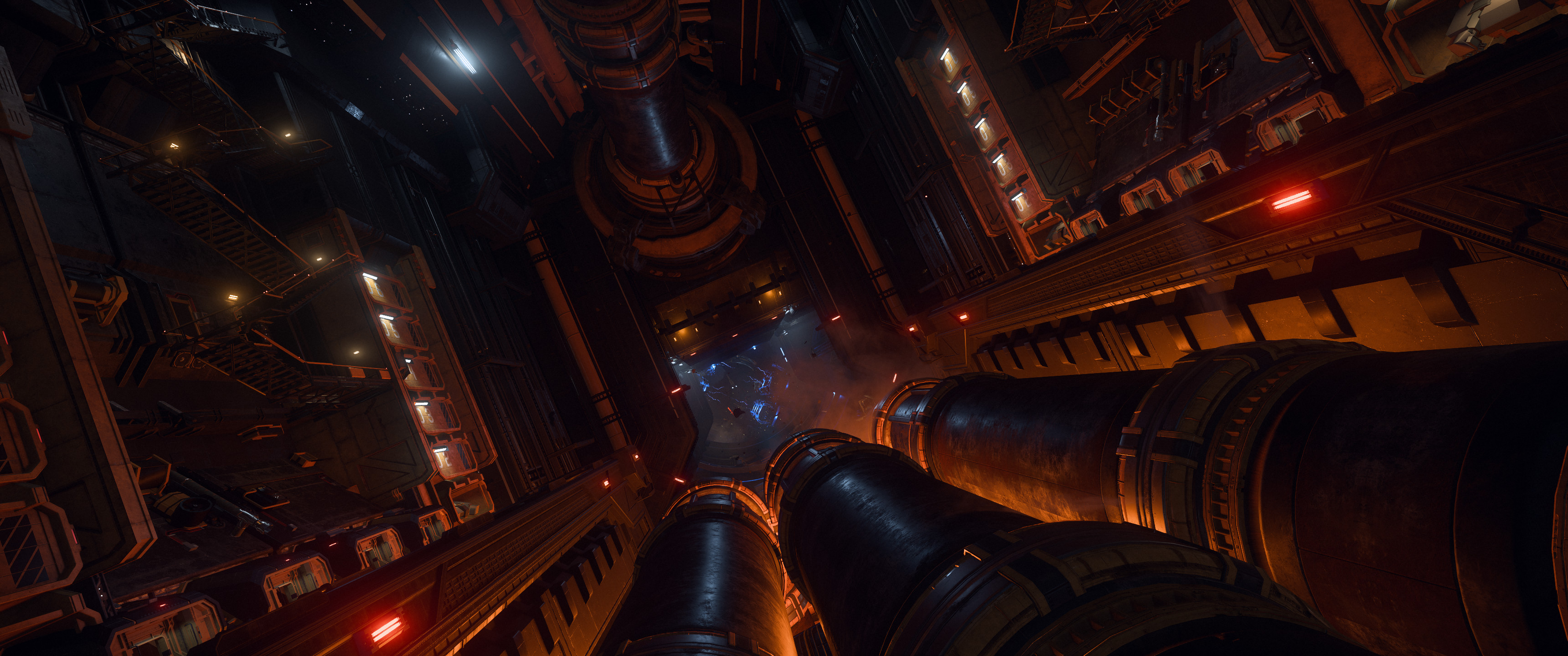
Metadata
- CIG ID
- 14871
- Channel
- Transmission
- Category
- Undefined
- Series
- Monthly Reports
- Comments
- 42
- Published
- 11 years ago (2015-08-07T00:00:00+00:00)