Monthly Studio Report: December 2015
Transmission Undefined Monthly ReportsContent
Greetings Citizens,
2015 was quite a year for Star Citizen! Since the launch of Alpha 2.0, the team has been glued to their monitors watching backers stream and play and adventure in the first corner of the universe we’re building. There’s plenty of work still to be done, but we’re thrilled to have a version of the game available for play that (we believe) shows the project’s true potential. We hope you’re enjoying 2.0 (or 2.1, if you’re a fan of the PTU!)… there’s plenty more to see in the coming days! But before we look ahead, we’d like to look back at what everyone accomplished in December. Cloud Imperium Games closed for the holidays, allowing our developers some much needed rest and family time… but that doesn’t mean we didn’t make a lot of progress. Read on for our December monthly report to find out just what everyone was up to…
Happy New Year everyone! We hope you had a great month because we are really excited by what we got finished before the calendar turned over to 2016. We tackled some huge milestones such as the new ItemSystem, Loadout Editor, Character Clothing and more. Dig in to the information below to read about even more accomplishments from the LA studio.
Engineering
On the Engineering side, our primary objective was to provide as much stability to the 2.0 release as possible. As new builds of the PTU were released over the course of December, the stability in each iteration drastically improved. Stability will always be one of our top objectives as providing a reliable and exciting experience is a prime directive.
Lead Engineer Paul Reindell and Engineer Mark Abent have been aggressively working on what we’re calling “ItemSystem 2.0”. This system will allow greater control over the itemization on the back end. The first iteration has been integrated into our development code and we are starting to see the preliminary benefits of this new system that’s really exciting our developers.
Associate Engineer Chad Zamzow was responsible for implementing the various disabled states for targets struck by the EMP weapon currently employed on the Avenger Warlock. Further refinements will include flickering lights and possibly arcs of electricity across the control panels of the ship. So keep an eye out for the tiny details this new weapon effect will be adding to the game.
Ariel Xu created a new tool we are calling the “Loadout Editor”. This tool is designed to create a visualization of our entities. This will allow the designers to visually edit the loadouts of the Vehicles, Items, and Character rather than manually editing the XML file, which is even better and more intuitive for design and balancing than just having a menu or chart-based editor. Now that the Loadout Editor is completed, Ariel has started working on another tool called the “Port Editor,” a tool which allows designers to dynamically Add/Delete/Edit the contents of the port.
Flight engineer John Pritchett has been working on fine-tuning the EVA system to make it much more reliable and canny during flight. But most impressively, John was also the individual who helped create our planetary landing flight mode that viewers saw on our December 2015 livestream.
Design
Another very successful year has come and gone for the LA Tech Design team. Starting with new leadership, Kirk Tome took the reins of the team by accepting the role of Tech Design Lead. We have great expectations to come from this team in 2016 and the team could not be in better hands with this tenured industry veteran at the proverbial helm.
During the development of the 2.0 patch, we reached several milestones that will drastically impact future development and provide exciting new content to our backers, players, and fans. We completed the white-box design of two ships; the Xi’an Scout and the MISC Reliant. The Xi’an Scout white box was completed by Tech Design Lead Kirk Tome, while the Reliant white box was completed by our item guru, Matt Sherman. Furthermore, as an added bonus, Calix Reneau also completed the grey box tech design of the MISC Reliant, bringing it that much closer to being hangar-ready.
Of course, balance is always a paramount for gaming and thus Calix and Matt have both spent a tremendous amount of time gathering input from the forums, chat rooms, and emails. The Freelancer is new to our flyable ship lineup, and a first round of weapon and ship health balance was achieved for its gaming debut. Expect more balance passes in the future as the flyable ship lineup fills out and go up against each other! Every release brings new insights and as more gameplay and customizations become possible, your testing data helps us home in on an inherently moving target.
On the feature development-side, 2.0 saw the release of the EMP system designed to temporarily disable your opponent. Further development and evolution of the EMP system was addressed using feedback from the release, such as improvements on how the system will affect the HUD, and various ship systems. Also, Randy Vazquez has completed a first pass on a gameplay design for the Salvage mechanic.
While December was a short month due to the holidays, we have laid the groundwork for a tremendous amount of progress.
h2. Art
We rocked it hard on the art side in LA during the month of December in 2015. We’ve been working tenaciously to build closer towards some anxiously anticipated releases, such as clothes shopping in the PU, and Squadron 42.
On the character side we’ve been working on making “Old Man” Colton as great as he can be. You’ll be seeing him in Squadron 42! We’ve also been feverishly prepping some intimidating marines for some exciting action. We can wait for you to meet them! We also can’t wait for you to dig on the variety of stylish threads that we’ve been preparing for your character with our friends at CGBot, available soon (we hope!) for purchase in a PU near you!
While all this amazing character progress has been moving forward, we haven’t been neglecting our ships. We’re very much stoked for when we will be able to roll out the Reliant to the hangar. It’s with special pride that we imagine our supporters easing back into the pilot seat for the first time. (There are two seats, side by side. Can you guess which one it is?) We hope you’re as pumped about the Reliant as we are!
And that’s December! We had another great month of finished tasks that is leading to an incredible experience in both Star Citizen and Squadron 42. We’re looking forward to your feedback and can’t wait to get more done. We’re inspired by you and work as hard as we can to make our milestones a part of history. See you next month!
Howdy Citizens,
December brought our year to a close in grand fashion! We had a great run of builds, fixes, and PTU testing leading up to the launch of 2.0.0 in December! And right after that we jumped into 2.1.0 testing for a fast follow up on PTU. Many people in the studio worked very hard in December to bring this content to the live server, and we have a lot to share. Thankfully we also got some time to relax and recharge a bit after the Christmas holiday and now the team is back hard at work on making the best damn space sim ever!
Persistent Universe Team
Howdy folks! Hope everyone had a fantastic holiday season. Everyone on the PU team here in Austin got a much needed break, but not before knocking some last minute tasks off our plate and finishing the year strong.
To start, congratulations are in order to Chris Smith and Josh Coons, who finished up the much-awaited revamp to the Constellation Andromeda. This ship is gorgeous, and we love seeing you guys flying it around now out in the ‘verse. Chris and Josh have since moved on to the Xi’an Scout, and aim to finish that up later this month.
The other artists here have been trucking along on building and detailing the Levski landing zone in Nyx, supporting BHVR in providing lighting, VFX, and technical oversight. Mark Skelton continues to provide his fearless leadership and direction in helping to make this environment look as amazing as possible. In the Pupil to Planet video, we showed off a bit of how Delamar might look as you depart the Levski landing zone. Hats off to the team in Frankfurt for getting this tech up and running so quickly, but it does create an interesting challenge for Art. Before now, all we have really had to worry about is how the landing zone looks from the ground at a single time of day. Now we’re having to think about not just what a landing zone looks like from eye-level, but how it looks from orbit! Mark has his work cut out for him making sure that these landing zones look amazing not just from varying heights but varying times of day as well, in varying degrees of light, shadow, and everything in between. Eventually our planets will rotate just like real planets, and with that comes a full day/night cycle that we have to bear in mind when designing and art directing. It certainly is a challenge but we are looking forward to it.
Speaking of Pupil to Planet, before the break designer Pete “Weather Wizard“ Mackay spent some time using his weather wizardry to nail down elements of cruise speed. While we were doing seamless fly-throughs from orbit down to the landing zone we noticed that the speed at which the ship approached was a bit off. We wanted this approach speed to feel fast but without feeling ludicrous. Pete spent some time making calculations to determine the best approach velocity to get the feel just right. He’s still tweaking the parameters to get it perfect, but should have it nailed down soon.
Recently our Design Team has been focusing on additional landing zones in the PU, specifically focusing on breaking up all of our landing zones into Hero, Small Sandbox, and Space Station categories. Every landing zone is extremely detailed, and with that comes a lot of time and resource required to get them to the level of quality that we’re shooting for. Because of this, we are shifting gears slightly and shuffling our schedule around to get MORE landing zones ready in a shorter amount of time, which means everyone not only has to be efficient, but also be clever at the same time. We’re still focusing on hero locations like Hurston and Crusader, but we’re also prioritizing smaller landing zones like Sherman and Odyssa and space stations like mining outposts and research stations. Each of these locations will have their own points of interest and shops, and this requires a lot of design attention by the likes of Rob Reininger and Evan Manning.
Our Animation Team continues to convert and integrate the raw animation data we captured last year for the PU. The Medical Unit animations are nearly complete, and the Nightclub animations are not far behind. Throughout this process we’ve identified and solved issues with female locomotion and vending machine metrics. Our Ship Animators helped prep the Sabre to be Hangar-Ready and get the Freelancer flying. Our next focus will be R&D on what we’re calling the Personality Overlay System. Lead Animator Bryan Brewer will partner with a programmer to blend animations together depending on an NPC’s personality as set by Design. This system would also allow users to select the idle animation that fits them best from a Character Customization UI to create variety amongst player animation. We’re excited about this system because this will enable us to use the hundreds of animations for PU and Players in a better, more adjustable way.
On the Networking side, Jason Ely and Tom Sawyer spent much of their time before the break prepping the Party System for 2.0.0. release. There is still lots of work to be done and these improvements will continue to be a focus into the new year, so if you think it’s still a little rough, please hang in there – we’ll be shoring it up. We know it’s a natural feature desire for multicrew play, and it has to start somewhere! Meanwhile, for those who own a Million Mile High Club, we also spent some time getting access and invites set up for that environment as well. We also made some headway on Persistence with the help of Jeff Zhu. This new year will see renewed focus on this critical feature, with new resources being recruited to help knock this functionality out once and for all. Soon we will see the first iteration of truly persistent data in the hands of the players with the release of Shopping v1.
Live Operations
QA
For the month of December, QA mostly focused on testing SC Alpha 2.0.0 and SC Alpha 2.1.0. After 14 deployments (!) to the Public Test Universe (PTU) in a very short period of time, we were extremely excited to finally release SC Alpha 2.0.0 to the live environment. Our thanks to the PTU testers who provided their enthusiasm, attention to detail, and real-time cooperation with us in order to get 2.0 out of the PTU and live into everyone’s hands!
That would have been a good place to start a vacation, but we didn’t stop there. We immediately jumped into testing SC Alpha 2.1.0, again with the help of our loyal and valued PTU testers. We had guarded hopes to release 2.1.0 to our live environment before the holiday break, but after 4 deployments to the PTU, we were unfortunately still experiencing some stability issues with the additional content. The decision was made to keep 2.1.0 on the PTU over the holidays but open it up to everyone to check out the new flyable Freelancer.
Over the course of the month we deployed fourteen 2.0.0 builds to the PTU, one deployment of 2.0.0 to live and four 2.1.0 deployments to the PTU. Supporting these deployments was a significant undertaking. For each deployment, the team would test each aspect of the game and raise any potential serious issues to production. The team also would conduct launcher/patch testing as well as compile patch notes. Following the deployment, the team would monitor the community feedback.
After each deployment, Jeffrey Pease would gather stability metrics on server and client crashes and provide a comprehensive report to CIG Leadership. Jeffrey Pease has done an amazing job in his various roles in QA and I am happy to announce he has officially transitioned into a development role as a LiveOps Technician. Congratulations to Bearded-CIG!
There have also been other movements within our ranks. Tyler Witkin, who you may know as Zyloh-CIG, has been promoted to the level of Senior QA. Tyler will be taking a more active leadership role on the team in his new position. In addition to his normal QA duties, Tyler has also been doing a great job keeping the community in the loop with regular updates on Discord and various social media outlets. Tyler has also obtained additional screenshots and videos requested by Marketing that were used in various updates on the RSI website.
In testing 2.0.0 and 2.1.0 the team has been working very closely with engineers Clive Johnson, George Kidd, Paul Reindell and other developers on extensive performance testing including AI spawning, Server bottle-necking, and server or client crashes. Melissa Estrada has continued with Automation development as well as working closely with engineer Francesco Roccucci on in depth testing of AI behavior.
Todd Raffray and Robert Gaither have ensured that contacts, the party system, Million Mile High Club and ArcCorp continued to be properly tested. Andrew Rexroth continued to test all FPS functionality sending a report each day highlighting any new or particularly serious issues.
Our Information Specialist Marissa Meissner has been ensuring that for each deployment, all fixes are verified and included in the patch notes. Marissa has been working very closely with Will Leverett in Game Support on messaging and accuracy of promotional mail outs and PTU invites as well as helping to update several FAQ’s to assist Customer Service. Marissa is also working with our Marketing Manager Vincent Gallopain to ensure marketing materials are accurate. Marissa has also been updating our internal knowledge base with a new workflow for reporting performance issues as well as routine updates of deprecated components and production ownership of certain ship manufacturers.
In addition to testing, QA has also taken on the task of providing feedback to CIG Leadership on various aspects of the game. Andrew Hesse has provided very detailed reports on ship behavior which have been very useful to our designers in their attempts to balance ship flight and combat.
During January QA will be continuing to test 2.1.0 for its inevitable deployment to the live environment and promptly begin testing 2.2.0. It is turning out to already be a very active new year. See you in the verse!
Game Support
Our (amazing) December was all about 2.0 and 2.1!
It’d be easy to overlook how well 2.0 went through the dev pipeline to Live, because from a process perspective it went so smoothly! Normally, such a major release takes several months to get from initial build to Live, but we did it all within a handful of weeks, in large part due to Game Support (and other teams) working alongside the community who did excellent work in helping us identify major bugs and game imbalances, which we triaged through Issue Council and got into the dev pipeline quickly. It was truly a quantum leap in terms of turnaround time and update speed, and this demonstrates the value of all the time that DevOps and Production spent last year re-engineering the development, build, and patching pipelines. Sometimes, to an outsider those long periods spent building development infrastructure may make it feel like progress on the game is slow, but once the benefits start to kick in, it really pays off, and we think the rapid patch cycle that brought 2.0 to you in December proves it!
On the topic of PTU, we understand that there was confusion on how PTU testers were selected for closed testing campaigns. Creating any level of confusion or frustration is obviously not our goal, and we FULLY realize how much players want in on early rounds of testing. That said, the PTU is not about privilege or early access – the mission of the PTU is to iron out a release to a quality sufficient for deployment to live, the faster the better. Ideally, a PTU tester is not someone who wants to be “first in line” for new content, but a true and dedicated backer who is willing to put in effort alongside QA, Game Support, and the various Operations teams to get that new content out to the rest of the community and reduce the amount of time it’s necessarily held back for troubleshooting.
So, while we’d like to stress that it’s not “early access to content” but rather instead actual testing, and this motivation continues to drive our ongoing revamps and reevaluations of the PTU access selection process. Issue Council Participation
PTU Participation
We’ve graded players based on these two criteria, and should we have the need for a closed testing period, we’ll be inviting our players who have helped out the most in these areas on a scaled basis. Some PTU releases are open to everyone, but during the very early phases of a major release – particularly if it’s technically tricky – , we’ll consider restricting access until a more reasonable level of stability can be achieved. (Remember that in testing, different problems and bugs can have different root causes, and sometimes smaller, focused testing is what’s needed and sometimes a larger pool of testers for stress testing is needed. Access headcounts can vary from one release candidate to the next depending on what kind of testing is most useful)
We’re excited about the cool things to come in January, and we’re excited to work with you to get it done.
IT/Operations
Happy New Year from the IT Team at CIG! The month of December brought us many new challenges and even more successes. Much of what the IT department focuses on at the end of the year is boring software licensing renewals, software and user account audits, and internal system maintenance. This December the team has also been heavily involved in publishing support and for the 2.0 & 2.1 publishes. A portion of the team supported the project by providing network and storage optimizations to further improve the build system performance in order to help deliver more builds per day for internal testing. Moving the builds between studios also falls on IT so these services were pushed to the limits allowing us to find even more areas we could tune for performance. The QA teams pull a lot of builds throughout the day, so many that they can actually begin to stress the network in certain areas so new optimizations were added where needed to help QA get builds down to machines as fast as possible. Finally, the IT Team got to provide additional support for LiveOps publishes by prioritizing their traffic over all other outbound traffic because with the amount of publishes we did, every minute counts.
Live Ops
December may have been the most productive month ever for the LiveOps team. With back to back publishes happening nearly every day of the month, it became necessary to dramatically reduce the publish windows. This is the time it takes to deploy the servers, supporting systems, prepare and distribute all patches out to the edge networks. Reducing this time provides faster access to new versions by the backers but just as importantly, allows us to get feedback to the dev team more quickly. At the rate builds were coming out it became clear that we needed to create duplicate environments in order to pre-stage a publish without having to take down the currently running service for 4-6 hours.
Ahmed became the real rock star this month when he built out all the duplicate environments and modified the publishing process. Based on his work, we were able to reduce the publish window completely by simply flipping load balancers from one environment to another. Additionally Ahmed added a number of additional servers in order to accommodate additional logging which was ultimately instrumental to the massive stability improvements we saw in December. Ahmed also had a great time with the publishes during the month as well. We saw chat rooms light up every time he came on line because those backers helping us on the PTU became used to seeing him show up every time we completed another publish.
The LiveOps team also delivered major improvements to internal development, testing, and reporting tools. The build system experienced several improvements to reduce build times including one fix that allowed us to make use of even more processing power than before. The tools used to collect source code for compiling have been undergoing improvements as well with early reports of hours of reduction times under worst case scenarios.
Wrapping up 2015 with such a fantastic month makes looking forward to 2016 that much more exciting.
Greetings Citizens,
December may have been a short month, but it wasn’t quiet! We had a lot to do at Foundry 42 UK, with team members from every discipline contributing to the project. Let’s find out what they were up to!
VFX
In December, the VFX team, Mike, Adam, Caleb, and Sean, focused on a flight-ready effects pass for the MISC Freelancer and AEGS Vanguard. A flight-ready pass includes both interior and exterior damage states (including a “deathmask”) thrusters, and weapons/counter measures.
We also continued to polish ambient environment effects for the Alpha 2.0 Crusader map. Mostly this was polish/optimization to tie in with some lighting tweaks. However, we also added new airlock depressurization effects, so there is a clear visual difference between pressurization and depressurization.
Finally, we focused on a “post-2.0 release” data clean-up. For the most part this meant removing and re-organizing our particle libraries and texture folders. Not the sexiest task in the world – quite laborious in fact – but necessary nonetheless as it will help us to hit the ground running in 2016!
Props
As 2015 came to an end the props team, Ben, Dan and our friends at Behaviour Interactive, put the finishing touches on the Casaba shop interior. The store is now complete in terms of prop work and we are just waiting on the stock to come in from our clothing manufacturers! It was an interesting environment to dress, taking on the role of shop fitters and adhering to a brand guidelines to really sell that retail experience.
The gold standard components are 95% there. They just need a final pass on the materials and then our first two will be ready. Work has also begun on the next set this week so we should have four by the end of the month. We are working closely with the tech designers and they are in the process of defining the sub-component list which is the final part of the puzzle from our point of view.
The rest of the team are now focusing on our core low-tech prop set in preparation for all the new environments coming in 2016.
I have been concentrating on getting a solid backlog / tracking of everything we currently have in game, the sheer number of assets is getting impressive and I needed a fast way of being able to track exactly where each asset is up to and also be able to quickly filter and search the assets so that when new requests come in we can prioritize them against what we have already in game. Once complete we should be in a really good place to start pumping out everything we need to bring the environments to life. This is really important from a game performance perspective, because the sheer number of assets, models, animations, and geometry in the game means that if you don’t do this intelligently, bad things can happen to your load times and FPS. It may not sound like exciting work, but when you want to maintain the pace of your gaming experience, it’s as critical as a lot of other things!
Finally we have a new hire here in the UK studio, the props team here is now up to three! We are still looking and have some strong candidates so hopefully will bolster our numbers again soon!
Ships
The ship art team led by Nathan were fighting hard in December to get you some new shiny ships to play with over the festive break, so we hope it was worth it!
Neil, Peter, Robin, Jose, and Jan managed to get the new and revised Freelancer exterior and interior art flight ready our 2.1 PTU release, and Paul and Ian also supported Nathan in completing the final art for the Sabre and the Vanguard (including damage states for the latter).
Many of you will be pleased to know that the Starfarer exterior and interior are well underway with Matt, Colin, Joe, Phil and Jay making good progress so we’ll be looking forward to releasing that to you later this year and also looking forward to releasing many more cool and wonderful Star Citizen spaceships in 2016.
Concepts
Paul and the concept team has been hard at work, the Javelin has had a bit of a nip-and-tuck with some remodeling to bring it into line with the Aegis brand.
Sarah has been valiantly battling her way through the many props needed, working on both high tech and low tech prop design styles, and on solidifying the design language should we need to outsource some of the work later on.
Jort has been working his Christmas magic on various space station interiors, dressing passes and additional concept work to help define what we need to make these areas come alive.
Stu has worked up additional pods for the ARGO RUV which we need for SQ42 and Gary finished up the Xian Scout and has really gone to town helping define further interiors for the Shubin Mining Facility.
Characters
Our two man team has been getting to grips with the new and improved pipeline where work has been done on Squadron 42 character Randall Graves by Jon (which you may have seen in the Livestream), both high and low poly models, along with some work to the Female officers uniform. As a good test for Michal our junior character artist, we set him the task of sculpting a stone statue needed for one of our future levels, and I must say the results were great!
In-Game Animation
Uisdean Ross and the UK animation team are continuing our push on the FPS AI and player mechanics. Player cover animation implementation is on-going by Colin and Dan and being refined and reviewed, this is an ongoing process working closely with the programming team.
The AI cover behaviors are currently going through a first pass by Spencer, and we are providing a base set for the AI programming team which will then be iterated on. Improvements are also being made to the no weapon (unarmed) locomotion set, as well as stops and starts.
Design
The Christmas break over and we are back in action for 2016. We have so much to do this year in the UK we need to make every day count!
The UI Director Zane and Lead Systems designer Karl are working on a simplified HUD UI to level out the learning curve when it comes to interacting with your ships systems. All the advanced bells and whistles will still be there for the more hard core players. They are also working with the engineering UI team to implement a functional EVA HUD for players to get all the information they need while experiencing zero-g movement.
The Live team of Luke, Danny and Matt are listening to your feedback and fixing up issues with the current Live build to make it more stable and fun. They are also looking at further iterations to some of the more basic design implementations that need further work, such as EMP. Syncing up with the ship release schedule in becoming a strong focus for this team going forward to make sure we cover the design functionality that is required for the various ships, such as cargo movers.
The Tech Design team led by John has scaled up over the last few months ands is now big enough to really get moving on the new ships as the Art team hands them over to us. We have also been looking into ways of addressing ship balance in a less reactive, more forward-looking way that is looking promising over the next month or so.
Mike and the Squadron 42 designers are transitioning the levels into the large world system rather than lots of separate CryFiles. We still need to get better at excluding SQ42 files from the current build process as you guys seem to find anything that leaks through and they sometimes appear as spoilers! This will be getting a more robust system in the future and will have the side effect of getting some of these intermediate patch sizes more under control.
All in all, we are geared up for a very busy year on Star Citizen here in the UK and with your continued solid support we know we can make this something very special! Thanks again.
Graphics
Over the last month the graphics director Ali and his team have made various performance improvements to the game.
The lighting shaders have had significant work and are now faster than the base CryEngine shaders despite having more features thanks to Ben. Geoff put in some hard work so that we can now cull rooms that you can’t see on ships and space stations much more accurately thanks to improvements to the culling system. The LOD system has been overhauled by Muhammed which should result in us rendering fewer polygons in the distance where you can’t really see them, and we’ve also made some significant improvements to the performance of our internal tools when generating LODs which could take several minutes on our largest levels and now takes just a few seconds. Okka and the rest of the team also spent a large amount of December bug fixing for the PTU and Live Releases.
Our focus now is on planning our work for 2016, and focusing on the features that Squadron 42 requires. The first features we’re working on will be improved HDR effects such as bloom, lens flares and eye adaption to give a better impression of the stark lighting you get in space and sci-fi scenes in general. We’ll be revamping some shaders such as the glass shader so we can improve the quality of the cockpits and helmets as well as increase their performance. We’ll also be getting back onto our volumetric gas cloud work which had been paused during the work on 2.0 but is crucial for both Squadron 42 and the Persistent Universe.
Environments
Ian and the environment team hope you’re all enjoying playing Crusader, our team is having a great time watching you play!
Jake and part of the team has been doing final bug fixes and lighting improvements for the 2.1 release of Crusader, so it should look and perform better than in 2.0. Eddie and rest of the team has been focusing down on one of our Squadron 42 levels, not too much we can reveal at this stage but it will be our test bed for creating sandbox locations with terrain and multiple landing points.
Engineering
For obvious reasons this has been a shorter month for us here in the UK and people have been taking some well-deserved time off. That’s not to say we’ve been taking it easy whilst we’ve been in though!
The highlight for Derek and the engineering team in December was getting Alpha 2.0 finally out to everybody after a huge effort from anybody concerned. We’re really proud of what we’ve managed to achieve, especially as it has gone down so well with the community. We keep an eye on all the forums and Twitch streams and people do seem to be having a blast which makes all the hard work feel worthwhile. But of course as soon as one milestone has been hit we’re onto the next. We’re now in the final stages of getting Alpha 2.1 hitting the streets so we’re in the general stabilization phase, with many engineers including Rob, Clive, George, and Craig getting those horrid random crash bugs which have crept in fixed and some performance optimizations.
More general ongoing work. One of the big things Jens and the FPS code team have helping working on is the new physicalized EVA which is a big departure from the current implementation. Rather than “faking” the fidelity of the player movement as we have been doing currently we’re going down the route of using a proper physical simulation, in much the same way as we do with the ships. As part of that the character is also put into a ragdoll state which gives the whole movement a much more fluid and natural feel to it. The effects of this should include a slight opposite impulse to you to help make it feel like you’re firing a real weapon.
It does bring up a whole host of new problems to solve, many of which are nasty edge cases. For example, as you EVA around and then hit a gravity area you need to come out of rag doll and transition into the normal locomotion again with it feeling natural and fluid. Also when you’re in EVA you generally can’t see where your legs are and it’s really easy to clip a piece of geometry with them, which will send you into a nasty spin, which gets really annoying really quickly. We’ve got a number of ideas from getting your character to automatically tuck in their legs, to have an IFCS to counter any unwanted spin. There’s going to be a new EVA HUD mode as well to give you some more feedback. When you’re in the middle of space away from any nearby geometry you have very little point of reference to give an indication of what speed and direction you’re moving in, which isn’t much fun.
But mainly we’ve been working on our eating, drinking and chilling. :)
QA
After November’s hopeful anticipation of 2.0.0 going LIVE to all backers, Andy and the QA team were very proud (and a little relieved!) that it finally launched this month. We’ve been working on it internally for a while!
Hopefully you’re all appreciating the hard work we put in to get it ready for release – there was a great feeling of satisfaction felt in the department, and like I mentioned last time, we’re really getting to grips with the nature of the testing for Star Citizen’s future development.
Some of the UK QA team have had a busier end to the month of December than others… ahem! While some were off enjoying the festive season (me, Andy), the rest of our dedicated team were on hand to make sure that the first 2.1.0 patch made it live to PTU on Christmas Eve. “Merry Christmas”, is probably what they were thinking at the time!
While some might have considered a lack of a full LIVE release of 2.1.0 disappointing, there were a few good reasons why this release was unfortunately not possible. Without going into too much detail, the performance and stability of the build had regressed, meaning we were not comfortable with a release for you guys. This is not unusual any time you add new content or new gameplay, and particularly not when one of the additions is a completely new class of flyable ship. Post-Christmas, this is going to form the majority of our testing in the department – helping to reproduce all the issues and ensure the quality of the experience is back where we want it to be.
2.1.0 has meant that the lucky PTU players were able to experience and help test the Freelancer for the first time – a ship that has prompted plenty of “Starbug roleplay” within the QA team. Hopefully before too long everyone will be able to play the “Rimmer role” once 2.1.0 goes LIVE…
In other news, the UK QA Secret Santa was a great success – highlights include: Pokemon trainer badges, a genuinely horrifying 1980’s E.T., a Transformers lunchbox with flask and a Corinthian Kevin Keegan figurine.
Audio
For Lee Banyard and CIG Audio, December was mostly taken up with ensuring things were as solid as they could be with sound for SC Alpha 2.0. With a game such as ours, testing every possible thing where audio is concerned can be difficult, so we spent a lot of time trying to cover all the bases, going through PTU feedback and issues that came up via QA as well as stuff we found ourselves.
What was everyone up to? Luke, Darren and Stefan were immersed in supporting ships such as the Freelancer and Vanguard. Matteo and Stefan (again, he gets around!) looking more at EVA and FPS elements, while Ross was running the rule over the environments in 2.0 again and again to ensure that all worked as it should, testing out the music logic system, planning battle-chatter system and just general testing. Phil continued with UI audio and with PU environments, especially the Million Mile High Club. Bob was engaged in hammering out anything to do with dialogue, and the larger dialogue system, and last (but not least) Jason continued his stellar work in supporting everyone from a technical standpoint and ensuring the audio build system continued to do its thing.
We continued to plan the orchestral sessions which should be happening in the next month or so, which should align nicely with the progress Ross and Sam Hall are making with the dynamic music system assuming all goes ahead as planned.
And Lee tried to help everyone with everything as much as he could!
Also the team received CIG Audio winter hats as seasonal gifts. I think photos were posted to the Ask A Developer audio thread in case you’re interested. Hope you all had a great winter break!
Hallo aus Frankfurt (Hello from Frankfurt),
Christmas has come and gone, we’re into a new year, and the team is now back from their well-deserved holiday break.
This month we’ll have 4 new people joining the Frankfurt team, bringing us up to 34 strong.
I hope everyone had a good holiday, read below on some of the stuff we did before the break.
Pupil to Planet – Procedural Tech
This past month we showed off the procedural tech we’ve been working on, both in the video Pupil to Planet, and with Chris and Sean playing it live on the livestream.
Marco, Carsten, and Pascal spent a good amount of time working on the tech and environment art, and Hannes came in with final touches and camera work. We had support from others both in and out of the DE office, such as Sean Tracy, Chris Bolte, etc. The character used is a story character from SQ42 called Joachim Steiger. Music was done by our Pedro Camacho and turned out fantastic. Thanks to everyone that pitched in, seeing and navigating around this 1000km diameter planetoid live in-game was and is an absolutely surreal and a mind blowing experience.
The base planet tech of the procedural work was started a few months earlier, in September. Besides the planet tech, there are several different systems helping to make this possible, including the Large World (systems were converted to use 64 bit positioning to allow large seamless worlds), inverted depth buffer and camera relative rendering (which renders everything relative to the camera to minimize loss of precision), and the Zone system (which was worked on mainly by Chris Bolte).
Some generated planet terrain parts are still too big to fit into 32 bit float vertex buffer chunks for the GPU, so they are computed locally and displaced on the appropriate location on the planet, which, when combined with the aforementioned systems, avoid any jittering or loss of precision.
Keeping the entire planet in memory won’t be possible, so the planet surface is allocated a fixed memory budget and procedurally generated on-demand at different level of details as the engine camera moves around the planet.
Then procedural texturing and colors are applied to the surface in realtime depending on terrain shape and other information.
the atmospherics are based on a physically accurate model of light transport taking multiple scattering into account, this allows to render atmospherics correctly and automatically from any viewpoint from outer space to ground level.
We already have some improvements in the works, and we will be updating as the new year goes on. The current plan, as shown in the prototype, is to experience the entire Star Citizen game world in first person, including from walking into your ship, flying and seamlessly landing from space to a docking station on a planet, walking around in first person, entering buildings and doing things at the higher visual fidelity we have shown. Our next steps besides improving the planet generation and visuals would be to integrate the procedural tech into the multiplayer environment so it could be experienced in the PTU.
Engine
On top of the above work wrapped around the procedural tech, the engine team gave support to various areas of the current PTU release. We’re also making further progress on the public crash handler to gather relevant data on why clients crash which should help speed up stabilizing future PTU and public releases.
We’re pushing towards enabling asserts in profile builds to further help catch runtime errors early. As part of this, the internal crash handler and callstack collector service of CE has been totally overhauled.
Cinematics
We’re currently completing our full breakdown of every scene in SQ42’s script and all material that was shot in regards to scene types.
SQ42 features every type of cinematic you could think of. Ranging from relatively straight forward 3rd person cinematics with filmic cameras without player presence, to 1st person player perspective cinematics with look control and then crossing over into more gameplay oriented conversational scenes with AI characters and full player control. Transitions from cinematics into AI characters most of the time needs to be fluid and conversational scenes often can be interrupted by the player so this requires lots of planning and case handling on animation and AI tech side. The amount of material is massive so getting it all sorted and categorized correctly is essential for production.
We are also working on a scene with Admiral Bishop going planetside to view battle damage and a first scene with Captain Maclaren but both are in their early stages of implementation.
For cinematic environment work, we finished up geometry for the Retribution skydock, started working on the Corvo ruins scene, and started with some terrain RnD of the big background mountains and crater.
Design
Our system designers are busy coming up with consistent designs for cargo and looting so we can have a clear path of where we need to take these systems and at the same time come up with a tier zero implementation for the baby PU so the players can loot items, move them around and sell them in various stations. The goal here is to implement an initial light version of the system that we can build upon in the future without having to redo it from scratch when the full system will be ready to deploy. These systems should help stimulate different types of gameplay in the baby PU, from cargo transport to market research and even piracy or escorting other players.
Both system and level designers here are now working together with programmers in creating a mission generation system that is modular and that can offer great variation of gameplay. We’re still in the early stages for this system but we’re hoping we can get some early version of it in the baby PU as soon as possible. This system should be able to take data from the universe simulator and generate missions based on that data so let’s say if a system is under heavy pirate threat then we can generate more missions to fight pirates, and even tailor those procedural missions to that specific pirate faction.
Level designers have been pushing through with their Power Management System prototype that they started last month and hopefully we’ll get to play it soon and see how it fits in our current plans for the stations & ships. Also a lot of research & prototyping time was put into various models of asteroid bases and facilities trying to get away from the conventional “planet-like” looking base and exploring all the possibilities that life on a low/no gravity asteroid can offer.
TechArt
TechArt in Frankfurt is continuing to work with the other studios Tech Artists on our bigger DCC pipeline, this month we finalized our puppet from animation perspective.
We’re currently working on finalizing in-game internal rig setups. Further supporting various department RNDs and bug fixing is daily routines for us.
QA
Aside from the usual bug-hunting, I worked mostly on Automated Testing solutions for Star Citizen, developing automated test levels with timed demos with the help of Francesco Di Mizio in the hopes that automating a simple test-run of a level could lead to further automation down the line. Right now a simple test level involving spawning in a location, equipping a loadout and running through the map shooting at AI can test everything from level loading and chainloading to AI-Hit Reactions, bullet physics and particles, character physics & ragdoll, falling damage and a whole host of other functions vital to the core gameplay of S42 and the Persistent Universe. Additional test map demos can now be made and implemented using the same framework that will allow developers to see which changelists cause any problems for any area of the game on a daily basis as changes go in.
Weapons
The weapon art team has finished the Apocalypse Arms Revenant Ballistic Gatling. As already mentioned in the previous monthly studio report, this is the first weapon to use our new Multi-Layer shader and we are quite happy with the results!
While working with the new shader and being in direct communication with the graphics programmer wizards in the UK we have learned a lot and identified some issues as well as given feedback to further improve the shader in the future.
Environment Art
Last month the Frankfurt environment art team was working on the Shubin space station, a high tech mining facility whose role is to “crack” asteroids in order to mine the valuable minerals that they contain. Shubin will be featured heavily in the Squadron 42 campaign and will differ from the other stations in its design, being a very high tech facility. The station is going to be one of the biggest so far, giving the player the freedom to fly around the huge superstructure and, of course, land and explore the interior on foot. From an artist’s point of view, Shubin has been a huge challenge but at the same time a very rewarding one, giving us the freedom to explore new designs and really try to develop something that we think will provide a real sense of awe when players initially experience it in game.
Greetings Citizens,
Another month of hard work here in Montreal. Here’s what the team have been working on.
Design
The Behaviour design team wrapped up the year with a few things. First, Lead Technical Designer Francois Boucher continued to set up shops and shopping items for the upcoming Casaba Outlet and current stores as well. In parallel, we are working on a streamlined shopping interface that hopefully everyone will like.
Level Designer Jesse Kalb added a bunch of new flair objects to the game as we wanted to get some kind of cushion leading into the new year. We also worked hard solidifying 2.0 and subsequently 2.1 before leaving for the holiday.
Finally, we cooked 3.5 pounds of Canadian bacon for the Star Citizen Behaviour team to celebrate the end of the year. Yummy!
Art
This month, the Environment team continued to work on Levski. Mainly optimizing complex geometry like rock walls and tunnels. Also, we began dressing the interiors, trying to give to each a theme. This will help navigation but also to make it visually interesting when exploring the map. A couple of minor bugs were fixed on ArcCorp and Hangars.
For the Prop team, the next flairs were completed and we are planning the next ones for 2016.
The background and static props where completed for the clothing store. We are now moving on props for industrial/mining planets.
On the Concept Art team , we worked on paint-overs for Levski`s interior shops. You can admire the amazing work done by our concept artists Seungjin Woo on Cordry`s armor shop.
Engineering
Coming to you shortly in version 2.1.0 are a few cool new features. Customizing your ships with the HoloTable will be a little easier. You’re probably used to seeing only your loose ship parts that can be equipped, and you still will by default. However, with a new UI widget you’ll now be able to filter items to see what’s available and what isn’t. For example you’ll now be able to see items on other ships, so you can equip them directly without having to load and strip that other ship first. You can also your whole inventory for a given part category, which could help you plan the loadouts of your personal fleet at a glance. All of this will come with color highlighting and some clearer labeling of the various parts and their stats. For those of you who play well with others, we hope you enjoy the new updates to the party management and contact list UI systems. We’ve also worked hard to improve stability of options, customizations and emotes so you can continue to have fun mingling with others planet-side (or crashing your buggies into each other, whatever floats your boat).
For subsequent updates, we’re working to provide you with a full AR shopping experience, where you can purchase gear for your character in-game and preview the various modifications on your avatar. We’re continuing to work on optimizing ship customizations, allowing you to make temporary modifications in Crusader from a HoloTable, load them into a dock and take flight without returning to your hangar. Any of you who are upgrading your computers this winter may appreciate our modifications to the graphics menu options. Quality settings will apply immediately, allowing you to see their effects without having to leave the menu. You’ll also have a timed screen resolution confirmation dialog, which will help if you try configurations that don’t quite agree with your graphics card or monitor/TV setup. If a resolution doesn’t work for you (no, not the New Year’s kind. unfortunately), it will revert back in 15 seconds. More party and Crusader ship features will continue to be improved as well. Hopefully you’ll have your hands on all of these pretty soon!
On our side, we’re continuing to update our dev tools to help bring you more content and exciting new features in the near future.
Greetings from frosty Montreal! Here’s what we’ve been up to in the last month, in-between snowfalls :
Pledge Buy Back
In December, we launched a new feature called Pledge Buy Back. Most of you knew it by another, more obscure name, “unmelt”. It allows anyone to undo a mistake they made, like exchanging a limited availability pledge they had for store credit. Anyone will be able to undo such mistakes and do themselves what used to take hours of Customer Service exchanges. This feature is now accessible via My Hangar. Note: there will be a handful of pledges which are and will stay ineligible for Pledge Buy Back : some limited offers, offers linked to third party companies, pledge packages including physical merchandise… The system still allows buying back 99.9% of all pledges ever available, and to date close to 5,000 pledges have been bought back, making it one of our most popular features already!
Organization Invitations
Last month, we completed development on the new Organization invitation email template, so that it would reflect your Org’s identity better and make it less ambiguously linked to RSI Itself. The new layout is currently being tested on different email programs and devices, and once it has passed QA, we’ll go live. Coming soon!
Of course, we haven’t forgotten other Org improvements either! While there’s nothing to report in those regards this month, rest assured that we haven’t forsaken you, and that more robust updates to the Organization are still waiting in the wings for gameplay elements that will support them.
Subscription campaign
We are currently in the Design phase for the new Subscribers section of the website. In addition to the look-and-feel of the new landing page, we are creating a new logo and many other assets which will then be used to promote subscriptions to the general public.
Ship Happens
December was a busy month for ship sales, with the Holiday livestream as well as the end of year free for all sale to close out 2015. The livestream saw the release of the Reliant variants, including a researcher, a reporter and a skirmisher model, each with their own unique loadout and expertise. In 2.0 the new Constellation Andromeda model became available in hangar and crusader. This version also included the Vanguard Warden as hangar ready. As 2015 came to an end, there was also one last free-for-all sale for the year giving everyone a chance to get their favorite ship during the holidays, and serve as what we’ve been calling a grace period before the new Euro rate came into place.
Wishing you all a happy new year!
neue Schiffe, da das Art-Team sie uns übergibt. Wir haben auch nach Möglichkeiten gesucht, die Schiffsbilanz weniger reaktiv und zukunftsorientiert anzugehen, was für die nächsten Monate oder so vielversprechend ist.
Mike und die Squadron 42-Designer stellen die Levels auf das große Weltsystem um und nicht auf viele separate CryFiles. Wir müssen noch besser darin werden, SQ42-Dateien aus dem aktuellen Build-Prozess auszuschließen, da ihr Jungs alles zu finden scheint, was durchsickert und sie manchmal als Spoiler erscheinen! Dies wird in Zukunft zu einem robusteren System führen und den Nebeneffekt haben, dass einige dieser Zwischenstückgrößen besser unter Kontrolle gebracht werden.
Alles in allem sind wir auf ein sehr arbeitsreiches Jahr mit Star Citizen hier in Großbritannien vorbereitet und mit Ihrer anhaltenden soliden Unterstützung wissen wir, dass wir dies zu etwas ganz Besonderem machen können! Nochmals vielen Dank.
Grafiken
In den letzten Monaten haben der Grafikdirektor Ali und sein Team verschiedene Leistungssteigerungen am Spiel vorgenommen.
Die Lichtschatten haben viel Arbeit geleistet und sind jetzt schneller als die Basis-Schatten der CryEngine, obwohl sie dank Ben mehr Funktionen bieten. Geoff hat hart gearbeitet, damit wir jetzt Räume, die man auf Schiffen und Raumstationen nicht sehen kann, dank Verbesserungen am Keulsystem viel genauer keulen können. Das LOD-System wurde von Muhammed überarbeitet, was dazu führen sollte, dass wir weniger Polygone in der Ferne rendern, wo man sie nicht wirklich sehen kann, und wir haben auch die Leistung unserer internen Tools bei der Generierung von LODs deutlich verbessert, was auf unseren größten Ebenen mehrere Minuten dauern könnte und nun nur noch wenige Sekunden dauert. Okka und der Rest des Teams verbrachten auch eine große Menge an Dezember-Fehlerbehebung für die PTU- und Live-Versionen.
Unser Fokus liegt nun auf der Planung unserer Arbeit für 2016 und auf den Funktionen, die die Staffel 42 benötigt. Die ersten Features, an denen wir arbeiten, werden verbesserte HDR-Effekte wie Bloom, Linsenfackeln und Augenanpassung sein, um einen besseren Eindruck von der starken Beleuchtung im Weltraum und Sci-Fi-Szenen im Allgemeinen zu vermitteln. Wir werden einige Shader wie den Glas-Shader überarbeiten, damit wir die Qualität der Cockpits und Helme verbessern und ihre Leistung steigern können. Wir werden auch wieder auf unsere volumetrische Gaswolkenarbeit zurückkommen, die während der Arbeiten an 2.0 unterbrochen wurde, aber sowohl für die Staffel 42 als auch für das Persistente Universum entscheidend ist.
Umgebungen
Ian und das Umweltteam hoffen, dass ihr alle Spaß daran habt, Crusader zu spielen, unser Team hat eine tolle Zeit, euch beim Spielen zuzusehen!
Jake und ein Teil des Teams haben letzte Bugfixes und Lighting-Verbesserungen für die 2.1-Version von Crusader vorgenommen, also sollte es besser aussehen und funktionieren als in 2.0. Eddie und der Rest des Teams haben sich auf eines unserer Staffel 42 Levels konzentriert, nicht allzu viel, was wir in dieser Phase verraten können, aber es wird unser Teststand für die Erstellung von Sandbox-Standorten mit Gelände und mehreren Landepunkten sein.
Ingenieurwesen
Aus offensichtlichen Gründen war dies für uns hier im Vereinigten Königreich ein kürzerer Monat, und die Menschen haben sich eine wohlverdiente Auszeit genommen. Das soll nicht heißen, dass wir es uns gemütlich gemacht haben, während wir drin waren!
Das Highlight für Derek und das Engineering-Team im Dezember war, Alpha 2.0 nach einer großen Anstrengung von allen Beteiligten endlich an alle weiterzugeben. Wir sind wirklich stolz auf das, was wir erreicht haben, zumal es bei der Community so gut angekommen ist. Wir behalten ein Auge auf alle Foren und Twitch-Streams und die Leute scheinen einen Riesenspaß zu haben, der die ganze harte Arbeit lohnenswert macht. Aber natürlich, sobald ein Meilenstein erreicht ist, sind wir auf dem richtigen Weg. Wir befinden uns nun in der Endphase, in der Alpha 2.1 auf die Straße kommt, also befinden wir uns in der allgemeinen Stabilisierungsphase, in der viele Ingenieure wie Rob, Clive, George und Craig diese schrecklichen zufälligen Crash-Bugs, die sich eingeschlichen haben, und einige Leistungsoptimierungen erhalten haben.
Allgemeinere laufende Arbeiten. Eines der großen Dinge, an denen Jens und das FPS-Code-Team bei der Arbeit mitgewirkt haben, ist das neue physisierte EVA, das eine große Abweichung von der aktuellen Implementierung darstellt. Anstatt die Treue der Spielerbewegung zu "fälschen", wie wir es derzeit tun, gehen wir den Weg der Verwendung einer geeigneten physikalischen Simulation, ähnlich wie bei den Schiffen. Dabei wird der Charakter auch in einen Ragdoll-Zustand versetzt, der der gesamten Bewegung ein viel fließenderes und natürlicheres Gefühl verleiht. Die Auswirkungen davon sollten einen leichten gegenteiligen Impuls zu dir beinhalten, um dir zu helfen, das Gefühl zu vermitteln, dass du eine echte Waffe abfeuerst.
Es bringt eine ganze Reihe neuer Probleme mit sich, die es zu lösen gilt, von denen viele böse Kantenfälle sind. Z.B. als Sie EVA herum und dann einen Schwerkraftbereich schlagen, müssen Sie aus Lumpenpuppe herauskommen und in die normale Bewegung wieder mit ihr übergehen, die sich natürlich und flüssig anfühlt. Auch wenn du in EVA bist, kannst du im Allgemeinen nicht sehen, wo deine Beine sind, und es ist wirklich einfach, ein Stück Geometrie mit ihnen zu schneiden, was dich in einen bösen Spin versetzt, der wirklich sehr schnell nervig wird. Wir haben eine Reihe von Ideen, wie Sie Ihren Charakter dazu bringen können, sich automatisch in die Beine zu stecken, ein IFCS zu haben, um unerwünschten Drehungen entgegenzuwirken. Es wird auch einen neuen EVA-HUD-Modus geben, um Ihnen mehr Feedback zu geben. Wenn du dich mitten im Weltraum befindest, weg von einer nahegelegenen Geometrie, hast du nur einen sehr kleinen Bezugspunkt, um einen Hinweis darauf zu geben, in welcher Geschwindigkeit und Richtung du dich bewegst, was nicht viel Spaß macht.
Aber vor allem haben wir an unserem Essen, Trinken und Kühlen gearbeitet. :)
QA
Nach der hoffnungsvollen Erwartung vom November, dass 2.0.0 LIVE an alle Geldgeber geht, waren Andy und das QA-Team sehr stolz (und ein wenig erleichtert!), dass es diesen Monat endlich gestartet ist. Wir haben intern eine Weile daran gearbeitet!
Hoffentlich schätzt ihr alle die harte Arbeit, die wir geleistet haben, um sie für die Veröffentlichung vorzubereiten - es gab ein großes Gefühl der Zufriedenheit in der Abteilung, und wie ich letztes Mal erwähnt habe, kommen wir wirklich mit der Art der Tests für die zukünftige Entwicklung von Star Citizen zurecht.
Während einige von ihnen die Weihnachtszeit genossen (ich, Andy), war der Rest unseres engagierten Teams vor Ort, um sicherzustellen, dass der erste 2.1.0-Patch am Heiligabend live in PTU übertragen wurde. "Frohe Weihnachten", das ist wahrscheinlich das, was sie damals dachten!
Während einige das Fehlen einer vollständigen LIVE-Version von 2.1.0 als enttäuschend empfunden haben, gab es einige gute Gründe, warum diese Version leider nicht möglich war. Ohne ins Detail zu gehen, war die Leistung und Stabilität des Builds zurückgegangen, was bedeutet, dass wir mit einer Veröffentlichung für euch Jungs nicht zufrieden waren. Dies ist nicht ungewöhnlich, wenn Sie neue Inhalte oder neues Gameplay hinzufügen, und vor allem nicht, wenn eine der Ergänzungen eine völlig neue Klasse von fliegbaren Schiffen ist. Nach Weihnachten wird dies den größten Teil unserer Tests in der Abteilung ausmachen - und dazu beitragen, alle Themen zu reproduzieren und sicherzustellen, dass die Qualität der Erfahrung wieder dort ist, wo wir sie haben wollen.
2.1.0 hat dazu geführt, dass die glücklichen PTU-Spieler den Freelancer zum ersten Mal erleben und mittesten konnten - ein Schiff, das im QA-Team viele "Starbug-Rollenspiele" ausgelöst hat. Hoffentlich kann in Kürze jeder die "Rimmer-Rolle" spielen, wenn 2.1.0 LIVE geht.....
In anderen Nachrichten war der britische QA Secret Santa ein großer Erfolg - Highlights sind unter anderem: Pokemon Trainerabzeichen, ein wirklich schreckliches E.T. aus den 80er Jahren, eine Transformers Lunchbox mit Flasche und einer korinthischen Kevin Keegan-Figur.
Audio
Für Lee Banyard und CIG Audio wurde der Dezember vor allem damit in Anspruch genommen, sicherzustellen, dass die Dinge so solide sind, wie sie es mit dem Sound für SC Alpha 2.0 sein könnten. Mit einem Spiel wie dem unseren kann es schwierig sein, alles Mögliche zu testen, was das Audio betrifft, also haben wir viel Zeit damit verbracht, alle Grundlagen abzudecken, PTU-Feedback und Probleme, die über die Qualitätssicherung aufgetreten sind, sowie Dinge, die wir selbst gefunden haben.
Was hatten alle vor? Luke, Darren und Stefan waren in unterstützende Schiffe wie die Freelancer und Vanguard getaucht. Matteo und Stefan (wieder kommt er herum!) schauen sich mehr EVA- und FPS-Elemente an, während Ross in 2.0 immer wieder die Regel über die Umgebungen führte, um sicherzustellen, dass alles so funktionierte, wie es sollte, das Musiklogiksystem ausprobierte, das Kampf-Chatter-System plante und nur allgemeine Tests durchführte. Phil arbeitete weiter mit UI-Audio und mit PU-Umgebungen, insbesondere dem Million Mile High Club. Bob war damit beschäftigt, alles auszuarbeiten, was mit dem Dialog und dem größeren Dialogsystem zu tun hatte, und last (aber nicht zuletzt) setzte Jason seine hervorragende Arbeit fort, indem er alle aus technischer Sicht unterstützte und sicherstellte, dass das Audio-Build-System weiterhin seine Sache machte.
Wir haben die Orchester-Sessions, die in den nächsten Monaten stattfinden sollen, weiter geplant, die sich gut an die Fortschritte von Ross und Sam Hall mit dem dynamischen Musiksystem anpassen sollten, vorausgesetzt, alles läuft wie geplant.
Und Lee versuchte, jedem mit allem zu helfen, so gut er konnte!
Auch das Team erhielt CIG Audio Winterhüte als Saisongeschenk. Ich denke, dass Fotos im Ask A Developer Audio-Thread gepostet wurden, falls du interessiert bist. Ich hoffe, ihr alle hattet eine tolle Winterpause!
Hallo aus Frankfurt (Hallo aus Frankfurt),
Weihnachten ist gekommen und vergangen, wir stehen vor einem neuen Jahr, und das Team ist nun aus der wohlverdienten Ferienpause zurückgekehrt.
Diesen Monat werden wir 4 neue Mitarbeiter in das Frankfurter Team aufnehmen, was uns auf 34 Mitarbeiter bringt.
Ich hoffe, jeder hatte einen schönen Urlaub, lesen Sie unten auf einigen der Dinge, die wir vor der Pause gemacht haben.
Schüler zum Planeten - Verfahrenstechnik
Im vergangenen Monat haben wir die prozedurale Technologie, an der wir gearbeitet haben, sowohl im Video Pupil to Planet als auch mit Chris und Sean gezeigt, die sie live auf dem Livestream spielen.
Marco, Carsten und Pascal verbrachten viel Zeit damit, an der Technik- und Umweltkunst zu arbeiten, und Hannes kam mit dem letzten Schliff und der Kameraarbeit herein. Wir hatten Unterstützung von anderen, sowohl im DE-Büro als auch außerhalb, wie Sean Tracy, Chris Bolte, etc. Der verwendete Charakter ist ein Geschichtencharakter aus SQ42 namens Joachim Steiger. Die Musik wurde von unserem Pedro Camacho gemacht und ist fantastisch geworden. Vielen Dank an alle, die sich um dieses Planetoiden-Live-In-Game mit einem Durchmesser von 1000 Kilometern gekümmert, gesehen und navigiert haben, war und ist eine absolut surreale und atemberaubende Erfahrung.
Die Basis-Planetentechnologie der Verfahrensarbeiten wurde einige Monate zuvor, im September, gestartet. Neben der Planetentechnologie gibt es mehrere verschiedene Systeme, die dazu beitragen, dies zu ermöglichen, darunter die Große Welt (die Systeme wurden in eine 64-Bit-Positionierung umgewandelt, um große nahtlose Welten zu ermöglichen), ein invertierter Tiefenpuffer und ein relatives Kamerarendering (das alles in Bezug auf die Kamera rendert, um den Verlust an Präzision zu minimieren) und das Zonensystem (an dem hauptsächlich Chris Bolte gearbeitet hat).
Einige generierte Planeten-Terrain-Teile sind immer noch zu groß, um in 32-Bit-Float-Vertex-Pufferchunks für den Grafikprozessor zu passen, so dass sie lokal berechnet und an die entsprechende Stelle auf dem Planeten verschoben werden, was in Kombination mit den oben genannten Systemen jegliches Zittern und Genauigkeitsverlust verhindert.
Es ist nicht möglich, den gesamten Planeten im Gedächtnis zu behalten, so dass der Planetenoberfläche ein festes Speicherbudget zugewiesen wird und sie bei Bedarf auf verschiedenen Detailebenen prozedural generiert wird, während sich die Motorkamera um den Planeten bewegt.
Anschließend werden prozedurale Texturen und Farben in Echtzeit auf die Oberfläche aufgebracht, abhängig von der Geländeform und anderen Informationen.
Die Atmosphären basieren auf einem physikalisch genauen Modell des Lichttransports unter Berücksichtigung der Mehrfachstreuung, das es ermöglicht, die Atmosphären korrekt und automatisch aus jedem Blickwinkel vom Weltraum bis zum Boden darzustellen.
Wir haben bereits einige Verbesserungen in den Arbeiten, und wir werden sie im Laufe des neuen Jahres aktualisieren. Der aktuelle Plan, wie im Prototyp gezeigt, ist es, die gesamte Star Citizen-Spielwelt in der ersten Person zu erleben, einschließlich vom Betreten Ihres Schiffes, Fliegen und nahtloser Landung vom Weltraum zu einer Dockingstation auf einem Planeten, dem Gehen in der ersten Person, dem Betreten von Gebäuden und dem Tun von Dingen mit der höheren visuellen Treue, die wir gezeigt haben. Unsere nächsten Schritte neben der Verbesserung der Planetengeneration und der Visualisierung wären die Integration der Verfahrenstechnik in die Multiplayer-Umgebung, damit sie in der PTU erlebt werden kann.
Motor
Zusätzlich zu den oben genannten Arbeiten rund um die Verfahrenstechnik unterstützte das Motorenteam verschiedene Bereiche der aktuellen PTU-Version. Wir machen auch weitere Fortschritte beim öffentlichen Crash-Handler, um relevante Daten darüber zu sammeln, warum Clients abstürzen, was dazu beitragen sollte, die Stabilisierung zukünftiger PTU- und öffentlicher Releases zu beschleunigen.
Wir drängen darauf, Asserts in Profilerstellungen zu ermöglichen, um Laufzeitfehler frühzeitig zu erkennen. Im Zuge dessen wurde der interne Crash-Handler und Callstack-Collector-Service von CE komplett überarbeitet.
Kinematiken
Wir sind gerade dabei, unsere vollständige Aufschlüsselung jeder Szene im Skript von SQ42 und allem Material, das in Bezug auf die Szenentypen aufgenommen wurde, fertigzustellen.
Das SQ42 bietet jede Art von Kino, die man sich vorstellen kann. Angefangen bei relativ einfachen 3rd-Person-Kinematiken mit Filmkameras ohne Spielerpräsenz über die perspektivische Filmkunst der 1st-Person mit Look Control bis hin zu mehr spielorientierten Gesprächsszenen mit KI-Charakteren und voller Spielerkontrolle. Übergänge von der Kinematik zu den KI-Charakteren müssen meistens fließend sein und Konversationsszenen können oft vom Spieler unterbrochen werden, so dass dies viel Planung und Fallbearbeitung auf der Animations- und KI-Technik-Seite erfordert. Die Menge des Materials ist enorm, so dass es für die Produktion unerlässlich ist, alles sortiert und richtig kategorisiert zu bekommen.
Wir arbeiten auch an einer Szene, in der Admiral Bishop auf den Planeten geht, um Kampfschäden zu sehen, und einer ersten Szene mit Captain Maclaren, aber beide befinden sich in der Anfangsphase der Umsetzung.
Für die Arbeit an der filmischen Umgebung haben wir die Geometrie für den Skydock Retribution fertig gestellt, mit der Arbeit an der Corvo-Ruinenszene begonnen und mit einem Gelände RnD der großen Hintergrundberge und des Kraters begonnen.
Design
Unsere Systemdesigner sind damit beschäftigt, konsistente Designs für Ladung und Plünderung zu entwickeln, damit wir einen klaren Weg finden, wohin wir diese Systeme bringen müssen, und gleichzeitig eine Implementierung für die Baby-PU entwickeln können, damit die Spieler Gegenstände plündern, bewegen und an verschiedenen Stationen verkaufen können. Ziel ist es, eine erste Light-Version des Systems zu implementieren, auf der wir in Zukunft aufbauen können, ohne es von Grund auf neu machen zu müssen, wenn das gesamte System einsatzbereit sein wird. Diese Systeme sollen dazu beitragen, verschiedene Arten von Gameplay im Baby-PU zu stimulieren, vom Güterverkehr über Marktforschung bis hin zu Piraterie oder Eskorte anderer Spieler.
Sowohl System- als auch Leveldesigner arbeiten hier nun gemeinsam mit Programmierern an einem modularen Missionsgeneratorsystem, das eine große Variationsbreite des Gameplays bieten kann. Wir befinden uns noch im Anfangsstadium für dieses System, aber wir hoffen, dass wir so schnell wie möglich eine frühe Version davon in der Baby-PU bekommen können. Dieses System sollte in der Lage sein, Daten aus dem Universums-Simulator zu nehmen und Missionen basierend auf diesen Daten zu generieren, also sagen wir mal, wenn ein System einer schweren Piratenbedrohung ausgesetzt ist, dann können wir mehr Missionen zur Bekämpfung von Piraten generieren und diese verfahrenstechnischen Missionen sogar auf diese spezielle Piratenfraktion zuschneiden.
Leveldesigner haben mit ihrem Prototyp des Power Management Systems, den sie letzten Monat gestartet haben, die Arbeit fortgesetzt, und hoffentlich werden wir es bald spielen können und sehen, wie es in unsere aktuellen Pläne für die Stationen und Schiffe passt. Auch wurde viel Forschungs- und Prototypingzeit in verschiedene Modelle von Asteroidenbasen und -einrichtungen investiert, um von der konventionellen "planetarisch" aussehenden Basis wegzukommen und alle Möglichkeiten zu erforschen, die das Leben auf einem Asteroiden mit geringer/keiner Schwerkraft bieten kann.
TechArt
TechArt in Frankfurt arbeitet weiterhin mit den anderen Studios Tech Artists an unserer größeren DCC-Pipeline, diesen Monat haben wir unsere Marionette aus Animationsperspektive fertig gestellt.
Wir arbeiten derzeit daran, die internen Rig-Setups im Spiel abzuschließen. Die weitere Unterstützung verschiedener RNDs der Abteilung und die Fehlerbehebung sind für uns tägliche Routinen.
QA
Neben der üblichen Fehlersuche arbeitete ich hauptsächlich an Automated Testing Lösungen für Star Citizen und entwickelte mit Hilfe von Francesco Di Mizio automatisierte Teststufen mit zeitgesteuerten Demos in der Hoffnung, dass die Automatisierung eines einfachen Testlaufs einer Stufe zu einer weiteren Automatisierung auf der ganzen Linie führen könnte. Im Moment kann eine einfache Teststufe, die das Spawnen an einem Ort, die Ausrüstung eines Loadouts und das Durchlaufen des Kartenschießens an der KI umfasst, alles testen, von der Levelladung und dem Chainloading bis hin zu KI-Hit-Reaktionen, Kugelphysik und Partikeln, Charakterphysik und Ragdoll, Sturzschäden und einer ganzen Reihe anderer Funktionen, die für das Kern-Gameplay von S42 und dem persistenten Universum wichtig sind. Zusätzliche Testkarten-Demos können nun mit dem gleichen Framework erstellt und implementiert werden, das es Entwicklern ermöglicht zu sehen, welche Änderungslisten täglich für jeden Bereich des Spiels Probleme verursachen, wenn Änderungen vorgenommen werden.
Waffen
Das Waffenkunstteam hat das Apocalypse Arms Revenant Ballistic Gatling beendet. Wie bereits im letzten monatlichen Studiobericht erwähnt, ist dies die erste Waffe, die unseren neuen Multi-Layer-Shader verwendet und wir sind mit den Ergebnissen sehr zufrieden!
Bei der Arbeit mit dem neuen Shader und der direkten Kommunikation mit den Grafikprogrammierern in Großbritannien haben wir viel gelernt und einige Probleme identifiziert sowie Feedback gegeben, um den Shader in Zukunft weiter zu verbessern.
Umwelt Kunst
Im vergangenen Monat arbeitete das Frankfurter Umweltkunstteam an der Raumstation Shubin, einer High-Tech-Mining-Einrichtung, deren Aufgabe es ist, Asteroiden zu "knacken", um die darin enthaltenen wertvollen Mineralien zu gewinnen. Shubin wird in der Squadron 42 Kampagne stark vertreten sein und sich in seinem Design von den anderen Stationen unterscheiden, da es sich um eine sehr High-Tech-Einrichtung handelt. Die Station wird eine der bisher größten sein und dem Spieler die Freiheit geben, um den riesigen Überbau herumzufliegen und natürlich zu Fuß zu landen und das Innere zu erkunden. Aus der Sicht des Künstlers war Shubin eine große Herausforderung, aber gleichzeitig auch eine sehr lohnende, die uns die Freiheit gibt, neue Designs zu erforschen und wirklich zu versuchen, etwas zu entwickeln, von dem wir glauben, dass es ein echtes Gefühl der Ehrfurcht vermitteln wird, wenn die Spieler es anfangs im Spiel erleben.
Grüße Bürger,
Ein weiterer Monat harter Arbeit hier in Montreal. Hier ist, woran das Team gearbeitet hat.
Design
Das Behaviour Design Team beendete das Jahr mit ein paar Dingen. Erstens hat der leitende technische Designer Francois Boucher weiterhin Geschäfte und Einkaufsartikel für das kommende Casaba Outlet und die aktuellen Geschäfte eingerichtet. Parallel dazu arbeiten wir an einer optimierten Einkaufsschnittstelle, die hoffentlich jedem gefällt.
Level Designer Jesse Kalb hat dem Spiel eine Reihe neuer Flair-Objekte hinzugefügt, da wir eine Art Kissen für das neue Jahr haben wollten. Wir haben auch hart daran gearbeitet, 2.0 und anschließend 2.1 zu verfestigen, bevor wir in den Urlaub gingen.
Schließlich haben wir 3,5 Pfund kanadischen Speck für das Star Citizen Behaviour Team gekocht, um das Ende des Jahres zu feiern. Lecker!
Kunst
In diesem Monat hat das Umweltteam die Arbeit an Levski fortgesetzt. Hauptsächlich Optimierung komplexer Geometrien wie Felswände und Tunnel. Außerdem begannen wir, die Innenräume zu kleiden und versuchten, jedem ein Thema zu geben. Dies wird die Navigation erleichtern, aber auch optisch interessant machen, wenn man die Karte erkundet. Einige kleinere Fehler wurden bei ArcCorp und Hangars behoben.
Für das Requisitenteam wurden die nächsten Flairs fertig gestellt und wir planen die nächsten für 2016.
Der Hintergrund und die statischen Requisiten wurden für das Bekleidungsgeschäft fertiggestellt. Wir bewegen uns jetzt auf Requisiten für Planeten in der Industrie und im Bergbau.
Im Team Concept Art haben wir an der Lackierung von Levskis Innenausstattungen gearbeitet. Sie können die erstaunliche Arbeit unserer Konzeptkünstler Seungjin Woo in Cordry`s Rüstungsladen bewundern.
Ingenieurwesen
In Kürze werden Ihnen in der Version 2.1.0 einige coole neue Features vorgestellt. Das Anpassen Ihrer Schiffe mit dem HoloTable wird etwas einfacher sein. Du bist es wahrscheinlich gewohnt, nur deine losen Schiffsteile zu sehen, die ausgestattet werden können, und das wirst du immer noch standardmäßig. Mit einem neuen UI-Widget können Sie nun jedoch Elemente filtern, um zu sehen, was verfügbar ist und was nicht. Zum Beispiel kannst du jetzt Gegenstände auf anderen Schiffen sehen, so dass du sie direkt ausrüsten kannst, ohne das andere Schiff zuerst laden und ausziehen zu müssen. Sie können auch Ihren gesamten Bestand für eine bestimmte Teilekategorie erfassen, was Ihnen helfen könnte, die Auslastung Ihrer persönlichen Flotte auf einen Blick zu planen. All dies wird mit farblichen Hervorhebungen und einer klareren Beschriftung der verschiedenen Teile und deren Statistiken einhergehen. Für diejenigen unter Ihnen, die gut mit anderen spielen, wünschen wir Ihnen viel Spaß mit den neuen Updates für die Benutzeroberflächen der Gruppenverwaltung und Kontaktliste. Wir haben auch hart daran gearbeitet, die Stabilität von Optionen, Anpassungen und Emotes zu verbessern, damit Sie weiterhin Spaß daran haben können, sich mit anderen auf der Planetenseite zu vermischen (oder Ihre Buggys ineinander zu prallen, was auch immer Ihr Boot bewegt).
Für spätere Updates arbeiten wir daran, Ihnen ein komplettes AR-Shopping-Erlebnis zu bieten, bei dem Sie Ausrüstung für Ihren Charakter im Spiel kaufen und sich die verschiedenen Änderungen an Ihrem Avatar ansehen können. Wir arbeiten weiter an der Optimierung von Schiffsanpassungen, damit Sie temporäre Änderungen in Crusader von einem HoloTable aus vornehmen können, diese in ein Dock laden und fliegen können, ohne zu Ihrem Hangar zurückzukehren. Jeder von euch, der in diesem Winter seine Computer aufrüstet, wird unsere Änderungen an den Grafikmenüoptionen zu schätzen wissen. Die Qualitätseinstellungen gelten sofort, so dass Sie deren Auswirkungen sehen können, ohne das Menü verlassen zu müssen. Sie werden auch ein Bestätigungsdialogfeld für die zeitgesteuerte Bildschirmauflösung haben, das Ihnen helfen wird, wenn Sie Konfigurationen ausprobieren, die nicht ganz mit Ihrer Grafikkarte oder Ihrem Monitor/TV-Setup übereinstimmen. Wenn eine Lösung für Sie nicht funktioniert (nein, leider nicht die Neujahrsart.), kehrt sie in 15 Sekunden zurück. Weitere Funktionen für Gruppen- und Kreuzfahrtschiffe werden ebenfalls weiter verbessert. Hoffentlich wirst du bald alle diese Dinge in die Finger bekommen!
Auf unserer Seite aktualisieren wir weiterhin unsere Entwicklungstools, um Ihnen in naher Zukunft mehr Inhalte und aufregende neue Funktionen bieten zu können.
Grüße aus dem frostigen Montreal! Hier ist, was wir im letzten Monat gemacht haben, zwischen den Schneefällen :
Pfandrückkauf
Im Dezember haben wir eine neue Funktion namens Pledge Buy Back eingeführt. Die meisten von euch kannten es unter einem anderen, unbekannteren Namen, "ungeschmolzen". Es erlaubt jedem, einen Fehler rückgängig zu machen, den er gemacht hat, wie z.B. ein begrenztes Verfügbarkeitszusage, das er hatte, gegen Shop-Guthaben einzutauschen. Jeder wird in der Lage sein, solche Fehler rückgängig zu machen und selbst zu tun, was früher Stunden des Austauschs im Kundenservice gekostet hat. Diese Funktion ist nun über Mein Hangar zugänglich. Hinweis: Es wird eine Handvoll Pfandrechte geben, die für den Pfandrückkauf nicht in Frage kommen: einige begrenzte Angebote, mit Drittunternehmen verbundene Angebote, Pfandpakete einschließlich physischer Waren.... Das System erlaubt es immer noch, 99,9% aller jemals verfügbaren Pfandrechte zurückzukaufen, und bis heute wurden fast 5.000 Pfandrechte zurückgekauft, was es bereits zu einem unserer beliebtesten Merkmale macht!
Unternehmenseinladungen
Letzten Monat haben wir die Entwicklung der neuen E-Mail-Vorlage für die Einladung zur Organisation abgeschlossen, so dass sie die Identität Ihrer Org besser widerspiegelt und sie weniger mehrdeutig mit RSI selbst verknüpft macht. Das neue Layout wird derzeit auf verschiedenen E-Mail-Programmen und -Geräten getestet, und sobald es die QS bestanden hat, werden wir live gehen. Kommt bald!
Natürlich haben wir auch andere Org-Verbesserungen nicht vergessen! Auch wenn es in dieser Hinsicht in diesem Monat nichts zu berichten gibt, seien Sie versichert, dass wir Sie nicht verlassen haben und dass robustere Updates der Organisation immer noch auf Gameplay-Elemente warten, die sie unterstützen.
Abonnementkampagne
Wir befinden uns derzeit in der Designphase für den neuen Abonnentenbereich der Website. Zusätzlich zum Look-and-Feel der neuen Landing Page kreieren wir ein neues Logo und viele andere Elemente, die dann zur Förderung von Abonnements in der Öffentlichkeit verwendet werden.
Schiff passiert
Der Dezember war ein arbeitsreicher Monat für den Schiffsverkauf, mit dem Holiday Livestream sowie dem Ende des Jahres frei für alle Verkäufe bis 2015. Im Livestream wurden die Reliant-Varianten veröffentlicht, darunter ein Forscher, ein Reporter und ein Skirmisher-Modell, die jeweils über eine eigene Auslastung und Expertise verfügen. In 2.0 wurde das neue Constellation Andromeda Modell in Hangar und Kreuzritter verfügbar. Diese Version enthielt auch den Vanguard Warden als Hangar ready. Als 2015 zu Ende ging, gab es auch noch einen letzten Free-for-All-Verkauf für das Jahr, der jedem die Möglichkeit gab, sein Lieblingsschiff während der Feiertage zu bekommen und als das zu dienen, was wir eine Gnadenfrist genannt haben, bevor der neue Eurokurs eingeführt wurde.
Ich wünsche euch allen einen guten Rutsch ins neue Jahr! Grüße Bürger,
2015 war ein tolles Jahr für Star Citizen! Seit dem Start von Alpha 2.0 ist das Team auf seinen Monitoren festgeklebt und beobachtet die Backer Streams und Spiele und Abenteuer in der ersten Ecke des Universums, das wir aufbauen. Es gibt noch viel zu tun, aber wir freuen uns, eine Version des Spiels zur Verfügung zu haben, die (wie wir glauben) das wahre Potenzial des Projekts zeigt. Wir hoffen, dass Sie 2.0 (oder 2.1, wenn Sie ein Fan der PTU sind!) genießen.... es gibt in den nächsten Tagen noch viel mehr zu sehen! Aber bevor wir nach vorne schauen, möchten wir auf das zurückblicken, was alle im Dezember erreicht haben. Cloud Imperium Games wurde für die Feiertage geschlossen, was unseren Entwicklern einige dringend benötigte Ruhe- und Familienzeiten ermöglicht.... aber das bedeutet nicht, dass wir nicht viele Fortschritte gemacht haben. Lesen Sie weiter für unseren Monatsbericht vom Dezember, um herauszufinden, was alle vorhatten.....
Frohes neues Jahr an alle! Wir hoffen, dass du einen tollen Monat hattest, denn wir sind wirklich begeistert von dem, was wir vor der Umstellung des Kalenders auf 2016 fertig gestellt haben. Wir haben einige große Meilensteine wie das neue ItemSystem, den Loadout Editor, die Charakterbekleidung und vieles mehr in Angriff genommen. Schauen Sie sich die folgenden Informationen an, um mehr über die noch besseren Leistungen des LA-Studios zu erfahren.
Ingenieurwesen
Auf der Engineering-Seite war unser Hauptziel, dem 2.0-Release so viel Stabilität wie möglich zu verleihen. Da im Laufe des Dezembers neue Versionen der PTU veröffentlicht wurden, verbesserte sich die Stabilität in jeder Iteration drastisch. Stabilität wird immer eines unserer obersten Ziele sein, denn eine zuverlässige und spannende Erfahrung ist eine der wichtigsten Richtlinien.
Lead Engineer Paul Reindell und Engineer Mark Abent haben aggressiv an dem gearbeitet, was wir "ItemSystem 2.0" nennen. Dieses System ermöglicht eine bessere Kontrolle über den Einzelnachweis im Backend. Die erste Iteration wurde in unseren Entwicklungscode integriert und wir beginnen, die ersten Vorteile dieses neuen Systems zu erkennen, das unsere Entwickler wirklich begeistert.
Der stellvertretende Ingenieur Chad Zamzow war verantwortlich für die Umsetzung der verschiedenen Behindertenzustände für Ziele, die von der EMP-Waffe getroffen wurden, die derzeit im Rächer-Zauberer eingesetzt wird. Weitere Verbesserungen werden flackernde Lichter und möglicherweise Strombögen über die Bedienfelder des Schiffes sein. Achten Sie also auf die kleinen Details, die dieser neue Waffeneffekt dem Spiel hinzufügen wird.
Ariel Xu hat ein neues Tool entwickelt, das wir den "Loadout Editor" nennen. Dieses Tool wurde entwickelt, um eine Visualisierung unserer Einheiten zu erstellen. Dies ermöglicht es den Designern, die Auslastungen der Fahrzeuge, Elemente und Charaktere visuell zu bearbeiten, anstatt die XML-Datei manuell zu bearbeiten, was für Design und Ausgleich noch besser und intuitiver ist, als nur mit einem Menü oder einem grafikbasierten Editor. Nachdem der Loadout-Editor abgeschlossen ist, hat Ariel mit der Arbeit an einem anderen Tool namens "Port Editor" begonnen, einem Tool, das es Designern ermöglicht, den Inhalt des Ports dynamisch hinzuzufügen, zu löschen oder zu bearbeiten.
Flugingenieur John Pritchett hat an der Feinabstimmung des EVA-Systems gearbeitet, um es im Flug viel zuverlässiger und schlauer zu machen. Aber am eindrucksvollsten war John auch derjenige, der an der Entwicklung unseres planetarischen Landeflugmodus mitgewirkt hat, den die Zuschauer auf unserem Livestream vom Dezember 2015 gesehen haben.
Design
Ein weiteres sehr erfolgreiches Jahr ist für das LA Tech Design Team gekommen und vergangen. Beginnend mit einer neuen Führung übernahm Kirk Tome die Leitung des Teams, indem er die Rolle des Tech Design Lead übernahm. Wir haben große Erwartungen, 2016 von diesem Team zu kommen, und das Team könnte bei diesem langjährigen Branchenveteranen an der sprichwörtlichen Spitze nicht besser aufgehoben sein.
Während der Entwicklung des 2.0-Patches haben wir mehrere Meilensteine erreicht, die die zukünftige Entwicklung drastisch beeinflussen und unseren Geldgebern, Spielern und Fans spannende neue Inhalte bieten werden. Wir haben das White-Box-Design von zwei Schiffen abgeschlossen: der Xi'an Scout und der MISC Reliant. Die weiße Xi'an Scout Box wurde von Tech Design Lead Kirk Tome komplettiert, während die weiße Reliant Box von unserem Item-Guru Matt Sherman komplettiert wurde. Darüber hinaus hat Calix Reneau als zusätzlichen Bonus auch das graue Kastendesign des MISC Reliant vervollständigt, was ihn der Hangarfähigkeit noch näher bringt.
Natürlich ist das Gleichgewicht immer von größter Bedeutung für das Spielen und so haben Calix und Matt beide eine enorme Menge Zeit damit verbracht, Input aus den Foren, Chatrooms und E-Mails zu sammeln. Der Freelancer ist neu in unserem fliegbaren Schiffsprogramm, und für sein Gaming-Debüt wurde eine erste Runde an Waffen und Schiffsgesundheit erreicht. Erwarten Sie mehr Saldendurchgänge in der Zukunft, wenn die fliegende Schiffsbesatzung ausfüllt und gegeneinander antreten wird! Jede Veröffentlichung bringt neue Erkenntnisse und da mehr Gameplay und Anpassungen möglich werden, helfen uns Ihre Testdaten, ein sich inhärent bewegendes Ziel zu identifizieren.
Auf der Seite der Feature-Entwicklung wurde mit 2.0 das EMP-System veröffentlicht, mit dem der Gegner vorübergehend deaktiviert werden kann. Die Weiterentwicklung und Evolution des EMP-Systems wurde mit Hilfe von Feedback aus dem Release behandelt, wie z.B. Verbesserungen, wie sich das System auf das HUD und verschiedene Schiffssysteme auswirken wird. Außerdem hat Randy Vazquez einen ersten Durchgang über ein Gameplay-Design für den Bergungsmechaniker abgeschlossen.
Während der Dezember aufgrund der Feiertage ein kurzer Monat war, haben wir den Grundstein für enorme Fortschritte gelegt.
h2. Kunst
Wir haben es auf der Kunstseite in LA im Monat Dezember 2015 hart gerockt. Wir haben beharrlich daran gearbeitet, uns einigen mit Spannung erwarteten Veröffentlichungen anzunähern, wie z.B. dem Einkauf von Kleidung in der PU und der Squadron 42.
Auf der Charakterseite haben wir daran gearbeitet, "Old Man" Colton so großartig wie möglich zu machen. Du wirst ihn in Geschwader 42 sehen! Wir haben auch fieberhaft einige einschüchternde Marines für eine aufregende Aktion vorbereitet. Wir können darauf warten, dass du sie kennenlernst! Wir können es auch kaum erwarten, dass du die Vielfalt der stylischen Garne entdeckst, die wir mit unseren Freunden bei CGBot für deinen Charakter vorbereitet haben und die bald (hoffentlich!) in einer PU in deiner Nähe zum Kauf angeboten werden!
Während all diese erstaunlichen Charakterfortschritte voranschreiten, haben wir unsere Schiffe nicht vernachlässigt. Wir sind sehr gespannt, wann wir den Relianten in den Hangar bringen können. Mit besonderem Stolz stellen wir uns vor, dass unsere Unterstützer zum ersten Mal wieder auf den Pilotensitz zurückkehren. (Es gibt zwei Sitze, Seite an Seite. Kannst du dir vorstellen, welcher es ist?) Wir hoffen, dass du genauso von dem Religiösen angetan bist wie wir!
Und das ist Dezember! Wir hatten einen weiteren großartigen Monat mit abgeschlossenen Aufgaben, der zu einer unglaublichen Erfahrung in Star Citizen und Staffel 42 führt. Wir freuen uns auf Ihr Feedback und können es kaum erwarten, mehr zu tun. Wir lassen uns von Ihnen inspirieren und arbeiten so hart wie möglich daran, unsere Meilensteine in die Geschichte einzubeziehen. Bis nächsten Monat!
Howdy Citizens,
Der Dezember beendete unser Jahr in großartiger Weise! Wir hatten einen großartigen Durchlauf von Builds, Fixes und PTU-Tests bis zur Veröffentlichung von 2.0.0 im Dezember! Und gleich danach stiegen wir in den 2.1.0-Test ein, um eine schnelle Nachbereitung der PTU zu ermöglichen. Viele Leute im Studio haben im Dezember sehr hart gearbeitet, um diese Inhalte auf den Live-Server zu bringen, und wir haben viel zu erzählen. Glücklicherweise hatten wir auch etwas Zeit zum Entspannen und Auftanken nach den Weihnachtsferien und jetzt arbeitet das Team wieder hart daran, die beste verdammte Weltraumsimulation aller Zeiten zu machen!
Hartnäckiges Universumsteam
Hallo Leute! Ich hoffe, alle hatten eine fantastische Weihnachtszeit. Jeder im PU-Team hier in Austin bekam eine dringend benötigte Pause, aber nicht bevor er uns ein paar Last-Minute-Aufgaben abgenommen und das Jahr stark beendet hatte.
Zunächst einmal sind die Glückwünsche an Chris Smith und Josh Coons gerichtet, die die lang erwartete Überarbeitung der Konstellation Andromeda abgeschlossen haben. Dieses Schiff ist wunderschön, und wir lieben es, euch Jungs zu sehen, wie ihr es jetzt draußen in der Strophe herumfliegt. Chris und Josh sind inzwischen auf den Xi'an Scout übergegangen und wollen das Ende dieses Monats abschließen.
Die anderen Künstler hier haben den Bau und die Detaillierung der Levski Landezone in Nyx mitgenommen und BHVR bei der Beleuchtung, dem VFX und der technischen Aufsicht unterstützt. Mark Skelton gibt weiterhin seine furchtlose Führung und Richtung vor, um dazu beizutragen, dass diese Umgebung so fantastisch wie möglich aussieht. Im Video von Pupil to Planet haben wir ein wenig gezeigt, wie Delamar aussehen könnte, wenn Sie die Levski Landezone verlassen. Hut ab vor dem Team in Frankfurt, das diese Technologie so schnell in Betrieb genommen hat, aber es stellt eine interessante Herausforderung für Art. Bisher mussten wir uns nur darum kümmern, wie die Landezone vom Boden aus zu einer Tageszeit aussieht. Jetzt müssen wir nicht nur darüber nachdenken, wie eine Landezone aus Augenhöhe aussieht, sondern auch, wie sie aus dem Orbit aussieht! Mark hat es sich zur Aufgabe gemacht, dafür zu sorgen, dass diese Landezonen nicht nur aus unterschiedlichen Höhen, sondern auch zu unterschiedlichen Tageszeiten, in unterschiedlichen Lichtverhältnissen, Schatten und allem, was dazwischen liegt, erstaunlich aussehen. Irgendwann werden sich unsere Planeten wie echte Planeten drehen, und damit kommt ein ganzer Tag/Nacht-Zyklus, den wir bei der Gestaltung und Kunstleitung berücksichtigen müssen. Es ist sicherlich eine Herausforderung, aber wir freuen uns darauf.
Apropos Schüler zum Planeten, vor der Pause verbrachte der Designer Pete "Weather Wizard" Mackay einige Zeit damit, mit seiner Wetterzauberei Elemente der Reisegeschwindigkeit festzuhalten. Während wir nahtlose Durchflüge vom Orbit hinunter zur Landezone machten, stellten wir fest, dass die Geschwindigkeit, mit der sich das Schiff näherte, etwas daneben lag. Wir wollten, dass sich diese Annäherungsgeschwindigkeit schnell anfühlt, aber ohne sich lächerlich zu fühlen. Pete verbrachte einige Zeit damit, Berechnungen durchzuführen, um die beste Annäherungsgeschwindigkeit zu bestimmen, um das richtige Gefühl zu bekommen. Er optimiert immer noch die Parameter, um es perfekt zu machen, aber er sollte es bald festhalten.
Vor kurzem hat sich unser Designteam auf zusätzliche Landezonen in der PU konzentriert, insbesondere auf die Aufteilung aller unserer Landezonen in die Kategorien Held, kleine Sandkiste und Raumstation. Jede Landezone ist extrem detailliert, und damit verbunden ist viel Zeit und Ressourcenaufwand, um sie auf das Qualitätsniveau zu bringen, das wir anstreben. Aus diesem Grund schalten wir leicht und verschieben unseren Zeitplan, um MEHR Landeplätze in kürzerer Zeit fertig zu stellen, was bedeutet, dass jeder nicht nur effizient, sondern auch clever sein muss. Wir konzentrieren uns immer noch auf Heldenstandorte wie Hurston und Crusader, aber wir priorisieren auch kleinere Landezonen wie Sherman und Odyssa und Raumstationen wie Minenaußenposten und Forschungsstationen. Jeder dieser Orte wird seine eigenen Sehenswürdigkeiten und Geschäfte haben, und das erfordert viel gestalterische Aufmerksamkeit von Rob Reininger und Evan Manning.
Unser Animationsteam konvertiert und integriert weiterhin die Rohdaten der Animation, die wir im vergangenen Jahr für die PU erfasst haben. Die Animationen der medizinischen Einheit sind fast vollständig, und die Animationen des Nachtclubs sind nicht weit entfernt. Während dieses Prozesses haben wir Probleme mit weiblichen Fortbewegungs- und Automatenmetriken identifiziert und gelöst. Unsere Schiffsanimateure halfen dabei, den Säbel so vorzubereiten, dass er für den Hangar bereit ist und den Freelancer zum Fliegen bringt. Unser nächster Schwerpunkt wird die Forschung und Entwicklung auf dem so genannten Personality Overlay System sein. Lead-Animator Bryan Brewer wird mit einem Programmierer zusammenarbeiten, um Animationen je nach der Persönlichkeit eines NSCs, wie sie vom Design festgelegt wurde, miteinander zu kombinieren. Dieses System würde es den Benutzern auch ermöglichen, die Leerlaufanimation auszuwählen, die am besten zu ihnen passt, und zwar aus einer Benutzeroberfläche zur Charakteranpassung, um eine Vielfalt an Spieleranimationen zu schaffen. Wir sind begeistert von diesem System, denn so können wir die Hunderte von Animationen für PU und Player besser und flexibler nutzen.
Auf der Networking-Seite verbrachten Jason Ely und Tom Sawyer einen Großteil ihrer Zeit vor der Pause damit, das Party System auf die Veröffentlichung von 2.0.0.0 vorzubereiten. Es gibt noch viel zu tun und diese Verbesserungen werden auch im neuen Jahr im Mittelpunkt stehen. Wenn Sie also der Meinung sind, dass es noch ein wenig rau ist, halten Sie bitte durch - wir werden es unterstützen. Wir wissen, dass es ein natürlicher Wunsch nach Multicrew-Spiel ist, und es muss irgendwo beginnen! In der Zwischenzeit haben wir für diejenigen, die einen Million Mile High Club besitzen, auch einige Zeit damit verbracht, Zugang zu erhalten und laden ein, sich ebenfalls auf diese Umgebung einzustellen. Wir haben auch mit Hilfe von Jeff Zhu einige Fortschritte bei der Persistenz gemacht. In diesem neuen Jahr wird der Fokus wieder auf dieses wichtige Feature gerichtet, und es werden neue Ressourcen eingestellt, um diese Funktionalität ein für alle Mal auszuschalten. Bald werden wir die erste Iteration von wirklich persistenten Daten in den Händen der Spieler mit der Veröffentlichung von Shopping v1 sehen.
Live-Betrieb
QA
Für den Monat Dezember konzentrierte sich die QS hauptsächlich auf das Testen von SC Alpha 2.0.0.0 und SC Alpha 2.1.0. Nach 14 Implementierungen (!) im Public Test Universe (PTU) in sehr kurzer Zeit waren wir sehr erfreut, SC Alpha 2.0.0.0 endlich in die Live-Umgebung zu bringen. Unser Dank gilt den PTU-Testern, die mit Begeisterung, Liebe zum Detail und in Echtzeit mit uns zusammenarbeiten, um 2.0 aus der PTU herauszuholen und in die Hände aller zu gelangen!
Das wäre ein guter Ort gewesen, um einen Urlaub zu beginnen, aber wir haben dort nicht aufgehört. Wir haben sofort mit dem Testen von SC Alpha 2.1.0 begonnen, wiederum mit Hilfe unserer treuen und geschätzten PTU-Tester. Wir hatten die Hoffnung gehabt, 2.1.0 vor der Urlaubszeit in unserer Live-Umgebung zu veröffentlichen, aber nach 4 Einsätzen in der PTU hatten wir leider immer noch einige Stabilitätsprobleme mit den zusätzlichen Inhalten. Die Entscheidung wurde getroffen, 2.1.0 über die Feiertage auf der PTU zu behalten, aber es steht jedem offen, den neuen fliegbaren Freelancer zu testen.
Im Laufe des Monats haben wir vierzehn 2.0.0.0-Builds für die PTU bereitgestellt, eine Bereitstellung von 2.0.0 to live und vier 2.1.0.0-Builds für die PTU. Die Unterstützung dieser Implementierungen war ein bedeutendes Unterfangen. Für jeden Einsatz würde das Team jeden Aspekt des Spiels testen und mögliche schwerwiegende Probleme in der Produktion ansprechen. Das Team würde auch Starter-/Patch-Tests durchführen und Patch-Notizen erstellen. Nach dem Einsatz überwacht das Team das Feedback der Community.
Nach jedem Einsatz sammelte Jeffrey Pease Stabilitätskennzahlen für Server- und Clientabstürze und stellte einen umfassenden Bericht für die CIG-Leitung bereit. Jeffrey Pease hat in seinen verschiedenen Rollen in der Qualitätssicherung eine erstaunliche Arbeit geleistet, und ich freue mich, Ihnen mitteilen zu können, dass er offiziell in eine Entwicklungsrolle als LiveOps-Techniker übergegangen ist. Herzlichen Glückwunsch an Bearded-CIG!
Es gab auch andere Bewegungen in unseren Reihen. Tyler Witkin, den Sie vielleicht als Zyloh-CIG kennen, wurde auf die Stufe Senior QA befördert. Tyler wird in seiner neuen Position eine aktivere Führungsrolle im Team übernehmen. Zusätzlich zu seinen normalen QS-Aufgaben hat Tyler auch gute Arbeit geleistet, um die Community auf dem Laufenden zu halten, mit regelmäßigen Updates über Discord und verschiedene Social Media Angebote. Tyler hat auch zusätzliche vom Marketing angeforderte Screenshots und Videos erhalten, die bei verschiedenen Updates auf der RSI-Website verwendet wurden.
Beim Testen von 2.0.0 und 2.1.0 arbeitete das Team sehr eng mit den Ingenieuren Clive Johnson, George Kidd, Paul Reindell und anderen Entwicklern zusammen, um umfangreiche Leistungstests durchzuführen, einschließlich KI-Spawning, Server-Bottle-Necking und Server- oder Client-Crash. Melissa Estrada hat die Entwicklung der Automatisierung fortgesetzt und eng mit dem Ingenieur Francesco Roccucci zusammengearbeitet, um das KI-Verhalten eingehend zu testen.
Todd Raffray und Robert Gaither haben dafür gesorgt, dass Kontakte, das Partysystem, der Million Mile High Club und ArcCorp weiterhin angemessen getestet wurden. Andrew Rexroth testete weiterhin die gesamte FPS-Funktionalität und schickte jeden Tag einen Bericht, der auf neue oder besonders schwerwiegende Probleme hinwies.
Unsere Informationsspezialistin Marissa Meissner hat dafür gesorgt, dass bei jedem Einsatz alle Fehlerbehebungen überprüft und in die Patch-Notizen aufgenommen werden. Marissa hat sehr eng mit Will Leverett im Game Support zusammengearbeitet, um Messaging und Genauigkeit von Werbe-E-Mails und PTU-Einladungen zu verbessern und mehrere FAQs zu aktualisieren, um den Kundenservice zu unterstützen. Marissa arbeitet auch mit unserem Marketing Manager Vincent Gallopain zusammen, um sicherzustellen, dass die Marketingmaterialien korrekt sind. Marissa hat auch unsere interne Wissensdatenbank mit einem neuen Workflow zur Meldung von Leistungsproblemen sowie routinemäßigen Updates von veralteten Komponenten und Produktionseigentum bestimmter Schiffshersteller aktualisiert.
Zusätzlich zum Testen hat die QA auch die Aufgabe übernommen, der CIG-Führung Feedback zu verschiedenen Aspekten des Spiels zu geben. Andrew Hesse hat sehr detaillierte Berichte über das Schiffsverhalten erstellt, die unseren Designern bei ihren Versuchen, Schiffsflug und -kampf in Einklang zu bringen, sehr nützlich waren.
Im Januar wird QA weiterhin 2.1.0 auf seine unvermeidliche Bereitstellung in der Live-Umgebung testen und zeitnah mit dem Testen von 2.2.0 beginnen und sich bereits als sehr aktives neues Jahr erweisen. Wir sehen uns im Vers!
Spielunterstützung
Unser (erstaunlicher) Dezember war alles über 2.0 und 2.1!
Es wäre leicht zu übersehen, wie gut 2.0 durch die Dev-Pipeline zu Live gegangen ist, denn aus Prozesssicht lief es so reibungslos! Normalerweise dauert es mehrere Monate, bis eine solche Hauptversion vom ersten Build zu Live gelangt, aber wir haben alles innerhalb weniger Wochen geschafft, zum größten Teil dank des Game Supports (und anderer Teams), der mit der Community zusammenarbeitete und uns ausgezeichnete Arbeit geleistet hat, um uns zu helfen, größere Fehler und Spielungleichgewichte zu identifizieren, die wir durch den Issue Council getestet und schnell in die Dev-Pipeline aufgenommen haben. Es war wirklich ein Quantensprung in Bezug auf die Bearbeitungszeit und die Aktualisierungsgeschwindigkeit, was den Wert der gesamten Zeit zeigt, die DevOps und Produktion im vergangenen Jahr damit verbracht haben, die Entwicklungs-, Bau- und Patch-Pipelines neu zu gestalten. Manchmal, für einen Außenstehenden, mag es das Gefühl geben, dass der Fortschritt im Spiel langsam ist, aber sobald die Vorteile einsetzen, zahlt es sich wirklich aus, und wir denken, dass der schnelle Patch-Zyklus, der Ihnen im Dezember 2.0 brachte, es beweist!
Zum Thema PTU: Wir verstehen, dass es Verwirrung darüber gab, wie PTU-Tester für geschlossene Testkampagnen ausgewählt wurden. Es ist offensichtlich nicht unser Ziel, ein gewisses Maß an Verwirrung oder Frustration zu erzeugen, und wir erkennen VOLL und ganz, wie viel Spieler in den ersten Testrunden dabei sein wollen. Allerdings geht es bei der PTU nicht um Privilegien oder frühen Zugriff - die Mission der PTU besteht darin, eine Freigabe auf eine Qualität zu bringen, die ausreicht, damit der Einsatz leben kann, je schneller, desto besser. Im Idealfall ist ein PTU-Tester nicht jemand, der "First in Line" für neue Inhalte sein will, sondern ein echter und engagierter Geldgeber, der bereit ist, sich neben QA, Game Support und den verschiedenen Operations-Teams dafür einzusetzen, diese neuen Inhalte an den Rest der Community weiterzugeben und die Zeit, die er für die Fehlersuche benötigt, zu verkürzen.
Obwohl wir betonen möchten, dass es sich nicht um einen "frühen Zugriff auf Inhalte", sondern um ein tatsächliches Testen handelt, treibt diese Motivation unsere laufenden Überarbeitungen und Neubewertungen des PTU-Zugriffsauswahlverfahrens weiter voran.
Herausgabe der Ratsbeteiligung PTU-Beteiligung PTU-Beteiligung
Wir haben die Spieler nach diesen beiden Kriterien bewertet, und sollten wir die Notwendigkeit einer geschlossenen Testphase haben, werden wir unsere Spieler einladen, die in diesen Bereichen am meisten geholfen haben. Einige PTU-Releases sind für jedermann zugänglich, aber in den sehr frühen Phasen eines Major-Release - insbesondere wenn es technisch schwierig ist - werden wir darüber nachdenken, den Zugriff einzuschränken, bis ein angemesseneres Maß an Stabilität erreicht werden kann. (Denken Sie daran, dass beim Testen verschiedene Probleme und Fehler unterschiedliche Ursachen haben können, und manchmal sind kleinere, fokussierte Tests das, was benötigt wird, und manchmal ist ein größerer Pool von Testern für Stresstests erforderlich. Die Zugriffszahlen können von Release Kandidat zu Release Kandidat variieren, je nachdem, welche Art von Test am nützlichsten ist.
Wir freuen uns über die coolen Dinge, die im Januar auf uns zukommen werden, und wir freuen uns darauf, mit Ihnen zusammenzuarbeiten, um es zu schaffen.
IT/Betrieb
Frohes neues Jahr vom IT-Team der CIG! Der Monat Dezember brachte uns viele neue Herausforderungen und noch mehr Erfolge. Vieles, worauf sich die IT-Abteilung am Ende des Jahres konzentriert, ist die langweilige Verlängerung von Softwarelizenzen, Software- und Benutzerkontenaudits sowie die interne Systemwartung. Im Dezember dieses Jahres war das Team auch stark an der Unterstützung bei der Veröffentlichung und bei den Veröffentlichungen 2.0 & 2.1 beteiligt. Ein Teil des Teams unterstützte das Projekt durch Netzwerk- und Speicheroptimierungen, um die Leistung des Build-Systems weiter zu verbessern und so mehr Builds pro Tag für interne Tests zu liefern. Der Umzug der Builds zwischen den Studios fällt auch auf die IT, so dass diese Dienste an ihre Grenzen gestoßen wurden, so dass wir noch mehr Bereiche finden konnten, in denen wir uns auf die Leistung einstellen konnten. Die QA-Teams ziehen den ganzen Tag über viele Builds, so viele, dass sie tatsächlich anfangen können, das Netzwerk in bestimmten Bereichen zu belasten, so dass neue Optimierungen hinzugefügt wurden, wo nötig, um die QA dabei zu unterstützen, Builds so schnell wie möglich auf Maschinen herunterzuladen. Schließlich konnte das IT-Team zusätzliche Unterstützung für LiveOps-Publikationen bieten, indem es den Datenverkehr über den gesamten anderen ausgehenden Datenverkehr priorisierte, denn bei der Anzahl der Veröffentlichungen zählt jede Minute.
Live-Ops
Der Dezember war vielleicht der produktivste Monat aller Zeiten für das LiveOps-Team. Da die Veröffentlichungen fast jeden Tag im Monat stattfinden, wurde es notwendig, die Veröffentlichungsfenster drastisch zu reduzieren. Dies ist die Zeit, die benötigt wird, um die Server, unterstützenden Systeme bereitzustellen, alle Patches vorzubereiten und an die Edge-Netzwerke zu verteilen. Die Verkürzung dieser Zeit ermöglicht einen schnelleren Zugriff auf neue Versionen durch die Backer, aber ebenso wichtig ist, dass wir schneller Feedback an das Entwicklungsteam erhalten. Bei der Entwicklung der Builds wurde deutlich, dass wir doppelte Umgebungen erstellen mussten, um eine Veröffentlichung vorzubereiten, ohne den aktuell laufenden Dienst für 4-6 Stunden herunterfahren zu müssen.
Ahmed wurde diesen Monat zum echten Rockstar, als er alle Duplikat-Umgebungen ausbaute und den Publishing-Prozess modifizierte. Basierend auf seiner Arbeit konnten wir das Veröffentlichungsfenster komplett reduzieren, indem wir Lastausgleiche einfach von einer Umgebung in eine andere umwandelten. Zusätzlich fügte Ahmed eine Reihe zusätzlicher Server hinzu, um zusätzliches Logging zu ermöglichen, was letztendlich entscheidend für die massiven Stabilitätsverbesserungen im Dezember war. Ahmed hatte auch eine tolle Zeit mit den Publishern während des Monats. Wir sahen, wie Chatrooms jedes Mal aufleuchteten, wenn er online kam, weil die Geldgeber, die uns bei der PTU halfen, sich daran gewöhnt haben, ihn jedes Mal auftauchen zu sehen, wenn wir eine weitere Veröffentlichung abgeschlossen haben.
Das LiveOps-Team hat auch die internen Entwicklungs-, Test- und Berichtstools erheblich verbessert. Das Build-System wurde mehrfach verbessert, um die Buildzeiten zu verkürzen, darunter ein Fix, der es uns ermöglichte, noch mehr Rechenleistung als bisher zu nutzen. Die Werkzeuge zur Sammlung von Quellcode für die Kompilierung wurden ebenfalls verbessert, ebenso wie frühzeitige Berichte über stundenlange Reduzierungszeiten unter Worst-Case-Szenarien.
Der Abschluss des Jahres 2015 mit einem so fantastischen Monat macht die Freude auf 2016 umso spannender.
Grüße Bürger,
Der Dezember war vielleicht ein kurzer Monat, aber es war nicht ruhig! Wir hatten bei Foundry 42 UK viel zu tun, wobei Teammitglieder aus allen Disziplinen an dem Projekt beteiligt waren. Lasst uns herausfinden, was sie vorhatten!
VFX
Im Dezember konzentrierte sich das VFX-Team Mike, Adam, Caleb und Sean auf einen flugbereiten Effektpass für den MISC Freelancer und AEGS Vanguard. Ein flugfertiger Pass beinhaltet sowohl innere als auch äußere Schadenszustände (einschließlich einer "Totenmaske"), Triebwerke und Waffen/Gegenmaßnahmen.
Wir haben auch die Umgebungseffekte für die Alpha 2.0 Crusader-Karte weiter verbessert. Meistens war dies Politur/Optimierung, um an einige Beleuchtungsoptimierungen anzuknüpfen. Wir haben jedoch auch neue Luftschleusenentlüftungseffekte hinzugefügt, so dass es einen deutlichen visuellen Unterschied zwischen Druckbeaufschlagung und Druckentlastung gibt.
Schließlich konzentrierten wir uns auf eine "Post-2.0 Release" Datenbereinigung. Dies bedeutete zum größten Teil das Entfernen und Reorganisieren unserer Partikelbibliotheken und Texturordner. Nicht die reizvollste Aufgabe der Welt - eigentlich ziemlich mühsam -, aber dennoch notwendig, denn sie wird uns helfen, 2016 den Boden unter den Füßen zu erreichen!
Requisiten
Als 2015 zu Ende ging, gaben das Requisitenteam, Ben, Dan und unsere Freunde von Behaviour Interactive, den letzten Schliff für die Inneneinrichtung der Casaba-Läden. Der Laden ist nun komplett in Sachen Requisitenarbeit und wir warten nur noch darauf, dass der Vorrat von unseren Bekleidungsherstellern kommt! Es war ein interessantes Umfeld zum Anziehen, die Rolle des Ladenbauers zu übernehmen und sich an eine Markenrichtlinie zu halten, um dieses Erlebnis im Einzelhandel wirklich zu verkaufen.
Die Goldstandard-Komponenten liegen dort bei 95%. Sie brauchen nur einen letzten Durchgang über die Materialien und dann sind unsere ersten beiden bereit. Die Arbeiten am nächsten Satz haben in dieser Woche ebenfalls begonnen, so dass wir bis Ende des Monats vier haben sollten. Wir arbeiten eng mit den Technikern zusammen und sie sind dabei, die Liste der Unterkomponenten zu definieren, die aus unserer Sicht den letzten Teil des Puzzles bildet.
Der Rest des Teams konzentriert sich nun auf unsere Low-Tech-Kernstütze, die zur Vorbereitung auf alle neuen Umgebungen im Jahr 2016 entwickelt wurde.
Ich habe mich darauf konzentriert, einen soliden Backlog / Tracking von allem, was wir derzeit im Spiel haben, zu bekommen, die schiere Anzahl der Assets wird beeindruckend und ich brauchte einen schnellen Weg, um genau verfolgen zu können, wohin jedes Asset führt, und auch in der Lage zu sein, die Assets schnell zu filtern und zu suchen, so dass wir, wenn neue Anfragen hereinkommen, sie gegenüber dem, was wir bereits im Spiel haben, priorisieren können. Nach der Fertigstellung sollten wir an einem wirklich guten Ort sein, um alles herauszupumpen, was wir brauchen, um die Umgebung zum Leben zu erwecken. Dies ist aus Sicht der Spieleleistung wirklich wichtig, denn die schiere Anzahl von Assets, Modellen, Animationen und Geometrien im Spiel bedeutet, dass, wenn Sie dies nicht intelligent tun, schlechte Dinge mit Ihren Ladezeiten und FPS passieren können. Es mag nicht nach aufregender Arbeit klingen, aber wenn Sie das Tempo Ihres Spielerlebnisses beibehalten wollen, ist es genauso wichtig wie viele andere Dinge!
Endlich haben wir hier im britischen Studio einen neuen Mitarbeiter, das Requisiteteam hier ist jetzt bis zu drei! Wir sind noch auf der Suche und haben einige starke Kandidaten, also werden wir hoffentlich bald wieder unsere Zahlen erhöhen!
Schiffe
Das Schiffskunstteam unter der Leitung von Nathan kämpfte im Dezember hart, um dir während der festlichen Pause neue glänzende Schiffe zum Spielen zu besorgen, also hoffen wir, dass es sich gelohnt hat!
Neil, Peter, Robin, Jose und Jan haben es geschafft, den neuen und überarbeiteten Freelancer Kunstflug im Außen- und Innenbereich für unsere 2.1 PTU-Version vorzubereiten, und Paul und Ian haben Nathan auch bei der Fertigstellung der endgültigen Kunst für den Säbel und die Avantgarde (einschließlich Schadenszustände für letztere) unterstützt.
Viele von euch werden sich freuen zu erfahren, dass das Exterieur und Interieur von Starfarer gut im Gange ist, wobei Matt, Colin, Joe, Phil und Jay gute Fortschritte machen, so dass wir uns darauf freuen werden, das später in diesem Jahr an euch zu veröffentlichen und uns auch darauf freuen, im Jahr 2016 viele weitere coole und wunderbare Star Citizen Raumschiffe zu veröffentlichen.
Konzepte
Paul und das Konzeptteam waren fleißig bei der Arbeit, der Javelin hatte ein wenig Nip-and-Tuck mit einigen Umbauten, um ihn mit der Marke Aegis in Einklang zu bringen.
Sarah hat sich tapfer durch die vielen benötigten Requisiten gekämpft und sowohl an High-Tech- als auch an Low-Tech-Requisiten-Designstilen gearbeitet und an der Verfestigung der Designsprache gearbeitet, sollten wir später einen Teil der Arbeit auslagern müssen.
Jort hat seine Weihnachtsmagie an verschiedenen Innenräumen der Raumstation, Dressing-Pässen und zusätzlichen Konzeptarbeiten gearbeitet, um zu definieren, was wir brauchen, um diese Bereiche lebendig zu machen.
Stu hat zusätzliche Hülsen für den ARGO RUV ausgearbeitet, die wir für SQ42 benötigen, und Gary hat den Xian Scout fertig gestellt und ist wirklich in die Stadt gegangen, um weitere Innenräume für die Shubin Mining Facility zu definieren.
Charaktere
Unser Zwei-Mann-Team hat sich mit der neuen und verbesserten Pipeline beschäftigt, in der die Arbeit an den Randall Graves von Jon (die Sie vielleicht im Livestream gesehen haben), sowohl High-Poly-Modelle als auch Low-Poly-Modelle, sowie einige Arbeiten an der Uniform der weiblichen Offiziere, durchgeführt wurde. Als guten Test für Michal, unseren Junior-Charakterkünstler, haben wir ihm die Aufgabe gestellt, eine Steinstatue zu formen, die für eine unserer zukünftigen Ebenen benötigt wird, und ich muss sagen, die Ergebnisse waren großartig!
In-Game-Animation
Uisdean Ross und das britische Animationsteam setzen unsere Bemühungen um die FPS-KI und die Spielmechanik fort. Die Implementierung der Player-Cover-Animation wird von Colin und Dan fortgeführt und wird verfeinert und überprüft. Dies ist ein laufender Prozess, der eng mit dem Programmierungsteam zusammenarbeitet.
Das Verhalten der KI-Abdeckung durchläuft derzeit einen ersten Durchlauf von Spencer, und wir stellen ein Basisset für das KI-Programmierteam zur Verfügung, das dann weiter bearbeitet wird. Auch das Bewegungs-Set ohne Waffe (unbewaffnet) sowie die Stopps und Starts werden verbessert.
Design
Die Weihnachtspause ist vorbei und wir sind für 2016 wieder in Aktion. Wir haben in diesem Jahr in Großbritannien so viel zu tun, dass jeder Tag zählt!
Der UI-Direktor Zane und der Lead Systems Designer Karl arbeiten an einem vereinfachten HUD UI, um die Lernkurve bei der Interaktion mit Ihren Schiffssystemen auszugleichen. Alle fortgeschrittenen Glocken und Pfeifen werden auch weiterhin für die Hardcore-Spieler da sein. Sie arbeiten auch mit dem Engineering UI-Team zusammen, um ein funktionales EVA-HUD zu implementieren, mit dem die Spieler alle Informationen erhalten, die sie benötigen, während sie eine Zero-G-Bewegung erleben.
Das Live-Team von Luke, Danny und Matt hört sich Ihr Feedback an und löst Probleme mit dem aktuellen Live-Build, um es stabiler und lustiger zu machen. Sie prüfen auch weitere Iterationen zu einigen der grundlegenderen Designimplementierungen, die weitere Arbeiten erfordern, wie beispielsweise EMP. Die Synchronisation mit dem Zeitplan für die Schiffsfreigabe wird zu einem Schwerpunkt dieses Teams, um sicherzustellen, dass wir die Designfunktionalität abdecken, die für die verschiedenen Schiffe, wie z.B. Frachtmaschinen, erforderlich ist.
Das Tech Design Team unter der Leitung von John hat sich in den letzten Monaten vergrößert und ist nun groß genug, um sich wirklich auf den Weg zu machen.
Greetings Citizens,
2015 was quite a year for Star Citizen! Since the launch of Alpha 2.0, the team has been glued to their monitors watching backers stream and play and adventure in the first corner of the universe we’re building. There’s plenty of work still to be done, but we’re thrilled to have a version of the game available for play that (we believe) shows the project’s true potential. We hope you’re enjoying 2.0 (or 2.1, if you’re a fan of the PTU!)… there’s plenty more to see in the coming days! But before we look ahead, we’d like to look back at what everyone accomplished in December. Cloud Imperium Games closed for the holidays, allowing our developers some much needed rest and family time… but that doesn’t mean we didn’t make a lot of progress. Read on for our December monthly report to find out just what everyone was up to…
Happy New Year everyone! We hope you had a great month because we are really excited by what we got finished before the calendar turned over to 2016. We tackled some huge milestones such as the new ItemSystem, Loadout Editor, Character Clothing and more. Dig in to the information below to read about even more accomplishments from the LA studio.
Engineering
On the Engineering side, our primary objective was to provide as much stability to the 2.0 release as possible. As new builds of the PTU were released over the course of December, the stability in each iteration drastically improved. Stability will always be one of our top objectives as providing a reliable and exciting experience is a prime directive.
Lead Engineer Paul Reindell and Engineer Mark Abent have been aggressively working on what we’re calling “ItemSystem 2.0”. This system will allow greater control over the itemization on the back end. The first iteration has been integrated into our development code and we are starting to see the preliminary benefits of this new system that’s really exciting our developers.
Associate Engineer Chad Zamzow was responsible for implementing the various disabled states for targets struck by the EMP weapon currently employed on the Avenger Warlock. Further refinements will include flickering lights and possibly arcs of electricity across the control panels of the ship. So keep an eye out for the tiny details this new weapon effect will be adding to the game.
Ariel Xu created a new tool we are calling the “Loadout Editor”. This tool is designed to create a visualization of our entities. This will allow the designers to visually edit the loadouts of the Vehicles, Items, and Character rather than manually editing the XML file, which is even better and more intuitive for design and balancing than just having a menu or chart-based editor. Now that the Loadout Editor is completed, Ariel has started working on another tool called the “Port Editor,” a tool which allows designers to dynamically Add/Delete/Edit the contents of the port.
Flight engineer John Pritchett has been working on fine-tuning the EVA system to make it much more reliable and canny during flight. But most impressively, John was also the individual who helped create our planetary landing flight mode that viewers saw on our December 2015 livestream.
Design
Another very successful year has come and gone for the LA Tech Design team. Starting with new leadership, Kirk Tome took the reins of the team by accepting the role of Tech Design Lead. We have great expectations to come from this team in 2016 and the team could not be in better hands with this tenured industry veteran at the proverbial helm.
During the development of the 2.0 patch, we reached several milestones that will drastically impact future development and provide exciting new content to our backers, players, and fans. We completed the white-box design of two ships; the Xi’an Scout and the MISC Reliant. The Xi’an Scout white box was completed by Tech Design Lead Kirk Tome, while the Reliant white box was completed by our item guru, Matt Sherman. Furthermore, as an added bonus, Calix Reneau also completed the grey box tech design of the MISC Reliant, bringing it that much closer to being hangar-ready.
Of course, balance is always a paramount for gaming and thus Calix and Matt have both spent a tremendous amount of time gathering input from the forums, chat rooms, and emails. The Freelancer is new to our flyable ship lineup, and a first round of weapon and ship health balance was achieved for its gaming debut. Expect more balance passes in the future as the flyable ship lineup fills out and go up against each other! Every release brings new insights and as more gameplay and customizations become possible, your testing data helps us home in on an inherently moving target.
On the feature development-side, 2.0 saw the release of the EMP system designed to temporarily disable your opponent. Further development and evolution of the EMP system was addressed using feedback from the release, such as improvements on how the system will affect the HUD, and various ship systems. Also, Randy Vazquez has completed a first pass on a gameplay design for the Salvage mechanic.
While December was a short month due to the holidays, we have laid the groundwork for a tremendous amount of progress.
h2. Art
We rocked it hard on the art side in LA during the month of December in 2015. We’ve been working tenaciously to build closer towards some anxiously anticipated releases, such as clothes shopping in the PU, and Squadron 42.
On the character side we’ve been working on making “Old Man” Colton as great as he can be. You’ll be seeing him in Squadron 42! We’ve also been feverishly prepping some intimidating marines for some exciting action. We can wait for you to meet them! We also can’t wait for you to dig on the variety of stylish threads that we’ve been preparing for your character with our friends at CGBot, available soon (we hope!) for purchase in a PU near you!
While all this amazing character progress has been moving forward, we haven’t been neglecting our ships. We’re very much stoked for when we will be able to roll out the Reliant to the hangar. It’s with special pride that we imagine our supporters easing back into the pilot seat for the first time. (There are two seats, side by side. Can you guess which one it is?) We hope you’re as pumped about the Reliant as we are!
And that’s December! We had another great month of finished tasks that is leading to an incredible experience in both Star Citizen and Squadron 42. We’re looking forward to your feedback and can’t wait to get more done. We’re inspired by you and work as hard as we can to make our milestones a part of history. See you next month!
Howdy Citizens,
December brought our year to a close in grand fashion! We had a great run of builds, fixes, and PTU testing leading up to the launch of 2.0.0 in December! And right after that we jumped into 2.1.0 testing for a fast follow up on PTU. Many people in the studio worked very hard in December to bring this content to the live server, and we have a lot to share. Thankfully we also got some time to relax and recharge a bit after the Christmas holiday and now the team is back hard at work on making the best damn space sim ever!
Persistent Universe Team
Howdy folks! Hope everyone had a fantastic holiday season. Everyone on the PU team here in Austin got a much needed break, but not before knocking some last minute tasks off our plate and finishing the year strong.
To start, congratulations are in order to Chris Smith and Josh Coons, who finished up the much-awaited revamp to the Constellation Andromeda. This ship is gorgeous, and we love seeing you guys flying it around now out in the ‘verse. Chris and Josh have since moved on to the Xi’an Scout, and aim to finish that up later this month.
The other artists here have been trucking along on building and detailing the Levski landing zone in Nyx, supporting BHVR in providing lighting, VFX, and technical oversight. Mark Skelton continues to provide his fearless leadership and direction in helping to make this environment look as amazing as possible. In the Pupil to Planet video, we showed off a bit of how Delamar might look as you depart the Levski landing zone. Hats off to the team in Frankfurt for getting this tech up and running so quickly, but it does create an interesting challenge for Art. Before now, all we have really had to worry about is how the landing zone looks from the ground at a single time of day. Now we’re having to think about not just what a landing zone looks like from eye-level, but how it looks from orbit! Mark has his work cut out for him making sure that these landing zones look amazing not just from varying heights but varying times of day as well, in varying degrees of light, shadow, and everything in between. Eventually our planets will rotate just like real planets, and with that comes a full day/night cycle that we have to bear in mind when designing and art directing. It certainly is a challenge but we are looking forward to it.
Speaking of Pupil to Planet, before the break designer Pete “Weather Wizard“ Mackay spent some time using his weather wizardry to nail down elements of cruise speed. While we were doing seamless fly-throughs from orbit down to the landing zone we noticed that the speed at which the ship approached was a bit off. We wanted this approach speed to feel fast but without feeling ludicrous. Pete spent some time making calculations to determine the best approach velocity to get the feel just right. He’s still tweaking the parameters to get it perfect, but should have it nailed down soon.
Recently our Design Team has been focusing on additional landing zones in the PU, specifically focusing on breaking up all of our landing zones into Hero, Small Sandbox, and Space Station categories. Every landing zone is extremely detailed, and with that comes a lot of time and resource required to get them to the level of quality that we’re shooting for. Because of this, we are shifting gears slightly and shuffling our schedule around to get MORE landing zones ready in a shorter amount of time, which means everyone not only has to be efficient, but also be clever at the same time. We’re still focusing on hero locations like Hurston and Crusader, but we’re also prioritizing smaller landing zones like Sherman and Odyssa and space stations like mining outposts and research stations. Each of these locations will have their own points of interest and shops, and this requires a lot of design attention by the likes of Rob Reininger and Evan Manning.
Our Animation Team continues to convert and integrate the raw animation data we captured last year for the PU. The Medical Unit animations are nearly complete, and the Nightclub animations are not far behind. Throughout this process we’ve identified and solved issues with female locomotion and vending machine metrics. Our Ship Animators helped prep the Sabre to be Hangar-Ready and get the Freelancer flying. Our next focus will be R&D on what we’re calling the Personality Overlay System. Lead Animator Bryan Brewer will partner with a programmer to blend animations together depending on an NPC’s personality as set by Design. This system would also allow users to select the idle animation that fits them best from a Character Customization UI to create variety amongst player animation. We’re excited about this system because this will enable us to use the hundreds of animations for PU and Players in a better, more adjustable way.
On the Networking side, Jason Ely and Tom Sawyer spent much of their time before the break prepping the Party System for 2.0.0. release. There is still lots of work to be done and these improvements will continue to be a focus into the new year, so if you think it’s still a little rough, please hang in there – we’ll be shoring it up. We know it’s a natural feature desire for multicrew play, and it has to start somewhere! Meanwhile, for those who own a Million Mile High Club, we also spent some time getting access and invites set up for that environment as well. We also made some headway on Persistence with the help of Jeff Zhu. This new year will see renewed focus on this critical feature, with new resources being recruited to help knock this functionality out once and for all. Soon we will see the first iteration of truly persistent data in the hands of the players with the release of Shopping v1.
Live Operations
QA
For the month of December, QA mostly focused on testing SC Alpha 2.0.0 and SC Alpha 2.1.0. After 14 deployments (!) to the Public Test Universe (PTU) in a very short period of time, we were extremely excited to finally release SC Alpha 2.0.0 to the live environment. Our thanks to the PTU testers who provided their enthusiasm, attention to detail, and real-time cooperation with us in order to get 2.0 out of the PTU and live into everyone’s hands!
That would have been a good place to start a vacation, but we didn’t stop there. We immediately jumped into testing SC Alpha 2.1.0, again with the help of our loyal and valued PTU testers. We had guarded hopes to release 2.1.0 to our live environment before the holiday break, but after 4 deployments to the PTU, we were unfortunately still experiencing some stability issues with the additional content. The decision was made to keep 2.1.0 on the PTU over the holidays but open it up to everyone to check out the new flyable Freelancer.
Over the course of the month we deployed fourteen 2.0.0 builds to the PTU, one deployment of 2.0.0 to live and four 2.1.0 deployments to the PTU. Supporting these deployments was a significant undertaking. For each deployment, the team would test each aspect of the game and raise any potential serious issues to production. The team also would conduct launcher/patch testing as well as compile patch notes. Following the deployment, the team would monitor the community feedback.
After each deployment, Jeffrey Pease would gather stability metrics on server and client crashes and provide a comprehensive report to CIG Leadership. Jeffrey Pease has done an amazing job in his various roles in QA and I am happy to announce he has officially transitioned into a development role as a LiveOps Technician. Congratulations to Bearded-CIG!
There have also been other movements within our ranks. Tyler Witkin, who you may know as Zyloh-CIG, has been promoted to the level of Senior QA. Tyler will be taking a more active leadership role on the team in his new position. In addition to his normal QA duties, Tyler has also been doing a great job keeping the community in the loop with regular updates on Discord and various social media outlets. Tyler has also obtained additional screenshots and videos requested by Marketing that were used in various updates on the RSI website.
In testing 2.0.0 and 2.1.0 the team has been working very closely with engineers Clive Johnson, George Kidd, Paul Reindell and other developers on extensive performance testing including AI spawning, Server bottle-necking, and server or client crashes. Melissa Estrada has continued with Automation development as well as working closely with engineer Francesco Roccucci on in depth testing of AI behavior.
Todd Raffray and Robert Gaither have ensured that contacts, the party system, Million Mile High Club and ArcCorp continued to be properly tested. Andrew Rexroth continued to test all FPS functionality sending a report each day highlighting any new or particularly serious issues.
Our Information Specialist Marissa Meissner has been ensuring that for each deployment, all fixes are verified and included in the patch notes. Marissa has been working very closely with Will Leverett in Game Support on messaging and accuracy of promotional mail outs and PTU invites as well as helping to update several FAQ’s to assist Customer Service. Marissa is also working with our Marketing Manager Vincent Gallopain to ensure marketing materials are accurate. Marissa has also been updating our internal knowledge base with a new workflow for reporting performance issues as well as routine updates of deprecated components and production ownership of certain ship manufacturers.
In addition to testing, QA has also taken on the task of providing feedback to CIG Leadership on various aspects of the game. Andrew Hesse has provided very detailed reports on ship behavior which have been very useful to our designers in their attempts to balance ship flight and combat.
During January QA will be continuing to test 2.1.0 for its inevitable deployment to the live environment and promptly begin testing 2.2.0. It is turning out to already be a very active new year. See you in the verse!
Game Support
Our (amazing) December was all about 2.0 and 2.1!
It’d be easy to overlook how well 2.0 went through the dev pipeline to Live, because from a process perspective it went so smoothly! Normally, such a major release takes several months to get from initial build to Live, but we did it all within a handful of weeks, in large part due to Game Support (and other teams) working alongside the community who did excellent work in helping us identify major bugs and game imbalances, which we triaged through Issue Council and got into the dev pipeline quickly. It was truly a quantum leap in terms of turnaround time and update speed, and this demonstrates the value of all the time that DevOps and Production spent last year re-engineering the development, build, and patching pipelines. Sometimes, to an outsider those long periods spent building development infrastructure may make it feel like progress on the game is slow, but once the benefits start to kick in, it really pays off, and we think the rapid patch cycle that brought 2.0 to you in December proves it!
On the topic of PTU, we understand that there was confusion on how PTU testers were selected for closed testing campaigns. Creating any level of confusion or frustration is obviously not our goal, and we FULLY realize how much players want in on early rounds of testing. That said, the PTU is not about privilege or early access – the mission of the PTU is to iron out a release to a quality sufficient for deployment to live, the faster the better. Ideally, a PTU tester is not someone who wants to be “first in line” for new content, but a true and dedicated backer who is willing to put in effort alongside QA, Game Support, and the various Operations teams to get that new content out to the rest of the community and reduce the amount of time it’s necessarily held back for troubleshooting.
So, while we’d like to stress that it’s not “early access to content” but rather instead actual testing, and this motivation continues to drive our ongoing revamps and reevaluations of the PTU access selection process. Issue Council Participation
PTU Participation
We’ve graded players based on these two criteria, and should we have the need for a closed testing period, we’ll be inviting our players who have helped out the most in these areas on a scaled basis. Some PTU releases are open to everyone, but during the very early phases of a major release – particularly if it’s technically tricky – , we’ll consider restricting access until a more reasonable level of stability can be achieved. (Remember that in testing, different problems and bugs can have different root causes, and sometimes smaller, focused testing is what’s needed and sometimes a larger pool of testers for stress testing is needed. Access headcounts can vary from one release candidate to the next depending on what kind of testing is most useful)
We’re excited about the cool things to come in January, and we’re excited to work with you to get it done.
IT/Operations
Happy New Year from the IT Team at CIG! The month of December brought us many new challenges and even more successes. Much of what the IT department focuses on at the end of the year is boring software licensing renewals, software and user account audits, and internal system maintenance. This December the team has also been heavily involved in publishing support and for the 2.0 & 2.1 publishes. A portion of the team supported the project by providing network and storage optimizations to further improve the build system performance in order to help deliver more builds per day for internal testing. Moving the builds between studios also falls on IT so these services were pushed to the limits allowing us to find even more areas we could tune for performance. The QA teams pull a lot of builds throughout the day, so many that they can actually begin to stress the network in certain areas so new optimizations were added where needed to help QA get builds down to machines as fast as possible. Finally, the IT Team got to provide additional support for LiveOps publishes by prioritizing their traffic over all other outbound traffic because with the amount of publishes we did, every minute counts.
Live Ops
December may have been the most productive month ever for the LiveOps team. With back to back publishes happening nearly every day of the month, it became necessary to dramatically reduce the publish windows. This is the time it takes to deploy the servers, supporting systems, prepare and distribute all patches out to the edge networks. Reducing this time provides faster access to new versions by the backers but just as importantly, allows us to get feedback to the dev team more quickly. At the rate builds were coming out it became clear that we needed to create duplicate environments in order to pre-stage a publish without having to take down the currently running service for 4-6 hours.
Ahmed became the real rock star this month when he built out all the duplicate environments and modified the publishing process. Based on his work, we were able to reduce the publish window completely by simply flipping load balancers from one environment to another. Additionally Ahmed added a number of additional servers in order to accommodate additional logging which was ultimately instrumental to the massive stability improvements we saw in December. Ahmed also had a great time with the publishes during the month as well. We saw chat rooms light up every time he came on line because those backers helping us on the PTU became used to seeing him show up every time we completed another publish.
The LiveOps team also delivered major improvements to internal development, testing, and reporting tools. The build system experienced several improvements to reduce build times including one fix that allowed us to make use of even more processing power than before. The tools used to collect source code for compiling have been undergoing improvements as well with early reports of hours of reduction times under worst case scenarios.
Wrapping up 2015 with such a fantastic month makes looking forward to 2016 that much more exciting.
Greetings Citizens,
December may have been a short month, but it wasn’t quiet! We had a lot to do at Foundry 42 UK, with team members from every discipline contributing to the project. Let’s find out what they were up to!
VFX
In December, the VFX team, Mike, Adam, Caleb, and Sean, focused on a flight-ready effects pass for the MISC Freelancer and AEGS Vanguard. A flight-ready pass includes both interior and exterior damage states (including a “deathmask”) thrusters, and weapons/counter measures.
We also continued to polish ambient environment effects for the Alpha 2.0 Crusader map. Mostly this was polish/optimization to tie in with some lighting tweaks. However, we also added new airlock depressurization effects, so there is a clear visual difference between pressurization and depressurization.
Finally, we focused on a “post-2.0 release” data clean-up. For the most part this meant removing and re-organizing our particle libraries and texture folders. Not the sexiest task in the world – quite laborious in fact – but necessary nonetheless as it will help us to hit the ground running in 2016!
Props
As 2015 came to an end the props team, Ben, Dan and our friends at Behaviour Interactive, put the finishing touches on the Casaba shop interior. The store is now complete in terms of prop work and we are just waiting on the stock to come in from our clothing manufacturers! It was an interesting environment to dress, taking on the role of shop fitters and adhering to a brand guidelines to really sell that retail experience.
The gold standard components are 95% there. They just need a final pass on the materials and then our first two will be ready. Work has also begun on the next set this week so we should have four by the end of the month. We are working closely with the tech designers and they are in the process of defining the sub-component list which is the final part of the puzzle from our point of view.
The rest of the team are now focusing on our core low-tech prop set in preparation for all the new environments coming in 2016.
I have been concentrating on getting a solid backlog / tracking of everything we currently have in game, the sheer number of assets is getting impressive and I needed a fast way of being able to track exactly where each asset is up to and also be able to quickly filter and search the assets so that when new requests come in we can prioritize them against what we have already in game. Once complete we should be in a really good place to start pumping out everything we need to bring the environments to life. This is really important from a game performance perspective, because the sheer number of assets, models, animations, and geometry in the game means that if you don’t do this intelligently, bad things can happen to your load times and FPS. It may not sound like exciting work, but when you want to maintain the pace of your gaming experience, it’s as critical as a lot of other things!
Finally we have a new hire here in the UK studio, the props team here is now up to three! We are still looking and have some strong candidates so hopefully will bolster our numbers again soon!
Ships
The ship art team led by Nathan were fighting hard in December to get you some new shiny ships to play with over the festive break, so we hope it was worth it!
Neil, Peter, Robin, Jose, and Jan managed to get the new and revised Freelancer exterior and interior art flight ready our 2.1 PTU release, and Paul and Ian also supported Nathan in completing the final art for the Sabre and the Vanguard (including damage states for the latter).
Many of you will be pleased to know that the Starfarer exterior and interior are well underway with Matt, Colin, Joe, Phil and Jay making good progress so we’ll be looking forward to releasing that to you later this year and also looking forward to releasing many more cool and wonderful Star Citizen spaceships in 2016.
Concepts
Paul and the concept team has been hard at work, the Javelin has had a bit of a nip-and-tuck with some remodeling to bring it into line with the Aegis brand.
Sarah has been valiantly battling her way through the many props needed, working on both high tech and low tech prop design styles, and on solidifying the design language should we need to outsource some of the work later on.
Jort has been working his Christmas magic on various space station interiors, dressing passes and additional concept work to help define what we need to make these areas come alive.
Stu has worked up additional pods for the ARGO RUV which we need for SQ42 and Gary finished up the Xian Scout and has really gone to town helping define further interiors for the Shubin Mining Facility.
Characters
Our two man team has been getting to grips with the new and improved pipeline where work has been done on Squadron 42 character Randall Graves by Jon (which you may have seen in the Livestream), both high and low poly models, along with some work to the Female officers uniform. As a good test for Michal our junior character artist, we set him the task of sculpting a stone statue needed for one of our future levels, and I must say the results were great!
In-Game Animation
Uisdean Ross and the UK animation team are continuing our push on the FPS AI and player mechanics. Player cover animation implementation is on-going by Colin and Dan and being refined and reviewed, this is an ongoing process working closely with the programming team.
The AI cover behaviors are currently going through a first pass by Spencer, and we are providing a base set for the AI programming team which will then be iterated on. Improvements are also being made to the no weapon (unarmed) locomotion set, as well as stops and starts.
Design
The Christmas break over and we are back in action for 2016. We have so much to do this year in the UK we need to make every day count!
The UI Director Zane and Lead Systems designer Karl are working on a simplified HUD UI to level out the learning curve when it comes to interacting with your ships systems. All the advanced bells and whistles will still be there for the more hard core players. They are also working with the engineering UI team to implement a functional EVA HUD for players to get all the information they need while experiencing zero-g movement.
The Live team of Luke, Danny and Matt are listening to your feedback and fixing up issues with the current Live build to make it more stable and fun. They are also looking at further iterations to some of the more basic design implementations that need further work, such as EMP. Syncing up with the ship release schedule in becoming a strong focus for this team going forward to make sure we cover the design functionality that is required for the various ships, such as cargo movers.
The Tech Design team led by John has scaled up over the last few months ands is now big enough to really get moving on the new ships as the Art team hands them over to us. We have also been looking into ways of addressing ship balance in a less reactive, more forward-looking way that is looking promising over the next month or so.
Mike and the Squadron 42 designers are transitioning the levels into the large world system rather than lots of separate CryFiles. We still need to get better at excluding SQ42 files from the current build process as you guys seem to find anything that leaks through and they sometimes appear as spoilers! This will be getting a more robust system in the future and will have the side effect of getting some of these intermediate patch sizes more under control.
All in all, we are geared up for a very busy year on Star Citizen here in the UK and with your continued solid support we know we can make this something very special! Thanks again.
Graphics
Over the last month the graphics director Ali and his team have made various performance improvements to the game.
The lighting shaders have had significant work and are now faster than the base CryEngine shaders despite having more features thanks to Ben. Geoff put in some hard work so that we can now cull rooms that you can’t see on ships and space stations much more accurately thanks to improvements to the culling system. The LOD system has been overhauled by Muhammed which should result in us rendering fewer polygons in the distance where you can’t really see them, and we’ve also made some significant improvements to the performance of our internal tools when generating LODs which could take several minutes on our largest levels and now takes just a few seconds. Okka and the rest of the team also spent a large amount of December bug fixing for the PTU and Live Releases.
Our focus now is on planning our work for 2016, and focusing on the features that Squadron 42 requires. The first features we’re working on will be improved HDR effects such as bloom, lens flares and eye adaption to give a better impression of the stark lighting you get in space and sci-fi scenes in general. We’ll be revamping some shaders such as the glass shader so we can improve the quality of the cockpits and helmets as well as increase their performance. We’ll also be getting back onto our volumetric gas cloud work which had been paused during the work on 2.0 but is crucial for both Squadron 42 and the Persistent Universe.
Environments
Ian and the environment team hope you’re all enjoying playing Crusader, our team is having a great time watching you play!
Jake and part of the team has been doing final bug fixes and lighting improvements for the 2.1 release of Crusader, so it should look and perform better than in 2.0. Eddie and rest of the team has been focusing down on one of our Squadron 42 levels, not too much we can reveal at this stage but it will be our test bed for creating sandbox locations with terrain and multiple landing points.
Engineering
For obvious reasons this has been a shorter month for us here in the UK and people have been taking some well-deserved time off. That’s not to say we’ve been taking it easy whilst we’ve been in though!
The highlight for Derek and the engineering team in December was getting Alpha 2.0 finally out to everybody after a huge effort from anybody concerned. We’re really proud of what we’ve managed to achieve, especially as it has gone down so well with the community. We keep an eye on all the forums and Twitch streams and people do seem to be having a blast which makes all the hard work feel worthwhile. But of course as soon as one milestone has been hit we’re onto the next. We’re now in the final stages of getting Alpha 2.1 hitting the streets so we’re in the general stabilization phase, with many engineers including Rob, Clive, George, and Craig getting those horrid random crash bugs which have crept in fixed and some performance optimizations.
More general ongoing work. One of the big things Jens and the FPS code team have helping working on is the new physicalized EVA which is a big departure from the current implementation. Rather than “faking” the fidelity of the player movement as we have been doing currently we’re going down the route of using a proper physical simulation, in much the same way as we do with the ships. As part of that the character is also put into a ragdoll state which gives the whole movement a much more fluid and natural feel to it. The effects of this should include a slight opposite impulse to you to help make it feel like you’re firing a real weapon.
It does bring up a whole host of new problems to solve, many of which are nasty edge cases. For example, as you EVA around and then hit a gravity area you need to come out of rag doll and transition into the normal locomotion again with it feeling natural and fluid. Also when you’re in EVA you generally can’t see where your legs are and it’s really easy to clip a piece of geometry with them, which will send you into a nasty spin, which gets really annoying really quickly. We’ve got a number of ideas from getting your character to automatically tuck in their legs, to have an IFCS to counter any unwanted spin. There’s going to be a new EVA HUD mode as well to give you some more feedback. When you’re in the middle of space away from any nearby geometry you have very little point of reference to give an indication of what speed and direction you’re moving in, which isn’t much fun.
But mainly we’ve been working on our eating, drinking and chilling. :)
QA
After November’s hopeful anticipation of 2.0.0 going LIVE to all backers, Andy and the QA team were very proud (and a little relieved!) that it finally launched this month. We’ve been working on it internally for a while!
Hopefully you’re all appreciating the hard work we put in to get it ready for release – there was a great feeling of satisfaction felt in the department, and like I mentioned last time, we’re really getting to grips with the nature of the testing for Star Citizen’s future development.
Some of the UK QA team have had a busier end to the month of December than others… ahem! While some were off enjoying the festive season (me, Andy), the rest of our dedicated team were on hand to make sure that the first 2.1.0 patch made it live to PTU on Christmas Eve. “Merry Christmas”, is probably what they were thinking at the time!
While some might have considered a lack of a full LIVE release of 2.1.0 disappointing, there were a few good reasons why this release was unfortunately not possible. Without going into too much detail, the performance and stability of the build had regressed, meaning we were not comfortable with a release for you guys. This is not unusual any time you add new content or new gameplay, and particularly not when one of the additions is a completely new class of flyable ship. Post-Christmas, this is going to form the majority of our testing in the department – helping to reproduce all the issues and ensure the quality of the experience is back where we want it to be.
2.1.0 has meant that the lucky PTU players were able to experience and help test the Freelancer for the first time – a ship that has prompted plenty of “Starbug roleplay” within the QA team. Hopefully before too long everyone will be able to play the “Rimmer role” once 2.1.0 goes LIVE…
In other news, the UK QA Secret Santa was a great success – highlights include: Pokemon trainer badges, a genuinely horrifying 1980’s E.T., a Transformers lunchbox with flask and a Corinthian Kevin Keegan figurine.
Audio
For Lee Banyard and CIG Audio, December was mostly taken up with ensuring things were as solid as they could be with sound for SC Alpha 2.0. With a game such as ours, testing every possible thing where audio is concerned can be difficult, so we spent a lot of time trying to cover all the bases, going through PTU feedback and issues that came up via QA as well as stuff we found ourselves.
What was everyone up to? Luke, Darren and Stefan were immersed in supporting ships such as the Freelancer and Vanguard. Matteo and Stefan (again, he gets around!) looking more at EVA and FPS elements, while Ross was running the rule over the environments in 2.0 again and again to ensure that all worked as it should, testing out the music logic system, planning battle-chatter system and just general testing. Phil continued with UI audio and with PU environments, especially the Million Mile High Club. Bob was engaged in hammering out anything to do with dialogue, and the larger dialogue system, and last (but not least) Jason continued his stellar work in supporting everyone from a technical standpoint and ensuring the audio build system continued to do its thing.
We continued to plan the orchestral sessions which should be happening in the next month or so, which should align nicely with the progress Ross and Sam Hall are making with the dynamic music system assuming all goes ahead as planned.
And Lee tried to help everyone with everything as much as he could!
Also the team received CIG Audio winter hats as seasonal gifts. I think photos were posted to the Ask A Developer audio thread in case you’re interested. Hope you all had a great winter break!
Hallo aus Frankfurt (Hello from Frankfurt),
Christmas has come and gone, we’re into a new year, and the team is now back from their well-deserved holiday break.
This month we’ll have 4 new people joining the Frankfurt team, bringing us up to 34 strong.
I hope everyone had a good holiday, read below on some of the stuff we did before the break.
Pupil to Planet – Procedural Tech
This past month we showed off the procedural tech we’ve been working on, both in the video Pupil to Planet, and with Chris and Sean playing it live on the livestream.
Marco, Carsten, and Pascal spent a good amount of time working on the tech and environment art, and Hannes came in with final touches and camera work. We had support from others both in and out of the DE office, such as Sean Tracy, Chris Bolte, etc. The character used is a story character from SQ42 called Joachim Steiger. Music was done by our Pedro Camacho and turned out fantastic. Thanks to everyone that pitched in, seeing and navigating around this 1000km diameter planetoid live in-game was and is an absolutely surreal and a mind blowing experience.
The base planet tech of the procedural work was started a few months earlier, in September. Besides the planet tech, there are several different systems helping to make this possible, including the Large World (systems were converted to use 64 bit positioning to allow large seamless worlds), inverted depth buffer and camera relative rendering (which renders everything relative to the camera to minimize loss of precision), and the Zone system (which was worked on mainly by Chris Bolte).
Some generated planet terrain parts are still too big to fit into 32 bit float vertex buffer chunks for the GPU, so they are computed locally and displaced on the appropriate location on the planet, which, when combined with the aforementioned systems, avoid any jittering or loss of precision.
Keeping the entire planet in memory won’t be possible, so the planet surface is allocated a fixed memory budget and procedurally generated on-demand at different level of details as the engine camera moves around the planet.
Then procedural texturing and colors are applied to the surface in realtime depending on terrain shape and other information.
the atmospherics are based on a physically accurate model of light transport taking multiple scattering into account, this allows to render atmospherics correctly and automatically from any viewpoint from outer space to ground level.
We already have some improvements in the works, and we will be updating as the new year goes on. The current plan, as shown in the prototype, is to experience the entire Star Citizen game world in first person, including from walking into your ship, flying and seamlessly landing from space to a docking station on a planet, walking around in first person, entering buildings and doing things at the higher visual fidelity we have shown. Our next steps besides improving the planet generation and visuals would be to integrate the procedural tech into the multiplayer environment so it could be experienced in the PTU.
Engine
On top of the above work wrapped around the procedural tech, the engine team gave support to various areas of the current PTU release. We’re also making further progress on the public crash handler to gather relevant data on why clients crash which should help speed up stabilizing future PTU and public releases.
We’re pushing towards enabling asserts in profile builds to further help catch runtime errors early. As part of this, the internal crash handler and callstack collector service of CE has been totally overhauled.
Cinematics
We’re currently completing our full breakdown of every scene in SQ42’s script and all material that was shot in regards to scene types.
SQ42 features every type of cinematic you could think of. Ranging from relatively straight forward 3rd person cinematics with filmic cameras without player presence, to 1st person player perspective cinematics with look control and then crossing over into more gameplay oriented conversational scenes with AI characters and full player control. Transitions from cinematics into AI characters most of the time needs to be fluid and conversational scenes often can be interrupted by the player so this requires lots of planning and case handling on animation and AI tech side. The amount of material is massive so getting it all sorted and categorized correctly is essential for production.
We are also working on a scene with Admiral Bishop going planetside to view battle damage and a first scene with Captain Maclaren but both are in their early stages of implementation.
For cinematic environment work, we finished up geometry for the Retribution skydock, started working on the Corvo ruins scene, and started with some terrain RnD of the big background mountains and crater.
Design
Our system designers are busy coming up with consistent designs for cargo and looting so we can have a clear path of where we need to take these systems and at the same time come up with a tier zero implementation for the baby PU so the players can loot items, move them around and sell them in various stations. The goal here is to implement an initial light version of the system that we can build upon in the future without having to redo it from scratch when the full system will be ready to deploy. These systems should help stimulate different types of gameplay in the baby PU, from cargo transport to market research and even piracy or escorting other players.
Both system and level designers here are now working together with programmers in creating a mission generation system that is modular and that can offer great variation of gameplay. We’re still in the early stages for this system but we’re hoping we can get some early version of it in the baby PU as soon as possible. This system should be able to take data from the universe simulator and generate missions based on that data so let’s say if a system is under heavy pirate threat then we can generate more missions to fight pirates, and even tailor those procedural missions to that specific pirate faction.
Level designers have been pushing through with their Power Management System prototype that they started last month and hopefully we’ll get to play it soon and see how it fits in our current plans for the stations & ships. Also a lot of research & prototyping time was put into various models of asteroid bases and facilities trying to get away from the conventional “planet-like” looking base and exploring all the possibilities that life on a low/no gravity asteroid can offer.
TechArt
TechArt in Frankfurt is continuing to work with the other studios Tech Artists on our bigger DCC pipeline, this month we finalized our puppet from animation perspective.
We’re currently working on finalizing in-game internal rig setups. Further supporting various department RNDs and bug fixing is daily routines for us.
QA
Aside from the usual bug-hunting, I worked mostly on Automated Testing solutions for Star Citizen, developing automated test levels with timed demos with the help of Francesco Di Mizio in the hopes that automating a simple test-run of a level could lead to further automation down the line. Right now a simple test level involving spawning in a location, equipping a loadout and running through the map shooting at AI can test everything from level loading and chainloading to AI-Hit Reactions, bullet physics and particles, character physics & ragdoll, falling damage and a whole host of other functions vital to the core gameplay of S42 and the Persistent Universe. Additional test map demos can now be made and implemented using the same framework that will allow developers to see which changelists cause any problems for any area of the game on a daily basis as changes go in.
Weapons
The weapon art team has finished the Apocalypse Arms Revenant Ballistic Gatling. As already mentioned in the previous monthly studio report, this is the first weapon to use our new Multi-Layer shader and we are quite happy with the results!
While working with the new shader and being in direct communication with the graphics programmer wizards in the UK we have learned a lot and identified some issues as well as given feedback to further improve the shader in the future.
Environment Art
Last month the Frankfurt environment art team was working on the Shubin space station, a high tech mining facility whose role is to “crack” asteroids in order to mine the valuable minerals that they contain. Shubin will be featured heavily in the Squadron 42 campaign and will differ from the other stations in its design, being a very high tech facility. The station is going to be one of the biggest so far, giving the player the freedom to fly around the huge superstructure and, of course, land and explore the interior on foot. From an artist’s point of view, Shubin has been a huge challenge but at the same time a very rewarding one, giving us the freedom to explore new designs and really try to develop something that we think will provide a real sense of awe when players initially experience it in game.
Greetings Citizens,
Another month of hard work here in Montreal. Here’s what the team have been working on.
Design
The Behaviour design team wrapped up the year with a few things. First, Lead Technical Designer Francois Boucher continued to set up shops and shopping items for the upcoming Casaba Outlet and current stores as well. In parallel, we are working on a streamlined shopping interface that hopefully everyone will like.
Level Designer Jesse Kalb added a bunch of new flair objects to the game as we wanted to get some kind of cushion leading into the new year. We also worked hard solidifying 2.0 and subsequently 2.1 before leaving for the holiday.
Finally, we cooked 3.5 pounds of Canadian bacon for the Star Citizen Behaviour team to celebrate the end of the year. Yummy!
Art
This month, the Environment team continued to work on Levski. Mainly optimizing complex geometry like rock walls and tunnels. Also, we began dressing the interiors, trying to give to each a theme. This will help navigation but also to make it visually interesting when exploring the map. A couple of minor bugs were fixed on ArcCorp and Hangars.
For the Prop team, the next flairs were completed and we are planning the next ones for 2016.
The background and static props where completed for the clothing store. We are now moving on props for industrial/mining planets.
On the Concept Art team , we worked on paint-overs for Levski`s interior shops. You can admire the amazing work done by our concept artists Seungjin Woo on Cordry`s armor shop.
Engineering
Coming to you shortly in version 2.1.0 are a few cool new features. Customizing your ships with the HoloTable will be a little easier. You’re probably used to seeing only your loose ship parts that can be equipped, and you still will by default. However, with a new UI widget you’ll now be able to filter items to see what’s available and what isn’t. For example you’ll now be able to see items on other ships, so you can equip them directly without having to load and strip that other ship first. You can also your whole inventory for a given part category, which could help you plan the loadouts of your personal fleet at a glance. All of this will come with color highlighting and some clearer labeling of the various parts and their stats. For those of you who play well with others, we hope you enjoy the new updates to the party management and contact list UI systems. We’ve also worked hard to improve stability of options, customizations and emotes so you can continue to have fun mingling with others planet-side (or crashing your buggies into each other, whatever floats your boat).
For subsequent updates, we’re working to provide you with a full AR shopping experience, where you can purchase gear for your character in-game and preview the various modifications on your avatar. We’re continuing to work on optimizing ship customizations, allowing you to make temporary modifications in Crusader from a HoloTable, load them into a dock and take flight without returning to your hangar. Any of you who are upgrading your computers this winter may appreciate our modifications to the graphics menu options. Quality settings will apply immediately, allowing you to see their effects without having to leave the menu. You’ll also have a timed screen resolution confirmation dialog, which will help if you try configurations that don’t quite agree with your graphics card or monitor/TV setup. If a resolution doesn’t work for you (no, not the New Year’s kind. unfortunately), it will revert back in 15 seconds. More party and Crusader ship features will continue to be improved as well. Hopefully you’ll have your hands on all of these pretty soon!
On our side, we’re continuing to update our dev tools to help bring you more content and exciting new features in the near future.
Greetings from frosty Montreal! Here’s what we’ve been up to in the last month, in-between snowfalls :
Pledge Buy Back
In December, we launched a new feature called Pledge Buy Back. Most of you knew it by another, more obscure name, “unmelt”. It allows anyone to undo a mistake they made, like exchanging a limited availability pledge they had for store credit. Anyone will be able to undo such mistakes and do themselves what used to take hours of Customer Service exchanges. This feature is now accessible via My Hangar. Note: there will be a handful of pledges which are and will stay ineligible for Pledge Buy Back : some limited offers, offers linked to third party companies, pledge packages including physical merchandise… The system still allows buying back 99.9% of all pledges ever available, and to date close to 5,000 pledges have been bought back, making it one of our most popular features already!
Organization Invitations
Last month, we completed development on the new Organization invitation email template, so that it would reflect your Org’s identity better and make it less ambiguously linked to RSI Itself. The new layout is currently being tested on different email programs and devices, and once it has passed QA, we’ll go live. Coming soon!
Of course, we haven’t forgotten other Org improvements either! While there’s nothing to report in those regards this month, rest assured that we haven’t forsaken you, and that more robust updates to the Organization are still waiting in the wings for gameplay elements that will support them.
Subscription campaign
We are currently in the Design phase for the new Subscribers section of the website. In addition to the look-and-feel of the new landing page, we are creating a new logo and many other assets which will then be used to promote subscriptions to the general public.
Ship Happens
December was a busy month for ship sales, with the Holiday livestream as well as the end of year free for all sale to close out 2015. The livestream saw the release of the Reliant variants, including a researcher, a reporter and a skirmisher model, each with their own unique loadout and expertise. In 2.0 the new Constellation Andromeda model became available in hangar and crusader. This version also included the Vanguard Warden as hangar ready. As 2015 came to an end, there was also one last free-for-all sale for the year giving everyone a chance to get their favorite ship during the holidays, and serve as what we’ve been calling a grace period before the new Euro rate came into place.
Wishing you all a happy new year!
Greetings Citizens,
2015 was quite a year for Star Citizen! Since the launch of Alpha 2.0, the team has been glued to their monitors watching backers stream and play and adventure in the first corner of the universe we’re building. There’s plenty of work still to be done, but we’re thrilled to have a version of the game available for play that (we believe) shows the project’s true potential. We hope you’re enjoying 2.0 (or 2.1, if you’re a fan of the PTU!)… there’s plenty more to see in the coming days! But before we look ahead, we’d like to look back at what everyone accomplished in December. Cloud Imperium Games closed for the holidays, allowing our developers some much needed rest and family time… but that doesn’t mean we didn’t make a lot of progress. Read on for our December monthly report to find out just what everyone was up to…
Happy New Year everyone! We hope you had a great month because we are really excited by what we got finished before the calendar turned over to 2016. We tackled some huge milestones such as the new ItemSystem, Loadout Editor, Character Clothing and more. Dig in to the information below to read about even more accomplishments from the LA studio.
Engineering
On the Engineering side, our primary objective was to provide as much stability to the 2.0 release as possible. As new builds of the PTU were released over the course of December, the stability in each iteration drastically improved. Stability will always be one of our top objectives as providing a reliable and exciting experience is a prime directive.
Lead Engineer Paul Reindell and Engineer Mark Abent have been aggressively working on what we’re calling “ItemSystem 2.0”. This system will allow greater control over the itemization on the back end. The first iteration has been integrated into our development code and we are starting to see the preliminary benefits of this new system that’s really exciting our developers.
Associate Engineer Chad Zamzow was responsible for implementing the various disabled states for targets struck by the EMP weapon currently employed on the Avenger Warlock. Further refinements will include flickering lights and possibly arcs of electricity across the control panels of the ship. So keep an eye out for the tiny details this new weapon effect will be adding to the game.
Ariel Xu created a new tool we are calling the “Loadout Editor”. This tool is designed to create a visualization of our entities. This will allow the designers to visually edit the loadouts of the Vehicles, Items, and Character rather than manually editing the XML file, which is even better and more intuitive for design and balancing than just having a menu or chart-based editor. Now that the Loadout Editor is completed, Ariel has started working on another tool called the “Port Editor,” a tool which allows designers to dynamically Add/Delete/Edit the contents of the port.
Flight engineer John Pritchett has been working on fine-tuning the EVA system to make it much more reliable and canny during flight. But most impressively, John was also the individual who helped create our planetary landing flight mode that viewers saw on our December 2015 livestream.
Design
Another very successful year has come and gone for the LA Tech Design team. Starting with new leadership, Kirk Tome took the reins of the team by accepting the role of Tech Design Lead. We have great expectations to come from this team in 2016 and the team could not be in better hands with this tenured industry veteran at the proverbial helm.
During the development of the 2.0 patch, we reached several milestones that will drastically impact future development and provide exciting new content to our backers, players, and fans. We completed the white-box design of two ships; the Xi’an Scout and the MISC Reliant. The Xi’an Scout white box was completed by Tech Design Lead Kirk Tome, while the Reliant white box was completed by our item guru, Matt Sherman. Furthermore, as an added bonus, Calix Reneau also completed the grey box tech design of the MISC Reliant, bringing it that much closer to being hangar-ready.
Of course, balance is always a paramount for gaming and thus Calix and Matt have both spent a tremendous amount of time gathering input from the forums, chat rooms, and emails. The Freelancer is new to our flyable ship lineup, and a first round of weapon and ship health balance was achieved for its gaming debut. Expect more balance passes in the future as the flyable ship lineup fills out and go up against each other! Every release brings new insights and as more gameplay and customizations become possible, your testing data helps us home in on an inherently moving target.
On the feature development-side, 2.0 saw the release of the EMP system designed to temporarily disable your opponent. Further development and evolution of the EMP system was addressed using feedback from the release, such as improvements on how the system will affect the HUD, and various ship systems. Also, Randy Vazquez has completed a first pass on a gameplay design for the Salvage mechanic.
While December was a short month due to the holidays, we have laid the groundwork for a tremendous amount of progress.
h2. Art
We rocked it hard on the art side in LA during the month of December in 2015. We’ve been working tenaciously to build closer towards some anxiously anticipated releases, such as clothes shopping in the PU, and Squadron 42.
On the character side we’ve been working on making “Old Man” Colton as great as he can be. You’ll be seeing him in Squadron 42! We’ve also been feverishly prepping some intimidating marines for some exciting action. We can wait for you to meet them! We also can’t wait for you to dig on the variety of stylish threads that we’ve been preparing for your character with our friends at CGBot, available soon (we hope!) for purchase in a PU near you!
While all this amazing character progress has been moving forward, we haven’t been neglecting our ships. We’re very much stoked for when we will be able to roll out the Reliant to the hangar. It’s with special pride that we imagine our supporters easing back into the pilot seat for the first time. (There are two seats, side by side. Can you guess which one it is?) We hope you’re as pumped about the Reliant as we are!
And that’s December! We had another great month of finished tasks that is leading to an incredible experience in both Star Citizen and Squadron 42. We’re looking forward to your feedback and can’t wait to get more done. We’re inspired by you and work as hard as we can to make our milestones a part of history. See you next month!
Howdy Citizens,
December brought our year to a close in grand fashion! We had a great run of builds, fixes, and PTU testing leading up to the launch of 2.0.0 in December! And right after that we jumped into 2.1.0 testing for a fast follow up on PTU. Many people in the studio worked very hard in December to bring this content to the live server, and we have a lot to share. Thankfully we also got some time to relax and recharge a bit after the Christmas holiday and now the team is back hard at work on making the best damn space sim ever!
Persistent Universe Team
Howdy folks! Hope everyone had a fantastic holiday season. Everyone on the PU team here in Austin got a much needed break, but not before knocking some last minute tasks off our plate and finishing the year strong.
To start, congratulations are in order to Chris Smith and Josh Coons, who finished up the much-awaited revamp to the Constellation Andromeda. This ship is gorgeous, and we love seeing you guys flying it around now out in the ‘verse. Chris and Josh have since moved on to the Xi’an Scout, and aim to finish that up later this month.
The other artists here have been trucking along on building and detailing the Levski landing zone in Nyx, supporting BHVR in providing lighting, VFX, and technical oversight. Mark Skelton continues to provide his fearless leadership and direction in helping to make this environment look as amazing as possible. In the Pupil to Planet video, we showed off a bit of how Delamar might look as you depart the Levski landing zone. Hats off to the team in Frankfurt for getting this tech up and running so quickly, but it does create an interesting challenge for Art. Before now, all we have really had to worry about is how the landing zone looks from the ground at a single time of day. Now we’re having to think about not just what a landing zone looks like from eye-level, but how it looks from orbit! Mark has his work cut out for him making sure that these landing zones look amazing not just from varying heights but varying times of day as well, in varying degrees of light, shadow, and everything in between. Eventually our planets will rotate just like real planets, and with that comes a full day/night cycle that we have to bear in mind when designing and art directing. It certainly is a challenge but we are looking forward to it.
Speaking of Pupil to Planet, before the break designer Pete “Weather Wizard“ Mackay spent some time using his weather wizardry to nail down elements of cruise speed. While we were doing seamless fly-throughs from orbit down to the landing zone we noticed that the speed at which the ship approached was a bit off. We wanted this approach speed to feel fast but without feeling ludicrous. Pete spent some time making calculations to determine the best approach velocity to get the feel just right. He’s still tweaking the parameters to get it perfect, but should have it nailed down soon.
Recently our Design Team has been focusing on additional landing zones in the PU, specifically focusing on breaking up all of our landing zones into Hero, Small Sandbox, and Space Station categories. Every landing zone is extremely detailed, and with that comes a lot of time and resource required to get them to the level of quality that we’re shooting for. Because of this, we are shifting gears slightly and shuffling our schedule around to get MORE landing zones ready in a shorter amount of time, which means everyone not only has to be efficient, but also be clever at the same time. We’re still focusing on hero locations like Hurston and Crusader, but we’re also prioritizing smaller landing zones like Sherman and Odyssa and space stations like mining outposts and research stations. Each of these locations will have their own points of interest and shops, and this requires a lot of design attention by the likes of Rob Reininger and Evan Manning.
Our Animation Team continues to convert and integrate the raw animation data we captured last year for the PU. The Medical Unit animations are nearly complete, and the Nightclub animations are not far behind. Throughout this process we’ve identified and solved issues with female locomotion and vending machine metrics. Our Ship Animators helped prep the Sabre to be Hangar-Ready and get the Freelancer flying. Our next focus will be R&D on what we’re calling the Personality Overlay System. Lead Animator Bryan Brewer will partner with a programmer to blend animations together depending on an NPC’s personality as set by Design. This system would also allow users to select the idle animation that fits them best from a Character Customization UI to create variety amongst player animation. We’re excited about this system because this will enable us to use the hundreds of animations for PU and Players in a better, more adjustable way.
On the Networking side, Jason Ely and Tom Sawyer spent much of their time before the break prepping the Party System for 2.0.0. release. There is still lots of work to be done and these improvements will continue to be a focus into the new year, so if you think it’s still a little rough, please hang in there – we’ll be shoring it up. We know it’s a natural feature desire for multicrew play, and it has to start somewhere! Meanwhile, for those who own a Million Mile High Club, we also spent some time getting access and invites set up for that environment as well. We also made some headway on Persistence with the help of Jeff Zhu. This new year will see renewed focus on this critical feature, with new resources being recruited to help knock this functionality out once and for all. Soon we will see the first iteration of truly persistent data in the hands of the players with the release of Shopping v1.
Live Operations
QA
For the month of December, QA mostly focused on testing SC Alpha 2.0.0 and SC Alpha 2.1.0. After 14 deployments (!) to the Public Test Universe (PTU) in a very short period of time, we were extremely excited to finally release SC Alpha 2.0.0 to the live environment. Our thanks to the PTU testers who provided their enthusiasm, attention to detail, and real-time cooperation with us in order to get 2.0 out of the PTU and live into everyone’s hands!
That would have been a good place to start a vacation, but we didn’t stop there. We immediately jumped into testing SC Alpha 2.1.0, again with the help of our loyal and valued PTU testers. We had guarded hopes to release 2.1.0 to our live environment before the holiday break, but after 4 deployments to the PTU, we were unfortunately still experiencing some stability issues with the additional content. The decision was made to keep 2.1.0 on the PTU over the holidays but open it up to everyone to check out the new flyable Freelancer.
Over the course of the month we deployed fourteen 2.0.0 builds to the PTU, one deployment of 2.0.0 to live and four 2.1.0 deployments to the PTU. Supporting these deployments was a significant undertaking. For each deployment, the team would test each aspect of the game and raise any potential serious issues to production. The team also would conduct launcher/patch testing as well as compile patch notes. Following the deployment, the team would monitor the community feedback.
After each deployment, Jeffrey Pease would gather stability metrics on server and client crashes and provide a comprehensive report to CIG Leadership. Jeffrey Pease has done an amazing job in his various roles in QA and I am happy to announce he has officially transitioned into a development role as a LiveOps Technician. Congratulations to Bearded-CIG!
There have also been other movements within our ranks. Tyler Witkin, who you may know as Zyloh-CIG, has been promoted to the level of Senior QA. Tyler will be taking a more active leadership role on the team in his new position. In addition to his normal QA duties, Tyler has also been doing a great job keeping the community in the loop with regular updates on Discord and various social media outlets. Tyler has also obtained additional screenshots and videos requested by Marketing that were used in various updates on the RSI website.
In testing 2.0.0 and 2.1.0 the team has been working very closely with engineers Clive Johnson, George Kidd, Paul Reindell and other developers on extensive performance testing including AI spawning, Server bottle-necking, and server or client crashes. Melissa Estrada has continued with Automation development as well as working closely with engineer Francesco Roccucci on in depth testing of AI behavior.
Todd Raffray and Robert Gaither have ensured that contacts, the party system, Million Mile High Club and ArcCorp continued to be properly tested. Andrew Rexroth continued to test all FPS functionality sending a report each day highlighting any new or particularly serious issues.
Our Information Specialist Marissa Meissner has been ensuring that for each deployment, all fixes are verified and included in the patch notes. Marissa has been working very closely with Will Leverett in Game Support on messaging and accuracy of promotional mail outs and PTU invites as well as helping to update several FAQ’s to assist Customer Service. Marissa is also working with our Marketing Manager Vincent Gallopain to ensure marketing materials are accurate. Marissa has also been updating our internal knowledge base with a new workflow for reporting performance issues as well as routine updates of deprecated components and production ownership of certain ship manufacturers.
In addition to testing, QA has also taken on the task of providing feedback to CIG Leadership on various aspects of the game. Andrew Hesse has provided very detailed reports on ship behavior which have been very useful to our designers in their attempts to balance ship flight and combat.
During January QA will be continuing to test 2.1.0 for its inevitable deployment to the live environment and promptly begin testing 2.2.0. It is turning out to already be a very active new year. See you in the verse!
Game Support
Our (amazing) December was all about 2.0 and 2.1!
It’d be easy to overlook how well 2.0 went through the dev pipeline to Live, because from a process perspective it went so smoothly! Normally, such a major release takes several months to get from initial build to Live, but we did it all within a handful of weeks, in large part due to Game Support (and other teams) working alongside the community who did excellent work in helping us identify major bugs and game imbalances, which we triaged through Issue Council and got into the dev pipeline quickly. It was truly a quantum leap in terms of turnaround time and update speed, and this demonstrates the value of all the time that DevOps and Production spent last year re-engineering the development, build, and patching pipelines. Sometimes, to an outsider those long periods spent building development infrastructure may make it feel like progress on the game is slow, but once the benefits start to kick in, it really pays off, and we think the rapid patch cycle that brought 2.0 to you in December proves it!
On the topic of PTU, we understand that there was confusion on how PTU testers were selected for closed testing campaigns. Creating any level of confusion or frustration is obviously not our goal, and we FULLY realize how much players want in on early rounds of testing. That said, the PTU is not about privilege or early access – the mission of the PTU is to iron out a release to a quality sufficient for deployment to live, the faster the better. Ideally, a PTU tester is not someone who wants to be “first in line” for new content, but a true and dedicated backer who is willing to put in effort alongside QA, Game Support, and the various Operations teams to get that new content out to the rest of the community and reduce the amount of time it’s necessarily held back for troubleshooting.
So, while we’d like to stress that it’s not “early access to content” but rather instead actual testing, and this motivation continues to drive our ongoing revamps and reevaluations of the PTU access selection process. Issue Council Participation
PTU Participation
We’ve graded players based on these two criteria, and should we have the need for a closed testing period, we’ll be inviting our players who have helped out the most in these areas on a scaled basis. Some PTU releases are open to everyone, but during the very early phases of a major release – particularly if it’s technically tricky – , we’ll consider restricting access until a more reasonable level of stability can be achieved. (Remember that in testing, different problems and bugs can have different root causes, and sometimes smaller, focused testing is what’s needed and sometimes a larger pool of testers for stress testing is needed. Access headcounts can vary from one release candidate to the next depending on what kind of testing is most useful)
We’re excited about the cool things to come in January, and we’re excited to work with you to get it done.
IT/Operations
Happy New Year from the IT Team at CIG! The month of December brought us many new challenges and even more successes. Much of what the IT department focuses on at the end of the year is boring software licensing renewals, software and user account audits, and internal system maintenance. This December the team has also been heavily involved in publishing support and for the 2.0 & 2.1 publishes. A portion of the team supported the project by providing network and storage optimizations to further improve the build system performance in order to help deliver more builds per day for internal testing. Moving the builds between studios also falls on IT so these services were pushed to the limits allowing us to find even more areas we could tune for performance. The QA teams pull a lot of builds throughout the day, so many that they can actually begin to stress the network in certain areas so new optimizations were added where needed to help QA get builds down to machines as fast as possible. Finally, the IT Team got to provide additional support for LiveOps publishes by prioritizing their traffic over all other outbound traffic because with the amount of publishes we did, every minute counts.
Live Ops
December may have been the most productive month ever for the LiveOps team. With back to back publishes happening nearly every day of the month, it became necessary to dramatically reduce the publish windows. This is the time it takes to deploy the servers, supporting systems, prepare and distribute all patches out to the edge networks. Reducing this time provides faster access to new versions by the backers but just as importantly, allows us to get feedback to the dev team more quickly. At the rate builds were coming out it became clear that we needed to create duplicate environments in order to pre-stage a publish without having to take down the currently running service for 4-6 hours.
Ahmed became the real rock star this month when he built out all the duplicate environments and modified the publishing process. Based on his work, we were able to reduce the publish window completely by simply flipping load balancers from one environment to another. Additionally Ahmed added a number of additional servers in order to accommodate additional logging which was ultimately instrumental to the massive stability improvements we saw in December. Ahmed also had a great time with the publishes during the month as well. We saw chat rooms light up every time he came on line because those backers helping us on the PTU became used to seeing him show up every time we completed another publish.
The LiveOps team also delivered major improvements to internal development, testing, and reporting tools. The build system experienced several improvements to reduce build times including one fix that allowed us to make use of even more processing power than before. The tools used to collect source code for compiling have been undergoing improvements as well with early reports of hours of reduction times under worst case scenarios.
Wrapping up 2015 with such a fantastic month makes looking forward to 2016 that much more exciting.
Greetings Citizens,
December may have been a short month, but it wasn’t quiet! We had a lot to do at Foundry 42 UK, with team members from every discipline contributing to the project. Let’s find out what they were up to!
VFX
In December, the VFX team, Mike, Adam, Caleb, and Sean, focused on a flight-ready effects pass for the MISC Freelancer and AEGS Vanguard. A flight-ready pass includes both interior and exterior damage states (including a “deathmask”) thrusters, and weapons/counter measures.
We also continued to polish ambient environment effects for the Alpha 2.0 Crusader map. Mostly this was polish/optimization to tie in with some lighting tweaks. However, we also added new airlock depressurization effects, so there is a clear visual difference between pressurization and depressurization.
Finally, we focused on a “post-2.0 release” data clean-up. For the most part this meant removing and re-organizing our particle libraries and texture folders. Not the sexiest task in the world – quite laborious in fact – but necessary nonetheless as it will help us to hit the ground running in 2016!
Props
As 2015 came to an end the props team, Ben, Dan and our friends at Behaviour Interactive, put the finishing touches on the Casaba shop interior. The store is now complete in terms of prop work and we are just waiting on the stock to come in from our clothing manufacturers! It was an interesting environment to dress, taking on the role of shop fitters and adhering to a brand guidelines to really sell that retail experience.
The gold standard components are 95% there. They just need a final pass on the materials and then our first two will be ready. Work has also begun on the next set this week so we should have four by the end of the month. We are working closely with the tech designers and they are in the process of defining the sub-component list which is the final part of the puzzle from our point of view.
The rest of the team are now focusing on our core low-tech prop set in preparation for all the new environments coming in 2016.
I have been concentrating on getting a solid backlog / tracking of everything we currently have in game, the sheer number of assets is getting impressive and I needed a fast way of being able to track exactly where each asset is up to and also be able to quickly filter and search the assets so that when new requests come in we can prioritize them against what we have already in game. Once complete we should be in a really good place to start pumping out everything we need to bring the environments to life. This is really important from a game performance perspective, because the sheer number of assets, models, animations, and geometry in the game means that if you don’t do this intelligently, bad things can happen to your load times and FPS. It may not sound like exciting work, but when you want to maintain the pace of your gaming experience, it’s as critical as a lot of other things!
Finally we have a new hire here in the UK studio, the props team here is now up to three! We are still looking and have some strong candidates so hopefully will bolster our numbers again soon!
Ships
The ship art team led by Nathan were fighting hard in December to get you some new shiny ships to play with over the festive break, so we hope it was worth it!
Neil, Peter, Robin, Jose, and Jan managed to get the new and revised Freelancer exterior and interior art flight ready our 2.1 PTU release, and Paul and Ian also supported Nathan in completing the final art for the Sabre and the Vanguard (including damage states for the latter).
Many of you will be pleased to know that the Starfarer exterior and interior are well underway with Matt, Colin, Joe, Phil and Jay making good progress so we’ll be looking forward to releasing that to you later this year and also looking forward to releasing many more cool and wonderful Star Citizen spaceships in 2016.
Concepts
Paul and the concept team has been hard at work, the Javelin has had a bit of a nip-and-tuck with some remodeling to bring it into line with the Aegis brand.
Sarah has been valiantly battling her way through the many props needed, working on both high tech and low tech prop design styles, and on solidifying the design language should we need to outsource some of the work later on.
Jort has been working his Christmas magic on various space station interiors, dressing passes and additional concept work to help define what we need to make these areas come alive.
Stu has worked up additional pods for the ARGO RUV which we need for SQ42 and Gary finished up the Xian Scout and has really gone to town helping define further interiors for the Shubin Mining Facility.
Characters
Our two man team has been getting to grips with the new and improved pipeline where work has been done on Squadron 42 character Randall Graves by Jon (which you may have seen in the Livestream), both high and low poly models, along with some work to the Female officers uniform. As a good test for Michal our junior character artist, we set him the task of sculpting a stone statue needed for one of our future levels, and I must say the results were great!
In-Game Animation
Uisdean Ross and the UK animation team are continuing our push on the FPS AI and player mechanics. Player cover animation implementation is on-going by Colin and Dan and being refined and reviewed, this is an ongoing process working closely with the programming team.
The AI cover behaviors are currently going through a first pass by Spencer, and we are providing a base set for the AI programming team which will then be iterated on. Improvements are also being made to the no weapon (unarmed) locomotion set, as well as stops and starts.
Design
The Christmas break over and we are back in action for 2016. We have so much to do this year in the UK we need to make every day count!
The UI Director Zane and Lead Systems designer Karl are working on a simplified HUD UI to level out the learning curve when it comes to interacting with your ships systems. All the advanced bells and whistles will still be there for the more hard core players. They are also working with the engineering UI team to implement a functional EVA HUD for players to get all the information they need while experiencing zero-g movement.
The Live team of Luke, Danny and Matt are listening to your feedback and fixing up issues with the current Live build to make it more stable and fun. They are also looking at further iterations to some of the more basic design implementations that need further work, such as EMP. Syncing up with the ship release schedule in becoming a strong focus for this team going forward to make sure we cover the design functionality that is required for the various ships, such as cargo movers.
The Tech Design team led by John has scaled up over the last few months ands is now big enough to really get moving on the new ships as the Art team hands them over to us. We have also been looking into ways of addressing ship balance in a less reactive, more forward-looking way that is looking promising over the next month or so.
Mike and the Squadron 42 designers are transitioning the levels into the large world system rather than lots of separate CryFiles. We still need to get better at excluding SQ42 files from the current build process as you guys seem to find anything that leaks through and they sometimes appear as spoilers! This will be getting a more robust system in the future and will have the side effect of getting some of these intermediate patch sizes more under control.
All in all, we are geared up for a very busy year on Star Citizen here in the UK and with your continued solid support we know we can make this something very special! Thanks again.
Graphics
Over the last month the graphics director Ali and his team have made various performance improvements to the game.
The lighting shaders have had significant work and are now faster than the base CryEngine shaders despite having more features thanks to Ben. Geoff put in some hard work so that we can now cull rooms that you can’t see on ships and space stations much more accurately thanks to improvements to the culling system. The LOD system has been overhauled by Muhammed which should result in us rendering fewer polygons in the distance where you can’t really see them, and we’ve also made some significant improvements to the performance of our internal tools when generating LODs which could take several minutes on our largest levels and now takes just a few seconds. Okka and the rest of the team also spent a large amount of December bug fixing for the PTU and Live Releases.
Our focus now is on planning our work for 2016, and focusing on the features that Squadron 42 requires. The first features we’re working on will be improved HDR effects such as bloom, lens flares and eye adaption to give a better impression of the stark lighting you get in space and sci-fi scenes in general. We’ll be revamping some shaders such as the glass shader so we can improve the quality of the cockpits and helmets as well as increase their performance. We’ll also be getting back onto our volumetric gas cloud work which had been paused during the work on 2.0 but is crucial for both Squadron 42 and the Persistent Universe.
Environments
Ian and the environment team hope you’re all enjoying playing Crusader, our team is having a great time watching you play!
Jake and part of the team has been doing final bug fixes and lighting improvements for the 2.1 release of Crusader, so it should look and perform better than in 2.0. Eddie and rest of the team has been focusing down on one of our Squadron 42 levels, not too much we can reveal at this stage but it will be our test bed for creating sandbox locations with terrain and multiple landing points.
Engineering
For obvious reasons this has been a shorter month for us here in the UK and people have been taking some well-deserved time off. That’s not to say we’ve been taking it easy whilst we’ve been in though!
The highlight for Derek and the engineering team in December was getting Alpha 2.0 finally out to everybody after a huge effort from anybody concerned. We’re really proud of what we’ve managed to achieve, especially as it has gone down so well with the community. We keep an eye on all the forums and Twitch streams and people do seem to be having a blast which makes all the hard work feel worthwhile. But of course as soon as one milestone has been hit we’re onto the next. We’re now in the final stages of getting Alpha 2.1 hitting the streets so we’re in the general stabilization phase, with many engineers including Rob, Clive, George, and Craig getting those horrid random crash bugs which have crept in fixed and some performance optimizations.
More general ongoing work. One of the big things Jens and the FPS code team have helping working on is the new physicalized EVA which is a big departure from the current implementation. Rather than “faking” the fidelity of the player movement as we have been doing currently we’re going down the route of using a proper physical simulation, in much the same way as we do with the ships. As part of that the character is also put into a ragdoll state which gives the whole movement a much more fluid and natural feel to it. The effects of this should include a slight opposite impulse to you to help make it feel like you’re firing a real weapon.
It does bring up a whole host of new problems to solve, many of which are nasty edge cases. For example, as you EVA around and then hit a gravity area you need to come out of rag doll and transition into the normal locomotion again with it feeling natural and fluid. Also when you’re in EVA you generally can’t see where your legs are and it’s really easy to clip a piece of geometry with them, which will send you into a nasty spin, which gets really annoying really quickly. We’ve got a number of ideas from getting your character to automatically tuck in their legs, to have an IFCS to counter any unwanted spin. There’s going to be a new EVA HUD mode as well to give you some more feedback. When you’re in the middle of space away from any nearby geometry you have very little point of reference to give an indication of what speed and direction you’re moving in, which isn’t much fun.
But mainly we’ve been working on our eating, drinking and chilling. :)
QA
After November’s hopeful anticipation of 2.0.0 going LIVE to all backers, Andy and the QA team were very proud (and a little relieved!) that it finally launched this month. We’ve been working on it internally for a while!
Hopefully you’re all appreciating the hard work we put in to get it ready for release – there was a great feeling of satisfaction felt in the department, and like I mentioned last time, we’re really getting to grips with the nature of the testing for Star Citizen’s future development.
Some of the UK QA team have had a busier end to the month of December than others… ahem! While some were off enjoying the festive season (me, Andy), the rest of our dedicated team were on hand to make sure that the first 2.1.0 patch made it live to PTU on Christmas Eve. “Merry Christmas”, is probably what they were thinking at the time!
While some might have considered a lack of a full LIVE release of 2.1.0 disappointing, there were a few good reasons why this release was unfortunately not possible. Without going into too much detail, the performance and stability of the build had regressed, meaning we were not comfortable with a release for you guys. This is not unusual any time you add new content or new gameplay, and particularly not when one of the additions is a completely new class of flyable ship. Post-Christmas, this is going to form the majority of our testing in the department – helping to reproduce all the issues and ensure the quality of the experience is back where we want it to be.
2.1.0 has meant that the lucky PTU players were able to experience and help test the Freelancer for the first time – a ship that has prompted plenty of “Starbug roleplay” within the QA team. Hopefully before too long everyone will be able to play the “Rimmer role” once 2.1.0 goes LIVE…
In other news, the UK QA Secret Santa was a great success – highlights include: Pokemon trainer badges, a genuinely horrifying 1980’s E.T., a Transformers lunchbox with flask and a Corinthian Kevin Keegan figurine.
Audio
For Lee Banyard and CIG Audio, December was mostly taken up with ensuring things were as solid as they could be with sound for SC Alpha 2.0. With a game such as ours, testing every possible thing where audio is concerned can be difficult, so we spent a lot of time trying to cover all the bases, going through PTU feedback and issues that came up via QA as well as stuff we found ourselves.
What was everyone up to? Luke, Darren and Stefan were immersed in supporting ships such as the Freelancer and Vanguard. Matteo and Stefan (again, he gets around!) looking more at EVA and FPS elements, while Ross was running the rule over the environments in 2.0 again and again to ensure that all worked as it should, testing out the music logic system, planning battle-chatter system and just general testing. Phil continued with UI audio and with PU environments, especially the Million Mile High Club. Bob was engaged in hammering out anything to do with dialogue, and the larger dialogue system, and last (but not least) Jason continued his stellar work in supporting everyone from a technical standpoint and ensuring the audio build system continued to do its thing.
We continued to plan the orchestral sessions which should be happening in the next month or so, which should align nicely with the progress Ross and Sam Hall are making with the dynamic music system assuming all goes ahead as planned.
And Lee tried to help everyone with everything as much as he could!
Also the team received CIG Audio winter hats as seasonal gifts. I think photos were posted to the Ask A Developer audio thread in case you’re interested. Hope you all had a great winter break!
Hallo aus Frankfurt (Hello from Frankfurt),
Christmas has come and gone, we’re into a new year, and the team is now back from their well-deserved holiday break.
This month we’ll have 4 new people joining the Frankfurt team, bringing us up to 34 strong.
I hope everyone had a good holiday, read below on some of the stuff we did before the break.
Pupil to Planet – Procedural Tech
This past month we showed off the procedural tech we’ve been working on, both in the video Pupil to Planet, and with Chris and Sean playing it live on the livestream.
Marco, Carsten, and Pascal spent a good amount of time working on the tech and environment art, and Hannes came in with final touches and camera work. We had support from others both in and out of the DE office, such as Sean Tracy, Chris Bolte, etc. The character used is a story character from SQ42 called Joachim Steiger. Music was done by our Pedro Camacho and turned out fantastic. Thanks to everyone that pitched in, seeing and navigating around this 1000km diameter planetoid live in-game was and is an absolutely surreal and a mind blowing experience.
The base planet tech of the procedural work was started a few months earlier, in September. Besides the planet tech, there are several different systems helping to make this possible, including the Large World (systems were converted to use 64 bit positioning to allow large seamless worlds), inverted depth buffer and camera relative rendering (which renders everything relative to the camera to minimize loss of precision), and the Zone system (which was worked on mainly by Chris Bolte).
Some generated planet terrain parts are still too big to fit into 32 bit float vertex buffer chunks for the GPU, so they are computed locally and displaced on the appropriate location on the planet, which, when combined with the aforementioned systems, avoid any jittering or loss of precision.
Keeping the entire planet in memory won’t be possible, so the planet surface is allocated a fixed memory budget and procedurally generated on-demand at different level of details as the engine camera moves around the planet.
Then procedural texturing and colors are applied to the surface in realtime depending on terrain shape and other information.
the atmospherics are based on a physically accurate model of light transport taking multiple scattering into account, this allows to render atmospherics correctly and automatically from any viewpoint from outer space to ground level.
We already have some improvements in the works, and we will be updating as the new year goes on. The current plan, as shown in the prototype, is to experience the entire Star Citizen game world in first person, including from walking into your ship, flying and seamlessly landing from space to a docking station on a planet, walking around in first person, entering buildings and doing things at the higher visual fidelity we have shown. Our next steps besides improving the planet generation and visuals would be to integrate the procedural tech into the multiplayer environment so it could be experienced in the PTU.
Engine
On top of the above work wrapped around the procedural tech, the engine team gave support to various areas of the current PTU release. We’re also making further progress on the public crash handler to gather relevant data on why clients crash which should help speed up stabilizing future PTU and public releases.
We’re pushing towards enabling asserts in profile builds to further help catch runtime errors early. As part of this, the internal crash handler and callstack collector service of CE has been totally overhauled.
Cinematics
We’re currently completing our full breakdown of every scene in SQ42’s script and all material that was shot in regards to scene types.
SQ42 features every type of cinematic you could think of. Ranging from relatively straight forward 3rd person cinematics with filmic cameras without player presence, to 1st person player perspective cinematics with look control and then crossing over into more gameplay oriented conversational scenes with AI characters and full player control. Transitions from cinematics into AI characters most of the time needs to be fluid and conversational scenes often can be interrupted by the player so this requires lots of planning and case handling on animation and AI tech side. The amount of material is massive so getting it all sorted and categorized correctly is essential for production.
We are also working on a scene with Admiral Bishop going planetside to view battle damage and a first scene with Captain Maclaren but both are in their early stages of implementation.
For cinematic environment work, we finished up geometry for the Retribution skydock, started working on the Corvo ruins scene, and started with some terrain RnD of the big background mountains and crater.
Design
Our system designers are busy coming up with consistent designs for cargo and looting so we can have a clear path of where we need to take these systems and at the same time come up with a tier zero implementation for the baby PU so the players can loot items, move them around and sell them in various stations. The goal here is to implement an initial light version of the system that we can build upon in the future without having to redo it from scratch when the full system will be ready to deploy. These systems should help stimulate different types of gameplay in the baby PU, from cargo transport to market research and even piracy or escorting other players.
Both system and level designers here are now working together with programmers in creating a mission generation system that is modular and that can offer great variation of gameplay. We’re still in the early stages for this system but we’re hoping we can get some early version of it in the baby PU as soon as possible. This system should be able to take data from the universe simulator and generate missions based on that data so let’s say if a system is under heavy pirate threat then we can generate more missions to fight pirates, and even tailor those procedural missions to that specific pirate faction.
Level designers have been pushing through with their Power Management System prototype that they started last month and hopefully we’ll get to play it soon and see how it fits in our current plans for the stations & ships. Also a lot of research & prototyping time was put into various models of asteroid bases and facilities trying to get away from the conventional “planet-like” looking base and exploring all the possibilities that life on a low/no gravity asteroid can offer.
TechArt
TechArt in Frankfurt is continuing to work with the other studios Tech Artists on our bigger DCC pipeline, this month we finalized our puppet from animation perspective.
We’re currently working on finalizing in-game internal rig setups. Further supporting various department RNDs and bug fixing is daily routines for us.
QA
Aside from the usual bug-hunting, I worked mostly on Automated Testing solutions for Star Citizen, developing automated test levels with timed demos with the help of Francesco Di Mizio in the hopes that automating a simple test-run of a level could lead to further automation down the line. Right now a simple test level involving spawning in a location, equipping a loadout and running through the map shooting at AI can test everything from level loading and chainloading to AI-Hit Reactions, bullet physics and particles, character physics & ragdoll, falling damage and a whole host of other functions vital to the core gameplay of S42 and the Persistent Universe. Additional test map demos can now be made and implemented using the same framework that will allow developers to see which changelists cause any problems for any area of the game on a daily basis as changes go in.
Weapons
The weapon art team has finished the Apocalypse Arms Revenant Ballistic Gatling. As already mentioned in the previous monthly studio report, this is the first weapon to use our new Multi-Layer shader and we are quite happy with the results!
While working with the new shader and being in direct communication with the graphics programmer wizards in the UK we have learned a lot and identified some issues as well as given feedback to further improve the shader in the future.
Environment Art
Last month the Frankfurt environment art team was working on the Shubin space station, a high tech mining facility whose role is to “crack” asteroids in order to mine the valuable minerals that they contain. Shubin will be featured heavily in the Squadron 42 campaign and will differ from the other stations in its design, being a very high tech facility. The station is going to be one of the biggest so far, giving the player the freedom to fly around the huge superstructure and, of course, land and explore the interior on foot. From an artist’s point of view, Shubin has been a huge challenge but at the same time a very rewarding one, giving us the freedom to explore new designs and really try to develop something that we think will provide a real sense of awe when players initially experience it in game.
Greetings Citizens,
Another month of hard work here in Montreal. Here’s what the team have been working on.
Design
The Behaviour design team wrapped up the year with a few things. First, Lead Technical Designer Francois Boucher continued to set up shops and shopping items for the upcoming Casaba Outlet and current stores as well. In parallel, we are working on a streamlined shopping interface that hopefully everyone will like.
Level Designer Jesse Kalb added a bunch of new flair objects to the game as we wanted to get some kind of cushion leading into the new year. We also worked hard solidifying 2.0 and subsequently 2.1 before leaving for the holiday.
Finally, we cooked 3.5 pounds of Canadian bacon for the Star Citizen Behaviour team to celebrate the end of the year. Yummy!
Art
This month, the Environment team continued to work on Levski. Mainly optimizing complex geometry like rock walls and tunnels. Also, we began dressing the interiors, trying to give to each a theme. This will help navigation but also to make it visually interesting when exploring the map. A couple of minor bugs were fixed on ArcCorp and Hangars.
For the Prop team, the next flairs were completed and we are planning the next ones for 2016.
The background and static props where completed for the clothing store. We are now moving on props for industrial/mining planets.
On the Concept Art team , we worked on paint-overs for Levski`s interior shops. You can admire the amazing work done by our concept artists Seungjin Woo on Cordry`s armor shop.
Engineering
Coming to you shortly in version 2.1.0 are a few cool new features. Customizing your ships with the HoloTable will be a little easier. You’re probably used to seeing only your loose ship parts that can be equipped, and you still will by default. However, with a new UI widget you’ll now be able to filter items to see what’s available and what isn’t. For example you’ll now be able to see items on other ships, so you can equip them directly without having to load and strip that other ship first. You can also your whole inventory for a given part category, which could help you plan the loadouts of your personal fleet at a glance. All of this will come with color highlighting and some clearer labeling of the various parts and their stats. For those of you who play well with others, we hope you enjoy the new updates to the party management and contact list UI systems. We’ve also worked hard to improve stability of options, customizations and emotes so you can continue to have fun mingling with others planet-side (or crashing your buggies into each other, whatever floats your boat).
For subsequent updates, we’re working to provide you with a full AR shopping experience, where you can purchase gear for your character in-game and preview the various modifications on your avatar. We’re continuing to work on optimizing ship customizations, allowing you to make temporary modifications in Crusader from a HoloTable, load them into a dock and take flight without returning to your hangar. Any of you who are upgrading your computers this winter may appreciate our modifications to the graphics menu options. Quality settings will apply immediately, allowing you to see their effects without having to leave the menu. You’ll also have a timed screen resolution confirmation dialog, which will help if you try configurations that don’t quite agree with your graphics card or monitor/TV setup. If a resolution doesn’t work for you (no, not the New Year’s kind. unfortunately), it will revert back in 15 seconds. More party and Crusader ship features will continue to be improved as well. Hopefully you’ll have your hands on all of these pretty soon!
On our side, we’re continuing to update our dev tools to help bring you more content and exciting new features in the near future.
Greetings from frosty Montreal! Here’s what we’ve been up to in the last month, in-between snowfalls :
Pledge Buy Back
In December, we launched a new feature called Pledge Buy Back. Most of you knew it by another, more obscure name, “unmelt”. It allows anyone to undo a mistake they made, like exchanging a limited availability pledge they had for store credit. Anyone will be able to undo such mistakes and do themselves what used to take hours of Customer Service exchanges. This feature is now accessible via My Hangar. Note: there will be a handful of pledges which are and will stay ineligible for Pledge Buy Back : some limited offers, offers linked to third party companies, pledge packages including physical merchandise… The system still allows buying back 99.9% of all pledges ever available, and to date close to 5,000 pledges have been bought back, making it one of our most popular features already!
Organization Invitations
Last month, we completed development on the new Organization invitation email template, so that it would reflect your Org’s identity better and make it less ambiguously linked to RSI Itself. The new layout is currently being tested on different email programs and devices, and once it has passed QA, we’ll go live. Coming soon!
Of course, we haven’t forgotten other Org improvements either! While there’s nothing to report in those regards this month, rest assured that we haven’t forsaken you, and that more robust updates to the Organization are still waiting in the wings for gameplay elements that will support them.
Subscription campaign
We are currently in the Design phase for the new Subscribers section of the website. In addition to the look-and-feel of the new landing page, we are creating a new logo and many other assets which will then be used to promote subscriptions to the general public.
Ship Happens
December was a busy month for ship sales, with the Holiday livestream as well as the end of year free for all sale to close out 2015. The livestream saw the release of the Reliant variants, including a researcher, a reporter and a skirmisher model, each with their own unique loadout and expertise. In 2.0 the new Constellation Andromeda model became available in hangar and crusader. This version also included the Vanguard Warden as hangar ready. As 2015 came to an end, there was also one last free-for-all sale for the year giving everyone a chance to get their favorite ship during the holidays, and serve as what we’ve been calling a grace period before the new Euro rate came into place.
Wishing you all a happy new year!
Links
No links available.
Images
29


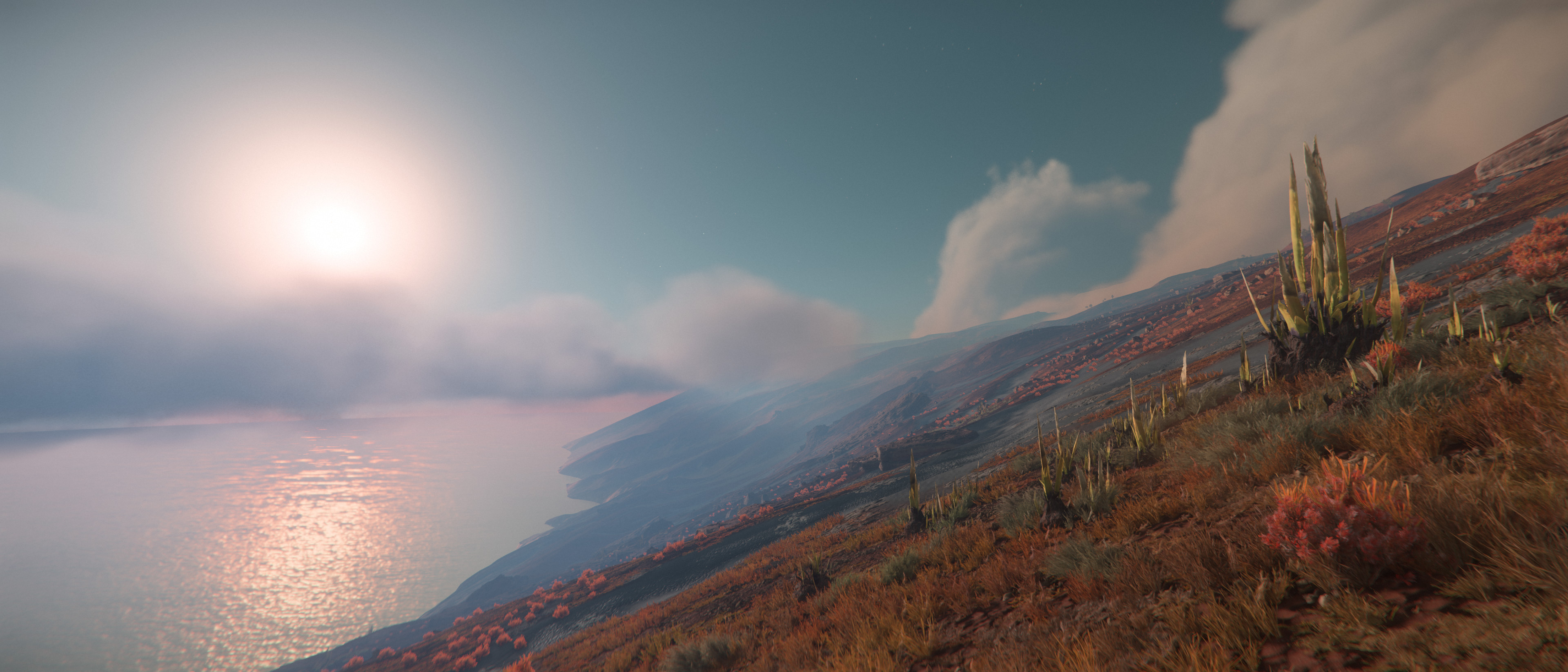
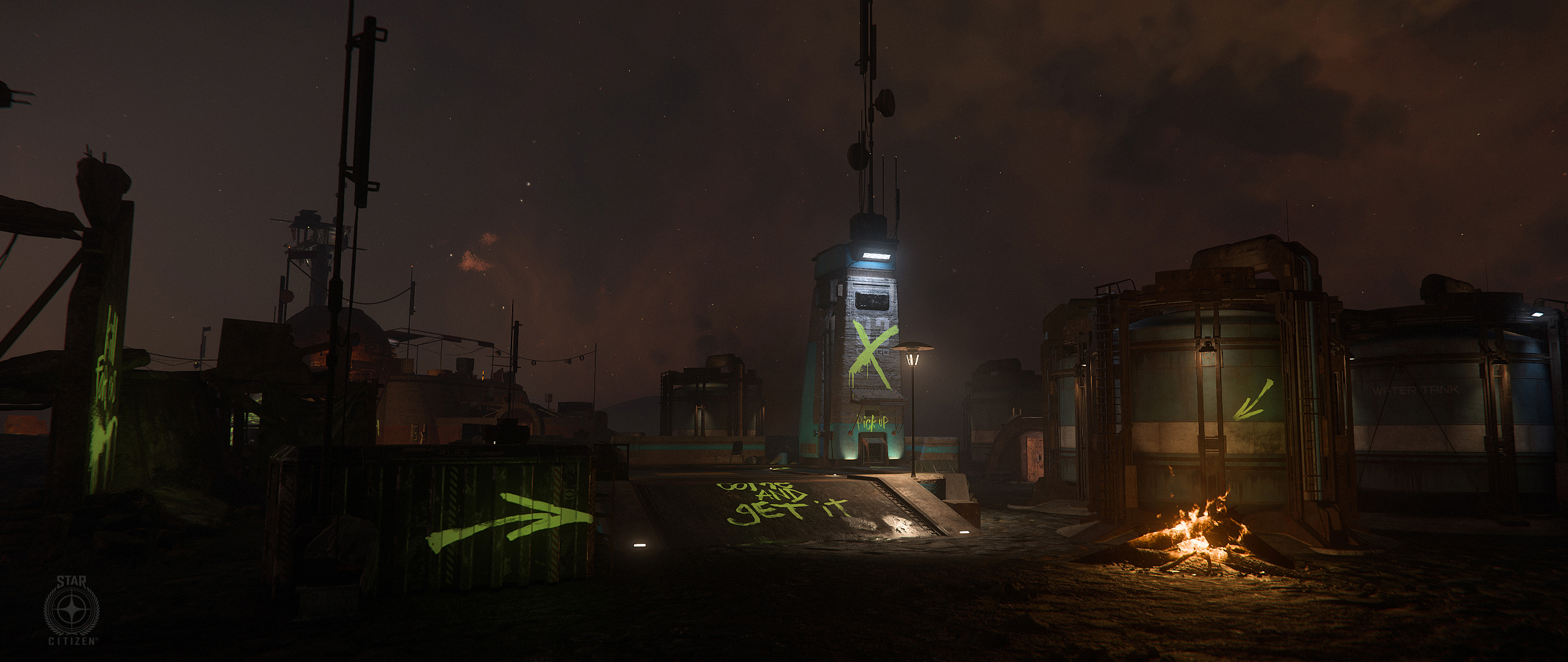
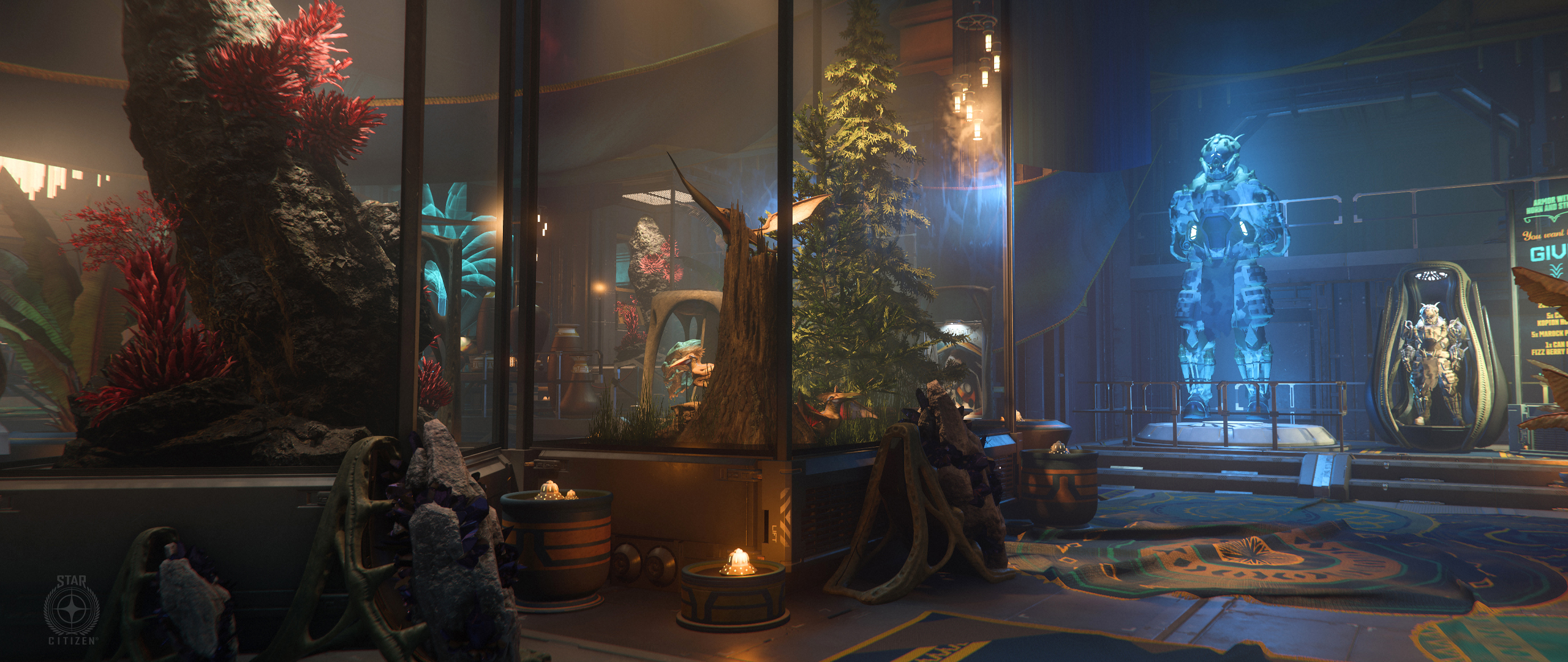
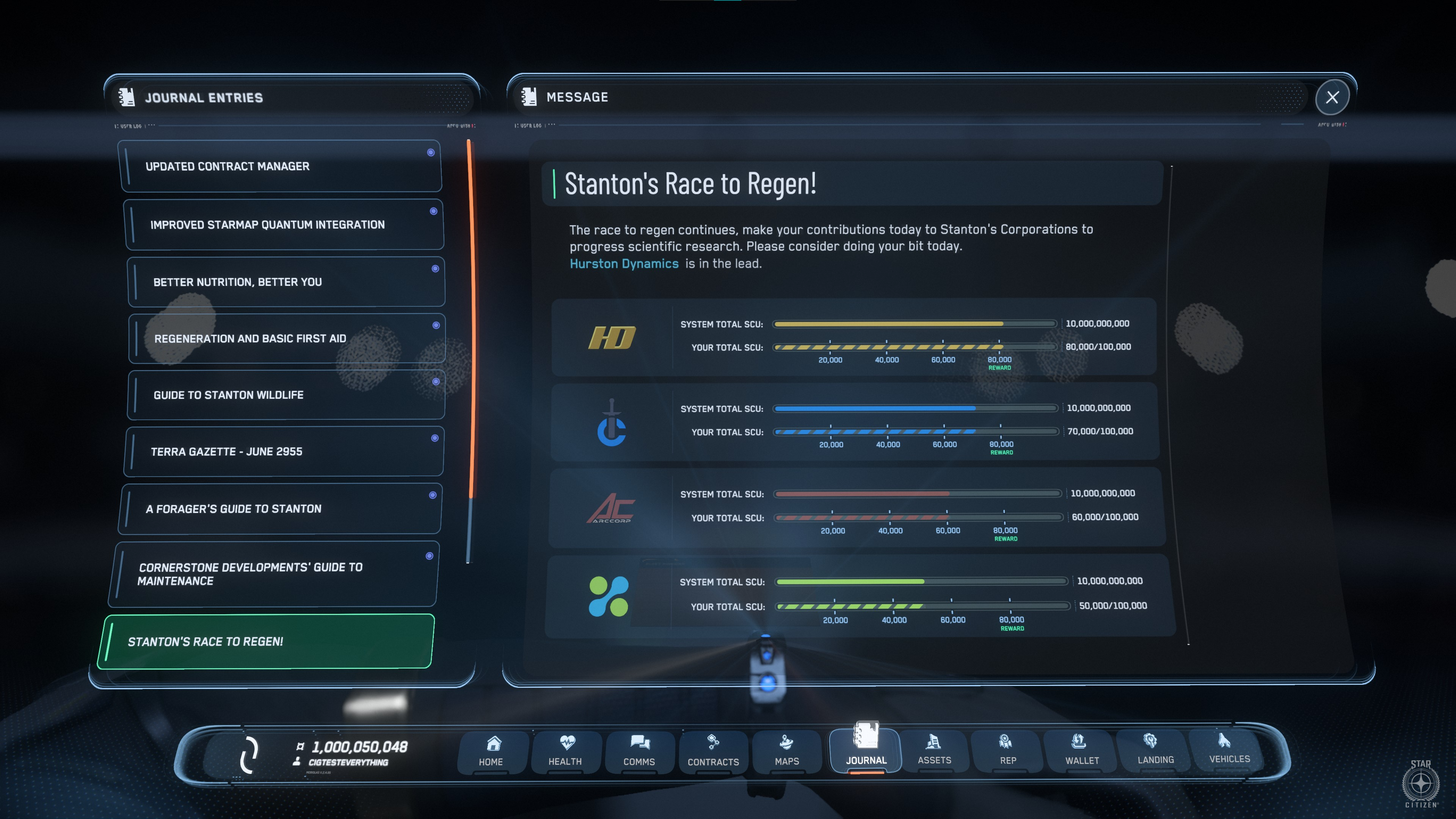
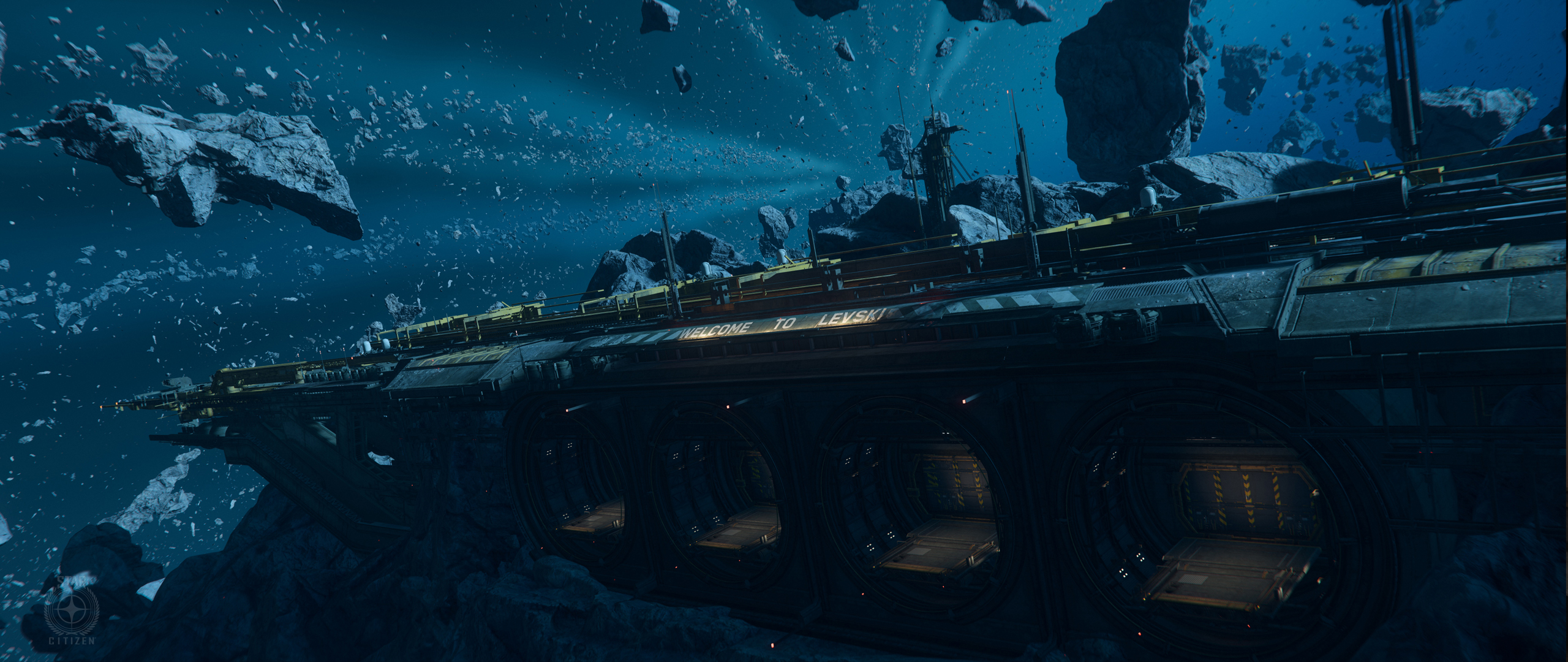
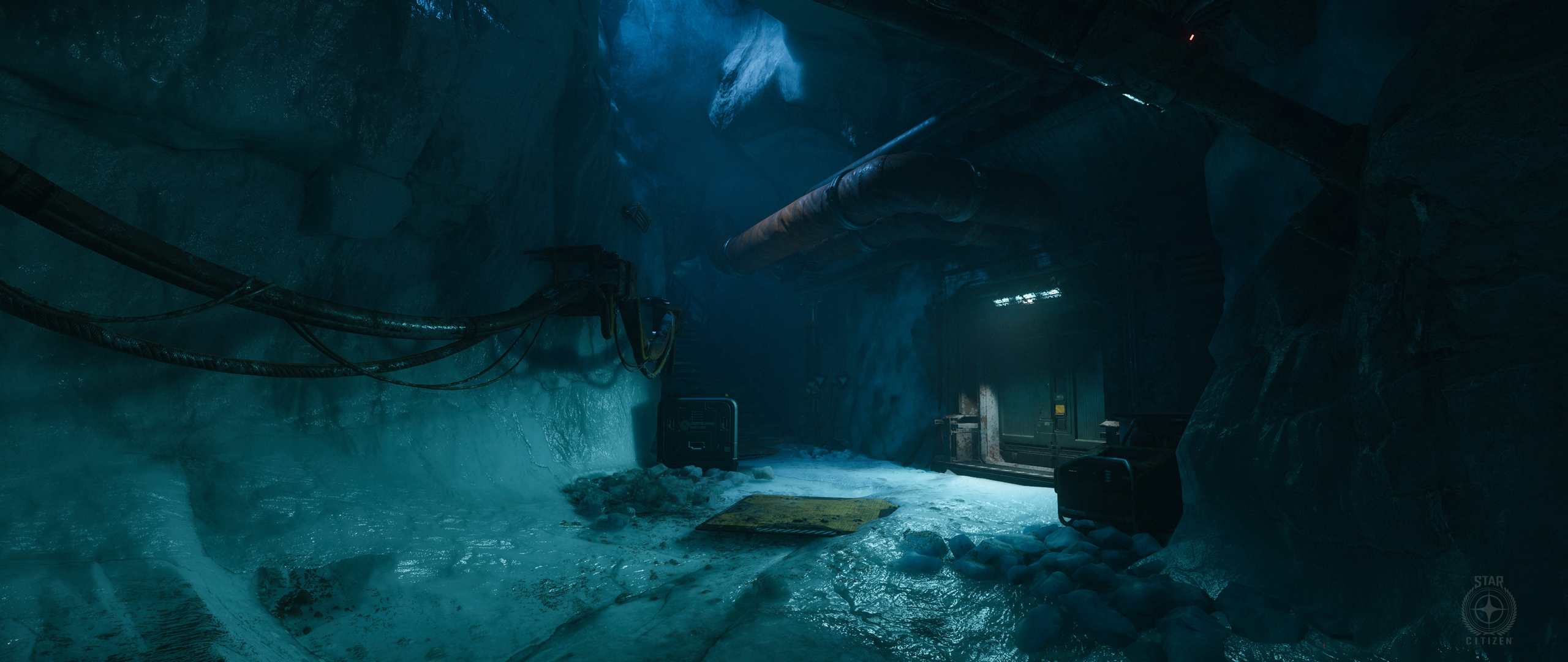
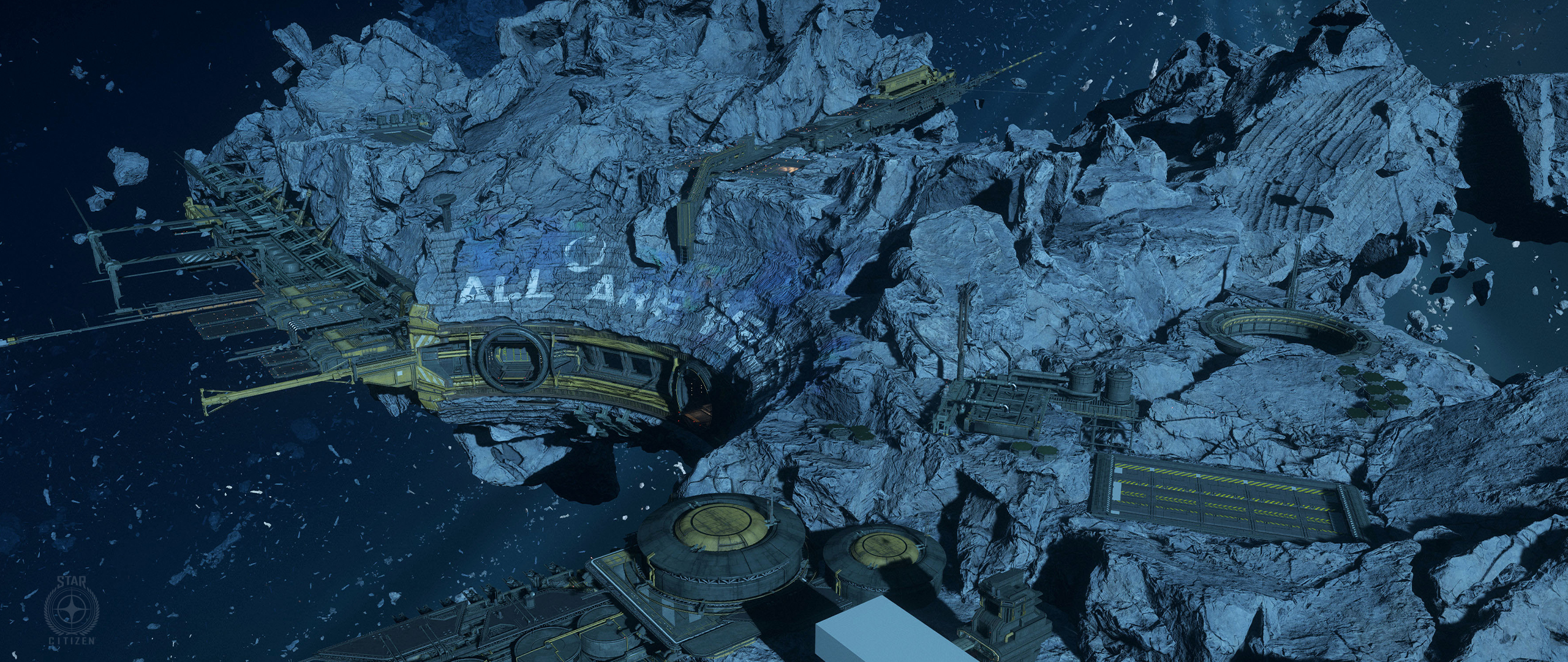
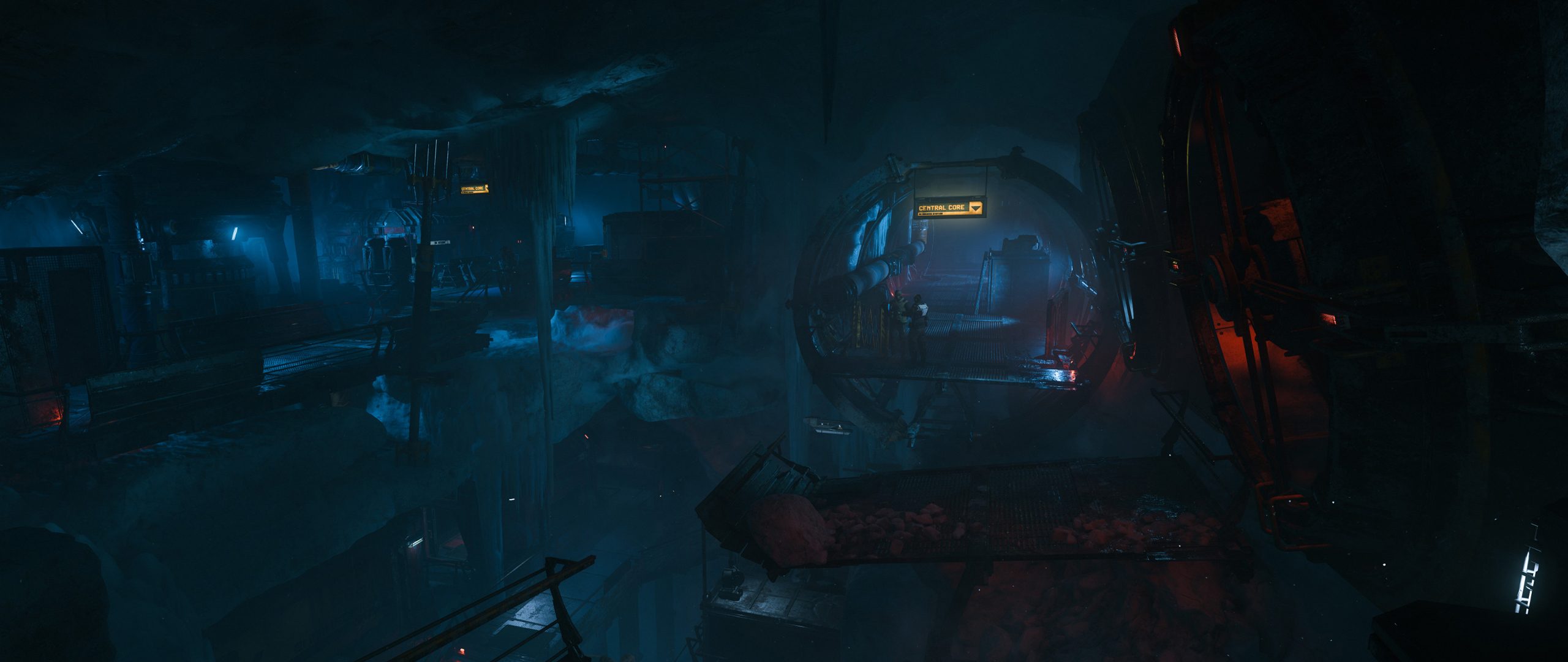
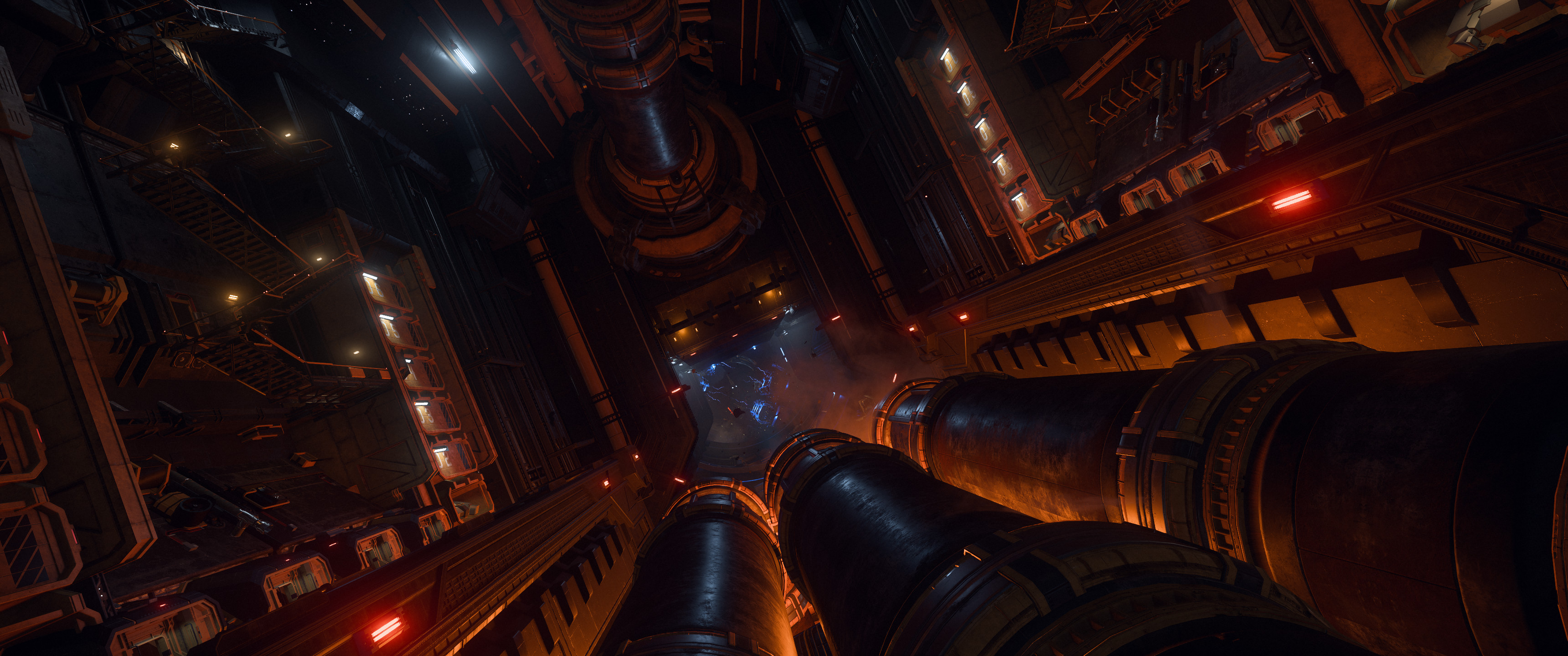
Metadata
- CIG ID
- 15155
- Channel
- Transmission
- Category
- Undefined
- Series
- Monthly Reports
- Comments
- 105
- Published
- 10 years ago (2016-01-13T00:00:00+00:00)