Monthly Studio Report: February 2016
Transmission Undefined Monthly ReportsContent
Greetings Citizens,
We had an extra day this February, and we put it to good use! Star Citizen Alpha 2.2 is now ‘live’ and Citizens everywhere are making good use of the new features to expand their adventures around Crusader. Between the hostility system, physicalized EVA and the increased instance limit, things are hopping! An extra special thank you to our front line PTU testers this month, who helped us put out an astounding nine builds before we released 2.2! With 2.2 live, the team is eager to move on to features to be added for 2.3… but before that happens, we’ll take our monthly look back at Star Citizen’s progress for February 2016.
Greetings Citizens!
We are back again with another month in 2016 that has come and gone. Time does seem to fly when you are having fun, doesn’t it? We are definitely having fun, but make no mistake, we are completely focused on getting more enjoyable content released so you can join our merriment within the black void of space.
With the 2.2 patch released, it is hard to believe it has already been a month since our last community update; not because time flies so quickly but because of how busy the CIG LA office has been these past 29 days (we definitely appreciate the Leap Year giving us an extra day to polish content). Just to give you an idea of what we have been up to, here is a breakdown of what each development team in the LA office has been up to.
Engineering
The LA Engineering team has been elbows-deep in new technologies that are getting incorporated into Star Citizen. Starting with Allen Chen’s efforts, we have looked at how player interactions work in-game. For example, when planning out how a player will interact with an object, we realized that a single “Use” prompt was limiting us to a single predefined interaction with an object that didn’t take context into account. By allowing each object to handle interaction logic by itself, this reduces the amount of extra effort required to maintain all of the implementations. Allen has engineered the system so that each contextually possible interaction for an object will contain a localized string token that will be used by the UI to display the description of that action. This leads to a system that allows us to add, remove, enable, or disable interactions on an as-needed basis instead of a more cumbersome and error-prone ad hoc basis.
You may have heard us mention updates to the Shield system in our news updates, “10 for the Developers” series of videos, and other news outlets. While the Tech Design side is being handled by Lead Tech Designer Kirk Tome, the Engineering side is being performed by Associate Engineer Chad Zamzow with oversight by Lead Engineer Paul Reindell. Chad has been working on implementing the “Shield Generator” item to the revised design spec. A large part of this consists of matching the new components to the new design which involves pulling power and converting that power into shield points to be pushed into the corresponding shield pipe.
In an effort to increase efficiency in our coding and to help provide the Tech Designers with more powerful tools, we have created our own in-house tool we call DataForge. This tool allows us to create data quickly within the game without the need for parsing. This database not only allows us to view data in multiple ways, it also loads data faster and ensures that the data are adhering to a specific schema.
Both Mark Abent and John Pritchett have been hard at work behind the scenes, performing various changes to our game data that have potentially long-standing implications to how our data functions. Mark has been providing support for projectile creation through DataForge while John has been working on tweaks to the Thrusters and EVA. Mark’s changes to the Projectiles provides our Tech Designers with a powerful option to create projectiles directly through DataForge without having to go through XML editing. Flight Engineer John Pritchett has been busy cleaning up Thruster effects to fix the thruster effect range, boost effect range, and adding transitional effects when activating Boost.
Tech Design
With the 2.2 release imminent, fixing bugs for 2.2 was the utmost priority for the Tech Design team this past month. Although Shield system has been at the forefront of the Tech Design team’s tasks with regards to new content, our ships have been making great progress through the pipeline as well.
Tech Design Lead Kirk Tome has completed the grey box stage of the Xi’An Scout. If you have not watched the recent “10 for the Developers” featuring Mr. Tome, you will find an abundance of information and updates regarding the Xi’An Scout. While the grey box stage has been completed, the final tech design for the Scout is still underway. Furthermore, Kirk has spent a considerable time performing a re-factor of in-game masses. Starting with the ships, he has been researching a more accurate and proper way of calculating the mass.
Apart from creating a metric for Shield performance, Tech Designer Calix is in the midst of completing the white box tech design stage of the Drake Caterpillar. This stage includes determining where the components will be located throughout the ship, the layout, along with other important features such as the list of what weapons it will have, where they’re located and most importantly, the basics of how the Cargo mechanic will function. Finally, with our components constantly evolving, Calix is designing how Power and Cooling will function within our ships.
As mentioned in the Engineering section, with the creation of our in-house tool, DataForge, it allows the Tech Design team greater efficiency and flexibility when creating new items and experimenting with parameterization (laying the groundwork for future balancing passes). Tech Designer Matt Sherman is in the middle of converting all of our Projectiles from XML and setting them up in DataForge. Since this is an ongoing and evolving task, Matt is also responsible for grey box tech designing the MISC Reliant. This includes the metrics that comprise the Reliant such as its internal layout, placement of hardpoints and various components, etc.
Art
When it comes to the CIG LA Art team, there is definitely no shortage of exciting things to report. New ships and old ship revamps along with character updates have been a top priority for the Art team. Furthermore, the Art team has also been responsible for creating lots of new artwork across the game.
While Calix has been working on the white box tech design of the Caterpillar, he has been working hand in hand with 3D Art Lead Elwin Bachiller, who in turn has been working on the modeling white box based on additional concept artwork using updates to the Drake style guide, both created by Concept Artist Gurmukh Bhasin.
Moreover, the LA Art team has also been working on the MISC Reliant, having completed several milestones. Exterior LODs were completed by Daniel Kamentsky, while Elwin completed redesigning the cockpit. The changes to the Reliant’s cockpit include redesigning the UI in order to adhere to updated UI specifications, animation, and textures. These are all part of a “flight prep” pass completed by Elwin. The flight prep pass is a review of everything that is needed before the ship becomes “flight ready.” This includes doing a pass over the damage states, LODs, and other precursor tidbits before it is released.
On the Character side, Artist Omar Aweidah has finished creating high-poly geometry for undersuit armor and several UEE Navy item variants have been his responsibility.
Speaking of costumes, Jeremiah Lee is submitting a first pass for the Heavy Armor concept after completing an early design pass on the same. Like our spaceships, designing armor and clothing also go through a series of approvals and revisions before they are approved for creation. This ensures we are adhering to thematic style guides based on key manufacturer embellishments.
Tech Content
The Technical content team is the amalgamation of Tech Art and Tech Animation into a global unified team.
This team consists of Technical Animators and Technical Artists working together to bring together all of the Art, Animation and even Engineering proceeds into a cohesive “in game” asset or feature. Typically this includes complex problem solving across many different pieces of software, educating members of other teams on best practices for coordination and handoffs, constant performance profiling and even reactive bug fixes on release build content, just to name a few. This team also includes key developers that perform the rigging and animation implementations of both ships and characters.
On the ship side, recently-promoted Senior Technical Artist Mark McCall (congratulations on a well-deserved accolade) has been tackling animation bugs for the 2.2.0 release. These include fixes such issues as the Vanduul Scythe/Glaive firing animations, adding steps to prevent clipping animations of the Landing Gear through Mannequin, optimizing thruster setups and many other important fixes.
Meanwhile, Patrick Salerno is continuing the review of all ship LODs and normalizing the mesh count and more importantly density. Patrick is making a huge effort to ensure that performance is at the highest possible level across all of these ships and is currently reviewing the Mustang and Hornet along with each respective variant.
Senior Tech Artist Matt Intrieri is currently performing an LOD pass on various ship components which include the landing gear, escape pods, thrusters, intakes, and many other components. This is an ongoing task given the number of assets requiring his review. Associate Rigger Gaige Hallman and Senior Rigger John Riggs have completed rigging of various character assets that will become obvious to players once character customization comes online. Gaige has finalized the process of skinning vertices from the character models whilst John has completed the asset rigging and simulation setup for the UEE Navy BDU uniform. Next up for John is performing R&D for rigging the Vanduul – we can’t wait to see the results of this!
Narrative
For the most part, we’ve been focusing pretty heavily on Squadron 42. Lead Dave Haddock has bounced over to the UK for the month while Will’s been Skyping in to have daily meetings with the Squadron 42 designers to step through the game to see how the levels and gameplay have been progressing, to see if any changes have necessitated any additional pick-up lines from our higher tier actors, and delve a little deeper into the dialogue and narrative needs for the secondary (non-principal) cast members.
On the PU front, we’ve been working with Designers in Austin and the UK to flesh out more of the landing zones, provide lore support for ship components and help out with developing narrative in the Baby PU.
In the Starmap and Galactapedia arenas, Adam finished his review of the previously published Galactic Guides, resulting in a monstrous 120-page document outlining potential changes/disparities that would need to be made to bring either the Galactic Guide or the Starmap in sync. We will all sit down and go through each one to talk them out. Meanwhile, Cherie has continued to work with our awesome astronomy consultants to generate the scientific data while waging her epic battle with the internal wiki.
So that’s it for us. Nothing terribly new to report (that we can disclose at least), but continuing to chip away at the mountain of needs.
Quality Assurance
CIG LA’s Quality Assurance team expanded as we welcomed two new testers to the team after extensively reviewing applicants; Eric Pietro and Colby Schneider have joined Vincent Sinatra as members of the CIG LA Quality Assurance department – and their timing could not have been better. Considerable time was spent training the duo and getting them up to speed with regards to CIG’s QA methodologies, software testing theory, and acclimating them to our fun world. In a few short days they were ready to hit the ground running; the LA QA team aided our ATX and UK counterparts in testing the new 2.2 code for PTU pushes, as well as investigated a number of issues for Design and Development, including but not limited to:
The new Hostility Feature
Sabre Flight Performance & Equipment loadouts
New cooler component implementation
EVA adjustments and zone grid transitions
Ship entry animations
The transition from 16 to 24 playable ships in Crusader
Shield recharge times
The QA team also performed an audit of the mass for all ships, as well as a landing gear pass to ensure everything lined up to specs and was functioning correctly.
Conclusion
As always, this is just the tip of the iceberg of what is going on behind the scenes here in Los Angeles. We are not only excited about you enjoying 2.2, we are also planning for the future and working on quite a large pool of features that are slated for later patches. We are only two months into 2016 and we are always looking at what is next, ready to face these challenges, knowing that the trust you have for us is greatly appreciated. We are proud to have you along for this epic adventure, in the game and out, and we hope you look forward to seeing the major developments to be released in Star Citizen in the coming months of 2016.
Greetings Citizens,
February began with a push to get 2.1.2 to the Live server, and ended with a push to get 2.2.0 to the Live server. It’s been a busy month and we’ve made an incredible amount of progress on many fronts! The Persistent Universe team has been hard at work, and will have results to show in game very soon. QA and Live Ops have been working around the clock as always, and the global nature of our company and our community allows us to make continuous forward progress on our goals any time of the day or night. Enjoy some detailed reports from each team leader!
Persistent Universe
The PU Team in Austin has been making significant progress on several different features this month, the main one being PERISTENCE! Yes that’s right, the cornerstone feature of a “persistent” universe is indeed the ability to persist data across play sessions, and Jason Ely and the server team here in Austin have been making great strides into laying the groundwork on the backend. We are rounding the corner on this massive undertaking, having rewritten whole portions of the codebase to get this integrated into the game. The first feature we’ve been testing with is “Shopping”, and our first release with Persistence in it will utilize Casaba Outlet’s stock of shirts, pants, jackets, etc. to show off persistent gameplay. We’ve also been brainstorming other ideas for opportunities to utilize Persistence in gameplay, such as player health, ship/item health, currency, and reputation.
Having mentioned Shopping, let me elaborate on this feature a bit more. This month we’ve solidified the flow of Shopping Phase 1, and we’re wrapping up the tasks that are required to set up Casaba Outlet as a shop in game. This means setting up the clothing racks with items, tagging each item with the tags necessary to get it to show up in the UI correctly, and calling out variants for the clothing assets that have been made so the Character Team can schedule these in. We hope to populate the shop with enough to keep you guys engaged on the first release, but leave enough empty space to allow us to fill it with more varied clothing assets later on down the line.
Ship Artists Chris Smith and Josh Coons spent their time this month wrapping up Final Art phase for the Xi’an Scout. They’ll be moving on to the Herald next month, we’re excited to see what they do with it. Emre Switzer finished lighting passes on the shops for the Levski landing zone in Nyx, as well as for the Asteroid and Business Hangar. Mark Skelton has completed several style guides for clothing manufacturers within the ‘verse that will inform character concept artists and 3d modelers going forward.
Our Animators spent much of this month developing animations for use in Astro Armada and G-Loc Bar. We also did some work on various enter/exit speeds for the Avenger and Aurora, and we hope to carry this over for all ships into next month. Lead Ship Animator Jay Brushwood spent a couple weeks in the UK syncing up with the Ship Team there, establishing steps in the pipeline and ironing out kinks in the workflow and communication. It was a very productive trip, it’s always good for folks to get face-time with other studios when possible.
Lastly, work wrapped up on the Friends System 2.0, which transitions the Friends/Contacts system from Platform to our backend services. This new Friends System incorporates some much needed new features, such as the Ignore List. This has been handed off to our UI Team to schedule in and create the front-end work for this feature.
Live Operations
QA
When the month of February began QA was wrapping up our previous release of Star Citizen Alpha 2.1.2 to our Live environment. QA continued to investigate a couple of lingering issues as well as gathered public feedback. Shortly thereafter, QA began focusing efforts squarely on testing the new features which would be included in the next release.
Todd Raffray headed up an early test of the new Party System updates. Each feature improvement was documented and individually tested to ensure the updates worked effectively. QA was very happy to ensure that playing with your friends would be much improved in 2.2.0.
The team then began testing additional features that were slated to be included in 2.2.0. These included Monitored Space, The Hostility System, and the changes to the layout of the Crusader map. The team also created a list of must fix issues which was then delivered to production.
Each new system was meticulously tested by the coordinated efforts of each of our QA teams around the world. The day would begin with our QA teams in UK and Frankfurt beginning testing headed up by the leadership of QA Manager Phil Webster and Senior QA Tester Steven Brennon. As the day progressed, the testing would be handed off to our US QA teams headed up by QA Leads Andrew Hesse and Vincent Sinatra. The daily information hand-offs went very smoothly and contributed to almost 24 hour daily testing coverage. This coverage ensured development continued smoothly to help release 2.2.0 as soon as possible.
As new 2.2.0 features came online, they were added to our list of things to test for release. These included flight testing of the newly flyable Sabre, the hangar ready Xi’an Scout, ship cooler items and the new physically based zero gravity EVA.
Additional in-depth testing was conducted on the ship combat time to kill values for each available ship and weapon as well as a comprehensive pass on the ship landing and repair mechanics.
We have had some new recruits added to our ranks this month. Phil Webster has joined our Foundry 42 office in Manchester, UK. Phil comes to us from Sony. Phil will be fulfilling the role of QA Manager and is already doing great things leading the Foundry 42 team. Please welcome Lee Jones to our Foundry 42 testing team. Lee also comes to us from Sony and will be assisting our Veteran Liam Guest in dedicated Squadron 42 testing.
We also have 2 new testers joining our LA studio this month. Eric Pietro and Colby Anderson. Both Eric and Colby have industry experience and have already proven to be great additions to the LA QA team.
Senior QA Tester Christopher Speaks travelled from our Frankfurt studio to Foundry 42 and held training sessions for our UKQA team on the testing and use of the Cryengine Sandbox Editor.
Right now the team is working hard to get 2.2.0 out to the live environment as soon as possible. For the month of March, the team will be focusing on testing the new additions which will be included in Star Citizen Alpha 2.3.0. We are very much looking forward to the new content coming soon. See you in the Verse!
Game Support
February has been an amazing month for Will Leverett and Chris Danks as Game Support worked feverishly alongside QA, Production, and our PTU testers to get 2.2.0 branched, built, tested, fixed, and shipped out the door. To go from branching to full release in three weeks is amazing, and we think we can still improve the process to make it even better.
We spent quite a bit of time this month working on establishing our new protocols for PTU invite waves. This was accomplished by focusing on Issue Council engagement and previous PTU participation. From our perspective, 2.2.0 on PTU has been amazingly successful, and in no small part due to the passionate backers who were always ready to help. We’ve gotten amazing feedback that went right into the development pipeline, particularly through the Issue Council and structured playtests.
Many players have questioned why we did not roll out 2.2.0 to a greater number of players on PTU, or what the downside is to having more players involved. The answer is twofold: 1) cost and 2) 2.2.0 simply did not require additional waves for testing (in fact, sometimes having fewer is better). Each build download and every server costs money, and if we can avoid unnecessary expenditures while still accomplishing our development goals, that helps everyone in the long run. Additionally, bugs involving resource allocation and network bandwidth can result in errors that manifest quickly even with relatively small numbers of players. When bugs of this kind are involved, expanding PTU access often doesn’t help diagnose the problem, it just makes it worse – incurring higher cost for no benefit is just plain wasteful. In cases like this, bugfixes are investigated and applied while the addition of additional waves of testers proceeds at a much more controlled rate until it’s clear that the blocker has been addressed.
A very healthy 70% of the Wave One group participated in at least one build since 2.2.0 went to PTU, and we’ll cull the other 30% from the list in order to rotate in others who want in to help with active testing.
Aside from 2.2.0, Game Support was able to spend time on our service issues, getting completely caught up on our tickets (along with our colleagues in Customer Service) and we’re excited that we can provide quick turnarounds now to players who need individual support.
Related to that, Game Support will be working with Customer Service and Turbulent to assess different options for creating a true knowledge base that serves the players of Star Citizen. We certainly don’t want to roll out a drab, mechanical site, but instead provide a medium in which the community can interact, find solutions, and when possible, help each other.
It’s been a super productive month, and we’re excited to roll right into March on the road to 2.3.0!
IT/Operations
February has been about Data. We are working on an important project with the rest of the Operations teams and key Development team members in our Frankfurt studio to fix these huge patches once and for all. This project could take some time to roll out due to the depth of work involved but the project is too exciting not to mention.
Patch sizes have to do with the way the data is prepared for each version we publish. We know that patch differential between builds includes between 5-10% change for most builds. However, because the changed files are mixed with the unchanged files then compressed to larger pak files for delivery, even one small change in data can cause an entire pak file look different to the patcher due to the output of the compression scheme, which the patcher sees as an entirely new large file.
In order to correct this, we need to change a number of things including how the game engine reads data. We also need to change the build system and the entire delivery pipeline in order to do this right. Once done, we’re expecting to see major improvement in the size of patches between versions but we’re hoping for even more. Changes to the build system supporting this new approach should also allow us to do more incremental data builds rather than the much longer full builds. This would greatly reduce the time between developer fixes and testing, particularly for a game the size of Star Citizen.
LiveOps
This month the team has been working around the clock on deployments and the build system. We delivered 8 publishes to PTU with major improvements to the process allowing us to minimize downtime to moments from hours. Our analytics reporting has undergone major improvement in February both on the client and data side.
Our build system has been undergoing some substantial changes at the same time which leads to a tricky balancing act when trying to keep up with all the internal builds and PTU publishes. So far we’ve rolled out a new distributed compilation system which has shaved another 75-90% off the build times depending on build type, a new format for keeping track of data, internal and external automated crash reporting, as well as a completely new inclusion/exclusion system which helps us refine our builds down to specific testing goals.
We’ve also been working closely with the IT team and the rest of the Operations teams toward the goal of reducing our patch sizes. This task will likely trigger the largest set of changes introduced to the build system to date since we’re incorporating major changes to the build process as well as the delivery pipeline which will have positive impact on internal development as well as external patch delivery. In order to make all this happen while maintaining full support of the existing development schedule we will be building a completely separate build system which will run in parallel to the existing system. IT better crank up their air conditioners because we’re gonna smoke those servers!
Hello Star Citizens!
Between Star Citizen 2.2 and continuing work on Foundry 42, all of the Foundry 42 UK teams have been working hard and delivering excellent results. Keep in mind that we can’t share everything for fear of spoiling the events of Squadron 42… but there’s still plenty we CAN talk about.
Design
We have had another busy month in the UK design department. We are still working on the “new player experience” which is hopefully going to make the learning curve less steep for new backers. This not only encompasses a simplified UI set, but also has a refactor of the controls system to be more conceptually consistent across the various game modes such as EVA, FPS, and space flight. We are still working on mobiGlas, this is a biggie as it is one of the major aspects of both S42 and the PU so we want to get it right the first time around. Scanning, for both cockpit and FPS, is now underway, and we are looking forward to getting sub-targeting of components into the game soon.
Andrew and the Tech team have had a number of meetings about the various balancing issues and we are hopeful that you will start to see the positive results in the coming releases (not in time for 2.2 unfortunately).
The Idris is getting closer to a game ready state and we have enjoyed our first forays into the test universe with a design team crewing it.
S42 is moving along nicely and we are starting to see blockers shifted in a timely manner so the design truck can keep rolling.
Audio
It’s been a jam-packed month as far as CIG Audio is concerned. Apart from the usual bug fixes, we had a very nasty in-game distortion issue at the start of February that was extremely hard to reproduce, and near-impossible to profile. Thanks to our fantastic QA department, as well as Sam Hall, Graham Phillipson, Mikhail Korotyaev and our friends at Audiokinetic for assisting with fixing that, and the community at large who were hugely helpful in sending us data and user stories. Apologies to anyone who suffered from this but we reacted to it as fast as we could. Good came of it, in that we now have added some analytics for the audio system, so we can keep an eye on audio resource usage in the wild (again, thanks to Sam for pushing that out there).
Work continues apace on ‘Squadron 42’, and Ross Tregenza has continued with putting down as many audio foundations as possible, and keeping close eye on cross-discipline progress. All of the systematic elements we’re working on across the whole game feed into Squadron 42, but there’s still a lot of custom and bespoke aspects of it to keep track of and make sure we’re ready for, so that when the time is right the whole team will sweep across this module.
Ross also worked with Sam Hall on the monitored zone system audio which you’ll witness soon enough, it’s still in a relatively early stage where the audio is concerned and we’ll improve this further as we iterate upon it.
Bob Rissolo has been very heavily invested in the Dialogue Pipeline tools and database. This is quite a large project in itself, that feeds into the main Star Citizen experience but is again very important for Squadron 42 which is going to be very character dialogue-centric. He’s been mainly working with Simon Price, who’s joined us as a Consultant Audio Programmer.
Bob Rissolo and Phil Smallwood built up and tested out the dialogue recording rig extensively in a test shoot in mid-February, to make sure we’re up to the task of recording dialogue for performance capture sessions. For the most part it all worked as expected with only minor settings tweaks and optimisations required.
Sam Hall has submitted Version 2.0 of the Music System, including a visual logic editor. This shipped in 2.2.0 and was a ‘surprisingly smooth’ transition, at least so he says! Until we get some new content it might not be hugely obvious it’s there, which is a good thing in some respects. You want an in-game soundtrack and musical cues to sound as natural as it does in the movies, if not moreso. If it were to catch your attention unnecessarily, it could be more distracting than immersive.
Talking of new music content though: myself, Ross Tregenza and Pedro Macedo Camacho combined our powers and braved the (actually rather mild) Slovakian winter to attend our first orchestral performance this year, at the Slovak Radio building with the Slovakian National Symphony Orchestra. This provided us with new content for ship-based space combat, which will feed into the aforementioned music-logic system when the material is ready; we still need to add some extra momentary layers and elements for it to be as reactive to the game as Chris Roberts desires. Chris is very into his dynamic music, having pioneered such a system back on ‘Wing Commander’. So, we still have the extra material to come before we take it to a mixing session to give it some polish, after we’ve proven its effectiveness in our new system. Will keep you posted, and try to get some material from this out for you to experience when the time is right. Many thanks to our conductor Allan Wilson, recording engineer Peter Fuchs and our orchestral fixer Paul Talkington for arranging things.
These days we’re thinking heavily about dynamic/procedural mix methods, rather than the usual state-based mixing that’s common to more linear titles. To this end Darren Lambourne has been putting together a dynamic bass management prototype, which is a great place to start when it comes to figuring out mix fundamentals within Wwise. Many games suffer from the summation of too much low-end and we want to keep the experience clean, and configurable, for our users to reflect their different demands and differing set-ups. Will let you know when we have this ready to push out to the game proper but so far it’s quite promising.
And talking of mix – Darren is also working on a parametric mix/effects system to reflect atmospheric depressurisation, whether that’s out in space or when inside depressurised interior locations. We have the concept right now whereby exterior sound is simulated within ships – controversial we know but we feel it makes sense! However, the player suit when exposed to space independent of one’s ship, in our lore at least, it doesn’t have the processing power to perform the same function, at least not to the same level of fidelity. So what you’ll probably hear will be much more akin to structure-borne sound transmission, coupled with a lot of suit/internalised elements. We’re just starting with this one and we want it to be consistent with logic and gameplay, but also dramatically satisfying in its own right. Will share more once we have this at a good place.
Darren’s also pushed out some great EVA audio improvements, particularly re. the manoeuvring jetpack thrusters. We hope you appreciate this one, the articulation is way ahead of where it was previously. In some ways this is now much more subtle, but also far more responsive to player input. We’ll get together some video to show this off properly but it’s far more characterful while still retaining subtlety. We hope you like it.
Stefan Rutherford’s been working on some space-station mixing – there’s some neat bass modulation on one of the stations that varies things as you traverse. He’s done some lovely stuff on the Reliant, too; he’s produced ship ambient mark-up, with parameterisation of sounds so that all of them become far more responsive to external factors. E.g. power-plant level, ship strain. Under his model a single light buzz on a panel can change in tone and timbre, if power output is high to other components – because non-critical ones (such as a light) are receiving less power. A light fitting will also tend to rattle when the ship is undergoing excessive gravitational forces or ‘excitement’. We hope the summation of this level of detail will contribute to the ship experience.
Thanks to hard work by Graham Phillipson and Matteo Cerquone, we now have a solid and working piece of tech for ‘Automatic Character Foley’ in place. Traditionally, this sort of character-based sound would be spotted by hand to animation files, but we wanted to make this far more system-driven, as it’s a very labour intensive approach that doesn’t stand up to variable wearables (that’s a tough thing to say) or animation and clothing simply changing dynamically. So now, we have a system that modulates clothing and equipment sounds in response to limb velocities. We’ll hopefully be able to factor in clothing changes soon too, plus added equipment layers that’ll change depending on what weapon you may have equipped. Matteo’s also been working with the Xi’an Scout which has some great SFX in place.
Following on from the auto Foley though, we now also have a solid prototype for Automated Footsteps. Again, this is traditionally very labour intensive stuff, whereby sound designers would open up an animation file and spot to a timeline. That’s not a robust enough solution for us, so Graham has somehow figured out a way to infer accurate footstep movement and articulation, and play back appropriate sounds – in real time. We know this might not seem like a massive deal but there are many sound designers who’ve contributed man-months to this very task in the past so to solve this problem… well, one of us cried a tear of joy. Almost.
As fuel for the Foley fires (again with the tongue-twisters), we have a ‘wild Foley’ session upcoming to record footsteps, and some physics object style sounds (impacts, slides, rolls etc.). Stefan and Matteo will be overseeing that session, hopefully we’ll gather some eminently usable material there.
We also have a firearms session due at the end of March to capture outdoor gun-fire impulses/tails in an urban environment, for in-atmosphere locations with lots of reflective surfaces, in contrast to our earlier interior sessions which were more ‘roomy’, this is all about distant reflections that help define the outdoors.
Jason Cobb has been working on bug fixes, design documentation, scripting improvements to workflow. He also has sound design coming together for ship debris clouds, subject to a system to drive this properly, but looking forward to that.
Luke Hatton has continued on ship sounds, as is his specialism – we’re always fixing and refining audio for those as you know!
Oh, watch out for an upcoming extended version of the Big Benny Noodles theme. But I’ve already said too much about this, I’m sure…
Thanks for listening everyone, sorry it was such a long update but it’s been a big old month. We blame the leap year thing. Thanks!
Engineering
This month’s new big feature for the live releases is the hostility system. We wanted to start coming up with ways where you could see that your actions would have some sort of consequence, and as a result get some additional emergent gameplay going on. As a first step we’ve introduced safe zones, such as around Port Olisar, where the space will be monitored for any illegal behaviour. If you start shooting up an innocent party in the zone you will automatically get a wanted level, become a hostile, you will be marked up on everybody else’s radar as hostile and as you fire on more and more innocent parties the higher your wanted level goes up. Whilst you’re in the safe zone AI will spawn in and try and take you down. To make it more interesting if you have a wanted level you also become fair game for all the other players, so now anybody can now attack you without fear of reprisal. Of course if you are attacking other players outside of a monitored zone it won’t get noticed and your global reputation stands intact, although the players you attacked will remember and see you as hostile going forwards. You can reduce your wanted level though by using a terminal to hack into the system…
Outside of the releases, we’ve been making progress on lots of the other systems. The code to support turrets has been having a bit of an overhaul as previously it was tied very closely to the vehicles, whereas we want to have standalone turrets on a space station for example. We kicked off work on the scanning feature, where you will be able to use your radar to scan vehicles in more detail and get information as to what weapons they’ve got or even what cargo they’re carrying. This of course depends on how good your scanning hardware is and how good the blocking hardware of what you’re trying to scan has. This scanning is also going to be incorporated in the same way when in FPS mode so you can get information about the players around you.
Talking about FPS again it’s about making steady progress on all its mechanics. The new physicalized EVA is getting more and more solid, we’ve been spending a lot of time trying to fix up a lot of edge case issues, mostly when transitioning from inside a vehicle to outside, so you’re going from gravity to zero-g, or vice-versa (or from non-EVA to EVA). Cover is getting better and work has now started on prone and vaulting.
Graphics
WIP - New Optics #1 WIP - Old Optics #1 WIP - New Optics #2 WIP - Old Optics #2 This month the team has completed some final R&D work into the Gas Cloud tech, and out of that has created a roadmap for the gas cloud system. This outlines when we can start giving this tech to our other internal teams, such as art and design, to work with.
After discovering resolving several bugs with our recent Vis Area/Zone tweaks, the team moved to working on the facial tech. This work has been testing the current framework, to find performance bottle necks, bugs and the look to make general improvements to the tech to get the best out of it without reducing performance.
We have also been working on updates to bloom and lens flares. The current bloom implementation has a harsh falloff around glowing objects and requires their brightness to be cranked up significantly to be visible. The new system will allow for more subtle glows with a softer falloff, and its performance will also scale better with higher resolutions.
With the current flare system, an artist has to create a flare set for each light that generates flares, and simulating different lenses (e.g. for cinematics vs gameplay) which requires a lot of manual work creating multiple sets. There is also a limit on the number of flares that can be rendered per frame before they start breaking. We’re working on a system to procedurally render flares in screen space with a more physically based method, and the new system should significantly reduce the workload for artists and make it easier to change the look of the scene on the fly.
VFX
This month the VFX team have been working on getting the latest flight-ready ships including the Vanguard and Sabre. We’ve also done some thorough R&D for the Xi’An Scout effects, as we want to tie in with the fiction and create a unique style of effects compared to the human and Vanduul technologies. This all based on the VFX style guide which we mentioned in last month’s report; building a consistent visual language through a ship’s effects is very important for player readability, especially against the vast backdrop of space!
Away from ships, things are progressing solidly on Squadron 42’s environmental effects, as the environment and design teams have been fleshing out their levels in greater detail which allows us to jump in and add effects where required. There’s so much here we would love to tell you about but we can’t for obvious reasons – no spoilers!
Art
The team has been full steam ahead, internal concept and external all busting out fab looking work and it’s been a varied lot too!
Here’s a list which I’m sure you can discern what belongs to what: the Idris Gravity Generator room, Idris Cargo Room, Idris story line look dev, Planet look dev, Vanduul weapon look dev, Bengal Hangar, Hangar Breakouts, Bengal Bridge console/chair refinement, Powerplants, Quantum Drives, Coolers, Military props, Shubin Pilot briefing room, Shubin Bridge, [REDACTED] ship cargo room, Research Station look dev for the Gravity room and communal areas, Scourge Rail gun final pass, Rail Attachment system, ammo and just started on a new small ship! Oh – and some 2nd pass concept on storyline bases – that’s it for Feb!
Props
There is a running theme here, another month and a few more ship components! We now have the first couple of coolers and shield generators complete and the power plants have been started.
But more exciting than that is that our team has grown! We have gone from 2 in the UK at the start of January up to 4, with our 5th member joining next week!
Apart from the ship components the team has been focusing on low tech props, we are focusing mainly on assets that can be used in both the PU environments as well as the squadron 42 environments. We have completed a few more tests with the blend layer material mentioned last month and have asked for a few little tweaks from the rendering team before we can go full steam ahead with it.
Finally we’ve have been making an effort to get on top of our documentation backlog. Now the teams growing it’s really important to have our pipeline properly documented and as its evolved over the last couple of months there is a bit to update! I’ve also been creating and updating our template files to make the animators lives a little easier and improve consistency across the board.
Characters
Our two man team has been busy as a pair of motivated bees, I’m not going to spoil any surprises but the character work now is really starting to matchup with the rest of the game in terms of fidelity and quality – exciting times, plus we have hired 2 more people to join the UK team – things are looking up!
Environment Art
This month the environment team have been hard at work fleshing out the environments for Squadron 42, there is a huge range of environments in production currently, so there is a frenzy of activity within the team. There is lots of back and forth between the level artists and designers as they move forwards refining the designs and layouts, something which is quick and entirely real-time using our modular system. That’s it for this months, back to it!
Ships
The Ship Team has been in the process of planning their angle of attack for the rest of the year, laying foundations down to hopefully make the rest of the year’s production run smoothly to push towards fully content complete of the SQ42 within the next few months ( content complete meaning all assets are in-game, playable but requiring polish ). Major highlights of this process have been pulling the RSI Bengal into a metric system that will take full advantage of a modular construction approach, much like we have done on the Idris, meaning we can have twice as much visual awesomeness with less of a knock on to both visual and memory costs in the engine. The Bengal was the first ship to be seen ever for Star Citizen in the original reveal, it’s like the Crown Jewel of SC and will be treated as such!
Both the Aegis Idris and Javelin have continued into final production, the Javelin taking full advantage of the Idris’ interior modules, meaning essentially whatever wins we make on the Idris roll over to the Javelin by default, this also has the added benefit that the Javelins interior production will in fact finish not far behind the Idris even though production on the Idris started several months before, we are gaining variation between the two ships with a clever use of material swaps, lighting and atmospherics, the Javelins will have a far more grittier feel to suit its role / characteristic as a ship.
On top of the above, production is almost complete on the Starfarer Base variant, she is looking beautiful indeed, but more so in our opinion is the Gemini variant, the Gemini being kitted out by Aegis really brings an interesting dynamic to the ship’s aesthetic.
Greetings Citizens,
The weather in Frankfurt this month was definitely colder than last, but it hasn’t slowed us down. This month the team added new people in Weapons Art, Animation, AI, and Game Programming, we’re now up to 37. As the team grows out here we can feel it continuing to pick up momentum, which is always a good thing.
Early in the month we had a handful of internal visitors to the office including Chris and Erin. It gave us a good amount of time to look through schedules, adjust priorities, discuss design systems and tech approaches, etc. We also had a few backers through the office which was fun, the team appreciated the good words and the fattening treats.
Thanks again for all the German team support from the backers and fans, it means a lot to us.
AI
Early in the month we completed the first pass on the refactoring of the Human perception. The new perception is now fully distributed and optimized: we mostly split the perception into visual perception and audio perception. All the other stimuli are either perceived currently as audio or visual objects. In the future we are planning to have several types of senses that can be plugged into the perception if needed.
The vision perception is mostly based on the CryEngine VisionMap, it allowed us to have a very flexible system that on the CPU side uses an average of 0.01ms! The audio map allows us to model the perception of sound stimuli and it also uses an average of 0.01ms! The new perception abstracts what’s perceived by the different sense and what we use as the target: the behavior tree is in control of the selection of the target and we are also supporting future extensions for characters that might be able to track multiple targets at the same time.
H3. Notes on the Image
The yellow lines represent the audio events that each NPC has received in relation of different sources.
The blue lines point to the last position when the target has transitioned between being visible and not visible.
The green lines point to visible objects in the world for each NPC
The pink lines represent the attention target of the NPC. If the target is visible it points to the entity otherwise to the last known position of the target.
We also made very good progresses on Subsumption. We now have a proper tool developed directly by Tony Zurovec, from Austin, that allows the designers to create Subsumption routines. On our side we process the data created by this tool to actually transform data into behaviors that run in the game. We currently have a first version of NPCs running Subsumption, and the code is very optimised in memory. 50 characters running different Subactivities uses around 12Kb of memory. Subsumption is controlled by our high level behavior tree so that any character can also be able to react quickly to combat scenarios using our systemic combat behaviors.
We then improved several aspects of the Cover usage, we introduce the functionality to blacklist specific cover spots for a specific amount of time, and avoid the effect of NPCs nonsensically selecting covers that have been compromised a few seconds before. We also fixed the selection of the cover based on the actual occupancy size of the character itself so that different NPCs won’t select covers too close to each other.
We completed the ground work to run dynamic behavior trees inside a main high level one, so that scripted requests can be directly accepted and run by the designers only when the behavior tree is ready without conflicting with the main behavior tree. Also we introduced the concept of “Primary” and “Secondary” actions in the AISequences so that we can properly validate the logic setup from the level designers and guarantee that what they want to achieve is correctly communicated to the AI.
Another feature we worked on is the ground work for Assignments, this is the way a designer can suggest specific high level goal to an NPC, something like “Defend a specific area”, “Attack a specific target”, and so on. Along with the above, this should lead to NPCs that can react properly to distractions without completely losing sight of the orders they’ve been given.
In addition to all of that we have continued to improve the stability of the builds in general.
Builds Ops
We recently switched to use BinXml assets for release builds, this is now the default. Continued work on Trybuild development, deploying and stabilization. We have got a solid db backend now (mysql/postgres), instead of a mere sqlite database, running in a docker container. This allows us to persist data through server and/or service reboots.
We’re doing preparation work to soon switch Transformer to Buildbot Nine. Lots of changes/improvements/fixes have been made across the entire pipeline.
Cinematics
A crucial cinematic scene right before Admiral Bishop’s speech in the UEE senate got a major upgrade from our side. The work on that is still ongoing.
It seemed crucial to Chris and Hannes that we wanted a bigger canvas for the tragedy of these planetside scenes to play out on. Frank, our Senior Env Artist for Cinematics was quite busy building rubble pieces and other things we don’t want to spoil right now.
For much of the month, Hannes was busy building up these scenes and doing further previs on some Bengal Carrier scenes as UK art is currently jumping on that one. Mike Nagasaka was busy with Chapter 02 and both of us were looking into different holoshader improvement options and did some visual prototyping for a pivotal moment involving alien holo tech during Chapter “X”.
Animation is busy with prepping pcap we have for Chapter “X” which involves the Starfarer and as that ship has progressed nicely to almost final art we can easily tackle those scenes next month.
Bishop’s head model got some refinement, and we tested that as quite some tech issues were fixed since we had him take the stage in the first scene featuring him at the UEE Senate.
As on ongoing side project we are revamping the cinematic timeline module “Trackview” so that it supports the needs for ships and AI characters, as well as major usability fixes. This will go on for quite some time longer and Sascha Hoba or as we call him “the fixer” is doing a tremendous job on that which will help cinematic sequences shine!
VFX
Over the past few weeks the DE VFX team has been working on getting the Xi’an scout ship ready for release. This includes a full VFX pass, including things such as thruster effects, damage effects, weapon effects and even a new version of the quantum drive based on the Xi’an tech style. You can see the current status in our header image.
Tech Art
The Tech Art team continued developing the internal animation pipeline, supporting cinematics for various tech setups. The team also worked on the FPS weapons rigs and supported the in-game animation team for finalizing the DCC and engine camera for players and weapons.
Engine Programming
Our Senior Engine Programmer is Christopher Bolte, and his focus during the last month was on two aspects of the game: data transfer protocols (critical to loading times) and the ObjectContainer System. Most of the time was spent on the new data transfer protocol mentioned last month and we made good progress there.
So far we already have the capability of storing all the assets of the game in a single, very large, pak file and to update this pak file incrementally. The Engine also has the initial support to be able to start from such a pak file. The next steps for the new data patching process is to hook those tools up into our internal build distribution process so that we can test how well the proposed system will perform. Hopefully we can provide updates on how well this worked next month.
The second focus was on providing our UK Engineers with support for the ObjectContainer System. This system is sort of a replacement of our current level format, with the twist that we can load ObjectsContainer when we already have an objects container loaded. Practically this means we can prepare loading a universe scale level with a very large amount of space stations, planets, or large object groups, even where only the parts that are supposed to be visible to the player are resident in memory. This system should allow us long term to scale to extremely large levels containing many interesting and different objects. So far we have initial support working so that we could load levels with ObjectsContainer instead of as levels. This is absolutely critical to providing a seamless gameplay experience with transparent loading times, made all the more crucial by the fact that the client (your) computer actually only has so much memory to work with.
As the next steps we will extent this basic version to space stations and ships so that we can load complex objects more efficiently.
Code
This month, we made a whole bunch of code related improvements. Including:
WAF build system rollout. All devs are able to compile the project much faster now.
Public crash handler rollout with 2.2. Already getting good intel from our community in PTU. Thanks to everybody participating and agreeing to send crash info our way.
More improvements for code quality tracking (system to track asserts automatically, trybuild on the way to avoid submitting code that doesn’t build against latest code depot).
Additionally:
We’ve made further progress on the much improved patching solution. The plan is to really ever only download files (inside .paks) that changed. In the future we might expose control of data compression on user’s end to allow custom balancing of IO bandwidth vs CPU decompression time. Incorporating a much more modern compression scheme is also planned (much less CPU decompression overhead for similar compression rates). All this will require stabilizing asset file formats so that re-exports of unchanged assets do not invalidate much of the previously shipped content.
Progress started on further improving optimized mesh data storage format. Vertex streams of meshes will get much more aggressive compression of per-vertex normals and tangent frames all the way up to the GPU (decompressed in vertex shader with very little overhead). This will reduce the .pak size, improve load times and streaming, as well as reduce GPU bandwidth which is critically important for the highly (vertex) detailed meshes of our ships, etc.
We’ve also done a good amount of work on the procedural tech, but don’t want to go into the details just yet, we’ll hopefully have a larger update in the near future.
Animation coding was focused primarily on fixing exiting bugs to get the foundation as stable as possible, which will then be easier to build upon.
Design
At the beginning of the month we had a visit from Chris Roberts and a lot of other people from the all the studios. This was a great opportunity to make sure everyone is on the same track and we are all pulling in the same direction. While this might sound like an obvious thing, it’s actually really easy to lose that focus when you’re involved in problem solving for very tricky ground-level technical challenges for weeks on end. Lots of things got clarified on the design side and are reassured that our goals are aligned and the same processes needed to reach those goals.
On the Level Design side Andreas has taken over the Hurston landing zone. He will be focusing initially on the basic layout, positioning of important landmarks, vistas, landing pads and shops in the three layered zone. The Hurston landing zone is buried within the heavily industrial planet Hurston, owned by Hurston Dynamics in the Stanton system, but besides the actual Industrial Sector it also contains a Civilian Commons Sector and an extensive Business Sector.
The power distribution prototype that Clement was working on proved successful, so now he is moving forward to integrating life support systems and depressurization to this prototype. He is also extending the layout needed as more features get added to this test level.
On the System Design side we’ve been specing out some high priority systems needed for PU. We finished work on the Oxygen, Breathing & Stamina system that will handle the mechanics for how the oxygen travels from the suit’s tank to the suit’s internal capacity, through the lungs and into the blood stream and how the levels of oxygen in the player’s blood affect his actions, and also what happens when he runs out of oxygen.
We’ve also finalized designs on how Quantum Drives & Interdiction function and interact, and are also working on a global universe spawning system that will populate the star systems with content based on dynamic data from the Universe Simulator.
Another system that has been heavily looked at is loot generation and the actual looting system. We are trying to keep this as realistic & immersive as possible while trying to also have it still be manageable and entertaining for the player. This together with the work being done with Player Transactions should help us kickstart an early version of the economy in the PU.
On the AI design side, this month, we’ve started to receive tools that help us greatly in the process of building our behaviours and subsumption tasks so we have started working with these and hopefully our AI will greatly improve because of it.
Environment Art
This month environment art completed work on the (can’t say) which will feature in the (can’t say) of the game. They also started working on a wrecked version of the (can’t say) that will be used as set dressing in specific cinematic scenes. Making the wrecked version of the (can’t say) will involve taking the existing (can’t say) and adjusting the geometry and textures to simulate a smashed up and burnt look, while also using decals to really make it look like this thing has suffered some fairly intense damage.
They also continued supporting the Engine team on the procedural tech, further defining the pipeline and approach to get the finest level of detail possible.
Greetings Citizens,
From building the largest environments to growing the smallest space plants, Behaviour’s work ran the gamut this month!
Design
Behaviour’s Design team has been very busy this February. Starting with Hurston landing zone, we designed, blueprinted and whiteboxed all shop locations for the level, 10 in total and every designers chipped in. Good job guys! They are very different from what we did before as Hurston has its own visual signature and gameplay requirements. BHVR artists are going to start working on them soon and we can’t wait to see the result.
We are also helping out design, scope and plan for shopping which is a big priority for us. Regarding that, we made a few changes to the AR mode and AR labels, the more significant improvement will come with the shopping release but we got some very promising prototype on how this will look and feel. Even the March flair items will have AR information attached.
Talking about flair items, we gave a big push for flair hangar decoration this month, try to forge ahead. March will see the new flair collection revealed which will have 2 decorations: a subscriber one and even a stretch goal one. We even have a few more surprises in bank… To be continued.
Engineering
February has seen most of us working on polishing, debugging and optimizing various features for the 2.2.0 branch.
These include many fixes on contact list, hangar swapping loadouts, turret display in multi crew and holotable features.
Aside from that Adamo Maiorano has worked on Augmented Reality prototypes for the shopping experience and general AR changes to fit design changes.
Art
The Behaviour Art team has been finishing the available shops for Levski. Mostly polishing, dressing and creating props to give a distinct look and feel to each shop.
Also, we began work on performance optimisation to ensure a good frame rate for once NPC and players will be populating the level.
Lots of support was given to the 2.2 release, mostly fixing bugs and updating a few assets.
In addition, work continued on generic props for the lowtech style. These will be extremely useful for our many planets and SQ42 needs.
On the Concept art side, we began work on paintovers for the future Hurston shops.
Finally, the next flair objects has been completed for the next release.
Greetings from freezing-rainy Montreal! Here’s what we’ve been up to in the last month:
Ship Stats
With over 70 ships currently listed on the site, the “Ship Stats” page needs a redesign with revamped readability and usability. We have gone back to the drawing board, creating a new user interface with additional search filters, allowing you to quickly find and compare the ships that interest you, as well as give better insight into the ship production pipeline. We are currently in the design phase, so we’ll post a screenshot in an upcoming report.
Multi-Factor Authentication (MFA)
Last month, we continued our development of multi-factor authentication, i.e. best practices research, prototyping, and data modeling. Our objective is to upgrade our current authentication services and allow anyone to enable this added security feature. On the design front, we finalized the page layouts for the security settings section, which is where the user will setup MFA. In upcoming reports we’ll be able to go into more details about the foreseen short- and long-term options.
Communication Platform
We began brainstorming on a new communication platform for the site which would be able to aggregate and blend forum threads, chatrooms, private messaging into one hub. Our first step was to benchmark and rate other communication tools used by gamers and we are now starting the actual functional design process. Our aim is that this platform could be the next big functional step for Organizations.
Ship Happens
Last month, we updated the game packages on the website, so moving forward, Star Citizen and the upcoming Squadron 42 will be sold separately. It is important to note that his does not affect any packages that you already own; it applies only to packages sold after Feb 14.
Behind the Scenes
The Panic Service is live! Star Citizen devs are now able to access all crash data from this database, making it easier to extract the pertinent information.
Additionally we have been working with CIG to bring about the next big steps in persistence and how it will handle what everyone has on their website accounts. More on this as soon as we’re allowed to disclose anything!
Community… huh… yeah
What is it good for?
Absolutely everything, oh hoh, oh…
(YOU try starting one of these things…)
February went by in a blur like the short month that it is. Like always, it was a month of videos, forums, live events, perks, and more, so let’s dive right in.
Videos
The 10 For series reached another pinnacle when we had Sean Tracy and Steve Bender take over the show early this month. We knew it was going to be a spectacular trainwreck when we came up with the idea, and the boys didn’t disappoint. The variety of people it takes to make a game of this scope and quality continuously amazes me, and it delights me in equal measure when we can share those people with you, and show you that having fun in video games isn’t just for the people playing them.
Around the Verse continues to evolve with the inclusion of a more newcomer friendly hosting portion, remote video segments that allow us to showcase our developers around the world, and the return of fun segments like Which Glitch, and the Wonderful World of Star Citizen, where we showcase the community content creators on our flagship broadcast. In the coming weeks and months, you’ll see gamestreamers, youtubers, podcasters, ship builders and more highlighted on Around the Verse, as well as your gameplay videos front and center from now on in the opening of the show.
Reverse the Verse, our weekly informal livestream with the fans, is also evolving! Recent additions to the show include a new graphics and overlay package and a more structured format to the show. Response has been very positive so far, and keep watching as even more additions to the show come over the next few months.
Website
The RSI website continues to be the heart of Star Citizen-related conversation. Last month’s addition of the Shipyard section to the forums has taken off, small revisions to the Issue Council have helped us better track the bugs that affect your gameplay experience, and after a slight database issue that caused havoc with the upvote system in the Community Hub, that appears back on track. We’re hopeful to have continued iterations to both the Issue Council and Community Hub in the near future, and are even exploring options related to a major upgrade to our forums. No details to speak of just yet, but we continue to explore ways to improve all aspects of the Star Citizen experience during development… because that’s what development is for, yeah?
Live Events
No live events for the month of February, but we continue to make plans for our Gamescom and CitizenCon presence later this year. For Gamescom (Aug. 17-21) we’ll be on the show floor in our very own booth all five days, and are looking to host a number of pop-up parties in the evenings throughout the week, so stay tuned for more info on that as we get closer to the event. CitizenCon will be October 9th in Los Angeles at the Avalon Hollywood. The specific start time is still being determined, but we’ll have tickets up on the site for that in the coming weeks once all relevant details have been locked down.
Perks
Subscribers continue to get their monthly flair, and tune into Around the Verse next week to get a glimpse at a new flair series coming to subscribers that has us excited here.
Coda
That’s all we got for this month. We pretty much leave it all out on the field as they say in Sportsball. We’ll continue doing our best to generate and share as much Star Citizen content as we can with you each and every week. As always, a huge thanks to the 6 studios for taking the time to gather all this info for us to share with you.
See you in the ‘Verse!
Grüße Bürger,
Wir hatten diesen Februar einen zusätzlichen Tag, und wir haben ihn gut genutzt! Star Citizen Alpha 2.2 ist jetzt "live" und überall nutzen die Bürger die neuen Funktionen, um ihre Abenteuer rund um Crusader zu erweitern. Zwischen dem Feindseligkeitssystem, dem physisierten EVA und der erhöhten Instanzgrenze springen die Dinge! Ein ganz besonderes Dankeschön an unsere PTU-Tester in diesem Monat, die uns geholfen haben, erstaunliche neun Builds herauszubringen, bevor wir 2.2 veröffentlicht haben! Mit 2.2 live ist das Team begierig darauf, zu den Features überzugehen, die für 2.3.... hinzugefügt werden sollen, aber bevor das passiert, werden wir unseren monatlichen Rückblick auf die Fortschritte von Star Citizen für Februar 2016 machen.
Grüße Bürger!
Wir sind wieder zurück mit einem weiteren Monat im Jahr 2016, der gekommen und gegangen ist. Die Zeit scheint zu vergehen, wenn man Spaß hat, nicht wahr? Wir haben definitiv Spaß, aber machen Sie keinen Fehler, wir konzentrieren uns ganz darauf, mehr Spaß an den Inhalten zu haben, damit Sie sich unserer Fröhlichkeit in der schwarzen Leere des Weltraums anschließen können.
Mit dem 2.2-Patch ist es schwer zu glauben, dass es bereits einen Monat seit unserem letzten Community-Update war; nicht weil die Zeit so schnell vergeht, sondern weil das CIG LA-Büro in den letzten 29 Tagen sehr ausgelastet war (wir schätzen das Schaltjahr, das uns einen zusätzlichen Tag zum Polieren von Inhalten gibt). Nur um Ihnen eine Vorstellung davon zu geben, was wir vorhaben, hier ist eine Aufstellung dessen, was jedes Entwicklungsteam im Büro in LA vorhat.
Ingenieurwesen
Das LA Engineering Team ist sehr stark in neue Technologien vertieft, die in Star Citizen integriert werden. Ausgehend von den Bemühungen von Allen Chen haben wir untersucht, wie Spielerinteraktionen im Spiel funktionieren. Als wir zum Beispiel planten, wie ein Spieler mit einem Objekt interagieren wird, stellten wir fest, dass eine einzige "Use"-Anfrage uns auf eine einzige vordefinierte Interaktion mit einem Objekt beschränkte, die den Kontext nicht berücksichtigte. Da jedes Objekt die Interaktionslogik selbst steuern kann, reduziert sich der zusätzliche Aufwand für die Pflege aller Implementierungen. Allen hat das System so konzipiert, dass jede kontextuell mögliche Interaktion für ein Objekt ein lokalisiertes Zeichenketten-Token enthält, das von der Benutzeroberfläche verwendet wird, um die Beschreibung dieser Aktion anzuzeigen. Dies führt zu einem System, das es uns ermöglicht, Interaktionen nach Bedarf hinzuzufügen, zu entfernen, zu aktivieren oder zu deaktivieren, anstatt eine schwerfälligere und fehleranfälligere Ad-hoc-Basis.
Möglicherweise haben Sie uns in unseren Nachrichten-Updates, der Video-Serie "10 for the Developers" und anderen Nachrichtensendungen über Updates des Shield-Systems sprechen hören. Während die Tech Design-Seite von Lead Tech Designer Kirk Tome betreut wird, wird die Engineering-Seite von Associate Engineer Chad Zamzow mit Aufsicht von Lead Engineer Paul Reindell durchgeführt. Chad hat an der Implementierung des Elements "Shield Generator" in die überarbeitete Designspezifikation gearbeitet. Ein großer Teil davon besteht darin, die neuen Komponenten an das neue Design anzupassen, bei dem die Leistung gezogen und in Schirmpunkte umgewandelt wird, die in das entsprechende Schildrohr geschoben werden.
Um die Effizienz unserer Programmierung zu steigern und den Tech Designern leistungsfähigere Werkzeuge zur Verfügung zu stellen, haben wir unser eigenes hauseigenes Tool namens DataForge entwickelt. Dieses Tool ermöglicht es uns, Daten schnell und ohne Parsing im Spiel zu erstellen. Diese Datenbank ermöglicht es uns nicht nur, Daten auf vielfältige Weise anzuzeigen, sie lädt auch Daten schneller und stellt sicher, dass die Daten einem bestimmten Schema entsprechen.
Sowohl Mark Abent als auch John Pritchett haben hinter den Kulissen hart gearbeitet und verschiedene Änderungen an unseren Spieldaten vorgenommen, die möglicherweise langfristige Auswirkungen auf die Funktionsweise unserer Daten haben. Mark hat die Projektilentwicklung durch DataForge unterstützt, während John an der Anpassung der Thrusters und EVA gearbeitet hat. Die Änderungen von Mark an den Projektilen bieten unseren Tech Designern eine leistungsstarke Möglichkeit, Projektile direkt über DataForge zu erstellen, ohne dass sie eine XML-Bearbeitung durchführen müssen. Flugingenieur John Pritchett war damit beschäftigt, Thruster-Effekte zu bereinigen, um den Thruster-Effektbereich zu fixieren, den Boost-Effektbereich zu erweitern und Übergangseffekte hinzuzufügen, wenn er Boost aktiviert.
Technisches Design
Mit dem bevorstehenden Release 2.2 war die Behebung von Fehlern für 2.2 für das Tech Design Team im vergangenen Monat die oberste Priorität. Obwohl das Shield-System bei den Aufgaben des Tech Design Teams bei neuen Inhalten an vorderster Front stand, haben unsere Schiffe auch in der Pipeline große Fortschritte gemacht.
Tech Design Lead Kirk Tome hat die graue Boxenphase des Xi'An Scout abgeschlossen. Wenn Sie die aktuelle "10 für die Entwickler" mit Herrn Tome nicht gesehen haben, finden Sie eine Fülle von Informationen und Updates zum Xi'An Scout. Während die Graukastenphase abgeschlossen ist, ist das endgültige technische Design für den Scout noch im Gange. Darüber hinaus hat Kirk viel Zeit damit verbracht, einen Refactor der Massen im Spiel durchzuführen. Ausgehend von den Schiffen hat er eine genauere und korrektere Methode zur Berechnung der Masse erforscht.
Neben der Erstellung einer Metrik für die Shield-Performance ist Tech Designer Calix dabei, die technische Entwurfsphase der Drake Caterpillar abzuschließen. Diese Phase beinhaltet das Bestimmen, wo sich die Komponenten im gesamten Schiff befinden, das Layout, zusammen mit anderen wichtigen Merkmalen wie der Liste der Waffen, die es haben wird, wo sie sich befinden und vor allem die Grundlagen, wie der Frachtmechaniker funktionieren wird. Schließlich entwickelt Calix mit seinen sich ständig weiterentwickelnden Komponenten, wie Power und Cooling in unseren Schiffen funktionieren werden.
Wie im Abschnitt Engineering erwähnt, ermöglicht es dem Tech Design Team mit der Entwicklung unseres hauseigenen Tools DataForge eine höhere Effizienz und Flexibilität bei der Erstellung neuer Artikel und dem Experimentieren mit der Parametrisierung (Schaffung der Voraussetzungen für zukünftige Auswuchtungen). Tech Designer Matt Sherman ist gerade dabei, alle unsere Projektile aus XML zu konvertieren und in DataForge einzurichten. Da es sich hierbei um eine laufende und sich entwickelnde Aufgabe handelt, ist Matt auch für die Entwicklung des MISC Relianten verantwortlich. Dazu gehören die Metriken, die den Relianten ausmachen, wie sein interner Aufbau, die Platzierung von Hardpoints und verschiedenen Komponenten usw.
Kunst
Wenn es um das CIG LA Art Team geht, gibt es definitiv keinen Mangel an spannenden Dingen zu berichten. Neue Schiffe und alte Schiffsüberholungen sowie Charakteraktualisierungen haben für das Art-Team höchste Priorität. Darüber hinaus war das Art-Team auch für die Erstellung vieler neuer Grafiken im gesamten Spiel verantwortlich.
Während Calix an dem White Box Tech Design der Caterpillar gearbeitet hat, hat er Hand in Hand mit 3D Art Lead Elwin Bachiller gearbeitet, der wiederum an der Modellierung der White Box gearbeitet hat, basierend auf zusätzlichen Konzeptgrafiken unter Verwendung von Updates des Drake Style Guides, beide erstellt von Concept Artist Gurmukh Bhasin.
Darüber hinaus hat das LA Art Team auch an dem MISC Reliant gearbeitet und mehrere Meilensteine erreicht. Die Außen-LODs wurden von Daniel Kamentsky fertiggestellt, während Elwin die Neugestaltung des Cockpits abschloss. Die Änderungen am Cockpit des Reliants beinhalten das Neugestalten der Benutzeroberfläche, um den aktualisierten Spezifikationen, Animationen und Texturen der Benutzeroberfläche zu entsprechen. Diese sind alle Teil eines von Elwin ausgefüllten "Flight Prep"-Passes. Der Flugvorbereitungspass ist ein Überblick über alles, was benötigt wird, bevor das Schiff "flugbereit" wird. Dazu gehört auch, dass Sie die Schadenszustände, LODs und andere Leckerbissen der Vorläufer durchlaufen, bevor sie freigegeben werden.
Auf der Charakterseite hat der Künstler Omar Aweidah die Erstellung einer hochpolymeren Geometrie für die Unterziehrüstung abgeschlossen, und mehrere UEE Navy Artikelvarianten lagen in seiner Verantwortung.
Apropos Kostüme, Jeremiah Lee reicht einen ersten Durchgang für das Heavy Armor-Konzept ein, nachdem er einen frühen Designpass auf demselben abgeschlossen hat. Wie unsere Raumschiffe durchlaufen auch der Entwurf von Rüstungen und Kleidung eine Reihe von Genehmigungen und Überarbeitungen, bevor sie zur Herstellung freigegeben werden. Dies stellt sicher, dass wir uns an thematische Styleguides halten, die auf den wichtigsten Verzierungen der Hersteller basieren.
Technischer Inhalt
Das Technical Content Team ist die Zusammenführung von Tech Art und Tech Animation zu einem weltweit einheitlichen Team.
Dieses Team besteht aus technischen Animatoren und technischen Künstlern, die zusammenarbeiten, um alle Kunst-, Animations- und sogar Engineering-Projekte zu einem zusammenhängenden "In Game"-Asset oder Feature zusammenzuführen. Dazu gehören typischerweise die komplexe Problemlösung über viele verschiedene Softwarekomponenten hinweg, die Schulung von Mitgliedern anderer Teams über Best Practices für Koordination und Weitergabe, die Erstellung von konstanten Leistungsprofilen und sogar reaktive Fehlerbehebungen bei Release-Buildinhalten, um nur einige zu nennen. Zu diesem Team gehören auch wichtige Entwickler, die die Rigging- und Animationsimplementierungen von Schiffen und Charakteren durchführen.
Auf der Schiffsseite hat der kürzlich beförderte Senior Technical Artist Mark McCall (herzlichen Glückwunsch zu einer wohlverdienten Auszeichnung) Animationsfehler für die Version 2.2.0 behoben. Dazu gehören Korrekturen wie die Vanduul Scythe/Glaive Feueranimationen, das Hinzufügen von Schritten, um zu verhindern, dass Animationen des Fahrwerks durch Mannequin geclippt werden, die Optimierung von Thruster-Setups und viele andere wichtige Korrekturen.
Patrick Salerno setzt unterdessen die Überprüfung aller Schiffs-LODs fort und normalisiert die Maschenzahl und vor allem die Dichte. Patrick unternimmt große Anstrengungen, um sicherzustellen, dass die Leistung auf allen diesen Schiffen auf dem höchstmöglichen Niveau ist, und überprüft derzeit den Mustang und die Hornet sowie die jeweiligen Varianten.
Senior Tech Artist Matt Intrieri führt derzeit einen LOD-Pass an verschiedenen Schiffskomponenten durch, darunter Fahrwerk, Fluchtkapseln, Triebwerke, Einlässe und viele andere Komponenten. Dies ist eine ständige Aufgabe angesichts der Anzahl der Vermögenswerte, die seiner Überprüfung bedürfen. Associate Rigger Gaige Hallman und Senior Rigger John Riggs haben die Manipulation verschiedener Charaktere abgeschlossen, die für die Spieler offensichtlich werden, sobald die Charakteranpassung online geht. Gaige hat den Prozess des Skinning von Knoten aus den Charakter-Modellen abgeschlossen, während John das Asset-Rigging und die Simulation für die UEE Navy BDU-Uniform abgeschlossen hat. Als nächstes führt John die Forschung und Entwicklung für die Takelung der Vanduul durch - wir können es kaum erwarten, die Ergebnisse zu sehen!
Narrativ
In den meisten Fällen haben wir uns ziemlich stark auf die Staffel 42 konzentriert. Lead Dave Haddock ist für den Monat nach Großbritannien geflogen, während Will sich mit den Designern der Staffel 42 getroffen hat, um täglich durch das Spiel zu gehen, um zu sehen, wie sich die Level und das Gameplay entwickelt haben, um zu sehen, ob irgendwelche Änderungen zusätzliche Auffassungslinien von unseren Akteuren der höheren Ebene erforderlich gemacht haben, und um ein wenig tiefer in den Dialog und die Erzählbedürfnisse der sekundären (nicht prinzipiellen) Darsteller einzutauchen.
Auf der PU-Front haben wir mit Designern in Austin und Großbritannien zusammengearbeitet, um mehr von den Landezonen zu konkretisieren, Überlieferungen für Schiffskomponenten zu liefern und bei der Entwicklung von Geschichten in der Baby-PU zu helfen.
In den Arenen Starmap und Galactapedia beendete Adam seine Überprüfung der zuvor veröffentlichten Galaktischen Führer, was zu einem monströsen 120-seitigen Dokument führte, in dem mögliche Änderungen/Disparitäten beschrieben wurden, die vorgenommen werden mussten, um entweder den Galaktischen Führer oder den Starmap synchron zu bringen. Wir werden uns alle hinsetzen und durch jeden einzelnen gehen, um sie auszusprechen. In der Zwischenzeit hat Cherie weiterhin mit unseren großartigen Astronomie-Beratern zusammengearbeitet, um die wissenschaftlichen Daten zu generieren, während sie ihren epischen Kampf mit dem internen Wiki führt.
Das war's also für uns. Nichts Schreckliches Neues zu berichten (was wir zumindest offenbaren können), aber weiterhin den Berg der Bedürfnisse zu verlassen.
Qualitätssicherung
Das Qualitätssicherungsteam der CIG LA wurde erweitert, als wir nach eingehender Prüfung der Bewerber zwei neue Tester im Team begrüßten; Eric Pietro und Colby Schneider sind Vincent Sinatra als Mitglieder der Qualitätssicherungsabteilung der CIG LA beigetreten - und ihr Zeitplan hätte nicht besser sein können. Es wurde viel Zeit damit verbracht, das Duo zu schulen und auf den neuesten Stand zu bringen, was die QS-Methoden der CIG, die Theorie des Softwaretestens und die Eingewöhnung in unsere Spaßwelt betrifft. In wenigen Tagen waren sie bereit, den ersten Schritt zu wagen; das LA QA-Team unterstützte unsere ATX- und UK-Partner beim Testen des neuen 2.2-Codes für PTU-Pushes und untersuchte eine Reihe von Fragen für Design und Entwicklung, einschließlich, aber nicht beschränkt auf:
Die neuen Feindseligkeitsmerkmale Sabre Flight Performance & Equipment Auslastungen Neue Kühlerkomponenten-Implementierung EVA-Anpassungen und Zonengitterübergänge Schiffseintrittsanimationen Der Übergang von 16 auf 24 spielbaren Schiffen in Crusader Shield Ladezeiten Das QA-Team führte auch eine Prüfung der Masse für alle Schiffe sowie einen Fahrwerkspass durch, um sicherzustellen, dass alles nach den Vorgaben ausgerichtet ist und korrekt funktioniert.
Fazit
Wie immer ist dies nur die Spitze des Eisbergs dessen, was hier in Los Angeles hinter den Kulissen vor sich geht. Wir freuen uns nicht nur, dass du 2.2 genießt, wir planen auch für die Zukunft und arbeiten an einem ziemlich großen Pool von Features, die für spätere Patches vorgesehen sind. Wir sind erst zwei Monate nach 2016 und schauen immer nach dem Nächsten, bereit, sich diesen Herausforderungen zu stellen, in dem Wissen, dass das Vertrauen, das Sie uns entgegenbringen, sehr geschätzt wird. Wir sind stolz darauf, Sie für dieses epische Abenteuer im Spiel und unterwegs zu haben, und wir hoffen, dass Sie sich auf die wichtigsten Entwicklungen freuen, die in den kommenden Monaten 2016 in Star Citizen veröffentlicht werden.
Grüße Bürger,
Februar begann mit einem Push, um 2.1.2 auf den Live-Server zu übertragen, und endete mit einem Push, um 2.2.0 auf den Live-Server zu übertragen. Es war ein arbeitsreicher Monat und wir haben an vielen Fronten unglaubliche Fortschritte gemacht! Das Team von Persistent Universe hat hart gearbeitet und wird in Kürze Ergebnisse vorweisen können. QA und Live Ops arbeiten wie immer rund um die Uhr, und der globale Charakter unseres Unternehmens und unserer Gemeinschaft ermöglicht es uns, zu jeder Tages- und Nachtzeit kontinuierliche Fortschritte bei der Erreichung unserer Ziele zu erzielen. Genießen Sie einige detaillierte Berichte von jedem Teamleiter!
Persistentes Universum
Das PU-Team in Austin hat in diesem Monat bedeutende Fortschritte bei mehreren verschiedenen Features gemacht, wobei das wichtigste die PERISTENZ ist! Ja, das stimmt, das Eckpfeiler eines "persistenten" Universums ist in der Tat die Fähigkeit, Daten über Play-Sessions hinweg zu persistieren, und Jason Ely und das Server-Team hier in Austin haben große Fortschritte bei der Schaffung der Grundlagen für das Backend gemacht. Wir sind um die Ecke bei diesem gewaltigen Unterfangen, nachdem wir ganze Teile der Codebasis neu geschrieben haben, um sie in das Spiel zu integrieren. Das erste Feature, mit dem wir getestet haben, ist "Shopping", und unsere erste Version mit Persistenz darin wird Casaba Outlets Bestand an Hemden, Hosen, Jacken usw. nutzen, um das anhaltende Gameplay zu zeigen. Wir haben auch andere Ideen für Möglichkeiten zur Nutzung von Persistenz im Gameplay entwickelt, wie z.B. Spielergesundheit, Schiffs- und Artikelgesundheit, Währung und Ruf.
Nachdem ich Shopping erwähnt habe, möchte ich auf dieses Feature noch ein wenig mehr eingehen. Diesen Monat haben wir den Ablauf der Shopping Phase 1 verfestigt und erledigen die Aufgaben, die erforderlich sind, um Casaba Outlet als Shop in Game einzurichten. Dies bedeutet, dass die Kleiderständer mit Gegenständen eingerichtet werden, dass jedes Element mit den Tags versehen wird, die notwendig sind, damit es in der Benutzeroberfläche korrekt angezeigt wird, und dass Varianten für die hergestellten Kleidungsstücke aufgerufen werden, damit das Charakter-Team diese planen kann. Wir hoffen, den Shop mit genug zu füllen, um euch mit dem ersten Release zu beschäftigen, aber wir lassen genügend Platz, damit wir ihn später mit vielfältigeren Kleidungsstücken füllen können.
Die Schiffskünstler Chris Smith und Josh Coons verbrachten ihre Zeit in diesem Monat damit, die Final Art Phase für den Xi'an Scout abzuschließen. Sie werden nächsten Monat zum Herald weiterziehen, wir sind gespannt, was sie damit machen. Emre Switzer hat die Geschäfte für die Levski-Landezone in Nyx sowie für den Asteroiden und den Business Hangar fertig beleuchtet. Mark Skelton hat mehrere Style Guides für Bekleidungshersteller innerhalb des Verses erstellt, die Charakter-Konzeptkünstler und 3D-Modelle in Zukunft informieren werden.
Unsere Animatoren verbrachten einen Großteil dieses Monats damit, Animationen für die Verwendung in der Astro Armada und der G-Loc Bar zu entwickeln. Wir haben auch an verschiedenen Ein- und Ausstiegsgeschwindigkeiten für den Avenger und die Aurora gearbeitet und hoffen, diese für alle Schiffe auf den nächsten Monat zu übertragen. Lead Ship Animator Jay Brushwood verbrachte einige Wochen in Großbritannien, um sich mit dem dortigen Ship Team abzustimmen, Schritte in der Pipeline festzulegen und Knoten im Workflow und in der Kommunikation zu beseitigen. Es war eine sehr produktive Reise, es ist immer gut für die Leute, wenn möglich, mit anderen Studios zusammen zu sein.
Schließlich wurde die Arbeit am Friends System 2.0 abgeschlossen, das das Friends/Contacts-System von der Plattform in unsere Backend-Services überführt. Dieses neue Freundessystem enthält einige dringend benötigte neue Funktionen, wie z.B. die Ignorierliste. Diese wurde an unser UI-Team übergeben, um die Frontend-Arbeit für dieses Feature zu planen und zu erstellen.
Live-Betrieb
QA
Als der Monat Februar begann, beendete QA unsere vorherige Version von Star Citizen Alpha 2.1.2 in unserer Live-Umgebung. Die QA untersuchte weiterhin einige anhaltende Probleme und sammelte öffentliches Feedback. Kurz darauf begann die Qualitätssicherung, sich ganz auf das Testen der neuen Funktionen zu konzentrieren, die in der nächsten Version enthalten sein würden.
Todd Raffray leitete einen frühen Test der neuen Updates des Parteiensystems. Jede Funktionsverbesserung wurde dokumentiert und einzeln getestet, um sicherzustellen, dass die Updates effektiv funktionierten. QA war sehr glücklich, sicherzustellen, dass das Spielen mit deinen Freunden in 2.2.0 wesentlich verbessert wird.
Das Team begann dann mit dem Testen zusätzlicher Funktionen, die in 2.2.0 aufgenommen werden sollten. Dazu gehörten Monitored Space, The Hostility System und die Änderungen am Layout der Kreuzritterkarte. Das Team erstellte auch eine Liste von must fix issues, die dann an die Produktion geliefert wurden.
Jedes neue System wurde durch die koordinierte Arbeit jedes unserer QS-Teams auf der ganzen Welt sorgfältig getestet. Der Tag begann damit, dass unsere QS-Teams in Großbritannien und Frankfurt mit den Tests begannen, angeführt von der Leitung von QA-Manager Phil Webster und Senior QA-Tester Steven Brennon. Im Laufe des Tages sollten die Tests an unsere US-Qualitätssicherungsteams unter der Leitung von Andrew Hesse und Vincent Sinatra übergeben werden. Die täglichen Informationsübergaben verliefen sehr reibungslos und trugen zu einer fast 24-stündigen täglichen Testabdeckung bei. Diese Abdeckung stellte sicher, dass die Entwicklung reibungslos weiterging, um das Release 2.2.0 so schnell wie möglich zu unterstützen.
Als neue Funktionen von 2.2.0 online kamen, wurden sie in unsere Liste der Dinge aufgenommen, die wir für die Freigabe testen sollten. Dazu gehörten Flugtests der neu fliegenden Säbel, des Hangar-tauglichen Xi'an Scout, Schiffskühler und des neuen physikalisch basierten Zero Gravity EVA.
Zusätzliche detaillierte Tests wurden während der Schiffskampfzeit durchgeführt, um Werte für jedes verfügbare Schiff und jede verfügbare Waffe zu vernichten, sowie ein umfassender Pass über die Schiffslandungs- und Reparaturmechanik.
Wir haben in diesem Monat einige neue Rekruten in unsere Reihen aufgenommen. Phil Webster hat sich unserem Foundry 42 Büro in Manchester, UK, angeschlossen. Phil kommt von Sony zu uns. Phil wird die Rolle des QA-Managers übernehmen und leistet bereits Großes, indem er das Foundry 42-Team leitet. Bitte begrüßen Sie Lee Jones in unserem Foundry 42 Testteam. Lee kommt auch von Sony zu uns und wird unseren Veteran Liam Guest bei speziellen Squadron 42 Tests unterstützen.
Außerdem haben wir diesen Monat 2 neue Tester in unserem LA-Studio. Eric Pietro und Colby Anderson. Sowohl Eric als auch Colby verfügen über Branchenerfahrung und haben sich bereits als großartige Ergänzung zum LA QA-Team erwiesen.
Senior QA-Tester Christopher Speaks reiste von unserem Frankfurter Studio zur Foundry 42 und führte Schulungen für unser UKQA-Team über das Testen und Verwenden des Cryengine Sandbox Editor durch.
Im Moment arbeitet das Team hart daran, 2.2.0 so schnell wie möglich in die Live-Umgebung zu bringen. Für den Monat März konzentriert sich das Team auf das Testen der Neuerungen, die in Star Citizen Alpha 2.3.0 enthalten sein werden. Wir freuen uns sehr auf die kommenden neuen Inhalte. Wir sehen uns im Vers!
Spielunterstützung
Februar war ein erstaunlicher Monat für Will Leverett und Chris Danks als Game Support, der fieberhaft neben QA, Production und unseren PTU-Testern arbeitete, um 2.2.0 verzweigt, gebaut, getestet, repariert und ausgeliefert zu bekommen. Von der Verzweigung zur vollständigen Veröffentlichung in drei Wochen zu gelangen, ist erstaunlich, und wir denken, dass wir den Prozess noch verbessern können, um ihn noch besser zu machen.
Wir haben diesen Monat ziemlich viel Zeit damit verbracht, an der Etablierung unserer neuen Protokolle für PTU-Einladungswellen zu arbeiten. Dies wurde durch die Konzentration auf das Engagement des Issue Council und die frühere Teilnahme an der PTU erreicht. Aus unserer Sicht war 2.2.0 auf PTU erstaunlich erfolgreich, und das nicht zuletzt dank der leidenschaftlichen Unterstützer, die immer bereit waren zu helfen. Wir haben erstaunliches Feedback erhalten, das direkt in die Entwicklungspipeline eingeflossen ist, insbesondere durch das Issue Council und strukturierte Playtests.
Viele Spieler haben sich gefragt, warum wir 2.2.0 nicht bei einer größeren Anzahl von Spielern auf PTU eingeführt haben, oder was der Nachteil ist, dass mehr Spieler beteiligt sind. Die Antwort ist zweifach: 1) Kosten und 2) 2.2.0 benötigten einfach keine zusätzlichen Wellen für den Test (tatsächlich ist es manchmal besser, weniger zu haben). Jeder Build-Download und jeder Server kostet Geld, und wenn wir unnötige Ausgaben vermeiden und gleichzeitig unsere Entwicklungsziele erreichen können, hilft das langfristig jedem. Darüber hinaus können Fehler bei der Ressourcenzuweisung und der Netzwerkbandbreite zu Fehlern führen, die sich selbst bei relativ geringer Anzahl von Spielern schnell manifestieren. Wenn es sich um Fehler dieser Art handelt, hilft die Erweiterung des PTU-Zugriffs oft nicht, das Problem zu diagnostizieren, sondern verschlimmert es nur - höhere Kosten ohne Nutzen zu verursachen, ist einfach verschwenderisch. In solchen Fällen werden Bugfixes untersucht und angewendet, während das Hinzufügen zusätzlicher Wellen von Testern mit einer viel kontrollierteren Rate erfolgt, bis klar ist, dass der Blocker angesprochen wurde.
Ein sehr gesundes 70% der Wave One Gruppe nahm an mindestens einem Build teil, da 2.2.0 an PTU ging, und wir werden die anderen 30% von der Liste streichen, um andere zu wechseln, die bei aktiven Tests helfen wollen.
Abgesehen von 2.2.0 konnte der Game Support Zeit mit unseren Serviceproblemen verbringen und sich (zusammen mit unseren Kollegen im Kundenservice) vollständig über unsere Tickets informieren, und wir freuen uns, dass wir nun Spielern, die individuellen Support benötigen, schnelle Lösungen anbieten können.
In diesem Zusammenhang wird der Game Support mit dem Kundenservice und Turbulent zusammenarbeiten, um verschiedene Möglichkeiten zur Schaffung einer echten Wissensbasis zu prüfen, die den Spielern von Star Citizen dient. Wir wollen sicherlich keinen langweiligen, mechanischen Ort einführen, sondern ein Medium schaffen, in dem die Gemeinschaft interagieren, Lösungen finden und sich nach Möglichkeit gegenseitig helfen kann.
Es war ein super produktiver Monat, und wir freuen uns, bis in den März hinein auf dem Weg zu 2.3.0 zu sein!
IT/Betrieb
Im Februar ging es um Data. Wir arbeiten an einem wichtigen Projekt mit dem Rest der Operations-Teams und den wichtigsten Mitgliedern des Entwicklungsteams in unserem Frankfurter Studio, um diese riesigen Patches ein für alle Mal zu reparieren. Dieses Projekt könnte aufgrund des hohen Arbeitsaufwands einige Zeit in Anspruch nehmen, aber das Projekt ist zu spannend, um nicht zu erwähnen.
Die Patch-Größen hängen damit zusammen, wie die Daten für jede Version, die wir veröffentlichen, aufbereitet werden. Wir wissen, dass die Patch-Differenz zwischen den Builds zwischen 5-10% Änderung für die meisten Builds beinhaltet. Da die geänderten Dateien jedoch mit den unveränderten Dateien gemischt und zur Auslieferung zu größeren Pak-Dateien komprimiert werden, kann bereits eine kleine Datenänderung dazu führen, dass eine ganze Pak-Datei aufgrund der Ausgabe des Kompressionsschemas, das der Patcher als eine völlig neue große Datei betrachtet, anders aussieht als der Patcher.
Um dies zu korrigieren, müssen wir eine Reihe von Dingen ändern, darunter die Art und Weise, wie die Game Engine Daten liest. Um dies zu erreichen, müssen wir auch das Bausystem und die gesamte Lieferpipeline ändern. Nach der Fertigstellung erwarten wir eine deutliche Verbesserung der Größe der Patches zwischen den Versionen, aber wir hoffen auf noch mehr. Änderungen am Build-System, die diesen neuen Ansatz unterstützen, sollten es uns auch ermöglichen, mehr inkrementelle Data Builds statt der viel längeren Full Builds durchzuführen. Dies würde die Zeit zwischen Entwicklerfixes und Tests erheblich verkürzen, insbesondere bei einem Spiel der Größe von Star Citizen.
LiveOps
In diesem Monat hat das Team rund um die Uhr an Implementierungen und dem Build-System gearbeitet. Wir haben 8 Veröffentlichungen an PTU geliefert, mit wesentlichen Verbesserungen des Prozesses, die es uns ermöglichen, Ausfallzeiten auf wenige Stunden zu reduzieren. Unsere Analytics-Berichterstattung hat sich im Februar sowohl auf Kunden- als auch auf Datenseite deutlich verbessert.
Unser Build-System hat gleichzeitig einige wesentliche Änderungen erfahren, was zu einem schwierigen Balanceakt führt, wenn es darum geht, mit all den internen Builds und PTU-Veröffentlichungen Schritt zu halten. Bisher haben wir ein neues verteiltes Kompilierungssystem eingeführt, das je nach Build-Typ weitere 75-90% der Buildzeiten eingespart hat, ein neues Format zur Verfolgung von Daten, internes und externes automatisiertes Crash-Reporting sowie ein komplett neues Ein-/Ausschlusssystem, das uns hilft, unsere Builds auf spezifische Testziele zu verfeinern.
Wir haben auch eng mit dem IT-Team und dem Rest der Operations-Teams zusammengearbeitet, um unsere Patch-Größen zu reduzieren. Diese Aufgabe wird wahrscheinlich die bisher größten Änderungen am Build-System auslösen, da wir wichtige Änderungen am Build-Prozess sowie an der Delivery-Pipeline vornehmen, die sich positiv auf die interne Entwicklung und die externe Patch-Delivery auswirken werden. Um dies alles bei voller Unterstützung des bestehenden Entwicklungsplans zu ermöglichen, werden wir ein völlig separates Build-System bauen, das parallel zum bestehenden System läuft. IT sollte ihre Klimaanlagen besser aufdrehen, denn wir werden diese Server rauchen!
Hallo Sternenbürger!
Zwischen Star Citizen 2.2 und der Fortsetzung der Arbeit an Foundry 42 haben alle Teams von Foundry 42 UK hart gearbeitet und hervorragende Ergebnisse erzielt. Denke daran, dass wir nicht alles teilen können, aus Angst, die Ereignisse der Staffel 42 zu verderben.... aber es gibt immer noch viel, worüber wir reden können.
Design
Wir hatten einen weiteren arbeitsreichen Monat in der britischen Designabteilung. Wir arbeiten noch an der "neuen Spielerfahrung", die hoffentlich die Lernkurve für neue Geldgeber weniger steil macht. Dies umfasst nicht nur eine vereinfachte Benutzeroberfläche, sondern auch einen Refactor des Steuerungssystems, der konzeptionell konsistenter über die verschiedenen Spielmodi wie EVA, FPS und Raumflug ist. Wir arbeiten noch an mobiGlas, das ist eine große Sache, da es einer der Hauptaspekte von S42 und PU ist, also wollen wir es beim ersten Mal richtig machen. Das Scannen, sowohl für das Cockpit als auch für FPS, ist bereits im Gange, und wir freuen uns darauf, die Unterausrichtung der Komponenten bald ins Spiel zu bringen.
Andrew und das Tech-Team hatten eine Reihe von Gesprächen über die verschiedenen Balancing-Probleme und wir hoffen, dass Sie die positiven Ergebnisse in den kommenden Releases sehen werden (leider nicht rechtzeitig für 2.2).
Der Idris nähert sich einem spielbereiten Zustand und wir haben unsere ersten Ausflüge in das Testuniversum mit einem Designteam genossen.
S42 bewegt sich gut und wir beginnen zu sehen, wie die Blocker rechtzeitig verschoben werden, damit der Design-Truck weiterfahren kann.
Audio
Es war ein turbulenter Monat, was CIG Audio betrifft. Abgesehen von den üblichen Bugfixes hatten wir Anfang Februar ein sehr böses Problem mit der Verzerrung im Spiel, das extrem schwer zu reproduzieren und fast unmöglich zu beschreiben war. Vielen Dank an unsere fantastische QA-Abteilung sowie an Sam Hall, Graham Phillipson, Mikhail Korotyaev und unsere Freunde von Audiokinetic für ihre Unterstützung bei der Behebung dieses Problems und an die Community im Allgemeinen, die uns sehr geholfen haben, Daten und Anwenderberichte zu senden. Entschuldigung an alle, die darunter gelitten haben, aber wir haben so schnell wie möglich darauf reagiert. Gut, dass wir jetzt einige Analysen für das Audiosystem hinzugefügt haben, damit wir die Nutzung der Audio-Ressourcen in der Wildnis im Auge behalten können (wiederum danke an Sam, dass er das so weit gebracht hat).
Die Arbeiten an "Squadron 42" gehen zügig voran, und Ross Tregenza hat damit begonnen, so viele Audio-Fundamente wie möglich zu erstellen und die disziplinübergreifenden Fortschritte genau zu verfolgen. Alle systematischen Elemente, an denen wir im gesamten Spiel arbeiten, fließen in Squadron 42 ein, aber es gibt immer noch viele benutzerdefinierte und maßgeschneiderte Aspekte, für die wir den Überblick behalten und sicherstellen müssen, dass wir bereit sind, so dass das gesamte Team, wenn die Zeit reif ist, über dieses Modul fegen wird.
Ross arbeitete auch mit Sam Hall an dem Audio des überwachten Zonensystems, das Sie früh genug sehen werden, es befindet sich noch in einem relativ frühen Stadium, was das Audio betrifft, und wir werden es weiter verbessern, wenn wir es wiederholen.
Bob Rissolo wurde sehr intensiv in die Werkzeuge und die Datenbank der Dialog-Pipeline investiert. Dies ist an sich schon ein ziemlich großes Projekt, das in die Haupterfahrung von Star Citizen einfließt, aber wiederum sehr wichtig für Staffel 42 ist, die sehr charakterorientiert und dialogorientiert sein wird. Er arbeitet hauptsächlich mit Simon Price zusammen, der als Consultant Audio Programmer zu uns gestoßen ist.
Bob Rissolo und Phil Smallwood bauten und testeten das Dialog-Aufnahmegerät in einem Testshooting Mitte Februar ausgiebig, um sicherzustellen, dass wir der Aufgabe gewachsen sind, den Dialog für Performance-Capture-Sessions aufzunehmen. Meistens funktionierte alles wie erwartet, mit nur wenigen kleinen Einstellungen und Optimierungen.
Sam Hall hat die Version 2.0 des Musiksystems eingereicht, einschließlich eines visuellen Logik-Editors. Dies wurde in 2.2.0 ausgeliefert und war ein "überraschend reibungsloser" Übergang, zumindest sagt er das! Bis wir einige neue Inhalte erhalten, ist es vielleicht nicht ganz offensichtlich, dass sie da sind, was in mancher Hinsicht eine gute Sache ist. Sie möchten, dass ein In-Game-Ton und musikalische Cues so natürlich klingen wie in den Filmen, wenn nicht sogar moreso. Wenn es Ihre Aufmerksamkeit unnötig auf sich ziehen würde, könnte es ablenkender sein als imme. rsive.
Apropos neuer Musikinhalt: Ich selbst, Ross Tregenza und Pedro Macedo Camacho, haben unsere Kräfte gebündelt und dem (eigentlich eher milden) slowakischen Winter getrotzt, um an unserem ersten Orchesterauftritt in diesem Jahr teilzunehmen, im Gebäude des Slowakischen Radios mit dem Slowakischen Nationalen Symphonieorchester. Dies brachte uns neue Inhalte für den schiffsbasierten Weltraumkampf, die in das vorgenannte Musik-Logik-System einfließen werden, wenn das Material fertig ist; wir müssen noch einige zusätzliche temporäre Schichten und Elemente hinzufügen, damit es so reaktiv auf das Spiel reagiert, wie es Chris Roberts wünscht. Chris steht sehr auf seine dynamische Musik, nachdem er ein solches System bereits mit Wing Commander" entwickelt hat. So haben wir noch das zusätzliche Material, bevor wir es zu einer Mixing-Session bringen, um es etwas aufzupolieren, nachdem wir seine Wirksamkeit in unserem neuen System bewiesen haben. Wird dich auf dem Laufenden halten und versuchen, etwas Material daraus herauszuholen, damit du es erleben kannst, wenn die Zeit reif ist. Vielen Dank an unseren Dirigenten Allan Wilson, den Toningenieur Peter Fuchs und unseren Orchesterfixateur Paul Talkington für die Organisation.
Heutzutage denken wir intensiv über dynamische/prozedurale Mischmethoden nach, und nicht über die übliche zustandsbasierte Mischung, die bei lineareren Titeln üblich ist. Zu diesem Zweck hat Darren Lambourne einen dynamischen Bassmanagement-Prototypen zusammengestellt, der ein großartiger Ausgangspunkt ist, wenn es darum geht, die Grundlagen des Mixes in Wwise herauszufinden. Viele Spiele leiden unter der Summierung von zu viel Low-End und wir wollen das Erlebnis sauber und konfigurierbar halten, damit unsere Benutzer ihre unterschiedlichen Anforderungen und unterschiedlichen Einstellungen widerspiegeln können. Ich werde dich wissen lassen, wenn wir dies bereit haben, um zum eigentlichen Spiel vorzudringen, aber bisher ist es ziemlich vielversprechend.
Und wo wir gerade von Mix sprechen - Darren arbeitet auch an einem parametrischen Mix/Effekt-System, um die atmosphärische Druckentlastung zu reflektieren, egal ob im Raum oder in drucklosen Innenräumen. Wir haben gerade das Konzept, bei dem Außengeräusche auf Schiffen simuliert werden - kontrovers, wie wir wissen, aber wir denken, dass es Sinn macht! Allerdings hat der Spieler, wenn er dem Weltraum unabhängig vom eigenen Schiff ausgesetzt ist, zumindest in unserer Überlieferung nicht die Rechenleistung, um die gleiche Funktion zu erfüllen, zumindest nicht auf dem gleichen Niveau der Treue. Was Sie also wahrscheinlich hören werden, wird viel mehr der Körperschallübertragung ähneln, gepaart mit vielen passenden/verinnerlichten Elementen. Wir fangen gerade erst mit diesem an und wollen, dass es mit Logik und Gameplay übereinstimmt, aber auch dramatisch befriedigend für sich genommen. Wir werden mehr teilen, sobald wir dies an einem guten Ort haben.
Darren's hat auch einige großartige EVA-Audio-Verbesserungen vorangetrieben, insbesondere hinsichtlich der manövrierenden Jetpack-Triebwerke. Wir hoffen, dass Sie dies zu schätzen wissen, die Artikulation ist weit voraus, wo sie vorher war. In gewisser Weise ist dies jetzt viel subtiler, aber auch viel besser auf die Eingaben der Spieler abgestimmt. Wir werden ein Video zusammenstellen, um dies richtig zu zeigen, aber es ist viel charakteristischer, ohne dabei die Subtilität zu verlieren. Wir hoffen, es gefällt dir.
Stefan Rutherford hat an einem Raumstationsmix gearbeitet - es gibt eine ordentliche Bassmodulation auf einer der Stationen, die die Dinge beim Durchlaufen variiert. Er hat auch einige schöne Dinge über den Reliant gemacht; er hat einen Schiffsumgebungsaufschlag produziert, mit Parametrisierung der Sounds, so dass alle viel besser auf externe Faktoren reagieren. Z.B. Kraftwerksebene, Schiffsdehnung. Unter seinem Modell kann sich ein einzelnes Lichtsignal auf einem Panel in Ton und Klangfarbe ändern, wenn die Ausgangsleistung bei anderen Komponenten hoch ist - weil unkritische (z.B. ein Licht) weniger Strom erhalten. Eine Leuchte neigt auch zum Klappern, wenn das Schiff übermäßige Schwerkräfte oder "Aufregung" erfährt. Wir hoffen, dass die Zusammenfassung dieses Detaillierungsgrades zur Schiffserfahrung beiträgt.
Dank der harten Arbeit von Graham Phillipson und Matteo Cerquone haben wir nun ein solides und funktionierendes Stück Technik für'Automatic Character Foley' im Einsatz. Traditionell wird diese Art von charakterbasiertem Sound von Hand in Animationsdateien entdeckt, aber wir wollten dies viel systemorientierter machen, da es sich um einen sehr arbeitsintensiven Ansatz handelt, der nicht gegen variable Wearables (das ist eine schwierige Sache) oder Animationen und Kleidung, die sich einfach dynamisch ändern, resistent ist. Jetzt haben wir also ein System, das Kleidung und Geräusche als Reaktion auf die Geschwindigkeit der Gliedmaßen moduliert. Wir werden hoffentlich auch bald in der Lage sein, Bekleidungsänderungen zu berücksichtigen, sowie zusätzliche Ausrüstungsschichten, die sich je nachdem, welche Waffe du ausgerüstet hast, ändern werden. Matteo arbeitet auch mit dem Xi'an Scout zusammen, der über einige großartige SFXs verfügt.
Nach dem Auto Foley haben wir nun aber auch einen soliden Prototyp für Automated Footsteps. Auch hier handelt es sich traditionell um sehr arbeitsintensive Dinge, bei denen Sound-Designer eine Animationsdatei öffnen und auf eine Timeline verweisen. Das ist für uns keine robuste Lösung, also hat Graham irgendwie einen Weg gefunden, um auf präzise Trittbewegungen und Artikulationen zu schließen und entsprechende Sounds wiederzugeben - in Echtzeit. Wir wissen, dass dies vielleicht nicht wie ein riesiger Deal aussieht, aber es gibt viele Sound-Designer, die in der Vergangenheit Mannmonate zu genau dieser Aufgabe beigetragen haben, um dieses Problem zu lösen.... nun, einer von uns schrie eine Träne der Freude. Fast.
Als Brennstoff für die Foley-Feuer (wieder mit den Zungenbrechern) haben wir eine "wilde Foley"-Sitzung, die bevorsteht, um Schritte aufzunehmen, und einige physikalische Objekt-Stilgeräusche (Stöße, Folien, Rollen usw.). Stefan und Matteo werden diese Sitzung leiten, hoffentlich werden wir dort einige hervorragend brauchbare Materialien sammeln.
Wir haben auch eine Schusswaffen-Session für Ende März, um Impulse/Schweife im städtischen Umfeld im Freien zu erfassen, für Orte in der Atmosphäre mit vielen reflektierenden Oberflächen, im Gegensatz zu unseren früheren Innen-Sessions, die geräumiger" waren, geht es hier um ferne Reflexionen, die helfen, das Außengelände zu definieren.
Jason Cobb hat an Bugfixes, Design-Dokumentation, Scripting-Verbesserungen im Workflow gearbeitet. Er hat auch ein Sounddesign für Schiffsmüllwolken, die einem System unterliegen, um dies richtig zu steuern, freut sich aber darauf.
Luke Hatton hat die Schiffsklänge fortgesetzt, ebenso wie sein Spezialgebiet - wir reparieren und verfeinern immer wieder den Ton für diejenigen, wie Sie wissen!
Oh, achten Sie auf eine bevorstehende erweiterte Version des Big Benny Noodles Themas. Aber ich habe bereits zu viel darüber gesagt, ich bin sicher.....
Danke, dass du allen zugehört hast, sorry, es war so ein langes Update, aber es war ein großer alter Monat. Wir geben der Schaltjahressituation die Schuld. Danke!
Ingenieurwesen
Das neue große Feature dieses Monats für die Live-Releases ist das Feindseligkeitssystem. Wir wollten anfangen, Wege zu finden, wie du sehen kannst, dass deine Aktionen eine Art Konsequenz haben würden, und als Ergebnis davon ein zusätzliches, aufkommendes Gameplay in Gang bringen. Als ersten Schritt haben wir Sicherheitszonen eingerichtet, wie z.B. um Port Olisar, wo der Raum auf illegales Verhalten überwacht wird. Wenn du anfängst, eine unschuldige Gruppe in der Zone zu erschießen, bekommst du automatisch ein gewünschtes Level, wirst feindselig, du wirst auf dem Radar aller anderen als feindselig markiert und wenn du auf immer mehr unschuldige Parteien schießt, steigt dein gewünschtes Level umso höher. Während Sie sich in der sicheren Zone befinden, wird die KI eintauchen und versuchen, Sie zu Fall zu bringen. Um es interessanter zu machen, wenn du ein gewünschtes Level hast, wirst du auch für alle anderen Spieler zum Fairplay, so dass jetzt jeder dich ohne Angst vor Vergeltung angreifen kann. Natürlich, wenn du andere Spieler außerhalb einer überwachten Zone angreifst, wird es nicht bemerkt und dein globaler Ruf bleibt intakt, obwohl sich die Spieler, die du angegriffen hast, daran erinnern werden und dich als feindselig betrachten. Du kannst dein gewünschtes Level reduzieren, indem du dich über ein Terminal in das System hackst.....
Außerhalb der Releases haben wir auf vielen anderen Systemen Fortschritte gemacht. Der Code zur Unterstützung von Geschütztürmen wurde ein wenig überarbeitet, da er zuvor sehr eng mit den Fahrzeugen verbunden war, während wir beispielsweise eigenständige Geschütztürme auf einer Raumstation haben wollen. Wir haben mit der Arbeit an der Scan-Funktion begonnen, bei der Sie mit Ihrem Radar Fahrzeuge detaillierter scannen und Informationen darüber erhalten können, welche Waffen sie haben oder sogar welche Ladung sie tragen. Dies hängt natürlich davon ab, wie gut Ihre Scanhardware ist und wie gut die Blockierhardware dessen, was Sie zu scannen versuchen, ist. Dieses Scannen wird auch im FPS-Modus auf die gleiche Weise integriert, so dass Sie Informationen über die Spieler um Sie herum erhalten können.
Wenn man wieder über FPS spricht, geht es darum, stetige Fortschritte in der gesamten Mechanik zu machen. Das neue physikalisierte EVA wird immer solider, wir haben viel Zeit damit verbracht, viele Edge-Case-Probleme zu beheben, vor allem beim Übergang von der Innenseite eines Fahrzeugs zur Außenseite, so dass Sie von der Schwerkraft zu Zero-g oder umgekehrt (oder von Nicht-EVA zu EVA) wechseln. Die Deckung wird immer besser und die Arbeit an Bauch- und Voltigieren hat begonnen.
Grafiken
In diesem Monat hat das Team einige abschließende F&E-Arbeiten im Bereich der Gas Cloud-Technologie abgeschlossen und daraus eine Roadmap für das Gas Cloud System erstellt. Dies zeigt, wann wir anfangen können, diese Technologie an unsere anderen internen Teams, wie Kunst und Design, weiterzugeben, mit denen wir zusammenarbeiten können.
Nachdem das Team mehrere Fehler mit unseren jüngsten Vis Area/Zone Optimierungen behoben hatte, begann es mit der Arbeit an der Gesichtstechnik. Diese Arbeit hat das aktuelle Framework getestet, um Performance-Engpässe, Bugs und den Look zu finden, um allgemeine Verbesserungen an der Technologie vorzunehmen, um das Beste aus ihr herauszuholen, ohne die Leistung zu beeinträchtigen.
Wir haben auch an Updates für Blüten- und Linsenfackeln gearbeitet. Die aktuelle Bloom-Implementierung hat einen starken Falloff um glühende Objekte herum und erfordert, dass deren Helligkeit deutlich angehoben wird, um sichtbar zu sein. Das neue System ermöglicht ein subtileres Glühen mit einem weicheren Falloff, und seine Leistung wird mit höheren Auflösungen auch besser skaliert.
Mit dem aktuellen Flare-System muss ein Künstler für jedes Licht, das Flares erzeugt, ein Flare-Set erstellen und verschiedene Objektive simulieren (z.B. für Cinematics vs. Gameplay), was viel Handarbeit bei der Erstellung mehrerer Sets erfordert. Es gibt auch eine Begrenzung der Anzahl der Blenden, die pro Frame gerendert werden können, bevor sie zu brechen beginnen. Wir arbeiten an einem System, um Fackeln prozedural im Bildschirmraum mit einer physikalischeren Methode darzustellen, und das neue System sollte den Arbeitsaufwand für Künstler deutlich reduzieren und es einfacher machen, das Aussehen der Szene während der Fahrt zu ändern.
VFX
Diesen Monat hat das VFX-Team daran gearbeitet, die neuesten flugbereiten Schiffe einschließlich der Vanguard und Sabre zu beschaffen. Wir haben auch einige gründliche Forschung und Entwicklung für die Xi'An Scout-Effekte betrieben, da wir an die Fiktion anknüpfen und einen einzigartigen Effektstil im Vergleich zu den Technologien Mensch und Vanduul kreieren wollen. Dies alles basiert auf dem VFX Style Guide, den wir im letzten Monat im Bericht erwähnt haben; der Aufbau einer konsistenten Bildsprache durch die Effekte eines Schiffes ist sehr wichtig für die Lesbarkeit der Spieler, besonders vor dem Hintergrund des Weltraums!
Abseits der Schiffe schreiten die Dinge bei den Umweltauswirkungen der Staffel 42 solide voran, da die Umwelt- und Designteams ihre Ebenen detaillierter ausgearbeitet haben, so dass wir bei Bedarf einsteigen und Effekte hinzufügen können. Es gibt so viel hier, von dem wir dir gerne erzählen würden, aber wir können es aus offensichtlichen Gründen nicht - keine Spoiler!
Kunst
Das Team war mit Volldampf voraus, das interne Konzept und das externe Konzept, das alles hat fabelhaft aussehende Arbeit hervorgebracht, und es war auch eine Menge Abwechslung!
Hier ist eine Liste, die Sie sicher erkennen können, was zu was gehört: der Idris Gravity Generator Raum, Idris Cargo Room, Idris Story Line Look Dev, Planet Look Dev, Vanduul Waffen Look Dev, Bengal Hangar, Hangar Breakouts, Bengal Bridge Konsole/Stuhlveredelung, Powerplants, Quantum Drives, Coolers, Military Requisiten, Shubin Pilot Briefing Room, Shubin Bridge,[REDACTED] Schiffsladeraum, Forschungsstation suchen dev für den Schwerkraftraum und die Gemeinschaftsräume, Scourge Rail gun final pass, Rail Attachment System, Munition und haben gerade mit einem neuen kleinen Schiff begonnen! Oh - und ein 2. Durchgang Konzept auf Storyline-Basis - das ist es für Februar!
Requisiten
Es gibt hier ein laufendes Thema, einen weiteren Monat und ein paar weitere Schiffskomponenten! Wir haben nun die ersten paar Kühler und Schildgeneratoren fertig gestellt und die Kraftwerke in Betrieb genommen.
Aber noch spannender ist, dass unser Team gewachsen ist! Wir sind von 2 in Großbritannien Anfang Januar auf 4 gestiegen, wobei unser fünftes Mitglied nächste Woche hinzugekommen ist!
Neben den Schiffskomponenten, die das Team auf Low-Tech-Requisiten konzentriert hat, konzentrieren wir uns vor allem auf Assets, die sowohl in der PU-Umgebung als auch in der Staffel 42-Umgebung eingesetzt werden können. Wir haben im letzten Monat noch ein paar weitere Tests mit dem erwähnten Mischschichtmaterial durchgeführt und um ein paar kleine Optimierungen vom Rendering-Team gebeten, bevor wir mit Hochdruck daran arbeiten können.
Schließlich haben wir uns bemüht, unseren Dokumentationsbestand zu erweitern. Jetzt, da die Teams wachsen, ist es wirklich wichtig, dass unsere Pipeline richtig dokumentiert ist, und da sie sich in den letzten Monaten entwickelt hat, gibt es einiges zu aktualisieren! Ich habe auch unsere Vorlagendateien erstellt und aktualisiert, um das Leben der Animatoren ein wenig einfacher zu machen und die Konsistenz auf breiter Front zu verbessern.
Charaktere
Unser Zwei-Mann-Team war als motiviertes Bienenpaar beschäftigt, ich werde keine Überraschungen verderben, aber die Charakterarbeit beginnt jetzt wirklich, sich mit dem Rest des Spiels in Bezug auf Treue und Qualität zu messen - aufregende Zeiten, und wir haben zwei weitere Leute eingestellt, um dem britischen Team beizutreten - die Dinge laufen gut!
Umwelt Kunst
Diesen Monat hat das Umweltteam hart daran gearbeitet, die Umgebungen für die Staffel 42 zu konkretisieren, es gibt derzeit eine große Bandbreite an Umgebungen in der Produktion, so dass es einen Rausch an Aktivitäten innerhalb des Teams gibt. Es gibt viele Hin und Her zwischen den Level-Künstlern und Designern, während sie die Designs und Layouts weiter verfeinern, was mit unserem modularen System schnell und in Echtzeit geschieht. Das war's für diesen Monat, zurück an die Arbeit!
Schiffe
Das Schiffsteam war gerade dabei, seinen Angriffswinkel für den Rest des Jahres zu planen und legte die Grundlage, um hoffentlich den Rest der Produktion des Jahres reibungslos laufen zu lassen, um innerhalb der nächsten Monate den vollständigen Inhalt des SQ42 voranzutreiben (Content Complete, d.h. alle Assets sind im Spiel, spielbar, müssen aber poliert werden). Wichtige Highlights dieses Prozesses waren die Einführung des RSI Bengal in ein metrisches System, das die Vorteile eines modularen Konstruktionsansatzes voll ausschöpft, ähnlich wie beim Idris, was bedeutet, dass wir doppelt so viel visuelle Großartigkeit mit weniger Auswirkungen auf die visuellen und Speicherkosten im Motor haben können. Die Bengal war das erste Schiff, das jemals für Star Citizen in der Originalfeier zu sehen war, es ist wie das Kronjuwel des SC und wird als solches behandelt werden!
Sowohl der Aegis Idris als auch der Javelin sind in die Endproduktion gegangen, wobei der Javelin die Innenmodule des Idris voll ausnutzt, d.h. im Wesentlichen alle Gewinne, die wir mit dem Idris erzielen, werden standardmäßig auf den Javelin übertragen, Dies hat auch den zusätzlichen Vorteil, dass die Innenproduktion der Javelins tatsächlich nicht weit hinter der Idris enden wird, obwohl die Produktion auf der Idris einige Monate zuvor begonnen hat, wir gewinnen Variationen zwischen den beiden Schiffen durch den geschickten Einsatz von Materialtausch, Beleuchtung und Atmosphären, die Javelins werden ein viel mutigeres Gefühl haben, um ihrer Rolle / Eigenschaft als Schiff gerecht zu werden.
Darüber hinaus ist die Produktion der Starfarer Base Variante fast abgeschlossen, sie sieht in der Tat wunderschön aus, aber unserer Meinung nach noch mehr die Gemini Variante, die von Aegis ausgestattete Gemini bringt wirklich eine interessante Dynamik in die Schiffsästhetik.
Grüße Bürger,
Das Wetter in Frankfurt war in diesem Monat definitiv kälter als im Vorjahr, aber es hat uns nicht aufgehalten. Diesen Monat hat das Team neue Leute in den Bereichen Waffenkunst, Animation, KI und Spieleprogrammierung hinzugefügt, wir sind jetzt bei 37. Wenn das Team hier wächst, spürt man, dass es weiter an Dynamik gewinnt, was immer eine gute Sache ist.
Anfang des Monats hatten wir eine Handvoll interner Besucher im Büro, darunter Chris und Erin. Es gab uns viel Zeit, um die Zeitpläne durchzugehen, Prioritäten anzupassen, Designsysteme und technische Ansätze zu diskutieren, etc. Wir hatten auch ein paar Unterstützer im Büro, was Spaß machte, das Team schätzte die guten Worte und die mästen Leckereien.
Nochmals vielen Dank für die Unterstützung der deutschen Mannschaft durch die Geldgeber und Fans, es bedeutet uns sehr viel.
KI
Anfang des Monats haben wir den ersten Pass über das Refactoring der menschlichen Wahrnehmung abgeschlossen. Die neue Wahrnehmung ist nun vollständig verteilt und optimiert: Wir haben die Wahrnehmung meist in visuelle Wahrnehmung und Audiowahrnehmung aufgeteilt. Alle anderen Reize werden entweder derzeit als audio- oder visuelle Objekte wahrgenommen. In Zukunft planen wir mehrere Arten von Sinnen, die bei Bedarf in die Wahrnehmung eingebunden werden können.
Die Sehwahrnehmung basiert hauptsächlich auf der CryEngine VisionMap, sie ermöglichte uns ein sehr flexibles System, das auf der CPU-Seite durchschnittlich 0,01ms verbraucht! Die Audiokarte ermöglicht es uns, die Wahrnehmung von Schallreizen zu modellieren und verwendet außerdem einen Durchschnitt von 0,01 ms! Die neue Wahrnehmung abstrahiert, was von dem anderen Sinn wahrgenommen wird und was wir als Ziel verwenden: Der Verhaltensbaum kontrolliert die Auswahl des Ziels und wir unterstützen auch zukünftige Erweiterungen für Charaktere, die in der Lage sein könnten, mehrere Ziele gleichzeitig zu verfolgen.
H3. Hinweise zum Bild
Die gelben Linien stellen die Audioereignisse dar, die jeder NSC in Bezug auf verschiedene Quellen empfangen hat. Die blauen Linien zeigen auf die letzte Position, an der sich das Ziel zwischen sichtbar und nicht sichtbar bewegt hat. Die grünen Linien zeigen für jeden NSC auf sichtbare Objekte in der Welt. Die rosa Linien stellen das Aufmerksamkeitsziel des NSC dar. Wenn das Ziel sichtbar ist, zeigt es auf das Objekt, ansonsten auf die letzte bekannte Position des Ziels. Auch bei der Aufnahme haben wir sehr gute Fortschritte gemacht. Wir haben jetzt ein eigenes Werkzeug, das direkt von Tony Zurovec aus Austin entwickelt wurde, das es den Designern ermöglicht, Subsumption-Routinen zu erstellen. Auf unserer Seite verarbeiten wir die von diesem Tool erzeugten Daten, um Daten tatsächlich in Verhaltensweisen umzuwandeln, die im Spiel ablaufen. Wir haben derzeit eine erste Version von NSCs mit Subsumption, und der Code ist im Speicher sehr optimiert. 50 Zeichen, die verschiedene Subactivities ausführen, verbrauchen ca. 12Kb Speicher. Die Unterordnung wird durch unseren hochrangigen Verhaltensbaum gesteuert, so dass jeder Charakter auch in der Lage ist, mit unserem systemischen Kampfverhalten schnell auf Kampfszenarien zu reagieren.
Wir haben dann mehrere Aspekte der Cover-Nutzung verbessert, wir führen die Funktionalität ein, um bestimmte Cover-Spots für eine bestimmte Zeit auf die schwarze Liste zu setzen, und vermeiden den Effekt, dass NSCs unsinnig Cover auswählen, die ein paar Sekunden zuvor kompromittiert wurden. Wir haben auch die Auswahl der Deckung auf der Grundlage der tatsächlichen Belegungsgröße des Charakters selbst festgelegt, so dass verschiedene NSCs keine zu nahe beieinander liegenden Deckungen auswählen.
Wir haben die Grundarbeit abgeschlossen, um dynamische Verhaltensbäume innerhalb eines Haupt-High-Level-Baums auszuführen, so dass skriptgesteuerte Anfragen von den Designern nur dann direkt akzeptiert und ausgeführt werden können, wenn der Verhaltensbaum bereit ist, ohne mit dem Hauptverhaltensbaum zu kollidieren. Außerdem haben wir das Konzept der "Primary"- und "Secondary"-Aktionen in den AISequences eingeführt, damit wir den Logikaufbau der Leveldesigner richtig validieren und sicherstellen können, dass das, was sie erreichen wollen, korrekt an die KI kommuniziert wird.
Ein weiteres Feature, an dem wir gearbeitet haben, ist die Grundarbeit für Aufgaben, so kann ein Designer einem NSC ein bestimmtes hochrangiges Ziel vorschlagen, etwa "Ein bestimmtes Gebiet verteidigen", "Ein bestimmtes Ziel angreifen" und so weiter. Zusammen mit dem oben Gesagten sollte dies zu NSCs führen, die richtig auf Ablenkungen reagieren können, ohne die ihnen erteilten Befehle völlig aus den Augen zu verlieren.
Darüber hinaus haben wir die Stabilität der Builds im Allgemeinen weiter verbessert.
Aufbau von Ops
Wir haben vor kurzem gewechselt, um BinXml-Assets für Release Builds zu verwenden, dies ist jetzt der Standard. Fortlaufende Arbeit an der Entwicklung, Bereitstellung und Stabilisierung von Trybuild. Wir haben jetzt ein solides DB-Backend (mysql/postgres), statt einer reinen SQLite-Datenbank, die in einem Docker-Container läuft. Dies ermöglicht es uns, Daten durch Server- und/oder Dienstneustarts zu erhalten.
Wir bereiten die baldige Umstellung von Transformer auf Buildbot Nine vor. Es wurden viele Änderungen/Verbesserungen/Fixierungen an der gesamten Pipeline vorgenommen.
Kinematiken
Eine wichtige Filmszene kurz vor der Rede von Admiral Bishop im UEE-Senat erhielt von unserer Seite ein großes Upgrade. Die Arbeiten daran sind noch im Gange.
Für Chris und Hannes schien es entscheidend, dass wir eine größere Leinwand für die Tragödie dieser Planetenszenen wollten. Frank, unser Senior Env Artist für Cinematics, war ziemlich beschäftigt mit Bauschuttstücken und anderen Dingen, die wir im Moment nicht verderben wollen.
Hannes war den größten Teil des Monats damit beschäftigt, diese Szenen aufzubauen und weitere Previs für einige Bengal Carrier Szenen zu machen, da die britische Kunst derzeit auf diese Szene setzt. Mike Nagasaka war mit Kapitel 02 beschäftigt und wir beide untersuchten verschiedene Möglichkeiten zur Verbesserung des Holoshaders und machten einige visuelle Prototypen für einen entscheidenden Moment mit Alien Holo Tech während Kapitel "X".
Die Animation ist mit der Vorbereitung der Kappe beschäftigt, die wir für Kapitel "X" haben, in dem der Starfarer involviert ist, und da dieses Schiff sich gut zu fast endgültiger Kunst entwickelt hat, können wir diese Szenen nächsten Monat leicht in Angriff nehmen.
Bishop's Kopfmodell erhielt etwas Verfeinerung, und wir testeten, dass, da einige technische Probleme behoben wurden, da wir ihn die Bühne in der ersten Szene mit ihm im UEE-Senat betreten ließen.
Wie bei einem laufenden Nebenprojekt überarbeiten wir das filmische Timeline-Modul "Trackview" so, dass es die Anforderungen an Schiffe und KI-Charaktere sowie wichtige Usability-Fixes unterstützt. Das wird noch eine ganze Weile so weitergehen und Sascha Hoba oder wie wir ihn "der Fixer" nennen, leistet einen gewaltigen Beitrag zu dem, was dazu beiträgt, dass Filmsequenzen glänzen!
VFX
In den letzten Wochen hat das DE VFX Team daran gearbeitet, das Xi'an Scout Schiff für die Veröffentlichung vorzubereiten. Dazu gehört ein kompletter VFX-Pass, der Dinge wie Thruster-Effekte, Schadenseffekte, Waffeneffekte und sogar eine neue Version des Quantenantriebs basierend auf dem Xi'an-Tech-Stil beinhaltet. Den aktuellen Status sehen Sie in unserem Kopfbild.
Technische Kunst
Das Tech Art-Team entwickelte die interne Animationspipeline weiter und unterstützte die Filmkunst für verschiedene Tech-Setups. Das Team arbeitete auch an den FPS-Waffenrigs und unterstützte das Animationsteam im Spiel bei der Fertigstellung des DCC und der Motorkamera für Spieler und Waffen.
Motorprogrammierung
Unser Senior Engine Programmierer ist Christopher Bolte, und sein Fokus lag im letzten Monat auf zwei Aspekten des Spiels: Datentransferprotokolle (entscheidend für die Ladezeiten) und das ObjectContainer System. Die meiste Zeit wurde mit dem im letzten Monat erwähnten neuen Datenübertragungsprotokoll verbracht, und wir haben dort gute Fortschritte gemacht.
Bisher haben wir bereits die Möglichkeit, alle Assets des Spiels in einer einzigen, sehr großen Pak-Datei zu speichern und diese Pak-Datei schrittweise zu aktualisieren. Die Engine hat auch die anfängliche Unterstützung, um von einer solchen pak-Datei aus starten zu können. Die nächsten Schritte für den neuen Datenpatch-Prozess sind die Anbindung dieser Tools an unseren internen Build-Distributionsprozess, so dass wir testen können, wie gut das vorgeschlagene System funktioniert. Hoffentlich können wir Ihnen mitteilen, wie gut das im nächsten Monat funktioniert hat.
Der zweite Schwerpunkt lag auf der Unterstützung unserer britischen Ingenieure für das ObjectContainer-System. Dieses System ist eine Art Ersatz für unser aktuelles Level-Format, mit dem Twist, dass wir ObjectsContainer laden können, wenn wir bereits einen Objektcontainer geladen haben. Praktisch bedeutet dies, dass wir das Laden einer Universumsebene mit einer sehr großen Anzahl von Raumstationen, Planeten oder großen Objektgruppen vorbereiten können, auch wenn nur die Teile, die für den Spieler sichtbar sein sollen, im Speicher liegen. Dieses System sollte es uns langfristig ermöglichen, auf extrem große Ebenen mit vielen interessanten und unterschiedlichen Objekten zu skalieren. Bisher haben wir erste Unterstützung bei der Arbeit, so dass wir Ebenen mit ObjectsContainer statt als Ebenen laden können. Dies ist absolut entscheidend für ein nahtloses Spielerlebnis mit transparenten Ladezeiten, was umso wichtiger ist, als der Client (Ihr) Computer tatsächlich nur so viel Speicherplatz hat, mit dem er arbeiten kann.
Im nächsten Schritt werden wir diese Basisversion auf Raumstationen und Schiffe erweitern, um komplexe Objekte effizienter laden zu können.
Code
Diesen Monat haben wir eine ganze Reihe von codebezogenen Verbesserungen vorgenommen. Einschließlich:
WAF baut System-Rollout. Alle Entwickler sind nun in der Lage, das Projekt viel schneller zu erstellen. Öffentlicher Crash-Handler Rollout mit 2.2. Ich bekomme bereits gute Informationen von unserer Community in der PTU. Vielen Dank an alle Beteiligten und die Zusage, Crash-Informationen auf unserem Weg zu senden. Weitere Verbesserungen für die Verfolgung der Codequalität (System zur automatischen Verfolgung von Asserts, Trybuild auf dem Weg zur Vermeidung von Code, der nicht mit dem neuesten Codedepot kompatibel ist). Zusätzlich:
Wir haben weitere Fortschritte bei der deutlich verbesserten Patch-Lösung gemacht. Der Plan ist, wirklich immer nur Dateien (innerhalb von.paks) herunterzuladen, die sich geändert haben. In Zukunft könnten wir die Kontrolle über die Datenkompression auf der Benutzerseite offen legen, um ein individuelles Gleichgewicht zwischen IO-Bandbreite und CPU-Dekompressionszeit zu ermöglichen. Es ist auch geplant, ein viel moderneres Kompressionsschema zu integrieren (viel weniger CPU-Dekompressions-Overhead bei ähnlichen Kompressionsraten). All dies erfordert die Stabilisierung der Dateiformate von Assets, so dass der Re-Export von unveränderten Assets nicht einen Großteil der zuvor ausgelieferten Inhalte ungültig macht.
Die Fortschritte bei der weiteren Verbesserung des optimierten Mesh-Datenspeicherformats wurden eingeleitet. Vertex-Streams von Meshes erhalten eine viel aggressivere Kompression von Per-Vertex-Normalen und Tangentenrahmen bis hin zur GPU (dekomprimiert im Vertex-Shader mit sehr wenig Overhead). Dies wird die Größe des .pak reduzieren, die Ladezeiten und das Streaming verbessern sowie die GPU-Bandbreite reduzieren, was für die hochdetaillierten Netze unserer Schiffe von entscheidender Bedeutung ist.
Wir haben auch viel Arbeit an der Verfahrenstechnik geleistet, wollen aber noch nicht ins Detail gehen, wir werden hoffentlich in naher Zukunft ein größeres Update haben.
Die Animationskodierung konzentrierte sich in erster Linie auf die Behebung von auftretenden Fehlern, um das Fundament so stabil wie möglich zu machen, auf das dann leichter aufgebaut werden kann.
Design
Anfang des Monats hatten wir einen Besuch von Chris Roberts und vielen anderen Leuten aus allen Studios. Dies war eine großartige Gelegenheit, um sicherzustellen, dass alle auf dem gleichen Weg sind und wir alle in die gleiche Richtung ziehen. Während dies nach einer offensichtlichen Sache klingen mag, ist es eigentlich wirklich einfach, diesen Fokus zu verlieren, wenn man an der Problemlösung für sehr knifflige technische Herausforderungen auf ebener Erde über Wochen hinweg beteiligt ist. Viele Dinge wurden auf der Designseite geklärt und es ist sicher, dass unsere Ziele aufeinander abgestimmt sind und die gleichen Prozesse zur Erreichung dieser Ziele erforderlich sind.
Auf der Level Design Seite hat Andreas die Hurston Landezone übernommen. Er wird sich zunächst auf das Grundlayout, die Positionierung wichtiger Sehenswürdigkeiten, Ausblicke, Landeplätze und Geschäfte in der dreischichtigen Zone konzentrieren. Die Hurston Landezone liegt innerhalb des schwerindustriellen Planeten Hurston, der sich im Besitz von Hurston Dynamics im Stanton-System befindet, aber neben dem eigentlichen Industriesektor enthält sie auch einen zivilen Gemeingütersektor und einen umfangreichen Geschäftssektor.
Der Prototyp der Stromverteilung, an dem Clement gearbeitet hat, hat sich als erfolgreich erwiesen, so dass er nun die Integration von Lebenserhaltungssystemen und die Druckentlastung in diesen Prototyp vorantreibt. Er erweitert auch das benötigte Layout, da weitere Funktionen zu diesem Testlevel hinzugefügt werden.
Auf der Seite des Systemdesigns haben wir einige Systeme mit hoher Priorität herausgestellt, die für PU benötigt werden. Wir haben die Arbeit am Oxygen, Breathing & Stamina System abgeschlossen, das die Mechanik dafür übernimmt, wie der Sauerstoff vom Tank des Anzuges zur internen Kapazität des Anzuges, durch die Lunge und in den Blutkreislauf gelangt und wie sich die Sauerstoffwerte im Blut des Spielers auf seine Handlungen auswirken, und auch, was passiert, wenn ihm der Sauerstoff ausgeht.
Wir haben auch Entwürfe darüber fertiggestellt, wie Quantum Drives & Interdiction funktionieren und interagieren, und arbeiten auch an einem globalen Universums-Spawning-System, das die Sternensysteme mit Inhalten füllen wird, die auf dynamischen Daten aus dem Universums-Simulator basieren.
Ein weiteres System, das intensiv untersucht wurde, ist die Beutebildung und das eigentliche Beutelsystem. Wir versuchen, dies so realistisch und eindringlich wie möglich zu halten und gleichzeitig zu versuchen, dass es für den Spieler noch überschaubar und unterhaltsam ist. Dies zusammen mit der Arbeit an Spielertransaktionen sollte uns helfen, eine frühe Version der Wirtschaft in der PU zu starten.
Auf der Seite des KI-Designs haben wir diesen Monat damit begonnen, Werkzeuge zu erhalten, die uns beim Aufbau unserer Verhaltensweisen und Unterlassungsaufgaben sehr helfen, so dass wir mit diesen angefangen haben, und hoffentlich wird sich unsere KI dadurch stark verbessern.
Umwelt Kunst
Diesen Monat hat environment art die Arbeit an dem (kann ich nicht sagen) abgeschlossen, das im (kann ich nicht sagen) des Spiels erscheinen wird. Sie begannen auch mit der Arbeit an einer zerstörten Version der (kann ich nicht sagen), die als Set Dressing in bestimmten Filmszenen verwendet werden soll. Die zerstörte Version des (kann ich nicht sagen) zu machen, bedeutet, das Vorhandene zu nehmen (kann ich nicht sagen) und die Geometrie und Texturen anzupassen, um einen zertrümmerten und verbrannten Look zu simulieren, während ich auch Decals benutze, um es wirklich so aussehen zu lassen, als hätte dieses Ding einen ziemlich intensiven Schaden erlitten.
Sie unterstützten auch weiterhin das Motorenteam bei der Verfahrenstechnik und definierten die Pipeline und den Ansatz, um den größtmöglichen Detaillierungsgrad zu erreichen.
Grüße Bürger,
Vom Bau der größten Umgebungen bis hin zum Anbau der kleinsten Raumpflanzen - Behaviour's Arbeit hat diesen Monat die gesamte Bandbreite abgedeckt!
Design
Das Designteam von Behaviour war im Februar dieses Jahres sehr beschäftigt. Beginnend mit der Landezone von Hurston, entwarfen wir, bluepri nted und whiteboxed alle Shop-Standorte für die Ebene, 10 insgesamt und alle Designer haben sich gemeldet. Gut gemacht, Leute! Sie unterscheiden sich sehr von dem, was wir zuvor getan haben, da Hurston seine eigene visuelle Handschrift und Spielanforderungen hat. BHVR-Künstler werden bald mit der Arbeit an ihnen beginnen und wir können es kaum erwarten, das Ergebnis zu sehen.
Wir helfen auch bei der Gestaltung, dem Umfang und der Planung des Einkaufens, was für uns eine große Priorität ist. Was das betrifft, haben wir ein paar Änderungen am AR-Modus und an den AR-Labels vorgenommen, die deutlichere Verbesserung wird mit dem Shopping-Release kommen, aber wir haben einige sehr vielversprechende Prototypen, wie dies aussehen und sich anfühlen wird. Sogar die März-Flairartikel werden mit AR-Informationen versehen sein.
Apropos Flairartikel, wir haben diesen Monat einen großen Anstoß für die Dekoration des Flair-Hangars gegeben, versuchen Sie, voranzukommen. Im März wird die neue Flair-Kollektion enthüllt, die zwei Dekorationen haben wird: eine Abonnenten- und sogar eine Stretch-Tor-Kollektion. Wir haben sogar noch ein paar weitere Überraschungen in der Bank.... Fortsetzung folgt.
Ingenieurwesen
Im Februar haben die meisten von uns an dem Polieren, Debuggen und Optimieren verschiedener Funktionen für den 2.2.0-Zweig gearbeitet.
Dazu gehören viele Fixes auf der Kontaktliste, Auslastungen beim Hangartausch, Turmdarstellung in Multi-Crew und holotable Features.
Darüber hinaus hat Adamo Maiorano an Augmented Reality-Prototypen für das Einkaufserlebnis und allgemeine AR-Änderungen bei Designänderungen gearbeitet.
Kunst
Das Behaviour Art Team hat die verfügbaren Shops für Levski fertig gestellt. Hauptsächlich Polieren, Abrichten und Erstellen von Requisiten, um jedem Geschäft ein unverwechselbares Aussehen und Gefühl zu verleihen.
Außerdem haben wir mit der Arbeit an der Leistungsoptimierung begonnen, um eine gute Framerate zu gewährleisten, sobald NSC und Spieler den Level besetzen werden.
Die Version 2.2 erhielt viel Unterstützung, vor allem bei der Behebung von Fehlern und der Aktualisierung einiger Assets.
Darüber hinaus wurde an generischen Requisiten für den Lowtech-Stil gearbeitet. Diese werden für unsere vielen Planeten und SQ42 Bedürfnisse äußerst nützlich sein.
Auf der Seite der Konzeptkunst begannen wir mit der Arbeit an Lackierungen für die zukünftigen Hurston-Shops.
Schließlich wurden die nächsten Flair-Objekte für das nächste Release fertiggestellt.
Grüße aus dem eiskaltregenden Montreal! Hier ist, was wir im letzten Monat gemacht haben:
Schiffsstatistiken
Mit über 70 Schiffen, die derzeit auf der Website gelistet sind, benötigt die Seite "Ship Stats" ein neues Design mit überarbeiteter Lesbarkeit und Benutzerfreundlichkeit. Wir sind zurück zum Reißbrett gegangen und haben eine neue Benutzeroberfläche mit zusätzlichen Suchfiltern geschaffen, die es Ihnen ermöglicht, die für Sie interessanten Schiffe schnell zu finden und zu vergleichen sowie einen besseren Einblick in die Schiffsproduktionspipeline zu geben. Wir befinden uns derzeit in der Designphase, daher werden wir einen Screenshot in einem kommenden Bericht veröffentlichen.
Multi-Faktor-Authentifizierung (MFA)
Im vergangenen Monat haben wir unsere Entwicklung der Multi-Faktor-Authentifizierung fortgesetzt, d.h. Best Practice Forschung, Prototyping und Datenmodellierung. Unser Ziel ist es, unsere aktuellen Authentifizierungsdienste zu aktualisieren und es jedem zu ermöglichen, diese zusätzliche Sicherheitsfunktion zu aktivieren. Auf der Designseite haben wir die Seitenlayouts für den Bereich Sicherheitseinstellungen fertig gestellt, in dem der Benutzer die MFA einrichten wird. In den kommenden Berichten werden wir auf die geplanten kurz- und langfristigen Optionen näher eingehen können.
Kommunikationsplattform
Wir begannen mit dem Brainstorming über eine neue Kommunikationsplattform für die Website, die in der Lage sein würde, Forumsthreads, Chatrooms und Private Messaging zu einem einzigen Hub zusammenzufassen und zu verschmelzen. Unser erster Schritt war das Benchmarking und die Bewertung anderer Kommunikationstools, die von Spielern verwendet werden, und wir starten nun den eigentlichen funktionalen Designprozess. Unser Ziel ist es, dass diese Plattform der nächste große funktionale Schritt für Unternehmen sein könnte.
Schiff passiert
Letzten Monat haben wir die Spielepakete auf der Website aktualisiert, so dass Star Citizen und die kommende Staffel 42 separat verkauft werden. Es ist wichtig zu beachten, dass sein Name keine Auswirkungen auf Pakete hat, die Sie bereits besitzen; er gilt nur für Pakete, die nach dem 14. Februar verkauft wurden.
Hinter den Kulissen
Der Panikdienst ist live! Star Citizen-Entwickler können nun auf alle Crash-Daten aus dieser Datenbank zugreifen, was die Extraktion der relevanten Informationen erleichtert.
Darüber hinaus haben wir mit CIG zusammengearbeitet, um die nächsten großen Schritte in der Persistenz zu erreichen und wie sie mit dem umgehen wird, was jeder auf seinen Website-Konten hat. Mehr dazu, sobald wir etwas verraten dürfen!
Gemeinschaft... huh... ja... ja.
Wozu ist es gut?
Absolut alles, oh hoh, oh.....
(DU versuchst, eines dieser Dinge zu starten....)
Der Februar verlief verschwommen wie der kurze Monat, der er ist. Wie immer war es ein Monat mit Videos, Foren, Live-Events, Vergünstigungen und mehr, also lasst uns gleich eintauchen.
Videos
Die 10 For Serie erreichte einen weiteren Höhepunkt, als wir Sean Tracy und Steve Bender Anfang dieses Monats die Show übernahmen. Wir wussten, dass es ein spektakuläres Zugunglück werden würde, als wir die Idee hatten, und die Jungs waren nicht enttäuscht. Die Vielfalt der Menschen, die es braucht, um ein Spiel mit diesem Umfang und dieser Qualität zu entwickeln, erstaunt mich immer wieder, und es begeistert mich gleichermaßen, wenn wir diese Menschen mit Ihnen teilen können und Ihnen zeigen, dass Spaß an Videospielen nicht nur für die Menschen gilt, die sie spielen.
Around the Vers entwickelt sich weiter mit der Aufnahme eines neueren, freundlicheren Hosting-Teils, entfernten Videosegmenten, die es uns ermöglichen, unsere Entwickler auf der ganzen Welt zu präsentieren, und der Rückkehr von lustigen Segmenten wie Which Glitch und Wonderful World of Star Citizen, wo wir die Entwickler von Community-Inhalten in unserer Flaggschiffsendung präsentieren. In den kommenden Wochen und Monaten werden Sie Gamestreamer, Youtubers, Podcaster, Schiffsbauer und andere auf Around the Vers hervorgehoben sehen, ebenso wie Ihre Gameplay-Videos von nun an bei der Eröffnung der Show im Mittelpunkt stehen.
Reverse the Verse, unser wöchentlicher informeller Livestream mit den Fans, entwickelt sich ebenfalls weiter! Zu den jüngsten Neuerungen in der Show gehören ein neues Grafik- und Overlay-Paket und ein strukturierteres Format der Show. Die Resonanz ist bisher sehr positiv, und schauen Sie zu, da in den nächsten Monaten noch mehr Neuerungen in die Show kommen.
Website
Die RSI-Website ist nach wie vor das Herzstück des Star Citizen-Gesprächs. Die Erweiterung des Forums um den Bereich Werft im vergangenen Monat ist angelaufen, kleine Änderungen am Issue Council haben uns geholfen, die Fehler, die sich auf Ihr Spielerlebnis auswirken, besser zu verfolgen, und nach einem leichten Datenbankproblem, das Chaos mit dem Upvote-System im Community Hub verursacht hat, das wieder auf den richtigen Weg zu kommen scheint. Wir hoffen, dass wir in naher Zukunft weitere Iterationen sowohl des Issue Council als auch des Community Hubs durchgeführt haben und prüfen sogar Optionen im Zusammenhang mit einem größeren Upgrade unserer Foren. Noch keine Details zu nennen, aber wir erforschen weiterhin Möglichkeiten, alle Aspekte der Sternenbürger-Erfahrung während der Entwicklung zu verbessern.... denn dafür ist Entwicklung da, ja?
Live-Events
Keine Live-Events für den Monat Februar, aber wir planen weiterhin unsere Gamescom- und CitizenCon-Präsenz im Laufe dieses Jahres. Für die Gamescom (17. bis 21. August) sind wir alle fünf Tage auf der Ausstellungsfläche in unserem eigenen Stand und möchten während der Woche abends eine Reihe von Popup-Partys veranstalten, also bleiben Sie dran, um mehr darüber zu erfahren, wenn wir dem Event näher kommen. CitizenCon wird am 9. Oktober in Los Angeles im Avalon Hollywood stattfinden. Die genaue Startzeit wird noch festgelegt, aber dafür werden wir in den kommenden Wochen Tickets auf der Website haben, sobald alle relevanten Details gesperrt sind.
Vergünstigungen
Abonnenten erhalten weiterhin ihr monatliches Flair und stimmen sich nächste Woche auf Around the Vers ein, um einen Blick auf eine neue Flair-Serie zu werfen, die zu Abonnenten kommt, die uns hier begeistert hat.
Coda
Das ist alles, was wir für diesen Monat haben. Wir lassen alles auf dem Feld liegen, wie man im Sportsball sagt. Wir werden weiterhin unser Bestes tun, um jede Woche so viele Star Citizen-Inhalte wie möglich zu generieren und mit Ihnen zu teilen. Wie immer, ein großes Dankeschön an die 6 Studios, dass sie sich die Zeit genommen haben, all diese Informationen zu sammeln, die wir mit Ihnen teilen können.
Wir sehen uns im Vers!
Greetings Citizens,
We had an extra day this February, and we put it to good use! Star Citizen Alpha 2.2 is now ‘live’ and Citizens everywhere are making good use of the new features to expand their adventures around Crusader. Between the hostility system, physicalized EVA and the increased instance limit, things are hopping! An extra special thank you to our front line PTU testers this month, who helped us put out an astounding nine builds before we released 2.2! With 2.2 live, the team is eager to move on to features to be added for 2.3… but before that happens, we’ll take our monthly look back at Star Citizen’s progress for February 2016.
Greetings Citizens!
We are back again with another month in 2016 that has come and gone. Time does seem to fly when you are having fun, doesn’t it? We are definitely having fun, but make no mistake, we are completely focused on getting more enjoyable content released so you can join our merriment within the black void of space.
With the 2.2 patch released, it is hard to believe it has already been a month since our last community update; not because time flies so quickly but because of how busy the CIG LA office has been these past 29 days (we definitely appreciate the Leap Year giving us an extra day to polish content). Just to give you an idea of what we have been up to, here is a breakdown of what each development team in the LA office has been up to.
Engineering
The LA Engineering team has been elbows-deep in new technologies that are getting incorporated into Star Citizen. Starting with Allen Chen’s efforts, we have looked at how player interactions work in-game. For example, when planning out how a player will interact with an object, we realized that a single “Use” prompt was limiting us to a single predefined interaction with an object that didn’t take context into account. By allowing each object to handle interaction logic by itself, this reduces the amount of extra effort required to maintain all of the implementations. Allen has engineered the system so that each contextually possible interaction for an object will contain a localized string token that will be used by the UI to display the description of that action. This leads to a system that allows us to add, remove, enable, or disable interactions on an as-needed basis instead of a more cumbersome and error-prone ad hoc basis.
You may have heard us mention updates to the Shield system in our news updates, “10 for the Developers” series of videos, and other news outlets. While the Tech Design side is being handled by Lead Tech Designer Kirk Tome, the Engineering side is being performed by Associate Engineer Chad Zamzow with oversight by Lead Engineer Paul Reindell. Chad has been working on implementing the “Shield Generator” item to the revised design spec. A large part of this consists of matching the new components to the new design which involves pulling power and converting that power into shield points to be pushed into the corresponding shield pipe.
In an effort to increase efficiency in our coding and to help provide the Tech Designers with more powerful tools, we have created our own in-house tool we call DataForge. This tool allows us to create data quickly within the game without the need for parsing. This database not only allows us to view data in multiple ways, it also loads data faster and ensures that the data are adhering to a specific schema.
Both Mark Abent and John Pritchett have been hard at work behind the scenes, performing various changes to our game data that have potentially long-standing implications to how our data functions. Mark has been providing support for projectile creation through DataForge while John has been working on tweaks to the Thrusters and EVA. Mark’s changes to the Projectiles provides our Tech Designers with a powerful option to create projectiles directly through DataForge without having to go through XML editing. Flight Engineer John Pritchett has been busy cleaning up Thruster effects to fix the thruster effect range, boost effect range, and adding transitional effects when activating Boost.
Tech Design
With the 2.2 release imminent, fixing bugs for 2.2 was the utmost priority for the Tech Design team this past month. Although Shield system has been at the forefront of the Tech Design team’s tasks with regards to new content, our ships have been making great progress through the pipeline as well.
Tech Design Lead Kirk Tome has completed the grey box stage of the Xi’An Scout. If you have not watched the recent “10 for the Developers” featuring Mr. Tome, you will find an abundance of information and updates regarding the Xi’An Scout. While the grey box stage has been completed, the final tech design for the Scout is still underway. Furthermore, Kirk has spent a considerable time performing a re-factor of in-game masses. Starting with the ships, he has been researching a more accurate and proper way of calculating the mass.
Apart from creating a metric for Shield performance, Tech Designer Calix is in the midst of completing the white box tech design stage of the Drake Caterpillar. This stage includes determining where the components will be located throughout the ship, the layout, along with other important features such as the list of what weapons it will have, where they’re located and most importantly, the basics of how the Cargo mechanic will function. Finally, with our components constantly evolving, Calix is designing how Power and Cooling will function within our ships.
As mentioned in the Engineering section, with the creation of our in-house tool, DataForge, it allows the Tech Design team greater efficiency and flexibility when creating new items and experimenting with parameterization (laying the groundwork for future balancing passes). Tech Designer Matt Sherman is in the middle of converting all of our Projectiles from XML and setting them up in DataForge. Since this is an ongoing and evolving task, Matt is also responsible for grey box tech designing the MISC Reliant. This includes the metrics that comprise the Reliant such as its internal layout, placement of hardpoints and various components, etc.
Art
When it comes to the CIG LA Art team, there is definitely no shortage of exciting things to report. New ships and old ship revamps along with character updates have been a top priority for the Art team. Furthermore, the Art team has also been responsible for creating lots of new artwork across the game.
While Calix has been working on the white box tech design of the Caterpillar, he has been working hand in hand with 3D Art Lead Elwin Bachiller, who in turn has been working on the modeling white box based on additional concept artwork using updates to the Drake style guide, both created by Concept Artist Gurmukh Bhasin.
Moreover, the LA Art team has also been working on the MISC Reliant, having completed several milestones. Exterior LODs were completed by Daniel Kamentsky, while Elwin completed redesigning the cockpit. The changes to the Reliant’s cockpit include redesigning the UI in order to adhere to updated UI specifications, animation, and textures. These are all part of a “flight prep” pass completed by Elwin. The flight prep pass is a review of everything that is needed before the ship becomes “flight ready.” This includes doing a pass over the damage states, LODs, and other precursor tidbits before it is released.
On the Character side, Artist Omar Aweidah has finished creating high-poly geometry for undersuit armor and several UEE Navy item variants have been his responsibility.
Speaking of costumes, Jeremiah Lee is submitting a first pass for the Heavy Armor concept after completing an early design pass on the same. Like our spaceships, designing armor and clothing also go through a series of approvals and revisions before they are approved for creation. This ensures we are adhering to thematic style guides based on key manufacturer embellishments.
Tech Content
The Technical content team is the amalgamation of Tech Art and Tech Animation into a global unified team.
This team consists of Technical Animators and Technical Artists working together to bring together all of the Art, Animation and even Engineering proceeds into a cohesive “in game” asset or feature. Typically this includes complex problem solving across many different pieces of software, educating members of other teams on best practices for coordination and handoffs, constant performance profiling and even reactive bug fixes on release build content, just to name a few. This team also includes key developers that perform the rigging and animation implementations of both ships and characters.
On the ship side, recently-promoted Senior Technical Artist Mark McCall (congratulations on a well-deserved accolade) has been tackling animation bugs for the 2.2.0 release. These include fixes such issues as the Vanduul Scythe/Glaive firing animations, adding steps to prevent clipping animations of the Landing Gear through Mannequin, optimizing thruster setups and many other important fixes.
Meanwhile, Patrick Salerno is continuing the review of all ship LODs and normalizing the mesh count and more importantly density. Patrick is making a huge effort to ensure that performance is at the highest possible level across all of these ships and is currently reviewing the Mustang and Hornet along with each respective variant.
Senior Tech Artist Matt Intrieri is currently performing an LOD pass on various ship components which include the landing gear, escape pods, thrusters, intakes, and many other components. This is an ongoing task given the number of assets requiring his review. Associate Rigger Gaige Hallman and Senior Rigger John Riggs have completed rigging of various character assets that will become obvious to players once character customization comes online. Gaige has finalized the process of skinning vertices from the character models whilst John has completed the asset rigging and simulation setup for the UEE Navy BDU uniform. Next up for John is performing R&D for rigging the Vanduul – we can’t wait to see the results of this!
Narrative
For the most part, we’ve been focusing pretty heavily on Squadron 42. Lead Dave Haddock has bounced over to the UK for the month while Will’s been Skyping in to have daily meetings with the Squadron 42 designers to step through the game to see how the levels and gameplay have been progressing, to see if any changes have necessitated any additional pick-up lines from our higher tier actors, and delve a little deeper into the dialogue and narrative needs for the secondary (non-principal) cast members.
On the PU front, we’ve been working with Designers in Austin and the UK to flesh out more of the landing zones, provide lore support for ship components and help out with developing narrative in the Baby PU.
In the Starmap and Galactapedia arenas, Adam finished his review of the previously published Galactic Guides, resulting in a monstrous 120-page document outlining potential changes/disparities that would need to be made to bring either the Galactic Guide or the Starmap in sync. We will all sit down and go through each one to talk them out. Meanwhile, Cherie has continued to work with our awesome astronomy consultants to generate the scientific data while waging her epic battle with the internal wiki.
So that’s it for us. Nothing terribly new to report (that we can disclose at least), but continuing to chip away at the mountain of needs.
Quality Assurance
CIG LA’s Quality Assurance team expanded as we welcomed two new testers to the team after extensively reviewing applicants; Eric Pietro and Colby Schneider have joined Vincent Sinatra as members of the CIG LA Quality Assurance department – and their timing could not have been better. Considerable time was spent training the duo and getting them up to speed with regards to CIG’s QA methodologies, software testing theory, and acclimating them to our fun world. In a few short days they were ready to hit the ground running; the LA QA team aided our ATX and UK counterparts in testing the new 2.2 code for PTU pushes, as well as investigated a number of issues for Design and Development, including but not limited to:
The new Hostility Feature
Sabre Flight Performance & Equipment loadouts
New cooler component implementation
EVA adjustments and zone grid transitions
Ship entry animations
The transition from 16 to 24 playable ships in Crusader
Shield recharge times
The QA team also performed an audit of the mass for all ships, as well as a landing gear pass to ensure everything lined up to specs and was functioning correctly.
Conclusion
As always, this is just the tip of the iceberg of what is going on behind the scenes here in Los Angeles. We are not only excited about you enjoying 2.2, we are also planning for the future and working on quite a large pool of features that are slated for later patches. We are only two months into 2016 and we are always looking at what is next, ready to face these challenges, knowing that the trust you have for us is greatly appreciated. We are proud to have you along for this epic adventure, in the game and out, and we hope you look forward to seeing the major developments to be released in Star Citizen in the coming months of 2016.
Greetings Citizens,
February began with a push to get 2.1.2 to the Live server, and ended with a push to get 2.2.0 to the Live server. It’s been a busy month and we’ve made an incredible amount of progress on many fronts! The Persistent Universe team has been hard at work, and will have results to show in game very soon. QA and Live Ops have been working around the clock as always, and the global nature of our company and our community allows us to make continuous forward progress on our goals any time of the day or night. Enjoy some detailed reports from each team leader!
Persistent Universe
The PU Team in Austin has been making significant progress on several different features this month, the main one being PERISTENCE! Yes that’s right, the cornerstone feature of a “persistent” universe is indeed the ability to persist data across play sessions, and Jason Ely and the server team here in Austin have been making great strides into laying the groundwork on the backend. We are rounding the corner on this massive undertaking, having rewritten whole portions of the codebase to get this integrated into the game. The first feature we’ve been testing with is “Shopping”, and our first release with Persistence in it will utilize Casaba Outlet’s stock of shirts, pants, jackets, etc. to show off persistent gameplay. We’ve also been brainstorming other ideas for opportunities to utilize Persistence in gameplay, such as player health, ship/item health, currency, and reputation.
Having mentioned Shopping, let me elaborate on this feature a bit more. This month we’ve solidified the flow of Shopping Phase 1, and we’re wrapping up the tasks that are required to set up Casaba Outlet as a shop in game. This means setting up the clothing racks with items, tagging each item with the tags necessary to get it to show up in the UI correctly, and calling out variants for the clothing assets that have been made so the Character Team can schedule these in. We hope to populate the shop with enough to keep you guys engaged on the first release, but leave enough empty space to allow us to fill it with more varied clothing assets later on down the line.
Ship Artists Chris Smith and Josh Coons spent their time this month wrapping up Final Art phase for the Xi’an Scout. They’ll be moving on to the Herald next month, we’re excited to see what they do with it. Emre Switzer finished lighting passes on the shops for the Levski landing zone in Nyx, as well as for the Asteroid and Business Hangar. Mark Skelton has completed several style guides for clothing manufacturers within the ‘verse that will inform character concept artists and 3d modelers going forward.
Our Animators spent much of this month developing animations for use in Astro Armada and G-Loc Bar. We also did some work on various enter/exit speeds for the Avenger and Aurora, and we hope to carry this over for all ships into next month. Lead Ship Animator Jay Brushwood spent a couple weeks in the UK syncing up with the Ship Team there, establishing steps in the pipeline and ironing out kinks in the workflow and communication. It was a very productive trip, it’s always good for folks to get face-time with other studios when possible.
Lastly, work wrapped up on the Friends System 2.0, which transitions the Friends/Contacts system from Platform to our backend services. This new Friends System incorporates some much needed new features, such as the Ignore List. This has been handed off to our UI Team to schedule in and create the front-end work for this feature.
Live Operations
QA
When the month of February began QA was wrapping up our previous release of Star Citizen Alpha 2.1.2 to our Live environment. QA continued to investigate a couple of lingering issues as well as gathered public feedback. Shortly thereafter, QA began focusing efforts squarely on testing the new features which would be included in the next release.
Todd Raffray headed up an early test of the new Party System updates. Each feature improvement was documented and individually tested to ensure the updates worked effectively. QA was very happy to ensure that playing with your friends would be much improved in 2.2.0.
The team then began testing additional features that were slated to be included in 2.2.0. These included Monitored Space, The Hostility System, and the changes to the layout of the Crusader map. The team also created a list of must fix issues which was then delivered to production.
Each new system was meticulously tested by the coordinated efforts of each of our QA teams around the world. The day would begin with our QA teams in UK and Frankfurt beginning testing headed up by the leadership of QA Manager Phil Webster and Senior QA Tester Steven Brennon. As the day progressed, the testing would be handed off to our US QA teams headed up by QA Leads Andrew Hesse and Vincent Sinatra. The daily information hand-offs went very smoothly and contributed to almost 24 hour daily testing coverage. This coverage ensured development continued smoothly to help release 2.2.0 as soon as possible.
As new 2.2.0 features came online, they were added to our list of things to test for release. These included flight testing of the newly flyable Sabre, the hangar ready Xi’an Scout, ship cooler items and the new physically based zero gravity EVA.
Additional in-depth testing was conducted on the ship combat time to kill values for each available ship and weapon as well as a comprehensive pass on the ship landing and repair mechanics.
We have had some new recruits added to our ranks this month. Phil Webster has joined our Foundry 42 office in Manchester, UK. Phil comes to us from Sony. Phil will be fulfilling the role of QA Manager and is already doing great things leading the Foundry 42 team. Please welcome Lee Jones to our Foundry 42 testing team. Lee also comes to us from Sony and will be assisting our Veteran Liam Guest in dedicated Squadron 42 testing.
We also have 2 new testers joining our LA studio this month. Eric Pietro and Colby Anderson. Both Eric and Colby have industry experience and have already proven to be great additions to the LA QA team.
Senior QA Tester Christopher Speaks travelled from our Frankfurt studio to Foundry 42 and held training sessions for our UKQA team on the testing and use of the Cryengine Sandbox Editor.
Right now the team is working hard to get 2.2.0 out to the live environment as soon as possible. For the month of March, the team will be focusing on testing the new additions which will be included in Star Citizen Alpha 2.3.0. We are very much looking forward to the new content coming soon. See you in the Verse!
Game Support
February has been an amazing month for Will Leverett and Chris Danks as Game Support worked feverishly alongside QA, Production, and our PTU testers to get 2.2.0 branched, built, tested, fixed, and shipped out the door. To go from branching to full release in three weeks is amazing, and we think we can still improve the process to make it even better.
We spent quite a bit of time this month working on establishing our new protocols for PTU invite waves. This was accomplished by focusing on Issue Council engagement and previous PTU participation. From our perspective, 2.2.0 on PTU has been amazingly successful, and in no small part due to the passionate backers who were always ready to help. We’ve gotten amazing feedback that went right into the development pipeline, particularly through the Issue Council and structured playtests.
Many players have questioned why we did not roll out 2.2.0 to a greater number of players on PTU, or what the downside is to having more players involved. The answer is twofold: 1) cost and 2) 2.2.0 simply did not require additional waves for testing (in fact, sometimes having fewer is better). Each build download and every server costs money, and if we can avoid unnecessary expenditures while still accomplishing our development goals, that helps everyone in the long run. Additionally, bugs involving resource allocation and network bandwidth can result in errors that manifest quickly even with relatively small numbers of players. When bugs of this kind are involved, expanding PTU access often doesn’t help diagnose the problem, it just makes it worse – incurring higher cost for no benefit is just plain wasteful. In cases like this, bugfixes are investigated and applied while the addition of additional waves of testers proceeds at a much more controlled rate until it’s clear that the blocker has been addressed.
A very healthy 70% of the Wave One group participated in at least one build since 2.2.0 went to PTU, and we’ll cull the other 30% from the list in order to rotate in others who want in to help with active testing.
Aside from 2.2.0, Game Support was able to spend time on our service issues, getting completely caught up on our tickets (along with our colleagues in Customer Service) and we’re excited that we can provide quick turnarounds now to players who need individual support.
Related to that, Game Support will be working with Customer Service and Turbulent to assess different options for creating a true knowledge base that serves the players of Star Citizen. We certainly don’t want to roll out a drab, mechanical site, but instead provide a medium in which the community can interact, find solutions, and when possible, help each other.
It’s been a super productive month, and we’re excited to roll right into March on the road to 2.3.0!
IT/Operations
February has been about Data. We are working on an important project with the rest of the Operations teams and key Development team members in our Frankfurt studio to fix these huge patches once and for all. This project could take some time to roll out due to the depth of work involved but the project is too exciting not to mention.
Patch sizes have to do with the way the data is prepared for each version we publish. We know that patch differential between builds includes between 5-10% change for most builds. However, because the changed files are mixed with the unchanged files then compressed to larger pak files for delivery, even one small change in data can cause an entire pak file look different to the patcher due to the output of the compression scheme, which the patcher sees as an entirely new large file.
In order to correct this, we need to change a number of things including how the game engine reads data. We also need to change the build system and the entire delivery pipeline in order to do this right. Once done, we’re expecting to see major improvement in the size of patches between versions but we’re hoping for even more. Changes to the build system supporting this new approach should also allow us to do more incremental data builds rather than the much longer full builds. This would greatly reduce the time between developer fixes and testing, particularly for a game the size of Star Citizen.
LiveOps
This month the team has been working around the clock on deployments and the build system. We delivered 8 publishes to PTU with major improvements to the process allowing us to minimize downtime to moments from hours. Our analytics reporting has undergone major improvement in February both on the client and data side.
Our build system has been undergoing some substantial changes at the same time which leads to a tricky balancing act when trying to keep up with all the internal builds and PTU publishes. So far we’ve rolled out a new distributed compilation system which has shaved another 75-90% off the build times depending on build type, a new format for keeping track of data, internal and external automated crash reporting, as well as a completely new inclusion/exclusion system which helps us refine our builds down to specific testing goals.
We’ve also been working closely with the IT team and the rest of the Operations teams toward the goal of reducing our patch sizes. This task will likely trigger the largest set of changes introduced to the build system to date since we’re incorporating major changes to the build process as well as the delivery pipeline which will have positive impact on internal development as well as external patch delivery. In order to make all this happen while maintaining full support of the existing development schedule we will be building a completely separate build system which will run in parallel to the existing system. IT better crank up their air conditioners because we’re gonna smoke those servers!
Hello Star Citizens!
Between Star Citizen 2.2 and continuing work on Foundry 42, all of the Foundry 42 UK teams have been working hard and delivering excellent results. Keep in mind that we can’t share everything for fear of spoiling the events of Squadron 42… but there’s still plenty we CAN talk about.
Design
We have had another busy month in the UK design department. We are still working on the “new player experience” which is hopefully going to make the learning curve less steep for new backers. This not only encompasses a simplified UI set, but also has a refactor of the controls system to be more conceptually consistent across the various game modes such as EVA, FPS, and space flight. We are still working on mobiGlas, this is a biggie as it is one of the major aspects of both S42 and the PU so we want to get it right the first time around. Scanning, for both cockpit and FPS, is now underway, and we are looking forward to getting sub-targeting of components into the game soon.
Andrew and the Tech team have had a number of meetings about the various balancing issues and we are hopeful that you will start to see the positive results in the coming releases (not in time for 2.2 unfortunately).
The Idris is getting closer to a game ready state and we have enjoyed our first forays into the test universe with a design team crewing it.
S42 is moving along nicely and we are starting to see blockers shifted in a timely manner so the design truck can keep rolling.
Audio
It’s been a jam-packed month as far as CIG Audio is concerned. Apart from the usual bug fixes, we had a very nasty in-game distortion issue at the start of February that was extremely hard to reproduce, and near-impossible to profile. Thanks to our fantastic QA department, as well as Sam Hall, Graham Phillipson, Mikhail Korotyaev and our friends at Audiokinetic for assisting with fixing that, and the community at large who were hugely helpful in sending us data and user stories. Apologies to anyone who suffered from this but we reacted to it as fast as we could. Good came of it, in that we now have added some analytics for the audio system, so we can keep an eye on audio resource usage in the wild (again, thanks to Sam for pushing that out there).
Work continues apace on ‘Squadron 42’, and Ross Tregenza has continued with putting down as many audio foundations as possible, and keeping close eye on cross-discipline progress. All of the systematic elements we’re working on across the whole game feed into Squadron 42, but there’s still a lot of custom and bespoke aspects of it to keep track of and make sure we’re ready for, so that when the time is right the whole team will sweep across this module.
Ross also worked with Sam Hall on the monitored zone system audio which you’ll witness soon enough, it’s still in a relatively early stage where the audio is concerned and we’ll improve this further as we iterate upon it.
Bob Rissolo has been very heavily invested in the Dialogue Pipeline tools and database. This is quite a large project in itself, that feeds into the main Star Citizen experience but is again very important for Squadron 42 which is going to be very character dialogue-centric. He’s been mainly working with Simon Price, who’s joined us as a Consultant Audio Programmer.
Bob Rissolo and Phil Smallwood built up and tested out the dialogue recording rig extensively in a test shoot in mid-February, to make sure we’re up to the task of recording dialogue for performance capture sessions. For the most part it all worked as expected with only minor settings tweaks and optimisations required.
Sam Hall has submitted Version 2.0 of the Music System, including a visual logic editor. This shipped in 2.2.0 and was a ‘surprisingly smooth’ transition, at least so he says! Until we get some new content it might not be hugely obvious it’s there, which is a good thing in some respects. You want an in-game soundtrack and musical cues to sound as natural as it does in the movies, if not moreso. If it were to catch your attention unnecessarily, it could be more distracting than immersive.
Talking of new music content though: myself, Ross Tregenza and Pedro Macedo Camacho combined our powers and braved the (actually rather mild) Slovakian winter to attend our first orchestral performance this year, at the Slovak Radio building with the Slovakian National Symphony Orchestra. This provided us with new content for ship-based space combat, which will feed into the aforementioned music-logic system when the material is ready; we still need to add some extra momentary layers and elements for it to be as reactive to the game as Chris Roberts desires. Chris is very into his dynamic music, having pioneered such a system back on ‘Wing Commander’. So, we still have the extra material to come before we take it to a mixing session to give it some polish, after we’ve proven its effectiveness in our new system. Will keep you posted, and try to get some material from this out for you to experience when the time is right. Many thanks to our conductor Allan Wilson, recording engineer Peter Fuchs and our orchestral fixer Paul Talkington for arranging things.
These days we’re thinking heavily about dynamic/procedural mix methods, rather than the usual state-based mixing that’s common to more linear titles. To this end Darren Lambourne has been putting together a dynamic bass management prototype, which is a great place to start when it comes to figuring out mix fundamentals within Wwise. Many games suffer from the summation of too much low-end and we want to keep the experience clean, and configurable, for our users to reflect their different demands and differing set-ups. Will let you know when we have this ready to push out to the game proper but so far it’s quite promising.
And talking of mix – Darren is also working on a parametric mix/effects system to reflect atmospheric depressurisation, whether that’s out in space or when inside depressurised interior locations. We have the concept right now whereby exterior sound is simulated within ships – controversial we know but we feel it makes sense! However, the player suit when exposed to space independent of one’s ship, in our lore at least, it doesn’t have the processing power to perform the same function, at least not to the same level of fidelity. So what you’ll probably hear will be much more akin to structure-borne sound transmission, coupled with a lot of suit/internalised elements. We’re just starting with this one and we want it to be consistent with logic and gameplay, but also dramatically satisfying in its own right. Will share more once we have this at a good place.
Darren’s also pushed out some great EVA audio improvements, particularly re. the manoeuvring jetpack thrusters. We hope you appreciate this one, the articulation is way ahead of where it was previously. In some ways this is now much more subtle, but also far more responsive to player input. We’ll get together some video to show this off properly but it’s far more characterful while still retaining subtlety. We hope you like it.
Stefan Rutherford’s been working on some space-station mixing – there’s some neat bass modulation on one of the stations that varies things as you traverse. He’s done some lovely stuff on the Reliant, too; he’s produced ship ambient mark-up, with parameterisation of sounds so that all of them become far more responsive to external factors. E.g. power-plant level, ship strain. Under his model a single light buzz on a panel can change in tone and timbre, if power output is high to other components – because non-critical ones (such as a light) are receiving less power. A light fitting will also tend to rattle when the ship is undergoing excessive gravitational forces or ‘excitement’. We hope the summation of this level of detail will contribute to the ship experience.
Thanks to hard work by Graham Phillipson and Matteo Cerquone, we now have a solid and working piece of tech for ‘Automatic Character Foley’ in place. Traditionally, this sort of character-based sound would be spotted by hand to animation files, but we wanted to make this far more system-driven, as it’s a very labour intensive approach that doesn’t stand up to variable wearables (that’s a tough thing to say) or animation and clothing simply changing dynamically. So now, we have a system that modulates clothing and equipment sounds in response to limb velocities. We’ll hopefully be able to factor in clothing changes soon too, plus added equipment layers that’ll change depending on what weapon you may have equipped. Matteo’s also been working with the Xi’an Scout which has some great SFX in place.
Following on from the auto Foley though, we now also have a solid prototype for Automated Footsteps. Again, this is traditionally very labour intensive stuff, whereby sound designers would open up an animation file and spot to a timeline. That’s not a robust enough solution for us, so Graham has somehow figured out a way to infer accurate footstep movement and articulation, and play back appropriate sounds – in real time. We know this might not seem like a massive deal but there are many sound designers who’ve contributed man-months to this very task in the past so to solve this problem… well, one of us cried a tear of joy. Almost.
As fuel for the Foley fires (again with the tongue-twisters), we have a ‘wild Foley’ session upcoming to record footsteps, and some physics object style sounds (impacts, slides, rolls etc.). Stefan and Matteo will be overseeing that session, hopefully we’ll gather some eminently usable material there.
We also have a firearms session due at the end of March to capture outdoor gun-fire impulses/tails in an urban environment, for in-atmosphere locations with lots of reflective surfaces, in contrast to our earlier interior sessions which were more ‘roomy’, this is all about distant reflections that help define the outdoors.
Jason Cobb has been working on bug fixes, design documentation, scripting improvements to workflow. He also has sound design coming together for ship debris clouds, subject to a system to drive this properly, but looking forward to that.
Luke Hatton has continued on ship sounds, as is his specialism – we’re always fixing and refining audio for those as you know!
Oh, watch out for an upcoming extended version of the Big Benny Noodles theme. But I’ve already said too much about this, I’m sure…
Thanks for listening everyone, sorry it was such a long update but it’s been a big old month. We blame the leap year thing. Thanks!
Engineering
This month’s new big feature for the live releases is the hostility system. We wanted to start coming up with ways where you could see that your actions would have some sort of consequence, and as a result get some additional emergent gameplay going on. As a first step we’ve introduced safe zones, such as around Port Olisar, where the space will be monitored for any illegal behaviour. If you start shooting up an innocent party in the zone you will automatically get a wanted level, become a hostile, you will be marked up on everybody else’s radar as hostile and as you fire on more and more innocent parties the higher your wanted level goes up. Whilst you’re in the safe zone AI will spawn in and try and take you down. To make it more interesting if you have a wanted level you also become fair game for all the other players, so now anybody can now attack you without fear of reprisal. Of course if you are attacking other players outside of a monitored zone it won’t get noticed and your global reputation stands intact, although the players you attacked will remember and see you as hostile going forwards. You can reduce your wanted level though by using a terminal to hack into the system…
Outside of the releases, we’ve been making progress on lots of the other systems. The code to support turrets has been having a bit of an overhaul as previously it was tied very closely to the vehicles, whereas we want to have standalone turrets on a space station for example. We kicked off work on the scanning feature, where you will be able to use your radar to scan vehicles in more detail and get information as to what weapons they’ve got or even what cargo they’re carrying. This of course depends on how good your scanning hardware is and how good the blocking hardware of what you’re trying to scan has. This scanning is also going to be incorporated in the same way when in FPS mode so you can get information about the players around you.
Talking about FPS again it’s about making steady progress on all its mechanics. The new physicalized EVA is getting more and more solid, we’ve been spending a lot of time trying to fix up a lot of edge case issues, mostly when transitioning from inside a vehicle to outside, so you’re going from gravity to zero-g, or vice-versa (or from non-EVA to EVA). Cover is getting better and work has now started on prone and vaulting.
Graphics
WIP - New Optics #1 WIP - Old Optics #1 WIP - New Optics #2 WIP - Old Optics #2 This month the team has completed some final R&D work into the Gas Cloud tech, and out of that has created a roadmap for the gas cloud system. This outlines when we can start giving this tech to our other internal teams, such as art and design, to work with.
After discovering resolving several bugs with our recent Vis Area/Zone tweaks, the team moved to working on the facial tech. This work has been testing the current framework, to find performance bottle necks, bugs and the look to make general improvements to the tech to get the best out of it without reducing performance.
We have also been working on updates to bloom and lens flares. The current bloom implementation has a harsh falloff around glowing objects and requires their brightness to be cranked up significantly to be visible. The new system will allow for more subtle glows with a softer falloff, and its performance will also scale better with higher resolutions.
With the current flare system, an artist has to create a flare set for each light that generates flares, and simulating different lenses (e.g. for cinematics vs gameplay) which requires a lot of manual work creating multiple sets. There is also a limit on the number of flares that can be rendered per frame before they start breaking. We’re working on a system to procedurally render flares in screen space with a more physically based method, and the new system should significantly reduce the workload for artists and make it easier to change the look of the scene on the fly.
VFX
This month the VFX team have been working on getting the latest flight-ready ships including the Vanguard and Sabre. We’ve also done some thorough R&D for the Xi’An Scout effects, as we want to tie in with the fiction and create a unique style of effects compared to the human and Vanduul technologies. This all based on the VFX style guide which we mentioned in last month’s report; building a consistent visual language through a ship’s effects is very important for player readability, especially against the vast backdrop of space!
Away from ships, things are progressing solidly on Squadron 42’s environmental effects, as the environment and design teams have been fleshing out their levels in greater detail which allows us to jump in and add effects where required. There’s so much here we would love to tell you about but we can’t for obvious reasons – no spoilers!
Art
The team has been full steam ahead, internal concept and external all busting out fab looking work and it’s been a varied lot too!
Here’s a list which I’m sure you can discern what belongs to what: the Idris Gravity Generator room, Idris Cargo Room, Idris story line look dev, Planet look dev, Vanduul weapon look dev, Bengal Hangar, Hangar Breakouts, Bengal Bridge console/chair refinement, Powerplants, Quantum Drives, Coolers, Military props, Shubin Pilot briefing room, Shubin Bridge, [REDACTED] ship cargo room, Research Station look dev for the Gravity room and communal areas, Scourge Rail gun final pass, Rail Attachment system, ammo and just started on a new small ship! Oh – and some 2nd pass concept on storyline bases – that’s it for Feb!
Props
There is a running theme here, another month and a few more ship components! We now have the first couple of coolers and shield generators complete and the power plants have been started.
But more exciting than that is that our team has grown! We have gone from 2 in the UK at the start of January up to 4, with our 5th member joining next week!
Apart from the ship components the team has been focusing on low tech props, we are focusing mainly on assets that can be used in both the PU environments as well as the squadron 42 environments. We have completed a few more tests with the blend layer material mentioned last month and have asked for a few little tweaks from the rendering team before we can go full steam ahead with it.
Finally we’ve have been making an effort to get on top of our documentation backlog. Now the teams growing it’s really important to have our pipeline properly documented and as its evolved over the last couple of months there is a bit to update! I’ve also been creating and updating our template files to make the animators lives a little easier and improve consistency across the board.
Characters
Our two man team has been busy as a pair of motivated bees, I’m not going to spoil any surprises but the character work now is really starting to matchup with the rest of the game in terms of fidelity and quality – exciting times, plus we have hired 2 more people to join the UK team – things are looking up!
Environment Art
This month the environment team have been hard at work fleshing out the environments for Squadron 42, there is a huge range of environments in production currently, so there is a frenzy of activity within the team. There is lots of back and forth between the level artists and designers as they move forwards refining the designs and layouts, something which is quick and entirely real-time using our modular system. That’s it for this months, back to it!
Ships
The Ship Team has been in the process of planning their angle of attack for the rest of the year, laying foundations down to hopefully make the rest of the year’s production run smoothly to push towards fully content complete of the SQ42 within the next few months ( content complete meaning all assets are in-game, playable but requiring polish ). Major highlights of this process have been pulling the RSI Bengal into a metric system that will take full advantage of a modular construction approach, much like we have done on the Idris, meaning we can have twice as much visual awesomeness with less of a knock on to both visual and memory costs in the engine. The Bengal was the first ship to be seen ever for Star Citizen in the original reveal, it’s like the Crown Jewel of SC and will be treated as such!
Both the Aegis Idris and Javelin have continued into final production, the Javelin taking full advantage of the Idris’ interior modules, meaning essentially whatever wins we make on the Idris roll over to the Javelin by default, this also has the added benefit that the Javelins interior production will in fact finish not far behind the Idris even though production on the Idris started several months before, we are gaining variation between the two ships with a clever use of material swaps, lighting and atmospherics, the Javelins will have a far more grittier feel to suit its role / characteristic as a ship.
On top of the above, production is almost complete on the Starfarer Base variant, she is looking beautiful indeed, but more so in our opinion is the Gemini variant, the Gemini being kitted out by Aegis really brings an interesting dynamic to the ship’s aesthetic.
Greetings Citizens,
The weather in Frankfurt this month was definitely colder than last, but it hasn’t slowed us down. This month the team added new people in Weapons Art, Animation, AI, and Game Programming, we’re now up to 37. As the team grows out here we can feel it continuing to pick up momentum, which is always a good thing.
Early in the month we had a handful of internal visitors to the office including Chris and Erin. It gave us a good amount of time to look through schedules, adjust priorities, discuss design systems and tech approaches, etc. We also had a few backers through the office which was fun, the team appreciated the good words and the fattening treats.
Thanks again for all the German team support from the backers and fans, it means a lot to us.
AI
Early in the month we completed the first pass on the refactoring of the Human perception. The new perception is now fully distributed and optimized: we mostly split the perception into visual perception and audio perception. All the other stimuli are either perceived currently as audio or visual objects. In the future we are planning to have several types of senses that can be plugged into the perception if needed.
The vision perception is mostly based on the CryEngine VisionMap, it allowed us to have a very flexible system that on the CPU side uses an average of 0.01ms! The audio map allows us to model the perception of sound stimuli and it also uses an average of 0.01ms! The new perception abstracts what’s perceived by the different sense and what we use as the target: the behavior tree is in control of the selection of the target and we are also supporting future extensions for characters that might be able to track multiple targets at the same time.
H3. Notes on the Image
The yellow lines represent the audio events that each NPC has received in relation of different sources.
The blue lines point to the last position when the target has transitioned between being visible and not visible.
The green lines point to visible objects in the world for each NPC
The pink lines represent the attention target of the NPC. If the target is visible it points to the entity otherwise to the last known position of the target.
We also made very good progresses on Subsumption. We now have a proper tool developed directly by Tony Zurovec, from Austin, that allows the designers to create Subsumption routines. On our side we process the data created by this tool to actually transform data into behaviors that run in the game. We currently have a first version of NPCs running Subsumption, and the code is very optimised in memory. 50 characters running different Subactivities uses around 12Kb of memory. Subsumption is controlled by our high level behavior tree so that any character can also be able to react quickly to combat scenarios using our systemic combat behaviors.
We then improved several aspects of the Cover usage, we introduce the functionality to blacklist specific cover spots for a specific amount of time, and avoid the effect of NPCs nonsensically selecting covers that have been compromised a few seconds before. We also fixed the selection of the cover based on the actual occupancy size of the character itself so that different NPCs won’t select covers too close to each other.
We completed the ground work to run dynamic behavior trees inside a main high level one, so that scripted requests can be directly accepted and run by the designers only when the behavior tree is ready without conflicting with the main behavior tree. Also we introduced the concept of “Primary” and “Secondary” actions in the AISequences so that we can properly validate the logic setup from the level designers and guarantee that what they want to achieve is correctly communicated to the AI.
Another feature we worked on is the ground work for Assignments, this is the way a designer can suggest specific high level goal to an NPC, something like “Defend a specific area”, “Attack a specific target”, and so on. Along with the above, this should lead to NPCs that can react properly to distractions without completely losing sight of the orders they’ve been given.
In addition to all of that we have continued to improve the stability of the builds in general.
Builds Ops
We recently switched to use BinXml assets for release builds, this is now the default. Continued work on Trybuild development, deploying and stabilization. We have got a solid db backend now (mysql/postgres), instead of a mere sqlite database, running in a docker container. This allows us to persist data through server and/or service reboots.
We’re doing preparation work to soon switch Transformer to Buildbot Nine. Lots of changes/improvements/fixes have been made across the entire pipeline.
Cinematics
A crucial cinematic scene right before Admiral Bishop’s speech in the UEE senate got a major upgrade from our side. The work on that is still ongoing.
It seemed crucial to Chris and Hannes that we wanted a bigger canvas for the tragedy of these planetside scenes to play out on. Frank, our Senior Env Artist for Cinematics was quite busy building rubble pieces and other things we don’t want to spoil right now.
For much of the month, Hannes was busy building up these scenes and doing further previs on some Bengal Carrier scenes as UK art is currently jumping on that one. Mike Nagasaka was busy with Chapter 02 and both of us were looking into different holoshader improvement options and did some visual prototyping for a pivotal moment involving alien holo tech during Chapter “X”.
Animation is busy with prepping pcap we have for Chapter “X” which involves the Starfarer and as that ship has progressed nicely to almost final art we can easily tackle those scenes next month.
Bishop’s head model got some refinement, and we tested that as quite some tech issues were fixed since we had him take the stage in the first scene featuring him at the UEE Senate.
As on ongoing side project we are revamping the cinematic timeline module “Trackview” so that it supports the needs for ships and AI characters, as well as major usability fixes. This will go on for quite some time longer and Sascha Hoba or as we call him “the fixer” is doing a tremendous job on that which will help cinematic sequences shine!
VFX
Over the past few weeks the DE VFX team has been working on getting the Xi’an scout ship ready for release. This includes a full VFX pass, including things such as thruster effects, damage effects, weapon effects and even a new version of the quantum drive based on the Xi’an tech style. You can see the current status in our header image.
Tech Art
The Tech Art team continued developing the internal animation pipeline, supporting cinematics for various tech setups. The team also worked on the FPS weapons rigs and supported the in-game animation team for finalizing the DCC and engine camera for players and weapons.
Engine Programming
Our Senior Engine Programmer is Christopher Bolte, and his focus during the last month was on two aspects of the game: data transfer protocols (critical to loading times) and the ObjectContainer System. Most of the time was spent on the new data transfer protocol mentioned last month and we made good progress there.
So far we already have the capability of storing all the assets of the game in a single, very large, pak file and to update this pak file incrementally. The Engine also has the initial support to be able to start from such a pak file. The next steps for the new data patching process is to hook those tools up into our internal build distribution process so that we can test how well the proposed system will perform. Hopefully we can provide updates on how well this worked next month.
The second focus was on providing our UK Engineers with support for the ObjectContainer System. This system is sort of a replacement of our current level format, with the twist that we can load ObjectsContainer when we already have an objects container loaded. Practically this means we can prepare loading a universe scale level with a very large amount of space stations, planets, or large object groups, even where only the parts that are supposed to be visible to the player are resident in memory. This system should allow us long term to scale to extremely large levels containing many interesting and different objects. So far we have initial support working so that we could load levels with ObjectsContainer instead of as levels. This is absolutely critical to providing a seamless gameplay experience with transparent loading times, made all the more crucial by the fact that the client (your) computer actually only has so much memory to work with.
As the next steps we will extent this basic version to space stations and ships so that we can load complex objects more efficiently.
Code
This month, we made a whole bunch of code related improvements. Including:
WAF build system rollout. All devs are able to compile the project much faster now.
Public crash handler rollout with 2.2. Already getting good intel from our community in PTU. Thanks to everybody participating and agreeing to send crash info our way.
More improvements for code quality tracking (system to track asserts automatically, trybuild on the way to avoid submitting code that doesn’t build against latest code depot).
Additionally:
We’ve made further progress on the much improved patching solution. The plan is to really ever only download files (inside .paks) that changed. In the future we might expose control of data compression on user’s end to allow custom balancing of IO bandwidth vs CPU decompression time. Incorporating a much more modern compression scheme is also planned (much less CPU decompression overhead for similar compression rates). All this will require stabilizing asset file formats so that re-exports of unchanged assets do not invalidate much of the previously shipped content.
Progress started on further improving optimized mesh data storage format. Vertex streams of meshes will get much more aggressive compression of per-vertex normals and tangent frames all the way up to the GPU (decompressed in vertex shader with very little overhead). This will reduce the .pak size, improve load times and streaming, as well as reduce GPU bandwidth which is critically important for the highly (vertex) detailed meshes of our ships, etc.
We’ve also done a good amount of work on the procedural tech, but don’t want to go into the details just yet, we’ll hopefully have a larger update in the near future.
Animation coding was focused primarily on fixing exiting bugs to get the foundation as stable as possible, which will then be easier to build upon.
Design
At the beginning of the month we had a visit from Chris Roberts and a lot of other people from the all the studios. This was a great opportunity to make sure everyone is on the same track and we are all pulling in the same direction. While this might sound like an obvious thing, it’s actually really easy to lose that focus when you’re involved in problem solving for very tricky ground-level technical challenges for weeks on end. Lots of things got clarified on the design side and are reassured that our goals are aligned and the same processes needed to reach those goals.
On the Level Design side Andreas has taken over the Hurston landing zone. He will be focusing initially on the basic layout, positioning of important landmarks, vistas, landing pads and shops in the three layered zone. The Hurston landing zone is buried within the heavily industrial planet Hurston, owned by Hurston Dynamics in the Stanton system, but besides the actual Industrial Sector it also contains a Civilian Commons Sector and an extensive Business Sector.
The power distribution prototype that Clement was working on proved successful, so now he is moving forward to integrating life support systems and depressurization to this prototype. He is also extending the layout needed as more features get added to this test level.
On the System Design side we’ve been specing out some high priority systems needed for PU. We finished work on the Oxygen, Breathing & Stamina system that will handle the mechanics for how the oxygen travels from the suit’s tank to the suit’s internal capacity, through the lungs and into the blood stream and how the levels of oxygen in the player’s blood affect his actions, and also what happens when he runs out of oxygen.
We’ve also finalized designs on how Quantum Drives & Interdiction function and interact, and are also working on a global universe spawning system that will populate the star systems with content based on dynamic data from the Universe Simulator.
Another system that has been heavily looked at is loot generation and the actual looting system. We are trying to keep this as realistic & immersive as possible while trying to also have it still be manageable and entertaining for the player. This together with the work being done with Player Transactions should help us kickstart an early version of the economy in the PU.
On the AI design side, this month, we’ve started to receive tools that help us greatly in the process of building our behaviours and subsumption tasks so we have started working with these and hopefully our AI will greatly improve because of it.
Environment Art
This month environment art completed work on the (can’t say) which will feature in the (can’t say) of the game. They also started working on a wrecked version of the (can’t say) that will be used as set dressing in specific cinematic scenes. Making the wrecked version of the (can’t say) will involve taking the existing (can’t say) and adjusting the geometry and textures to simulate a smashed up and burnt look, while also using decals to really make it look like this thing has suffered some fairly intense damage.
They also continued supporting the Engine team on the procedural tech, further defining the pipeline and approach to get the finest level of detail possible.
Greetings Citizens,
From building the largest environments to growing the smallest space plants, Behaviour’s work ran the gamut this month!
Design
Behaviour’s Design team has been very busy this February. Starting with Hurston landing zone, we designed, blueprinted and whiteboxed all shop locations for the level, 10 in total and every designers chipped in. Good job guys! They are very different from what we did before as Hurston has its own visual signature and gameplay requirements. BHVR artists are going to start working on them soon and we can’t wait to see the result.
We are also helping out design, scope and plan for shopping which is a big priority for us. Regarding that, we made a few changes to the AR mode and AR labels, the more significant improvement will come with the shopping release but we got some very promising prototype on how this will look and feel. Even the March flair items will have AR information attached.
Talking about flair items, we gave a big push for flair hangar decoration this month, try to forge ahead. March will see the new flair collection revealed which will have 2 decorations: a subscriber one and even a stretch goal one. We even have a few more surprises in bank… To be continued.
Engineering
February has seen most of us working on polishing, debugging and optimizing various features for the 2.2.0 branch.
These include many fixes on contact list, hangar swapping loadouts, turret display in multi crew and holotable features.
Aside from that Adamo Maiorano has worked on Augmented Reality prototypes for the shopping experience and general AR changes to fit design changes.
Art
The Behaviour Art team has been finishing the available shops for Levski. Mostly polishing, dressing and creating props to give a distinct look and feel to each shop.
Also, we began work on performance optimisation to ensure a good frame rate for once NPC and players will be populating the level.
Lots of support was given to the 2.2 release, mostly fixing bugs and updating a few assets.
In addition, work continued on generic props for the lowtech style. These will be extremely useful for our many planets and SQ42 needs.
On the Concept art side, we began work on paintovers for the future Hurston shops.
Finally, the next flair objects has been completed for the next release.
Greetings from freezing-rainy Montreal! Here’s what we’ve been up to in the last month:
Ship Stats
With over 70 ships currently listed on the site, the “Ship Stats” page needs a redesign with revamped readability and usability. We have gone back to the drawing board, creating a new user interface with additional search filters, allowing you to quickly find and compare the ships that interest you, as well as give better insight into the ship production pipeline. We are currently in the design phase, so we’ll post a screenshot in an upcoming report.
Multi-Factor Authentication (MFA)
Last month, we continued our development of multi-factor authentication, i.e. best practices research, prototyping, and data modeling. Our objective is to upgrade our current authentication services and allow anyone to enable this added security feature. On the design front, we finalized the page layouts for the security settings section, which is where the user will setup MFA. In upcoming reports we’ll be able to go into more details about the foreseen short- and long-term options.
Communication Platform
We began brainstorming on a new communication platform for the site which would be able to aggregate and blend forum threads, chatrooms, private messaging into one hub. Our first step was to benchmark and rate other communication tools used by gamers and we are now starting the actual functional design process. Our aim is that this platform could be the next big functional step for Organizations.
Ship Happens
Last month, we updated the game packages on the website, so moving forward, Star Citizen and the upcoming Squadron 42 will be sold separately. It is important to note that his does not affect any packages that you already own; it applies only to packages sold after Feb 14.
Behind the Scenes
The Panic Service is live! Star Citizen devs are now able to access all crash data from this database, making it easier to extract the pertinent information.
Additionally we have been working with CIG to bring about the next big steps in persistence and how it will handle what everyone has on their website accounts. More on this as soon as we’re allowed to disclose anything!
Community… huh… yeah
What is it good for?
Absolutely everything, oh hoh, oh…
(YOU try starting one of these things…)
February went by in a blur like the short month that it is. Like always, it was a month of videos, forums, live events, perks, and more, so let’s dive right in.
Videos
The 10 For series reached another pinnacle when we had Sean Tracy and Steve Bender take over the show early this month. We knew it was going to be a spectacular trainwreck when we came up with the idea, and the boys didn’t disappoint. The variety of people it takes to make a game of this scope and quality continuously amazes me, and it delights me in equal measure when we can share those people with you, and show you that having fun in video games isn’t just for the people playing them.
Around the Verse continues to evolve with the inclusion of a more newcomer friendly hosting portion, remote video segments that allow us to showcase our developers around the world, and the return of fun segments like Which Glitch, and the Wonderful World of Star Citizen, where we showcase the community content creators on our flagship broadcast. In the coming weeks and months, you’ll see gamestreamers, youtubers, podcasters, ship builders and more highlighted on Around the Verse, as well as your gameplay videos front and center from now on in the opening of the show.
Reverse the Verse, our weekly informal livestream with the fans, is also evolving! Recent additions to the show include a new graphics and overlay package and a more structured format to the show. Response has been very positive so far, and keep watching as even more additions to the show come over the next few months.
Website
The RSI website continues to be the heart of Star Citizen-related conversation. Last month’s addition of the Shipyard section to the forums has taken off, small revisions to the Issue Council have helped us better track the bugs that affect your gameplay experience, and after a slight database issue that caused havoc with the upvote system in the Community Hub, that appears back on track. We’re hopeful to have continued iterations to both the Issue Council and Community Hub in the near future, and are even exploring options related to a major upgrade to our forums. No details to speak of just yet, but we continue to explore ways to improve all aspects of the Star Citizen experience during development… because that’s what development is for, yeah?
Live Events
No live events for the month of February, but we continue to make plans for our Gamescom and CitizenCon presence later this year. For Gamescom (Aug. 17-21) we’ll be on the show floor in our very own booth all five days, and are looking to host a number of pop-up parties in the evenings throughout the week, so stay tuned for more info on that as we get closer to the event. CitizenCon will be October 9th in Los Angeles at the Avalon Hollywood. The specific start time is still being determined, but we’ll have tickets up on the site for that in the coming weeks once all relevant details have been locked down.
Perks
Subscribers continue to get their monthly flair, and tune into Around the Verse next week to get a glimpse at a new flair series coming to subscribers that has us excited here.
Coda
That’s all we got for this month. We pretty much leave it all out on the field as they say in Sportsball. We’ll continue doing our best to generate and share as much Star Citizen content as we can with you each and every week. As always, a huge thanks to the 6 studios for taking the time to gather all this info for us to share with you.
See you in the ‘Verse!
Greetings Citizens,
We had an extra day this February, and we put it to good use! Star Citizen Alpha 2.2 is now ‘live’ and Citizens everywhere are making good use of the new features to expand their adventures around Crusader. Between the hostility system, physicalized EVA and the increased instance limit, things are hopping! An extra special thank you to our front line PTU testers this month, who helped us put out an astounding nine builds before we released 2.2! With 2.2 live, the team is eager to move on to features to be added for 2.3… but before that happens, we’ll take our monthly look back at Star Citizen’s progress for February 2016.
Greetings Citizens!
We are back again with another month in 2016 that has come and gone. Time does seem to fly when you are having fun, doesn’t it? We are definitely having fun, but make no mistake, we are completely focused on getting more enjoyable content released so you can join our merriment within the black void of space.
With the 2.2 patch released, it is hard to believe it has already been a month since our last community update; not because time flies so quickly but because of how busy the CIG LA office has been these past 29 days (we definitely appreciate the Leap Year giving us an extra day to polish content). Just to give you an idea of what we have been up to, here is a breakdown of what each development team in the LA office has been up to.
Engineering
The LA Engineering team has been elbows-deep in new technologies that are getting incorporated into Star Citizen. Starting with Allen Chen’s efforts, we have looked at how player interactions work in-game. For example, when planning out how a player will interact with an object, we realized that a single “Use” prompt was limiting us to a single predefined interaction with an object that didn’t take context into account. By allowing each object to handle interaction logic by itself, this reduces the amount of extra effort required to maintain all of the implementations. Allen has engineered the system so that each contextually possible interaction for an object will contain a localized string token that will be used by the UI to display the description of that action. This leads to a system that allows us to add, remove, enable, or disable interactions on an as-needed basis instead of a more cumbersome and error-prone ad hoc basis.
You may have heard us mention updates to the Shield system in our news updates, “10 for the Developers” series of videos, and other news outlets. While the Tech Design side is being handled by Lead Tech Designer Kirk Tome, the Engineering side is being performed by Associate Engineer Chad Zamzow with oversight by Lead Engineer Paul Reindell. Chad has been working on implementing the “Shield Generator” item to the revised design spec. A large part of this consists of matching the new components to the new design which involves pulling power and converting that power into shield points to be pushed into the corresponding shield pipe.
In an effort to increase efficiency in our coding and to help provide the Tech Designers with more powerful tools, we have created our own in-house tool we call DataForge. This tool allows us to create data quickly within the game without the need for parsing. This database not only allows us to view data in multiple ways, it also loads data faster and ensures that the data are adhering to a specific schema.
Both Mark Abent and John Pritchett have been hard at work behind the scenes, performing various changes to our game data that have potentially long-standing implications to how our data functions. Mark has been providing support for projectile creation through DataForge while John has been working on tweaks to the Thrusters and EVA. Mark’s changes to the Projectiles provides our Tech Designers with a powerful option to create projectiles directly through DataForge without having to go through XML editing. Flight Engineer John Pritchett has been busy cleaning up Thruster effects to fix the thruster effect range, boost effect range, and adding transitional effects when activating Boost.
Tech Design
With the 2.2 release imminent, fixing bugs for 2.2 was the utmost priority for the Tech Design team this past month. Although Shield system has been at the forefront of the Tech Design team’s tasks with regards to new content, our ships have been making great progress through the pipeline as well.
Tech Design Lead Kirk Tome has completed the grey box stage of the Xi’An Scout. If you have not watched the recent “10 for the Developers” featuring Mr. Tome, you will find an abundance of information and updates regarding the Xi’An Scout. While the grey box stage has been completed, the final tech design for the Scout is still underway. Furthermore, Kirk has spent a considerable time performing a re-factor of in-game masses. Starting with the ships, he has been researching a more accurate and proper way of calculating the mass.
Apart from creating a metric for Shield performance, Tech Designer Calix is in the midst of completing the white box tech design stage of the Drake Caterpillar. This stage includes determining where the components will be located throughout the ship, the layout, along with other important features such as the list of what weapons it will have, where they’re located and most importantly, the basics of how the Cargo mechanic will function. Finally, with our components constantly evolving, Calix is designing how Power and Cooling will function within our ships.
As mentioned in the Engineering section, with the creation of our in-house tool, DataForge, it allows the Tech Design team greater efficiency and flexibility when creating new items and experimenting with parameterization (laying the groundwork for future balancing passes). Tech Designer Matt Sherman is in the middle of converting all of our Projectiles from XML and setting them up in DataForge. Since this is an ongoing and evolving task, Matt is also responsible for grey box tech designing the MISC Reliant. This includes the metrics that comprise the Reliant such as its internal layout, placement of hardpoints and various components, etc.
Art
When it comes to the CIG LA Art team, there is definitely no shortage of exciting things to report. New ships and old ship revamps along with character updates have been a top priority for the Art team. Furthermore, the Art team has also been responsible for creating lots of new artwork across the game.
While Calix has been working on the white box tech design of the Caterpillar, he has been working hand in hand with 3D Art Lead Elwin Bachiller, who in turn has been working on the modeling white box based on additional concept artwork using updates to the Drake style guide, both created by Concept Artist Gurmukh Bhasin.
Moreover, the LA Art team has also been working on the MISC Reliant, having completed several milestones. Exterior LODs were completed by Daniel Kamentsky, while Elwin completed redesigning the cockpit. The changes to the Reliant’s cockpit include redesigning the UI in order to adhere to updated UI specifications, animation, and textures. These are all part of a “flight prep” pass completed by Elwin. The flight prep pass is a review of everything that is needed before the ship becomes “flight ready.” This includes doing a pass over the damage states, LODs, and other precursor tidbits before it is released.
On the Character side, Artist Omar Aweidah has finished creating high-poly geometry for undersuit armor and several UEE Navy item variants have been his responsibility.
Speaking of costumes, Jeremiah Lee is submitting a first pass for the Heavy Armor concept after completing an early design pass on the same. Like our spaceships, designing armor and clothing also go through a series of approvals and revisions before they are approved for creation. This ensures we are adhering to thematic style guides based on key manufacturer embellishments.
Tech Content
The Technical content team is the amalgamation of Tech Art and Tech Animation into a global unified team.
This team consists of Technical Animators and Technical Artists working together to bring together all of the Art, Animation and even Engineering proceeds into a cohesive “in game” asset or feature. Typically this includes complex problem solving across many different pieces of software, educating members of other teams on best practices for coordination and handoffs, constant performance profiling and even reactive bug fixes on release build content, just to name a few. This team also includes key developers that perform the rigging and animation implementations of both ships and characters.
On the ship side, recently-promoted Senior Technical Artist Mark McCall (congratulations on a well-deserved accolade) has been tackling animation bugs for the 2.2.0 release. These include fixes such issues as the Vanduul Scythe/Glaive firing animations, adding steps to prevent clipping animations of the Landing Gear through Mannequin, optimizing thruster setups and many other important fixes.
Meanwhile, Patrick Salerno is continuing the review of all ship LODs and normalizing the mesh count and more importantly density. Patrick is making a huge effort to ensure that performance is at the highest possible level across all of these ships and is currently reviewing the Mustang and Hornet along with each respective variant.
Senior Tech Artist Matt Intrieri is currently performing an LOD pass on various ship components which include the landing gear, escape pods, thrusters, intakes, and many other components. This is an ongoing task given the number of assets requiring his review. Associate Rigger Gaige Hallman and Senior Rigger John Riggs have completed rigging of various character assets that will become obvious to players once character customization comes online. Gaige has finalized the process of skinning vertices from the character models whilst John has completed the asset rigging and simulation setup for the UEE Navy BDU uniform. Next up for John is performing R&D for rigging the Vanduul – we can’t wait to see the results of this!
Narrative
For the most part, we’ve been focusing pretty heavily on Squadron 42. Lead Dave Haddock has bounced over to the UK for the month while Will’s been Skyping in to have daily meetings with the Squadron 42 designers to step through the game to see how the levels and gameplay have been progressing, to see if any changes have necessitated any additional pick-up lines from our higher tier actors, and delve a little deeper into the dialogue and narrative needs for the secondary (non-principal) cast members.
On the PU front, we’ve been working with Designers in Austin and the UK to flesh out more of the landing zones, provide lore support for ship components and help out with developing narrative in the Baby PU.
In the Starmap and Galactapedia arenas, Adam finished his review of the previously published Galactic Guides, resulting in a monstrous 120-page document outlining potential changes/disparities that would need to be made to bring either the Galactic Guide or the Starmap in sync. We will all sit down and go through each one to talk them out. Meanwhile, Cherie has continued to work with our awesome astronomy consultants to generate the scientific data while waging her epic battle with the internal wiki.
So that’s it for us. Nothing terribly new to report (that we can disclose at least), but continuing to chip away at the mountain of needs.
Quality Assurance
CIG LA’s Quality Assurance team expanded as we welcomed two new testers to the team after extensively reviewing applicants; Eric Pietro and Colby Schneider have joined Vincent Sinatra as members of the CIG LA Quality Assurance department – and their timing could not have been better. Considerable time was spent training the duo and getting them up to speed with regards to CIG’s QA methodologies, software testing theory, and acclimating them to our fun world. In a few short days they were ready to hit the ground running; the LA QA team aided our ATX and UK counterparts in testing the new 2.2 code for PTU pushes, as well as investigated a number of issues for Design and Development, including but not limited to:
The new Hostility Feature
Sabre Flight Performance & Equipment loadouts
New cooler component implementation
EVA adjustments and zone grid transitions
Ship entry animations
The transition from 16 to 24 playable ships in Crusader
Shield recharge times
The QA team also performed an audit of the mass for all ships, as well as a landing gear pass to ensure everything lined up to specs and was functioning correctly.
Conclusion
As always, this is just the tip of the iceberg of what is going on behind the scenes here in Los Angeles. We are not only excited about you enjoying 2.2, we are also planning for the future and working on quite a large pool of features that are slated for later patches. We are only two months into 2016 and we are always looking at what is next, ready to face these challenges, knowing that the trust you have for us is greatly appreciated. We are proud to have you along for this epic adventure, in the game and out, and we hope you look forward to seeing the major developments to be released in Star Citizen in the coming months of 2016.
Greetings Citizens,
February began with a push to get 2.1.2 to the Live server, and ended with a push to get 2.2.0 to the Live server. It’s been a busy month and we’ve made an incredible amount of progress on many fronts! The Persistent Universe team has been hard at work, and will have results to show in game very soon. QA and Live Ops have been working around the clock as always, and the global nature of our company and our community allows us to make continuous forward progress on our goals any time of the day or night. Enjoy some detailed reports from each team leader!
Persistent Universe
The PU Team in Austin has been making significant progress on several different features this month, the main one being PERISTENCE! Yes that’s right, the cornerstone feature of a “persistent” universe is indeed the ability to persist data across play sessions, and Jason Ely and the server team here in Austin have been making great strides into laying the groundwork on the backend. We are rounding the corner on this massive undertaking, having rewritten whole portions of the codebase to get this integrated into the game. The first feature we’ve been testing with is “Shopping”, and our first release with Persistence in it will utilize Casaba Outlet’s stock of shirts, pants, jackets, etc. to show off persistent gameplay. We’ve also been brainstorming other ideas for opportunities to utilize Persistence in gameplay, such as player health, ship/item health, currency, and reputation.
Having mentioned Shopping, let me elaborate on this feature a bit more. This month we’ve solidified the flow of Shopping Phase 1, and we’re wrapping up the tasks that are required to set up Casaba Outlet as a shop in game. This means setting up the clothing racks with items, tagging each item with the tags necessary to get it to show up in the UI correctly, and calling out variants for the clothing assets that have been made so the Character Team can schedule these in. We hope to populate the shop with enough to keep you guys engaged on the first release, but leave enough empty space to allow us to fill it with more varied clothing assets later on down the line.
Ship Artists Chris Smith and Josh Coons spent their time this month wrapping up Final Art phase for the Xi’an Scout. They’ll be moving on to the Herald next month, we’re excited to see what they do with it. Emre Switzer finished lighting passes on the shops for the Levski landing zone in Nyx, as well as for the Asteroid and Business Hangar. Mark Skelton has completed several style guides for clothing manufacturers within the ‘verse that will inform character concept artists and 3d modelers going forward.
Our Animators spent much of this month developing animations for use in Astro Armada and G-Loc Bar. We also did some work on various enter/exit speeds for the Avenger and Aurora, and we hope to carry this over for all ships into next month. Lead Ship Animator Jay Brushwood spent a couple weeks in the UK syncing up with the Ship Team there, establishing steps in the pipeline and ironing out kinks in the workflow and communication. It was a very productive trip, it’s always good for folks to get face-time with other studios when possible.
Lastly, work wrapped up on the Friends System 2.0, which transitions the Friends/Contacts system from Platform to our backend services. This new Friends System incorporates some much needed new features, such as the Ignore List. This has been handed off to our UI Team to schedule in and create the front-end work for this feature.
Live Operations
QA
When the month of February began QA was wrapping up our previous release of Star Citizen Alpha 2.1.2 to our Live environment. QA continued to investigate a couple of lingering issues as well as gathered public feedback. Shortly thereafter, QA began focusing efforts squarely on testing the new features which would be included in the next release.
Todd Raffray headed up an early test of the new Party System updates. Each feature improvement was documented and individually tested to ensure the updates worked effectively. QA was very happy to ensure that playing with your friends would be much improved in 2.2.0.
The team then began testing additional features that were slated to be included in 2.2.0. These included Monitored Space, The Hostility System, and the changes to the layout of the Crusader map. The team also created a list of must fix issues which was then delivered to production.
Each new system was meticulously tested by the coordinated efforts of each of our QA teams around the world. The day would begin with our QA teams in UK and Frankfurt beginning testing headed up by the leadership of QA Manager Phil Webster and Senior QA Tester Steven Brennon. As the day progressed, the testing would be handed off to our US QA teams headed up by QA Leads Andrew Hesse and Vincent Sinatra. The daily information hand-offs went very smoothly and contributed to almost 24 hour daily testing coverage. This coverage ensured development continued smoothly to help release 2.2.0 as soon as possible.
As new 2.2.0 features came online, they were added to our list of things to test for release. These included flight testing of the newly flyable Sabre, the hangar ready Xi’an Scout, ship cooler items and the new physically based zero gravity EVA.
Additional in-depth testing was conducted on the ship combat time to kill values for each available ship and weapon as well as a comprehensive pass on the ship landing and repair mechanics.
We have had some new recruits added to our ranks this month. Phil Webster has joined our Foundry 42 office in Manchester, UK. Phil comes to us from Sony. Phil will be fulfilling the role of QA Manager and is already doing great things leading the Foundry 42 team. Please welcome Lee Jones to our Foundry 42 testing team. Lee also comes to us from Sony and will be assisting our Veteran Liam Guest in dedicated Squadron 42 testing.
We also have 2 new testers joining our LA studio this month. Eric Pietro and Colby Anderson. Both Eric and Colby have industry experience and have already proven to be great additions to the LA QA team.
Senior QA Tester Christopher Speaks travelled from our Frankfurt studio to Foundry 42 and held training sessions for our UKQA team on the testing and use of the Cryengine Sandbox Editor.
Right now the team is working hard to get 2.2.0 out to the live environment as soon as possible. For the month of March, the team will be focusing on testing the new additions which will be included in Star Citizen Alpha 2.3.0. We are very much looking forward to the new content coming soon. See you in the Verse!
Game Support
February has been an amazing month for Will Leverett and Chris Danks as Game Support worked feverishly alongside QA, Production, and our PTU testers to get 2.2.0 branched, built, tested, fixed, and shipped out the door. To go from branching to full release in three weeks is amazing, and we think we can still improve the process to make it even better.
We spent quite a bit of time this month working on establishing our new protocols for PTU invite waves. This was accomplished by focusing on Issue Council engagement and previous PTU participation. From our perspective, 2.2.0 on PTU has been amazingly successful, and in no small part due to the passionate backers who were always ready to help. We’ve gotten amazing feedback that went right into the development pipeline, particularly through the Issue Council and structured playtests.
Many players have questioned why we did not roll out 2.2.0 to a greater number of players on PTU, or what the downside is to having more players involved. The answer is twofold: 1) cost and 2) 2.2.0 simply did not require additional waves for testing (in fact, sometimes having fewer is better). Each build download and every server costs money, and if we can avoid unnecessary expenditures while still accomplishing our development goals, that helps everyone in the long run. Additionally, bugs involving resource allocation and network bandwidth can result in errors that manifest quickly even with relatively small numbers of players. When bugs of this kind are involved, expanding PTU access often doesn’t help diagnose the problem, it just makes it worse – incurring higher cost for no benefit is just plain wasteful. In cases like this, bugfixes are investigated and applied while the addition of additional waves of testers proceeds at a much more controlled rate until it’s clear that the blocker has been addressed.
A very healthy 70% of the Wave One group participated in at least one build since 2.2.0 went to PTU, and we’ll cull the other 30% from the list in order to rotate in others who want in to help with active testing.
Aside from 2.2.0, Game Support was able to spend time on our service issues, getting completely caught up on our tickets (along with our colleagues in Customer Service) and we’re excited that we can provide quick turnarounds now to players who need individual support.
Related to that, Game Support will be working with Customer Service and Turbulent to assess different options for creating a true knowledge base that serves the players of Star Citizen. We certainly don’t want to roll out a drab, mechanical site, but instead provide a medium in which the community can interact, find solutions, and when possible, help each other.
It’s been a super productive month, and we’re excited to roll right into March on the road to 2.3.0!
IT/Operations
February has been about Data. We are working on an important project with the rest of the Operations teams and key Development team members in our Frankfurt studio to fix these huge patches once and for all. This project could take some time to roll out due to the depth of work involved but the project is too exciting not to mention.
Patch sizes have to do with the way the data is prepared for each version we publish. We know that patch differential between builds includes between 5-10% change for most builds. However, because the changed files are mixed with the unchanged files then compressed to larger pak files for delivery, even one small change in data can cause an entire pak file look different to the patcher due to the output of the compression scheme, which the patcher sees as an entirely new large file.
In order to correct this, we need to change a number of things including how the game engine reads data. We also need to change the build system and the entire delivery pipeline in order to do this right. Once done, we’re expecting to see major improvement in the size of patches between versions but we’re hoping for even more. Changes to the build system supporting this new approach should also allow us to do more incremental data builds rather than the much longer full builds. This would greatly reduce the time between developer fixes and testing, particularly for a game the size of Star Citizen.
LiveOps
This month the team has been working around the clock on deployments and the build system. We delivered 8 publishes to PTU with major improvements to the process allowing us to minimize downtime to moments from hours. Our analytics reporting has undergone major improvement in February both on the client and data side.
Our build system has been undergoing some substantial changes at the same time which leads to a tricky balancing act when trying to keep up with all the internal builds and PTU publishes. So far we’ve rolled out a new distributed compilation system which has shaved another 75-90% off the build times depending on build type, a new format for keeping track of data, internal and external automated crash reporting, as well as a completely new inclusion/exclusion system which helps us refine our builds down to specific testing goals.
We’ve also been working closely with the IT team and the rest of the Operations teams toward the goal of reducing our patch sizes. This task will likely trigger the largest set of changes introduced to the build system to date since we’re incorporating major changes to the build process as well as the delivery pipeline which will have positive impact on internal development as well as external patch delivery. In order to make all this happen while maintaining full support of the existing development schedule we will be building a completely separate build system which will run in parallel to the existing system. IT better crank up their air conditioners because we’re gonna smoke those servers!
Hello Star Citizens!
Between Star Citizen 2.2 and continuing work on Foundry 42, all of the Foundry 42 UK teams have been working hard and delivering excellent results. Keep in mind that we can’t share everything for fear of spoiling the events of Squadron 42… but there’s still plenty we CAN talk about.
Design
We have had another busy month in the UK design department. We are still working on the “new player experience” which is hopefully going to make the learning curve less steep for new backers. This not only encompasses a simplified UI set, but also has a refactor of the controls system to be more conceptually consistent across the various game modes such as EVA, FPS, and space flight. We are still working on mobiGlas, this is a biggie as it is one of the major aspects of both S42 and the PU so we want to get it right the first time around. Scanning, for both cockpit and FPS, is now underway, and we are looking forward to getting sub-targeting of components into the game soon.
Andrew and the Tech team have had a number of meetings about the various balancing issues and we are hopeful that you will start to see the positive results in the coming releases (not in time for 2.2 unfortunately).
The Idris is getting closer to a game ready state and we have enjoyed our first forays into the test universe with a design team crewing it.
S42 is moving along nicely and we are starting to see blockers shifted in a timely manner so the design truck can keep rolling.
Audio
It’s been a jam-packed month as far as CIG Audio is concerned. Apart from the usual bug fixes, we had a very nasty in-game distortion issue at the start of February that was extremely hard to reproduce, and near-impossible to profile. Thanks to our fantastic QA department, as well as Sam Hall, Graham Phillipson, Mikhail Korotyaev and our friends at Audiokinetic for assisting with fixing that, and the community at large who were hugely helpful in sending us data and user stories. Apologies to anyone who suffered from this but we reacted to it as fast as we could. Good came of it, in that we now have added some analytics for the audio system, so we can keep an eye on audio resource usage in the wild (again, thanks to Sam for pushing that out there).
Work continues apace on ‘Squadron 42’, and Ross Tregenza has continued with putting down as many audio foundations as possible, and keeping close eye on cross-discipline progress. All of the systematic elements we’re working on across the whole game feed into Squadron 42, but there’s still a lot of custom and bespoke aspects of it to keep track of and make sure we’re ready for, so that when the time is right the whole team will sweep across this module.
Ross also worked with Sam Hall on the monitored zone system audio which you’ll witness soon enough, it’s still in a relatively early stage where the audio is concerned and we’ll improve this further as we iterate upon it.
Bob Rissolo has been very heavily invested in the Dialogue Pipeline tools and database. This is quite a large project in itself, that feeds into the main Star Citizen experience but is again very important for Squadron 42 which is going to be very character dialogue-centric. He’s been mainly working with Simon Price, who’s joined us as a Consultant Audio Programmer.
Bob Rissolo and Phil Smallwood built up and tested out the dialogue recording rig extensively in a test shoot in mid-February, to make sure we’re up to the task of recording dialogue for performance capture sessions. For the most part it all worked as expected with only minor settings tweaks and optimisations required.
Sam Hall has submitted Version 2.0 of the Music System, including a visual logic editor. This shipped in 2.2.0 and was a ‘surprisingly smooth’ transition, at least so he says! Until we get some new content it might not be hugely obvious it’s there, which is a good thing in some respects. You want an in-game soundtrack and musical cues to sound as natural as it does in the movies, if not moreso. If it were to catch your attention unnecessarily, it could be more distracting than immersive.
Talking of new music content though: myself, Ross Tregenza and Pedro Macedo Camacho combined our powers and braved the (actually rather mild) Slovakian winter to attend our first orchestral performance this year, at the Slovak Radio building with the Slovakian National Symphony Orchestra. This provided us with new content for ship-based space combat, which will feed into the aforementioned music-logic system when the material is ready; we still need to add some extra momentary layers and elements for it to be as reactive to the game as Chris Roberts desires. Chris is very into his dynamic music, having pioneered such a system back on ‘Wing Commander’. So, we still have the extra material to come before we take it to a mixing session to give it some polish, after we’ve proven its effectiveness in our new system. Will keep you posted, and try to get some material from this out for you to experience when the time is right. Many thanks to our conductor Allan Wilson, recording engineer Peter Fuchs and our orchestral fixer Paul Talkington for arranging things.
These days we’re thinking heavily about dynamic/procedural mix methods, rather than the usual state-based mixing that’s common to more linear titles. To this end Darren Lambourne has been putting together a dynamic bass management prototype, which is a great place to start when it comes to figuring out mix fundamentals within Wwise. Many games suffer from the summation of too much low-end and we want to keep the experience clean, and configurable, for our users to reflect their different demands and differing set-ups. Will let you know when we have this ready to push out to the game proper but so far it’s quite promising.
And talking of mix – Darren is also working on a parametric mix/effects system to reflect atmospheric depressurisation, whether that’s out in space or when inside depressurised interior locations. We have the concept right now whereby exterior sound is simulated within ships – controversial we know but we feel it makes sense! However, the player suit when exposed to space independent of one’s ship, in our lore at least, it doesn’t have the processing power to perform the same function, at least not to the same level of fidelity. So what you’ll probably hear will be much more akin to structure-borne sound transmission, coupled with a lot of suit/internalised elements. We’re just starting with this one and we want it to be consistent with logic and gameplay, but also dramatically satisfying in its own right. Will share more once we have this at a good place.
Darren’s also pushed out some great EVA audio improvements, particularly re. the manoeuvring jetpack thrusters. We hope you appreciate this one, the articulation is way ahead of where it was previously. In some ways this is now much more subtle, but also far more responsive to player input. We’ll get together some video to show this off properly but it’s far more characterful while still retaining subtlety. We hope you like it.
Stefan Rutherford’s been working on some space-station mixing – there’s some neat bass modulation on one of the stations that varies things as you traverse. He’s done some lovely stuff on the Reliant, too; he’s produced ship ambient mark-up, with parameterisation of sounds so that all of them become far more responsive to external factors. E.g. power-plant level, ship strain. Under his model a single light buzz on a panel can change in tone and timbre, if power output is high to other components – because non-critical ones (such as a light) are receiving less power. A light fitting will also tend to rattle when the ship is undergoing excessive gravitational forces or ‘excitement’. We hope the summation of this level of detail will contribute to the ship experience.
Thanks to hard work by Graham Phillipson and Matteo Cerquone, we now have a solid and working piece of tech for ‘Automatic Character Foley’ in place. Traditionally, this sort of character-based sound would be spotted by hand to animation files, but we wanted to make this far more system-driven, as it’s a very labour intensive approach that doesn’t stand up to variable wearables (that’s a tough thing to say) or animation and clothing simply changing dynamically. So now, we have a system that modulates clothing and equipment sounds in response to limb velocities. We’ll hopefully be able to factor in clothing changes soon too, plus added equipment layers that’ll change depending on what weapon you may have equipped. Matteo’s also been working with the Xi’an Scout which has some great SFX in place.
Following on from the auto Foley though, we now also have a solid prototype for Automated Footsteps. Again, this is traditionally very labour intensive stuff, whereby sound designers would open up an animation file and spot to a timeline. That’s not a robust enough solution for us, so Graham has somehow figured out a way to infer accurate footstep movement and articulation, and play back appropriate sounds – in real time. We know this might not seem like a massive deal but there are many sound designers who’ve contributed man-months to this very task in the past so to solve this problem… well, one of us cried a tear of joy. Almost.
As fuel for the Foley fires (again with the tongue-twisters), we have a ‘wild Foley’ session upcoming to record footsteps, and some physics object style sounds (impacts, slides, rolls etc.). Stefan and Matteo will be overseeing that session, hopefully we’ll gather some eminently usable material there.
We also have a firearms session due at the end of March to capture outdoor gun-fire impulses/tails in an urban environment, for in-atmosphere locations with lots of reflective surfaces, in contrast to our earlier interior sessions which were more ‘roomy’, this is all about distant reflections that help define the outdoors.
Jason Cobb has been working on bug fixes, design documentation, scripting improvements to workflow. He also has sound design coming together for ship debris clouds, subject to a system to drive this properly, but looking forward to that.
Luke Hatton has continued on ship sounds, as is his specialism – we’re always fixing and refining audio for those as you know!
Oh, watch out for an upcoming extended version of the Big Benny Noodles theme. But I’ve already said too much about this, I’m sure…
Thanks for listening everyone, sorry it was such a long update but it’s been a big old month. We blame the leap year thing. Thanks!
Engineering
This month’s new big feature for the live releases is the hostility system. We wanted to start coming up with ways where you could see that your actions would have some sort of consequence, and as a result get some additional emergent gameplay going on. As a first step we’ve introduced safe zones, such as around Port Olisar, where the space will be monitored for any illegal behaviour. If you start shooting up an innocent party in the zone you will automatically get a wanted level, become a hostile, you will be marked up on everybody else’s radar as hostile and as you fire on more and more innocent parties the higher your wanted level goes up. Whilst you’re in the safe zone AI will spawn in and try and take you down. To make it more interesting if you have a wanted level you also become fair game for all the other players, so now anybody can now attack you without fear of reprisal. Of course if you are attacking other players outside of a monitored zone it won’t get noticed and your global reputation stands intact, although the players you attacked will remember and see you as hostile going forwards. You can reduce your wanted level though by using a terminal to hack into the system…
Outside of the releases, we’ve been making progress on lots of the other systems. The code to support turrets has been having a bit of an overhaul as previously it was tied very closely to the vehicles, whereas we want to have standalone turrets on a space station for example. We kicked off work on the scanning feature, where you will be able to use your radar to scan vehicles in more detail and get information as to what weapons they’ve got or even what cargo they’re carrying. This of course depends on how good your scanning hardware is and how good the blocking hardware of what you’re trying to scan has. This scanning is also going to be incorporated in the same way when in FPS mode so you can get information about the players around you.
Talking about FPS again it’s about making steady progress on all its mechanics. The new physicalized EVA is getting more and more solid, we’ve been spending a lot of time trying to fix up a lot of edge case issues, mostly when transitioning from inside a vehicle to outside, so you’re going from gravity to zero-g, or vice-versa (or from non-EVA to EVA). Cover is getting better and work has now started on prone and vaulting.
Graphics
WIP - New Optics #1 WIP - Old Optics #1 WIP - New Optics #2 WIP - Old Optics #2 This month the team has completed some final R&D work into the Gas Cloud tech, and out of that has created a roadmap for the gas cloud system. This outlines when we can start giving this tech to our other internal teams, such as art and design, to work with.
After discovering resolving several bugs with our recent Vis Area/Zone tweaks, the team moved to working on the facial tech. This work has been testing the current framework, to find performance bottle necks, bugs and the look to make general improvements to the tech to get the best out of it without reducing performance.
We have also been working on updates to bloom and lens flares. The current bloom implementation has a harsh falloff around glowing objects and requires their brightness to be cranked up significantly to be visible. The new system will allow for more subtle glows with a softer falloff, and its performance will also scale better with higher resolutions.
With the current flare system, an artist has to create a flare set for each light that generates flares, and simulating different lenses (e.g. for cinematics vs gameplay) which requires a lot of manual work creating multiple sets. There is also a limit on the number of flares that can be rendered per frame before they start breaking. We’re working on a system to procedurally render flares in screen space with a more physically based method, and the new system should significantly reduce the workload for artists and make it easier to change the look of the scene on the fly.
VFX
This month the VFX team have been working on getting the latest flight-ready ships including the Vanguard and Sabre. We’ve also done some thorough R&D for the Xi’An Scout effects, as we want to tie in with the fiction and create a unique style of effects compared to the human and Vanduul technologies. This all based on the VFX style guide which we mentioned in last month’s report; building a consistent visual language through a ship’s effects is very important for player readability, especially against the vast backdrop of space!
Away from ships, things are progressing solidly on Squadron 42’s environmental effects, as the environment and design teams have been fleshing out their levels in greater detail which allows us to jump in and add effects where required. There’s so much here we would love to tell you about but we can’t for obvious reasons – no spoilers!
Art
The team has been full steam ahead, internal concept and external all busting out fab looking work and it’s been a varied lot too!
Here’s a list which I’m sure you can discern what belongs to what: the Idris Gravity Generator room, Idris Cargo Room, Idris story line look dev, Planet look dev, Vanduul weapon look dev, Bengal Hangar, Hangar Breakouts, Bengal Bridge console/chair refinement, Powerplants, Quantum Drives, Coolers, Military props, Shubin Pilot briefing room, Shubin Bridge, [REDACTED] ship cargo room, Research Station look dev for the Gravity room and communal areas, Scourge Rail gun final pass, Rail Attachment system, ammo and just started on a new small ship! Oh – and some 2nd pass concept on storyline bases – that’s it for Feb!
Props
There is a running theme here, another month and a few more ship components! We now have the first couple of coolers and shield generators complete and the power plants have been started.
But more exciting than that is that our team has grown! We have gone from 2 in the UK at the start of January up to 4, with our 5th member joining next week!
Apart from the ship components the team has been focusing on low tech props, we are focusing mainly on assets that can be used in both the PU environments as well as the squadron 42 environments. We have completed a few more tests with the blend layer material mentioned last month and have asked for a few little tweaks from the rendering team before we can go full steam ahead with it.
Finally we’ve have been making an effort to get on top of our documentation backlog. Now the teams growing it’s really important to have our pipeline properly documented and as its evolved over the last couple of months there is a bit to update! I’ve also been creating and updating our template files to make the animators lives a little easier and improve consistency across the board.
Characters
Our two man team has been busy as a pair of motivated bees, I’m not going to spoil any surprises but the character work now is really starting to matchup with the rest of the game in terms of fidelity and quality – exciting times, plus we have hired 2 more people to join the UK team – things are looking up!
Environment Art
This month the environment team have been hard at work fleshing out the environments for Squadron 42, there is a huge range of environments in production currently, so there is a frenzy of activity within the team. There is lots of back and forth between the level artists and designers as they move forwards refining the designs and layouts, something which is quick and entirely real-time using our modular system. That’s it for this months, back to it!
Ships
The Ship Team has been in the process of planning their angle of attack for the rest of the year, laying foundations down to hopefully make the rest of the year’s production run smoothly to push towards fully content complete of the SQ42 within the next few months ( content complete meaning all assets are in-game, playable but requiring polish ). Major highlights of this process have been pulling the RSI Bengal into a metric system that will take full advantage of a modular construction approach, much like we have done on the Idris, meaning we can have twice as much visual awesomeness with less of a knock on to both visual and memory costs in the engine. The Bengal was the first ship to be seen ever for Star Citizen in the original reveal, it’s like the Crown Jewel of SC and will be treated as such!
Both the Aegis Idris and Javelin have continued into final production, the Javelin taking full advantage of the Idris’ interior modules, meaning essentially whatever wins we make on the Idris roll over to the Javelin by default, this also has the added benefit that the Javelins interior production will in fact finish not far behind the Idris even though production on the Idris started several months before, we are gaining variation between the two ships with a clever use of material swaps, lighting and atmospherics, the Javelins will have a far more grittier feel to suit its role / characteristic as a ship.
On top of the above, production is almost complete on the Starfarer Base variant, she is looking beautiful indeed, but more so in our opinion is the Gemini variant, the Gemini being kitted out by Aegis really brings an interesting dynamic to the ship’s aesthetic.
Greetings Citizens,
The weather in Frankfurt this month was definitely colder than last, but it hasn’t slowed us down. This month the team added new people in Weapons Art, Animation, AI, and Game Programming, we’re now up to 37. As the team grows out here we can feel it continuing to pick up momentum, which is always a good thing.
Early in the month we had a handful of internal visitors to the office including Chris and Erin. It gave us a good amount of time to look through schedules, adjust priorities, discuss design systems and tech approaches, etc. We also had a few backers through the office which was fun, the team appreciated the good words and the fattening treats.
Thanks again for all the German team support from the backers and fans, it means a lot to us.
AI
Early in the month we completed the first pass on the refactoring of the Human perception. The new perception is now fully distributed and optimized: we mostly split the perception into visual perception and audio perception. All the other stimuli are either perceived currently as audio or visual objects. In the future we are planning to have several types of senses that can be plugged into the perception if needed.
The vision perception is mostly based on the CryEngine VisionMap, it allowed us to have a very flexible system that on the CPU side uses an average of 0.01ms! The audio map allows us to model the perception of sound stimuli and it also uses an average of 0.01ms! The new perception abstracts what’s perceived by the different sense and what we use as the target: the behavior tree is in control of the selection of the target and we are also supporting future extensions for characters that might be able to track multiple targets at the same time.
H3. Notes on the Image
The yellow lines represent the audio events that each NPC has received in relation of different sources.
The blue lines point to the last position when the target has transitioned between being visible and not visible.
The green lines point to visible objects in the world for each NPC
The pink lines represent the attention target of the NPC. If the target is visible it points to the entity otherwise to the last known position of the target.
We also made very good progresses on Subsumption. We now have a proper tool developed directly by Tony Zurovec, from Austin, that allows the designers to create Subsumption routines. On our side we process the data created by this tool to actually transform data into behaviors that run in the game. We currently have a first version of NPCs running Subsumption, and the code is very optimised in memory. 50 characters running different Subactivities uses around 12Kb of memory. Subsumption is controlled by our high level behavior tree so that any character can also be able to react quickly to combat scenarios using our systemic combat behaviors.
We then improved several aspects of the Cover usage, we introduce the functionality to blacklist specific cover spots for a specific amount of time, and avoid the effect of NPCs nonsensically selecting covers that have been compromised a few seconds before. We also fixed the selection of the cover based on the actual occupancy size of the character itself so that different NPCs won’t select covers too close to each other.
We completed the ground work to run dynamic behavior trees inside a main high level one, so that scripted requests can be directly accepted and run by the designers only when the behavior tree is ready without conflicting with the main behavior tree. Also we introduced the concept of “Primary” and “Secondary” actions in the AISequences so that we can properly validate the logic setup from the level designers and guarantee that what they want to achieve is correctly communicated to the AI.
Another feature we worked on is the ground work for Assignments, this is the way a designer can suggest specific high level goal to an NPC, something like “Defend a specific area”, “Attack a specific target”, and so on. Along with the above, this should lead to NPCs that can react properly to distractions without completely losing sight of the orders they’ve been given.
In addition to all of that we have continued to improve the stability of the builds in general.
Builds Ops
We recently switched to use BinXml assets for release builds, this is now the default. Continued work on Trybuild development, deploying and stabilization. We have got a solid db backend now (mysql/postgres), instead of a mere sqlite database, running in a docker container. This allows us to persist data through server and/or service reboots.
We’re doing preparation work to soon switch Transformer to Buildbot Nine. Lots of changes/improvements/fixes have been made across the entire pipeline.
Cinematics
A crucial cinematic scene right before Admiral Bishop’s speech in the UEE senate got a major upgrade from our side. The work on that is still ongoing.
It seemed crucial to Chris and Hannes that we wanted a bigger canvas for the tragedy of these planetside scenes to play out on. Frank, our Senior Env Artist for Cinematics was quite busy building rubble pieces and other things we don’t want to spoil right now.
For much of the month, Hannes was busy building up these scenes and doing further previs on some Bengal Carrier scenes as UK art is currently jumping on that one. Mike Nagasaka was busy with Chapter 02 and both of us were looking into different holoshader improvement options and did some visual prototyping for a pivotal moment involving alien holo tech during Chapter “X”.
Animation is busy with prepping pcap we have for Chapter “X” which involves the Starfarer and as that ship has progressed nicely to almost final art we can easily tackle those scenes next month.
Bishop’s head model got some refinement, and we tested that as quite some tech issues were fixed since we had him take the stage in the first scene featuring him at the UEE Senate.
As on ongoing side project we are revamping the cinematic timeline module “Trackview” so that it supports the needs for ships and AI characters, as well as major usability fixes. This will go on for quite some time longer and Sascha Hoba or as we call him “the fixer” is doing a tremendous job on that which will help cinematic sequences shine!
VFX
Over the past few weeks the DE VFX team has been working on getting the Xi’an scout ship ready for release. This includes a full VFX pass, including things such as thruster effects, damage effects, weapon effects and even a new version of the quantum drive based on the Xi’an tech style. You can see the current status in our header image.
Tech Art
The Tech Art team continued developing the internal animation pipeline, supporting cinematics for various tech setups. The team also worked on the FPS weapons rigs and supported the in-game animation team for finalizing the DCC and engine camera for players and weapons.
Engine Programming
Our Senior Engine Programmer is Christopher Bolte, and his focus during the last month was on two aspects of the game: data transfer protocols (critical to loading times) and the ObjectContainer System. Most of the time was spent on the new data transfer protocol mentioned last month and we made good progress there.
So far we already have the capability of storing all the assets of the game in a single, very large, pak file and to update this pak file incrementally. The Engine also has the initial support to be able to start from such a pak file. The next steps for the new data patching process is to hook those tools up into our internal build distribution process so that we can test how well the proposed system will perform. Hopefully we can provide updates on how well this worked next month.
The second focus was on providing our UK Engineers with support for the ObjectContainer System. This system is sort of a replacement of our current level format, with the twist that we can load ObjectsContainer when we already have an objects container loaded. Practically this means we can prepare loading a universe scale level with a very large amount of space stations, planets, or large object groups, even where only the parts that are supposed to be visible to the player are resident in memory. This system should allow us long term to scale to extremely large levels containing many interesting and different objects. So far we have initial support working so that we could load levels with ObjectsContainer instead of as levels. This is absolutely critical to providing a seamless gameplay experience with transparent loading times, made all the more crucial by the fact that the client (your) computer actually only has so much memory to work with.
As the next steps we will extent this basic version to space stations and ships so that we can load complex objects more efficiently.
Code
This month, we made a whole bunch of code related improvements. Including:
WAF build system rollout. All devs are able to compile the project much faster now.
Public crash handler rollout with 2.2. Already getting good intel from our community in PTU. Thanks to everybody participating and agreeing to send crash info our way.
More improvements for code quality tracking (system to track asserts automatically, trybuild on the way to avoid submitting code that doesn’t build against latest code depot).
Additionally:
We’ve made further progress on the much improved patching solution. The plan is to really ever only download files (inside .paks) that changed. In the future we might expose control of data compression on user’s end to allow custom balancing of IO bandwidth vs CPU decompression time. Incorporating a much more modern compression scheme is also planned (much less CPU decompression overhead for similar compression rates). All this will require stabilizing asset file formats so that re-exports of unchanged assets do not invalidate much of the previously shipped content.
Progress started on further improving optimized mesh data storage format. Vertex streams of meshes will get much more aggressive compression of per-vertex normals and tangent frames all the way up to the GPU (decompressed in vertex shader with very little overhead). This will reduce the .pak size, improve load times and streaming, as well as reduce GPU bandwidth which is critically important for the highly (vertex) detailed meshes of our ships, etc.
We’ve also done a good amount of work on the procedural tech, but don’t want to go into the details just yet, we’ll hopefully have a larger update in the near future.
Animation coding was focused primarily on fixing exiting bugs to get the foundation as stable as possible, which will then be easier to build upon.
Design
At the beginning of the month we had a visit from Chris Roberts and a lot of other people from the all the studios. This was a great opportunity to make sure everyone is on the same track and we are all pulling in the same direction. While this might sound like an obvious thing, it’s actually really easy to lose that focus when you’re involved in problem solving for very tricky ground-level technical challenges for weeks on end. Lots of things got clarified on the design side and are reassured that our goals are aligned and the same processes needed to reach those goals.
On the Level Design side Andreas has taken over the Hurston landing zone. He will be focusing initially on the basic layout, positioning of important landmarks, vistas, landing pads and shops in the three layered zone. The Hurston landing zone is buried within the heavily industrial planet Hurston, owned by Hurston Dynamics in the Stanton system, but besides the actual Industrial Sector it also contains a Civilian Commons Sector and an extensive Business Sector.
The power distribution prototype that Clement was working on proved successful, so now he is moving forward to integrating life support systems and depressurization to this prototype. He is also extending the layout needed as more features get added to this test level.
On the System Design side we’ve been specing out some high priority systems needed for PU. We finished work on the Oxygen, Breathing & Stamina system that will handle the mechanics for how the oxygen travels from the suit’s tank to the suit’s internal capacity, through the lungs and into the blood stream and how the levels of oxygen in the player’s blood affect his actions, and also what happens when he runs out of oxygen.
We’ve also finalized designs on how Quantum Drives & Interdiction function and interact, and are also working on a global universe spawning system that will populate the star systems with content based on dynamic data from the Universe Simulator.
Another system that has been heavily looked at is loot generation and the actual looting system. We are trying to keep this as realistic & immersive as possible while trying to also have it still be manageable and entertaining for the player. This together with the work being done with Player Transactions should help us kickstart an early version of the economy in the PU.
On the AI design side, this month, we’ve started to receive tools that help us greatly in the process of building our behaviours and subsumption tasks so we have started working with these and hopefully our AI will greatly improve because of it.
Environment Art
This month environment art completed work on the (can’t say) which will feature in the (can’t say) of the game. They also started working on a wrecked version of the (can’t say) that will be used as set dressing in specific cinematic scenes. Making the wrecked version of the (can’t say) will involve taking the existing (can’t say) and adjusting the geometry and textures to simulate a smashed up and burnt look, while also using decals to really make it look like this thing has suffered some fairly intense damage.
They also continued supporting the Engine team on the procedural tech, further defining the pipeline and approach to get the finest level of detail possible.
Greetings Citizens,
From building the largest environments to growing the smallest space plants, Behaviour’s work ran the gamut this month!
Design
Behaviour’s Design team has been very busy this February. Starting with Hurston landing zone, we designed, blueprinted and whiteboxed all shop locations for the level, 10 in total and every designers chipped in. Good job guys! They are very different from what we did before as Hurston has its own visual signature and gameplay requirements. BHVR artists are going to start working on them soon and we can’t wait to see the result.
We are also helping out design, scope and plan for shopping which is a big priority for us. Regarding that, we made a few changes to the AR mode and AR labels, the more significant improvement will come with the shopping release but we got some very promising prototype on how this will look and feel. Even the March flair items will have AR information attached.
Talking about flair items, we gave a big push for flair hangar decoration this month, try to forge ahead. March will see the new flair collection revealed which will have 2 decorations: a subscriber one and even a stretch goal one. We even have a few more surprises in bank… To be continued.
Engineering
February has seen most of us working on polishing, debugging and optimizing various features for the 2.2.0 branch.
These include many fixes on contact list, hangar swapping loadouts, turret display in multi crew and holotable features.
Aside from that Adamo Maiorano has worked on Augmented Reality prototypes for the shopping experience and general AR changes to fit design changes.
Art
The Behaviour Art team has been finishing the available shops for Levski. Mostly polishing, dressing and creating props to give a distinct look and feel to each shop.
Also, we began work on performance optimisation to ensure a good frame rate for once NPC and players will be populating the level.
Lots of support was given to the 2.2 release, mostly fixing bugs and updating a few assets.
In addition, work continued on generic props for the lowtech style. These will be extremely useful for our many planets and SQ42 needs.
On the Concept art side, we began work on paintovers for the future Hurston shops.
Finally, the next flair objects has been completed for the next release.
Greetings from freezing-rainy Montreal! Here’s what we’ve been up to in the last month:
Ship Stats
With over 70 ships currently listed on the site, the “Ship Stats” page needs a redesign with revamped readability and usability. We have gone back to the drawing board, creating a new user interface with additional search filters, allowing you to quickly find and compare the ships that interest you, as well as give better insight into the ship production pipeline. We are currently in the design phase, so we’ll post a screenshot in an upcoming report.
Multi-Factor Authentication (MFA)
Last month, we continued our development of multi-factor authentication, i.e. best practices research, prototyping, and data modeling. Our objective is to upgrade our current authentication services and allow anyone to enable this added security feature. On the design front, we finalized the page layouts for the security settings section, which is where the user will setup MFA. In upcoming reports we’ll be able to go into more details about the foreseen short- and long-term options.
Communication Platform
We began brainstorming on a new communication platform for the site which would be able to aggregate and blend forum threads, chatrooms, private messaging into one hub. Our first step was to benchmark and rate other communication tools used by gamers and we are now starting the actual functional design process. Our aim is that this platform could be the next big functional step for Organizations.
Ship Happens
Last month, we updated the game packages on the website, so moving forward, Star Citizen and the upcoming Squadron 42 will be sold separately. It is important to note that his does not affect any packages that you already own; it applies only to packages sold after Feb 14.
Behind the Scenes
The Panic Service is live! Star Citizen devs are now able to access all crash data from this database, making it easier to extract the pertinent information.
Additionally we have been working with CIG to bring about the next big steps in persistence and how it will handle what everyone has on their website accounts. More on this as soon as we’re allowed to disclose anything!
Community… huh… yeah
What is it good for?
Absolutely everything, oh hoh, oh…
(YOU try starting one of these things…)
February went by in a blur like the short month that it is. Like always, it was a month of videos, forums, live events, perks, and more, so let’s dive right in.
Videos
The 10 For series reached another pinnacle when we had Sean Tracy and Steve Bender take over the show early this month. We knew it was going to be a spectacular trainwreck when we came up with the idea, and the boys didn’t disappoint. The variety of people it takes to make a game of this scope and quality continuously amazes me, and it delights me in equal measure when we can share those people with you, and show you that having fun in video games isn’t just for the people playing them.
Around the Verse continues to evolve with the inclusion of a more newcomer friendly hosting portion, remote video segments that allow us to showcase our developers around the world, and the return of fun segments like Which Glitch, and the Wonderful World of Star Citizen, where we showcase the community content creators on our flagship broadcast. In the coming weeks and months, you’ll see gamestreamers, youtubers, podcasters, ship builders and more highlighted on Around the Verse, as well as your gameplay videos front and center from now on in the opening of the show.
Reverse the Verse, our weekly informal livestream with the fans, is also evolving! Recent additions to the show include a new graphics and overlay package and a more structured format to the show. Response has been very positive so far, and keep watching as even more additions to the show come over the next few months.
Website
The RSI website continues to be the heart of Star Citizen-related conversation. Last month’s addition of the Shipyard section to the forums has taken off, small revisions to the Issue Council have helped us better track the bugs that affect your gameplay experience, and after a slight database issue that caused havoc with the upvote system in the Community Hub, that appears back on track. We’re hopeful to have continued iterations to both the Issue Council and Community Hub in the near future, and are even exploring options related to a major upgrade to our forums. No details to speak of just yet, but we continue to explore ways to improve all aspects of the Star Citizen experience during development… because that’s what development is for, yeah?
Live Events
No live events for the month of February, but we continue to make plans for our Gamescom and CitizenCon presence later this year. For Gamescom (Aug. 17-21) we’ll be on the show floor in our very own booth all five days, and are looking to host a number of pop-up parties in the evenings throughout the week, so stay tuned for more info on that as we get closer to the event. CitizenCon will be October 9th in Los Angeles at the Avalon Hollywood. The specific start time is still being determined, but we’ll have tickets up on the site for that in the coming weeks once all relevant details have been locked down.
Perks
Subscribers continue to get their monthly flair, and tune into Around the Verse next week to get a glimpse at a new flair series coming to subscribers that has us excited here.
Coda
That’s all we got for this month. We pretty much leave it all out on the field as they say in Sportsball. We’ll continue doing our best to generate and share as much Star Citizen content as we can with you each and every week. As always, a huge thanks to the 6 studios for taking the time to gather all this info for us to share with you.
See you in the ‘Verse!
Links
Images
35


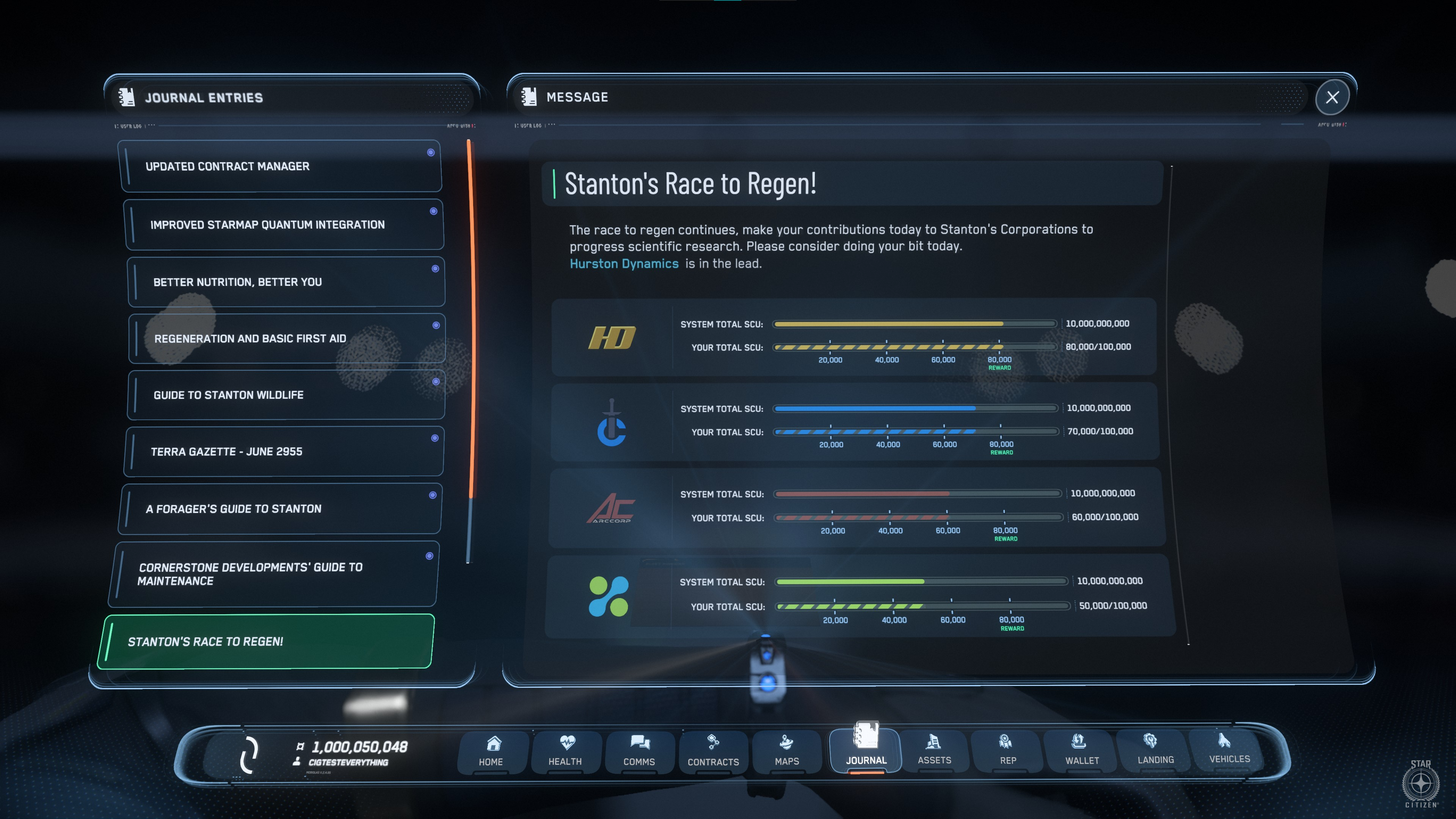
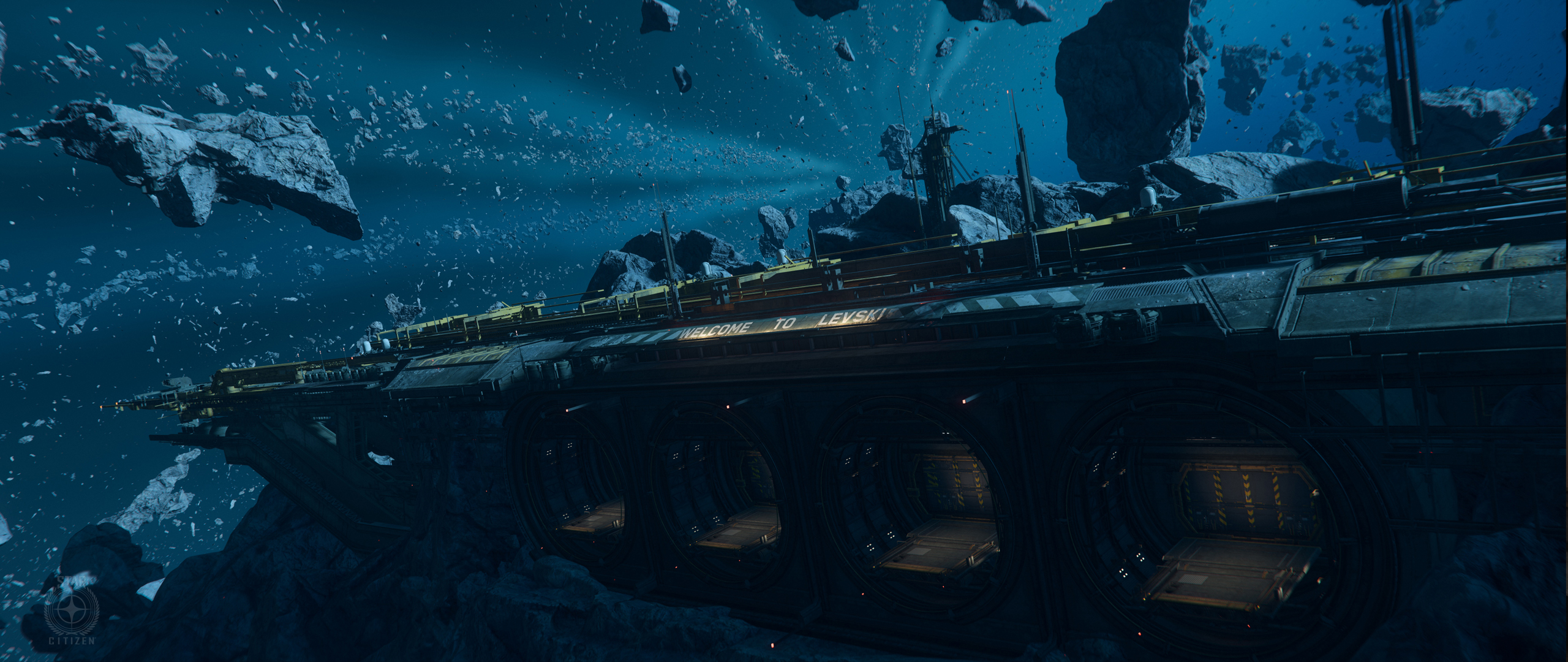
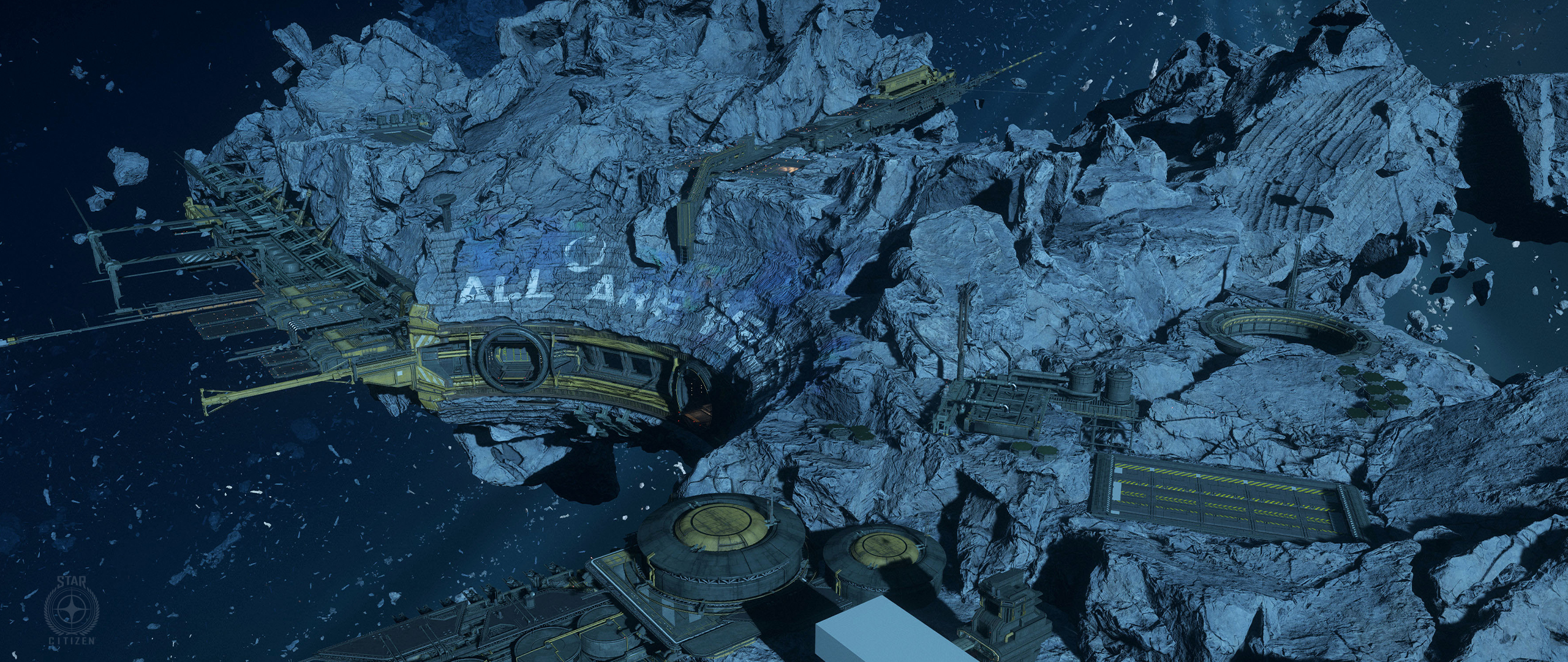
Metadata
- CIG ID
- 15224
- Channel
- Transmission
- Category
- Undefined
- Series
- Monthly Reports
- Comments
- 77
- Published
- 10 years ago (2016-03-04T00:00:00+00:00)