Monthly Studio Report: October 2016
Transmission Undefined Monthly ReportsContent
Greetings Citizens!
October had the Star Citizen dev team turned up to eleven, with CitizenCon and the upcoming 2.6 patch being the main drivers for the month. While we didn’t wind up being able to show off all our efforts on Squadron 42 (make sure to check out the special ATV episode for more details on that, our Homestead Demo highlighted a ton of new and upcoming features including V2 procedural planets, epic weather effects, and the appearance of a Valakkar – a massive sandworm native to Leir III.
Meanwhile, devs continued their push to get the 2.6 patch ready for release. From constant QA testing of Star Marine to a significant overhaul of the front end menu system, there are plenty of details below on what various teams around the world have been able to achieve these last few weeks.
Cloud Imperium Los Angeles
Engineering
In regards to vehicles, the engineering team progressed steadily on Item System 2.0 and all that it encompasses. They also dug deeper into Object Containers and Object Container streaming, both necessary tech for further expansion of our seamless universe. Per usual, bugs reared their head and were successfully squashed, which aided progress on Star Citizen and Squadron 42.
Tech Design
Our technical design team aided local engineers on implementing Item System 2.0. We also pushed forward on several ships, such as the Constellation Aquila and the Drake Herald, to bring them closer to flight readiness. Finally, we worked alongside the global team to keep the bug queue down.
Art
This month our character team grew, allowing us to make bigger moves on both character quality and deliveries. We took the Sand Nomad from start to finish, while also pushing the overall character pipeline forward. This included solid progress on clothing, other characters, and general pipeline improvements that will help make the best looking characters possible.
Narrative
Besides providing weekly lore posts, Jump Point magazine articles and marketing copy, the narrative team’s big push involved writing and capturing a ton of content for 3.0 in a mocapa shoot held this past month in London. Progress was also made on additional content for 2.6, the Galactapedia, new component descriptions, and all sorts of really secret stuff.
Quality Assurance
LAQA was front and center at CitizenCon this month with Vincent Sinatra playing the Homestead demo live at the event. When not tackling CitizenCon tasks, they did daily Item 2.0 tests and provided support to LA Engineering tasks.
Colby Schneider worked on Squadron 42, including the Vertical Slice, and supported LA Production when needed. Eric Pietro assisted the ATX team with PTU deployments for the Evocati. Between his sessions of bug hunting and regression, he also gave gameplay tutorials to some new hires who were eager to participate in our internal playtests. Finally, LAQA began interviews for a tester position, and hope to add a new member to our team soon!
Cloud Imperium Austin
Design
This month we focused our attention on upcoming landing zones. Lead Designer Rob Reininger and Robert Gaither created blueprint level design docs that give a unique look and feel for various shops and services in Crusader, microTech, and Hurston. These blueprints provide the basis to generate requests to other teams, like clothing from the Character artists, so we can begin to populate these locations.
Pete ‘Weather Wizard’ Mackay has been trucking along on “Trade Slayer,” which is an end-to-end economic model of how an item gets created from mining commodities, refined, manufactured, and finally placed on a store shelf. He also aided UK Design in balancing FPS weapons and items for Star Marine, and has been finalizing the first iteration of “Price Fixer,” which will generate in-game values based on the characteristics and component costs for all of our ships and inform their pricing in persistent universe.
Lastly, Rob Reininger has been working closely with the UI team on the “Shopping Kiosk” GDD to create mockups and how that system would be interacted with. Once approved, it will be passed off to Engineering for implementation.
Art
Chris Smith and Josh Coons made good progress on their respective ships. Josh finished the Herald, which is now in QA testing, and has moved on to the Cutlass variants refactor to bring them up to our current standards. Following feedback from Design and Chris Roberts, he’s already progressed the ship into the Greybox Phase.
Meanwhile, Chris Smith completed his Final Art pass on the Constellation Aquila, which appeared in the Homestead demo at CitizenCon, and Emre Switzer worked on the lighting for the Star Marine maps.
Animation
Recently, the PU Animation Team tackled implementing a whole new set of background animations, such as characters interacting with datapads, using the PAW tool, getting in and out of beds/bunk beds, and eating at a mess hall table. These will be used in both Squadron 42 and the Persistent Universe and must work within the parameters for Subsumption Usables, which are nodes that AI navigate to and interact with.
Our Ship Animation Team supported animation tasks for the Ursa Rover, Drake Caterpillar and Drake Herald, while providing insight for ships like the MISC Prospector and Drake Buccaneer. We also added “combat speed” animations to the Retaliator, Merlin, M50, Scythe, and Freelancer. These new animations shave off valuable time when entering/exiting a ship.
Backend Services
Lead Server Engineer Jason Ely spent most of this month completely rewriting our Hub Server. This provides more scalability as our community and player base grows. Next, Jason is turning his attention to grander changes within the backend infrastructure to better optimize our services, among other things.
Sr. Server Engineer Tom Sawyer was busy optimizing the Lobby System and smashing bugs to make it flow smoother. As part of our Frontend Refactor, he wrote a new Leaderboard that will allow it to display in-game instead of just on the website.
Lastly, Ian Guthrie at Wyrmbyte has been busy creating admin tools for our servers. These new tools will give our Game Support Team more capabilities, including reserving a game master slot on a server, providing slash commands to better identify specific player info and presence, and allowing for better instance controlled testing.
Quality Assurance
Throughout September and October, Don Allen and Todd Raffray lead the charge testing the Homestead Demo. Meanwhile, Andrew Rexroth and Tory Turner (with support from Tyler T) tested the Vertical Slice and provided other Squadron 42 support. Scott McCrea, Brandon Crocker and Matt Gant focused on Star Marine. The team also tested and deployed multiple 2.5.0 builds for the Evocati to test and provide initial feedback on a number of ship-balance changes being considered for 2.6.0.
Bryce Benton started rebuilding the QA documentation on server stability diagnostics and bugging. He and Katarzyna Mierostawska also worked with our UK team to test and verify several new automation tests. Jesse Mark assisted in building a new set of web dashboards for the LiveOps and NOC teams. While Michael Blackard and Elijah Montenegro assisted the Austin Animation team with new ship enter and exit animations.
Game Support
This year for CitizenCon, we provided support both onsite and at the home office, as there was a need to help both attendees and all of our players take advantage of the Polaris and/or combo sales. We also spent a lot of time on Evocati Test Flight and doubled the size of our volunteer group. The Evocati, a.k.a. The Avocados, now numbering over 800 people, includes members from 40 countries and speaking 18 different languages. This group playtested a full game balance pass and provided us with tons of data that will inform changes in 2.6.0.
We also hired a few people, as we grow and scale along with the needs of the service, and are excited to be closely collaborating with the Customer Service team. In time, we’ll unify our teams to provide a better level of service and quicker response times. Finally, we cross-trained our ‘base’ team. They will be the foundation of a much larger organization needed once Squadron 42 and Star Citizen are closer to launch.
IT/Operations
IT from all studios came together to support the CitizenCon show in Los Angeles. Prep work took weeks and after the show, it took another week to re-organize the equipment. We’d like to give special thanks to all the volunteers who provided tremendous support with setup, teardown and packing of all show related equipment.
IT also supported a number of developers who converged in LA for the final preparations. Dennis Daniel, LA’s IT Manager, worked directly with Mike Jones, IT Director, and the rest of the staff to oversee the builds of over a dozen matching computers used for the final development polish, testing and the presentation itself. The computers used included:
ASUS X99-A Motherboard
ASUS STRIX 1080 GPU
Intel i7-5820 CPU
64 Gig Corsair Vengeance RAM
Corsair H55 Cooler
Intel 750 Series 1.2 TB PCI-Express SSD provided by Intel.
LiveOps/DevOps
In October, the LiveOps/DevOps teams delivered around the clock build and deployment support for CitizenCon. We acted as the gatekeepers controlling each branch and their respective build timings so there would not be conflicts preventing replication to the dev teams around the world. After CitizenCon the team shifted focus to live server infrastructure optimization and patch size reduction. The goal is to deliver smaller patches, and every single member of the team is now committed to this task.
Foundry 42 UK
Art
In case you hadn’t heard, CitizenCon happened this month. This awesome event kept us busy, as we produced all the great artwork and designs for the RSI Polaris. We also started on a new MISC ship and Banu archetypes, wrapped up the first round of the Esperia Prowler, finished a Kastak Arms sniper rifle and pistol, and the usual smattering of ship items and props.
The Environment team had a wide range of tasks waiting for them. We worked to bring a captivating mood to two Star Marine maps. We also collaborated with our DE studio to ensure both art and engineering have what they need to make our planets look even better and allow us to more easily integrate assets. As work continues on the microTech, Crusader and Hurston landing zones, it is important our planets work well with the different settings these each have.
The DE studio designers also supported our artists on brand new ideas such as surface outposts, modular space stations and satellites. These are the bread and butter of what players will be visiting, so we hope to show more of this soon! Finally, we are hard at work on S42. All of our levels are in final art and we are gearing up to unveil what we have been doing with the Vertical Slice, which will be the first true look into what we are doing across S42.
Let’s not have the Environment team hog all the spotlight. The ship team was busy with the Drake Herald and Vanguard Hoplite for 2.6, both of which are flight ready and testing with QA. The team was also busy with capital ships and are in the final phase of closing out the Idris, Javelin and Bengal. In addition, we have started development on the Vanduul Hunter! As the Driller wraps up, we can take a lot of what that team has done and apply it to the next Vanduul set of ships so these get done faster.
Graphics
The graphics team focused on several new features this month, including rotating asteroids, physically accurate spot light falloff (important for headlights and torches), and a complex shader-glow effect for alien spaceships. We’ve also started on a major rework and unification of the shadow systems. It will vastly increase the number of simultaneous shadow casting lights we can support, while providing higher resolution shadows and improved performance.
Props
The last month was hectic but rewarding. CitizenCon also provided the added bonus of highlighting areas of the pipeline to be improved and refined. A large amount of work also went into Squadron 42, the “low tech” set continues to grow, and we converted some older assets over to the new material system, which looks great and is much more efficient.
The dressing asset library (think handheld sized props) continued to grow. Destructible props are being worked on now, so soon you’ll be able to shoot exploding barrels, blow out lights and windows, and create mayhem!
Audio
Besides setting up the music-logic system and cinematic cues for CitizenCon’s Homestead demo, the audio team also did work on ambience, scavenger voices, the epic sandstorm, and more. Work on Star Marine included setting up the music-logic system, ambience and SFX support, grenade bounce work, and bug fixes.
The team also refined various ships, like the Dragonfly and Caterpillar, and refactored the Xi’An Scout engines. Improvements were made to quantum drive, ship weapons, and player death. The music system was reworked to support multiple concurrent music suites so there will be seamless music throughout the game. The cinematic flow node was made more robust, and the audio dynamic range changed to a dropdown box with three choices. Amongst many other things, we also improved workflow and collision interpretation with the goal of different clothing, armor, and weapons making specific sounds when bumping or scraping various surfaces.
Quality Assurance
QA focused on Star Marine and really put the control game mode through its paces to weed out some nasty crashes. We tested the new music logic system, which really adds drama to the experience. With new ships coming in, like the Vanguard Hoplite and Drake Herald, we made sure they match the exacting standards required of spaceflight ready machinery!
In addition, sweeping balance changes for the flight model, shields and ship weapons kept us extremely busy. 2.6 adds a huge amount to Star Citizen and we’ve enjoyed our part in bringing it to you!
VFX
This month VFX did clean-up and optimization of Arena Commander in preparation for Alpha 2.6. The team also worked on the Herald and Vanguard Hoplite, which will be making their flight-ready premieres in that patch. We made effects improvements on both ships and also updates (including shader fixes) to FPS weapons. We also worked on general ambient VFX for Star Marine levels as well as bug fixes and particle library/texture cleanup.
For the Homestead demo we supplied ship contrails (fully driven by code/data), general ambient effects (sand, debris, weather), weapon improvements (including blood impacts), and upgrades to Dragonfly explosions and Ursa Rover effects. In addition, atmospheric entry VFX are now fully driven by code/data. Last, but not least, we also continued R&D for planetary VFX automated placement.
Programming
For 2.6.0 we completed a large overhaul of the camera system and unified code between the different modes such as the chase, orbit, passenger and spectator cameras. This allows us to have more dramatic and cinematic cameras, and provides more control over DoF, FoV, operator shake, point of interest and zoom.
2.6.0 also contains big changes for the lobby UI. Now you can change your loadout without having to go into the hangar. We’re also investigating a new “mega map”, which would allow you to go between Arena Commander game modes and environments without having to load in/exit out of the maps.
Animation
We did a lot of work in Star Marine, implementing looting animations for weapon pick-ups, working on grenade functionality and visuals, and bringing legacy weapon reloads up to our current quality standards. Must say, they’re looking quite nice in first person.
Beside general bug fixes, we also captured assets for stealth kills from various angles and combat ready AI responding to noises. There was also work done on AI combat animation sets. Most of it was focused on enter/exit cover, blind fire, and under fire.
Design
In October, the UK design team have been split between 2.6 and Squadron 42.
The ‘Live Team’ added mission content for Crusader (including many secrets). We put in new asteroid tech that vastly improved the ring around ‘Yela’, tweaked station security, and bolstered the belt with improved wreck sites. There were widespread Arena Commander upgrades as well, including persistent missile inventory between deaths, pickups and Pirate Swarm rebalance and improvements.
Squadron 42 designers worked on various elements of the Vertical Slice. This section of gameplay was deliberately picked as it contains almost all aspects of gameplay required overall, but also lacks major spoilers. The intense focus on this section is paying dividends in terms of fixing issues that can sometimes persist late into the development cycle.
UI
At the start of October, the team focused on HUD & UI needs for the planetary demo showcased at CitizenCon. Since then, the entire team has been working towards the UI needs for 2.6. This involved a significant overhaul to Star Citizen’s front-end menu system. It affects the game lobbies for Arena Commander and Star Marine, new in-game leaderboards, and provides a much needed visual update to the main menu and pause screens. We hope this overhaul will present a much improved end-user experience, especially for new players.
Aside from the new front-end overhaul, we also worked with the Character team on creating new first person helmets & HUDs that will have their own individual look and feel. We want the game-mode specific UI to function properly and be visually consistent with the rest of the game UI. Finally, we supported the environment team with ambient screen assets & animations, which gives some life & movement to our environments.
Foundry 42 DE
Programming
A large amount of this month’s work focused on getting the code for CitizenCon where it needed to be, in combination with our global road map. We did a lot of work on the current ecosystems, vegetation and object spawning, as well as terrain blending. We worked on the vegetation rendering to further improve the performance on CPU. The atmosphere received some attention, including work on cloud modelling and shading, as well as really good progress on improving the visual quality of ocean rendering. We focused some time on occlusion culler optimizations and Physics improvements in conjunction with the local grids. We continued work on our internal Planet tools, iterating on a constant basis with the Environment art team. Finally, we improved the accuracy of our facial rigs and wrinkle map triggering/blending.
AI
A large focus for AI this month has been on Squadron 42 functionalities. For Subsumption, we added several new tasks that can be available to the primary and secondary subactivities and the future mission logic. To give you an idea of the functionalities we exposed here are some names of the implemented tasks: MoveToTarget, SetAimStance, SetStance, LookAround, GetTargetForEntity, DisableLookAndAim, PeekFromCover, EnterExitVehicleSeat, AttachObject, DetachObject, SelectGadget, StartTimer, HasTimerFinished, SetCurrentTime, TimeComparator, RandomNumber, PickUpItem, AddItemToInventory, SetEmotion, LoopWhile, AnimateOnSpot, PerceiveFactionMask.
We also added a personal logger; a system that allows each NPC character to log some information useful for us to debug their state and behavior decision process. We also progressed on the implementation of the first pass of the combat behavior into Subsumption. The cover system was improved to correctly work in non z-up environments, and we extended it to allow cover surfaces to be stored into the zone system.
Character movement was also a big focus. We refactored the pathfollower to add the ability of raycasting on the navmesh to correctly identify possible shortcuts. We also made fixes to the collision avoidance code, including the ability to recognize the player as an entity so it can be avoided by AI characters.
For NPC characters, we reintroduced the pseudospeed calculation in the game code, so that Animators and designers can correctly use Mannequin to select animations based on the AI’s current movement speed. We also developed an Emotion component that will become the central place to drive the emotional behaviors of each character. Of course, the information of the emotion will be driven by the relation the NPC has with the character they are interacting with.
AI Spaceships can now correctly request the usage of both the quantum travel and the afterburner, and those requests can also be triggered by designers. The latter can now also request AI space vehicles to target characters and leave a formation without requiring it to be fully disbanded.
Design
Last month, the entire system design team travelled to the UK to help with CitizenCon. Since then, we are putting what we learned to good use and readjusting some of those systems to improve the quality and make future production faster. The Landing system also received attention, as we continue to refine various landing scenarios such as pilots landing (either on pads or in hangars), docking (either with stations or other ships), and how this looks in-game (e.g. take off procedures, requesting permissions, landing queues, etc.)
The Level Design team worked on space station locations for the 3.0 release. A lot of progress has been made in designing a modular system for building space stations and cross disciplinary conversations have moved this forward. The earlier work on modular surface outposts and modular satellites is continuing with Level Design and Art working closely together.
Build
This month we optimized the Resource compiler process, which currently takes up the most time in our build process. The idea is to run RC through waf (a Python-based build framework) and then distribute it through IncrediBuild. This system will then be hooked up to the new patch/pak system, which is close to being finished. We also provided the usual Tools/Build support to keep things running smoothly.
Environmental Art
Frankfurt’s Environment artists spent the majority of their time generating the ecosystems that were shown at CitizenCon. As seen in the demo, we created five unique ecosystems within a short amount of time, with a good amount of trial and error along the way. Now we are working closely with the Engineers and UK artists to create additional assets and terrain types for more unique looks and systems.
Cinematics
At the beginning of October, the Cinematic team finished work on the planet v2 “Homestead” demo for CitizenCon. For it, we created a camera path that should probably qualify for a world record since it went from high orbit above Leir III into the planet’s atmosphere and then travelled hundreds of kilometers towards the Homestead site. We also built all cinematic moments for the demo, as well as various dressing and lighting efforts.
Alongside Homestead, dozens of in-cockpit and in-helmet comms were prepped for Squadron 42. Ongoing PCAP to AI animation R&D was done by Jason Cole and Ivo Herzeg, as well as the AI team and designers, with the goal of making Look IK and AI locomotion blend fluidly in and out of narrative performance captured story scenes. As a little side project, we also created a 3d logo reveal for the upcoming Star Marine release.
Weapon Art
Last month the ship weapon artists were mainly focused on ship missiles. The existing missile assets were optimized and polished and a handful of new variants added.
The FPS team was busy with grenade variants, as well as building iron sights for the Behring P8 weapon family. Here’s a small preview of the incendiary grenade.
Quality Assurance
For DE QA, once everything calmed down after testing S42 and Homestead for CitizenCon, we resumed our normal activities with test requests ranging from the Engine and Star Marine, to Physics based testing with ragdolls using Gravity boxes and Gravity Areas, as well as checking zone transition changes to interior physics grids. QA Engine Specialist, Melissa Estrada, also appeared in Around the Verse episode 3.11 DE where she shared insight on the life cycle of a test request – how it goes from start to finish and prevents new issues from being introduced into a working build. You may have also caught a sneak peek of the Physics based test request being worked on by Chris Speak using Gravity boxes and Gravity Areas. Being part of ATV this month was an exciting experience, and QA was happy to share the work we do with the community!
In addition to test requests, Glenn Kneale also worked closely with the AI team on Squadron 42, as well as the UK QA Star Marine test team. We wrapped up the month with in-house play tests with Chris Roberts, Erin Roberts, Todd Papy, and Ian Leyland to review Star Marine’s current state and obtained valuable feedback.
VFX
The Frankfurt VFX team focused on effects for CitizenCon and Squadron 42, including various environmental effects such as clouds, heat refraction, sand blowing in the wind, falling rocks and dust around the canyon and the crashed ship. The demo also required several unique bespoke effects like the IED explosion that hits the rover, the sand eruption for when the worm emerges from the ground, and the massive sandstorm. Several of the effects required us to work closely with the cinematics and animation department. This included the sand falling off the worm’s body and the spit effects as the worm roars at the camera.
BHVR
Art
We’ve been focusing on some major upcoming milestones and are putting a lot of effort into showcasing the diversity of the Star Citizen Universe with a variety of planet climates, architecture, and overall story of the different locales. We’d like to share some of the current progress on locations being constructed for the Stanton System as they compare to early concept art below. These are all work in progress images, but the Stanton locations are coming together quickly thanks to the building blocks we’ve been constructing.
Hurston
Concept Art Early WIP Hurston is a desert mining world, controlled by a powerful corporation. Life on the planet is harsh, and people working there live no better than indentured servants. Reflecting the condition, the architecture of the planet generally exhibits significant wear and tear. Daily life is constantly monitored by the planet security, a prospect reminiscent of Orwell’s 1984.
microTech
Concept Art Early WIP Our second planet is microTech, an arctic environment. The natural conditions of the planet are inhospitable and domed cities were constructed to ward off the natural hazards. Inside the domes, cleanliness, technology and simple elegance are the theme of the architecture. Transparent glass is the most prevalent building material, reinforcing the architectural themes with interactive technologies and a view matching the environment’s color scheme.
Crusader
Concept Art Early WIP We are also working on Crusader, a gas giant with a city built on the clouds. The city consists of multiple floating platforms that are long and slender in nature. Between buildings, ships traverse through the skyline. Structures on top of the platform contain varying elevations, allowing breathtaking vistas to surprise the players in between silhouettes of buildings.
Turbulent
Communication Platform
At CitizenCon we finally revealed the new community platform we have been working on. “Spectrum” was designed to integrate forums, chat, and other key features into one streamlined platform. The initial launch will be a web application, but subsequent releases will include more functionality, such as a fully integrated in-game overlay and voice chat. Looking further into the future, you will even be able to launch the game from Spectrum.
Ship Happens
October was a very busy month for ships! The RSI Polaris, a military-style corvette, went on sale at CitizenCon and was met with great interest. Simultaneously, a number of other ships and ship packages, many with a militia theme, were made available. CitizenCon also kicked off a backer-only free fly which included all flyable ships. After that ended, we launched another free fly that was open to anyone who wanted to try Star Citizen, showcasing the Super Hornet as their trial ship!
RSI Newsletter
The official Star Citizen newsletter saw an overhaul as we moved away from the standard RSS news update, and into a new layout that favors curated content and more information from the community as a whole. Not only does it include each week’s top stories, but it also recaps updates for RSI Subscribers, current promotions, and showcases top Arena Commander pilots, fan creations from the Community Hub, and sometimes, brand new content you’ve never seen before!
Community
What. A. Month. I really don’t know where to start. The month of October was nothing short of EPIC!
We had an unforgettable time meeting many of you in San Diego at the TwitchCon Bar Citizen. Great food, great drinks, great people. And then there was CitizenCon. The amount of support you all gave us was incredibly humbling and an experience we won’t soon forget! We have said it before and we’ll say it again: having the opportunity to interact with all of you REALLY recharges the ol’ battery. The conversations, memories, stories, and moments we shared have us fired up and focused on 2.6, 3.0, and beyond!
And if the official CitizenCon was not enough, the Star Citizen community in Germany organized and held their very own CitizenCon event as well! Alongside almost 500 citizens that attended the event, some of our own from Foundry 42 Frankfurt showed up and had a blast getting to speak on panels and meet everyone. I could go on, and on, and on about how much fun we had with all of you, but I’ll save us all some time and simply hope that you all understand how much we appreciate your support.
On the streaming front, it’s become difficult to keep up with the amount of new podcasts and Star Citizen Streamers! This is a problem we are okay with having. We spend a lot of time interacting and lurking on Twitch, and it has been heartwarming to see many of the veterans answering questions, creating adventures, and fighting the good fight alongside our newer backers.
On the Community Hub front, you all have successfully made choosing MVP one of the most difficult tasks of our week. The sheer amount of new content we have being posted is overwhelmingly awesome. From a full size 3D printed Behring P4-SC Rifle by RiceMaiden, to another hit piece of music by the legendary Uthos Riley, we are having a blast sorting through all submissions flowing in, so keep them coming!
Thank you all for making October one to remember. We can’t wait to see what you all come up with in the month of November…
Looking Ahead
Thank you all for an incredible month. There’s plenty more work to do, so we’re going to keep working hard on Squadron 42, SC Alpha 2.6, Alpha 3.0… and beyond.
In two weeks, we will be kicking off our yearly Star Citizen Anniversary Livestream, which celebrates the end of the original Star Citizen crowd funding campaign. The event is going to focus heavily on our ship pipeline, and there will be plenty to see. Tune in or catch it later in this space!
ich hoffe, dass Sie alle verstehen, wie sehr wir Ihre Unterstützung zu schätzen wissen.
Auf der Streaming-Seite ist es schwierig geworden, mit der Menge an neuen Podcasts und Star Citizen Streamern Schritt zu halten! Das ist ein Problem, mit dem wir einverstanden sind. Wir verbringen viel Zeit damit, auf Twitch zu interagieren und zu lauern, und es war herzerwärmend zu sehen, wie viele der Veteranen Fragen beantworteten, Abenteuer schufen und den guten Kampf mit unseren neueren Geldgebern führten.
An der Front des Community Hubs haben Sie alle erfolgreich die Wahl des MVP zu einer der schwierigsten Aufgaben unserer Woche gemacht. Die schiere Menge an neuen Inhalten, die wir veröffentlicht haben, ist überwältigend großartig. Von einem 3D-gedruckten Behring P4-SC Gewehr von RiceMaiden bis hin zu einem weiteren Musikhit des legendären Uthos Riley, wir haben eine Explosionssortierung durch alle Einreichungen, also lasst sie kommen!
Ich danke euch allen, dass ihr den Oktober zu einem unvergesslichen Erlebnis gemacht habt. Wir können es kaum erwarten zu sehen, was ihr euch alle im November ausgedacht habt.....
Vorausschauend
Ich danke euch allen für einen unglaublichen Monat. Es gibt noch viel zu tun, also werden wir weiterhin hart an Staffel 42, SC Alpha 2.6, Alpha 3.0... und darüber hinaus arbeiten.
In zwei Wochen werden wir unseren jährlichen Star Citizen Anniversary Livestream starten, der das Ende der ursprünglichen Star Citizen Crowd Funding Kampagne feiert. Die Veranstaltung wird sich stark auf unsere Schiffspipeline konzentrieren, und es wird viel zu sehen geben. Schalten Sie ein oder fangen Sie es später in diesem Raum auf! Grüße Bürger!
Im Oktober war das Star Citizen-Entwicklerteam auf elf Uhr angewachsen, wobei CitizenCon und der kommende Patch 2.6 die wichtigsten Treiber für den Monat waren. Während wir nicht in der Lage waren, all unsere Bemühungen auf Staffel 42 zu zeigen (schauen Sie sich die spezielle ATV-Episode für weitere Details an), stellte unsere Homestead-Demo eine Vielzahl neuer und bevorstehender Features vor, darunter V2-Prozessplaneten, epische Wettereffekte und das Aussehen eines Valakkars - ein massiver Sandwurm, der in Leir III beheimatet ist.
In der Zwischenzeit setzten die Entwickler ihre Bemühungen fort, den 2.6-Patch für die Veröffentlichung vorzubereiten. Von der ständigen Qualitätskontrolle von Star Marine bis hin zur umfassenden Überarbeitung des Front-End-Menüsystems gibt es im Folgenden viele Details darüber, was verschiedene Teams auf der ganzen Welt in den letzten Wochen erreichen konnten.
Cloud Imperium Los Angeles
Ingenieurwesen
Im Bereich der Fahrzeuge hat das Entwicklungsteam das Item System 2.0 und alle damit verbundenen Komponenten kontinuierlich weiterentwickelt. Sie haben sich auch tiefer in Object Containers und Object Container Streaming vertieft, beides notwendige Technologien für die weitere Expansion unseres nahtlosen Universums. Normalerweise erhoben sich Käfer und wurden erfolgreich gequetscht, was den Fortschritt von Star Citizen und Squadron 42 unterstützte.
Technisches Design
Unser technisches Designteam unterstützte lokale Ingenieure bei der Implementierung von Item System 2.0. Wir haben auch mehrere Schiffe, wie die Constellation Aquila und die Drake Herald, vorangetrieben, um sie der Flugbereitschaft näher zu bringen. Schließlich arbeiteten wir mit dem globalen Team zusammen, um die Fehlerwarteschlange niedrig zu halten.
Kunst
In diesem Monat wuchs unser Charakter-Team, so dass wir größere Fortschritte bei der Charakterqualität und der Auslieferung machen konnten. Wir haben den Sand Nomad von Anfang bis Ende begleitet und gleichzeitig die gesamte Charakterpipeline vorangetrieben. Dazu gehörten solide Fortschritte bei Kleidung, anderen Charakteren und allgemeine Verbesserungen in der Pipeline, die dazu beitragen werden, die am besten aussehenden Charaktere zu machen.
Narrativ
Neben der Bereitstellung von wöchentlichen Überlieferungsbeiträgen, Artikeln aus der Zeitschrift Jump Point und Marketingkopien war der große Vorstoß des Erzählteams das Schreiben und Erfassen einer Tonne Inhalt für 3.0 in einem Mocapa-Shooting, das diesen letzten Monat in London stattfand. Fortschritte wurden auch bei zusätzlichen Inhalten für 2.6, der Galactapedia, neuen Komponentenbeschreibungen und allen möglichen wirklich geheimen Dingen erzielt.
Qualitätssicherung
LAQA war diesen Monat an vorderster Front auf der CitizenCon vertreten, wobei Vincent Sinatra die Homestead-Demo live auf der Veranstaltung spielte. Wenn sie sich nicht mit CitizenCon-Aufgaben beschäftigten, führten sie tägliche Item-2.0-Tests durch und unterstützten LA Engineering-Aufgaben.
Colby Schneider arbeitete an der Staffel 42, einschließlich des Vertikalschnitts, und unterstützte bei Bedarf die LA-Produktion. Eric Pietro unterstützte das ATX-Team bei der PTU-Bereitstellung für die Evocati. Zwischen seinen Sitzungen der Fehlersuche und Regression gab er auch Gameplay-Tutorials für einige neue Mitarbeiter, die begierig darauf waren, an unseren internen Spieltests teilzunehmen. Schließlich begann LAQA Interviews für eine Stelle als Tester und hofft, bald ein neues Mitglied in unser Team aufzunehmen!
Wolkenimperium Austin
Design
Diesen Monat haben wir unser Augenmerk auf die kommenden Landezonen gerichtet. Lead Designer Rob Reininger und Robert Gaither entwarfen Blueprint Level Design Dokumente, die ein einzigartiges Aussehen und Gefühl für verschiedene Geschäfte und Dienstleistungen in Crusader, microTech und Hurston vermitteln. Diese Blaupausen bilden die Grundlage, um Anfragen an andere Teams zu generieren, wie z.B. Kleidung von den Charakter-Künstlern, damit wir anfangen können, diese Orte zu besetzen.
Pete'Weather Wizard' Mackay hat mit dem "Trade Slayer" mitgefahren, einem durchgehenden ökonomischen Modell, wie ein Gegenstand aus Bergbaurohstoffen hergestellt, veredelt, hergestellt und schließlich in ein Verkaufsregal gestellt wird. Er unterstützte UK Design auch beim Ausgleich von FPS-Waffen und Gegenständen für Star Marine und finalisierte die erste Iteration von "Price Fixer", das auf der Grundlage der Eigenschaften und Komponentenkosten aller unserer Schiffe im Spiel Werte generieren und deren Preise im persistenten Universum ermitteln wird.
Schließlich hat Rob Reininger eng mit dem UI-Team am "Shopping Kiosk" GDD zusammengearbeitet, um Mockups zu erstellen und wie mit diesem System interagiert werden soll. Nach der Genehmigung wird es zur Implementierung an das Engineering weitergeleitet.
Kunst
Chris Smith und Josh Coons machten auf ihren jeweiligen Schiffen gute Fortschritte. Josh beendete den Herald, der sich jetzt im QA-Test befindet, und ist zu den Entermesser-Varianten Refactor übergegangen, um sie an unsere aktuellen Standards anzupassen. Nach Rückmeldungen von Design und Chris Roberts hat er das Schiff bereits in die Greybox-Phase gebracht.
Chris Smith vervollständigte unterdessen seinen Final Art Pass auf dem Constellation Aquila, der in der Homestead Demo auf der CitizenCon erschien, und Emre Switzer arbeitete an der Beleuchtung der Star Marine Karten.
Animation
Vor kurzem hat das PU-Animationsteam die Implementierung einer ganzen Reihe von Hintergrundanimationen in Angriff genommen, wie z.B. die Interaktion von Charakteren mit Datenpads, die Verwendung des PAW-Tools, das Ein- und Aussteigen aus Betten/Etagenbetten und das Essen an einem Saaltisch. Diese werden sowohl in Staffel 42 als auch im Persistenten Universum verwendet und müssen innerhalb der Parameter für Subsumption Usables arbeiten, die Knoten sind, zu denen die KI navigiert und mit denen sie interagiert.
Unser Ship Animation Team unterstützte Animationsaufgaben für den Ursa Rover, Drake Caterpillar und Drake Herald und gab Einblicke für Schiffe wie den MISC Prospector und Drake Buccaneer. Wir haben auch Animationen zur "Kampfgeschwindigkeit" für den Vergelter, Merlin, M50, Scythe und Freelancer hinzugefügt. Diese neuen Animationen sparen wertvolle Zeit beim Betreten und Verlassen eines Schiffes.
Backend Services
Lead Server Engineer Jason Ely verbrachte die meiste Zeit dieses Monats damit, unseren Hubserver komplett neu zu schreiben. Dies bietet mehr Skalierbarkeit, wenn unsere Community und unsere Spielerbasis wächst. Als nächstes richtet Jason sein Augenmerk auf größere Veränderungen innerhalb der Backend-Infrastruktur, um unter anderem unsere Services besser zu optimieren.
Sr. Server Engineer Tom Sawyer war damit beschäftigt, das Lobby-System zu optimieren und Bugs zu zerschlagen, damit es reibungsloser läuft. Als Teil unseres Frontend-Refactors hat er eine neue Rangliste geschrieben, die es ihm ermöglicht, im Spiel statt nur auf der Website anzuzeigen.
Schließlich war Ian Guthrie von Wyrmbyte damit beschäftigt, Admin-Tools für unsere Server zu entwickeln. Diese neuen Tools werden unserem Game Support Team mehr Möglichkeiten geben, einschließlich der Reservierung eines Game Master Slot auf einem Server, der Bereitstellung von Slash-Befehlen zur besseren Identifizierung spezifischer Spielerinformationen und -präsenz und der Möglichkeit, besser kontrollierte Tests durchzuführen.
Qualitätssicherung
Im September und Oktober führten Don Allen und Todd Raffray die Tests der Homestead Demo durch. In der Zwischenzeit testeten Andrew Rexroth und Tory Turner (mit Unterstützung von Tyler T) den Vertikalschnitt und leisteten weitere Unterstützung für die Staffel 42. Scott McCrea, Brandon Crocker und Matt Gant konzentrierten sich auf Star Marine. Das Team testete und setzte auch mehrere 2.5.0-Builds für die Evocati ein, um sie zu testen und erste Rückmeldungen über eine Reihe von Änderungen der Schiffsbilanz zu geben, die für 2.6.0 in Betracht gezogen werden.
Bryce Benton begann mit dem Neuaufbau der QS-Dokumentation zur Server-Stabilitätsdiagnose und Fehlerbehebung. Er und Katarzyna Mierostawska arbeiteten auch mit unserem britischen Team zusammen, um mehrere neue Automatisierungstests zu testen und zu überprüfen. Jesse Mark half beim Aufbau einer neuen Reihe von Web-Dashboards für die LiveOps- und NOC-Teams. Michael Blackard und Elijah Montenegro unterstützten das Austin Animation Team bei der Entwicklung von Animationen für den Ein- und Ausstieg neuer Schiffe.
Spielunterstützung
In diesem Jahr haben wir für CitizenCon sowohl vor Ort als auch im Home Office Unterstützung geleistet, da es notwendig war, sowohl den Teilnehmern als auch allen unseren Spielern zu helfen, die Vorteile des Polaris- und/oder Combo-Verkaufs zu nutzen. Wir verbrachten auch viel Zeit mit dem Evocati Testflug und verdoppelten die Größe unserer Freiwilligengruppe. Die Evocati, auch bekannt als Avocados, die heute über 800 Menschen zählen, gehören Mitglieder aus 40 Ländern an und sprechen 18 verschiedene Sprachen. Diese Gruppe hat einen vollständigen Spielbalance-Pass getestet und uns Tonnen von Daten zur Verfügung gestellt, die uns über Änderungen in 2.6.0 informieren werden.
Wir haben auch ein paar Mitarbeiter eingestellt, da wir mit den Anforderungen des Service wachsen und skalieren und freuen uns auf die enge Zusammenarbeit mit dem Customer Service Team. Mit der Zeit werden wir unsere Teams vereinheitlichen, um ein besseres Servicelevel und schnellere Reaktionszeiten zu bieten. Schließlich haben wir unser "Basis"-Team quer geschult. Sie werden die Grundlage für eine viel größere Organisation sein, die benötigt wird, sobald Staffel 42 und Star Citizen kurz vor dem Start stehen.
IT/Betrieb
IT aus allen Studios trafen sich zur Unterstützung der CitizenCon Show in Los Angeles. Die Vorbereitungsarbeiten dauerten Wochen und nach der Show dauerte es eine weitere Woche, um die Ausrüstung neu zu organisieren. Wir möchten uns besonders bei allen Freiwilligen bedanken, die uns beim Aufbau, Abbau und der Verpackung der gesamten Showausrüstung enorm unterstützt haben.
Die IT-Abteilung unterstützte auch eine Reihe von Entwicklern, die sich in LA zu den letzten Vorbereitungen trafen. Dennis Daniel, IT-Manager von LA, arbeitete direkt mit Mike Jones, IT-Direktor, und dem Rest der Belegschaft zusammen, um die Entwicklung von über einem Dutzend passender Computer zu überwachen, die für die abschließende Entwicklungspolitur, das Testen und die Präsentation selbst verwendet wurden. Zu den verwendeten Computern gehörten:
ASUS X99-A Mainboard
ASUS STRIX 1080 GPU
Intel i7-5820 CPU
64 Gig Corsair Rachefeldzug RAM
Corsair H55 Kühler
Intel 750 Serie 1,2 TB PCI-Express SSD von Intel.
LiveOps/DevOps/DevOps
Im Oktober lieferten die LiveOps/DevOps-Teams rund um die Uhr Aufbau- und Bereitstellungsunterstützung für CitizenCon. Wir fungierten als Gatekeeper, die jeden Zweig und die jeweiligen Build-Timings kontrollierten, so dass es keine Konflikte gab, die die Replikation zu den Entwicklungsteams auf der ganzen Welt verhinderten. Nach der CitizenCon verlagerte das Team den Fokus auf die Optimierung der Serverinfrastruktur und die Reduzierung der Patchgröße. Ziel ist es, kleinere Patches zu liefern, und jedes einzelne Mitglied des Teams ist nun dieser Aufgabe verpflichtet.
Gießerei 42 UK
Kunst
Falls du es noch nicht gehört hast, CitizenCon fand diesen Monat statt. Dieses großartige Ereignis hielt uns auf Trab, da wir alle großartigen Artworks und Designs für den RSI Polaris produziert haben. Wir begannen auch mit einem neuen MISC-Schiff und Banu-Archetypen, wickelten die erste Runde des Esperia Prowlers ab, beendeten ein Kastak Arms Scharfschützengewehr und eine Pistole und die übliche Vernichtung von Schiffselementen und Requisiten.
Das Umweltteam hatte eine Vielzahl von Aufgaben auf sie warten. Wir haben daran gearbeitet, zwei Star Marine Karten mit einer fesselnden Stimmung zu versehen. Wir haben auch mit unserem DE-Studio zusammengearbeitet, um sicherzustellen, dass sowohl Kunst als auch Technik das haben, was sie brauchen, um unsere Planeten noch besser aussehen zu lassen und es uns zu ermöglichen, Assets leichter zu integrieren. Da die Arbeiten an den Landezonen MicroTech, Crusader und Hurston fortgesetzt werden, ist es wichtig, dass unsere Planeten gut mit den verschiedenen Einstellungen arbeiten, die sie jeweils haben.
Die DE-Studio-Designer unterstützten unsere Künstler auch bei brandneuen Ideen wie Oberflächenaußenposten, modularen Raumstationen und Satelliten. Das ist das Brot und die Butter dessen, was die Spieler besuchen werden, also hoffen wir, bald mehr davon zu zeigen! Schließlich sind wir bei der Arbeit an S42 hart. Alle unsere Ebenen befinden sich in der finalen Kunst und wir bereiten uns darauf vor, zu enthüllen, was wir mit dem Vertikalschnitt gemacht haben, der der erste echte Einblick in das ist, was wir über S42 tun.
Lassen wir das Umweltteam nicht im Rampenlicht stehen. Das Schiffsteam war mit dem Drake Herald und Vanguard Hoplite für 2.6 beschäftigt, die beide flugbereit sind und mit QA getestet werden. Das Team war auch mit Großschiffen beschäftigt und befindet sich in der Endphase der Schließung von Idris, Speerwerfen und Bengalen. Darüber hinaus haben wir mit der Entwicklung des Vanduul Hunter! begonnen. Wenn der Bohrer zum Abschluss kommt, können wir viel von dem, was dieses Team getan hat, nehmen und es auf die nächsten Vanduul-Schiffe anwenden, damit diese schneller fertig werden.
Grafiken
Das Grafikteam konzentrierte sich in diesem Monat auf mehrere neue Features, darunter rotierende Asteroiden, physikalisch genaue Spotlight Falloff (wichtig für Scheinwerfer und Taschenlampen) und einen komplexen Shader-Lichteffekt für fremde Raumschiffe. Wir haben auch mit einer großen Überarbeitung und Vereinheitlichung der Schattensysteme begonnen. Es wird die Anzahl der gleichzeitigen Schattenwurflichter, die wir unterstützen können, enorm erhöhen, während es gleichzeitig Schatten mit höherer Auflösung und verbesserter Leistung liefert.
Requisiten
Der letzte Monat war hektisch, aber lohnend. CitizenCon bot auch den zusätzlichen Vorteil, dass Bereiche der zu verbessernden und verfeinernden Pipeline hervorgehoben wurden. Auch in Squadron 42 wurde viel Arbeit investiert, das "Low-Tech"-Set wächst weiter, und wir haben einige ältere Anlagen auf das neue Materialsystem umgestellt, das gut aussieht und viel effizienter ist.
Die Bibliothek der Dressing-Assets (denken Sie an handgehaltene Requisiten) wuchs weiter. An zerstörbaren Requisiten wird gerade gearbeitet, so dass Sie bald in der Lage sein werden, explodierende Fässer zu schießen, Lichter und Fenster auszublasen und Chaos zu erzeugen!
Audio
Neben der Einrichtung des Musik-Logiksystems und der filmischen Cues für die CitizenCon's Homestead Demo arbeitete das Audio-Team auch an Ambiente, Scavenger-Stimmen, dem epischen Sandsturm und vielem mehr. Die Arbeit an Star Marine beinhaltete die Einrichtung des Musik-Logiksystems, Ambience- und SFX-Unterstützung, Granatenabprallarbeiten und Bugfixes.
Das Team verfeinerte auch verschiedene Schiffe, wie die Dragonfly und Caterpillar, und überarbeitete die Xi'An Scout Motoren. Verbesserungen wurden am Quantenantrieb, an den Schiffswaffen und am Tod des Spielers vorgenommen. Das Musiksystem wurde überarbeitet, um mehrere gleichzeitige Musik-Suiten zu unterstützen, so dass es während des gesamten Spiels nahtlose Musik geben wird. Der filmische Ablaufknoten wurde robuster gestaltet, und der Audiodynamikbereich wurde in eine Dropdown-Box mit drei Optionen umgewandelt. Neben vielen anderen Dingen haben wir auch die Arbeitsabläufe und die Interpretation von Kollisionen verbessert, mit dem Ziel, dass verschiedene Kleidungsstücke, Rüstungen und Waffen beim Stoßen oder Schaben verschiedener Oberflächen spezifische Geräusche erzeugen.
Qualitätssicherung
QA konzentrierte sich auf Star Marine und stellte den Kontrollspielmodus wirklich auf Herz und Nieren, um einige böse Abstürze zu verhindern. Wir haben das neue Musiklogiksystem getestet, das das Erlebnis wirklich dramatisch macht. Mit neuen Schiffen wie der Vanguard Hoplite und der Drake Herald haben wir sichergestellt, dass sie den hohen Anforderungen an raumfahrtfertige Maschinen entsprechen!
Hinzu kamen weitreichende Gleichgewichtsveränderungen bei Flugmodell, Schilden und Schiffswaffen, die uns extrem beschäftigten. 2.6 fügt Star Citizen eine große Menge hinzu und wir haben unseren Beitrag dazu geleistet, dass Sie es bekommen!
VFX
Diesen Monat hat VFX den Arena Commander in Vorbereitung auf Alpha 2.6 bereinigt und optimiert. Das Team arbeitete auch an dem Herald und Vanguard Hoplite, die in diesem Patch ihre flugfertigen Premieren feiern werden. Wir haben Effekte auf beiden Schiffen verbessert und auch Updates (einschließlich Shader-Fixes) für FPS-Waffen vorgenommen. Wir haben auch an allgemeinen Ambient VFX für Star Marine Levels gearbeitet, sowie an Bugfixes und Partikelbibliothek/Texturbereinigung.
Für die Homestead-Demo lieferten wir Schiffskontrails (vollständig codegesteuert), allgemeine Umgebungseffekte (Sand, Trümmer, Wetter), Waffenverbesserungen (einschließlich Bluteinschläge) und Upgrades für Libelle Explosionen und Ursa Rover Effekte. Darüber hinaus werden atmosphärische Eingangs-VFX nun vollständig durch Code/Daten gesteuert. Nicht zuletzt haben wir auch die Forschung und Entwicklung für die automatisierte Platzierung von planetaren VFX-Systemen fortgesetzt.
Programmierung
Für 2.6.0 haben wir eine große Überarbeitung des Kamerasystems und einen einheitlichen Code zwischen den verschiedenen Modi wie Chase-, Orbit-, Passagier- und Zuschauerkamera durchgeführt. Dies ermöglicht uns dramatischere und kinoreifere Kameras und bietet mehr Kontrolle über DoF, FoV, Bedienerschütterung, Point of Interest und Zoom.
2.6.0 enthält auch große Änderungen für die Lobby-UI. Jetzt können Sie Ihre Verladung ändern, ohne in den Hangar gehen zu müssen. Wir untersuchen auch eine neue "Megakarte", mit der Sie zwischen den Spielmodi und Umgebungen des Arena Commander wechseln können, ohne die Karten ein- und ausladen zu müssen.
Animation
Wir haben viel Arbeit in Star Marine geleistet, indem wir Plünderungsanimationen für Waffenaufnahmen implementiert haben, an der Funktionalität und dem Bildmaterial von Granaten gearbeitet und die alten Waffennachladungen auf unsere aktuellen Qualitätsstandards gebracht haben. Ich muss sagen, sie sehen in der ersten Person ziemlich gut aus.
Neben allgemeinen Bugfixes haben wir auch Assets für Stealth Kills aus verschiedenen Blickwinkeln erfasst und bekämpfen bereitwillige KI, die auf Geräusche reagiert. Es wurde auch an KI-Kampfanimations-Sets gearbeitet. Der größte Teil davon konzentrierte sich auf die Ein-/Ausgangsabdeckung, das blinde Feuer und das Feuer.
Design
Im Oktober wurde das britische Designteam zwischen 2.6 und Squadron 42 aufgeteilt.
Das'Live Team' hat Missionsinhalte für Kreuzritter hinzugefügt (einschließlich vieler Geheimnisse). Wir haben eine neue Asteroidentechnologie eingeführt, die den Ring um "Yela" erheblich verbessert, die Stationssicherheit verbessert und den Gürtel mit verbesserten Wrackteilen verstärkt hat. Es gab auch weit verbreitete Arena Commander-Upgrades, darunter anhaltende Raketeninventare zwischen Toten, Pickups und Piratenschwarm-Umbalancierungen und Verbesserungen.
Die Designer der Staffel 42 arbeiteten an verschiedenen Elementen des Vertikalschnitts. Dieser Abschnitt des Gameplays wurde bewusst ausgewählt, da er fast alle Aspekte des Gameplays enthält, die insgesamt benötigt werden, aber auch keine großen Spoiler enthält. Der intensive Fokus auf diesen Abschnitt zahlt sich aus, wenn es darum geht, Probleme zu beheben, die manchmal erst spät im Entwicklungszyklus auftreten können.
UI
Anfang Oktober konzentrierte sich das Team auf den Bedarf an HUD & UI für die auf der CitizenCon vorgestellte planetarische Demo. Seitdem arbeitet das gesamte Team an den Anforderungen der Benutzeroberfläche für 2.6. Dies beinhaltete eine umfassende Überarbeitung des Frontend-Menüsystems von Star Citizen. Es betrifft die Spiellobbys für Arena Commander und Star Marine, neue Ranglisten im Spiel, und bietet eine dringend benötigte visuelle Aktualisierung des Hauptmenüs und der Pausenbildschirme. Wir hoffen, dass diese Überarbeitung zu einem deutlich verbesserten Endbenutzererlebnis führt, insbesondere für neue Akteure.
Neben der neuen Front-End-Überholung haben wir auch mit dem Character-Team an der Entwicklung neuer First-Person-Helme & HUDs gearbeitet, die ihr eigenes individuelles Look & Feel haben werden. Wir möchten, dass die spielmodus-spezifische Benutzeroberfläche ordnungsgemäß funktioniert und optisch mit der übrigen Benutzeroberfläche des Spiels übereinstimmt. Schließlich unterstützten wir das Umweltteam mit Ambient Screen Assets & Animationen, die unseren Umgebungen etwas Leben und Bewegung verleihen.
Gießerei 42 DE
Programmierung
Ein großer Teil der Arbeit dieses Monats konzentrierte sich darauf, den Code für CitizenCon dorthin zu bringen, wo er gebraucht wird, in Kombination mit unserer globalen Roadmap. Wir haben viel an den aktuellen Ökosystemen, der Vegetation und dem Laichen von Objekten sowie der Mischung von Terrains gearbeitet. Wir haben am Vegetationsrendering gearbeitet, um die Leistung der CPU weiter zu verbessern. Die Atmosphäre erhielt einige Aufmerksamkeit, darunter Arbeiten zur Modellierung und Schattierung von Wolken sowie wirklich gute Fortschritte bei der Verbesserung der visuellen Qualität der Meeresdarstellung. Wir konzentrierten uns einige Zeit auf Optimierungen von Okklusionskullern und physikalische Verbesserungen in Verbindung mit den lokalen Gittern. Wir setzten die Arbeit an unseren internen Planet-Tools fort und arbeiteten ständig mit dem Environment Art Team zusammen. Schließlich haben wir die Genauigkeit unserer Gesichtsrigs und Runzelkartenauslösung und -mischung verbessert.
KI
Ein großer Schwerpunkt der KI in diesem Monat lag auf den Funktionalitäten der Staffel 42. Für Subsumption haben wir mehrere neue Aufgaben hinzugefügt, die für die primären und sekundären Teilaktivitäten und die zukünftige Missionslogik verfügbar sein können. Um Ihnen einen Eindruck von den Funktionalitäten zu geben, die wir hier vorstellen, sind einige Namen der implementierten Aufgaben aufgeführt: MoveToTarget, SetAimStance, SetStance, LookAround, GetTargetForEntity, DisableLookAndAim, PeekFromCover, EnterExitVehicleSeat, AttachObject, DetachObject, SelectGadget, StartTimer, HasTimerFinished, SetCurrentTime, TimeComparator, RandomNumber, PickUpItem, AddItemToInventory, SetEmotion, LoopWhile, AnimateOnSpot, PerceiveFactionMask.
Wir haben auch einen persönlichen Logger hinzugefügt; ein System, das es jedem NSC-Charakter ermöglicht, einige Informationen zu protokollieren, die für uns nützlich sind, um seinen Status- und Verhaltensentscheidungsprozess zu überprüfen. Wir sind auch bei der Umsetzung des ersten Durchlaufs des Kampfverhaltens in die Subsumtion vorangekommen. Das Abdeckungssystem wurde verbessert, um in nicht aufwärts gerichteten Umgebungen korrekt zu arbeiten, und wir haben es erweitert, um die Lagerung von Abdeckungsflächen im Zonensystem zu ermöglichen.
Auch die Charakterbewegung stand im Vordergrund. Wir haben den Pfadanhänger überarbeitet, um die Fähigkeit des Raycasting auf dem Navmesh hinzuzufügen, um mögliche Shortcuts korrekt zu identifizieren. Wir haben auch Korrekturen am Kollisionsvermeidungscode vorgenommen, einschließlich der Möglichkeit, den Spieler als Einheit zu erkennen, damit er von KI-Charakteren vermieden werden kann.
Für NSC-Charaktere haben wir die Pseudogeschwindigkeitsberechnung im Spielcode wieder eingeführt, so dass Animatoren und Designer Mannequin korrekt verwenden können, um Animationen basierend auf der aktuellen Bewegungsgeschwindigkeit der KI auszuwählen. Wir haben auch eine Emotionskomponente entwickelt, die zum zentralen Ort wird, um das emotionale Verhalten jedes Charakters zu steuern. Natürlich wird die Information über die Emotion von der Beziehung getrieben, die der NSC zu dem Charakter hat, mit dem er interagiert.
KI-Raumschiffe können nun korrekt die Nutzung sowohl der Quantenfahrt als auch des Nachbrenners anfordern, und diese Anforderungen können auch von Designern ausgelöst werden. Letztere können nun auch KI-Raumfahrzeuge auffordern, Charaktere zu zielen und eine Formation zu verlassen, ohne dass sie vollständig aufgelöst werden muss.
Design
Im vergangenen Monat reiste das gesamte Systementwicklungsteam nach Großbritannien, um bei CitizenCon zu helfen. Seitdem setzen wir das Gelernte sinnvoll ein und passen einige dieser Systeme an, um die Qualität zu verbessern und die zukünftige Produktion zu beschleunigen. Das Landungssystem wurde ebenfalls aufmerksam verfolgt, da wir verschiedene Landungsszenarien wie die Landung der Piloten (entweder auf Pads oder in Hangars), das Andocken (entweder an Stationen oder andere Schiffe) und die Art und Weise, wie dies im Spiel aussieht (z.B. Startverfahren, Beantragung von Genehmigungen, Landewarteschlangen usw.), weiter verfeinern.
Das Level Design Team arbeitete an den Standorten der Raumstation für das Release 3.0. Bei der Entwicklung eines modularen Systems zum Bau von Raumstationen wurden große Fortschritte erzielt, und disziplinübergreifende Gespräche haben dies vorangetrieben. Die früheren Arbeiten an modularen Oberflächenaußenposten und modularen Satelliten werden fortgesetzt, wobei Level Design und Kunst eng zusammenarbeiten.
Bauen
Diesen Monat haben wir den Resource Compiler Prozess optimiert, der derzeit die meiste Zeit in unserem Build-Prozess in Anspruch nimmt. Die Idee ist, RC durch Waf (ein Python-basiertes Build-Framework) zu betreiben und dann über IncrediBuild zu verteilen. Dieses System wird dann an das neue Patch/Pak-System angeschlossen, das kurz vor der Fertigstellung steht. Wir haben auch den üblichen Tools/Build-Support bereitgestellt, um einen reibungslosen Ablauf zu gewährleisten.
Umweltkunst
Die Frankfurter Umweltkünstler verbrachten den größten Teil ihrer Zeit damit, die Ökosysteme zu generieren, die auf der CitizenCon gezeigt wurden. Wie in der Demo zu sehen ist, haben wir innerhalb kurzer Zeit fünf einzigartige Ökosysteme geschaffen, mit einer guten Menge an Trial-and-Error auf dem Weg dorthin. Jetzt arbeiten wir eng mit den Ingenieuren und britischen Künstlern zusammen, um zusätzliche Objekte und Geländearten für einzigartigere Looks und Systeme zu schaffen.
Kinematiken
Anfang Oktober beendete das Cinematic-Team die Arbeit an der Planet v2 "Homestead" Demo für CitizenCon. Dafür haben wir einen Kamerapfad geschaffen, der sich wahrscheinlich für einen Weltrekord qualifizieren sollte, da er von der hohen Umlaufbahn über Leir III in die Atmosphäre des Planeten gelangte und dann Hunderte von Kilometern zum Homestead-Gelände zurücklegte. Wir haben auch alle filmischen Momente für die Demo gebaut, sowie verschiedene Ankleide- und Beleuchtungsarbeiten.
Neben Homestead wurden Dutzende von In-Cockpit- und In-Helm-Kommandos für Staffel 42 vorbereitet. Die kontinuierliche R&D von PCAP bis KI-Animation wurde von Jason Cole und Ivo Herzeg sowie dem KI-Team und den Designern durchgeführt, mit dem Ziel, die Bewegung von Look IK und KI fließend in und aus den narrativen Szenen zu integrieren. Als kleines Nebenprojekt haben wir auch eine 3D-Logo Enthüllung für die bevorstehende Star Marine Veröffentlichung erstellt.
Waffenkunst
Im vergangenen Monat konzentrierten sich die Schiffswaffenkünstler hauptsächlich auf Schiffsraketen. Die bestehenden Raketenanlagen wurden optimiert und poliert und um eine Handvoll neuer Varianten ergänzt.
Das FPS-Team war mit Granatenvarianten beschäftigt und baute Eisenvisiere für die Behring P8 Waffenfamilie. Hier ist eine kleine Vorschau auf die Brandgranate.
Qualitätssicherung
Für DE QA, nachdem sich alles nach dem Testen von S42 und Homestead für CitizenCon beruhigt hatte, nahmen wir unsere normalen Aktivitäten mit Testanforderungen wieder auf, die von der Motor- und Sternenmarine über physikalische Tests mit Ragdolls unter Verwendung von Gravity Boxen und Gravity Areas bis hin zur Überprüfung von Zonenübergangsänderungen an innenliegenden physikalischen Rastern reichten. Melissa Estrada, QA Engine Specialist, erschien auch in Around the Vers Episode 3.11 DE, wo sie Einblicke in den Lebenszyklus einer Testanfrage gab - wie sie von Anfang bis Ende verläuft und verhindert, dass neue Probleme in einen funktionierenden Build eingeführt werden. Möglicherweise haben Sie auch einen kurzen Blick auf die physikalisch basierte Testanforderung geworfen, an der Chris Speak mit Gravity Boxen und Gravity Areas arbeitet. Teil des ATV in diesem Monat zu sein, war eine aufregende Erfahrung, und die QA war glücklich, die Arbeit, die wir mit der Community machen, zu teilen!
Zusätzlich zu den Testanfragen arbeitete Glenn Kneale auch eng mit dem KI-Team der Staffel 42 sowie dem britischen QA Star Marine Testteam zusammen. Wir schlossen den Monat mit internen Spieltests mit Chris Roberts, Erin Roberts, Todd Papy und Ian Leyland ab, um den aktuellen Zustand von Star Marine zu überprüfen und wertvolles Feedback zu erhalten.
VFX
Das Frankfurter VFX-Team konzentrierte sich auf Effekte für CitizenCon und Staffel 42, darunter verschiedene Umwelteffekte wie Wolken, Wärmebrechung, Sand, der im Wind weht, Steinschlag und Staub um den Canyon und das verunglückte Schiff. Die Demo erforderte auch mehrere einzigartige maßgeschneiderte Effekte wie die IED-Explosion, die den Rover trifft, den Sandausbruch, wenn der Wurm aus dem Boden auftaucht, und den massiven Sandsturm. Einige der Effekte erforderten eine enge Zusammenarbeit mit der Abteilung für Kinematik und Animation. Dazu gehörte der Sand, der vom Körper der Schnecke fällt, und die Spuckeffekte, wenn die Schnecke in der Kamera brüllt.
BHVR
Kunst
Wir haben uns auf einige wichtige bevorstehende Meilensteine konzentriert und setzen viel Mühe darauf, die Vielfalt des Star Citizen Universe mit einer Vielzahl von Planetenklima, Architektur und der Gesamtgeschichte der verschiedenen Orte zu präsentieren. Wir möchten einige der aktuellen Fortschritte bei den Standorten, die für das Stanton-System gebaut werden, im Vergleich zu den frühen Konzeptkunstwerken im Folgenden darstellen. Dies sind alles Bilder, die noch in Arbeit sind, aber die Stanton-Standorte kommen dank der Bausteine, die wir gebaut haben, schnell zusammen.
Hurston
Hurston ist eine Wüstenbergbau-Welt, die von einem mächtigen Unternehmen kontrolliert wird. Das Leben auf dem Planeten ist hart, und die Menschen, die dort arbeiten, leben nicht besser als vertraglich gebundene Diener. Die Architektur des Planeten spiegelt den Zustand wider und weist im Allgemeinen einen erheblichen Verschleiß auf. Das tägliche Leben wird ständig von der Planetensicherheit überwacht, eine Perspektive, die an Orwells 1984 erinnert.
microTech
Unser zweiter Planet ist MicroTech, eine arktische Umgebung. Die natürlichen Bedingungen des Planeten sind unwirtlich und gewölbte Städte wurden gebaut, um die Naturgefahren abzuwehren. Im Inneren der Kuppeln sind Sauberkeit, Technologie und schlichte Eleganz das Thema der Architektur. Transparentes Glas ist das am weitesten verbreitete Baumaterial, das die architektonischen Themen mit interaktiven Technologien und einer dem Farbschema der Umgebung entsprechenden Ansicht verstärkt.
Kreuzritter
Wir arbeiten auch an Crusader, einem Gasriesen mit einer auf den Wolken erbauten Stadt. Die Stadt besteht aus mehreren schwimmenden Plattformen, die lang und schlank in der Natur sind. Zwischen den Gebäuden durchqueren Schiffe die Skyline. Die Strukturen auf der Plattform weisen unterschiedliche Höhen auf, so dass atemberaubende Ausblicke die Spieler zwischen den Silhouetten von Gebäuden überraschen können.
Turbulent
Kommunikationsplattform
Auf der CitizenCon haben wir endlich die neue Community-Plattform vorgestellt, an der wir gearbeitet haben. "Spectrum" wurde entwickelt, um Foren, Chat und andere wichtige Funktionen in eine optimierte Plattform zu integrieren. Der erste Start wird eine Webanwendung sein, aber die folgenden Versionen werden mehr Funktionen enthalten, wie z.B. ein vollständig integriertes In-Game-Overlay und einen Sprachchat. Wenn Sie weiter in die Zukunft blicken, können Sie das Spiel sogar von Spectrum aus starten.
Schiff passiert
Der Oktober war ein sehr arbeitsreicher Monat für Schiffe! Die RSI Polaris, eine Korvette im militärischen Stil, wurde auf der CitizenCon verkauft und stieß auf großes Interesse. Gleichzeitig wurden eine Reihe weiterer Schiffe und Schiffspakete, viele davon mit Milizcharakter, zur Verfügung gestellt. CitizenCon startete auch eine reine Freifliege für Backer, die alle fliegenden Schiffe umfasste. Nach diesem Ende starteten wir eine weitere Freifliege, die allen offen stand, die Star Citizen ausprobieren wollten, und präsentierten die Super Hornet als ihr Versuchsschiff!
RSI Newsletter
Der offizielle Star Citizen-Newsletter wurde überarbeitet, als wir uns von der standardmäßigen Aktualisierung der RSS-News verabschiedeten und ein neues Layout einrichteten, das kuratierte Inhalte und mehr Informationen aus der Community als Ganzes bevorzugt. Es enthält nicht nur die Top-Stories jeder Woche, sondern auch Updates für RSI-Abonnenten, aktuelle Promotionen und präsentiert Top-Arenacommander-Piloten, Fan-Kreationen aus dem Community Hub und manchmal brandneue Inhalte, die Sie noch nie zuvor gesehen haben!
Community
Was. A. Monat. Ich weiß wirklich nicht, wo ich anfangen soll. Der Monat Oktober war nichts anderes als EPIC!
Wir hatten eine unvergessliche Zeit, viele von Ihnen in San Diego im TwitchCon Bar Citizen zu treffen. Tolles Essen, tolle Getränke, tolle Leute. Und dann war da noch die CitizenCon. Die Menge an Unterstützung, die ihr uns alle gegeben habt, war unglaublich demütigend und eine Erfahrung, die wir nicht so schnell vergessen werden! Wir haben es schon einmal gesagt und werden es noch einmal sagen: Die Möglichkeit, mit euch allen zu interagieren, lädt den alten Akku WIRKLICH auf. Die Gespräche, Erinnerungen, Geschichten und Momente, die wir geteilt haben, haben uns angeheizt und auf 2.6, 3.0 und darüber hinaus konzentriert!
Und als ob die offizielle CitizenCon nicht genug wäre, organisierte und veranstaltete die Star Citizen Community in Deutschland auch ihr eigenes CitizenCon-Event! Neben fast 500 Bürgern, die an der Veranstaltung teilnahmen, kamen auch einige von uns aus der Gießerei 42 Frankfurt und hatten einen großen Spaß daran, in Panels zu sprechen und alle zu treffen. Ich könnte weiter und weiter und weiter und weiter darüber reden, wie viel Spaß wir mit euch allen hatten, aber ich erspare uns allen etwas Zeit und Sim.
Greetings Citizens!
October had the Star Citizen dev team turned up to eleven, with CitizenCon and the upcoming 2.6 patch being the main drivers for the month. While we didn’t wind up being able to show off all our efforts on Squadron 42 (make sure to check out the special ATV episode for more details on that, our Homestead Demo highlighted a ton of new and upcoming features including V2 procedural planets, epic weather effects, and the appearance of a Valakkar – a massive sandworm native to Leir III.
Meanwhile, devs continued their push to get the 2.6 patch ready for release. From constant QA testing of Star Marine to a significant overhaul of the front end menu system, there are plenty of details below on what various teams around the world have been able to achieve these last few weeks.
Cloud Imperium Los Angeles
Engineering
In regards to vehicles, the engineering team progressed steadily on Item System 2.0 and all that it encompasses. They also dug deeper into Object Containers and Object Container streaming, both necessary tech for further expansion of our seamless universe. Per usual, bugs reared their head and were successfully squashed, which aided progress on Star Citizen and Squadron 42.
Tech Design
Our technical design team aided local engineers on implementing Item System 2.0. We also pushed forward on several ships, such as the Constellation Aquila and the Drake Herald, to bring them closer to flight readiness. Finally, we worked alongside the global team to keep the bug queue down.
Art
This month our character team grew, allowing us to make bigger moves on both character quality and deliveries. We took the Sand Nomad from start to finish, while also pushing the overall character pipeline forward. This included solid progress on clothing, other characters, and general pipeline improvements that will help make the best looking characters possible.
Narrative
Besides providing weekly lore posts, Jump Point magazine articles and marketing copy, the narrative team’s big push involved writing and capturing a ton of content for 3.0 in a mocapa shoot held this past month in London. Progress was also made on additional content for 2.6, the Galactapedia, new component descriptions, and all sorts of really secret stuff.
Quality Assurance
LAQA was front and center at CitizenCon this month with Vincent Sinatra playing the Homestead demo live at the event. When not tackling CitizenCon tasks, they did daily Item 2.0 tests and provided support to LA Engineering tasks.
Colby Schneider worked on Squadron 42, including the Vertical Slice, and supported LA Production when needed. Eric Pietro assisted the ATX team with PTU deployments for the Evocati. Between his sessions of bug hunting and regression, he also gave gameplay tutorials to some new hires who were eager to participate in our internal playtests. Finally, LAQA began interviews for a tester position, and hope to add a new member to our team soon!
Cloud Imperium Austin
Design
This month we focused our attention on upcoming landing zones. Lead Designer Rob Reininger and Robert Gaither created blueprint level design docs that give a unique look and feel for various shops and services in Crusader, microTech, and Hurston. These blueprints provide the basis to generate requests to other teams, like clothing from the Character artists, so we can begin to populate these locations.
Pete ‘Weather Wizard’ Mackay has been trucking along on “Trade Slayer,” which is an end-to-end economic model of how an item gets created from mining commodities, refined, manufactured, and finally placed on a store shelf. He also aided UK Design in balancing FPS weapons and items for Star Marine, and has been finalizing the first iteration of “Price Fixer,” which will generate in-game values based on the characteristics and component costs for all of our ships and inform their pricing in persistent universe.
Lastly, Rob Reininger has been working closely with the UI team on the “Shopping Kiosk” GDD to create mockups and how that system would be interacted with. Once approved, it will be passed off to Engineering for implementation.
Art
Chris Smith and Josh Coons made good progress on their respective ships. Josh finished the Herald, which is now in QA testing, and has moved on to the Cutlass variants refactor to bring them up to our current standards. Following feedback from Design and Chris Roberts, he’s already progressed the ship into the Greybox Phase.
Meanwhile, Chris Smith completed his Final Art pass on the Constellation Aquila, which appeared in the Homestead demo at CitizenCon, and Emre Switzer worked on the lighting for the Star Marine maps.
Animation
Recently, the PU Animation Team tackled implementing a whole new set of background animations, such as characters interacting with datapads, using the PAW tool, getting in and out of beds/bunk beds, and eating at a mess hall table. These will be used in both Squadron 42 and the Persistent Universe and must work within the parameters for Subsumption Usables, which are nodes that AI navigate to and interact with.
Our Ship Animation Team supported animation tasks for the Ursa Rover, Drake Caterpillar and Drake Herald, while providing insight for ships like the MISC Prospector and Drake Buccaneer. We also added “combat speed” animations to the Retaliator, Merlin, M50, Scythe, and Freelancer. These new animations shave off valuable time when entering/exiting a ship.
Backend Services
Lead Server Engineer Jason Ely spent most of this month completely rewriting our Hub Server. This provides more scalability as our community and player base grows. Next, Jason is turning his attention to grander changes within the backend infrastructure to better optimize our services, among other things.
Sr. Server Engineer Tom Sawyer was busy optimizing the Lobby System and smashing bugs to make it flow smoother. As part of our Frontend Refactor, he wrote a new Leaderboard that will allow it to display in-game instead of just on the website.
Lastly, Ian Guthrie at Wyrmbyte has been busy creating admin tools for our servers. These new tools will give our Game Support Team more capabilities, including reserving a game master slot on a server, providing slash commands to better identify specific player info and presence, and allowing for better instance controlled testing.
Quality Assurance
Throughout September and October, Don Allen and Todd Raffray lead the charge testing the Homestead Demo. Meanwhile, Andrew Rexroth and Tory Turner (with support from Tyler T) tested the Vertical Slice and provided other Squadron 42 support. Scott McCrea, Brandon Crocker and Matt Gant focused on Star Marine. The team also tested and deployed multiple 2.5.0 builds for the Evocati to test and provide initial feedback on a number of ship-balance changes being considered for 2.6.0.
Bryce Benton started rebuilding the QA documentation on server stability diagnostics and bugging. He and Katarzyna Mierostawska also worked with our UK team to test and verify several new automation tests. Jesse Mark assisted in building a new set of web dashboards for the LiveOps and NOC teams. While Michael Blackard and Elijah Montenegro assisted the Austin Animation team with new ship enter and exit animations.
Game Support
This year for CitizenCon, we provided support both onsite and at the home office, as there was a need to help both attendees and all of our players take advantage of the Polaris and/or combo sales. We also spent a lot of time on Evocati Test Flight and doubled the size of our volunteer group. The Evocati, a.k.a. The Avocados, now numbering over 800 people, includes members from 40 countries and speaking 18 different languages. This group playtested a full game balance pass and provided us with tons of data that will inform changes in 2.6.0.
We also hired a few people, as we grow and scale along with the needs of the service, and are excited to be closely collaborating with the Customer Service team. In time, we’ll unify our teams to provide a better level of service and quicker response times. Finally, we cross-trained our ‘base’ team. They will be the foundation of a much larger organization needed once Squadron 42 and Star Citizen are closer to launch.
IT/Operations
IT from all studios came together to support the CitizenCon show in Los Angeles. Prep work took weeks and after the show, it took another week to re-organize the equipment. We’d like to give special thanks to all the volunteers who provided tremendous support with setup, teardown and packing of all show related equipment.
IT also supported a number of developers who converged in LA for the final preparations. Dennis Daniel, LA’s IT Manager, worked directly with Mike Jones, IT Director, and the rest of the staff to oversee the builds of over a dozen matching computers used for the final development polish, testing and the presentation itself. The computers used included:
ASUS X99-A Motherboard
ASUS STRIX 1080 GPU
Intel i7-5820 CPU
64 Gig Corsair Vengeance RAM
Corsair H55 Cooler
Intel 750 Series 1.2 TB PCI-Express SSD provided by Intel.
LiveOps/DevOps
In October, the LiveOps/DevOps teams delivered around the clock build and deployment support for CitizenCon. We acted as the gatekeepers controlling each branch and their respective build timings so there would not be conflicts preventing replication to the dev teams around the world. After CitizenCon the team shifted focus to live server infrastructure optimization and patch size reduction. The goal is to deliver smaller patches, and every single member of the team is now committed to this task.
Foundry 42 UK
Art
In case you hadn’t heard, CitizenCon happened this month. This awesome event kept us busy, as we produced all the great artwork and designs for the RSI Polaris. We also started on a new MISC ship and Banu archetypes, wrapped up the first round of the Esperia Prowler, finished a Kastak Arms sniper rifle and pistol, and the usual smattering of ship items and props.
The Environment team had a wide range of tasks waiting for them. We worked to bring a captivating mood to two Star Marine maps. We also collaborated with our DE studio to ensure both art and engineering have what they need to make our planets look even better and allow us to more easily integrate assets. As work continues on the microTech, Crusader and Hurston landing zones, it is important our planets work well with the different settings these each have.
The DE studio designers also supported our artists on brand new ideas such as surface outposts, modular space stations and satellites. These are the bread and butter of what players will be visiting, so we hope to show more of this soon! Finally, we are hard at work on S42. All of our levels are in final art and we are gearing up to unveil what we have been doing with the Vertical Slice, which will be the first true look into what we are doing across S42.
Let’s not have the Environment team hog all the spotlight. The ship team was busy with the Drake Herald and Vanguard Hoplite for 2.6, both of which are flight ready and testing with QA. The team was also busy with capital ships and are in the final phase of closing out the Idris, Javelin and Bengal. In addition, we have started development on the Vanduul Hunter! As the Driller wraps up, we can take a lot of what that team has done and apply it to the next Vanduul set of ships so these get done faster.
Graphics
The graphics team focused on several new features this month, including rotating asteroids, physically accurate spot light falloff (important for headlights and torches), and a complex shader-glow effect for alien spaceships. We’ve also started on a major rework and unification of the shadow systems. It will vastly increase the number of simultaneous shadow casting lights we can support, while providing higher resolution shadows and improved performance.
Props
The last month was hectic but rewarding. CitizenCon also provided the added bonus of highlighting areas of the pipeline to be improved and refined. A large amount of work also went into Squadron 42, the “low tech” set continues to grow, and we converted some older assets over to the new material system, which looks great and is much more efficient.
The dressing asset library (think handheld sized props) continued to grow. Destructible props are being worked on now, so soon you’ll be able to shoot exploding barrels, blow out lights and windows, and create mayhem!
Audio
Besides setting up the music-logic system and cinematic cues for CitizenCon’s Homestead demo, the audio team also did work on ambience, scavenger voices, the epic sandstorm, and more. Work on Star Marine included setting up the music-logic system, ambience and SFX support, grenade bounce work, and bug fixes.
The team also refined various ships, like the Dragonfly and Caterpillar, and refactored the Xi’An Scout engines. Improvements were made to quantum drive, ship weapons, and player death. The music system was reworked to support multiple concurrent music suites so there will be seamless music throughout the game. The cinematic flow node was made more robust, and the audio dynamic range changed to a dropdown box with three choices. Amongst many other things, we also improved workflow and collision interpretation with the goal of different clothing, armor, and weapons making specific sounds when bumping or scraping various surfaces.
Quality Assurance
QA focused on Star Marine and really put the control game mode through its paces to weed out some nasty crashes. We tested the new music logic system, which really adds drama to the experience. With new ships coming in, like the Vanguard Hoplite and Drake Herald, we made sure they match the exacting standards required of spaceflight ready machinery!
In addition, sweeping balance changes for the flight model, shields and ship weapons kept us extremely busy. 2.6 adds a huge amount to Star Citizen and we’ve enjoyed our part in bringing it to you!
VFX
This month VFX did clean-up and optimization of Arena Commander in preparation for Alpha 2.6. The team also worked on the Herald and Vanguard Hoplite, which will be making their flight-ready premieres in that patch. We made effects improvements on both ships and also updates (including shader fixes) to FPS weapons. We also worked on general ambient VFX for Star Marine levels as well as bug fixes and particle library/texture cleanup.
For the Homestead demo we supplied ship contrails (fully driven by code/data), general ambient effects (sand, debris, weather), weapon improvements (including blood impacts), and upgrades to Dragonfly explosions and Ursa Rover effects. In addition, atmospheric entry VFX are now fully driven by code/data. Last, but not least, we also continued R&D for planetary VFX automated placement.
Programming
For 2.6.0 we completed a large overhaul of the camera system and unified code between the different modes such as the chase, orbit, passenger and spectator cameras. This allows us to have more dramatic and cinematic cameras, and provides more control over DoF, FoV, operator shake, point of interest and zoom.
2.6.0 also contains big changes for the lobby UI. Now you can change your loadout without having to go into the hangar. We’re also investigating a new “mega map”, which would allow you to go between Arena Commander game modes and environments without having to load in/exit out of the maps.
Animation
We did a lot of work in Star Marine, implementing looting animations for weapon pick-ups, working on grenade functionality and visuals, and bringing legacy weapon reloads up to our current quality standards. Must say, they’re looking quite nice in first person.
Beside general bug fixes, we also captured assets for stealth kills from various angles and combat ready AI responding to noises. There was also work done on AI combat animation sets. Most of it was focused on enter/exit cover, blind fire, and under fire.
Design
In October, the UK design team have been split between 2.6 and Squadron 42.
The ‘Live Team’ added mission content for Crusader (including many secrets). We put in new asteroid tech that vastly improved the ring around ‘Yela’, tweaked station security, and bolstered the belt with improved wreck sites. There were widespread Arena Commander upgrades as well, including persistent missile inventory between deaths, pickups and Pirate Swarm rebalance and improvements.
Squadron 42 designers worked on various elements of the Vertical Slice. This section of gameplay was deliberately picked as it contains almost all aspects of gameplay required overall, but also lacks major spoilers. The intense focus on this section is paying dividends in terms of fixing issues that can sometimes persist late into the development cycle.
UI
At the start of October, the team focused on HUD & UI needs for the planetary demo showcased at CitizenCon. Since then, the entire team has been working towards the UI needs for 2.6. This involved a significant overhaul to Star Citizen’s front-end menu system. It affects the game lobbies for Arena Commander and Star Marine, new in-game leaderboards, and provides a much needed visual update to the main menu and pause screens. We hope this overhaul will present a much improved end-user experience, especially for new players.
Aside from the new front-end overhaul, we also worked with the Character team on creating new first person helmets & HUDs that will have their own individual look and feel. We want the game-mode specific UI to function properly and be visually consistent with the rest of the game UI. Finally, we supported the environment team with ambient screen assets & animations, which gives some life & movement to our environments.
Foundry 42 DE
Programming
A large amount of this month’s work focused on getting the code for CitizenCon where it needed to be, in combination with our global road map. We did a lot of work on the current ecosystems, vegetation and object spawning, as well as terrain blending. We worked on the vegetation rendering to further improve the performance on CPU. The atmosphere received some attention, including work on cloud modelling and shading, as well as really good progress on improving the visual quality of ocean rendering. We focused some time on occlusion culler optimizations and Physics improvements in conjunction with the local grids. We continued work on our internal Planet tools, iterating on a constant basis with the Environment art team. Finally, we improved the accuracy of our facial rigs and wrinkle map triggering/blending.
AI
A large focus for AI this month has been on Squadron 42 functionalities. For Subsumption, we added several new tasks that can be available to the primary and secondary subactivities and the future mission logic. To give you an idea of the functionalities we exposed here are some names of the implemented tasks: MoveToTarget, SetAimStance, SetStance, LookAround, GetTargetForEntity, DisableLookAndAim, PeekFromCover, EnterExitVehicleSeat, AttachObject, DetachObject, SelectGadget, StartTimer, HasTimerFinished, SetCurrentTime, TimeComparator, RandomNumber, PickUpItem, AddItemToInventory, SetEmotion, LoopWhile, AnimateOnSpot, PerceiveFactionMask.
We also added a personal logger; a system that allows each NPC character to log some information useful for us to debug their state and behavior decision process. We also progressed on the implementation of the first pass of the combat behavior into Subsumption. The cover system was improved to correctly work in non z-up environments, and we extended it to allow cover surfaces to be stored into the zone system.
Character movement was also a big focus. We refactored the pathfollower to add the ability of raycasting on the navmesh to correctly identify possible shortcuts. We also made fixes to the collision avoidance code, including the ability to recognize the player as an entity so it can be avoided by AI characters.
For NPC characters, we reintroduced the pseudospeed calculation in the game code, so that Animators and designers can correctly use Mannequin to select animations based on the AI’s current movement speed. We also developed an Emotion component that will become the central place to drive the emotional behaviors of each character. Of course, the information of the emotion will be driven by the relation the NPC has with the character they are interacting with.
AI Spaceships can now correctly request the usage of both the quantum travel and the afterburner, and those requests can also be triggered by designers. The latter can now also request AI space vehicles to target characters and leave a formation without requiring it to be fully disbanded.
Design
Last month, the entire system design team travelled to the UK to help with CitizenCon. Since then, we are putting what we learned to good use and readjusting some of those systems to improve the quality and make future production faster. The Landing system also received attention, as we continue to refine various landing scenarios such as pilots landing (either on pads or in hangars), docking (either with stations or other ships), and how this looks in-game (e.g. take off procedures, requesting permissions, landing queues, etc.)
The Level Design team worked on space station locations for the 3.0 release. A lot of progress has been made in designing a modular system for building space stations and cross disciplinary conversations have moved this forward. The earlier work on modular surface outposts and modular satellites is continuing with Level Design and Art working closely together.
Build
This month we optimized the Resource compiler process, which currently takes up the most time in our build process. The idea is to run RC through waf (a Python-based build framework) and then distribute it through IncrediBuild. This system will then be hooked up to the new patch/pak system, which is close to being finished. We also provided the usual Tools/Build support to keep things running smoothly.
Environmental Art
Frankfurt’s Environment artists spent the majority of their time generating the ecosystems that were shown at CitizenCon. As seen in the demo, we created five unique ecosystems within a short amount of time, with a good amount of trial and error along the way. Now we are working closely with the Engineers and UK artists to create additional assets and terrain types for more unique looks and systems.
Cinematics
At the beginning of October, the Cinematic team finished work on the planet v2 “Homestead” demo for CitizenCon. For it, we created a camera path that should probably qualify for a world record since it went from high orbit above Leir III into the planet’s atmosphere and then travelled hundreds of kilometers towards the Homestead site. We also built all cinematic moments for the demo, as well as various dressing and lighting efforts.
Alongside Homestead, dozens of in-cockpit and in-helmet comms were prepped for Squadron 42. Ongoing PCAP to AI animation R&D was done by Jason Cole and Ivo Herzeg, as well as the AI team and designers, with the goal of making Look IK and AI locomotion blend fluidly in and out of narrative performance captured story scenes. As a little side project, we also created a 3d logo reveal for the upcoming Star Marine release.
Weapon Art
Last month the ship weapon artists were mainly focused on ship missiles. The existing missile assets were optimized and polished and a handful of new variants added.
The FPS team was busy with grenade variants, as well as building iron sights for the Behring P8 weapon family. Here’s a small preview of the incendiary grenade.
Quality Assurance
For DE QA, once everything calmed down after testing S42 and Homestead for CitizenCon, we resumed our normal activities with test requests ranging from the Engine and Star Marine, to Physics based testing with ragdolls using Gravity boxes and Gravity Areas, as well as checking zone transition changes to interior physics grids. QA Engine Specialist, Melissa Estrada, also appeared in Around the Verse episode 3.11 DE where she shared insight on the life cycle of a test request – how it goes from start to finish and prevents new issues from being introduced into a working build. You may have also caught a sneak peek of the Physics based test request being worked on by Chris Speak using Gravity boxes and Gravity Areas. Being part of ATV this month was an exciting experience, and QA was happy to share the work we do with the community!
In addition to test requests, Glenn Kneale also worked closely with the AI team on Squadron 42, as well as the UK QA Star Marine test team. We wrapped up the month with in-house play tests with Chris Roberts, Erin Roberts, Todd Papy, and Ian Leyland to review Star Marine’s current state and obtained valuable feedback.
VFX
The Frankfurt VFX team focused on effects for CitizenCon and Squadron 42, including various environmental effects such as clouds, heat refraction, sand blowing in the wind, falling rocks and dust around the canyon and the crashed ship. The demo also required several unique bespoke effects like the IED explosion that hits the rover, the sand eruption for when the worm emerges from the ground, and the massive sandstorm. Several of the effects required us to work closely with the cinematics and animation department. This included the sand falling off the worm’s body and the spit effects as the worm roars at the camera.
BHVR
Art
We’ve been focusing on some major upcoming milestones and are putting a lot of effort into showcasing the diversity of the Star Citizen Universe with a variety of planet climates, architecture, and overall story of the different locales. We’d like to share some of the current progress on locations being constructed for the Stanton System as they compare to early concept art below. These are all work in progress images, but the Stanton locations are coming together quickly thanks to the building blocks we’ve been constructing.
Hurston
Concept Art Early WIP Hurston is a desert mining world, controlled by a powerful corporation. Life on the planet is harsh, and people working there live no better than indentured servants. Reflecting the condition, the architecture of the planet generally exhibits significant wear and tear. Daily life is constantly monitored by the planet security, a prospect reminiscent of Orwell’s 1984.
microTech
Concept Art Early WIP Our second planet is microTech, an arctic environment. The natural conditions of the planet are inhospitable and domed cities were constructed to ward off the natural hazards. Inside the domes, cleanliness, technology and simple elegance are the theme of the architecture. Transparent glass is the most prevalent building material, reinforcing the architectural themes with interactive technologies and a view matching the environment’s color scheme.
Crusader
Concept Art Early WIP We are also working on Crusader, a gas giant with a city built on the clouds. The city consists of multiple floating platforms that are long and slender in nature. Between buildings, ships traverse through the skyline. Structures on top of the platform contain varying elevations, allowing breathtaking vistas to surprise the players in between silhouettes of buildings.
Turbulent
Communication Platform
At CitizenCon we finally revealed the new community platform we have been working on. “Spectrum” was designed to integrate forums, chat, and other key features into one streamlined platform. The initial launch will be a web application, but subsequent releases will include more functionality, such as a fully integrated in-game overlay and voice chat. Looking further into the future, you will even be able to launch the game from Spectrum.
Ship Happens
October was a very busy month for ships! The RSI Polaris, a military-style corvette, went on sale at CitizenCon and was met with great interest. Simultaneously, a number of other ships and ship packages, many with a militia theme, were made available. CitizenCon also kicked off a backer-only free fly which included all flyable ships. After that ended, we launched another free fly that was open to anyone who wanted to try Star Citizen, showcasing the Super Hornet as their trial ship!
RSI Newsletter
The official Star Citizen newsletter saw an overhaul as we moved away from the standard RSS news update, and into a new layout that favors curated content and more information from the community as a whole. Not only does it include each week’s top stories, but it also recaps updates for RSI Subscribers, current promotions, and showcases top Arena Commander pilots, fan creations from the Community Hub, and sometimes, brand new content you’ve never seen before!
Community
What. A. Month. I really don’t know where to start. The month of October was nothing short of EPIC!
We had an unforgettable time meeting many of you in San Diego at the TwitchCon Bar Citizen. Great food, great drinks, great people. And then there was CitizenCon. The amount of support you all gave us was incredibly humbling and an experience we won’t soon forget! We have said it before and we’ll say it again: having the opportunity to interact with all of you REALLY recharges the ol’ battery. The conversations, memories, stories, and moments we shared have us fired up and focused on 2.6, 3.0, and beyond!
And if the official CitizenCon was not enough, the Star Citizen community in Germany organized and held their very own CitizenCon event as well! Alongside almost 500 citizens that attended the event, some of our own from Foundry 42 Frankfurt showed up and had a blast getting to speak on panels and meet everyone. I could go on, and on, and on about how much fun we had with all of you, but I’ll save us all some time and simply hope that you all understand how much we appreciate your support.
On the streaming front, it’s become difficult to keep up with the amount of new podcasts and Star Citizen Streamers! This is a problem we are okay with having. We spend a lot of time interacting and lurking on Twitch, and it has been heartwarming to see many of the veterans answering questions, creating adventures, and fighting the good fight alongside our newer backers.
On the Community Hub front, you all have successfully made choosing MVP one of the most difficult tasks of our week. The sheer amount of new content we have being posted is overwhelmingly awesome. From a full size 3D printed Behring P4-SC Rifle by RiceMaiden, to another hit piece of music by the legendary Uthos Riley, we are having a blast sorting through all submissions flowing in, so keep them coming!
Thank you all for making October one to remember. We can’t wait to see what you all come up with in the month of November…
Looking Ahead
Thank you all for an incredible month. There’s plenty more work to do, so we’re going to keep working hard on Squadron 42, SC Alpha 2.6, Alpha 3.0… and beyond.
In two weeks, we will be kicking off our yearly Star Citizen Anniversary Livestream, which celebrates the end of the original Star Citizen crowd funding campaign. The event is going to focus heavily on our ship pipeline, and there will be plenty to see. Tune in or catch it later in this space!
Greetings Citizens!
October had the Star Citizen dev team turned up to eleven, with CitizenCon and the upcoming 2.6 patch being the main drivers for the month. While we didn’t wind up being able to show off all our efforts on Squadron 42 (make sure to check out the special ATV episode for more details on that, our Homestead Demo highlighted a ton of new and upcoming features including V2 procedural planets, epic weather effects, and the appearance of a Valakkar – a massive sandworm native to Leir III.
Meanwhile, devs continued their push to get the 2.6 patch ready for release. From constant QA testing of Star Marine to a significant overhaul of the front end menu system, there are plenty of details below on what various teams around the world have been able to achieve these last few weeks.
Cloud Imperium Los Angeles
Engineering
In regards to vehicles, the engineering team progressed steadily on Item System 2.0 and all that it encompasses. They also dug deeper into Object Containers and Object Container streaming, both necessary tech for further expansion of our seamless universe. Per usual, bugs reared their head and were successfully squashed, which aided progress on Star Citizen and Squadron 42.
Tech Design
Our technical design team aided local engineers on implementing Item System 2.0. We also pushed forward on several ships, such as the Constellation Aquila and the Drake Herald, to bring them closer to flight readiness. Finally, we worked alongside the global team to keep the bug queue down.
Art
This month our character team grew, allowing us to make bigger moves on both character quality and deliveries. We took the Sand Nomad from start to finish, while also pushing the overall character pipeline forward. This included solid progress on clothing, other characters, and general pipeline improvements that will help make the best looking characters possible.
Narrative
Besides providing weekly lore posts, Jump Point magazine articles and marketing copy, the narrative team’s big push involved writing and capturing a ton of content for 3.0 in a mocapa shoot held this past month in London. Progress was also made on additional content for 2.6, the Galactapedia, new component descriptions, and all sorts of really secret stuff.
Quality Assurance
LAQA was front and center at CitizenCon this month with Vincent Sinatra playing the Homestead demo live at the event. When not tackling CitizenCon tasks, they did daily Item 2.0 tests and provided support to LA Engineering tasks.
Colby Schneider worked on Squadron 42, including the Vertical Slice, and supported LA Production when needed. Eric Pietro assisted the ATX team with PTU deployments for the Evocati. Between his sessions of bug hunting and regression, he also gave gameplay tutorials to some new hires who were eager to participate in our internal playtests. Finally, LAQA began interviews for a tester position, and hope to add a new member to our team soon!
Cloud Imperium Austin
Design
This month we focused our attention on upcoming landing zones. Lead Designer Rob Reininger and Robert Gaither created blueprint level design docs that give a unique look and feel for various shops and services in Crusader, microTech, and Hurston. These blueprints provide the basis to generate requests to other teams, like clothing from the Character artists, so we can begin to populate these locations.
Pete ‘Weather Wizard’ Mackay has been trucking along on “Trade Slayer,” which is an end-to-end economic model of how an item gets created from mining commodities, refined, manufactured, and finally placed on a store shelf. He also aided UK Design in balancing FPS weapons and items for Star Marine, and has been finalizing the first iteration of “Price Fixer,” which will generate in-game values based on the characteristics and component costs for all of our ships and inform their pricing in persistent universe.
Lastly, Rob Reininger has been working closely with the UI team on the “Shopping Kiosk” GDD to create mockups and how that system would be interacted with. Once approved, it will be passed off to Engineering for implementation.
Art
Chris Smith and Josh Coons made good progress on their respective ships. Josh finished the Herald, which is now in QA testing, and has moved on to the Cutlass variants refactor to bring them up to our current standards. Following feedback from Design and Chris Roberts, he’s already progressed the ship into the Greybox Phase.
Meanwhile, Chris Smith completed his Final Art pass on the Constellation Aquila, which appeared in the Homestead demo at CitizenCon, and Emre Switzer worked on the lighting for the Star Marine maps.
Animation
Recently, the PU Animation Team tackled implementing a whole new set of background animations, such as characters interacting with datapads, using the PAW tool, getting in and out of beds/bunk beds, and eating at a mess hall table. These will be used in both Squadron 42 and the Persistent Universe and must work within the parameters for Subsumption Usables, which are nodes that AI navigate to and interact with.
Our Ship Animation Team supported animation tasks for the Ursa Rover, Drake Caterpillar and Drake Herald, while providing insight for ships like the MISC Prospector and Drake Buccaneer. We also added “combat speed” animations to the Retaliator, Merlin, M50, Scythe, and Freelancer. These new animations shave off valuable time when entering/exiting a ship.
Backend Services
Lead Server Engineer Jason Ely spent most of this month completely rewriting our Hub Server. This provides more scalability as our community and player base grows. Next, Jason is turning his attention to grander changes within the backend infrastructure to better optimize our services, among other things.
Sr. Server Engineer Tom Sawyer was busy optimizing the Lobby System and smashing bugs to make it flow smoother. As part of our Frontend Refactor, he wrote a new Leaderboard that will allow it to display in-game instead of just on the website.
Lastly, Ian Guthrie at Wyrmbyte has been busy creating admin tools for our servers. These new tools will give our Game Support Team more capabilities, including reserving a game master slot on a server, providing slash commands to better identify specific player info and presence, and allowing for better instance controlled testing.
Quality Assurance
Throughout September and October, Don Allen and Todd Raffray lead the charge testing the Homestead Demo. Meanwhile, Andrew Rexroth and Tory Turner (with support from Tyler T) tested the Vertical Slice and provided other Squadron 42 support. Scott McCrea, Brandon Crocker and Matt Gant focused on Star Marine. The team also tested and deployed multiple 2.5.0 builds for the Evocati to test and provide initial feedback on a number of ship-balance changes being considered for 2.6.0.
Bryce Benton started rebuilding the QA documentation on server stability diagnostics and bugging. He and Katarzyna Mierostawska also worked with our UK team to test and verify several new automation tests. Jesse Mark assisted in building a new set of web dashboards for the LiveOps and NOC teams. While Michael Blackard and Elijah Montenegro assisted the Austin Animation team with new ship enter and exit animations.
Game Support
This year for CitizenCon, we provided support both onsite and at the home office, as there was a need to help both attendees and all of our players take advantage of the Polaris and/or combo sales. We also spent a lot of time on Evocati Test Flight and doubled the size of our volunteer group. The Evocati, a.k.a. The Avocados, now numbering over 800 people, includes members from 40 countries and speaking 18 different languages. This group playtested a full game balance pass and provided us with tons of data that will inform changes in 2.6.0.
We also hired a few people, as we grow and scale along with the needs of the service, and are excited to be closely collaborating with the Customer Service team. In time, we’ll unify our teams to provide a better level of service and quicker response times. Finally, we cross-trained our ‘base’ team. They will be the foundation of a much larger organization needed once Squadron 42 and Star Citizen are closer to launch.
IT/Operations
IT from all studios came together to support the CitizenCon show in Los Angeles. Prep work took weeks and after the show, it took another week to re-organize the equipment. We’d like to give special thanks to all the volunteers who provided tremendous support with setup, teardown and packing of all show related equipment.
IT also supported a number of developers who converged in LA for the final preparations. Dennis Daniel, LA’s IT Manager, worked directly with Mike Jones, IT Director, and the rest of the staff to oversee the builds of over a dozen matching computers used for the final development polish, testing and the presentation itself. The computers used included:
ASUS X99-A Motherboard
ASUS STRIX 1080 GPU
Intel i7-5820 CPU
64 Gig Corsair Vengeance RAM
Corsair H55 Cooler
Intel 750 Series 1.2 TB PCI-Express SSD provided by Intel.
LiveOps/DevOps
In October, the LiveOps/DevOps teams delivered around the clock build and deployment support for CitizenCon. We acted as the gatekeepers controlling each branch and their respective build timings so there would not be conflicts preventing replication to the dev teams around the world. After CitizenCon the team shifted focus to live server infrastructure optimization and patch size reduction. The goal is to deliver smaller patches, and every single member of the team is now committed to this task.
Foundry 42 UK
Art
In case you hadn’t heard, CitizenCon happened this month. This awesome event kept us busy, as we produced all the great artwork and designs for the RSI Polaris. We also started on a new MISC ship and Banu archetypes, wrapped up the first round of the Esperia Prowler, finished a Kastak Arms sniper rifle and pistol, and the usual smattering of ship items and props.
The Environment team had a wide range of tasks waiting for them. We worked to bring a captivating mood to two Star Marine maps. We also collaborated with our DE studio to ensure both art and engineering have what they need to make our planets look even better and allow us to more easily integrate assets. As work continues on the microTech, Crusader and Hurston landing zones, it is important our planets work well with the different settings these each have.
The DE studio designers also supported our artists on brand new ideas such as surface outposts, modular space stations and satellites. These are the bread and butter of what players will be visiting, so we hope to show more of this soon! Finally, we are hard at work on S42. All of our levels are in final art and we are gearing up to unveil what we have been doing with the Vertical Slice, which will be the first true look into what we are doing across S42.
Let’s not have the Environment team hog all the spotlight. The ship team was busy with the Drake Herald and Vanguard Hoplite for 2.6, both of which are flight ready and testing with QA. The team was also busy with capital ships and are in the final phase of closing out the Idris, Javelin and Bengal. In addition, we have started development on the Vanduul Hunter! As the Driller wraps up, we can take a lot of what that team has done and apply it to the next Vanduul set of ships so these get done faster.
Graphics
The graphics team focused on several new features this month, including rotating asteroids, physically accurate spot light falloff (important for headlights and torches), and a complex shader-glow effect for alien spaceships. We’ve also started on a major rework and unification of the shadow systems. It will vastly increase the number of simultaneous shadow casting lights we can support, while providing higher resolution shadows and improved performance.
Props
The last month was hectic but rewarding. CitizenCon also provided the added bonus of highlighting areas of the pipeline to be improved and refined. A large amount of work also went into Squadron 42, the “low tech” set continues to grow, and we converted some older assets over to the new material system, which looks great and is much more efficient.
The dressing asset library (think handheld sized props) continued to grow. Destructible props are being worked on now, so soon you’ll be able to shoot exploding barrels, blow out lights and windows, and create mayhem!
Audio
Besides setting up the music-logic system and cinematic cues for CitizenCon’s Homestead demo, the audio team also did work on ambience, scavenger voices, the epic sandstorm, and more. Work on Star Marine included setting up the music-logic system, ambience and SFX support, grenade bounce work, and bug fixes.
The team also refined various ships, like the Dragonfly and Caterpillar, and refactored the Xi’An Scout engines. Improvements were made to quantum drive, ship weapons, and player death. The music system was reworked to support multiple concurrent music suites so there will be seamless music throughout the game. The cinematic flow node was made more robust, and the audio dynamic range changed to a dropdown box with three choices. Amongst many other things, we also improved workflow and collision interpretation with the goal of different clothing, armor, and weapons making specific sounds when bumping or scraping various surfaces.
Quality Assurance
QA focused on Star Marine and really put the control game mode through its paces to weed out some nasty crashes. We tested the new music logic system, which really adds drama to the experience. With new ships coming in, like the Vanguard Hoplite and Drake Herald, we made sure they match the exacting standards required of spaceflight ready machinery!
In addition, sweeping balance changes for the flight model, shields and ship weapons kept us extremely busy. 2.6 adds a huge amount to Star Citizen and we’ve enjoyed our part in bringing it to you!
VFX
This month VFX did clean-up and optimization of Arena Commander in preparation for Alpha 2.6. The team also worked on the Herald and Vanguard Hoplite, which will be making their flight-ready premieres in that patch. We made effects improvements on both ships and also updates (including shader fixes) to FPS weapons. We also worked on general ambient VFX for Star Marine levels as well as bug fixes and particle library/texture cleanup.
For the Homestead demo we supplied ship contrails (fully driven by code/data), general ambient effects (sand, debris, weather), weapon improvements (including blood impacts), and upgrades to Dragonfly explosions and Ursa Rover effects. In addition, atmospheric entry VFX are now fully driven by code/data. Last, but not least, we also continued R&D for planetary VFX automated placement.
Programming
For 2.6.0 we completed a large overhaul of the camera system and unified code between the different modes such as the chase, orbit, passenger and spectator cameras. This allows us to have more dramatic and cinematic cameras, and provides more control over DoF, FoV, operator shake, point of interest and zoom.
2.6.0 also contains big changes for the lobby UI. Now you can change your loadout without having to go into the hangar. We’re also investigating a new “mega map”, which would allow you to go between Arena Commander game modes and environments without having to load in/exit out of the maps.
Animation
We did a lot of work in Star Marine, implementing looting animations for weapon pick-ups, working on grenade functionality and visuals, and bringing legacy weapon reloads up to our current quality standards. Must say, they’re looking quite nice in first person.
Beside general bug fixes, we also captured assets for stealth kills from various angles and combat ready AI responding to noises. There was also work done on AI combat animation sets. Most of it was focused on enter/exit cover, blind fire, and under fire.
Design
In October, the UK design team have been split between 2.6 and Squadron 42.
The ‘Live Team’ added mission content for Crusader (including many secrets). We put in new asteroid tech that vastly improved the ring around ‘Yela’, tweaked station security, and bolstered the belt with improved wreck sites. There were widespread Arena Commander upgrades as well, including persistent missile inventory between deaths, pickups and Pirate Swarm rebalance and improvements.
Squadron 42 designers worked on various elements of the Vertical Slice. This section of gameplay was deliberately picked as it contains almost all aspects of gameplay required overall, but also lacks major spoilers. The intense focus on this section is paying dividends in terms of fixing issues that can sometimes persist late into the development cycle.
UI
At the start of October, the team focused on HUD & UI needs for the planetary demo showcased at CitizenCon. Since then, the entire team has been working towards the UI needs for 2.6. This involved a significant overhaul to Star Citizen’s front-end menu system. It affects the game lobbies for Arena Commander and Star Marine, new in-game leaderboards, and provides a much needed visual update to the main menu and pause screens. We hope this overhaul will present a much improved end-user experience, especially for new players.
Aside from the new front-end overhaul, we also worked with the Character team on creating new first person helmets & HUDs that will have their own individual look and feel. We want the game-mode specific UI to function properly and be visually consistent with the rest of the game UI. Finally, we supported the environment team with ambient screen assets & animations, which gives some life & movement to our environments.
Foundry 42 DE
Programming
A large amount of this month’s work focused on getting the code for CitizenCon where it needed to be, in combination with our global road map. We did a lot of work on the current ecosystems, vegetation and object spawning, as well as terrain blending. We worked on the vegetation rendering to further improve the performance on CPU. The atmosphere received some attention, including work on cloud modelling and shading, as well as really good progress on improving the visual quality of ocean rendering. We focused some time on occlusion culler optimizations and Physics improvements in conjunction with the local grids. We continued work on our internal Planet tools, iterating on a constant basis with the Environment art team. Finally, we improved the accuracy of our facial rigs and wrinkle map triggering/blending.
AI
A large focus for AI this month has been on Squadron 42 functionalities. For Subsumption, we added several new tasks that can be available to the primary and secondary subactivities and the future mission logic. To give you an idea of the functionalities we exposed here are some names of the implemented tasks: MoveToTarget, SetAimStance, SetStance, LookAround, GetTargetForEntity, DisableLookAndAim, PeekFromCover, EnterExitVehicleSeat, AttachObject, DetachObject, SelectGadget, StartTimer, HasTimerFinished, SetCurrentTime, TimeComparator, RandomNumber, PickUpItem, AddItemToInventory, SetEmotion, LoopWhile, AnimateOnSpot, PerceiveFactionMask.
We also added a personal logger; a system that allows each NPC character to log some information useful for us to debug their state and behavior decision process. We also progressed on the implementation of the first pass of the combat behavior into Subsumption. The cover system was improved to correctly work in non z-up environments, and we extended it to allow cover surfaces to be stored into the zone system.
Character movement was also a big focus. We refactored the pathfollower to add the ability of raycasting on the navmesh to correctly identify possible shortcuts. We also made fixes to the collision avoidance code, including the ability to recognize the player as an entity so it can be avoided by AI characters.
For NPC characters, we reintroduced the pseudospeed calculation in the game code, so that Animators and designers can correctly use Mannequin to select animations based on the AI’s current movement speed. We also developed an Emotion component that will become the central place to drive the emotional behaviors of each character. Of course, the information of the emotion will be driven by the relation the NPC has with the character they are interacting with.
AI Spaceships can now correctly request the usage of both the quantum travel and the afterburner, and those requests can also be triggered by designers. The latter can now also request AI space vehicles to target characters and leave a formation without requiring it to be fully disbanded.
Design
Last month, the entire system design team travelled to the UK to help with CitizenCon. Since then, we are putting what we learned to good use and readjusting some of those systems to improve the quality and make future production faster. The Landing system also received attention, as we continue to refine various landing scenarios such as pilots landing (either on pads or in hangars), docking (either with stations or other ships), and how this looks in-game (e.g. take off procedures, requesting permissions, landing queues, etc.)
The Level Design team worked on space station locations for the 3.0 release. A lot of progress has been made in designing a modular system for building space stations and cross disciplinary conversations have moved this forward. The earlier work on modular surface outposts and modular satellites is continuing with Level Design and Art working closely together.
Build
This month we optimized the Resource compiler process, which currently takes up the most time in our build process. The idea is to run RC through waf (a Python-based build framework) and then distribute it through IncrediBuild. This system will then be hooked up to the new patch/pak system, which is close to being finished. We also provided the usual Tools/Build support to keep things running smoothly.
Environmental Art
Frankfurt’s Environment artists spent the majority of their time generating the ecosystems that were shown at CitizenCon. As seen in the demo, we created five unique ecosystems within a short amount of time, with a good amount of trial and error along the way. Now we are working closely with the Engineers and UK artists to create additional assets and terrain types for more unique looks and systems.
Cinematics
At the beginning of October, the Cinematic team finished work on the planet v2 “Homestead” demo for CitizenCon. For it, we created a camera path that should probably qualify for a world record since it went from high orbit above Leir III into the planet’s atmosphere and then travelled hundreds of kilometers towards the Homestead site. We also built all cinematic moments for the demo, as well as various dressing and lighting efforts.
Alongside Homestead, dozens of in-cockpit and in-helmet comms were prepped for Squadron 42. Ongoing PCAP to AI animation R&D was done by Jason Cole and Ivo Herzeg, as well as the AI team and designers, with the goal of making Look IK and AI locomotion blend fluidly in and out of narrative performance captured story scenes. As a little side project, we also created a 3d logo reveal for the upcoming Star Marine release.
Weapon Art
Last month the ship weapon artists were mainly focused on ship missiles. The existing missile assets were optimized and polished and a handful of new variants added.
The FPS team was busy with grenade variants, as well as building iron sights for the Behring P8 weapon family. Here’s a small preview of the incendiary grenade.
Quality Assurance
For DE QA, once everything calmed down after testing S42 and Homestead for CitizenCon, we resumed our normal activities with test requests ranging from the Engine and Star Marine, to Physics based testing with ragdolls using Gravity boxes and Gravity Areas, as well as checking zone transition changes to interior physics grids. QA Engine Specialist, Melissa Estrada, also appeared in Around the Verse episode 3.11 DE where she shared insight on the life cycle of a test request – how it goes from start to finish and prevents new issues from being introduced into a working build. You may have also caught a sneak peek of the Physics based test request being worked on by Chris Speak using Gravity boxes and Gravity Areas. Being part of ATV this month was an exciting experience, and QA was happy to share the work we do with the community!
In addition to test requests, Glenn Kneale also worked closely with the AI team on Squadron 42, as well as the UK QA Star Marine test team. We wrapped up the month with in-house play tests with Chris Roberts, Erin Roberts, Todd Papy, and Ian Leyland to review Star Marine’s current state and obtained valuable feedback.
VFX
The Frankfurt VFX team focused on effects for CitizenCon and Squadron 42, including various environmental effects such as clouds, heat refraction, sand blowing in the wind, falling rocks and dust around the canyon and the crashed ship. The demo also required several unique bespoke effects like the IED explosion that hits the rover, the sand eruption for when the worm emerges from the ground, and the massive sandstorm. Several of the effects required us to work closely with the cinematics and animation department. This included the sand falling off the worm’s body and the spit effects as the worm roars at the camera.
BHVR
Art
We’ve been focusing on some major upcoming milestones and are putting a lot of effort into showcasing the diversity of the Star Citizen Universe with a variety of planet climates, architecture, and overall story of the different locales. We’d like to share some of the current progress on locations being constructed for the Stanton System as they compare to early concept art below. These are all work in progress images, but the Stanton locations are coming together quickly thanks to the building blocks we’ve been constructing.
Hurston
Concept Art Early WIP Hurston is a desert mining world, controlled by a powerful corporation. Life on the planet is harsh, and people working there live no better than indentured servants. Reflecting the condition, the architecture of the planet generally exhibits significant wear and tear. Daily life is constantly monitored by the planet security, a prospect reminiscent of Orwell’s 1984.
microTech
Concept Art Early WIP Our second planet is microTech, an arctic environment. The natural conditions of the planet are inhospitable and domed cities were constructed to ward off the natural hazards. Inside the domes, cleanliness, technology and simple elegance are the theme of the architecture. Transparent glass is the most prevalent building material, reinforcing the architectural themes with interactive technologies and a view matching the environment’s color scheme.
Crusader
Concept Art Early WIP We are also working on Crusader, a gas giant with a city built on the clouds. The city consists of multiple floating platforms that are long and slender in nature. Between buildings, ships traverse through the skyline. Structures on top of the platform contain varying elevations, allowing breathtaking vistas to surprise the players in between silhouettes of buildings.
Turbulent
Communication Platform
At CitizenCon we finally revealed the new community platform we have been working on. “Spectrum” was designed to integrate forums, chat, and other key features into one streamlined platform. The initial launch will be a web application, but subsequent releases will include more functionality, such as a fully integrated in-game overlay and voice chat. Looking further into the future, you will even be able to launch the game from Spectrum.
Ship Happens
October was a very busy month for ships! The RSI Polaris, a military-style corvette, went on sale at CitizenCon and was met with great interest. Simultaneously, a number of other ships and ship packages, many with a militia theme, were made available. CitizenCon also kicked off a backer-only free fly which included all flyable ships. After that ended, we launched another free fly that was open to anyone who wanted to try Star Citizen, showcasing the Super Hornet as their trial ship!
RSI Newsletter
The official Star Citizen newsletter saw an overhaul as we moved away from the standard RSS news update, and into a new layout that favors curated content and more information from the community as a whole. Not only does it include each week’s top stories, but it also recaps updates for RSI Subscribers, current promotions, and showcases top Arena Commander pilots, fan creations from the Community Hub, and sometimes, brand new content you’ve never seen before!
Community
What. A. Month. I really don’t know where to start. The month of October was nothing short of EPIC!
We had an unforgettable time meeting many of you in San Diego at the TwitchCon Bar Citizen. Great food, great drinks, great people. And then there was CitizenCon. The amount of support you all gave us was incredibly humbling and an experience we won’t soon forget! We have said it before and we’ll say it again: having the opportunity to interact with all of you REALLY recharges the ol’ battery. The conversations, memories, stories, and moments we shared have us fired up and focused on 2.6, 3.0, and beyond!
And if the official CitizenCon was not enough, the Star Citizen community in Germany organized and held their very own CitizenCon event as well! Alongside almost 500 citizens that attended the event, some of our own from Foundry 42 Frankfurt showed up and had a blast getting to speak on panels and meet everyone. I could go on, and on, and on about how much fun we had with all of you, but I’ll save us all some time and simply hope that you all understand how much we appreciate your support.
On the streaming front, it’s become difficult to keep up with the amount of new podcasts and Star Citizen Streamers! This is a problem we are okay with having. We spend a lot of time interacting and lurking on Twitch, and it has been heartwarming to see many of the veterans answering questions, creating adventures, and fighting the good fight alongside our newer backers.
On the Community Hub front, you all have successfully made choosing MVP one of the most difficult tasks of our week. The sheer amount of new content we have being posted is overwhelmingly awesome. From a full size 3D printed Behring P4-SC Rifle by RiceMaiden, to another hit piece of music by the legendary Uthos Riley, we are having a blast sorting through all submissions flowing in, so keep them coming!
Thank you all for making October one to remember. We can’t wait to see what you all come up with in the month of November…
Looking Ahead
Thank you all for an incredible month. There’s plenty more work to do, so we’re going to keep working hard on Squadron 42, SC Alpha 2.6, Alpha 3.0… and beyond.
In two weeks, we will be kicking off our yearly Star Citizen Anniversary Livestream, which celebrates the end of the original Star Citizen crowd funding campaign. The event is going to focus heavily on our ship pipeline, and there will be plenty to see. Tune in or catch it later in this space!
Links
Images
45


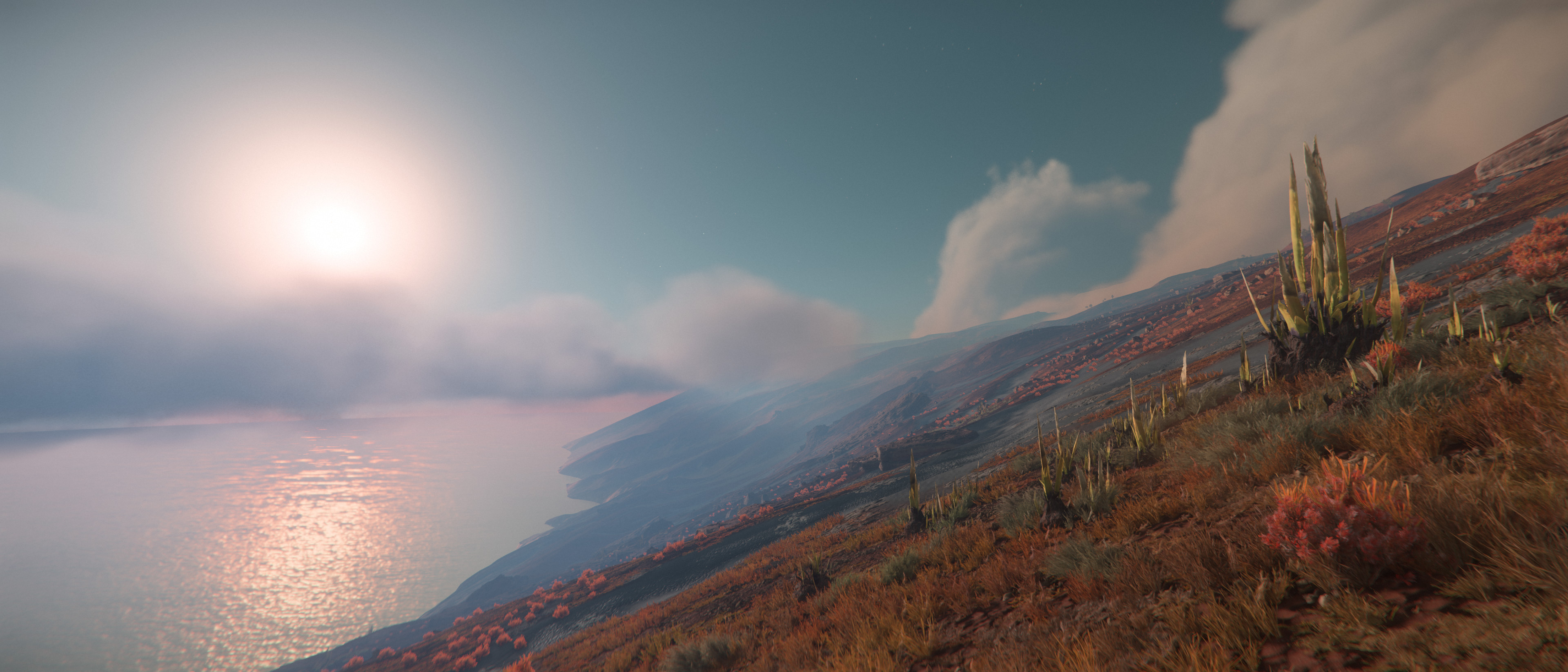
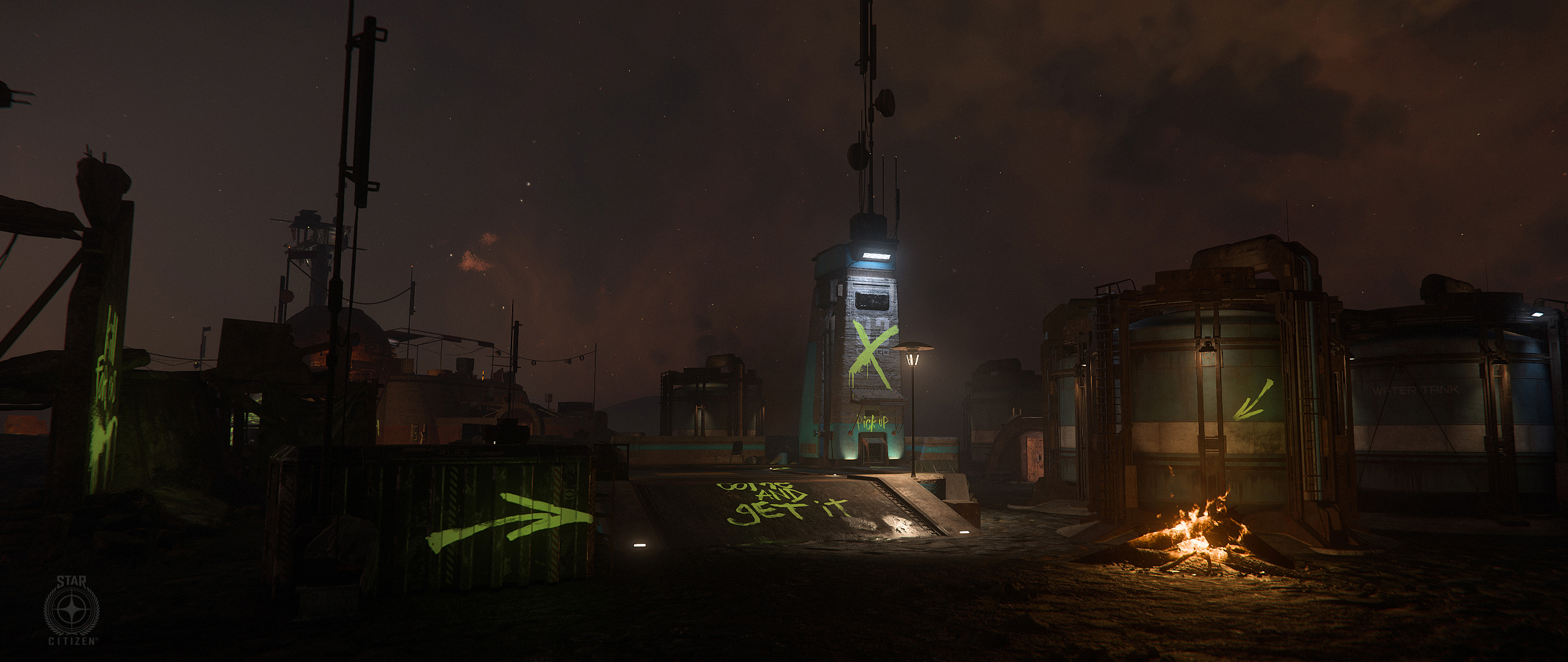
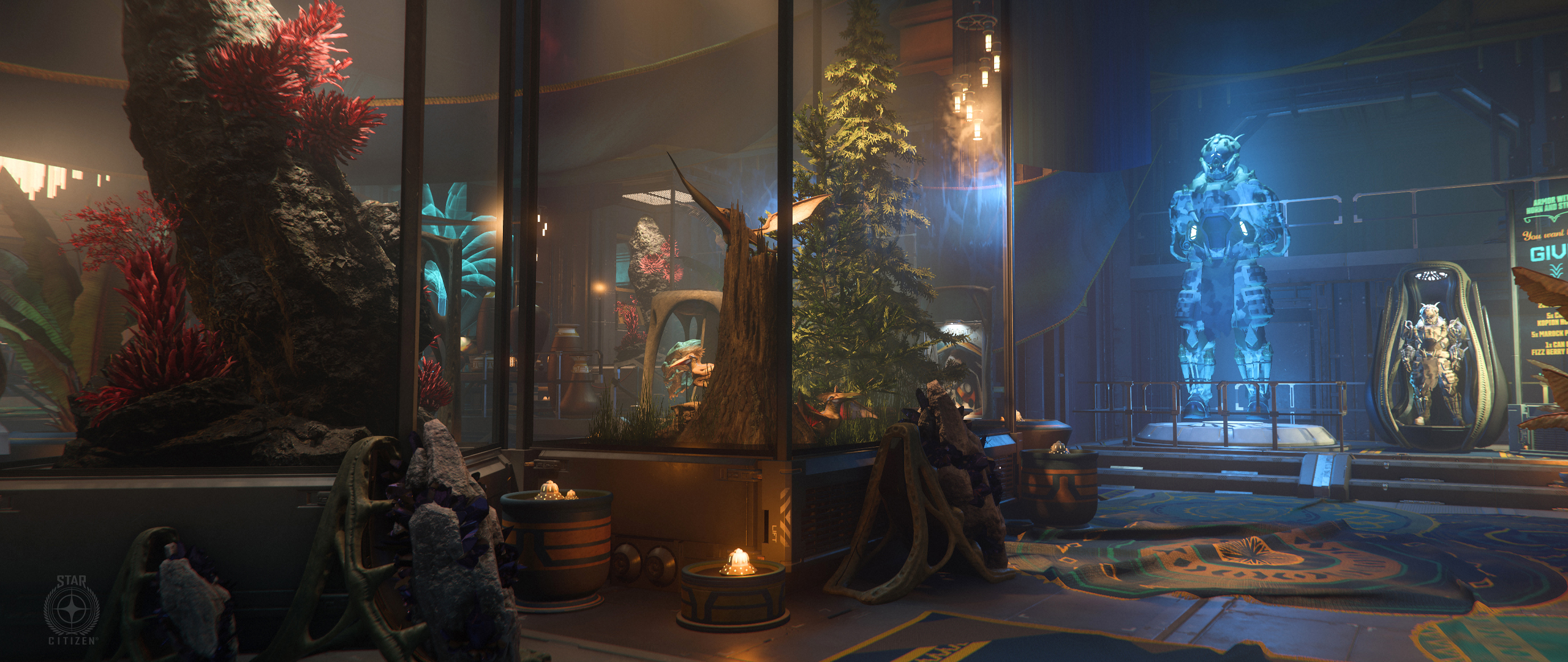
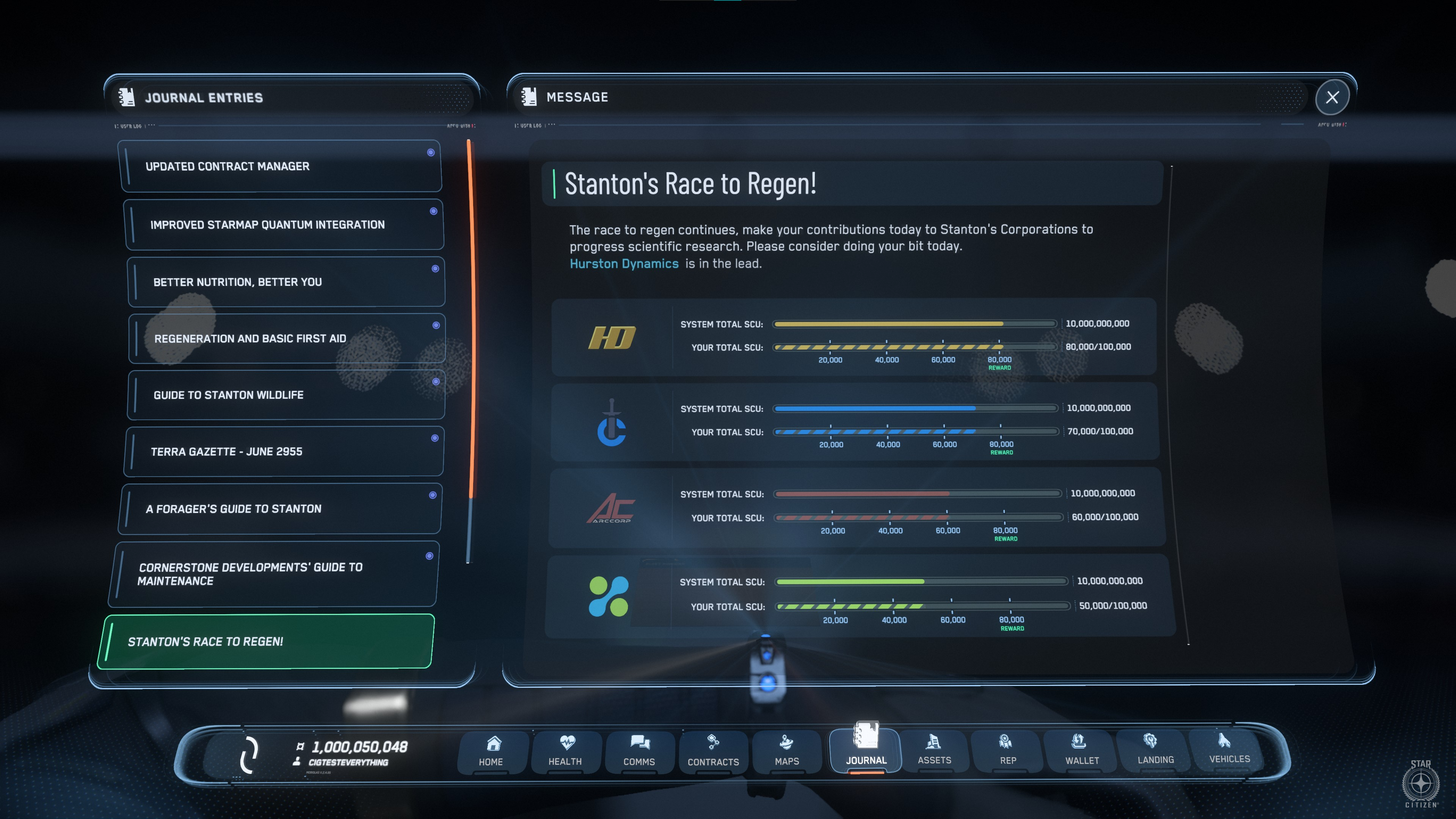
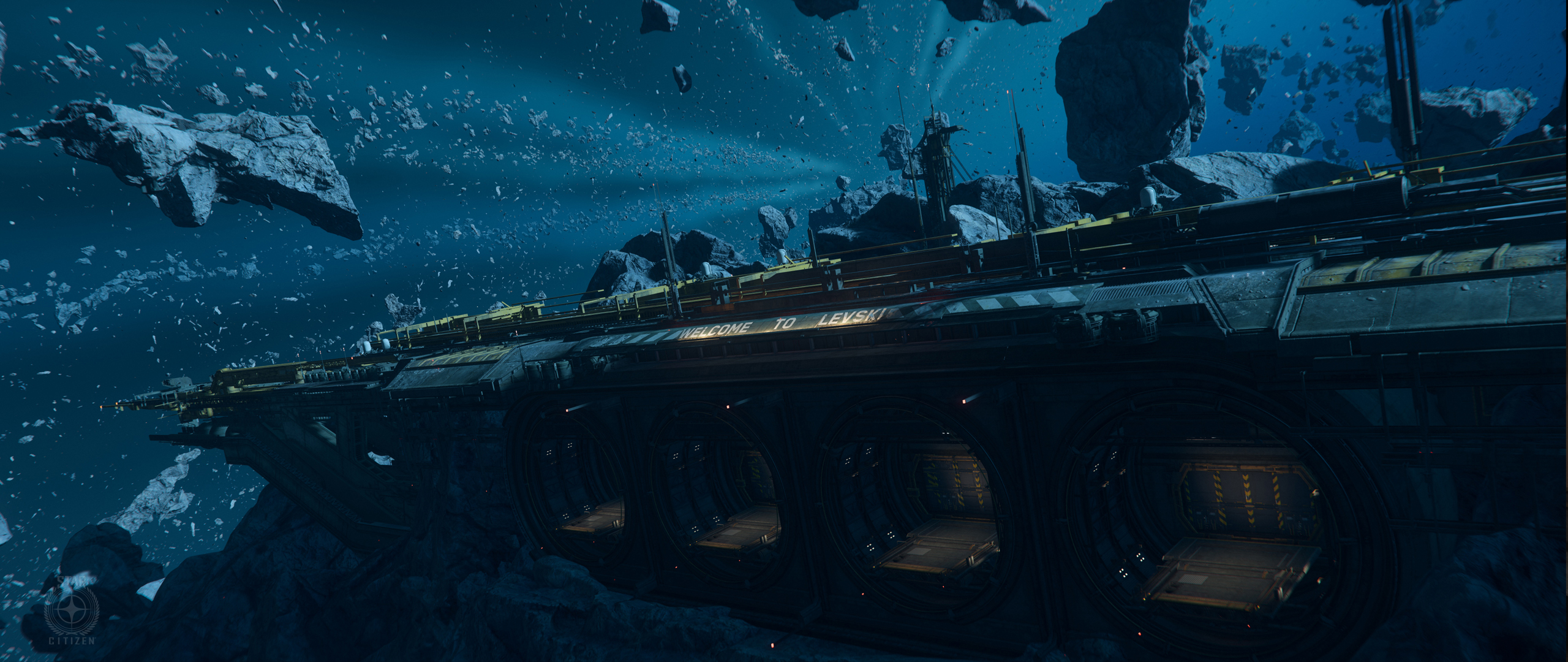
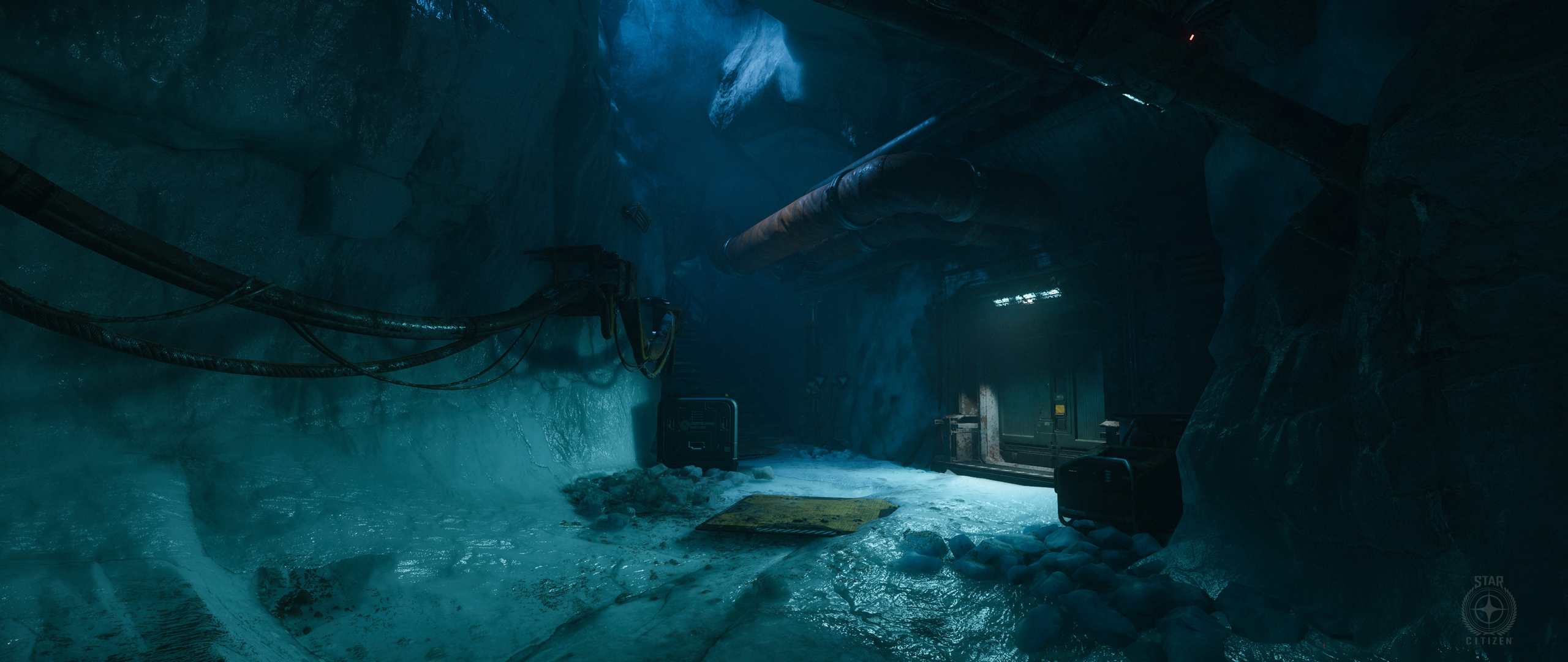
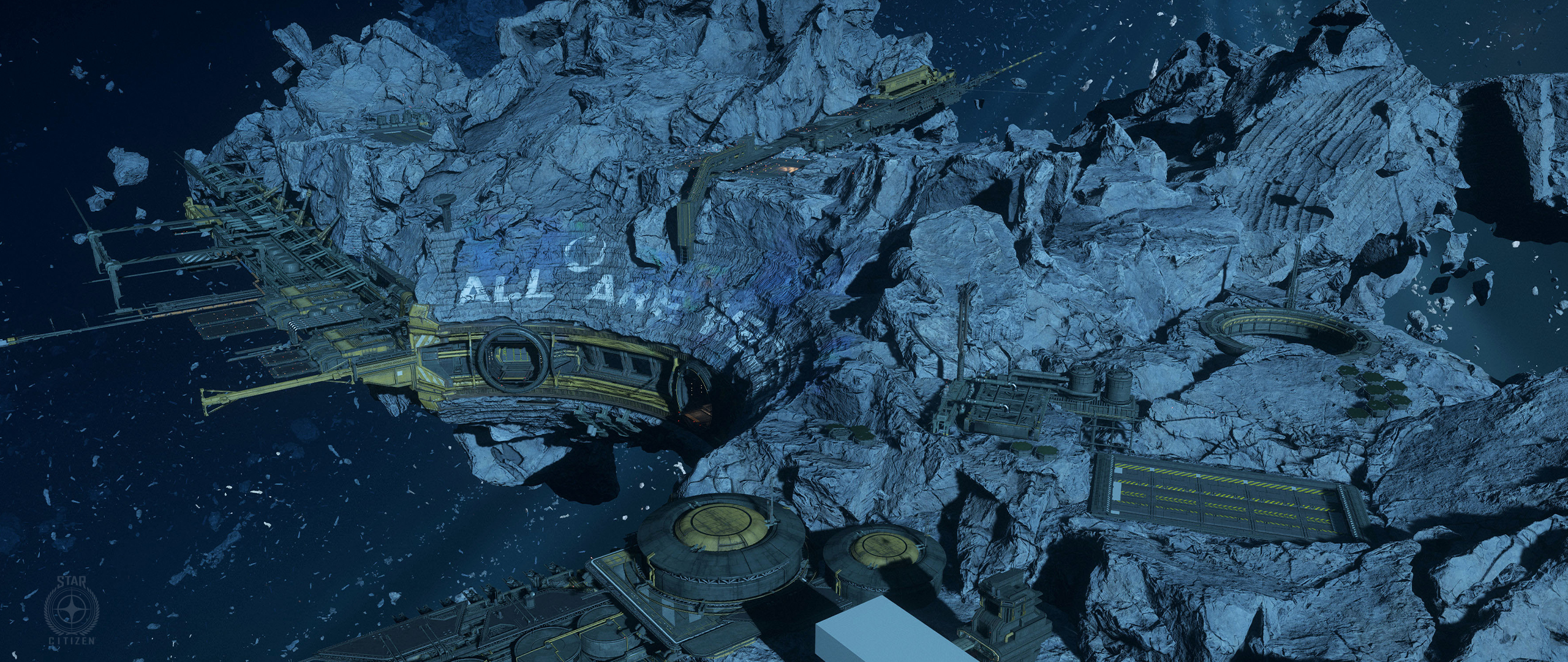
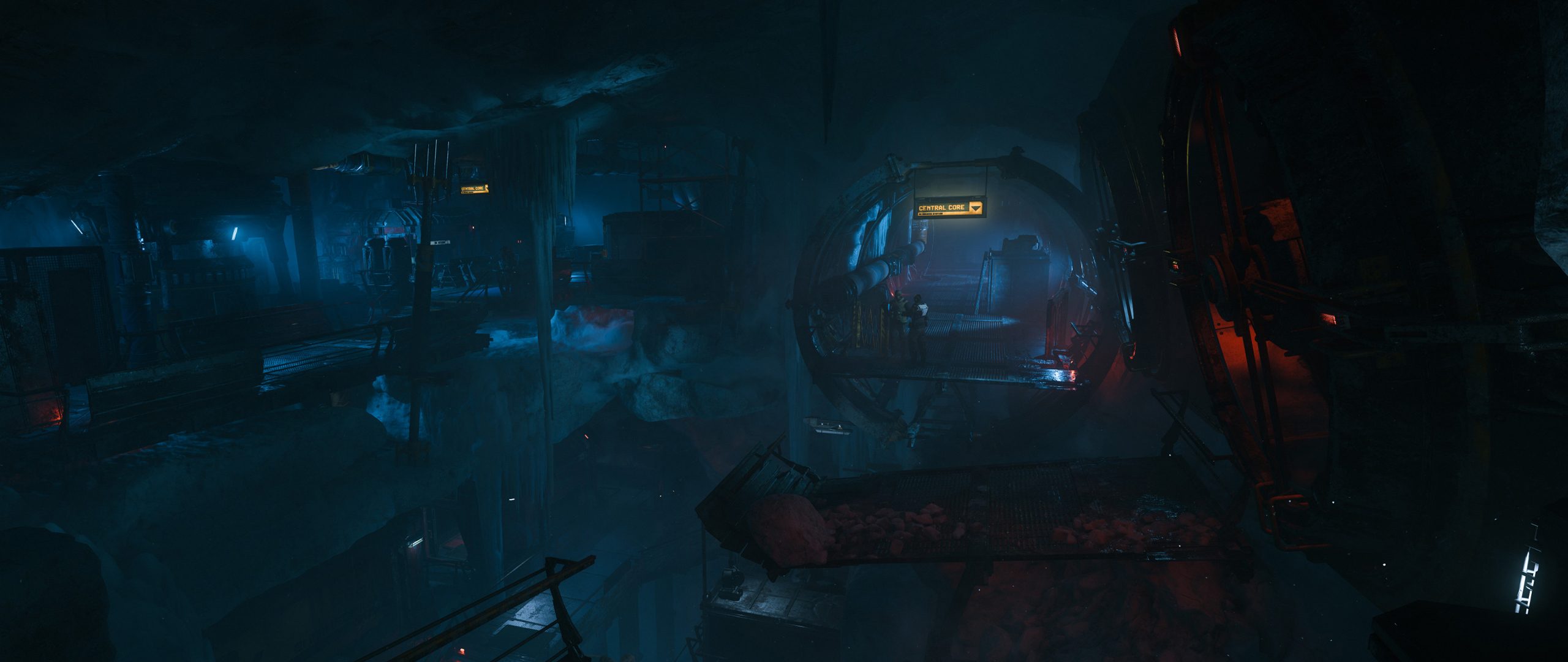
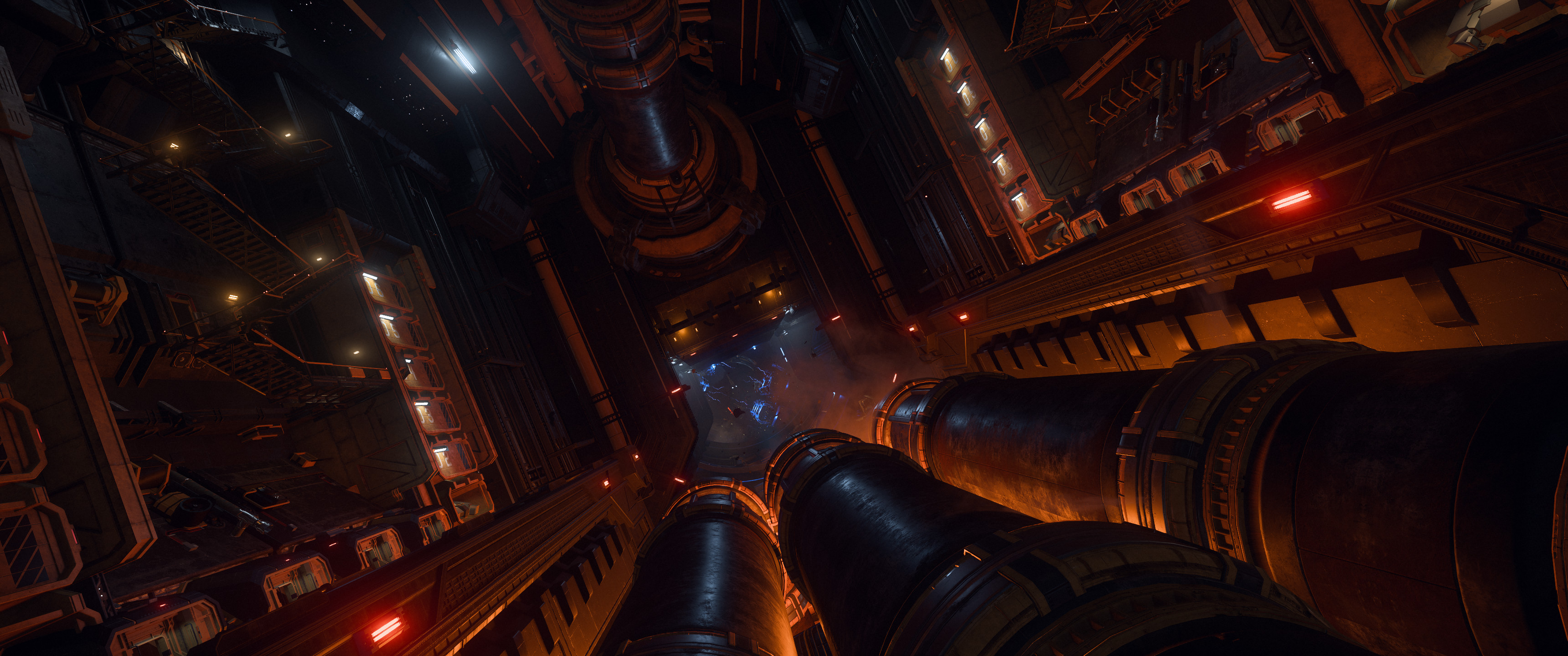
Metadata
- CIG ID
- 15587
- Channel
- Transmission
- Category
- Undefined
- Series
- Monthly Reports
- Comments
- 136
- Published
- 9 years ago (2016-11-04T00:00:00+00:00)