Observist Lifestyle - Iso Pilots
Spectrum Dispatch Undefined News UpdateContent
Greetings, traveler. During our many journeys, we have found that although the sights and sounds of our vast universe may be awe inspiring, it’s the diversity of the souls who inhabit it that truly makes it special. It’s why the team here at OBSERVIST LIFESTYLE is determined to offer a firsthand look at the myriad of people and cultures that form the unique tapestry of our Empire and beyond.
While traveling for pleasure is one of life’s great joys, most travel done in the Empire is for commerce. Massive ships drift across the expanse hauling billions of cargo tonnage from city to city, planet to planet, system to system, to where they are needed most. But what happens when the goods you need to deliver are the massive ships?
Most traditionally-sized vessels can be transported inside a hauler like any other large cargo, or towed by a tugship, but for larger classes of ships like the MISC Endeavor or RSI Orion, the only way to get them from the manufacturer’s shipyards to the customer is to be piloted. Flying a ship from A to B sounds like it would be straightforward enough, barring all the usual hiccups that can mar any interstellar flight. The difference here however is that when someone spends the credits for a brand new ship, they expect it to arrive in like-new condition. That part, it turns out, isn’t so easy.
Enter the hardworking men and women of Seven-league Vehicle Delivery Service and the unconventional life they lead flying ships as if they were never flown at all.
A LEAGUE OF THEIR OWN
“The first thing everyone does when they learn about how we transport the ships is to suggest an easier way.” I am sitting across from Tahota Ersdil in a small, cramped office in Odyssa filled with dusty ship manuals dating back the last fifty years, datapads stacked precariously high and the thick, lingering smell of cigar smoke. “Trust me. We’ve thought of it or tried it already. The iso system is what we do because not only does it work, but it’s cheap.”
Tahota, owner and founder of Seven-league Delivery, has been kind enough to walk me through the ‘iso’ pilot system that he created over 50 years ago and that many ship delivery companies have adapted since. Iso, short for isolated, refers to the method of having a solitary pilot tasked with flying one of these behemoths for interstellar delivery. “See, the first idea most folks have to deliver one of these is to hire a crew and just fly it to wherever. That’s problematic for two reasons. The big one is that paying a crew costs credits.” In order to afford the expense of sending multiple crewmembers along on the delivery, either the sender or the owner would have to pay extra for the shipment, or as what ended up happening once delivery companies started competing on price, delivery crews would receive a smaller salary once it was split amongst themselves.
“The second major issue with a crew is that no matter how careful you are, having that many people aboard is gonna leave signs. Those people are gonna have to eat and sleep and take a crap somewhere. Do they do it onboard and spend the time doing a deep clean when you arrive? Do you send along an escort ship and have people transfer back and forth? Oh, and speaking of escorts, we haven’t even begun to talk about security protocols.”
It became clear quickly as Tahota listed the pitfalls of ship delivery that the balance of time and credits was a difficult equilibrium to strike. Of course, some manufacturers, ship sellers and insurance companies avoid the problem alltogether and just send the owner a shuttle ticket so they can travel and transport it themselves — or in the case of some real bargain-rate insurers, the owner is left to figure out the logistics themselves. However, many customers have come to expect the convenience of having their newly acquired ship delivered to them. After decades of trial and error, there seem to be three main systems that delivery companies employ: iso, ‘trio’ and ‘legging.’
The trio system consists of a three-member team where one person is flying the delivery ship, one is flying an escort craft, and one is resting. To keep the delivery ship in pristine condition, the person piloting it wears a fully-enclosed suit at all times, and bio-functions are restricted to the escort ship. Flying a trio is considered to be the most moderate system. Tahato explains, “Trios are nice because you get the fresh pilots and the escort ship is there in case stuff goes wrong, but the profit margin on a trio is slim. That extra crew and escort fuel eat into the overhead pretty fast. I flew trio for a while when I started out, and if I wasn’t doing a run, I could barely afford a place to sleep and eat. Forget about saving up any credits. You had to keep making deliveries because if you stopped, you’d starve. It was tough.”
The next method, legging, refers to the delivery trip being broken into multiple segments or ‘legs’ flown by several pilots, each one covering the journey between two ports where the ship is then handed off to the next pilot. This has the benefit of each pilot only having to cover a short distance. Though the pilots typically receive less pay per delivery, they can make up the difference if there is a steady flow of ships being delivered back and forth. “Legging’s used a lot in the more populated systems,” says Tahato, “but with all those additional hands involved and that much landing and taking off, you see a lot more accidents happen — from small stuff like dings and scuffs, all the way to having some drunk Aurora pilot crash into you. Not to mention that usually the space around refuel stations are often prime hunting grounds since outlaws know that’s where ships are gonna be. Legging works for some people and insurance companies seem to prefer it, but the ship manufacturers tend to like iso because it’s the best at getting the ship where it’s going like new.”
The iso system, the one Seven-league specializes in, consists of a lone suited pilot flying the whole journey by themselves without making a single stop. It is the method that earns the pilot and the delivery company the most profit, but it is considered a grueling and difficult trip. Of course, I had to find out just how difficult for myself.
SOLO PLUS ONE
Tahato arranged for me to ride along on an iso trip with one of Seven-league’s longest-flying runners, Daniel Dente. Arriving at the dock in the upper atmosphere of Crusader, I am greeted by the gleaming hull of a brand new Genesis Starliner fresh from the plant. Just under a hundred meters in width and length, Seven-league has been contracted to deliver the hulking cruiser to Cassel by a company specializing in sightseeing tours. The inside of the ship is richly appointed with amenities, none of which I will be permitted to enjoy during my journey aboard.
Daniel greets me inside the storage area where he is double-checking the quantum fuel supplies. One of the keys to flying iso is to avoid stopping at any refill stations. Not only are they a safety concern as they attract outlaws but any docking increases the risk of accidents. Instead, Daniel and I will be refueling the starliner ourselves via EVA. “We’ve got exactly what we need and just a tiny bit of emergency fuel. Since we’re carrying it, adding more fuel requires even more fuel to transport. There’s a lot of formulas and stuff to help us figure it all out,” Daniel explains to me through his helmet.
Like me, Daniel is already fully suited up and will remain sealed in for the remainder of the trip. Before boarding, I had been fitted with a nutra-pack that will take care of my nutrition requirements, as well as an extremely potent cocktail of sleep-replacements and stims to ensure that I remain awake for the entirety of the delivery run. Daniel assures me the nausea will pass soon. “It’s the worst at the beginning and then at the end when you’re coming off it,” says Daniel, “but it means we can do the trip in a straight shot without any breaks, which is faster and safer. Of course, you can only stay on the meds for a few weeks before the real serious side effects kick in. Works out, though. I do a few weeks on and then a month or so off with the family before I head back out.”
I can tell that Daniel isn’t quite sure what to do with me. After fifteen years of flying with Seven-league, he’s grown accustomed to piloting alone. As we leave Crusader behind, he sings to himself until he bashfully stops when he remembers I’m there. “My kids always point out when I’m singing or talking to myself. Drives them nuts,” he tells me. I ask Daniel what he does to keep himself occupied. “The company doesn’t allow us to put up vids or make comm calls while flying. Safety and all that. For the most part it’s music and sometimes audiofeeds. People are always amazed at how well read I am and I tell them they should try being awake for a week. But really, I’m focusing on flying for the most part,” explains Daniel. “These bigger ships usually have a few people monitoring everything, but I have to keep an eye on it all myself. It’s not too bad since we turn off all non-essential systems, but it’s still enough to keep you busy.” The ship’s life support isn’t even active and the only lights on are the ones in the cockpit. Breathing and illumination will be taken care of, once again, by our suits. Later on in the flight, when we had to go check a coupler on the engine, walking through the dark hull of the ship was a tremendously eerie feeling. Even with Daniel as company I still felt very alone.
The views out the window offer no relief as the route Daniel has charted ensures that we sweep very wide of any points of interest. Since we’re flying without a protection escort, it’s important to minimize contact with other ships as much as possible. While most ships you encounter offer no danger, it’s still safer to not take the risk. The most dangerous part of our journey was when we approach a jump point.
As we near the Stanton-Terra jump, Daniel goes into high alert, doing careful scans for any signatures before approaching. We wait for an ArcCorp freighter to pass before making the approach ourselves. I find myself tempted to comm the other pilot just for the social contact. “I get that,” says Daniel as I tell him of my urge. “I was always a bit of an introvert, so the alone time doesn’t get to me as much but even I can go a bit stir crazy. Especially when nothing goes wrong. It’s funny that in some ways the smoothest trips are the hardest mentally. Sometimes, I make recordings to my family or I can tune into the open channel and listen to other people. That helps a bit.” I ask about bringing guests along on the runs and learn that the insurance cost of having the extra people aboard is too high to make it worthwhile.
The first time we had to refuel was the real test to see if I had what it takes to become an iso pilot myself. Leaving the relative safety of the ship to head out into space, knowing that we were completely off the radar if anything should happen, turned out to be more than I could handle. Seeing my heart rate spike past its already elevated levels from the stim cocktail ended my spacewalk before it began. Daniel insisted I stay aboard, so I watched him refuel the ship by himself.
I’d like to say that the rest of the trip got better. That by the end I finally got out and did a refuel myself or that maybe Daniel gave me a turn at the wheel, but the truth is after that first panic attack, it only got worse. I had gotten inside my own head. Daniel told me that he had seen it happen before, “Not everyone can do this job. Just a fact. There’s nothing to be ashamed about.” Despite all that, I am proud to say that I stuck it out all the way to Goss. I may not have the fortitude to be an iso pilot, but at least I saw the trip through to the end.
For the rest of my life, I think I will always remember the relief I felt when we touched down on Cassel and I finally got to take off my helmet. The sense of freedom was overwhelming. To think that hundreds of men and women make their living this way, crossing through the emptiness of space so that people can get a brand new pristine ship, is just another example of the sort of thing that happens every day in this ’verse without most of us being aware of it. In the end, it was a successful run, no thanks to me. I apologized for not being more help as we said goodbye and Daniel shrugged, simply saying, “I’m used to doing it by myself.”
Seid gegrüßt, Reisender. Auf unseren vielen Reisen haben wir festgestellt, dass es die Vielfalt der Seelen, die es bewohnen, ist, die es wirklich besonders macht, obwohl die Sehenswürdigkeiten und Geräusche unseres riesigen Universums beeindruckend sind. Deshalb ist das Team von OBSERVIST LIFESTYLE bestrebt, einen Einblick in die Vielzahl der Menschen und Kulturen zu geben, die die einzigartige Tapisserie unseres Reiches und darüber hinaus bilden.
Während Reisen zum Vergnügen eine der großen Freuden des Lebens ist, sind die meisten Reisen im Imperium zum Zwecke des Handels. Massive Schiffe driften über die Weite und transportieren Milliarden von Frachttonnage von Stadt zu Stadt, von Planet zu Planet, von System zu System, dorthin, wo sie am meisten gebraucht werden. Aber was passiert, wenn die Waren, die Sie liefern müssen, die riesigen Schiffe sind?
Die meisten traditionell großen Schiffe können wie jede andere große Ladung in einem Schlepper transportiert oder von einem Schlepper geschleppt werden, aber für größere Schiffsklassen wie die MISC Endeavor oder RSI Orion ist die einzige Möglichkeit, sie von den Werften des Herstellers zum Kunden zu bringen, die Steuerung. Ein Schiff von A nach B zu fliegen, klingt so, als wäre es einfach genug, abgesehen von allen üblichen Problemen, die jeden interstellaren Flug beeinträchtigen können. Der Unterschied hier ist jedoch, dass, wenn jemand die Kredite für ein brandneues Schiff ausgibt, er erwartet, dass es in einem brandneuen Zustand ankommt. Dieser Teil, so stellte sich heraus, ist nicht so einfach.
Treten Sie ein in die fleißigen Männer und Frauen von Seven-League Vehicle Delivery Service und das unkonventionelle Leben, das sie führen, als würden sie nie geflogen.
EINE EIGENE LIGA
"Das erste, was jeder tut, wenn er lernt, wie wir die Schiffe transportieren, ist, einen einfacheren Weg vorzuschlagen." Ich sitze gegenüber von Tahota Ersdil in einem kleinen, engen Büro in Odyssa, gefüllt mit staubigen Schiffsanleitungen, die in den letzten fünfzig Jahren entstanden sind, Datenpads, die prekär hoch gestapelt sind und dem dicken, anhaltenden Geruch von Zigarrenrauch. "Vertrau mir. Wir haben darüber nachgedacht oder es bereits ausprobiert. Das Iso-System ist das, was wir tun, weil es nicht nur funktioniert, sondern auch billig ist."
Tahota, Eigentümer und Gründer von Seven-League Delivery, war so freundlich, mich durch das 'iso'-Pilotensystem zu führen, das er vor über 50 Jahren entwickelt hat und das viele Schiffsauslieferer seitdem angepasst haben. Iso, kurz für isoliert, bezieht sich auf die Methode, einen einsamen Piloten zu haben, der damit beauftragt ist, einen dieser Giganten zur interstellaren Geburt zu fliegen. "Siehst du, die erste Idee, die die meisten Leute haben, um eine von diesen zu liefern, ist, eine Crew anzuheuern und sie einfach wohin zu fliegen. Das ist aus zwei Gründen problematisch. Der Große ist, dass die Bezahlung einer Crew Credits kostet." Um die Kosten für die Entsendung mehrerer Besatzungsmitglieder auf die Lieferung zu tragen, müssten entweder der Absender oder der Eigentümer für die Sendung einen Zuschlag zahlen, oder als das, was am Ende passiert, wenn die Lieferfirmen mit dem Preis konkurrieren, würden die Besatzungen ein geringeres Gehalt erhalten, sobald sie unter sich aufgeteilt wurden.
"Das zweite große Problem mit einer Crew ist, dass, egal wie vorsichtig man ist, so viele Leute an Bord zu haben, Spuren hinterlassen wird. Diese Leute müssen essen und schlafen und irgendwo kacken gehen. Machen sie es an Bord und verbringen die Zeit mit einer Tiefenreinigung, wenn Sie ankommen? Schickst du ein Begleitschiff mit und lässt Leute hin und her fahren? Oh, und wo wir gerade von Eskorten sprechen, wir haben noch nicht einmal angefangen, über Sicherheitsprotokolle zu sprechen."
Es wurde schnell klar, als Tahota die Fallstricke der Schiffslieferung auflistete, dass das Gleichgewicht von Zeit und Krediten ein schwer zu erreichendes Gleichgewicht war. Natürlich vermeiden einige Hersteller, Schiffsverkäufer und Versicherungsgesellschaften das Problem ganz und gar und schicken dem Besitzer einfach ein Shuttleticket, damit er selbst reisen und transportieren kann - oder bei einigen echten Schnäppchenversicherern bleibt es dem Eigentümer überlassen, die Logistik selbst herauszufinden. Viele Kunden erwarten jedoch den Komfort, dass ihnen ihr neu erworbenes Schiff geliefert wird. Nach jahrzehntelangem Ausprobieren scheint es drei Hauptsysteme zu geben, die die Lieferfirmen einsetzen: iso, trio und legging.
Das Triosystem besteht aus einem dreiköpfigen Team, bei dem eine Person das Ablieferungsschiff fliegt, eine Person ein Begleitfahrzeug fliegt und eine Person ruht. Um das Übergabeschiff in einwandfreiem Zustand zu halten, trägt die Person, die es steuert, jederzeit einen vollständig geschlossenen Anzug, und die Biofunktionen sind auf das Begleitschiff beschränkt. Das Fliegen mit einem Trio gilt als das moderatste System. Tahato erklärt: "Trios sind nett, weil man die frischen Piloten bekommt und das Begleitschiff ist da, falls etwas schief geht, aber die Gewinnspanne bei einem Trio ist gering. Diese zusätzliche Crew und der Treibstoff für die Begleitung fressen sich ziemlich schnell in die Luft. Ich flog eine Weile Trio, als ich anfing, und wenn ich keinen Lauf machte, konnte ich mir kaum einen Platz zum Schlafen und Essen leisten. Vergessen Sie das Sparen von Credits. Du musstest weiterhin Lieferungen machen, denn wenn du aufhören würdest, würdest du verhungern. Es war hart."
Die nächste Methode, das Legging, bezieht sich darauf, dass die Lieferreise in mehrere Segmente oder "Beine" unterteilt wird, die von mehreren Piloten geflogen werden, die jeweils die Fahrt zwischen zwei Häfen abdecken, wo das Schiff dann an den nächsten Lotsen übergeben wird. Dies hat den Vorteil, dass jeder Pilot nur eine kurze Strecke zurücklegen muss. Obwohl die Lotsen in der Regel weniger Lohn pro Lieferung erhalten, können sie den Unterschied ausgleichen, wenn es einen stetigen Fluss von Schiffen gibt, die hin und her geliefert werden. "Legging's werden in den bevölkerungsreicheren Systemen viel verwendet", sagt Tahato, "aber mit all den zusätzlichen Händen und so viel Landen und Starten, sieht man viel mehr Unfälle passieren - von kleinen Dingen wie Dings und Scuffs bis hin zu einem betrunkenen Aurora-Piloten, der in einen eindringt. Ganz zu schweigen davon, dass der Raum um Tankstellen herum in der Regel oft ein erstklassiges Jagdgebiet ist, da Gesetzlose wissen, dass dort Schiffe sein werden. Legging funktioniert für einige Leute und Versicherungsgesellschaften scheinen es zu bevorzugen, aber die Schiffshersteller neigen dazu, Iso zu mögen, weil es das Beste ist, das Schiff dorthin zu bringen, wo es wie neu hingeht."
Das Iso-System, auf das sich die Sieben-Liga spezialisiert hat, besteht aus einem einsamen, geeigneten Piloten, der die gesamte Strecke selbst fliegt, ohne einen einzigen Halt zu machen. Es ist die Methode, die dem Piloten und dem Lieferunternehmen den größten Gewinn einbringt, aber es gilt als anstrengende und schwierige Reise. Natürlich musste ich herausfinden, wie schwierig es für mich selbst ist.
SOLO PLUS EINS
Tahato arrangierte für mich eine Iso-Tour mit einem der ältesten Läufer der Sieben-Liga, Daniel Dente. Als ich am Dock in der oberen Atmosphäre von Crusader ankomme, werde ich von dem glänzenden Rumpf eines brandneuen Genesis Starliner frisch aus der Fabrik begrüßt. Knapp hundert Meter breit und lang wurde Seven-League von einem auf Sightseeing-Touren spezialisierten Unternehmen mit der Lieferung des riesigen Kreuzers an Cassel beauftragt. Das Innere des Schiffes ist reich mit Annehmlichkeiten ausgestattet, von denen ich während meiner Reise an Bord nichts genießen darf.
Daniel begrüßt mich im Lagerbereich, wo er die Quantenkraftstoffversorgung überprüft. Einer der Schlüssel zum Fliegen von Iso ist es, zu vermeiden, an Tankstellen anzuhalten. Sie sind nicht nur ein Sicherheitsproblem, da sie Gesetzlose anziehen, sondern jedes Andocken erhöht auch das Unfallrisiko. Stattdessen werden Daniel und ich den Starliner selbst über EVA betanken. "Wir haben genau das, was wir brauchen, und nur ein kleines bisschen Notfalltreibstoff. Da wir es transportieren, benötigt das Hinzufügen von mehr Kraftstoff noch mehr Kraftstoff für den Transport. Es gibt viele Formeln und Dinge, die uns helfen, alles herauszufinden", erklärt Daniel mir durch seinen Helm.
Wie ich ist auch Daniel bereits voll ausgestattet und bleibt für den Rest der Reise eingeschlossen. Vor dem Einsteigen war ich mit einem Nutra-Pack ausgestattet, das sich um meine Ernährungsbedürfnisse kümmert, sowie einem extrem starken Cocktail aus Schlafmitteln und Stims, um sicherzustellen, dass ich während der gesamten Lieferzeit wach bleibe. Daniel versichert mir, dass die Übelkeit bald vorbei sein wird. "Es ist das Schlimmste am Anfang und am Ende, wenn man davon kommt", sagt Daniel, "aber es bedeutet, dass wir die Fahrt in einem geraden Schuss ohne Brüche machen können, was schneller und sicherer ist. Natürlich können Sie die Medikamente nur ein paar Wochen einnehmen, bevor die wirklich schweren Nebenwirkungen einsetzen. Aber es klappt schon. Ich mache ein paar Wochen an und dann einen Monat oder so frei mit der Familie, bevor ich wieder rausgehe."
Ich kann sagen, dass Daniel nicht ganz sicher ist, was er mit mir machen soll. Nach fünfzehn Jahren Flug mit der Sieben-Liga hat er sich daran gewöhnt, allein zu fliegen. Als wir den Kreuzritter zurücklassen, singt er für sich selbst, bis er schüchtern aufhört, wenn er sich erinnert, dass ich da bin. "Meine Kinder weisen immer darauf hin, wenn ich singe oder mit mir selbst rede. Das macht sie verrückt", sagt er mir. Ich frage Daniel, was er tut, um sich zu beschäftigen. "Die Firma erlaubt es uns nicht, während des Fluges Videos aufzustellen oder Funksprüche zu machen. Sicherheit und all das. In den meisten Fällen handelt es sich um Musik und manchmal um Audiofeeds. Die Leute sind immer wieder erstaunt, wie gut ich gelesen habe, und ich sage ihnen, dass sie versuchen sollten, eine Woche lang wach zu sein. Aber wirklich, ich konzentriere mich größtenteils auf das Fliegen", erklärt Daniel. "Diese größeren Schiffe haben normalerweise ein paar Leute, die alles überwachen, aber ich muss selbst ein Auge auf alles haben. Es ist nicht allzu schlimm, da wir alle nicht essentiellen Systeme deaktivieren, aber es ist immer noch genug, um dich zu beschäftigen." Die Lebenserhaltung des Schiffes ist nicht einmal aktiv und die einzigen Lichter leuchten nur im Cockpit. Atmung und Beleuchtung werden wieder von unseren Anzügen übernommen. Später im Flug, als wir eine Kupplung am Motor überprüfen mussten, war der Gang durch den dunklen Rumpf des Schiffes ein unheimliches Gefühl. Selbst mit Daniel als Begleitung fühlte ich mich immer noch sehr allein.
Der Blick aus dem Fenster bietet keine Erleichterung, da die Route, die Daniel entworfen hat, dafür sorgt, dass wir sehr weit von allen interessanten Punkten entfernt sind. Da wir ohne Schutzbegleitung fliegen, ist es wichtig, den Kontakt mit anderen Schiffen so weit wie möglich zu minimieren. Während die meisten Schiffe, denen Sie begegnen, keine Gefahr darstellen, ist es dennoch sicherer, das Risiko nicht einzugehen. Der gefährlichste Teil unserer Reise war, wenn wir uns einem Sprungpunkt näherten.
Als wir uns dem Stanton-Terra-Sprung nähern, geht Daniel in höchste Alarmbereitschaft und scannt sorgfältig nach Unterschriften, bevor er sich nähert. Wir warten darauf, dass ein ArcCorp-Frachter vorbeikommt, bevor wir die Annäherung selbst vornehmen. Ich finde mich versucht, den anderen Piloten nur für den sozialen Kontakt zu engagieren. "Ich verstehe das", sagt Daniel, als ich ihm von meinem Drang erzähle. "Ich war schon immer ein bisschen introvertiert, also geht mir die Zeit des Alleinseins nicht so sehr auf die Nerven, aber selbst ich kann ein wenig verrückt werden. Vor allem, wenn nichts schief geht. Es ist lustig, dass in gewisser Weise die sanftesten Touren die härtesten mental sind. Manchmal mache ich Aufnahmen mit meiner Familie oder ich kann mich auf den offenen Kanal einstellen und anderen Leuten zuhören. Das hilft ein wenig." Ich frage nach der Mitnahme von Gästen auf den Runs und lerne, dass die Versicherungskosten für die zusätzlichen Personen an Bord zu hoch sind, um es lohnenswert zu machen.
Das erste Mal, als wir tanken mussten, war der eigentliche Test, um zu sehen, ob ich das Zeug dazu hatte, selbst Isopilot zu werden. Die relative Sicherheit des Schiffes zu verlassen, um in den Weltraum zu fliegen, zu wissen, dass wir völlig vom Radar verschwunden waren, wenn etwas passieren sollte, erwies sich als mehr, als ich verkraften konnte. Als ich sah, wie meine Herzfrequenz über ihre bereits erhöhten Werte vom Stim-Cocktail hinaus stieg, endete mein Spaziergang, bevor er begann. Daniel bestand darauf, dass ich an Bord bleibe, also sah ich zu, wie er das Schiff selbst betankte.
Ich möchte sagen, dass der Rest der Reise besser geworden ist. Dass ich am Ende endlich rausgekommen bin und selbst getankt habe oder dass Daniel mich vielleicht am Steuer gedreht hat, aber die Wahrheit ist, dass es nach dieser ersten Panikattacke nur noch schlimmer wurde. Ich war in meinen eigenen Kopf gelangt. Daniel sagte mir, dass er es schon einmal gesehen habe: "Nicht jeder kann diesen Job machen. Nur eine Tatsache. Es gibt nichts, wofür man sich schämen müsste." Trotz allem bin ich stolz darauf, sagen zu können, dass ich es bis nach Goss durchgezogen habe. Ich habe vielleicht nicht die Kraft, ein Iso-Pilot zu sein, aber zumindest habe ich die Reise bis zum Ende durchschaut.
Für den Rest meines Lebens werde ich mich wohl immer an die Erleichterung erinnern, die ich empfand, als wir auf Cassel landeten und ich endlich meinen Helm abnehmen konnte. Das Gefühl der Freiheit war überwältigend. Zu denken, dass Hunderte von Männern und Frauen auf diese Weise ihren Lebensunterhalt verdienen, indem sie die Leere des Weltraums durchqueren, damit die Menschen ein brandneues, unberührtes Schiff bekommen, ist nur ein weiteres Beispiel für die Art von Dingen, die jeden Tag in diesem Vers passieren, ohne dass die meisten von uns es bemerken. Am Ende war es ein erfolgreicher Lauf, nicht dank mir. Ich entschuldigte mich dafür, dass ich nicht mehr Hilfe war, als wir uns verabschiedeten, und Daniel zuckte mit den Achseln und sagte einfach: "Ich bin es gewohnt, es alleine zu tun."
Greetings, traveler. During our many journeys, we have found that although the sights and sounds of our vast universe may be awe inspiring, it’s the diversity of the souls who inhabit it that truly makes it special. It’s why the team here at OBSERVIST LIFESTYLE is determined to offer a firsthand look at the myriad of people and cultures that form the unique tapestry of our Empire and beyond.
While traveling for pleasure is one of life’s great joys, most travel done in the Empire is for commerce. Massive ships drift across the expanse hauling billions of cargo tonnage from city to city, planet to planet, system to system, to where they are needed most. But what happens when the goods you need to deliver are the massive ships?
Most traditionally-sized vessels can be transported inside a hauler like any other large cargo, or towed by a tugship, but for larger classes of ships like the MISC Endeavor or RSI Orion, the only way to get them from the manufacturer’s shipyards to the customer is to be piloted. Flying a ship from A to B sounds like it would be straightforward enough, barring all the usual hiccups that can mar any interstellar flight. The difference here however is that when someone spends the credits for a brand new ship, they expect it to arrive in like-new condition. That part, it turns out, isn’t so easy.
Enter the hardworking men and women of Seven-league Vehicle Delivery Service and the unconventional life they lead flying ships as if they were never flown at all.
A LEAGUE OF THEIR OWN
“The first thing everyone does when they learn about how we transport the ships is to suggest an easier way.” I am sitting across from Tahota Ersdil in a small, cramped office in Odyssa filled with dusty ship manuals dating back the last fifty years, datapads stacked precariously high and the thick, lingering smell of cigar smoke. “Trust me. We’ve thought of it or tried it already. The iso system is what we do because not only does it work, but it’s cheap.”
Tahota, owner and founder of Seven-league Delivery, has been kind enough to walk me through the ‘iso’ pilot system that he created over 50 years ago and that many ship delivery companies have adapted since. Iso, short for isolated, refers to the method of having a solitary pilot tasked with flying one of these behemoths for interstellar delivery. “See, the first idea most folks have to deliver one of these is to hire a crew and just fly it to wherever. That’s problematic for two reasons. The big one is that paying a crew costs credits.” In order to afford the expense of sending multiple crewmembers along on the delivery, either the sender or the owner would have to pay extra for the shipment, or as what ended up happening once delivery companies started competing on price, delivery crews would receive a smaller salary once it was split amongst themselves.
“The second major issue with a crew is that no matter how careful you are, having that many people aboard is gonna leave signs. Those people are gonna have to eat and sleep and take a crap somewhere. Do they do it onboard and spend the time doing a deep clean when you arrive? Do you send along an escort ship and have people transfer back and forth? Oh, and speaking of escorts, we haven’t even begun to talk about security protocols.”
It became clear quickly as Tahota listed the pitfalls of ship delivery that the balance of time and credits was a difficult equilibrium to strike. Of course, some manufacturers, ship sellers and insurance companies avoid the problem alltogether and just send the owner a shuttle ticket so they can travel and transport it themselves — or in the case of some real bargain-rate insurers, the owner is left to figure out the logistics themselves. However, many customers have come to expect the convenience of having their newly acquired ship delivered to them. After decades of trial and error, there seem to be three main systems that delivery companies employ: iso, ‘trio’ and ‘legging.’
The trio system consists of a three-member team where one person is flying the delivery ship, one is flying an escort craft, and one is resting. To keep the delivery ship in pristine condition, the person piloting it wears a fully-enclosed suit at all times, and bio-functions are restricted to the escort ship. Flying a trio is considered to be the most moderate system. Tahato explains, “Trios are nice because you get the fresh pilots and the escort ship is there in case stuff goes wrong, but the profit margin on a trio is slim. That extra crew and escort fuel eat into the overhead pretty fast. I flew trio for a while when I started out, and if I wasn’t doing a run, I could barely afford a place to sleep and eat. Forget about saving up any credits. You had to keep making deliveries because if you stopped, you’d starve. It was tough.”
The next method, legging, refers to the delivery trip being broken into multiple segments or ‘legs’ flown by several pilots, each one covering the journey between two ports where the ship is then handed off to the next pilot. This has the benefit of each pilot only having to cover a short distance. Though the pilots typically receive less pay per delivery, they can make up the difference if there is a steady flow of ships being delivered back and forth. “Legging’s used a lot in the more populated systems,” says Tahato, “but with all those additional hands involved and that much landing and taking off, you see a lot more accidents happen — from small stuff like dings and scuffs, all the way to having some drunk Aurora pilot crash into you. Not to mention that usually the space around refuel stations are often prime hunting grounds since outlaws know that’s where ships are gonna be. Legging works for some people and insurance companies seem to prefer it, but the ship manufacturers tend to like iso because it’s the best at getting the ship where it’s going like new.”
The iso system, the one Seven-league specializes in, consists of a lone suited pilot flying the whole journey by themselves without making a single stop. It is the method that earns the pilot and the delivery company the most profit, but it is considered a grueling and difficult trip. Of course, I had to find out just how difficult for myself.
SOLO PLUS ONE
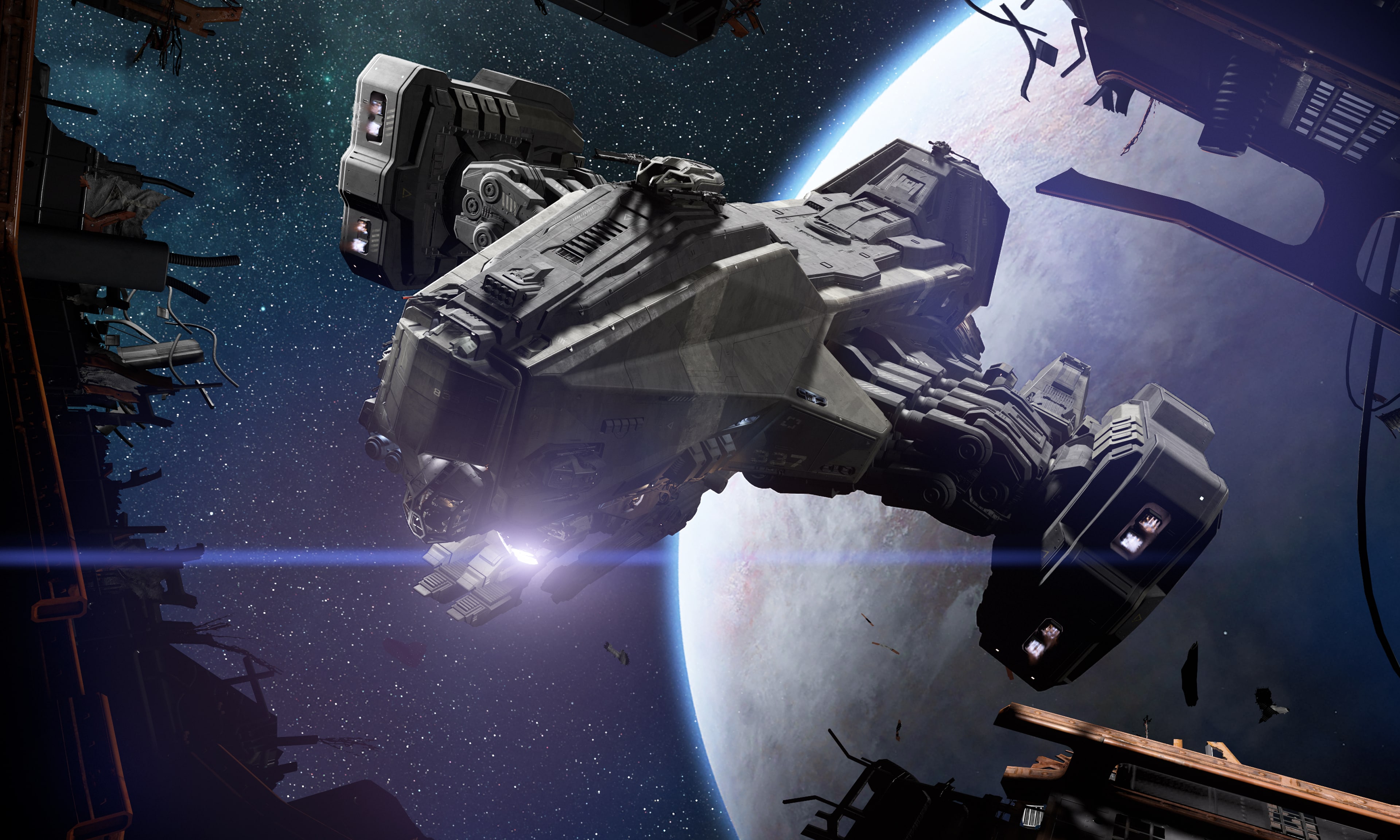
Tahato arranged for me to ride along on an iso trip with one of Seven-league’s longest-flying runners, Daniel Dente. Arriving at the dock in the upper atmosphere of Crusader, I am greeted by the gleaming hull of a brand new Genesis Starliner fresh from the plant. Just under a hundred meters in width and length, Seven-league has been contracted to deliver the hulking cruiser to Cassel by a company specializing in sightseeing tours. The inside of the ship is richly appointed with amenities, none of which I will be permitted to enjoy during my journey aboard.
Daniel greets me inside the storage area where he is double-checking the quantum fuel supplies. One of the keys to flying iso is to avoid stopping at any refill stations. Not only are they a safety concern as they attract outlaws but any docking increases the risk of accidents. Instead, Daniel and I will be refueling the starliner ourselves via EVA. “We’ve got exactly what we need and just a tiny bit of emergency fuel. Since we’re carrying it, adding more fuel requires even more fuel to transport. There’s a lot of formulas and stuff to help us figure it all out,” Daniel explains to me through his helmet.
Like me, Daniel is already fully suited up and will remain sealed in for the remainder of the trip. Before boarding, I had been fitted with a nutra-pack that will take care of my nutrition requirements, as well as an extremely potent cocktail of sleep-replacements and stims to ensure that I remain awake for the entirety of the delivery run. Daniel assures me the nausea will pass soon. “It’s the worst at the beginning and then at the end when you’re coming off it,” says Daniel, “but it means we can do the trip in a straight shot without any breaks, which is faster and safer. Of course, you can only stay on the meds for a few weeks before the real serious side effects kick in. Works out, though. I do a few weeks on and then a month or so off with the family before I head back out.”
I can tell that Daniel isn’t quite sure what to do with me. After fifteen years of flying with Seven-league, he’s grown accustomed to piloting alone. As we leave Crusader behind, he sings to himself until he bashfully stops when he remembers I’m there. “My kids always point out when I’m singing or talking to myself. Drives them nuts,” he tells me. I ask Daniel what he does to keep himself occupied. “The company doesn’t allow us to put up vids or make comm calls while flying. Safety and all that. For the most part it’s music and sometimes audiofeeds. People are always amazed at how well read I am and I tell them they should try being awake for a week. But really, I’m focusing on flying for the most part,” explains Daniel. “These bigger ships usually have a few people monitoring everything, but I have to keep an eye on it all myself. It’s not too bad since we turn off all non-essential systems, but it’s still enough to keep you busy.” The ship’s life support isn’t even active and the only lights on are the ones in the cockpit. Breathing and illumination will be taken care of, once again, by our suits. Later on in the flight, when we had to go check a coupler on the engine, walking through the dark hull of the ship was a tremendously eerie feeling. Even with Daniel as company I still felt very alone.
The views out the window offer no relief as the route Daniel has charted ensures that we sweep very wide of any points of interest. Since we’re flying without a protection escort, it’s important to minimize contact with other ships as much as possible. While most ships you encounter offer no danger, it’s still safer to not take the risk. The most dangerous part of our journey was when we approach a jump point.
As we near the Stanton-Terra jump, Daniel goes into high alert, doing careful scans for any signatures before approaching. We wait for an ArcCorp freighter to pass before making the approach ourselves. I find myself tempted to comm the other pilot just for the social contact. “I get that,” says Daniel as I tell him of my urge. “I was always a bit of an introvert, so the alone time doesn’t get to me as much but even I can go a bit stir crazy. Especially when nothing goes wrong. It’s funny that in some ways the smoothest trips are the hardest mentally. Sometimes, I make recordings to my family or I can tune into the open channel and listen to other people. That helps a bit.” I ask about bringing guests along on the runs and learn that the insurance cost of having the extra people aboard is too high to make it worthwhile.
The first time we had to refuel was the real test to see if I had what it takes to become an iso pilot myself. Leaving the relative safety of the ship to head out into space, knowing that we were completely off the radar if anything should happen, turned out to be more than I could handle. Seeing my heart rate spike past its already elevated levels from the stim cocktail ended my spacewalk before it began. Daniel insisted I stay aboard, so I watched him refuel the ship by himself.
I’d like to say that the rest of the trip got better. That by the end I finally got out and did a refuel myself or that maybe Daniel gave me a turn at the wheel, but the truth is after that first panic attack, it only got worse. I had gotten inside my own head. Daniel told me that he had seen it happen before, “Not everyone can do this job. Just a fact. There’s nothing to be ashamed about.” Despite all that, I am proud to say that I stuck it out all the way to Goss. I may not have the fortitude to be an iso pilot, but at least I saw the trip through to the end.
For the rest of my life, I think I will always remember the relief I felt when we touched down on Cassel and I finally got to take off my helmet. The sense of freedom was overwhelming. To think that hundreds of men and women make their living this way, crossing through the emptiness of space so that people can get a brand new pristine ship, is just another example of the sort of thing that happens every day in this ’verse without most of us being aware of it. In the end, it was a successful run, no thanks to me. I apologized for not being more help as we said goodbye and Daniel shrugged, simply saying, “I’m used to doing it by myself.”
Greetings, traveler. During our many journeys, we have found that although the sights and sounds of our vast universe may be awe inspiring, it’s the diversity of the souls who inhabit it that truly makes it special. It’s why the team here at OBSERVIST LIFESTYLE is determined to offer a firsthand look at the myriad of people and cultures that form the unique tapestry of our Empire and beyond.
While traveling for pleasure is one of life’s great joys, most travel done in the Empire is for commerce. Massive ships drift across the expanse hauling billions of cargo tonnage from city to city, planet to planet, system to system, to where they are needed most. But what happens when the goods you need to deliver are the massive ships?
Most traditionally-sized vessels can be transported inside a hauler like any other large cargo, or towed by a tugship, but for larger classes of ships like the MISC Endeavor or RSI Orion, the only way to get them from the manufacturer’s shipyards to the customer is to be piloted. Flying a ship from A to B sounds like it would be straightforward enough, barring all the usual hiccups that can mar any interstellar flight. The difference here however is that when someone spends the credits for a brand new ship, they expect it to arrive in like-new condition. That part, it turns out, isn’t so easy.
Enter the hardworking men and women of Seven-league Vehicle Delivery Service and the unconventional life they lead flying ships as if they were never flown at all.
A LEAGUE OF THEIR OWN
“The first thing everyone does when they learn about how we transport the ships is to suggest an easier way.” I am sitting across from Tahota Ersdil in a small, cramped office in Odyssa filled with dusty ship manuals dating back the last fifty years, datapads stacked precariously high and the thick, lingering smell of cigar smoke. “Trust me. We’ve thought of it or tried it already. The iso system is what we do because not only does it work, but it’s cheap.”
Tahota, owner and founder of Seven-league Delivery, has been kind enough to walk me through the ‘iso’ pilot system that he created over 50 years ago and that many ship delivery companies have adapted since. Iso, short for isolated, refers to the method of having a solitary pilot tasked with flying one of these behemoths for interstellar delivery. “See, the first idea most folks have to deliver one of these is to hire a crew and just fly it to wherever. That’s problematic for two reasons. The big one is that paying a crew costs credits.” In order to afford the expense of sending multiple crewmembers along on the delivery, either the sender or the owner would have to pay extra for the shipment, or as what ended up happening once delivery companies started competing on price, delivery crews would receive a smaller salary once it was split amongst themselves.
“The second major issue with a crew is that no matter how careful you are, having that many people aboard is gonna leave signs. Those people are gonna have to eat and sleep and take a crap somewhere. Do they do it onboard and spend the time doing a deep clean when you arrive? Do you send along an escort ship and have people transfer back and forth? Oh, and speaking of escorts, we haven’t even begun to talk about security protocols.”
It became clear quickly as Tahota listed the pitfalls of ship delivery that the balance of time and credits was a difficult equilibrium to strike. Of course, some manufacturers, ship sellers and insurance companies avoid the problem alltogether and just send the owner a shuttle ticket so they can travel and transport it themselves — or in the case of some real bargain-rate insurers, the owner is left to figure out the logistics themselves. However, many customers have come to expect the convenience of having their newly acquired ship delivered to them. After decades of trial and error, there seem to be three main systems that delivery companies employ: iso, ‘trio’ and ‘legging.’
The trio system consists of a three-member team where one person is flying the delivery ship, one is flying an escort craft, and one is resting. To keep the delivery ship in pristine condition, the person piloting it wears a fully-enclosed suit at all times, and bio-functions are restricted to the escort ship. Flying a trio is considered to be the most moderate system. Tahato explains, “Trios are nice because you get the fresh pilots and the escort ship is there in case stuff goes wrong, but the profit margin on a trio is slim. That extra crew and escort fuel eat into the overhead pretty fast. I flew trio for a while when I started out, and if I wasn’t doing a run, I could barely afford a place to sleep and eat. Forget about saving up any credits. You had to keep making deliveries because if you stopped, you’d starve. It was tough.”
The next method, legging, refers to the delivery trip being broken into multiple segments or ‘legs’ flown by several pilots, each one covering the journey between two ports where the ship is then handed off to the next pilot. This has the benefit of each pilot only having to cover a short distance. Though the pilots typically receive less pay per delivery, they can make up the difference if there is a steady flow of ships being delivered back and forth. “Legging’s used a lot in the more populated systems,” says Tahato, “but with all those additional hands involved and that much landing and taking off, you see a lot more accidents happen — from small stuff like dings and scuffs, all the way to having some drunk Aurora pilot crash into you. Not to mention that usually the space around refuel stations are often prime hunting grounds since outlaws know that’s where ships are gonna be. Legging works for some people and insurance companies seem to prefer it, but the ship manufacturers tend to like iso because it’s the best at getting the ship where it’s going like new.”
The iso system, the one Seven-league specializes in, consists of a lone suited pilot flying the whole journey by themselves without making a single stop. It is the method that earns the pilot and the delivery company the most profit, but it is considered a grueling and difficult trip. Of course, I had to find out just how difficult for myself.
SOLO PLUS ONE
Tahato arranged for me to ride along on an iso trip with one of Seven-league’s longest-flying runners, Daniel Dente. Arriving at the dock in the upper atmosphere of Crusader, I am greeted by the gleaming hull of a brand new Genesis Starliner fresh from the plant. Just under a hundred meters in width and length, Seven-league has been contracted to deliver the hulking cruiser to Cassel by a company specializing in sightseeing tours. The inside of the ship is richly appointed with amenities, none of which I will be permitted to enjoy during my journey aboard.
Daniel greets me inside the storage area where he is double-checking the quantum fuel supplies. One of the keys to flying iso is to avoid stopping at any refill stations. Not only are they a safety concern as they attract outlaws but any docking increases the risk of accidents. Instead, Daniel and I will be refueling the starliner ourselves via EVA. “We’ve got exactly what we need and just a tiny bit of emergency fuel. Since we’re carrying it, adding more fuel requires even more fuel to transport. There’s a lot of formulas and stuff to help us figure it all out,” Daniel explains to me through his helmet.
Like me, Daniel is already fully suited up and will remain sealed in for the remainder of the trip. Before boarding, I had been fitted with a nutra-pack that will take care of my nutrition requirements, as well as an extremely potent cocktail of sleep-replacements and stims to ensure that I remain awake for the entirety of the delivery run. Daniel assures me the nausea will pass soon. “It’s the worst at the beginning and then at the end when you’re coming off it,” says Daniel, “but it means we can do the trip in a straight shot without any breaks, which is faster and safer. Of course, you can only stay on the meds for a few weeks before the real serious side effects kick in. Works out, though. I do a few weeks on and then a month or so off with the family before I head back out.”
I can tell that Daniel isn’t quite sure what to do with me. After fifteen years of flying with Seven-league, he’s grown accustomed to piloting alone. As we leave Crusader behind, he sings to himself until he bashfully stops when he remembers I’m there. “My kids always point out when I’m singing or talking to myself. Drives them nuts,” he tells me. I ask Daniel what he does to keep himself occupied. “The company doesn’t allow us to put up vids or make comm calls while flying. Safety and all that. For the most part it’s music and sometimes audiofeeds. People are always amazed at how well read I am and I tell them they should try being awake for a week. But really, I’m focusing on flying for the most part,” explains Daniel. “These bigger ships usually have a few people monitoring everything, but I have to keep an eye on it all myself. It’s not too bad since we turn off all non-essential systems, but it’s still enough to keep you busy.” The ship’s life support isn’t even active and the only lights on are the ones in the cockpit. Breathing and illumination will be taken care of, once again, by our suits. Later on in the flight, when we had to go check a coupler on the engine, walking through the dark hull of the ship was a tremendously eerie feeling. Even with Daniel as company I still felt very alone.
The views out the window offer no relief as the route Daniel has charted ensures that we sweep very wide of any points of interest. Since we’re flying without a protection escort, it’s important to minimize contact with other ships as much as possible. While most ships you encounter offer no danger, it’s still safer to not take the risk. The most dangerous part of our journey was when we approach a jump point.
As we near the Stanton-Terra jump, Daniel goes into high alert, doing careful scans for any signatures before approaching. We wait for an ArcCorp freighter to pass before making the approach ourselves. I find myself tempted to comm the other pilot just for the social contact. “I get that,” says Daniel as I tell him of my urge. “I was always a bit of an introvert, so the alone time doesn’t get to me as much but even I can go a bit stir crazy. Especially when nothing goes wrong. It’s funny that in some ways the smoothest trips are the hardest mentally. Sometimes, I make recordings to my family or I can tune into the open channel and listen to other people. That helps a bit.” I ask about bringing guests along on the runs and learn that the insurance cost of having the extra people aboard is too high to make it worthwhile.
The first time we had to refuel was the real test to see if I had what it takes to become an iso pilot myself. Leaving the relative safety of the ship to head out into space, knowing that we were completely off the radar if anything should happen, turned out to be more than I could handle. Seeing my heart rate spike past its already elevated levels from the stim cocktail ended my spacewalk before it began. Daniel insisted I stay aboard, so I watched him refuel the ship by himself.
I’d like to say that the rest of the trip got better. That by the end I finally got out and did a refuel myself or that maybe Daniel gave me a turn at the wheel, but the truth is after that first panic attack, it only got worse. I had gotten inside my own head. Daniel told me that he had seen it happen before, “Not everyone can do this job. Just a fact. There’s nothing to be ashamed about.” Despite all that, I am proud to say that I stuck it out all the way to Goss. I may not have the fortitude to be an iso pilot, but at least I saw the trip through to the end.
For the rest of my life, I think I will always remember the relief I felt when we touched down on Cassel and I finally got to take off my helmet. The sense of freedom was overwhelming. To think that hundreds of men and women make their living this way, crossing through the emptiness of space so that people can get a brand new pristine ship, is just another example of the sort of thing that happens every day in this ’verse without most of us being aware of it. In the end, it was a successful run, no thanks to me. I apologized for not being more help as we said goodbye and Daniel shrugged, simply saying, “I’m used to doing it by myself.”
Links
No links available.

Metadata
- CIG ID
- 15665
- Channel
- Spectrum Dispatch
- Category
- Undefined
- Series
- News Update
- Comments
- 106
- Published
- 9 years ago (2017-01-04T00:00:00+00:00)