Monthly Studio Report: March 2017
Transmission Undefined Monthly ReportsContent
Greetings Citizens!
Welcome to the monthly report where we collect updates from our studios around the world into a single comprehensive place to summarize the various progresses (and setbacks) they’ve experienced.
Last month we debuted our new style of Monthly Report, utilizing the weekly Studio Reports found in Around the Verse to create an overview of progress made in the last four weeks. In addition to our continuing progress with Squadron 42 and the PU 3.0 undertaking, we released both 2.6.2 and 2.6.3 to the entire community, and have now focused those attentions to the upcoming Star Citizen Alpha 3.0.
With that, let’s review some of what each studio did this month.
CLOUD IMPERIUM: LOS ANGELES
SHIP ART AND DESIGN
The ship team spent a lot of the month working on the Drake Buccaneer. Art created a custom dual weapon mount and generated all the LODs, while the tech content team implemented UV2s and Damage. Tech design made their flight balance passes to get it ready for flight with sound and then passed it along to VFX. The ship team has also made a lot of progress on the newly revamped RSI Aurora. The whitebox phase in now complete, which includes a proxy layout of the space, establishing the animation positions, placing the screens, and making sure the characters could hold the controls. The final geometry of the cockpit has begun in an effort to improve the inside of the ship. Now that tech design has implemented all the art updates into the ship’s new archetype, the RSI Aurora is heading into greybox.
TECH DESIGN
The tech design group completed the design for the Multi Function Display (MFD) screens, which controls power, heat, coolers, shields, weapons, countermeasures and missiles, in preparation for Item 2.0 functionality. These designer prototypes are meant to help understand what’s needed and see how everything will interact with each other.
UI
As soon as these designs have been approved, the UI team will create an interface to take advantage of the functionality that engineering is implementing in the back end. Once this system is in place, a ship that is staffed by a knowledgeable crew will be able to operate their ship beyond the default system settings and min-max the various ship systems to suit not only a player’s style, but potentially save a player during a potentially devastating attack.
QA
This month QA aided LA Development by checking a variety of fixes for 2.6.2 issues. They also provided support to Austin QA with PTU & LIVE sanity checks, smoke tests, sweeps and deployments, and helped new hires get up to speed with the game. As for feature work, the team swept ship destruction VFX, Item System 2.0, implementation of recent loadout changes, and tested multiple iterations of new targeting and ESP code. For a quick reminder on Quality Assurance terms, a Sanity Check basically ensures that the game loads. This is now automated, but can take about an hour or two to investigate any errors that arise. A Smoke Test checks the basic functionality. This process takes 6-8 people about a day if there aren’t any major issues. A Full Sweep means checking everything possible, a process which requires a much larger team and can take over a week. Full Sweeps are the most arduous, rigorous, and intense, but also incredibly important.
ENGINEERING
The engineering team started a new shop entity that uses DataCore components to allow shops to be easily streamed in with object containers, with the aim to be finished in the next sprint. The plan is to make shops more dynamic and reactive to the economy by retrieving their inventory from the back end. The engineering team added a new attribute to vehicle XMLs that allows designers to specify the interior grid type of the vehicle (small, medium, or large). This optimization will reduce memory storage as all ships previously defaulted to medium size.
As discussed previously, a new Light Group entity was developed, equipped with a state machine to serve as the ultimate light switch. Now that implementation of the core state-switching functionality is complete, the next step is to start using the Light Group in our vehicles and environments and replace all instances of the old layer-switching method of light management. This new light group entity reduces the number of lights used, which has dramatic impacts on performance. For example, hundreds of entities were reduced down to 90 or less with no visual impact on the Drake Caterpillar.
A framework is being developed in IFCS (Intelligent Flight Control System) for the autopilot to handle situations like take-off and landing sequences. This also applies to AI control, so they’ll be providing the AI developers with a set of tools for controlling the ships, like a “move-to”, “change speed to”, etc. This will improve the stability and predictability of ship motion under optimal conditions.
The Room System and Atmosphere Containers were updated with several new features, better debugging tools, and several bug fixes. The room system has only been implemented in a few locations, but these changes will allow the implementation of rooms and atmospheres throughout the various locations and ships in the game. At the moment, the entering and exiting of airlocks are scripted events. They don’t factor in atmosphere of any kind. This new system will be able to replace this setup with an actual room and atmosphere that allows for a dynamic experience.
In addition to the room system changes, a new feature allows the designers and artists to set wear and dirt parameters for loadouts. This functionality comes in two levels: overall and individual values for specific items. Wear and Dirt values are used by the render node to set shader parameters that make items look old, dusty, scuffed up, and burnt out. This task also used Loadout Editor side work, where the team added UI support to edit wear and dirt.
Recently, the team started on the Entity Owner Manager. This system will be responsible for managing ownership and lifetimes of all the entities in the game and is a core feature required to take gameplay from a multiplayer game to a persistent online experience. It will work in conjunction with the back end persistence systems to indicate dynamic changes to the world that need to be tracked and persisted across sessions. The Entity Owner Manager will also work with various game and engine systems, including Debris, Salvage, Criminality, Streaming, Missions, Cargo, Shops, and more to help create the persistent experience across clients and servers.
The team has been working on scanning subcomponents, which required some slight refactoring of the object databank. After the changes, the databank can support the storage of “child” entries, which will be the subcomponents on ships/players/etc. In doing this, the thread safety of accessing data within the databank was also improved. This allows calculations to be moved onto other threads, which will help improve performance. This focuses on two big elements: the ping component and angle of focus. The ping component is the method in which a player or pilot will send out a wave to see if there are any objects of note within their scan range. This could be a ship, an asteroid, or even traces that mark whether a player entered or exited quantum travel. Since other players can detect these traces, we think that this could have some pretty heavy game implications. For example, if you were an outlaw, it would allow you to track potential prey. Angle of focus allows players to adjust the angle with which they’re scanning. A smaller angle will also provide more range, but only contacts within the angle can be detected. The underlying radar query logic is being refactored to use zone queries rather than a huge iteration of registered radar objects. This will make the scanning system much more efficient.
TECH CONTENT
Since the tech content team supports and implements every pipeline within Star Citizen and Squadron 42, one of their main focuses have been performance improvements. For instance, the team changed the mesh vertex and position formats, which massively improves streaming of these meshes as well as reducing build size.They’re also improving the Python integration within our editor, which allows for faster development of Python tools which are used by every department across the company. The tools can script any sandbox process they want. For example, it can place asteroids and generate modular outposts, which saves a tremendous amount of development time on otherwise tedious and time consuming tasks. The tech content team completed a character animation tool that tracks and reports the number of various wild lines each character will have in the universe. With over 1200 pages of script for S42, which include all story lines as well as wild lines, a tool was needed to continuously generate reports on how many were completed and what was left to solve. Once the various lines are all in, the system will be able to pull lines based on player action and situation, but also randomize the potential wildline responses so the NPCs aren’t repeating the same line every time.
All helmets have been converted to a dot skin format. The conversion was important to allow a unified LOD ratio across the character skins. This means no more helmet-less people running around the ’verse. To ensure this is easier in the future, Tech Content also created a tool that rigs skins and exports automatically which will drastically reduce dev time from an entire day to just a few minutes.
Heads were also successfully converted to use the human skin shader developed by the graphics team. Since there are 44 different areas of blended wrinkles and blended diffuse, the texture cost was quite high, at about 100 MB per head. With this change, roughly 90% of the original texture memory cost was saved without discernable visual impact.
With the implementation of the female character progressing rapidly, thousands of animations have been transferred from male to female to complete her motion set and provide a data for animation to iterate on.
To help the cinematics team focus on content needed for Squadron 42, a tool was written to allow for visibility of scenes before they even hit the engine. This allows for fast exporting of animations and preview renders which are then automatically uploaded to Shotgun. This makes it easier and faster to review the many hours of cinematics for Squadron 42.
NARRATIVE
The narrative team has been developing some additional 3.0 missions. They’ve also begun documenting posters and props to populate the world of Star Citizen. The team also created an equivalent Time Capsule approach for the Xi’an history from birth to present day as a means of expanding Xi’an history and society documentation. Breakdowns of ethno-groups in the Star Citizen universe has been in progress to take full advantage of the character customization technology 3Lateral showcased at GDC a few weeks ago.
CHARACTER ART
The character team is working on the ingame mesh of the Heavy Outlaw. Next, it will go onto rigging and implementation. The light, medium, and heavy female marine armor and the undersuit has been sent to rigging and implementation. Once the male base suits were done, an adjusted wrap technique was used to save development time. We’ve also made progress on the Female Explorer suit, which has now moved through the high poly phase, so she’ll be exploring the universe in no time. On the Squadron 42 front, both the EVA deck crew and the Marine BDU have gone through the high poly phase and are onto the in-game mesh and texturing phase. We’ve continued developing the Vanduul and the medium and heavy versions of the OMC outlaw faction. Lastly, the mechanized Titan Suit is in R&D along with other alien concept sculpts.
CLOUD IMPERIUM: AUSTIN
DESIGN
The ATX Design team focused on getting 2.6.2 out the door, which has mainly consisted of adding new subscriber flair items and fixing some minor bugs. Additional shop-related elements have been updated as the shopping system continues to grow. The team is also in the process of revising the Stanton System Map. Also, Landing Zone AI and Usables are undergoing additional development.
New subscriber flair will be rolled out in the coming months. One of the new items is called the ‘viVid Display,’ which can display game locations holographically. Players can use the ‘viVid Display’ to find out more about locations, including their intended visuals. Other flair items include a series of ship schematics, which will showcase the level of detail that goes into ship design. These light board displays can be hung from any poster style port in your hangar.
The Shopping System will be revamped in our next release. As the Item 2.0 system advances, the Item Port structure has been changed as well so it can fall in line with the end goal. These fluctuations have re-addressed things like how Shop Mannequins and Item Bundles are set up. The team’s goal is to create a base mannequin object that the shopping system can apply loadouts to. The items on a given mannequin would be purchasable by themselves, or as a bundle for a discounted price. In the past, every outfit was only purchasable as an entire set of items. On top of that, a bespoke mannequin setup had to be generated for each unique outfit display. Fortunately, advancing tech will soon allow the Loadout Editor to quickly create various item combinations within a given shop. That loadout, comprised of items in the shop, will then be assigned to the shop’s inventory as a “Bundle.” The Shopping System will then spawn these bundles directly onto an empty shop mannequin with no additional effort by the designers. A process that took hours will soon take minutes, allowing different item combinations to be quickly generated for display on the mannequins. While this might seem like a minor change, this will actually unlock a multitude of options for the design team to create realistic shops.
ANIMATION
The PU Animation Team just finished a small Mocap shoot using the in-house OptiTrack system. This was a pickup shoot to help fill in all the gaps from the Performance Capture shoots done at Imaginarium studios and captured transition animations for both male and female characters. These animations included sitting down at tables with trays, going through the chow line, eating, drinking, rummaging, or sitting in cockpits and turrets. A Usable is an object that a player or NPC can interact with like a chair, wall, table, or any other set piece, but also include props such as cups, plates, bottles, crates, and anything else that can physically picked up by a person. Obviously, animation can only get these game assets so far. The biggest challenge right now is making all the usables function in game. It is up to code, tech and designers to make them work, which is why Austin Animation is working closely with our Frankfurt and UK studios. The team also amended metrics for door control panels, bathroom toilet facilities, and chow lines in the Idris mess hall. Tech is being put in place that will allow an NPC to navigate to a usable set piece and perform a variety of actions (like grabbing a usable prop off the set piece, setting other usable props onto it, walking away with the prop, going to and interacting with another usable set piece, setting usable props on top of usable props, then getting up and navigating to a third usable set piece to dispose of the usable prop with all the usable props on it). Once this one test case is fully functional, we will be able to use these universal animations with different usables throughout the game.
SHIP ANIMATION
The Ship Animation team has finished the major animation tasks for the Drake Cutlass Black. Characters can now enter and exit the pilot and copilot seats properly. For the copilot, the team used a new cockpit template called the “Stick.” This template positions the player in a pose like that of a helicopter pilot which was required to fit the new geometry of the Cutlass cockpit.
DEV OPS
DevOps added additional logging to better track issues and allows the team to dump the status of the users download session at the moment they experience the issue. The DevOps team then works directly with the Community Relations team to debug the issue or issues the user is experiencing. A great example of this is the latest version of the Patcher. As some of the Windows 10 users may have already noticed, the 2.4.9 version of the Patcher brought back music that had been missing. The exact cause of the issue was that the Windows 10 sound settings were set to 192kHz which caused the Patcher to crash if you had the music turned on. You can now enjoy all of Pedro Camacho’s music again!
QA
The QA Department has been heavily focused on 2.6.2 testing. With the addition of Multiplayer Megamap and Serialized Variables, multiple cross-studio playtests between the ATX and UK studios were performed in order to check for any unexpected behaviors, such as increased desynchronization and lag between clients, massive performance changes (good or bad), and crashes.
Since the new Drake Buccaneer came online sooner than expected, we were able to perform frequent testing to ensure the ship was operating as expected for its inclusion in 2.6.2.
In the development stream testing, Squadron 42 testing continues, as well as a range of tests with ground vehicles on planetary surfaces in a multiplayer environment. Various development tools are also being tested, such as the Procedural Planet Editor (PlanED), and the Subsumption Editor.
PLAYER RELATIONS
The Player Relations team was very busy in both the US and UK this month helping with 2.6.2 and 2.6.3. We spent a lot of time with Evocati and QA working on getting the final bugs worked out, then managing our public PTU playtests. In the coming weeks, we will be increasing and updating our PTU test numbers, so we’ve spent a lot of time working on how to roll that out, too. Lastly, we also had a great summit in LA with other department leads and stakeholders to work out our plans for the rest of year, and we got to spend a little time working with our Turbulent friends as well.
FOUNDRY 42: UK
PROGRAMMING
The player interaction sprint is proceeding at full speed. Rather than outlining a whole mesh, they have created a system where sub-objects can be highlighted allowing players to choose individual parts. This is especially useful in cockpits, where players can interact with individual buttons and switches to access things like ship functions and resource distribution. The team has also been ensuring the new interaction system works seamlessly with the multifunction displays (MFD). The new placement system has also come online, so players can choose where and with what orientation objects can be set down. If the placement position is out of range, players now automatically go into a throw state.
Different actor states have been added to the Player Status System, so the player finds it harder, or even impossible, to do things like jump, vault and mantle depending on how fatigued they are. Mass has been added to the suit and weapons as another way to influence the player’s stamina. We’ve also added a breathing state component to bring together the player’s status with the procedural breathing animation and sound. The team is now starting work on new gameplay elements like suit punctures, oxygen recharging and depressurisation.The team invested time in the conversation system tech by creating a tool to help simplify complicated conversations when there are multiple actors in the same scene.
UI
The UI team began the front-end skeleton framework for Kiosk shopping. This includes properly setting up all UI components such as lists, grids, buttons, TextFields, and other various assets. Once this is done, the engineers will hook these components up to the game data and get it presented diegetically in the game world. The team is also supporting the player interaction system to unify the way the players will interact with in-game UI screens across the game. This means the same underlying system used to interact with a MFD in a ship seat will be applied to all in-game terminals, wall-mounted displays, and kiosks. This will make interaction with in-game displays feel much less clunky and constrictive. In anticipation of the Graphics Team’s work on the new render-to-texture (RTT) tech, the UI team has done a round of testing using current helmet interiors to see how well the UI looks rendered onto an interior glass surface.The new RTT tech will eventually allow the UI to render properly in the rendering pipeline, making it feel much more integrated with the game-world than it is currently. They have also checked how well the text will read at various sizes and how any post-processing effects, such as motion blur or chromatic aberration, might potentially negatively impact the legibility of the text and symbols. The UI team is also looking at potential impacts the new incoming dynamic field of view system might have on the UI. This new system will allow such things like the HUD and 3D helmet interior to remain roughly the same size on screen when setting a lower or higher field of view.
AUDIO
The Audio team has been involved in all gameplay features like the Buccaneer, surface outposts, Squadron level development, and the actor status system. Work has continued on the Audio Propagation system to make audio respect walls, doors and paths. In the current system, audio triggers play from their point of origin and either being occluded or un-occluded, but always play from their source position. The new propagation system will allow a sound playing inside a room to be heard by anyone listening from outside the room, either through the door, window, or any other opening. This extends to other rooms, so a sound playing 4 rooms away will navigate the doorways and the air in between in order to reach the listener. Also, the first and second pass of the mix management system have been completed. This is a virtual mixing console that can be applied to certain areas or rooms and allows the creation of mix snapshots that can apply volume, filter or effect settings on any parts of the audio mix with faders in DataForge that can be tweaked in real-time. Setting up and organising these areas, and mix snapshots, will allow for easy adjustment of the audio mix. Finally, a lot of progress has been made on the WordUp dialogue tool to manage the huge amount of spoken lines in the PU and S42.
For fun, here’s a piece of original Star Citizen music called Atomos for you to enjoy.
CONCEPT ART
The Concept team has been finishing the Gemini ballistic shotgun and establishing the look of a new ship weapon manufacturer, Preacher Armaments. Preacher prides themselves on making high-quality, reliable and effective weapons that are favored by bounty hunters, police, and militia. In 2940, the conglomerate Eon Group bought out Preacher from founder Kino Walton and immediately ramped up manufacturing. Preacher Armaments is aggressively making its way into stores across the universe.
Concept work for the Banu Defender is complete, as well as on two additional ships that will be revealed in the future. Work continues on the truckstop interiors, satellite interiors, New Babbage on microTech and dressing for the modular habitation modules. Here is a glimpse of a WIP Truckstop interior. Truckstops will serve as waypoints for haulers and other travelers making their way through the system giving them a chance to restock, refuel, and stretch their legs.
ENVIRONMENT ART
The environment team has been refining the surface outposts with technical, engineering, and habitation spaces coming together with their preliminary dressing passes. The exteriors are now mostly complete. The team is also looking into lighting variations for the procedural system to add more complex setups for the lighting states. The greybox for the truckstop space station is continuing and now that all the building set pieces have been established, the detail phase has begun. On the Satellite sprint, we’re close to being Whitebox complete on the communication archetype, which means the modules and classifications that were specified by design have been visually explored.
SHIP ART AND DESIGN
Our ship team has been continuing work on the Hull-C and Reclaimer, which includes the new light controller work that allows for easier set up of different lighting entities and switches them between property states (e.g., on, off, emergency) depending on various circumstances such as a player interaction or sufficient pull from a connected power pipe. The Javelin continues to be polished for both Squadron 42 and Star Citizen. The team is also completing the capital ships of the Vanduul Fleet.
VFX
As you’re aware, the VFX was completed on the Drake Buccaneer and the ship was released in 2.6.2. Meanwhile, the RSI Constellation Aquila is going through its flight-ready pass. The MISC Prospector finished a thrusters first pass and damage R&D blockout. The new GPU-driven thruster trails have completed its initial implementation phase. On the Weapon VFX side, the style guide has been improved by bringing in a new system that defines the visual style of a weapon based on manufacturer and energy type. The Apocalypse Arms Scourge railgun, Kastak Arms Devastator plasma shotgun rework, and Klaus & Werner Gallant energy rifle rework finished their first pass. The layered impact library has been rolled out. Previously, impacts were per weapon and per surface type, but the new setup allows us to layer up individual elements which gives more flexibility and less maintenance.
ANIMATION
The animation team has been exploring a lot of technical previs this past month. Part of that work includes improving the functionality of the shouldered weapon state to get the railgun ready and playable for 3.0. The team also polished the prone set so it will be ready for code to work their magic on fixing any edge cases and continued to work on Breathing & Stamina to create a solid look and feel for a player breathing across multiple states, such as normal, tired and hyperventilating. The weapons-free jumps are getting a pass to bring the animations more in line with the mocap rather than the technical first pass implementation. The Devastator shotgun, Gallant, Arrowhead, and Railgun weapon reloads have been improved. Meanwhile, the Derby Studio continued with Facial animation for SQ42 and Star Citizen cinematics. They attended a facial shoot down in London for 3.0 and members of the team visited the LA studio for some facial animation R&D meetings.
FOUNDRY 42: DE
WEAPONS
This past month, we completed all the rockets and rocket pods ranging from size 1 to 3 as well as the first art pass for the Knightbridge Arms Ballistic Cannons. The various sizes can now be used to test out the new modularity system and various upgraded levels and combinations. The FPS weapon artists finished a second art pass on the Klaus & Werner Arclight II, Gallant, and Arrowhead which now include new venting mechanisms that add more visual interest to the reloads. The first art pass on the Kastak Arms Ravager-212 and a second art pass on the Kastak Arms Devastator with an additional layer of detail was also completed.
LIGHTING
The lighting team began determining a way to integrate lighting on modular surface outposts, so it feels coherent across potentially countless outpost layout permutations. The challenge with this task is that every room could have a different arrangement of props and objects, which dictates where lights would logically be placed, as well as the theme or mood of that room. For example, crew sleeping quarters should have a different mood than a hydroponics lab. To do this, the lighting team tested for possible issues (such as light leaking through walls or certain lighting variations looking incorrect when placed next to others) by integrating simple lighting variations into the procedural system. The team also focused on creating a visual target for our main room types (habitation, hydroponics, mining, and storage) to see how far we can push the lighting to match our concepts and goals for the interior look of our surface outposts. When these are finished, we can then determine how to break the lighting down into modular components that can be fed back into the procedural system.
TECH ART
The tech art team worked on multiple skinning tasks, including clothing for both the PU and SQ42 (to widen the range of character customization) and a skinning pass on the final Vanduul mesh (so the animators can work on their animations).The team created a tool that allows the team to quickly update the exact grip placements for individual weapons. Artists can now use a reference mesh, create an offset, hit export, and immediately see their changes live in engine. This will allow them to iterate much quicker than before. In addition, they developed a tool for the animators to redirect their walking animations to turn animations. This fairly simple tool that will ultimately reduce the time the animators need to spend on certain specific animations.
DESIGN
The Level Design team worked on the modularity of Space Stations and Surface Outposts. As an initial proof of concept, the team has decided to move forward with five versions of the outposts. Ultimately with this system, we’ll be able to create a large number of outposts with different layouts and purposes, but first, the systems, props, and placement of planets need to work as intended. The Truck Stop is our first test of modularity in Space Stations. Soon, customizable hubs will be able to create variations using add-ons and procedural prop placement which can add flavor to various rooms. The modularity of Space Stations also extends to how the rooms connect to one another through the use of pre-made flowcharts. Design is collaborating with engineers to get it functioning in-game as intended. The system design team has been continuing their work on the usables system, as well as working with the cinematics team in helping to establish the final look and feel for the conversation system.
ENGINE TEAM
The engine team finished the physics grid refactoring, which is used to store each individual physical object in the world and to allow for fast neighbour queries. The old legacy CryPhysics grid system worked by projecting the entire world onto a fixed 2d array of cells of uniform dimension. For memory reasons, the old system was configured to huge cell sizes to allow for our massive worlds, which lead to severe performance problems when dealing with lots of small objects as well as lots of entities returned due to the fact the grid would ‘wrap-around’ every few thousand kilometres. To address these issues, the new grid system was designed to have a sparse and fixed hierarchy of nested 3D grid cells of various sizes where objects will get inserted into different levels of the fixed hierarchy depending on their size. That way, the engine can efficiently handle objects the size of a planet (several thousand kilometres in radius) all the way down to small pebbles just a few centimeters across. Initial performance tests in Stanton have proven the new grid to be vastly more efficient (10x less entities returned for small queries, and queries in general faster in the magnitude of 1.2x – 2x) while using slightly more memory than the legacy system.
The team has also been developing the core foundation of our AI movement. While motion capture animation is perfect for cut-scenes and all types of linear animations where things are fixed and predictable, mocap-data can’t be used directly for animations that need to be truly interactive. To use mocap-data in interactive situations, longer motion-clips must be broken into shorter clips and generated into multiple variations of the same motion-style. As an example, a simple walk-cycle needs the ability to walk at different speeds, walk in circles, walk on slopes, and walk in different directions. A typical AI-character in Squadron might have about 1000 of these motion-clips. It’s impossible to create unique animations-clips for every given situation. That’s why we developed a blending technique called Parametric Blending.
Parametric Blending enables all these clips to be controllable at runtime. It takes the concept of “simple” animation-blending and moves it to the next level. The goal is to make the outcome of a transition or an interpolation predictable for an undefined number of assets. Each motion-clip contains a combination of physical and stylistic properties (what we call the “natural” motion-parameters, because they are inherently part of the motion itself). To control a character in a game, these “natural” motion-parameters need to be passed to the animation-system, and let it generate the motion we need. Once there are enough animation-clips, they’re placed into a blend-space. The most important aspect of a blend-space is that each animation-clip represents a point in a coordinate-system and all points are connected by an index list. In a blend-space, blending is treated as a geometrical problem. The relationship between animation-clips is extremely important for the blending to work. The placement of the assets into the blend-space is fully automatic due to how the animators set up their locators before export. In a single blend-space, there can be more than 100 unique animation-clips and they can be controlled like a single animation. In a 2D blendspace, the travel-speed is on the X and the turn-speed is on the Y. This means we can generate all motions between a slow-walk and fast-walk while maintaining the correct turn-speeds. Blend-spaces are not only limited to simple motion-cycles, they’ll be used for most AI motions in our vast universe, enabling our AI-characters to move fluidly and realistically in the world.
The engine team also did improvements to the objects blending with terrain. The underlying terrain and objects shapes are now taken into account to blend procedurally distributed objects more naturally with the planetary generated environment.
QA
The QA team has been testing the Loadout Editor. The Loadout Editor is heavily used by our devs across all four locations, so it made sense to increase the depth of testing on a daily basis. The first version of the Solar System Editor (also known by its shortened name: SolEd) is being tested as well. The Engineers went over SolEd’s functionality and gathered initial feedback from the team. QA documented the feedback and will work closely with the engineers on the best ways to address and test specific feedback in the near future. They also supported the Engine team with testing of a few things such as the updated Planet Physics grid and the Refactoring of Texture Streamer logic.
AI
The AI team this month completed some work on Mission related functionalities for both the PU and Squadron 42 designers. They also improved the setup for complex conversation scenarios, where multiple characters need to interact with one another. The first step to achieve that was to allow the subsumption logic to run on top of players. That allows logic on predefined story scenes to be executed and also ensures the AI system can fully communicate with players and interact with them. The subsumption tool also had some improvements on the conversation setup. The team also kicked off work on “Conversation Sub Activities.” The sub-activities describe the logic for multiple characters in one view, to make it easier for designers to synchronize interactions between the characters and the environment. Essentially, those conversations will still result in unique sub activities that run on the different characters so that each individual entity can still handle further events/situations on their own.
The first pass on refactoring of the perception for the spaceships was also completed. There is currently a general perception component on characters that can handle several types of senses. A normal Human will have his own vision and hearing senses, but once sitting down inside a spaceship, they will also be able to interface with the spaceship radar and group the information about the different senses into its perception component. This will allow for progress towards more “character-controlled” behaviors on spaceships, since strict dependencies between the game code and specific behaviors running on the vehicles themselves will be removed.
CINEMATICS
The cinematics team is making steady progress across multiple chapters, from implementing new scenes to polishing existing ones. The team also assisted in defining the look of the conversation system and participated in the various sprints push this system along. The goal is to allow for a cinematic feel while still maintaining flexibility and immersion.
VFX
The VFX team in Frankfurt has continued working on planetary effects. The systems for implementation have been progressing nicely thanks to the close collaboration between the VFX artists and Engineers. They started implementing some of the new effects on the planets, including various atmosphere and weather effects, as well as more specific effects for various types of assets that will be distributed with the object scattering system.
ENVIRONMENT ART
The Frankfurt environment team has been primarily focused on finalizing the Crusader’s moons. The procedural assets distribution system has seen a lot of progress and is still improving. All the separate pieces that make-up our procedural planets and moons are truly starting to fall into place. The team is now moving on to get the Levski landing zone integrated onto Delamar and will be the first big landing zone on a procedural entity. This means a new procedural planet/asteroid and the exteriors architecture of Levski will be created. The challenge is to merge the procedural terrain and the landing zone in a way in which they feel like they belong together.
TURBULENT
This month, Turbulent launched spectrum 0.3.2, which includes major performance updates to help render messages and threads in the client. Hopefully, this will allow users to switch faster between lobbies and channels, as well as take less CPU and render time than in the 0.3.1 version. 0.3.2 also brings two new features. First users can now re-order communities in the top left of the sidebar by dragging and dropping the community to the new location.Second, the other feature is the channel thread list, so now threads that contain media information and videos have thumbnail images allowing users to preview the content.
There has also been mobile optimization and keyboard fixes that will hopefully be ready for 0.3.3. This should fix bugs Android users have been encountering when typing into the chat. The new patch also adds nested threads to the forums Users can now create a new thread and change a discussion type from a classic chronological timeline into a nested discussion. This gives us two benefits. First, we can now sort by up votes and get a nested reply tree behind it. Second, users can gain more control into choosing discussion types. The post creator will have the option of choosing if it’s a nested thread or not.
Turbulent will also archive the old forums on Friday, April 14. We’ve expanded our category list to bring all those discussions from the old forum to Spectrum. This will not be an import, but a recreation inside the new system. This month, the team also worked on the new delta patcher. Turbulent is responsible for building the actual application that hosts the patching libraries, so we’ve worked hard over this month to get this new application setup. It requires a whole new application stack called Electron which lets the team patch the game data with this new launcher internally.
Another major project started this month is a redesign of some of the elements of the RSI site. This is a massive overhaul of the website to address how it caters to new users. We can’t talk much about it now, but there will be updates as the design progresses. There has also been progress on updating the Ship Stats page. The ship stats are supposed to reflect the intent design of a ship and not necessarily the exact stats that are currently in game, but at the same time, there are things that are missing. The team is changing how the back end manages this by re-designing some of the tech view, specifications view, and holoviewer.
Community
Some of our devs attended Austin’s biggest media festival, South by Southwest, and participated in a special panel last month. Before that, Community Manager Jared Huckaby and Lead Community Manager Tyler Witkin attended PAX East where they got some hands on time with our incredible backers. CIG team members haven’t been back to meet our East Coast backers since 2014, so it was good to visit again. In addition to meeting many content creators at the PAX event itself, they were also able to attend a Boston Bar Citizen with fans from all over. The importance of these events cannot be understated, as they’re not only a great chance for you to meet the team, but it really energizes the team to directly interface with all of you. And speaking of Bar Citizens, the team was also honored to attend meet-ups in Brisbane, Australia; Austin, Texas; and Santa Monica, California. There are Bar Citizens happening every week. Learn more about them here.
Subscribers this month saw the Space Station flair series begin in addition to receiving their very own Big Benny’s machine as part of the annual Subscription update. The March Jump Point was also released with a focus on the Anvil Hurricane. The issue also includes plenty of lore, part of an original Star Citizen serial, and more!
On Citizens of the Stars, the team checked in with some of the best screenshot artists, original video makers, and news reporters in the community while also spotlighting plenty of other backer projects. Don’t forget, if you’re a subscriber you can contribute questions to Quantum Questions and vote for which ones are asked to the weekly development guests. Check out the thread in the Subscriber’s Den on Spectrum.
During this month’s Happy Hours, the team showed how our designers prototype new systems by building a basketball game mockup live, and our very own Ben Lesnick took a dive into Chris Roberts’ Privateer to talk about how this classic game has influenced Star Citizen.
Star Citizen joined the worldwide celebration of Space Week with many developers, including Sean Tracy and Erin Roberts, appearing on the Twitch front page to talk about the worlds being built in Star Citizen.The team at Turbulent also held a live Town Hall to answer questions about Spectrum and their other platform work. Spectrum continues to update with more functionality on the horizon. As of today, old forums are being closed and archived. Posts will still be available to read, but Spectrum will be the new home for any future discussions.
Last week, the team held a special ‘Drake-over’ sale to celebrate the Buccaneer being flight-ready. With the Dragonfly and Cutlass finishing up, the current Drake lineup is almost done. Also on the ship front, a lot of work has been put into our next reveal, the Banu Defender. Stay tuned to learn more about both the Defender and the Banu race! Additionally, an update to the Referral Program is in progress. Expect to hear more about this soon, including details on a special contest.
WE’LL SEE YOU NEXT MONTH…
Grüße Bürger!
Willkommen zum Monatsbericht, in dem wir Updates aus unseren Studios auf der ganzen Welt an einem einzigen umfassenden Ort sammeln, um die verschiedenen Fortschritte (und Rückschläge) zusammenzufassen, die sie erlebt haben.
Im vergangenen Monat haben wir unseren neuen Stil des Monatsberichts vorgestellt, der die wöchentlichen Studio-Berichte aus Around the Vers verwendet, um einen Überblick über die in den letzten vier Wochen erzielten Fortschritte zu erhalten. Zusätzlich zu unseren kontinuierlichen Fortschritten mit Squadron 42 und dem PU 3.0-Projekt haben wir sowohl 2.6.2 als auch 2.6.3 für die gesamte Community freigegeben und diese Aufmerksamkeit nun auf den kommenden Star Citizen Alpha 3.0 konzentriert.
Lassen Sie uns damit einen Überblick darüber geben, was jedes Studio in diesem Monat geleistet hat.
WOLKENIMPERIUM: LOS ANGELES
SCHIFFSKUNST UND -DESIGN
Das Schiffsteam verbrachte einen Großteil des Monats damit, am Drake Buccaneer zu arbeiten. Art entwickelte eine benutzerdefinierte Doppelwaffenhalterung und generierte alle LODs, während das Tech Content Team UV2s und Damage implementierte. Tech Design machte seine Flugbilanzpässe, um sie mit Sound flugbereit zu machen, und gab sie dann an VFX weiter. Auch beim neu gestalteten RSI Aurora hat das Schiffsteam große Fortschritte gemacht. Die Whitebox-Phase ist nun abgeschlossen, die ein Proxy-Layout des Raumes, das Festlegen der Animationspositionen, das Platzieren der Bildschirme und das Sicherstellen, dass die Charaktere die Kontrollen halten können, beinhaltet. Die endgültige Geometrie des Cockpits hat begonnen, um das Innere des Schiffes zu verbessern. Nachdem Tech Design nun alle Kunst-Updates in den neuen Archetyp des Schiffes implementiert hat, steuert die RSI Aurora in die Greybox.
TECH DESIGN
Die Tech-Design-Gruppe fertigte das Design für die Multifunktionsanzeige (MFD), die Strom-, Wärme-, Kühler-, Schild-, Waffen-, Gegenmaßnahmen- und Lenkflugkörper steuert, in Vorbereitung auf die Funktionalität von Punkt 2.0. Diese Designer-Prototypen sollen helfen zu verstehen, was benötigt wird und sehen, wie alles miteinander interagiert.
UI
Sobald diese Designs genehmigt sind, wird das UI-Team eine Schnittstelle erstellen, um die Vorteile der Funktionalität zu nutzen, die das Engineering im Backend implementiert. Sobald dieses System eingerichtet ist, wird ein Schiff, das von einer sachkundigen Besatzung besetzt ist, in der Lage sein, sein Schiff über die Standardeinstellungen des Systems hinaus zu betreiben und die verschiedenen Schiffssysteme so zu minimieren, dass sie nicht nur dem Stil eines Spielers entsprechen, sondern auch einen Spieler bei einem potenziell verheerenden Angriff retten können.
QA
Diesen Monat unterstützte QA die LA-Entwicklung, indem sie eine Vielzahl von Korrekturen für 2.6.2-Probleme überprüfte. Sie unterstützten Austin QA auch bei PTU & LIVE Gesundheitschecks, Rauchtest, Sweeps und Deployments und halfen Neueinstellungen, sich mit dem Spiel vertraut zu machen. Was die Featurearbeit betrifft, so hat das Team die Schiffszerstörung VFX, Item System 2.0, die Implementierung der letzten Ladungsänderungen und mehrere Iterationen von neuem Targeting und ESP-Code getestet. Für eine kurze Erinnerung an die Begriffe der Qualitätssicherung stellt ein Sanity Check grundsätzlich sicher, dass das Spiel geladen wird. Dies ist jetzt automatisiert, kann aber etwa ein bis zwei Stunden dauern, um auftretende Fehler zu untersuchen. Ein Rauchtest überprüft die Grundfunktionalität. Dieser Prozess dauert etwa 6-8 Personen pro Tag, wenn es keine größeren Probleme gibt. Ein Full Sweep bedeutet, alles Mögliche zu überprüfen, ein Prozess, der ein viel größeres Team erfordert und über eine Woche dauern kann. Full Sweeps sind die mühsamsten, rigorosesten und intensivsten, aber auch unglaublich wichtigsten.
MASCHINENBAU
Das Engineering-Team gründete eine neue Shop-Entität, die DataCore-Komponenten verwendet, um Shops mit Objektcontainern einfach einzubinden, mit dem Ziel, im nächsten Sprint fertig zu werden. Es ist geplant, die Geschäfte dynamischer und reaktionsschneller zu gestalten, indem sie ihre Bestände aus dem Backend beziehen. Das Entwicklungsteam hat den Fahrzeug-XMLs ein neues Attribut hinzugefügt, das es Designern ermöglicht, den Innenrastertyp des Fahrzeugs (klein, mittel oder groß) festzulegen. Diese Optimierung reduziert den Speicherplatz, da alle Schiffe, die zuvor auf mittlere Größe eingestellt waren.
Wie bereits erwähnt, wurde eine neue Light Group Einheit entwickelt, die mit einer Zustandsmaschine ausgestattet ist, die als ultimativer Lichtschalter dient. Nachdem die Implementierung der zentralen Zustandswechselfunktionalität abgeschlossen ist, wird im nächsten Schritt mit dem Einsatz der Light Group in unseren Fahrzeugen und Umgebungen begonnen und alle Instanzen der alten Layer-Switching-Methode des Lichtmanagements ersetzt. Diese neue Lichtgruppeneinheit reduziert die Anzahl der verwendeten Leuchten, was dramatische Auswirkungen auf die Leistung hat. So wurden beispielsweise Hunderte von Einheiten auf 90 oder weniger reduziert, ohne dass die Drake Caterpillar optisch beeinträchtigt wurde.
Im IFCS (Intelligent Flight Control System) wird ein Framework für den Autopiloten entwickelt, um Situationen wie Start- und Landeabläufe zu bewältigen. Dies gilt auch für die KI-Steuerung, so dass sie den KI-Entwicklern eine Reihe von Tools zur Steuerung der Schiffe zur Verfügung stellen werden, wie z.B. "move-to", "change speed to", etc. Dies wird die Stabilität und Vorhersehbarkeit der Schiffsbewegungen unter optimalen Bedingungen verbessern.
Die Room System und Atmosphärencontainer wurden mit mehreren neuen Funktionen, besseren Debugging-Tools und mehreren Bugfixes aktualisiert. Das Raumsystem wurde nur an wenigen Orten implementiert, aber diese Änderungen werden es ermöglichen, Räume und Atmosphären an den verschiedenen Orten und Schiffen im Spiel zu implementieren. Im Moment sind das Betreten und Verlassen von Luftschleusen geskriptete Ereignisse. Sie berücksichtigen keine Atmosphäre jeglicher Art. Dieses neue System wird in der Lage sein, diese Einrichtung durch einen tatsächlichen Raum und eine Atmosphäre zu ersetzen, die ein dynamisches Erlebnis ermöglicht.
Zusätzlich zu den Änderungen des Raumsystems ermöglicht eine neue Funktion den Designern und Künstlern, Verschleiß- und Schmutzparameter für Ladungen einzustellen. Diese Funktionalität gibt es in zwei Stufen: Gesamt- und Einzelwerte für bestimmte Positionen. Die Werte für Verschleiß und Schmutz werden vom Renderknoten verwendet, um Shader-Parameter festzulegen, die Elemente alt, staubig, verschlissen und ausgebrannt aussehen lassen. Diese Aufgabe nutzte auch die Seitenarbeit des Loadout Editors, bei der das Team die Benutzeroberflächenunterstützung zur Bearbeitung von Verschleiß und Schmutz hinzufügte.
Vor kurzem begann das Team mit dem Entity Owner Manager. Dieses System ist für die Verwaltung des Eigentums und der Lebenszeiten aller Einheiten im Spiel verantwortlich und ist ein Kernfeature, das erforderlich ist, um das Gameplay von einem Multiplayer-Spiel zu einem anhaltenden Online-Erlebnis zu machen. Es wird in Verbindung mit den Backend-Persistenzsystemen arbeiten, um dynamische Veränderungen in der Welt anzuzeigen, die über Sitzungen hinweg verfolgt und fortgesetzt werden müssen. Der Entity Owner Manager wird auch mit verschiedenen Spiel- und Motorsystemen arbeiten, einschließlich Trümmern, Bergung, Kriminalität, Streaming, Missionen, Fracht, Geschäften und mehr, um die dauerhafte Erfahrung über Clients und Server hinweg zu ermöglichen.
Das Team hat an der Untersuchung von Teilkomponenten gearbeitet, was eine leichte Überarbeitung der Objektdatenbank erforderte. Nach den Änderungen kann die Datenbank die Speicherung von "untergeordneten" Einträgen unterstützen, die die Unterkomponenten auf Schiffen/Spielern/etc. sein werden. Damit wurde auch die Thread-Sicherheit beim Zugriff auf Daten innerhalb der Datenbank verbessert. Auf diese Weise können Berechnungen auf andere Threads verschoben werden, was zur Leistungssteigerung beiträgt. Dies konzentriert sich auf zwei große Elemente: die Ping-Komponente und den Fokuswinkel. Die Ping-Komponente ist das Verfahren, bei dem ein Spieler oder Pilot eine Welle aussenden wird, um zu sehen, ob sich in seinem Scan-Bereich irgendwelche Objekte von Bedeutung befinden. Dies kann ein Schiff, ein Asteroid oder sogar Spuren sein, die markieren, ob ein Spieler eine Quantenreise betreten oder verlassen hat. Da andere Spieler diese Spuren erkennen können, denken wir, dass dies einige ziemlich schwere Auswirkungen auf das Spiel haben könnte. Zum Beispiel, wenn du ein Gesetzloser wärst, würde es dir erlauben, mögliche Beute zu verfolgen. Der Fokuswinkel ermöglicht es dem Spieler, den Winkel, mit dem er scannt, einzustellen. Ein kleinerer Winkel bietet auch mehr Reichweite, aber es können nur Kontakte innerhalb des Winkels erkannt werden. Die zugrunde liegende Radarabfragelogik wird überarbeitet, um Zonenabfragen anstelle einer großen Iteration von registrierten Radarobjekten zu verwenden. Dadurch wird das Scan-System wesentlich effizienter.
TECH INHALT
Da das Tech Content Team jede Pipeline innerhalb von Star Citizen und Squadron 42 unterstützt und implementiert, liegt einer ihrer Schwerpunkte in der Leistungssteigerung. So hat das Team beispielsweise die Mesh-Vertex- und Positionsformate geändert, was das Streaming dieser Meshes massiv verbessert und die Build-Größe reduziert, sowie die Python-Integration in unserem Editor verbessert, was eine schnellere Entwicklung von Python-Tools ermöglicht, die von allen Abteilungen im gesamten Unternehmen eingesetzt werden. Die Tools können jeden beliebigen Sandbox-Prozess skripten. So kann es beispielsweise Asteroiden platzieren und modulare Außenposten generieren, was bei ansonsten mühsamen und zeitaufwändigen Aufgaben eine enorme Menge an Entwicklungszeit spart. Das Tech Content Team vervollständigte ein Charakteranimationstool, das die Anzahl der verschiedenen wilden Linien verfolgt und berichtet, die jeder Charakter im Universum haben wird. Mit über 1200 Seiten Skript für S42, die sowohl alle Storylines als auch Wild Lines enthalten, war ein Werkzeug erforderlich, um kontinuierlich Berichte darüber zu erstellen, wie viele abgeschlossen wurden und was noch zu lösen war. Sobald die verschiedenen Linien alle vorhanden sind, kann das System Linien ziehen, die auf der Aktion und der Situation des Spielers basieren, aber auch die möglichen Reaktionen auf die Wildlinie zufällig bestimmen, so dass die NSCs nicht jedes Mal die gleiche Linie wiederholen.
Alle Helme wurden auf ein Punkt-Skin-Format umgestellt. Die Konvertierung war wichtig, um ein einheitliches LOD-Verhältnis über die Charakterskins hinweg zu ermöglichen. Das bedeutet, dass keine Helmlosen mehr um den Vers herumlaufen. Um dies in Zukunft zu erleichtern, hat Tech Content auch ein Tool entwickelt, das Skins und Exporte automatisch manipuliert, was die Entwicklungszeit von einem ganzen Tag auf wenige Minuten reduziert.
Auch die Umrüstung der Köpfe auf den vom Grafikteam entwickelten Human Skin Shader ist gelungen. Da es 44 verschiedene Bereiche mit gemischten Falten und gemischten Diffusoren gibt, waren die Texturkosten mit etwa 100 MB pro Kopf recht hoch. Mit dieser Änderung wurden etwa 90% der Kosten für den ursprünglichen Texturspeicher eingespart, ohne dass eine visuelle Beeinträchtigung erkennbar war.
Während die Implementierung der weiblichen Figur schnell voranschreitet, wurden Tausende von Animationen von Mann zu Frau übertragen, um ihren Bewegungssatz zu vervollständigen und Daten für die Animation zur Verfügung zu stellen.
Um dem Kamerateam zu helfen, sich auf die Inhalte zu konzentrieren, die für die Staffel 42 benötigt werden, wurde ein Tool geschrieben, das die Sichtbarkeit von Szenen ermöglicht, bevor sie überhaupt auf den Motor treffen. Dies ermöglicht einen schnellen Export von Animationen und Vorschau-Renderings, die dann automatisch in Shotgun hochgeladen werden. Dies macht es einfacher und schneller, die vielen Stunden an Filmmaterial für die Staffel 42 zu überprüfen.
NARRATIV
Das Erzählteam hat einige zusätzliche 3.0-Missionen entwickelt. Sie haben auch damit begonnen, Poster und Requisiten zu dokumentieren, um die Welt von Star Citizen zu bevölkern. Das Team entwickelte auch einen äquivalenten Time Capsule-Ansatz für die Xi'an-Geschichte von der Geburt bis heute, um die Xi'an-Geschichte und die Dokumentation der Gesellschaft zu erweitern. Die Zusammenbrüche von Ethno-Gruppen im Star Citizen-Universum wurden in Angriff genommen, um die Vorteile der Charakteranpassungstechnologie 3Lateral, die vor einigen Wochen auf der GDC vorgestellt wurde, voll auszuschöpfen.
CHARAKTERISTISCHE KUNST
Das Charakter-Team arbeitet an dem Ingame Mesh des Heavy Outlaw. Als nächstes wird es um die Takelung und Umsetzung gehen. Die leichte, mittlere und schwere weibliche Marinepanzerung und der Unteranzug wurden zur Takelage und Implementierung geschickt. Sobald die männlichen Basisanzüge fertig waren, wurde eine angepasste Wickeltechnik verwendet, um Entwicklungszeit zu sparen. Auch beim Anzug Female Explorer, der nun durch die High-Poly-Phase gegangen ist, sind wir vorangekommen, so dass sie das Universum im Handum erkunden wird. An der Front der Staffel 42 haben sowohl die EVA-Deckmannschaft als auch der Marine BDU die High-Poly-Phase durchlaufen und befinden sich auf der In-Game-Netz und Texturierungsphase. Wir haben die Vanduul- und die mittlere und schwere Version der OMC Outlaw-Fraktion weiterentwickelt. Schließlich befindet sich der mechanisierte Titananzug zusammen mit anderen außerirdischen Konzept-Skulpturen in der Entwicklung.
WOLKENIMPERIUM: AUSTIN
DESIGN
Das ATX Design Team konzentrierte sich darauf, 2.6.2 aus der Tür zu bekommen, was hauptsächlich darin bestand, neue Flairartikel für Abonnenten hinzuzufügen und einige kleinere Fehler zu beheben. Im Zuge des weiteren Wachstums des Einkaufssystems wurden weitere werkstattbezogene Elemente aktualisiert. Das Team ist auch dabei, die Stanton System Map zu überarbeiten. Auch die Landing Zone AI und Usables werden weiter entwickelt.
Das neue Abonnenten-Flair wird in den kommenden Monaten eingeführt. Eines der neuen Elemente heißt'viVid Display', das die Spielorte holographisch anzeigen kann. Mit dem'viVid Display' können sich die Spieler über die Standorte und die von ihnen gewünschten Bilder informieren. Weitere Flairartikel sind eine Reihe von Schiffsschemata, die den Detaillierungsgrad des Schiffsdesigns verdeutlichen. Diese Leuchttafel-Displays können an jedem Hafen in Ihrem Hangar aufgehängt werden.
Das Einkaufssystem wird in unserem nächsten Release überarbeitet. Im Zuge der Weiterentwicklung des Item 2.0-Systems wurde auch die Item-Port-Struktur geändert, so dass sie mit dem Endziel übereinstimmen kann. Diese Schwankungen haben Dinge wie die Einrichtung von Schaufensterpuppen und Item Bundles neu angegangen. Das Ziel des Teams ist es, ein Basis-Schaufensterpuppenobjekt zu erstellen, auf das das Einkaufssystem Auslastungen anwenden kann. Die Gegenstände auf einer bestimmten Schaufensterpuppe sind einzeln oder als Paket zu einem ermäßigten Preis erhältlich. In der Vergangenheit war jedes Outfit nur als ganzes Set von Gegenständen erhältlich. Darüber hinaus musste für jedes einzelne Outfit-Display ein maßgeschneidertes Mannequin-Setup erstellt werden. Glücklicherweise wird es dem Loadout Editor dank der fortschreitenden Technologie bald möglich sein, schnell verschiedene Artikelkombinationen innerhalb eines bestimmten Shops zu erstellen. Diese Verladung, die sich aus Artikeln im Shop zusammensetzt, wird dann als "Bundle" dem Bestand des Shops zugeordnet. Das Einkaufssystem wird diese Bündel dann ohne zusätzlichen Aufwand für die Designer direkt auf eine leere Schaufensterpuppe laichen. Ein Prozess, der Stunden gedauert hat, wird bald Minuten dauern, so dass schnell verschiedene Artikelkombinationen für die Präsentation auf den Schaufensterpuppen generiert werden können. Dies mag zwar wie eine kleine Änderung erscheinen, aber dies wird dem Designteam eine Vielzahl von Möglichkeiten eröffnen, realistische Geschäfte zu gestalten.
ANIMATION
Das PU Animation Team hat gerade ein kleines Mocap Shooting mit dem hauseigenen OptiTrack System abgeschlossen. Dies war ein Pickup-Shooting, um alle Lücken aus den Performance Capture-Shootings in den Imaginarium-Studios zu schließen und Übergangsanimationen für männliche und weibliche Charaktere aufzunehmen. Diese Animationen umfassten das Sitzen an Tischen mit Tabletts, das Durchlaufen der Chow-Linie, das Essen, Trinken, Stöbern oder das Sitzen in Cockpits und Türmen. Ein verwendbarer Gegenstand ist ein Objekt, mit dem ein Spieler oder NSC interagieren kann, wie ein Stuhl, eine Wand, ein Tisch oder ein anderes Bühnenbild, aber auch Requisiten wie Tassen, Teller, Flaschen, Kisten und alles andere, was von einer Person physisch aufgenommen werden kann. Offensichtlich kann die Animation diese Spielinhalte nur so weit bekommen. Die größte Herausforderung im Moment ist es, alle nutzbaren Funktionen im Spiel zu realisieren. Es liegt an Code, Technik und Designern, diese in die Tat umzusetzen, weshalb Austin Animation eng mit unseren Frankfurter und britischen Studios zusammenarbeitet. Das Team änderte auch die Metriken für Türsteuerungen, Toilettenanlagen und Chowlines in der Messe Idris. Es wird eine Technologie eingeführt, die es einem NSC ermöglicht, zu einem verwendbaren Bühnenbild zu navigieren und eine Vielzahl von Aktionen durchzuführen (wie z.B. das Greifen einer verwendbaren Stütze vom Bühnenbild, das Setzen anderer verwendbarer Stützen auf sie, das Weggehen mit der Stütze, das Gehen zu und die Interaktion mit einem anderen verwendbaren Bühnenbild, das Setzen verwendbarer Stützen auf benutzbare Stützen, dann das Aufstehen und die Navigation zu einem dritten verwendbaren Bühnenbild, um die verwendbare Stütze mit allen verwendbaren Stützen darauf zu entsorgen). Sobald dieser eine Testfall voll funktionsfähig ist, können wir diese universellen Animationen mit verschiedenen Nutzungsmöglichkeiten im gesamten Spiel verwenden.
SCHIFFSANIMATION
Das Ship Animation Team hat die großen Animationsaufgaben für den Drake Cutlass Black erledigt. Charaktere können nun den Piloten- und Copilotensitz richtig betreten und verlassen. Für den Copiloten verwendete das Team eine neue Cockpitvorlage namens "Stick". Diese Vorlage positioniert den Spieler in einer Pose wie die eines Hubschrauberpiloten, die erforderlich war, um die neue Geometrie des Cutlass-Cockpits anzupassen.
DEV OPS
DevOps fügte zusätzliche Protokollierung hinzu, um Probleme besser zu verfolgen, und ermöglicht es dem Team, den Status der Download-Sitzung der Benutzer in dem Moment abzulesen, in dem sie das Problem erleben. Das DevOps-Team arbeitet dann direkt mit dem Community Relations-Team zusammen, um das Problem oder die Probleme zu beheben, die der Benutzer gerade hat. Ein gutes Beispiel dafür ist die neueste Version des Patcher. Wie einige der Windows 10-Anwender vielleicht schon bemerkt haben, brachte die Version 2.4.9 des Patcher fehlende Musik zurück. Die genaue Ursache des Problems war, dass die Windows 10-Soundeinstellungen auf 192 kHz gesetzt wurden, was dazu führte, dass der Patcher abstürzte, wenn Sie die Musik eingeschaltet hatten. Du kannst jetzt wieder die gesamte Musik von Pedro Camacho genießen!
QA
Die QA-Abteilung hat sich stark auf die 2.6.2-Tests konzentriert. Mit der Hinzufügung von Multiplayer-Megamap und Serialized Variables wurden mehrere Cross-Studio-Playtests zwischen den ATX- und UK-Studios durchgeführt, um auf unerwartete Verhaltensweisen wie erhöhte Desynchronisation und Verzögerung zwischen den Clients, massive Leistungsänderungen (gut oder schlecht) und Abstürze zu prüfen.
Da der neue Drake Buccaneer früher als erwartet online ging, konnten wir häufige Tests durchführen, um sicherzustellen, dass das Schiff wie erwartet funktionierte und in 2.6.2 aufgenommen wurde.
Im Rahmen des Entwicklungsstromtests werden die Tests der Staffel 42 fortgesetzt, ebenso wie eine Reihe von Tests mit Bodenfahrzeugen auf Planetenoberflächen in einer Mehrspielerumgebung. Darüber hinaus werden verschiedene Entwicklungswerkzeuge getestet, wie z.B. der Procedural Planet Editor (PlanED) und der Subsumption Editor.
SPIELERBEZIEHUNGEN
Das Player Relations-Team war diesen Monat sowohl in den USA als auch in Großbritannien sehr beschäftigt und half mit 2.6.2 und 2.6.3. Wir verbrachten viel Zeit mit Evocati und QA, um die letzten Fehler zu beheben und dann unsere öffentlichen PTU-Playtests zu verwalten. In den kommenden Wochen werden wir unsere PTU-Testnummern erhöhen und aktualisieren, so dass wir viel Zeit damit verbracht haben, auch daran zu arbeiten, wie man das Rollout durchführen kann. Schließlich hatten wir auch einen großen Gipfel in LA mit anderen Abteilungsleitern und Stakeholdern, um unsere Pläne für den Rest des Jahres auszuarbeiten, und wir durften auch ein wenig Zeit mit unseren turbulenten Freunden verbringen.
GIEßEREI 42: GROßBRITANNIEN
PROGRAMMIERUNG
Der Sprint der Spielerinteraktion läuft mit voller Geschwindigkeit ab. Anstatt ein ganzes Netz zu skizzieren, haben sie ein System geschaffen, in dem Teilobjekte hervorgehoben werden können, so dass die Spieler einzelne Teile auswählen können. Dies ist besonders nützlich in Cockpits, wo Spieler mit einzelnen Schaltflächen und Schaltern interagieren können, um auf Dinge wie Schiffsfunktionen und Ressourcenverteilung zuzugreifen. Das Team hat auch dafür gesorgt, dass das neue Interaktionssystem nahtlos mit den Multifunktionsanzeigen (MFD) zusammenarbeitet. Auch das neue Platzierungssystem ist online gegangen, so dass die Spieler wählen können, wo und mit welcher Ausrichtung Objekte abgelegt werden können. Wenn die Platzierungsposition außer Reichweite ist, gehen die Spieler nun automatisch in einen Wurfzustand.
Dem Spieler-Statutsystem wurden verschiedene Akteurszustände hinzugefügt, so dass es für den Spieler schwieriger oder sogar unmöglich ist, Dinge wie Sprung, Sprung, Sprung und Mantel zu tun, je nachdem, wie müde sie sind. Die Masse wurde der Farbe und den Waffen als weitere Möglichkeit hinzugefügt, die Ausdauer des Spielers zu beeinflussen. Wir haben auch eine Komponente für den Atemzustand hinzugefügt, um den Status des Spielers mit der prozeduralen Atmungsanimation und dem Sound zu verbinden. Das Team beginnt nun mit der Arbeit an neuen Gameplay-Elementen wie Anzugpannen, Sauerstoffaufladung und Druckentlastung und investierte Zeit in die Konversationssystemtechnik, indem es ein Tool entwickelte, das dazu beiträgt, komplizierte Gespräche zu vereinfachen, wenn mehrere Akteure in derselben Szene sind.
UI
Das UI-Team begann mit dem Front-End-Skelett-Framework für Kiosk-Shopping. Dazu gehört auch die korrekte Einrichtung aller UI-Komponenten wie Listen, Gitter, Schaltflächen, Textfelder und andere verschiedene Objekte. Sobald dies geschehen ist, werden die Ingenieure diese Komponenten an die Spieldaten anschließen und sie in der Spielwelt diätetisch darstellen lassen. Das Team unterstützt auch das Spielerinteraktionssystem, um die Art und Weise, wie die Spieler mit den Benutzeroberflächen im Spiel interagieren, im gesamten Spiel zu vereinheitlichen. Das bedeutet, dass das gleiche Basissystem, das für die Interaktion mit einem MFD in einem Schiffssitz verwendet wird, auf alle In-Game-Terminals, an der Wand montierten Displays und Kioske angewendet wird. Dadurch fühlt sich die Interaktion mit In-Game-Displays viel weniger klobig und eng an. In Erwartung der Arbeit des Grafik-Teams an der neuen Render-to-texture (RTT)-Technologie hat das UI-Team eine Runde lang mit aktuellen Helminnenräumen getestet, um zu sehen, wie gut die Benutzeroberfläche auf einer Glasinnenfläche gerendert wird. Sie haben auch geprüft, wie gut der Text in verschiedenen Größen gelesen wird und wie sich Nachbearbeitungseffekte wie Bewegungsunschärfe oder chromatische Aberration potenziell negativ auf die Lesbarkeit von Text und Symbolen auswirken können. Das UI-Team untersucht auch mögliche Auswirkungen, die das neue eingehende dynamische Sichtfeld-System auf die Benutzeroberfläche haben könnte. Dieses neue System wird es ermöglichen, dass Dinge wie das HUD- und 3D-Helminterieur bei der Einstellung eines niedrigeren oder höheren Sichtfeldes auf dem Bildschirm etwa gleich groß bleiben.
AUDIO
Das Audio-Team war an allen Gameplay-Features wie dem Buccaneer, den Oberflächenaußenposten, der Staffelebenenentwicklung und dem Schauspielerstatutsystem beteiligt. Die Arbeiten am Audio Propagation System wurden fortgesetzt, um die Einhaltung von Wänden, Türen und Wegen zu gewährleisten. Im aktuellen System lösen Audio-Trigger die Wiedergabe von ihrem Ursprungsort aus und werden entweder verschlossen oder unverschlossen, spielen aber immer von ihrer Quellposition aus. Das neue Ausbreitungssystem ermöglicht es, dass ein Geräusch innerhalb eines Raumes von jedem, der von außerhalb des Raumes hört, gehört werden kann, entweder durch die Tür, das Fenster oder eine andere Öffnung. Dies erstreckt sich auf andere Räume, so dass ein Klang, der 4 Räume entfernt spielt, durch die Türen und die Luft dazwischen navigiert, um den Zuhörer zu erreichen. Außerdem sind der erste und zweite Durchgang des Mix-Management-Systems abgeschlossen. Dies ist ein virtuelles Mischpult, das auf bestimmte Bereiche oder Räume angewendet werden kann und die Erstellung von Mix-Snapshots ermöglicht, die Lautstärke-, Filter- oder Effekteinstellungen auf alle Teile des Audiomixes anwenden können, mit Fadern in DataForge, die in Echtzeit optimiert werden können. Die Einrichtung und Organisation dieser Bereiche und das Mischen von Schnappschüssen ermöglicht eine einfache Anpassung der Audiomischung. Schließlich wurden beim WordUp-Dialogtool zur Verwaltung der riesigen Menge an gesprochenen Zeilen in der PU und S42 große Fortschritte erzielt.
Zum Spaß gibt es hier ein Stück Original Star Citizen Musik namens Atomos, das Sie genießen können.
KONZEPT ART
Das Konzeptteam hat die ballistische Schrotflinte von Gemini fertiggestellt und den Look eines neuen Schiffswaffenherstellers, Preacher Armaments, etabliert. Prediger sind stolz darauf, hochwertige, zuverlässige und effektive Waffen herzustellen, die von Kopfgeldjägern, Polizei und Miliz bevorzugt werden. Im Jahr 2940 kaufte der Mischkonzern Eon Group den Preacher vom Gründer Kino Walton und nahm sofort die Produktion auf. Prediger Rüstung macht sich aggressiv auf den Weg in die Geschäfte im ganzen Universum.
Die Konzeptarbeiten für den Banu Defender sind abgeschlossen, ebenso wie für zwei weitere Schiffe, die in Zukunft enthüllt werden. Die Arbeiten an den Truckstop-Innenräumen, den Satelliten-Innenräumen, New Babbage zu MicroTech und der Ausstattung der modularen Wohnmodule werden fortgesetzt. Hier ist ein Blick auf ein WIP Truckstop Interieur. Truckstopps dienen als Wegpunkte für Spediteure und andere Reisende, die ihren Weg durch das System finden, so dass sie ihre Beine wieder auffüllen, auftanken und strecken können.
UMWELTKUNST
Das Umweltteam hat die Oberflächenaußenposten mit technischen, technischen und Wohnräumen verfeinert, die mit ihren vorläufigen Ankleidepässen zusammenkommen. Die Außenseiten sind nun weitgehend fertig. Das Team untersucht auch Beleuchtungsvarianten für das Verfahrenssystem, um komplexere Konfigurationen für die Beleuchtungszustände hinzuzufügen. Die Graubox für die Raumstation Truckstop wird fortgesetzt, und nachdem alle Bausteine festgelegt sind, beginnt die Detailphase. Beim Satellitensprint sind wir kurz davor, die Whitebox im Kommunikationsarchetyp komplett zu machen, was bedeutet, dass die vom Design spezifizierten Module und Klassifizierungen visuell untersucht wurden.
SCHIFFSKUNST UND -DESIGN
Unser Schiffsteam hat die Arbeit am Hull-C und Reclaimer fortgesetzt, zu dem auch die neue Lichtsteuerung gehört, die es ermöglicht, verschiedene Beleuchtungseinheiten einfacher einzurichten und zwischen den Objektzuständen (z.B. Ein, Aus, Notfall) zu wechseln, je nach den verschiedenen Umständen, wie z.B. einer Spielerinteraktion oder einem ausreichenden Zug aus einer angeschlossenen Stromleitung. Der Speerwerfer wird weiterhin sowohl für die Staffel 42 als auch für Star Citizen poliert. Das Team fertigt auch die Großschiffe der Vanduul-Flotte.
VFX
Wie Sie wissen, wurde der VFX auf dem Drake Buccaneer fertiggestellt und das Schiff wurde in 2.6.2 freigegeben. In der Zwischenzeit durchläuft die RSI Constellation Aquila ihren flugfertigen Pass. Der MISC-Prospektor beendete einen ersten Durchgang der Triebwerke und beschädigte den F&E-Blockout. Die neuen GPU-gesteuerten Thruster Trails haben ihre erste Implementierungsphase abgeschlossen. Auf der Waffen-VFX-Seite wurde der Style Guide verbessert, indem ein neues System eingeführt wurde, das den visuellen Stil einer Waffe basierend auf Hersteller und Energieart definiert. Die Apokalypse Arms Scourge Railgun, Kastak Arms Devastator Plasma Shotgun Rework und Klaus & Werner Gallant Energy Gifle Rework beendeten ihren ersten Durchgang. Die mehrschichtige Impact-Bibliothek wurde ausgerollt. Früher wurden die Schläge pro Waffe und pro Oberflächentyp durchgeführt, aber die neue Anordnung ermöglicht es uns, einzelne Elemente übereinander zu legen, was mehr Flexibilität und weniger Wartung bietet.
ANIMATION
Das Animationsteam hat im vergangenen Monat viele technische Vorabinformationen durchgeführt. Ein Teil dieser Arbeit beinhaltet die Verbesserung der Funktionalität des geschulterten Waffenzustandes, um die Railgun bereit und spielbar für 3.0 zu machen. Das Team hat auch das Bauchfell-Set poliert, damit es für den Code bereit ist, um seine Magie bei der Behebung von Kantenfällen einzusetzen, und arbeitete weiter an Breathing & Stamina, um ein solides Aussehen und Gefühl für einen Spieler zu schaffen, der über mehrere Zustände hinweg atmet, wie z.B. normal, müde und hyperventilierend. Die waffenlosen Sprünge erhalten einen Durchgang, um die Animationen eher mit dem Mocap als mit der technischen Implementierung des ersten Durchgangs in Einklang zu bringen. Die Nachladungen der Zerstörer-Schrotflinte, des Gallant, der Pfeilspitze und der Railgun-Waffen wurden verbessert. Unterdessen setzte das Derby Studio die Gesichtsanimation für SQ42 und Star Citizen Kinofilme fort. Sie nahmen an einem Gesichtsshootings in London für 3,0 teil und Mitglieder des Teams besuchten das LA-Studio für einige F&E-Meetings mit Gesichtsanimationen.
GIEßEREI 42: DE
WEAPONS
Im vergangenen Monat haben wir alle Raketen und Raketenschächte von Größe 1 bis 3 sowie den ersten Kunstpass für die Knightbridge Arms Ballistic Cannons fertig gestellt. Mit den verschiedenen Größen können nun das neue Modularitätssystem und verschiedene Aufrüstungen und Kombinationen getestet werden. Die FPS-Waffenkünstler fertigten einen zweiten Kunstpass auf den Klaus & Werner Arclight II, Gallant und Arrowhead, die nun neue Entlüftungsmechanismen beinhalten, die den Nachladungen mehr visuelles Interesse verleihen. Der erste Kunstpass auf dem Kastak Arms Ravager-212 und ein zweiter Kunstpass auf dem Kastak Arms Devastator mit einer zusätzlichen Detailschicht wurde ebenfalls fertiggestellt.
LICHT
Das Beleuchtungsteam begann, eine Möglichkeit zu finden, die Beleuchtung in modulare Oberflächenaußenposten zu integrieren, so dass sie sich über potenziell unzählige Kombinationen von Außenposten-Layouts hinweg einheitlich anfühlt. Die Herausforderung bei dieser Aufgabe besteht darin, dass jeder Raum eine andere Anordnung von Requisiten und Objekten haben könnte, die festlegt, wo die Lichter logischerweise platziert werden, sowie das Thema oder die Stimmung dieses Raumes. Zum Beispiel sollten die Schlafräume der Besatzung eine andere Stimmung haben als ein Hydrokulturlabor. Dazu testete das Beleuchtungsteam mögliche Probleme (wie z.B. Lichtaustritt durch Wände oder bestimmte Lichtvariationen, die in der Nähe von anderen falsch aussehen), indem es einfache Lichtvariationen in das Verfahrenssystem integrierte. Das Team konzentrierte sich auch darauf, ein visuelles Ziel für unsere Hauptraumtypen (Wohnen, Hydrokultur, Bergbau und Lagerung) zu schaffen, um zu sehen, wie weit wir die Beleuchtung vorantreiben können, um unsere Konzepte und Ziele für den Innenausbau unserer Oberflächenaußenposten zu erreichen. Wenn diese fertig sind, können wir dann bestimmen, wie die Beleuchtung in modulare Komponenten zerlegt werden kann, die in das Prozesssystem zurückgeführt werden können.
TECH ART
Das Tech Art Team arbeitete an mehreren Skinning-Aufgaben, darunter Kleidung für PU und SQ42 (um den Umfang der Charakteranpassung zu erweitern) und einen Skinning Pass für das letzte Vanduul Mesh (damit die Animatoren an ihren Animationen arbeiten können). Künstler können nun ein Referenznetz verwenden, einen Offset erstellen, den Export starten und ihre Änderungen sofort live in der Engine sehen. Dies wird es ihnen ermöglichen, viel schneller als bisher zu iterieren. Darüber hinaus entwickelten sie ein Werkzeug für die Animatoren, um ihre Gehanimationen umzuleiten, um Animationen zu drehen. Dieses relativ einfache Tool, das letztendlich die Zeit verkürzt, die die Animatoren für bestimmte Animationen aufwenden müssen.
DESIGN
Das Level Design Team arbeitete an der Modularität von Raumstationen und Oberflächenaußenposten. Als ersten Proof of Concept hat sich das Team entschieden, fünf Versionen der Außenposten zu entwickeln. Letztendlich werden wir mit diesem System in der Lage sein, eine große Anzahl von Außenposten mit unterschiedlichen Layouts und Zwecken zu erstellen, aber zuerst müssen die Systeme, Requisiten und die Platzierung der Planeten wie geplant funktionieren. Der Truck Stop ist unser erster Test für die Modularität in Raumstationen. Bald werden anpassbare Hubs in der Lage sein, Variationen mit Hilfe von Add-ons und prozeduralen Requisitenplatzierungen zu erstellen, die verschiedenen Räumen Geschmack verleihen können. Die Modularität von Spac e Stations erstreckt sich auch darauf, wie die Räume durch vorgefertigte Flussdiagramme miteinander verbunden sind. Design arbeitet mit Ingenieuren zusammen, um sicherzustellen, dass es im Spiel wie vorgesehen funktioniert. Das Systemdesignteam hat seine Arbeit am Usables-System fortgesetzt und zusammen mit dem Cinematics-Team daran mitgewirkt, das endgültige Look-and-Feel für das Konversationssystem festzulegen.
MOTORTEAM
Das Engine-Team beendete das Physikgitter-Refactoring, das verwendet wird, um jedes einzelne physische Objekt der Welt zu speichern und schnelle Nachbarschaftsabfragen zu ermöglichen. Das alte veraltete CryPhysics-Gridsystem arbeitete, indem es die ganze Welt auf eine feste 2D-Anordnung von Zellen einheitlicher Größe projizierte. Aus Speichergründen wurde das alte System auf riesige Zellgrößen konfiguriert, um unsere massiven Welten zu ermöglichen, was zu schwerwiegenden Performance-Problemen beim Umgang mit vielen kleinen Objekten sowie vielen zurückgegebenen Objekten führt, da das Grid alle paar tausend Kilometer "umlaufen" würde. Um diese Probleme zu lösen, wurde das neue Gittersystem so konzipiert, dass es eine spärliche und feste Hierarchie von verschachtelten 3D-Gitterzellen unterschiedlicher Größe aufweist, in die Objekte je nach Größe in verschiedene Ebenen der festen Hierarchie eingefügt werden. So kann der Motor Objekte von der Größe eines Planeten (mehrere tausend Kilometer Radius) bis hinunter zu kleinen Kieselsteinen von nur wenigen Zentimetern Durchmesser effizient handhaben. Erste Leistungstests in Stanton haben gezeigt, dass das neue Grid wesentlich effizienter ist (10x weniger Entitäten für kleine Abfragen und Abfragen im Allgemeinen schneller in der Größenordnung von 1,2x - 2x) und etwas mehr Speicher benötigt als das Altsystem.
Das Team hat auch die Kerngrundlage unserer KI-Bewegung entwickelt. Während Motion-Cap-Animationen perfekt für Cut-Scenes und alle Arten von linearen Animationen geeignet sind, bei denen die Dinge fixiert und vorhersehbar sind, können Mocap-Daten nicht direkt für Animationen verwendet werden, die wirklich interaktiv sein müssen. Um Mocap-Daten in interaktiven Situationen zu verwenden, müssen längere Motion-Clips in kürzere Clips zerlegt und in mehrere Variationen desselben Bewegungsstils generiert werden. Als Beispiel benötigt ein einfaches Laufrad die Fähigkeit, mit unterschiedlichen Geschwindigkeiten zu gehen, im Kreis zu gehen, auf Steigungen zu gehen und in verschiedene Richtungen zu gehen. Ein typischer KI-Charakter in Squadron könnte etwa 1000 dieser Bewegungs-Clips haben. Es ist unmöglich, für jede Situation individuelle Animations-Clips zu erstellen. Aus diesem Grund haben wir eine Mischtechnik namens Parametrisches Mischen entwickelt.
Parametrisches Blending ermöglicht es, dass alle diese Clips zur Laufzeit steuerbar sind. Es nimmt das Konzept des "einfachen" Animationsmischens auf und bringt es auf die nächste Ebene. Ziel ist es, das Ergebnis eines Übergangs oder einer Interpolation für eine unbestimmte Anzahl von Vermögenswerten vorhersehbar zu machen. Jeder Motion-Clip enthält eine Kombination aus physikalischen und stilistischen Eigenschaften (was wir die "natürlichen" Bewegungsparameter nennen, da sie von Natur aus Teil der Bewegung selbst sind). Um einen Charakter in einem Spiel zu steuern, müssen diese "natürlichen" Bewegungsparameter an das Animationssystem übergeben werden, damit es die Bewegung erzeugt, die wir brauchen. Sobald es genügend Animations-Clips gibt, werden sie in einen Mischbereich platziert. Der wichtigste Aspekt eines Blend-space ist, dass jeder Animationsclip einen Punkt in einem Koordinatensystem darstellt und alle Punkte durch eine Indexliste verbunden sind. In einem Mischraum wird das Blending als geometrisches Problem behandelt. Die Beziehung zwischen den Animations-Clips ist äußerst wichtig, damit das Blending funktioniert. Die Platzierung der Assets im Blend-space erfolgt vollautomatisch, da die Animatoren ihre Locators vor dem Export einrichten. In einem einzigen Mischbereich können mehr als 100 einzigartige Animations-Clips vorhanden sein und sie können wie eine einzelne Animation gesteuert werden. In einem 2D-Mischraum befindet sich die Fahrgeschwindigkeit auf dem X und die Drehgeschwindigkeit auf dem Y. Das bedeutet, dass wir alle Bewegungen zwischen einem langsamen Gang und einem schnellen Gang unter Beibehaltung der richtigen Drehgeschwindigkeiten erzeugen können. Mischräume sind nicht nur auf einfache Bewegungszyklen beschränkt, sie werden auch für die meisten KI-Bewegungen in unserem riesigen Universum verwendet, so dass sich unsere KI-Charaktere in der Welt flüssig und realistisch bewegen können.
Das Motorenteam hat auch Verbesserungen an den Objekten vorgenommen, die sich mit dem Gelände vermischen. Die zugrunde liegenden Gelände- und Objektformen werden nun berücksichtigt, um prozedural verteilte Objekte natürlicher mit der planetarisch erzeugten Umgebung zu verschmelzen.
QA
Das QA-Team hat den Loadout Editor getestet. Der Loadout Editor wird von unseren Entwicklern an allen vier Standorten stark genutzt, so dass es sinnvoll war, die Testtiefe täglich zu erhöhen. Die erste Version des Sonnensystem-Editors (auch bekannt unter dem verkürzten Namen SolEd) wird ebenfalls getestet. Die Ingenieure gingen auf die Funktionalität von SolEd ein und sammelten erste Rückmeldungen aus dem Team. Die Qualitätssicherung dokumentierte das Feedback und wird eng mit den Ingenieuren zusammenarbeiten, um die besten Möglichkeiten zu finden, wie spezifisches Feedback in naher Zukunft behandelt und getestet werden kann. Sie unterstützten das Engine Team auch beim Testen einiger Dinge, wie z.B. des aktualisierten Planet Physics Grids und des Refactoring der Texture Streamer Logik.
KI
Das KI-Team hat in diesem Monat einige Arbeiten an missionsspezifischen Funktionalitäten für die Designer von PU und Squadron 42 abgeschlossen. Sie verbesserten auch die Einrichtung für komplexe Gesprächsszenarien, bei denen mehrere Charaktere miteinander interagieren müssen. Der erste Schritt, um das zu erreichen, bestand darin, dass die Subsumtionslogik auf den Spielern laufen konnte. Dadurch kann die Logik vordefinierter Storyszenen ausgeführt werden und das KI-System kann vollständig mit den Spielern kommunizieren und mit ihnen interagieren. Das Subsumption-Tool hatte auch einige Verbesserungen bei der Konversationseinrichtung. Das Team begann auch mit der Arbeit an "Conversation Sub Activities". Die Teilaktivitäten beschreiben die Logik für mehrere Zeichen in einer Ansicht, um es den Designern zu erleichtern, Interaktionen zwischen den Zeichen und der Umgebung zu synchronisieren. Im Wesentlichen werden diese Gespräche immer noch zu einzigartigen Unteraktivitäten führen, die auf den verschiedenen Charakteren laufen, so dass jede einzelne Einheit noch weitere Ereignisse/Situationen alleine bewältigen kann.
Auch die erste Weitergabe der Refaktorierung der Wahrnehmung für die Raumschiffe wurde abgeschlossen. Es gibt derzeit eine allgemeine Wahrnehmungskomponente für Charaktere, die mit mehreren Arten von Sinnen umgehen kann. Ein normaler Mensch wird seine eigenen Seh- und Hörsinne haben, aber wenn er sich einmal in ein Raumschiff gesetzt hat, wird er auch in der Lage sein, sich mit dem Raumschiffradar zu verbinden und die Informationen über die verschiedenen Sinne in seiner Wahrnehmungskomponente zu bündeln. Dies wird es ermöglichen, Fortschritte in Richtung eines "charakterkontrollierten" Verhaltens auf Raumschiffen zu machen, da strenge Abhängigkeiten zwischen dem Spiel-Code und bestimmten Verhaltensweisen, die auf den Fahrzeugen selbst ablaufen, beseitigt werden.
KINEMATIK
Das Cinematics-Team macht in mehreren Kapiteln stetige Fortschritte, von der Implementierung neuer Szenen bis hin zum Polieren bestehender Szenen. Das Team half auch bei der Definition des Aussehens des Gesprächssystems und nahm an den verschiedenen Sprints teil, die dieses System vorantrieben. Ziel ist es, ein filmisches Gefühl zu vermitteln und gleichzeitig Flexibilität und Eintauchen zu bewahren.
VFX
Das VFX-Team in Frankfurt hat weiter an Planeteneffekten gearbeitet. Die Systeme für die Implementierung sind dank der engen Zusammenarbeit zwischen den VFX-Künstlern und Ingenieuren gut vorangekommen. Sie begannen mit der Implementierung einiger der neuen Effekte auf den Planeten, darunter verschiedene Atmosphären- und Wettereffekte, sowie spezifischere Effekte für verschiedene Arten von Assets, die mit dem Objektstreuungssystem verteilt werden.
UMWELTKUNST
Das Frankfurter Umweltteam konzentrierte sich in erster Linie auf die Fertigstellung der Monde des Kreuzritter. Das verfahrenstechnische Asset-Verteilungssystem hat viele Fortschritte gemacht und verbessert sich weiter. Alle Einzelteile, aus denen sich unsere prozeduralen Planeten und Monde zusammensetzen, beginnen wirklich zu greifen. Das Team arbeitet nun daran, die Levski-Landezone in Delamar zu integrieren und wird die erste große Landezone einer Verfahrenseinheit sein. Dies bedeutet, dass ein neuer prozeduraler Planet/asteroid und die äußere Architektur von Levski geschaffen werden. Die Herausforderung besteht darin, das verfahrenstechnische Gelände und die Landezone so zu verschmelzen, dass sie sich als zusammengehörig fühlen.
TURBULENT
Diesen Monat startete Turbulent Spektrum 0.3.2, das wichtige Leistungs-Updates enthält, um Nachrichten und Threads im Client zu rendern. Hoffentlich wird dies es den Benutzern ermöglichen, schneller zwischen Lobbys und Kanälen zu wechseln, sowie weniger CPU und Renderzeit als in der Version 0.3.1 zu benötigen. 0.3.2 bringt auch zwei neue Features mit sich. Erste Benutzer können Communities nun in der linken oberen Ecke der Seitenleiste neu ordnen, indem sie die Community per Drag-and-Drop an den neuen Speicherort ziehen. Zweitens ist das andere Feature die Channel-Thread-Liste, so dass jetzt Threads, die Medieninformationen enthalten und Videos Miniaturansichten haben, die es Benutzern ermöglichen, den Inhalt in der Vorschau anzuzeigen.
Es gab auch mobile Optimierungen und Tastaturkorrekturen, die hoffentlich für 0.3.3.3 bereit sein werden. Dies sollte Fehler beheben, auf die Android-Benutzer bei der Eingabe in den Chat gestoßen sind. Der neue Patch fügt auch verschachtelte Threads zu den Foren hinzu. Benutzer können nun einen neuen Thread erstellen und einen Diskussionstyp von einer klassischen chronologischen Zeitleiste in eine verschachtelte Diskussion ändern. Das bringt uns zwei Vorteile. Erstens können wir jetzt nach Stimmen sortieren und einen verschachtelten Antwortbaum dahinter erhalten. Zweitens können Benutzer mehr Kontrolle bei der Wahl der Diskussionsarten gewinnen. Der Post-Ersteller hat die Möglichkeit zu wählen, ob es sich um einen verschachtelten Thread handelt oder nicht.
Turbulent wird auch die alten Foren am Freitag, den 14. April, archivieren. Wir haben unsere Kategorienliste erweitert, um all diese Diskussionen aus dem alten Forum nach Spectrum zu bringen. Dies wird kein Import sein, sondern eine Wiederherstellung innerhalb des neuen Systems. In diesem Monat arbeitete das Team auch an dem neuen Delta-Patcher. Turbulent ist verantwortlich für die Erstellung der eigentlichen Anwendung, die die Patches der Bibliotheken hostet, daher haben wir diesen Monat hart gearbeitet, um dieses neue Anwendungs-Setup zu erhalten. Es erfordert einen ganz neuen Anwendungsstapel namens Electron, mit dem das Team die Spieldaten intern mit diesem neuen Launcher patchen kann.
Ein weiteres großes Projekt, das in diesem Monat gestartet wurde, ist ein Redesign einiger Elemente der RSI-Site. Dies ist eine massive Überarbeitung der Website, um zu untersuchen, wie sie neuen Nutzern zur Verfügung steht. Wir können jetzt nicht viel darüber reden, aber es wird im Laufe des Designs Updates geben. Auch bei der Aktualisierung der Seite Ship Stats wurden Fortschritte erzielt. Die Schiffsstatistiken sollen das beabsichtigte Design eines Schiffes widerspiegeln und nicht unbedingt die genauen Statistiken, die derzeit im Spiel sind, aber gleichzeitig gibt es Dinge, die fehlen. Das Team verändert die Art und Weise, wie das Backend dies handhabt, indem es einige der technischen Ansichten, die Spezifikationsansicht und den Holoviewer neu gestaltet.
Community
Einige unserer Entwickler nahmen an Austins größtem Medienfestival teil, South by Southwest, und nahmen letzten Monat an einem speziellen Panel teil. Davor besuchten Community Manager Jared Huckaby und Lead Community Manager Tyler Witkin die PAX East, wo sie mit unseren unglaublichen Geldgebern pünktlich zum Einsatz kamen. Die Mitglieder des CIG-Teams waren seit 2014 nicht mehr da, um unsere Unterstützer an der Ostküste zu treffen, daher war es gut, wieder vorbeizuschauen. Neben dem Treffen mit vielen Content-Erstellern auf der PAX-Veranstaltung selbst konnten sie auch an einem Boston Bar Citizen mit Fans aus aller Welt teilnehmen. Die Bedeutung dieser Ereignisse kann nicht unterschätzt werden, da sie nicht nur eine große Chance für Sie sind, das Team zu treffen, sondern auch das Team wirklich dazu anregen, sich direkt mit Ihnen allen zu verbinden. Und wo wir gerade von Bar Citizens sprechen, das Team wurde auch geehrt, an Meet-ups in Brisbane, Australien, Austin, Texas und Santa Monica, Kalifornien, teilzunehmen. Jede Woche finden Bar-Bürger statt. Mehr darüber erfahren Sie hier.
Abonnenten sahen in diesem Monat den Beginn der Flair-Serie der Raumstation und erhielten im Rahmen des jährlichen Abonnement-Updates ihre ganz eigene Big Benny's-Maschine. Der March Jump Point wurde ebenfalls veröffentlicht, mit Schwerpunkt auf dem Anvil Hurricane. Die Ausgabe enthält auch viele Überlieferungen, Teil einer originalen Star Citizen-Serie und vieles mehr!
Bei Citizens of the Stars informierte sich das Team bei einigen der besten Screenshot-Künstler, Original-Videomacher und Nachrichtenreporter in der Community und stellte gleichzeitig viele andere Backer-Projekte vor. Vergiss nicht, wenn du ein Abonnent bist, kannst du Fragen zu Quantum Questions beitragen und abstimmen, für welche Fragen du den wöchentlichen Entwicklungsgästen gestellt wirst. Schauen Sie sich den Thread im Subscriber's Den on Spectrum an.
Während der Happy Hours in diesem Monat zeigte das Team, wie unsere Designer neue Systeme prototypisch umsetzen, indem sie ein Basketballspiel-Mockup live bauen, und unser eigener Ben Lesnick tauchte in Chris Roberts' Privateer ein, um darüber zu sprechen, wie dieses klassische Spiel Star Citizen beeinflusst hat.
Star Citizen nahm an der weltweiten Feier der Space Week teil, wobei viele Entwickler, darunter Sean Tracy und Erin Roberts, auf der Twitch-Startseite erschienen sind, um über die Welten zu sprechen, die in Star Citizen gebaut werden. Spectrum aktualisiert weiterhin mit mehr Funktionalität am Horizont. Seit heute werden alte Foren geschlossen und archiviert. Beiträge werden weiterhin zum Lesen zur Verfügung stehen, aber Spectrum wird die neue Heimat für alle zukünftigen Diskussionen sein.
Letzte Woche veranstaltete das Team einen speziellen "Drake-over"-Verkauf, um die Flugbereitschaft des Buccaneers zu feiern. Mit der Fertigstellung von Dragonfly und Cutlass ist das aktuelle Drake Lineup fast fertig. Auch an der Schiffsfront wurde viel Arbeit in unsere nächste Enthüllung, den Banu Defender, gesteckt. Bleiben Sie dran, um mehr über den Verteidiger und das Banu-Rennen zu erfahren! Darüber hinaus wird derzeit ein Update des Empfehlungsprogramms durchgeführt. Erwarten Sie, dass Sie bald mehr darüber erfahren, einschließlich Details zu einem speziellen Wettbewerb.
WIR SEHEN UNS NÄCHSTEN MONAT.....
Greetings Citizens!
Welcome to the monthly report where we collect updates from our studios around the world into a single comprehensive place to summarize the various progresses (and setbacks) they’ve experienced.
Last month we debuted our new style of Monthly Report, utilizing the weekly Studio Reports found in Around the Verse to create an overview of progress made in the last four weeks. In addition to our continuing progress with Squadron 42 and the PU 3.0 undertaking, we released both 2.6.2 and 2.6.3 to the entire community, and have now focused those attentions to the upcoming Star Citizen Alpha 3.0.
With that, let’s review some of what each studio did this month.
CLOUD IMPERIUM: LOS ANGELES
SHIP ART AND DESIGN
The ship team spent a lot of the month working on the Drake Buccaneer. Art created a custom dual weapon mount and generated all the LODs, while the tech content team implemented UV2s and Damage. Tech design made their flight balance passes to get it ready for flight with sound and then passed it along to VFX. The ship team has also made a lot of progress on the newly revamped RSI Aurora. The whitebox phase in now complete, which includes a proxy layout of the space, establishing the animation positions, placing the screens, and making sure the characters could hold the controls. The final geometry of the cockpit has begun in an effort to improve the inside of the ship. Now that tech design has implemented all the art updates into the ship’s new archetype, the RSI Aurora is heading into greybox.
TECH DESIGN
The tech design group completed the design for the Multi Function Display (MFD) screens, which controls power, heat, coolers, shields, weapons, countermeasures and missiles, in preparation for Item 2.0 functionality. These designer prototypes are meant to help understand what’s needed and see how everything will interact with each other.
UI
As soon as these designs have been approved, the UI team will create an interface to take advantage of the functionality that engineering is implementing in the back end. Once this system is in place, a ship that is staffed by a knowledgeable crew will be able to operate their ship beyond the default system settings and min-max the various ship systems to suit not only a player’s style, but potentially save a player during a potentially devastating attack.
QA
This month QA aided LA Development by checking a variety of fixes for 2.6.2 issues. They also provided support to Austin QA with PTU & LIVE sanity checks, smoke tests, sweeps and deployments, and helped new hires get up to speed with the game. As for feature work, the team swept ship destruction VFX, Item System 2.0, implementation of recent loadout changes, and tested multiple iterations of new targeting and ESP code. For a quick reminder on Quality Assurance terms, a Sanity Check basically ensures that the game loads. This is now automated, but can take about an hour or two to investigate any errors that arise. A Smoke Test checks the basic functionality. This process takes 6-8 people about a day if there aren’t any major issues. A Full Sweep means checking everything possible, a process which requires a much larger team and can take over a week. Full Sweeps are the most arduous, rigorous, and intense, but also incredibly important.
ENGINEERING
The engineering team started a new shop entity that uses DataCore components to allow shops to be easily streamed in with object containers, with the aim to be finished in the next sprint. The plan is to make shops more dynamic and reactive to the economy by retrieving their inventory from the back end. The engineering team added a new attribute to vehicle XMLs that allows designers to specify the interior grid type of the vehicle (small, medium, or large). This optimization will reduce memory storage as all ships previously defaulted to medium size.
As discussed previously, a new Light Group entity was developed, equipped with a state machine to serve as the ultimate light switch. Now that implementation of the core state-switching functionality is complete, the next step is to start using the Light Group in our vehicles and environments and replace all instances of the old layer-switching method of light management. This new light group entity reduces the number of lights used, which has dramatic impacts on performance. For example, hundreds of entities were reduced down to 90 or less with no visual impact on the Drake Caterpillar.
A framework is being developed in IFCS (Intelligent Flight Control System) for the autopilot to handle situations like take-off and landing sequences. This also applies to AI control, so they’ll be providing the AI developers with a set of tools for controlling the ships, like a “move-to”, “change speed to”, etc. This will improve the stability and predictability of ship motion under optimal conditions.
The Room System and Atmosphere Containers were updated with several new features, better debugging tools, and several bug fixes. The room system has only been implemented in a few locations, but these changes will allow the implementation of rooms and atmospheres throughout the various locations and ships in the game. At the moment, the entering and exiting of airlocks are scripted events. They don’t factor in atmosphere of any kind. This new system will be able to replace this setup with an actual room and atmosphere that allows for a dynamic experience.
In addition to the room system changes, a new feature allows the designers and artists to set wear and dirt parameters for loadouts. This functionality comes in two levels: overall and individual values for specific items. Wear and Dirt values are used by the render node to set shader parameters that make items look old, dusty, scuffed up, and burnt out. This task also used Loadout Editor side work, where the team added UI support to edit wear and dirt.
Recently, the team started on the Entity Owner Manager. This system will be responsible for managing ownership and lifetimes of all the entities in the game and is a core feature required to take gameplay from a multiplayer game to a persistent online experience. It will work in conjunction with the back end persistence systems to indicate dynamic changes to the world that need to be tracked and persisted across sessions. The Entity Owner Manager will also work with various game and engine systems, including Debris, Salvage, Criminality, Streaming, Missions, Cargo, Shops, and more to help create the persistent experience across clients and servers.
The team has been working on scanning subcomponents, which required some slight refactoring of the object databank. After the changes, the databank can support the storage of “child” entries, which will be the subcomponents on ships/players/etc. In doing this, the thread safety of accessing data within the databank was also improved. This allows calculations to be moved onto other threads, which will help improve performance. This focuses on two big elements: the ping component and angle of focus. The ping component is the method in which a player or pilot will send out a wave to see if there are any objects of note within their scan range. This could be a ship, an asteroid, or even traces that mark whether a player entered or exited quantum travel. Since other players can detect these traces, we think that this could have some pretty heavy game implications. For example, if you were an outlaw, it would allow you to track potential prey. Angle of focus allows players to adjust the angle with which they’re scanning. A smaller angle will also provide more range, but only contacts within the angle can be detected. The underlying radar query logic is being refactored to use zone queries rather than a huge iteration of registered radar objects. This will make the scanning system much more efficient.
TECH CONTENT
Since the tech content team supports and implements every pipeline within Star Citizen and Squadron 42, one of their main focuses have been performance improvements. For instance, the team changed the mesh vertex and position formats, which massively improves streaming of these meshes as well as reducing build size.They’re also improving the Python integration within our editor, which allows for faster development of Python tools which are used by every department across the company. The tools can script any sandbox process they want. For example, it can place asteroids and generate modular outposts, which saves a tremendous amount of development time on otherwise tedious and time consuming tasks. The tech content team completed a character animation tool that tracks and reports the number of various wild lines each character will have in the universe. With over 1200 pages of script for S42, which include all story lines as well as wild lines, a tool was needed to continuously generate reports on how many were completed and what was left to solve. Once the various lines are all in, the system will be able to pull lines based on player action and situation, but also randomize the potential wildline responses so the NPCs aren’t repeating the same line every time.
All helmets have been converted to a dot skin format. The conversion was important to allow a unified LOD ratio across the character skins. This means no more helmet-less people running around the ’verse. To ensure this is easier in the future, Tech Content also created a tool that rigs skins and exports automatically which will drastically reduce dev time from an entire day to just a few minutes.
Heads were also successfully converted to use the human skin shader developed by the graphics team. Since there are 44 different areas of blended wrinkles and blended diffuse, the texture cost was quite high, at about 100 MB per head. With this change, roughly 90% of the original texture memory cost was saved without discernable visual impact.
With the implementation of the female character progressing rapidly, thousands of animations have been transferred from male to female to complete her motion set and provide a data for animation to iterate on.
To help the cinematics team focus on content needed for Squadron 42, a tool was written to allow for visibility of scenes before they even hit the engine. This allows for fast exporting of animations and preview renders which are then automatically uploaded to Shotgun. This makes it easier and faster to review the many hours of cinematics for Squadron 42.
NARRATIVE
The narrative team has been developing some additional 3.0 missions. They’ve also begun documenting posters and props to populate the world of Star Citizen. The team also created an equivalent Time Capsule approach for the Xi’an history from birth to present day as a means of expanding Xi’an history and society documentation. Breakdowns of ethno-groups in the Star Citizen universe has been in progress to take full advantage of the character customization technology 3Lateral showcased at GDC a few weeks ago.
CHARACTER ART
The character team is working on the ingame mesh of the Heavy Outlaw. Next, it will go onto rigging and implementation. The light, medium, and heavy female marine armor and the undersuit has been sent to rigging and implementation. Once the male base suits were done, an adjusted wrap technique was used to save development time. We’ve also made progress on the Female Explorer suit, which has now moved through the high poly phase, so she’ll be exploring the universe in no time. On the Squadron 42 front, both the EVA deck crew and the Marine BDU have gone through the high poly phase and are onto the in-game mesh and texturing phase. We’ve continued developing the Vanduul and the medium and heavy versions of the OMC outlaw faction. Lastly, the mechanized Titan Suit is in R&D along with other alien concept sculpts.
CLOUD IMPERIUM: AUSTIN
DESIGN
The ATX Design team focused on getting 2.6.2 out the door, which has mainly consisted of adding new subscriber flair items and fixing some minor bugs. Additional shop-related elements have been updated as the shopping system continues to grow. The team is also in the process of revising the Stanton System Map. Also, Landing Zone AI and Usables are undergoing additional development.
New subscriber flair will be rolled out in the coming months. One of the new items is called the ‘viVid Display,’ which can display game locations holographically. Players can use the ‘viVid Display’ to find out more about locations, including their intended visuals. Other flair items include a series of ship schematics, which will showcase the level of detail that goes into ship design. These light board displays can be hung from any poster style port in your hangar.
The Shopping System will be revamped in our next release. As the Item 2.0 system advances, the Item Port structure has been changed as well so it can fall in line with the end goal. These fluctuations have re-addressed things like how Shop Mannequins and Item Bundles are set up. The team’s goal is to create a base mannequin object that the shopping system can apply loadouts to. The items on a given mannequin would be purchasable by themselves, or as a bundle for a discounted price. In the past, every outfit was only purchasable as an entire set of items. On top of that, a bespoke mannequin setup had to be generated for each unique outfit display. Fortunately, advancing tech will soon allow the Loadout Editor to quickly create various item combinations within a given shop. That loadout, comprised of items in the shop, will then be assigned to the shop’s inventory as a “Bundle.” The Shopping System will then spawn these bundles directly onto an empty shop mannequin with no additional effort by the designers. A process that took hours will soon take minutes, allowing different item combinations to be quickly generated for display on the mannequins. While this might seem like a minor change, this will actually unlock a multitude of options for the design team to create realistic shops.
ANIMATION
The PU Animation Team just finished a small Mocap shoot using the in-house OptiTrack system. This was a pickup shoot to help fill in all the gaps from the Performance Capture shoots done at Imaginarium studios and captured transition animations for both male and female characters. These animations included sitting down at tables with trays, going through the chow line, eating, drinking, rummaging, or sitting in cockpits and turrets. A Usable is an object that a player or NPC can interact with like a chair, wall, table, or any other set piece, but also include props such as cups, plates, bottles, crates, and anything else that can physically picked up by a person. Obviously, animation can only get these game assets so far. The biggest challenge right now is making all the usables function in game. It is up to code, tech and designers to make them work, which is why Austin Animation is working closely with our Frankfurt and UK studios. The team also amended metrics for door control panels, bathroom toilet facilities, and chow lines in the Idris mess hall. Tech is being put in place that will allow an NPC to navigate to a usable set piece and perform a variety of actions (like grabbing a usable prop off the set piece, setting other usable props onto it, walking away with the prop, going to and interacting with another usable set piece, setting usable props on top of usable props, then getting up and navigating to a third usable set piece to dispose of the usable prop with all the usable props on it). Once this one test case is fully functional, we will be able to use these universal animations with different usables throughout the game.
SHIP ANIMATION
The Ship Animation team has finished the major animation tasks for the Drake Cutlass Black. Characters can now enter and exit the pilot and copilot seats properly. For the copilot, the team used a new cockpit template called the “Stick.” This template positions the player in a pose like that of a helicopter pilot which was required to fit the new geometry of the Cutlass cockpit.
DEV OPS
DevOps added additional logging to better track issues and allows the team to dump the status of the users download session at the moment they experience the issue. The DevOps team then works directly with the Community Relations team to debug the issue or issues the user is experiencing. A great example of this is the latest version of the Patcher. As some of the Windows 10 users may have already noticed, the 2.4.9 version of the Patcher brought back music that had been missing. The exact cause of the issue was that the Windows 10 sound settings were set to 192kHz which caused the Patcher to crash if you had the music turned on. You can now enjoy all of Pedro Camacho’s music again!
QA
The QA Department has been heavily focused on 2.6.2 testing. With the addition of Multiplayer Megamap and Serialized Variables, multiple cross-studio playtests between the ATX and UK studios were performed in order to check for any unexpected behaviors, such as increased desynchronization and lag between clients, massive performance changes (good or bad), and crashes.
Since the new Drake Buccaneer came online sooner than expected, we were able to perform frequent testing to ensure the ship was operating as expected for its inclusion in 2.6.2.
In the development stream testing, Squadron 42 testing continues, as well as a range of tests with ground vehicles on planetary surfaces in a multiplayer environment. Various development tools are also being tested, such as the Procedural Planet Editor (PlanED), and the Subsumption Editor.
PLAYER RELATIONS
The Player Relations team was very busy in both the US and UK this month helping with 2.6.2 and 2.6.3. We spent a lot of time with Evocati and QA working on getting the final bugs worked out, then managing our public PTU playtests. In the coming weeks, we will be increasing and updating our PTU test numbers, so we’ve spent a lot of time working on how to roll that out, too. Lastly, we also had a great summit in LA with other department leads and stakeholders to work out our plans for the rest of year, and we got to spend a little time working with our Turbulent friends as well.
FOUNDRY 42: UK
PROGRAMMING
The player interaction sprint is proceeding at full speed. Rather than outlining a whole mesh, they have created a system where sub-objects can be highlighted allowing players to choose individual parts. This is especially useful in cockpits, where players can interact with individual buttons and switches to access things like ship functions and resource distribution. The team has also been ensuring the new interaction system works seamlessly with the multifunction displays (MFD). The new placement system has also come online, so players can choose where and with what orientation objects can be set down. If the placement position is out of range, players now automatically go into a throw state.
Different actor states have been added to the Player Status System, so the player finds it harder, or even impossible, to do things like jump, vault and mantle depending on how fatigued they are. Mass has been added to the suit and weapons as another way to influence the player’s stamina. We’ve also added a breathing state component to bring together the player’s status with the procedural breathing animation and sound. The team is now starting work on new gameplay elements like suit punctures, oxygen recharging and depressurisation.The team invested time in the conversation system tech by creating a tool to help simplify complicated conversations when there are multiple actors in the same scene.
UI
The UI team began the front-end skeleton framework for Kiosk shopping. This includes properly setting up all UI components such as lists, grids, buttons, TextFields, and other various assets. Once this is done, the engineers will hook these components up to the game data and get it presented diegetically in the game world. The team is also supporting the player interaction system to unify the way the players will interact with in-game UI screens across the game. This means the same underlying system used to interact with a MFD in a ship seat will be applied to all in-game terminals, wall-mounted displays, and kiosks. This will make interaction with in-game displays feel much less clunky and constrictive. In anticipation of the Graphics Team’s work on the new render-to-texture (RTT) tech, the UI team has done a round of testing using current helmet interiors to see how well the UI looks rendered onto an interior glass surface.The new RTT tech will eventually allow the UI to render properly in the rendering pipeline, making it feel much more integrated with the game-world than it is currently. They have also checked how well the text will read at various sizes and how any post-processing effects, such as motion blur or chromatic aberration, might potentially negatively impact the legibility of the text and symbols. The UI team is also looking at potential impacts the new incoming dynamic field of view system might have on the UI. This new system will allow such things like the HUD and 3D helmet interior to remain roughly the same size on screen when setting a lower or higher field of view.
AUDIO
The Audio team has been involved in all gameplay features like the Buccaneer, surface outposts, Squadron level development, and the actor status system. Work has continued on the Audio Propagation system to make audio respect walls, doors and paths. In the current system, audio triggers play from their point of origin and either being occluded or un-occluded, but always play from their source position. The new propagation system will allow a sound playing inside a room to be heard by anyone listening from outside the room, either through the door, window, or any other opening. This extends to other rooms, so a sound playing 4 rooms away will navigate the doorways and the air in between in order to reach the listener. Also, the first and second pass of the mix management system have been completed. This is a virtual mixing console that can be applied to certain areas or rooms and allows the creation of mix snapshots that can apply volume, filter or effect settings on any parts of the audio mix with faders in DataForge that can be tweaked in real-time. Setting up and organising these areas, and mix snapshots, will allow for easy adjustment of the audio mix. Finally, a lot of progress has been made on the WordUp dialogue tool to manage the huge amount of spoken lines in the PU and S42.
For fun, here’s a piece of original Star Citizen music called Atomos for you to enjoy.
CONCEPT ART
The Concept team has been finishing the Gemini ballistic shotgun and establishing the look of a new ship weapon manufacturer, Preacher Armaments. Preacher prides themselves on making high-quality, reliable and effective weapons that are favored by bounty hunters, police, and militia. In 2940, the conglomerate Eon Group bought out Preacher from founder Kino Walton and immediately ramped up manufacturing. Preacher Armaments is aggressively making its way into stores across the universe.
Concept work for the Banu Defender is complete, as well as on two additional ships that will be revealed in the future. Work continues on the truckstop interiors, satellite interiors, New Babbage on microTech and dressing for the modular habitation modules. Here is a glimpse of a WIP Truckstop interior. Truckstops will serve as waypoints for haulers and other travelers making their way through the system giving them a chance to restock, refuel, and stretch their legs.
ENVIRONMENT ART
The environment team has been refining the surface outposts with technical, engineering, and habitation spaces coming together with their preliminary dressing passes. The exteriors are now mostly complete. The team is also looking into lighting variations for the procedural system to add more complex setups for the lighting states. The greybox for the truckstop space station is continuing and now that all the building set pieces have been established, the detail phase has begun. On the Satellite sprint, we’re close to being Whitebox complete on the communication archetype, which means the modules and classifications that were specified by design have been visually explored.
SHIP ART AND DESIGN
Our ship team has been continuing work on the Hull-C and Reclaimer, which includes the new light controller work that allows for easier set up of different lighting entities and switches them between property states (e.g., on, off, emergency) depending on various circumstances such as a player interaction or sufficient pull from a connected power pipe. The Javelin continues to be polished for both Squadron 42 and Star Citizen. The team is also completing the capital ships of the Vanduul Fleet.
VFX
As you’re aware, the VFX was completed on the Drake Buccaneer and the ship was released in 2.6.2. Meanwhile, the RSI Constellation Aquila is going through its flight-ready pass. The MISC Prospector finished a thrusters first pass and damage R&D blockout. The new GPU-driven thruster trails have completed its initial implementation phase. On the Weapon VFX side, the style guide has been improved by bringing in a new system that defines the visual style of a weapon based on manufacturer and energy type. The Apocalypse Arms Scourge railgun, Kastak Arms Devastator plasma shotgun rework, and Klaus & Werner Gallant energy rifle rework finished their first pass. The layered impact library has been rolled out. Previously, impacts were per weapon and per surface type, but the new setup allows us to layer up individual elements which gives more flexibility and less maintenance.
ANIMATION
The animation team has been exploring a lot of technical previs this past month. Part of that work includes improving the functionality of the shouldered weapon state to get the railgun ready and playable for 3.0. The team also polished the prone set so it will be ready for code to work their magic on fixing any edge cases and continued to work on Breathing & Stamina to create a solid look and feel for a player breathing across multiple states, such as normal, tired and hyperventilating. The weapons-free jumps are getting a pass to bring the animations more in line with the mocap rather than the technical first pass implementation. The Devastator shotgun, Gallant, Arrowhead, and Railgun weapon reloads have been improved. Meanwhile, the Derby Studio continued with Facial animation for SQ42 and Star Citizen cinematics. They attended a facial shoot down in London for 3.0 and members of the team visited the LA studio for some facial animation R&D meetings.
FOUNDRY 42: DE
WEAPONS
This past month, we completed all the rockets and rocket pods ranging from size 1 to 3 as well as the first art pass for the Knightbridge Arms Ballistic Cannons. The various sizes can now be used to test out the new modularity system and various upgraded levels and combinations. The FPS weapon artists finished a second art pass on the Klaus & Werner Arclight II, Gallant, and Arrowhead which now include new venting mechanisms that add more visual interest to the reloads. The first art pass on the Kastak Arms Ravager-212 and a second art pass on the Kastak Arms Devastator with an additional layer of detail was also completed.
LIGHTING
The lighting team began determining a way to integrate lighting on modular surface outposts, so it feels coherent across potentially countless outpost layout permutations. The challenge with this task is that every room could have a different arrangement of props and objects, which dictates where lights would logically be placed, as well as the theme or mood of that room. For example, crew sleeping quarters should have a different mood than a hydroponics lab. To do this, the lighting team tested for possible issues (such as light leaking through walls or certain lighting variations looking incorrect when placed next to others) by integrating simple lighting variations into the procedural system. The team also focused on creating a visual target for our main room types (habitation, hydroponics, mining, and storage) to see how far we can push the lighting to match our concepts and goals for the interior look of our surface outposts. When these are finished, we can then determine how to break the lighting down into modular components that can be fed back into the procedural system.
TECH ART
The tech art team worked on multiple skinning tasks, including clothing for both the PU and SQ42 (to widen the range of character customization) and a skinning pass on the final Vanduul mesh (so the animators can work on their animations).The team created a tool that allows the team to quickly update the exact grip placements for individual weapons. Artists can now use a reference mesh, create an offset, hit export, and immediately see their changes live in engine. This will allow them to iterate much quicker than before. In addition, they developed a tool for the animators to redirect their walking animations to turn animations. This fairly simple tool that will ultimately reduce the time the animators need to spend on certain specific animations.
DESIGN
The Level Design team worked on the modularity of Space Stations and Surface Outposts. As an initial proof of concept, the team has decided to move forward with five versions of the outposts. Ultimately with this system, we’ll be able to create a large number of outposts with different layouts and purposes, but first, the systems, props, and placement of planets need to work as intended. The Truck Stop is our first test of modularity in Space Stations. Soon, customizable hubs will be able to create variations using add-ons and procedural prop placement which can add flavor to various rooms. The modularity of Space Stations also extends to how the rooms connect to one another through the use of pre-made flowcharts. Design is collaborating with engineers to get it functioning in-game as intended. The system design team has been continuing their work on the usables system, as well as working with the cinematics team in helping to establish the final look and feel for the conversation system.
ENGINE TEAM
The engine team finished the physics grid refactoring, which is used to store each individual physical object in the world and to allow for fast neighbour queries. The old legacy CryPhysics grid system worked by projecting the entire world onto a fixed 2d array of cells of uniform dimension. For memory reasons, the old system was configured to huge cell sizes to allow for our massive worlds, which lead to severe performance problems when dealing with lots of small objects as well as lots of entities returned due to the fact the grid would ‘wrap-around’ every few thousand kilometres. To address these issues, the new grid system was designed to have a sparse and fixed hierarchy of nested 3D grid cells of various sizes where objects will get inserted into different levels of the fixed hierarchy depending on their size. That way, the engine can efficiently handle objects the size of a planet (several thousand kilometres in radius) all the way down to small pebbles just a few centimeters across. Initial performance tests in Stanton have proven the new grid to be vastly more efficient (10x less entities returned for small queries, and queries in general faster in the magnitude of 1.2x – 2x) while using slightly more memory than the legacy system.
The team has also been developing the core foundation of our AI movement. While motion capture animation is perfect for cut-scenes and all types of linear animations where things are fixed and predictable, mocap-data can’t be used directly for animations that need to be truly interactive. To use mocap-data in interactive situations, longer motion-clips must be broken into shorter clips and generated into multiple variations of the same motion-style. As an example, a simple walk-cycle needs the ability to walk at different speeds, walk in circles, walk on slopes, and walk in different directions. A typical AI-character in Squadron might have about 1000 of these motion-clips. It’s impossible to create unique animations-clips for every given situation. That’s why we developed a blending technique called Parametric Blending.
Parametric Blending enables all these clips to be controllable at runtime. It takes the concept of “simple” animation-blending and moves it to the next level. The goal is to make the outcome of a transition or an interpolation predictable for an undefined number of assets. Each motion-clip contains a combination of physical and stylistic properties (what we call the “natural” motion-parameters, because they are inherently part of the motion itself). To control a character in a game, these “natural” motion-parameters need to be passed to the animation-system, and let it generate the motion we need. Once there are enough animation-clips, they’re placed into a blend-space. The most important aspect of a blend-space is that each animation-clip represents a point in a coordinate-system and all points are connected by an index list. In a blend-space, blending is treated as a geometrical problem. The relationship between animation-clips is extremely important for the blending to work. The placement of the assets into the blend-space is fully automatic due to how the animators set up their locators before export. In a single blend-space, there can be more than 100 unique animation-clips and they can be controlled like a single animation. In a 2D blendspace, the travel-speed is on the X and the turn-speed is on the Y. This means we can generate all motions between a slow-walk and fast-walk while maintaining the correct turn-speeds. Blend-spaces are not only limited to simple motion-cycles, they’ll be used for most AI motions in our vast universe, enabling our AI-characters to move fluidly and realistically in the world.
The engine team also did improvements to the objects blending with terrain. The underlying terrain and objects shapes are now taken into account to blend procedurally distributed objects more naturally with the planetary generated environment.
QA
The QA team has been testing the Loadout Editor. The Loadout Editor is heavily used by our devs across all four locations, so it made sense to increase the depth of testing on a daily basis. The first version of the Solar System Editor (also known by its shortened name: SolEd) is being tested as well. The Engineers went over SolEd’s functionality and gathered initial feedback from the team. QA documented the feedback and will work closely with the engineers on the best ways to address and test specific feedback in the near future. They also supported the Engine team with testing of a few things such as the updated Planet Physics grid and the Refactoring of Texture Streamer logic.
AI
The AI team this month completed some work on Mission related functionalities for both the PU and Squadron 42 designers. They also improved the setup for complex conversation scenarios, where multiple characters need to interact with one another. The first step to achieve that was to allow the subsumption logic to run on top of players. That allows logic on predefined story scenes to be executed and also ensures the AI system can fully communicate with players and interact with them. The subsumption tool also had some improvements on the conversation setup. The team also kicked off work on “Conversation Sub Activities.” The sub-activities describe the logic for multiple characters in one view, to make it easier for designers to synchronize interactions between the characters and the environment. Essentially, those conversations will still result in unique sub activities that run on the different characters so that each individual entity can still handle further events/situations on their own.
The first pass on refactoring of the perception for the spaceships was also completed. There is currently a general perception component on characters that can handle several types of senses. A normal Human will have his own vision and hearing senses, but once sitting down inside a spaceship, they will also be able to interface with the spaceship radar and group the information about the different senses into its perception component. This will allow for progress towards more “character-controlled” behaviors on spaceships, since strict dependencies between the game code and specific behaviors running on the vehicles themselves will be removed.
CINEMATICS
The cinematics team is making steady progress across multiple chapters, from implementing new scenes to polishing existing ones. The team also assisted in defining the look of the conversation system and participated in the various sprints push this system along. The goal is to allow for a cinematic feel while still maintaining flexibility and immersion.
VFX
The VFX team in Frankfurt has continued working on planetary effects. The systems for implementation have been progressing nicely thanks to the close collaboration between the VFX artists and Engineers. They started implementing some of the new effects on the planets, including various atmosphere and weather effects, as well as more specific effects for various types of assets that will be distributed with the object scattering system.
ENVIRONMENT ART
The Frankfurt environment team has been primarily focused on finalizing the Crusader’s moons. The procedural assets distribution system has seen a lot of progress and is still improving. All the separate pieces that make-up our procedural planets and moons are truly starting to fall into place. The team is now moving on to get the Levski landing zone integrated onto Delamar and will be the first big landing zone on a procedural entity. This means a new procedural planet/asteroid and the exteriors architecture of Levski will be created. The challenge is to merge the procedural terrain and the landing zone in a way in which they feel like they belong together.
TURBULENT
This month, Turbulent launched spectrum 0.3.2, which includes major performance updates to help render messages and threads in the client. Hopefully, this will allow users to switch faster between lobbies and channels, as well as take less CPU and render time than in the 0.3.1 version. 0.3.2 also brings two new features. First users can now re-order communities in the top left of the sidebar by dragging and dropping the community to the new location.Second, the other feature is the channel thread list, so now threads that contain media information and videos have thumbnail images allowing users to preview the content.
There has also been mobile optimization and keyboard fixes that will hopefully be ready for 0.3.3. This should fix bugs Android users have been encountering when typing into the chat. The new patch also adds nested threads to the forums Users can now create a new thread and change a discussion type from a classic chronological timeline into a nested discussion. This gives us two benefits. First, we can now sort by up votes and get a nested reply tree behind it. Second, users can gain more control into choosing discussion types. The post creator will have the option of choosing if it’s a nested thread or not.
Turbulent will also archive the old forums on Friday, April 14. We’ve expanded our category list to bring all those discussions from the old forum to Spectrum. This will not be an import, but a recreation inside the new system. This month, the team also worked on the new delta patcher. Turbulent is responsible for building the actual application that hosts the patching libraries, so we’ve worked hard over this month to get this new application setup. It requires a whole new application stack called Electron which lets the team patch the game data with this new launcher internally.
Another major project started this month is a redesign of some of the elements of the RSI site. This is a massive overhaul of the website to address how it caters to new users. We can’t talk much about it now, but there will be updates as the design progresses. There has also been progress on updating the Ship Stats page. The ship stats are supposed to reflect the intent design of a ship and not necessarily the exact stats that are currently in game, but at the same time, there are things that are missing. The team is changing how the back end manages this by re-designing some of the tech view, specifications view, and holoviewer.
Community
Some of our devs attended Austin’s biggest media festival, South by Southwest, and participated in a special panel last month. Before that, Community Manager Jared Huckaby and Lead Community Manager Tyler Witkin attended PAX East where they got some hands on time with our incredible backers. CIG team members haven’t been back to meet our East Coast backers since 2014, so it was good to visit again. In addition to meeting many content creators at the PAX event itself, they were also able to attend a Boston Bar Citizen with fans from all over. The importance of these events cannot be understated, as they’re not only a great chance for you to meet the team, but it really energizes the team to directly interface with all of you. And speaking of Bar Citizens, the team was also honored to attend meet-ups in Brisbane, Australia; Austin, Texas; and Santa Monica, California. There are Bar Citizens happening every week. Learn more about them here.
Subscribers this month saw the Space Station flair series begin in addition to receiving their very own Big Benny’s machine as part of the annual Subscription update. The March Jump Point was also released with a focus on the Anvil Hurricane. The issue also includes plenty of lore, part of an original Star Citizen serial, and more!
On Citizens of the Stars, the team checked in with some of the best screenshot artists, original video makers, and news reporters in the community while also spotlighting plenty of other backer projects. Don’t forget, if you’re a subscriber you can contribute questions to Quantum Questions and vote for which ones are asked to the weekly development guests. Check out the thread in the Subscriber’s Den on Spectrum.
During this month’s Happy Hours, the team showed how our designers prototype new systems by building a basketball game mockup live, and our very own Ben Lesnick took a dive into Chris Roberts’ Privateer to talk about how this classic game has influenced Star Citizen.
Star Citizen joined the worldwide celebration of Space Week with many developers, including Sean Tracy and Erin Roberts, appearing on the Twitch front page to talk about the worlds being built in Star Citizen.The team at Turbulent also held a live Town Hall to answer questions about Spectrum and their other platform work. Spectrum continues to update with more functionality on the horizon. As of today, old forums are being closed and archived. Posts will still be available to read, but Spectrum will be the new home for any future discussions.
Last week, the team held a special ‘Drake-over’ sale to celebrate the Buccaneer being flight-ready. With the Dragonfly and Cutlass finishing up, the current Drake lineup is almost done. Also on the ship front, a lot of work has been put into our next reveal, the Banu Defender. Stay tuned to learn more about both the Defender and the Banu race! Additionally, an update to the Referral Program is in progress. Expect to hear more about this soon, including details on a special contest.
WE’LL SEE YOU NEXT MONTH…
Greetings Citizens!
Welcome to the monthly report where we collect updates from our studios around the world into a single comprehensive place to summarize the various progresses (and setbacks) they’ve experienced.
Last month we debuted our new style of Monthly Report, utilizing the weekly Studio Reports found in Around the Verse to create an overview of progress made in the last four weeks. In addition to our continuing progress with Squadron 42 and the PU 3.0 undertaking, we released both 2.6.2 and 2.6.3 to the entire community, and have now focused those attentions to the upcoming Star Citizen Alpha 3.0.
With that, let’s review some of what each studio did this month.
CLOUD IMPERIUM: LOS ANGELES
SHIP ART AND DESIGN
The ship team spent a lot of the month working on the Drake Buccaneer. Art created a custom dual weapon mount and generated all the LODs, while the tech content team implemented UV2s and Damage. Tech design made their flight balance passes to get it ready for flight with sound and then passed it along to VFX. The ship team has also made a lot of progress on the newly revamped RSI Aurora. The whitebox phase in now complete, which includes a proxy layout of the space, establishing the animation positions, placing the screens, and making sure the characters could hold the controls. The final geometry of the cockpit has begun in an effort to improve the inside of the ship. Now that tech design has implemented all the art updates into the ship’s new archetype, the RSI Aurora is heading into greybox.
TECH DESIGN
The tech design group completed the design for the Multi Function Display (MFD) screens, which controls power, heat, coolers, shields, weapons, countermeasures and missiles, in preparation for Item 2.0 functionality. These designer prototypes are meant to help understand what’s needed and see how everything will interact with each other.
UI
As soon as these designs have been approved, the UI team will create an interface to take advantage of the functionality that engineering is implementing in the back end. Once this system is in place, a ship that is staffed by a knowledgeable crew will be able to operate their ship beyond the default system settings and min-max the various ship systems to suit not only a player’s style, but potentially save a player during a potentially devastating attack.
QA
This month QA aided LA Development by checking a variety of fixes for 2.6.2 issues. They also provided support to Austin QA with PTU & LIVE sanity checks, smoke tests, sweeps and deployments, and helped new hires get up to speed with the game. As for feature work, the team swept ship destruction VFX, Item System 2.0, implementation of recent loadout changes, and tested multiple iterations of new targeting and ESP code. For a quick reminder on Quality Assurance terms, a Sanity Check basically ensures that the game loads. This is now automated, but can take about an hour or two to investigate any errors that arise. A Smoke Test checks the basic functionality. This process takes 6-8 people about a day if there aren’t any major issues. A Full Sweep means checking everything possible, a process which requires a much larger team and can take over a week. Full Sweeps are the most arduous, rigorous, and intense, but also incredibly important.
ENGINEERING
The engineering team started a new shop entity that uses DataCore components to allow shops to be easily streamed in with object containers, with the aim to be finished in the next sprint. The plan is to make shops more dynamic and reactive to the economy by retrieving their inventory from the back end. The engineering team added a new attribute to vehicle XMLs that allows designers to specify the interior grid type of the vehicle (small, medium, or large). This optimization will reduce memory storage as all ships previously defaulted to medium size.
As discussed previously, a new Light Group entity was developed, equipped with a state machine to serve as the ultimate light switch. Now that implementation of the core state-switching functionality is complete, the next step is to start using the Light Group in our vehicles and environments and replace all instances of the old layer-switching method of light management. This new light group entity reduces the number of lights used, which has dramatic impacts on performance. For example, hundreds of entities were reduced down to 90 or less with no visual impact on the Drake Caterpillar.
A framework is being developed in IFCS (Intelligent Flight Control System) for the autopilot to handle situations like take-off and landing sequences. This also applies to AI control, so they’ll be providing the AI developers with a set of tools for controlling the ships, like a “move-to”, “change speed to”, etc. This will improve the stability and predictability of ship motion under optimal conditions.
The Room System and Atmosphere Containers were updated with several new features, better debugging tools, and several bug fixes. The room system has only been implemented in a few locations, but these changes will allow the implementation of rooms and atmospheres throughout the various locations and ships in the game. At the moment, the entering and exiting of airlocks are scripted events. They don’t factor in atmosphere of any kind. This new system will be able to replace this setup with an actual room and atmosphere that allows for a dynamic experience.
In addition to the room system changes, a new feature allows the designers and artists to set wear and dirt parameters for loadouts. This functionality comes in two levels: overall and individual values for specific items. Wear and Dirt values are used by the render node to set shader parameters that make items look old, dusty, scuffed up, and burnt out. This task also used Loadout Editor side work, where the team added UI support to edit wear and dirt.
Recently, the team started on the Entity Owner Manager. This system will be responsible for managing ownership and lifetimes of all the entities in the game and is a core feature required to take gameplay from a multiplayer game to a persistent online experience. It will work in conjunction with the back end persistence systems to indicate dynamic changes to the world that need to be tracked and persisted across sessions. The Entity Owner Manager will also work with various game and engine systems, including Debris, Salvage, Criminality, Streaming, Missions, Cargo, Shops, and more to help create the persistent experience across clients and servers.
The team has been working on scanning subcomponents, which required some slight refactoring of the object databank. After the changes, the databank can support the storage of “child” entries, which will be the subcomponents on ships/players/etc. In doing this, the thread safety of accessing data within the databank was also improved. This allows calculations to be moved onto other threads, which will help improve performance. This focuses on two big elements: the ping component and angle of focus. The ping component is the method in which a player or pilot will send out a wave to see if there are any objects of note within their scan range. This could be a ship, an asteroid, or even traces that mark whether a player entered or exited quantum travel. Since other players can detect these traces, we think that this could have some pretty heavy game implications. For example, if you were an outlaw, it would allow you to track potential prey. Angle of focus allows players to adjust the angle with which they’re scanning. A smaller angle will also provide more range, but only contacts within the angle can be detected. The underlying radar query logic is being refactored to use zone queries rather than a huge iteration of registered radar objects. This will make the scanning system much more efficient.
TECH CONTENT
Since the tech content team supports and implements every pipeline within Star Citizen and Squadron 42, one of their main focuses have been performance improvements. For instance, the team changed the mesh vertex and position formats, which massively improves streaming of these meshes as well as reducing build size.They’re also improving the Python integration within our editor, which allows for faster development of Python tools which are used by every department across the company. The tools can script any sandbox process they want. For example, it can place asteroids and generate modular outposts, which saves a tremendous amount of development time on otherwise tedious and time consuming tasks. The tech content team completed a character animation tool that tracks and reports the number of various wild lines each character will have in the universe. With over 1200 pages of script for S42, which include all story lines as well as wild lines, a tool was needed to continuously generate reports on how many were completed and what was left to solve. Once the various lines are all in, the system will be able to pull lines based on player action and situation, but also randomize the potential wildline responses so the NPCs aren’t repeating the same line every time.
All helmets have been converted to a dot skin format. The conversion was important to allow a unified LOD ratio across the character skins. This means no more helmet-less people running around the ’verse. To ensure this is easier in the future, Tech Content also created a tool that rigs skins and exports automatically which will drastically reduce dev time from an entire day to just a few minutes.
Heads were also successfully converted to use the human skin shader developed by the graphics team. Since there are 44 different areas of blended wrinkles and blended diffuse, the texture cost was quite high, at about 100 MB per head. With this change, roughly 90% of the original texture memory cost was saved without discernable visual impact.
With the implementation of the female character progressing rapidly, thousands of animations have been transferred from male to female to complete her motion set and provide a data for animation to iterate on.
To help the cinematics team focus on content needed for Squadron 42, a tool was written to allow for visibility of scenes before they even hit the engine. This allows for fast exporting of animations and preview renders which are then automatically uploaded to Shotgun. This makes it easier and faster to review the many hours of cinematics for Squadron 42.
NARRATIVE
The narrative team has been developing some additional 3.0 missions. They’ve also begun documenting posters and props to populate the world of Star Citizen. The team also created an equivalent Time Capsule approach for the Xi’an history from birth to present day as a means of expanding Xi’an history and society documentation. Breakdowns of ethno-groups in the Star Citizen universe has been in progress to take full advantage of the character customization technology 3Lateral showcased at GDC a few weeks ago.
CHARACTER ART
The character team is working on the ingame mesh of the Heavy Outlaw. Next, it will go onto rigging and implementation. The light, medium, and heavy female marine armor and the undersuit has been sent to rigging and implementation. Once the male base suits were done, an adjusted wrap technique was used to save development time. We’ve also made progress on the Female Explorer suit, which has now moved through the high poly phase, so she’ll be exploring the universe in no time. On the Squadron 42 front, both the EVA deck crew and the Marine BDU have gone through the high poly phase and are onto the in-game mesh and texturing phase. We’ve continued developing the Vanduul and the medium and heavy versions of the OMC outlaw faction. Lastly, the mechanized Titan Suit is in R&D along with other alien concept sculpts.
CLOUD IMPERIUM: AUSTIN
DESIGN
The ATX Design team focused on getting 2.6.2 out the door, which has mainly consisted of adding new subscriber flair items and fixing some minor bugs. Additional shop-related elements have been updated as the shopping system continues to grow. The team is also in the process of revising the Stanton System Map. Also, Landing Zone AI and Usables are undergoing additional development.
New subscriber flair will be rolled out in the coming months. One of the new items is called the ‘viVid Display,’ which can display game locations holographically. Players can use the ‘viVid Display’ to find out more about locations, including their intended visuals. Other flair items include a series of ship schematics, which will showcase the level of detail that goes into ship design. These light board displays can be hung from any poster style port in your hangar.
The Shopping System will be revamped in our next release. As the Item 2.0 system advances, the Item Port structure has been changed as well so it can fall in line with the end goal. These fluctuations have re-addressed things like how Shop Mannequins and Item Bundles are set up. The team’s goal is to create a base mannequin object that the shopping system can apply loadouts to. The items on a given mannequin would be purchasable by themselves, or as a bundle for a discounted price. In the past, every outfit was only purchasable as an entire set of items. On top of that, a bespoke mannequin setup had to be generated for each unique outfit display. Fortunately, advancing tech will soon allow the Loadout Editor to quickly create various item combinations within a given shop. That loadout, comprised of items in the shop, will then be assigned to the shop’s inventory as a “Bundle.” The Shopping System will then spawn these bundles directly onto an empty shop mannequin with no additional effort by the designers. A process that took hours will soon take minutes, allowing different item combinations to be quickly generated for display on the mannequins. While this might seem like a minor change, this will actually unlock a multitude of options for the design team to create realistic shops.
ANIMATION
The PU Animation Team just finished a small Mocap shoot using the in-house OptiTrack system. This was a pickup shoot to help fill in all the gaps from the Performance Capture shoots done at Imaginarium studios and captured transition animations for both male and female characters. These animations included sitting down at tables with trays, going through the chow line, eating, drinking, rummaging, or sitting in cockpits and turrets. A Usable is an object that a player or NPC can interact with like a chair, wall, table, or any other set piece, but also include props such as cups, plates, bottles, crates, and anything else that can physically picked up by a person. Obviously, animation can only get these game assets so far. The biggest challenge right now is making all the usables function in game. It is up to code, tech and designers to make them work, which is why Austin Animation is working closely with our Frankfurt and UK studios. The team also amended metrics for door control panels, bathroom toilet facilities, and chow lines in the Idris mess hall. Tech is being put in place that will allow an NPC to navigate to a usable set piece and perform a variety of actions (like grabbing a usable prop off the set piece, setting other usable props onto it, walking away with the prop, going to and interacting with another usable set piece, setting usable props on top of usable props, then getting up and navigating to a third usable set piece to dispose of the usable prop with all the usable props on it). Once this one test case is fully functional, we will be able to use these universal animations with different usables throughout the game.
SHIP ANIMATION
The Ship Animation team has finished the major animation tasks for the Drake Cutlass Black. Characters can now enter and exit the pilot and copilot seats properly. For the copilot, the team used a new cockpit template called the “Stick.” This template positions the player in a pose like that of a helicopter pilot which was required to fit the new geometry of the Cutlass cockpit.
DEV OPS
DevOps added additional logging to better track issues and allows the team to dump the status of the users download session at the moment they experience the issue. The DevOps team then works directly with the Community Relations team to debug the issue or issues the user is experiencing. A great example of this is the latest version of the Patcher. As some of the Windows 10 users may have already noticed, the 2.4.9 version of the Patcher brought back music that had been missing. The exact cause of the issue was that the Windows 10 sound settings were set to 192kHz which caused the Patcher to crash if you had the music turned on. You can now enjoy all of Pedro Camacho’s music again!
QA
The QA Department has been heavily focused on 2.6.2 testing. With the addition of Multiplayer Megamap and Serialized Variables, multiple cross-studio playtests between the ATX and UK studios were performed in order to check for any unexpected behaviors, such as increased desynchronization and lag between clients, massive performance changes (good or bad), and crashes.
Since the new Drake Buccaneer came online sooner than expected, we were able to perform frequent testing to ensure the ship was operating as expected for its inclusion in 2.6.2.
In the development stream testing, Squadron 42 testing continues, as well as a range of tests with ground vehicles on planetary surfaces in a multiplayer environment. Various development tools are also being tested, such as the Procedural Planet Editor (PlanED), and the Subsumption Editor.
PLAYER RELATIONS
The Player Relations team was very busy in both the US and UK this month helping with 2.6.2 and 2.6.3. We spent a lot of time with Evocati and QA working on getting the final bugs worked out, then managing our public PTU playtests. In the coming weeks, we will be increasing and updating our PTU test numbers, so we’ve spent a lot of time working on how to roll that out, too. Lastly, we also had a great summit in LA with other department leads and stakeholders to work out our plans for the rest of year, and we got to spend a little time working with our Turbulent friends as well.
FOUNDRY 42: UK
PROGRAMMING
The player interaction sprint is proceeding at full speed. Rather than outlining a whole mesh, they have created a system where sub-objects can be highlighted allowing players to choose individual parts. This is especially useful in cockpits, where players can interact with individual buttons and switches to access things like ship functions and resource distribution. The team has also been ensuring the new interaction system works seamlessly with the multifunction displays (MFD). The new placement system has also come online, so players can choose where and with what orientation objects can be set down. If the placement position is out of range, players now automatically go into a throw state.
Different actor states have been added to the Player Status System, so the player finds it harder, or even impossible, to do things like jump, vault and mantle depending on how fatigued they are. Mass has been added to the suit and weapons as another way to influence the player’s stamina. We’ve also added a breathing state component to bring together the player’s status with the procedural breathing animation and sound. The team is now starting work on new gameplay elements like suit punctures, oxygen recharging and depressurisation.The team invested time in the conversation system tech by creating a tool to help simplify complicated conversations when there are multiple actors in the same scene.
UI
The UI team began the front-end skeleton framework for Kiosk shopping. This includes properly setting up all UI components such as lists, grids, buttons, TextFields, and other various assets. Once this is done, the engineers will hook these components up to the game data and get it presented diegetically in the game world. The team is also supporting the player interaction system to unify the way the players will interact with in-game UI screens across the game. This means the same underlying system used to interact with a MFD in a ship seat will be applied to all in-game terminals, wall-mounted displays, and kiosks. This will make interaction with in-game displays feel much less clunky and constrictive. In anticipation of the Graphics Team’s work on the new render-to-texture (RTT) tech, the UI team has done a round of testing using current helmet interiors to see how well the UI looks rendered onto an interior glass surface.The new RTT tech will eventually allow the UI to render properly in the rendering pipeline, making it feel much more integrated with the game-world than it is currently. They have also checked how well the text will read at various sizes and how any post-processing effects, such as motion blur or chromatic aberration, might potentially negatively impact the legibility of the text and symbols. The UI team is also looking at potential impacts the new incoming dynamic field of view system might have on the UI. This new system will allow such things like the HUD and 3D helmet interior to remain roughly the same size on screen when setting a lower or higher field of view.
AUDIO
The Audio team has been involved in all gameplay features like the Buccaneer, surface outposts, Squadron level development, and the actor status system. Work has continued on the Audio Propagation system to make audio respect walls, doors and paths. In the current system, audio triggers play from their point of origin and either being occluded or un-occluded, but always play from their source position. The new propagation system will allow a sound playing inside a room to be heard by anyone listening from outside the room, either through the door, window, or any other opening. This extends to other rooms, so a sound playing 4 rooms away will navigate the doorways and the air in between in order to reach the listener. Also, the first and second pass of the mix management system have been completed. This is a virtual mixing console that can be applied to certain areas or rooms and allows the creation of mix snapshots that can apply volume, filter or effect settings on any parts of the audio mix with faders in DataForge that can be tweaked in real-time. Setting up and organising these areas, and mix snapshots, will allow for easy adjustment of the audio mix. Finally, a lot of progress has been made on the WordUp dialogue tool to manage the huge amount of spoken lines in the PU and S42.
For fun, here’s a piece of original Star Citizen music called Atomos for you to enjoy.
CONCEPT ART
The Concept team has been finishing the Gemini ballistic shotgun and establishing the look of a new ship weapon manufacturer, Preacher Armaments. Preacher prides themselves on making high-quality, reliable and effective weapons that are favored by bounty hunters, police, and militia. In 2940, the conglomerate Eon Group bought out Preacher from founder Kino Walton and immediately ramped up manufacturing. Preacher Armaments is aggressively making its way into stores across the universe.
Concept work for the Banu Defender is complete, as well as on two additional ships that will be revealed in the future. Work continues on the truckstop interiors, satellite interiors, New Babbage on microTech and dressing for the modular habitation modules. Here is a glimpse of a WIP Truckstop interior. Truckstops will serve as waypoints for haulers and other travelers making their way through the system giving them a chance to restock, refuel, and stretch their legs.
ENVIRONMENT ART
The environment team has been refining the surface outposts with technical, engineering, and habitation spaces coming together with their preliminary dressing passes. The exteriors are now mostly complete. The team is also looking into lighting variations for the procedural system to add more complex setups for the lighting states. The greybox for the truckstop space station is continuing and now that all the building set pieces have been established, the detail phase has begun. On the Satellite sprint, we’re close to being Whitebox complete on the communication archetype, which means the modules and classifications that were specified by design have been visually explored.
SHIP ART AND DESIGN
Our ship team has been continuing work on the Hull-C and Reclaimer, which includes the new light controller work that allows for easier set up of different lighting entities and switches them between property states (e.g., on, off, emergency) depending on various circumstances such as a player interaction or sufficient pull from a connected power pipe. The Javelin continues to be polished for both Squadron 42 and Star Citizen. The team is also completing the capital ships of the Vanduul Fleet.
VFX
As you’re aware, the VFX was completed on the Drake Buccaneer and the ship was released in 2.6.2. Meanwhile, the RSI Constellation Aquila is going through its flight-ready pass. The MISC Prospector finished a thrusters first pass and damage R&D blockout. The new GPU-driven thruster trails have completed its initial implementation phase. On the Weapon VFX side, the style guide has been improved by bringing in a new system that defines the visual style of a weapon based on manufacturer and energy type. The Apocalypse Arms Scourge railgun, Kastak Arms Devastator plasma shotgun rework, and Klaus & Werner Gallant energy rifle rework finished their first pass. The layered impact library has been rolled out. Previously, impacts were per weapon and per surface type, but the new setup allows us to layer up individual elements which gives more flexibility and less maintenance.
ANIMATION
The animation team has been exploring a lot of technical previs this past month. Part of that work includes improving the functionality of the shouldered weapon state to get the railgun ready and playable for 3.0. The team also polished the prone set so it will be ready for code to work their magic on fixing any edge cases and continued to work on Breathing & Stamina to create a solid look and feel for a player breathing across multiple states, such as normal, tired and hyperventilating. The weapons-free jumps are getting a pass to bring the animations more in line with the mocap rather than the technical first pass implementation. The Devastator shotgun, Gallant, Arrowhead, and Railgun weapon reloads have been improved. Meanwhile, the Derby Studio continued with Facial animation for SQ42 and Star Citizen cinematics. They attended a facial shoot down in London for 3.0 and members of the team visited the LA studio for some facial animation R&D meetings.
FOUNDRY 42: DE
WEAPONS
This past month, we completed all the rockets and rocket pods ranging from size 1 to 3 as well as the first art pass for the Knightbridge Arms Ballistic Cannons. The various sizes can now be used to test out the new modularity system and various upgraded levels and combinations. The FPS weapon artists finished a second art pass on the Klaus & Werner Arclight II, Gallant, and Arrowhead which now include new venting mechanisms that add more visual interest to the reloads. The first art pass on the Kastak Arms Ravager-212 and a second art pass on the Kastak Arms Devastator with an additional layer of detail was also completed.
LIGHTING
The lighting team began determining a way to integrate lighting on modular surface outposts, so it feels coherent across potentially countless outpost layout permutations. The challenge with this task is that every room could have a different arrangement of props and objects, which dictates where lights would logically be placed, as well as the theme or mood of that room. For example, crew sleeping quarters should have a different mood than a hydroponics lab. To do this, the lighting team tested for possible issues (such as light leaking through walls or certain lighting variations looking incorrect when placed next to others) by integrating simple lighting variations into the procedural system. The team also focused on creating a visual target for our main room types (habitation, hydroponics, mining, and storage) to see how far we can push the lighting to match our concepts and goals for the interior look of our surface outposts. When these are finished, we can then determine how to break the lighting down into modular components that can be fed back into the procedural system.
TECH ART
The tech art team worked on multiple skinning tasks, including clothing for both the PU and SQ42 (to widen the range of character customization) and a skinning pass on the final Vanduul mesh (so the animators can work on their animations).The team created a tool that allows the team to quickly update the exact grip placements for individual weapons. Artists can now use a reference mesh, create an offset, hit export, and immediately see their changes live in engine. This will allow them to iterate much quicker than before. In addition, they developed a tool for the animators to redirect their walking animations to turn animations. This fairly simple tool that will ultimately reduce the time the animators need to spend on certain specific animations.
DESIGN
The Level Design team worked on the modularity of Space Stations and Surface Outposts. As an initial proof of concept, the team has decided to move forward with five versions of the outposts. Ultimately with this system, we’ll be able to create a large number of outposts with different layouts and purposes, but first, the systems, props, and placement of planets need to work as intended. The Truck Stop is our first test of modularity in Space Stations. Soon, customizable hubs will be able to create variations using add-ons and procedural prop placement which can add flavor to various rooms. The modularity of Space Stations also extends to how the rooms connect to one another through the use of pre-made flowcharts. Design is collaborating with engineers to get it functioning in-game as intended. The system design team has been continuing their work on the usables system, as well as working with the cinematics team in helping to establish the final look and feel for the conversation system.
ENGINE TEAM
The engine team finished the physics grid refactoring, which is used to store each individual physical object in the world and to allow for fast neighbour queries. The old legacy CryPhysics grid system worked by projecting the entire world onto a fixed 2d array of cells of uniform dimension. For memory reasons, the old system was configured to huge cell sizes to allow for our massive worlds, which lead to severe performance problems when dealing with lots of small objects as well as lots of entities returned due to the fact the grid would ‘wrap-around’ every few thousand kilometres. To address these issues, the new grid system was designed to have a sparse and fixed hierarchy of nested 3D grid cells of various sizes where objects will get inserted into different levels of the fixed hierarchy depending on their size. That way, the engine can efficiently handle objects the size of a planet (several thousand kilometres in radius) all the way down to small pebbles just a few centimeters across. Initial performance tests in Stanton have proven the new grid to be vastly more efficient (10x less entities returned for small queries, and queries in general faster in the magnitude of 1.2x – 2x) while using slightly more memory than the legacy system.
The team has also been developing the core foundation of our AI movement. While motion capture animation is perfect for cut-scenes and all types of linear animations where things are fixed and predictable, mocap-data can’t be used directly for animations that need to be truly interactive. To use mocap-data in interactive situations, longer motion-clips must be broken into shorter clips and generated into multiple variations of the same motion-style. As an example, a simple walk-cycle needs the ability to walk at different speeds, walk in circles, walk on slopes, and walk in different directions. A typical AI-character in Squadron might have about 1000 of these motion-clips. It’s impossible to create unique animations-clips for every given situation. That’s why we developed a blending technique called Parametric Blending.
Parametric Blending enables all these clips to be controllable at runtime. It takes the concept of “simple” animation-blending and moves it to the next level. The goal is to make the outcome of a transition or an interpolation predictable for an undefined number of assets. Each motion-clip contains a combination of physical and stylistic properties (what we call the “natural” motion-parameters, because they are inherently part of the motion itself). To control a character in a game, these “natural” motion-parameters need to be passed to the animation-system, and let it generate the motion we need. Once there are enough animation-clips, they’re placed into a blend-space. The most important aspect of a blend-space is that each animation-clip represents a point in a coordinate-system and all points are connected by an index list. In a blend-space, blending is treated as a geometrical problem. The relationship between animation-clips is extremely important for the blending to work. The placement of the assets into the blend-space is fully automatic due to how the animators set up their locators before export. In a single blend-space, there can be more than 100 unique animation-clips and they can be controlled like a single animation. In a 2D blendspace, the travel-speed is on the X and the turn-speed is on the Y. This means we can generate all motions between a slow-walk and fast-walk while maintaining the correct turn-speeds. Blend-spaces are not only limited to simple motion-cycles, they’ll be used for most AI motions in our vast universe, enabling our AI-characters to move fluidly and realistically in the world.
The engine team also did improvements to the objects blending with terrain. The underlying terrain and objects shapes are now taken into account to blend procedurally distributed objects more naturally with the planetary generated environment.
QA
The QA team has been testing the Loadout Editor. The Loadout Editor is heavily used by our devs across all four locations, so it made sense to increase the depth of testing on a daily basis. The first version of the Solar System Editor (also known by its shortened name: SolEd) is being tested as well. The Engineers went over SolEd’s functionality and gathered initial feedback from the team. QA documented the feedback and will work closely with the engineers on the best ways to address and test specific feedback in the near future. They also supported the Engine team with testing of a few things such as the updated Planet Physics grid and the Refactoring of Texture Streamer logic.
AI
The AI team this month completed some work on Mission related functionalities for both the PU and Squadron 42 designers. They also improved the setup for complex conversation scenarios, where multiple characters need to interact with one another. The first step to achieve that was to allow the subsumption logic to run on top of players. That allows logic on predefined story scenes to be executed and also ensures the AI system can fully communicate with players and interact with them. The subsumption tool also had some improvements on the conversation setup. The team also kicked off work on “Conversation Sub Activities.” The sub-activities describe the logic for multiple characters in one view, to make it easier for designers to synchronize interactions between the characters and the environment. Essentially, those conversations will still result in unique sub activities that run on the different characters so that each individual entity can still handle further events/situations on their own.
The first pass on refactoring of the perception for the spaceships was also completed. There is currently a general perception component on characters that can handle several types of senses. A normal Human will have his own vision and hearing senses, but once sitting down inside a spaceship, they will also be able to interface with the spaceship radar and group the information about the different senses into its perception component. This will allow for progress towards more “character-controlled” behaviors on spaceships, since strict dependencies between the game code and specific behaviors running on the vehicles themselves will be removed.
CINEMATICS
The cinematics team is making steady progress across multiple chapters, from implementing new scenes to polishing existing ones. The team also assisted in defining the look of the conversation system and participated in the various sprints push this system along. The goal is to allow for a cinematic feel while still maintaining flexibility and immersion.
VFX
The VFX team in Frankfurt has continued working on planetary effects. The systems for implementation have been progressing nicely thanks to the close collaboration between the VFX artists and Engineers. They started implementing some of the new effects on the planets, including various atmosphere and weather effects, as well as more specific effects for various types of assets that will be distributed with the object scattering system.
ENVIRONMENT ART
The Frankfurt environment team has been primarily focused on finalizing the Crusader’s moons. The procedural assets distribution system has seen a lot of progress and is still improving. All the separate pieces that make-up our procedural planets and moons are truly starting to fall into place. The team is now moving on to get the Levski landing zone integrated onto Delamar and will be the first big landing zone on a procedural entity. This means a new procedural planet/asteroid and the exteriors architecture of Levski will be created. The challenge is to merge the procedural terrain and the landing zone in a way in which they feel like they belong together.
TURBULENT
This month, Turbulent launched spectrum 0.3.2, which includes major performance updates to help render messages and threads in the client. Hopefully, this will allow users to switch faster between lobbies and channels, as well as take less CPU and render time than in the 0.3.1 version. 0.3.2 also brings two new features. First users can now re-order communities in the top left of the sidebar by dragging and dropping the community to the new location.Second, the other feature is the channel thread list, so now threads that contain media information and videos have thumbnail images allowing users to preview the content.
There has also been mobile optimization and keyboard fixes that will hopefully be ready for 0.3.3. This should fix bugs Android users have been encountering when typing into the chat. The new patch also adds nested threads to the forums Users can now create a new thread and change a discussion type from a classic chronological timeline into a nested discussion. This gives us two benefits. First, we can now sort by up votes and get a nested reply tree behind it. Second, users can gain more control into choosing discussion types. The post creator will have the option of choosing if it’s a nested thread or not.
Turbulent will also archive the old forums on Friday, April 14. We’ve expanded our category list to bring all those discussions from the old forum to Spectrum. This will not be an import, but a recreation inside the new system. This month, the team also worked on the new delta patcher. Turbulent is responsible for building the actual application that hosts the patching libraries, so we’ve worked hard over this month to get this new application setup. It requires a whole new application stack called Electron which lets the team patch the game data with this new launcher internally.
Another major project started this month is a redesign of some of the elements of the RSI site. This is a massive overhaul of the website to address how it caters to new users. We can’t talk much about it now, but there will be updates as the design progresses. There has also been progress on updating the Ship Stats page. The ship stats are supposed to reflect the intent design of a ship and not necessarily the exact stats that are currently in game, but at the same time, there are things that are missing. The team is changing how the back end manages this by re-designing some of the tech view, specifications view, and holoviewer.
Community
Some of our devs attended Austin’s biggest media festival, South by Southwest, and participated in a special panel last month. Before that, Community Manager Jared Huckaby and Lead Community Manager Tyler Witkin attended PAX East where they got some hands on time with our incredible backers. CIG team members haven’t been back to meet our East Coast backers since 2014, so it was good to visit again. In addition to meeting many content creators at the PAX event itself, they were also able to attend a Boston Bar Citizen with fans from all over. The importance of these events cannot be understated, as they’re not only a great chance for you to meet the team, but it really energizes the team to directly interface with all of you. And speaking of Bar Citizens, the team was also honored to attend meet-ups in Brisbane, Australia; Austin, Texas; and Santa Monica, California. There are Bar Citizens happening every week. Learn more about them here.
Subscribers this month saw the Space Station flair series begin in addition to receiving their very own Big Benny’s machine as part of the annual Subscription update. The March Jump Point was also released with a focus on the Anvil Hurricane. The issue also includes plenty of lore, part of an original Star Citizen serial, and more!
On Citizens of the Stars, the team checked in with some of the best screenshot artists, original video makers, and news reporters in the community while also spotlighting plenty of other backer projects. Don’t forget, if you’re a subscriber you can contribute questions to Quantum Questions and vote for which ones are asked to the weekly development guests. Check out the thread in the Subscriber’s Den on Spectrum.
During this month’s Happy Hours, the team showed how our designers prototype new systems by building a basketball game mockup live, and our very own Ben Lesnick took a dive into Chris Roberts’ Privateer to talk about how this classic game has influenced Star Citizen.
Star Citizen joined the worldwide celebration of Space Week with many developers, including Sean Tracy and Erin Roberts, appearing on the Twitch front page to talk about the worlds being built in Star Citizen.The team at Turbulent also held a live Town Hall to answer questions about Spectrum and their other platform work. Spectrum continues to update with more functionality on the horizon. As of today, old forums are being closed and archived. Posts will still be available to read, but Spectrum will be the new home for any future discussions.
Last week, the team held a special ‘Drake-over’ sale to celebrate the Buccaneer being flight-ready. With the Dragonfly and Cutlass finishing up, the current Drake lineup is almost done. Also on the ship front, a lot of work has been put into our next reveal, the Banu Defender. Stay tuned to learn more about both the Defender and the Banu race! Additionally, an update to the Referral Program is in progress. Expect to hear more about this soon, including details on a special contest.
WE’LL SEE YOU NEXT MONTH…
Links
No links available.
Images
70


Atomos.flac


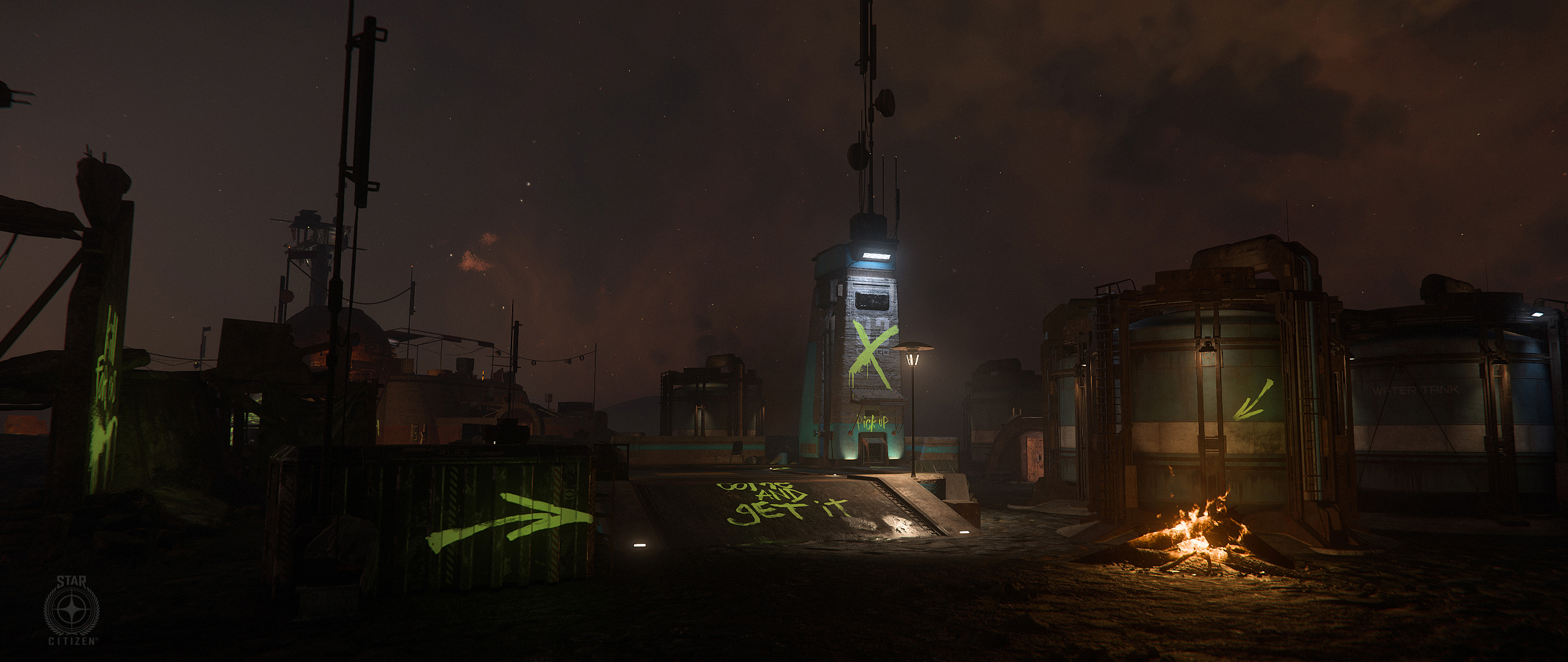
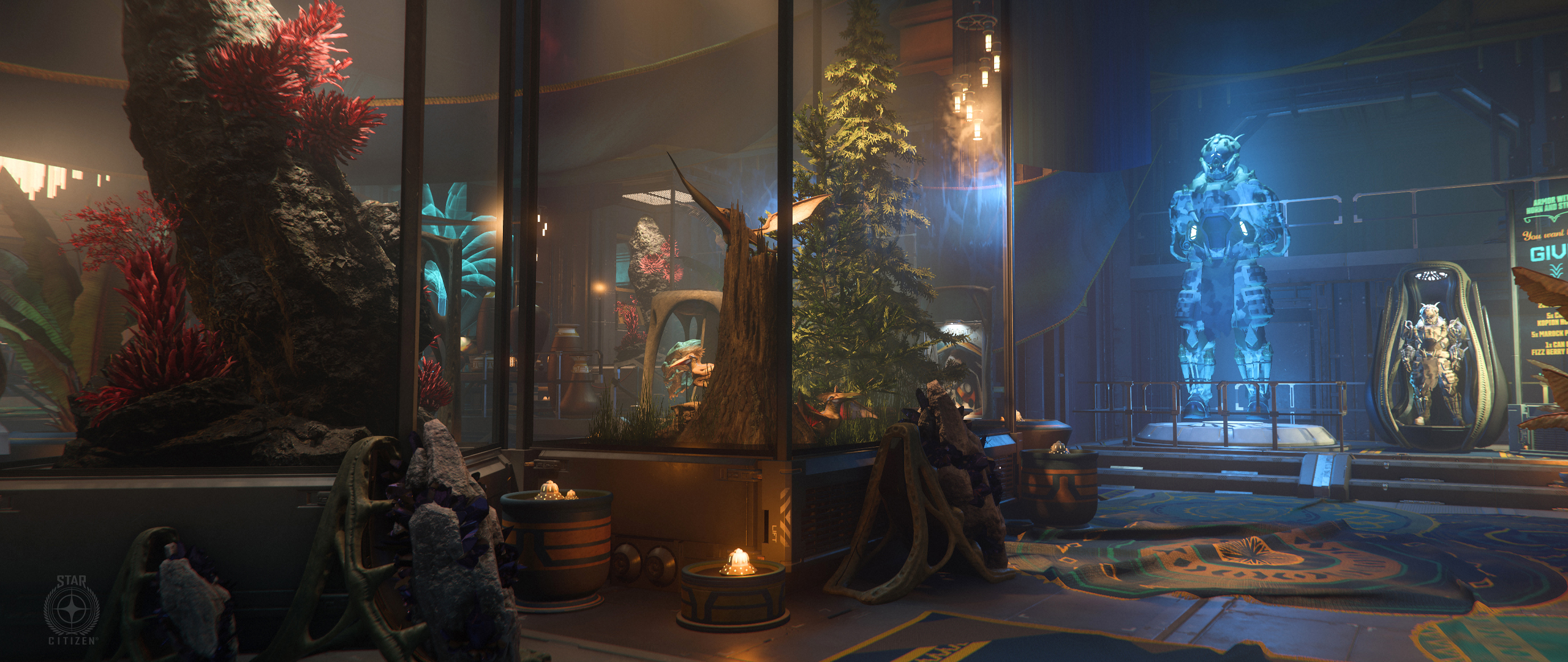
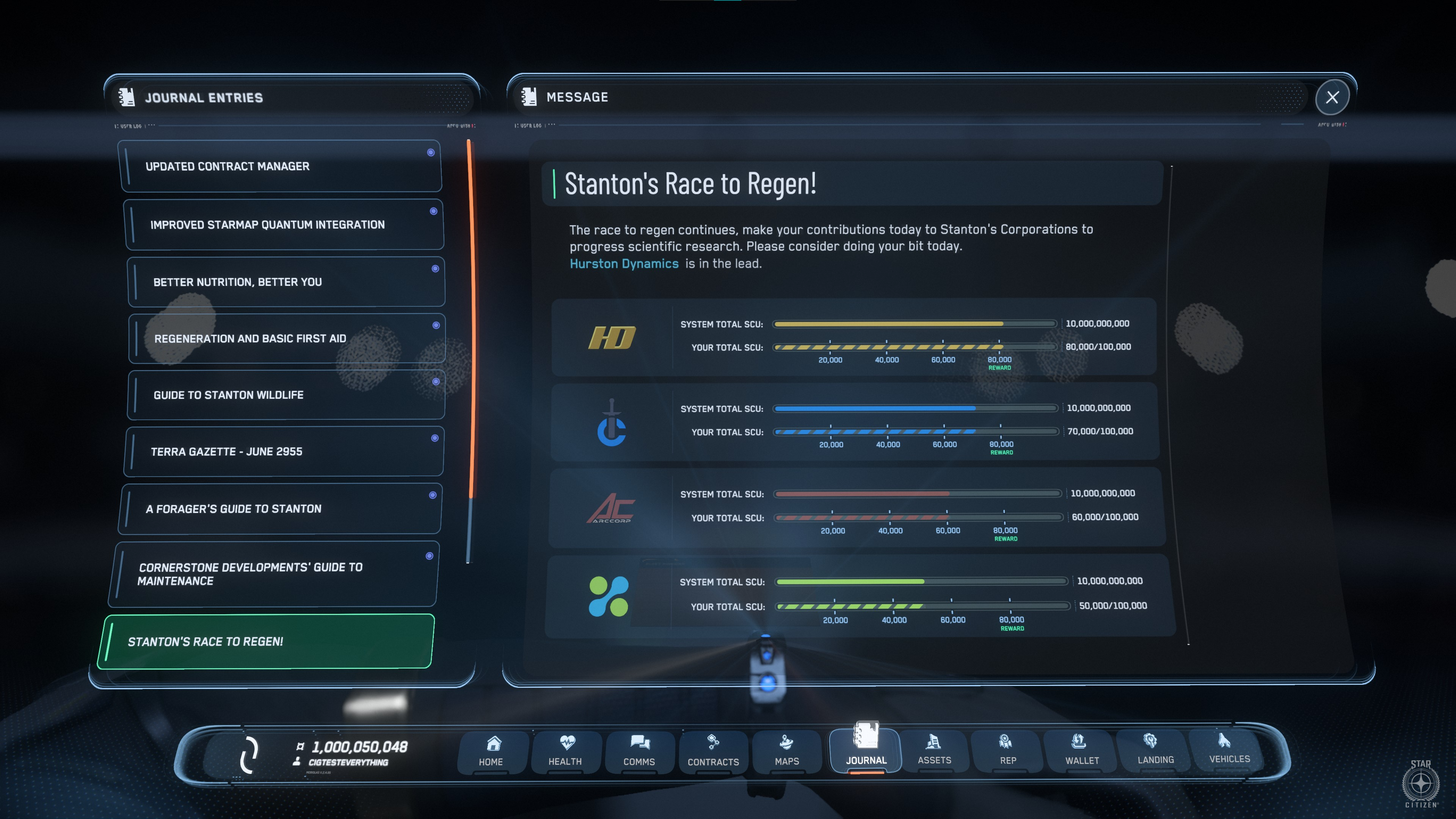
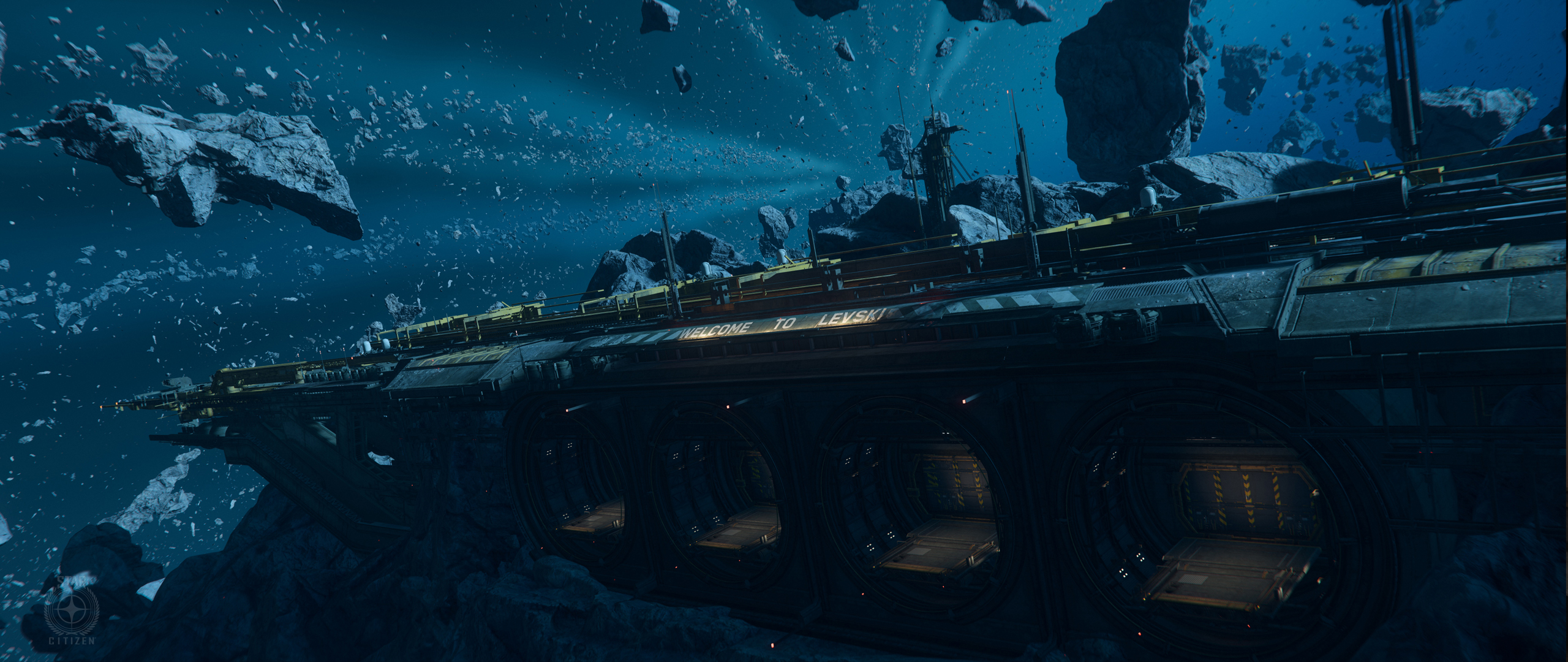
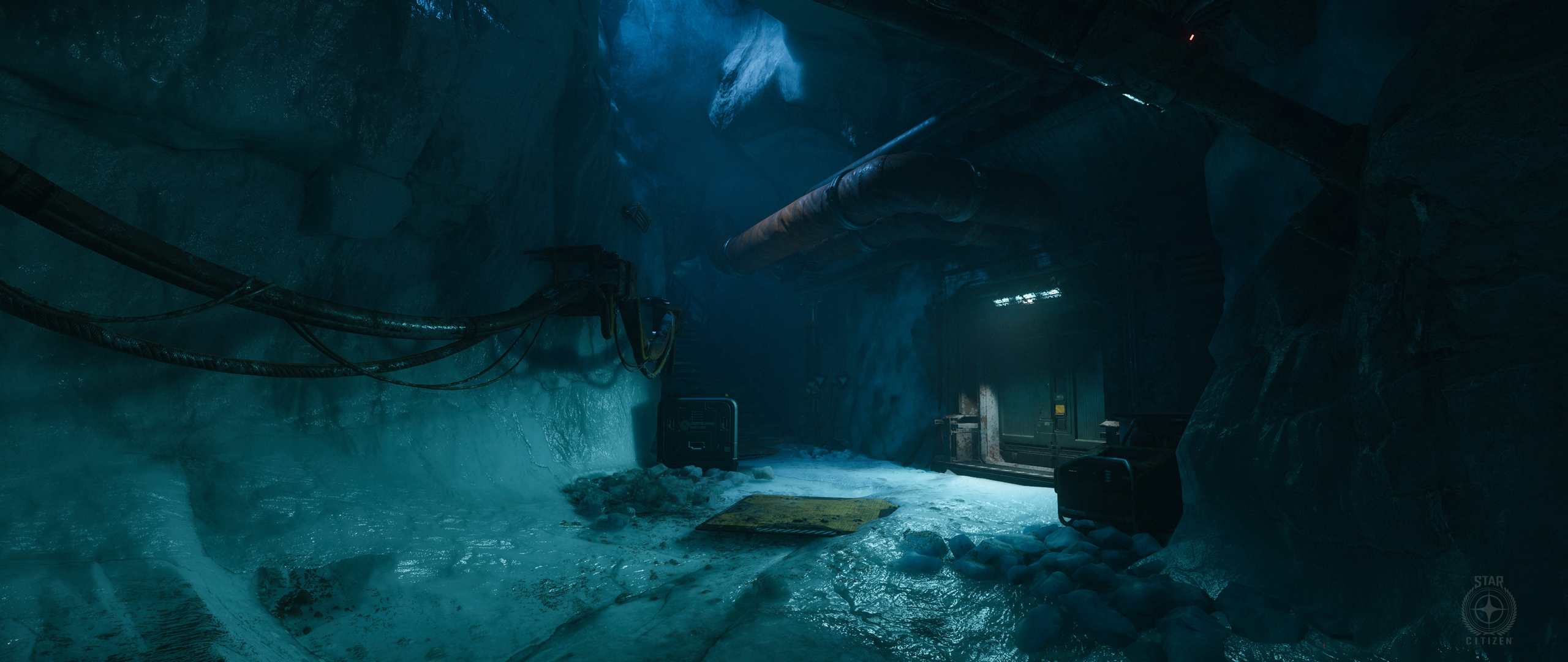
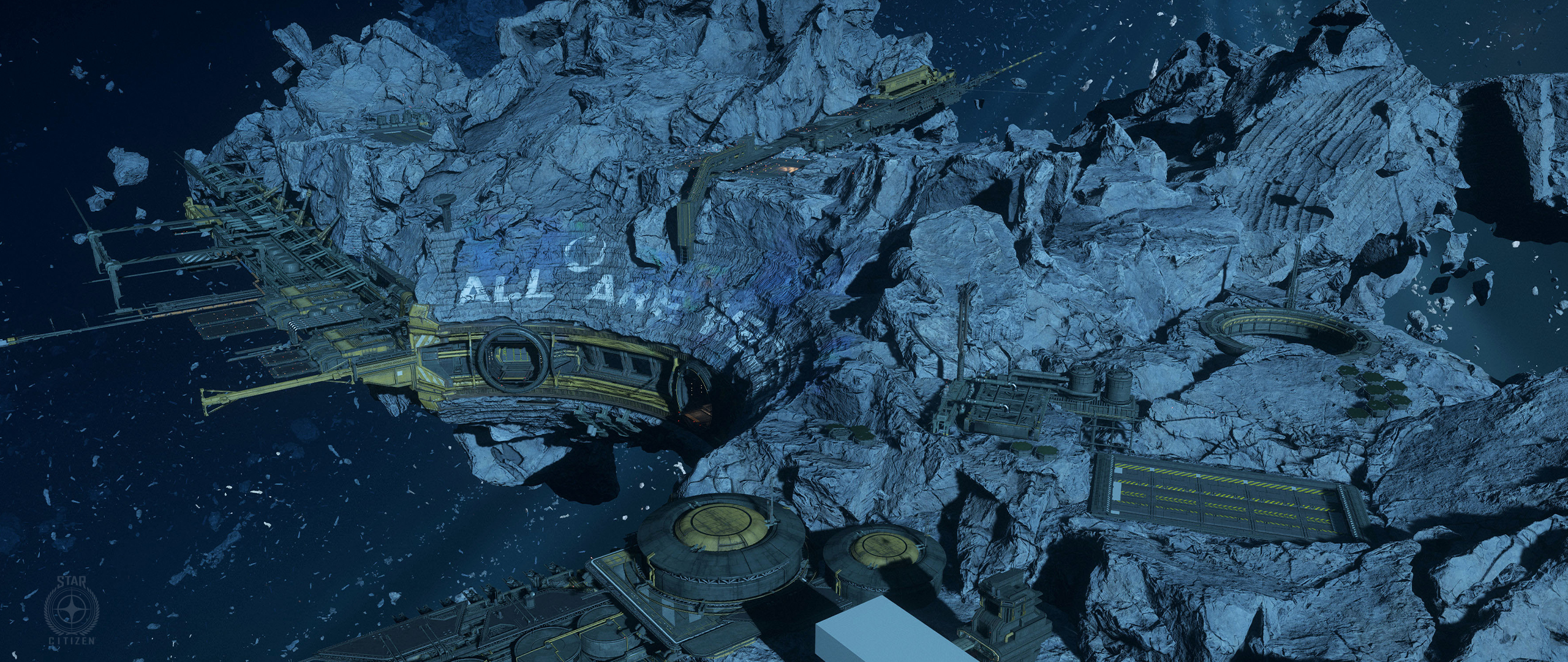
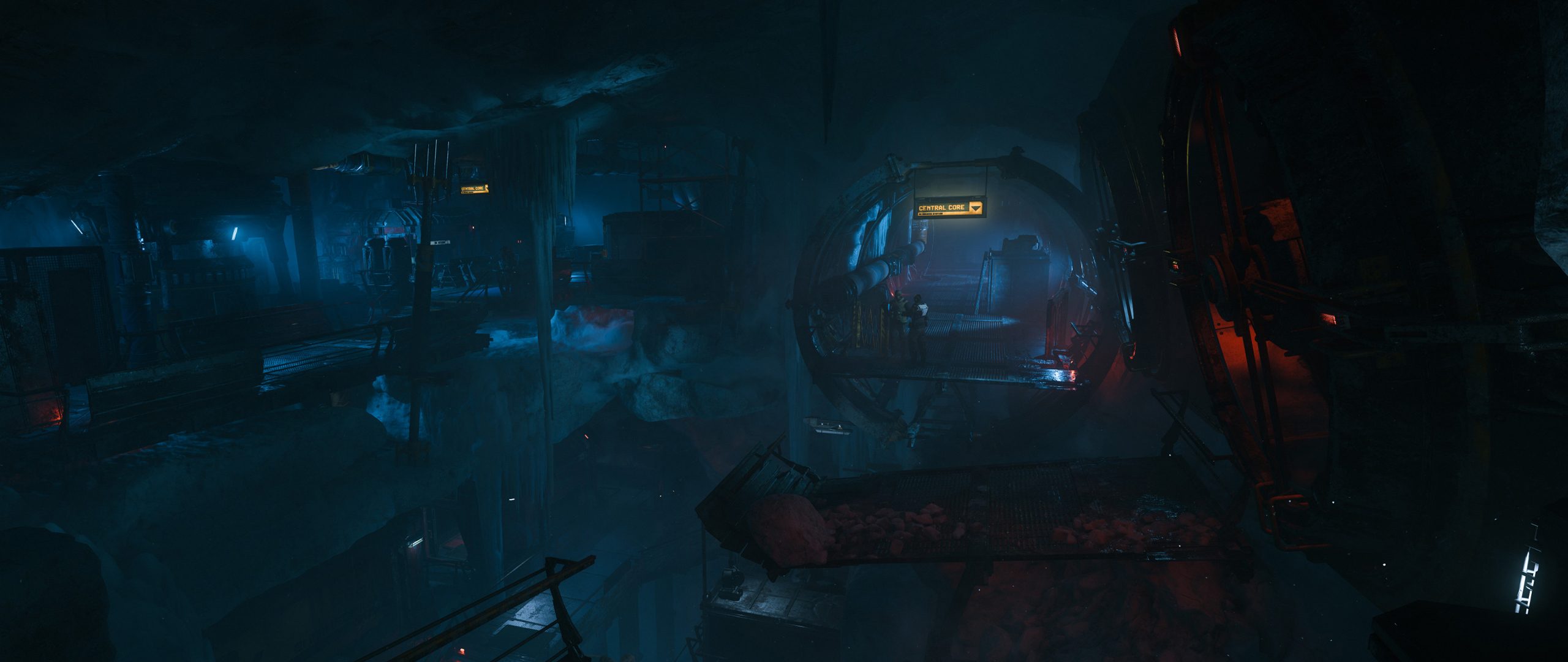
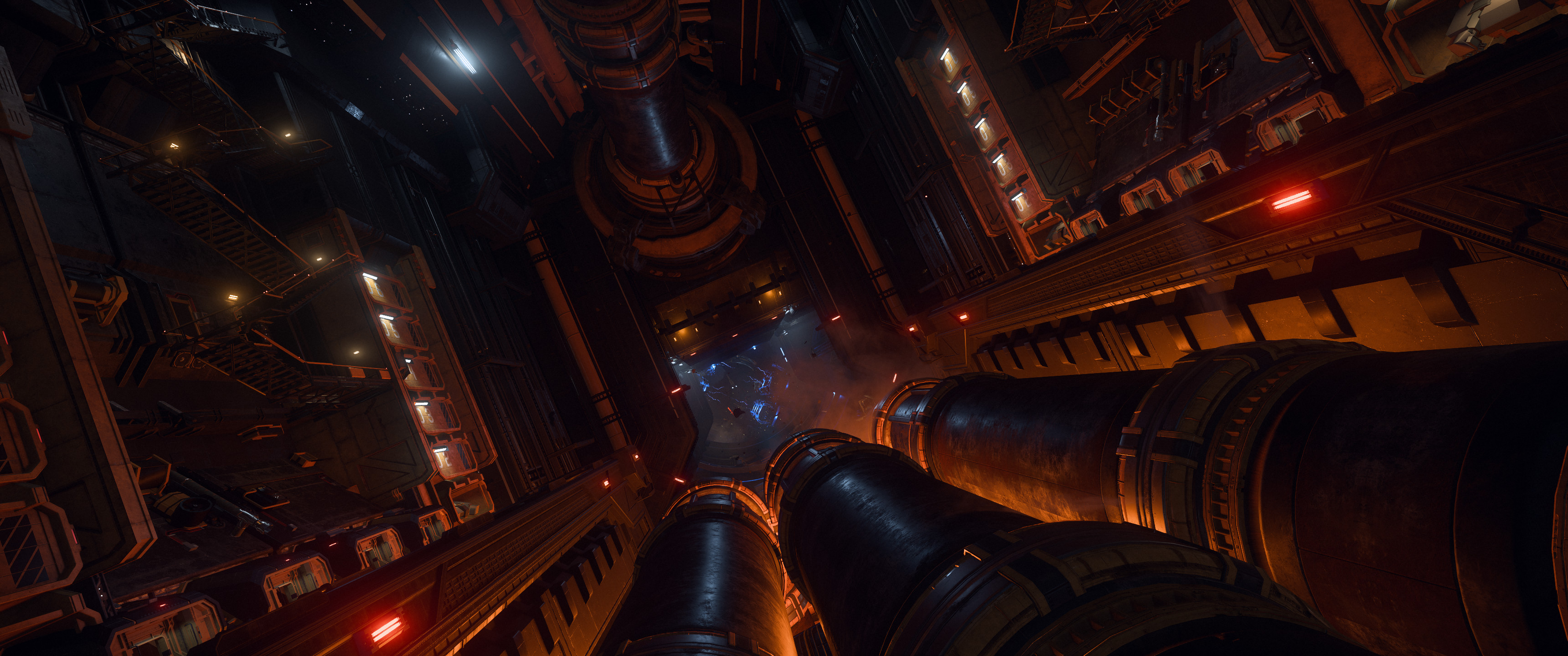
Metadata
- CIG ID
- 15833
- Channel
- Transmission
- Category
- Undefined
- Series
- Monthly Reports
- Comments
- 58
- Published
- 9 years ago (2017-04-15T00:00:00+00:00)