Monthly Studio Report: June 2017
Transmission Undefined Monthly ReportsContent
Greetings Citizens!
Welcome to the Monthly Report for June 2017, our collection of studio reports and videos from our offices around the world showcasing the progress we’ve made over the past month.
CLOUD IMPERIUM: LOS ANGELES
ENGINEERING
As part of the upcoming 3.0 release, we’re very excited to introduce cargo as a mechanic. To ensure your ship is technically equipped to handle this, we’ve created cargo grids to provide the visual element of transporting commodities like minerals, scrap, and food. The number of commodities you have will manifest as stacks of crates located within the ship’s cargo hold and will be limited in capacity by the dimensions of the grid your ship can use. This system will also allow you to park vehicles and other loose items into the cargo hold, but will limit the amount of grid space you have available for bought or scavenged commodities. Code wrapped up on this feature and design has implemented the new cargo grids into all the ships that can carry cargo.
Engineering also finished implementing the solar system content (or what we’ve been calling object containers) into a hierarchy to ensure that outposts on a moon or planet, as well as space stations in near orbit, are all in the correct planetary grid at all times.
The team also just provided the much-needed Object Container editing. When creating a gameplay level, we build the level with a combination of Assets and Object Containers. Originally, Object Containers had to be built in the dedicated Object Container level, which, unfortunately, made the contents of the Object Container only editable in the actual Object Container level.
In the previous system, when designers used to build levels with Object Containers, if they wanted to modify the contents of that ObjectContainer, they would need to exit the current level, open the Object Container level, do some tuning, save, export, and then move back to the level. This new tool will allow the designer to edit the contents of an Object Container, save and export all while inside the level. This new workflow will save Design a lot of time.
The engineers have created a new debug and setup process to help handle vehicle interior damage states. Interior damage states will be changed based on the cumulative health of a ship. The old method was written in flowgraph, but now the process has been integrated into a vehicle component, so that it can be used in various places. This new process should help us find the problem quickly, solve it fast, and get the team back to working on features.
The update process of the Intelligent Flight Control System (IFCS) for our ships has now been converted to a batch update. Because IFCS is very isolated from the physics engine, taking in values like velocity, mass, center-of-mass, etc., and outputting one linear and one angular impulse, there’s no reason IFCS needs to be updated in lockstep with the physics thread. This change will be more efficient, but also hopefully allow a larger number of players on the servers.
The team has now completed the new quantum drive 2.0. We’ve removed the old code that controlled things like VFX and sound FX playback, as well as obstruction detection and alignment code, and moved the targeting of a QT point to the Target Selector on the ship, so the drive only cares about the travel point itself. This made the drive code much simpler and should make it run smoother. Aside from bugfixing, the team also added some features that attach to the quantum drive, such as automatically closing all external doors when doing a jump to prevent accidents by jumping out of a ship traveling at high fractions of the speed of light.
This updated quantum drive is now ready for design and art to start tweaking and implementing on all the ships, as well as for UI to start creating a more realistic feel for how such an event should be handled in-game and incorporate other features like the star map.
SHIP TEAM
The RSI Aurora went through a final art check this week, so the only remaining work will be from any incoming bugs that pop up while going through design implementation, animation updating, sound, VFX, etc. The team also created fourteen different skins for designers to utilize as well. We’re excited to get this updated version of Star Citizen’s most prolific ship into your hands, and the team here is working hard to make make this a reality.
The Anvil Terrapin is finalizing its greybox phase, which included setting up the exterior hierarchy, polishing the proxies, baked and migrated animations. For the interior, the artists are polishing the geometry in the cockpit and habitation, and moving into the final art phase. The Terrapin was also sent over to Tech Design to begin their greybox pass on the ship.
Now that the ships are being converted to Item 2.0, the team has also completely reworked the ship stats page on the website to allow for up-to-the-minute stats. The design has now been finalized, the icons finished with refined meaning and everything is currently being updated on the web.
TECH ART
The team implemented the first iteration of the landing springs technology to allow for a more cushioned landing experience on uneven terrain. From here, they will move on to the next step of full visible landing compression on the landing gear, which is slated for after 3.0’s release.
Tech Art’s role tends to increase the closer you get to a major release as performance begins to take priority over features and asset developments, so they have been reviewing the release builds to identify code and content fixes that would dramatically improve performance. One in particular is called Statoscope. It plots graphs from data logged on a per-frame basis, and provides a way of recording values (e.g. fps, number of drawcalls, etc.) from Star Citizen and showing how they change over the course of a play-through. This really helps our development team find ways to improve performance by identifying massive frame time offenders.
Tech animation improved the format that animations are saved as and then reloaded into other scenes. Due to the amount of characters and lengths of the scenes, they could formerly take up to 50 minutes to load in Maya, but with this improvement, the worst load time has been drastically reduced by over 82%, meaning cinematics won’t be waiting long to make quick iterations.
On the skinning front, a female transfer mesh has been created and the male transfer mesh has been massively updated. These transfer meshes are used with our skinning tools to automate basic skinning of all new characters. Tech animators can now spend time perfecting the weighting of the mesh allowing for a higher quality and more accurate deformation in less time.
Our tech art team identified an issue where the eyelids on many of the heads had vertex normal issues. They ultimately determined that because the vertices of the eyelids were so close together, the normal would get flipped but only on a few verts. This has now been fixed and characters can now sleep with ease.
CHARACTER TEAM
The team has been knocking out countless costumes for Squadron 42 and Star Citizen. Currently in production, the male Navy medical corpsman has entered the high poly phase. Once that’s complete, he will then go on to in-game modeling. Another female character is finishing up her in-game asset then will be sent over to get textured and rigged along with our OMC Undersuits, which have also finished up in-game modeling.
The civilians and the miners of Levski are currently being textured before heading over to rigging and implementation into their final resting place in-game on Delamar.
The team updated some of the legacy UEE and Pirate armors to not only bring them up to the visual quality of our current assets but allow them to be swappable with all newer armor pieces. We’ve officially started high-poly on some of your favorites and then will be moving onto the in-game modeling and texturing pass.
Along with the new eye options, the team began work on a multitude of hairstyles. These are all in various states of production, but a select group will be ready for 3.0.0.
An assortment of new characters, like the Male Marine BDU and Male Deckcrew, have been rigged and implemented. They can now be found on the bridge of the Idris or completing their work on the exterior of a ship in the vacuum of space. Lastly, the Female Light Marine armor and Female Explorer Suit have finished up their implementation passes.
NARRATIVE
Our narrative team has had a jam-packed month as well. With Item 2.0 coming online, they have been knocking out a massive amount of component and item descriptions needed for 3.0, everything from coolers and quantum drives to armor sets and shirts. They have been getting trained up on handling the localizations of these names and descriptions into DataForge directly, giving them a bit more oversight in making sure that the latest text is appearing in the game. The team wrote approximately 2800 lines worth of generic NPCs to liven up the universe then recorded them in a VO booth down in London. To help keep track of these assets, the team started building a Persistent Universe character tracking sheet to create a single consolidated reference for lines, file names (for all the departments like audio, animation), overall status, and priority for the massive amounts of dialogue for Mission Givers, Generic NPCs and more.
Lastly, the team has been walking through the locations of both Squadron 42 and the PU and writing up documentation of props, posters, signs, branding, and set dressing for more immersive environmental storytelling.
CLOUD IMPERIUM: AUSTIN
DESIGN
Eckhart was the big challenge this month. As the first real dynamic Mission Giver, getting Eckhart into the game required collaboration and work from several different teams. The Usables Team created the tech that allowed us to link extraneous objects such as the barstool to other usables like the high bar table, while still registering items on the table properly like the glass in Eckhart’s hand. The Mission System Team created the ability to look for missions with the “Eckhart” tag, figure out what is currently available for players, and pass those via subsumption to the player’s mission log for acceptance/rejection. Between the AI and FPS Programmers, they created an animation technique we’re calling “feather blending” that will allow blending between usable object animations such as a generic sitting animation for a barstool and the animations related to the Mission Giver conversations. And of course, the Subsumption tech/programming team facilitated all of this through the Subsumption tools and the game code that goes with it.
The team has been tackling 3.0 tasks on a variety of fronts; Pete Mackay worked on a new pass of the master excel where the pricing structure is laid out, called PriceFixer. Pete added all the new ships, ship items, armor suits and some other FPS goodies, and balanced their pricing to fall in line with the most recent design pass of the items. Since the overall design of the items is much further along than before, the gameplay implications of the items are much clearer. Although this required another pass through the items, the team is now able to more accurately predict where their base prices should sit. On top of this, he did an additional pass on mission rewards, insurance prices and respawn timers to accommodate the new missions that are coming online.
Robert Gaither worked on getting NPC’s into some of the main hub areas of our PU landing zones. He started with Grim HEX to prove out the behaviors, but the current plan is to extend these general behaviors to the other landing zones with the goal of giving a general sense of ambiance and life to the levels.
SHIP TEAM
Josh Coons, in conjunction with Tech Art finished creating the LODs and the damage pass of the Cutlass Black. He also made tweaks to the cockpit area and the rotating nacelles, based on the Tech Art feedback, and has now moved onto creating renders and videos for the website and potential marketing needs.
Chris Smith finished working on modeling and texturing the Aopoa Nox bike. Once the model was complete, he worked with many team members to provide materials for the brochure and release video.
IT/DEVOPS
Server engineering worked closely with DevOps to integrate and test Diffusion in a QA environment. The team started working with gameplay engineering to show them how to best utilize the features Diffusion offers and will continue over the next few months to identify new and old gameplay features that will be best suited as Diffusion services. The eventual goal will move more of the feature logic in Diffusion services to result in higher scalability and optimal performance.
The DevOps team quietly added more hardware to increase network capacity to handle the increasing demands on the build system due to work connected to 3.0. Meanwhile the LiveOps team has completed the build out of the latest server side expansion supporting the latest revision of shopping and subsumption. They’re still tuning and making adjustments but it’s always exciting to see the new services coming on line.
ANIMATION
This month, the animation team started on the NPC usable for counters including shopkeepers and bartenders to help bring these elements to life. Once these are complete a player will be able to walk into a shop to buy weapons, space suits, clothing, ship parts and other such things from NPCs. This will incorporate our wild line system as well, with face animation and audio captured at our mocap shoots. To complete these features, we had to capture a few transition elements that were missing, so we set up a quick mocap shoot in our office to get what we needed. Along with the bartender, we are also implementing the bar stool, so the player will be able to go, sit at a bar stool and order a drink. Finally, we finished the carry system animations. As a player, you can now pick up a standard size box and walk around with it, which means that we have all the needed tech to expand this to a variety of uses.
The Austin Ship Animation team wrapped up establishing the standard for the cockpit experience, as well as polishing and creating new, improved animations for our next release. In addition to various bug fixes, they worked with the design and programming teams to bring the same level of interactions you get in the cockpit to ship turrets, which includes g-force reactions, hit reactions, as well as g-loc pass out and wake up sequences when you pull too many g’s.
QA
For June, Austin QA has been testing new features and preparing for 3.0, specifically new and overhauled Star Marine weapons, the Crusader moons, Levski, new Missions, the improved mobiGlas interface and apps (particularly StarMap). Now that many more ships have been converted for Item 2.0, each one requires a complete sweep for issues, as well as a review of old issues such as animation and ship idling to see what may have carried over in the new implementations. Stability and performance were also a major focus as well, with Austin QA working closely with our UK counterparts to conduct regular playtests and captures for the state of the game. Squadron 42 testing groups worked closely with the rest of team as well, as new tech means new bugs that are often shared between both groups of testers.
The team also provided additional support for the animation team; handling mocap file cleanup, supporting setup and teardown for pick-up shoots and other tasks that free up the animators to handle important items. New tools and tech are being developed in all four studios, so the team is constantly checking shelved check-ins and binaries for problems and making sure everything is ready before it gets checked in for the rest of the company to use. In the past month, this has included changes to resource management for objects and planets, new build distribution tools, server changes to support subsumption, as well as network code improvements and a refactor of the material manager.
PLAYER RELATIONS
The Player Relations team continued to prepare for upcoming 3.0 work, and can’t wait to give backers the New Player Experience that will go on the website to match the new content coming in game. The Evocati ranks will expand in the coming weeks, and the team welcomed two new hires to expand the team’s overall headcount.
FOUNDRY 42: UK
SPRINTS
On the programming side, the team continued to support the cockpit experience sprint, with the goal of making it more dynamic. This included incorporating the physiological effects, such as the black-out and red-out, into the actor status system. That way it is all controlled by one system and can influence other things like the player’s breathing and stamina. This sprint has also improved the g-force animations, and player hit reactions when the ship gets a dynamic impulse.
We also made improvements to the close combat gameplay. We worked on numerous knife-based and unarmed takedowns, and collaborated with design and animation to make it both look and feel satisfying.
Over the past month, the team has nearly completed converting all the old player and actor code over to the new Actor 2.0 system. Whereas the previous setup just inferred actor states from other variables, the system now has a cleaner interface for serializing between the server and all the clients, which makes writing new player features much more straightforward and makes the code much more reliable.
The brand-new patching system has been incorporated into the internal CopyBuild 3 tool that was developed in Frankfurt and Austin. Now that it’s passed QA’s approval, there has been a limited rollout to the dev team to carry on flushing out any issues with it. So far, it’s looking pretty good, and the people using it are really appreciating the reduced time it now takes to grab the latest build.
GRAPHICS
Moving onto the Graphics team, the new render-to-texture system was the key focus this month. This tech has been a major part of the hologram system which will be used for mission briefings, comms calls, mobiGlas and many other situations. The render-to-texture system will also be used for all our new user interfaces and for live-rendering of video-comms from other players.
The team upgraded our exposure-control system to deal with the enormous contrast of lighting in space. The system now takes light from your peripheral vision into account and won’t overly brighten the screen when you are near bright objects and looking into space. The graphics team also added a host of new features to the GPU particle system such as lighting, turbulence and anti-aliasing, the effects of which you’ll be seeing in 3.0.
WEAPON ART
The weapons team focused on ship weapons this month, working on the Amon & Reese laser cannons, S1 to S6, and the Klaus and Werner Laser repeater, S1 to S6, along with some associated VFX. On a smaller scale, but just as important, they created a slick looking Heavy Machine gun from Gemini, complete with the iconic cooling system seen on other Gemini guns.
ENVIRONMENT ART
This month, the concept team added another member to its ranks. Their first task will be to look at Orison while also supporting any additional needs for S42 locations.
The Environment art team built some exciting prototypes for procedural cities which will allow us to create vast cities and landing zones on planet surfaces for the Stanton System and beyond. The first test will be to help us integrate Area18 into the sprawling industrial planet of ArcCorp.
Work continued to flesh out the ‘texture of space,’ and create a greater palette for the artists to make space travel more interesting and will help support the narrative in both the PU and S42. One specific element is our new SpaceDust Shader, which creates large volumes of space dust to help provide a sense of motion. This will be added to the Stanton System for the 3.0 release. Yela’s asteroid belt has also been improved with this new shader type.
Outpost clusters and additional exterior elements have been finalized, including outpost landing pads, paths, power modules, water collectors, weather stations, relay stations and exterior lighting. The team also completed a branding and dressing pass for different corporate and independent companies who own the outposts for various functions such as mining, hydroponics, habitation and storage. The team also made unique varieties like emergency shelters, abandoned outposts and gang-owned outposts to position around the moons.
The outpost doors and airlocks were switched to the Doors 2.0 system, which allows them to incorporate the different rooms, power systems, oxygen, overrides and hazards.
The team finalized Sand, Dust and Frost materials to help blend the outposts into the moons. Decals have been used to add an extra layer of dirt buildup to help integrate the exterior landing pads and props.
The team finished all pre-polish and optimization work on the exterior truck-stop pieces and have moved on to finish the interior. They are currently working on the main hub, based off concepts from art direction, developing additional pieces to add more character to the truck-stop, and completing a first pass on the side shops and corridors. Platinum Bay landing services is having its own building set made, so it looks more distinctive; and an Admin office has been created so players have a location to drop off mission related packages. The team blocked out an observation room facing the landings pads, so players can watch ships take off and land from the interior of the station.
Finally, Admin offices were added to other Stanton locations, such as Port Olisar and Grim HEX. All the 3.0 locations were updated with the new door and airlocks 2.0 system and two new shops have been added to Grim HEX; an independent ship parts trader, and Technotic, an old electronics store that may house a mysterious character.
UI
The UI team has been cracking along on the new mobiGlas UI and all the various apps that will become available for 3.0. They also worked with the VFX team to combine particle effects and lighting to help ground the UI projection in the game-world environment.
The team drove the second multi-disciplinary sprint for the Starmap app to implement the remaining functional requirements for the 3.0 release. This involved focused collaboration between art, VFX, audio, and engineering teams to help improve the visual fidelity and user experience.
Basic functional requirements for the new Mission Manager app were implemented this month. This app allows players to view information on available missions, as well as provide the ability to accept, track, and abandon missions which have been accepted, while keeping a log of the previous missions which have been completed or attempted.
Along with the work on the item 2.0 ship conversion, they started implementing the new pilot multi-function displays (MFD) which refines the previous UI setup and adds new information and functionality like managing your ship’s systems.
Finally, the team contributed to the most recent doors and airlocks sprint, where they helped design and implement new status displays for the various airlocks throughout the system utilizing the new render-to-texture tech.
AUDIO
The Audio team has been involved in lots of different sprints and pipelines this month. The team helped to finish up the actor status system, so that the breathing from the player works alongside dialogue more intelligently, and a new outlaw music logic set was completed which will be reflective of the player’s reputation system. The team also revised the environmental and ambient sound for various locations for the 3.0 release with members of the audio team even attending a character-based sound recording at Shepperton Studios.
Weapon audio completed work on the rail gun and have made steady progress on derelict ship audio and the interior ship audio for the Javelin.
ANIMATION
The Animation team worked closely with gameplay programming to continue developing the take down kill mechanics.
They continued to tweak weapon improvements and created a more flexible system for the jump mechanic to handle more environments and gravity states.
The mobiGlas has been moved from a lookpose to an aimpose, which will allow increased functionality, and had some extra animation added to the enter and exit states to make it feel more connected to the player.
The team continued to export and test AI combat assets as well as cinematic scenes for design to implement in engine.
The Derby Studio has been busy on 3.0 Mission Givers’ face and body animation and continued to turn around facial animation for SQ42 and future PU releases.
The Mo-Cap team set up the Optitrack system for a quick shoot in the new office space. It was great to see such a quick turnaround of data, from shoot to in-game in a matter of days.
There was another quick Audio/Headcam shoot to pick up some last-minute requests for 3.0 and the team quick edited the facial data and put it into production.
SHIP TEAM
Derelict versions of the Starfarer, Caterpillar, Constellation and Freelancer are ready to be used in space and on planets for various missions. The team also implemented the necessary tools to correctly place these wrecks on planets so they all conform nicely to the terrain. In addition to this work, the team has been doing a bug-fixing pass to address collision issues and minor art tweaks.
Extensive work is being done on the Eclipse’s cockpit, specifically on the dashboard. The team worked closely with other departments to lock down the layout of the monitors to make sure that the design is appealing and legible. Layout is also an important factor for Item 2.0 as buttons and switches need to be specifically placed within the pilot’s reach to create further interactivity and immersion. The team also worked on the landing gears and the wings.
The team finalized geometry on the Hull C’s folding section and blocked in materials, then moved onto finishing the mechanical rig to make sure it operates without any collisions. The front of the interior went through an initial lighting pass and is now being polished to make the areas more cohesive. The rear of the interior has been blocked out and each room is now being modeled.
Fans of the Reclaimer will be pleased to hear that there are only 3 rooms left to go through final art. Over the past month, the team wrapped up final art on the cargo room and the main lift with the goal of maximizing the space to allow for easier transportation of cargo. For the cockpit, the team implemented retractable screens which fold around the player when seated to make the confined area more functional. The team continued work on the bridge area and bridge lift, which provides access to the lower deck, and were thrilled to see the tractor beam seats transition from concept to final art.
FOUNDRY 42: DE
LEVEL DESIGN
The Level Design team finished their work for the surface outposts and passed them along to the Environment Art team. They also turned over whiteboxes for both the modular hangars and garages to the art team for their visual exploration phase.
With the whiteboxing phase complete, they’re focused on implementing the markup required for all our locations, this involves everything from room systems (breathing), environment interactions (e.g. vaulting), elevators and consoles for spawning ships and vehicles. Levski will have a combination of hangars and garages to spawn ships, as well as vehicles to explore the planetary surface. With the bulk of the work completed on the previously mentioned locations they’re now moving over to the remaining Flagship Landing Zones for the Stanton system. The first ones they will tackle are Area18 and Lorville, followed by Orison and New Babbage.
ENGINE TEAM
The engine team worked on consistent capturing of both atmosphere and sky in cube maps so we can seamlessly blend between global atmosphere and local cube map based lighting. This new system will ultimately give the game a higher level of visual fidelity. They implemented an improved compression algorithm for the new pak file system to allow for more efficient data streaming due to reduced CPU overhead during decompression. This will be part of the new incremental patcher, which is designed to make patches and updates much more efficient.
They also worked on one of our internal tools called the Planet Editor (PlanEd). Artists and designers have several needs for marking areas on a planet (identify where specific objects should be spawned within an ecosystem, areas to be punched out to embed brushes or complex structures such as landing zones, etc.), so the code was unified to make it easier to reuse and extend in the future as more functionality is needed.
AI
The AI team has been busy as usual. This month, they worked on Buddy AI, where NPCs will intelligently follow a designated leader, and made progress on ship AI, getting it one step closer to be fully controlled via Subsumption.
The team also worked on a sprint that focused on Human Combat. They spent time refining behaviors for first reactions to enemies seen and events heard. The reactions vary in direction and speed, from casual situations, to quick reactions for loud events and so on. This was achieved by triggering the appropriate animation from a start pose to the action intended and once the behavior is verified, they’ll get fully hooked up in game. They also made progress on Friendly Fire to make sure Friendlies are identified correctly in combat situations.
VFX
The Frankfurt VFX team continued to work on effects for the various planet surface types, covering a wide range of effects, from simple footsteps, to weapon impacts, and vehicle tire effects.
They also did some early experimentation with rigid body simulations and the workflow for S42 cinematics. This will cover the many mesh destruction and deformation animations that are required for the S42 single player missions.
LIGHTING
The lighting team brought all surface outposts to final lighting, which included creating a consistent set of lighting fixtures, temperature charts, and rules which we can use to define how each type of outpost looks. The team also created a library of prefabs combining existing props with lighting elements which can be easily iterated on and propagated across all outposts.
TECH ART
The Tech Art team had a variety of tasks this month. They continued to create numerous Mannequin animation fragments for the Cinematic team.
They implemented the game Entity for the new Kastak Arms Custodian SMG energy weapon with the blocked-out mesh and rig. Now that it’s implemented, other departments like animation and VFX can start working with it in game.
The team added additional features to our internal Playblast tool to make it easier for the animators to create simple renders of their work, which are primarily used for animation reviews.
Finally, they also made great progress with new weapon dynamics and secondary motions using both in-game physics and simulation. The initial results were very promising, and the secondary animation will add one more level of subtle detail and realism to the verse.
ENVIRONMENT ART
This month, the Environment Art team worked on the updated material distribution, which will add a more varied breakup of the ecosystem ground materials on the surface of all three moons. The team nearly wrapped up work on the landing pads that will go with the surface outpost to give the players a stable solid landing point on what otherwise might be rough terrain. The surface of Delamar also received its final polish, with geology and materials being updated and fine-tuned. The surface is also getting an FX pass, adding an extra layer of visual interest to the environment and atmosphere. The area surrounding Levski will also have more areas of interest for players to explore.
In Levski, final touches are being put into the Customs area. All player traffic in and out of Levski will have to go through this checkpoint, so extra effort is being put in to make it both visually interesting and provide a potential deterrent for players trying to smuggle in unwanted goods.
The team also nearly completed work on the garages and will soon be ready to include them in the level. Once this work is completed, players will be able to request a vehicle in the garage and go out and explore Delamar’s surface. The elevators in Levski have also been updated with new models fitting the modular building set that we are using across the game.
GAME PROGRAMMING
The team finished up the remaining weapon features for 3.0 such as the Railgun cover animations, delayed recoils, and delayed ADS reticle.
They also completed the first iteration of the doors and airlocks and are now implementing the technical hooks for adding VFX and sound effects to make them available for the rest of the team to use. With the help of engineers from the UK and LA offices, the technical design for the network code of the new weapon system is being fleshed out and the overall research phase is coming to an end. The first test implementations will be started as soon as all other 3.0 tasks are completed.
CINEMATICS
Cinematics worked with UK graphics engineering to test out a working version of our brand new “Holographic projection volume entity tech.” This essentially provides a target holographic volume with content, fed from a source scene, that gets rendered into the volume and will allow us to have characters communicating via hologram to characters in a scene or have the hologlobes switch to a scripted mode and show mission briefings, all in real-time without resorting to things like pre-rendered motion graphics. This tech, minus the holographic component, will also be used to stream comms from other ships (cockpits) onto cockpit MFDs or other displays, all in real-time. As usual, the team also made progress across multiple chapters for S42.
QA
The Frankfurt QA team started testing the new CigDataPatcher in May and testing has continued through into June. Patcher testing is done daily, as well as on the client, Editor, and dedicated game server copied via CigDataPatcher. The main goal is to make sure there are no differences between builds pulled via the new patcher and builds pulled with our current internal build tool, CopyBuild 2. CopyBuild 3 had also been rolled out to QA at the beginning of June and has been in its QA testing phase in conjunction with CigDataPatcher.
Subsumption Editor testing continued to be a regular part of their weekly tasks as new versions with new features become available. QA works closely with Tony Zurovec and Francesco Roccucci to ensure that each Subsumption Editor release is free of anything that could block the development process. The team also spent a good portion of time testing four player gameplay in the Stanton System Persistent Universe level.
SYSTEM DESIGN
The System Design team continued to expand the library of usables for both the PU and S42. The Air Traffic Control also made headway and you should be able to experience this in-game soon. They started work on the FPS companion/buddy AI, including all the orders you can give them and the behaviors needed for those orders to take effect. The Actor Status system is being internally tested right now and is going through its final tweaking and balancing. They also put some finishing touches to the conversation system to allow our Cinematics team to create the best experiences possible.
WEAPONS
The weapons team blocked out numerous universal grip and optics attachments and converted older blocked out items to work with our new attachment rail system. The team did a quick first pass to test them on the existing guns to see how well they work and if any of the designs need to be adjusted.
They also completed the first pass blockout for the Klaus & Werner “Demeco,” light energy machine gun. For ship weapons, they finished the Preacher Armaments Distortion S4-S6 and Upgrade Levels 1-3. They also did a first pass blockout including rough animations for the Klaus & Werner Laser Repeater S1-S3, the Neutron Repeater S1-S3 and the Apocalypse Arms Ballistic Scattergun S1-S3.
TURBULENT
This month we moved 0.3.6A version of Spectrum up to the PTU for regression testing which will test all the backend changes that we’ve made to prepare for the eventual desktop integration.
The team also worked on features that will be in the new 0.3.6 build. The first of which is the forum editor. The new version will be introducing drafts when creating thread posts. The system will save your progress and allow you to move to other threads before returning and finishing your post. The new forum editor will also allow you to do inline images and add more markdown support for increased styling options.
Another major feature in 0.3.6A is custom roles for your Organization. The team has created a system that will let you see member lists directly from your Spectrum or Management port and then allow you to change the roles of users by visiting their profile. These customs will also have a custom set of permissions in addition to the ones provided by the Org system. This should create flexibility in how Org leaders assign members to groups, how you let them see specific sub-forums or sub chats within your orgs.
Mini profiles are also going to be converted to a more compact setup with a dedicated set of actions. You will now be able to see post counts for all the users as well as their Karma. If you aren’t familiar, Karma is a system that gives you points when people upvote content that you’ve created. The mini profile will also include a hotlink to message people directly rather than navigating through several sub-menus.
In other news, the team laid some important groundwork on the backend for voice. The team worked on the transmission part of our voice infrastructure, specifically how servers will direct and route people to different voice servers and what kind of data channel will work best for transmitting voice along with game data.
Totally unrelated to Spectrum, the team built a system for 3.0 to handle crashes. Several years ago, the team created a system called Panic that tracks client crashes, so they integrated our Panic system with an UI tool called Sentry to track client crashes, see the repro counts, assign those to developers, link them to JIRA issues, and view regression notifications from the game crashes. The team developed a custom SDK integration with Sentry that’s going to help developers in the testing phases for 3.0.
Otherwise, the main teams continued to work on ‘Welcome to SC’, the new Star Citizen website revamp. Most of the design work is finished for mobile, tablets, and other platforms and have now entered full coding mode.
Community
We were proud to introduce the next great space bike, the Aopoa Nox! The Nox is a sleek, alien ship design that takes the Dragonfly bike concept and presents it a little differently. We introduced the sale with small interactive RP sessions on Twitter and Spectrum, then followed it up with a cool racing brochure and a beautiful website from the team at Turbulent. We were so excited to see how happy everyone was with their bikes, and can’t wait to let you try them yourselves in Alpha 3.0.
This month’s community shows covered everything from bikes to … the parts that make bikes! Happy Hours included an in-depth look at Items 2.0 and a fun throwback stream to the days of Reverse the Verse. Loremakers opened up more of the galaxy and Bugsmashers showed you some of the first in-engine footage of the Nox.
This summer, Bar Citizens are taking off like a rocket! It seems like there are more of them every weekend, including one week in June where there was a meetup close enough to each of our studios that developers around the world were all able to attend! In Los Angeles, we were on hand to kick off the first ever Food Citizen at a Peruvian restaurant — great food and even better company!
Event planning for our big presentations later this year, Gamescom and CitizenCon, continued and tickets for both went on sale and were gone almost immediately! In the case of CitizenCon last weekend, batches of tickets sold out in under a minute. We’re looking at options for bigger venues for next year and will keep you updated.
Behind the screens, we continued work on the New Player Experience and the long-awaited ship stats updates. The former is aimed at helping new backers learn to fly and navigate the verse, while the latter will provide more accurate, up-to-date ship stats through the website.
We tried a new sort of article for Jump Point this month, turning a design document on thrusters into an article about… well, how we place thrusters. It’s a tribute to the depth of the systems the team is creating for Star Citizen that something so obscure could turn into a pretty interesting guide!
Subscribers had a couple of cool treats this month, including a holographic model of Port Olisar for their hangars, several vault updates covering the development of the Nox and a license to try the Caterpillar free of charge all June. We saw some pretty amazing tricks when the Cat fleets massed, including Caterpillar bowling!
Finally, the Subscriber Town Hall held this month starred the Star Citizen character tech team. Characters are going to be at the heart of Star Citizen, and it’s always great when we can highlight some of the team responsible for the tech that will allow you to create YOUR Star Citizen in the ‘Verse. So, thanks to everyone who participated and thank you especially to the Subscribers who provide the questions each and every month.
WE’LL SEE YOU NEXT MONTH…
Grüße Bürger!
Willkommen zum Monatsbericht für Juni 2017, unserer Sammlung von Studioberichten und Videos aus unseren Büros auf der ganzen Welt, die die Fortschritte des letzten Monats zeigen.
WOLKENIMPERIUM: LOS ANGELES
MASCHINENBAU
Im Rahmen der kommenden Version 3.0 freuen wir uns sehr, die Ladung als Mechaniker vorzustellen. Um sicherzustellen, dass Ihr Schiff technisch dafür gerüstet ist, haben wir Frachtgitter geschaffen, die das visuelle Element des Transports von Gütern wie Mineralien, Schrott und Lebensmitteln darstellen. Die Anzahl der Waren, die Sie haben, manifestiert sich als Stapel von Kisten im Laderaum des Schiffes und ist durch die Abmessungen des Gitters, das Ihr Schiff verwenden kann, in seiner Kapazität begrenzt. Dieses System ermöglicht es Ihnen auch, Fahrzeuge und andere lose Gegenstände in den Frachtraum zu parken, begrenzt aber die verfügbare Gitterfläche für gekaufte oder gesäuberte Waren. Der Code, der auf dieser Funktion und diesem Design aufbaut, hat die neuen Frachtgitter in alle Schiffe implementiert, die Fracht transportieren können.
Das Engineering hat auch die Implementierung des Inhalts des Sonnensystems (oder der so genannten Objektcontainer) in eine Hierarchie abgeschlossen, um sicherzustellen, dass sich die Außenposten auf einem Mond oder Planeten sowie die Raumstationen in der Nähe der Umlaufbahn jederzeit im richtigen planetarischen Raster befinden.
Das Team hat auch nur die dringend benötigte Bearbeitung des Objektcontainers übernommen. Wenn wir ein Gameplay-Level erstellen, bauen wir das Level mit einer Kombination aus Assets und Object Containers auf. Ursprünglich mussten Object Container in der dedizierten Object Container Ebene erstellt werden, was leider dazu führte, dass der Inhalt des Object Containers nur in der eigentlichen Object Container Ebene editierbar war.
Im vorherigen System, als Designer früher Ebenen mit Objektcontainern erstellten, mussten sie, wenn sie den Inhalt dieses Objektcontainers ändern wollten, die aktuelle Ebene verlassen, die Ebene des Objektcontainers öffnen, einige Einstellungen vornehmen, speichern, exportieren und dann zur Ebene zurückkehren. Dieses neue Tool ermöglicht es dem Designer, den Inhalt eines Objektcontainers zu bearbeiten, zu speichern und zu exportieren, während er sich innerhalb der Ebene befindet. Dieser neue Workflow wird dem Design viel Zeit sparen.
Die Ingenieure haben einen neuen Debug- und Einrichtungsprozess entwickelt, der bei der Behandlung von Schäden im Fahrzeuginnenraum hilft. Der Zustand der Innenbeschädigung wird basierend auf dem kumulativen Zustand eines Schiffes geändert. Das alte Verfahren wurde im Flussdiagramm geschrieben, aber jetzt wurde der Prozess in eine Fahrzeugkomponente integriert, so dass er an verschiedenen Stellen eingesetzt werden kann. Dieser neue Prozess soll uns helfen, das Problem schnell zu finden, es schnell zu lösen und das Team wieder zur Arbeit an Features zu bringen.
Der Aktualisierungsprozess des Intelligent Flight Control System (IFCS) für unsere Schiffe wurde nun auf ein Batch-Update umgestellt. Da IFCS sehr isoliert von der Physik-Engine ist, Werte wie Velocity, Mass, Center-of-Mass, etc. aufnimmt und einen linearen und einen Winkelimpuls ausgibt, gibt es keinen Grund, warum IFCS im Gleichschritt mit dem Physik-Thread aktualisiert werden muss. Diese Änderung wird effizienter sein, aber hoffentlich auch eine größere Anzahl von Spielern auf den Servern ermöglichen.
Das Team hat nun den neuen Quantenantrieb 2.0 fertig gestellt. Wir haben den alten Code entfernt, der Dinge wie VFX- und Sound-FX-Wiedergabe sowie Hinderniserkennung und Ausrichtungscode steuert, und das Targeting eines QT-Punktes auf den Target Selector auf dem Schiff verschoben, so dass sich das Laufwerk nur um den Fahrpunkt selbst kümmert. Dies machte den Laufwerkscode viel einfacher und sollte ihn ruhiger laufen lassen. Neben der Fehlerbehebung fügte das Team auch einige Funktionen hinzu, die am Quantenantrieb befestigt sind, wie z.B. das automatische Schließen aller Außentüren bei einem Sprung, um Unfälle zu vermeiden, indem es aus einem Schiff sprang, das mit hohen Bruchteilen der Lichtgeschwindigkeit unterwegs ist.
Dieser aktualisierte Quantenantrieb ist nun bereit für Design und Kunst, um mit der Optimierung und Implementierung auf allen Schiffen zu beginnen, sowie für die Benutzeroberfläche, um ein realistischeres Gefühl dafür zu schaffen, wie ein solches Ereignis im Spiel gehandhabt werden sollte, und andere Funktionen wie die Sternenkarte zu integrieren.
SCHIFFTEAM
Das RSI Aurora hat diese Woche einen abschließenden Kunst-Check durchlaufen, so dass die einzige verbleibende Arbeit von allen eingehenden Bugs stammt, die auftauchen, während sie durch die Design-Implementierung, die Aktualisierung der Animation, den Sound, VFX, etc. gehen. Das Team erstellte auch vierzehn verschiedene Skins, die auch von Designern verwendet werden konnten. Wir freuen uns, Ihnen diese aktualisierte Version von Star Citizens produktivstem Schiff in die Hände zu geben, und das Team hier arbeitet hart daran, dies zu verwirklichen.
Die Amboss-Schildkröte beendet gerade ihre Greybox-Phase, die den Aufbau der äußeren Hierarchie, das Polieren der Proxys, gebackene und migrierte Animationen umfasste. Für den Innenraum polieren die Künstler die Geometrie im Cockpit und in der Wohnung und gehen in die letzte Kunstphase. Die Schildkröte wurde auch an Tech Design geschickt, um ihren Graybox-Pass auf dem Schiff zu beginnen.
Nachdem die Schiffe nun auf Punkt 2.0 umgestellt werden, hat das Team auch die Schiffsstatistiken-Seite auf der Website komplett überarbeitet, um aktuelle Statiken zu ermöglichen. Das Design ist nun fertiggestellt, die Icons mit verfeinerten Bedeutungen versehen und alles wird derzeit im Web aktualisiert.
TECH ART
Das Team implementierte die erste Iteration der Landefedertechnologie, um ein besseres Landeerlebnis in unebenem Gelände zu ermöglichen. Von hier aus geht es weiter zum nächsten Schritt der voll sichtbaren Landeanpressung am Fahrwerk, die nach dem Release von 3.0 vorgesehen ist.
Die Rolle von Tech Art nimmt tendenziell zu, je näher Sie einem Hauptrelease kommen, da die Leistung anfängt, Vorrang vor Features und Asset-Entwicklungen zu haben, weshalb sie die Release-Builds überprüft haben, um Code- und Content-Fixes zu identifizieren, die die Leistung dramatisch verbessern würden. Eines davon wird als Statoskop bezeichnet. Es stellt Diagramme aus Daten dar, die pro Frame aufgezeichnet wurden, und bietet eine Möglichkeit, Werte (z.B. fps, Anzahl der Drawcalls, etc.) von Star Citizen aufzuzeichnen und zu zeigen, wie sie sich im Laufe eines Play-Through verändern. Dies hilft unserem Entwicklungsteam wirklich, Wege zur Leistungssteigerung zu finden, indem es massive Rahmenzeitstraftäter identifiziert.
Die Tech-Animation verbesserte das Format, in dem Animationen gespeichert und dann in andere Szenen geladen werden. Aufgrund der Anzahl der Charaktere und Längen der Szenen konnten sie früher bis zu 50 Minuten zum Laden in Maya benötigen, aber mit dieser Verbesserung wurde die schlechteste Ladezeit um über 82% drastisch reduziert, so dass die Kinematiken nicht lange auf schnelle Wiederholungen warten müssen.
An der Skinning-Front wurde ein weibliches Übertragungsnetz erstellt und das männliche Übertragungsnetz massiv aktualisiert. Diese Transfer-Netze werden mit unseren Skinning-Tools verwendet, um das grundlegende Skinning aller neuen Charaktere zu automatisieren. Tech-Animatoren können nun Zeit damit verbringen, die Gewichtung des Mesh zu perfektionieren, was eine höhere Qualität und genauere Verformung in kürzerer Zeit ermöglicht.
Unser Tech Art Team identifizierte ein Problem, bei dem die Augenlider auf vielen Köpfen normale Knotenprobleme hatten. Sie stellten schließlich fest, dass, weil die Scheitelpunkte der Augenlider so eng beieinander lagen, das Normale umgedreht werden würde, aber nur an einigen wenigen Scheitelpunkten. Dies wurde nun behoben und die Charaktere können nun problemlos schlafen.
CHARAKTER-TEAM
Das Team hat unzählige Kostüme für Squadron 42 und Star Citizen ausgezogen. Derzeit in Produktion, der männliche medizinische Sanitäter der Marine ist in die High-Poly-Phase eingetreten. Sobald das erledigt ist, wird er mit der In-Game-Modellierung fortfahren. Eine weitere weibliche Figur beendet ihr In-Game-Objekt und wird dann rübergeschickt, um es strukturiert und manipuliert zu bekommen, zusammen mit unseren OMC Undersuits, die auch die In-Game-Modellierung abgeschlossen haben.
Die Zivilisten und die Bergleute von Levski werden derzeit strukturiert, bevor sie zur Takelage und Umsetzung in ihre letzte Ruhestätte im Spiel auf Delamar übergehen.
Das Team aktualisierte einige der alten UEE- und Piraten-Rüstungen, um sie nicht nur auf die visuelle Qualität unserer aktuellen Bestände zu bringen, sondern sie auch mit allen neueren Rüstungsteilen austauschen zu können. Wir haben offiziell mit High-Poly bei einigen deiner Favoriten begonnen und werden dann auf den In-Game-Modellierungs- und Texturierungspass umsteigen.
Neben den neuen Augenoptionen begann das Team mit der Arbeit an einer Vielzahl von Frisuren. Diese befinden sich alle in verschiedenen Produktionsstufen, aber eine ausgewählte Gruppe wird für 3.0.0.0 bereit sein.
Eine Reihe neuer Charaktere, wie der Male Marine BDU und Male Deckcrew, wurden manipuliert und implementiert. Sie befinden sich nun auf der Brücke der Idris oder beenden ihre Arbeiten an der Außenseite eines Schiffes im Vakuum des Weltraums. Schließlich haben die weibliche leichte Marine Rüstung und der weibliche Entdeckeranzug ihre Implementierungsdurchgänge abgeschlossen.
NARRATIV
Unser Erzählteam hatte auch einen überfüllten Monat. Mit der Veröffentlichung von Item 2.0 haben sie eine riesige Menge an Komponenten- und Artikelbeschreibungen, die für 3.0 benötigt werden, vernichtet, von Kühlern und Quantenantrieben bis hin zu Rüstungssets und Hemden. Sie wurden darin geschult, die Lokalisierungen dieser Namen und Beschreibungen direkt in DataForge zu handhaben, was ihnen etwas mehr Übersicht verschafft, um sicherzustellen, dass der neueste Text im Spiel erscheint. Das Team schrieb etwa 2800 Zeilen mit generischen NSCs, um das Universum zu beleben, und nahm sie dann in einem VO-Stand unten in London auf. Um den Überblick über diese Vermögenswerte zu behalten, begann das Team mit dem Aufbau eines Persistent Universe Charaktertracking Sheets, um eine einzige konsolidierte Referenz für Linien, Dateinamen (für alle Abteilungen wie Audio, Animation), Gesamtstatus und Priorität für die massiven Dialogmengen für Missionsgeber, allgemeine NSCs und mehr zu erstellen.
Schließlich ist das Team durch die Standorte der Staffel 42 und der PU gelaufen und hat die Dokumentation von Requisiten, Postern, Schildern, Branding und Set Dressing für ein immersiveres Umweltgeschehen geschrieben.
WOLKENIMPERIUM: AUSTIN
DESIGN
Eckhart war in diesem Monat die große Herausforderung. Als erster wirklich dynamischer Missionsgeber erforderte es Zusammenarbeit und Arbeit von mehreren Teams, um Eckhart ins Spiel zu bringen. Das Usables-Team schuf die Technologie, die es uns ermöglichte, Fremdobjekte wie den Barhocker mit anderen Nutzgeräten wie dem Stehtisch zu verknüpfen, während wir dennoch Gegenstände auf dem Tisch genau wie das Glas in Eckharts Hand registrieren. Das Missionssystem-Team schuf die Möglichkeit, nach Missionen mit dem "Eckhart"-Tag zu suchen, herauszufinden, was derzeit für Spieler verfügbar ist, und diese per Submission an das Missionsprotokoll des Spielers zur Annahme/Ablehnung weiterzuleiten. Zwischen den KI- und FPS-Programmierern haben sie eine Animationstechnik entwickelt, die wir "Federmischung" nennen, die es ermöglicht, zwischen brauchbaren Objektanimationen wie einer allgemeinen Sitzanimation für einen Barhocker und den Animationen zu den Gesprächen mit dem Missionsgeber zu wechseln. Und natürlich hat das Subsumption Tech/Programmierteam all dies durch die Subsumption-Tools und den dazugehörigen Spiel-Code ermöglicht.
Das Team hat 3.0-Aufgaben an verschiedenen Fronten angegangen; Pete Mackay arbeitete an einem neuen Pass des Master Excel, in dem die Preisstruktur festgelegt ist, dem sogenannten PriceFixer. Pete fügte alle neuen Schiffe, Schiffsgegenstände, Rüstungsanzüge und einige andere FPS-Güter hinzu und glich ihre Preise so aus, dass sie mit dem neuesten Designpass der Gegenstände übereinstimmen. Da das Gesamtdesign der Items viel weiter fortgeschritten ist als zuvor, sind die Auswirkungen der Items auf das Gameplay viel klarer. Obwohl dies einen weiteren Durchlauf durch die Artikel erforderte, ist das Team nun in der Lage, genauer vorherzusagen, wo ihre Basispreise liegen sollten. Darüber hinaus gab er Missionsprämien, Versicherungspreise und Respawn-Timer weiter, um die neuen Missionen, die online kommen, zu bewältigen.
Robert Gaither arbeitete daran, NSC's in einige der wichtigsten Hub-Bereiche unserer PU-Landezonen zu bringen. Er begann mit Grim HEX, um das Verhalten zu beweisen, aber der aktuelle Plan ist, dieses allgemeine Verhalten auf die anderen Landezonen auszudehnen, mit dem Ziel, den Ebenen ein allgemeines Gefühl von Atmosphäre und Leben zu vermitteln.
SCHIFFTEAM
Josh Coons, in Verbindung mit Tech Art, fertigte die LODs und den Schadenspass des Cutlass Black. Er hat auch den Cockpitbereich und die rotierenden Gondeln, basierend auf dem Tech Art Feedback, optimiert und ist nun dazu übergegangen, Renderings und Videos für die Website und potenzielle Marketinganforderungen zu erstellen.
Chris Smith beendete die Arbeit an der Modellierung und Texturierung des Aopoa Nox Bikes. Nachdem das Modell fertig war, arbeitete er mit vielen Teammitgliedern zusammen, um Materialien für die Broschüre und das Release-Video bereitzustellen.
IT/DEVOPS
Das Server-Engineering arbeitete eng mit DevOps zusammen, um Diffusion in eine QA-Umgebung zu integrieren und zu testen. Das Team begann mit der Arbeit an Gameplay-Engineering, um ihnen zu zeigen, wie sie die Funktionen von Diffusion am besten nutzen können, und wird in den nächsten Monaten weiter daran arbeiten, neue und alte Gameplay-Funktionen zu identifizieren, die sich am besten als Diffusionsdienste eignen. Das letztendliche Ziel wird mehr von der Feature-Logik in Diffusionsdiensten bewegen, um eine höhere Skalierbarkeit und optimale Leistung zu erreichen.
Das DevOps-Team fügte leise weitere Hardware hinzu, um die Netzwerkkapazität zu erhöhen und den steigenden Anforderungen an das Build-System aufgrund der mit 3.0 verbundenen Arbeiten gerecht zu werden. In der Zwischenzeit hat das LiveOps-Team den Aufbau der neuesten serverseitigen Erweiterung abgeschlossen, die die neueste Revision des Einkaufs und der Unterordnung unterstützt. Sie stimmen sich immer noch ab und nehmen Anpassungen vor, aber es ist immer wieder spannend zu sehen, wie die neuen Dienste online gehen.
ANIMATION
Diesen Monat startete das Animationsteam mit dem NSC, der für Theken einschließlich Ladenbesitzer und Barkeeper geeignet ist, um diese Elemente zum Leben zu erwecken. Sobald diese abgeschlossen sind, kann ein Spieler in einen Laden gehen, um Waffen, Raumanzüge, Kleidung, Schiffsteile und andere solche Dinge von NSCs zu kaufen. Dabei wird auch unser Wild Line System mit Gesichtsanimation und Audioaufnahmen von unseren Mocap-Shootings einbezogen. Um diese Funktionen zu vervollständigen, mussten wir einige fehlende Übergangselemente erfassen, also richteten wir ein schnelles Mocap-Shooting in unserem Büro ein, um das zu bekommen, was wir brauchten. Zusammen mit dem Barkeeper implementieren wir auch den Barhocker, damit der Spieler gehen, an einem Barhocker sitzen und ein Getränk bestellen kann. Schließlich haben wir die Carry-System-Animationen fertig gestellt. Als Spieler kannst du jetzt eine Box in Standardgröße aufnehmen und damit herumlaufen, was bedeutet, dass wir über die nötige Technik verfügen, um diese für eine Vielzahl von Anwendungen zu erweitern.
Das Austin Ship Animation Team hat den Standard für das Cockpit-Erlebnis festgelegt, sowie neue, verbesserte Animationen für unser nächstes Release erstellt. Zusätzlich zu verschiedenen Bugfixes arbeiteten sie mit den Design- und Programmierteams zusammen, um die gleiche Ebene der Interaktionen, die Sie im Cockpit erhalten, auf die Schiffstürme zu bringen, die g-Kraft-Reaktionen, Trefferreaktionen sowie g-loc-Passouts und Wecksequenzen beinhalten, wenn Sie zu viele g's ziehen.
QA
Für Juni hat Austin QA neue Funktionen getestet und sich auf 3.0 vorbereitet, insbesondere neue und überholte Star Marine Waffen, die Kreuzrittermonde, Levski, neue Missionen, das verbesserte mobiGlas Interface und Apps (insbesondere StarMap). Nachdem nun viel mehr Schiffe für Punkt 2.0 umgebaut wurden, benötigt jedes einzelne eine vollständige Fehlersuche sowie eine Überprüfung alter Probleme wie Animation und Schiffsleerlauf, um zu sehen, was in den neuen Implementierungen vorgetragen worden sein könnte. Stabilität und Leistung standen ebenfalls im Vordergrund, wobei Austin QA eng mit unseren britischen Kollegen zusammenarbeitet, um regelmäßige Spieletests und Captures für den Zustand des Spiels durchzuführen. Die Testgruppen der Staffel 42 arbeiteten auch eng mit dem Rest des Teams zusammen, da neue Technologien neue Fehler bedeuten, die oft zwischen beiden Gruppen von Testern ausgetauscht werden.
Das Team unterstützte das Animationsteam zusätzlich bei der Bereinigung von Mocap-Dateien, beim Auf- und Abbau von Pick-up-Aufnahmen und anderen Aufgaben, die die Animatoren für den Umgang mit wichtigen Gegenständen entlasten. In allen vier Studios werden neue Tools und Technologien entwickelt, so dass das Team ständig Regal-Check-Ins und Binärdateien auf Probleme überprüft und sicherstellt, dass alles bereit ist, bevor es für den Rest des Unternehmens eingecheckt wird. Im vergangenen Monat wurden Änderungen an der Ressourcenverwaltung für Objekte und Planeten, neue Build-Verteilungstools, Serveränderungen zur Unterstützung der Subsumption sowie Verbesserungen des Netzwerkcodes und ein Refactor des Materialmanagers vorgenommen.
SPIELERBEZIEHUNGEN
Das Player Relations-Team hat sich weiterhin auf die bevorstehende 3.0-Arbeit vorbereitet und kann es kaum erwarten, den Spielern das neue Spielerlebnis zu vermitteln, das auf der Website angeboten wird, um die neuen Inhalte im Spiel abzubilden. Die Evocati-Reihen werden in den kommenden Wochen erweitert, und das Team begrüßte zwei neue Mitarbeiter, um die Gesamtzahl der Mitarbeiter zu erhöhen.
GIEßEREI 42: GROßBRITANNIEN
FRÜHSTÜCKE
Auf der Programmierseite unterstützte das Team weiterhin den Cockpit Experience Sprint, mit dem Ziel, ihn dynamischer zu gestalten. Dazu gehörte auch die Einbeziehung der physiologischen Effekte, wie z.B. Blackout und Redout, in das Akteurszustandssystem. Auf diese Weise wird alles von einem System gesteuert und kann andere Dinge wie die Atmung und Ausdauer des Spielers beeinflussen. Dieser Sprint hat auch die g-force-Animationen und die Trefferreaktionen der Spieler verbessert, wenn das Schiff einen dynamischen Impuls erhält.
Wir haben auch das Nahkampf-Gameplay verbessert. Wir arbeiteten an zahlreichen messerbasierten und unbewaffneten Takedowns und arbeiteten mit Design und Animation zusammen, um ein zufriedenstellendes Aussehen und Gefühl zu schaffen.
Im Laufe des letzten Monats hat das Team die Umstellung des gesamten alten Spieler- und Darstellercodes auf das neue Actor 2.0-System nahezu abgeschlossen. Während das vorherige Setup nur von anderen Variablen ausgegangen ist, verfügt das System nun über eine sauberere Schnittstelle zur Serialisierung zwischen dem Server und allen Clients, was das Schreiben neuer Player-Funktionen wesentlich einfacher macht und den Code viel zuverlässiger macht.
Das brandneue Patchesystem wurde in das interne Tool CopyBuild 3 integriert, das in Frankfurt und Austin entwickelt wurde. Nun, da es die Genehmigung der QA erhalten hat, gab es einen begrenzten Rollout für das Entwicklungsteam, um alle Probleme damit zu beheben. Bis jetzt sieht es ziemlich gut aus, und die Leute, die es benutzen, schätzen die verkürzte Zeit, die es jetzt braucht, um den neuesten Build zu holen.
GRAFIK
Im Grafik-Team stand in diesem Monat das neue Render-to-Texture-System im Mittelpunkt. Diese Technologie war ein wesentlicher Bestandteil des Hologrammsystems, das für Missionsbriefings, Kommunikationsgespräche, mobiGlas und viele andere Situationen verwendet wird. Das Render-to-Texture-System wird auch für alle unsere neuen Benutzeroberflächen und für das Live-Rendering von Videokommentaren anderer Player verwendet.
Das Team rüstete unser Belichtungssteuerungssystem auf, um dem enormen Kontrast der Beleuchtung im Raum gerecht zu werden. Das System berücksichtigt nun das Licht Ihres peripheren Sehvermögens und hellt den Bildschirm nicht allzu sehr auf, wenn Sie sich in der Nähe von hellen Objekten befinden und in den Raum schauen. Das Grafikteam hat dem GPU-Partikelsystem auch eine Vielzahl neuer Funktionen wie Beleuchtung, Turbulenzen und Anti-Aliasing hinzugefügt, deren Auswirkungen Sie in 3.0 sehen werden.
WAFFENKUNST
Das Waffenteam konzentrierte sich diesen Monat auf Schiffswaffen und arbeitete an den Amon & Reese Laserkanonen, S1 bis S6, und dem Klaus und Werner Laser Repeater, S1 bis S6, sowie einigen zugehörigen VFX. In kleinerem Maßstab, aber genauso wichtig, kreierten sie ein glitschig aussehendes Heavy Machine Gun von Gemini, komplett mit dem legendären Kühlsystem, das bei anderen Gemini-Guns zu sehen ist.
UMWELTKUNST
In diesem Monat hat das Konzeptteam ein weiteres Mitglied in seine Reihen aufgenommen. Ihre erste Aufgabe wird es sein, Orison zu betrachten und gleichzeitig den zusätzlichen Bedarf an S42-Standorten zu decken.
Das Environment Art Team baute einige spannende Prototypen für verfahrenstechnische Städte, die es uns ermöglichen werden, riesige Städte und Landezonen auf Planetenoberflächen für das Stanton-System und darüber hinaus zu schaffen. Der erste Test wird uns helfen, Area18 in den sich ausbreitenden Industrieplaneten von ArcCorp zu integrieren.
Die Arbeit hat die "Textur des Raumes" weiter konkretisiert und eine größere Palette für die Künstler geschaffen, um die Raumfahrt interessanter zu gestalten, und wird dazu beitragen, die Erzählung sowohl in der PU als auch in der S42 zu unterstützen. Ein spezifisches Element ist unser neuer SpaceDust Shader, der große Mengen an Raumstaub erzeugt, um ein Gefühl der Bewegung zu vermitteln. Diese wird dem Stanton-System für die Version 3.0 hinzugefügt. Auch der Asteroidengürtel von Yela wurde mit diesem neuen Shadertyp verbessert.
Außenposten-Cluster und zusätzliche Außenelemente wurden fertiggestellt, darunter Außenlandeplätze, Wege, Strommodule, Wasserkollektoren, Wetterstationen, Relaisstationen und Außenbeleuchtung. Das Team fertigte auch einen Branding- und Dressing-Pass für verschiedene Unternehmen und unabhängige Unternehmen, die die Außenposten für verschiedene Funktionen wie Bergbau, Hydrokultur, Wohnen und Lagerung besitzen. Das Team fertigte auch einzigartige Varianten wie Notunterkünfte, verlassene Außenposten und gangbesessene Außenposten, um sich um die Monde zu positionieren.
Die Außentüren und Luftschleusen wurden auf das Doors 2.0-System umgestellt, so dass sie die verschiedenen Räume, Stromversorgungssysteme, Sauerstoff, Überbrückungen und Gefahren integrieren können.
Das Team fertigte Sand-, Staub- und Frostmaterialien an, um die Außenposten in die Monde zu integrieren. Aufkleber wurden verwendet, um eine zusätzliche Schicht Schmutzansammlung aufzutragen, die die Integration der äußeren Landepads und Stützen unterstützt.
Das Team beendete alle Vorpolier- und Optimierungsarbeiten an den äußeren Truck-Stop-Teilen und hat den Innenausbau abgeschlossen. Derzeit arbeiten sie an der Hauptdrehscheibe, basierend auf Konzepten aus der Art Direction, entwickeln zusätzliche Stücke, um dem Truck-Stop mehr Charakter zu verleihen, und machen einen ersten Durchgang durch die Nebengeschäfte und Korridore. Die Landungsdienste der Platinum Bay verfügen über einen eigenen Baukasten, so dass er unverwechselbarer aussieht; und ein Verwaltungsbüro wurde eingerichtet, damit die Spieler einen Standort haben, an dem sie missionsbezogene Pakete abgeben können. Das Team blockierte einen Beobachtungsraum gegenüber den Landeplätzen, so dass die Spieler beobachten können, wie Schiffe vom Inneren der Station aus starten und landen.
Schließlich wurden die Verwaltungsbüros an anderen Standorten von Stanton, wie Port Olisar und Grim HEX, hinzugefügt. Alle 3.0-Standorte wurden mit dem neuen Tür- und Luftschleusen-2.0-System aktualisiert, und zwei neue Geschäfte wurden zu Grim HEX hinzugefügt: ein unabhängiger Schiffsteilehändler und Technotic, ein alter Elektronikladen, der einen mysteriösen Charakter beherbergen könnte.
UI
Das UI-Team hat sich mit dem neuen mobiGlas UI und all den verschiedenen Apps, die für 3.0 verfügbar sein werden, auseinandergesetzt. Sie arbeiteten auch mit dem VFX-Team zusammen, um Partikeleffekte und Beleuchtung zu kombinieren und so die UI-Projektion in der Spielweltumgebung zu unterstützen.
Das Team fuhr den zweiten multidisziplinären Sprint für die Starmap-App, um die restlichen funktionalen Anforderungen für das Release 3.0 zu realisieren. Dies beinhaltete eine gezielte Zusammenarbeit zwischen Kunst-, VFX-, Audio- und Engineering-Teams, um die Bildtreue und das Benutzererlebnis zu verbessern.
Die grundlegenden funktionalen Anforderungen an die neue Mission Manager App wurden in diesem Monat umgesetzt. Diese App ermöglicht es den Spielern, Informationen über verfügbare Missionen einzusehen und bietet die Möglichkeit, angenommene Missionen anzunehmen, zu verfolgen und zu verlassen, während sie ein Protokoll der vorherigen Missionen führen, die abgeschlossen oder versucht wurden.
Neben den Arbeiten am Item 2.0 Schiffsumbau begannen sie mit der Implementierung der neuen Pilot-Multifunktionsanzeigen (MFD), die das bisherige UI-Setup verfeinern und neue Informationen und Funktionen wie die Verwaltung der Schiffssysteme hinzufügen.
Schließlich trug das Team zum jüngsten Sprint der Türen und Luftschleusen bei, wo es half, neue Statusanzeigen für die verschiedenen Luftschleusen im gesamten System zu entwerfen und zu implementieren, wobei es die neue Render-to-texture-Technologie einsetzte.
AUDIO
Das Audio-Team war diesen Monat an vielen verschiedenen Sprints und Pipelines beteiligt. Das Team half, das Schauspieler-Statussystem fertigzustellen, so dass die Atmung des Spielers mit dem Dialog intelligenter zusammenarbeitet, und es wurde ein neues Musiklogikset erstellt, das das Reputationssystem des Spielers widerspiegelt. Das Team überarbeitete auch den Umgebungs- und Umgebungssound für verschiedene Standorte für die Version 3.0, wobei Mitglieder des Audio-Teams sogar an einer zeichenbasierten Tonaufnahme in den Shepperton Studios teilnahmen.
Weapon Audio hat die Arbeiten an der Rail Gun abgeschlossen und hat stetige Fortschritte bei der Beschallung von verfallenen Schiffen und der Beschallung von Innenschiffen für den Javelin gemacht.
ANIMATION
Das Animationsteam arbeitete eng mit der Gameplay-Programmierung zusammen, um die Take-Down-Kill-Mechanik weiterzuentwickeln.
Sie tüftelten weiter an Waffenverbesserungen und schufen ein flexibleres System für den Sprungmechaniker, um mehr Umgebungen und Schwerkraftzustände zu bewältigen.
Das mobiGlas wurde von einem Lookpose zu einem aimpose verschoben, was eine erhöhte Funktionalität ermöglicht, und es wurde eine zusätzliche Animation zu den Ein- und Ausstiegszuständen hinzugefügt, damit es sich mit dem Spieler verbundener fühlt.
Das Team exportierte und testete weiterhin KI-Kampfmittel sowie Filmszenen für das Design, die im Motor implementiert werden sollten.
Das Derby Studio war mit der Gesichts- und Körperanimation von 3.0 Mission Givers beschäftigt und drehte sich weiter um Gesichtsanimation für SQ42 und zukünftige PU-Releases.
Das Mo-Cap-Team richtete das Optitrack-System für eine schnelle Aufnahme in den neuen Büroräumen ein. Es war großartig, eine so schnelle Datenumkehr zu sehen, vom Shooting bis zum In-Game innerhalb weniger Tage.
Es gab noch ein weiteres schnelles Audio/Headcam-Shooting, um einige Last-Minute-Anfragen für 3.0 aufzunehmen, und das Team bearbeitete schnell die Gesichtsdaten und brachte sie in Produktion.
SCHIFFTEAM
Verfallene Versionen der Starfarer, Caterpillar, Constellation und Freelancer sind bereit für den Einsatz im Weltraum und auf Planeten für verschiedene Missionen. Das Team implementierte auch die notwendigen Werkzeuge, um diese Wracks korrekt auf Planeten zu platzieren, so dass sie sich alle gut an das Gelände anpassen. Zusätzlich zu dieser Arbeit hat das Team einen Bugfixing-Pass durchgeführt, um Kollisionsprobleme und kleinere Kunstveränderungen zu beheben.
Am Cockpit der Eclipse, insbesondere am Dashboard, wird intensiv gearbeitet. Das Team arbeitete eng mit anderen Abteilungen zusammen, um das Layout der Monitore festzulegen und sicherzustellen, dass das Design ansprechend und lesbar ist. Das Layout ist auch ein wichtiger Faktor für Punkt 2.0, da Tasten und Schalter speziell in Reichweite des Piloten platziert werden müssen, um weitere Interaktivität und Immersion zu schaffen. Das Team arbeitete auch an den Fahrwerken und den Flügeln.
Das Team finalisierte die Geometrie des Faltprofils des Rumpfes C und blockierte sie mit Materialien, bevor es mit der Fertigstellung des mechanischen Geräts begann, um sicherzustellen, dass es ohne Kollisionen funktioniert. Die Vorderseite des Innenraums durchlief einen ersten Lichtdurchgang und wird nun poliert, um die Bereiche zusammenhängender zu gestalten. Die Rückseite des Innenraums wurde ausgeblendet und jeder Raum wird nun modelliert.
Fans des Reclaimers werden sich freuen zu hören, dass es nur noch 3 Räume gibt, um die endgültige Kunst zu durchlaufen. Im Laufe des letzten Monats hat das Team die letzte Kunst am Frachtraum und am Hauptaufzug abgeschlossen, mit dem Ziel, den Raum zu maximieren, um den Transport der Ladung zu erleichtern. Für das Cockpit implementierte das Team einziehbare Bildschirme, die sich im Sitzen um den Spieler falten, um den engen Bereich funktionaler zu gestalten. Das Team setzte die Arbeit an der Brückenfläche und dem Brückenlift, der den Zugang zum Unterdeck ermöglicht, fort und war begeistert, als die Traktorträgersitze vom Konzept zur fertigen Kunst übergehen.
GIEßEREI 42: DE
LEVEL DESIGN
Das Level Design Team beendete ihre Arbeit für die Oberflächenaußenposten und gab sie an das Environment Art Team weiter. Sie übergaben auch Whiteboxen für die modularen Hangars und Garagen an das Kunstteam für die visuelle Erkundungsphase.
Nach Abschluss der Whiteboxing-Phase konzentrieren sie sich auf die Implementierung des für alle unsere Standorte erforderlichen Markups, das reicht von Raumsystemen (Atmung), Umweltinteraktionen (z.B. Voltigieren), Aufzügen und Konsolen für laichende Schiffe und Fahrzeuge. Levski wird über eine Kombination aus Hangars und Garagen verfügen, um Schiffe zu laichen, sowie über Fahrzeuge, um die Planetenoberfläche zu erkunden. Nachdem der Großteil der Arbeiten an den zuvor genannten Orten abgeschlossen ist, gehen sie nun zu den verbleibenden Flaggschiff-Landezonen für das Stanton-System über. Die ersten, die sie in Angriff nehmen werden, sind Area18 und Lorville, gefolgt von Orison und New Babbage.
MOTORTEAM
Das Engine-Team arbeitete an der konsistenten Erfassung von Atmosphäre und Himmel in Cube Maps, so dass wir uns nahtlos zwischen globaler Atmosphäre und lokaler Cube Map-basierter Beleuchtung einfügen können. Dieses neue System wird dem Spiel letztendlich eine höhere visuelle Qualität verleihen. Sie implementierten einen verbesserten Komprimierungsalgorithmus für das neue pak-Dateisystem, um ein effizienteres Daten-Streaming zu ermöglichen, da der CPU-Overhead während der Dekompression reduziert wurde. Dies wird Teil des neuen inkrementellen Patches sein, der entwickelt wurde, um Patches und Updates viel effizienter zu gestalten.
Sie arbeiteten auch an einem unserer internen Tools namens Planet Editor (PlanEd). Künstler und Designer haben mehrere Anforderungen an die Markierung von Bereichen auf einem Planeten (Identifizierung, wo bestimmte Objekte in einem Ökosystem gelaicht werden sollen, Ausstanzungen zur Einbettung von Pinseln oder komplexe Strukturen wie Landezonen usw.), so dass der Code vereinheitlicht wurde, um die Wiederverwendung und Erweiterung in der Zukunft zu erleichtern, wenn mehr Funktionalität benötigt wird.
KI
Das KI-Team war wie immer sehr beschäftigt. Diesen Monat arbeiteten sie an Buddy KI, wo die NSCs intelligent einem designierten Anführer folgen werden, und machten Fortschritte bei der SchiffskI, wodurch sie einen Schritt näher gekommen sind, um über Subsumption vollständig kontrolliert zu werden.
Das Team arbeitete auch an einem Sprint, der sich auf den Kampf der Menschen konzentrierte. Sie verbrachten Zeit damit, das Verhalten für erste Reaktionen auf gesehene Feinde und hörbare Ereignisse zu verfeinern. Die Reaktionen variieren in Richtung und Geschwindigkeit, von Gelegenheitssituationen bis hin zu schnellen Reaktionen auf laute Ereignisse und so weiter. Dies wurde erreicht, indem die entsprechende Animation von einer Startposition bis zur beabsichtigten Aktion ausgelöst wurde, und sobald das Verhalten überprüft wurde, werden sie im Spiel vollständig eingebunden. Sie machten auch Fortschritte bei Friendly Fire, um sicherzustellen, dass Freundschaftsspiele in Kampfsituationen korrekt identifiziert werden.
VFX
Das Frankfurter VFX-Team arbeitete weiter an Effekten für die verschiedenen Planetenoberflächentypen und deckte ein breites Spektrum von Effekten ab, von einfachen Schritten über Waffeneinschläge bis hin zu Fahrzeugreifeneffekten. .
Sie experimentierten auch früh mit Starrkörpersimulationen und dem Workflow für S42-Kinematiken. Dies wird die vielen Mesh-Zerstörungs- und Deformationsanimationen abdecken, die für die S42-Einzelspieler-Missionen benötigt werden.
LICHT
Das Beleuchtungsteam brachte alle Oberflächenaußenposten zur endgültigen Beleuchtung, einschließlich der Erstellung eines einheitlichen Satzes von Beleuchtungskörpern, Temperaturdiagrammen und Regeln, mit denen wir definieren können, wie jede Art von Außenposten aussieht. Das Team erstellte auch eine Bibliothek von Fertighäusern, die bestehende Requisiten mit Beleuchtungselementen kombiniert, die leicht wiederholt und über alle Außenposten verteilt werden können.
TECH ART
Das Tech Art Team hatte in diesem Monat eine Vielzahl von Aufgaben. Sie erstellten weiterhin zahlreiche Mannequin-Animationsfragmente für das Cinematic-Team.
Sie implementierten das Spiel Entity für die neue Kastak Arms Custodian SMG Energiewaffe mit dem blockierten Mesh und Rigg. Jetzt, da es implementiert ist, können andere Abteilungen wie Animation und VFX mit der Arbeit im Spiel beginnen.
Das Team hat unser internes Playblast Tool um zusätzliche Funktionen erweitert, um es den Animatoren zu erleichtern, einfache Renderings ihrer Arbeit zu erstellen, die hauptsächlich für Animationsreviews verwendet werden.
Schließlich machten sie auch große Fortschritte bei der Entwicklung neuer Waffendynamiken und Sekundärbewegungen, die sowohl die Physik im Spiel als auch die Simulation nutzen. Die ersten Ergebnisse waren sehr vielversprechend, und die sekundäre Animation wird dem Vers eine weitere Stufe an subtilen Details und Realismus verleihen.
UMWELTKUNST
In diesem Monat arbeitete das Team von Environment Art an der aktualisierten Materialverteilung, die eine vielfältigere Aufteilung der Bodenmaterialien des Ökosystems auf der Oberfläche aller drei Monde ermöglichen wird. Das Team beendete fast die Arbeit an den Landeplätzen, die zum Oberflächenaußenposten gehören, um den Spielern einen stabilen festen Landepunkt auf sonst unwegsamem Gelände zu geben. Auch die Oberfläche von Delamar erhielt ihren letzten Schliff, indem Geologie und Materialien aktualisiert und verfeinert wurden. Die Oberfläche erhält auch einen FX-Pass und fügt eine zusätzliche Schicht von visuellem Interesse für die Umgebung und Atmosphäre hinzu. Die Umgebung von Levski wird auch weitere interessante Gebiete für die Spieler bieten.
In Levski werden die letzten Handgriffe im Zollbereich vorgenommen. Der gesamte Spielerverkehr in und aus Levski muss durch diesen Kontrollpunkt laufen, so dass zusätzliche Anstrengungen unternommen werden, um ihn sowohl optisch interessant zu machen als auch ein potenzielles Abschreckungsmittel für Spieler zu bieten, die versuchen, unerwünschte Waren einzuschmuggeln.
Das Team hat auch die Arbeiten an den Garagen fast abgeschlossen und wird bald bereit sein, sie in das Level aufzunehmen. Nach Abschluss dieser Arbeiten können die Spieler ein Fahrzeug in der Garage anfordern und die Oberfläche von Delamar erkunden. Die Aufzüge in Levski wurden ebenfalls mit neuen Modellen aktualisiert, die zu dem modularen Baukasten passen, den wir im gesamten Spiel verwenden.
SPIELEPROGRAMMIERUNG
Das Team beendete die restlichen Waffenfunktionen für 3.0 wie die Railgun Cover-Animationen, verzögerte Rückschläge und verzögertes ADS-Absehen.
Sie haben auch die erste Iteration der Türen und Luftschleusen abgeschlossen und implementieren nun die technischen Haken für das Hinzufügen von VFX und Soundeffekten, um sie dem Rest des Teams zur Verfügung zu stellen. Mit Hilfe von Ingenieuren aus den Büros in Großbritannien und LA wird das technische Design für den Netzwerkcode des neuen Waffensystems konkretisiert und die gesamte Forschungsphase abgeschlossen. Die ersten Testimplementierungen werden gestartet, sobald alle anderen 3.0-Aufgaben abgeschlossen sind.
KINEMATIK
Cinematics arbeitete mit der britischen Grafikindustrie zusammen, um eine funktionierende Version unserer brandneuen "Holographic Projection Volume Entity Tech" zu testen. Dies liefert im Wesentlichen ein holografisches Zielvolumen mit Inhalten, das von einer Quellszene gespeist wird, das in das Volumen gerendert wird und es uns ermöglicht, Charaktere über Hologramme mit Charakteren in einer Szene kommunizieren zu lassen oder die Hologramme in einen Skriptmodus zu versetzen und Missionsbriefings anzuzeigen, alles in Echtzeit, ohne auf Dinge wie vorgerenderte Bewegungsgrafiken zurückzugreifen. Diese Technologie, abzüglich der holographischen Komponente, wird auch verwendet, um Kommunikationen von anderen Schiffen (Cockpits) auf Cockpit-MFDs oder andere Displays in Echtzeit zu übertragen. Wie üblich machte das Team auch bei S42 Fortschritte in mehreren Kapiteln.
QA
Das Frankfurter QA-Team hat im Mai mit dem Testen des neuen CigDataPatcher begonnen und die Tests bis in den Juni hinein fortgesetzt. Patcher-Tests werden täglich durchgeführt, ebenso wie auf dem Client, Editor und dem dedizierten Spielserver, die über CigDataPatcher kopiert werden. Das Hauptziel ist es, sicherzustellen, dass es keine Unterschiede zwischen Builds gibt, die über den neuen Patcher gezogen werden, und Builds, die mit unserem aktuellen internen Build-Tool CopyBuild 2 erstellt werden. CopyBuild 3 wurde ebenfalls Anfang Juni in die QA eingeführt und befindet sich in der QA-Testphase in Verbindung mit CigDataPatcher.
Das Testen des Subsumption Editor gehörte weiterhin zu ihren wöchentlichen Aufgaben, da neue Versionen mit neuen Funktionen verfügbar wurden. QA arbeitet eng mit Tony Zurovec und Francesco Roccucci zusammen, um sicherzustellen, dass jede Version des Subsumption Editor frei von allem ist, was den Entwicklungsprozess blockieren könnte. Das Team verbrachte auch einen Großteil der Zeit damit, das Gameplay für vier Spieler in der Stufe Stanton System Persistent Universe zu testen.
SYSTEM-DESIGN
Das System Design Team hat die Bibliothek der Nutzbarkeiten für PU und S42 weiter ausgebaut. Auch die Flugsicherung hat Fortschritte gemacht und Sie sollten dies bald im Spiel erleben können. Sie begannen mit der Arbeit an der FPS-Begleiter/Buddy-KI, einschließlich aller Befehle, die Sie ihnen erteilen können, und des Verhaltens, das erforderlich ist, damit diese Befehle wirksam werden. Das Actor Status System wird derzeit intern getestet und durchläuft derzeit seine letzte Optimierung und Abstimmung. Sie gaben auch dem Konversationssystem den letzten Schliff, damit unser Cinematics-Team die bestmöglichen Erfahrungen machen konnte.
WEAPONS
Das Waffenteam blockierte zahlreiche universelle Griff- und Optikbefestigungen und rüstete ältere blockierte Gegenstände für die Arbeit mit unserem neuen Befestigungsschienensystem um. Das Team machte einen kurzen ersten Durchgang, um sie an den vorhandenen Waffen zu testen, um zu sehen, wie gut sie funktionieren und ob eines der Designs angepasst werden muss.
Sie fertigten auch die erste Pass-Blockade für das Klaus & Werner-Lichtenergie-Maschinengewehr "Demeco". Für Schiffswaffen haben sie die Prediger Rüstungsverzerrung S4-S6 und die Aufrüstungsstufen 1-3 abgeschlossen. Sie führten auch einen ersten Pass Blockout mit groben Animationen für den Klaus & Werner Laser Repeater S1-S3, den Neutronen Repeater S1-S3 und die Apocalypse Arms Ballistic Scattergun S1-S3 durch.
TURBULENT
Diesen Monat haben wir die 0.3.6A-Version von Spectrum für Regressionstests auf die PTU hochgestuft, die alle Änderungen im Backend testen wird, die wir vorgenommen haben, um uns auf die spätere Desktop-Integration vorzubereiten.
Das Team arbeitete auch an Features, die im neuen 0.3.6 Build enthalten sein werden. Der erste davon ist der Foren-Editor. Die neue Version wird Entwürfe für die Erstellung von Thread-Posts einführen. Das System speichert Ihren Fortschritt und ermöglicht es Ihnen, zu anderen Themen zu wechseln, bevor Sie Ihren Beitrag zurücksenden und beenden. Der neue Foreneditor ermöglicht es Ihnen auch, Inline-Bilder zu erstellen und mehr Abschriftenunterstützung für erweiterte Stylingoptionen hinzuzufügen.
Ein weiteres wichtiges Feature in 0.3.6A sind benutzerdefinierte Rollen für Ihre Organisation. Das Team hat ein System erstellt, mit dem Sie Mitgliederlisten direkt von Ihrem Spectrum- oder Management-Port aus einsehen und dann die Rollen der Benutzer ändern können, indem Sie ihr Profil aufrufen. Diese Zollbehörden werden auch über einen benutzerdefinierten Satz von Berechtigungen verfügen, die zusätzlich zu denjenigen des Org-Systems bereitgestellt werden. Dies sollte Flexibilität bei der Zuordnung von Mitgliedern zu Gruppen schaffen, wie du ihnen erlaubst, bestimmte Unterforen oder Unterchats innerhalb deiner Orgs zu sehen.
Miniprofile werden auch in ein kompakteres Setup mit einem speziellen Satz von Aktionen umgewandelt. Sie können nun die Anzahl der Beiträge für alle Benutzer sowie deren Karma einsehen. Wenn du nicht vertraut bist, ist Karma ein System, das dir Punkte gibt, wenn Leute Inhalte, die du erstellt hast, hochladen. Das Miniprofil wird auch einen Hotlink zu den Personen enthalten, die direkt eine Nachricht senden, anstatt durch mehrere Untermenüs zu navigieren.
In weiteren Nachrichten legte das Team einige wichtige Grundlagen für das Backend für die Stimme. Das Team arbeitete an der Übertragung unserer Sprachinfrastruktur, insbesondere wie Server die Menschen zu verschiedenen Sprachservern leiten und weiterleiten und welche Art von Datenkanal am besten für die Übertragung von Sprache zusammen mit Spieldaten geeignet ist.
Das Team, das völlig unabhängig von Spectrum war, baute ein System für 3.0, um Abstürze zu bewältigen. Vor einigen Jahren hat das Team ein System namens Panic entwickelt, das Client-Crashes verfolgt. Deshalb haben sie unser Panic-System in ein UI-Tool namens Sentry integriert, um Client-Crashes zu verfolgen, die Reprozahlen zu sehen, diese den Entwicklern zuzuweisen, sie mit JIRA-Problemen zu verknüpfen und Regressions-Benachrichtigungen über die Spielcrashes anzuzeigen. Das Team entwickelte eine benutzerdefinierte SDK-Integration mit Sentry, die Entwickler in den Testphasen von 3.0 unterstützen wird.
Ansonsten arbeiteten die Hauptteams weiter an 'Welcome to SC', der neuen Star Citizen-Website. Der größte Teil der Designarbeiten ist für Mobiltelefone, Tablets und andere Plattformen abgeschlossen und ist nun in den Vollcodiermodus übergegangen.
Community
Wir waren stolz darauf, das nächste große Weltraumfahrrad, die Aopoa Nox! vorzustellen. Die Nox ist ein schlankes, außerirdisches Schiffsdesign, das das Dragonfly-Bike-Konzept aufgreift und es etwas anders präsentiert. Wir haben den Verkauf mit kleinen interaktiven RP-Sessions auf Twitter und Spectrum vorgestellt, dann folgten eine coole Rennbroschüre und eine schöne Website vom Team von Turbulent. Wir waren so begeistert, wie glücklich alle mit ihren Rädern waren, und können es kaum erwarten, dass Sie sie selbst in Alpha 3.0 ausprobieren können.
Die Community-Shows dieses Monats deckten alles ab, von Fahrrädern bis hin zu.... den Teilen, die Fahrräder herstellen! Happy Hours beinhaltete einen detaillierten Einblick in Artikel 2.0 und einen lustigen Rückblick auf die Tage von Reverse the Vers. Loremakers öffnete mehr von der Galaxie und Bugsmashers zeigte Ihnen einige der ersten Aufnahmen der Nox.
Diesen Sommer starten die Bar-Bürger wie eine Rakete! Es scheint, dass es jedes Wochenende mehr von ihnen gibt, einschließlich einer Woche im Juni, wo es ein Treffen in der Nähe jedes unserer Studios gab, an dem Entwickler auf der ganzen Welt teilnehmen konnten! In Los Angeles waren wir vor Ort, um den ersten Food Citizen in einem peruanischen Restaurant zu eröffnen - tolles Essen und noch bessere Gesellschaft!
Die Eventplanung für unsere großen Präsentationen im Laufe dieses Jahres, Gamescom und CitizenCon, wurde fortgesetzt und die Tickets für beide gingen in den Verkauf und waren fast sofort weg! Im Falle von CitizenCon am vergangenen Wochenende waren die Chargen von Tickets in weniger als einer Minute ausverkauft. Wir prüfen Möglichkeiten für größere Veranstaltungsorte für das nächste Jahr und werden Sie auf dem Laufenden halten.
Hinter den Bildschirmen haben wir die Arbeit an der New Player Experience und den lang erwarteten Schiffsstatistiken fortgesetzt. Ersteres zielt darauf ab, neuen Geldgebern zu helfen, zu lernen, den Vers zu fliegen und zu navigieren, während letzteres genauere, aktuellere Schiffsstatistiken über die Website liefert.
Wir haben diesen Monat eine neue Art von Artikel für Jump Point ausprobiert und ein Design-Dokument über Triebwerke in einen Artikel über.... nun, wie wir Triebwerke platzieren. Es ist eine Hommage an die Tiefe der Systeme, die das Team für Star Citizen entwickelt, dass etwas so Obskures zu einem ziemlich interessanten Leitfaden werden könnte!
Abonnenten hatten diesen Monat ein paar coole Leckereien, darunter ein holografisches Modell von Port Olisar für ihre Hangars, mehrere Tresor-Updates über die Entwicklung der Nox und eine Lizenz, den Caterpillar den ganzen Juni über kostenlos auszuprobieren. Wir sahen einige ziemlich erstaunliche Tricks, als sich die Katzenflotten versammelten, einschließlich Caterpillar Bowling!
Schließlich, die Abonnenten-Rathaus hielt in diesem Monat mit dem Star Citizen Charakter-Tech-Team. Charaktere werden im Mittelpunkt von Star Citizen stehen, und es ist immer toll, wenn wir einen Teil des Teams hervorheben können, das für die Technologie verantwortlich ist, mit der du deinen Star Citizen in der Strophe erstellen kannst. Also, vielen Dank an alle, die teilgenommen haben und besonders an die Abonnenten, die die Fragen jeden Monat stellen.
WIR SEHEN UNS NÄCHSTEN MONAT.....
Greetings Citizens!
Welcome to the Monthly Report for June 2017, our collection of studio reports and videos from our offices around the world showcasing the progress we’ve made over the past month.
CLOUD IMPERIUM: LOS ANGELES
ENGINEERING
As part of the upcoming 3.0 release, we’re very excited to introduce cargo as a mechanic. To ensure your ship is technically equipped to handle this, we’ve created cargo grids to provide the visual element of transporting commodities like minerals, scrap, and food. The number of commodities you have will manifest as stacks of crates located within the ship’s cargo hold and will be limited in capacity by the dimensions of the grid your ship can use. This system will also allow you to park vehicles and other loose items into the cargo hold, but will limit the amount of grid space you have available for bought or scavenged commodities. Code wrapped up on this feature and design has implemented the new cargo grids into all the ships that can carry cargo.
Engineering also finished implementing the solar system content (or what we’ve been calling object containers) into a hierarchy to ensure that outposts on a moon or planet, as well as space stations in near orbit, are all in the correct planetary grid at all times.
The team also just provided the much-needed Object Container editing. When creating a gameplay level, we build the level with a combination of Assets and Object Containers. Originally, Object Containers had to be built in the dedicated Object Container level, which, unfortunately, made the contents of the Object Container only editable in the actual Object Container level.
In the previous system, when designers used to build levels with Object Containers, if they wanted to modify the contents of that ObjectContainer, they would need to exit the current level, open the Object Container level, do some tuning, save, export, and then move back to the level. This new tool will allow the designer to edit the contents of an Object Container, save and export all while inside the level. This new workflow will save Design a lot of time.
The engineers have created a new debug and setup process to help handle vehicle interior damage states. Interior damage states will be changed based on the cumulative health of a ship. The old method was written in flowgraph, but now the process has been integrated into a vehicle component, so that it can be used in various places. This new process should help us find the problem quickly, solve it fast, and get the team back to working on features.
The update process of the Intelligent Flight Control System (IFCS) for our ships has now been converted to a batch update. Because IFCS is very isolated from the physics engine, taking in values like velocity, mass, center-of-mass, etc., and outputting one linear and one angular impulse, there’s no reason IFCS needs to be updated in lockstep with the physics thread. This change will be more efficient, but also hopefully allow a larger number of players on the servers.
The team has now completed the new quantum drive 2.0. We’ve removed the old code that controlled things like VFX and sound FX playback, as well as obstruction detection and alignment code, and moved the targeting of a QT point to the Target Selector on the ship, so the drive only cares about the travel point itself. This made the drive code much simpler and should make it run smoother. Aside from bugfixing, the team also added some features that attach to the quantum drive, such as automatically closing all external doors when doing a jump to prevent accidents by jumping out of a ship traveling at high fractions of the speed of light.
This updated quantum drive is now ready for design and art to start tweaking and implementing on all the ships, as well as for UI to start creating a more realistic feel for how such an event should be handled in-game and incorporate other features like the star map.
SHIP TEAM
The RSI Aurora went through a final art check this week, so the only remaining work will be from any incoming bugs that pop up while going through design implementation, animation updating, sound, VFX, etc. The team also created fourteen different skins for designers to utilize as well. We’re excited to get this updated version of Star Citizen’s most prolific ship into your hands, and the team here is working hard to make make this a reality.
The Anvil Terrapin is finalizing its greybox phase, which included setting up the exterior hierarchy, polishing the proxies, baked and migrated animations. For the interior, the artists are polishing the geometry in the cockpit and habitation, and moving into the final art phase. The Terrapin was also sent over to Tech Design to begin their greybox pass on the ship.
Now that the ships are being converted to Item 2.0, the team has also completely reworked the ship stats page on the website to allow for up-to-the-minute stats. The design has now been finalized, the icons finished with refined meaning and everything is currently being updated on the web.
TECH ART
The team implemented the first iteration of the landing springs technology to allow for a more cushioned landing experience on uneven terrain. From here, they will move on to the next step of full visible landing compression on the landing gear, which is slated for after 3.0’s release.
Tech Art’s role tends to increase the closer you get to a major release as performance begins to take priority over features and asset developments, so they have been reviewing the release builds to identify code and content fixes that would dramatically improve performance. One in particular is called Statoscope. It plots graphs from data logged on a per-frame basis, and provides a way of recording values (e.g. fps, number of drawcalls, etc.) from Star Citizen and showing how they change over the course of a play-through. This really helps our development team find ways to improve performance by identifying massive frame time offenders.
Tech animation improved the format that animations are saved as and then reloaded into other scenes. Due to the amount of characters and lengths of the scenes, they could formerly take up to 50 minutes to load in Maya, but with this improvement, the worst load time has been drastically reduced by over 82%, meaning cinematics won’t be waiting long to make quick iterations.
On the skinning front, a female transfer mesh has been created and the male transfer mesh has been massively updated. These transfer meshes are used with our skinning tools to automate basic skinning of all new characters. Tech animators can now spend time perfecting the weighting of the mesh allowing for a higher quality and more accurate deformation in less time.
Our tech art team identified an issue where the eyelids on many of the heads had vertex normal issues. They ultimately determined that because the vertices of the eyelids were so close together, the normal would get flipped but only on a few verts. This has now been fixed and characters can now sleep with ease.
CHARACTER TEAM
The team has been knocking out countless costumes for Squadron 42 and Star Citizen. Currently in production, the male Navy medical corpsman has entered the high poly phase. Once that’s complete, he will then go on to in-game modeling. Another female character is finishing up her in-game asset then will be sent over to get textured and rigged along with our OMC Undersuits, which have also finished up in-game modeling.
The civilians and the miners of Levski are currently being textured before heading over to rigging and implementation into their final resting place in-game on Delamar.
The team updated some of the legacy UEE and Pirate armors to not only bring them up to the visual quality of our current assets but allow them to be swappable with all newer armor pieces. We’ve officially started high-poly on some of your favorites and then will be moving onto the in-game modeling and texturing pass.
Along with the new eye options, the team began work on a multitude of hairstyles. These are all in various states of production, but a select group will be ready for 3.0.0.
An assortment of new characters, like the Male Marine BDU and Male Deckcrew, have been rigged and implemented. They can now be found on the bridge of the Idris or completing their work on the exterior of a ship in the vacuum of space. Lastly, the Female Light Marine armor and Female Explorer Suit have finished up their implementation passes.
NARRATIVE
Our narrative team has had a jam-packed month as well. With Item 2.0 coming online, they have been knocking out a massive amount of component and item descriptions needed for 3.0, everything from coolers and quantum drives to armor sets and shirts. They have been getting trained up on handling the localizations of these names and descriptions into DataForge directly, giving them a bit more oversight in making sure that the latest text is appearing in the game. The team wrote approximately 2800 lines worth of generic NPCs to liven up the universe then recorded them in a VO booth down in London. To help keep track of these assets, the team started building a Persistent Universe character tracking sheet to create a single consolidated reference for lines, file names (for all the departments like audio, animation), overall status, and priority for the massive amounts of dialogue for Mission Givers, Generic NPCs and more.
Lastly, the team has been walking through the locations of both Squadron 42 and the PU and writing up documentation of props, posters, signs, branding, and set dressing for more immersive environmental storytelling.
CLOUD IMPERIUM: AUSTIN
DESIGN
Eckhart was the big challenge this month. As the first real dynamic Mission Giver, getting Eckhart into the game required collaboration and work from several different teams. The Usables Team created the tech that allowed us to link extraneous objects such as the barstool to other usables like the high bar table, while still registering items on the table properly like the glass in Eckhart’s hand. The Mission System Team created the ability to look for missions with the “Eckhart” tag, figure out what is currently available for players, and pass those via subsumption to the player’s mission log for acceptance/rejection. Between the AI and FPS Programmers, they created an animation technique we’re calling “feather blending” that will allow blending between usable object animations such as a generic sitting animation for a barstool and the animations related to the Mission Giver conversations. And of course, the Subsumption tech/programming team facilitated all of this through the Subsumption tools and the game code that goes with it.
The team has been tackling 3.0 tasks on a variety of fronts; Pete Mackay worked on a new pass of the master excel where the pricing structure is laid out, called PriceFixer. Pete added all the new ships, ship items, armor suits and some other FPS goodies, and balanced their pricing to fall in line with the most recent design pass of the items. Since the overall design of the items is much further along than before, the gameplay implications of the items are much clearer. Although this required another pass through the items, the team is now able to more accurately predict where their base prices should sit. On top of this, he did an additional pass on mission rewards, insurance prices and respawn timers to accommodate the new missions that are coming online.
Robert Gaither worked on getting NPC’s into some of the main hub areas of our PU landing zones. He started with Grim HEX to prove out the behaviors, but the current plan is to extend these general behaviors to the other landing zones with the goal of giving a general sense of ambiance and life to the levels.
SHIP TEAM
Josh Coons, in conjunction with Tech Art finished creating the LODs and the damage pass of the Cutlass Black. He also made tweaks to the cockpit area and the rotating nacelles, based on the Tech Art feedback, and has now moved onto creating renders and videos for the website and potential marketing needs.
Chris Smith finished working on modeling and texturing the Aopoa Nox bike. Once the model was complete, he worked with many team members to provide materials for the brochure and release video.
IT/DEVOPS
Server engineering worked closely with DevOps to integrate and test Diffusion in a QA environment. The team started working with gameplay engineering to show them how to best utilize the features Diffusion offers and will continue over the next few months to identify new and old gameplay features that will be best suited as Diffusion services. The eventual goal will move more of the feature logic in Diffusion services to result in higher scalability and optimal performance.
The DevOps team quietly added more hardware to increase network capacity to handle the increasing demands on the build system due to work connected to 3.0. Meanwhile the LiveOps team has completed the build out of the latest server side expansion supporting the latest revision of shopping and subsumption. They’re still tuning and making adjustments but it’s always exciting to see the new services coming on line.
ANIMATION
This month, the animation team started on the NPC usable for counters including shopkeepers and bartenders to help bring these elements to life. Once these are complete a player will be able to walk into a shop to buy weapons, space suits, clothing, ship parts and other such things from NPCs. This will incorporate our wild line system as well, with face animation and audio captured at our mocap shoots. To complete these features, we had to capture a few transition elements that were missing, so we set up a quick mocap shoot in our office to get what we needed. Along with the bartender, we are also implementing the bar stool, so the player will be able to go, sit at a bar stool and order a drink. Finally, we finished the carry system animations. As a player, you can now pick up a standard size box and walk around with it, which means that we have all the needed tech to expand this to a variety of uses.
The Austin Ship Animation team wrapped up establishing the standard for the cockpit experience, as well as polishing and creating new, improved animations for our next release. In addition to various bug fixes, they worked with the design and programming teams to bring the same level of interactions you get in the cockpit to ship turrets, which includes g-force reactions, hit reactions, as well as g-loc pass out and wake up sequences when you pull too many g’s.
QA
For June, Austin QA has been testing new features and preparing for 3.0, specifically new and overhauled Star Marine weapons, the Crusader moons, Levski, new Missions, the improved mobiGlas interface and apps (particularly StarMap). Now that many more ships have been converted for Item 2.0, each one requires a complete sweep for issues, as well as a review of old issues such as animation and ship idling to see what may have carried over in the new implementations. Stability and performance were also a major focus as well, with Austin QA working closely with our UK counterparts to conduct regular playtests and captures for the state of the game. Squadron 42 testing groups worked closely with the rest of team as well, as new tech means new bugs that are often shared between both groups of testers.
The team also provided additional support for the animation team; handling mocap file cleanup, supporting setup and teardown for pick-up shoots and other tasks that free up the animators to handle important items. New tools and tech are being developed in all four studios, so the team is constantly checking shelved check-ins and binaries for problems and making sure everything is ready before it gets checked in for the rest of the company to use. In the past month, this has included changes to resource management for objects and planets, new build distribution tools, server changes to support subsumption, as well as network code improvements and a refactor of the material manager.
PLAYER RELATIONS
The Player Relations team continued to prepare for upcoming 3.0 work, and can’t wait to give backers the New Player Experience that will go on the website to match the new content coming in game. The Evocati ranks will expand in the coming weeks, and the team welcomed two new hires to expand the team’s overall headcount.
FOUNDRY 42: UK
SPRINTS
On the programming side, the team continued to support the cockpit experience sprint, with the goal of making it more dynamic. This included incorporating the physiological effects, such as the black-out and red-out, into the actor status system. That way it is all controlled by one system and can influence other things like the player’s breathing and stamina. This sprint has also improved the g-force animations, and player hit reactions when the ship gets a dynamic impulse.
We also made improvements to the close combat gameplay. We worked on numerous knife-based and unarmed takedowns, and collaborated with design and animation to make it both look and feel satisfying.
Over the past month, the team has nearly completed converting all the old player and actor code over to the new Actor 2.0 system. Whereas the previous setup just inferred actor states from other variables, the system now has a cleaner interface for serializing between the server and all the clients, which makes writing new player features much more straightforward and makes the code much more reliable.
The brand-new patching system has been incorporated into the internal CopyBuild 3 tool that was developed in Frankfurt and Austin. Now that it’s passed QA’s approval, there has been a limited rollout to the dev team to carry on flushing out any issues with it. So far, it’s looking pretty good, and the people using it are really appreciating the reduced time it now takes to grab the latest build.
GRAPHICS
Moving onto the Graphics team, the new render-to-texture system was the key focus this month. This tech has been a major part of the hologram system which will be used for mission briefings, comms calls, mobiGlas and many other situations. The render-to-texture system will also be used for all our new user interfaces and for live-rendering of video-comms from other players.
The team upgraded our exposure-control system to deal with the enormous contrast of lighting in space. The system now takes light from your peripheral vision into account and won’t overly brighten the screen when you are near bright objects and looking into space. The graphics team also added a host of new features to the GPU particle system such as lighting, turbulence and anti-aliasing, the effects of which you’ll be seeing in 3.0.
WEAPON ART
The weapons team focused on ship weapons this month, working on the Amon & Reese laser cannons, S1 to S6, and the Klaus and Werner Laser repeater, S1 to S6, along with some associated VFX. On a smaller scale, but just as important, they created a slick looking Heavy Machine gun from Gemini, complete with the iconic cooling system seen on other Gemini guns.
ENVIRONMENT ART
This month, the concept team added another member to its ranks. Their first task will be to look at Orison while also supporting any additional needs for S42 locations.
The Environment art team built some exciting prototypes for procedural cities which will allow us to create vast cities and landing zones on planet surfaces for the Stanton System and beyond. The first test will be to help us integrate Area18 into the sprawling industrial planet of ArcCorp.
Work continued to flesh out the ‘texture of space,’ and create a greater palette for the artists to make space travel more interesting and will help support the narrative in both the PU and S42. One specific element is our new SpaceDust Shader, which creates large volumes of space dust to help provide a sense of motion. This will be added to the Stanton System for the 3.0 release. Yela’s asteroid belt has also been improved with this new shader type.
Outpost clusters and additional exterior elements have been finalized, including outpost landing pads, paths, power modules, water collectors, weather stations, relay stations and exterior lighting. The team also completed a branding and dressing pass for different corporate and independent companies who own the outposts for various functions such as mining, hydroponics, habitation and storage. The team also made unique varieties like emergency shelters, abandoned outposts and gang-owned outposts to position around the moons.
The outpost doors and airlocks were switched to the Doors 2.0 system, which allows them to incorporate the different rooms, power systems, oxygen, overrides and hazards.
The team finalized Sand, Dust and Frost materials to help blend the outposts into the moons. Decals have been used to add an extra layer of dirt buildup to help integrate the exterior landing pads and props.
The team finished all pre-polish and optimization work on the exterior truck-stop pieces and have moved on to finish the interior. They are currently working on the main hub, based off concepts from art direction, developing additional pieces to add more character to the truck-stop, and completing a first pass on the side shops and corridors. Platinum Bay landing services is having its own building set made, so it looks more distinctive; and an Admin office has been created so players have a location to drop off mission related packages. The team blocked out an observation room facing the landings pads, so players can watch ships take off and land from the interior of the station.
Finally, Admin offices were added to other Stanton locations, such as Port Olisar and Grim HEX. All the 3.0 locations were updated with the new door and airlocks 2.0 system and two new shops have been added to Grim HEX; an independent ship parts trader, and Technotic, an old electronics store that may house a mysterious character.
UI
The UI team has been cracking along on the new mobiGlas UI and all the various apps that will become available for 3.0. They also worked with the VFX team to combine particle effects and lighting to help ground the UI projection in the game-world environment.
The team drove the second multi-disciplinary sprint for the Starmap app to implement the remaining functional requirements for the 3.0 release. This involved focused collaboration between art, VFX, audio, and engineering teams to help improve the visual fidelity and user experience.
Basic functional requirements for the new Mission Manager app were implemented this month. This app allows players to view information on available missions, as well as provide the ability to accept, track, and abandon missions which have been accepted, while keeping a log of the previous missions which have been completed or attempted.
Along with the work on the item 2.0 ship conversion, they started implementing the new pilot multi-function displays (MFD) which refines the previous UI setup and adds new information and functionality like managing your ship’s systems.
Finally, the team contributed to the most recent doors and airlocks sprint, where they helped design and implement new status displays for the various airlocks throughout the system utilizing the new render-to-texture tech.
AUDIO
The Audio team has been involved in lots of different sprints and pipelines this month. The team helped to finish up the actor status system, so that the breathing from the player works alongside dialogue more intelligently, and a new outlaw music logic set was completed which will be reflective of the player’s reputation system. The team also revised the environmental and ambient sound for various locations for the 3.0 release with members of the audio team even attending a character-based sound recording at Shepperton Studios.
Weapon audio completed work on the rail gun and have made steady progress on derelict ship audio and the interior ship audio for the Javelin.
ANIMATION
The Animation team worked closely with gameplay programming to continue developing the take down kill mechanics.
They continued to tweak weapon improvements and created a more flexible system for the jump mechanic to handle more environments and gravity states.
The mobiGlas has been moved from a lookpose to an aimpose, which will allow increased functionality, and had some extra animation added to the enter and exit states to make it feel more connected to the player.
The team continued to export and test AI combat assets as well as cinematic scenes for design to implement in engine.
The Derby Studio has been busy on 3.0 Mission Givers’ face and body animation and continued to turn around facial animation for SQ42 and future PU releases.
The Mo-Cap team set up the Optitrack system for a quick shoot in the new office space. It was great to see such a quick turnaround of data, from shoot to in-game in a matter of days.
There was another quick Audio/Headcam shoot to pick up some last-minute requests for 3.0 and the team quick edited the facial data and put it into production.
SHIP TEAM
Derelict versions of the Starfarer, Caterpillar, Constellation and Freelancer are ready to be used in space and on planets for various missions. The team also implemented the necessary tools to correctly place these wrecks on planets so they all conform nicely to the terrain. In addition to this work, the team has been doing a bug-fixing pass to address collision issues and minor art tweaks.
Extensive work is being done on the Eclipse’s cockpit, specifically on the dashboard. The team worked closely with other departments to lock down the layout of the monitors to make sure that the design is appealing and legible. Layout is also an important factor for Item 2.0 as buttons and switches need to be specifically placed within the pilot’s reach to create further interactivity and immersion. The team also worked on the landing gears and the wings.
The team finalized geometry on the Hull C’s folding section and blocked in materials, then moved onto finishing the mechanical rig to make sure it operates without any collisions. The front of the interior went through an initial lighting pass and is now being polished to make the areas more cohesive. The rear of the interior has been blocked out and each room is now being modeled.
Fans of the Reclaimer will be pleased to hear that there are only 3 rooms left to go through final art. Over the past month, the team wrapped up final art on the cargo room and the main lift with the goal of maximizing the space to allow for easier transportation of cargo. For the cockpit, the team implemented retractable screens which fold around the player when seated to make the confined area more functional. The team continued work on the bridge area and bridge lift, which provides access to the lower deck, and were thrilled to see the tractor beam seats transition from concept to final art.
FOUNDRY 42: DE
LEVEL DESIGN
The Level Design team finished their work for the surface outposts and passed them along to the Environment Art team. They also turned over whiteboxes for both the modular hangars and garages to the art team for their visual exploration phase.
With the whiteboxing phase complete, they’re focused on implementing the markup required for all our locations, this involves everything from room systems (breathing), environment interactions (e.g. vaulting), elevators and consoles for spawning ships and vehicles. Levski will have a combination of hangars and garages to spawn ships, as well as vehicles to explore the planetary surface. With the bulk of the work completed on the previously mentioned locations they’re now moving over to the remaining Flagship Landing Zones for the Stanton system. The first ones they will tackle are Area18 and Lorville, followed by Orison and New Babbage.
ENGINE TEAM
The engine team worked on consistent capturing of both atmosphere and sky in cube maps so we can seamlessly blend between global atmosphere and local cube map based lighting. This new system will ultimately give the game a higher level of visual fidelity. They implemented an improved compression algorithm for the new pak file system to allow for more efficient data streaming due to reduced CPU overhead during decompression. This will be part of the new incremental patcher, which is designed to make patches and updates much more efficient.
They also worked on one of our internal tools called the Planet Editor (PlanEd). Artists and designers have several needs for marking areas on a planet (identify where specific objects should be spawned within an ecosystem, areas to be punched out to embed brushes or complex structures such as landing zones, etc.), so the code was unified to make it easier to reuse and extend in the future as more functionality is needed.
AI
The AI team has been busy as usual. This month, they worked on Buddy AI, where NPCs will intelligently follow a designated leader, and made progress on ship AI, getting it one step closer to be fully controlled via Subsumption.
The team also worked on a sprint that focused on Human Combat. They spent time refining behaviors for first reactions to enemies seen and events heard. The reactions vary in direction and speed, from casual situations, to quick reactions for loud events and so on. This was achieved by triggering the appropriate animation from a start pose to the action intended and once the behavior is verified, they’ll get fully hooked up in game. They also made progress on Friendly Fire to make sure Friendlies are identified correctly in combat situations.
VFX
The Frankfurt VFX team continued to work on effects for the various planet surface types, covering a wide range of effects, from simple footsteps, to weapon impacts, and vehicle tire effects.
They also did some early experimentation with rigid body simulations and the workflow for S42 cinematics. This will cover the many mesh destruction and deformation animations that are required for the S42 single player missions.
LIGHTING
The lighting team brought all surface outposts to final lighting, which included creating a consistent set of lighting fixtures, temperature charts, and rules which we can use to define how each type of outpost looks. The team also created a library of prefabs combining existing props with lighting elements which can be easily iterated on and propagated across all outposts.
TECH ART
The Tech Art team had a variety of tasks this month. They continued to create numerous Mannequin animation fragments for the Cinematic team.
They implemented the game Entity for the new Kastak Arms Custodian SMG energy weapon with the blocked-out mesh and rig. Now that it’s implemented, other departments like animation and VFX can start working with it in game.
The team added additional features to our internal Playblast tool to make it easier for the animators to create simple renders of their work, which are primarily used for animation reviews.
Finally, they also made great progress with new weapon dynamics and secondary motions using both in-game physics and simulation. The initial results were very promising, and the secondary animation will add one more level of subtle detail and realism to the verse.
ENVIRONMENT ART
This month, the Environment Art team worked on the updated material distribution, which will add a more varied breakup of the ecosystem ground materials on the surface of all three moons. The team nearly wrapped up work on the landing pads that will go with the surface outpost to give the players a stable solid landing point on what otherwise might be rough terrain. The surface of Delamar also received its final polish, with geology and materials being updated and fine-tuned. The surface is also getting an FX pass, adding an extra layer of visual interest to the environment and atmosphere. The area surrounding Levski will also have more areas of interest for players to explore.
In Levski, final touches are being put into the Customs area. All player traffic in and out of Levski will have to go through this checkpoint, so extra effort is being put in to make it both visually interesting and provide a potential deterrent for players trying to smuggle in unwanted goods.
The team also nearly completed work on the garages and will soon be ready to include them in the level. Once this work is completed, players will be able to request a vehicle in the garage and go out and explore Delamar’s surface. The elevators in Levski have also been updated with new models fitting the modular building set that we are using across the game.
GAME PROGRAMMING
The team finished up the remaining weapon features for 3.0 such as the Railgun cover animations, delayed recoils, and delayed ADS reticle.
They also completed the first iteration of the doors and airlocks and are now implementing the technical hooks for adding VFX and sound effects to make them available for the rest of the team to use. With the help of engineers from the UK and LA offices, the technical design for the network code of the new weapon system is being fleshed out and the overall research phase is coming to an end. The first test implementations will be started as soon as all other 3.0 tasks are completed.
CINEMATICS
Cinematics worked with UK graphics engineering to test out a working version of our brand new “Holographic projection volume entity tech.” This essentially provides a target holographic volume with content, fed from a source scene, that gets rendered into the volume and will allow us to have characters communicating via hologram to characters in a scene or have the hologlobes switch to a scripted mode and show mission briefings, all in real-time without resorting to things like pre-rendered motion graphics. This tech, minus the holographic component, will also be used to stream comms from other ships (cockpits) onto cockpit MFDs or other displays, all in real-time. As usual, the team also made progress across multiple chapters for S42.
QA
The Frankfurt QA team started testing the new CigDataPatcher in May and testing has continued through into June. Patcher testing is done daily, as well as on the client, Editor, and dedicated game server copied via CigDataPatcher. The main goal is to make sure there are no differences between builds pulled via the new patcher and builds pulled with our current internal build tool, CopyBuild 2. CopyBuild 3 had also been rolled out to QA at the beginning of June and has been in its QA testing phase in conjunction with CigDataPatcher.
Subsumption Editor testing continued to be a regular part of their weekly tasks as new versions with new features become available. QA works closely with Tony Zurovec and Francesco Roccucci to ensure that each Subsumption Editor release is free of anything that could block the development process. The team also spent a good portion of time testing four player gameplay in the Stanton System Persistent Universe level.
SYSTEM DESIGN
The System Design team continued to expand the library of usables for both the PU and S42. The Air Traffic Control also made headway and you should be able to experience this in-game soon. They started work on the FPS companion/buddy AI, including all the orders you can give them and the behaviors needed for those orders to take effect. The Actor Status system is being internally tested right now and is going through its final tweaking and balancing. They also put some finishing touches to the conversation system to allow our Cinematics team to create the best experiences possible.
WEAPONS
The weapons team blocked out numerous universal grip and optics attachments and converted older blocked out items to work with our new attachment rail system. The team did a quick first pass to test them on the existing guns to see how well they work and if any of the designs need to be adjusted.
They also completed the first pass blockout for the Klaus & Werner “Demeco,” light energy machine gun. For ship weapons, they finished the Preacher Armaments Distortion S4-S6 and Upgrade Levels 1-3. They also did a first pass blockout including rough animations for the Klaus & Werner Laser Repeater S1-S3, the Neutron Repeater S1-S3 and the Apocalypse Arms Ballistic Scattergun S1-S3.
TURBULENT
This month we moved 0.3.6A version of Spectrum up to the PTU for regression testing which will test all the backend changes that we’ve made to prepare for the eventual desktop integration.
The team also worked on features that will be in the new 0.3.6 build. The first of which is the forum editor. The new version will be introducing drafts when creating thread posts. The system will save your progress and allow you to move to other threads before returning and finishing your post. The new forum editor will also allow you to do inline images and add more markdown support for increased styling options.
Another major feature in 0.3.6A is custom roles for your Organization. The team has created a system that will let you see member lists directly from your Spectrum or Management port and then allow you to change the roles of users by visiting their profile. These customs will also have a custom set of permissions in addition to the ones provided by the Org system. This should create flexibility in how Org leaders assign members to groups, how you let them see specific sub-forums or sub chats within your orgs.
Mini profiles are also going to be converted to a more compact setup with a dedicated set of actions. You will now be able to see post counts for all the users as well as their Karma. If you aren’t familiar, Karma is a system that gives you points when people upvote content that you’ve created. The mini profile will also include a hotlink to message people directly rather than navigating through several sub-menus.
In other news, the team laid some important groundwork on the backend for voice. The team worked on the transmission part of our voice infrastructure, specifically how servers will direct and route people to different voice servers and what kind of data channel will work best for transmitting voice along with game data.
Totally unrelated to Spectrum, the team built a system for 3.0 to handle crashes. Several years ago, the team created a system called Panic that tracks client crashes, so they integrated our Panic system with an UI tool called Sentry to track client crashes, see the repro counts, assign those to developers, link them to JIRA issues, and view regression notifications from the game crashes. The team developed a custom SDK integration with Sentry that’s going to help developers in the testing phases for 3.0.
Otherwise, the main teams continued to work on ‘Welcome to SC’, the new Star Citizen website revamp. Most of the design work is finished for mobile, tablets, and other platforms and have now entered full coding mode.
Community
We were proud to introduce the next great space bike, the Aopoa Nox! The Nox is a sleek, alien ship design that takes the Dragonfly bike concept and presents it a little differently. We introduced the sale with small interactive RP sessions on Twitter and Spectrum, then followed it up with a cool racing brochure and a beautiful website from the team at Turbulent. We were so excited to see how happy everyone was with their bikes, and can’t wait to let you try them yourselves in Alpha 3.0.
This month’s community shows covered everything from bikes to … the parts that make bikes! Happy Hours included an in-depth look at Items 2.0 and a fun throwback stream to the days of Reverse the Verse. Loremakers opened up more of the galaxy and Bugsmashers showed you some of the first in-engine footage of the Nox.
This summer, Bar Citizens are taking off like a rocket! It seems like there are more of them every weekend, including one week in June where there was a meetup close enough to each of our studios that developers around the world were all able to attend! In Los Angeles, we were on hand to kick off the first ever Food Citizen at a Peruvian restaurant — great food and even better company!
Event planning for our big presentations later this year, Gamescom and CitizenCon, continued and tickets for both went on sale and were gone almost immediately! In the case of CitizenCon last weekend, batches of tickets sold out in under a minute. We’re looking at options for bigger venues for next year and will keep you updated.
Behind the screens, we continued work on the New Player Experience and the long-awaited ship stats updates. The former is aimed at helping new backers learn to fly and navigate the verse, while the latter will provide more accurate, up-to-date ship stats through the website.
We tried a new sort of article for Jump Point this month, turning a design document on thrusters into an article about… well, how we place thrusters. It’s a tribute to the depth of the systems the team is creating for Star Citizen that something so obscure could turn into a pretty interesting guide!
Subscribers had a couple of cool treats this month, including a holographic model of Port Olisar for their hangars, several vault updates covering the development of the Nox and a license to try the Caterpillar free of charge all June. We saw some pretty amazing tricks when the Cat fleets massed, including Caterpillar bowling!
Finally, the Subscriber Town Hall held this month starred the Star Citizen character tech team. Characters are going to be at the heart of Star Citizen, and it’s always great when we can highlight some of the team responsible for the tech that will allow you to create YOUR Star Citizen in the ‘Verse. So, thanks to everyone who participated and thank you especially to the Subscribers who provide the questions each and every month.
WE’LL SEE YOU NEXT MONTH…
Greetings Citizens!
Welcome to the Monthly Report for June 2017, our collection of studio reports and videos from our offices around the world showcasing the progress we’ve made over the past month.
CLOUD IMPERIUM: LOS ANGELES
ENGINEERING
As part of the upcoming 3.0 release, we’re very excited to introduce cargo as a mechanic. To ensure your ship is technically equipped to handle this, we’ve created cargo grids to provide the visual element of transporting commodities like minerals, scrap, and food. The number of commodities you have will manifest as stacks of crates located within the ship’s cargo hold and will be limited in capacity by the dimensions of the grid your ship can use. This system will also allow you to park vehicles and other loose items into the cargo hold, but will limit the amount of grid space you have available for bought or scavenged commodities. Code wrapped up on this feature and design has implemented the new cargo grids into all the ships that can carry cargo.
Engineering also finished implementing the solar system content (or what we’ve been calling object containers) into a hierarchy to ensure that outposts on a moon or planet, as well as space stations in near orbit, are all in the correct planetary grid at all times.
The team also just provided the much-needed Object Container editing. When creating a gameplay level, we build the level with a combination of Assets and Object Containers. Originally, Object Containers had to be built in the dedicated Object Container level, which, unfortunately, made the contents of the Object Container only editable in the actual Object Container level.
In the previous system, when designers used to build levels with Object Containers, if they wanted to modify the contents of that ObjectContainer, they would need to exit the current level, open the Object Container level, do some tuning, save, export, and then move back to the level. This new tool will allow the designer to edit the contents of an Object Container, save and export all while inside the level. This new workflow will save Design a lot of time.
The engineers have created a new debug and setup process to help handle vehicle interior damage states. Interior damage states will be changed based on the cumulative health of a ship. The old method was written in flowgraph, but now the process has been integrated into a vehicle component, so that it can be used in various places. This new process should help us find the problem quickly, solve it fast, and get the team back to working on features.
The update process of the Intelligent Flight Control System (IFCS) for our ships has now been converted to a batch update. Because IFCS is very isolated from the physics engine, taking in values like velocity, mass, center-of-mass, etc., and outputting one linear and one angular impulse, there’s no reason IFCS needs to be updated in lockstep with the physics thread. This change will be more efficient, but also hopefully allow a larger number of players on the servers.
The team has now completed the new quantum drive 2.0. We’ve removed the old code that controlled things like VFX and sound FX playback, as well as obstruction detection and alignment code, and moved the targeting of a QT point to the Target Selector on the ship, so the drive only cares about the travel point itself. This made the drive code much simpler and should make it run smoother. Aside from bugfixing, the team also added some features that attach to the quantum drive, such as automatically closing all external doors when doing a jump to prevent accidents by jumping out of a ship traveling at high fractions of the speed of light.
This updated quantum drive is now ready for design and art to start tweaking and implementing on all the ships, as well as for UI to start creating a more realistic feel for how such an event should be handled in-game and incorporate other features like the star map.
SHIP TEAM
The RSI Aurora went through a final art check this week, so the only remaining work will be from any incoming bugs that pop up while going through design implementation, animation updating, sound, VFX, etc. The team also created fourteen different skins for designers to utilize as well. We’re excited to get this updated version of Star Citizen’s most prolific ship into your hands, and the team here is working hard to make make this a reality.
The Anvil Terrapin is finalizing its greybox phase, which included setting up the exterior hierarchy, polishing the proxies, baked and migrated animations. For the interior, the artists are polishing the geometry in the cockpit and habitation, and moving into the final art phase. The Terrapin was also sent over to Tech Design to begin their greybox pass on the ship.
Now that the ships are being converted to Item 2.0, the team has also completely reworked the ship stats page on the website to allow for up-to-the-minute stats. The design has now been finalized, the icons finished with refined meaning and everything is currently being updated on the web.
TECH ART
The team implemented the first iteration of the landing springs technology to allow for a more cushioned landing experience on uneven terrain. From here, they will move on to the next step of full visible landing compression on the landing gear, which is slated for after 3.0’s release.
Tech Art’s role tends to increase the closer you get to a major release as performance begins to take priority over features and asset developments, so they have been reviewing the release builds to identify code and content fixes that would dramatically improve performance. One in particular is called Statoscope. It plots graphs from data logged on a per-frame basis, and provides a way of recording values (e.g. fps, number of drawcalls, etc.) from Star Citizen and showing how they change over the course of a play-through. This really helps our development team find ways to improve performance by identifying massive frame time offenders.
Tech animation improved the format that animations are saved as and then reloaded into other scenes. Due to the amount of characters and lengths of the scenes, they could formerly take up to 50 minutes to load in Maya, but with this improvement, the worst load time has been drastically reduced by over 82%, meaning cinematics won’t be waiting long to make quick iterations.
On the skinning front, a female transfer mesh has been created and the male transfer mesh has been massively updated. These transfer meshes are used with our skinning tools to automate basic skinning of all new characters. Tech animators can now spend time perfecting the weighting of the mesh allowing for a higher quality and more accurate deformation in less time.
Our tech art team identified an issue where the eyelids on many of the heads had vertex normal issues. They ultimately determined that because the vertices of the eyelids were so close together, the normal would get flipped but only on a few verts. This has now been fixed and characters can now sleep with ease.
CHARACTER TEAM
The team has been knocking out countless costumes for Squadron 42 and Star Citizen. Currently in production, the male Navy medical corpsman has entered the high poly phase. Once that’s complete, he will then go on to in-game modeling. Another female character is finishing up her in-game asset then will be sent over to get textured and rigged along with our OMC Undersuits, which have also finished up in-game modeling.
The civilians and the miners of Levski are currently being textured before heading over to rigging and implementation into their final resting place in-game on Delamar.
The team updated some of the legacy UEE and Pirate armors to not only bring them up to the visual quality of our current assets but allow them to be swappable with all newer armor pieces. We’ve officially started high-poly on some of your favorites and then will be moving onto the in-game modeling and texturing pass.
Along with the new eye options, the team began work on a multitude of hairstyles. These are all in various states of production, but a select group will be ready for 3.0.0.
An assortment of new characters, like the Male Marine BDU and Male Deckcrew, have been rigged and implemented. They can now be found on the bridge of the Idris or completing their work on the exterior of a ship in the vacuum of space. Lastly, the Female Light Marine armor and Female Explorer Suit have finished up their implementation passes.
NARRATIVE
Our narrative team has had a jam-packed month as well. With Item 2.0 coming online, they have been knocking out a massive amount of component and item descriptions needed for 3.0, everything from coolers and quantum drives to armor sets and shirts. They have been getting trained up on handling the localizations of these names and descriptions into DataForge directly, giving them a bit more oversight in making sure that the latest text is appearing in the game. The team wrote approximately 2800 lines worth of generic NPCs to liven up the universe then recorded them in a VO booth down in London. To help keep track of these assets, the team started building a Persistent Universe character tracking sheet to create a single consolidated reference for lines, file names (for all the departments like audio, animation), overall status, and priority for the massive amounts of dialogue for Mission Givers, Generic NPCs and more.
Lastly, the team has been walking through the locations of both Squadron 42 and the PU and writing up documentation of props, posters, signs, branding, and set dressing for more immersive environmental storytelling.
CLOUD IMPERIUM: AUSTIN
DESIGN
Eckhart was the big challenge this month. As the first real dynamic Mission Giver, getting Eckhart into the game required collaboration and work from several different teams. The Usables Team created the tech that allowed us to link extraneous objects such as the barstool to other usables like the high bar table, while still registering items on the table properly like the glass in Eckhart’s hand. The Mission System Team created the ability to look for missions with the “Eckhart” tag, figure out what is currently available for players, and pass those via subsumption to the player’s mission log for acceptance/rejection. Between the AI and FPS Programmers, they created an animation technique we’re calling “feather blending” that will allow blending between usable object animations such as a generic sitting animation for a barstool and the animations related to the Mission Giver conversations. And of course, the Subsumption tech/programming team facilitated all of this through the Subsumption tools and the game code that goes with it.
The team has been tackling 3.0 tasks on a variety of fronts; Pete Mackay worked on a new pass of the master excel where the pricing structure is laid out, called PriceFixer. Pete added all the new ships, ship items, armor suits and some other FPS goodies, and balanced their pricing to fall in line with the most recent design pass of the items. Since the overall design of the items is much further along than before, the gameplay implications of the items are much clearer. Although this required another pass through the items, the team is now able to more accurately predict where their base prices should sit. On top of this, he did an additional pass on mission rewards, insurance prices and respawn timers to accommodate the new missions that are coming online.
Robert Gaither worked on getting NPC’s into some of the main hub areas of our PU landing zones. He started with Grim HEX to prove out the behaviors, but the current plan is to extend these general behaviors to the other landing zones with the goal of giving a general sense of ambiance and life to the levels.
SHIP TEAM
Josh Coons, in conjunction with Tech Art finished creating the LODs and the damage pass of the Cutlass Black. He also made tweaks to the cockpit area and the rotating nacelles, based on the Tech Art feedback, and has now moved onto creating renders and videos for the website and potential marketing needs.
Chris Smith finished working on modeling and texturing the Aopoa Nox bike. Once the model was complete, he worked with many team members to provide materials for the brochure and release video.
IT/DEVOPS
Server engineering worked closely with DevOps to integrate and test Diffusion in a QA environment. The team started working with gameplay engineering to show them how to best utilize the features Diffusion offers and will continue over the next few months to identify new and old gameplay features that will be best suited as Diffusion services. The eventual goal will move more of the feature logic in Diffusion services to result in higher scalability and optimal performance.
The DevOps team quietly added more hardware to increase network capacity to handle the increasing demands on the build system due to work connected to 3.0. Meanwhile the LiveOps team has completed the build out of the latest server side expansion supporting the latest revision of shopping and subsumption. They’re still tuning and making adjustments but it’s always exciting to see the new services coming on line.
ANIMATION
This month, the animation team started on the NPC usable for counters including shopkeepers and bartenders to help bring these elements to life. Once these are complete a player will be able to walk into a shop to buy weapons, space suits, clothing, ship parts and other such things from NPCs. This will incorporate our wild line system as well, with face animation and audio captured at our mocap shoots. To complete these features, we had to capture a few transition elements that were missing, so we set up a quick mocap shoot in our office to get what we needed. Along with the bartender, we are also implementing the bar stool, so the player will be able to go, sit at a bar stool and order a drink. Finally, we finished the carry system animations. As a player, you can now pick up a standard size box and walk around with it, which means that we have all the needed tech to expand this to a variety of uses.
The Austin Ship Animation team wrapped up establishing the standard for the cockpit experience, as well as polishing and creating new, improved animations for our next release. In addition to various bug fixes, they worked with the design and programming teams to bring the same level of interactions you get in the cockpit to ship turrets, which includes g-force reactions, hit reactions, as well as g-loc pass out and wake up sequences when you pull too many g’s.
QA
For June, Austin QA has been testing new features and preparing for 3.0, specifically new and overhauled Star Marine weapons, the Crusader moons, Levski, new Missions, the improved mobiGlas interface and apps (particularly StarMap). Now that many more ships have been converted for Item 2.0, each one requires a complete sweep for issues, as well as a review of old issues such as animation and ship idling to see what may have carried over in the new implementations. Stability and performance were also a major focus as well, with Austin QA working closely with our UK counterparts to conduct regular playtests and captures for the state of the game. Squadron 42 testing groups worked closely with the rest of team as well, as new tech means new bugs that are often shared between both groups of testers.
The team also provided additional support for the animation team; handling mocap file cleanup, supporting setup and teardown for pick-up shoots and other tasks that free up the animators to handle important items. New tools and tech are being developed in all four studios, so the team is constantly checking shelved check-ins and binaries for problems and making sure everything is ready before it gets checked in for the rest of the company to use. In the past month, this has included changes to resource management for objects and planets, new build distribution tools, server changes to support subsumption, as well as network code improvements and a refactor of the material manager.
PLAYER RELATIONS
The Player Relations team continued to prepare for upcoming 3.0 work, and can’t wait to give backers the New Player Experience that will go on the website to match the new content coming in game. The Evocati ranks will expand in the coming weeks, and the team welcomed two new hires to expand the team’s overall headcount.
FOUNDRY 42: UK
SPRINTS
On the programming side, the team continued to support the cockpit experience sprint, with the goal of making it more dynamic. This included incorporating the physiological effects, such as the black-out and red-out, into the actor status system. That way it is all controlled by one system and can influence other things like the player’s breathing and stamina. This sprint has also improved the g-force animations, and player hit reactions when the ship gets a dynamic impulse.
We also made improvements to the close combat gameplay. We worked on numerous knife-based and unarmed takedowns, and collaborated with design and animation to make it both look and feel satisfying.
Over the past month, the team has nearly completed converting all the old player and actor code over to the new Actor 2.0 system. Whereas the previous setup just inferred actor states from other variables, the system now has a cleaner interface for serializing between the server and all the clients, which makes writing new player features much more straightforward and makes the code much more reliable.
The brand-new patching system has been incorporated into the internal CopyBuild 3 tool that was developed in Frankfurt and Austin. Now that it’s passed QA’s approval, there has been a limited rollout to the dev team to carry on flushing out any issues with it. So far, it’s looking pretty good, and the people using it are really appreciating the reduced time it now takes to grab the latest build.
GRAPHICS
Moving onto the Graphics team, the new render-to-texture system was the key focus this month. This tech has been a major part of the hologram system which will be used for mission briefings, comms calls, mobiGlas and many other situations. The render-to-texture system will also be used for all our new user interfaces and for live-rendering of video-comms from other players.
The team upgraded our exposure-control system to deal with the enormous contrast of lighting in space. The system now takes light from your peripheral vision into account and won’t overly brighten the screen when you are near bright objects and looking into space. The graphics team also added a host of new features to the GPU particle system such as lighting, turbulence and anti-aliasing, the effects of which you’ll be seeing in 3.0.
WEAPON ART
The weapons team focused on ship weapons this month, working on the Amon & Reese laser cannons, S1 to S6, and the Klaus and Werner Laser repeater, S1 to S6, along with some associated VFX. On a smaller scale, but just as important, they created a slick looking Heavy Machine gun from Gemini, complete with the iconic cooling system seen on other Gemini guns.
ENVIRONMENT ART
This month, the concept team added another member to its ranks. Their first task will be to look at Orison while also supporting any additional needs for S42 locations.
The Environment art team built some exciting prototypes for procedural cities which will allow us to create vast cities and landing zones on planet surfaces for the Stanton System and beyond. The first test will be to help us integrate Area18 into the sprawling industrial planet of ArcCorp.
Work continued to flesh out the ‘texture of space,’ and create a greater palette for the artists to make space travel more interesting and will help support the narrative in both the PU and S42. One specific element is our new SpaceDust Shader, which creates large volumes of space dust to help provide a sense of motion. This will be added to the Stanton System for the 3.0 release. Yela’s asteroid belt has also been improved with this new shader type.
Outpost clusters and additional exterior elements have been finalized, including outpost landing pads, paths, power modules, water collectors, weather stations, relay stations and exterior lighting. The team also completed a branding and dressing pass for different corporate and independent companies who own the outposts for various functions such as mining, hydroponics, habitation and storage. The team also made unique varieties like emergency shelters, abandoned outposts and gang-owned outposts to position around the moons.
The outpost doors and airlocks were switched to the Doors 2.0 system, which allows them to incorporate the different rooms, power systems, oxygen, overrides and hazards.
The team finalized Sand, Dust and Frost materials to help blend the outposts into the moons. Decals have been used to add an extra layer of dirt buildup to help integrate the exterior landing pads and props.
The team finished all pre-polish and optimization work on the exterior truck-stop pieces and have moved on to finish the interior. They are currently working on the main hub, based off concepts from art direction, developing additional pieces to add more character to the truck-stop, and completing a first pass on the side shops and corridors. Platinum Bay landing services is having its own building set made, so it looks more distinctive; and an Admin office has been created so players have a location to drop off mission related packages. The team blocked out an observation room facing the landings pads, so players can watch ships take off and land from the interior of the station.
Finally, Admin offices were added to other Stanton locations, such as Port Olisar and Grim HEX. All the 3.0 locations were updated with the new door and airlocks 2.0 system and two new shops have been added to Grim HEX; an independent ship parts trader, and Technotic, an old electronics store that may house a mysterious character.
UI
The UI team has been cracking along on the new mobiGlas UI and all the various apps that will become available for 3.0. They also worked with the VFX team to combine particle effects and lighting to help ground the UI projection in the game-world environment.
The team drove the second multi-disciplinary sprint for the Starmap app to implement the remaining functional requirements for the 3.0 release. This involved focused collaboration between art, VFX, audio, and engineering teams to help improve the visual fidelity and user experience.
Basic functional requirements for the new Mission Manager app were implemented this month. This app allows players to view information on available missions, as well as provide the ability to accept, track, and abandon missions which have been accepted, while keeping a log of the previous missions which have been completed or attempted.
Along with the work on the item 2.0 ship conversion, they started implementing the new pilot multi-function displays (MFD) which refines the previous UI setup and adds new information and functionality like managing your ship’s systems.
Finally, the team contributed to the most recent doors and airlocks sprint, where they helped design and implement new status displays for the various airlocks throughout the system utilizing the new render-to-texture tech.
AUDIO
The Audio team has been involved in lots of different sprints and pipelines this month. The team helped to finish up the actor status system, so that the breathing from the player works alongside dialogue more intelligently, and a new outlaw music logic set was completed which will be reflective of the player’s reputation system. The team also revised the environmental and ambient sound for various locations for the 3.0 release with members of the audio team even attending a character-based sound recording at Shepperton Studios.
Weapon audio completed work on the rail gun and have made steady progress on derelict ship audio and the interior ship audio for the Javelin.
ANIMATION
The Animation team worked closely with gameplay programming to continue developing the take down kill mechanics.
They continued to tweak weapon improvements and created a more flexible system for the jump mechanic to handle more environments and gravity states.
The mobiGlas has been moved from a lookpose to an aimpose, which will allow increased functionality, and had some extra animation added to the enter and exit states to make it feel more connected to the player.
The team continued to export and test AI combat assets as well as cinematic scenes for design to implement in engine.
The Derby Studio has been busy on 3.0 Mission Givers’ face and body animation and continued to turn around facial animation for SQ42 and future PU releases.
The Mo-Cap team set up the Optitrack system for a quick shoot in the new office space. It was great to see such a quick turnaround of data, from shoot to in-game in a matter of days.
There was another quick Audio/Headcam shoot to pick up some last-minute requests for 3.0 and the team quick edited the facial data and put it into production.
SHIP TEAM
Derelict versions of the Starfarer, Caterpillar, Constellation and Freelancer are ready to be used in space and on planets for various missions. The team also implemented the necessary tools to correctly place these wrecks on planets so they all conform nicely to the terrain. In addition to this work, the team has been doing a bug-fixing pass to address collision issues and minor art tweaks.
Extensive work is being done on the Eclipse’s cockpit, specifically on the dashboard. The team worked closely with other departments to lock down the layout of the monitors to make sure that the design is appealing and legible. Layout is also an important factor for Item 2.0 as buttons and switches need to be specifically placed within the pilot’s reach to create further interactivity and immersion. The team also worked on the landing gears and the wings.
The team finalized geometry on the Hull C’s folding section and blocked in materials, then moved onto finishing the mechanical rig to make sure it operates without any collisions. The front of the interior went through an initial lighting pass and is now being polished to make the areas more cohesive. The rear of the interior has been blocked out and each room is now being modeled.
Fans of the Reclaimer will be pleased to hear that there are only 3 rooms left to go through final art. Over the past month, the team wrapped up final art on the cargo room and the main lift with the goal of maximizing the space to allow for easier transportation of cargo. For the cockpit, the team implemented retractable screens which fold around the player when seated to make the confined area more functional. The team continued work on the bridge area and bridge lift, which provides access to the lower deck, and were thrilled to see the tractor beam seats transition from concept to final art.
FOUNDRY 42: DE
LEVEL DESIGN
The Level Design team finished their work for the surface outposts and passed them along to the Environment Art team. They also turned over whiteboxes for both the modular hangars and garages to the art team for their visual exploration phase.
With the whiteboxing phase complete, they’re focused on implementing the markup required for all our locations, this involves everything from room systems (breathing), environment interactions (e.g. vaulting), elevators and consoles for spawning ships and vehicles. Levski will have a combination of hangars and garages to spawn ships, as well as vehicles to explore the planetary surface. With the bulk of the work completed on the previously mentioned locations they’re now moving over to the remaining Flagship Landing Zones for the Stanton system. The first ones they will tackle are Area18 and Lorville, followed by Orison and New Babbage.
ENGINE TEAM
The engine team worked on consistent capturing of both atmosphere and sky in cube maps so we can seamlessly blend between global atmosphere and local cube map based lighting. This new system will ultimately give the game a higher level of visual fidelity. They implemented an improved compression algorithm for the new pak file system to allow for more efficient data streaming due to reduced CPU overhead during decompression. This will be part of the new incremental patcher, which is designed to make patches and updates much more efficient.
They also worked on one of our internal tools called the Planet Editor (PlanEd). Artists and designers have several needs for marking areas on a planet (identify where specific objects should be spawned within an ecosystem, areas to be punched out to embed brushes or complex structures such as landing zones, etc.), so the code was unified to make it easier to reuse and extend in the future as more functionality is needed.
AI
The AI team has been busy as usual. This month, they worked on Buddy AI, where NPCs will intelligently follow a designated leader, and made progress on ship AI, getting it one step closer to be fully controlled via Subsumption.
The team also worked on a sprint that focused on Human Combat. They spent time refining behaviors for first reactions to enemies seen and events heard. The reactions vary in direction and speed, from casual situations, to quick reactions for loud events and so on. This was achieved by triggering the appropriate animation from a start pose to the action intended and once the behavior is verified, they’ll get fully hooked up in game. They also made progress on Friendly Fire to make sure Friendlies are identified correctly in combat situations.
VFX
The Frankfurt VFX team continued to work on effects for the various planet surface types, covering a wide range of effects, from simple footsteps, to weapon impacts, and vehicle tire effects.
They also did some early experimentation with rigid body simulations and the workflow for S42 cinematics. This will cover the many mesh destruction and deformation animations that are required for the S42 single player missions.
LIGHTING
The lighting team brought all surface outposts to final lighting, which included creating a consistent set of lighting fixtures, temperature charts, and rules which we can use to define how each type of outpost looks. The team also created a library of prefabs combining existing props with lighting elements which can be easily iterated on and propagated across all outposts.
TECH ART
The Tech Art team had a variety of tasks this month. They continued to create numerous Mannequin animation fragments for the Cinematic team.
They implemented the game Entity for the new Kastak Arms Custodian SMG energy weapon with the blocked-out mesh and rig. Now that it’s implemented, other departments like animation and VFX can start working with it in game.
The team added additional features to our internal Playblast tool to make it easier for the animators to create simple renders of their work, which are primarily used for animation reviews.
Finally, they also made great progress with new weapon dynamics and secondary motions using both in-game physics and simulation. The initial results were very promising, and the secondary animation will add one more level of subtle detail and realism to the verse.
ENVIRONMENT ART
This month, the Environment Art team worked on the updated material distribution, which will add a more varied breakup of the ecosystem ground materials on the surface of all three moons. The team nearly wrapped up work on the landing pads that will go with the surface outpost to give the players a stable solid landing point on what otherwise might be rough terrain. The surface of Delamar also received its final polish, with geology and materials being updated and fine-tuned. The surface is also getting an FX pass, adding an extra layer of visual interest to the environment and atmosphere. The area surrounding Levski will also have more areas of interest for players to explore.
In Levski, final touches are being put into the Customs area. All player traffic in and out of Levski will have to go through this checkpoint, so extra effort is being put in to make it both visually interesting and provide a potential deterrent for players trying to smuggle in unwanted goods.
The team also nearly completed work on the garages and will soon be ready to include them in the level. Once this work is completed, players will be able to request a vehicle in the garage and go out and explore Delamar’s surface. The elevators in Levski have also been updated with new models fitting the modular building set that we are using across the game.
GAME PROGRAMMING
The team finished up the remaining weapon features for 3.0 such as the Railgun cover animations, delayed recoils, and delayed ADS reticle.
They also completed the first iteration of the doors and airlocks and are now implementing the technical hooks for adding VFX and sound effects to make them available for the rest of the team to use. With the help of engineers from the UK and LA offices, the technical design for the network code of the new weapon system is being fleshed out and the overall research phase is coming to an end. The first test implementations will be started as soon as all other 3.0 tasks are completed.
CINEMATICS
Cinematics worked with UK graphics engineering to test out a working version of our brand new “Holographic projection volume entity tech.” This essentially provides a target holographic volume with content, fed from a source scene, that gets rendered into the volume and will allow us to have characters communicating via hologram to characters in a scene or have the hologlobes switch to a scripted mode and show mission briefings, all in real-time without resorting to things like pre-rendered motion graphics. This tech, minus the holographic component, will also be used to stream comms from other ships (cockpits) onto cockpit MFDs or other displays, all in real-time. As usual, the team also made progress across multiple chapters for S42.
QA
The Frankfurt QA team started testing the new CigDataPatcher in May and testing has continued through into June. Patcher testing is done daily, as well as on the client, Editor, and dedicated game server copied via CigDataPatcher. The main goal is to make sure there are no differences between builds pulled via the new patcher and builds pulled with our current internal build tool, CopyBuild 2. CopyBuild 3 had also been rolled out to QA at the beginning of June and has been in its QA testing phase in conjunction with CigDataPatcher.
Subsumption Editor testing continued to be a regular part of their weekly tasks as new versions with new features become available. QA works closely with Tony Zurovec and Francesco Roccucci to ensure that each Subsumption Editor release is free of anything that could block the development process. The team also spent a good portion of time testing four player gameplay in the Stanton System Persistent Universe level.
SYSTEM DESIGN
The System Design team continued to expand the library of usables for both the PU and S42. The Air Traffic Control also made headway and you should be able to experience this in-game soon. They started work on the FPS companion/buddy AI, including all the orders you can give them and the behaviors needed for those orders to take effect. The Actor Status system is being internally tested right now and is going through its final tweaking and balancing. They also put some finishing touches to the conversation system to allow our Cinematics team to create the best experiences possible.
WEAPONS
The weapons team blocked out numerous universal grip and optics attachments and converted older blocked out items to work with our new attachment rail system. The team did a quick first pass to test them on the existing guns to see how well they work and if any of the designs need to be adjusted.
They also completed the first pass blockout for the Klaus & Werner “Demeco,” light energy machine gun. For ship weapons, they finished the Preacher Armaments Distortion S4-S6 and Upgrade Levels 1-3. They also did a first pass blockout including rough animations for the Klaus & Werner Laser Repeater S1-S3, the Neutron Repeater S1-S3 and the Apocalypse Arms Ballistic Scattergun S1-S3.
TURBULENT
This month we moved 0.3.6A version of Spectrum up to the PTU for regression testing which will test all the backend changes that we’ve made to prepare for the eventual desktop integration.
The team also worked on features that will be in the new 0.3.6 build. The first of which is the forum editor. The new version will be introducing drafts when creating thread posts. The system will save your progress and allow you to move to other threads before returning and finishing your post. The new forum editor will also allow you to do inline images and add more markdown support for increased styling options.
Another major feature in 0.3.6A is custom roles for your Organization. The team has created a system that will let you see member lists directly from your Spectrum or Management port and then allow you to change the roles of users by visiting their profile. These customs will also have a custom set of permissions in addition to the ones provided by the Org system. This should create flexibility in how Org leaders assign members to groups, how you let them see specific sub-forums or sub chats within your orgs.
Mini profiles are also going to be converted to a more compact setup with a dedicated set of actions. You will now be able to see post counts for all the users as well as their Karma. If you aren’t familiar, Karma is a system that gives you points when people upvote content that you’ve created. The mini profile will also include a hotlink to message people directly rather than navigating through several sub-menus.
In other news, the team laid some important groundwork on the backend for voice. The team worked on the transmission part of our voice infrastructure, specifically how servers will direct and route people to different voice servers and what kind of data channel will work best for transmitting voice along with game data.
Totally unrelated to Spectrum, the team built a system for 3.0 to handle crashes. Several years ago, the team created a system called Panic that tracks client crashes, so they integrated our Panic system with an UI tool called Sentry to track client crashes, see the repro counts, assign those to developers, link them to JIRA issues, and view regression notifications from the game crashes. The team developed a custom SDK integration with Sentry that’s going to help developers in the testing phases for 3.0.
Otherwise, the main teams continued to work on ‘Welcome to SC’, the new Star Citizen website revamp. Most of the design work is finished for mobile, tablets, and other platforms and have now entered full coding mode.
Community
We were proud to introduce the next great space bike, the Aopoa Nox! The Nox is a sleek, alien ship design that takes the Dragonfly bike concept and presents it a little differently. We introduced the sale with small interactive RP sessions on Twitter and Spectrum, then followed it up with a cool racing brochure and a beautiful website from the team at Turbulent. We were so excited to see how happy everyone was with their bikes, and can’t wait to let you try them yourselves in Alpha 3.0.
This month’s community shows covered everything from bikes to … the parts that make bikes! Happy Hours included an in-depth look at Items 2.0 and a fun throwback stream to the days of Reverse the Verse. Loremakers opened up more of the galaxy and Bugsmashers showed you some of the first in-engine footage of the Nox.
This summer, Bar Citizens are taking off like a rocket! It seems like there are more of them every weekend, including one week in June where there was a meetup close enough to each of our studios that developers around the world were all able to attend! In Los Angeles, we were on hand to kick off the first ever Food Citizen at a Peruvian restaurant — great food and even better company!
Event planning for our big presentations later this year, Gamescom and CitizenCon, continued and tickets for both went on sale and were gone almost immediately! In the case of CitizenCon last weekend, batches of tickets sold out in under a minute. We’re looking at options for bigger venues for next year and will keep you updated.
Behind the screens, we continued work on the New Player Experience and the long-awaited ship stats updates. The former is aimed at helping new backers learn to fly and navigate the verse, while the latter will provide more accurate, up-to-date ship stats through the website.
We tried a new sort of article for Jump Point this month, turning a design document on thrusters into an article about… well, how we place thrusters. It’s a tribute to the depth of the systems the team is creating for Star Citizen that something so obscure could turn into a pretty interesting guide!
Subscribers had a couple of cool treats this month, including a holographic model of Port Olisar for their hangars, several vault updates covering the development of the Nox and a license to try the Caterpillar free of charge all June. We saw some pretty amazing tricks when the Cat fleets massed, including Caterpillar bowling!
Finally, the Subscriber Town Hall held this month starred the Star Citizen character tech team. Characters are going to be at the heart of Star Citizen, and it’s always great when we can highlight some of the team responsible for the tech that will allow you to create YOUR Star Citizen in the ‘Verse. So, thanks to everyone who participated and thank you especially to the Subscribers who provide the questions each and every month.
WE’LL SEE YOU NEXT MONTH…
Links
No links available.
Images
111


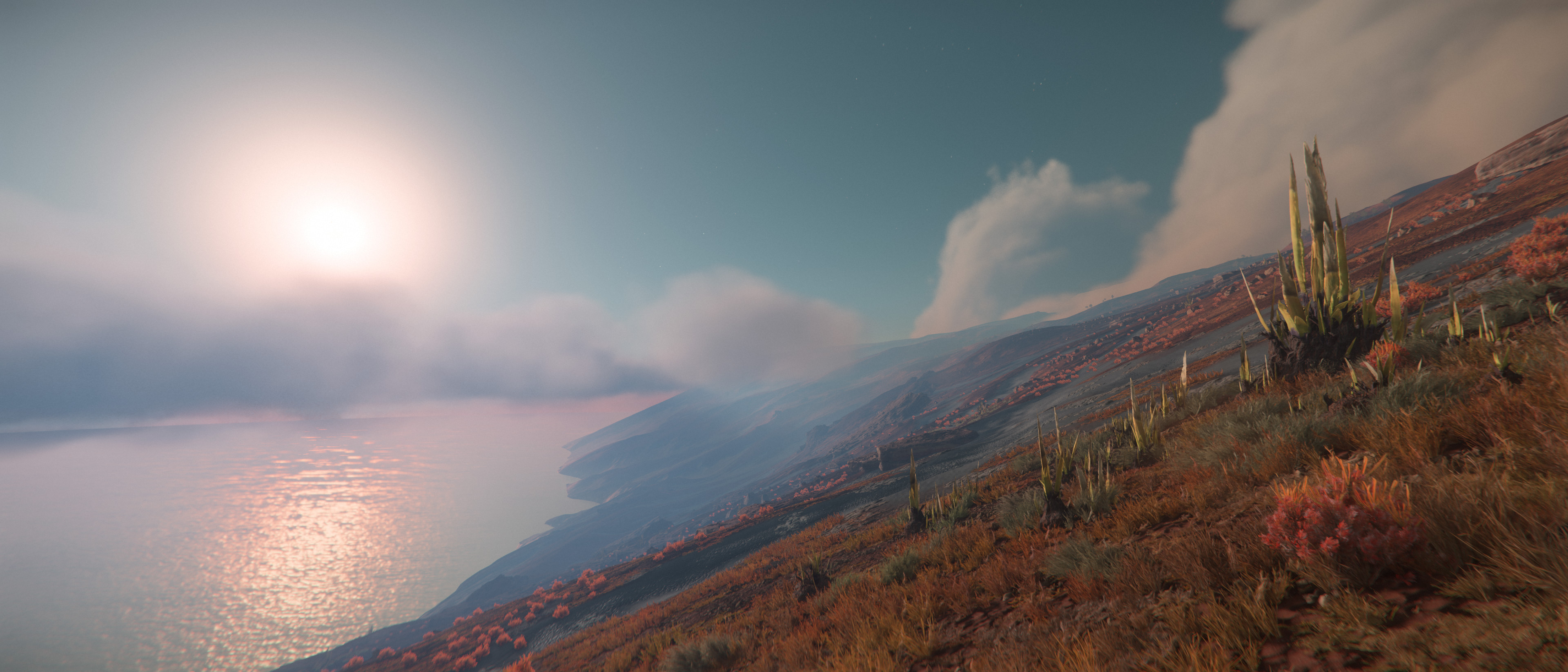
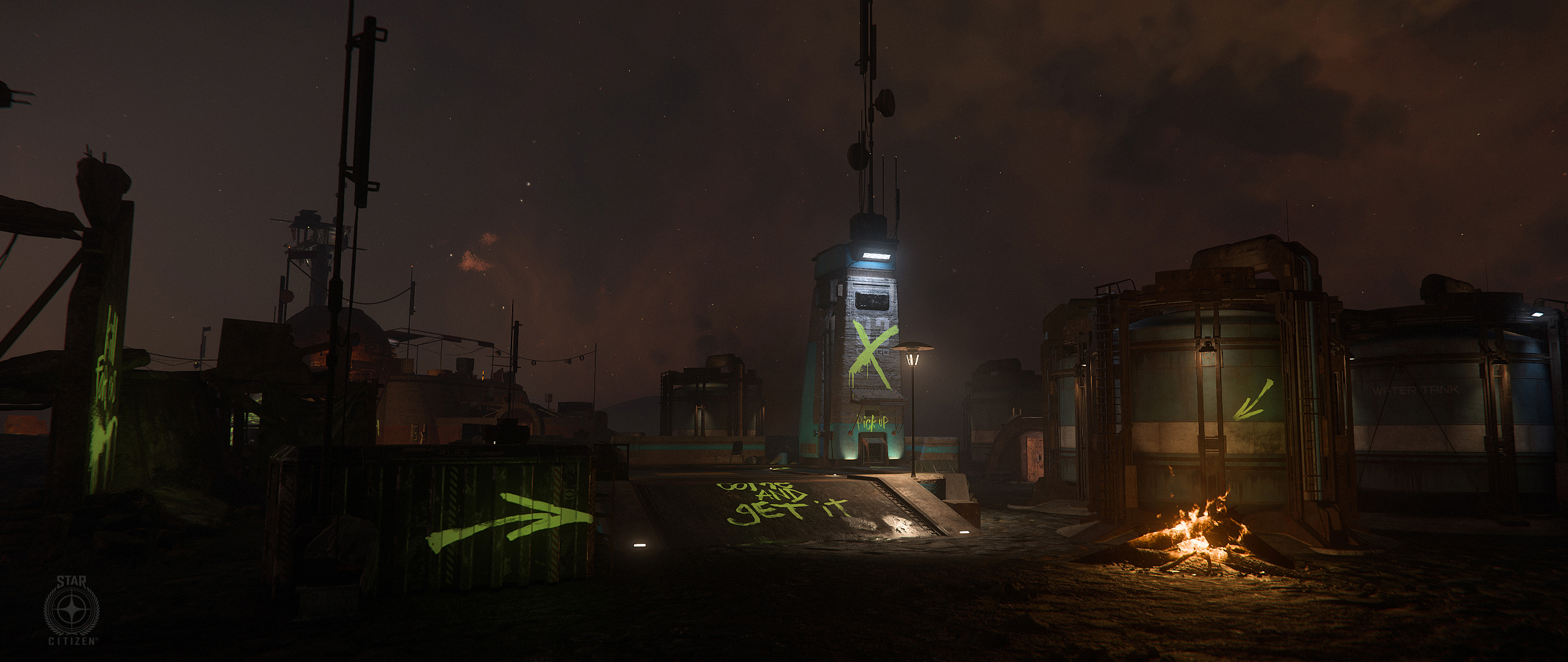
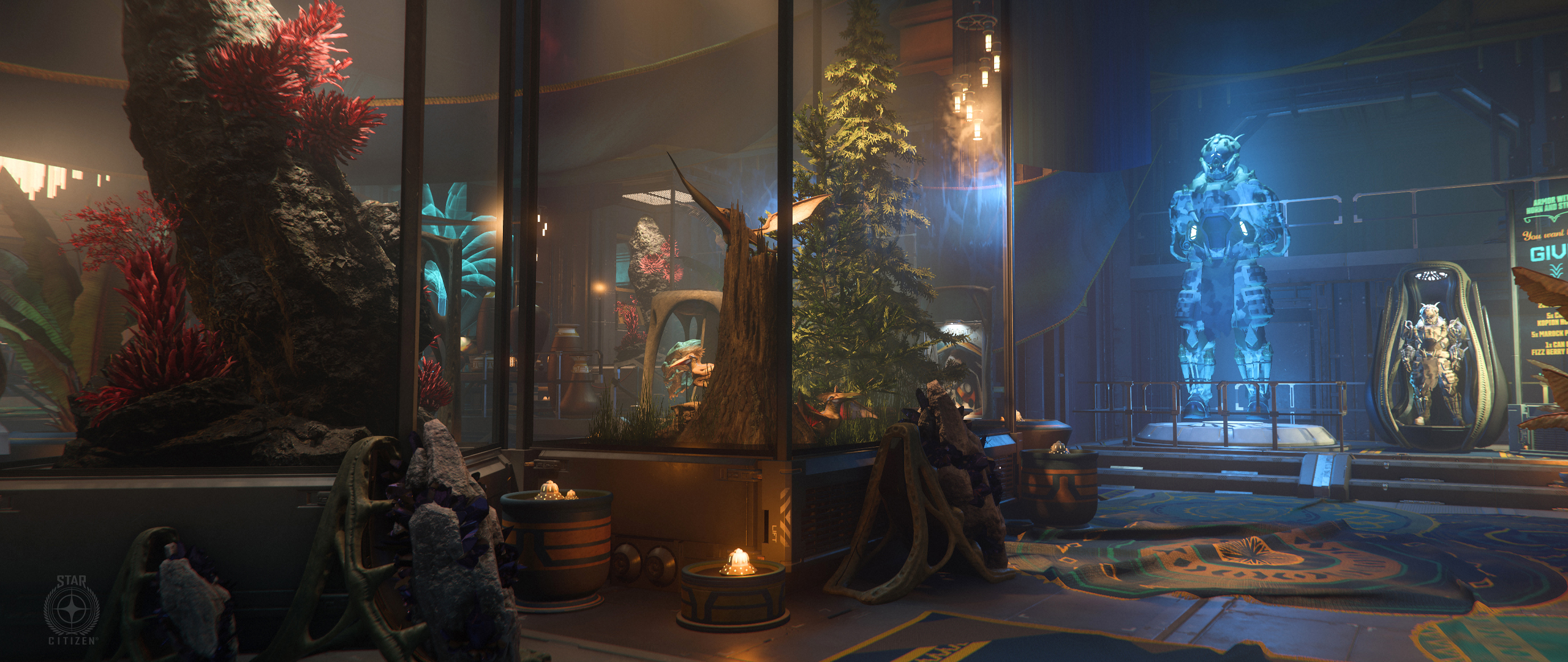
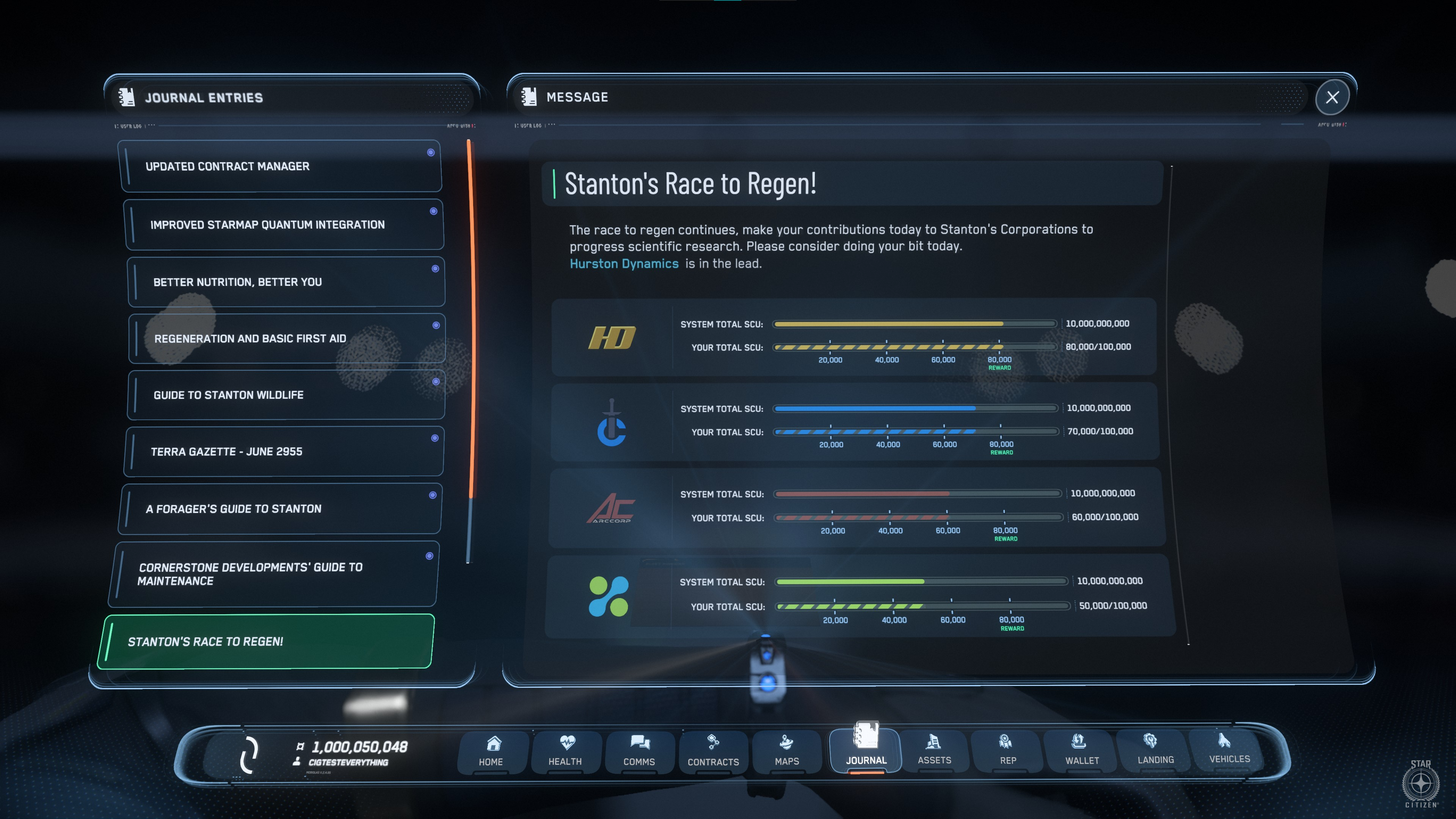
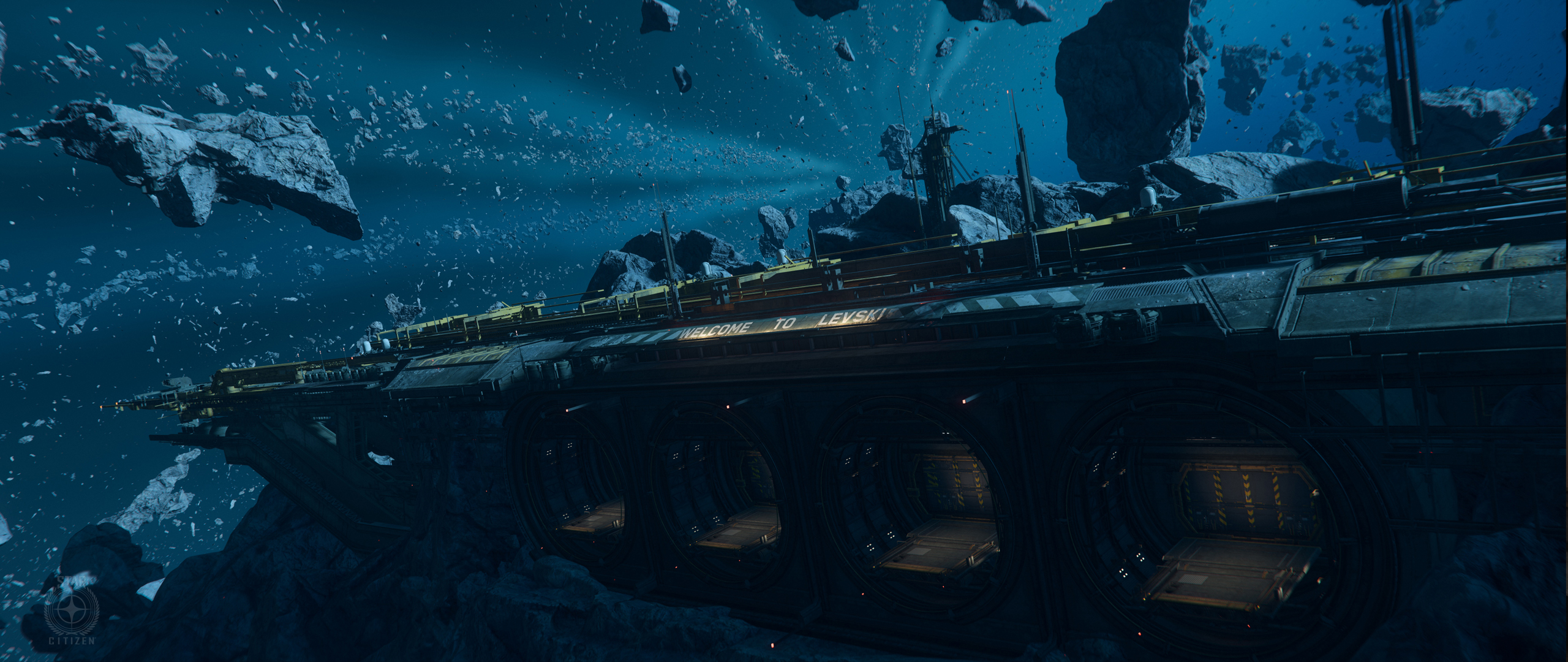
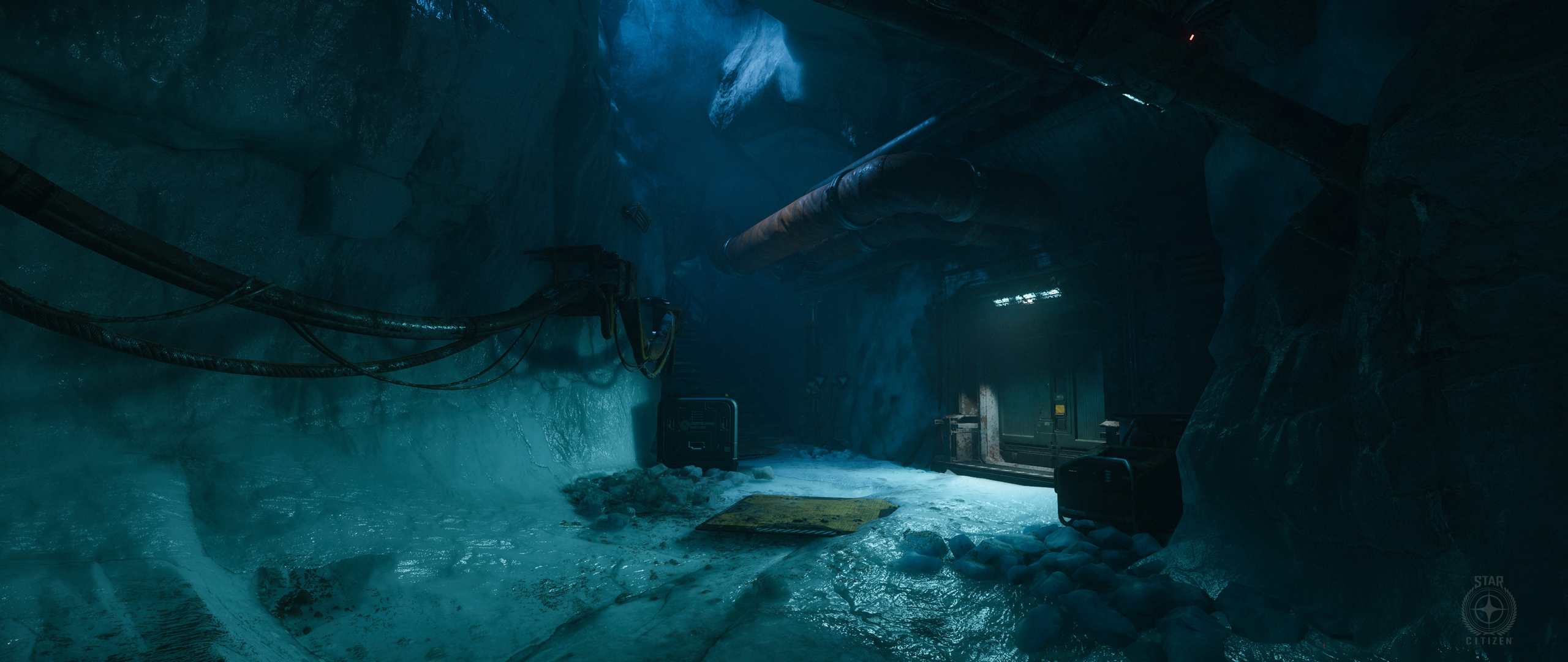
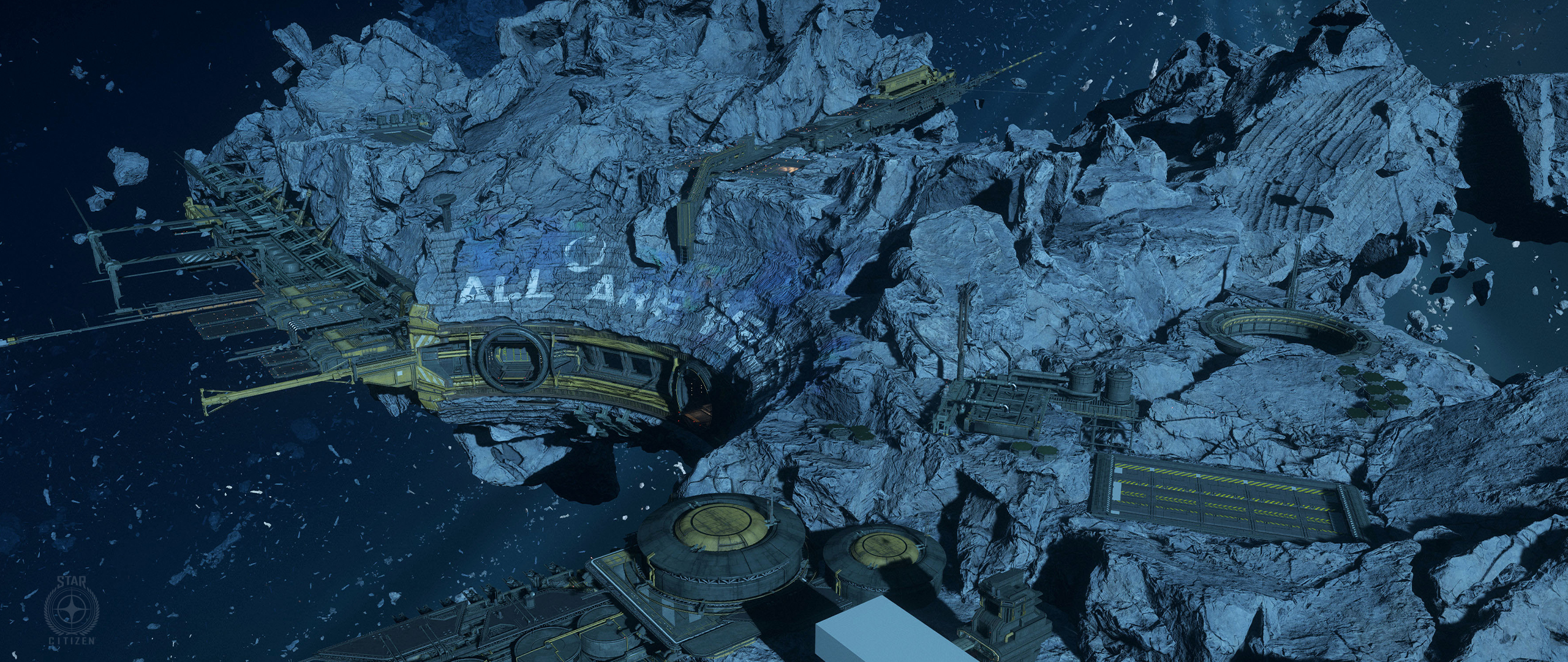
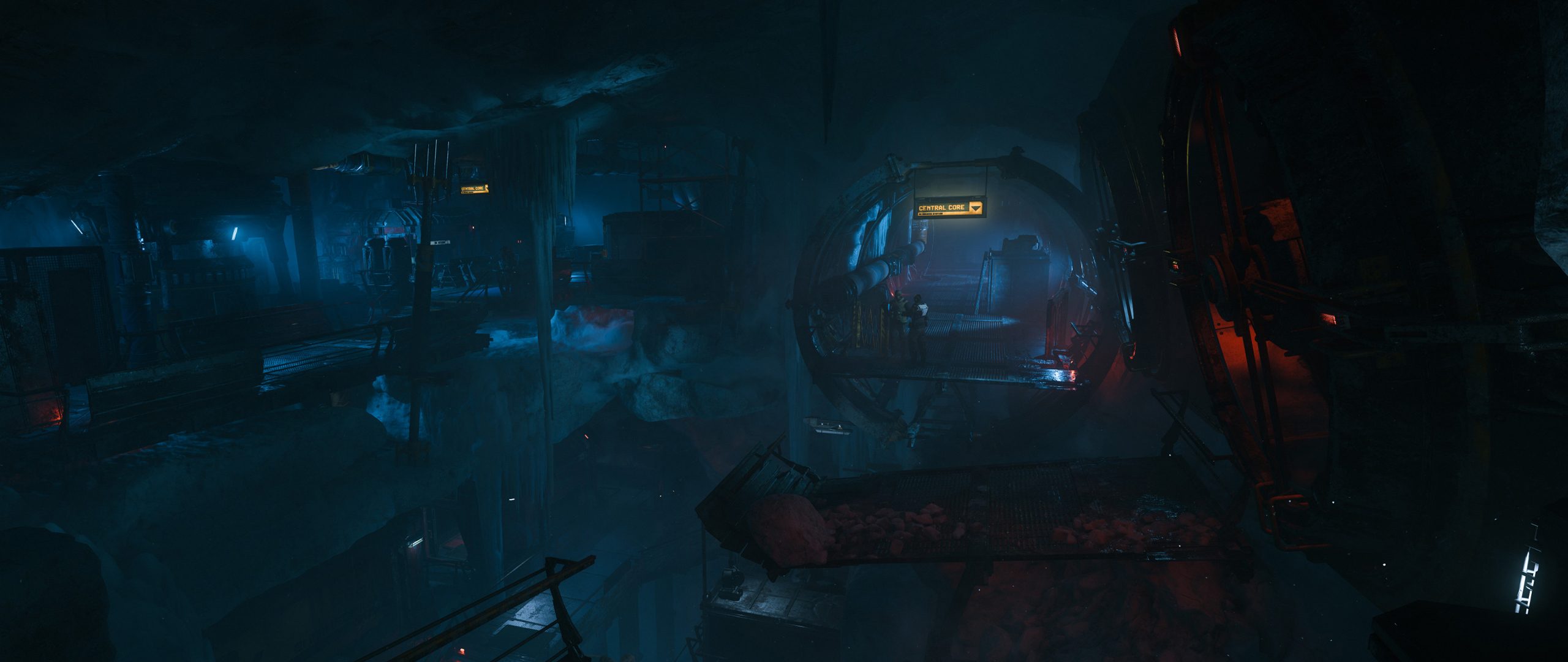
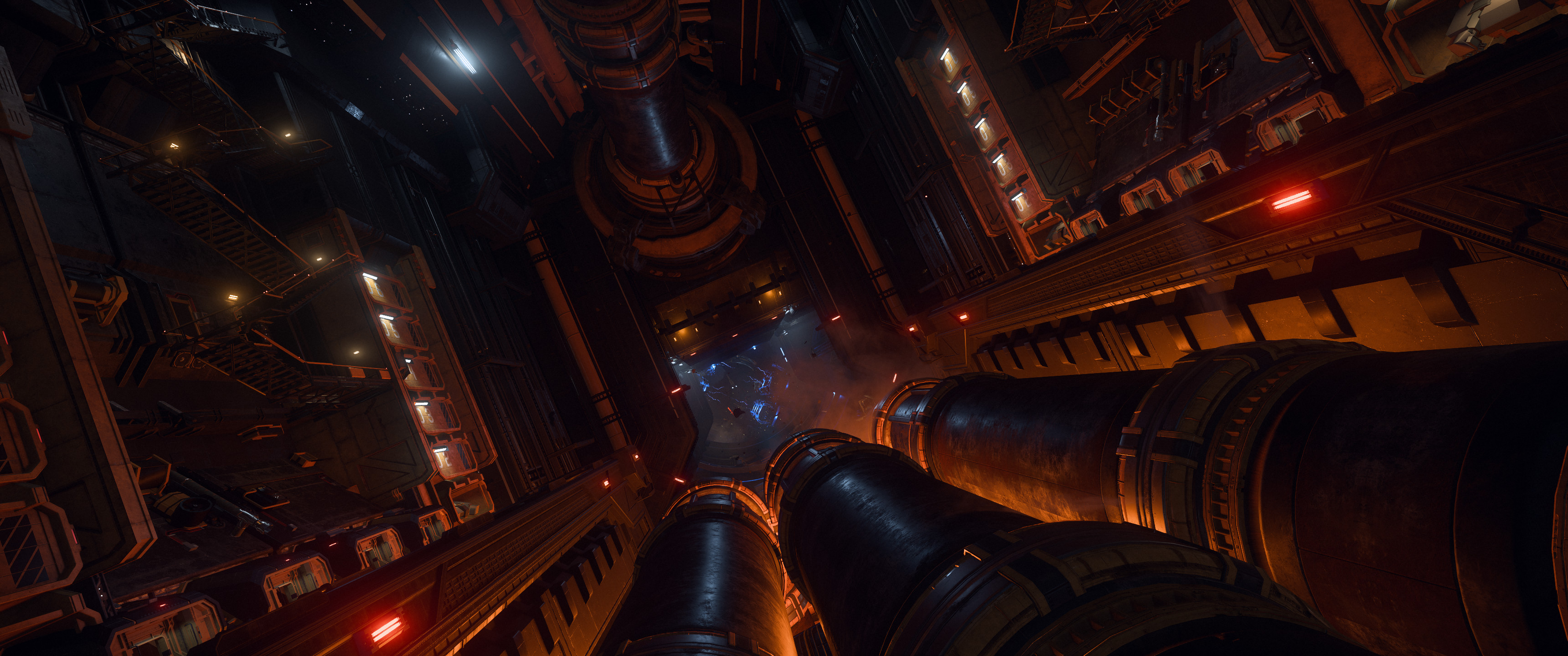
Metadata
- CIG ID
- 16000
- Channel
- Transmission
- Category
- Undefined
- Series
- Monthly Reports
- Comments
- 51
- Published
- 9 years ago (2017-07-07T00:00:00+00:00)