The Shipyard: Ship Mass
Engineering Undefined Concept Ship Q&AContent
Ship Mass:
I’m Not Heavy I’m Just Built That Way A Guide to the New Ship Matrix
Greetings Citizens!
With the release of 3.0.0 we have completed a ground up pass on mass for all in-game items, from the smallest bit of personal armor up to the largest spaceship. We have always endeavored to use real world items to guide our mass in-game but over time this has slowly caused issues as everyone’s interpretation of how heavy something is has wildly varied, a phenomenon especially noticeable during concept announcements when ship masses are first pitched. One area we identified was the notion of our spaceships being similar in role to modern day aircraft, so we originally endeavored to keep their mass values similar as well. Of course, coming at this from new angles caused a number of serious issues. For instance, the Gladius is a Light Fighter and to many that is similar in role/size to a modern day fighter jet like an F/A-18 Hornet (no relation to the ANVL Hornet) but when we got farther into things, the reality was that the Gladius has around 5x the volume of an F-18. This was problematic given it was originally implemented in-game at around 140% the weight of one. As we looked deeper into more and more ships it became increasingly clear that our original mass values were very inconsistent and often misleading. Given these are the basis for many areas of simulation within the game we decided to completely rework this aspect.
Given the huge range of ships and items in-game as well as in-concept we needed to solidify a way of calculating the mass correctly for both our existing assets and ones yet to come. For this, we decided to harness our existing physics meshes and use them to calculate the volume of material in the ships. Generally these are pretty accurate but with the wide range of ship types there were naturally a few different steps involved in generating a correct volume per ship.
Grasping the Concept
At the concept stage, these ships are at their trickiest to calculate, as they are generally very high poly meshes without the benefits of physics sub-meshes. This requires a small amount of work to simplify and cap hole to allow us to accurately generate a volume for the ship.
Capping Holes is the process of fully enclosing our collision proxy meshes and open faces that can cause issues in the engine. In essence we make them “watertight” while marking up specific faces that will allow entities to move through them unimpeded. Whilst this is usually done in the production stage we had to move ahead with this at a simple level for many of our concept ships to achieve standardized mass calculations for all ships.
My Density Has Brought Me to You
Once we had the volume of the ship as if it was solid block of material, we then subtracted the volume blocked out by the design team for the interior play space, cockpit and internal local grid mesh. This new volume (solid minus interior) was assigned an appropriate density value with a few modifiers:
Construction Methodology
Origin ships use more advanced lightweight materials that retain strength rather than the traditional stalwarts like Aegis and Anvil with heavier metals. The materials in play are an essential component in accurately accessing the correct mass of a vehicle, ship, or space station.
Species Construction
Xi’an ships are renowned for their materials and are significantly lighter than human counterparts, with their collaboration with MISC allowing some crossover. Design will work with the Lore Team to determine not only the aesthetics in play for a specific species like Banu or Vanduul, but they types of resources at their disposal and technological advantage of their culture in determining the materials used in construction.
Design Role
Ships that are naturally heavily armored or require more rigid internal support generate a denser value. It is vitally important not only to consider the source and history inherent in each ship, but it’s intended purpose within both the lore of the Star Citizen universe, and the design of our game.
It’s What’s Inside That Counts
Once the mass for the external “chassis” of the ship was generated, we used the internal volume again to generate a weight for the interior. This simulated all the interior panelling, doors, wiring etc as the design blockout volumes and local grids are slightly larger than the interior playable space (as they encompass the walls/floor meshes) and we felt this was a better reflection on the overall mass.
Only What You Take with You
Finally, we looked at the ship’s proposed or current default loadout, and added the specifics for each of these components (which also got a rework pass) to the final mass generated from the above steps.
What does this mean? All of our ships and characters now behave much better as the values used throughout the game are much more in sync. One example we uncovered during this rework was that on a variety of ships the physics meshes were uncapped, which during detachment and having the mass assigned to them was causing the engine to incorrectly calculate the mass of the detached part and thus it would behave poorly. With all the parts now capped or in the process of being capped, ship destruction and part detachment is much more reliable and believable, with less instances of huge ship debris parts spinning off at excessive speed. In addition to better behavior it also meant a lot of systemic features can be better accounted for such as carried items and cargo. Previously, with ships being so wildly disparate in weight, the simple act of adding a heavier weapon could significantly alter one ship unintentionally.
Frequently Asked Questions or: Questions We Figured You Might Have
Q: Will changing the item mass on my ship, intentionally or through damage, actually have an impact on its flight?
A: Yes it will, though not immediately in Alpha 3.0.
When we do the initial tuning value we base it around the default loadout and structure then give the ship “goal times” to achieve the desired results in zero g and atmospheric flights. Generally the ships are able to achieve these goals, as they are not absolute timings. Outside of any external factors, adding mass will change the flight characteristics and should you make the center of mass uneven may not do so for the better!
We anticipate this feature coming online in a future Alpha 3.x release.
Q: What other aspects of mass have changed outside of ships?
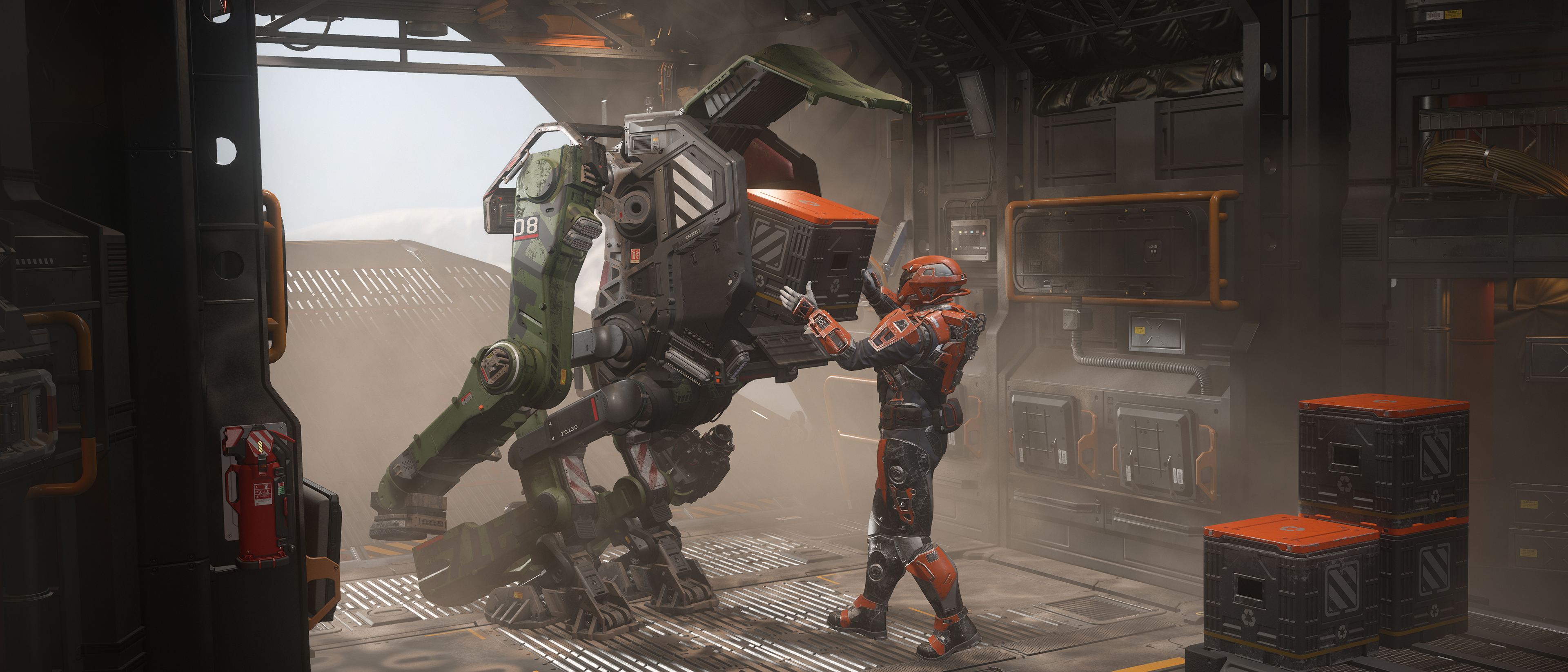
A: Every single piece of armor and every item you carry on your person has an applicable mass and these all directly tie into the Actor Status System. The heavier you are the more exertion there is to perform actions and these consume oxygen quicker or may even limit what actions you can do. This system also extends to items carried on ships. Carrying a small crate of heavy metal will slow you down more than carrying a helmet in your hands and these all get added on to the mass of your ship when inside of it.
Further Reading
Ship Mass Careers and Roles Thrusters Ship Technical Information Ordnance Hardpoints Weapon Hardpoints Other Hardpoints Turrets Variants & Modules scu and Cargo
Schiffsmasse:
Ich bin nicht schwer, ich bin nur so gebaut, dass ich einen Leitfaden für die neue Schiffsmatrix brauche.
Grüße Bürger!
Mit der Veröffentlichung von 3.0.0.0 haben wir eine Ground Up Pass on Mass für alle Gegenstände im Spiel abgeschlossen, vom kleinsten Stück persönlicher Rüstung bis zum größten Raumschiff. Wir haben uns immer bemüht, Gegenstände aus der realen Welt zu verwenden, um unsere Masse im Spiel zu leiten, aber im Laufe der Zeit hat dies langsam zu Problemen geführt, da die Interpretation dessen, wie schwer etwas ist, durch jeden von uns sehr unterschiedlich ist, ein Phänomen, das besonders bei Konzeptankündigungen auffällt, wenn Schiffsmassen zum ersten Mal gestimmt werden. Ein Bereich, den wir identifiziert haben, war die Vorstellung, dass unsere Raumschiffe in ihrer Rolle den modernen Flugzeugen ähnlich sind, so dass wir ursprünglich bemüht waren, auch ihre Massenwerte ähnlich zu halten. Natürlich hat die Auseinandersetzung mit diesem Thema aus neuen Blickwinkeln eine Reihe von ernsten Problemen mit sich gebracht. Zum Beispiel ist die Gladius ein Light Fighter und vielen ähnlich in Rolle/Größe wie ein moderner Kampfjet wie eine F/A-18 Hornet (keine Beziehung zur ANVL Hornet), aber als wir weiter in die Dinge kamen, war die Realität, dass die Gladius etwa das 5-fache des Volumens einer F-18 hat. Dies war problematisch, da es ursprünglich im Spiel implementiert wurde, mit etwa 140% des Gewichts von einem. Als wir immer mehr Schiffe untersuchten, wurde immer deutlicher, dass unsere ursprünglichen Massenwerte sehr inkonsistent und oft irreführend waren. Da diese die Grundlage für viele Bereiche der Simulation innerhalb des Spiels sind, haben wir uns entschlossen, diesen Aspekt komplett zu überarbeiten.
Angesichts der großen Auswahl an Schiffen und Gegenständen im Spiel sowie im Konzept mussten wir eine Möglichkeit finden, die Masse sowohl für unsere bestehenden als auch für die zukünftigen Vermögenswerte korrekt zu berechnen. Dazu haben wir uns entschieden, unsere bestehenden Physik-Netze zu nutzen und daraus das Materialvolumen in den Schiffen zu berechnen. Im Allgemeinen sind diese ziemlich genau, aber mit der großen Auswahl an Schiffstypen gab es natürlich ein paar verschiedene Schritte, um ein korrektes Volumen pro Schiff zu erzeugen.
Das Konzept verstehen
Im Konzeptstadium sind diese Schiffe am kniffligsten zu berechnen, da es sich in der Regel um sehr hohe Poly-Netze ohne die Vorteile physikalischer Sub-Netze handelt. Dies erfordert einen kleinen Arbeitsaufwand zur Vereinfachung und Kappenbohrung, damit wir genau ein Volumen für das Schiff erzeugen können.
Das Kappen von Löchern ist der Prozess der vollständigen Umhüllung unserer Kollisions-Proxy-Netze und offenen Flächen, die Probleme im Motor verursachen können. Im Wesentlichen machen wir sie "wasserdicht" und markieren dabei bestimmte Flächen, die es den Entitäten ermöglichen, sich ungehindert durch sie zu bewegen. Während dies in der Regel in der Produktionsphase geschieht, mussten wir dies bei vielen unserer Konzeptschiffe auf einfacher Ebene vorantreiben, um standardisierte Massenberechnungen für alle Schiffe zu erreichen.
Meine Dichte hat mich zu dir gebracht.
Sobald wir das Volumen des Schiffes hatten, als ob es ein solider Materialblock wäre, haben wir das vom Designteam blockierte Volumen für den Innenspielraum, das Cockpit und das interne lokale Netz abgezogen. Diesem neuen Volumen (fest minus Innenraum) wurde mit wenigen Modifikatoren ein entsprechender Dichtewert zugeordnet:
Konstruktionsmethodik
Herkunftsschiffe verwenden fortschrittlichere leichte Materialien, die ihre Festigkeit bewahren, anstatt die traditionellen Stalwarts wie Aegis und Anvil mit schwereren Metallen. Die im Spiel befindlichen Materialien sind ein wesentlicher Bestandteil für den genauen Zugriff auf die richtige Masse eines Fahrzeugs, Schiffes oder einer Raumstation.
Arten Konstruktion
Xi'an-Schiffe sind bekannt für ihre Materialien und sind deutlich leichter als menschliche Pendants, wobei ihre Zusammenarbeit mit dem MISC einen gewissen Crossover ermöglicht. Design wird mit dem Lore Team zusammenarbeiten, um nicht nur die Ästhetik für eine bestimmte Art wie Banu oder Vanduul zu bestimmen, sondern auch die Art der ihnen zur Verfügung stehenden Ressourcen und den technologischen Vorteil ihrer Kultur bei der Bestimmung der für den Bau verwendeten Materialien.
Designrolle
Schiffe, die von Natur aus schwer gepanzert sind oder eine steifere innere Unterstützung benötigen, erzeugen einen dichteren Wert. Es ist von entscheidender Bedeutung, nicht nur die Quelle und Geschichte zu berücksichtigen, die jedem Schiff innewohnt, sondern auch seinen Zweck sowohl in der Überlieferung über das Star Citizen-Universum als auch in der Gestaltung unseres Spiels.
Es ist das, was drin ist, was zählt.
Nachdem die Masse für das externe "Chassis" des Schiffes erzeugt wurde, nutzten wir das Innenvolumen wieder, um ein Gewicht für den Innenraum zu erzeugen. Dadurch wurden alle Innenverkleidungen, Türen, Verkabelungen usw. simuliert, da die Designblockout-Volumina und lokalen Gitter etwas größer sind als der spielbare Innenraum (da sie die Wände / Bodenmatten umfassen), und wir waren der Meinung, dass dies eine bessere Reflexion der Gesamtmasse ist.
Nur das, was du mitnimmst.
Schließlich haben wir uns die vorgeschlagene oder aktuelle Standardauslastung des Schiffes angesehen und die Besonderheiten für jede dieser Komponenten (die auch einen Rework-Pass erhalten haben) zur Endmasse hinzugefügt, die aus den obigen Schritten generiert wurde.
Was bedeutet das? Alle unsere Schiffe und Charaktere verhalten sich jetzt viel besser, da die im Spiel verwendeten Werte viel besser synchronisiert sind. Ein Beispiel, das wir bei dieser Überarbeitung aufgedeckt haben, war, dass auf einer Vielzahl von Schiffen die physikalischen Netze offen waren, was während des Ablösens und der Zuordnung der Masse dazu führte, dass der Motor die Masse des abgetrennten Teils falsch berechnete und sich daher schlecht verhielt. Da alle Teile jetzt gekappt sind oder gerade gekappt werden, sind Schiffszerstörung und Teileablösung viel zuverlässiger und glaubwürdiger, da weniger Fälle von riesigen Schiffsmüllteilen mit zu hoher Geschwindigkeit ablaufen. Zusätzlich zu einem besseren Verhalten bedeutete dies auch, dass viele systemische Merkmale wie mitgeführte Gegenstände und Fracht besser berücksichtigt werden können. Früher, als Schiffe so stark vom Gewicht her unterschiedlich waren, konnte der einfache Akt des Hinzufügens einer schwereren Waffe ein Schiff unbeabsichtigt erheblich verändern.
Häufig gestellte Fragen oder: Fragen, von denen wir dachten, dass du sie vielleicht hast.
F: Wird das Ändern der Itemmasse auf meinem Schiff, absichtlich oder durch Beschädigung, tatsächlich Auswirkungen auf seinen Flug haben?
A: Ja, das wird es, wenn auch nicht sofort in Alpha 3.0.
Wenn wir den anfänglichen Tuning-Wert festlegen, orientieren wir ihn an der Standardauslastung und -struktur und geben dem Schiff dann "Zielzeiten", um die gewünschten Ergebnisse bei Null-Gramm- und Atmosphärenflügen zu erzielen. Im Allgemeinen sind die Schiffe in der Lage, diese Ziele zu erreichen, da es sich nicht um absolute Timings handelt. Außerhalb von äußeren Faktoren verändert das Hinzufügen von Masse die Flugeigenschaften und sollte der Schwerpunkt uneben sein, ist dies möglicherweise nicht zum Besseren geschehen!
Wir erwarten, dass dieses Feature in einem zukünftigen Alpha 3.x-Release online kommt.
F: Welche anderen Aspekte der Masse haben sich außerhalb von Schiffen verändert?
A: Jedes einzelne Rüstungsstück und jeder Gegenstand, den du auf deiner Person trägst, hat eine anwendbare Masse und diese sind alle direkt mit dem Schauspielerstatus-System verbunden. Je schwerer du bist, desto mehr Anstrengung gibt es, um Aktionen durchzuführen, und diese verbrauchen schneller Sauerstoff oder können sogar einschränken, welche Aktionen du ausführen kannst. Dieses System erstreckt sich auch auf Gegenstände, die auf Schiffen befördert werden. Das Tragen einer kleinen Kiste mit Schwermetall wird Sie mehr verlangsamen als das Tragen eines Helmes in den Händen, und diese werden alle in die Masse Ihres Schiffes aufgenommen, wenn es sich im Inneren befindet.
Weiterführende Literatur
Schiffsmassenkarrieren und Rollen Triebwerke Schiff Technische Informationen Ordnungs-Haltepunkte Waffen-Haltepunkte Andere Haltepunkte Geschütztürme Varianten & Module scu und Ladung
Ship Mass:
I’m Not Heavy I’m Just Built That Way A Guide to the New Ship Matrix
Greetings Citizens!
With the release of 3.0.0 we have completed a ground up pass on mass for all in-game items, from the smallest bit of personal armor up to the largest spaceship. We have always endeavored to use real world items to guide our mass in-game but over time this has slowly caused issues as everyone’s interpretation of how heavy something is has wildly varied, a phenomenon especially noticeable during concept announcements when ship masses are first pitched. One area we identified was the notion of our spaceships being similar in role to modern day aircraft, so we originally endeavored to keep their mass values similar as well. Of course, coming at this from new angles caused a number of serious issues. For instance, the Gladius is a Light Fighter and to many that is similar in role/size to a modern day fighter jet like an F/A-18 Hornet (no relation to the ANVL Hornet) but when we got farther into things, the reality was that the Gladius has around 5x the volume of an F-18. This was problematic given it was originally implemented in-game at around 140% the weight of one. As we looked deeper into more and more ships it became increasingly clear that our original mass values were very inconsistent and often misleading. Given these are the basis for many areas of simulation within the game we decided to completely rework this aspect.
Given the huge range of ships and items in-game as well as in-concept we needed to solidify a way of calculating the mass correctly for both our existing assets and ones yet to come. For this, we decided to harness our existing physics meshes and use them to calculate the volume of material in the ships. Generally these are pretty accurate but with the wide range of ship types there were naturally a few different steps involved in generating a correct volume per ship.
Grasping the Concept
At the concept stage, these ships are at their trickiest to calculate, as they are generally very high poly meshes without the benefits of physics sub-meshes. This requires a small amount of work to simplify and cap hole to allow us to accurately generate a volume for the ship.
Capping Holes is the process of fully enclosing our collision proxy meshes and open faces that can cause issues in the engine. In essence we make them “watertight” while marking up specific faces that will allow entities to move through them unimpeded. Whilst this is usually done in the production stage we had to move ahead with this at a simple level for many of our concept ships to achieve standardized mass calculations for all ships.
My Density Has Brought Me to You
Once we had the volume of the ship as if it was solid block of material, we then subtracted the volume blocked out by the design team for the interior play space, cockpit and internal local grid mesh. This new volume (solid minus interior) was assigned an appropriate density value with a few modifiers:
Construction Methodology
Origin ships use more advanced lightweight materials that retain strength rather than the traditional stalwarts like Aegis and Anvil with heavier metals. The materials in play are an essential component in accurately accessing the correct mass of a vehicle, ship, or space station.
Species Construction
Xi’an ships are renowned for their materials and are significantly lighter than human counterparts, with their collaboration with MISC allowing some crossover. Design will work with the Lore Team to determine not only the aesthetics in play for a specific species like Banu or Vanduul, but they types of resources at their disposal and technological advantage of their culture in determining the materials used in construction.
Design Role
Ships that are naturally heavily armored or require more rigid internal support generate a denser value. It is vitally important not only to consider the source and history inherent in each ship, but it’s intended purpose within both the lore of the Star Citizen universe, and the design of our game.
It’s What’s Inside That Counts
Once the mass for the external “chassis” of the ship was generated, we used the internal volume again to generate a weight for the interior. This simulated all the interior panelling, doors, wiring etc as the design blockout volumes and local grids are slightly larger than the interior playable space (as they encompass the walls/floor meshes) and we felt this was a better reflection on the overall mass.
Only What You Take with You
Finally, we looked at the ship’s proposed or current default loadout, and added the specifics for each of these components (which also got a rework pass) to the final mass generated from the above steps.
What does this mean? All of our ships and characters now behave much better as the values used throughout the game are much more in sync. One example we uncovered during this rework was that on a variety of ships the physics meshes were uncapped, which during detachment and having the mass assigned to them was causing the engine to incorrectly calculate the mass of the detached part and thus it would behave poorly. With all the parts now capped or in the process of being capped, ship destruction and part detachment is much more reliable and believable, with less instances of huge ship debris parts spinning off at excessive speed. In addition to better behavior it also meant a lot of systemic features can be better accounted for such as carried items and cargo. Previously, with ships being so wildly disparate in weight, the simple act of adding a heavier weapon could significantly alter one ship unintentionally.
Frequently Asked Questions or: Questions We Figured You Might Have
Q: Will changing the item mass on my ship, intentionally or through damage, actually have an impact on its flight?
A: Yes it will, though not immediately in Alpha 3.0.
When we do the initial tuning value we base it around the default loadout and structure then give the ship “goal times” to achieve the desired results in zero g and atmospheric flights. Generally the ships are able to achieve these goals, as they are not absolute timings. Outside of any external factors, adding mass will change the flight characteristics and should you make the center of mass uneven may not do so for the better!
We anticipate this feature coming online in a future Alpha 3.x release.
Q: What other aspects of mass have changed outside of ships?
A: Every single piece of armor and every item you carry on your person has an applicable mass and these all directly tie into the Actor Status System. The heavier you are the more exertion there is to perform actions and these consume oxygen quicker or may even limit what actions you can do. This system also extends to items carried on ships. Carrying a small crate of heavy metal will slow you down more than carrying a helmet in your hands and these all get added on to the mass of your ship when inside of it.
Further Reading
Ship Mass Careers and Roles Thrusters Ship Technical Information Ordnance Hardpoints Weapon Hardpoints Other Hardpoints Turrets Variants & Modules scu and Cargo
Ship Mass:
I’m Not Heavy I’m Just Built That Way A Guide to the New Ship Matrix
Greetings Citizens!
With the release of 3.0.0 we have completed a ground up pass on mass for all in-game items, from the smallest bit of personal armor up to the largest spaceship. We have always endeavored to use real world items to guide our mass in-game but over time this has slowly caused issues as everyone’s interpretation of how heavy something is has wildly varied, a phenomenon especially noticeable during concept announcements when ship masses are first pitched. One area we identified was the notion of our spaceships being similar in role to modern day aircraft, so we originally endeavored to keep their mass values similar as well. Of course, coming at this from new angles caused a number of serious issues. For instance, the Gladius is a Light Fighter and to many that is similar in role/size to a modern day fighter jet like an F/A-18 Hornet (no relation to the ANVL Hornet) but when we got farther into things, the reality was that the Gladius has around 5x the volume of an F-18. This was problematic given it was originally implemented in-game at around 140% the weight of one. As we looked deeper into more and more ships it became increasingly clear that our original mass values were very inconsistent and often misleading. Given these are the basis for many areas of simulation within the game we decided to completely rework this aspect.
Given the huge range of ships and items in-game as well as in-concept we needed to solidify a way of calculating the mass correctly for both our existing assets and ones yet to come. For this, we decided to harness our existing physics meshes and use them to calculate the volume of material in the ships. Generally these are pretty accurate but with the wide range of ship types there were naturally a few different steps involved in generating a correct volume per ship.
Grasping the Concept
At the concept stage, these ships are at their trickiest to calculate, as they are generally very high poly meshes without the benefits of physics sub-meshes. This requires a small amount of work to simplify and cap hole to allow us to accurately generate a volume for the ship.
Capping Holes is the process of fully enclosing our collision proxy meshes and open faces that can cause issues in the engine. In essence we make them “watertight” while marking up specific faces that will allow entities to move through them unimpeded. Whilst this is usually done in the production stage we had to move ahead with this at a simple level for many of our concept ships to achieve standardized mass calculations for all ships.
My Density Has Brought Me to You
Once we had the volume of the ship as if it was solid block of material, we then subtracted the volume blocked out by the design team for the interior play space, cockpit and internal local grid mesh. This new volume (solid minus interior) was assigned an appropriate density value with a few modifiers:
Construction Methodology
Origin ships use more advanced lightweight materials that retain strength rather than the traditional stalwarts like Aegis and Anvil with heavier metals. The materials in play are an essential component in accurately accessing the correct mass of a vehicle, ship, or space station.
Species Construction
Xi’an ships are renowned for their materials and are significantly lighter than human counterparts, with their collaboration with MISC allowing some crossover. Design will work with the Lore Team to determine not only the aesthetics in play for a specific species like Banu or Vanduul, but they types of resources at their disposal and technological advantage of their culture in determining the materials used in construction.
Design Role
Ships that are naturally heavily armored or require more rigid internal support generate a denser value. It is vitally important not only to consider the source and history inherent in each ship, but it’s intended purpose within both the lore of the Star Citizen universe, and the design of our game.
It’s What’s Inside That Counts
Once the mass for the external “chassis” of the ship was generated, we used the internal volume again to generate a weight for the interior. This simulated all the interior panelling, doors, wiring etc as the design blockout volumes and local grids are slightly larger than the interior playable space (as they encompass the walls/floor meshes) and we felt this was a better reflection on the overall mass.
Only What You Take with You
Finally, we looked at the ship’s proposed or current default loadout, and added the specifics for each of these components (which also got a rework pass) to the final mass generated from the above steps.
What does this mean? All of our ships and characters now behave much better as the values used throughout the game are much more in sync. One example we uncovered during this rework was that on a variety of ships the physics meshes were uncapped, which during detachment and having the mass assigned to them was causing the engine to incorrectly calculate the mass of the detached part and thus it would behave poorly. With all the parts now capped or in the process of being capped, ship destruction and part detachment is much more reliable and believable, with less instances of huge ship debris parts spinning off at excessive speed. In addition to better behavior it also meant a lot of systemic features can be better accounted for such as carried items and cargo. Previously, with ships being so wildly disparate in weight, the simple act of adding a heavier weapon could significantly alter one ship unintentionally.
Frequently Asked Questions or: Questions We Figured You Might Have
Q: Will changing the item mass on my ship, intentionally or through damage, actually have an impact on its flight?
A: Yes it will, though not immediately in Alpha 3.0.
When we do the initial tuning value we base it around the default loadout and structure then give the ship “goal times” to achieve the desired results in zero g and atmospheric flights. Generally the ships are able to achieve these goals, as they are not absolute timings. Outside of any external factors, adding mass will change the flight characteristics and should you make the center of mass uneven may not do so for the better!
We anticipate this feature coming online in a future Alpha 3.x release.
Q: What other aspects of mass have changed outside of ships?
A: Every single piece of armor and every item you carry on your person has an applicable mass and these all directly tie into the Actor Status System. The heavier you are the more exertion there is to perform actions and these consume oxygen quicker or may even limit what actions you can do. This system also extends to items carried on ships. Carrying a small crate of heavy metal will slow you down more than carrying a helmet in your hands and these all get added on to the mass of your ship when inside of it.
Further Reading
Ship Mass Careers and Roles Thrusters Ship Technical Information Ordnance Hardpoints Weapon Hardpoints Other Hardpoints Turrets Variants & Modules scu and Cargo
Links
Images
15


Metadata
- CIG ID
- 16170
- Channel
- Engineering
- Category
- Undefined
- Series
- Concept Ship Q&A
- Comments
- 17
- Published
- 8 years ago (2017-10-18T00:00:00+00:00)