Monthly Studio Report: June 2018
Transmission Undefined Monthly ReportsContent
Welcome to Cloud Imperium Games’ Monthly Studio Report for June. This month, the team published Alpha 3.2, made progress on Squadron 42, and continued developing new systems, ships, and features for future releases. With that said, let’s dig into the details.
LOS ANGELES
VEHICLE FEATURES
Mining was an exciting endeavor for the team this month, as they saw it come together to deliver a whole new gameplay element to Star Citizen. Working closely with designers and engineers in the EU studios, the team brought the scanning aspect of mining to life and into vehicles. They’re happy to add to the pool of activities that players can engage in, and hope everyone has fun searching the ‘verse for valuable resources. Turrets were another large focus for the team this month. Manned turrets received some improvements, such as the ability to focus target a ship and the removal of the counterbalance speed restriction. Players can now also operate remote turrets in vehicles, which was implemented with the Item 2.0 System. Moving into July, the team will polish what they delivered in Alpha 3.2 and continue work on the many things needed for 3.3.
VEHICLE PIPELINE
The team proudly launched the Anvil Hurricane with 3.2 and look forward to feedback from the community as they take it out for a spin. A lot of blood, sweat, and tears went into the Hurricane by the Art, System Design, and Tech Art Teams in LA, who collaborated with other global teams to get it flying. Additionally, the Tech Art Team wrapped up their damage passes on the other new and updated ships: the Aegis Avenger, Aegis Eclipse, Origin 600i, and Esperia Blade. They can’t wait for you to blow these ships up! Meanwhile, progress was made on other vehicles: the Consolidated Outland Mustang Alpha rework is art-complete and currently in the hands of the System Design Team. Additional Mustang variants are close to being handed over to System Design as well. Tumbril Cyclone variants also made great progress on the art side, while the System Design Team is working with Engineering on new tech to support their release. Finally, System Design worked closely with the Art Team in Austin to wrap up their greybox phase of the Constellation Phoenix.
GAMEPLAY FEATURES
The Gameplay Team was happy to see the Group System make it easier for players to match up and play together. Currently, the team is polishing the feature to give players the best experience possible. After witnessing the response, the team continues to plan ways to improve upon the ways players can interact with each other.
NARRATIVE
The Narrative Team churned out a wide variety of content to flesh out and expand the Star Citizen universe. They released lore that highlighted commercials commonly seen on Spectrum in 2948 and featured an interview with controversial new Drake CEO, Anden Arden. Subscribers got to read the exciting final chapter of the new short story Hostile Negotiations, while a trip into the Jump Point archives saw the wide release of an Observist Dark focused on Grim HEX and the second chapter of The Knowledge of Good and Evil. Finally, June’s edition of the Subscriber magazine, Jump Point, explored the development of the Aegis Reclaimer, met the team behind the new mining mechanic, and explored the history of the MISC Prospector. Behind the curtain, the team worked with design on further defining NPC behaviors like bartenders, bar patrons, security officers, and more. They fleshed out set dressing documentation to add further environmental storytelling to the PU and Squadron 42, wrote new mission text and clothing and armor descriptions. They wrote a number of articles slated to be included in the eventual release of the Galactapedia and provided copy for a myriad of community and marketing materials, including the Vulture promotion page and brochure.
CHARACTERS
The Character Art Team finalized and released the Legacy Armor sets into the PU, as well as the new clothing that makes up the Olisar collection. The team appreciates the comments from the community – getting direct feedback from the players makes all the hard work worth it. There are a few mission givers in development that are almost finalized, which you’ll see in the next quarterly release. The team is still committed to releasing everything that’s on the public roadmap, so work on other PU outfits and Hurston’s clothing collection are well underway. With the PU getting a lot of attention this release, the upcoming month’s focus returns to Squadron 42 and its vast cast of characters. The team is creating levels with every character in a lineup, so they can see which outfit each one wears in a specific chapter. As we saw in Around the Verse, a lot of development time went into the Vanduul armor, spear, and knife. Progress was also made on the updated flight suit and work was started on another major character. AUSTIN
DESIGN
Design was heavily invested on working through several issues remaining for quantum travel. This included helping groups travel together and tuning how quantum splines work to ensure an enjoyable experience when traveling from one side of a celestial body to another. Issues were also addressed to ensure that accidents between a moon’s surface and a ship moving at quantum speed are minimal. While the majority of the team’s focus has gone towards improving the quantum travel experience, work has also gone into adjusting the economy by tuning rewards for missions, cargo deliveries, and mining runs. Work also progressed nicely on ensuring that bars in future releases feature a well-crafted and intelligent bartender to make the experience fun and believable. Although it’s still in the early stages, Design is excited about the first iteration coming to a PU pub near you!
BACKEND SERVICES
The Backend Services Team grew as a new engineer joined to help with the rewrite of Services under the new Diffusion Architecture. Several Services have already been rewritten while support for the legacy architecture continues. This month focused on taking the legacy p-cache and breaking it up into smaller, logical microservices. Much like replacing parts in a moving engine, legacy work still needs to be maintained until the new shiny goodness is ready to go. When implemented, it will allow for better performance, scalability, and functionality. Here are some of the Services being created to replace legacy work: Entitlement Processor Service: handles all purchased and rented items from the website and assures that real game items are created and managed.
Loadout Service: caches and manages the various loadouts for all ships and the player avatar configuration, including outfits and weapons. Right now, the game servers and clients can only access metadata from objects that are currently spawned on a game server. Usually, the devs want to view data of an item that has not been loaded into a game server.
Variable Service: solves the loadout problem above by decoupling the metadata from the items and providing a runtime cache and API allowing game servers and other Diffusion services access regardless of the state of the item.
Wallet Service: deals with changes in currency and manages the current balance in-game. An API is setup to allow for other services to query or modify the player’s balance.
ANIMATION
Animation was hard at work on the next set of mission givers that will bring more life to the PU later this year. There was also rapid progress on the retargeting of male animations to female skeletons, which brings players closer to being able to choose a female avatar in the PU. Animation also supported outsourcers by creating master retarget files to process all the motion captures shots for the PU, S42 cinematics, and gameplay. They also helped finalize the Vanduul pipeline, which makes converting motion capture data into in-game assets quicker and easier.
ART
Ship Art put the finishing touches on everyone’s favorite stroke of lightning, the Anvil Aerospace F8! All that that’s left for them to do is to finalize the Level of Detail (LOD), make some last-minute material/art adjustments, and be on call to fix any bugs that arise during testing. Also, after an official kickoff meeting, work began on some early concepts ideas for the Origin 300i rework. The team proceeded on the highly anticipated Constellation Phoenix. Extra care has been given at every stage of the process to ensure that the quality and luxury of RSI is properly showcased. The interior and exterior were fleshed out and are now going through an edit to cut back on some of the busier areas. Next up, the modeling portion in the master bedroom and flight-prep art (interior damage) will be finished, so Tech Art can start with their damage process. Once these steps are done, there will be another lighting pass to get the interior dialed in and closer to completion.
DEVOPS
The 3.2 release was especially rewarding for the DevOps Team as it included features they’ve been anticipating for a while. On the build side, they’ve been tuning and supporting the feature streams, which are a subset of the main development branches that the dev teams use. This project helped to further isolate each team’s specific feature work and stopped it from interfering with the work of other teams. This led to significantly more builds, as each feature team gets their own on top of the test and general use builds. For this month alone, over 200 unique builds were generated. Overall, the build support improvements have been very helpful and well received, but the team is still working out minor details and constantly tuning the branches for the best output. The Publishing Team supported daily deployments to Evocati and PTU, and assisted the dev teams with the collection of server performance and bug reports. Server reports are typically more fun on a big publishing month because there’s so much new data to track and report. As many have already noticed, the team increased the pace of publishes again, completing 16 PTU deployments in June. These additional publishes helped the dev team work out the final touches of new features. The team also ramped up the servers in anticipation of Alpha 3.2 release and can’t wait to see them fill up.
PLAYER RELATIONS
The Player Relations Team coordinated with Evocati to test Alpha 3.2 on the PTU and prepare it for live service. They focused on the core features of 3.2, including scanning, mining, ESP improvements, quantum linking, and the new ships. Now that 3.2 is live in the PU, the team would like to remind all backers of the new Knowledge Base. They’ve added quite a few guides for the update, and now have over 90 articles published. Players should check back regularly, as it will continue to grow with new ‘How To’ articles, patch notes, and live service notifications. Finally, the team wants to encourage everyone to continue using the Issue Council (IC) to help triage and rate bugs/functionality. They’ll use your feedback to prioritize future updates, plus IC participation makes you eligible for earlier PTU waves.
QA
QA helped push the 3.2 builds to Evocati and PTU, which included publishing checklists for build patches that went to the PTU. On the game side, QA focused on the 3.2 features, bug regression, and performance testing. Things tested included the mining feature, the new ships, the Avenger rework, quantum travel, the group system, and kiosk purchasing and player wallet updates. They also tested updates to the Editor and Subsumption tools. On the leadership side, it was business as usual coordinating testing priorities with counterparts in LA, UK, and DE. WILMSLOW & DERBY
GRAPHICS
The Graphics Team focused on bugs that covered a wide range of topics, including fixes for SLI/Crossfire, missing LODs on mining rocks, and flickering shadows. They also added a few minor features to improve the overall player experience, such as adding drop shadows to all transparent ship UI screens, adding brightness/gamma/contrast support, optimizing the glass shaders, and fixing multiple issues with RTT on the ship-targeting UI which reduced the cost by a factor of 10.
After fixing the 3.2 bugs, the team’s focus has shifted to Object Container Streaming, which is crucial to ensuring this critical feature isn’t blocked.
UI
UI supported the 3.2 release at full tilt, working on the Item Kiosks to add as much as possible ahead of the live release. Alongside this, the team supported the Mission Team by creating new screens for Comm Array missions, provided the Gameplay Team with quantum travel UI elements, and helped the EU Vehicle Team with their work on overclocking. UI also focused on critical bug fixes ahead of 3.2. This included multiple issues with the ATC system, such as making the UI clearer for color blind players. Changes for the PMA/VMA included making select ship items uneditable and ensuring all armor pieces are displayed correctly.
ANIMATION
The team worked on the new Spec Ops AI combat set and prepared it for full implementation. This set includes cover, high and low enter and exits, peeks, stepouts, blindfires, reloads, and grenade throws. Iteration and feedback on weapon recoil continued with the goal of providing a solid first-person experience across the full range of weapons available in S42 and the PU. Preparation started to replace the AI base locomotion sets with finalized data. New capture footage was reviewed with an eye to implement improved AI motion sets and visuals.
Further animation work was completed on Master-at-Arms Chakma to fill in any gaps that the Design Teams had in implementing his behavior for Squadron 42. Work on the Vanduul concentrated on close-combat and weapons.
Player grips now allow varyingly sized objects to be held and carried in a more flexible manner, whether it be one or two-handed props. Finally, the team completed general bug fixes for the 3.2 release.
GAMEPLAY STORY
The Gameplay Story Team delivered previsualization (pre-viz) for 150 scenes that the Design Team requested, which was achieved a week earlier than expected. This gave the team a couple of weeks to do more in-depth implementation work on high priority scenes. Pre-viz work on the remaining 66 scenes will happen during the first few weeks of July.
ENGINEERING/PROGRAMMING
The Squadron 42 Gameplay Team worked with Cinematics to implement more functionality in the trackview tool to get new cinematic scenes working. Among other things, these changes improved the ability to animate the player by blending them into a cinematic sequence, gaining control over the player’s camera, and allowing a set amount of player-controlled head-look.
The Actor Team got one-handed grips working with props of all different sizes and shapes. They started with two different grip types, one for round objects like a bottle or a cup, and another for square items like a book or datapad. The animators created two versions of each grip, open and closed, and the code can blend between the two allowing the player to hold props of different and awkward sizes without the need for multiple animation assets. The programmers have also been improving the animations used when moving from standing to running and back again. They are trying to keep the response times fast by reducing the amount of foot sliding and animation glitches.
The Social AI Team held a mini summit with the Lead AI and Lead Engine Tools programmers and the AI team in Frankfurt to discuss the latest usable tech and the next steps in development. They are now looking to create a visual tool to help the workflow of setting up usables and reduce the amount of knowhow currently required.
The EU Vehicle Team continued development of overpowering and overheating items with a focus on the quantum drive, shield, and cooler. They also expanded item wear to account for overheating.
The Core Gameplay Tech Team moved Object Container Streaming to the stage where they can turn on the background loading of individual entities. Now, it’s up to QA to find out what bugs come from this change. They also worked on the base functionality of loading and unloading individual object containers. The individual features teams have done a fine job of making their entity components thread safe, as well as moving the Lua script over into C++, all of which is required for Object Container Streaming.
SHIPS
The Ship Art Team finished the remaining tasks needed to get the 3.2 ships ready for release. They also created trailers for the Esperia Blade, Aegis Avenger, and Eclipse, along with promotional shots for the Origin 600i. Other work included whiteboxing the Origin 890 Jump to establish the final room layout and proportions, and R&D work on future Banu ships, with a focus on the Defender. Finally, the Hammerhead is getting a damage pass for the exterior and LOD pass across the interior.
AUDIO
The Audio Department worked on all four of the 3.2 flyable ships trailers. They supplied the music heard in the Hurricane and Blade trailers, music and SFX for the Eclipse trailer, and music, SFX, and dialog for the Avenger. The Audio Department also supported the 3.2 mining feature with regards to UI, mechanical SFX, and beam SFX. Additionally, there was a focus on re-balancing audio in line with the IFCS 2.0 update.
ENVIRONMENT ART
The UK Environment Team has been finalizing assets for the new ship hangars, as well as making passes on their dressing, branding, and props. They prepared for upcoming sprints, including sprints for new habitation modules and security checkpoints. Elsewhere, the team investigated and began to whitebox ideas for new small points of interest to populate Hurston beyond Lorville. They did all this in addition to supporting the Alpha 3.2 release with usual bug fixing and maintenance.
VFX
As 3.2 drew to a close, the team completed flight ready effects on the remaining ships, including the Esperia Blade and Aegis Eclipse. They also worked on effects for the Avenger and Eclipse trailers. They finished off the remaining 3.2 weapon effects, including the Kastak Scalpel ballistic rifle, and continued to fine tune and fix any issues with the recent weapons 2.0 conversion. The team collaborated with the mining and scanning/radar feature teams to ensure the effects were as polished as possible. They also worked with the Graphics Team on numerous developments to the GPU particle system, including improved ‘spawn chance’ and more robust parent/child hierarchies. FRANKFURT
ENVIRONMENT ART
The Environment Art Team continued their push on Lorville Section One Nine (L19), bringing more and more areas to a final state. With L19 coming alive, they’re kicking off production on the surrounding areas, including the procedural tiles that represent the wider city. Regarding organic environments, the team wrapped up the first pass on the Hurston biomes and moved onto defining Hurston’s four moons. Each moon has its own look and feel and reflects some of the elements found on Hurston itself. These new moons are an example of the planet tech system’s flexibility – being able to reuse, remix and create new locations using all elements built to date saves a lot of time, and the process is getting faster as the tools and assets mature.
BUILD ENGINEERING
The DevOps Teams in ATX and DE are coordinating a suite of tools to accommodate the various Feature Teams. This includes extending the existing auto-integrators behavior, which involves enabling classic chronological integrations as well as parallel, non-chronological integrations based on an acyclic dependency graph. This is similar to what’s used in code compilation to determine the ordering of tasks. Any stream of changes flowing via auto-integration can communicate directly to whoever the owner of the changelist is, or be deferred to a single stream stakeholder if they choose to oversee the resolution of integration conflicts themselves. As new options are added, a counterpart API is being rolled out to enable complementary tools to hook in. The first tool to hook into the API is a merging tool that handles laborious integrations from feature stream teams back into game-dev.
LEVEL DESIGN
The Level Design Team focused on areas of the Persistent Universe, including the flagship landing zones of Lorville and Area 18, and the Rest Stop space station layouts generated by the procedural tools. They completed a versatile whitebox version of a security checkpoint that can be easily adapted to locations of different sizes and security levels, and revisited the interiors of the Refinery space station.
TOOLS
The Engine Tools Team improved the general game editor stability and usability, and fixed bugs for the 3.2 release. They added the Look Development Mode for artists to unify and isolate light setups for assets. Artists and Designers can now select any asset in any level and activate this mode to have a consistent light environment for tweaking their materials – it’s important to have a consistent and neutral material setup across all assets as it results in much higher visual quality. The Look Development Mode supports a flat light setup for tweaking materials to get as close to a neutral in-engine light environment as possible, along with a presentation mode to get the best visual quality out of a given asset. With the push of a button, this in-engine mode works with all asset sizes, from little props to capital ships. It’s a great tool, as it avoids error-prone and inconsistent manual light setups, so saves time on tweaking the assets for the game.
QA
The QA Team started June by joining the EU Gameplay 5 Feature Team. One QA member was embedded with the team to attend weekly sprint and planning meetings and work closely with Developers to identify and resolve issues related to the Transit system. The Transit system includes elevators, metros, trams, and similar methods of transportation. Memory testing with the logging of Environment Variables enabled is also underway. In the first run-through, QA assisted the Engine Team in identifying a memory leak within particle emitters. The Graphics Team quickly created a fix and confirmed it once the changes were checked in. This type of testing will be a regular occurrence to ensure the team can stay on top of any potential future memory issues.
In addition, they continued to test new versions of the Subsumption Editor, as well as stay on top of regression and inputting new issues encountered by the development team. The new Subsumption versions consisted of fixes that needed verification as well as a new option to allow subsequent messages to be skipped when there are multiple invalid callback functions generating warnings upon initialization. Functionality in how Activities read information from the platforms has also been improved. A developer can now directly edit an NPC’s schedule loadout via the Activity the platform is being called from. Physics refactoring has also started to pre-emptively catch any new issues from the introduction of these new changes. QA will be doing a weekly Physics smoke test every Monday to test the PU, Arena Commander, and Star Marine in the Game-Dev branch. Then, a report is generated and sent for review and any new issues introduced from the Physics refactor are addressed.
ENGINE
The Engine Team continued with Physics optimizations that allow for more overlap during terrain patch physicalization. They also optimized raycasting when flying over the planet grid along with shadow batch processing. Look Development Mode was introduced to the engine to enable the team to test shading setups in a controlled environment. They improved horizon SSDO quality and performance, which is now enabled by default. They started streamlining the asset pipeline flow for consistency in shading, cleaning up asset presets, and changing the plugin to improve consistency. For general code development, they supported the inline function expansion in callstacks presented via JIRA and Sentry, and improved support to compile Linux targets through Visual Studio. They completed the first iteration of the mining painter, continued to work on the telemetry system, and made skinning and vertex processing improvements.
WEAPONS
The Weapons Art Team completed all work, bugfixing, and polish for the 3.2 release. This included work on the Gemini F55 light machine gun, Klaus & Werner Demeco light machine gun, Kastak Arms Scalpel sniper rifle, and the Associated Science and Development distortion repeaters (size 1-3). They also spent time on Vanduul lances and knifes.
VFX
The VFX Team worked on and optimized the 3.2 mining feature. They tackled effects for the fracture beam, the tractor beam that sucks up rocks, and for various rock impacts and explosions. They also worked on the cinematic destruction pipeline for the soft body destruction simulations. They smoothed out the pipeline for importing the soft body simulations from Houdini into 3ds Max, and then from 3ds Max into the engine. This will be used for bespoke, cinematic destruction sequences.
SYSTEM DESIGN
The System Design Team worked to make enemy ship AI more fun to engage with. Initially, it was built as realistic as possible, but that doesn’t always make for the best gameplay. For example, a computer is extremely good at using the decoupled mode, far better than any human. While this is technically the best solution for fighting in space, it also feels unnatural and unintuitive to the player. They want to strike a balance between realism and giving the player a fun, challenging experience by cutting down the number of unnatural maneuvers the AI can perform. The team also focused on FPS AI for multiplayer, making sure they function similarly to the single player mode. The push with the Vanduul reached its completion and their behaviors are almost locked down. A lot of work went into how the Vanduul navigate the environment, attack, defend, melee, and react to various weapons. They also spent time on civilian and guard behaviors, adding as much life into them as needed. The team primarily focused on designing modular conversation vignettes, which are blocks of randomly changing dialogue that can be controlled by various AI parameters like morale, hunger, etc. Basically, it’s a giant tree of animation/line clusters. The AI simply navigate through them and every time there’s a vignette, it produces a different outcome based on those parameters, so the same combination of lines will be a rare experience. They also put finishing touches on planetary mining. While some improvements are still needed, they believe it’s at a point where players can enjoy it.
AI
The AI Team was busy implementing new functionalities and fixing/optimizing existing systems. For Subsumption, they introduced the concept of global variables: for single player campaigns, designers might require the definition of generic variables available across different missions. Global variables are visible globally on the various missions and can be saved so that the game status can be preserved and restored for the players.
They also improved the way entities can receive ranged events. A ranged event is started when an entity is in proximity of another event. The proximity can be specified by designers in the definition of the event. They introduced a new Subsumption task that can mark the entities to be notified so that the game code can efficiently calculate ranges only for the specified objects of the world. Work was done on improving and generalizing the way assignments are handled by entities. Assignments are a sort of command or suggestion designers can send to the AI entities. They can vary from ‘attack my target’ to ‘move to the specified position’, etc. Assignments are a very generic way to influence systemic behaviors and can be used to both script mission flow and/or give AI entities commands. The mastergraph is now responsible for bringing the assignment request to the execution phase, unless the behavior is defined to override the handling of the scenario. For example, while throwing a grenade, the behaviors might wait to handle an assignment that requests his relocation, while if the NPC is just patrolling, it can immediately fulfill the request.
The team had numerous people visit from the UK office for a week of meetings regarding the useable system. They discussed numerous use cases and possible improvements on the system and worked side by side on both existing and new code. Items that came from the meeting to be implemented are a new tool to speed up the usables pipeline, as well as new functionalities in Subsumption to describe complex scenarios of NPCs interacting with the environment. This ensures that their behaviors maintain a simple logic while the complexity remains embedded within the system itself. Ship behaviors received significant improvements for the future Alpha 3.3 release. The team started implementing different behavior strategies associated with different ship types, so pilots can use the best capabilities of their specific vehicle. They also improved the way accuracy is calculated, so that ships attacking enemies feel more natural and are respectful of the new skill levels recently implemented. Human combat is also being polished. The team is currently going through as many use case scenarios as possible to validate the system works as intended.
TECH ART
The Tech Art Team worked on the Sandbox-Editor-to-Maya live link tool for synchronizing animations between the Digital Content Creation (DCC) and the game’s editor which, for this particular purpose, is essentially used as a rendering backend. Now that the underlying interprocess communication and object serialization frameworks are in place, animators will soon be able to see their changes on in-engine character assets live within the Maya viewport, rendered with all the advanced shading effects that the game engine provides. This will not only allow them to create better animations in less time, it will also facilitate animation asset and rig asset/deformation quality control and make for a much more immediate and precise workflow. They also integrated Motion Based Blending into Maya to enable the animators to easily remove any potential foot sliding after changes were made to an animation. They implemented a ‘light rig’ switch into Maya that improves performance in heavy scenes and, in return, raises the frame rate during replay to make it easier for animators to work in heavily populated scenes. Multiple FPS and Ship Weapon bugs were also addressed for the 3.2 release.
LIGHTING
The Lighting Team focused on tasks and bugs related to the upcoming 3.2 release. In addition, they collaborated with the Environment Art and Level Design teams on Lorville. Their current goals are to provide a first pass for lighting and atmosphere across all areas, as well as ensure that the level is built to allow for easy optimization and better performance in the future.
CINEMATICS
The Cinematics Team worked with UK Gameplay Engineers to create a Cinematic FreeLook control system that works with Star Citizen’s unified 1st and 3rd person character rig. Cinematic FreeLook allows a player that’s locked in position during a 1st person cinematic to look around freely. Cinematic designers can specify up/down/left/right limits and steer the player’s headcam towards specific things, like a character, vista, or an important event in the distance. The original Cinematic FreeLook system was limited as the player’s body was not fully considered, so looking too far in one direction meant the player could potentially see part of their own face inside of their helmet. This new system allows the player to work in 1st and 3rd person with performance capture on the body/head, additive animation of the headcam rotation, and Cinematic FreeLook active. The FreeLook system works with the mouse and gamepad thumbstick input, as there are areas that slow down control towards the edges of the ‘look window’ and a smooth re-center after a specified time with no input.
They also gained the ability to run Mannequin fragments on any NPC in Trackview, which will create seamless blends between locomotion and those performing in scenes via Trackview. The Cinematic Animation Team also worked on testing how far they can technically push the Walk & Talk AI conversations. The goal is to retain the performance that the actors brought to these talks while running numerous real-time additives, such as layering upper body performance capture on top of a personalized per-character locomotion walk set. The tests have so far yielded positive results. PLATFORM: TURBULENT
This month, Turbulent wrapped up the Friends feature in Spectrum, provided support for the latest Drake concept, and finished the services build for groups system 3.2.
SPECTRUM
The team deployed two Spectrum builds, ‘3.7.13-friends.2’ and ‘3.7.13-friends.3’. The main features included the addition of friends, friend requests, and the Message of the Day (MOTD). Lobbies can now have a MOTD that appears at the top when someone joins. Friends and friend requests are now complete and easily accessible through an entirely new Quick Access Sidebar. Also, included in this sidebar are Notifications, Search, and Lobby Users. When someone receives a friend request, a transient pop-up appears and an orange dot is displayed next to the friend icon on the Quick Access toggle button. Friends can be grouped by common Organizations. Additionally, the author of blocked thread replies can be hidden as an option under general account settings. A special thank you to the Spectrocati and everyone who helped test these new features!
RSI PLATFORM
The RSI Team supported the reveal of the Vulture, Drake’s latest ship. The Vulture is a light industrial salvage vessel that needs just one crew member. The Design Team had a lot of fun developing the page to house this rugged workingman’s ship. They also added new controllers in your account settings to allow better management of the content you want to receive in the weekly newsletters. Go to Account/Settings to pick and choose your RSI content.
GROUP SERVICES
Turbulent made multiple releases supporting the backend control for services. Each iteration of the service was followed by a round of support during QA. The work Turbulent did creates and disbands groups. It handles all the requests for invites, accepts invitations, and declines invitations to a group. It then tells the service that these players should be grouped together. This service also controls the necessary permissions around leadership of a group, including transfer when the leader leaves the group or chooses to move it. Additionally, they added a kick function if a member of the group is offline for a certain period. COMMUNITY
With this monthly report, the team says goodbye to the second quarter of 2018 and welcomes Star Citizen Alpha 3.2!
Maintaining the quarterly release cycle, the team was proud to publish another content update, with players exploring the new content since last Saturday. From group systems to quantum linking and mining, it feels fantastic to see people having fun in the game on Twitch and YouTube.
Thanks to all the dedicated testers who helped make this release possible. The entire CIG team sincerely appreciates your efforts during Evocati and PTU phases.
While Cloud Imperium Games wasn’t present at E3, the latest PU trailer was shown at the PC Gaming Show, showcasing the beauty of the ‘verse. Watch it on our YouTube channel if you haven’t yet.
If you’re a content creator, there’s currently a contest running that celebrates one of the recent editions to the flyable fleet in Star Citizen – the Origin Jumpworks 600i. The team is looking for player-made commercials showcasing the beauty of this multi-role luxury vessel. Running until July 15th, it’s your chance to grab one of the fabulous prizes on offer, including a standalone Aegis Eclipse with complimentary Lifetime Insurance.
The Community Team has been planning a wide variety of activities for you to participate in throughout the year and into next, all coupled with sweet prizes. So even if this contest isn’t for you, there are some exciting opportunities coming for you to leave your mark in the Star Citizen universe. Seriously, there will be more contests in 2018 than EVER before! The team is always amazed by the contributions made by the community – whether it’s fan art, a cinematic, a YouTube guide, or even a 3D print of your favorite ship. This month, they brought back the MVP (Most Valuable Poster). Every week, the team will select one piece of content submitted to the Community Hub and reward the content creator with an MVP badge on Spectrum and a mention on the MVP section of the Hub.
This month, Centurion subscribers received a limited Voyager-edition Klaus & Werner Arrowhead sniper rifle, while the Imperators netted an exclusive Pathfinder variant. The mighty Aegis Reclaimer spearheaded the ship of the month program that gives subscribers the chance to try out a new vessel.
With the Drake Vulture concept promotion still in full effect, the team recently released the Q&A on Drake’s dirty bird. Want to rip wrecks apart like a pro? Head over to Spectrum to see answers to the top-voted community questions on this unique industrial salvage ship.
Finally, the team keeps getting asked about the availability of CitizenCon 2948 tickets. The good news is that they will be available again shortly if you haven’t already snagged one. Make sure to follow Star Citizen on Twitter, or subscribe to the newsletter to find out when the next phase of ticket sales is available. CitizenCon in Austin, TX, is the perfect place to chat with the developers and get the latest updates on the development process. It’s also a chance to meet with org mates and old friends, or make new ones and recruit members for your crew. WE’LL SEE YOU NEXT MONTH…
Willkommen zum monatlichen Studio-Bericht von Cloud Imperium Games für Juni. In diesem Monat veröffentlichte das Team Alpha 3.2, machte Fortschritte bei Squadron 42 und entwickelte weiterhin neue Systeme, Schiffe und Funktionen für zukünftige Versionen. Wenn das so ist, lassen Sie uns in die Details gehen.
LOSE ANGELES
FAHRZEUGEIGENSCHAFTEN
Mining war in diesem Monat ein spannendes Unterfangen für das Team, da es zusammenkam, um Star Citizen ein ganz neues Gameplay-Element zu liefern. In enger Zusammenarbeit mit Designern und Ingenieuren in den EU-Studios erweckte das Team den Scan-Aspekt des Bergbaus zum Leben und in Fahrzeugen. Sie freuen sich, den Pool der Aktivitäten, an denen die Spieler teilnehmen können, zu erweitern, und wünschen allen viel Spaß beim Durchsuchen der Strophe nach wertvollen Ressourcen. Türme waren ein weiterer großer Fokus für das Team in diesem Monat. Bemannte Geschütztürme erhielten einige Verbesserungen, wie z.B. die Fähigkeit, sich auf ein Schiff zu konzentrieren und die Beseitigung der Geschwindigkeitsbeschränkung des Gegengewichts. Spieler können nun auch Ferntürme in Fahrzeugen bedienen, was mit dem Item 2.0 System realisiert wurde. Das Team, das in den Juli geht, wird das, was sie in Alpha 3.2 geliefert haben, verfeinern und die Arbeit an den vielen Dingen fortsetzen, die für 3.3 benötigt werden.
FAHRZEUGLEITUNG
Das Team startete stolz den Anvil Hurricane mit 3.2 und freut sich auf das Feedback der Community, wenn sie ihn für eine Runde mitnimmt. Viel Blut, Schweiß und Tränen flossen in den Hurrikan von den Art, System Design und Tech Art Teams in LA, die mit anderen globalen Teams zusammenarbeiteten, um ihn zum Fliegen zu bringen. Zusätzlich hat das Tech Art Team seine Schadenspässe auf den anderen neuen und aktualisierten Schiffen abgeschlossen: der Aegis Avenger, Aegis Eclipse, Origin 600i und Esperia Blade. Sie können es kaum erwarten, dass du diese Schiffe in die Luft jagst! In der Zwischenzeit wurden auch Fortschritte bei anderen Fahrzeugen erzielt: Die Überarbeitung des Consolidated Outland Mustang Alpha ist kunstvoll abgeschlossen und befindet sich derzeit in den Händen des System Design Teams. Weitere Mustang-Varianten stehen kurz vor der Übergabe an System Design. Tumbril Cyclone Varianten machten auch auf der künstlerischen Seite große Fortschritte, während das System Design Team mit dem Engineering an neuen Technologien arbeitet, um deren Veröffentlichung zu unterstützen. Schließlich arbeitete System Design eng mit dem Art Team in Austin zusammen, um die Greybox-Phase der Constellation Phoenix abzuschließen.
GAMEPLAY-FUNKTIONEN
Das Gameplay-Team war erfreut zu sehen, dass das Gruppensystem es den Spielern erleichtert, zusammenzuarbeiten und zusammen zu spielen. Derzeit arbeitet das Team daran, das Feature zu verbessern, um den Spielern das bestmögliche Erlebnis zu bieten. Nachdem das Team die Antwort gesehen hat, plant es weiterhin Möglichkeiten, die Möglichkeiten der Interaktion der Spieler untereinander zu verbessern.
NARRATIV
Das Narrative Team entwickelte eine Vielzahl von Inhalten, um das Star Citizen-Universum zu konkretisieren und zu erweitern. Sie veröffentlichten eine Überlieferung, die Werbespots hervorhob, die 2948 auf Spectrum häufig gesehen wurden, und ein Interview mit dem umstrittenen neuen Drake CEO Anden Arden. Die Abonnenten lasen das spannende letzte Kapitel der neuen Kurzgeschichte Feindliche Verhandlungen, während ein Ausflug in die Jump Point Archive die breite Veröffentlichung eines Observist Dark mit Fokus auf Grim HEX und das zweite Kapitel von The Knowledge of Good and Evil sah. Schließlich erforschte die Juni-Ausgabe des Abonnentenmagazins Jump Point die Entwicklung des Aegis Reclaimers, traf das Team hinter dem neuen Minenmechaniker und erforschte die Geschichte des MISC Prospectors. Hinter dem Vorhang arbeitete das Team mit dem Design daran, das Verhalten der NSCs wie Barkeeper, Barpatronen, Sicherheitsbeamte und mehr weiter zu definieren. Sie vervollständigten die Set-Ankleidungsdokumentation, um der PU und der Staffel 42 weiteres ökologisches Geschichtenerzählen hinzuzufügen, schrieben neuen Missionstext und Kleidung und Rüstungsbeschreibungen. Sie schrieben eine Reihe von Artikeln, die in die spätere Veröffentlichung der Galactapedia aufgenommen werden sollten, und stellten eine Vielzahl von Gemeinschafts- und Marketingmaterialien zur Verfügung, darunter die Vulture-Promotion-Seite und die Broschüre.
CHARAKTERS
Das Character Art Team finalisierte und veröffentlichte die Legacy Armor Sets in der PU, sowie die neue Kleidung, aus der die Olisar Kollektion besteht. Das Team schätzt die Kommentare aus der Community - das direkte Feedback der Spieler macht die ganze harte Arbeit wert. Es gibt ein paar Missionsgeber in der Entwicklung, die fast abgeschlossen sind, was Sie in der nächsten vierteljährlichen Version sehen werden. Das Team ist weiterhin bestrebt, alles, was auf der öffentlichen Roadmap steht, zu veröffentlichen, so dass die Arbeit an anderen PU-Outfits und Hurstons Bekleidungskollektion bereits weit fortgeschritten ist. Da die PU in dieser Version viel Aufmerksamkeit erfährt, liegt der Schwerpunkt des kommenden Monats wieder auf Squadron 42 und seinen zahlreichen Charakteren. Das Team erstellt Levels mit jedem Charakter in einer Aufstellung, so dass sie sehen können, welches Outfit jeder einzelne in einem bestimmten Kapitel trägt. Wie wir in Around the Vers gesehen haben, ging viel Entwicklungszeit in die Vanduul-Rüstung, den Speer und das Messer. Auch beim aktualisierten Fluganzug wurden Fortschritte erzielt und die Arbeit an einem anderen Hauptdarsteller aufgenommen. AUSTIN
DESIGN
Design wurde intensiv in die Arbeit an mehreren Fragen investiert, die für den Quantenreiseverkehr noch offen waren. Dazu gehörten die Unterstützung von Reisegruppen und die Abstimmung der Funktionsweise von Quanten-Splines, um ein angenehmes Erlebnis beim Reisen von einer Seite eines Himmelskörpers zur anderen zu gewährleisten. Es wurden auch Fragen angesprochen, um sicherzustellen, dass Unfälle zwischen der Mondoberfläche und einem Schiff, das sich mit Quantengeschwindigkeit bewegt, minimal sind. Während sich der Großteil des Teams auf die Verbesserung des Quantenreise-Erlebnisses konzentriert hat, wurde auch an der Anpassung der Wirtschaft gearbeitet, indem die Belohnungen für Missionen, Frachtlieferungen und Minenfahrten angepasst wurden. Die Arbeit wurde auch gut vorangetrieben, um sicherzustellen, dass die Bar in zukünftigen Versionen mit einem gut durchdachten und intelligenten Barkeeper ausgestattet ist, der das Erlebnis angenehm und glaubwürdig macht. Obwohl es noch in den Anfängen steckt, ist Design begeistert von der ersten Iteration in einem PU-Pub in Ihrer Nähe!
BACKEND-SERVICES
Das Backend Services Team wuchs mit dem Beitritt eines neuen Ingenieurs, der bei der Neufassung von Services unter der neuen Diffusionsarchitektur half. Mehrere Services wurden bereits neu geschrieben, während die Unterstützung für die Legacy-Architektur fortgesetzt wird. Dieser Monat konzentrierte sich darauf, den alten p-cache zu übernehmen und ihn in kleinere, logische Mikroservices aufzuteilen. Ähnlich wie beim Austausch von Teilen in einem fahrenden Motor muss die alte Arbeit noch aufrechterhalten werden, bis die neue glänzende Qualität einsatzbereit ist. Bei der Implementierung wird es eine bessere Leistung, Skalierbarkeit und Funktionalität ermöglichen. Hier sind einige der Dienste, die erstellt werden, um ältere Arbeiten zu ersetzen: Anspruchsverarbeiter-Service: kümmert sich um alle gekauften und gemieteten Gegenstände von der Website und stellt sicher, dass echte Spielgegenstände erstellt und verwaltet werden. Loadout Service: Cachet und verwaltet die verschiedenen Loadouts für alle Schiffe und die Avatarkonfiguration des Spielers, einschließlich Outfits und Waffen. Im Moment können die Spielserver und Clients nur auf Metadaten von Objekten zugreifen, die aktuell auf einem Spielserver erzeugt werden. Normalerweise wollen die Entwickler Daten eines Elements anzeigen, das nicht auf einen Spielserver geladen wurde. Variabler Service: löst das oben genannte Loadout-Problem, indem es die Metadaten von den Elementen entkoppelt und einen Laufzeit-Cache und eine API bereitstellt, die es Spieleservern und anderen Diffusionsdiensten ermöglicht, unabhängig vom Zustand des Elements darauf zuzugreifen. Wallet Service: befasst sich mit Währungsänderungen und verwaltet den aktuellen Saldo im Spiel. Eine API ist so eingerichtet, dass andere Dienste das Guthaben des Players abfragen oder ändern können.
ANIMATION
Die Animation war hart bei der Arbeit an der nächsten Reihe von Missionsgebern, die der PU noch in diesem Jahr mehr Leben einhauchen werden. Es gab auch schnelle Fortschritte bei der Überarbeitung von männlichen Animationen auf weibliche Skelette, was die Spieler näher an die Möglichkeit heranführt, einen weiblichen Avatar in der PU zu wählen. Die Animation unterstützte auch Outsourcer, indem sie Master-Retarget-Dateien erstellte, um alle Bewegungsaufnahmen für die PU-, S42-Kinematiken und das Gameplay zu verarbeiten. Sie halfen auch bei der Fertigstellung der Vanduul-Pipeline, die die Konvertierung von Bewegungsdaten in In-Game-Objekte schneller und einfacher macht.
KUNST
Ship Art hat dem Lieblingsblitz aller, der Anvil Aerospace F8, den letzten Schliff gegeben! Alles, was sie noch tun müssen, ist, den Level of Detail (LOD) zu finalisieren, einige kurzfristige Material-/Kunstanpassungen vorzunehmen und auf Abruf zu sein, um alle Fehler zu beheben, die während des Tests auftreten. Nach einem offiziellen Eröffnungsmeeting begannen auch die Arbeiten an einigen frühen Konzepten für das Origin 300i Rework. Das Team fuhr auf der mit Spannung erwarteten Constellation Phoenix weiter. In jeder Phase des Prozesses wurde besondere Sorgfalt aufgewendet, um sicherzustellen, dass die Qualität und der Luxus von RSI richtig zur Geltung kommt. Das Innere und Äußere wurden ausgearbeitet und durchlaufen nun eine Bearbeitung, um einige der belebteren Bereiche zu reduzieren. Als nächstes wird der Modellierungsabschnitt im Hauptschlafzimmer und die Flugvorbereitungskunst (Innenschäden) abgeschlossen sein, so dass Tech Art mit dem Schadensprozess beginnen kann. Sobald diese Schritte abgeschlossen sind, wird es einen weiteren Lichtpass geben, um den Innenraum einzuwählen und dem Abschluss näher zu bringen.
DEVOPS
Die Version 3.2 war für das DevOps-Team besonders lohnend, da sie Funktionen enthielt, die sie schon seit einiger Zeit erwartet. Auf der Buildseite haben sie die Feature-Streams abgestimmt und unterstützt, die eine Teilmenge der Hauptentwicklungszweige sind, die die Entwickler-Teams verwenden. Dieses Projekt trug dazu bei, die spezifische Merkmalsarbeit jedes Teams weiter zu isolieren und zu verhindern, dass es die Arbeit anderer Teams beeinträchtigt. Dies führte zu deutlich mehr Builds, da jedes Feature-Team seine eigenen Builds über den Test und die allgemeine Nutzung hinaus erhält. Allein für diesen Monat wurden über 200 einzigartige Builds generiert. Insgesamt waren die Verbesserungen im Buildsupport sehr hilfreich und wurden gut aufgenommen, aber das Team arbeitet immer noch an kleinen Details und stimmt die Zweige ständig auf die bestmögliche Leistung ab. Das Publishing-Team unterstützte tägliche Einsätze bei Evocati und PTU und unterstützte die Entwicklerteams bei der Erfassung der Serverleistung und Fehlerberichte. Serverberichte machen in der Regel mehr Spaß in einem großen Veröffentlichungsmonat, da es so viele neue Daten zu verfolgen und zu berichten gibt. Wie viele bereits bemerkt haben, hat das Team das Tempo der Veröffentlichungen erneut erhöht und im Juni 16 PTU-Implementierungen abgeschlossen. Diese zusätzlichen Veröffentlichungen halfen dem Entwicklungsteam, den letzten Schliff für neue Funktionen zu finden. Das Team hat auch die Server in Erwartung der Alpha 3.2-Version hochgefahren und kann es kaum erwarten, dass sie voll werden.
SPIELERBEZIEHUNGEN
Das Player Relations Team koordinierte mit Evocati, um Alpha 3.2 auf der PTU zu testen und für den Live-Betrieb vorzubereiten. Sie konzentrierten sich auf die Kernfunktionen von 3.2, darunter Scannen, Mining, ESP-Verbesserungen, Quantenverbindung und die neuen Schiffe. Nachdem 3.2 nun in der PU live ist, möchte das Team alle Geldgeber an die neue Knowledge Base erinnern. Sie haben einige Anleitungen für das Update hinzugefügt und inzwischen über 90 Artikel veröffentlicht. Spieler sollten regelmäßig vorbeischauen, da es mit neuen "How To"-Artikeln, Patch-Notizen und Live-Benachrichtigungen weiter wachsen wird. Schließlich möchte das Team alle ermutigen, den Issue Council (IC) weiterhin zu nutzen, um Triage zu unterstützen und Fehler/Funktionalitäten zu bewerten. Sie werden Ihr Feedback nutzen, um zukünftige Updates zu priorisieren, und die IC-Teilnahme macht Sie für frühere PTU-Wellen geeignet.
QA
Die Qualitätssicherung trug dazu bei, die 3.2-Builds auf Evocati und PTU zu übertragen, einschließlich der Veröffentlichung von Checklisten für Build-Patches, die an die PTU gingen. Auf der Spieleseite konzentrierte sich die Qualitätssicherung auf die 3.2-Features, Fehlerregression und Leistungstests. Zu den getesteten Dingen gehörten die Mining-Funktion, die neuen Schiffe, die Avenger-Überarbeitung, Quantenreisen, das Gruppensystem, der Kioskeinkauf und die Aktualisierung der Spieler-Wallet. Sie testeten auch Updates der Tools Editor und Subsumption. Auf der Führungsseite war es wie gewohnt, die Testprioritäten mit den Kollegen in LA, UK und DE abzustimmen. WILMSLOW & DERBY
GRAFIK
Das Grafik-Team konzentrierte sich auf Fehler, die ein breites Themenspektrum abdeckten, darunter Korrekturen für SLI/Crossfire, fehlende LODs auf Bergbaugesteinen und flackernde Schatten. Sie fügten auch einige kleinere Funktionen hinzu, um das allgemeine Spielerlebnis zu verbessern, wie z.B. das Hinzufügen von Schlagschatten zu allen transparenten Schiffsoberflächenbildschirmen, das Hinzufügen von Helligkeit/Gamma/Kontrastunterstützung, das Optimieren der Glasschattierungen und das Beheben mehrerer Probleme mit RTT auf der Schiffszieloberfläche, wodurch die Kosten um den Faktor 10 reduziert wurden.
Nach der Behebung der 3.2-Fehler hat sich der Fokus des Teams auf das Objektcontainer-Streaming verlagert, das entscheidend ist, um sicherzustellen, dass diese kritische Funktion nicht blockiert wird.
UI
Die Benutzeroberfläche unterstützte die Version 3.2 mit voller Kraft und arbeitete an den Item Kiosks, um so viel wie möglich vor der Live-Version hinzuzufügen. Daneben unterstützte das Team das Missionsteam bei der Erstellung neuer Bildschirme für Comm Array-Missionen, stellte dem Gameplay-Team Quantenreise-Oberflächenelemente zur Verfügung und unterstützte das EU-Fahrzeugteam bei der Arbeit an der Übertaktung. Die Benutzeroberfläche konzentrierte sich auch auf kritische Bugfixes vor 3.2. Dazu gehörten mehrere Probleme mit dem ATC-System, wie z.B. die Verbesserung der Benutzeroberfläche für farbige Blinde. Änderungen an der PMA/VMA beinhalteten, dass ausgewählte Schiffsgegenstände nicht mehr editierbar waren und dass alle Rüstungsteile korrekt angezeigt wurden.
ANIMATION
Das Team arbeitete an dem neuen Spec Ops KI Kampfset und bereitete es für die vollständige Implementierung vor. Dieses Set beinhaltet Abdeckung, hohe und niedrige Ein- und Ausgänge, Peeks, Stepouts, Blindfeuer, Nachladungen und Granatenwürfe. Iteration und Feedback zum Waffenrückstoß wurden mit dem Ziel fortgesetzt, eine solide First-Person-Erfahrung über die gesamte Bandbreite der in S42 und der PU verfügbaren Waffen zu vermitteln. Die Vorbereitungen begannen, die KI-Basisbewegungssätze durch fertige Daten zu ersetzen. Neues Capture-Material wurde im Hinblick auf die Implementierung verbesserter KI-Bewegungssätze und Visuals überprüft.
Weitere Animationsarbeiten an Master-at-Arms Chakma wurden abgeschlossen, um die Lücken zu schließen, die die Designteams bei der Umsetzung seines Verhaltens für die Staffel 42 hatten. Die Arbeit an der Vanduul konzentrierte sich auf Nahkampf und Waffen.
Mit den Spielergriffen können nun Objekte unterschiedlicher Größe flexibler gehalten und getragen werden, sei es mit einer oder zwei Händen. Schließlich führte das Team allgemeine Fehlerbehebungen für die Version 3.2 durch.
GAMEPLAY-GESCHICHTE
Das Gameplay Story Team lieferte die Vorvisualisierung (Pre-Viz) für 150 Szenen, die das Design Team angefordert hatte, was eine Woche früher als erwartet erreicht wurde. Dies gab dem Team einige Wochen Zeit, um die Implementierung in Szenen mit hoher Priorität zu vertiefen. Die Vorbesichtigung der restlichen 66 Szenen wird in den ersten Juliwochen stattfinden.
INGENIEURWESEN/PROGRAMMIERUNG
Das Squadron 42 Gameplay Team arbeitete mit Cinematics zusammen, um mehr Funktionalität in das Trackview-Tool zu implementieren, damit neue Filmszenen funktionieren. Diese Änderungen verbesserten unter anderem die Fähigkeit, den Spieler zu animieren, indem sie ihn zu einer filmischen Sequenz zusammenfügen, die Kontrolle über die Kamera des Spielers gewinnen und eine bestimmte Menge an spielergesteuertem Kopfschmuck ermöglichen.
Das Actor Team erhielt Einhandgriffe, die mit Requisiten aller Größen und Formen arbeiten. Sie begannen mit zwei verschiedenen Grifftypen, eine für runde Gegenstände wie eine Flasche oder einen Becher und eine andere für quadratische Gegenstände wie ein Buch oder ein Datenpaket. Die Animatoren erstellten zwei Versionen von jedem Griff, offen und geschlossen, und der Code kann zwischen den beiden verschmelzen, so dass der Spieler Requisiten unterschiedlicher und unangenehmer Größe halten kann, ohne dass mehrere Animationsobjekte benötigt werden. Die Programmierer haben auch die Animationen verbessert, die beim Wechsel vom Stehen zum Laufen und zurück verwendet werden. Sie versuchen, die Reaktionszeiten schnell zu halten, indem sie die Anzahl der Gleit- und Animationsfehler reduzieren.
Das Social KI Team hielt einen Mini-Gipfel mit den Lead KI und Lead Engine Tools Programmierern und dem KI-Team in Frankfurt ab, um den neuesten Stand der Technik und die nächsten Entwicklungsschritte zu diskutieren. Sie suchen nun nach einem visuellen Werkzeug, das den Workflow bei der Einrichtung von Usables unterstützt und das derzeit benötigte Know-how reduziert.
Das EU-Fahrzeugteam hat die Entwicklung von überwältigenden und überhitzenden Gegenständen mit Schwerpunkt auf Quantenantrieb, Schild und Kühler fortgesetzt. Sie erweiterten auch den Verschleiß der Artikel, um Überhitzung zu vermeiden.
Das Core Gameplay Tech Team brachte das Object Container Streaming in die Phase, in der sie das Laden einzelner Objekte im Hintergrund einschalten konnten. Nun liegt es an der Qualitätssicherung, herauszufinden, welche Fehler von dieser Änderung herrühren. Sie arbeiteten auch an der Basisfunktionalität des Be- und Entladens einzelner Objektcontainer. Die einzelnen Features-Teams haben gute Arbeit geleistet, um ihre Entity-Komponenten Thread-sicher zu machen und das Lua-Skript in C++ zu verschieben, was alles für das Object Container Streaming erforderlich ist.
SCHIFFE
Das Ship Art Team erledigte die restlichen Aufgaben, die notwendig waren, um die 3.2er Schiffe zur Freigabe bereit zu machen. Sie kreierten auch Trailer für die Esperia Blade, Aegis Avenger und Eclipse sowie Werbeaufnahmen für den Origin 600i. Weitere Arbeiten umfassten die Whiteboxing des Origin 890 Jump zur Festlegung der endgültigen Raumaufteilung und -proportionen sowie die Forschungs- und Entwicklungsarbeiten an zukünftigen Banu-Schiffen mit Schwerpunkt auf dem Defender. Schließlich erhält der Hammerkopf einen Schadenspass für das Äußere und einen LOD-Pass über das Innere.
AUDIO
Die Audioabteilung arbeitete an allen vier der 3.2 flugfähigen Schiffstrailer. Sie lieferten die Musik, die in den Hurricane und Blade Trailern gehört wurde, Musik und SFX für den Eclipse Trailer, und Musik, SFX und Dialog für den Avenger. Die Audioabteilung unterstützte auch die 3.2 Mining-Funktion in Bezug auf UI, mechanische SFX und Beam SFX. Darüber hinaus lag der Schwerpunkt auf der Neugewichtung des Audiomaterials im Einklang mit dem IFCS 2.0-Update.
UMWELTKUNST
Das britische Umweltteam hat die Anlagen für die neuen Schiffshallen fertig gestellt und ihre Kleidung, ihr Branding und ihre Requisiten weitergegeben. Sie bereiteten sich auf bevorstehende Sprints vor, darunter Sprints für neue Wohnmodule und Sicherheitskontrollen. An anderer Stelle untersuchte das Team Ideen für neue kleine Points of Interest, die Hurston jenseits von Lorville bevölkern sollten, und begann mit der Whitebox. Sie taten all dies zusätzlich zur Unterstützung der Alpha 3.2 Version mit üblicher Fehlerbehebung und Wartung.
VFX
Als 3.2 zu Ende ging, fertigte das Team flugfertige Effekte auf den verbleibenden Schiffen, einschließlich der Esperia Blade und Aegis Eclipse. Sie arbeiteten auch an Effekten für die Avenger- und Eclipse-Trailer. Sie beendeten die restlichen 3.2 Waffeneffekte, einschließlich des Kastak Scalpel ballistischen Gewehrs, und setzten die Feinabstimmung und Behebung aller Probleme mit der jüngsten Waffen 2.0-Konvertierung fort. Das Team arbeitete mit den Teams Mining und Scanning/Radar zusammen, um sicherzustellen, dass die Effekte so perfekt wie möglich waren. Sie arbeiteten auch mit dem Grafikteam an zahlreichen Entwicklungen für das GPU-Partikelsystem, darunter verbesserte "spawn chance" und robustere Eltern-Kind-Hierarchien. FRANKFURT
UMWELTKUNST
Das Environment Art Team setzte seinen Druck auf Lorville Section One Nine (L19) fort und brachte immer mehr Gebiete in einen endgültigen Zustand. Mit der L19 beginnen sie mit der Produktion in der Umgebung, einschließlich der verfahrenstechnischen Kacheln, die die Großstadt repräsentieren. Was die organische Umwelt betrifft, so hat das Team den ersten Durchgang der Hurston-Biome abgeschlossen und sich daran gemacht, die vier Monde von Hurston zu definieren. Jeder Mond hat sein eigenes Aussehen und Gefühl und reflektiert einige der Elemente, die auf Hurston selbst zu finden sind. Diese neuen Monde sind ein Beispiel für die Flexibilität des planet tech Systems - die Möglichkeit, neue Orte mit allen bisher gebauten Elementen wiederzuverwenden, zu remixen und zu erstellen, spart viel Zeit, und der Prozess wird mit zunehmender Reife der Werkzeuge und Anlagen schneller.
GEBÄUDETECHNIK
Die DevOps-Teams in ATX und DE koordinieren eine Reihe von Tools, um die verschiedenen Feature-Teams zu unterstützen. Dazu gehört die Erweiterung des bestehenden Auto-Integrator-Verhaltens, bei dem sowohl klassische chronologische Integrationen als auch parallele, nicht-chronologische Integrationen auf Basis eines azyklischen Abhängigkeitsgraphen ermöglicht werden. Dies ist vergleichbar mit dem, was bei der Code-Kompilierung verwendet wird, um die Reihenfolge der Aufgaben zu bestimmen. Jeder Strom von Änderungen, der über die automatische Integration fließt, kann direkt mit demjenigen kommunizieren, der der Eigentümer der Änderungsliste ist, oder er wird auf einen einzelnen Stream-Stakeholder verschoben, wenn er sich entscheidet, die Lösung von Integrationskonflikten selbst zu überwachen. Wenn neue Optionen hinzugefügt werden, wird eine Gegenstück-API eingeführt, die es ermöglicht, komplementäre Tools einzubinden. Das erste Tool, das in die API eingebunden wird, ist ein Zusammenführungstool, das mühsame Integrationen von Feature-Stream-Teams zurück in die Spieleentwicklung übernimmt.
LEVEL DESIGN
Das Level Design Team konzentrierte sich auf Bereiche des Persistent Universe, einschließlich der Flaggschiff-Landezonen Lorville und Area 18, sowie auf die von den Verfahrenswerkzeugen generierten Layouts der Raumstation Rest Stop. Sie fertigten eine vielseitige Whitebox-Version eines Sicherheitskontrollpunktes, der sich leicht an Standorte unterschiedlicher Größe und Sicherheitsstufe anpassen lässt, und besuchten erneut die Innenräume der Raffinerie-Raumstation.
WERKZEUGE
Das Engine Tools Team verbesserte die allgemeine Stabilität und Benutzerfreundlichkeit des Spieleditors und behebt Fehler für die Version 3.2. Sie haben den Look Development Mode für Künstler hinzugefügt, um Licht-Setups für Assets zu vereinheitlichen und zu isolieren. Künstler und Designer können nun jedes Objekt in jeder Stufe auswählen und diesen Modus aktivieren, um eine gleichmäßige Lichtumgebung für die Optimierung ihrer Materialien zu erhalten - es ist wichtig, eine gleichmäßige und neutrale Materialzusammensetzung über alle Objekte hinweg zu haben, da dies zu einer viel höheren visuellen Qualität führt. Der Look Development Mode unterstützt eine flache Lichtanordnung, um Materialien so nah wie möglich an eine neutrale Lichtumgebung im Motor zu bringen, sowie einen Präsentationsmodus, um die beste Bildqualität aus einem bestimmten Objekt herauszuholen. Auf Knopfdruck arbeitet dieser In-Engine-Modus mit allen Anlagengrößen, von kleinen Requisiten bis hin zu Großschiffen. Es ist ein großartiges Werkzeug, da es fehleranfällige und inkonsistente manuelle Lichteinstellungen vermeidet und so Zeit beim Optimieren der Assets für das Spiel spart.
QA
Das QA-Team begann im Juni mit der Aufnahme in das EU Gameplay 5 Feature Team. Ein QA-Mitglied wurde in das Team integriert, um an wöchentlichen Sprint- und Planungsmeetings teilzunehmen und eng mit den Entwicklern zusammenzuarbeiten, um Probleme im Zusammenhang mit dem Transit-System zu identifizieren und zu lösen. Das Transit-System umfasst Aufzüge, U-Bahnen, Straßenbahnen und ähnliche Transportmittel. Die Speichertests mit aktivierter Protokollierung von Umgebungsvariablen sind ebenfalls im Gange. Im ersten Durchlauf unterstützte die Qualitätssicherung das Motorenteam bei der Identifizierung eines Speicherlecks in Partikelstrahlern. Das Grafik-Team erstellte schnell einen Fix und bestätigte ihn, sobald die Änderungen eingecheckt wurden. Diese Art von Tests wird regelmäßig durchgeführt, um sicherzustellen, dass das Team über alle potenziellen zukünftigen Speicherprobleme informiert ist.
Darüber hinaus testeten sie weiterhin neue Versionen des Subsumption Editor, blieben über die Regression auf dem Laufenden und gaben neue Probleme ein, die dem Entwicklungsteam auffielen. Die neuen Subsumption-Versionen bestanden aus Korrekturen, die überprüft werden mussten, sowie einer neuen Option, mit der nachfolgende Nachrichten übersprungen werden konnten, wenn es mehrere ungültige Callback-Funktionen gab, die bei der Initialisierung Warnungen erzeugten. Die Funktionalität, wie Activities Informationen von den Plattformen lesen, wurde ebenfalls verbessert. Ein Entwickler kann nun direkt den Zeitplan eines NSCs über die Aktivität bearbeiten, von der aus die Plattform aufgerufen wird. Das Refactoring der Physik hat auch begonnen, neue Probleme durch die Einführung dieser neuen Änderungen präventiv zu erkennen. QA wird jeden Montag einen wöchentlichen Physik-Rauchtest durchführen, um die PU, den Arena Commander und die Star Marine in der Game-Dev-Zweigstelle zu testen. Dann wird ein Bericht erstellt und zur Überprüfung geschickt, und alle neuen Probleme, die durch den Physik-Refaktor eingeführt wurden, werden behandelt.
MOTOR
Das Engine Team fuhr mit Physik-Optimierungen fort, die mehr Überschneidungen bei der Physisierung von Geländefeldern ermöglichen. Sie optimierten auch das Raycasting beim Fliegen über das Planetenraster zusammen mit der Schatten-Stapelverarbeitung. Der Look Development Mode wurde in die Engine eingeführt, um es dem Team zu ermöglichen, Shading-Setups in einer kontrollierten Umgebung zu testen. Sie verbesserten die Horizont-SSDO-Qualität und -Performance, die nun standardmäßig aktiviert ist. Sie begannen damit, den Fluss der Asset-Pipeline zu optimieren, um Konsistenz bei der Schattierung zu gewährleisten, die Presets der Assets zu bereinigen und das Plugin zu ändern, um die Konsistenz zu verbessern. Für die allgemeine Code-Entwicklung unterstützten sie die Inline-Funktionserweiterung in Callstacks, die über JIRA und Sentry präsentiert wurden, und die verbesserte Unterstützung für die Zusammenstellung von Linux-Zielen über Visual Studio. Sie absolvierten die erste Iteration des Mining-Lackierers, setzten die Arbeit am Telemetriesystem fort und verbesserten die Verarbeitung von Skinning und Vertexen.
WEAPONS
Das Weapons Art Team hat alle Arbeiten, Bugfixing und Polieren für die Version 3.2 abgeschlossen. Dazu gehörten Arbeiten an dem leichten Maschinengewehr Gemini F55, dem leichten Maschinengewehr Klaus & Werner Demeco, dem Scharfschützengewehr Kastak Arms Scalpel und den dazugehörigen Verzerrern für Wissenschaft und Entwicklung (Größe 1-3). Sie verbrachten auch Zeit mit Vanduul-Lanzen und Messern.
VFX
Das VFX-Team arbeitete an und optimierte das 3.2 Mining-Feature. Sie beschäftigten sich mit Effekten für den Frakturbalken, den Traktorbalken, der Steine aufsaugt, und für verschiedene Gesteinsschläge und Explosionen. Sie arbeiteten auch an der filmischen Zerstörungspipeline für die Soft Body Zerstörungssimulationen. Sie glätteten die Pipeline für den Import der Soft Body Simulationen von Houdini in 3ds Max und dann von 3ds Max in den Motor. Dies wird für maßgeschneiderte, filmische Zerstörungssequenzen verwendet.
SYSTEM-DESIGN
Das System Design Team arbeitete daran, die gegnerische SchiffskI interessanter zu gestalten. Ursprünglich wurde es so realistisch wie möglich gebaut, aber das macht nicht immer das beste Gameplay aus. Zum Beispiel ist ein Computer extrem gut darin, den entkoppelten Modus zu verwenden, viel besser als jeder andere Mensch. Dies ist zwar technisch gesehen die beste Lösung für den Kampf im Weltraum, fühlt sich aber auch unnatürlich und unintuitiv für den Spieler an. Sie wollen eine Balance zwischen Realismus finden und dem Spieler eine lustige, herausfordernde Erfahrung bieten, indem sie die Anzahl der unnatürlichen Manöver, die die KI ausführen kann, reduzieren. Das Team konzentrierte sich auch auf FPS KI für Multiplayer und stellte sicher, dass sie ähnlich wie der Einzelspieler-Modus funktionieren. Der Druck mit den Vanduul hat seinen Abschluss gefunden und ihr Verhalten ist fast abgeschlossen. Es wurde viel Arbeit darauf verwendet, wie die Vanduul durch die Umgebung navigieren, angreifen, verteidigen, Nahkampf führen und auf verschiedene Waffen reagieren. Sie verbrachten auch Zeit mit zivilem und wachem Verhalten und fügten ihnen so viel Leben hinzu, wie nötig war. Das Team konzentrierte sich in erster Linie auf die Entwicklung modularer Gesprächsvignetten, d.h. Blöcke mit zufällig wechselnden Dialogen, die durch verschiedene KI-Parameter wie Moral, Hunger usw. gesteuert werden können. Im Grunde genommen ist es ein riesiger Baum von Animations-/Linien-Clustern. Die KI navigiert einfach durch sie hindurch und jedes Mal, wenn es eine Vignette gibt, erzeugt sie ein anderes Ergebnis basierend auf diesen Parametern, so dass die gleiche Kombination von Zeilen eine seltene Erfahrung sein wird. Sie vervollständigen auch den planetarischen Abbau. Obwohl noch einige Verbesserungen erforderlich sind, glauben sie, dass es an einem Punkt ist, an dem die Spieler es genießen können.
KI
Das KI-Team war damit beschäftigt, neue Funktionalitäten zu implementieren und bestehende Systeme zu reparieren/optimieren. Für Subsumption führten sie das Konzept der globalen Variablen ein: Für Einzelspieler-Kampagnen könnten Designer die Definition generischer Variablen verlangen, die in verschiedenen Missionen verfügbar sind. Globale Variablen sind in den verschiedenen Missionen global sichtbar und können gespeichert werden, so dass der Spielstatus für die Spieler erhalten und wiederhergestellt werden kann.
Sie verbesserten auch die Art und Weise, wie Entitäten ranged Ereignisse empfangen können. Ein Ranged Event wird gestartet, wenn sich eine Entität in der Nähe eines anderen Events befindet. Die Nähe kann von Designern bei der Definition der Veranstaltung festgelegt werden. Sie führten eine neue Unteraufgabe ein, die die zu benachrichtigenden Einheiten markieren kann, so dass der Spiel-Code nur für die angegebenen Objekte der Welt effizient Reichweiten berechnen kann. Es wurde an der Verbesserung und Verallgemeinerung der Art und Weise gearbeitet, wie Aufgaben von Einheiten bearbeitet werden. Zuweisungen sind eine Art Befehl oder Vorschlag, den Designer an die KI-Einheiten senden können. Sie können von "Angriff auf mein Ziel" bis "Bewegung zur angegebenen Position" usw. variieren. Zuweisungen sind eine sehr allgemeine Möglichkeit, das systemische Verhalten zu beeinflussen und können sowohl für den Ablauf von Skriptmissionen als auch für die Erteilung von Befehlen an KI-Einheiten verwendet werden. Der Mastergraph ist nun dafür verantwortlich, die Zuordnungsanforderung in die Ausführungsphase zu bringen, es sei denn, das Verhalten ist so definiert, dass es die Handhabung des Szenarios überschreibt. Wenn der NSC zum Beispiel eine Granate wirft, könnte das Verhalten warten, um eine Aufgabe zu erledigen, die seinen Standortwechsel erfordert, während der NSC, wenn er nur auf Patrouille geht, die Anfrage sofort erfüllen kann.
Das Team hatte zahlreiche Mitarbeiter aus dem britischen Büro zu Besuch, um eine Woche lang Besprechungen über das nutzbare System abzuhalten. Sie diskutierten zahlreiche Anwendungsfälle und mögliche Verbesserungen am System und arbeiteten Seite an Seite mit bestehendem und neuem Code. Elemente, die aus dem zu implementierenden Meeting stammen, sind ein neues Werkzeug zur Beschleunigung der Pipeline sowie neue Funktionalitäten in Subsumption zur Beschreibung komplexer Szenarien von NSCs, die mit der Umgebung interagieren. Dies stellt sicher, dass ihr Verhalten eine einfache Logik beibehält, während die Komplexität im System selbst eingebettet bleibt. Das Verhalten von Schiffen wurde für die zukünftige Version Alpha 3.3 signifikant verbessert. Das Team begann mit der Implementierung verschiedener Verhaltensstrategien für verschiedene Schiffstypen, so dass die Piloten die besten Fähigkeiten ihres spezifischen Fahrzeugs nutzen konnten. Sie verbesserten auch die Art und Weise, wie die Genauigkeit berechnet wird, so dass sich Schiffe, die Feinde angreifen, natürlicher anfühlen und die kürzlich eingeführten neuen Qualifikationsstufen respektieren. Der menschliche Kampf wird ebenfalls ausgefeilt. Das Team durchläuft derzeit so viele Use-Case-Szenarien wie möglich, um zu überprüfen, ob das System wie vorgesehen funktioniert.
TECH ART
Das Tech Art Team arbeitete an dem Sandbox-Editor-to-Maya Live-Link-Tool zur Synchronisation von Animationen zwischen der Digital Content Creation (DCC) und dem Spieleeditor, der zu diesem Zweck im Wesentlichen als Rendering-Backend verwendet wird. Jetzt, da die zugrunde liegenden Interprozesskommunikations- und Objektserialisierungs-Frameworks vorhanden sind, werden Animatoren in Kürze in der Lage sein, ihre Änderungen an in-engine Charakter-Assets live im Maya-Viewport zu sehen, gerendert mit all den erweiterten Shading-Effekten, die die Spiele-Engine bietet. Dies wird nicht nur ermöglichen es ihnen, bessere Animationen in kürzerer Zeit zu erstellen, es erleichtert auch die Qualitätskontrolle von Animationsobjekten und Riggs und Verformungen und sorgt für einen viel direkteren und präziseren Workflow. Sie integrierten auch Motion Based Blending in Maya, damit die Animatoren nach Änderungen an einer Animation leicht mögliche Fußrutschen entfernen können. Sie implementierten einen'Light Rig'-Switch in Maya, der die Leistung in schweren Szenen verbessert und im Gegenzug die Bildrate während der Wiedergabe erhöht, um es Animateuren zu erleichtern, in stark besetzten Szenen zu arbeiten. Mehrere FPS- und Ship Weapon-Bugs wurden auch für die Version 3.2 behoben.
LICHT
Das Lighting Team konzentrierte sich auf Aufgaben und Fehler im Zusammenhang mit dem kommenden Release 3.2. Darüber hinaus arbeiteten sie mit den Teams Environment Art und Level Design in Lorville zusammen. Ihre aktuellen Ziele sind es, einen ersten Durchgang für Beleuchtung und Atmosphäre in allen Bereichen zu schaffen und sicherzustellen, dass das Niveau so aufgebaut ist, dass es in Zukunft eine einfache Optimierung und bessere Leistung ermöglicht.
KINEMATIK
Das Cinematics-Team arbeitete mit britischen Gameplay-Ingenieuren zusammen, um ein Cinematic FreeLook-Steuerungssystem zu entwickeln, das mit dem vereinheitlichten 1st- und 3rd-Person-Charakter-Rig von Star Citizen funktioniert. Cinematic FreeLook ermöglicht es einem Spieler, der während eines 1st Person Cinematic in Position ist, sich frei umzusehen. Filmdesigner können die Grenzen nach oben/unten/links/rechts festlegen und die Headcam des Spielers auf bestimmte Dinge wie einen Charakter, eine Aussicht oder ein wichtiges Ereignis in der Ferne steuern. Das ursprüngliche Cinematic FreeLook-System war begrenzt, da der Körper des Spielers nicht vollständig berücksichtigt wurde, so dass ein zu weites Schauen in eine Richtung bedeutete, dass der Spieler möglicherweise einen Teil seines eigenen Gesichts in seinem Helm sehen konnte. Dieses neue System ermöglicht es dem Spieler, in der 1. und 3. Person zu arbeiten, mit Leistungserfassung am Körper/Kopf, additiver Animation der Headcam-Rotation und Cinematic FreeLook aktiv. Das FreeLook-System arbeitet mit der Maus- und Gamepad-Thumbstick-Eingabe, da es Bereiche gibt, die die Steuerung in Richtung der Kanten des "Look-Fensters" verlangsamen und nach einer bestimmten Zeit ohne Eingabe ein sanftes Re-Center erzeugen.
Sie erhielten auch die Möglichkeit, Mannequin-Fragmente auf jedem NSC in Trackview auszuführen, was zu nahtlosen Übergängen zwischen Fortbewegung und denjenigen führt, die in Szenen über Trackview auftreten. Das Cinematic Animation Team arbeitete auch daran, zu testen, wie weit sie die Walk & Talk KI-Gespräche technisch voranbringen können. Das Ziel ist es, die Leistung, die die Akteure zu diesen Gesprächen mitbrachten, zu erhalten, während sie zahlreiche Echtzeit-Additive ausführen, wie z.B. die Erfassung der Oberkörperleistung über einem personalisierten Laufband pro Figur. Die Tests haben bisher zu positiven Ergebnissen geführt. PLATTFORM: TURBULENT
Diesen Monat beendete Turbulent das Friends Feature in Spectrum, unterstützte das neueste Drake-Konzept und beendete den Aufbau der Dienste für das Gruppensystem 3.2.
SPEZTRUM
Das Team setzte zwei Spectrum-Builds ein, '3.7.13-friends.2' und '3.7.13-friends.3'. Zu den wichtigsten Funktionen gehörten das Hinzufügen von Freunden, Freundschaftsanfragen und die Message of the Day (MOTD). Lobbys können jetzt ein MOTD haben, das oben erscheint, wenn jemand beitritt. Freunde und Freundschaftsanfragen sind nun vollständig und leicht zugänglich über eine völlig neue Schnellzugriffs-Sidebar. Außerdem sind in dieser Sidebar Benachrichtigungen, Suche und Lobby-Benutzer enthalten. Wenn jemand eine Freundschaftsanfrage erhält, erscheint ein vorübergehendes Popup-Fenster und ein orangefarbener Punkt neben dem Freundschaftssymbol auf der Umschalttaste Schnellzugriff. Freunde können nach gemeinsamen Organisationen gruppiert werden. Zusätzlich kann der Autor von blockierten Thread-Antworten als Option in den allgemeinen Kontoeinstellungen ausgeblendet werden. Ein besonderes Dankeschön an die Spectrocati und alle, die geholfen haben, diese neuen Features zu testen!
RSI PLATTFORM
Das RSI-Team unterstützte die Enthüllung des Vulture, Drakes neuestem Schiff. Die Vulture ist ein leichtes industrielles Bergungsschiff, das nur ein einziges Besatzungsmitglied benötigt. Das Designteam hatte viel Spaß bei der Entwicklung der Seite für dieses robuste Arbeitsschiff. Sie haben auch neue Controller in Ihren Kontoeinstellungen hinzugefügt, um eine bessere Verwaltung der Inhalte zu ermöglichen, die Sie in den wöchentlichen Newslettern erhalten möchten. Gehen Sie zu Konto/Einstellungen, um Ihre RSI-Inhalte auszuwählen und auszuwählen.
GRUPPENDIENSTE
Turbulent hat mehrere Releases erstellt, die die Backend-Steuerung für Dienste unterstützen. Jeder Iteration des Dienstes folgte eine Runde Support während der QA. Die Arbeit Turbulent hat Gruppen geschaffen und aufgelöst. Es bearbeitet alle Anfragen nach Einladungen, nimmt Einladungen entgegen und lehnt Einladungen zu einer Gruppe ab. Es teilt dem Dienst dann mit, dass diese Spieler gruppiert werden sollen. Dieser Dienst steuert auch die notwendigen Berechtigungen für die Leitung einer Gruppe, einschließlich der Übertragung, wenn der Leiter die Gruppe verlässt oder sich dafür entscheidet, sie zu verschieben. Zusätzlich wurde eine Kick-Funktion hinzugefügt, wenn ein Mitglied der Gruppe für einen bestimmten Zeitraum offline ist. GEMEINSCHAFT
Mit diesem Monatsbericht verabschiedet sich das Team vom zweiten Quartal 2018 und begrüßt Star Citizen Alpha 3.2!
Unter Beibehaltung des vierteljährlichen Veröffentlichungszyklus war das Team stolz darauf, ein weiteres Inhaltsupdate zu veröffentlichen, bei dem die Spieler seit letztem Samstag die neuen Inhalte erkunden. Von Gruppensystemen über Quantenverknüpfungen bis hin zum Bergbau - es fühlt sich fantastisch an, wenn man sieht, wie Menschen Spaß am Spiel auf Twitch und YouTube haben.
Vielen Dank an alle engagierten Tester, die geholfen haben, diese Version zu ermöglichen. Das gesamte CIG-Team schätzt Ihre Bemühungen während der Evocati- und PTU-Phasen sehr.
Während Cloud Imperium Games nicht auf der E3 vertreten war, wurde der neueste PU-Trailer auf der PC Gaming Show gezeigt, der die Schönheit des Verses zeigt. Schauen Sie es sich auf unserem YouTube-Kanal an, wenn Sie es noch nicht getan haben.
Wenn Sie ein Content-Ersteller sind, gibt es derzeit einen Wettbewerb, der eine der letzten Ausgaben der fliegbaren Flotte in Star Citizen feiert - die Origin Jumpworks 600i. Das Team ist auf der Suche nach Werbespots, die die Schönheit dieses multifunktionalen Luxusschiffes zeigen. Bis zum 15. Juli ist es Ihre Chance, einen der fantastischen Preise zu gewinnen, darunter eine eigenständige Aegis Eclipse mit kostenloser Lebensversicherung.
Das Community-Team hat eine Vielzahl von Aktivitäten geplant, an denen du das ganze Jahr über und bis ins nächste Jahr teilnehmen kannst, verbunden mit süßen Preisen. Auch wenn dieser Wettbewerb nicht für dich ist, gibt es einige spannende Möglichkeiten, wie du deine Spuren im Star Citizen-Universum hinterlassen kannst. Im Ernst, es wird 2018 mehr Wettbewerbe geben als je zuvor! Das Team ist immer wieder erstaunt über die Beiträge der Community - sei es Fankunst, Kino, YouTube-Führer oder sogar ein 3D-Druck Ihres Lieblingsschiffes. Diesen Monat brachten sie das MVP (Most Valuable Poster) zurück. Jede Woche wählt das Team ein Stück Content aus, das am Community Hub eingereicht wird, und belohnt den Ersteller mit einem MVP-Badge auf Spectrum und einer Erwähnung im MVP-Bereich des Hubs.
Diesen Monat erhielten Centurion-Abonnenten eine limitierte Voyager-Ausgabe Klaus & Werner Arrowhead Scharfschützengewehr, während die Imperatoren eine exklusive Pathfinder-Variante erhielten. Der mächtige Aegis Reclaimer führte das Programm Schiff des Monats an, das den Abonnenten die Möglichkeit gibt, ein neues Schiff auszuprobieren.
Da die Konzeptförderung für Drake Vulture noch in vollem Gange ist, hat das Team kürzlich die Fragen und Antworten zu Drakes schmutzigen Vogel veröffentlicht. Willst du Wracks wie ein Profi auseinander reißen? Besuchen Sie Spectrum, um Antworten auf die am häufigsten gestellten Fragen der Community auf diesem einzigartigen industriellen Bergungsschiff zu erhalten.
Schließlich wird das Team immer wieder nach der Verfügbarkeit von CitizenCon 2948 Tickets gefragt. Die gute Nachricht ist, dass sie in Kürze wieder verfügbar sein werden, wenn Sie sich nicht bereits einen geholt haben. Verfolgen Sie Star Citizen auf Twitter oder abonnieren Sie den Newsletter, um herauszufinden, wann die nächste Phase des Ticketverkaufs verfügbar ist. CitizenCon in Austin, TX, ist der perfekte Ort, um mit den Entwicklern zu chatten und die neuesten Informationen über den Entwicklungsprozess zu erhalten. Es ist auch eine Gelegenheit, sich mit Organisationskameraden und alten Freunden zu treffen, neue zu finden und Mitglieder für Ihre Crew zu gewinnen. WIR SEHEN UNS NÄCHSTEN MONAT.....
Welcome to Cloud Imperium Games’ Monthly Studio Report for June. This month, the team published Alpha 3.2, made progress on Squadron 42, and continued developing new systems, ships, and features for future releases. With that said, let’s dig into the details.
LOS ANGELES
VEHICLE FEATURES
Mining was an exciting endeavor for the team this month, as they saw it come together to deliver a whole new gameplay element to Star Citizen. Working closely with designers and engineers in the EU studios, the team brought the scanning aspect of mining to life and into vehicles. They’re happy to add to the pool of activities that players can engage in, and hope everyone has fun searching the ‘verse for valuable resources. Turrets were another large focus for the team this month. Manned turrets received some improvements, such as the ability to focus target a ship and the removal of the counterbalance speed restriction. Players can now also operate remote turrets in vehicles, which was implemented with the Item 2.0 System. Moving into July, the team will polish what they delivered in Alpha 3.2 and continue work on the many things needed for 3.3.
VEHICLE PIPELINE
The team proudly launched the Anvil Hurricane with 3.2 and look forward to feedback from the community as they take it out for a spin. A lot of blood, sweat, and tears went into the Hurricane by the Art, System Design, and Tech Art Teams in LA, who collaborated with other global teams to get it flying. Additionally, the Tech Art Team wrapped up their damage passes on the other new and updated ships: the Aegis Avenger, Aegis Eclipse, Origin 600i, and Esperia Blade. They can’t wait for you to blow these ships up! Meanwhile, progress was made on other vehicles: the Consolidated Outland Mustang Alpha rework is art-complete and currently in the hands of the System Design Team. Additional Mustang variants are close to being handed over to System Design as well. Tumbril Cyclone variants also made great progress on the art side, while the System Design Team is working with Engineering on new tech to support their release. Finally, System Design worked closely with the Art Team in Austin to wrap up their greybox phase of the Constellation Phoenix.
GAMEPLAY FEATURES
The Gameplay Team was happy to see the Group System make it easier for players to match up and play together. Currently, the team is polishing the feature to give players the best experience possible. After witnessing the response, the team continues to plan ways to improve upon the ways players can interact with each other.
NARRATIVE
The Narrative Team churned out a wide variety of content to flesh out and expand the Star Citizen universe. They released lore that highlighted commercials commonly seen on Spectrum in 2948 and featured an interview with controversial new Drake CEO, Anden Arden. Subscribers got to read the exciting final chapter of the new short story Hostile Negotiations, while a trip into the Jump Point archives saw the wide release of an Observist Dark focused on Grim HEX and the second chapter of The Knowledge of Good and Evil. Finally, June’s edition of the Subscriber magazine, Jump Point, explored the development of the Aegis Reclaimer, met the team behind the new mining mechanic, and explored the history of the MISC Prospector. Behind the curtain, the team worked with design on further defining NPC behaviors like bartenders, bar patrons, security officers, and more. They fleshed out set dressing documentation to add further environmental storytelling to the PU and Squadron 42, wrote new mission text and clothing and armor descriptions. They wrote a number of articles slated to be included in the eventual release of the Galactapedia and provided copy for a myriad of community and marketing materials, including the Vulture promotion page and brochure.
CHARACTERS
The Character Art Team finalized and released the Legacy Armor sets into the PU, as well as the new clothing that makes up the Olisar collection. The team appreciates the comments from the community – getting direct feedback from the players makes all the hard work worth it. There are a few mission givers in development that are almost finalized, which you’ll see in the next quarterly release. The team is still committed to releasing everything that’s on the public roadmap, so work on other PU outfits and Hurston’s clothing collection are well underway. With the PU getting a lot of attention this release, the upcoming month’s focus returns to Squadron 42 and its vast cast of characters. The team is creating levels with every character in a lineup, so they can see which outfit each one wears in a specific chapter. As we saw in Around the Verse, a lot of development time went into the Vanduul armor, spear, and knife. Progress was also made on the updated flight suit and work was started on another major character. AUSTIN
DESIGN
Design was heavily invested on working through several issues remaining for quantum travel. This included helping groups travel together and tuning how quantum splines work to ensure an enjoyable experience when traveling from one side of a celestial body to another. Issues were also addressed to ensure that accidents between a moon’s surface and a ship moving at quantum speed are minimal. While the majority of the team’s focus has gone towards improving the quantum travel experience, work has also gone into adjusting the economy by tuning rewards for missions, cargo deliveries, and mining runs. Work also progressed nicely on ensuring that bars in future releases feature a well-crafted and intelligent bartender to make the experience fun and believable. Although it’s still in the early stages, Design is excited about the first iteration coming to a PU pub near you!
BACKEND SERVICES
The Backend Services Team grew as a new engineer joined to help with the rewrite of Services under the new Diffusion Architecture. Several Services have already been rewritten while support for the legacy architecture continues. This month focused on taking the legacy p-cache and breaking it up into smaller, logical microservices. Much like replacing parts in a moving engine, legacy work still needs to be maintained until the new shiny goodness is ready to go. When implemented, it will allow for better performance, scalability, and functionality. Here are some of the Services being created to replace legacy work: Entitlement Processor Service: handles all purchased and rented items from the website and assures that real game items are created and managed.
Loadout Service: caches and manages the various loadouts for all ships and the player avatar configuration, including outfits and weapons. Right now, the game servers and clients can only access metadata from objects that are currently spawned on a game server. Usually, the devs want to view data of an item that has not been loaded into a game server.
Variable Service: solves the loadout problem above by decoupling the metadata from the items and providing a runtime cache and API allowing game servers and other Diffusion services access regardless of the state of the item.
Wallet Service: deals with changes in currency and manages the current balance in-game. An API is setup to allow for other services to query or modify the player’s balance.
ANIMATION
Animation was hard at work on the next set of mission givers that will bring more life to the PU later this year. There was also rapid progress on the retargeting of male animations to female skeletons, which brings players closer to being able to choose a female avatar in the PU. Animation also supported outsourcers by creating master retarget files to process all the motion captures shots for the PU, S42 cinematics, and gameplay. They also helped finalize the Vanduul pipeline, which makes converting motion capture data into in-game assets quicker and easier.
ART
Ship Art put the finishing touches on everyone’s favorite stroke of lightning, the Anvil Aerospace F8! All that that’s left for them to do is to finalize the Level of Detail (LOD), make some last-minute material/art adjustments, and be on call to fix any bugs that arise during testing. Also, after an official kickoff meeting, work began on some early concepts ideas for the Origin 300i rework. The team proceeded on the highly anticipated Constellation Phoenix. Extra care has been given at every stage of the process to ensure that the quality and luxury of RSI is properly showcased. The interior and exterior were fleshed out and are now going through an edit to cut back on some of the busier areas. Next up, the modeling portion in the master bedroom and flight-prep art (interior damage) will be finished, so Tech Art can start with their damage process. Once these steps are done, there will be another lighting pass to get the interior dialed in and closer to completion.
DEVOPS
The 3.2 release was especially rewarding for the DevOps Team as it included features they’ve been anticipating for a while. On the build side, they’ve been tuning and supporting the feature streams, which are a subset of the main development branches that the dev teams use. This project helped to further isolate each team’s specific feature work and stopped it from interfering with the work of other teams. This led to significantly more builds, as each feature team gets their own on top of the test and general use builds. For this month alone, over 200 unique builds were generated. Overall, the build support improvements have been very helpful and well received, but the team is still working out minor details and constantly tuning the branches for the best output. The Publishing Team supported daily deployments to Evocati and PTU, and assisted the dev teams with the collection of server performance and bug reports. Server reports are typically more fun on a big publishing month because there’s so much new data to track and report. As many have already noticed, the team increased the pace of publishes again, completing 16 PTU deployments in June. These additional publishes helped the dev team work out the final touches of new features. The team also ramped up the servers in anticipation of Alpha 3.2 release and can’t wait to see them fill up.
PLAYER RELATIONS
The Player Relations Team coordinated with Evocati to test Alpha 3.2 on the PTU and prepare it for live service. They focused on the core features of 3.2, including scanning, mining, ESP improvements, quantum linking, and the new ships. Now that 3.2 is live in the PU, the team would like to remind all backers of the new Knowledge Base. They’ve added quite a few guides for the update, and now have over 90 articles published. Players should check back regularly, as it will continue to grow with new ‘How To’ articles, patch notes, and live service notifications. Finally, the team wants to encourage everyone to continue using the Issue Council (IC) to help triage and rate bugs/functionality. They’ll use your feedback to prioritize future updates, plus IC participation makes you eligible for earlier PTU waves.
QA
QA helped push the 3.2 builds to Evocati and PTU, which included publishing checklists for build patches that went to the PTU. On the game side, QA focused on the 3.2 features, bug regression, and performance testing. Things tested included the mining feature, the new ships, the Avenger rework, quantum travel, the group system, and kiosk purchasing and player wallet updates. They also tested updates to the Editor and Subsumption tools. On the leadership side, it was business as usual coordinating testing priorities with counterparts in LA, UK, and DE. WILMSLOW & DERBY
GRAPHICS
The Graphics Team focused on bugs that covered a wide range of topics, including fixes for SLI/Crossfire, missing LODs on mining rocks, and flickering shadows. They also added a few minor features to improve the overall player experience, such as adding drop shadows to all transparent ship UI screens, adding brightness/gamma/contrast support, optimizing the glass shaders, and fixing multiple issues with RTT on the ship-targeting UI which reduced the cost by a factor of 10.
After fixing the 3.2 bugs, the team’s focus has shifted to Object Container Streaming, which is crucial to ensuring this critical feature isn’t blocked.
UI
UI supported the 3.2 release at full tilt, working on the Item Kiosks to add as much as possible ahead of the live release. Alongside this, the team supported the Mission Team by creating new screens for Comm Array missions, provided the Gameplay Team with quantum travel UI elements, and helped the EU Vehicle Team with their work on overclocking. UI also focused on critical bug fixes ahead of 3.2. This included multiple issues with the ATC system, such as making the UI clearer for color blind players. Changes for the PMA/VMA included making select ship items uneditable and ensuring all armor pieces are displayed correctly.
ANIMATION
The team worked on the new Spec Ops AI combat set and prepared it for full implementation. This set includes cover, high and low enter and exits, peeks, stepouts, blindfires, reloads, and grenade throws. Iteration and feedback on weapon recoil continued with the goal of providing a solid first-person experience across the full range of weapons available in S42 and the PU. Preparation started to replace the AI base locomotion sets with finalized data. New capture footage was reviewed with an eye to implement improved AI motion sets and visuals.
Further animation work was completed on Master-at-Arms Chakma to fill in any gaps that the Design Teams had in implementing his behavior for Squadron 42. Work on the Vanduul concentrated on close-combat and weapons.
Player grips now allow varyingly sized objects to be held and carried in a more flexible manner, whether it be one or two-handed props. Finally, the team completed general bug fixes for the 3.2 release.
GAMEPLAY STORY
The Gameplay Story Team delivered previsualization (pre-viz) for 150 scenes that the Design Team requested, which was achieved a week earlier than expected. This gave the team a couple of weeks to do more in-depth implementation work on high priority scenes. Pre-viz work on the remaining 66 scenes will happen during the first few weeks of July.
ENGINEERING/PROGRAMMING
The Squadron 42 Gameplay Team worked with Cinematics to implement more functionality in the trackview tool to get new cinematic scenes working. Among other things, these changes improved the ability to animate the player by blending them into a cinematic sequence, gaining control over the player’s camera, and allowing a set amount of player-controlled head-look.
The Actor Team got one-handed grips working with props of all different sizes and shapes. They started with two different grip types, one for round objects like a bottle or a cup, and another for square items like a book or datapad. The animators created two versions of each grip, open and closed, and the code can blend between the two allowing the player to hold props of different and awkward sizes without the need for multiple animation assets. The programmers have also been improving the animations used when moving from standing to running and back again. They are trying to keep the response times fast by reducing the amount of foot sliding and animation glitches.
The Social AI Team held a mini summit with the Lead AI and Lead Engine Tools programmers and the AI team in Frankfurt to discuss the latest usable tech and the next steps in development. They are now looking to create a visual tool to help the workflow of setting up usables and reduce the amount of knowhow currently required.
The EU Vehicle Team continued development of overpowering and overheating items with a focus on the quantum drive, shield, and cooler. They also expanded item wear to account for overheating.
The Core Gameplay Tech Team moved Object Container Streaming to the stage where they can turn on the background loading of individual entities. Now, it’s up to QA to find out what bugs come from this change. They also worked on the base functionality of loading and unloading individual object containers. The individual features teams have done a fine job of making their entity components thread safe, as well as moving the Lua script over into C++, all of which is required for Object Container Streaming.
SHIPS
The Ship Art Team finished the remaining tasks needed to get the 3.2 ships ready for release. They also created trailers for the Esperia Blade, Aegis Avenger, and Eclipse, along with promotional shots for the Origin 600i. Other work included whiteboxing the Origin 890 Jump to establish the final room layout and proportions, and R&D work on future Banu ships, with a focus on the Defender. Finally, the Hammerhead is getting a damage pass for the exterior and LOD pass across the interior.
AUDIO
The Audio Department worked on all four of the 3.2 flyable ships trailers. They supplied the music heard in the Hurricane and Blade trailers, music and SFX for the Eclipse trailer, and music, SFX, and dialog for the Avenger. The Audio Department also supported the 3.2 mining feature with regards to UI, mechanical SFX, and beam SFX. Additionally, there was a focus on re-balancing audio in line with the IFCS 2.0 update.
ENVIRONMENT ART
The UK Environment Team has been finalizing assets for the new ship hangars, as well as making passes on their dressing, branding, and props. They prepared for upcoming sprints, including sprints for new habitation modules and security checkpoints. Elsewhere, the team investigated and began to whitebox ideas for new small points of interest to populate Hurston beyond Lorville. They did all this in addition to supporting the Alpha 3.2 release with usual bug fixing and maintenance.
VFX
As 3.2 drew to a close, the team completed flight ready effects on the remaining ships, including the Esperia Blade and Aegis Eclipse. They also worked on effects for the Avenger and Eclipse trailers. They finished off the remaining 3.2 weapon effects, including the Kastak Scalpel ballistic rifle, and continued to fine tune and fix any issues with the recent weapons 2.0 conversion. The team collaborated with the mining and scanning/radar feature teams to ensure the effects were as polished as possible. They also worked with the Graphics Team on numerous developments to the GPU particle system, including improved ‘spawn chance’ and more robust parent/child hierarchies. FRANKFURT
ENVIRONMENT ART
The Environment Art Team continued their push on Lorville Section One Nine (L19), bringing more and more areas to a final state. With L19 coming alive, they’re kicking off production on the surrounding areas, including the procedural tiles that represent the wider city. Regarding organic environments, the team wrapped up the first pass on the Hurston biomes and moved onto defining Hurston’s four moons. Each moon has its own look and feel and reflects some of the elements found on Hurston itself. These new moons are an example of the planet tech system’s flexibility – being able to reuse, remix and create new locations using all elements built to date saves a lot of time, and the process is getting faster as the tools and assets mature.
BUILD ENGINEERING
The DevOps Teams in ATX and DE are coordinating a suite of tools to accommodate the various Feature Teams. This includes extending the existing auto-integrators behavior, which involves enabling classic chronological integrations as well as parallel, non-chronological integrations based on an acyclic dependency graph. This is similar to what’s used in code compilation to determine the ordering of tasks. Any stream of changes flowing via auto-integration can communicate directly to whoever the owner of the changelist is, or be deferred to a single stream stakeholder if they choose to oversee the resolution of integration conflicts themselves. As new options are added, a counterpart API is being rolled out to enable complementary tools to hook in. The first tool to hook into the API is a merging tool that handles laborious integrations from feature stream teams back into game-dev.
LEVEL DESIGN
The Level Design Team focused on areas of the Persistent Universe, including the flagship landing zones of Lorville and Area 18, and the Rest Stop space station layouts generated by the procedural tools. They completed a versatile whitebox version of a security checkpoint that can be easily adapted to locations of different sizes and security levels, and revisited the interiors of the Refinery space station.
TOOLS
The Engine Tools Team improved the general game editor stability and usability, and fixed bugs for the 3.2 release. They added the Look Development Mode for artists to unify and isolate light setups for assets. Artists and Designers can now select any asset in any level and activate this mode to have a consistent light environment for tweaking their materials – it’s important to have a consistent and neutral material setup across all assets as it results in much higher visual quality. The Look Development Mode supports a flat light setup for tweaking materials to get as close to a neutral in-engine light environment as possible, along with a presentation mode to get the best visual quality out of a given asset. With the push of a button, this in-engine mode works with all asset sizes, from little props to capital ships. It’s a great tool, as it avoids error-prone and inconsistent manual light setups, so saves time on tweaking the assets for the game.
QA
The QA Team started June by joining the EU Gameplay 5 Feature Team. One QA member was embedded with the team to attend weekly sprint and planning meetings and work closely with Developers to identify and resolve issues related to the Transit system. The Transit system includes elevators, metros, trams, and similar methods of transportation. Memory testing with the logging of Environment Variables enabled is also underway. In the first run-through, QA assisted the Engine Team in identifying a memory leak within particle emitters. The Graphics Team quickly created a fix and confirmed it once the changes were checked in. This type of testing will be a regular occurrence to ensure the team can stay on top of any potential future memory issues.
In addition, they continued to test new versions of the Subsumption Editor, as well as stay on top of regression and inputting new issues encountered by the development team. The new Subsumption versions consisted of fixes that needed verification as well as a new option to allow subsequent messages to be skipped when there are multiple invalid callback functions generating warnings upon initialization. Functionality in how Activities read information from the platforms has also been improved. A developer can now directly edit an NPC’s schedule loadout via the Activity the platform is being called from. Physics refactoring has also started to pre-emptively catch any new issues from the introduction of these new changes. QA will be doing a weekly Physics smoke test every Monday to test the PU, Arena Commander, and Star Marine in the Game-Dev branch. Then, a report is generated and sent for review and any new issues introduced from the Physics refactor are addressed.
ENGINE
The Engine Team continued with Physics optimizations that allow for more overlap during terrain patch physicalization. They also optimized raycasting when flying over the planet grid along with shadow batch processing. Look Development Mode was introduced to the engine to enable the team to test shading setups in a controlled environment. They improved horizon SSDO quality and performance, which is now enabled by default. They started streamlining the asset pipeline flow for consistency in shading, cleaning up asset presets, and changing the plugin to improve consistency. For general code development, they supported the inline function expansion in callstacks presented via JIRA and Sentry, and improved support to compile Linux targets through Visual Studio. They completed the first iteration of the mining painter, continued to work on the telemetry system, and made skinning and vertex processing improvements.
WEAPONS
The Weapons Art Team completed all work, bugfixing, and polish for the 3.2 release. This included work on the Gemini F55 light machine gun, Klaus & Werner Demeco light machine gun, Kastak Arms Scalpel sniper rifle, and the Associated Science and Development distortion repeaters (size 1-3). They also spent time on Vanduul lances and knifes.
VFX
The VFX Team worked on and optimized the 3.2 mining feature. They tackled effects for the fracture beam, the tractor beam that sucks up rocks, and for various rock impacts and explosions. They also worked on the cinematic destruction pipeline for the soft body destruction simulations. They smoothed out the pipeline for importing the soft body simulations from Houdini into 3ds Max, and then from 3ds Max into the engine. This will be used for bespoke, cinematic destruction sequences.
SYSTEM DESIGN
The System Design Team worked to make enemy ship AI more fun to engage with. Initially, it was built as realistic as possible, but that doesn’t always make for the best gameplay. For example, a computer is extremely good at using the decoupled mode, far better than any human. While this is technically the best solution for fighting in space, it also feels unnatural and unintuitive to the player. They want to strike a balance between realism and giving the player a fun, challenging experience by cutting down the number of unnatural maneuvers the AI can perform. The team also focused on FPS AI for multiplayer, making sure they function similarly to the single player mode. The push with the Vanduul reached its completion and their behaviors are almost locked down. A lot of work went into how the Vanduul navigate the environment, attack, defend, melee, and react to various weapons. They also spent time on civilian and guard behaviors, adding as much life into them as needed. The team primarily focused on designing modular conversation vignettes, which are blocks of randomly changing dialogue that can be controlled by various AI parameters like morale, hunger, etc. Basically, it’s a giant tree of animation/line clusters. The AI simply navigate through them and every time there’s a vignette, it produces a different outcome based on those parameters, so the same combination of lines will be a rare experience. They also put finishing touches on planetary mining. While some improvements are still needed, they believe it’s at a point where players can enjoy it.
AI
The AI Team was busy implementing new functionalities and fixing/optimizing existing systems. For Subsumption, they introduced the concept of global variables: for single player campaigns, designers might require the definition of generic variables available across different missions. Global variables are visible globally on the various missions and can be saved so that the game status can be preserved and restored for the players.
They also improved the way entities can receive ranged events. A ranged event is started when an entity is in proximity of another event. The proximity can be specified by designers in the definition of the event. They introduced a new Subsumption task that can mark the entities to be notified so that the game code can efficiently calculate ranges only for the specified objects of the world. Work was done on improving and generalizing the way assignments are handled by entities. Assignments are a sort of command or suggestion designers can send to the AI entities. They can vary from ‘attack my target’ to ‘move to the specified position’, etc. Assignments are a very generic way to influence systemic behaviors and can be used to both script mission flow and/or give AI entities commands. The mastergraph is now responsible for bringing the assignment request to the execution phase, unless the behavior is defined to override the handling of the scenario. For example, while throwing a grenade, the behaviors might wait to handle an assignment that requests his relocation, while if the NPC is just patrolling, it can immediately fulfill the request.
The team had numerous people visit from the UK office for a week of meetings regarding the useable system. They discussed numerous use cases and possible improvements on the system and worked side by side on both existing and new code. Items that came from the meeting to be implemented are a new tool to speed up the usables pipeline, as well as new functionalities in Subsumption to describe complex scenarios of NPCs interacting with the environment. This ensures that their behaviors maintain a simple logic while the complexity remains embedded within the system itself. Ship behaviors received significant improvements for the future Alpha 3.3 release. The team started implementing different behavior strategies associated with different ship types, so pilots can use the best capabilities of their specific vehicle. They also improved the way accuracy is calculated, so that ships attacking enemies feel more natural and are respectful of the new skill levels recently implemented. Human combat is also being polished. The team is currently going through as many use case scenarios as possible to validate the system works as intended.
TECH ART
The Tech Art Team worked on the Sandbox-Editor-to-Maya live link tool for synchronizing animations between the Digital Content Creation (DCC) and the game’s editor which, for this particular purpose, is essentially used as a rendering backend. Now that the underlying interprocess communication and object serialization frameworks are in place, animators will soon be able to see their changes on in-engine character assets live within the Maya viewport, rendered with all the advanced shading effects that the game engine provides. This will not only allow them to create better animations in less time, it will also facilitate animation asset and rig asset/deformation quality control and make for a much more immediate and precise workflow. They also integrated Motion Based Blending into Maya to enable the animators to easily remove any potential foot sliding after changes were made to an animation. They implemented a ‘light rig’ switch into Maya that improves performance in heavy scenes and, in return, raises the frame rate during replay to make it easier for animators to work in heavily populated scenes. Multiple FPS and Ship Weapon bugs were also addressed for the 3.2 release.
LIGHTING
The Lighting Team focused on tasks and bugs related to the upcoming 3.2 release. In addition, they collaborated with the Environment Art and Level Design teams on Lorville. Their current goals are to provide a first pass for lighting and atmosphere across all areas, as well as ensure that the level is built to allow for easy optimization and better performance in the future.
CINEMATICS
The Cinematics Team worked with UK Gameplay Engineers to create a Cinematic FreeLook control system that works with Star Citizen’s unified 1st and 3rd person character rig. Cinematic FreeLook allows a player that’s locked in position during a 1st person cinematic to look around freely. Cinematic designers can specify up/down/left/right limits and steer the player’s headcam towards specific things, like a character, vista, or an important event in the distance. The original Cinematic FreeLook system was limited as the player’s body was not fully considered, so looking too far in one direction meant the player could potentially see part of their own face inside of their helmet. This new system allows the player to work in 1st and 3rd person with performance capture on the body/head, additive animation of the headcam rotation, and Cinematic FreeLook active. The FreeLook system works with the mouse and gamepad thumbstick input, as there are areas that slow down control towards the edges of the ‘look window’ and a smooth re-center after a specified time with no input.
They also gained the ability to run Mannequin fragments on any NPC in Trackview, which will create seamless blends between locomotion and those performing in scenes via Trackview. The Cinematic Animation Team also worked on testing how far they can technically push the Walk & Talk AI conversations. The goal is to retain the performance that the actors brought to these talks while running numerous real-time additives, such as layering upper body performance capture on top of a personalized per-character locomotion walk set. The tests have so far yielded positive results. PLATFORM: TURBULENT
This month, Turbulent wrapped up the Friends feature in Spectrum, provided support for the latest Drake concept, and finished the services build for groups system 3.2.
SPECTRUM
The team deployed two Spectrum builds, ‘3.7.13-friends.2’ and ‘3.7.13-friends.3’. The main features included the addition of friends, friend requests, and the Message of the Day (MOTD). Lobbies can now have a MOTD that appears at the top when someone joins. Friends and friend requests are now complete and easily accessible through an entirely new Quick Access Sidebar. Also, included in this sidebar are Notifications, Search, and Lobby Users. When someone receives a friend request, a transient pop-up appears and an orange dot is displayed next to the friend icon on the Quick Access toggle button. Friends can be grouped by common Organizations. Additionally, the author of blocked thread replies can be hidden as an option under general account settings. A special thank you to the Spectrocati and everyone who helped test these new features!
RSI PLATFORM
The RSI Team supported the reveal of the Vulture, Drake’s latest ship. The Vulture is a light industrial salvage vessel that needs just one crew member. The Design Team had a lot of fun developing the page to house this rugged workingman’s ship. They also added new controllers in your account settings to allow better management of the content you want to receive in the weekly newsletters. Go to Account/Settings to pick and choose your RSI content.
GROUP SERVICES
Turbulent made multiple releases supporting the backend control for services. Each iteration of the service was followed by a round of support during QA. The work Turbulent did creates and disbands groups. It handles all the requests for invites, accepts invitations, and declines invitations to a group. It then tells the service that these players should be grouped together. This service also controls the necessary permissions around leadership of a group, including transfer when the leader leaves the group or chooses to move it. Additionally, they added a kick function if a member of the group is offline for a certain period. COMMUNITY
With this monthly report, the team says goodbye to the second quarter of 2018 and welcomes Star Citizen Alpha 3.2!
Maintaining the quarterly release cycle, the team was proud to publish another content update, with players exploring the new content since last Saturday. From group systems to quantum linking and mining, it feels fantastic to see people having fun in the game on Twitch and YouTube.
Thanks to all the dedicated testers who helped make this release possible. The entire CIG team sincerely appreciates your efforts during Evocati and PTU phases.
While Cloud Imperium Games wasn’t present at E3, the latest PU trailer was shown at the PC Gaming Show, showcasing the beauty of the ‘verse. Watch it on our YouTube channel if you haven’t yet.
If you’re a content creator, there’s currently a contest running that celebrates one of the recent editions to the flyable fleet in Star Citizen – the Origin Jumpworks 600i. The team is looking for player-made commercials showcasing the beauty of this multi-role luxury vessel. Running until July 15th, it’s your chance to grab one of the fabulous prizes on offer, including a standalone Aegis Eclipse with complimentary Lifetime Insurance.
The Community Team has been planning a wide variety of activities for you to participate in throughout the year and into next, all coupled with sweet prizes. So even if this contest isn’t for you, there are some exciting opportunities coming for you to leave your mark in the Star Citizen universe. Seriously, there will be more contests in 2018 than EVER before! The team is always amazed by the contributions made by the community – whether it’s fan art, a cinematic, a YouTube guide, or even a 3D print of your favorite ship. This month, they brought back the MVP (Most Valuable Poster). Every week, the team will select one piece of content submitted to the Community Hub and reward the content creator with an MVP badge on Spectrum and a mention on the MVP section of the Hub.
This month, Centurion subscribers received a limited Voyager-edition Klaus & Werner Arrowhead sniper rifle, while the Imperators netted an exclusive Pathfinder variant. The mighty Aegis Reclaimer spearheaded the ship of the month program that gives subscribers the chance to try out a new vessel.
With the Drake Vulture concept promotion still in full effect, the team recently released the Q&A on Drake’s dirty bird. Want to rip wrecks apart like a pro? Head over to Spectrum to see answers to the top-voted community questions on this unique industrial salvage ship.
Finally, the team keeps getting asked about the availability of CitizenCon 2948 tickets. The good news is that they will be available again shortly if you haven’t already snagged one. Make sure to follow Star Citizen on Twitter, or subscribe to the newsletter to find out when the next phase of ticket sales is available. CitizenCon in Austin, TX, is the perfect place to chat with the developers and get the latest updates on the development process. It’s also a chance to meet with org mates and old friends, or make new ones and recruit members for your crew. WE’LL SEE YOU NEXT MONTH…
Welcome to Cloud Imperium Games’ Monthly Studio Report for June. This month, the team published Alpha 3.2, made progress on Squadron 42, and continued developing new systems, ships, and features for future releases. With that said, let’s dig into the details.
LOS ANGELES
VEHICLE FEATURES
Mining was an exciting endeavor for the team this month, as they saw it come together to deliver a whole new gameplay element to Star Citizen. Working closely with designers and engineers in the EU studios, the team brought the scanning aspect of mining to life and into vehicles. They’re happy to add to the pool of activities that players can engage in, and hope everyone has fun searching the ‘verse for valuable resources. Turrets were another large focus for the team this month. Manned turrets received some improvements, such as the ability to focus target a ship and the removal of the counterbalance speed restriction. Players can now also operate remote turrets in vehicles, which was implemented with the Item 2.0 System. Moving into July, the team will polish what they delivered in Alpha 3.2 and continue work on the many things needed for 3.3.
VEHICLE PIPELINE
The team proudly launched the Anvil Hurricane with 3.2 and look forward to feedback from the community as they take it out for a spin. A lot of blood, sweat, and tears went into the Hurricane by the Art, System Design, and Tech Art Teams in LA, who collaborated with other global teams to get it flying. Additionally, the Tech Art Team wrapped up their damage passes on the other new and updated ships: the Aegis Avenger, Aegis Eclipse, Origin 600i, and Esperia Blade. They can’t wait for you to blow these ships up! Meanwhile, progress was made on other vehicles: the Consolidated Outland Mustang Alpha rework is art-complete and currently in the hands of the System Design Team. Additional Mustang variants are close to being handed over to System Design as well. Tumbril Cyclone variants also made great progress on the art side, while the System Design Team is working with Engineering on new tech to support their release. Finally, System Design worked closely with the Art Team in Austin to wrap up their greybox phase of the Constellation Phoenix.
GAMEPLAY FEATURES
The Gameplay Team was happy to see the Group System make it easier for players to match up and play together. Currently, the team is polishing the feature to give players the best experience possible. After witnessing the response, the team continues to plan ways to improve upon the ways players can interact with each other.
NARRATIVE
The Narrative Team churned out a wide variety of content to flesh out and expand the Star Citizen universe. They released lore that highlighted commercials commonly seen on Spectrum in 2948 and featured an interview with controversial new Drake CEO, Anden Arden. Subscribers got to read the exciting final chapter of the new short story Hostile Negotiations, while a trip into the Jump Point archives saw the wide release of an Observist Dark focused on Grim HEX and the second chapter of The Knowledge of Good and Evil. Finally, June’s edition of the Subscriber magazine, Jump Point, explored the development of the Aegis Reclaimer, met the team behind the new mining mechanic, and explored the history of the MISC Prospector. Behind the curtain, the team worked with design on further defining NPC behaviors like bartenders, bar patrons, security officers, and more. They fleshed out set dressing documentation to add further environmental storytelling to the PU and Squadron 42, wrote new mission text and clothing and armor descriptions. They wrote a number of articles slated to be included in the eventual release of the Galactapedia and provided copy for a myriad of community and marketing materials, including the Vulture promotion page and brochure.
CHARACTERS
The Character Art Team finalized and released the Legacy Armor sets into the PU, as well as the new clothing that makes up the Olisar collection. The team appreciates the comments from the community – getting direct feedback from the players makes all the hard work worth it. There are a few mission givers in development that are almost finalized, which you’ll see in the next quarterly release. The team is still committed to releasing everything that’s on the public roadmap, so work on other PU outfits and Hurston’s clothing collection are well underway. With the PU getting a lot of attention this release, the upcoming month’s focus returns to Squadron 42 and its vast cast of characters. The team is creating levels with every character in a lineup, so they can see which outfit each one wears in a specific chapter. As we saw in Around the Verse, a lot of development time went into the Vanduul armor, spear, and knife. Progress was also made on the updated flight suit and work was started on another major character. AUSTIN
DESIGN
Design was heavily invested on working through several issues remaining for quantum travel. This included helping groups travel together and tuning how quantum splines work to ensure an enjoyable experience when traveling from one side of a celestial body to another. Issues were also addressed to ensure that accidents between a moon’s surface and a ship moving at quantum speed are minimal. While the majority of the team’s focus has gone towards improving the quantum travel experience, work has also gone into adjusting the economy by tuning rewards for missions, cargo deliveries, and mining runs. Work also progressed nicely on ensuring that bars in future releases feature a well-crafted and intelligent bartender to make the experience fun and believable. Although it’s still in the early stages, Design is excited about the first iteration coming to a PU pub near you!
BACKEND SERVICES
The Backend Services Team grew as a new engineer joined to help with the rewrite of Services under the new Diffusion Architecture. Several Services have already been rewritten while support for the legacy architecture continues. This month focused on taking the legacy p-cache and breaking it up into smaller, logical microservices. Much like replacing parts in a moving engine, legacy work still needs to be maintained until the new shiny goodness is ready to go. When implemented, it will allow for better performance, scalability, and functionality. Here are some of the Services being created to replace legacy work: Entitlement Processor Service: handles all purchased and rented items from the website and assures that real game items are created and managed.
Loadout Service: caches and manages the various loadouts for all ships and the player avatar configuration, including outfits and weapons. Right now, the game servers and clients can only access metadata from objects that are currently spawned on a game server. Usually, the devs want to view data of an item that has not been loaded into a game server.
Variable Service: solves the loadout problem above by decoupling the metadata from the items and providing a runtime cache and API allowing game servers and other Diffusion services access regardless of the state of the item.
Wallet Service: deals with changes in currency and manages the current balance in-game. An API is setup to allow for other services to query or modify the player’s balance.
ANIMATION
Animation was hard at work on the next set of mission givers that will bring more life to the PU later this year. There was also rapid progress on the retargeting of male animations to female skeletons, which brings players closer to being able to choose a female avatar in the PU. Animation also supported outsourcers by creating master retarget files to process all the motion captures shots for the PU, S42 cinematics, and gameplay. They also helped finalize the Vanduul pipeline, which makes converting motion capture data into in-game assets quicker and easier.
ART
Ship Art put the finishing touches on everyone’s favorite stroke of lightning, the Anvil Aerospace F8! All that that’s left for them to do is to finalize the Level of Detail (LOD), make some last-minute material/art adjustments, and be on call to fix any bugs that arise during testing. Also, after an official kickoff meeting, work began on some early concepts ideas for the Origin 300i rework. The team proceeded on the highly anticipated Constellation Phoenix. Extra care has been given at every stage of the process to ensure that the quality and luxury of RSI is properly showcased. The interior and exterior were fleshed out and are now going through an edit to cut back on some of the busier areas. Next up, the modeling portion in the master bedroom and flight-prep art (interior damage) will be finished, so Tech Art can start with their damage process. Once these steps are done, there will be another lighting pass to get the interior dialed in and closer to completion.
DEVOPS
The 3.2 release was especially rewarding for the DevOps Team as it included features they’ve been anticipating for a while. On the build side, they’ve been tuning and supporting the feature streams, which are a subset of the main development branches that the dev teams use. This project helped to further isolate each team’s specific feature work and stopped it from interfering with the work of other teams. This led to significantly more builds, as each feature team gets their own on top of the test and general use builds. For this month alone, over 200 unique builds were generated. Overall, the build support improvements have been very helpful and well received, but the team is still working out minor details and constantly tuning the branches for the best output. The Publishing Team supported daily deployments to Evocati and PTU, and assisted the dev teams with the collection of server performance and bug reports. Server reports are typically more fun on a big publishing month because there’s so much new data to track and report. As many have already noticed, the team increased the pace of publishes again, completing 16 PTU deployments in June. These additional publishes helped the dev team work out the final touches of new features. The team also ramped up the servers in anticipation of Alpha 3.2 release and can’t wait to see them fill up.
PLAYER RELATIONS
The Player Relations Team coordinated with Evocati to test Alpha 3.2 on the PTU and prepare it for live service. They focused on the core features of 3.2, including scanning, mining, ESP improvements, quantum linking, and the new ships. Now that 3.2 is live in the PU, the team would like to remind all backers of the new Knowledge Base. They’ve added quite a few guides for the update, and now have over 90 articles published. Players should check back regularly, as it will continue to grow with new ‘How To’ articles, patch notes, and live service notifications. Finally, the team wants to encourage everyone to continue using the Issue Council (IC) to help triage and rate bugs/functionality. They’ll use your feedback to prioritize future updates, plus IC participation makes you eligible for earlier PTU waves.
QA
QA helped push the 3.2 builds to Evocati and PTU, which included publishing checklists for build patches that went to the PTU. On the game side, QA focused on the 3.2 features, bug regression, and performance testing. Things tested included the mining feature, the new ships, the Avenger rework, quantum travel, the group system, and kiosk purchasing and player wallet updates. They also tested updates to the Editor and Subsumption tools. On the leadership side, it was business as usual coordinating testing priorities with counterparts in LA, UK, and DE. WILMSLOW & DERBY
GRAPHICS
The Graphics Team focused on bugs that covered a wide range of topics, including fixes for SLI/Crossfire, missing LODs on mining rocks, and flickering shadows. They also added a few minor features to improve the overall player experience, such as adding drop shadows to all transparent ship UI screens, adding brightness/gamma/contrast support, optimizing the glass shaders, and fixing multiple issues with RTT on the ship-targeting UI which reduced the cost by a factor of 10.
After fixing the 3.2 bugs, the team’s focus has shifted to Object Container Streaming, which is crucial to ensuring this critical feature isn’t blocked.
UI
UI supported the 3.2 release at full tilt, working on the Item Kiosks to add as much as possible ahead of the live release. Alongside this, the team supported the Mission Team by creating new screens for Comm Array missions, provided the Gameplay Team with quantum travel UI elements, and helped the EU Vehicle Team with their work on overclocking. UI also focused on critical bug fixes ahead of 3.2. This included multiple issues with the ATC system, such as making the UI clearer for color blind players. Changes for the PMA/VMA included making select ship items uneditable and ensuring all armor pieces are displayed correctly.
ANIMATION
The team worked on the new Spec Ops AI combat set and prepared it for full implementation. This set includes cover, high and low enter and exits, peeks, stepouts, blindfires, reloads, and grenade throws. Iteration and feedback on weapon recoil continued with the goal of providing a solid first-person experience across the full range of weapons available in S42 and the PU. Preparation started to replace the AI base locomotion sets with finalized data. New capture footage was reviewed with an eye to implement improved AI motion sets and visuals.
Further animation work was completed on Master-at-Arms Chakma to fill in any gaps that the Design Teams had in implementing his behavior for Squadron 42. Work on the Vanduul concentrated on close-combat and weapons.
Player grips now allow varyingly sized objects to be held and carried in a more flexible manner, whether it be one or two-handed props. Finally, the team completed general bug fixes for the 3.2 release.
GAMEPLAY STORY
The Gameplay Story Team delivered previsualization (pre-viz) for 150 scenes that the Design Team requested, which was achieved a week earlier than expected. This gave the team a couple of weeks to do more in-depth implementation work on high priority scenes. Pre-viz work on the remaining 66 scenes will happen during the first few weeks of July.
ENGINEERING/PROGRAMMING
The Squadron 42 Gameplay Team worked with Cinematics to implement more functionality in the trackview tool to get new cinematic scenes working. Among other things, these changes improved the ability to animate the player by blending them into a cinematic sequence, gaining control over the player’s camera, and allowing a set amount of player-controlled head-look.
The Actor Team got one-handed grips working with props of all different sizes and shapes. They started with two different grip types, one for round objects like a bottle or a cup, and another for square items like a book or datapad. The animators created two versions of each grip, open and closed, and the code can blend between the two allowing the player to hold props of different and awkward sizes without the need for multiple animation assets. The programmers have also been improving the animations used when moving from standing to running and back again. They are trying to keep the response times fast by reducing the amount of foot sliding and animation glitches.
The Social AI Team held a mini summit with the Lead AI and Lead Engine Tools programmers and the AI team in Frankfurt to discuss the latest usable tech and the next steps in development. They are now looking to create a visual tool to help the workflow of setting up usables and reduce the amount of knowhow currently required.
The EU Vehicle Team continued development of overpowering and overheating items with a focus on the quantum drive, shield, and cooler. They also expanded item wear to account for overheating.
The Core Gameplay Tech Team moved Object Container Streaming to the stage where they can turn on the background loading of individual entities. Now, it’s up to QA to find out what bugs come from this change. They also worked on the base functionality of loading and unloading individual object containers. The individual features teams have done a fine job of making their entity components thread safe, as well as moving the Lua script over into C++, all of which is required for Object Container Streaming.
SHIPS
The Ship Art Team finished the remaining tasks needed to get the 3.2 ships ready for release. They also created trailers for the Esperia Blade, Aegis Avenger, and Eclipse, along with promotional shots for the Origin 600i. Other work included whiteboxing the Origin 890 Jump to establish the final room layout and proportions, and R&D work on future Banu ships, with a focus on the Defender. Finally, the Hammerhead is getting a damage pass for the exterior and LOD pass across the interior.
AUDIO
The Audio Department worked on all four of the 3.2 flyable ships trailers. They supplied the music heard in the Hurricane and Blade trailers, music and SFX for the Eclipse trailer, and music, SFX, and dialog for the Avenger. The Audio Department also supported the 3.2 mining feature with regards to UI, mechanical SFX, and beam SFX. Additionally, there was a focus on re-balancing audio in line with the IFCS 2.0 update.
ENVIRONMENT ART
The UK Environment Team has been finalizing assets for the new ship hangars, as well as making passes on their dressing, branding, and props. They prepared for upcoming sprints, including sprints for new habitation modules and security checkpoints. Elsewhere, the team investigated and began to whitebox ideas for new small points of interest to populate Hurston beyond Lorville. They did all this in addition to supporting the Alpha 3.2 release with usual bug fixing and maintenance.
VFX
As 3.2 drew to a close, the team completed flight ready effects on the remaining ships, including the Esperia Blade and Aegis Eclipse. They also worked on effects for the Avenger and Eclipse trailers. They finished off the remaining 3.2 weapon effects, including the Kastak Scalpel ballistic rifle, and continued to fine tune and fix any issues with the recent weapons 2.0 conversion. The team collaborated with the mining and scanning/radar feature teams to ensure the effects were as polished as possible. They also worked with the Graphics Team on numerous developments to the GPU particle system, including improved ‘spawn chance’ and more robust parent/child hierarchies. FRANKFURT
ENVIRONMENT ART
The Environment Art Team continued their push on Lorville Section One Nine (L19), bringing more and more areas to a final state. With L19 coming alive, they’re kicking off production on the surrounding areas, including the procedural tiles that represent the wider city. Regarding organic environments, the team wrapped up the first pass on the Hurston biomes and moved onto defining Hurston’s four moons. Each moon has its own look and feel and reflects some of the elements found on Hurston itself. These new moons are an example of the planet tech system’s flexibility – being able to reuse, remix and create new locations using all elements built to date saves a lot of time, and the process is getting faster as the tools and assets mature.
BUILD ENGINEERING
The DevOps Teams in ATX and DE are coordinating a suite of tools to accommodate the various Feature Teams. This includes extending the existing auto-integrators behavior, which involves enabling classic chronological integrations as well as parallel, non-chronological integrations based on an acyclic dependency graph. This is similar to what’s used in code compilation to determine the ordering of tasks. Any stream of changes flowing via auto-integration can communicate directly to whoever the owner of the changelist is, or be deferred to a single stream stakeholder if they choose to oversee the resolution of integration conflicts themselves. As new options are added, a counterpart API is being rolled out to enable complementary tools to hook in. The first tool to hook into the API is a merging tool that handles laborious integrations from feature stream teams back into game-dev.
LEVEL DESIGN
The Level Design Team focused on areas of the Persistent Universe, including the flagship landing zones of Lorville and Area 18, and the Rest Stop space station layouts generated by the procedural tools. They completed a versatile whitebox version of a security checkpoint that can be easily adapted to locations of different sizes and security levels, and revisited the interiors of the Refinery space station.
TOOLS
The Engine Tools Team improved the general game editor stability and usability, and fixed bugs for the 3.2 release. They added the Look Development Mode for artists to unify and isolate light setups for assets. Artists and Designers can now select any asset in any level and activate this mode to have a consistent light environment for tweaking their materials – it’s important to have a consistent and neutral material setup across all assets as it results in much higher visual quality. The Look Development Mode supports a flat light setup for tweaking materials to get as close to a neutral in-engine light environment as possible, along with a presentation mode to get the best visual quality out of a given asset. With the push of a button, this in-engine mode works with all asset sizes, from little props to capital ships. It’s a great tool, as it avoids error-prone and inconsistent manual light setups, so saves time on tweaking the assets for the game.
QA
The QA Team started June by joining the EU Gameplay 5 Feature Team. One QA member was embedded with the team to attend weekly sprint and planning meetings and work closely with Developers to identify and resolve issues related to the Transit system. The Transit system includes elevators, metros, trams, and similar methods of transportation. Memory testing with the logging of Environment Variables enabled is also underway. In the first run-through, QA assisted the Engine Team in identifying a memory leak within particle emitters. The Graphics Team quickly created a fix and confirmed it once the changes were checked in. This type of testing will be a regular occurrence to ensure the team can stay on top of any potential future memory issues.
In addition, they continued to test new versions of the Subsumption Editor, as well as stay on top of regression and inputting new issues encountered by the development team. The new Subsumption versions consisted of fixes that needed verification as well as a new option to allow subsequent messages to be skipped when there are multiple invalid callback functions generating warnings upon initialization. Functionality in how Activities read information from the platforms has also been improved. A developer can now directly edit an NPC’s schedule loadout via the Activity the platform is being called from. Physics refactoring has also started to pre-emptively catch any new issues from the introduction of these new changes. QA will be doing a weekly Physics smoke test every Monday to test the PU, Arena Commander, and Star Marine in the Game-Dev branch. Then, a report is generated and sent for review and any new issues introduced from the Physics refactor are addressed.
ENGINE
The Engine Team continued with Physics optimizations that allow for more overlap during terrain patch physicalization. They also optimized raycasting when flying over the planet grid along with shadow batch processing. Look Development Mode was introduced to the engine to enable the team to test shading setups in a controlled environment. They improved horizon SSDO quality and performance, which is now enabled by default. They started streamlining the asset pipeline flow for consistency in shading, cleaning up asset presets, and changing the plugin to improve consistency. For general code development, they supported the inline function expansion in callstacks presented via JIRA and Sentry, and improved support to compile Linux targets through Visual Studio. They completed the first iteration of the mining painter, continued to work on the telemetry system, and made skinning and vertex processing improvements.
WEAPONS
The Weapons Art Team completed all work, bugfixing, and polish for the 3.2 release. This included work on the Gemini F55 light machine gun, Klaus & Werner Demeco light machine gun, Kastak Arms Scalpel sniper rifle, and the Associated Science and Development distortion repeaters (size 1-3). They also spent time on Vanduul lances and knifes.
VFX
The VFX Team worked on and optimized the 3.2 mining feature. They tackled effects for the fracture beam, the tractor beam that sucks up rocks, and for various rock impacts and explosions. They also worked on the cinematic destruction pipeline for the soft body destruction simulations. They smoothed out the pipeline for importing the soft body simulations from Houdini into 3ds Max, and then from 3ds Max into the engine. This will be used for bespoke, cinematic destruction sequences.
SYSTEM DESIGN
The System Design Team worked to make enemy ship AI more fun to engage with. Initially, it was built as realistic as possible, but that doesn’t always make for the best gameplay. For example, a computer is extremely good at using the decoupled mode, far better than any human. While this is technically the best solution for fighting in space, it also feels unnatural and unintuitive to the player. They want to strike a balance between realism and giving the player a fun, challenging experience by cutting down the number of unnatural maneuvers the AI can perform. The team also focused on FPS AI for multiplayer, making sure they function similarly to the single player mode. The push with the Vanduul reached its completion and their behaviors are almost locked down. A lot of work went into how the Vanduul navigate the environment, attack, defend, melee, and react to various weapons. They also spent time on civilian and guard behaviors, adding as much life into them as needed. The team primarily focused on designing modular conversation vignettes, which are blocks of randomly changing dialogue that can be controlled by various AI parameters like morale, hunger, etc. Basically, it’s a giant tree of animation/line clusters. The AI simply navigate through them and every time there’s a vignette, it produces a different outcome based on those parameters, so the same combination of lines will be a rare experience. They also put finishing touches on planetary mining. While some improvements are still needed, they believe it’s at a point where players can enjoy it.
AI
The AI Team was busy implementing new functionalities and fixing/optimizing existing systems. For Subsumption, they introduced the concept of global variables: for single player campaigns, designers might require the definition of generic variables available across different missions. Global variables are visible globally on the various missions and can be saved so that the game status can be preserved and restored for the players.
They also improved the way entities can receive ranged events. A ranged event is started when an entity is in proximity of another event. The proximity can be specified by designers in the definition of the event. They introduced a new Subsumption task that can mark the entities to be notified so that the game code can efficiently calculate ranges only for the specified objects of the world. Work was done on improving and generalizing the way assignments are handled by entities. Assignments are a sort of command or suggestion designers can send to the AI entities. They can vary from ‘attack my target’ to ‘move to the specified position’, etc. Assignments are a very generic way to influence systemic behaviors and can be used to both script mission flow and/or give AI entities commands. The mastergraph is now responsible for bringing the assignment request to the execution phase, unless the behavior is defined to override the handling of the scenario. For example, while throwing a grenade, the behaviors might wait to handle an assignment that requests his relocation, while if the NPC is just patrolling, it can immediately fulfill the request.
The team had numerous people visit from the UK office for a week of meetings regarding the useable system. They discussed numerous use cases and possible improvements on the system and worked side by side on both existing and new code. Items that came from the meeting to be implemented are a new tool to speed up the usables pipeline, as well as new functionalities in Subsumption to describe complex scenarios of NPCs interacting with the environment. This ensures that their behaviors maintain a simple logic while the complexity remains embedded within the system itself. Ship behaviors received significant improvements for the future Alpha 3.3 release. The team started implementing different behavior strategies associated with different ship types, so pilots can use the best capabilities of their specific vehicle. They also improved the way accuracy is calculated, so that ships attacking enemies feel more natural and are respectful of the new skill levels recently implemented. Human combat is also being polished. The team is currently going through as many use case scenarios as possible to validate the system works as intended.
TECH ART
The Tech Art Team worked on the Sandbox-Editor-to-Maya live link tool for synchronizing animations between the Digital Content Creation (DCC) and the game’s editor which, for this particular purpose, is essentially used as a rendering backend. Now that the underlying interprocess communication and object serialization frameworks are in place, animators will soon be able to see their changes on in-engine character assets live within the Maya viewport, rendered with all the advanced shading effects that the game engine provides. This will not only allow them to create better animations in less time, it will also facilitate animation asset and rig asset/deformation quality control and make for a much more immediate and precise workflow. They also integrated Motion Based Blending into Maya to enable the animators to easily remove any potential foot sliding after changes were made to an animation. They implemented a ‘light rig’ switch into Maya that improves performance in heavy scenes and, in return, raises the frame rate during replay to make it easier for animators to work in heavily populated scenes. Multiple FPS and Ship Weapon bugs were also addressed for the 3.2 release.
LIGHTING
The Lighting Team focused on tasks and bugs related to the upcoming 3.2 release. In addition, they collaborated with the Environment Art and Level Design teams on Lorville. Their current goals are to provide a first pass for lighting and atmosphere across all areas, as well as ensure that the level is built to allow for easy optimization and better performance in the future.
CINEMATICS
The Cinematics Team worked with UK Gameplay Engineers to create a Cinematic FreeLook control system that works with Star Citizen’s unified 1st and 3rd person character rig. Cinematic FreeLook allows a player that’s locked in position during a 1st person cinematic to look around freely. Cinematic designers can specify up/down/left/right limits and steer the player’s headcam towards specific things, like a character, vista, or an important event in the distance. The original Cinematic FreeLook system was limited as the player’s body was not fully considered, so looking too far in one direction meant the player could potentially see part of their own face inside of their helmet. This new system allows the player to work in 1st and 3rd person with performance capture on the body/head, additive animation of the headcam rotation, and Cinematic FreeLook active. The FreeLook system works with the mouse and gamepad thumbstick input, as there are areas that slow down control towards the edges of the ‘look window’ and a smooth re-center after a specified time with no input.
They also gained the ability to run Mannequin fragments on any NPC in Trackview, which will create seamless blends between locomotion and those performing in scenes via Trackview. The Cinematic Animation Team also worked on testing how far they can technically push the Walk & Talk AI conversations. The goal is to retain the performance that the actors brought to these talks while running numerous real-time additives, such as layering upper body performance capture on top of a personalized per-character locomotion walk set. The tests have so far yielded positive results. PLATFORM: TURBULENT
This month, Turbulent wrapped up the Friends feature in Spectrum, provided support for the latest Drake concept, and finished the services build for groups system 3.2.
SPECTRUM
The team deployed two Spectrum builds, ‘3.7.13-friends.2’ and ‘3.7.13-friends.3’. The main features included the addition of friends, friend requests, and the Message of the Day (MOTD). Lobbies can now have a MOTD that appears at the top when someone joins. Friends and friend requests are now complete and easily accessible through an entirely new Quick Access Sidebar. Also, included in this sidebar are Notifications, Search, and Lobby Users. When someone receives a friend request, a transient pop-up appears and an orange dot is displayed next to the friend icon on the Quick Access toggle button. Friends can be grouped by common Organizations. Additionally, the author of blocked thread replies can be hidden as an option under general account settings. A special thank you to the Spectrocati and everyone who helped test these new features!
RSI PLATFORM
The RSI Team supported the reveal of the Vulture, Drake’s latest ship. The Vulture is a light industrial salvage vessel that needs just one crew member. The Design Team had a lot of fun developing the page to house this rugged workingman’s ship. They also added new controllers in your account settings to allow better management of the content you want to receive in the weekly newsletters. Go to Account/Settings to pick and choose your RSI content.
GROUP SERVICES
Turbulent made multiple releases supporting the backend control for services. Each iteration of the service was followed by a round of support during QA. The work Turbulent did creates and disbands groups. It handles all the requests for invites, accepts invitations, and declines invitations to a group. It then tells the service that these players should be grouped together. This service also controls the necessary permissions around leadership of a group, including transfer when the leader leaves the group or chooses to move it. Additionally, they added a kick function if a member of the group is offline for a certain period. COMMUNITY
With this monthly report, the team says goodbye to the second quarter of 2018 and welcomes Star Citizen Alpha 3.2!
Maintaining the quarterly release cycle, the team was proud to publish another content update, with players exploring the new content since last Saturday. From group systems to quantum linking and mining, it feels fantastic to see people having fun in the game on Twitch and YouTube.
Thanks to all the dedicated testers who helped make this release possible. The entire CIG team sincerely appreciates your efforts during Evocati and PTU phases.
While Cloud Imperium Games wasn’t present at E3, the latest PU trailer was shown at the PC Gaming Show, showcasing the beauty of the ‘verse. Watch it on our YouTube channel if you haven’t yet.
If you’re a content creator, there’s currently a contest running that celebrates one of the recent editions to the flyable fleet in Star Citizen – the Origin Jumpworks 600i. The team is looking for player-made commercials showcasing the beauty of this multi-role luxury vessel. Running until July 15th, it’s your chance to grab one of the fabulous prizes on offer, including a standalone Aegis Eclipse with complimentary Lifetime Insurance.
The Community Team has been planning a wide variety of activities for you to participate in throughout the year and into next, all coupled with sweet prizes. So even if this contest isn’t for you, there are some exciting opportunities coming for you to leave your mark in the Star Citizen universe. Seriously, there will be more contests in 2018 than EVER before! The team is always amazed by the contributions made by the community – whether it’s fan art, a cinematic, a YouTube guide, or even a 3D print of your favorite ship. This month, they brought back the MVP (Most Valuable Poster). Every week, the team will select one piece of content submitted to the Community Hub and reward the content creator with an MVP badge on Spectrum and a mention on the MVP section of the Hub.
This month, Centurion subscribers received a limited Voyager-edition Klaus & Werner Arrowhead sniper rifle, while the Imperators netted an exclusive Pathfinder variant. The mighty Aegis Reclaimer spearheaded the ship of the month program that gives subscribers the chance to try out a new vessel.
With the Drake Vulture concept promotion still in full effect, the team recently released the Q&A on Drake’s dirty bird. Want to rip wrecks apart like a pro? Head over to Spectrum to see answers to the top-voted community questions on this unique industrial salvage ship.
Finally, the team keeps getting asked about the availability of CitizenCon 2948 tickets. The good news is that they will be available again shortly if you haven’t already snagged one. Make sure to follow Star Citizen on Twitter, or subscribe to the newsletter to find out when the next phase of ticket sales is available. CitizenCon in Austin, TX, is the perfect place to chat with the developers and get the latest updates on the development process. It’s also a chance to meet with org mates and old friends, or make new ones and recruit members for your crew. WE’LL SEE YOU NEXT MONTH…
Links
Images
42


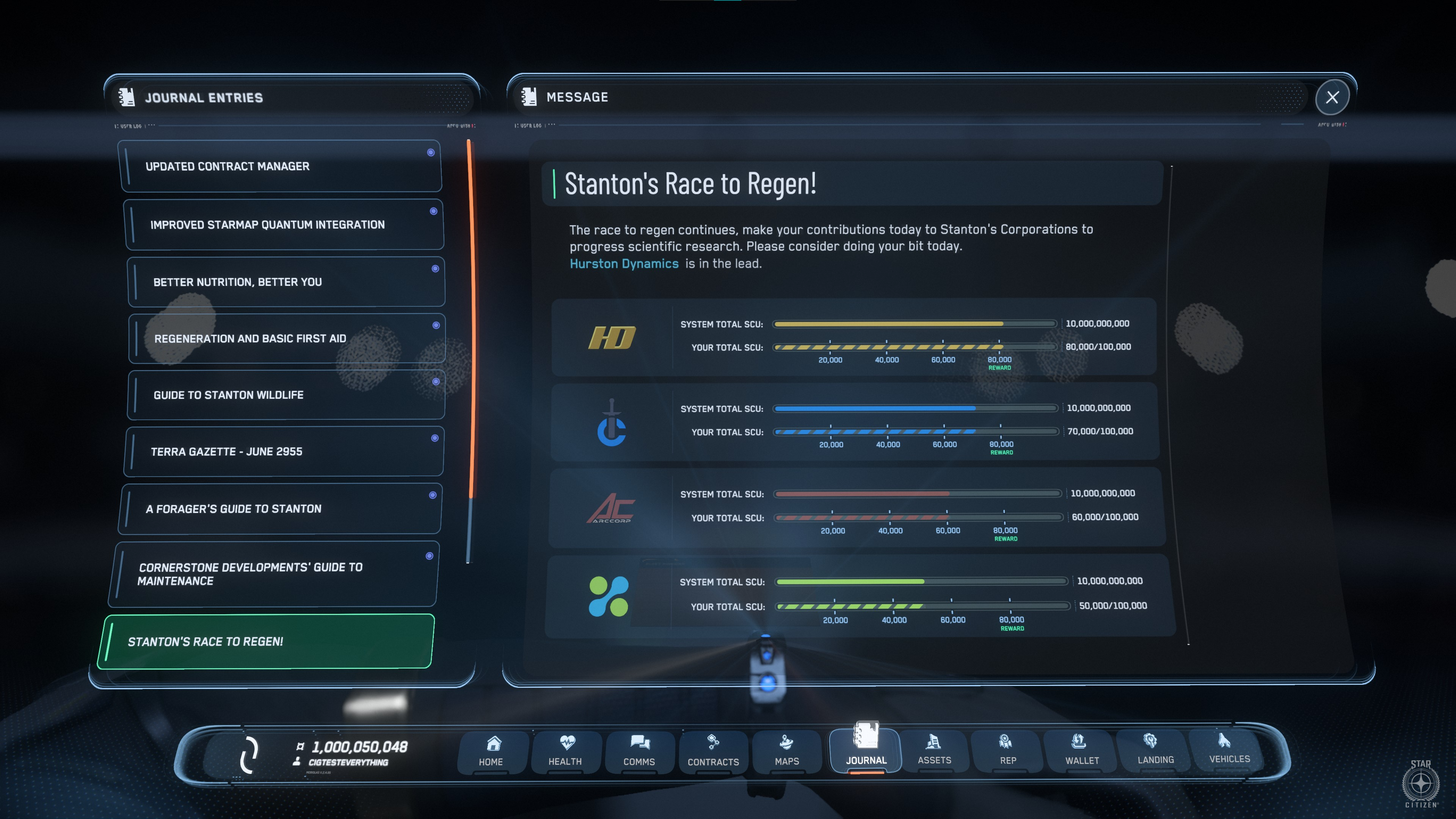
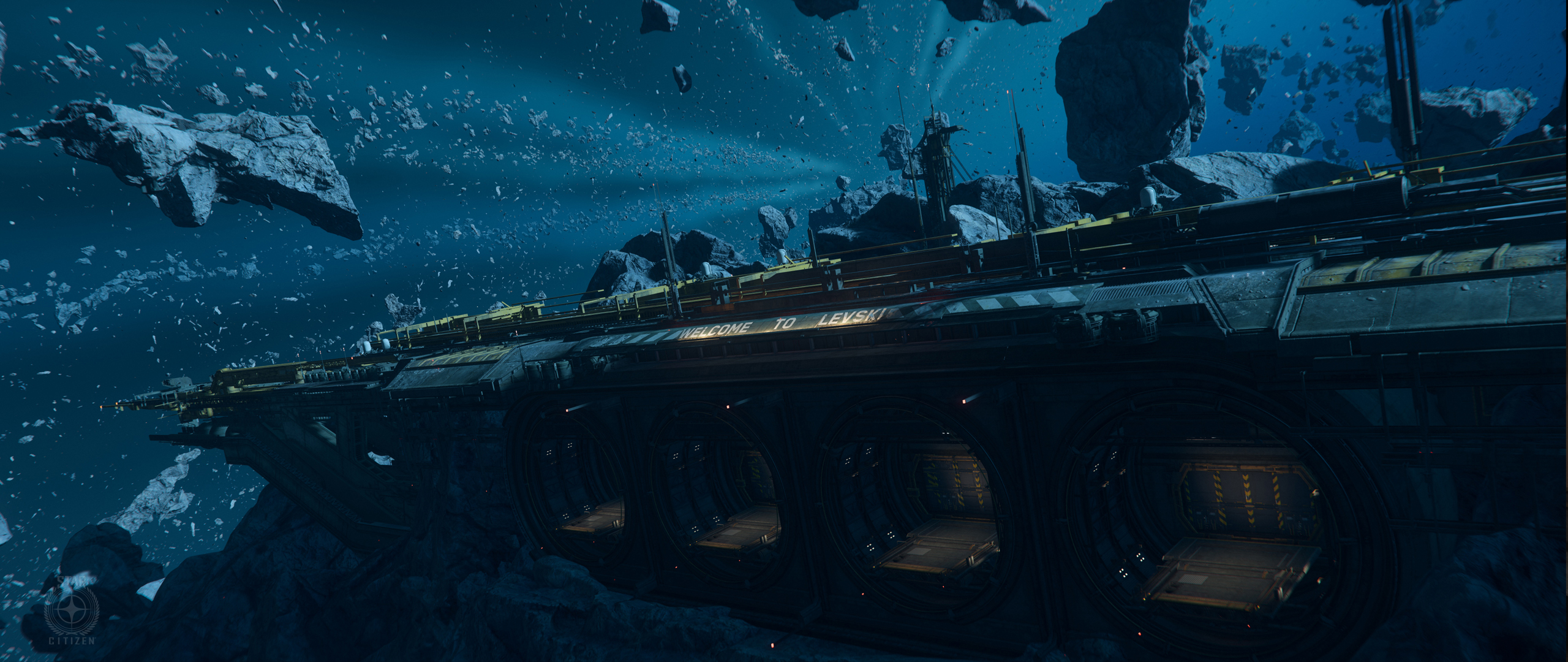
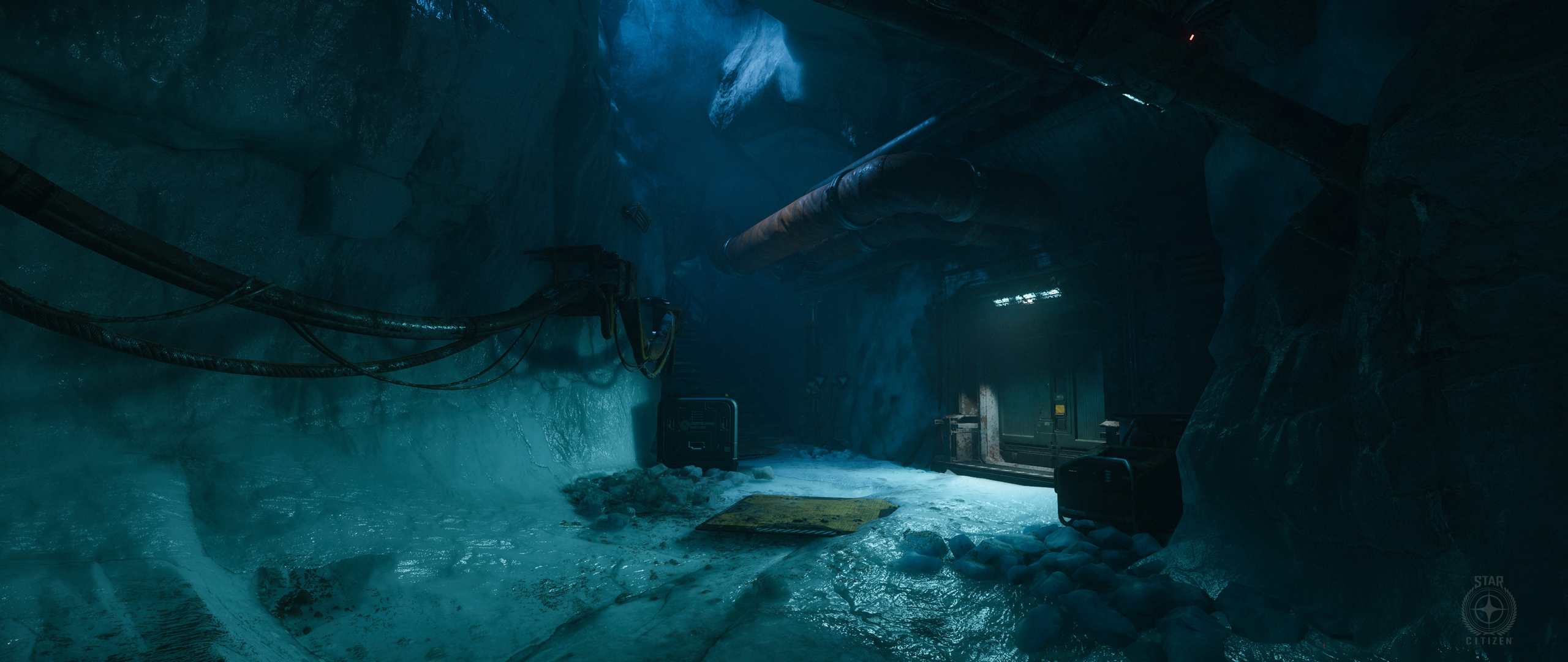
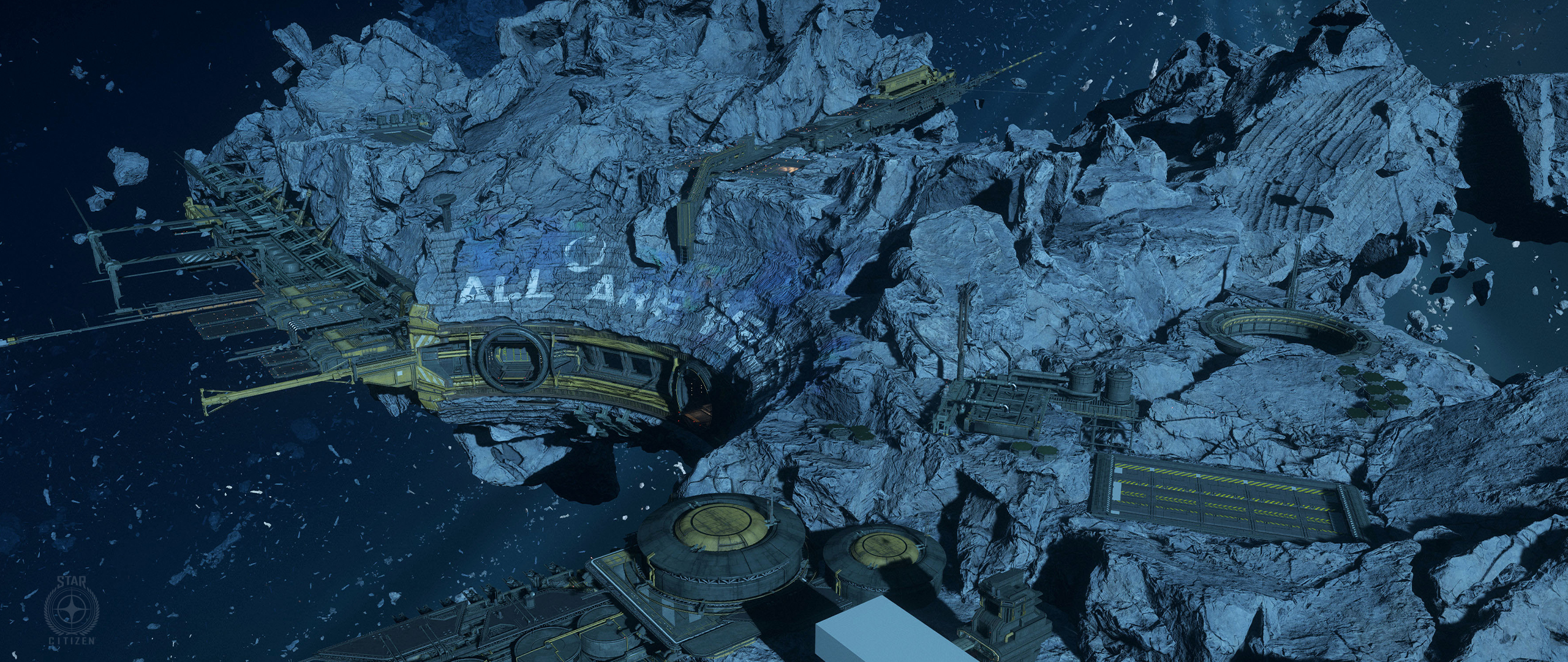
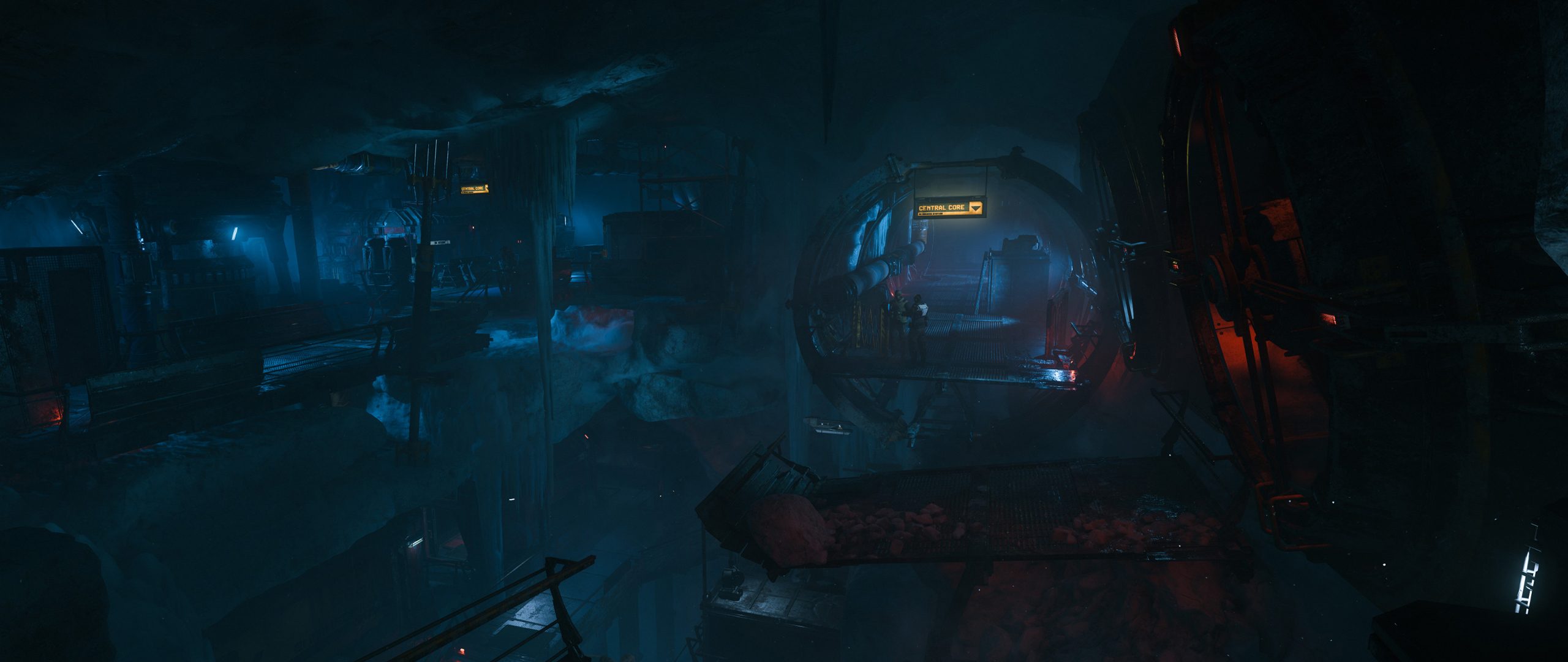
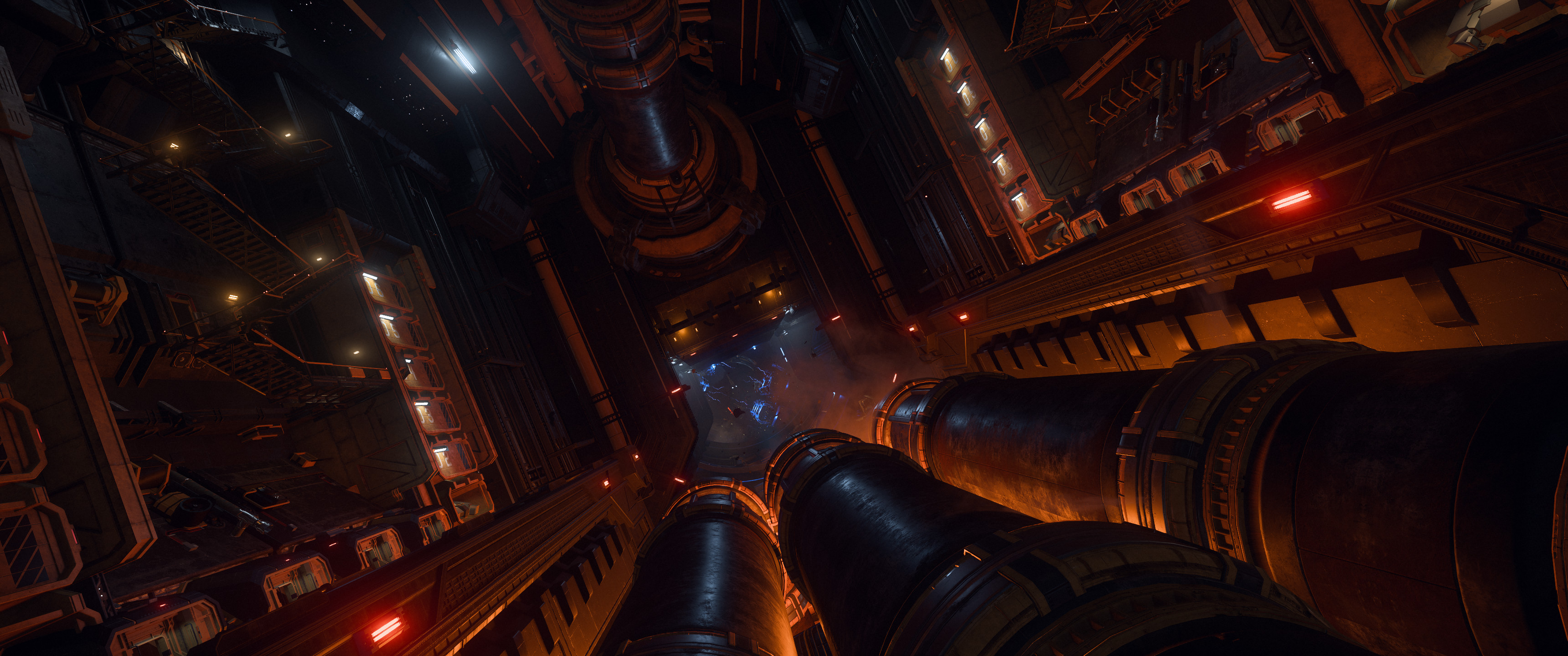
Metadata
- CIG ID
- 16650
- Channel
- Transmission
- Category
- Undefined
- Series
- Monthly Reports
- Comments
- 41
- Published
- 8 years ago (2018-07-05T00:00:00+00:00)