Galactic Guide: Gurzil System
Spectrum Dispatch Undefined Galactic GuideContent
Galactic Guide: Gurzil System
How did our solar system form? How is a planet born? Questions like this used to plague thinkers and scientists. Even when Humanity took its first fledgling steps out to the stars in the late twenty-first century, the study of our system’s early days was mostly theoretical or separated by thousands of light years. We had to wait until the 26th century and dozens of explored systems before we were able to find one in the earliest stages of development, a system where we could study the phenomenon up close and better understand the answers to those questions asked since antiquity.
Sadly, the fear and paranoia of the era restricted scientific access to the system and kept it shrouded in a fog of war for almost three hundred years.
THE DARK SEA
The mid-26th century was a complicated period in Humanity’s evolution into the stars. Technological advances made jump point scanners considerably more affordable to the public, allowing more and more civilians to compete with ‘professional’ pathfinders. That period of rapid expansion came to a screeching halt when Gaia Planet Services began terraforming a planet in what would be known as the Pallas system without realizing that the planet was already inhabited by another species. The following fifty-seven days gave Humanity a sobering introduction to the Xi’an Empire as they negotiated the release of the terraformers.
For the first few years after the Pallas incident, there were only two known systems connected to Xi’an space. In 2531, Teesa Morrison discovered the Baker-Hadur jump point. While denied the lasting legacy inherent in discovering a new system, she enjoyed a brief period of celebrity after her flight footage found its way to the NewsOrgs. In it, her very vocal bouts of exultation upon successfully completing the jump turned to shrieks of fear when she found herself face to face with a fleet of Xi’an military ships on the other side.
The prospect of hunting for jump points had become considerably more complicated. In response, the UPE created the Government Cartography Agency (GCA) to consolidate their efforts to scan for jump points and chart new systems. They also instituted a series of intensive policies to make sure that every military NavJumper was trained in diplomatic protocols and procedures in an effort to avoid any potential conflicts.
Dahunsil Kosoko was undeterred by the danger. After spending eight months recovering from a ship crash that took one of his legs, Kosoko stepped out of the medstation in Prime, picked up some Toreador’s for lunch, and got himself a new ship.
After picking up supplies, he made his way to the Hadrian System (then called Nivelin) with the goal of “scanning his way across the ’verse”. He wouldn’t make it that far. After only three weeks of intensive scans in 2539, he discovered a jump point into the Gurzil system. Arriving on the other side of the jump, Kosoko half expected to find a Xi’an fleet waiting, but found something much more impressive: a protoplanetary disc of gas and minerals swirling around a K-Type Main Sequence star.
The system was arguably the scientific discovery of the century, offering the research community unprecedented access to the foundation of a system. Kosoko filed his discovery paperwork to name the system Odara, after his aunt, but unfortunately, the UPE had to intercede. In 2542, while GCA surveyors were still assessing the system, a Xi’an scout ship appeared in the system via another (previously unknown) jump point.
The Xi’an turned out to be another explorer, perhaps their version of Teesa Morrison, so while Odara system wasn’t already part of the Xi’an Empire, it was connected to it. Specifically, it was connected to the system Rihlah, home to the military world Shorvu. The UPE quickly withdrew its surveyors and declared the system off limits to civilians.
The system was promptly renamed from Odara to the standard military convention adopted by all systems that comprised the Perry Line: gods of war. Named after the ancient Berber deity, Gurzil, the sprawling disc of coalescing planetary matter made the system impossible to effectively monitor, giving birth to its secondary and even more ominous name: the Dark Sea.
Over the next two centuries, Gurzil would be the location of numerous military operations and dozens of casualties. Although the official cause of death was always attributed to collisions resulting from the poor visibility, rumors swirled that Xi’an military assassin teams and pockets of Tevarin refugees hiding in the clusters were actually responsible.
AFTER THE FALL
In the aftermath of the Messer regime, the Perry Line underwent a fundamental change. Imperator Toi attempted to honor the promises outlined in the Akari/Kr.ē treaty and dismantle the Perry Line, dividing the systems between the Human and Xi’an. Despite having no planets, Gurzil was heavily pursued by members of the UEE for both its scientific relevance as well as its vast resources.
Once the system had been acquired by the UEE, a fascinating debate erupted in the Senate. With the adoption of the Fair Chance Act in 2795, guaranteeing the protection of developing species, advocates for the scientific community and lobbyists for the mining consortiums found themselves at odds over what exactly to do with Gurzil.
While the mining companies supported scientific study in the system, scientists claimed that Gurzil should fall under the protection of the Fair Chance Act, claiming that its composition and star had all the elements to ultimately develop into a system with habitable planets and thusly, life. They believed that attempting to harvest the minerals in the system would irrevocably interfere with the system’s development and therefore jeopardize the possibility of life developing naturally. Their counterparts, however, argued that they were talking about a timeline of millions and possibly hundreds of millions of years.
THE MODERN STATE
The debate over Gurzil has continued in some form or another ever since. Although the UEE has severely restricted mining within the green band of the system, they have not officially placed it under the protection of the Fair Chance Act.
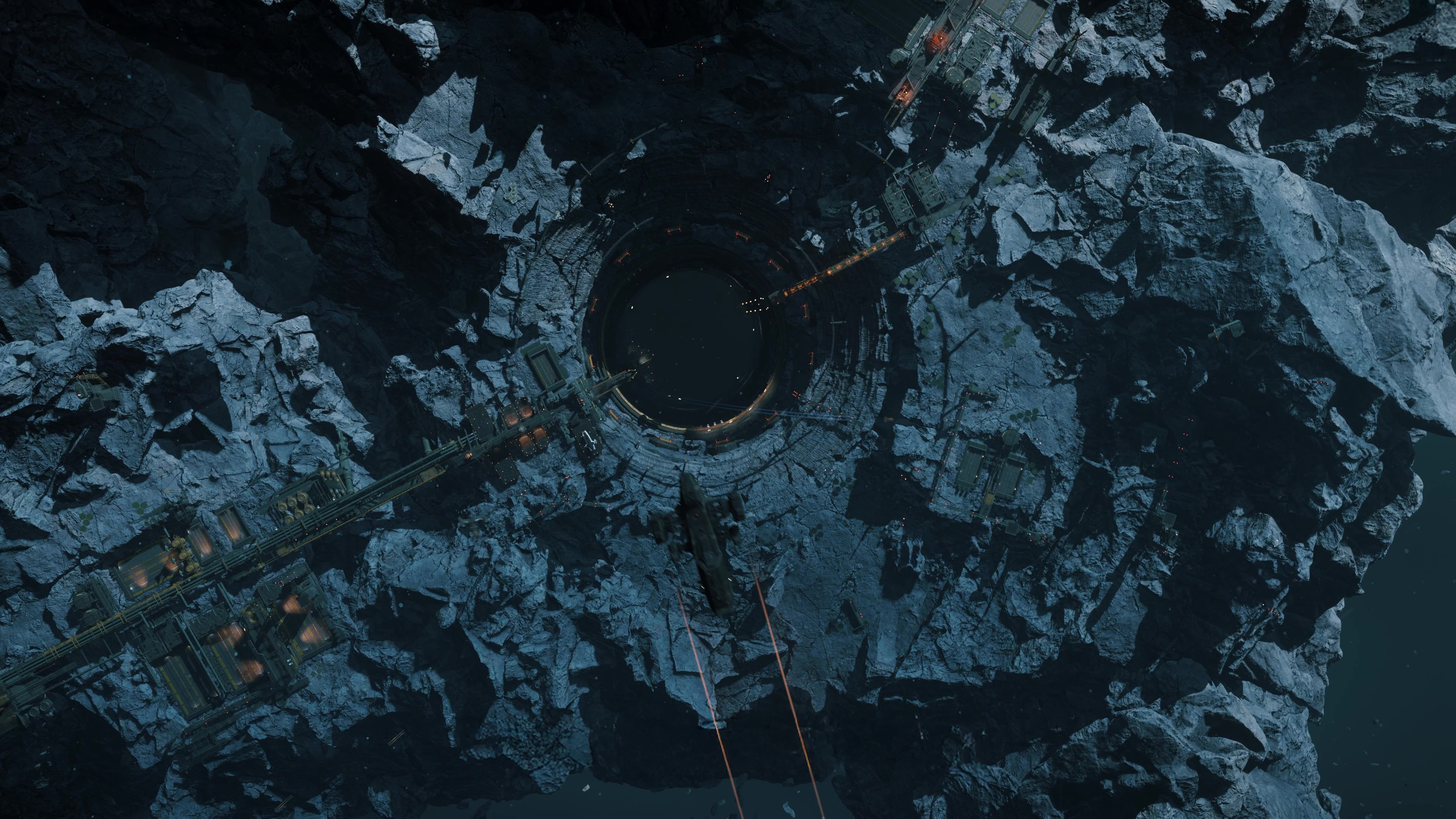
Regardless of its use, Gurzil system offers travellers a unique insight into the birth of a solar system. Travelling through the system, you will find no shortage of scientific and research stations, trying to unlock the secrets of the universe, as well as mining operations beyond the frost line. Visitors are advised to try one of the many scientific tours that run in the system.
TRAVEL WARNING
Due to the protoplanetary disc, visibility in Gurzil is still a constant danger. Exercise caution when traveling through the system and be mindful of all hazards (both natural and sentient).
HEARD IN THE WIND
“That’s when I knew I was destined to fly. To have survived such a horrible thing and have ‘when can I get back out there’ be the one thought that pushed me through the really hard times… I don’t know. It’s weird, right?”
- Dahunsil Kosoko, 2590
“You go in, I say there’s a fifty-fifty shot of coming out again. That’s the gamble with the Dark Sea. Might’ve even gotten a lot of people killed, going in with that fear. Not me. I’ll take an even split.”
- Lt. Demian Ward, UEEN (Ret), Hunter Killer: My Life on the Xi’an Front
Galaktischer Leitfaden: Gurzil System
Wie ist unser Sonnensystem entstanden? Wie wird ein Planet geboren? Fragen wie diese wurden früher von Denkern und Wissenschaftlern gestellt. Selbst als die Menschheit Ende des 21. Jahrhunderts ihre ersten Schritte zu den Sternen machte, war die Erforschung der Frühzeit unseres Systems meist theoretisch oder durch Tausende von Lichtjahren getrennt. Wir mussten bis zum 26. Jahrhundert und Dutzenden von erforschten Systemen warten, bevor wir eines in den frühesten Entwicklungsstadien finden konnten, ein System, in dem wir das Phänomen aus der Nähe studieren und die Antworten auf die seit der Antike gestellten Fragen besser verstehen konnten.
Leider haben die Angst und Paranoia der damaligen Zeit den wissenschaftlichen Zugang zum System eingeschränkt und es fast dreihundert Jahre lang in einen Nebel des Krieges gehüllt gehalten.
DAS DUNKLE MEER
Die Mitte des 26. Jahrhunderts war eine komplizierte Zeit in der Entwicklung der Menschheit zu den Sternen. Durch den technologischen Fortschritt wurden Jump-Point-Scanner für die Öffentlichkeit deutlich erschwinglicher, so dass immer mehr Zivilisten mit "professionellen" Pfadfindern konkurrieren konnten. Diese Periode der schnellen Expansion kam zum Stillstand, als Gaia Planet Services anfing, einen Planeten im so genannten Pallas-System zu terraformen, ohne zu bemerken, dass der Planet bereits von einer anderen Spezies bewohnt war. Die folgenden siebenundfünfzig Tage gaben der Menschheit eine ernüchternde Einführung in das Xi'an-Reich, als sie über die Freilassung der Terraformer verhandelt wurde.
In den ersten Jahren nach dem Vorfall von Pallas gab es nur zwei bekannte Systeme, die mit dem Raum Xi'an verbunden waren. Im Jahr 2531 entdeckte Teesa Morrison den Sprungpunkt Baker-Hadur. Obwohl sie das dauerhafte Erbe der Entdeckung eines neuen Systems verleugnete, genoss sie eine kurze Zeit lang Berühmtheit, nachdem ihr Flugmaterial den Weg zu den NewsOrgs gefunden hatte. Darin verwandelten sich ihre lautstarken Anfeuerungsrufe nach erfolgreichem Abschluss des Sprungs in Schreie der Angst, als sie sich von Angesicht zu Angesicht mit einer Flotte von Xi'an-Militärschiffen auf der anderen Seite konfrontiert sah.
Die Aussicht auf die Jagd nach Sprungbrettern war erheblich komplizierter geworden. Als Reaktion darauf gründete die UPE die Government Cartography Agency (GCA), um ihre Bemühungen zu bündeln, nach Sprungbrettpunkten zu suchen und neue Systeme zu kartieren. Sie führten auch eine Reihe von intensiven Maßnahmen ein, um sicherzustellen, dass jeder militärische Navjumper in diplomatischen Protokollen und Verfahren ausgebildet wurde, um mögliche Konflikte zu vermeiden.
Dahunsil Kosoko war von der Gefahr nicht abgeschreckt. Nachdem er sich acht Monate lang von einem Schiffsabsturz erholt hatte, der eines seiner Beine einnahm, trat Kosoko aus der Medstation in Prime aus, holte einige Toreadors zum Mittagessen ab und holte sich ein neues Schiff.
Nachdem er Vorräte abgeholt hatte, machte er sich auf den Weg zum Hadrian-System (damals Nivelin genannt) mit dem Ziel, "seinen Weg über den Vers zu scannen". So weit würde er es nicht schaffen. Nach nur drei Wochen intensiver Scans im Jahr 2539 entdeckte er einen Sprungpunkt in das Gurzil-System. Auf der anderen Seite des Sprungs angekommen, erwartete Kosoko halb, dass eine Xi'an-Flotte warten würde, fand aber etwas viel Beeindruckenderes: eine protoplanetarische Scheibe aus Gas und Mineralien, die um einen K-Typ-Hauptsequenzstern wirbelt.
Das System war wohl die wissenschaftliche Entdeckung des Jahrhunderts und bot der Forschungsgemeinschaft einen beispiellosen Zugang zur Grundlage eines Systems. Kosoko reichte seine Entdeckungspapiere ein, um das System Odara zu benennen, nach seiner Tante, aber leider musste die UPE intervenieren. Im Jahr 2542, während die GCA-Vermesser das System noch beurteilten, erschien ein Xi'an-Scout-Schiff im System über einen weiteren (bisher unbekannten) Sprungpunkt.
Die Xi'an erwiesen sich als ein weiterer Entdecker, vielleicht ihre Version von Teesa Morrison, so dass das Odara-System zwar nicht bereits Teil des Xi'an-Reiches war, aber mit ihm verbunden war. Konkret war es mit dem System Rihlah verbunden, der Heimat der Militärwelt Shorvu. Die UPE zog ihre Gutachter schnell zurück und erklärte das System für tabu für Zivilisten.
Das System wurde umgehend von Odara in die Standard-Militärkonvention umbenannt, die von allen Systemen der Perry-Linie übernommen wurde: Kriegsgötter. Benannt nach der alten Berbergottheit Gurzil, machte die ausgedehnte Scheibe aus zusammenwachsender planetarischer Materie das System unkontrollierbar und brachte seinen sekundären und noch bedrohlicheren Namen hervor: das Schwarze Meer.
In den nächsten zwei Jahrhunderten wurde Gurzil zum Schauplatz zahlreicher militärischer Operationen und Dutzender von Opfern. Obwohl die offizielle Todesursache immer auf Kollisionen aufgrund der schlechten Sichtbarkeit zurückgeführt wurde, kursierten Gerüchte, dass Xi'an Militär-Attentätergruppen und Taschen von Tevarin-Flüchtlingen, die sich in den Clustern versteckten, tatsächlich verantwortlich seien.
NACH DEM STURZ
Nach dem Messer-Regime erlebte die Perry-Linie einen grundlegenden Wandel. Imperator Toi versuchte, die im Akari/Kray-Vertrag enthaltenen Versprechen einzuhalten und die Perry-Linie zu demontieren und die Systeme zwischen Mensch und Xi'an aufzuteilen. Obwohl es keine Planeten gab, wurde Gurzil von den Mitgliedern der UEE sowohl wegen seiner wissenschaftlichen Relevanz als auch wegen seiner enormen Ressourcen stark verfolgt.
Nachdem das System von der UEE erworben worden war, brach im Senat eine faszinierende Debatte aus. Mit der Verabschiedung des Fair Chance Act im Jahr 2795, der den Schutz sich entwickelnder Arten garantiert, standen sich Befürworter der wissenschaftlichen Gemeinschaft und Lobbyisten für die Bergbaukonsortien im Streit darüber, was genau mit Gurzil zu tun ist.
Während die Minengesellschaften wissenschaftliche Studien im System unterstützten, behaupteten Wissenschaftler, dass Gurzil unter den Schutz des Fair Chance Act fallen sollte, und behaupteten, dass seine Zusammensetzung und sein Stern alle Elemente hätten, um sich schließlich zu einem System mit bewohnbaren Planeten und damit Leben zu entwickeln. Sie glaubten, dass der Versuch, die Mineralien im System zu gewinnen, die Entwicklung des Systems unwiderruflich beeinträchtigen und somit die Möglichkeit der natürlichen Lebensentwicklung gefährden würde. Ihre Kollegen argumentierten jedoch, dass sie von einem Zeitrahmen von Millionen und möglicherweise Hunderten von Millionen Jahren sprachen.
DER MODERNE STAAT
Die Debatte über Gurzil hat sich seitdem in irgendeiner Form fortgesetzt. Obwohl die UEE den Abbau innerhalb des grünen Bandes des Systems stark eingeschränkt hat, haben sie es nicht offiziell unter den Schutz des Fair Chance Act gestellt.
Unabhängig von seiner Verwendung bietet das Gurzil-System den Reisenden einen einzigartigen Einblick in die Entstehung eines Sonnensystems. Wenn Sie durch das System reisen, werden Sie keinen Mangel an Wissenschafts- und Forschungsstationen finden, die versuchen, die Geheimnisse des Universums zu lüften, sowie an Bergbauaktivitäten außerhalb der Frostgrenze. Den Besuchern wird empfohlen, eine der vielen wissenschaftlichen Führungen, die im System laufen, auszuprobieren.
REISEWARNUNG
Aufgrund der protoplanetaren Scheibe ist die Sichtbarkeit in Gurzil immer noch eine ständige Gefahr. Seien Sie vorsichtig bei der Fahrt durch das System und achten Sie auf alle Gefahren (natürliche und empfindungsfähige).
IM WIND GEHÖRT
"Da wusste ich, dass ich zum Fliegen bestimmt war. So eine schreckliche Sache überlebt zu haben und zu haben, "wann kann ich wieder da draußen sein", das ist der eine Gedanke, der mich durch die wirklich harten Zeiten getrieben hat.... Ich weiß nicht. Es ist seltsam, oder?"
- Dahunsil Kosoko, 2590
"Du gehst rein, ich sage, es gibt eine 50:50 Chance, wieder rauszukommen. Das ist das Spiel mit dem Dunklen Meer. Vielleicht sind sogar viele Menschen gestorben, weil sie diese Angst hatten. Ich nicht. Ich nehme eine gleichmäßige Aufteilung."
- Lt. Demian Ward, UEEN (ausgeschieden), Hunter Killer: Mein Leben an der Xi'an-Front
Galactic Guide: Gurzil System
How did our solar system form? How is a planet born? Questions like this used to plague thinkers and scientists. Even when Humanity took its first fledgling steps out to the stars in the late twenty-first century, the study of our system’s early days was mostly theoretical or separated by thousands of light years. We had to wait until the 26th century and dozens of explored systems before we were able to find one in the earliest stages of development, a system where we could study the phenomenon up close and better understand the answers to those questions asked since antiquity.
Sadly, the fear and paranoia of the era restricted scientific access to the system and kept it shrouded in a fog of war for almost three hundred years.
THE DARK SEA
The mid-26th century was a complicated period in Humanity’s evolution into the stars. Technological advances made jump point scanners considerably more affordable to the public, allowing more and more civilians to compete with ‘professional’ pathfinders. That period of rapid expansion came to a screeching halt when Gaia Planet Services began terraforming a planet in what would be known as the Pallas system without realizing that the planet was already inhabited by another species. The following fifty-seven days gave Humanity a sobering introduction to the Xi’an Empire as they negotiated the release of the terraformers.
For the first few years after the Pallas incident, there were only two known systems connected to Xi’an space. In 2531, Teesa Morrison discovered the Baker-Hadur jump point. While denied the lasting legacy inherent in discovering a new system, she enjoyed a brief period of celebrity after her flight footage found its way to the NewsOrgs. In it, her very vocal bouts of exultation upon successfully completing the jump turned to shrieks of fear when she found herself face to face with a fleet of Xi’an military ships on the other side.
The prospect of hunting for jump points had become considerably more complicated. In response, the UPE created the Government Cartography Agency (GCA) to consolidate their efforts to scan for jump points and chart new systems. They also instituted a series of intensive policies to make sure that every military NavJumper was trained in diplomatic protocols and procedures in an effort to avoid any potential conflicts.
Dahunsil Kosoko was undeterred by the danger. After spending eight months recovering from a ship crash that took one of his legs, Kosoko stepped out of the medstation in Prime, picked up some Toreador’s for lunch, and got himself a new ship.
After picking up supplies, he made his way to the Hadrian System (then called Nivelin) with the goal of “scanning his way across the ’verse”. He wouldn’t make it that far. After only three weeks of intensive scans in 2539, he discovered a jump point into the Gurzil system. Arriving on the other side of the jump, Kosoko half expected to find a Xi’an fleet waiting, but found something much more impressive: a protoplanetary disc of gas and minerals swirling around a K-Type Main Sequence star.
The system was arguably the scientific discovery of the century, offering the research community unprecedented access to the foundation of a system. Kosoko filed his discovery paperwork to name the system Odara, after his aunt, but unfortunately, the UPE had to intercede. In 2542, while GCA surveyors were still assessing the system, a Xi’an scout ship appeared in the system via another (previously unknown) jump point.
The Xi’an turned out to be another explorer, perhaps their version of Teesa Morrison, so while Odara system wasn’t already part of the Xi’an Empire, it was connected to it. Specifically, it was connected to the system Rihlah, home to the military world Shorvu. The UPE quickly withdrew its surveyors and declared the system off limits to civilians.
The system was promptly renamed from Odara to the standard military convention adopted by all systems that comprised the Perry Line: gods of war. Named after the ancient Berber deity, Gurzil, the sprawling disc of coalescing planetary matter made the system impossible to effectively monitor, giving birth to its secondary and even more ominous name: the Dark Sea.
Over the next two centuries, Gurzil would be the location of numerous military operations and dozens of casualties. Although the official cause of death was always attributed to collisions resulting from the poor visibility, rumors swirled that Xi’an military assassin teams and pockets of Tevarin refugees hiding in the clusters were actually responsible.
AFTER THE FALL
In the aftermath of the Messer regime, the Perry Line underwent a fundamental change. Imperator Toi attempted to honor the promises outlined in the Akari/Kr.ē treaty and dismantle the Perry Line, dividing the systems between the Human and Xi’an. Despite having no planets, Gurzil was heavily pursued by members of the UEE for both its scientific relevance as well as its vast resources.
Once the system had been acquired by the UEE, a fascinating debate erupted in the Senate. With the adoption of the Fair Chance Act in 2795, guaranteeing the protection of developing species, advocates for the scientific community and lobbyists for the mining consortiums found themselves at odds over what exactly to do with Gurzil.
While the mining companies supported scientific study in the system, scientists claimed that Gurzil should fall under the protection of the Fair Chance Act, claiming that its composition and star had all the elements to ultimately develop into a system with habitable planets and thusly, life. They believed that attempting to harvest the minerals in the system would irrevocably interfere with the system’s development and therefore jeopardize the possibility of life developing naturally. Their counterparts, however, argued that they were talking about a timeline of millions and possibly hundreds of millions of years.
THE MODERN STATE
The debate over Gurzil has continued in some form or another ever since. Although the UEE has severely restricted mining within the green band of the system, they have not officially placed it under the protection of the Fair Chance Act.
Regardless of its use, Gurzil system offers travellers a unique insight into the birth of a solar system. Travelling through the system, you will find no shortage of scientific and research stations, trying to unlock the secrets of the universe, as well as mining operations beyond the frost line. Visitors are advised to try one of the many scientific tours that run in the system.
TRAVEL WARNING
Due to the protoplanetary disc, visibility in Gurzil is still a constant danger. Exercise caution when traveling through the system and be mindful of all hazards (both natural and sentient).
HEARD IN THE WIND
“That’s when I knew I was destined to fly. To have survived such a horrible thing and have ‘when can I get back out there’ be the one thought that pushed me through the really hard times… I don’t know. It’s weird, right?”
- Dahunsil Kosoko, 2590
“You go in, I say there’s a fifty-fifty shot of coming out again. That’s the gamble with the Dark Sea. Might’ve even gotten a lot of people killed, going in with that fear. Not me. I’ll take an even split.”
- Lt. Demian Ward, UEEN (Ret), Hunter Killer: My Life on the Xi’an Front
Galactic Guide: Gurzil System
How did our solar system form? How is a planet born? Questions like this used to plague thinkers and scientists. Even when Humanity took its first fledgling steps out to the stars in the late twenty-first century, the study of our system’s early days was mostly theoretical or separated by thousands of light years. We had to wait until the 26th century and dozens of explored systems before we were able to find one in the earliest stages of development, a system where we could study the phenomenon up close and better understand the answers to those questions asked since antiquity.
Sadly, the fear and paranoia of the era restricted scientific access to the system and kept it shrouded in a fog of war for almost three hundred years.
THE DARK SEA
The mid-26th century was a complicated period in Humanity’s evolution into the stars. Technological advances made jump point scanners considerably more affordable to the public, allowing more and more civilians to compete with ‘professional’ pathfinders. That period of rapid expansion came to a screeching halt when Gaia Planet Services began terraforming a planet in what would be known as the Pallas system without realizing that the planet was already inhabited by another species. The following fifty-seven days gave Humanity a sobering introduction to the Xi’an Empire as they negotiated the release of the terraformers.
For the first few years after the Pallas incident, there were only two known systems connected to Xi’an space. In 2531, Teesa Morrison discovered the Baker-Hadur jump point. While denied the lasting legacy inherent in discovering a new system, she enjoyed a brief period of celebrity after her flight footage found its way to the NewsOrgs. In it, her very vocal bouts of exultation upon successfully completing the jump turned to shrieks of fear when she found herself face to face with a fleet of Xi’an military ships on the other side.
The prospect of hunting for jump points had become considerably more complicated. In response, the UPE created the Government Cartography Agency (GCA) to consolidate their efforts to scan for jump points and chart new systems. They also instituted a series of intensive policies to make sure that every military NavJumper was trained in diplomatic protocols and procedures in an effort to avoid any potential conflicts.
Dahunsil Kosoko was undeterred by the danger. After spending eight months recovering from a ship crash that took one of his legs, Kosoko stepped out of the medstation in Prime, picked up some Toreador’s for lunch, and got himself a new ship.
After picking up supplies, he made his way to the Hadrian System (then called Nivelin) with the goal of “scanning his way across the ’verse”. He wouldn’t make it that far. After only three weeks of intensive scans in 2539, he discovered a jump point into the Gurzil system. Arriving on the other side of the jump, Kosoko half expected to find a Xi’an fleet waiting, but found something much more impressive: a protoplanetary disc of gas and minerals swirling around a K-Type Main Sequence star.
The system was arguably the scientific discovery of the century, offering the research community unprecedented access to the foundation of a system. Kosoko filed his discovery paperwork to name the system Odara, after his aunt, but unfortunately, the UPE had to intercede. In 2542, while GCA surveyors were still assessing the system, a Xi’an scout ship appeared in the system via another (previously unknown) jump point.
The Xi’an turned out to be another explorer, perhaps their version of Teesa Morrison, so while Odara system wasn’t already part of the Xi’an Empire, it was connected to it. Specifically, it was connected to the system Rihlah, home to the military world Shorvu. The UPE quickly withdrew its surveyors and declared the system off limits to civilians.
The system was promptly renamed from Odara to the standard military convention adopted by all systems that comprised the Perry Line: gods of war. Named after the ancient Berber deity, Gurzil, the sprawling disc of coalescing planetary matter made the system impossible to effectively monitor, giving birth to its secondary and even more ominous name: the Dark Sea.
Over the next two centuries, Gurzil would be the location of numerous military operations and dozens of casualties. Although the official cause of death was always attributed to collisions resulting from the poor visibility, rumors swirled that Xi’an military assassin teams and pockets of Tevarin refugees hiding in the clusters were actually responsible.
AFTER THE FALL
In the aftermath of the Messer regime, the Perry Line underwent a fundamental change. Imperator Toi attempted to honor the promises outlined in the Akari/Kr.ē treaty and dismantle the Perry Line, dividing the systems between the Human and Xi’an. Despite having no planets, Gurzil was heavily pursued by members of the UEE for both its scientific relevance as well as its vast resources.
Once the system had been acquired by the UEE, a fascinating debate erupted in the Senate. With the adoption of the Fair Chance Act in 2795, guaranteeing the protection of developing species, advocates for the scientific community and lobbyists for the mining consortiums found themselves at odds over what exactly to do with Gurzil.
While the mining companies supported scientific study in the system, scientists claimed that Gurzil should fall under the protection of the Fair Chance Act, claiming that its composition and star had all the elements to ultimately develop into a system with habitable planets and thusly, life. They believed that attempting to harvest the minerals in the system would irrevocably interfere with the system’s development and therefore jeopardize the possibility of life developing naturally. Their counterparts, however, argued that they were talking about a timeline of millions and possibly hundreds of millions of years.
THE MODERN STATE
The debate over Gurzil has continued in some form or another ever since. Although the UEE has severely restricted mining within the green band of the system, they have not officially placed it under the protection of the Fair Chance Act.
Regardless of its use, Gurzil system offers travellers a unique insight into the birth of a solar system. Travelling through the system, you will find no shortage of scientific and research stations, trying to unlock the secrets of the universe, as well as mining operations beyond the frost line. Visitors are advised to try one of the many scientific tours that run in the system.
TRAVEL WARNING
Due to the protoplanetary disc, visibility in Gurzil is still a constant danger. Exercise caution when traveling through the system and be mindful of all hazards (both natural and sentient).
HEARD IN THE WIND
“That’s when I knew I was destined to fly. To have survived such a horrible thing and have ‘when can I get back out there’ be the one thought that pushed me through the really hard times… I don’t know. It’s weird, right?”
- Dahunsil Kosoko, 2590
“You go in, I say there’s a fifty-fifty shot of coming out again. That’s the gamble with the Dark Sea. Might’ve even gotten a lot of people killed, going in with that fear. Not me. I’ll take an even split.”
- Lt. Demian Ward, UEEN (Ret), Hunter Killer: My Life on the Xi’an Front
Links
No links available.
Images
5


Metadata
- CIG ID
- 16714
- Channel
- Spectrum Dispatch
- Category
- Undefined
- Series
- Galactic Guide
- Comments
- 23
- Published
- 8 years ago (2018-08-15T00:00:00+00:00)