Squadron 42 Monthly Report: December 2018
Transmission Undefined Monthly ReportsContent
This is a cross-post of the report that was recently sent out via the monthly Squadron 42 newsletter. We’re publishing this a second time as a Comm-Link to make it easier for the community to reference back to, and plan on following this process for future Squadron 42 Monthly Reports. Attention Recruits,
What you are about to read is the latest information on the continuing development of Squadron 42.
Read on for pertinent details from our planet-wide operations on Squadron 42-related work over the last month, as well as intel on an exciting new dispatch. The information contained in this communication is extremely sensitive and it is of paramount importance that it does not fall into the wrong hands. Purge all records after reading.
Over and out,
UEE Naval High Command
The Road to Glory
Today sees the unveiling of our Squadron 42 roadmap, a useful piece of intel that tracks the progress of development in detail. Much like the Persistent Universe roadmap, this is linked to our JIRA tracking system, and thus lets you see at a glance the work remaining on the game as we thunder on toward the finish line. Of course, also like its Star Citizen counterpart, the Squadron 42 roadmap is not necessarily exhaustive and may be changed or updated as development continues. Make sure you read the caveats, and enjoy this insight into the process. This monthly project update will work as something of a companion piece, shedding more light on specific work done by each development team, while the roadmap will provide dynamic real-time tracking of progress weekly. Without further adiue, let’s see what the devs fighting the good fight on the frontlines have been up to…
AI
This month, Ship AI’s focus was on optimizing the Tactical Point System. They now have multiple queries bundled together in a batch from different threads, which allows more control over the cost of the overall system. They submitted several optimizations for the character movement system, which can now update all the components in a multithreaded batch approach and will utilize the maximum the CPU resources during the game update. A pass for thread safety of several subsystems was performed, including the attention target component and communication system. This is required to eventually move the Subsumption component update to the multithreaded batch update step. In FPS Combat, the ‘Defend Area’ assignment was introduced; correctly achieving this behavior requires monitoring the mastergraph transitions to evaluate if the recipients of the Subsumption event can actually process it. In the Defend Area example, they might be executing any regular behavior when receiving the assignment. If the behavior can handle the request in a specific way, great. If not, then the mastergraph takes care of selecting one that can. Alongside this, they’re adding new behaviors to improve combat and patrol to respect this assignment. New behaviors and functionality to support stealth gameplay were implemented, with new audio and visual stimuli being added to allow players to draw the attention of guards, prepare traps, and open up otherwise blocked paths. Work also continued on the bartender for Lorville. To achieve several functionalities of his behavior, they implemented the first pass of UseChannel routing and are continuing to expand the usable functionalities. The Usable Builder Tool received a new feature too: it’s now able to correctly preview different characters using different usables so that designers, animators, and programmers can easily test and verify the content as it’s delivered.
Animation
On the Story front, the Animation kicked-off production passes on a handful of Squadron 42 scenes. They’re also working to finalize the Armorer character for SQ42 – itself a large and intricate task.
Audio
Audio worked closely with the SQ42 composer Geoff Zanelli to establish themes for the game’s different races and important characters. This, combined with the second round of music implementation, allowed the team to better support pacing and overall development. The Dialogue Team worked to ensure animation and design had all the assets required to successfully implement their conversations, comms, and cinematics.
Character Art
The Character Art Team polished the Vanduul armor and concepted the Navy Gunner’s outfit.
Cinematics
After completing the CitizenCon SQ42 teaser trailer, Cinematics took time to verify that each scene was functioning correctly from start to finish. This mainly involved the Shubin Station art pocket, but also other things like the battleground around Vega II. Once complete, they worked on a pivotal scene for the game featuring a key character not revealed yet. This involved using a new method of character hair and skin creation (tweaked for more realism), and small modification to costumes. The Cinematic Animation Team carried on with regular scene work. Having completed first passes for much of the game’s narrative, they transitioned to scenes where a full implementation pass with a state machine is required. They also supported the engineers working on key workflow tools. Along with navspline improvements, new functionality was added to allow the team to edit multiple cinematic sequences at once. Previously, TrackView only supported a master and child sequence and didn’t allow editing of the master if the child was edited, or vice versa. Some SQ42 scenes feature characters on capital ship bridges reacting to things they see through windows, which requires the team to split sequences between interior and exterior. The new multi-sequence workflow allows multiple sequences to be open and active at once and syncs the timelines for both the master and child.
Engine Tools
The Engine Team resumed work on GPU skinning. They added vertex velocity support (motion blur), completed several optimizations to skip zero weights (improved throughput), prepared background data, and made the first pass on memory layout and LOD support. They also made the execution of ray collision checks and the defragmentation of grids run concurrently. This achieved a 30-50% speedup for physics planet terrain computation, reduced the number of cell queries on planets, and improved proxy mesh generation of terrain ground volumes. Terrain rendering improvements were added (glow forward pass) as well as fixes for water volume and ocean rendering. The existing hair shader was improved, and a new depth of field algorithm was created to improve quality, performance, and fix halos around silhouettes. Part of the team worked on additional culling refinements in the zone system to submit fewer objects to the renderer, as well as various low-level optimizations to reduce load on the render thread.
Engineering
Engineering actualized a system to allow variable limits on how far players can move their heads when looking around. The default amount is overridden by the outfit and helmet, so wearing heavy armor will restrict how far they can look. Pickup and Carry was finished off, including the solving of an issue when interacting with items in EVA. Developments on the female character continues. Because of her different sized skeleton, the team implemented animation-driven inverse kinematics to allow her to reach a ship’s controls without the need for new animation sets. Progress has been made on the usables builder tool, which allows the content creators to drop in a character and play all the related usable animations, move locators around, and generally test a setup without having to go into the game. As part of comms, a ‘Tannoy’ system can now pump audio to multiple parts of an environment. For example, an announcement to a single ship’s hangar or a more global ship-wide announcement. The ship AI Team helped out with the new Intelligent Flight Control System (IFCS), tweaking ship behavior to better utilize these new flight controls for a better dogfighting experience.
Environment Art
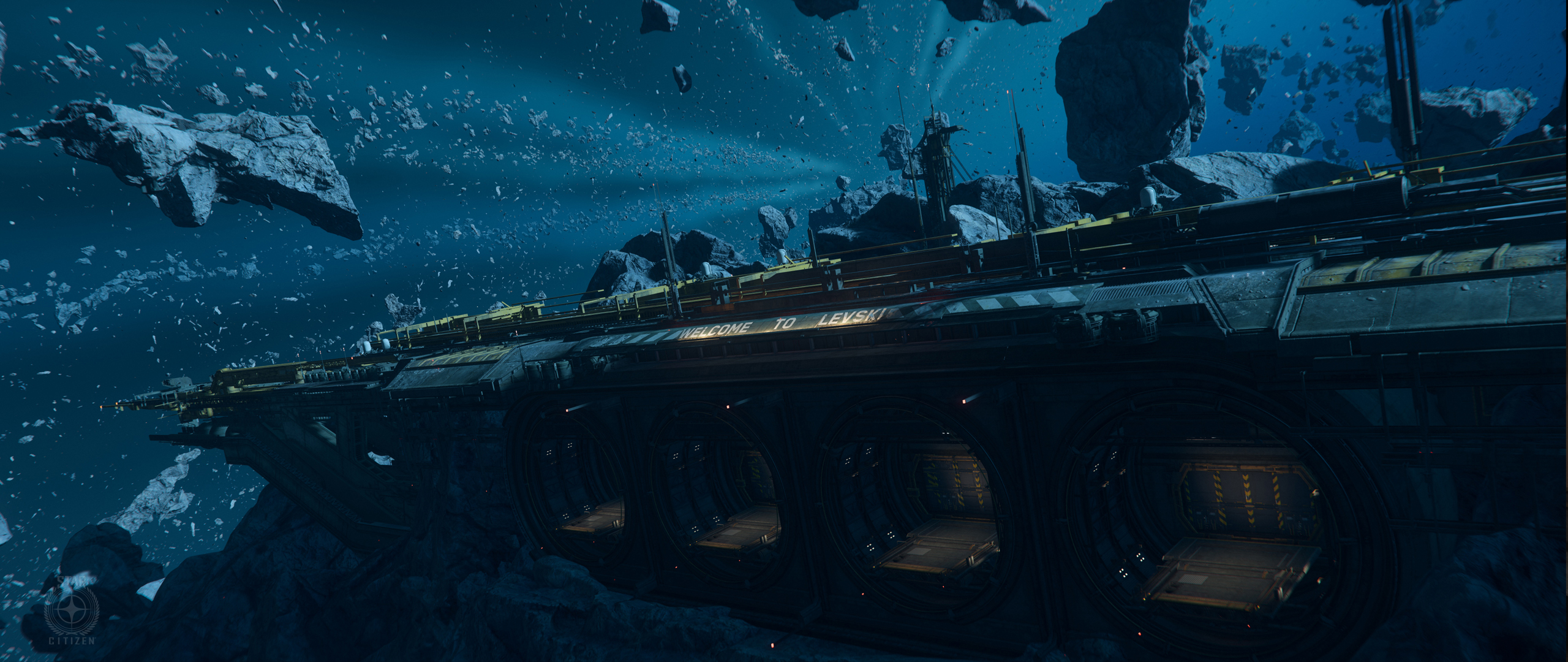
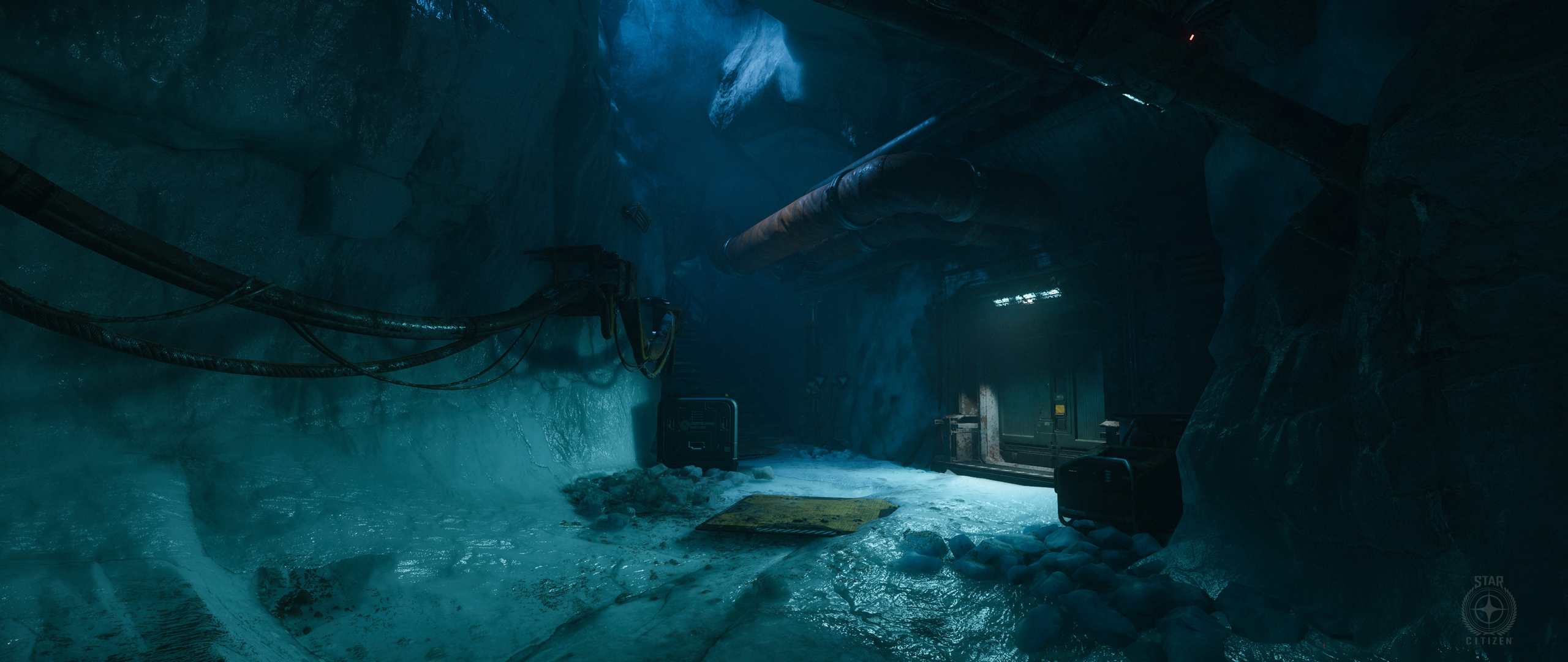
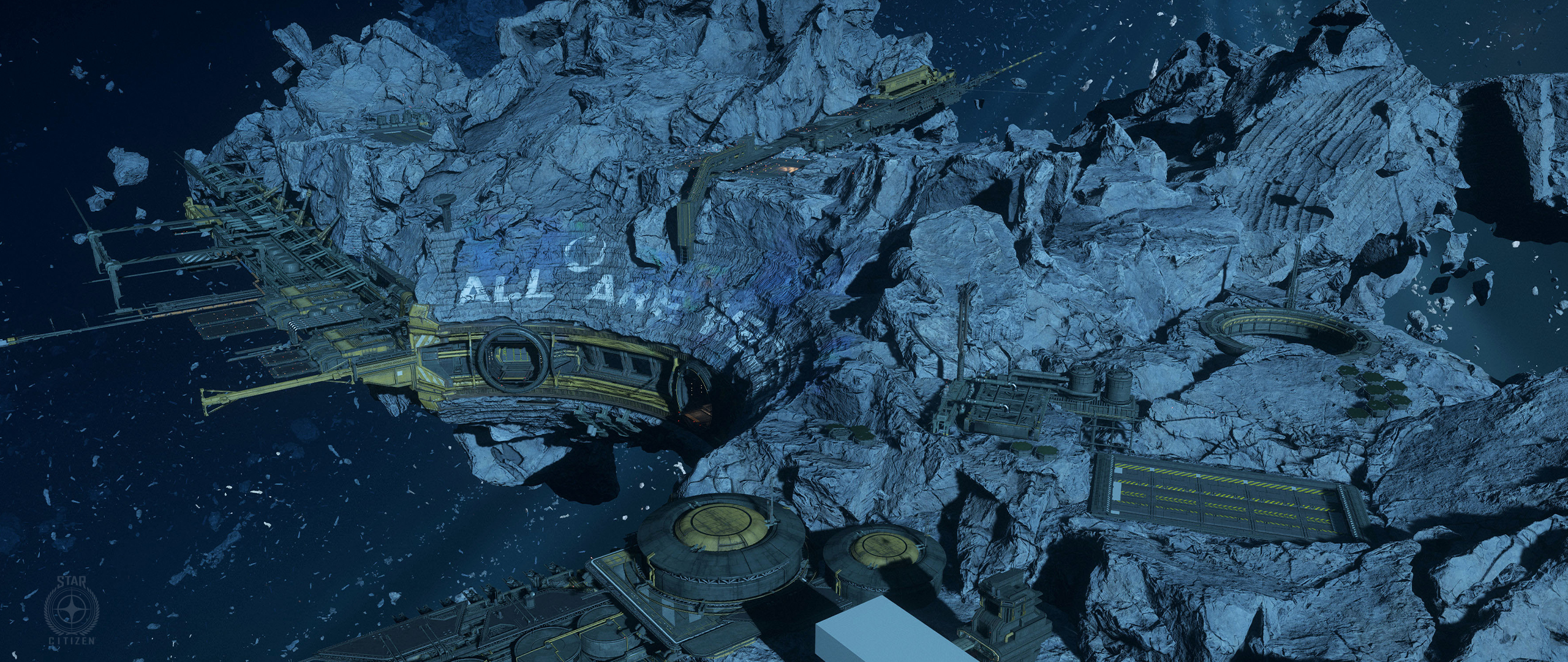
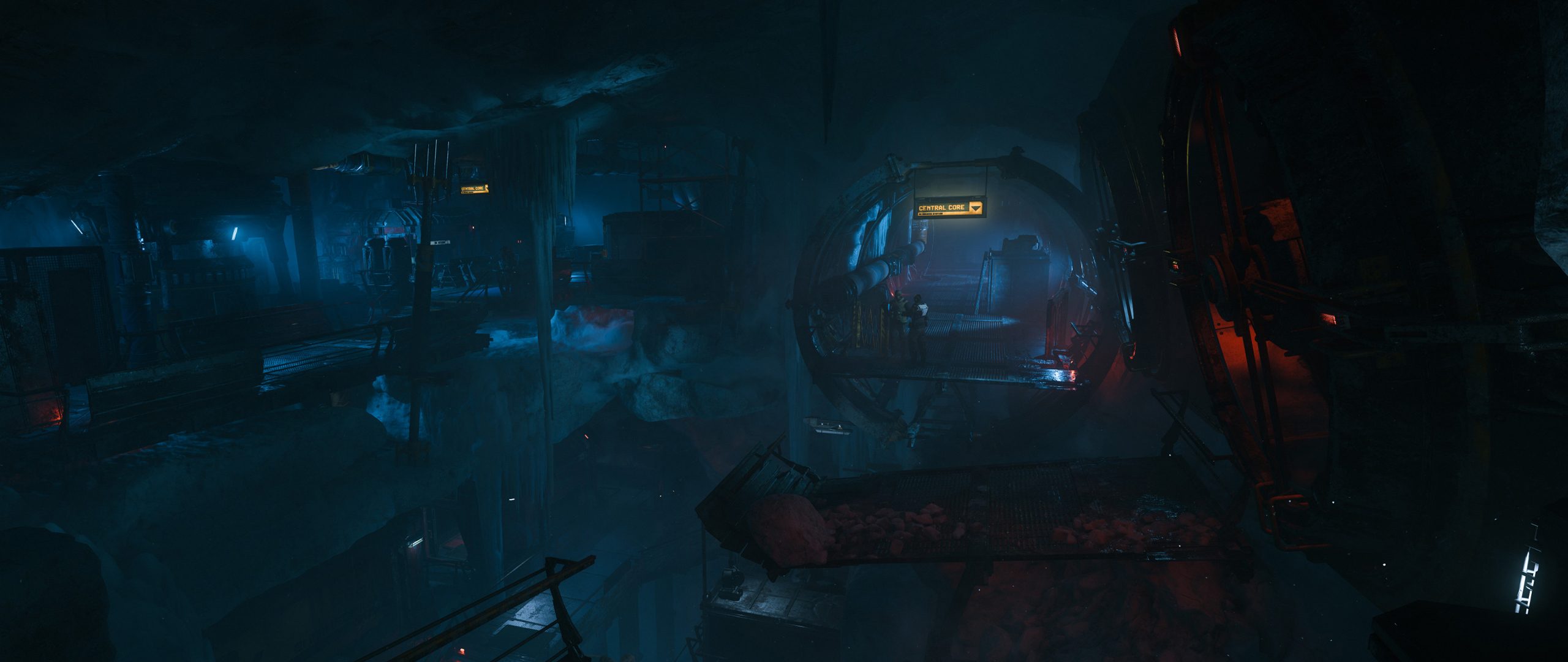
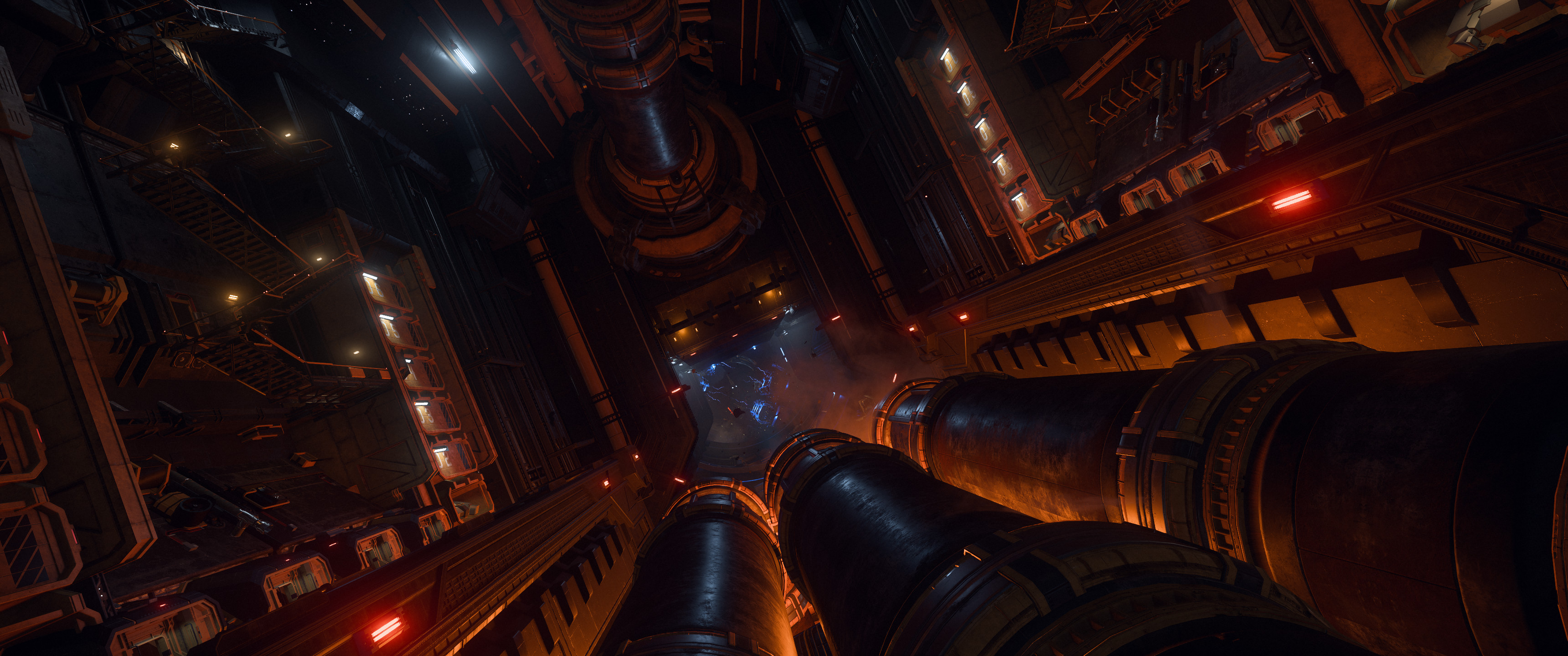
Art began using their new hard surface shader and new blending features for wear and tear. This enables a more realistic appearance of localized damage without a jarring transition between worn and pristine areas. They’re paying particular attention to make sure wear looks natural and unforced. One of the high-level goals for SQ42 is for every asset and its features to sit in a scene naturally, feel unforced, and for the lighting to have a slightly softer, more realistic feel (except for some areas where the intensity is cranked up to 11). Lighting focused on the Javelin found in an early campaign level, taking into account the emphasis on making one key light do more of the work. This new approach looks great and is less demanding on the engine too. Tweaks to a control room seen close to the end of the campaign progressed, with the aim being to set the correct tone for the narrative and gameplay moments that spread from it. Props seen throughout the campaign (including monitors, screens, wiring looms, hatch covers, ropes, destructible lights, and pressurized items) all received attention, this time to determine how they break or deform when damaged. Several key events take place where these assets need to react correctly to gravity, decompression, damage, pulse, etc. The vast Shubin mining station gained more detail to the supporting structures around it. Development of the facility’s Bridge (as first seen in the CitizenCon 2948 trailer) continued, which comes in at around three times the size of a Bengal’s.
Gameplay Story
The Gameplay Story Team made swift progress throughout November and continuously added more scenes to their Q4 list. They are currently working on 38 scenes for the quarter and are expecting to add several more by the end of the year.
Graphics
The Graphics Team worked on several shader effects, including the resurrection of the caustics water effect, which is needed in several locations throughout SQ42. The new hard surface shader was rolled out to the entire team and should improve performance, allow new surface shading features, and enable more dynamic wear & dirt effects. Performance was also a focus, with most attention on the low-level texture and mesh streaming systems to help squeeze as much content in with as little performance impact as possible.
Level Design
The Level Design Team converted the older sables inside the Idris to a more efficient and flexible system, which also incorporates crew behaviors for things like ‘off-duty’ and ‘mess hall’. Level work is an ongoing collaboration with the Art Team and is constantly reviewed at senior level. “It’s all going well and now that we have almost all the scenes in the levels you really get a great feel for the story flow and pacing.” Cockpit scenes are coming to life thanks to ‘Render to Texture’ technology, while the new IFCS system is fully implemented into SQ42 and making a huge difference to dogfighting. Regular feedback and suggested improvements mean spline technology and flight controls are constantly refined.
Narrative
The Narrative Team continued plugging away at [REDACTED] [REDACTED] [REDACTED] [REDACTED] as well as [REDACTED] [REDACTED] [REDACTED] and that was a lot of fun.
Props
The Props Team continued work on the assets required for NPS interactions and activities by creating additional sub items used by the engineering crew and the storage cases to house them. The larger maintenance machinery assets are now ready for the animation and cinematic departments to use in their work, too.
System Design
The System Design Team integrated the New Flight Model into enemy ship AI, ensuring that they are still engaging to fight against and don’t become unbalanced. They noticed that the new IFCS currently causes too much unwanted ‘jousting’ behavior, so are currently looking into ways to modify it. Dialogue wildlines for the ship/FPS/social AI were reworked to unify them within the same overall structure. Collaboration with the audio & writing teams ensured the system works properly for all systemic dialogue in the game. The team is also working to develop tools to automate the setup of dialogue lines. Stealth gameplay elements continue to be developed, which require the AI perception to be upgraded to cater for peripheral vision, as well as various audio events and stimuli from environmental sources, such as throwing a pebble to distract enemies.
Tech Animation
The Technical Animation department progressed with the initial batch transfer of male animations to the female skeleton. This included updating low-level assets for animation database referencing to ensure she can run around and fire weapons. It has been successful and handed off to animation for further review and polish. Some much-needed toolsets for authoring skinning data on the many different costumes were finished. Used in conjunction with the existing toolsets, these will make skin authoring a more efficient process. An interesting dilemma was presented recently, whereby the team needed to show some sort of fluid dynamics, which usually require intensive calculations The Technical Animation department came into its own and used the existing physics solution to create a dynamic yet economic fake for the various glasses & cups in the bar scenes. Multiple animations for cinematics and gameplay were added, as were several new tools to the animation pipeline along with bug fixes and additions to existing tools. Time was also spent fixing several smaller bugs like animation compilation errors, missing integrations, weapon entities, and DBA setups.
Tech Art
The Tech Art Team analyzed the full requirements of the character ‘DNA gene pool’. In order for the next-gen facial customizer to work most effectively, a limited pool of heads with specific and unique shapes is required. Relevant factors are gender, ethnic origin, age, physical constitution, and distinct facial features such as hooked vs. pointy nose, thin vs. full lips, and so forth. Several scenarios with varying pool sizes were created to determine the mid-to-long-term plans for populating the pool. The planned release of the new customizer will initially use as many heads as possible from the selection scanned, providing they fulfill requirements. The team also worked on the asset authoring tools and pipeline for the new cloth/softbody solver, which was first showcased at CitizenCon. Optimal simulation mesh topology and vertex density are key to making it work efficiently and fast enough while yielding high-fidelity visual results. Another important factor is creating the best possible binding between the high and low res simulation mesh – this can only be fully automated for simpler cloth asset types and requires artistic ‘guidance’ and fine-grained control in more complex cases. The team went to great lengths to ensure the authoring tools provide this capability in a convenient, easy-to-use way.
UI
Last month, the SQ42 team specced-out improvements to how AR mission objectives are displayed to the player. For both the PU and SQ42, they’re aiming to create a common unified methodology for how important information is imparted regarding type, position, whether it’s obstructed, etc. They’re also looking at the long-term requirements of missions and building a system to help to surface important information when it’s contextually needed. Another major feature worked on is the area map. Pre-visualizations of how the map could be were built procedurally using existing underlying systems, such as the room system. This informs not only the overall layout but also how it becomes more defined as the player traverses the environment for the first time.
Vehicle Features
The team spent the month on Vehicle Scanning improvements. The groundwork necessary to allow ships to aim at the engines on target ships has been completed, and the feature itself is nearly ready to be rolled out. Scanning nav points for destination info have been completed and are also ready for implementation.
VFX
VFX continued to iterate on lightning effects by putting the new texture noise functionality through its paces, which will allow them to create much finer detail up close at a fraction of the previous cost. They also developed a tool to allow artists to create VDBs (including gas clouds) more quickly and with more control over the finer details. Thruster improvements were made to more closely match the VFX. They gained new effects and functionality including damage, overheat, and misfire options. R&D for a Xi’an missile launcher kicked off too.
Weapons
The Weapon Art Team carried on with the Multi-Tool rework and made progress with the Kastak Arms Ravager-212 and the level two and three upgrades for the Hurston Dynamics Laser Repeaters. They also made minor adjustments to the iron sights on a handful of weapons to improve the sight picture and to make them more user-friendly when no optics are attached.
Covert Intel
WE’LL SEE YOU NEXT MONTH…
Dies ist ein Querverweis auf den Bericht, der kürzlich über den monatlichen Squadron 42 Newsletter verschickt wurde. Wir veröffentlichen dies ein zweites Mal als Comm-Link, um es der Community zu erleichtern, auf diesen Prozess für zukünftige Squadron 42 Monatsberichte zurückzugreifen und ihn zu verfolgen.
Achtung Rekruten,
Was Sie gleich lesen werden, sind die neuesten Informationen über die Weiterentwicklung von Squadron 42.
Lesen Sie weiter für relevante Details aus unseren weltweiten Einsätzen zu den Arbeiten der Staffel 42 im letzten Monat sowie Informationen zu einer spannenden neuen Sendung. Die in dieser Mitteilung enthaltenen Informationen sind äußerst sensibel, und es ist von größter Bedeutung, dass sie nicht in die falschen Hände geraten. Alle Datensätze nach dem Lesen löschen.
Ende und Ende,
UEE Naval Oberkommando
Der Weg zum Ruhm
Heute wird unsere Squadron 42 Roadmap vorgestellt, eine nützliche Information, die den Entwicklungsfortschritt im Detail verfolgt. Ähnlich wie die Roadmap von Persistent Universe ist diese mit unserem JIRA-Tracking-System verknüpft und ermöglicht es Ihnen so, auf einen Blick zu sehen, welche Arbeit am Spiel verbleibt, während wir auf die Ziellinie zusteuern. Natürlich ist die Staffel 42-Roadmap, ebenso wie das Pendant zu Star Citizen, nicht unbedingt vollständig und kann im Laufe der Entwicklung geändert oder aktualisiert werden. Stellen Sie sicher, dass Sie die Vorbehalte lesen und diesen Einblick in den Prozess genießen. Dieses monatliche Projekt-Update wird als eine Art Pendant fungieren und mehr Licht auf die spezifische Arbeit der einzelnen Entwicklungsteams werfen, während die Roadmap eine dynamische Echtzeit-Verfolgung des Fortschritts pro Woche bietet. Ohne weiteren Aufwand wollen wir sehen, was die Entwickler, die den guten Kampf an der Front führen, im Sinn hatten.....
KI
In diesem Monat lag der Schwerpunkt der SchiffskI auf der Optimierung des taktischen Punktesystems. Sie haben nun mehrere Abfragen, die in einem Stapel aus verschiedenen Threads zusammengefasst sind, was eine bessere Kontrolle über die Kosten des Gesamtsystems ermöglicht. Sie reichten mehrere Optimierungen für das Charakterbewegungssystem ein, das nun alle Komponenten in einem multithreaded Batch-Ansatz aktualisieren kann und die CPU-Ressourcen während des Spiel-Updates maximal nutzen wird. Es wurde ein Durchgang zur Fadensicherheit mehrerer Subsysteme durchgeführt, einschließlich der Aufmerksamkeitszielkomponente und des Kommunikationssystems. Dies ist erforderlich, um das Update der Subsumption-Komponente schließlich in den Schritt Multithreaded Batch Update zu verschieben. In FPS Combat wurde die Zuweisung'Verteidigungsbereich' eingeführt; um dieses Verhalten zu erreichen, müssen die Übergänge der Mastergraphen überwacht werden, um zu beurteilen, ob die Empfänger des Submissionsereignisses es tatsächlich verarbeiten können. Im Beispiel des Verteidigungsbereichs können sie beim Empfangen der Zuweisung ein normales Verhalten ausführen. Wenn das Verhalten die Anfrage auf eine bestimmte Weise bearbeiten kann, ist das großartig. Wenn nicht, dann kümmert sich der Mastergraph darum, eine auszuwählen, die es kann. Parallel dazu fügen sie neue Verhaltensweisen hinzu, um den Kampf zu verbessern und patrouillieren, um diese Aufgabe zu erfüllen. Neue Verhaltensweisen und Funktionen zur Unterstützung des heimlichen Gameplays wurden implementiert, wobei neue audiovisuelle und visuelle Reize hinzugefügt wurden, die es den Spielern ermöglichen, die Aufmerksamkeit der Wachen auf sich zu ziehen, Fallen vorzubereiten und ansonsten blockierte Wege zu öffnen. Auch am Barkeeper für Lorville wurde weiter gearbeitet. Um mehrere Funktionalitäten seines Verhaltens zu erreichen, implementierten sie den ersten Durchlauf des UseChannel-Routings und bauen die nutzbaren Funktionalitäten weiter aus. Das Usable Builder Tool hat ebenfalls eine neue Funktion erhalten: Es ist nun in der Lage, verschiedene Charaktere mit unterschiedlichen Benutzeroberflächen korrekt anzuzeigen, so dass Designer, Animatoren und Programmierer den Inhalt bei der Auslieferung problemlos testen und überprüfen können.
Animation
Im Bereich Story gibt die Produktion des Animationsauftaktes eine Handvoll Szenen der Staffel 42 weiter. Sie arbeiten auch daran, den Armorer-Charakter für SQ42 zu finalisieren - selbst eine große und komplizierte Aufgabe.
Audio
Audio arbeitete eng mit dem SQ42-Komponisten Geoff Zanelli zusammen, um Themen für die verschiedenen Rassen und wichtigen Charaktere des Spiels festzulegen. Dies, kombiniert mit der zweiten Runde der Musikimplementierung, ermöglichte es dem Team, das Tempo und die Gesamtentwicklung besser zu unterstützen. Das Dialogue-Team arbeitete daran, sicherzustellen, dass Animation und Design über alle notwendigen Mittel verfügten, um ihre Gespräche, Kommunikationen und Kinofilme erfolgreich umzusetzen.
Charakter-Kunst
Das Character Art Team polierte die Vanduul-Rüstung und konzipierte das Outfit des Navy Gunner.
Kinematiken
Nach der Fertigstellung des CitizenCon SQ42 Teaser-Trailers nahm sich Cinematics die Zeit, um sicherzustellen, dass jede Szene von Anfang bis Ende korrekt funktioniert. Dazu gehörte vor allem die Shubin Station Kunsttasche, aber auch andere Dinge wie das Schlachtfeld um Vega II. Nach ihrer Fertigstellung arbeiteten sie an einer entscheidenden Szene für das Spiel mit einem noch nicht enthüllten Schlüsselcharakter. Dies beinhaltete die Verwendung einer neuen Methode der Charakterhaar- und Hautgestaltung (optimiert für mehr Realismus) und eine kleine Modifikation der Kostüme. Das Cinematic Animation Team setzte die regelmäßige Szenenarbeit fort. Nachdem sie die ersten Durchläufe für einen Großteil der Geschichte des Spiels abgeschlossen hatten, gingen sie zu Szenen über, in denen ein vollständiger Implementierungspass mit einer Zustandsmaschine erforderlich ist. Sie unterstützten auch die Ingenieure bei der Arbeit an wichtigen Workflow-Tools. Neben den Verbesserungen von navspline wurden neue Funktionen hinzugefügt, die es dem Team ermöglichen, mehrere Filmsequenzen auf einmal zu bearbeiten. Bisher unterstützte TrackView nur eine Master- und Kindfolge und erlaubte keine Bearbeitung des Masters, wenn das Kind bearbeitet wurde, oder umgekehrt. Einige SQ42-Szenen zeigen Charaktere auf großen Schiffsbrücken, die auf Dinge reagieren, die sie durch Fenster sehen, was das Team dazu zwingt, Sequenzen zwischen innen und außen aufzuteilen. Der neue Multi-Sequenz-Workflow ermöglicht es, dass mehrere Sequenzen gleichzeitig geöffnet und aktiv sind und synchronisiert die Timelines für Master und Kind.
Motorwerkzeuge
Das Engine-Team nahm die Arbeit am GPU-Häuten wieder auf. Sie fügten Vertex-Geschwindigkeitsunterstützung (Bewegungsunschärfe) hinzu, führten mehrere Optimierungen durch, um Nullgewichte zu überspringen (verbesserter Durchsatz), bereiteten Hintergrunddaten vor und machten den ersten Durchgang auf Speicherlayout und LOD-Unterstützung. Sie haben auch die Durchführung von Ray Collision Checks und die Defragmentierung von Grids gleichzeitig durchgeführt. Dadurch wurde eine Beschleunigung von 30-50% für die Berechnung des physikalischen Planetengeländes erreicht, die Anzahl der Zellabfragen auf Planeten reduziert und die Generierung von Proxy-Netzen für die Bodenvolumen des Geländes verbessert. Es wurden Verbesserungen im Terrain-Rendering (Glow-Forward-Pass) sowie Korrekturen für Wasservolumen und Ocean-Rendering hinzugefügt. Der bestehende Hair Shader wurde verbessert und ein neuer Tiefenschärfenalgorithmus wurde entwickelt, um Qualität, Leistung und Korrektur von Halos um Silhouetten zu verbessern. Ein Teil des Teams arbeitete an weiteren Optimierungen im Zonensystem, um weniger Objekte an den Renderer zu übergeben, sowie an verschiedenen Low-Level-Optimierungen, um die Belastung des Render-Threads zu reduzieren.
Ingenieurwesen
Engineering hat ein System entwickelt, das variable Grenzen dafür setzt, wie weit sich die Spieler beim Schauen bewegen können. Der Standardbetrag wird von Outfit und Helm überschrieben, so dass das Tragen einer schweren Rüstung die Reichweite einschränkt. Die Abholung und der Transport wurde abgeschlossen, einschließlich der Lösung eines Problems bei der Interaktion mit Elementen in EVA. Die Entwicklung der weiblichen Figur geht weiter. Aufgrund ihres unterschiedlich großen Skeletts implementierte das Team eine animationsgetriebene inverse Kinematik, die es ihr ermöglichte, die Steuerung eines Schiffes zu erreichen, ohne dass neue Animationssets benötigt wurden. Fortschritte wurden mit dem Tool "Usables Builder" erzielt, das es den Inhaltserstellern ermöglicht, einen Charakter einzubauen und alle zugehörigen nutzbaren Animationen abzuspielen, Locatoren zu bewegen und im Allgemeinen ein Setup zu testen, ohne in das Spiel gehen zu müssen. Als Teil der Kommunikation kann ein Tannoy-System nun Audio an mehrere Teile einer Umgebung übertragen. Zum Beispiel eine Ankündigung zu einem einzelnen Schiffshangar oder eine globalere schiffsweite Ankündigung. Das KI-Team des Schiffes half bei der Entwicklung des neuen Intelligent Flight Control System (IFCS) aus und optimierte das Schiffsverhalten, um diese neuen Flugsteuerungen für ein besseres Nahkampferlebnis besser zu nutzen.
Umwelt Kunst
Art begann mit dem neuen Hard Surface Shader und neuen Mischfunktionen für Verschleiß und Abnutzung. Dies ermöglicht ein realistischeres Erscheinungsbild von lokalisierten Schäden ohne einen ruckartigen Übergang zwischen abgenutzten und unberührten Bereichen. Sie achten besonders darauf, dass der Verschleiß natürlich und ungezwungen aussieht. Eines der hochgesteckten Ziele für SQ42 ist es, dass jedes Objekt und seine Funktionen natürlich in einer Szene sitzen, sich ungezwungen anfühlen und dass die Beleuchtung ein etwas weicheres, realistischeres Gefühl hat (außer in einigen Bereichen, in denen die Intensität auf 11 angehoben wird). Die Beleuchtung konzentrierte sich auf den Speerwerfer, der in einer frühen Kampagnenebene gefunden wurde, unter Berücksichtigung der Betonung, dass ein Schlüssellicht mehr von der Arbeit übernehmen soll. Dieser neue Ansatz sieht gut aus und ist auch für den Motor weniger anspruchsvoll. Der Kontrollraum, der kurz vor dem Ende der Kampagne zu sehen war, entwickelte sich weiter, mit dem Ziel, den richtigen Ton für die Erzähl- und Spielmomente zu setzen, die sich von ihr ausbreiten. Requisiten, die während der gesamten Kampagne gesehen wurden (einschließlich Monitore, Bildschirme, Kabelbäume, Lukendeckel, Seile, zerstörbare Lichter und unter Druck stehende Gegenstände), erhielten alle Aufmerksamkeit, diesmal um festzustellen, wie sie bei Beschädigungen brechen oder sich verformen. Es finden mehrere Schlüsselereignisse statt, bei denen diese Vermögenswerte korrekt auf Schwerkraft, Dekompression, Schäden, Puls usw. reagieren müssen. Die riesige Shubin-Minenstation erhielt weitere Details zu den umgebenden Tragwerken. Die Entwicklung der Brücke der Anlage (wie erstmals im Anhänger CitizenCon 2948 zu sehen) wurde fortgesetzt, die etwa dreimal so groß ist wie die eines Bengals.
Gameplay-Geschichte
Das Gameplay Story Team machte im November schnelle Fortschritte und fügte kontinuierlich weitere Szenen in die Q4-Liste ein. Sie arbeiten derzeit an 38 Szenen für das Quartal und erwarten bis Ende des Jahres weitere.
Grafiken
Das Grafik-Team arbeitete an mehreren Shader-Effekten, darunter die Wiederbelebung des ätzenden Wassereffekts, der an mehreren Stellen in SQ42 benötigt wird. Der neue Hard Surface Shader wurde für das gesamte Team eingeführt und soll die Leistung verbessern, neue Features für den Oberflächenschutz ermöglichen und dynamischere Verschleiß- und Schmutzeffekte ermöglichen. Die Leistung stand ebenfalls im Mittelpunkt, wobei das Hauptaugenmerk auf den Low-Level-Textur- und Mesh-Streaming-Systemen lag, um so viel Content wie möglich mit so wenig Performance-Auswirkungen wie möglich zusammenzufassen.
Leveldesign
Das Level Design Team hat die älteren Zobel im Inneren des Idris in ein effizienteres und flexibleres System umgewandelt, das auch das Verhalten der Crew für Dinge wie "außer Dienst" und "Messehalle" beinhaltet. Die Arbeit auf Stufe ist eine kontinuierliche Zusammenarbeit mit dem Art Team und wird auf Senior-Ebene ständig überprüft. "Es läuft alles gut und jetzt, da wir fast alle Szenen in den Levels haben, bekommt man wirklich ein gutes Gefühl für den Ablauf und das Tempo der Geschichte." Cockpit-Szenen erwachen dank der Render to Texture"-Technologie zum Leben, während das neue IFCS-System vollständig in SQ42 implementiert ist und einen großen Unterschied im Luftkampf macht. Regelmäßiges Feedback und Verbesserungsvorschläge bedeuten, dass die Spline-Technologie und die Flugsteuerung ständig weiterentwickelt werden.
Narrativ
Das Erzählungsteam setzte die Arbeit mit[REDACTED][REDACTED][REDACTED][REDACTED][REDACTED][REDACTED] sowie[REDACTED][REDACTED][REDACTED][REDACTED][REDACTED] fort und das machte viel Spaß.
Requisiten
Das Requisitenteam setzte die Arbeit an den für NPS-Interaktionen und -Aktivitäten erforderlichen Assets fort, indem es zusätzliche Unterpunkte für die Engineering-Crew und die Aufbewahrungsbehälter für sie erstellte. Die größeren Instandhaltungsanlagen stehen nun auch für die Animations- und Filmabteilungen zur Verfügung.
Systemdesign
Das System Design Team integrierte das neue Flugmodell in die gegnerische SchiffskI und stellte sicher, dass sie sich weiterhin im Kampf gegen das neue Modell engagieren und nicht aus dem Gleichgewicht geraten. Sie stellten fest, dass das neue IFCS derzeit zu viel unerwünschtes "Turnier"-Verhalten verursacht, und prüfen daher derzeit, wie sie es ändern können. Dialog-Wildlinien für das Schiff/FPS/soziale KI wurden überarbeitet, um sie innerhalb derselben Gesamtstruktur zu vereinheitlichen. Die Zusammenarbeit mit den Audio- und Autorenteams stellte sicher, dass das System für alle systemischen Dialoge im Spiel ordnungsgemäß funktioniert. Das Team arbeitet auch an der Entwicklung von Tools zur Automatisierung der Einrichtung von Dialogleitungen. Es werden weiterhin heimliche Gameplay-Elemente entwickelt, die eine Verbesserung der KI-Wahrnehmung erfordern, um dem peripheren Sehen gerecht zu werden, sowie verschiedene Audioereignisse und Reize aus Umweltquellen, wie z.B. das Werfen eines Kieselsteins, um Feinde abzulenken.
Technische Animation
Die Abteilung Technische Animation machte Fortschritte bei der ersten Batch-Übertragung von männlichen Animationen auf das weibliche Skelett. Dazu gehörte auch die Aktualisierung von Low-Level-Assets für die Referenzierung von Animationsdatenbanken, um sicherzustellen, dass sie herumlaufen und Waffen abfeuern kann. Es wurde erfolgreich umgesetzt und zur weiteren Überprüfung und Verfeinerung an die Animation übergeben. Einige dringend benötigte Toolsets für die Erstellung von Skinning-Daten für die vielen verschiedenen Kostüme wurden fertiggestellt. In Verbindung mit den vorhandenen Toolsets werden diese das Erstellen von Skins zu einem effizienteren Prozess machen. Kürzlich wurde ein interessantes Dilemma vorgestellt, bei dem das Team eine Art Strömungsmechanik zeigen musste, die in der Regel intensive Berechnungen erfordert. Die Abteilung Technische Animation kam zu sich und nutzte die vorhandene Physiklösung, um eine dynamische und zugleich wirtschaftliche Fälschung für die verschiedenen Gläser und Tassen in den Barszenen zu schaffen. Mehrere Animationen für Cinematics und Gameplay wurden hinzugefügt, ebenso wie mehrere neue Tools für die Animationspipeline sowie Bugfixes und Ergänzungen zu bestehenden Tools. Die Zeit wurde auch damit verbracht, einige kleinere Fehler wie Animationskompilierungsfehler, fehlende Integrationen, Waffeneinheiten und DBA-Setups zu beheben.
Technische Kunst
Das Tech Art Team analysierte die vollen Anforderungen des Charakters "DNA-Genpool". Damit der Gesichts-Customizer der nächsten Generation am effektivsten arbeiten kann, ist ein begrenzter Pool von Köpfen mit spezifischen und einzigartigen Formen erforderlich. Relevante Faktoren sind Geschlecht, ethnische Herkunft, Alter, körperliche Konstitution und unterschiedliche Gesichtszüge wie z.B. hängende vs. spitze Nase, dünne vs. volle Lippen, etc. Zur Ermittlung der mittel- bis langfristigen Pläne für die Besetzung des Pools wurden mehrere Szenarien mit unterschiedlichen Poolgrößen erstellt. Die geplante Freigabe des neuen Customizers wird zunächst so viele Köpfe wie möglich aus der gescannten Auswahl verwenden, sofern sie die Anforderungen erfüllen. Das Team arbeitete auch an den Asset-Authoring-Tools und der Pipeline für den neuen Stoff/Weichkörper-Löser, der erstmals auf der CitizenCon vorgestellt wurde. Optimale Simulationsnetztopologie und Knotendichte sind der Schlüssel, damit es effizient und schnell genug arbeitet und gleichzeitig hochpräzise visuelle Ergebnisse liefert. Ein weiterer wichtiger Faktor ist die Schaffung der bestmöglichen Verbindung zwischen dem hoch- und niederauflösenden Simulationsnetz - dies kann nur bei einfacheren Stoff-Assets vollautomatisch erfolgen und erfordert in komplexeren Fällen eine künstlerische "Führung" und eine feinkörnige Steuerung. Das Team unternahm große Anstrengungen, um sicherzustellen, dass die Autorenwerkzeuge diese Funktion auf komfortable und benutzerfreundliche Weise bereitstellen.
UI
Im vergangenen Monat hat das SQ42-Team Verbesserungen bei der Darstellung von AR-Missionszielen für den Spieler ausgearbeitet. Sowohl für die PU als auch für die SQ42 ist es ihr Ziel, eine gemeinsame, einheitliche Methodik zu schaffen, wie wichtige Informationen über Typ, Position, Obstruktion usw. vermittelt werden. Sie untersuchen auch die langfristigen Anforderungen von Missionen und bauen ein System auf, das hilft, wichtige Informationen aufzutauchen, wenn sie kontextuell benötigt werden. Ein weiteres wichtiges Feature, an dem gearbeitet wurde, ist die Lagekarte. Vorab-Visualisierungen, wie die Karte erstellt werden könnte, wurden prozedural mit bestehenden Basissystemen, wie z.B. dem Raumsystem, erstellt. Dies beeinflusst nicht nur das Gesamtlayout, sondern auch, wie es definiert wird, wenn der Spieler zum ersten Mal die Umgebung durchquert.
Fahrzeugmerkmale
Das Team verbrachte den Monat mit der Verbesserung der Fahrzeugabtastung. Die Vorarbeiten, die erforderlich sind, damit die Schiffe auf die Motoren der Zielschiffe zielen können, sind abgeschlossen, und das Feature selbst steht kurz vor dem Rollout. Das Scannen von Navigationspunkten für Zielinformationen ist abgeschlossen und kann ebenfalls implementiert werden.
VFX
VFX setzte die Iteration bei Blitzeffekten fort, indem es die neue Textur-Rauschfunktionalität auf Herz und Nieren prüft, was es ihm ermöglicht, viel feinere Details aus nächster Nähe zu einem Bruchteil der bisherigen Kosten zu erzeugen. Sie entwickelten auch ein Tool, mit dem Künstler VDBs (einschließlich Gaswolken) schneller und mit mehr Kontrolle über die Feinheiten erstellen können. Die Triebwerksverbesserungen wurden vorgenommen, um dem VFX näher zu kommen. Sie erhielten neue Effekte und Funktionen wie Schaden, Überhitzung und Fehlzündungen. Die F&E für einen Xi'an-Raketenwerfer wurde ebenfalls gestartet.
Waffen
Das Weapon Art Team setzte die Überarbeitung des Multi-Tool fort und machte Fortschritte mit dem Kastak Arms Ravager-212 und den Upgrades der Level zwei und drei für die Hurston Dynamics Laser Repeater. Sie haben auch kleinere Anpassungen an den Eisenvisieren an einer Handvoll Waffen vorgenommen, um das Visierbild zu verbessern und es benutzerfreundlicher zu gestalten, wenn keine Optik angebracht ist.
Verdeckte Intel
WIR SEHEN UNS NÄCHSTEN MONAT.....
This is a cross-post of the report that was recently sent out via the monthly Squadron 42 newsletter. We’re publishing this a second time as a Comm-Link to make it easier for the community to reference back to, and plan on following this process for future Squadron 42 Monthly Reports. Attention Recruits,
What you are about to read is the latest information on the continuing development of Squadron 42.
Read on for pertinent details from our planet-wide operations on Squadron 42-related work over the last month, as well as intel on an exciting new dispatch. The information contained in this communication is extremely sensitive and it is of paramount importance that it does not fall into the wrong hands. Purge all records after reading.
Over and out,
UEE Naval High Command
The Road to Glory
Today sees the unveiling of our Squadron 42 roadmap, a useful piece of intel that tracks the progress of development in detail. Much like the Persistent Universe roadmap, this is linked to our JIRA tracking system, and thus lets you see at a glance the work remaining on the game as we thunder on toward the finish line. Of course, also like its Star Citizen counterpart, the Squadron 42 roadmap is not necessarily exhaustive and may be changed or updated as development continues. Make sure you read the caveats, and enjoy this insight into the process. This monthly project update will work as something of a companion piece, shedding more light on specific work done by each development team, while the roadmap will provide dynamic real-time tracking of progress weekly. Without further adiue, let’s see what the devs fighting the good fight on the frontlines have been up to…
AI
This month, Ship AI’s focus was on optimizing the Tactical Point System. They now have multiple queries bundled together in a batch from different threads, which allows more control over the cost of the overall system. They submitted several optimizations for the character movement system, which can now update all the components in a multithreaded batch approach and will utilize the maximum the CPU resources during the game update. A pass for thread safety of several subsystems was performed, including the attention target component and communication system. This is required to eventually move the Subsumption component update to the multithreaded batch update step. In FPS Combat, the ‘Defend Area’ assignment was introduced; correctly achieving this behavior requires monitoring the mastergraph transitions to evaluate if the recipients of the Subsumption event can actually process it. In the Defend Area example, they might be executing any regular behavior when receiving the assignment. If the behavior can handle the request in a specific way, great. If not, then the mastergraph takes care of selecting one that can. Alongside this, they’re adding new behaviors to improve combat and patrol to respect this assignment. New behaviors and functionality to support stealth gameplay were implemented, with new audio and visual stimuli being added to allow players to draw the attention of guards, prepare traps, and open up otherwise blocked paths. Work also continued on the bartender for Lorville. To achieve several functionalities of his behavior, they implemented the first pass of UseChannel routing and are continuing to expand the usable functionalities. The Usable Builder Tool received a new feature too: it’s now able to correctly preview different characters using different usables so that designers, animators, and programmers can easily test and verify the content as it’s delivered.
Animation
On the Story front, the Animation kicked-off production passes on a handful of Squadron 42 scenes. They’re also working to finalize the Armorer character for SQ42 – itself a large and intricate task.
Audio
Audio worked closely with the SQ42 composer Geoff Zanelli to establish themes for the game’s different races and important characters. This, combined with the second round of music implementation, allowed the team to better support pacing and overall development. The Dialogue Team worked to ensure animation and design had all the assets required to successfully implement their conversations, comms, and cinematics.
Character Art
The Character Art Team polished the Vanduul armor and concepted the Navy Gunner’s outfit.
Cinematics
After completing the CitizenCon SQ42 teaser trailer, Cinematics took time to verify that each scene was functioning correctly from start to finish. This mainly involved the Shubin Station art pocket, but also other things like the battleground around Vega II. Once complete, they worked on a pivotal scene for the game featuring a key character not revealed yet. This involved using a new method of character hair and skin creation (tweaked for more realism), and small modification to costumes. The Cinematic Animation Team carried on with regular scene work. Having completed first passes for much of the game’s narrative, they transitioned to scenes where a full implementation pass with a state machine is required. They also supported the engineers working on key workflow tools. Along with navspline improvements, new functionality was added to allow the team to edit multiple cinematic sequences at once. Previously, TrackView only supported a master and child sequence and didn’t allow editing of the master if the child was edited, or vice versa. Some SQ42 scenes feature characters on capital ship bridges reacting to things they see through windows, which requires the team to split sequences between interior and exterior. The new multi-sequence workflow allows multiple sequences to be open and active at once and syncs the timelines for both the master and child.
Engine Tools
The Engine Team resumed work on GPU skinning. They added vertex velocity support (motion blur), completed several optimizations to skip zero weights (improved throughput), prepared background data, and made the first pass on memory layout and LOD support. They also made the execution of ray collision checks and the defragmentation of grids run concurrently. This achieved a 30-50% speedup for physics planet terrain computation, reduced the number of cell queries on planets, and improved proxy mesh generation of terrain ground volumes. Terrain rendering improvements were added (glow forward pass) as well as fixes for water volume and ocean rendering. The existing hair shader was improved, and a new depth of field algorithm was created to improve quality, performance, and fix halos around silhouettes. Part of the team worked on additional culling refinements in the zone system to submit fewer objects to the renderer, as well as various low-level optimizations to reduce load on the render thread.
Engineering
Engineering actualized a system to allow variable limits on how far players can move their heads when looking around. The default amount is overridden by the outfit and helmet, so wearing heavy armor will restrict how far they can look. Pickup and Carry was finished off, including the solving of an issue when interacting with items in EVA. Developments on the female character continues. Because of her different sized skeleton, the team implemented animation-driven inverse kinematics to allow her to reach a ship’s controls without the need for new animation sets. Progress has been made on the usables builder tool, which allows the content creators to drop in a character and play all the related usable animations, move locators around, and generally test a setup without having to go into the game. As part of comms, a ‘Tannoy’ system can now pump audio to multiple parts of an environment. For example, an announcement to a single ship’s hangar or a more global ship-wide announcement. The ship AI Team helped out with the new Intelligent Flight Control System (IFCS), tweaking ship behavior to better utilize these new flight controls for a better dogfighting experience.
Environment Art
Art began using their new hard surface shader and new blending features for wear and tear. This enables a more realistic appearance of localized damage without a jarring transition between worn and pristine areas. They’re paying particular attention to make sure wear looks natural and unforced. One of the high-level goals for SQ42 is for every asset and its features to sit in a scene naturally, feel unforced, and for the lighting to have a slightly softer, more realistic feel (except for some areas where the intensity is cranked up to 11). Lighting focused on the Javelin found in an early campaign level, taking into account the emphasis on making one key light do more of the work. This new approach looks great and is less demanding on the engine too. Tweaks to a control room seen close to the end of the campaign progressed, with the aim being to set the correct tone for the narrative and gameplay moments that spread from it. Props seen throughout the campaign (including monitors, screens, wiring looms, hatch covers, ropes, destructible lights, and pressurized items) all received attention, this time to determine how they break or deform when damaged. Several key events take place where these assets need to react correctly to gravity, decompression, damage, pulse, etc. The vast Shubin mining station gained more detail to the supporting structures around it. Development of the facility’s Bridge (as first seen in the CitizenCon 2948 trailer) continued, which comes in at around three times the size of a Bengal’s.
Gameplay Story
The Gameplay Story Team made swift progress throughout November and continuously added more scenes to their Q4 list. They are currently working on 38 scenes for the quarter and are expecting to add several more by the end of the year.
Graphics
The Graphics Team worked on several shader effects, including the resurrection of the caustics water effect, which is needed in several locations throughout SQ42. The new hard surface shader was rolled out to the entire team and should improve performance, allow new surface shading features, and enable more dynamic wear & dirt effects. Performance was also a focus, with most attention on the low-level texture and mesh streaming systems to help squeeze as much content in with as little performance impact as possible.
Level Design
The Level Design Team converted the older sables inside the Idris to a more efficient and flexible system, which also incorporates crew behaviors for things like ‘off-duty’ and ‘mess hall’. Level work is an ongoing collaboration with the Art Team and is constantly reviewed at senior level. “It’s all going well and now that we have almost all the scenes in the levels you really get a great feel for the story flow and pacing.” Cockpit scenes are coming to life thanks to ‘Render to Texture’ technology, while the new IFCS system is fully implemented into SQ42 and making a huge difference to dogfighting. Regular feedback and suggested improvements mean spline technology and flight controls are constantly refined.
Narrative
The Narrative Team continued plugging away at [REDACTED] [REDACTED] [REDACTED] [REDACTED] as well as [REDACTED] [REDACTED] [REDACTED] and that was a lot of fun.
Props
The Props Team continued work on the assets required for NPS interactions and activities by creating additional sub items used by the engineering crew and the storage cases to house them. The larger maintenance machinery assets are now ready for the animation and cinematic departments to use in their work, too.
System Design
The System Design Team integrated the New Flight Model into enemy ship AI, ensuring that they are still engaging to fight against and don’t become unbalanced. They noticed that the new IFCS currently causes too much unwanted ‘jousting’ behavior, so are currently looking into ways to modify it. Dialogue wildlines for the ship/FPS/social AI were reworked to unify them within the same overall structure. Collaboration with the audio & writing teams ensured the system works properly for all systemic dialogue in the game. The team is also working to develop tools to automate the setup of dialogue lines. Stealth gameplay elements continue to be developed, which require the AI perception to be upgraded to cater for peripheral vision, as well as various audio events and stimuli from environmental sources, such as throwing a pebble to distract enemies.
Tech Animation
The Technical Animation department progressed with the initial batch transfer of male animations to the female skeleton. This included updating low-level assets for animation database referencing to ensure she can run around and fire weapons. It has been successful and handed off to animation for further review and polish. Some much-needed toolsets for authoring skinning data on the many different costumes were finished. Used in conjunction with the existing toolsets, these will make skin authoring a more efficient process. An interesting dilemma was presented recently, whereby the team needed to show some sort of fluid dynamics, which usually require intensive calculations The Technical Animation department came into its own and used the existing physics solution to create a dynamic yet economic fake for the various glasses & cups in the bar scenes. Multiple animations for cinematics and gameplay were added, as were several new tools to the animation pipeline along with bug fixes and additions to existing tools. Time was also spent fixing several smaller bugs like animation compilation errors, missing integrations, weapon entities, and DBA setups.
Tech Art
The Tech Art Team analyzed the full requirements of the character ‘DNA gene pool’. In order for the next-gen facial customizer to work most effectively, a limited pool of heads with specific and unique shapes is required. Relevant factors are gender, ethnic origin, age, physical constitution, and distinct facial features such as hooked vs. pointy nose, thin vs. full lips, and so forth. Several scenarios with varying pool sizes were created to determine the mid-to-long-term plans for populating the pool. The planned release of the new customizer will initially use as many heads as possible from the selection scanned, providing they fulfill requirements. The team also worked on the asset authoring tools and pipeline for the new cloth/softbody solver, which was first showcased at CitizenCon. Optimal simulation mesh topology and vertex density are key to making it work efficiently and fast enough while yielding high-fidelity visual results. Another important factor is creating the best possible binding between the high and low res simulation mesh – this can only be fully automated for simpler cloth asset types and requires artistic ‘guidance’ and fine-grained control in more complex cases. The team went to great lengths to ensure the authoring tools provide this capability in a convenient, easy-to-use way.
UI
Last month, the SQ42 team specced-out improvements to how AR mission objectives are displayed to the player. For both the PU and SQ42, they’re aiming to create a common unified methodology for how important information is imparted regarding type, position, whether it’s obstructed, etc. They’re also looking at the long-term requirements of missions and building a system to help to surface important information when it’s contextually needed. Another major feature worked on is the area map. Pre-visualizations of how the map could be were built procedurally using existing underlying systems, such as the room system. This informs not only the overall layout but also how it becomes more defined as the player traverses the environment for the first time.
Vehicle Features
The team spent the month on Vehicle Scanning improvements. The groundwork necessary to allow ships to aim at the engines on target ships has been completed, and the feature itself is nearly ready to be rolled out. Scanning nav points for destination info have been completed and are also ready for implementation.
VFX
VFX continued to iterate on lightning effects by putting the new texture noise functionality through its paces, which will allow them to create much finer detail up close at a fraction of the previous cost. They also developed a tool to allow artists to create VDBs (including gas clouds) more quickly and with more control over the finer details. Thruster improvements were made to more closely match the VFX. They gained new effects and functionality including damage, overheat, and misfire options. R&D for a Xi’an missile launcher kicked off too.
Weapons
The Weapon Art Team carried on with the Multi-Tool rework and made progress with the Kastak Arms Ravager-212 and the level two and three upgrades for the Hurston Dynamics Laser Repeaters. They also made minor adjustments to the iron sights on a handful of weapons to improve the sight picture and to make them more user-friendly when no optics are attached.
Covert Intel
WE’LL SEE YOU NEXT MONTH…
This is a cross-post of the report that was recently sent out via the monthly Squadron 42 newsletter. We’re publishing this a second time as a Comm-Link to make it easier for the community to reference back to, and plan on following this process for future Squadron 42 Monthly Reports. Attention Recruits,
What you are about to read is the latest information on the continuing development of Squadron 42.
Read on for pertinent details from our planet-wide operations on Squadron 42-related work over the last month, as well as intel on an exciting new dispatch. The information contained in this communication is extremely sensitive and it is of paramount importance that it does not fall into the wrong hands. Purge all records after reading.
Over and out,
UEE Naval High Command
The Road to Glory
Today sees the unveiling of our Squadron 42 roadmap, a useful piece of intel that tracks the progress of development in detail. Much like the Persistent Universe roadmap, this is linked to our JIRA tracking system, and thus lets you see at a glance the work remaining on the game as we thunder on toward the finish line. Of course, also like its Star Citizen counterpart, the Squadron 42 roadmap is not necessarily exhaustive and may be changed or updated as development continues. Make sure you read the caveats, and enjoy this insight into the process. This monthly project update will work as something of a companion piece, shedding more light on specific work done by each development team, while the roadmap will provide dynamic real-time tracking of progress weekly. Without further adiue, let’s see what the devs fighting the good fight on the frontlines have been up to…
AI
This month, Ship AI’s focus was on optimizing the Tactical Point System. They now have multiple queries bundled together in a batch from different threads, which allows more control over the cost of the overall system. They submitted several optimizations for the character movement system, which can now update all the components in a multithreaded batch approach and will utilize the maximum the CPU resources during the game update. A pass for thread safety of several subsystems was performed, including the attention target component and communication system. This is required to eventually move the Subsumption component update to the multithreaded batch update step. In FPS Combat, the ‘Defend Area’ assignment was introduced; correctly achieving this behavior requires monitoring the mastergraph transitions to evaluate if the recipients of the Subsumption event can actually process it. In the Defend Area example, they might be executing any regular behavior when receiving the assignment. If the behavior can handle the request in a specific way, great. If not, then the mastergraph takes care of selecting one that can. Alongside this, they’re adding new behaviors to improve combat and patrol to respect this assignment. New behaviors and functionality to support stealth gameplay were implemented, with new audio and visual stimuli being added to allow players to draw the attention of guards, prepare traps, and open up otherwise blocked paths. Work also continued on the bartender for Lorville. To achieve several functionalities of his behavior, they implemented the first pass of UseChannel routing and are continuing to expand the usable functionalities. The Usable Builder Tool received a new feature too: it’s now able to correctly preview different characters using different usables so that designers, animators, and programmers can easily test and verify the content as it’s delivered.
Animation
On the Story front, the Animation kicked-off production passes on a handful of Squadron 42 scenes. They’re also working to finalize the Armorer character for SQ42 – itself a large and intricate task.
Audio
Audio worked closely with the SQ42 composer Geoff Zanelli to establish themes for the game’s different races and important characters. This, combined with the second round of music implementation, allowed the team to better support pacing and overall development. The Dialogue Team worked to ensure animation and design had all the assets required to successfully implement their conversations, comms, and cinematics.
Character Art
The Character Art Team polished the Vanduul armor and concepted the Navy Gunner’s outfit.
Cinematics
After completing the CitizenCon SQ42 teaser trailer, Cinematics took time to verify that each scene was functioning correctly from start to finish. This mainly involved the Shubin Station art pocket, but also other things like the battleground around Vega II. Once complete, they worked on a pivotal scene for the game featuring a key character not revealed yet. This involved using a new method of character hair and skin creation (tweaked for more realism), and small modification to costumes. The Cinematic Animation Team carried on with regular scene work. Having completed first passes for much of the game’s narrative, they transitioned to scenes where a full implementation pass with a state machine is required. They also supported the engineers working on key workflow tools. Along with navspline improvements, new functionality was added to allow the team to edit multiple cinematic sequences at once. Previously, TrackView only supported a master and child sequence and didn’t allow editing of the master if the child was edited, or vice versa. Some SQ42 scenes feature characters on capital ship bridges reacting to things they see through windows, which requires the team to split sequences between interior and exterior. The new multi-sequence workflow allows multiple sequences to be open and active at once and syncs the timelines for both the master and child.
Engine Tools
The Engine Team resumed work on GPU skinning. They added vertex velocity support (motion blur), completed several optimizations to skip zero weights (improved throughput), prepared background data, and made the first pass on memory layout and LOD support. They also made the execution of ray collision checks and the defragmentation of grids run concurrently. This achieved a 30-50% speedup for physics planet terrain computation, reduced the number of cell queries on planets, and improved proxy mesh generation of terrain ground volumes. Terrain rendering improvements were added (glow forward pass) as well as fixes for water volume and ocean rendering. The existing hair shader was improved, and a new depth of field algorithm was created to improve quality, performance, and fix halos around silhouettes. Part of the team worked on additional culling refinements in the zone system to submit fewer objects to the renderer, as well as various low-level optimizations to reduce load on the render thread.
Engineering
Engineering actualized a system to allow variable limits on how far players can move their heads when looking around. The default amount is overridden by the outfit and helmet, so wearing heavy armor will restrict how far they can look. Pickup and Carry was finished off, including the solving of an issue when interacting with items in EVA. Developments on the female character continues. Because of her different sized skeleton, the team implemented animation-driven inverse kinematics to allow her to reach a ship’s controls without the need for new animation sets. Progress has been made on the usables builder tool, which allows the content creators to drop in a character and play all the related usable animations, move locators around, and generally test a setup without having to go into the game. As part of comms, a ‘Tannoy’ system can now pump audio to multiple parts of an environment. For example, an announcement to a single ship’s hangar or a more global ship-wide announcement. The ship AI Team helped out with the new Intelligent Flight Control System (IFCS), tweaking ship behavior to better utilize these new flight controls for a better dogfighting experience.
Environment Art
Art began using their new hard surface shader and new blending features for wear and tear. This enables a more realistic appearance of localized damage without a jarring transition between worn and pristine areas. They’re paying particular attention to make sure wear looks natural and unforced. One of the high-level goals for SQ42 is for every asset and its features to sit in a scene naturally, feel unforced, and for the lighting to have a slightly softer, more realistic feel (except for some areas where the intensity is cranked up to 11). Lighting focused on the Javelin found in an early campaign level, taking into account the emphasis on making one key light do more of the work. This new approach looks great and is less demanding on the engine too. Tweaks to a control room seen close to the end of the campaign progressed, with the aim being to set the correct tone for the narrative and gameplay moments that spread from it. Props seen throughout the campaign (including monitors, screens, wiring looms, hatch covers, ropes, destructible lights, and pressurized items) all received attention, this time to determine how they break or deform when damaged. Several key events take place where these assets need to react correctly to gravity, decompression, damage, pulse, etc. The vast Shubin mining station gained more detail to the supporting structures around it. Development of the facility’s Bridge (as first seen in the CitizenCon 2948 trailer) continued, which comes in at around three times the size of a Bengal’s.
Gameplay Story
The Gameplay Story Team made swift progress throughout November and continuously added more scenes to their Q4 list. They are currently working on 38 scenes for the quarter and are expecting to add several more by the end of the year.
Graphics
The Graphics Team worked on several shader effects, including the resurrection of the caustics water effect, which is needed in several locations throughout SQ42. The new hard surface shader was rolled out to the entire team and should improve performance, allow new surface shading features, and enable more dynamic wear & dirt effects. Performance was also a focus, with most attention on the low-level texture and mesh streaming systems to help squeeze as much content in with as little performance impact as possible.
Level Design
The Level Design Team converted the older sables inside the Idris to a more efficient and flexible system, which also incorporates crew behaviors for things like ‘off-duty’ and ‘mess hall’. Level work is an ongoing collaboration with the Art Team and is constantly reviewed at senior level. “It’s all going well and now that we have almost all the scenes in the levels you really get a great feel for the story flow and pacing.” Cockpit scenes are coming to life thanks to ‘Render to Texture’ technology, while the new IFCS system is fully implemented into SQ42 and making a huge difference to dogfighting. Regular feedback and suggested improvements mean spline technology and flight controls are constantly refined.
Narrative
The Narrative Team continued plugging away at [REDACTED] [REDACTED] [REDACTED] [REDACTED] as well as [REDACTED] [REDACTED] [REDACTED] and that was a lot of fun.
Props
The Props Team continued work on the assets required for NPS interactions and activities by creating additional sub items used by the engineering crew and the storage cases to house them. The larger maintenance machinery assets are now ready for the animation and cinematic departments to use in their work, too.
System Design
The System Design Team integrated the New Flight Model into enemy ship AI, ensuring that they are still engaging to fight against and don’t become unbalanced. They noticed that the new IFCS currently causes too much unwanted ‘jousting’ behavior, so are currently looking into ways to modify it. Dialogue wildlines for the ship/FPS/social AI were reworked to unify them within the same overall structure. Collaboration with the audio & writing teams ensured the system works properly for all systemic dialogue in the game. The team is also working to develop tools to automate the setup of dialogue lines. Stealth gameplay elements continue to be developed, which require the AI perception to be upgraded to cater for peripheral vision, as well as various audio events and stimuli from environmental sources, such as throwing a pebble to distract enemies.
Tech Animation
The Technical Animation department progressed with the initial batch transfer of male animations to the female skeleton. This included updating low-level assets for animation database referencing to ensure she can run around and fire weapons. It has been successful and handed off to animation for further review and polish. Some much-needed toolsets for authoring skinning data on the many different costumes were finished. Used in conjunction with the existing toolsets, these will make skin authoring a more efficient process. An interesting dilemma was presented recently, whereby the team needed to show some sort of fluid dynamics, which usually require intensive calculations The Technical Animation department came into its own and used the existing physics solution to create a dynamic yet economic fake for the various glasses & cups in the bar scenes. Multiple animations for cinematics and gameplay were added, as were several new tools to the animation pipeline along with bug fixes and additions to existing tools. Time was also spent fixing several smaller bugs like animation compilation errors, missing integrations, weapon entities, and DBA setups.
Tech Art
The Tech Art Team analyzed the full requirements of the character ‘DNA gene pool’. In order for the next-gen facial customizer to work most effectively, a limited pool of heads with specific and unique shapes is required. Relevant factors are gender, ethnic origin, age, physical constitution, and distinct facial features such as hooked vs. pointy nose, thin vs. full lips, and so forth. Several scenarios with varying pool sizes were created to determine the mid-to-long-term plans for populating the pool. The planned release of the new customizer will initially use as many heads as possible from the selection scanned, providing they fulfill requirements. The team also worked on the asset authoring tools and pipeline for the new cloth/softbody solver, which was first showcased at CitizenCon. Optimal simulation mesh topology and vertex density are key to making it work efficiently and fast enough while yielding high-fidelity visual results. Another important factor is creating the best possible binding between the high and low res simulation mesh – this can only be fully automated for simpler cloth asset types and requires artistic ‘guidance’ and fine-grained control in more complex cases. The team went to great lengths to ensure the authoring tools provide this capability in a convenient, easy-to-use way.
UI
Last month, the SQ42 team specced-out improvements to how AR mission objectives are displayed to the player. For both the PU and SQ42, they’re aiming to create a common unified methodology for how important information is imparted regarding type, position, whether it’s obstructed, etc. They’re also looking at the long-term requirements of missions and building a system to help to surface important information when it’s contextually needed. Another major feature worked on is the area map. Pre-visualizations of how the map could be were built procedurally using existing underlying systems, such as the room system. This informs not only the overall layout but also how it becomes more defined as the player traverses the environment for the first time.
Vehicle Features
The team spent the month on Vehicle Scanning improvements. The groundwork necessary to allow ships to aim at the engines on target ships has been completed, and the feature itself is nearly ready to be rolled out. Scanning nav points for destination info have been completed and are also ready for implementation.
VFX
VFX continued to iterate on lightning effects by putting the new texture noise functionality through its paces, which will allow them to create much finer detail up close at a fraction of the previous cost. They also developed a tool to allow artists to create VDBs (including gas clouds) more quickly and with more control over the finer details. Thruster improvements were made to more closely match the VFX. They gained new effects and functionality including damage, overheat, and misfire options. R&D for a Xi’an missile launcher kicked off too.
Weapons
The Weapon Art Team carried on with the Multi-Tool rework and made progress with the Kastak Arms Ravager-212 and the level two and three upgrades for the Hurston Dynamics Laser Repeaters. They also made minor adjustments to the iron sights on a handful of weapons to improve the sight picture and to make them more user-friendly when no optics are attached.
Covert Intel
WE’LL SEE YOU NEXT MONTH…
Links
No links available.
Images
23


Metadata
- CIG ID
- 16919
- Channel
- Transmission
- Category
- Undefined
- Series
- Monthly Reports
- Comments
- 23
- Published
- 7 years ago (2019-01-08T00:00:00+00:00)