Star Citizen Monthly Report: June 2019
Transmission Undefined Monthly ReportsContent
As the summer heats up in earnest, Europe’s weather-weary devs take air-conditioned refuge in the studios to tackle everything from new ships and locations to behind the scenes tweaks. Across the pond, it’s business as usual, with the well-accustomed LA and Texas teams working their way through AI additions and new release content in droves. Wherever you’re reading from, Alpha 3.6 is heating up and will be hitting the PTU in no time.
AI
June’s roundup starts as always with the AI Team, who enabled a multithreaded update of the Subsumption component. This will be included in the upcoming Alpha 3.6 release and will have a positive impact on overall game performance. They also updated the Tactical Point System to support asynchronous generation, which will improve the efficiency of large usable search radiuses and have less impact on frame update.
The Character Combat Team spent time refactoring human combat – new tactics have been added, NPCs understand open environments better, and a lot of bugs have been fixed. This update will hit the PU in Alpha 3.6. The first version of an ‘investigate’ behavior was also completed, which will enable NPCs to search for players if they manage to escape during combat.
Combat wise, behaviors were set up to make better use of the pilot skills and all initial ‘skill sheets’ were completed for the PU (and SQ42). Several flying maneuvers, such as the ‘fly by’ and ‘breakaway’ mentioned a couple of reports ago, were reworked to support strafing and the afterburner has been improved when flying over splines. They continued work on 3D pathfinding and are currently implementing a more efficient way to evaluate the environment and build flight paths using information from the distance field calculated by the physics code. This will also allow AI ships to better navigate highly complex environments, such as dense asteroid fields and intricate structures.
Finally for AI, the Social Team introduced several new functionalities to the vendor AI, such as enabling NPCs and players to interact with usables without the need to explicitly trigger interactions. For example, if a player wants to order a drink, they only need to move towards the bar as they would do in normal life. This behavior is constantly improving and will eventually support all types of vendor in ‘verse.
Animation
Last month, Animation continued to develop human-style enemies, including enabling them to use sidearms and the previsualization of two new enemy types. They worked closely with the Design Team to prototype melee combat and began working out the kinks in the takedown system. Closing out the technical needs for jumping was a priority too. They also began creating animations for ‘first selects’ (a unique animation for the first time a player holds/equips a weapon) and worked with Design on weapon inspection and pickups.
The team moved forward with ship-to-ship communications, including getting the g-force animations playing properly for AI pilots. Once the pipeline is completed, they’ll be able to start producing ship-to-ship comms calls in earnest.
Tying into the AI Team’s work above, Animation started on the motion capture data for the updated bartender and bar patron behavior and began work on a new mission giver coming later in the year.
They also continued on usables, with the aim to have all requested animations complete within the next few months.
Art (Environment)
In the UK, the Environment Team continued work on Orison’s whitebox, which is now at a stage both the designers and artists are happy with. Next up is the beginning of the greybox phase, where the floating city’s core forms and shapes are locked down and its functionality and flow are refined.
As players will see in the upcoming Alpha 3.6 release, the new space station exteriors were completed and deliver much greater variety to help make each location feel unique. Work has since started on the interiors too, with the same goal of improving variety.
Over in Germany, the various transit systems around the ‘verse were updated, specifically to make the waiting times between train rides shorter. The team also worked on updating signs and visual directions in several locations to make navigation easier, particularly for new visitors.
Progress on the ‘hi-tech’ hangars continues, with the team working through the various modules to get them ready for their release on microTech (and later Orison).
Both locations spent time squashing bugs and fixing issues for Alpha 3.6’s release to the Evocati.
Art (Ships)
Early in June, the LA-based team finished reworking the Origin 300 series (and its customization options) and spent the rest of the month wrapping up the Kruger P-52 Merlin and P-72 Archimedes. The Art Team is currently progressing the greybox stage of both the Banu Defender and Esperia Prowler. The past month saw the UK-based team closing out the Vanguard Hoplite and Warden for Alpha 3.6, which involved adding Level of Detail (LOD), the final lighting pass, and finishing off the rear ramp and the Hoplite’s rear seating. Some of the finer exterior details were given a polish too, including the rear thrusters and flip-up lights.
Both sides of the pond came together to work on the Origin 890 Jump, which continues towards the ‘art complete’ stage. Last month, it had its last lighting pass, final art was submitted for the ‘battle bridge’, and the cargo bay elevator door, airlock, and hangar landing pad were added. A few small tasks remain on the ship’s exterior that, when complete, will head to the Tech Art Team for the damage pass.
Art (Weapons)
The Weapon Art Team finished modeling and texturing the Hedeby Gunworks Salvo frag pistol and Behring GP33 ‘MOD’ grenade launcher. They also cleaned up optical attachments and polished a few other weapons, including the Klaus & Werner Lumin V SMG.
Audio
June saw Audio make their final plans and preparations for Alpha 3.6. With the new content largely complete, the focus is now on bug fixing, optimization, and playtesting to make sure everything is ship-shape.
They also created new audio for some older weapons and user interfaces, which can be seen (and heard) in the upcoming release.
“You may want to give the Apocalypse Arms Scourge railgun a try… trust me.” -Audio Team.
Backend Services
Last month, the Server Engineering Team spent most of their time supporting Alpha 3.5.1, including loadout customization persistence. This was previously done using the legacy method but has recently been moved to take advantage of the benefits of the variable service. The matchmaker system has also been moved to be compatible with the newer group system.
Work started on the new router mesh, which will help scale and distribute backend service data load over multiple machines and reduce the backpressure experienced in the current system.
Characters
Character Art worked on several concepts to flesh out the Persistent Universe, including new NPC professions. The bounty hunter concepts were approved and moved into the modeling stage and the Tumbril biker jackets were finished, as were some upcoming subscriber items. The team is currently working on new tech for suits and animated helmets. Community
After Alpha 3.5.1 was released, the Origin Celebration kicked off, giving backers the opportunity to try any of Origin’s flyable lineup for free. The star of the event was the newly reworked Origin 300 series – the first ship with customizable paint, interior, and components. To celebrate, the Community Team held a screenshot contest that combined the sophisticated lines of these luxury ships with the beauty of the densely populated city planet, ArcCorp. Several thousand great entries made it hard to select a winner and again raised the bar for future Star Citizen screenshot events. Head over to Spectrum to check out the winners and keep an eye out for the next one.
June also saw the premiere of the latest YouTube series, Pillar Talk, where each quarter, developers from the various studios around the world discuss the features hitting the upcoming patch. In the first episode, Chris Roberts is joined by Tony Zurovec, John Crewe, and Eric Kieron Davis for an in-depth discussion on the features of Alpha 3.6.
With the first wave of tickets for CitizenCon 2949 in Manchester already sold out, the team wants to share some details about community booths. Following the success of org booths at last year’s event, they plan to replicate this opportunity in Manchester, though this time they’ll be rebranded ‘community booths’ to emphasize that you don’t have to be an organization to participate. Head over to the CitizenCon website for more info and don’t hesitate to send in your application!
Design
Last month saw Design working hard to wrap up work for the ever-present Alpha 3.6, including a few remaining issues with the new black market ‘fences’ (receiver of illegal goods) currently being investigated by QA. When sorted, stolen goods will only be accepted at off-the-radar locations and normal shops will refuse to accept goods taken from other players and NPCs.
The ongoing work to service beacons continued, with the most recent iteration of Escort/Assist now visible in the Evocati build of Alpha 3.6. Rather than use the same system, real-world players will deploy ‘Escort’ beacons for support, while NPCs will exclusively use ‘Combat Assist’.
In-game ship pricing was also a priority in June and saw the team working hard to expand the existing methodology for scoring and pricing ships and components, itself an expansion of the work completed for last month’s release of the ship customizer. The team is currently wrapping up a pass on in-game ship pricing that should hit the PTU build of Alpha 3.6 soon.
Finally, the bartender (or ‘vendor’ behavior) is making great progress, with the ‘scooching’ tech mentioned in February and March’s reports reaching its final stages.
DevOps
This month, DevOps dramatically improved the asset creation process by breaking large jobs into much smaller groups to enable the art teams to review their changes quicker than before. They also had to make significant changes to the way they handle storage due to the massive increase in data and simultaneous build jobs.
The publishing operations arm of the team continues to publish build versions daily for internal use in addition to the PTU. Part of their support role is to monitor servers and collect operational data to support the dev teams and the integrity of the publishing process is paramount, so a lot of work goes into automation with human oversight. Modifications to the publishing systems are constant in order to support such a rapidly evolving game.
Engineering
June saw the Engine Team revise disocclusion handling, continue work on ground fog, and enhance the short-sequence sample pattern to reduce flickering for temporal sample anti-aliasing (TSAA). They also continued progress on the render thread global state cleanup, which is a prerequisite for the ongoing low-level renderer and render pass refactor.
They also completed the initial test runs of server-side object container streaming (OCS).
They continued work on the physics refactor too, with the current task being to convert queues. They also started initial work for the instancing of physics geometry to save system memory, provided support for 3D flight navigation, as made general optimizations. And as usual so close to a patch release, they fixed bugs and offered general ‘live’ support.
Features (Gameplay)
The Gameplay Features Team spent part of June working on VoIP & FoIP. This included adding the ability to ‘hail’ other ships by making video calls using the target HUD and a hotkey. Other options include using the comms and target multifunction displays (MFD) and the comms app in mobiGlas. Group chat preference improvements were also implemented along with the automatic creation of ship channels.
Away from comms, the team added the function to allow players to sell stolen goods at kiosks. A lot of work also went into the next iteration of the character customizer, which is coming post-Alpha 3.6.
Features (Vehicles)
June saw the US team split their time between further developing vehicle radar detection and scanning (including surface and detail scanning) and under-the-hood core tech improvements to the item port system. Time was also dedicated to fixing a variety of bugs and issues, from mining performance problems to crashes.
In the UK and Germany, focus was on finishing the misfire system and making sure it communicates properly with players. Hover Mode received a lot of attention too, with various changes and improvements currently being worked on. Exploratory work began on a brand-new design for ship MFDs too.
Graphics
Last month, the Graphics Team addressed a backlog of bugs and miscellaneous issues for Alpha 3.6, ranging from video-comms and render-to-texture bugs to issues with light animations and shadows. Progress continued on Planet Shading V4 and live-environment probes and is planned to ramp up in July.
Level Design
June saw Level Design move the criminal database and hacking screens to the ‘building block’ system. The team’s first attempt creating complex interactive screens, it has since been developed further with the assistance of the UI Team to make the process smoother, faster, and easier going forward. Related to the new screens are two new underground facilities on Hurston and ArcCorp, which can be used by players to hack into the criminal database and remove their crimestat.
The introduction of Transit System 2.0 meant that all elevators, trains, and shuttles across the PU had to be set up again. Aside from improvements behind the scenes, this change enabled the team to add several quality-of-life features for players such as multiple carriages on a single track, looping lines, multiple destinations, and limbo states for elevators.
Pre-production began on New Babbage, with the high-level layout, whitebox, and placement and tiering of shops and offices currently in progress. Collaboration with the Environment Art Team on Orison continues too, with the landing zone currently in the whitebox stage.
New Rest Stop locations that use procedurally generated exteriors were added and Delamar was rotated on its orbit to adjust its proximity to GrimHex. Fixes were also made to a bug that caused bounty hunter missions to not progress and prototyping was done for future missions.
Lighting
The Lighting Team was split between supporting the Alpha 3.6 release and creating new content. For Alpha 3.6, they updated legacy locations with fresh lighting, optimization, and polish, with the underground facilities, Port Olisar, and Levski all getting attention.
New content included lighting the utilitarian space station exteriors and planetary junk site locations. At the same time, they began prototyping lighting for dark and ambient caves along with the bright and functional hi-tech hangars.
Narrative
Narrative worked heavily with the design teams in Austin and Wilmslow to add finishing touches to the law system by helping to establish the various crimes and jurisdictions of Stanton. They also made progress with the AI Team to refine how NPCs could be grouped together into archetypes of behaviors for future releases. Work continued on the Banu and Xi’an languages, with this month’s focus on expanding vocabulary. They also assisted in the Origin Celebration and customizer launch, made progress on a few new commercials that were pitched last month for upcoming ships, and assisted in the CitizenCon 2949 website launch.
Player Relations
Player Relations continued supporting the players and Evocati testing the upcoming releases. They completed analysis that showed volunteers have contributed over 11.2 years of playtime to the Evocati Test Flight phases. Their efforts and dedication are instrumental in getting additional builds out, which the team discussed on Inside Star Citizen last week. As a reminder, Evocati invitations are based on playtime and contribution to the Issue Council, so start reporting if you’re interested in joining the fold. Player Relations also added new articles to the growing Knowledge Base, which will be helpful for players of all levels running into issues
Props
At the start of June, The Props Team shifted into full release mode to focus on the remaining polish tasks and fix a few bugs that crept in from the metric changes to the dressing and cargo props. Optimizations were made to the decal textures and usage too.
Work continued on the bar experience, with the templates defined last month used to create final art for the cocktail station and a more generic bar dressing set, and improvements were made to the glass and drink materials.
Another big focus was the creation of assets for the Origin 890 Jump to add luxury to its many, many rooms. Finally, the team completed the prototyping on a few interactive assets that will roll into production during the next quarter.
QA
The transition from the old to the new transit system is complete and the final QA Test Request was successful. UK QA mainly focused on testing the system with multiplayer scenarios, while Germany’s team focused on single player. All QA locations assisted with the backlog of integration QA test requests, which entails testing shelf changes coming from a feature stream to be integrated into one of the main branches, such as ‘Game-Dev’ or ‘SC-Alpha’. They also continue to perform weekly performance passes on the SC-Alpha release branch as well as page heap testing to stay on top of memory corruption issues.
Testing of the new strafing mechanic from the Ship AI Team is also underway. This new feature makes enemy NPC ships more interesting (and challenging) to fight against. Location testing also began for the new PU rest stops.
System Design
Starting with FPS combat, System Design continued their work on the first reactions to audio and visual stimuli mentioned last month before moving onto reactions to grenades and bullets.
On the ship AI side, they implemented target selections to allow AI to switch focus between multiple enemies based on different parameters, such as damage done and proximity. They’re currently working out the last few kinks in the unified vendor behavior before it’s considered complete.
Tech Animation
Technical Animation worked closely with many other teams on ship comms calls, animation workflows, and processes. They also continued to work through the backlog of outstanding wildline and dogfighting comms animations and are currently implementing the ones already processed. The Maya tools source control refactoring is complete too, which will allow the animators to work unhindered whether there is a source control connection or not.
Tech Art
Last month, Tech Art (together with Core Engine and Tech Animation) took strides towards establishing the new updated in-house facial rigging pipeline. In order to flesh out the DNA gene pool and populate the Star Citizen universe with millions of unique looking characters, a large number of face rigs for both female and male characters need to be created. An in-house facial rigging solution will give devs the required flexibility and full control over production scheduling and rig asset quality (and therefore animation and deformation quality). The first test case and benchmark for this new system was the face rig for the female playable character. The challenge now lies in ensuring that the animation quality matches (or surpasses) that of the male playable character. Initial results look very promising and the team is excited to take the next steps.
Turbulent (Services)
Last month, focus was on the ongoing voice service rework, with the voice session manager reaching one of its two important milestones – the regrouping of the existing code relative to voice session management in a dedicated manager. This allows the team to move to the second milestone, which involves augmenting the manager to include a second session.
The team also delivered two projects with more direct visibility. Turbulent also developed the application programming interface (API) that will ultimately enable players to communicate more easily when they are on the same ship via an automatic call request.
Turbulent (Web platform)
Throughout June, Turbulent supported the Origin Celebration and the launch of the 300i’s customizer. Behind the curtain, the team continue to work on additional backend features to further streamline the customizer and ensure its stability and longevity for years to come.
Turbulent also created a new CitizenCon microsite to support this year’s event in Manchester, England. The first wave of tickets went on sale on June 27th and sold out within a few minutes.
The team has also worked on a series of promotions to support the launch of Alpha 3.6. Stay tuned to see them in the near future.
User Interface (UI)
In June, the UI Team worked on screens for the Gemini S71 rifle and Greycat Industrial Multi-Tool alongside getting the ship purchase kiosk ready to use for Alpha 3.6.
The UI Tech Team added flexible layouts and scrolling lists to the new UI system, supported the Vehicle Team with the new Gladius HUD, and worked with the Mission Team on their new hackable terminals.
VFX
VFX spent most of the month continuing their feature work on Planetary Effects V4. Further improvements were made to color tinting, allowing greater accuracy when players quickly traverse differently colored terrains. They also prototyped a method of allowing particles to orient to terrain, which allows effects to convincingly follow the curves and contours of the environment. Finally, with Alpha 3.6 drawing ever closer, the team continued with their ‘decoupled particles’ rollout on existing locations spent time fixing bugs and polishing effects. WE’LL SEE YOU NEXT MONTH…
Während sich der Sommer ernsthaft erwärmt, suchen Europas wettermüde Devs klimatisierte Zuflucht in den Studios, um alles in Angriff zu nehmen, von neuen Schiffen und Orten bis hin zu Optimierungen hinter den Kulissen. Auf der anderen Seite des Teiches ist es Business as usual, wobei sich die gut ausgebildeten Teams aus LA und Texas durch KI-Additionen und neue Release-Inhalte in Scharen arbeiten. Wo immer Sie auch lesen, Alpha 3.6 erwärmt sich und trifft im Handumdrehen auf die PTU.
KI
Die Zusammenfassung im Juni beginnt wie immer mit dem KI-Team, das ein Multithreading-Update der Subsumption-Komponente ermöglichte. Dies wird in der kommenden Alpha 3.6-Version enthalten sein und sich positiv auf die Gesamtleistung des Spiels auswirken. Sie aktualisierten auch das Tactical Point System, um die asynchrone Generierung zu unterstützen, was die Effizienz großer nutzbarer Suchradien verbessert und die Auswirkungen auf die Aktualisierung der Frames verringert.
Das Charakter-Kampfteam verbrachte Zeit damit, den menschlichen Kampf neu zu gestalten - neue Taktiken wurden hinzugefügt, NSCs verstehen offene Umgebungen besser, und viele Fehler wurden behoben. Dieses Update wird die PU in Alpha 3.6 betreffen. Die erste Version eines "Untersuchungsverhaltens" wurde ebenfalls fertiggestellt, das es den NSCs ermöglichen wird, nach Spielern zu suchen, wenn sie es schaffen, im Kampf zu entkommen.
Kampfmäßig wurden Verhaltensweisen eingerichtet, um die Pilotfähigkeiten besser zu nutzen, und alle ersten "Qualifikationsblätter" wurden für die PU (und SQ42) ausgefüllt. Mehrere Flugmanöver, wie das vor einigen Berichten erwähnte "Fly-by" und "Breakaway", wurden zur Unterstützung des Strafings überarbeitet und der Nachbrenner beim Fliegen über Splines verbessert. Sie setzten ihre Arbeit an der 3D-Pfadfindung fort und implementieren derzeit eine effizientere Methode zur Bewertung der Umgebung und zum Aufbau von Flugrouten unter Verwendung von Informationen aus dem durch den Physikcode berechneten Entfernungsfeld. Dies wird es auch KI-Schiffen ermöglichen, hochkomplexe Umgebungen wie dichte Asteroidenfelder und komplexe Strukturen besser zu navigieren.
Schließlich hat das Social Team für die KI des Anbieters mehrere neue Funktionalitäten eingeführt, wie z.B. die Möglichkeit, NSCs und Spieler mit Usables zu interagieren, ohne dass explizit Interaktionen ausgelöst werden müssen. Wenn ein Spieler zum Beispiel ein Getränk bestellen möchte, muss er sich nur in Richtung Bar bewegen, wie er es im normalen Leben tun würde. Dieses Verhalten verbessert sich ständig und wird schließlich alle Arten von Anbietern in Versen unterstützen.
Animation
Im vergangenen Monat hat Animation die Entwicklung von Feinden im menschlichen Stil fortgesetzt, einschließlich der Möglichkeit, Seitenwaffen zu benutzen und die Visualisierung von zwei neuen Feindtypen. Sie arbeiteten eng mit dem Designteam zusammen, um einen Prototyp des Nahkampfes zu entwickeln, und begannen, die Knicke im Takedown-System zu erarbeiten. Auch die Abschottung der technischen Voraussetzungen für das Springen stand im Vordergrund. Sie begannen auch mit der Erstellung von Animationen für "first selects" (eine einzigartige Animation, die zum ersten Mal, wenn ein Spieler eine Waffe hält/ausrüstet) und arbeiteten mit Design an Waffeninspektionen und Pickups.
Das Team machte Fortschritte bei der Kommunikation zwischen Schiff und Schiff, einschließlich der Bereitstellung der g-force-Animationen, die für KI-Piloten richtig ablaufen. Sobald die Pipeline fertiggestellt ist, können sie mit der Produktion von Schiff-zu-Schiff-Kommunkommandos beginnen.
In Anlehnung an die oben beschriebene Arbeit des KI-Teams begann Animation mit der Erfassung der Bewegungsdaten für das aktualisierte Barkeeperverhalten und begann mit der Arbeit an einem neuen Missionsgeber, der später im Jahr kam.
Sie setzten auch auf Usables fort, mit dem Ziel, alle angeforderten Animationen innerhalb der nächsten Monate fertigzustellen.
Kunst (Umwelt)
In Großbritannien setzte das Umweltteam die Arbeit an der Whitebox von Orison fort, die sich nun in einem Stadium befindet, mit dem sowohl die Designer als auch die Künstler zufrieden sind. Als nächstes beginnt die Greybox-Phase, in der die Kernformen und -formen der schwimmenden Stadt festgelegt und ihre Funktionalität und ihr Fluss verfeinert werden.
Wie die Spieler in der kommenden Alpha 3.6-Version sehen werden, wurden die neuen Außenanlagen der Raumstation fertiggestellt und bieten eine viel größere Vielfalt, um jedem Standort ein einzigartiges Gefühl zu geben. Seitdem wird auch an den Innenräumen gearbeitet, mit dem gleichen Ziel, die Vielfalt zu verbessern.
In Deutschland wurden die verschiedenen Verkehrssysteme rund um den Vers aktualisiert, um insbesondere die Wartezeiten zwischen den Zugfahrten zu verkürzen. Das Team arbeitete auch an der Aktualisierung von Schildern und visuellen Wegbeschreibungen an mehreren Orten, um die Navigation, insbesondere für neue Besucher, zu erleichtern.
Die Fortschritte bei den "Hi-Tech"-Hangars gehen weiter, wobei das Team die verschiedenen Module durcharbeitet, um sie für ihre Veröffentlichung auf microTech (und später Orison) vorzubereiten.
Beide Standorte verbrachten Zeit damit, Fehler zu beseitigen und Probleme für die Freigabe von Alpha 3.6 für die Evocati zu beheben.
Kunst (Schiffe)
Anfang Juni beendete das in LA ansässige Team die Überarbeitung der Origin 300-Serie (und ihrer Anpassungsoptionen) und verbrachte den Rest des Monats damit, die Krüger P-52 Merlin und P-72 Archimedes abzuschließen. Das Art Team befindet sich derzeit in der Greybox-Phase des Banu Defender und des Esperia Prowler. Im vergangenen Monat schloss das britische Team den Vanguard Hoplite und Warden für Alpha 3.6 ab, wobei Level of Detail (LOD), der letzte Beleuchtungspass, hinzugefügt wurde und die Heckrampe und die Rücksitze des Hoplite fertiggestellt wurden. Einige der feineren äußeren Details wurden ebenfalls poliert, einschließlich der Heckstrahlruder und der Klappleuchten.
Beide Seiten des Teiches trafen sich, um an der Origin 890 Jump zu arbeiten, die sich in Richtung der Bühne "art complete" fortsetzt. Letzten Monat hatte es seinen letzten Lichtpass, die endgültige Kunst wurde für die "Schlachtbrücke" eingereicht, und die Tür des Laderaumaufzugs, die Luftschleuse und der Landeplatz des Hangars wurden hinzugefügt. An der Außenseite des Schiffes verbleiben noch einige kleine Aufgaben, die nach Fertigstellung an das Tech Art Team für den Schadenspass weitergeleitet werden.
Kunst (Waffen)
Das Weapon Art Team beendete die Modellierung und Texturierung der Hedeby Gunworks Salvo frag Pistole und des Behring GP33'MOD' Granatwerfer. Sie haben auch optische Aufsätze gereinigt und einige andere Waffen poliert, darunter die Klaus & Werner Lumin V SMG.
Audio
Im Juni hat Audio ihre endgültigen Pläne und Vorbereitungen für Alpha 3.6 getroffen. Nachdem die neuen Inhalte weitgehend fertig sind, liegt der Schwerpunkt nun auf Bugfixing, Optimierung und Playtesting, um sicherzustellen, dass alles in Ordnung ist.
Sie haben auch neues Audio für einige ältere Waffen und Benutzeroberflächen erstellt, das in der kommenden Version zu sehen (und zu hören) ist.
"Du solltest vielleicht der Apocalypse Arms Scourge Railgun einen Versuch geben.... vertrau mir." Audio-Team.
Backend Services
Im vergangenen Monat verbrachte das Server Engineering Team die meiste Zeit damit, Alpha 3.5.1 zu unterstützen, einschließlich der Persistenz der Anpassung von Loadouts. Dies wurde bisher mit der Legacy-Methode durchgeführt, wurde aber kürzlich verschoben, um die Vorteile des variablen Dienstes zu nutzen. Das Matchmaker-System wurde ebenfalls verschoben, um mit dem neueren Gruppensystem kompatibel zu sein.
Die Arbeiten an dem neuen Router-Mesh haben begonnen, das helfen wird, die Datenlast der Backend-Service-Daten auf mehrere Maschinen zu verteilen und zu verteilen und den Gegendruck im aktuellen System zu reduzieren.
Charaktere
Character Art arbeitete an mehreren Konzepten, um das Persistente Universum zu vervollständigen, einschließlich neuer NSC-Berufe. Die Kopfgeldjägerkonzepte wurden genehmigt und in die Modellierungsphase überführt und die Tumbril Bikerjacken sowie einige kommende Abonnentenartikel wurden fertiggestellt. Das Team arbeitet derzeit an einer neuen Technologie für Anzüge und animierte Helme.
Community
Nachdem Alpha 3.5.1 veröffentlicht wurde, startete die Origin Celebration und gab den Unterstützern die Möglichkeit, jedes der fliegenden Lineups von Origin kostenlos auszuprobieren. Der Star der Veranstaltung war die neu überarbeitete Origin 300 Serie - das erste Schiff mit anpassbarer Farbe, Innenausstattung und Komponenten. Zur Feier des Tages veranstaltete das Community-Team einen Screenshot-Wettbewerb, der die raffinierten Linien dieser Luxusschiffe mit der Schönheit des dicht besiedelten Stadtplaneten ArcCorp verband. Mehrere tausend großartige Beiträge machten es schwierig, einen Gewinner auszuwählen und hoben die Messlatte für zukünftige Star Citizen Screenshot-Events erneut an. Besuchen Sie Spectrum, um die Gewinner zu sehen und nach dem nächsten Ausschau zu halten.
Im Juni fand auch die Premiere der neuesten YouTube-Serie Pillar Talk statt, bei der jedes Quartal Entwickler aus den verschiedenen Studios auf der ganzen Welt über die Features diskutieren, die den kommenden Patch betreffen. In der ersten Episode wird Chris Roberts von Tony Zurovec, John Crewe und Eric Kieron Davis zu einer ausführlichen Diskussion über die Funktionen von Alpha 3.6 begleitet.
Nachdem die erste Ticketwelle für die CitizenCon 2949 in Manchester bereits ausverkauft ist, möchte das Team einige Details über Gemeinschaftsstände mitteilen. Nach dem Erfolg der Org-Standes bei der letztjährigen Veranstaltung planen sie, diese Gelegenheit in Manchester zu wiederholen, obwohl sie diesmal in "Gemeinschaftsstand" umbenannt werden, um zu betonen, dass man keine Organisation sein muss, um teilnehmen zu können. Besuchen Sie die CitizenCon-Website für weitere Informationen und zögern Sie nicht, Ihre Bewerbung einzureichen!
Design
Im vergangenen Monat arbeitete Design hart daran, die Arbeit für das allgegenwärtige Alpha 3.6 abzuschließen, darunter einige verbleibende Probleme mit den neuen Schwarzmarktzäunen (Empfänger illegaler Waren), die derzeit von der QA untersucht werden. Bei der Sortierung werden gestohlene Waren nur an Orten außerhalb des Radars angenommen, und normale Geschäfte weigern sich, Waren von anderen Spielern und NSCs anzunehmen.
Die laufenden Arbeiten zur Wartung der Baken wurden fortgesetzt, wobei die jüngste Iteration von Escort/Assist nun im Evocati-Gebäude von Alpha 3.6 zu sehen ist. Anstatt das gleiche System zu verwenden, werden reale Spieler `Escort'-Baken zur Unterstützung einsetzen, während NSCs ausschließlich `Kampfassistent' verwenden.
Die Preisgestaltung für Schiffe im Spiel war ebenfalls eine Priorität im Juni und das Team arbeitete hart daran, die bestehende Methodik für die Bewertung und Preisgestaltung von Schiffen und Komponenten zu erweitern, was wiederum eine Erweiterung der Arbeiten ist, die im letzten Monat für die Freigabe des Schiffscustomizers abgeschlossen wurden. Das Team arbeitet derzeit an einer Weitergabe der Preise für In-Game-Schiffe, die bald den PTU-Build von Alpha 3.6 treffen sollten.
Schließlich macht der Barkeeper (oder das Verhalten des Verkäufers) große Fortschritte, wobei die im Februar und März erwähnte Scooching-Technologie ihre Endphase erreicht hat.
DevOps
Diesen Monat verbesserte DevOps den Prozess der Anlagenerstellung drastisch, indem es große Aufträge in viel kleinere Gruppen aufteilte, damit die Kunstteams ihre Änderungen schneller als bisher überprüfen konnten. Außerdem mussten sie aufgrund der massiven Zunahme von Daten und gleichzeitigen Build-Jobs erhebliche Änderungen an der Art und Weise vornehmen, wie sie mit Storage umgehen.
Der Bereich Publishing Operations des Teams veröffentlicht weiterhin täglich Build-Versionen für den internen Gebrauch zusätzlich zur PTU. Ein Teil ihrer Unterstützungsrolle besteht darin, Server zu überwachen und Betriebsdaten zu sammeln, um die Entwicklungsteams zu unterstützen, und die Integrität des Veröffentlichungsprozesses ist von größter Bedeutung, so dass viel Arbeit in die Automatisierung mit menschlicher Aufsicht investiert wird. Änderungen an den Publishing-Systemen sind ständig erforderlich, um ein so schnelllebiges Spiel zu unterstützen.
Ingenieurwesen
Im Juni überarbeitete das Engine Team die Handhabung der Disokklusion, setzte die Arbeiten am Bodennebel fort und verbesserte das kurzzeitige Probenmuster, um das Flackern für temporäres Proben-Anti-Aliasing (TSAA) zu reduzieren. Sie setzten auch die Fortschritte bei der globalen Zustandsbereinigung des Render-Threads fort, die eine Voraussetzung für den laufenden Low-Level-Renderer und Renderpass-Refaktor ist.
Sie absolvierten auch die ersten Testläufe des serverseitigen Objekt-Container-Streams (OCS).
Sie setzten auch die Arbeit am Physik-Refaktor fort, wobei die aktuelle Aufgabe darin bestand, Warteschlangen zu konvertieren. Sie begannen auch mit ersten Arbeiten zur Instanz der physikalischen Geometrie, um Systemspeicher zu sparen, unterstützten die 3D-Flugnavigation und führten allgemeine Optimierungen durch. Und wie üblich, so nah an einem Patch-Release, beendeten sie Fehler und boten allgemeinen "Live"-Support.
Funktionen (Gameplay)
Das Gameplay Features Team arbeitete einen Teil des Monats Juni an VoIP & FoIP. Dazu gehörte auch das Hinzufügen der Möglichkeit, andere Schiffe zu "rufen", indem man Videoanrufe mit dem Ziel-HUD und einem Hotkey macht. Weitere Optionen sind die Verwendung der Comms und Zielmultifunktionsanzeigen (MFD) und der Comms-App in mobiGlas. Verbesserungen der Präferenz für Gruppenchats wurden ebenso implementiert wie die automatische Erstellung von Schiffskanälen.
Abseits der Kommunikation fügte das Team die Funktion hinzu, mit der Spieler gestohlene Waren an Kiosken verkaufen können. Viel Arbeit wurde auch in die nächste Iteration des Character Customizer gesteckt, der nach Alpha 3.6 kommt.
Merkmale (Fahrzeuge)
Im Juni teilte sich das US-Team seine Zeit zwischen der Weiterentwicklung der Fahrzeugradarerkennung und -abtastung (einschließlich Oberflächen- und Detailabtastung) und den technischen Kernverbesserungen am Artikelport-System unter der Motorhaube auf. Die Zeit diente auch der Behebung einer Vielzahl von Fehlern und Problemen, von Problemen mit der Mining-Performance bis hin zu Abstürzen.
In Großbritannien und Deutschland lag der Schwerpunkt auf der Fertigstellung des Fehlzündungssystems und der Sicherstellung der korrekten Kommunikation mit den Spielern. Auch der Hover-Modus erfuhr viel Aufmerksamkeit, wobei derzeit an verschiedenen Änderungen und Verbesserungen gearbeitet wird. Auch für Schiffs-MFDs begannen die Erkundungsarbeiten an einem brandneuen Design.
Grafiken
Letzten Monat hat das Grafik-Team einen Rückstand an Bugs und verschiedenen Problemen für Alpha 3.6 behoben, die von Videokommentaren und Render-to-texture-Bugs bis hin zu Problemen mit Lichtanimationen und Schatten reichen. Die Fortschritte bei Planet Shading V4 und Live-Umgebungssonden wurden fortgesetzt und sollen im Juli fortgesetzt werden.
Leveldesign
Im Juni verlagerte Level Design die Strafregisterdatenbank und die Hackerbildschirme auf das "Bausteinsystem". Der erste Versuch des Teams, komplexe interaktive Bildschirme zu erstellen, wurde seitdem mit Unterstützung des UI-Teams weiterentwickelt, um den Prozess reibungsloser, schneller und einfacher zu gestalten. Im Zusammenhang mit den neuen Bildschirmen stehen zwei neue unterirdische Einrichtungen auf Hurston und ArcCorp, die von den Spielern genutzt werden können, um sich in die Krimi-Datenbank zu hacken und ihren Krimi zu entfernen.
Mit der Einführung des Transit-Systems 2.0 mussten alle Aufzüge, Züge und Shuttles über die PU neu eingerichtet werden. Neben den Verbesserungen hinter den Kulissen ermöglichte diese Änderung dem Team, mehrere Funktionen für die Lebensqualität der Spieler hinzuzufügen, wie z.B. mehrere Wagen auf einer einzigen Strecke, Schleifenstrecken, mehrere Ziele und Limbuszustände für Aufzüge.
Die Vorproduktion begann auf New Babbage, wobei das High-Level-Layout, die Whitebox sowie die Platzierung und Bestückung der Geschäfte und Büros derzeit in Arbeit sind. Die Zusammenarbeit mit dem Environment Art Team on Orison wird ebenfalls fortgesetzt, wobei sich die Landezone derzeit in der Whitebox-Phase befindet.
Neue Raststätten, die prozedural generierte Außenbereiche verwenden, wurden hinzugefügt und Delamar wurde auf seiner Umlaufbahn gedreht, um seine Nähe zu GrimHex anzupassen. Es wurden auch Korrekturen an einem Fehler vorgenommen, der dazu führte, dass Kopfgeldjäger-Missionen nicht vorankamen und Prototyping für zukünftige Missionen durchgeführt wurde.
Beleuchtung
Das Lighting Team wurde aufgeteilt in die Unterstützung der Alpha 3.6 Version und die Erstellung neuer Inhalte. Für Alpha 3.6 aktualisierten sie ältere Standorte mit neuer Beleuchtung, Optimierung und Politur, wobei die unterirdischen Einrichtungen, Port Olisar und Levski, alle Aufmerksamkeit erregten.
Zu den neuen Inhalten gehörten die Beleuchtung der Außenbereiche der Utilitar-Raumstation und die Standorte der planetarischen Mülldeponien. Gleichzeitig begannen sie mit dem Prototyping der Beleuchtung für dunkle und ambiente Höhlen sowie der hellen und funktionalen High-Tech-Hallen.
Narrativ
Narrative arbeitete intensiv mit den Designteams in Austin und Wilmslow zusammen, um dem Rechtssystem den letzten Schliff zu geben, indem sie half, die verschiedenen Verbrechen und Rechtsordnungen von Stanton zu etablieren. Sie machten auch Fortschritte mit dem KI-Team, um zu verfeinern, wie NSCs in Archetypen von Verhaltensweisen für zukünftige Versionen zusammengefasst werden können. Die Arbeit an den Sprachen Banu und Xi'an wurde fortgesetzt, wobei der Schwerpunkt in diesem Monat auf der Erweiterung des Wortschatzes lag. Sie halfen auch bei der Origin Celebration und der Einführung des Customizers, machten Fortschritte bei einigen neuen Werbespots, die letzten Monat für kommende Schiffe angekündigt wurden, und halfen bei der Einführung der CitizenCon 2949 Website.
Spielerbeziehungen
Player Relations unterstützte die Spieler weiterhin und Evocati testete die kommenden Versionen. Sie schlossen Analysen ab, die zeigten, dass Freiwillige über 11,2 Jahre Spielzeit zu den Evocati Testflugphasen beigetragen haben. Ihre Bemühungen und ihr Engagement sind entscheidend dafür, dass zusätzliche Bauten herauskommen, die das Team letzte Woche auf Inside Star Citizen diskutiert hat. Zur Erinnerung: Die Einladungen von Evocati basieren auf Spielzeit und Beitrag zum Issue Council, also fangen Sie an zu berichten, wenn Sie daran interessiert sind, sich dem Verband anzuschließen. Player Relations hat auch neue Artikel in die wachsende Wissensdatenbank aufgenommen, die für Spieler aller Ebenen, die mit Problemen zu kämpfen haben, hilfreich sein werden.
Requisiten
Anfang Juni wechselte das Requisitenteam in den Vollversionsmodus, um sich auf die restlichen polnischen Aufgaben zu konzentrieren und einige Fehler zu beheben, die sich von den metrischen Änderungen an den Ankleide- und Ladungsstützen einschlichen. Optimierungen wurden auch an den Decal-Texturen und der Verwendung vorgenommen.
Die Arbeit an der Bar wurde fortgesetzt, mit den im letzten Monat definierten Vorlagen für die endgültige Gestaltung der Cocktailstation und einem allgemeineren Bar-Ankleideset, und es wurden Verbesserungen an den Glas- und Getränkematerialien vorgenommen.
Ein weiterer großer Schwerpunkt war die Schaffung von Vorteilen für den Origin 890 Jump, um seinen vielen, vielen Zimmern mehr Luxus zu verleihen. Schließlich schloss das Team das Prototyping einiger interaktiver Assets ab, die im Laufe des nächsten Quartals in Produktion gehen werden.
QA
Der Übergang vom alten zum neuen Transitsystem ist abgeschlossen und der abschließende QA-Testantrag war erfolgreich. Die britische QA konzentrierte sich hauptsächlich auf das Testen des Systems mit Multiplayer-Szenarien, während sich das deutsche Team auf Einzelspieler konzentrierte. Alle QA-Standorte unterstützten den Rückstand bei der Integration von QA-Testanfragen, was bedeutet, dass Regaländerungen aus einem Feature-Stream getestet werden, die in einen der Hauptzweig wie "Game-Dev" oder "SC-Alpha" integriert werden. Sie führen auch weiterhin wöchentliche Leistungsübergaben für den SC-Alpha-Release-Zweig sowie Page-Heap-Tests durch, um über Probleme mit der Speicherbeschädigung informiert zu bleiben.
Auch die Erprobung des neuen Strafing-Mechanikers aus dem Ship AI Team ist im Gange. Diese neue Funktion macht feindliche NSC-Schiffe interessanter (und herausfordernder), gegen die man kämpfen kann. Auch für die neuen PU-Raststätten begannen die Standortprüfungen.
Systemdesign
Beginnend mit dem FPS-Kampf setzte System Design seine Arbeit an den ersten Reaktionen auf die im letzten Monat erwähnten akustischen und visuellen Reize fort, bevor es sich mit den Reaktionen auf Granaten und Kugeln beschäftigte.
Auf der KI-Seite des Schiffes implementierten sie Zielauswahlen, um es der KI zu ermöglichen, den Fokus zwischen mehreren Gegnern zu wechseln, basierend auf verschiedenen Parametern, wie beispielsweise Schaden und Nähe. Sie arbeiten derzeit an den letzten Punkten des einheitlichen Lieferantenverhaltens, bevor es als vollständig angesehen wird.
Technische Animation
Technical Animation arbeitete eng mit vielen anderen Teams zusammen, um Schiffskommunikationsaufrufe, Animationsabläufe und Prozesse zu entwickeln. Sie haben auch den Rückstand an hervorragenden Wildline und Dogfighting Comms Animationen weiter bearbeitet und implementieren derzeit die bereits verarbeiteten. Das Refactoring der Maya-Tools für die Versionskontrolle ist ebenfalls abgeschlossen, so dass die Animatoren ungehindert arbeiten können, unabhängig davon, ob eine Versionskontrollverbindung besteht oder nicht.
Technische Kunst
Letzten Monat hat Tech Art (zusammen mit Core Engine und Tech Animation) Schritte unternommen, um die neue, aktualisierte firmeneigene Facial Rigging Pipeline zu etablieren. Um den DNA-Genpool zu vervollständigen und das Star Citizen-Universum mit Millionen von einzigartig aussehenden Charakteren zu bevölkern, muss eine große Anzahl von Face-Rigs für weibliche und männliche Charaktere geschaffen werden. Eine hauseigene Facial Rigging-Lösung gibt den Entwicklern die erforderliche Flexibilität und volle Kontrolle über die Produktionsplanung und die Qualität der Rigg Assets (und damit die Qualität der Animation und Deformation). Der erste Testfall und Maßstab für dieses neue System war das Gesichtsgerät für die weibliche spielbare Figur. Die Herausforderung besteht nun darin, sicherzustellen, dass die Animationsqualität mit der des männlichen spielbaren Charakters übereinstimmt (oder diese sogar übertrifft). Die ersten Ergebnisse sehen sehr vielversprechend aus und das Team ist gespannt auf die nächsten Schritte.
Turbulent (Dienstleistungen)
Im vergangenen Monat lag der Schwerpunkt auf der laufenden Überarbeitung des Sprachdienstes, wobei der Voice Session Manager einen seiner beiden wichtigen Meilensteine erreichte - die Umgruppierung des bestehenden Codes in Bezug auf das Voice Session Management in einem dedizierten Manager. Dies ermöglicht es dem Team, zum zweiten Meilenstein überzugehen, bei dem der Manager um eine zweite Sitzung erweitert wird.
Das Team lieferte auch zwei Projekte mit mehr direkter Sichtbarkeit. Turbulent entwickelte auch die Application Programming Interface (API), die es Spielern letztendlich ermöglicht, einfacher zu kommunizieren, wenn sie sich auf dem gleichen Schiff befinden, über eine automatische Anrufanforderung.
Turbulent (Web-Plattform)
Den ganzen Juni über unterstützte Turbulent die Origin Celebration und die Einführung des Customizers des 300i. Hinter dem Vorhang arbeitet das Team weiterhin an zusätzlichen Backend-Funktionen, um den Customizer weiter zu optimieren und seine Stabilität und Langlebigkeit für die kommenden Jahre zu gewährleisten.
Turbulent hat auch eine neue CitizenCon-Microsite erstellt, um die diesjährige Veranstaltung in Manchester, England, zu unterstützen. Die erste Welle von Tickets ging am 27. Juni in den Verkauf und war innerhalb weniger Minuten ausverkauft.
Das Team hat auch an einer Reihe von Werbeaktionen zur Unterstützung der Einführung von Alpha 3.6 gearbeitet. Bleiben Sie dran, um sie in naher Zukunft zu sehen.
Benutzeroberfläche (UI)
Im Juni arbeitete das UI-Team an Bildschirmen für das Gemini S71 Gewehr und das Greycat Industrial Multi-Tool und bereitete den Schiffskaufkiosk für Alpha 3.6 vor.
Das UI Tech Team fügte dem neuen UI-System flexible Layouts und Scrolllisten hinzu, unterstützte das Vehicle Team mit dem neuen Gladius HUD und arbeitete mit dem Mission Team an ihren neuen hackbaren Terminals.
VFX
VFX verbrachte den größten Teil des Monats damit, seine Feature-Arbeit an Planetary Effects V4 fortzusetzen. Weitere Verbesserungen wurden bei der Farbtönung vorgenommen, die eine höhere Genauigkeit ermöglichen, wenn Spieler schnell unterschiedlich gefärbte Terrains durchqueren. Sie haben auch eine Methode entwickelt, mit der sich die Partikel am Gelände orientieren können, wodurch die Effekte überzeugend den Kurven und Konturen der Umgebung folgen können. Schließlich, da Alpha 3.6 immer näher rückte, setzte das Team den Rollout der "entkoppelten Partikel" an bestehenden Standorten fort und verbrachte Zeit damit, Fehler zu beheben und Effekte zu polieren. WIR SEHEN UNS NÄCHSTEN MONAT.....
As the summer heats up in earnest, Europe’s weather-weary devs take air-conditioned refuge in the studios to tackle everything from new ships and locations to behind the scenes tweaks. Across the pond, it’s business as usual, with the well-accustomed LA and Texas teams working their way through AI additions and new release content in droves. Wherever you’re reading from, Alpha 3.6 is heating up and will be hitting the PTU in no time.
AI
June’s roundup starts as always with the AI Team, who enabled a multithreaded update of the Subsumption component. This will be included in the upcoming Alpha 3.6 release and will have a positive impact on overall game performance. They also updated the Tactical Point System to support asynchronous generation, which will improve the efficiency of large usable search radiuses and have less impact on frame update.
The Character Combat Team spent time refactoring human combat – new tactics have been added, NPCs understand open environments better, and a lot of bugs have been fixed. This update will hit the PU in Alpha 3.6. The first version of an ‘investigate’ behavior was also completed, which will enable NPCs to search for players if they manage to escape during combat.
Combat wise, behaviors were set up to make better use of the pilot skills and all initial ‘skill sheets’ were completed for the PU (and SQ42). Several flying maneuvers, such as the ‘fly by’ and ‘breakaway’ mentioned a couple of reports ago, were reworked to support strafing and the afterburner has been improved when flying over splines. They continued work on 3D pathfinding and are currently implementing a more efficient way to evaluate the environment and build flight paths using information from the distance field calculated by the physics code. This will also allow AI ships to better navigate highly complex environments, such as dense asteroid fields and intricate structures.
Finally for AI, the Social Team introduced several new functionalities to the vendor AI, such as enabling NPCs and players to interact with usables without the need to explicitly trigger interactions. For example, if a player wants to order a drink, they only need to move towards the bar as they would do in normal life. This behavior is constantly improving and will eventually support all types of vendor in ‘verse.
Animation
Last month, Animation continued to develop human-style enemies, including enabling them to use sidearms and the previsualization of two new enemy types. They worked closely with the Design Team to prototype melee combat and began working out the kinks in the takedown system. Closing out the technical needs for jumping was a priority too. They also began creating animations for ‘first selects’ (a unique animation for the first time a player holds/equips a weapon) and worked with Design on weapon inspection and pickups.
The team moved forward with ship-to-ship communications, including getting the g-force animations playing properly for AI pilots. Once the pipeline is completed, they’ll be able to start producing ship-to-ship comms calls in earnest.
Tying into the AI Team’s work above, Animation started on the motion capture data for the updated bartender and bar patron behavior and began work on a new mission giver coming later in the year.
They also continued on usables, with the aim to have all requested animations complete within the next few months.
Art (Environment)
In the UK, the Environment Team continued work on Orison’s whitebox, which is now at a stage both the designers and artists are happy with. Next up is the beginning of the greybox phase, where the floating city’s core forms and shapes are locked down and its functionality and flow are refined.
As players will see in the upcoming Alpha 3.6 release, the new space station exteriors were completed and deliver much greater variety to help make each location feel unique. Work has since started on the interiors too, with the same goal of improving variety.
Over in Germany, the various transit systems around the ‘verse were updated, specifically to make the waiting times between train rides shorter. The team also worked on updating signs and visual directions in several locations to make navigation easier, particularly for new visitors.
Progress on the ‘hi-tech’ hangars continues, with the team working through the various modules to get them ready for their release on microTech (and later Orison).
Both locations spent time squashing bugs and fixing issues for Alpha 3.6’s release to the Evocati.
Art (Ships)
Early in June, the LA-based team finished reworking the Origin 300 series (and its customization options) and spent the rest of the month wrapping up the Kruger P-52 Merlin and P-72 Archimedes. The Art Team is currently progressing the greybox stage of both the Banu Defender and Esperia Prowler. The past month saw the UK-based team closing out the Vanguard Hoplite and Warden for Alpha 3.6, which involved adding Level of Detail (LOD), the final lighting pass, and finishing off the rear ramp and the Hoplite’s rear seating. Some of the finer exterior details were given a polish too, including the rear thrusters and flip-up lights.
Both sides of the pond came together to work on the Origin 890 Jump, which continues towards the ‘art complete’ stage. Last month, it had its last lighting pass, final art was submitted for the ‘battle bridge’, and the cargo bay elevator door, airlock, and hangar landing pad were added. A few small tasks remain on the ship’s exterior that, when complete, will head to the Tech Art Team for the damage pass.
Art (Weapons)
The Weapon Art Team finished modeling and texturing the Hedeby Gunworks Salvo frag pistol and Behring GP33 ‘MOD’ grenade launcher. They also cleaned up optical attachments and polished a few other weapons, including the Klaus & Werner Lumin V SMG.
Audio
June saw Audio make their final plans and preparations for Alpha 3.6. With the new content largely complete, the focus is now on bug fixing, optimization, and playtesting to make sure everything is ship-shape.
They also created new audio for some older weapons and user interfaces, which can be seen (and heard) in the upcoming release.
“You may want to give the Apocalypse Arms Scourge railgun a try… trust me.” -Audio Team.
Backend Services
Last month, the Server Engineering Team spent most of their time supporting Alpha 3.5.1, including loadout customization persistence. This was previously done using the legacy method but has recently been moved to take advantage of the benefits of the variable service. The matchmaker system has also been moved to be compatible with the newer group system.
Work started on the new router mesh, which will help scale and distribute backend service data load over multiple machines and reduce the backpressure experienced in the current system.
Characters
Character Art worked on several concepts to flesh out the Persistent Universe, including new NPC professions. The bounty hunter concepts were approved and moved into the modeling stage and the Tumbril biker jackets were finished, as were some upcoming subscriber items. The team is currently working on new tech for suits and animated helmets. Community
After Alpha 3.5.1 was released, the Origin Celebration kicked off, giving backers the opportunity to try any of Origin’s flyable lineup for free. The star of the event was the newly reworked Origin 300 series – the first ship with customizable paint, interior, and components. To celebrate, the Community Team held a screenshot contest that combined the sophisticated lines of these luxury ships with the beauty of the densely populated city planet, ArcCorp. Several thousand great entries made it hard to select a winner and again raised the bar for future Star Citizen screenshot events. Head over to Spectrum to check out the winners and keep an eye out for the next one.
June also saw the premiere of the latest YouTube series, Pillar Talk, where each quarter, developers from the various studios around the world discuss the features hitting the upcoming patch. In the first episode, Chris Roberts is joined by Tony Zurovec, John Crewe, and Eric Kieron Davis for an in-depth discussion on the features of Alpha 3.6.
With the first wave of tickets for CitizenCon 2949 in Manchester already sold out, the team wants to share some details about community booths. Following the success of org booths at last year’s event, they plan to replicate this opportunity in Manchester, though this time they’ll be rebranded ‘community booths’ to emphasize that you don’t have to be an organization to participate. Head over to the CitizenCon website for more info and don’t hesitate to send in your application!
Design
Last month saw Design working hard to wrap up work for the ever-present Alpha 3.6, including a few remaining issues with the new black market ‘fences’ (receiver of illegal goods) currently being investigated by QA. When sorted, stolen goods will only be accepted at off-the-radar locations and normal shops will refuse to accept goods taken from other players and NPCs.
The ongoing work to service beacons continued, with the most recent iteration of Escort/Assist now visible in the Evocati build of Alpha 3.6. Rather than use the same system, real-world players will deploy ‘Escort’ beacons for support, while NPCs will exclusively use ‘Combat Assist’.
In-game ship pricing was also a priority in June and saw the team working hard to expand the existing methodology for scoring and pricing ships and components, itself an expansion of the work completed for last month’s release of the ship customizer. The team is currently wrapping up a pass on in-game ship pricing that should hit the PTU build of Alpha 3.6 soon.
Finally, the bartender (or ‘vendor’ behavior) is making great progress, with the ‘scooching’ tech mentioned in February and March’s reports reaching its final stages.
DevOps
This month, DevOps dramatically improved the asset creation process by breaking large jobs into much smaller groups to enable the art teams to review their changes quicker than before. They also had to make significant changes to the way they handle storage due to the massive increase in data and simultaneous build jobs.
The publishing operations arm of the team continues to publish build versions daily for internal use in addition to the PTU. Part of their support role is to monitor servers and collect operational data to support the dev teams and the integrity of the publishing process is paramount, so a lot of work goes into automation with human oversight. Modifications to the publishing systems are constant in order to support such a rapidly evolving game.
Engineering
June saw the Engine Team revise disocclusion handling, continue work on ground fog, and enhance the short-sequence sample pattern to reduce flickering for temporal sample anti-aliasing (TSAA). They also continued progress on the render thread global state cleanup, which is a prerequisite for the ongoing low-level renderer and render pass refactor.
They also completed the initial test runs of server-side object container streaming (OCS).
They continued work on the physics refactor too, with the current task being to convert queues. They also started initial work for the instancing of physics geometry to save system memory, provided support for 3D flight navigation, as made general optimizations. And as usual so close to a patch release, they fixed bugs and offered general ‘live’ support.
Features (Gameplay)
The Gameplay Features Team spent part of June working on VoIP & FoIP. This included adding the ability to ‘hail’ other ships by making video calls using the target HUD and a hotkey. Other options include using the comms and target multifunction displays (MFD) and the comms app in mobiGlas. Group chat preference improvements were also implemented along with the automatic creation of ship channels.
Away from comms, the team added the function to allow players to sell stolen goods at kiosks. A lot of work also went into the next iteration of the character customizer, which is coming post-Alpha 3.6.
Features (Vehicles)
June saw the US team split their time between further developing vehicle radar detection and scanning (including surface and detail scanning) and under-the-hood core tech improvements to the item port system. Time was also dedicated to fixing a variety of bugs and issues, from mining performance problems to crashes.
In the UK and Germany, focus was on finishing the misfire system and making sure it communicates properly with players. Hover Mode received a lot of attention too, with various changes and improvements currently being worked on. Exploratory work began on a brand-new design for ship MFDs too.
Graphics
Last month, the Graphics Team addressed a backlog of bugs and miscellaneous issues for Alpha 3.6, ranging from video-comms and render-to-texture bugs to issues with light animations and shadows. Progress continued on Planet Shading V4 and live-environment probes and is planned to ramp up in July.
Level Design
June saw Level Design move the criminal database and hacking screens to the ‘building block’ system. The team’s first attempt creating complex interactive screens, it has since been developed further with the assistance of the UI Team to make the process smoother, faster, and easier going forward. Related to the new screens are two new underground facilities on Hurston and ArcCorp, which can be used by players to hack into the criminal database and remove their crimestat.
The introduction of Transit System 2.0 meant that all elevators, trains, and shuttles across the PU had to be set up again. Aside from improvements behind the scenes, this change enabled the team to add several quality-of-life features for players such as multiple carriages on a single track, looping lines, multiple destinations, and limbo states for elevators.
Pre-production began on New Babbage, with the high-level layout, whitebox, and placement and tiering of shops and offices currently in progress. Collaboration with the Environment Art Team on Orison continues too, with the landing zone currently in the whitebox stage.
New Rest Stop locations that use procedurally generated exteriors were added and Delamar was rotated on its orbit to adjust its proximity to GrimHex. Fixes were also made to a bug that caused bounty hunter missions to not progress and prototyping was done for future missions.
Lighting
The Lighting Team was split between supporting the Alpha 3.6 release and creating new content. For Alpha 3.6, they updated legacy locations with fresh lighting, optimization, and polish, with the underground facilities, Port Olisar, and Levski all getting attention.
New content included lighting the utilitarian space station exteriors and planetary junk site locations. At the same time, they began prototyping lighting for dark and ambient caves along with the bright and functional hi-tech hangars.
Narrative
Narrative worked heavily with the design teams in Austin and Wilmslow to add finishing touches to the law system by helping to establish the various crimes and jurisdictions of Stanton. They also made progress with the AI Team to refine how NPCs could be grouped together into archetypes of behaviors for future releases. Work continued on the Banu and Xi’an languages, with this month’s focus on expanding vocabulary. They also assisted in the Origin Celebration and customizer launch, made progress on a few new commercials that were pitched last month for upcoming ships, and assisted in the CitizenCon 2949 website launch.
Player Relations
Player Relations continued supporting the players and Evocati testing the upcoming releases. They completed analysis that showed volunteers have contributed over 11.2 years of playtime to the Evocati Test Flight phases. Their efforts and dedication are instrumental in getting additional builds out, which the team discussed on Inside Star Citizen last week. As a reminder, Evocati invitations are based on playtime and contribution to the Issue Council, so start reporting if you’re interested in joining the fold. Player Relations also added new articles to the growing Knowledge Base, which will be helpful for players of all levels running into issues
Props
At the start of June, The Props Team shifted into full release mode to focus on the remaining polish tasks and fix a few bugs that crept in from the metric changes to the dressing and cargo props. Optimizations were made to the decal textures and usage too.
Work continued on the bar experience, with the templates defined last month used to create final art for the cocktail station and a more generic bar dressing set, and improvements were made to the glass and drink materials.
Another big focus was the creation of assets for the Origin 890 Jump to add luxury to its many, many rooms. Finally, the team completed the prototyping on a few interactive assets that will roll into production during the next quarter.
QA
The transition from the old to the new transit system is complete and the final QA Test Request was successful. UK QA mainly focused on testing the system with multiplayer scenarios, while Germany’s team focused on single player. All QA locations assisted with the backlog of integration QA test requests, which entails testing shelf changes coming from a feature stream to be integrated into one of the main branches, such as ‘Game-Dev’ or ‘SC-Alpha’. They also continue to perform weekly performance passes on the SC-Alpha release branch as well as page heap testing to stay on top of memory corruption issues.
Testing of the new strafing mechanic from the Ship AI Team is also underway. This new feature makes enemy NPC ships more interesting (and challenging) to fight against. Location testing also began for the new PU rest stops.
System Design
Starting with FPS combat, System Design continued their work on the first reactions to audio and visual stimuli mentioned last month before moving onto reactions to grenades and bullets.
On the ship AI side, they implemented target selections to allow AI to switch focus between multiple enemies based on different parameters, such as damage done and proximity. They’re currently working out the last few kinks in the unified vendor behavior before it’s considered complete.
Tech Animation
Technical Animation worked closely with many other teams on ship comms calls, animation workflows, and processes. They also continued to work through the backlog of outstanding wildline and dogfighting comms animations and are currently implementing the ones already processed. The Maya tools source control refactoring is complete too, which will allow the animators to work unhindered whether there is a source control connection or not.
Tech Art
Last month, Tech Art (together with Core Engine and Tech Animation) took strides towards establishing the new updated in-house facial rigging pipeline. In order to flesh out the DNA gene pool and populate the Star Citizen universe with millions of unique looking characters, a large number of face rigs for both female and male characters need to be created. An in-house facial rigging solution will give devs the required flexibility and full control over production scheduling and rig asset quality (and therefore animation and deformation quality). The first test case and benchmark for this new system was the face rig for the female playable character. The challenge now lies in ensuring that the animation quality matches (or surpasses) that of the male playable character. Initial results look very promising and the team is excited to take the next steps.
Turbulent (Services)
Last month, focus was on the ongoing voice service rework, with the voice session manager reaching one of its two important milestones – the regrouping of the existing code relative to voice session management in a dedicated manager. This allows the team to move to the second milestone, which involves augmenting the manager to include a second session.
The team also delivered two projects with more direct visibility. Turbulent also developed the application programming interface (API) that will ultimately enable players to communicate more easily when they are on the same ship via an automatic call request.
Turbulent (Web platform)
Throughout June, Turbulent supported the Origin Celebration and the launch of the 300i’s customizer. Behind the curtain, the team continue to work on additional backend features to further streamline the customizer and ensure its stability and longevity for years to come.
Turbulent also created a new CitizenCon microsite to support this year’s event in Manchester, England. The first wave of tickets went on sale on June 27th and sold out within a few minutes.
The team has also worked on a series of promotions to support the launch of Alpha 3.6. Stay tuned to see them in the near future.
User Interface (UI)
In June, the UI Team worked on screens for the Gemini S71 rifle and Greycat Industrial Multi-Tool alongside getting the ship purchase kiosk ready to use for Alpha 3.6.
The UI Tech Team added flexible layouts and scrolling lists to the new UI system, supported the Vehicle Team with the new Gladius HUD, and worked with the Mission Team on their new hackable terminals.
VFX
VFX spent most of the month continuing their feature work on Planetary Effects V4. Further improvements were made to color tinting, allowing greater accuracy when players quickly traverse differently colored terrains. They also prototyped a method of allowing particles to orient to terrain, which allows effects to convincingly follow the curves and contours of the environment. Finally, with Alpha 3.6 drawing ever closer, the team continued with their ‘decoupled particles’ rollout on existing locations spent time fixing bugs and polishing effects. WE’LL SEE YOU NEXT MONTH…
As the summer heats up in earnest, Europe’s weather-weary devs take air-conditioned refuge in the studios to tackle everything from new ships and locations to behind the scenes tweaks. Across the pond, it’s business as usual, with the well-accustomed LA and Texas teams working their way through AI additions and new release content in droves. Wherever you’re reading from, Alpha 3.6 is heating up and will be hitting the PTU in no time.
AI
June’s roundup starts as always with the AI Team, who enabled a multithreaded update of the Subsumption component. This will be included in the upcoming Alpha 3.6 release and will have a positive impact on overall game performance. They also updated the Tactical Point System to support asynchronous generation, which will improve the efficiency of large usable search radiuses and have less impact on frame update.
The Character Combat Team spent time refactoring human combat – new tactics have been added, NPCs understand open environments better, and a lot of bugs have been fixed. This update will hit the PU in Alpha 3.6. The first version of an ‘investigate’ behavior was also completed, which will enable NPCs to search for players if they manage to escape during combat.
Combat wise, behaviors were set up to make better use of the pilot skills and all initial ‘skill sheets’ were completed for the PU (and SQ42). Several flying maneuvers, such as the ‘fly by’ and ‘breakaway’ mentioned a couple of reports ago, were reworked to support strafing and the afterburner has been improved when flying over splines. They continued work on 3D pathfinding and are currently implementing a more efficient way to evaluate the environment and build flight paths using information from the distance field calculated by the physics code. This will also allow AI ships to better navigate highly complex environments, such as dense asteroid fields and intricate structures.
Finally for AI, the Social Team introduced several new functionalities to the vendor AI, such as enabling NPCs and players to interact with usables without the need to explicitly trigger interactions. For example, if a player wants to order a drink, they only need to move towards the bar as they would do in normal life. This behavior is constantly improving and will eventually support all types of vendor in ‘verse.
Animation
Last month, Animation continued to develop human-style enemies, including enabling them to use sidearms and the previsualization of two new enemy types. They worked closely with the Design Team to prototype melee combat and began working out the kinks in the takedown system. Closing out the technical needs for jumping was a priority too. They also began creating animations for ‘first selects’ (a unique animation for the first time a player holds/equips a weapon) and worked with Design on weapon inspection and pickups.
The team moved forward with ship-to-ship communications, including getting the g-force animations playing properly for AI pilots. Once the pipeline is completed, they’ll be able to start producing ship-to-ship comms calls in earnest.
Tying into the AI Team’s work above, Animation started on the motion capture data for the updated bartender and bar patron behavior and began work on a new mission giver coming later in the year.
They also continued on usables, with the aim to have all requested animations complete within the next few months.
Art (Environment)
In the UK, the Environment Team continued work on Orison’s whitebox, which is now at a stage both the designers and artists are happy with. Next up is the beginning of the greybox phase, where the floating city’s core forms and shapes are locked down and its functionality and flow are refined.
As players will see in the upcoming Alpha 3.6 release, the new space station exteriors were completed and deliver much greater variety to help make each location feel unique. Work has since started on the interiors too, with the same goal of improving variety.
Over in Germany, the various transit systems around the ‘verse were updated, specifically to make the waiting times between train rides shorter. The team also worked on updating signs and visual directions in several locations to make navigation easier, particularly for new visitors.
Progress on the ‘hi-tech’ hangars continues, with the team working through the various modules to get them ready for their release on microTech (and later Orison).
Both locations spent time squashing bugs and fixing issues for Alpha 3.6’s release to the Evocati.
Art (Ships)
Early in June, the LA-based team finished reworking the Origin 300 series (and its customization options) and spent the rest of the month wrapping up the Kruger P-52 Merlin and P-72 Archimedes. The Art Team is currently progressing the greybox stage of both the Banu Defender and Esperia Prowler. The past month saw the UK-based team closing out the Vanguard Hoplite and Warden for Alpha 3.6, which involved adding Level of Detail (LOD), the final lighting pass, and finishing off the rear ramp and the Hoplite’s rear seating. Some of the finer exterior details were given a polish too, including the rear thrusters and flip-up lights.
Both sides of the pond came together to work on the Origin 890 Jump, which continues towards the ‘art complete’ stage. Last month, it had its last lighting pass, final art was submitted for the ‘battle bridge’, and the cargo bay elevator door, airlock, and hangar landing pad were added. A few small tasks remain on the ship’s exterior that, when complete, will head to the Tech Art Team for the damage pass.
Art (Weapons)
The Weapon Art Team finished modeling and texturing the Hedeby Gunworks Salvo frag pistol and Behring GP33 ‘MOD’ grenade launcher. They also cleaned up optical attachments and polished a few other weapons, including the Klaus & Werner Lumin V SMG.
Audio
June saw Audio make their final plans and preparations for Alpha 3.6. With the new content largely complete, the focus is now on bug fixing, optimization, and playtesting to make sure everything is ship-shape.
They also created new audio for some older weapons and user interfaces, which can be seen (and heard) in the upcoming release.
“You may want to give the Apocalypse Arms Scourge railgun a try… trust me.” -Audio Team.
Backend Services
Last month, the Server Engineering Team spent most of their time supporting Alpha 3.5.1, including loadout customization persistence. This was previously done using the legacy method but has recently been moved to take advantage of the benefits of the variable service. The matchmaker system has also been moved to be compatible with the newer group system.
Work started on the new router mesh, which will help scale and distribute backend service data load over multiple machines and reduce the backpressure experienced in the current system.
Characters
Character Art worked on several concepts to flesh out the Persistent Universe, including new NPC professions. The bounty hunter concepts were approved and moved into the modeling stage and the Tumbril biker jackets were finished, as were some upcoming subscriber items. The team is currently working on new tech for suits and animated helmets. Community
After Alpha 3.5.1 was released, the Origin Celebration kicked off, giving backers the opportunity to try any of Origin’s flyable lineup for free. The star of the event was the newly reworked Origin 300 series – the first ship with customizable paint, interior, and components. To celebrate, the Community Team held a screenshot contest that combined the sophisticated lines of these luxury ships with the beauty of the densely populated city planet, ArcCorp. Several thousand great entries made it hard to select a winner and again raised the bar for future Star Citizen screenshot events. Head over to Spectrum to check out the winners and keep an eye out for the next one.
June also saw the premiere of the latest YouTube series, Pillar Talk, where each quarter, developers from the various studios around the world discuss the features hitting the upcoming patch. In the first episode, Chris Roberts is joined by Tony Zurovec, John Crewe, and Eric Kieron Davis for an in-depth discussion on the features of Alpha 3.6.
With the first wave of tickets for CitizenCon 2949 in Manchester already sold out, the team wants to share some details about community booths. Following the success of org booths at last year’s event, they plan to replicate this opportunity in Manchester, though this time they’ll be rebranded ‘community booths’ to emphasize that you don’t have to be an organization to participate. Head over to the CitizenCon website for more info and don’t hesitate to send in your application!
Design
Last month saw Design working hard to wrap up work for the ever-present Alpha 3.6, including a few remaining issues with the new black market ‘fences’ (receiver of illegal goods) currently being investigated by QA. When sorted, stolen goods will only be accepted at off-the-radar locations and normal shops will refuse to accept goods taken from other players and NPCs.
The ongoing work to service beacons continued, with the most recent iteration of Escort/Assist now visible in the Evocati build of Alpha 3.6. Rather than use the same system, real-world players will deploy ‘Escort’ beacons for support, while NPCs will exclusively use ‘Combat Assist’.
In-game ship pricing was also a priority in June and saw the team working hard to expand the existing methodology for scoring and pricing ships and components, itself an expansion of the work completed for last month’s release of the ship customizer. The team is currently wrapping up a pass on in-game ship pricing that should hit the PTU build of Alpha 3.6 soon.
Finally, the bartender (or ‘vendor’ behavior) is making great progress, with the ‘scooching’ tech mentioned in February and March’s reports reaching its final stages.
DevOps
This month, DevOps dramatically improved the asset creation process by breaking large jobs into much smaller groups to enable the art teams to review their changes quicker than before. They also had to make significant changes to the way they handle storage due to the massive increase in data and simultaneous build jobs.
The publishing operations arm of the team continues to publish build versions daily for internal use in addition to the PTU. Part of their support role is to monitor servers and collect operational data to support the dev teams and the integrity of the publishing process is paramount, so a lot of work goes into automation with human oversight. Modifications to the publishing systems are constant in order to support such a rapidly evolving game.
Engineering
June saw the Engine Team revise disocclusion handling, continue work on ground fog, and enhance the short-sequence sample pattern to reduce flickering for temporal sample anti-aliasing (TSAA). They also continued progress on the render thread global state cleanup, which is a prerequisite for the ongoing low-level renderer and render pass refactor.
They also completed the initial test runs of server-side object container streaming (OCS).
They continued work on the physics refactor too, with the current task being to convert queues. They also started initial work for the instancing of physics geometry to save system memory, provided support for 3D flight navigation, as made general optimizations. And as usual so close to a patch release, they fixed bugs and offered general ‘live’ support.
Features (Gameplay)
The Gameplay Features Team spent part of June working on VoIP & FoIP. This included adding the ability to ‘hail’ other ships by making video calls using the target HUD and a hotkey. Other options include using the comms and target multifunction displays (MFD) and the comms app in mobiGlas. Group chat preference improvements were also implemented along with the automatic creation of ship channels.
Away from comms, the team added the function to allow players to sell stolen goods at kiosks. A lot of work also went into the next iteration of the character customizer, which is coming post-Alpha 3.6.
Features (Vehicles)
June saw the US team split their time between further developing vehicle radar detection and scanning (including surface and detail scanning) and under-the-hood core tech improvements to the item port system. Time was also dedicated to fixing a variety of bugs and issues, from mining performance problems to crashes.
In the UK and Germany, focus was on finishing the misfire system and making sure it communicates properly with players. Hover Mode received a lot of attention too, with various changes and improvements currently being worked on. Exploratory work began on a brand-new design for ship MFDs too.
Graphics
Last month, the Graphics Team addressed a backlog of bugs and miscellaneous issues for Alpha 3.6, ranging from video-comms and render-to-texture bugs to issues with light animations and shadows. Progress continued on Planet Shading V4 and live-environment probes and is planned to ramp up in July.
Level Design
June saw Level Design move the criminal database and hacking screens to the ‘building block’ system. The team’s first attempt creating complex interactive screens, it has since been developed further with the assistance of the UI Team to make the process smoother, faster, and easier going forward. Related to the new screens are two new underground facilities on Hurston and ArcCorp, which can be used by players to hack into the criminal database and remove their crimestat.
The introduction of Transit System 2.0 meant that all elevators, trains, and shuttles across the PU had to be set up again. Aside from improvements behind the scenes, this change enabled the team to add several quality-of-life features for players such as multiple carriages on a single track, looping lines, multiple destinations, and limbo states for elevators.
Pre-production began on New Babbage, with the high-level layout, whitebox, and placement and tiering of shops and offices currently in progress. Collaboration with the Environment Art Team on Orison continues too, with the landing zone currently in the whitebox stage.
New Rest Stop locations that use procedurally generated exteriors were added and Delamar was rotated on its orbit to adjust its proximity to GrimHex. Fixes were also made to a bug that caused bounty hunter missions to not progress and prototyping was done for future missions.
Lighting
The Lighting Team was split between supporting the Alpha 3.6 release and creating new content. For Alpha 3.6, they updated legacy locations with fresh lighting, optimization, and polish, with the underground facilities, Port Olisar, and Levski all getting attention.
New content included lighting the utilitarian space station exteriors and planetary junk site locations. At the same time, they began prototyping lighting for dark and ambient caves along with the bright and functional hi-tech hangars.
Narrative
Narrative worked heavily with the design teams in Austin and Wilmslow to add finishing touches to the law system by helping to establish the various crimes and jurisdictions of Stanton. They also made progress with the AI Team to refine how NPCs could be grouped together into archetypes of behaviors for future releases. Work continued on the Banu and Xi’an languages, with this month’s focus on expanding vocabulary. They also assisted in the Origin Celebration and customizer launch, made progress on a few new commercials that were pitched last month for upcoming ships, and assisted in the CitizenCon 2949 website launch.
Player Relations
Player Relations continued supporting the players and Evocati testing the upcoming releases. They completed analysis that showed volunteers have contributed over 11.2 years of playtime to the Evocati Test Flight phases. Their efforts and dedication are instrumental in getting additional builds out, which the team discussed on Inside Star Citizen last week. As a reminder, Evocati invitations are based on playtime and contribution to the Issue Council, so start reporting if you’re interested in joining the fold. Player Relations also added new articles to the growing Knowledge Base, which will be helpful for players of all levels running into issues
Props
At the start of June, The Props Team shifted into full release mode to focus on the remaining polish tasks and fix a few bugs that crept in from the metric changes to the dressing and cargo props. Optimizations were made to the decal textures and usage too.
Work continued on the bar experience, with the templates defined last month used to create final art for the cocktail station and a more generic bar dressing set, and improvements were made to the glass and drink materials.
Another big focus was the creation of assets for the Origin 890 Jump to add luxury to its many, many rooms. Finally, the team completed the prototyping on a few interactive assets that will roll into production during the next quarter.
QA
The transition from the old to the new transit system is complete and the final QA Test Request was successful. UK QA mainly focused on testing the system with multiplayer scenarios, while Germany’s team focused on single player. All QA locations assisted with the backlog of integration QA test requests, which entails testing shelf changes coming from a feature stream to be integrated into one of the main branches, such as ‘Game-Dev’ or ‘SC-Alpha’. They also continue to perform weekly performance passes on the SC-Alpha release branch as well as page heap testing to stay on top of memory corruption issues.
Testing of the new strafing mechanic from the Ship AI Team is also underway. This new feature makes enemy NPC ships more interesting (and challenging) to fight against. Location testing also began for the new PU rest stops.
System Design
Starting with FPS combat, System Design continued their work on the first reactions to audio and visual stimuli mentioned last month before moving onto reactions to grenades and bullets.
On the ship AI side, they implemented target selections to allow AI to switch focus between multiple enemies based on different parameters, such as damage done and proximity. They’re currently working out the last few kinks in the unified vendor behavior before it’s considered complete.
Tech Animation
Technical Animation worked closely with many other teams on ship comms calls, animation workflows, and processes. They also continued to work through the backlog of outstanding wildline and dogfighting comms animations and are currently implementing the ones already processed. The Maya tools source control refactoring is complete too, which will allow the animators to work unhindered whether there is a source control connection or not.
Tech Art
Last month, Tech Art (together with Core Engine and Tech Animation) took strides towards establishing the new updated in-house facial rigging pipeline. In order to flesh out the DNA gene pool and populate the Star Citizen universe with millions of unique looking characters, a large number of face rigs for both female and male characters need to be created. An in-house facial rigging solution will give devs the required flexibility and full control over production scheduling and rig asset quality (and therefore animation and deformation quality). The first test case and benchmark for this new system was the face rig for the female playable character. The challenge now lies in ensuring that the animation quality matches (or surpasses) that of the male playable character. Initial results look very promising and the team is excited to take the next steps.
Turbulent (Services)
Last month, focus was on the ongoing voice service rework, with the voice session manager reaching one of its two important milestones – the regrouping of the existing code relative to voice session management in a dedicated manager. This allows the team to move to the second milestone, which involves augmenting the manager to include a second session.
The team also delivered two projects with more direct visibility. Turbulent also developed the application programming interface (API) that will ultimately enable players to communicate more easily when they are on the same ship via an automatic call request.
Turbulent (Web platform)
Throughout June, Turbulent supported the Origin Celebration and the launch of the 300i’s customizer. Behind the curtain, the team continue to work on additional backend features to further streamline the customizer and ensure its stability and longevity for years to come.
Turbulent also created a new CitizenCon microsite to support this year’s event in Manchester, England. The first wave of tickets went on sale on June 27th and sold out within a few minutes.
The team has also worked on a series of promotions to support the launch of Alpha 3.6. Stay tuned to see them in the near future.
User Interface (UI)
In June, the UI Team worked on screens for the Gemini S71 rifle and Greycat Industrial Multi-Tool alongside getting the ship purchase kiosk ready to use for Alpha 3.6.
The UI Tech Team added flexible layouts and scrolling lists to the new UI system, supported the Vehicle Team with the new Gladius HUD, and worked with the Mission Team on their new hackable terminals.
VFX
VFX spent most of the month continuing their feature work on Planetary Effects V4. Further improvements were made to color tinting, allowing greater accuracy when players quickly traverse differently colored terrains. They also prototyped a method of allowing particles to orient to terrain, which allows effects to convincingly follow the curves and contours of the environment. Finally, with Alpha 3.6 drawing ever closer, the team continued with their ‘decoupled particles’ rollout on existing locations spent time fixing bugs and polishing effects. WE’LL SEE YOU NEXT MONTH…
Links
Images
27


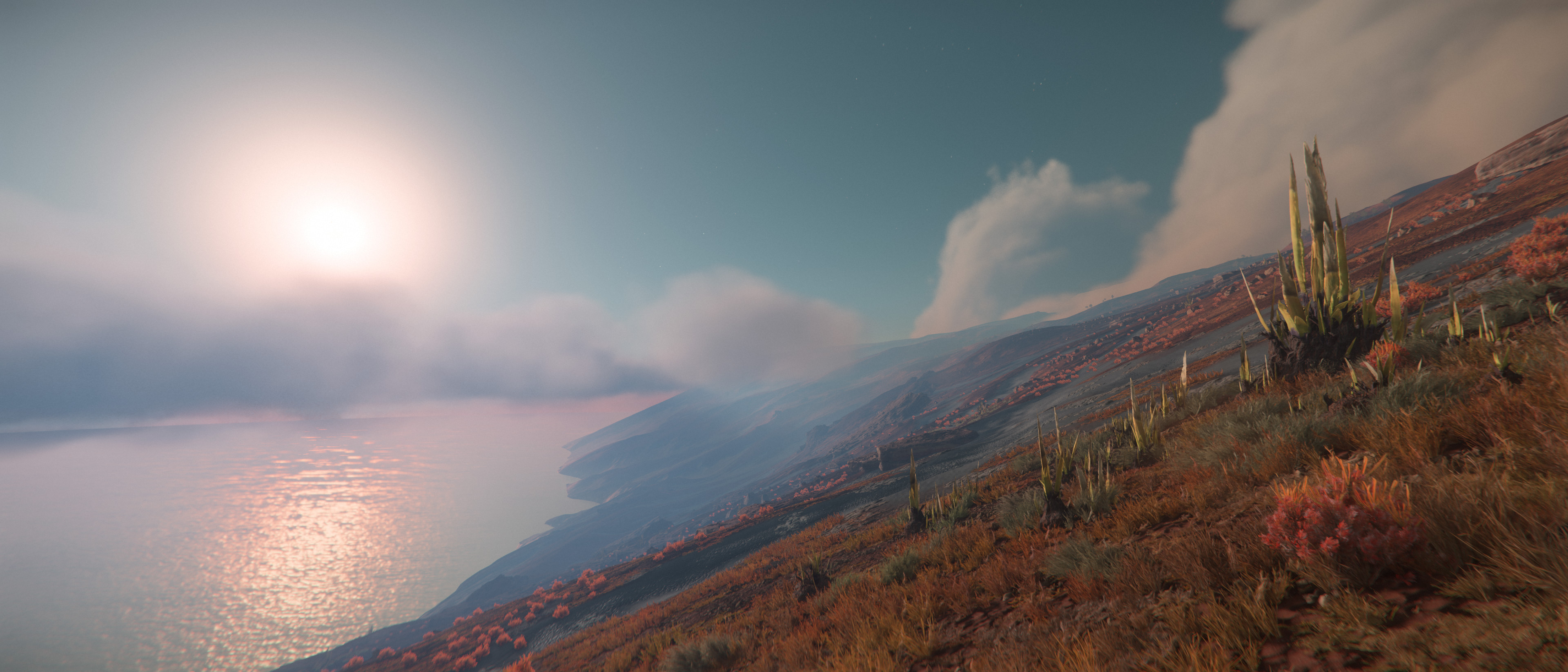
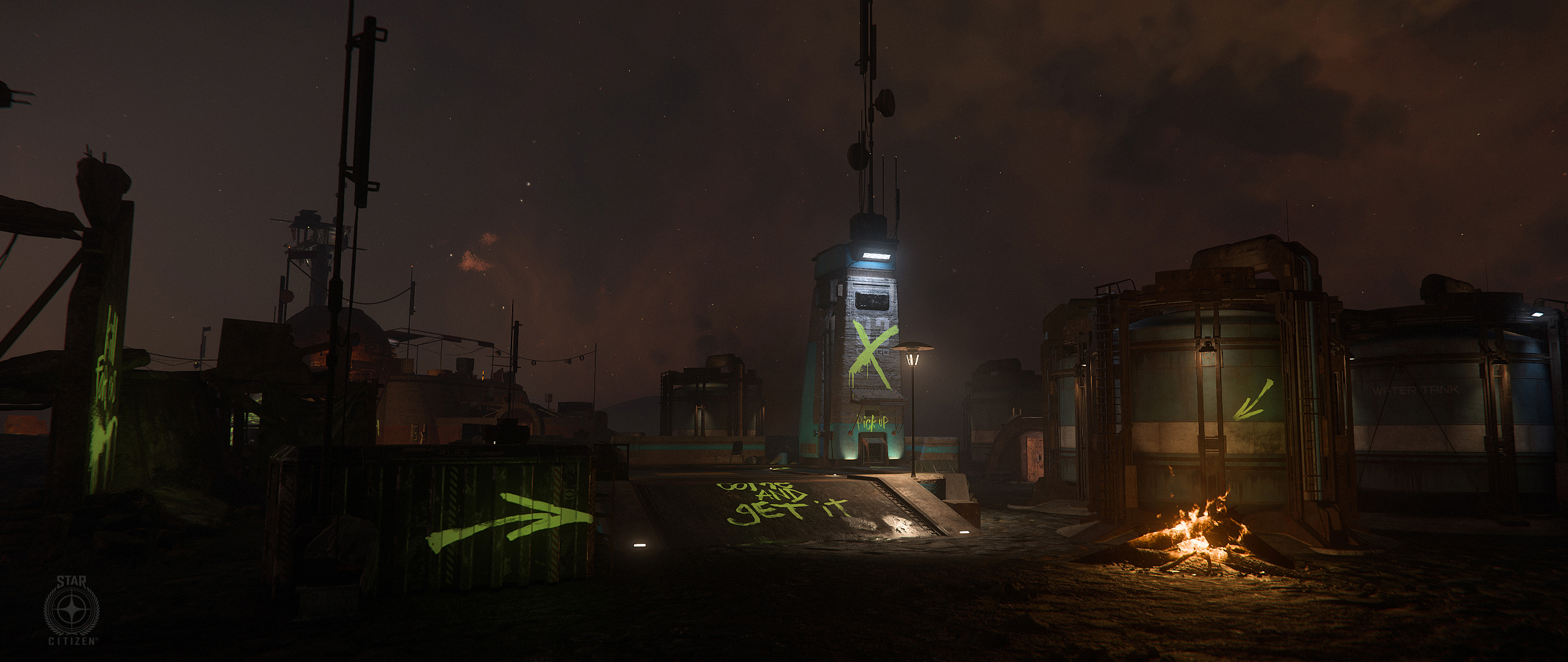
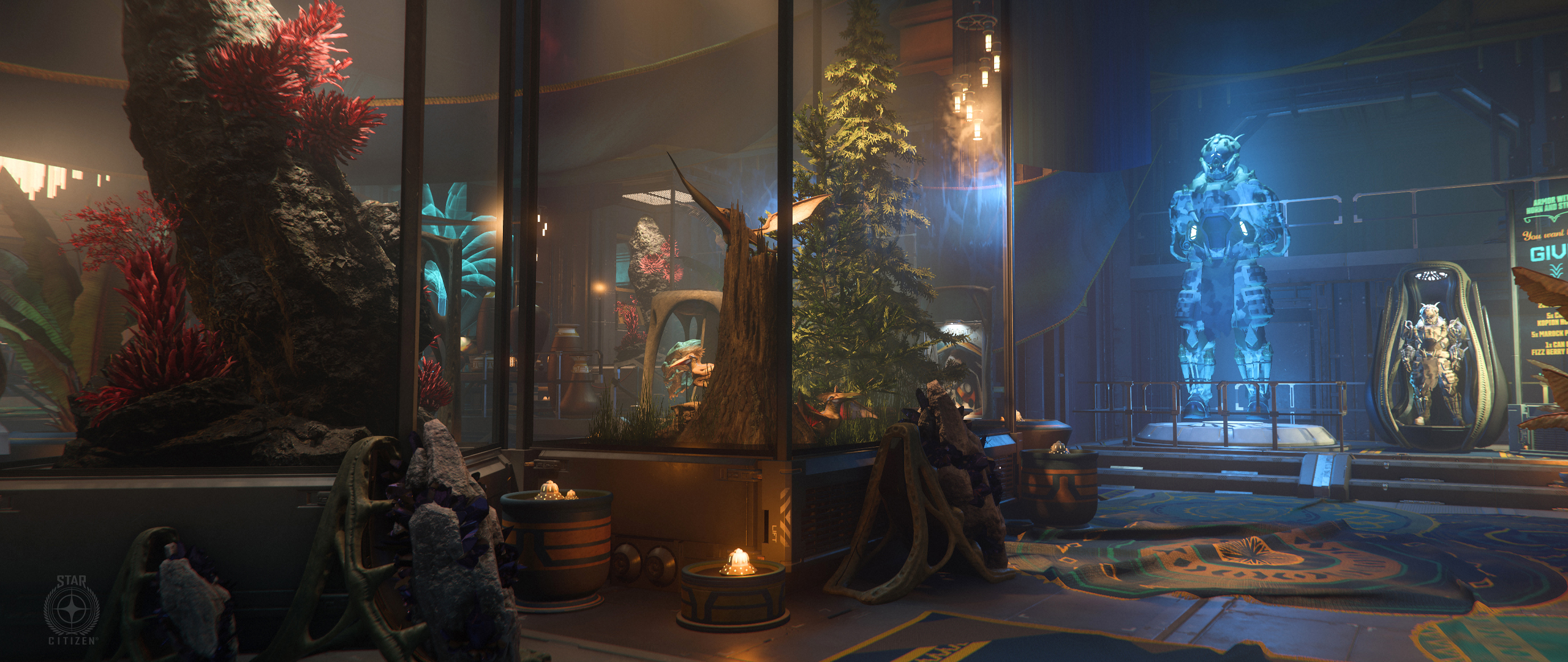
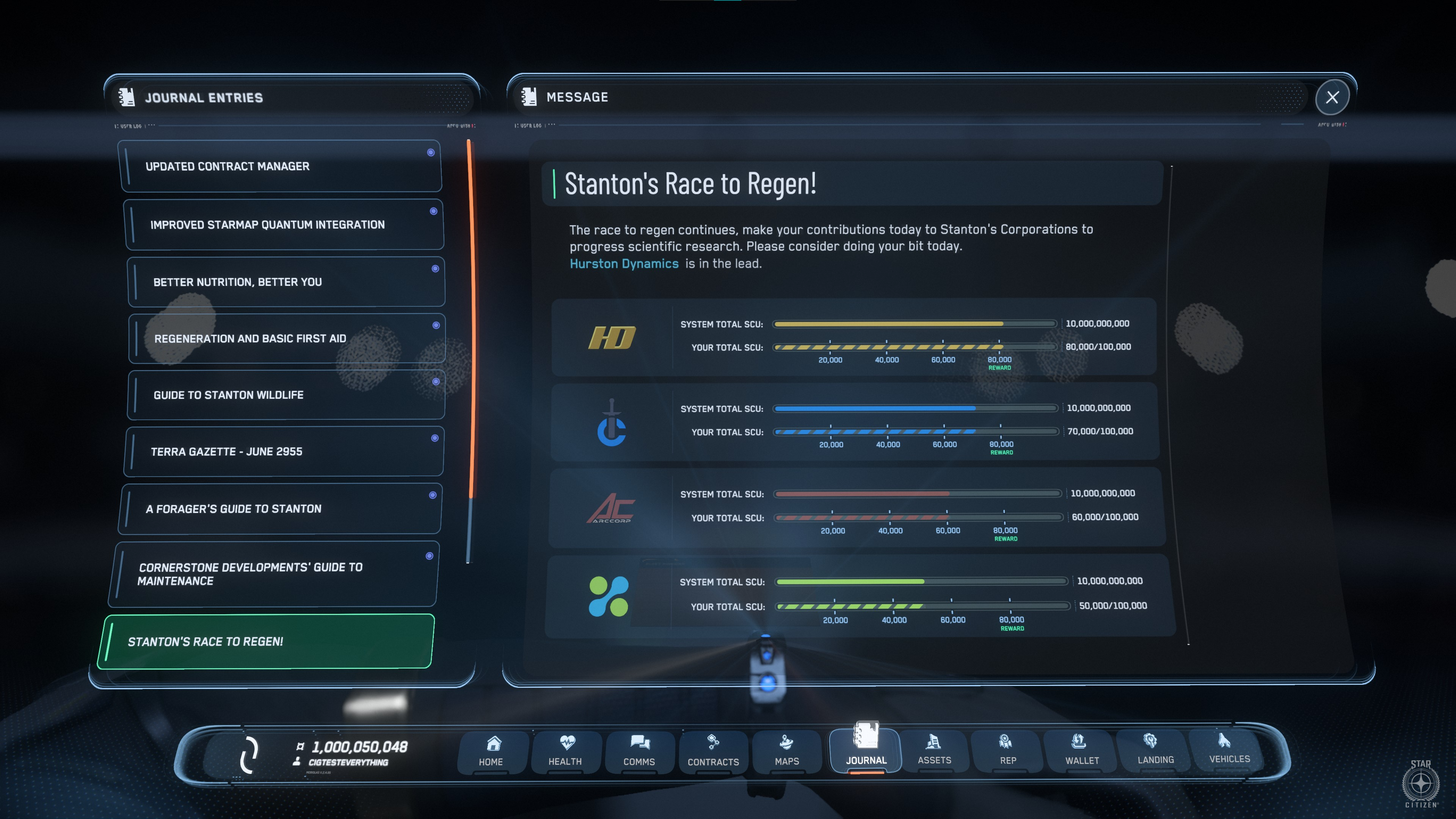
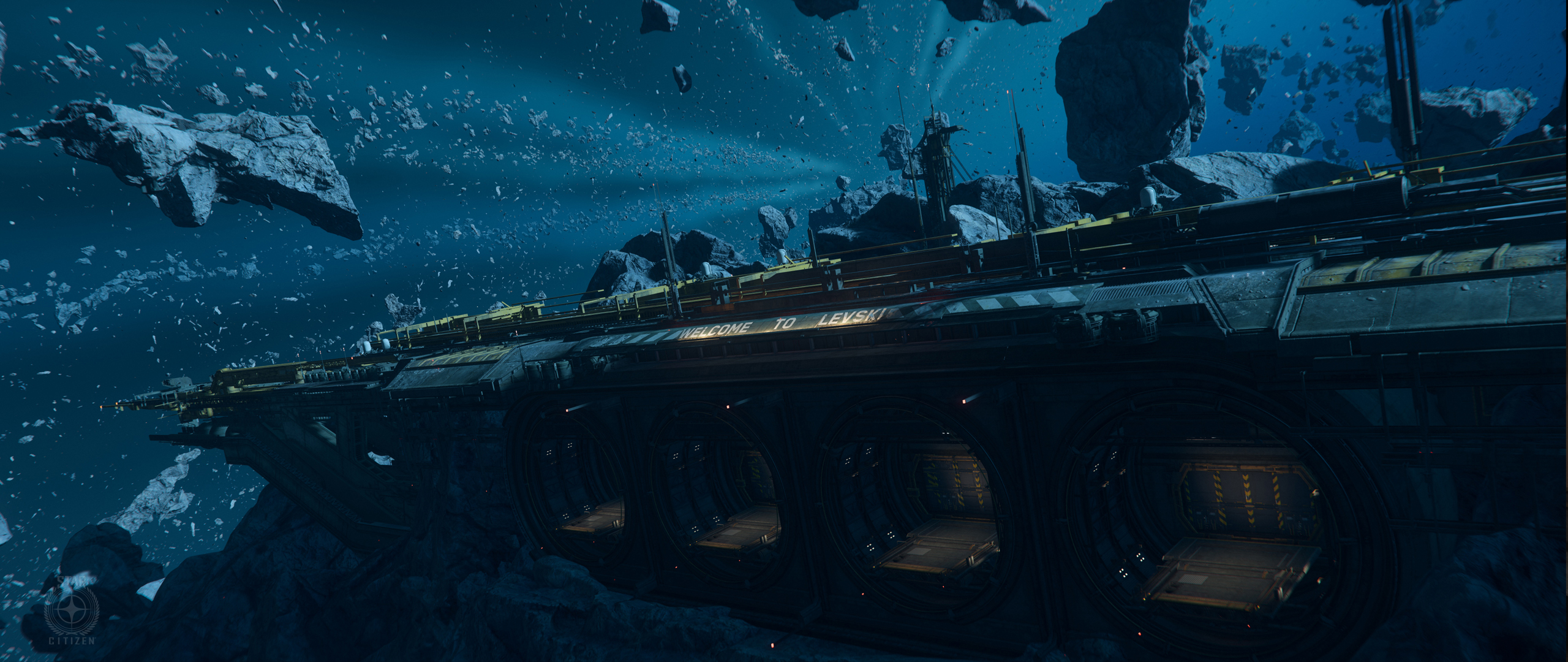
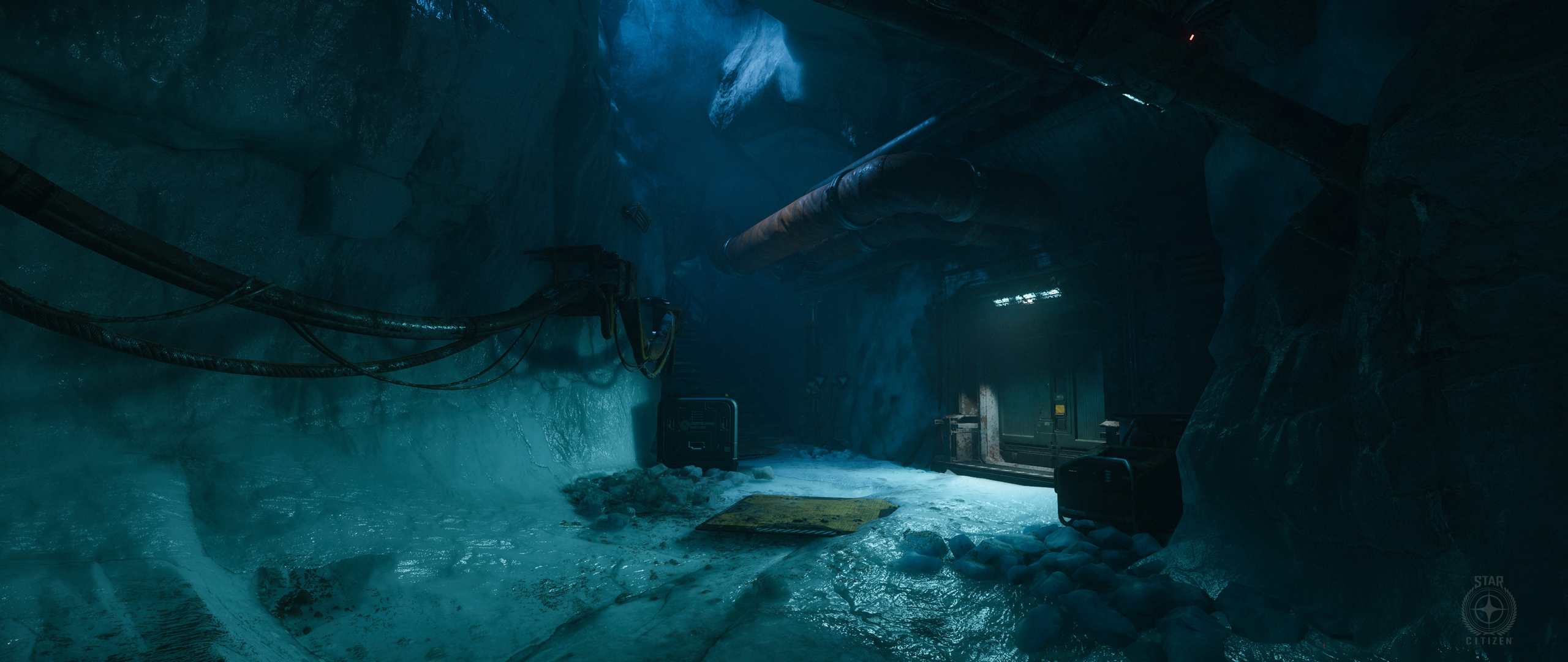
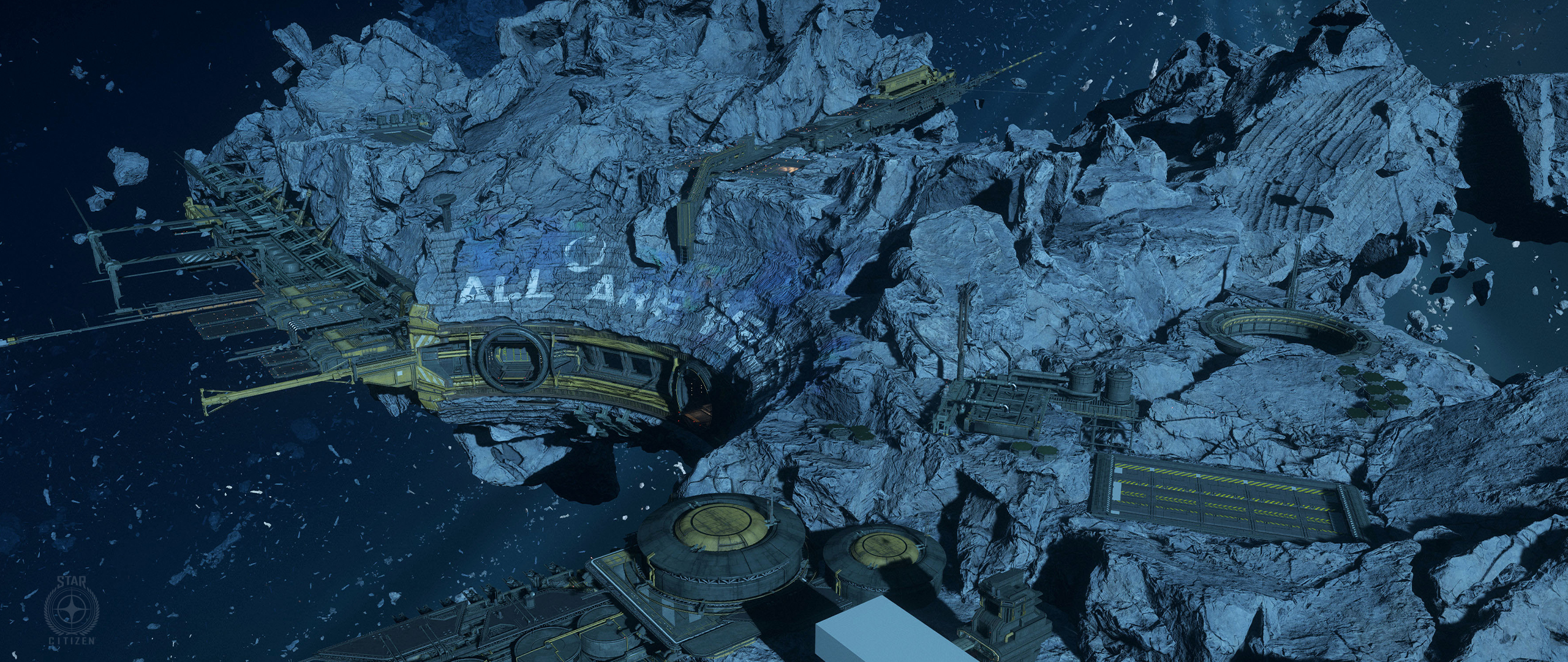
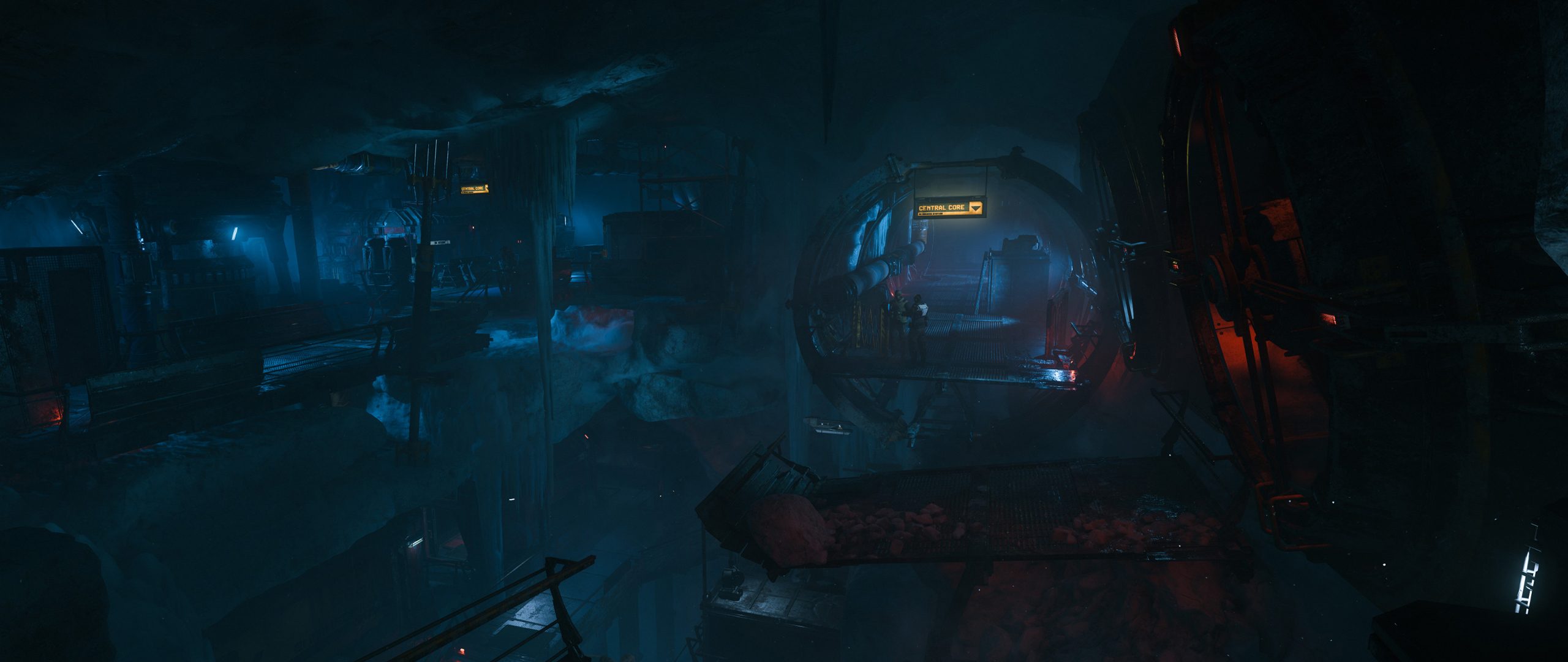
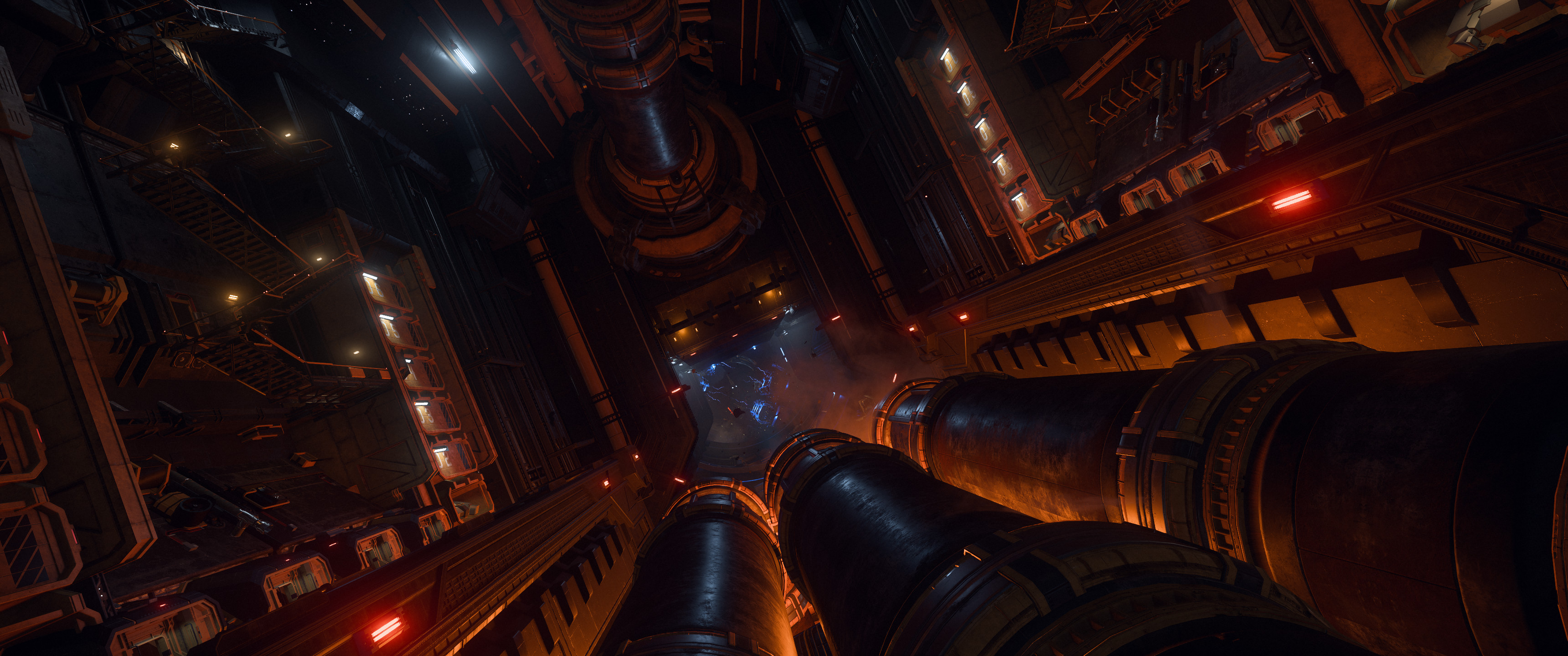
Metadata
- CIG ID
- 17140
- Channel
- Transmission
- Category
- Undefined
- Series
- Monthly Reports
- Comments
- 25
- Published
- 7 years ago (2019-07-03T00:00:00+00:00)