Star Citizen Monthly Report: July 2019
Transmission Undefined Monthly ReportsContent
July saw the surprise release of Star Citizen’s first self-propelled air defense system, the Ballista, along with the launch of Alpha 3.6. Unsurprisingly, the final development stages and testing of this straight-to-drivable vehicle and Alpha 3.6’s gameplay played a part in last month’s global workload, but big steps were also taken in the creation of features for Alpha 3.7 and beyond. Read on for the gritty details.
AI
July’s roundup starts with AI, which extended the first reactions worked on last month to be triggered by friendly AI characters. As a reminder, first reactions are part of combat behavior that are triggered by AI characters sensing the presence of an enemy. The first reaction is a precursor to real combat and includes specific animations, communications, and can lead the AI to investigate the source of suspicious noises or events.
While Alpha 3.6 dominated most of the Ship Team’s month, progress was made on crucial upcoming features for the PU (and SQ42 in some cases): ‘Fire discipline’ influences the firing behavior of gunners and pilots, the idea being that surrounding events and actions alter the behavior between the extremes of ‘trigger happy’ and ‘parsimonious’. For target selection, the team added two new elements – ‘self-preservation’, which prioritizes attacking the most dangerous enemy combatant and ‘defend ally’, which monitors friendly ships and AI and attacks players causing the most damage. AI security behavior has also been refined for security and interdiction missions to cover everything that could happen during a mission (of which there are many!).
Animation
Last month, the team worked on the bartender animations and behaviors, a new mission giver, and the emotes captured at last year’s CitizenCon. Facial animation was also done for shopkeepers and bar patrons, and more.
Art (Environment)
After the release of the bigger and better Rest Stop exteriors in Alpha 3.6, the Modular Team moved on to the interiors. As with all procedural location workflows, time is spent setting up the rules of layout generation and various room libraries. Players can expect the new interiors to feel larger, more open, and more varied when they launch in Alpha 3.7.
Work also continued on Orison, Crusader’s main landing zone, which is currently in the greybox stage. The team finished the layout and are currently making sure the components and architecture complement each other and communicate the desired art style.
A portion of the UK-based team began work on the exterior buildings for New Babbage. The Environment Art Team began work on the wider microTech planet, with effort going into creating new terrains and materials to better represent snowy landscapes and frozen planes.
Art (Ships)
The Origin 890 Jump is well on its way to the PU, with the team finishing off the remaining tweak and polish tasks. Once the art elements are done, it’ll go to the Tech Art Team for its pre-flight setup.
The first half of the Aegis Vanguard update went live last month and the remaining two are now nearing completion. Look out for the Harbinger and Sentinel in the PU in Alpha 3.7.
In the US, the Art Team worked closely with System Design to build the Ballista and supported the final stages of the P-72 Archimedes, both of which launched in Alpha 3.6.
Progress on the Banu Defender continues, with the team getting close to solidifying the Banu ship identity with dramatic lighting and a unique construction style. The exterior was the focus last month and saw the team tackle the cockpit, body, wings, and landing gear.
Significant focus was also placed on creating a unique standard for the Tevarin, which led the team to reevaluate the interior of the Prowler. Progress on the exterior, however, continued into greybox, with time last month going into designing the unique landing gear and bulkheads. Tech Art solved some of the technical challenges presented by the unique features on the wings as they’re also the main thrusters and landing gear. They also polished landing gear systems across the board, with particular focus on tuning ‘settle height’. They also helped to improve the player’s cockpit experience by working on HOTAS strafe animations.
Art (Weapons)
The Weapons Art Team completed their final pass on both the Hedeby Gunworks Salvo frag pistol and Behring GP33 ‘MOD’ grenade launcher mentioned last month. The OMC frag grenade was completed and the team began work on the new attachments for Alpha 3.7. Development kicked off for the greybox for the Kroneg FL-33 laser cannon.
Audio
Audio spent time in July supporting the recent and upcoming features and content including the Anvil Ballista, Origin 890 Jump, Kruger P-72 Archimedes, Hedeby Gunworks Salvo pistol, Apocalypse Arms missile launcher, and weapon attachments.
They also made Foley improvements and refined the remote turret experience. Alpha 3.7 should also see the return of music previously removed due to a rework of implementation along with new audio to support specific points of interest.
Backend Services
Last month, Backend Services worked on the resource service that tracks the state of natural resources found on planets and moons. Adjustments were made to the transaction service, persistent data manager, and rental services. The first phase of the diffusion router mesh was completed and allows DevOps to manage how network traffic and server-to-service communication travels through the back end. They also finished the new matchmaker API used by the platform teams for Spectrum.
Characters
The new career concepts mentioned last month were further developed throughout July. New armor was concepted and developed, while progress was made on making all existing clothing compatible with the female character model. The material library was further expanded too, which will help to improve the overall texture quality throughout the game when complete.
Community
Shortly before the release of Alpha 3.6, the Imperator’s Day festivities kicked off, celebrating independence throughout the ‘verse. To honor the unification of humanity, the team invited everyone to throw their very own Imperator’s Day parade and share their best pictures. With the unexpected introduction of the Ballista, Anvil’s self-propelled air defense system, the Community Team jumped headfirst into the next contest. This time, they challenged players to design a bumper sticker for the newly released vehicle. The contest offered one lucky designer the chance to leave their mark on CitizenCon 2949, with the first-place design being physically printed and distributed to all attendees at the event in November!
Speaking of CitizenCon, the team is still accepting applications for community booths. This time, it’s not exclusively for organizations – if you’re an event group, sub-community, or even fly solo, everyone is invited to submit an application.
Design
The team in Texas worked on ship balancing and pricing last month, specifically developing the capability to systemically set prices. In doing so, they analyzed the stats from current ships and identified balance issues arising from early development artifacts. They’re now coordinating with the Ship Team to target these issues and bring all vehicles in-line with the expected guidelines.
The team watched players discover Alpha 3.6’s new black-market locations and looked at profitability, how much ‘fences’ take, and common player behavior (particularly regarding the new law system). They’ll use the information gathered to help further improve gameplay in the future.
Progress on the NPC bartender continues, with several new usables (mostly mix stations) being created. They’re also coordinating with various other teams to improve how NPCs look when moving between usables. New vendors and NPCs are being iterated on too.
Balancing and implementation of the upcoming ship rental feature was done, while the selling of items from the upcoming ‘harvestables’ feature was discussed. Finally, work was also started on the Anvil Ballista to access CryAstro services.
DevOps
DevOps was busy keeping up with the build and publishing schedules which become increasingly demanding toward the end of a quarterly publishing cycle. In July alone they deployed 16 times to the PTU and once to Live. They also performed several publishes each day for internal testing.
While service monitoring will continue for the Publishing Team, the Build Team moved onto further enhancing build optimization and storing the massive amount of daily-generated data. July also saw the start of a new project to explore the viability of scaling certain aspects of the build system using cloud services.
Engineering
In Germany, the Engine Team worked on support for tri-mesh splitting to optimize collisions and intersection tests, continued work on geometry instancing, and optimized the application of networked states as part of the wider physics update. They also added raycaster support for collisions on overlapping zones. Recent optimizations include making vehicles ‘go to sleep’ when landed, not updating ship physical entity if parts move slightly, not looping through all rigid entities during the ‘apply state from network’ part of the physics step, and introducing the first elements of box pruning.
They also continued removing the global render state along with graphic and fidelity planning and prep and added support for ‘libunwind’ on Linux for more readable callstacks when DGS crashes. They also continued support for SOCS (with entity stability improvements), remove/respawn single aggregates to memory, and general game code.
For Rendering, they improved the anti-flicker heuristic for TSAA, which now uses the cumulative moving average for the first four frames to obtain faster convergence after history resets. They researched atmosphere artifacts at the horizon and made several major improvements. Some issues remain and will be fixed by a slightly different approach to atmosphere rendering. This new approach will unify the atmosphere, ground fog, and eventually clouds. Part of the research involved implementing a ground truth solution for atmosphere light inscattering (single-scatter precise + multi-scatter approximation). For the procedural planet tool, they implemented a layout generation recorder for designers that allows the visualization of collision issues in the layout of space stations and other locations.
Features (Gameplay)
Previously, the Gameplay Features was split into two teams, US1 and US2, who worked on different features and tasks. July saw them merge into the US Persistent Universe Gameplay Team, whose first united task was to plan new and improved features for the next major release.
Alongside the merge, work continued on the next iteration of the Character Customizer. When complete, it’ll bring a whole new look and feel to the feature. They also worked on improvements to FoIP & VoIP (adding multi-channel comms support) and polished the ship rental kiosks alongside the UI Team.
Features (Vehicles)
The team’s focus in July was split between bug fixing for Alpha 3.6 and starting feature development for upcoming future patches. Crash and build stability issues were rectified and bugs affecting turrets, scanning, mining, and various vehicles were fixed. Feature-wise, the team supported the ongoing physics system refactor and began adding additional functionality to vehicle scanning.
Graphics
The Graphics Team resumed their work on Planet Shading v4, with focus on adding a new artist tool that simultaneously paints a desired location along with every other location on the planet with matching environmental conditions. This provides a great compromise between hand-crafted and fully-procedural content creation. Work also started on the tint palette system, which will eventually allow the game code to assign shared palettes to any object in the game and recolor the materials and assign matching decals and logos. This will vastly cut down the work required to create material variants of ships, weapons, armor, props, and environments and give the designers much greater flexibility in the array of colors and branding available across the game.
Level Design
Level Design are currently iterating on the Rest Stop interiors to make them that feel more in-line with the new larger exteriors. They’re also working on New Babbage and Orison, both of which are making great progress. The team also developed a modular set to increase the speed that they can build flagship landing zones in the future.
Lighting
The Lighting Team kept busy last month, with many upcoming locations reaching the stage when lighting begins to form a critical role in artistic composition, mood, and player readability. New Babbage and Orison received attention, with lighting added to help portray the desired initial mood. This involves laying down the technical foundation (cubemap placement and navigational lighting) to give a base level of quality so that playtests can be run without distracting visual issues.
Narrative
Narrative began the month with quarterly planning, which involved assessing the work required to get new missions, gameplay content, New Babbage, and Orison ready for release.
They worked with the Props Team in the UK on the text that will feature on some as-yet-unannounced items and names and descriptions were created for Alpha 3.6’s new weapons and attachments. They also worked on branding and signage for the Rest Stop interior variants.
The Xi’an language continued to be refined, with a whole swath of food terms added to the lexicon. This was used as the basis for the Xi’an Cuisine article featured in July’s issue of Jump Point. Foundational work for on Banu language made excellent progress too, as more details of the race’s everyday lives were fleshed out.
New lore articles were written, including a news update on a Synthworld accident and a portfolio on Talon Weapons Systems. The team also assisted with the launch of Alpha 3.6, addressing any remaining narrative issues with the law system, space station exteriors, black market economy, and ship purchasing kiosks.
Player Relations
The Player Relations team spent July supporting Alpha 3.6, 3.6.1, and the Ballista sale.
“We’d like to take a different route this month and highlight the efforts of two people who are well known to Evocati and deserve a special menion: Michael ‘Baior’ Smith and Nathan ‘Wakapedia’ Coy. Both Baior and Waka have been absolute troopers for Player Relations, spearheading our publishing and feedback efforts. On top of that, they create a special Quality of Life report that goes to all stakeholders so we capture all of the feedback from players. They’ve been quite busy this summer on Alpha 3.6, so give them a thanks if you see them in Spectrum!”
Props
July saw continued work on the dressing props for the Origin 890 Jump, which included adding hints of luxury and life to the ship. Additional cargo assets were created for the Mission Team to aid with storytelling and the last few bug fixes were made for Alpha 3.6. As release work came to a close, the team took the opportunity to do some much-needed auditing, clean up the Layer Blend material library, and optimize texture reuse.
Work continued on the bar experience, with the templates defined last month used to create final art for the cocktail station and a more generic bar dressing set, and improvements were made to the glass and drink materials.
Focus was also put onto unifying the seat setup and the team worked closely with Design on a full consistency pass across all seat assets. A couple of asset requests were made for the Ballista and 890 Jump trailers too, which the team considers a great opportunity to push quality and go to town on the visuals.
QA
QA worked extensively on the release of Alpha 3.6, testing Evocati, PTU, and Live builds for deployment. Once live, a few of the team moved onto preliminary testing for next quarter’s Alpha 3.7. Four new testers were also added to the ranks.
Over in Germany, the team worked on test requests for the law jurisdiction from the Ship AI Team. This involved testing the various functionalities of the jurisdiction system along with looking at edge cases that could occur when apprehended by security AIs. Combat AI and social AI are currently tested daily to help the team stay on top of any new issues that arise from related system updates.
As part of Planet Tech v4, the ‘PlanEd’ planet editor tool used by Environment Art received a new paint tool. So, a revamp of the PlanEd section of the full editor checklist was done to ensure they’re testing the most recent relevant functionality. Old test cases that will soon be deprecated were removed and a new section was created to focus more on using the paint tool on planetary surfaces.
Tech Animation
Tech Animation saw several new additions to their pipeline that, in the long run, will make for improved character deformation. Head rigging and the related pipeline were developed too, which will allow new mission givers and more interesting characters throughout the PU.
The bartender NPC received new prop iterations that allow him to better interact with players when serving drinks. Alpha 3.6’s new weapons and attachments were finished off for the patch release and animations were developed for upcoming trailers, including the recently unveiled Anvil Ballista. Tools received attention too, which were further developed for ease-of-use.
Improvements were made to the remote exporting tool to make it easier for animators to export large or numerous scenes in a batch process. The new version includes support for feature streams to make it easier to directly export to them. The team also supported the Usable Content Team with bug fixes for existing usables and implementation setups for new usables. The Weapons Team received support with setups and general tech support for the new attachment system and addressed multiple bugs related to Alpha 3.6’s new weapons.
Turbulent (Services)
In Montreal, July was dedicated to the development of the new voice session manager that reached its second milestone. It can now handle two sessions at the same time, such as ‘group’ and ‘proximity’. The next step is to tie it to the game UI, which will be done with the Gameplay Team.
The team also helped release Alpha 3.6 as several UI additions were supported by VOIP or linked to microservices created and maintained by Turbulent. This includes the auto-join proximity VOIP channel, ability to invite all members of a channel into a party, and the comms visor VOIP display.
Turbulent (Web platform)
Turbulent created the page to announce the elements of the Alpha 3.6 patch, linking to the patch notes and flyable promotion pages. The Alpha 3.6 flyable promotion showcased ships from Aegis, Kruger, and the new Anvil vehicle.
Turbulent released the unified Launcher 1.2.0. This release consolidates the PTU and Live environments into a single launcher which, for those in the Evocati, makes switching between Live and the PTU much easier. Work continues on quality-of-life improvements, but the first release was welcomed by the community.
User Interface (UI)
As well as bug-fixing for the Alpha 3.6 release, the UI Team began implementing the new rental kiosk, which will allow players to rent vehicles from certain shops. The Graphic Art Team worked on UI concepts, signage, and posters for the interiors of an upcoming location.
VFX
Like most teams, July saw the VFX polishing and bug fixing for Alpha 3.6. Alongside bugs, work was completed on the Anvil Ballista, including adding effects for the recently released trailer. Work also began on effects for the Origin 890 Jump, the Hedeby Gunworks Salvo frag pistol, and the Kroneg FL-33 laser cannon.
Planet Tech Tools v4 was worked on too, which now can now spawn unique particles on the terrain using various parameters. It can also lock particles to the terrain and have them move around on the surface as needed. For example, when particles are affected by gravity or wind, they now flow around the contours of the terrain in a natural way. The team also added a particle LOD system to allow them to draw ‘cheaper’ versions of the effect much further away and swap them out for a higher-quality version up close. WE’LL SEE YOU NEXT MONTH…
Im Juli wurde das erste selbstfahrende Luftverteidigungssystem von Star Citizen, der Ballista, überraschend freigegeben, zusammen mit dem Start von Alpha 3.6. Es überrascht nicht, dass die letzten Entwicklungsstufen und Tests dieses direkt fahrbaren Fahrzeugs und des Gameplays von Alpha 3.6 einen Teil der globalen Arbeitsbelastung des letzten Monats ausmachten, aber auch bei der Entwicklung von Features für Alpha 3.7 und darüber hinaus wurden große Schritte unternommen. Lesen Sie weiter für die körnigen Details.
KI
Die Razzia im Juli beginnt mit der KI, die die ersten Reaktionen, an denen im vergangenen Monat gearbeitet wurde, erweitert hat, um von freundlichen KI-Charakteren ausgelöst zu werden. Zur Erinnerung: Erste Reaktionen sind Teil des Kampfverhaltens, die durch KI-Charaktere ausgelöst werden, die die Anwesenheit eines Feindes erkennen. Die erste Reaktion ist ein Vorläufer des realen Kampfes und beinhaltet spezifische Animationen, Kommunikation und kann die KI veranlassen, die Quelle verdächtiger Geräusche oder Ereignisse zu untersuchen.
Während Alpha 3.6 den größten Teil des Monats des Schiffsteams beherrschte, wurden Fortschritte bei den wichtigsten bevorstehenden Features für die PU (und in einigen Fällen auch für das SQ42) erzielt: "Feuerdisziplin" beeinflusst das Schussverhalten von Schützen und Piloten, wobei die Idee besteht, dass umliegende Ereignisse und Aktionen das Verhalten zwischen den Extremen "trigger happy" und "sparsam" verändern. Für die Zielauswahl hat das Team zwei neue Elemente hinzugefügt - "Selbsterhaltung", die den Angriff auf den gefährlichsten feindlichen Kämpfer priorisiert, und "Verteidigungspartner", der befreundete Schiffe und KI überwacht und Spieler angreift, die den größten Schaden verursachen. Das KI-Sicherheitsverhalten wurde auch für Sicherheits- und Verbotsmissionen weiterentwickelt, um alles abzudecken, was während einer Mission passieren könnte (von denen es viele gibt!).
Animation
Letzten Monat arbeitete das Team an den Animationen und Verhaltensweisen des Barkeepers, einem neuen Missionsgeber und den Emotes, die auf der letztjährigen CitizenCon aufgenommen wurden. Gesichtsanimationen wurden auch für Ladenbesitzer und Barbesucher und mehr durchgeführt.
Kunst (Umwelt)
Nach der Veröffentlichung der größeren und besseren Rest Stop Exteriors in Alpha 3.6 ging das Modular Team weiter zu den Interiors. Wie bei allen prozessualen Standortworkflows wird Zeit damit verbracht, die Regeln für die Layouterstellung und verschiedene Raumbibliotheken aufzustellen. Die Spieler können erwarten, dass sich die neuen Innenräume größer, offener und vielfältiger anfühlen, wenn sie in Alpha 3.7 starten.
Auch an Orison, der Hauptanlandezone von Crusader, die sich derzeit in der Greybox befindet, wurde weiter gearbeitet. Das Team hat das Layout fertig gestellt und stellt derzeit sicher, dass sich die Komponenten und die Architektur ergänzen und den gewünschten Kunststil kommunizieren.
Ein Teil des in Großbritannien ansässigen Teams begann mit den Arbeiten an den Außenanlagen für New Babbage. Das Environment Art Team begann mit der Arbeit auf dem breiteren microTech Planeten, mit dem Ziel, neue Terrains und Materialien zu schaffen, um schneebedeckte Landschaften und gefrorene Flächen besser darzustellen.
Kunst (Schiffe)
Der Origin 890 Jump ist auf dem besten Weg zur PU, wobei das Team die restlichen Optimierungs- und Polieraufgaben erledigt. Sobald die Kunstelemente fertig sind, geht es an das Tech Art Team für das Pre-Flight-Setup.
Die erste Hälfte des Aegis Vanguard Updates ist letzten Monat live gegangen und die restlichen beiden stehen kurz vor der Fertigstellung. Achten Sie auf den Vorbote und Wächter in der PU in Alpha 3.7.
In den USA arbeitete das Art Team eng mit System Design zusammen, um den Ballista zu bauen und unterstützte die Endphase des P-72 Archimedes, die beide mit Alpha 3.6 eingeführt wurden.
Die Fortschritte beim Banu Defender gehen weiter, und das Team nähert sich der Festigung der Identität des Banu-Schiffes mit dramatischer Beleuchtung und einem einzigartigen Baustil. Das Äußere stand letzten Monat im Mittelpunkt und das Team sah, wie es Cockpit, Karosserie, Flügel und Fahrwerk in Angriff nahm.
Ein weiterer Schwerpunkt lag auf der Schaffung eines einzigartigen Standards für den Tevarin, was das Team veranlasste, das Innere des Prowlers neu zu bewerten. Die Fortschritte auf der Außenseite setzten sich jedoch in der Greybox fort, wobei die Zeit im vergangenen Monat in die Entwicklung der einzigartigen Fahrwerke und Schotte ging. Tech Art löste einige der technischen Herausforderungen, die sich aus den einzigartigen Merkmalen der Flügel ergeben, da sie gleichzeitig die wichtigsten Triebwerke und Fahrwerke sind. Sie polierten auch die Fahrwerksysteme auf breiter Front, wobei der Schwerpunkt auf der Abstimmung der "Setzhöhe" lag. Sie halfen auch, das Cockpit-Erlebnis des Spielers zu verbessern, indem sie an HOTAS-Strafe-Animationen arbeiteten.
Kunst (Waffen)
Das Waffenkunstteam beendete seinen letzten Durchgang mit der Hedeby Gunworks Salvo frag Pistole und dem im letzten Monat erwähnten Behring GP33 MOD Granatwerfer. Die OMC Fragranate wurde fertiggestellt und das Team begann mit der Arbeit an den neuen Anbaugeräten für Alpha 3.7. Die Entwicklung der Greybox für die Kroneg FL-33 Laserkanone hat begonnen.
Audio
Audio verbrachte im Juli Zeit damit, die neuesten und kommenden Features und Inhalte zu unterstützen, darunter den Anvil Ballista, Origin 890 Jump, Kruger P-72 Archimedes, Hedeby Gunworks Salvo Pistole, Apocalypse Arms Raketenwerfer und Waffenzubehör.
Sie machten auch Foley-Verbesserungen und verfeinerten das Remote Turret Erlebnis. Alpha 3.7 sollte auch die Rückgabe von Musik sehen, die zuvor aufgrund einer Überarbeitung der Implementierung entfernt wurde, zusammen mit neuem Audio, um bestimmte Punkte von Interesse zu unterstützen.
Backend Services
Im vergangenen Monat arbeitete Backend Services an dem Ressourcendienst, der den Zustand der natürlichen Ressourcen auf Planeten und Monden verfolgt. Anpassungen wurden am Transaktionsdienst, am persistenten Datenverwalter und an den Mietservices vorgenommen. Die erste Phase des Diffusionsrouter-Netzes wurde abgeschlossen und ermöglicht es DevOps zu verwalten, wie der Netzwerkverkehr und die Server-zu-Service-Kommunikation durch das Backend laufen. Sie haben auch die neue Matchmaker-API fertig gestellt, die von den Plattformteams für Spectrum verwendet wird.
Charaktere
Die im vergangenen Monat erwähnten neuen Karrierekonzepte wurden im Laufe des Monats Juli weiterentwickelt. Neue Rüstungen wurden konzipiert und entwickelt, und es wurden Fortschritte bei der Kompatibilität aller vorhandenen Kleidungsstücke mit dem weiblichen Charaktermodell erzielt. Die Materialbibliothek wurde ebenfalls weiter ausgebaut, was dazu beitragen wird, die Texturqualität im gesamten Spiel zu verbessern, wenn sie vollständig ist.
Community
Kurz vor der Veröffentlichung von Alpha 3.6 begannen die Feierlichkeiten zum Imperator's Day und feierten die Unabhängigkeit im gesamten Vers. Um die Vereinigung der Menschheit zu ehren, lud das Team alle ein, ihre eigene Imperator's Day Parade zu veranstalten und ihre besten Bilder zu zeigen. Mit der unerwarteten Einführung der Ballista, dem selbstfahrenden Luftverteidigungssystem von Anvil, sprang das Community Team kopfüber in den nächsten Wettbewerb. Diesmal forderten sie die Spieler auf, einen Autoaufkleber für das neu eingeführte Fahrzeug zu entwerfen. Der Wettbewerb bot einem glücklichen Designer die Möglichkeit, die CitizenCon 2949 zu prägen, wobei das Erstplatzierungsdesign physisch gedruckt und an alle Teilnehmer der Veranstaltung im November verteilt wurde!
Apropos CitizenCon, das Team nimmt immer noch Bewerbungen für Gemeinschaftsstände entgegen. Diesmal ist es nicht nur für Unternehmen gedacht - wenn Sie eine Event-Gruppe, eine Sub-Community oder sogar alleine fliegen, ist jeder eingeladen, eine Bewerbung einzureichen.
Design
Das Team in Texas arbeitete letzten Monat an der Schiffsbilanzierung und Preisgestaltung und entwickelte insbesondere die Fähigkeit, systemisch Preise festzulegen. Dabei analysierten sie die Statistiken der aktuellen Schiffe und identifizierten Bilanzprobleme, die sich aus frühen Entwicklungsartefakten ergeben. Sie stimmen sich nun mit dem Ship Team ab, um diese Probleme anzugehen und alle Fahrzeuge mit den erwarteten Richtlinien in Einklang zu bringen.
Das Team beobachtete die Spieler, wie sie die neuen Schwarzmarktstandorte von Alpha 3.6 entdeckten und untersuchte die Rentabilität, die Höhe der Zäune und das Verhalten der Spieler (insbesondere im Hinblick auf das neue Rechtssystem). Sie werden die gesammelten Informationen nutzen, um das Gameplay in Zukunft weiter zu verbessern.
Die Fortschritte beim NSC-Barkeeper gehen weiter, wobei mehrere neue Usables (meist Mix-Stationen) geschaffen wurden. Sie koordinieren auch mit verschiedenen anderen Teams, um das Aussehen der NSCs beim Wechsel zwischen den Nutzungsmöglichkeiten zu verbessern. Auch neue Lieferanten und NSCs werden iteriert.
Der Ausgleich und die Implementierung der bevorstehenden Schiffsmiete wurde durchgeführt, während der Verkauf von Artikeln aus der bevorstehenden Erntegutfunktion diskutiert wurde. Schließlich wurde auch mit den Arbeiten an der Anvil Ballista begonnen, um auf die Dienste von CryAstro zuzugreifen.
DevOps
DevOps war damit beschäftigt, mit den Build- und Publishing-Plänen Schritt zu halten, die gegen Ende eines vierteljährlichen Veröffentlichungszyklus immer anspruchsvoller werden. Allein im Juli setzten sie 16 Mal in der PTU und einmal in Live ein. Sie führten auch mehrere Veröffentlichungen pro Tag für interne Tests durch.
Während die Serviceüberwachung für das Publishing-Team fortgesetzt wird, hat das Build-Team die Buildoptimierung weiter verbessert und die enorme Menge an täglich generierten Daten gespeichert. Im Juli begann auch ein neues Projekt zur Untersuchung der Machbarkeit der Skalierung bestimmter Aspekte des Build-Systems über Cloud Services.
Ingenieurwesen
In Deutschland arbeitete das Motorenteam an der Unterstützung des Tri-Mesh-Splittings zur Optimierung von Kollisionen und Schnitttests, setzte die Arbeit an der Geometrieinstanzierung fort und optimierte die Anwendung vernetzter Zustände im Rahmen des umfassenderen Physik-Updates. Sie haben auch die Raycaster-Unterstützung für Kollisionen an überlappenden Zonen hinzugefügt. Zu den jüngsten Optimierungen gehören das Einschlafen von Fahrzeugen nach der Landung, die Nichtaktualisierung der physischen Einheit des Schiffes, wenn sich die Teile leicht bewegen, das Durchlaufen aller starren Einheiten während des Teils des Physik-Schritts "Zustand vom Netzwerk anwenden" und die Einführung der ersten Elemente des Boxenausschnitts.
Sie entfernten auch weiterhin den globalen Renderstatus sowie die Grafik- und Treueplanung und -vorbereitung und fügte die Unterstützung von 'libunwind' unter Linux für besser lesbare Callstacks bei DGS-Abstürzen hinzu. Sie unterstützten auch weiterhin SOCS (mit Verbesserungen der Entity-Stabilität), das Entfernen/Wiederherstellen einzelner Aggregate im Speicher und den allgemeinen Spielcode.
Für das Rendering verbesserten sie die Anti-Flicker-Heuristik für TSAA, die nun den kumulativen gleitenden Durchschnitt für die ersten vier Bilder verwendet, um eine schnellere Konvergenz nach dem Zurücksetzen der Historie zu erreichen. Sie untersuchten Atmosphärenartefakte am Horizont und nahmen einige wichtige Verbesserungen vor. Einige Probleme bleiben bestehen und werden durch einen etwas anderen Ansatz bei der Darstellung der Atmosphäre behoben. Dieser neue Ansatz wird die Atmosphäre, den Bodennebel und eventuell die Wolken vereinen. Ein Teil der Forschung bestand darin, eine Lösung für die Bodenwahrheit bei der Streuung von Atmosphärenlicht zu implementieren (Einzelstreuung präzise + Mehrfachstreuung). Für das prozedurale Planetenwerkzeug implementierten sie einen Layoutgenerierungsrekorder für Designer, der die Visualisierung von Kollisionsproblemen im Layout von Raumstationen und anderen Standorten ermöglicht.
Funktionen (Gameplay)
Zuvor waren die Gameplay Features in zwei Teams aufgeteilt, US1 und US2, die an verschiedenen Features und Aufgaben arbeiteten. Im Juli fusionierten sie zum US Persistent Universe Gameplay Team, dessen erste gemeinsame Aufgabe es war, neue und verbesserte Features für das nächste Major Release zu planen.
Neben dem Merge wurde auch an der nächsten Iteration des Character Customizers gearbeitet. Wenn es fertig ist, wird es dem Feature ein völlig neues Aussehen und Gefühl verleihen. Sie arbeiteten auch an der Verbesserung von FoIP & VoIP (durch Hinzufügen von Multi-Channel-Kommunikationsunterstützung) und polierten die Schiffsmietkioske zusammen mit dem UI-Team.
Merkmale (Fahrzeuge)
Der Fokus des Teams lag im Juli auf der Fehlerbehebung für Alpha 3.6 und dem Start der Feature-Entwicklung für kommende zukünftige Patches. Probleme mit der Crash- und Baustellenstabilität wurden behoben und Fehler bei Türmen, Scannen, Bergbau und verschiedenen Fahrzeugen behoben. In Bezug auf die Funktionalität unterstützte das Team den laufenden Physiksystem-Refaktor und begann, die Fahrzeugabtastung um zusätzliche Funktionen zu erweitern.
Grafiken
Das Grafik-Team nahm seine Arbeit an Planet Shading v4 wieder auf, wobei der Schwerpunkt auf der Hinzufügung eines neuen Künstlerwerkzeugs lag, das gleichzeitig einen gewünschten Ort und jeden anderen Ort auf dem Planeten mit den entsprechenden Umgebungsbedingungen malt. Dies stellt einen großen Kompromiss zwischen handgefertigter und vollständig prozeduraler Inhaltserstellung dar. Außerdem wurde mit der Arbeit am Tönungspalettensystem begonnen, das es dem Spiel-Code schließlich ermöglichen wird, jedem Objekt im Spiel gemeinsame Paletten zuzuweisen, die Materialien neu einzufärben und passende Aufkleber und Logos zuzuordnen. Dies wird die Arbeit, die erforderlich ist, um Materialvarianten von Schiffen, Waffen, Rüstungen, Requisiten und Umgebungen zu erstellen, erheblich reduzieren und den Designern viel mehr Flexibilität bei der Auswahl der Farben und des Brandings im gesamten Spiel geben.
Leveldesign
Das Leveldesign arbeitet derzeit an den Innenräumen der Raststätte, um sie so zu gestalten, dass sie sich mit den neuen größeren Außenbereichen besser harmonieren. Sie arbeiten auch an New Babbage und Orison, die beide große Fortschritte machen. Das Team entwickelte auch ein modulares Set, um die Geschwindigkeit zu erhöhen, mit der sie in Zukunft Flaggschiff-Landezonen bauen können.
Beleuchtung
Das Beleuchtungsteam war im vergangenen Monat sehr beschäftigt, wobei viele der kommenden Orte die Bühne erreichten, wenn die Beleuchtung eine entscheidende Rolle in Bezug auf künstlerische Komposition, Stimmung und Lesbarkeit der Spieler zu spielen beginnt. New Babbage und Orison erregten Aufmerksamkeit, und die Beleuchtung trug dazu bei, die gewünschte Grundstimmung darzustellen. Dabei werden die technischen Grundlagen (Cubemap-Positionierung und Navigationsbeleuchtung) so festgelegt, dass ein Basis-Qualitätsniveau erreicht wird, so dass Spieletests ohne Beeinträchtigung der visuellen Aspekte durchgeführt werden können.
Narrativ
Narrative begann den Monat mit einer vierteljährlichen Planung, bei der die Arbeit bewertet wurde, die erforderlich war, um neue Missionen, Gameplay-Inhalte, New Babbage und Orison zur Veröffentlichung bereit zu machen.
Sie arbeiteten mit dem Requisitenteam in Großbritannien an dem Text, der auf einigen noch nicht angekündigten Gegenständen erscheinen wird, und Namen und Beschreibungen wurden für die neuen Waffen und Anhänge von Alpha 3.6 erstellt. Sie arbeiteten auch an der Markenbildung und Beschilderung für die Innenraumvarianten von Rest Stop.
Die Xi'an-Sprache wurde weiter verfeinert, wobei dem Lexikon eine ganze Reihe von Fachbegriffen hinzugefügt wurde. Dies wurde als Grundlage für den Artikel Xi'an Cuisine in der Juli-Ausgabe von Jump Point verwendet. Auch die Grundlagenarbeit für die Sprache Banu machte ausgezeichnete Fortschritte, da weitere Details des Alltags der Rasse konkretisiert wurden.
Neue Überlieferungsartikel wurden geschrieben, darunter ein Nachrichten-Update über einen Synthworld-Unfall und ein Portfolio über Talon Weapons Systems. Das Team unterstützte auch bei der Einführung von Alpha 3.6 und beschäftigte sich mit allen noch offenen narrativen Fragen der Rechtsordnung, der Außenanlagen von Raumstationen, der Schwarzmarktwirtschaft und der Schiffskaufstationen.
Spielerbeziehungen
Das Player Relations-Team verbrachte den Juli damit, Alpha 3.6, 3.6.1 und den Ballista-Verkauf zu unterstützen.
"Wir möchten diesen Monat einen anderen Weg gehen und die Bemühungen von zwei Personen hervorheben, die Evocati gut bekannt sind und eine besondere Anerkennung verdienen: Michael'Baior' Smith und Nathan'Wakapedia' Coy. Sowohl Baior als auch Waka waren absolute Trooper für die Spielerbeziehungen und führten unsere Veröffentlichungs- und Feedbackaktivitäten an. Darüber hinaus erstellen sie einen speziellen Lebensqualitätsbericht, der an alle Beteiligten geht, damit wir das gesamte Feedback der Akteure erfassen können. Sie waren diesen Sommer mit Alpha 3.6 ziemlich beschäftigt, also bedanken Sie sich, wenn Sie sie in Spectrum sehen!"
Requisiten
Im Juli wurden die Arbeiten an den Abrichtstützen für die Origin 890 Jump fortgesetzt, wobei dem Schiff Hinweise auf Luxus und Leben hinzugefügt wurden. Zusätzliche Frachtgüter wurden für das Mission Team erstellt, um bei der Erzählung von Geschichten zu helfen, und die letzten Fehlerbehebungen wurden für Alpha 3.6 vorgenommen. Als die Release-Phase zu Ende ging, nutzte das Team die Gelegenheit, einige der dringend benötigten Audits durchzuführen, die Layer Blend-Materialbibliothek zu bereinigen und die Wiederverwendung von Texturen zu optimieren.
Die Arbeit an der Bar wurde fortgesetzt, mit den im letzten Monat definierten Vorlagen für die endgültige Gestaltung der Cocktailstation und einem allgemeineren Bar-Ankleideset, und es wurden Verbesserungen an den Glas- und Getränkematerialien vorgenommen.
Der Schwerpunkt lag auch auf der Vereinheitlichung der Sitzanordnung, und das Team arbeitete eng mit Design zusammen, um einen vollständigen Konsistenzübergang über alle Sitzanlagen zu erreichen. Auch für die Ballista und 890 Jump Trailer wurden einige Asset-Anfragen gestellt, die das Team für eine gute Gelegenheit hält, die Qualität zu steigern und in der Optik in die Stadt zu gehen.
QA
QA arbeitete intensiv an der Veröffentlichung von Alpha 3.6 und testete Evocati, PTU und Live Builds für den Einsatz. Nach der Inbetriebnahme begannen einige des Teams mit den Vorversuchen für den Alpha 3.7 im nächsten Quartal. Vier neue Tester wurden ebenfalls in die Rangliste aufgenommen.
In Deutschland arbeitete das Team vom Ship AI Team an Prüfungsanträgen für die Rechtsprechung. Dabei wurden die verschiedenen Funktionalitäten des Gerichtssystems getestet und Kantenfälle untersucht, die bei der Erfassung durch Sicherheits-KIs auftreten können. Combat AI und Social AI werden derzeit täglich getestet, um dem Team zu helfen, über alle neuen Probleme, die sich aus verwandten System-Updates ergeben, im Bilde zu bleiben.
Als Teil von Planet Tech v4 erhielt das von Environment Art verwendete Planeteneditor-Tool "PlanEd" ein neues Malwerkzeug. So wurde der PlanEd-Abschnitt der vollständigen Editor-Checkliste überarbeitet, um sicherzustellen, dass sie die neuesten relevanten Funktionen testen. Alte Testfälle, die bald veraltet sein werden, wurden entfernt und ein neuer Abschnitt wurde erstellt, um sich mehr auf die Verwendung des Malwerkzeugs auf Planetenoberflächen zu konzentrieren.
Technische Animation
Tech Animation hat mehrere Neuzugänge in seiner Pipeline gesehen, die langfristig zu einer verbesserten Charakterverformung führen werden. Auch das Headrigging und die dazugehörige Pipeline wurden entwickelt, was neuen Missionsgebern und interessanteren Charakteren in der gesamten PU ermöglichen wird.
Der Barkeeper NPC erhielt neue Requisiten, die es ihm ermöglichen, beim Servieren von Getränken besser mit den Spielern zu interagieren. Die neuen Waffen und Anhänge von Alpha 3.6 wurden für die Patch-Veröffentlichung fertiggestellt und Animationen für kommende Trailer entwickelt, einschließlich des kürzlich vorgestellten Anvil Ballista. Auch die Werkzeuge fanden Beachtung, die im Hinblick auf die Benutzerfreundlichkeit weiterentwickelt wurden.
Das Remote-Export-Tool wurde verbessert, um es Animateuren zu erleichtern, große oder zahlreiche Szenen in einem Batch-Prozess zu exportieren. Die neue Version bietet Unterstützung für Feature-Streams, um den direkten Export in diese zu erleichtern. Das Team unterstützte das Usable Content Team auch mit Bugfixes für bestehende Usables und Implementierungs-Setups für neue Usables. Das Waffenteam erhielt Unterstützung bei der Einrichtung und dem allgemeinen technischen Support für das neue Befestigungssystem und bearbeitete mehrere Fehler im Zusammenhang mit den neuen Waffen von Alpha 3.6.
Turbulent (Dienstleistungen)
In Montreal wurde der Juli der Entwicklung des neuen Voice Session Managers gewidmet, der seinen zweiten Meilenstein erreichte. Es kann nun zwei Sitzungen gleichzeitig bearbeiten, wie z.B. "Gruppe" und "Nähe". Der nächste Schritt ist die Anbindung an die Spieloberfläche, die mit dem Gameplay-Team durchgeführt wird.
Das Team half auch bei der Veröffentlichung von Alpha 3.6, da mehrere UI-Additionen von VOIP unterstützt oder mit Mikroservices verknüpft wurden, die von Turbulent erstellt und gepflegt wurden. Dazu gehören der Auto Join Proximity VOIP-Kanal, die Möglichkeit, alle Mitglieder eines Kanals in eine Gruppe einzuladen, und die Comms Visor VOIP-Anzeige.
Turbulent (Web-Plattform)
Turbulent erstellte die Seite zur Ankündigung der Elemente des Alpha 3.6-Patches und verknüpfte sie mit den Patch-Notizen und fliegenden Promotion-Seiten. Die fliegende Promotion Alpha 3.6 präsentierte Schiffe von Aegis, Kruger und dem neuen Anvil-Fahrzeug.
Turbulent hat den vereinheitlichten Launcher 1.2.0 freigegeben. Diese Version konsolidiert die PTU- und Live-Umgebungen zu einem einzigen Launcher, was für diejenigen in der Evocati den Wechsel zwischen Live und der PTU erheblich erleichtert. Die Arbeit an Verbesserungen der Lebensqualität geht weiter, aber die erste Version wurde von der Community begrüßt.
Benutzeroberfläche (UI)
Neben der Fehlerbehebung für das Alpha 3.6-Release begann das UI-Team mit der Implementierung des neuen Mietkiosks, der es Spielern ermöglichen wird, Fahrzeuge in bestimmten Geschäften zu mieten. Das Graphic Art Team arbeitete an UI-Konzepten, Beschilderungen und Postern für die Innenräume einer zukünftigen Location.
VFX
Wie die meisten Teams gab es im Juli das VFX-Polieren und die Fehlerbehebung für Alpha 3.6. Neben Bugs wurden auch die Arbeiten am Anvil Ballista abgeschlossen, darunter das Hinzufügen von Effekten für den kürzlich veröffentlichten Trailer. Außerdem begannen die Arbeiten an Effekten für den Origin 890 Jump, die Hedeby Gunworks Salvo frag Pistole und die Kroneg FL-33 Laserkanone.
Auch an Planet Tech Tools v4 wurde gearbeitet, die nun einzigartige Partikel auf dem Gelände mit verschiedenen Parametern hervorbringen können. Es kann auch Partikel an das Gelände binden und sie bei Bedarf auf der Oberfläche bewegen lassen. Wenn beispielsweise Partikel durch Schwerkraft oder Wind beeinflusst werden, fließen sie nun auf natürliche Weise um die Konturen des Geländes. Das Team fügte auch ein Partikel-LOD-System hinzu, damit sie "billigere" Versionen des Effekts viel weiter weg zeichnen und gegen eine höherwertige Version aus nächster Nähe austauschen können. WIR SEHEN UNS NÄCHSTEN MONAT.....
July saw the surprise release of Star Citizen’s first self-propelled air defense system, the Ballista, along with the launch of Alpha 3.6. Unsurprisingly, the final development stages and testing of this straight-to-drivable vehicle and Alpha 3.6’s gameplay played a part in last month’s global workload, but big steps were also taken in the creation of features for Alpha 3.7 and beyond. Read on for the gritty details.
AI
July’s roundup starts with AI, which extended the first reactions worked on last month to be triggered by friendly AI characters. As a reminder, first reactions are part of combat behavior that are triggered by AI characters sensing the presence of an enemy. The first reaction is a precursor to real combat and includes specific animations, communications, and can lead the AI to investigate the source of suspicious noises or events.
While Alpha 3.6 dominated most of the Ship Team’s month, progress was made on crucial upcoming features for the PU (and SQ42 in some cases): ‘Fire discipline’ influences the firing behavior of gunners and pilots, the idea being that surrounding events and actions alter the behavior between the extremes of ‘trigger happy’ and ‘parsimonious’. For target selection, the team added two new elements – ‘self-preservation’, which prioritizes attacking the most dangerous enemy combatant and ‘defend ally’, which monitors friendly ships and AI and attacks players causing the most damage. AI security behavior has also been refined for security and interdiction missions to cover everything that could happen during a mission (of which there are many!).
Animation
Last month, the team worked on the bartender animations and behaviors, a new mission giver, and the emotes captured at last year’s CitizenCon. Facial animation was also done for shopkeepers and bar patrons, and more.
Art (Environment)
After the release of the bigger and better Rest Stop exteriors in Alpha 3.6, the Modular Team moved on to the interiors. As with all procedural location workflows, time is spent setting up the rules of layout generation and various room libraries. Players can expect the new interiors to feel larger, more open, and more varied when they launch in Alpha 3.7.
Work also continued on Orison, Crusader’s main landing zone, which is currently in the greybox stage. The team finished the layout and are currently making sure the components and architecture complement each other and communicate the desired art style.
A portion of the UK-based team began work on the exterior buildings for New Babbage. The Environment Art Team began work on the wider microTech planet, with effort going into creating new terrains and materials to better represent snowy landscapes and frozen planes.
Art (Ships)
The Origin 890 Jump is well on its way to the PU, with the team finishing off the remaining tweak and polish tasks. Once the art elements are done, it’ll go to the Tech Art Team for its pre-flight setup.
The first half of the Aegis Vanguard update went live last month and the remaining two are now nearing completion. Look out for the Harbinger and Sentinel in the PU in Alpha 3.7.
In the US, the Art Team worked closely with System Design to build the Ballista and supported the final stages of the P-72 Archimedes, both of which launched in Alpha 3.6.
Progress on the Banu Defender continues, with the team getting close to solidifying the Banu ship identity with dramatic lighting and a unique construction style. The exterior was the focus last month and saw the team tackle the cockpit, body, wings, and landing gear.
Significant focus was also placed on creating a unique standard for the Tevarin, which led the team to reevaluate the interior of the Prowler. Progress on the exterior, however, continued into greybox, with time last month going into designing the unique landing gear and bulkheads. Tech Art solved some of the technical challenges presented by the unique features on the wings as they’re also the main thrusters and landing gear. They also polished landing gear systems across the board, with particular focus on tuning ‘settle height’. They also helped to improve the player’s cockpit experience by working on HOTAS strafe animations.
Art (Weapons)
The Weapons Art Team completed their final pass on both the Hedeby Gunworks Salvo frag pistol and Behring GP33 ‘MOD’ grenade launcher mentioned last month. The OMC frag grenade was completed and the team began work on the new attachments for Alpha 3.7. Development kicked off for the greybox for the Kroneg FL-33 laser cannon.
Audio
Audio spent time in July supporting the recent and upcoming features and content including the Anvil Ballista, Origin 890 Jump, Kruger P-72 Archimedes, Hedeby Gunworks Salvo pistol, Apocalypse Arms missile launcher, and weapon attachments.
They also made Foley improvements and refined the remote turret experience. Alpha 3.7 should also see the return of music previously removed due to a rework of implementation along with new audio to support specific points of interest.
Backend Services
Last month, Backend Services worked on the resource service that tracks the state of natural resources found on planets and moons. Adjustments were made to the transaction service, persistent data manager, and rental services. The first phase of the diffusion router mesh was completed and allows DevOps to manage how network traffic and server-to-service communication travels through the back end. They also finished the new matchmaker API used by the platform teams for Spectrum.
Characters
The new career concepts mentioned last month were further developed throughout July. New armor was concepted and developed, while progress was made on making all existing clothing compatible with the female character model. The material library was further expanded too, which will help to improve the overall texture quality throughout the game when complete.
Community
Shortly before the release of Alpha 3.6, the Imperator’s Day festivities kicked off, celebrating independence throughout the ‘verse. To honor the unification of humanity, the team invited everyone to throw their very own Imperator’s Day parade and share their best pictures. With the unexpected introduction of the Ballista, Anvil’s self-propelled air defense system, the Community Team jumped headfirst into the next contest. This time, they challenged players to design a bumper sticker for the newly released vehicle. The contest offered one lucky designer the chance to leave their mark on CitizenCon 2949, with the first-place design being physically printed and distributed to all attendees at the event in November!
Speaking of CitizenCon, the team is still accepting applications for community booths. This time, it’s not exclusively for organizations – if you’re an event group, sub-community, or even fly solo, everyone is invited to submit an application.
Design
The team in Texas worked on ship balancing and pricing last month, specifically developing the capability to systemically set prices. In doing so, they analyzed the stats from current ships and identified balance issues arising from early development artifacts. They’re now coordinating with the Ship Team to target these issues and bring all vehicles in-line with the expected guidelines.
The team watched players discover Alpha 3.6’s new black-market locations and looked at profitability, how much ‘fences’ take, and common player behavior (particularly regarding the new law system). They’ll use the information gathered to help further improve gameplay in the future.
Progress on the NPC bartender continues, with several new usables (mostly mix stations) being created. They’re also coordinating with various other teams to improve how NPCs look when moving between usables. New vendors and NPCs are being iterated on too.
Balancing and implementation of the upcoming ship rental feature was done, while the selling of items from the upcoming ‘harvestables’ feature was discussed. Finally, work was also started on the Anvil Ballista to access CryAstro services.
DevOps
DevOps was busy keeping up with the build and publishing schedules which become increasingly demanding toward the end of a quarterly publishing cycle. In July alone they deployed 16 times to the PTU and once to Live. They also performed several publishes each day for internal testing.
While service monitoring will continue for the Publishing Team, the Build Team moved onto further enhancing build optimization and storing the massive amount of daily-generated data. July also saw the start of a new project to explore the viability of scaling certain aspects of the build system using cloud services.
Engineering
In Germany, the Engine Team worked on support for tri-mesh splitting to optimize collisions and intersection tests, continued work on geometry instancing, and optimized the application of networked states as part of the wider physics update. They also added raycaster support for collisions on overlapping zones. Recent optimizations include making vehicles ‘go to sleep’ when landed, not updating ship physical entity if parts move slightly, not looping through all rigid entities during the ‘apply state from network’ part of the physics step, and introducing the first elements of box pruning.
They also continued removing the global render state along with graphic and fidelity planning and prep and added support for ‘libunwind’ on Linux for more readable callstacks when DGS crashes. They also continued support for SOCS (with entity stability improvements), remove/respawn single aggregates to memory, and general game code.
For Rendering, they improved the anti-flicker heuristic for TSAA, which now uses the cumulative moving average for the first four frames to obtain faster convergence after history resets. They researched atmosphere artifacts at the horizon and made several major improvements. Some issues remain and will be fixed by a slightly different approach to atmosphere rendering. This new approach will unify the atmosphere, ground fog, and eventually clouds. Part of the research involved implementing a ground truth solution for atmosphere light inscattering (single-scatter precise + multi-scatter approximation). For the procedural planet tool, they implemented a layout generation recorder for designers that allows the visualization of collision issues in the layout of space stations and other locations.
Features (Gameplay)
Previously, the Gameplay Features was split into two teams, US1 and US2, who worked on different features and tasks. July saw them merge into the US Persistent Universe Gameplay Team, whose first united task was to plan new and improved features for the next major release.
Alongside the merge, work continued on the next iteration of the Character Customizer. When complete, it’ll bring a whole new look and feel to the feature. They also worked on improvements to FoIP & VoIP (adding multi-channel comms support) and polished the ship rental kiosks alongside the UI Team.
Features (Vehicles)
The team’s focus in July was split between bug fixing for Alpha 3.6 and starting feature development for upcoming future patches. Crash and build stability issues were rectified and bugs affecting turrets, scanning, mining, and various vehicles were fixed. Feature-wise, the team supported the ongoing physics system refactor and began adding additional functionality to vehicle scanning.
Graphics
The Graphics Team resumed their work on Planet Shading v4, with focus on adding a new artist tool that simultaneously paints a desired location along with every other location on the planet with matching environmental conditions. This provides a great compromise between hand-crafted and fully-procedural content creation. Work also started on the tint palette system, which will eventually allow the game code to assign shared palettes to any object in the game and recolor the materials and assign matching decals and logos. This will vastly cut down the work required to create material variants of ships, weapons, armor, props, and environments and give the designers much greater flexibility in the array of colors and branding available across the game.
Level Design
Level Design are currently iterating on the Rest Stop interiors to make them that feel more in-line with the new larger exteriors. They’re also working on New Babbage and Orison, both of which are making great progress. The team also developed a modular set to increase the speed that they can build flagship landing zones in the future.
Lighting
The Lighting Team kept busy last month, with many upcoming locations reaching the stage when lighting begins to form a critical role in artistic composition, mood, and player readability. New Babbage and Orison received attention, with lighting added to help portray the desired initial mood. This involves laying down the technical foundation (cubemap placement and navigational lighting) to give a base level of quality so that playtests can be run without distracting visual issues.
Narrative
Narrative began the month with quarterly planning, which involved assessing the work required to get new missions, gameplay content, New Babbage, and Orison ready for release.
They worked with the Props Team in the UK on the text that will feature on some as-yet-unannounced items and names and descriptions were created for Alpha 3.6’s new weapons and attachments. They also worked on branding and signage for the Rest Stop interior variants.
The Xi’an language continued to be refined, with a whole swath of food terms added to the lexicon. This was used as the basis for the Xi’an Cuisine article featured in July’s issue of Jump Point. Foundational work for on Banu language made excellent progress too, as more details of the race’s everyday lives were fleshed out.
New lore articles were written, including a news update on a Synthworld accident and a portfolio on Talon Weapons Systems. The team also assisted with the launch of Alpha 3.6, addressing any remaining narrative issues with the law system, space station exteriors, black market economy, and ship purchasing kiosks.
Player Relations
The Player Relations team spent July supporting Alpha 3.6, 3.6.1, and the Ballista sale.
“We’d like to take a different route this month and highlight the efforts of two people who are well known to Evocati and deserve a special menion: Michael ‘Baior’ Smith and Nathan ‘Wakapedia’ Coy. Both Baior and Waka have been absolute troopers for Player Relations, spearheading our publishing and feedback efforts. On top of that, they create a special Quality of Life report that goes to all stakeholders so we capture all of the feedback from players. They’ve been quite busy this summer on Alpha 3.6, so give them a thanks if you see them in Spectrum!”
Props
July saw continued work on the dressing props for the Origin 890 Jump, which included adding hints of luxury and life to the ship. Additional cargo assets were created for the Mission Team to aid with storytelling and the last few bug fixes were made for Alpha 3.6. As release work came to a close, the team took the opportunity to do some much-needed auditing, clean up the Layer Blend material library, and optimize texture reuse.
Work continued on the bar experience, with the templates defined last month used to create final art for the cocktail station and a more generic bar dressing set, and improvements were made to the glass and drink materials.
Focus was also put onto unifying the seat setup and the team worked closely with Design on a full consistency pass across all seat assets. A couple of asset requests were made for the Ballista and 890 Jump trailers too, which the team considers a great opportunity to push quality and go to town on the visuals.
QA
QA worked extensively on the release of Alpha 3.6, testing Evocati, PTU, and Live builds for deployment. Once live, a few of the team moved onto preliminary testing for next quarter’s Alpha 3.7. Four new testers were also added to the ranks.
Over in Germany, the team worked on test requests for the law jurisdiction from the Ship AI Team. This involved testing the various functionalities of the jurisdiction system along with looking at edge cases that could occur when apprehended by security AIs. Combat AI and social AI are currently tested daily to help the team stay on top of any new issues that arise from related system updates.
As part of Planet Tech v4, the ‘PlanEd’ planet editor tool used by Environment Art received a new paint tool. So, a revamp of the PlanEd section of the full editor checklist was done to ensure they’re testing the most recent relevant functionality. Old test cases that will soon be deprecated were removed and a new section was created to focus more on using the paint tool on planetary surfaces.
Tech Animation
Tech Animation saw several new additions to their pipeline that, in the long run, will make for improved character deformation. Head rigging and the related pipeline were developed too, which will allow new mission givers and more interesting characters throughout the PU.
The bartender NPC received new prop iterations that allow him to better interact with players when serving drinks. Alpha 3.6’s new weapons and attachments were finished off for the patch release and animations were developed for upcoming trailers, including the recently unveiled Anvil Ballista. Tools received attention too, which were further developed for ease-of-use.
Improvements were made to the remote exporting tool to make it easier for animators to export large or numerous scenes in a batch process. The new version includes support for feature streams to make it easier to directly export to them. The team also supported the Usable Content Team with bug fixes for existing usables and implementation setups for new usables. The Weapons Team received support with setups and general tech support for the new attachment system and addressed multiple bugs related to Alpha 3.6’s new weapons.
Turbulent (Services)
In Montreal, July was dedicated to the development of the new voice session manager that reached its second milestone. It can now handle two sessions at the same time, such as ‘group’ and ‘proximity’. The next step is to tie it to the game UI, which will be done with the Gameplay Team.
The team also helped release Alpha 3.6 as several UI additions were supported by VOIP or linked to microservices created and maintained by Turbulent. This includes the auto-join proximity VOIP channel, ability to invite all members of a channel into a party, and the comms visor VOIP display.
Turbulent (Web platform)
Turbulent created the page to announce the elements of the Alpha 3.6 patch, linking to the patch notes and flyable promotion pages. The Alpha 3.6 flyable promotion showcased ships from Aegis, Kruger, and the new Anvil vehicle.
Turbulent released the unified Launcher 1.2.0. This release consolidates the PTU and Live environments into a single launcher which, for those in the Evocati, makes switching between Live and the PTU much easier. Work continues on quality-of-life improvements, but the first release was welcomed by the community.
User Interface (UI)
As well as bug-fixing for the Alpha 3.6 release, the UI Team began implementing the new rental kiosk, which will allow players to rent vehicles from certain shops. The Graphic Art Team worked on UI concepts, signage, and posters for the interiors of an upcoming location.
VFX
Like most teams, July saw the VFX polishing and bug fixing for Alpha 3.6. Alongside bugs, work was completed on the Anvil Ballista, including adding effects for the recently released trailer. Work also began on effects for the Origin 890 Jump, the Hedeby Gunworks Salvo frag pistol, and the Kroneg FL-33 laser cannon.
Planet Tech Tools v4 was worked on too, which now can now spawn unique particles on the terrain using various parameters. It can also lock particles to the terrain and have them move around on the surface as needed. For example, when particles are affected by gravity or wind, they now flow around the contours of the terrain in a natural way. The team also added a particle LOD system to allow them to draw ‘cheaper’ versions of the effect much further away and swap them out for a higher-quality version up close. WE’LL SEE YOU NEXT MONTH…
July saw the surprise release of Star Citizen’s first self-propelled air defense system, the Ballista, along with the launch of Alpha 3.6. Unsurprisingly, the final development stages and testing of this straight-to-drivable vehicle and Alpha 3.6’s gameplay played a part in last month’s global workload, but big steps were also taken in the creation of features for Alpha 3.7 and beyond. Read on for the gritty details.
AI
July’s roundup starts with AI, which extended the first reactions worked on last month to be triggered by friendly AI characters. As a reminder, first reactions are part of combat behavior that are triggered by AI characters sensing the presence of an enemy. The first reaction is a precursor to real combat and includes specific animations, communications, and can lead the AI to investigate the source of suspicious noises or events.
While Alpha 3.6 dominated most of the Ship Team’s month, progress was made on crucial upcoming features for the PU (and SQ42 in some cases): ‘Fire discipline’ influences the firing behavior of gunners and pilots, the idea being that surrounding events and actions alter the behavior between the extremes of ‘trigger happy’ and ‘parsimonious’. For target selection, the team added two new elements – ‘self-preservation’, which prioritizes attacking the most dangerous enemy combatant and ‘defend ally’, which monitors friendly ships and AI and attacks players causing the most damage. AI security behavior has also been refined for security and interdiction missions to cover everything that could happen during a mission (of which there are many!).
Animation
Last month, the team worked on the bartender animations and behaviors, a new mission giver, and the emotes captured at last year’s CitizenCon. Facial animation was also done for shopkeepers and bar patrons, and more.
Art (Environment)
After the release of the bigger and better Rest Stop exteriors in Alpha 3.6, the Modular Team moved on to the interiors. As with all procedural location workflows, time is spent setting up the rules of layout generation and various room libraries. Players can expect the new interiors to feel larger, more open, and more varied when they launch in Alpha 3.7.
Work also continued on Orison, Crusader’s main landing zone, which is currently in the greybox stage. The team finished the layout and are currently making sure the components and architecture complement each other and communicate the desired art style.
A portion of the UK-based team began work on the exterior buildings for New Babbage. The Environment Art Team began work on the wider microTech planet, with effort going into creating new terrains and materials to better represent snowy landscapes and frozen planes.
Art (Ships)
The Origin 890 Jump is well on its way to the PU, with the team finishing off the remaining tweak and polish tasks. Once the art elements are done, it’ll go to the Tech Art Team for its pre-flight setup.
The first half of the Aegis Vanguard update went live last month and the remaining two are now nearing completion. Look out for the Harbinger and Sentinel in the PU in Alpha 3.7.
In the US, the Art Team worked closely with System Design to build the Ballista and supported the final stages of the P-72 Archimedes, both of which launched in Alpha 3.6.
Progress on the Banu Defender continues, with the team getting close to solidifying the Banu ship identity with dramatic lighting and a unique construction style. The exterior was the focus last month and saw the team tackle the cockpit, body, wings, and landing gear.
Significant focus was also placed on creating a unique standard for the Tevarin, which led the team to reevaluate the interior of the Prowler. Progress on the exterior, however, continued into greybox, with time last month going into designing the unique landing gear and bulkheads. Tech Art solved some of the technical challenges presented by the unique features on the wings as they’re also the main thrusters and landing gear. They also polished landing gear systems across the board, with particular focus on tuning ‘settle height’. They also helped to improve the player’s cockpit experience by working on HOTAS strafe animations.
Art (Weapons)
The Weapons Art Team completed their final pass on both the Hedeby Gunworks Salvo frag pistol and Behring GP33 ‘MOD’ grenade launcher mentioned last month. The OMC frag grenade was completed and the team began work on the new attachments for Alpha 3.7. Development kicked off for the greybox for the Kroneg FL-33 laser cannon.
Audio
Audio spent time in July supporting the recent and upcoming features and content including the Anvil Ballista, Origin 890 Jump, Kruger P-72 Archimedes, Hedeby Gunworks Salvo pistol, Apocalypse Arms missile launcher, and weapon attachments.
They also made Foley improvements and refined the remote turret experience. Alpha 3.7 should also see the return of music previously removed due to a rework of implementation along with new audio to support specific points of interest.
Backend Services
Last month, Backend Services worked on the resource service that tracks the state of natural resources found on planets and moons. Adjustments were made to the transaction service, persistent data manager, and rental services. The first phase of the diffusion router mesh was completed and allows DevOps to manage how network traffic and server-to-service communication travels through the back end. They also finished the new matchmaker API used by the platform teams for Spectrum.
Characters
The new career concepts mentioned last month were further developed throughout July. New armor was concepted and developed, while progress was made on making all existing clothing compatible with the female character model. The material library was further expanded too, which will help to improve the overall texture quality throughout the game when complete.
Community
Shortly before the release of Alpha 3.6, the Imperator’s Day festivities kicked off, celebrating independence throughout the ‘verse. To honor the unification of humanity, the team invited everyone to throw their very own Imperator’s Day parade and share their best pictures. With the unexpected introduction of the Ballista, Anvil’s self-propelled air defense system, the Community Team jumped headfirst into the next contest. This time, they challenged players to design a bumper sticker for the newly released vehicle. The contest offered one lucky designer the chance to leave their mark on CitizenCon 2949, with the first-place design being physically printed and distributed to all attendees at the event in November!
Speaking of CitizenCon, the team is still accepting applications for community booths. This time, it’s not exclusively for organizations – if you’re an event group, sub-community, or even fly solo, everyone is invited to submit an application.
Design
The team in Texas worked on ship balancing and pricing last month, specifically developing the capability to systemically set prices. In doing so, they analyzed the stats from current ships and identified balance issues arising from early development artifacts. They’re now coordinating with the Ship Team to target these issues and bring all vehicles in-line with the expected guidelines.
The team watched players discover Alpha 3.6’s new black-market locations and looked at profitability, how much ‘fences’ take, and common player behavior (particularly regarding the new law system). They’ll use the information gathered to help further improve gameplay in the future.
Progress on the NPC bartender continues, with several new usables (mostly mix stations) being created. They’re also coordinating with various other teams to improve how NPCs look when moving between usables. New vendors and NPCs are being iterated on too.
Balancing and implementation of the upcoming ship rental feature was done, while the selling of items from the upcoming ‘harvestables’ feature was discussed. Finally, work was also started on the Anvil Ballista to access CryAstro services.
DevOps
DevOps was busy keeping up with the build and publishing schedules which become increasingly demanding toward the end of a quarterly publishing cycle. In July alone they deployed 16 times to the PTU and once to Live. They also performed several publishes each day for internal testing.
While service monitoring will continue for the Publishing Team, the Build Team moved onto further enhancing build optimization and storing the massive amount of daily-generated data. July also saw the start of a new project to explore the viability of scaling certain aspects of the build system using cloud services.
Engineering
In Germany, the Engine Team worked on support for tri-mesh splitting to optimize collisions and intersection tests, continued work on geometry instancing, and optimized the application of networked states as part of the wider physics update. They also added raycaster support for collisions on overlapping zones. Recent optimizations include making vehicles ‘go to sleep’ when landed, not updating ship physical entity if parts move slightly, not looping through all rigid entities during the ‘apply state from network’ part of the physics step, and introducing the first elements of box pruning.
They also continued removing the global render state along with graphic and fidelity planning and prep and added support for ‘libunwind’ on Linux for more readable callstacks when DGS crashes. They also continued support for SOCS (with entity stability improvements), remove/respawn single aggregates to memory, and general game code.
For Rendering, they improved the anti-flicker heuristic for TSAA, which now uses the cumulative moving average for the first four frames to obtain faster convergence after history resets. They researched atmosphere artifacts at the horizon and made several major improvements. Some issues remain and will be fixed by a slightly different approach to atmosphere rendering. This new approach will unify the atmosphere, ground fog, and eventually clouds. Part of the research involved implementing a ground truth solution for atmosphere light inscattering (single-scatter precise + multi-scatter approximation). For the procedural planet tool, they implemented a layout generation recorder for designers that allows the visualization of collision issues in the layout of space stations and other locations.
Features (Gameplay)
Previously, the Gameplay Features was split into two teams, US1 and US2, who worked on different features and tasks. July saw them merge into the US Persistent Universe Gameplay Team, whose first united task was to plan new and improved features for the next major release.
Alongside the merge, work continued on the next iteration of the Character Customizer. When complete, it’ll bring a whole new look and feel to the feature. They also worked on improvements to FoIP & VoIP (adding multi-channel comms support) and polished the ship rental kiosks alongside the UI Team.
Features (Vehicles)
The team’s focus in July was split between bug fixing for Alpha 3.6 and starting feature development for upcoming future patches. Crash and build stability issues were rectified and bugs affecting turrets, scanning, mining, and various vehicles were fixed. Feature-wise, the team supported the ongoing physics system refactor and began adding additional functionality to vehicle scanning.
Graphics
The Graphics Team resumed their work on Planet Shading v4, with focus on adding a new artist tool that simultaneously paints a desired location along with every other location on the planet with matching environmental conditions. This provides a great compromise between hand-crafted and fully-procedural content creation. Work also started on the tint palette system, which will eventually allow the game code to assign shared palettes to any object in the game and recolor the materials and assign matching decals and logos. This will vastly cut down the work required to create material variants of ships, weapons, armor, props, and environments and give the designers much greater flexibility in the array of colors and branding available across the game.
Level Design
Level Design are currently iterating on the Rest Stop interiors to make them that feel more in-line with the new larger exteriors. They’re also working on New Babbage and Orison, both of which are making great progress. The team also developed a modular set to increase the speed that they can build flagship landing zones in the future.
Lighting
The Lighting Team kept busy last month, with many upcoming locations reaching the stage when lighting begins to form a critical role in artistic composition, mood, and player readability. New Babbage and Orison received attention, with lighting added to help portray the desired initial mood. This involves laying down the technical foundation (cubemap placement and navigational lighting) to give a base level of quality so that playtests can be run without distracting visual issues.
Narrative
Narrative began the month with quarterly planning, which involved assessing the work required to get new missions, gameplay content, New Babbage, and Orison ready for release.
They worked with the Props Team in the UK on the text that will feature on some as-yet-unannounced items and names and descriptions were created for Alpha 3.6’s new weapons and attachments. They also worked on branding and signage for the Rest Stop interior variants.
The Xi’an language continued to be refined, with a whole swath of food terms added to the lexicon. This was used as the basis for the Xi’an Cuisine article featured in July’s issue of Jump Point. Foundational work for on Banu language made excellent progress too, as more details of the race’s everyday lives were fleshed out.
New lore articles were written, including a news update on a Synthworld accident and a portfolio on Talon Weapons Systems. The team also assisted with the launch of Alpha 3.6, addressing any remaining narrative issues with the law system, space station exteriors, black market economy, and ship purchasing kiosks.
Player Relations
The Player Relations team spent July supporting Alpha 3.6, 3.6.1, and the Ballista sale.
“We’d like to take a different route this month and highlight the efforts of two people who are well known to Evocati and deserve a special menion: Michael ‘Baior’ Smith and Nathan ‘Wakapedia’ Coy. Both Baior and Waka have been absolute troopers for Player Relations, spearheading our publishing and feedback efforts. On top of that, they create a special Quality of Life report that goes to all stakeholders so we capture all of the feedback from players. They’ve been quite busy this summer on Alpha 3.6, so give them a thanks if you see them in Spectrum!”
Props
July saw continued work on the dressing props for the Origin 890 Jump, which included adding hints of luxury and life to the ship. Additional cargo assets were created for the Mission Team to aid with storytelling and the last few bug fixes were made for Alpha 3.6. As release work came to a close, the team took the opportunity to do some much-needed auditing, clean up the Layer Blend material library, and optimize texture reuse.
Work continued on the bar experience, with the templates defined last month used to create final art for the cocktail station and a more generic bar dressing set, and improvements were made to the glass and drink materials.
Focus was also put onto unifying the seat setup and the team worked closely with Design on a full consistency pass across all seat assets. A couple of asset requests were made for the Ballista and 890 Jump trailers too, which the team considers a great opportunity to push quality and go to town on the visuals.
QA
QA worked extensively on the release of Alpha 3.6, testing Evocati, PTU, and Live builds for deployment. Once live, a few of the team moved onto preliminary testing for next quarter’s Alpha 3.7. Four new testers were also added to the ranks.
Over in Germany, the team worked on test requests for the law jurisdiction from the Ship AI Team. This involved testing the various functionalities of the jurisdiction system along with looking at edge cases that could occur when apprehended by security AIs. Combat AI and social AI are currently tested daily to help the team stay on top of any new issues that arise from related system updates.
As part of Planet Tech v4, the ‘PlanEd’ planet editor tool used by Environment Art received a new paint tool. So, a revamp of the PlanEd section of the full editor checklist was done to ensure they’re testing the most recent relevant functionality. Old test cases that will soon be deprecated were removed and a new section was created to focus more on using the paint tool on planetary surfaces.
Tech Animation
Tech Animation saw several new additions to their pipeline that, in the long run, will make for improved character deformation. Head rigging and the related pipeline were developed too, which will allow new mission givers and more interesting characters throughout the PU.
The bartender NPC received new prop iterations that allow him to better interact with players when serving drinks. Alpha 3.6’s new weapons and attachments were finished off for the patch release and animations were developed for upcoming trailers, including the recently unveiled Anvil Ballista. Tools received attention too, which were further developed for ease-of-use.
Improvements were made to the remote exporting tool to make it easier for animators to export large or numerous scenes in a batch process. The new version includes support for feature streams to make it easier to directly export to them. The team also supported the Usable Content Team with bug fixes for existing usables and implementation setups for new usables. The Weapons Team received support with setups and general tech support for the new attachment system and addressed multiple bugs related to Alpha 3.6’s new weapons.
Turbulent (Services)
In Montreal, July was dedicated to the development of the new voice session manager that reached its second milestone. It can now handle two sessions at the same time, such as ‘group’ and ‘proximity’. The next step is to tie it to the game UI, which will be done with the Gameplay Team.
The team also helped release Alpha 3.6 as several UI additions were supported by VOIP or linked to microservices created and maintained by Turbulent. This includes the auto-join proximity VOIP channel, ability to invite all members of a channel into a party, and the comms visor VOIP display.
Turbulent (Web platform)
Turbulent created the page to announce the elements of the Alpha 3.6 patch, linking to the patch notes and flyable promotion pages. The Alpha 3.6 flyable promotion showcased ships from Aegis, Kruger, and the new Anvil vehicle.
Turbulent released the unified Launcher 1.2.0. This release consolidates the PTU and Live environments into a single launcher which, for those in the Evocati, makes switching between Live and the PTU much easier. Work continues on quality-of-life improvements, but the first release was welcomed by the community.
User Interface (UI)
As well as bug-fixing for the Alpha 3.6 release, the UI Team began implementing the new rental kiosk, which will allow players to rent vehicles from certain shops. The Graphic Art Team worked on UI concepts, signage, and posters for the interiors of an upcoming location.
VFX
Like most teams, July saw the VFX polishing and bug fixing for Alpha 3.6. Alongside bugs, work was completed on the Anvil Ballista, including adding effects for the recently released trailer. Work also began on effects for the Origin 890 Jump, the Hedeby Gunworks Salvo frag pistol, and the Kroneg FL-33 laser cannon.
Planet Tech Tools v4 was worked on too, which now can now spawn unique particles on the terrain using various parameters. It can also lock particles to the terrain and have them move around on the surface as needed. For example, when particles are affected by gravity or wind, they now flow around the contours of the terrain in a natural way. The team also added a particle LOD system to allow them to draw ‘cheaper’ versions of the effect much further away and swap them out for a higher-quality version up close. WE’LL SEE YOU NEXT MONTH…
Links
Images
24


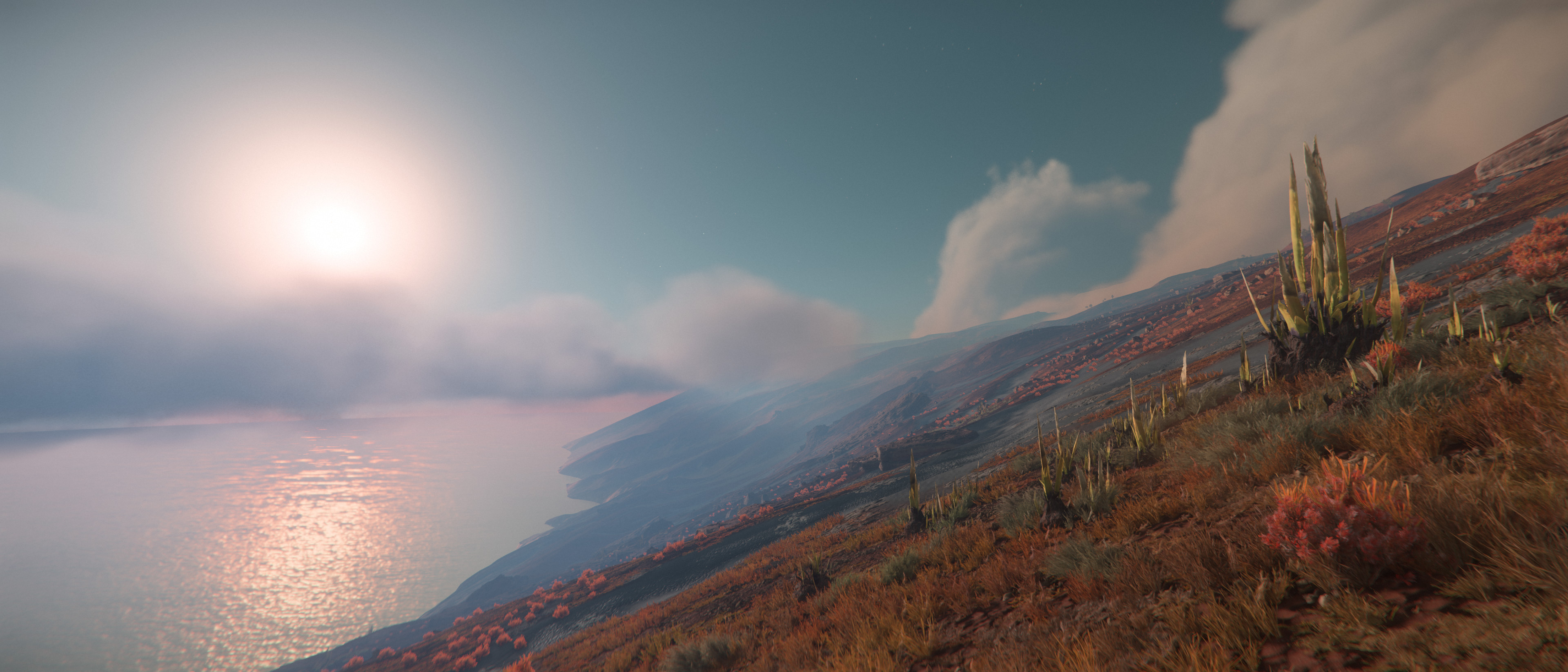
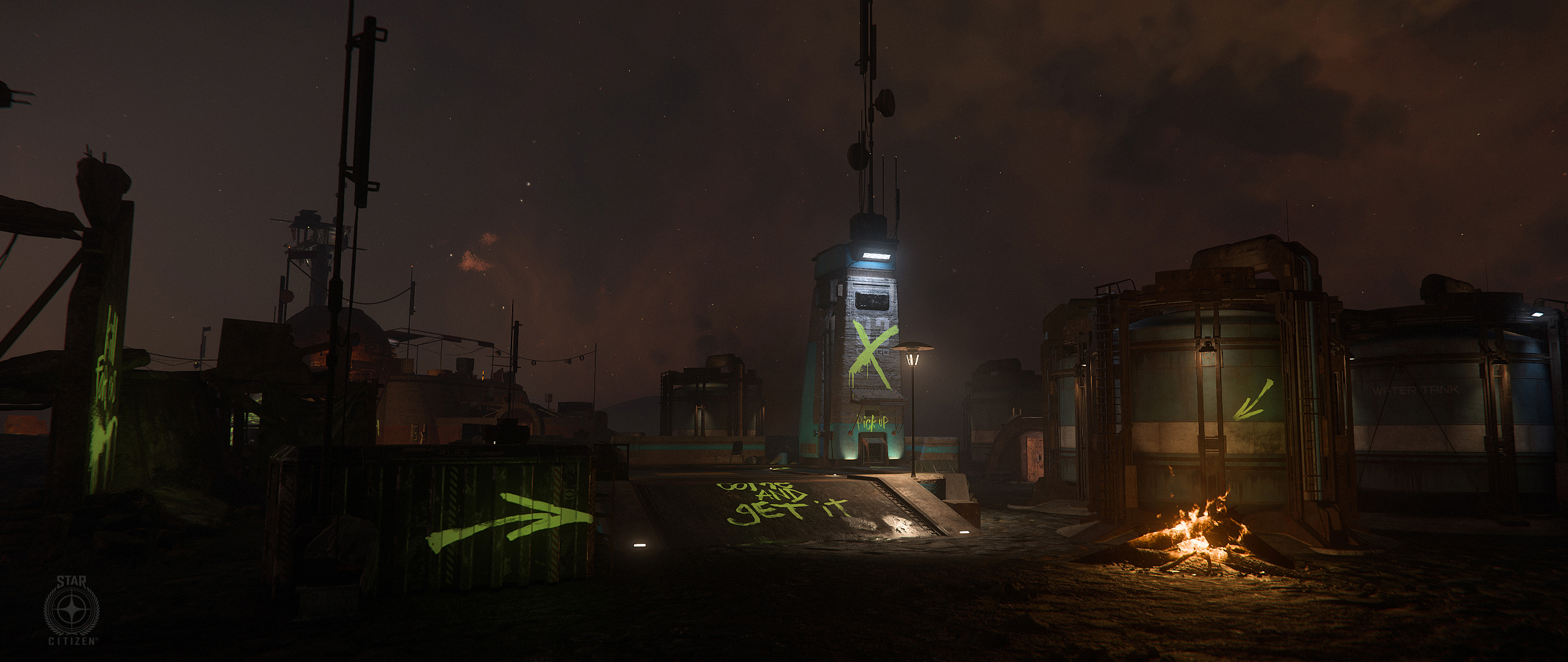
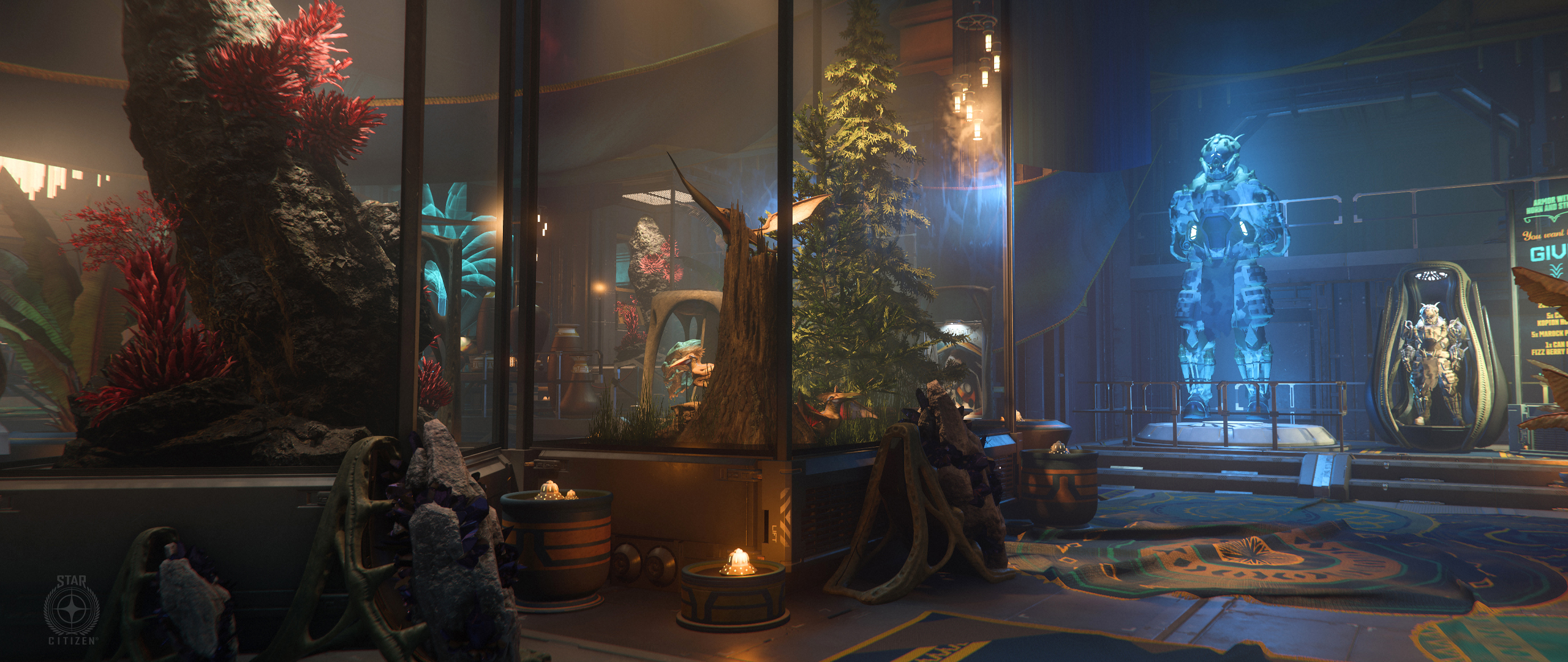
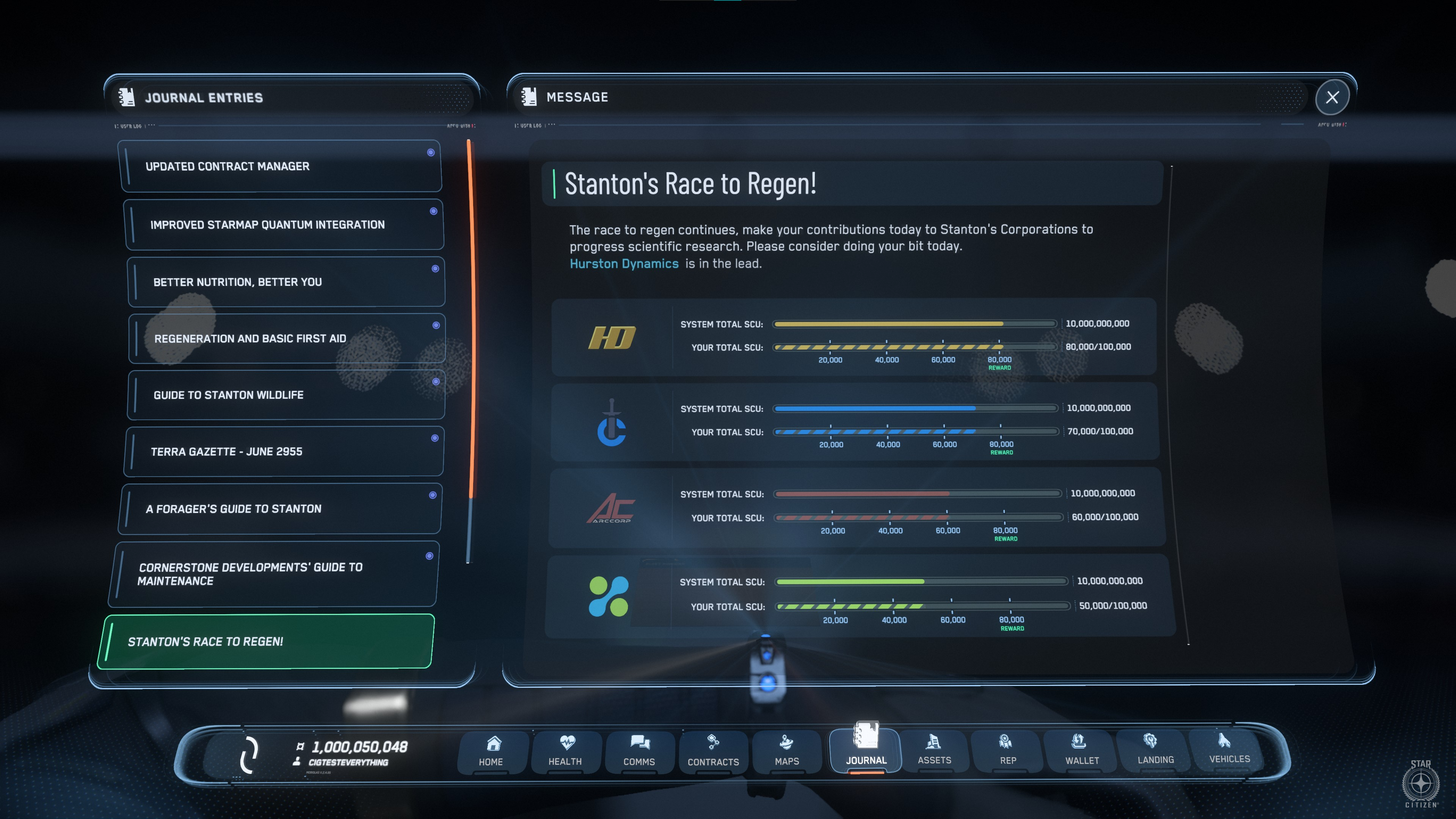
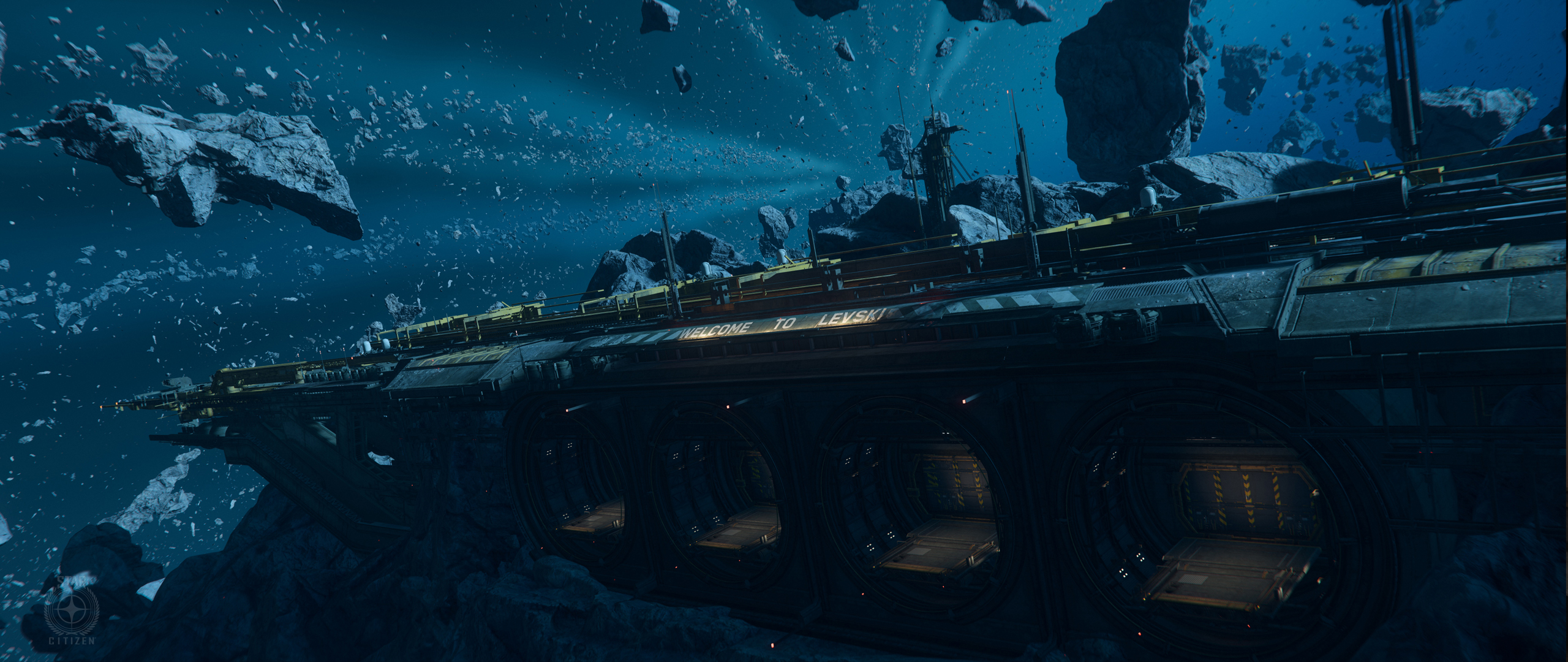
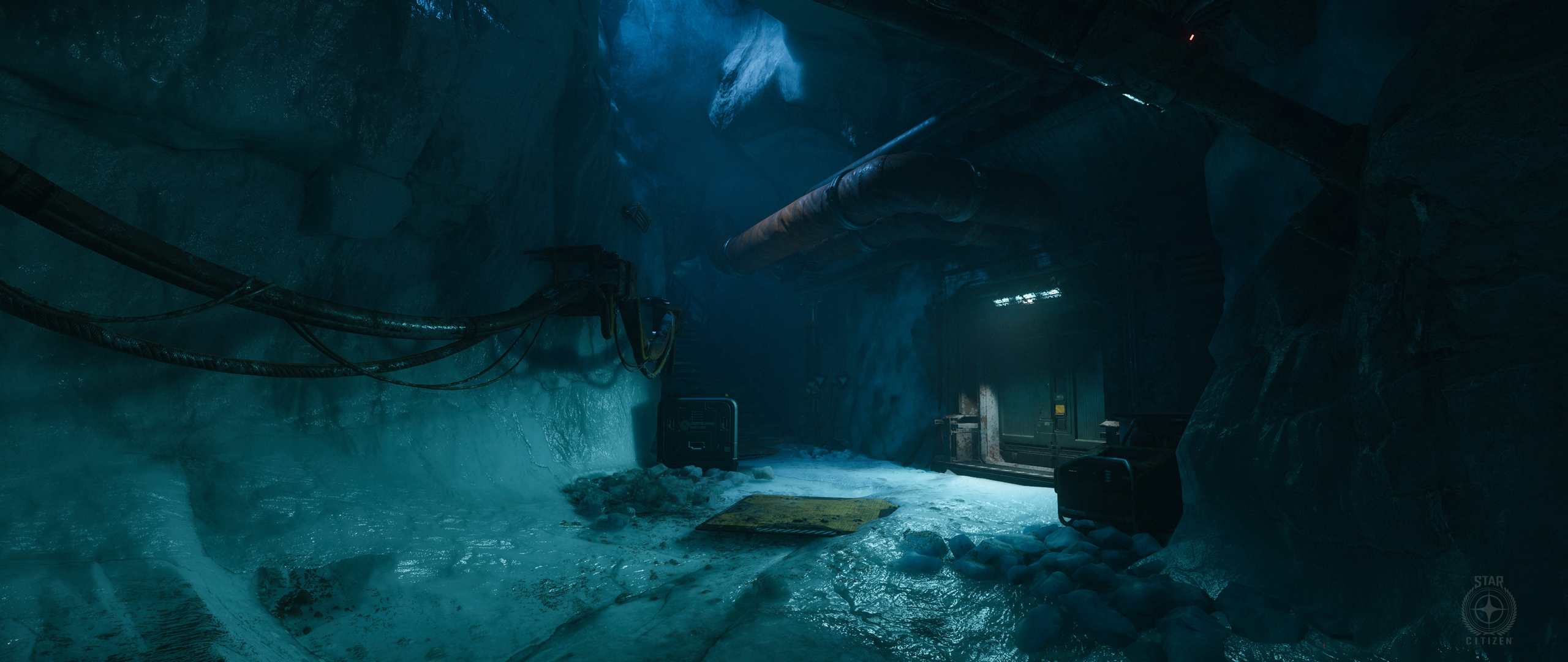
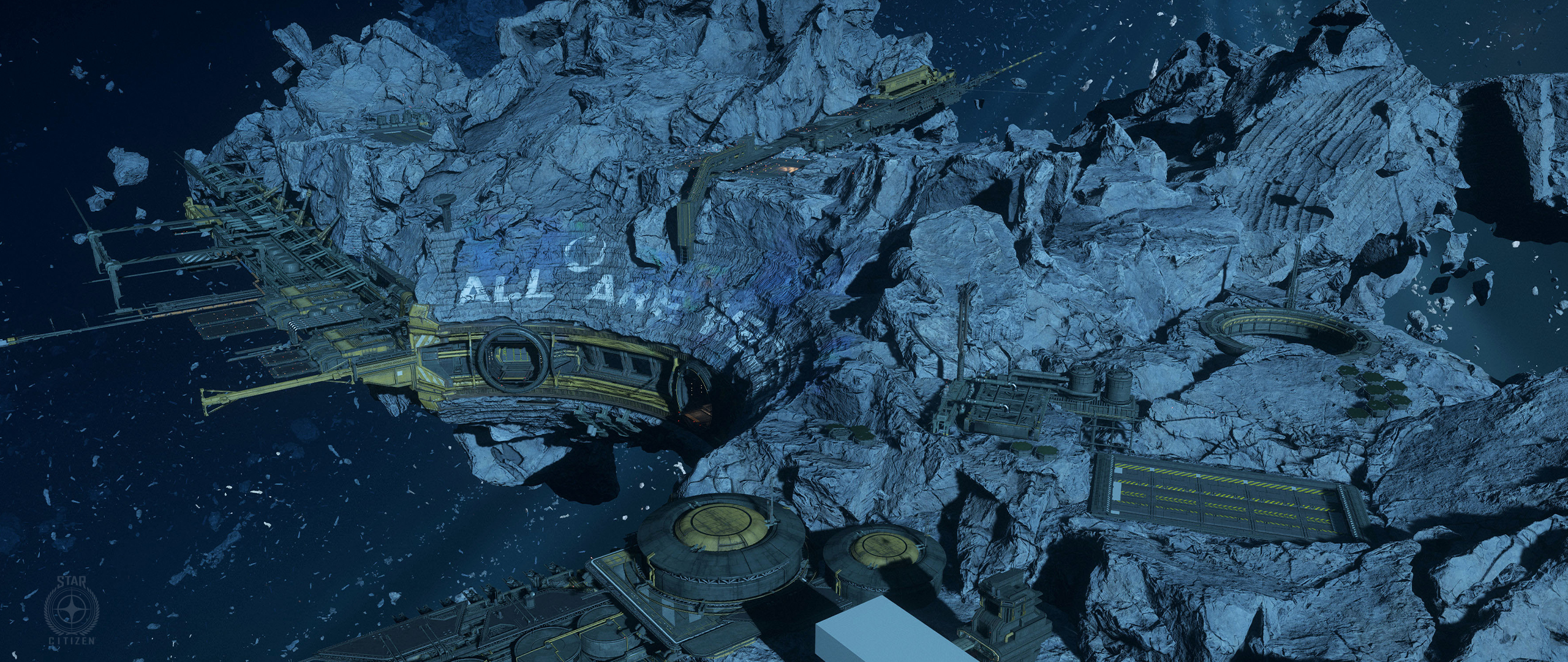
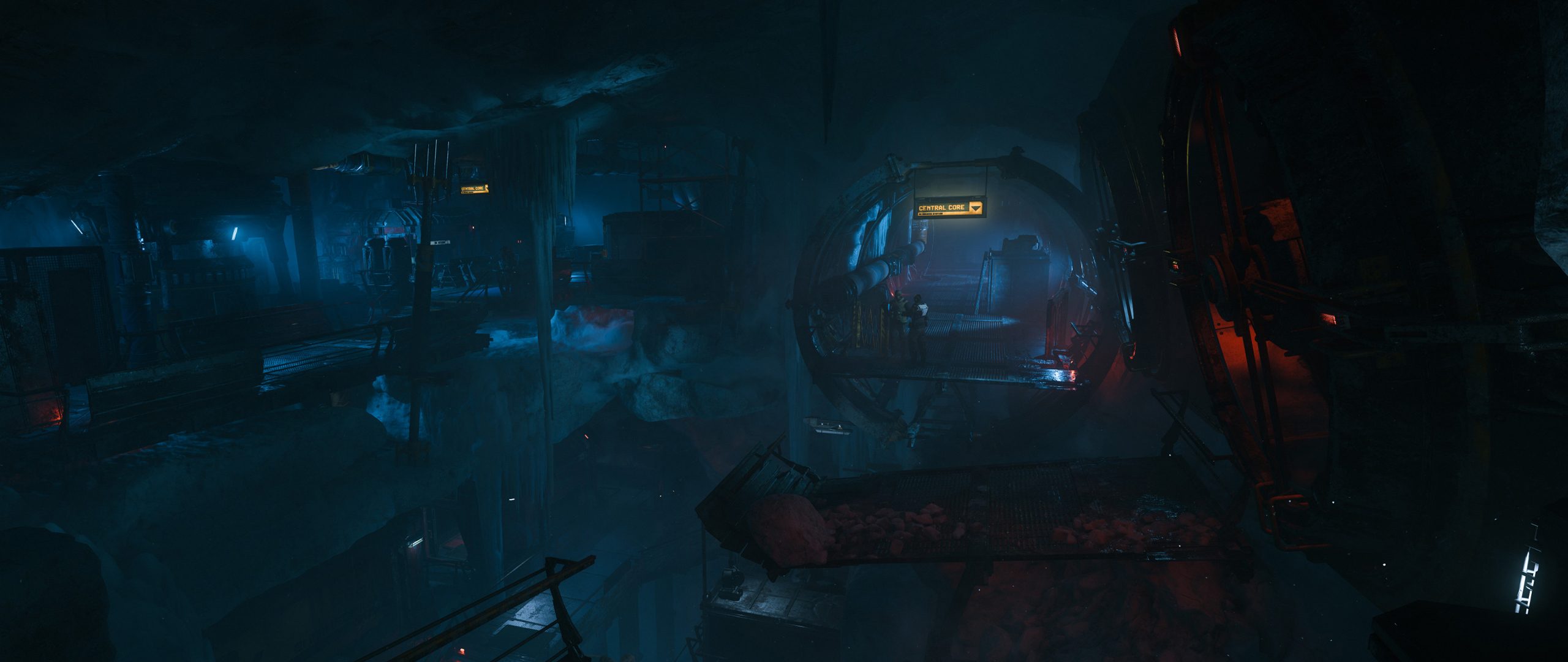
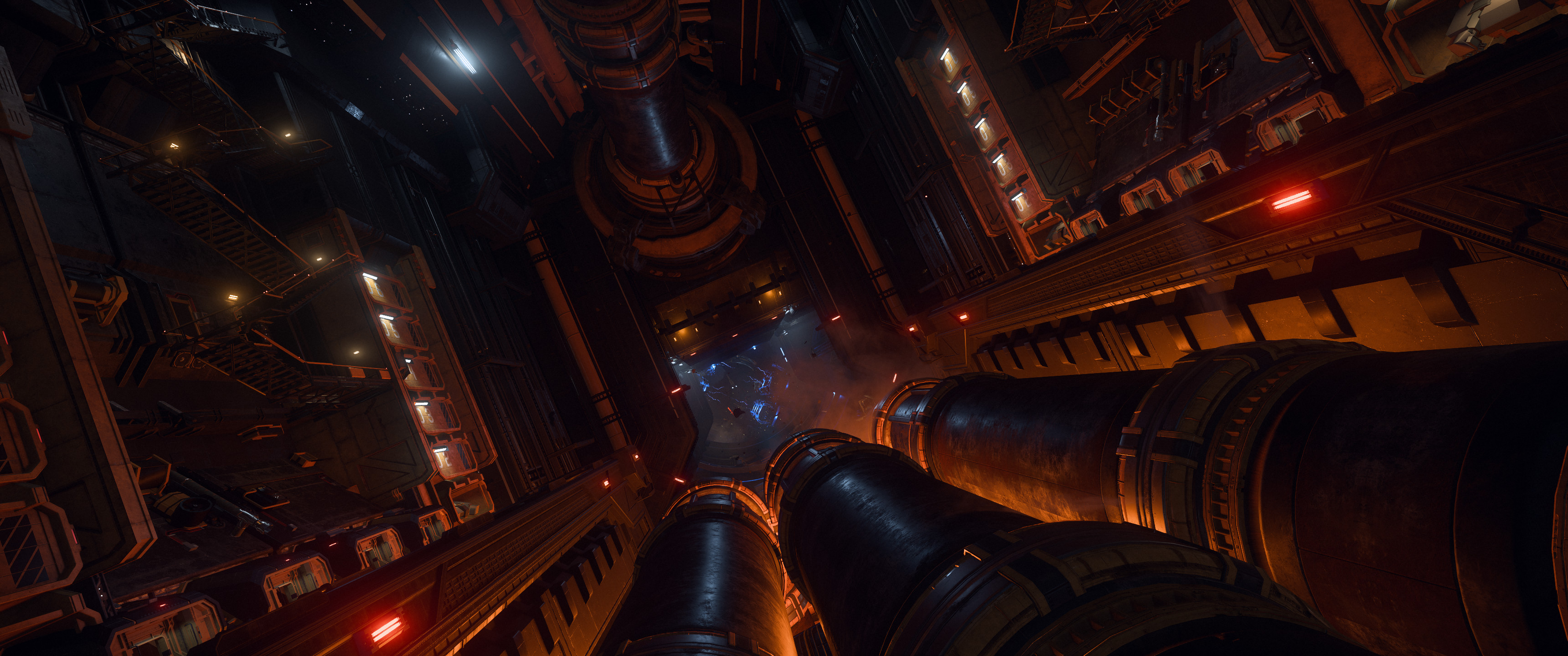
Metadata
- CIG ID
- 17180
- Channel
- Transmission
- Category
- Undefined
- Series
- Monthly Reports
- Comments
- 27
- Published
- 7 years ago (2019-08-07T00:00:00+00:00)