Galactic Guide: Hadrian System
Spectrum Dispatch Undefined News UpdateContent
This Galactic Guide originally appeared in Jump Point 5.4.
A Rocky Beginning
No place may be a stronger reminder of just how much the Empire has changed since the fall of the Messer regime than the Hadrian system. Once commonly referred to as a ‘No Man’s Land’ for its role in the cold war, today the rapidly changing system has become a bastion of trade between the Empire and our Xi’an neighbors.
Anchored by a red giant, the three-planet system was first discovered in 2510 through its connection with Pyro. Although the jump point was uncovered by a Pyrotechnic Amalgamated scan crew, the company, already stretched thin by its recent investments in Pyro, decided to forgo any claims on the nearly uninhabitable solar system in exchange for the influx of capital that the sale of the discovery would bring. Likewise, with its focus mainly on finding worlds to terraform for settlement, the UNE showed little interest in pursuing an active role in the new system. Instead, the first wave of inhabitants would be those drawn by the resources waiting to be harvested from the asteroid belt circling between the second and third worlds. As the mining population slowly grew, small stations were built to cater to their needs and provide housing for the new influx of support workers that came as well. However, the system’s growth was to be short lived.
A Dangerous Connection
While the discovery of a jump point in 2539 to what would become known as Gurzil opened up more economic opportunities, the arrival of a Xi’an scout ship in 2542 would lead the UPE military to cordon off both systems from civilian use. Shortly after, the Perry Line was formally created and the system began its transition into a militarized zone.
Note that though it was originally named the Nivelin System, after Pyrotechnic Amalgamated founder Tromo Nivelin, the UPE switched to the military designation Hadrian in reference to the legendary defensive wall used by the Ancient Earth civilization of Rome. This was fitting since military strategists concluded that if Gurzil was to be the front line in a Xi’an war with Humanity, Hadrian would become a barrier system to stop any Xi’an incursions from penetrating further into UPE-controlled space. Fortifications began to be constructed near known jump points, and additional resources were poured into discovering any possible unknown connections with other Xi’an systems. While no direct connection with Xi’an space has yet been found, Hadrian was revealed to be connected to other border systems such as Oya, Castra and Kiel, which increased its strategic importance. In addition, Hadrian received a huge influx of resources once a direct jump to Terra was discovered. Eager to protect this rapidly growing system, the military decided that more drastic defenses were needed and considerable efforts were put into creating a vast minefield throughout the system as an additional deterrent.
For the next two hundred and fifty years, Hadrian system would remain a labyrinthine maze of mines and fortified outposts bristling with rapid-launch defenses, all in preparation for a Xi’an attack that would never come. In 2793 the Perry Line Treaty was signed and with the cold war officially at an end, Hadrian was rapidly demilitarized and civilians were once again permitted access to the system. Despite that, the original mining boom that had first sparked interest in Hadrian was no longer an option for economic development. While large swaths of mines were removed as the military pulled back resources, other areas, such as the asteroid belt, were deemed too dangerous to clear and instead were marked with warning beacons. Yet though its primary industry was ended because of Hadrian’s proximity to Xi’an space, it would also receive a fresh start because of it.
A Fresh Start
As the 29th century drew to a close, relations with the Xi’an had finally thawed enough that trade was beginning to blossom between our two species. Hadrian became a natural stop for goods and commodities moving from Terra and the rest of the Empire into Xi’an space. It had good infrastructure in place for refueling, restocking and repairs, thanks to the former military installations built into the system, and even though they made travel difficult, the mines throughout the system also made it hard for outlaws to gain purchase, since ships had to take very specific, well-guarded routes through the system. These clear travel lanes also created an ideal situation for the UEE to establish customs scan stations to help control the flow of goods from the Xi’an. They can easily monitor ships arriving from the border since most prefer to pay the import taxes owed than risk flying along unmarked routes.
As trade increased, so too did the stations that catered to the haulers that were moving goods through the system. The largest of these stations, the flotilla known as Kedsu Reef, has grown in the last decade to become one of the busier xeno-trade hubs in the Empire. Now, with the proposed Human-Xi’an Trade Initiative being decided upon by the Senate and the growing industrialized Xi’an system of Rhilah only a jump from neighboring Gurzil, Hadrian is primed to grow even more.
Hadrian I & II
Both of the two inner planets of the system are gas giants. Hadrian I has a rocky core beneath its tempestuous atmosphere, while the bright blue atmosphere surrounding Hadrian II is calm in comparison. Once the military began to permit civilians access to the system, gas collection and refining at Hadrian II represented the majority of the credits earned in Hadrian until trade income eclipsed it later in the century.
Kedsu Reef
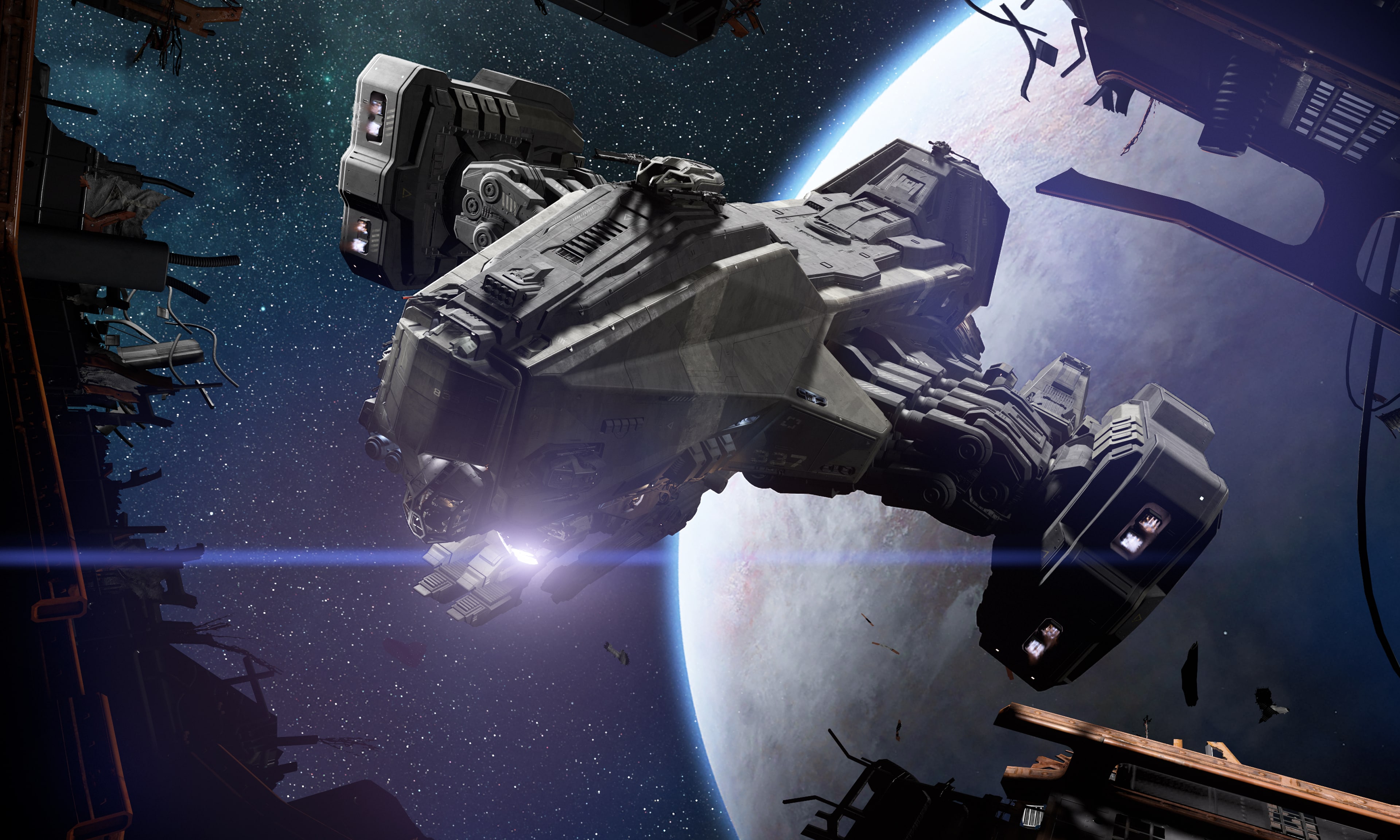
Many of the former military stations positioned along the major trade routes were quickly purchased and retrofitted to serve the transports crossing the system. However, there were still numerous stations located elsewhere in Hadrian that remained for the most part abandoned, owing to the fact that they saw little traffic or were in sectors dangerous to traverse. Where most people saw these floating husks as mere derelicts, one enterprising trader saw opportunity.
Delilah Havers had the misfortune of being captured by slavers when she was a teenager. Sold at market, she was purchased by a Banu trade-souli who put her to work as a translator. Fortunately, owing to the Banu practice of allowing indentured servants to earn their freedom, Delilah was able to liberate herself by the time she was thirty. Having become apt at negotiations after working closely with her souli, she continued working as an independent trader and was able to amass a small fortune. In 2881, while making a run through the system, an idea struck her as she flew past an abandoned station — all of these derelicts would make the perfect platforms from which to build a Banu-style flotilla. Home to some of the biggest markets in Banu space, flotillas traditionally grow organically as various ships and stations are lashed together at trade hubs. Rather than let it happen on its own (as the Banu would), Delilah purchased several derelict stations and had them transported into position to form the nucleus of a flotilla. By doing this she was able to create a single service center capable of handling multiple large transport vessels and their crews at the same time, but for significantly less than the cost of building such a station from scratch. She named the flotilla Kedsu, the Banu word for reef, since the structure reminded her of the underwater formations she explored as a child on Goss. Commonly though, it has come to be known by the misnomer “Kedsu Reef.”
Since more traders could do business here at the same time than anywhere else in the system, it was no surprise that Kedsu Reef became a very popular destination. Home to the largest permanent population in Hadrian, its Kedsu Reef markets and bazaars stock goods from all over Human, Xi’an and even Banu space. Every day, huge quantities of commodities and credits are negotiated and traded. But with habitats for rent and numerous dining and entertainment wings, even if you’re not looking to trade, Kedsu is still very much worth the visit. Today, Kedsu Reef has continued to grow and more pieces are frequently added, further expanding the station. The popular spot has even spawned a small neighborhood of competing stations looking to take advantage of the steady flow of ships.
Hadrian Belt Alpha
Though still abundant with resources, the majority of this asteroid belt remains untouched thanks to the undetonated anti-ship mines that remain from the cold war era. It is true that there are some brave souls willing to take the risk for the chance to earn the credits that harvesting the ore would bring, but most will only visit the belt as they traverse along one of the designated safe flight lanes.
Hadrian III
Out where it orbits in the distant reaches of the system, the ice giant Hadrian III has a permanent dark storm cloud that stands out in stark contrast to its otherwise pale color. This dramatic appearance earned the planet the nickname “the Watcher,” as it seems to be keeping a careful eye over the rest of Hadrian.
TRAVEL WARNING
Despite the abundance of beacons warning about the hazards of mines, dozen of ships are still lost every year when they leave the safety of the designated flight lanes.
HEARD IN THE WIND
“From the softest sheets, to the freshest beef, nobody matches Kedsu Reef!”
– Commercial jingle for the flotilla, 2938
“I dare them to come.”
– Attributed to Navy Admiral Les Holstein, in supposed response to a Senator asking if the forces of Hadrian were prepared for a Xi’an incursion, 27th Century
Dieser Galaktische Führer erschien ursprünglich in Jump Point 5.4.
Ein felsiger Anfang
Kein Ort kann eine stärkere Erinnerung daran sein, wie sehr sich das Imperium seit dem Fall des Messer-Regimes verändert hat als das Hadrian-System. Einst wegen seiner Rolle im Kalten Krieg allgemein als "Niemandsland" bezeichnet, ist das sich schnell verändernde System heute zu einer Bastion des Handels zwischen dem Reich und unseren Nachbarn in Xi'an geworden.
Verankert von einem roten Riesen, wurde das Drei-Planeten-System erstmals 2510 durch seine Verbindung mit Pyro entdeckt. Obwohl der Sprungpunkt von einer pyrotechnischen Amalgam-Scan-Crew aufgedeckt wurde, entschied sich das Unternehmen, das durch seine jüngsten Investitionen in Pyro bereits dünn besetzt war, auf jegliche Ansprüche an das fast unbewohnbare Sonnensystem zu verzichten und dafür den Kapitalzufluss zu erhalten, den der Verkauf der Entdeckung mit sich bringen würde. Ebenso zeigte die UNE, die sich hauptsächlich darauf konzentrierte, Welten zu finden, die sich zur Besiedlung eignen, wenig Interesse daran, eine aktive Rolle im neuen System zu übernehmen. Stattdessen wäre die erste Welle der Bewohner diejenigen, die von den Ressourcen angezogen werden, die darauf warten, aus dem Asteroidengürtel geerntet zu werden, der zwischen der zweiten und dritten Welt kreist. Als die Bergbaubevölkerung langsam wuchs, wurden kleine Stationen gebaut, um ihren Bedürfnissen gerecht zu werden und Unterkunft für den neuen Zustrom von Hilfsarbeitern zu schaffen, der ebenfalls kam. Das Wachstum des Systems sollte jedoch nur von kurzer Dauer sein.
Eine gefährliche Verbindung
Während die Entdeckung eines Sprungpunktes im Jahr 2539 zu dem, was als Gurzil bekannt wurde, weitere wirtschaftliche Möglichkeiten eröffnete, würde die Ankunft eines Xi'an-Scout-Schiffes im Jahr 2542 das UPE-Militär dazu veranlassen, beide Systeme von der zivilen Nutzung abzuschotten. Kurz darauf wurde die Perry-Linie formal geschaffen und das System begann seinen Übergang in eine militarisierte Zone.
Es ist zu beachten, dass die UPE, obwohl sie ursprünglich als Nivelin-System bezeichnet wurde, nach dem pyrotechnischen Amalgam-Gründer Tromo Nivelin zur militärischen Bezeichnung Hadrian überging, in Bezug auf die legendäre Verteidigungsmauer, die von der antiken Erdzivilisation Roms benutzt wurde. Dies war passend, da Militärstrategen zu dem Schluss kamen, dass, wenn Gurzil die Frontlinie in einem Xi'an-Krieg mit der Menschheit sein sollte, Hadrian zu einem Barrierensystem werden würde, um zu verhindern, dass alle Xi'an-Einfälle weiter in den von der UPE kontrollierten Raum vordringen. Es wurde damit begonnen, Befestigungen in der Nähe bekannter Sprungbretter zu errichten, und es wurden zusätzliche Ressourcen aufgewendet, um mögliche unbekannte Verbindungen mit anderen Xi'an-Systemen zu entdecken. Obwohl noch keine direkte Verbindung zum Xi'an-Raum gefunden wurde, zeigte sich, dass Hadrian mit anderen Grenzsystemen wie Oya, Castra und Kiel verbunden war, was seine strategische Bedeutung erhöhte. Darüber hinaus erhielt Hadrian einen enormen Zufluss an Ressourcen, nachdem ein direkter Sprung nach Terra entdeckt wurde. Das Militär, das dieses schnell wachsende System schützen wollte, entschied, dass drastischere Verteidigungsmaßnahmen erforderlich waren und erhebliche Anstrengungen unternommen wurden, um ein riesiges Minenfeld im gesamten System als zusätzliches Abschreckungsmittel zu schaffen.
Für die nächsten zweihundertfünfzig Jahre würde das Hadrian-System ein labyrinthisches Labyrinth von Minen und befestigten Außenposten bleiben, die mit Schnellstartverteidigungen übersät sind, alles in Vorbereitung auf einen Xi'an-Angriff, der nie kommen würde. 2793 wurde der Perry-Line-Vertrag unterzeichnet und mit dem Ende des Kalten Krieges wurde Hadrian schnell entmilitarisiert und Zivilisten wieder Zugang zum System gewährt. Dennoch war der ursprüngliche Bergbauboom, der zuerst das Interesse an Hadrian geweckt hatte, keine Option mehr für die wirtschaftliche Entwicklung. Während große Minenschwaden entfernt wurden, als das Militär Ressourcen zurückzog, wurden andere Bereiche, wie der Asteroidengürtel, als zu gefährlich erachtet, um sie zu räumen, und stattdessen mit Warnbaken markiert. Doch obwohl ihre Grundstoffindustrie wegen Hadrians Nähe zum Xi'an-Raum beendet wurde, würde sie dadurch auch einen Neuanfang erhalten.
Ein Neuanfang
Als sich das 29. Jahrhundert dem Ende zuneigte, hatten die Beziehungen zu den Xi'an endlich so weit aufgetaut, dass der Handel zwischen unseren beiden Arten zu blühen begann. Hadrian wurde zu einem natürlichen Halt für Waren und Gebrauchsgegenstände, die von Terra und dem Rest des Reiches in den Raum Xi'an wanderten. Dank der in das System eingebauten ehemaligen militärischen Einrichtungen verfügte sie über eine gute Infrastruktur für das Betanken, Auffüllen und Reparieren, und obwohl sie das Reisen erschwerten, erschwerten die Minen im gesamten System auch den Kauf durch Gesetzlose, da die Schiffe sehr spezifische, gut bewachte Routen durch das System nehmen mussten. Diese klaren Fahrspuren bildeten auch eine ideale Situation für die UEE, um Zollscanstationen einzurichten, die helfen, den Warenfluss aus dem Xi'an zu kontrollieren. Sie können Schiffe, die von der Grenze kommen, leicht überwachen, da die meisten lieber die geschuldeten Einfuhrsteuern zahlen als Gefahr laufen, auf unmarkierten Routen zu fliegen.
Mit zunehmendem Handel wuchsen auch die Stationen, die sich um die Spediteure kümmerten, die Waren durch das System transportierten. Die größte dieser Stationen, die als Kedsu Reef bekannte Flottille, ist in den letzten zehn Jahren zu einem der geschäftigsten Xeno-Handelszentren im Imperium geworden. Jetzt, da die vorgeschlagene Human-Xi'an Handelsinitiative vom Senat beschlossen wird und das wachsende industrialisierte Xi'an-System von Rhilah nur einen Sprung vom benachbarten Gurzil entfernt ist, wird Hadrian darauf vorbereitet, noch mehr zu wachsen.
Hadrian I & II
Die beiden inneren Planeten des Systems sind beide Gasriesen. Hadrian I hat einen felsigen Kern unter seiner stürmischen Atmosphäre, während die hellblaue Atmosphäre um Hadrian II im Vergleich dazu ruhig ist. Sobald das Militär begann, Zivilisten den Zugang zum System zu ermöglichen, stellte die Gassammlung und -raffination bei Hadrian II. die Mehrheit der in Hadrian verdienten Kredite dar, bis das Handelseinkommen es später im Jahrhundert überlagerte.
Kedsu Riff
Viele der ehemaligen Militärstationen, die sich entlang der Haupthandelsrouten befanden, wurden schnell gekauft und für die Transporte über das System nachgerüstet. Allerdings gab es in Hadrian noch zahlreiche Stationen an anderer Stelle, die größtenteils verlassen blieben, da sie wenig Verkehr sahen oder sich in Bereichen befanden, die gefährlich zu durchqueren sind. Wo die meisten Menschen diese schwimmenden Hülsen als bloße Versäumnisse betrachteten, sah ein unternehmungslustiger Händler die Möglichkeit.
Delilah Havers hatte das Pech, als sie ein Teenager war, von Sklavenhändlern gefangen genommen zu werden. Auf dem Markt verkauft, wurde sie von einem Banu trade-souli gekauft, der sie als Übersetzerin einsetzte. Glücklicherweise konnte sich Delilah dank der Banu-Praxis, vertraglich gebundene Diener ihre Freiheit verdienen zu lassen, mit dreißig Jahren befreien. Nachdem sie nach enger Zusammenarbeit mit ihren Souli verhandlungssicher geworden war, arbeitete sie weiterhin als selbständige Kauffrau und konnte ein kleines Vermögen aufbauen. Im Jahr 2881, als sie einen Lauf durch das System machte, kam ihr eine Idee, als sie an einer verlassenen Station vorbeiflog - all diese Verwüstungen wären die perfekten Plattformen, um eine Flottille im Banu-Stil zu bauen. Flottillen, die einige der größten Märkte im Raum Banu beherbergen, wachsen traditionell organisch, da verschiedene Schiffe und Stationen an Handelszentren zusammengeschlossen sind. Anstatt es für sich allein geschehen zu lassen (wie es die Banu tun würden), kaufte Delilah mehrere verfallene Stationen und ließ sie in Position bringen, um den Kern einer Flottille zu bilden. Auf diese Weise konnte sie ein einziges Servicezentrum schaffen, das in der Lage ist, mehrere große Transportschiffe und deren Besatzungen gleichzeitig zu bedienen, jedoch deutlich weniger als die Kosten für den Bau einer solchen Station von Grund auf. Sie nannte die Flottille Kedsu, das Banu-Wort für Riff, da die Struktur sie an die Unterwasserformationen erinnerte, die sie als Kind auf Goss erkundete. Im Allgemeinen ist es jedoch unter dem falschen Namen "Kedsu Reef" bekannt geworden.
Da hier mehr Händler gleichzeitig Geschäfte tätigen konnten als anderswo im System, war es nicht verwunderlich, dass das Kedsu Reef zu einem sehr beliebten Ziel wurde. Die Kedsu Reef-Märkte und Basare beherbergen die größte ständige Bevölkerung in Hadrian und bieten Waren aus dem gesamten menschlichen, Xi'an- und sogar Banu-Raum. Jeden Tag werden große Mengen an Rohstoffen und Krediten verhandelt und gehandelt. Aber mit gemieteten Lebensräumen und zahlreichen Ess- und Unterhaltungsflügeln, auch wenn Sie nicht handeln wollen, ist Kedsu immer noch sehr sehenswert. Heute ist das Kedsu Reef weiter gewachsen und es werden immer mehr Stücke hinzugefügt, was die Station weiter ausbaut. Der beliebte Ort hat sogar eine kleine Nachbarschaft von konkurrierenden Stationen hervorgebracht, die versuchen, den stetigen Fluss der Schiffe zu nutzen.
Hadrian Belt Alpha
Obwohl noch reich an Ressourcen, bleibt der größte Teil dieses Asteroidengürtels dank der nichtetonierten Anti-Schiffsminen, die aus der Zeit des Kalten Krieges stammen, unberührt. Es ist wahr, dass es einige mutige Seelen gibt, die bereit sind, das Risiko einzugehen, die Credits zu verdienen, die die Ernte des Erzes bringen würde, aber die meisten werden nur den Gürtel besuchen, wenn sie auf einer der vorgesehenen sicheren Flugrouten unterwegs sind.
Hadrian III
Der Eisriese Hadrian III hat eine permanente dunkle Sturmwolke, die sich im starken Kontrast zu seiner sonst blassen Farbe abhebt. Diese dramatische Erscheinung brachte dem Planeten den Spitznamen "der Beobachter" ein, da er den Rest von Hadrian im Auge zu behalten scheint.
REISEWARNUNG
Trotz der Fülle von Baken, die vor den Gefahren von Minen warnen, gehen immer noch jedes Jahr Dutzende von Schiffen verloren, wenn sie die Sicherheit der vorgesehenen Flugrouten verlassen.
IM WIND GEHÖRT
"Von den weichsten Laken bis zum frischesten Rindfleisch, niemand passt zu Kedsu Reef!"
- Werbesong für die Flottille, 2938
"Ich wage es, dass sie kommen."
- Dem Marineinadmiral Les Holstein zugeschrieben, in angeblicher Antwort auf die Frage eines Senators, ob die Streitkräfte von Hadrian auf einen Einfall in Xi'an vorbereitet seien, im 27. Jahrhundert.
This Galactic Guide originally appeared in Jump Point 5.4.
A Rocky Beginning
No place may be a stronger reminder of just how much the Empire has changed since the fall of the Messer regime than the Hadrian system. Once commonly referred to as a ‘No Man’s Land’ for its role in the cold war, today the rapidly changing system has become a bastion of trade between the Empire and our Xi’an neighbors.
Anchored by a red giant, the three-planet system was first discovered in 2510 through its connection with Pyro. Although the jump point was uncovered by a Pyrotechnic Amalgamated scan crew, the company, already stretched thin by its recent investments in Pyro, decided to forgo any claims on the nearly uninhabitable solar system in exchange for the influx of capital that the sale of the discovery would bring. Likewise, with its focus mainly on finding worlds to terraform for settlement, the UNE showed little interest in pursuing an active role in the new system. Instead, the first wave of inhabitants would be those drawn by the resources waiting to be harvested from the asteroid belt circling between the second and third worlds. As the mining population slowly grew, small stations were built to cater to their needs and provide housing for the new influx of support workers that came as well. However, the system’s growth was to be short lived.
A Dangerous Connection
While the discovery of a jump point in 2539 to what would become known as Gurzil opened up more economic opportunities, the arrival of a Xi’an scout ship in 2542 would lead the UPE military to cordon off both systems from civilian use. Shortly after, the Perry Line was formally created and the system began its transition into a militarized zone.
Note that though it was originally named the Nivelin System, after Pyrotechnic Amalgamated founder Tromo Nivelin, the UPE switched to the military designation Hadrian in reference to the legendary defensive wall used by the Ancient Earth civilization of Rome. This was fitting since military strategists concluded that if Gurzil was to be the front line in a Xi’an war with Humanity, Hadrian would become a barrier system to stop any Xi’an incursions from penetrating further into UPE-controlled space. Fortifications began to be constructed near known jump points, and additional resources were poured into discovering any possible unknown connections with other Xi’an systems. While no direct connection with Xi’an space has yet been found, Hadrian was revealed to be connected to other border systems such as Oya, Castra and Kiel, which increased its strategic importance. In addition, Hadrian received a huge influx of resources once a direct jump to Terra was discovered. Eager to protect this rapidly growing system, the military decided that more drastic defenses were needed and considerable efforts were put into creating a vast minefield throughout the system as an additional deterrent.
For the next two hundred and fifty years, Hadrian system would remain a labyrinthine maze of mines and fortified outposts bristling with rapid-launch defenses, all in preparation for a Xi’an attack that would never come. In 2793 the Perry Line Treaty was signed and with the cold war officially at an end, Hadrian was rapidly demilitarized and civilians were once again permitted access to the system. Despite that, the original mining boom that had first sparked interest in Hadrian was no longer an option for economic development. While large swaths of mines were removed as the military pulled back resources, other areas, such as the asteroid belt, were deemed too dangerous to clear and instead were marked with warning beacons. Yet though its primary industry was ended because of Hadrian’s proximity to Xi’an space, it would also receive a fresh start because of it.
A Fresh Start
As the 29th century drew to a close, relations with the Xi’an had finally thawed enough that trade was beginning to blossom between our two species. Hadrian became a natural stop for goods and commodities moving from Terra and the rest of the Empire into Xi’an space. It had good infrastructure in place for refueling, restocking and repairs, thanks to the former military installations built into the system, and even though they made travel difficult, the mines throughout the system also made it hard for outlaws to gain purchase, since ships had to take very specific, well-guarded routes through the system. These clear travel lanes also created an ideal situation for the UEE to establish customs scan stations to help control the flow of goods from the Xi’an. They can easily monitor ships arriving from the border since most prefer to pay the import taxes owed than risk flying along unmarked routes.
As trade increased, so too did the stations that catered to the haulers that were moving goods through the system. The largest of these stations, the flotilla known as Kedsu Reef, has grown in the last decade to become one of the busier xeno-trade hubs in the Empire. Now, with the proposed Human-Xi’an Trade Initiative being decided upon by the Senate and the growing industrialized Xi’an system of Rhilah only a jump from neighboring Gurzil, Hadrian is primed to grow even more.
Hadrian I & II
Both of the two inner planets of the system are gas giants. Hadrian I has a rocky core beneath its tempestuous atmosphere, while the bright blue atmosphere surrounding Hadrian II is calm in comparison. Once the military began to permit civilians access to the system, gas collection and refining at Hadrian II represented the majority of the credits earned in Hadrian until trade income eclipsed it later in the century.
Kedsu Reef
Many of the former military stations positioned along the major trade routes were quickly purchased and retrofitted to serve the transports crossing the system. However, there were still numerous stations located elsewhere in Hadrian that remained for the most part abandoned, owing to the fact that they saw little traffic or were in sectors dangerous to traverse. Where most people saw these floating husks as mere derelicts, one enterprising trader saw opportunity.
Delilah Havers had the misfortune of being captured by slavers when she was a teenager. Sold at market, she was purchased by a Banu trade-souli who put her to work as a translator. Fortunately, owing to the Banu practice of allowing indentured servants to earn their freedom, Delilah was able to liberate herself by the time she was thirty. Having become apt at negotiations after working closely with her souli, she continued working as an independent trader and was able to amass a small fortune. In 2881, while making a run through the system, an idea struck her as she flew past an abandoned station — all of these derelicts would make the perfect platforms from which to build a Banu-style flotilla. Home to some of the biggest markets in Banu space, flotillas traditionally grow organically as various ships and stations are lashed together at trade hubs. Rather than let it happen on its own (as the Banu would), Delilah purchased several derelict stations and had them transported into position to form the nucleus of a flotilla. By doing this she was able to create a single service center capable of handling multiple large transport vessels and their crews at the same time, but for significantly less than the cost of building such a station from scratch. She named the flotilla Kedsu, the Banu word for reef, since the structure reminded her of the underwater formations she explored as a child on Goss. Commonly though, it has come to be known by the misnomer “Kedsu Reef.”
Since more traders could do business here at the same time than anywhere else in the system, it was no surprise that Kedsu Reef became a very popular destination. Home to the largest permanent population in Hadrian, its Kedsu Reef markets and bazaars stock goods from all over Human, Xi’an and even Banu space. Every day, huge quantities of commodities and credits are negotiated and traded. But with habitats for rent and numerous dining and entertainment wings, even if you’re not looking to trade, Kedsu is still very much worth the visit. Today, Kedsu Reef has continued to grow and more pieces are frequently added, further expanding the station. The popular spot has even spawned a small neighborhood of competing stations looking to take advantage of the steady flow of ships.
Hadrian Belt Alpha
Though still abundant with resources, the majority of this asteroid belt remains untouched thanks to the undetonated anti-ship mines that remain from the cold war era. It is true that there are some brave souls willing to take the risk for the chance to earn the credits that harvesting the ore would bring, but most will only visit the belt as they traverse along one of the designated safe flight lanes.
Hadrian III
Out where it orbits in the distant reaches of the system, the ice giant Hadrian III has a permanent dark storm cloud that stands out in stark contrast to its otherwise pale color. This dramatic appearance earned the planet the nickname “the Watcher,” as it seems to be keeping a careful eye over the rest of Hadrian.
TRAVEL WARNING
Despite the abundance of beacons warning about the hazards of mines, dozen of ships are still lost every year when they leave the safety of the designated flight lanes.
HEARD IN THE WIND
“From the softest sheets, to the freshest beef, nobody matches Kedsu Reef!”
– Commercial jingle for the flotilla, 2938
“I dare them to come.”
– Attributed to Navy Admiral Les Holstein, in supposed response to a Senator asking if the forces of Hadrian were prepared for a Xi’an incursion, 27th Century
This Galactic Guide originally appeared in Jump Point 5.4.
A Rocky Beginning
No place may be a stronger reminder of just how much the Empire has changed since the fall of the Messer regime than the Hadrian system. Once commonly referred to as a ‘No Man’s Land’ for its role in the cold war, today the rapidly changing system has become a bastion of trade between the Empire and our Xi’an neighbors.
Anchored by a red giant, the three-planet system was first discovered in 2510 through its connection with Pyro. Although the jump point was uncovered by a Pyrotechnic Amalgamated scan crew, the company, already stretched thin by its recent investments in Pyro, decided to forgo any claims on the nearly uninhabitable solar system in exchange for the influx of capital that the sale of the discovery would bring. Likewise, with its focus mainly on finding worlds to terraform for settlement, the UNE showed little interest in pursuing an active role in the new system. Instead, the first wave of inhabitants would be those drawn by the resources waiting to be harvested from the asteroid belt circling between the second and third worlds. As the mining population slowly grew, small stations were built to cater to their needs and provide housing for the new influx of support workers that came as well. However, the system’s growth was to be short lived.
A Dangerous Connection
While the discovery of a jump point in 2539 to what would become known as Gurzil opened up more economic opportunities, the arrival of a Xi’an scout ship in 2542 would lead the UPE military to cordon off both systems from civilian use. Shortly after, the Perry Line was formally created and the system began its transition into a militarized zone.
Note that though it was originally named the Nivelin System, after Pyrotechnic Amalgamated founder Tromo Nivelin, the UPE switched to the military designation Hadrian in reference to the legendary defensive wall used by the Ancient Earth civilization of Rome. This was fitting since military strategists concluded that if Gurzil was to be the front line in a Xi’an war with Humanity, Hadrian would become a barrier system to stop any Xi’an incursions from penetrating further into UPE-controlled space. Fortifications began to be constructed near known jump points, and additional resources were poured into discovering any possible unknown connections with other Xi’an systems. While no direct connection with Xi’an space has yet been found, Hadrian was revealed to be connected to other border systems such as Oya, Castra and Kiel, which increased its strategic importance. In addition, Hadrian received a huge influx of resources once a direct jump to Terra was discovered. Eager to protect this rapidly growing system, the military decided that more drastic defenses were needed and considerable efforts were put into creating a vast minefield throughout the system as an additional deterrent.
For the next two hundred and fifty years, Hadrian system would remain a labyrinthine maze of mines and fortified outposts bristling with rapid-launch defenses, all in preparation for a Xi’an attack that would never come. In 2793 the Perry Line Treaty was signed and with the cold war officially at an end, Hadrian was rapidly demilitarized and civilians were once again permitted access to the system. Despite that, the original mining boom that had first sparked interest in Hadrian was no longer an option for economic development. While large swaths of mines were removed as the military pulled back resources, other areas, such as the asteroid belt, were deemed too dangerous to clear and instead were marked with warning beacons. Yet though its primary industry was ended because of Hadrian’s proximity to Xi’an space, it would also receive a fresh start because of it.
A Fresh Start
As the 29th century drew to a close, relations with the Xi’an had finally thawed enough that trade was beginning to blossom between our two species. Hadrian became a natural stop for goods and commodities moving from Terra and the rest of the Empire into Xi’an space. It had good infrastructure in place for refueling, restocking and repairs, thanks to the former military installations built into the system, and even though they made travel difficult, the mines throughout the system also made it hard for outlaws to gain purchase, since ships had to take very specific, well-guarded routes through the system. These clear travel lanes also created an ideal situation for the UEE to establish customs scan stations to help control the flow of goods from the Xi’an. They can easily monitor ships arriving from the border since most prefer to pay the import taxes owed than risk flying along unmarked routes.
As trade increased, so too did the stations that catered to the haulers that were moving goods through the system. The largest of these stations, the flotilla known as Kedsu Reef, has grown in the last decade to become one of the busier xeno-trade hubs in the Empire. Now, with the proposed Human-Xi’an Trade Initiative being decided upon by the Senate and the growing industrialized Xi’an system of Rhilah only a jump from neighboring Gurzil, Hadrian is primed to grow even more.
Hadrian I & II
Both of the two inner planets of the system are gas giants. Hadrian I has a rocky core beneath its tempestuous atmosphere, while the bright blue atmosphere surrounding Hadrian II is calm in comparison. Once the military began to permit civilians access to the system, gas collection and refining at Hadrian II represented the majority of the credits earned in Hadrian until trade income eclipsed it later in the century.
Kedsu Reef
Many of the former military stations positioned along the major trade routes were quickly purchased and retrofitted to serve the transports crossing the system. However, there were still numerous stations located elsewhere in Hadrian that remained for the most part abandoned, owing to the fact that they saw little traffic or were in sectors dangerous to traverse. Where most people saw these floating husks as mere derelicts, one enterprising trader saw opportunity.
Delilah Havers had the misfortune of being captured by slavers when she was a teenager. Sold at market, she was purchased by a Banu trade-souli who put her to work as a translator. Fortunately, owing to the Banu practice of allowing indentured servants to earn their freedom, Delilah was able to liberate herself by the time she was thirty. Having become apt at negotiations after working closely with her souli, she continued working as an independent trader and was able to amass a small fortune. In 2881, while making a run through the system, an idea struck her as she flew past an abandoned station — all of these derelicts would make the perfect platforms from which to build a Banu-style flotilla. Home to some of the biggest markets in Banu space, flotillas traditionally grow organically as various ships and stations are lashed together at trade hubs. Rather than let it happen on its own (as the Banu would), Delilah purchased several derelict stations and had them transported into position to form the nucleus of a flotilla. By doing this she was able to create a single service center capable of handling multiple large transport vessels and their crews at the same time, but for significantly less than the cost of building such a station from scratch. She named the flotilla Kedsu, the Banu word for reef, since the structure reminded her of the underwater formations she explored as a child on Goss. Commonly though, it has come to be known by the misnomer “Kedsu Reef.”
Since more traders could do business here at the same time than anywhere else in the system, it was no surprise that Kedsu Reef became a very popular destination. Home to the largest permanent population in Hadrian, its Kedsu Reef markets and bazaars stock goods from all over Human, Xi’an and even Banu space. Every day, huge quantities of commodities and credits are negotiated and traded. But with habitats for rent and numerous dining and entertainment wings, even if you’re not looking to trade, Kedsu is still very much worth the visit. Today, Kedsu Reef has continued to grow and more pieces are frequently added, further expanding the station. The popular spot has even spawned a small neighborhood of competing stations looking to take advantage of the steady flow of ships.
Hadrian Belt Alpha
Though still abundant with resources, the majority of this asteroid belt remains untouched thanks to the undetonated anti-ship mines that remain from the cold war era. It is true that there are some brave souls willing to take the risk for the chance to earn the credits that harvesting the ore would bring, but most will only visit the belt as they traverse along one of the designated safe flight lanes.
Hadrian III
Out where it orbits in the distant reaches of the system, the ice giant Hadrian III has a permanent dark storm cloud that stands out in stark contrast to its otherwise pale color. This dramatic appearance earned the planet the nickname “the Watcher,” as it seems to be keeping a careful eye over the rest of Hadrian.
TRAVEL WARNING
Despite the abundance of beacons warning about the hazards of mines, dozen of ships are still lost every year when they leave the safety of the designated flight lanes.
HEARD IN THE WIND
“From the softest sheets, to the freshest beef, nobody matches Kedsu Reef!”
– Commercial jingle for the flotilla, 2938
“I dare them to come.”
– Attributed to Navy Admiral Les Holstein, in supposed response to a Senator asking if the forces of Hadrian were prepared for a Xi’an incursion, 27th Century
Links
No links available.
Images
5


Metadata
- CIG ID
- 17193
- Channel
- Spectrum Dispatch
- Category
- Undefined
- Series
- News Update
- Comments
- 11
- Published
- 7 years ago (2019-08-14T00:00:00+00:00)