Squadron 42 Monthly Report: November & December 2019
Transmission Undefined Monthly ReportsContent
This is a cross-post of the report that was recently sent out via the monthly Squadron 42 newsletter. We’re publishing this a second time as a Comm-Link to make it easier for the community to reference back to. Attention Recruits,
What you are about to read is the latest information on the continuing development of Squadron 42 (SCI des: SQ42).
Operatives around the world collected the intel needed to provide you with this progress report. Through their efforts, we’ve uncovered information on AI improvements, a hefty debrief on cinematics, and an as-needed UI display element.
The information contained in this communication is extremely sensitive and it is of paramount importance that it does not fall into the wrong hands. Purge all records after reading.
UEE Naval High Command
AI
Ship AI had a busy couple of months working on NPC planetside traversal:
“Flying on the surface of a planet is definitely different from open space; the expectation is that ships fly straight at a level altitude and bank when steering to different headings.” -Ship AI
The first iteration involved creating a flight path suitable for the terrain height and local slope. The information generated is used to correct the path to ensure ships always have a specified minimal clearance to the terrain below while steering according to the inclination of the terrain. For example, a ship will favor a flight path through a valley rather than over a ridge. Hand-placed and procedurally generated objects (rocks, buildings, etc.) are not part of the terrain elevation information and are obtained by a different query. In the next iteration, the team will integrate this information so spaceships can adapt their flight paths accordingly.
The same considerations apply to in-atmosphere dogfighting. The prototype of this was shown during the recent CitizenCon playthrough, with three security ships engaging the fugitive Carrack. The team also experimented with a stunt maneuver to add flair and personality to AI behavior.
Work was also completed on Collision Avoidance. This system runs in the background during AI flight and provides steering correction if a collision is likely to happen within a given time horizon. In the current development version, the system considers the collision resolution of all piloted vehicles, vehicles without a pilot (abandoned vehicles, derelicts), static obstacles, and procedurally generated asteroids.
Recently, the system was heavily reworked to minimize its impact on performance. This included ensuring all vehicles and obstacles were organized in memory according to their current host zone to make the search for the surrounding participants faster. It also makes sure the collision avoidance update never gets an exclusive lock on the cached information when creating and processing individual AI collision problems. This is a critical aspect, as the updates of all AI entities run concurrently, so having an exclusive lock can heavily impact performance.
AI (Social)
The Social AI Team made several improvements to path following, including the ability to specify movement speed when following a path edge, add branching paths, wait at a path point continually playing any function until events have fired, trigger a random Subsumption function from a weighted list, and enable/disable Subsumption secondary activities when following a path edge.
Work also continued on the bartender, with the first iteration of mixing station tech added. This extends the character’s ability to not only pick up and serve items from the fridge, but to prepare new drinks at the mixing station. Several other small improvements were also made to make the overall experience smoother.
Finally for Social AI, the base idle system in the actor state machine was improved by moving all decision-making to the control state. This should make the whole system more robust and stable over the network, potentially avoiding the desync issues seen in the past as well as helping the team debug potential issues more efficiently. Further on the optimization, the usable caching has been updated to listen for tile-created events from navigation meshes.
AI (Character Combat)
The team’s primary focus over the past few months was on the overall player vs. NPC combat experience. This involved implementing new behavior tactics for shotgun-wielding NPCs, giving them the tactical choice to get much closer to the target than before to make proper use of the weapon. They also began improving vision perception so that the designers can more easily adjust the size of vision cones and how fast a target is perceived inside them.
They also made improvements to the system that generates cover location and usage to enable NPCs to choose to only partially cover themselves. Small optimizations were also made to AI hearing perception and specific designer movement requests.
Audio
The Audio Team worked on and reviewed all sound for chapter four, paying particular attention to the Idris, improving mark-up and SFX where required.
Cinematics
The pre-holiday period was a busy one for the Cinematics Team and included story scene implementation and production quality passes for the camera, staging, and lighting (most scenes received their third of four planned passes).
Alongside the usual pipeline tasks, they worked on upcoming tech developments, specifically enabling players to interrupt certain scenes and NPC conversations. They kicked this off by marking-up scenes with a number of interrupt points to indicate where a scene could stop and resume and considered how it would do so if the player doesn’t ‘behave’. The goal is to do this with minimal (or no) additional animation fragments.
Cinematics also tested new animation code from Engineering that will allow performance-captured scenes to work from other directions than they were intially directed for. For example, if the actor representing the player character approached a bridge officer from the right, this code allows the performance of the bridge officer to mirror in real-time should the player approach from a different angle. Most games either use a locomotion solution (where the NPC constantly turns to face the player via a systemic set of motions) or use rigid performance capture data that only works from a specific direction. This solution bridges that gap as much as possible. Of course, there are limitations; the team are currently testing the restrictions, performance implications, and the authenticity vs. player agency trade-off.
Cinematics also worked with Character Art and Engineering to elevate character quality to the final production level. Character Art are finalizing the bridge officer, using Executive Officer Sofia Kelly as the testbed for the new skin and hair. This led to the prioritization of scenes and where the character and camera move around a lot to test the temporal anti-aliasing (TSAA) stability.
Since last year, the TSAA solution has advanced considerably and now creates a highly stable final image that intelligently smooths harsh white pixels, such as specular flicker. However, it was also smoothing out carefully crafted character eye-lights. So, Engineering delivered a solution to ensure eye-light reflections in character eyeballs are not smoothed out and the bright dots are kept alive, which is vital to giving characters an additional flicker of life. Currently, characters as lit as if on a movie set, with something similar to a virtual dedolight employed to cast eye-light.
Another area that received a quality push was comms calls. Squadron 42 features real-time render-to-texture comm feeds from NPCs. So, if the player has a comms call with Old Man, the wing leader will actually be in his cockpit and ‘filmed live’ when responding. The team wanted to determine a ‘gold standard’ for key video comms partners the player will interact with, including their wing leader, air traffic control, and an Idris captain.
These comms calls have several steps: Figuring out where the camera that films the NPC would be located. For the best possible framing, they want to ground the camera as much as possible and avoid it floating in a seemingly magical way.
Lighting that area well while keeping it ‘cheap’ to avoid dozens of shadows and performance-affecting variables.
Setting interference FX, such as comms call line ‘open’ and ‘closed’.
On the animation side, this required R&D to figure out what to keep from the motion-captured cockpit performances (all actors were sitting down in cockpit mock-ups on set) and when to apply the piloting inverse kinematics to have the characters hold the throttle and flight stick. They’re still exploring whether they want g-force on those conversation partners on top of the actor performances.
Engineering
In the UK, the Actor Team began implementing the new personal inner thought system. This now-radial menu allows all player functionality to be accessed more easily than the current iteration (such as taking off a helmet or equipping weapons). It’s context sensitive too, so the options will change depending on the location or available actions. For example, in a cockpit, additional options such as exiting the seat or engaging landing gear become available. They also added a ‘favorites’ section for commonly used commands and enabled keyboard/button shortcuts to be assigned to any command.
Regarding melee combat, the team moved onto body dragging, starting with interacting with the body, repositioning it, and basic player movement. For actor status, they finished the temperature system and moved onto hunger and thirst, setting up the initial stats.
Over in Frankfurt, Engineering spent time in December and January on game physics. This including exposing a linear air and water resistance scale, making damping linear (and not step dependent), using the box pruner to accelerate tri-mesh collisions, and general optimization. Regarding attachment support, they moved boundary brushes and entities to the object container entity and added the ability to query for the attached points during a previous attachment. They also exposed the surface area on geometries and optimized loading times and calculations while verifying parts.
The team continued with the new graphics pipeline and render interface (Gen12), made robust changes to the Vulkan layer to prepare for use with scene objects, added PSO and layout cache, improved API validation, and ported tiled shading light volume rasterization to the new pipeline. They also continued the parallel refactor of existing render code in support of the new graphics pipeline and APIs and worked on the global render state removal and device texture code refactor.
For planet terrain shadows, multi-cascade and blending support was added to improve detail and range. This will also eliminate various existing shadow artifacts. Development continued on volumetric terrain shadow support for fog, with the teaming coming up with a multi-scattered ambient lighting solution that ties into unified raymarching.
Multi-scattering improvements via a specialized sky irradiance LUT was made to improve unified raymarching. Updates were made to the jittered lookup and TSAA to vastly improve quality and reduce the number of raymarching steps. They also made lighting consistent so that planet atmosphere affects ground fog layers and vice versa, experimented with ozone layer support in-atmosphere, and added support for scattering queries (transparent objects).
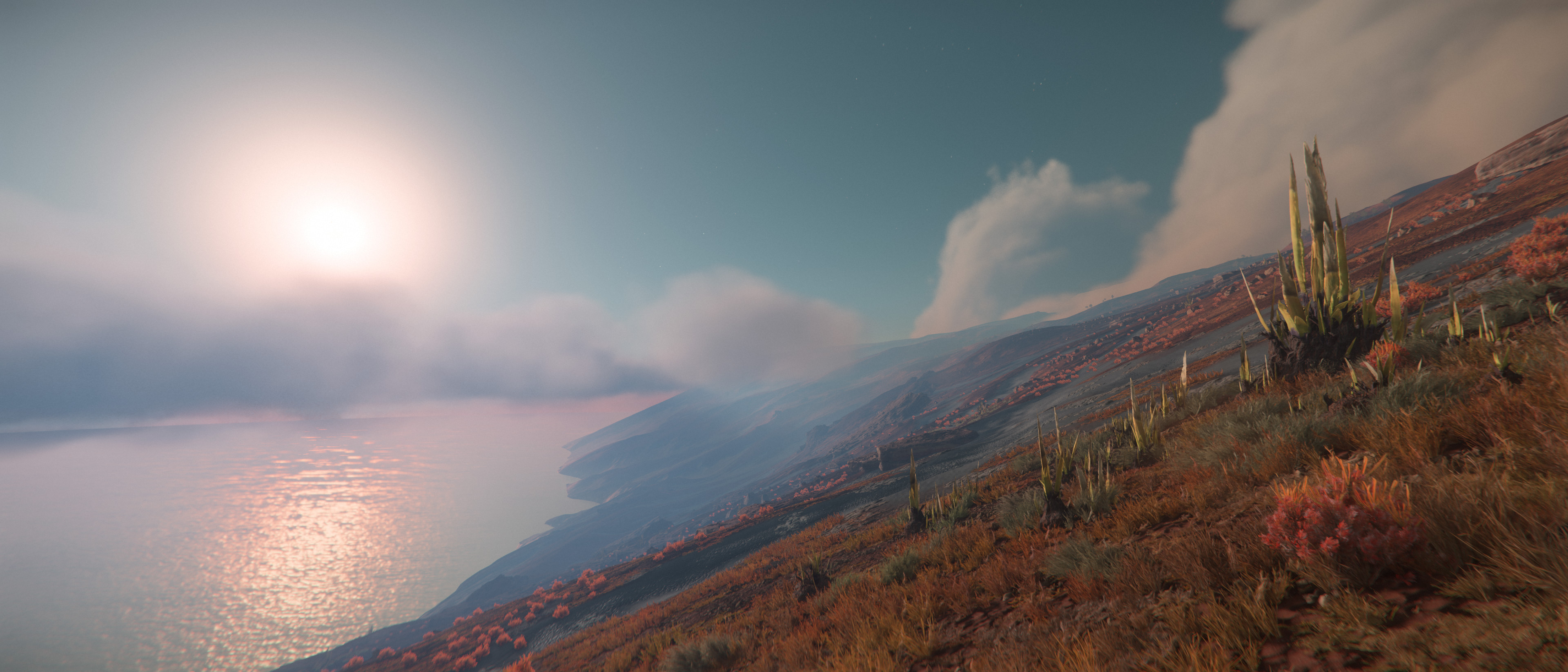
Finally, work continued on planetary clouds, ocean rendering, frozen oceans, and wind bending for static brushes.
Graphics
In the final weeks of 2019 the Graphics Team focused on stability, with great progress made on profiling and optimizing the renderer. This work will continue into the first quarter of 2020.
Level Design
The Social Team continued work on the narrative interactions, applying additional polish to the various scenes in the form of gestures, head turns, and eye-looks to make them appear as natural as possible. This ongoing process will take a while to complete as there are several hours of conversations throughout Squadron 42 that allow the player to feel a part of the world, rather than just a spectator.
The Level Design Team are focused on the FPS-heavy sections of the game, working alonside the various feature teams to make sure AI behavior is realistic in all encounters. The pre-combat behaviors were also worked on, such as patrolling, investigation, and reactions to audio attenuation on differing materials.
The space and dogfight teams progressed with the AI behaviors of specific types of ship. Combat maneuvers are constantly being iterated on, while AI awareness of its own ship emissions, remaining ordinance, component damage, etc. is in progress. The team are also delivering level prototypes for some of the ‘exotic’ gameplay puzzles specific to Squadron 42 that rely on underlying core mechanics.
Narrative
With CitizenCon wrapped up, the Narrative finished off the year focusing on SQ42. Alongside ongoing text requirements for mission objectives and UI, they reviewed progress on the various levels and synced with Design on the overall game experience. They also worked with the Animation Team to provide additional material for background NPC scenes. For example, they added moments where named characters interact with random NPCs to create additional character or story flavor.
QA
The QA Team provided dedicated tools support for the Cinematics Team. This mainly involved investigating various crashes from loading cutscene levels and DataCore issues within the editor roll-up bar. They also set up a new track view checklist to better maintain and test the editor. They’re planning to run these tests weekly and whenever a track-view-specific QA test is required. Finally for QA, cinematic client captures of different scene playthroughs for review by the designers and animators are ongoing and will continue into the new year.
Tech Animation
November and December saw Tech Animation rework Mannequin setups to clean up older usable iterations and address bugs. They worked with the animation and code teams on the updated bartender and implemented socket/attach point tech for props in Maya. They created multiple prop rigs for the usable and cinematics teams, including plates, trays, maintenance ladders, and ship turrets. Support was given to the Weapons Team along with new rigs, updates to older rigs, and in-engine bug fixes. The necessary rig additions for the new real digital acting tech were completed too.
New toolsets were authored to help visualize the complex engine-side attachment systems inside Maya. These assist the animators in their daily workflow and makes it infinitely easier to author props too. Development continued on the facial rigging pipelines; this lengthy initiative will ultimately yield great things when the team authors their own in-house face rigs compatible with the DNA systems. They also worked on the comms calls with Cinematics.
Tech Art
Frankfurt’s Tech Art Team worked closely with the UK’s Tech Animation on the design and implementation of the new runtime Rig Logic plugin for Maya. In contrast to previous hard-coded versions, the new plugin is entirely data-driven and utilizes so-called rig definition files that can be changed as needed without the assistance of an engine programmer. The removal of this bottleneck will give more creative freedom to the artists and significantly shorten iteration times. While the Maya runtime node is responsible for driving rigs based on facial and/or body animation, a bespoke command was also implemented. This allows the convenient querying and editing of all parts of the rig definition data and forms the foundation of the team’s new rigging pipeline and tools.
User Interface (UI)
The UI Team’s main SQ42 focus of the past couple of months was the actor status display. This is one of the first UI elements that will hide when not in use, meaning the screen isn’t cluttered with things players don’t need immediate knowledge of. They also continuing creating visual targets and concepts for the final looks of various UI elements, including the visor the player wears throughout much of the game and target selection. The logo for an important faction in the SQ42 narrative was completed too.
VFX
VFX continued to work with Art and Design to flesh out key locations and gameplay loops. This included revisiting some of the older effects and making use of the more recent GPU particle collision improvements. The artists also iterated on the workflow for gas clouds, with several improvements coming online to improve the overall process. WE’LL SEE YOU NEXT MONTH…
Dies ist ein Querverweis auf den Bericht, der kürzlich über den monatlichen Squadron 42-Newsletter verschickt wurde. Wir veröffentlichen dies ein zweites Mal als Comm-Link, um es der Gemeinschaft zu erleichtern, sich auf diese zu beziehen.
Achtung Rekruten,
Was Sie gleich lesen werden, sind die neuesten Informationen über die weitere Entwicklung der Staffel 42 (SCI des: SQ42).
Mitarbeiter in aller Welt haben die Informationen gesammelt, die Sie für diesen Fortschrittsbericht benötigen. Durch ihre Bemühungen haben wir Informationen über KI-Verbesserungen, eine umfangreiche Nachbesprechung über Kinematik und ein bedarfsorientiertes UI-Anzeigeelement aufgedeckt.
Die in dieser Mitteilung enthaltenen Informationen sind äußerst sensibel, und es ist von größter Wichtigkeit, dass sie nicht in die falschen Hände gelangen. Löschen Sie alle Datensätze nach dem Lesen.
Oberkommando der UEE-Marine
KI
Das Schiff AI hatte einige Monate lang viel zu tun, um die NPC-Planetendurchquerung durchzuführen:
"Das Fliegen auf der Oberfläche eines Planeten unterscheidet sich definitiv vom offenen Raum; es wird erwartet, dass die Schiffe gerade auf einer ebenen Höhe und in einer Querlage fliegen, wenn sie auf unterschiedliche Kursrichtungen steuern. -Schiff KI
Die erste Iteration umfasste die Erstellung einer Flugbahn, die für die Höhe des Geländes und die lokale Neigung geeignet war. Die generierten Informationen werden zur Korrektur des Pfades verwendet, um sicherzustellen, dass die Schiffe immer einen bestimmten Mindestabstand zum darunter liegenden Gelände haben, während sie entsprechend der Neigung des Geländes steuern. So wird ein Schiff beispielsweise eine Flugroute durch ein Tal statt über einen Bergrücken bevorzugen. Von Hand platzierte und prozedural erzeugte Objekte (Felsen, Gebäude usw.) sind nicht Teil der Geländehöheninformationen und werden durch eine andere Abfrage ermittelt. In der nächsten Iteration wird das Team diese Informationen integrieren, damit die Raumschiffe ihre Flugwege entsprechend anpassen können.
Dieselben Überlegungen gelten für den Luftkampf in der Atmosphäre. Der Prototyp davon wurde während des jüngsten CitizenCon-Spiels gezeigt, bei dem drei Sicherheitsschiffe den flüchtigen Carrack angriffen. Das Team experimentierte auch mit einem Stuntmanöver, um dem Verhalten der KI Flair und Persönlichkeit zu verleihen.
Auch die Arbeiten zur Kollisionsvermeidung wurden abgeschlossen. Dieses System läuft während des KI-Fluges im Hintergrund und sorgt für eine Lenkkorrektur, wenn innerhalb eines bestimmten Zeithorizonts eine Kollision wahrscheinlich ist. In der aktuellen Entwicklungsversion berücksichtigt das System die Kollisionsauflösung aller gesteuerten Fahrzeuge, Fahrzeuge ohne Pilot (verlassene Fahrzeuge, Wrackteile), statische Hindernisse und prozedural erzeugte Asteroiden.
Kürzlich wurde das System stark überarbeitet, um die Auswirkungen auf die Leistung zu minimieren. Dazu gehörte auch, dass alle Fahrzeuge und Hindernisse entsprechend ihrer aktuellen Gastgeberzone im Speicher organisiert wurden, um die Suche nach den umliegenden Teilnehmern zu beschleunigen. Außerdem wird sichergestellt, dass die Aktualisierung der Kollisionsvermeidung bei der Erstellung und Verarbeitung einzelner KI-Kollisionsprobleme niemals eine exklusive Sperre auf die zwischengespeicherten Informationen erhält. Dies ist ein kritischer Aspekt, da die Aktualisierungen aller KI-Einheiten gleichzeitig laufen, so dass eine exklusive Sperre die Leistung stark beeinträchtigen kann.
KI (sozial)
Das Team für soziale KI hat mehrere Verbesserungen an der Pfadverfolgung vorgenommen, darunter die Möglichkeit, die Bewegungsgeschwindigkeit beim Verfolgen einer Pfadkante zu spezifizieren, Verzweigungspfade hinzuzufügen, an einem Pfadpunkt zu warten und kontinuierlich eine beliebige Funktion abzuspielen, bis Ereignisse ausgelöst wurden, eine zufällige Subsumtionsfunktion aus einer gewichteten Liste auszulösen und Subsumptions-Nebenaktivitäten zu aktivieren/deaktivieren, wenn man einer Pfadkante folgt.
Auch die Arbeit am Barkeeper wurde fortgesetzt, wobei die erste Iteration der Mischstationstechnik hinzugefügt wurde. Dies erweitert die Fähigkeit der Figur, nicht nur Gegenstände aus dem Kühlschrank zu holen und zu servieren, sondern auch neue Getränke an der Mischstation zuzubereiten. Es wurden auch mehrere andere kleine Verbesserungen vorgenommen, um die Erfahrung insgesamt reibungsloser zu gestalten.
Für die soziale KI schließlich wurde das grundlegende Leerlaufsystem im Akteurszentralstaat verbessert, indem alle Entscheidungen in den Kontrollstaat verlagert wurden. Dies sollte das gesamte System im Netzwerk robuster und stabiler machen, wodurch die in der Vergangenheit aufgetretenen Desynchronisationsprobleme vermieden werden könnten und das Team potenzielle Probleme effizienter debuggen kann. Im Zuge der weiteren Optimierung wurde das nutzbare Caching aktualisiert, um auf von Kacheln erzeugte Ereignisse aus Navigationsnetzen zu hören.
AI (Charakterkampf)
In den letzten Monaten lag der Schwerpunkt des Teams auf der Gesamtkampferfahrung der Spieler gegen NPC. Dies beinhaltete die Einführung neuer Verhaltenstaktiken für Schrotflinten schwingende NSCs, die die taktische Wahl haben, viel näher an das Ziel heranzukommen als bisher, um die Waffe richtig einzusetzen. Sie begannen auch, die Sehwahrnehmung zu verbessern, so dass die Designer die Größe der Sehkegel und die Geschwindigkeit, mit der ein Ziel in ihnen wahrgenommen wird, leichter einstellen können.
Sie haben auch Verbesserungen am System vorgenommen, das den Ort und die Nutzung der Deckung generiert, so dass die NVKs wählen können, ob sie sich nur teilweise selbst decken wollen. Kleine Optimierungen wurden auch an der KI-Hörwahrnehmung und an spezifischen Bewegungswünschen der Designer vorgenommen.
Audio
Das Audioteam arbeitete an allen Tönen für Kapitel vier und überprüfte sie, wobei es besonderes Augenmerk auf den Idris legte und, wo erforderlich, die Tonaufzeichnung und SFX verbesserte.
Kinematographie
Die Zeit vor den Ferien war für das Filmteam sehr arbeitsreich und beinhaltete die Umsetzung der Story und die Qualitätspässe für Kamera, Inszenierung und Beleuchtung (die meisten Szenen erhielten ihren dritten von vier geplanten Pässen).
Neben den üblichen Pipeline-Tätigkeiten arbeiteten sie an bevorstehenden technischen Entwicklungen, wobei sie den Spielern insbesondere die Möglichkeit gaben, bestimmte Szenen und NPC-Gespräche zu unterbrechen. Sie begannen damit, Szenen mit einer Reihe von Unterbrechungspunkten zu markieren, um anzuzeigen, wo eine Szene anhalten und wieder aufgenommen werden könnte, und überlegten, wie sie dies tun würde, wenn sich der Spieler nicht "benehmen" würde. Ziel ist es, dies mit minimalen (oder keinen) zusätzlichen Animationsfragmenten zu tun.
Die Filmemacher testeten auch einen neuen Animationscode aus der Technik, der es ermöglicht, die aufgenommenen Szenen aus anderen Richtungen zu drehen, als sie ursprünglich vorgesehen waren. Wenn sich beispielsweise der Schauspieler, der die Figur des Spielers darstellt, von rechts an einen Brückenoffizier nähert, ermöglicht dieser Code die Darstellung des Brückenoffiziers in Echtzeit zu spiegeln, falls sich der Spieler aus einem anderen Winkel nähert. Die meisten Spiele verwenden entweder eine Fortbewegungslösung (bei der sich der NPC über einen systemischen Bewegungssatz ständig dem Spieler zuwendet) oder sie verwenden starre Leistungserfassungsdaten, die nur aus einer bestimmten Richtung funktionieren. Diese Lösung überbrückt diese Lücke so weit wie möglich. Natürlich gibt es Einschränkungen; das Team testet derzeit die Einschränkungen, die Auswirkungen auf die Leistung und den Kompromiss zwischen Authentizität und Spieleragentur.
Die Filmemacher arbeiteten auch mit Character Art and Engineering zusammen, um die Qualität der Charaktere auf das endgültige Produktionsniveau zu heben. Character Art stellen den Brückenoffizier fertig, wobei Executive Officer Sofia Kelly als Testbett für die neue Haut und die neuen Haare dient. Dies führte zur Priorisierung von Szenen, in denen sich die Figur und die Kamera viel bewegen, um die zeitliche Antialiasing-Stabilität (TSAA) zu testen.
Seit dem letzten Jahr hat sich die TSAA-Lösung erheblich weiterentwickelt und erzeugt nun ein äußerst stabiles Endbild, das auf intelligente Weise raue weiße Pixel, wie z.B. spiegelndes Flimmern, glättet. Es war aber auch eine Glättung sorgfältig ausgearbeiteter Charakteraugen. So lieferte die Technik eine Lösung, die sicherstellt, dass die Lichtreflexionen in den Augäpfeln der Charaktere nicht geglättet werden und die hellen Punkte am Leben erhalten bleiben, was entscheidend ist, um den Charakteren ein zusätzliches Lebensflimmern zu verleihen. Zurzeit werden die Figuren wie auf einem Filmset beleuchtet, wobei etwas Ähnliches wie ein virtuelles Dedolight eingesetzt wird, um das Augenlicht zu werfen.
Ein weiterer Bereich, der einen Qualitätsschub erhielt, waren die Comms-Anrufe. Squadron 42 verfügt über Echtzeit-Rendering-zu-Textur-Kommando-Feeds von NPCs. Wenn der Spieler also ein Gespräch mit dem alten Mann hat, befindet sich der Flügelführer tatsächlich in seinem Cockpit und wird bei der Antwort "live gefilmt". Das Team wollte einen "Goldstandard" für die wichtigsten Videokommunikationspartner festlegen, mit denen der Spieler interagieren wird, darunter sein Flügelführer, die Flugsicherung und ein Idris-Kapitän.
Diese Kommunikationsaufrufe umfassen mehrere Schritte:
Herauszufinden, wo sich die Kamera, die den NPC filmt, befinden würde. Für die bestmögliche Einstellung wollen sie die Kamera so weit wie möglich erden und vermeiden, dass sie auf eine scheinbar magische Weise schwebt.
Diesen Bereich gut beleuchten und gleichzeitig "billig" halten, um Dutzende von Schatten und leistungsbeeinflussenden Variablen zu vermeiden.
Einstellung von Interferenz-FX, wie z.B. die Kommunikationsverbindung 'offen' und 'geschlossen'.
Auf der Animationsseite erforderte dies Forschung und Entwicklung, um herauszufinden, was man von den bewegungsgefangenen Cockpit-Darstellungen (alle Schauspieler saßen in Cockpit-Mock-ups am Set) fernhalten sollte und wann die inverse Kinematik des Piloten angewendet werden sollte, damit die Figuren Gas und Steuerknüppel halten konnten. Sie prüfen noch, ob sie zusätzlich zu den Schauspielerleistungen auch noch G-Kraft auf diese Gesprächspartner ausüben wollen.
Technik
In Großbritannien begann das Schauspieler-Team mit der Umsetzung des neuen persönlichen inneren Denksystems. Dieses jetzt radiale Menü ermöglicht einen leichteren Zugang zu allen Spielerfunktionen als die aktuelle Iteration (wie das Abnehmen eines Helms oder das Ausrüsten von Waffen). Es ist auch kontextsensitiv, so dass sich die Optionen je nach Standort oder verfügbaren Aktionen ändern. In einem Cockpit beispielsweise werden zusätzliche Optionen wie das Verlassen des Sitzes oder das Einlegen des Fahrwerks verfügbar. Sie fügten auch einen "Favoriten"-Abschnitt für häufig verwendete Befehle hinzu und ermöglichten die Zuweisung von Tastatur-/Tastenkürzeln zu jedem Befehl.
Im Nahkampf ging das Team zum Body Dragging über, beginnend mit der Interaktion mit dem Körper, der Neupositionierung des Körpers und den grundlegenden Spielerbewegungen. Für den Schauspielerstatus beendeten sie das Temperatursystem und gingen auf Hunger und Durst über, wobei sie die anfänglichen Werte aufstellten.
Drüben in Frankfurt verbrachte die Technik im Dezember und Januar Zeit mit der Spielphysik. Dazu gehören die Belichtung einer linearen Luft- und Wasserwiderstands-Skala, die lineare (und nicht stufenabhängige) Dämpfung, die Verwendung des Kastenbeschneiders zur Beschleunigung von Dreimaschen-Kollisionen und die allgemeine Optimierung. Was die Unterstützung von Anhängen betrifft, so wurden Grenzbürsten und Entitäten zur Objektcontainerentität verschoben und die Möglichkeit hinzugefügt, nach den angehängten Punkten während einer vorherigen Anlage zu fragen. Sie setzten auch die Oberfläche auf Geometrien aus und optimierten die Ladezeiten und Berechnungen während der Verifizierung der Teile.
Das Team fuhr mit der neuen Grafik-Pipeline und der neuen Rendering-Schnittstelle (Gen12) fort, nahm robuste Änderungen an der Vulkan-Ebene vor, um sie für die Verwendung mit Szenenobjekten vorzubereiten, fügte PSO und Layout-Cache hinzu, verbesserte die API-Validierung und portierte die Rasterung des Lichtvolumens der Kacheln in die neue Pipeline. Sie setzten auch die parallele Überarbeitung des bestehenden Rendering-Codes zur Unterstützung der neuen Grafik-Pipeline und APIs fort und arbeiteten an der globalen Entfernung des Render-Status und dem Refactoring des Gerätetextur-Codes.
Für die Schatten des Planetengeländes wurde die Unterstützung für Mehrfachkaskaden und Überblendungen hinzugefügt, um die Detailgenauigkeit und Reichweite zu verbessern. Dadurch werden auch verschiedene vorhandene Schattenartefakte beseitigt. Die Entwicklung der volumetrischen Geländeschatten-Unterstützung für Nebel wurde fortgesetzt, wobei das Team eine mehrfach gestreute Umgebungslichtlösung entwickelte, die in ein einheitliches Raymarching eingebunden ist.
Verbesserungen der Mehrfachstreuung durch eine spezialisierte Himmelsbestrahlungs-LUT wurden vorgenommen, um das einheitliche Raymarching zu verbessern. Es wurden Aktualisierungen des jittered lookup und TSAA vorgenommen, um die Qualität erheblich zu verbessern und die Anzahl der Raymarching-Schritte zu reduzieren. Sie machten auch die Beleuchtung konsistent, so dass die Planetenatmosphäre die Bodennebelschichten beeinflusst und umgekehrt, experimentierten mit der Unterstützung der Ozonschicht in der Atmosphäre und fügten die Unterstützung für Streuabfragen (transparente Objekte) hinzu.
Schließlich wurde die Arbeit an den Themen Planetenwolken, Ozean-Rendering, gefrorene Ozeane und Windverbiegung für statische Pinsel fortgesetzt.
Grafiken
In den letzten Wochen des Jahres 2019 konzentrierte sich das Grafikteam auf die Stabilität, wobei große Fortschritte bei der Profilierung und Optimierung des Renderers erzielt wurden. Diese Arbeit wird im ersten Quartal 2020 fortgesetzt.
Level-Entwurf
Das Sozialteam setzte die Arbeit an den narrativen Interaktionen fort und verpasste den verschiedenen Szenen zusätzlichen Glanz in Form von Gesten, Kopfdrehungen und Augenaufschlägen, um sie so natürlich wie möglich erscheinen zu lassen. Dieser fortlaufende Prozess wird eine Weile dauern, da es im gesamten Geschwader 42 mehrere Stunden lang Gespräche gibt, die es dem Spieler ermöglichen, sich als Teil der Welt und nicht nur als Zuschauer zu fühlen.
Das Level Design Team konzentriert sich auf die FPS-lastigen Abschnitte des Spiels und arbeitet mit den verschiedenen Feature-Teams zusammen, um sicherzustellen, dass das Verhalten der KI in allen Begegnungen realistisch ist. Es wurde auch an den Verhaltensweisen vor dem Kampf gearbeitet, wie z.B. Patrouillenfahrten, Untersuchungen und Reaktionen auf die Audioabschwächung bei verschiedenen Materialien.
Die Raum- und Luftkampfteams machten Fortschritte mit dem KI-Verhalten bestimmter Schiffstypen. Kampfmanöver werden ständig wiederholt, während die KI sich ihrer eigenen Schiffsemissionen, der verbleibenden Vorschriften, der Schäden an Komponenten usw. bewusst ist. Das Team liefert auch Level-Prototypen für einige der "exotischen" Gameplay-Rätsel, die für Squadron 42 spezifisch sind und auf der zugrunde liegenden Kernmechanik beruhen.
Erzählung
Mit dem Abschluss der CitizenCon beendete die Erzählung das Jahr mit dem Schwerpunkt auf SQ42. Neben den laufenden Textanforderungen für die Missionsziele und die Benutzeroberfläche überprüften sie die Fortschritte auf den verschiedenen Ebenen und stimmten sich im Hinblick auf das gesamte Spielerlebnis mit dem Design ab. Sie arbeiteten auch mit dem Animationsteam zusammen, um zusätzliches Material für NPC-Hintergrundszenen zu liefern. Sie fügten beispielsweise Momente hinzu, in denen benannte Charaktere mit zufälligen NPCs interagieren, um einen zusätzlichen Charakter oder eine zusätzliche Story zu schaffen.
QA
Das QA-Team stellte dem Cinematics-Team spezielle Werkzeuge zur Verfügung. Dabei wurden hauptsächlich verschiedene Abstürze beim Laden von Cutscene-Ebenen und DataCore-Problemen innerhalb der Editor-Rollup-Leiste untersucht. Sie haben auch eine neue Checkliste für die Streckenansicht erstellt, um den Editor besser pflegen und testen zu können. Sie planen, diese Tests wöchentlich und immer dann durchzuführen, wenn ein streckenansichtsspezifischer QA-Test erforderlich ist. Für die Qualitätssicherung schließlich sind die filmischen Kundenaufnahmen von verschiedenen Szenendurchspielen zur Überprüfung durch die Designer und Animatoren im Gange und werden auch im neuen Jahr fortgesetzt.
Technische Animation
Im November und Dezember überarbeitete Tech Animation die Mannequin-Setups, um ältere nutzbare Iterationen zu bereinigen und Fehler zu beheben. Sie arbeiteten mit den Animations- und Code-Teams an der Aktualisierung des Barkeepers und implementierten Steckdosen- und Befestigungstechnik für Requisiten in Maya. Sie schufen mehrere Requisiten für die Nutz- und Filmteams, einschließlich Platten, Ablagen, Wartungsleitern und Schiffstürme. Das Waffenteam erhielt Unterstützung, zusammen mit neuen Anlagen, Aktualisierungen älterer Anlagen und Fehlerbehebungen in der Maschine. Auch die notwendigen Rigg-Ergänzungen für die neue echte digitale Schauspieltechnik wurden abgeschlossen.
Es wurden neue Werkzeugsätze erstellt, um die komplexen motorseitigen Befestigungssysteme innerhalb der Maya zu visualisieren. Diese unterstützen die Animateure in ihrem täglichen Arbeitsablauf und machen es unendlich einfach, auch Requisiten zu erstellen. Die Entwicklung der Pipeline für die Gesichtsmanipulation wurde fortgesetzt; diese langwierige Initiative wird letztendlich große Dinge hervorbringen, wenn das Team ihre eigenen internen Gesichtsmanipulationen erstellt, die mit den DNA-Systemen kompatibel sind. Sie arbeiteten auch an den Kommunikationsgesprächen mit Cinematics.
Technische Kunst
Das Frankfurter Tech-Art-Team arbeitete eng mit der britischen Tech Animation am Design und der Implementierung des neuen Rig Logic-Plugins für Maya zusammen. Im Gegensatz zu früheren, fest programmierten Versionen ist das neue Plugin vollständig datengesteuert und verwendet so genannte Rig-Definitionsdateien, die bei Bedarf ohne die Hilfe eines Engine-Programmierers geändert werden können. Die Beseitigung dieses Engpasses wird den Künstlern mehr kreative Freiheit geben und die Iterationszeiten deutlich verkürzen. Während der Maya-Laufzeitknoten für das Fahren von Rigs auf der Grundlage von Gesichts- und/oder Körperanimation verantwortlich ist, wurde auch ein maßgeschneiderter Befehl implementiert. Dies ermöglicht das bequeme Abfragen und Bearbeiten aller Teile der Rig-Definitionsdaten und bildet die Grundlage der neuen Rigging-Pipeline und der Werkzeuge des Teams.
Benutzerschnittstelle (UI)
Der Hauptschwerpunkt des UI-Teams in SQ42 war in den letzten Monaten die Anzeige des Schauspieler-Status. Dies ist eines der ersten UI-Elemente, das sich bei Nichtbenutzung ausblendet, so dass der Bildschirm nicht mit Dingen überladen wird, über die die Spieler keine unmittelbaren Kenntnisse benötigen. Sie erstellen auch weiterhin visuelle Ziele und Konzepte für das endgültige Aussehen der verschiedenen UI-Elemente, einschließlich des Visiers, das der Spieler während eines Großteils des Spiels und der Zielauswahl trägt. Das Logo für eine wichtige Fraktion in der SQ42-Erzählung wurde ebenfalls fertiggestellt.
VFX
VFX arbeitete weiterhin mit Kunst und Design zusammen, um wichtige Orte und Spielabläufe zu gestalten. Dazu gehörte die Überprüfung einiger älterer Effekte und die Nutzung der neueren Verbesserungen bei der GPU-Teilchenkollision. Die Künstler wiederholten auch den Arbeitsablauf für Gaswolken, wobei mehrere Verbesserungen zur Verbesserung des Gesamtprozesses online gestellt wurden. WIR SEHEN UNS NÄCHSTEN MONAT...
This is a cross-post of the report that was recently sent out via the monthly Squadron 42 newsletter. We’re publishing this a second time as a Comm-Link to make it easier for the community to reference back to. Attention Recruits,
What you are about to read is the latest information on the continuing development of Squadron 42 (SCI des: SQ42).
Operatives around the world collected the intel needed to provide you with this progress report. Through their efforts, we’ve uncovered information on AI improvements, a hefty debrief on cinematics, and an as-needed UI display element.
The information contained in this communication is extremely sensitive and it is of paramount importance that it does not fall into the wrong hands. Purge all records after reading.
UEE Naval High Command
AI
Ship AI had a busy couple of months working on NPC planetside traversal:
“Flying on the surface of a planet is definitely different from open space; the expectation is that ships fly straight at a level altitude and bank when steering to different headings.” -Ship AI
The first iteration involved creating a flight path suitable for the terrain height and local slope. The information generated is used to correct the path to ensure ships always have a specified minimal clearance to the terrain below while steering according to the inclination of the terrain. For example, a ship will favor a flight path through a valley rather than over a ridge. Hand-placed and procedurally generated objects (rocks, buildings, etc.) are not part of the terrain elevation information and are obtained by a different query. In the next iteration, the team will integrate this information so spaceships can adapt their flight paths accordingly.
The same considerations apply to in-atmosphere dogfighting. The prototype of this was shown during the recent CitizenCon playthrough, with three security ships engaging the fugitive Carrack. The team also experimented with a stunt maneuver to add flair and personality to AI behavior.
Work was also completed on Collision Avoidance. This system runs in the background during AI flight and provides steering correction if a collision is likely to happen within a given time horizon. In the current development version, the system considers the collision resolution of all piloted vehicles, vehicles without a pilot (abandoned vehicles, derelicts), static obstacles, and procedurally generated asteroids.
Recently, the system was heavily reworked to minimize its impact on performance. This included ensuring all vehicles and obstacles were organized in memory according to their current host zone to make the search for the surrounding participants faster. It also makes sure the collision avoidance update never gets an exclusive lock on the cached information when creating and processing individual AI collision problems. This is a critical aspect, as the updates of all AI entities run concurrently, so having an exclusive lock can heavily impact performance.
AI (Social)
The Social AI Team made several improvements to path following, including the ability to specify movement speed when following a path edge, add branching paths, wait at a path point continually playing any function until events have fired, trigger a random Subsumption function from a weighted list, and enable/disable Subsumption secondary activities when following a path edge.
Work also continued on the bartender, with the first iteration of mixing station tech added. This extends the character’s ability to not only pick up and serve items from the fridge, but to prepare new drinks at the mixing station. Several other small improvements were also made to make the overall experience smoother.
Finally for Social AI, the base idle system in the actor state machine was improved by moving all decision-making to the control state. This should make the whole system more robust and stable over the network, potentially avoiding the desync issues seen in the past as well as helping the team debug potential issues more efficiently. Further on the optimization, the usable caching has been updated to listen for tile-created events from navigation meshes.
AI (Character Combat)
The team’s primary focus over the past few months was on the overall player vs. NPC combat experience. This involved implementing new behavior tactics for shotgun-wielding NPCs, giving them the tactical choice to get much closer to the target than before to make proper use of the weapon. They also began improving vision perception so that the designers can more easily adjust the size of vision cones and how fast a target is perceived inside them.
They also made improvements to the system that generates cover location and usage to enable NPCs to choose to only partially cover themselves. Small optimizations were also made to AI hearing perception and specific designer movement requests.
Audio
The Audio Team worked on and reviewed all sound for chapter four, paying particular attention to the Idris, improving mark-up and SFX where required.
Cinematics
The pre-holiday period was a busy one for the Cinematics Team and included story scene implementation and production quality passes for the camera, staging, and lighting (most scenes received their third of four planned passes).
Alongside the usual pipeline tasks, they worked on upcoming tech developments, specifically enabling players to interrupt certain scenes and NPC conversations. They kicked this off by marking-up scenes with a number of interrupt points to indicate where a scene could stop and resume and considered how it would do so if the player doesn’t ‘behave’. The goal is to do this with minimal (or no) additional animation fragments.
Cinematics also tested new animation code from Engineering that will allow performance-captured scenes to work from other directions than they were intially directed for. For example, if the actor representing the player character approached a bridge officer from the right, this code allows the performance of the bridge officer to mirror in real-time should the player approach from a different angle. Most games either use a locomotion solution (where the NPC constantly turns to face the player via a systemic set of motions) or use rigid performance capture data that only works from a specific direction. This solution bridges that gap as much as possible. Of course, there are limitations; the team are currently testing the restrictions, performance implications, and the authenticity vs. player agency trade-off.
Cinematics also worked with Character Art and Engineering to elevate character quality to the final production level. Character Art are finalizing the bridge officer, using Executive Officer Sofia Kelly as the testbed for the new skin and hair. This led to the prioritization of scenes and where the character and camera move around a lot to test the temporal anti-aliasing (TSAA) stability.
Since last year, the TSAA solution has advanced considerably and now creates a highly stable final image that intelligently smooths harsh white pixels, such as specular flicker. However, it was also smoothing out carefully crafted character eye-lights. So, Engineering delivered a solution to ensure eye-light reflections in character eyeballs are not smoothed out and the bright dots are kept alive, which is vital to giving characters an additional flicker of life. Currently, characters as lit as if on a movie set, with something similar to a virtual dedolight employed to cast eye-light.
Another area that received a quality push was comms calls. Squadron 42 features real-time render-to-texture comm feeds from NPCs. So, if the player has a comms call with Old Man, the wing leader will actually be in his cockpit and ‘filmed live’ when responding. The team wanted to determine a ‘gold standard’ for key video comms partners the player will interact with, including their wing leader, air traffic control, and an Idris captain.
These comms calls have several steps: Figuring out where the camera that films the NPC would be located. For the best possible framing, they want to ground the camera as much as possible and avoid it floating in a seemingly magical way.
Lighting that area well while keeping it ‘cheap’ to avoid dozens of shadows and performance-affecting variables.
Setting interference FX, such as comms call line ‘open’ and ‘closed’.
On the animation side, this required R&D to figure out what to keep from the motion-captured cockpit performances (all actors were sitting down in cockpit mock-ups on set) and when to apply the piloting inverse kinematics to have the characters hold the throttle and flight stick. They’re still exploring whether they want g-force on those conversation partners on top of the actor performances.
Engineering
In the UK, the Actor Team began implementing the new personal inner thought system. This now-radial menu allows all player functionality to be accessed more easily than the current iteration (such as taking off a helmet or equipping weapons). It’s context sensitive too, so the options will change depending on the location or available actions. For example, in a cockpit, additional options such as exiting the seat or engaging landing gear become available. They also added a ‘favorites’ section for commonly used commands and enabled keyboard/button shortcuts to be assigned to any command.
Regarding melee combat, the team moved onto body dragging, starting with interacting with the body, repositioning it, and basic player movement. For actor status, they finished the temperature system and moved onto hunger and thirst, setting up the initial stats.
Over in Frankfurt, Engineering spent time in December and January on game physics. This including exposing a linear air and water resistance scale, making damping linear (and not step dependent), using the box pruner to accelerate tri-mesh collisions, and general optimization. Regarding attachment support, they moved boundary brushes and entities to the object container entity and added the ability to query for the attached points during a previous attachment. They also exposed the surface area on geometries and optimized loading times and calculations while verifying parts.
The team continued with the new graphics pipeline and render interface (Gen12), made robust changes to the Vulkan layer to prepare for use with scene objects, added PSO and layout cache, improved API validation, and ported tiled shading light volume rasterization to the new pipeline. They also continued the parallel refactor of existing render code in support of the new graphics pipeline and APIs and worked on the global render state removal and device texture code refactor.
For planet terrain shadows, multi-cascade and blending support was added to improve detail and range. This will also eliminate various existing shadow artifacts. Development continued on volumetric terrain shadow support for fog, with the teaming coming up with a multi-scattered ambient lighting solution that ties into unified raymarching.
Multi-scattering improvements via a specialized sky irradiance LUT was made to improve unified raymarching. Updates were made to the jittered lookup and TSAA to vastly improve quality and reduce the number of raymarching steps. They also made lighting consistent so that planet atmosphere affects ground fog layers and vice versa, experimented with ozone layer support in-atmosphere, and added support for scattering queries (transparent objects).
Finally, work continued on planetary clouds, ocean rendering, frozen oceans, and wind bending for static brushes.
Graphics
In the final weeks of 2019 the Graphics Team focused on stability, with great progress made on profiling and optimizing the renderer. This work will continue into the first quarter of 2020.
Level Design
The Social Team continued work on the narrative interactions, applying additional polish to the various scenes in the form of gestures, head turns, and eye-looks to make them appear as natural as possible. This ongoing process will take a while to complete as there are several hours of conversations throughout Squadron 42 that allow the player to feel a part of the world, rather than just a spectator.
The Level Design Team are focused on the FPS-heavy sections of the game, working alonside the various feature teams to make sure AI behavior is realistic in all encounters. The pre-combat behaviors were also worked on, such as patrolling, investigation, and reactions to audio attenuation on differing materials.
The space and dogfight teams progressed with the AI behaviors of specific types of ship. Combat maneuvers are constantly being iterated on, while AI awareness of its own ship emissions, remaining ordinance, component damage, etc. is in progress. The team are also delivering level prototypes for some of the ‘exotic’ gameplay puzzles specific to Squadron 42 that rely on underlying core mechanics.
Narrative
With CitizenCon wrapped up, the Narrative finished off the year focusing on SQ42. Alongside ongoing text requirements for mission objectives and UI, they reviewed progress on the various levels and synced with Design on the overall game experience. They also worked with the Animation Team to provide additional material for background NPC scenes. For example, they added moments where named characters interact with random NPCs to create additional character or story flavor.
QA
The QA Team provided dedicated tools support for the Cinematics Team. This mainly involved investigating various crashes from loading cutscene levels and DataCore issues within the editor roll-up bar. They also set up a new track view checklist to better maintain and test the editor. They’re planning to run these tests weekly and whenever a track-view-specific QA test is required. Finally for QA, cinematic client captures of different scene playthroughs for review by the designers and animators are ongoing and will continue into the new year.
Tech Animation
November and December saw Tech Animation rework Mannequin setups to clean up older usable iterations and address bugs. They worked with the animation and code teams on the updated bartender and implemented socket/attach point tech for props in Maya. They created multiple prop rigs for the usable and cinematics teams, including plates, trays, maintenance ladders, and ship turrets. Support was given to the Weapons Team along with new rigs, updates to older rigs, and in-engine bug fixes. The necessary rig additions for the new real digital acting tech were completed too.
New toolsets were authored to help visualize the complex engine-side attachment systems inside Maya. These assist the animators in their daily workflow and makes it infinitely easier to author props too. Development continued on the facial rigging pipelines; this lengthy initiative will ultimately yield great things when the team authors their own in-house face rigs compatible with the DNA systems. They also worked on the comms calls with Cinematics.
Tech Art
Frankfurt’s Tech Art Team worked closely with the UK’s Tech Animation on the design and implementation of the new runtime Rig Logic plugin for Maya. In contrast to previous hard-coded versions, the new plugin is entirely data-driven and utilizes so-called rig definition files that can be changed as needed without the assistance of an engine programmer. The removal of this bottleneck will give more creative freedom to the artists and significantly shorten iteration times. While the Maya runtime node is responsible for driving rigs based on facial and/or body animation, a bespoke command was also implemented. This allows the convenient querying and editing of all parts of the rig definition data and forms the foundation of the team’s new rigging pipeline and tools.
User Interface (UI)
The UI Team’s main SQ42 focus of the past couple of months was the actor status display. This is one of the first UI elements that will hide when not in use, meaning the screen isn’t cluttered with things players don’t need immediate knowledge of. They also continuing creating visual targets and concepts for the final looks of various UI elements, including the visor the player wears throughout much of the game and target selection. The logo for an important faction in the SQ42 narrative was completed too.
VFX
VFX continued to work with Art and Design to flesh out key locations and gameplay loops. This included revisiting some of the older effects and making use of the more recent GPU particle collision improvements. The artists also iterated on the workflow for gas clouds, with several improvements coming online to improve the overall process. WE’LL SEE YOU NEXT MONTH…
This is a cross-post of the report that was recently sent out via the monthly Squadron 42 newsletter. We’re publishing this a second time as a Comm-Link to make it easier for the community to reference back to. Attention Recruits,
What you are about to read is the latest information on the continuing development of Squadron 42 (SCI des: SQ42).
Operatives around the world collected the intel needed to provide you with this progress report. Through their efforts, we’ve uncovered information on AI improvements, a hefty debrief on cinematics, and an as-needed UI display element.
The information contained in this communication is extremely sensitive and it is of paramount importance that it does not fall into the wrong hands. Purge all records after reading.
UEE Naval High Command
AI
Ship AI had a busy couple of months working on NPC planetside traversal:
“Flying on the surface of a planet is definitely different from open space; the expectation is that ships fly straight at a level altitude and bank when steering to different headings.” -Ship AI
The first iteration involved creating a flight path suitable for the terrain height and local slope. The information generated is used to correct the path to ensure ships always have a specified minimal clearance to the terrain below while steering according to the inclination of the terrain. For example, a ship will favor a flight path through a valley rather than over a ridge. Hand-placed and procedurally generated objects (rocks, buildings, etc.) are not part of the terrain elevation information and are obtained by a different query. In the next iteration, the team will integrate this information so spaceships can adapt their flight paths accordingly.
The same considerations apply to in-atmosphere dogfighting. The prototype of this was shown during the recent CitizenCon playthrough, with three security ships engaging the fugitive Carrack. The team also experimented with a stunt maneuver to add flair and personality to AI behavior.
Work was also completed on Collision Avoidance. This system runs in the background during AI flight and provides steering correction if a collision is likely to happen within a given time horizon. In the current development version, the system considers the collision resolution of all piloted vehicles, vehicles without a pilot (abandoned vehicles, derelicts), static obstacles, and procedurally generated asteroids.
Recently, the system was heavily reworked to minimize its impact on performance. This included ensuring all vehicles and obstacles were organized in memory according to their current host zone to make the search for the surrounding participants faster. It also makes sure the collision avoidance update never gets an exclusive lock on the cached information when creating and processing individual AI collision problems. This is a critical aspect, as the updates of all AI entities run concurrently, so having an exclusive lock can heavily impact performance.
AI (Social)
The Social AI Team made several improvements to path following, including the ability to specify movement speed when following a path edge, add branching paths, wait at a path point continually playing any function until events have fired, trigger a random Subsumption function from a weighted list, and enable/disable Subsumption secondary activities when following a path edge.
Work also continued on the bartender, with the first iteration of mixing station tech added. This extends the character’s ability to not only pick up and serve items from the fridge, but to prepare new drinks at the mixing station. Several other small improvements were also made to make the overall experience smoother.
Finally for Social AI, the base idle system in the actor state machine was improved by moving all decision-making to the control state. This should make the whole system more robust and stable over the network, potentially avoiding the desync issues seen in the past as well as helping the team debug potential issues more efficiently. Further on the optimization, the usable caching has been updated to listen for tile-created events from navigation meshes.
AI (Character Combat)
The team’s primary focus over the past few months was on the overall player vs. NPC combat experience. This involved implementing new behavior tactics for shotgun-wielding NPCs, giving them the tactical choice to get much closer to the target than before to make proper use of the weapon. They also began improving vision perception so that the designers can more easily adjust the size of vision cones and how fast a target is perceived inside them.
They also made improvements to the system that generates cover location and usage to enable NPCs to choose to only partially cover themselves. Small optimizations were also made to AI hearing perception and specific designer movement requests.
Audio
The Audio Team worked on and reviewed all sound for chapter four, paying particular attention to the Idris, improving mark-up and SFX where required.
Cinematics
The pre-holiday period was a busy one for the Cinematics Team and included story scene implementation and production quality passes for the camera, staging, and lighting (most scenes received their third of four planned passes).
Alongside the usual pipeline tasks, they worked on upcoming tech developments, specifically enabling players to interrupt certain scenes and NPC conversations. They kicked this off by marking-up scenes with a number of interrupt points to indicate where a scene could stop and resume and considered how it would do so if the player doesn’t ‘behave’. The goal is to do this with minimal (or no) additional animation fragments.
Cinematics also tested new animation code from Engineering that will allow performance-captured scenes to work from other directions than they were intially directed for. For example, if the actor representing the player character approached a bridge officer from the right, this code allows the performance of the bridge officer to mirror in real-time should the player approach from a different angle. Most games either use a locomotion solution (where the NPC constantly turns to face the player via a systemic set of motions) or use rigid performance capture data that only works from a specific direction. This solution bridges that gap as much as possible. Of course, there are limitations; the team are currently testing the restrictions, performance implications, and the authenticity vs. player agency trade-off.
Cinematics also worked with Character Art and Engineering to elevate character quality to the final production level. Character Art are finalizing the bridge officer, using Executive Officer Sofia Kelly as the testbed for the new skin and hair. This led to the prioritization of scenes and where the character and camera move around a lot to test the temporal anti-aliasing (TSAA) stability.
Since last year, the TSAA solution has advanced considerably and now creates a highly stable final image that intelligently smooths harsh white pixels, such as specular flicker. However, it was also smoothing out carefully crafted character eye-lights. So, Engineering delivered a solution to ensure eye-light reflections in character eyeballs are not smoothed out and the bright dots are kept alive, which is vital to giving characters an additional flicker of life. Currently, characters as lit as if on a movie set, with something similar to a virtual dedolight employed to cast eye-light.
Another area that received a quality push was comms calls. Squadron 42 features real-time render-to-texture comm feeds from NPCs. So, if the player has a comms call with Old Man, the wing leader will actually be in his cockpit and ‘filmed live’ when responding. The team wanted to determine a ‘gold standard’ for key video comms partners the player will interact with, including their wing leader, air traffic control, and an Idris captain.
These comms calls have several steps: Figuring out where the camera that films the NPC would be located. For the best possible framing, they want to ground the camera as much as possible and avoid it floating in a seemingly magical way.
Lighting that area well while keeping it ‘cheap’ to avoid dozens of shadows and performance-affecting variables.
Setting interference FX, such as comms call line ‘open’ and ‘closed’.
On the animation side, this required R&D to figure out what to keep from the motion-captured cockpit performances (all actors were sitting down in cockpit mock-ups on set) and when to apply the piloting inverse kinematics to have the characters hold the throttle and flight stick. They’re still exploring whether they want g-force on those conversation partners on top of the actor performances.
Engineering
In the UK, the Actor Team began implementing the new personal inner thought system. This now-radial menu allows all player functionality to be accessed more easily than the current iteration (such as taking off a helmet or equipping weapons). It’s context sensitive too, so the options will change depending on the location or available actions. For example, in a cockpit, additional options such as exiting the seat or engaging landing gear become available. They also added a ‘favorites’ section for commonly used commands and enabled keyboard/button shortcuts to be assigned to any command.
Regarding melee combat, the team moved onto body dragging, starting with interacting with the body, repositioning it, and basic player movement. For actor status, they finished the temperature system and moved onto hunger and thirst, setting up the initial stats.
Over in Frankfurt, Engineering spent time in December and January on game physics. This including exposing a linear air and water resistance scale, making damping linear (and not step dependent), using the box pruner to accelerate tri-mesh collisions, and general optimization. Regarding attachment support, they moved boundary brushes and entities to the object container entity and added the ability to query for the attached points during a previous attachment. They also exposed the surface area on geometries and optimized loading times and calculations while verifying parts.
The team continued with the new graphics pipeline and render interface (Gen12), made robust changes to the Vulkan layer to prepare for use with scene objects, added PSO and layout cache, improved API validation, and ported tiled shading light volume rasterization to the new pipeline. They also continued the parallel refactor of existing render code in support of the new graphics pipeline and APIs and worked on the global render state removal and device texture code refactor.
For planet terrain shadows, multi-cascade and blending support was added to improve detail and range. This will also eliminate various existing shadow artifacts. Development continued on volumetric terrain shadow support for fog, with the teaming coming up with a multi-scattered ambient lighting solution that ties into unified raymarching.
Multi-scattering improvements via a specialized sky irradiance LUT was made to improve unified raymarching. Updates were made to the jittered lookup and TSAA to vastly improve quality and reduce the number of raymarching steps. They also made lighting consistent so that planet atmosphere affects ground fog layers and vice versa, experimented with ozone layer support in-atmosphere, and added support for scattering queries (transparent objects).
Finally, work continued on planetary clouds, ocean rendering, frozen oceans, and wind bending for static brushes.
Graphics
In the final weeks of 2019 the Graphics Team focused on stability, with great progress made on profiling and optimizing the renderer. This work will continue into the first quarter of 2020.
Level Design
The Social Team continued work on the narrative interactions, applying additional polish to the various scenes in the form of gestures, head turns, and eye-looks to make them appear as natural as possible. This ongoing process will take a while to complete as there are several hours of conversations throughout Squadron 42 that allow the player to feel a part of the world, rather than just a spectator.
The Level Design Team are focused on the FPS-heavy sections of the game, working alonside the various feature teams to make sure AI behavior is realistic in all encounters. The pre-combat behaviors were also worked on, such as patrolling, investigation, and reactions to audio attenuation on differing materials.
The space and dogfight teams progressed with the AI behaviors of specific types of ship. Combat maneuvers are constantly being iterated on, while AI awareness of its own ship emissions, remaining ordinance, component damage, etc. is in progress. The team are also delivering level prototypes for some of the ‘exotic’ gameplay puzzles specific to Squadron 42 that rely on underlying core mechanics.
Narrative
With CitizenCon wrapped up, the Narrative finished off the year focusing on SQ42. Alongside ongoing text requirements for mission objectives and UI, they reviewed progress on the various levels and synced with Design on the overall game experience. They also worked with the Animation Team to provide additional material for background NPC scenes. For example, they added moments where named characters interact with random NPCs to create additional character or story flavor.
QA
The QA Team provided dedicated tools support for the Cinematics Team. This mainly involved investigating various crashes from loading cutscene levels and DataCore issues within the editor roll-up bar. They also set up a new track view checklist to better maintain and test the editor. They’re planning to run these tests weekly and whenever a track-view-specific QA test is required. Finally for QA, cinematic client captures of different scene playthroughs for review by the designers and animators are ongoing and will continue into the new year.
Tech Animation
November and December saw Tech Animation rework Mannequin setups to clean up older usable iterations and address bugs. They worked with the animation and code teams on the updated bartender and implemented socket/attach point tech for props in Maya. They created multiple prop rigs for the usable and cinematics teams, including plates, trays, maintenance ladders, and ship turrets. Support was given to the Weapons Team along with new rigs, updates to older rigs, and in-engine bug fixes. The necessary rig additions for the new real digital acting tech were completed too.
New toolsets were authored to help visualize the complex engine-side attachment systems inside Maya. These assist the animators in their daily workflow and makes it infinitely easier to author props too. Development continued on the facial rigging pipelines; this lengthy initiative will ultimately yield great things when the team authors their own in-house face rigs compatible with the DNA systems. They also worked on the comms calls with Cinematics.
Tech Art
Frankfurt’s Tech Art Team worked closely with the UK’s Tech Animation on the design and implementation of the new runtime Rig Logic plugin for Maya. In contrast to previous hard-coded versions, the new plugin is entirely data-driven and utilizes so-called rig definition files that can be changed as needed without the assistance of an engine programmer. The removal of this bottleneck will give more creative freedom to the artists and significantly shorten iteration times. While the Maya runtime node is responsible for driving rigs based on facial and/or body animation, a bespoke command was also implemented. This allows the convenient querying and editing of all parts of the rig definition data and forms the foundation of the team’s new rigging pipeline and tools.
User Interface (UI)
The UI Team’s main SQ42 focus of the past couple of months was the actor status display. This is one of the first UI elements that will hide when not in use, meaning the screen isn’t cluttered with things players don’t need immediate knowledge of. They also continuing creating visual targets and concepts for the final looks of various UI elements, including the visor the player wears throughout much of the game and target selection. The logo for an important faction in the SQ42 narrative was completed too.
VFX
VFX continued to work with Art and Design to flesh out key locations and gameplay loops. This included revisiting some of the older effects and making use of the more recent GPU particle collision improvements. The artists also iterated on the workflow for gas clouds, with several improvements coming online to improve the overall process. WE’LL SEE YOU NEXT MONTH…
Links
No links available.
Images
17


Metadata
- CIG ID
- 17432
- Channel
- Transmission
- Category
- Undefined
- Series
- Monthly Reports
- Comments
- 21
- Published
- 6 years ago (2020-01-22T00:00:00+00:00)