Squadron 42 Monthly Report: March 2020
Transmission Undefined Monthly ReportsContent
This is a cross-post of the report that was recently sent out via the monthly Squadron 42 newsletter. We’re publishing this a second time as a Comm-Link to make it easier for the community to reference back to. Attention Recruits,
What you are about to read is the latest information on the continuing development of Squadron 42 (SCI des: SQ42).
Many operatives risked life and limb and came back with information regarding Vanduul weaponry, language, and upcoming work on Vanduul VFX.
The information contained in this communication is extremely sensitive and it is of paramount importance that it does not fall into the wrong hands. Purge all records after reading.
UEE Naval High Command
AI
March’s SQ42 report starts with the Combat AI Team, who focused on refactoring the Cover System. This involved utilizing voxelization data (the same process used for navigation mesh creation) to better evaluate the environment and construct cover surfaces and locations. The aim is to simplify the environment and build consistent cover data with the pre-assembled prefabs. This will enable the designers to mark objects as elements that need to be considered in the cover generation phase so the code can handle it efficiently, potentially turning multiple objects into one cover object. They also worked on a new combat tactic for holding positions, which included a polishing pass based on discussions with the designers and feedback from the directors. They also began investigating the work required to introduce the reloading mechanic to NPCs. Ship AI dedicated part of the month to addressing bugs and corner cases following the integration of the 3D collision avoidance system. Better collision avoidance enables additional combat maneuvers to be developed to add flare to the dogfighting AI. In particular, they focused on defensive maneuvers (retreat/flee) that tell AI ships to prioritize shaking off attackers to reduce their chances of being hit. Additional work was done to formation flying too. Preliminary design work began on capital ship behaviors and standard dogfight activity was streamlined to accommodate new maneuvers and cope with the growing number of combat requirements.
Social AI worked on new patrol features that can be used for both systemic patrol and environmental scripting. Environmental scripting creates story scene markups used dynamically by Subsumption behaviors to keep actor performances as intact as possible.
Art (Characters)
The Character Team continued with hair, as it’s “one of the most difficult assets to get right”. They’re making great progress and will use the final pipeline form to create new hairstyles in the future. They finalized the Bridge Officer uniform and worked on the overall Battle Dress Uniform (BDU). Once complete, they’ll move onto the engineer and deck crew. Time was also dedicated to finalizing the Vanduul, including several individual characters and the themes of the Occuri (the Vanduul operate in isolated clans, known as Occuri, each with unique cultures, laws, and visual norms).
Art (Weapons)
March began with the SQ42 Art Team handing over Vanduul weaponry. The Weapons Team made their initial pass, setting them up in the pipeline and expanding the set to incorporate various size options. Once complete, they moved onto several huge S7-S9 Behring lasers due for completion in early April.
Cinematics
The Cinematics Team began implementing the ‘interrupt’ tech mentioned in previous reports into the design sprint tasks for each applicable scene. This enables them to look at a scene and how it plays out before deciding on the time windows available in the performance that a player can interrupt or abandon. This determines whether the existing motion capture (mo-cap) is suitable or if additional animation work is needed. As most scenes are mo-cap based, the team must carefully assign breakout points to allow NPCs to react to the player abandoning them. Once the cinematics and level designers have added their interrupt markup, the animators break up the animation fragments, being careful not to lose interesting elements of the performance. It’s a fine balance, as too many interrupts create excessive work, but not enough could leave an NPC referencing player absence in an unrealistic way.
Engineering
In the UK, the SQ42 designers implemented a new way to trigger story scenes and conversations, which is more flexible and significantly reduces scripting and setup work. It allows the designers to combine various parameters, such as distance and time nearby, if the player is in the field-of-view of a character. This will make scene triggering feel much more lifelike. The team also supported Cinematics, improving their ability to control and fire weapons. In Frankfurt, Engineering worked on physics threading and performance. They enabled up to 30 physics threads (defaulting to ¾ of logical cores available); added the option to limit the number of threads per thread task; improved the memory performance and footprint of command queues; defined local queues that can be processed in parallel; moved relevant game code to local physics command queues; created local queues based on the entities’ adam so they can process the joint/part updates in parallel; moved many reposition/recompute calls to queues; and made various other queue related optimizations.
They also added driven ragdoll support for body dragging, gravity adjustments to actor entity ground tracking, per-joint driven ragdoll stiffness, and impulse to the root of a tracking-driven ragdoll.
Regarding unused vertex optimization, all unused vertices in physics meshes are now pruned. Alongside saving 8GB of disk space, it provides better data cache locality on the CPU. Work also continued on part containers/compute bounding box optimization (formerly known as physics geometry instancing). Skinned foliage was found to be missing leaves, which was fixed before being given to the object-container-splitting physics voxel grids.
The Vulcan (G12) render mesh API was refactored for more streamlined and efficient creation and data upload. Unused legacy code was removed and a shader handle was added to the remaining legacy pipeline. For unified raymarching, the initial elements of the adaptive resolution were submitted, work continued on the upsampling of adaptive resolution results, and samples were placed via low discrepancy generators. They also determined screen bounds of planetary atmospheres to further guide sample placement and started R&D into ensuring adaptive resolution raymarching works well with ray jittering and TSAA. They also investigated performance issues with oceans caused by CPU readback and fixed HDR display and D3D debug runtime errors.
For general work, Engineering improved the ECUS update code by fixing a flaw in the update logic that caused unnecessary iterations of aggregate groups. They further improved the logic to reduce scans of entire connection lists and optimized threading.
A significant improvement was made to the large render batch management’s performance. Previously, Engineering had iterated on the list of potential batches, but it grew to over 1000 entries, making clean up computationally expensive (1.5ms). To solve this, they now maintain a list of rendered batches. Subsections of component update functions were added to their batch jobs to improve profiling, as were profiling subsections to batch jobs. For the Zone System, a new interface for updating local bounds was added.
The animation side of Engineering made a prototype of a new skin loader and added support for physical skin proxies. They also moved all relevant World Builder code into its own engine module for faster programming iteration time.
Gameplay Story
The Gameplay Story Team continued to support the Design Team with the interrupt system, further delivering animations and developing a library of generic body animations to accompany character interrupt lines. These animations look promising and solve a long-term issue around interrupts in general. They continued to add new audio and animations to the Random to NPC scenes and applied the Real Digital Acting parameters to Chapter Four. They’re currently looking closely at the setup of characters seated at the bridge of the Idris and will work with Social AI in the coming weeks to further bring them to life.
Graphics
The Graphics Team spent the month continuing their crucial work on the Vulkan renderer, converting the existing volumetric fog system and debug tools to the new system. They also began planning and prototyping how to handle interdependencies of resources between shader passes, as the system will need to allocate resources and efficiently schedule work while ensuring it doesn’t read resources before write operations are completed. The team also investigated how to improve the legibility of holographic/transparent UI screens in extremely bright or dark environments. This involved using the average and maximum screen brightness, or a localized region of the screen, to determine the suitable UI brightness. Several color blending approaches were also investigated.
Level Design
Additional triggering tech was delivered to the Level Design Team that will ensure scenes trigger in the most realistic way possible. Level Design are still working with FPS AI to integrate prioritized behaviors and the patrolling tech updates, which will allow NPCs to engage in realistic upper-body conversations as they walk. The Dogfight Team are currently layering in updated flight AI features, such as formation flying, as they’re delivered by the AI Team. Both teams synch daily and continue to polish levels with new technology as it becomes available.
Narrative
The Narrative Team continued reviewing levels and sharing feedback, including identifying background conversations that were missing satisfying conclusions or featured suspiciously quiet participants. To solve this, they wrote and recorded placeholder lines that will be captured at a later date. The team also worked with xenolinguist Britton Watkins to continue developing the Vanduul language, including how physiological features could potentially be incorporated.
QA
QA are currently tasked with capturing client scene recordings of individual chapters, as well as investigating any issues that hinder the Cinematics Team’s workflow. They recently pushed to improve the IRA database by creating filters for better tracking and vision to give more transparency on areas that need work. Combat and ship AI testing continued too.
Tech Animation
Alongside training new team members, March saw Tech Animation refactoring the in-house facial rigging and animation suite. This is with a view to supporting next-generation content with a flexible and modular approach to its codebase and rigging platform, which will ultimately be used to further refine the existing facial rigs and create all new ones. The team also helped implement animations to bring the new cast and crew to life. This has led to the creation of a new toolset to help visualize and apply flowgraph-style animation sets to the non-flowgraph sandbox animation tool suite.
Continued work with the Social AI Team identified the need for Tech Animation to further refine their rigging toolsets to support the vast number of upcoming props. They’re now robust enough and enable a streamlined approach to authoring new animation rigs. They also spring-cleaned their codebase, identifying new pipeline foundations and tools to refactor.
Specifically for SQ42, Tech Animation in Frankfurt created a placeholder entity for Vira Kelso to enable Cinematics to work on scenes she features in. They updated various character and Maya loadouts for the cinematic animators, enabling them to work with the same loadout the characters will use in-engine.
They also developed a tool to enable Character Art to add skeleton extensions from a preset before editing and exporting them to speed up the authoring process. They worked with the Weapons Team on bugs and requests, including rig updates, Mannequin setups, IK target updates, and export errors too.
VFX
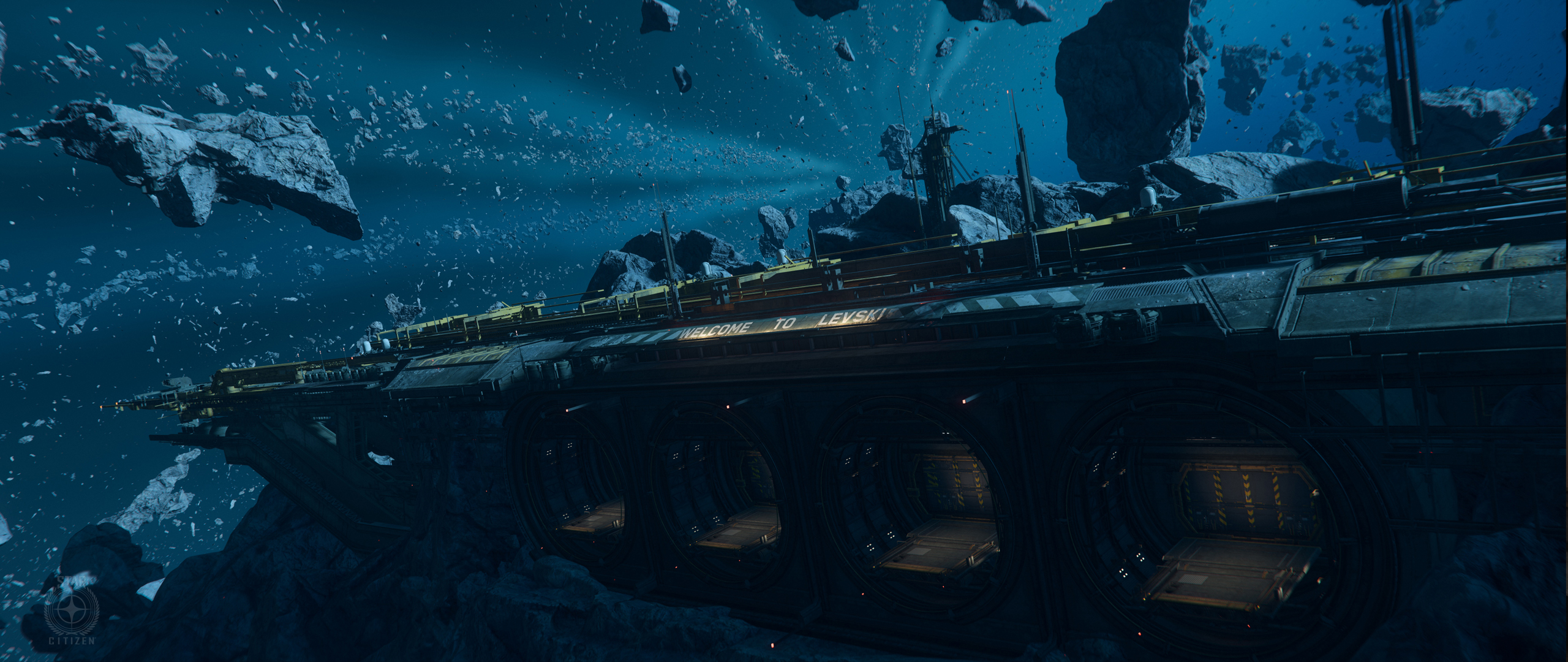
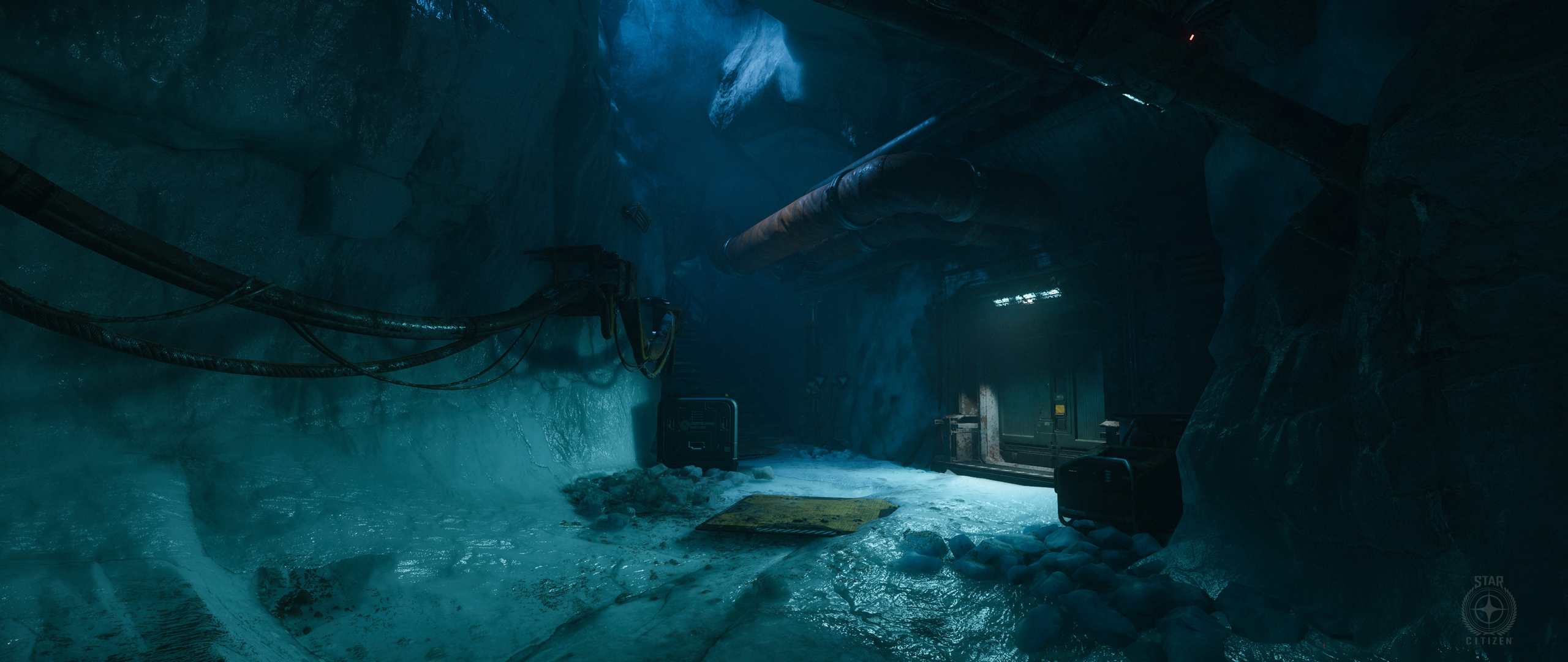
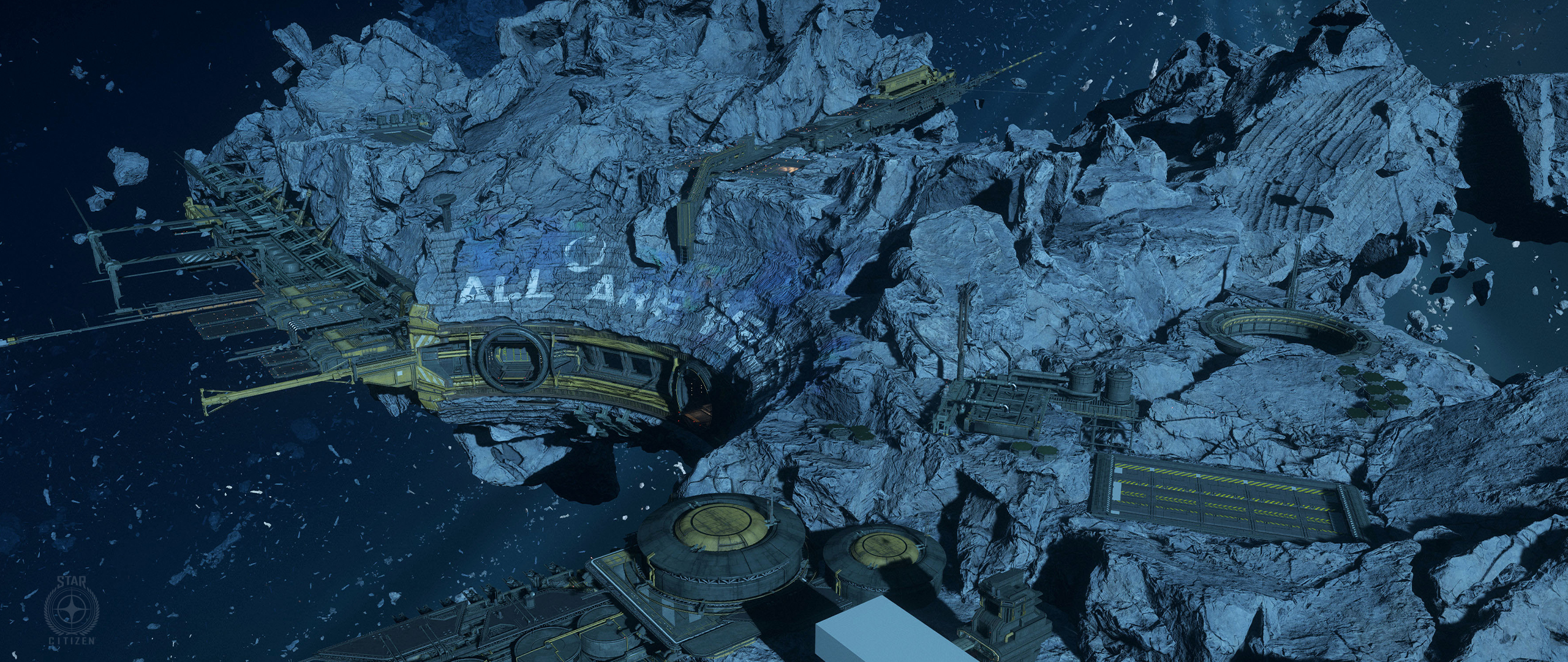
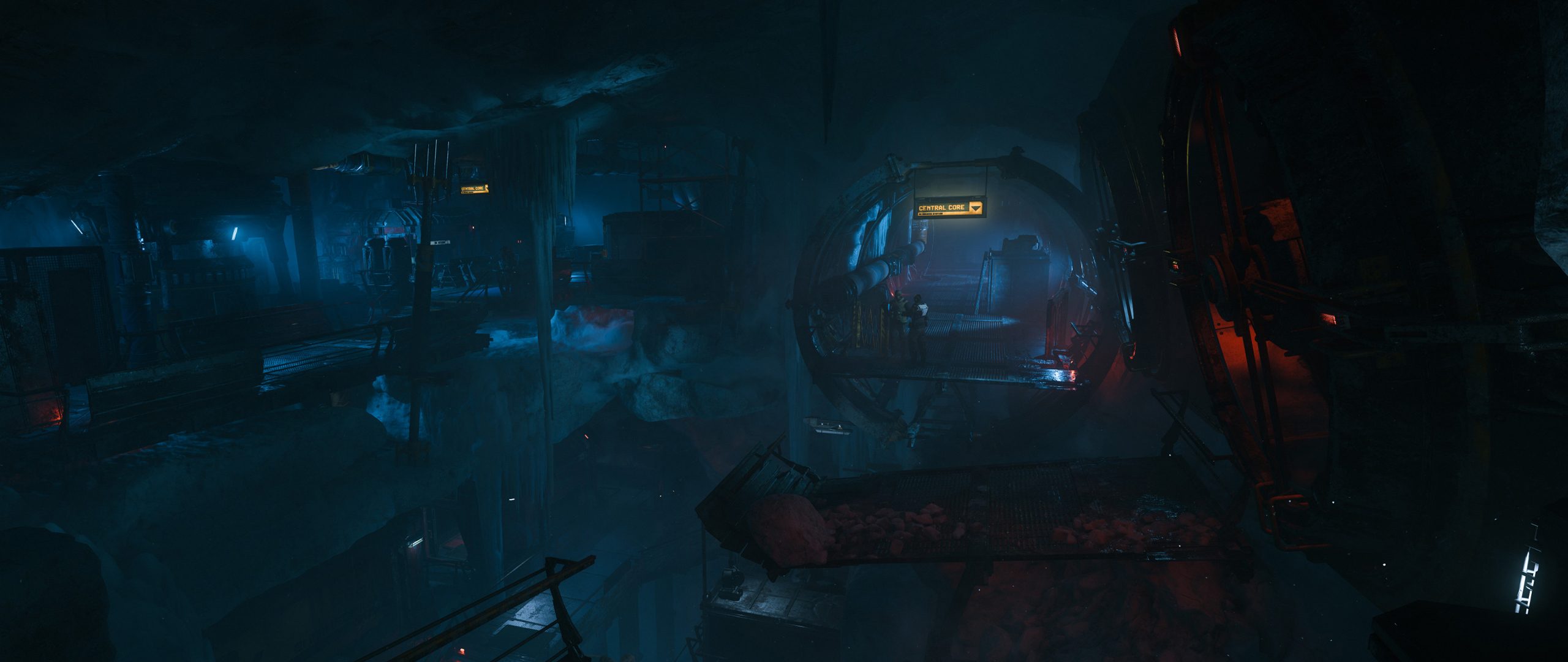
Finally for March, the VFX Team completed their work on the Aciedo Station interior. They continued to investigate Vanduul VFX, taking on feedback from the Director of Cinematics, and continued planning for the next quarter, identifying several locations now ready for a VFX pass. They’re also close to phasing out the old CPU particle system. This involves adding the last few remaining core features from the CPU into the GPU system, such as support for the material shaders for effects like refraction, shader triggers, audio entry function calls, and light casting. WE’LL SEE YOU NEXT MONTH…
Dies ist ein Querverweis auf den Bericht, der kürzlich über den monatlichen Newsletter Squadron 42 verschickt wurde. Wir veröffentlichen ihn ein zweites Mal als Comm-Link, um es der Gemeinschaft zu erleichtern, auf ihn zurückzugreifen.
Achtung Rekruten,
Was Sie gleich lesen werden, sind die neuesten Informationen über die weitere Entwicklung der Staffel 42 (SCI des: SQ42).
Viele Agenten riskierten Leib und Leben und kamen mit Informationen über die Vanduul-Waffen, die Sprache und die bevorstehende Arbeit an Vanduul VFX zurück.
Die in dieser Mitteilung enthaltenen Informationen sind äußerst sensibel, und es ist von größter Wichtigkeit, dass sie nicht in die falschen Hände geraten. Löschen Sie alle Aufzeichnungen nach dem Lesen.
UEE Marine-Oberkommando
KI
Der SQ42-Bericht vom März beginnt mit dem Kampf-KI-Team, das sich auf die Refaktorierung des Deckungssystems konzentrierte. Dies beinhaltete die Verwendung von Voxelizationsdaten (derselbe Prozess, der für die Erstellung von Navigationsnetzen verwendet wird), um die Umgebung besser zu bewerten und Deckungsflächen und Standorte zu konstruieren. Ziel ist es, die Umgebung zu vereinfachen und konsistente Deckungsdaten mit den vormontierten Fertigteilen aufzubauen. Dies ermöglicht es den Designern, Objekte als Elemente zu markieren, die in der Phase der Cover-Generierung berücksichtigt werden müssen, so dass der Code effizient damit umgehen kann und möglicherweise mehrere Objekte in ein Cover-Objekt verwandelt. Sie arbeiteten auch an einer neuen Kampftaktik zum Halten der Positionen, die einen Polierdurchgang auf der Grundlage von Diskussionen mit den Designern und Rückmeldungen der Direktoren beinhaltete. Sie begannen auch mit der Untersuchung der Arbeiten, die erforderlich sind, um die Nachlade-Mechanik bei den NPCs einzuführen. Die Schiffs-KI widmete einen Teil des Monats der Behebung von Fehlern und Eckfällen nach der Integration des 3D-Kollisionsvermeidungssystems. Eine bessere Kollisionsvermeidung ermöglicht es, zusätzliche Kampfmanöver zu entwickeln, um die KI im Nahkampf zu verbessern. Insbesondere konzentrierten sie sich auf Abwehrmanöver (Rückzug/Flucht), mit denen KI-Schiffe angewiesen werden, das Abschütteln von Angreifern zu priorisieren, um ihre Trefferchancen zu verringern. Auch am Formationsflug wurde zusätzliche Arbeit geleistet. Vorläufige Entwurfsarbeiten begannen mit dem Verhalten von Großkampfschiffen, und die Standard-Dogfight-Aktivitäten wurden rationalisiert, um neue Manöver zu ermöglichen und der wachsenden Zahl von Kampfanforderungen gerecht zu werden.
Die soziale KI arbeitete an neuen Patrouillenfunktionen, die sowohl für systemische Patrouillen als auch für Umweltskripting verwendet werden können. Beim Umweltskripting werden Story-Szenen-Markups erstellt, die von Subsumptionsverhalten dynamisch verwendet werden, um die Leistungen der Schauspieler so intakt wie möglich zu halten.
Kunst (Zeichen)
Das Charakter-Team fuhr mit den Haaren fort, da es "eines der schwierigsten Mittel ist, richtig zu arbeiten". Sie machen große Fortschritte und werden die endgültige Form der Pipeline nutzen, um in Zukunft neue Frisuren zu kreieren. Sie stellten die Uniform des Brückenoffiziers fertig und arbeiteten an der allgemeinen Kampfanzug-Uniform (BDU). Sobald sie fertiggestellt ist, werden sie auf den Ingenieur und die Decksmannschaft übergehen. Zeit wurde auch für die Fertigstellung der Vanduul aufgewendet, einschließlich mehrerer individueller Charaktere und der Themen der Occuri (die Vanduul operieren in isolierten Clans, bekannt als Occuri, jeder mit einzigartigen Kulturen, Gesetzen und visuellen Normen).
Kunst (Waffen)
Der März begann mit der Übergabe der Vanduul-Waffen durch das SQ42 Art Team. Das Waffenteam machte seinen ersten Durchgang, richtete sie in der Pipeline ein und erweiterte das Set um verschiedene Größenoptionen. Nach der Fertigstellung gingen sie auf mehrere riesige S7-S9 Behring-Laser über, die Anfang April fertiggestellt werden sollen.
Kinematographie
Das Filmteam begann mit der Implementierung der in früheren Berichten erwähnten "Unterbrechungs"-Technik in die Design-Sprint-Aufgaben für jede anwendbare Szene. Dies ermöglicht es ihnen, eine Szene und deren Ablauf zu betrachten, bevor sie entscheiden, welche Zeitfenster in der Aufführung zur Verfügung stehen, die ein Spieler unterbrechen oder abbrechen kann. Dadurch wird bestimmt, ob die vorhandene Bewegungserfassung (mo-cap) geeignet ist oder ob zusätzliche Animationsarbeit erforderlich ist. Da die meisten Szenen mo-cap-basiert sind, muss das Team sorgfältig Breakout-Punkte zuweisen, damit die NSCs auf den Spieler reagieren können, der sie aufgibt. Sobald die Kinematiker und Leveldesigner ihre Unterbrechungsmarkierung hinzugefügt haben, brechen die Animatoren die Animationsfragmente auf, wobei sie darauf achten, keine interessanten Elemente der Darbietung zu verlieren. Das ist eine feine Balance, da zu viele Unterbrechungen zu viel Arbeit verursachen, aber nicht genug könnte einen NPC, der auf den Spieler verweist, auf unrealistische Weise abwesend machen.
Technik
In Großbritannien implementierten die SQ42-Designer eine neue Methode, um Szenen und Gespräche in der Geschichte auszulösen, die flexibler ist und die Skript- und Einrichtungsarbeit erheblich reduziert. Sie erlaubt es den Designern, verschiedene Parameter wie Entfernung und Zeit in der Nähe zu kombinieren, wenn sich der Spieler im Sichtfeld eines Charakters befindet. Dadurch fühlt sich die Szenenauslösung viel lebensechter an. Das Team unterstützte auch die Cinematics und verbesserte damit ihre Fähigkeit, Waffen zu kontrollieren und abzufeuern. In Frankfurt beschäftigte sich das Ingenieurwesen mit Physik-Threading und Performance. Sie aktivierten bis zu 30 Physik-Threads (standardmäßig unter ¾ der verfügbaren logischen Kerne), fügten die Option hinzu, die Anzahl der Threads pro Thread-Task zu begrenzen, verbesserten die Speicherleistung und den Platzbedarf der Befehlswarteschlangen, definierten lokale Warteschlangen, die parallel verarbeitet werden können, verschoben relevanten Spielcode in lokale Physik-Befehlswarteschlangen, erstellten lokale Warteschlangen auf der Grundlage des Adam der Entitäten, so dass sie die Verbindungs-/Teil-Aktualisierungen parallel verarbeiten können, verschoben viele Neupositionierungs-/ Neuberechnungsaufrufe in Warteschlangen und nahmen verschiedene andere warteschlangenbezogene Optimierungen vor.
Sie fügten auch die Unterstützung einer getriebenen Ragdoll für das Body-Dragging, Schwerkraftanpassungen an die Bodenverfolgung der Akteurseinheit, die Steifigkeit einer gelenkgetriebenen Ragdoll und den Impuls an die Wurzel einer ragdollgetriebenen Ragdoll hinzu.
In Bezug auf die unbenutzte Vertex-Optimierung werden jetzt alle unbenutzten Vertices in Physik-Netzen beschnitten. Neben der Einsparung von 8 GB Plattenplatz bietet es eine bessere Datencache-Lokalität auf der CPU. Die Arbeit an der Optimierung von Teilcontainern/Compute Bounding Box (früher bekannt als Physics Geometry Instancing) wurde ebenfalls fortgesetzt. Es stellte sich heraus, dass gehäutete Blätter fehlten, was behoben wurde, bevor sie an die objektcontaineraufteilenden Physik-Voxel-Gitter übergeben wurden.
Die Render-Mesh-API von Vulcan (G12) wurde überarbeitet, um die Erstellung und das Hochladen von Daten zu rationalisieren und effizienter zu gestalten. Unbenutzter Legacy-Code wurde entfernt und der verbleibenden Legacy-Pipeline wurde ein Shader-Handle hinzugefügt. Für ein vereinheitlichtes Raymarching wurden die ersten Elemente der adaptiven Auflösung eingereicht, die Arbeit am Upsampling der Ergebnisse der adaptiven Auflösung wurde fortgesetzt, und Proben wurden über Generatoren mit geringer Diskrepanz platziert. Sie legten auch die Bildschirmgrenzen planetarischer Atmosphären fest, um die Platzierung der Proben weiter zu steuern, und begannen mit der Forschung und Entwicklung, um sicherzustellen, dass das Raymarching mit adaptiver Auflösung gut mit Strahlenzittern und TSAA funktioniert. Sie untersuchten auch Leistungsprobleme mit Ozeanen, die durch das CPU-Readback verursacht wurden, und beseitigten HDR-Anzeige- und D3D-Debug-Laufzeitfehler.
Für allgemeine Arbeiten verbesserte das Engineering den ECUS-Aktualisierungscode, indem ein Fehler in der Aktualisierungslogik behoben wurde, der unnötige Iterationen von Aggregatgruppen verursachte. Die Logik wurde weiter verbessert, um das Scannen ganzer Verbindungslisten zu reduzieren und das Threading zu optimieren.
Die Leistung der Verwaltung großer Renderbatches wurde erheblich verbessert. Zuvor hatte die Technik auf der Liste der potenziellen Batches iteriert, aber die Liste wuchs auf über 1000 Einträge an, was die Bereinigung rechenaufwändig machte (1,5 ms). Um dieses Problem zu lösen, führen sie jetzt eine Liste der gerenderten Stapel. Unterabschnitte von Komponentenaktualisierungsfunktionen wurden zu ihren Batch-Jobs hinzugefügt, um die Profilerstellung zu verbessern, ebenso wie die Profilerstellung von Unterabschnitten zu Batch-Jobs. Für das Zonensystem wurde eine neue Schnittstelle für die Aktualisierung lokaler Grenzen hinzugefügt.
Die Animationsseite von Engineering erstellte einen Prototyp eines neuen Skin-Loaders und fügte Unterstützung für physische Skin-Proxies hinzu. Außerdem wurde der gesamte relevante World Builder-Code in ein eigenes Engine Modul verschoben, um die Iterationszeit bei der Programmierung zu verkürzen.
Gameplay-Geschichte
Das Gameplay-Story-Team unterstützte das Design-Team weiterhin mit dem Unterbrechungssystem, lieferte weiterhin Animationen und entwickelte eine Bibliothek von generischen Körperanimationen zur Begleitung von Charakter-Unterbrechungslinien. Diese Animationen sehen vielversprechend aus und lösen ein langfristiges Problem im Zusammenhang mit Unterbrechungen im Allgemeinen. Sie fügten weiterhin neue Audio- und Animationen zu den Zufalls- bis NPC-Szenen hinzu und wendeten die Parameter des Real Digital Acting auf Kapitel Vier an. Gegenwärtig wird der Aufbau der Charaktere, die an der Brücke des Idris sitzen, genauestens untersucht, und in den kommenden Wochen werden sie mit der sozialen KI zusammenarbeiten, um sie weiter zum Leben zu erwecken.
Grafiken
Das Grafikteam verbrachte den Monat damit, seine entscheidende Arbeit am Vulkan-Renderer fortzusetzen und das bestehende volumetrische Nebelsystem und die Debug-Tools in das neue System zu konvertieren. Außerdem begannen sie mit der Planung und Prototyperstellung, wie mit den Abhängigkeiten der Ressourcen zwischen den Shader-Durchgängen umgegangen werden soll, da das System Ressourcen zuweisen und die Arbeit effizient planen muss, wobei sichergestellt werden muss, dass es keine Ressourcen liest, bevor die Schreibvorgänge abgeschlossen sind. Das Team untersuchte auch, wie die Lesbarkeit von holographischen/transparenten UI-Bildschirmen in extrem hellen oder dunklen Umgebungen verbessert werden kann. Dies beinhaltete die Verwendung der durchschnittlichen und maximalen Bildschirmhelligkeit oder einer lokalisierten Region des Bildschirms, um die geeignete UI-Helligkeit zu bestimmen. Mehrere Ansätze zur Farbmischung wurden ebenfalls untersucht.
Level-Entwurf
Dem Level Design Team wurde zusätzliche Auslösetechnik zur Verfügung gestellt, die sicherstellt, dass Szenen so realistisch wie möglich ausgelöst werden. Das Leveldesign arbeitet noch immer mit dem FPS AI zusammen, um priorisierte Verhaltensweisen und die Patrouillentechnik-Updates zu integrieren, die es den NSCs ermöglichen werden, realistische Gespräche mit dem Oberkörper zu führen, während sie gehen. Das Dogfight-Team schichtet derzeit aktualisierte Flug-KI-Funktionen, wie z.B. das Formationsfliegen, ein, während sie vom KI-Team bereitgestellt werden. Beide Teams werden täglich synchronisiert und arbeiten weiterhin mit neuen Technologien, sobald diese verfügbar sind.
Erzählung
Das Erzählteam setzte die Überprüfung der Ebenen und den Austausch von Feedback fort, einschließlich der Identifizierung von Hintergrundgesprächen, bei denen befriedigende Schlussfolgerungen fehlten oder verdächtig ruhige Teilnehmer auftraten. Um dies zu lösen, schrieben und zeichneten Platzhalterzeilen auf, die zu einem späteren Zeitpunkt erfasst werden sollen. Das Team arbeitete auch mit der Xenolinguistin Britton Watkins zusammen, um die Vanduul-Sprache weiterzuentwickeln, einschließlich der Frage, wie möglicherweise physiologische Merkmale einbezogen werden könnten.
QUALITÄTSSICHERUNG
Die Qualitätssicherung hat derzeit die Aufgabe, Szenenaufnahmen von einzelnen Kapiteln des Kunden zu erfassen und alle Probleme zu untersuchen, die den Arbeitsablauf des Filmteams behindern. Kürzlich drängten sie darauf, die IRA-Datenbank zu verbessern, indem sie Filter für eine bessere Nachverfolgung und Vision schufen, um mehr Transparenz in den Bereichen zu schaffen, die bearbeitet werden müssen. Kampf- und Schiffs-KI-Tests wurden ebenfalls fortgesetzt.
Technische Animation
Neben der Schulung neuer Teammitglieder wurde im März von Tech Animation die hauseigene Faccial-Rigging- und Animationssuite überarbeitet. Dies geschieht im Hinblick auf die Unterstützung von Inhalten der nächsten Generation mit einem flexiblen und modularen Ansatz für die Codebasis und die Rigging-Plattform, die letztendlich zur weiteren Verfeinerung der bestehenden Gesichtsriggs und zur Erstellung aller neuen Rigs verwendet werden. Das Team half auch bei der Implementierung von Animationen, um die neue Besetzung und Crew zum Leben zu erwecken. Dies hat zur Schaffung eines neuen Werkzeugsatzes geführt, der die Visualisierung und Anwendung von Animationssätzen im Flowgraph-Stil auf die nicht Flowgraph-Sandbox-Animationswerkzeugsuite unterstützt.
Die fortgesetzte Arbeit mit dem sozialen KI-Team ergab, dass die Tech Animation ihre Rigging-Werkzeugsätze weiter verfeinern muss, um die große Zahl der bevorstehenden Requisiten zu unterstützen. Sie sind jetzt robust genug und ermöglichen einen rationalisierten Ansatz für die Erstellung neuer Animations-Rigs. Außerdem haben sie ihre Codebasis gründlich gesäubert und neue Pipeline-Fundamente und Tools für die Überarbeitung identifiziert.
Speziell für SQ42 schuf Tech Animation in Frankfurt eine Platzhalter-Einheit für Vira Kelso, um es Cinematics zu ermöglichen, an Szenen zu arbeiten, in denen sie mitspielt. Sie aktualisierten verschiedene Charakter- und Maya-Loadouts für die Cinematic Animators, so dass sie mit demselben Loadout arbeiten können, das die Charaktere in der Engine verwenden werden.
Sie entwickelten auch ein Werkzeug, mit dem Character Art vor der Bearbeitung und dem Export Skeletterweiterungen aus einer Voreinstellung hinzufügen kann, um den Autorenprozess zu beschleunigen. Sie arbeiteten mit dem Weapons Team an Fehlern und Anfragen, einschließlich Rig-Updates, Mannequin-Setups, IK-Zielaktualisierungen und auch Exportfehler.
VFX
Im März schloss das VFX-Team schließlich seine Arbeiten an der Inneneinrichtung der Aciedo Station ab. Sie setzten die Untersuchung von Vanduul VFX unter Berücksichtigung des Feedbacks des Director of Cinematics fort und fuhren mit der Planung für das nächste Quartal fort, indem sie mehrere Standorte ausfindig machten, die jetzt für einen VFX-Pass bereit sind.
Sie stehen auch kurz davor, das alte CPU-Partikelsystem auslaufen zu lassen. Dazu gehört das Hinzufügen der letzten verbleibenden Kernfunktionen von der CPU zum GPU-System, wie z.B. die Unterstützung der Material-Shader für Effekte wie Brechung, Shader-Trigger, Audio-Eingabefunktionsaufrufe und Lichtwurf. WIR SEHEN SIE NÄCHSTEN MONAT...
This is a cross-post of the report that was recently sent out via the monthly Squadron 42 newsletter. We’re publishing this a second time as a Comm-Link to make it easier for the community to reference back to. Attention Recruits,
What you are about to read is the latest information on the continuing development of Squadron 42 (SCI des: SQ42).
Many operatives risked life and limb and came back with information regarding Vanduul weaponry, language, and upcoming work on Vanduul VFX.
The information contained in this communication is extremely sensitive and it is of paramount importance that it does not fall into the wrong hands. Purge all records after reading.
UEE Naval High Command
AI
March’s SQ42 report starts with the Combat AI Team, who focused on refactoring the Cover System. This involved utilizing voxelization data (the same process used for navigation mesh creation) to better evaluate the environment and construct cover surfaces and locations. The aim is to simplify the environment and build consistent cover data with the pre-assembled prefabs. This will enable the designers to mark objects as elements that need to be considered in the cover generation phase so the code can handle it efficiently, potentially turning multiple objects into one cover object. They also worked on a new combat tactic for holding positions, which included a polishing pass based on discussions with the designers and feedback from the directors. They also began investigating the work required to introduce the reloading mechanic to NPCs. Ship AI dedicated part of the month to addressing bugs and corner cases following the integration of the 3D collision avoidance system. Better collision avoidance enables additional combat maneuvers to be developed to add flare to the dogfighting AI. In particular, they focused on defensive maneuvers (retreat/flee) that tell AI ships to prioritize shaking off attackers to reduce their chances of being hit. Additional work was done to formation flying too. Preliminary design work began on capital ship behaviors and standard dogfight activity was streamlined to accommodate new maneuvers and cope with the growing number of combat requirements.
Social AI worked on new patrol features that can be used for both systemic patrol and environmental scripting. Environmental scripting creates story scene markups used dynamically by Subsumption behaviors to keep actor performances as intact as possible.
Art (Characters)
The Character Team continued with hair, as it’s “one of the most difficult assets to get right”. They’re making great progress and will use the final pipeline form to create new hairstyles in the future. They finalized the Bridge Officer uniform and worked on the overall Battle Dress Uniform (BDU). Once complete, they’ll move onto the engineer and deck crew. Time was also dedicated to finalizing the Vanduul, including several individual characters and the themes of the Occuri (the Vanduul operate in isolated clans, known as Occuri, each with unique cultures, laws, and visual norms).
Art (Weapons)
March began with the SQ42 Art Team handing over Vanduul weaponry. The Weapons Team made their initial pass, setting them up in the pipeline and expanding the set to incorporate various size options. Once complete, they moved onto several huge S7-S9 Behring lasers due for completion in early April.
Cinematics
The Cinematics Team began implementing the ‘interrupt’ tech mentioned in previous reports into the design sprint tasks for each applicable scene. This enables them to look at a scene and how it plays out before deciding on the time windows available in the performance that a player can interrupt or abandon. This determines whether the existing motion capture (mo-cap) is suitable or if additional animation work is needed. As most scenes are mo-cap based, the team must carefully assign breakout points to allow NPCs to react to the player abandoning them. Once the cinematics and level designers have added their interrupt markup, the animators break up the animation fragments, being careful not to lose interesting elements of the performance. It’s a fine balance, as too many interrupts create excessive work, but not enough could leave an NPC referencing player absence in an unrealistic way.
Engineering
In the UK, the SQ42 designers implemented a new way to trigger story scenes and conversations, which is more flexible and significantly reduces scripting and setup work. It allows the designers to combine various parameters, such as distance and time nearby, if the player is in the field-of-view of a character. This will make scene triggering feel much more lifelike. The team also supported Cinematics, improving their ability to control and fire weapons. In Frankfurt, Engineering worked on physics threading and performance. They enabled up to 30 physics threads (defaulting to ¾ of logical cores available); added the option to limit the number of threads per thread task; improved the memory performance and footprint of command queues; defined local queues that can be processed in parallel; moved relevant game code to local physics command queues; created local queues based on the entities’ adam so they can process the joint/part updates in parallel; moved many reposition/recompute calls to queues; and made various other queue related optimizations.
They also added driven ragdoll support for body dragging, gravity adjustments to actor entity ground tracking, per-joint driven ragdoll stiffness, and impulse to the root of a tracking-driven ragdoll.
Regarding unused vertex optimization, all unused vertices in physics meshes are now pruned. Alongside saving 8GB of disk space, it provides better data cache locality on the CPU. Work also continued on part containers/compute bounding box optimization (formerly known as physics geometry instancing). Skinned foliage was found to be missing leaves, which was fixed before being given to the object-container-splitting physics voxel grids.
The Vulcan (G12) render mesh API was refactored for more streamlined and efficient creation and data upload. Unused legacy code was removed and a shader handle was added to the remaining legacy pipeline. For unified raymarching, the initial elements of the adaptive resolution were submitted, work continued on the upsampling of adaptive resolution results, and samples were placed via low discrepancy generators. They also determined screen bounds of planetary atmospheres to further guide sample placement and started R&D into ensuring adaptive resolution raymarching works well with ray jittering and TSAA. They also investigated performance issues with oceans caused by CPU readback and fixed HDR display and D3D debug runtime errors.
For general work, Engineering improved the ECUS update code by fixing a flaw in the update logic that caused unnecessary iterations of aggregate groups. They further improved the logic to reduce scans of entire connection lists and optimized threading.
A significant improvement was made to the large render batch management’s performance. Previously, Engineering had iterated on the list of potential batches, but it grew to over 1000 entries, making clean up computationally expensive (1.5ms). To solve this, they now maintain a list of rendered batches. Subsections of component update functions were added to their batch jobs to improve profiling, as were profiling subsections to batch jobs. For the Zone System, a new interface for updating local bounds was added.
The animation side of Engineering made a prototype of a new skin loader and added support for physical skin proxies. They also moved all relevant World Builder code into its own engine module for faster programming iteration time.
Gameplay Story
The Gameplay Story Team continued to support the Design Team with the interrupt system, further delivering animations and developing a library of generic body animations to accompany character interrupt lines. These animations look promising and solve a long-term issue around interrupts in general. They continued to add new audio and animations to the Random to NPC scenes and applied the Real Digital Acting parameters to Chapter Four. They’re currently looking closely at the setup of characters seated at the bridge of the Idris and will work with Social AI in the coming weeks to further bring them to life.
Graphics
The Graphics Team spent the month continuing their crucial work on the Vulkan renderer, converting the existing volumetric fog system and debug tools to the new system. They also began planning and prototyping how to handle interdependencies of resources between shader passes, as the system will need to allocate resources and efficiently schedule work while ensuring it doesn’t read resources before write operations are completed. The team also investigated how to improve the legibility of holographic/transparent UI screens in extremely bright or dark environments. This involved using the average and maximum screen brightness, or a localized region of the screen, to determine the suitable UI brightness. Several color blending approaches were also investigated.
Level Design
Additional triggering tech was delivered to the Level Design Team that will ensure scenes trigger in the most realistic way possible. Level Design are still working with FPS AI to integrate prioritized behaviors and the patrolling tech updates, which will allow NPCs to engage in realistic upper-body conversations as they walk. The Dogfight Team are currently layering in updated flight AI features, such as formation flying, as they’re delivered by the AI Team. Both teams synch daily and continue to polish levels with new technology as it becomes available.
Narrative
The Narrative Team continued reviewing levels and sharing feedback, including identifying background conversations that were missing satisfying conclusions or featured suspiciously quiet participants. To solve this, they wrote and recorded placeholder lines that will be captured at a later date. The team also worked with xenolinguist Britton Watkins to continue developing the Vanduul language, including how physiological features could potentially be incorporated.
QA
QA are currently tasked with capturing client scene recordings of individual chapters, as well as investigating any issues that hinder the Cinematics Team’s workflow. They recently pushed to improve the IRA database by creating filters for better tracking and vision to give more transparency on areas that need work. Combat and ship AI testing continued too.
Tech Animation
Alongside training new team members, March saw Tech Animation refactoring the in-house facial rigging and animation suite. This is with a view to supporting next-generation content with a flexible and modular approach to its codebase and rigging platform, which will ultimately be used to further refine the existing facial rigs and create all new ones. The team also helped implement animations to bring the new cast and crew to life. This has led to the creation of a new toolset to help visualize and apply flowgraph-style animation sets to the non-flowgraph sandbox animation tool suite.
Continued work with the Social AI Team identified the need for Tech Animation to further refine their rigging toolsets to support the vast number of upcoming props. They’re now robust enough and enable a streamlined approach to authoring new animation rigs. They also spring-cleaned their codebase, identifying new pipeline foundations and tools to refactor.
Specifically for SQ42, Tech Animation in Frankfurt created a placeholder entity for Vira Kelso to enable Cinematics to work on scenes she features in. They updated various character and Maya loadouts for the cinematic animators, enabling them to work with the same loadout the characters will use in-engine.
They also developed a tool to enable Character Art to add skeleton extensions from a preset before editing and exporting them to speed up the authoring process. They worked with the Weapons Team on bugs and requests, including rig updates, Mannequin setups, IK target updates, and export errors too.
VFX
Finally for March, the VFX Team completed their work on the Aciedo Station interior. They continued to investigate Vanduul VFX, taking on feedback from the Director of Cinematics, and continued planning for the next quarter, identifying several locations now ready for a VFX pass. They’re also close to phasing out the old CPU particle system. This involves adding the last few remaining core features from the CPU into the GPU system, such as support for the material shaders for effects like refraction, shader triggers, audio entry function calls, and light casting. WE’LL SEE YOU NEXT MONTH…
This is a cross-post of the report that was recently sent out via the monthly Squadron 42 newsletter. We’re publishing this a second time as a Comm-Link to make it easier for the community to reference back to. Attention Recruits,
What you are about to read is the latest information on the continuing development of Squadron 42 (SCI des: SQ42).
Many operatives risked life and limb and came back with information regarding Vanduul weaponry, language, and upcoming work on Vanduul VFX.
The information contained in this communication is extremely sensitive and it is of paramount importance that it does not fall into the wrong hands. Purge all records after reading.
UEE Naval High Command
AI
March’s SQ42 report starts with the Combat AI Team, who focused on refactoring the Cover System. This involved utilizing voxelization data (the same process used for navigation mesh creation) to better evaluate the environment and construct cover surfaces and locations. The aim is to simplify the environment and build consistent cover data with the pre-assembled prefabs. This will enable the designers to mark objects as elements that need to be considered in the cover generation phase so the code can handle it efficiently, potentially turning multiple objects into one cover object. They also worked on a new combat tactic for holding positions, which included a polishing pass based on discussions with the designers and feedback from the directors. They also began investigating the work required to introduce the reloading mechanic to NPCs. Ship AI dedicated part of the month to addressing bugs and corner cases following the integration of the 3D collision avoidance system. Better collision avoidance enables additional combat maneuvers to be developed to add flare to the dogfighting AI. In particular, they focused on defensive maneuvers (retreat/flee) that tell AI ships to prioritize shaking off attackers to reduce their chances of being hit. Additional work was done to formation flying too. Preliminary design work began on capital ship behaviors and standard dogfight activity was streamlined to accommodate new maneuvers and cope with the growing number of combat requirements.
Social AI worked on new patrol features that can be used for both systemic patrol and environmental scripting. Environmental scripting creates story scene markups used dynamically by Subsumption behaviors to keep actor performances as intact as possible.
Art (Characters)
The Character Team continued with hair, as it’s “one of the most difficult assets to get right”. They’re making great progress and will use the final pipeline form to create new hairstyles in the future. They finalized the Bridge Officer uniform and worked on the overall Battle Dress Uniform (BDU). Once complete, they’ll move onto the engineer and deck crew. Time was also dedicated to finalizing the Vanduul, including several individual characters and the themes of the Occuri (the Vanduul operate in isolated clans, known as Occuri, each with unique cultures, laws, and visual norms).
Art (Weapons)
March began with the SQ42 Art Team handing over Vanduul weaponry. The Weapons Team made their initial pass, setting them up in the pipeline and expanding the set to incorporate various size options. Once complete, they moved onto several huge S7-S9 Behring lasers due for completion in early April.
Cinematics
The Cinematics Team began implementing the ‘interrupt’ tech mentioned in previous reports into the design sprint tasks for each applicable scene. This enables them to look at a scene and how it plays out before deciding on the time windows available in the performance that a player can interrupt or abandon. This determines whether the existing motion capture (mo-cap) is suitable or if additional animation work is needed. As most scenes are mo-cap based, the team must carefully assign breakout points to allow NPCs to react to the player abandoning them. Once the cinematics and level designers have added their interrupt markup, the animators break up the animation fragments, being careful not to lose interesting elements of the performance. It’s a fine balance, as too many interrupts create excessive work, but not enough could leave an NPC referencing player absence in an unrealistic way.
Engineering
In the UK, the SQ42 designers implemented a new way to trigger story scenes and conversations, which is more flexible and significantly reduces scripting and setup work. It allows the designers to combine various parameters, such as distance and time nearby, if the player is in the field-of-view of a character. This will make scene triggering feel much more lifelike. The team also supported Cinematics, improving their ability to control and fire weapons. In Frankfurt, Engineering worked on physics threading and performance. They enabled up to 30 physics threads (defaulting to ¾ of logical cores available); added the option to limit the number of threads per thread task; improved the memory performance and footprint of command queues; defined local queues that can be processed in parallel; moved relevant game code to local physics command queues; created local queues based on the entities’ adam so they can process the joint/part updates in parallel; moved many reposition/recompute calls to queues; and made various other queue related optimizations.
They also added driven ragdoll support for body dragging, gravity adjustments to actor entity ground tracking, per-joint driven ragdoll stiffness, and impulse to the root of a tracking-driven ragdoll.
Regarding unused vertex optimization, all unused vertices in physics meshes are now pruned. Alongside saving 8GB of disk space, it provides better data cache locality on the CPU. Work also continued on part containers/compute bounding box optimization (formerly known as physics geometry instancing). Skinned foliage was found to be missing leaves, which was fixed before being given to the object-container-splitting physics voxel grids.
The Vulcan (G12) render mesh API was refactored for more streamlined and efficient creation and data upload. Unused legacy code was removed and a shader handle was added to the remaining legacy pipeline. For unified raymarching, the initial elements of the adaptive resolution were submitted, work continued on the upsampling of adaptive resolution results, and samples were placed via low discrepancy generators. They also determined screen bounds of planetary atmospheres to further guide sample placement and started R&D into ensuring adaptive resolution raymarching works well with ray jittering and TSAA. They also investigated performance issues with oceans caused by CPU readback and fixed HDR display and D3D debug runtime errors.
For general work, Engineering improved the ECUS update code by fixing a flaw in the update logic that caused unnecessary iterations of aggregate groups. They further improved the logic to reduce scans of entire connection lists and optimized threading.
A significant improvement was made to the large render batch management’s performance. Previously, Engineering had iterated on the list of potential batches, but it grew to over 1000 entries, making clean up computationally expensive (1.5ms). To solve this, they now maintain a list of rendered batches. Subsections of component update functions were added to their batch jobs to improve profiling, as were profiling subsections to batch jobs. For the Zone System, a new interface for updating local bounds was added.
The animation side of Engineering made a prototype of a new skin loader and added support for physical skin proxies. They also moved all relevant World Builder code into its own engine module for faster programming iteration time.
Gameplay Story
The Gameplay Story Team continued to support the Design Team with the interrupt system, further delivering animations and developing a library of generic body animations to accompany character interrupt lines. These animations look promising and solve a long-term issue around interrupts in general. They continued to add new audio and animations to the Random to NPC scenes and applied the Real Digital Acting parameters to Chapter Four. They’re currently looking closely at the setup of characters seated at the bridge of the Idris and will work with Social AI in the coming weeks to further bring them to life.
Graphics
The Graphics Team spent the month continuing their crucial work on the Vulkan renderer, converting the existing volumetric fog system and debug tools to the new system. They also began planning and prototyping how to handle interdependencies of resources between shader passes, as the system will need to allocate resources and efficiently schedule work while ensuring it doesn’t read resources before write operations are completed. The team also investigated how to improve the legibility of holographic/transparent UI screens in extremely bright or dark environments. This involved using the average and maximum screen brightness, or a localized region of the screen, to determine the suitable UI brightness. Several color blending approaches were also investigated.
Level Design
Additional triggering tech was delivered to the Level Design Team that will ensure scenes trigger in the most realistic way possible. Level Design are still working with FPS AI to integrate prioritized behaviors and the patrolling tech updates, which will allow NPCs to engage in realistic upper-body conversations as they walk. The Dogfight Team are currently layering in updated flight AI features, such as formation flying, as they’re delivered by the AI Team. Both teams synch daily and continue to polish levels with new technology as it becomes available.
Narrative
The Narrative Team continued reviewing levels and sharing feedback, including identifying background conversations that were missing satisfying conclusions or featured suspiciously quiet participants. To solve this, they wrote and recorded placeholder lines that will be captured at a later date. The team also worked with xenolinguist Britton Watkins to continue developing the Vanduul language, including how physiological features could potentially be incorporated.
QA
QA are currently tasked with capturing client scene recordings of individual chapters, as well as investigating any issues that hinder the Cinematics Team’s workflow. They recently pushed to improve the IRA database by creating filters for better tracking and vision to give more transparency on areas that need work. Combat and ship AI testing continued too.
Tech Animation
Alongside training new team members, March saw Tech Animation refactoring the in-house facial rigging and animation suite. This is with a view to supporting next-generation content with a flexible and modular approach to its codebase and rigging platform, which will ultimately be used to further refine the existing facial rigs and create all new ones. The team also helped implement animations to bring the new cast and crew to life. This has led to the creation of a new toolset to help visualize and apply flowgraph-style animation sets to the non-flowgraph sandbox animation tool suite.
Continued work with the Social AI Team identified the need for Tech Animation to further refine their rigging toolsets to support the vast number of upcoming props. They’re now robust enough and enable a streamlined approach to authoring new animation rigs. They also spring-cleaned their codebase, identifying new pipeline foundations and tools to refactor.
Specifically for SQ42, Tech Animation in Frankfurt created a placeholder entity for Vira Kelso to enable Cinematics to work on scenes she features in. They updated various character and Maya loadouts for the cinematic animators, enabling them to work with the same loadout the characters will use in-engine.
They also developed a tool to enable Character Art to add skeleton extensions from a preset before editing and exporting them to speed up the authoring process. They worked with the Weapons Team on bugs and requests, including rig updates, Mannequin setups, IK target updates, and export errors too.
VFX
Finally for March, the VFX Team completed their work on the Aciedo Station interior. They continued to investigate Vanduul VFX, taking on feedback from the Director of Cinematics, and continued planning for the next quarter, identifying several locations now ready for a VFX pass. They’re also close to phasing out the old CPU particle system. This involves adding the last few remaining core features from the CPU into the GPU system, such as support for the material shaders for effects like refraction, shader triggers, audio entry function calls, and light casting. WE’LL SEE YOU NEXT MONTH…
Links
No links available.
Images
17


Metadata
- CIG ID
- 17545
- Channel
- Transmission
- Category
- Undefined
- Series
- Monthly Reports
- Comments
- 16
- Published
- 6 years ago (2020-04-09T00:00:00+00:00)