Star Citizen Monthly Report: April 2020
Transmission Undefined Monthly ReportsContent
It was all hands on deck in April as Alpha 3.9 launched into the Persistent Universe. Naturally, teams contributed to the release in a variety of ways, so the hard work they put in is prevalent throughout this month’s report. Progress was also made on several upcoming features for future patches and releases, so read on to find out more!
AI
Alongside final optimizations for Alpha 3.9, the Social AI Team improved the performance of the Usable Cache Manager. They added the ability to time-slice the main update to make it easier to control the update usage of different jobs, and began using queued physical ray-casting to validate which usable enter/exit locations are available and not blocked by other objects.
Work started on compound usables, which can inherit functionalities from other usables and override data based on specific setups. For example, maintenance or inspection operations on a Gladius might use generic animations in most locations, but a more complex section of the ship may require specific Mannequin tags.
Functionality and visual quality were further developed for vendors such as the Bartender. Work went into potentially allowing designers to set up proc clips that stow/unstow objects from a specific inventory pocket. The team also extended the Communication system to allow designers to tag different options relating to the same contextual voice line. This will allow a generic behavior to automatically select the right option for a specific context. For example, a shop patron can use a generic ‘order’ communication line to pass the tag of the object they want to order, which will allow the selection of a relevant voice and animation. If one isn’t present, a generic option might be selected. This, combined with a pass on wildlines and secondary sub-activities for the vendor behavior, allowed the team to significantly improve the visual fidelity of the behaviors.
AI are currently integrating more functionalities into consumable objects to create an additional layer of customization to the flow, such as enabling AI to differentiate between open and closed bottles and act accordingly.
Focus was also given to improving several aspects of the patrol path tech. This involved moving some of the parallel functionalities trigger-logic to the movement system, which is a big change for several reasons: The team can now send simple requests related to a path to the movement system, making the subsumption task much simpler; they can using the same approach used for complex usables, such as closed doors, elevators, and the transit system; and the movement planner is now responsible for analyzing the data and creating a plan that can be as complex as needed.
Animation
Last month, Animation supported Social AI with ship hangar work, general inspection places, bar patron idles and actions, bridge control seats, and lockers. They also worked on reloading and malfunction animations for all weapon classes. Development of stumbles, knockdowns, body dragging, and what happens when a player is injured or incapacitated continued.
The Mo-Cap Team improved the motion builder skeleton, which will help the wider team create assets faster, and the ‘take selection’ tool, which will improve post-shoot turnaround. Tools were also created to enable quick data renaming and video conversion. Several team members are temporarily supporting other related areas of development due to the suspension of all mo-cap shoots.
Art (Environment)
Last month, the Environment Art Team progressed with Pyro I and II, which will make full use of Planet Tech v4. They’re currently creating new geology and vegetation packs and putting them together on the new planets. Look out for an unstable star, hostile landscapes, and dangerous plant life when it launches.
“After the frozen dangers of microTech and its moons, Pyro will definitely put the players in new and exciting surroundings filled with new challenges.” – Environment Art Team
Art (Ships)
In the UK, progress on the Crusader Hercules continued; the bulk of the exterior is now greybox-complete, while the thrusters and turrets are currently being worked on. Inside, the bridge is greybox-complete and the rest of the upper deck, including the hab area, is making great progress. The interior doors are complete and the large hold is starting to take shape. Work on an unannounced ship continued too.
In the US, the team kicked off the Crusader Mercury Star Runner, working through the cockpit greybox and cargo holds. Progress was made on the wings and turret exteriors too. The ongoing improvements to the Origin M50 entered the polish phase and the Cutlass Blue’s prisoner pods were tweaked after feedback.
Art (Weapons)
In preparation for the feature work next quarter, the Weapons Team iterated on the Behring GP-33 grenade launcher to fix a few issues and bring it up to current standards. The Lighting Bolt Co. Atzkav sniper rifle and Yubarev pistol received final art and LOD passes and were handed over to the downstream teams. The Gemini C54 SMG was reviewed by Design, which led to its dimensions being significantly trimmed down to make it feel more like an SMG and less like an assault rifle.
Backend Services
April saw the team deal with a variety of bugs, including memory leaks that were discovered on some of the backend services. Work bagen on the new dynamic mission service and support was provided to Theaters of War. Entitlement processing, iCache Advanced Query, iCache/Login Flow, and GIM services development was also undertaken.
Characters
The Character Team fixed a handful of bugs, cleaned up documentation, and handled small material fixes. Characters were placed in landing zones and work went into the Hi-Tech hangars, cargo, and tweaks were made to the existing loadouts for prisons and New Babbage. The tech artists finished their Zone Cut tool, which allows the Art Team to cull hidden geometry under clothing. Art is currently being created for various carnivorous species and the Orison Tourist character.
Community
The Community Team kicked off the month with Planet Tech V5: The Flattening, which marks a significant step forward for both “technical innovation” and “scientific accuracy”.
Back in reality, another Spectrum AMA answered the community’s most burning questions about the Quantum system first introduced at CitizenCon 2019. When complete, it’ll give the devs complete control and visibility over Star Citizen’s system-spanning economy.
Alpha 3.9’s Pillar Talk was released too. Chris Roberts was joined by Sean Tracy, Paul Reindell, and Eric Kieron Davis for a discussion on the unified friends list, persistence, quality of life improvements, the player interaction system, New Babbage, prison mechanics, and more.
Lastly, the Community Team would like to draw your attention to an important update on CitizenCon 2950.
Engineering
Engineering’s April involved working on AFT, adding rotation resistance to the driven articulated entity tracking joint (exposing tuning parameters), making body-dragging-driven ragdoll behavior less framerate dependent, and adding rotation damping for the dragging character (with exposed linear and angular damping factors). They also fixed animation pops, added force reactions, and made the head and neck joints of a drag-driven ragdolls ignore actor entity collisions.
Physics-wise, they made improvements to the load and spawn time for entities, reworked the processing of dead-marked entities, and optimized the CheckAreas function (which is now three-to-five times faster in new grid-OC-split regions). Basic ricochet behavior was added and made deterministic. They also looked into character physicalization issues for the Cinematics Team and integrated physics into the main development stream.
Engineering wrapped up the mesh refactor for the Gen12 renderer, moved shader item creation away from the render thread, relocated shader objects to resource containers (to improve material-streaming during OCS), and made headway into permanently enabling certain G12 effects. They added asynchronous shader compilation support to the Gen12 code and refactored the buffer management for the render mesh. This means they can now create buffers on any thread instead of deferring it to RT, use a VB stream wrapper object to maintain ref counts for writes and reads on render mesh streams, and run numerous API cleanups. They further cleaned the loading and refreshing of the shader system, ported texture sampler state code, and started porting brush rendering to the new pipeline.
Regarding the shader system, they fixed an issue in cache generation that caused certain combinations of hull, domain, geometry, and compute to not pre-cache. For hair, they created a new slider for creating a ‘salt and pepper’ look and improved scattering for blonde and bright hair.
Engineering bundled the processing of adaptive resolution samples so that lowering adaptive resolution will show GPU perf scaling as expected. They changed the way active sample indices are built to maintain the desired serialization order per sample block. Each sample block can now be processed as a bundle via the thread group to better utilize cache effects. They also looked into deep learning-based de-noising and up-sampling, and worked to implement a guided filter to de-noise and up-sample lower resolution raymarched inscatter and transmittance results. For the ongoing ocean work, the team upgraded buoyancy physics to make it functional with the new changes, fixed motion vectors on deferred oceans, and added sub-surface scattering to improve the appearance of crest waves.
General system worked involved enabling advanced CPU features for Linux DGS (in addition to already enabled Haswell-based code gen in Clang). Batch worker wakeup was improved and optimizations to the aggregate broad phase were made, such as replacing the sphere tree with an optimized radix tree and an optimized state update.
Finally for Engineering, the entity component update scheduler was further developed. To this end, they added a new component update policy based on entity rendering bounds with an optional view ratio and added support for view ratio in component updates. They also fixed a crash in a video driver caused by an incorrect use of the texture upload path taken for UI/Flash assets. Various frame times were added to important threads (MT, RT, network, physics), with one of the goals being to derive a VSync agnostic frame time. The exception handler and crash dump processing tools now support new cig-trace events and have unique folders to dump debug information into, which streamlines runtime error processing and analysis. The developers can now also mute FPEs until a given date.
Features (Gameplay)
Alongside polishing and bug-fixing for Alpha 3.9, the Gameplay Features Team worked to support initiatives for Arena Commander, Star Marine, Theaters of War, and Invictus Launch Week. They also began preliminary work on a new player trading app for mobiGlas. The first phase focuses on the ability to send currency between players, with later revisions extending to physical inventory items.
Features (Vehicles)
The Vehicle Features Team continue to rebuild the HUD using the new Building Blocks technology. Last month, targeting and missile-lock UI were worked on heavily. They’re currently improving how IFCS copes with an imbalance in ship thrusters. For example, when thrusters are damaged, the imbalance will cause undesirable power delivery and make controlling the ship more difficult. Progress on docking was also made, with the team figuring out how to connect ships while the physics engine reacts appropriately. They supported research and testing into improving ship combat too.
Graphics
The Graphics Team continued their crucial work on the Gen12/Vulkan renderer, with the focus on getting a preliminary pipeline up and running. This is the first of several major milestones in the development of the new renderer and will allow them to deprecate much of the old post effect code. The organic shader used for vegetation and rocks is currently receiving a long-planned upgrade that will integrate into Planet Tech v4 and add many new features, such as better integration of assets into planetary terrain.
The long-awaited real-time environment probe feature was completed. This allows bounced lighting and reflections to be re-computed dynamically to account for the ever-changing lighting on rotating planets, orbiting space stations, lights being turned on/off, and destroyed interiors.
The final task of the month was the integration of the texture streaming system, which enables the team to intelligently manage when they update each probe and when to unload them to make way for other textures. This feature was included in various locations across Alpha 3.9, though the Art Team still need to ensure the assets in each location are optimized to keep the cost of the render pass to a minimum, so rollout will be a gradual process.
Level Design
With the majority of New Babbage complete, most of the Level Design Team moved to continue work on Orison. They’re also making updates to Grim HEX, which involves finishing the internal racing kiosk, making structural changes to the asteroid, and finally adding hangars. They’re also working with the feature teams to ensure the new restricted areas and ATCs are working as they should.
Lighting
With Alpha 3.9 work wrapped up, the Lighting Team looked at adding a day and night setup to Lorville, which will create different ambient moods depending on the time of day. They also replaced some cubemaps with the new runtime probes tech to help the lighting feel more grounded during the day and prevent areas from appearing too “glowy” or dark. Several team members looked into adding the same features to the exteriors of surface outposts and underground facility locations. Lastly, a new kiosk was added to the New Babbage spaceport and a number of minor legacy bugs in older locations were fixed.
Props
The Props Team closed out the food and drink props last month, with minor bug fixes currently underway.
“There are plenty of plans for where we want to go next and some new techniques we would like to test in the future” – Props Team
New props were also created for the Mission Team to help them prototype future content and new tools were introduced to the animation workflow to speed up 3ds Max processes.
QA
Last month, QA were assigned a new test request (QATR) for the restricted areas rework, which the locations-side of the team focused on testing. The QATR related to Lorville and Area18, with the tests ensuring the updated restricted areas worked as before and didn’t introduce any new issues. Engine-wise, they were involved in several instances of binary testing. Two sets were to fix various issues plaguing the Alpha 3.9 builds and help with performance and optimization. Others related to character textures and skinning.
QA continued testing the current tools in use across the whole development team, including Graphics Viewer Tester, StarWords, and Dataforge with the inclusion of TrackView. They also joined the weekly playtests that have been set up for the whole company to join in. This allows the team to play areas they’re not wholly familiar with and gives a fresh perspective on many of the features.
System Design
System Design started implementing the new Refining Station kiosk. This will be used by players to convert their raw materials into refined goods that can be sold for higher prices (and in the future used to craft items). When live, players will have to take their mixed materials to a station with refining capabilities and then start a refining job. Based on the type of refining process, the materials they want to refine or discard, and how busy the refinery is, the player will pay a price and the job will begin. Refining will then run, even if the player is not present in the station or logged on. Once finished, the player will receive a notification and will be able to return to the station to collect their goods. Work continues on resource management and item control, with the team undertaking initial prototyping to ensure everything planned works correctly and will scale properly with future content.
Tech Animation
Following last month’s report, Tech Animation continued to develop the internal toolsets in support of Tech Art and Animation. They worked with Social AI on new usables, including the bartender and a wide variety of new additions for hangar behavior. They also worked on a tool to allow animators to export their state machines straight from Visio to Mannequin, speeding up the implementation process. Work began on a proprietary tool that will eventually make the process even faster. Finally, they helped rig props for the animators to use in Maya to make interactions easier.
Tech (Art)
In April, Tech Art continued work on the RuntimeRig system, further enhancing it by adding functionality to allow the efficient sharing of RigComponents between several instances (typically characters). Certain RigComponent types (such as the BlendShapeComponents or the WrinkleMaskComponents) contain static data that never changes at runtime and is usually identical for all rigs of the same type and tier. In early versions, this data was duplicated for simplicity. However, this isn’t ideal, both maintenance and memory-wise. In the old RigLogic system, it had been fully hard-coded via static arrays in shared C++ header files, which led to a more optimal memory footprint but completely removed flexibility on the tech-art side.
The latest iteration gives resource sharing wherever possible and the artists full technical freedom to edit the data and quickly iterate on the deformation and shading-related rig outputs. As with all core systems designed to replace legacy versions, rigorous testing, tech-hardening, and optimization are needed before it can be rolled out across the board. As a first step, they’ll test it on the Maya-side only, using the new Vanduul face rigs. Eventually, it’ll be applied to all 130+ human head rigs in the DCC and, later, the engine too.
Tech (Vehicles)
April saw the Vehicle Technical Team incorporate a new in-game system that will be revealed at an upcoming event. A new life-support item is in development that allows ships to re-pressurize after their internal atmospheres have been vented. It will also work in stations, outposts, and other room-based structures with airlocks. Finally, several Alpha 3.9 bugs were addressed, including debris-related issues that now make vehicle destruction much more visually satisfying. The mining feature was also expanded.
Turbulent
Turbulent supported the launch of the Esperia Tevarin Prowler and all the promotional pages for Alpha 3.9.
User Interface (UI)
Throughout the first quarter of 2020, the core UI Team progressed with adding 3D support to the Building Blocks UI tool. April’s work will make it easier for designers to add 3D vehicle or character icons to a screen without relying on a programmer. They also finished the first iteration of a new UI kit that makes it easier to set up pages by using ready-made components, which can be easily restyled for different manufacturers.
Currently, many of the UI Team are working closely with other teams: alongside the Vehicle Team, they worked on improvements to the targeting, missile lock, and landing UI. For the Actor Team, UI supported the creation of the new inventory system. The UI artists also worked on screens and branding for some upcoming environments.
VFX
April saw VFX’s work on the Atzkav sniper rifle and Yubarev pistol begin. These electron weapons require new functionality not seen in Star Citizen before, so extra time went into identifying missing features and communicating it to the Weapons Team. Alongside this, pre-production started on the S12 torpedoes and a reworked mass driver weapon.
The ship and environmental fire propagation system was further developed. This will spread fire based on various material parameters, such as fuel, surface type, and oxygen level. They also plan to make the fire interactive with environments and player interaction, such as wind blowing it around or it reacting to a player’s fire extinguisher. Fire hazards progressed well too, with a set of ‘look-dev’ videos being produced to help visualize goals and push conversations further.
Code work was done for new particle-system features, such as alpha erosion, angular rotation, child-ribbons, and emission size scaling. VFX Tech Art spent the month finalizing the fragment tool that’s used to save small sections of the Houdini network, which will be rolled out to the users shortly. This will be particularly useful for gas cloud authoring and procedural generation.
WE’LL SEE YOU NEXT MONTH…
Im April waren alle Mann an Deck, als Alpha 3.9 in das Persistent Universe startete. Natürlich haben die Teams auf verschiedene Weise zur Freigabe beigetragen, so dass die harte Arbeit, die sie geleistet haben, sich durch den gesamten Bericht dieses Monats zieht. Es wurden auch Fortschritte bei verschiedenen bevorstehenden Funktionen für zukünftige Patches und Versionen gemacht, also lesen Sie weiter, um mehr darüber zu erfahren!
KI
Neben den letzten Optimierungen für Alpha 3.9 verbesserte das Social AI Team die Leistung des Usable Cache Managers. Es fügte die Möglichkeit hinzu, das Haupt-Update in Zeitabschnitte zu unterteilen, um die Update-Verwendung verschiedener Jobs leichter kontrollieren zu können, und begann mit physischem Ray-Casting in der Warteschlange, um zu überprüfen, welche benutzbaren Eingangs-/Ausgangsorte verfügbar und nicht durch andere Objekte blockiert sind.
Es wurde mit der Arbeit an Compound Usables begonnen, die Funktionalitäten von anderen Usables erben und Daten, die auf bestimmten Setups basieren, überschreiben können. Beispielsweise können bei Wartungs- oder Inspektionsarbeiten an einer Gladius an den meisten Stellen generische Animationen verwendet werden, aber für einen komplexeren Abschnitt des Schiffes sind möglicherweise spezielle Mannequin-Tags erforderlich.
Funktionalität und visuelle Qualität wurden für Anbieter wie den Bartender weiter entwickelt. Es wurde daran gearbeitet, den Designern die Möglichkeit zu geben, Proc-Clips einzurichten, die Objekte aus einem bestimmten Inventarfach stauen/entstauen. Das Team erweiterte auch das Kommunikationssystem, damit die Designer verschiedene Optionen in Bezug auf dieselbe kontextbezogene Sprechleitung kennzeichnen können. Dies ermöglicht es einem generischen Verhalten, automatisch die richtige Option für einen bestimmten Kontext auszuwählen. Beispielsweise kann ein Ladenbesucher eine generische "Bestell"-Kommunikationslinie verwenden, um das Tag des Objekts, das er bestellen möchte, zu übergeben, was die Auswahl einer relevanten Stimme und Animation ermöglicht. Wenn eine solche nicht vorhanden ist, kann eine generische Option gewählt werden. Dies, kombiniert mit einer Weitergabe von "wildlines" und sekundären Unteraktivitäten für das Verkäuferverhalten, ermöglichte es dem Team, die visuelle Treue der Verhaltensweisen deutlich zu verbessern.
Die KI ist derzeit dabei, mehr Funktionalitäten in Verbrauchsobjekte zu integrieren, um eine zusätzliche Ebene der Anpassung an den Fluss zu schaffen, wie z.B. die Möglichkeit, dass die KI zwischen offenen und geschlossenen Flaschen unterscheiden und entsprechend handeln kann.
Der Schwerpunkt wurde auch auf die Verbesserung mehrerer Aspekte der Patrouillenpfadtechnik gelegt. Dazu gehörte die Verlagerung einiger der parallelen Funktionalitäten der Trigger-Logik in das Bewegungssystem, was aus mehreren Gründen eine große Veränderung darstellt: Das Team kann jetzt einfache Anfragen in Bezug auf einen Pfad an das Bewegungssystem senden, was die Aufgabe der Subsumption viel einfacher macht; es kann denselben Ansatz verwenden, der für komplexe Gebrauchsgegenstände wie geschlossene Türen, Aufzüge und das Transitsystem verwendet wird; und der Bewegungsplaner ist jetzt für die Analyse der Daten und die Erstellung eines Plans verantwortlich, der so komplex wie nötig sein kann.
Animation
Im vergangenen Monat unterstützte Animation Social AI mit Schiffshangar-Arbeiten, Generalinspektionsorten, Barpatron-Idle und Aktionen, Brückenkontrollsitzen und Schließfächern. Sie arbeiteten auch an Nachlade- und Fehlfunktionsanimationen für alle Waffenklassen. Die Entwicklung von Stolpern, Knockdowns, Body Dragging und was passiert, wenn ein Spieler verletzt oder unfähig ist, wurde fortgesetzt.
Das Mo-Cap-Team verbesserte das Skelett des Motion-Builders, mit dessen Hilfe das breitere Team schneller Aktivposten erstellen kann, sowie das "Take Selection"-Tool, das den Turnaround nach dem Schuss verbessern wird. Außerdem wurden Tools geschaffen, die eine schnelle Datenumbenennung und Videokonvertierung ermöglichen. Mehrere Teammitglieder unterstützen vorübergehend andere verwandte Entwicklungsbereiche, da alle Mo-Cap-Shootings ausgesetzt wurden.
Kunst (Umwelt)
Letzten Monat machte das Environment Art Team Fortschritte mit Pyro I und II, die Planet Tech v4 voll ausnutzen werden. Zurzeit erstellen sie neue Geologie- und Vegetationspakete und stellen sie auf den neuen Planeten zusammen. Achten Sie beim Start auf einen instabilen Stern, feindliche Landschaften und gefährliches Pflanzenleben.
"Nach den eingefrorenen Gefahren von MicroTech und seinen Monden wird Pyro die Spieler definitiv in eine neue und aufregende Umgebung voller neuer Herausforderungen versetzen. - Umwelt-Kunst-Team
Kunst (Schiffe)
Im Vereinigten Königreich wurden die Fortschritte beim Kreuzritter Herkules fortgesetzt; der Großteil des Äußeren ist nun fertig gestellt, während an den Triebwerken und Türmen derzeit gearbeitet wird. Im Inneren ist die Brücke fertig gestellt und der Rest des Oberdecks, einschließlich des Hab-Bereichs, macht große Fortschritte. Die Innentüren sind fertiggestellt, und der große Laderaum nimmt allmählich Gestalt an. Die Arbeiten an einem unangekündigten Schiff wurden ebenfalls fortgesetzt.
In den USA startete das Team die "Crusader Mercury Star Runner" und arbeitete sich durch die Greybox im Cockpit und den Frachtraum. Auch bei den Tragflächen und der Turmaußenseite wurden Fortschritte erzielt. Die laufenden Verbesserungen an der Origin M50 gingen in die Polierphase, und die Gefangenenkapseln der Cutlass Blue wurden nach Rückmeldungen optimiert.
Kunst (Waffen)
In Vorbereitung auf die Arbeiten im nächsten Quartal wiederholte das Waffenteam die Arbeiten am Granatwerfer Behring GP-33, um einige Probleme zu beheben und den Granatwerfer auf den aktuellen Stand zu bringen. Die Lighting Bolt Co. Atzkav-Scharfschützengewehr und die Yubarev-Pistole erhielten die letzten Kunst- und LOD-Pässe und wurden an die nachgelagerten Teams übergeben. Das Gemini C54 SMG wurde von Design überprüft, was dazu führte, dass seine Abmessungen deutlich reduziert wurden, damit es sich mehr wie ein SMG und weniger wie ein Sturmgewehr anfühlt.
Backend-Dienste
Im April befasste sich das Team mit einer Vielzahl von Fehlern, darunter auch mit Speicherlecks, die bei einigen der Backend-Dienste entdeckt wurden. Den Kriegsschauplätzen wurden Arbeitsgruppen für den neuen dynamischen Missionsdienst und Unterstützung zur Verfügung gestellt. Außerdem wurden Berechtigungsverarbeitung, iCache Advanced Query, iCache/Login Flow und die Entwicklung von GIM-Diensten in Angriff genommen.
Zeichen
Das Charakter-Team hat eine Handvoll Fehler behoben, die Dokumentation bereinigt und kleine Materialkorrekturen vorgenommen. Die Charaktere wurden in Landezonen platziert, und die Arbeit ging in die Hi-Tech-Hangars, die Fracht und die vorhandenen Ladevorrichtungen für Gefängnisse und New Babbage wurden optimiert. Die Tech-Künstler stellten ihr "Zone Cut"-Werkzeug fertig, mit dem das Kunst-Team verborgene Geometrien unter der Kleidung ausmerzen kann. Gegenwärtig wird Kunst für verschiedene fleischfressende Arten und den Orison-Touristencharakter geschaffen.
Gemeinschaft
Das Community Team startete den Monat mit Planet Tech V5: The Flattening, das sowohl für die "technische Innovation" als auch für die "wissenschaftliche Genauigkeit" einen bedeutenden Schritt nach vorn darstellt.
Zurück in der Realität beantwortete ein weiterer Spectrum AMA die brennendsten Fragen der Gemeinschaft zu dem auf der CitizenCon 2019 erstmals vorgestellten Quantum-System. Nach seiner Fertigstellung wird es den Entwicklern vollständige Kontrolle und Transparenz über die systemübergreifende Wirtschaft von Star Citizen geben.
Auch der Pillar Talk von Alpha 3.9 wurde veröffentlicht. Neben Chris Roberts diskutierten Sean Tracy, Paul Reindell und Eric Kieron Davis über die Liste der vereinten Freunde, Persistenz, Verbesserungen der Lebensqualität, das Spieler-Interaktionssystem, New Babbage, Gefängnismechanik und mehr.
Abschließend möchte das Community Team Ihre Aufmerksamkeit auf ein wichtiges Update zur CitizenCon 2950 lenken.
Technik
Im April arbeiteten die Ingenieure an der AFT, indem sie den Rotationswiderstand für das angetriebene, gelenkig gelenkig gelagerte Tracking-Gelenk hinzufügten (und dabei die Tuning-Parameter aufdeckten), das durch Body-Dragging angetriebene Ragdoll-Verhalten weniger framerate-abhängig machten und eine Rotationsdämpfung für den ziehenden Charakter hinzufügten (mit aufgedeckten linearen und winkligen Dämpfungsfaktoren). Außerdem wurden Animations-Pops fixiert, Kraftreaktionen hinzugefügt und die Kopf- und Halsgelenke einer schleppenden Ragdoll dazu gebracht, Zusammenstöße zwischen den Akteurseinheiten zu ignorieren.
Physikalisch gesehen verbesserten sie die Lade- und Laichzeit für Entitäten, überarbeiteten die Verarbeitung von totmarkierten Entitäten und optimierten die CheckAreas-Funktion (die jetzt in neuen Gitter-OC-Split-Regionen drei- bis fünfmal schneller ist). Ein grundlegendes Querschlägerverhalten wurde hinzugefügt und deterministisch gemacht. Sie untersuchten auch Fragen der Charakterphysikalisierung für das Cinematics-Team und integrierten die Physik in den Hauptentwicklungsstrom.
Die Ingenieure beendeten den Mesh-Refactor für den Gen12-Renderer, verlagerten die Erstellung von Shader-Objekten vom Render-Thread weg, verlagerten Shader-Objekte in Ressourcen-Container (zur Verbesserung des Materialflusses während der OCS) und machten Fortschritte bei der dauerhaften Aktivierung bestimmter G12-Effekte. Sie fügten dem Gen12-Code Unterstützung für die asynchrone Shader-Kompilierung hinzu und refaktorisierten die Pufferverwaltung für das Render-Mesh. Das bedeutet, dass sie jetzt Puffer für jeden Thread erstellen können, anstatt ihn auf RT zu verschieben, ein VB-Stream-Wrapper-Objekt verwenden können, um die Ref-Counts für Schreib- und Lesevorgänge auf Render-Mesh-Streams beizubehalten, und zahlreiche API-Bereinigungen durchführen können. Sie haben das Laden und Aktualisieren des Shader-Systems weiter bereinigt, den Textur-Sampler-Zustandscode portiert und mit der Portierung des Pinsel-Renderings auf die neue Pipeline begonnen.
In Bezug auf das Shader-System wurde ein Problem bei der Cache-Generierung behoben, das dazu führte, dass bestimmte Kombinationen von Hülle, Domäne, Geometrie und Berechnung nicht im Voraus zwischengespeichert wurden. Für Haare wurde ein neuer Schieberegler zur Erzeugung eines "Salz- und Pfeffer-Looks" erstellt und die Streuung für blondes und helles Haar verbessert.
Die Technik bündelte die Verarbeitung von Proben mit adaptiver Auflösung, so dass eine Verringerung der adaptiven Auflösung die GPU-Leistungsskalierung wie erwartet zeigt. Sie änderten die Art und Weise, wie aktive Probenindizes aufgebaut werden, um die gewünschte Serialisierungsreihenfolge pro Probenblock beizubehalten. Jeder Abtastblock kann jetzt als Bündel über die Thread-Gruppe verarbeitet werden, um Cache-Effekte besser auszunutzen. Sie befassten sich auch mit tiefem, lernbasiertem Entrauschen und Up-Sampling und arbeiteten an der Implementierung eines geführten Filters zum Entrauschen und Up-Sampling von raymarched Instreuungs- und Transmissionsergebnissen mit niedrigerer Auflösung. Für die laufenden Arbeiten auf den Ozeanen verbesserte das Team die Auftriebsphysik, um sie mit den neuen Änderungen, festen Bewegungsvektoren auf verschobenen Ozeanen funktionsfähig zu machen, und fügte Untergrundstreuung hinzu, um das Erscheinungsbild von Wellenbergen zu verbessern.
Bei der Arbeit am allgemeinen System ging es darum, erweiterte CPU-Funktionen für Linux DGS zu ermöglichen (zusätzlich zu dem bereits aktivierten Haswell-basierten Code gen in Clang). Das Aufwachen des Batch Workers wurde verbessert, und es wurden Optimierungen an der Aggregatbreitphase vorgenommen, wie z.B. das Ersetzen des Kugelbaums durch einen optimierten Radix-Baum und eine optimierte Zustandsaktualisierung.
Schließlich wurde für das Engineering der Entitätskomponenten-Aktualisierungsplaner weiterentwickelt. Zu diesem Zweck wurde eine neue Komponentenaktualisierungsrichtlinie hinzugefügt, die auf Entitäts-Rendering-Grenzen mit einem optionalen Ansichtsverhältnis basiert, und es wurde Unterstützung für das Ansichtsverhältnis in Komponentenaktualisierungen hinzugefügt. Außerdem wurde ein Absturz in einem Videotreiber behoben, der durch eine falsche Verwendung des Textur-Upload-Pfads für UI/Flash-Assets verursacht wurde. Zu wichtigen Threads (MT, RT, Netzwerk, Physik) wurden verschiedene Frame-Zeiten hinzugefügt, wobei eines der Ziele darin bestand, eine agnostische VSync-Frame-Zeit abzuleiten. Die Exception-Handler- und Crash-Dump-Verarbeitungstools unterstützen jetzt neue cig-trace-Ereignisse und verfügen über eindeutige Ordner, in die Debug-Informationen gedumpt werden können, wodurch die Verarbeitung und Analyse von Laufzeitfehlern rationalisiert wird. Die Entwickler können jetzt auch FPEs bis zu einem bestimmten Datum stumm schalten.
Funktionen (Gameplay)
Neben dem Polieren und der Fehlerbehebung für Alpha 3.9 arbeitete das Gameplay-Features-Team daran, Initiativen für Arena Commander, Star Marine, Theaters of War und Invictus Launch Week zu unterstützen. Außerdem begannen sie mit den Vorarbeiten für eine neue Spielerhandelsapplikation für mobiGlas. Die erste Phase konzentriert sich auf die Möglichkeit, Währungen zwischen den Spielern zu versenden, wobei spätere Überarbeitungen auf Gegenstände des physischen Inventars ausgeweitet wurden.
Funktionen (Fahrzeuge)
Das Vehicle Features Team setzt den Umbau des HUD unter Verwendung der neuen Building Blocks-Technologie fort. Im vergangenen Monat wurde intensiv an der Ziel- und Raketenschloss-UI gearbeitet. Gegenwärtig verbessern sie die Art und Weise, wie das IFCS mit einem Ungleichgewicht bei den Schiffsantrieben umgeht. Wenn zum Beispiel die Triebwerke beschädigt sind, führt das Ungleichgewicht zu einer unerwünschten Energiezufuhr und erschwert die Steuerung des Schiffes. Fortschritte wurden auch beim Andocken erzielt, wobei das Team herausgefunden hat, wie man Schiffe miteinander verbindet, während die Physikmaschine angemessen reagiert. Sie unterstützten auch Forschung und Tests zur Verbesserung des Schiffskampfes.
Grafiken
Das Grafikteam setzte seine entscheidende Arbeit am Gen12/Vulkan-Renderer fort, wobei der Schwerpunkt auf der Einrichtung einer vorläufigen Pipeline lag. Dies ist der erste von mehreren wichtigen Meilensteinen in der Entwicklung des neuen Renderers und wird es ihnen ermöglichen, einen Großteil des alten Post-Effekt-Codes zu verwerfen. Der organische Shader, der für Vegetation und Felsen verwendet wird, erhält derzeit ein seit langem geplantes Upgrade, das sich in Planet Tech v4 integrieren und viele neue Funktionen hinzufügen wird, wie z.B. eine bessere Integration von Assets in planetarisches Terrain.
Die lang erwartete Echtzeit-Umweltsondenfunktion wurde fertiggestellt. Damit können Lichtreflexionen und Reflexionen dynamisch neu berechnet werden, um den sich ständig ändernden Lichtverhältnissen auf rotierenden Planeten, umkreisenden Raumstationen, an- und ausgeschalteten Lampen und zerstörten Innenräumen Rechnung zu tragen.
Die letzte Aufgabe des Monats war die Integration des Textur-Streaming-Systems, das es dem Team ermöglicht, auf intelligente Weise zu verwalten, wann es jede Sonde aktualisiert und wann es sie entlädt, um Platz für andere Texturen zu schaffen. Dieses Feature wurde an verschiedenen Orten in Alpha 3.9 integriert, obwohl das Kunst-Team immer noch sicherstellen muss, dass die Assets an jedem Standort optimiert werden, um die Kosten für den Render-Pass auf ein Minimum zu beschränken, so dass die Einführung ein schrittweiser Prozess sein wird.
Level-Entwurf
Nachdem der Großteil von New Babbage fertiggestellt war, zog der größte Teil des Leveldesign-Teams um, um die Arbeit an Orison fortzusetzen. Sie nehmen auch Aktualisierungen an Grim HEX vor, was die Fertigstellung des internen Renn-Kiosks, strukturelle Änderungen am Asteroiden und schließlich das Hinzufügen von Hangars beinhaltet. Sie arbeiten auch mit den Feature-Teams zusammen, um sicherzustellen, dass die neuen Sperrbereiche und ATCs so funktionieren, wie sie sollten.
Beleuchtung
Nachdem die Arbeiten an Alpha 3.9 abgeschlossen waren, überlegte das Beleuchtungsteam, Lorville mit einem Tag- und Nachtaufbau auszustatten, der je nach Tageszeit unterschiedliche Stimmungen erzeugen wird. Sie ersetzten auch einige Cubemaps durch die neue Runtime-Probes-Technik, damit sich die Beleuchtung tagsüber geerdeter anfühlt und die Bereiche nicht zu "glühend" oder zu dunkel erscheinen. Mehrere Teammitglieder untersuchten, ob die Außenflächen von Außenposten an der Oberfläche und unterirdischen Einrichtungen mit den gleichen Merkmalen ausgestattet werden könnten. Schließlich wurde dem New Babbage Spaceport ein neuer Kiosk hinzugefügt und eine Reihe kleinerer Altlasten an älteren Standorten behoben.
Requisiten
Das Requisitenteam schloss die Essens- und Getränkerequisiten letzten Monat ab, kleinere Fehlerbehebungen sind derzeit im Gange.
"Es gibt viele Pläne, wohin wir als nächstes gehen wollen, und einige neue Techniken, die wir in Zukunft testen möchten" - Requisiten-Team
Außerdem wurden neue Requisiten für das Missionsteam erstellt, um ihnen bei der Erstellung von Prototypen zukünftiger Inhalte zu helfen, und es wurden neue Tools für den Animationsablauf eingeführt, um die 3ds Max-Prozesse zu beschleunigen.
QUALITÄTSSICHERUNG
Im vergangenen Monat wurde der QA eine neue Testanforderung (QATR) für die Überarbeitung der Sperrbereiche zugewiesen, auf deren Prüfung sich die Standortseite des Teams konzentrierte. Der QATR bezog sich auf Lorville und das Gebiet18, wobei die Tests sicherstellten, dass die aktualisierten Sperrbereiche wie zuvor funktionierten und keine neuen Probleme auftraten. Was die Maschine betrifft, so waren sie an mehreren Fällen von binären Tests beteiligt. Zwei Sätze sollten verschiedene Probleme beheben, die die Alpha 3.9-Builds plagten, und bei der Leistung und Optimierung helfen. Andere bezogen sich auf Zeichentexturen und Skinning.
Die Qualitätssicherung testete weiterhin die aktuellen Tools, die vom gesamten Entwicklungsteam verwendet werden, einschließlich Graphics Viewer Tester, StarWords und Dataforge unter Einbeziehung von TrackView. Sie schlossen sich auch den wöchentlichen Spieltests an, die für das gesamte Unternehmen eingerichtet wurden, um mitzumachen. Dies ermöglicht es dem Team, Bereiche zu spielen, mit denen sie nicht ganz vertraut sind, und gibt ihnen eine neue Perspektive auf viele der Funktionen.
System-Entwurf
System Design begann mit der Implementierung des neuen Kiosks der Raffinerie-Station. Dieser wird von den Spielern genutzt werden, um ihre Rohstoffe in raffinierte Waren umzuwandeln, die zu höheren Preisen verkauft werden können (und in Zukunft zum Herstellen von Gegenständen verwendet werden können). Wenn sie in Betrieb sind, müssen die Spieler ihre gemischten Materialien zu einer Station mit Veredelungsmöglichkeiten bringen und dann einen Veredelungsauftrag starten. Je nach Art des Veredelungsprozesses, den Materialien, die sie veredeln oder ausrangieren wollen, und wie ausgelastet die Raffinerie ist, zahlt der Spieler einen Preis und die Arbeit beginnt. Die Raffination läuft dann, auch wenn der Spieler nicht in der Station anwesend oder eingeloggt ist. Sobald die Raffination beendet ist, erhält der Spieler eine Benachrichtigung und kann zur Station zurückkehren, um seine Waren abzuholen. Die Arbeit an der Ressourcenverwaltung und der Gegenstandskontrolle wird fortgesetzt, wobei das Team einen ersten Prototyp erstellt, um sicherzustellen, dass alles, was geplant ist, korrekt funktioniert und mit zukünftigen Inhalten richtig skaliert werden kann.
Technische Animation
Im Anschluss an den Bericht vom letzten Monat setzte Tech Animation die Entwicklung der internen Toolsets zur Unterstützung von Tech Art und Animation fort. Sie arbeiteten mit der sozialen KI an neuen Nutzungsmöglichkeiten, einschließlich des Barkeepers und einer Vielzahl neuer Ergänzungen für das Verhalten im Hangar. Sie arbeiteten auch an einem Werkzeug, das es den Animatoren ermöglicht, ihre Zustandsautomaten direkt von Visio nach Mannequin zu exportieren, wodurch der Implementierungsprozess beschleunigt wird. Es wurde mit der Arbeit an einem firmeneigenen Tool begonnen, das den Prozess schließlich noch schneller machen wird. Schließlich halfen sie den Animatoren, Requisiten für Maya zu konstruieren, um die Interaktionen zu erleichtern.
Technik (Kunst)
Im April setzte Tech Art die Arbeit am RuntimeRig-System fort und verbesserte es weiter, indem es Funktionen hinzufügte, die die effiziente gemeinsame Nutzung von RigComponents zwischen mehreren Instanzen (typischerweise Zeichen) ermöglichen. Bestimmte RigComponent-Typen (wie z.B. die BlendShapeComponents oder die WrinkleMaskComponents) enthalten statische Daten, die sich zur Laufzeit nie ändern und normalerweise für alle Rigs desselben Typs und derselben Ebene identisch sind. In frühen Versionen wurden diese Daten der Einfachheit halber dupliziert. Dies ist jedoch nicht ideal, sowohl wartungs- als auch speichermäßig. Im alten RigLogic-System waren sie über statische Arrays in gemeinsam genutzten C++-Header-Dateien vollständig fest codiert, was zu einem optimaleren Speicherbedarf führte, aber die Flexibilität auf der Tech-Art-Seite vollständig entfernte.
Die neueste Iteration ermöglicht die gemeinsame Nutzung von Ressourcen, wo immer dies möglich ist, und den Künstlern volle technische Freiheit bei der Bearbeitung der Daten und der schnellen Iteration der Deformations- und Shading-bezogenen Rig-Ausgaben. Wie bei allen Kernsystemen, die ältere Versionen ersetzen sollen, sind strenge Tests, technische Härtung und Optimierung erforderlich, bevor das System flächendeckend eingeführt werden kann. In einem ersten Schritt wird es nur auf der Maya-Seite getestet, und zwar mit den neuen Vanduul-Frontprüfständen. Schließlich wird es auf alle mehr als 130 Prüfstände mit menschlichem Kopf im DCC und später auch auf den Motor angewandt werden.
Technik (Fahrzeuge)
Im April hat das Vehicle Technical Team ein neues In-Game-System eingebaut, das bei einer bevorstehenden Veranstaltung vorgestellt werden soll. Ein neuer lebenserhaltender Gegenstand befindet sich in der Entwicklung, der es den Schiffen ermöglicht, den Druck wieder zu erhöhen, nachdem ihre Innenatmosphäre entlüftet wurde. Es wird auch in Stationen, Außenposten und anderen raumgestützten Strukturen mit Luftschleusen funktionieren. Schließlich wurden mehrere Fehler in Alpha 3.9 behoben, darunter auch Probleme im Zusammenhang mit Trümmern, die die Zerstörung von Fahrzeugen jetzt optisch viel befriedigender machen. Auch die Bergbau-Funktion wurde erweitert.
Turbulent
Turbulent unterstützte den Start der Esperia Tevarin Prowler und alle Werbeseiten für Alpha 3.9.
Benutzerschnittstelle (UI)
Im Laufe des ersten Quartals 2020 machte das Kern-UI-Team Fortschritte bei der 3D-Unterstützung des Building Blocks UI-Tools. Aprils Arbeit wird es den Designern erleichtern, 3D-Fahrzeug- oder Charaktersymbole zu einem Bildschirm hinzuzufügen, ohne sich auf einen Programmierer verlassen zu müssen. Sie haben auch die erste Iteration eines neuen UI-Kits abgeschlossen, das das Einrichten von Seiten durch die Verwendung vorgefertigter Komponenten erleichtert, die für verschiedene Hersteller leicht umgestaltet werden können.
Gegenwärtig arbeiten viele Mitglieder des UI-Teams eng mit anderen Teams zusammen: Neben dem Fahrzeugteam arbeiteten sie an Verbesserungen der Ziel-, Raketenarretierungs- und Lande-UI. Für das Schauspieler-Team unterstützte UI die Schaffung des neuen Inventarsystems. Die UI-Künstler arbeiteten auch an Bildschirmen und dem Branding für einige kommende Umgebungen.
VFX
Im April begannen die Arbeiten der VFX an dem Atzkav-Scharfschützengewehr und der Yubarev-Pistole. Diese Elektronenwaffen erfordern neue Funktionen, die es bisher im Star Citizen noch nicht gab. Daher wurde zusätzliche Zeit investiert, um fehlende Funktionen zu identifizieren und dem Waffenteam mitzuteilen. Parallel dazu begann die Vorproduktion der S12-Torpedos und einer überarbeiteten Massentreiberwaffe.
Das Schiffs- und Umgebungsfeuerausbreitungssystem wurde weiter entwickelt. Dieses wird das Feuer auf der Grundlage verschiedener Materialparameter, wie Treibstoff, Oberflächenart und Sauerstoffgehalt, ausbreiten. Geplant ist auch, das Feuer interaktiv mit den Umgebungen und der Interaktion der Spieler zu machen, z.B. durch den Wind, der es umherweht, oder durch die Reaktion auf den Feuerlöscher eines Spielers. Auch die Brandgefahren machten gute Fortschritte, wobei eine Reihe von "Look-Dev"-Videos produziert wurden, die helfen sollen, Tore zu visualisieren und die Gespräche voranzutreiben.
Es wurde Codearbeit für neue Partikelsystemfunktionen geleistet, wie Alpha-Erosion, Winkelrotation, Kinderbänder und Skalierung der Emissionsgröße. VFX Tech Art verbrachte den Monat mit der Fertigstellung des Fragment-Tools, mit dem kleine Teile des Houdini-Netzwerks gespeichert werden und das in Kürze den Benutzern zur Verfügung gestellt werden soll. Dies wird vor allem für die Erstellung von Gaswolken und die Erzeugung von Prozeduren nützlich sein.
WIR SEHEN SIE NÄCHSTEN MONAT...
It was all hands on deck in April as Alpha 3.9 launched into the Persistent Universe. Naturally, teams contributed to the release in a variety of ways, so the hard work they put in is prevalent throughout this month’s report. Progress was also made on several upcoming features for future patches and releases, so read on to find out more!
AI
Alongside final optimizations for Alpha 3.9, the Social AI Team improved the performance of the Usable Cache Manager. They added the ability to time-slice the main update to make it easier to control the update usage of different jobs, and began using queued physical ray-casting to validate which usable enter/exit locations are available and not blocked by other objects.
Work started on compound usables, which can inherit functionalities from other usables and override data based on specific setups. For example, maintenance or inspection operations on a Gladius might use generic animations in most locations, but a more complex section of the ship may require specific Mannequin tags.
Functionality and visual quality were further developed for vendors such as the Bartender. Work went into potentially allowing designers to set up proc clips that stow/unstow objects from a specific inventory pocket. The team also extended the Communication system to allow designers to tag different options relating to the same contextual voice line. This will allow a generic behavior to automatically select the right option for a specific context. For example, a shop patron can use a generic ‘order’ communication line to pass the tag of the object they want to order, which will allow the selection of a relevant voice and animation. If one isn’t present, a generic option might be selected. This, combined with a pass on wildlines and secondary sub-activities for the vendor behavior, allowed the team to significantly improve the visual fidelity of the behaviors.
AI are currently integrating more functionalities into consumable objects to create an additional layer of customization to the flow, such as enabling AI to differentiate between open and closed bottles and act accordingly.
Focus was also given to improving several aspects of the patrol path tech. This involved moving some of the parallel functionalities trigger-logic to the movement system, which is a big change for several reasons: The team can now send simple requests related to a path to the movement system, making the subsumption task much simpler; they can using the same approach used for complex usables, such as closed doors, elevators, and the transit system; and the movement planner is now responsible for analyzing the data and creating a plan that can be as complex as needed.
Animation
Last month, Animation supported Social AI with ship hangar work, general inspection places, bar patron idles and actions, bridge control seats, and lockers. They also worked on reloading and malfunction animations for all weapon classes. Development of stumbles, knockdowns, body dragging, and what happens when a player is injured or incapacitated continued.
The Mo-Cap Team improved the motion builder skeleton, which will help the wider team create assets faster, and the ‘take selection’ tool, which will improve post-shoot turnaround. Tools were also created to enable quick data renaming and video conversion. Several team members are temporarily supporting other related areas of development due to the suspension of all mo-cap shoots.
Art (Environment)
Last month, the Environment Art Team progressed with Pyro I and II, which will make full use of Planet Tech v4. They’re currently creating new geology and vegetation packs and putting them together on the new planets. Look out for an unstable star, hostile landscapes, and dangerous plant life when it launches.
“After the frozen dangers of microTech and its moons, Pyro will definitely put the players in new and exciting surroundings filled with new challenges.” – Environment Art Team
Art (Ships)
In the UK, progress on the Crusader Hercules continued; the bulk of the exterior is now greybox-complete, while the thrusters and turrets are currently being worked on. Inside, the bridge is greybox-complete and the rest of the upper deck, including the hab area, is making great progress. The interior doors are complete and the large hold is starting to take shape. Work on an unannounced ship continued too.
In the US, the team kicked off the Crusader Mercury Star Runner, working through the cockpit greybox and cargo holds. Progress was made on the wings and turret exteriors too. The ongoing improvements to the Origin M50 entered the polish phase and the Cutlass Blue’s prisoner pods were tweaked after feedback.
Art (Weapons)
In preparation for the feature work next quarter, the Weapons Team iterated on the Behring GP-33 grenade launcher to fix a few issues and bring it up to current standards. The Lighting Bolt Co. Atzkav sniper rifle and Yubarev pistol received final art and LOD passes and were handed over to the downstream teams. The Gemini C54 SMG was reviewed by Design, which led to its dimensions being significantly trimmed down to make it feel more like an SMG and less like an assault rifle.
Backend Services
April saw the team deal with a variety of bugs, including memory leaks that were discovered on some of the backend services. Work bagen on the new dynamic mission service and support was provided to Theaters of War. Entitlement processing, iCache Advanced Query, iCache/Login Flow, and GIM services development was also undertaken.
Characters
The Character Team fixed a handful of bugs, cleaned up documentation, and handled small material fixes. Characters were placed in landing zones and work went into the Hi-Tech hangars, cargo, and tweaks were made to the existing loadouts for prisons and New Babbage. The tech artists finished their Zone Cut tool, which allows the Art Team to cull hidden geometry under clothing. Art is currently being created for various carnivorous species and the Orison Tourist character.
Community
The Community Team kicked off the month with Planet Tech V5: The Flattening, which marks a significant step forward for both “technical innovation” and “scientific accuracy”.
Back in reality, another Spectrum AMA answered the community’s most burning questions about the Quantum system first introduced at CitizenCon 2019. When complete, it’ll give the devs complete control and visibility over Star Citizen’s system-spanning economy.
Alpha 3.9’s Pillar Talk was released too. Chris Roberts was joined by Sean Tracy, Paul Reindell, and Eric Kieron Davis for a discussion on the unified friends list, persistence, quality of life improvements, the player interaction system, New Babbage, prison mechanics, and more.
Lastly, the Community Team would like to draw your attention to an important update on CitizenCon 2950.
Engineering
Engineering’s April involved working on AFT, adding rotation resistance to the driven articulated entity tracking joint (exposing tuning parameters), making body-dragging-driven ragdoll behavior less framerate dependent, and adding rotation damping for the dragging character (with exposed linear and angular damping factors). They also fixed animation pops, added force reactions, and made the head and neck joints of a drag-driven ragdolls ignore actor entity collisions.
Physics-wise, they made improvements to the load and spawn time for entities, reworked the processing of dead-marked entities, and optimized the CheckAreas function (which is now three-to-five times faster in new grid-OC-split regions). Basic ricochet behavior was added and made deterministic. They also looked into character physicalization issues for the Cinematics Team and integrated physics into the main development stream.
Engineering wrapped up the mesh refactor for the Gen12 renderer, moved shader item creation away from the render thread, relocated shader objects to resource containers (to improve material-streaming during OCS), and made headway into permanently enabling certain G12 effects. They added asynchronous shader compilation support to the Gen12 code and refactored the buffer management for the render mesh. This means they can now create buffers on any thread instead of deferring it to RT, use a VB stream wrapper object to maintain ref counts for writes and reads on render mesh streams, and run numerous API cleanups. They further cleaned the loading and refreshing of the shader system, ported texture sampler state code, and started porting brush rendering to the new pipeline.
Regarding the shader system, they fixed an issue in cache generation that caused certain combinations of hull, domain, geometry, and compute to not pre-cache. For hair, they created a new slider for creating a ‘salt and pepper’ look and improved scattering for blonde and bright hair.
Engineering bundled the processing of adaptive resolution samples so that lowering adaptive resolution will show GPU perf scaling as expected. They changed the way active sample indices are built to maintain the desired serialization order per sample block. Each sample block can now be processed as a bundle via the thread group to better utilize cache effects. They also looked into deep learning-based de-noising and up-sampling, and worked to implement a guided filter to de-noise and up-sample lower resolution raymarched inscatter and transmittance results. For the ongoing ocean work, the team upgraded buoyancy physics to make it functional with the new changes, fixed motion vectors on deferred oceans, and added sub-surface scattering to improve the appearance of crest waves.
General system worked involved enabling advanced CPU features for Linux DGS (in addition to already enabled Haswell-based code gen in Clang). Batch worker wakeup was improved and optimizations to the aggregate broad phase were made, such as replacing the sphere tree with an optimized radix tree and an optimized state update.
Finally for Engineering, the entity component update scheduler was further developed. To this end, they added a new component update policy based on entity rendering bounds with an optional view ratio and added support for view ratio in component updates. They also fixed a crash in a video driver caused by an incorrect use of the texture upload path taken for UI/Flash assets. Various frame times were added to important threads (MT, RT, network, physics), with one of the goals being to derive a VSync agnostic frame time. The exception handler and crash dump processing tools now support new cig-trace events and have unique folders to dump debug information into, which streamlines runtime error processing and analysis. The developers can now also mute FPEs until a given date.
Features (Gameplay)
Alongside polishing and bug-fixing for Alpha 3.9, the Gameplay Features Team worked to support initiatives for Arena Commander, Star Marine, Theaters of War, and Invictus Launch Week. They also began preliminary work on a new player trading app for mobiGlas. The first phase focuses on the ability to send currency between players, with later revisions extending to physical inventory items.
Features (Vehicles)
The Vehicle Features Team continue to rebuild the HUD using the new Building Blocks technology. Last month, targeting and missile-lock UI were worked on heavily. They’re currently improving how IFCS copes with an imbalance in ship thrusters. For example, when thrusters are damaged, the imbalance will cause undesirable power delivery and make controlling the ship more difficult. Progress on docking was also made, with the team figuring out how to connect ships while the physics engine reacts appropriately. They supported research and testing into improving ship combat too.
Graphics
The Graphics Team continued their crucial work on the Gen12/Vulkan renderer, with the focus on getting a preliminary pipeline up and running. This is the first of several major milestones in the development of the new renderer and will allow them to deprecate much of the old post effect code. The organic shader used for vegetation and rocks is currently receiving a long-planned upgrade that will integrate into Planet Tech v4 and add many new features, such as better integration of assets into planetary terrain.
The long-awaited real-time environment probe feature was completed. This allows bounced lighting and reflections to be re-computed dynamically to account for the ever-changing lighting on rotating planets, orbiting space stations, lights being turned on/off, and destroyed interiors.
The final task of the month was the integration of the texture streaming system, which enables the team to intelligently manage when they update each probe and when to unload them to make way for other textures. This feature was included in various locations across Alpha 3.9, though the Art Team still need to ensure the assets in each location are optimized to keep the cost of the render pass to a minimum, so rollout will be a gradual process.
Level Design
With the majority of New Babbage complete, most of the Level Design Team moved to continue work on Orison. They’re also making updates to Grim HEX, which involves finishing the internal racing kiosk, making structural changes to the asteroid, and finally adding hangars. They’re also working with the feature teams to ensure the new restricted areas and ATCs are working as they should.
Lighting
With Alpha 3.9 work wrapped up, the Lighting Team looked at adding a day and night setup to Lorville, which will create different ambient moods depending on the time of day. They also replaced some cubemaps with the new runtime probes tech to help the lighting feel more grounded during the day and prevent areas from appearing too “glowy” or dark. Several team members looked into adding the same features to the exteriors of surface outposts and underground facility locations. Lastly, a new kiosk was added to the New Babbage spaceport and a number of minor legacy bugs in older locations were fixed.
Props
The Props Team closed out the food and drink props last month, with minor bug fixes currently underway.
“There are plenty of plans for where we want to go next and some new techniques we would like to test in the future” – Props Team
New props were also created for the Mission Team to help them prototype future content and new tools were introduced to the animation workflow to speed up 3ds Max processes.
QA
Last month, QA were assigned a new test request (QATR) for the restricted areas rework, which the locations-side of the team focused on testing. The QATR related to Lorville and Area18, with the tests ensuring the updated restricted areas worked as before and didn’t introduce any new issues. Engine-wise, they were involved in several instances of binary testing. Two sets were to fix various issues plaguing the Alpha 3.9 builds and help with performance and optimization. Others related to character textures and skinning.
QA continued testing the current tools in use across the whole development team, including Graphics Viewer Tester, StarWords, and Dataforge with the inclusion of TrackView. They also joined the weekly playtests that have been set up for the whole company to join in. This allows the team to play areas they’re not wholly familiar with and gives a fresh perspective on many of the features.
System Design
System Design started implementing the new Refining Station kiosk. This will be used by players to convert their raw materials into refined goods that can be sold for higher prices (and in the future used to craft items). When live, players will have to take their mixed materials to a station with refining capabilities and then start a refining job. Based on the type of refining process, the materials they want to refine or discard, and how busy the refinery is, the player will pay a price and the job will begin. Refining will then run, even if the player is not present in the station or logged on. Once finished, the player will receive a notification and will be able to return to the station to collect their goods. Work continues on resource management and item control, with the team undertaking initial prototyping to ensure everything planned works correctly and will scale properly with future content.
Tech Animation
Following last month’s report, Tech Animation continued to develop the internal toolsets in support of Tech Art and Animation. They worked with Social AI on new usables, including the bartender and a wide variety of new additions for hangar behavior. They also worked on a tool to allow animators to export their state machines straight from Visio to Mannequin, speeding up the implementation process. Work began on a proprietary tool that will eventually make the process even faster. Finally, they helped rig props for the animators to use in Maya to make interactions easier.
Tech (Art)
In April, Tech Art continued work on the RuntimeRig system, further enhancing it by adding functionality to allow the efficient sharing of RigComponents between several instances (typically characters). Certain RigComponent types (such as the BlendShapeComponents or the WrinkleMaskComponents) contain static data that never changes at runtime and is usually identical for all rigs of the same type and tier. In early versions, this data was duplicated for simplicity. However, this isn’t ideal, both maintenance and memory-wise. In the old RigLogic system, it had been fully hard-coded via static arrays in shared C++ header files, which led to a more optimal memory footprint but completely removed flexibility on the tech-art side.
The latest iteration gives resource sharing wherever possible and the artists full technical freedom to edit the data and quickly iterate on the deformation and shading-related rig outputs. As with all core systems designed to replace legacy versions, rigorous testing, tech-hardening, and optimization are needed before it can be rolled out across the board. As a first step, they’ll test it on the Maya-side only, using the new Vanduul face rigs. Eventually, it’ll be applied to all 130+ human head rigs in the DCC and, later, the engine too.
Tech (Vehicles)
April saw the Vehicle Technical Team incorporate a new in-game system that will be revealed at an upcoming event. A new life-support item is in development that allows ships to re-pressurize after their internal atmospheres have been vented. It will also work in stations, outposts, and other room-based structures with airlocks. Finally, several Alpha 3.9 bugs were addressed, including debris-related issues that now make vehicle destruction much more visually satisfying. The mining feature was also expanded.
Turbulent
Turbulent supported the launch of the Esperia Tevarin Prowler and all the promotional pages for Alpha 3.9.
User Interface (UI)
Throughout the first quarter of 2020, the core UI Team progressed with adding 3D support to the Building Blocks UI tool. April’s work will make it easier for designers to add 3D vehicle or character icons to a screen without relying on a programmer. They also finished the first iteration of a new UI kit that makes it easier to set up pages by using ready-made components, which can be easily restyled for different manufacturers.
Currently, many of the UI Team are working closely with other teams: alongside the Vehicle Team, they worked on improvements to the targeting, missile lock, and landing UI. For the Actor Team, UI supported the creation of the new inventory system. The UI artists also worked on screens and branding for some upcoming environments.
VFX
April saw VFX’s work on the Atzkav sniper rifle and Yubarev pistol begin. These electron weapons require new functionality not seen in Star Citizen before, so extra time went into identifying missing features and communicating it to the Weapons Team. Alongside this, pre-production started on the S12 torpedoes and a reworked mass driver weapon.
The ship and environmental fire propagation system was further developed. This will spread fire based on various material parameters, such as fuel, surface type, and oxygen level. They also plan to make the fire interactive with environments and player interaction, such as wind blowing it around or it reacting to a player’s fire extinguisher. Fire hazards progressed well too, with a set of ‘look-dev’ videos being produced to help visualize goals and push conversations further.
Code work was done for new particle-system features, such as alpha erosion, angular rotation, child-ribbons, and emission size scaling. VFX Tech Art spent the month finalizing the fragment tool that’s used to save small sections of the Houdini network, which will be rolled out to the users shortly. This will be particularly useful for gas cloud authoring and procedural generation.
WE’LL SEE YOU NEXT MONTH…
It was all hands on deck in April as Alpha 3.9 launched into the Persistent Universe. Naturally, teams contributed to the release in a variety of ways, so the hard work they put in is prevalent throughout this month’s report. Progress was also made on several upcoming features for future patches and releases, so read on to find out more!
AI
Alongside final optimizations for Alpha 3.9, the Social AI Team improved the performance of the Usable Cache Manager. They added the ability to time-slice the main update to make it easier to control the update usage of different jobs, and began using queued physical ray-casting to validate which usable enter/exit locations are available and not blocked by other objects.
Work started on compound usables, which can inherit functionalities from other usables and override data based on specific setups. For example, maintenance or inspection operations on a Gladius might use generic animations in most locations, but a more complex section of the ship may require specific Mannequin tags.
Functionality and visual quality were further developed for vendors such as the Bartender. Work went into potentially allowing designers to set up proc clips that stow/unstow objects from a specific inventory pocket. The team also extended the Communication system to allow designers to tag different options relating to the same contextual voice line. This will allow a generic behavior to automatically select the right option for a specific context. For example, a shop patron can use a generic ‘order’ communication line to pass the tag of the object they want to order, which will allow the selection of a relevant voice and animation. If one isn’t present, a generic option might be selected. This, combined with a pass on wildlines and secondary sub-activities for the vendor behavior, allowed the team to significantly improve the visual fidelity of the behaviors.
AI are currently integrating more functionalities into consumable objects to create an additional layer of customization to the flow, such as enabling AI to differentiate between open and closed bottles and act accordingly.
Focus was also given to improving several aspects of the patrol path tech. This involved moving some of the parallel functionalities trigger-logic to the movement system, which is a big change for several reasons: The team can now send simple requests related to a path to the movement system, making the subsumption task much simpler; they can using the same approach used for complex usables, such as closed doors, elevators, and the transit system; and the movement planner is now responsible for analyzing the data and creating a plan that can be as complex as needed.
Animation
Last month, Animation supported Social AI with ship hangar work, general inspection places, bar patron idles and actions, bridge control seats, and lockers. They also worked on reloading and malfunction animations for all weapon classes. Development of stumbles, knockdowns, body dragging, and what happens when a player is injured or incapacitated continued.
The Mo-Cap Team improved the motion builder skeleton, which will help the wider team create assets faster, and the ‘take selection’ tool, which will improve post-shoot turnaround. Tools were also created to enable quick data renaming and video conversion. Several team members are temporarily supporting other related areas of development due to the suspension of all mo-cap shoots.
Art (Environment)
Last month, the Environment Art Team progressed with Pyro I and II, which will make full use of Planet Tech v4. They’re currently creating new geology and vegetation packs and putting them together on the new planets. Look out for an unstable star, hostile landscapes, and dangerous plant life when it launches.
“After the frozen dangers of microTech and its moons, Pyro will definitely put the players in new and exciting surroundings filled with new challenges.” – Environment Art Team
Art (Ships)
In the UK, progress on the Crusader Hercules continued; the bulk of the exterior is now greybox-complete, while the thrusters and turrets are currently being worked on. Inside, the bridge is greybox-complete and the rest of the upper deck, including the hab area, is making great progress. The interior doors are complete and the large hold is starting to take shape. Work on an unannounced ship continued too.
In the US, the team kicked off the Crusader Mercury Star Runner, working through the cockpit greybox and cargo holds. Progress was made on the wings and turret exteriors too. The ongoing improvements to the Origin M50 entered the polish phase and the Cutlass Blue’s prisoner pods were tweaked after feedback.
Art (Weapons)
In preparation for the feature work next quarter, the Weapons Team iterated on the Behring GP-33 grenade launcher to fix a few issues and bring it up to current standards. The Lighting Bolt Co. Atzkav sniper rifle and Yubarev pistol received final art and LOD passes and were handed over to the downstream teams. The Gemini C54 SMG was reviewed by Design, which led to its dimensions being significantly trimmed down to make it feel more like an SMG and less like an assault rifle.
Backend Services
April saw the team deal with a variety of bugs, including memory leaks that were discovered on some of the backend services. Work bagen on the new dynamic mission service and support was provided to Theaters of War. Entitlement processing, iCache Advanced Query, iCache/Login Flow, and GIM services development was also undertaken.
Characters
The Character Team fixed a handful of bugs, cleaned up documentation, and handled small material fixes. Characters were placed in landing zones and work went into the Hi-Tech hangars, cargo, and tweaks were made to the existing loadouts for prisons and New Babbage. The tech artists finished their Zone Cut tool, which allows the Art Team to cull hidden geometry under clothing. Art is currently being created for various carnivorous species and the Orison Tourist character.
Community
The Community Team kicked off the month with Planet Tech V5: The Flattening, which marks a significant step forward for both “technical innovation” and “scientific accuracy”.
Back in reality, another Spectrum AMA answered the community’s most burning questions about the Quantum system first introduced at CitizenCon 2019. When complete, it’ll give the devs complete control and visibility over Star Citizen’s system-spanning economy.
Alpha 3.9’s Pillar Talk was released too. Chris Roberts was joined by Sean Tracy, Paul Reindell, and Eric Kieron Davis for a discussion on the unified friends list, persistence, quality of life improvements, the player interaction system, New Babbage, prison mechanics, and more.
Lastly, the Community Team would like to draw your attention to an important update on CitizenCon 2950.
Engineering
Engineering’s April involved working on AFT, adding rotation resistance to the driven articulated entity tracking joint (exposing tuning parameters), making body-dragging-driven ragdoll behavior less framerate dependent, and adding rotation damping for the dragging character (with exposed linear and angular damping factors). They also fixed animation pops, added force reactions, and made the head and neck joints of a drag-driven ragdolls ignore actor entity collisions.
Physics-wise, they made improvements to the load and spawn time for entities, reworked the processing of dead-marked entities, and optimized the CheckAreas function (which is now three-to-five times faster in new grid-OC-split regions). Basic ricochet behavior was added and made deterministic. They also looked into character physicalization issues for the Cinematics Team and integrated physics into the main development stream.
Engineering wrapped up the mesh refactor for the Gen12 renderer, moved shader item creation away from the render thread, relocated shader objects to resource containers (to improve material-streaming during OCS), and made headway into permanently enabling certain G12 effects. They added asynchronous shader compilation support to the Gen12 code and refactored the buffer management for the render mesh. This means they can now create buffers on any thread instead of deferring it to RT, use a VB stream wrapper object to maintain ref counts for writes and reads on render mesh streams, and run numerous API cleanups. They further cleaned the loading and refreshing of the shader system, ported texture sampler state code, and started porting brush rendering to the new pipeline.
Regarding the shader system, they fixed an issue in cache generation that caused certain combinations of hull, domain, geometry, and compute to not pre-cache. For hair, they created a new slider for creating a ‘salt and pepper’ look and improved scattering for blonde and bright hair.
Engineering bundled the processing of adaptive resolution samples so that lowering adaptive resolution will show GPU perf scaling as expected. They changed the way active sample indices are built to maintain the desired serialization order per sample block. Each sample block can now be processed as a bundle via the thread group to better utilize cache effects. They also looked into deep learning-based de-noising and up-sampling, and worked to implement a guided filter to de-noise and up-sample lower resolution raymarched inscatter and transmittance results. For the ongoing ocean work, the team upgraded buoyancy physics to make it functional with the new changes, fixed motion vectors on deferred oceans, and added sub-surface scattering to improve the appearance of crest waves.
General system worked involved enabling advanced CPU features for Linux DGS (in addition to already enabled Haswell-based code gen in Clang). Batch worker wakeup was improved and optimizations to the aggregate broad phase were made, such as replacing the sphere tree with an optimized radix tree and an optimized state update.
Finally for Engineering, the entity component update scheduler was further developed. To this end, they added a new component update policy based on entity rendering bounds with an optional view ratio and added support for view ratio in component updates. They also fixed a crash in a video driver caused by an incorrect use of the texture upload path taken for UI/Flash assets. Various frame times were added to important threads (MT, RT, network, physics), with one of the goals being to derive a VSync agnostic frame time. The exception handler and crash dump processing tools now support new cig-trace events and have unique folders to dump debug information into, which streamlines runtime error processing and analysis. The developers can now also mute FPEs until a given date.
Features (Gameplay)
Alongside polishing and bug-fixing for Alpha 3.9, the Gameplay Features Team worked to support initiatives for Arena Commander, Star Marine, Theaters of War, and Invictus Launch Week. They also began preliminary work on a new player trading app for mobiGlas. The first phase focuses on the ability to send currency between players, with later revisions extending to physical inventory items.
Features (Vehicles)
The Vehicle Features Team continue to rebuild the HUD using the new Building Blocks technology. Last month, targeting and missile-lock UI were worked on heavily. They’re currently improving how IFCS copes with an imbalance in ship thrusters. For example, when thrusters are damaged, the imbalance will cause undesirable power delivery and make controlling the ship more difficult. Progress on docking was also made, with the team figuring out how to connect ships while the physics engine reacts appropriately. They supported research and testing into improving ship combat too.
Graphics
The Graphics Team continued their crucial work on the Gen12/Vulkan renderer, with the focus on getting a preliminary pipeline up and running. This is the first of several major milestones in the development of the new renderer and will allow them to deprecate much of the old post effect code. The organic shader used for vegetation and rocks is currently receiving a long-planned upgrade that will integrate into Planet Tech v4 and add many new features, such as better integration of assets into planetary terrain.
The long-awaited real-time environment probe feature was completed. This allows bounced lighting and reflections to be re-computed dynamically to account for the ever-changing lighting on rotating planets, orbiting space stations, lights being turned on/off, and destroyed interiors.
The final task of the month was the integration of the texture streaming system, which enables the team to intelligently manage when they update each probe and when to unload them to make way for other textures. This feature was included in various locations across Alpha 3.9, though the Art Team still need to ensure the assets in each location are optimized to keep the cost of the render pass to a minimum, so rollout will be a gradual process.
Level Design
With the majority of New Babbage complete, most of the Level Design Team moved to continue work on Orison. They’re also making updates to Grim HEX, which involves finishing the internal racing kiosk, making structural changes to the asteroid, and finally adding hangars. They’re also working with the feature teams to ensure the new restricted areas and ATCs are working as they should.
Lighting
With Alpha 3.9 work wrapped up, the Lighting Team looked at adding a day and night setup to Lorville, which will create different ambient moods depending on the time of day. They also replaced some cubemaps with the new runtime probes tech to help the lighting feel more grounded during the day and prevent areas from appearing too “glowy” or dark. Several team members looked into adding the same features to the exteriors of surface outposts and underground facility locations. Lastly, a new kiosk was added to the New Babbage spaceport and a number of minor legacy bugs in older locations were fixed.
Props
The Props Team closed out the food and drink props last month, with minor bug fixes currently underway.
“There are plenty of plans for where we want to go next and some new techniques we would like to test in the future” – Props Team
New props were also created for the Mission Team to help them prototype future content and new tools were introduced to the animation workflow to speed up 3ds Max processes.
QA
Last month, QA were assigned a new test request (QATR) for the restricted areas rework, which the locations-side of the team focused on testing. The QATR related to Lorville and Area18, with the tests ensuring the updated restricted areas worked as before and didn’t introduce any new issues. Engine-wise, they were involved in several instances of binary testing. Two sets were to fix various issues plaguing the Alpha 3.9 builds and help with performance and optimization. Others related to character textures and skinning.
QA continued testing the current tools in use across the whole development team, including Graphics Viewer Tester, StarWords, and Dataforge with the inclusion of TrackView. They also joined the weekly playtests that have been set up for the whole company to join in. This allows the team to play areas they’re not wholly familiar with and gives a fresh perspective on many of the features.
System Design
System Design started implementing the new Refining Station kiosk. This will be used by players to convert their raw materials into refined goods that can be sold for higher prices (and in the future used to craft items). When live, players will have to take their mixed materials to a station with refining capabilities and then start a refining job. Based on the type of refining process, the materials they want to refine or discard, and how busy the refinery is, the player will pay a price and the job will begin. Refining will then run, even if the player is not present in the station or logged on. Once finished, the player will receive a notification and will be able to return to the station to collect their goods. Work continues on resource management and item control, with the team undertaking initial prototyping to ensure everything planned works correctly and will scale properly with future content.
Tech Animation
Following last month’s report, Tech Animation continued to develop the internal toolsets in support of Tech Art and Animation. They worked with Social AI on new usables, including the bartender and a wide variety of new additions for hangar behavior. They also worked on a tool to allow animators to export their state machines straight from Visio to Mannequin, speeding up the implementation process. Work began on a proprietary tool that will eventually make the process even faster. Finally, they helped rig props for the animators to use in Maya to make interactions easier.
Tech (Art)
In April, Tech Art continued work on the RuntimeRig system, further enhancing it by adding functionality to allow the efficient sharing of RigComponents between several instances (typically characters). Certain RigComponent types (such as the BlendShapeComponents or the WrinkleMaskComponents) contain static data that never changes at runtime and is usually identical for all rigs of the same type and tier. In early versions, this data was duplicated for simplicity. However, this isn’t ideal, both maintenance and memory-wise. In the old RigLogic system, it had been fully hard-coded via static arrays in shared C++ header files, which led to a more optimal memory footprint but completely removed flexibility on the tech-art side.
The latest iteration gives resource sharing wherever possible and the artists full technical freedom to edit the data and quickly iterate on the deformation and shading-related rig outputs. As with all core systems designed to replace legacy versions, rigorous testing, tech-hardening, and optimization are needed before it can be rolled out across the board. As a first step, they’ll test it on the Maya-side only, using the new Vanduul face rigs. Eventually, it’ll be applied to all 130+ human head rigs in the DCC and, later, the engine too.
Tech (Vehicles)
April saw the Vehicle Technical Team incorporate a new in-game system that will be revealed at an upcoming event. A new life-support item is in development that allows ships to re-pressurize after their internal atmospheres have been vented. It will also work in stations, outposts, and other room-based structures with airlocks. Finally, several Alpha 3.9 bugs were addressed, including debris-related issues that now make vehicle destruction much more visually satisfying. The mining feature was also expanded.
Turbulent
Turbulent supported the launch of the Esperia Tevarin Prowler and all the promotional pages for Alpha 3.9.
User Interface (UI)
Throughout the first quarter of 2020, the core UI Team progressed with adding 3D support to the Building Blocks UI tool. April’s work will make it easier for designers to add 3D vehicle or character icons to a screen without relying on a programmer. They also finished the first iteration of a new UI kit that makes it easier to set up pages by using ready-made components, which can be easily restyled for different manufacturers.
Currently, many of the UI Team are working closely with other teams: alongside the Vehicle Team, they worked on improvements to the targeting, missile lock, and landing UI. For the Actor Team, UI supported the creation of the new inventory system. The UI artists also worked on screens and branding for some upcoming environments.
VFX
April saw VFX’s work on the Atzkav sniper rifle and Yubarev pistol begin. These electron weapons require new functionality not seen in Star Citizen before, so extra time went into identifying missing features and communicating it to the Weapons Team. Alongside this, pre-production started on the S12 torpedoes and a reworked mass driver weapon.
The ship and environmental fire propagation system was further developed. This will spread fire based on various material parameters, such as fuel, surface type, and oxygen level. They also plan to make the fire interactive with environments and player interaction, such as wind blowing it around or it reacting to a player’s fire extinguisher. Fire hazards progressed well too, with a set of ‘look-dev’ videos being produced to help visualize goals and push conversations further.
Code work was done for new particle-system features, such as alpha erosion, angular rotation, child-ribbons, and emission size scaling. VFX Tech Art spent the month finalizing the fragment tool that’s used to save small sections of the Houdini network, which will be rolled out to the users shortly. This will be particularly useful for gas cloud authoring and procedural generation.
WE’LL SEE YOU NEXT MONTH…
Links
Images
24


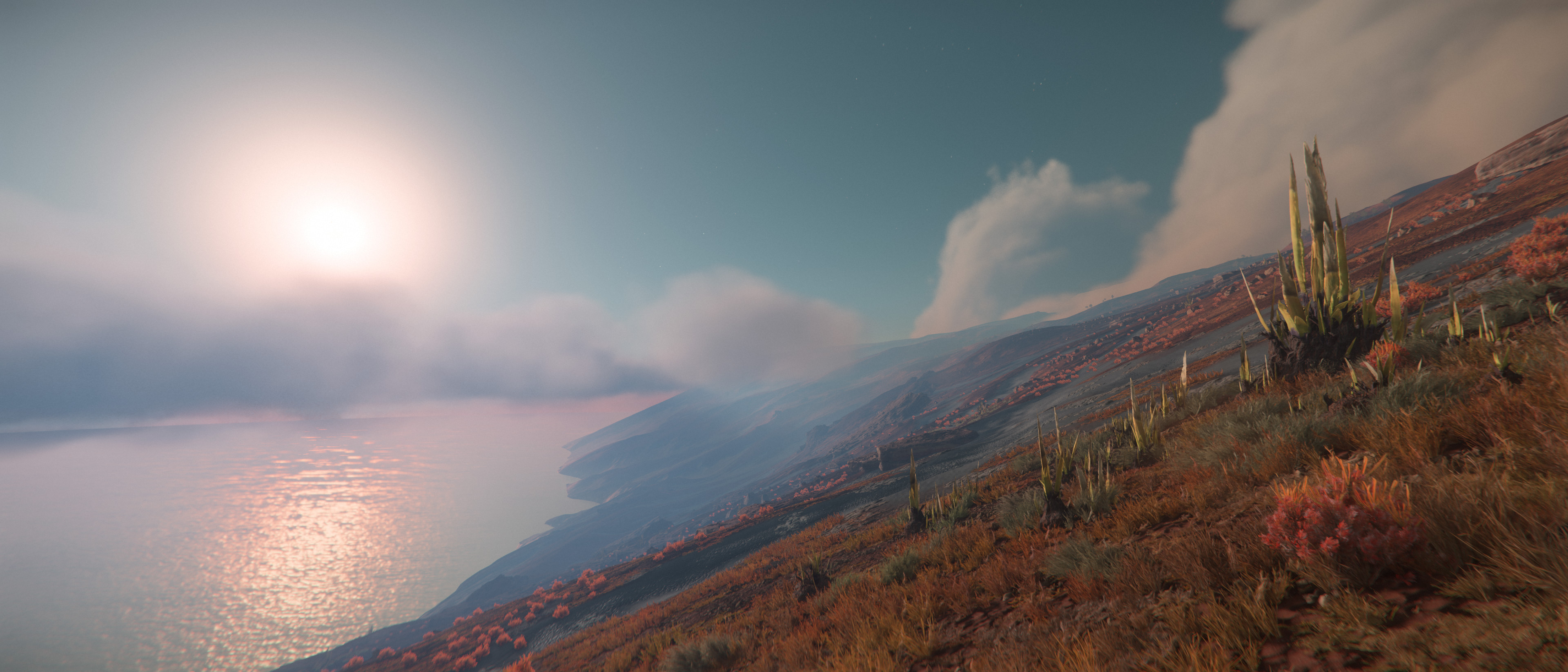
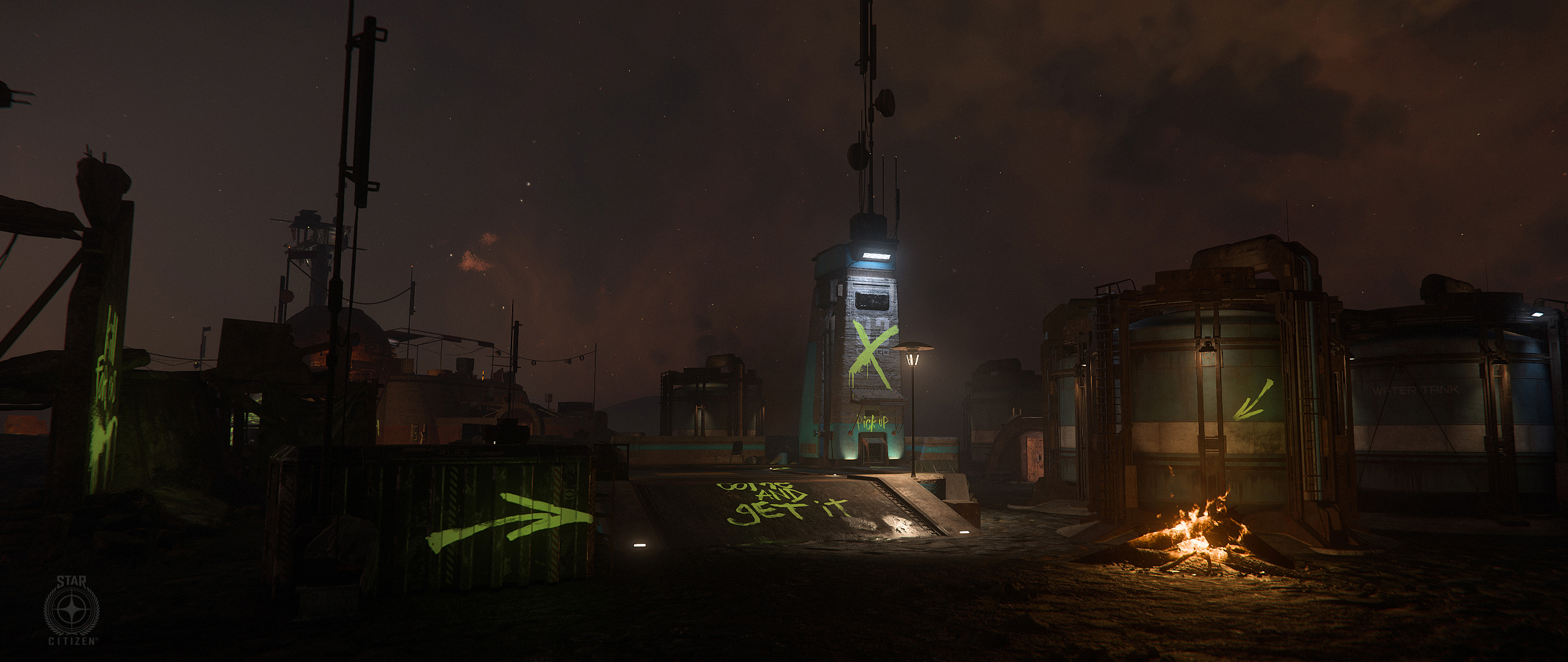
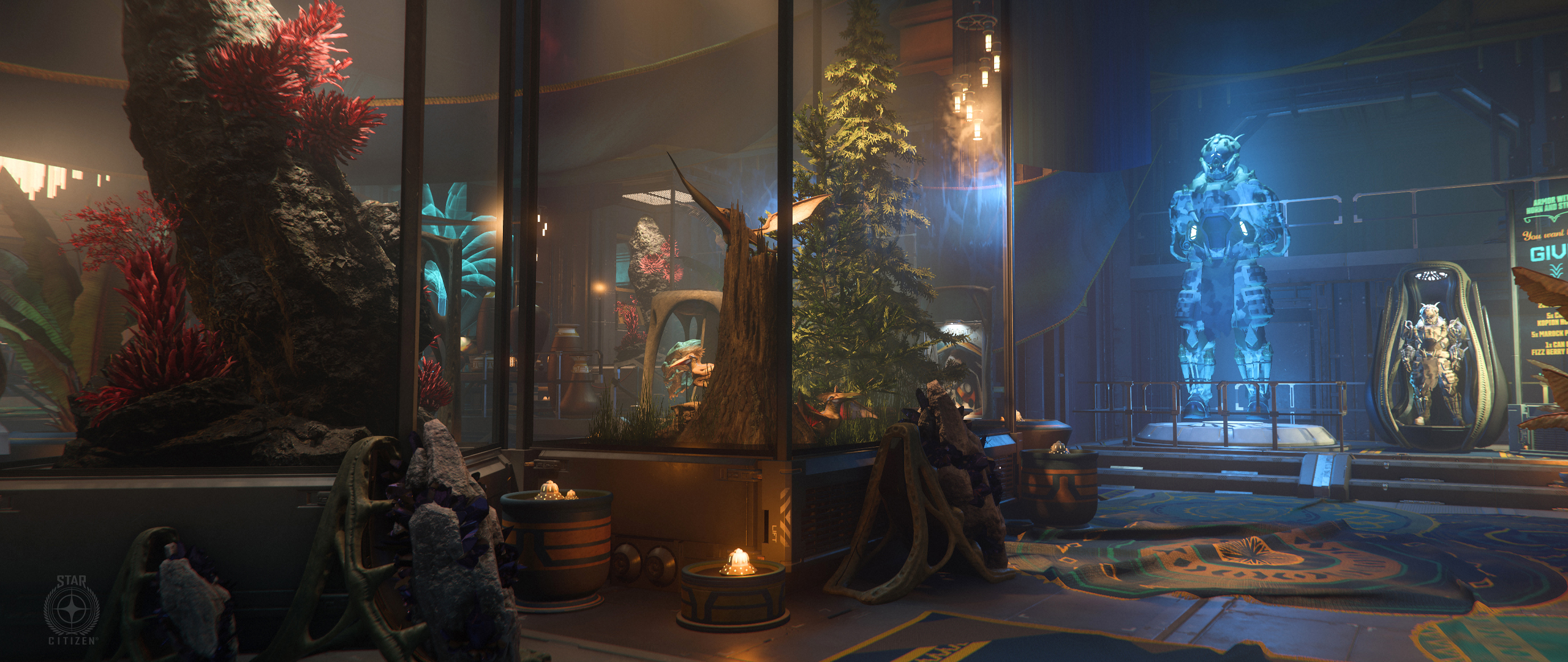
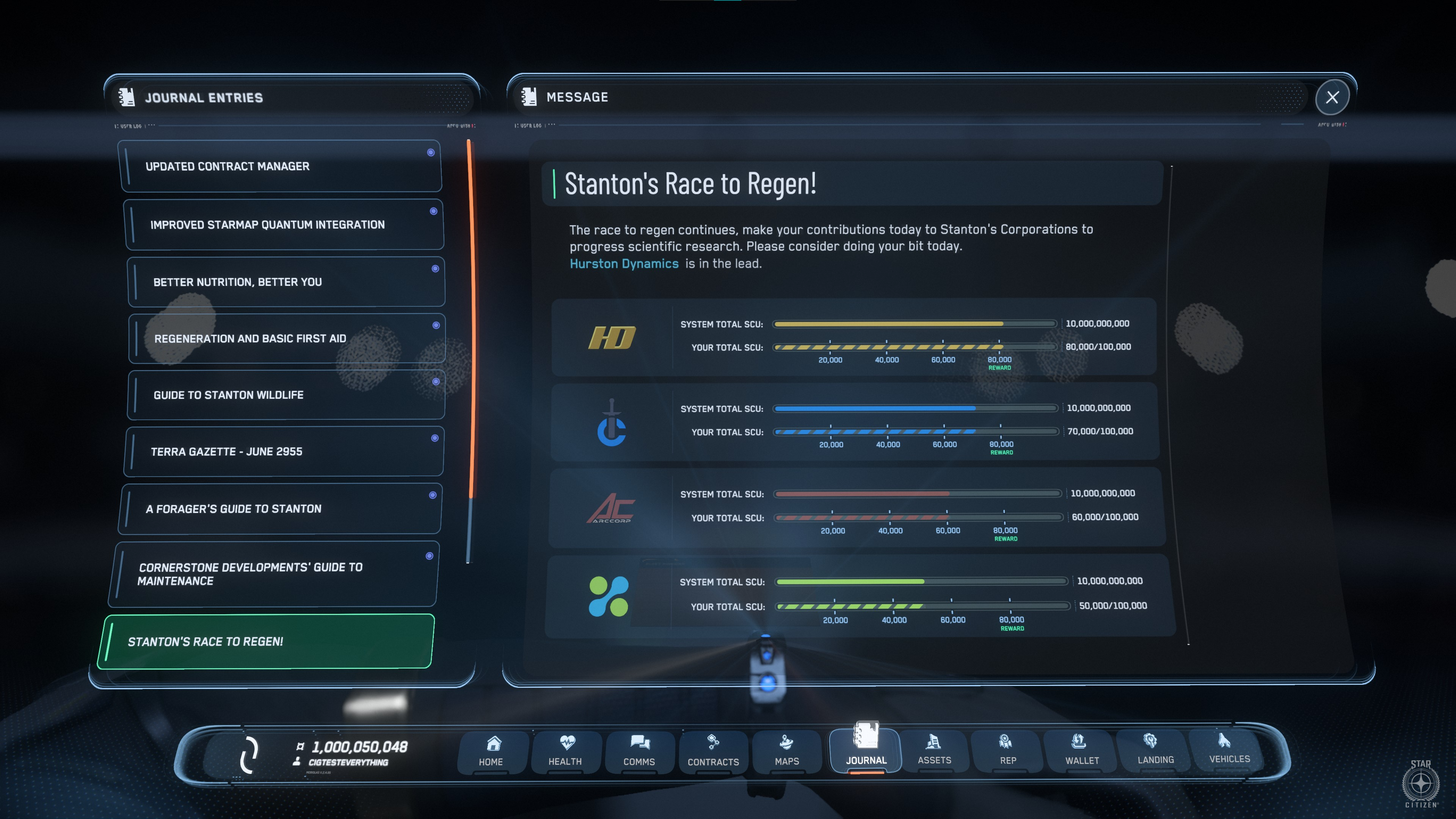
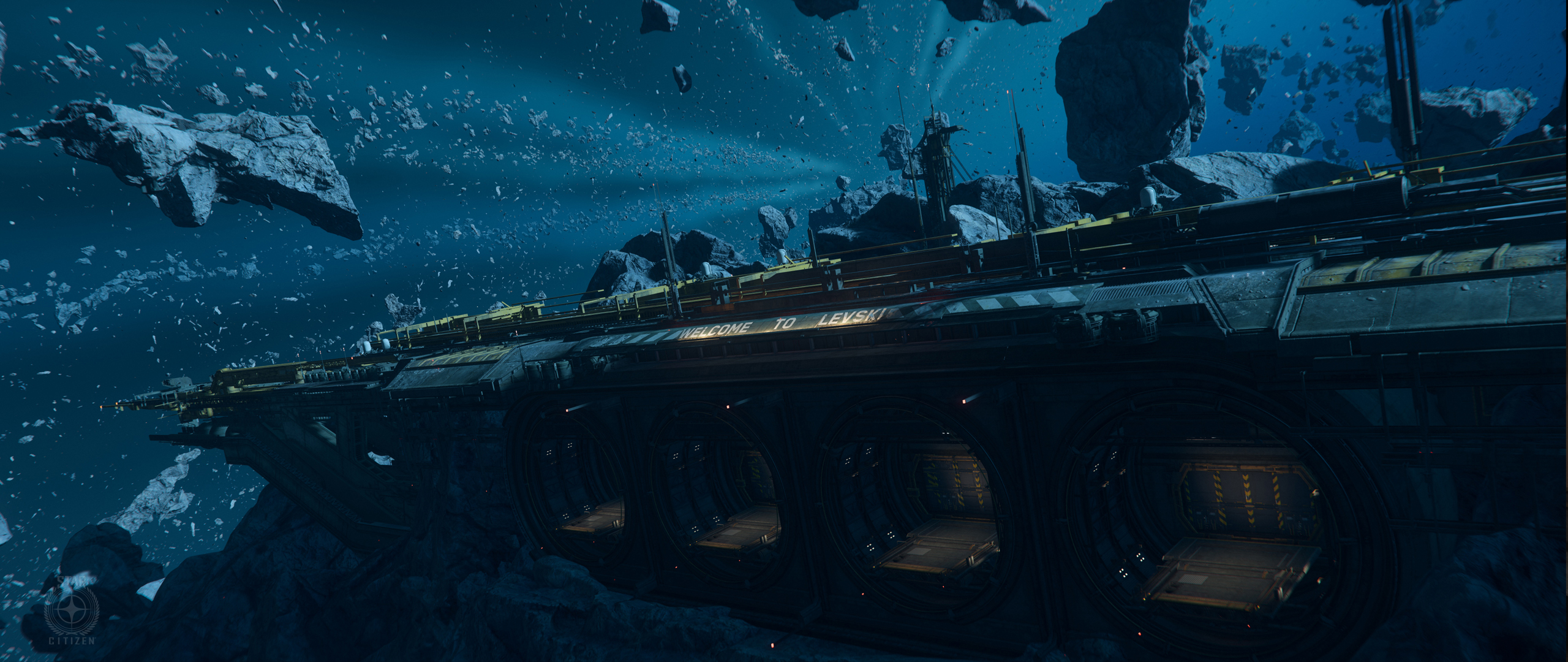
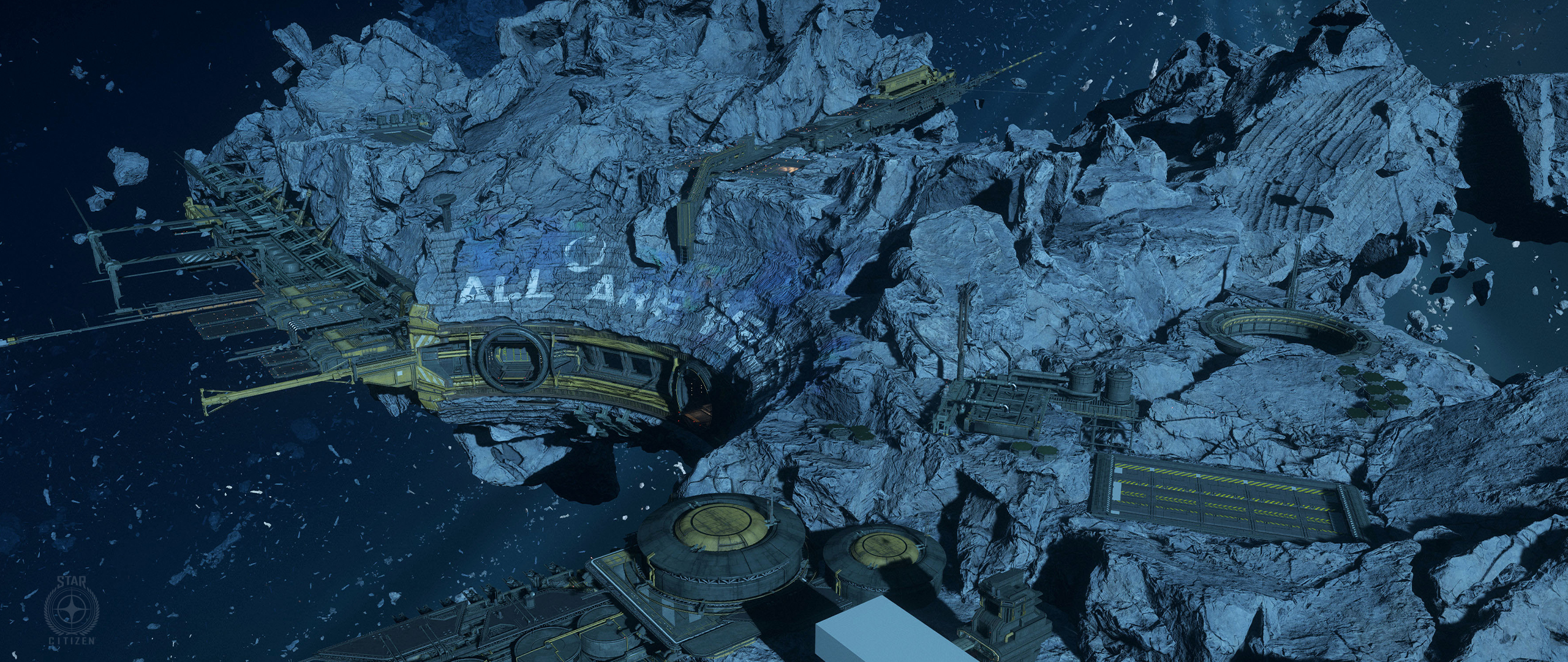
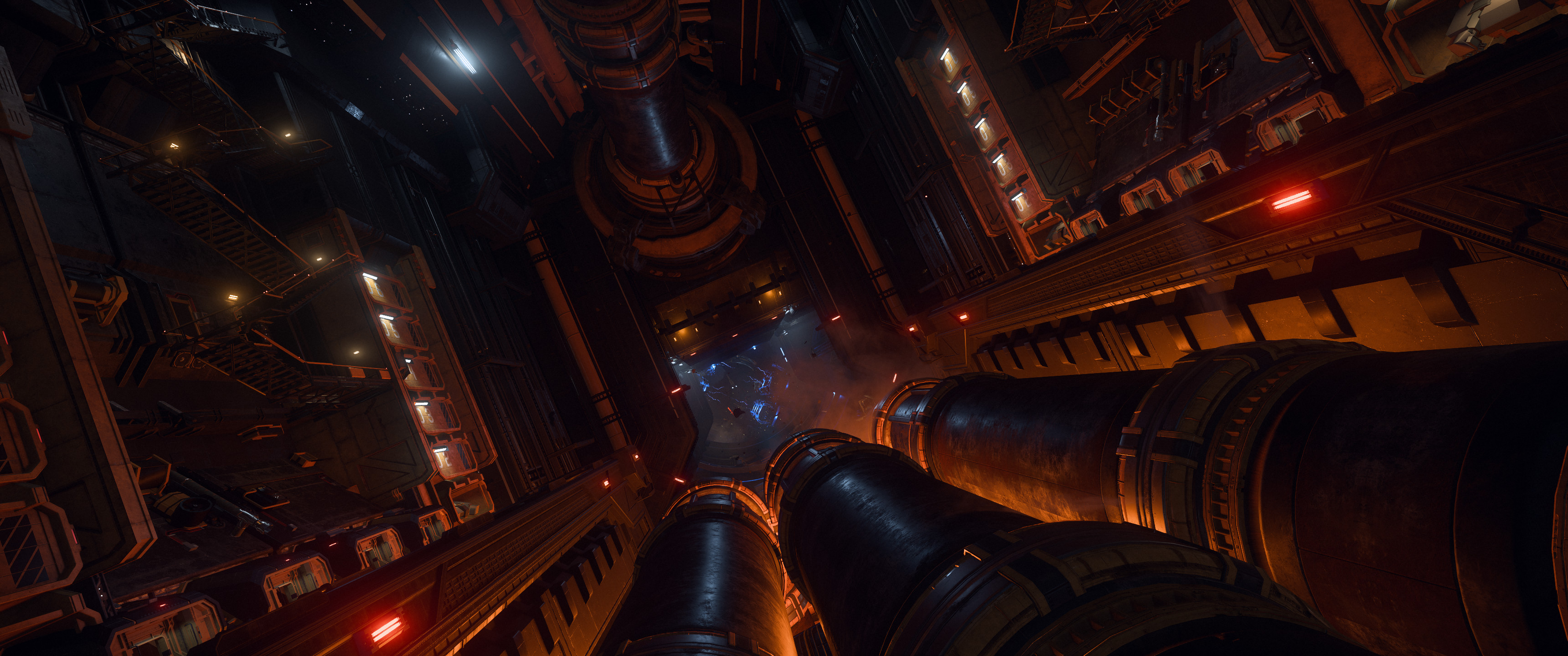
Metadata
- CIG ID
- 17585
- Channel
- Transmission
- Category
- Undefined
- Series
- Monthly Reports
- Comments
- 56
- Published
- 6 years ago (2020-05-06T00:00:00+00:00)