Star Citizen Monthly Report: August 2020
Transmission Undefined Monthly ReportsContent
This month’s report gives us a glimpse into the work done for the Star Citizen Persistent Universe throughout August. Although most teams are still very much working from home, significant progress was made in several areas, including upcoming weapons, the backend, and UI tech. Read on for all last month’s work and a peek into the features coming in Alpha 3.11 and beyond.
AI (Combat)
For human combat, work on realistic firing continued, including the implementation of physical ammo boxes and ammo refill behaviors. They also added functionality to swap weapons so NPCs no longer need to execute the unequip/equip flow to transition from one to another. This also empowers the animators to create smooth transitions when swapping weapons.
The team is currently creating comprehensive documentation to inform realistic combat, such as how character skills and traits influence combat behaviors and how emergent synergy between characters can create a more realistic and flowing combat experience.
AI (Ships)
The Ship AI Team developed a new version of the accuracy system that relates the skill of an AI character (as set by the designers) to its proficiency when using weapons. Previously, when aiming, an AI gunner would alternate between two states, ‘hit’ and ‘miss’, which led to a poor hit rate regardless of AI ability or target location. Now, the skill determines how rapidly the gunner’s aim moves to a location where a hit is more likely. Aiming error is a dynamic variable that changes depending on how fast the target moves relative to the shooter. For example, if a player is almost stationary, the AI will shoot more consistently, forcing players to perform defensive maneuvers. This system applies to all AI, including all varieties of turrets and FPS combat. Furthermore, ship and turret AI can now use charged weapons correctly providing their fire actions permit it, such as the Idris’ rail gun.
AI (Social)
For social AI, they created documentation and examples to allow designers to replicate the bartender functionalities in multiple vendors. This allows them to quickly populate the world with an initial version of interactive characters capable of selling different types of goods.
Multiple fixes for the released bartender scenarios and general PU were also made. They still have several ‘standing on a chair’ bugs to rectify, but iteration has revealed several edge cases on how various systems interact, including networking, streaming, the actor state machine, usables, and navigation.
AI (General)
For general AI work, the team added pause and resume functionality to the movement system. Now, patrol paths can request to wait in a specific location while executing logic. They can also restart the movement at any given time if conditions are met.
The look component code was also rectified to correctly use the target location (not just direction) to enable correct eye convergence, and bugs were identified and fixed in the real digital acting functionality. For Subsumption, the team implemented a generic way to create a ‘C++ enum’ (essentially variables with specific values).
Animation
Animation spent the month working on object and grenade throwing, knockdowns and knockbacks, and several new weapons. They also further developed AI interaction with seats in capital ships, the bartender, ship inspections, and progressed with their work on NPC ammo retrieval. They also continued creating female player faces and emotes.
Art (Environment)
Environment Art spent the month utilizing the tech delivered last month to get Pyro VI to the ‘whitebox complete’ stage. They’re currently placing ground textures, objects, and scattering logic using the paintbrush system. Once the brushes/biomes are finalized, a final painting pass is done to ensure meaningful distribution and a good global read.
Pyro V’s moons also entered into production. “This is great timing for the team, as it lets all the artists grab one moon and go crazy with the new tools. They have a clear idea of how to use the new tech, but this is also a good opportunity to see how the artists go about making a new planet from scratch and use slightly different workflows.” – The Environment Art Team
One of the hopes for this tech is that, along with better visuals, new planets will be created much more quickly than previously possible.
Stanton’s planets and moons are currently being updated with the latest tech too, though this is predominately for technical reasons. Progress was also made on Crusader, with R&D underway into flow maps to bring the gas giant to life.
Art (Ships)
In the US, the Ship Team continued working through the final art stage of the Crusader Mercury, with some areas heading into the flight-ready phase, including damage geometry. This involves creating a second UV set to paint the damage onto as the ship takes damage. Additional detail is being applied to the interior rooms and a functional dashboard with articulating buttons is in development. This will include independent power control for various systems, weapon controls, and more. Each system is planned to have built-in feedback to allow players to see the state of each system at a glance and identify if damage is preventing a system from working.
The UK-based team continued their work on the Crusader Hercules, with focus on the habitation areas, taking them to the final art stage. The lift and the cargo hold also made progress, and the corridor connecting to the bridge was completed, including suit lockers, escape pods, and several component bays. The Origin 100i series is now art-complete and has been handed off to downstream teams, while the recently unveiled Esperia Talon is in the final art stage and receiving a detail pass.
Art (Weapons)
Work continued on the Behring BR2 shotgun, which received its final game-ready setup and LOD pass. The Behring GP-33 grenade launcher received an additional pass to adjust some of the rig and ammunition setup too. The Behring mk4 frag grenade was updated to support the new throw feature and gained a visual indicator to show the ‘cooking’ time before it’s thrown. Greybox work continued on automatic defense turrets and the team looked into missile and missile-rack metrics, ensuring the props work with all missile variants.
Audio
Early in the month, the team tackled the audio for the Behring BR2 shotgun, which led to the significant challenge of finding the right balance between sci-fi and traditional ballistic sounds. They also began composing the music, ambiances, and walla for the upcoming cargo and refinery decks, including the affiliated shops.
“Walla is essentially the sound of crowds – that sort of ‘rabble rabble’ that you might be familiar with. In the cargo deck, there are a bunch of NPCs and walla helps give the area a lot of life and the feeling of business.” – The Audio Team
For music, they’re currently improving the granularity and structure of the system to improve the transition between music based on what’s happening from a gameplay context.
August saw a refactor to the footsteps system to improve the audio on different surfaces, making it more responsive to player movement. They worked on the Origin 100 series, looking at sound effects for moving parts and setting up ambiances and thrusters. The coming month will see them move onto the deathmask and internal damage. Support was also given to the ongoing work on throwing, which involved updated grenade sound effects.
The team is currently in the process of adding additional audio feedback when player ships take damage. For example, when a ship loses a wing, thruster, or weapons, players will hear it happening.
In technical sound design, they evaluated the mix levels across the game and supported the Actor Team with the ‘force reactions’ feature to enable correct audio when players fall and hit different surface types.
As mentioned last month, a new version of Wwise was implemented to give the sound designers more tools and freedom. It could also improve sound stability and prevent a few ongoing audio-related memory issues, meaning that players shouldn’t lose sound in-game. Several bugs in the FOIP & VOIP systems were fixed too.
Backend Services
Last month, changes and fixes were made to the wallet service as it was running ‘hot’ under load, with the entitlement processor updated to support the upcoming super cache. Most of the code for the super cache is finalized, though some reliability and optimization work remains before it can be tested and tuned. The meshed loadout service also went through load testing and is expected to be completed on schedule.
A lot of low-level networking code work was finalized, including network system startup and shutdown, and primary work on the meshed variable service began. This includes the use of direct connections rather than global routing through the diffusion router, which is currently in the test and tuning phase.
Characters
August saw the Character Team focusing on several helmets, subscriber items, and a brand-new armor set. A number of fun items were worked on, including a series of seasonal assets. New uniforms were also designed and progress was made on NPC clothing, including outfits for Orison.
The concept artists worked on material variants for upcoming assets, while the Tech Team prepared and rigged assets due for release in Alpha 3.11. Bugs were fixed and support was given for several upcoming events too.
Community
The Community Team kicked off the month with the “Where in the ‘Verse is Pico?” contest, which asked the community to share screenshots of their adventures with microTech’s diminutive mascot. They also gave a detailed look into how development progress will be shared in the future via the Star Citizen & Squadron 42 Roadmap Update.
This month’s Spectrum AMA featured members of the Environment Art Team answering community questions on Pyro, planet tech, and many other topics within their remit.
In the spirit of the Foundation Festival, the top guides in each area of expertise received their prizes, the winners of the “Best Crew in the ‘Verse” contest were chosen, and August’s Infographic detailed the timeline of Humanity’s ascension to the stars.
Finally for the Community Team, the top-voted questions about the recently unveiled Esperia Talon were answered in their latest ship Q&A.
Engineering (Physics)
In August, the Engineering Team added support for SDF-based local physics grids and SDF sets, interior grid markup for SDFs in the resource compiler, and g-force calculation for all actor entities. They also added a separate g-force collision calculation to the actor entity, new visualization modes to help development, and ‘inspect’ and ‘modify’ properties of static and rigid entities. The option to export bit-voxel geometry via the mesh setup and save it inside CGF was added too.
Optimization-wise, they worked on multi-threaded RC bit-voxel baking, which saves a few hundred bytes on every CPhysicalEntity instance and improves cache locality by reordering members. They also saved four bytes per physical-placeholder instance, disabled debug validation in the final release, moved large geometry into a dedicated bucket during grid population, improved bit-voxel tree-box calculation by using blocks instead of individual voxels, and optimized tree traversals in grid checks
Engineering (Systems)
The Systems Team added an API to the crash handler that allows the dumping of cigprofile data. This will help them analyze what the system was doing shortly before running into a deadlock and watch dog time out and log memory usage at the time of the crash.
Deep analysis was done to resolve the disparity between tracked and system-reported memory use. Several improvements were made on both Windows and Linux to correctly track data moving forward, including low level allocator reserved pages and third-party allocations. They continued looking into the SIMD and memory layout code for zone partitions, implemented faster execution for scoped FPE enable and disable by eliminating linear search through all registered threads, and fixed several issues with ISPC integration. They also reduced the memory use of P4K system and changed the MemoryAddressRange to use CIG API instead of native OS API for memory tracking.
Engineering (Rendering)
Work on the Gen12 renderer continued, with the team adding support for instancing and a ‘keep alive’ list so that GPUDevice objects are kept active until the end of a frame. Several refactors and optimizations were made too.
Cleanup in the shader system and renderer for thread safety continued, as did G12 brush rendering. They also started to look into DX11.1 API support (Windows 8.1 and up) for binding CBs using offsets for intermediate performance improvements until Vulkan ships. They also added support for custom texture views when using pass resources.
Volumetric fog to PassResource was ported to prevent the shader parser from stripping global symbols. Some severe Alpha 3.10 GPU memory leaks were fixed too.
For planet atmosphere unified raymarching, the team established a general atmosphere context to avoid accessing resources globally. This make it easier and safer to reuse shared code. All related shader code was refactored too. For temporal reprojection, they implemented options for: neighborhood clipping, refining color bbox using neighborhood variance, compression (based on scene luminance), and color space conversion of color data for tighter bbox to reduce errors introduce by clipping and clamping. The depth dilation code was futher developed too.
R&D into volumetric clouds continued and detailed plans for experiments and next steps were drafted. The initial set up for the volumetric cloud render environment was completed, code was restructured to allow it to be shared between planet atmosphere and volumetric cloud shaders, and the initial pass and injection of cloud raymarch results into the unified atmosphere raymarcher was implemented. The team made performance improvements to the terrain displacement mapping and optimized the shader parser to improve turnaround times when editing shader code.
Finally, Engineering implemented fast bicubic b-spline and Catmull Rom spline interpolation variants for two-to-four channel texture data, further bi-cubic spline evaluation optimizations, made a planet terrain shadow pass, and fixed time precision issue in cloud animation.
Features (Gameplay)
The beginning of the month saw Gameplay Features focusing on fixing critical bugs and polishing features for the Alpha 3.10.1 patch release. Once complete, they finished converting the front-end screens of the Persistent Universe from Flash to Building Blocks. They’re now focusing on the first art pass, with plans to have secondary and tertiary passes in the future.
The team also looked into the cargo hauling profession. Work is being done to see it in a much broader sense, with aspirations to expanding the system to make it more interactive and exhilarating.
“Cargo haulers will ultimately need to monitor their cargo, checking to make sure it’s stable and in good condition while they travel. Beginner haulers will need to check things like temperature while hauling food, whereas experienced haulers may need to check the stability of volatile shipments. We feel the new design will be a great update for the profession and look forward to seeing the reactions from citizens when it comes online!” – The Gameplay Features Team
Alongside this work, the team is working on a new reputation system. Citizens will soon have a reputation score that changes as they complete missions or tasks around the universe. The system will allow players to earn perks through reputation gains and will tie into player perks. It will also add support for NPC organizations and their rankings. The team also created a new service to track reputation so that it won’t roll back when they push a new build and wipe the databases.
Features (Vehicles)
The Vehicle Feature Team spent considerable time throughout August working on much-needed usability features for vehicles, including showing which hangar a player’s ship is in after it’s spawned from an ASOP terminal. For a future release, they’re working on a feature to highlight a ship’s available entrances too, such as ladders, doors, and elevators.
Work on docking continues. Various aspects of the UI were iterated on to adequately detail docking progress and to give suitable guidance to a docking port regardless of its type or orientation. Different IFCS control modes are also being investigated to let players control the ship relative to a port to make docking easier.
The team also worked on the headless client automated testing system that enables restricted area landing splines to be tested automatically as part of the flow.
Graphics
The Graphics Team predominantly focused on the Gen12 renderer last month, with time dedicated spcifically to the conversion process so that the old renderer code can be deprecated as quickly as possible. Various systems are currently being converted, including gas cloud rendering, shadow masking, and run-time environment probes. Improvements were also made to the rendering API to allow simpler and more robust client code that’s less prone to human error. Work on the Vulkan backend made good progress too. The shaders were cleaned up to remove all unnecessary reliance on CPU uploaded data; modern GPU performance means it’s more important to save the CPU work in the renderer and driver than a few tiny instructions on the GPU.
Work on the organic shader continued too, bringing tighter integration with the planets to enable the artists to use assets in a variety of biomes and have them automatically integrate into their surroundings.
Level Design
The Level Design Team continued to work on the new Rest Stop interiors, ensuring space for future expansions within each layout. Orison is progressing well and recently transitioned from whitebox to greybox.
Lighting
Last month, the Lighting Team added the final touches to the upcoming cargo deck module. This involved lighting the interior floor space, accompanying shop location, and new exterior add-on modules, ensuring they visually integrate with the rest of the station.
The Lighting Team also began preliminary work on Orison. In these early stages, the team’s role is to ensure that the space can accommodate the technical requirements for ideal cubemap placement and prevent any performance issues further down the line. Since lighting is one of the most render-intensive elements of the frame, it’s important that locations are set up from the beginning to avoid any potential issues.
R&D work is still ongoing to improve NPC and character lighting in comms calls. New tech is being developed to spawn a dynamic lighting rig onto a character, which takes into account the surrounding environment lighting and re-projects it directly onto the character’s face. Often due to performance or practical reasons, there can’t always be a light source casting perfectly onto a character in all angles and situations. This new tech has the potential to allow for more cinematic lighting on NPC interactions, irrelevant of the environment.
Narrative
The Narrative Team delivered a wave of new lore to the RSI website. On the Imperator election front, a new interview with candidate Mira Ngo aired on financial news show Kaizen and dozens of new Galactapedia articles were added, including one on the famed Phiyi Tower). on Charon III. The team also hosted a talk for new employees to give them a solid foundational understanding of the story so far.
They also continued to support the ongoing development of Orison, with additional layers of detail being added as work progresses. For Alpha 3.11, new mission contract text, journal entries, and item names and descriptions were handed off to design, along with writeups on a few expanded laws.
With the bartender having received so many recent improvements, the team looked at possible improvements that will hopefully make their way to other shopkeepers and vendors in upcoming releases.
Effort was also spent further fleshing out the narrative timeline mentioned in last month’s report, including plans for expanded mission content for future releases. Finally, the latest round of bugs that made their way to the team via the Issue Council after the release of 3.10 were addressed.
Player Relations
Player Relations spent most of the month supporting and investigating legacy Alpha 3.9 and 3.10 issues, including isolating, identifying, and working with other teams to resolve a variety of persistence bugs. This resulted in 93,000 ships being returned to player accounts. Support for this work will continue throughout the year.
Props
Work continued on the cargo deck props, with consoles and material work completed for various heavy machinery. A pass was completed on the larger cargo containers, adding more branding and creating a less-demanding background dressing set for the Environment Team. A new set of screens was created to support the conversion to Building Block elevator screens, which will replace the old manual buttons.
A set of new volatile cargo assets was kicked off too. Each of the three types requires unique visuals to reinforce their gameplay along with cargo cage assets to help bed them into their surroundings. Props also supported the new push/pull feature work being developed by the Actor Feature Team, which involved the conversion and technical setup of some existing trolley props.
QA
QA focused on numerous QATRs, including a proto head change request that affected how AI were procedurally generated and required the team to check all NPCs in the game. An animation loader QATR meant they had to load into every area and multiple editor levels to ensure objects with moving parts worked as they did before. A SOCS update QATR required the team to load into all the areas to ensure nothing was broken and there were no performance drops.
They also continued to create test maps for the Locations Team to learn about the setups and further test the systems used. The Tools Team were also supported with the testing of DataForge, StarWords, ExcelCore, and the sandbox editor.
Turbulent
Turbulent’s Game Services Team delivered a new iteration of the CigTrace visualizer that enables game masters to easily visualize and compare player movement for given periods. A full rework of how in-game notifications are managed is currently in progress. The notification service has reached its first milestone, which enables other teams to start integrating new notification processes.
Significant effort was invested in building a new backend architecture to facilitate high player concurrency on game servers. The team has been setting up the first steps to enable the onboarding of more developers onto the project. Turbulent’s Web Platform Team also supported the recent initiatives for the Greycat ROC and Esperia Talon pages.
User Interface (UI)
Most ‘visual’ teams have embedded UI artists, all of who have been working on a variety of upcoming features. For the Actor Feature Team, the artists polished the Personal Inner Though system and external inventory, both of which will be used in the PU and SQ42. New concepts for holo-tech were devised for the Vehicle Feature Team, while adverts and branding for the cargo deck were created for the Environment Team.
Feature-wise, the UI Team created new designs for the reworked starmap.“While it shouldn’t be expected any time soon, we know that it’s a piece of core functionality that you all use regularly, so we want to improve the experience of doing so.” – The UI Team
They also began looking at the various fonts used throughout the game with the goal of unifying and updating them.
The UI Tech Team worked on ‘canvas-slicing’ tech, which will give other teams more freedom to add 2D UI to 3D spaces (via Building Blocks). They also began looking into refactoring the color system. The aim is to aid developers by making it easier to adjust colors across various parts of the UI using a stylesheet rather than adjusting RGB values in each element. It will also allow vector gradients to be used in UI.
VFX
Last month, the VFX Team progressed with the refinery location effects, including improvements to the molten metal pouring from large containers in the background, which were in pre-production last month. They also made capital ship improvements, specifically the way gradual damage reads across the hull.
Work continued on the fire hazard propagation prototype, this time focusing on networking to make sure it adequately syncs between the client and server. Further concepts were created for shields, including the visual read of impacts to show players the health of the shield, and improvements were made to quantum travel VFX.
WE’LL SEE YOU NEXT MONTH…
Der Bericht dieses Monats gibt uns einen Einblick in die Arbeit, die im August für das Star Citizen Persistent Universe geleistet wurde. Obwohl die meisten Teams immer noch sehr viel von zu Hause aus arbeiten, wurden in verschiedenen Bereichen erhebliche Fortschritte gemacht, darunter kommende Waffen, das Backend und die UI-Technologie. Lest weiter für die gesamte Arbeit des letzten Monats und einen Blick in die Features, die in Alpha 3.11 und darüber hinaus kommen werden.
KI (Kampf)
Für den Kampf der Menschen wurde die Arbeit am realistischen Schießen fortgesetzt, einschließlich der Einführung von physischen Munitionskisten und dem Verhalten beim Nachfüllen von Munition. Außerdem wurde die Funktionalität hinzugefügt, Waffen zu tauschen, so dass die NSCs nicht länger den Unquip/Equip-Flow ausführen müssen, um von einem zum anderen zu wechseln. Dies befähigt die Animatoren auch dazu, sanfte Übergänge zu schaffen, wenn sie die Waffen tauschen.
Das Team erstellt derzeit eine umfassende Dokumentation, um über realistische Kämpfe zu informieren, z.B. darüber, wie Charakterfertigkeiten und -eigenschaften das Kampfverhalten beeinflussen und wie durch die entstehende Synergie zwischen den Charakteren ein realistischeres und fließenderes Kampferlebnis geschaffen werden kann.
KI (Schiffe)
Das Schiffs-KI-Team hat eine neue Version des Genauigkeitssystems entwickelt, das die Fertigkeit eines KI-Charakters (wie von den Designern festgelegt) mit seinem Können im Umgang mit Waffen in Beziehung setzt. Früher wechselte ein KI-Schütze beim Zielen zwischen zwei Zuständen, 'Treffer' und 'Fehlschuss', was zu einer schlechten Trefferquote unabhängig von der KI-Fähigkeit oder dem Zielort führte. Jetzt bestimmt die Fertigkeit, wie schnell sich das Ziel des Schützen an einen Ort bewegt, an dem ein Treffer wahrscheinlicher ist. Der Zielfehler ist eine dynamische Variable, die sich ändert, je nachdem wie schnell sich das Ziel relativ zum Schützen bewegt. Wenn ein Spieler zum Beispiel fast stationär ist, schießt die KI gleichmäßiger und zwingt die Spieler zu Abwehrmanövern. Dieses System gilt für alle KI, einschließlich aller Arten von Geschütztürmen und FPS-Kämpfen. Außerdem können Schiffs- und Turm-KI nun geladene Waffen korrekt einsetzen, sofern ihre Schussaktionen dies zulassen, wie zum Beispiel das Railgun von Idris.
KI (sozial)
Für die soziale KI haben sie Dokumentationen und Beispiele erstellt, um den Designern zu ermöglichen, die Barkeeper-Funktionalitäten in verschiedenen Anbietern nachzubilden. Auf diese Weise können sie die Welt schnell mit einer ersten Version interaktiver Charaktere bevölkern, die in der Lage sind, verschiedene Arten von Waren zu verkaufen.
Mehrere Korrekturen für die veröffentlichten Barkeeper-Szenarien und allgemeine PU wurden ebenfalls vorgenommen. Es gibt immer noch einige 'auf einem Stuhl stehend'-Fehler zu beheben, aber die Iteration hat einige Grenzfälle aufgedeckt, wie verschiedene Systeme interagieren, einschließlich Netzwerk, Streaming, die Akteurszustandsmaschine, Nutzbarkeit und Navigation.
KI (Allgemein)
Für die allgemeine KI-Arbeit hat das Team die Pause- und Wiederaufnahme-Funktionalität zum Bewegungssystem hinzugefügt. Jetzt können Patrouillenpfade anfordern, an einem bestimmten Ort zu warten, während sie die Logik ausführen. Sie können die Bewegung auch jederzeit neu starten, wenn die Bedingungen erfüllt sind.
Der Code der Look-Komponente wurde ebenfalls korrigiert, um den Zielort korrekt zu verwenden (nicht nur die Richtung), um eine korrekte Augenkonvergenz zu ermöglichen, und es wurden Fehler in der echten digitalen Schauspielfunktionalität identifiziert und behoben. Für Subsumption implementierte das Team eine generische Methode, um eine 'C++-Enumeration' zu erstellen (im Wesentlichen Variablen mit bestimmten Werten).
Animation
Die Animation hat den Monat damit verbracht, an Objekt- und Granatewerfen, Niederschlägen und Rückschlägen und einigen neuen Waffen zu arbeiten. Außerdem haben sie die KI-Interaktion mit Sitzen in Großkampfschiffen, dem Barkeeper, Schiffsinspektionen weiterentwickelt und ihre Arbeit an der NSC-Munitionsbeschaffung vorangetrieben. Außerdem haben sie weiterhin weibliche Spielergesichter und Emotes erstellt.
Kunst (Umgebung)
Environment Art hat den ganzen Monat damit verbracht, die im letzten Monat gelieferte Tech zu benutzen, um Pyro VI in die 'Whitebox complete'-Phase zu bringen. Momentan werden Bodentexturen, Objekte und Streuungslogik mit dem Pinselsystem platziert. Sobald die Pinsel/Biome fertiggestellt sind, wird ein letzter Maldurchgang durchgeführt, um eine sinnvolle Verteilung und eine gute globale Lesbarkeit zu gewährleisten.
Die Monde von Pyro V sind ebenfalls in Produktion gegangen. "Das ist ein großartiges Timing für das Team, denn so können sich alle Künstler einen Mond schnappen und mit den neuen Werkzeugen verrückt spielen. Sie haben eine klare Vorstellung davon, wie die neue Technologie zu verwenden ist, aber das ist auch eine gute Gelegenheit zu sehen, wie die Künstler einen neuen Planeten von Grund auf neu erschaffen und leicht veränderte Arbeitsabläufe verwenden. - Das Umweltkunst-Team
Eine der Hoffnungen für diese Technologie ist, dass zusammen mit einer besseren Grafik, neue Planeten viel schneller als bisher möglich erstellt werden können.
Stantons Planeten und Monde werden derzeit ebenfalls mit der neuesten Tech aktualisiert, obwohl dies hauptsächlich aus technischen Gründen geschieht. Fortschritte gab es auch bei Crusader, wo die Forschung und Entwicklung von Flow Maps im Gange ist, um den Gasriesen zum Leben zu erwecken.
Kunst (Schiffe)
In den USA arbeitete das Schiffsteam weiter an der letzten Kunststufe des Kreuzfahrermerkurses, wobei einige Bereiche in die Flugbereitschaftsphase übergingen, darunter auch die Schadensgeometrie. Dazu gehört die Erstellung eines zweiten UV-Sets, auf das der Schaden gemalt wird, wenn das Schiff Schaden nimmt. Weitere Details werden an den Innenräumen angebracht und ein funktionelles Armaturenbrett mit Gelenkknöpfen ist in Entwicklung. Dies wird eine unabhängige Energiekontrolle für verschiedene Systeme, Waffenkontrollen und mehr beinhalten. Jedes System soll über eine eingebaute Rückmeldung verfügen, damit die Spieler den Zustand jedes Systems auf einen Blick erkennen und erkennen können, ob ein System aufgrund von Schäden nicht funktioniert.
Das in Großbritannien ansässige Team setzte seine Arbeit an den Crusader Hercules fort, wobei der Schwerpunkt auf den Wohnbereichen lag, um sie bis zur letzten Kunststufe zu bringen. Der Aufzug und der Frachtraum machten ebenfalls Fortschritte, und der Korridor, der mit der Brücke verbunden ist, wurde fertiggestellt, einschließlich der Schließfächer für die Anzüge, der Rettungskapseln und einiger Komponentenbuchten. Die Origin 100i-Serie ist nun kunstfertig und wurde an die Downstream-Teams übergeben, während sich der kürzlich enthüllte Esperia Talon in der letzten Kunststufe befindet und einen Detailpass erhält.
Kunst (Waffen)
Die Arbeit an der Behring BR2 Schrotflinte ging weiter, die ihr endgültiges spielbereites Setup und den LOD-Pass erhielt. Der Behring GP-33 Granatwerfer erhielt einen zusätzlichen Pass, um auch einen Teil des Riggs und des Munitionssetups anzupassen. Die Behring mk4 Frag-Granate wurde aktualisiert, um das neue Wurf-Feature zu unterstützen und erhielt eine visuelle Anzeige, die die 'Kochzeit' vor dem Wurf anzeigt. Die Greybox-Arbeiten an den automatischen Verteidigungstürmen wurden fortgesetzt und das Team untersuchte die Raketen- und Raketengestellmetriken, um sicherzustellen, dass die Requisiten mit allen Raketenvarianten funktionieren.
Audio
Anfang des Monats hat sich das Team mit dem Audio für die Behring BR2-Flinte beschäftigt, was zu der großen Herausforderung führte, die richtige Balance zwischen Sci-Fi und traditionellen ballistischen Klängen zu finden. Außerdem begannen sie mit der Komposition der Musik, der Stimmungen und der Walla für die kommenden Fracht- und Raffineriedecks, einschließlich der angeschlossenen Läden.
"Walla ist im Wesentlichen der Klang von Menschenmengen - diese Art von 'Gesindel', die du vielleicht kennst. Im Frachtdeck gibt es einen Haufen NPCs und Walla hilft, der Gegend eine Menge Leben und das Gefühl von Business zu geben". - Das Audio-Team
Was die Musik betrifft, so verbessern sie derzeit die Granularität und Struktur des Systems, um den Übergang zwischen der Musik, basierend auf dem, was in einem Gameplay-Kontext passiert, zu verbessern.
Im August wurde das Fußspielsystem überarbeitet, um den Ton auf verschiedenen Oberflächen zu verbessern, damit es besser auf die Bewegungen des Spielers reagiert. Sie arbeiteten an der Origin 100 Serie, suchten nach Soundeffekten für bewegliche Teile und stellten Stimmungen und Triebwerke ein. Im kommenden Monat werden sie sich auf die Totenmaske und den inneren Schaden konzentrieren. Unterstützung gab es auch bei den laufenden Arbeiten am Werfen, bei denen es um aktualisierte Granatensoundeffekte ging.
Das Team ist derzeit dabei, zusätzliches Audio-Feedback hinzuzufügen, wenn Spielerschiffe Schaden nehmen. Zum Beispiel, wenn ein Schiff einen Flügel, ein Triebwerk oder Waffen verliert, werden die Spieler dies hören.
Beim technischen Sounddesign haben sie die Mischstufen im ganzen Spiel ausgewertet und das Schauspieler-Team mit dem Feature 'Kraftreaktionen' unterstützt, um den korrekten Ton zu ermöglichen, wenn Spieler fallen und auf verschiedene Oberflächentypen treffen.
Wie bereits letzten Monat erwähnt, wurde eine neue Version von Wwise implementiert, um den Sounddesignern mehr Werkzeuge und Freiheiten zu geben. Es könnte auch die Soundstabilität verbessern und ein paar laufende audio-bezogene Speicherprobleme verhindern, was bedeutet, dass Spieler im Spiel keinen Sound verlieren sollten. Mehrere Fehler in den FOIP & VOIP Systemen wurden ebenfalls behoben.
Backend-Dienste
Letzten Monat wurden Änderungen und Korrekturen am Brieftaschenservice vorgenommen, da er unter Last 'heiß' lief, wobei der Berechtigungsprozessor aktualisiert wurde, um den kommenden Super-Cache zu unterstützen. Der größte Teil des Codes für den Super-Cache ist fertig gestellt, obwohl es noch einige Arbeiten an der Zuverlässigkeit und Optimierung gibt, bevor er getestet und abgestimmt werden kann. Der Meshed-Loadout-Service wurde ebenfalls einem Lasttest unterzogen und wird voraussichtlich planmäßig abgeschlossen werden.
Viele Arbeiten am Low-Level-Netzwerkcode wurden abgeschlossen, einschließlich des Hoch- und Herunterfahrens des Netzwerksystems, und die primären Arbeiten am Meshed-Variable-Service begannen. Dazu gehört die Verwendung von direkten Verbindungen anstelle des globalen Routings durch den Diffusion-Router, der sich derzeit in der Test- und Abstimmungsphase befindet.
Charaktere
Im August konzentrierte sich das Charakter-Team auf mehrere Helme, Abonnenten-Gegenstände und ein brandneues Rüstungsset. Es wurde an einer Reihe lustiger Gegenstände gearbeitet, darunter eine Reihe von saisonalen Gegenständen. Es wurden auch neue Uniformen entworfen und Fortschritte bei der NSC-Kleidung gemacht, einschließlich der Outfits für Orison.
Die Konzeptkünstler arbeiteten an Materialvarianten für kommende Gegenstände, während das Tech Team die Gegenstände, die in Alpha 3.11 veröffentlicht werden sollen, vorbereitete und zusammenstellte. Außerdem wurden Bugs behoben und Unterstützung für verschiedene kommende Events gegeben.
Gemeinschaft
Das Community Team startete den Monat mit dem "Wo im 'Verse ist Pico?"-Wettbewerb, bei dem die Community aufgefordert wurde, Screenshots ihrer Abenteuer mit dem winzigen Maskottchen von microTech zu teilen. Außerdem gaben sie einen detaillierten Einblick, wie der Entwicklungsfortschritt in Zukunft über das Star Citizen & Squadron 42 Roadmap Update geteilt wird.
In der diesmonatigen Spectrum AMA haben Mitglieder des Environment Art Teams Fragen der Community zu Pyro, Planet Tech und vielen anderen Themen aus ihrem Aufgabenbereich beantwortet.
Im Geiste des Foundation Festivals erhielten die Top-Guides in jedem Fachgebiet ihre Preise, die Gewinner des Wettbewerbs "Beste Crew im 'Verse'" wurden ausgewählt und im August wurde im Infographic die Zeitleiste des Aufstiegs der Menschheit zu den Sternen detailliert beschrieben.
Und schließlich wurden dem Community Team die am häufigsten gestellten Fragen über das kürzlich enthüllte Esperia Talon in ihrem neuesten Schiff Q&A beantwortet.
Ingenieurwesen (Physik)
Im August fügte das Ingenieurteam Unterstützung für SDF-basierte lokale Physik-Grids und SDF-Sets, innere Gitterauszeichnung für SDFs im Ressourcen-Compiler und g-force-Berechnung für alle Akteur-Entitäten hinzu. Sie fügten auch eine separate G-Kraft-Kollisionsberechnung für die actor Entity hinzu, neue Visualisierungsmodi, um die Entwicklung zu unterstützen, und 'inspizieren' und 'modifizieren' Eigenschaften von statischen und starren Entities. Die Option, Bit-Voxel-Geometrie über das Mesh-Setup zu exportieren und im CGF zu speichern, wurde ebenfalls hinzugefügt.
Optimierungstechnisch arbeiteten sie am Multi-Threaded-RC-Bit-Voxel-Backing, das ein paar hundert Bytes auf jeder CPhysicalEntity-Instanz spart und die Cache-Lokalität durch die Neuordnung der Mitglieder verbessert. Außerdem haben sie vier Bytes pro physischer Platzhalter-Instanz eingespart, die Debug-Validierung in der finalen Version deaktiviert, große Geometrien während der Grid-Population in einen dedizierten Eimer verschoben, die Bit-Voxel-Baum-Box-Berechnung durch die Verwendung von Blöcken statt einzelner Voxel verbessert und die Baumdurchquerung bei Grid-Checks optimiert.
Ingenieurwesen (Systeme)
Das Systems Team hat dem Crashhandler eine API hinzugefügt, die das Dumpen von Zigprofildaten erlaubt. Dies wird ihnen helfen, zu analysieren, was das System kurz vor einem Deadlock gemacht hat, und das Timeout des Hundes zu beobachten und den Speicherverbrauch zum Zeitpunkt des Absturzes zu protokollieren.
Eine tiefgehende Analyse wurde durchgeführt, um die Diskrepanz zwischen dem verfolgten und dem vom System gemeldeten Speicherverbrauch aufzulösen. Sowohl unter Windows als auch unter Linux wurden mehrere Verbesserungen vorgenommen, um die Daten korrekt zu verfolgen, einschließlich der von Low-Level-Allokatoren reservierten Seiten und der Zuweisung von Drittanbietern. Sie setzten die Untersuchung des SIMD- und Speicher-Layout-Codes für Zonenpartitionen fort, implementierten eine schnellere Ausführung für scoped FPE aktivieren und deaktivieren, indem die lineare Suche durch alle registrierten Threads eliminiert wurde, und beendeten mehrere Probleme mit der ISPC-Integration. Sie reduzierten auch den Speicherverbrauch des P4K-Systems und änderten den MemoryAddressRange, um die CIG-API anstelle der nativen OS-API für die Speicherverfolgung zu verwenden.
Technik (Rendering)
Die Arbeit am Gen12-Renderer wurde fortgesetzt, wobei das Team Unterstützung für Instanzierung und eine 'Keep Alive'-Liste hinzufügte, so dass GPUDevice-Objekte bis zum Ende eines Frames aktiv bleiben. Es wurden auch verschiedene Refactors und Optimierungen vorgenommen.
Aufräumarbeiten im Shader-System und Renderer für die Threadsicherheit wurden fortgesetzt, ebenso das G12-Pinsel-Rendering. Sie begannen auch, sich mit der DX11.1-API-Unterstützung (Windows 8.1 und höher) für das Binden von CBs unter Verwendung von Offsets für zwischenzeitliche Leistungsverbesserungen zu beschäftigen, bis Vulkan ausläuft. Sie fügten auch Unterstützung für benutzerdefinierte Texturansichten bei der Verwendung von Pass-Ressourcen hinzu.
Volumetrischer Nebel wurde auf PassResource portiert, um den Shader-Parser daran zu hindern, globale Symbole zu entfernen. Einige schwere Alpha 3.10 GPU-Speicherlecks wurden ebenfalls behoben.
Für das vereinheitlichte Raymarching der Planetenatmosphäre hat das Team einen allgemeinen Atmosphärenkontext erstellt, um den globalen Zugriff auf Ressourcen zu vermeiden. Dies macht es einfacher und sicherer, geteilten Code wiederzuverwenden. Der gesamte zugehörige Shader-Code wurde ebenfalls überarbeitet. Für die zeitliche Reprojektion implementierten sie Optionen für: Nachbarschaftsclipping, Verfeinerung der bbox-Farbdaten durch Nachbarschaftsvarianz, Kompression (basierend auf der Szenenluminanz) und Farbraumkonvertierung der Farbdaten für eine engere bbox, um Fehler zu reduzieren, die durch Clipping und Clamping entstehen. Der Code zur Tiefenausdehnung wurde ebenfalls weiterentwickelt.
Die Forschung und Entwicklung im Bereich der volumetrischen Wolken wurde fortgesetzt und detaillierte Pläne für Experimente und nächste Schritte wurden entworfen. Die anfängliche Einrichtung der volumetrischen Wolken-Rendering-Umgebung wurde abgeschlossen, der Code wurde umstrukturiert, damit er zwischen der Planetenatmosphäre und den volumetrischen Wolken-Shadern geteilt werden kann, und der anfängliche Durchlauf und die Injektion der Ergebnisse des Wolken-Raymarch in den einheitlichen Atmosphären-Raymarch wurde implementiert. Das Team nahm Leistungsverbesserungen an der Geländeverschiebungskartierung vor und optimierte den Shader-Parser, um die Umlaufzeiten beim Editieren des Shader-Codes zu verbessern.
Schließlich implementierte die Technik schnelle bikubische B-Spline- und Catmull-Rom-Spline-Interpolationsvarianten für Zwei-zu-Vier-Kanal-Texturdaten, weitere Optimierungen der bikubischen Spline-Bewertung, machte einen Planeten-Terrain-Schattenpass und behebt ein Zeitgenauigkeitsproblem in der Wolkenanimation.
Eigenschaften (Gameplay)
Zu Beginn des Monats konzentrierten sich die Gameplay-Features darauf, kritische Fehler zu beheben und die Features für die Alpha 3.10.1 Patch-Veröffentlichung zu polieren. Sobald der Patch fertig ist, haben sie die Front-End-Bildschirme des Persistent Universe von Flash in Building Blocks umgewandelt. Jetzt konzentrieren sie sich auf den ersten Kunstpass, wobei geplant ist, in Zukunft sekundäre und tertiäre Pässe zu haben.
Das Team hat sich auch mit dem Beruf des Frachtführers beschäftigt. Es wird daran gearbeitet, ihn in einem viel weiteren Sinne zu sehen, mit dem Bestreben, das System zu erweitern, um es interaktiver und aufregender zu machen.
"Die Frachtschlepper werden letztendlich ihre Fracht überwachen müssen, um sicherzustellen, dass sie stabil und in gutem Zustand ist, während sie reisen. Anfänger werden Dinge wie die Temperatur beim Transport von Lebensmitteln überprüfen müssen, während erfahrene Spediteure die Stabilität von flüchtigen Sendungen überprüfen müssen. Wir glauben, dass das neue Design ein großartiges Update für den Berufsstand sein wird und freuen uns auf die Reaktionen der Bürger, wenn es online geht! - Das Gameplay-Features-Team
Neben dieser Arbeit arbeitet das Team an einem neuen Reputationssystem. Die Bürger werden bald einen Rufwert haben, der sich ändert, wenn sie Missionen oder Aufgaben im ganzen Universum erfüllen. Das System wird es den Spielern ermöglichen, Vergünstigungen durch Rufgewinne zu verdienen und wird mit den Vergünstigungen der Spieler verbunden sein. Außerdem wird es Unterstützung für NSC-Organisationen und deren Rankings bieten. Das Team hat außerdem einen neuen Dienst zur Rufverfolgung eingerichtet, damit der Ruf nicht zurückgesetzt wird, wenn sie einen neuen Build schieben und die Datenbanken löschen.
Features (Fahrzeuge)
Das Vehicle Feature Team hat den ganzen August über viel Zeit damit verbracht, an dringend benötigten Usability-Features für Fahrzeuge zu arbeiten, einschließlich der Anzeige, in welchem Hangar sich das Schiff eines Spielers befindet, nachdem es von einem ASOP-Terminal gelawned wurde. Für eine zukünftige Version arbeiten sie an einem Feature, das auch die verfügbaren Eingänge eines Schiffes hervorhebt, wie z.B. Leitern, Türen und Aufzüge.
Die Arbeit am Andocken geht weiter. Verschiedene Aspekte der UI wurden wiederholt, um den Fortschritt des Andockens angemessen detailliert zu beschreiben und einem Andockhafen unabhängig von seinem Typ oder seiner Ausrichtung eine geeignete Anleitung zu geben. Es werden auch verschiedene IFCS-Kontrollmodi untersucht, um Spielern die Kontrolle über das Schiff relativ zu einem Hafen zu ermöglichen, um das Andocken zu erleichtern.
Das Team arbeitete auch am automatischen Testsystem des Headless-Clients, das es ermöglicht, die Lande-Splines für Sperrgebiete als Teil des Ablaufs automatisch zu testen.
Grafiken
Das Grafikteam konzentrierte sich letzten Monat hauptsächlich auf den Gen12-Renderer, wobei die Zeit speziell dem Konvertierungsprozess gewidmet wurde, damit der alte Renderer-Code so schnell wie möglich veraltet ist. Zurzeit werden verschiedene Systeme konvertiert, darunter Gaswolken-Rendering, Schattenmaskierung und Runtime Environment Probes. Verbesserungen wurden auch an der Rendering-API vorgenommen, um einfacheren und robusteren Clientcode zu ermöglichen, der weniger anfällig für menschliche Fehler ist. Die Arbeit am Vulkan-Backend machte ebenfalls gute Fortschritte. Die Shader wurden gesäubert, um alle unnötige Abhängigkeit von der CPU hochgeladenen Daten zu entfernen; moderne GPU-Leistung bedeutet, dass es wichtiger ist, die CPU-Arbeit im Renderer und Treiber zu sparen, als ein paar winzige Anweisungen auf der GPU.
Die Arbeit an den organischen Shadern wurde ebenfalls fortgesetzt, um eine engere Integration mit den Planeten zu erreichen, damit die Künstler in der Lage sind, Assets in einer Vielzahl von Biomen zu nutzen und sie automatisch in ihre Umgebung zu integrieren.
Level Entwurf
Das Leveldesign-Team arbeitete weiter an den neuen Innenräumen der Raststätten, um Platz für zukünftige Erweiterungen innerhalb jedes Layouts zu schaffen. Orison macht gute Fortschritte und ist kürzlich von Whitebox zu Greybox übergegangen.
Beleuchtung
Letzten Monat hat das Beleuchtungsteam dem kommenden Frachtdeckmodul den letzten Schliff gegeben. Dies beinhaltete die Beleuchtung der inneren Bodenfläche, begleitende Ladenlokale und neue äußere Zusatzmodule, um sicherzustellen, dass sie sich optisch mit dem Rest der Station integrieren.
Das Beleuchtungsteam begann auch mit den Vorarbeiten an Orison. In dieser frühen Phase besteht die Aufgabe des Teams darin, sicherzustellen, dass der Raum die technischen Anforderungen für eine ideale Platzierung der Cubemaps erfüllt und Leistungsprobleme im weiteren Verlauf vermieden werden. Da die Beleuchtung eines der renderintensivsten Elemente des Frames ist, ist es wichtig, dass die Locations von Anfang an eingerichtet werden, um mögliche Probleme zu vermeiden.
Die F&E-Arbeiten zur Verbesserung der NPC- und Charakter-Beleuchtung in den Kommunikationsaufrufen sind noch nicht abgeschlossen. Es werden neue Techniken entwickelt, um einen Charakter mit einem dynamischen Beleuchtungs-Rig zu versehen, das die Beleuchtung der Umgebung berücksichtigt und sie direkt auf das Gesicht des Charakters projiziert. Oft kann es aus Performance- oder praktischen Gründen nicht immer eine Lichtquelle geben, die einen Charakter in allen Winkeln und Situationen perfekt ausleuchtet. Diese neue Technologie hat das Potenzial, eine filmischere Beleuchtung der NSC-Interaktionen zu ermöglichen, unabhängig von der Umgebung.
Erzählung
Das Narrative Team hat eine Welle von neuen Überlieferungen auf die RSI-Website gebracht. An der Imperator-Wahlfront wurde ein neues Interview mit der Kandidatin Mira Ngo in der Finanznachrichtensendung Kaizen ausgestrahlt und Dutzende neuer Galactapedia-Artikel wurden hinzugefügt, darunter einer über den berühmten Phiyi-Turm). auf Charon III. Das Team veranstaltete auch einen Vortrag für neue Mitarbeiter, um ihnen ein solides Grundverständnis der bisherigen Geschichte zu vermitteln.
Außerdem unterstützten sie weiterhin die fortlaufende Entwicklung von Orison, wobei mit fortschreitender Arbeit weitere Detailebenen hinzugefügt wurden. Für Alpha 3.11 wurden neue Missionsvertragstexte, Tagebucheinträge und Gegenstandsnamen und -beschreibungen an das Design übergeben, zusammen mit Aufzeichnungen über ein paar erweiterte Gesetze.
Da der Barkeeper in letzter Zeit so viele Verbesserungen erhalten hat, hat sich das Team Gedanken über mögliche Verbesserungen gemacht, die hoffentlich in den kommenden Versionen ihren Weg zu anderen Ladenbesitzern und Verkäufern finden werden.
Es wurden auch weitere Anstrengungen unternommen, um die im Bericht des letzten Monats erwähnte Zeitachse für die Erzählung weiter zu konkretisieren, einschließlich der Pläne für erweiterte Missionsinhalte für zukünftige Veröffentlichungen. Schließlich wurde auch die letzte Runde von Bugs angesprochen, die nach der Veröffentlichung von 3.10 über den Issue Council ihren Weg ins Team gefunden haben.
Spieler-Beziehungen
Die Spielerbeziehungen verbrachten die meiste Zeit des Monats mit der Unterstützung und Untersuchung von Problemen des Alpha 3.9- und 3.10-Vermächtnisses, einschließlich der Isolierung, Identifizierung und Zusammenarbeit mit anderen Teams, um eine Vielzahl von Persistenzfehlern zu beheben. Dies führte dazu, dass 93.000 Schiffe auf Spieler-Accounts zurückgegeben wurden. Die Unterstützung für diese Arbeit wird das ganze Jahr über fortgesetzt.
Requisiten
Die Arbeiten an den Requisiten für das Frachtdeck wurden fortgesetzt und die Konsolen und Materialarbeiten für verschiedene schwere Maschinen abgeschlossen. Ein Pass für die größeren Frachtcontainer wurde fertiggestellt, wodurch mehr Branding hinzugefügt und ein weniger anspruchsvolles Hintergrund-Dressing-Set für das Umweltteam geschaffen wurde. Ein neues Set von Bildschirmen wurde erstellt, um die Umwandlung in Building Block Fahrstuhl-Bildschirme zu unterstützen, die die alten manuellen Knöpfe ersetzen werden.
Außerdem wurde ein Set mit neuen flüchtigen Frachtgütern eingeführt. Jeder der drei Typen benötigt einzigartige Grafiken, um das Gameplay zu verstärken, sowie Frachtkäfig-Assets, die helfen, sie in ihre Umgebung einzufügen. Die Requisiten unterstützten auch die Arbeit an den neuen Push/Pull-Features, die vom Actor Feature Team entwickelt wurden und die den Umbau und die technische Einrichtung einiger existierender Trolley-Requisiten beinhalteten.
QA
QA konzentrierte sich auf zahlreiche QATRs, einschließlich einer protokollarischen Änderungsanfrage für den Kopf, die sich auf die Art und Weise auswirkte, wie KI prozedural generiert wurden und das Team dazu verpflichtete, alle NPCs im Spiel zu überprüfen. Ein Animations-Loader-QATR bedeutete, dass sie in jeden Bereich und mehrere Editorebenen laden mussten, um sicherzustellen, dass Objekte mit beweglichen Teilen wie zuvor funktionieren. Ein SOCS-Update-QATR bedeutete, dass das Team in alle Bereiche laden musste, um sicherzustellen, dass nichts kaputt war und es keine Leistungseinbrüche gab.
Außerdem erstellten sie weiterhin Testkarten für das Locations Team, um mehr über die Setups zu erfahren und die verwendeten Systeme weiter zu testen. Das Tools-Team wurde auch bei den Tests von DataForge, StarWords, ExcelCore und dem Sandbox-Editor unterstützt.
Turbulentes
Turbulent's Game Services Team hat eine neue Iteration des CigTrace-Visualizers geliefert, der es den Spielleitern ermöglicht, die Bewegungen der Spieler für bestimmte Zeiträume einfach zu visualisieren und zu vergleichen. Eine vollständige Überarbeitung der Art und Weise, wie die Benachrichtigungen im Spiel verwaltet werden, ist derzeit in Arbeit. Der Benachrichtigungsdienst hat seinen ersten Meilenstein erreicht, der es anderen Teams ermöglicht, neue Benachrichtigungsprozesse zu integrieren.
Beträchtliche Anstrengungen wurden in den Aufbau einer neuen Backend-Architektur investiert, um eine hohe Gleichzeitigkeit der Spieler auf den Spielservern zu ermöglichen. Das Team hat die ersten Schritte eingeleitet, um weitere Entwickler in das Projekt einsteigen zu lassen. Das Webplattform-Team von Turbulent's unterstützte auch die jüngsten Initiativen für die Seiten Greycat ROC und Esperia Talon.
Benutzeroberfläche (UI)
Die meisten 'visuellen' Teams haben eingebettete UI-Künstler, die alle an einer Vielzahl von kommenden Features gearbeitet haben. Für das Actor Feature Team haben die Künstler das Personal Inner Though System und das externe Inventar aufpoliert, die beide im PU und SQ42 zum Einsatz kommen werden. Für das Fahrzeug-Feature-Team wurden neue Konzepte für Holo-Technologie entwickelt, während für das Umwelt-Team Werbung und Branding für das Frachtdeck erstellt wurden.
Was die Features betrifft, so hat das UI-Team neue Designs für die überarbeitete Starmap erstellt: "Auch wenn es in nächster Zeit nicht zu erwarten ist, wissen wir, dass es sich um ein Stück Kernfunktionalität handelt, die ihr alle regelmäßig benutzt, deshalb wollen wir das Erlebnis, dies zu tun, verbessern. - Das UI-Team
Sie begannen sich auch die verschiedenen Schriftarten anzusehen, die im Spiel verwendet werden, mit dem Ziel, sie zu vereinheitlichen und zu aktualisieren.
Das UI-Tech-Team arbeitete an der 'Canvas-Slicing'-Technik, die anderen Teams mehr Freiheit geben wird, 2D-UI zu 3D-Räumen hinzuzufügen (über Building Blocks). Sie begannen auch, sich mit dem Refactoring des Farbsystems zu befassen. Das Ziel ist es, den Entwicklern zu helfen, indem man es einfacher macht, die Farben über verschiedene Teile der UI mit Hilfe eines Stylesheets anzupassen, anstatt die RGB-Werte in jedem Element anzupassen. Es wird auch erlauben, Vektorgradienten in der UI zu verwenden.
VFX
Letzten Monat machte das VFX-Team Fortschritte bei den Raffinerie-Lokalisierungseffekten, einschließlich Verbesserungen an dem geschmolzenen Metall, das aus großen Behältern im Hintergrund fließt, die letzten Monat in der Vorproduktion waren. Außerdem haben sie Verbesserungen an den Großschiffen vorgenommen, insbesondere an der Art und Weise, wie sich der allmähliche Schaden am Rumpf ablesen lässt.
Die Arbeit an dem Prototyp zur Ausbreitung der Brandgefahr wurde fortgesetzt, diesmal konzentrierte man sich auf die Vernetzung, um sicherzustellen, dass der Client und der Server angemessen synchronisiert werden. Es wurden weitere Konzepte für Schilde entwickelt, einschließlich der visuellen Anzeige von Einschlägen, um den Spielern die Gesundheit des Schildes zu zeigen, und es wurden Verbesserungen am Quantenreise-VFX vorgenommen.
WIR SEHEN UNS NÄCHSTEN MONAT...
This month’s report gives us a glimpse into the work done for the Star Citizen Persistent Universe throughout August. Although most teams are still very much working from home, significant progress was made in several areas, including upcoming weapons, the backend, and UI tech. Read on for all last month’s work and a peek into the features coming in Alpha 3.11 and beyond.
AI (Combat)
For human combat, work on realistic firing continued, including the implementation of physical ammo boxes and ammo refill behaviors. They also added functionality to swap weapons so NPCs no longer need to execute the unequip/equip flow to transition from one to another. This also empowers the animators to create smooth transitions when swapping weapons.
The team is currently creating comprehensive documentation to inform realistic combat, such as how character skills and traits influence combat behaviors and how emergent synergy between characters can create a more realistic and flowing combat experience.
AI (Ships)
The Ship AI Team developed a new version of the accuracy system that relates the skill of an AI character (as set by the designers) to its proficiency when using weapons. Previously, when aiming, an AI gunner would alternate between two states, ‘hit’ and ‘miss’, which led to a poor hit rate regardless of AI ability or target location. Now, the skill determines how rapidly the gunner’s aim moves to a location where a hit is more likely. Aiming error is a dynamic variable that changes depending on how fast the target moves relative to the shooter. For example, if a player is almost stationary, the AI will shoot more consistently, forcing players to perform defensive maneuvers. This system applies to all AI, including all varieties of turrets and FPS combat. Furthermore, ship and turret AI can now use charged weapons correctly providing their fire actions permit it, such as the Idris’ rail gun.
AI (Social)
For social AI, they created documentation and examples to allow designers to replicate the bartender functionalities in multiple vendors. This allows them to quickly populate the world with an initial version of interactive characters capable of selling different types of goods.
Multiple fixes for the released bartender scenarios and general PU were also made. They still have several ‘standing on a chair’ bugs to rectify, but iteration has revealed several edge cases on how various systems interact, including networking, streaming, the actor state machine, usables, and navigation.
AI (General)
For general AI work, the team added pause and resume functionality to the movement system. Now, patrol paths can request to wait in a specific location while executing logic. They can also restart the movement at any given time if conditions are met.
The look component code was also rectified to correctly use the target location (not just direction) to enable correct eye convergence, and bugs were identified and fixed in the real digital acting functionality. For Subsumption, the team implemented a generic way to create a ‘C++ enum’ (essentially variables with specific values).
Animation
Animation spent the month working on object and grenade throwing, knockdowns and knockbacks, and several new weapons. They also further developed AI interaction with seats in capital ships, the bartender, ship inspections, and progressed with their work on NPC ammo retrieval. They also continued creating female player faces and emotes.
Art (Environment)
Environment Art spent the month utilizing the tech delivered last month to get Pyro VI to the ‘whitebox complete’ stage. They’re currently placing ground textures, objects, and scattering logic using the paintbrush system. Once the brushes/biomes are finalized, a final painting pass is done to ensure meaningful distribution and a good global read.
Pyro V’s moons also entered into production. “This is great timing for the team, as it lets all the artists grab one moon and go crazy with the new tools. They have a clear idea of how to use the new tech, but this is also a good opportunity to see how the artists go about making a new planet from scratch and use slightly different workflows.” – The Environment Art Team
One of the hopes for this tech is that, along with better visuals, new planets will be created much more quickly than previously possible.
Stanton’s planets and moons are currently being updated with the latest tech too, though this is predominately for technical reasons. Progress was also made on Crusader, with R&D underway into flow maps to bring the gas giant to life.
Art (Ships)
In the US, the Ship Team continued working through the final art stage of the Crusader Mercury, with some areas heading into the flight-ready phase, including damage geometry. This involves creating a second UV set to paint the damage onto as the ship takes damage. Additional detail is being applied to the interior rooms and a functional dashboard with articulating buttons is in development. This will include independent power control for various systems, weapon controls, and more. Each system is planned to have built-in feedback to allow players to see the state of each system at a glance and identify if damage is preventing a system from working.
The UK-based team continued their work on the Crusader Hercules, with focus on the habitation areas, taking them to the final art stage. The lift and the cargo hold also made progress, and the corridor connecting to the bridge was completed, including suit lockers, escape pods, and several component bays. The Origin 100i series is now art-complete and has been handed off to downstream teams, while the recently unveiled Esperia Talon is in the final art stage and receiving a detail pass.
Art (Weapons)
Work continued on the Behring BR2 shotgun, which received its final game-ready setup and LOD pass. The Behring GP-33 grenade launcher received an additional pass to adjust some of the rig and ammunition setup too. The Behring mk4 frag grenade was updated to support the new throw feature and gained a visual indicator to show the ‘cooking’ time before it’s thrown. Greybox work continued on automatic defense turrets and the team looked into missile and missile-rack metrics, ensuring the props work with all missile variants.
Audio
Early in the month, the team tackled the audio for the Behring BR2 shotgun, which led to the significant challenge of finding the right balance between sci-fi and traditional ballistic sounds. They also began composing the music, ambiances, and walla for the upcoming cargo and refinery decks, including the affiliated shops.
“Walla is essentially the sound of crowds – that sort of ‘rabble rabble’ that you might be familiar with. In the cargo deck, there are a bunch of NPCs and walla helps give the area a lot of life and the feeling of business.” – The Audio Team
For music, they’re currently improving the granularity and structure of the system to improve the transition between music based on what’s happening from a gameplay context.
August saw a refactor to the footsteps system to improve the audio on different surfaces, making it more responsive to player movement. They worked on the Origin 100 series, looking at sound effects for moving parts and setting up ambiances and thrusters. The coming month will see them move onto the deathmask and internal damage. Support was also given to the ongoing work on throwing, which involved updated grenade sound effects.
The team is currently in the process of adding additional audio feedback when player ships take damage. For example, when a ship loses a wing, thruster, or weapons, players will hear it happening.
In technical sound design, they evaluated the mix levels across the game and supported the Actor Team with the ‘force reactions’ feature to enable correct audio when players fall and hit different surface types.
As mentioned last month, a new version of Wwise was implemented to give the sound designers more tools and freedom. It could also improve sound stability and prevent a few ongoing audio-related memory issues, meaning that players shouldn’t lose sound in-game. Several bugs in the FOIP & VOIP systems were fixed too.
Backend Services
Last month, changes and fixes were made to the wallet service as it was running ‘hot’ under load, with the entitlement processor updated to support the upcoming super cache. Most of the code for the super cache is finalized, though some reliability and optimization work remains before it can be tested and tuned. The meshed loadout service also went through load testing and is expected to be completed on schedule.
A lot of low-level networking code work was finalized, including network system startup and shutdown, and primary work on the meshed variable service began. This includes the use of direct connections rather than global routing through the diffusion router, which is currently in the test and tuning phase.
Characters
August saw the Character Team focusing on several helmets, subscriber items, and a brand-new armor set. A number of fun items were worked on, including a series of seasonal assets. New uniforms were also designed and progress was made on NPC clothing, including outfits for Orison.
The concept artists worked on material variants for upcoming assets, while the Tech Team prepared and rigged assets due for release in Alpha 3.11. Bugs were fixed and support was given for several upcoming events too.
Community
The Community Team kicked off the month with the “Where in the ‘Verse is Pico?” contest, which asked the community to share screenshots of their adventures with microTech’s diminutive mascot. They also gave a detailed look into how development progress will be shared in the future via the Star Citizen & Squadron 42 Roadmap Update.
This month’s Spectrum AMA featured members of the Environment Art Team answering community questions on Pyro, planet tech, and many other topics within their remit.
In the spirit of the Foundation Festival, the top guides in each area of expertise received their prizes, the winners of the “Best Crew in the ‘Verse” contest were chosen, and August’s Infographic detailed the timeline of Humanity’s ascension to the stars.
Finally for the Community Team, the top-voted questions about the recently unveiled Esperia Talon were answered in their latest ship Q&A.
Engineering (Physics)
In August, the Engineering Team added support for SDF-based local physics grids and SDF sets, interior grid markup for SDFs in the resource compiler, and g-force calculation for all actor entities. They also added a separate g-force collision calculation to the actor entity, new visualization modes to help development, and ‘inspect’ and ‘modify’ properties of static and rigid entities. The option to export bit-voxel geometry via the mesh setup and save it inside CGF was added too.
Optimization-wise, they worked on multi-threaded RC bit-voxel baking, which saves a few hundred bytes on every CPhysicalEntity instance and improves cache locality by reordering members. They also saved four bytes per physical-placeholder instance, disabled debug validation in the final release, moved large geometry into a dedicated bucket during grid population, improved bit-voxel tree-box calculation by using blocks instead of individual voxels, and optimized tree traversals in grid checks
Engineering (Systems)
The Systems Team added an API to the crash handler that allows the dumping of cigprofile data. This will help them analyze what the system was doing shortly before running into a deadlock and watch dog time out and log memory usage at the time of the crash.
Deep analysis was done to resolve the disparity between tracked and system-reported memory use. Several improvements were made on both Windows and Linux to correctly track data moving forward, including low level allocator reserved pages and third-party allocations. They continued looking into the SIMD and memory layout code for zone partitions, implemented faster execution for scoped FPE enable and disable by eliminating linear search through all registered threads, and fixed several issues with ISPC integration. They also reduced the memory use of P4K system and changed the MemoryAddressRange to use CIG API instead of native OS API for memory tracking.
Engineering (Rendering)
Work on the Gen12 renderer continued, with the team adding support for instancing and a ‘keep alive’ list so that GPUDevice objects are kept active until the end of a frame. Several refactors and optimizations were made too.
Cleanup in the shader system and renderer for thread safety continued, as did G12 brush rendering. They also started to look into DX11.1 API support (Windows 8.1 and up) for binding CBs using offsets for intermediate performance improvements until Vulkan ships. They also added support for custom texture views when using pass resources.
Volumetric fog to PassResource was ported to prevent the shader parser from stripping global symbols. Some severe Alpha 3.10 GPU memory leaks were fixed too.
For planet atmosphere unified raymarching, the team established a general atmosphere context to avoid accessing resources globally. This make it easier and safer to reuse shared code. All related shader code was refactored too. For temporal reprojection, they implemented options for: neighborhood clipping, refining color bbox using neighborhood variance, compression (based on scene luminance), and color space conversion of color data for tighter bbox to reduce errors introduce by clipping and clamping. The depth dilation code was futher developed too.
R&D into volumetric clouds continued and detailed plans for experiments and next steps were drafted. The initial set up for the volumetric cloud render environment was completed, code was restructured to allow it to be shared between planet atmosphere and volumetric cloud shaders, and the initial pass and injection of cloud raymarch results into the unified atmosphere raymarcher was implemented. The team made performance improvements to the terrain displacement mapping and optimized the shader parser to improve turnaround times when editing shader code.
Finally, Engineering implemented fast bicubic b-spline and Catmull Rom spline interpolation variants for two-to-four channel texture data, further bi-cubic spline evaluation optimizations, made a planet terrain shadow pass, and fixed time precision issue in cloud animation.
Features (Gameplay)
The beginning of the month saw Gameplay Features focusing on fixing critical bugs and polishing features for the Alpha 3.10.1 patch release. Once complete, they finished converting the front-end screens of the Persistent Universe from Flash to Building Blocks. They’re now focusing on the first art pass, with plans to have secondary and tertiary passes in the future.
The team also looked into the cargo hauling profession. Work is being done to see it in a much broader sense, with aspirations to expanding the system to make it more interactive and exhilarating.
“Cargo haulers will ultimately need to monitor their cargo, checking to make sure it’s stable and in good condition while they travel. Beginner haulers will need to check things like temperature while hauling food, whereas experienced haulers may need to check the stability of volatile shipments. We feel the new design will be a great update for the profession and look forward to seeing the reactions from citizens when it comes online!” – The Gameplay Features Team
Alongside this work, the team is working on a new reputation system. Citizens will soon have a reputation score that changes as they complete missions or tasks around the universe. The system will allow players to earn perks through reputation gains and will tie into player perks. It will also add support for NPC organizations and their rankings. The team also created a new service to track reputation so that it won’t roll back when they push a new build and wipe the databases.
Features (Vehicles)
The Vehicle Feature Team spent considerable time throughout August working on much-needed usability features for vehicles, including showing which hangar a player’s ship is in after it’s spawned from an ASOP terminal. For a future release, they’re working on a feature to highlight a ship’s available entrances too, such as ladders, doors, and elevators.
Work on docking continues. Various aspects of the UI were iterated on to adequately detail docking progress and to give suitable guidance to a docking port regardless of its type or orientation. Different IFCS control modes are also being investigated to let players control the ship relative to a port to make docking easier.
The team also worked on the headless client automated testing system that enables restricted area landing splines to be tested automatically as part of the flow.
Graphics
The Graphics Team predominantly focused on the Gen12 renderer last month, with time dedicated spcifically to the conversion process so that the old renderer code can be deprecated as quickly as possible. Various systems are currently being converted, including gas cloud rendering, shadow masking, and run-time environment probes. Improvements were also made to the rendering API to allow simpler and more robust client code that’s less prone to human error. Work on the Vulkan backend made good progress too. The shaders were cleaned up to remove all unnecessary reliance on CPU uploaded data; modern GPU performance means it’s more important to save the CPU work in the renderer and driver than a few tiny instructions on the GPU.
Work on the organic shader continued too, bringing tighter integration with the planets to enable the artists to use assets in a variety of biomes and have them automatically integrate into their surroundings.
Level Design
The Level Design Team continued to work on the new Rest Stop interiors, ensuring space for future expansions within each layout. Orison is progressing well and recently transitioned from whitebox to greybox.
Lighting
Last month, the Lighting Team added the final touches to the upcoming cargo deck module. This involved lighting the interior floor space, accompanying shop location, and new exterior add-on modules, ensuring they visually integrate with the rest of the station.
The Lighting Team also began preliminary work on Orison. In these early stages, the team’s role is to ensure that the space can accommodate the technical requirements for ideal cubemap placement and prevent any performance issues further down the line. Since lighting is one of the most render-intensive elements of the frame, it’s important that locations are set up from the beginning to avoid any potential issues.
R&D work is still ongoing to improve NPC and character lighting in comms calls. New tech is being developed to spawn a dynamic lighting rig onto a character, which takes into account the surrounding environment lighting and re-projects it directly onto the character’s face. Often due to performance or practical reasons, there can’t always be a light source casting perfectly onto a character in all angles and situations. This new tech has the potential to allow for more cinematic lighting on NPC interactions, irrelevant of the environment.
Narrative
The Narrative Team delivered a wave of new lore to the RSI website. On the Imperator election front, a new interview with candidate Mira Ngo aired on financial news show Kaizen and dozens of new Galactapedia articles were added, including one on the famed Phiyi Tower). on Charon III. The team also hosted a talk for new employees to give them a solid foundational understanding of the story so far.
They also continued to support the ongoing development of Orison, with additional layers of detail being added as work progresses. For Alpha 3.11, new mission contract text, journal entries, and item names and descriptions were handed off to design, along with writeups on a few expanded laws.
With the bartender having received so many recent improvements, the team looked at possible improvements that will hopefully make their way to other shopkeepers and vendors in upcoming releases.
Effort was also spent further fleshing out the narrative timeline mentioned in last month’s report, including plans for expanded mission content for future releases. Finally, the latest round of bugs that made their way to the team via the Issue Council after the release of 3.10 were addressed.
Player Relations
Player Relations spent most of the month supporting and investigating legacy Alpha 3.9 and 3.10 issues, including isolating, identifying, and working with other teams to resolve a variety of persistence bugs. This resulted in 93,000 ships being returned to player accounts. Support for this work will continue throughout the year.
Props
Work continued on the cargo deck props, with consoles and material work completed for various heavy machinery. A pass was completed on the larger cargo containers, adding more branding and creating a less-demanding background dressing set for the Environment Team. A new set of screens was created to support the conversion to Building Block elevator screens, which will replace the old manual buttons.
A set of new volatile cargo assets was kicked off too. Each of the three types requires unique visuals to reinforce their gameplay along with cargo cage assets to help bed them into their surroundings. Props also supported the new push/pull feature work being developed by the Actor Feature Team, which involved the conversion and technical setup of some existing trolley props.
QA
QA focused on numerous QATRs, including a proto head change request that affected how AI were procedurally generated and required the team to check all NPCs in the game. An animation loader QATR meant they had to load into every area and multiple editor levels to ensure objects with moving parts worked as they did before. A SOCS update QATR required the team to load into all the areas to ensure nothing was broken and there were no performance drops.
They also continued to create test maps for the Locations Team to learn about the setups and further test the systems used. The Tools Team were also supported with the testing of DataForge, StarWords, ExcelCore, and the sandbox editor.
Turbulent
Turbulent’s Game Services Team delivered a new iteration of the CigTrace visualizer that enables game masters to easily visualize and compare player movement for given periods. A full rework of how in-game notifications are managed is currently in progress. The notification service has reached its first milestone, which enables other teams to start integrating new notification processes.
Significant effort was invested in building a new backend architecture to facilitate high player concurrency on game servers. The team has been setting up the first steps to enable the onboarding of more developers onto the project. Turbulent’s Web Platform Team also supported the recent initiatives for the Greycat ROC and Esperia Talon pages.
User Interface (UI)
Most ‘visual’ teams have embedded UI artists, all of who have been working on a variety of upcoming features. For the Actor Feature Team, the artists polished the Personal Inner Though system and external inventory, both of which will be used in the PU and SQ42. New concepts for holo-tech were devised for the Vehicle Feature Team, while adverts and branding for the cargo deck were created for the Environment Team.
Feature-wise, the UI Team created new designs for the reworked starmap.“While it shouldn’t be expected any time soon, we know that it’s a piece of core functionality that you all use regularly, so we want to improve the experience of doing so.” – The UI Team
They also began looking at the various fonts used throughout the game with the goal of unifying and updating them.
The UI Tech Team worked on ‘canvas-slicing’ tech, which will give other teams more freedom to add 2D UI to 3D spaces (via Building Blocks). They also began looking into refactoring the color system. The aim is to aid developers by making it easier to adjust colors across various parts of the UI using a stylesheet rather than adjusting RGB values in each element. It will also allow vector gradients to be used in UI.
VFX
Last month, the VFX Team progressed with the refinery location effects, including improvements to the molten metal pouring from large containers in the background, which were in pre-production last month. They also made capital ship improvements, specifically the way gradual damage reads across the hull.
Work continued on the fire hazard propagation prototype, this time focusing on networking to make sure it adequately syncs between the client and server. Further concepts were created for shields, including the visual read of impacts to show players the health of the shield, and improvements were made to quantum travel VFX.
WE’LL SEE YOU NEXT MONTH…
This month’s report gives us a glimpse into the work done for the Star Citizen Persistent Universe throughout August. Although most teams are still very much working from home, significant progress was made in several areas, including upcoming weapons, the backend, and UI tech. Read on for all last month’s work and a peek into the features coming in Alpha 3.11 and beyond.
AI (Combat)
For human combat, work on realistic firing continued, including the implementation of physical ammo boxes and ammo refill behaviors. They also added functionality to swap weapons so NPCs no longer need to execute the unequip/equip flow to transition from one to another. This also empowers the animators to create smooth transitions when swapping weapons.
The team is currently creating comprehensive documentation to inform realistic combat, such as how character skills and traits influence combat behaviors and how emergent synergy between characters can create a more realistic and flowing combat experience.
AI (Ships)
The Ship AI Team developed a new version of the accuracy system that relates the skill of an AI character (as set by the designers) to its proficiency when using weapons. Previously, when aiming, an AI gunner would alternate between two states, ‘hit’ and ‘miss’, which led to a poor hit rate regardless of AI ability or target location. Now, the skill determines how rapidly the gunner’s aim moves to a location where a hit is more likely. Aiming error is a dynamic variable that changes depending on how fast the target moves relative to the shooter. For example, if a player is almost stationary, the AI will shoot more consistently, forcing players to perform defensive maneuvers. This system applies to all AI, including all varieties of turrets and FPS combat. Furthermore, ship and turret AI can now use charged weapons correctly providing their fire actions permit it, such as the Idris’ rail gun.
AI (Social)
For social AI, they created documentation and examples to allow designers to replicate the bartender functionalities in multiple vendors. This allows them to quickly populate the world with an initial version of interactive characters capable of selling different types of goods.
Multiple fixes for the released bartender scenarios and general PU were also made. They still have several ‘standing on a chair’ bugs to rectify, but iteration has revealed several edge cases on how various systems interact, including networking, streaming, the actor state machine, usables, and navigation.
AI (General)
For general AI work, the team added pause and resume functionality to the movement system. Now, patrol paths can request to wait in a specific location while executing logic. They can also restart the movement at any given time if conditions are met.
The look component code was also rectified to correctly use the target location (not just direction) to enable correct eye convergence, and bugs were identified and fixed in the real digital acting functionality. For Subsumption, the team implemented a generic way to create a ‘C++ enum’ (essentially variables with specific values).
Animation
Animation spent the month working on object and grenade throwing, knockdowns and knockbacks, and several new weapons. They also further developed AI interaction with seats in capital ships, the bartender, ship inspections, and progressed with their work on NPC ammo retrieval. They also continued creating female player faces and emotes.
Art (Environment)
Environment Art spent the month utilizing the tech delivered last month to get Pyro VI to the ‘whitebox complete’ stage. They’re currently placing ground textures, objects, and scattering logic using the paintbrush system. Once the brushes/biomes are finalized, a final painting pass is done to ensure meaningful distribution and a good global read.
Pyro V’s moons also entered into production. “This is great timing for the team, as it lets all the artists grab one moon and go crazy with the new tools. They have a clear idea of how to use the new tech, but this is also a good opportunity to see how the artists go about making a new planet from scratch and use slightly different workflows.” – The Environment Art Team
One of the hopes for this tech is that, along with better visuals, new planets will be created much more quickly than previously possible.
Stanton’s planets and moons are currently being updated with the latest tech too, though this is predominately for technical reasons. Progress was also made on Crusader, with R&D underway into flow maps to bring the gas giant to life.
Art (Ships)
In the US, the Ship Team continued working through the final art stage of the Crusader Mercury, with some areas heading into the flight-ready phase, including damage geometry. This involves creating a second UV set to paint the damage onto as the ship takes damage. Additional detail is being applied to the interior rooms and a functional dashboard with articulating buttons is in development. This will include independent power control for various systems, weapon controls, and more. Each system is planned to have built-in feedback to allow players to see the state of each system at a glance and identify if damage is preventing a system from working.
The UK-based team continued their work on the Crusader Hercules, with focus on the habitation areas, taking them to the final art stage. The lift and the cargo hold also made progress, and the corridor connecting to the bridge was completed, including suit lockers, escape pods, and several component bays. The Origin 100i series is now art-complete and has been handed off to downstream teams, while the recently unveiled Esperia Talon is in the final art stage and receiving a detail pass.
Art (Weapons)
Work continued on the Behring BR2 shotgun, which received its final game-ready setup and LOD pass. The Behring GP-33 grenade launcher received an additional pass to adjust some of the rig and ammunition setup too. The Behring mk4 frag grenade was updated to support the new throw feature and gained a visual indicator to show the ‘cooking’ time before it’s thrown. Greybox work continued on automatic defense turrets and the team looked into missile and missile-rack metrics, ensuring the props work with all missile variants.
Audio
Early in the month, the team tackled the audio for the Behring BR2 shotgun, which led to the significant challenge of finding the right balance between sci-fi and traditional ballistic sounds. They also began composing the music, ambiances, and walla for the upcoming cargo and refinery decks, including the affiliated shops.
“Walla is essentially the sound of crowds – that sort of ‘rabble rabble’ that you might be familiar with. In the cargo deck, there are a bunch of NPCs and walla helps give the area a lot of life and the feeling of business.” – The Audio Team
For music, they’re currently improving the granularity and structure of the system to improve the transition between music based on what’s happening from a gameplay context.
August saw a refactor to the footsteps system to improve the audio on different surfaces, making it more responsive to player movement. They worked on the Origin 100 series, looking at sound effects for moving parts and setting up ambiances and thrusters. The coming month will see them move onto the deathmask and internal damage. Support was also given to the ongoing work on throwing, which involved updated grenade sound effects.
The team is currently in the process of adding additional audio feedback when player ships take damage. For example, when a ship loses a wing, thruster, or weapons, players will hear it happening.
In technical sound design, they evaluated the mix levels across the game and supported the Actor Team with the ‘force reactions’ feature to enable correct audio when players fall and hit different surface types.
As mentioned last month, a new version of Wwise was implemented to give the sound designers more tools and freedom. It could also improve sound stability and prevent a few ongoing audio-related memory issues, meaning that players shouldn’t lose sound in-game. Several bugs in the FOIP & VOIP systems were fixed too.
Backend Services
Last month, changes and fixes were made to the wallet service as it was running ‘hot’ under load, with the entitlement processor updated to support the upcoming super cache. Most of the code for the super cache is finalized, though some reliability and optimization work remains before it can be tested and tuned. The meshed loadout service also went through load testing and is expected to be completed on schedule.
A lot of low-level networking code work was finalized, including network system startup and shutdown, and primary work on the meshed variable service began. This includes the use of direct connections rather than global routing through the diffusion router, which is currently in the test and tuning phase.
Characters
August saw the Character Team focusing on several helmets, subscriber items, and a brand-new armor set. A number of fun items were worked on, including a series of seasonal assets. New uniforms were also designed and progress was made on NPC clothing, including outfits for Orison.
The concept artists worked on material variants for upcoming assets, while the Tech Team prepared and rigged assets due for release in Alpha 3.11. Bugs were fixed and support was given for several upcoming events too.
Community
The Community Team kicked off the month with the “Where in the ‘Verse is Pico?” contest, which asked the community to share screenshots of their adventures with microTech’s diminutive mascot. They also gave a detailed look into how development progress will be shared in the future via the Star Citizen & Squadron 42 Roadmap Update.
This month’s Spectrum AMA featured members of the Environment Art Team answering community questions on Pyro, planet tech, and many other topics within their remit.
In the spirit of the Foundation Festival, the top guides in each area of expertise received their prizes, the winners of the “Best Crew in the ‘Verse” contest were chosen, and August’s Infographic detailed the timeline of Humanity’s ascension to the stars.
Finally for the Community Team, the top-voted questions about the recently unveiled Esperia Talon were answered in their latest ship Q&A.
Engineering (Physics)
In August, the Engineering Team added support for SDF-based local physics grids and SDF sets, interior grid markup for SDFs in the resource compiler, and g-force calculation for all actor entities. They also added a separate g-force collision calculation to the actor entity, new visualization modes to help development, and ‘inspect’ and ‘modify’ properties of static and rigid entities. The option to export bit-voxel geometry via the mesh setup and save it inside CGF was added too.
Optimization-wise, they worked on multi-threaded RC bit-voxel baking, which saves a few hundred bytes on every CPhysicalEntity instance and improves cache locality by reordering members. They also saved four bytes per physical-placeholder instance, disabled debug validation in the final release, moved large geometry into a dedicated bucket during grid population, improved bit-voxel tree-box calculation by using blocks instead of individual voxels, and optimized tree traversals in grid checks
Engineering (Systems)
The Systems Team added an API to the crash handler that allows the dumping of cigprofile data. This will help them analyze what the system was doing shortly before running into a deadlock and watch dog time out and log memory usage at the time of the crash.
Deep analysis was done to resolve the disparity between tracked and system-reported memory use. Several improvements were made on both Windows and Linux to correctly track data moving forward, including low level allocator reserved pages and third-party allocations. They continued looking into the SIMD and memory layout code for zone partitions, implemented faster execution for scoped FPE enable and disable by eliminating linear search through all registered threads, and fixed several issues with ISPC integration. They also reduced the memory use of P4K system and changed the MemoryAddressRange to use CIG API instead of native OS API for memory tracking.
Engineering (Rendering)
Work on the Gen12 renderer continued, with the team adding support for instancing and a ‘keep alive’ list so that GPUDevice objects are kept active until the end of a frame. Several refactors and optimizations were made too.
Cleanup in the shader system and renderer for thread safety continued, as did G12 brush rendering. They also started to look into DX11.1 API support (Windows 8.1 and up) for binding CBs using offsets for intermediate performance improvements until Vulkan ships. They also added support for custom texture views when using pass resources.
Volumetric fog to PassResource was ported to prevent the shader parser from stripping global symbols. Some severe Alpha 3.10 GPU memory leaks were fixed too.
For planet atmosphere unified raymarching, the team established a general atmosphere context to avoid accessing resources globally. This make it easier and safer to reuse shared code. All related shader code was refactored too. For temporal reprojection, they implemented options for: neighborhood clipping, refining color bbox using neighborhood variance, compression (based on scene luminance), and color space conversion of color data for tighter bbox to reduce errors introduce by clipping and clamping. The depth dilation code was futher developed too.
R&D into volumetric clouds continued and detailed plans for experiments and next steps were drafted. The initial set up for the volumetric cloud render environment was completed, code was restructured to allow it to be shared between planet atmosphere and volumetric cloud shaders, and the initial pass and injection of cloud raymarch results into the unified atmosphere raymarcher was implemented. The team made performance improvements to the terrain displacement mapping and optimized the shader parser to improve turnaround times when editing shader code.
Finally, Engineering implemented fast bicubic b-spline and Catmull Rom spline interpolation variants for two-to-four channel texture data, further bi-cubic spline evaluation optimizations, made a planet terrain shadow pass, and fixed time precision issue in cloud animation.
Features (Gameplay)
The beginning of the month saw Gameplay Features focusing on fixing critical bugs and polishing features for the Alpha 3.10.1 patch release. Once complete, they finished converting the front-end screens of the Persistent Universe from Flash to Building Blocks. They’re now focusing on the first art pass, with plans to have secondary and tertiary passes in the future.
The team also looked into the cargo hauling profession. Work is being done to see it in a much broader sense, with aspirations to expanding the system to make it more interactive and exhilarating.
“Cargo haulers will ultimately need to monitor their cargo, checking to make sure it’s stable and in good condition while they travel. Beginner haulers will need to check things like temperature while hauling food, whereas experienced haulers may need to check the stability of volatile shipments. We feel the new design will be a great update for the profession and look forward to seeing the reactions from citizens when it comes online!” – The Gameplay Features Team
Alongside this work, the team is working on a new reputation system. Citizens will soon have a reputation score that changes as they complete missions or tasks around the universe. The system will allow players to earn perks through reputation gains and will tie into player perks. It will also add support for NPC organizations and their rankings. The team also created a new service to track reputation so that it won’t roll back when they push a new build and wipe the databases.
Features (Vehicles)
The Vehicle Feature Team spent considerable time throughout August working on much-needed usability features for vehicles, including showing which hangar a player’s ship is in after it’s spawned from an ASOP terminal. For a future release, they’re working on a feature to highlight a ship’s available entrances too, such as ladders, doors, and elevators.
Work on docking continues. Various aspects of the UI were iterated on to adequately detail docking progress and to give suitable guidance to a docking port regardless of its type or orientation. Different IFCS control modes are also being investigated to let players control the ship relative to a port to make docking easier.
The team also worked on the headless client automated testing system that enables restricted area landing splines to be tested automatically as part of the flow.
Graphics
The Graphics Team predominantly focused on the Gen12 renderer last month, with time dedicated spcifically to the conversion process so that the old renderer code can be deprecated as quickly as possible. Various systems are currently being converted, including gas cloud rendering, shadow masking, and run-time environment probes. Improvements were also made to the rendering API to allow simpler and more robust client code that’s less prone to human error. Work on the Vulkan backend made good progress too. The shaders were cleaned up to remove all unnecessary reliance on CPU uploaded data; modern GPU performance means it’s more important to save the CPU work in the renderer and driver than a few tiny instructions on the GPU.
Work on the organic shader continued too, bringing tighter integration with the planets to enable the artists to use assets in a variety of biomes and have them automatically integrate into their surroundings.
Level Design
The Level Design Team continued to work on the new Rest Stop interiors, ensuring space for future expansions within each layout. Orison is progressing well and recently transitioned from whitebox to greybox.
Lighting
Last month, the Lighting Team added the final touches to the upcoming cargo deck module. This involved lighting the interior floor space, accompanying shop location, and new exterior add-on modules, ensuring they visually integrate with the rest of the station.
The Lighting Team also began preliminary work on Orison. In these early stages, the team’s role is to ensure that the space can accommodate the technical requirements for ideal cubemap placement and prevent any performance issues further down the line. Since lighting is one of the most render-intensive elements of the frame, it’s important that locations are set up from the beginning to avoid any potential issues.
R&D work is still ongoing to improve NPC and character lighting in comms calls. New tech is being developed to spawn a dynamic lighting rig onto a character, which takes into account the surrounding environment lighting and re-projects it directly onto the character’s face. Often due to performance or practical reasons, there can’t always be a light source casting perfectly onto a character in all angles and situations. This new tech has the potential to allow for more cinematic lighting on NPC interactions, irrelevant of the environment.
Narrative
The Narrative Team delivered a wave of new lore to the RSI website. On the Imperator election front, a new interview with candidate Mira Ngo aired on financial news show Kaizen and dozens of new Galactapedia articles were added, including one on the famed Phiyi Tower). on Charon III. The team also hosted a talk for new employees to give them a solid foundational understanding of the story so far.
They also continued to support the ongoing development of Orison, with additional layers of detail being added as work progresses. For Alpha 3.11, new mission contract text, journal entries, and item names and descriptions were handed off to design, along with writeups on a few expanded laws.
With the bartender having received so many recent improvements, the team looked at possible improvements that will hopefully make their way to other shopkeepers and vendors in upcoming releases.
Effort was also spent further fleshing out the narrative timeline mentioned in last month’s report, including plans for expanded mission content for future releases. Finally, the latest round of bugs that made their way to the team via the Issue Council after the release of 3.10 were addressed.
Player Relations
Player Relations spent most of the month supporting and investigating legacy Alpha 3.9 and 3.10 issues, including isolating, identifying, and working with other teams to resolve a variety of persistence bugs. This resulted in 93,000 ships being returned to player accounts. Support for this work will continue throughout the year.
Props
Work continued on the cargo deck props, with consoles and material work completed for various heavy machinery. A pass was completed on the larger cargo containers, adding more branding and creating a less-demanding background dressing set for the Environment Team. A new set of screens was created to support the conversion to Building Block elevator screens, which will replace the old manual buttons.
A set of new volatile cargo assets was kicked off too. Each of the three types requires unique visuals to reinforce their gameplay along with cargo cage assets to help bed them into their surroundings. Props also supported the new push/pull feature work being developed by the Actor Feature Team, which involved the conversion and technical setup of some existing trolley props.
QA
QA focused on numerous QATRs, including a proto head change request that affected how AI were procedurally generated and required the team to check all NPCs in the game. An animation loader QATR meant they had to load into every area and multiple editor levels to ensure objects with moving parts worked as they did before. A SOCS update QATR required the team to load into all the areas to ensure nothing was broken and there were no performance drops.
They also continued to create test maps for the Locations Team to learn about the setups and further test the systems used. The Tools Team were also supported with the testing of DataForge, StarWords, ExcelCore, and the sandbox editor.
Turbulent
Turbulent’s Game Services Team delivered a new iteration of the CigTrace visualizer that enables game masters to easily visualize and compare player movement for given periods. A full rework of how in-game notifications are managed is currently in progress. The notification service has reached its first milestone, which enables other teams to start integrating new notification processes.
Significant effort was invested in building a new backend architecture to facilitate high player concurrency on game servers. The team has been setting up the first steps to enable the onboarding of more developers onto the project. Turbulent’s Web Platform Team also supported the recent initiatives for the Greycat ROC and Esperia Talon pages.
User Interface (UI)
Most ‘visual’ teams have embedded UI artists, all of who have been working on a variety of upcoming features. For the Actor Feature Team, the artists polished the Personal Inner Though system and external inventory, both of which will be used in the PU and SQ42. New concepts for holo-tech were devised for the Vehicle Feature Team, while adverts and branding for the cargo deck were created for the Environment Team.
Feature-wise, the UI Team created new designs for the reworked starmap.“While it shouldn’t be expected any time soon, we know that it’s a piece of core functionality that you all use regularly, so we want to improve the experience of doing so.” – The UI Team
They also began looking at the various fonts used throughout the game with the goal of unifying and updating them.
The UI Tech Team worked on ‘canvas-slicing’ tech, which will give other teams more freedom to add 2D UI to 3D spaces (via Building Blocks). They also began looking into refactoring the color system. The aim is to aid developers by making it easier to adjust colors across various parts of the UI using a stylesheet rather than adjusting RGB values in each element. It will also allow vector gradients to be used in UI.
VFX
Last month, the VFX Team progressed with the refinery location effects, including improvements to the molten metal pouring from large containers in the background, which were in pre-production last month. They also made capital ship improvements, specifically the way gradual damage reads across the hull.
Work continued on the fire hazard propagation prototype, this time focusing on networking to make sure it adequately syncs between the client and server. Further concepts were created for shields, including the visual read of impacts to show players the health of the shield, and improvements were made to quantum travel VFX.
WE’LL SEE YOU NEXT MONTH…
Links
Images
25


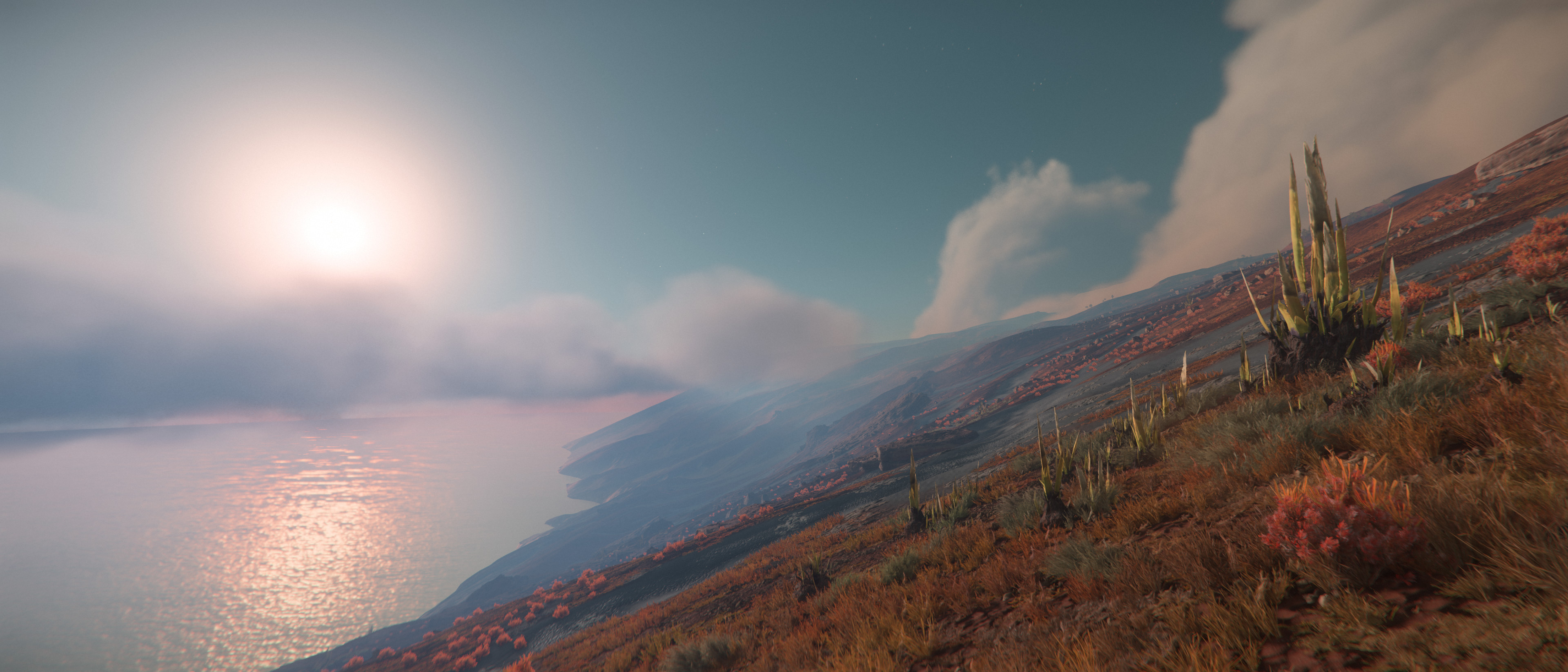
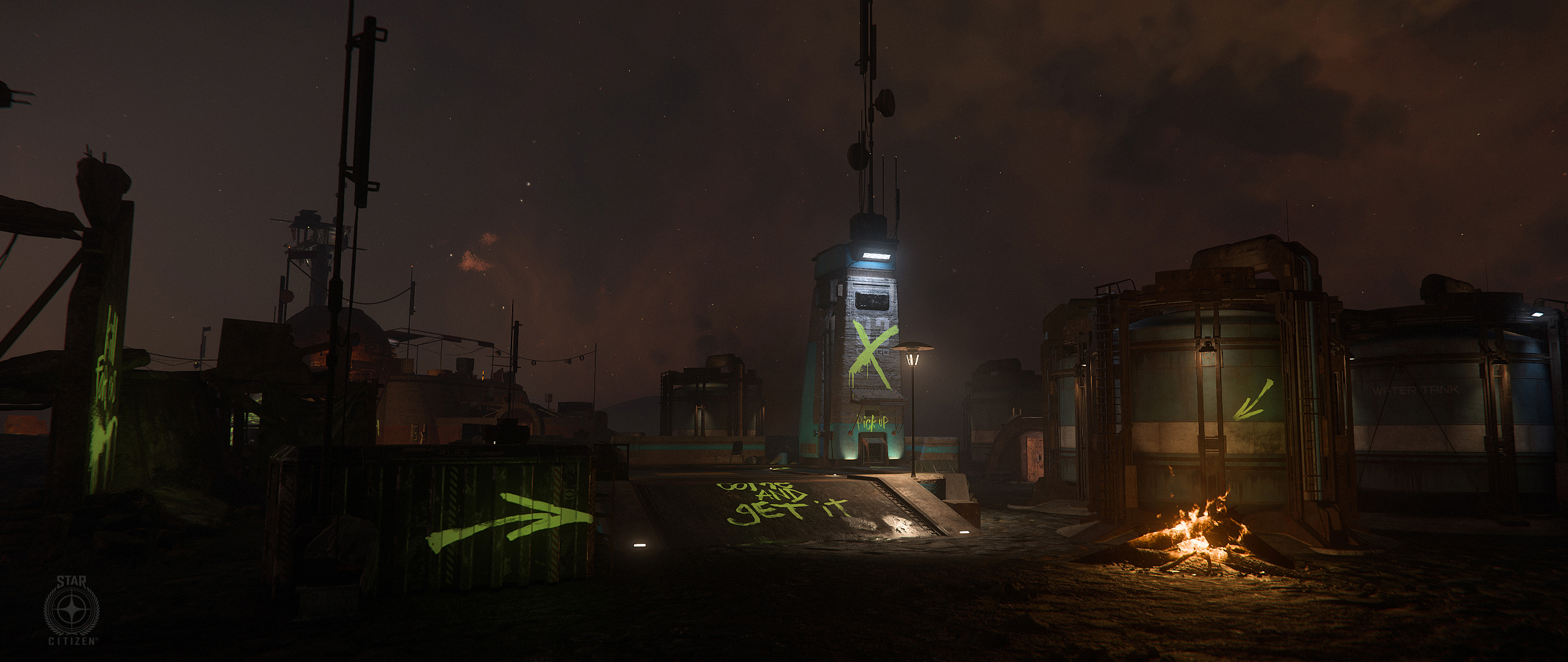
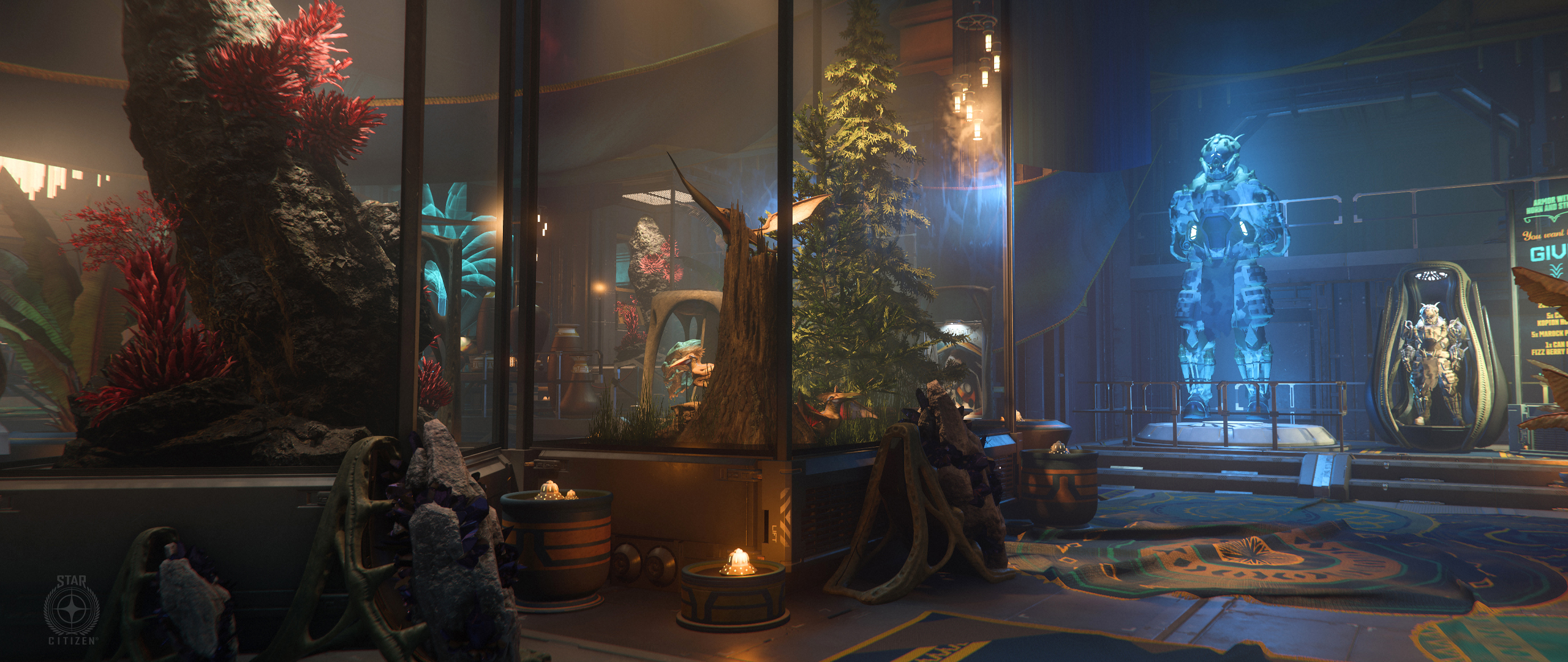
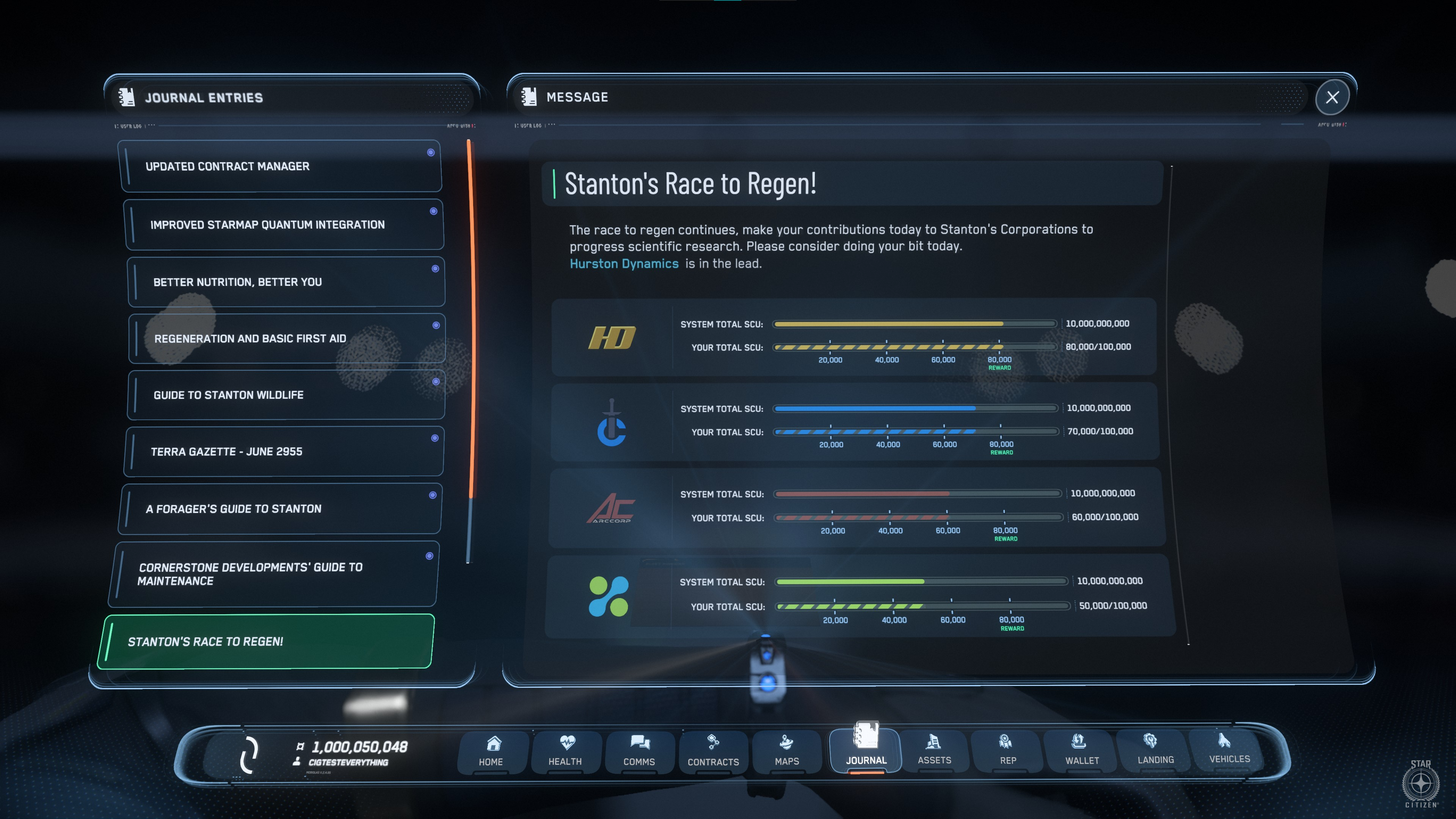
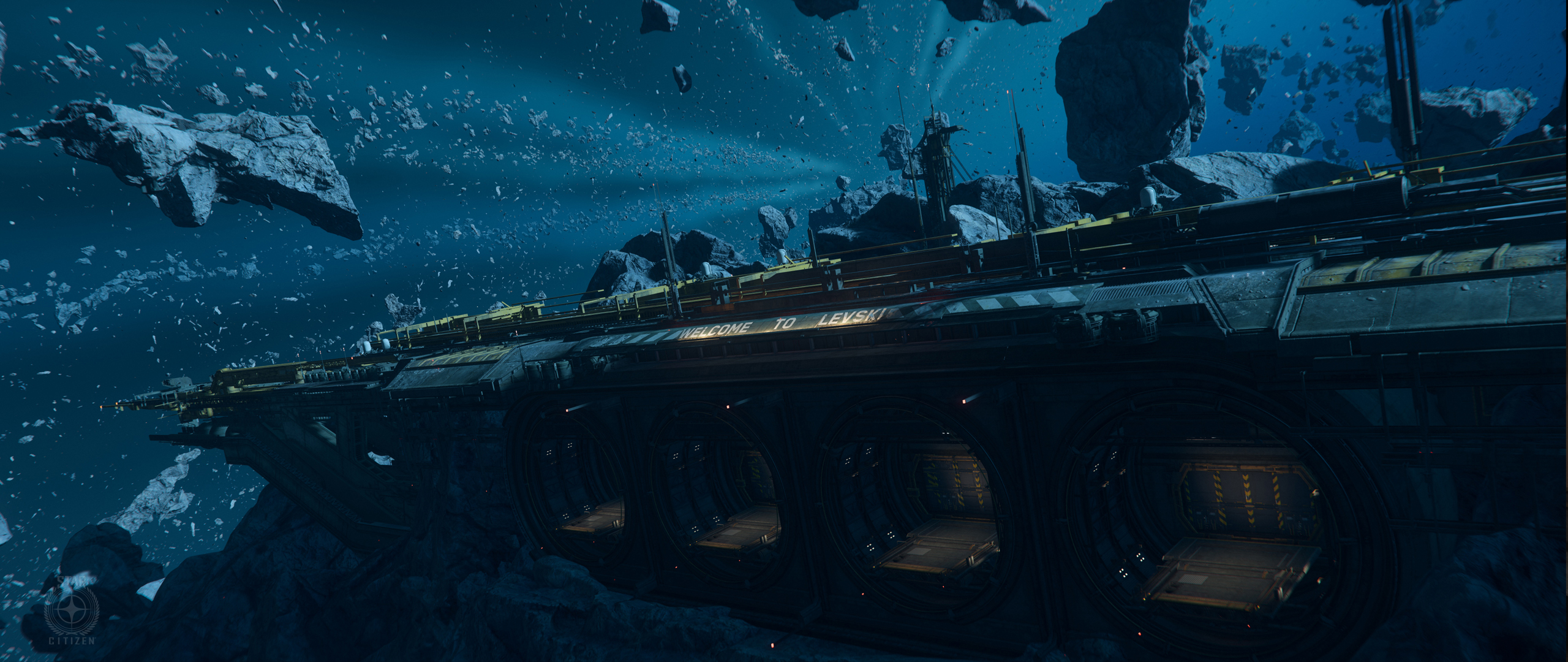
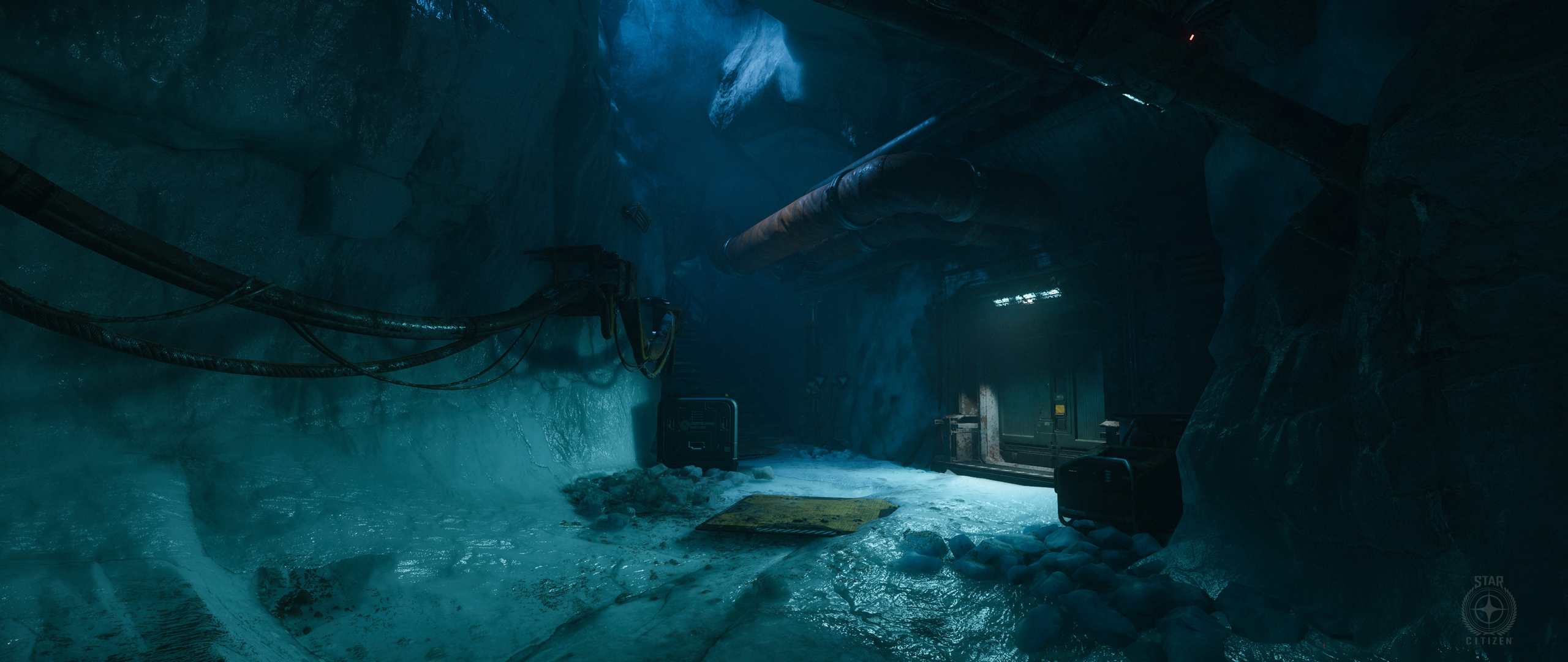
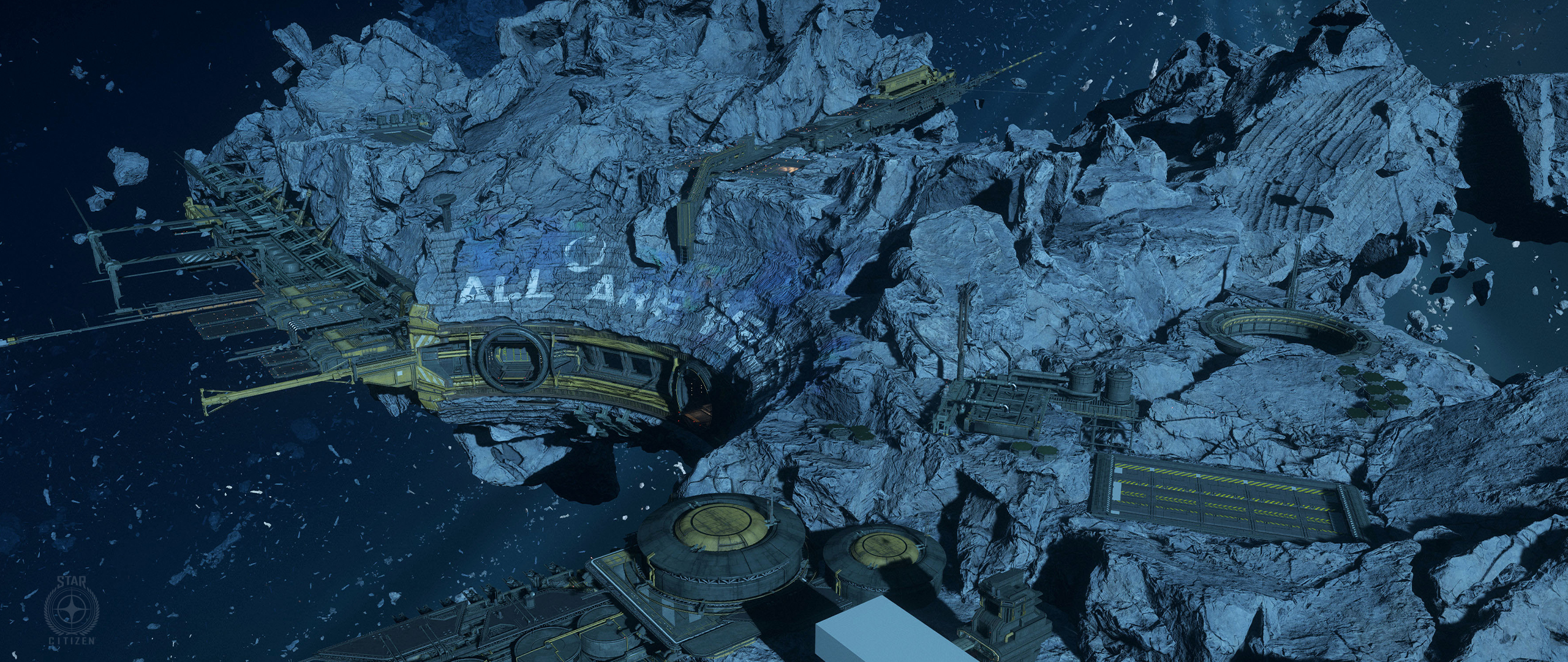
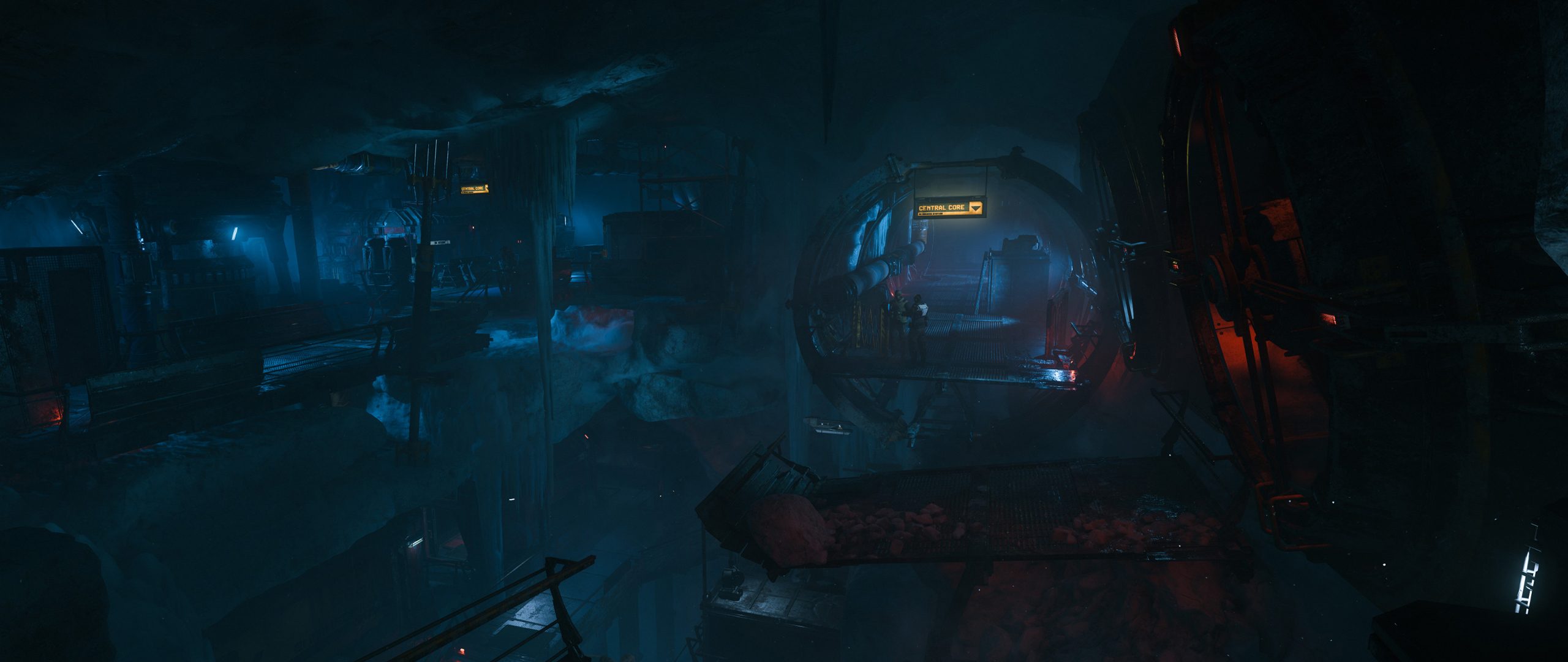
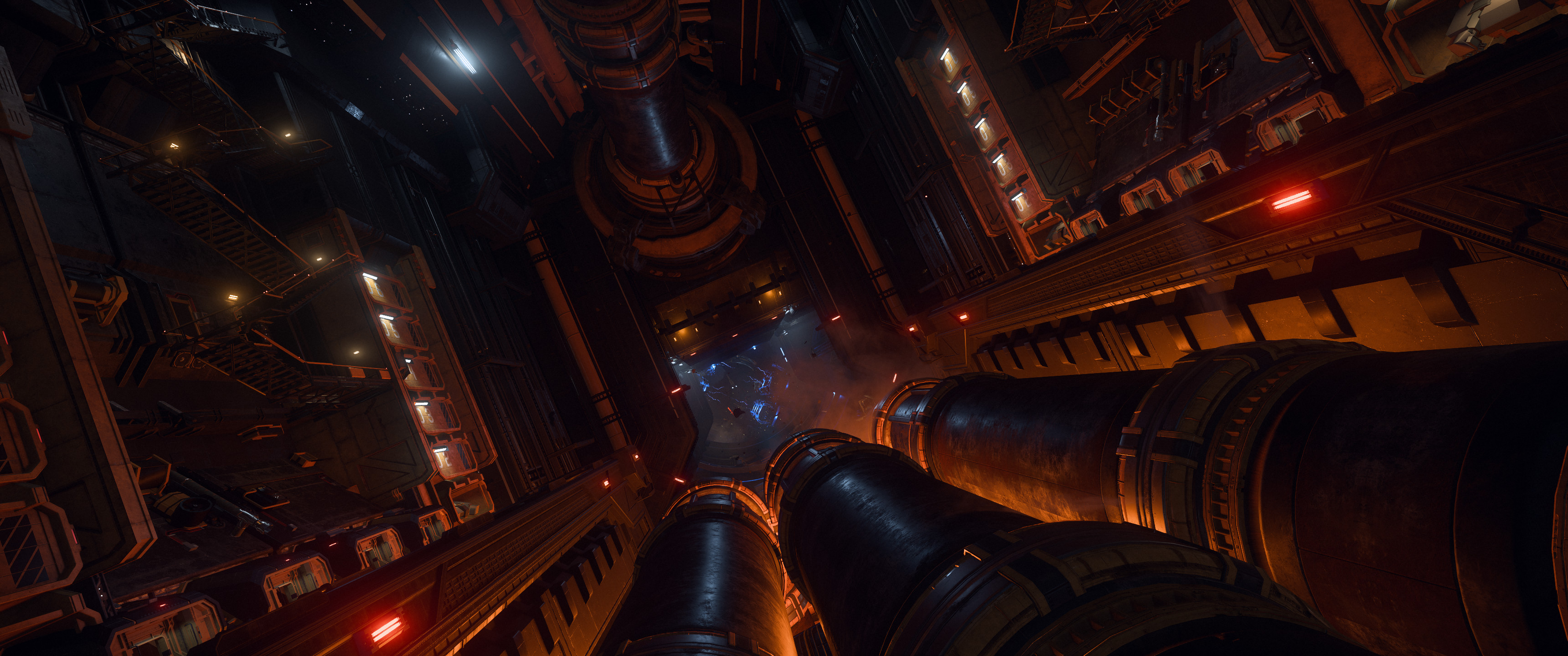
Metadata
- CIG ID
- 17742
- Channel
- Transmission
- Category
- Undefined
- Series
- Monthly Reports
- Comments
- 1
- Published
- 6 years ago (2020-09-02T00:00:00+00:00)