Star Citizen Monthly Report: October 2020
Transmission Undefined Monthly ReportsContent
October was a busy month for Star Citizen’s PU teams, with Halloween content and prep for the upcoming IAE in-game event on most to-do lists. As usual, long-term development tasks continued in earnest, with new features, weapons, armor, and locations all making great progress. Read on for the details, including updates on exciting additions arriving in Alpha 3.12 and beyond.
AI (Character Combat)
We start with the Character Combat Team, who completed the first pass of the ‘surrender’ behavior mentioned last month. During their regular combat behavior, NPCs will try to find lootable ammo boxes (and in the future request help from friendlies and loot available weapons). If no options are available, they’ll try to stay out of dangerous environments and survive the best they can.
The team began implementing support for character traits. First, this functionality exposes the ability of selected traits in the Character Skills and Traits editor. Designers can then assign traits to templates that are assigned to characters. These traits can be used to either modify or enable specific behaviors available to certain characters. For example, a ‘coward’ NPC won’t try to put pressure on the player.
Several bugs were also fixed for visual perception, cover usage, and dodge reactions.
AI (General)
Last month, the AI Team found and fixed more issues related to characters standing on top of usables. This time, the problem was specific to characters streaming in before their usables. Code was added to handle this particular edge case. Some of the recent AI component updates were also amended with stricter dependency rules to avoid conflicting reading and writing inside the zone system. This prevents contention when reading entity positions.
AI (Ships)
Ship AI began October extending the quantum travel Subsumption task to be “non-blocking.” This will be used in specific scenarios where a behavior needs to queue quantum travel for a ship and then continue with regular duties, which is particularly useful in multi-crew ships.
The team continued to iterate on missile targeting, first of all ensuring turrets respond immediately to incoming hostile torpedoes when not in combat mode. They then adjusted targeting priorities to give a better balance when capital ships are fighting multiple targets. This will also improve how seat operators handle burst fire when controlling ship weapons.
Time was also spent improving how collision avoidance handles missiles, with the team filtering-out missiles in the code due to them not being part of collision avoidance. For the accuracy calculation, the team implemented different convergence speeds towards targets when an AI is hitting or missing the target. This simulates NPCs trying to hit a target faster when they’re missing but relaxing slightly when they’re on target.
The capital ship combat behavior was also improved to allow longer-range combat. NPCs will now react to an enemy starting to charge a weapon too.
Plus, several bugs were fixed and improvements made to the break-away movement request, the patrol-around-position assignment, and the hostility of specific targets.
AI (Social)
Last month, the Social AI Team moved the first version of the mess hall scenario into a state that allows other teams to better iterate on animations, props, and the technical setup. At the moment, the scenario supports usables that provide cutlery, food, and drinks. NPCs can iterate on food lines, retrieve anything their sustenance behavior wants, and then take the food to tables where it can be consumed. This involves both systemic animations and mo-cap created for specific scenarios. All of these usables are item providers, which means NPCs can search to obtain specific objects. These objects are physically used by the AI, so consuming food and drink impacts the NPC’s status system. This also expands the use of grip tags in the ‘take,’ ‘prepare,’ and ‘place’ use-channel.
The team are currently working on several behaviors that will benefit both the PU and Squadron 42, including arcade-machine use and dancing. Playing arcade machines will be one of the available leisure activities, while dancing will likely be a special activity for the patrons of discos and other appropriate areas.
Animation
Specifically for the PU, the team made progress with mission-giver posing and completed the facial animations for emotes, bounty hunters, general outlaws, and more. They also supported other team’s with mo-cap and continued to work through the backlog of animation tasks.
Art (Environment)
October saw the Modular Team wrap up work on the refinery decks, including finalizing the art and putting the finishing touches to the dressing and world-building. The decks have now been handed over to the Audio, Lighting, and VFX teams for final polish work.
Elsewhere, the Modular Team continued adding gas clouds to Lagrange points.
“These are really benefiting from the first lighting pass with some absolutely gorgeous final frames being produced. The team have been working hard with Graphics to ensure the clouds remain performant enough for use in the multiplayer environment of the PU.” -The Environment Art Team
The team also began final art on the ship-to-station docking lobby and exterior. Pre-production work also kicked off for the brand-new ‘Colonialism’ ground-base archetypes.
The Landing Zone Team continued with Orison, with the greybox of the industrial platform making great progress. The commercial platform art greybox is almost complete, with some areas being brought up to final art to act as a benchmark for the rest of the location. The transit barge is nearing art complete and has been fully implemented into the level, with several currently moving between the platforms. The spaceport also moved into final art. Alongside Orison, the art prototype for the hacking feature had its first pass and is awaiting implementation and iteration. Work on the convention space for this year’s IAE was also completed. New informational screens were placed in landing zones to tie into upcoming events and existing screens were updated to be more dynamic.
In Frankfurt, the Organics Team finalized art for Pyro’s celestial bodies, though another round of polish will be undertaken before release. More work on Crusader was done alongside tech changes for gas giants, which will also benefit regular planets. Time was also spent prototyping touch bending for foliage and object buoyancy for floating assets on planetary water bodies.
Art (Ships)
In the UK, the Art Team continued with the Crusader Hercules. October’s work included further development of the engineering section and bridge, both of which are approaching the end of their final art phases. Exterior-wise, materials were polished and the landing gear is now final-art complete.
The iridescent shader created for the Esperia Talon is ready for implementation, as is Shrike’s internal missile system. The landing gear and damage setup were also finalized.
The US-based team progressed with the Crusader Mercury Star Runner, including finishing LODs, UI panels, the cargo area, and cockpit. In celebration of in-lore holiday Day of the Vara, the Ship Team also created the Ghoulish Green skin for the Drake Cutlass Black.
The Vehicle Tech Art Team focused on supported the Mercury with hardpoints, pivots, landing gear, viz areas, and damage states. Work was also done on the Origin 100 Series’ landing gear and small updates were made to the Cutlass models.
Art (Weapons)
In October, Weapons Art completed the first pass on the medical gun, ‘LOD 0’ art for an upcoming Behring LMG, and a new Gemini sniper rifle. The latest Behring S10 turret was finalized too. The team are nearing the end of their pass on weapon reticles, which will add zeroing and rangefinding along with various art tweaks. Art for the Multi-Tool’s tractor beam attachment was completed, as was a new set of Klaus and Werner holographic sights.
Audio
Last month saw Audio focus on the Crusader Mercury.
“Such a large ship with so many moving parts requires all of our sound designers working on it at once!” -The Audio Team
Code-wise, they continued to improve the music system, and progress was made on the team’s proprietary internal tools.
Backend Services
Backend Services spent part of October identifying and addressing issues in the recent patch release, including correcting primary hub crashes. Some low-level backend networking code was also cleaned up, which improved stability and will contribute to having more concurrent players online. Bugs in the various loadouts, inventory, and mobiGlas were fixed too.
Characters
The Character Team began the month working with the AI Team on creatures. This involved creating quick blockouts to check scale, assess model issues, test rigs, and iterate on ideas.
The team’s modelers and tech artists worked on two new armor sets targeted for 2021 and Subscriber Flair items planned for release in Alpha 3.11.1 and 3.12. They also addressed issues with the recently released vintage navy uniforms – these fixes will be live in the upcoming Alpha 3.11.1 patch.
Concepts for three full sets of armor were further developed that will support mining and bounty hunting gameplay. They’re currently concepting paired backpacks for these sets in support of the external inventory.
Community
Last month, the Community Team focused on preparations for the Star Citizen Birthday celebrations. This year’s celebration was entirely digital, with the free 2950 Birthday Goodies Pack gifted to all backers. They also supported the Birthday AMA, where Chris Roberts, Todd Papy, and Tony Zurovec answered player questions on Spectrum. The 2020 AMA Recap was also published for players that missed the live event.
The Community Team supported Narrative with the UEE Imperator Election, creating the Imperator Election Comm-Link and setting up the election ballot. They also announced the S-38 ‘One Empire’ pistol that commemorates the $300m milestone reached earlier in the year.
They then supported the UEE’s Halloween equivalent, Day of the Vara, with short story and pumpkin carving contests. Finally, they celebrated the arrival of the first two in-game-only earnable items in the PU.
Engineering
The Physics Team spent part of October working on a volumetric soft-body prototype and volumetric deformation rendering. Various physics optimizations were made too. For example, they improved the threading of various subsystems, added faster spatial grid queries, removed contention when accessing local command queues, and removed contention for actor/living entity step functions. Vital improvements were also made to collision detection, solving a longstanding issue that could introduce additional ghost-contacts far away from where the actual contacts were processed. Lastly, the team began researching improvements to the setup of vegetation touch-bending.
October also saw the ongoing Gen12 renderer transition and refactoring work continue. This time, a parameterizable feature set was added to the deferred pipeline and per-object resource set updates were made for scene rendering (including a render to texture update for brushes). For the shader system, all reloading code was cleaned up to improve shader editing and response when changing system spec settings. For example, graphics settings that use different shader combinations.
Progress on atmospheres, clouds, and the unified ray-marcher was merged into the main development stream. This means the improvements mentioned in last month’s report should be available in the PU in a coming release.
Core engine work involved implementing a dynamic zone culling path in the zone system. A handful of view-distance-related culling bugs with pixel-sized objects were also fixed for Alpha 3.11. The entity system received several improvements and optimizations to prevent unnecessary updates and searches. Similarly, the entity aggregate manager received low-level optimizations to improve work balancing and reduce memory usage and contention when working with entity bubbles. A few smaller changes were also made to the entity component update scheduler. Radix tree culling logic was tweaked too, with the threading logic adjusted to reduce contention.
Crash handling has been refined. A hex stack of the render thread is now captured and embedded in minidumps that players can (optionally) send to the team if the game crashes. This enables the team to recover the full render thread call-stack during postmortem debugging without the need for third-party binaries. This saves time as they don’t have to download all the various drivers that players use.
Features (Gameplay)
The US Gameplay Feature Team began the month fixing critical bugs and polishing features for Alpha 3.11. After it went live, they turned their attention back to working on upcoming features and future initiatives, including the new reputation system. The system will receive continuous polish as it gets closer to release; this way it can be rolled out in a limited capacity as current gameplay is converted to take advantage of the new functionality.
The team also continued the designs for two new core mobiGlas apps. Firstly, the Asset Manager carries on from the trading app and will be critical to the localized inventory planned for release next year. Secondly, the Mission Manager will tie into the new dynamic mission system currently being worked on.
The team also began working on a new feature that will change the way players restock their ships at rest stops. All missiles, flares, and chaffs will be replaced via a proper shopping flow, which will allow the team to separate the pricing for each item. This will result in higher prices for restocking, though insurance prices and timers will be adjusted accordingly.
Features (Vehicles)
Vehicle Features dedicated some of the month to developing tech that will help share IFCS code with other movement-heavy systems. One example of this is zero-gravity EVA movement, which will eventually use similar code to IFCS as the two are heavily related. This also allows the team to utilize the wealth of AI logic and navigation code first written for ships. This code sharing will also be used for missiles, further unifying and simplifying the various types of code that deal with movement in space.
October also featured a lot of work on the transit system, as upcoming landing locations require special behaviors for transit carriages.
Work also went towards displaying ship names and serial numbers on the sides of ships.
“Most of the underlying tech has been completed; we’re now connecting things up and making the whole thing work. We also found a way to assign serial numbers to ships that weren’t given them at purchase.” -The Vehicle Features Team
Continuing with last month’s Merlin/Constellation work, UI to aid docking was completed. Various issues relating to persistence were also resolved, enabling the Merlin and Constellation to spawn as a pair. The team are now working through the more minor tasks in a push to call the feature “finished.”
Graphics
The Graphics Team delivered the iridescent shader mentioned in last month’s report. This effect simulates color shifts based on the camera angle relative to the surface, allowing anisotropic effects similar to those seen in exotic car paints. Shader optimizations and look-up textures were used to reduce the cost of this feature to the point it can be widely used without performance concerns.
The light-beam shader was also worked on, which underwent significant quality improvements and bug fixes. This feature helps the team simulate distant beams of light when they are beyond the range that can be simulated by the volumetric fog system.
Work also continued on the Gen12 renderer and the automated testing system.
Lighting
October saw the Lighting Team focus a bit on the new IAE location.
“A set of completely redesigned halls in the existing Hi-Tech art style means a whole new way of lighting the annual expo. We’re very excited for the community to explore and experience the IAE this year!” -The Lighting Team
They also continued with R&D work for the upcoming implementation of gas clouds around Lagrange point rest stops. Lighting plays a major part in the mood portrayed by these gas clouds and the current goal is to achieve a visual style that conveys whether the clouds are dangerous or safe while still fitting in with the overall style of the Stanton system.
Looking ahead, the Lighting Team started tasks for the upcoming refinery decks, which need to look highly utilitarian and functional.
Narrative
Once a decade, the UEE holds a special election to determine the next Imperator of the UEE. This time, players were given the opportunity to cast their votes and help shape the future of the Empire. To help everyone get to know the candidates, the Narrative Team joined Jared on Star Citizen Live to discuss the details and candidates.
The team continued to work on content for upcoming releases, including refinery decks, Orison, and more. Several scripts for new mission content were written and iterated on with Design, and new in-game items were named and given descriptions (including the new Day of the Vara helmets).
October also saw the culmination of a significant behind-the-scenes project to organize information on the various fictional items created over the years. A similar project was done for the ‘verse’s brands, but now all the details on things like plants, alien drinks, and precious minerals can be looked up and referenced easily.
As always, several new Galactapedia entries were added, including a look at Tamsa’s namesake artist, and the team wrote articles for October’s Jump Point, including a Portfolio on armor manufacturer Caldera.
Player Relations
Last month, Player Relations added new team members in Austin and Wilmslow.
“As the backer community grows, so do the needs of the service. We’re excited to get these greenhorns in here so that they’re ready to support you going into the holiday season!” -The Player Relations Team
They also spent time triaging service issues during the Alpha 3.11 launch and supported the Star Citizen Birthday celebrations. They also helped backers working to earn the Vanduul helmet and began preparing for the IAE.
Props
October saw the Props Team continue support for the trolley push/pull feature and the bartender alongside Social AI. They also completed a few props for Orison and the modular refinery locations. Work was also completed on the new freestanding elevator panel assets.
QA
QA’s general work throughout October involved supporting the feature teams and testing various locations.
For the Combat and Ship AI team, QA continued their normal level of support, working through various checklists and assisting with issues encountered. They also helped the Engine Team investigate some hard-to-reproduce crashes and set workstations up to specifically test for memory leaks. Alongside this, they used the editor to test the intricacies of level setups and elevators. The testing of DataForge, StarWords, ExcelCore, and the sandbox editor continued for the Tools Team too.
Tech (Animation)
Throughout October, Tech Animation focused heavily on upgrading the head assets in the character pipeline. A huge amount of technical detail goes into every head asset that will be accounted for and restructured throughout the overhaul.
The team also began overhauling combat animations to remove technical glitches in AI weapon holding, ships were rigged for the Animation Team, and support was given to Social AI.
Turbulent
Turbulent’s Services Team spent the month making several additions to the internal Hex tool. The tool now provides more information about org event history, reputation, and inventory to facilitate better troubleshooting and investigation for game support teams. The org and inventory services are already live, while the reputation system is still being finalized. They also supported work on the Odin tool, which is currently being tested in the various development environments. Inventory service migrations were also tested for the upcoming Alpha 3.11.1 patch, and minor bugfixes were made.
The Turbulent Web Platform Team supported the front and backend release of the Origin 100 Series and helped shape the Star Citizen Birthday Hub.
User Interface (UI)
Some of the UI Team’s programming time was dedicated to bug fixing and supporting various game teams with upcoming releases. The Tech Team worked on lighting for Building Blocks, which will enable better-looking ship models. The artists developed concepts for the new docking UI and created visual target concept images for a new helmet visor and lens interface. Supporting artwork and screens for the upcoming refinery decks were also completed.
VFX
The VFX Team working on several ships last month, including the Crusader Mercury. They also continued to iterate on ship weapon effects, with particular attention paid to readability at distance. They did the same for missiles, allowing the trails to appear for longer. They also continued with SDF shield impact effects.
WE’LL SEE YOU NEXT MONTH…
Der Oktober war ein arbeitsreicher Monat für die PU-Teams von Star Citizen, mit Halloween-Inhalten und Vorbereitungen für das kommende IAE-In-Game-Event auf den meisten To-Do-Listen. Wie immer gingen die langfristigen Entwicklungsaufgaben ernsthaft weiter, mit neuen Features, Waffen, Rüstungen und Schauplätzen, die alle große Fortschritte machten. Lest weiter, um die Details zu erfahren, einschließlich Updates über aufregende Neuerungen, die in Alpha 3.12 und darüber hinaus eintreffen.
KI (Charakterkampf)
Wir beginnen mit dem Charakterkampfteam, das den ersten Durchgang des im letzten Monat erwähnten 'Aufgeben'-Verhaltens abgeschlossen hat. Während ihres regulären Kampfverhaltens werden die NSCs versuchen, plünderbare Munitionskisten zu finden (und in Zukunft von befreundeten Spielern Hilfe anfordern und verfügbare Waffen plündern). Wenn keine Optionen verfügbar sind, werden sie versuchen, sich von gefährlichen Umgebungen fernzuhalten und so gut wie möglich zu überleben.
Das Team hat damit begonnen, Unterstützung für Charaktereigenschaften zu implementieren. Zuerst zeigt diese Funktionalität die Fähigkeiten ausgewählter Eigenschaften im Editor für Charakterfertigkeiten und -eigenschaften an. Die Designer können dann den Vorlagen, die den Charakteren zugewiesen werden, Eigenschaften zuweisen. Diese Eigenschaften können dazu verwendet werden, bestimmte Verhaltensweisen, die bestimmten Charakteren zur Verfügung stehen, entweder zu modifizieren oder zu aktivieren. Zum Beispiel wird ein 'feiger' NSC nicht versuchen, Druck auf den Spieler auszuüben.
Außerdem wurden einige Fehler bei der visuellen Wahrnehmung, der Benutzung der Deckung und den Ausweichreaktionen behoben.
KI (Allgemein)
Letzten Monat hat das KI-Team weitere Probleme gefunden und behoben, die mit Charakteren zu tun haben, die oben auf den Nutzbaren stehen. Dieses Mal war das Problem spezifisch für Charaktere, die vor ihren Usables hereinströmten. Es wurde Code hinzugefügt, um diesen speziellen Edge-Fall zu behandeln. Einige der letzten KI-Komponenten-Updates wurden auch mit strengeren Abhängigkeitsregeln versehen, um Konflikte beim Lesen und Schreiben innerhalb des Zonensystems zu vermeiden. Dies verhindert Streitigkeiten beim Lesen der Entity-Positionen.
KI (Schiffe)
Die SchiffskI begann im Oktober damit, die Aufgabe der Quantenreise Subsumption auf "Nicht-Blockieren" auszuweiten. Dies wird in bestimmten Szenarien verwendet werden, in denen ein Verhalten Quantenreisen für ein Schiff in die Warteschlange stellen und dann mit regulären Aufgaben fortfahren muss, was besonders in Schiffen mit mehreren Besatzungen nützlich ist.
Das Team setzte die Wiederholung der Raketenziele fort und stellte zunächst sicher, dass die Geschütztürme sofort auf ankommende feindliche Torpedos reagieren, wenn sie sich nicht im Kampfmodus befinden. Dann passten sie die Zielprioritäten an, um eine bessere Balance zu erreichen, wenn Großkampfschiffe gegen mehrere Ziele kämpfen. Dies wird auch die Art und Weise verbessern, wie Sitzbediener bei der Kontrolle von Schiffswaffen mit Feuerstößen umgehen.
Es wurde auch Zeit darauf verwendet, den Umgang mit Raketen zur Kollisionsvermeidung zu verbessern, wobei das Team Raketen im Code herausfiltert, weil sie nicht Teil der Kollisionsvermeidung sind. Für die Genauigkeitsberechnung implementierte das Team unterschiedliche Konvergenzgeschwindigkeiten in Richtung der Ziele, wenn eine KI das Ziel trifft oder verfehlt. Dies simuliert NSCs, die versuchen, ein Ziel schneller zu treffen, wenn sie es verfehlen, sich aber leicht entspannen, wenn sie auf dem Ziel sind.
Das Kampfverhalten des Großkampfschiffs wurde ebenfalls verbessert, um Kämpfe über größere Entfernungen zu ermöglichen. NSCs reagieren nun auch darauf, wenn ein Feind beginnt, eine Waffe aufzuladen.
Außerdem wurden mehrere Fehler behoben und Verbesserungen bei der Anforderung der Abtrennungsbewegung, der Zuweisung der Patrouillenposition und der Feindseligkeit bestimmter Ziele vorgenommen.
KI (Sozial)
Letzten Monat hat das soziale KI-Team die erste Version des Messehallen-Szenarios in einen Zustand versetzt, der es anderen Teams ermöglicht, besser an Animationen, Requisiten und dem technischen Setup zu arbeiten. Im Moment unterstützt das Szenario Usables, die Besteck, Essen und Getränke bereitstellen. NSCs können an Essenslinien iterieren, alles abrufen, was ihr Ernährungsverhalten verlangt, und das Essen dann an Tische bringen, wo es verzehrt werden kann. Dies beinhaltet sowohl systemische Animationen als auch Mo-Cap, die für bestimmte Szenarien erstellt wurden. All diese Gebrauchsgegenstände sind Item-Provider, was bedeutet, dass NSCs suchen können, um bestimmte Objekte zu erhalten. Diese Objekte werden von der KI physisch benutzt, so dass der Konsum von Essen und Trinken das Statussystem des NSCs beeinflusst. Dies erweitert auch die Verwendung von Griffmarken im 'Nehmen', 'Vorbereiten' und 'Platzieren' des Nutzungskanals.
Das Team arbeitet derzeit an verschiedenen Verhaltensweisen, von denen sowohl die PU als auch Squadron 42 profitieren werden, einschließlich der Verwendung von Arcade-Maschinen und Tanzen. Das Spielen von Spielautomaten wird eine der verfügbaren Freizeitaktivitäten sein, während das Tanzen wahrscheinlich eine besondere Aktivität für die Besucher von Diskotheken und anderen geeigneten Bereichen sein wird.
Animation
Speziell für die PU hat das Team Fortschritte beim Posing der Missionsgeber gemacht und die Gesichtsanimationen für Emotes, Kopfgeldjäger, allgemeine Gesetzlose und mehr fertiggestellt. Außerdem unterstützten sie andere Teams mit mo-cap und arbeiteten den Rückstand an Animationsaufgaben weiter ab.
Kunst (Umgebung)
Im Oktober beendete das Modulare Team die Arbeit auf den Raffineriedecks, einschließlich der Fertigstellung der Kunstwerke und der letzten Feinheiten bei der Ausstattung und dem Bau der Welt. Die Decks wurden nun an die Audio-, Licht- und VFX-Teams für den letzten Schliff übergeben.
An anderer Stelle fügte das Modulare Team weiterhin Gaswolken zu Lagrange-Punkten hinzu.
"Diese profitieren wirklich vom ersten Lichtdurchgang, bei dem einige absolut großartige Endbilder produziert werden. Das Team hat hart an der Grafik gearbeitet, um sicherzustellen, dass die Wolken performant genug für den Einsatz in der Multiplayer-Umgebung der PU bleiben. -Das Umwelt-Kunst-Team
Das Team begann auch mit der endgültigen Gestaltung der Schiff-zu-Station-Andocklobby und des Außenbereichs. Außerdem begannen die Vorproduktionsarbeiten für die brandneuen 'Kolonialismus'-Archetypen der Bodenstation.
Das Landing Zone Team machte mit Orison weiter, wobei die Greybox der Industrieplattform große Fortschritte machte. Die Kunst-Greybox der kommerziellen Plattform ist fast fertig, wobei einige Bereiche bis zur endgültigen Kunst gebracht wurden, um als Maßstab für den Rest des Ortes zu dienen. Die Transit-Barge nähert sich der Kunstfertigkeit und wurde vollständig in das Level implementiert, wobei sich derzeit mehrere zwischen den Plattformen bewegen. Der Weltraumbahnhof ist ebenfalls in die endgültige Gestaltung eingezogen. Neben Orison hatte auch der Kunst-Prototyp für das Hacking-Feature seinen ersten Durchgang und wartet nun auf die Implementierung und Iteration. Die Arbeiten am Convention Space für die diesjährige IAE wurden ebenfalls abgeschlossen. Neue Informationsbildschirme wurden in den Landezonen platziert, um sie in die kommenden Veranstaltungen einzubinden, und bestehende Bildschirme wurden aktualisiert, um dynamischer zu sein.
In Frankfurt hat das Organics Team die Kunst für die Himmelskörper von Pyro fertiggestellt, allerdings wird vor der Veröffentlichung noch eine weitere Runde Politur vorgenommen. Weitere Arbeiten an Crusader wurden neben den technischen Änderungen für Gasgiganten durchgeführt, die auch den regulären Planeten zugute kommen werden. Es wurde auch Zeit damit verbracht, Prototypen für Touch-Bending für Laub und Objektauftrieb für schwimmende Vermögenswerte auf planetaren Wasserkörpern zu entwickeln.
Kunst (Schiffe)
In Großbritannien machte das Art Team mit dem Crusader Hercules weiter. Die Arbeit im Oktober umfasste die Weiterentwicklung der Ingenieurabteilung und der Brücke, die sich beide dem Ende ihrer letzten Kunstphasen nähern. Was das Äußere betrifft, so wurden die Materialien poliert und das Fahrwerk ist nun fertig gestellt.
Der irisierende Shader, der für den Esperia Talon erstellt wurde, ist bereit für die Implementierung, ebenso wie das interne Raketensystem von Shrike. Das Fahrwerk und die Schadensaufstellung wurden ebenfalls fertiggestellt.
Das in den USA ansässige Team machte Fortschritte mit dem Crusader Mercury Star Runner, einschließlich der Fertigstellung der LODs, der UI-Panels, des Frachtbereichs und des Cockpits. Zur Feier des Feiertags der Vara hat das Schiffsteam auch die Ghoulish Green Skin für den Drake Cutlass Black entworfen.
Das Vehicle Tech Art Team konzentrierte sich darauf, den Merkur mit Hardpunkten, Drehpunkten, Fahrwerk, Sichtbereichen und Schadenszuständen zu unterstützen. Es wurde auch am Fahrwerk der Origin 100 Serie gearbeitet und es wurden kleine Updates an den Cutlass Modellen vorgenommen.
Kunst (Waffen)
Im Oktober hat Weapons Art den ersten Durchgang der medizinischen Waffe, die 'LOD 0'-Kunst für ein kommendes Behring LMG, und ein neues Gemini-Scharfschützengewehr fertiggestellt. Der neueste Behring S10-Turm wurde ebenfalls fertiggestellt. Das Team nähert sich dem Ende des Durchlaufs der Waffenabsehen, die neben verschiedenen Änderungen an der Grafik auch die Nullung und Entfernungsmessung ermöglichen werden. Die Kunst für die Traktorstrahlbefestigung des Multi-Tools wurde fertiggestellt, ebenso wie ein neuer Satz holografischer Visiere von Klaus und Werner.
Audio
Letzten Monat hat sich Audio auf den Merkur der Kreuzfahrer konzentriert.
"Ein so großes Schiff mit so vielen beweglichen Teilen erfordert, dass alle unsere Sounddesigner gleichzeitig daran arbeiten! -Das Audio-Team
Was den Code betrifft, so haben sie das Musiksystem weiter verbessert und es wurden Fortschritte bei den proprietären internen Tools des Teams gemacht.
Backend-Dienste
Die Backend Services haben einen Teil des Oktobers damit verbracht, Probleme in der letzten Patch-Veröffentlichung zu identifizieren und zu beheben, einschließlich der Korrektur von Abstürzen der Primär-Hubs. Außerdem wurden einige low-level Backend-Netzwerkcodes bereinigt, was die Stabilität verbessert und dazu beitragen wird, dass mehr Spieler gleichzeitig online sind. Fehler in den verschiedenen Ladevorgängen, dem Inventar und mobiGlas wurden ebenfalls behoben.
Charaktere
Das Charakter-Team begann den Monat damit, mit dem KI-Team an Kreaturen zu arbeiten. Dazu gehörte das Erstellen von schnellen Blockouts, um den Maßstab zu überprüfen, Modellprobleme zu beurteilen, Teststände zu testen und Ideen zu iterieren.
Die Modellierer und Techniker des Teams arbeiteten an zwei neuen Rüstungssets, die für 2021 und Abonnenten-Flair-Gegenstände, die in Alpha 3.11.1 und 3.12 veröffentlicht werden sollen. Sie haben auch Probleme mit den kürzlich veröffentlichten Vintage-Marine-Uniformen gelöst - diese Korrekturen werden im kommenden Alpha 3.11.1 Patch live sein.
Es wurden Konzepte für drei komplette Rüstungssets weiterentwickelt, die das Gameplay für den Bergbau und die Kopfgeldjagd unterstützen werden. Zurzeit werden für diese Sets gepaarte Rucksäcke zur Unterstützung des externen Inventars konzipiert.
Gemeinschaft
Letzten Monat konzentrierte sich das Community Team auf die Vorbereitungen für die Feierlichkeiten zum Geburtstag des Sternenbürgers. Die diesjährige Feier war komplett digital, mit dem kostenlosen 2950 Birthday Goodies Pack, das an alle Unterstützer verschenkt wurde. Sie unterstützten auch die Geburtstags-AMA, bei der Chris Roberts, Todd Papy und Tony Zurovec Fragen der Spieler auf Spectrum beantworteten. Für Spieler, die das Live-Event verpasst haben, wurde auch der AMA-Rückblick 2020 veröffentlicht.
Das Community Team unterstützte Narrative bei der UEE Imperator Election, erstellte den Imperator Election Comm-Link und richtete den Wahlzettel ein. Außerdem kündigten sie die S-38 'One Empire'-Pistole an, die an den Anfang des Jahres erreichten Meilenstein von 300 Millionen Dollar erinnert.
Danach unterstützten sie das Halloween-Äquivalent der UEE, Day of the Vara, mit Kurzgeschichten- und Kürbisschnitz-Wettbewerben. Schließlich feierten sie die Ankunft der ersten beiden nur im Spiel verdienten Gegenstände in der PU.
Technik
Das Physik-Team hat einen Teil des Oktobers damit verbracht, an einem volumetrischen Softbody-Prototypen und einem volumetrischen Deformations-Rendering zu arbeiten. Es wurden auch verschiedene physikalische Optimierungen vorgenommen. So wurde zum Beispiel das Threading verschiedener Subsysteme verbessert, schnellere Raumgitterabfragen hinzugefügt, Streitigkeiten beim Zugriff auf lokale Befehlswarteschlangen und Streitigkeiten bei den Schrittfunktionen für Schauspieler/lebende Wesen entfernt. Wichtige Verbesserungen wurden auch bei der Kollisionserkennung vorgenommen, wodurch ein seit langem bestehendes Problem gelöst wurde, das zusätzliche Geisterkontakte weit weg von dem Ort, an dem die eigentlichen Kontakte verarbeitet wurden, einführen konnte. Schließlich begann das Team mit der Erforschung von Verbesserungen bei der Einrichtung von Vegetationsberührungen.
Im Oktober wurde auch der laufende Gen12-Renderer-Übergang und die Refactoring-Arbeiten fortgesetzt. Diesmal wurde ein parametrisierbares Feature-Set zur verzögerten Pipeline hinzugefügt und pro Objekt wurden Aktualisierungen der Ressourcensets für das Szenen-Rendering vorgenommen (einschließlich eines Render-zu-Textur-Updates für Pinsel). Für das Shader-System wurde der gesamte Neulade-Code bereinigt, um das Shader-Editing und die Reaktion bei Änderungen der Systemspezifikationen zu verbessern. Zum Beispiel Grafikeinstellungen, die verschiedene Shader-Kombinationen verwenden.
Der Fortschritt bei Atmosphären, Wolken und dem vereinheitlichten Ray-Marcher wurde in den Hauptentwicklungsstrom integriert. Das bedeutet, dass die Verbesserungen, die im Bericht des letzten Monats erwähnt wurden, in der PU in einer kommenden Version verfügbar sein sollten.
Die Arbeit an der Kern-Engine beinhaltete die Implementierung eines dynamischen Zone Culling-Pfades im Zonensystem. Eine Handvoll von View-Distance-bezogenen Culling-Fehlern mit Objekten in Pixelgröße wurden ebenfalls für Alpha 3.11 behoben. Das Entity-System erhielt mehrere Verbesserungen und Optimierungen, um unnötige Updates und Suchvorgänge zu verhindern. Ebenso erhielt der Entity-Aggregatmanager niedrigstufige Optimierungen, um die Arbeit besser auszubalancieren und den Speicherverbrauch und Streitigkeiten bei der Arbeit mit Entity-Blasen zu reduzieren. Ein paar kleinere Änderungen wurden auch am Aktualisierungsplaner der Entitätskomponenten vorgenommen. Die Logik für das Culling des Radix-Baums wurde ebenfalls optimiert, wobei die Threading-Logik angepasst wurde, um Konflikte zu reduzieren.
Die Absturzbehandlung wurde verfeinert. Ein Hex-Stapel des Render-Threads wird nun erfasst und in Minidumps eingebettet, die Spieler (optional) an das Team senden können, wenn das Spiel abstürzt. Dies ermöglicht es dem Team, den kompletten Render-Thread-Call-Stack während des postmortalen Debuggens wiederherzustellen, ohne dass Binärdateien von Drittanbietern benötigt werden. Dies spart Zeit, da sie nicht all die verschiedenen Treiber herunterladen müssen, die die Spieler benutzen.
Eigenschaften (Gameplay)
Das US Gameplay Feature Team begann den Monat damit, kritische Bugs zu beheben und Features für Alpha 3.11 zu polieren. Nachdem es live ging, richtete es seine Aufmerksamkeit wieder auf die Arbeit an kommenden Features und zukünftigen Initiativen, einschließlich des neuen Rufsystems. Das System wird kontinuierlich aufpoliert, je näher die Veröffentlichung rückt; auf diese Weise kann es in begrenztem Umfang eingeführt werden, wenn das aktuelle Gameplay umgestellt wird, um die Vorteile der neuen Funktionen zu nutzen.
Das Team hat auch die Designs für zwei neue Kernanwendungen von mobiGlas weitergeführt. Zum einen führt der Asset Manager die Handels-App fort und wird für das lokalisierte Inventar, das im nächsten Jahr veröffentlicht werden soll, von entscheidender Bedeutung sein. Zweitens wird der Mission Manager in das neue dynamische Missionssystem eingebunden, an dem derzeit gearbeitet wird.
Das Team hat außerdem mit der Arbeit an einem neuen Feature begonnen, das die Art und Weise verändern wird, wie Spieler ihre Schiffe an Rastplätzen auffüllen. Alle Raketen, Fackeln und Spreu werden durch einen ordentlichen Einkaufsfluss ersetzt werden, was es dem Team erlauben wird, die Preise für jeden Gegenstand zu trennen. Dies wird zu höheren Preisen für das Wiederaufstocken führen, obwohl die Versicherungspreise und die Timer entsprechend angepasst werden.
Features (Fahrzeuge)
Vehicle Features widmete einige Zeit des Monats der Entwicklung von Tech, die dabei helfen wird, den IFCS-Code mit anderen bewegungslastigen Systemen zu teilen. Ein Beispiel dafür ist die EVA-Bewegung mit Schwerelosigkeit, die letztendlich ähnlichen Code wie das IFCS verwenden wird, da die beiden stark miteinander verwandt sind. Dies erlaubt es dem Team auch, die Fülle an KI-Logik und Navigationscode zu nutzen, die zuerst für Schiffe geschrieben wurden. Dieses Code-Sharing wird auch für Raketen verwendet werden, wodurch die verschiedenen Arten von Code, die sich mit der Bewegung im Raum beschäftigen, weiter vereinheitlicht und vereinfacht werden.
Im Oktober wurde auch viel am Transitsystem gearbeitet, da kommende Landeplätze besondere Verhaltensweisen für Transitwagen erfordern.
Es wurde auch daran gearbeitet, Schiffsnamen und Seriennummern an den Seiten der Schiffe anzuzeigen.
"Der größte Teil der zugrundeliegenden Tech ist fertig gestellt; wir verbinden nun die Dinge miteinander und bringen das Ganze zum Laufen. Wir haben auch einen Weg gefunden, Schiffen, die beim Kauf keine Seriennummern erhalten haben, Seriennummern zuzuweisen. -Das Fahrzeug-Features-Team
In Fortführung der Merlin/Konstellation-Arbeiten des letzten Monats wurde die UI zur Unterstützung des Andockens fertiggestellt. Verschiedene Probleme in Bezug auf die Persistenz wurden ebenfalls gelöst, so dass der Merlin und die Konstellation als Paar spawnen können. Das Team arbeitet sich nun durch die kleineren Aufgaben, um das Feature "fertig" zu nennen.
Grafiken
Das Grafikteam hat den irisierenden Shader geliefert, der im Bericht des letzten Monats erwähnt wurde. Dieser Effekt simuliert Farbverschiebungen basierend auf dem Kamerawinkel relativ zur Oberfläche und ermöglicht anisotrope Effekte, die denen in exotischen Autolacken ähneln. Shader-Optimierungen und Look-Up-Texturen wurden verwendet, um die Kosten für dieses Feature so weit zu reduzieren, dass es ohne Leistungseinbußen auf breiter Basis eingesetzt werden kann.
Auch am Lichtstrahl-Shader wurde gearbeitet, der erhebliche Qualitätsverbesserungen und Fehlerbehebungen erfuhr. Dieses Feature hilft dem Team, entfernte Lichtstrahlen zu simulieren, wenn sie außerhalb der Reichweite liegen, die durch das volumetrische Nebelsystem simuliert werden kann.
Außerdem wurde an dem Gen12-Renderer und dem automatisierten Testsystem gearbeitet.
Beleuchtung
Im Oktober konzentrierte sich das Lighting Team ein wenig auf den neuen IAE-Standort.
"Eine Reihe komplett neu gestalteter Hallen im bestehenden Hi-Tech-Kunststil bedeutet eine ganz neue Art der Beleuchtung der jährlichen Expo. Wir freuen uns sehr darauf, dass die Community dieses Jahr die IAE erkunden und erleben kann! -Das Beleuchtungsteam
Sie setzten auch die F&E-Arbeiten für die bevorstehende Einführung von Gaswolken um die Raststätten am Lagrange-Punkt fort. Die Beleuchtung spielt eine große Rolle bei der von diesen Gaswolken dargestellten Stimmung, und das aktuelle Ziel ist es, einen visuellen Stil zu erreichen, der vermittelt, ob die Wolken gefährlich oder sicher sind, und sich dennoch in den allgemeinen Stil des Stanton-Systems einfügt.
Mit Blick auf die Zukunft hat das Beleuchtungsteam mit den Aufgaben für die kommenden Raffineriedecks begonnen, die sehr zweckmäßig und funktional aussehen müssen.
Erzählung
Einmal pro Jahrzehnt hält die UEE eine spezielle Wahl ab, um den nächsten Imperator der UEE zu bestimmen. Dieses Mal hatten die Spieler die Möglichkeit, ihre Stimme abzugeben und die Zukunft des Imperiums mitzugestalten. Um allen zu helfen, die Kandidaten kennenzulernen, schloss sich das Narrative Team Jared auf Star Citizen Live an, um die Details und Kandidaten zu besprechen.
Das Team arbeitete weiter an den Inhalten für die kommenden Veröffentlichungen, darunter Raffineriedecks, Orison und mehr. Es wurden mehrere Skripte für neue Missionsinhalte geschrieben und mit dem Design iteriert, und neue Gegenstände im Spiel wurden benannt und mit Beschreibungen versehen (einschließlich der neuen Helme zum Tag der Vara).
Im Oktober gipfelte auch ein bedeutendes Projekt hinter den Kulissen, um Informationen über die verschiedenen fiktiven Gegenstände zu organisieren, die im Laufe der Jahre geschaffen wurden. Ein ähnliches Projekt wurde für die Marken der 'Verse' durchgeführt, aber jetzt können alle Details zu Dingen wie Pflanzen, außerirdischen Getränken und wertvollen Mineralien leicht nachgeschlagen und referenziert werden.
Wie immer wurden mehrere neue Galactapedia-Einträge hinzugefügt, darunter ein Blick auf Tamsas Namensvetter, und das Team schrieb Artikel für den Sprungpunkt im Oktober, darunter ein Portfolio über den Rüstungshersteller Caldera.
Spieler-Beziehungen
Letzten Monat hat Player Relations neue Teammitglieder in Austin und Wilmslow hinzugefügt.
"So wie die Unterstützergemeinschaft wächst, so wachsen auch die Bedürfnisse des Service. Wir freuen uns darauf, diese Grünschnäbel hierher zu holen, damit sie bereit sind, euch zu unterstützen, wenn ihr in die Ferienzeit geht! -Das Spieler-Beziehungs-Team
Sie haben auch Zeit damit verbracht, Serviceprobleme während des Starts von Alpha 3.11 zu prüfen und die Geburtstagsfeiern der Sternenbürger zu unterstützen. Sie halfen auch Geldgebern, die sich den Vanduul-Helm verdienen wollten, und begannen mit den Vorbereitungen für die IAE.
Requisiten
Im Oktober unterstützte das Props Team weiterhin das Trolley Push/Pull Feature und den Barkeeper neben Social KI. Sie haben auch ein paar Requisiten für Orison und die modularen Raffineriestandorte fertig gestellt. Außerdem wurden die Arbeiten an den neuen freistehenden Fahrstuhlpaneelen abgeschlossen.
QUALITÄTSSICHERUNG
Die allgemeine Arbeit der QA im Oktober bestand darin, die Feature-Teams zu unterstützen und verschiedene Locations zu testen.
Für das Kampf- und Schiffs-KI-Team setzte die QA ihr normales Maß an Unterstützung fort, indem sie verschiedene Checklisten durcharbeitete und bei auftretenden Problemen unterstützte. Außerdem halfen sie dem Engine Team bei der Untersuchung einiger schwer zu reproduzierender Abstürze und richteten die Workstations so ein, dass sie speziell auf Speicherlecks getestet werden konnten. Parallel dazu benutzten sie den Editor, um die Feinheiten der Level-Setups und Fahrstühle zu testen. Die Tests von DataForge, StarWords, ExcelCore und dem Sandbox-Editor gingen auch für das Tools Team weiter.
Technik (Animation)
Während des gesamten Oktobers konzentrierte sich Tech Animation stark auf die Verbesserung der Head Assets in der Charakter-Pipeline. Eine riesige Menge an technischen Details steckt in jedem Head-Asset, das während der Überholung berücksichtigt und umstrukturiert wird.
Das Team begann auch mit der Überholung der Kampfanimationen, um technische Pannen in der KI-Waffenhaltung zu beseitigen, Schiffe wurden für das Animationsteam ausgerüstet und die soziale KI wurde unterstützt.
Turbulentes
Das Serviceteam von Turbulent's verbrachte den Monat damit, das interne Verhexungswerkzeug zu erweitern. Das Tool bietet jetzt mehr Informationen über die Org-Ereignisgeschichte, den Ruf und das Inventar, um eine bessere Fehlersuche und -behebung für Spiel-Support-Teams zu ermöglichen. Die Org- und Inventardienste sind bereits live, während das Rufsystem noch in der Endphase ist. Sie haben auch die Arbeit am Odin-Tool unterstützt, das derzeit in den verschiedenen Entwicklungsumgebungen getestet wird. Inventarservice-Migrationen wurden auch für den kommenden Alpha 3.11.1 Patch getestet, und kleinere Bugfixes wurden durchgeführt.
Das Turbulent Web Platform Team unterstützte die Front- und Backend-Veröffentlichung der Origin 100 Serie und half bei der Gestaltung des Star Citizen Birthday Hub.
Benutzeroberfläche (UI)
Ein Teil der Programmierzeit des UI-Teams wurde der Fehlerbehebung und der Unterstützung verschiedener Spielteams bei anstehenden Veröffentlichungen gewidmet. Das Tech Team arbeitete an der Beleuchtung für Building Blocks, die besser aussehende Schiffsmodelle ermöglichen wird. Die Künstler entwickelten Konzepte für die neue Andock-UI und erstellten visuelle Zielkonzeptbilder für ein neues Helmvisier und Linseninterface. Unterstützende Artworks und Screens für die kommenden Raffineriedecks wurden ebenfalls fertiggestellt.
VFX
Das VFX-Team hat letzten Monat an mehreren Schiffen gearbeitet, darunter die Crusader Mercury. Sie haben auch weiter an den Waffeneffekten der Schiffe gearbeitet, wobei sie besonders auf die Lesbarkeit auf Distanz geachtet haben. Dasselbe taten sie auch bei den Raketen, wodurch die Spuren länger erscheinen konnten. Sie machten auch mit den SDF-Schildeinschlagseffekten weiter.
WIR SEHEN EUCH NÄCHSTEN MONAT...
October was a busy month for Star Citizen’s PU teams, with Halloween content and prep for the upcoming IAE in-game event on most to-do lists. As usual, long-term development tasks continued in earnest, with new features, weapons, armor, and locations all making great progress. Read on for the details, including updates on exciting additions arriving in Alpha 3.12 and beyond.
AI (Character Combat)
We start with the Character Combat Team, who completed the first pass of the ‘surrender’ behavior mentioned last month. During their regular combat behavior, NPCs will try to find lootable ammo boxes (and in the future request help from friendlies and loot available weapons). If no options are available, they’ll try to stay out of dangerous environments and survive the best they can.
The team began implementing support for character traits. First, this functionality exposes the ability of selected traits in the Character Skills and Traits editor. Designers can then assign traits to templates that are assigned to characters. These traits can be used to either modify or enable specific behaviors available to certain characters. For example, a ‘coward’ NPC won’t try to put pressure on the player.
Several bugs were also fixed for visual perception, cover usage, and dodge reactions.
AI (General)
Last month, the AI Team found and fixed more issues related to characters standing on top of usables. This time, the problem was specific to characters streaming in before their usables. Code was added to handle this particular edge case. Some of the recent AI component updates were also amended with stricter dependency rules to avoid conflicting reading and writing inside the zone system. This prevents contention when reading entity positions.
AI (Ships)
Ship AI began October extending the quantum travel Subsumption task to be “non-blocking.” This will be used in specific scenarios where a behavior needs to queue quantum travel for a ship and then continue with regular duties, which is particularly useful in multi-crew ships.
The team continued to iterate on missile targeting, first of all ensuring turrets respond immediately to incoming hostile torpedoes when not in combat mode. They then adjusted targeting priorities to give a better balance when capital ships are fighting multiple targets. This will also improve how seat operators handle burst fire when controlling ship weapons.
Time was also spent improving how collision avoidance handles missiles, with the team filtering-out missiles in the code due to them not being part of collision avoidance. For the accuracy calculation, the team implemented different convergence speeds towards targets when an AI is hitting or missing the target. This simulates NPCs trying to hit a target faster when they’re missing but relaxing slightly when they’re on target.
The capital ship combat behavior was also improved to allow longer-range combat. NPCs will now react to an enemy starting to charge a weapon too.
Plus, several bugs were fixed and improvements made to the break-away movement request, the patrol-around-position assignment, and the hostility of specific targets.
AI (Social)
Last month, the Social AI Team moved the first version of the mess hall scenario into a state that allows other teams to better iterate on animations, props, and the technical setup. At the moment, the scenario supports usables that provide cutlery, food, and drinks. NPCs can iterate on food lines, retrieve anything their sustenance behavior wants, and then take the food to tables where it can be consumed. This involves both systemic animations and mo-cap created for specific scenarios. All of these usables are item providers, which means NPCs can search to obtain specific objects. These objects are physically used by the AI, so consuming food and drink impacts the NPC’s status system. This also expands the use of grip tags in the ‘take,’ ‘prepare,’ and ‘place’ use-channel.
The team are currently working on several behaviors that will benefit both the PU and Squadron 42, including arcade-machine use and dancing. Playing arcade machines will be one of the available leisure activities, while dancing will likely be a special activity for the patrons of discos and other appropriate areas.
Animation
Specifically for the PU, the team made progress with mission-giver posing and completed the facial animations for emotes, bounty hunters, general outlaws, and more. They also supported other team’s with mo-cap and continued to work through the backlog of animation tasks.
Art (Environment)
October saw the Modular Team wrap up work on the refinery decks, including finalizing the art and putting the finishing touches to the dressing and world-building. The decks have now been handed over to the Audio, Lighting, and VFX teams for final polish work.
Elsewhere, the Modular Team continued adding gas clouds to Lagrange points.
“These are really benefiting from the first lighting pass with some absolutely gorgeous final frames being produced. The team have been working hard with Graphics to ensure the clouds remain performant enough for use in the multiplayer environment of the PU.” -The Environment Art Team
The team also began final art on the ship-to-station docking lobby and exterior. Pre-production work also kicked off for the brand-new ‘Colonialism’ ground-base archetypes.
The Landing Zone Team continued with Orison, with the greybox of the industrial platform making great progress. The commercial platform art greybox is almost complete, with some areas being brought up to final art to act as a benchmark for the rest of the location. The transit barge is nearing art complete and has been fully implemented into the level, with several currently moving between the platforms. The spaceport also moved into final art. Alongside Orison, the art prototype for the hacking feature had its first pass and is awaiting implementation and iteration. Work on the convention space for this year’s IAE was also completed. New informational screens were placed in landing zones to tie into upcoming events and existing screens were updated to be more dynamic.
In Frankfurt, the Organics Team finalized art for Pyro’s celestial bodies, though another round of polish will be undertaken before release. More work on Crusader was done alongside tech changes for gas giants, which will also benefit regular planets. Time was also spent prototyping touch bending for foliage and object buoyancy for floating assets on planetary water bodies.
Art (Ships)
In the UK, the Art Team continued with the Crusader Hercules. October’s work included further development of the engineering section and bridge, both of which are approaching the end of their final art phases. Exterior-wise, materials were polished and the landing gear is now final-art complete.
The iridescent shader created for the Esperia Talon is ready for implementation, as is Shrike’s internal missile system. The landing gear and damage setup were also finalized.
The US-based team progressed with the Crusader Mercury Star Runner, including finishing LODs, UI panels, the cargo area, and cockpit. In celebration of in-lore holiday Day of the Vara, the Ship Team also created the Ghoulish Green skin for the Drake Cutlass Black.
The Vehicle Tech Art Team focused on supported the Mercury with hardpoints, pivots, landing gear, viz areas, and damage states. Work was also done on the Origin 100 Series’ landing gear and small updates were made to the Cutlass models.
Art (Weapons)
In October, Weapons Art completed the first pass on the medical gun, ‘LOD 0’ art for an upcoming Behring LMG, and a new Gemini sniper rifle. The latest Behring S10 turret was finalized too. The team are nearing the end of their pass on weapon reticles, which will add zeroing and rangefinding along with various art tweaks. Art for the Multi-Tool’s tractor beam attachment was completed, as was a new set of Klaus and Werner holographic sights.
Audio
Last month saw Audio focus on the Crusader Mercury.
“Such a large ship with so many moving parts requires all of our sound designers working on it at once!” -The Audio Team
Code-wise, they continued to improve the music system, and progress was made on the team’s proprietary internal tools.
Backend Services
Backend Services spent part of October identifying and addressing issues in the recent patch release, including correcting primary hub crashes. Some low-level backend networking code was also cleaned up, which improved stability and will contribute to having more concurrent players online. Bugs in the various loadouts, inventory, and mobiGlas were fixed too.
Characters
The Character Team began the month working with the AI Team on creatures. This involved creating quick blockouts to check scale, assess model issues, test rigs, and iterate on ideas.
The team’s modelers and tech artists worked on two new armor sets targeted for 2021 and Subscriber Flair items planned for release in Alpha 3.11.1 and 3.12. They also addressed issues with the recently released vintage navy uniforms – these fixes will be live in the upcoming Alpha 3.11.1 patch.
Concepts for three full sets of armor were further developed that will support mining and bounty hunting gameplay. They’re currently concepting paired backpacks for these sets in support of the external inventory.
Community
Last month, the Community Team focused on preparations for the Star Citizen Birthday celebrations. This year’s celebration was entirely digital, with the free 2950 Birthday Goodies Pack gifted to all backers. They also supported the Birthday AMA, where Chris Roberts, Todd Papy, and Tony Zurovec answered player questions on Spectrum. The 2020 AMA Recap was also published for players that missed the live event.
The Community Team supported Narrative with the UEE Imperator Election, creating the Imperator Election Comm-Link and setting up the election ballot. They also announced the S-38 ‘One Empire’ pistol that commemorates the $300m milestone reached earlier in the year.
They then supported the UEE’s Halloween equivalent, Day of the Vara, with short story and pumpkin carving contests. Finally, they celebrated the arrival of the first two in-game-only earnable items in the PU.
Engineering
The Physics Team spent part of October working on a volumetric soft-body prototype and volumetric deformation rendering. Various physics optimizations were made too. For example, they improved the threading of various subsystems, added faster spatial grid queries, removed contention when accessing local command queues, and removed contention for actor/living entity step functions. Vital improvements were also made to collision detection, solving a longstanding issue that could introduce additional ghost-contacts far away from where the actual contacts were processed. Lastly, the team began researching improvements to the setup of vegetation touch-bending.
October also saw the ongoing Gen12 renderer transition and refactoring work continue. This time, a parameterizable feature set was added to the deferred pipeline and per-object resource set updates were made for scene rendering (including a render to texture update for brushes). For the shader system, all reloading code was cleaned up to improve shader editing and response when changing system spec settings. For example, graphics settings that use different shader combinations.
Progress on atmospheres, clouds, and the unified ray-marcher was merged into the main development stream. This means the improvements mentioned in last month’s report should be available in the PU in a coming release.
Core engine work involved implementing a dynamic zone culling path in the zone system. A handful of view-distance-related culling bugs with pixel-sized objects were also fixed for Alpha 3.11. The entity system received several improvements and optimizations to prevent unnecessary updates and searches. Similarly, the entity aggregate manager received low-level optimizations to improve work balancing and reduce memory usage and contention when working with entity bubbles. A few smaller changes were also made to the entity component update scheduler. Radix tree culling logic was tweaked too, with the threading logic adjusted to reduce contention.
Crash handling has been refined. A hex stack of the render thread is now captured and embedded in minidumps that players can (optionally) send to the team if the game crashes. This enables the team to recover the full render thread call-stack during postmortem debugging without the need for third-party binaries. This saves time as they don’t have to download all the various drivers that players use.
Features (Gameplay)
The US Gameplay Feature Team began the month fixing critical bugs and polishing features for Alpha 3.11. After it went live, they turned their attention back to working on upcoming features and future initiatives, including the new reputation system. The system will receive continuous polish as it gets closer to release; this way it can be rolled out in a limited capacity as current gameplay is converted to take advantage of the new functionality.
The team also continued the designs for two new core mobiGlas apps. Firstly, the Asset Manager carries on from the trading app and will be critical to the localized inventory planned for release next year. Secondly, the Mission Manager will tie into the new dynamic mission system currently being worked on.
The team also began working on a new feature that will change the way players restock their ships at rest stops. All missiles, flares, and chaffs will be replaced via a proper shopping flow, which will allow the team to separate the pricing for each item. This will result in higher prices for restocking, though insurance prices and timers will be adjusted accordingly.
Features (Vehicles)
Vehicle Features dedicated some of the month to developing tech that will help share IFCS code with other movement-heavy systems. One example of this is zero-gravity EVA movement, which will eventually use similar code to IFCS as the two are heavily related. This also allows the team to utilize the wealth of AI logic and navigation code first written for ships. This code sharing will also be used for missiles, further unifying and simplifying the various types of code that deal with movement in space.
October also featured a lot of work on the transit system, as upcoming landing locations require special behaviors for transit carriages.
Work also went towards displaying ship names and serial numbers on the sides of ships.
“Most of the underlying tech has been completed; we’re now connecting things up and making the whole thing work. We also found a way to assign serial numbers to ships that weren’t given them at purchase.” -The Vehicle Features Team
Continuing with last month’s Merlin/Constellation work, UI to aid docking was completed. Various issues relating to persistence were also resolved, enabling the Merlin and Constellation to spawn as a pair. The team are now working through the more minor tasks in a push to call the feature “finished.”
Graphics
The Graphics Team delivered the iridescent shader mentioned in last month’s report. This effect simulates color shifts based on the camera angle relative to the surface, allowing anisotropic effects similar to those seen in exotic car paints. Shader optimizations and look-up textures were used to reduce the cost of this feature to the point it can be widely used without performance concerns.
The light-beam shader was also worked on, which underwent significant quality improvements and bug fixes. This feature helps the team simulate distant beams of light when they are beyond the range that can be simulated by the volumetric fog system.
Work also continued on the Gen12 renderer and the automated testing system.
Lighting
October saw the Lighting Team focus a bit on the new IAE location.
“A set of completely redesigned halls in the existing Hi-Tech art style means a whole new way of lighting the annual expo. We’re very excited for the community to explore and experience the IAE this year!” -The Lighting Team
They also continued with R&D work for the upcoming implementation of gas clouds around Lagrange point rest stops. Lighting plays a major part in the mood portrayed by these gas clouds and the current goal is to achieve a visual style that conveys whether the clouds are dangerous or safe while still fitting in with the overall style of the Stanton system.
Looking ahead, the Lighting Team started tasks for the upcoming refinery decks, which need to look highly utilitarian and functional.
Narrative
Once a decade, the UEE holds a special election to determine the next Imperator of the UEE. This time, players were given the opportunity to cast their votes and help shape the future of the Empire. To help everyone get to know the candidates, the Narrative Team joined Jared on Star Citizen Live to discuss the details and candidates.
The team continued to work on content for upcoming releases, including refinery decks, Orison, and more. Several scripts for new mission content were written and iterated on with Design, and new in-game items were named and given descriptions (including the new Day of the Vara helmets).
October also saw the culmination of a significant behind-the-scenes project to organize information on the various fictional items created over the years. A similar project was done for the ‘verse’s brands, but now all the details on things like plants, alien drinks, and precious minerals can be looked up and referenced easily.
As always, several new Galactapedia entries were added, including a look at Tamsa’s namesake artist, and the team wrote articles for October’s Jump Point, including a Portfolio on armor manufacturer Caldera.
Player Relations
Last month, Player Relations added new team members in Austin and Wilmslow.
“As the backer community grows, so do the needs of the service. We’re excited to get these greenhorns in here so that they’re ready to support you going into the holiday season!” -The Player Relations Team
They also spent time triaging service issues during the Alpha 3.11 launch and supported the Star Citizen Birthday celebrations. They also helped backers working to earn the Vanduul helmet and began preparing for the IAE.
Props
October saw the Props Team continue support for the trolley push/pull feature and the bartender alongside Social AI. They also completed a few props for Orison and the modular refinery locations. Work was also completed on the new freestanding elevator panel assets.
QA
QA’s general work throughout October involved supporting the feature teams and testing various locations.
For the Combat and Ship AI team, QA continued their normal level of support, working through various checklists and assisting with issues encountered. They also helped the Engine Team investigate some hard-to-reproduce crashes and set workstations up to specifically test for memory leaks. Alongside this, they used the editor to test the intricacies of level setups and elevators. The testing of DataForge, StarWords, ExcelCore, and the sandbox editor continued for the Tools Team too.
Tech (Animation)
Throughout October, Tech Animation focused heavily on upgrading the head assets in the character pipeline. A huge amount of technical detail goes into every head asset that will be accounted for and restructured throughout the overhaul.
The team also began overhauling combat animations to remove technical glitches in AI weapon holding, ships were rigged for the Animation Team, and support was given to Social AI.
Turbulent
Turbulent’s Services Team spent the month making several additions to the internal Hex tool. The tool now provides more information about org event history, reputation, and inventory to facilitate better troubleshooting and investigation for game support teams. The org and inventory services are already live, while the reputation system is still being finalized. They also supported work on the Odin tool, which is currently being tested in the various development environments. Inventory service migrations were also tested for the upcoming Alpha 3.11.1 patch, and minor bugfixes were made.
The Turbulent Web Platform Team supported the front and backend release of the Origin 100 Series and helped shape the Star Citizen Birthday Hub.
User Interface (UI)
Some of the UI Team’s programming time was dedicated to bug fixing and supporting various game teams with upcoming releases. The Tech Team worked on lighting for Building Blocks, which will enable better-looking ship models. The artists developed concepts for the new docking UI and created visual target concept images for a new helmet visor and lens interface. Supporting artwork and screens for the upcoming refinery decks were also completed.
VFX
The VFX Team working on several ships last month, including the Crusader Mercury. They also continued to iterate on ship weapon effects, with particular attention paid to readability at distance. They did the same for missiles, allowing the trails to appear for longer. They also continued with SDF shield impact effects.
WE’LL SEE YOU NEXT MONTH…
October was a busy month for Star Citizen’s PU teams, with Halloween content and prep for the upcoming IAE in-game event on most to-do lists. As usual, long-term development tasks continued in earnest, with new features, weapons, armor, and locations all making great progress. Read on for the details, including updates on exciting additions arriving in Alpha 3.12 and beyond.
AI (Character Combat)
We start with the Character Combat Team, who completed the first pass of the ‘surrender’ behavior mentioned last month. During their regular combat behavior, NPCs will try to find lootable ammo boxes (and in the future request help from friendlies and loot available weapons). If no options are available, they’ll try to stay out of dangerous environments and survive the best they can.
The team began implementing support for character traits. First, this functionality exposes the ability of selected traits in the Character Skills and Traits editor. Designers can then assign traits to templates that are assigned to characters. These traits can be used to either modify or enable specific behaviors available to certain characters. For example, a ‘coward’ NPC won’t try to put pressure on the player.
Several bugs were also fixed for visual perception, cover usage, and dodge reactions.
AI (General)
Last month, the AI Team found and fixed more issues related to characters standing on top of usables. This time, the problem was specific to characters streaming in before their usables. Code was added to handle this particular edge case. Some of the recent AI component updates were also amended with stricter dependency rules to avoid conflicting reading and writing inside the zone system. This prevents contention when reading entity positions.
AI (Ships)
Ship AI began October extending the quantum travel Subsumption task to be “non-blocking.” This will be used in specific scenarios where a behavior needs to queue quantum travel for a ship and then continue with regular duties, which is particularly useful in multi-crew ships.
The team continued to iterate on missile targeting, first of all ensuring turrets respond immediately to incoming hostile torpedoes when not in combat mode. They then adjusted targeting priorities to give a better balance when capital ships are fighting multiple targets. This will also improve how seat operators handle burst fire when controlling ship weapons.
Time was also spent improving how collision avoidance handles missiles, with the team filtering-out missiles in the code due to them not being part of collision avoidance. For the accuracy calculation, the team implemented different convergence speeds towards targets when an AI is hitting or missing the target. This simulates NPCs trying to hit a target faster when they’re missing but relaxing slightly when they’re on target.
The capital ship combat behavior was also improved to allow longer-range combat. NPCs will now react to an enemy starting to charge a weapon too.
Plus, several bugs were fixed and improvements made to the break-away movement request, the patrol-around-position assignment, and the hostility of specific targets.
AI (Social)
Last month, the Social AI Team moved the first version of the mess hall scenario into a state that allows other teams to better iterate on animations, props, and the technical setup. At the moment, the scenario supports usables that provide cutlery, food, and drinks. NPCs can iterate on food lines, retrieve anything their sustenance behavior wants, and then take the food to tables where it can be consumed. This involves both systemic animations and mo-cap created for specific scenarios. All of these usables are item providers, which means NPCs can search to obtain specific objects. These objects are physically used by the AI, so consuming food and drink impacts the NPC’s status system. This also expands the use of grip tags in the ‘take,’ ‘prepare,’ and ‘place’ use-channel.
The team are currently working on several behaviors that will benefit both the PU and Squadron 42, including arcade-machine use and dancing. Playing arcade machines will be one of the available leisure activities, while dancing will likely be a special activity for the patrons of discos and other appropriate areas.
Animation
Specifically for the PU, the team made progress with mission-giver posing and completed the facial animations for emotes, bounty hunters, general outlaws, and more. They also supported other team’s with mo-cap and continued to work through the backlog of animation tasks.
Art (Environment)
October saw the Modular Team wrap up work on the refinery decks, including finalizing the art and putting the finishing touches to the dressing and world-building. The decks have now been handed over to the Audio, Lighting, and VFX teams for final polish work.
Elsewhere, the Modular Team continued adding gas clouds to Lagrange points.
“These are really benefiting from the first lighting pass with some absolutely gorgeous final frames being produced. The team have been working hard with Graphics to ensure the clouds remain performant enough for use in the multiplayer environment of the PU.” -The Environment Art Team
The team also began final art on the ship-to-station docking lobby and exterior. Pre-production work also kicked off for the brand-new ‘Colonialism’ ground-base archetypes.
The Landing Zone Team continued with Orison, with the greybox of the industrial platform making great progress. The commercial platform art greybox is almost complete, with some areas being brought up to final art to act as a benchmark for the rest of the location. The transit barge is nearing art complete and has been fully implemented into the level, with several currently moving between the platforms. The spaceport also moved into final art. Alongside Orison, the art prototype for the hacking feature had its first pass and is awaiting implementation and iteration. Work on the convention space for this year’s IAE was also completed. New informational screens were placed in landing zones to tie into upcoming events and existing screens were updated to be more dynamic.
In Frankfurt, the Organics Team finalized art for Pyro’s celestial bodies, though another round of polish will be undertaken before release. More work on Crusader was done alongside tech changes for gas giants, which will also benefit regular planets. Time was also spent prototyping touch bending for foliage and object buoyancy for floating assets on planetary water bodies.
Art (Ships)
In the UK, the Art Team continued with the Crusader Hercules. October’s work included further development of the engineering section and bridge, both of which are approaching the end of their final art phases. Exterior-wise, materials were polished and the landing gear is now final-art complete.
The iridescent shader created for the Esperia Talon is ready for implementation, as is Shrike’s internal missile system. The landing gear and damage setup were also finalized.
The US-based team progressed with the Crusader Mercury Star Runner, including finishing LODs, UI panels, the cargo area, and cockpit. In celebration of in-lore holiday Day of the Vara, the Ship Team also created the Ghoulish Green skin for the Drake Cutlass Black.
The Vehicle Tech Art Team focused on supported the Mercury with hardpoints, pivots, landing gear, viz areas, and damage states. Work was also done on the Origin 100 Series’ landing gear and small updates were made to the Cutlass models.
Art (Weapons)
In October, Weapons Art completed the first pass on the medical gun, ‘LOD 0’ art for an upcoming Behring LMG, and a new Gemini sniper rifle. The latest Behring S10 turret was finalized too. The team are nearing the end of their pass on weapon reticles, which will add zeroing and rangefinding along with various art tweaks. Art for the Multi-Tool’s tractor beam attachment was completed, as was a new set of Klaus and Werner holographic sights.
Audio
Last month saw Audio focus on the Crusader Mercury.
“Such a large ship with so many moving parts requires all of our sound designers working on it at once!” -The Audio Team
Code-wise, they continued to improve the music system, and progress was made on the team’s proprietary internal tools.
Backend Services
Backend Services spent part of October identifying and addressing issues in the recent patch release, including correcting primary hub crashes. Some low-level backend networking code was also cleaned up, which improved stability and will contribute to having more concurrent players online. Bugs in the various loadouts, inventory, and mobiGlas were fixed too.
Characters
The Character Team began the month working with the AI Team on creatures. This involved creating quick blockouts to check scale, assess model issues, test rigs, and iterate on ideas.
The team’s modelers and tech artists worked on two new armor sets targeted for 2021 and Subscriber Flair items planned for release in Alpha 3.11.1 and 3.12. They also addressed issues with the recently released vintage navy uniforms – these fixes will be live in the upcoming Alpha 3.11.1 patch.
Concepts for three full sets of armor were further developed that will support mining and bounty hunting gameplay. They’re currently concepting paired backpacks for these sets in support of the external inventory.
Community
Last month, the Community Team focused on preparations for the Star Citizen Birthday celebrations. This year’s celebration was entirely digital, with the free 2950 Birthday Goodies Pack gifted to all backers. They also supported the Birthday AMA, where Chris Roberts, Todd Papy, and Tony Zurovec answered player questions on Spectrum. The 2020 AMA Recap was also published for players that missed the live event.
The Community Team supported Narrative with the UEE Imperator Election, creating the Imperator Election Comm-Link and setting up the election ballot. They also announced the S-38 ‘One Empire’ pistol that commemorates the $300m milestone reached earlier in the year.
They then supported the UEE’s Halloween equivalent, Day of the Vara, with short story and pumpkin carving contests. Finally, they celebrated the arrival of the first two in-game-only earnable items in the PU.
Engineering
The Physics Team spent part of October working on a volumetric soft-body prototype and volumetric deformation rendering. Various physics optimizations were made too. For example, they improved the threading of various subsystems, added faster spatial grid queries, removed contention when accessing local command queues, and removed contention for actor/living entity step functions. Vital improvements were also made to collision detection, solving a longstanding issue that could introduce additional ghost-contacts far away from where the actual contacts were processed. Lastly, the team began researching improvements to the setup of vegetation touch-bending.
October also saw the ongoing Gen12 renderer transition and refactoring work continue. This time, a parameterizable feature set was added to the deferred pipeline and per-object resource set updates were made for scene rendering (including a render to texture update for brushes). For the shader system, all reloading code was cleaned up to improve shader editing and response when changing system spec settings. For example, graphics settings that use different shader combinations.
Progress on atmospheres, clouds, and the unified ray-marcher was merged into the main development stream. This means the improvements mentioned in last month’s report should be available in the PU in a coming release.
Core engine work involved implementing a dynamic zone culling path in the zone system. A handful of view-distance-related culling bugs with pixel-sized objects were also fixed for Alpha 3.11. The entity system received several improvements and optimizations to prevent unnecessary updates and searches. Similarly, the entity aggregate manager received low-level optimizations to improve work balancing and reduce memory usage and contention when working with entity bubbles. A few smaller changes were also made to the entity component update scheduler. Radix tree culling logic was tweaked too, with the threading logic adjusted to reduce contention.
Crash handling has been refined. A hex stack of the render thread is now captured and embedded in minidumps that players can (optionally) send to the team if the game crashes. This enables the team to recover the full render thread call-stack during postmortem debugging without the need for third-party binaries. This saves time as they don’t have to download all the various drivers that players use.
Features (Gameplay)
The US Gameplay Feature Team began the month fixing critical bugs and polishing features for Alpha 3.11. After it went live, they turned their attention back to working on upcoming features and future initiatives, including the new reputation system. The system will receive continuous polish as it gets closer to release; this way it can be rolled out in a limited capacity as current gameplay is converted to take advantage of the new functionality.
The team also continued the designs for two new core mobiGlas apps. Firstly, the Asset Manager carries on from the trading app and will be critical to the localized inventory planned for release next year. Secondly, the Mission Manager will tie into the new dynamic mission system currently being worked on.
The team also began working on a new feature that will change the way players restock their ships at rest stops. All missiles, flares, and chaffs will be replaced via a proper shopping flow, which will allow the team to separate the pricing for each item. This will result in higher prices for restocking, though insurance prices and timers will be adjusted accordingly.
Features (Vehicles)
Vehicle Features dedicated some of the month to developing tech that will help share IFCS code with other movement-heavy systems. One example of this is zero-gravity EVA movement, which will eventually use similar code to IFCS as the two are heavily related. This also allows the team to utilize the wealth of AI logic and navigation code first written for ships. This code sharing will also be used for missiles, further unifying and simplifying the various types of code that deal with movement in space.
October also featured a lot of work on the transit system, as upcoming landing locations require special behaviors for transit carriages.
Work also went towards displaying ship names and serial numbers on the sides of ships.
“Most of the underlying tech has been completed; we’re now connecting things up and making the whole thing work. We also found a way to assign serial numbers to ships that weren’t given them at purchase.” -The Vehicle Features Team
Continuing with last month’s Merlin/Constellation work, UI to aid docking was completed. Various issues relating to persistence were also resolved, enabling the Merlin and Constellation to spawn as a pair. The team are now working through the more minor tasks in a push to call the feature “finished.”
Graphics
The Graphics Team delivered the iridescent shader mentioned in last month’s report. This effect simulates color shifts based on the camera angle relative to the surface, allowing anisotropic effects similar to those seen in exotic car paints. Shader optimizations and look-up textures were used to reduce the cost of this feature to the point it can be widely used without performance concerns.
The light-beam shader was also worked on, which underwent significant quality improvements and bug fixes. This feature helps the team simulate distant beams of light when they are beyond the range that can be simulated by the volumetric fog system.
Work also continued on the Gen12 renderer and the automated testing system.
Lighting
October saw the Lighting Team focus a bit on the new IAE location.
“A set of completely redesigned halls in the existing Hi-Tech art style means a whole new way of lighting the annual expo. We’re very excited for the community to explore and experience the IAE this year!” -The Lighting Team
They also continued with R&D work for the upcoming implementation of gas clouds around Lagrange point rest stops. Lighting plays a major part in the mood portrayed by these gas clouds and the current goal is to achieve a visual style that conveys whether the clouds are dangerous or safe while still fitting in with the overall style of the Stanton system.
Looking ahead, the Lighting Team started tasks for the upcoming refinery decks, which need to look highly utilitarian and functional.
Narrative
Once a decade, the UEE holds a special election to determine the next Imperator of the UEE. This time, players were given the opportunity to cast their votes and help shape the future of the Empire. To help everyone get to know the candidates, the Narrative Team joined Jared on Star Citizen Live to discuss the details and candidates.
The team continued to work on content for upcoming releases, including refinery decks, Orison, and more. Several scripts for new mission content were written and iterated on with Design, and new in-game items were named and given descriptions (including the new Day of the Vara helmets).
October also saw the culmination of a significant behind-the-scenes project to organize information on the various fictional items created over the years. A similar project was done for the ‘verse’s brands, but now all the details on things like plants, alien drinks, and precious minerals can be looked up and referenced easily.
As always, several new Galactapedia entries were added, including a look at Tamsa’s namesake artist, and the team wrote articles for October’s Jump Point, including a Portfolio on armor manufacturer Caldera.
Player Relations
Last month, Player Relations added new team members in Austin and Wilmslow.
“As the backer community grows, so do the needs of the service. We’re excited to get these greenhorns in here so that they’re ready to support you going into the holiday season!” -The Player Relations Team
They also spent time triaging service issues during the Alpha 3.11 launch and supported the Star Citizen Birthday celebrations. They also helped backers working to earn the Vanduul helmet and began preparing for the IAE.
Props
October saw the Props Team continue support for the trolley push/pull feature and the bartender alongside Social AI. They also completed a few props for Orison and the modular refinery locations. Work was also completed on the new freestanding elevator panel assets.
QA
QA’s general work throughout October involved supporting the feature teams and testing various locations.
For the Combat and Ship AI team, QA continued their normal level of support, working through various checklists and assisting with issues encountered. They also helped the Engine Team investigate some hard-to-reproduce crashes and set workstations up to specifically test for memory leaks. Alongside this, they used the editor to test the intricacies of level setups and elevators. The testing of DataForge, StarWords, ExcelCore, and the sandbox editor continued for the Tools Team too.
Tech (Animation)
Throughout October, Tech Animation focused heavily on upgrading the head assets in the character pipeline. A huge amount of technical detail goes into every head asset that will be accounted for and restructured throughout the overhaul.
The team also began overhauling combat animations to remove technical glitches in AI weapon holding, ships were rigged for the Animation Team, and support was given to Social AI.
Turbulent
Turbulent’s Services Team spent the month making several additions to the internal Hex tool. The tool now provides more information about org event history, reputation, and inventory to facilitate better troubleshooting and investigation for game support teams. The org and inventory services are already live, while the reputation system is still being finalized. They also supported work on the Odin tool, which is currently being tested in the various development environments. Inventory service migrations were also tested for the upcoming Alpha 3.11.1 patch, and minor bugfixes were made.
The Turbulent Web Platform Team supported the front and backend release of the Origin 100 Series and helped shape the Star Citizen Birthday Hub.
User Interface (UI)
Some of the UI Team’s programming time was dedicated to bug fixing and supporting various game teams with upcoming releases. The Tech Team worked on lighting for Building Blocks, which will enable better-looking ship models. The artists developed concepts for the new docking UI and created visual target concept images for a new helmet visor and lens interface. Supporting artwork and screens for the upcoming refinery decks were also completed.
VFX
The VFX Team working on several ships last month, including the Crusader Mercury. They also continued to iterate on ship weapon effects, with particular attention paid to readability at distance. They did the same for missiles, allowing the trails to appear for longer. They also continued with SDF shield impact effects.
WE’LL SEE YOU NEXT MONTH…
Links
Images
23


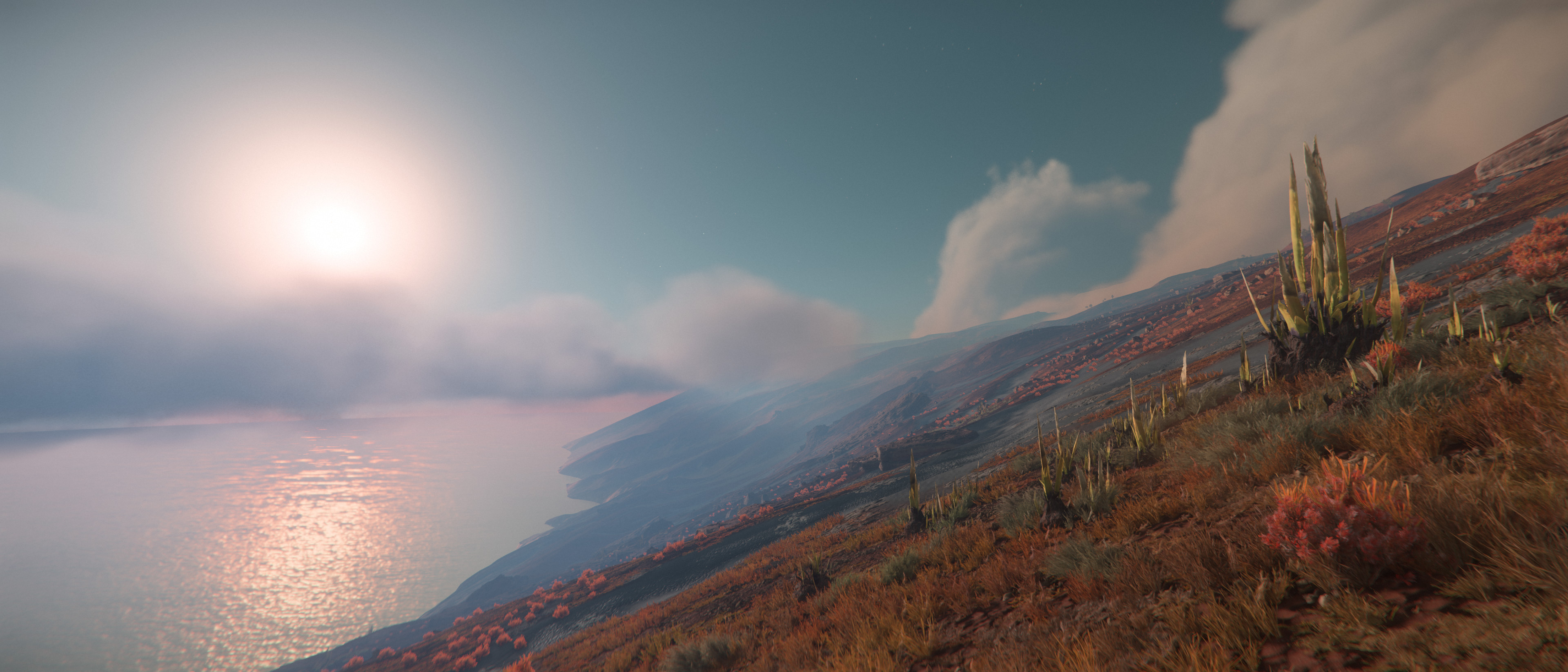
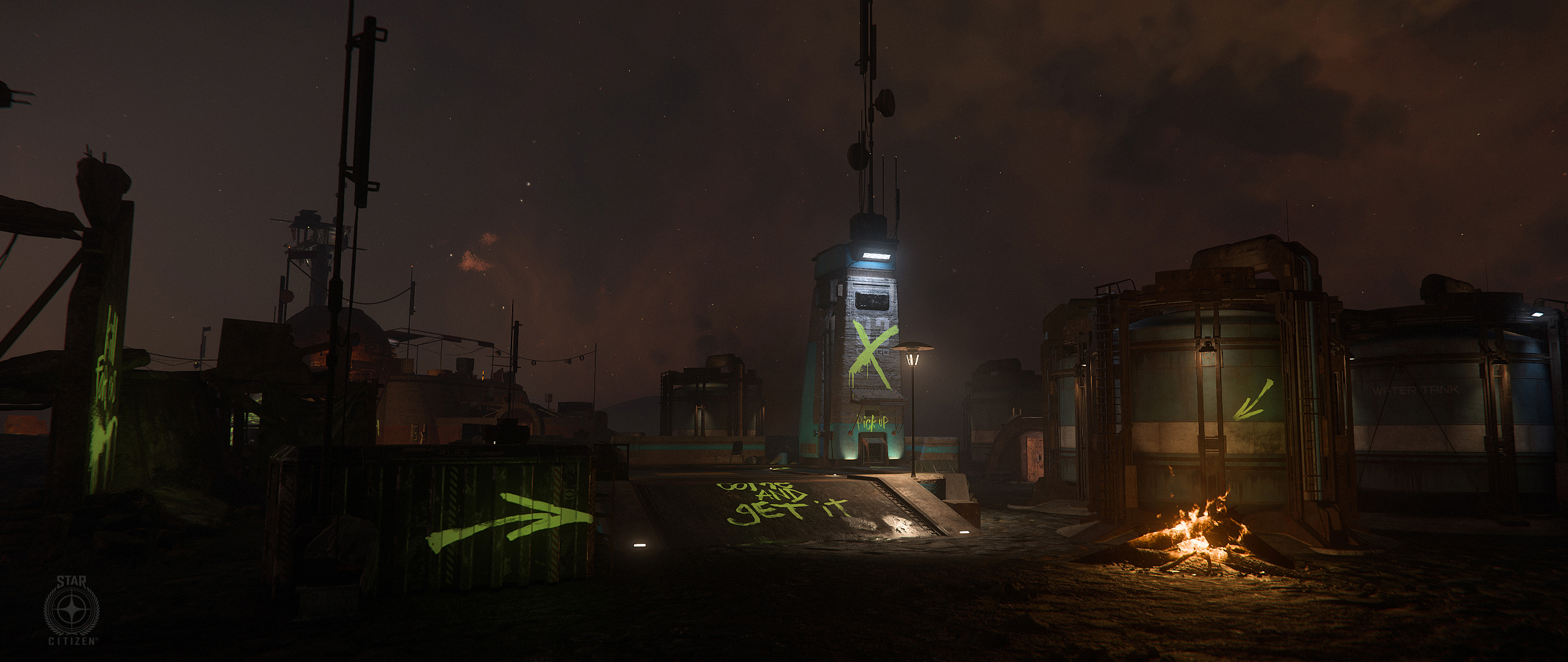
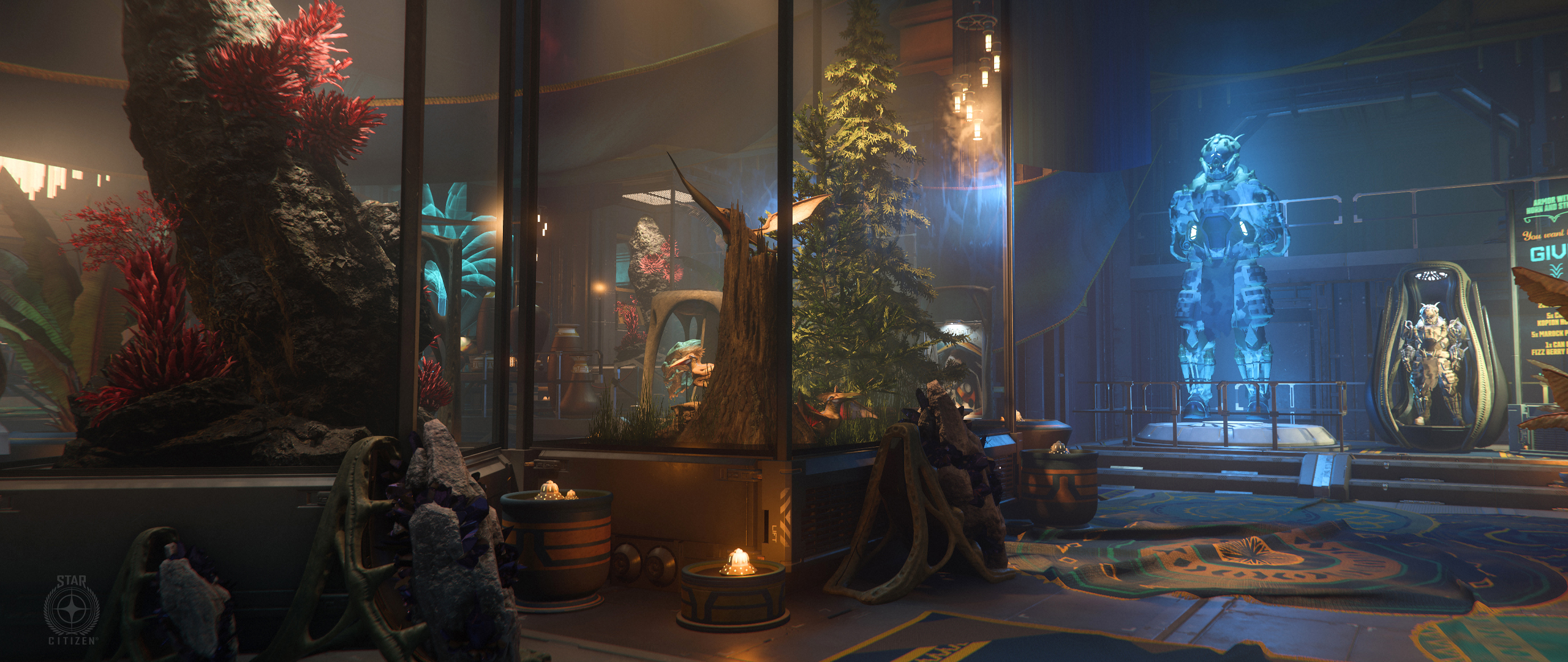
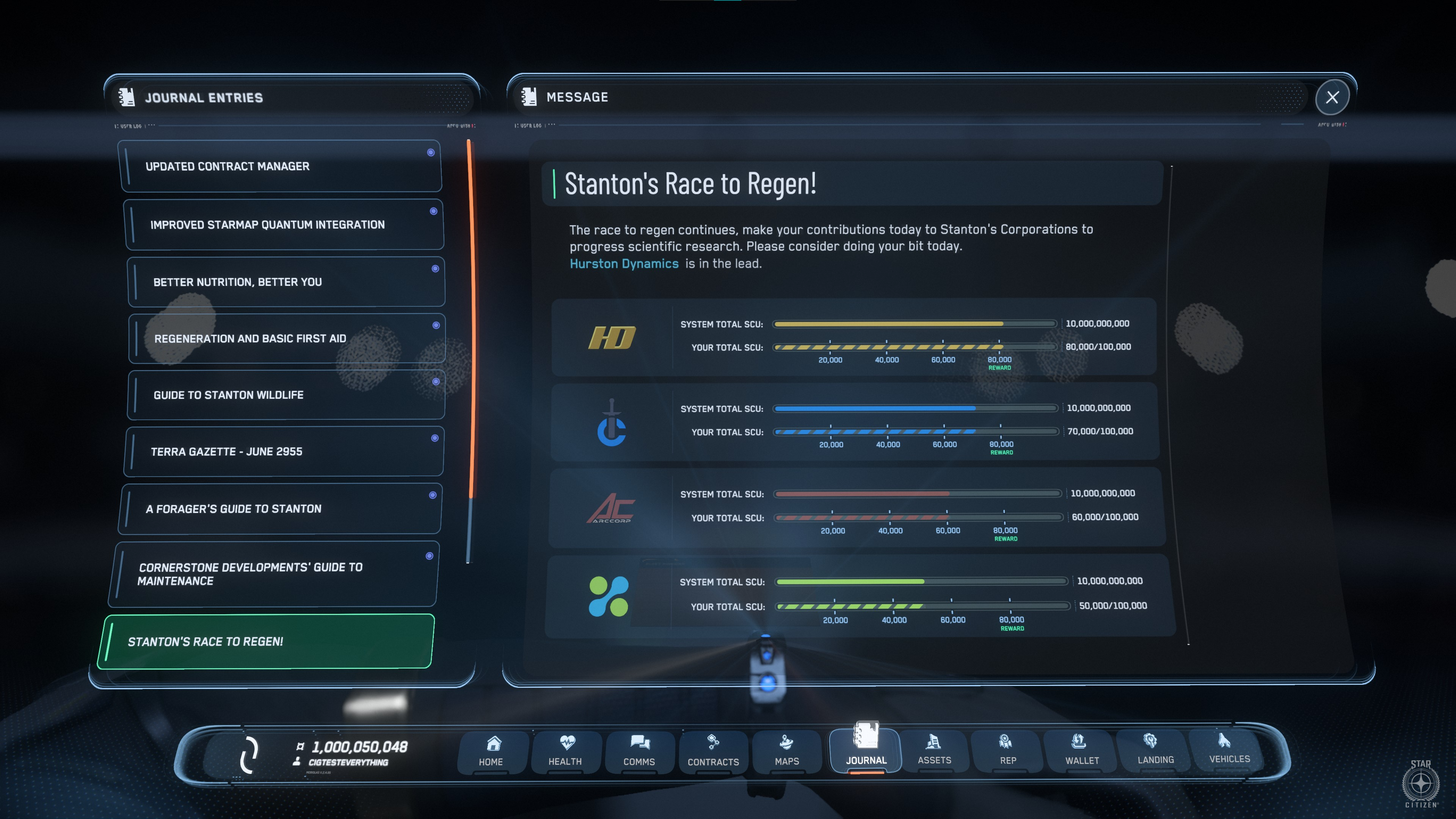
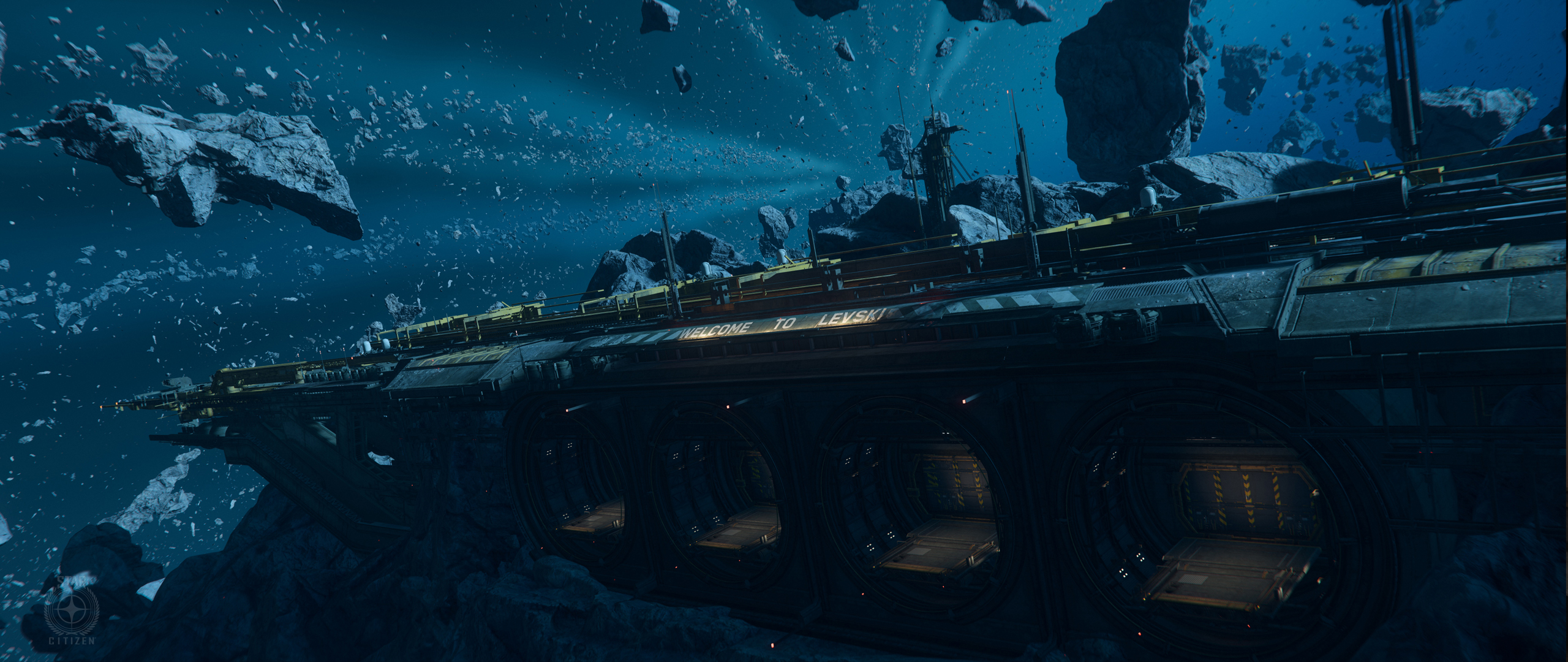
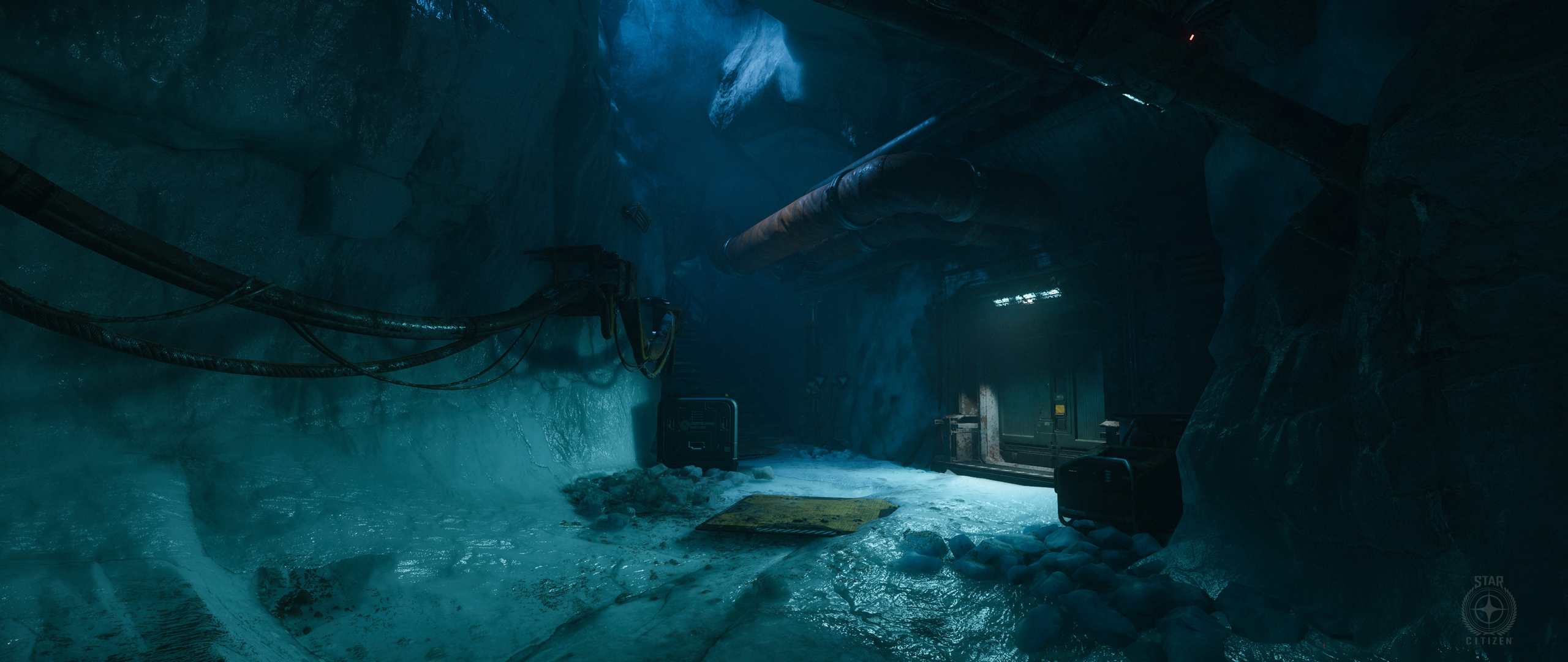
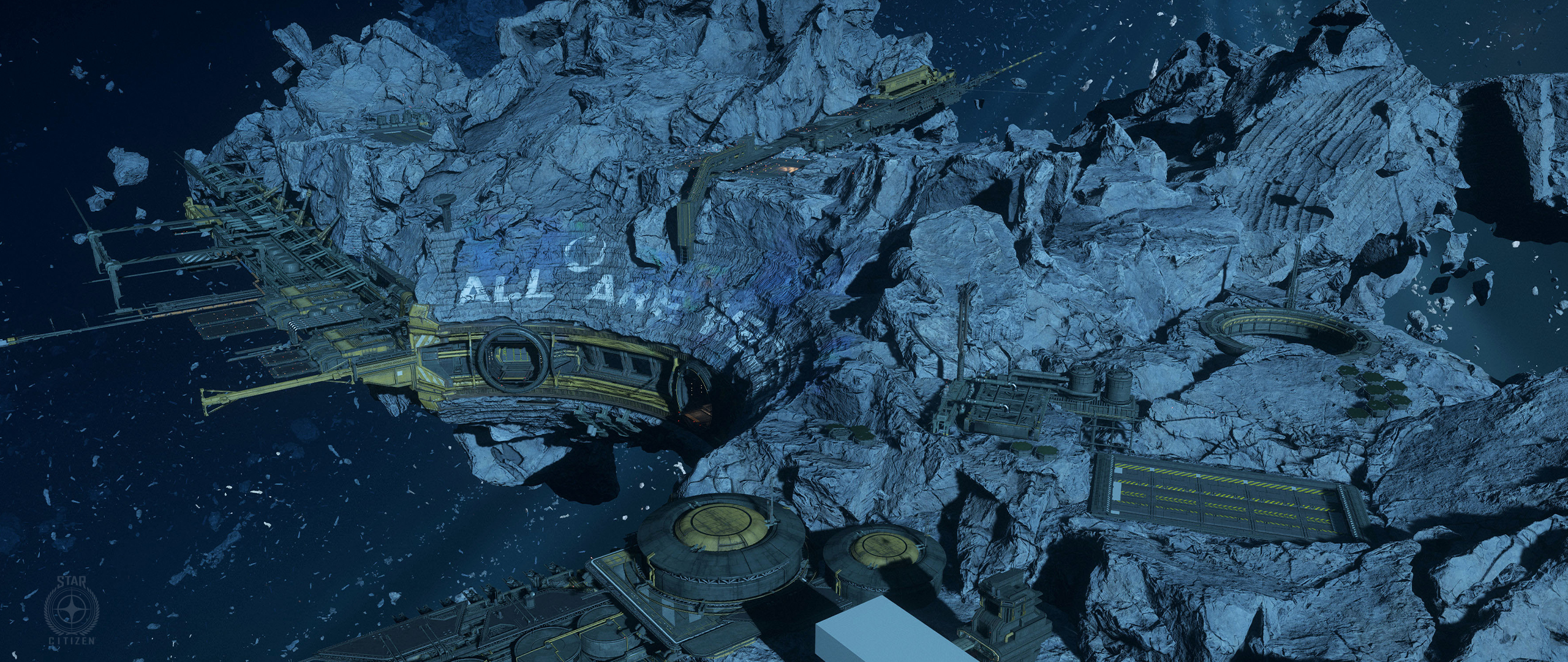
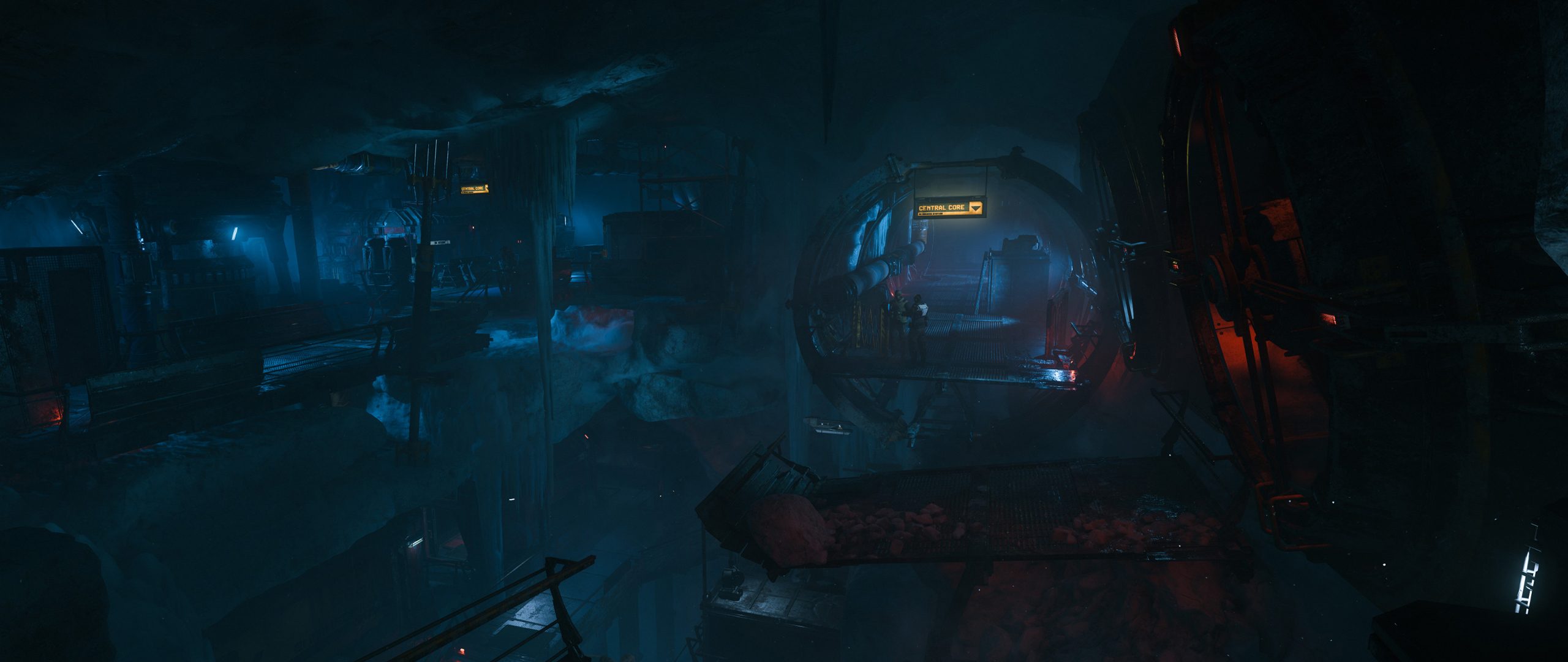
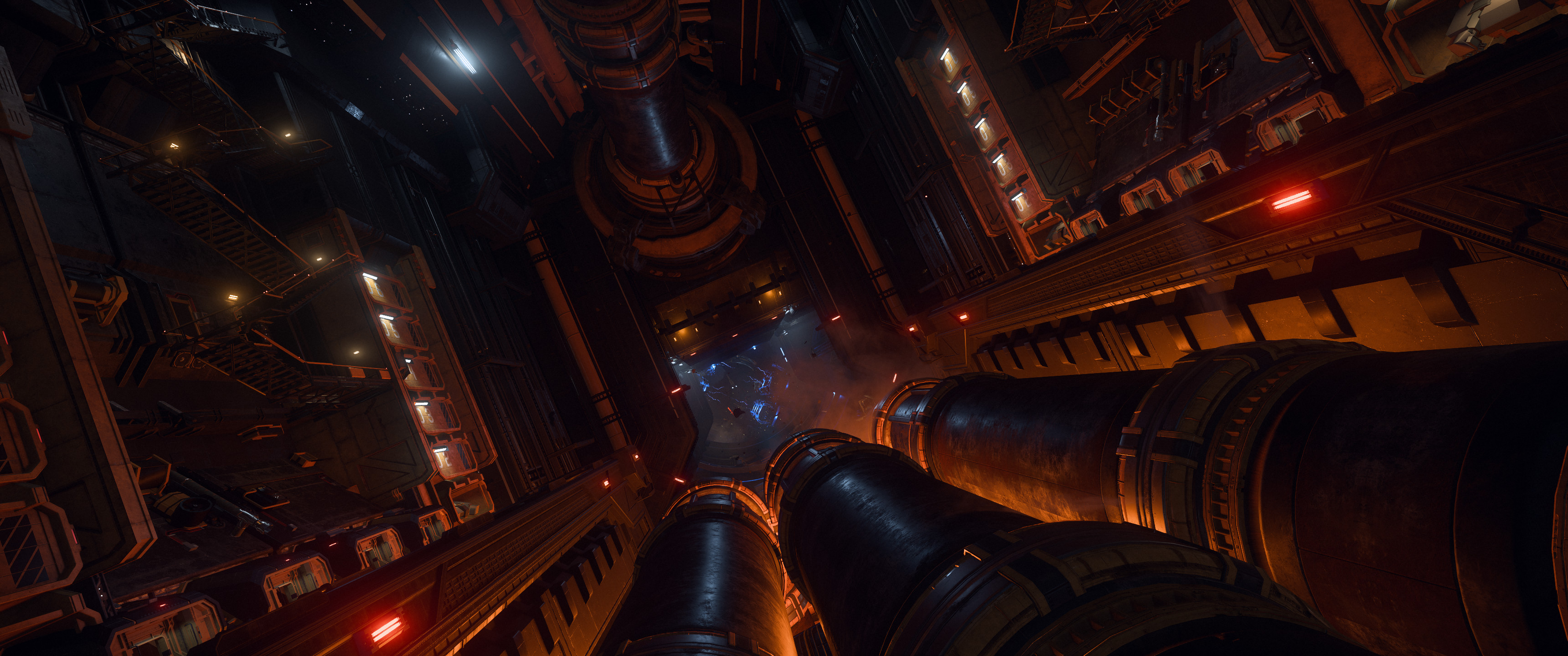
Metadata
- CIG ID
- 17853
- Channel
- Transmission
- Category
- Undefined
- Series
- Monthly Reports
- Comments
- 53
- Published
- 5 years ago (2020-11-05T00:00:00+00:00)