Squadron 42 Monthly Report: November & December 2020
Transmission Undefined Monthly ReportsContent
This is a cross-post of the report that was recently sent out via the monthly Squadron 42 newsletter. We’re publishing this a second time as a Comm-Link to make it easier for the community to reference back to. Attention Recruits,
What you are about to read is the latest information on the continuing development of Squadron 42 (SCI des: SQ42).
Thanks to the work of dedicated field agents and operatives, we’ve uncovered information on new FPS weapons, volumetric cloud rendering, and work continues on the Morrow Tour.
The information contained in this communication is extremely sensitive and it is of paramount importance that it does not fall into the wrong hands. Purge all records after reading.
UEE Naval High Command
AI (Social)
Social AI worked on the usables required to implement a full cycle of the NPC chowline mentioned in the last SQ42 report. This process includes NPCs collecting crockery, dispensing food and drink, picking up cutlery, carrying food to a seat, sitting down, eating, drinking (with the levels of food and drink decreasing), and clearing up. This builds on existing usable work but uses features in ways that haven’t been done before, where the state of a previous usable is necessary for the next one. For example, NPCs can’t dispense food unless they have a bowl and can’t eat food unless they have picked up the cutlery to eat it with.
Animation
The Animation Team spent the last two months of 2020 working on new FPS weapons, developing EVA traversal animations, MedPen blockouts, staggers, Vanduul combat, and surrender behaviors. They also updated running animations and locomotions.
Work was completed alongside the AI Team on various tasks, including the chowline, mess hall, Aegis Gladius inspects, idle and jogging improvements, push/pull, and several behavioral lines for many of the campaign cast. Various greetings, farewells, bumps, facial animations, and story-specific scenes were completed too.
Art (Characters)
November and December saw the Character Team complete a major polish pass on the characters of chapter four, including Morrow, White, Kelly, and Webster. This involved implementing more realistic eye geometry alongside texture passes and shader improvements courtesy of work done by the Graphics Team. Many SQ42-specific outfits, such as the deck crew and bridge officer uniforms, were improved too. The concept artists also worked on an in-game comic book.
Audio (SQ42)
November and December saw the Audio Team continue to make progress on chapter four, generating new SFX content and working closely with SQ42’s composer Geoff Zanelli on new music.
Engineering
The SQ42 Feature Team continued to support object container streaming, making it easier to set up and testing it on several levels. They also worked with the designers to get the firing range working in-situ in the Idris and now have NPCs using it systemically. Functionality for the designers to detect mission fail states (such as deliberate friendly fire) was added. Now, if conditions are met, the player will fail the mission and be taken to a predetermined scene. A push to polish interstitial levels led the team to fix several glitches and complete a number of small feature requests.
The Weapon Feature Team implemented the new Multi-Tool tractor beam functionality and made progress on a new hacking mechanic that allows players to bypass security systems.
Actor Tech spent most of the end-of-year period supporting the Morrow Tour, polishing push and pull, working on smooth locomotion, and getting the locomotion/scene transitions to work seamlessly.
The mounted turret was worked on by Actor Features. This will allow a fixed weapon to be fired and aimed via the player’s movement and is a sub-feature of the cooperative locomotion. They also implemented FPS radar and scanning and began work on zero-g push/pull locomotion to allow players to traverse space by grabbing and releasing fixed items in the environment (similar to how astronauts maneuver around the ISS).
Core Engine and Physics
The Physics Team worked on optimizations throughout November and December. This included an improved method of pre-physicalization for planet terrain patches for use in collision checks and improvements to event queueing. The first draft of ‘propagating physicalized shockwaves’ was submitted, and box-shaped physics grids and bullet drag were also added. SDF support was improved and work continued on soft-body deformation too.
The Vulkan initiative continued, with high-level render code refactor and optimizations. For example, the way material constants are uploaded to the GPU was simplified and optimized. A larger refactor of the shader cache backend system began too.
On the graphics side, various fixes for depth-of-field were delivered. The hair shader received several improvements, such as the ability to disable specular highlights on eyelashes, improved boundary occlusion at hairlines, support for ambient lights in forward shading, and better hair quality during camera cuts. Dual-lobe approximation for the skin shader was added and the eye shader received a couple of improvements as well.
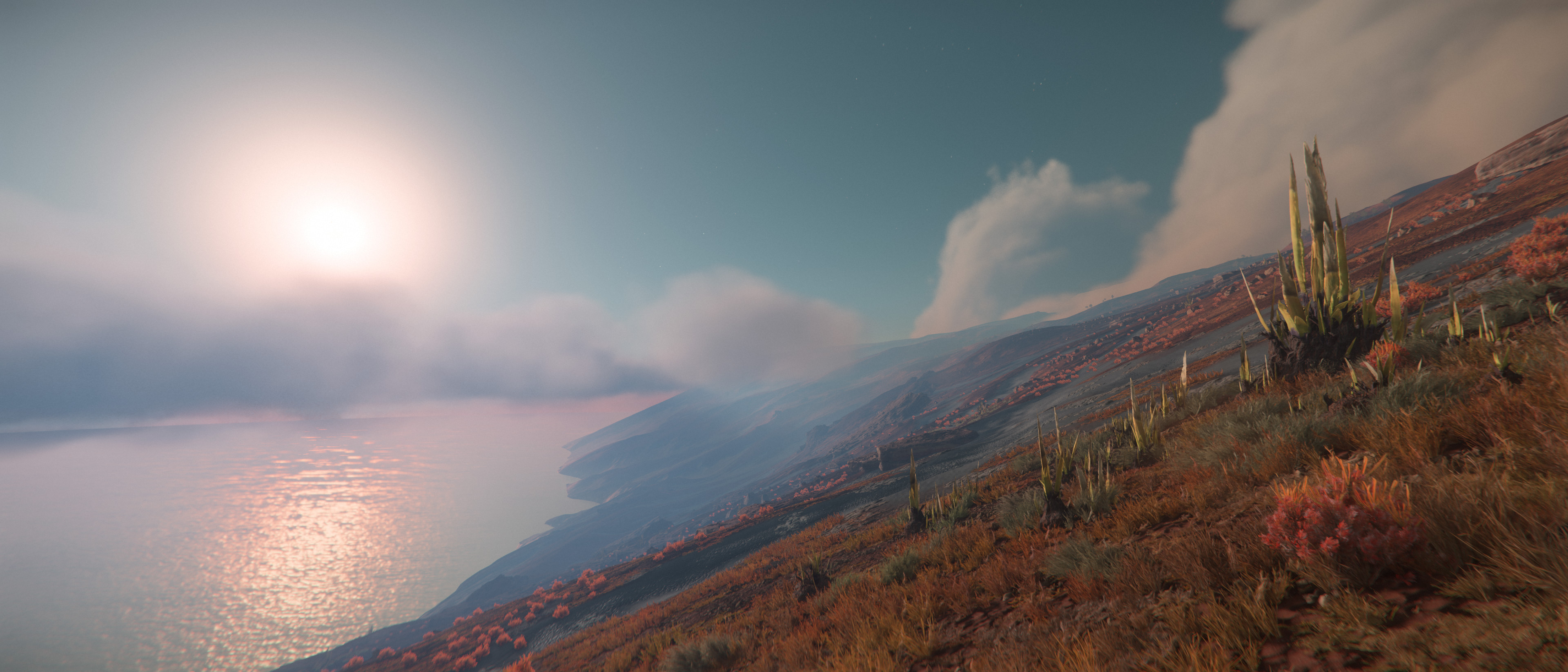
For planetary atmosphere rendering, time was dedicated to volumetric cloud rendering. The initial draft was implemented and work on volumetric cloud shadows made great progress, which will ultimately lead to localized cloud shaping.
The Core Engine Team spread their efforts over a couple of areas. Firstly, a large number of bug fixes and improvements were completed, such as streaming meshes for animated vis areas and the ability to add vis areas to CGA joints. Various optimizations were also implemented in the entity and zone systems along with component updates.
Using telemetry from the PU and PTU, the Core Engine Team continued their ongoing investigation into memory usage. This led to the engine-wide memory allocator and tracking system (including its tool chain) to be substantially refactored and improved. To provide an additional performance boost to the servers, the Linux DGS was switched to a monolithic executable to allow the compiler to generate better code (for local thread storage access in particular), and a stress test for object container streaming was added.
Lastly, C++ 14 support was enabled for the entirety of the client-server editor and relevant tool projects.
Gameplay Story
The Morrow Tour was a major focus towards the end of the year. The gameplay section was reviewed regularly, with plenty of interesting feedback given and updates made as required. As they moved into December, focus moved to more minor updates, bug fixing, and polish work.
“It has been great to see so many people working hard on this area of the game and this has meant that many long-standing tasks were addressed by other teams.” Gameplay Story
This led to various scenes receiving updates based on new assets or requirements from other teams too.
Graphics
Towards the end of 2020, the Graphics Team improved stability and fixed bugs inline with the latest internal SQ42 milestones. Because of the very high quality bar, especially for the cinematic elements, many visual issues were addressed. For example, the depth of field effect needed several changes to work better with the new hair shader. Tweaks were also made to the sub-surface-scattering effect to improve occlusion at the boundary between materials, such as around teeth and hair.
Level Design
Level Design had a highly productive Q4, aiming to complete a slice of gameplay starting from when the player first arrives on their home ship. This milestone required the collaboration of many different departments, encompassed work from all the design teams, and utilized the social elements refined throughout the year. It was a hugely successful exercise, giving Level Design the tools and knowledge they need to complete the rest of the campaign.
Narrative
Narrative wrapped up the year adding more immersive details to SQ42. As environments are further dialed in, the team made several passes and write-ups to expand on the props and screens discoverable around the world. For example, in earlier high-level passes, it might have been called out that the inhabitant of a room enjoys working on art in their spare time. Now that development was focusing on the area, the Narrative Team created the specifics of what should be seen. For items like interactable books, this can be quite involved. Additionally, screens in locations like the flight control room aboard the UEES Stanton needed additional text passes to make the information on them more pertinent to their function.
Work also continued on scripts to address gameplay needs as the Design Team progressed with various levels. Narrative reviewed several game sections to discuss whether additional dialogue could heighten gameplay or better highlight the player’s objectives.
Development of the Vanduul language progressed too, with the team reviewing the latest updated dictionary.
QA
QA continued to deliver recordings of each level to Cinematics so they can ensure scenes are working as intended and are of the expected quality. They also created custom maps to test more focused parts of cinematics. They also continued to support the dev teams and tested the various updates to the wider project.
Tech Animation
In the run-up to the holiday period, Technical Animation prepared for a large update to the facial rigs. This consisted of a ground-up overhaul of all face assets to enable several long-term initiatives to coalesce in early 2021. There were many assets to upgrade and a great many that required a careful hand and due diligence to ensure continuing pipeline compatibility. They also completed skinning and rigging to support both old and new assets throughout the campaign.
UI
The UI Team spent much of the past two months creating a new system to allow story cutscenes to trigger changes in the UI. This enables them to do things like animate screens in time with characters pressing buttons, or make on-screen warnings appear perfectly timed with cinematic explosions. Once the code was complete, the artists worked closely with the art and cinematics director to create an interesting movie-style UI in one of the holo-briefings, with floating UI drawing onto the screen, timed to complement what the officer was talking about.
They also worked closely with the Vehicle Team on the Gladius HUD. Using the concept video (which was shown on a recent ISC) as a reference, the functional version was built in-game using the new 3D UI tech.
VFX
VFX closed out the year working closely with Art and Cinematics to implement and polish the VFX for a key location. This included both epic effects and more subtle details. They also continued to support the Tech Art, Art, and Design teams with gas clouds. WE’LL SEE YOU NEXT MONTH…
Dies ist ein Cross-Post des Berichts, der kürzlich über den monatlichen Squadron 42 Newsletter verschickt wurde. Wir veröffentlichen ihn ein zweites Mal als Comm-Link, damit die Community leichter darauf zurückgreifen kann.
Achtung Rekruten,
Was ihr gleich lesen werdet, sind die neuesten Informationen über die weitere Entwicklung von Squadron 42 (SCI des: SQ42).
Dank der Arbeit von engagierten Feldagenten und Agenten haben wir Informationen über neue FPS-Waffen, volumetrisches Cloud-Rendering und die Arbeit an der Morrow-Tour aufgedeckt.
Die in dieser Mitteilung enthaltenen Informationen sind äußerst sensibel und es ist von größter Wichtigkeit, dass sie nicht in die falschen Hände geraten. Lösche alle Aufzeichnungen nach dem Lesen.
UEE Marine Oberkommando
KI (Sozial)
Social AI hat an den Usables gearbeitet, die benötigt werden, um einen kompletten Zyklus der im letzten SQ42-Bericht erwähnten NPC-Chowline zu implementieren. Dieser Prozess beinhaltet NPCs, die Geschirr einsammeln, Essen und Trinken ausgeben, Besteck aufheben, Essen zu einem Sitzplatz tragen, sich hinsetzen, essen, trinken (wobei die Stufen von Essen und Trinken abnehmen) und abräumen. Dies baut auf bestehende Nutzbarkeit auf, nutzt aber Features auf eine Art und Weise, die es vorher noch nicht gab, wobei der Zustand einer vorherigen Nutzbarkeit für die nächste notwendig ist. Zum Beispiel können NSCs kein Essen ausgeben, wenn sie keine Schüssel haben, und sie können kein Essen essen, wenn sie nicht das Besteck zum Essen mitgenommen haben.
Animation
Das Animationsteam hat die letzten zwei Monate des Jahres 2020 damit verbracht, an neuen FPS-Waffen zu arbeiten, EVA-Traversal-Animationen, MedPen-Blockouts, Staggers, Vanduul-Kampf und Kapitulationsverhalten zu entwickeln. Sie aktualisierten auch Laufanimationen und Fortbewegungen.
Zusammen mit dem KI-Team wurde an verschiedenen Aufgaben gearbeitet, darunter die Chowline, die Kantine, Aegis Gladius Inspektionen, Verbesserungen im Leerlauf und beim Joggen, Push/Pull und verschiedene Verhaltenslinien für viele der Kampagnenbesetzung. Verschiedene Begrüßungen, Verabschiedungen, Beulen, Gesichtsanimationen und storyspezifische Szenen wurden ebenfalls fertiggestellt.
Kunst (Charaktere)
Im November und Dezember hat das Charakterteam die Charaktere des vierten Kapitels, darunter Morrow, White, Kelly und Webster, einem größeren Feinschliff unterzogen. Dies beinhaltete die Implementierung einer realistischeren Augengeometrie neben Texturübergängen und Shader-Verbesserungen, die dank der Arbeit des Grafik-Teams durchgeführt wurden. Viele SQ42-spezifische Outfits, wie die Uniformen der Deckcrew und des Brückenoffiziers, wurden ebenfalls verbessert. Die Konzeptkünstler arbeiteten auch an einem In-Game-Comic.
Audio (SQ42)
Im November und Dezember hat das Audio Team weiter an Kapitel 4 gearbeitet, neue SFX Inhalte erstellt und eng mit SQ42's Komponist Geoff Zanelli an neuer Musik gearbeitet.
Technik
Das SQ42 Feature Team unterstützte weiterhin das Streaming von Objektcontainern, vereinfachte dessen Einrichtung und testete es auf mehreren Ebenen. Sie arbeiteten auch mit den Designern zusammen, um den Schießstand in Idris zum Laufen zu bringen, der nun von NPCs systematisch genutzt wird. Es wurde eine Funktionalität für die Designer hinzugefügt, um Missionsfehler zu erkennen (z.B. absichtliches Friendly Fire). Wenn die Bedingungen erfüllt sind, scheitert der Spieler die Mission und wird zu einer vorher festgelegten Szene gebracht. Ein Vorstoß zum Polieren der Zwischenlevels führte dazu, dass das Team mehrere Glitches behoben und eine Reihe kleinerer Feature-Wünsche erfüllt hat.
Das Weapon Feature Team implementierte die neue Multi-Tool Traktorstrahl-Funktionalität und machte Fortschritte bei einer neuen Hacking-Mechanik, die es Spielern erlaubt, Sicherheitssysteme zu umgehen.
Die Actor Tech verbrachte den größten Teil des Jahresendes damit, die Morrow Tour zu unterstützen, Push und Pull zu polieren, an der reibungslosen Fortbewegung zu arbeiten und die Übergänge zwischen Fortbewegung und Szene nahtlos zu gestalten.
Der montierte Revolver wurde von Actor Features bearbeitet. Dieser wird es ermöglichen, eine feste Waffe über die Bewegung des Spielers abzufeuern und zu zielen und ist ein Teilfeature der kooperativen Fortbewegung. Sie implementierten auch FPS-Radar und Scanning und begannen mit der Arbeit an der Zero-G-Push/Pull-Lokomotion, die es den Spielern ermöglicht, den Raum zu durchqueren, indem sie feste Gegenstände in der Umgebung greifen und loslassen (ähnlich wie Astronauten auf der ISS manövrieren).
Kern-Engine und Physik
Das Physik-Team hat im November und Dezember an Optimierungen gearbeitet. Dies beinhaltete eine verbesserte Methode der Vorphysikalisierung für Planeten-Terrains zur Verwendung in Kollisionsprüfungen und Verbesserungen der Ereignis-Warteschlange. Der erste Entwurf von 'propagating physicalized shockwaves' wurde eingereicht, und kastenförmige Physikgitter und Geschosswiderstand wurden ebenfalls hinzugefügt. Die SDF-Unterstützung wurde verbessert und auch an der Soft-Body-Deformation wurde weiter gearbeitet.
Die Vulkan-Initiative wurde fortgesetzt, mit High-Level Render Code Refactor und Optimierungen. Zum Beispiel wurde die Art und Weise, wie Materialkonstanten auf die GPU hochgeladen werden, vereinfacht und optimiert. Ein größeres Refactor des Shader Cache Backend Systems wurde ebenfalls begonnen.
Auf der Grafikseite wurden verschiedene Fixes für die Tiefenschärfe geliefert. Der Haar-Shader erhielt mehrere Verbesserungen, wie z.B. die Möglichkeit, spiegelnde Highlights auf Wimpern zu deaktivieren, verbesserte Boundary Occlusion an Haarlinien, Unterstützung für Ambient Lights im Forward Shading und bessere Haarqualität bei Kameraschnitten. Dual-Lobe-Approximation für den Haut-Shader wurde hinzugefügt und der Augen-Shader erhielt ebenfalls einige Verbesserungen.
Für das Rendering der Planetenatmosphäre wurde Zeit in das volumetrische Wolkenrendering gesteckt. Der erste Entwurf wurde implementiert und die Arbeit an volumetrischen Wolkenschatten machte große Fortschritte, was letztendlich zu einer lokalisierten Wolkenformung führen wird.
Das Core Engine Team verteilte seine Bemühungen auf mehrere Bereiche. Zum einen wurde eine große Anzahl von Bugfixes und Verbesserungen abgeschlossen, wie z.B. Streaming Meshes für animierte Visflächen und die Möglichkeit, Visflächen zu CGA Joints hinzuzufügen. Verschiedene Optimierungen wurden auch in den Entity- und Zonensystemen zusammen mit Komponenten-Updates implementiert.
Mit Hilfe der Telemetrie von der PU und PTU setzte das Core Engine Team seine laufende Untersuchung der Speichernutzung fort. Dies führte dazu, dass der Engine-weite Speicherallokator und das Tracking-System (einschließlich seiner Tool-Chain) erheblich überarbeitet und verbessert wurden. Um den Servern einen zusätzlichen Leistungsschub zu geben, wurde der Linux DGS auf ein monolithisches Executable umgestellt, um dem Compiler zu ermöglichen, besseren Code zu generieren (insbesondere für den lokalen Threadspeicherzugriff), und es wurde ein Stresstest für das Streaming von Objektcontainern hinzugefügt.
Zu guter Letzt wurde die Unterstützung von C++ 14 für den gesamten Client-Server-Editor und die relevanten Tool-Projekte aktiviert.
Gameplay Geschichte
Die Morrow Tour war ein Hauptaugenmerk gegen Ende des Jahres. Die Gameplay-Sektion wurde regelmäßig überarbeitet, wobei viel interessantes Feedback gegeben wurde und Updates nach Bedarf vorgenommen wurden. Als es in den Dezember ging, verlagerte sich der Fokus auf kleinere Updates, Bugfixing und Polierarbeiten.
"Es war großartig zu sehen, dass so viele Leute hart an diesem Bereich des Spiels gearbeitet haben und dies bedeutete, dass viele lange anstehende Aufgaben von anderen Teams angegangen wurden." Gameplay Story
Dies führte dazu, dass verschiedene Szenen Updates aufgrund neuer Assets oder Anforderungen auch von anderen Teams erhielten.
Grafiken
Gegen Ende des Jahres 2020 verbesserte das Grafikteam die Stabilität und behob Bugs im Einklang mit den letzten internen SQ42-Meilensteinen. Aufgrund der sehr hohen Qualitätsmesslatte, vor allem bei den cinematischen Elementen, wurden viele visuelle Probleme angegangen. Zum Beispiel benötigte der Tiefenschärfe-Effekt einige Änderungen, um besser mit dem neuen Haar-Shader zu funktionieren. Auch der Sub-Surface-Scattering-Effekt wurde überarbeitet, um die Okklusion an den Grenzen zwischen den Materialien zu verbessern, wie z.B. um Zähne und Haare herum.
Level Design
Das Level Design hatte ein sehr produktives 4. Quartal, in dem es darum ging, einen Abschnitt des Gameplays fertigzustellen, der mit der Ankunft des Spielers auf seinem Heimatschiff beginnt. Dieser Meilenstein erforderte die Zusammenarbeit vieler verschiedener Abteilungen, umfasste die Arbeit aller Designteams und nutzte die sozialen Elemente, die im Laufe des Jahres verfeinert wurden. Es war eine sehr erfolgreiche Übung, die dem Level Design die Werkzeuge und das Wissen gab, das sie für den Rest der Kampagne benötigten.
Narrative
Der Bereich Narrative schloss das Jahr ab und fügte weitere immersive Details zu SQ42 hinzu. Um die Umgebungen weiter zu verfeinern, hat das Team mehrere Durchläufe und Schreibarbeiten durchgeführt, um die Requisiten und Bildschirme, die in der Welt zu entdecken sind, zu erweitern. In früheren High-Level-Pässen wurde zum Beispiel erwähnt, dass der Bewohner eines Raumes in seiner Freizeit gerne an Kunst arbeitet. Nun, da sich die Entwicklung auf diesen Bereich konzentrierte, erstellte das Narrative Team die Besonderheiten dessen, was zu sehen sein sollte. Bei Gegenständen wie interaktiven Büchern kann das ziemlich aufwändig sein. Außerdem brauchten Bildschirme an Orten wie dem Flugkontrollraum an Bord der UEES Stanton zusätzliche Textpassagen, um die Informationen auf ihnen relevanter für ihre Funktion zu machen.
Die Arbeit an den Skripten wurde ebenfalls fortgesetzt, um die Bedürfnisse des Gameplays zu erfüllen, während das Design Team mit den verschiedenen Levels fortschritt. Narrative überprüften mehrere Spielabschnitte, um zu diskutieren, ob zusätzliche Dialoge das Gameplay erhöhen oder die Ziele des Spielers besser hervorheben könnten.
Die Entwicklung der Vanduul-Sprache schritt ebenfalls voran, wobei das Team das letzte aktualisierte Wörterbuch überprüfte.
QA
Die QA lieferte weiterhin Aufnahmen von jedem Level an die Cinematics, damit sie sicherstellen können, dass die Szenen wie vorgesehen funktionieren und die erwartete Qualität aufweisen. Sie erstellten auch benutzerdefinierte Karten, um gezieltere Teile der Cinematics zu testen. Sie unterstützten auch weiterhin die Entwicklerteams und testeten die verschiedenen Updates für das gesamte Projekt.
Tech Animation
Vor den Feiertagen bereitete sich die Technische Animation auf ein großes Update der Gesichts-Rigs vor. Es handelte sich dabei um eine grundlegende Überarbeitung aller Gesichts-Assets, damit mehrere langfristige Initiativen Anfang 2021 zusammengeführt werden können. Es gab viele Assets zu aktualisieren und viele, die eine sorgfältige Hand und Sorgfalt erforderten, um eine fortlaufende Pipeline-Kompatibilität sicherzustellen. Sie vervollständigten auch Skinning und Rigging, um sowohl alte als auch neue Assets während der gesamten Kampagne zu unterstützen.
UI
Das UI-Team hat einen Großteil der letzten zwei Monate damit verbracht, ein neues System zu entwickeln, das es ermöglicht, dass Story-Cutscenes Änderungen in der Benutzeroberfläche auslösen. Dies ermöglicht ihnen Dinge wie die Animation von Bildschirmen im Takt mit dem Drücken von Knöpfen durch die Charaktere oder das perfekte Timing von Warnungen auf dem Bildschirm mit filmischen Explosionen. Sobald der Code fertig war, arbeiteten die Künstler eng mit dem Art- und Cinematics-Direktor zusammen, um eine interessante UI im Filmstil in einem der Holo-Briefings zu erstellen, mit schwebenden UI-Zeichnungen auf dem Bildschirm, die zeitlich auf das abgestimmt waren, worüber der Offizier sprach.
Sie arbeiteten auch eng mit dem Fahrzeugteam am Gladius HUD zusammen. Unter Verwendung des Konzeptvideos (das auf einer kürzlichen ISC gezeigt wurde) als Referenz, wurde die funktionale Version im Spiel unter Verwendung der neuen 3D UI Technologie gebaut.
VFX
VFX beendete das Jahr in enger Zusammenarbeit mit Art und Cinematics, um die VFX für eine Schlüsselstelle zu implementieren und zu polieren. Dies beinhaltete sowohl epische Effekte als auch subtilere Details. Sie unterstützten auch weiterhin die Tech Art, Art und Design Teams mit Gaswolken. WIR SEHEN UNS NÄCHSTEN MONAT...
This is a cross-post of the report that was recently sent out via the monthly Squadron 42 newsletter. We’re publishing this a second time as a Comm-Link to make it easier for the community to reference back to. Attention Recruits,
What you are about to read is the latest information on the continuing development of Squadron 42 (SCI des: SQ42).
Thanks to the work of dedicated field agents and operatives, we’ve uncovered information on new FPS weapons, volumetric cloud rendering, and work continues on the Morrow Tour.
The information contained in this communication is extremely sensitive and it is of paramount importance that it does not fall into the wrong hands. Purge all records after reading.
UEE Naval High Command
AI (Social)
Social AI worked on the usables required to implement a full cycle of the NPC chowline mentioned in the last SQ42 report. This process includes NPCs collecting crockery, dispensing food and drink, picking up cutlery, carrying food to a seat, sitting down, eating, drinking (with the levels of food and drink decreasing), and clearing up. This builds on existing usable work but uses features in ways that haven’t been done before, where the state of a previous usable is necessary for the next one. For example, NPCs can’t dispense food unless they have a bowl and can’t eat food unless they have picked up the cutlery to eat it with.
Animation
The Animation Team spent the last two months of 2020 working on new FPS weapons, developing EVA traversal animations, MedPen blockouts, staggers, Vanduul combat, and surrender behaviors. They also updated running animations and locomotions.
Work was completed alongside the AI Team on various tasks, including the chowline, mess hall, Aegis Gladius inspects, idle and jogging improvements, push/pull, and several behavioral lines for many of the campaign cast. Various greetings, farewells, bumps, facial animations, and story-specific scenes were completed too.
Art (Characters)
November and December saw the Character Team complete a major polish pass on the characters of chapter four, including Morrow, White, Kelly, and Webster. This involved implementing more realistic eye geometry alongside texture passes and shader improvements courtesy of work done by the Graphics Team. Many SQ42-specific outfits, such as the deck crew and bridge officer uniforms, were improved too. The concept artists also worked on an in-game comic book.
Audio (SQ42)
November and December saw the Audio Team continue to make progress on chapter four, generating new SFX content and working closely with SQ42’s composer Geoff Zanelli on new music.
Engineering
The SQ42 Feature Team continued to support object container streaming, making it easier to set up and testing it on several levels. They also worked with the designers to get the firing range working in-situ in the Idris and now have NPCs using it systemically. Functionality for the designers to detect mission fail states (such as deliberate friendly fire) was added. Now, if conditions are met, the player will fail the mission and be taken to a predetermined scene. A push to polish interstitial levels led the team to fix several glitches and complete a number of small feature requests.
The Weapon Feature Team implemented the new Multi-Tool tractor beam functionality and made progress on a new hacking mechanic that allows players to bypass security systems.
Actor Tech spent most of the end-of-year period supporting the Morrow Tour, polishing push and pull, working on smooth locomotion, and getting the locomotion/scene transitions to work seamlessly.
The mounted turret was worked on by Actor Features. This will allow a fixed weapon to be fired and aimed via the player’s movement and is a sub-feature of the cooperative locomotion. They also implemented FPS radar and scanning and began work on zero-g push/pull locomotion to allow players to traverse space by grabbing and releasing fixed items in the environment (similar to how astronauts maneuver around the ISS).
Core Engine and Physics
The Physics Team worked on optimizations throughout November and December. This included an improved method of pre-physicalization for planet terrain patches for use in collision checks and improvements to event queueing. The first draft of ‘propagating physicalized shockwaves’ was submitted, and box-shaped physics grids and bullet drag were also added. SDF support was improved and work continued on soft-body deformation too.
The Vulkan initiative continued, with high-level render code refactor and optimizations. For example, the way material constants are uploaded to the GPU was simplified and optimized. A larger refactor of the shader cache backend system began too.
On the graphics side, various fixes for depth-of-field were delivered. The hair shader received several improvements, such as the ability to disable specular highlights on eyelashes, improved boundary occlusion at hairlines, support for ambient lights in forward shading, and better hair quality during camera cuts. Dual-lobe approximation for the skin shader was added and the eye shader received a couple of improvements as well.
For planetary atmosphere rendering, time was dedicated to volumetric cloud rendering. The initial draft was implemented and work on volumetric cloud shadows made great progress, which will ultimately lead to localized cloud shaping.
The Core Engine Team spread their efforts over a couple of areas. Firstly, a large number of bug fixes and improvements were completed, such as streaming meshes for animated vis areas and the ability to add vis areas to CGA joints. Various optimizations were also implemented in the entity and zone systems along with component updates.
Using telemetry from the PU and PTU, the Core Engine Team continued their ongoing investigation into memory usage. This led to the engine-wide memory allocator and tracking system (including its tool chain) to be substantially refactored and improved. To provide an additional performance boost to the servers, the Linux DGS was switched to a monolithic executable to allow the compiler to generate better code (for local thread storage access in particular), and a stress test for object container streaming was added.
Lastly, C++ 14 support was enabled for the entirety of the client-server editor and relevant tool projects.
Gameplay Story
The Morrow Tour was a major focus towards the end of the year. The gameplay section was reviewed regularly, with plenty of interesting feedback given and updates made as required. As they moved into December, focus moved to more minor updates, bug fixing, and polish work.
“It has been great to see so many people working hard on this area of the game and this has meant that many long-standing tasks were addressed by other teams.” Gameplay Story
This led to various scenes receiving updates based on new assets or requirements from other teams too.
Graphics
Towards the end of 2020, the Graphics Team improved stability and fixed bugs inline with the latest internal SQ42 milestones. Because of the very high quality bar, especially for the cinematic elements, many visual issues were addressed. For example, the depth of field effect needed several changes to work better with the new hair shader. Tweaks were also made to the sub-surface-scattering effect to improve occlusion at the boundary between materials, such as around teeth and hair.
Level Design
Level Design had a highly productive Q4, aiming to complete a slice of gameplay starting from when the player first arrives on their home ship. This milestone required the collaboration of many different departments, encompassed work from all the design teams, and utilized the social elements refined throughout the year. It was a hugely successful exercise, giving Level Design the tools and knowledge they need to complete the rest of the campaign.
Narrative
Narrative wrapped up the year adding more immersive details to SQ42. As environments are further dialed in, the team made several passes and write-ups to expand on the props and screens discoverable around the world. For example, in earlier high-level passes, it might have been called out that the inhabitant of a room enjoys working on art in their spare time. Now that development was focusing on the area, the Narrative Team created the specifics of what should be seen. For items like interactable books, this can be quite involved. Additionally, screens in locations like the flight control room aboard the UEES Stanton needed additional text passes to make the information on them more pertinent to their function.
Work also continued on scripts to address gameplay needs as the Design Team progressed with various levels. Narrative reviewed several game sections to discuss whether additional dialogue could heighten gameplay or better highlight the player’s objectives.
Development of the Vanduul language progressed too, with the team reviewing the latest updated dictionary.
QA
QA continued to deliver recordings of each level to Cinematics so they can ensure scenes are working as intended and are of the expected quality. They also created custom maps to test more focused parts of cinematics. They also continued to support the dev teams and tested the various updates to the wider project.
Tech Animation
In the run-up to the holiday period, Technical Animation prepared for a large update to the facial rigs. This consisted of a ground-up overhaul of all face assets to enable several long-term initiatives to coalesce in early 2021. There were many assets to upgrade and a great many that required a careful hand and due diligence to ensure continuing pipeline compatibility. They also completed skinning and rigging to support both old and new assets throughout the campaign.
UI
The UI Team spent much of the past two months creating a new system to allow story cutscenes to trigger changes in the UI. This enables them to do things like animate screens in time with characters pressing buttons, or make on-screen warnings appear perfectly timed with cinematic explosions. Once the code was complete, the artists worked closely with the art and cinematics director to create an interesting movie-style UI in one of the holo-briefings, with floating UI drawing onto the screen, timed to complement what the officer was talking about.
They also worked closely with the Vehicle Team on the Gladius HUD. Using the concept video (which was shown on a recent ISC) as a reference, the functional version was built in-game using the new 3D UI tech.
VFX
VFX closed out the year working closely with Art and Cinematics to implement and polish the VFX for a key location. This included both epic effects and more subtle details. They also continued to support the Tech Art, Art, and Design teams with gas clouds. WE’LL SEE YOU NEXT MONTH…
This is a cross-post of the report that was recently sent out via the monthly Squadron 42 newsletter. We’re publishing this a second time as a Comm-Link to make it easier for the community to reference back to. Attention Recruits,
What you are about to read is the latest information on the continuing development of Squadron 42 (SCI des: SQ42).
Thanks to the work of dedicated field agents and operatives, we’ve uncovered information on new FPS weapons, volumetric cloud rendering, and work continues on the Morrow Tour.
The information contained in this communication is extremely sensitive and it is of paramount importance that it does not fall into the wrong hands. Purge all records after reading.
UEE Naval High Command
AI (Social)
Social AI worked on the usables required to implement a full cycle of the NPC chowline mentioned in the last SQ42 report. This process includes NPCs collecting crockery, dispensing food and drink, picking up cutlery, carrying food to a seat, sitting down, eating, drinking (with the levels of food and drink decreasing), and clearing up. This builds on existing usable work but uses features in ways that haven’t been done before, where the state of a previous usable is necessary for the next one. For example, NPCs can’t dispense food unless they have a bowl and can’t eat food unless they have picked up the cutlery to eat it with.
Animation
The Animation Team spent the last two months of 2020 working on new FPS weapons, developing EVA traversal animations, MedPen blockouts, staggers, Vanduul combat, and surrender behaviors. They also updated running animations and locomotions.
Work was completed alongside the AI Team on various tasks, including the chowline, mess hall, Aegis Gladius inspects, idle and jogging improvements, push/pull, and several behavioral lines for many of the campaign cast. Various greetings, farewells, bumps, facial animations, and story-specific scenes were completed too.
Art (Characters)
November and December saw the Character Team complete a major polish pass on the characters of chapter four, including Morrow, White, Kelly, and Webster. This involved implementing more realistic eye geometry alongside texture passes and shader improvements courtesy of work done by the Graphics Team. Many SQ42-specific outfits, such as the deck crew and bridge officer uniforms, were improved too. The concept artists also worked on an in-game comic book.
Audio (SQ42)
November and December saw the Audio Team continue to make progress on chapter four, generating new SFX content and working closely with SQ42’s composer Geoff Zanelli on new music.
Engineering
The SQ42 Feature Team continued to support object container streaming, making it easier to set up and testing it on several levels. They also worked with the designers to get the firing range working in-situ in the Idris and now have NPCs using it systemically. Functionality for the designers to detect mission fail states (such as deliberate friendly fire) was added. Now, if conditions are met, the player will fail the mission and be taken to a predetermined scene. A push to polish interstitial levels led the team to fix several glitches and complete a number of small feature requests.
The Weapon Feature Team implemented the new Multi-Tool tractor beam functionality and made progress on a new hacking mechanic that allows players to bypass security systems.
Actor Tech spent most of the end-of-year period supporting the Morrow Tour, polishing push and pull, working on smooth locomotion, and getting the locomotion/scene transitions to work seamlessly.
The mounted turret was worked on by Actor Features. This will allow a fixed weapon to be fired and aimed via the player’s movement and is a sub-feature of the cooperative locomotion. They also implemented FPS radar and scanning and began work on zero-g push/pull locomotion to allow players to traverse space by grabbing and releasing fixed items in the environment (similar to how astronauts maneuver around the ISS).
Core Engine and Physics
The Physics Team worked on optimizations throughout November and December. This included an improved method of pre-physicalization for planet terrain patches for use in collision checks and improvements to event queueing. The first draft of ‘propagating physicalized shockwaves’ was submitted, and box-shaped physics grids and bullet drag were also added. SDF support was improved and work continued on soft-body deformation too.
The Vulkan initiative continued, with high-level render code refactor and optimizations. For example, the way material constants are uploaded to the GPU was simplified and optimized. A larger refactor of the shader cache backend system began too.
On the graphics side, various fixes for depth-of-field were delivered. The hair shader received several improvements, such as the ability to disable specular highlights on eyelashes, improved boundary occlusion at hairlines, support for ambient lights in forward shading, and better hair quality during camera cuts. Dual-lobe approximation for the skin shader was added and the eye shader received a couple of improvements as well.
For planetary atmosphere rendering, time was dedicated to volumetric cloud rendering. The initial draft was implemented and work on volumetric cloud shadows made great progress, which will ultimately lead to localized cloud shaping.
The Core Engine Team spread their efforts over a couple of areas. Firstly, a large number of bug fixes and improvements were completed, such as streaming meshes for animated vis areas and the ability to add vis areas to CGA joints. Various optimizations were also implemented in the entity and zone systems along with component updates.
Using telemetry from the PU and PTU, the Core Engine Team continued their ongoing investigation into memory usage. This led to the engine-wide memory allocator and tracking system (including its tool chain) to be substantially refactored and improved. To provide an additional performance boost to the servers, the Linux DGS was switched to a monolithic executable to allow the compiler to generate better code (for local thread storage access in particular), and a stress test for object container streaming was added.
Lastly, C++ 14 support was enabled for the entirety of the client-server editor and relevant tool projects.
Gameplay Story
The Morrow Tour was a major focus towards the end of the year. The gameplay section was reviewed regularly, with plenty of interesting feedback given and updates made as required. As they moved into December, focus moved to more minor updates, bug fixing, and polish work.
“It has been great to see so many people working hard on this area of the game and this has meant that many long-standing tasks were addressed by other teams.” Gameplay Story
This led to various scenes receiving updates based on new assets or requirements from other teams too.
Graphics
Towards the end of 2020, the Graphics Team improved stability and fixed bugs inline with the latest internal SQ42 milestones. Because of the very high quality bar, especially for the cinematic elements, many visual issues were addressed. For example, the depth of field effect needed several changes to work better with the new hair shader. Tweaks were also made to the sub-surface-scattering effect to improve occlusion at the boundary between materials, such as around teeth and hair.
Level Design
Level Design had a highly productive Q4, aiming to complete a slice of gameplay starting from when the player first arrives on their home ship. This milestone required the collaboration of many different departments, encompassed work from all the design teams, and utilized the social elements refined throughout the year. It was a hugely successful exercise, giving Level Design the tools and knowledge they need to complete the rest of the campaign.
Narrative
Narrative wrapped up the year adding more immersive details to SQ42. As environments are further dialed in, the team made several passes and write-ups to expand on the props and screens discoverable around the world. For example, in earlier high-level passes, it might have been called out that the inhabitant of a room enjoys working on art in their spare time. Now that development was focusing on the area, the Narrative Team created the specifics of what should be seen. For items like interactable books, this can be quite involved. Additionally, screens in locations like the flight control room aboard the UEES Stanton needed additional text passes to make the information on them more pertinent to their function.
Work also continued on scripts to address gameplay needs as the Design Team progressed with various levels. Narrative reviewed several game sections to discuss whether additional dialogue could heighten gameplay or better highlight the player’s objectives.
Development of the Vanduul language progressed too, with the team reviewing the latest updated dictionary.
QA
QA continued to deliver recordings of each level to Cinematics so they can ensure scenes are working as intended and are of the expected quality. They also created custom maps to test more focused parts of cinematics. They also continued to support the dev teams and tested the various updates to the wider project.
Tech Animation
In the run-up to the holiday period, Technical Animation prepared for a large update to the facial rigs. This consisted of a ground-up overhaul of all face assets to enable several long-term initiatives to coalesce in early 2021. There were many assets to upgrade and a great many that required a careful hand and due diligence to ensure continuing pipeline compatibility. They also completed skinning and rigging to support both old and new assets throughout the campaign.
UI
The UI Team spent much of the past two months creating a new system to allow story cutscenes to trigger changes in the UI. This enables them to do things like animate screens in time with characters pressing buttons, or make on-screen warnings appear perfectly timed with cinematic explosions. Once the code was complete, the artists worked closely with the art and cinematics director to create an interesting movie-style UI in one of the holo-briefings, with floating UI drawing onto the screen, timed to complement what the officer was talking about.
They also worked closely with the Vehicle Team on the Gladius HUD. Using the concept video (which was shown on a recent ISC) as a reference, the functional version was built in-game using the new 3D UI tech.
VFX
VFX closed out the year working closely with Art and Cinematics to implement and polish the VFX for a key location. This included both epic effects and more subtle details. They also continued to support the Tech Art, Art, and Design teams with gas clouds. WE’LL SEE YOU NEXT MONTH…
Links
No links available.
Images
16


Metadata
- CIG ID
- 17958
- Channel
- Transmission
- Category
- Undefined
- Series
- Monthly Reports
- Comments
- 14
- Published
- 5 years ago (2021-01-27T00:00:00+00:00)