Star Citizen Monthly Report: May 2021
Transmission Undefined Monthly ReportsContent
In the month of May, Star Citizen welcomed the fleet to the Stanton system, which was an undertaking tackled by many of the teams at Cloud Imperium, but that wasn’t all! Great progress was made on important features for Alpha 3.14 and beyond, from the Orison landing zone to the Pyro and Nyx systems.
AI (Content)
The AI Content Team focused on tech that also benefited Invictus Launch Week, which included polishing the tourist and tour guide behavior, wildlines, Look IK, and completing the required female animations. They dedicated time to the Mannequin fragments animation selection to ensure they correctly fit their context, and the shopkeeper gained more usables that players would expect to see in food and drink shops.
They also started designing possible flow extensions to allow NPCs to serve players differently if they choose to eat in or take away. For example, this will allow food to be given to the player directly or served on a plate and tray.
The security guard was fully designed and prototyped. This behavior offers great gameplay opportunities in an emergent or systemic way as it fulfills scenarios of NPCs acting as law enforcers, information providers, gatekeepers, and greeters.
AI Content also continued designing and prototyping background life for the medical room when players respawn, including the systemic janitor and NPCs using the bathroom cubicle and sleeping in the bunk beds.
AI (Features)
The AI Feature Team further developed combat, including the ability for enemy fighters to finish off their targets (AI or player) with execution animations. This involved adapting the existing stealth takedown system for use by AI and making it more data-driven so that it supports different types of takedowns with their own settings. For example, the minimum and maximum distance a takedown can be performed from and what quadrant the attacker must be in relative to the target.
For spaceships, AI Features adapted the fighter combat behavior to better utilize missiles. This involves selecting the right type and number of missiles to fire so that NPCs don’t exhaust all of their high-damage missiles on smaller targets. In group combat, this ensures that missiles are spread over a range of targets and are rationed for use throughout the fight. This leads to interesting behaviors where fighters will ‘soften up’ targets with a barrage of missiles before engaging in dogfighting, firing occasional missiles at opportune moments. They also worked on the pilot security behavior to fix issues that occur when a target has surrendered or been arrested.
As part of the larger security behavior, work continued on the weapons training sub-behavior, where NPCs can improve their combat abilities by using a firing range. Firstly, a weapon has to be retrieved from the armorer, with the team updating the existing vendor and patron behaviors to support retrieval and return at the armory. For the firing range, the team had to adapt the existing targeting and firing systems to support non-agent targets. This technology will be used in the future to support the targeting of ‘destructibles’ in combat. For example, the AI might need to take out a computer bank to complete a mission objective. The groundwork for targeting specific parts of the body (eg. headshots) and ‘non-human-bodied agents’ (e.g. animals) was completed too.
Finally for AI Features, the team further developed untrained weapons combat. They also prepared for an upcoming mo-cap session for untrained cover behaviors, responding to dead bodies, hostile reactions in usables, cowering, and surrendering.
AI (Tech)
Throughout May, AI Tech completed and addressed feedback for the tier-0 navigation link work. This involved making improvements to how the cache data is used during navigation links with motion-warp animations but also re-computing navigation link connection points when the navigation mesh changes in its proximity.
On the EVA side, work on NPCs transitioning from zero-g into a usable (and vice versa) was completed. Following on from this, they began developing zero-g collision avoidance for NPCs, which allows them to avoid other characters (AI or player) and small objects while floating. This will use the 3D ORCA that was implemented for ship AI collision avoidance. The team also added new functionality to movement requests.; they’re now able to re-plane designer paths at the end, allowing them to create loops.
Another feature worked on was planetary navigation. The aim is to generate navigation mesh on planets that can be used by NPCs and animals around outposts. This will use physics information, so each time planetary tiles are physicalized, navigation meshes will be generated too.
For the Subsumption editor tool, the team added new functionality allowing them to create or modify multiple Subsumption functions in the same window view. This will be beneficial to the designers when writing mission scripts or behaviors as they will have an overview of all logic in the same place.
Animation
Last month, Animation worked on several different life animations, including those for vendors, searching behaviors, emergency reactions when in useables, civilian reactions to threats, medical revival, guarding and security, searching bodies, and reactions to dead bodies. They also worked on the tour guide and tourist for Invictus, supported a few new vehicles, and built testing rigs for two creature types and a salvage weapon.
Art (Characters)
Character Art spent May wrapping up new assets for Orison and began providing Design with actor records and loadouts to populate the new landing zone with. The concept artists worked on civilians, vendors, and gangs for the Pyro system, while the character artists progressed with three armor sets. and generic backpacks.
Art (Environment)
The Landing Zone Team supported Invictus, closing out bugs across the various show halls. Orison is nearing completion, with the final polish, tweak, and LOD passes remaining before sign-off.
The Modular Team progressed with final art on the first set of outpost content. At a higher level, planning is ongoing to define the next set of content after the initial exploratory set is done to provide variety across the various outposts. Alongside this, the team is beginning to integrate crawlspaces into existing content. And, after a few rounds of feedback, the team is close to finalizing the look of the jump point gas cloud, with particular attention being paid to the center where the actual jump point is located.
The Planet Content Team focused on planets for the Nyx system.
“We keep experimenting with fresh new biomes and asset packs. We want Nyx to look unique so that our most adventurous citizens get a satisfying experience exploring these new lands.” -The Planet Content Team
Additionally, a new harvestable was completed that will populate Pyro.
In Montreal, the Modular Team finished their first locations, putting the finishing touches to the New Babbage and Orison hospitals. They then moved onto further hospital locations for Lorville and Area18 alongside clinics for Grim HEX and various space stations. They’re working as efficiently as possible to maximize the number of locations available once medical gameplay goes live.
Art (Ships)
The US-based team worked to complete the RSI Constellation Taurus, which moved into the ‘release prep’ stage; Ship Art focused on finishing the complicated LODs while Tech Art worked through various features like timings, landing gears, and SDF shields. The release-prep review is scheduled for early June before the ship moves to QA for polish and bug-fixing.
Last month, work also began on the Crusader Ares, with the team meeting with various stakeholders to review the whitebox, though there are a few remaining tasks before it can be signed off. Art also moved to the greybox stage.
The Art and Design teams supported the Invictus patch, dealing with various bugs that were important to the player experience. Towards the end of the month, the production kick-off was scheduled for the Drake Vulture, which is expected to begin in early June.
In the UK, the team worked towards the various Invictus deliverables, including getting the exterior art of the Aegis Redeemer to final-art standard and creating the various themed ship paints. They also worked to prepare the Javelin, including an airlock entrance area that utilized the new docking mechanic and the holo display in the briefing room, which was bespoke for the event.
A previously mentioned unannounced ship made great progress. It just needs a final lighting pass and general polish for the interior to be wrapped up, while the exterior requires technical damage, exterior lighting, and general polish passes. Once done, it will move to the Tech Art Team. Work also began on a brand-new ship that will be revealed later in the year.
Alongside new content, the team have two ships working their way through the ‘gold standard’ process, where they incorporate the latest features and generally improve older vehicles. The Aegis Sabre is nearing the end of this process , while the Retaliator is well underway though still has a lot left to do. Work done so far included widening the doors and tight corridors to allow better AI navigation and repositioning the lifts and airlock in the central room.
Time was also spent on R&D looking into wear and dirt, as well as further optimizations to ship exteriors.
Art (Weapons)
The Weapons Team continued to focus on bugs and polish for the Alpha 3.13 and 3.13.1 patches and supported the Tumbril Nova’s main cannon. Once complete, they moved the Greycat salvage tool to ‘first pass rigging,’ using the weapon as a training asset for the rigging process. The mining gadgets whitebox asset was also iterated on with an early blockout before it moved on for a concept pass.
Community
The Community Team kicked off the month with a Spectrum ‘Ask Me Anything’ about the reputation system and reposted it as an AMA Recap.
They supported Invictus Launch Week 2951 by creating a New Player Guide, FAQ, and the Manufacturer Schedule to make all information easily accessible to guests. The team also published the Scorpius Q&A along with the RSI Scorpius promotion in support of Star Citizen’s latest concept ship.
The microTech MetroLoop Race 2951 and Screenshot Contest encouraged community engagement throughout Invictus, and support was given to the Quantum, Quasar, and Virtual AI update.
Engine
The Physics Team finalized their support of tracking floating point exceptions within physics, which began in April. As a side effect, this enabled more efficient vector code generation on the Linux server. The rest of the month was mostly spent on optimizations, including improving the mid and narrow phase of soft body collision detection. There were also several updates to signed distance fields (SDF), such as tile-based polygonization when remeshing SDFs and optimizations in tree traversal when baking SDFs. Various updates were also made based on Alpha 3.13 telemetry, some which made it into PU in the recent incremental patches (the remaining will be shipped in Alpha 3.14).
The team further progressed with the Gen12 renderer, including submitting improvements to the Scaleform (UI) render path that was established last month. The render graph, which is a key component in Gen12, received initial support for resource transition APIs, split barriers, and resource state validation; all of which are important for next-gen, low-level APIs such as Vulkan and DX12. The debuggability of the render graph was also updated.
Furthermore, text rendering was refactored and optimized and support for image draw helper code was added. More pipelines were enabled for Gen12 by default, including tiled shading, SSR, SSDO, shadow mask generation, and scattering queries.
Additionally, significant low-level progress was made in memory management, which involved various types of buffer and packet allocations moving to a more efficient scheme. Lastly for the renderer, various APIs were exposed via common interfaces so higher-level code can eventually make use of them to prepare and package data in advance and offload the renderer.
On the graphics front, hair rendering received various improvements, such as fixed shadow map generation of view-aligned strands and a new experimental scattering model for better looking blonde hair. Eye shading got support for a normal plus-blend map when rendering specular overlays. The eyeball texture can now also be rescaled to make shared textures better fit varying eye geometry.
The volumetric cloud system received support for density queries so various VFX can be spawned and the game can react to the presence of clouds at given locations. Scattering query support was also added so transparent and forward-shaded objects properly take clouds into account when rendered. The work on SDFs for efficient space skipping continued too.
On the core engine side, the team updated the code base to build with Clang 11. Time was also spent investigating and fixing some of the startup crashes people experienced on Windows 7 machines after the Alpha 3.13 rollout. Additionally, some support was given to improve our anti-cheat measures.
Features (Characters & Weapons)
As part of the next iteration of actor status, the team worked on medical support gameplay. When complete, players will be able to equip a dedicated healing item that allows them to scan other players or NPCs to see their vitals, including per-limb statuses. Significant work went into allowing this information to be displayed as an augmented reality overlay on the target player or NPC. If the player is close enough to the target character, they can use the same item to administer a combination of drugs via short-range beam, which is significantly more effective than the existing MedPens and can be further enhanced by tweaking the levels of drugs administered.
Alongside this dedicated item, there will also be a healing beam attachment for the Multi-Tool, further increasing its versatility. Both the healing item and attachment can be used to self-heal, but only the dedicated healing item offers the user the ability to manually tweak the drug levels. The MedPen, which is currently the only self-heal option, can now be used on other players and NPCs. This feature was developed from the existing close-combat system, as the jab works similarly to a heavy knife attack, moving the player forward to intercept the target.
To help see when a player is severely injured, the Feature Team put the final touches to the first ‘hurt’ locomotion set. This replaces the normal locomotion base assets with an entirely new set of motion-captured idle and movement animations. Additional visuals are layered on top, predominately to help communicate the hurt motion to first-person view, such as a slight lowering of equipped weapons and minor increases in head bobbing.
Features (Gameplay)
The U.S. Gameplay Feature Team spent May looking into must-fix issues for Alpha 3.13.1 as well as setting up the expo halls for Invictus. Beyond that, they worked on upcoming initiatives, including the Player Asset Manager. Last month saw the app successfully pull in all of the inventory items that the player owns with the new inventory API that was delivered by the Core Tech Team. This allows the team to asynchronously pull in data from multiple sources so that it can be displayed in the UI. Gameplay Features are currently in discussion with the backend teams about allowing the player to define simple query parameters, starting with ‘item type.’ Meanwhile, UI Design wrapped up the initial concepting for the layout of the app and worked with Narrative to name it.
“We have much of the baseline functionality in place and will hopefully be able to wrap up the majority of our remaining work in the final month of Q2.” -The Gameplay Features Team
The team also progressed with the cargo refactor, with planning and documentation continuing throughout the month. The engineers’ work on the technical design documents is ongoing as the vision for the feature has evolved to a unified inventory API, with Gameplay Features working alongside Actor Features to unify how the inventory works in a server-meshed environment. Though they have yet to begin implementation, cargo touches on so many areas of existing core gameplay loops they need to ensure everything is properly considered.
“We’re putting a higher premium on planning out our features more thoroughly, which will only yield a sturdier foundation from which to build on. This is an ongoing effort to create a more stable game environment for the players that, I’m sure we’d all agree, is extremely important to maintain as we roll closer to a beta release.”
The team is also close to finalizing the TDDs and plan to begin work on the feature itself in June.
Internal testing and polishing are still underway for the next dynamic event, which had more QA resources dedicated to it. This will allow them to find any remaining edge cases so that they can wrap up their work in the next few weeks.
The UK-based team worked on new gameplay features, including gadgets to bring additional risk and reward to mining. The feature code is complete and the team are working with the artists on asset development for the different models. Loot generation progressed throughout May too, which will spawn crates at different locations throughout the universe. The feature is still in code development but is progressing well. Gameplay Features hope to share more details on this in the near future.
Features (Vehicles)
Last month, Vehicle Features polished vehicle-to-station docking and supported Invictus. This involved fixing various streaming-related issues, such as when the Javelin streams out while it’s docking.
Once complete, some of the team pivoted to jump point development, which builds on existing work completed for CitizenCon 2949. They’re also looking into better ways to test and collaborate on jump points with the various other teams that need to work on them.
Vehicle Experience and Vehicle Features worked together to finalize features for Alpha 3.14. For this, they updated the ship HUD, Missile Operator Mode, missile guidance, and the new power triangle system. These features just missed the Alpha 3.13 release window so are in a good position, though they still need testing and integration with other features before release. Looking further ahead, the Vehicle Experience Team worked on drunk flying and driving behaviors to go with the Actor Team’s new intoxication mechanics.
Graphics & VFX Programming
Throughout May, the Graphics & VFX Programming teams made significant improvements to several systems.
Work started on a window shader extension to allow views into ‘fake’ interiors with support for randomized room sizes, rotations, colors, and lighting. When live, this will bring extra life to cities and space stations.
The render-to-texture system was modified to allow a more bespoke compositing and post-effect pipeline for the UI Team, which will bring greater visual consistency and higher-quality effects. The level of detail (LOD) merger system was updated so that it can be used in New Babbage and Orison to improve performance and reduce the art burden of creating super-low/distant LODs. Pre-streaming support was added for various game systems (such as vehicle death-masks, muzzle flashes, and quantum travel) to pre-stream any textures required for particle effects before the particles are spawned. This should solve some long-standing visual bugs.
The shield effects setup was reworked to enable a single effect to be used on multiple ships of varying scales, with all effects scaling appropriately. Work on the fire hazard system mentioned in previous reports continued, with May’s focus on the heat management of the room system. The streaming support for gas clouds was also developed to reduce memory use and improve loading times.
For the Gen12 renderer, a new Vulkan extension reporting system was added so that, from Alpha 3.14 onwards, the team will be able to gather data on what hardware and driver support they have for various Vulkan features. This will help them use newer features when sufficiently supported. The team also generalized the GPU-to-CPU read-back system and ported the DX9-era texture sampling code to a modern equivalent.
Lighting
In May, the Lighting Team focused on ensuring the Invictus event halls were polished and optimized. Alongside this, additional polish was given to the existing docking lobbies on the R&R space stations and a new security station variant used for the Javelin docking event. There was a lot of collaboration between the Environment Art, Lighting, SFX, and Vehicle Feature teams to ensure the docking experience and lighting animations were both functional and exciting.
The Lighting Team also continued their full lighting pass on Orison.
“This is the most challenging landing zone so far for the Lighting Team due to the massive view distances and quantity of platforms that are approachable and landable. We’re putting a lot of effort into ensuring that the lighting is well optimized without compromising on the visual quality.” -The Lighting Team
Narrative
The Narrative Team spent time supporting Invictus, including working with the Character, Design, and AI teams to review the tour guide and tourist behaviors and animations along with some of the voiceover elements to help populate the event. There was also a heavy influx of items that needed names and descriptions on top of the usual development of clothes, armor, weapons, and gadgets.
They continued to sync with Design on the organizations that players will be able to work for. These brainstorming discussions not only led to a list of new and existing companies but also the types of missions that they could offer. The goal is to ensure that they cover the various areas of gameplay at a variety of levels for a satisfying feeling of progression.
Additional work was done to create a cohesive character sheet for PU characters. Featuring sections for each department, this aims to consolidate the various disciplines into a single place where devs can see what’s expected of a character from a visual standpoint, look at the script, and see what type of environment they’re meant to exist in.
Last month also saw the release of the second part of the Gift for Baba short story, a debate on Showdown about the cost of Invictus, a reprint of a Portfolio article focusing on Lightning Bolt Company, and another batch of new Galactapedia entries.
Props
The Props Team wrapped up their pass on hospitals, producing a variety of generic high-tech props along with a few bespoke to each landing zone. They worked closely with Actor Features to get the medical bed working correctly, which is a complex prop with a lot of moving parts.
QA
In the UK, QA worked to get Alpha 3.13.1 tested in time for Invictus. They also worked on future dynamic events, helping the development teams with focused internal playtests to ensure they function as intended. Preliminary testing ramped up for Alpha 3.14’s features too.
In Frankfurt, QA continued to support the various feature teams. For AI, they testing the behaviors used throughout Invictus (and the PU in general), focusing on the onboard AI and capital ship behaviors. Once released, they moved back to regular AI testing, such as weekly sanity checks, reproducing and investigating issues, and providing feedback.
For the Engine Team, support continued for minimum-spec PC stress testing along with PageHeap testing to catch any memory leaks. Automated test cases were also created to run through the checks they need to perform more efficiently.
QA also continued to test DataForge, StarWords, ExcelCore, CopyBuild, and the sandbox editor for the Tools Team.
Systemic Services & Tools
Last month, Systemic Services & Tools finished the latest version of the tools for the economy and AI simulation, working alongside Community to present the latest updates in the Quantum, Quasar, and Virtual AI video.
Work wrapped up on the Super pCache for the next release, while new services such as the AI info and NPC creation services were iterated on. The stability of systemic services was also improved for Invictus, allowing the team to handle player concurrency without taxing the services.
Finally, progress was made on server meshing, with emphasis on a new hybrid service that will accommodate the feature’s needs.
Tech Animation
Tech Animation’s quarterly deliverables and long-standing initiatives progressed well throughout May. The team also invested time into R&D around their animation pipeline and exporting processes.
“Both are bedrocks of our team and now have many nice-to-have features that the Tech Animation and Animation teams have discussed for a long time.” -The Tech Animation Team
They spent time clearing up several animation bugs in-game, implemented animations for Invictus, and worked alongside the Art Team on asset skinning too.
Turbulent
Throughout May, the Live Tools Team performed long-due maintenance on the launcher as well as a few evolutions. They also improved the performance of the Entity Graph performance tool and supported preparations for Invictus, providing a new iteration of the warmer tool that helps prepare the servers for high concurrency.
The Game Services Team supported the release of Alpha 3.13.1, fixing issues relating to persistence in Long Term Persistence as well as modifying entity naming for the M50 ship to fix an issue where they weren’t appearing. The team also worked on documentation and handed over the fleet management and config services to Publishing. However, most of the team’s capacity was focused on server meshing and will be for the foreseeable future.
The Turbulent Web Team worked extensively on the promotions and web pages for Invictus, the Tumbril Nova, and Crusader Hercules.
Vehicle Tech
Alongside fixing Invictus-related bugs for the Alpha 3.13.1 release, the Vehicle Tech Team put the finishing touches on the vehicle radar/scanning experience, getting the UI-centric improvements integrated into the codebase to ensure smooth delivery for Alpha 3.14.
Early in the month they polished the Nova Tank experience and were pleased to see that the community is enjoying this new gameplay experience. They also ensured that various ship landing gears worked correctly, as there are various instances when their states must be persistent, including when in shops, streaming in and out, during cinematics, and when docked within other vehicles.
Finally, improvements were made to the door/elevator/control panel tools. These updates give finer control over multiple doors and ensure that the interior and exterior control panels communicate with each other.
VFX
Last month, as well as general bug fixing and polish for Alpha 3.13.1, the team put the finishing touches to the Nova and Hercules and tidied up the Bengal’s thruster and weapon effects for its live debut at Invictus.
“It has been wonderful to see these vehicles out in the wild!” -The VFX Team
They also made a start on Orison’s effects, including falling and blowing cherry blossoms, water features, and holographic displays. Work kicked off on the medical healing beam effects and vehicle radar ping effects were finished.
The VFX artists continued to develop fire hazards, specifically focusing on visualizing how different types of propagation might look in a futuristic spaceship. For example, should they burn the same way a wooden hut would?
Finally, with the much-anticipated new particle lighting system added into the game builds, the artists began sweeping through all existing effects to allow them to take advantage of the new lighting settings.
WE’LL SEE YOU NEXT MONTH…
Im Monat Mai begrüßte Star Citizen die Flotte im Stanton-System, ein Unterfangen, das von vielen der Teams bei Cloud Imperium in Angriff genommen wurde, aber das war noch nicht alles! Es wurden große Fortschritte bei wichtigen Features für Alpha 3.14 und darüber hinaus gemacht, von der Orison Landezone bis hin zu den Pyro und Nyx Systemen.
KI (Inhalt)
Das AI Content Team konzentrierte sich auf Tech, die auch der Invictus Launch Week zugute kam. Dazu gehörte das Polieren des Touristen- und Tourguide-Verhaltens, Wildlines, Look IK und die Fertigstellung der benötigten weiblichen Animationen. Sie widmeten sich der Auswahl der Animationen für die Mannequin-Fragmente, um sicherzustellen, dass sie korrekt in den Kontext passen, und der Ladenbesitzer erhielt mehr Usables, die die Spieler in Lebensmittel- und Getränkeläden erwarten würden.
Sie begannen auch damit, mögliche Flusserweiterungen zu entwerfen, die es NSCs erlauben, Spieler unterschiedlich zu bedienen, wenn sie sich entscheiden, im Laden zu essen oder mitzunehmen. So wird es zum Beispiel möglich sein, dem Spieler das Essen direkt zu geben oder auf einem Teller und Tablett zu servieren.
Der Wachmann wurde vollständig entworfen und prototypisch umgesetzt. Dieses Verhalten bietet großartige Gameplay-Möglichkeiten in einer emergenten oder systemischen Art und Weise, da es Szenarien von NSCs erfüllt, die als Gesetzeshüter, Informationsgeber, Pförtner und Begrüßer agieren.
AI Content hat auch das Design und den Prototyping des Hintergrundlebens für den medizinischen Raum fortgesetzt, wenn die Spieler respawnen, einschließlich des systemischen Hausmeisters und der NSCs, die die Toilettenkabine benutzen und in den Stockbetten schlafen.
KI (Features)
Das AI Feature Team entwickelte die Kämpfe weiter, einschließlich der Möglichkeit für feindliche Kämpfer, ihre Ziele (KI oder Spieler) mit Hinrichtungsanimationen zu erledigen. Dazu wurde das bestehende Stealth-Takedown-System für die Verwendung durch die KI angepasst und datengesteuerter gemacht, so dass es verschiedene Arten von Takedowns mit eigenen Einstellungen unterstützt. Zum Beispiel die minimale und maximale Distanz, aus der ein Takedown durchgeführt werden kann und in welchem Quadranten sich der Angreifer relativ zum Ziel befinden muss.
Für Raumschiffe haben die KI-Features das Kampfverhalten der Jäger angepasst, um Raketen besser nutzen zu können. Dies beinhaltet die Auswahl des richtigen Typs und der Anzahl der abzufeuernden Raketen, damit die NSCs nicht alle ihre Raketen mit hohem Schaden auf kleineren Zielen verbrauchen. Im Gruppenkampf sorgt dies dafür, dass die Raketen über eine Reihe von Zielen verteilt werden und für den Einsatz während des Kampfes rationiert werden. Dies führt zu interessanten Verhaltensweisen, bei denen Jäger Ziele mit einem Sperrfeuer von Raketen "aufweichen", bevor sie sich in den Nahkampf stürzen und in günstigen Momenten gelegentlich Raketen abfeuern. Sie haben auch am Sicherheitsverhalten der Piloten gearbeitet, um Probleme zu beheben, die auftreten, wenn ein Ziel sich ergeben hat oder festgenommen wurde.
Als Teil des größeren Sicherheitsverhaltens wurde die Arbeit am Subverhalten Waffentraining fortgesetzt, bei dem NSCs ihre Kampffähigkeiten verbessern können, indem sie einen Schießstand benutzen. Zunächst muss eine Waffe vom Waffenschmied abgeholt werden, wobei das Team das bestehende Verkäufer- und Gönnerverhalten aktualisiert hat, um die Abholung und Rückgabe in der Waffenkammer zu unterstützen. Für den Schießstand musste das Team die bestehenden Ziel- und Schießsysteme anpassen, um Nicht-Agenten-Ziele zu unterstützen. Diese Technologie wird in der Zukunft verwendet werden, um das Zielen auf "zerstörbare" Objekte im Kampf zu unterstützen. Zum Beispiel könnte die KI eine Computerbank ausschalten müssen, um ein Missionsziel zu erfüllen. Die Grundlagen für das Zielen auf bestimmte Körperteile (z.B. Kopfschüsse) und "nicht-menschliche Agenten" (z.B. Tiere) wurden ebenfalls fertiggestellt.
Für die KI-Features schließlich entwickelte das Team den untrainierten Waffenkampf weiter. Außerdem bereiteten sie für eine kommende Mo-Cap-Session untrainiertes Deckungsverhalten, die Reaktion auf tote Körper, feindliche Reaktionen in Usables, Cowering und Surrendering vor.
KI (Tech)
Den ganzen Mai über hat die KI-Abteilung das Feedback für die Tier-0-Navigationsverbindung bearbeitet und abgeschlossen. Dies beinhaltete Verbesserungen bei der Verwendung der Cache-Daten während Navigationslinks mit Motion-Warp-Animationen, aber auch die Neuberechnung von Navigationslink-Verbindungspunkten, wenn sich das Navigationsnetz in seiner Nähe ändert.
Auf der EVA-Seite wurde die Arbeit an den NSCs, die von der Schwerelosigkeit in eine nutzbare (und umgekehrt) übergehen, abgeschlossen. Darauf aufbauend wurde mit der Entwicklung der Zero-G-Kollisionsvermeidung für NPCs begonnen, die es ihnen ermöglicht, anderen Charakteren (KI oder Spieler) und kleinen Objekten auszuweichen, während sie schweben. Dies wird das 3D ORCA nutzen, das für die Kollisionsvermeidung der SchiffskI implementiert wurde. Das Team fügte auch eine neue Funktionalität für Bewegungsanfragen hinzu; sie sind nun in der Lage, Designerpfade am Ende umzuplanen, was es ihnen ermöglicht, Schleifen zu erstellen.
Ein weiteres Feature, an dem gearbeitet wurde, war die Planetennavigation. Das Ziel ist es, ein Navigationsnetz auf Planeten zu generieren, das von NPCs und Tieren um Außenposten herum genutzt werden kann. Dies wird Physik-Informationen nutzen, so dass jedes Mal, wenn Planeten-Kacheln physikalisiert werden, auch Navigations-Meshes generiert werden.
Für das Subsumption-Editor-Tool fügte das Team eine neue Funktionalität hinzu, die es erlaubt, mehrere Subsumption-Funktionen in der gleichen Fensteransicht zu erstellen oder zu verändern. Dies wird den Designern beim Schreiben von Missionsskripten oder Verhaltensweisen von Vorteil sein, da sie einen Überblick über die gesamte Logik an einem Ort haben werden.
Animation
Im letzten Monat hat Animation an mehreren verschiedenen Lebensanimationen gearbeitet, darunter die für Verkäufer, Suchverhalten, Notfallreaktionen bei Nutzbarkeit, zivile Reaktionen auf Bedrohungen, medizinische Wiederbelebung, Bewachung und Sicherheit, Leichensuche und Reaktionen auf tote Körper. Sie arbeiteten auch am Reiseleiter und Touristen für Invictus, unterstützten ein paar neue Fahrzeuge und bauten Test-Rigs für zwei Kreaturentypen und eine Bergungswaffe.
Art (Charaktere)
Character Art verbrachte den Mai damit, neue Assets für Orison zu verpacken und begann damit, das Design mit Schauspieler-Datensätzen und Loadouts zu versorgen, um die neue Landezone damit zu bevölkern. Die Concept Artists arbeiteten an Zivilisten, Händlern und Gangs für das Pyro-System, während die Character Artists mit drei Rüstungssets und generischen Rucksäcken vorankamen.
Kunst (Umgebung)
Das Landing Zone Team unterstützte Invictus und schloss Bugs in den verschiedenen Hallen aus. Orison steht kurz vor der Fertigstellung, wobei die letzten Polier-, Tweak- und LOD-Pässe vor der Freigabe verbleiben.
Das Modular Team hat mit den letzten Arbeiten am ersten Set von Außenposten-Inhalten begonnen. Auf einer höheren Ebene läuft die Planung für das nächste Set von Inhalten, nachdem das erste Erkundungsset fertiggestellt wurde, um Abwechslung in die verschiedenen Außenposten zu bringen. Parallel dazu beginnt das Team damit, Crawlspaces in bestehende Inhalte zu integrieren. Und nach einigen Feedback-Runden ist das Team kurz davor, das Aussehen der Sprungpunkt-Gaswolke zu finalisieren, wobei besonderes Augenmerk auf das Zentrum gelegt wird, in dem sich der eigentliche Sprungpunkt befindet.
Das Planet Content Team konzentrierte sich auf Planeten für das Nyx System.
"Wir experimentieren ständig mit neuen Biomen und Asset Packs. Wir wollen, dass Nyx einzigartig aussieht, damit unsere abenteuerlustigsten Bürger eine befriedigende Erfahrung beim Erkunden dieser neuen Gebiete machen." -Das Planet Content Team
Zusätzlich wurde ein neues Harvestable fertiggestellt, das Pyro bevölkern wird.
In Montreal hat das Modular Team die ersten Standorte fertiggestellt und den Krankenhäusern New Babbage und Orison den letzten Schliff gegeben. Danach folgten weitere Krankenhäuser für Lorville und Area18 sowie Kliniken für Grim HEX und verschiedene Raumstationen. Sie arbeiten so effizient wie möglich, um die Anzahl der verfügbaren Standorte zu maximieren, sobald das medizinische Gameplay live geht.
Kunst (Schiffe)
Das in den USA ansässige Team arbeitete an der Fertigstellung der RSI Constellation Taurus, die in die Phase der Release-Vorbereitung überging; Ship Art konzentrierte sich auf die Fertigstellung der komplizierten LODs, während Tech Art verschiedene Features wie Timings, Fahrwerke und SDF-Schilde bearbeitete. Das Release-Prep-Review ist für Anfang Juni geplant, bevor das Schiff zur QA geht, um es zu polieren und Fehler zu beheben.
Letzten Monat begannen auch die Arbeiten an der Crusader Ares. Das Team traf sich mit verschiedenen Stakeholdern, um die Whitebox zu überprüfen, obwohl es noch einige Aufgaben zu erledigen gibt, bevor sie abgezeichnet werden kann. Auch die Kunst ging in die Greybox-Phase über.
Die Art- und Design-Teams unterstützten den Invictus-Patch und kümmerten sich um verschiedene Bugs, die für das Spielerlebnis wichtig waren. Gegen Ende des Monats wurde der Produktionsstart für den Drake Vulture angesetzt, der voraussichtlich Anfang Juni beginnen wird.
In Großbritannien arbeitete das Team an den verschiedenen Invictus-Ergebnissen, einschließlich der Fertigstellung der Außengrafik der Aegis Redeemer und der Erstellung der verschiedenen thematischen Schiffsanstriche. Sie arbeiteten auch daran, die Javelin vorzubereiten, einschließlich eines Luftschleusen-Eingangsbereichs, der die neue Docking-Mechanik nutzte, und des Holo-Displays im Briefing-Raum, das speziell für das Event angefertigt wurde.
Ein zuvor erwähntes unangekündigtes Schiff hat große Fortschritte gemacht. Es braucht nur noch einen letzten Beleuchtungspass und eine allgemeine Politur für das Innere, während das Äußere noch technische Schäden, Außenbeleuchtung und eine allgemeine Politur benötigt. Sobald es fertig ist, wird es an das Tech Art Team übergeben. Außerdem haben die Arbeiten an einem brandneuen Schiff begonnen, das später im Jahr enthüllt wird.
Neben den neuen Inhalten arbeitet das Team an zwei Schiffen, die den "Goldstandard"-Prozess durchlaufen, bei dem sie die neuesten Features einbauen und ältere Fahrzeuge generell verbessern. Der Aegis Sabre nähert sich dem Ende dieses Prozesses, während der Retaliator schon weit fortgeschritten ist, aber noch viel zu tun hat. Zu den bisher durchgeführten Arbeiten gehörten die Verbreiterung der Türen und engen Korridore, um eine bessere KI-Navigation zu ermöglichen, sowie die Neupositionierung der Aufzüge und der Luftschleuse im zentralen Raum.
Außerdem wurde Zeit in die Forschung und Entwicklung investiert, um die Abnutzung und den Schmutz zu untersuchen, sowie weitere Optimierungen am Schiffsexterieur vorzunehmen.
Art (Weapons)
Das Waffenteam konzentrierte sich weiterhin auf Bugs und Politur für die Alpha 3.13 und 3.13.1 Patches und unterstützte die Hauptkanone der Tumbril Nova. Nach der Fertigstellung wurde das Greycat-Bergungstool in den "First Pass Rigging"-Zustand versetzt und die Waffe als Trainings-Asset für den Rigging-Prozess verwendet. Das Whitebox-Asset für die Bergbau-Gadgets wurde ebenfalls mit einem frühen Blockout iteriert, bevor es für einen Concept Pass weiterging.
Gemeinschaft
Das Community Team begann den Monat mit einem Spectrum 'Ask Me Anything' über das Reputationssystem und hat es als AMA Recap veröffentlicht.
Sie unterstützten die Invictus-Launch-Woche 2951, indem sie einen New Player Guide, eine FAQ und den Manufacturer Schedule erstellten, um alle Informationen für Gäste leicht zugänglich zu machen. Das Team veröffentlichte auch das Scorpius Q&A zusammen mit der RSI Scorpius Promotion zur Unterstützung des neuesten Konzeptschiffs von Star Citizen.
Das microTech MetroLoop Race 2951 und der Screenshot Contest förderten das Engagement der Community während Invictus, und das Quantum, Quasar und Virtual AI Update wurden unterstützt.
Engine
Das Physics Team hat die im April begonnene Unterstützung für das Tracking von Floating Point Exceptions innerhalb der Physik abgeschlossen. Als Nebeneffekt ermöglichte dies eine effizientere Vektorcodegenerierung auf dem Linux Server. Der Rest des Monats wurde hauptsächlich mit Optimierungen verbracht, einschließlich der Verbesserung der mittleren und schmalen Phase der Soft Body Kollisionserkennung. Es gab auch mehrere Updates für Signed Distance Fields (SDF), wie z.B. kachelbasierte Polygonisierung beim Remeshing von SDFs und Optimierungen im Tree Traversal beim Backen von SDFs. Es wurden auch verschiedene Updates basierend auf Alpha 3.13 Telemetrie gemacht, von denen es einige in den letzten inkrementellen Patches in PU geschafft haben (die restlichen werden in Alpha 3.14 ausgeliefert).
Das Team machte weitere Fortschritte mit dem Gen12 Renderer, einschließlich der Einreichung von Verbesserungen am Scaleform (UI) Renderpfad, der letzten Monat eingeführt wurde. Der Rendergraph, der eine Schlüsselkomponente in Gen12 ist, erhielt erste Unterstützung für Resource Transition APIs, Split Barriers und Resource State Validation; allesamt wichtig für Next-Gen, Low-Level APIs wie Vulkan und DX12. Die Debuggability des Rendergraphen wurde ebenfalls aktualisiert.
Außerdem wurde das Textrendering refaktorisiert und optimiert und Unterstützung für Bild-Draw-Helper-Code hinzugefügt. Mehr Pipelines wurden für Gen12 standardmäßig aktiviert, einschließlich Tiled Shading, SSR, SSDO, Shadow Mask Generation und Scattering Queries.
Zusätzlich wurden signifikante Low-Level-Fortschritte in der Speicherverwaltung gemacht, die verschiedene Arten von Puffer- und Paketallokationen beinhaltete, die in ein effizienteres Schema überführt wurden. Schließlich wurden für den Renderer verschiedene APIs über gemeinsame Schnittstellen offengelegt, so dass höherer Code sie schließlich nutzen kann, um Daten im Voraus vorzubereiten und zu verpacken und den Renderer zu entlasten.
An der Grafikfront erhielt das Rendering von Haaren verschiedene Verbesserungen, wie z.B. eine fixierte Shadowmap-Generierung von sichtausgerichteten Strähnen und ein neues experimentelles Streumodell für besser aussehendes blondes Haar. Das Eye Shading erhielt Unterstützung für eine Normal plus Blend Map beim Rendern von Specular Overlays. Die Augentextur kann nun auch neu skaliert werden, um geteilte Texturen besser an unterschiedliche Augengeometrien anzupassen.
Das volumetrische Wolkensystem erhielt Unterstützung für Dichteabfragen, sodass verschiedene VFX gespawnt werden können und das Spiel auf das Vorhandensein von Wolken an bestimmten Orten reagieren kann. Scattering Query Support wurde ebenfalls hinzugefügt, so dass transparente und vorwärts schattierte Objekte Wolken beim Rendern korrekt berücksichtigen. Die Arbeit an SDFs für effizientes Space-Skipping wurde ebenfalls fortgesetzt.
Auf der Seite der Core-Engine hat das Team die Codebasis aktualisiert, um mit Clang 11 zu bauen. Es wurde auch Zeit damit verbracht, einige der Startabstürze zu untersuchen und zu beheben, die nach dem Rollout der Alpha 3.13 auf Windows 7 Maschinen auftraten. Zusätzlich wurde an der Verbesserung unserer Anti-Cheat-Maßnahmen gearbeitet.
Features (Charaktere & Waffen)
Als Teil der nächsten Iteration des Charakterstatus hat das Team am medizinischen Support-Gameplay gearbeitet. Wenn es fertiggestellt ist, werden die Spieler in der Lage sein, einen speziellen Heilungsgegenstand auszurüsten, der es ihnen erlaubt, andere Spieler oder NPCs zu scannen, um deren Vitalwerte zu sehen, einschließlich des Status pro Gliedmaße. Es wurde viel daran gearbeitet, dass diese Informationen als Augmented-Reality-Overlay auf dem Zielspieler oder NSC angezeigt werden können. Wenn der Spieler nahe genug am Zielcharakter ist, kann er denselben Gegenstand benutzen, um eine Kombination von Medikamenten per Kurzstreckenstrahl zu verabreichen, was deutlich effektiver ist als die bestehenden MedPens und durch die Anpassung der verabreichten Medikamentenmengen weiter verbessert werden kann.
Neben diesem speziellen Gegenstand wird es auch einen Heilstrahl-Aufsatz für das Multi-Tool geben, der dessen Vielseitigkeit weiter erhöht. Sowohl der Heilungsgegenstand als auch der Aufsatz können zur Selbstheilung verwendet werden, aber nur der Heilungsgegenstand bietet dem Benutzer die Möglichkeit, die Medikamentenmenge manuell zu verändern. Der MedPen, der derzeit die einzige Option zur Selbstheilung ist, kann nun auch bei anderen Spielern und NSCs eingesetzt werden. Dieses Feature wurde aus dem bestehenden Nahkampfsystem entwickelt, da der Jab ähnlich wie ein schwerer Messerangriff funktioniert und den Spieler nach vorne bewegt, um das Ziel abzufangen.
Um zu erkennen, wann ein Spieler schwer verletzt ist, hat das Feature-Team dem ersten "Verletzten"-Locomotion-Set den letzten Schliff verpasst. Dieses ersetzt die normalen Basis-Assets der Fortbewegung durch ein komplett neues Set von Motion-Capture Leerlauf- und Bewegungsanimationen. Zusätzliche visuelle Elemente wurden darüber gelegt, hauptsächlich um die verletzte Bewegung in der Ego-Perspektive zu vermitteln, wie z.B. ein leichtes Absenken der ausgerüsteten Waffen und ein leichtes Wackeln des Kopfes.
Features (Gameplay)
Das U.S. Gameplay Feature Team verbrachte den Mai damit, sich mit Must-Fixes für die Alpha 3.13.1 zu beschäftigen und die Expo-Hallen für Invictus einzurichten. Darüber hinaus haben sie an kommenden Initiativen gearbeitet, darunter der Player Asset Manager. Im letzten Monat hat die App erfolgreich alle Inventargegenstände, die der Spieler besitzt, mit der neuen Inventar-API, die vom Core Tech Team geliefert wurde, eingezogen. Dies ermöglicht es dem Team, Daten asynchron aus verschiedenen Quellen zu beziehen, damit sie in der Benutzeroberfläche angezeigt werden können. Die Gameplay-Features diskutieren derzeit mit den Backend-Teams darüber, dem Spieler die Möglichkeit zu geben, einfache Abfrageparameter zu definieren, beginnend mit dem "Gegenstandstyp". In der Zwischenzeit hat das UI Design das erste Konzept für das Layout der App fertiggestellt und mit Narrative zusammengearbeitet, um es zu benennen.
"Wir haben einen Großteil der Basisfunktionalität fertiggestellt und werden hoffentlich in der Lage sein, den Großteil unserer verbleibenden Arbeit im letzten Monat des zweiten Quartals abzuschließen." -The Gameplay Features Team
Das Team kam auch mit dem Cargo-Refactor voran, wobei die Planung und Dokumentation im Laufe des Monats fortgesetzt wurde. Die Arbeit der Ingenieure an den technischen Designdokumenten geht weiter, da sich die Vision für das Feature zu einer vereinheitlichten Inventar-API entwickelt hat, wobei Gameplay Features mit Actor Features zusammenarbeiten, um zu vereinheitlichen, wie das Inventar in einer serververnetzten Umgebung funktioniert. Obwohl sie noch nicht mit der Implementierung begonnen haben, berührt das Inventar so viele Bereiche der bestehenden Kern-Gameplay-Schleifen, dass sie sicherstellen müssen, dass alles richtig berücksichtigt wird.
"Wir legen großen Wert darauf, unsere Features gründlicher zu planen, was zu einem stabileren Fundament führen wird, auf dem wir aufbauen können. Dies ist eine fortlaufende Bemühung, eine stabilere Spielumgebung für die Spieler zu schaffen, die, da sind wir uns sicher alle einig, extrem wichtig ist, während wir uns einer Beta-Veröffentlichung nähern."
Das Team steht außerdem kurz vor der Fertigstellung der TDDs und plant, im Juni mit der Arbeit an dem Feature selbst zu beginnen.
Interne Tests und Polishing sind noch im Gange für das nächste dynamische Event, dem mehr QA-Ressourcen gewidmet wurden. Dies wird es ihnen ermöglichen, alle verbleibenden Edge Cases zu finden, sodass sie ihre Arbeit in den nächsten Wochen abschließen können.
Das in Großbritannien ansässige Team arbeitete an neuen Gameplay-Features, darunter Gadgets, die zusätzliches Risiko und Belohnung beim Mining bringen. Der Code für die Features ist fertig und das Team arbeitet mit den Künstlern an der Entwicklung der Assets für die verschiedenen Modelle. Auch die Beutegenerierung wurde im Mai vorangetrieben, die Kisten an verschiedenen Orten im Universum spawnen wird. Das Feature befindet sich noch in der Code-Entwicklung, kommt aber gut voran. Wir hoffen, dass wir in naher Zukunft mehr Details zu den Gameplay Features bekannt geben können.
Features (Fahrzeuge)
Letzten Monat haben die Fahrzeug-Features das Andocken von Fahrzeugen an Stationen aufpoliert und Invictus unterstützt. Dies beinhaltete die Behebung verschiedener Streaming-Probleme, wie z.B. wenn die Javelin während des Andockens ausströmt.
Nach der Fertigstellung widmete sich ein Teil des Teams der Entwicklung von Sprungpunkten, die auf der bereits bestehenden Arbeit für die CitizenCon 2949 aufbaut. Sie suchen auch nach besseren Möglichkeiten, um Sprungpunkte zu testen und mit den verschiedenen anderen Teams, die daran arbeiten müssen, zusammenzuarbeiten.
Vehicle Experience und Vehicle Features arbeiteten zusammen, um die Features für Alpha 3.14 zu finalisieren. Dafür haben sie das Schiffs-HUD, den Raketen-Operator-Modus, die Raketensteuerung und das neue Kraftdreieck-System aktualisiert. Diese Features haben das Release-Fenster der Alpha 3.13 knapp verpasst, sind also in einer guten Position, auch wenn sie vor der Veröffentlichung noch getestet und mit anderen Features integriert werden müssen. Weiter vorausschauend hat das Vehicle Experience Team an betrunkenem Flug- und Fahrverhalten gearbeitet, um die neuen Rauschmechaniken des Actor Teams zu unterstützen.
Grafik & VFX Programmierung
Den ganzen Mai über haben die Teams der Grafik- und VFX-Programmierung bedeutende Verbesserungen an verschiedenen Systemen vorgenommen.
Es wurde mit der Arbeit an einer Fenstershader-Erweiterung begonnen, die Einblicke in "gefälschte" Innenräume mit Unterstützung für zufällige Raumgrößen, Drehungen, Farben und Beleuchtung ermöglicht. Wenn sie live ist, wird dies zusätzliches Leben in Städte und Raumstationen bringen.
Das Render-to-Texture-System wurde modifiziert, um eine maßgeschneiderte Compositing- und Post-Effekt-Pipeline für das UI-Team zu ermöglichen, die eine größere visuelle Konsistenz und qualitativ hochwertigere Effekte bringen wird. Das Level of Detail (LOD)-Merger-System wurde aktualisiert, so dass es in New Babbage und Orison verwendet werden kann, um die Leistung zu verbessern und den künstlerischen Aufwand bei der Erstellung von super-niedrigen/entfernten LODs zu reduzieren. Pre-Streaming-Unterstützung wurde für verschiedene Spielsysteme (wie z.B. Fahrzeug-Todesmasken, Mündungsfeuer und Quantenreisen) hinzugefügt, um alle Texturen, die für Partikeleffekte benötigt werden, vorzustreamen, bevor die Partikel gespawnt werden. Dies sollte einige lange bestehende visuelle Bugs lösen.
Das Setup der Schildeffekte wurde überarbeitet, damit ein einzelner Effekt auf mehreren Schiffen unterschiedlicher Größe verwendet werden kann, wobei alle Effekte entsprechend skalieren. Die Arbeit an dem in früheren Berichten erwähnten Feuergefährdungssystem wurde fortgesetzt, wobei der Schwerpunkt im Mai auf dem Wärmemanagement des Raumsystems lag. Die Streaming-Unterstützung für Gaswolken wurde ebenfalls weiterentwickelt, um den Speicherverbrauch zu reduzieren und die Ladezeiten zu verbessern.
Für den Gen12-Renderer wurde ein neues Vulkan-Erweiterungs-Reporting-System hinzugefügt, sodass das Team ab Alpha 3.14 in der Lage sein wird, Daten darüber zu sammeln, welche Hardware- und Treiberunterstützung sie für verschiedene Vulkan-Features haben. Dies wird ihnen helfen, neuere Features zu nutzen, wenn sie ausreichend unterstützt werden. Das Team hat außerdem das GPU-zu-CPU-Rücklesesystem verallgemeinert und den Textur-Sampling-Code aus der DX9-Ära auf ein modernes Äquivalent portiert.
Beleuchtung
Im Mai konzentrierte sich das Lighting Team darauf, sicherzustellen, dass die Invictus Eventhallen poliert und optimiert wurden. Daneben wurden die bestehenden Andocklobbys auf den R&R-Raumstationen und eine neue Variante der Sicherheitsstation für das Javelin-Docking-Event aufpoliert. Es gab viel Zusammenarbeit zwischen den Teams für Environment Art, Lighting, SFX und Vehicle Feature, um sicherzustellen, dass das Andock-Erlebnis und die Lichtanimationen sowohl funktional als auch aufregend waren.
Das Lighting Team setzte auch den vollen Beleuchtungspass auf Orison fort.
"Dies ist die bisher herausforderndste Landezone für das Lighting Team, aufgrund der massiven Sichtweiten und der Menge an Plattformen, die angeflogen und gelandet werden können. Wir geben uns sehr viel Mühe, um sicherzustellen, dass die Beleuchtung gut optimiert ist, ohne die visuelle Qualität zu beeinträchtigen." -Das Beleuchtungsteam
Narrative
Das Narrative Team verbrachte viel Zeit damit, Invictus zu unterstützen. Dazu gehörte auch die Zusammenarbeit mit den Charakter-, Design- und KI-Teams, um die Verhaltensweisen und Animationen der Tourguides und Touristen zu überarbeiten, sowie einige der Voiceover-Elemente, die helfen, das Event zu bevölkern. Es gab auch einen großen Zustrom von Gegenständen, die Namen und Beschreibungen benötigten, zusätzlich zu der üblichen Entwicklung von Kleidung, Rüstungen, Waffen und Gadgets.
Sie stimmten sich weiterhin mit dem Design der Organisationen ab, für die die Spieler arbeiten können. Diese Brainstorming-Diskussionen führten nicht nur zu einer Liste von neuen und bestehenden Unternehmen, sondern auch zu den Arten von Missionen, die sie anbieten könnten. Das Ziel ist es, sicherzustellen, dass sie die verschiedenen Bereiche des Gameplays auf einer Vielzahl von Ebenen abdecken, um ein befriedigendes Gefühl des Fortschritts zu vermitteln.
Zusätzliche Arbeit wurde geleistet, um einen zusammenhängenden Charakterbogen für PU-Charaktere zu erstellen. Mit Abschnitten für jede Abteilung sollen die verschiedenen Disziplinen an einem Ort konsolidiert werden, an dem die Entwickler sehen können, was von einem Charakter aus visueller Sicht erwartet wird, einen Blick auf das Skript werfen können und sehen können, in welcher Art von Umgebung er existieren soll.
Im letzten Monat wurde außerdem der zweite Teil der Kurzgeschichte Gift for Baba veröffentlicht, eine Debatte auf Showdown über die Kosten von Invictus, ein Nachdruck eines Portfolio-Artikels, der sich auf die Lightning Bolt Company konzentriert, und eine weitere Reihe neuer Galactapedia-Einträge.
Requisiten
Das Requisitenteam hat seinen Pass für die Krankenhäuser fertiggestellt und eine Reihe von generischen Hightech-Requisiten sowie einige speziell für jede Landezone angefertigte produziert. Sie arbeiteten eng mit Actor Features zusammen, um das medizinische Bett richtig zum Laufen zu bringen, welches ein komplexes Requisit mit vielen beweglichen Teilen ist.
QA
In Großbritannien arbeitete die QA daran, die Alpha 3.13.1 rechtzeitig für Invictus zu testen. Sie arbeiteten auch an zukünftigen dynamischen Ereignissen und halfen den Entwicklungsteams mit gezielten internen Playtests, um sicherzustellen, dass sie wie vorgesehen funktionieren. Auch die Vorabtests für die Features der Alpha 3.14 wurden ausgeweitet.
In Frankfurt unterstützte die QA weiterhin die verschiedenen Feature-Teams. Für die KI testeten sie die Verhaltensweisen, die in Invictus (und der PU im Allgemeinen) verwendet werden, wobei sie sich auf die KI an Bord und die Verhaltensweisen der Hauptschiffe konzentrierten. Nach der Veröffentlichung wurden die regulären KI-Tests fortgesetzt, wie z.B. wöchentliche Sanity Checks, das Reproduzieren und Untersuchen von Problemen und das Bereitstellen von Feedback.
Das Engine-Team unterstützte weiterhin Stresstests auf PCs mit Mindestanforderungen und PageHeap-Tests, um Speicherlecks zu finden. Es wurden auch automatisierte Testfälle erstellt, um die notwendigen Prüfungen effizienter durchführen zu können.
Die QA testete weiterhin DataForge, StarWords, ExcelCore, CopyBuild und den Sandbox-Editor für das Tools Team.
Systemische Dienste & Tools
Letzten Monat hat Systemic Services & Tools die neueste Version der Tools für die Wirtschaft und die KI-Simulation fertiggestellt und mit der Community zusammengearbeitet, um die neuesten Updates im Quantum-, Quasar- und Virtual AI-Video zu präsentieren.
Die Arbeiten am Super pCache für die nächste Version wurden abgeschlossen, während an neuen Diensten wie dem KI-Info- und dem NPC-Erstellungsdienst gearbeitet wurde. Die Stabilität der systemischen Dienste wurde für Invictus ebenfalls verbessert, so dass das Team die Gleichzeitigkeit der Spieler bewältigen kann, ohne die Dienste zu belasten.
Schließlich wurden Fortschritte beim Server-Meshing gemacht, wobei der Schwerpunkt auf einem neuen hybriden Dienst lag, der die Anforderungen des Features erfüllen wird.
Technische Animation
Die vierteljährlichen Ergebnisse und langjährigen Initiativen von Tech Animation kamen im Mai gut voran. Das Team investierte auch Zeit in Forschung und Entwicklung rund um die Animationspipeline und die Exportprozesse.
"Beides sind Grundpfeiler unseres Teams und haben nun viele Nice-to-have-Features, die das Tech Animation- und das Animationsteam schon lange diskutiert haben." -The Tech Animation Team
Sie verbrachten Zeit damit, verschiedene Animationsfehler im Spiel zu beheben, implementierten Animationen für Invictus und arbeiteten zusammen mit dem Art Team auch am Asset Skinning.
Turbulent
Den ganzen Mai über hat das Live Tools Team längst fällige Wartungsarbeiten am Launcher sowie einige Weiterentwicklungen durchgeführt. Sie verbesserten auch die Leistung des Entity Graph Performance Tools und unterstützten die Vorbereitungen für Invictus, indem sie eine neue Iteration des Warmer Tools bereitstellten, das dabei hilft, die Server auf hohe Gleichzeitigkeit vorzubereiten.
Das Game Services Team unterstützte die Veröffentlichung von Alpha 3.13.1, indem es Probleme mit der Persistenz in Long Term Persistence behoben hat und die Benennung von Entitäten für das M50 Schiff geändert hat, um ein Problem zu beheben, bei dem sie nicht angezeigt wurden. Das Team arbeitete auch an der Dokumentation und übergab das Flottenmanagement und die Konfigurationsdienste an Publishing. Die meiste Kapazität des Teams konzentrierte sich jedoch auf das Server Meshing und wird dies auch in absehbarer Zukunft tun.
Das Turbulent Web Team arbeitete ausgiebig an den Promotions und Webseiten für Invictus, die Tumbril Nova und Crusader Hercules.
Fahrzeug Tech
Neben der Behebung von Fehlern im Zusammenhang mit Invictus für die Alpha 3.13.1 hat das Vehicle Tech Team dem Fahrzeugradar und -scanner den letzten Schliff verpasst und die UI-bezogenen Verbesserungen in die Codebasis integriert, um eine reibungslose Auslieferung für Alpha 3.14 zu gewährleisten.
Anfang des Monats haben sie das Nova Tank Erlebnis aufpoliert und waren erfreut zu sehen, dass die Community diese neue Spielerfahrung genießt. Sie stellten auch sicher, dass verschiedene Schiffsfahrwerke korrekt funktionieren, da es verschiedene Fälle gibt, in denen ihre Zustände persistent sein müssen, einschließlich in Geschäften, beim Ein- und Aussteigen, während Cinematics und wenn sie in anderen Fahrzeugen angedockt sind.
Zu guter Letzt wurden Verbesserungen an den Werkzeugen für Türen, Fahrstühle und Bedienfelder vorgenommen. Diese Updates geben eine feinere Kontrolle über mehrere Türen und stellen sicher, dass die inneren und äußeren Bedienfelder miteinander kommunizieren.
VFX
Im letzten Monat hat das Team neben der allgemeinen Fehlerbehebung und dem Feinschliff für Alpha 3.13.1 der Nova und der Hercules den letzten Schliff verpasst und die Schubdüsen- und Waffeneffekte der Bengal für ihr Live-Debüt bei Invictus aufgeräumt.
"Es war wunderbar, diese Fahrzeuge in freier Wildbahn zu sehen!" -Das VFX Team
Sie begannen auch mit den Effekten von Orison, darunter fallende und wehende Kirschblüten, Wasserspiele und holografische Anzeigen. Die Arbeiten an den medizinischen Heilstrahleffekten begannen und die Fahrzeug-Radar-Ping-Effekte wurden fertiggestellt.
Die VFX-Künstler setzten die Entwicklung von Feuergefahren fort, wobei sie sich besonders darauf konzentrierten, zu visualisieren, wie verschiedene Arten der Ausbreitung in einem futuristischen Raumschiff aussehen könnten. Sollten sie zum Beispiel so brennen, wie eine Holzhütte es tun würde?
Zu guter Letzt, mit dem lang erwarteten neuen Partikel-Beleuchtungssystem, das den Spiel-Builds hinzugefügt wurde, begannen die Künstler damit, alle existierenden Effekte durchzugehen, damit sie die Vorteile der neuen Beleuchtungseinstellungen nutzen können.
WIR SEHEN UNS NÄCHSTEN MONAT...
In the month of May, Star Citizen welcomed the fleet to the Stanton system, which was an undertaking tackled by many of the teams at Cloud Imperium, but that wasn’t all! Great progress was made on important features for Alpha 3.14 and beyond, from the Orison landing zone to the Pyro and Nyx systems.
AI (Content)
The AI Content Team focused on tech that also benefited Invictus Launch Week, which included polishing the tourist and tour guide behavior, wildlines, Look IK, and completing the required female animations. They dedicated time to the Mannequin fragments animation selection to ensure they correctly fit their context, and the shopkeeper gained more usables that players would expect to see in food and drink shops.
They also started designing possible flow extensions to allow NPCs to serve players differently if they choose to eat in or take away. For example, this will allow food to be given to the player directly or served on a plate and tray.
The security guard was fully designed and prototyped. This behavior offers great gameplay opportunities in an emergent or systemic way as it fulfills scenarios of NPCs acting as law enforcers, information providers, gatekeepers, and greeters.
AI Content also continued designing and prototyping background life for the medical room when players respawn, including the systemic janitor and NPCs using the bathroom cubicle and sleeping in the bunk beds.
AI (Features)
The AI Feature Team further developed combat, including the ability for enemy fighters to finish off their targets (AI or player) with execution animations. This involved adapting the existing stealth takedown system for use by AI and making it more data-driven so that it supports different types of takedowns with their own settings. For example, the minimum and maximum distance a takedown can be performed from and what quadrant the attacker must be in relative to the target.
For spaceships, AI Features adapted the fighter combat behavior to better utilize missiles. This involves selecting the right type and number of missiles to fire so that NPCs don’t exhaust all of their high-damage missiles on smaller targets. In group combat, this ensures that missiles are spread over a range of targets and are rationed for use throughout the fight. This leads to interesting behaviors where fighters will ‘soften up’ targets with a barrage of missiles before engaging in dogfighting, firing occasional missiles at opportune moments. They also worked on the pilot security behavior to fix issues that occur when a target has surrendered or been arrested.
As part of the larger security behavior, work continued on the weapons training sub-behavior, where NPCs can improve their combat abilities by using a firing range. Firstly, a weapon has to be retrieved from the armorer, with the team updating the existing vendor and patron behaviors to support retrieval and return at the armory. For the firing range, the team had to adapt the existing targeting and firing systems to support non-agent targets. This technology will be used in the future to support the targeting of ‘destructibles’ in combat. For example, the AI might need to take out a computer bank to complete a mission objective. The groundwork for targeting specific parts of the body (eg. headshots) and ‘non-human-bodied agents’ (e.g. animals) was completed too.
Finally for AI Features, the team further developed untrained weapons combat. They also prepared for an upcoming mo-cap session for untrained cover behaviors, responding to dead bodies, hostile reactions in usables, cowering, and surrendering.
AI (Tech)
Throughout May, AI Tech completed and addressed feedback for the tier-0 navigation link work. This involved making improvements to how the cache data is used during navigation links with motion-warp animations but also re-computing navigation link connection points when the navigation mesh changes in its proximity.
On the EVA side, work on NPCs transitioning from zero-g into a usable (and vice versa) was completed. Following on from this, they began developing zero-g collision avoidance for NPCs, which allows them to avoid other characters (AI or player) and small objects while floating. This will use the 3D ORCA that was implemented for ship AI collision avoidance. The team also added new functionality to movement requests.; they’re now able to re-plane designer paths at the end, allowing them to create loops.
Another feature worked on was planetary navigation. The aim is to generate navigation mesh on planets that can be used by NPCs and animals around outposts. This will use physics information, so each time planetary tiles are physicalized, navigation meshes will be generated too.
For the Subsumption editor tool, the team added new functionality allowing them to create or modify multiple Subsumption functions in the same window view. This will be beneficial to the designers when writing mission scripts or behaviors as they will have an overview of all logic in the same place.
Animation
Last month, Animation worked on several different life animations, including those for vendors, searching behaviors, emergency reactions when in useables, civilian reactions to threats, medical revival, guarding and security, searching bodies, and reactions to dead bodies. They also worked on the tour guide and tourist for Invictus, supported a few new vehicles, and built testing rigs for two creature types and a salvage weapon.
Art (Characters)
Character Art spent May wrapping up new assets for Orison and began providing Design with actor records and loadouts to populate the new landing zone with. The concept artists worked on civilians, vendors, and gangs for the Pyro system, while the character artists progressed with three armor sets. and generic backpacks.
Art (Environment)
The Landing Zone Team supported Invictus, closing out bugs across the various show halls. Orison is nearing completion, with the final polish, tweak, and LOD passes remaining before sign-off.
The Modular Team progressed with final art on the first set of outpost content. At a higher level, planning is ongoing to define the next set of content after the initial exploratory set is done to provide variety across the various outposts. Alongside this, the team is beginning to integrate crawlspaces into existing content. And, after a few rounds of feedback, the team is close to finalizing the look of the jump point gas cloud, with particular attention being paid to the center where the actual jump point is located.
The Planet Content Team focused on planets for the Nyx system.
“We keep experimenting with fresh new biomes and asset packs. We want Nyx to look unique so that our most adventurous citizens get a satisfying experience exploring these new lands.” -The Planet Content Team
Additionally, a new harvestable was completed that will populate Pyro.
In Montreal, the Modular Team finished their first locations, putting the finishing touches to the New Babbage and Orison hospitals. They then moved onto further hospital locations for Lorville and Area18 alongside clinics for Grim HEX and various space stations. They’re working as efficiently as possible to maximize the number of locations available once medical gameplay goes live.
Art (Ships)
The US-based team worked to complete the RSI Constellation Taurus, which moved into the ‘release prep’ stage; Ship Art focused on finishing the complicated LODs while Tech Art worked through various features like timings, landing gears, and SDF shields. The release-prep review is scheduled for early June before the ship moves to QA for polish and bug-fixing.
Last month, work also began on the Crusader Ares, with the team meeting with various stakeholders to review the whitebox, though there are a few remaining tasks before it can be signed off. Art also moved to the greybox stage.
The Art and Design teams supported the Invictus patch, dealing with various bugs that were important to the player experience. Towards the end of the month, the production kick-off was scheduled for the Drake Vulture, which is expected to begin in early June.
In the UK, the team worked towards the various Invictus deliverables, including getting the exterior art of the Aegis Redeemer to final-art standard and creating the various themed ship paints. They also worked to prepare the Javelin, including an airlock entrance area that utilized the new docking mechanic and the holo display in the briefing room, which was bespoke for the event.
A previously mentioned unannounced ship made great progress. It just needs a final lighting pass and general polish for the interior to be wrapped up, while the exterior requires technical damage, exterior lighting, and general polish passes. Once done, it will move to the Tech Art Team. Work also began on a brand-new ship that will be revealed later in the year.
Alongside new content, the team have two ships working their way through the ‘gold standard’ process, where they incorporate the latest features and generally improve older vehicles. The Aegis Sabre is nearing the end of this process , while the Retaliator is well underway though still has a lot left to do. Work done so far included widening the doors and tight corridors to allow better AI navigation and repositioning the lifts and airlock in the central room.
Time was also spent on R&D looking into wear and dirt, as well as further optimizations to ship exteriors.
Art (Weapons)
The Weapons Team continued to focus on bugs and polish for the Alpha 3.13 and 3.13.1 patches and supported the Tumbril Nova’s main cannon. Once complete, they moved the Greycat salvage tool to ‘first pass rigging,’ using the weapon as a training asset for the rigging process. The mining gadgets whitebox asset was also iterated on with an early blockout before it moved on for a concept pass.
Community
The Community Team kicked off the month with a Spectrum ‘Ask Me Anything’ about the reputation system and reposted it as an AMA Recap.
They supported Invictus Launch Week 2951 by creating a New Player Guide, FAQ, and the Manufacturer Schedule to make all information easily accessible to guests. The team also published the Scorpius Q&A along with the RSI Scorpius promotion in support of Star Citizen’s latest concept ship.
The microTech MetroLoop Race 2951 and Screenshot Contest encouraged community engagement throughout Invictus, and support was given to the Quantum, Quasar, and Virtual AI update.
Engine
The Physics Team finalized their support of tracking floating point exceptions within physics, which began in April. As a side effect, this enabled more efficient vector code generation on the Linux server. The rest of the month was mostly spent on optimizations, including improving the mid and narrow phase of soft body collision detection. There were also several updates to signed distance fields (SDF), such as tile-based polygonization when remeshing SDFs and optimizations in tree traversal when baking SDFs. Various updates were also made based on Alpha 3.13 telemetry, some which made it into PU in the recent incremental patches (the remaining will be shipped in Alpha 3.14).
The team further progressed with the Gen12 renderer, including submitting improvements to the Scaleform (UI) render path that was established last month. The render graph, which is a key component in Gen12, received initial support for resource transition APIs, split barriers, and resource state validation; all of which are important for next-gen, low-level APIs such as Vulkan and DX12. The debuggability of the render graph was also updated.
Furthermore, text rendering was refactored and optimized and support for image draw helper code was added. More pipelines were enabled for Gen12 by default, including tiled shading, SSR, SSDO, shadow mask generation, and scattering queries.
Additionally, significant low-level progress was made in memory management, which involved various types of buffer and packet allocations moving to a more efficient scheme. Lastly for the renderer, various APIs were exposed via common interfaces so higher-level code can eventually make use of them to prepare and package data in advance and offload the renderer.
On the graphics front, hair rendering received various improvements, such as fixed shadow map generation of view-aligned strands and a new experimental scattering model for better looking blonde hair. Eye shading got support for a normal plus-blend map when rendering specular overlays. The eyeball texture can now also be rescaled to make shared textures better fit varying eye geometry.
The volumetric cloud system received support for density queries so various VFX can be spawned and the game can react to the presence of clouds at given locations. Scattering query support was also added so transparent and forward-shaded objects properly take clouds into account when rendered. The work on SDFs for efficient space skipping continued too.
On the core engine side, the team updated the code base to build with Clang 11. Time was also spent investigating and fixing some of the startup crashes people experienced on Windows 7 machines after the Alpha 3.13 rollout. Additionally, some support was given to improve our anti-cheat measures.
Features (Characters & Weapons)
As part of the next iteration of actor status, the team worked on medical support gameplay. When complete, players will be able to equip a dedicated healing item that allows them to scan other players or NPCs to see their vitals, including per-limb statuses. Significant work went into allowing this information to be displayed as an augmented reality overlay on the target player or NPC. If the player is close enough to the target character, they can use the same item to administer a combination of drugs via short-range beam, which is significantly more effective than the existing MedPens and can be further enhanced by tweaking the levels of drugs administered.
Alongside this dedicated item, there will also be a healing beam attachment for the Multi-Tool, further increasing its versatility. Both the healing item and attachment can be used to self-heal, but only the dedicated healing item offers the user the ability to manually tweak the drug levels. The MedPen, which is currently the only self-heal option, can now be used on other players and NPCs. This feature was developed from the existing close-combat system, as the jab works similarly to a heavy knife attack, moving the player forward to intercept the target.
To help see when a player is severely injured, the Feature Team put the final touches to the first ‘hurt’ locomotion set. This replaces the normal locomotion base assets with an entirely new set of motion-captured idle and movement animations. Additional visuals are layered on top, predominately to help communicate the hurt motion to first-person view, such as a slight lowering of equipped weapons and minor increases in head bobbing.
Features (Gameplay)
The U.S. Gameplay Feature Team spent May looking into must-fix issues for Alpha 3.13.1 as well as setting up the expo halls for Invictus. Beyond that, they worked on upcoming initiatives, including the Player Asset Manager. Last month saw the app successfully pull in all of the inventory items that the player owns with the new inventory API that was delivered by the Core Tech Team. This allows the team to asynchronously pull in data from multiple sources so that it can be displayed in the UI. Gameplay Features are currently in discussion with the backend teams about allowing the player to define simple query parameters, starting with ‘item type.’ Meanwhile, UI Design wrapped up the initial concepting for the layout of the app and worked with Narrative to name it.
“We have much of the baseline functionality in place and will hopefully be able to wrap up the majority of our remaining work in the final month of Q2.” -The Gameplay Features Team
The team also progressed with the cargo refactor, with planning and documentation continuing throughout the month. The engineers’ work on the technical design documents is ongoing as the vision for the feature has evolved to a unified inventory API, with Gameplay Features working alongside Actor Features to unify how the inventory works in a server-meshed environment. Though they have yet to begin implementation, cargo touches on so many areas of existing core gameplay loops they need to ensure everything is properly considered.
“We’re putting a higher premium on planning out our features more thoroughly, which will only yield a sturdier foundation from which to build on. This is an ongoing effort to create a more stable game environment for the players that, I’m sure we’d all agree, is extremely important to maintain as we roll closer to a beta release.”
The team is also close to finalizing the TDDs and plan to begin work on the feature itself in June.
Internal testing and polishing are still underway for the next dynamic event, which had more QA resources dedicated to it. This will allow them to find any remaining edge cases so that they can wrap up their work in the next few weeks.
The UK-based team worked on new gameplay features, including gadgets to bring additional risk and reward to mining. The feature code is complete and the team are working with the artists on asset development for the different models. Loot generation progressed throughout May too, which will spawn crates at different locations throughout the universe. The feature is still in code development but is progressing well. Gameplay Features hope to share more details on this in the near future.
Features (Vehicles)
Last month, Vehicle Features polished vehicle-to-station docking and supported Invictus. This involved fixing various streaming-related issues, such as when the Javelin streams out while it’s docking.
Once complete, some of the team pivoted to jump point development, which builds on existing work completed for CitizenCon 2949. They’re also looking into better ways to test and collaborate on jump points with the various other teams that need to work on them.
Vehicle Experience and Vehicle Features worked together to finalize features for Alpha 3.14. For this, they updated the ship HUD, Missile Operator Mode, missile guidance, and the new power triangle system. These features just missed the Alpha 3.13 release window so are in a good position, though they still need testing and integration with other features before release. Looking further ahead, the Vehicle Experience Team worked on drunk flying and driving behaviors to go with the Actor Team’s new intoxication mechanics.
Graphics & VFX Programming
Throughout May, the Graphics & VFX Programming teams made significant improvements to several systems.
Work started on a window shader extension to allow views into ‘fake’ interiors with support for randomized room sizes, rotations, colors, and lighting. When live, this will bring extra life to cities and space stations.
The render-to-texture system was modified to allow a more bespoke compositing and post-effect pipeline for the UI Team, which will bring greater visual consistency and higher-quality effects. The level of detail (LOD) merger system was updated so that it can be used in New Babbage and Orison to improve performance and reduce the art burden of creating super-low/distant LODs. Pre-streaming support was added for various game systems (such as vehicle death-masks, muzzle flashes, and quantum travel) to pre-stream any textures required for particle effects before the particles are spawned. This should solve some long-standing visual bugs.
The shield effects setup was reworked to enable a single effect to be used on multiple ships of varying scales, with all effects scaling appropriately. Work on the fire hazard system mentioned in previous reports continued, with May’s focus on the heat management of the room system. The streaming support for gas clouds was also developed to reduce memory use and improve loading times.
For the Gen12 renderer, a new Vulkan extension reporting system was added so that, from Alpha 3.14 onwards, the team will be able to gather data on what hardware and driver support they have for various Vulkan features. This will help them use newer features when sufficiently supported. The team also generalized the GPU-to-CPU read-back system and ported the DX9-era texture sampling code to a modern equivalent.
Lighting
In May, the Lighting Team focused on ensuring the Invictus event halls were polished and optimized. Alongside this, additional polish was given to the existing docking lobbies on the R&R space stations and a new security station variant used for the Javelin docking event. There was a lot of collaboration between the Environment Art, Lighting, SFX, and Vehicle Feature teams to ensure the docking experience and lighting animations were both functional and exciting.
The Lighting Team also continued their full lighting pass on Orison.
“This is the most challenging landing zone so far for the Lighting Team due to the massive view distances and quantity of platforms that are approachable and landable. We’re putting a lot of effort into ensuring that the lighting is well optimized without compromising on the visual quality.” -The Lighting Team
Narrative
The Narrative Team spent time supporting Invictus, including working with the Character, Design, and AI teams to review the tour guide and tourist behaviors and animations along with some of the voiceover elements to help populate the event. There was also a heavy influx of items that needed names and descriptions on top of the usual development of clothes, armor, weapons, and gadgets.
They continued to sync with Design on the organizations that players will be able to work for. These brainstorming discussions not only led to a list of new and existing companies but also the types of missions that they could offer. The goal is to ensure that they cover the various areas of gameplay at a variety of levels for a satisfying feeling of progression.
Additional work was done to create a cohesive character sheet for PU characters. Featuring sections for each department, this aims to consolidate the various disciplines into a single place where devs can see what’s expected of a character from a visual standpoint, look at the script, and see what type of environment they’re meant to exist in.
Last month also saw the release of the second part of the Gift for Baba short story, a debate on Showdown about the cost of Invictus, a reprint of a Portfolio article focusing on Lightning Bolt Company, and another batch of new Galactapedia entries.
Props
The Props Team wrapped up their pass on hospitals, producing a variety of generic high-tech props along with a few bespoke to each landing zone. They worked closely with Actor Features to get the medical bed working correctly, which is a complex prop with a lot of moving parts.
QA
In the UK, QA worked to get Alpha 3.13.1 tested in time for Invictus. They also worked on future dynamic events, helping the development teams with focused internal playtests to ensure they function as intended. Preliminary testing ramped up for Alpha 3.14’s features too.
In Frankfurt, QA continued to support the various feature teams. For AI, they testing the behaviors used throughout Invictus (and the PU in general), focusing on the onboard AI and capital ship behaviors. Once released, they moved back to regular AI testing, such as weekly sanity checks, reproducing and investigating issues, and providing feedback.
For the Engine Team, support continued for minimum-spec PC stress testing along with PageHeap testing to catch any memory leaks. Automated test cases were also created to run through the checks they need to perform more efficiently.
QA also continued to test DataForge, StarWords, ExcelCore, CopyBuild, and the sandbox editor for the Tools Team.
Systemic Services & Tools
Last month, Systemic Services & Tools finished the latest version of the tools for the economy and AI simulation, working alongside Community to present the latest updates in the Quantum, Quasar, and Virtual AI video.
Work wrapped up on the Super pCache for the next release, while new services such as the AI info and NPC creation services were iterated on. The stability of systemic services was also improved for Invictus, allowing the team to handle player concurrency without taxing the services.
Finally, progress was made on server meshing, with emphasis on a new hybrid service that will accommodate the feature’s needs.
Tech Animation
Tech Animation’s quarterly deliverables and long-standing initiatives progressed well throughout May. The team also invested time into R&D around their animation pipeline and exporting processes.
“Both are bedrocks of our team and now have many nice-to-have features that the Tech Animation and Animation teams have discussed for a long time.” -The Tech Animation Team
They spent time clearing up several animation bugs in-game, implemented animations for Invictus, and worked alongside the Art Team on asset skinning too.
Turbulent
Throughout May, the Live Tools Team performed long-due maintenance on the launcher as well as a few evolutions. They also improved the performance of the Entity Graph performance tool and supported preparations for Invictus, providing a new iteration of the warmer tool that helps prepare the servers for high concurrency.
The Game Services Team supported the release of Alpha 3.13.1, fixing issues relating to persistence in Long Term Persistence as well as modifying entity naming for the M50 ship to fix an issue where they weren’t appearing. The team also worked on documentation and handed over the fleet management and config services to Publishing. However, most of the team’s capacity was focused on server meshing and will be for the foreseeable future.
The Turbulent Web Team worked extensively on the promotions and web pages for Invictus, the Tumbril Nova, and Crusader Hercules.
Vehicle Tech
Alongside fixing Invictus-related bugs for the Alpha 3.13.1 release, the Vehicle Tech Team put the finishing touches on the vehicle radar/scanning experience, getting the UI-centric improvements integrated into the codebase to ensure smooth delivery for Alpha 3.14.
Early in the month they polished the Nova Tank experience and were pleased to see that the community is enjoying this new gameplay experience. They also ensured that various ship landing gears worked correctly, as there are various instances when their states must be persistent, including when in shops, streaming in and out, during cinematics, and when docked within other vehicles.
Finally, improvements were made to the door/elevator/control panel tools. These updates give finer control over multiple doors and ensure that the interior and exterior control panels communicate with each other.
VFX
Last month, as well as general bug fixing and polish for Alpha 3.13.1, the team put the finishing touches to the Nova and Hercules and tidied up the Bengal’s thruster and weapon effects for its live debut at Invictus.
“It has been wonderful to see these vehicles out in the wild!” -The VFX Team
They also made a start on Orison’s effects, including falling and blowing cherry blossoms, water features, and holographic displays. Work kicked off on the medical healing beam effects and vehicle radar ping effects were finished.
The VFX artists continued to develop fire hazards, specifically focusing on visualizing how different types of propagation might look in a futuristic spaceship. For example, should they burn the same way a wooden hut would?
Finally, with the much-anticipated new particle lighting system added into the game builds, the artists began sweeping through all existing effects to allow them to take advantage of the new lighting settings.
WE’LL SEE YOU NEXT MONTH…
In the month of May, Star Citizen welcomed the fleet to the Stanton system, which was an undertaking tackled by many of the teams at Cloud Imperium, but that wasn’t all! Great progress was made on important features for Alpha 3.14 and beyond, from the Orison landing zone to the Pyro and Nyx systems.
AI (Content)
The AI Content Team focused on tech that also benefited Invictus Launch Week, which included polishing the tourist and tour guide behavior, wildlines, Look IK, and completing the required female animations. They dedicated time to the Mannequin fragments animation selection to ensure they correctly fit their context, and the shopkeeper gained more usables that players would expect to see in food and drink shops.
They also started designing possible flow extensions to allow NPCs to serve players differently if they choose to eat in or take away. For example, this will allow food to be given to the player directly or served on a plate and tray.
The security guard was fully designed and prototyped. This behavior offers great gameplay opportunities in an emergent or systemic way as it fulfills scenarios of NPCs acting as law enforcers, information providers, gatekeepers, and greeters.
AI Content also continued designing and prototyping background life for the medical room when players respawn, including the systemic janitor and NPCs using the bathroom cubicle and sleeping in the bunk beds.
AI (Features)
The AI Feature Team further developed combat, including the ability for enemy fighters to finish off their targets (AI or player) with execution animations. This involved adapting the existing stealth takedown system for use by AI and making it more data-driven so that it supports different types of takedowns with their own settings. For example, the minimum and maximum distance a takedown can be performed from and what quadrant the attacker must be in relative to the target.
For spaceships, AI Features adapted the fighter combat behavior to better utilize missiles. This involves selecting the right type and number of missiles to fire so that NPCs don’t exhaust all of their high-damage missiles on smaller targets. In group combat, this ensures that missiles are spread over a range of targets and are rationed for use throughout the fight. This leads to interesting behaviors where fighters will ‘soften up’ targets with a barrage of missiles before engaging in dogfighting, firing occasional missiles at opportune moments. They also worked on the pilot security behavior to fix issues that occur when a target has surrendered or been arrested.
As part of the larger security behavior, work continued on the weapons training sub-behavior, where NPCs can improve their combat abilities by using a firing range. Firstly, a weapon has to be retrieved from the armorer, with the team updating the existing vendor and patron behaviors to support retrieval and return at the armory. For the firing range, the team had to adapt the existing targeting and firing systems to support non-agent targets. This technology will be used in the future to support the targeting of ‘destructibles’ in combat. For example, the AI might need to take out a computer bank to complete a mission objective. The groundwork for targeting specific parts of the body (eg. headshots) and ‘non-human-bodied agents’ (e.g. animals) was completed too.
Finally for AI Features, the team further developed untrained weapons combat. They also prepared for an upcoming mo-cap session for untrained cover behaviors, responding to dead bodies, hostile reactions in usables, cowering, and surrendering.
AI (Tech)
Throughout May, AI Tech completed and addressed feedback for the tier-0 navigation link work. This involved making improvements to how the cache data is used during navigation links with motion-warp animations but also re-computing navigation link connection points when the navigation mesh changes in its proximity.
On the EVA side, work on NPCs transitioning from zero-g into a usable (and vice versa) was completed. Following on from this, they began developing zero-g collision avoidance for NPCs, which allows them to avoid other characters (AI or player) and small objects while floating. This will use the 3D ORCA that was implemented for ship AI collision avoidance. The team also added new functionality to movement requests.; they’re now able to re-plane designer paths at the end, allowing them to create loops.
Another feature worked on was planetary navigation. The aim is to generate navigation mesh on planets that can be used by NPCs and animals around outposts. This will use physics information, so each time planetary tiles are physicalized, navigation meshes will be generated too.
For the Subsumption editor tool, the team added new functionality allowing them to create or modify multiple Subsumption functions in the same window view. This will be beneficial to the designers when writing mission scripts or behaviors as they will have an overview of all logic in the same place.
Animation
Last month, Animation worked on several different life animations, including those for vendors, searching behaviors, emergency reactions when in useables, civilian reactions to threats, medical revival, guarding and security, searching bodies, and reactions to dead bodies. They also worked on the tour guide and tourist for Invictus, supported a few new vehicles, and built testing rigs for two creature types and a salvage weapon.
Art (Characters)
Character Art spent May wrapping up new assets for Orison and began providing Design with actor records and loadouts to populate the new landing zone with. The concept artists worked on civilians, vendors, and gangs for the Pyro system, while the character artists progressed with three armor sets. and generic backpacks.
Art (Environment)
The Landing Zone Team supported Invictus, closing out bugs across the various show halls. Orison is nearing completion, with the final polish, tweak, and LOD passes remaining before sign-off.
The Modular Team progressed with final art on the first set of outpost content. At a higher level, planning is ongoing to define the next set of content after the initial exploratory set is done to provide variety across the various outposts. Alongside this, the team is beginning to integrate crawlspaces into existing content. And, after a few rounds of feedback, the team is close to finalizing the look of the jump point gas cloud, with particular attention being paid to the center where the actual jump point is located.
The Planet Content Team focused on planets for the Nyx system.
“We keep experimenting with fresh new biomes and asset packs. We want Nyx to look unique so that our most adventurous citizens get a satisfying experience exploring these new lands.” -The Planet Content Team
Additionally, a new harvestable was completed that will populate Pyro.
In Montreal, the Modular Team finished their first locations, putting the finishing touches to the New Babbage and Orison hospitals. They then moved onto further hospital locations for Lorville and Area18 alongside clinics for Grim HEX and various space stations. They’re working as efficiently as possible to maximize the number of locations available once medical gameplay goes live.
Art (Ships)
The US-based team worked to complete the RSI Constellation Taurus, which moved into the ‘release prep’ stage; Ship Art focused on finishing the complicated LODs while Tech Art worked through various features like timings, landing gears, and SDF shields. The release-prep review is scheduled for early June before the ship moves to QA for polish and bug-fixing.
Last month, work also began on the Crusader Ares, with the team meeting with various stakeholders to review the whitebox, though there are a few remaining tasks before it can be signed off. Art also moved to the greybox stage.
The Art and Design teams supported the Invictus patch, dealing with various bugs that were important to the player experience. Towards the end of the month, the production kick-off was scheduled for the Drake Vulture, which is expected to begin in early June.
In the UK, the team worked towards the various Invictus deliverables, including getting the exterior art of the Aegis Redeemer to final-art standard and creating the various themed ship paints. They also worked to prepare the Javelin, including an airlock entrance area that utilized the new docking mechanic and the holo display in the briefing room, which was bespoke for the event.
A previously mentioned unannounced ship made great progress. It just needs a final lighting pass and general polish for the interior to be wrapped up, while the exterior requires technical damage, exterior lighting, and general polish passes. Once done, it will move to the Tech Art Team. Work also began on a brand-new ship that will be revealed later in the year.
Alongside new content, the team have two ships working their way through the ‘gold standard’ process, where they incorporate the latest features and generally improve older vehicles. The Aegis Sabre is nearing the end of this process , while the Retaliator is well underway though still has a lot left to do. Work done so far included widening the doors and tight corridors to allow better AI navigation and repositioning the lifts and airlock in the central room.
Time was also spent on R&D looking into wear and dirt, as well as further optimizations to ship exteriors.
Art (Weapons)
The Weapons Team continued to focus on bugs and polish for the Alpha 3.13 and 3.13.1 patches and supported the Tumbril Nova’s main cannon. Once complete, they moved the Greycat salvage tool to ‘first pass rigging,’ using the weapon as a training asset for the rigging process. The mining gadgets whitebox asset was also iterated on with an early blockout before it moved on for a concept pass.
Community
The Community Team kicked off the month with a Spectrum ‘Ask Me Anything’ about the reputation system and reposted it as an AMA Recap.
They supported Invictus Launch Week 2951 by creating a New Player Guide, FAQ, and the Manufacturer Schedule to make all information easily accessible to guests. The team also published the Scorpius Q&A along with the RSI Scorpius promotion in support of Star Citizen’s latest concept ship.
The microTech MetroLoop Race 2951 and Screenshot Contest encouraged community engagement throughout Invictus, and support was given to the Quantum, Quasar, and Virtual AI update.
Engine
The Physics Team finalized their support of tracking floating point exceptions within physics, which began in April. As a side effect, this enabled more efficient vector code generation on the Linux server. The rest of the month was mostly spent on optimizations, including improving the mid and narrow phase of soft body collision detection. There were also several updates to signed distance fields (SDF), such as tile-based polygonization when remeshing SDFs and optimizations in tree traversal when baking SDFs. Various updates were also made based on Alpha 3.13 telemetry, some which made it into PU in the recent incremental patches (the remaining will be shipped in Alpha 3.14).
The team further progressed with the Gen12 renderer, including submitting improvements to the Scaleform (UI) render path that was established last month. The render graph, which is a key component in Gen12, received initial support for resource transition APIs, split barriers, and resource state validation; all of which are important for next-gen, low-level APIs such as Vulkan and DX12. The debuggability of the render graph was also updated.
Furthermore, text rendering was refactored and optimized and support for image draw helper code was added. More pipelines were enabled for Gen12 by default, including tiled shading, SSR, SSDO, shadow mask generation, and scattering queries.
Additionally, significant low-level progress was made in memory management, which involved various types of buffer and packet allocations moving to a more efficient scheme. Lastly for the renderer, various APIs were exposed via common interfaces so higher-level code can eventually make use of them to prepare and package data in advance and offload the renderer.
On the graphics front, hair rendering received various improvements, such as fixed shadow map generation of view-aligned strands and a new experimental scattering model for better looking blonde hair. Eye shading got support for a normal plus-blend map when rendering specular overlays. The eyeball texture can now also be rescaled to make shared textures better fit varying eye geometry.
The volumetric cloud system received support for density queries so various VFX can be spawned and the game can react to the presence of clouds at given locations. Scattering query support was also added so transparent and forward-shaded objects properly take clouds into account when rendered. The work on SDFs for efficient space skipping continued too.
On the core engine side, the team updated the code base to build with Clang 11. Time was also spent investigating and fixing some of the startup crashes people experienced on Windows 7 machines after the Alpha 3.13 rollout. Additionally, some support was given to improve our anti-cheat measures.
Features (Characters & Weapons)
As part of the next iteration of actor status, the team worked on medical support gameplay. When complete, players will be able to equip a dedicated healing item that allows them to scan other players or NPCs to see their vitals, including per-limb statuses. Significant work went into allowing this information to be displayed as an augmented reality overlay on the target player or NPC. If the player is close enough to the target character, they can use the same item to administer a combination of drugs via short-range beam, which is significantly more effective than the existing MedPens and can be further enhanced by tweaking the levels of drugs administered.
Alongside this dedicated item, there will also be a healing beam attachment for the Multi-Tool, further increasing its versatility. Both the healing item and attachment can be used to self-heal, but only the dedicated healing item offers the user the ability to manually tweak the drug levels. The MedPen, which is currently the only self-heal option, can now be used on other players and NPCs. This feature was developed from the existing close-combat system, as the jab works similarly to a heavy knife attack, moving the player forward to intercept the target.
To help see when a player is severely injured, the Feature Team put the final touches to the first ‘hurt’ locomotion set. This replaces the normal locomotion base assets with an entirely new set of motion-captured idle and movement animations. Additional visuals are layered on top, predominately to help communicate the hurt motion to first-person view, such as a slight lowering of equipped weapons and minor increases in head bobbing.
Features (Gameplay)
The U.S. Gameplay Feature Team spent May looking into must-fix issues for Alpha 3.13.1 as well as setting up the expo halls for Invictus. Beyond that, they worked on upcoming initiatives, including the Player Asset Manager. Last month saw the app successfully pull in all of the inventory items that the player owns with the new inventory API that was delivered by the Core Tech Team. This allows the team to asynchronously pull in data from multiple sources so that it can be displayed in the UI. Gameplay Features are currently in discussion with the backend teams about allowing the player to define simple query parameters, starting with ‘item type.’ Meanwhile, UI Design wrapped up the initial concepting for the layout of the app and worked with Narrative to name it.
“We have much of the baseline functionality in place and will hopefully be able to wrap up the majority of our remaining work in the final month of Q2.” -The Gameplay Features Team
The team also progressed with the cargo refactor, with planning and documentation continuing throughout the month. The engineers’ work on the technical design documents is ongoing as the vision for the feature has evolved to a unified inventory API, with Gameplay Features working alongside Actor Features to unify how the inventory works in a server-meshed environment. Though they have yet to begin implementation, cargo touches on so many areas of existing core gameplay loops they need to ensure everything is properly considered.
“We’re putting a higher premium on planning out our features more thoroughly, which will only yield a sturdier foundation from which to build on. This is an ongoing effort to create a more stable game environment for the players that, I’m sure we’d all agree, is extremely important to maintain as we roll closer to a beta release.”
The team is also close to finalizing the TDDs and plan to begin work on the feature itself in June.
Internal testing and polishing are still underway for the next dynamic event, which had more QA resources dedicated to it. This will allow them to find any remaining edge cases so that they can wrap up their work in the next few weeks.
The UK-based team worked on new gameplay features, including gadgets to bring additional risk and reward to mining. The feature code is complete and the team are working with the artists on asset development for the different models. Loot generation progressed throughout May too, which will spawn crates at different locations throughout the universe. The feature is still in code development but is progressing well. Gameplay Features hope to share more details on this in the near future.
Features (Vehicles)
Last month, Vehicle Features polished vehicle-to-station docking and supported Invictus. This involved fixing various streaming-related issues, such as when the Javelin streams out while it’s docking.
Once complete, some of the team pivoted to jump point development, which builds on existing work completed for CitizenCon 2949. They’re also looking into better ways to test and collaborate on jump points with the various other teams that need to work on them.
Vehicle Experience and Vehicle Features worked together to finalize features for Alpha 3.14. For this, they updated the ship HUD, Missile Operator Mode, missile guidance, and the new power triangle system. These features just missed the Alpha 3.13 release window so are in a good position, though they still need testing and integration with other features before release. Looking further ahead, the Vehicle Experience Team worked on drunk flying and driving behaviors to go with the Actor Team’s new intoxication mechanics.
Graphics & VFX Programming
Throughout May, the Graphics & VFX Programming teams made significant improvements to several systems.
Work started on a window shader extension to allow views into ‘fake’ interiors with support for randomized room sizes, rotations, colors, and lighting. When live, this will bring extra life to cities and space stations.
The render-to-texture system was modified to allow a more bespoke compositing and post-effect pipeline for the UI Team, which will bring greater visual consistency and higher-quality effects. The level of detail (LOD) merger system was updated so that it can be used in New Babbage and Orison to improve performance and reduce the art burden of creating super-low/distant LODs. Pre-streaming support was added for various game systems (such as vehicle death-masks, muzzle flashes, and quantum travel) to pre-stream any textures required for particle effects before the particles are spawned. This should solve some long-standing visual bugs.
The shield effects setup was reworked to enable a single effect to be used on multiple ships of varying scales, with all effects scaling appropriately. Work on the fire hazard system mentioned in previous reports continued, with May’s focus on the heat management of the room system. The streaming support for gas clouds was also developed to reduce memory use and improve loading times.
For the Gen12 renderer, a new Vulkan extension reporting system was added so that, from Alpha 3.14 onwards, the team will be able to gather data on what hardware and driver support they have for various Vulkan features. This will help them use newer features when sufficiently supported. The team also generalized the GPU-to-CPU read-back system and ported the DX9-era texture sampling code to a modern equivalent.
Lighting
In May, the Lighting Team focused on ensuring the Invictus event halls were polished and optimized. Alongside this, additional polish was given to the existing docking lobbies on the R&R space stations and a new security station variant used for the Javelin docking event. There was a lot of collaboration between the Environment Art, Lighting, SFX, and Vehicle Feature teams to ensure the docking experience and lighting animations were both functional and exciting.
The Lighting Team also continued their full lighting pass on Orison.
“This is the most challenging landing zone so far for the Lighting Team due to the massive view distances and quantity of platforms that are approachable and landable. We’re putting a lot of effort into ensuring that the lighting is well optimized without compromising on the visual quality.” -The Lighting Team
Narrative
The Narrative Team spent time supporting Invictus, including working with the Character, Design, and AI teams to review the tour guide and tourist behaviors and animations along with some of the voiceover elements to help populate the event. There was also a heavy influx of items that needed names and descriptions on top of the usual development of clothes, armor, weapons, and gadgets.
They continued to sync with Design on the organizations that players will be able to work for. These brainstorming discussions not only led to a list of new and existing companies but also the types of missions that they could offer. The goal is to ensure that they cover the various areas of gameplay at a variety of levels for a satisfying feeling of progression.
Additional work was done to create a cohesive character sheet for PU characters. Featuring sections for each department, this aims to consolidate the various disciplines into a single place where devs can see what’s expected of a character from a visual standpoint, look at the script, and see what type of environment they’re meant to exist in.
Last month also saw the release of the second part of the Gift for Baba short story, a debate on Showdown about the cost of Invictus, a reprint of a Portfolio article focusing on Lightning Bolt Company, and another batch of new Galactapedia entries.
Props
The Props Team wrapped up their pass on hospitals, producing a variety of generic high-tech props along with a few bespoke to each landing zone. They worked closely with Actor Features to get the medical bed working correctly, which is a complex prop with a lot of moving parts.
QA
In the UK, QA worked to get Alpha 3.13.1 tested in time for Invictus. They also worked on future dynamic events, helping the development teams with focused internal playtests to ensure they function as intended. Preliminary testing ramped up for Alpha 3.14’s features too.
In Frankfurt, QA continued to support the various feature teams. For AI, they testing the behaviors used throughout Invictus (and the PU in general), focusing on the onboard AI and capital ship behaviors. Once released, they moved back to regular AI testing, such as weekly sanity checks, reproducing and investigating issues, and providing feedback.
For the Engine Team, support continued for minimum-spec PC stress testing along with PageHeap testing to catch any memory leaks. Automated test cases were also created to run through the checks they need to perform more efficiently.
QA also continued to test DataForge, StarWords, ExcelCore, CopyBuild, and the sandbox editor for the Tools Team.
Systemic Services & Tools
Last month, Systemic Services & Tools finished the latest version of the tools for the economy and AI simulation, working alongside Community to present the latest updates in the Quantum, Quasar, and Virtual AI video.
Work wrapped up on the Super pCache for the next release, while new services such as the AI info and NPC creation services were iterated on. The stability of systemic services was also improved for Invictus, allowing the team to handle player concurrency without taxing the services.
Finally, progress was made on server meshing, with emphasis on a new hybrid service that will accommodate the feature’s needs.
Tech Animation
Tech Animation’s quarterly deliverables and long-standing initiatives progressed well throughout May. The team also invested time into R&D around their animation pipeline and exporting processes.
“Both are bedrocks of our team and now have many nice-to-have features that the Tech Animation and Animation teams have discussed for a long time.” -The Tech Animation Team
They spent time clearing up several animation bugs in-game, implemented animations for Invictus, and worked alongside the Art Team on asset skinning too.
Turbulent
Throughout May, the Live Tools Team performed long-due maintenance on the launcher as well as a few evolutions. They also improved the performance of the Entity Graph performance tool and supported preparations for Invictus, providing a new iteration of the warmer tool that helps prepare the servers for high concurrency.
The Game Services Team supported the release of Alpha 3.13.1, fixing issues relating to persistence in Long Term Persistence as well as modifying entity naming for the M50 ship to fix an issue where they weren’t appearing. The team also worked on documentation and handed over the fleet management and config services to Publishing. However, most of the team’s capacity was focused on server meshing and will be for the foreseeable future.
The Turbulent Web Team worked extensively on the promotions and web pages for Invictus, the Tumbril Nova, and Crusader Hercules.
Vehicle Tech
Alongside fixing Invictus-related bugs for the Alpha 3.13.1 release, the Vehicle Tech Team put the finishing touches on the vehicle radar/scanning experience, getting the UI-centric improvements integrated into the codebase to ensure smooth delivery for Alpha 3.14.
Early in the month they polished the Nova Tank experience and were pleased to see that the community is enjoying this new gameplay experience. They also ensured that various ship landing gears worked correctly, as there are various instances when their states must be persistent, including when in shops, streaming in and out, during cinematics, and when docked within other vehicles.
Finally, improvements were made to the door/elevator/control panel tools. These updates give finer control over multiple doors and ensure that the interior and exterior control panels communicate with each other.
VFX
Last month, as well as general bug fixing and polish for Alpha 3.13.1, the team put the finishing touches to the Nova and Hercules and tidied up the Bengal’s thruster and weapon effects for its live debut at Invictus.
“It has been wonderful to see these vehicles out in the wild!” -The VFX Team
They also made a start on Orison’s effects, including falling and blowing cherry blossoms, water features, and holographic displays. Work kicked off on the medical healing beam effects and vehicle radar ping effects were finished.
The VFX artists continued to develop fire hazards, specifically focusing on visualizing how different types of propagation might look in a futuristic spaceship. For example, should they burn the same way a wooden hut would?
Finally, with the much-anticipated new particle lighting system added into the game builds, the artists began sweeping through all existing effects to allow them to take advantage of the new lighting settings.
WE’LL SEE YOU NEXT MONTH…
Links
Images
30


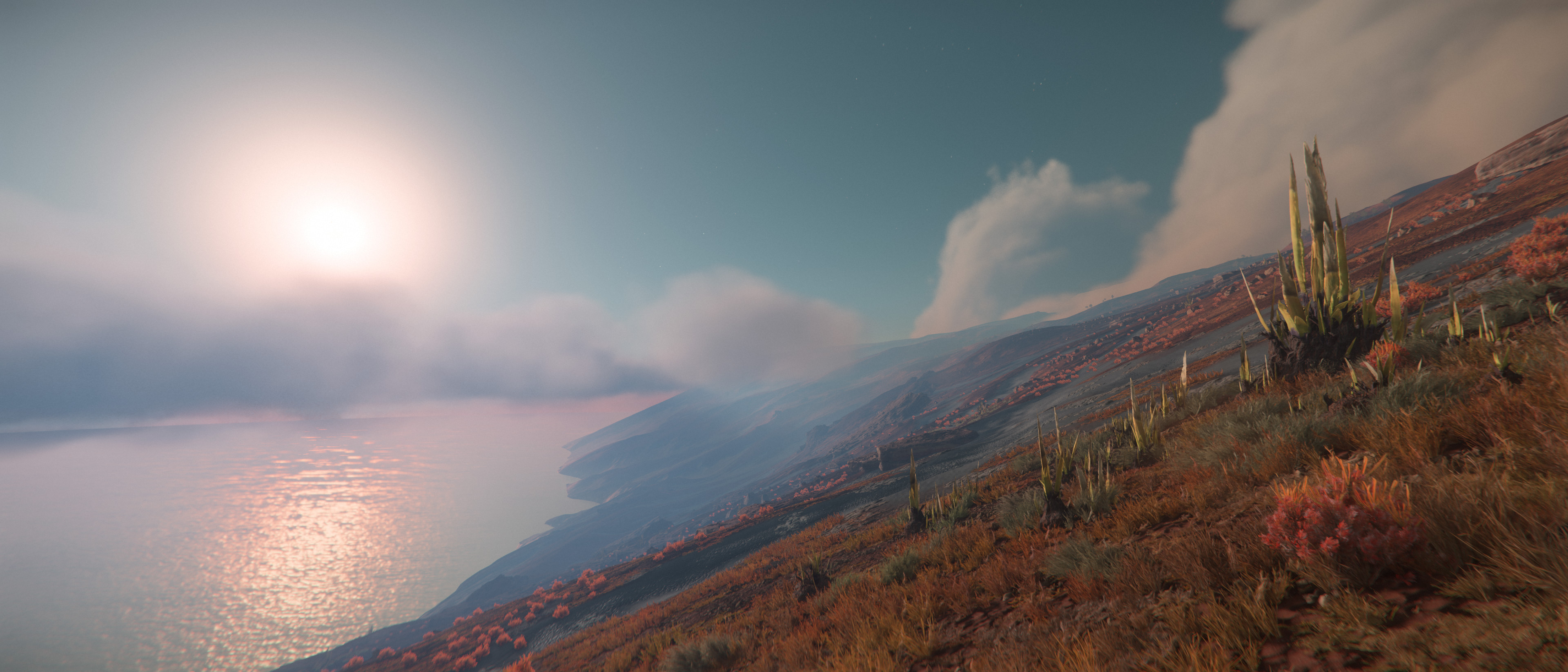
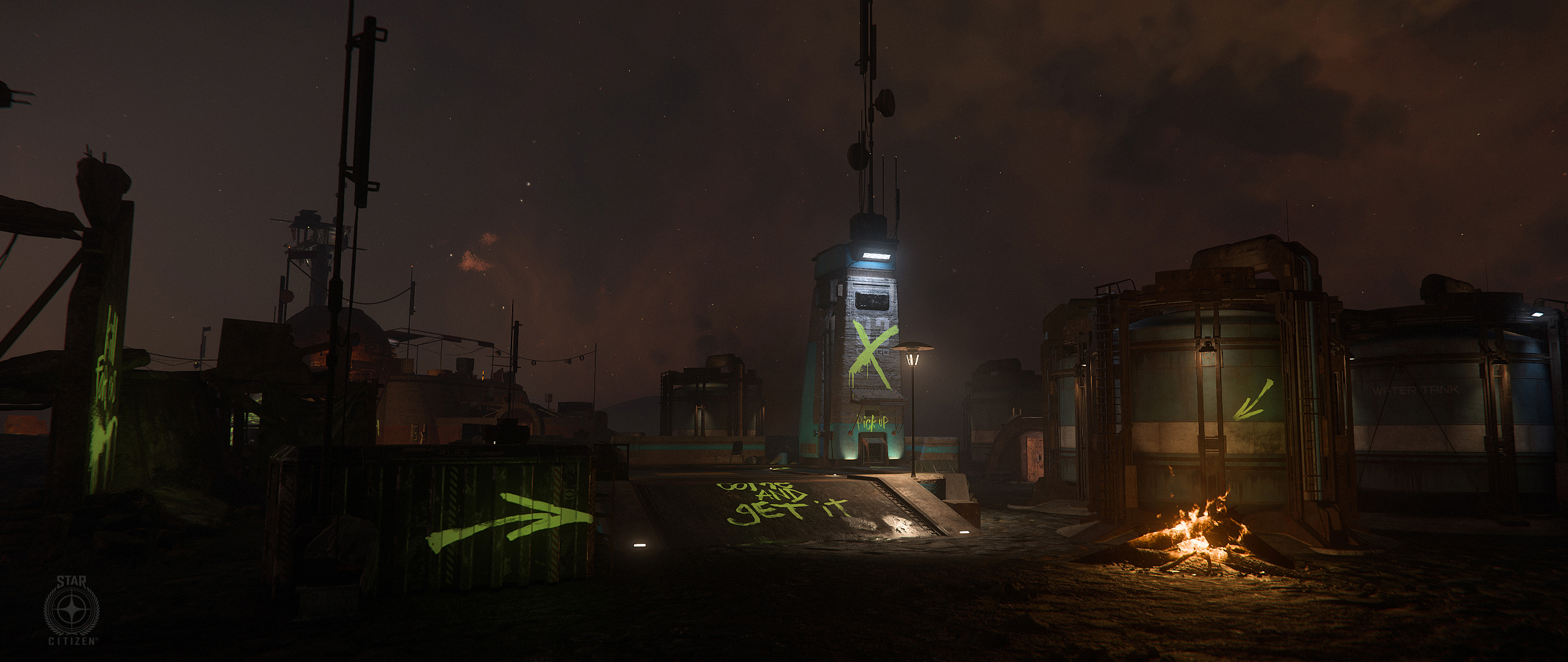
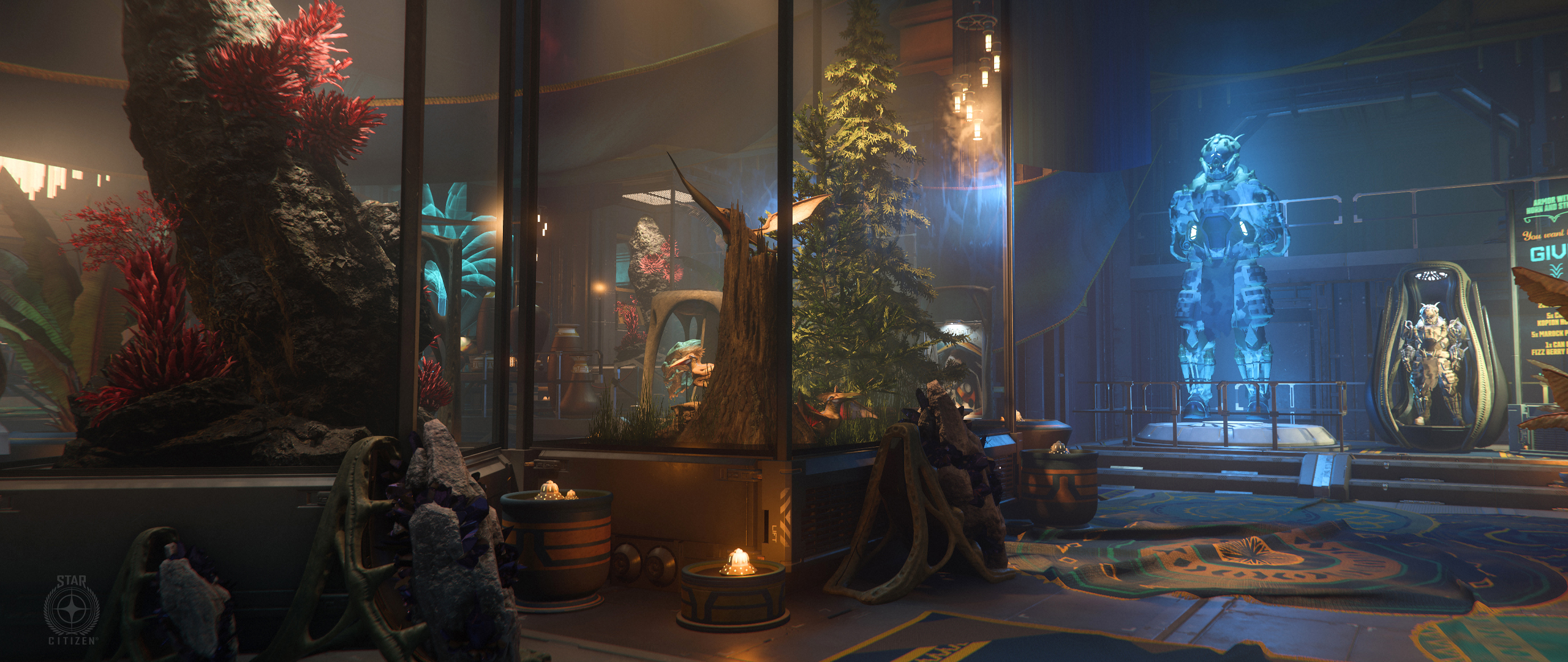
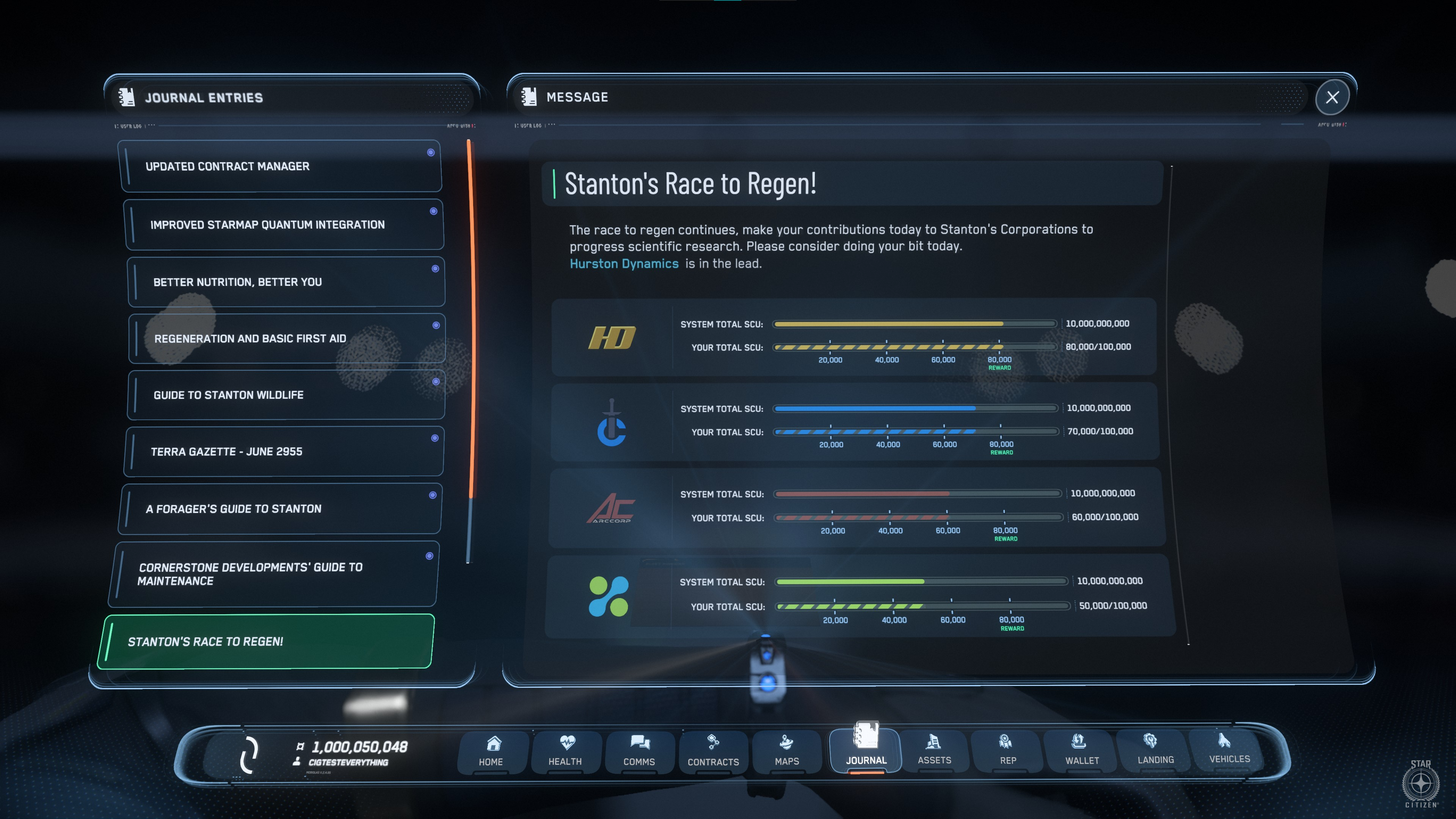
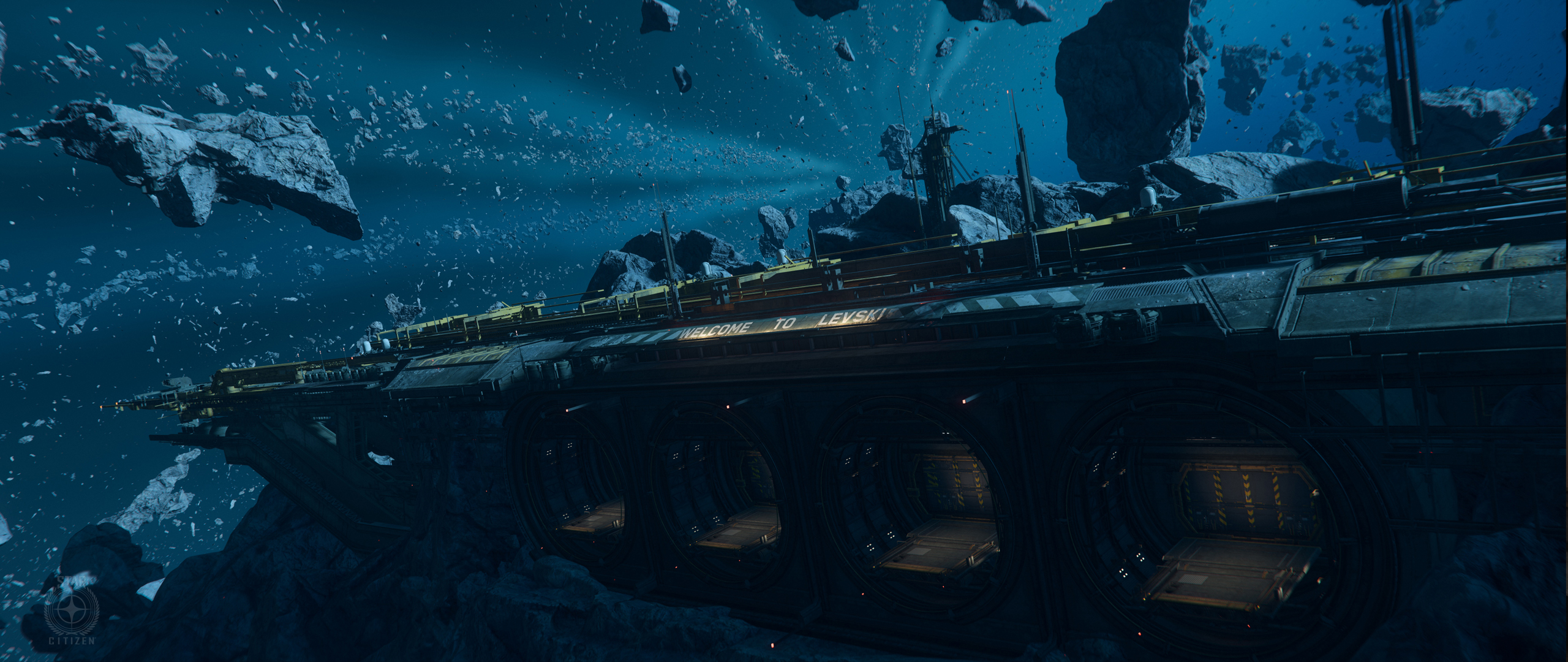
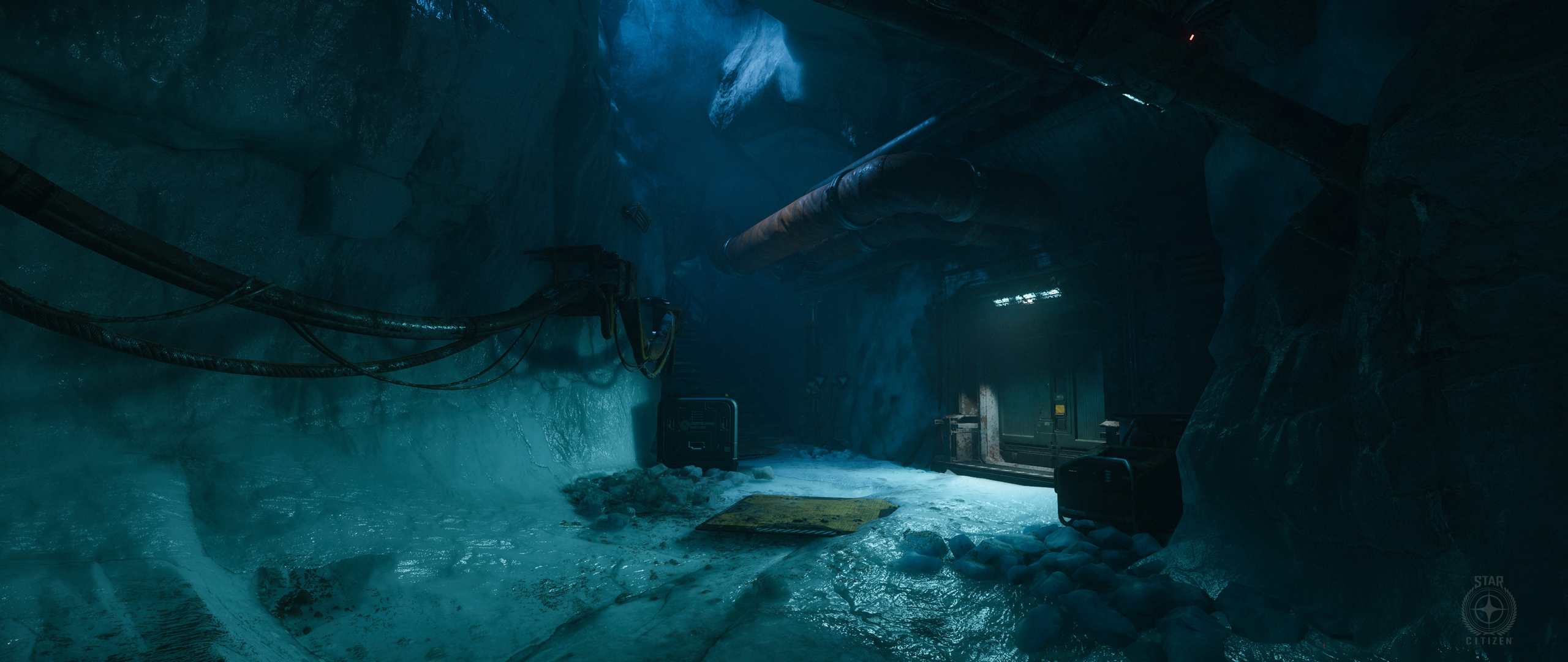
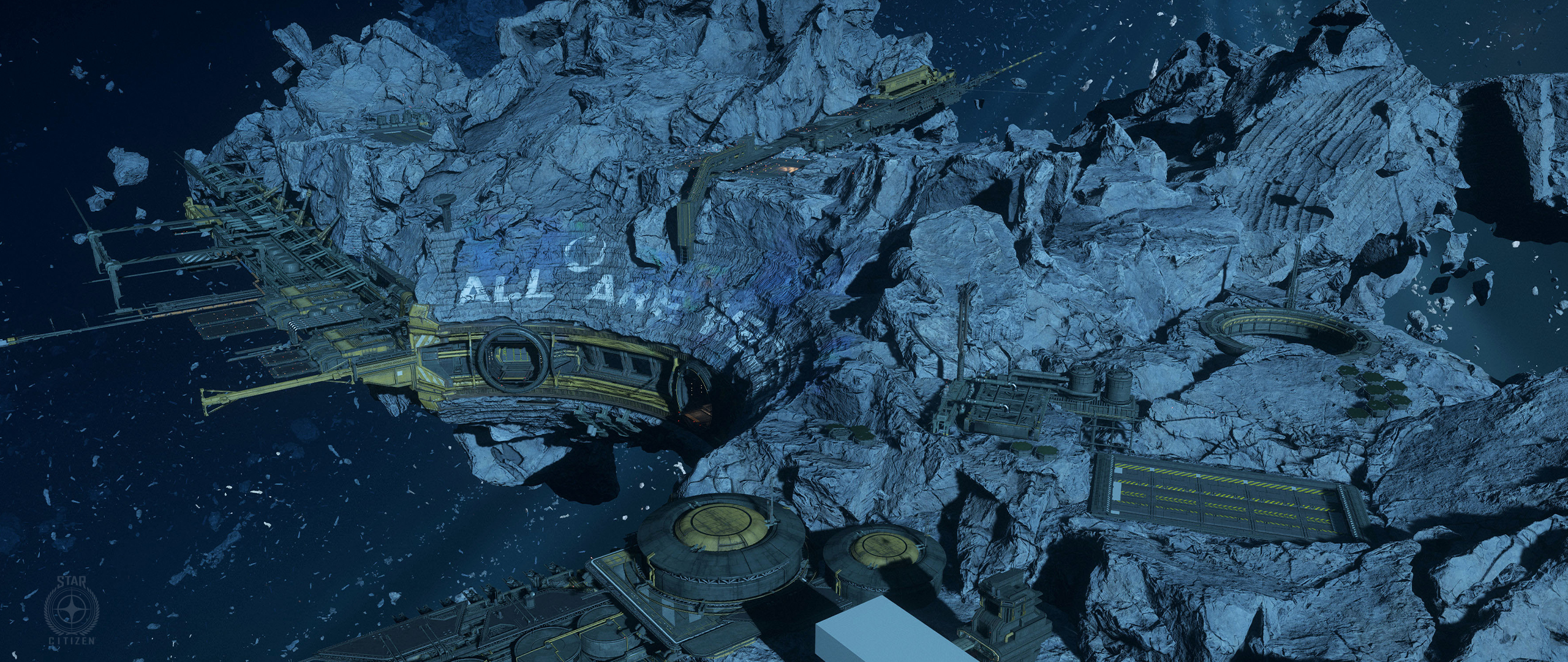
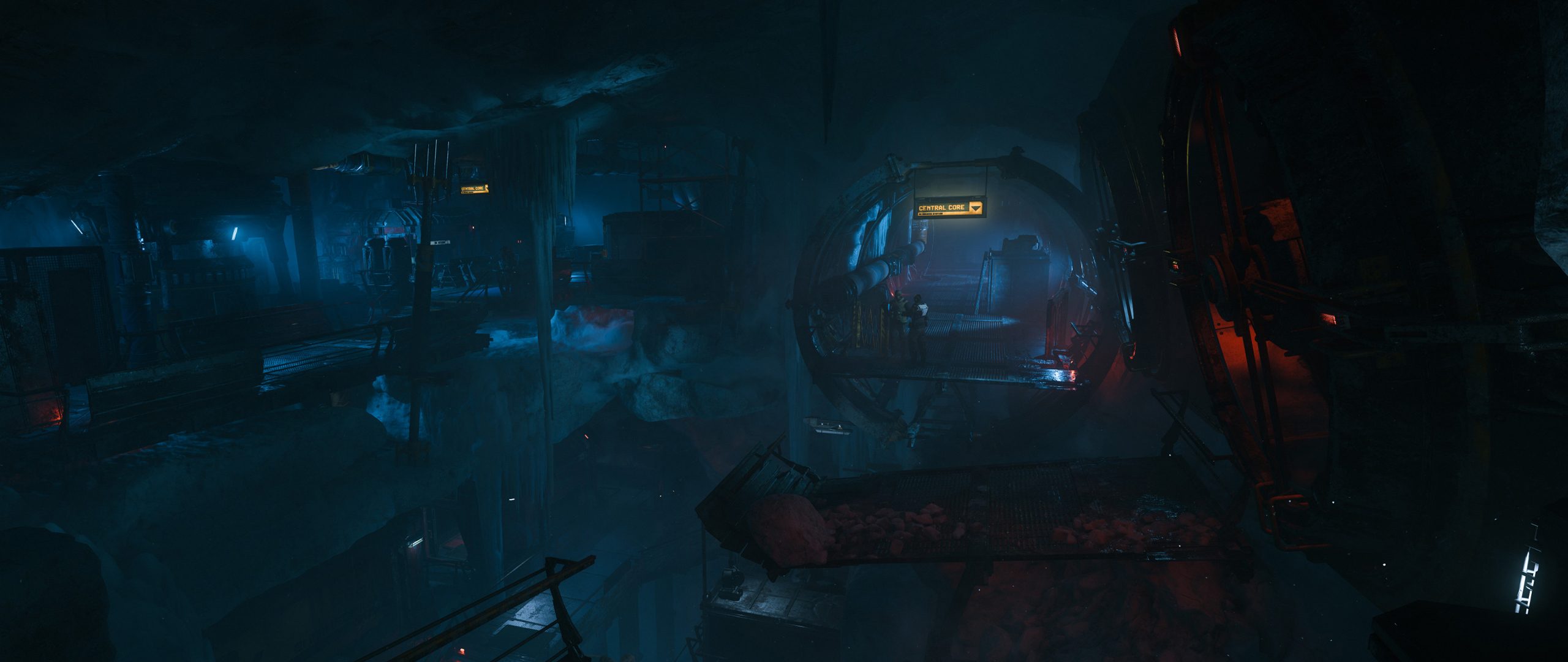
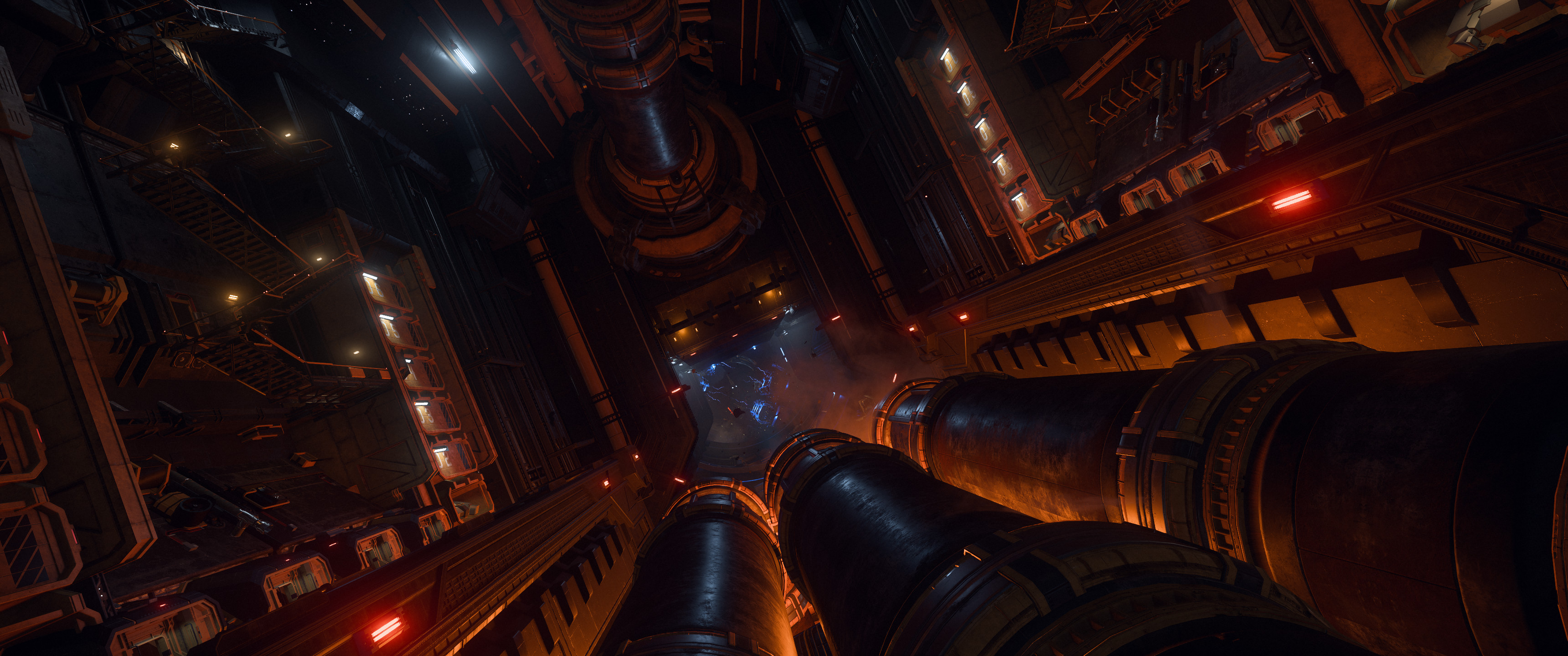
Metadata
- CIG ID
- 18167
- Channel
- Transmission
- Category
- Undefined
- Series
- Monthly Reports
- Comments
- 38
- Published
- 4 months ago (2026-05-25T16:00:00+00:00)