Star Citizen Monthly Report: August 2021
Transmission Undefined Monthly ReportsContent
Welcome to August’s PU Report! With all Alpha 3.14 tasks closed out, most teams focused their sights on content for Alpha 3.15 and beyond. Read on for the details of everything worked on throughout the month, including jump points, dynamic events, AI behaviors, and several top-secret vehicles.
AI (Content)
Throughout August, AI Content supported Level Design by creating a new ‘worker’ behavior. This enables the designers to apply traits to the various AI archetypes, refining which usables they use, such as sitting, leaning, inspecting, and cooking.
The team modified various usables to utilize the first reaction system, which allows NPCs to break out of usables during animations. For example, if an NPC is typing at a console and hears a gunshot or sees an enemy, they will stop typing and react appropriately. This was completed for the standing and sitting console, leans, seats, stairs, railings, search spots, attack spots, and more. They’re currently working with the Engine and Animation teams to improve the visuals.
Pre-vis began on two new products for a future delivery: the dealer behavior and Pyro location usables.
The dealer is a mobile vendor that players can buy from and sell to. This NPC stores one-handed items on their person, though if a player wants a two-handed item, they’re guided to the dealer’s “shop” nearby. The TrackView pre-vis went through its second iteration, with the team currently building consensus with all the different design teams.
AI Content identifying several usables to help sell Pyro’s theme of sickness, greed, and poverty. The second pre-vis pass was completed, which will be presented to the directors before the new usables begin production.
The team also continued to develop the hospital respawn experience for Alpha 3.15 and the subsequent vendor rollout to various locations around Stanton.
AI (Features)
AI Features continued to work on combat scenarios. Throughout August, they improved visual perception by adjusting the field-of-view form and exposing more information for the designers to tweak. The aim of this is to create a stealth combat mechanism from the player’s perspective, which requires adjustable perception timings and field of view.
New functionality was also added to the tactical point system. This enables it to compute path distances when selecting viable relocation points or cover locations during combat, rather than just direct distance. NPCs were also set up to use missile turrets.
AI (Tech)
AI Tech improved the pathfinder system to work with planetary navigation mesh tiles, enabling them to place NPCs on planets and move them from one location to another. They also started the work for generating planet navigation mesh automatically based on a player’s proximity.
One feature delivered this month allows the player to lead a formation of AI ships. This was initially requested for Squadron 42 but should be available in the PU in the future.
Improvements were also made to the collision avoidance system, including physics optimizations for obstacle queries and a small restructure of related data.
Significant effort was also directed at improving AI design paths and how NPCs follow them. As the design paths can be quite complex with multiple branches, they were updated to allow NPCs to follow them from any starting place.
Work also continued on the Subsumption editor, this time completing the multi-graph view.
Animation
The Animation team spent part of August focusing on vendors for illegal goods, food, drink, and other items, which involved creating animation pre-vis videos showing how the assets should be used in Pyro. These videos will also enable the team to better communicate with Design how to combine assets for different useable into other useables to extend asset use and give more variety. This work will be used to improve the existing bartenders too.
The team progressed with the overall medical behavior, including patron pre-vis videos, hospital healing functionality, and related useables. They’re also working on drunk locomotion for status changes (in both weapon and no weapon stances), with the first drop containing functional assets.
The cowering and surrender behaviors mentioned in previous reports progressed throughout the month, while additional seated idling animations were added to make characters feel more alive.
A motion capture (mo-cap) shoot was arranged to cover blockouts for the hygiene cubicle, hacking, navigation, arcade machines, unwell seating, additional vendor animations, and locomotion R&D. The Marketing team were supported on an upcoming video too.
On the facial side, progress was made on vendor lines and chowline animations.
Art (Characters)
Last month, Character Art completed a large batch of new assets for Alpha 3.15, including a heat-resistant heavy armor that will replace the Caldera Pembroke suit.
The team also finalized several new backpacks, including three based on the Clark Defense Systems brand and one on Doomsday. They also reworked existing backpacks previously attached to armor cores to make them individual, modular items. From Alpha 3.15 onwards, each new armor will come with a backpack in the same style.
Art (Ships)
In the UK, the yet-to-be-announced ship originally mentioned earlier in the year was completed, with the team’s final task of creating additional paints currently underway.
The Redeemer is approaching final-art complete, with the team finalizing the interactive buttons in the cockpit, remote turret bays, component room, and making the final polish of the lower deck.
Work also commenced on the MISC Hull A, which is close to being whitebox complete. Its larger sibling, the Hull C, is currently being brought up to ‘gold standard.’ August’s focus was on the exterior, with the team switching out materials to the newer shader and making sure it’s ready for the current paint system.
Two unannounced vehicles continued to progress through the pipeline. One recently completed its greybox review and is approaching final art, while the other is awaiting its greybox review though is close to having a finalized exterior.
Refueling work was also done on the MISC Starfarer. The refueling arm mentioned last month is now complete, with focus turning to the tractor beam assembly at the rear that forms part of the refining feature.
The Crusader A2 Hercules passed its final art review too.
In the US, the Crusader Ares moved through the final art phase, with the cockpit, enter/exit system, component housings, landing gear, and thrusters receiving polish.
The cockpit, habitation area, ladder passage, and cargo hold are all nearing greybox complete for the Drake Vulture.
An all-new vehicle is almost greybox-complete, while art for the variant mentioned last month was finished.
Audio
The SFX and Dialogue teams revisited Orison in August, this time adding ambiances and spot effects to three areas. New voiceovers and music were implemented to fill out the audio experience too.
Ambiances and spot effects were completed for the Grim HEX hospital and incidental voiceovers were recorded to inform players how painful treatments can be.
Mechanism and explosion effects were also added to the ‘Mother Of All Bombs’.
Tech Sound Design helped implement the hacking system for the SFX team, adding sounds alongside the usual team support.
Finally, prep for CitizenCon 2951 continued. Audio Code collated assets ready to show off their new tech, while SFX supported the Locations teams with level ambiance sounds that will be demoed during the event.
Community
The Community team supported the Star Citizen Alpha 3.14 launch with three engaging contests:
Players that wanted to invite a friend to the ‘verse and claim a unique referral bonus could participate in the ‘Wish You Were Here’ Greeting Card Contest by creating a greeting card of Orison.
The Finding Finley Screenshot Contest starred Crusader’s stormwals, Francis and Finley, while the Constellation Coloring Contest encouraged community creativity focused on RSI’s famous tourer.
Newcomers to the Star Citizen were supported with an updated New Players Comm-Link, and players were briefed about the updated XenoThreat dynamic event.
The team also kicked off Ship Showdown 2951, the annual head-to-head battle to determine the community’s favorite in-game vehicle.
Engine
In August, the Physics team progressed with physical quantum travel. In their development stream, they now have a proper quantum grid (per solar system) and a quantum-obstacle component that registers an analytical representation of an obstacle. Some to-be-sorted issues aside, they can now make the equivalent of a blind quantum jump and drop out before hitting a moon along the travel path.
They also continued to improve performance. Among other things, the destruction of static physical entities now runs time-sliced, while querying and processing parts of a physical entity during collision detection was improved. The physics system code cleanup continued too. For example, the physical world’s time-step function now makes individual phases of the time step clearer.
The transition to the Gen12 renderer progressed throughout August. Shader activation was made thread-safe and no longer requires explicit synchronization via locks, volumetric fog volumes now run natively in Gen12, and the team refactored the use of several reflected shader parameters throughout render code and shaders. Tint support was added as well as scattering query support for forward-shaded objects, and several pieces of legacy code across the renderer code base were cleaned up.
Regarding atmosphere and volumetric clouds, time was spent reworking the reprojection and filter chain to ultimately allow raymarching at lower resolutions for improved GPU performance. Improvements were made to the placement of samples for raymarching. This involved reprojecting results from previous frames, filtering and denoising cloud depth, and up-sampling inscatter and transmittance results to full resolution for various problematic view scenarios. These scenarios include orbital views, scenes with high depth complexity, and any scene with strong camera movement. This is all still work in progress, though the team hopes to roll it out shortly.
Work was submitted to improve cloud shading by better blending between forward and backward scattering inside them, which is important for rendering the silver lining. Moreover, improvements were made to the look of cloud edges to give them a more volumetric feel. The stepping code for local cloud shadow details was reworked to allow more details for the same performance cost.
On the core-engine side, time was spent optimizing the low-level system. For example, various improvements were made to CigFunction, which serves as a vehicle to capture and pass C++ lambdas (in this particular case code and data for deferred asynchronous execution as a job). The next focus was optimizing the entity unloading stalls plaguing the PU. As a result, several entity-unload bottlenecks were rectified. Furthermore, the management of component events was optimized and code to create and destroy them improved.
Work was also done to deliver multiple optimizations in the spatial culling system, which will be used for server meshing. Lastly, the entity component update scheduler was changed to allow more than one update per component pass to enable the more flexible use of components.
Features (Characters & Weapons)
In August, the Features team focused on bug fixing and polishing for the new player inventory and actor status features.
“Some of the more amusing bugs included looting a dead player and finding their ship, and all its vehicle weapons, in their inventory, and lowering a gurney to put an injured player on it but at the end of the animation it starts bouncing around killing everyone.” -The Features Team
On the technical side, the team began work to separate the complex animations required for humanoid and creature skeletons from the more mechanical skeletons. The latter, of which there are normally significantly more of in a scene, will benefit from a much more streamlined animation update flow. This also allows the animation system’s update rules to be better tailored to each skeleton type. As well as improving update time, this should see a reduction in memory usage in heavily populated areas.
Features (Gameplay)
The US Gameplay Feature team progressed with the NikNax work mentioned in last month’s report. The app is now ‘feature complete’ and in the polishing phase of production, while the look and feel are currently being finalized.
They also continued to develop dynamic events.
“We began working on Jumptown 2.0, the next dynamic event, where outposts become hyper-lucrative, tempting players to fight to control the area and gather as much profit as possible. More information on that coming very soon.” -The Gameplay Feature Team
They also continued to work on TDDs for the cargo refactor, the character archetype editor, and the new shopping and selling initiative, all of which should be at the review stage soon.
Features (Vehicles)
Last month, the Vehicle Feature team ramped up the development of jump points, creating the gameplay and development tools required to deliver the feature and make it easier to work with for other teams.
In addition, the team progressed with a number of internal debug tools to monitor IFCS and more easily inspect things like missiles, which will improve future workflow. They also supported the PU Feature team with refueling, continued to work on HUD improvements, and supported Vehicle Experience with bombing-related UIs for Alpha 3.15.
Vehicle Experience focused on finishing the development of the bombing feature, which entered the review stages. They also worked to balance upcoming ships for Alpha 3.15 and beyond and wrapped up final issues with the current patch release.
Graphics & VFX Programming
Last month, the Graphics team progressed with the render-to-texture system, which is receiving a mini-overhaul to cope with some new UI systems that make extensive use of 3D icons and compositing, such as the personal inventory.
They enabled dynamically rendered textures to be cached to allow them to generate a large number of high-quality, super-sampled images with minimal cost. They also dynamically reduced texture resolution in out-of-focus areas (e.g. when using the mobiGlas) to reallocate more resources to the rest of the game.
For Gen12, the shadow and real-time-probe systems were converted and will soon be activated by default in the main branch. Streaming of real-time probes was also completed and enabled, which solves memory issues in scenes with numerous probes, such as Orison.
Alpha 3.15 will mark the first release that utilizes extensive auto testing for VFX tech, so the Programming team spent time resolving bugs to achieve a solid baseline. This also improved the overall quality of particle effects.
Alongside this, they began adding support for refraction into the GPU particle system, matching the functionality of the CPU particle system and surpassing its visual quality. This marks the end of a long-standing goal to implement counterparts of all legacy mesh and sprite functionality in the new CPU particle system.
The VFX Programming team also continued with the fire hazard system. It now utilizes the new compressed physics render-mesh, which obtains accurate surface data without relying on lower-resolution and lower-accuracy physics proxy meshes. The way fire spreads through doorways was improved too.
Lighting
The Lighting team primarily focused on upcoming content for Alpha 3.15 and future deliverables for Pyro.
Passes were completed on locations within Orison, including the Crusader Showroom, Cousin Crow’s Custom Craft, and Providence Surplus. Lighting work was completed for the space clinics and hospital in Grim HEX, and progress continued on the medical areas in Area18 and Lorville. The team also tackled some smaller backlog items, such as further Orison optimization and general bug fixing.
Lighting also assisted Planet Content, making a pass on the atmospheric and color-grading settings for Pyro’s planets and moons, helping to make each feel unique and interesting.
Narrative
The Narrative team focused on Alpha 3.15 throughout August, working with Design on contract text for new missions and expanding the organizations and gameplay scopes represented in the Delphi mobiGlas app. Medical gameplay and the new hospital and clinic locations were also worked on, with the team making passes on all related UI and branding. New dialogue was recorded to help populate the clinics and new Orison locations.
Beyond Alpha 3.15, the team worked on content for IAE 2951 and upcoming dynamic events. Additionally, they recorded mission audio for the various security forces in Stanton that will add further depth to future content.
Preliminary work began on a new mission type, with the team working closely with Design to begin prototyping dialogue to support the gameplay. The development of narrative content continued for Pyro, further defining what players can expect to encounter in the new system.
New lore was also released, including a Congress Now debating the appointment of a Xi’an ambassador, along with The Shakedown, a serialized fiction story set on ArcCorp. A new selection of Galactapedia articles was added too.
Player Relations
‘Player Relations Live QA’ launched this month. This new team will concentrate on the live experience, including reproducing and triaging player-reported bugs on the Issue Council. They also began early Alpha 3.15 work, focusing on the player experience before it hits Evocati.
The Player Relations team also expanded in the UK and DE to support the ever-growing player base, patch releases, and upcoming events.
QA
QA’s primary publishing focus was on Alpha 3.14, testing XenoThreat and Ninetails Lockdown. Mid-month, they were publishing every day to the PTU, testing stability, verifying fixes, and gathering details of issues not reproducible internally.
Development-wise, the team undertook familiarity testing with some of the new features and systems planned for Alpha 3.15.
Scheduling was also completed in preparation for upcoming testing, and plans were drawn up ahead of feature testing.
Systemic Services & Tools
In August, Systemic Services & Tools continued their work on Quantum (the economy and AI simulation), making improvements to the tools that allow the designers to adjust these various systems.
The team also worked on edge cases for the backend services, adding stability to the service HUB and variable filter services.
August saw work wrap up on the player and AI info service to allow the Quantum simulation (or any other backend service) to pull more data at a faster rate as needed. The service engineers also aided their gameplay counterparts with improvements to the physical inventory.
Work began in earnest on the NPC tracker, which will allow the tracking of NPCs between servers. The system will be used by any gameplay loop that wants or needs to track NPCs as they shift from instantiated to virtual AI and move around the ‘verse.
Finally, a new generic escrow service wrapped up, allowing for a more streamlined money transaction loop that SST is hoping integrates with the various gameplay loops.
Turbulent (Services)
Turbulent’s Live Tools team completed the base framework for the new windowing layout in Hex along with some of the core functionality. They also supported the PU Locations with the Might Bridge tool. Working alongside members of the QA and Publishing teams, improvements were made to the crash handling pipeline, refining deduplication for Sentry crashes.
The Game Services team achieved key milestones in the server meshing project, delivering the first version of the new matchmaking system. The service communicating with the new database now has all the required main features too, and several optimizations were made.
Turbulent (Web Platform)
Both of Turbulent’s web teams worked on technical projects to add new capabilities to the engineering platform.
Ecommerce is working on a new database indexing solution to give the team new capabilities to efficiently search for and create new content. This is primarily for the Pledge Store but it will also help to create new pages that don’t hinder the site’s performance.
The Architecture team is working on a system to improve the way information passes between their various services. This will improve existing systems and enable the team to hit the ground running on new micro-services that interact with other elements on the platform.
Vehicle Tech
The Vehicle Tech team put the finishing touches on the radar, scanning, and ping refactor for vehicles. They also prepared to incorporate the improvements to first-person gameplay. Some improvements were identified in the existing systems and functionality, which have been included in upcoming plans accordingly. Bugs were also fixed for Alpha 3.14.
VFX
Last month, the VFX team revisited the new vehicle SDF-based shields. A simplified setup was provided, with better scalability options allowing fewer effects to be used across the wide range of ship scales.
They also began working on ship-wake effects with the Vehicle Feature team, which will allow surface dust, snow, etc. to be displaced when ships are rapidly flying along the surface. This is a continuation of the work recently completed for thruster wind volumes.
VFX passes were also done for the Crusader A2 Hercules, one of the unannounced ships mentioned earlier in the report, and for the Crusader Ares’ S7 weapons.
WE’LL SEE YOU NEXT MONTH…
Willkommen zum PU-Bericht für August! Nachdem alle Aufgaben der Alpha 3.14 abgeschlossen waren, haben sich die meisten Teams auf die Inhalte der Alpha 3.15 und darüber hinaus konzentriert. Lies weiter für die Details zu allem, woran im Laufe des Monats gearbeitet wurde, darunter Sprungpunkte, dynamische Ereignisse, KI-Verhalten und mehrere streng geheime Fahrzeuge.
KI (Inhalt)
Den ganzen August hindurch unterstützte AI Content das Leveldesign, indem es ein neues 'Arbeiter'-Verhalten erstellte. Dies ermöglicht es den Designern, Eigenschaften auf die verschiedenen KI-Archetypen anzuwenden und zu verfeinern, welche Usables sie verwenden, wie zum Beispiel Sitzen, Anlehnen, Inspizieren und Kochen.
Das Team modifizierte verschiedene Usables, um das erste Reaktionssystem zu nutzen, das es NSCs erlaubt, während Animationen aus Usables auszubrechen. Wenn ein NSC zum Beispiel an einer Konsole tippt und einen Schuss hört oder einen Feind sieht, wird er aufhören zu tippen und entsprechend reagieren. Dies wurde für die stehende und sitzende Konsole, Anlehnungen, Sitze, Treppen, Geländer, Suchspots, Angriffsspots und mehr fertiggestellt. Momentan arbeiten sie mit den Engine- und Animationsteams zusammen, um die Visuals zu verbessern.
Die Vorarbeiten für zwei neue Produkte für eine zukünftige Auslieferung haben begonnen: das Händlerverhalten und die Pyro Location Usables.
Der Händler ist ein mobiler Verkäufer, von dem die Spieler kaufen und an den sie verkaufen können. Dieser NPC bewahrt einhändige Gegenstände an seiner Person auf, wenn ein Spieler jedoch einen zweihändigen Gegenstand benötigt, wird er zum nahegelegenen "Laden" des Händlers geführt. Die TrackView-Vorschau durchlief ihre zweite Iteration, wobei das Team derzeit einen Konsens mit allen verschiedenen Design-Teams herstellt.
Der KI-Inhalt identifiziert mehrere Usables, die helfen, Pyros Thema von Krankheit, Gier und Armut zu verkaufen. Der zweite Pre-Vis-Pass wurde fertiggestellt, der den Regisseuren präsentiert werden wird, bevor die neuen Usables in Produktion gehen.
Das Team entwickelte außerdem das Krankenhaus-Respawn-Erlebnis für Alpha 3.15 und den anschließenden Vendor-Rollout an verschiedenen Orten in Stanton weiter.
KI (Features)
Die KI-Features arbeiteten weiter an den Kampfszenarien. Den ganzen August über wurde die visuelle Wahrnehmung verbessert, indem die Form des Sichtfeldes angepasst wurde und mehr Informationen für die Designer zur Verfügung gestellt wurden. Ziel ist es, eine Stealth-Kampfmechanik aus der Spielerperspektive zu schaffen, die anpassbare Wahrnehmungszeiten und Sichtfelder erfordert.
Neue Funktionalität wurde auch dem taktischen Punktesystem hinzugefügt. Dies ermöglicht es, bei der Auswahl von brauchbaren Verlagerungspunkten oder Deckungsorten während des Kampfes Wegstrecken zu berechnen, anstatt nur die direkte Entfernung. NPCs wurden außerdem so eingestellt, dass sie Raketentürme benutzen können.
KI (Tech)
AI Tech verbesserte das Pathfinder-System, um mit planetaren Navigations-Mesh-Tiles zu arbeiten, was es ermöglicht, NSCs auf Planeten zu platzieren und sie von einem Ort zum anderen zu bewegen. Sie begannen auch mit der Arbeit für die automatische Generierung von Planetennavigationsmeshs basierend auf der Nähe eines Spielers.
Ein Feature, das diesen Monat ausgeliefert wurde, erlaubt es dem Spieler, eine Formation von KI-Schiffen zu führen. Dies wurde ursprünglich für Squadron 42 angefordert, sollte aber in Zukunft auch im PU verfügbar sein.
Es wurden auch Verbesserungen am Kollisionsvermeidungssystem vorgenommen, darunter Physikoptimierungen für Hindernisabfragen und eine kleine Umstrukturierung der zugehörigen Daten.
Erhebliche Anstrengungen wurden auch unternommen, um die KI-Designpfade und die Art und Weise, wie NPCs ihnen folgen, zu verbessern. Da die Designpfade mit mehreren Verzweigungen recht komplex sein können, wurden sie aktualisiert, damit die NSCs ihnen von jedem Startpunkt aus folgen können.
Die Arbeit am Subsumption-Editor wurde ebenfalls fortgesetzt, dieses Mal mit der Fertigstellung der Multi-Graph-Ansicht.
Animation
Das Animationsteam verbrachte einen Teil des Augusts damit, sich auf Verkäufer für illegale Waren, Essen, Trinken und andere Gegenstände zu konzentrieren, was die Erstellung von Animationsvorschaufilmen beinhaltete, die zeigen, wie die Assets in Pyro verwendet werden sollen. Diese Videos werden es dem Team auch ermöglichen, besser mit dem Design zu kommunizieren, wie man Assets für verschiedene Useables mit anderen Useables kombinieren kann, um die Nutzung der Assets zu erweitern und mehr Abwechslung zu bieten. Diese Arbeit wird auch genutzt werden, um die bestehenden Barkeeper zu verbessern.
Das Team machte Fortschritte mit dem gesamten medizinischen Verhalten, einschließlich der Patron Pre-Vis Videos, der Krankenhaus-Heilungsfunktion und verwandten Useables. Sie arbeiten auch an der Fortbewegung von Betrunkenen für Statusänderungen (sowohl mit als auch ohne Waffen), wobei der erste Drop funktionale Assets enthält.
Die in früheren Berichten erwähnten Verhaltensweisen des Kauerns und der Kapitulation wurden im Laufe des Monats weiterentwickelt, während zusätzliche Animationen für das Sitzen im Leerlauf hinzugefügt wurden, damit sich die Charaktere lebendiger fühlen.
Ein Motion Capture (Mo-Cap) Shooting wurde arrangiert, um Blockouts für die Hygienekabine, Hacking, Navigation, Arcade-Maschinen, unruhiges Sitzen, zusätzliche Verkäufer-Animationen und Lokomotion R&D abzudecken. Das Marketing-Team wurde auch bei einem kommenden Video unterstützt.
Auf der Gesichtsseite wurden Fortschritte bei den Vendor Lines und Chowline Animationen gemacht.
Kunst (Charaktere)
Letzten Monat hat Character Art einen großen Stapel neuer Assets für Alpha 3.15 fertiggestellt, darunter eine hitzebeständige schwere Rüstung, die den Caldera Pembroke Anzug ersetzen wird.
Das Team hat auch mehrere neue Rucksäcke fertiggestellt, darunter drei, die auf der Marke Clark Defense Systems basieren, und einen für Doomsday. Sie überarbeiteten auch bestehende Rucksäcke, die zuvor an Rüstungskernen befestigt waren, um sie zu individuellen, modularen Gegenständen zu machen. Ab Alpha 3.15 wird jede neue Rüstung mit einem Rucksack im gleichen Stil ausgeliefert.
Kunst (Schiffe)
In Großbritannien wurde das noch nicht angekündigte Schiff, von dem Anfang des Jahres die Rede war, fertiggestellt, und das Team ist derzeit dabei, weitere Farben zu erstellen.
Die Redeemer nähert sich der Final-Art-Fertigstellung, wobei das Team die interaktiven Knöpfe im Cockpit, die ferngesteuerten Geschützturmschächte und den Komponentenraum fertigstellt und den letzten Schliff am Unterdeck vornimmt.
Die Arbeiten an der MISC Hull A haben ebenfalls begonnen und sind kurz vor der Fertigstellung. Sein größeres Geschwisterschiff, der Rumpf C, wird derzeit auf den "Goldstandard" gebracht. Im August lag der Fokus auf dem Exterieur, wobei das Team die Materialien auf den neueren Shader umstellte und sicherstellte, dass es für das aktuelle Lacksystem bereit ist.
Zwei unangekündigte Fahrzeuge haben sich weiter durch die Pipeline bewegt. Das eine hat vor kurzem sein Greybox-Review abgeschlossen und nähert sich dem finalen Design, während das andere auf sein Greybox-Review wartet, aber kurz davor steht, ein finales Exterieur zu haben.
Auch an der MISC Starfarer wurde an der Betankung gearbeitet. Der im letzten Monat erwähnte Betankungsarm ist nun fertiggestellt, wobei sich der Fokus auf die Traktorstrahlbaugruppe am Heck richtet, die Teil der Betankungsfunktion ist.
Auch der Crusader A2 Hercules hat sein finales Art-Review bestanden.
In den USA durchlief der Crusader Ares die finale Art-Phase, wobei das Cockpit, das Ein- und Ausstiegssystem, die Komponentengehäuse, das Fahrwerk und die Triebwerke den letzten Schliff erhielten.
Das Cockpit, der Wohnbereich, der Leiterdurchgang und der Frachtraum des Drake Vulture stehen kurz vor der Fertigstellung der Greybox.
Ein komplett neues Fahrzeug ist fast greybox-fertig, während die Kunst für die im letzten Monat erwähnte Variante fertiggestellt wurde.
Audio
Die SFX- und Dialog-Teams haben sich im August erneut mit Orison beschäftigt, diesmal mit dem Hinzufügen von Umgebungen und Spoteffekten in drei Gebieten. Neue Sprachausgabe und Musik wurden ebenfalls implementiert, um das Audioerlebnis zu vervollständigen.
Ambient- und Spoteffekte wurden für das Grim HEX-Krankenhaus fertiggestellt und beiläufige Voice-Overs wurden aufgenommen, um die Spieler darüber zu informieren, wie schmerzhaft Behandlungen sein können.
Mechanismus- und Explosionseffekte wurden auch für die 'Mother Of All Bombs' hinzugefügt.
Tech Sound Design half bei der Implementierung des Hacking-Systems für das SFX-Team und fügte neben dem üblichen Team-Support auch Sounds hinzu.
Schließlich gingen die Vorbereitungen für die CitizenCon 2951 weiter. Audio Code sammelte Assets, um ihre neue Technologie zu präsentieren, während SFX die Locations-Teams mit Level-Ambientesounds unterstützte, die während des Events vorgeführt werden.
Community
Das Community Team unterstützte den Start der Star Citizen Alpha 3.14 mit drei spannenden Wettbewerben:
Spieler, die einen Freund in das 'Verse einladen und einen einzigartigen Empfehlungsbonus beanspruchen wollten, konnten am 'Wish You Were Here' Greeting Card Contest teilnehmen, indem sie eine Grußkarte von Orison erstellten.
Der "Finding Finley Screenshot Contest" stellte Crusaders Sturmwale Francis und Finley in den Mittelpunkt, während der "Constellation Coloring Contest" die Kreativität der Community anregte und sich auf RSIs berühmtes Reiseflugzeug konzentrierte.
Neuankömmlinge in Star Citizen wurden mit einem aktualisierten New Players Comm-Link unterstützt und die Spieler wurden über das aktualisierte XenoThreat Dynamic Event informiert.
Das Team startete auch den Ship Showdown 2951, das jährliche Kopf-an-Kopf-Rennen, um das Lieblingsfahrzeug der Community im Spiel zu bestimmen.
Engine
Im August hat das Physik-Team Fortschritte bei der physikalischen Quantenreise gemacht. In ihrem Entwicklungsstrom haben sie nun ein richtiges Quantengitter (pro Sonnensystem) und eine Quanten-Hindernis-Komponente, die eine analytische Darstellung eines Hindernisses registriert. Abgesehen von einigen noch zu lösenden Problemen, können sie nun das Äquivalent eines blinden Quantensprungs machen und aussteigen, bevor sie einen Mond auf dem Reisepfad treffen.
Sie haben auch die Leistung weiter verbessert. Unter anderem läuft die Zerstörung von statischen physikalischen Entitäten nun zeitgesteuert ab, während die Abfrage und Verarbeitung von Teilen einer physikalischen Entität während der Kollisionserkennung verbessert wurde. Auch die Aufräumarbeiten am Code des Physiksystems wurden fortgesetzt. Zum Beispiel macht die Zeitschrittfunktion der physikalischen Welt nun einzelne Phasen des Zeitschritts deutlicher.
Die Umstellung auf den Gen12 Renderer wurde im August vorangetrieben. Die Shader-Aktivierung wurde thread-sicher gemacht und erfordert nun keine explizite Synchronisation über Locks mehr, volumetrische Nebelvolumina laufen nun nativ in Gen12 und das Team hat die Verwendung mehrerer reflektierter Shader-Parameter im gesamten Rendercode und den Shadern überarbeitet. Tint-Support wurde hinzugefügt, ebenso wie Scattering-Query-Support für vorwärts schattierte Objekte, und mehrere Teile des Legacy-Codes in der Renderer-Codebasis wurden bereinigt.
In Bezug auf die Atmosphäre und volumetrische Wolken wurde Zeit damit verbracht, die Reprojektion und die Filterkette zu überarbeiten, um letztendlich Raymarching bei niedrigeren Auflösungen für eine verbesserte GPU-Leistung zu ermöglichen. Verbesserungen wurden an der Platzierung von Samples für das Raymarchen vorgenommen. Dies beinhaltete die Reprojektion von Ergebnissen aus vorherigen Frames, die Filterung und Entrauschung der Wolkentiefe und das Upsampling von Inscatter- und Transmittance-Ergebnissen auf volle Auflösung für verschiedene problematische Ansichtsszenarien. Zu diesen Szenarien gehören Orbitalansichten, Szenen mit hoher Tiefenkomplexität und jede Szene mit starken Kamerabewegungen. Dies ist alles noch in Arbeit, aber das Team hofft, es bald ausrollen zu können.
Es wurde daran gearbeitet, die Schattierung von Wolken zu verbessern, indem man besser zwischen Vorwärts- und Rückwärtsstreuung in ihnen überblendet, was wichtig für das Rendern des Silberstreifens ist. Außerdem wurden Verbesserungen am Aussehen der Wolkenkanten vorgenommen, um ihnen ein volumetrischeres Gefühl zu geben. Der Stepping-Code für lokale Wolkenschattendetails wurde überarbeitet, um mehr Details für die gleichen Performancekosten zu ermöglichen.
Auf der Seite der Core-Engine wurde Zeit damit verbracht, das Low-Level-System zu optimieren. Zum Beispiel wurden verschiedene Verbesserungen an CigFunction vorgenommen, das als Vehikel dient, um C++ Lambdas (in diesem speziellen Fall Code und Daten für die verzögerte asynchrone Ausführung als Job) zu erfassen und weiterzugeben. Der nächste Schwerpunkt war die Optimierung der Entity Unloading Stalls, die die PU plagten. Als Ergebnis wurden mehrere Entity-Entlade-Engpässe behoben. Des Weiteren wurde die Verwaltung von Komponentenereignissen optimiert und der Code zum Erzeugen und Zerstören dieser verbessert.
Es wurde auch daran gearbeitet, mehrere Optimierungen im Spatial Culling System vorzunehmen, welches für das Server Meshing verwendet wird. Zu guter Letzt wurde der Update-Scheduler für Entity-Komponenten geändert, um mehr als ein Update pro Komponentendurchlauf zu erlauben, um eine flexiblere Nutzung von Komponenten zu ermöglichen.
Features (Charaktere & Waffen)
Im August konzentrierte sich das Features-Team auf die Fehlerbehebung und den Feinschliff für das neue Spielerinventar und die Schauspieler-Status-Features.
"Einige der amüsantesten Bugs waren das Plündern eines toten Spielers und das Auffinden seines Schiffes und all seiner Fahrzeugwaffen in seinem Inventar und das Absenken einer Trage, um einen verletzten Spieler darauf zu legen, aber am Ende der Animation fängt sie an, herumzuspringen und alle zu töten." -The Features Team
Auf der technischen Seite begann das Team mit der Arbeit, die komplexen Animationen, die für humanoide und Kreaturenskelette benötigt werden, von den eher mechanischen Skeletten zu trennen. Letztere, von denen es normalerweise deutlich mehr in einer Szene gibt, werden von einem viel schlankeren Animations-Update-Fluss profitieren. Dies erlaubt es auch, die Aktualisierungsregeln des Animationssystems besser auf jeden Skelett-Typ zuzuschneiden. Dies verbessert nicht nur die Aktualisierungszeit, sondern sollte auch zu einer Reduzierung des Speicherverbrauchs in stark bevölkerten Gebieten führen.
Features (Gameplay)
Das US Gameplay Feature Team hat die im letzten Bericht erwähnte Arbeit an NikNax vorangetrieben. Die App ist nun 'feature complete' und befindet sich in der Polishing-Phase der Produktion, während das Look and Feel derzeit finalisiert wird.
Auch an der Entwicklung von dynamischen Events wurde weiter gearbeitet.
"Wir haben mit der Arbeit an Jumptown 2.0 begonnen, dem nächsten dynamischen Event, bei dem Außenposten hyperlukrativ werden und die Spieler dazu verleiten, um die Kontrolle des Gebiets zu kämpfen und so viel Profit wie möglich zu machen. Mehr Informationen dazu kommen sehr bald." -The Gameplay Feature Team
Außerdem wurde weiter an den TDDs für den Fracht-Refactor, den Charakter-Archetypen-Editor und die neue Einkaufs- und Verkaufsinitiative gearbeitet, die alle bald im Review-Stadium sein sollten.
Features (Fahrzeuge)
Im letzten Monat hat das Fahrzeug-Feature-Team die Entwicklung von Sprungpunkten vorangetrieben und die notwendigen Gameplay- und Entwicklungstools erstellt, um das Feature bereitzustellen und anderen Teams die Arbeit damit zu erleichtern.
Außerdem machte das Team Fortschritte mit einer Reihe von internen Debug-Tools, um IFCS zu überwachen und Dinge wie Raketen einfacher zu inspizieren, was den zukünftigen Arbeitsablauf verbessern wird. Außerdem unterstützten sie das PU-Feature-Team bei der Betankung, arbeiteten weiter an HUD-Verbesserungen und unterstützten Vehicle Experience mit bombenbezogenen UIs für Alpha 3.15.
Vehicle Experience konzentrierte sich auf den Abschluss der Entwicklung des Bombing-Features, das in die Review-Phase ging. Außerdem arbeiteten sie an der Balance der kommenden Schiffe für Alpha 3.15 und darüber hinaus und beendeten letzte Probleme mit dem aktuellen Patch-Release.
Grafik & VFX Programmierung
Im letzten Monat hat das Grafikteam das Render-to-Texture-System weiterentwickelt, das eine kleine Überarbeitung erhält, um mit einigen neuen UI-Systemen zurechtzukommen, die ausgiebig Gebrauch von 3D-Symbolen und Compositing machen, wie zum Beispiel das persönliche Inventar.
Sie ermöglichten es, dass dynamisch gerenderte Texturen zwischengespeichert werden können, um eine große Anzahl von qualitativ hochwertigen, super-abgetasteten Bildern mit minimalen Kosten zu erzeugen. Sie reduzierten auch dynamisch die Texturauflösung in unscharfen Bereichen (z.B. bei der Verwendung des mobiGlas), um mehr Ressourcen für den Rest des Spiels zu reallokieren.
Für Gen12 wurden die Schatten- und Echtzeit-Sondensysteme umgestellt und werden bald standardmäßig im Hauptzweig aktiviert sein. Das Streaming von Echtzeitsonden wurde ebenfalls fertiggestellt und aktiviert, was Speicherprobleme in Szenen mit zahlreichen Sonden, wie z.B. Orison, löst.
Alpha 3.15 wird das erste Release sein, das umfangreiche Autotests für die VFX-Technik nutzt, daher hat das Programmierteam Zeit damit verbracht, Bugs zu beheben, um eine solide Basislinie zu erreichen. Dadurch wurde auch die allgemeine Qualität der Partikeleffekte verbessert.
Parallel dazu wurde die Unterstützung für Refraktion in das GPU-Partikelsystem integriert, um die Funktionalität des CPU-Partikelsystems zu erreichen und dessen visuelle Qualität zu übertreffen. Dies markiert das Ende eines langjährigen Ziels, die Gegenstücke aller Legacy-Mesh- und Sprite-Funktionen in das neue CPU-Partikel-System zu implementieren.
Das VFX Programming Team hat auch mit dem Fire Hazard System weitergemacht. Es nutzt nun das neue komprimierte Physik-Rendermesh, das akkurate Oberflächendaten erhält, ohne sich auf geringer aufgelöste und ungenauere Physik-Proxy-Meshes zu verlassen. Die Art und Weise, wie sich das Feuer durch Türöffnungen ausbreitet, wurde ebenfalls verbessert.
Beleuchtung
Das Beleuchtungsteam hat sich hauptsächlich auf die kommenden Inhalte für Alpha 3.15 und zukünftige Lieferungen für Pyro konzentriert.
Es wurden Durchgänge an Orten in Orison abgeschlossen, darunter der Crusader Showroom, Cousin Crow's Custom Craft und Providence Surplus. Die Beleuchtungsarbeiten für die Weltraumkliniken und das Krankenhaus in Grim HEX wurden abgeschlossen, und die Arbeiten an den medizinischen Bereichen in Area18 und Lorville gingen weiter. Das Team nahm auch einige kleinere Aufgaben in Angriff, wie die weitere Optimierung von Orison und allgemeine Fehlerbehebung.
Die Beleuchtungsabteilung unterstützte auch den Planeteninhalt, indem sie die atmosphärischen und farblichen Einstellungen für die Planeten und Monde von Pyro überarbeitete, was dazu beitrug, dass sich jeder Planet einzigartig und interessant anfühlt.
Narrative
Das Narrative Team konzentrierte sich den ganzen August über auf die Alpha 3.15 und arbeitete zusammen mit dem Design an Vertragstexten für neue Missionen und der Erweiterung der Organisationen und Spielbereiche, die in der Delphi mobiGlas App dargestellt werden. Das medizinische Gameplay und die neuen Krankenhaus- und Klinikstandorte wurden ebenfalls bearbeitet, wobei das Team alle damit zusammenhängenden UI- und Branding-Elemente überarbeitet hat. Neue Dialoge wurden aufgenommen, um die Kliniken und neuen Orison-Standorte zu bevölkern.
Über die Alpha 3.15 hinaus arbeitete das Team an Inhalten für IAE 2951 und kommende dynamische Events. Zusätzlich wurden Missions-Audios für die verschiedenen Sicherheitskräfte in Stanton aufgenommen, die den zukünftigen Inhalten mehr Tiefe verleihen werden.
Die Vorarbeiten für einen neuen Missionstyp begannen, wobei das Team eng mit dem Design zusammenarbeitete, um mit dem Prototyping von Dialogen zur Unterstützung des Gameplays zu beginnen. Die Entwicklung von narrativen Inhalten für Pyro wurde fortgesetzt, um weiter zu definieren, was die Spieler in dem neuen System erwarten können.
Außerdem wurde neue Lore veröffentlicht, darunter ein Kongress, der jetzt über die Ernennung eines Xi'an-Botschafters debattiert, sowie The Shakedown, eine fortlaufende fiktive Geschichte, die auf ArcCorp spielt. Eine neue Auswahl an Galactapedia-Artikeln wurde ebenfalls hinzugefügt.
Spieler Beziehungen
Die 'Player Relations Live QA' wurde diesen Monat gestartet. Dieses neue Team wird sich auf das Live-Erlebnis konzentrieren, einschließlich der Reproduktion und Bearbeitung von Fehlern, die von Spielern im Issue Council gemeldet werden. Außerdem hat das Team mit der frühen Alpha 3.15 begonnen und konzentriert sich auf das Spielerlebnis, bevor es auf Evocati erscheint.
Das Player Relations Team wurde auch in UK und DE erweitert, um die stetig wachsende Spielerbasis, Patch-Veröffentlichungen und kommende Events zu unterstützen.
QA
Das Hauptaugenmerk der QA lag auf der Alpha 3.14 und dem Testen von XenoThreat und Ninetails Lockdown. Mitte des Monats veröffentlichten sie jeden Tag auf der PTU, testeten die Stabilität, verifizierten Fehlerbehebungen und sammelten Details zu Problemen, die intern nicht reproduzierbar waren.
In der Entwicklung testete das Team einige der neuen Features und Systeme, die für die Alpha 3.15 geplant sind, um sich mit ihnen vertraut zu machen.
Auch die Zeitplanung wurde in Vorbereitung auf die anstehenden Tests abgeschlossen und Pläne für die Feature-Tests wurden erstellt.
Systemische Dienste & Tools
Im August setzten die Systemic Services & Tools ihre Arbeit an Quantum (der Wirtschafts- und KI-Simulation) fort und nahmen Verbesserungen an den Tools vor, die es den Designern erlauben, diese verschiedenen Systeme anzupassen.
Das Team arbeitete auch an Edge Cases für die Backend-Services und fügte dem Service HUB und den variablen Filter-Services Stabilität hinzu.
Im August wurden die Arbeiten am Spieler- und KI-Informationsdienst abgeschlossen, damit die Quantum-Simulation (oder jeder andere Backend-Dienst) bei Bedarf mehr Daten mit einer schnelleren Rate abrufen kann. Die Service-Ingenieure unterstützten ihre Kollegen aus dem Gameplay auch mit Verbesserungen am physischen Inventar.
Die Arbeit am NPC-Tracker, der die Verfolgung von NPCs zwischen den Servern ermöglichen wird, hat ernsthaft begonnen. Das System wird von jeder Spielschleife genutzt werden, die NSCs verfolgen will oder muss, während sie von der instanziierten zur virtuellen KI wechseln und sich durch das Verse bewegen.
Zu guter Letzt wurde ein neuer generischer Treuhandservice fertiggestellt, der eine vereinfachte Geldtransaktionsschleife ermöglicht, von der SST hofft, dass sie sich in die verschiedenen Gameplay-Loops integrieren lässt.
Turbulent (Dienstleistungen)
Das Live-Tools-Team von Turbulent hat das Grundgerüst für das neue Fenster-Layout in Hex zusammen mit einigen der Kernfunktionen fertiggestellt. Außerdem unterstützten sie die PU Locations mit dem Might Bridge Tool. In Zusammenarbeit mit Mitgliedern des QA- und Publishing-Teams wurden Verbesserungen an der Pipeline für die Absturzbehandlung vorgenommen und die Deduplizierung für Sentry-Abstürze verfeinert.
Das Game Services-Team erreichte wichtige Meilensteine im Server-Meshing-Projekt und lieferte die erste Version des neuen Matchmaking-Systems. Der Dienst, der mit der neuen Datenbank kommuniziert, verfügt nun ebenfalls über alle erforderlichen Hauptfunktionen, und es wurden mehrere Optimierungen vorgenommen.
Turbulent (Web-Plattform)
Die beiden Web-Teams von Turbulent arbeiteten an technischen Projekten, um die technische Plattform um neue Funktionen zu erweitern.
Ecommerce arbeitet an einer neuen Datenbank-Indexierungslösung, um dem Team neue Möglichkeiten zu geben, effizient nach neuen Inhalten zu suchen und diese zu erstellen. Dies ist in erster Linie für den Pledge Store gedacht, wird aber auch dabei helfen, neue Seiten zu erstellen, die die Leistung der Seite nicht beeinträchtigen.
Das Architekturteam arbeitet an einem System, um den Informationsaustausch zwischen den verschiedenen Diensten zu verbessern. Dies wird die bestehenden Systeme verbessern und es dem Team ermöglichen, mit neuen Microservices zu beginnen, die mit anderen Elementen der Plattform interagieren.
Fahrzeugtechnik
Das Vehicle Tech Team hat den letzten Schliff am Radar-, Scan- und Ping-Refactor für Fahrzeuge vorgenommen. Außerdem bereiteten sie sich darauf vor, die Verbesserungen für das First-Person-Gameplay einzubauen. Es wurden einige Verbesserungen in den bestehenden Systemen und Funktionen identifiziert, die entsprechend in die kommenden Pläne aufgenommen wurden. Auch Bugs wurden für die Alpha 3.14 behoben.
VFX
Letzten Monat hat das VFX-Team die neuen SDF-basierten Fahrzeugschilde überarbeitet. Es wurde ein vereinfachtes Setup erstellt, mit besseren Skalierungsoptionen, die es erlauben, weniger Effekte über die große Bandbreite von Schiffsmaßstäben zu verwenden.
Sie begannen auch mit dem Vehicle Feature Team an den Ship-Wake-Effekten zu arbeiten, die es ermöglichen werden, Oberflächenstaub, Schnee, etc. zu verschieben, wenn Schiffe schnell über die Oberfläche fliegen. Dies ist eine Fortsetzung der Arbeit, die kürzlich für die Thruster-Wind-Volumen abgeschlossen wurde.
VFX-Passes wurden auch für die Crusader A2 Hercules, eines der unangekündigten Schiffe, die früher im Bericht erwähnt wurden, und für die S7-Waffen der Crusader Ares gemacht.
WIR SEHEN UNS NÄCHSTEN MONAT...
Welcome to August’s PU Report! With all Alpha 3.14 tasks closed out, most teams focused their sights on content for Alpha 3.15 and beyond. Read on for the details of everything worked on throughout the month, including jump points, dynamic events, AI behaviors, and several top-secret vehicles.
AI (Content)
Throughout August, AI Content supported Level Design by creating a new ‘worker’ behavior. This enables the designers to apply traits to the various AI archetypes, refining which usables they use, such as sitting, leaning, inspecting, and cooking.
The team modified various usables to utilize the first reaction system, which allows NPCs to break out of usables during animations. For example, if an NPC is typing at a console and hears a gunshot or sees an enemy, they will stop typing and react appropriately. This was completed for the standing and sitting console, leans, seats, stairs, railings, search spots, attack spots, and more. They’re currently working with the Engine and Animation teams to improve the visuals.
Pre-vis began on two new products for a future delivery: the dealer behavior and Pyro location usables.
The dealer is a mobile vendor that players can buy from and sell to. This NPC stores one-handed items on their person, though if a player wants a two-handed item, they’re guided to the dealer’s “shop” nearby. The TrackView pre-vis went through its second iteration, with the team currently building consensus with all the different design teams.
AI Content identifying several usables to help sell Pyro’s theme of sickness, greed, and poverty. The second pre-vis pass was completed, which will be presented to the directors before the new usables begin production.
The team also continued to develop the hospital respawn experience for Alpha 3.15 and the subsequent vendor rollout to various locations around Stanton.
AI (Features)
AI Features continued to work on combat scenarios. Throughout August, they improved visual perception by adjusting the field-of-view form and exposing more information for the designers to tweak. The aim of this is to create a stealth combat mechanism from the player’s perspective, which requires adjustable perception timings and field of view.
New functionality was also added to the tactical point system. This enables it to compute path distances when selecting viable relocation points or cover locations during combat, rather than just direct distance. NPCs were also set up to use missile turrets.
AI (Tech)
AI Tech improved the pathfinder system to work with planetary navigation mesh tiles, enabling them to place NPCs on planets and move them from one location to another. They also started the work for generating planet navigation mesh automatically based on a player’s proximity.
One feature delivered this month allows the player to lead a formation of AI ships. This was initially requested for Squadron 42 but should be available in the PU in the future.
Improvements were also made to the collision avoidance system, including physics optimizations for obstacle queries and a small restructure of related data.
Significant effort was also directed at improving AI design paths and how NPCs follow them. As the design paths can be quite complex with multiple branches, they were updated to allow NPCs to follow them from any starting place.
Work also continued on the Subsumption editor, this time completing the multi-graph view.
Animation
The Animation team spent part of August focusing on vendors for illegal goods, food, drink, and other items, which involved creating animation pre-vis videos showing how the assets should be used in Pyro. These videos will also enable the team to better communicate with Design how to combine assets for different useable into other useables to extend asset use and give more variety. This work will be used to improve the existing bartenders too.
The team progressed with the overall medical behavior, including patron pre-vis videos, hospital healing functionality, and related useables. They’re also working on drunk locomotion for status changes (in both weapon and no weapon stances), with the first drop containing functional assets.
The cowering and surrender behaviors mentioned in previous reports progressed throughout the month, while additional seated idling animations were added to make characters feel more alive.
A motion capture (mo-cap) shoot was arranged to cover blockouts for the hygiene cubicle, hacking, navigation, arcade machines, unwell seating, additional vendor animations, and locomotion R&D. The Marketing team were supported on an upcoming video too.
On the facial side, progress was made on vendor lines and chowline animations.
Art (Characters)
Last month, Character Art completed a large batch of new assets for Alpha 3.15, including a heat-resistant heavy armor that will replace the Caldera Pembroke suit.
The team also finalized several new backpacks, including three based on the Clark Defense Systems brand and one on Doomsday. They also reworked existing backpacks previously attached to armor cores to make them individual, modular items. From Alpha 3.15 onwards, each new armor will come with a backpack in the same style.
Art (Ships)
In the UK, the yet-to-be-announced ship originally mentioned earlier in the year was completed, with the team’s final task of creating additional paints currently underway.
The Redeemer is approaching final-art complete, with the team finalizing the interactive buttons in the cockpit, remote turret bays, component room, and making the final polish of the lower deck.
Work also commenced on the MISC Hull A, which is close to being whitebox complete. Its larger sibling, the Hull C, is currently being brought up to ‘gold standard.’ August’s focus was on the exterior, with the team switching out materials to the newer shader and making sure it’s ready for the current paint system.
Two unannounced vehicles continued to progress through the pipeline. One recently completed its greybox review and is approaching final art, while the other is awaiting its greybox review though is close to having a finalized exterior.
Refueling work was also done on the MISC Starfarer. The refueling arm mentioned last month is now complete, with focus turning to the tractor beam assembly at the rear that forms part of the refining feature.
The Crusader A2 Hercules passed its final art review too.
In the US, the Crusader Ares moved through the final art phase, with the cockpit, enter/exit system, component housings, landing gear, and thrusters receiving polish.
The cockpit, habitation area, ladder passage, and cargo hold are all nearing greybox complete for the Drake Vulture.
An all-new vehicle is almost greybox-complete, while art for the variant mentioned last month was finished.
Audio
The SFX and Dialogue teams revisited Orison in August, this time adding ambiances and spot effects to three areas. New voiceovers and music were implemented to fill out the audio experience too.
Ambiances and spot effects were completed for the Grim HEX hospital and incidental voiceovers were recorded to inform players how painful treatments can be.
Mechanism and explosion effects were also added to the ‘Mother Of All Bombs’.
Tech Sound Design helped implement the hacking system for the SFX team, adding sounds alongside the usual team support.
Finally, prep for CitizenCon 2951 continued. Audio Code collated assets ready to show off their new tech, while SFX supported the Locations teams with level ambiance sounds that will be demoed during the event.
Community
The Community team supported the Star Citizen Alpha 3.14 launch with three engaging contests:
Players that wanted to invite a friend to the ‘verse and claim a unique referral bonus could participate in the ‘Wish You Were Here’ Greeting Card Contest by creating a greeting card of Orison.
The Finding Finley Screenshot Contest starred Crusader’s stormwals, Francis and Finley, while the Constellation Coloring Contest encouraged community creativity focused on RSI’s famous tourer.
Newcomers to the Star Citizen were supported with an updated New Players Comm-Link, and players were briefed about the updated XenoThreat dynamic event.
The team also kicked off Ship Showdown 2951, the annual head-to-head battle to determine the community’s favorite in-game vehicle.
Engine
In August, the Physics team progressed with physical quantum travel. In their development stream, they now have a proper quantum grid (per solar system) and a quantum-obstacle component that registers an analytical representation of an obstacle. Some to-be-sorted issues aside, they can now make the equivalent of a blind quantum jump and drop out before hitting a moon along the travel path.
They also continued to improve performance. Among other things, the destruction of static physical entities now runs time-sliced, while querying and processing parts of a physical entity during collision detection was improved. The physics system code cleanup continued too. For example, the physical world’s time-step function now makes individual phases of the time step clearer.
The transition to the Gen12 renderer progressed throughout August. Shader activation was made thread-safe and no longer requires explicit synchronization via locks, volumetric fog volumes now run natively in Gen12, and the team refactored the use of several reflected shader parameters throughout render code and shaders. Tint support was added as well as scattering query support for forward-shaded objects, and several pieces of legacy code across the renderer code base were cleaned up.
Regarding atmosphere and volumetric clouds, time was spent reworking the reprojection and filter chain to ultimately allow raymarching at lower resolutions for improved GPU performance. Improvements were made to the placement of samples for raymarching. This involved reprojecting results from previous frames, filtering and denoising cloud depth, and up-sampling inscatter and transmittance results to full resolution for various problematic view scenarios. These scenarios include orbital views, scenes with high depth complexity, and any scene with strong camera movement. This is all still work in progress, though the team hopes to roll it out shortly.
Work was submitted to improve cloud shading by better blending between forward and backward scattering inside them, which is important for rendering the silver lining. Moreover, improvements were made to the look of cloud edges to give them a more volumetric feel. The stepping code for local cloud shadow details was reworked to allow more details for the same performance cost.
On the core-engine side, time was spent optimizing the low-level system. For example, various improvements were made to CigFunction, which serves as a vehicle to capture and pass C++ lambdas (in this particular case code and data for deferred asynchronous execution as a job). The next focus was optimizing the entity unloading stalls plaguing the PU. As a result, several entity-unload bottlenecks were rectified. Furthermore, the management of component events was optimized and code to create and destroy them improved.
Work was also done to deliver multiple optimizations in the spatial culling system, which will be used for server meshing. Lastly, the entity component update scheduler was changed to allow more than one update per component pass to enable the more flexible use of components.
Features (Characters & Weapons)
In August, the Features team focused on bug fixing and polishing for the new player inventory and actor status features.
“Some of the more amusing bugs included looting a dead player and finding their ship, and all its vehicle weapons, in their inventory, and lowering a gurney to put an injured player on it but at the end of the animation it starts bouncing around killing everyone.” -The Features Team
On the technical side, the team began work to separate the complex animations required for humanoid and creature skeletons from the more mechanical skeletons. The latter, of which there are normally significantly more of in a scene, will benefit from a much more streamlined animation update flow. This also allows the animation system’s update rules to be better tailored to each skeleton type. As well as improving update time, this should see a reduction in memory usage in heavily populated areas.
Features (Gameplay)
The US Gameplay Feature team progressed with the NikNax work mentioned in last month’s report. The app is now ‘feature complete’ and in the polishing phase of production, while the look and feel are currently being finalized.
They also continued to develop dynamic events.
“We began working on Jumptown 2.0, the next dynamic event, where outposts become hyper-lucrative, tempting players to fight to control the area and gather as much profit as possible. More information on that coming very soon.” -The Gameplay Feature Team
They also continued to work on TDDs for the cargo refactor, the character archetype editor, and the new shopping and selling initiative, all of which should be at the review stage soon.
Features (Vehicles)
Last month, the Vehicle Feature team ramped up the development of jump points, creating the gameplay and development tools required to deliver the feature and make it easier to work with for other teams.
In addition, the team progressed with a number of internal debug tools to monitor IFCS and more easily inspect things like missiles, which will improve future workflow. They also supported the PU Feature team with refueling, continued to work on HUD improvements, and supported Vehicle Experience with bombing-related UIs for Alpha 3.15.
Vehicle Experience focused on finishing the development of the bombing feature, which entered the review stages. They also worked to balance upcoming ships for Alpha 3.15 and beyond and wrapped up final issues with the current patch release.
Graphics & VFX Programming
Last month, the Graphics team progressed with the render-to-texture system, which is receiving a mini-overhaul to cope with some new UI systems that make extensive use of 3D icons and compositing, such as the personal inventory.
They enabled dynamically rendered textures to be cached to allow them to generate a large number of high-quality, super-sampled images with minimal cost. They also dynamically reduced texture resolution in out-of-focus areas (e.g. when using the mobiGlas) to reallocate more resources to the rest of the game.
For Gen12, the shadow and real-time-probe systems were converted and will soon be activated by default in the main branch. Streaming of real-time probes was also completed and enabled, which solves memory issues in scenes with numerous probes, such as Orison.
Alpha 3.15 will mark the first release that utilizes extensive auto testing for VFX tech, so the Programming team spent time resolving bugs to achieve a solid baseline. This also improved the overall quality of particle effects.
Alongside this, they began adding support for refraction into the GPU particle system, matching the functionality of the CPU particle system and surpassing its visual quality. This marks the end of a long-standing goal to implement counterparts of all legacy mesh and sprite functionality in the new CPU particle system.
The VFX Programming team also continued with the fire hazard system. It now utilizes the new compressed physics render-mesh, which obtains accurate surface data without relying on lower-resolution and lower-accuracy physics proxy meshes. The way fire spreads through doorways was improved too.
Lighting
The Lighting team primarily focused on upcoming content for Alpha 3.15 and future deliverables for Pyro.
Passes were completed on locations within Orison, including the Crusader Showroom, Cousin Crow’s Custom Craft, and Providence Surplus. Lighting work was completed for the space clinics and hospital in Grim HEX, and progress continued on the medical areas in Area18 and Lorville. The team also tackled some smaller backlog items, such as further Orison optimization and general bug fixing.
Lighting also assisted Planet Content, making a pass on the atmospheric and color-grading settings for Pyro’s planets and moons, helping to make each feel unique and interesting.
Narrative
The Narrative team focused on Alpha 3.15 throughout August, working with Design on contract text for new missions and expanding the organizations and gameplay scopes represented in the Delphi mobiGlas app. Medical gameplay and the new hospital and clinic locations were also worked on, with the team making passes on all related UI and branding. New dialogue was recorded to help populate the clinics and new Orison locations.
Beyond Alpha 3.15, the team worked on content for IAE 2951 and upcoming dynamic events. Additionally, they recorded mission audio for the various security forces in Stanton that will add further depth to future content.
Preliminary work began on a new mission type, with the team working closely with Design to begin prototyping dialogue to support the gameplay. The development of narrative content continued for Pyro, further defining what players can expect to encounter in the new system.
New lore was also released, including a Congress Now debating the appointment of a Xi’an ambassador, along with The Shakedown, a serialized fiction story set on ArcCorp. A new selection of Galactapedia articles was added too.
Player Relations
‘Player Relations Live QA’ launched this month. This new team will concentrate on the live experience, including reproducing and triaging player-reported bugs on the Issue Council. They also began early Alpha 3.15 work, focusing on the player experience before it hits Evocati.
The Player Relations team also expanded in the UK and DE to support the ever-growing player base, patch releases, and upcoming events.
QA
QA’s primary publishing focus was on Alpha 3.14, testing XenoThreat and Ninetails Lockdown. Mid-month, they were publishing every day to the PTU, testing stability, verifying fixes, and gathering details of issues not reproducible internally.
Development-wise, the team undertook familiarity testing with some of the new features and systems planned for Alpha 3.15.
Scheduling was also completed in preparation for upcoming testing, and plans were drawn up ahead of feature testing.
Systemic Services & Tools
In August, Systemic Services & Tools continued their work on Quantum (the economy and AI simulation), making improvements to the tools that allow the designers to adjust these various systems.
The team also worked on edge cases for the backend services, adding stability to the service HUB and variable filter services.
August saw work wrap up on the player and AI info service to allow the Quantum simulation (or any other backend service) to pull more data at a faster rate as needed. The service engineers also aided their gameplay counterparts with improvements to the physical inventory.
Work began in earnest on the NPC tracker, which will allow the tracking of NPCs between servers. The system will be used by any gameplay loop that wants or needs to track NPCs as they shift from instantiated to virtual AI and move around the ‘verse.
Finally, a new generic escrow service wrapped up, allowing for a more streamlined money transaction loop that SST is hoping integrates with the various gameplay loops.
Turbulent (Services)
Turbulent’s Live Tools team completed the base framework for the new windowing layout in Hex along with some of the core functionality. They also supported the PU Locations with the Might Bridge tool. Working alongside members of the QA and Publishing teams, improvements were made to the crash handling pipeline, refining deduplication for Sentry crashes.
The Game Services team achieved key milestones in the server meshing project, delivering the first version of the new matchmaking system. The service communicating with the new database now has all the required main features too, and several optimizations were made.
Turbulent (Web Platform)
Both of Turbulent’s web teams worked on technical projects to add new capabilities to the engineering platform.
Ecommerce is working on a new database indexing solution to give the team new capabilities to efficiently search for and create new content. This is primarily for the Pledge Store but it will also help to create new pages that don’t hinder the site’s performance.
The Architecture team is working on a system to improve the way information passes between their various services. This will improve existing systems and enable the team to hit the ground running on new micro-services that interact with other elements on the platform.
Vehicle Tech
The Vehicle Tech team put the finishing touches on the radar, scanning, and ping refactor for vehicles. They also prepared to incorporate the improvements to first-person gameplay. Some improvements were identified in the existing systems and functionality, which have been included in upcoming plans accordingly. Bugs were also fixed for Alpha 3.14.
VFX
Last month, the VFX team revisited the new vehicle SDF-based shields. A simplified setup was provided, with better scalability options allowing fewer effects to be used across the wide range of ship scales.
They also began working on ship-wake effects with the Vehicle Feature team, which will allow surface dust, snow, etc. to be displaced when ships are rapidly flying along the surface. This is a continuation of the work recently completed for thruster wind volumes.
VFX passes were also done for the Crusader A2 Hercules, one of the unannounced ships mentioned earlier in the report, and for the Crusader Ares’ S7 weapons.
WE’LL SEE YOU NEXT MONTH…
Welcome to August’s PU Report! With all Alpha 3.14 tasks closed out, most teams focused their sights on content for Alpha 3.15 and beyond. Read on for the details of everything worked on throughout the month, including jump points, dynamic events, AI behaviors, and several top-secret vehicles.
AI (Content)
Throughout August, AI Content supported Level Design by creating a new ‘worker’ behavior. This enables the designers to apply traits to the various AI archetypes, refining which usables they use, such as sitting, leaning, inspecting, and cooking.
The team modified various usables to utilize the first reaction system, which allows NPCs to break out of usables during animations. For example, if an NPC is typing at a console and hears a gunshot or sees an enemy, they will stop typing and react appropriately. This was completed for the standing and sitting console, leans, seats, stairs, railings, search spots, attack spots, and more. They’re currently working with the Engine and Animation teams to improve the visuals.
Pre-vis began on two new products for a future delivery: the dealer behavior and Pyro location usables.
The dealer is a mobile vendor that players can buy from and sell to. This NPC stores one-handed items on their person, though if a player wants a two-handed item, they’re guided to the dealer’s “shop” nearby. The TrackView pre-vis went through its second iteration, with the team currently building consensus with all the different design teams.
AI Content identifying several usables to help sell Pyro’s theme of sickness, greed, and poverty. The second pre-vis pass was completed, which will be presented to the directors before the new usables begin production.
The team also continued to develop the hospital respawn experience for Alpha 3.15 and the subsequent vendor rollout to various locations around Stanton.
AI (Features)
AI Features continued to work on combat scenarios. Throughout August, they improved visual perception by adjusting the field-of-view form and exposing more information for the designers to tweak. The aim of this is to create a stealth combat mechanism from the player’s perspective, which requires adjustable perception timings and field of view.
New functionality was also added to the tactical point system. This enables it to compute path distances when selecting viable relocation points or cover locations during combat, rather than just direct distance. NPCs were also set up to use missile turrets.
AI (Tech)
AI Tech improved the pathfinder system to work with planetary navigation mesh tiles, enabling them to place NPCs on planets and move them from one location to another. They also started the work for generating planet navigation mesh automatically based on a player’s proximity.
One feature delivered this month allows the player to lead a formation of AI ships. This was initially requested for Squadron 42 but should be available in the PU in the future.
Improvements were also made to the collision avoidance system, including physics optimizations for obstacle queries and a small restructure of related data.
Significant effort was also directed at improving AI design paths and how NPCs follow them. As the design paths can be quite complex with multiple branches, they were updated to allow NPCs to follow them from any starting place.
Work also continued on the Subsumption editor, this time completing the multi-graph view.
Animation
The Animation team spent part of August focusing on vendors for illegal goods, food, drink, and other items, which involved creating animation pre-vis videos showing how the assets should be used in Pyro. These videos will also enable the team to better communicate with Design how to combine assets for different useable into other useables to extend asset use and give more variety. This work will be used to improve the existing bartenders too.
The team progressed with the overall medical behavior, including patron pre-vis videos, hospital healing functionality, and related useables. They’re also working on drunk locomotion for status changes (in both weapon and no weapon stances), with the first drop containing functional assets.
The cowering and surrender behaviors mentioned in previous reports progressed throughout the month, while additional seated idling animations were added to make characters feel more alive.
A motion capture (mo-cap) shoot was arranged to cover blockouts for the hygiene cubicle, hacking, navigation, arcade machines, unwell seating, additional vendor animations, and locomotion R&D. The Marketing team were supported on an upcoming video too.
On the facial side, progress was made on vendor lines and chowline animations.
Art (Characters)
Last month, Character Art completed a large batch of new assets for Alpha 3.15, including a heat-resistant heavy armor that will replace the Caldera Pembroke suit.
The team also finalized several new backpacks, including three based on the Clark Defense Systems brand and one on Doomsday. They also reworked existing backpacks previously attached to armor cores to make them individual, modular items. From Alpha 3.15 onwards, each new armor will come with a backpack in the same style.
Art (Ships)
In the UK, the yet-to-be-announced ship originally mentioned earlier in the year was completed, with the team’s final task of creating additional paints currently underway.
The Redeemer is approaching final-art complete, with the team finalizing the interactive buttons in the cockpit, remote turret bays, component room, and making the final polish of the lower deck.
Work also commenced on the MISC Hull A, which is close to being whitebox complete. Its larger sibling, the Hull C, is currently being brought up to ‘gold standard.’ August’s focus was on the exterior, with the team switching out materials to the newer shader and making sure it’s ready for the current paint system.
Two unannounced vehicles continued to progress through the pipeline. One recently completed its greybox review and is approaching final art, while the other is awaiting its greybox review though is close to having a finalized exterior.
Refueling work was also done on the MISC Starfarer. The refueling arm mentioned last month is now complete, with focus turning to the tractor beam assembly at the rear that forms part of the refining feature.
The Crusader A2 Hercules passed its final art review too.
In the US, the Crusader Ares moved through the final art phase, with the cockpit, enter/exit system, component housings, landing gear, and thrusters receiving polish.
The cockpit, habitation area, ladder passage, and cargo hold are all nearing greybox complete for the Drake Vulture.
An all-new vehicle is almost greybox-complete, while art for the variant mentioned last month was finished.
Audio
The SFX and Dialogue teams revisited Orison in August, this time adding ambiances and spot effects to three areas. New voiceovers and music were implemented to fill out the audio experience too.
Ambiances and spot effects were completed for the Grim HEX hospital and incidental voiceovers were recorded to inform players how painful treatments can be.
Mechanism and explosion effects were also added to the ‘Mother Of All Bombs’.
Tech Sound Design helped implement the hacking system for the SFX team, adding sounds alongside the usual team support.
Finally, prep for CitizenCon 2951 continued. Audio Code collated assets ready to show off their new tech, while SFX supported the Locations teams with level ambiance sounds that will be demoed during the event.
Community
The Community team supported the Star Citizen Alpha 3.14 launch with three engaging contests:
Players that wanted to invite a friend to the ‘verse and claim a unique referral bonus could participate in the ‘Wish You Were Here’ Greeting Card Contest by creating a greeting card of Orison.
The Finding Finley Screenshot Contest starred Crusader’s stormwals, Francis and Finley, while the Constellation Coloring Contest encouraged community creativity focused on RSI’s famous tourer.
Newcomers to the Star Citizen were supported with an updated New Players Comm-Link, and players were briefed about the updated XenoThreat dynamic event.
The team also kicked off Ship Showdown 2951, the annual head-to-head battle to determine the community’s favorite in-game vehicle.
Engine
In August, the Physics team progressed with physical quantum travel. In their development stream, they now have a proper quantum grid (per solar system) and a quantum-obstacle component that registers an analytical representation of an obstacle. Some to-be-sorted issues aside, they can now make the equivalent of a blind quantum jump and drop out before hitting a moon along the travel path.
They also continued to improve performance. Among other things, the destruction of static physical entities now runs time-sliced, while querying and processing parts of a physical entity during collision detection was improved. The physics system code cleanup continued too. For example, the physical world’s time-step function now makes individual phases of the time step clearer.
The transition to the Gen12 renderer progressed throughout August. Shader activation was made thread-safe and no longer requires explicit synchronization via locks, volumetric fog volumes now run natively in Gen12, and the team refactored the use of several reflected shader parameters throughout render code and shaders. Tint support was added as well as scattering query support for forward-shaded objects, and several pieces of legacy code across the renderer code base were cleaned up.
Regarding atmosphere and volumetric clouds, time was spent reworking the reprojection and filter chain to ultimately allow raymarching at lower resolutions for improved GPU performance. Improvements were made to the placement of samples for raymarching. This involved reprojecting results from previous frames, filtering and denoising cloud depth, and up-sampling inscatter and transmittance results to full resolution for various problematic view scenarios. These scenarios include orbital views, scenes with high depth complexity, and any scene with strong camera movement. This is all still work in progress, though the team hopes to roll it out shortly.
Work was submitted to improve cloud shading by better blending between forward and backward scattering inside them, which is important for rendering the silver lining. Moreover, improvements were made to the look of cloud edges to give them a more volumetric feel. The stepping code for local cloud shadow details was reworked to allow more details for the same performance cost.
On the core-engine side, time was spent optimizing the low-level system. For example, various improvements were made to CigFunction, which serves as a vehicle to capture and pass C++ lambdas (in this particular case code and data for deferred asynchronous execution as a job). The next focus was optimizing the entity unloading stalls plaguing the PU. As a result, several entity-unload bottlenecks were rectified. Furthermore, the management of component events was optimized and code to create and destroy them improved.
Work was also done to deliver multiple optimizations in the spatial culling system, which will be used for server meshing. Lastly, the entity component update scheduler was changed to allow more than one update per component pass to enable the more flexible use of components.
Features (Characters & Weapons)
In August, the Features team focused on bug fixing and polishing for the new player inventory and actor status features.
“Some of the more amusing bugs included looting a dead player and finding their ship, and all its vehicle weapons, in their inventory, and lowering a gurney to put an injured player on it but at the end of the animation it starts bouncing around killing everyone.” -The Features Team
On the technical side, the team began work to separate the complex animations required for humanoid and creature skeletons from the more mechanical skeletons. The latter, of which there are normally significantly more of in a scene, will benefit from a much more streamlined animation update flow. This also allows the animation system’s update rules to be better tailored to each skeleton type. As well as improving update time, this should see a reduction in memory usage in heavily populated areas.
Features (Gameplay)
The US Gameplay Feature team progressed with the NikNax work mentioned in last month’s report. The app is now ‘feature complete’ and in the polishing phase of production, while the look and feel are currently being finalized.
They also continued to develop dynamic events.
“We began working on Jumptown 2.0, the next dynamic event, where outposts become hyper-lucrative, tempting players to fight to control the area and gather as much profit as possible. More information on that coming very soon.” -The Gameplay Feature Team
They also continued to work on TDDs for the cargo refactor, the character archetype editor, and the new shopping and selling initiative, all of which should be at the review stage soon.
Features (Vehicles)
Last month, the Vehicle Feature team ramped up the development of jump points, creating the gameplay and development tools required to deliver the feature and make it easier to work with for other teams.
In addition, the team progressed with a number of internal debug tools to monitor IFCS and more easily inspect things like missiles, which will improve future workflow. They also supported the PU Feature team with refueling, continued to work on HUD improvements, and supported Vehicle Experience with bombing-related UIs for Alpha 3.15.
Vehicle Experience focused on finishing the development of the bombing feature, which entered the review stages. They also worked to balance upcoming ships for Alpha 3.15 and beyond and wrapped up final issues with the current patch release.
Graphics & VFX Programming
Last month, the Graphics team progressed with the render-to-texture system, which is receiving a mini-overhaul to cope with some new UI systems that make extensive use of 3D icons and compositing, such as the personal inventory.
They enabled dynamically rendered textures to be cached to allow them to generate a large number of high-quality, super-sampled images with minimal cost. They also dynamically reduced texture resolution in out-of-focus areas (e.g. when using the mobiGlas) to reallocate more resources to the rest of the game.
For Gen12, the shadow and real-time-probe systems were converted and will soon be activated by default in the main branch. Streaming of real-time probes was also completed and enabled, which solves memory issues in scenes with numerous probes, such as Orison.
Alpha 3.15 will mark the first release that utilizes extensive auto testing for VFX tech, so the Programming team spent time resolving bugs to achieve a solid baseline. This also improved the overall quality of particle effects.
Alongside this, they began adding support for refraction into the GPU particle system, matching the functionality of the CPU particle system and surpassing its visual quality. This marks the end of a long-standing goal to implement counterparts of all legacy mesh and sprite functionality in the new CPU particle system.
The VFX Programming team also continued with the fire hazard system. It now utilizes the new compressed physics render-mesh, which obtains accurate surface data without relying on lower-resolution and lower-accuracy physics proxy meshes. The way fire spreads through doorways was improved too.
Lighting
The Lighting team primarily focused on upcoming content for Alpha 3.15 and future deliverables for Pyro.
Passes were completed on locations within Orison, including the Crusader Showroom, Cousin Crow’s Custom Craft, and Providence Surplus. Lighting work was completed for the space clinics and hospital in Grim HEX, and progress continued on the medical areas in Area18 and Lorville. The team also tackled some smaller backlog items, such as further Orison optimization and general bug fixing.
Lighting also assisted Planet Content, making a pass on the atmospheric and color-grading settings for Pyro’s planets and moons, helping to make each feel unique and interesting.
Narrative
The Narrative team focused on Alpha 3.15 throughout August, working with Design on contract text for new missions and expanding the organizations and gameplay scopes represented in the Delphi mobiGlas app. Medical gameplay and the new hospital and clinic locations were also worked on, with the team making passes on all related UI and branding. New dialogue was recorded to help populate the clinics and new Orison locations.
Beyond Alpha 3.15, the team worked on content for IAE 2951 and upcoming dynamic events. Additionally, they recorded mission audio for the various security forces in Stanton that will add further depth to future content.
Preliminary work began on a new mission type, with the team working closely with Design to begin prototyping dialogue to support the gameplay. The development of narrative content continued for Pyro, further defining what players can expect to encounter in the new system.
New lore was also released, including a Congress Now debating the appointment of a Xi’an ambassador, along with The Shakedown, a serialized fiction story set on ArcCorp. A new selection of Galactapedia articles was added too.
Player Relations
‘Player Relations Live QA’ launched this month. This new team will concentrate on the live experience, including reproducing and triaging player-reported bugs on the Issue Council. They also began early Alpha 3.15 work, focusing on the player experience before it hits Evocati.
The Player Relations team also expanded in the UK and DE to support the ever-growing player base, patch releases, and upcoming events.
QA
QA’s primary publishing focus was on Alpha 3.14, testing XenoThreat and Ninetails Lockdown. Mid-month, they were publishing every day to the PTU, testing stability, verifying fixes, and gathering details of issues not reproducible internally.
Development-wise, the team undertook familiarity testing with some of the new features and systems planned for Alpha 3.15.
Scheduling was also completed in preparation for upcoming testing, and plans were drawn up ahead of feature testing.
Systemic Services & Tools
In August, Systemic Services & Tools continued their work on Quantum (the economy and AI simulation), making improvements to the tools that allow the designers to adjust these various systems.
The team also worked on edge cases for the backend services, adding stability to the service HUB and variable filter services.
August saw work wrap up on the player and AI info service to allow the Quantum simulation (or any other backend service) to pull more data at a faster rate as needed. The service engineers also aided their gameplay counterparts with improvements to the physical inventory.
Work began in earnest on the NPC tracker, which will allow the tracking of NPCs between servers. The system will be used by any gameplay loop that wants or needs to track NPCs as they shift from instantiated to virtual AI and move around the ‘verse.
Finally, a new generic escrow service wrapped up, allowing for a more streamlined money transaction loop that SST is hoping integrates with the various gameplay loops.
Turbulent (Services)
Turbulent’s Live Tools team completed the base framework for the new windowing layout in Hex along with some of the core functionality. They also supported the PU Locations with the Might Bridge tool. Working alongside members of the QA and Publishing teams, improvements were made to the crash handling pipeline, refining deduplication for Sentry crashes.
The Game Services team achieved key milestones in the server meshing project, delivering the first version of the new matchmaking system. The service communicating with the new database now has all the required main features too, and several optimizations were made.
Turbulent (Web Platform)
Both of Turbulent’s web teams worked on technical projects to add new capabilities to the engineering platform.
Ecommerce is working on a new database indexing solution to give the team new capabilities to efficiently search for and create new content. This is primarily for the Pledge Store but it will also help to create new pages that don’t hinder the site’s performance.
The Architecture team is working on a system to improve the way information passes between their various services. This will improve existing systems and enable the team to hit the ground running on new micro-services that interact with other elements on the platform.
Vehicle Tech
The Vehicle Tech team put the finishing touches on the radar, scanning, and ping refactor for vehicles. They also prepared to incorporate the improvements to first-person gameplay. Some improvements were identified in the existing systems and functionality, which have been included in upcoming plans accordingly. Bugs were also fixed for Alpha 3.14.
VFX
Last month, the VFX team revisited the new vehicle SDF-based shields. A simplified setup was provided, with better scalability options allowing fewer effects to be used across the wide range of ship scales.
They also began working on ship-wake effects with the Vehicle Feature team, which will allow surface dust, snow, etc. to be displaced when ships are rapidly flying along the surface. This is a continuation of the work recently completed for thruster wind volumes.
VFX passes were also done for the Crusader A2 Hercules, one of the unannounced ships mentioned earlier in the report, and for the Crusader Ares’ S7 weapons.
WE’LL SEE YOU NEXT MONTH…
Links
Images
21


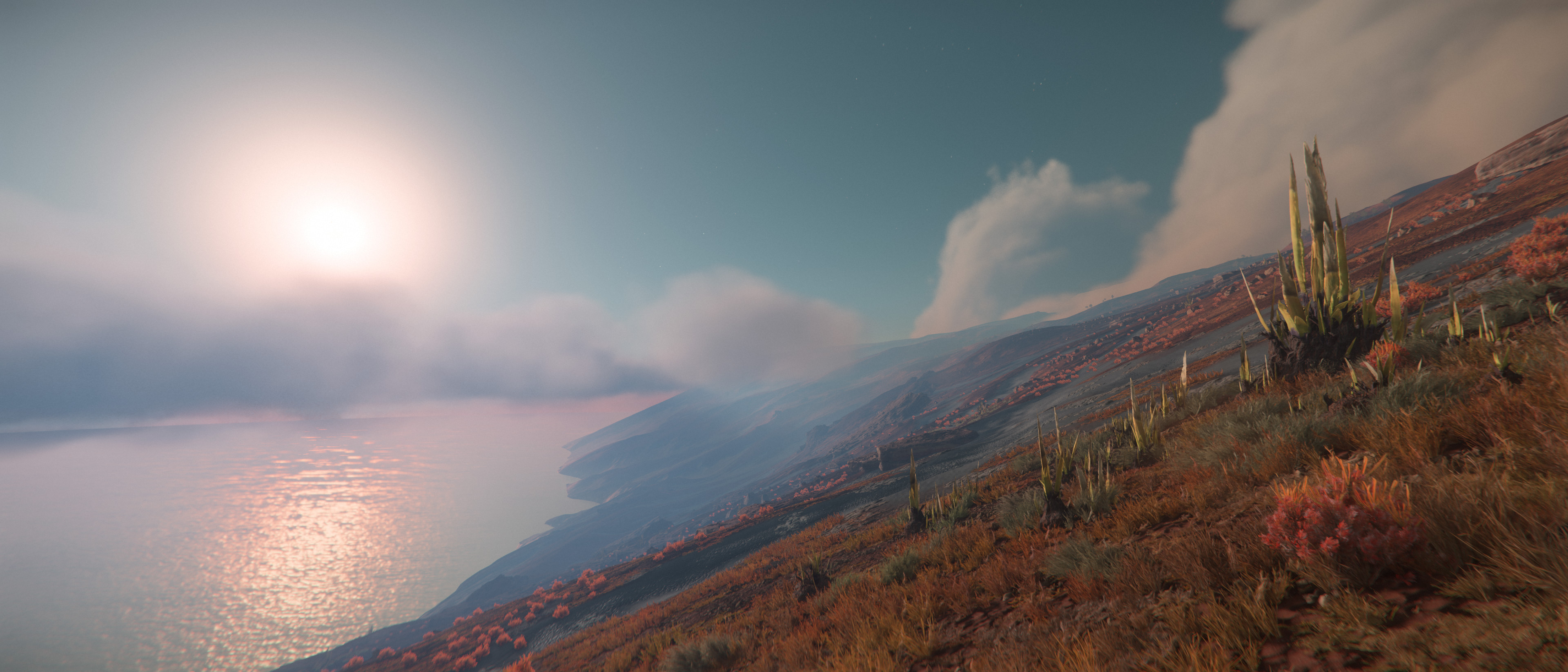
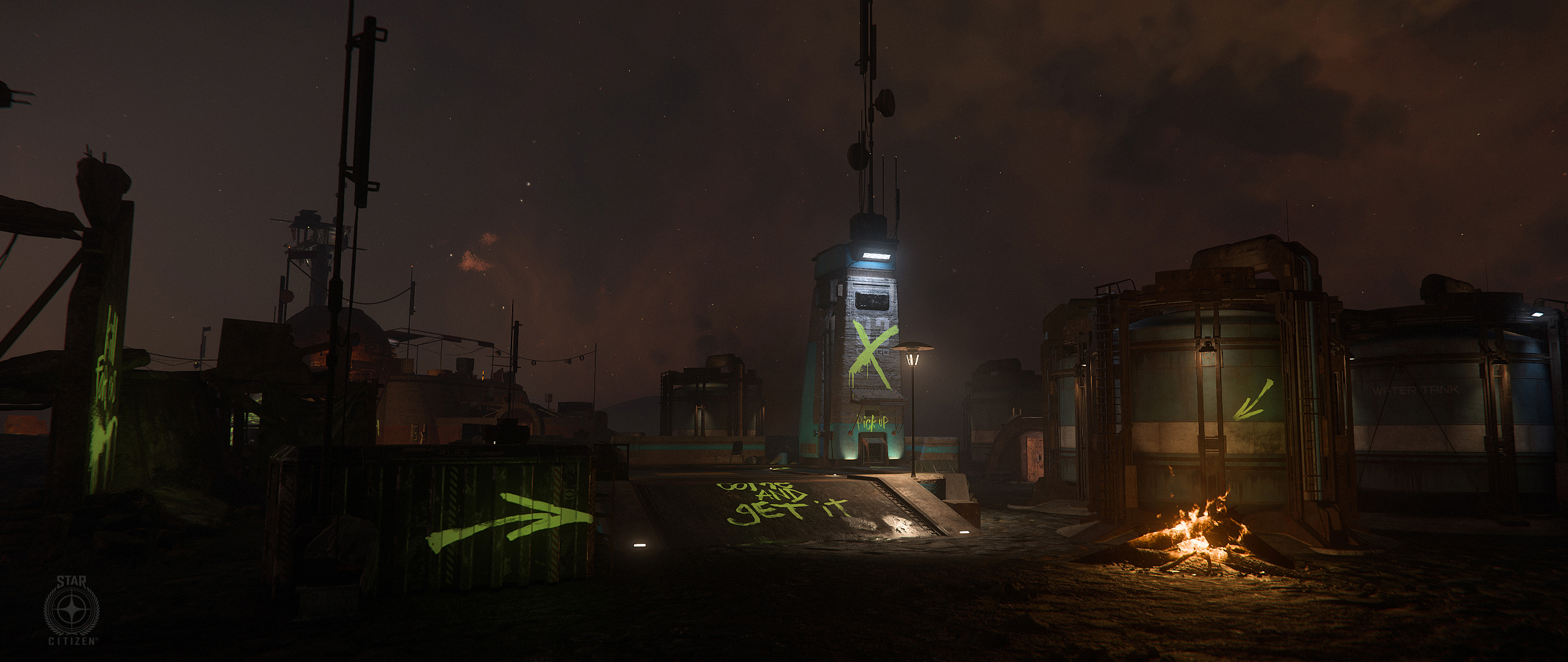
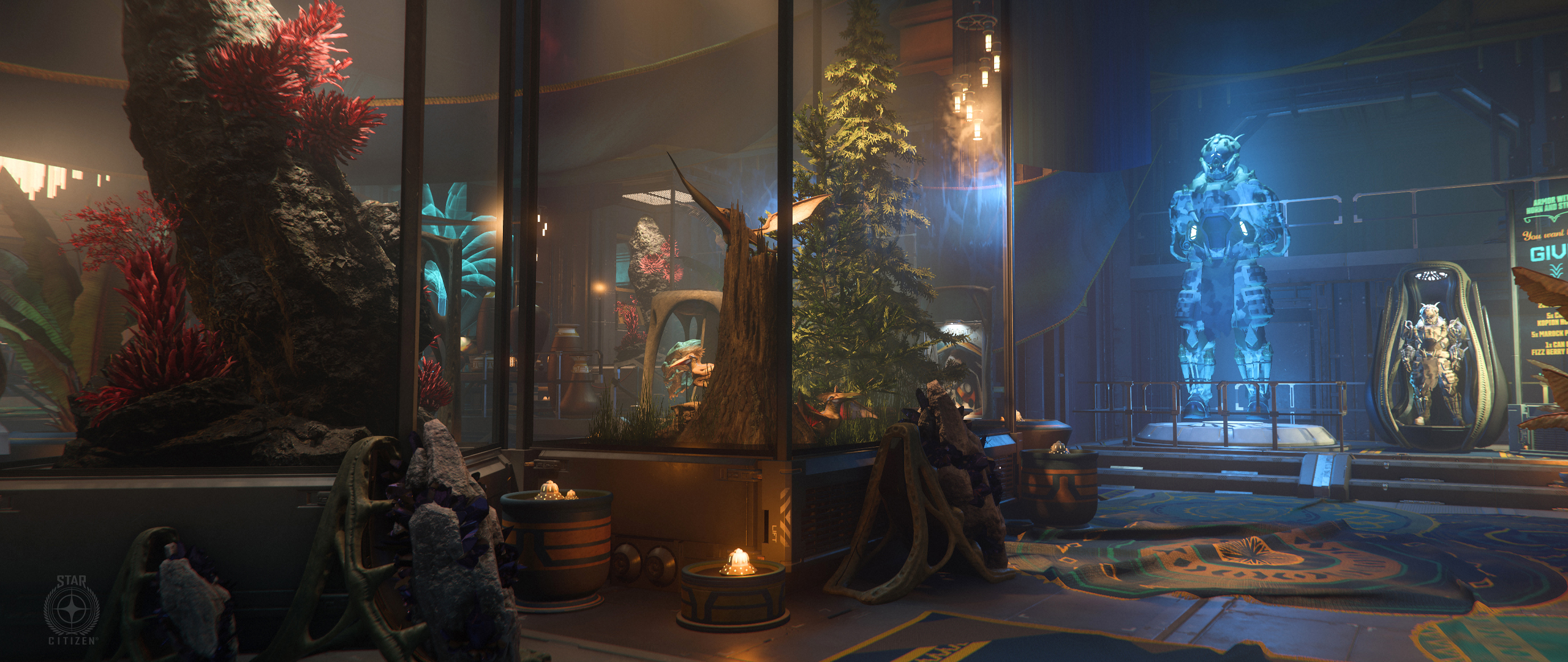
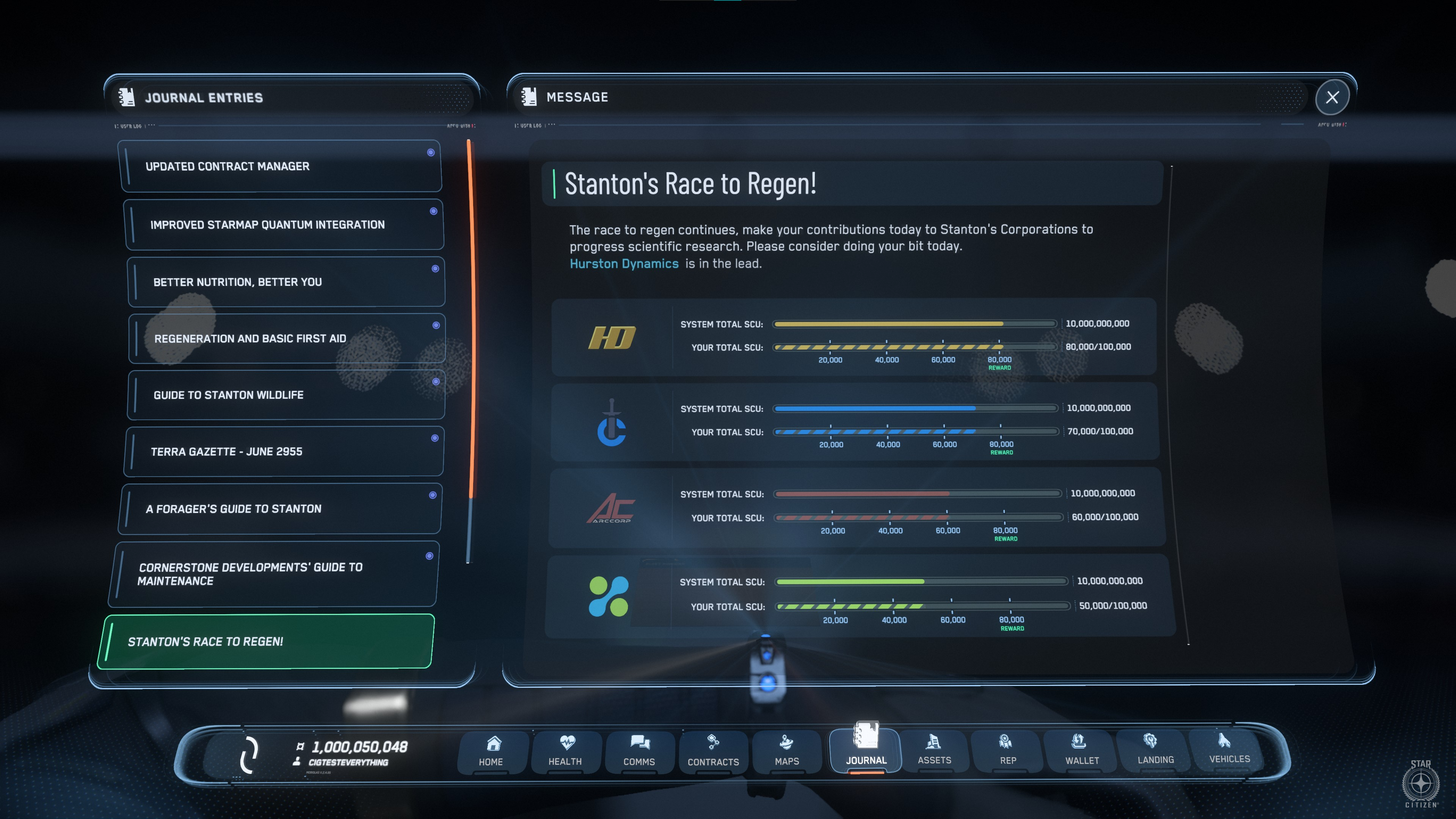
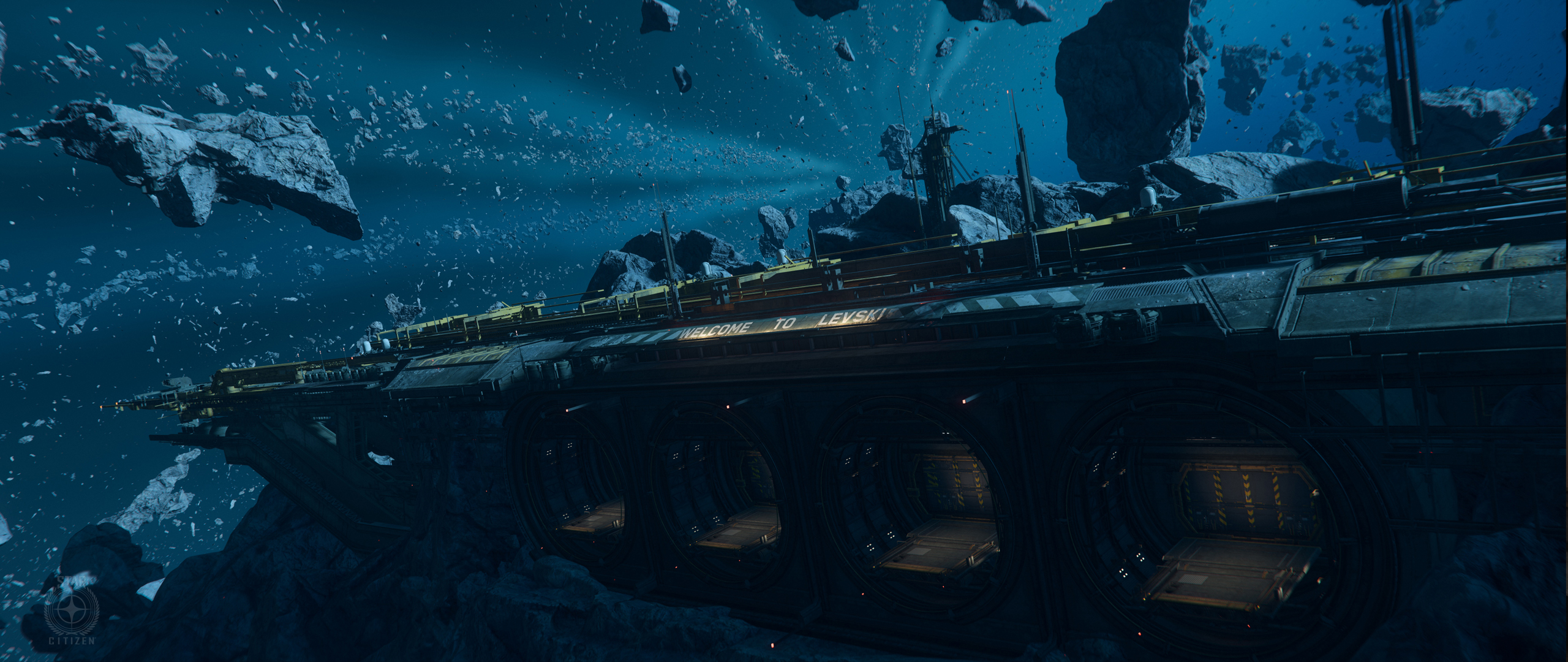
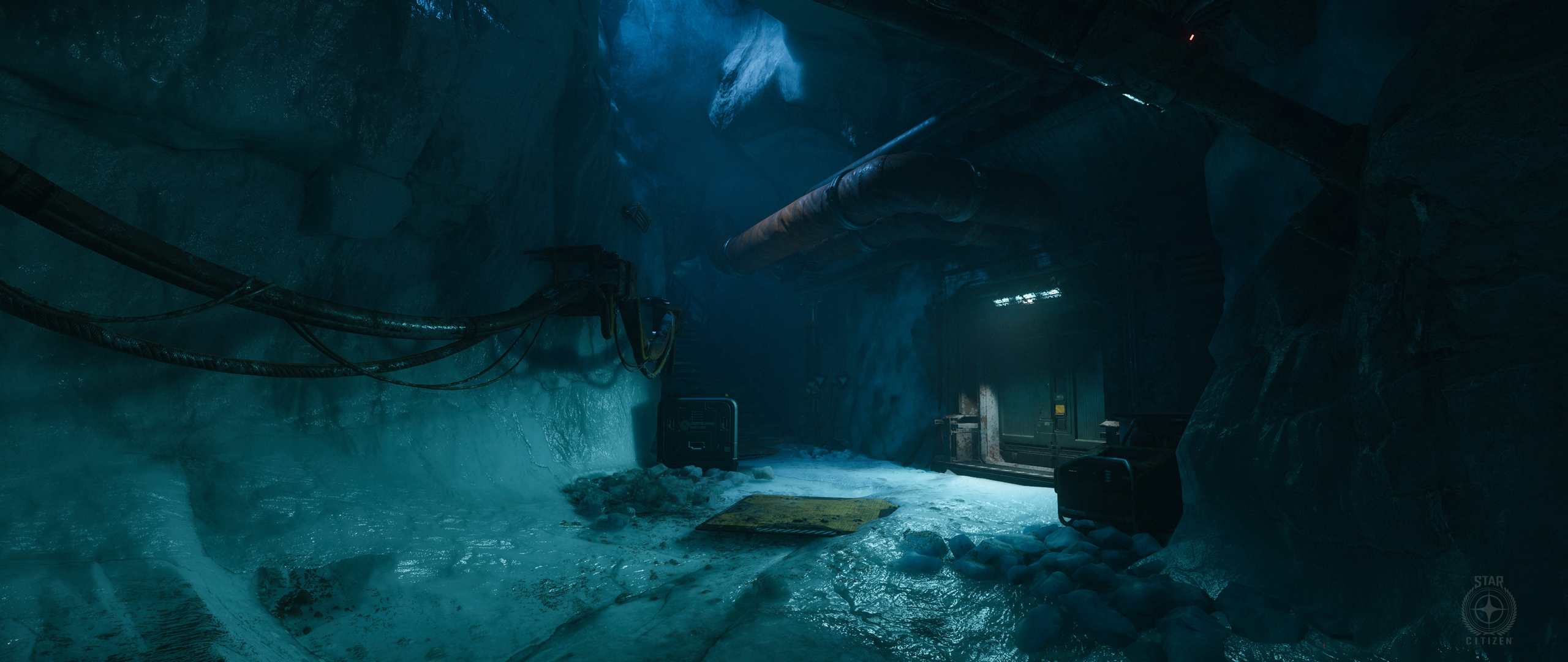
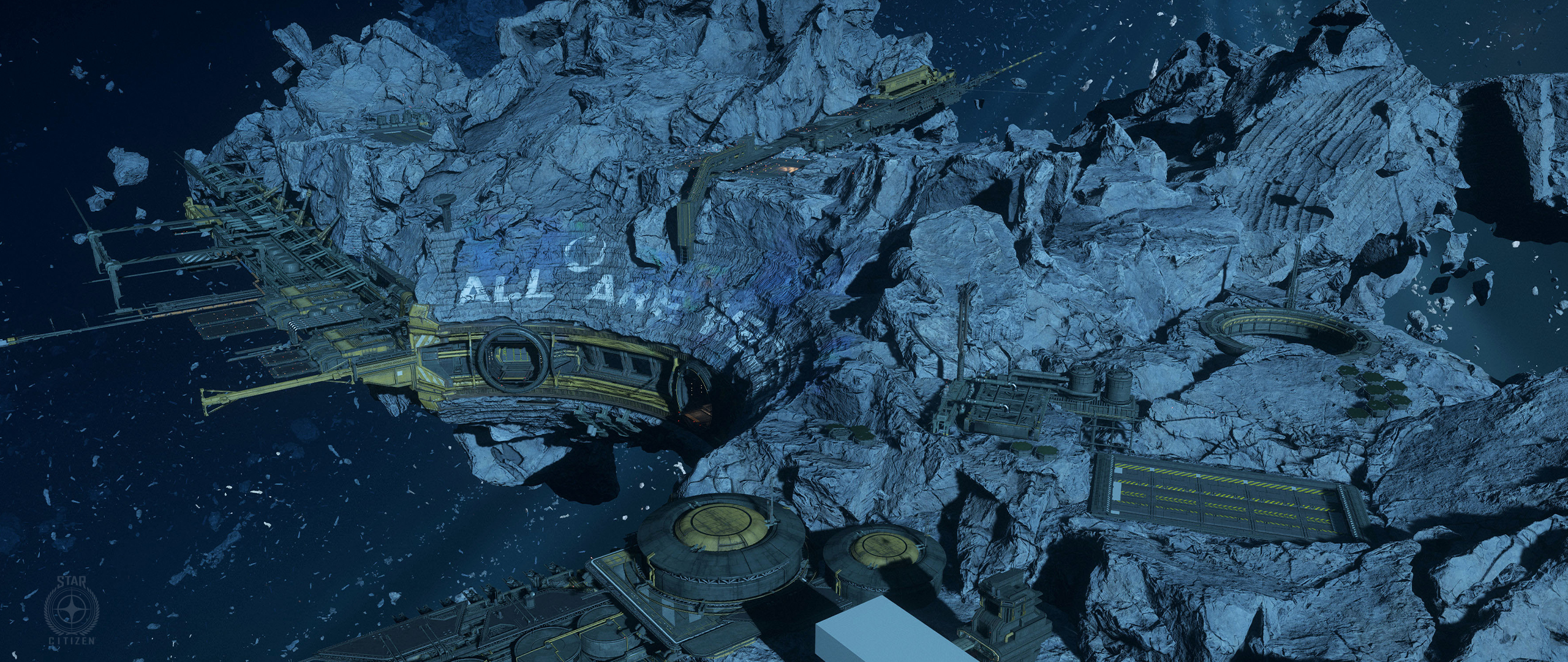
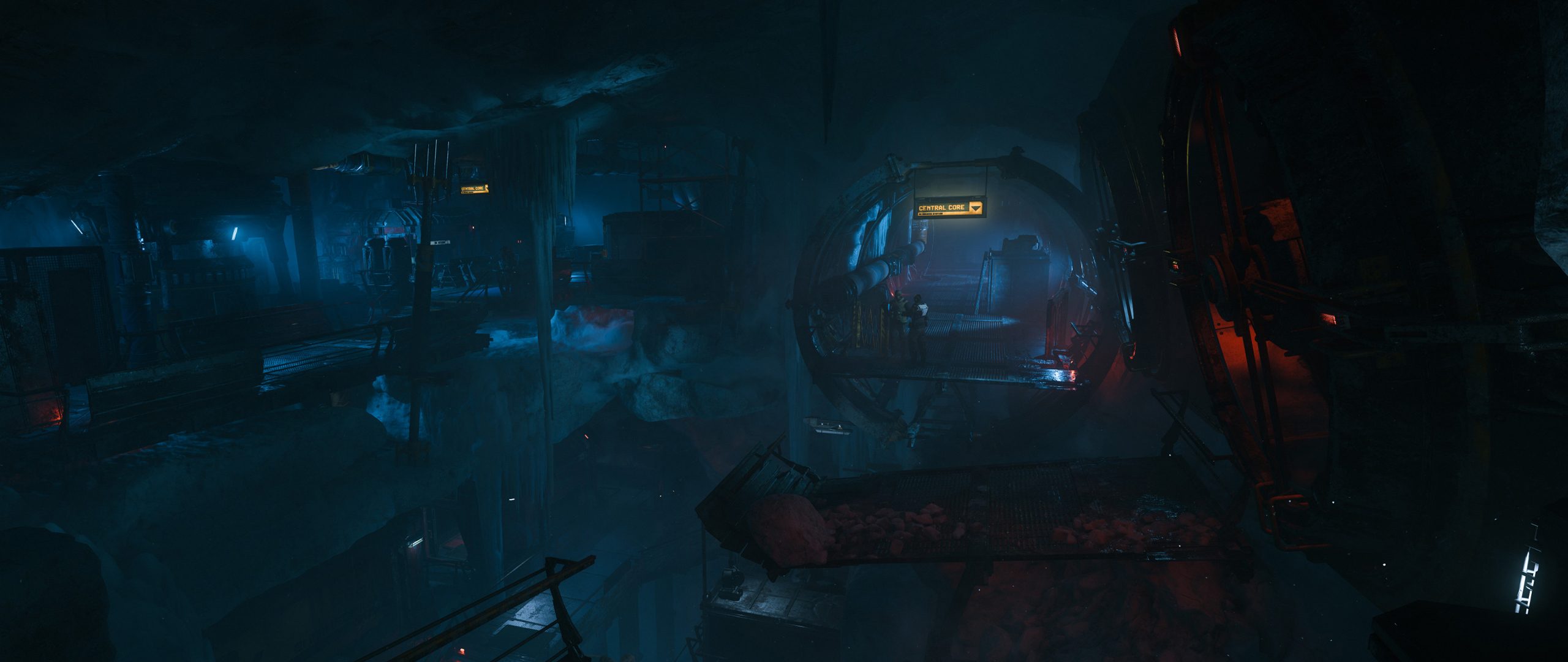
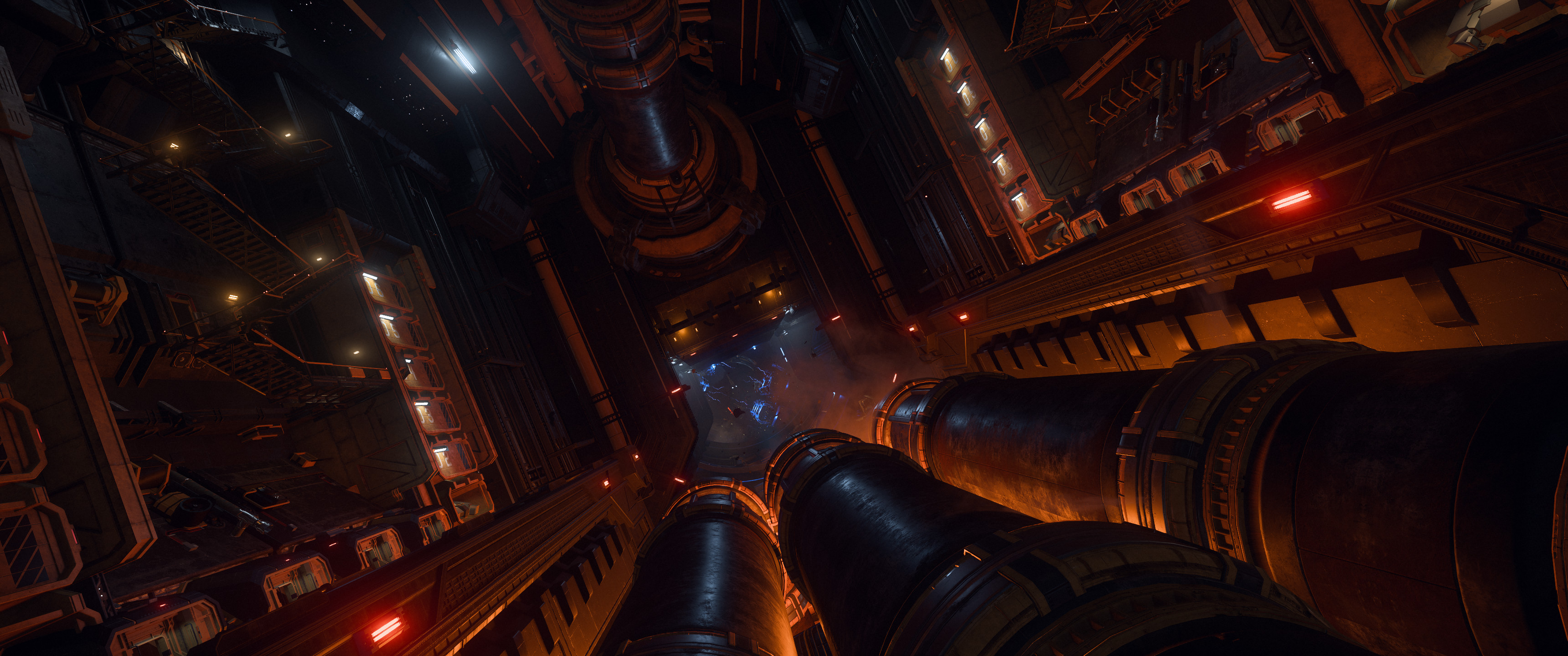
Metadata
- CIG ID
- 18296
- Channel
- Transmission
- Category
- Undefined
- Series
- Monthly Reports
- Comments
- 27
- Published
- 5 years ago (2021-09-01T00:00:00+00:00)