Squadron 42 Monthly Report: August 2021
Transmission Undefined Monthly ReportsContent
This is a cross-post of the report that was recently sent out via the monthly Squadron 42 newsletter. We’re publishing this a second time as a Comm-Link to make it easier for the community to reference back to. TO: SQUADRON 42 RECRUITS
SUBJ: DEVELOPMENT UPDATE 09:01:2021
REF: CIG UK, CIG DE, CIG LA, CIG TX
FAO Squadron 42 recruits.
Welcome to August’s Squadron 42 development report. Enclosed you’ll find details on the latest progress made across the campaign, including updates to key cinematics, additions to essential vehicles, and engine developments that will benefit the whole project.
Thank you for you continued support of Squadron 42.
Sincerely,
CIG COMMUNICATIONS
AI (Content)
Throughout August, AI Content supported Level Design by creating a new ‘worker’ behavior. This enables the designers to apply traits to the various AI archetypes, refining which usables they use, such as sitting, leaning, inspecting, and cooking. The team modified various usables to utilize the first reaction system, which allows NPCs to break out of usables during animations. For example, if an NPC is typing at a console and hears a gunshot or sees an enemy, they will stop typing and react appropriately. This was completed for the standing and sitting console, leans, seats, stairs, railings, search spots, attack spots, and more. They’re currently working with the Engine and Animation teams to improve the visuals.
AI (Feature)
AI Features continued to work on combat scenarios. Throughout August, they improved visual perception by adjusting the field-of-view form and exposing more information for the designers to tweak. The aim of this is to create a stealth combat mechanism from the player’s perspective, which requires adjustable perception timings and field of view. New functionality was also added to the tactical point system. This enables it to compute path distances when selecting viable relocation points or cover locations during combat, rather than just direct distance. NPCs were also set up to use missile turrets.
AI (Tech)
AI Tech improved the pathfinder system to work with planetary navigation mesh tiles, enabling them to place NPCs on planets and move them from one location to another. They also started the work for generating planet navigation mesh automatically based on a player’s proximity. One feature delivered this month allows the player to lead a formation of AI ships. This was initially requested for Squadron 42 but should be available in the PU in the future.
Improvements were also made to the collision avoidance system, including physics optimizations for obstacle queries and a small restructure of related data.
Significant effort was also directed at improving AI design paths and how NPCs follow them. As the design paths can be quite complex with multiple branches, they were updated to allow NPCs to follow them from any starting place.
Work also continued on the Subsumption editor, this time completing the multi-graph view.
Animation
The Animation team progressed with zero-g traversal, Vanduul combat, medical-gun self-healing, and various story scenes. The Motion-Capture team supported a story shoot, while the Facial Animation team finalized animations on the newly improved head models. For level gameplay, the AI team worked on a useable that exists in one of the level environments to give it life, story context, and provide an opportunity for stealth gameplay. They also supported Tech Animation in pursuit of a more tactile feel to interacting with player outfits, and planned an upcoming Vanduul mo-cap shoot.
Art (Characters)
Character Art continued with their ongoing polish and update passes for character heads, all of which incorporated the new eye assembly and skin shader developed last month. They also updated many of the crew outfits and officer uniforms to elevate them to the current quality level. Tech Design also updated their zoos, systematically going through hair, skin, and DNA for the entire project.
Art (Environment)
Environment Art worked on locations for the quarterly milestone, assisting the Flight Design and Cinematic teams in bringing spacescapes and internal spaces to life in the game’s opening chapter. “We’ve been super proud of the team’s progress over the past few months and we are extremely excited moving forward in bringing Squadron 42’s environments together.” – Environment Art Team
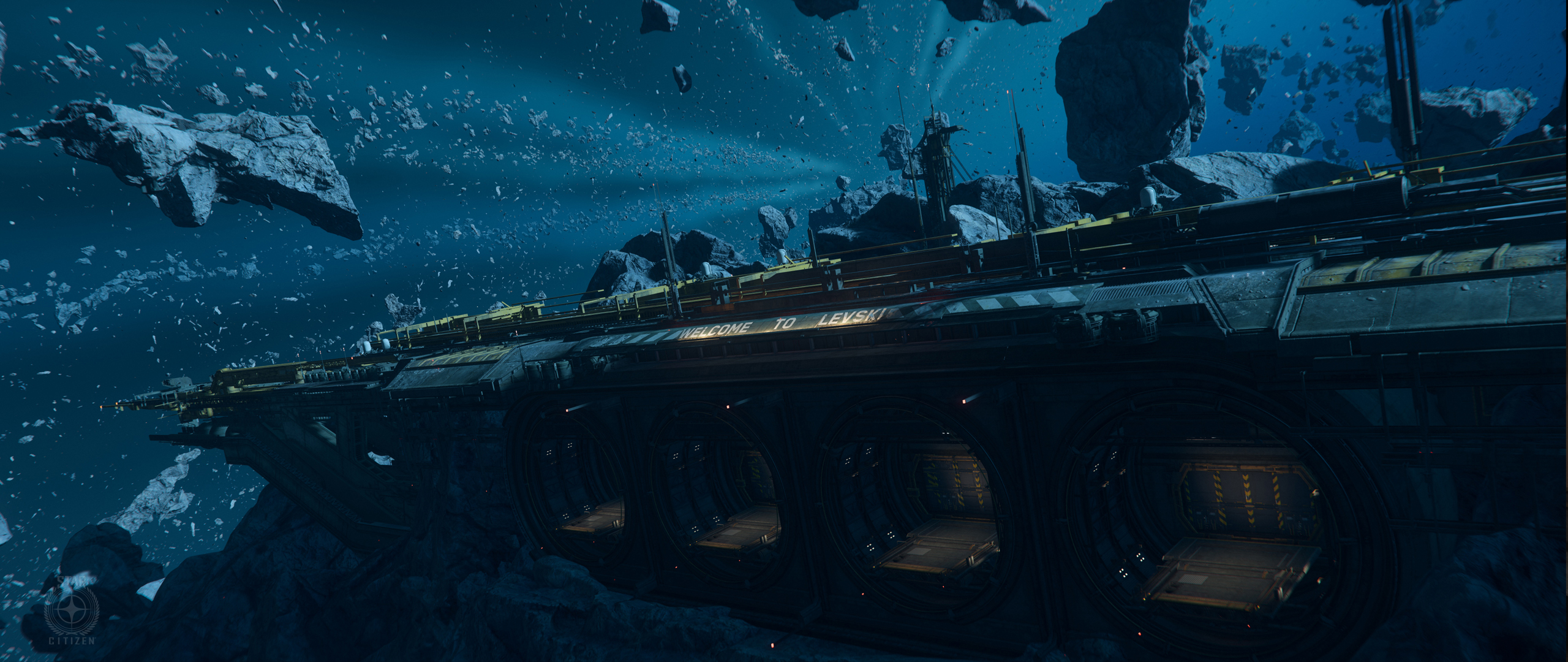
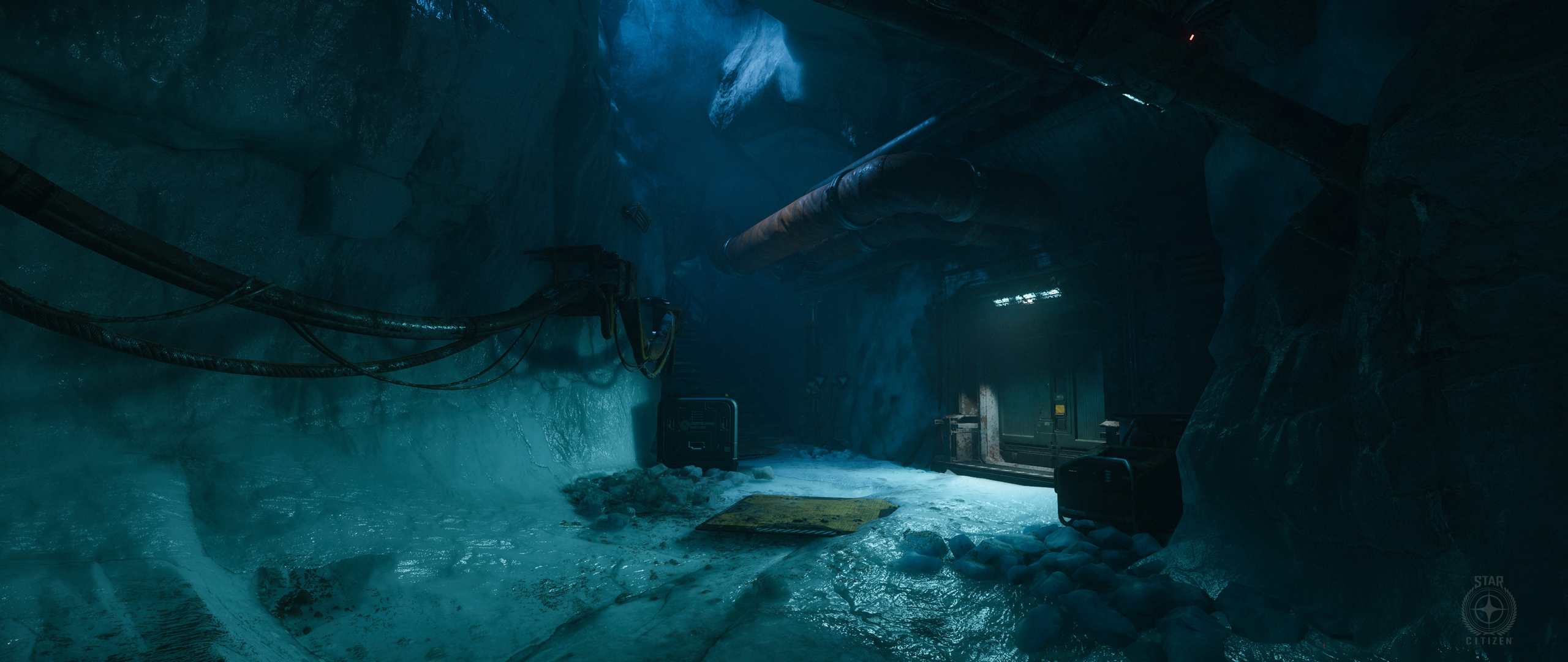
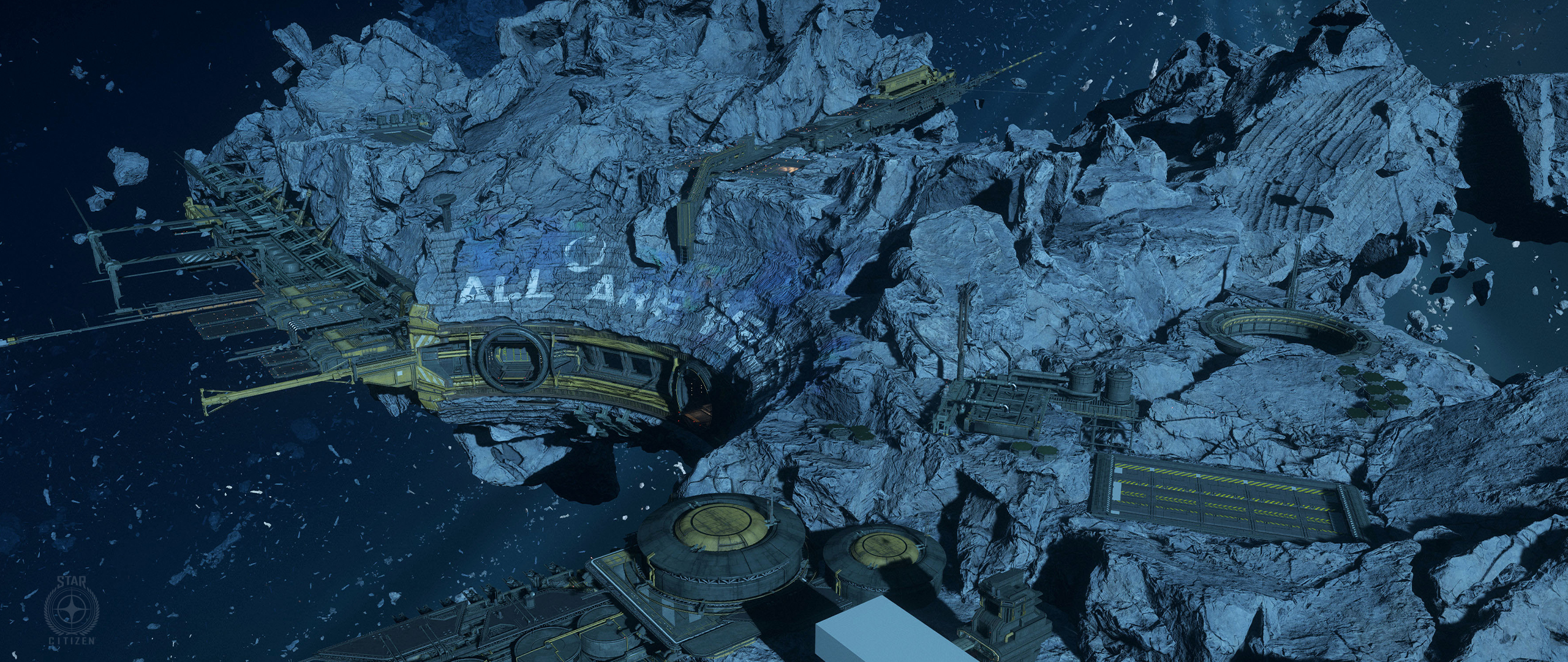
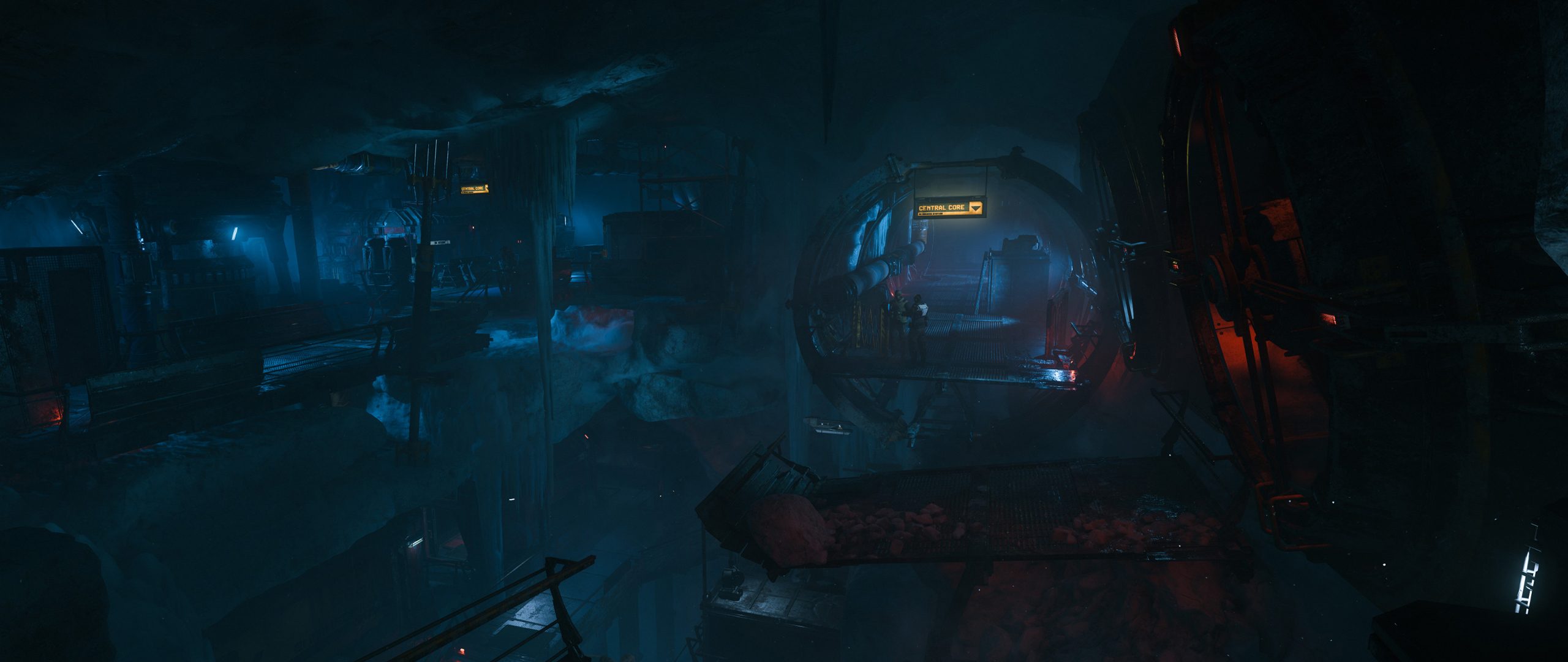
Elsewhere, focus was on Archon station and chapters 7, 15, and 19.
Cinematics
At the beginning of the month, Cinematics closed out the remaining tasks on a significant sequence for the Q2 milestone. The sequence features Cydnus mining ticks, and the team ensured the cutaway properly highlights the animation of the articulated legs to help the related teams properly close out the vehicle. For the Q3 milestone, the team revisited earlier sequences in the game’s opening chapter to bring them one step closer to final delivery. They can now animate all the bridge consoles and chairs on the Bengal carrier, which wasn’t set up when they last worked on major sequences in that location. So, their most recent pass included proper chair, screen, console, stick, and throttle animations alongside the motion-captured animations.
“In tradition with other sci-fi universes, there are of course no seat belts on those bridge seats, so when the ship gets hit, we have some nice wiggling and shaking going on.” – Cinematics Team
The Bengal’s bridge is huge, with the area around the captain alone having eight seated officers, so the team spent time ensuring the whole area had proper animations and polish. For example, crew members properly looking at events or characters.
Cinematics also improved the blockout for an ‘escape’ level, which is in a state where it’s “safe” to polish the various splines throughout the sequence. This also shows the level artists where they could polish and add further meshes or detail.
On the character side, a lot of important sequences are now in a state where the team can assess how the current hairstyles and costumes look on key actors. For example, Gary Oldman playing Admiral Bishop.
Finally, they received a selection of special enemy ships and the ability to animate the M50’s cockpit controls, so lifted a related cutaway to the next level.
Engine
In August, the Physics team progressed with physical quantum travel. In their development stream, they now have a proper quantum grid (per solar system) and a quantum-obstacle component that registers an analytical representation of an obstacle. Some to-be-sorted issues aside, they can now make the equivalent of a blind quantum jump and drop out before hitting a moon along the travel path. They also continued to improve performance. Among other things, the destruction of static physical entities now runs time-sliced, while querying and processing parts of a physical entity during collision detection was improved. The physics system code cleanup continued too. For example, the physical world’s time-step function now makes individual phases of the time step clearer.
The transition to the Gen12 renderer progressed throughout August. Shader activation was made thread-safe and no longer requires explicit synchronization via locks, volumetric fog volumes now run natively in Gen12, and the team refactored the use of several reflected shader parameters throughout render code and shaders. Tint support was added as well as scattering query support for forward-shaded objects, and several pieces of legacy code across the renderer code base were cleaned up.
Regarding atmosphere and volumetric clouds, time was spent reworking the reprojection and filter chain to ultimately allow raymarching at lower resolutions for improved GPU performance. Improvements were made to the placement of samples for raymarching. This involved reprojecting results from previous frames, filtering and denoising cloud depth, and up-sampling inscatter and transmittance results to full resolution for various problematic view scenarios. These scenarios include orbital views, scenes with high depth complexity, and any scene with strong camera movement. This is all still work in progress, though the team hopes to roll it out shortly.
Work was submitted to improve cloud shading by better blending between forward and backward scattering inside them, which is important for rendering the silver lining. Moreover, improvements were made to the look of cloud edges to give them a more volumetric feel. The stepping code for local cloud shadow details was reworked to allow more details for the same performance cost.
On the core-engine side, time was spent optimizing the low-level system. For example, various improvements were made to CigFunction, which serves as a vehicle to capture and pass C++ lambdas (in this particular case code and data for deferred asynchronous execution as a job). The next focus was optimizing the entity unloading stalls plaguing the PU. As a result, several entity-unload bottlenecks were rectified. Furthermore, the management of component events was optimized and code to create and destroy them improved.
Work was also done to deliver multiple optimizations in the spatial culling system, which will be used for server meshing. Lastly, the entity component update scheduler was changed to allow more than one update per component pass to enable the more flexible use of components.
Features (Gameplay)
The SQ42 Feature team improved the scripting setup of the checkpoint tool. The initial implementation was completed, allowing Design to begin cleaning up their scripting. They’re currently adding new functionality for Object Container Streaming to better control what’s loaded in an area, which will allow them to enable it in more locations.
Temporary UI and nodes were also prototyped to allow the player to dynamically change their character’s gender, allowing Design to see how it fits into the game flow.
Gameplay Story
August saw the Gameplay Story team update the helmet attachment method across all scenes in chapters 1 and 16. Further work is still required, but they’re pleased to see the helmets beginning to function correctly. Chapter 4b received several updates: a complicated scene was completely mirrored, two scenes had superfluous footsteps removed, and several scenes in the mess hall were updated with a new, bigger bowl. Gameplay Story also assisted Cinematics with animations for the deck crew during the take-off sequence.
The biggest visual update of the month was to a key ship that now has a large, animated welding arm at the front. So, the team finalized several scenes with characters using and interacting with it.
Graphics & VFX Programming
Last month, the Graphics team progressed with the render-to-texture system, which is receiving a mini-overhaul to cope with some new UI systems that make extensive use of 3D icons and compositing, such as the personal inventory. They enabled dynamically rendered textures to be cached to allow them to generate a large number of high-quality, super-sampled images with minimal cost. They also dynamically reduced texture resolution in out-of-focus areas to reallocate more resources to the rest of the game.
For Gen12, the shadow and real-time-probe systems were converted and will soon be activated by default. Streaming of real-time probes was also completed and enabled.
Alongside this, they began adding support for refraction into the GPU particle system, matching the functionality of the CPU particle system and surpassing its visual quality. This marks the end of a long-standing goal to implement counterparts of all legacy mesh and sprite functionality in the new CPU particle system.
The VFX Programming team also continued with the fire hazard system. It now utilizes the new compressed physics render-mesh, which obtains accurate surface data without relying on lower-resolution and lower-accuracy physics proxy meshes. The way fire spreads through doorways was improved too.
Level Design
The Space/Dogfight team continued the AI implementation for friendly, neutral, and hostile ships. This is an ongoing process alongside the AI Feature team, who are still in the process of developing features like quantum travel boost and scan pulse. They also worked closely with the other Design teams to ensure that the player experience is seamless. The Level Design team utilized extra resources to focus on the game flow and pacing details in various chapters. Social Design continued to implement all in-game scenes for review and sign-off.
Narrative
As Art and Design continued to develop the game’s various levels, Narrative began determining what kind of additional documentation was needed. This included a variety of locations requiring sign and branding updates along with proposals for the types of NPC populating the areas. Following Design completing a key set piece, the team generated scripts for additional narrative vignettes and wildlines that better reflect the current game flow and story moments. As with other sequences, Narrative will work with Audio to generate placeholder recordings for Design to implement in the level. Once in place, Narrative will iterate on and refine the lines to ensure they have everything they need before organizing a capture session with final performances.
The team also began initial discussions into their next mo-cap shoot, which included completing some of the work that was postponed due to the pandemic.
QA
QA continued to provide Cinematics with level recordings for review and supported the dev teams by testing changes and investigating issues. Support was also given to the AI team, testing their various implementations throughout the campaign. Video recordings were captured and reviewed weekly to ensure that new behaviors and fixes are in line with the intended direction.
VFX
Last month, VFX focusing on a significant space battle scene that features a mixture of cinematic and in-game vehicle destruction along with various cinematic background sequences. The team are putting several techniques and workflow processes to use that they learned while working on a huge destruction sequence in Theaters of War, which proved to be a valuable testbed for Squadron 42 as well as the PU. These techniques include combining bespoke, offline simulations done in third-party software, such as Houdini, with in-engine destruction and particle effects. Work also commenced on a fire propagation sequence that takes place within a key interior location.
WE’LL SEE YOU NEXT MONTH…
Dies ist ein Querverweis auf den Bericht, der kürzlich über den monatlichen Newsletter von Squadron 42 verschickt wurde. Wir veröffentlichen ihn ein zweites Mal als Comm-Link, damit die Community leichter darauf zurückgreifen kann.
TO: STAFFEL 42 REKRUTEN
SUBJ: ENTWICKLUNG UPDATE 09:01:2021
REF: CIG UK, CIG DE, CIG LA, CIG TX
FAO Geschwader 42 rekrutiert.
Willkommen zum Entwicklungsbericht für Squadron 42 im August. Anbei findest du Details zu den neuesten Fortschritten in der Kampagne, darunter Updates für wichtige Filmsequenzen, neue Fahrzeuge und Entwicklungen an der Engine, die dem gesamten Projekt zugute kommen werden.
Vielen Dank für eure anhaltende Unterstützung von Squadron 42.
Mit freundlichen Grüßen,
CIG COMMUNICATIONS
AI (Inhalt)
Den ganzen August über hat AI Content das Level Design unterstützt, indem es ein neues "Arbeiter"-Verhalten erstellt hat. Dies ermöglicht es den Designern, den verschiedenen KI-Archetypen Eigenschaften zuzuweisen und zu verfeinern, welche Usables sie verwenden, z. B. Sitzen, Anlehnen, Inspizieren und Kochen. Das Team änderte verschiedene Usables, um das erste Reaktionssystem zu nutzen, mit dem NSCs während der Animationen aus den Usables ausbrechen können. Wenn ein NSC zum Beispiel an einer Konsole tippt und einen Schuss hört oder einen Feind sieht, hört er auf zu tippen und reagiert entsprechend. Dies wurde für die stehende und sitzende Konsole, Anlehnungen, Sitze, Treppen, Geländer, Suchpunkte, Angriffspunkte und vieles mehr abgeschlossen. Zurzeit arbeiten sie mit den Engine- und Animationsteams zusammen, um die Grafik zu verbessern.
KI (Feature)
Die KI-Funktionen arbeiteten weiter an den Kampfszenarien. Im August verbesserten sie die visuelle Wahrnehmung, indem sie die Sichtfeldform anpassten und den Designern mehr Informationen zur Verfügung stellten, an denen sie feilen konnten. Ziel ist es, einen Stealth-Kampfmechanismus aus der Spielerperspektive zu schaffen, der anpassbare Wahrnehmungszeiten und Sichtfelder erfordert. Auch das taktische Punktesystem wurde um neue Funktionen erweitert. Dadurch kann es bei der Auswahl von möglichen Verlagerungspunkten oder Deckungsorten während des Kampfes nicht nur die direkte Entfernung, sondern auch die Wegstrecke berechnen. NSCs wurden außerdem so eingerichtet, dass sie Raketentürme benutzen können.
KI (Technik)
Die KI-Techniker haben das Pfadfindersystem so verbessert, dass es mit Planeten-Navigationsmesh-Kacheln funktioniert, so dass sie NSCs auf Planeten platzieren und von einem Ort zum anderen bewegen können. Außerdem haben sie mit der Arbeit begonnen, um das Planetennavigationsnetz automatisch anhand der Nähe des Spielers zu erstellen. Eine Funktion, die diesen Monat eingeführt wurde, ermöglicht es dem Spieler, eine Formation von KI-Schiffen anzuführen. Diese Funktion wurde ursprünglich für Squadron 42 angefordert, sollte aber in Zukunft auch im PU verfügbar sein.
Außerdem wurde das System zur Kollisionsvermeidung verbessert, u. a. durch physikalische Optimierungen bei der Abfrage von Hindernissen und eine kleine Umstrukturierung der zugehörigen Daten.
Außerdem wurden die KI-Entwurfspfade und die Art und Weise, wie die NSCs ihnen folgen, erheblich verbessert. Da die Konstruktionspfade recht komplex sein können und mehrere Verzweigungen aufweisen, wurden sie so aktualisiert, dass die NSCs ihnen von jedem beliebigen Startpunkt aus folgen können.
Auch die Arbeit am Subsumption-Editor wurde fortgesetzt, diesmal mit der Fertigstellung der Multi-Graph-Ansicht.
Animation
Das Animationsteam machte Fortschritte bei der Schwerelosigkeit, dem Vanduul-Kampf, der Selbstheilung mit der medizinischen Waffe und verschiedenen Story-Szenen. Das Motion-Capture-Team unterstützte einen Story-Dreh, während das Team für die Gesichtsanimation die Animationen für die neu verbesserten Kopfmodelle fertigstellte. Für das Gameplay der Levels arbeitete das KI-Team an einer nutzbaren Figur, die in einer der Level-Umgebungen existiert, um ihr Leben und einen Story-Kontext zu verleihen und eine Möglichkeit zum Stealth-Gameplay zu bieten. Außerdem unterstützte das Team die Tech-Animation dabei, die Interaktion mit der Spielerkleidung greifbarer zu machen, und plante ein bevorstehendes Vanduul-Mo-Cap-Shooting.
Kunst (Charaktere)
Character Art hat die laufenden Polier- und Aktualisierungsdurchgänge für die Charakterköpfe fortgesetzt, die alle die neue Augenanordnung und den im letzten Monat entwickelten Haut-Shader enthalten. Außerdem wurden viele der Crew-Outfits und Offiziersuniformen aktualisiert, um sie auf das aktuelle Qualitätsniveau zu heben. Tech Design aktualisierte auch die Zoos und ging systematisch Haare, Haut und DNA für das gesamte Projekt durch.
Kunst (Umwelt)
Environment Art arbeitete an den Schauplätzen für den vierteljährlichen Meilenstein und unterstützte das Flight Design- und das Cinematic-Team dabei, Raumlandschaften und Innenräume im ersten Kapitel des Spiels zum Leben zu erwecken. "Wir sind sehr stolz auf die Fortschritte, die das Team in den letzten Monaten gemacht hat, und wir freuen uns sehr darauf, die Umgebungen von Squadron 42 zu gestalten". - Environment Art Team
An anderer Stelle lag der Fokus auf der Archon-Station und den Kapiteln 7, 15 und 19.
Cinematics
Zu Beginn des Monats schloss das Cinematics-Team die verbleibenden Aufgaben an einer wichtigen Sequenz für den Meilenstein Q2 ab. In der Sequenz geht es um Cydnus Bergbauzecken, und das Team stellte sicher, dass der Schnitt die Animation der Gelenkbeine richtig hervorhebt, damit die dazugehörigen Teams das Fahrzeug richtig abschließen können. Für den Meilenstein Q3 hat das Team frühere Sequenzen im Eröffnungskapitel des Spiels überarbeitet, um sie der endgültigen Auslieferung einen Schritt näher zu bringen. Sie können jetzt alle Brückenkonsolen und Stühle auf dem bengalischen Transporter animieren, der bei der letzten Arbeit an wichtigen Sequenzen an diesem Ort noch nicht eingerichtet war. Der letzte Durchgang umfasste also neben den Motion-Capture-Animationen auch richtige Stuhl-, Bildschirm-, Konsolen-, Stick- und Gashebel-Animationen.
"Wie in anderen Sci-Fi-Universen üblich, gibt es auf den Brückensitzen natürlich keine Sicherheitsgurte, und wenn das Schiff getroffen wird, wackelt und schüttelt es ganz schön. - Cinematics Team
Die Brücke der Bengal ist riesig, allein im Bereich um den Kapitän sitzen acht Offiziere, also hat das Team viel Zeit damit verbracht, den gesamten Bereich mit den richtigen Animationen und dem richtigen Schliff zu versehen. Zum Beispiel schauen die Besatzungsmitglieder richtig auf Ereignisse oder Charaktere.
Cinematics hat auch das Blockout für ein "Flucht"-Level verbessert, das sich in einem Zustand befindet, in dem es "sicher" ist, die verschiedenen Splines in der Sequenz zu polieren. Das zeigt den Levelkünstlern auch, wo sie noch weitere Meshes oder Details hinzufügen können.
Auf der Charakterseite sind viele wichtige Sequenzen jetzt in einem Zustand, in dem das Team beurteilen kann, wie die aktuellen Frisuren und Kostüme an den Hauptdarstellern aussehen. Zum Beispiel Gary Oldman als Admiral Bishop.
Schließlich erhielten sie eine Auswahl spezieller feindlicher Schiffe und die Möglichkeit, die Cockpit-Bedienelemente des M50 zu animieren, so dass ein damit verbundener Cutaway auf die nächste Stufe gehoben wurde.
Motor
Im August hat das Physikteam Fortschritte bei der physikalischen Quantenreise gemacht. In ihrem Entwicklungsstrom haben sie jetzt ein richtiges Quantengitter (pro Sonnensystem) und eine Quanten-Hindernis-Komponente, die eine analytische Darstellung eines Hindernisses registriert. Abgesehen von einigen noch zu klärenden Problemen können sie jetzt das Äquivalent eines blinden Quantensprungs machen und aussteigen, bevor sie auf einen Mond auf dem Reisepfad treffen. Sie haben auch die Leistung weiter verbessert. Unter anderem läuft die Zerstörung von statischen physikalischen Objekten jetzt zeitlich gestaffelt ab, während die Abfrage und Verarbeitung von Teilen eines physikalischen Objekts während der Kollisionserkennung verbessert wurde. Auch der Code des Physiksystems wurde weiter aufgeräumt. Zum Beispiel macht die Zeitschrittfunktion der physischen Welt jetzt die einzelnen Phasen des Zeitschritts deutlicher.
Die Umstellung auf den Gen12-Renderer wurde im August vorangetrieben. Die Shader-Aktivierung wurde thread-sicher gemacht und erfordert nun keine explizite Synchronisierung über Sperren mehr, volumetrische Nebelvolumina laufen jetzt nativ in Gen12 und das Team hat die Verwendung mehrerer reflektierter Shader-Parameter im gesamten Rendercode und in den Shadern überarbeitet. Außerdem wurde die Unterstützung für Tönungen und Streuungsabfragen für vorwärts schattierte Objekte hinzugefügt und einige alte Codebestandteile in der Renderer-Codebasis wurden bereinigt.
Bei der Atmosphäre und den volumetrischen Wolken wurde die Reprojektion und die Filterkette überarbeitet, um das Raymarching bei niedrigeren Auflösungen zu ermöglichen und so die GPU-Leistung zu verbessern. Die Platzierung von Samples für das Raymarching wurde verbessert. Dazu gehörten die Reprojektion von Ergebnissen aus früheren Frames, die Filterung und Entrauschung der Wolkentiefe und das Upsampling von Inscatter- und Transmittance-Ergebnissen auf die volle Auflösung für verschiedene problematische Ansichtsszenarien. Zu diesen Szenarien gehören Orbitalansichten, Szenen mit hoher Tiefenkomplexität und alle Szenen mit starken Kamerabewegungen. Das Team hofft jedoch, dass es bald auf den Markt kommen wird.
Es wurde daran gearbeitet, die Schattierung von Wolken zu verbessern, indem man besser zwischen vorwärts- und rückwärtsgerichteter Streuung in ihnen überblendet, was für die Darstellung des Silberstreifens wichtig ist. Außerdem wurde das Aussehen der Wolkenränder verbessert, um ihnen ein volumetrischeres Gefühl zu geben. Der Stepping-Code für lokale Wolkenschattendetails wurde überarbeitet, um mehr Details bei gleichem Leistungsaufwand zu ermöglichen.
Auf der Seite der Core-Engine wurde Zeit auf die Optimierung des Low-Level-Systems verwendet. So wurden zum Beispiel verschiedene Verbesserungen an CigFunction vorgenommen, das als Vehikel für die Erfassung und Weitergabe von C++-Lambdas dient (in diesem speziellen Fall Code und Daten für die zeitversetzte asynchrone Ausführung als Job). Der nächste Schwerpunkt war die Optimierung des Entladens von Entitäten, das die PU plagt. Dadurch wurden mehrere Engpässe beim Entladen von Entitäten beseitigt. Außerdem wurde die Verwaltung von Komponentenereignissen optimiert und der Code für ihre Erstellung und Zerstörung verbessert.
Außerdem wurden mehrere Optimierungen im System für das räumliche Culling vorgenommen, das für das Server-Meshing verwendet wird. Schließlich wurde der Zeitplan für die Aktualisierung der Entitätskomponenten geändert, um mehr als eine Aktualisierung pro Komponentendurchlauf zu ermöglichen und so eine flexiblere Nutzung der Komponenten zu ermöglichen.
Funktionen (Gameplay)
Das SQ42-Feature-Team hat die Skripterstellung für das Checkpoint-Tool verbessert. Die anfängliche Implementierung wurde abgeschlossen, so dass das Design-Team mit der Bereinigung der Skripte beginnen konnte. Sie fügen derzeit neue Funktionen für das Objekt-Container-Streaming hinzu, um besser kontrollieren zu können, was in einem Gebiet geladen wird, so dass es an mehr Stellen aktiviert werden kann.
Außerdem wurde ein Prototyp für eine temporäre Benutzeroberfläche und Knoten erstellt, die es dem Spieler ermöglichen, das Geschlecht seines Charakters dynamisch zu ändern, damit Design sehen kann, wie das in den Spielfluss passt.
Gameplay Story
Im August hat das Gameplay Story Team die Helmbefestigung in allen Szenen der Kapitel 1 und 16 aktualisiert. Es sind noch weitere Arbeiten nötig, aber sie freuen sich, dass die Helme jetzt richtig funktionieren. Kapitel 4b erhielt mehrere Updates: Eine komplizierte Szene wurde komplett gespiegelt, zwei Szenen wurden von überflüssigen Schritten befreit und mehrere Szenen in der Kantine wurden mit einer neuen, größeren Schüssel aktualisiert. Gameplay Story unterstützte auch die Cinematics mit Animationen für die Deckcrew während der Startsequenz.
Das größte visuelle Update des Monats betraf ein wichtiges Schiff, das jetzt einen großen, animierten Schweißarm an der Vorderseite hat. Das Team hat mehrere Szenen fertiggestellt, in denen die Charaktere ihn benutzen und mit ihm interagieren.
Grafik & VFX-Programmierung
Im letzten Monat hat das Grafikteam das Render-to-Texture-System weiterentwickelt, das eine kleine Überarbeitung erfährt, um mit einigen neuen UI-Systemen zurechtzukommen, die ausgiebig von 3D-Symbolen und Compositing Gebrauch machen, wie zum Beispiel das persönliche Inventar. Sie ermöglichten es, dynamisch gerenderte Texturen zwischenzuspeichern, damit sie eine große Anzahl hochwertiger, super-abgetasteter Bilder mit minimalen Kosten erzeugen können. Außerdem haben sie die Texturauflösung in unscharfen Bereichen dynamisch reduziert, um mehr Ressourcen für den Rest des Spiels zu verwenden.
Für Gen12 wurden die Schatten- und Echtzeit-Sondensysteme umgestellt und werden bald standardmäßig aktiviert sein. Das Streaming von Echtzeitsonden wurde ebenfalls fertiggestellt und aktiviert.
Außerdem wurde damit begonnen, das GPU-Partikel-System mit Unterstützung für Brechung auszustatten, um die Funktionalität des CPU-Partikel-Systems zu erreichen und dessen visuelle Qualität zu übertreffen. Damit wurde ein langjähriges Ziel erreicht: die Implementierung der Gegenstücke aller alten Mesh- und Sprite-Funktionen in das neue CPU-Partikel-System.
Das VFX-Programmierungsteam hat auch das Feuergefahrensystem weiterentwickelt. Es nutzt jetzt das neue komprimierte Physik-Rendermesh, das genaue Oberflächendaten erhält, ohne auf weniger aufgelöste und ungenaue Physik-Proxy-Meshes angewiesen zu sein. Auch die Art und Weise, wie sich das Feuer durch Türöffnungen ausbreitet, wurde verbessert.
Level Design
Das Space/Dogfight-Team hat die Implementierung der KI für freundliche, neutrale und feindliche Schiffe fortgesetzt. Dies ist ein fortlaufender Prozess, an dem auch das Team für die KI-Features beteiligt ist, das immer noch an der Entwicklung von Funktionen wie dem Quantenreise-Boost und dem Scan-Puls arbeitet. Sie arbeiteten auch eng mit den anderen Design-Teams zusammen, um sicherzustellen, dass das Spielerlebnis nahtlos ist. Das Level Design Team hat zusätzliche Ressourcen eingesetzt, um sich auf den Spielfluss und das Tempo in den verschiedenen Kapiteln zu konzentrieren. Das Social Design-Team implementierte weiterhin alle Spielszenen zur Überprüfung und Freigabe.
Narrative
Während Art und Design mit der Entwicklung der verschiedenen Levels des Spiels fortfuhren, begann Narrative zu bestimmen, welche Art von zusätzlicher Dokumentation benötigt wurde. Dazu gehörten eine Reihe von Orten, die eine Aktualisierung der Beschilderung und des Brandings erforderten, sowie Vorschläge für die Arten von NSC, die die Gebiete bevölkern. Nach der Fertigstellung eines wichtigen Schauplatzes erstellte das Team Skripte für zusätzliche erzählerische Vignetten und Wildlines, die den aktuellen Spielfluss und die Story-Momente besser widerspiegeln. Wie bei anderen Sequenzen auch, wird Narrative mit Audio zusammenarbeiten, um Platzhalter-Aufnahmen zu erstellen, die das Design in den Level einbauen kann. Danach wird Narrative die Zeilen überarbeiten und verfeinern, um sicherzustellen, dass sie alles haben, was sie brauchen, bevor sie eine Aufnahmesitzung mit endgültigen Performances organisieren.
Das Team begann auch mit ersten Gesprächen über den nächsten Mo-Cap-Dreh, bei dem einige der Arbeiten, die aufgrund der Pandemie verschoben wurden, abgeschlossen werden sollen.
QA
Die QA versorgte Cinematics weiterhin mit Level-Aufnahmen zur Überprüfung und unterstützte die Entwicklerteams, indem sie Änderungen testete und Probleme untersuchte. Auch das KI-Team wurde unterstützt, indem es die verschiedenen Implementierungen während der Kampagne testete. Die Videoaufnahmen wurden wöchentlich aufgezeichnet und überprüft, um sicherzustellen, dass neue Verhaltensweisen und Fehlerbehebungen mit der beabsichtigten Richtung übereinstimmen.
VFX
Im letzten Monat konzentrierten sich die VFX auf eine bedeutende Weltraumschlachtszene, die eine Mischung aus filmischer und spielinterner Fahrzeugzerstörung sowie verschiedene filmische Hintergrundsequenzen beinhaltet. Das Team setzt verschiedene Techniken und Arbeitsabläufe ein, die es bei der Arbeit an einer großen Zerstörungssequenz in Theaters of War gelernt hat, die sich sowohl für Squadron 42 als auch für die PU als wertvolle Testumgebung erwiesen hat. Zu diesen Techniken gehört die Kombination von maßgeschneiderten Offline-Simulationen in Software von Drittanbietern, wie z. B. Houdini, mit Zerstörungs- und Partikeleffekten in der Maschine. Außerdem wurde mit der Arbeit an einer Brandausbreitungssequenz begonnen, die an einem wichtigen Ort im Inneren des Flugzeugs stattfindet.
WIR SEHEN UNS NÄCHSTEN MONAT...
This is a cross-post of the report that was recently sent out via the monthly Squadron 42 newsletter. We’re publishing this a second time as a Comm-Link to make it easier for the community to reference back to. TO: SQUADRON 42 RECRUITS
SUBJ: DEVELOPMENT UPDATE 09:01:2021
REF: CIG UK, CIG DE, CIG LA, CIG TX
FAO Squadron 42 recruits.
Welcome to August’s Squadron 42 development report. Enclosed you’ll find details on the latest progress made across the campaign, including updates to key cinematics, additions to essential vehicles, and engine developments that will benefit the whole project.
Thank you for you continued support of Squadron 42.
Sincerely,
CIG COMMUNICATIONS
AI (Content)
Throughout August, AI Content supported Level Design by creating a new ‘worker’ behavior. This enables the designers to apply traits to the various AI archetypes, refining which usables they use, such as sitting, leaning, inspecting, and cooking. The team modified various usables to utilize the first reaction system, which allows NPCs to break out of usables during animations. For example, if an NPC is typing at a console and hears a gunshot or sees an enemy, they will stop typing and react appropriately. This was completed for the standing and sitting console, leans, seats, stairs, railings, search spots, attack spots, and more. They’re currently working with the Engine and Animation teams to improve the visuals.
AI (Feature)
AI Features continued to work on combat scenarios. Throughout August, they improved visual perception by adjusting the field-of-view form and exposing more information for the designers to tweak. The aim of this is to create a stealth combat mechanism from the player’s perspective, which requires adjustable perception timings and field of view. New functionality was also added to the tactical point system. This enables it to compute path distances when selecting viable relocation points or cover locations during combat, rather than just direct distance. NPCs were also set up to use missile turrets.
AI (Tech)
AI Tech improved the pathfinder system to work with planetary navigation mesh tiles, enabling them to place NPCs on planets and move them from one location to another. They also started the work for generating planet navigation mesh automatically based on a player’s proximity. One feature delivered this month allows the player to lead a formation of AI ships. This was initially requested for Squadron 42 but should be available in the PU in the future.
Improvements were also made to the collision avoidance system, including physics optimizations for obstacle queries and a small restructure of related data.
Significant effort was also directed at improving AI design paths and how NPCs follow them. As the design paths can be quite complex with multiple branches, they were updated to allow NPCs to follow them from any starting place.
Work also continued on the Subsumption editor, this time completing the multi-graph view.
Animation
The Animation team progressed with zero-g traversal, Vanduul combat, medical-gun self-healing, and various story scenes. The Motion-Capture team supported a story shoot, while the Facial Animation team finalized animations on the newly improved head models. For level gameplay, the AI team worked on a useable that exists in one of the level environments to give it life, story context, and provide an opportunity for stealth gameplay. They also supported Tech Animation in pursuit of a more tactile feel to interacting with player outfits, and planned an upcoming Vanduul mo-cap shoot.
Art (Characters)
Character Art continued with their ongoing polish and update passes for character heads, all of which incorporated the new eye assembly and skin shader developed last month. They also updated many of the crew outfits and officer uniforms to elevate them to the current quality level. Tech Design also updated their zoos, systematically going through hair, skin, and DNA for the entire project.
Art (Environment)
Environment Art worked on locations for the quarterly milestone, assisting the Flight Design and Cinematic teams in bringing spacescapes and internal spaces to life in the game’s opening chapter. “We’ve been super proud of the team’s progress over the past few months and we are extremely excited moving forward in bringing Squadron 42’s environments together.” – Environment Art Team
Elsewhere, focus was on Archon station and chapters 7, 15, and 19.
Cinematics
At the beginning of the month, Cinematics closed out the remaining tasks on a significant sequence for the Q2 milestone. The sequence features Cydnus mining ticks, and the team ensured the cutaway properly highlights the animation of the articulated legs to help the related teams properly close out the vehicle. For the Q3 milestone, the team revisited earlier sequences in the game’s opening chapter to bring them one step closer to final delivery. They can now animate all the bridge consoles and chairs on the Bengal carrier, which wasn’t set up when they last worked on major sequences in that location. So, their most recent pass included proper chair, screen, console, stick, and throttle animations alongside the motion-captured animations.
“In tradition with other sci-fi universes, there are of course no seat belts on those bridge seats, so when the ship gets hit, we have some nice wiggling and shaking going on.” – Cinematics Team
The Bengal’s bridge is huge, with the area around the captain alone having eight seated officers, so the team spent time ensuring the whole area had proper animations and polish. For example, crew members properly looking at events or characters.
Cinematics also improved the blockout for an ‘escape’ level, which is in a state where it’s “safe” to polish the various splines throughout the sequence. This also shows the level artists where they could polish and add further meshes or detail.
On the character side, a lot of important sequences are now in a state where the team can assess how the current hairstyles and costumes look on key actors. For example, Gary Oldman playing Admiral Bishop.
Finally, they received a selection of special enemy ships and the ability to animate the M50’s cockpit controls, so lifted a related cutaway to the next level.
Engine
In August, the Physics team progressed with physical quantum travel. In their development stream, they now have a proper quantum grid (per solar system) and a quantum-obstacle component that registers an analytical representation of an obstacle. Some to-be-sorted issues aside, they can now make the equivalent of a blind quantum jump and drop out before hitting a moon along the travel path. They also continued to improve performance. Among other things, the destruction of static physical entities now runs time-sliced, while querying and processing parts of a physical entity during collision detection was improved. The physics system code cleanup continued too. For example, the physical world’s time-step function now makes individual phases of the time step clearer.
The transition to the Gen12 renderer progressed throughout August. Shader activation was made thread-safe and no longer requires explicit synchronization via locks, volumetric fog volumes now run natively in Gen12, and the team refactored the use of several reflected shader parameters throughout render code and shaders. Tint support was added as well as scattering query support for forward-shaded objects, and several pieces of legacy code across the renderer code base were cleaned up.
Regarding atmosphere and volumetric clouds, time was spent reworking the reprojection and filter chain to ultimately allow raymarching at lower resolutions for improved GPU performance. Improvements were made to the placement of samples for raymarching. This involved reprojecting results from previous frames, filtering and denoising cloud depth, and up-sampling inscatter and transmittance results to full resolution for various problematic view scenarios. These scenarios include orbital views, scenes with high depth complexity, and any scene with strong camera movement. This is all still work in progress, though the team hopes to roll it out shortly.
Work was submitted to improve cloud shading by better blending between forward and backward scattering inside them, which is important for rendering the silver lining. Moreover, improvements were made to the look of cloud edges to give them a more volumetric feel. The stepping code for local cloud shadow details was reworked to allow more details for the same performance cost.
On the core-engine side, time was spent optimizing the low-level system. For example, various improvements were made to CigFunction, which serves as a vehicle to capture and pass C++ lambdas (in this particular case code and data for deferred asynchronous execution as a job). The next focus was optimizing the entity unloading stalls plaguing the PU. As a result, several entity-unload bottlenecks were rectified. Furthermore, the management of component events was optimized and code to create and destroy them improved.
Work was also done to deliver multiple optimizations in the spatial culling system, which will be used for server meshing. Lastly, the entity component update scheduler was changed to allow more than one update per component pass to enable the more flexible use of components.
Features (Gameplay)
The SQ42 Feature team improved the scripting setup of the checkpoint tool. The initial implementation was completed, allowing Design to begin cleaning up their scripting. They’re currently adding new functionality for Object Container Streaming to better control what’s loaded in an area, which will allow them to enable it in more locations.
Temporary UI and nodes were also prototyped to allow the player to dynamically change their character’s gender, allowing Design to see how it fits into the game flow.
Gameplay Story
August saw the Gameplay Story team update the helmet attachment method across all scenes in chapters 1 and 16. Further work is still required, but they’re pleased to see the helmets beginning to function correctly. Chapter 4b received several updates: a complicated scene was completely mirrored, two scenes had superfluous footsteps removed, and several scenes in the mess hall were updated with a new, bigger bowl. Gameplay Story also assisted Cinematics with animations for the deck crew during the take-off sequence.
The biggest visual update of the month was to a key ship that now has a large, animated welding arm at the front. So, the team finalized several scenes with characters using and interacting with it.
Graphics & VFX Programming
Last month, the Graphics team progressed with the render-to-texture system, which is receiving a mini-overhaul to cope with some new UI systems that make extensive use of 3D icons and compositing, such as the personal inventory. They enabled dynamically rendered textures to be cached to allow them to generate a large number of high-quality, super-sampled images with minimal cost. They also dynamically reduced texture resolution in out-of-focus areas to reallocate more resources to the rest of the game.
For Gen12, the shadow and real-time-probe systems were converted and will soon be activated by default. Streaming of real-time probes was also completed and enabled.
Alongside this, they began adding support for refraction into the GPU particle system, matching the functionality of the CPU particle system and surpassing its visual quality. This marks the end of a long-standing goal to implement counterparts of all legacy mesh and sprite functionality in the new CPU particle system.
The VFX Programming team also continued with the fire hazard system. It now utilizes the new compressed physics render-mesh, which obtains accurate surface data without relying on lower-resolution and lower-accuracy physics proxy meshes. The way fire spreads through doorways was improved too.
Level Design
The Space/Dogfight team continued the AI implementation for friendly, neutral, and hostile ships. This is an ongoing process alongside the AI Feature team, who are still in the process of developing features like quantum travel boost and scan pulse. They also worked closely with the other Design teams to ensure that the player experience is seamless. The Level Design team utilized extra resources to focus on the game flow and pacing details in various chapters. Social Design continued to implement all in-game scenes for review and sign-off.
Narrative
As Art and Design continued to develop the game’s various levels, Narrative began determining what kind of additional documentation was needed. This included a variety of locations requiring sign and branding updates along with proposals for the types of NPC populating the areas. Following Design completing a key set piece, the team generated scripts for additional narrative vignettes and wildlines that better reflect the current game flow and story moments. As with other sequences, Narrative will work with Audio to generate placeholder recordings for Design to implement in the level. Once in place, Narrative will iterate on and refine the lines to ensure they have everything they need before organizing a capture session with final performances.
The team also began initial discussions into their next mo-cap shoot, which included completing some of the work that was postponed due to the pandemic.
QA
QA continued to provide Cinematics with level recordings for review and supported the dev teams by testing changes and investigating issues. Support was also given to the AI team, testing their various implementations throughout the campaign. Video recordings were captured and reviewed weekly to ensure that new behaviors and fixes are in line with the intended direction.
VFX
Last month, VFX focusing on a significant space battle scene that features a mixture of cinematic and in-game vehicle destruction along with various cinematic background sequences. The team are putting several techniques and workflow processes to use that they learned while working on a huge destruction sequence in Theaters of War, which proved to be a valuable testbed for Squadron 42 as well as the PU. These techniques include combining bespoke, offline simulations done in third-party software, such as Houdini, with in-engine destruction and particle effects. Work also commenced on a fire propagation sequence that takes place within a key interior location.
WE’LL SEE YOU NEXT MONTH…
This is a cross-post of the report that was recently sent out via the monthly Squadron 42 newsletter. We’re publishing this a second time as a Comm-Link to make it easier for the community to reference back to. TO: SQUADRON 42 RECRUITS
SUBJ: DEVELOPMENT UPDATE 09:01:2021
REF: CIG UK, CIG DE, CIG LA, CIG TX
FAO Squadron 42 recruits.
Welcome to August’s Squadron 42 development report. Enclosed you’ll find details on the latest progress made across the campaign, including updates to key cinematics, additions to essential vehicles, and engine developments that will benefit the whole project.
Thank you for you continued support of Squadron 42.
Sincerely,
CIG COMMUNICATIONS
AI (Content)
Throughout August, AI Content supported Level Design by creating a new ‘worker’ behavior. This enables the designers to apply traits to the various AI archetypes, refining which usables they use, such as sitting, leaning, inspecting, and cooking. The team modified various usables to utilize the first reaction system, which allows NPCs to break out of usables during animations. For example, if an NPC is typing at a console and hears a gunshot or sees an enemy, they will stop typing and react appropriately. This was completed for the standing and sitting console, leans, seats, stairs, railings, search spots, attack spots, and more. They’re currently working with the Engine and Animation teams to improve the visuals.
AI (Feature)
AI Features continued to work on combat scenarios. Throughout August, they improved visual perception by adjusting the field-of-view form and exposing more information for the designers to tweak. The aim of this is to create a stealth combat mechanism from the player’s perspective, which requires adjustable perception timings and field of view. New functionality was also added to the tactical point system. This enables it to compute path distances when selecting viable relocation points or cover locations during combat, rather than just direct distance. NPCs were also set up to use missile turrets.
AI (Tech)
AI Tech improved the pathfinder system to work with planetary navigation mesh tiles, enabling them to place NPCs on planets and move them from one location to another. They also started the work for generating planet navigation mesh automatically based on a player’s proximity. One feature delivered this month allows the player to lead a formation of AI ships. This was initially requested for Squadron 42 but should be available in the PU in the future.
Improvements were also made to the collision avoidance system, including physics optimizations for obstacle queries and a small restructure of related data.
Significant effort was also directed at improving AI design paths and how NPCs follow them. As the design paths can be quite complex with multiple branches, they were updated to allow NPCs to follow them from any starting place.
Work also continued on the Subsumption editor, this time completing the multi-graph view.
Animation
The Animation team progressed with zero-g traversal, Vanduul combat, medical-gun self-healing, and various story scenes. The Motion-Capture team supported a story shoot, while the Facial Animation team finalized animations on the newly improved head models. For level gameplay, the AI team worked on a useable that exists in one of the level environments to give it life, story context, and provide an opportunity for stealth gameplay. They also supported Tech Animation in pursuit of a more tactile feel to interacting with player outfits, and planned an upcoming Vanduul mo-cap shoot.
Art (Characters)
Character Art continued with their ongoing polish and update passes for character heads, all of which incorporated the new eye assembly and skin shader developed last month. They also updated many of the crew outfits and officer uniforms to elevate them to the current quality level. Tech Design also updated their zoos, systematically going through hair, skin, and DNA for the entire project.
Art (Environment)
Environment Art worked on locations for the quarterly milestone, assisting the Flight Design and Cinematic teams in bringing spacescapes and internal spaces to life in the game’s opening chapter. “We’ve been super proud of the team’s progress over the past few months and we are extremely excited moving forward in bringing Squadron 42’s environments together.” – Environment Art Team
Elsewhere, focus was on Archon station and chapters 7, 15, and 19.
Cinematics
At the beginning of the month, Cinematics closed out the remaining tasks on a significant sequence for the Q2 milestone. The sequence features Cydnus mining ticks, and the team ensured the cutaway properly highlights the animation of the articulated legs to help the related teams properly close out the vehicle. For the Q3 milestone, the team revisited earlier sequences in the game’s opening chapter to bring them one step closer to final delivery. They can now animate all the bridge consoles and chairs on the Bengal carrier, which wasn’t set up when they last worked on major sequences in that location. So, their most recent pass included proper chair, screen, console, stick, and throttle animations alongside the motion-captured animations.
“In tradition with other sci-fi universes, there are of course no seat belts on those bridge seats, so when the ship gets hit, we have some nice wiggling and shaking going on.” – Cinematics Team
The Bengal’s bridge is huge, with the area around the captain alone having eight seated officers, so the team spent time ensuring the whole area had proper animations and polish. For example, crew members properly looking at events or characters.
Cinematics also improved the blockout for an ‘escape’ level, which is in a state where it’s “safe” to polish the various splines throughout the sequence. This also shows the level artists where they could polish and add further meshes or detail.
On the character side, a lot of important sequences are now in a state where the team can assess how the current hairstyles and costumes look on key actors. For example, Gary Oldman playing Admiral Bishop.
Finally, they received a selection of special enemy ships and the ability to animate the M50’s cockpit controls, so lifted a related cutaway to the next level.
Engine
In August, the Physics team progressed with physical quantum travel. In their development stream, they now have a proper quantum grid (per solar system) and a quantum-obstacle component that registers an analytical representation of an obstacle. Some to-be-sorted issues aside, they can now make the equivalent of a blind quantum jump and drop out before hitting a moon along the travel path. They also continued to improve performance. Among other things, the destruction of static physical entities now runs time-sliced, while querying and processing parts of a physical entity during collision detection was improved. The physics system code cleanup continued too. For example, the physical world’s time-step function now makes individual phases of the time step clearer.
The transition to the Gen12 renderer progressed throughout August. Shader activation was made thread-safe and no longer requires explicit synchronization via locks, volumetric fog volumes now run natively in Gen12, and the team refactored the use of several reflected shader parameters throughout render code and shaders. Tint support was added as well as scattering query support for forward-shaded objects, and several pieces of legacy code across the renderer code base were cleaned up.
Regarding atmosphere and volumetric clouds, time was spent reworking the reprojection and filter chain to ultimately allow raymarching at lower resolutions for improved GPU performance. Improvements were made to the placement of samples for raymarching. This involved reprojecting results from previous frames, filtering and denoising cloud depth, and up-sampling inscatter and transmittance results to full resolution for various problematic view scenarios. These scenarios include orbital views, scenes with high depth complexity, and any scene with strong camera movement. This is all still work in progress, though the team hopes to roll it out shortly.
Work was submitted to improve cloud shading by better blending between forward and backward scattering inside them, which is important for rendering the silver lining. Moreover, improvements were made to the look of cloud edges to give them a more volumetric feel. The stepping code for local cloud shadow details was reworked to allow more details for the same performance cost.
On the core-engine side, time was spent optimizing the low-level system. For example, various improvements were made to CigFunction, which serves as a vehicle to capture and pass C++ lambdas (in this particular case code and data for deferred asynchronous execution as a job). The next focus was optimizing the entity unloading stalls plaguing the PU. As a result, several entity-unload bottlenecks were rectified. Furthermore, the management of component events was optimized and code to create and destroy them improved.
Work was also done to deliver multiple optimizations in the spatial culling system, which will be used for server meshing. Lastly, the entity component update scheduler was changed to allow more than one update per component pass to enable the more flexible use of components.
Features (Gameplay)
The SQ42 Feature team improved the scripting setup of the checkpoint tool. The initial implementation was completed, allowing Design to begin cleaning up their scripting. They’re currently adding new functionality for Object Container Streaming to better control what’s loaded in an area, which will allow them to enable it in more locations.
Temporary UI and nodes were also prototyped to allow the player to dynamically change their character’s gender, allowing Design to see how it fits into the game flow.
Gameplay Story
August saw the Gameplay Story team update the helmet attachment method across all scenes in chapters 1 and 16. Further work is still required, but they’re pleased to see the helmets beginning to function correctly. Chapter 4b received several updates: a complicated scene was completely mirrored, two scenes had superfluous footsteps removed, and several scenes in the mess hall were updated with a new, bigger bowl. Gameplay Story also assisted Cinematics with animations for the deck crew during the take-off sequence.
The biggest visual update of the month was to a key ship that now has a large, animated welding arm at the front. So, the team finalized several scenes with characters using and interacting with it.
Graphics & VFX Programming
Last month, the Graphics team progressed with the render-to-texture system, which is receiving a mini-overhaul to cope with some new UI systems that make extensive use of 3D icons and compositing, such as the personal inventory. They enabled dynamically rendered textures to be cached to allow them to generate a large number of high-quality, super-sampled images with minimal cost. They also dynamically reduced texture resolution in out-of-focus areas to reallocate more resources to the rest of the game.
For Gen12, the shadow and real-time-probe systems were converted and will soon be activated by default. Streaming of real-time probes was also completed and enabled.
Alongside this, they began adding support for refraction into the GPU particle system, matching the functionality of the CPU particle system and surpassing its visual quality. This marks the end of a long-standing goal to implement counterparts of all legacy mesh and sprite functionality in the new CPU particle system.
The VFX Programming team also continued with the fire hazard system. It now utilizes the new compressed physics render-mesh, which obtains accurate surface data without relying on lower-resolution and lower-accuracy physics proxy meshes. The way fire spreads through doorways was improved too.
Level Design
The Space/Dogfight team continued the AI implementation for friendly, neutral, and hostile ships. This is an ongoing process alongside the AI Feature team, who are still in the process of developing features like quantum travel boost and scan pulse. They also worked closely with the other Design teams to ensure that the player experience is seamless. The Level Design team utilized extra resources to focus on the game flow and pacing details in various chapters. Social Design continued to implement all in-game scenes for review and sign-off.
Narrative
As Art and Design continued to develop the game’s various levels, Narrative began determining what kind of additional documentation was needed. This included a variety of locations requiring sign and branding updates along with proposals for the types of NPC populating the areas. Following Design completing a key set piece, the team generated scripts for additional narrative vignettes and wildlines that better reflect the current game flow and story moments. As with other sequences, Narrative will work with Audio to generate placeholder recordings for Design to implement in the level. Once in place, Narrative will iterate on and refine the lines to ensure they have everything they need before organizing a capture session with final performances.
The team also began initial discussions into their next mo-cap shoot, which included completing some of the work that was postponed due to the pandemic.
QA
QA continued to provide Cinematics with level recordings for review and supported the dev teams by testing changes and investigating issues. Support was also given to the AI team, testing their various implementations throughout the campaign. Video recordings were captured and reviewed weekly to ensure that new behaviors and fixes are in line with the intended direction.
VFX
Last month, VFX focusing on a significant space battle scene that features a mixture of cinematic and in-game vehicle destruction along with various cinematic background sequences. The team are putting several techniques and workflow processes to use that they learned while working on a huge destruction sequence in Theaters of War, which proved to be a valuable testbed for Squadron 42 as well as the PU. These techniques include combining bespoke, offline simulations done in third-party software, such as Houdini, with in-engine destruction and particle effects. Work also commenced on a fire propagation sequence that takes place within a key interior location.
WE’LL SEE YOU NEXT MONTH…
Links
No links available.
Images
16


Metadata
- CIG ID
- 18300
- Channel
- Transmission
- Category
- Undefined
- Series
- Monthly Reports
- Comments
- 10
- Published
- 5 years ago (2021-09-08T00:00:00+00:00)