Star Citizen Monthly Report: February 2023
Transmission Undefined NoneContent
PU Monthly Report
February 2023
February was a busy month for all CIG studios, with final bug fixing for the upcoming patch alongside extensive feature and tech work for releases later this year. Read on for everything completed and in progress, including the Lorville rework, a new water system, updates to Arena Commander, and more.
AI (Tech)
AI Tech began February by completing the NPC Transit feature, which manages elevators and trains. Now, NPCs will understand if a transit carriage is present at their location and whether they can move directly inside, if they need to wait, or if they should press a button to call it. They will also understand when they’ve arrived at their destination and will move outside. While in the carriage, NPCs will look for a usable and idle there until they reach their destination. Upon completion, the feature was passed to Design, following which AI Tech addressed feedback and fixed bugs.
The team then allocated time to improving NPC trolley usage, ensuring that NPCs can use elevators and move trolleys with them if the behavior requests it. To achieve this, they had to write new and update existing behaviors and fix bugs related to path-following while pushing a trolley.
The team also finished the base skeleton for ‘boids’ (bird-oid objects), which will enable groups of small creatures like birds, fish, and rats. This required them to implement new components, including a system that allows designers to write rules and constraints related to spawning and movement, which were exposed to DataForge for easy access.
On the navigation-system side, AI Teach continued to work on cost area shapes that will influence the topology of navigation mesh triangles. This will enable the pathfinder to avoid or prefer to use specific areas. As mentioned in last month’s report, this will initially be used to avoid fire hazards and define sidewalks for social AI actors.
The team also progressed with navigation agent-type override parameters, which are used when creating areas with specific navigation constraints. For example, they enable an NPC to transition from standing in a regular space to crouching in a vent.
AI Tech also exposed new parameters to specify entity properties during the navigation-generation phase. Now, the designers will be able to mark entities as:
Included: The default value - the entity is processed during voxelization and the nav-mesh is generated using that object.
Excluded: One entity will be ignored during generation - for the navigation system, it will be equivalent to not having found that object.
Ignoring Walkability: The entity will cause the nav-mesh to consider it an obstacle - NPCs will not be able to walk on top of that object.
AI (Tools)
For AI tools, the team progressed their work on Apollo (the Subsumption tool) and added new functionality requested by the designers, including:
Mastergraph editing to allow users to select the default state of each parent state.
The ability to create new multigraph nodes by dragging functions from the outlier.
Support for comments inside XMLs (this was an engine-wide improvement).
Support to read object-container information related to platform creation directly from P4K files.
They also fixed several issues relating to the resizing of the node graph view.
Work continued on the usable coordinator tool, with the team adding support for multiple input types that can better specify when choosing the next usable or usable group. For example, specifying the number of usables required to determine that a group is ‘complete.’ They also fixed an issue preventing the usable group coordinator from working correctly with object containers and implemented the ability to add multiple instances of the same usable with different properties.
Finally for AI Tech, the team fixed and investigated issues with Alpha 3.18, including a problem with NPCs standing on chairs. This was caused by the incorrect animation setup of benches and chairs, likely due to a mannequin tag refactor that was not correctly propagated through the usable setup.
Art (Ships)
Last month, UK Vehicle Art approached the end of their work on the Argo SRV. The final art phase is in progress, including LOD and damage passes, and is expected to conclude with the final gate review and go/no-go in March.
Work also continued on an unannounced ship, which passed its LOD0 review gate and is well into the final-art phase.
A new variant moved into the LOD0 phase after passing its greybox review in January. Detailing work on the exterior and interior is ongoing.
The Crusader Spirit continued its greybox pass, with a review gate taking place at the end of the month.
“While there are still a few visual design tweaks to be made, the Spirit is looking in great shape for the review.” Vehicle Art Team
The team looked at the MISC Hull C to fix any visual issues that occurred during the ongoing technical setup, while the MISC Freelancer is undergoing some interior tweaks to accommodate physicalized components.
Greybox on an upcoming vehicle progressed. Testing was done simultaneously on the modeling process to see if the team can reduce the LOD impact on production once they arrive at the final-content phase.
The Aopoa San'tok.yāi is currently in the greybox stage and is undergoing significant testing to see how far the team can take secondary motion.
“The goal for us is to make the ship feel as though it is reacting heavily to its inertia. Doing this requires that we apply blendspace animations similar to what we do with characters.” Vehicle Art Team
Community
Throughout February, the Community team supported Coramor (Star Citizen’s take on Valentine’s Day) with a screenshot contest. In tandem, an update was released to the Community Hub that allows them to spotlight content created for specific events, take over the front page of the website, and collate community submissions for events into an archive.
“Last year’s Bar Citizen World Tour proved to be a huge success, with thousands of players meeting up in person for beverages, camaraderie, and giveaways. We have started planning many more events this year while also putting out the call for suggested locations on Spectrum.” Community Team
In support of the new Salvage mechanic, the team created a starter guide to coincide with Alpha 3.18 releasing to all waves on the PTU.
Alongside standard sentiment reporting and general communications and publishes, planning began for CitizenCon 2953 in Los Angeles, California, USA.
Engine
In February, the Physics team made several improvements to box pruning. For example, changes were made to avoid bipartite box pruning inefficiencies, to decide when to run box pruning before obb pruning, and to significantly improve box pruning performance in general. Additional optimizations include using the spaceship's localspace obb for IFCS collision warning sweep checks to reduce the size of the checked volume. Furthermore, support for various unary and binary distance-field operations was added to the physics system as well as support for tapered capsules (aka bispheres) on articulated entities. Lastly, huge pages are now used for physical entity factories.
On the renderer, Gen12 received motion vector support for render-to-texture pipelines. Also, redundant copying of render target data for partial refractions was eliminated. Moreover, the team spent time improving ultra-wide-screen support. As one of the results, rendering of the in-game console was vastly improved, resulting in clearer text display. Improving the visor for ultra-wide screens is still being worked on. Lastly, the CPU side code for scatter queries was optimized.
For the core engine, further substantial improvements and performance optimizations were implemented for the remote shader compiler server. Work on streaming system improvements started, and the final touches on p4k v2 support for internal development tools are being wrapped up. The team also started looking into more advanced tool support for memory tracking of both the server and client.
The remainder of the time was spent supporting Alpha 3.18.
Features (Arena Commander)
February saw the Arena Commander team continuing to develop the Laying the Foundations deliverables for an upcoming patch. This included further work on the spawning and racing system refactors and the delivery of the refactored Rounds Module along with long-awaited bug fixes and quality-of-life changes.
The Design team focused on the conversion of a new Stanton location into Arena Commander, which will feature all standard game modes bar Classic Race.
“This location, which we'll talk about more as we get closer to release, has the team tackling some unique challenges with taking PU locations that'll help ease the process for future endeavors.” Features Team
The team also began work on an all-new atmospheric dogfighting arena, which will be the first fully atmospheric map in Arena Commander.
Features (Characters & Weapons)
In February, the Features team continued to support the upcoming patch release with critical bug fixes, mainly for crashes and player-position desyncs.
The team also began looking at lockers and how to best create outfits as a pre-defined collection of items that can be equipped or worn in a single action. They’re currently looking at a combination of the item port and inventory systems to store and display large to small items. For example, a coat may appear on a hanger just like in the shops, whereas a small accessory item or weapon attachment could go into an inventory drawer.
Another inventory aspect in progress is allowing players to perform a reload directly from a backpack or pocket. For example, if ammunition isn't directly available from their suit, players can perform a slower reload where it’s retrieved from their inventory. However, this only works if spare ammunition has been stored prior to engaging in combat.
Features (Gameplay)
The Gameplay Features team continued their work on the tractor beam, enabling ship owners to protect their ship items by locking them using ‘lock exterior’ functionality. They also added an interaction to the Greycat Multi-Tool that will detach unlocked items from ships to allow more control over item detaching.
The team then expanded on the holo outline that Weapons Features provided to get clear feedback on the attaching rules for ship items. The QATR process for this began alongside QATRs for the Mining update.
The team continued their work on the Resource Network, which is now known as Engineering gameplay. Gameplay Features will provide a more in-depth look into this feature in an upcoming episode of Inside Star Citizen.
In the US, the PU team worked on the physicalized cargo refactor. This significant conversion has several goals:
Convert the existing cargo render proxy to actual physical entities for each cargo container. This enables them to be manually added and removed from the cargo grid using the tractor beam.
Convert all commodities, minerals, and harvestables to a new resource type. This requires refactors of the mining and refinery systems to ensure they worked with the new resources.
Recreate the Commodity Kiosk using Building Blocks to give greater flexibility with future changes.
Ensure that all missions that use any form of cargo, usually in the form of carryable two-handed entities, still work with the new cargo resource system.
Work with the Ships team to mark up all cargo grids to use the new system.
The PU team worked closely with EUPU Gameplay to ensure the conversion worked not only with the Mining and Refinery systems, but also to ensure that the new Salvage system worked with the new resource system as well.
“Once we had confirmed that cargo was properly working with the cargo grids, Chris Roberts pointed out the fact that, since ships were always destroyed upon death, the majority of cargo was destroyed, thus reducing the amount that players could interact with the new system. So, we worked with the Arena Commander Feature team to implement Soft Death on ships. This ensures that the majority of the time a ship is ‘destroyed,’ it enters a disabled state, which preserves all of the cargo within the ship so that it can be retrieved by interested parties.” USPU Team
Features (Mission)
February saw Mission Features make a few improvements to the Klescher Rehabilitation Facility, including changing the stashes to lootable containers (boxes for now). This allows them to put whatever items they want inside, such as rarer contraband alongside the typical sustenance and oxy-pens. A full stash should now contain an amount of contraband that can be returned, giving players another non-violent means to reduce their sentence. Players can now also steal minerals from other NPC inmates and, should they do it deep enough in the mines, get away without being caught.
Given these new options for generating merits, plus the new escape mission and Platinum Bay at the nearby outpost, the team decided to increase the cap on prison sentences to further punish those committing numerous felonies, though lighter sentences will remain the same.
“Mass murder now has serious consequences, leaving escape a much more tempting prospect.” Mission Feature Team
Several unannounced missions continued to be prototyped. One of which sees players escorting ships as they quantum travel and land at various locations, potentially allowing players aboard to carry out tasks.
Finally, after inheriting ownership of the Reputation System, the team began designing out the system as a whole alongside prioritizing which work comes first.
Features (Vehicles)
Last month, the Vehicle Feature team mostly focused on the transit system, which was heavily refactored for the release of Persistent Entity Streaming.
“As we’ve been pushing through the various PTU waves to release Alpha 3.18, more and more issues have arisen. Most transit bugs do not present locally on machines, so we’ve developed a system where we can remotely log the transit system and observe what happened after a bug occurs. This has been extremely helpful in finding various bugs in the PTU.” Vehicle Features
For releases further ahead, new features were added to the flight system and some older systems were refactored in support of one of the Ship team’s unannounced vehicles.
Finally, the MISC Hull C received a significant amount of low-level tech updates as the team worked through its issues.
Graphics, VFX Programming & Planet Tech
Last month, the Graphics team continued to close out the final tasks for Gen12 before they transition to assisting in the completion of the Vulkan graphics API.
The damage-map system was converted to Gen12, and support for profile groups was added to achieve parity with profiling tools in the legacy renderer. Additionally, the render pipeline was made configurable to allow secondary viewports to balance the desired quality and cost. Finally, legacy lens flares were converted to Gen12 alongside initial support for HDR.
Support for TSAA is currently being added to secondary viewports, which will significantly improve visual quality, especially for hair. The team also submitted the first iteration of a new render-layer feature to allow easy customization of objects in the world for use with game features such as scanning and the mini-map.
For features, the Graphics team further developed several shaders, including converting LayerBlend v1 assets to the more recent v2 and adding usability improvements to the new shader. Various improvements were also made to the UI shaders, including stability fixes for anti-aliased borders, the option to render circles on each vertex, and lighting support to allow planets in the Starmap to appear both lit and holographic in a single pass.
For tools, texture processing was made significantly faster through parallelizing filtering and compression, which will be a significant improvement for the artists and build system. Work started on a new mesh format too, with the goal of vastly improving loading times and render performance.
The VFX Programming team's time was split between fire, quantum travel, and tool work. For fire, work began on decal shading to achieve glow, burn, and soot on objects within the scene. Quantum travel now has support for 'quantum casting' and ‘red shift’ along with various other code improvements. For tools, usability improvements continued and support was added for referencing particle effects from other particle effects.
The Planet Tech team worked on better shaping support for asteroid fields, improvements to the harvestable system, and adding support for instancing to terrain chunks.
Also, the Planet and Graphics teams worked together on a new water system. This is still at an early stage but aims to allow for GPU wave/ripple simulations at multiple scales as well as network-synced impacts for larger events (e.g. spaceships crashing). Shading improvements are also being made to achieve better reflections, refraction, and foam.
In-Game Branding (Montreal)
The In-Game Branding team's work on Lorville’s skyline is coming to an end.
They also began their tasks for Pyro’s Ruin Station, with the first step being creating the visual identities of the gangs and their environments.
Interactables
The Interactables team continued work on Pyro, creating more assets for Ruin Station.
“There’s more work to be done on this mandate and we have some really interesting interactable props that we can’t wait to share!” Interactables Team
The team have also been working closely with Mission Features on new assets that players will be interacting with around the 'verse and progressed with Flair that will reach players at some point this year.
Lighting
Lighting finished their work on the Lorville skyline rework. They then moved fully onto colonial outposts.
“This is a significant undertaking with many pieces that we need to get right!” Lighting Team
Live Tools (Montreal)
In February, the Live Tools team successfully implemented the first version of the Entity Graph Tool into the Network Operation Center, which is a major milestone in supporting Persistent Entity Streaming.
The developers are still working on improvements for other internal tools alongside priority bug fixing to support the release of Alpha 3.18.
Next, the team will start on the design and development of new Network Operation Center modules for Server Meshing.
Locations (EU)
In February, the Locations team completed the exteriors of Seraphim Station and the three Stanton jump points. Work is approaching ‘final art’ on the asteroid clusters for the Resource Rush mission, and the team is working on the last few modules to close out ‘Content Pack 3’, which will enable them to construct and distribute Pyro’s small-to-medium outposts.
Tasks progressed on Ruin Station and the underground facilities, the latter of which are currently in the whitebox stage. For organics, they prepared and hardened some of their cave initiatives and began looking into additional biome work.
The Design team worked on new missions for Pyro’s outposts. They also began investigation toward achieving gold-standard outposts, which produced several feature requests to facilitate new and interesting gameplay loops in Pyro relating to the resource network and Reputation System.
Narrative
February began with the Narrative team addressing a handful of issues discovered by the thorough PTU testing of the Alpha 3.18. With tasks for the upcoming release winding down, attention turned to the next patch and beyond. Several items, clothing pieces, and vehicles were branded and named. Work continued on the upcoming Salvage, Mining, and Investigation missions, while improvements were considered for Bounty Hunting v2 and the Contract Manager.
The team also continued to refine and hone their work toward the gameplay in the Pyro system.
“Seeing how the system’s lawless nature has the potential to enhance existing gameplay loops has been very exciting for us.” Narrative Team
They also coordinated with the Environment and Design teams on building interiors. Additionally, progress was made on ‘narrative lootables.’ These are things like journals, articles, and messages that players might one day be able to discover as they explore the universe. Finally, the team’s narrative designers continued to work on expanding and improving player interactions with certain NPCs.
February also saw the release of a Portfolio expanding the history of Clark Defense Systems and a host of new Galactapedia entries. The Narrative team also appeared on an episode of Star Citizen Live.
Online services (Montreal)
In February, Online Services completed the development of shard isolation and the shard broker, with PTU testing beginning for both. These new features are used for isolating push workers and shard health/lifecycle respectively, with the goal being to maintain shard integrity.
The team also added inventory query caching to the entity-graph service. This stores the results of inventory queries in a cache to take the load off the database for repeated lookups of the same query, allowing for faster response times and less load on the database. This increases the overall read and write performance of the entity-graph service.
The team performed a refactor for insurance, ASOP terminals, the VMA backend, and game code, with the goal of improving performance and fixing some long-standing bugs.
Time was also spent working to stabilize the Alpha 3.18 release with multiple bug fixes.
Tech Animation
Last month, the Tech Animation team was on set at Pinewood Studios in London, working alongside an outsource studio to finalize face scanning to populate the remainder of the gene pool for the head generation systems (DNA). This is relevant for both the PU and Squadron 42.
“We scanned a broad range of models, young and old, from all facets of Humanity available to us, which will go a long way to truly showing diversity in our game. The scanning went exceptionally well, our chosen outsource studio has a fantastic resource in their facial scanning rig, which delivered exceptional results. Coupled with lots of hard work and a good sense of humor, we made the most of our two weeks.” Tech Animation Team
UI
In February, UI Art and Design worked on several future features, including an interactive 3D UI prototype, a universal marker for the Starmap, and concept work for some of the updated vehicle UI styles.
The UI Tech team progressed in various areas, including creating a color picker UI for use in interactive screens. They continued to help polish the new Starmap, adding space dust to make it easier to perceive movement, improving the controls, and creating cubic holo volumes.
They also compelted some workflow fixes too, such as improving comments in Building Blocks files and making it easier to inspect drawn UI. They’ve also made some final fixes for Alpha 3.18.
VFX
Last month, the VFX team continued with their CPU-to-GPU particle library conversion. This has been good practice for some recent new starters in the team, helping them to get a better understanding of the many attributes accessible from the VFX editor.
They also continued to refine the new quantum-travel effects, and work began on several new vehicles, including one with unusual thrusters.
Finally, the team carried out improvements to Lorville’s skyline effects, adding more smoke and general ambiance to help sell the industrial theme.
Image by
Ixyatte Image by
PlazmatazImage by
IxyatteImage by
Plazmataz
PU-Monatsbericht
Februar 2023
Der Februar war ein arbeitsreicher Monat für alle CIG-Studios, in dem letzte Fehlerbehebungen für den kommenden Patch sowie umfangreiche Arbeiten an Features und technischen Neuerungen für die Veröffentlichung im Laufe des Jahres stattfanden. Lies weiter, um zu erfahren, was alles fertiggestellt und in Arbeit ist, einschließlich der Überarbeitung von Lorville, einem neuen Wassersystem, Updates für Arena Commander und mehr.
KI (Tech)
Die KI-Tech-Abteilung hat Anfang Februar das NPC-Transit-Feature fertiggestellt, das Aufzüge und Züge steuert. Jetzt wissen NSCs, ob sich ein Transitwagen an ihrem Standort befindet und ob sie direkt einsteigen können, ob sie warten müssen oder ob sie einen Knopf drücken sollen, um ihn zu rufen. Sie wissen auch, wann sie an ihrem Ziel angekommen sind und gehen nach draußen. Während sie in der Kutsche sitzen, suchen die NSCs nach einem brauchbaren Platz und warten dort, bis sie ihr Ziel erreicht haben. Nach der Fertigstellung wurde das Feature an das Design weitergeleitet, woraufhin AI Tech das Feedback aufnahm und die Fehler beseitigte.
Anschließend widmete sich das Team der Verbesserung der NSC-Wagennutzung und stellte sicher, dass NSCs Aufzüge benutzen und Wagen mit sich führen können, wenn das Verhalten es erfordert. Um dies zu erreichen, mussten sie neue Verhaltensweisen schreiben und bestehende aktualisieren sowie Fehler im Zusammenhang mit dem Wegverfolgen beim Schieben eines Wagens beheben.
Das Team hat auch das Grundgerüst für die "Boids" (vogelähnliche Objekte) fertiggestellt, die Gruppen von kleinen Kreaturen wie Vögeln, Fischen und Ratten ermöglichen werden. Dazu mussten sie neue Komponenten implementieren, darunter ein System, mit dem die Designer Regeln und Einschränkungen für das Spawnen und die Bewegung schreiben können, die für einen einfachen Zugriff in DataForge veröffentlicht wurden.
Auf der Seite des Navigationssystems arbeitete AI Teach weiter an den Formen der Kostenbereiche, die die Topologie der Dreiecke des Navigationsnetzes beeinflussen werden. So kann der Pfadfinder bestimmte Gebiete meiden oder bevorzugen. Wie im Bericht vom letzten Monat erwähnt, wird dies zunächst zur Vermeidung von Feuergefahren und zur Festlegung von Gehwegen für soziale KI-Akteure genutzt.
Das Team hat auch die Überschreibungsparameter für Navigationsagenten weiterentwickelt, die bei der Erstellung von Bereichen mit bestimmten Navigationsbeschränkungen verwendet werden. Sie ermöglichen es einem NSC zum Beispiel, in einem normalen Raum zu stehen und in einem Lüftungsschacht zu kauern.
AI Tech hat auch neue Parameter eingeführt, mit denen die Eigenschaften von Entitäten während der Navigationsphase festgelegt werden können. Jetzt können die Designer Entitäten wie folgt markieren:
Eingeschlossen: Der Standardwert - das Objekt wird während der Voxelisierung verarbeitet und das Nav-Mesh wird mit diesem Objekt erstellt.
Ausgeschlossen: Ein Objekt wird bei der Erstellung ignoriert - für das Navigationssystem bedeutet das, dass das Objekt nicht gefunden wurde.
Begehbarkeit ignorieren: Das Objekt wird vom Nav-Mesh als Hindernis betrachtet - NSCs können nicht über das Objekt laufen.
KI (Tools)
Bei den KI-Tools hat das Team die Arbeit an Apollo (dem Subsumptionstool) vorangetrieben und neue Funktionen hinzugefügt, die von den Designern gewünscht wurden, darunter:
Bearbeitung des Mastergraphen, damit die Benutzer den Standardzustand jedes übergeordneten Zustands auswählen können.
Die Möglichkeit, neue Multigraphenknoten durch Ziehen von Funktionen aus dem Ausreißer zu erstellen.
Unterstützung für Kommentare innerhalb von XMLs (dies war eine engineweite Verbesserung).
Unterstützung des Lesens von Objekt-Container-Informationen für die Erstellung von Plattformen direkt aus P4K-Dateien.
Außerdem wurden mehrere Probleme im Zusammenhang mit der Größenänderung der Node-Graph-Ansicht behoben.
Das Team fügte Unterstützung für mehrere Eingabetypen hinzu, mit denen die Auswahl der nächsten nutzbaren oder nutzbaren Gruppe besser spezifiziert werden kann. So kann z. B. die Anzahl der nutzbaren Gruppen festgelegt werden, die erforderlich sind, um eine Gruppe als "vollständig" zu betrachten. Außerdem wurde ein Problem behoben, das den Koordinator für verwendbare Gruppen daran hinderte, korrekt mit Objektcontainern zu arbeiten, und es wurde die Möglichkeit geschaffen, mehrere Instanzen desselben verwendbaren Objekts mit unterschiedlichen Eigenschaften hinzuzufügen.
Im Bereich AI Tech schließlich hat das Team Probleme mit Alpha 3.18 behoben und untersucht, darunter ein Problem mit NSCs, die auf Stühlen stehen. Dies wurde durch die falsche Animationseinstellung von Bänken und Stühlen verursacht, die wahrscheinlich auf eine Überarbeitung des Mannequin-Tags zurückzuführen war, das nicht korrekt in die nutzbare Einstellung übertragen wurde.
Kunst (Schiffe)
Im letzten Monat näherte sich UK Vehicle Art dem Ende seiner Arbeit an der Argo SRV. Die abschließende Art-Phase ist im Gange, einschließlich der LOD- und Damage-Pässe, und wird voraussichtlich im März mit der abschließenden Gate-Prüfung und dem Go/No-Go abgeschlossen.
Auch die Arbeit an einem unangekündigten Schiff wurde fortgesetzt, das die LOD0-Prüfung bestanden hat und sich in der finalen Art-Phase befindet.
Eine neue Variante ging in die LOD0-Phase über, nachdem sie im Januar das Greybox-Review bestanden hatte. Die Detailarbeit am Äußeren und Inneren des Schiffes dauert noch an.
Die Crusader Spirit hat die Greybox-Phase weiter durchlaufen und wird Ende des Monats in die Review-Phase gehen.
"Es gibt zwar noch ein paar optische Verbesserungen, aber der Spirit ist in einem guten Zustand für die Überprüfung. Fahrzeugdesign-Team
Das Team hat sich den MISC Hull C angeschaut, um visuelle Probleme zu beheben, die während des technischen Aufbaus aufgetreten sind, während der MISC Freelancer einige Änderungen im Innenraum erfährt, um die physischen Komponenten unterzubringen.
Die Greybox für ein zukünftiges Fahrzeug wurde weiterentwickelt. Gleichzeitig wurde der Modellierungsprozess getestet, um herauszufinden, ob das Team die LOD-Auswirkungen auf die Produktion reduzieren kann, sobald sie die Phase des endgültigen Inhalts erreicht haben.
Der Aopoa San'tok.yāi befindet sich derzeit in der Greybox-Phase und wird ausgiebig getestet, um zu sehen, wie weit das Team die Sekundärbewegung bringen kann.
"Unser Ziel ist es, dass sich das Schiff so anfühlt, als würde es stark auf seine Trägheit reagieren. Um das zu erreichen, müssen wir Blendspace-Animationen anwenden, ähnlich wie bei den Charakteren." Fahrzeug-Art-Team
Community
Im Februar hat das Community-Team Coramor (Star Citizens Version des Valentinstags) mit einem Screenshot-Wettbewerb unterstützt. Gleichzeitig wurde ein Update für den Community Hub veröffentlicht, das es ermöglicht, Inhalte, die für bestimmte Events erstellt wurden, ins Rampenlicht zu rücken, die Startseite der Website zu übernehmen und die Beiträge der Community für Events in einem Archiv zu sammeln.
"Die Bar Citizen World Tour im letzten Jahr war ein großer Erfolg. Tausende von Spieler/innen trafen sich persönlich, um Getränke, Kameradschaft und Werbegeschenke zu genießen. Wir haben begonnen, viele weitere Events für dieses Jahr zu planen und gleichzeitig einen Aufruf für vorgeschlagene Orte auf Spectrum veröffentlicht." Community Team
Zur Unterstützung der neuen Bergungsmechanik hat das Team einen Starter-Guide erstellt, der zeitgleich mit der Veröffentlichung von Alpha 3.18 für alle Wellen auf der PTU erscheint.
Neben den üblichen Stimmungsberichten und allgemeinen Mitteilungen und Veröffentlichungen begann die Planung für die CitizenCon 2953 in Los Angeles, Kalifornien, USA.
Engine
Im Februar hat das Physics-Team mehrere Verbesserungen am Box Pruning vorgenommen. Zum Beispiel wurden Änderungen vorgenommen, um Ineffizienzen beim bipartiten Box Pruning zu vermeiden, um zu entscheiden, wann das Box Pruning vor dem Obb Pruning ausgeführt werden soll, und um die Leistung des Box Pruning im Allgemeinen deutlich zu verbessern. Zu den weiteren Optimierungen gehört die Verwendung des Lokalraum-Obb für IFCS-Kollisionswarnungs-Sweep-Checks, um die Größe des geprüften Volumens zu reduzieren. Außerdem wurde das Physiksystem um die Unterstützung verschiedener unärer und binärer Abstandsfeldoperationen erweitert und unterstützt nun auch verjüngte Kapseln (auch bekannt als Biskugeln) bei gelenkigen Objekten. Und schließlich werden jetzt große Seiten für physische Entitätsfabriken verwendet.
Beim Renderer erhielt Gen12 Bewegungsvektor-Unterstützung für Render-to-Texture-Pipelines. Außerdem wurde das überflüssige Kopieren von Renderziel-Daten für partielle Brechungen abgeschafft. Außerdem verbrachte das Team viel Zeit damit, die Unterstützung für Ultrabreitbildschirme zu verbessern. So wurde unter anderem das Rendering der Spielkonsole deutlich verbessert, was zu einer klareren Textdarstellung führte. An der Verbesserung des Visors für Ultrabreitbildschirme wird noch gearbeitet. Und schließlich wurde der CPU-seitige Code für Scatter-Abfragen optimiert.
Für die Core Engine wurden weitere wesentliche Verbesserungen und Leistungsoptimierungen für den Remote Shader Compiler Server implementiert. Die Arbeit an den Verbesserungen des Streaming-Systems wurde aufgenommen und der letzte Schliff an der p4k v2-Unterstützung für die internen Entwicklungstools wird gerade fertiggestellt. Das Team hat außerdem damit begonnen, die Unterstützung für fortschrittliche Tools zur Speicherverfolgung von Server und Client zu verbessern.
Die restliche Zeit wurde mit der Unterstützung von Alpha 3.18 verbracht.
Funktionen (Arena Commander)
Im Februar arbeitete das Arena Commander-Team weiter an der Entwicklung der Laying the Foundations für einen kommenden Patch. Dazu gehörte die weitere Arbeit an den Überarbeitungen des Spawn- und Rennsystems und die Auslieferung des überarbeiteten Rundenmoduls zusammen mit lang erwarteten Fehlerbehebungen und Änderungen an der Lebensqualität.
Das Design-Team konzentrierte sich auf die Umwandlung eines neuen Stanton-Standorts in Arena Commander, der alle Standard-Spielmodi außer Classic Race bieten wird.
"An diesem Ort, über den wir mehr erzählen werden, wenn die Veröffentlichung näher rückt, hat das Team einige einzigartige Herausforderungen bei der Übernahme von PU-Orten gemeistert, die den Prozess für zukünftige Projekte erleichtern werden. Eigenschaften Team
Das Team hat außerdem mit der Arbeit an einer völlig neuen, atmosphärischen Dogfighting-Arena begonnen, die die erste vollständig atmosphärische Karte in Arena Commander sein wird.
Features (Charaktere und Waffen)
Im Februar unterstützte das Feature-Team die bevorstehende Patch-Veröffentlichung mit kritischen Fehlerbehebungen, hauptsächlich für Abstürze und Desynchronisationen der Spielerposition.
Außerdem hat das Team begonnen, sich mit Schließfächern zu beschäftigen und zu überlegen, wie man Outfits am besten als vordefinierte Sammlung von Gegenständen erstellt, die in einer einzigen Aktion ausgerüstet oder getragen werden können. Derzeit wird eine Kombination aus Item Port und Inventarsystem untersucht, um große und kleine Gegenstände zu speichern und anzuzeigen. Ein Mantel könnte zum Beispiel wie in den Läden auf einem Kleiderbügel hängen, während ein kleines Accessoire oder ein Waffenaufsatz in eine Inventarschublade passen könnte.
Ein weiterer Aspekt des Inventars, der in Arbeit ist, besteht darin, dass Spieler/innen direkt aus einem Rucksack oder einer Tasche nachladen können. Wenn zum Beispiel Munition nicht direkt im Anzug verfügbar ist, können Spieler/innen einen langsameren Nachladevorgang durchführen, bei dem die Munition aus dem Inventar geholt wird. Das funktioniert allerdings nur, wenn die Ersatzmunition vor dem Kampf gelagert wurde.
Features (Gameplay)
Das Team für Gameplay-Features hat seine Arbeit am Traktorstrahl fortgesetzt und ermöglicht es Schiffseigentümern, ihre Schiffsgegenstände zu schützen, indem sie sie mit der Funktion "Äußeres sperren" abschließen. Außerdem fügten sie dem Greycat Multi-Tool eine Interaktion hinzu, mit der freigeschaltete Gegenstände von Schiffen gelöst werden können, um mehr Kontrolle über das Lösen von Gegenständen zu haben.
Das Team erweiterte dann die Holo-Skizze, die Weapons Features zur Verfügung stellte, um klares Feedback zu den Anbringungsregeln für Schiffsgegenstände zu erhalten. Der QATR-Prozess dafür begann zusammen mit den QATRs für das Bergbau-Update.
Das Team setzte seine Arbeit am Ressourcennetzwerk fort, das jetzt als Engineering Gameplay bekannt ist. Gameplay Features wird in einer der nächsten Folgen von Inside Star Citizen einen tieferen Einblick in dieses Feature geben.
In den USA arbeitete das PU-Team an der Überarbeitung der physischen Fracht. Diese wichtige Umstellung hat mehrere Ziele:
Umwandlung des bestehenden Render-Proxys für jeden Frachtcontainer in echte physische Entitäten. So können sie mit Hilfe des Traktorstrahls manuell zum Frachtgitter hinzugefügt und aus diesem entfernt werden.
Alle Rohstoffe, Mineralien und Erntegüter werden in einen neuen Ressourcentyp umgewandelt. Dies erfordert eine Überarbeitung der Bergbau- und Raffineriesysteme, um sicherzustellen, dass sie mit den neuen Ressourcen funktionieren.
Erstelle den Rohstoffkiosk mit Hilfe von Bausteinen neu, um bei zukünftigen Änderungen mehr Flexibilität zu haben.
Sicherstellen, dass alle Missionen, die irgendeine Form von Fracht verwenden, in der Regel in Form von tragbaren zweihändigen Einheiten, auch mit dem neuen Fracht-Ressourcensystem funktionieren.
Arbeite mit dem Schiffsteam zusammen, um alle Frachtraster für das neue System zu markieren.
Das PU-Team hat eng mit EUPU Gameplay zusammengearbeitet, um sicherzustellen, dass die Umstellung nicht nur mit dem Bergbau- und Raffineriesystem funktioniert, sondern auch, dass das neue Bergungssystem mit dem neuen Ressourcensystem funktioniert.
"Nachdem wir bestätigt hatten, dass die Fracht mit den Frachtgittern richtig funktionierte, wies Chris Roberts auf die Tatsache hin, dass der Großteil der Fracht zerstört wurde, da Schiffe beim Tod immer zerstört wurden, wodurch die Spieler weniger mit dem neuen System interagieren konnten. Also haben wir mit dem Arena Commander Feature Team zusammengearbeitet, um den Soft Death für Schiffe einzuführen. Dadurch wird sichergestellt, dass die meisten Schiffe, wenn sie zerstört werden, in einen deaktivierten Zustand übergehen, in dem die gesamte Ladung des Schiffes erhalten bleibt, damit sie von interessierten Parteien wiedergefunden werden kann." USPU-Team
Funktionen (Mission)
Im Februar wurden in Mission Features einige Verbesserungen an der Klescher Rehabilitationseinrichtung vorgenommen, darunter die Umstellung der Verstecke auf plünderbare Behälter (vorerst Kisten). So können die Spielerinnen und Spieler alle Gegenstände hineinlegen, die sie wollen, z. B. seltenere Schmuggelware neben den typischen Lebensmitteln und Oxydationsmitteln. Ein volles Versteck sollte nun eine Menge Schmuggelware enthalten, die zurückgegeben werden kann, so dass die Spieler/innen eine weitere gewaltfreie Möglichkeit haben, ihre Strafe zu reduzieren. Spieler/innen können jetzt auch Mineralien von anderen NSC-Insassen stehlen und, wenn sie es tief genug in den Minen tun, davonkommen, ohne erwischt zu werden.
Angesichts dieser neuen Möglichkeiten, Verdienste zu erzielen, sowie der neuen Fluchtmission und der Platinbucht im nahegelegenen Außenposten hat das Team beschlossen, die Obergrenze für Gefängnisstrafen zu erhöhen, um diejenigen, die zahlreiche Straftaten begehen, noch härter zu bestrafen, obwohl die leichteren Strafen gleich bleiben.
"Massenmord hat jetzt ernsthafte Konsequenzen, so dass die Flucht eine viel verlockendere Aussicht ist. Mission Feature Team
Mehrere unangekündigte Missionen wurden weiterhin als Prototypen entwickelt. Eine davon sieht vor, dass die Spieler/innen Schiffe eskortieren, während sie mit Quanten reisen und an verschiedenen Orten landen, damit die Spieler/innen an Bord Aufgaben erfüllen können.
Nachdem das Team die Verantwortung für das Reputationssystem übernommen hatte, begann es, das System als Ganzes zu entwerfen und gleichzeitig Prioritäten zu setzen, welche Arbeiten zuerst erledigt werden müssen.
Features (Fahrzeuge)
Im letzten Monat hat sich das Team für die Fahrzeugfunktionen hauptsächlich auf das Transitsystem konzentriert, das für die Veröffentlichung von Persistent Entity Streaming stark überarbeitet wurde.
"Während wir die verschiedenen PTU-Wellen zur Veröffentlichung von Alpha 3.18 durchlaufen haben, sind immer mehr Probleme aufgetaucht. Deshalb haben wir ein System entwickelt, mit dem wir das Transitsystem aus der Ferne protokollieren und beobachten können, was nach dem Auftreten eines Fehlers passiert. Das war sehr hilfreich, um verschiedene Fehler in der PTU zu finden." Fahrzeugmerkmale
Für die kommenden Releases wurden dem Flugsystem neue Funktionen hinzugefügt und einige ältere Systeme wurden überarbeitet, um eines der noch nicht angekündigten Fahrzeuge des Schiffsteams zu unterstützen.
Schließlich erhielt der MISC Hull C eine beträchtliche Anzahl von Low-Level-Tech-Updates, während das Team an seinen Problemen arbeitete.
Grafik, VFX-Programmierung und Planet Tech
Im letzten Monat schloss das Grafikteam die letzten Aufgaben für Gen12 ab, bevor es zur Unterstützung bei der Fertigstellung der Vulkan-Grafik-API übergeht.
Das Damage-Map-System wurde auf Gen12 umgestellt und die Unterstützung für Profilgruppen wurde hinzugefügt, um Parität mit den Profilierungswerkzeugen im alten Renderer zu erreichen. Außerdem wurde die Render-Pipeline konfigurierbar gemacht, um sekundäre Ansichtsfenster zu ermöglichen, um die gewünschte Qualität und die Kosten auszugleichen. Schließlich wurden auch die alten Lens Flares auf Gen12 umgestellt und die erste Unterstützung für HDR eingeführt.
Die Unterstützung für TSAA wird derzeit zu den sekundären Ansichtsfenstern hinzugefügt, was die visuelle Qualität, insbesondere bei Haaren, deutlich verbessern wird. Das Team hat außerdem die erste Version eines neuen Renderlayer-Features eingereicht, mit dem sich Objekte in der Welt für Spielfunktionen wie Scannen und die Minikarte leicht anpassen lassen.
Das Grafikteam hat mehrere Shader weiterentwickelt, darunter die Konvertierung von LayerBlend v1 in die neuere Version v2 und Verbesserungen der Benutzerfreundlichkeit des neuen Shaders. Außerdem wurden verschiedene Verbesserungen an den UI-Shadern vorgenommen, darunter Stabilitätskorrekturen für Anti-Aliasing-Ränder, die Option, Kreise an jedem Scheitelpunkt zu rendern, und Beleuchtungsunterstützung, damit Planeten in der Sternenkarte in einem einzigen Durchgang sowohl beleuchtet als auch holografisch erscheinen können.
Bei den Werkzeugen wurde die Texturverarbeitung durch die Parallelisierung von Filterung und Komprimierung deutlich beschleunigt, was eine erhebliche Verbesserung für die Künstler und das Build-System darstellt. Außerdem wurde mit der Arbeit an einem neuen Mesh-Format begonnen, mit dem die Ladezeiten und die Renderleistung erheblich verbessert werden sollen.
Die Zeit des VFX-Programmierteams wurde zwischen Feuer, Quantenreisen und Werkzeugen aufgeteilt. Beim Feuer wurde mit der Arbeit am Decal Shading begonnen, um Glühen, Brennen und Ruß auf Objekten in der Szene zu erzielen. Bei der Quantenreise gibt es jetzt Unterstützung für "Quantencasting" und "Rotverschiebung" sowie verschiedene andere Codeverbesserungen. Bei den Werkzeugen wurde die Benutzerfreundlichkeit weiter verbessert und es wurde Unterstützung für die Referenzierung von Partikeleffekten aus anderen Partikeleffekten hinzugefügt.
Das Planet Tech-Team arbeitete an einer besseren Unterstützung für die Formgebung von Asteroidenfeldern, Verbesserungen am Erntesystem und an der Unterstützung für das Instanzieren von Geländestücken.
Außerdem haben das Planeten- und das Grafikteam gemeinsam an einem neuen Wassersystem gearbeitet. Es befindet sich noch in einem frühen Stadium, soll aber GPU-Wellen-/Riffel-Simulationen in verschiedenen Maßstäben sowie netzwerksynchrone Auswirkungen für größere Ereignisse (z. B. abstürzende Raumschiffe) ermöglichen. Auch das Shading wird verbessert, um bessere Reflexionen, Brechungen und Schaum zu erzielen.
In-Game Branding (Montreal)
Die Arbeit des In-Game Branding Teams an der Skyline von Lorville neigt sich dem Ende zu.
Außerdem haben sie mit der Arbeit an Pyro's Ruin Station begonnen. Der erste Schritt ist die Erstellung der visuellen Identitäten der Gangs und ihrer Umgebungen.
Interactables
Das Interactables-Team hat die Arbeit an Pyro fortgesetzt und weitere Assets für die Ruin Station erstellt.
"Es gibt noch mehr Arbeit für diesen Auftrag und wir haben ein paar wirklich interessante interaktive Requisiten, die wir unbedingt mit euch teilen wollen!" Interactables-Team
Das Team hat auch eng mit Mission Features an neuen Objekten gearbeitet, mit denen die Spieler/innen im Spiel interagieren können, und hat Flair weiterentwickelt, das die Spieler/innen irgendwann in diesem Jahr erreichen wird.
Beleuchtung
Das Beleuchtungsteam hat seine Arbeit an der Überarbeitung der Skyline von Lorville abgeschlossen. Danach haben sie sich ganz auf die kolonialen Außenposten konzentriert.
"Das ist ein großes Unterfangen mit vielen Teilen, die wir richtig hinbekommen müssen! Das Beleuchtungsteam
Live Tools (Montreal)
Im Februar hat das Live Tools Team die erste Version des Entity Graph Tools erfolgreich in das Network Operation Center implementiert, was ein wichtiger Meilenstein für die Unterstützung von Persistent Entity Streaming ist.
Die Entwicklerinnen und Entwickler arbeiten weiterhin an Verbesserungen für andere interne Tools und beheben vorrangig Fehler, um die Veröffentlichung von Alpha 3.18 zu unterstützen.
Als Nächstes wird das Team mit dem Design und der Entwicklung neuer Network Operation Center Module für Server Meshing beginnen.
Standorte (EU)
Im Februar hat das Locations-Team das Äußere der Seraphim Station und der drei Stanton Sprungpunkte fertiggestellt. Die Arbeiten an den Asteroidenclustern für die Mission "Ressourcenrausch" nähern sich der Fertigstellung und das Team arbeitet an den letzten Modulen, um das "Content Pack 3" abzuschließen, mit dem die kleinen bis mittelgroßen Außenposten von Pyro gebaut und verteilt werden können.
Die Arbeiten an der Ruinenstation und den unterirdischen Anlagen, die sich derzeit in der Whitebox-Phase befinden, wurden fortgesetzt. Im organischen Bereich haben sie einige ihrer Höhleninitiativen vorbereitet und gehärtet und begonnen, weitere Biome zu erkunden.
Das Design-Team arbeitete an neuen Missionen für die Außenposten von Pyro. Außerdem begannen sie mit der Erforschung von Außenposten, die dem Goldstandard entsprechen, was zu mehreren Feature-Anfragen führte, um neue und interessante Spielabläufe in Pyro in Bezug auf das Ressourcennetzwerk und das Reputationssystem zu ermöglichen.
Narrative
Der Februar begann damit, dass sich das Narrative-Team um eine Handvoll Probleme kümmerte, die bei den gründlichen PTU-Tests der Alpha 3.18 entdeckt wurden. Während sich die Aufgaben für die bevorstehende Veröffentlichung dem Ende zuneigten, richtete sich die Aufmerksamkeit auf den nächsten Patch und darüber hinaus. Mehrere Gegenstände, Kleidungsstücke und Fahrzeuge wurden gebrandet und benannt. Die Arbeit an den kommenden Bergungs-, Bergbau- und Erkundungsmissionen wurde fortgesetzt, während Verbesserungen für die Kopfgeldjagd v2 und den Vertragsmanager in Betracht gezogen wurden.
Das Team arbeitete auch weiter an der Verfeinerung und dem Feinschliff des Gameplays im Pyro-System.
"Zu sehen, wie die Gesetzlosigkeit des Systems das Potenzial hat, bestehende Spielabläufe zu verbessern, war für uns sehr aufregend." Narrative Team
Sie stimmten sich auch mit den Teams für Umwelt und Design ab, um die Innenräume zu gestalten. Außerdem wurden Fortschritte bei den "narrativen Beutestücken" gemacht. Das sind Dinge wie Tagebücher, Artikel und Nachrichten, die die Spieler/innen eines Tages beim Erkunden des Universums entdecken können. Schließlich arbeiteten die Narrative Designer des Teams weiter daran, die Interaktionen der Spieler mit bestimmten NSCs zu erweitern und zu verbessern.
Im Februar wurden außerdem eine Mappe mit der Geschichte des Clark Defense Systems und eine Reihe neuer Galactapedia-Einträge veröffentlicht. Das Narrative Team trat auch in einer Folge von Star Citizen Live auf.
Online-Dienste (Montreal)
Im Februar schlossen die Online-Dienste die Entwicklung der Shard-Isolation und des Shard-Brokers ab und begannen mit PTU-Tests für beide. Diese neuen Funktionen werden für die Isolierung von Push-Workern bzw. für den Zustand und den Lebenszyklus des Shards verwendet, um die Integrität des Shards zu gewährleisten.
Außerdem hat das Team den Entity-Graph-Dienst um ein Caching für Bestandsabfragen erweitert. Dadurch werden die Ergebnisse von Inventarabfragen in einem Cache gespeichert, um die Datenbank bei wiederholten Abfragen derselben Abfrage zu entlasten, was schnellere Antwortzeiten und eine geringere Belastung der Datenbank ermöglicht. Dadurch wird die gesamte Lese- und Schreibleistung des Entity-Graph-Dienstes erhöht.
Das Team führte ein Refactoring für Versicherungen, ASOP-Terminals, das VMA-Backend und den Spielcode durch, um die Leistung zu verbessern und einige seit langem bestehende Fehler zu beheben.
Außerdem wurde die Zeit genutzt, um die Alpha-Version 3.18 mit zahlreichen Fehlerbehebungen zu stabilisieren.
Technische Animation
Im letzten Monat war das Team der technischen Animation in den Pinewood Studios in London, wo es zusammen mit einem externen Studio an der Fertigstellung der Gesichtsscans arbeitete, um den Rest des Genpools für die Kopfgenerierungssysteme (DNA) zu füllen. Dies ist sowohl für die PU als auch für Squadron 42 relevant.
"Wir haben eine breite Palette von Modellen gescannt, junge und alte, aus allen Facetten der Menschheit, die uns zur Verfügung stehen, was einen großen Beitrag zur Vielfalt in unserem Spiel leisten wird. Das Scannen verlief außerordentlich gut, denn das von uns gewählte externe Studio verfügt über eine fantastische Anlage zum Scannen von Gesichtern, die außergewöhnliche Ergebnisse liefert. Gepaart mit viel harter Arbeit und einem guten Sinn für Humor haben wir das Beste aus unseren zwei Wochen gemacht." Tech Animation Team
UI
Im Februar arbeiteten UI Art und Design an mehreren zukünftigen Features, darunter ein interaktiver 3D-UI-Prototyp, ein universeller Marker für die Starmap und Konzeptarbeit für einige der aktualisierten Fahrzeug-UI-Stile.
Das UI Tech-Team machte in verschiedenen Bereichen Fortschritte, darunter die Entwicklung einer Farbauswahl für interaktive Bildschirme. Sie arbeiteten weiter am Feinschliff der neuen Sternenkarte, fügten Raumstaub hinzu, um Bewegungen besser wahrnehmen zu können, verbesserten die Steuerung und erstellten kubische Holovolumen.
Sie haben auch einige Workflow-Korrekturen vorgenommen, wie z. B. die Verbesserung der Kommentare in Bausteindateien und die Erleichterung der Inspektion der gezeichneten Benutzeroberfläche. Außerdem wurden einige letzte Korrekturen für Alpha 3.18 vorgenommen.
VFX
Im letzten Monat hat das VFX-Team die Umstellung der Partikelbibliothek von der CPU auf die GPU fortgesetzt. Das war eine gute Übung für einige neue Mitglieder des Teams, die dadurch ein besseres Verständnis für die vielen Attribute im VFX-Editor bekamen.
Außerdem wurden die neuen Quantenreise-Effekte weiter verfeinert und die Arbeit an mehreren neuen Fahrzeugen begonnen, darunter eines mit ungewöhnlichen Triebwerken.
Schließlich verbesserte das Team die Skyline-Effekte von Lorville, indem es mehr Rauch und ein allgemeines Ambiente hinzufügte, um das Industriethema zu verdeutlichen.
PU Monthly Report
February 2023
February was a busy month for all CIG studios, with final bug fixing for the upcoming patch alongside extensive feature and tech work for releases later this year. Read on for everything completed and in progress, including the Lorville rework, a new water system, updates to Arena Commander, and more.
AI (Tech)
AI Tech began February by completing the NPC Transit feature, which manages elevators and trains. Now, NPCs will understand if a transit carriage is present at their location and whether they can move directly inside, if they need to wait, or if they should press a button to call it. They will also understand when they’ve arrived at their destination and will move outside. While in the carriage, NPCs will look for a usable and idle there until they reach their destination. Upon completion, the feature was passed to Design, following which AI Tech addressed feedback and fixed bugs.
The team then allocated time to improving NPC trolley usage, ensuring that NPCs can use elevators and move trolleys with them if the behavior requests it. To achieve this, they had to write new and update existing behaviors and fix bugs related to path-following while pushing a trolley.
The team also finished the base skeleton for ‘boids’ (bird-oid objects), which will enable groups of small creatures like birds, fish, and rats. This required them to implement new components, including a system that allows designers to write rules and constraints related to spawning and movement, which were exposed to DataForge for easy access.
On the navigation-system side, AI Teach continued to work on cost area shapes that will influence the topology of navigation mesh triangles. This will enable the pathfinder to avoid or prefer to use specific areas. As mentioned in last month’s report, this will initially be used to avoid fire hazards and define sidewalks for social AI actors.
The team also progressed with navigation agent-type override parameters, which are used when creating areas with specific navigation constraints. For example, they enable an NPC to transition from standing in a regular space to crouching in a vent.
AI Tech also exposed new parameters to specify entity properties during the navigation-generation phase. Now, the designers will be able to mark entities as:
Included: The default value - the entity is processed during voxelization and the nav-mesh is generated using that object.
Excluded: One entity will be ignored during generation - for the navigation system, it will be equivalent to not having found that object.
Ignoring Walkability: The entity will cause the nav-mesh to consider it an obstacle - NPCs will not be able to walk on top of that object.
AI (Tools)
For AI tools, the team progressed their work on Apollo (the Subsumption tool) and added new functionality requested by the designers, including:
Mastergraph editing to allow users to select the default state of each parent state.
The ability to create new multigraph nodes by dragging functions from the outlier.
Support for comments inside XMLs (this was an engine-wide improvement).
Support to read object-container information related to platform creation directly from P4K files.
They also fixed several issues relating to the resizing of the node graph view.
Work continued on the usable coordinator tool, with the team adding support for multiple input types that can better specify when choosing the next usable or usable group. For example, specifying the number of usables required to determine that a group is ‘complete.’ They also fixed an issue preventing the usable group coordinator from working correctly with object containers and implemented the ability to add multiple instances of the same usable with different properties.
Finally for AI Tech, the team fixed and investigated issues with Alpha 3.18, including a problem with NPCs standing on chairs. This was caused by the incorrect animation setup of benches and chairs, likely due to a mannequin tag refactor that was not correctly propagated through the usable setup.
Art (Ships)
Last month, UK Vehicle Art approached the end of their work on the Argo SRV. The final art phase is in progress, including LOD and damage passes, and is expected to conclude with the final gate review and go/no-go in March.
Work also continued on an unannounced ship, which passed its LOD0 review gate and is well into the final-art phase.
A new variant moved into the LOD0 phase after passing its greybox review in January. Detailing work on the exterior and interior is ongoing.
The Crusader Spirit continued its greybox pass, with a review gate taking place at the end of the month.
“While there are still a few visual design tweaks to be made, the Spirit is looking in great shape for the review.” Vehicle Art Team
The team looked at the MISC Hull C to fix any visual issues that occurred during the ongoing technical setup, while the MISC Freelancer is undergoing some interior tweaks to accommodate physicalized components.
Greybox on an upcoming vehicle progressed. Testing was done simultaneously on the modeling process to see if the team can reduce the LOD impact on production once they arrive at the final-content phase.
The Aopoa San'tok.yāi is currently in the greybox stage and is undergoing significant testing to see how far the team can take secondary motion.
“The goal for us is to make the ship feel as though it is reacting heavily to its inertia. Doing this requires that we apply blendspace animations similar to what we do with characters.” Vehicle Art Team
Community
Throughout February, the Community team supported Coramor (Star Citizen’s take on Valentine’s Day) with a screenshot contest. In tandem, an update was released to the Community Hub that allows them to spotlight content created for specific events, take over the front page of the website, and collate community submissions for events into an archive.
“Last year’s Bar Citizen World Tour proved to be a huge success, with thousands of players meeting up in person for beverages, camaraderie, and giveaways. We have started planning many more events this year while also putting out the call for suggested locations on Spectrum.” Community Team
In support of the new Salvage mechanic, the team created a starter guide to coincide with Alpha 3.18 releasing to all waves on the PTU.
Alongside standard sentiment reporting and general communications and publishes, planning began for CitizenCon 2953 in Los Angeles, California, USA.
Engine
In February, the Physics team made several improvements to box pruning. For example, changes were made to avoid bipartite box pruning inefficiencies, to decide when to run box pruning before obb pruning, and to significantly improve box pruning performance in general. Additional optimizations include using the spaceship's localspace obb for IFCS collision warning sweep checks to reduce the size of the checked volume. Furthermore, support for various unary and binary distance-field operations was added to the physics system as well as support for tapered capsules (aka bispheres) on articulated entities. Lastly, huge pages are now used for physical entity factories.
On the renderer, Gen12 received motion vector support for render-to-texture pipelines. Also, redundant copying of render target data for partial refractions was eliminated. Moreover, the team spent time improving ultra-wide-screen support. As one of the results, rendering of the in-game console was vastly improved, resulting in clearer text display. Improving the visor for ultra-wide screens is still being worked on. Lastly, the CPU side code for scatter queries was optimized.
For the core engine, further substantial improvements and performance optimizations were implemented for the remote shader compiler server. Work on streaming system improvements started, and the final touches on p4k v2 support for internal development tools are being wrapped up. The team also started looking into more advanced tool support for memory tracking of both the server and client.
The remainder of the time was spent supporting Alpha 3.18.
Features (Arena Commander)
February saw the Arena Commander team continuing to develop the Laying the Foundations deliverables for an upcoming patch. This included further work on the spawning and racing system refactors and the delivery of the refactored Rounds Module along with long-awaited bug fixes and quality-of-life changes.
The Design team focused on the conversion of a new Stanton location into Arena Commander, which will feature all standard game modes bar Classic Race.
“This location, which we'll talk about more as we get closer to release, has the team tackling some unique challenges with taking PU locations that'll help ease the process for future endeavors.” Features Team
The team also began work on an all-new atmospheric dogfighting arena, which will be the first fully atmospheric map in Arena Commander.
Features (Characters & Weapons)
In February, the Features team continued to support the upcoming patch release with critical bug fixes, mainly for crashes and player-position desyncs.
The team also began looking at lockers and how to best create outfits as a pre-defined collection of items that can be equipped or worn in a single action. They’re currently looking at a combination of the item port and inventory systems to store and display large to small items. For example, a coat may appear on a hanger just like in the shops, whereas a small accessory item or weapon attachment could go into an inventory drawer.
Another inventory aspect in progress is allowing players to perform a reload directly from a backpack or pocket. For example, if ammunition isn't directly available from their suit, players can perform a slower reload where it’s retrieved from their inventory. However, this only works if spare ammunition has been stored prior to engaging in combat.
Features (Gameplay)
The Gameplay Features team continued their work on the tractor beam, enabling ship owners to protect their ship items by locking them using ‘lock exterior’ functionality. They also added an interaction to the Greycat Multi-Tool that will detach unlocked items from ships to allow more control over item detaching.
The team then expanded on the holo outline that Weapons Features provided to get clear feedback on the attaching rules for ship items. The QATR process for this began alongside QATRs for the Mining update.
The team continued their work on the Resource Network, which is now known as Engineering gameplay. Gameplay Features will provide a more in-depth look into this feature in an upcoming episode of Inside Star Citizen.
In the US, the PU team worked on the physicalized cargo refactor. This significant conversion has several goals:
Convert the existing cargo render proxy to actual physical entities for each cargo container. This enables them to be manually added and removed from the cargo grid using the tractor beam.
Convert all commodities, minerals, and harvestables to a new resource type. This requires refactors of the mining and refinery systems to ensure they worked with the new resources.
Recreate the Commodity Kiosk using Building Blocks to give greater flexibility with future changes.
Ensure that all missions that use any form of cargo, usually in the form of carryable two-handed entities, still work with the new cargo resource system.
Work with the Ships team to mark up all cargo grids to use the new system.
The PU team worked closely with EUPU Gameplay to ensure the conversion worked not only with the Mining and Refinery systems, but also to ensure that the new Salvage system worked with the new resource system as well.
“Once we had confirmed that cargo was properly working with the cargo grids, Chris Roberts pointed out the fact that, since ships were always destroyed upon death, the majority of cargo was destroyed, thus reducing the amount that players could interact with the new system. So, we worked with the Arena Commander Feature team to implement Soft Death on ships. This ensures that the majority of the time a ship is ‘destroyed,’ it enters a disabled state, which preserves all of the cargo within the ship so that it can be retrieved by interested parties.” USPU Team
Features (Mission)
February saw Mission Features make a few improvements to the Klescher Rehabilitation Facility, including changing the stashes to lootable containers (boxes for now). This allows them to put whatever items they want inside, such as rarer contraband alongside the typical sustenance and oxy-pens. A full stash should now contain an amount of contraband that can be returned, giving players another non-violent means to reduce their sentence. Players can now also steal minerals from other NPC inmates and, should they do it deep enough in the mines, get away without being caught.
Given these new options for generating merits, plus the new escape mission and Platinum Bay at the nearby outpost, the team decided to increase the cap on prison sentences to further punish those committing numerous felonies, though lighter sentences will remain the same.
“Mass murder now has serious consequences, leaving escape a much more tempting prospect.” Mission Feature Team
Several unannounced missions continued to be prototyped. One of which sees players escorting ships as they quantum travel and land at various locations, potentially allowing players aboard to carry out tasks.
Finally, after inheriting ownership of the Reputation System, the team began designing out the system as a whole alongside prioritizing which work comes first.
Features (Vehicles)
Last month, the Vehicle Feature team mostly focused on the transit system, which was heavily refactored for the release of Persistent Entity Streaming.
“As we’ve been pushing through the various PTU waves to release Alpha 3.18, more and more issues have arisen. Most transit bugs do not present locally on machines, so we’ve developed a system where we can remotely log the transit system and observe what happened after a bug occurs. This has been extremely helpful in finding various bugs in the PTU.” Vehicle Features
For releases further ahead, new features were added to the flight system and some older systems were refactored in support of one of the Ship team’s unannounced vehicles.
Finally, the MISC Hull C received a significant amount of low-level tech updates as the team worked through its issues.
Graphics, VFX Programming & Planet Tech
Last month, the Graphics team continued to close out the final tasks for Gen12 before they transition to assisting in the completion of the Vulkan graphics API.
The damage-map system was converted to Gen12, and support for profile groups was added to achieve parity with profiling tools in the legacy renderer. Additionally, the render pipeline was made configurable to allow secondary viewports to balance the desired quality and cost. Finally, legacy lens flares were converted to Gen12 alongside initial support for HDR.
Support for TSAA is currently being added to secondary viewports, which will significantly improve visual quality, especially for hair. The team also submitted the first iteration of a new render-layer feature to allow easy customization of objects in the world for use with game features such as scanning and the mini-map.
For features, the Graphics team further developed several shaders, including converting LayerBlend v1 assets to the more recent v2 and adding usability improvements to the new shader. Various improvements were also made to the UI shaders, including stability fixes for anti-aliased borders, the option to render circles on each vertex, and lighting support to allow planets in the Starmap to appear both lit and holographic in a single pass.
For tools, texture processing was made significantly faster through parallelizing filtering and compression, which will be a significant improvement for the artists and build system. Work started on a new mesh format too, with the goal of vastly improving loading times and render performance.
The VFX Programming team's time was split between fire, quantum travel, and tool work. For fire, work began on decal shading to achieve glow, burn, and soot on objects within the scene. Quantum travel now has support for 'quantum casting' and ‘red shift’ along with various other code improvements. For tools, usability improvements continued and support was added for referencing particle effects from other particle effects.
The Planet Tech team worked on better shaping support for asteroid fields, improvements to the harvestable system, and adding support for instancing to terrain chunks.
Also, the Planet and Graphics teams worked together on a new water system. This is still at an early stage but aims to allow for GPU wave/ripple simulations at multiple scales as well as network-synced impacts for larger events (e.g. spaceships crashing). Shading improvements are also being made to achieve better reflections, refraction, and foam.
In-Game Branding (Montreal)
The In-Game Branding team's work on Lorville’s skyline is coming to an end.
They also began their tasks for Pyro’s Ruin Station, with the first step being creating the visual identities of the gangs and their environments.
Interactables
The Interactables team continued work on Pyro, creating more assets for Ruin Station.
“There’s more work to be done on this mandate and we have some really interesting interactable props that we can’t wait to share!” Interactables Team
The team have also been working closely with Mission Features on new assets that players will be interacting with around the 'verse and progressed with Flair that will reach players at some point this year.
Lighting
Lighting finished their work on the Lorville skyline rework. They then moved fully onto colonial outposts.
“This is a significant undertaking with many pieces that we need to get right!” Lighting Team
Live Tools (Montreal)
In February, the Live Tools team successfully implemented the first version of the Entity Graph Tool into the Network Operation Center, which is a major milestone in supporting Persistent Entity Streaming.
The developers are still working on improvements for other internal tools alongside priority bug fixing to support the release of Alpha 3.18.
Next, the team will start on the design and development of new Network Operation Center modules for Server Meshing.
Locations (EU)
In February, the Locations team completed the exteriors of Seraphim Station and the three Stanton jump points. Work is approaching ‘final art’ on the asteroid clusters for the Resource Rush mission, and the team is working on the last few modules to close out ‘Content Pack 3’, which will enable them to construct and distribute Pyro’s small-to-medium outposts.
Tasks progressed on Ruin Station and the underground facilities, the latter of which are currently in the whitebox stage. For organics, they prepared and hardened some of their cave initiatives and began looking into additional biome work.
The Design team worked on new missions for Pyro’s outposts. They also began investigation toward achieving gold-standard outposts, which produced several feature requests to facilitate new and interesting gameplay loops in Pyro relating to the resource network and Reputation System.
Narrative
February began with the Narrative team addressing a handful of issues discovered by the thorough PTU testing of the Alpha 3.18. With tasks for the upcoming release winding down, attention turned to the next patch and beyond. Several items, clothing pieces, and vehicles were branded and named. Work continued on the upcoming Salvage, Mining, and Investigation missions, while improvements were considered for Bounty Hunting v2 and the Contract Manager.
The team also continued to refine and hone their work toward the gameplay in the Pyro system.
“Seeing how the system’s lawless nature has the potential to enhance existing gameplay loops has been very exciting for us.” Narrative Team
They also coordinated with the Environment and Design teams on building interiors. Additionally, progress was made on ‘narrative lootables.’ These are things like journals, articles, and messages that players might one day be able to discover as they explore the universe. Finally, the team’s narrative designers continued to work on expanding and improving player interactions with certain NPCs.
February also saw the release of a Portfolio expanding the history of Clark Defense Systems and a host of new Galactapedia entries. The Narrative team also appeared on an episode of Star Citizen Live.
Online services (Montreal)
In February, Online Services completed the development of shard isolation and the shard broker, with PTU testing beginning for both. These new features are used for isolating push workers and shard health/lifecycle respectively, with the goal being to maintain shard integrity.
The team also added inventory query caching to the entity-graph service. This stores the results of inventory queries in a cache to take the load off the database for repeated lookups of the same query, allowing for faster response times and less load on the database. This increases the overall read and write performance of the entity-graph service.
The team performed a refactor for insurance, ASOP terminals, the VMA backend, and game code, with the goal of improving performance and fixing some long-standing bugs.
Time was also spent working to stabilize the Alpha 3.18 release with multiple bug fixes.
Tech Animation
Last month, the Tech Animation team was on set at Pinewood Studios in London, working alongside an outsource studio to finalize face scanning to populate the remainder of the gene pool for the head generation systems (DNA). This is relevant for both the PU and Squadron 42.
“We scanned a broad range of models, young and old, from all facets of Humanity available to us, which will go a long way to truly showing diversity in our game. The scanning went exceptionally well, our chosen outsource studio has a fantastic resource in their facial scanning rig, which delivered exceptional results. Coupled with lots of hard work and a good sense of humor, we made the most of our two weeks.” Tech Animation Team
UI
In February, UI Art and Design worked on several future features, including an interactive 3D UI prototype, a universal marker for the Starmap, and concept work for some of the updated vehicle UI styles.
The UI Tech team progressed in various areas, including creating a color picker UI for use in interactive screens. They continued to help polish the new Starmap, adding space dust to make it easier to perceive movement, improving the controls, and creating cubic holo volumes.
They also compelted some workflow fixes too, such as improving comments in Building Blocks files and making it easier to inspect drawn UI. They’ve also made some final fixes for Alpha 3.18.
VFX
Last month, the VFX team continued with their CPU-to-GPU particle library conversion. This has been good practice for some recent new starters in the team, helping them to get a better understanding of the many attributes accessible from the VFX editor.
They also continued to refine the new quantum-travel effects, and work began on several new vehicles, including one with unusual thrusters.
Finally, the team carried out improvements to Lorville’s skyline effects, adding more smoke and general ambiance to help sell the industrial theme.
Image by
Ixyatte Image by
PlazmatazImage by
IxyatteImage by
Plazmataz
PU Monthly Report
February 2023
February was a busy month for all CIG studios, with final bug fixing for the upcoming patch alongside extensive feature and tech work for releases later this year. Read on for everything completed and in progress, including the Lorville rework, a new water system, updates to Arena Commander, and more.
AI (Tech)
AI Tech began February by completing the NPC Transit feature, which manages elevators and trains. Now, NPCs will understand if a transit carriage is present at their location and whether they can move directly inside, if they need to wait, or if they should press a button to call it. They will also understand when they’ve arrived at their destination and will move outside. While in the carriage, NPCs will look for a usable and idle there until they reach their destination. Upon completion, the feature was passed to Design, following which AI Tech addressed feedback and fixed bugs.
The team then allocated time to improving NPC trolley usage, ensuring that NPCs can use elevators and move trolleys with them if the behavior requests it. To achieve this, they had to write new and update existing behaviors and fix bugs related to path-following while pushing a trolley.
The team also finished the base skeleton for ‘boids’ (bird-oid objects), which will enable groups of small creatures like birds, fish, and rats. This required them to implement new components, including a system that allows designers to write rules and constraints related to spawning and movement, which were exposed to DataForge for easy access.
On the navigation-system side, AI Teach continued to work on cost area shapes that will influence the topology of navigation mesh triangles. This will enable the pathfinder to avoid or prefer to use specific areas. As mentioned in last month’s report, this will initially be used to avoid fire hazards and define sidewalks for social AI actors.
The team also progressed with navigation agent-type override parameters, which are used when creating areas with specific navigation constraints. For example, they enable an NPC to transition from standing in a regular space to crouching in a vent.
AI Tech also exposed new parameters to specify entity properties during the navigation-generation phase. Now, the designers will be able to mark entities as:
Included: The default value - the entity is processed during voxelization and the nav-mesh is generated using that object.
Excluded: One entity will be ignored during generation - for the navigation system, it will be equivalent to not having found that object.
Ignoring Walkability: The entity will cause the nav-mesh to consider it an obstacle - NPCs will not be able to walk on top of that object.
AI (Tools)
For AI tools, the team progressed their work on Apollo (the Subsumption tool) and added new functionality requested by the designers, including:
Mastergraph editing to allow users to select the default state of each parent state.
The ability to create new multigraph nodes by dragging functions from the outlier.
Support for comments inside XMLs (this was an engine-wide improvement).
Support to read object-container information related to platform creation directly from P4K files.
They also fixed several issues relating to the resizing of the node graph view.
Work continued on the usable coordinator tool, with the team adding support for multiple input types that can better specify when choosing the next usable or usable group. For example, specifying the number of usables required to determine that a group is ‘complete.’ They also fixed an issue preventing the usable group coordinator from working correctly with object containers and implemented the ability to add multiple instances of the same usable with different properties.
Finally for AI Tech, the team fixed and investigated issues with Alpha 3.18, including a problem with NPCs standing on chairs. This was caused by the incorrect animation setup of benches and chairs, likely due to a mannequin tag refactor that was not correctly propagated through the usable setup.
Art (Ships)
Last month, UK Vehicle Art approached the end of their work on the Argo SRV. The final art phase is in progress, including LOD and damage passes, and is expected to conclude with the final gate review and go/no-go in March.
Work also continued on an unannounced ship, which passed its LOD0 review gate and is well into the final-art phase.
A new variant moved into the LOD0 phase after passing its greybox review in January. Detailing work on the exterior and interior is ongoing.
The Crusader Spirit continued its greybox pass, with a review gate taking place at the end of the month.
“While there are still a few visual design tweaks to be made, the Spirit is looking in great shape for the review.” Vehicle Art Team
The team looked at the MISC Hull C to fix any visual issues that occurred during the ongoing technical setup, while the MISC Freelancer is undergoing some interior tweaks to accommodate physicalized components.
Greybox on an upcoming vehicle progressed. Testing was done simultaneously on the modeling process to see if the team can reduce the LOD impact on production once they arrive at the final-content phase.
The Aopoa San'tok.yāi is currently in the greybox stage and is undergoing significant testing to see how far the team can take secondary motion.
“The goal for us is to make the ship feel as though it is reacting heavily to its inertia. Doing this requires that we apply blendspace animations similar to what we do with characters.” Vehicle Art Team
Community
Throughout February, the Community team supported Coramor (Star Citizen’s take on Valentine’s Day) with a screenshot contest. In tandem, an update was released to the Community Hub that allows them to spotlight content created for specific events, take over the front page of the website, and collate community submissions for events into an archive.
“Last year’s Bar Citizen World Tour proved to be a huge success, with thousands of players meeting up in person for beverages, camaraderie, and giveaways. We have started planning many more events this year while also putting out the call for suggested locations on Spectrum.” Community Team
In support of the new Salvage mechanic, the team created a starter guide to coincide with Alpha 3.18 releasing to all waves on the PTU.
Alongside standard sentiment reporting and general communications and publishes, planning began for CitizenCon 2953 in Los Angeles, California, USA.
Engine
In February, the Physics team made several improvements to box pruning. For example, changes were made to avoid bipartite box pruning inefficiencies, to decide when to run box pruning before obb pruning, and to significantly improve box pruning performance in general. Additional optimizations include using the spaceship's localspace obb for IFCS collision warning sweep checks to reduce the size of the checked volume. Furthermore, support for various unary and binary distance-field operations was added to the physics system as well as support for tapered capsules (aka bispheres) on articulated entities. Lastly, huge pages are now used for physical entity factories.
On the renderer, Gen12 received motion vector support for render-to-texture pipelines. Also, redundant copying of render target data for partial refractions was eliminated. Moreover, the team spent time improving ultra-wide-screen support. As one of the results, rendering of the in-game console was vastly improved, resulting in clearer text display. Improving the visor for ultra-wide screens is still being worked on. Lastly, the CPU side code for scatter queries was optimized.
For the core engine, further substantial improvements and performance optimizations were implemented for the remote shader compiler server. Work on streaming system improvements started, and the final touches on p4k v2 support for internal development tools are being wrapped up. The team also started looking into more advanced tool support for memory tracking of both the server and client.
The remainder of the time was spent supporting Alpha 3.18.
Features (Arena Commander)
February saw the Arena Commander team continuing to develop the Laying the Foundations deliverables for an upcoming patch. This included further work on the spawning and racing system refactors and the delivery of the refactored Rounds Module along with long-awaited bug fixes and quality-of-life changes.
The Design team focused on the conversion of a new Stanton location into Arena Commander, which will feature all standard game modes bar Classic Race.
“This location, which we'll talk about more as we get closer to release, has the team tackling some unique challenges with taking PU locations that'll help ease the process for future endeavors.” Features Team
The team also began work on an all-new atmospheric dogfighting arena, which will be the first fully atmospheric map in Arena Commander.
Features (Characters & Weapons)
In February, the Features team continued to support the upcoming patch release with critical bug fixes, mainly for crashes and player-position desyncs.
The team also began looking at lockers and how to best create outfits as a pre-defined collection of items that can be equipped or worn in a single action. They’re currently looking at a combination of the item port and inventory systems to store and display large to small items. For example, a coat may appear on a hanger just like in the shops, whereas a small accessory item or weapon attachment could go into an inventory drawer.
Another inventory aspect in progress is allowing players to perform a reload directly from a backpack or pocket. For example, if ammunition isn't directly available from their suit, players can perform a slower reload where it’s retrieved from their inventory. However, this only works if spare ammunition has been stored prior to engaging in combat.
Features (Gameplay)
The Gameplay Features team continued their work on the tractor beam, enabling ship owners to protect their ship items by locking them using ‘lock exterior’ functionality. They also added an interaction to the Greycat Multi-Tool that will detach unlocked items from ships to allow more control over item detaching.
The team then expanded on the holo outline that Weapons Features provided to get clear feedback on the attaching rules for ship items. The QATR process for this began alongside QATRs for the Mining update.
The team continued their work on the Resource Network, which is now known as Engineering gameplay. Gameplay Features will provide a more in-depth look into this feature in an upcoming episode of Inside Star Citizen.
In the US, the PU team worked on the physicalized cargo refactor. This significant conversion has several goals:
Convert the existing cargo render proxy to actual physical entities for each cargo container. This enables them to be manually added and removed from the cargo grid using the tractor beam.
Convert all commodities, minerals, and harvestables to a new resource type. This requires refactors of the mining and refinery systems to ensure they worked with the new resources.
Recreate the Commodity Kiosk using Building Blocks to give greater flexibility with future changes.
Ensure that all missions that use any form of cargo, usually in the form of carryable two-handed entities, still work with the new cargo resource system.
Work with the Ships team to mark up all cargo grids to use the new system.
The PU team worked closely with EUPU Gameplay to ensure the conversion worked not only with the Mining and Refinery systems, but also to ensure that the new Salvage system worked with the new resource system as well.
“Once we had confirmed that cargo was properly working with the cargo grids, Chris Roberts pointed out the fact that, since ships were always destroyed upon death, the majority of cargo was destroyed, thus reducing the amount that players could interact with the new system. So, we worked with the Arena Commander Feature team to implement Soft Death on ships. This ensures that the majority of the time a ship is ‘destroyed,’ it enters a disabled state, which preserves all of the cargo within the ship so that it can be retrieved by interested parties.” USPU Team
Features (Mission)
February saw Mission Features make a few improvements to the Klescher Rehabilitation Facility, including changing the stashes to lootable containers (boxes for now). This allows them to put whatever items they want inside, such as rarer contraband alongside the typical sustenance and oxy-pens. A full stash should now contain an amount of contraband that can be returned, giving players another non-violent means to reduce their sentence. Players can now also steal minerals from other NPC inmates and, should they do it deep enough in the mines, get away without being caught.
Given these new options for generating merits, plus the new escape mission and Platinum Bay at the nearby outpost, the team decided to increase the cap on prison sentences to further punish those committing numerous felonies, though lighter sentences will remain the same.
“Mass murder now has serious consequences, leaving escape a much more tempting prospect.” Mission Feature Team
Several unannounced missions continued to be prototyped. One of which sees players escorting ships as they quantum travel and land at various locations, potentially allowing players aboard to carry out tasks.
Finally, after inheriting ownership of the Reputation System, the team began designing out the system as a whole alongside prioritizing which work comes first.
Features (Vehicles)
Last month, the Vehicle Feature team mostly focused on the transit system, which was heavily refactored for the release of Persistent Entity Streaming.
“As we’ve been pushing through the various PTU waves to release Alpha 3.18, more and more issues have arisen. Most transit bugs do not present locally on machines, so we’ve developed a system where we can remotely log the transit system and observe what happened after a bug occurs. This has been extremely helpful in finding various bugs in the PTU.” Vehicle Features
For releases further ahead, new features were added to the flight system and some older systems were refactored in support of one of the Ship team’s unannounced vehicles.
Finally, the MISC Hull C received a significant amount of low-level tech updates as the team worked through its issues.
Graphics, VFX Programming & Planet Tech
Last month, the Graphics team continued to close out the final tasks for Gen12 before they transition to assisting in the completion of the Vulkan graphics API.
The damage-map system was converted to Gen12, and support for profile groups was added to achieve parity with profiling tools in the legacy renderer. Additionally, the render pipeline was made configurable to allow secondary viewports to balance the desired quality and cost. Finally, legacy lens flares were converted to Gen12 alongside initial support for HDR.
Support for TSAA is currently being added to secondary viewports, which will significantly improve visual quality, especially for hair. The team also submitted the first iteration of a new render-layer feature to allow easy customization of objects in the world for use with game features such as scanning and the mini-map.
For features, the Graphics team further developed several shaders, including converting LayerBlend v1 assets to the more recent v2 and adding usability improvements to the new shader. Various improvements were also made to the UI shaders, including stability fixes for anti-aliased borders, the option to render circles on each vertex, and lighting support to allow planets in the Starmap to appear both lit and holographic in a single pass.
For tools, texture processing was made significantly faster through parallelizing filtering and compression, which will be a significant improvement for the artists and build system. Work started on a new mesh format too, with the goal of vastly improving loading times and render performance.
The VFX Programming team's time was split between fire, quantum travel, and tool work. For fire, work began on decal shading to achieve glow, burn, and soot on objects within the scene. Quantum travel now has support for 'quantum casting' and ‘red shift’ along with various other code improvements. For tools, usability improvements continued and support was added for referencing particle effects from other particle effects.
The Planet Tech team worked on better shaping support for asteroid fields, improvements to the harvestable system, and adding support for instancing to terrain chunks.
Also, the Planet and Graphics teams worked together on a new water system. This is still at an early stage but aims to allow for GPU wave/ripple simulations at multiple scales as well as network-synced impacts for larger events (e.g. spaceships crashing). Shading improvements are also being made to achieve better reflections, refraction, and foam.
In-Game Branding (Montreal)
The In-Game Branding team's work on Lorville’s skyline is coming to an end.
They also began their tasks for Pyro’s Ruin Station, with the first step being creating the visual identities of the gangs and their environments.
Interactables
The Interactables team continued work on Pyro, creating more assets for Ruin Station.
“There’s more work to be done on this mandate and we have some really interesting interactable props that we can’t wait to share!” Interactables Team
The team have also been working closely with Mission Features on new assets that players will be interacting with around the 'verse and progressed with Flair that will reach players at some point this year.
Lighting
Lighting finished their work on the Lorville skyline rework. They then moved fully onto colonial outposts.
“This is a significant undertaking with many pieces that we need to get right!” Lighting Team
Live Tools (Montreal)
In February, the Live Tools team successfully implemented the first version of the Entity Graph Tool into the Network Operation Center, which is a major milestone in supporting Persistent Entity Streaming.
The developers are still working on improvements for other internal tools alongside priority bug fixing to support the release of Alpha 3.18.
Next, the team will start on the design and development of new Network Operation Center modules for Server Meshing.
Locations (EU)
In February, the Locations team completed the exteriors of Seraphim Station and the three Stanton jump points. Work is approaching ‘final art’ on the asteroid clusters for the Resource Rush mission, and the team is working on the last few modules to close out ‘Content Pack 3’, which will enable them to construct and distribute Pyro’s small-to-medium outposts.
Tasks progressed on Ruin Station and the underground facilities, the latter of which are currently in the whitebox stage. For organics, they prepared and hardened some of their cave initiatives and began looking into additional biome work.
The Design team worked on new missions for Pyro’s outposts. They also began investigation toward achieving gold-standard outposts, which produced several feature requests to facilitate new and interesting gameplay loops in Pyro relating to the resource network and Reputation System.
Narrative
February began with the Narrative team addressing a handful of issues discovered by the thorough PTU testing of the Alpha 3.18. With tasks for the upcoming release winding down, attention turned to the next patch and beyond. Several items, clothing pieces, and vehicles were branded and named. Work continued on the upcoming Salvage, Mining, and Investigation missions, while improvements were considered for Bounty Hunting v2 and the Contract Manager.
The team also continued to refine and hone their work toward the gameplay in the Pyro system.
“Seeing how the system’s lawless nature has the potential to enhance existing gameplay loops has been very exciting for us.” Narrative Team
They also coordinated with the Environment and Design teams on building interiors. Additionally, progress was made on ‘narrative lootables.’ These are things like journals, articles, and messages that players might one day be able to discover as they explore the universe. Finally, the team’s narrative designers continued to work on expanding and improving player interactions with certain NPCs.
February also saw the release of a Portfolio expanding the history of Clark Defense Systems and a host of new Galactapedia entries. The Narrative team also appeared on an episode of Star Citizen Live.
Online services (Montreal)
In February, Online Services completed the development of shard isolation and the shard broker, with PTU testing beginning for both. These new features are used for isolating push workers and shard health/lifecycle respectively, with the goal being to maintain shard integrity.
The team also added inventory query caching to the entity-graph service. This stores the results of inventory queries in a cache to take the load off the database for repeated lookups of the same query, allowing for faster response times and less load on the database. This increases the overall read and write performance of the entity-graph service.
The team performed a refactor for insurance, ASOP terminals, the VMA backend, and game code, with the goal of improving performance and fixing some long-standing bugs.
Time was also spent working to stabilize the Alpha 3.18 release with multiple bug fixes.
Tech Animation
Last month, the Tech Animation team was on set at Pinewood Studios in London, working alongside an outsource studio to finalize face scanning to populate the remainder of the gene pool for the head generation systems (DNA). This is relevant for both the PU and Squadron 42.
“We scanned a broad range of models, young and old, from all facets of Humanity available to us, which will go a long way to truly showing diversity in our game. The scanning went exceptionally well, our chosen outsource studio has a fantastic resource in their facial scanning rig, which delivered exceptional results. Coupled with lots of hard work and a good sense of humor, we made the most of our two weeks.” Tech Animation Team
UI
In February, UI Art and Design worked on several future features, including an interactive 3D UI prototype, a universal marker for the Starmap, and concept work for some of the updated vehicle UI styles.
The UI Tech team progressed in various areas, including creating a color picker UI for use in interactive screens. They continued to help polish the new Starmap, adding space dust to make it easier to perceive movement, improving the controls, and creating cubic holo volumes.
They also compelted some workflow fixes too, such as improving comments in Building Blocks files and making it easier to inspect drawn UI. They’ve also made some final fixes for Alpha 3.18.
VFX
Last month, the VFX team continued with their CPU-to-GPU particle library conversion. This has been good practice for some recent new starters in the team, helping them to get a better understanding of the many attributes accessible from the VFX editor.
They also continued to refine the new quantum-travel effects, and work began on several new vehicles, including one with unusual thrusters.
Finally, the team carried out improvements to Lorville’s skyline effects, adding more smoke and general ambiance to help sell the industrial theme.
Image by
Ixyatte Image by
PlazmatazImage by
IxyatteImage by
Plazmataz
Links
No links available.
Images
9
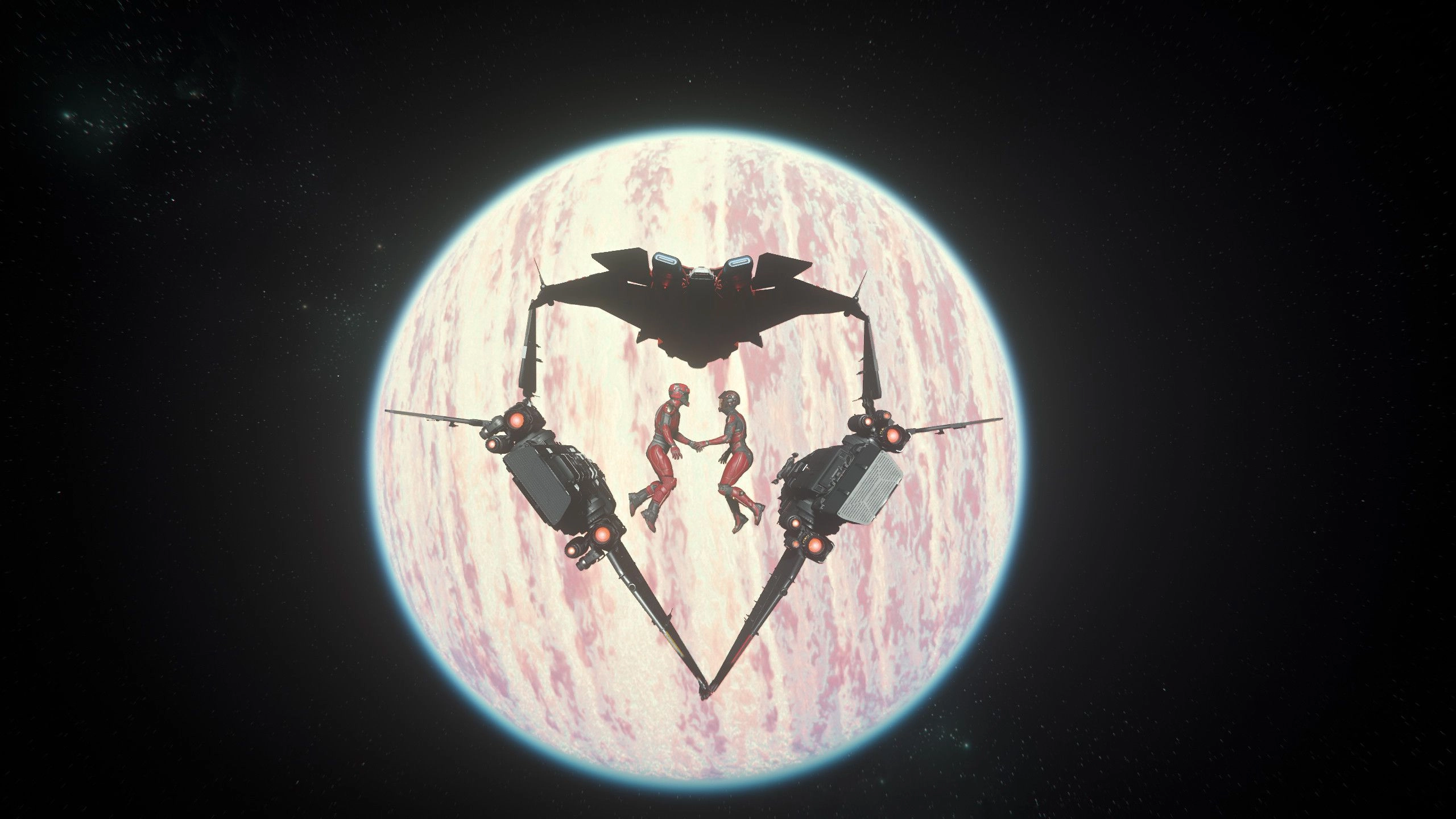
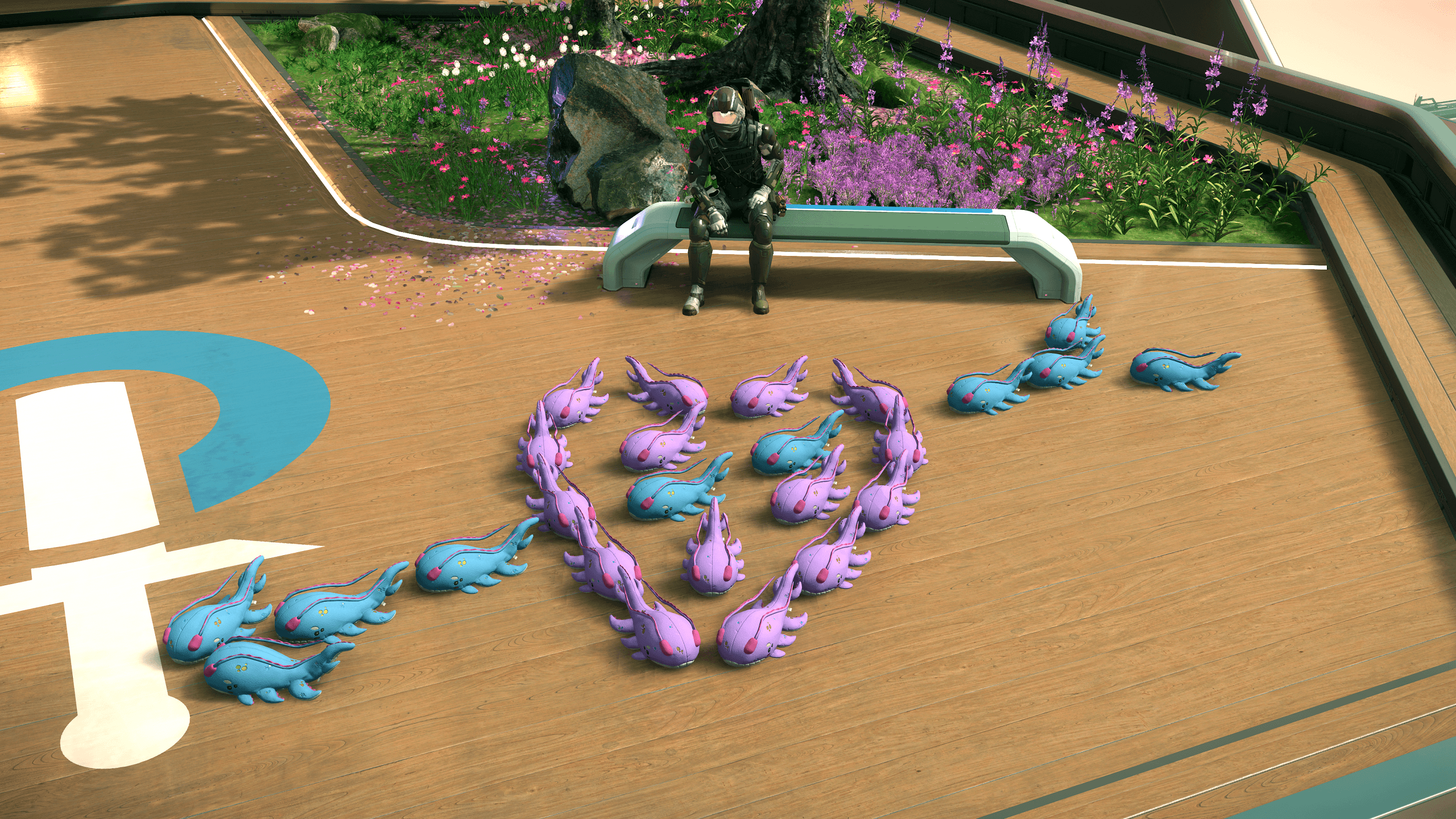

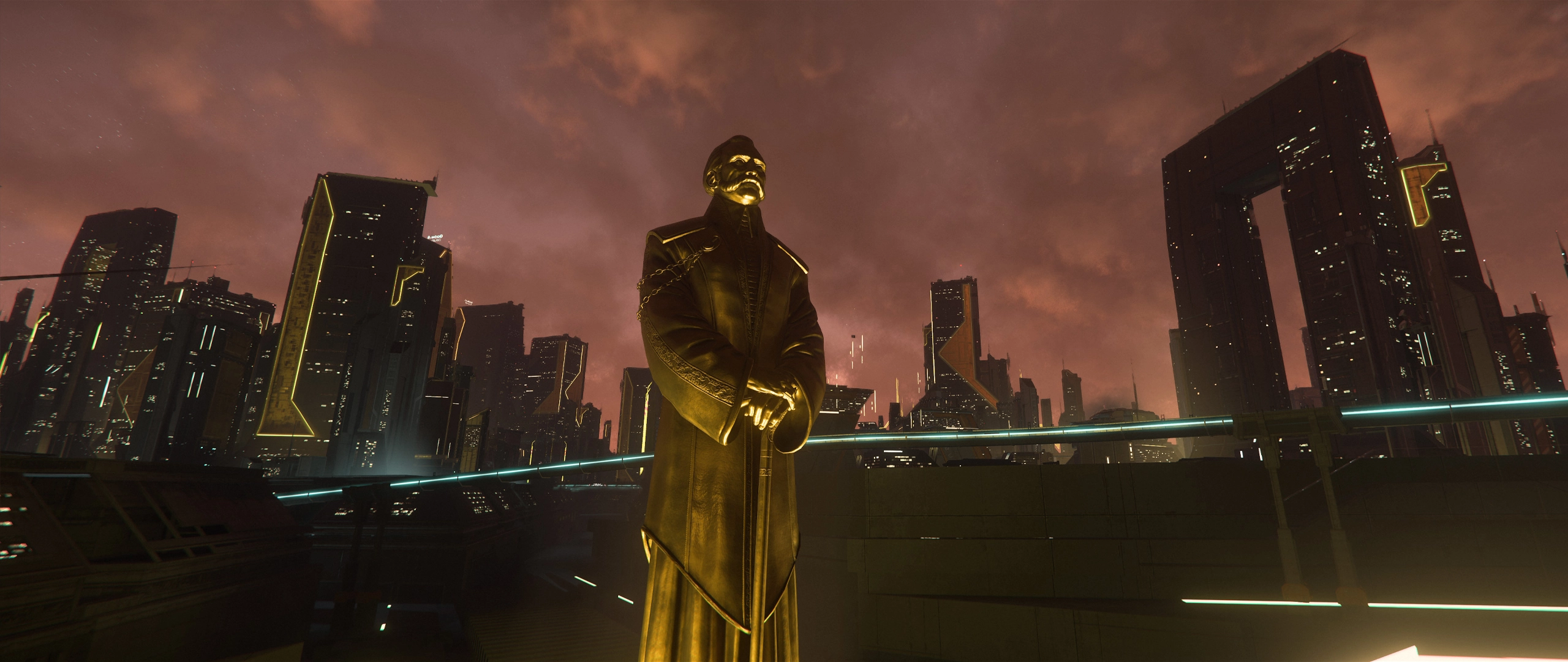
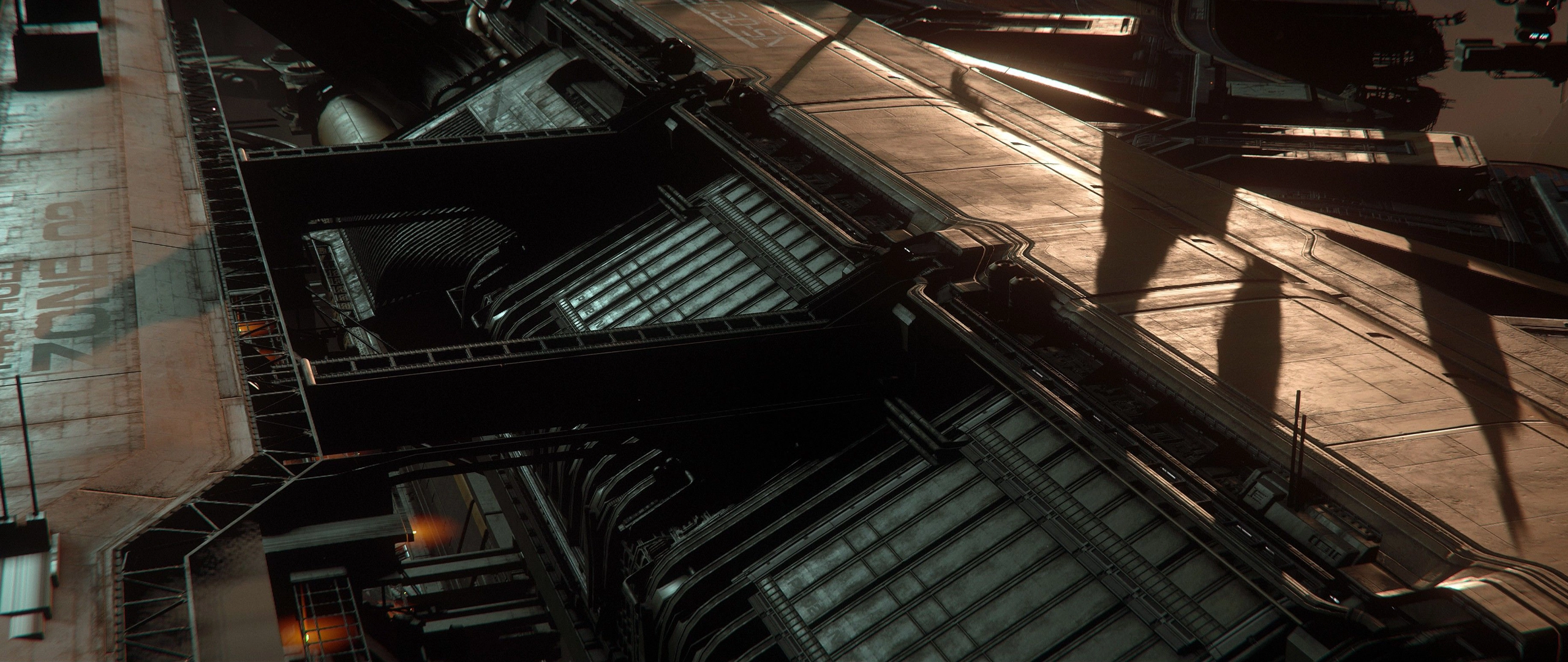
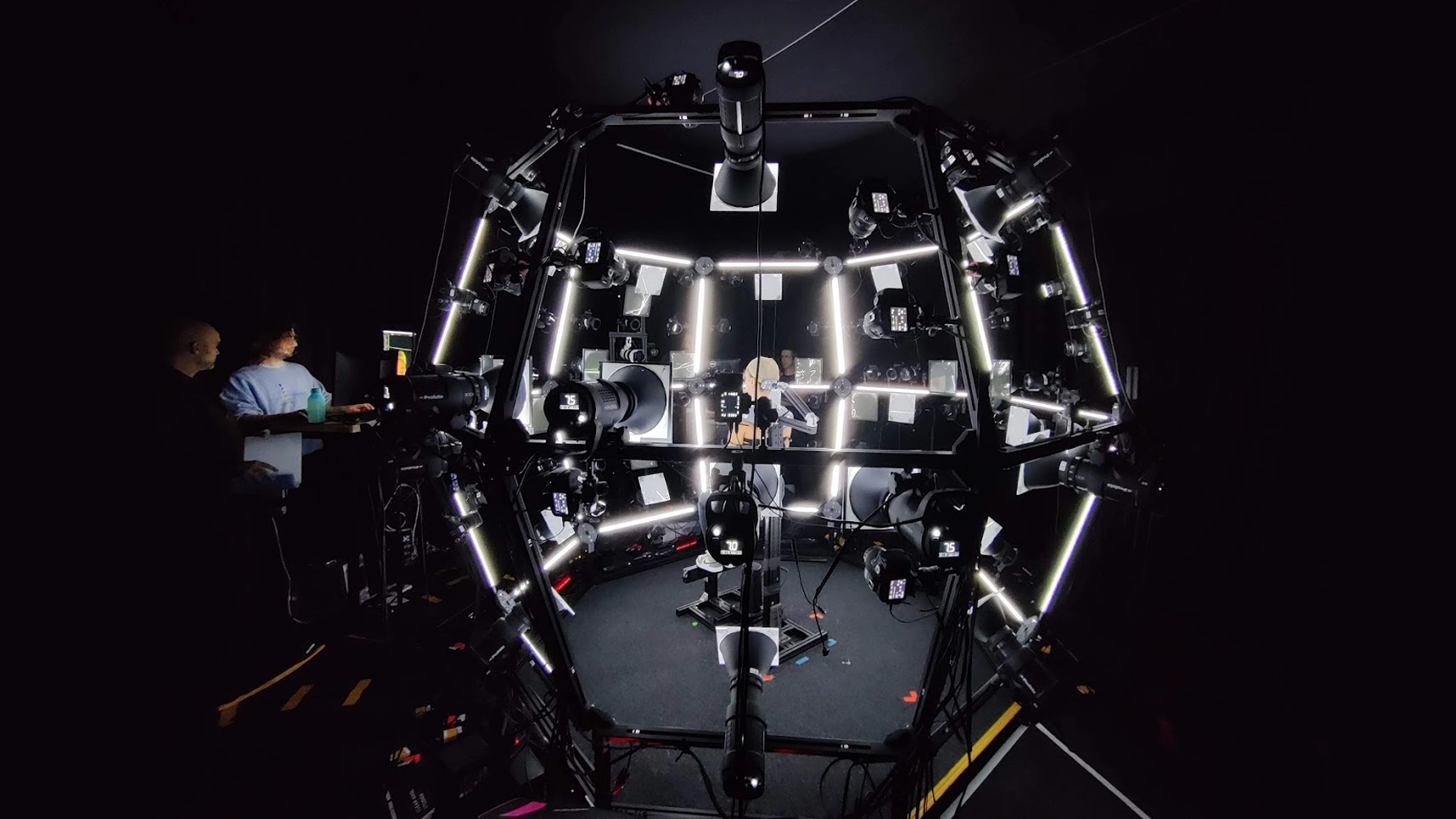
Metadata
- CIG ID
- 19140
- Channel
- Transmission
- Category
- Undefined
- Series
- None
- Comments
- 0
- Published
- 4 months ago (2026-05-25T14:00:00+00:00)