Star Citizen Monthly Report: March 2023
Transmission Undefined NoneContent
PU Monthly Report
March 2023
Welcome to March’s PU Report! Read on for everything completed and in progress across our global studios last month, including several new vehicles, gas clouds, updated missions, and various backend tasks for the upcoming Alpha 3.19 patch.
AI (Tech)
Throughout March, AI Tech made significant improvements to various navigation systems and AI tool features. This included implementing support for overriding agent-type properties for navigation mesh generation, which enables the designers to generate meshes inside narrow areas and create more complex levels. For example, NPCs will be able to follow or search for players inside vents.
Another related feature is navigation volume cost areas (NVCA), which will impact navigation-mesh generation and the dynamic path computed during movement requests. There are both static and dynamic NVCA types:
Static NVCAs are shapes/volumes preplaced by the level designers when they want certain areas to be preferred or avoided during pathfinding.
Dynamic NVCAs are shapes created at runtime based on player or NPC actions. For example, fire areas that can expand or shrink, or areas featuring obstacles placed by players.
AI Tech also continued to iterate and polish some otherwise completed features, including NPCs pushing trolleys and NPCs using transit systems and elevators (with or without trolleys). Support was also added for hover trolleys.
On the AI Tools side, the team iterated and added new functionality to the Apollo Subsumption tool. Some of the new functionality includes being able to reference engine component tags as part of the TagSelector variable. They also moved the graph map to its own tab, added icons to the outline tab for easier viewing, and added a prompt for unsaved changes.
For the Usable Coordinator, the team continued with quality-of-life improvements and updated UI functionality.
AI Tech also completed a pass on the recent idle-system improvements. Now, they can correctly mark up specific moments in idle animations where it’s safe to leave. This allows them to maintain the visual quality the animators expect without needing to wait for the idle animation to fully transition into the exit animation.
Art (Characters)
Last month, Character Art polished outfits for the Duster faction along with Subscriber items for the year ahead. Production also began on the frontier helmets.
Concept-wise, the Art team explored the Headhunters and Rough & Ready gangs, and prepared handoff documents for the Dusters.
Art (Ships)
The UK Vehicle Art team spent the month closing out the Argo SRV alongside two unannounced vehicles. Each progressed through the final art pass stage, which includes LODs, damage, and optimization.
The MISC Hull C received further support, with the team fixing several visual bugs and polishing where needed. Progress on the Crusader Spirit continued, with the ship moving from greybox to the LOD0 phase; the vast majority of the interior and exterior greybox work is now complete.
Whitebox work began on two unannounced vehicles, with one receiving a flyable in-editor prototype.
A component pass also began for the MISC Freelancer to ensure the component bays adhere to the required metrics and open and close properly.
In the US, Subscriber Flair paints inspired by microTech, Crusader, and Hurston were created.
The greybox for a new vehicle approached completion. Some unique maneuvering components were heavily detailed, including the front housings and suspension system. The seat enter-exit mechanism was fleshed out, while the front and rear doors were adjusted to prevent clipping and create a tight seal when closed.
Greybox on the Aopoa San'tok.yāi is ongoing, with the wings and thrusters now fully modeled out. All clipping during motion has been addressed, with additional Xi’an tech used to move parts away from others. The landing gear was also redesigned to have a stronger look in comparison to the rest of the ship, while all visible pistons were removed in favor of ‘mechanical muscles.’
Community
To coincide with the release of the RSI Scorpius Antares in Alpha 3.18, the Community team published a Q&A answering key questions about the new EMP-equipped heavy fighter.
Then, in celebration of the opening of the Vision Center race track, the team hosted the first Star Citizen low-speed racing challenge.
Community also supported the Stella Fortuna celebrations and held a festive Screenshot Contest. Stella Fortuna also made use of the events tab on the Community Hub, recently debuted. The next major update of the Community Hub is already in the works, coming very soon.
Also in March, they released the full schedule for the ongoing Bar Citizen World Tour 2023.
“We’re excited to see you in person as soon as possible! Remember, if you're organizing an event or just looking for one to attend in your vicinity, you'll find everything you need at barcitizen.sc.” - Community Team
The team has also been heavily involved in supporting the publishing and player experience teams with the release of and ongoing work for Alpha 3.18.
Finally, the team has been entrenched in planning and organizing this year's CitizenCon event.
Engine
In March, the Physics team worked on the consistent handling of wheeled vehicles between different gravity fields. Additionally, further improvements were made to OBB box pruning, while lock stealing in the geometry intersection code was reworked. Data integrity regarding the mass assigned to physical geometry was tightened, and a method was implemented to find the parts of an entity that a rope is attached to between sessions. An optional update of grid space part bounds during reposition was added. This should save significant time during collision detection if thousands of crates attempt to collide with a ship consisting of several thousand parts.
On the renderer, more code was refactored for Gen12. Transient constant buffers are now used in more code. For example, in SSDO and motion blur. The processing of tessellated objects was improved so it will no longer execute unnecessarily. A lot of legacy render code was removed (deferred shading, shadow rendering, etc), and support for debug viz of antialiasing and shadow mask rendering was added.
Improvements to the temporal render mode for atmospheric and volumetric clouds continued. This included improvements to stabilize color neighborhoods for reprojection and transmittance profiles.
On the core engine, the remote shader compiler server received a final round of substantial performance improvements. The exception handler was extended to better deal with recently occurring silent crashes. Based on the memory tracking information made available by Alpha 3.18 PTU, a new custom system allocator (to replace jemalloc) was implemented, which significantly reduces observed overallocation and fragmentation. This is currently in test. Further improvements were made to huge pages support. Work on streaming system improvements and the new memory-tracking tool continued too.
The remainder of the time was spent supporting Alpha 3.18.
Features (Arena Commander)
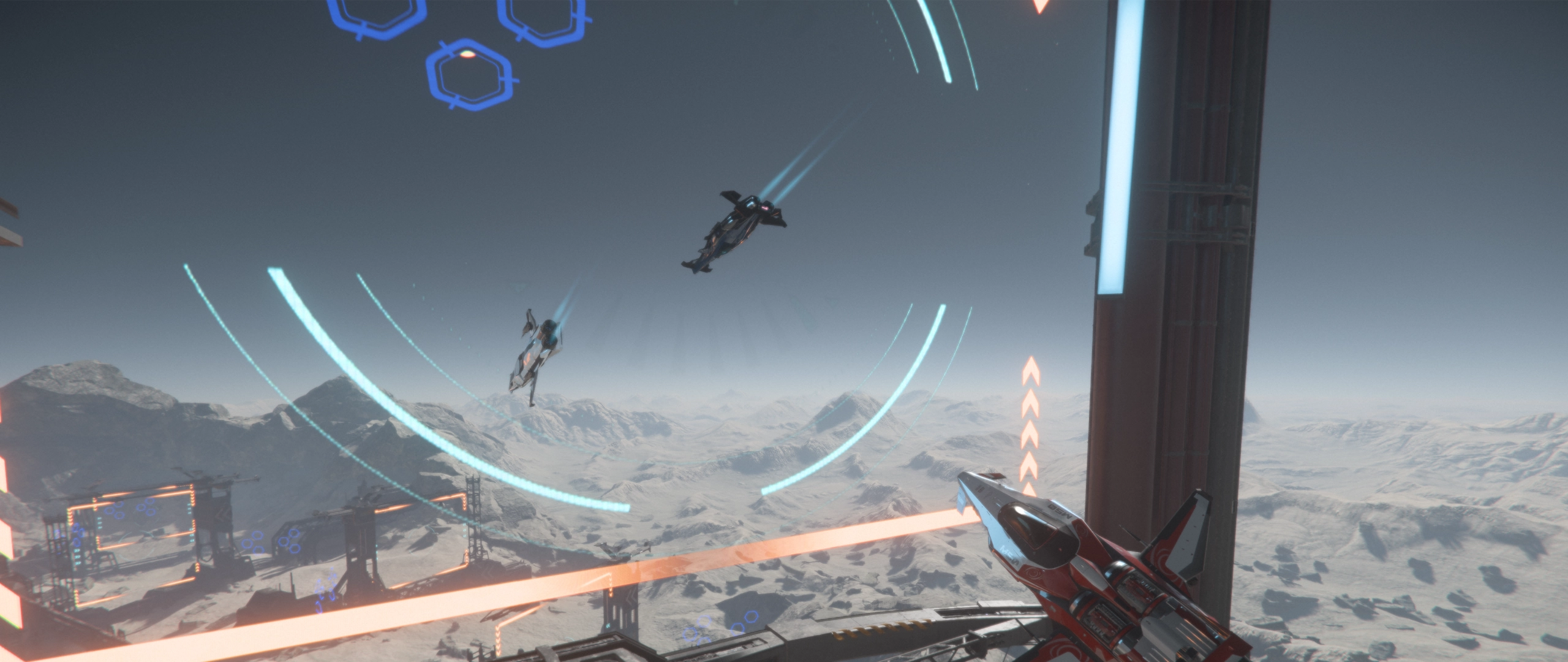
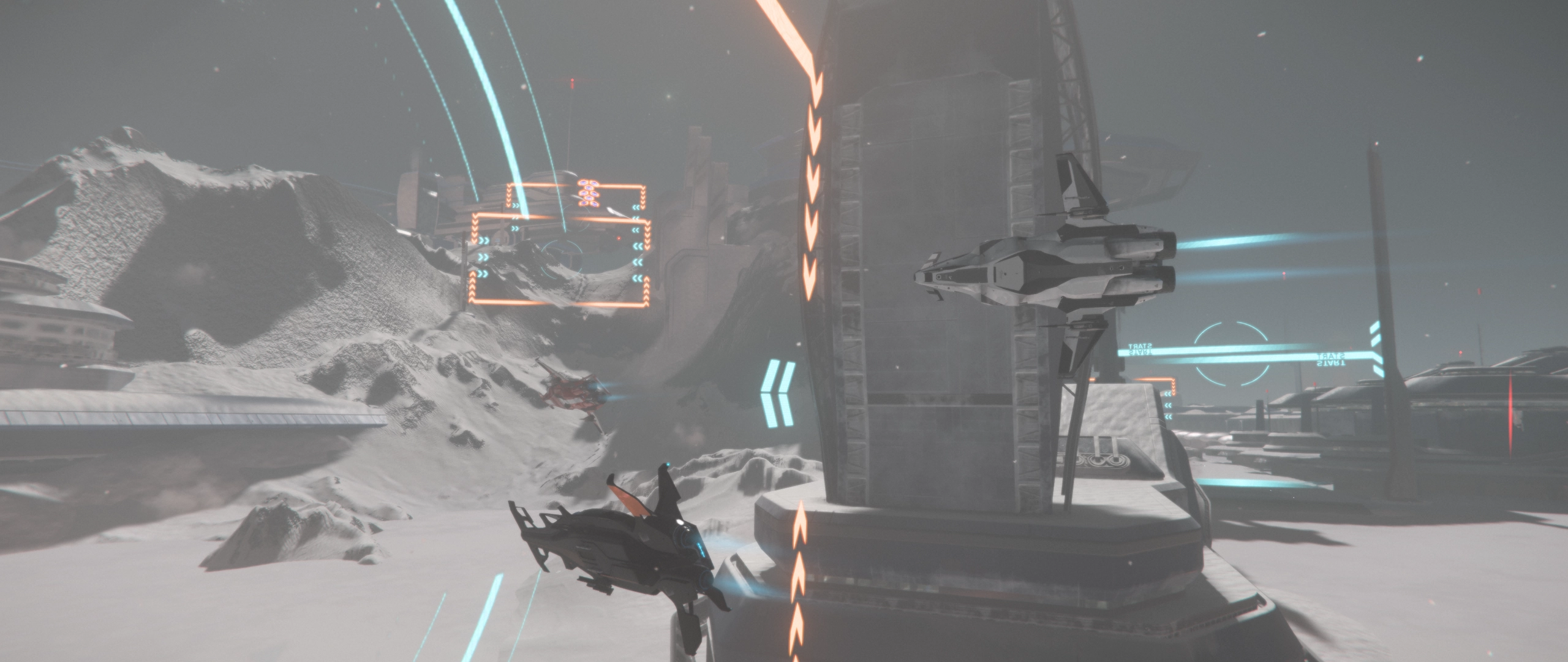
In March, the Feature team saw the first stage of Arena Commander’s rework pushed to game-dev. Now, all development teams have the new frontend, lobby system, racing tracks, and more.
Arena Commander Features worked alongside the Planet team to improve Ellis III, Green - the planet that hosts Horizon Speedway. Updates include a new biome with higher mountains, increased water levels, and beaches to better represent the vast oceans and in-lore vacation destination the races are hosted over.
Design began a full rework of the Defford Link racetrack alongside finishing work on Old Vanderval. They also completed a pass of all holographic checkpoints to ensure they best represent their areas and environments. Design continued to improve and fix the new Arena Commander frontend with a refined style sheet.
Features (Characters & Weapons)
Last month, the Features team revisited the prone locomotion set, as several successful mechanics used in the new EVA system could be transferred over. For example, the player character will now roll on the spot instead of spinning around at the hips and, as the player looks around, the collision shape does not change. This replaces the button press for switching between front and back, and the player can start moving from any prone pose.
The player character’s pivot has also been moved further forward, which centers the rotation in first-person view closer to the camera in both idle and movement animation sets. This makes rotation control far smoother, though requires a full update to all animations and transitions. As part of this, the collision shape has been changed from a single capsule to multiple smaller capsules. The main capsule is at the pivot, and the others trail out behind it and are allowed some freedom to retract.
“As a visual aid, consider this similar to a caterpillar. The end result is a much better first-person experience with fewer issues where the character gets stuck on terrain.” - Actor Features Team
The team also supported new behaviors around weapon heating. There is now an option for FPS weapons to overheat, which requires user intervention to restore functionality similar to a reload action. However, before the weapon hits the overheated state, it can change its behavior at various temperature thresholds. For example, the firing rate can increase, the fire mode can change to beam type, or the number of projectiles fired in a single shot can increase.
Features (Gameplay)
In March, the Gameplay Features team supported the ongoing QATRs for the Mining update and tractor beam.
This led to improvements in the tractor beam UX. For example, adding a toggle for on/off rather than press and hold, and adding new augmented reality (AR) markers to show the validity of an item the player wants to attach.
The team also improved the loot-generation debug tools to make it easier to validate loot distribution.
Ship refinery work also began; the design intentions were brought up to speed to allow the engineers to start work in the next sprint.
Features (Mission)
In March, Mission Features continued work on the Salvage contracts missions, adding polish and balance. Package extraction also progressed toward its eventual release.
“We are looking at adding general cargo to mission ships to give players a reason to investigate destroyed ships or ships that are in soft death.” - Mission Features Team
The ship escort mission that involves quantum travel progressed. The team’s current focus is getting all base-flow edge cases worked out to understand their dependencies on other teams. Production of a new mission began, currently known as Data Heist, which tasks players with reaching a location and stealing data.
The team also began adding quality-of-life fixes for Alpha 3.19, including enabling players to see historical data of whether a mission was completed or failed and why. They also modularized the missing-persons missions so they can be used more easily by the Content teams as part of the ongoing initiative to build a more modular system.
On the law side, the team worked on the ability to defend a ship’s interior from trespassers. This includes not automatically adding players to a ship’s comms channel unless they’re a party member. As well as this, a liability system was created to deal with crimes committed with tractor beans.
“This includes a new system for attributing blame for the act of defenestration, which is a fancy word for throwing someone out of a window.” - Mission Features Team
Graphics, VFX Programming & Planet Tech
In March, the Graphics team completed a version of mesh generation from spline inputs, which will be used for jump point tunnels.
Various shader improvements were made, including recoloring skin using physically based melanin controls and adding the initial support for customizable makeup and tattoos. Improvements were also made to water reflection, refraction, and fogging.
Work began to unify the static and skinned mesh formats, which should lead to large draw call reductions on complex meshes. They also started to integrate new logic into each individual streaming system for testing. In addition, the Graphics team made various changes to the render-to-texture system, including new culling options that will be required for the interior-map feature.
For Vulkan, updates were made to the backend to help visual parity with DX11. Various debug modes were also added to Gen12 to surpass the functionality of the legacy renderer.
Meanwhile, the VFX Programming team continued their work on quantum travel and fire. Quantum travel effects now rotate correctly based on movement direction, and various visual improvements were made based on feedback. For the fire system, the framework for GPU fire particle spawning was added to allow for much greater particle counts. Entities can now exchange heat with the room they reside within too.
In addition, the VFX team continued improving their editor, adding the ability to reference effects from each other. They also made improvements to lightning effects in gas clouds.
The Planet Tech team progressed with water, iterating on the simulation quality and building a system to manage and combine simulations for water surfaces. Work on the asteroid system continued too, with the aim of achieving a much more flexible setup for shaping and distribution.
In-Game Branding (Montreal)
The In-Game Branding team continued work on the Pyro gangs' visual identity and environment.
They also made the final touch-ups to Invictus Launch Week, and are currently exploring Ruin Station in pursuit of adding new branding elements throughout.
Lighting
The Lighting team spent part of March working on Invictus Launch Week before continuing to light new and existing areas around Ruin Station.
They also progressed with their work on the colonial outpost modules in development by the Sandbox 1 team.
Live Tools
In Montreal, the Live Tools team began designing a new module for the Network Operation Center. In the future, this shard-management tool will support Server Meshing by displaying real-time information about the servers.
Locations (EU)
The EU Locations team progressed with Ruin Station, looking at new ways for the player to traverse and how new gameplay elements will fit into the areas already developed.
They also progressed with the local law offices, developing layouts and working toward playable prototypes.
Cargo elevators were worked on alongside the USPU team. Last month, Location prototyped elevators and how they will work in various scenarios.
EU2 also worked alongside Mission Features to add new platforms to Orison. These will be used for missions and to add additional points of interest to the city.
The EU Sandbox team created non-airlock outpost entryways, which will be used in Pyro’s breathable atmospheres.
They’re currently tidying up the underfloor areas for outpost modules for use in stealth gameplay. Work also continued on wrapping up the final pieces for Content Pack 3, which will enable the team to move onto outpost distribution across Pyro.
Design is almost finished with markup for Content Pack 2 and will be moving on to the final pieces of Content Pack 3 as they’re completed. They’re also near to closing out the Stanton and Pyro jump points, with some final bits of feedback being applied.
In March, EU’s Sandbox 2 continued their work on the underground facilities, which can be seen on a recent episode of Inside Star Citizen.
Finally, the Organics team progressed with rocky caves. Upcoming work involves reworking and touching-up Pyros planets and moons to bring them up to the current standard.
Narrative
With Alpha 3.18 live, the Narrative shifted back to work on the upcoming patch as well as ongoing development. They worked closely with the various Design team owners to further develop mission text for several upcoming mission types, including Salvage, Investigation, Mining, and some new ones that have yet to be announced.
For Pyro, Narrative revisited some of the scientific lore around the planets to ensure it aligns with the latest design and gameplay intents. They also started drawing out territories for the various gangs in the system to see where they would operate and overlap, which could establish conflict zones. They also began looking at the ‘outlaw’ lifestyle, specifically brainstorming a new approach for players drifting into criminality, rather than having unlawful missions available alongside legal ones.
On the RSI website, the team posted a Whitley’s Guide on Origin’s 300 series and published another installment of Loremakers: Community Questions.
Online services (Montreal)
In March, the Online Services team focused on hot fixes for the Alpha 3.18 live release. These were primarily aimed at inventory login, entitlement, and releveling stress on the global database.
For Alpha 3.18.1, the team added the new ASOP ship delivery system.
Systemic Services & Tools
Alongside supporting the Alpha 3.18 release and bug fixing cargo, ASOP terminal, and GIM issues, the team began R&D for a Service Beacon architecture update.
They also made progress on a character-creation service, supported USPU in testing the new expo halls, solved Subsumption editor issues, and worked with Design on the Quantum/Odin tool.
UI
The UI artists supported several upcoming gameplay features by creating screen mockups and concepts along with ideas for in-world displays. Several artists and some of the UI Tech team worked on the new visor and lens setup for SQ42, which will eventually make its way into the PU.
UI Tech helped improve VMA data download speeds and improved the underlying loadout system for Arena Commander and Star Marine. They also made incremental improvements to several areas, including text edit boxes, scrollbars, holo-volume interactions, and hyperlinks.
VFX
The VFX team put the finishing touches to their new particle library folder structure this month. This was in anticipation of the new ‘external ref’ functionality that will be moving into the testing phase imminently. This will provide a way for VFX artists to create template effects which can then be referenced in other libraries. This method will make for easier maintenance in the coming years as Star Citizen increases in size.
Image by
Dub_Blunt Image by
Bubba-0Image by
Dub_BluntImage by
Bubba-0
PU-Monatsbericht
März 2023
Willkommen zum PU-Bericht für den Monat März! Lies weiter, um zu erfahren, was im letzten Monat in unseren globalen Studios fertiggestellt wurde und woran gearbeitet wird. Dazu gehören mehrere neue Fahrzeuge, Gaswolken, aktualisierte Missionen und verschiedene Backend-Aufgaben für den kommenden Patch Alpha 3.19.
KI (Tech)
Im März hat die KI-Abteilung wichtige Verbesserungen an verschiedenen Navigationssystemen und KI-Werkzeugfunktionen vorgenommen. Unter anderem wurde die Unterstützung für das Überschreiben von Agententyp-Eigenschaften für die Generierung von Navigationsmeshes implementiert, was es den Designern ermöglicht, Meshes in engen Bereichen zu generieren und komplexere Level zu erstellen. So können NSCs zum Beispiel Spielern in Lüftungsschächten folgen oder nach ihnen suchen.
Eine weitere verwandte Funktion sind die Navigationsvolumenkostenbereiche (NVCA), die sich auf die Generierung von Navigationsmaschen und den dynamischen Pfad auswirken, der bei Bewegungsanfragen berechnet wird. Es gibt sowohl statische als auch dynamische NVCA-Typen:
Statische NVCAs sind Formen/Volumina, die von den Leveldesignern im Voraus platziert werden, wenn sie möchten, dass bestimmte Bereiche bei der Wegfindung bevorzugt oder vermieden werden.
Dynamische NVCAs sind Formen, die zur Laufzeit auf der Grundlage von Spieler- oder NSC-Aktionen erstellt werden. Zum Beispiel Feuerbereiche, die sich ausdehnen oder schrumpfen können, oder Bereiche mit Hindernissen, die von Spielern platziert werden.
Außerdem hat die KI-Abteilung einige bereits fertiggestellte Funktionen weiter verbessert, darunter NSCs, die Trolleys schieben, und NSCs, die Verkehrssysteme und Aufzüge (mit oder ohne Trolleys) benutzen. Außerdem wurde die Unterstützung für Schwebebahnwagen hinzugefügt.
Im Bereich der KI-Tools hat das Team das Apollo Subsumption Tool überarbeitet und um neue Funktionen erweitert. Zu den neuen Funktionen gehört die Möglichkeit, die Tags der Motorenkomponenten als Teil der TagSelector-Variable zu referenzieren. Außerdem wurde die Diagrammkarte auf eine eigene Registerkarte verschoben, die Gliederungsregisterkarte wurde zur besseren Übersicht mit Symbolen versehen und es wurde eine Anzeige für nicht gespeicherte Änderungen hinzugefügt.
Für den Usable Coordinator hat das Team weitere Qualitätsverbesserungen vorgenommen und die UI-Funktionen aktualisiert.
Die KI-Techniker haben auch die jüngsten Verbesserungen am Leerlaufsystem abgeschlossen. Jetzt können sie bestimmte Momente in Idle-Animationen korrekt markieren, in denen es sicher ist, das Spiel zu verlassen. So können sie die von den Animatoren erwartete visuelle Qualität beibehalten, ohne darauf warten zu müssen, dass die Idle-Animation vollständig in die Exit-Animation übergeht.
Kunst (Charaktere)
Im letzten Monat hat Character Art an den Outfits für die Duster-Fraktion und den Abonnenten-Gegenständen für das kommende Jahr gefeilt. Auch die Produktion der Grenzhelme hat begonnen.
Vom Konzept her hat das Art-Team die Headhunters und die Rough & Ready Gangs erforscht und die Übergabedokumente für die Dusters vorbereitet.
Kunst (Schiffe)
Das UK Vehicle Art Team verbrachte den Monat mit der Fertigstellung des Argo SRV und zweier unangekündigter Fahrzeuge. Alle Fahrzeuge durchliefen die finale Art-Pass-Phase, die LODs, Schäden und Optimierungen beinhaltet.
Der MISC Hull C erhielt weitere Unterstützung, indem das Team einige visuelle Fehler beseitigte und wo nötig polierte. Die Arbeiten an der Crusader Spirit wurden fortgesetzt und das Schiff ging von der Greybox- in die LOD0-Phase über; der Großteil der Greybox-Arbeiten im Innen- und Außenbereich ist nun abgeschlossen.
Die Whitebox-Arbeiten an zwei unangekündigten Fahrzeugen haben begonnen, von denen eines einen flugfähigen Prototyp im Editor erhalten hat.
Für den MISC Freelancer wurde ein Bauteilpass durchgeführt, um sicherzustellen, dass die Bauteilschächte die erforderlichen Metriken einhalten und sich richtig öffnen und schließen lassen.
In den USA wurden Subscriber Flair-Farben entwickelt, die von MicroTech, Crusader und Hurston inspiriert sind.
Die Greybox für ein neues Fahrzeug nähert sich der Fertigstellung. Einige einzigartige Manövrierkomponenten wurden stark detailliert, darunter die vorderen Gehäuse und das Aufhängungssystem. Der Ein- und Ausstiegsmechanismus der Sitze wurde ausgearbeitet und die vorderen und hinteren Türen wurden angepasst, um ein Einklemmen zu verhindern und eine dichte Abdichtung beim Schließen zu gewährleisten.
Die Greybox der Aopoa San'tok.yāi ist in Arbeit. Die Flügel und Triebwerke sind nun vollständig modelliert. Alle Verklemmungen während der Bewegung wurden beseitigt, indem zusätzliche Xi'an-Technik eingesetzt wurde, um Teile von anderen weg zu bewegen. Das Fahrwerk wurde ebenfalls überarbeitet, damit es im Vergleich zum Rest des Schiffes kräftiger aussieht, und alle sichtbaren Kolben wurden zugunsten von "mechanischen Muskeln" entfernt.
Community
Zeitgleich mit der Veröffentlichung der RSI Scorpius Antares in Alpha 3.18 hat das Community-Team ein Q&A veröffentlicht, in dem die wichtigsten Fragen zu dem neuen schweren Jäger mit EMP-Ausrüstung beantwortet werden.
Zur Feier der Eröffnung der Vision Center Rennstrecke veranstaltete das Team die erste Star Citizen Low-Speed Racing Challenge.
Auch die Community unterstützte die Feierlichkeiten von Stella Fortuna und veranstaltete einen festlichen Screenshot-Wettbewerb. Stella Fortuna nutzte auch den Event-Tab im Community Hub, der kürzlich eingeführt wurde. Das nächste große Update des Community Hubs ist bereits in Arbeit und wird sehr bald erscheinen.
Ebenfalls im März wurde der vollständige Zeitplan für die Bar Citizen World Tour 2023 veröffentlicht.
"Wir freuen uns darauf, dich so bald wie möglich persönlich zu sehen! Vergiss nicht: Wenn du eine Veranstaltung organisierst oder einfach nur eine in deiner Nähe suchst, findest du alles, was du brauchst, auf barcitizen.sc." - Community Team
Das Team hat außerdem die Teams für die Veröffentlichung und das Spielerlebnis bei der Veröffentlichung und der laufenden Arbeit an der Alpha 3.18 tatkräftig unterstützt.
Und schließlich hat sich das Team in die Planung und Organisation der diesjährigen CitizenCon vertieft.
Engine
Im März arbeitete das Physikteam an der konsistenten Handhabung von Radfahrzeugen zwischen verschiedenen Gravitationsfeldern. Außerdem wurden weitere Verbesserungen am OBB Box Pruning vorgenommen und das Lock Stealing im Geometrie-Intersection Code überarbeitet. Die Datenintegrität in Bezug auf die Masse, die einer physischen Geometrie zugewiesen wird, wurde gestrafft, und es wurde eine Methode implementiert, um die Teile eines Objekts zu finden, an denen ein Seil zwischen den Sitzungen befestigt ist. Es wurde eine optionale Aktualisierung der Grenzen von Teilen im Gitterraum während der Neupositionierung hinzugefügt. Dies sollte eine erhebliche Zeitersparnis bei der Kollisionserkennung bedeuten, wenn Tausende von Kisten versuchen, mit einem Schiff zusammenzustoßen, das aus mehreren tausend Teilen besteht.
Im Renderer wurde weiterer Code für Gen12 überarbeitet. Transiente konstante Puffer werden jetzt in mehr Code verwendet. Zum Beispiel in SSDO und Bewegungsunschärfe. Die Verarbeitung von mosaikartigen Objekten wurde verbessert, damit sie nicht mehr unnötig ausgeführt wird. Viele alte Rendering-Codes wurden entfernt (Deferred Shading, Shadow Rendering usw.), und es wurde Unterstützung für Debug-Viz von Antialiasing und Shadow Mask Rendering hinzugefügt.
Der temporale Rendermodus für atmosphärische und volumetrische Wolken wurde weiter verbessert. Dazu gehörten Verbesserungen zur Stabilisierung der Farbnachbarschaften für Reprojektion und Transmissionsprofile.
In der Core-Engine erhielt der Remote-Shader-Compiler-Server eine letzte Runde mit erheblichen Leistungsverbesserungen. Der Exception Handler wurde erweitert, um mit kürzlich aufgetretenen stillen Abstürzen besser umgehen zu können. Auf der Grundlage der von Alpha 3.18 PTU zur Verfügung gestellten Informationen zur Speicherverfolgung wurde ein neuer benutzerdefinierter Systemallokator (als Ersatz für jemalloc) implementiert, der die beobachtete Überallokation und Fragmentierung deutlich reduziert. Er befindet sich derzeit in der Testphase. Weitere Verbesserungen wurden bei der Unterstützung von großen Seiten vorgenommen. Die Arbeit an den Verbesserungen des Streaming-Systems und dem neuen Tool zur Speicherverfolgung wurde ebenfalls fortgesetzt.
Der Rest der Zeit wurde für die Unterstützung von Alpha 3.18 verwendet.
Features (Arena Commander)
Im März hat das Feature-Team die erste Phase der Überarbeitung von Arena Commander an die Spielentwickler weitergegeben. Jetzt haben alle Entwicklerteams das neue Frontend, das Lobby-System, die Rennstrecken und vieles mehr.
Arena Commander Features hat zusammen mit dem Planetenteam an der Verbesserung von Ellis III, Green gearbeitet - dem Planeten, auf dem sich der Horizon Speedway befindet. Zu den Aktualisierungen gehören ein neues Biom mit höheren Bergen, größeren Wasserflächen und Stränden, um die riesigen Ozeane und das Urlaubsgebiet, in dem die Rennen stattfinden, besser darzustellen.
Die Designer begannen mit einer kompletten Überarbeitung der Defford Link Rennstrecke und beendeten die Arbeiten an Old Vanderval. Außerdem wurden alle holografischen Kontrollpunkte überarbeitet, um sicherzustellen, dass sie ihre Gebiete und Umgebungen bestmöglich repräsentieren. Das Design hat das neue Arena Commander Frontend mit einem verfeinerten Style Sheet weiter verbessert und korrigiert.
Features (Charaktere und Waffen)
Im letzten Monat hat das Features-Team das Set für die liegende Fortbewegung überarbeitet, da mehrere erfolgreiche Mechaniken des neuen EVA-Systems übertragen werden konnten. Zum Beispiel rollt der Spielercharakter jetzt auf der Stelle, anstatt sich um die Hüften zu drehen, und wenn der Spieler sich umschaut, ändert sich die Kollisionsform nicht. Das ersetzt den Knopfdruck für den Wechsel zwischen vorne und hinten, und der Spieler kann sich aus jeder Bauchlage in Bewegung setzen.
Der Drehpunkt der Spielerfigur wurde außerdem weiter nach vorne verlagert, wodurch die Drehung in der Ego-Perspektive sowohl im Leerlauf als auch in der Bewegungsanimation näher an der Kamera zentriert wird. Das macht die Steuerung der Drehung viel flüssiger, erfordert aber eine vollständige Aktualisierung aller Animationen und Übergänge. In diesem Zusammenhang wurde die Form der Kollisionen von einer einzelnen Kapsel auf mehrere kleinere Kapseln geändert. Die Hauptkapsel befindet sich am Drehpunkt, die anderen folgen dahinter und haben etwas Spielraum, sich zurückzuziehen.
"Als visuelle Hilfe kannst du dir das wie eine Raupe vorstellen. Das Endergebnis ist ein viel besseres First-Person-Erlebnis mit weniger Problemen, bei denen die Spielfigur im Gelände stecken bleibt." - Actor Features Team
Das Team hat auch neue Verhaltensweisen rund um die Waffenheizung unterstützt. Es gibt jetzt die Möglichkeit, dass FPS-Waffen überhitzen, was einen Benutzereingriff erfordert, um die Funktionsfähigkeit wiederherzustellen, ähnlich wie bei einer Nachladeaktion. Bevor die Waffe jedoch den überhitzten Zustand erreicht, kann sie ihr Verhalten bei verschiedenen Temperaturschwellenwerten ändern. Zum Beispiel kann die Feuerrate erhöht werden, der Feuermodus kann in einen Strahlentyp wechseln oder die Anzahl der in einem Schuss abgefeuerten Geschosse kann erhöht werden.
Features (Gameplay)
Im März unterstützte das Gameplay-Features-Team die laufenden QATRs für das Bergbau-Update und den Traktorstrahl.
Dies führte zu Verbesserungen an der UX des Traktorstrahls. So wurde z. B. ein Kippschalter für das Ein- und Ausschalten hinzugefügt und neue Augmented Reality (AR)-Markierungen, um die Gültigkeit eines Gegenstands anzuzeigen, den der Spieler anbringen möchte.
Das Team hat auch die Debug-Tools für die Beuteerstellung verbessert, damit die Verteilung der Beute leichter überprüft werden kann.
Auch die Arbeit an der Schiffsraffinerie wurde aufgenommen; die Design-Absichten wurden auf den neuesten Stand gebracht, damit die Ingenieure im nächsten Sprint mit der Arbeit beginnen können.
Features (Mission)
Im März wurde die Arbeit an den Bergungsverträgen fortgesetzt, um die Missionen zu verfeinern und auszubalancieren. Auch die Paketextraktion machte Fortschritte in Richtung ihrer Veröffentlichung.
"Wir überlegen, Missionsschiffe mit Stückgut zu beladen, um den Spielern einen Grund zu geben, zerstörte Schiffe oder Schiffe, die sich im sanften Tod befinden, zu untersuchen." - Team für Missionsfunktionen
Die Schiffseskorte-Mission, die Quantenreisen beinhaltet, wurde weiterentwickelt. Das Team konzentriert sich derzeit darauf, alle Base-Flow-Edge-Cases auszuarbeiten, um ihre Abhängigkeiten von anderen Teams zu verstehen. Es wurde mit der Produktion einer neuen Mission begonnen, die derzeit unter dem Namen Data Heist bekannt ist und bei der die Spieler/innen einen Ort erreichen und Daten stehlen müssen.
Das Team begann auch damit, die Lebensqualität in Alpha 3.19 zu verbessern, z. B. indem es den Spielern ermöglichte, historische Daten darüber zu sehen, ob eine Mission abgeschlossen wurde oder gescheitert ist und warum. Außerdem wurden die Vermisstenmissionen modularisiert, damit sie von den Content-Teams leichter verwendet werden können.
Im Bereich Recht hat das Team an der Möglichkeit gearbeitet, das Innere eines Schiffes gegen Eindringlinge zu verteidigen. Dazu gehört auch, dass Spieler/innen nicht mehr automatisch zum Schiffskommunikationskanal hinzugefügt werden, wenn sie nicht Mitglied einer Gruppe sind. Außerdem wurde ein Haftungssystem für Verbrechen geschaffen, die mit Traktorbohnen begangen werden.
"Dazu gehört auch ein neues System für die Schuldzuweisung bei einer Defenestration, was ein schickes Wort dafür ist, jemanden aus dem Fenster zu werfen." - Mission Features Team
Grafik, VFX-Programmierung & Planet Tech
Im März hat das Grafikteam eine Version der Mesh-Generierung aus Spline-Eingaben fertiggestellt, die für Sprungpunkttunnel verwendet wird.
Es wurden verschiedene Shader-Verbesserungen vorgenommen, wie z. B. die Neueinfärbung der Haut mit physikalisch basierten Melanin-Kontrollen und die erste Unterstützung für anpassbares Make-up und Tattoos. Außerdem wurden die Wasserreflexion, die Lichtbrechung und die Nebelbildung verbessert.
Es wurde damit begonnen, die Formate für statische und gehäutete Meshes zu vereinheitlichen, was die Anzahl der Zeichenaufrufe bei komplexen Meshes erheblich reduzieren sollte. Außerdem wurde damit begonnen, neue Logik in jedes einzelne Streaming-System zu integrieren und zu testen. Außerdem nahm das Grafikteam verschiedene Änderungen am Render-to-Texture-System vor, darunter auch neue Culling-Optionen, die für das Interior-Map-Feature benötigt werden.
Für Vulkan wurden Aktualisierungen am Backend vorgenommen, um die visuelle Parität mit DX11 zu verbessern. Außerdem wurden verschiedene Debug-Modi zu Gen12 hinzugefügt, um die Funktionalität des Legacy-Renderers zu übertreffen.
In der Zwischenzeit hat das VFX-Programmierteam seine Arbeit an Quantenreisen und Feuer fortgesetzt. Die Quantenreiseeffekte drehen sich jetzt korrekt in Abhängigkeit von der Bewegungsrichtung, und es wurden verschiedene visuelle Verbesserungen auf der Grundlage von Feedback vorgenommen. Für das Feuersystem wurde das Framework für GPU-Feuerpartikelspawning hinzugefügt, um eine viel höhere Partikelanzahl zu ermöglichen. Entitäten können jetzt auch Wärme mit dem Raum austauschen, in dem sie sich befinden.
Darüber hinaus hat das VFX-Team seinen Editor weiter verbessert und die Möglichkeit hinzugefügt, Effekte untereinander zu referenzieren. Auch die Blitzeffekte in Gaswolken wurden verbessert.
Das Planet Tech-Team arbeitete weiter an Wasser, verbesserte die Simulationsqualität und baute ein System zur Verwaltung und Kombination von Simulationen für Wasseroberflächen. Auch die Arbeit am Asteroidensystem wurde fortgesetzt, mit dem Ziel, die Gestaltung und Verteilung von Asteroiden wesentlich flexibler zu gestalten.
In-Game Branding (Montreal)
Das In-Game Branding Team setzte die Arbeit an der visuellen Identität und der Umgebung der Pyro-Gangs fort.
Außerdem haben sie die letzten Korrekturen an der Invictus Launch Week vorgenommen und erforschen derzeit die Ruin Station, um neue Branding-Elemente hinzuzufügen.
Beleuchtung
Das Beleuchtungsteam verbrachte einen Teil des März mit der Arbeit an der Invictus Launch Week, bevor es mit der Beleuchtung neuer und bestehender Bereiche in der Ruin Station fortfuhr.
Außerdem wurde die Arbeit an den Modulen für den kolonialen Außenposten fortgesetzt, die vom Sandbox 1-Team entwickelt werden.
Live Tools
In Montreal begann das Live-Tools-Team mit der Entwicklung eines neuen Moduls für das Network Operation Center. In Zukunft wird dieses Shard-Management-Tool das Server-Meshing unterstützen, indem es Echtzeitinformationen über die Server anzeigt.
Standorte (EU)
Das Team für die EU-Locations arbeitete weiter an Ruin Station und überlegte, wie die Spieler/innen neue Wege finden und wie neue Gameplay-Elemente in die bereits entwickelten Gebiete integriert werden können.
Auch bei den örtlichen Polizeistationen wurden Fortschritte gemacht, indem Layouts entwickelt und an spielbaren Prototypen gearbeitet wurde.
Gemeinsam mit dem USPU-Team wurde an den Lastenaufzügen gearbeitet. Im letzten Monat hat Location einen Prototyp der Aufzüge erstellt und gezeigt, wie sie in verschiedenen Szenarien funktionieren werden.
EU2 hat auch mit Mission Features zusammengearbeitet, um neue Plattformen zu Orison hinzuzufügen. Diese werden für Missionen und als zusätzliche Sehenswürdigkeiten in der Stadt genutzt.
Das EU-Sandkastenteam hat Eingänge für Außenposten ohne Luftschleusen entwickelt, die in den atmungsaktiven Atmosphären von Pyro zum Einsatz kommen werden.
Zurzeit werden die Unterflurbereiche der Außenpostenmodule für das Stealth-Gameplay aufgeräumt. Außerdem wurden die letzten Arbeiten für das Content Pack 3 fortgesetzt, mit dem das Team die Verteilung der Außenposten in ganz Pyro in Angriff nehmen kann.
Das Design ist fast fertig mit dem Markup für Content Pack 2 und wird mit den letzten Teilen von Content Pack 3 fortgesetzt, sobald diese fertig sind. Außerdem stehen sie kurz vor der Fertigstellung der Sprungpunkte in Stanton und Pyro, und es werden noch einige letzte Rückmeldungen gegeben.
Im März hat EU's Sandbox 2 die Arbeit an den unterirdischen Anlagen fortgesetzt, die in einer aktuellen Folge von Inside Star Citizen zu sehen sind.
Schließlich hat das Organics-Team die Arbeit an den Felsenhöhlen fortgesetzt. In nächster Zeit werden die Planeten und Monde von Pyros überarbeitet, um sie auf den aktuellen Stand zu bringen.
Narrative
Mit der Veröffentlichung von Alpha 3.18 hat sich das Narrative-Team wieder auf die Arbeit am kommenden Patch und die laufende Entwicklung konzentriert. Sie arbeiteten eng mit den verschiedenen Designteam-Besitzern zusammen, um die Missionstexte für mehrere kommende Missionstypen weiterzuentwickeln, darunter Bergung, Erkundung, Bergbau und einige neue, die noch angekündigt werden müssen.
Für Pyro hat Narrative einige der wissenschaftlichen Überlieferungen zu den Planeten überarbeitet, um sicherzustellen, dass sie mit dem neuesten Design und den Spielabsichten übereinstimmen. Sie begannen auch damit, die Territorien der verschiedenen Banden im System zu skizzieren, um zu sehen, wo sie operieren und sich überschneiden würden, wodurch Konfliktzonen entstehen könnten. Sie begannen auch, sich mit dem Lebensstil der Gesetzlosen zu befassen und überlegten sich einen neuen Ansatz für Spieler, die in die Kriminalität abdriften, anstatt illegale und legale Missionen nebeneinander zu stellen.
Auf der RSI-Website hat das Team einen Whitley's Guide zu Origins 300er-Serie veröffentlicht und eine weitere Folge von Loremakers: Community Questions.
Online-Dienste (Montreal)
Im März konzentrierte sich das Team der Online-Dienste auf Hotfixes für die Live-Veröffentlichung der Alpha 3.18. Diese betrafen vor allem das Einloggen in das Inventar, die Berechtigung und das Wiederherstellen von Stress in der globalen Datenbank.
Für Alpha 3.18.1 fügte das Team das neue ASOP-Schiffslieferungssystem hinzu.
Systemische Dienste und Tools
Neben der Unterstützung der Alpha-Version 3.18 und der Behebung von Fehlern in den Bereichen Fracht, ASOP-Terminal und GIM begann das Team mit der Forschung und Entwicklung für ein Update der Service-Beacon-Architektur.
Außerdem machte das Team Fortschritte bei der Charaktererstellung, unterstützte die USPU beim Testen der neuen Ausstellungshallen, löste Probleme mit dem Subsumption-Editor und arbeitete zusammen mit dem Design-Team an dem Quantum/Odin-Tool.
UI
Die UI-Artists unterstützten mehrere kommende Gameplay-Features, indem sie Bildschirm-Mockups und Konzepte sowie Ideen für In-World-Displays erstellten. Mehrere Artists und ein Teil des UI Tech-Teams arbeiteten an dem neuen Visier- und Linsen-Setup für SQ42, das schließlich seinen Weg in das PU finden wird.
Das UI Tech-Team half dabei, die Downloadgeschwindigkeit der VMA-Daten zu erhöhen und verbesserte das zugrundeliegende Ausrüstungssystem für Arena Commander und Star Marine. Außerdem wurden verschiedene Bereiche wie Texteingabefelder, Bildlaufleisten, Holo-Volumen-Interaktionen und Hyperlinks schrittweise verbessert.
VFX
Das VFX-Team hat diesen Monat der neuen Ordnerstruktur für die Partikelbibliothek den letzten Schliff gegeben. Dies geschah im Vorgriff auf die neue Funktion "External Ref", die in Kürze in die Testphase geht. Damit können VFX-Künstler/innen Vorlageneffekte erstellen, die dann in anderen Bibliotheken referenziert werden können. Diese Methode wird die Wartung in den kommenden Jahren erleichtern, wenn Star Citizen immer größer wird.
PU Monthly Report
March 2023
Welcome to March’s PU Report! Read on for everything completed and in progress across our global studios last month, including several new vehicles, gas clouds, updated missions, and various backend tasks for the upcoming Alpha 3.19 patch.
AI (Tech)
Throughout March, AI Tech made significant improvements to various navigation systems and AI tool features. This included implementing support for overriding agent-type properties for navigation mesh generation, which enables the designers to generate meshes inside narrow areas and create more complex levels. For example, NPCs will be able to follow or search for players inside vents.
Another related feature is navigation volume cost areas (NVCA), which will impact navigation-mesh generation and the dynamic path computed during movement requests. There are both static and dynamic NVCA types:
Static NVCAs are shapes/volumes preplaced by the level designers when they want certain areas to be preferred or avoided during pathfinding.
Dynamic NVCAs are shapes created at runtime based on player or NPC actions. For example, fire areas that can expand or shrink, or areas featuring obstacles placed by players.
AI Tech also continued to iterate and polish some otherwise completed features, including NPCs pushing trolleys and NPCs using transit systems and elevators (with or without trolleys). Support was also added for hover trolleys.
On the AI Tools side, the team iterated and added new functionality to the Apollo Subsumption tool. Some of the new functionality includes being able to reference engine component tags as part of the TagSelector variable. They also moved the graph map to its own tab, added icons to the outline tab for easier viewing, and added a prompt for unsaved changes.
For the Usable Coordinator, the team continued with quality-of-life improvements and updated UI functionality.
AI Tech also completed a pass on the recent idle-system improvements. Now, they can correctly mark up specific moments in idle animations where it’s safe to leave. This allows them to maintain the visual quality the animators expect without needing to wait for the idle animation to fully transition into the exit animation.
Art (Characters)
Last month, Character Art polished outfits for the Duster faction along with Subscriber items for the year ahead. Production also began on the frontier helmets.
Concept-wise, the Art team explored the Headhunters and Rough & Ready gangs, and prepared handoff documents for the Dusters.
Art (Ships)
The UK Vehicle Art team spent the month closing out the Argo SRV alongside two unannounced vehicles. Each progressed through the final art pass stage, which includes LODs, damage, and optimization.
The MISC Hull C received further support, with the team fixing several visual bugs and polishing where needed. Progress on the Crusader Spirit continued, with the ship moving from greybox to the LOD0 phase; the vast majority of the interior and exterior greybox work is now complete.
Whitebox work began on two unannounced vehicles, with one receiving a flyable in-editor prototype.
A component pass also began for the MISC Freelancer to ensure the component bays adhere to the required metrics and open and close properly.
In the US, Subscriber Flair paints inspired by microTech, Crusader, and Hurston were created.
The greybox for a new vehicle approached completion. Some unique maneuvering components were heavily detailed, including the front housings and suspension system. The seat enter-exit mechanism was fleshed out, while the front and rear doors were adjusted to prevent clipping and create a tight seal when closed.
Greybox on the Aopoa San'tok.yāi is ongoing, with the wings and thrusters now fully modeled out. All clipping during motion has been addressed, with additional Xi’an tech used to move parts away from others. The landing gear was also redesigned to have a stronger look in comparison to the rest of the ship, while all visible pistons were removed in favor of ‘mechanical muscles.’
Community
To coincide with the release of the RSI Scorpius Antares in Alpha 3.18, the Community team published a Q&A answering key questions about the new EMP-equipped heavy fighter.
Then, in celebration of the opening of the Vision Center race track, the team hosted the first Star Citizen low-speed racing challenge.
Community also supported the Stella Fortuna celebrations and held a festive Screenshot Contest. Stella Fortuna also made use of the events tab on the Community Hub, recently debuted. The next major update of the Community Hub is already in the works, coming very soon.
Also in March, they released the full schedule for the ongoing Bar Citizen World Tour 2023.
“We’re excited to see you in person as soon as possible! Remember, if you're organizing an event or just looking for one to attend in your vicinity, you'll find everything you need at barcitizen.sc.” - Community Team
The team has also been heavily involved in supporting the publishing and player experience teams with the release of and ongoing work for Alpha 3.18.
Finally, the team has been entrenched in planning and organizing this year's CitizenCon event.
Engine
In March, the Physics team worked on the consistent handling of wheeled vehicles between different gravity fields. Additionally, further improvements were made to OBB box pruning, while lock stealing in the geometry intersection code was reworked. Data integrity regarding the mass assigned to physical geometry was tightened, and a method was implemented to find the parts of an entity that a rope is attached to between sessions. An optional update of grid space part bounds during reposition was added. This should save significant time during collision detection if thousands of crates attempt to collide with a ship consisting of several thousand parts.
On the renderer, more code was refactored for Gen12. Transient constant buffers are now used in more code. For example, in SSDO and motion blur. The processing of tessellated objects was improved so it will no longer execute unnecessarily. A lot of legacy render code was removed (deferred shading, shadow rendering, etc), and support for debug viz of antialiasing and shadow mask rendering was added.
Improvements to the temporal render mode for atmospheric and volumetric clouds continued. This included improvements to stabilize color neighborhoods for reprojection and transmittance profiles.
On the core engine, the remote shader compiler server received a final round of substantial performance improvements. The exception handler was extended to better deal with recently occurring silent crashes. Based on the memory tracking information made available by Alpha 3.18 PTU, a new custom system allocator (to replace jemalloc) was implemented, which significantly reduces observed overallocation and fragmentation. This is currently in test. Further improvements were made to huge pages support. Work on streaming system improvements and the new memory-tracking tool continued too.
The remainder of the time was spent supporting Alpha 3.18.
Features (Arena Commander)
In March, the Feature team saw the first stage of Arena Commander’s rework pushed to game-dev. Now, all development teams have the new frontend, lobby system, racing tracks, and more.
Arena Commander Features worked alongside the Planet team to improve Ellis III, Green - the planet that hosts Horizon Speedway. Updates include a new biome with higher mountains, increased water levels, and beaches to better represent the vast oceans and in-lore vacation destination the races are hosted over.
Design began a full rework of the Defford Link racetrack alongside finishing work on Old Vanderval. They also completed a pass of all holographic checkpoints to ensure they best represent their areas and environments. Design continued to improve and fix the new Arena Commander frontend with a refined style sheet.
Features (Characters & Weapons)
Last month, the Features team revisited the prone locomotion set, as several successful mechanics used in the new EVA system could be transferred over. For example, the player character will now roll on the spot instead of spinning around at the hips and, as the player looks around, the collision shape does not change. This replaces the button press for switching between front and back, and the player can start moving from any prone pose.
The player character’s pivot has also been moved further forward, which centers the rotation in first-person view closer to the camera in both idle and movement animation sets. This makes rotation control far smoother, though requires a full update to all animations and transitions. As part of this, the collision shape has been changed from a single capsule to multiple smaller capsules. The main capsule is at the pivot, and the others trail out behind it and are allowed some freedom to retract.
“As a visual aid, consider this similar to a caterpillar. The end result is a much better first-person experience with fewer issues where the character gets stuck on terrain.” - Actor Features Team
The team also supported new behaviors around weapon heating. There is now an option for FPS weapons to overheat, which requires user intervention to restore functionality similar to a reload action. However, before the weapon hits the overheated state, it can change its behavior at various temperature thresholds. For example, the firing rate can increase, the fire mode can change to beam type, or the number of projectiles fired in a single shot can increase.
Features (Gameplay)
In March, the Gameplay Features team supported the ongoing QATRs for the Mining update and tractor beam.
This led to improvements in the tractor beam UX. For example, adding a toggle for on/off rather than press and hold, and adding new augmented reality (AR) markers to show the validity of an item the player wants to attach.
The team also improved the loot-generation debug tools to make it easier to validate loot distribution.
Ship refinery work also began; the design intentions were brought up to speed to allow the engineers to start work in the next sprint.
Features (Mission)
In March, Mission Features continued work on the Salvage contracts missions, adding polish and balance. Package extraction also progressed toward its eventual release.
“We are looking at adding general cargo to mission ships to give players a reason to investigate destroyed ships or ships that are in soft death.” - Mission Features Team
The ship escort mission that involves quantum travel progressed. The team’s current focus is getting all base-flow edge cases worked out to understand their dependencies on other teams. Production of a new mission began, currently known as Data Heist, which tasks players with reaching a location and stealing data.
The team also began adding quality-of-life fixes for Alpha 3.19, including enabling players to see historical data of whether a mission was completed or failed and why. They also modularized the missing-persons missions so they can be used more easily by the Content teams as part of the ongoing initiative to build a more modular system.
On the law side, the team worked on the ability to defend a ship’s interior from trespassers. This includes not automatically adding players to a ship’s comms channel unless they’re a party member. As well as this, a liability system was created to deal with crimes committed with tractor beans.
“This includes a new system for attributing blame for the act of defenestration, which is a fancy word for throwing someone out of a window.” - Mission Features Team
Graphics, VFX Programming & Planet Tech
In March, the Graphics team completed a version of mesh generation from spline inputs, which will be used for jump point tunnels.
Various shader improvements were made, including recoloring skin using physically based melanin controls and adding the initial support for customizable makeup and tattoos. Improvements were also made to water reflection, refraction, and fogging.
Work began to unify the static and skinned mesh formats, which should lead to large draw call reductions on complex meshes. They also started to integrate new logic into each individual streaming system for testing. In addition, the Graphics team made various changes to the render-to-texture system, including new culling options that will be required for the interior-map feature.
For Vulkan, updates were made to the backend to help visual parity with DX11. Various debug modes were also added to Gen12 to surpass the functionality of the legacy renderer.
Meanwhile, the VFX Programming team continued their work on quantum travel and fire. Quantum travel effects now rotate correctly based on movement direction, and various visual improvements were made based on feedback. For the fire system, the framework for GPU fire particle spawning was added to allow for much greater particle counts. Entities can now exchange heat with the room they reside within too.
In addition, the VFX team continued improving their editor, adding the ability to reference effects from each other. They also made improvements to lightning effects in gas clouds.
The Planet Tech team progressed with water, iterating on the simulation quality and building a system to manage and combine simulations for water surfaces. Work on the asteroid system continued too, with the aim of achieving a much more flexible setup for shaping and distribution.
In-Game Branding (Montreal)
The In-Game Branding team continued work on the Pyro gangs' visual identity and environment.
They also made the final touch-ups to Invictus Launch Week, and are currently exploring Ruin Station in pursuit of adding new branding elements throughout.
Lighting
The Lighting team spent part of March working on Invictus Launch Week before continuing to light new and existing areas around Ruin Station.
They also progressed with their work on the colonial outpost modules in development by the Sandbox 1 team.
Live Tools
In Montreal, the Live Tools team began designing a new module for the Network Operation Center. In the future, this shard-management tool will support Server Meshing by displaying real-time information about the servers.
Locations (EU)
The EU Locations team progressed with Ruin Station, looking at new ways for the player to traverse and how new gameplay elements will fit into the areas already developed.
They also progressed with the local law offices, developing layouts and working toward playable prototypes.
Cargo elevators were worked on alongside the USPU team. Last month, Location prototyped elevators and how they will work in various scenarios.
EU2 also worked alongside Mission Features to add new platforms to Orison. These will be used for missions and to add additional points of interest to the city.
The EU Sandbox team created non-airlock outpost entryways, which will be used in Pyro’s breathable atmospheres.
They’re currently tidying up the underfloor areas for outpost modules for use in stealth gameplay. Work also continued on wrapping up the final pieces for Content Pack 3, which will enable the team to move onto outpost distribution across Pyro.
Design is almost finished with markup for Content Pack 2 and will be moving on to the final pieces of Content Pack 3 as they’re completed. They’re also near to closing out the Stanton and Pyro jump points, with some final bits of feedback being applied.
In March, EU’s Sandbox 2 continued their work on the underground facilities, which can be seen on a recent episode of Inside Star Citizen.
Finally, the Organics team progressed with rocky caves. Upcoming work involves reworking and touching-up Pyros planets and moons to bring them up to the current standard.
Narrative
With Alpha 3.18 live, the Narrative shifted back to work on the upcoming patch as well as ongoing development. They worked closely with the various Design team owners to further develop mission text for several upcoming mission types, including Salvage, Investigation, Mining, and some new ones that have yet to be announced.
For Pyro, Narrative revisited some of the scientific lore around the planets to ensure it aligns with the latest design and gameplay intents. They also started drawing out territories for the various gangs in the system to see where they would operate and overlap, which could establish conflict zones. They also began looking at the ‘outlaw’ lifestyle, specifically brainstorming a new approach for players drifting into criminality, rather than having unlawful missions available alongside legal ones.
On the RSI website, the team posted a Whitley’s Guide on Origin’s 300 series and published another installment of Loremakers: Community Questions.
Online services (Montreal)
In March, the Online Services team focused on hot fixes for the Alpha 3.18 live release. These were primarily aimed at inventory login, entitlement, and releveling stress on the global database.
For Alpha 3.18.1, the team added the new ASOP ship delivery system.
Systemic Services & Tools
Alongside supporting the Alpha 3.18 release and bug fixing cargo, ASOP terminal, and GIM issues, the team began R&D for a Service Beacon architecture update.
They also made progress on a character-creation service, supported USPU in testing the new expo halls, solved Subsumption editor issues, and worked with Design on the Quantum/Odin tool.
UI
The UI artists supported several upcoming gameplay features by creating screen mockups and concepts along with ideas for in-world displays. Several artists and some of the UI Tech team worked on the new visor and lens setup for SQ42, which will eventually make its way into the PU.
UI Tech helped improve VMA data download speeds and improved the underlying loadout system for Arena Commander and Star Marine. They also made incremental improvements to several areas, including text edit boxes, scrollbars, holo-volume interactions, and hyperlinks.
VFX
The VFX team put the finishing touches to their new particle library folder structure this month. This was in anticipation of the new ‘external ref’ functionality that will be moving into the testing phase imminently. This will provide a way for VFX artists to create template effects which can then be referenced in other libraries. This method will make for easier maintenance in the coming years as Star Citizen increases in size.
Image by
Dub_Blunt Image by
Bubba-0Image by
Dub_BluntImage by
Bubba-0
PU Monthly Report
March 2023
Welcome to March’s PU Report! Read on for everything completed and in progress across our global studios last month, including several new vehicles, gas clouds, updated missions, and various backend tasks for the upcoming Alpha 3.19 patch.
AI (Tech)
Throughout March, AI Tech made significant improvements to various navigation systems and AI tool features. This included implementing support for overriding agent-type properties for navigation mesh generation, which enables the designers to generate meshes inside narrow areas and create more complex levels. For example, NPCs will be able to follow or search for players inside vents.
Another related feature is navigation volume cost areas (NVCA), which will impact navigation-mesh generation and the dynamic path computed during movement requests. There are both static and dynamic NVCA types:
Static NVCAs are shapes/volumes preplaced by the level designers when they want certain areas to be preferred or avoided during pathfinding.
Dynamic NVCAs are shapes created at runtime based on player or NPC actions. For example, fire areas that can expand or shrink, or areas featuring obstacles placed by players.
AI Tech also continued to iterate and polish some otherwise completed features, including NPCs pushing trolleys and NPCs using transit systems and elevators (with or without trolleys). Support was also added for hover trolleys.
On the AI Tools side, the team iterated and added new functionality to the Apollo Subsumption tool. Some of the new functionality includes being able to reference engine component tags as part of the TagSelector variable. They also moved the graph map to its own tab, added icons to the outline tab for easier viewing, and added a prompt for unsaved changes.
For the Usable Coordinator, the team continued with quality-of-life improvements and updated UI functionality.
AI Tech also completed a pass on the recent idle-system improvements. Now, they can correctly mark up specific moments in idle animations where it’s safe to leave. This allows them to maintain the visual quality the animators expect without needing to wait for the idle animation to fully transition into the exit animation.
Art (Characters)
Last month, Character Art polished outfits for the Duster faction along with Subscriber items for the year ahead. Production also began on the frontier helmets.
Concept-wise, the Art team explored the Headhunters and Rough & Ready gangs, and prepared handoff documents for the Dusters.
Art (Ships)
The UK Vehicle Art team spent the month closing out the Argo SRV alongside two unannounced vehicles. Each progressed through the final art pass stage, which includes LODs, damage, and optimization.
The MISC Hull C received further support, with the team fixing several visual bugs and polishing where needed. Progress on the Crusader Spirit continued, with the ship moving from greybox to the LOD0 phase; the vast majority of the interior and exterior greybox work is now complete.
Whitebox work began on two unannounced vehicles, with one receiving a flyable in-editor prototype.
A component pass also began for the MISC Freelancer to ensure the component bays adhere to the required metrics and open and close properly.
In the US, Subscriber Flair paints inspired by microTech, Crusader, and Hurston were created.
The greybox for a new vehicle approached completion. Some unique maneuvering components were heavily detailed, including the front housings and suspension system. The seat enter-exit mechanism was fleshed out, while the front and rear doors were adjusted to prevent clipping and create a tight seal when closed.
Greybox on the Aopoa San'tok.yāi is ongoing, with the wings and thrusters now fully modeled out. All clipping during motion has been addressed, with additional Xi’an tech used to move parts away from others. The landing gear was also redesigned to have a stronger look in comparison to the rest of the ship, while all visible pistons were removed in favor of ‘mechanical muscles.’
Community
To coincide with the release of the RSI Scorpius Antares in Alpha 3.18, the Community team published a Q&A answering key questions about the new EMP-equipped heavy fighter.
Then, in celebration of the opening of the Vision Center race track, the team hosted the first Star Citizen low-speed racing challenge.
Community also supported the Stella Fortuna celebrations and held a festive Screenshot Contest. Stella Fortuna also made use of the events tab on the Community Hub, recently debuted. The next major update of the Community Hub is already in the works, coming very soon.
Also in March, they released the full schedule for the ongoing Bar Citizen World Tour 2023.
“We’re excited to see you in person as soon as possible! Remember, if you're organizing an event or just looking for one to attend in your vicinity, you'll find everything you need at barcitizen.sc.” - Community Team
The team has also been heavily involved in supporting the publishing and player experience teams with the release of and ongoing work for Alpha 3.18.
Finally, the team has been entrenched in planning and organizing this year's CitizenCon event.
Engine
In March, the Physics team worked on the consistent handling of wheeled vehicles between different gravity fields. Additionally, further improvements were made to OBB box pruning, while lock stealing in the geometry intersection code was reworked. Data integrity regarding the mass assigned to physical geometry was tightened, and a method was implemented to find the parts of an entity that a rope is attached to between sessions. An optional update of grid space part bounds during reposition was added. This should save significant time during collision detection if thousands of crates attempt to collide with a ship consisting of several thousand parts.
On the renderer, more code was refactored for Gen12. Transient constant buffers are now used in more code. For example, in SSDO and motion blur. The processing of tessellated objects was improved so it will no longer execute unnecessarily. A lot of legacy render code was removed (deferred shading, shadow rendering, etc), and support for debug viz of antialiasing and shadow mask rendering was added.
Improvements to the temporal render mode for atmospheric and volumetric clouds continued. This included improvements to stabilize color neighborhoods for reprojection and transmittance profiles.
On the core engine, the remote shader compiler server received a final round of substantial performance improvements. The exception handler was extended to better deal with recently occurring silent crashes. Based on the memory tracking information made available by Alpha 3.18 PTU, a new custom system allocator (to replace jemalloc) was implemented, which significantly reduces observed overallocation and fragmentation. This is currently in test. Further improvements were made to huge pages support. Work on streaming system improvements and the new memory-tracking tool continued too.
The remainder of the time was spent supporting Alpha 3.18.
Features (Arena Commander)
In March, the Feature team saw the first stage of Arena Commander’s rework pushed to game-dev. Now, all development teams have the new frontend, lobby system, racing tracks, and more.
Arena Commander Features worked alongside the Planet team to improve Ellis III, Green - the planet that hosts Horizon Speedway. Updates include a new biome with higher mountains, increased water levels, and beaches to better represent the vast oceans and in-lore vacation destination the races are hosted over.
Design began a full rework of the Defford Link racetrack alongside finishing work on Old Vanderval. They also completed a pass of all holographic checkpoints to ensure they best represent their areas and environments. Design continued to improve and fix the new Arena Commander frontend with a refined style sheet.
Features (Characters & Weapons)
Last month, the Features team revisited the prone locomotion set, as several successful mechanics used in the new EVA system could be transferred over. For example, the player character will now roll on the spot instead of spinning around at the hips and, as the player looks around, the collision shape does not change. This replaces the button press for switching between front and back, and the player can start moving from any prone pose.
The player character’s pivot has also been moved further forward, which centers the rotation in first-person view closer to the camera in both idle and movement animation sets. This makes rotation control far smoother, though requires a full update to all animations and transitions. As part of this, the collision shape has been changed from a single capsule to multiple smaller capsules. The main capsule is at the pivot, and the others trail out behind it and are allowed some freedom to retract.
“As a visual aid, consider this similar to a caterpillar. The end result is a much better first-person experience with fewer issues where the character gets stuck on terrain.” - Actor Features Team
The team also supported new behaviors around weapon heating. There is now an option for FPS weapons to overheat, which requires user intervention to restore functionality similar to a reload action. However, before the weapon hits the overheated state, it can change its behavior at various temperature thresholds. For example, the firing rate can increase, the fire mode can change to beam type, or the number of projectiles fired in a single shot can increase.
Features (Gameplay)
In March, the Gameplay Features team supported the ongoing QATRs for the Mining update and tractor beam.
This led to improvements in the tractor beam UX. For example, adding a toggle for on/off rather than press and hold, and adding new augmented reality (AR) markers to show the validity of an item the player wants to attach.
The team also improved the loot-generation debug tools to make it easier to validate loot distribution.
Ship refinery work also began; the design intentions were brought up to speed to allow the engineers to start work in the next sprint.
Features (Mission)
In March, Mission Features continued work on the Salvage contracts missions, adding polish and balance. Package extraction also progressed toward its eventual release.
“We are looking at adding general cargo to mission ships to give players a reason to investigate destroyed ships or ships that are in soft death.” - Mission Features Team
The ship escort mission that involves quantum travel progressed. The team’s current focus is getting all base-flow edge cases worked out to understand their dependencies on other teams. Production of a new mission began, currently known as Data Heist, which tasks players with reaching a location and stealing data.
The team also began adding quality-of-life fixes for Alpha 3.19, including enabling players to see historical data of whether a mission was completed or failed and why. They also modularized the missing-persons missions so they can be used more easily by the Content teams as part of the ongoing initiative to build a more modular system.
On the law side, the team worked on the ability to defend a ship’s interior from trespassers. This includes not automatically adding players to a ship’s comms channel unless they’re a party member. As well as this, a liability system was created to deal with crimes committed with tractor beans.
“This includes a new system for attributing blame for the act of defenestration, which is a fancy word for throwing someone out of a window.” - Mission Features Team
Graphics, VFX Programming & Planet Tech
In March, the Graphics team completed a version of mesh generation from spline inputs, which will be used for jump point tunnels.
Various shader improvements were made, including recoloring skin using physically based melanin controls and adding the initial support for customizable makeup and tattoos. Improvements were also made to water reflection, refraction, and fogging.
Work began to unify the static and skinned mesh formats, which should lead to large draw call reductions on complex meshes. They also started to integrate new logic into each individual streaming system for testing. In addition, the Graphics team made various changes to the render-to-texture system, including new culling options that will be required for the interior-map feature.
For Vulkan, updates were made to the backend to help visual parity with DX11. Various debug modes were also added to Gen12 to surpass the functionality of the legacy renderer.
Meanwhile, the VFX Programming team continued their work on quantum travel and fire. Quantum travel effects now rotate correctly based on movement direction, and various visual improvements were made based on feedback. For the fire system, the framework for GPU fire particle spawning was added to allow for much greater particle counts. Entities can now exchange heat with the room they reside within too.
In addition, the VFX team continued improving their editor, adding the ability to reference effects from each other. They also made improvements to lightning effects in gas clouds.
The Planet Tech team progressed with water, iterating on the simulation quality and building a system to manage and combine simulations for water surfaces. Work on the asteroid system continued too, with the aim of achieving a much more flexible setup for shaping and distribution.
In-Game Branding (Montreal)
The In-Game Branding team continued work on the Pyro gangs' visual identity and environment.
They also made the final touch-ups to Invictus Launch Week, and are currently exploring Ruin Station in pursuit of adding new branding elements throughout.
Lighting
The Lighting team spent part of March working on Invictus Launch Week before continuing to light new and existing areas around Ruin Station.
They also progressed with their work on the colonial outpost modules in development by the Sandbox 1 team.
Live Tools
In Montreal, the Live Tools team began designing a new module for the Network Operation Center. In the future, this shard-management tool will support Server Meshing by displaying real-time information about the servers.
Locations (EU)
The EU Locations team progressed with Ruin Station, looking at new ways for the player to traverse and how new gameplay elements will fit into the areas already developed.
They also progressed with the local law offices, developing layouts and working toward playable prototypes.
Cargo elevators were worked on alongside the USPU team. Last month, Location prototyped elevators and how they will work in various scenarios.
EU2 also worked alongside Mission Features to add new platforms to Orison. These will be used for missions and to add additional points of interest to the city.
The EU Sandbox team created non-airlock outpost entryways, which will be used in Pyro’s breathable atmospheres.
They’re currently tidying up the underfloor areas for outpost modules for use in stealth gameplay. Work also continued on wrapping up the final pieces for Content Pack 3, which will enable the team to move onto outpost distribution across Pyro.
Design is almost finished with markup for Content Pack 2 and will be moving on to the final pieces of Content Pack 3 as they’re completed. They’re also near to closing out the Stanton and Pyro jump points, with some final bits of feedback being applied.
In March, EU’s Sandbox 2 continued their work on the underground facilities, which can be seen on a recent episode of Inside Star Citizen.
Finally, the Organics team progressed with rocky caves. Upcoming work involves reworking and touching-up Pyros planets and moons to bring them up to the current standard.
Narrative
With Alpha 3.18 live, the Narrative shifted back to work on the upcoming patch as well as ongoing development. They worked closely with the various Design team owners to further develop mission text for several upcoming mission types, including Salvage, Investigation, Mining, and some new ones that have yet to be announced.
For Pyro, Narrative revisited some of the scientific lore around the planets to ensure it aligns with the latest design and gameplay intents. They also started drawing out territories for the various gangs in the system to see where they would operate and overlap, which could establish conflict zones. They also began looking at the ‘outlaw’ lifestyle, specifically brainstorming a new approach for players drifting into criminality, rather than having unlawful missions available alongside legal ones.
On the RSI website, the team posted a Whitley’s Guide on Origin’s 300 series and published another installment of Loremakers: Community Questions.
Online services (Montreal)
In March, the Online Services team focused on hot fixes for the Alpha 3.18 live release. These were primarily aimed at inventory login, entitlement, and releveling stress on the global database.
For Alpha 3.18.1, the team added the new ASOP ship delivery system.
Systemic Services & Tools
Alongside supporting the Alpha 3.18 release and bug fixing cargo, ASOP terminal, and GIM issues, the team began R&D for a Service Beacon architecture update.
They also made progress on a character-creation service, supported USPU in testing the new expo halls, solved Subsumption editor issues, and worked with Design on the Quantum/Odin tool.
UI
The UI artists supported several upcoming gameplay features by creating screen mockups and concepts along with ideas for in-world displays. Several artists and some of the UI Tech team worked on the new visor and lens setup for SQ42, which will eventually make its way into the PU.
UI Tech helped improve VMA data download speeds and improved the underlying loadout system for Arena Commander and Star Marine. They also made incremental improvements to several areas, including text edit boxes, scrollbars, holo-volume interactions, and hyperlinks.
VFX
The VFX team put the finishing touches to their new particle library folder structure this month. This was in anticipation of the new ‘external ref’ functionality that will be moving into the testing phase imminently. This will provide a way for VFX artists to create template effects which can then be referenced in other libraries. This method will make for easier maintenance in the coming years as Star Citizen increases in size.
Image by
Dub_Blunt Image by
Bubba-0Image by
Dub_BluntImage by
Bubba-0
Links
No links available.
Images
5
Metadata
- CIG ID
- 19214
- Channel
- Transmission
- Category
- Undefined
- Series
- None
- Comments
- 0
- Published
- 4 months ago (2026-05-25T13:00:00+00:00)