Star Citizen Monthly Report: April 2023
Transmission Undefined NoneContent
PU Monthly Report
April 2023
Welcome to April’s PU Monthly Report. Read on for the latest updates from Star Citizen’s global development teams, including Art, Engine, Vehicles, Locations, and more.
AI (Content)
In April, the AI Content team continued to refine behaviors, improve animations, and develop new features for the PU and Squadron 42. This involved further work on the sleep and bed-relaxation behaviors, which received improved animations. They also polished the various leisure animations that allow characters to watch TV and use the mobiGlas on bunk beds.
Various AI blockout animations for janitorial tasks were created, such as placing and using the bucket and mop. AI Content also made significant progress on the janitor's workflow, with Design and Animation working closely together.
AI Content added variation to the trolley artwork, moving away from the whitebox version. Further expansion was planned too. They’re currently looking to prevent trolley ‘popping’ and improve box placement in the hangar for a more-realistic and less-robotic feel.
AI (Tech)
Last month, AI Tech progressed with navigation and movement system features.
They also completed tasks for the navigation-cost-area modifier, which will mark specific areas and increase or decrease the cost of paths that go through them; this will influence which paths NPCs or ground vehicles choose. Alongside polishing and providing feedback on the feature, a way for entity tags to influence cost area was implemented.
For example, a location with fire will have a high cost for normal NPCs to ensure they avoid it. However, the same area will have a lower cost for NPCs wearing fire protection.
Work also began on ground-vehicle collision avoidance, which involved updating the system to support both vehicle-to-vehicle and vehicle-to-NPC avoidance. This required unifying how agents are separated. Previously, they were separated by agent type (medium characters, large vehicles, etc.). Now, all agent types with different avoidance radiuses and rules are processed together providing they’re in the same navigation volume.
AI Tech updated behavior and tactical-point-system requests relating to transit. They also cleaned up and optimized transit in the movement system, which involved updating the pause-movement functionality logic used when running navigation-link logic. Now, it will only pause the movement request at that moment, and all follow requests will be processed.
On the AI Tools side, improvements and optimizations were made to the usable coordinator. The team also extended the debug AI tools, most notably adding a visualizer for testing tactical-point-system requests.
AI (Vehicle Features)
The Vehicle Feature team completed the new fighter-combat AI-flow design and can now play against NPCs with a reasonable variety of behaviors. They recently moved onto testing and tweaking, though they’ll continue to further modify behaviors based on various character traits. For example, making them more aggressive or cautious, which results in visible differences in NPC behavior. This will be the AI Vehicle Feature’s focus over the coming months.
Time was also spent improving ship-spline following. This involved implementing new algorithms for calculating a ship’s speed along a spline to prevent it from flying off. They also began experimenting with the procedurally generated splines feature, which enables ships to fly around reasonably detailed geometry without colliding with anything. This will be useful for various features, including the ship-recall feature mentioned in last month’s report.
Animation
Animation continued discussing creatures, creating a matrix showing the skeleton classes they think should exist and how the creatures could use them.
Art (Characters)
Last month, the Character Art team completed the frontier toxic and desert environmental wear outfits, the Duster faction’s common outfit, and the frontier light helmet.
Alongside this, Character Concept Art prepared handoff sheets for the Headhunters gang and Duster outfits, and began exploring an upcoming Subscriber item.
Art (Ships)
Last month, the EU Vehicle Content team completed the final art pass on an all-new vehicle, and the LOD0 art pass began on one of its variants.
Another new ship passed the whitebox stage; this is nearing completion and will move to the next production stage once an upcoming review is completed.
The team wrapped up on the RSI Lynx Rover, while another upcoming ground vehicle progressed through the greybox stage.
The LOD pass on the Argo SRV was completed. Relating to this, a support pass for tractor beams began, which includes retrofitting the new vehicle tractor beam onto existing supported ships. It also involves ensuring that all valid components can be removed using the FPS tractor beam.
“This has been achieved by adjusting the art and collision on some component bays as well as ensuring there’s a clear path to remove components from the vehicle.” UK Ships Team
A component-bay pass continued on the MISC Freelancer, which progressed to the LOD0 and final-art phase, and the Crusader A1 Spirit continued through the LOD0 phase, passing the greybox review gate. Additionally, the C1 Cargo variant entered the greybox stage.
In the US, Greybox on an upcoming vehicle was completed.
“We have redesigned the dashboard and cockpit to allow for better visibility while driving in first-person view. We also did a short pass on optimization, as we found that we may have gone a bit overboard on the detail and needed to pull back a bit, especially in areas rarely seen by the player.”
Greybox on the Aopoa San'tok.yāi progressed, with several areas being redesigned and fleshed out, including the rail system within the glass canopy. The team also created several iterations of the seat and settled on a design that highlights Aopoa’s use of Xi’an anti-gravity technology. In addition, they progressed on the new dashboard to further push the use of alien tech.
Community
The Community team supported the Alpha 3.18.1 and 3.18.2 release, as well as the recent Free Fly event. Preparations are in full swing for the upcoming Alien Week, and work continued on the New Player Hub. The team is also working on numerous improvements for the Community Hub - many of which have been highly requested, and more info will be shared soon.
April also saw the kick-off of this year's Bar Citizen World Tour. For the first time ever, members of the Community team visited Phoenix, Arizona in the USA, and followed this up with another visit to Paris, France. Further, as well as supporting a Bar Citizen event in Manchester, UK with over 100 players and 40 CIG staff, several members of the team attended the community-organized convention, Con42, near Frankfurt, Germany.
"The third iteration of this incredible event brought together nearly 600 community members, as well as many from the CIG staff team, who answered some burning community questions in two dev panels! It was a privilege to attend such a fantastic event and meet so many of you in person, and we loved supporting this super-engaging event." Community Team
Lastly, the team has been entrenched in CitizenCon 2953 planning, with announcements and activities to be revealed very soon. They are excited to share what's in store for the epic return of this in-person celebration of all things Star Citizen and, most importantly, the community, so keep your eyes peeled in the coming days for more details!
Engine
Besides support for the ongoing patch release, the Core Engine team ironed out tech developed over the last few months, readying it to be integrated into the main development stream. This includes testing the new P4K format, which will speed up the game’s startup. When QA is finished, the Engine team will begin integrating it into the main development stream and enable it for all other departments.
The new internal code-build system, StarBuild, is in the final stages of having Linux compilation enabled. Afterward, the team will start to roll this out internally.
For memory management, the Engine team are continuing to develop an internal tool to better analyze memory usage (and later reduce the memory usage of the game).
For the Gen12 renderer, the team ported the last remaining legacy rendering passes to the new API. They also began deleting the no-longer-needed legacy code.
Improvements to the streaming systems began too. First, the team simplified logic to update the per-instance streaming data, which will leave less code to maintain. Additionally, they began moving more streaming logic away from the main thread to background workers; this affects the frame time less and streams objects much faster.
Work was also done on the generic shape system, with the current focus on the editor to allow the designers to set up multiple sub-segments. To improve entity areas, significant code work was done to ensure consistent and non-duplicate enter/leave events are sent in all cases.
The entity lifetime system was also updated to allow the designers to specify areas with different rules. For example, adding aggressive cleanup to areas where gameplay is important, like hangers. Various bug fixes and optimizations were completed too.
The Physics team added winch support to the rope system, which allows them to switch between fixed and pulley attachments.
For the Alpha 3.18 release and beyond, work went into managing the memory of physics objects. This will allow them to collect every allocation call site as well as utilize customizable upper object limits, which will help to detect leaks.
Additionally, the old error-prone manual ref counting was replaced with a tagged weak pointer approach, which is safer and more friendly to multi-threading code.
Geometry parts are now assigned a unique ID to enable them to be queried by name. As a side effect, this puts more requirements on debug names, which will make them more expressive and globally unique. Additionally, the individual physical collision of geometry parts can now be disabled.
Improvements were also made to physically based wheeled vehicles on how they handle contact with hard surfaces. A new specialized AABB tree was introduced for use with signed distance fields, which favors a fast tree generating speed at the cost of slower culling code.
Lastly, various bug fixes and optimizations were done.
Features (Arena Commander)
During April, the Arena Commander Feature team focused on Alpha 3.18.x release support, and finalized planning for the rest of the quarter.
The Engineering team supported the code rework for the VMA/loadout customization menus; this will enable it to work better alongside the new spawning technology introduced with Persistent Entity Streaming. Analytics work was also completed, including adding support for features coming later this year.
Finally for Engineering, several new game modes and filters for the new frontend were created to help players find the modes they want from the new game mode selection window.
Arena Commander’s Design team finished two versions of the reworked Defford Link track, which were successfully playtested.
“While only one of these maps can become Defford Link, after overwhelmingly positive feedback, we'll be releasing the other as a brand-new fourth addition to the New Horizon Speedway collection.” Arena Commander Design Team
Design also continued to polish the new Arena Commander frontend, adding filters, detail to the game mode tiles, and video backgrounds to the mode buttons. Finally, designs were completed for an unannounced feature.
Features (Characters & Weapons)
In April, the Features team began adding EVA fuel to the actor loadout. When implemented, players will use fuel as they accelerate or decelerate while free roaming in zero gravity. If fuel runs out, they can use their oxygen supply as a low-grade emergency supplement to get them to safety. However, jumping from surface to surface using the new zero-g traversal system will not use fuel, making it a viable option for players traveling without thrusters or that are low on fuel. The Multi-Tool tractor beam can be used to navigate environments without gravity too.
The team also worked on flak ammunition. This generates a single projectile that, on explosion, breaks into additional projectiles that fire in random directions. Part of this included implementing the option to add a proximity trigger to any projectile.
Features (Gameplay)
Last month, the EU-based team progressed with the mining update and tractor beam detach/attach feature, which are targeted for release in Alpha 3.19.
For Salvage, development of the ‘munching’ feature began, with the first prototype finished for internal iteration.
For the refinery, the first blockout for the UI screen was created and the gameplay beats of the various refining methods were discussed. The team now have a clear understanding of what the different deliverables will look like and how the actual gameplay will play and feel.
In the US, the Design team implemented the halls for Invictus Launch Week. This was done using new functionality from the USPU team, which not only reduces the setup time but also eliminates the possibility of a significant number of bugs historically encountered during the event’s setup.
In April, the team refactored how in-game ship prices and insurance expedite fees and times are calculated. The process is now automated based on a ship's stats and characteristics, and will continue to evolve as the amount of data factored into the price calculations increases.
As a result of redistributing mineable resources, the team completed their initial pass on refineries. This will change how efficiently each location refines specific ores based on the abundance of mineable resources within that region. Along with this, they’re currently rebalancing the sell prices of refined resources at the Admin and Trade & Development Division offices to account for this new distribution.
“These changes are currently in the PTU, and we'll continue to iterate on the new prices as we review the data we receive from testing.”
Finally, the engineers focused on the new cargo deck and external cargo-loading game loop that will be used to support ships such as the MISC Hull C. This is the first step in a sequence of planned updates to make cargo gameplay more physical and tangible. Fundamental concepts, such as the cargo warehouse and asynchronous buy and sell orders, not only support the Hull C but will be important elements in manual cargo loading within hangars.
Features (Mission)
To add greater variety to in-mission ship combat, the Mission Features team began adding all ships into the enemy spawn pool.
“We used a tool to pit all ships against one another 1000 times to determine a difficulty progression.” Mission Features Team
Work also continued on Salvage missions, with attention given to missions where salvage is used to restore valuable ships for profit.
Development continued on the Package Extraction, Data Heist, and Consignment Retrieval missions. Various ship interiors were also marked up ready for combat.
On the code side, many much-needed fixes were added, while work on players defending their ships is almost complete and will soon begin testing.
Graphics, VFX Programming & Planet Tech
Last month, the Graphics team worked towards enhancing the game’s realism, functionality, and developer workflow with a range of long-awaited features and upgrades. For example, streaming locally compiled skinned meshes is now possible, allowing for much quicker loading and replication of the release build. The editor also has a new HUD feature that indicates when resources are being compiled.
Water volume finetuning began for use on planets, specifically with atmospheric and fog volumes. These integrations are part of the Q2 water deliverables, which also include water ripple simulations in all bodies of water (even down to puddles).
A series of performance and compatibility improvements were made to the core renderer. This included the removal of some legacy CPU-to-GPU buffer management synchronization, which could on occasion cause hangs in Nvidia drivers.
The team also began moving volumetric fog and gas clouds to Vulkan. They’re currently looking to enable the feature following essential compatibility, functionality, and visual quality control fixes.
The UI Tech and Graphics teams made considerable progress on the interior-map feature. Last month, the map’s core visual features were completed, with the current focus on performance improvements and polycount optimization. A temporal super-resolution prototype was integrated too, paving the way for improved resolution and clarity across the entire game.
For the ongoing development of fire tech, a new shared resource manager now efficiently manages 3D texture data across multiple fire emitters associated with a single voxel grid. As part of this, the voxel grid received several important bug fixes, including an out-of-bounds issue caused by discrepancies between the iteration code and preliminary code. This fix ensures accurate and consistent rendering of voxel-based elements within the game.
In-Game Branding (Montreal)
In April, the In-Game Branding team created the interior and exterior signage for Pyro’s Ruin Station and continued supporting the EU Location team.
Lighting
The Lighting team progressed with core work on cave lighting, which will be added to the PU’s new and existing caves.
Progress continued on Ruin Station alongside other smaller tasks too.
Live Tools
The Live Tools team progressed with the design of a new Network Operation Center feature. They’re currently involved in the continuous improvement of the tool, which aims to provide the best experience possible to its users.
The team also began rolling out a new version of the internal error-handling pipeline.
Narrative
The Narrative team spent the month closing out tasks and submitting numerous bug fixes to help get the next patch ready for release. They also continued to give items, clothing, and armor names and descriptions, and worked with Design to improve Salvage missions. They also supported initiatives to help newer players learn the game.
Additionally, they began working on upcoming content, including the new Package Extraction, Data Heist, and Consignment Retrieval missions. They also looked at expanding the air-traffic-control dialogue to support new gameplay, including the new cargo features.
Work continued on Pyro, with Narrative helping the Content team develop lore for the system’s initial contracts and how players can interact with the various outlaw groups. Additionally, they planned upcoming work to further develop the game’s xeno-languages.
April also brought with it a batch of new Galactapedia articles alongside a Portfolio exploring the illicit drug WiDoW.
Online services (Montreal)
In addition to bug fixes, performance improvements, and updates to the login-flow code, the Online Services team completed work on changes to long-term persistence (LTP).
“We rely on LTP for players to be able to transfer progression between releases. LTP had to be completely rewritten for Persistent Entity Streaming, as the old implementation had fundamental issues and would not fit with the concept of full persistence. The new system monitors the global player inventory and simply creates/destroys LTP records for aggregates stowed into or unstowed from inventories.” Online Services Team
Research & Development
In April, the R&D team continued to focus on improving the temporal render mode for atmospheric and volumetric clouds.
“The major obstacles to overcome are still occasional noise and temporal artifacts in the raymarched results for various view scenarios, as well as the upsampling of results under the presence of thin silhouettes within a given frame.” R&D Team
Additionally, improvements to cloud shaping were implemented and are currently in the prototyping stage with Tech Art. The goal is to improve the global vs local read of clouds as well as their volumetric look along the vertical profile, all while avoiding shaping artifacts.
These changes should also help break up tiling and overcome certain shaping issues due to limited degrees of freedom when building a 3D volume from noise, a set of 2D textures, and the parameterization used to access them.
Systemic Services & Tools
In April, the Systemic Services & Tools team progressed with the service-beacon refactor and completed several bug fixes for Alpha 3.18.2. They also completed various shop optimizations and began prototyping mission markers for bounty hunting. They're currently preparing to work on the virtual NPC service.
The team planned out the next set of milestones for the Quantum/Odin tool too.
Tech Art/Animation
In April, the Tech Animation team made significant progress on head-asset processing. This involved developing a semi-automated system that has not only reduced turnaround time but also improved asset quality.
The team also continued with DNA integrations, collaborating closely with other teams to integrate their data with the rest of the codebase. Support also continued for the various Feature teams.
UI
In April, the UI Art team improved several Squadron 42 features that may eventually make their way into the PU, including improved visuals for radial menus and various weapon screens.
The UI Tech team worked on several bug fixes and performance improvements and began work on the new interior map.
VFX
Last month, VFX provided support for several props and interactable items, including new types of volatile cargo.
They also progressed with tasks for several locations, such as Lorville and various rock caves. A clean-up pass was also done on some older locations, which involved tidying up the levels' layers and making sure placed particle effects were named correctly.
Support for two new vehicles continued too.
PU-Monatsbericht
April 2023
Willkommen zum PU-Monatsbericht für den Monat April. Lies weiter, um die neuesten Updates von Star Citizens globalen Entwicklungsteams zu erhalten, einschließlich Kunst, Engine, Fahrzeuge, Orte und mehr.
KI (Inhalt)
Im April hat das KI-Content-Team weiter an der Verfeinerung des Verhaltens, der Verbesserung der Animationen und der Entwicklung neuer Funktionen für die PU und Squadron 42 gearbeitet. Dazu gehörte die weitere Arbeit an den Verhaltensweisen Schlaf und Bettruhe, die verbesserte Animationen erhielten. Außerdem wurde an den verschiedenen Freizeitanimationen gefeilt, die es den Charakteren ermöglichen, fernzusehen und das MobiGlas auf den Etagenbetten zu benutzen.
Es wurden verschiedene KI-Blockout-Animationen für Hausmeistertätigkeiten erstellt, z. B. das Platzieren und Benutzen von Eimer und Mopp. AI Content machte auch große Fortschritte beim Arbeitsablauf des Hausmeisters, wobei Design und Animation eng zusammenarbeiteten.
AI Content fügte Variationen für den Wagen hinzu und entfernte sich damit von der Whitebox-Version. Auch eine weitere Erweiterung war geplant. Derzeit wird daran gearbeitet, das "Ploppen" des Wagens zu verhindern und die Platzierung der Kisten im Hangar zu verbessern, um ein realistischeres und weniger roboterhaftes Gefühl zu vermitteln.
AI (Tech)
Im letzten Monat hat die KI-Technik Fortschritte bei der Navigation und den Bewegungssystemen gemacht.
Sie haben auch Aufgaben für den Navigationskosten-Bereichsmodifikator abgeschlossen, der bestimmte Bereiche markiert und die Kosten für Wege durch diese Bereiche erhöht oder senkt; dies beeinflusst, welche Wege NSCs oder Bodenfahrzeuge wählen. Neben dem Feinschliff und dem Feedback zu dieser Funktion wurde auch eine Möglichkeit implementiert, mit der Entity-Tags den Kostenbereich beeinflussen können.
Ein Ort mit Feuer hat zum Beispiel hohe Kosten für normale NSCs, damit sie ihn meiden. Für NSCs, die einen Feuerschutz tragen, sind die Kosten in demselben Gebiet jedoch niedriger.
Außerdem wurde mit der Arbeit an der Kollisionsvermeidung von Bodenfahrzeugen begonnen, um das System so zu aktualisieren, dass es sowohl die Vermeidung von Fahrzeug-zu-Fahrzeug- als auch von Fahrzeug-zu-NPC-Kollisionen unterstützt. Dazu musste die Trennung der Agenten vereinheitlicht werden. Zuvor waren sie nach Agentenart getrennt (mittlere Charaktere, große Fahrzeuge usw.). Jetzt werden alle Agententypen mit unterschiedlichen Ausweichradien und -regeln gemeinsam verarbeitet, sofern sie sich im selben Navigationsvolumen befinden.
Die KI-Techniker haben das Verhalten und die Anforderungen des taktischen Punktesystems in Bezug auf den Transit aktualisiert. Außerdem wurde der Transit im Bewegungssystem aufgeräumt und optimiert. Dazu wurde die Logik der Bewegungspausenfunktion aktualisiert, die bei der Ausführung der Logik für die Navigationsverbindung verwendet wird. Jetzt wird nur noch die Bewegungsanforderung in diesem Moment unterbrochen und alle folgenden Anforderungen werden bearbeitet.
Im Bereich der KI-Tools wurden Verbesserungen und Optimierungen am benutzbaren Koordinator vorgenommen. Das Team hat auch die Debugging-Tools für die KI erweitert und vor allem einen Visualizer für das Testen von Anfragen für das taktische Punktesystem hinzugefügt.
KI (Fahrzeugfunktionen)
Das Team für Fahrzeug-Features hat den neuen KI-Flow für den Kampf gegen Jäger fertiggestellt und kann jetzt gegen NSCs mit einer angemessenen Vielfalt an Verhaltensweisen spielen. Kürzlich haben sie mit dem Testen und Optimieren begonnen, werden aber auch weiterhin das Verhalten auf der Grundlage verschiedener Charaktereigenschaften verändern. Zum Beispiel, indem sie sie aggressiver oder vorsichtiger machen, was zu sichtbaren Unterschieden im Verhalten der NSCs führt. Darauf wird sich das KI-Fahrzeug-Feature in den nächsten Monaten konzentrieren.
Außerdem wurde die Verfolgung von Schiffen durch Splines verbessert. Dazu wurden neue Algorithmen zur Berechnung der Geschwindigkeit eines Schiffes entlang eines Splines implementiert, um zu verhindern, dass es davonfliegt. Außerdem wurde mit der Funktion der prozedural generierten Splines experimentiert, die es Schiffen ermöglicht, um eine relativ detaillierte Geometrie herumzufliegen, ohne mit irgendetwas zusammenzustoßen. Dies wird für verschiedene Funktionen nützlich sein, unter anderem für die im letzten Bericht erwähnte Schiffsrückruf-Funktion.
Animation
Die Animation hat die Diskussion über Kreaturen fortgesetzt und eine Matrix erstellt, in der die Skelettklassen aufgeführt sind, die es ihrer Meinung nach geben sollte und wie die Kreaturen sie nutzen könnten.
Kunst (Charaktere)
Im letzten Monat hat das Character Art Team die Outfits für die giftige und die Wüsten-Umweltkleidung, das gemeinsame Outfit der Duster-Fraktion und den leichten Helm für die Grenzgänger fertiggestellt.
Außerdem hat das Character Concept Art-Team Übergabebögen für die Headhunter-Gang und die Duster-Outfits erstellt und mit der Erkundung eines kommenden Abonnenten-Gegenstands begonnen.
Kunst (Schiffe)
Letzten Monat hat das EU Vehicle Content Team den finalen Art Pass für ein komplett neues Fahrzeug fertiggestellt und mit dem LOD0 Art Pass für eine seiner Varianten begonnen.
Ein weiteres neues Schiff hat die Whitebox-Phase durchlaufen; es steht kurz vor der Fertigstellung und wird in die nächste Produktionsphase übergehen, sobald eine anstehende Überprüfung abgeschlossen ist.
Das Team schloss die Arbeit am RSI Lynx Rover ab, während ein anderes neues Bodenfahrzeug die Greybox-Phase durchlief.
Der LOD-Pass für das Argo SRV wurde abgeschlossen. In diesem Zusammenhang wurde mit dem Support Pass für den Zugträger begonnen, der die Nachrüstung des neuen Fahrzeugzugträgers auf bereits unterstützte Schiffe beinhaltet. Außerdem muss sichergestellt werden, dass alle gültigen Komponenten mit dem FPS-Traktorstrahl entfernt werden können.
"Dies wurde erreicht, indem wir die Kunst und die Kollisionen an einigen Komponentenbuchten angepasst und sichergestellt haben, dass es einen klaren Weg gibt, um Komponenten aus dem Fahrzeug zu entfernen." UK Ships Team
Der MISC Freelancer wurde in die LOD0- und Final-Art-Phase überführt, und der Crusader A1 Spirit durchlief die LOD0-Phase und passierte das Greybox-Review-Gate. Außerdem hat die C1 Cargo-Variante die Greybox-Phase erreicht.
In den USA wurde die Greybox für ein kommendes Fahrzeug abgeschlossen.
"Wir haben das Armaturenbrett und das Cockpit umgestaltet, um eine bessere Sicht beim Fahren in der Ego-Perspektive zu ermöglichen. Außerdem haben wir einen kurzen Optimierungsdurchlauf gemacht, da wir festgestellt haben, dass wir es mit den Details vielleicht etwas übertrieben haben und uns etwas zurücknehmen mussten, vor allem in Bereichen, die der Spieler selten sieht."
Die Arbeiten an der Aopoa San'tok.yāi wurden fortgesetzt, wobei mehrere Bereiche neu gestaltet und ausgearbeitet wurden, darunter das Schienensystem innerhalb des Glasdaches. Das Team hat auch mehrere Versionen des Sitzes entworfen und sich auf ein Design geeinigt, das Aopoas Antigravitationstechnologie aus Xi'an hervorhebt. Außerdem wurde das neue Armaturenbrett weiterentwickelt, um den Einsatz außerirdischer Technologie weiter voranzutreiben.
Community
Das Community-Team unterstützte die Veröffentlichung der Alpha 3.18.1 und 3.18.2 sowie das jüngste Free Fly Event. Die Vorbereitungen für die kommende Alien-Woche sind in vollem Gange, und die Arbeit am New Player Hub wurde fortgesetzt. Das Team arbeitet außerdem an zahlreichen Verbesserungen für den Community Hub - viele davon wurden auf vielfachen Wunsch eingeführt.
Im April fiel auch der Startschuss für die diesjährige Bar Citizen World Tour. Zum ersten Mal überhaupt besuchten Mitglieder des Community-Teams Phoenix, Arizona in den USA, und anschließend Paris, Frankreich. Außerdem unterstützten sie ein Bar Citizen-Event in Manchester (Großbritannien) mit über 100 Spielern und 40 CIG-Mitarbeitern und mehrere Mitglieder des Teams nahmen an der von der Community organisierten Con42 in der Nähe von Frankfurt teil.
"Bei der dritten Auflage dieser unglaublichen Veranstaltung kamen fast 600 Community-Mitglieder und viele CIG-Mitarbeiter zusammen, die in zwei Entwickler-Panels brennende Fragen der Community beantworteten! Es war ein Privileg, an einer so fantastischen Veranstaltung teilzunehmen und so viele von euch persönlich zu treffen. Community-Team
Schließlich hat sich das Team in die Planungen für die CitizenCon 2953 vertieft, deren Ankündigungen und Aktivitäten schon bald bekannt gegeben werden sollen. Sie freuen sich darauf, euch mitzuteilen, was sie für die epische Rückkehr dieser persönlichen Feier für alles, was mit Star Citizen zu tun hat, und vor allem für die Community auf Lager haben, also haltet in den nächsten Tagen die Augen offen für weitere Details!
Engine
Neben der Unterstützung der laufenden Patch-Veröffentlichung hat das Core Engine Team die in den letzten Monaten entwickelte Technik ausgebügelt und für die Integration in den Hauptentwicklungsstrom vorbereitet. Dazu gehört auch das Testen des neuen P4K-Formats, das den Start des Spiels beschleunigen wird. Sobald die Qualitätssicherung abgeschlossen ist, wird das Engine-Team damit beginnen, sie in den Hauptentwicklungsstrom zu integrieren und für alle anderen Abteilungen freizugeben.
Das neue interne Code-Build-System, StarBuild, befindet sich in der Endphase, in der die Linux-Kompilierung aktiviert wird. Danach wird das Team damit beginnen, es intern auszurollen.
Für die Speicherverwaltung entwickelt das Engine-Team weiterhin ein internes Tool, um die Speichernutzung besser zu analysieren (und später die Speichernutzung des Spiels zu reduzieren).
Für den Gen12-Renderer hat das Team die letzten verbleibenden Rendering-Pässe auf die neue API portiert. Außerdem wurde damit begonnen, den nicht mehr benötigten Legacy-Code zu löschen.
Auch an den Streaming-Systemen wurden Verbesserungen vorgenommen. Zunächst hat das Team die Logik zur Aktualisierung der Streaming-Daten pro Instanz vereinfacht, so dass weniger Code zu warten ist. Außerdem wurde die Streaming-Logik vom Haupt-Thread auf die Background-Worker verlagert, was die Frame-Zeit weniger beeinflusst und die Objekte schneller streamt.
Auch am generischen Shape-System wurde gearbeitet, wobei der Schwerpunkt derzeit auf dem Editor liegt, der es den Designern ermöglicht, mehrere Untersegmente einzurichten. Um die Entity-Bereiche zu verbessern, wurden umfangreiche Code-Arbeiten durchgeführt, um sicherzustellen, dass in allen Fällen konsistente und nicht doppelte Enter/Leave-Ereignisse gesendet werden.
Das System für die Lebensdauer von Entitäten wurde ebenfalls aktualisiert, damit die Designer/innen Bereiche mit unterschiedlichen Regeln festlegen können. So können z. B. Bereiche, in denen das Gameplay wichtig ist, wie z. B. Aufhänger, aggressiv aufgeräumt werden. Außerdem wurden verschiedene Fehlerbehebungen und Optimierungen vorgenommen.
Das Physikteam fügte dem Seilsystem eine Windenunterstützung hinzu, die es ermöglicht, zwischen festen Befestigungen und Umlenkrollen zu wechseln.
Für die Version Alpha 3.18 und darüber hinaus wurde an der Verwaltung des Speichers von Physikobjekten gearbeitet. So können alle Zuweisungsaufrufe erfasst und anpassbare Objektobergrenzen verwendet werden, die helfen, Lecks zu erkennen.
Außerdem wurde die alte, fehleranfällige manuelle Zählung von Refs durch einen "Tagged Weak Pointer"-Ansatz ersetzt, der sicherer und freundlicher für Multithreading-Code ist.
Geometrieteile werden jetzt mit einer eindeutigen ID versehen, damit sie anhand ihres Namens abgefragt werden können. Als Nebeneffekt werden dadurch mehr Anforderungen an Debug-Namen gestellt, was sie ausdrucksstärker und global eindeutig macht. Außerdem kann die individuelle physische Kollision von Geometrieteilen jetzt deaktiviert werden.
Auch bei physisch basierten Fahrzeugen mit Rädern wurde verbessert, wie sie den Kontakt mit harten Oberflächen handhaben. Ein neuer spezialisierter AABB-Baum wurde für die Verwendung mit vorzeichenbehafteten Abstandsfeldern eingeführt, der eine schnelle Baumerzeugung auf Kosten eines langsameren Culling-Codes begünstigt.
Schließlich wurden verschiedene Fehlerbehebungen und Optimierungen vorgenommen.
Funktionen (Arena Commander)
Im April konzentrierte sich das Arena Commander Feature Team auf die Unterstützung der Alpha 3.18.x Version und stellte die Planung für den Rest des Quartals fertig.
Das Engineering-Team unterstützte die Überarbeitung des Codes für die VMA/Loadout-Anpassungsmenüs, damit diese besser mit der neuen Spawning-Technologie zusammenarbeiten können, die mit Persistent Entity Streaming eingeführt wurde. Auch die Arbeit an der Analytik wurde abgeschlossen, einschließlich der Unterstützung für Funktionen, die später in diesem Jahr eingeführt werden.
Im Bereich Technik schließlich wurden mehrere neue Spielmodi und Filter für das neue Frontend erstellt, damit die Spieler/innen die gewünschten Modi im neuen Spielmodus-Auswahlfenster leichter finden können.
Das Design-Team des Arena Commanders hat zwei Versionen der überarbeiteten Defford Link-Strecke fertiggestellt, die erfolgreich getestet wurden.
"Obwohl nur eine dieser Karten zu Defford Link werden kann, werden wir nach dem überwältigend positiven Feedback die andere als brandneue vierte Erweiterung der New Horizon Speedway Collection veröffentlichen." Arena Commander Design Team
Das Designteam hat außerdem weiter an der neuen Arena Commander-Oberfläche gefeilt und Filter, Details für die Spielmodus-Kacheln und Videohintergründe für die Modus-Schaltflächen hinzugefügt. Schließlich wurden die Entwürfe für ein noch nicht angekündigtes Feature fertiggestellt.
Features (Charaktere und Waffen)
Im April hat das Feature-Team damit begonnen, EVA-Treibstoff zur Ausrüstung der Schauspieler hinzuzufügen. Nach der Implementierung verbrauchen die Spieler/innen Treibstoff, wenn sie beschleunigen oder abbremsen, während sie sich in der Schwerelosigkeit frei bewegen. Wenn der Treibstoff zur Neige geht, können sie ihren Sauerstoffvorrat als Notreserve nutzen, um sich in Sicherheit zu bringen. Der Sprung von der Oberfläche zur Oberfläche mit dem neuen Zero-G-Traversalsystem verbraucht jedoch keinen Treibstoff und ist daher eine gute Option für Spieler/innen, die ohne Triebwerke unterwegs sind oder nur wenig Treibstoff haben. Der Multi-Tool-Traktorstrahl kann auch verwendet werden, um in Umgebungen ohne Schwerkraft zu navigieren.
Das Team hat auch an der Flak-Munition gearbeitet. Diese erzeugt ein einzelnes Projektil, das bei der Explosion in weitere Projektile zerfällt, die in zufällige Richtungen feuern. Dazu gehörte auch die Möglichkeit, jedem Projektil einen Annäherungszünder hinzuzufügen.
Features (Gameplay)
Im letzten Monat hat das Team in der EU das Bergbau-Update und die Funktion zum Abnehmen und Anbringen des Traktorstrahls vorangetrieben, die in der Alpha 3.19 veröffentlicht werden sollen.
Für die Bergung wurde mit der Entwicklung des "Munching"-Features begonnen und der erste Prototyp für die interne Iteration fertiggestellt.
Für die Raffinerie wurde der erste Blockout für den UI-Bildschirm erstellt und die Gameplay-Beats der verschiedenen Raffinerie-Methoden wurden diskutiert. Das Team hat nun eine klare Vorstellung davon, wie die verschiedenen Ergebnisse aussehen werden und wie sich das Spiel tatsächlich spielen und anfühlen wird.
In den USA implementierte das Design-Team die Hallen für die Invictus Launch Week. Dabei wurde eine neue Funktion des USPU-Teams verwendet, die nicht nur die Einrichtungszeit verkürzt, sondern auch die Möglichkeit einer beträchtlichen Anzahl von Fehlern beseitigt, die in der Vergangenheit bei der Einrichtung der Veranstaltung aufgetreten sind.
Im April überarbeitete das Team die Berechnung der Schiffspreise im Spiel sowie der Gebühren und Zeiten für Versicherungsexpeditionen. Der Prozess ist jetzt automatisch und basiert auf den Eigenschaften eines Schiffes. Er wird sich weiter entwickeln, wenn die Menge der Daten, die in die Preisberechnung einfließen, wächst.
Im Zuge der Umverteilung der abbaubaren Ressourcen hat das Team den ersten Durchgang bei den Raffinerien abgeschlossen. Dadurch wird sich die Effizienz der Veredelung bestimmter Erze an jedem Ort ändern, je nachdem, wie viele abbaubare Ressourcen in der jeweiligen Region vorhanden sind. Gleichzeitig werden die Verkaufspreise für veredelte Rohstoffe in den Büros der Verwaltung und der Abteilung Handel und Entwicklung angepasst, um diese neue Verteilung zu berücksichtigen.
"Diese Änderungen befinden sich derzeit in der PTU, und wir werden die neuen Preise weiter anpassen, sobald wir die Daten aus den Tests ausgewertet haben.
Schließlich konzentrierten sich die Ingenieurinnen und Ingenieure auf das neue Frachtdeck und den externen Frachtladekreislauf, der zur Unterstützung von Schiffen wie dem MISC Hull C verwendet wird. Dies ist der erste Schritt in einer Reihe von geplanten Aktualisierungen, die das Spiel mit der Fracht physischer und greifbarer machen sollen. Grundlegende Konzepte wie das Frachtlager und asynchrone Kauf- und Verkaufsaufträge unterstützen nicht nur die Hull C, sondern werden auch wichtige Elemente für das manuelle Laden von Fracht in Hangars sein.
Funktionen (Mission)
Um den Schiffskampf in der Mission abwechslungsreicher zu gestalten, hat das Team für Missionsfeatures damit begonnen, alle Schiffe in den gegnerischen Spawnpool aufzunehmen.
"Wir haben ein Tool benutzt, mit dem wir alle Schiffe 1000 Mal gegeneinander antreten ließen, um einen Schwierigkeitsgrad zu ermitteln." Missions-Features-Team
Auch die Arbeit an den Bergungsmissionen wurde fortgesetzt, wobei das Augenmerk auf Missionen lag, in denen wertvolle Schiffe gewinnbringend wiederhergestellt werden müssen.
Die Entwicklung der Missionen "Paket-Extraktion", "Datenraub" und "Sendungsbergung" wurde fortgesetzt. Außerdem wurden verschiedene Schiffsinterieurs kampfbereit gemacht.
Auf der Seite des Codes wurden viele dringend benötigte Korrekturen vorgenommen, während die Arbeit an der Verteidigung der Schiffe durch die Spieler/innen fast abgeschlossen ist und bald mit den Tests beginnen wird.
Grafik, VFX-Programmierung & Planet Tech
Im letzten Monat hat das Grafikteam daran gearbeitet, den Realismus des Spiels, die Funktionalität und den Arbeitsablauf der Entwickler mit einer Reihe von lang erwarteten Funktionen und Upgrades zu verbessern. Zum Beispiel ist es jetzt möglich, lokal kompilierte Meshes zu streamen, was das Laden und Reproduzieren des Release-Builds deutlich beschleunigt. Der Editor verfügt außerdem über eine neue HUD-Funktion, die anzeigt, wann Ressourcen kompiliert werden.
Das Finetuning des Wasservolumens wurde für die Verwendung auf Planeten begonnen, insbesondere für das Atmosphären- und Nebelvolumen. Diese Integrationen sind Teil der Wasserlieferungen für das 2. Quartal, zu denen auch die Simulation von Wasserrippeln in allen Gewässern (bis hin zu Pfützen) gehört.
Eine Reihe von Leistungs- und Kompatibilitätsverbesserungen wurden am Kern-Renderer vorgenommen. Dazu gehörte die Beseitigung einiger veralteter Synchronisationen zwischen CPU und GPU, die gelegentlich zu Hängern in Nvidia-Treibern führen konnten.
Das Team hat außerdem damit begonnen, volumetrischen Nebel und Gaswolken auf Vulkan umzustellen. Derzeit wird geprüft, ob die Funktion aktiviert werden kann, nachdem wichtige Kompatibilitäts-, Funktions- und visuelle Qualitätskontrollen durchgeführt wurden.
Die UI Tech- und Grafik-Teams haben erhebliche Fortschritte bei der Innenraumkarte gemacht. Im letzten Monat wurden die wichtigsten visuellen Funktionen der Karte fertiggestellt, wobei der Schwerpunkt derzeit auf Leistungsverbesserungen und der Optimierung der Polygonanzahl liegt. Außerdem wurde ein Prototyp für die zeitliche Superauflösung integriert, der den Weg für eine verbesserte Auflösung und Klarheit im gesamten Spiel ebnet.
Für die Weiterentwicklung der Feuertechnologie verwaltet ein neuer gemeinsamer Ressourcenmanager jetzt effizient die 3D-Texturdaten mehrerer Feuer-Emitter, die mit einem einzigen Voxel-Gitter verbunden sind. In diesem Zusammenhang wurden mehrere wichtige Fehler im Voxel-Gitter behoben, darunter ein Out-of-Bounds-Problem, das durch Diskrepanzen zwischen dem Iterationscode und dem vorläufigen Code verursacht wurde. Diese Korrektur gewährleistet eine genaue und konsistente Darstellung von voxelbasierten Elementen im Spiel.
In-Game Branding (Montreal)
Im April hat das In-Game Branding Team die Innen- und Außenbeschilderung für Pyro's Ruin Station erstellt und das EU Location Team weiter unterstützt.
Beleuchtung
Das Beleuchtungsteam arbeitete weiter an der Beleuchtung der Höhlen, die in den neuen und bestehenden Höhlen der PU eingebaut werden soll.
Die Arbeiten an der Ruinenstation wurden neben anderen kleineren Aufgaben fortgesetzt.
Live-Tools
Das Live-Tools-Team machte Fortschritte bei der Entwicklung einer neuen Funktion für das Network Operation Center. Das Team arbeitet derzeit an der kontinuierlichen Verbesserung des Tools, um seinen Nutzern die bestmögliche Erfahrung zu bieten.
Außerdem hat das Team mit der Einführung einer neuen Version der internen Fehlerverarbeitungspipeline begonnen.
Narrative
Das Narrative-Team verbrachte den Monat damit, Aufgaben abzuschließen und zahlreiche Fehlerkorrekturen einzureichen, damit der nächste Patch veröffentlicht werden kann. Außerdem haben sie Gegenstände, Kleidung und Rüstungen mit Namen und Beschreibungen versehen und gemeinsam mit dem Designteam an der Verbesserung der Bergungsmissionen gearbeitet. Außerdem unterstützten sie Initiativen, die neuen Spielern helfen, das Spiel zu erlernen.
Außerdem begannen sie mit der Arbeit an kommenden Inhalten, darunter die neuen Missionen "Paketraub", "Datenraub" und "Sendungsbergung". Außerdem haben sie sich mit der Erweiterung des Dialogs in der Luftverkehrskontrolle beschäftigt, um das neue Gameplay zu unterstützen, einschließlich der neuen Frachtfunktionen.
Die Arbeit an Pyro wurde fortgesetzt, wobei Narrative dem Content-Team dabei half, die Geschichte für die ersten Verträge des Systems zu entwickeln und herauszufinden, wie Spieler/innen mit den verschiedenen Verbrechergruppen interagieren können. Außerdem planten sie, die Xeno-Sprachen des Spiels weiterzuentwickeln.
Im April gab es außerdem eine Reihe neuer Galactapedia-Artikel und ein Portfolio, das sich mit der illegalen Droge WiDoW beschäftigt.
Online-Dienste (Montreal)
Neben Fehlerkorrekturen, Leistungsverbesserungen und Aktualisierungen des Login-Flow-Codes schloss das Team der Online-Dienste die Arbeit an Änderungen an der Langzeitpersistenz (LTP) ab.
"Wir sind auf LTP angewiesen, damit die Spieler/innen ihren Fortschritt zwischen verschiedenen Versionen übertragen können. LTP musste für Persistent Entity Streaming komplett neu geschrieben werden, da die alte Implementierung grundlegende Probleme hatte und nicht zum Konzept der vollständigen Persistenz passte. Das neue System überwacht das globale Spielerinventar und erstellt bzw. löscht einfach LTP-Datensätze für Aggregate, die in die Inventare ein- bzw. aus den Inventaren ausgelagert werden." Team Online-Dienste
Forschung & Entwicklung
Im April konzentrierte sich das F&E-Team weiterhin auf die Verbesserung des zeitlichen Rendermodus für atmosphärische und volumetrische Wolken.
"Die größten Hindernisse, die es zu überwinden gilt, sind immer noch gelegentliches Rauschen und zeitliche Artefakte in den Raymarchergebnissen für verschiedene Ansichtsszenarien sowie das Upsampling der Ergebnisse bei Vorhandensein von dünnen Silhouetten innerhalb eines bestimmten Rahmens." F&E-Team
Außerdem wurden Verbesserungen an der Wolkenformung vorgenommen, die sich derzeit in der Prototyping-Phase mit Tech Art befinden. Ziel ist es, die globale und lokale Lesbarkeit der Wolken sowie ihr volumetrisches Aussehen entlang des vertikalen Profils zu verbessern und gleichzeitig Shaping-Artefakte zu vermeiden.
Diese Änderungen sollen auch dazu beitragen, die Kacheln aufzubrechen und bestimmte Probleme bei der Formgebung zu überwinden, die durch die begrenzten Freiheitsgrade bei der Erstellung eines 3D-Volumens aus Rauschen, einer Reihe von 2D-Texturen und der Parametrisierung für den Zugriff auf diese entstehen.
Systemische Dienste & Tools
Im April hat das Team von Systemic Services & Tools den Refactor von Service-Beacons vorangetrieben und verschiedene Fehlerbehebungen für Alpha 3.18.2 abgeschlossen. Außerdem wurden verschiedene Shop-Optimierungen vorgenommen und mit dem Prototyping von Missionsmarkern für die Kopfgeldjagd begonnen. Zurzeit bereiten sie sich auf die Arbeit am virtuellen NSC-Dienst vor.
Das Team hat auch die nächsten Meilensteine für das Quantum/Odin-Tool geplant.
Tech Art/Animation
Im April machte das Tech Animationsteam große Fortschritte bei der Verarbeitung von Kopf-Assets. Dazu gehörte die Entwicklung eines halbautomatischen Systems, das nicht nur die Durchlaufzeit verkürzt, sondern auch die Qualität der Assets verbessert hat.
Das Team arbeitete auch weiter an der DNA-Integration und arbeitete eng mit anderen Teams zusammen, um deren Daten in die übrige Codebasis zu integrieren. Auch die Unterstützung für die verschiedenen Feature-Teams wurde fortgesetzt.
UI
Im April hat das UI-Art-Team mehrere Funktionen von Squadron 42 verbessert, die möglicherweise in das PU einfließen werden, z. B. verbesserte Grafiken für Radialmenüs und verschiedene Waffenbildschirme.
Das UI-Tech-Team arbeitete an mehreren Fehlerbehebungen und Leistungsverbesserungen und begann mit der Arbeit an der neuen Innenkarte.
VFX
Im letzten Monat hat das VFX-Team verschiedene Requisiten und interaktive Gegenstände unterstützt, darunter neue Arten von flüchtiger Fracht.
Außerdem wurden die Arbeiten an mehreren Orten wie Lorville und verschiedenen Felshöhlen vorangetrieben. Außerdem wurden einige ältere Schauplätze aufgeräumt, indem die Ebenen der Levels aufgeräumt und die Partikeleffekte richtig benannt wurden.
Die Unterstützung für zwei neue Fahrzeuge wurde ebenfalls fortgesetzt.
PU Monthly Report
April 2023
Welcome to April’s PU Monthly Report. Read on for the latest updates from Star Citizen’s global development teams, including Art, Engine, Vehicles, Locations, and more.
AI (Content)
In April, the AI Content team continued to refine behaviors, improve animations, and develop new features for the PU and Squadron 42. This involved further work on the sleep and bed-relaxation behaviors, which received improved animations. They also polished the various leisure animations that allow characters to watch TV and use the mobiGlas on bunk beds.
Various AI blockout animations for janitorial tasks were created, such as placing and using the bucket and mop. AI Content also made significant progress on the janitor's workflow, with Design and Animation working closely together.
AI Content added variation to the trolley artwork, moving away from the whitebox version. Further expansion was planned too. They’re currently looking to prevent trolley ‘popping’ and improve box placement in the hangar for a more-realistic and less-robotic feel.
AI (Tech)
Last month, AI Tech progressed with navigation and movement system features.
They also completed tasks for the navigation-cost-area modifier, which will mark specific areas and increase or decrease the cost of paths that go through them; this will influence which paths NPCs or ground vehicles choose. Alongside polishing and providing feedback on the feature, a way for entity tags to influence cost area was implemented.
For example, a location with fire will have a high cost for normal NPCs to ensure they avoid it. However, the same area will have a lower cost for NPCs wearing fire protection.
Work also began on ground-vehicle collision avoidance, which involved updating the system to support both vehicle-to-vehicle and vehicle-to-NPC avoidance. This required unifying how agents are separated. Previously, they were separated by agent type (medium characters, large vehicles, etc.). Now, all agent types with different avoidance radiuses and rules are processed together providing they’re in the same navigation volume.
AI Tech updated behavior and tactical-point-system requests relating to transit. They also cleaned up and optimized transit in the movement system, which involved updating the pause-movement functionality logic used when running navigation-link logic. Now, it will only pause the movement request at that moment, and all follow requests will be processed.
On the AI Tools side, improvements and optimizations were made to the usable coordinator. The team also extended the debug AI tools, most notably adding a visualizer for testing tactical-point-system requests.
AI (Vehicle Features)
The Vehicle Feature team completed the new fighter-combat AI-flow design and can now play against NPCs with a reasonable variety of behaviors. They recently moved onto testing and tweaking, though they’ll continue to further modify behaviors based on various character traits. For example, making them more aggressive or cautious, which results in visible differences in NPC behavior. This will be the AI Vehicle Feature’s focus over the coming months.
Time was also spent improving ship-spline following. This involved implementing new algorithms for calculating a ship’s speed along a spline to prevent it from flying off. They also began experimenting with the procedurally generated splines feature, which enables ships to fly around reasonably detailed geometry without colliding with anything. This will be useful for various features, including the ship-recall feature mentioned in last month’s report.
Animation
Animation continued discussing creatures, creating a matrix showing the skeleton classes they think should exist and how the creatures could use them.
Art (Characters)
Last month, the Character Art team completed the frontier toxic and desert environmental wear outfits, the Duster faction’s common outfit, and the frontier light helmet.
Alongside this, Character Concept Art prepared handoff sheets for the Headhunters gang and Duster outfits, and began exploring an upcoming Subscriber item.
Art (Ships)
Last month, the EU Vehicle Content team completed the final art pass on an all-new vehicle, and the LOD0 art pass began on one of its variants.
Another new ship passed the whitebox stage; this is nearing completion and will move to the next production stage once an upcoming review is completed.
The team wrapped up on the RSI Lynx Rover, while another upcoming ground vehicle progressed through the greybox stage.
The LOD pass on the Argo SRV was completed. Relating to this, a support pass for tractor beams began, which includes retrofitting the new vehicle tractor beam onto existing supported ships. It also involves ensuring that all valid components can be removed using the FPS tractor beam.
“This has been achieved by adjusting the art and collision on some component bays as well as ensuring there’s a clear path to remove components from the vehicle.” UK Ships Team
A component-bay pass continued on the MISC Freelancer, which progressed to the LOD0 and final-art phase, and the Crusader A1 Spirit continued through the LOD0 phase, passing the greybox review gate. Additionally, the C1 Cargo variant entered the greybox stage.
In the US, Greybox on an upcoming vehicle was completed.
“We have redesigned the dashboard and cockpit to allow for better visibility while driving in first-person view. We also did a short pass on optimization, as we found that we may have gone a bit overboard on the detail and needed to pull back a bit, especially in areas rarely seen by the player.”
Greybox on the Aopoa San'tok.yāi progressed, with several areas being redesigned and fleshed out, including the rail system within the glass canopy. The team also created several iterations of the seat and settled on a design that highlights Aopoa’s use of Xi’an anti-gravity technology. In addition, they progressed on the new dashboard to further push the use of alien tech.
Community
The Community team supported the Alpha 3.18.1 and 3.18.2 release, as well as the recent Free Fly event. Preparations are in full swing for the upcoming Alien Week, and work continued on the New Player Hub. The team is also working on numerous improvements for the Community Hub - many of which have been highly requested, and more info will be shared soon.
April also saw the kick-off of this year's Bar Citizen World Tour. For the first time ever, members of the Community team visited Phoenix, Arizona in the USA, and followed this up with another visit to Paris, France. Further, as well as supporting a Bar Citizen event in Manchester, UK with over 100 players and 40 CIG staff, several members of the team attended the community-organized convention, Con42, near Frankfurt, Germany.
"The third iteration of this incredible event brought together nearly 600 community members, as well as many from the CIG staff team, who answered some burning community questions in two dev panels! It was a privilege to attend such a fantastic event and meet so many of you in person, and we loved supporting this super-engaging event." Community Team
Lastly, the team has been entrenched in CitizenCon 2953 planning, with announcements and activities to be revealed very soon. They are excited to share what's in store for the epic return of this in-person celebration of all things Star Citizen and, most importantly, the community, so keep your eyes peeled in the coming days for more details!
Engine
Besides support for the ongoing patch release, the Core Engine team ironed out tech developed over the last few months, readying it to be integrated into the main development stream. This includes testing the new P4K format, which will speed up the game’s startup. When QA is finished, the Engine team will begin integrating it into the main development stream and enable it for all other departments.
The new internal code-build system, StarBuild, is in the final stages of having Linux compilation enabled. Afterward, the team will start to roll this out internally.
For memory management, the Engine team are continuing to develop an internal tool to better analyze memory usage (and later reduce the memory usage of the game).
For the Gen12 renderer, the team ported the last remaining legacy rendering passes to the new API. They also began deleting the no-longer-needed legacy code.
Improvements to the streaming systems began too. First, the team simplified logic to update the per-instance streaming data, which will leave less code to maintain. Additionally, they began moving more streaming logic away from the main thread to background workers; this affects the frame time less and streams objects much faster.
Work was also done on the generic shape system, with the current focus on the editor to allow the designers to set up multiple sub-segments. To improve entity areas, significant code work was done to ensure consistent and non-duplicate enter/leave events are sent in all cases.
The entity lifetime system was also updated to allow the designers to specify areas with different rules. For example, adding aggressive cleanup to areas where gameplay is important, like hangers. Various bug fixes and optimizations were completed too.
The Physics team added winch support to the rope system, which allows them to switch between fixed and pulley attachments.
For the Alpha 3.18 release and beyond, work went into managing the memory of physics objects. This will allow them to collect every allocation call site as well as utilize customizable upper object limits, which will help to detect leaks.
Additionally, the old error-prone manual ref counting was replaced with a tagged weak pointer approach, which is safer and more friendly to multi-threading code.
Geometry parts are now assigned a unique ID to enable them to be queried by name. As a side effect, this puts more requirements on debug names, which will make them more expressive and globally unique. Additionally, the individual physical collision of geometry parts can now be disabled.
Improvements were also made to physically based wheeled vehicles on how they handle contact with hard surfaces. A new specialized AABB tree was introduced for use with signed distance fields, which favors a fast tree generating speed at the cost of slower culling code.
Lastly, various bug fixes and optimizations were done.
Features (Arena Commander)
During April, the Arena Commander Feature team focused on Alpha 3.18.x release support, and finalized planning for the rest of the quarter.
The Engineering team supported the code rework for the VMA/loadout customization menus; this will enable it to work better alongside the new spawning technology introduced with Persistent Entity Streaming. Analytics work was also completed, including adding support for features coming later this year.
Finally for Engineering, several new game modes and filters for the new frontend were created to help players find the modes they want from the new game mode selection window.
Arena Commander’s Design team finished two versions of the reworked Defford Link track, which were successfully playtested.
“While only one of these maps can become Defford Link, after overwhelmingly positive feedback, we'll be releasing the other as a brand-new fourth addition to the New Horizon Speedway collection.” Arena Commander Design Team
Design also continued to polish the new Arena Commander frontend, adding filters, detail to the game mode tiles, and video backgrounds to the mode buttons. Finally, designs were completed for an unannounced feature.
Features (Characters & Weapons)
In April, the Features team began adding EVA fuel to the actor loadout. When implemented, players will use fuel as they accelerate or decelerate while free roaming in zero gravity. If fuel runs out, they can use their oxygen supply as a low-grade emergency supplement to get them to safety. However, jumping from surface to surface using the new zero-g traversal system will not use fuel, making it a viable option for players traveling without thrusters or that are low on fuel. The Multi-Tool tractor beam can be used to navigate environments without gravity too.
The team also worked on flak ammunition. This generates a single projectile that, on explosion, breaks into additional projectiles that fire in random directions. Part of this included implementing the option to add a proximity trigger to any projectile.
Features (Gameplay)
Last month, the EU-based team progressed with the mining update and tractor beam detach/attach feature, which are targeted for release in Alpha 3.19.
For Salvage, development of the ‘munching’ feature began, with the first prototype finished for internal iteration.
For the refinery, the first blockout for the UI screen was created and the gameplay beats of the various refining methods were discussed. The team now have a clear understanding of what the different deliverables will look like and how the actual gameplay will play and feel.
In the US, the Design team implemented the halls for Invictus Launch Week. This was done using new functionality from the USPU team, which not only reduces the setup time but also eliminates the possibility of a significant number of bugs historically encountered during the event’s setup.
In April, the team refactored how in-game ship prices and insurance expedite fees and times are calculated. The process is now automated based on a ship's stats and characteristics, and will continue to evolve as the amount of data factored into the price calculations increases.
As a result of redistributing mineable resources, the team completed their initial pass on refineries. This will change how efficiently each location refines specific ores based on the abundance of mineable resources within that region. Along with this, they’re currently rebalancing the sell prices of refined resources at the Admin and Trade & Development Division offices to account for this new distribution.
“These changes are currently in the PTU, and we'll continue to iterate on the new prices as we review the data we receive from testing.”
Finally, the engineers focused on the new cargo deck and external cargo-loading game loop that will be used to support ships such as the MISC Hull C. This is the first step in a sequence of planned updates to make cargo gameplay more physical and tangible. Fundamental concepts, such as the cargo warehouse and asynchronous buy and sell orders, not only support the Hull C but will be important elements in manual cargo loading within hangars.
Features (Mission)
To add greater variety to in-mission ship combat, the Mission Features team began adding all ships into the enemy spawn pool.
“We used a tool to pit all ships against one another 1000 times to determine a difficulty progression.” Mission Features Team
Work also continued on Salvage missions, with attention given to missions where salvage is used to restore valuable ships for profit.
Development continued on the Package Extraction, Data Heist, and Consignment Retrieval missions. Various ship interiors were also marked up ready for combat.
On the code side, many much-needed fixes were added, while work on players defending their ships is almost complete and will soon begin testing.
Graphics, VFX Programming & Planet Tech
Last month, the Graphics team worked towards enhancing the game’s realism, functionality, and developer workflow with a range of long-awaited features and upgrades. For example, streaming locally compiled skinned meshes is now possible, allowing for much quicker loading and replication of the release build. The editor also has a new HUD feature that indicates when resources are being compiled.
Water volume finetuning began for use on planets, specifically with atmospheric and fog volumes. These integrations are part of the Q2 water deliverables, which also include water ripple simulations in all bodies of water (even down to puddles).
A series of performance and compatibility improvements were made to the core renderer. This included the removal of some legacy CPU-to-GPU buffer management synchronization, which could on occasion cause hangs in Nvidia drivers.
The team also began moving volumetric fog and gas clouds to Vulkan. They’re currently looking to enable the feature following essential compatibility, functionality, and visual quality control fixes.
The UI Tech and Graphics teams made considerable progress on the interior-map feature. Last month, the map’s core visual features were completed, with the current focus on performance improvements and polycount optimization. A temporal super-resolution prototype was integrated too, paving the way for improved resolution and clarity across the entire game.
For the ongoing development of fire tech, a new shared resource manager now efficiently manages 3D texture data across multiple fire emitters associated with a single voxel grid. As part of this, the voxel grid received several important bug fixes, including an out-of-bounds issue caused by discrepancies between the iteration code and preliminary code. This fix ensures accurate and consistent rendering of voxel-based elements within the game.
In-Game Branding (Montreal)
In April, the In-Game Branding team created the interior and exterior signage for Pyro’s Ruin Station and continued supporting the EU Location team.
Lighting
The Lighting team progressed with core work on cave lighting, which will be added to the PU’s new and existing caves.
Progress continued on Ruin Station alongside other smaller tasks too.
Live Tools
The Live Tools team progressed with the design of a new Network Operation Center feature. They’re currently involved in the continuous improvement of the tool, which aims to provide the best experience possible to its users.
The team also began rolling out a new version of the internal error-handling pipeline.
Narrative
The Narrative team spent the month closing out tasks and submitting numerous bug fixes to help get the next patch ready for release. They also continued to give items, clothing, and armor names and descriptions, and worked with Design to improve Salvage missions. They also supported initiatives to help newer players learn the game.
Additionally, they began working on upcoming content, including the new Package Extraction, Data Heist, and Consignment Retrieval missions. They also looked at expanding the air-traffic-control dialogue to support new gameplay, including the new cargo features.
Work continued on Pyro, with Narrative helping the Content team develop lore for the system’s initial contracts and how players can interact with the various outlaw groups. Additionally, they planned upcoming work to further develop the game’s xeno-languages.
April also brought with it a batch of new Galactapedia articles alongside a Portfolio exploring the illicit drug WiDoW.
Online services (Montreal)
In addition to bug fixes, performance improvements, and updates to the login-flow code, the Online Services team completed work on changes to long-term persistence (LTP).
“We rely on LTP for players to be able to transfer progression between releases. LTP had to be completely rewritten for Persistent Entity Streaming, as the old implementation had fundamental issues and would not fit with the concept of full persistence. The new system monitors the global player inventory and simply creates/destroys LTP records for aggregates stowed into or unstowed from inventories.” Online Services Team
Research & Development
In April, the R&D team continued to focus on improving the temporal render mode for atmospheric and volumetric clouds.
“The major obstacles to overcome are still occasional noise and temporal artifacts in the raymarched results for various view scenarios, as well as the upsampling of results under the presence of thin silhouettes within a given frame.” R&D Team
Additionally, improvements to cloud shaping were implemented and are currently in the prototyping stage with Tech Art. The goal is to improve the global vs local read of clouds as well as their volumetric look along the vertical profile, all while avoiding shaping artifacts.
These changes should also help break up tiling and overcome certain shaping issues due to limited degrees of freedom when building a 3D volume from noise, a set of 2D textures, and the parameterization used to access them.
Systemic Services & Tools
In April, the Systemic Services & Tools team progressed with the service-beacon refactor and completed several bug fixes for Alpha 3.18.2. They also completed various shop optimizations and began prototyping mission markers for bounty hunting. They're currently preparing to work on the virtual NPC service.
The team planned out the next set of milestones for the Quantum/Odin tool too.
Tech Art/Animation
In April, the Tech Animation team made significant progress on head-asset processing. This involved developing a semi-automated system that has not only reduced turnaround time but also improved asset quality.
The team also continued with DNA integrations, collaborating closely with other teams to integrate their data with the rest of the codebase. Support also continued for the various Feature teams.
UI
In April, the UI Art team improved several Squadron 42 features that may eventually make their way into the PU, including improved visuals for radial menus and various weapon screens.
The UI Tech team worked on several bug fixes and performance improvements and began work on the new interior map.
VFX
Last month, VFX provided support for several props and interactable items, including new types of volatile cargo.
They also progressed with tasks for several locations, such as Lorville and various rock caves. A clean-up pass was also done on some older locations, which involved tidying up the levels' layers and making sure placed particle effects were named correctly.
Support for two new vehicles continued too.
PU Monthly Report
April 2023
Welcome to April’s PU Monthly Report. Read on for the latest updates from Star Citizen’s global development teams, including Art, Engine, Vehicles, Locations, and more.
AI (Content)
In April, the AI Content team continued to refine behaviors, improve animations, and develop new features for the PU and Squadron 42. This involved further work on the sleep and bed-relaxation behaviors, which received improved animations. They also polished the various leisure animations that allow characters to watch TV and use the mobiGlas on bunk beds.
Various AI blockout animations for janitorial tasks were created, such as placing and using the bucket and mop. AI Content also made significant progress on the janitor's workflow, with Design and Animation working closely together.
AI Content added variation to the trolley artwork, moving away from the whitebox version. Further expansion was planned too. They’re currently looking to prevent trolley ‘popping’ and improve box placement in the hangar for a more-realistic and less-robotic feel.
AI (Tech)
Last month, AI Tech progressed with navigation and movement system features.
They also completed tasks for the navigation-cost-area modifier, which will mark specific areas and increase or decrease the cost of paths that go through them; this will influence which paths NPCs or ground vehicles choose. Alongside polishing and providing feedback on the feature, a way for entity tags to influence cost area was implemented.
For example, a location with fire will have a high cost for normal NPCs to ensure they avoid it. However, the same area will have a lower cost for NPCs wearing fire protection.
Work also began on ground-vehicle collision avoidance, which involved updating the system to support both vehicle-to-vehicle and vehicle-to-NPC avoidance. This required unifying how agents are separated. Previously, they were separated by agent type (medium characters, large vehicles, etc.). Now, all agent types with different avoidance radiuses and rules are processed together providing they’re in the same navigation volume.
AI Tech updated behavior and tactical-point-system requests relating to transit. They also cleaned up and optimized transit in the movement system, which involved updating the pause-movement functionality logic used when running navigation-link logic. Now, it will only pause the movement request at that moment, and all follow requests will be processed.
On the AI Tools side, improvements and optimizations were made to the usable coordinator. The team also extended the debug AI tools, most notably adding a visualizer for testing tactical-point-system requests.
AI (Vehicle Features)
The Vehicle Feature team completed the new fighter-combat AI-flow design and can now play against NPCs with a reasonable variety of behaviors. They recently moved onto testing and tweaking, though they’ll continue to further modify behaviors based on various character traits. For example, making them more aggressive or cautious, which results in visible differences in NPC behavior. This will be the AI Vehicle Feature’s focus over the coming months.
Time was also spent improving ship-spline following. This involved implementing new algorithms for calculating a ship’s speed along a spline to prevent it from flying off. They also began experimenting with the procedurally generated splines feature, which enables ships to fly around reasonably detailed geometry without colliding with anything. This will be useful for various features, including the ship-recall feature mentioned in last month’s report.
Animation
Animation continued discussing creatures, creating a matrix showing the skeleton classes they think should exist and how the creatures could use them.
Art (Characters)
Last month, the Character Art team completed the frontier toxic and desert environmental wear outfits, the Duster faction’s common outfit, and the frontier light helmet.
Alongside this, Character Concept Art prepared handoff sheets for the Headhunters gang and Duster outfits, and began exploring an upcoming Subscriber item.
Art (Ships)
Last month, the EU Vehicle Content team completed the final art pass on an all-new vehicle, and the LOD0 art pass began on one of its variants.
Another new ship passed the whitebox stage; this is nearing completion and will move to the next production stage once an upcoming review is completed.
The team wrapped up on the RSI Lynx Rover, while another upcoming ground vehicle progressed through the greybox stage.
The LOD pass on the Argo SRV was completed. Relating to this, a support pass for tractor beams began, which includes retrofitting the new vehicle tractor beam onto existing supported ships. It also involves ensuring that all valid components can be removed using the FPS tractor beam.
“This has been achieved by adjusting the art and collision on some component bays as well as ensuring there’s a clear path to remove components from the vehicle.” UK Ships Team
A component-bay pass continued on the MISC Freelancer, which progressed to the LOD0 and final-art phase, and the Crusader A1 Spirit continued through the LOD0 phase, passing the greybox review gate. Additionally, the C1 Cargo variant entered the greybox stage.
In the US, Greybox on an upcoming vehicle was completed.
“We have redesigned the dashboard and cockpit to allow for better visibility while driving in first-person view. We also did a short pass on optimization, as we found that we may have gone a bit overboard on the detail and needed to pull back a bit, especially in areas rarely seen by the player.”
Greybox on the Aopoa San'tok.yāi progressed, with several areas being redesigned and fleshed out, including the rail system within the glass canopy. The team also created several iterations of the seat and settled on a design that highlights Aopoa’s use of Xi’an anti-gravity technology. In addition, they progressed on the new dashboard to further push the use of alien tech.
Community
The Community team supported the Alpha 3.18.1 and 3.18.2 release, as well as the recent Free Fly event. Preparations are in full swing for the upcoming Alien Week, and work continued on the New Player Hub. The team is also working on numerous improvements for the Community Hub - many of which have been highly requested, and more info will be shared soon.
April also saw the kick-off of this year's Bar Citizen World Tour. For the first time ever, members of the Community team visited Phoenix, Arizona in the USA, and followed this up with another visit to Paris, France. Further, as well as supporting a Bar Citizen event in Manchester, UK with over 100 players and 40 CIG staff, several members of the team attended the community-organized convention, Con42, near Frankfurt, Germany.
"The third iteration of this incredible event brought together nearly 600 community members, as well as many from the CIG staff team, who answered some burning community questions in two dev panels! It was a privilege to attend such a fantastic event and meet so many of you in person, and we loved supporting this super-engaging event." Community Team
Lastly, the team has been entrenched in CitizenCon 2953 planning, with announcements and activities to be revealed very soon. They are excited to share what's in store for the epic return of this in-person celebration of all things Star Citizen and, most importantly, the community, so keep your eyes peeled in the coming days for more details!
Engine
Besides support for the ongoing patch release, the Core Engine team ironed out tech developed over the last few months, readying it to be integrated into the main development stream. This includes testing the new P4K format, which will speed up the game’s startup. When QA is finished, the Engine team will begin integrating it into the main development stream and enable it for all other departments.
The new internal code-build system, StarBuild, is in the final stages of having Linux compilation enabled. Afterward, the team will start to roll this out internally.
For memory management, the Engine team are continuing to develop an internal tool to better analyze memory usage (and later reduce the memory usage of the game).
For the Gen12 renderer, the team ported the last remaining legacy rendering passes to the new API. They also began deleting the no-longer-needed legacy code.
Improvements to the streaming systems began too. First, the team simplified logic to update the per-instance streaming data, which will leave less code to maintain. Additionally, they began moving more streaming logic away from the main thread to background workers; this affects the frame time less and streams objects much faster.
Work was also done on the generic shape system, with the current focus on the editor to allow the designers to set up multiple sub-segments. To improve entity areas, significant code work was done to ensure consistent and non-duplicate enter/leave events are sent in all cases.
The entity lifetime system was also updated to allow the designers to specify areas with different rules. For example, adding aggressive cleanup to areas where gameplay is important, like hangers. Various bug fixes and optimizations were completed too.
The Physics team added winch support to the rope system, which allows them to switch between fixed and pulley attachments.
For the Alpha 3.18 release and beyond, work went into managing the memory of physics objects. This will allow them to collect every allocation call site as well as utilize customizable upper object limits, which will help to detect leaks.
Additionally, the old error-prone manual ref counting was replaced with a tagged weak pointer approach, which is safer and more friendly to multi-threading code.
Geometry parts are now assigned a unique ID to enable them to be queried by name. As a side effect, this puts more requirements on debug names, which will make them more expressive and globally unique. Additionally, the individual physical collision of geometry parts can now be disabled.
Improvements were also made to physically based wheeled vehicles on how they handle contact with hard surfaces. A new specialized AABB tree was introduced for use with signed distance fields, which favors a fast tree generating speed at the cost of slower culling code.
Lastly, various bug fixes and optimizations were done.
Features (Arena Commander)
During April, the Arena Commander Feature team focused on Alpha 3.18.x release support, and finalized planning for the rest of the quarter.
The Engineering team supported the code rework for the VMA/loadout customization menus; this will enable it to work better alongside the new spawning technology introduced with Persistent Entity Streaming. Analytics work was also completed, including adding support for features coming later this year.
Finally for Engineering, several new game modes and filters for the new frontend were created to help players find the modes they want from the new game mode selection window.
Arena Commander’s Design team finished two versions of the reworked Defford Link track, which were successfully playtested.
“While only one of these maps can become Defford Link, after overwhelmingly positive feedback, we'll be releasing the other as a brand-new fourth addition to the New Horizon Speedway collection.” Arena Commander Design Team
Design also continued to polish the new Arena Commander frontend, adding filters, detail to the game mode tiles, and video backgrounds to the mode buttons. Finally, designs were completed for an unannounced feature.
Features (Characters & Weapons)
In April, the Features team began adding EVA fuel to the actor loadout. When implemented, players will use fuel as they accelerate or decelerate while free roaming in zero gravity. If fuel runs out, they can use their oxygen supply as a low-grade emergency supplement to get them to safety. However, jumping from surface to surface using the new zero-g traversal system will not use fuel, making it a viable option for players traveling without thrusters or that are low on fuel. The Multi-Tool tractor beam can be used to navigate environments without gravity too.
The team also worked on flak ammunition. This generates a single projectile that, on explosion, breaks into additional projectiles that fire in random directions. Part of this included implementing the option to add a proximity trigger to any projectile.
Features (Gameplay)
Last month, the EU-based team progressed with the mining update and tractor beam detach/attach feature, which are targeted for release in Alpha 3.19.
For Salvage, development of the ‘munching’ feature began, with the first prototype finished for internal iteration.
For the refinery, the first blockout for the UI screen was created and the gameplay beats of the various refining methods were discussed. The team now have a clear understanding of what the different deliverables will look like and how the actual gameplay will play and feel.
In the US, the Design team implemented the halls for Invictus Launch Week. This was done using new functionality from the USPU team, which not only reduces the setup time but also eliminates the possibility of a significant number of bugs historically encountered during the event’s setup.
In April, the team refactored how in-game ship prices and insurance expedite fees and times are calculated. The process is now automated based on a ship's stats and characteristics, and will continue to evolve as the amount of data factored into the price calculations increases.
As a result of redistributing mineable resources, the team completed their initial pass on refineries. This will change how efficiently each location refines specific ores based on the abundance of mineable resources within that region. Along with this, they’re currently rebalancing the sell prices of refined resources at the Admin and Trade & Development Division offices to account for this new distribution.
“These changes are currently in the PTU, and we'll continue to iterate on the new prices as we review the data we receive from testing.”
Finally, the engineers focused on the new cargo deck and external cargo-loading game loop that will be used to support ships such as the MISC Hull C. This is the first step in a sequence of planned updates to make cargo gameplay more physical and tangible. Fundamental concepts, such as the cargo warehouse and asynchronous buy and sell orders, not only support the Hull C but will be important elements in manual cargo loading within hangars.
Features (Mission)
To add greater variety to in-mission ship combat, the Mission Features team began adding all ships into the enemy spawn pool.
“We used a tool to pit all ships against one another 1000 times to determine a difficulty progression.” Mission Features Team
Work also continued on Salvage missions, with attention given to missions where salvage is used to restore valuable ships for profit.
Development continued on the Package Extraction, Data Heist, and Consignment Retrieval missions. Various ship interiors were also marked up ready for combat.
On the code side, many much-needed fixes were added, while work on players defending their ships is almost complete and will soon begin testing.
Graphics, VFX Programming & Planet Tech
Last month, the Graphics team worked towards enhancing the game’s realism, functionality, and developer workflow with a range of long-awaited features and upgrades. For example, streaming locally compiled skinned meshes is now possible, allowing for much quicker loading and replication of the release build. The editor also has a new HUD feature that indicates when resources are being compiled.
Water volume finetuning began for use on planets, specifically with atmospheric and fog volumes. These integrations are part of the Q2 water deliverables, which also include water ripple simulations in all bodies of water (even down to puddles).
A series of performance and compatibility improvements were made to the core renderer. This included the removal of some legacy CPU-to-GPU buffer management synchronization, which could on occasion cause hangs in Nvidia drivers.
The team also began moving volumetric fog and gas clouds to Vulkan. They’re currently looking to enable the feature following essential compatibility, functionality, and visual quality control fixes.
The UI Tech and Graphics teams made considerable progress on the interior-map feature. Last month, the map’s core visual features were completed, with the current focus on performance improvements and polycount optimization. A temporal super-resolution prototype was integrated too, paving the way for improved resolution and clarity across the entire game.
For the ongoing development of fire tech, a new shared resource manager now efficiently manages 3D texture data across multiple fire emitters associated with a single voxel grid. As part of this, the voxel grid received several important bug fixes, including an out-of-bounds issue caused by discrepancies between the iteration code and preliminary code. This fix ensures accurate and consistent rendering of voxel-based elements within the game.
In-Game Branding (Montreal)
In April, the In-Game Branding team created the interior and exterior signage for Pyro’s Ruin Station and continued supporting the EU Location team.
Lighting
The Lighting team progressed with core work on cave lighting, which will be added to the PU’s new and existing caves.
Progress continued on Ruin Station alongside other smaller tasks too.
Live Tools
The Live Tools team progressed with the design of a new Network Operation Center feature. They’re currently involved in the continuous improvement of the tool, which aims to provide the best experience possible to its users.
The team also began rolling out a new version of the internal error-handling pipeline.
Narrative
The Narrative team spent the month closing out tasks and submitting numerous bug fixes to help get the next patch ready for release. They also continued to give items, clothing, and armor names and descriptions, and worked with Design to improve Salvage missions. They also supported initiatives to help newer players learn the game.
Additionally, they began working on upcoming content, including the new Package Extraction, Data Heist, and Consignment Retrieval missions. They also looked at expanding the air-traffic-control dialogue to support new gameplay, including the new cargo features.
Work continued on Pyro, with Narrative helping the Content team develop lore for the system’s initial contracts and how players can interact with the various outlaw groups. Additionally, they planned upcoming work to further develop the game’s xeno-languages.
April also brought with it a batch of new Galactapedia articles alongside a Portfolio exploring the illicit drug WiDoW.
Online services (Montreal)
In addition to bug fixes, performance improvements, and updates to the login-flow code, the Online Services team completed work on changes to long-term persistence (LTP).
“We rely on LTP for players to be able to transfer progression between releases. LTP had to be completely rewritten for Persistent Entity Streaming, as the old implementation had fundamental issues and would not fit with the concept of full persistence. The new system monitors the global player inventory and simply creates/destroys LTP records for aggregates stowed into or unstowed from inventories.” Online Services Team
Research & Development
In April, the R&D team continued to focus on improving the temporal render mode for atmospheric and volumetric clouds.
“The major obstacles to overcome are still occasional noise and temporal artifacts in the raymarched results for various view scenarios, as well as the upsampling of results under the presence of thin silhouettes within a given frame.” R&D Team
Additionally, improvements to cloud shaping were implemented and are currently in the prototyping stage with Tech Art. The goal is to improve the global vs local read of clouds as well as their volumetric look along the vertical profile, all while avoiding shaping artifacts.
These changes should also help break up tiling and overcome certain shaping issues due to limited degrees of freedom when building a 3D volume from noise, a set of 2D textures, and the parameterization used to access them.
Systemic Services & Tools
In April, the Systemic Services & Tools team progressed with the service-beacon refactor and completed several bug fixes for Alpha 3.18.2. They also completed various shop optimizations and began prototyping mission markers for bounty hunting. They're currently preparing to work on the virtual NPC service.
The team planned out the next set of milestones for the Quantum/Odin tool too.
Tech Art/Animation
In April, the Tech Animation team made significant progress on head-asset processing. This involved developing a semi-automated system that has not only reduced turnaround time but also improved asset quality.
The team also continued with DNA integrations, collaborating closely with other teams to integrate their data with the rest of the codebase. Support also continued for the various Feature teams.
UI
In April, the UI Art team improved several Squadron 42 features that may eventually make their way into the PU, including improved visuals for radial menus and various weapon screens.
The UI Tech team worked on several bug fixes and performance improvements and began work on the new interior map.
VFX
Last month, VFX provided support for several props and interactable items, including new types of volatile cargo.
They also progressed with tasks for several locations, such as Lorville and various rock caves. A clean-up pass was also done on some older locations, which involved tidying up the levels' layers and making sure placed particle effects were named correctly.
Support for two new vehicles continued too.
Links
No links available.
Images
7
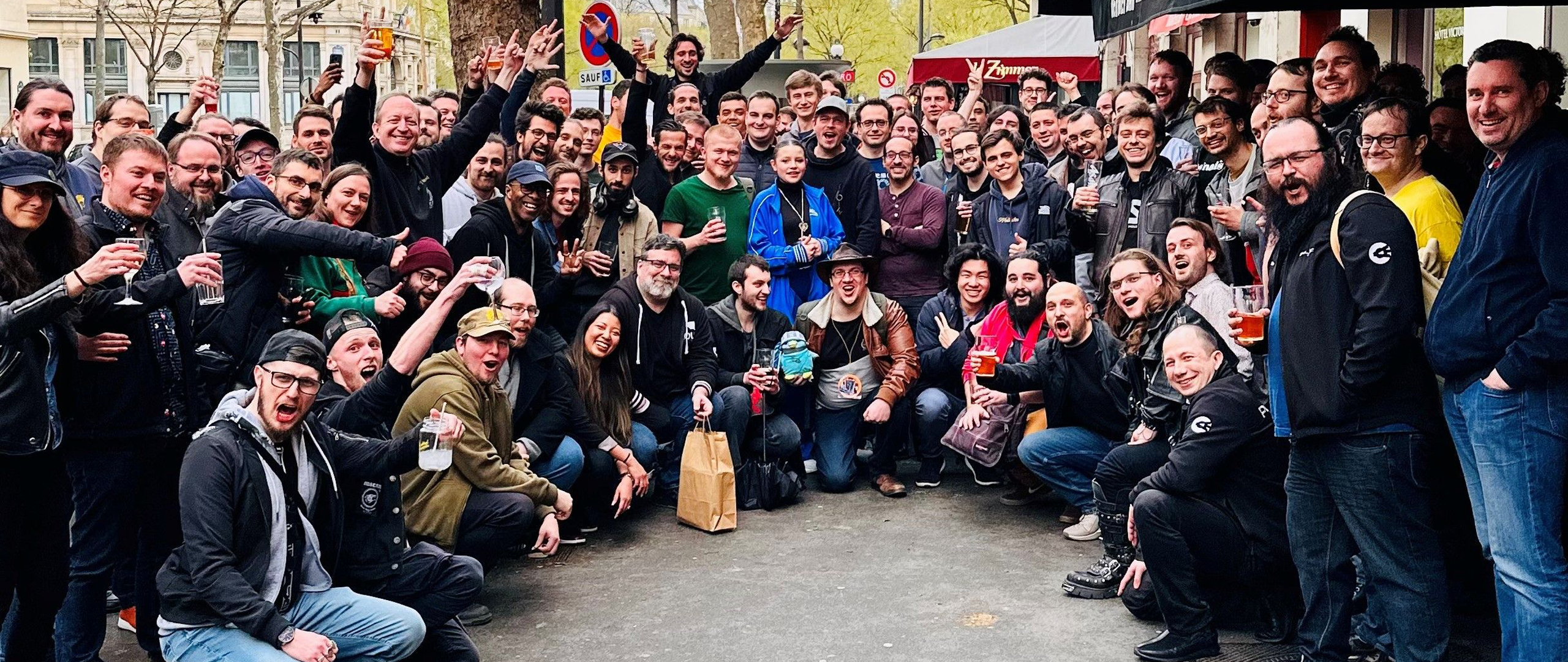
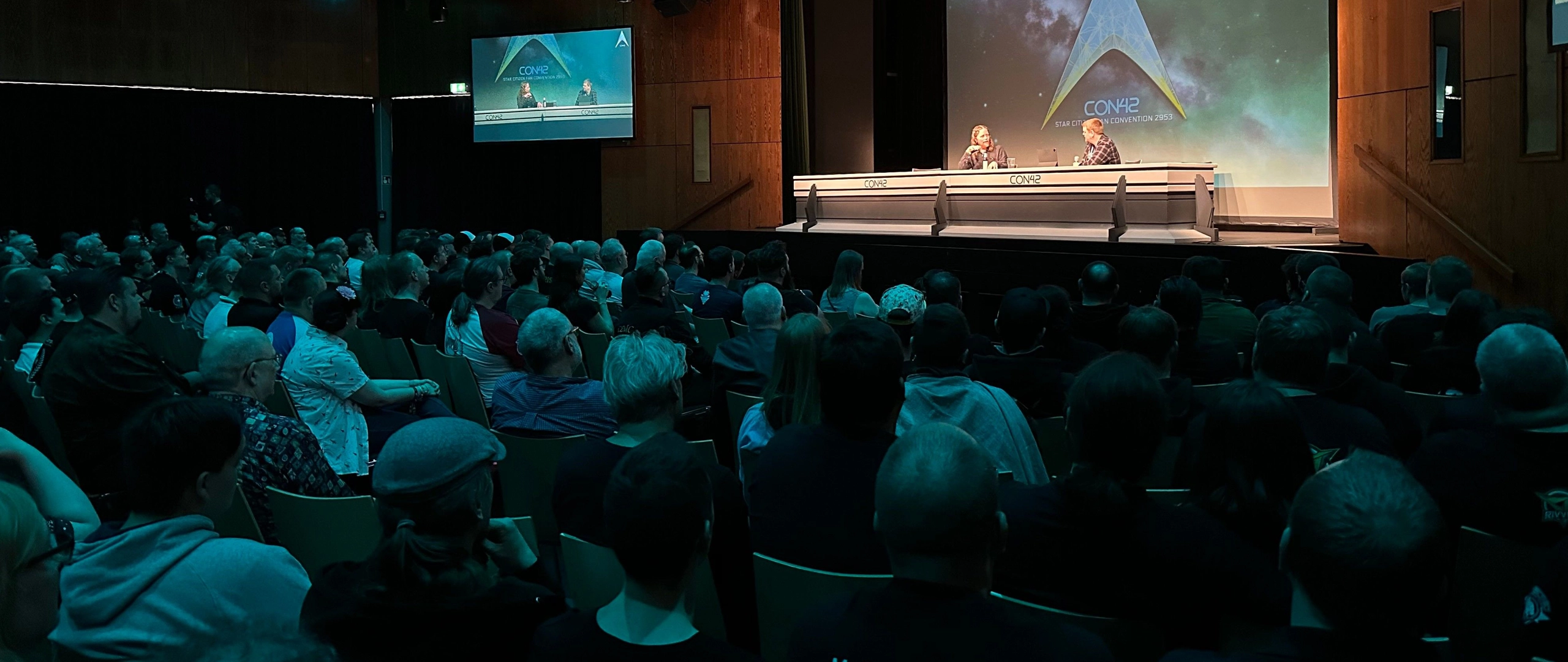
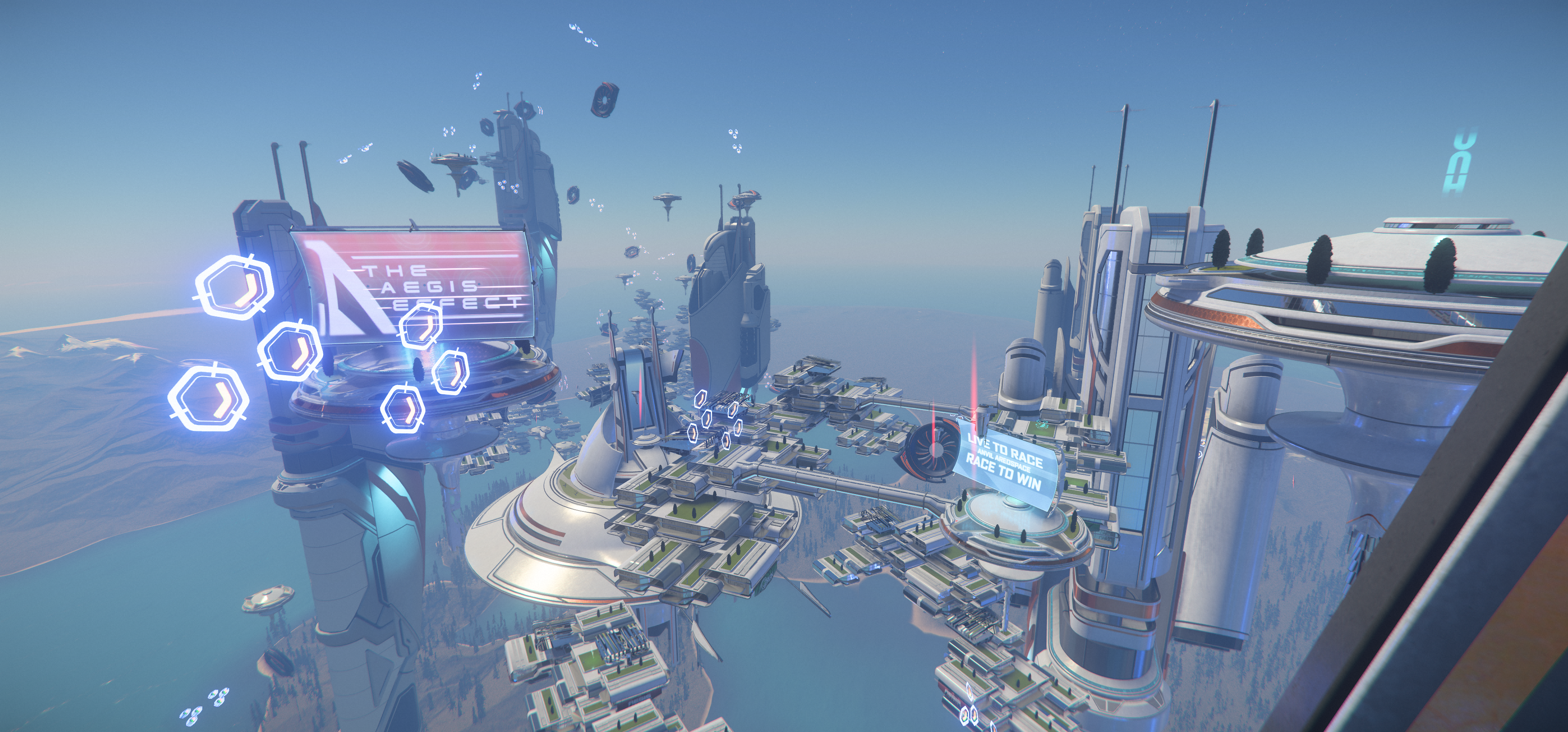
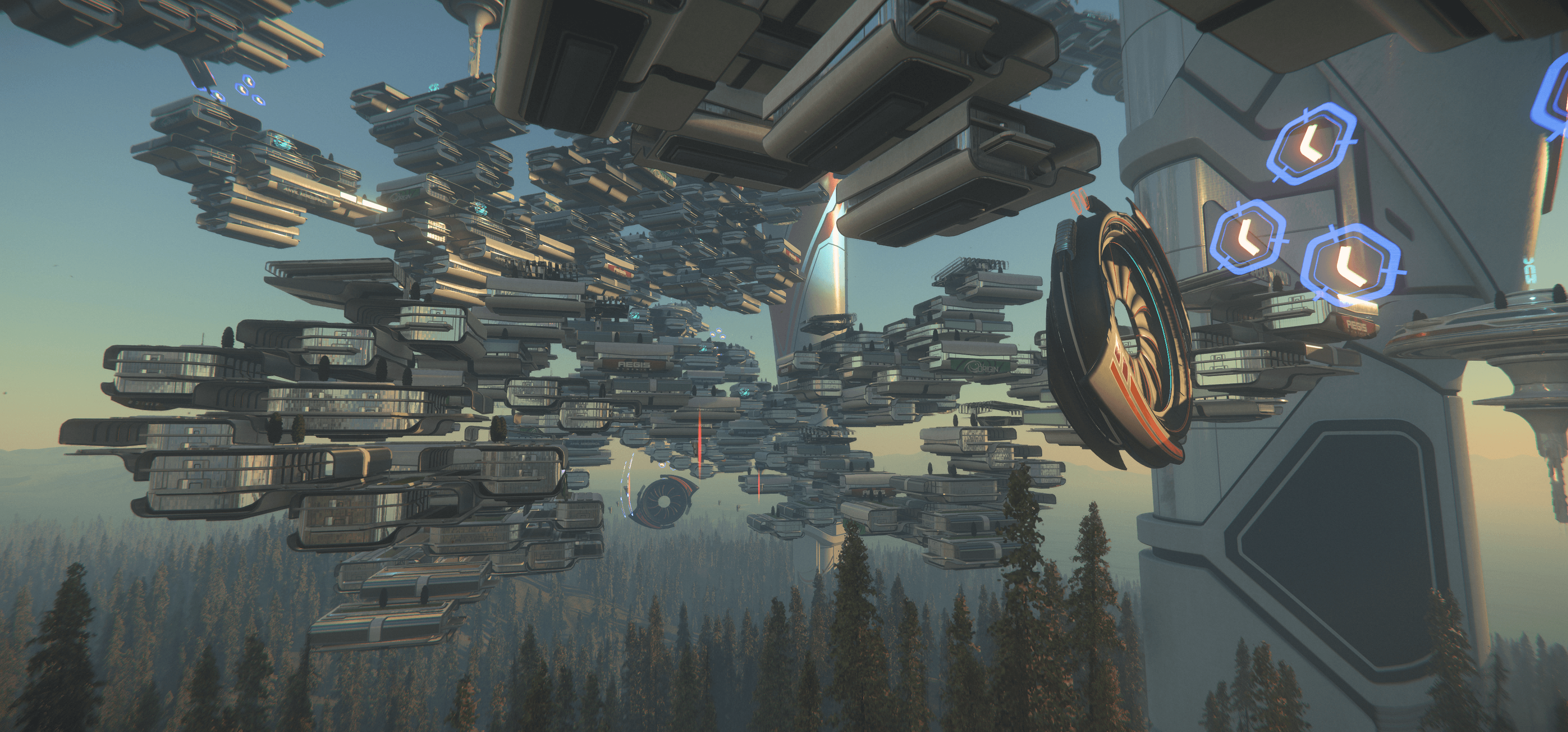
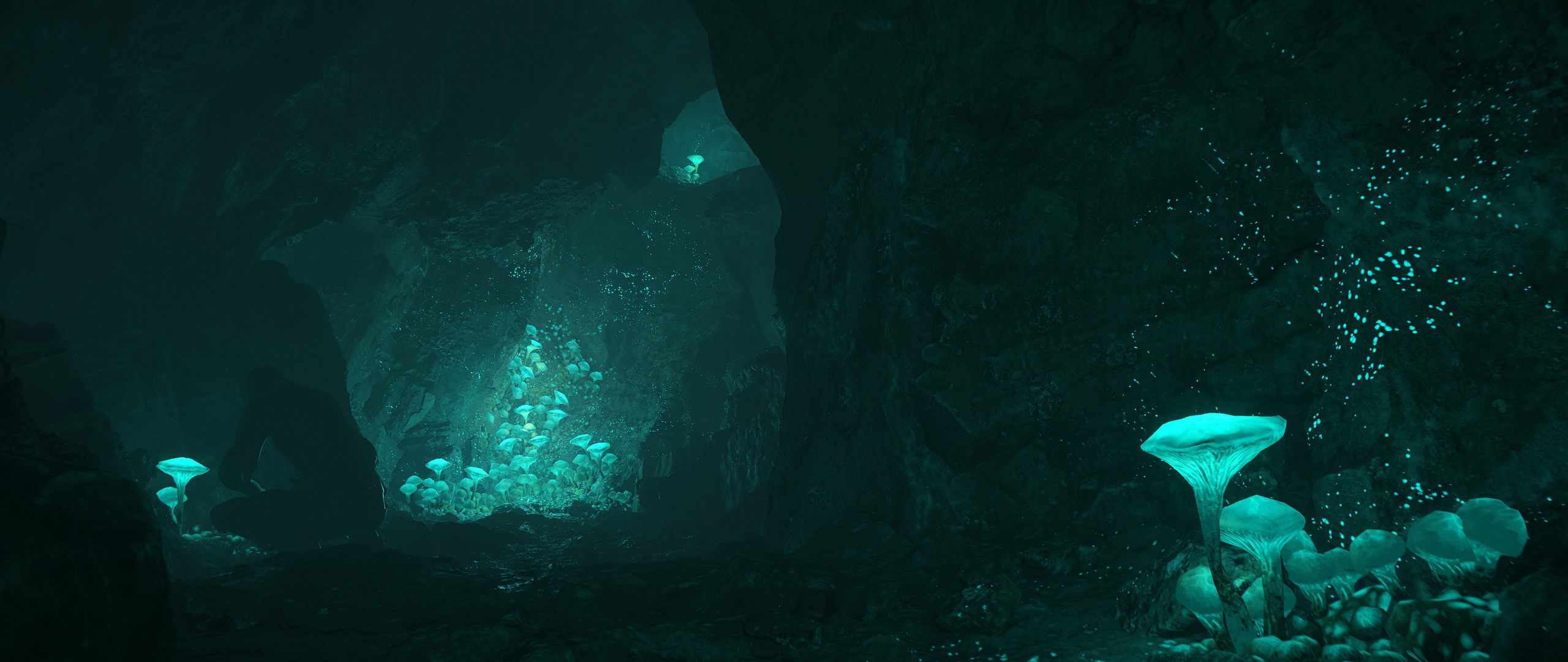
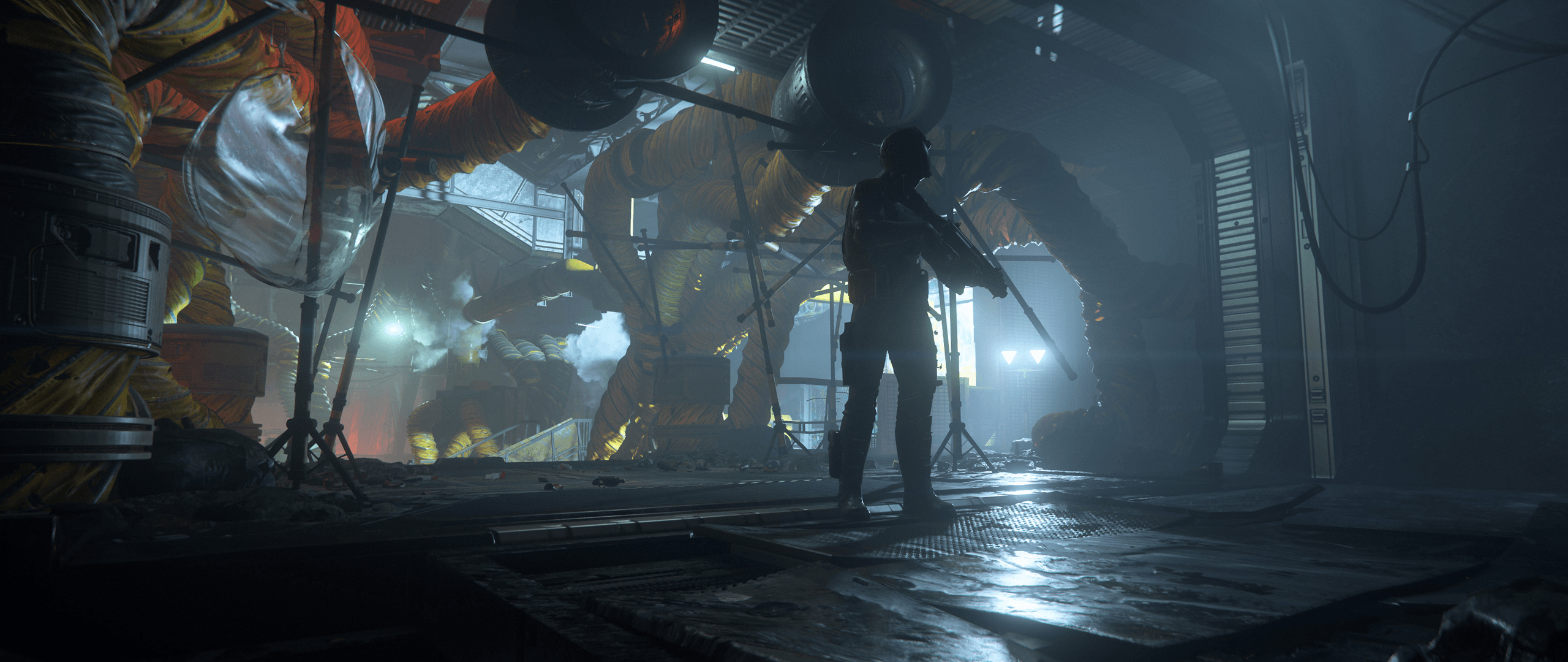
Metadata
- CIG ID
- 19267
- Channel
- Transmission
- Category
- Undefined
- Series
- None
- Comments
- 0
- Published
- 4 months ago (2026-05-25T13:00:00+00:00)