Whitley's Guide - San’tok.yāi
Feedback Undefined NoneContent
09/12/2023 - 2:09 PM
SAN’TOK.YĀI
MEDIUM-CLASS FIGHTER
INTELLIGENCE HISTORY
On 2948-11-28, the Aopoa Council sent shockwaves through industry watchers with the announcement that their San’tok.yāi medium-class fighter was available for purchase in an export model. This decision took the Human civilian and military authorities by surprise, undercutting years of effort to learn more about the Xi’an’s notoriously secret aerospace program. While it is not possible for a Human publication to properly catalog the Xi’an medium fighter development due to the limited amount of information available, it is possible to track the United Empire of Earth’s efforts to gather their own intelligence on the spacecraft and its precursors.
Analysts agree that the current generation of Xi’an medium fighter was introduced to replace an aging prior design around 2934, although it is believed that off-production-line military conversions began significantly earlier. Under this theory, Xi’an home guard units could have a new medium fighter design as early as 2915, with the Empire only choosing to reveal the design to Earth in 2934 in response to the previous summer’s minor trade dispute. Human signal intelligence began noting unexpected movement among Xi’an units stationed along the old Perry Line, with many existing medium fighter squadrons that were previously believed to have been on permanent assignment leaving after years on station. In December, secondhand reports began to filter back suggesting that sightings of older-style Xi’an dogfighters had dropped sharply and that a new design had begun to appear. This was in line with what was known about the highly regimented manner in which the Xi’an Empire had deployed new spacecraft in the past. Unlike Human units, which typically slowly transition to new designs, the Xi’an has always taken an all-or-nothing approach, manufacturing spacecraft to a long-term schedule and replacing designs en masse in a given theater so as to reduce the need to continue providing duplicate service and support processes.
The UEE military was immediately concerned with both the overall political meaning of upgraded mainline dogfighters along their border and the potential threat offered by this unfamiliar fighter. The Navy, concerned about the development of its next generation of ‘space superiority fighter’, was especially keen to gather intelligence on the new Xi’an ship. The fighter was given the intelligence reporting name ARES and assets in the Xi’an sphere of influence were issued a memo instructing them to gather information wherever possible.
The first reliable military accounts of the Xi’an medium fighter in service came in 2937, when a Hornet on a training mission came within scanner range of a group of six on patrol. Information gathered in this encounter regarding the speed and maneuverability of the medium fighter confirmed existing theories that it operated an upgraded version of the dual-vector maneuvering thrusters found on the earlier Khartu-al. In April 2938, a remote sensing outpost recorded a pair of Xi’an medium fighters coming to the rescue of a transport besieged by raiders outside of visual range. The sensor recording confirmed secondhand reports about the improved dual thrust array and, most importantly, spectrum analysis revealed for the first time that the ship’s centerline energy weapon was a model of laser repeater not yet encountered. Additional encounters with the Xi’an medium fighter were recorded throughout the late 2930s, each providing small clues as to its overall capabilities, with other unspecified intelligence assets filling out the picture. Recently declassified military reviews from this period believe that the ship was a rough parity with the F7A Hornet or the civilian-model Super Hornet.
In 2941, the military had their closest encounter to date with enigmatic medium fighter. On the morning of September 24th, a manned reconnaissance outpost in the Yā’mon (Hadur) system detected a major explosion which was quickly traced back to the orbit of one of the system’s dwarf planets. Sensors indicated that a debris field had formed at the site of the explosion, with metallurgical analysis revealing that it most likely consisted of metals processed by the Xi’an. Further observation revealed that in addition to the debris field, now believed to have originated from an explosion aboard a larger Xi’an packet ship, there were four tracks on the snowy planet itself consistent with soft-landings by fighter-sized ships. The outpost’s crew concluded that an accident aboard a Xi’an transport had stranded several short-range escort fighters, forcing them to crash land on the planet as onboard oxygen supplies diminished.
The planet in question was particularly distant from both Human and Xi’an settlements. No distress call had been received from the packet ship or her escorts. Analysis suggested that even if Xi’an authorities knew the rough location of the crash, it would take some time for the ships to be declared overdue and for a capable rescue party to be deployed. Meanwhile, elements of a UEEN escort squadron were conducting space trials within communication range of the covert reconnaissance outpost that performed the initial study and analysis. The base commander made the decision that the possibility of rescuing survivors from the crashed spacecraft was valuable enough to risk revealing the location of his outpost. He dispatched all available information to the destroyer group, prompting them to move into range of the crash sites.
A pair of Argo spacecraft dispatched from the UEES Eagle’s Talon found that the ships in question were indeed Xi’an medium dogfighters. Two of the four escorts had not made controlled descents at all; they had suffered heavy damage in the initial explosion and had been completely destroyed in the crash. Survey teams transmitted scans of the wreckage and moved to locate the other ships. The third fighter was found in better condition: the ship had skidded to a stop on an icy plain. Crew from the escort began de-icing the wreck site to quickly reach the pilot. The work ended in tragedy when the industrial heating units set off what is believed to have been a still-armed munitions package on the ship’s wing destroying the entire site. All members of the first rescue team and the fighter’s pilot were killed in the blast.
Meanwhile, the second Argo discovered that the final escort had not crashed at all: it had landed safely on a stable plane. Tracks in the snow confirmed that pilot had survived and was heading to reach his wingman. The surviving pilot was located by air and taken aboard the escort where he was treated for exposure and ultimately repatriated to the Xi’an Empire. Despite the casualties, the incident was seen as a net positive for Human-Xi’an relations with the safe rescue of the surviving pilot. Military intelligence officers were not as happy about the incident as they gained only a limited amount of usable information from the initial crash site scans of the medium fighter. It seemed the UEE would never get its long-desired look at the Xi’an medium fighter in action.
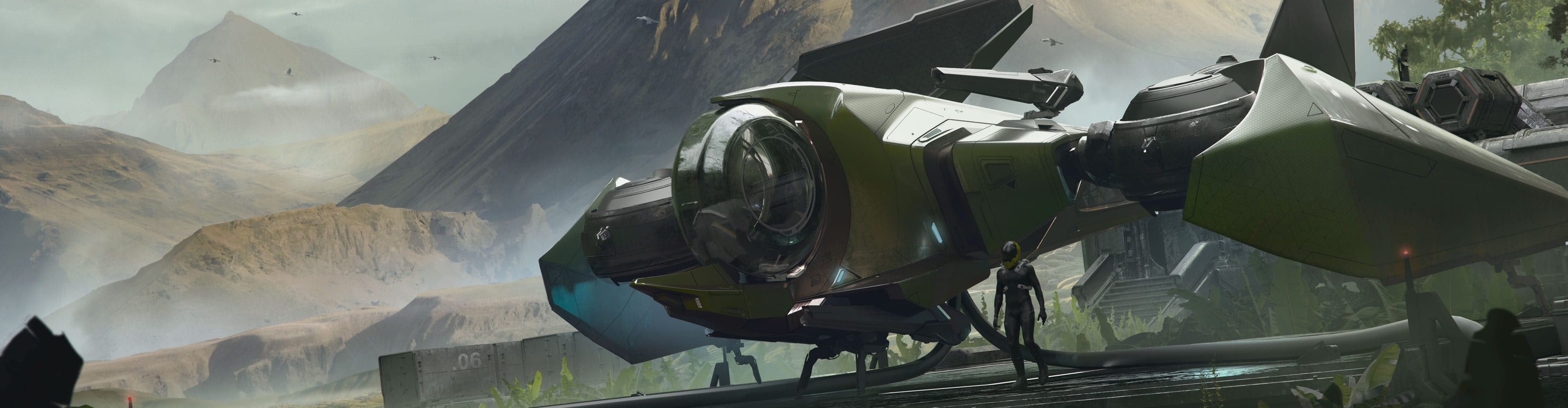
However, the 2948 Intergalactic Aerospace Expo rendered years of intelligence gathering obsolete with the stunning announcement that the company was making a civilian-spec medium fighter part of their export lineup; Aopoa’s decision had seemingly been made after almost three decades of increasing Khartu-al sales to Human concerns. The spacecraft, named the San’tok.yāi, was revealed at an opulent invitation only gala which broadly celebrated Xi’an culture and was centered around an unabridged presentation of āluo’a Thasyu se Xo’ma. What the public saw was an impressive new Xi’an design, the military already knew as a development of the frontline medium fighter they had studied for over ten years. As an export model, the San’tok.yāi is not an exact match for any of the mil-spec spacecraft observed previously, but is similar enough in both design and capabilities that it can be said with certainty to have been derived from them. The overall fuselage and flight configurations closely match recorded encounters with frontline medium fighter models. The dual-vector thrusters and Yeng’tu Laser Repeaters, included with the base civilian model, also conform to what was already known about the ship. Additionally, all footage of the San’tok.yāi maneuvering has been within the limits of previous military observations. Analysts have noted with some concern that the San’tok.yāi’s capabilities are so close to what is known about the Xi’an medium fighter that this sudden reveal strongly indicates that the military must have access to a more advanced model that has not yet been seen - a potential roadblock for the recently commissioned F8 Lightning.
The United Empire of Earth Navy will, unsurprisingly, be among the first San’tok.yāi customers. Per the Naval Office of Budget and Planning, the military has been approved for the requisition of nine of the spacecraft. If these examples follow the pattern of previous alien designs requisitioned by the military these San’tok.yāi will be divided between engineering study artifacts for disassembly and for aggressor training (the Empire does not formally acknowledge that it operates Xi’an or simulated Xi’an spacecraft in combat training, though it has purchased Khartu-al for unspecified research projects regularly since it was introduced to Human space).
Whitleys’ partners at Sabre Defense have also joined the waitlist for a San’tok.yāi and will conduct a full suite of testing and a complete engineering and component breakdown once a production model becomes available. For further information, watch out for the Q4 2948 addendum of the 2949 edition of Whitley’s Guide to Spacecraft for the complete, hands-on flight analysis.
This article originally appeared in Jump Point 6.11.
09/12/2023 - 2:09 PMSAN'TOK.YĀI
MITTELKLASSE-JÄGER
GEHEIMDIENSTGESCHICHTE
Am 28.11.2948 schickte der Aopoa-Rat Schockwellen durch die Branche, als er bekannt gab, dass sein San'tok.yāi-Mittelklasse-Kampfflugzeug als Exportmodell zum Kauf angeboten wird. Diese Entscheidung überraschte die zivilen und militärischen Behörden der Menschen und machte die jahrelangen Bemühungen zunichte, mehr über das notorisch geheime Raumfahrtprogramm von Xi'an zu erfahren. Während es für eine menschliche Publikation aufgrund der begrenzten Menge an verfügbaren Informationen nicht möglich ist, die Entwicklung des Xi'an-Mittelstreckenjägers richtig zu katalogisieren, ist es möglich, die Bemühungen des Vereinigten Imperiums der Erde zu verfolgen, ihre eigenen Informationen über das Raumschiff und seine Vorläufer zu sammeln.
Analysten sind sich einig, dass die aktuelle Generation des mittelgroßen Xi'an-Jägers um das Jahr 2934 eingeführt wurde, um ein veraltetes Vorgängermodell zu ersetzen, obwohl man davon ausgeht, dass die militärischen Umrüstungen außerhalb der Produktionslinie deutlich früher begannen. Nach dieser Theorie könnten die Einheiten der Xi'an-Heimatwache bereits 2915 über ein neues mittelgroßes Kampfflugzeug verfügen, das das Imperium der Erde erst 2934 als Reaktion auf den kleinen Handelskonflikt des vergangenen Sommers vorstellte. Die menschliche Signalintelligenz bemerkte unerwartete Bewegungen unter den Xi'an-Einheiten, die entlang der alten Perry-Linie stationiert waren, und viele mittelschwere Jägerstaffeln, von denen man bisher annahm, dass sie dauerhaft stationiert waren, verließen nach Jahren die Station. Im Dezember kamen aus zweiter Hand Berichte zurück, die darauf hindeuteten, dass die Sichtungen von Xi'an-Dogfightern älterer Bauart stark zurückgegangen waren und dass eine neue Bauart auftauchte. Dies entsprach dem, was man über die hochgradig reglementierte Art und Weise wusste, in der das Xi'an-Imperium in der Vergangenheit neue Raumfahrzeuge eingesetzt hatte. Im Gegensatz zu den menschlichen Einheiten, die in der Regel langsam auf neue Designs umsteigen, hat das Xi'an-Imperium immer einen Alles-oder-Nichts-Ansatz verfolgt, indem es Raumfahrzeuge nach einem langfristigen Zeitplan herstellte und die Designs in einem bestimmten Gebiet massenhaft ersetzte, um die Notwendigkeit zu reduzieren, weiterhin doppelte Service- und Supportprozesse anzubieten.
Das UEE-Militär war sofort besorgt über die allgemeine politische Bedeutung von aufgerüsteten Dogfightern an ihrer Grenze und über die potenzielle Bedrohung durch dieses unbekannte Kampfflugzeug. Die Marine, die über die Entwicklung ihrer nächsten Generation von "Raumüberlegenheitsjägern" besorgt war, war besonders daran interessiert, Informationen über das neue Xi'an-Schiff zu sammeln. Das Kampfflugzeug erhielt den nachrichtendienstlichen Meldungsnamen ARES und die Einheiten im Einflussbereich von Xi'an wurden in einem Memo angewiesen, Informationen zu sammeln, wo immer es möglich war.
Die ersten verlässlichen militärischen Berichte über den Einsatz des Xi'an Medium Fighters stammen aus dem Jahr 2937, als eine Hornet auf einer Trainingsmission in Scanner-Reichweite einer sechsköpfigen Gruppe auf Patrouille kam. Die dabei gesammelten Informationen über die Geschwindigkeit und Manövrierfähigkeit des mittelgroßen Jägers bestätigten die bisherigen Theorien, dass es sich um eine verbesserte Version der Doppelvektor-Manövriertriebwerke des früheren Khartu-al handelte. Im April 2938 zeichnete ein Fernerkundungs-Außenposten auf, wie zwei mittelgroße Xi'an-Jäger einem Transporter zu Hilfe kamen, der außerhalb der Sichtweite von Angreifern belagert wurde. Die Sensoraufzeichnungen bestätigten die Berichte aus zweiter Hand über die verbesserte Doppelschubanlage, und vor allem zeigte die Spektralanalyse zum ersten Mal, dass es sich bei der Energiewaffe in der Mitte des Schiffes um ein bisher unbekanntes Modell eines Laser-Repeaters handelte. In den späten 2930er Jahren wurden weitere Begegnungen mit dem Xi'an Medium Fighter aufgezeichnet, die jeweils kleine Hinweise auf seine Gesamtfähigkeiten lieferten. Kürzlich freigegebene militärische Berichte aus dieser Zeit gehen davon aus, dass das Schiff in etwa mit der F7A Hornet oder dem zivilen Modell der Super Hornet vergleichbar war.
Im Jahr 2941 hatte das Militär seine bis dahin engste Begegnung mit dem rätselhaften Mittelstreckenjäger. Am Morgen des 24. September entdeckte ein bemannter Aufklärungsposten im Yā'mon (Hadur)-System eine große Explosion, die schnell auf die Umlaufbahn eines der Zwergplaneten des Systems zurückgeführt werden konnte. Die Sensoren zeigten an, dass sich am Ort der Explosion ein Trümmerfeld gebildet hatte. Die metallurgische Analyse ergab, dass es höchstwahrscheinlich aus Metallen bestand, die von den Xi'an verarbeitet wurden. Weitere Beobachtungen ergaben, dass neben dem Trümmerfeld, das vermutlich von einer Explosion an Bord eines größeren Xi'an-Paketschiffs stammte, auch vier Spuren auf dem Schneeplaneten zu finden waren, die auf eine weiche Landung von Kampfschiffen schließen lassen. Die Besatzung des Außenpostens kam zu dem Schluss, dass ein Unfall an Bord eines Xi'an-Transporters mehrere Kurzstrecken-Eskortjäger zur Bruchlandung auf dem Planeten gezwungen hatte, als die Sauerstoffvorräte an Bord schwanden.
Der betreffende Planet war besonders weit von den Siedlungen der Menschen und der Xi'an entfernt. Weder von dem Paketschiff noch von seinen Begleitern war ein Notruf empfangen worden. Selbst wenn die Xi'an-Behörden die ungefähre Position des Absturzes wüssten, würde es einige Zeit dauern, bis die Schiffe für überfällig erklärt und ein fähiger Rettungstrupp entsandt werden könnte. In der Zwischenzeit führten Elemente eines UEEN-Eskortgeschwaders Raumfahrtversuche in Kommunikationsreichweite des verdeckten Aufklärungspostens durch, der die erste Untersuchung und Analyse durchgeführt hatte. Der Kommandant des Stützpunkts entschied, dass die Möglichkeit, Überlebende aus dem abgestürzten Raumschiff zu retten, wertvoll genug war, um das Risiko einzugehen, den Standort seines Außenpostens preiszugeben. Er leitete alle verfügbaren Informationen an die Zerstörergruppe weiter und forderte sie auf, sich in Reichweite der Absturzstellen zu begeben.
Zwei Argo-Raumschiffe, die von der UEES Eagle's Talon entsandt wurden, stellten fest, dass es sich bei den fraglichen Schiffen tatsächlich um mittlere Xi'an-Dogfighter handelte. Zwei der vier Begleitschiffe hatten keinen kontrollierten Sinkflug hingelegt; sie waren bei der ersten Explosion schwer beschädigt und bei dem Absturz völlig zerstört worden. Untersuchungsteams übermittelten Scans der Wrackteile und machten sich auf den Weg, um die anderen Schiffe zu lokalisieren. Der dritte Jäger wurde in besserem Zustand gefunden: Das Schiff war auf einer vereisten Ebene ins Schleudern geraten. Die Besatzung der Eskorte begann mit der Enteisung des Wracks, um den Piloten schnell zu erreichen. Die Arbeit endete in einer Tragödie, als die industriellen Heizgeräte ein vermutlich noch scharfes Munitionspaket auf der Tragfläche des Schiffes zündeten und die gesamte Anlage zerstörten. Alle Mitglieder des ersten Rettungsteams und der Pilot des Jagdflugzeugs kamen bei der Explosion ums Leben.
Währenddessen entdeckte die zweite Argo, dass der letzte Begleiter gar nicht abgestürzt war: Er war sicher auf einer stabilen Ebene gelandet. Spuren im Schnee bestätigten, dass der Pilot überlebt hatte und auf dem Weg zu seinem Flügelmann war. Der überlebende Pilot wurde auf dem Luftweg geortet und an Bord der Eskorte gebracht, wo er wegen seiner Gefährdung behandelt und schließlich in das Xi'an-Reich zurückgebracht wurde. Trotz der Verluste wurde der Vorfall als positiv für die Beziehungen zwischen den Menschen und Xi'an gewertet, da der überlebende Pilot gerettet werden konnte. Die Offiziere des militärischen Geheimdienstes waren nicht so glücklich über den Vorfall, da sie aus den ersten Scans der Absturzstelle des mittelgroßen Raumjägers nur eine begrenzte Menge an verwertbaren Informationen gewinnen konnten. Es sah so aus, als würde die UEE nie den lang ersehnten Blick auf den mittleren Jäger von Xi'an in Aktion werfen können.
Doch auf der Intergalaktischen Raumfahrtausstellung 2948 wurde die jahrelange Geheimdienstarbeit durch die überraschende Ankündigung überflüssig, dass das Unternehmen einen zivilen Mittelstreckenjäger in sein Exportprogramm aufnehmen würde. Das Raumschiff mit dem Namen San'tok.yāi wurde auf einer opulenten Gala enthüllt, zu der nur geladene Gäste kamen und bei der die Kultur von Xi'an ausführlich gefeiert wurde. Was die Öffentlichkeit zu sehen bekam, war ein beeindruckendes neues Xi'an-Design, das das Militär bereits als Weiterentwicklung des mittleren Kampfflugzeugs kannte, das es über zehn Jahre lang studiert hatte. Als Exportmodell entspricht der San'tok.yāi keinem der zuvor beobachteten militärischen Raumflugzeuge, ist aber in Design und Fähigkeiten so ähnlich, dass man mit Sicherheit sagen kann, dass er von ihnen abgeleitet wurde. Der Rumpf und die Flugkonfigurationen stimmen genau mit den aufgezeichneten Begegnungen mit mittleren Kampfflugzeugmodellen überein. Die Doppelvektor-Triebwerke und die Yeng'tu-Laser-Repeater, die im zivilen Basismodell enthalten sind, entsprechen ebenfalls dem, was bereits über das Schiff bekannt war. Außerdem bewegen sich alle Aufnahmen der San'tok.yāi innerhalb der Grenzen der bisherigen militärischen Beobachtungen. Analysten haben mit einiger Besorgnis festgestellt, dass die Fähigkeiten der San'tok.yāi dem, was über das mittlere Kampfflugzeug Xi'an bekannt ist, so nahe kommen, dass diese plötzliche Enthüllung stark darauf hindeutet, dass das Militär Zugang zu einem fortschrittlicheren Modell haben muss, das bisher noch nicht zu sehen war - ein mögliches Hindernis für die kürzlich in Auftrag gegebene F8 Lightning.
Es überrascht nicht, dass die United Empire of Earth Navy zu den ersten San'tok.yāi-Kunden gehören wird. Laut dem Naval Office of Budget and Planning hat das Militär die Genehmigung zur Beschaffung von neun dieser Raumschiffe erhalten. Wenn diese Exemplare dem Muster früherer vom Militär beschaffter außerirdischer Konstruktionen folgen, werden diese San'tok.yāi zwischen technischen Studienartefakten für die Demontage und für die Ausbildung von Angreifern aufgeteilt (das Imperium gibt nicht offiziell zu, dass es Xi'an- oder simulierte Xi'an-Raumschiffe in der Kampfausbildung einsetzt, obwohl es Khartu-al seit seiner Einführung in den menschlichen Raum regelmäßig für nicht näher spezifizierte Forschungsprojekte gekauft hat).
Whitleys Partner bei Sabre Defense haben sich ebenfalls auf die Warteliste für ein San'tok.yāi gesetzt und werden eine ganze Reihe von Tests durchführen und eine vollständige Aufschlüsselung der Technik und der Komponenten vornehmen, sobald ein Produktionsmodell verfügbar ist. Weitere Informationen findest du im Nachtrag zu Q4 2948 der Ausgabe 2949 von Whitley's Guide to Spacecraft, in dem du eine vollständige, praxisnahe Fluganalyse findest.
Dieser Artikel erschien ursprünglich in Jump Point 6.11.
09/12/2023 - 2:09 PM
SAN’TOK.YĀI
MEDIUM-CLASS FIGHTER
INTELLIGENCE HISTORY
On 2948-11-28, the Aopoa Council sent shockwaves through industry watchers with the announcement that their San’tok.yāi medium-class fighter was available for purchase in an export model. This decision took the Human civilian and military authorities by surprise, undercutting years of effort to learn more about the Xi’an’s notoriously secret aerospace program. While it is not possible for a Human publication to properly catalog the Xi’an medium fighter development due to the limited amount of information available, it is possible to track the United Empire of Earth’s efforts to gather their own intelligence on the spacecraft and its precursors.
Analysts agree that the current generation of Xi’an medium fighter was introduced to replace an aging prior design around 2934, although it is believed that off-production-line military conversions began significantly earlier. Under this theory, Xi’an home guard units could have a new medium fighter design as early as 2915, with the Empire only choosing to reveal the design to Earth in 2934 in response to the previous summer’s minor trade dispute. Human signal intelligence began noting unexpected movement among Xi’an units stationed along the old Perry Line, with many existing medium fighter squadrons that were previously believed to have been on permanent assignment leaving after years on station. In December, secondhand reports began to filter back suggesting that sightings of older-style Xi’an dogfighters had dropped sharply and that a new design had begun to appear. This was in line with what was known about the highly regimented manner in which the Xi’an Empire had deployed new spacecraft in the past. Unlike Human units, which typically slowly transition to new designs, the Xi’an has always taken an all-or-nothing approach, manufacturing spacecraft to a long-term schedule and replacing designs en masse in a given theater so as to reduce the need to continue providing duplicate service and support processes.
The UEE military was immediately concerned with both the overall political meaning of upgraded mainline dogfighters along their border and the potential threat offered by this unfamiliar fighter. The Navy, concerned about the development of its next generation of ‘space superiority fighter’, was especially keen to gather intelligence on the new Xi’an ship. The fighter was given the intelligence reporting name ARES and assets in the Xi’an sphere of influence were issued a memo instructing them to gather information wherever possible.
The first reliable military accounts of the Xi’an medium fighter in service came in 2937, when a Hornet on a training mission came within scanner range of a group of six on patrol. Information gathered in this encounter regarding the speed and maneuverability of the medium fighter confirmed existing theories that it operated an upgraded version of the dual-vector maneuvering thrusters found on the earlier Khartu-al. In April 2938, a remote sensing outpost recorded a pair of Xi’an medium fighters coming to the rescue of a transport besieged by raiders outside of visual range. The sensor recording confirmed secondhand reports about the improved dual thrust array and, most importantly, spectrum analysis revealed for the first time that the ship’s centerline energy weapon was a model of laser repeater not yet encountered. Additional encounters with the Xi’an medium fighter were recorded throughout the late 2930s, each providing small clues as to its overall capabilities, with other unspecified intelligence assets filling out the picture. Recently declassified military reviews from this period believe that the ship was a rough parity with the F7A Hornet or the civilian-model Super Hornet.
In 2941, the military had their closest encounter to date with enigmatic medium fighter. On the morning of September 24th, a manned reconnaissance outpost in the Yā’mon (Hadur) system detected a major explosion which was quickly traced back to the orbit of one of the system’s dwarf planets. Sensors indicated that a debris field had formed at the site of the explosion, with metallurgical analysis revealing that it most likely consisted of metals processed by the Xi’an. Further observation revealed that in addition to the debris field, now believed to have originated from an explosion aboard a larger Xi’an packet ship, there were four tracks on the snowy planet itself consistent with soft-landings by fighter-sized ships. The outpost’s crew concluded that an accident aboard a Xi’an transport had stranded several short-range escort fighters, forcing them to crash land on the planet as onboard oxygen supplies diminished.
The planet in question was particularly distant from both Human and Xi’an settlements. No distress call had been received from the packet ship or her escorts. Analysis suggested that even if Xi’an authorities knew the rough location of the crash, it would take some time for the ships to be declared overdue and for a capable rescue party to be deployed. Meanwhile, elements of a UEEN escort squadron were conducting space trials within communication range of the covert reconnaissance outpost that performed the initial study and analysis. The base commander made the decision that the possibility of rescuing survivors from the crashed spacecraft was valuable enough to risk revealing the location of his outpost. He dispatched all available information to the destroyer group, prompting them to move into range of the crash sites.
A pair of Argo spacecraft dispatched from the UEES Eagle’s Talon found that the ships in question were indeed Xi’an medium dogfighters. Two of the four escorts had not made controlled descents at all; they had suffered heavy damage in the initial explosion and had been completely destroyed in the crash. Survey teams transmitted scans of the wreckage and moved to locate the other ships. The third fighter was found in better condition: the ship had skidded to a stop on an icy plain. Crew from the escort began de-icing the wreck site to quickly reach the pilot. The work ended in tragedy when the industrial heating units set off what is believed to have been a still-armed munitions package on the ship’s wing destroying the entire site. All members of the first rescue team and the fighter’s pilot were killed in the blast.
Meanwhile, the second Argo discovered that the final escort had not crashed at all: it had landed safely on a stable plane. Tracks in the snow confirmed that pilot had survived and was heading to reach his wingman. The surviving pilot was located by air and taken aboard the escort where he was treated for exposure and ultimately repatriated to the Xi’an Empire. Despite the casualties, the incident was seen as a net positive for Human-Xi’an relations with the safe rescue of the surviving pilot. Military intelligence officers were not as happy about the incident as they gained only a limited amount of usable information from the initial crash site scans of the medium fighter. It seemed the UEE would never get its long-desired look at the Xi’an medium fighter in action.
However, the 2948 Intergalactic Aerospace Expo rendered years of intelligence gathering obsolete with the stunning announcement that the company was making a civilian-spec medium fighter part of their export lineup; Aopoa’s decision had seemingly been made after almost three decades of increasing Khartu-al sales to Human concerns. The spacecraft, named the San’tok.yāi, was revealed at an opulent invitation only gala which broadly celebrated Xi’an culture and was centered around an unabridged presentation of āluo’a Thasyu se Xo’ma. What the public saw was an impressive new Xi’an design, the military already knew as a development of the frontline medium fighter they had studied for over ten years. As an export model, the San’tok.yāi is not an exact match for any of the mil-spec spacecraft observed previously, but is similar enough in both design and capabilities that it can be said with certainty to have been derived from them. The overall fuselage and flight configurations closely match recorded encounters with frontline medium fighter models. The dual-vector thrusters and Yeng’tu Laser Repeaters, included with the base civilian model, also conform to what was already known about the ship. Additionally, all footage of the San’tok.yāi maneuvering has been within the limits of previous military observations. Analysts have noted with some concern that the San’tok.yāi’s capabilities are so close to what is known about the Xi’an medium fighter that this sudden reveal strongly indicates that the military must have access to a more advanced model that has not yet been seen - a potential roadblock for the recently commissioned F8 Lightning.
The United Empire of Earth Navy will, unsurprisingly, be among the first San’tok.yāi customers. Per the Naval Office of Budget and Planning, the military has been approved for the requisition of nine of the spacecraft. If these examples follow the pattern of previous alien designs requisitioned by the military these San’tok.yāi will be divided between engineering study artifacts for disassembly and for aggressor training (the Empire does not formally acknowledge that it operates Xi’an or simulated Xi’an spacecraft in combat training, though it has purchased Khartu-al for unspecified research projects regularly since it was introduced to Human space).
Whitleys’ partners at Sabre Defense have also joined the waitlist for a San’tok.yāi and will conduct a full suite of testing and a complete engineering and component breakdown once a production model becomes available. For further information, watch out for the Q4 2948 addendum of the 2949 edition of Whitley’s Guide to Spacecraft for the complete, hands-on flight analysis.
This article originally appeared in Jump Point 6.11.
09/12/2023 - 2:09 PM
SAN’TOK.YĀI
MEDIUM-CLASS FIGHTER
INTELLIGENCE HISTORY
On 2948-11-28, the Aopoa Council sent shockwaves through industry watchers with the announcement that their San’tok.yāi medium-class fighter was available for purchase in an export model. This decision took the Human civilian and military authorities by surprise, undercutting years of effort to learn more about the Xi’an’s notoriously secret aerospace program. While it is not possible for a Human publication to properly catalog the Xi’an medium fighter development due to the limited amount of information available, it is possible to track the United Empire of Earth’s efforts to gather their own intelligence on the spacecraft and its precursors.
Analysts agree that the current generation of Xi’an medium fighter was introduced to replace an aging prior design around 2934, although it is believed that off-production-line military conversions began significantly earlier. Under this theory, Xi’an home guard units could have a new medium fighter design as early as 2915, with the Empire only choosing to reveal the design to Earth in 2934 in response to the previous summer’s minor trade dispute. Human signal intelligence began noting unexpected movement among Xi’an units stationed along the old Perry Line, with many existing medium fighter squadrons that were previously believed to have been on permanent assignment leaving after years on station. In December, secondhand reports began to filter back suggesting that sightings of older-style Xi’an dogfighters had dropped sharply and that a new design had begun to appear. This was in line with what was known about the highly regimented manner in which the Xi’an Empire had deployed new spacecraft in the past. Unlike Human units, which typically slowly transition to new designs, the Xi’an has always taken an all-or-nothing approach, manufacturing spacecraft to a long-term schedule and replacing designs en masse in a given theater so as to reduce the need to continue providing duplicate service and support processes.
The UEE military was immediately concerned with both the overall political meaning of upgraded mainline dogfighters along their border and the potential threat offered by this unfamiliar fighter. The Navy, concerned about the development of its next generation of ‘space superiority fighter’, was especially keen to gather intelligence on the new Xi’an ship. The fighter was given the intelligence reporting name ARES and assets in the Xi’an sphere of influence were issued a memo instructing them to gather information wherever possible.
The first reliable military accounts of the Xi’an medium fighter in service came in 2937, when a Hornet on a training mission came within scanner range of a group of six on patrol. Information gathered in this encounter regarding the speed and maneuverability of the medium fighter confirmed existing theories that it operated an upgraded version of the dual-vector maneuvering thrusters found on the earlier Khartu-al. In April 2938, a remote sensing outpost recorded a pair of Xi’an medium fighters coming to the rescue of a transport besieged by raiders outside of visual range. The sensor recording confirmed secondhand reports about the improved dual thrust array and, most importantly, spectrum analysis revealed for the first time that the ship’s centerline energy weapon was a model of laser repeater not yet encountered. Additional encounters with the Xi’an medium fighter were recorded throughout the late 2930s, each providing small clues as to its overall capabilities, with other unspecified intelligence assets filling out the picture. Recently declassified military reviews from this period believe that the ship was a rough parity with the F7A Hornet or the civilian-model Super Hornet.
In 2941, the military had their closest encounter to date with enigmatic medium fighter. On the morning of September 24th, a manned reconnaissance outpost in the Yā’mon (Hadur) system detected a major explosion which was quickly traced back to the orbit of one of the system’s dwarf planets. Sensors indicated that a debris field had formed at the site of the explosion, with metallurgical analysis revealing that it most likely consisted of metals processed by the Xi’an. Further observation revealed that in addition to the debris field, now believed to have originated from an explosion aboard a larger Xi’an packet ship, there were four tracks on the snowy planet itself consistent with soft-landings by fighter-sized ships. The outpost’s crew concluded that an accident aboard a Xi’an transport had stranded several short-range escort fighters, forcing them to crash land on the planet as onboard oxygen supplies diminished.
The planet in question was particularly distant from both Human and Xi’an settlements. No distress call had been received from the packet ship or her escorts. Analysis suggested that even if Xi’an authorities knew the rough location of the crash, it would take some time for the ships to be declared overdue and for a capable rescue party to be deployed. Meanwhile, elements of a UEEN escort squadron were conducting space trials within communication range of the covert reconnaissance outpost that performed the initial study and analysis. The base commander made the decision that the possibility of rescuing survivors from the crashed spacecraft was valuable enough to risk revealing the location of his outpost. He dispatched all available information to the destroyer group, prompting them to move into range of the crash sites.
A pair of Argo spacecraft dispatched from the UEES Eagle’s Talon found that the ships in question were indeed Xi’an medium dogfighters. Two of the four escorts had not made controlled descents at all; they had suffered heavy damage in the initial explosion and had been completely destroyed in the crash. Survey teams transmitted scans of the wreckage and moved to locate the other ships. The third fighter was found in better condition: the ship had skidded to a stop on an icy plain. Crew from the escort began de-icing the wreck site to quickly reach the pilot. The work ended in tragedy when the industrial heating units set off what is believed to have been a still-armed munitions package on the ship’s wing destroying the entire site. All members of the first rescue team and the fighter’s pilot were killed in the blast.
Meanwhile, the second Argo discovered that the final escort had not crashed at all: it had landed safely on a stable plane. Tracks in the snow confirmed that pilot had survived and was heading to reach his wingman. The surviving pilot was located by air and taken aboard the escort where he was treated for exposure and ultimately repatriated to the Xi’an Empire. Despite the casualties, the incident was seen as a net positive for Human-Xi’an relations with the safe rescue of the surviving pilot. Military intelligence officers were not as happy about the incident as they gained only a limited amount of usable information from the initial crash site scans of the medium fighter. It seemed the UEE would never get its long-desired look at the Xi’an medium fighter in action.
However, the 2948 Intergalactic Aerospace Expo rendered years of intelligence gathering obsolete with the stunning announcement that the company was making a civilian-spec medium fighter part of their export lineup; Aopoa’s decision had seemingly been made after almost three decades of increasing Khartu-al sales to Human concerns. The spacecraft, named the San’tok.yāi, was revealed at an opulent invitation only gala which broadly celebrated Xi’an culture and was centered around an unabridged presentation of āluo’a Thasyu se Xo’ma. What the public saw was an impressive new Xi’an design, the military already knew as a development of the frontline medium fighter they had studied for over ten years. As an export model, the San’tok.yāi is not an exact match for any of the mil-spec spacecraft observed previously, but is similar enough in both design and capabilities that it can be said with certainty to have been derived from them. The overall fuselage and flight configurations closely match recorded encounters with frontline medium fighter models. The dual-vector thrusters and Yeng’tu Laser Repeaters, included with the base civilian model, also conform to what was already known about the ship. Additionally, all footage of the San’tok.yāi maneuvering has been within the limits of previous military observations. Analysts have noted with some concern that the San’tok.yāi’s capabilities are so close to what is known about the Xi’an medium fighter that this sudden reveal strongly indicates that the military must have access to a more advanced model that has not yet been seen - a potential roadblock for the recently commissioned F8 Lightning.
The United Empire of Earth Navy will, unsurprisingly, be among the first San’tok.yāi customers. Per the Naval Office of Budget and Planning, the military has been approved for the requisition of nine of the spacecraft. If these examples follow the pattern of previous alien designs requisitioned by the military these San’tok.yāi will be divided between engineering study artifacts for disassembly and for aggressor training (the Empire does not formally acknowledge that it operates Xi’an or simulated Xi’an spacecraft in combat training, though it has purchased Khartu-al for unspecified research projects regularly since it was introduced to Human space).
Whitleys’ partners at Sabre Defense have also joined the waitlist for a San’tok.yāi and will conduct a full suite of testing and a complete engineering and component breakdown once a production model becomes available. For further information, watch out for the Q4 2948 addendum of the 2949 edition of Whitley’s Guide to Spacecraft for the complete, hands-on flight analysis.
This article originally appeared in Jump Point 6.11.
Links
No links available.
Metadata
- CIG ID
- 19462
- Channel
- Feedback
- Category
- Undefined
- Series
- None
- Comments
- 0
- Published
- 4 months ago (2026-05-25T13:00:00+00:00)