Whitley's Guide - Reliant
Spectrum Dispatch Undefined News UpdateContent
This article originally appeared in Jump Point 7.3.
MISC Reliant
EARLY DEVELOPMENT
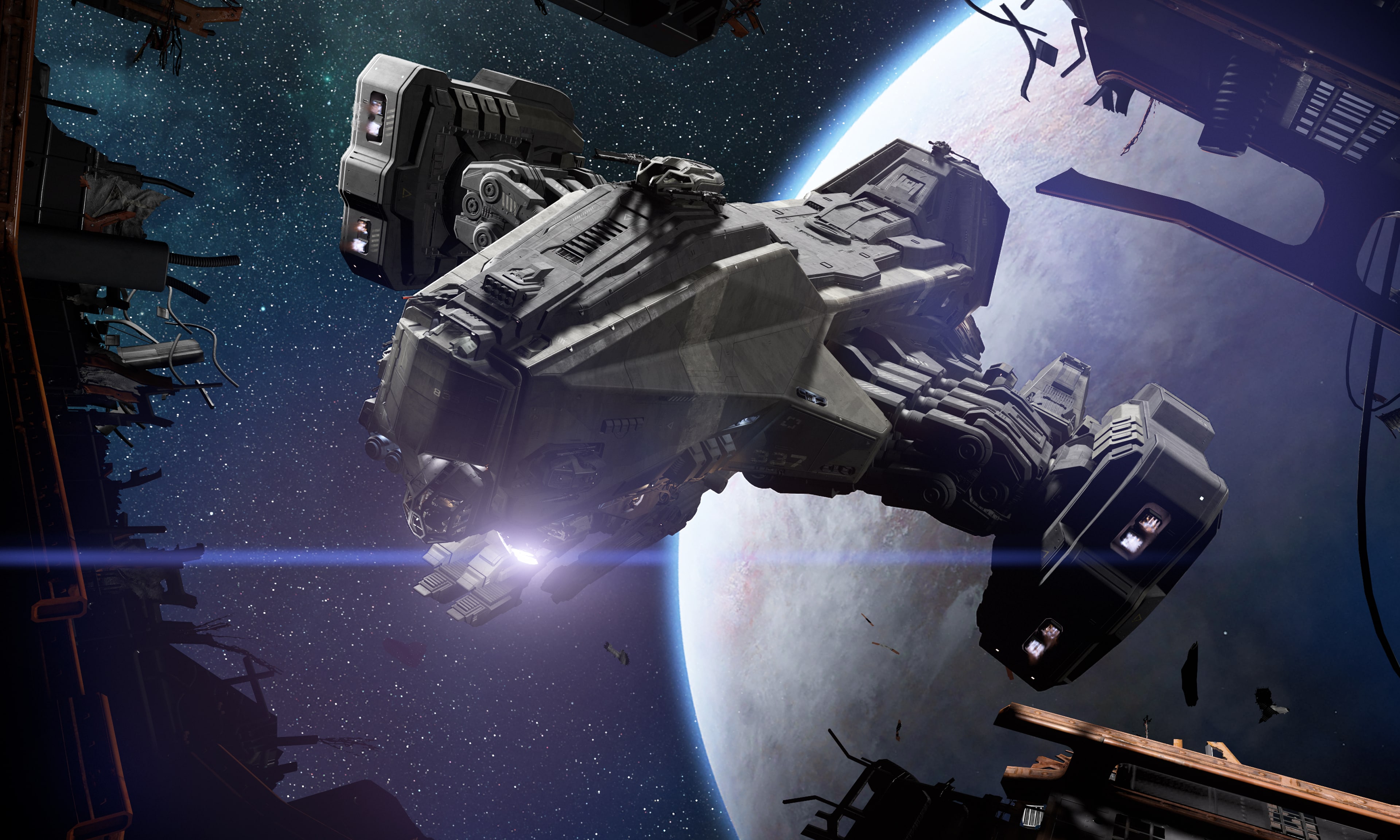
The Reliant light freighter and production variants are among the most successful spacecraft designs of the past decade. Although the model lineup debuted in 2946, the design’s story begins in 2910 with a technology-sharing agreement between Musashi Industrial & Starflight Concern (MISC) and representatives of the Xi’an Empire. While the specific details of the Xi’an technology offered as part of the detail remain a trade secret, the ensuing debate over light spacecraft development at MISC is well documented. Prior to the agreement, MISC had primarily focused on its Heavy Industry division (MISC-HI), responsible for the Endeavor, Starfarer, and Hull series. The license of alien technology represented a major sea change intended to introduce smaller personal craft in the vein of Roberts Space Industries’ (RSI) Aurora and its associated designs. MISC supported several internal pilot projects to determine what shape these new spacecraft would take, with the ultimate winner of the process being the design that became the ubiquitous Freelancer. However, the Freelancer was not the only project studied at this point. An alternative design, then identified as SHIP B, proposed a much more radical adaptation of Xi’an design aesthetics and flight configurations.
SHIP B’s project leader was Dr. Rico Norden, who had transferred from MISC-HI after a lengthy career shepherding the Hull C through several major design revisions. Norden was insistent that his design was the superior choice to help the company to stand out from the many new competitors in the arena. SHIP B featured a wide, movable “flying wing” design that was unlike anything built by humans at the time. In addition to the visual connection to the Xi’an technology the company hoped would put its spacecraft ahead of competitors, Norden argued that SHIP B’s unique design would allow it to maximize cargo storage while permitting the use of smaller landing pads. The proposed design, he further argued, could even rely on traditional flight aerodynamics during emergencies when in atmospheric mode. Norden campaigned ceaselessly for his selection, calling in every favor he had earned in his long career as one of the company’s senior engineers. His campaign was ultimately a failure: the executives instead decided on the more traditional Freelancer outline as their platform, intending to slowly ease the use of Xi’an technology and design mechanics into the human sphere rather than rush ahead with the potentially off-putting alien design language. Feeling humiliated from his failure to convince supporters of the value behind his design, Norden chose to transfer back to MISC-HI rather than work on the competing design. After another failed attempt to revive the wing design on a larger scale, he retired the following year.
A quarter-century later, MISC was in an enviable position: the technology lease agreement with the Xi’an had continued successfully, there was a steady call for HI ships, and the Freelancer had been established as trusted spacecraft for hauling, exploration, and more. With a steady flow of capital, the company had a newfound desire to further encroach on RSI’s everyday spacecraft. The team quickly decided that the climate had changed in two-plus decades and that there was a call for spacecraft that stood out and embraced alien design elements. Working from the original SHIP B development work, the newly-titled Reliant Team developed a smaller version of the original flying wing freighter intended to appeal to independent pilots starting their careers. Though an unusual silhouette, the design was extremely modular, with the development of four different variants happening almost simultaneously. The Reliant program began in 2942 and concluded with the premiere of the first production prototype in a ceremony on Saisei in 2944.
Initial development proceeded rapidly thanks to existing work on aerodynamics and results from early jump tunnel studies for SHIP B. MISC’s deal with the Xi’an government had continued to expand over the preceding two decades, allowing more innovations to be included than were integrated into the original Freelancer or planned for SHIP B. The first prototype successfully left the atmosphere in April 2945. The process was surprisingly flawless for a ship that would have multiple flight modes and such a wide variety of intended roles, with development only slowing during component integration due to transponder issues stemming from the need to protect a shorter, wider ship than off the shelf technology had been intended for. These and a limited number of teething issues relating to the spacecraft flight mode transitions were resolved successfully and the Reliant continued to hit milestones until its formal reveal the following year. Guest of honor at the 2945 product launch ceremony was Dr. Norden who, in his retirement, had been fully unaware that his cherished vision of a wing-based freighter was finally coming to fruition. Tears in his eyes, Norden witnessed in awe as the descendant of SHIP B came into view.
VARIANTS
After an additional period of space-worthiness testing and formal certification of the production prototype, MISC would go on to formally launch the Reliant as part of their 2946 lineup, offering all four of the variants developed during the research period. The initial prototype would form the basis of the Reliant Kore, which MISC would premiere as a “minihauler” (referring to its smaller stature than the Hull line). Owing to its unique silhouette, the Reliant Kore could store more standardized cargo pallets than similarly-sized spacecraft – an appealing option for smaller enterprises or private crews just starting their careers. The hope was to present the Reliant not as another alien oddity, but more as something representing the next evolution of human industry; something the company would go on to repeat throughout the design’s rollout period. Owing to the overall development timeline, each initial variant would share the same chassis as the Kore. To develop the remaining three variants (a number determined by the available production lines at the time), MISC created three focus teams tasked with looking for ‘holes’ in available spacecraft lineups to try and create unique variants to fulfill these niches. The teams focused on reviewing high volumes of news stories and interviewed existing ship crews to determine where they found the experience lacking:
The easiest to determine was the Tana, a military-focused model intended for remote frontier garrisons unable to operate top-of-the-line Anvil or Aegis hardware. The focus team concluded such locations would benefit from a ship that would double as an interceptor for fending off raiders and as a low-level hauler.
The Sen was created in response to interviews with Endeavor science crews who professed a need for smaller, more maneuverable support craft that could be fitted with specialty hardware for outbound scientific operations.
The final version was the most unexpected: the Mako was intended for news organizations broadcasting from space. The need for the Mako was determined by a lengthy review of spectrum broadcasts that identified the low-quality video from combat incidents and the significant increase of such incidents in the first place.
For the Reliant’s formal rollout, MISC opted to avoid marketing the Xi’an connection or the similarity between its flight modes to those of the Khartu-al. Instead, the company opted to follow in the footsteps of its highly-successful “Built for Life” campaign and position the Reliant as a working spacecraft. To promote this, the company wrote off a production run of ships and donated them to various companies and professionals, each accompanied by a documentary film crew. Four Kore haulers were offered to a pair of companies seeking financing for short-term shipping routes, a pair of Makos were donated to the top two major broadcasters on Terra, a Sen was dispatched as part of a solar corona survey expedition, and a half-squadron of Tana was given to a group of colonists preparing to settle a frontier moon (the location of which was unidentified in the marketing). As the donated ships made news wherever they went (and in some cases broadcast that news themselves), the net impact was impressive, giving the public the sense that these new spacecraft were suddenly everywhere. MISC dealerships were flooded with requests for more information and the Reliant quickly became the company’s most successful original spacecraft launch. By the second model year, the Reliant had settled in as one of the company’s most desired models – no small task for the ship that followed the famed Freelancer.
Dieser Artikel erschien ursprünglich in Jump Point 7.3.
MISC Reliant
FRÜHE ENTWICKLUNG
Der leichte Frachter Reliant und seine Produktionsvarianten gehören zu den erfolgreichsten Raumschiffdesigns des letzten Jahrzehnts. Obwohl die Modellreihe im Jahr 2946 erstmals vorgestellt wurde, beginnt die Geschichte des Entwurfs im Jahr 2910 mit einer Vereinbarung über die gemeinsame Nutzung von Technologien zwischen dem Musashi Industrial & Starflight Concern (MISC) und Vertretern des Xi'an-Reiches. Während die genauen Details der Xi'an-Technologie, die im Rahmen des Abkommens angeboten wurde, ein Geschäftsgeheimnis bleiben, ist die darauf folgende Debatte über die Entwicklung von leichten Raumschiffen im MISC gut dokumentiert. Vor dem Abkommen hatte sich die MISC hauptsächlich auf ihre Schwerindustrieabteilung (MISC-HI) konzentriert, die für die Endeavor-, Starfarer- und Hull-Serie verantwortlich war. Die Lizenz für die Alien-Technologie bedeutete eine große Umstellung, um kleinere Raumschiffe nach dem Vorbild der Aurora von Roberts Space Industries (RSI) und den dazugehörigen Designs auf den Markt zu bringen. Die MISC unterstützte mehrere interne Pilotprojekte, um herauszufinden, wie diese neuen Raumfahrzeuge aussehen sollten, und der endgültige Gewinner dieses Prozesses war das Design, das zum allgegenwärtigen Freelancer wurde. Der Freelancer war jedoch nicht das einzige Projekt, das zu diesem Zeitpunkt untersucht wurde. Ein alternatives Design, das damals als SHIP B bezeichnet wurde, schlug eine viel radikalere Anpassung der Ästhetik des Xi'an-Designs und der Flugkonfigurationen vor.
Der Projektleiter von SHIP B war Dr. Rico Norden, der vom MISC-HI gewechselt war, nachdem er lange Zeit den Hull C durch mehrere große Designänderungen geführt hatte. Norden bestand darauf, dass sein Entwurf die beste Wahl war, um sich von den vielen neuen Konkurrenten in der Arena abzuheben. SHIP B zeichnete sich durch ein breites, bewegliches "Nurflügler"-Design aus, das mit nichts vergleichbar war, was zu dieser Zeit von Menschen gebaut wurde. Neben der visuellen Verbindung zur Technologie von Xi'an, von der sich das Unternehmen einen Vorsprung vor der Konkurrenz erhoffte, argumentierte Norden, dass das einzigartige Design von SHIP B die Möglichkeit bietet, den Frachtraum zu maximieren und gleichzeitig kleinere Landeplätze zu nutzen. Das vorgeschlagene Design, so argumentierte er weiter, könnte sich in Notfällen sogar auf die traditionelle Flugaerodynamik verlassen, wenn es sich in der Atmosphäre befindet. Norden setzte sich unermüdlich für seine Wahl ein und forderte jede Gunst ein, die er in seiner langen Karriere als einer der leitenden Ingenieure des Unternehmens erworben hatte. Seine Kampagne war letztlich ein Misserfolg: Die Geschäftsführung entschied sich stattdessen für die traditionellere Freelancer-Plattform, um die Xi'an-Technologie und die Designmechanismen langsam in die menschliche Sphäre einzuführen, anstatt mit der potenziell abschreckenden außerirdischen Designsprache vorzupreschen. Norden fühlte sich gedemütigt, weil es ihm nicht gelungen war, die Unterstützer von seinem Entwurf zu überzeugen, und zog es vor, zurück zur MISC-HI zu wechseln, anstatt an dem konkurrierenden Entwurf zu arbeiten. Nach einem weiteren gescheiterten Versuch, das Flügeldesign in größerem Maßstab wiederzubeleben, zog er sich im folgenden Jahr zurück.
Ein Vierteljahrhundert später befand sich die MISC in einer beneidenswerten Lage: Der Technologie-Leasingvertrag mit der Xi'an wurde erfolgreich fortgesetzt, die Nachfrage nach HI-Schiffen war ungebrochen, und die Freelancer hatte sich als zuverlässiges Raumschiff für Transporte, Erkundungen und vieles mehr etabliert. Mit einem stetigen Kapitalfluss hatte das Unternehmen einen neu entdeckten Wunsch, weiter in die alltäglichen Raumschiffe von RSI einzugreifen. Das Team kam schnell zu dem Schluss, dass sich das Klima in den letzten zwei Jahrzehnten verändert hatte und dass es einen Ruf nach Raumfahrzeugen gab, die sich von anderen abhoben und fremde Designelemente enthielten. Ausgehend von der ursprünglichen SHIP B-Entwicklungsarbeit entwickelte das neu benannte Reliant-Team eine kleinere Version des ursprünglichen Nurflügler-Frachters, die vor allem für unabhängige Piloten gedacht war, die ihre Karriere beginnen wollten. Trotz der ungewöhnlichen Silhouette war das Design extrem modular, so dass die Entwicklung von vier verschiedenen Varianten fast gleichzeitig stattfand. Das Reliant-Programm begann im Jahr 2942 und endete mit der Premiere des ersten Prototyps in einer Zeremonie auf Saisei im Jahr 2944.
Die anfängliche Entwicklung schritt dank der bereits vorhandenen Arbeiten zur Aerodynamik und der Ergebnisse der frühen Sprungtunnelstudien für SHIP B schnell voran. Der Vertrag zwischen der MISC und der Regierung von Xi'an war in den vorangegangenen zwei Jahrzehnten immer weiter ausgeweitet worden, so dass mehr Innovationen eingebaut werden konnten, als in den ursprünglichen Freelancer integriert oder für SHIP B geplant waren. Die Entwicklung verlief erstaunlich reibungslos für ein Schiff mit mehreren Flugmodi und einer so großen Vielfalt an vorgesehenen Aufgaben. Lediglich bei der Integration der Komponenten verlangsamte sich die Entwicklung aufgrund von Transponderproblemen, die sich aus der Notwendigkeit ergaben, ein kürzeres und breiteres Schiff zu schützen, als es für die Standardtechnologie vorgesehen war. Diese und eine begrenzte Anzahl von Kinderkrankheiten im Zusammenhang mit den Flugmodusübergängen des Raumschiffs wurden erfolgreich gelöst und die Reliant erreichte bis zu ihrer offiziellen Enthüllung im darauffolgenden Jahr weitere Meilensteine. Ehrengast bei der Produktvorstellung im Jahr 2945 war Dr. Norden, der in seinem Ruhestand noch gar nicht wusste, dass seine Vision eines flügelgestützten Frachters endlich in Erfüllung gehen würde. Mit Tränen in den Augen verfolgte Norden staunend, wie der Nachfahre von SHIP B in Sicht kam.
VARIANTEN
Nach einer weiteren Phase der Weltraumtauglichkeitsprüfung und der offiziellen Zertifizierung des Prototyps brachte die MISC die Reliant offiziell als Teil ihrer Produktreihe 2946 auf den Markt und bot alle vier während der Forschungsphase entwickelten Varianten an. Der erste Prototyp bildete die Grundlage für den Reliant Kore, den MISC erstmals als "Minihauler" bezeichnete (in Anspielung auf seine geringere Größe als die Hull-Linie). Dank seiner einzigartigen Silhouette konnte der Reliant Kore mehr standardisierte Frachtpaletten aufnehmen als ein Raumschiff ähnlicher Größe - eine attraktive Option für kleinere Unternehmen oder private Crews, die gerade erst ihre Karriere beginnen. Die Hoffnung war, die Reliant Kore nicht als eine weitere außerirdische Kuriosität zu präsentieren, sondern als etwas, das die nächste Evolution der menschlichen Industrie repräsentiert - etwas, das das Unternehmen während der gesamten Markteinführung des Designs wiederholen sollte. Aufgrund des Zeitrahmens für die Entwicklung des Reliant wurde für die ersten Varianten das gleiche Fahrgestell wie für den Kore verwendet. Für die Entwicklung der verbleibenden drei Varianten (deren Anzahl durch die damals verfügbaren Produktionslinien bestimmt wurde) bildete MISC drei Schwerpunktteams, die nach "Löchern" in den verfügbaren Raumschiffbaureihen suchten und versuchten, einzigartige Varianten zu entwickeln, um diese Nischen zu füllen. Die Teams untersuchten eine Vielzahl von Nachrichten und befragten die Schiffsbesatzungen, um herauszufinden, wo es ihnen an Erfahrung fehlte:
Am einfachsten zu ermitteln war die Tana, ein militärisches Modell, das für abgelegene Grenzgarnisonen gedacht ist, die nicht in der Lage sind, Anvil- oder Aegis-Hardware der Spitzenklasse zu betreiben. Das Fokus-Team kam zu dem Schluss, dass solche Standorte von einem Schiff profitieren würden, das sowohl als Abfangjäger zur Abwehr von Plünderern als auch als Low-Level-Transporter eingesetzt werden kann.
Der Sen wurde als Reaktion auf die Befragung von Endeavor-Wissenschaftscrews entwickelt, die den Bedarf an kleineren, wendigeren Hilfsschiffen äußerten, die mit spezieller Hardware für wissenschaftliche Einsätze auf Reisen ausgestattet werden können.
Die endgültige Version war die unerwartetste: Der Mako war für Nachrichtenorganisationen gedacht, die aus dem Weltraum senden. Der Bedarf an der Mako wurde durch eine ausführliche Untersuchung von Spektralübertragungen ermittelt, bei der festgestellt wurde, dass die Qualität der Videos von Kampfeinsätzen schlecht war und die Zahl solcher Einsätze erheblich zunahm.
Bei der offiziellen Markteinführung des Reliant entschied sich MISC dafür, die Verbindung nach Xi'an oder die Ähnlichkeit der Flugmodi mit denen des Khartu-al nicht zu vermarkten. Stattdessen entschied sich das Unternehmen, in die Fußstapfen seiner sehr erfolgreichen "Built for Life"-Kampagne zu treten und die Reliant als funktionierendes Raumschiff zu positionieren. Um dafür zu werben, schrieb das Unternehmen eine Produktionsserie von Schiffen ab und verschenkte sie an verschiedene Unternehmen und Fachleute, jeweils begleitet von einem Dokumentarfilmteam. Vier Kore-Transporter wurden zwei Unternehmen angeboten, die eine Finanzierung für kurzfristige Schiffsrouten suchten, zwei Makos wurden den beiden größten Sendern auf Terra gespendet, eine Sen wurde als Teil einer Sonnenkorona-Expedition verschickt und ein halbes Geschwader Tana wurde einer Gruppe von Kolonisten übergeben, die sich auf die Besiedlung eines Grenzmondes vorbereiteten (dessen Standort in der Werbung nicht genannt wurde). Da die gespendeten Schiffe überall für Schlagzeilen sorgten (und in einigen Fällen diese Schlagzeilen auch selbst verbreiteten), war der Nettoeffekt beeindruckend und vermittelte der Öffentlichkeit das Gefühl, dass diese neuen Raumschiffe plötzlich überall waren. Die MISC-Händler wurden mit Anfragen nach weiteren Informationen überschwemmt und die Reliant wurde schnell zum erfolgreichsten Original-Raumschiff des Unternehmens. Schon im zweiten Modelljahr war die Reliant eines der begehrtesten Modelle des Unternehmens - keine leichte Aufgabe für das Schiff, das auf die berühmte Freelancer folgte.
This article originally appeared in Jump Point 7.3.
MISC Reliant
EARLY DEVELOPMENT
The Reliant light freighter and production variants are among the most successful spacecraft designs of the past decade. Although the model lineup debuted in 2946, the design’s story begins in 2910 with a technology-sharing agreement between Musashi Industrial & Starflight Concern (MISC) and representatives of the Xi’an Empire. While the specific details of the Xi’an technology offered as part of the detail remain a trade secret, the ensuing debate over light spacecraft development at MISC is well documented. Prior to the agreement, MISC had primarily focused on its Heavy Industry division (MISC-HI), responsible for the Endeavor, Starfarer, and Hull series. The license of alien technology represented a major sea change intended to introduce smaller personal craft in the vein of Roberts Space Industries’ (RSI) Aurora and its associated designs. MISC supported several internal pilot projects to determine what shape these new spacecraft would take, with the ultimate winner of the process being the design that became the ubiquitous Freelancer. However, the Freelancer was not the only project studied at this point. An alternative design, then identified as SHIP B, proposed a much more radical adaptation of Xi’an design aesthetics and flight configurations.
SHIP B’s project leader was Dr. Rico Norden, who had transferred from MISC-HI after a lengthy career shepherding the Hull C through several major design revisions. Norden was insistent that his design was the superior choice to help the company to stand out from the many new competitors in the arena. SHIP B featured a wide, movable “flying wing” design that was unlike anything built by humans at the time. In addition to the visual connection to the Xi’an technology the company hoped would put its spacecraft ahead of competitors, Norden argued that SHIP B’s unique design would allow it to maximize cargo storage while permitting the use of smaller landing pads. The proposed design, he further argued, could even rely on traditional flight aerodynamics during emergencies when in atmospheric mode. Norden campaigned ceaselessly for his selection, calling in every favor he had earned in his long career as one of the company’s senior engineers. His campaign was ultimately a failure: the executives instead decided on the more traditional Freelancer outline as their platform, intending to slowly ease the use of Xi’an technology and design mechanics into the human sphere rather than rush ahead with the potentially off-putting alien design language. Feeling humiliated from his failure to convince supporters of the value behind his design, Norden chose to transfer back to MISC-HI rather than work on the competing design. After another failed attempt to revive the wing design on a larger scale, he retired the following year.
A quarter-century later, MISC was in an enviable position: the technology lease agreement with the Xi’an had continued successfully, there was a steady call for HI ships, and the Freelancer had been established as trusted spacecraft for hauling, exploration, and more. With a steady flow of capital, the company had a newfound desire to further encroach on RSI’s everyday spacecraft. The team quickly decided that the climate had changed in two-plus decades and that there was a call for spacecraft that stood out and embraced alien design elements. Working from the original SHIP B development work, the newly-titled Reliant Team developed a smaller version of the original flying wing freighter intended to appeal to independent pilots starting their careers. Though an unusual silhouette, the design was extremely modular, with the development of four different variants happening almost simultaneously. The Reliant program began in 2942 and concluded with the premiere of the first production prototype in a ceremony on Saisei in 2944.
Initial development proceeded rapidly thanks to existing work on aerodynamics and results from early jump tunnel studies for SHIP B. MISC’s deal with the Xi’an government had continued to expand over the preceding two decades, allowing more innovations to be included than were integrated into the original Freelancer or planned for SHIP B. The first prototype successfully left the atmosphere in April 2945. The process was surprisingly flawless for a ship that would have multiple flight modes and such a wide variety of intended roles, with development only slowing during component integration due to transponder issues stemming from the need to protect a shorter, wider ship than off the shelf technology had been intended for. These and a limited number of teething issues relating to the spacecraft flight mode transitions were resolved successfully and the Reliant continued to hit milestones until its formal reveal the following year. Guest of honor at the 2945 product launch ceremony was Dr. Norden who, in his retirement, had been fully unaware that his cherished vision of a wing-based freighter was finally coming to fruition. Tears in his eyes, Norden witnessed in awe as the descendant of SHIP B came into view.
VARIANTS
After an additional period of space-worthiness testing and formal certification of the production prototype, MISC would go on to formally launch the Reliant as part of their 2946 lineup, offering all four of the variants developed during the research period. The initial prototype would form the basis of the Reliant Kore, which MISC would premiere as a “minihauler” (referring to its smaller stature than the Hull line). Owing to its unique silhouette, the Reliant Kore could store more standardized cargo pallets than similarly-sized spacecraft – an appealing option for smaller enterprises or private crews just starting their careers. The hope was to present the Reliant not as another alien oddity, but more as something representing the next evolution of human industry; something the company would go on to repeat throughout the design’s rollout period. Owing to the overall development timeline, each initial variant would share the same chassis as the Kore. To develop the remaining three variants (a number determined by the available production lines at the time), MISC created three focus teams tasked with looking for ‘holes’ in available spacecraft lineups to try and create unique variants to fulfill these niches. The teams focused on reviewing high volumes of news stories and interviewed existing ship crews to determine where they found the experience lacking:
The easiest to determine was the Tana, a military-focused model intended for remote frontier garrisons unable to operate top-of-the-line Anvil or Aegis hardware. The focus team concluded such locations would benefit from a ship that would double as an interceptor for fending off raiders and as a low-level hauler.
The Sen was created in response to interviews with Endeavor science crews who professed a need for smaller, more maneuverable support craft that could be fitted with specialty hardware for outbound scientific operations.
The final version was the most unexpected: the Mako was intended for news organizations broadcasting from space. The need for the Mako was determined by a lengthy review of spectrum broadcasts that identified the low-quality video from combat incidents and the significant increase of such incidents in the first place.
For the Reliant’s formal rollout, MISC opted to avoid marketing the Xi’an connection or the similarity between its flight modes to those of the Khartu-al. Instead, the company opted to follow in the footsteps of its highly-successful “Built for Life” campaign and position the Reliant as a working spacecraft. To promote this, the company wrote off a production run of ships and donated them to various companies and professionals, each accompanied by a documentary film crew. Four Kore haulers were offered to a pair of companies seeking financing for short-term shipping routes, a pair of Makos were donated to the top two major broadcasters on Terra, a Sen was dispatched as part of a solar corona survey expedition, and a half-squadron of Tana was given to a group of colonists preparing to settle a frontier moon (the location of which was unidentified in the marketing). As the donated ships made news wherever they went (and in some cases broadcast that news themselves), the net impact was impressive, giving the public the sense that these new spacecraft were suddenly everywhere. MISC dealerships were flooded with requests for more information and the Reliant quickly became the company’s most successful original spacecraft launch. By the second model year, the Reliant had settled in as one of the company’s most desired models – no small task for the ship that followed the famed Freelancer.
This article originally appeared in Jump Point 7.3.
MISC Reliant
EARLY DEVELOPMENT
The Reliant light freighter and production variants are among the most successful spacecraft designs of the past decade. Although the model lineup debuted in 2946, the design’s story begins in 2910 with a technology-sharing agreement between Musashi Industrial & Starflight Concern (MISC) and representatives of the Xi’an Empire. While the specific details of the Xi’an technology offered as part of the detail remain a trade secret, the ensuing debate over light spacecraft development at MISC is well documented. Prior to the agreement, MISC had primarily focused on its Heavy Industry division (MISC-HI), responsible for the Endeavor, Starfarer, and Hull series. The license of alien technology represented a major sea change intended to introduce smaller personal craft in the vein of Roberts Space Industries’ (RSI) Aurora and its associated designs. MISC supported several internal pilot projects to determine what shape these new spacecraft would take, with the ultimate winner of the process being the design that became the ubiquitous Freelancer. However, the Freelancer was not the only project studied at this point. An alternative design, then identified as SHIP B, proposed a much more radical adaptation of Xi’an design aesthetics and flight configurations.
SHIP B’s project leader was Dr. Rico Norden, who had transferred from MISC-HI after a lengthy career shepherding the Hull C through several major design revisions. Norden was insistent that his design was the superior choice to help the company to stand out from the many new competitors in the arena. SHIP B featured a wide, movable “flying wing” design that was unlike anything built by humans at the time. In addition to the visual connection to the Xi’an technology the company hoped would put its spacecraft ahead of competitors, Norden argued that SHIP B’s unique design would allow it to maximize cargo storage while permitting the use of smaller landing pads. The proposed design, he further argued, could even rely on traditional flight aerodynamics during emergencies when in atmospheric mode. Norden campaigned ceaselessly for his selection, calling in every favor he had earned in his long career as one of the company’s senior engineers. His campaign was ultimately a failure: the executives instead decided on the more traditional Freelancer outline as their platform, intending to slowly ease the use of Xi’an technology and design mechanics into the human sphere rather than rush ahead with the potentially off-putting alien design language. Feeling humiliated from his failure to convince supporters of the value behind his design, Norden chose to transfer back to MISC-HI rather than work on the competing design. After another failed attempt to revive the wing design on a larger scale, he retired the following year.
A quarter-century later, MISC was in an enviable position: the technology lease agreement with the Xi’an had continued successfully, there was a steady call for HI ships, and the Freelancer had been established as trusted spacecraft for hauling, exploration, and more. With a steady flow of capital, the company had a newfound desire to further encroach on RSI’s everyday spacecraft. The team quickly decided that the climate had changed in two-plus decades and that there was a call for spacecraft that stood out and embraced alien design elements. Working from the original SHIP B development work, the newly-titled Reliant Team developed a smaller version of the original flying wing freighter intended to appeal to independent pilots starting their careers. Though an unusual silhouette, the design was extremely modular, with the development of four different variants happening almost simultaneously. The Reliant program began in 2942 and concluded with the premiere of the first production prototype in a ceremony on Saisei in 2944.
Initial development proceeded rapidly thanks to existing work on aerodynamics and results from early jump tunnel studies for SHIP B. MISC’s deal with the Xi’an government had continued to expand over the preceding two decades, allowing more innovations to be included than were integrated into the original Freelancer or planned for SHIP B. The first prototype successfully left the atmosphere in April 2945. The process was surprisingly flawless for a ship that would have multiple flight modes and such a wide variety of intended roles, with development only slowing during component integration due to transponder issues stemming from the need to protect a shorter, wider ship than off the shelf technology had been intended for. These and a limited number of teething issues relating to the spacecraft flight mode transitions were resolved successfully and the Reliant continued to hit milestones until its formal reveal the following year. Guest of honor at the 2945 product launch ceremony was Dr. Norden who, in his retirement, had been fully unaware that his cherished vision of a wing-based freighter was finally coming to fruition. Tears in his eyes, Norden witnessed in awe as the descendant of SHIP B came into view.
VARIANTS
After an additional period of space-worthiness testing and formal certification of the production prototype, MISC would go on to formally launch the Reliant as part of their 2946 lineup, offering all four of the variants developed during the research period. The initial prototype would form the basis of the Reliant Kore, which MISC would premiere as a “minihauler” (referring to its smaller stature than the Hull line). Owing to its unique silhouette, the Reliant Kore could store more standardized cargo pallets than similarly-sized spacecraft – an appealing option for smaller enterprises or private crews just starting their careers. The hope was to present the Reliant not as another alien oddity, but more as something representing the next evolution of human industry; something the company would go on to repeat throughout the design’s rollout period. Owing to the overall development timeline, each initial variant would share the same chassis as the Kore. To develop the remaining three variants (a number determined by the available production lines at the time), MISC created three focus teams tasked with looking for ‘holes’ in available spacecraft lineups to try and create unique variants to fulfill these niches. The teams focused on reviewing high volumes of news stories and interviewed existing ship crews to determine where they found the experience lacking:
The easiest to determine was the Tana, a military-focused model intended for remote frontier garrisons unable to operate top-of-the-line Anvil or Aegis hardware. The focus team concluded such locations would benefit from a ship that would double as an interceptor for fending off raiders and as a low-level hauler.
The Sen was created in response to interviews with Endeavor science crews who professed a need for smaller, more maneuverable support craft that could be fitted with specialty hardware for outbound scientific operations.
The final version was the most unexpected: the Mako was intended for news organizations broadcasting from space. The need for the Mako was determined by a lengthy review of spectrum broadcasts that identified the low-quality video from combat incidents and the significant increase of such incidents in the first place.
For the Reliant’s formal rollout, MISC opted to avoid marketing the Xi’an connection or the similarity between its flight modes to those of the Khartu-al. Instead, the company opted to follow in the footsteps of its highly-successful “Built for Life” campaign and position the Reliant as a working spacecraft. To promote this, the company wrote off a production run of ships and donated them to various companies and professionals, each accompanied by a documentary film crew. Four Kore haulers were offered to a pair of companies seeking financing for short-term shipping routes, a pair of Makos were donated to the top two major broadcasters on Terra, a Sen was dispatched as part of a solar corona survey expedition, and a half-squadron of Tana was given to a group of colonists preparing to settle a frontier moon (the location of which was unidentified in the marketing). As the donated ships made news wherever they went (and in some cases broadcast that news themselves), the net impact was impressive, giving the public the sense that these new spacecraft were suddenly everywhere. MISC dealerships were flooded with requests for more information and the Reliant quickly became the company’s most successful original spacecraft launch. By the second model year, the Reliant had settled in as one of the company’s most desired models – no small task for the ship that followed the famed Freelancer.
Links
No links available.

Metadata
- CIG ID
- 19722
- Channel
- Spectrum Dispatch
- Category
- Undefined
- Series
- News Update
- Comments
- 21
- Published
- 2 years ago (2024-01-09T00:00:00+00:00)