Star Citizen Monthly Report: February 2024
Transmission Undefined NoneContent
PU Monthly Report
February 2024
It’s been a busy start to the year across CIG studios, and February was no different. Read on for everything done for the Persistent Universe throughout February, including vehicle progress, cloud rendering developments, and AI updates.
AI (Features)
As mentioned in last month’s report, AI Features continued to develop features for a key initiative, the first iteration of which is planned for Alpha 3.23. Further details will be revealed in the run-up to release.
AI (Tech)
During February, AI Tech focused on a variety of improvements alongside feature work, including for the navigation system. The main focus of this was on extending the planetary navigation mesh to be able to generate across a whole planet. Due to a limitation of the initial implementation, it currently has a latitude limit at which navigation tiles can be created. However, with the new approach, nav mesh can be generated anywhere on the planet following physics terrain patches. The devs are currently improving the tile border simplification step to make sure all nav-mesh tiles connect correctly with each other.
For NPCs using trolleys, focus was on the exact positioning of trolleys in the environment. Now, an NPC can correctly push a trolley to a location with an arbitrary orientation. The team also improved transit and elevator usage while pushing trolleys so that the overall flow is more robust and fluid.
Spaceship behaviors were also iterated on to deliver better ship-vs-turret combat. Fighters will now correctly target standalone turrets and perform appropriate combat behaviors.
Numerous updates were added to the Apollo tool, such as improved feedback for errors in missions. For example, the overall box that represents a function turns red when the logic contains errors. The team also increased usability when navigating between mission callbacks, allowing the designers to jump to the appropriate logic from multiple elements of the interface. A new UI for the Subsumption tool is underway too.
AI Tech continued to support PU releases, while an important upcoming feature continued development, which can be experienced in Alpha 3.23.
Art (Ships)
Last month, progress was made on the RSI Polaris, with the exterior progressing to LOD0 and the interior approaching its greybox review. Some interior sections were worked up to establish a visual target, while others were redesigned to accommodate gameplay and improve alignment with the art direction.
Two upcoming variants progressed through the pipeline. One continued its LOD0 pass, the other passing the LOD0 Gate review. The latter then moved on to the final damage and LOD passes, while its UV2 and paints were completed and approved.
The gold-standard pass continued for the Aegis Retaliator, which is currently awaiting greybox gate review. Feedback from a recent sanity review is currently underway. The ship’s base, cargo, and bombing/torpedo modules are also progressing well following minor art-direction feedback.
Two unannounced vehicles passed their LOD0 gate reviews, with only one minor issue to resolve between them. Both will now move into the final phase of development that implements damage meshes and LODs.
The RSI Zeus is approaching the end of greybox, with the team polishing geometry around the ship. A redesign of the cargo hold is nearly complete, as are changes to the inner frame of the ramp and ramp-piston mechanism. Additional high-frequency detail was added to help increase the illusion of inner structures between the exterior hull and chassis, while maneuvering thrusters on the nose were moved to allow for better integration into the surface. A redesign of the the ship-to-ship docking ring door and frame was done to better fit the RSI aesthetic, while the mess hall was highly polished. The ship’s habitation is currently being updated. The central hallway bulkheads were widened to allow for better navigation and consistency too.
Polish was completed on another new ship, while yet another progressed through whitebox, greybox, and LOD0. A final lighting pass will be done soon before damage and LOD work.
Art (Weapons)
Weapon Art worked through a host of updates planned for Alpha 3.23, including scope magnification and optic improvements. The aim is to overhaul the whole scope system to bring it up to modern FPS standards. The existing iron sights across all weapons were updated too.
Alongside this, updates were made to improve and streamline reloading across all weapons.
Community
The Community Team supported two major events in February, Red Festival and Coramor, the latter with a First Date in the 'Verse screenshot contest and a guide to enjoying activities together. Hundreds of pictures and videos taken by the community during the events are available to view on the Community Hub.
The team then supported various community events:
“Congratulations to everyone in the French-speaking community who participated in the Destination Cachée event. The puzzles were particularly well thought out, putting each of the four teams to the test. A pirate team nearly captured a participant, and the security teams had their share of fun as well. We hope that everyone enjoyed participating or watching their favorites on Twitch. We also want to bow to everyone who fought in the recent Verse at War 2° Edition. We loved seeing everyone fighting for their teams in early February! March is coming quickly, and we’re eager to follow the action during the next Crux Cup from Anzia Racing. Ready, set, go!” Community Team
The Community team continued detailing the weekly and monthly schedules with This Week in Star Citizen and This Month in Star Citizen. They also officially announced CitizenCon 2954, which returns to Manchester, UK, October 19-20. The team is already deep in planning for the event, and want to remind you all to NOT miss this one.
Finally, the team updated the Arena Commander Schedule, which keeps players up to date with Arena Commander’s rotating game modes. They also have been working on a variety of initiatives to support the upcoming release of Alpha 3.23, 4.0, and beyond.
Core Gameplay
February saw the Core Gameplay pillar continuing to refine and improve new backpack reloading ahead of QA testing. For example, magazines are now repacked in a player’s inventory, so multiple half-empty mags are condensed into fewer full ones.
Support continued for the ongoing scope updates, including correctly folding down iron sights when sights are attached. Support for blur on the outside of sights is currently underway. The team also enabled the weapon-customization UI to look more holographic ahead of a UI styling pass.
For item wear and misfire, further work was completed on the accumulator system. Additional tools were implemented to make working and testing the system easier too.
For player interaction, the team spent a lot of time bug fixing and polishing. They also added a game option to hide the ‘F’ prompt and added a new control hint for when an offscreen interaction is available.
The devs then added the ability to show the loot screen from the interaction wheel. Players will also now auto-crouch if the object they’re looting is below them. Support was added to automatically open the inventory UI instead of the loot screen if the lootable container is above a certain capacity too.
The team are working on a replacement for the legacy quick-buy UI using Building Blocks. This will also be used for renting vehicles during events. Work continued on the freight elevator kiosk UI backend too.
For the ongoing visor/lens HUD rework, progress continued on various UI elements, including priority notifications, mission objectives, and chat.
Regarding EVA, Core Gameplay continued to implement and improve networking support and ensured that players’ arms and held entities don’t clip into their torsos when traversing and rotating.
For prone, players will now be forced out when they perform actions that require them to crouch, such as melee attacks. Further locomotion improvements were made in collaboration with the Animation team too.
For Master Modes, Core Gameplay continued working with Design to tune archetypes. They have so far completed around 90% of the initial conversion, with further tuning passes and refinement to be done before release.
Work continued on jump points, with the team implementing an updated alignment mechanic. A new UI was also added to give players information on whether their ships are capable of completing travel. Successful tests transitioning between Stanton and Pyro across two separate servers were completed too.
For the resource network and engineering, ‘heat’ gameplay was added, which enables items to generate heat based on their usage. Items will require coolant if necessary and will overheat and degrade in functionality if not addressed.
Life Support is now fully integrated into the resource network, with the life-support generator and tank now functional.
Improved debugging tools for were added for the room system to help better understand how the resource network and life support interoperate.
For Radar & Scanning, Core Gameplay completed an important refactor to reduce the number of radar components on vehicles and share data between seat operators. Previously, each seat operator had a unique radar. Now, vehicles can share a single radar across all operators. This means that a pilot or radar operator can focus on collecting radar and scan results that are then shared between all vehicle turrets, rather than each turret needing to scan for themselves. While it’s still possible for vehicles to contain multiple radars, in time, the team will merge the majority into a single shared unit that will not only improve performance but gameplay too.
The team also supported elevators for the upcoming instanced hangars and supported quantum travel and markers working alongside Server Meshing when transitioning to a new solar system.
For Arena Commander, the team concluded engineering work for streaming. This technology will allow Arena Commander to utilize any Persistent Universe location with ease and avoid duplicating planets or other object containers, which was previously required to cull expensive locations, such as cities and space stations.
The engineering work for custom lobbies is nearing completion. Following successful internal tests, the system is being handed off to QA for release assessment. The team also began work on some basic custom settings, such as score limit, time limit, and match cycle options, to provide players with more control over their lobbies.
Several internal tests were conducted on Engineering Experimental Modes after an update to the backend matchmaker. New loadouts were created with all the equipment engineers will need for the mode, which is being prepared for go/no-go for an upcoming release.
The team also began focusing on the Arena Commander frontend.
“Recently, focus has been on functionality, but now we are excited to improve not just the overall UX of Arena Commander’s UI but to bring it in line with the quality and style established across the rest of the game.” Core Gameplay Pillar
Finally, the team completed the backend work required for ‘Grav Royale’ and other upcoming game modes and maps. They also continued to enable streaming across all maps while supporting the release of Alpha 3.22.1 with several fixes and quality-of-life changes.
Core Gameplay continued working on an underlying mission system refactor ahead of Server Meshing. Further progress was made on the mission perks and rewards system too.
An update was made to reputation-based hostility, ensuring that if someone is being attacked, any nearby allied or security faction members will come to their defense. This also means that factions with negative reputation with the attacked players will not intervene.
The Contracts Manager was converted to Building Blocks in preparation for the new mobiGlas. Further polish and UX improvements are currently underway in collaboration with the UI team.
For persistent and instanced hangars, work began on the instanced-interior system. This manages which hangar instances exist, need to be created, and which physical gateways are used to transition between the instance and the rest of the game world.
The team implemented the initial version of automated cargo loading and unloading, including displaying information on ASOP terminals that the ship is currently unavailable for retrieval due to being loaded or unloaded.
Progress was also made on the freight-elevator and loading-platform occlusion logic, which determines where items can be placed on the elevator or platform. Support was also given to the Locations team for marking up hangars with loading platforms and freight elevators.
Finally for Core Gameplay, the team worked on various debug tools to aid in testing and debugging the various systems that drive instanced hangars, the warehouse system, and loading platforms.
Economy
Last month, the Economy team made changes to bring Salvage more in line with the PU’s other careers. They’re currently rebalancing commodities to improve the Cargo career experience too.
Support was also provided for the XenoThreat Global Event, and the team began looking at FPS ammo prices.
Graphics, VFX Programming & Planet Tech
Throughout February, the Graphics teams progressed with their longer-term tasks. For example, work is nearing completion on the unification of gas-cloud and planet-cloud upscaling, though challenges caused by animated lights in gas clouds need to be solved. The gas-cloud occlusion effect is also nearing completion, which will increase the detail level of all gas clouds, even in flat-lit scenarios. The team also resolved a long-standing issue that caused a harsh line to appear when 600m from where a gas cloud blends with the near-fog system.
The Global Illumination team continued to work on a system to approximate complex materials within a ray-traced view of the world. Last month, they began looking into performance improvements before tackling some of the more complex issues, like moving objects and zones.
February saw the Vulkan team pushing hard toward release, working through various performance issues such as compiler bugs caused by Vulkan’s complex shaders. They also worked on a shader-caching mechanism to compile shaders while the game is loading to avoid hitches. They’re also considering whether this process can later run in the patcher to further reduce the chance of compiling when the game starts. Although progressing, this may not be fully complete by the initial public release.
Devs from the water strike team closed out the issues that came up in their final review alongside several new features, including SDF interaction for accurate collisions when vehicles hit water and an improved water-intersection shader.
Last month, the Planet Tech team began improving the editor workflow for creating planets and planning out the next version of planet tech (v5). Planet Tech v5 will cover a variety of areas but the primary goals are to make creating planets quicker and easier and to try and achieve more diversity, density, and consistency in quality across whole planetary surfaces.
The rest of the Graphics team focused on improving their upscaling tech ahead of its public release. This involved finalizing a new mesh format that gives major performance improvements.
Lighting
February saw the Lighting team continue to support various upcoming PU initiatives, including Distribution Centers, instanced hangars, freight elevators, and the new character customizer.
Locations (EU)
In February, the Landing Zone team worked with the Feature team to finalize the working prototype for cargo and the new hangar experience. Final art and LODs are now nearing completion on all of the modifications to hangars necessary for this exciting new feature.
The Sandbox 2 team worked toward closing out the upcoming Distribution Centers. For example, art is being finalized and optimized while Level Design added the final tweaks to make sure the various areas can support all the gameplay the Mission team want to add.
Mission Design
Last month, Mission Design continued to work on a chain that comprises various mission types that scale in difficulty.
Elsewhere, designs for new missions are currently being signed off, while content and technical requirements are underway for future hauling content.
The development of XenoThreat 1.2 continued, with changes to gameplay and the implementation of freight elevators, while Blockade Runner received polish and the implementation of freight elevators.
Narrative
February saw a flurry of mission work as Narrative focused on the upcoming Alpha 3.23 patch. Alongside UI and hint text, many of the new gameplay features will have corresponding missions, and the team have been working closely with Design to develop the narrative players will experience. For example, the new Distribution Centers feature a wide variety of missions, new and old. Additionally, narrative work began on new Pyro-based missions to help expand the gameplay at its various locations.
Looking further forward, progress continued on future story missions. These will be more involved than typical missions, featuring things like bespoke dialog and custom logic. The hope is that these types of missions will serve to build out the story of the wider universe and work alongside the more traditional systemic missions.
Last month, the Narrative Design team continued to develop the tourist behaviors that will bring new life to Star Citizen’s large in-world events.
“It has been interesting balancing how to make sure the NPC presence is felt while not being overly distracting from the event itself.” Narrative Team
Finally, several new narrative posts were published, including a Whitley’s Guide to the Valkyrie and a fresh batch of Galactapedia articles.
R&D
In February, the R&D team continued work on the temporal render mode. History filtering was switched to a custom bicubic filter to avoid diffusion and resampling blur due to repeated history look ups. Care was also taken to eliminate potential ringing artifacts during strong camera movements.
The temporal filtering of transmittance was improved to avoid glowing thin silhouettes around objects in foregrounds with clouds and the sun behind them. Various improvements were made to preserve history details for as long as possible (slow movement, no significant cloud disocclusion, etc.), and to quickly converge to a full resolution image in case history needs to be rejected.
Tech Art/Animation
Last month, the Tech Animation team focused on refining head assets and cleaning up technical debt around their implementation. This comes as a precursor to polishing head assets and refining eye alignment in the editor to ensure characters look as good as possible.
Further to this, a large contingent of the department is working on asset setup for lockers. These will be placed throughout the 'verse and allow players and NPCs to change their apparel to something more appropriate to their current priorities.
“This sounds simple but, in practice, we have to support a wide array of assets that can be stowed and recovered from these vessels. It can take quite some time to ensure everything is set up correctly.” Tech Art/Animation Team
The team also kicked off initiatives to ensure the health of the build remains stable and triage technical debt built up over the course of the project.
VFX
Last month, the VFX team continued working on several upcoming locations, including freight elevators and Distribution Centers.
They also investigated an issue with planetary ground storms where fog was coming in too thick when light winds arrived. Although it's difficult to balance dynamic effects such as this, it will be easier for players to see where they are going if a storm is relatively mild.
Image by
PangoraImage by
Pangora
PU-Monatsbericht
Februar 2024
Die CIG-Studios haben das Jahr mit viel Arbeit begonnen, und das war auch im Februar nicht anders. Lies weiter, um zu erfahren, was im Februar alles für das Persistent Universe getan wurde, einschließlich der Fortschritte bei den Fahrzeugen, den Entwicklungen beim Cloud-Rendering und den KI-Updates.
KI (Features)
Wie im Bericht des letzten Monats erwähnt, haben die KI-Features die Entwicklung von Features für eine wichtige Initiative fortgesetzt, deren erste Version für Alpha 3.23 geplant ist. Weitere Details werden im Vorfeld der Veröffentlichung bekannt gegeben.
KI (Tech)
Im Februar konzentrierte sich AI Tech neben der Arbeit an den Funktionen auch auf eine Reihe von Verbesserungen, unter anderem für das Navigationssystem. Das Hauptaugenmerk lag dabei auf der Erweiterung des planetarischen Navigationsnetzes, das nun über einen ganzen Planeten hinweg generiert werden kann. Aufgrund einer Einschränkung der ursprünglichen Implementierung gibt es derzeit eine Breitengradgrenze, bei der Navigationskacheln erstellt werden können. Mit dem neuen Ansatz können die Navigationskacheln jedoch überall auf dem Planeten erstellt werden, wenn man die physikalischen Terrain-Patches beachtet. Die Entwickler/innen verbessern derzeit die Vereinfachung der Kachelgrenzen, um sicherzustellen, dass alle Nav-Mesh-Kacheln korrekt miteinander verbunden sind.
Bei NSCs, die Trolleys benutzen, lag der Schwerpunkt auf der genauen Positionierung der Trolleys in der Umgebung. Jetzt kann ein NSC einen Wagen korrekt an einen Ort mit beliebiger Ausrichtung schieben. Das Team hat auch die Nutzung von Verkehrsmitteln und Aufzügen beim Schieben von Trolleys verbessert, sodass der gesamte Spielfluss robuster und flüssiger ist.
Das Verhalten von Raumschiffen wurde ebenfalls überarbeitet, um den Kampf zwischen Schiffen und Geschützen zu verbessern. Raumjäger zielen jetzt korrekt auf einzelne Geschütztürme und führen das richtige Kampfverhalten aus.
Das Apollo-Tool wurde um zahlreiche Aktualisierungen ergänzt, z. B. um eine verbesserte Rückmeldung bei Fehlern in Missionen. Zum Beispiel färbt sich das allgemeine Feld, das eine Funktion darstellt, rot, wenn die Logik Fehler enthält. Das Team hat auch die Benutzerfreundlichkeit beim Navigieren zwischen Missionsrückrufen verbessert, so dass die Designer/innen von mehreren Elementen der Benutzeroberfläche zur entsprechenden Logik springen können. Eine neue Benutzeroberfläche für das Subsumptionstool ist ebenfalls in Arbeit.
AI Tech unterstützte weiterhin PU-Releases, während ein wichtiges kommendes Feature weiter entwickelt wurde, das in Alpha 3.23 zu erleben ist.
Kunst (Schiffe)
Im letzten Monat wurden Fortschritte bei der RSI Polaris gemacht: Das Äußere wurde auf LOD0 gebracht und das Innere nähert sich dem Greybox-Review. Einige Abschnitte des Innenraums wurden überarbeitet, um ein visuelles Ziel festzulegen, während andere neu gestaltet wurden, um das Gameplay zu berücksichtigen und die Übereinstimmung mit der Art Direction zu verbessern.
Zwei neue Varianten durchliefen die Pipeline. Eine setzte ihren LOD0-Pass fort, die andere passierte die LOD0-Gate-Prüfung. Die zweite Variante durchlief den finalen Schadens- und LOD-Durchlauf, während die UV2-Bearbeitung und die Bemalung abgeschlossen und genehmigt wurden.
Der Gold-Standard-Durchlauf wurde für den Aegis Retaliator fortgesetzt, der derzeit auf das Greybox-Gate-Review wartet. Die Rückmeldungen aus einer kürzlich durchgeführten Überprüfung werden derzeit bearbeitet. Die Module für die Basis, den Frachtraum und die Bomben-/Torpedo-Module des Schiffes kommen ebenfalls gut voran, nachdem es einige Rückmeldungen zur Art Direction gab.
Zwei unangekündigte Fahrzeuge haben ihre LOD0-Gate-Reviews bestanden, wobei nur noch ein kleines Problem gelöst werden muss. Beide werden nun in die letzte Entwicklungsphase gehen, in der die Schadensmeshes und LODs implementiert werden.
Der RSI Zeus nähert sich dem Ende der Greybox-Phase, in der das Team die Geometrie des Schiffes aufpoliert. Die Neugestaltung des Frachtraums ist fast abgeschlossen, ebenso wie die Änderungen am inneren Rahmen der Rampe und am Rampenkolbenmechanismus. Zusätzliche Hochfrequenzdetails wurden hinzugefügt, um die Illusion von inneren Strukturen zwischen der Außenhülle und dem Fahrgestell zu verstärken, während die Manövriertriebwerke am Bug versetzt wurden, um eine bessere Integration in die Oberfläche zu ermöglichen. Die Tür und der Rahmen des Andockrings wurden neu gestaltet, um besser zur RSI-Ästhetik zu passen, und die Kantine wurde auf Hochglanz poliert. Die Wohnräume des Schiffes werden derzeit überarbeitet. Die Schotten in den zentralen Gängen wurden verbreitert, um eine bessere Navigation und Konsistenz zu ermöglichen.
Ein weiteres neues Schiff wurde poliert, während ein weiteres durch Whitebox, Greybox und LOD0 ging. Ein letzter Beleuchtungsdurchlauf wird bald durchgeführt, bevor die Schäden und LOD-Arbeiten beginnen.
Kunst (Waffen)
Die Waffenkunst hat eine Reihe von Aktualisierungen durchlaufen, die für Alpha 3.23 geplant sind, darunter die Vergrößerung des Zielfernrohrs und optische Verbesserungen. Das Ziel ist es, das gesamte Zielfernrohrsystem zu überarbeiten, um es an moderne FPS-Standards anzupassen. Auch die vorhandenen Eisenzielgeräte aller Waffen wurden aktualisiert.
Außerdem wurden Aktualisierungen vorgenommen, um das Nachladen für alle Waffen zu verbessern und zu vereinfachen.
Community
Das Community-Team hat im Februar zwei große Events unterstützt, das Rote Fest und Coramor, letzteres mit einem Screenshot-Wettbewerb für das erste Date im Verse und einem Leitfaden für gemeinsame Aktivitäten. Hunderte von Bildern und Videos, die von der Community während der Events aufgenommen wurden, können im Community Hub angesehen werden.
Anschließend unterstützte das Team verschiedene Community-Events:
"Herzlichen Glückwunsch an alle aus der französischsprachigen Community, die an der Veranstaltung Destination Cachée teilgenommen haben. Die Rätsel waren besonders gut durchdacht und stellten jedes der vier Teams auf die Probe. Ein Piratenteam hätte beinahe einen Teilnehmer gefangen genommen, und auch die Sicherheitsteams hatten ihren Spaß. Wir hoffen, dass es allen Spaß gemacht hat, teilzunehmen oder ihre Favoriten auf Twitch zu verfolgen. Wir möchten uns auch bei allen verbeugen, die in der letzten Verse at War 2° Edition gekämpft haben. Wir fanden es toll, dass alle Anfang Februar für ihre Teams gekämpft haben! Der März kommt schnell und wir sind gespannt auf die Action beim nächsten Crux Cup von Anzia Racing. Auf die Plätze, fertig, los!" Community-Team
Das Community Team hat die Wochen- und Monatspläne mit This Week in Star Citizen und This Month in Star Citizen vorgestellt. Außerdem kündigten sie offiziell die CitizenCon 2954 an, die am 19. und 20. Oktober in Manchester, Großbritannien, stattfinden wird. Das Team steckt bereits mitten in den Planungen für das Event und möchte euch alle daran erinnern, es NICHT zu verpassen.
Außerdem hat das Team den Arena Commander-Zeitplan aktualisiert, der die Spieler über die wechselnden Spielmodi von Arena Commander auf dem Laufenden hält. Außerdem hat das Team an einer Reihe von Initiativen gearbeitet, um die bevorstehende Veröffentlichung von Alpha 3.23, 4.0 und darüber hinaus zu unterstützen.
Core Gameplay
Im Februar wurde in der Säule Core Gameplay weiter an der Verfeinerung und Verbesserung des Nachladens von Rucksäcken gearbeitet, bevor die QA-Tests beginnen. Zum Beispiel werden die Magazine im Inventar des Spielers neu gepackt, sodass aus mehreren halbleeren Magazinen weniger volle werden.
Die Unterstützung für die laufenden Zielfernrohr-Updates wurde fortgesetzt, einschließlich des korrekten Herunterklappens der Eisenvisiere, wenn die Visiere angebracht sind. Die Unterstützung für die Unschärfe an der Außenseite der Visiere ist derzeit in Arbeit. Das Team hat außerdem die Waffenanpassungs-UI holografischer gestaltet, bevor ein UI-Styling durchgeführt wird.
Für die Abnutzung von Gegenständen und Fehlzündungen wurden weitere Arbeiten am Akkusystem abgeschlossen. Außerdem wurden zusätzliche Tools implementiert, die das Arbeiten und Testen des Systems erleichtern.
Für die Interaktion mit den Spielern hat das Team viel Zeit damit verbracht, Fehler zu beheben und die Oberfläche zu verbessern. Außerdem fügten sie eine Spieloption hinzu, mit der die "F"-Eingabeaufforderung ausgeblendet werden kann, und gaben einen neuen Steuerungshinweis, wenn eine Interaktion außerhalb des Bildschirms möglich ist.
Die Entwickler haben außerdem die Möglichkeit hinzugefügt, den Beutebildschirm über das Interaktionsrad anzuzeigen. Außerdem kriechen die Spieler jetzt automatisch, wenn sich das Objekt, das sie plündern, unter ihnen befindet. Außerdem wird jetzt automatisch die Inventaroberfläche anstelle des Beutebildschirms geöffnet, wenn der zu plündernde Behälter ein bestimmtes Fassungsvermögen überschreitet.
Das Team arbeitet an einem Ersatz für die alte Schnellkauf-UI mit Building Blocks. Diese wird auch für das Mieten von Fahrzeugen während der Events genutzt werden. Die Arbeit am Backend des Lastenaufzug-Kiosks wurde ebenfalls fortgesetzt.
Bei der laufenden Überarbeitung des Visier-/Linsen-HUDs wurden weitere Fortschritte bei verschiedenen UI-Elementen gemacht, darunter Prioritätsbenachrichtigungen, Missionsziele und Chat.
Im Bereich EVA hat Core Gameplay die Netzwerkunterstützung weiter implementiert und verbessert und dafür gesorgt, dass die Arme und die gehaltenen Objekte der Spieler/innen beim Durchqueren und Drehen nicht in ihren Torsos einklemmen.
In der Bauchlage werden die Spieler/innen nun gezwungen, sich zu bewegen, wenn sie Aktionen ausführen, bei denen sie in die Hocke gehen müssen, z. B. bei Nahkampfangriffen. Weitere Verbesserungen der Fortbewegung wurden in Zusammenarbeit mit dem Animationsteam vorgenommen.
Bei den Hauptmodi arbeitete das Kernteam Gameplay weiter mit dem Designteam zusammen, um die Archetypen zu optimieren. Bislang haben sie etwa 90 % der anfänglichen Konvertierung abgeschlossen, weitere Abstimmungsdurchgänge und Verfeinerungen stehen vor der Veröffentlichung noch aus.
Die Arbeit an den Sprungpunkten wurde fortgesetzt, wobei das Team eine aktualisierte Ausrichtungsmechanik implementierte. Außerdem wurde eine neue Benutzeroberfläche hinzugefügt, die die Spieler/innen darüber informiert, ob ihre Schiffe in der Lage sind, die Reise zu beenden. Außerdem wurden erfolgreiche Tests für den Wechsel zwischen Stanton und Pyro auf zwei verschiedenen Servern durchgeführt.
Für das Ressourcennetzwerk und die Technik wurde das "Hitze"-Spiel hinzugefügt, das es ermöglicht, dass Gegenstände je nach Gebrauch Hitze erzeugen. Gegenstände müssen bei Bedarf gekühlt werden und überhitzen und verlieren an Funktionalität, wenn sie nicht behandelt werden.
Das Lebenserhaltungssystem ist jetzt vollständig in das Ressourcennetzwerk integriert, da der Lebenserhaltungsgenerator und der Tank jetzt funktionieren.
Es wurden verbesserte Debugging-Tools für das Raumsystem hinzugefügt, um besser zu verstehen, wie das Ressourcennetzwerk und die Lebenserhaltung zusammenspielen.
Im Bereich Radar & Scanning hat Core Gameplay ein wichtiges Refactoring durchgeführt, um die Anzahl der Radarkomponenten in den Fahrzeugen zu reduzieren und die Daten zwischen den Sitzplatzbetreibern zu teilen. Zuvor hatte jeder Fahrer ein eigenes Radargerät. Jetzt können die Fahrzeuge ein einziges Radar für alle Bediener nutzen. Das bedeutet, dass sich ein Pilot oder Radarbediener auf das Sammeln von Radar- und Scanergebnissen konzentrieren kann, die dann von allen Fahrzeugtürmen gemeinsam genutzt werden, anstatt dass jeder Turm für sich selbst scannen muss. Es ist zwar immer noch möglich, dass Fahrzeuge mehrere Radare haben, aber mit der Zeit wird das Team die meisten zu einem einzigen gemeinsamen Gerät zusammenführen, das nicht nur die Leistung, sondern auch das Gameplay verbessert.
Das Team unterstützte auch Aufzüge für die kommenden instanzierten Hangars und unterstützte Quantenreisen und Marker, die beim Übergang zu einem neuen Sonnensystem mit dem Server-Meshing zusammenarbeiten.
Für Arena Commander schloss das Team die Entwicklungsarbeiten für das Streaming ab. Diese Technologie wird es Arena Commander ermöglichen, jeden beliebigen Ort im Persistent Universe zu nutzen und das Duplizieren von Planeten oder anderen Objektcontainern zu vermeiden, was bisher erforderlich war, um teure Orte wie Städte und Raumstationen auszuschalten.
Die Entwicklungsarbeiten für benutzerdefinierte Lobbys stehen kurz vor dem Abschluss. Nach erfolgreichen internen Tests wird das System zur Freigabe an die QA weitergegeben. Das Team hat außerdem mit der Arbeit an einigen grundlegenden benutzerdefinierten Einstellungen begonnen, wie z. B. Punktelimit, Zeitlimit und Spielzyklusoptionen, um den Spieler/innen mehr Kontrolle über ihre Lobbys zu geben.
Nach einer Aktualisierung des Backend-Matchmakers wurden mehrere interne Tests mit den experimentellen Modi der Technik durchgeführt. Es wurden neue Ausrüstungen erstellt, die die Ingenieure für den Modus benötigen, der für eine baldige Veröffentlichung vorbereitet wird.
Das Team konzentrierte sich auch auf das Frontend für den Arena Commander.
"In letzter Zeit lag der Fokus auf der Funktionalität, aber jetzt freuen wir uns darauf, nicht nur die Benutzeroberfläche des Arena Commanders zu verbessern, sondern sie auch mit der Qualität und dem Stil des restlichen Spiels in Einklang zu bringen". Hauptpfeiler des Gameplays
Schließlich schloss das Team die Backend-Arbeiten ab, die für "Grav Royale" und andere kommende Spielmodi und Karten erforderlich sind. Außerdem haben sie das Streaming auf allen Karten weiter ermöglicht und die Veröffentlichung der Alpha 3.22.1 mit verschiedenen Fehlerbehebungen und Qualitätsverbesserungen unterstützt.
Core Gameplay arbeitete weiter an einem grundlegenden Refactor des Missionssystems vor dem Server Meshing. Außerdem wurden weitere Fortschritte bei den Missionsvorteilen und dem Belohnungssystem gemacht.
Es wurde ein Update der rufbasierten Feindseligkeit vorgenommen, das sicherstellt, dass bei einem Angriff auf eine Person alle in der Nähe befindlichen Verbündeten oder Mitglieder der Sicherheitsfraktion zu deren Verteidigung kommen. Das bedeutet auch, dass Fraktionen, die bei den angegriffenen Spielern einen schlechten Ruf haben, nicht eingreifen.
Der Vertragsmanager wurde in Vorbereitung auf das neue mobiGlas auf Building Blocks umgestellt. Weitere Optimierungen und UX-Verbesserungen werden derzeit in Zusammenarbeit mit dem UI-Team durchgeführt.
Für persistente und instanzierte Hangars wurde mit der Arbeit am instanzierten Innensystem begonnen. Dieses verwaltet, welche Hangar-Instanzen existieren, erstellt werden müssen und welche physischen Gateways verwendet werden, um zwischen der Instanz und dem Rest der Spielwelt zu wechseln.
Das Team hat die erste Version des automatischen Be- und Entladens von Fracht implementiert. Dazu gehört auch die Anzeige von Informationen auf ASOP-Terminals, dass das Schiff gerade nicht abrufbar ist, weil es be- oder entladen wird.
Außerdem wurden Fortschritte bei der Verdeckungslogik für Lastenaufzüge und Ladeplattformen gemacht, die bestimmt, wo Gegenstände auf dem Aufzug oder der Plattform platziert werden können. Außerdem wurde das Standortteam bei der Markierung von Hangars mit Ladeplattformen und Lastenaufzügen unterstützt.
Im Bereich Core Gameplay schließlich arbeitete das Team an verschiedenen Debug-Tools, die beim Testen und Debuggen der verschiedenen Systeme helfen, die instanzierte Hangars, das Lagersystem und die Ladeplattformen steuern.
Wirtschaft
Im letzten Monat hat das Wirtschaftsteam Änderungen vorgenommen, um den Beruf des Bergmanns besser an die anderen Berufe in der PU anzupassen. Zurzeit werden die Rohstoffe neu ausbalanciert, um auch die Frachtkarriere zu verbessern.
Außerdem wurde das XenoThreat Global Event unterstützt und das Team hat sich mit den Preisen für FPS-Munition beschäftigt.
Grafik, VFX-Programmierung und Planet Tech
Im Februar kamen die Grafikteams mit ihren längerfristigen Aufgaben voran. Die Arbeiten an der Vereinheitlichung des Upscalings von Gaswolken und Planetenwolken stehen kurz vor dem Abschluss, allerdings müssen noch Probleme mit animierten Lichtern in Gaswolken gelöst werden. Der Gaswolken-Verdeckungseffekt steht ebenfalls kurz vor der Fertigstellung, wodurch der Detailgrad aller Gaswolken erhöht wird, selbst in Szenarien mit flacher Beleuchtung. Das Team hat außerdem ein langjähriges Problem behoben, das dazu führte, dass 600 m von der Stelle, an der sich eine Gaswolke mit dem Nahnebelsystem vermischt, eine harte Linie erschien.
Das Global Illumination Team arbeitete weiter an einem System zur Annäherung komplexer Materialien in einer Raytracing-Ansicht der Welt. Im letzten Monat haben sie damit begonnen, die Leistung zu verbessern, bevor sie einige der komplexeren Probleme, wie das Bewegen von Objekten und Zonen, in Angriff genommen haben.
Im Februar hat das Vulkan-Team die Veröffentlichung vorangetrieben und verschiedene Leistungsprobleme wie Compiler-Fehler, die durch die komplexen Shader von Vulkan verursacht werden, behoben. Sie arbeiteten auch an einem Shader-Caching-Mechanismus, mit dem Shader kompiliert werden, während das Spiel geladen wird, um Probleme zu vermeiden. Es wird auch überlegt, ob dieser Prozess später im Patcher ausgeführt werden kann, um die Wahrscheinlichkeit des Kompilierens beim Start des Spiels weiter zu verringern. Obwohl die Entwicklung voranschreitet, kann es sein, dass sie bis zur ersten Veröffentlichung noch nicht vollständig abgeschlossen ist.
Die Entwickler des Water Strike-Teams haben die Probleme beseitigt, die bei der letzten Überprüfung aufgetaucht sind, und einige neue Funktionen hinzugefügt, darunter die SDF-Interaktion für genaue Kollisionen, wenn Fahrzeuge auf Wasser treffen, und einen verbesserten Shader für Wasserdurchfahrten.
Im letzten Monat hat das Planet Tech-Team damit begonnen, den Editor-Workflow für die Erstellung von Planeten zu verbessern und die nächste Version von Planet Tech (v5) zu planen. Planet Tech v5 wird eine Vielzahl von Bereichen abdecken, aber die Hauptziele sind, die Erstellung von Planeten schneller und einfacher zu machen und zu versuchen, mehr Vielfalt, Dichte und Konsistenz in der Qualität über ganze Planetenoberflächen zu erreichen.
Der Rest des Grafikteams konzentrierte sich auf die Verbesserung der Upscaling-Technologie, bevor sie veröffentlicht wird. Dazu gehörte die Fertigstellung eines neuen Mesh-Formats, das die Leistung erheblich verbessert.
Beleuchtung
Im Februar arbeitete das Beleuchtungsteam weiter an verschiedenen PU-Initiativen, darunter Distributionszentren, instanzierte Hangars, Lastenaufzüge und der neue Charakteranpassungsmodus.
Landeplätze (EU)
Im Februar arbeitete das Landing Zone-Team zusammen mit dem Feature-Team an der Fertigstellung des Prototyps für die Fracht und das neue Hangar-Erlebnis. Alle Änderungen an den Hangars, die für dieses aufregende neue Feature notwendig sind, stehen kurz vor der Fertigstellung der endgültigen Grafiken und LODs.
Das Sandbox 2-Team arbeitete an der Fertigstellung der kommenden Distributionszentren. So wird zum Beispiel die Grafik fertiggestellt und optimiert, während das Level Design die letzten Anpassungen vornimmt, um sicherzustellen, dass die verschiedenen Bereiche das gesamte Gameplay unterstützen, das das Missionsteam hinzufügen möchte.
Missionsdesign
Im letzten Monat hat das Missionsdesign weiter an einer Kette gearbeitet, die verschiedene Missionstypen mit unterschiedlichen Schwierigkeitsgraden umfasst.
Außerdem werden derzeit die Entwürfe für neue Missionen abgesegnet, während die inhaltlichen und technischen Anforderungen für künftige Hauling-Inhalte noch in Arbeit sind.
Die Entwicklung von XenoThreat 1.2 wurde mit Änderungen am Gameplay und der Einführung von Lastenaufzügen fortgesetzt, während Blockade Runner aufpoliert und mit Lastenaufzügen ausgestattet wurde.
Narrative
Im Februar wurde viel an den Missionen gearbeitet, da sich Narrative auf den bevorstehenden Patch Alpha 3.23 konzentrierte. Neben UI und Hinweistexten werden viele der neuen Gameplay-Features auch entsprechende Missionen haben, und das Team hat eng mit dem Designteam zusammengearbeitet, um die Erzählung zu entwickeln, die die Spieler erleben werden. In den neuen Distributionszentren gibt es zum Beispiel eine Vielzahl von neuen und alten Missionen. Außerdem wurde mit der Arbeit an neuen, auf Pyro basierenden Missionen begonnen, um das Gameplay an den verschiedenen Standorten zu erweitern.
Außerdem wurden die Arbeiten an den zukünftigen Story-Missionen fortgesetzt. Diese werden aufwändiger sein als typische Missionen, z. B. mit maßgeschneiderten Dialogen und eigener Logik. Die Hoffnung ist, dass diese Art von Missionen dazu dienen, die Geschichte des weiteren Universums auszubauen und mit den eher traditionellen systemischen Missionen zusammenzuarbeiten.
Im letzten Monat hat das Narrative Design Team die Entwicklung des Touristenverhaltens fortgesetzt, das den großen In-World-Events von Star Citizen neues Leben einhauchen wird.
"Es war interessant, eine Balance zu finden, die sicherstellt, dass die NSC-Präsenz spürbar ist, aber nicht zu sehr vom eigentlichen Event ablenkt. Narrative Team
Schließlich wurden mehrere neue narrative Beiträge veröffentlicht, darunter ein Whitley's Guide to the Valkyrie und ein neuer Stapel von Galactapedia-Artikeln.
F&E
Im Februar setzte das F&E-Team die Arbeit am temporalen Rendermodus fort. Die Verlaufsfilterung wurde auf einen benutzerdefinierten bikubischen Filter umgestellt, um Unschärfen durch Diffusion und Resampling aufgrund wiederholter Verlaufsabfragen zu vermeiden. Außerdem wurde darauf geachtet, mögliche Ringing-Artefakte bei starken Kamerabewegungen zu vermeiden.
Die zeitliche Filterung der Durchlässigkeit wurde verbessert, um leuchtende dünne Silhouetten um Objekte im Vordergrund zu vermeiden, hinter denen sich Wolken und die Sonne befinden. Es wurden verschiedene Verbesserungen vorgenommen, um die Details der Historie so lange wie möglich zu erhalten (langsame Bewegung, keine signifikante Wolkenverdichtung usw.) und um schnell zu einem Bild mit voller Auflösung zu konvergieren, falls die Historie verworfen werden muss.
Tech Art/Animation
Im letzten Monat konzentrierte sich das Team der technischen Animation auf die Verfeinerung der Head-Assets und die Beseitigung der technischen Schulden bei ihrer Implementierung. Dies ist die Vorstufe zum Polieren der Kopf-Assets und zum Verfeinern der Augenausrichtung im Editor, um sicherzustellen, dass die Charaktere so gut wie möglich aussehen.
Darüber hinaus arbeitet ein großer Teil der Abteilung an der Einrichtung von Schließfächern. Diese werden überall im Verse platziert und ermöglichen es Spielern und NSCs, ihre Kleidung zu wechseln, damit sie ihren aktuellen Prioritäten besser entsprechen.
"Das hört sich einfach an, aber in der Praxis müssen wir eine Vielzahl von Gegenständen unterstützen, die in diesen Schiffen verstaut und wiedergefunden werden können. Es kann ziemlich viel Zeit in Anspruch nehmen, um sicherzustellen, dass alles richtig eingestellt ist." Tech Art/Animation Team
Das Team hat auch Initiativen gestartet, um sicherzustellen, dass der Zustand des Builds stabil bleibt, und um technische Schulden zu beseitigen, die im Laufe des Projekts entstanden sind.
VFX
Im letzten Monat hat das VFX-Team die Arbeit an mehreren neuen Schauplätzen fortgesetzt, darunter Lastenaufzüge und Distributionszentren.
Außerdem untersuchten sie ein Problem mit planetarischen Bodenstürmen, bei denen der Nebel zu dicht war, wenn leichte Winde aufkamen. Obwohl es schwierig ist, dynamische Effekte wie diesen auszubalancieren, wird es für die Spieler/innen einfacher sein zu sehen, wohin sie gehen, wenn ein Sturm relativ mild ist.
PU Monthly Report
February 2024
It’s been a busy start to the year across CIG studios, and February was no different. Read on for everything done for the Persistent Universe throughout February, including vehicle progress, cloud rendering developments, and AI updates.
AI (Features)
As mentioned in last month’s report, AI Features continued to develop features for a key initiative, the first iteration of which is planned for Alpha 3.23. Further details will be revealed in the run-up to release.
AI (Tech)
During February, AI Tech focused on a variety of improvements alongside feature work, including for the navigation system. The main focus of this was on extending the planetary navigation mesh to be able to generate across a whole planet. Due to a limitation of the initial implementation, it currently has a latitude limit at which navigation tiles can be created. However, with the new approach, nav mesh can be generated anywhere on the planet following physics terrain patches. The devs are currently improving the tile border simplification step to make sure all nav-mesh tiles connect correctly with each other.
For NPCs using trolleys, focus was on the exact positioning of trolleys in the environment. Now, an NPC can correctly push a trolley to a location with an arbitrary orientation. The team also improved transit and elevator usage while pushing trolleys so that the overall flow is more robust and fluid.
Spaceship behaviors were also iterated on to deliver better ship-vs-turret combat. Fighters will now correctly target standalone turrets and perform appropriate combat behaviors.
Numerous updates were added to the Apollo tool, such as improved feedback for errors in missions. For example, the overall box that represents a function turns red when the logic contains errors. The team also increased usability when navigating between mission callbacks, allowing the designers to jump to the appropriate logic from multiple elements of the interface. A new UI for the Subsumption tool is underway too.
AI Tech continued to support PU releases, while an important upcoming feature continued development, which can be experienced in Alpha 3.23.
Art (Ships)
Last month, progress was made on the RSI Polaris, with the exterior progressing to LOD0 and the interior approaching its greybox review. Some interior sections were worked up to establish a visual target, while others were redesigned to accommodate gameplay and improve alignment with the art direction.
Two upcoming variants progressed through the pipeline. One continued its LOD0 pass, the other passing the LOD0 Gate review. The latter then moved on to the final damage and LOD passes, while its UV2 and paints were completed and approved.
The gold-standard pass continued for the Aegis Retaliator, which is currently awaiting greybox gate review. Feedback from a recent sanity review is currently underway. The ship’s base, cargo, and bombing/torpedo modules are also progressing well following minor art-direction feedback.
Two unannounced vehicles passed their LOD0 gate reviews, with only one minor issue to resolve between them. Both will now move into the final phase of development that implements damage meshes and LODs.
The RSI Zeus is approaching the end of greybox, with the team polishing geometry around the ship. A redesign of the cargo hold is nearly complete, as are changes to the inner frame of the ramp and ramp-piston mechanism. Additional high-frequency detail was added to help increase the illusion of inner structures between the exterior hull and chassis, while maneuvering thrusters on the nose were moved to allow for better integration into the surface. A redesign of the the ship-to-ship docking ring door and frame was done to better fit the RSI aesthetic, while the mess hall was highly polished. The ship’s habitation is currently being updated. The central hallway bulkheads were widened to allow for better navigation and consistency too.
Polish was completed on another new ship, while yet another progressed through whitebox, greybox, and LOD0. A final lighting pass will be done soon before damage and LOD work.
Art (Weapons)
Weapon Art worked through a host of updates planned for Alpha 3.23, including scope magnification and optic improvements. The aim is to overhaul the whole scope system to bring it up to modern FPS standards. The existing iron sights across all weapons were updated too.
Alongside this, updates were made to improve and streamline reloading across all weapons.
Community
The Community Team supported two major events in February, Red Festival and Coramor, the latter with a First Date in the 'Verse screenshot contest and a guide to enjoying activities together. Hundreds of pictures and videos taken by the community during the events are available to view on the Community Hub.
The team then supported various community events:
“Congratulations to everyone in the French-speaking community who participated in the Destination Cachée event. The puzzles were particularly well thought out, putting each of the four teams to the test. A pirate team nearly captured a participant, and the security teams had their share of fun as well. We hope that everyone enjoyed participating or watching their favorites on Twitch. We also want to bow to everyone who fought in the recent Verse at War 2° Edition. We loved seeing everyone fighting for their teams in early February! March is coming quickly, and we’re eager to follow the action during the next Crux Cup from Anzia Racing. Ready, set, go!” Community Team
The Community team continued detailing the weekly and monthly schedules with This Week in Star Citizen and This Month in Star Citizen. They also officially announced CitizenCon 2954, which returns to Manchester, UK, October 19-20. The team is already deep in planning for the event, and want to remind you all to NOT miss this one.
Finally, the team updated the Arena Commander Schedule, which keeps players up to date with Arena Commander’s rotating game modes. They also have been working on a variety of initiatives to support the upcoming release of Alpha 3.23, 4.0, and beyond.
Core Gameplay
February saw the Core Gameplay pillar continuing to refine and improve new backpack reloading ahead of QA testing. For example, magazines are now repacked in a player’s inventory, so multiple half-empty mags are condensed into fewer full ones.
Support continued for the ongoing scope updates, including correctly folding down iron sights when sights are attached. Support for blur on the outside of sights is currently underway. The team also enabled the weapon-customization UI to look more holographic ahead of a UI styling pass.
For item wear and misfire, further work was completed on the accumulator system. Additional tools were implemented to make working and testing the system easier too.
For player interaction, the team spent a lot of time bug fixing and polishing. They also added a game option to hide the ‘F’ prompt and added a new control hint for when an offscreen interaction is available.
The devs then added the ability to show the loot screen from the interaction wheel. Players will also now auto-crouch if the object they’re looting is below them. Support was added to automatically open the inventory UI instead of the loot screen if the lootable container is above a certain capacity too.
The team are working on a replacement for the legacy quick-buy UI using Building Blocks. This will also be used for renting vehicles during events. Work continued on the freight elevator kiosk UI backend too.
For the ongoing visor/lens HUD rework, progress continued on various UI elements, including priority notifications, mission objectives, and chat.
Regarding EVA, Core Gameplay continued to implement and improve networking support and ensured that players’ arms and held entities don’t clip into their torsos when traversing and rotating.
For prone, players will now be forced out when they perform actions that require them to crouch, such as melee attacks. Further locomotion improvements were made in collaboration with the Animation team too.
For Master Modes, Core Gameplay continued working with Design to tune archetypes. They have so far completed around 90% of the initial conversion, with further tuning passes and refinement to be done before release.
Work continued on jump points, with the team implementing an updated alignment mechanic. A new UI was also added to give players information on whether their ships are capable of completing travel. Successful tests transitioning between Stanton and Pyro across two separate servers were completed too.
For the resource network and engineering, ‘heat’ gameplay was added, which enables items to generate heat based on their usage. Items will require coolant if necessary and will overheat and degrade in functionality if not addressed.
Life Support is now fully integrated into the resource network, with the life-support generator and tank now functional.
Improved debugging tools for were added for the room system to help better understand how the resource network and life support interoperate.
For Radar & Scanning, Core Gameplay completed an important refactor to reduce the number of radar components on vehicles and share data between seat operators. Previously, each seat operator had a unique radar. Now, vehicles can share a single radar across all operators. This means that a pilot or radar operator can focus on collecting radar and scan results that are then shared between all vehicle turrets, rather than each turret needing to scan for themselves. While it’s still possible for vehicles to contain multiple radars, in time, the team will merge the majority into a single shared unit that will not only improve performance but gameplay too.
The team also supported elevators for the upcoming instanced hangars and supported quantum travel and markers working alongside Server Meshing when transitioning to a new solar system.
For Arena Commander, the team concluded engineering work for streaming. This technology will allow Arena Commander to utilize any Persistent Universe location with ease and avoid duplicating planets or other object containers, which was previously required to cull expensive locations, such as cities and space stations.
The engineering work for custom lobbies is nearing completion. Following successful internal tests, the system is being handed off to QA for release assessment. The team also began work on some basic custom settings, such as score limit, time limit, and match cycle options, to provide players with more control over their lobbies.
Several internal tests were conducted on Engineering Experimental Modes after an update to the backend matchmaker. New loadouts were created with all the equipment engineers will need for the mode, which is being prepared for go/no-go for an upcoming release.
The team also began focusing on the Arena Commander frontend.
“Recently, focus has been on functionality, but now we are excited to improve not just the overall UX of Arena Commander’s UI but to bring it in line with the quality and style established across the rest of the game.” Core Gameplay Pillar
Finally, the team completed the backend work required for ‘Grav Royale’ and other upcoming game modes and maps. They also continued to enable streaming across all maps while supporting the release of Alpha 3.22.1 with several fixes and quality-of-life changes.
Core Gameplay continued working on an underlying mission system refactor ahead of Server Meshing. Further progress was made on the mission perks and rewards system too.
An update was made to reputation-based hostility, ensuring that if someone is being attacked, any nearby allied or security faction members will come to their defense. This also means that factions with negative reputation with the attacked players will not intervene.
The Contracts Manager was converted to Building Blocks in preparation for the new mobiGlas. Further polish and UX improvements are currently underway in collaboration with the UI team.
For persistent and instanced hangars, work began on the instanced-interior system. This manages which hangar instances exist, need to be created, and which physical gateways are used to transition between the instance and the rest of the game world.
The team implemented the initial version of automated cargo loading and unloading, including displaying information on ASOP terminals that the ship is currently unavailable for retrieval due to being loaded or unloaded.
Progress was also made on the freight-elevator and loading-platform occlusion logic, which determines where items can be placed on the elevator or platform. Support was also given to the Locations team for marking up hangars with loading platforms and freight elevators.
Finally for Core Gameplay, the team worked on various debug tools to aid in testing and debugging the various systems that drive instanced hangars, the warehouse system, and loading platforms.
Economy
Last month, the Economy team made changes to bring Salvage more in line with the PU’s other careers. They’re currently rebalancing commodities to improve the Cargo career experience too.
Support was also provided for the XenoThreat Global Event, and the team began looking at FPS ammo prices.
Graphics, VFX Programming & Planet Tech
Throughout February, the Graphics teams progressed with their longer-term tasks. For example, work is nearing completion on the unification of gas-cloud and planet-cloud upscaling, though challenges caused by animated lights in gas clouds need to be solved. The gas-cloud occlusion effect is also nearing completion, which will increase the detail level of all gas clouds, even in flat-lit scenarios. The team also resolved a long-standing issue that caused a harsh line to appear when 600m from where a gas cloud blends with the near-fog system.
The Global Illumination team continued to work on a system to approximate complex materials within a ray-traced view of the world. Last month, they began looking into performance improvements before tackling some of the more complex issues, like moving objects and zones.
February saw the Vulkan team pushing hard toward release, working through various performance issues such as compiler bugs caused by Vulkan’s complex shaders. They also worked on a shader-caching mechanism to compile shaders while the game is loading to avoid hitches. They’re also considering whether this process can later run in the patcher to further reduce the chance of compiling when the game starts. Although progressing, this may not be fully complete by the initial public release.
Devs from the water strike team closed out the issues that came up in their final review alongside several new features, including SDF interaction for accurate collisions when vehicles hit water and an improved water-intersection shader.
Last month, the Planet Tech team began improving the editor workflow for creating planets and planning out the next version of planet tech (v5). Planet Tech v5 will cover a variety of areas but the primary goals are to make creating planets quicker and easier and to try and achieve more diversity, density, and consistency in quality across whole planetary surfaces.
The rest of the Graphics team focused on improving their upscaling tech ahead of its public release. This involved finalizing a new mesh format that gives major performance improvements.
Lighting
February saw the Lighting team continue to support various upcoming PU initiatives, including Distribution Centers, instanced hangars, freight elevators, and the new character customizer.
Locations (EU)
In February, the Landing Zone team worked with the Feature team to finalize the working prototype for cargo and the new hangar experience. Final art and LODs are now nearing completion on all of the modifications to hangars necessary for this exciting new feature.
The Sandbox 2 team worked toward closing out the upcoming Distribution Centers. For example, art is being finalized and optimized while Level Design added the final tweaks to make sure the various areas can support all the gameplay the Mission team want to add.
Mission Design
Last month, Mission Design continued to work on a chain that comprises various mission types that scale in difficulty.
Elsewhere, designs for new missions are currently being signed off, while content and technical requirements are underway for future hauling content.
The development of XenoThreat 1.2 continued, with changes to gameplay and the implementation of freight elevators, while Blockade Runner received polish and the implementation of freight elevators.
Narrative
February saw a flurry of mission work as Narrative focused on the upcoming Alpha 3.23 patch. Alongside UI and hint text, many of the new gameplay features will have corresponding missions, and the team have been working closely with Design to develop the narrative players will experience. For example, the new Distribution Centers feature a wide variety of missions, new and old. Additionally, narrative work began on new Pyro-based missions to help expand the gameplay at its various locations.
Looking further forward, progress continued on future story missions. These will be more involved than typical missions, featuring things like bespoke dialog and custom logic. The hope is that these types of missions will serve to build out the story of the wider universe and work alongside the more traditional systemic missions.
Last month, the Narrative Design team continued to develop the tourist behaviors that will bring new life to Star Citizen’s large in-world events.
“It has been interesting balancing how to make sure the NPC presence is felt while not being overly distracting from the event itself.” Narrative Team
Finally, several new narrative posts were published, including a Whitley’s Guide to the Valkyrie and a fresh batch of Galactapedia articles.
R&D
In February, the R&D team continued work on the temporal render mode. History filtering was switched to a custom bicubic filter to avoid diffusion and resampling blur due to repeated history look ups. Care was also taken to eliminate potential ringing artifacts during strong camera movements.
The temporal filtering of transmittance was improved to avoid glowing thin silhouettes around objects in foregrounds with clouds and the sun behind them. Various improvements were made to preserve history details for as long as possible (slow movement, no significant cloud disocclusion, etc.), and to quickly converge to a full resolution image in case history needs to be rejected.
Tech Art/Animation
Last month, the Tech Animation team focused on refining head assets and cleaning up technical debt around their implementation. This comes as a precursor to polishing head assets and refining eye alignment in the editor to ensure characters look as good as possible.
Further to this, a large contingent of the department is working on asset setup for lockers. These will be placed throughout the 'verse and allow players and NPCs to change their apparel to something more appropriate to their current priorities.
“This sounds simple but, in practice, we have to support a wide array of assets that can be stowed and recovered from these vessels. It can take quite some time to ensure everything is set up correctly.” Tech Art/Animation Team
The team also kicked off initiatives to ensure the health of the build remains stable and triage technical debt built up over the course of the project.
VFX
Last month, the VFX team continued working on several upcoming locations, including freight elevators and Distribution Centers.
They also investigated an issue with planetary ground storms where fog was coming in too thick when light winds arrived. Although it's difficult to balance dynamic effects such as this, it will be easier for players to see where they are going if a storm is relatively mild.
Image by
PangoraImage by
Pangora
PU Monthly Report
February 2024
It’s been a busy start to the year across CIG studios, and February was no different. Read on for everything done for the Persistent Universe throughout February, including vehicle progress, cloud rendering developments, and AI updates.
AI (Features)
As mentioned in last month’s report, AI Features continued to develop features for a key initiative, the first iteration of which is planned for Alpha 3.23. Further details will be revealed in the run-up to release.
AI (Tech)
During February, AI Tech focused on a variety of improvements alongside feature work, including for the navigation system. The main focus of this was on extending the planetary navigation mesh to be able to generate across a whole planet. Due to a limitation of the initial implementation, it currently has a latitude limit at which navigation tiles can be created. However, with the new approach, nav mesh can be generated anywhere on the planet following physics terrain patches. The devs are currently improving the tile border simplification step to make sure all nav-mesh tiles connect correctly with each other.
For NPCs using trolleys, focus was on the exact positioning of trolleys in the environment. Now, an NPC can correctly push a trolley to a location with an arbitrary orientation. The team also improved transit and elevator usage while pushing trolleys so that the overall flow is more robust and fluid.
Spaceship behaviors were also iterated on to deliver better ship-vs-turret combat. Fighters will now correctly target standalone turrets and perform appropriate combat behaviors.
Numerous updates were added to the Apollo tool, such as improved feedback for errors in missions. For example, the overall box that represents a function turns red when the logic contains errors. The team also increased usability when navigating between mission callbacks, allowing the designers to jump to the appropriate logic from multiple elements of the interface. A new UI for the Subsumption tool is underway too.
AI Tech continued to support PU releases, while an important upcoming feature continued development, which can be experienced in Alpha 3.23.
Art (Ships)
Last month, progress was made on the RSI Polaris, with the exterior progressing to LOD0 and the interior approaching its greybox review. Some interior sections were worked up to establish a visual target, while others were redesigned to accommodate gameplay and improve alignment with the art direction.
Two upcoming variants progressed through the pipeline. One continued its LOD0 pass, the other passing the LOD0 Gate review. The latter then moved on to the final damage and LOD passes, while its UV2 and paints were completed and approved.
The gold-standard pass continued for the Aegis Retaliator, which is currently awaiting greybox gate review. Feedback from a recent sanity review is currently underway. The ship’s base, cargo, and bombing/torpedo modules are also progressing well following minor art-direction feedback.
Two unannounced vehicles passed their LOD0 gate reviews, with only one minor issue to resolve between them. Both will now move into the final phase of development that implements damage meshes and LODs.
The RSI Zeus is approaching the end of greybox, with the team polishing geometry around the ship. A redesign of the cargo hold is nearly complete, as are changes to the inner frame of the ramp and ramp-piston mechanism. Additional high-frequency detail was added to help increase the illusion of inner structures between the exterior hull and chassis, while maneuvering thrusters on the nose were moved to allow for better integration into the surface. A redesign of the the ship-to-ship docking ring door and frame was done to better fit the RSI aesthetic, while the mess hall was highly polished. The ship’s habitation is currently being updated. The central hallway bulkheads were widened to allow for better navigation and consistency too.
Polish was completed on another new ship, while yet another progressed through whitebox, greybox, and LOD0. A final lighting pass will be done soon before damage and LOD work.
Art (Weapons)
Weapon Art worked through a host of updates planned for Alpha 3.23, including scope magnification and optic improvements. The aim is to overhaul the whole scope system to bring it up to modern FPS standards. The existing iron sights across all weapons were updated too.
Alongside this, updates were made to improve and streamline reloading across all weapons.
Community
The Community Team supported two major events in February, Red Festival and Coramor, the latter with a First Date in the 'Verse screenshot contest and a guide to enjoying activities together. Hundreds of pictures and videos taken by the community during the events are available to view on the Community Hub.
The team then supported various community events:
“Congratulations to everyone in the French-speaking community who participated in the Destination Cachée event. The puzzles were particularly well thought out, putting each of the four teams to the test. A pirate team nearly captured a participant, and the security teams had their share of fun as well. We hope that everyone enjoyed participating or watching their favorites on Twitch. We also want to bow to everyone who fought in the recent Verse at War 2° Edition. We loved seeing everyone fighting for their teams in early February! March is coming quickly, and we’re eager to follow the action during the next Crux Cup from Anzia Racing. Ready, set, go!” Community Team
The Community team continued detailing the weekly and monthly schedules with This Week in Star Citizen and This Month in Star Citizen. They also officially announced CitizenCon 2954, which returns to Manchester, UK, October 19-20. The team is already deep in planning for the event, and want to remind you all to NOT miss this one.
Finally, the team updated the Arena Commander Schedule, which keeps players up to date with Arena Commander’s rotating game modes. They also have been working on a variety of initiatives to support the upcoming release of Alpha 3.23, 4.0, and beyond.
Core Gameplay
February saw the Core Gameplay pillar continuing to refine and improve new backpack reloading ahead of QA testing. For example, magazines are now repacked in a player’s inventory, so multiple half-empty mags are condensed into fewer full ones.
Support continued for the ongoing scope updates, including correctly folding down iron sights when sights are attached. Support for blur on the outside of sights is currently underway. The team also enabled the weapon-customization UI to look more holographic ahead of a UI styling pass.
For item wear and misfire, further work was completed on the accumulator system. Additional tools were implemented to make working and testing the system easier too.
For player interaction, the team spent a lot of time bug fixing and polishing. They also added a game option to hide the ‘F’ prompt and added a new control hint for when an offscreen interaction is available.
The devs then added the ability to show the loot screen from the interaction wheel. Players will also now auto-crouch if the object they’re looting is below them. Support was added to automatically open the inventory UI instead of the loot screen if the lootable container is above a certain capacity too.
The team are working on a replacement for the legacy quick-buy UI using Building Blocks. This will also be used for renting vehicles during events. Work continued on the freight elevator kiosk UI backend too.
For the ongoing visor/lens HUD rework, progress continued on various UI elements, including priority notifications, mission objectives, and chat.
Regarding EVA, Core Gameplay continued to implement and improve networking support and ensured that players’ arms and held entities don’t clip into their torsos when traversing and rotating.
For prone, players will now be forced out when they perform actions that require them to crouch, such as melee attacks. Further locomotion improvements were made in collaboration with the Animation team too.
For Master Modes, Core Gameplay continued working with Design to tune archetypes. They have so far completed around 90% of the initial conversion, with further tuning passes and refinement to be done before release.
Work continued on jump points, with the team implementing an updated alignment mechanic. A new UI was also added to give players information on whether their ships are capable of completing travel. Successful tests transitioning between Stanton and Pyro across two separate servers were completed too.
For the resource network and engineering, ‘heat’ gameplay was added, which enables items to generate heat based on their usage. Items will require coolant if necessary and will overheat and degrade in functionality if not addressed.
Life Support is now fully integrated into the resource network, with the life-support generator and tank now functional.
Improved debugging tools for were added for the room system to help better understand how the resource network and life support interoperate.
For Radar & Scanning, Core Gameplay completed an important refactor to reduce the number of radar components on vehicles and share data between seat operators. Previously, each seat operator had a unique radar. Now, vehicles can share a single radar across all operators. This means that a pilot or radar operator can focus on collecting radar and scan results that are then shared between all vehicle turrets, rather than each turret needing to scan for themselves. While it’s still possible for vehicles to contain multiple radars, in time, the team will merge the majority into a single shared unit that will not only improve performance but gameplay too.
The team also supported elevators for the upcoming instanced hangars and supported quantum travel and markers working alongside Server Meshing when transitioning to a new solar system.
For Arena Commander, the team concluded engineering work for streaming. This technology will allow Arena Commander to utilize any Persistent Universe location with ease and avoid duplicating planets or other object containers, which was previously required to cull expensive locations, such as cities and space stations.
The engineering work for custom lobbies is nearing completion. Following successful internal tests, the system is being handed off to QA for release assessment. The team also began work on some basic custom settings, such as score limit, time limit, and match cycle options, to provide players with more control over their lobbies.
Several internal tests were conducted on Engineering Experimental Modes after an update to the backend matchmaker. New loadouts were created with all the equipment engineers will need for the mode, which is being prepared for go/no-go for an upcoming release.
The team also began focusing on the Arena Commander frontend.
“Recently, focus has been on functionality, but now we are excited to improve not just the overall UX of Arena Commander’s UI but to bring it in line with the quality and style established across the rest of the game.” Core Gameplay Pillar
Finally, the team completed the backend work required for ‘Grav Royale’ and other upcoming game modes and maps. They also continued to enable streaming across all maps while supporting the release of Alpha 3.22.1 with several fixes and quality-of-life changes.
Core Gameplay continued working on an underlying mission system refactor ahead of Server Meshing. Further progress was made on the mission perks and rewards system too.
An update was made to reputation-based hostility, ensuring that if someone is being attacked, any nearby allied or security faction members will come to their defense. This also means that factions with negative reputation with the attacked players will not intervene.
The Contracts Manager was converted to Building Blocks in preparation for the new mobiGlas. Further polish and UX improvements are currently underway in collaboration with the UI team.
For persistent and instanced hangars, work began on the instanced-interior system. This manages which hangar instances exist, need to be created, and which physical gateways are used to transition between the instance and the rest of the game world.
The team implemented the initial version of automated cargo loading and unloading, including displaying information on ASOP terminals that the ship is currently unavailable for retrieval due to being loaded or unloaded.
Progress was also made on the freight-elevator and loading-platform occlusion logic, which determines where items can be placed on the elevator or platform. Support was also given to the Locations team for marking up hangars with loading platforms and freight elevators.
Finally for Core Gameplay, the team worked on various debug tools to aid in testing and debugging the various systems that drive instanced hangars, the warehouse system, and loading platforms.
Economy
Last month, the Economy team made changes to bring Salvage more in line with the PU’s other careers. They’re currently rebalancing commodities to improve the Cargo career experience too.
Support was also provided for the XenoThreat Global Event, and the team began looking at FPS ammo prices.
Graphics, VFX Programming & Planet Tech
Throughout February, the Graphics teams progressed with their longer-term tasks. For example, work is nearing completion on the unification of gas-cloud and planet-cloud upscaling, though challenges caused by animated lights in gas clouds need to be solved. The gas-cloud occlusion effect is also nearing completion, which will increase the detail level of all gas clouds, even in flat-lit scenarios. The team also resolved a long-standing issue that caused a harsh line to appear when 600m from where a gas cloud blends with the near-fog system.
The Global Illumination team continued to work on a system to approximate complex materials within a ray-traced view of the world. Last month, they began looking into performance improvements before tackling some of the more complex issues, like moving objects and zones.
February saw the Vulkan team pushing hard toward release, working through various performance issues such as compiler bugs caused by Vulkan’s complex shaders. They also worked on a shader-caching mechanism to compile shaders while the game is loading to avoid hitches. They’re also considering whether this process can later run in the patcher to further reduce the chance of compiling when the game starts. Although progressing, this may not be fully complete by the initial public release.
Devs from the water strike team closed out the issues that came up in their final review alongside several new features, including SDF interaction for accurate collisions when vehicles hit water and an improved water-intersection shader.
Last month, the Planet Tech team began improving the editor workflow for creating planets and planning out the next version of planet tech (v5). Planet Tech v5 will cover a variety of areas but the primary goals are to make creating planets quicker and easier and to try and achieve more diversity, density, and consistency in quality across whole planetary surfaces.
The rest of the Graphics team focused on improving their upscaling tech ahead of its public release. This involved finalizing a new mesh format that gives major performance improvements.
Lighting
February saw the Lighting team continue to support various upcoming PU initiatives, including Distribution Centers, instanced hangars, freight elevators, and the new character customizer.
Locations (EU)
In February, the Landing Zone team worked with the Feature team to finalize the working prototype for cargo and the new hangar experience. Final art and LODs are now nearing completion on all of the modifications to hangars necessary for this exciting new feature.
The Sandbox 2 team worked toward closing out the upcoming Distribution Centers. For example, art is being finalized and optimized while Level Design added the final tweaks to make sure the various areas can support all the gameplay the Mission team want to add.
Mission Design
Last month, Mission Design continued to work on a chain that comprises various mission types that scale in difficulty.
Elsewhere, designs for new missions are currently being signed off, while content and technical requirements are underway for future hauling content.
The development of XenoThreat 1.2 continued, with changes to gameplay and the implementation of freight elevators, while Blockade Runner received polish and the implementation of freight elevators.
Narrative
February saw a flurry of mission work as Narrative focused on the upcoming Alpha 3.23 patch. Alongside UI and hint text, many of the new gameplay features will have corresponding missions, and the team have been working closely with Design to develop the narrative players will experience. For example, the new Distribution Centers feature a wide variety of missions, new and old. Additionally, narrative work began on new Pyro-based missions to help expand the gameplay at its various locations.
Looking further forward, progress continued on future story missions. These will be more involved than typical missions, featuring things like bespoke dialog and custom logic. The hope is that these types of missions will serve to build out the story of the wider universe and work alongside the more traditional systemic missions.
Last month, the Narrative Design team continued to develop the tourist behaviors that will bring new life to Star Citizen’s large in-world events.
“It has been interesting balancing how to make sure the NPC presence is felt while not being overly distracting from the event itself.” Narrative Team
Finally, several new narrative posts were published, including a Whitley’s Guide to the Valkyrie and a fresh batch of Galactapedia articles.
R&D
In February, the R&D team continued work on the temporal render mode. History filtering was switched to a custom bicubic filter to avoid diffusion and resampling blur due to repeated history look ups. Care was also taken to eliminate potential ringing artifacts during strong camera movements.
The temporal filtering of transmittance was improved to avoid glowing thin silhouettes around objects in foregrounds with clouds and the sun behind them. Various improvements were made to preserve history details for as long as possible (slow movement, no significant cloud disocclusion, etc.), and to quickly converge to a full resolution image in case history needs to be rejected.
Tech Art/Animation
Last month, the Tech Animation team focused on refining head assets and cleaning up technical debt around their implementation. This comes as a precursor to polishing head assets and refining eye alignment in the editor to ensure characters look as good as possible.
Further to this, a large contingent of the department is working on asset setup for lockers. These will be placed throughout the 'verse and allow players and NPCs to change their apparel to something more appropriate to their current priorities.
“This sounds simple but, in practice, we have to support a wide array of assets that can be stowed and recovered from these vessels. It can take quite some time to ensure everything is set up correctly.” Tech Art/Animation Team
The team also kicked off initiatives to ensure the health of the build remains stable and triage technical debt built up over the course of the project.
VFX
Last month, the VFX team continued working on several upcoming locations, including freight elevators and Distribution Centers.
They also investigated an issue with planetary ground storms where fog was coming in too thick when light winds arrived. Although it's difficult to balance dynamic effects such as this, it will be easier for players to see where they are going if a storm is relatively mild.
Image by
PangoraImage by
Pangora
Links
No links available.
Images
6
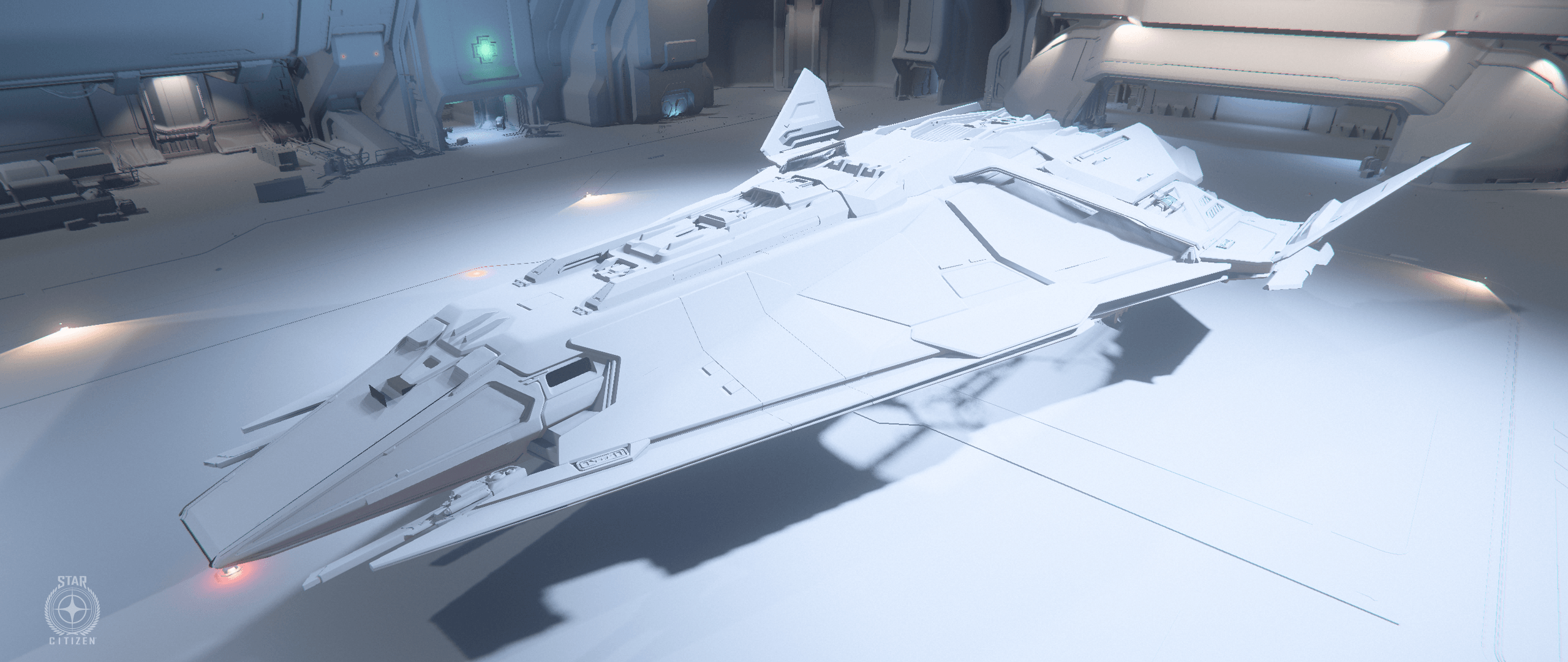
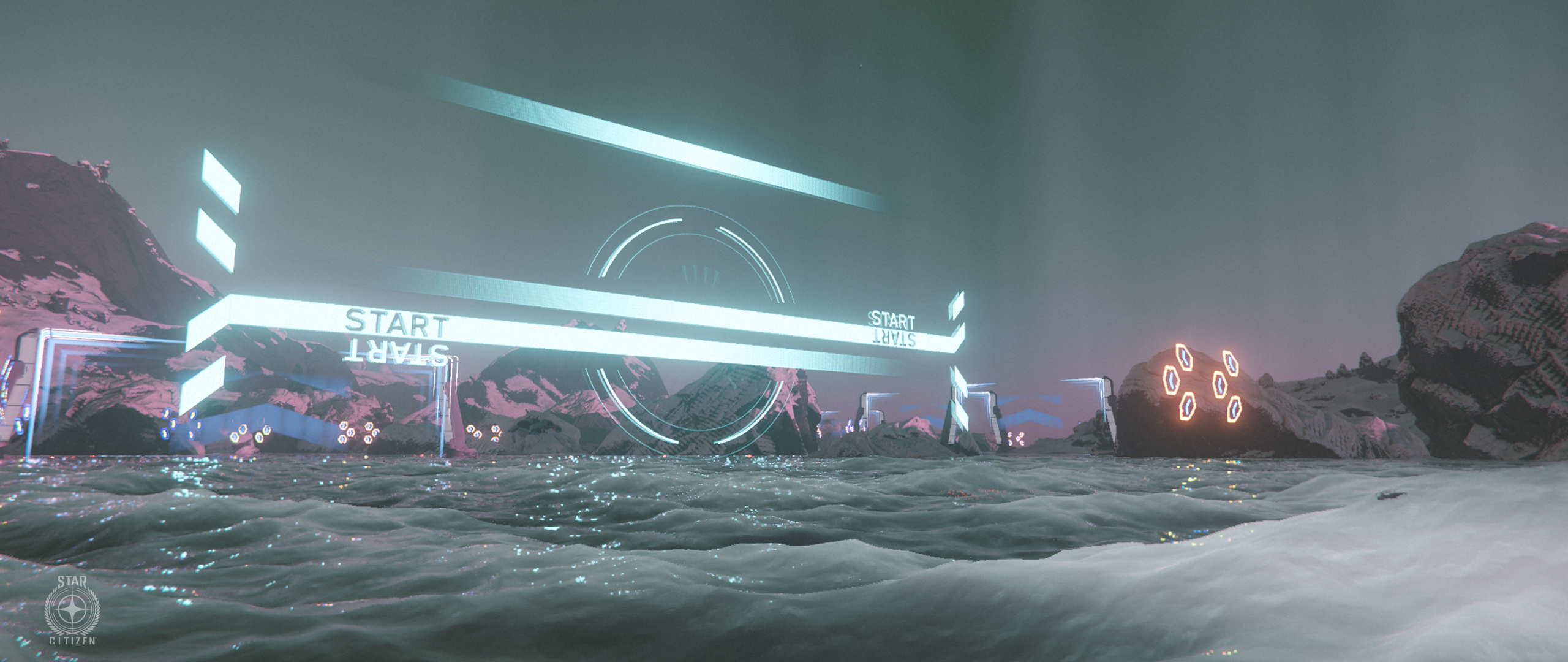
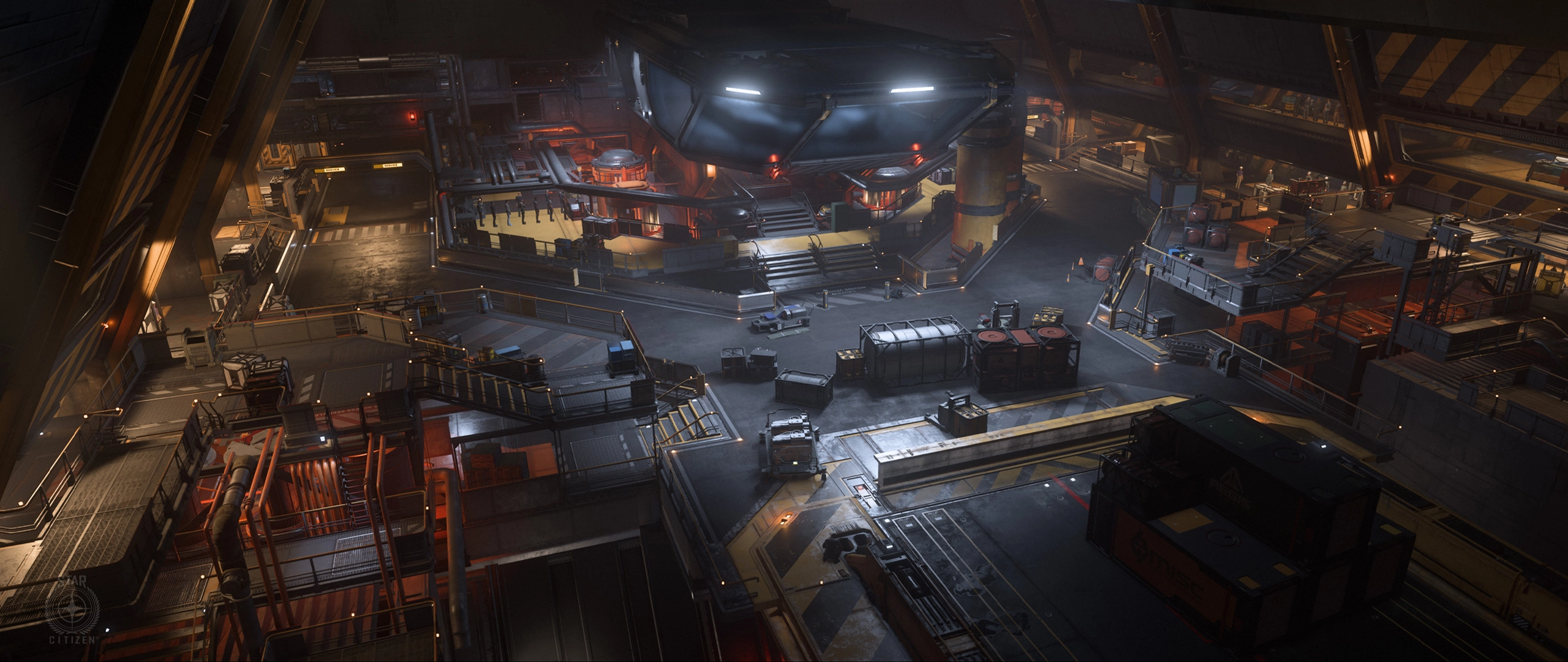
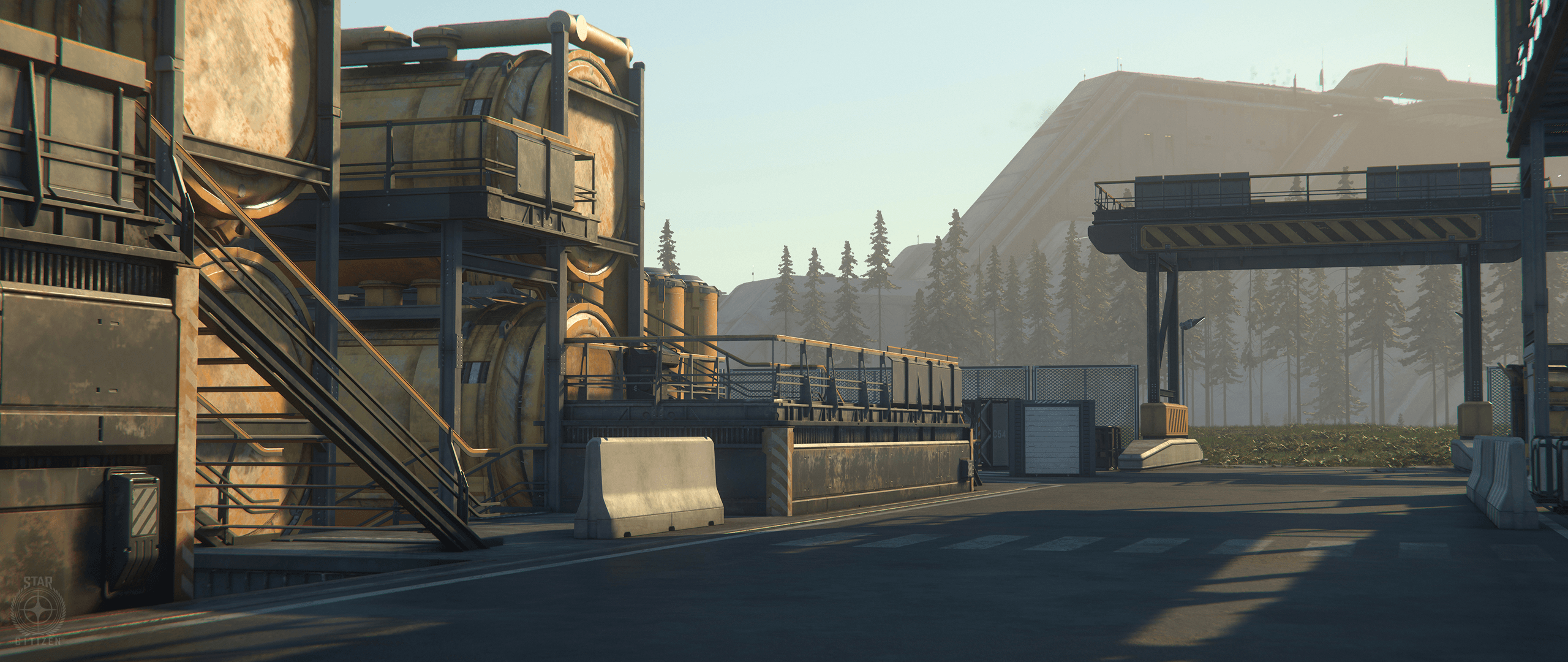
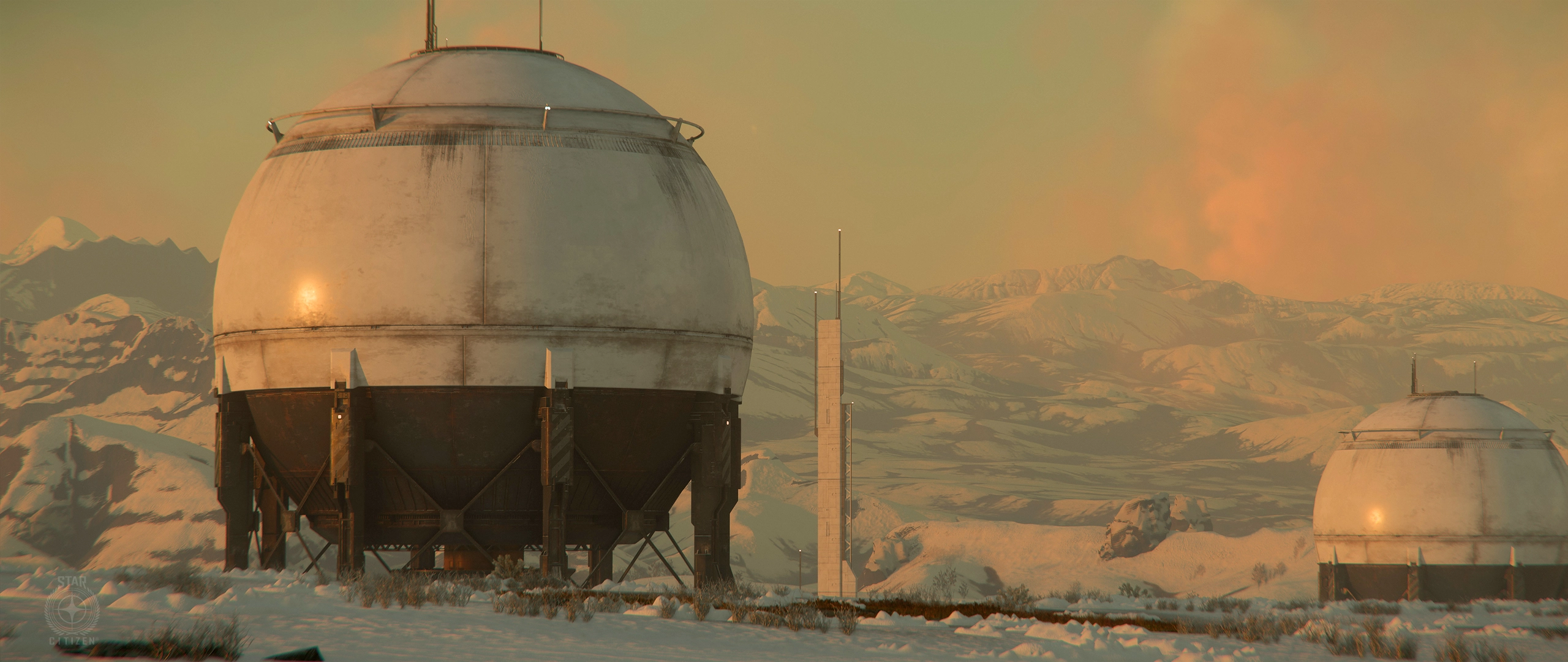
Metadata
- CIG ID
- 19831
- Channel
- Transmission
- Category
- Undefined
- Series
- None
- Comments
- 0
- Published
- 4 months ago (2026-05-25T12:00:00+00:00)