Star Citizen Monthly Report: March 2024
Transmission Undefined NoneContent
PU Monthly Report
March 2024
Welcome to the latest PU Monthly Report, this time detailing all the development progress made throughout March. With Alpha 3.23 looming, CitizenCon on the horizon, and Pyro inching ever closer, there’s a lot to look forward to this year. Read on for everything done in pursuit of these endeavors and more.
AI (Features)
In March, AI Features continued to fix bugs and make improvements to Human combat and other AI behaviors.
“One particular bug threatened to become our new ‘standing on chairs’ issue (a bug that has a lot of individual causes so can keep cropping up in different situations). So, like with that issue, we adopted a belt-and-braces approach that should eliminate it, even if new causes crop up in the future.” AI Features
AI (Tech)
Last month, AI Tech focused on finalizing and polishing features for Alpha 3.23 alongside optimizations for existing systems.
For example, work on planetary navigation was completed, with the team now able to generate navigation mesh over entire planets. To achieve this, the devs used the same concepts the Physics and Planetary Tech teams used for representing planet terrain patches. Compared to the previous implementation, where planet navigation tiles were represented as a cube/parallelepiped (as used in traditional navigation volumes), the new method uses a volume with a skewed square/rhombus base. While this brings new challenges, such as how two neighboring triangular navigation tiles will connect, it allows navigation mesh to be generated everywhere and on all types of planets and moons.
For boids, the team continued to implement new rules and finalized synchronization between the server and clients. They also worked on additional iterations with Design and polished the feature for release.
AI Tech iterated on new ship behaviors with Design, with the aim of greatly improving the AI combat experience. Substantial improvements were made to the aiming-control system for ships and turrets and to perception thanks to the addition of support for missile detection.
Elsewhere, improvements were made to the navigation-links system to reduce the computation cost over a frame by better utilizing the new Navigation Anchors concept. Subsumption loading logic improvements were also submitted that will more clearly show possible problems with the data so the designers can fix them sooner.
On the AI tools side, the team continued to improve and iterate on Apollo. This included implementing a new version of the ‘sticky’ header tree that shows a better representation of files/folders with behaviors and missions.
Animation
The Animation team has been working on the “Space Cow”, a medium-sized bird, a predator wolf-like creature, as well as several new vehicles entrance animations.
Art (Characters)
In March, the Character Art team completed a range of branded racing flightsuits and continued working on outfits for the Headhunters gang. The Character Concept Art team began exploring specialist armors and worked on handoff sheets.
Art (Ships)
March saw progress on the RSI Zeus - greybox was completed and all functionality has been validated, with the ship currently in the ‘beauty and polish’ stage. Habitation and the central hallways made significant progress and are approaching completion, while the cargo hold continues to progress with the loading ramp’s main piston structure improving rapidly as well as the ramp interior and exterior. The landing gear is nearly complete and the overall exterior continues to progress too.
The Anvil Legionnaire is whitebox complete, with the team currently waiting on gameplay validation and for artists to free up before they send it to full development.
The team’s work on the Resource Network began, with 10 ships nearing completion, some of which received the updated list of ship items. Following gameplay validation, relay locations will be polished.
Update work on a legacy ship continued too, with updates to the dash, cockpit, and some exterior housings.
Community
The Community team kicked off March supporting the Overdrive Initiative and Stella Fortuna, the latter with a banner design contest challenging participants to craft logos for in-game or fictional competitive racing or combat teams. Check out the incredible entries on the Community Hub.
The team also spent time helping prepare the RSI Launcher 2.0 for live release, alongside a myriad other support tasks to prepare for Alpha 3.23, 4.0, and beyond!
In the latest Roadmap Roundup, more details were shared about the upcoming Alpha 3.23 patch, while Alpha 3.22’s Test Universe Champions recognized outstanding players who dedicated their time and effort to the current patch’s testing phases.
The team also supported various community events:
“We started March with a LOT of energy thanks to the recent Bar Citizen Manchester in which nearly 200 of you came to hang out with devs, org mates, and good friends. Thanks to everyone for stopping by, we can’t wait to do it again soon! Talking about events, the System Seven ground racing league from ATMO Esports is still ongoing, watching all these elite racers zoom by live gave us the biggest goosebumps! We also enjoyed the Crux Cup from Anzia Racing, in which our teams took part once more and tried to race our way to the top scores!” Community Team
The Community team continued detailing the weekly schedules with This Week in Star Citizen, a series of comm-links that inform the community about Star Citizen’s developments and initiatives while also highlighting creations from the community. This month, the team added a new weekly chapter featuring four top creations from the Community Hub.
CitizenCon preparations are still underway with the show layout/general activations taking form. The team is excited about what's already shaping up to be our biggest and best event to date. They also published a variety of post posts regarding all things CitizenCon, such as the CitizenCon FAQ, to better help players plan their travels and attendance.
Finally, Community updated the Arena Commander Schedule, which keeps players up to date with Arena Commander’s rotating game modes.
Core Gameplay
Last month, the Gameplay Features team successfully passed the go/no-go gates for procedural recoil, new scopes, dynamic crosshairs, and reload improvements. Further bug fixing is currently ongoing for these deliverables.
Progress was also made on ammo repooling, including network optimization and bug fixing. The looting UI was also updated to support the way ammo is repooled, while reload animations now play at the correct time following the ‘rummage’ animation.
Work continued on preproduction for base building, with Gameplay Features working closely with Art and Design to refine requirements and define metrics.
The team then added different colored loot screens depending on whether the player is looting an enemy, friendly, or neutral entity. They also added a button to go from the inventory to the loot screen and a pop-up window when an item swap can’t be performed. They also allowed for separate loot-screen styles between the visor and lens. Regarding the visor and lens, the conversion of on-screen chat to Building Blocks was completed.
The team then converted more markers to the new system, including navigation, ships, player, party members, missions, and landing pads.
For EVA, the devs unblocked animation content to support weapon customization and two-handed carry to work with the new EVA system. They also provided support for backward and sideways flying animation content. EVA thruster packs now relate correctly to the layer of equipment players are wearing, meaning VFX will come from the thruster nozzles on armor pieces or backpacks instead of the undersuit.
Improvements were made to how shop items are highlighted when players look at them, and the positioning of AR cards was updated to account for mannequins and vehicles based on Design’s feedback. The team completed buy and rent interactions for physical shopping too.
Gameplay Features made further improvements to prone locomotion, while additional support was provided to Animation to unlock animation asset production.
For Master Modes, improvements to aiming and targeting for the gunnery system were completed, and ESP saw further improvements, including smoother response to player input.
Throughout March, development continued on the Resource Network. As part of this, electromagnetic emissions are now based on power consumption and infrared emissions are based around coolant and heat generation.
The team also improved various debug tools, fixed bugs, and supported the ongoing testing of an experimental Arena Commander mode.
A temporary solution for ship-hull penetration was added until Maelstrom is ready to support physical ship armor.
“The system is subject to change as development and testing progresses, but currently all projectiles can deplete armor health. However, only ballistic weapons can penetrate the hull and damage internal components.” Gameplay Features
For life support, the team optimized the dynamic room atmosphere system and made it network compatible. Various improvements and refactors were also made to the room system, and various debug tools were greatly improved to allow the team to test the system before the player-facing UI is complete.
For transit, the team’s primary focus in March was supporting cargo elevators and instanced hangars. Alongside general refactoring, this required adding hangar destination exporting, communication between the transit and instance managers for available hangars, the ability to dynamically add destinations to transit carriages, requests for the creation of hangars, and support for capturing peripherals in dynamically added hangars.
Once complete, the team moved on to planning and architecting a refactor of the whole transit system to prepare it for the future.
For radar and scanning, the team updated radar zone queries to use new zone query time splice tech to improve performance.
Additionally, work began on ‘signature categories,’ which allow the team to apply different signature detections based on emitters. This can be used to independently detect components on a ship with higher emissions. For example, thrusters compared to offline shield generators.
Support was also provided for the item-port editor tool with a refactor of default item loadouts, including defining them directly in the item-port parameters within the item-port container in DataCore.
Additionally, the team supported the restoration of several core analytics and the reporting of additional key information to better understand player activity across the game.
For Arena Commander, focus was on closing out deliverables for Alpha 3.23, most notably custom lobbies and the initial selection of custom settings.
Gameplay Features then continued to improve the multi-crew experience by adding access selection. Now, rather than either having multi-crew enabled or disabled, players can choose to enable the feature for friends and/or squad members only.
Engineering refactored the team-balancing system, removing layers of complexity that they had experimented with for Alpha 3.21 and 3.22. The new system has a simple balancing logic that prioritizes keeping squads together (with an exception in cases of extreme imbalance). A short delay has been added before balancing to allow for more players to connect.
The team also improved loadout definitions, allowing them to create and edit slots for different ammo types, including consumables and utility ammo. They also created a variant of the salvage and repair MultiTool with filled canisters for use in the Engineering Experimental Modes. This work also allows players to use their PU characters in Arena Commander; players who have a customized character will now utilize that rather than the default actor previously used.
For design, the team focused on supporting the Engineering Experimental Modes and a selection of new maps and modes. They also continued to work on the frontend UI/UX pass, which looks to establish a style for Arena Commander going forward.
Finally, the devs supported a new system for Gun Rush, allowing them to have multiple weapon lists that can be toggled on and off throughout a patch cycle. This provides more variety and the ability to test new weapon sets without waiting for a new patch.
March saw progress on reputation-based hostility, with the team fixing several issues with the new reputation system. Changes were also made to the trespass behavior. Now, all factions will defend a trespass zone if it’s owned by them, and factions with the appropriate settings will also be able to defend allied trespass zones.
For the mobiGlas, work continued on the redesigned Contract Manager. Last month’s work included adding a button to read/unread mission info and a toggle to switch between legal and illegal missions. The devs also completed payment validation for beacons and fixed several bugs, including making the contract timer reduce in consistent increments.
The team then made Journal compatible with the new mobiGlas and updated the Home screen, including adding visuals for recent notifications, active missions, and the player’s current jurisdiction and CrimeStat level.
Support was also added for the legacy Comm-Link and VMS Flash apps, and visual updates were made to the Wallet and Assets apps.
For missions, Gameplay Features provided a new data structure to Mission Design so they could start setting up hauling missions. The overall framework for the offline version of the Mission Service progressed, while ‘MissionService debugGUI’ was extended to Server Meshing.
Improved debug tools were added to cargo-hauling missions too, such as the ability to debug complete parts of the hauling order to simulate collecting or delivering via freight elevators.
March saw progress on hangars, including the Instanced Interior Manager that handles instancing logic and reserves gateways for transitioning between the outside world and hangar. Now, players calling an elevator or retrieving a ship in supported locations will create an instanced hangar that the transit, air traffic control, and law systems correctly respond to.
Improvements were also made to the freight elevator kiosk, including the layout, branding, tooltips, delivery screen, and platform handling. The devs are currently integrating the kiosk with the personal inventory framework. The item bank is now functional and correctly uses the storage locker and updated delivery/selection logic, and improvements were made to the warehouse system to support missions too.
For the commodity kiosk, updates were made to the design along with the packing behavior and autoloading display.
Support was given to the Lighting and VFX Content teams toward ship-loading platforms too.
Economy
Last month, the Economy team continued rebalancing commodities, making sure they have a scalable algorithm that will work with other systems, like crafting.
Mission rewards are being rebalanced according to the difficulty and time required to complete them. As part of this, the team are working to better understand how much effort and time is required to perform specific activities in-game. In-game pricing is currently underway for new harvestables and hangar flair too.
Economy are currently involved in the design of reputation and org progression and are starting to balance the time and cost of autoloading freight elevators. They also provided support for cargo missions.
Finally, a comprehensive list of all intended resource sources, transformers, and sinks were created to help ensure the economy is stable for the long haul.
Graphics, VFX Programming & Planet Tech
Throughout March, much of the department’s focus was on bug fixing the various deliverables for Alpha 3.23.
Performance-scaling options were added to the water simulation to ensure it can scale to all hardware, while various improvements were made to water-boundary shading and visor wetness to achieve a seamless effect as players enter water. Support for distance-field collisions was also completed for more accurate collisions from vehicles.
The Vulkan team worked through several performance issues as they moved closer to matching D3D performance.
“This precedes the enabling of multi-threading for the next release to hopefully smash D3D performance levels on the CPU (GPU performance should remain similar). However, some performance issues currently remain. So, depending on the location/context, players may see worse performance, hence the BETA label on Vulkan. But the aim is for us to get widespread testing in Alpha 3.23 so that we can enable Vulkan by default in the following release.” Graphics, VFX & Programming Team
Alongside this, the team are currently reworking shaders to reduce the total number of PSOs (shaders) that need compiling when the game starts.
Work on Global Illumination continued too, with a focus on performance as the team move toward an internal rollout of the first version for testing by the art teams.
The Planet Tech team started work on Planet Tech v5, with initial focus on the groundwork required to set up spatial partitioning. They’re currently deciding how this will work with Server Meshing and server-crash recovery. The devs also introduced the concept of ‘default planets’ for the internal editor so that it’s trivial for anyone to create and use a planet for testing.
On the VFX-programming side, in addition to water improvements, the team continued with networking support for the fire simulation. They’re also making changes to the augmented-reality render layer to enable support for holographic weapons (e.g. muzzle flashes, projectiles, enemies, and impacts).
In-Game Branding
In-Game Branding and Locations worked together on Invictus Launch Week, with work approaching completion.
The branding work for cargo containers and additional signage for various locations is also nearly finished.
Interactables
Last month, item banks (now called gear storage) were finished, including a heavily worn version for Grim HEX. They were then placed around the ‘verse for convenient access.
Explosive containers were reworked and now replace static meshes in levels so they will now explode if players shoot them.
Fire extinguisher recharge cabinets progressed through greybox and are currently being taken to final, while cargo hover trolleys are being finalized in preparation for the cargo hangar update.
Lighting
Alongside tasks for instanced hangars, freight elevators, and distribution centers, Lighting worked on Invictus Launch Week.
They also supported the upcoming Character Customizer, including addressing community feedback to solve some long-standing issues.
Locations
Last month saw the Locations team polishing content for Alpha 4.0. They also closed out the upcoming distribution centers, adding content and quality to give players the best possible experience on launch. They also kicked off preproduction for new mandates officially beginning in Q2.
The Landing Zone team finalized art for instanced hangars and prepared them for implementation across the ‘verse.
Mission Design
Last month, the Mission Feature team was restructured, becoming the Mission Design team. Despite the name change, the team will continue to build scalable, modular content for the PU.
Following feedback on the Overdrive Initiative event, the team is revisiting the standard data heist missions. Currently, these missions are locked to a single player (who then can share the mission with their friends), which causes a bottleneck for the missions and locations. In response, the team are trialing a change that will allow a singular version of the mission to be accepted by four players who will play together as contractors. This is an effort to free up missions and locations and create a similar effect to Overdrive Initiative where people who usually play solo are part of a team, potentially building friendships and enhancing the MMO feeling.
Work progressed on the upcoming cargo hauling missions, with players being tasked with hauling tracked goods from one location to another as requested by a shipping company. With a consistent payout of roughly 20% of the cargo’s value, a hauler’s income will be more stable than that of a commodity trader (who buys low and sells high as the market fluctuates). Still, once a cargo hauler gets comfortable with the profession, they might try their luck at commodity trading.
While the player is legally allowed to transport the goods, they do not own them. As a result, lawful stores across Stanton will not buy these commodities. To sell the shipment rather than delivering it, the player must navigate to a fence - a no-questions-asked shop often located in an unmonitored area of Stanton. However, due to its tracked nature, this cargo fetches a significantly lower price than ordinary sandbox commodities.
With the upcoming addition of wildlife to the PU, Mission Design began working on related content, building three mission variants:
Kill ‘X’ Amount: This extermination/population control mission tasks players with killing a predetermined number of animals on a planet. Players must locate the animals themselves
Clear Location: This will be a specific location that requires having its animal population dealt with
Kill and Collect: This is one of the first resource-collection mission types where players must locate animals and collect their resources
Following a recent hire, some older mission modules were refactored. As such, the Destroy Illegal Satellites mission received a small facelift.
Following further testing of Blockade Runner, a small change was made to ensure the event stays fun and engaging for all players. Work on the XenoThreat Global Events continued too alongside freight elevators.
Narrative
Last month, Narrative continued to work closely with Design to support a variety of content, from revising existing missions like the New Player Experience to outlining new missions being developed to support upcoming gameplay.
The team continued to iterate on future narrative initiatives designed to bring more character and stories to the universe. This resulted in a series of proposals that they’ve been reviewing with Design. They also continued to outline ways to improve AI behaviors to sell more of the Star Citizen lore. Narrative also met with some of the gameplay teams to talk over the ‘lorification’ of upcoming systems.
Another group of posts went up on the website as well, including a Whitley’s Guide for the 890 Jump. The Narrative team also tackled a handful of questions from the forums in a new edition of Loremakers alongside another batch of Galactapedia articles.
Online Technology
In March, the Online Services Team worked toward refactoring the social services backend. This involves porting the services to gRPC as well as making updates for Server Meshing.
The team are currently working to reduce EAC Anti-Cheat false positives in preparation of enabling sanction enforcement.
Lastly, Online Services finished off long-term persistence work for the Character Customizer, enabling players to save their characters between patches.
R&D
In March, work continued on the temporal render mode. Tracking movement of objects moving through clouds was improved so that history can be rejected or kept as correctly as possible. A novel method was developed because typical disocclusion algorithms only work for opaque scenes, but the team want objects to fly through transparent clouds, be partially occluded by clouds and fog, etc. The generation and blending of soft depth for clouds and atmosphere was improved. This depth information is crucial to properly handling history rejection when moving through clouds.
The team also supported the Gen12/Vulkan endeavor by analyzing the current list of pipeline state objects (PSOs) used to render the game and suggested several ways to reduce it. These suggestions are being worked on by the Render team and will result in a shortened shader pre-cache phase the first time players start the game (precaching is done to avoid shader-activation-related hitches during gameplay).
Tech Design
Tech Design supported various areas of development to prepare for Alpha 3.23 and beyond. This included item banks, with the team making a new rundown variant entity, setting up state machines and animations, and iterating on the main screen and player interaction points and flow.
Hangars were supported alongside ship flight, including iteration on new AI behaviors to make them more responsive to player actions. Master Modes received polish too.
Support was given to QA for visual scripting automation, and nodes were added for getting and setting player stats.
For UI, Tech Design worked on test-level setup and FPS crosshairs and hit markers, updating and polishing animations and fixing bugs. General bugfixing was also done and various tools and workflows received improvements.
UI
Last month, the Montreal-based UI team worked closely with the Core Gameplay and UI teams on the new cargo gameplay updates. This effort encompasses the development of the new freight elevator kiosk, commodity kiosk, and item bank.
They also began preparing mandates coming later this year, including the Resource Network and jump points.
The UK-based team focused on adding the new player-facing UI to the game. The new version of the mobiGlas was made fully functional in time to get player feedback, with visual polish still ongoing.
The new visor and lens received visual improvement while the last functionality elements were ported over by the Programming team. UI also continued to polish the new shopping UI and Character Customizer ready for release.
VFX
Last month, the VFX team finished their work on distribution centers and freight elevators. They also completed tasks for several upcoming vehicles.
Progress continued on jump point effects, including concepting based on new gameplay considerations that became apparent during testing.
The team took another look at water effects to coincide with the Graphics team’s plans to release some of the water improvements that were shown at CitizenCon.
Image by
John DuffImage by
John Duff
PU-Monatsbericht
März 2024
Willkommen zum neuesten PU-Monatsbericht, in dem wir über alle Entwicklungsfortschritte im März berichten. Mit der bevorstehenden Alpha 3.23, der CitizenCon am Horizont und dem immer näher rückenden Pyro gibt es in diesem Jahr eine Menge, worauf du dich freuen kannst. Lies weiter, um zu erfahren, was für diese und weitere Vorhaben getan wurde.
KI (Features)
Im März wurden in den KI-Features weiterhin Fehler behoben und Verbesserungen am menschlichen Kampf und anderen KI-Verhaltensweisen vorgenommen.
Ein bestimmter Fehler drohte sich zu unserem neuen "Stehen auf Stühlen"-Problem zu entwickeln (ein Fehler, der viele individuelle Ursachen hat und daher in verschiedenen Situationen immer wieder auftauchen kann). Wie bei diesem Problem haben wir einen Ansatz gewählt, der dieses Problem beseitigen sollte, auch wenn in Zukunft neue Ursachen auftauchen." KI-Funktionen
KI (Tech)
Im letzten Monat konzentrierte sich die KI-Abteilung auf die Fertigstellung und den Feinschliff der Funktionen für Alpha 3.23 sowie auf Optimierungen für bestehende Systeme.
So wurde zum Beispiel die Arbeit an der Planetennavigation abgeschlossen, so dass das Team jetzt in der Lage ist, ein Navigationsnetz über ganze Planeten zu erstellen. Um dies zu erreichen, haben die Entwickler dieselben Konzepte verwendet, die auch die Teams für Physik und Planetentechnologie für die Darstellung von Planetengeländemustern genutzt haben. Im Vergleich zur vorherigen Implementierung, bei der die Navigationskacheln eines Planeten als Würfel/Parallelepiped dargestellt wurden (wie bei den traditionellen Navigationsvolumina), verwendet die neue Methode ein Volumen mit einer schrägen Quadrat-/Rhombusbasis. Das bringt zwar neue Herausforderungen mit sich, z. B. die Frage, wie zwei benachbarte dreieckige Navigationskacheln miteinander verbunden werden können, aber es ermöglicht die Erstellung von Navigationsnetzen überall und auf allen Arten von Planeten und Monden.
Für Boids hat das Team weiterhin neue Regeln implementiert und die Synchronisierung zwischen Server und Clients abgeschlossen. Außerdem arbeitete es an weiteren Iterationen mit Design und polierte die Funktion für die Veröffentlichung.
AI Tech arbeitete zusammen mit Design an neuen Schiffsverhaltensweisen, um das KI-Kampferlebnis deutlich zu verbessern. Das Ziel war es, die KI-Kampferfahrung deutlich zu verbessern. Das Zielsteuerungssystem für Schiffe und Geschütztürme sowie die Wahrnehmung wurden durch die Unterstützung der Raketenerkennung erheblich verbessert.
An anderer Stelle wurden Verbesserungen am System der Navigationsverbindungen vorgenommen, um die Rechenkosten über einen Frame zu reduzieren, indem das neue Konzept der Navigationsanker besser genutzt wird. Außerdem wurden Verbesserungen an der Logik für das Laden von Unterpunkten eingereicht, die mögliche Probleme mit den Daten deutlicher anzeigen, damit die Designer sie früher beheben können.
Was die KI-Tools angeht, so hat das Team Apollo weiter verbessert und weiterentwickelt. Dazu gehörte die Implementierung einer neuen Version des "klebrigen" Kopfbaums, der eine bessere Darstellung von Dateien/Ordnern mit Verhaltensweisen und Missionen zeigt.
Animation
Das Animationsteam hat an der "Weltraumkuh", einem mittelgroßen Vogel, einer räuberischen, wolfsähnlichen Kreatur sowie an mehreren neuen Eingangsanimationen für Fahrzeuge gearbeitet.
Kunst (Charaktere)
Im März hat das Character Art Team eine Reihe von gebrandeten Rennanzügen fertiggestellt und weiter an den Outfits für die Headhunters-Gang gearbeitet. Das Character Concept Art Team begann mit der Erforschung von Spezialrüstungen und arbeitete an Übergabebögen.
Kunst (Schiffe)
Im März gab es Fortschritte bei der RSI Zeus - die Greybox wurde fertiggestellt und alle Funktionen wurden validiert; das Schiff befindet sich jetzt in der "Schönheits- und Polierphase". Die Wohnräume und die zentralen Gänge haben erhebliche Fortschritte gemacht und nähern sich der Fertigstellung, während der Frachtraum weiter voranschreitet und die Hauptkolbenstruktur der Laderampe sowie das Innere und Äußere der Rampe rasch verbessert werden. Das Fahrwerk ist fast fertig und auch das Äußere des Schiffes schreitet weiter voran.
Der Anvil Legionnaire ist in der Whitebox fertiggestellt. Das Team wartet jetzt auf die Validierung des Gameplays und darauf, dass die Künstler frei werden, bevor sie ihn in die volle Entwicklung schicken.
Das Team hat mit der Arbeit am Ressourcennetzwerk begonnen. 10 Schiffe stehen kurz vor der Fertigstellung, von denen einige die aktualisierte Liste der Schiffsgegenstände erhalten haben. Nach der Gameplay-Validierung werden die Relaisstandorte aufpoliert.
Auch die Aktualisierungsarbeiten an einem alten Schiff wurden fortgesetzt, wobei das Armaturenbrett, das Cockpit und einige Außengehäuse aktualisiert wurden.
Community
Das Community-Team unterstützte im März die Overdrive-Initiative und Stella Fortuna mit einem Bannerwettbewerb, bei dem die Teilnehmer/innen Logos für das Spiel oder fiktive Renn- oder Kampfteams entwerfen sollten. Schau dir die unglaublichen Beiträge im Community Hub an.
Das Team hat außerdem Zeit damit verbracht, den RSI Launcher 2.0 für die Live-Veröffentlichung vorzubereiten. Außerdem gab es unzählige andere Aufgaben zur Vorbereitung der Alpha 3.23, 4.0 und darüber hinaus!
Im letzten Roadmap Roundup wurden weitere Details über den kommenden Alpha 3.23 Patch bekannt gegeben, während die Test Universe Champions der Alpha 3.22 herausragende Spieler/innen auszeichneten, die ihre Zeit und Mühe in die Testphasen des aktuellen Patches investiert haben.
Außerdem hat das Team verschiedene Community-Events unterstützt:
"Wir sind mit viel Energie in den März gestartet, dank des Bar Citizen Manchester, zu dem fast 200 von euch gekommen sind, um mit Entwicklern, Org-Kollegen und guten Freunden abzuhängen. Vielen Dank an alle, die vorbeigekommen sind, wir können es kaum erwarten, das bald wieder zu tun! Apropos Events: Die System Seven Bodenrennliga von ATMO Esports läuft immer noch. All diese Elite-Racer live vorbeiziehen zu sehen, hat uns eine Gänsehaut beschert! Außerdem haben wir den Crux Cup von Anzia Racing genossen, an dem unsere Teams wieder einmal teilgenommen und versucht haben, sich den Weg zu den Top-Scores zu bahnen!" Community Team
Das Community-Team hat die Wochenpläne mit This Week in Star Citizen fortgesetzt, einer Reihe von Comm-Links, die die Community über die Entwicklungen und Initiativen von Star Citizen informieren und auch die Kreationen der Community hervorheben. Diesen Monat fügte das Team ein neues wöchentliches Kapitel hinzu, das vier Top-Kreationen aus dem Community Hub vorstellt.
Die Vorbereitungen für die CitizenCon sind noch im Gange und das Layout der Show und die allgemeinen Aktivierungen nehmen Form an. Das Team freut sich schon darauf, dass es unser bisher größtes und bestes Event werden wird. Außerdem hat das Team eine Reihe von Posts rund um die CitizenCon veröffentlicht, wie z.B. die CitizenCon-FAQ, um den Spielern die Planung ihrer Reise und Teilnahme zu erleichtern.
Schließlich hat die Community den Arena Commander-Zeitplan aktualisiert, der die Spieler über die wechselnden Spielmodi des Arena Commanders auf dem Laufenden hält.
Kern-Gameplay
Im letzten Monat hat das Team für Gameplay-Features die Freigabe für den prozeduralen Rückstoß, neue Zielfernrohre, dynamische Fadenkreuze und Verbesserungen beim Nachladen erfolgreich bestanden. Weitere Fehlerbehebungen werden derzeit für diese Produkte durchgeführt.
Auch bei der Munitionsrückführung wurden Fortschritte erzielt, einschließlich Netzwerkoptimierung und Fehlerbehebung. Die Beute-UI wurde ebenfalls aktualisiert, um die Art und Weise zu unterstützen, wie Munition wiederverwendet wird, und die Nachladeanimationen werden jetzt zum richtigen Zeitpunkt nach der "Stöbern"-Animation abgespielt.
Die Arbeit an der Vorproduktion für den Basenbau wurde fortgesetzt, wobei die Gameplay Features eng mit Art und Design zusammenarbeiteten, um die Anforderungen zu verfeinern und Metriken zu definieren.
Dann fügte das Team verschiedenfarbige Beutebildschirme hinzu, je nachdem, ob der Spieler eine feindliche, befreundete oder neutrale Einheit plündert. Außerdem fügten sie eine Schaltfläche hinzu, mit der man vom Inventar zum Beutebildschirm wechseln kann und ein Pop-up-Fenster, wenn ein Gegenstandstausch nicht möglich ist. Außerdem wurde ein separater Beutebildschirm für das Visier und die Linse erstellt. Bei Visier und Linse wurde die Umwandlung des Bildschirmchats in Bausteine abgeschlossen.
Anschließend hat das Team weitere Markierungen auf das neue System umgestellt, darunter Navigation, Schiffe, Spieler, Gruppenmitglieder, Missionen und Landeplätze.
Für EVA haben die Entwickler Animationen freigeschaltet, um die Waffenanpassung und das beidhändige Tragen zu unterstützen, damit sie mit dem neuen EVA-System funktionieren. Außerdem wurden die Animationen für das Rückwärts- und Seitwärtsfliegen verbessert. EVA-Schubdüsenpakete beziehen sich jetzt korrekt auf die Ausrüstungsschicht, die die Spieler/innen tragen, d.h. die VFX kommen von den Schubdüsen der Rüstungsteile oder Rucksäcke und nicht von der Unterkleidung.
Die Hervorhebung von Gegenständen in Geschäften wurde verbessert und die Positionierung von AR-Karten wurde auf der Grundlage des Feedbacks von Designern aktualisiert, um Schaufensterpuppen und Fahrzeuge zu berücksichtigen. Das Team hat auch die Kauf- und Mietinteraktionen für physische Einkäufe vervollständigt.
Die Gameplay Features haben weitere Verbesserungen an der Fortbewegung von Gefangenen vorgenommen, während die Animation zusätzliche Unterstützung erhalten hat, um die Produktion von Animations-Assets freizuschalten.
In den Hauptmodi wurden Verbesserungen am Zielsystem vorgenommen und das ESP wurde weiter verbessert, u. a. durch eine flüssigere Reaktion auf Spielereingaben.
Im März wurde die Entwicklung des Ressourcennetzwerks fortgesetzt. So basieren die elektromagnetischen Emissionen jetzt auf dem Stromverbrauch und die Infrarotemissionen auf der Kühlmittel- und Wärmeerzeugung.
Außerdem verbesserte das Team verschiedene Debugging-Tools, beseitigte Bugs und unterstützte die laufenden Tests des experimentellen Arena Commander-Modus.
Eine temporäre Lösung für die Durchdringung von Schiffsrümpfen wurde hinzugefügt, bis Maelstrom bereit ist, physische Schiffspanzerung zu unterstützen.
"Das System kann sich im Laufe der Entwicklung und der Tests noch ändern, aber derzeit können alle Geschosse die Panzerung aufbrauchen. Allerdings können nur ballistische Waffen den Rumpf durchdringen und interne Komponenten beschädigen." Gameplay-Funktionen
Für die Lebenserhaltung optimierte das Team das dynamische Raumatmosphärensystem und machte es netzwerkfähig. Außerdem wurden verschiedene Verbesserungen und Refactors am Raumsystem vorgenommen und verschiedene Debug-Tools stark verbessert, damit das Team das System testen kann, bevor die spielerseitige Benutzeroberfläche fertiggestellt ist.
Beim Transit konzentrierte sich das Team im März vor allem auf die Unterstützung von Lastenaufzügen und instanzierten Hangars. Neben allgemeinen Überarbeitungen wurden der Export von Hangarzielen, die Kommunikation zwischen Transit- und Instanzmanagern für verfügbare Hangars, die Möglichkeit, dynamisch Ziele zu Transitwagen hinzuzufügen, Anfragen zur Erstellung von Hangars und die Unterstützung für die Erfassung von Peripheriegeräten in dynamisch hinzugefügten Hangars hinzugefügt.
Nach der Fertigstellung ging das Team dazu über, ein Refactoring des gesamten Transitsystems zu planen und durchzuführen, um es für die Zukunft vorzubereiten.
Für Radar und Scanning aktualisierte das Team die Radarzonenabfragen und nutzte die neue Technologie für den Time Splice von Zonenabfragen, um die Leistung zu verbessern.
Außerdem wurde mit der Arbeit an "Signaturkategorien" begonnen, die es dem Team ermöglichen, verschiedene Signaturerkennungen auf der Grundlage von Emittern anzuwenden. Auf diese Weise können Komponenten eines Schiffes mit höheren Emissionen unabhängig voneinander erkannt werden. Zum Beispiel Triebwerke im Vergleich zu Offline-Schildgeneratoren.
Außerdem wurde das Item-Port-Editor-Tool unterstützt, indem die Standard-Item-Loadouts überarbeitet wurden und direkt in den Item-Port-Parametern innerhalb des Item-Port-Containers in DataCore definiert werden.
Außerdem unterstützte das Team die Wiederherstellung mehrerer zentraler Analysen und die Erstellung von Berichten mit zusätzlichen Schlüsselinformationen, um die Spieleraktivitäten im Spiel besser zu verstehen.
Bei Arena Commander lag der Schwerpunkt auf dem Abschluss der Alpha 3.23, insbesondere auf benutzerdefinierten Lobbys und der ersten Auswahl an benutzerdefinierten Einstellungen.
Die Gameplay-Features verbesserten das Multi-Crew-Erlebnis durch das Hinzufügen der Zugangsauswahl. Anstatt die Multi-Crew entweder zu aktivieren oder zu deaktivieren, können die Spieler/innen nun wählen, ob sie die Funktion nur für Freunde und/oder Squad-Mitglieder aktivieren wollen.
Die Entwickler haben das System für das Team-Balancing überarbeitet und die komplexen Ebenen entfernt, mit denen sie in Alpha 3.21 und 3.22 experimentiert hatten. Das neue System verfügt über eine einfache Balancing-Logik, die darauf abzielt, dass Squads zusammenbleiben (mit einer Ausnahme in Fällen extremen Ungleichgewichts). Vor dem Balancing wurde eine kurze Verzögerung eingebaut, damit sich mehr Spieler/innen anschließen können.
Das Team hat außerdem die Ausrüstungsdefinitionen verbessert, so dass es nun möglich ist, Slots für verschiedene Munitionstypen zu erstellen und zu bearbeiten, darunter auch Verbrauchsmaterial und Versorgungsmunition. Außerdem haben sie eine Variante des Bergungs- und Reparatur-MultiTools mit gefüllten Kanistern für den Einsatz in den Experimentalmodi der Technik erstellt. Diese Arbeit ermöglicht es den Spieler/innen auch, ihre PU-Charaktere im Arena Commander zu verwenden. Spieler/innen, die einen angepassten Charakter haben, nutzen diesen nun anstelle des zuvor verwendeten Standarddarstellers.
Beim Design konzentrierte sich das Team auf die Unterstützung der Engineering Experimental Modes und eine Auswahl neuer Karten und Modi. Außerdem wurde die Arbeit am Frontend-UI/UX-Pass fortgesetzt, der den Stil von Arena Commander für die Zukunft festschreiben soll.
Schließlich haben die Entwickler ein neues System für Gun Rush unterstützt, das es ihnen ermöglicht, mehrere Waffenlisten zu haben, die während eines Patch-Zyklus ein- und ausgeschaltet werden können. Das sorgt für mehr Abwechslung und ermöglicht es, neue Waffensets zu testen, ohne auf einen neuen Patch warten zu müssen.
Im März wurden Fortschritte bei der rufbasierten Feindseligkeit erzielt, indem das Team mehrere Probleme mit dem neuen Rufsystem behoben hat. Auch am Verhalten bei Hausfriedensbruch wurden Änderungen vorgenommen. Jetzt verteidigen alle Fraktionen eine unerlaubte Zone, wenn sie ihnen gehört, und Fraktionen mit den entsprechenden Einstellungen können auch verbündete unerlaubte Zonen verteidigen.
Im MobiGlas wurde die Arbeit am überarbeiteten Vertragsmanager fortgesetzt. Im letzten Monat wurde u.a. eine Schaltfläche zum Lesen/Unlesen von Missionsinformationen und ein Schalter zum Umschalten zwischen legalen und illegalen Missionen hinzugefügt. Außerdem haben die Entwickler die Zahlungsvalidierung für Baken abgeschlossen und mehrere Fehler behoben, u.a. dass der Vertragstimer in gleichmäßigen Schritten abläuft.
Das Team machte das Journal mit dem neuen mobiGlas kompatibel und aktualisierte den Startbildschirm, indem es unter anderem die letzten Benachrichtigungen, die aktiven Missionen sowie die aktuelle Zuständigkeit und das CrimeStat-Level des Spielers anzeigte.
Außerdem wurden die alten Apps Comm-Link und VMS Flash unterstützt und die Apps Wallet und Assets wurden optisch aktualisiert.
Für Missionen wurde dem Missionsdesigner mit den Gameplay Features eine neue Datenstruktur zur Verfügung gestellt, damit er mit dem Einrichten von Hauling-Missionen beginnen kann. Das allgemeine Framework für die Offline-Version des Missionsdienstes wurde weiterentwickelt, während die 'MissionService debugGUI' auf das Server Meshing erweitert wurde.
Verbesserte Debugging-Werkzeuge wurden auch für Frachttransportmissionen hinzugefügt, z. B. die Möglichkeit, komplette Teile des Transportauftrags zu debuggen, um das Einsammeln oder Ausliefern über Lastenaufzüge zu simulieren.
Im März gab es Fortschritte bei den Hangars, einschließlich des Instanced Interior Managers, der die Instanzierungslogik verwaltet und Gateways für den Übergang zwischen der Außenwelt und dem Hangar reserviert. Wenn Spieler/innen nun einen Aufzug rufen oder ein Schiff an unterstützten Orten abholen, wird ein instanzierter Hangar erstellt, auf den die Transit-, Flugsicherungs- und Rechtssysteme korrekt reagieren.
Auch der Kiosk für den Lastenaufzug wurde verbessert, einschließlich des Layouts, des Brandings, der Tooltips, des Lieferbildschirms und der Handhabung der Plattformen. Die Entwickler sind gerade dabei, den Kiosk in das persönliche Inventar-Framework zu integrieren. Die Artikelbank ist jetzt funktionsfähig und nutzt das Lagerfach und die aktualisierte Liefer-/Auswahllogik korrekt, und auch am Lagersystem wurden Verbesserungen vorgenommen, um Missionen zu unterstützen.
Für den Warenkiosk wurden Aktualisierungen am Design, am Packverhalten und an der automatischen Ladeanzeige vorgenommen.
Die Teams für Beleuchtung und VFX-Inhalte wurden auch bei den Schiffsladeplattformen unterstützt.
Wirtschaft
Im letzten Monat hat das Wirtschaftsteam das Rebalancing der Rohstoffe fortgesetzt und dafür gesorgt, dass sie einen skalierbaren Algorithmus haben, der mit anderen Systemen wie dem Crafting zusammenarbeitet.
Die Belohnungen für Missionen wurden entsprechend der Schwierigkeit und der benötigten Zeit neu ausbalanciert. In diesem Zusammenhang arbeitet das Team daran, besser zu verstehen, wie viel Aufwand und Zeit für bestimmte Aktivitäten im Spiel erforderlich sind. Auch die Preisgestaltung im Spiel für neue Erntegüter und Hangar-Flair wird derzeit überarbeitet.
Der Bereich Wirtschaft ist derzeit an der Gestaltung des Rufs und der Org-Progression beteiligt und beginnt damit, die Zeit und die Kosten für das automatische Aufladen von Lastenaufzügen auszugleichen. Sie haben auch Unterstützung für Frachtmissionen geleistet.
Schließlich wurde eine umfassende Liste aller geplanten Ressourcenquellen, -umwandler und -senken erstellt, um sicherzustellen, dass die Wirtschaft auf lange Sicht stabil ist.
Grafik, VFX-Programmierung & Planet Tech
Im März konzentrierte sich die Abteilung vor allem auf die Fehlerbehebung für die Alpha 3.23.
Es wurden Optionen zur Leistungsskalierung der Wassersimulation hinzugefügt, um sicherzustellen, dass sie für jede Hardware geeignet ist, während verschiedene Verbesserungen an der Schattierung der Wassergrenzen und der Nässe des Visiers vorgenommen wurden, um einen nahtlosen Effekt zu erzielen, wenn die Spieler/innen das Wasser betreten. Außerdem wurde die Unterstützung für Abstandsfeldkollisionen vervollständigt, um präzisere Kollisionen von Fahrzeugen zu ermöglichen.
Das Vulkan-Team arbeitete an mehreren Leistungsproblemen, um der D3D-Leistung näher zu kommen.
"Dies geschieht im Vorfeld der Aktivierung von Multi-Threading für die nächste Version, um hoffentlich die D3D-Leistung auf der CPU zu übertreffen (die GPU-Leistung sollte ähnlich bleiben). Allerdings gibt es derzeit noch einige Leistungsprobleme. Je nach Standort/Kontext kann es also sein, dass die Spieler/innen eine schlechtere Leistung sehen, daher die BETA-Kennzeichnung von Vulkan. Unser Ziel ist es jedoch, in der Alpha 3.23 umfassende Tests durchzuführen, damit wir Vulkan in der nächsten Version standardmäßig aktivieren können." Team Grafik, VFX & Programmierung
Außerdem überarbeitet das Team derzeit die Shader, um die Gesamtzahl der PSOs (Shader) zu reduzieren, die beim Start des Spiels kompiliert werden müssen.
Auch die Arbeit an der globalen Beleuchtung wurde fortgesetzt, wobei der Schwerpunkt auf der Leistung liegt, da das Team sich auf einen internen Rollout der ersten Version zum Testen durch die Grafikteams vorbereitet.
Das Planet Tech Team hat mit der Arbeit an Planet Tech v5 begonnen und konzentriert sich zunächst auf die Grundlagen für die Einrichtung der räumlichen Partitionierung. Derzeit wird entschieden, wie dies mit Server Meshing und der Wiederherstellung von Server-Crashs funktionieren soll. Die Entwickler haben außerdem das Konzept der "Standardplaneten" für den internen Editor eingeführt, damit es für jeden trivial ist, einen Planeten zu erstellen und zu testen.
Auf der Seite der VFX-Programmierung hat das Team neben den Verbesserungen am Wasser auch die Netzwerkunterstützung für die Feuersimulation fortgesetzt. Außerdem werden Änderungen am Augmented-Reality-Rendering-Layer vorgenommen, um die Unterstützung für holografische Waffen (z. B. Mündungsfeuer, Projektile, Gegner und Einschläge) zu ermöglichen.
In-Game Branding
In-Game Branding und Locations haben gemeinsam an der Invictus Launch Week gearbeitet und stehen kurz vor dem Abschluss ihrer Arbeit.
Die Arbeiten am Branding der Frachtcontainer und an der zusätzlichen Beschilderung der verschiedenen Orte sind ebenfalls fast abgeschlossen.
Interactables
Letzten Monat wurden die Gegenstandsbänke (jetzt Ausrüstungslager genannt) fertiggestellt, einschließlich einer stark abgenutzten Version für Grim HEX. Sie wurden dann im ganzen Verse verteilt, damit sie bequem erreichbar sind.
Explosive Container wurden überarbeitet und ersetzen jetzt statische Meshes in den Levels, so dass sie explodieren, wenn Spieler auf sie schießen.
Die Aufladeschränke für Feuerlöscher haben die Greybox durchlaufen und werden derzeit zur Finalisierung gebracht, während die Schwebewagen für den Frachthangar in Vorbereitung auf das Update fertiggestellt werden.
Beleuchtung
Neben den Aufgaben für instanzierte Hangars, Lastenaufzüge und Verteilungszentren hat die Beleuchtung an der Invictus Launch Week gearbeitet.
Sie haben auch den kommenden Character Customizer unterstützt und sind dabei auf das Feedback der Community eingegangen, um einige seit langem bestehende Probleme zu lösen.
Standorte
Im letzten Monat hat das Locations-Team an den Inhalten für Alpha 4.0 gefeilt. Außerdem haben sie die kommenden Verteilungszentren fertiggestellt, indem sie Inhalte und Qualität hinzugefügt haben, um den Spielern beim Start das bestmögliche Erlebnis zu bieten. Außerdem wurde mit der Vorproduktion für die neuen Mandate begonnen, die offiziell im 2.
Das Landezonen-Team hat die Gestaltung der instanzierten Hangars abgeschlossen und sie für die Implementierung im gesamten Verse vorbereitet.
Missionsdesign
Letzten Monat wurde das Team für die Missionsfunktionen umstrukturiert und in Missionsdesignteam umbenannt. Trotz der Namensänderung wird das Team weiterhin skalierbare, modulare Inhalte für die PU erstellen.
Aufgrund des Feedbacks zum Overdrive-Initiative-Event überarbeitet das Team die Standard-Datendiebstahl-Missionen. Derzeit sind diese Missionen auf einen einzelnen Spieler beschränkt (der die Mission dann mit seinen Freunden teilen kann), was zu einem Engpass bei den Missionen und Orten führt. Als Reaktion darauf testet das Team eine Änderung, die es ermöglicht, dass eine einzelne Version der Mission von vier Spieler/innen angenommen werden kann, die gemeinsam als Auftragnehmer/innen spielen. Dadurch sollen Missionen und Orte freier werden und ein ähnlicher Effekt wie bei Overdrive Initiative entstehen, bei dem Leute, die normalerweise alleine spielen, Teil eines Teams sind, wodurch Freundschaften entstehen und das MMO-Gefühl verstärkt wird.
Die Arbeit an den kommenden Frachttransportmissionen wurde fortgesetzt, bei denen die Spieler/innen die Aufgabe haben, verfolgte Waren von einem Ort zum anderen zu transportieren, wie von einer Reederei verlangt. Mit einer konstanten Auszahlung von etwa 20 % des Ladungswerts ist das Einkommen eines Spediteurs stabiler als das eines Rohstoffhändlers (der bei Marktschwankungen niedrig kauft und hoch verkauft). Sobald sich ein Spediteur oder eine Spediteurin in seinem/ihrem Beruf wohl fühlt, kann er/sie sein/ihr Glück im Rohstoffhandel versuchen.
Der Spieler/die Spielerin darf die Waren zwar legal transportieren, aber sie gehören ihm/ihr nicht. Aus diesem Grund werden die legalen Geschäfte in Stanton diese Waren nicht kaufen. Um die Lieferung zu verkaufen, muss der Spieler zu einem Hehler navigieren - einem Laden, der ohne Fragen zu stellen oft in einem nicht überwachten Bereich von Stanton liegt. Aufgrund der Tatsache, dass es sich um eine verfolgte Ware handelt, erzielt sie einen deutlich niedrigeren Preis als normale Sandbox-Waren.
Mit der bevorstehenden Aufnahme von Wildtieren in die PU hat das Missionsdesign begonnen, an entsprechenden Inhalten zu arbeiten und drei Missionsvarianten zu erstellen:
Töte 'X' Mengen: Bei dieser Ausrottungs-/Bevölkerungskontrollmission müssen die Spieler/innen eine bestimmte Anzahl von Tieren auf einem Planeten töten. Die Spieler müssen die Tiere selbst ausfindig machen
Ort räumen: Dies ist ein bestimmter Ort, an dem die Tierpopulation beseitigt werden muss.
Töten und Sammeln: Dies ist eine der ersten Missionsarten zum Sammeln von Ressourcen, bei der die Spieler Tiere finden und ihre Ressourcen einsammeln müssen.
Nach einer kürzlichen Einstellung wurden einige ältere Missionsmodule überarbeitet. So erhielt die Mission Destroy Illegal Satellites ein kleines Facelifting.
Nach weiteren Tests von Blockade Runner wurde eine kleine Änderung vorgenommen, um sicherzustellen, dass das Event für alle Spieler/innen unterhaltsam und fesselnd bleibt. Die Arbeit an den XenoThreat Global Events wurde neben den Lastenaufzügen ebenfalls fortgesetzt.
Narrative
Im letzten Monat hat Narrative weiterhin eng mit Design zusammengearbeitet, um eine Vielzahl von Inhalten zu unterstützen, von der Überarbeitung bestehender Missionen wie der New Player Experience bis hin zu neuen Missionen, die für das kommende Gameplay entwickelt werden.
Das Team arbeitete weiter an zukünftigen narrativen Initiativen, um dem Universum mehr Charakter und Geschichten zu verleihen. Dies führte zu einer Reihe von Vorschlägen, die mit dem Designteam besprochen wurden. Außerdem wurde überlegt, wie das Verhalten der KI verbessert werden kann, um mehr von der Geschichte von Star Citizen zu erzählen. Narrative traf sich auch mit einigen der Gameplay-Teams, um über die "Lorifizierung" der kommenden Systeme zu sprechen.
Eine weitere Gruppe von Beiträgen wurde auf der Website veröffentlicht, darunter ein Whitley's Guide für den 890 Jump. Das Narrative-Team hat außerdem eine Handvoll Fragen aus den Foren in einer neuen Ausgabe der Loremakers beantwortet und eine Reihe von Galactapedia-Artikeln veröffentlicht.
Online-Technologie
Im März arbeitete das Team der Online-Dienste an der Überarbeitung des Backends der sozialen Dienste. Dazu gehört die Portierung der Dienste auf gRPC und die Aktualisierung des Server Meshing.
Das Team arbeitet derzeit an der Reduzierung von EAC Anti-Cheat-Fehlalarmen, um die Durchsetzung von Sanktionen zu ermöglichen.
Schließlich haben die Online-Dienste die Arbeit an der Langzeitpersistenz für den Charakteranpassungsdienst abgeschlossen, damit die Spieler/innen ihre Charaktere zwischen den Patches speichern können.
F&E
Im März wurde die Arbeit am temporalen Rendermodus fortgesetzt. Die Verfolgung der Bewegung von Objekten, die sich durch Wolken bewegen, wurde verbessert, damit die Geschichte so korrekt wie möglich verworfen oder beibehalten werden kann. Es wurde eine neuartige Methode entwickelt, da typische Ausschlussalgorithmen nur für undurchsichtige Szenen funktionieren, das Team aber möchte, dass Objekte durch transparente Wolken fliegen, teilweise von Wolken und Nebel verdeckt werden, usw. Die Erzeugung und Überblendung von weicher Tiefe für Wolken und Atmosphäre wurde verbessert. Diese Tiefeninformationen sind entscheidend für die korrekte Handhabung der Geschichtsverweigerung bei der Bewegung durch Wolken.
Das Team unterstützte auch die Bemühungen von Gen12/Vulkan, indem es die aktuelle Liste der Pipeline State Objects (PSOs), die zum Rendern des Spiels verwendet werden, analysierte und verschiedene Möglichkeiten vorschlug, diese zu reduzieren. Diese Vorschläge werden vom Render-Team bearbeitet und werden zu einer verkürzten Shader-Pre-Cache-Phase führen, wenn die Spieler/innen das Spiel zum ersten Mal starten (Pre-Caching wird durchgeführt, um Probleme bei der Shader-Aktivierung während des Spiels zu vermeiden).
Technisches Design
Das Tech Design unterstützte verschiedene Bereiche der Entwicklung, um die Alpha 3.23 und darüber hinaus vorzubereiten. Dazu gehörten die Item Banks, für die das Team eine neue Rundown-Variante entwickelte, die Einrichtung von Zustandsautomaten und Animationen sowie die Überarbeitung des Hauptbildschirms und der Interaktionspunkte und des Spielflusses.
Hangars wurden ebenso unterstützt wie Schiffsflüge, einschließlich der Überarbeitung neuer KI-Verhaltensweisen, damit sie besser auf die Aktionen der Spieler reagieren. Auch die Hauptmodi wurden aufpoliert.
Die QA erhielt Unterstützung für die Automatisierung der visuellen Skripterstellung, und es wurden Knotenpunkte für die Ermittlung und Einstellung von Spielerwerten hinzugefügt.
Im Bereich UI arbeitete Tech Design an der Einrichtung der Testebene und an den FPS-Fadenkreuzen und Treffermarkierungen, aktualisierte und polierte die Animationen und beseitigte Bugs. Außerdem wurden allgemeine Fehler behoben und verschiedene Tools und Arbeitsabläufe verbessert.
UI
Im vergangenen Monat hat das UI-Team in Montreal eng mit dem Core Gameplay- und dem UI-Team an den neuen Gameplay-Updates für die Fracht gearbeitet. Diese Arbeit umfasst die Entwicklung des neuen Lastenaufzug-Kiosks, des Waren-Kiosks und der Item-Bank.
Außerdem begannen sie mit der Vorbereitung von Aufträgen, die später in diesem Jahr kommen, darunter das Ressourcennetzwerk und die Sprungpunkte.
Das britische Team konzentrierte sich darauf, die neue Benutzeroberfläche in das Spiel zu integrieren. Die neue Version des mobiGlas wurde rechtzeitig voll funktionsfähig gemacht, um das Feedback der Spieler/innen einzuholen, wobei der visuelle Feinschliff noch andauert.
Das neue Visier und die Linse wurden optisch verbessert, während die letzten Funktionselemente vom Programmierteam portiert wurden. Auch an der UI wurde weiter gefeilt, um die neue Shopping-UI und den Character Customizer für die Veröffentlichung vorzubereiten.
VFX
Im letzten Monat beendete das VFX-Team seine Arbeit an den Verteilerzentren und Lastenaufzügen. Außerdem wurden die Arbeiten an mehreren neuen Fahrzeugen abgeschlossen.
Die Arbeiten an den Sprungpunkteffekten wurden fortgesetzt, einschließlich der Erstellung eines Konzepts auf der Grundlage neuer Gameplay-Überlegungen, die während der Tests deutlich wurden.
Das Team hat einen weiteren Blick auf die Wassereffekte geworfen, da das Grafikteam plant, einige der auf der CitizenCon gezeigten Verbesserungen am Wasser zu veröffentlichen.
PU Monthly Report
March 2024
Welcome to the latest PU Monthly Report, this time detailing all the development progress made throughout March. With Alpha 3.23 looming, CitizenCon on the horizon, and Pyro inching ever closer, there’s a lot to look forward to this year. Read on for everything done in pursuit of these endeavors and more.
AI (Features)
In March, AI Features continued to fix bugs and make improvements to Human combat and other AI behaviors.
“One particular bug threatened to become our new ‘standing on chairs’ issue (a bug that has a lot of individual causes so can keep cropping up in different situations). So, like with that issue, we adopted a belt-and-braces approach that should eliminate it, even if new causes crop up in the future.” AI Features
AI (Tech)
Last month, AI Tech focused on finalizing and polishing features for Alpha 3.23 alongside optimizations for existing systems.
For example, work on planetary navigation was completed, with the team now able to generate navigation mesh over entire planets. To achieve this, the devs used the same concepts the Physics and Planetary Tech teams used for representing planet terrain patches. Compared to the previous implementation, where planet navigation tiles were represented as a cube/parallelepiped (as used in traditional navigation volumes), the new method uses a volume with a skewed square/rhombus base. While this brings new challenges, such as how two neighboring triangular navigation tiles will connect, it allows navigation mesh to be generated everywhere and on all types of planets and moons.
For boids, the team continued to implement new rules and finalized synchronization between the server and clients. They also worked on additional iterations with Design and polished the feature for release.
AI Tech iterated on new ship behaviors with Design, with the aim of greatly improving the AI combat experience. Substantial improvements were made to the aiming-control system for ships and turrets and to perception thanks to the addition of support for missile detection.
Elsewhere, improvements were made to the navigation-links system to reduce the computation cost over a frame by better utilizing the new Navigation Anchors concept. Subsumption loading logic improvements were also submitted that will more clearly show possible problems with the data so the designers can fix them sooner.
On the AI tools side, the team continued to improve and iterate on Apollo. This included implementing a new version of the ‘sticky’ header tree that shows a better representation of files/folders with behaviors and missions.
Animation
The Animation team has been working on the “Space Cow”, a medium-sized bird, a predator wolf-like creature, as well as several new vehicles entrance animations.
Art (Characters)
In March, the Character Art team completed a range of branded racing flightsuits and continued working on outfits for the Headhunters gang. The Character Concept Art team began exploring specialist armors and worked on handoff sheets.
Art (Ships)
March saw progress on the RSI Zeus - greybox was completed and all functionality has been validated, with the ship currently in the ‘beauty and polish’ stage. Habitation and the central hallways made significant progress and are approaching completion, while the cargo hold continues to progress with the loading ramp’s main piston structure improving rapidly as well as the ramp interior and exterior. The landing gear is nearly complete and the overall exterior continues to progress too.
The Anvil Legionnaire is whitebox complete, with the team currently waiting on gameplay validation and for artists to free up before they send it to full development.
The team’s work on the Resource Network began, with 10 ships nearing completion, some of which received the updated list of ship items. Following gameplay validation, relay locations will be polished.
Update work on a legacy ship continued too, with updates to the dash, cockpit, and some exterior housings.
Community
The Community team kicked off March supporting the Overdrive Initiative and Stella Fortuna, the latter with a banner design contest challenging participants to craft logos for in-game or fictional competitive racing or combat teams. Check out the incredible entries on the Community Hub.
The team also spent time helping prepare the RSI Launcher 2.0 for live release, alongside a myriad other support tasks to prepare for Alpha 3.23, 4.0, and beyond!
In the latest Roadmap Roundup, more details were shared about the upcoming Alpha 3.23 patch, while Alpha 3.22’s Test Universe Champions recognized outstanding players who dedicated their time and effort to the current patch’s testing phases.
The team also supported various community events:
“We started March with a LOT of energy thanks to the recent Bar Citizen Manchester in which nearly 200 of you came to hang out with devs, org mates, and good friends. Thanks to everyone for stopping by, we can’t wait to do it again soon! Talking about events, the System Seven ground racing league from ATMO Esports is still ongoing, watching all these elite racers zoom by live gave us the biggest goosebumps! We also enjoyed the Crux Cup from Anzia Racing, in which our teams took part once more and tried to race our way to the top scores!” Community Team
The Community team continued detailing the weekly schedules with This Week in Star Citizen, a series of comm-links that inform the community about Star Citizen’s developments and initiatives while also highlighting creations from the community. This month, the team added a new weekly chapter featuring four top creations from the Community Hub.
CitizenCon preparations are still underway with the show layout/general activations taking form. The team is excited about what's already shaping up to be our biggest and best event to date. They also published a variety of post posts regarding all things CitizenCon, such as the CitizenCon FAQ, to better help players plan their travels and attendance.
Finally, Community updated the Arena Commander Schedule, which keeps players up to date with Arena Commander’s rotating game modes.
Core Gameplay
Last month, the Gameplay Features team successfully passed the go/no-go gates for procedural recoil, new scopes, dynamic crosshairs, and reload improvements. Further bug fixing is currently ongoing for these deliverables.
Progress was also made on ammo repooling, including network optimization and bug fixing. The looting UI was also updated to support the way ammo is repooled, while reload animations now play at the correct time following the ‘rummage’ animation.
Work continued on preproduction for base building, with Gameplay Features working closely with Art and Design to refine requirements and define metrics.
The team then added different colored loot screens depending on whether the player is looting an enemy, friendly, or neutral entity. They also added a button to go from the inventory to the loot screen and a pop-up window when an item swap can’t be performed. They also allowed for separate loot-screen styles between the visor and lens. Regarding the visor and lens, the conversion of on-screen chat to Building Blocks was completed.
The team then converted more markers to the new system, including navigation, ships, player, party members, missions, and landing pads.
For EVA, the devs unblocked animation content to support weapon customization and two-handed carry to work with the new EVA system. They also provided support for backward and sideways flying animation content. EVA thruster packs now relate correctly to the layer of equipment players are wearing, meaning VFX will come from the thruster nozzles on armor pieces or backpacks instead of the undersuit.
Improvements were made to how shop items are highlighted when players look at them, and the positioning of AR cards was updated to account for mannequins and vehicles based on Design’s feedback. The team completed buy and rent interactions for physical shopping too.
Gameplay Features made further improvements to prone locomotion, while additional support was provided to Animation to unlock animation asset production.
For Master Modes, improvements to aiming and targeting for the gunnery system were completed, and ESP saw further improvements, including smoother response to player input.
Throughout March, development continued on the Resource Network. As part of this, electromagnetic emissions are now based on power consumption and infrared emissions are based around coolant and heat generation.
The team also improved various debug tools, fixed bugs, and supported the ongoing testing of an experimental Arena Commander mode.
A temporary solution for ship-hull penetration was added until Maelstrom is ready to support physical ship armor.
“The system is subject to change as development and testing progresses, but currently all projectiles can deplete armor health. However, only ballistic weapons can penetrate the hull and damage internal components.” Gameplay Features
For life support, the team optimized the dynamic room atmosphere system and made it network compatible. Various improvements and refactors were also made to the room system, and various debug tools were greatly improved to allow the team to test the system before the player-facing UI is complete.
For transit, the team’s primary focus in March was supporting cargo elevators and instanced hangars. Alongside general refactoring, this required adding hangar destination exporting, communication between the transit and instance managers for available hangars, the ability to dynamically add destinations to transit carriages, requests for the creation of hangars, and support for capturing peripherals in dynamically added hangars.
Once complete, the team moved on to planning and architecting a refactor of the whole transit system to prepare it for the future.
For radar and scanning, the team updated radar zone queries to use new zone query time splice tech to improve performance.
Additionally, work began on ‘signature categories,’ which allow the team to apply different signature detections based on emitters. This can be used to independently detect components on a ship with higher emissions. For example, thrusters compared to offline shield generators.
Support was also provided for the item-port editor tool with a refactor of default item loadouts, including defining them directly in the item-port parameters within the item-port container in DataCore.
Additionally, the team supported the restoration of several core analytics and the reporting of additional key information to better understand player activity across the game.
For Arena Commander, focus was on closing out deliverables for Alpha 3.23, most notably custom lobbies and the initial selection of custom settings.
Gameplay Features then continued to improve the multi-crew experience by adding access selection. Now, rather than either having multi-crew enabled or disabled, players can choose to enable the feature for friends and/or squad members only.
Engineering refactored the team-balancing system, removing layers of complexity that they had experimented with for Alpha 3.21 and 3.22. The new system has a simple balancing logic that prioritizes keeping squads together (with an exception in cases of extreme imbalance). A short delay has been added before balancing to allow for more players to connect.
The team also improved loadout definitions, allowing them to create and edit slots for different ammo types, including consumables and utility ammo. They also created a variant of the salvage and repair MultiTool with filled canisters for use in the Engineering Experimental Modes. This work also allows players to use their PU characters in Arena Commander; players who have a customized character will now utilize that rather than the default actor previously used.
For design, the team focused on supporting the Engineering Experimental Modes and a selection of new maps and modes. They also continued to work on the frontend UI/UX pass, which looks to establish a style for Arena Commander going forward.
Finally, the devs supported a new system for Gun Rush, allowing them to have multiple weapon lists that can be toggled on and off throughout a patch cycle. This provides more variety and the ability to test new weapon sets without waiting for a new patch.
March saw progress on reputation-based hostility, with the team fixing several issues with the new reputation system. Changes were also made to the trespass behavior. Now, all factions will defend a trespass zone if it’s owned by them, and factions with the appropriate settings will also be able to defend allied trespass zones.
For the mobiGlas, work continued on the redesigned Contract Manager. Last month’s work included adding a button to read/unread mission info and a toggle to switch between legal and illegal missions. The devs also completed payment validation for beacons and fixed several bugs, including making the contract timer reduce in consistent increments.
The team then made Journal compatible with the new mobiGlas and updated the Home screen, including adding visuals for recent notifications, active missions, and the player’s current jurisdiction and CrimeStat level.
Support was also added for the legacy Comm-Link and VMS Flash apps, and visual updates were made to the Wallet and Assets apps.
For missions, Gameplay Features provided a new data structure to Mission Design so they could start setting up hauling missions. The overall framework for the offline version of the Mission Service progressed, while ‘MissionService debugGUI’ was extended to Server Meshing.
Improved debug tools were added to cargo-hauling missions too, such as the ability to debug complete parts of the hauling order to simulate collecting or delivering via freight elevators.
March saw progress on hangars, including the Instanced Interior Manager that handles instancing logic and reserves gateways for transitioning between the outside world and hangar. Now, players calling an elevator or retrieving a ship in supported locations will create an instanced hangar that the transit, air traffic control, and law systems correctly respond to.
Improvements were also made to the freight elevator kiosk, including the layout, branding, tooltips, delivery screen, and platform handling. The devs are currently integrating the kiosk with the personal inventory framework. The item bank is now functional and correctly uses the storage locker and updated delivery/selection logic, and improvements were made to the warehouse system to support missions too.
For the commodity kiosk, updates were made to the design along with the packing behavior and autoloading display.
Support was given to the Lighting and VFX Content teams toward ship-loading platforms too.
Economy
Last month, the Economy team continued rebalancing commodities, making sure they have a scalable algorithm that will work with other systems, like crafting.
Mission rewards are being rebalanced according to the difficulty and time required to complete them. As part of this, the team are working to better understand how much effort and time is required to perform specific activities in-game. In-game pricing is currently underway for new harvestables and hangar flair too.
Economy are currently involved in the design of reputation and org progression and are starting to balance the time and cost of autoloading freight elevators. They also provided support for cargo missions.
Finally, a comprehensive list of all intended resource sources, transformers, and sinks were created to help ensure the economy is stable for the long haul.
Graphics, VFX Programming & Planet Tech
Throughout March, much of the department’s focus was on bug fixing the various deliverables for Alpha 3.23.
Performance-scaling options were added to the water simulation to ensure it can scale to all hardware, while various improvements were made to water-boundary shading and visor wetness to achieve a seamless effect as players enter water. Support for distance-field collisions was also completed for more accurate collisions from vehicles.
The Vulkan team worked through several performance issues as they moved closer to matching D3D performance.
“This precedes the enabling of multi-threading for the next release to hopefully smash D3D performance levels on the CPU (GPU performance should remain similar). However, some performance issues currently remain. So, depending on the location/context, players may see worse performance, hence the BETA label on Vulkan. But the aim is for us to get widespread testing in Alpha 3.23 so that we can enable Vulkan by default in the following release.” Graphics, VFX & Programming Team
Alongside this, the team are currently reworking shaders to reduce the total number of PSOs (shaders) that need compiling when the game starts.
Work on Global Illumination continued too, with a focus on performance as the team move toward an internal rollout of the first version for testing by the art teams.
The Planet Tech team started work on Planet Tech v5, with initial focus on the groundwork required to set up spatial partitioning. They’re currently deciding how this will work with Server Meshing and server-crash recovery. The devs also introduced the concept of ‘default planets’ for the internal editor so that it’s trivial for anyone to create and use a planet for testing.
On the VFX-programming side, in addition to water improvements, the team continued with networking support for the fire simulation. They’re also making changes to the augmented-reality render layer to enable support for holographic weapons (e.g. muzzle flashes, projectiles, enemies, and impacts).
In-Game Branding
In-Game Branding and Locations worked together on Invictus Launch Week, with work approaching completion.
The branding work for cargo containers and additional signage for various locations is also nearly finished.
Interactables
Last month, item banks (now called gear storage) were finished, including a heavily worn version for Grim HEX. They were then placed around the ‘verse for convenient access.
Explosive containers were reworked and now replace static meshes in levels so they will now explode if players shoot them.
Fire extinguisher recharge cabinets progressed through greybox and are currently being taken to final, while cargo hover trolleys are being finalized in preparation for the cargo hangar update.
Lighting
Alongside tasks for instanced hangars, freight elevators, and distribution centers, Lighting worked on Invictus Launch Week.
They also supported the upcoming Character Customizer, including addressing community feedback to solve some long-standing issues.
Locations
Last month saw the Locations team polishing content for Alpha 4.0. They also closed out the upcoming distribution centers, adding content and quality to give players the best possible experience on launch. They also kicked off preproduction for new mandates officially beginning in Q2.
The Landing Zone team finalized art for instanced hangars and prepared them for implementation across the ‘verse.
Mission Design
Last month, the Mission Feature team was restructured, becoming the Mission Design team. Despite the name change, the team will continue to build scalable, modular content for the PU.
Following feedback on the Overdrive Initiative event, the team is revisiting the standard data heist missions. Currently, these missions are locked to a single player (who then can share the mission with their friends), which causes a bottleneck for the missions and locations. In response, the team are trialing a change that will allow a singular version of the mission to be accepted by four players who will play together as contractors. This is an effort to free up missions and locations and create a similar effect to Overdrive Initiative where people who usually play solo are part of a team, potentially building friendships and enhancing the MMO feeling.
Work progressed on the upcoming cargo hauling missions, with players being tasked with hauling tracked goods from one location to another as requested by a shipping company. With a consistent payout of roughly 20% of the cargo’s value, a hauler’s income will be more stable than that of a commodity trader (who buys low and sells high as the market fluctuates). Still, once a cargo hauler gets comfortable with the profession, they might try their luck at commodity trading.
While the player is legally allowed to transport the goods, they do not own them. As a result, lawful stores across Stanton will not buy these commodities. To sell the shipment rather than delivering it, the player must navigate to a fence - a no-questions-asked shop often located in an unmonitored area of Stanton. However, due to its tracked nature, this cargo fetches a significantly lower price than ordinary sandbox commodities.
With the upcoming addition of wildlife to the PU, Mission Design began working on related content, building three mission variants:
Kill ‘X’ Amount: This extermination/population control mission tasks players with killing a predetermined number of animals on a planet. Players must locate the animals themselves
Clear Location: This will be a specific location that requires having its animal population dealt with
Kill and Collect: This is one of the first resource-collection mission types where players must locate animals and collect their resources
Following a recent hire, some older mission modules were refactored. As such, the Destroy Illegal Satellites mission received a small facelift.
Following further testing of Blockade Runner, a small change was made to ensure the event stays fun and engaging for all players. Work on the XenoThreat Global Events continued too alongside freight elevators.
Narrative
Last month, Narrative continued to work closely with Design to support a variety of content, from revising existing missions like the New Player Experience to outlining new missions being developed to support upcoming gameplay.
The team continued to iterate on future narrative initiatives designed to bring more character and stories to the universe. This resulted in a series of proposals that they’ve been reviewing with Design. They also continued to outline ways to improve AI behaviors to sell more of the Star Citizen lore. Narrative also met with some of the gameplay teams to talk over the ‘lorification’ of upcoming systems.
Another group of posts went up on the website as well, including a Whitley’s Guide for the 890 Jump. The Narrative team also tackled a handful of questions from the forums in a new edition of Loremakers alongside another batch of Galactapedia articles.
Online Technology
In March, the Online Services Team worked toward refactoring the social services backend. This involves porting the services to gRPC as well as making updates for Server Meshing.
The team are currently working to reduce EAC Anti-Cheat false positives in preparation of enabling sanction enforcement.
Lastly, Online Services finished off long-term persistence work for the Character Customizer, enabling players to save their characters between patches.
R&D
In March, work continued on the temporal render mode. Tracking movement of objects moving through clouds was improved so that history can be rejected or kept as correctly as possible. A novel method was developed because typical disocclusion algorithms only work for opaque scenes, but the team want objects to fly through transparent clouds, be partially occluded by clouds and fog, etc. The generation and blending of soft depth for clouds and atmosphere was improved. This depth information is crucial to properly handling history rejection when moving through clouds.
The team also supported the Gen12/Vulkan endeavor by analyzing the current list of pipeline state objects (PSOs) used to render the game and suggested several ways to reduce it. These suggestions are being worked on by the Render team and will result in a shortened shader pre-cache phase the first time players start the game (precaching is done to avoid shader-activation-related hitches during gameplay).
Tech Design
Tech Design supported various areas of development to prepare for Alpha 3.23 and beyond. This included item banks, with the team making a new rundown variant entity, setting up state machines and animations, and iterating on the main screen and player interaction points and flow.
Hangars were supported alongside ship flight, including iteration on new AI behaviors to make them more responsive to player actions. Master Modes received polish too.
Support was given to QA for visual scripting automation, and nodes were added for getting and setting player stats.
For UI, Tech Design worked on test-level setup and FPS crosshairs and hit markers, updating and polishing animations and fixing bugs. General bugfixing was also done and various tools and workflows received improvements.
UI
Last month, the Montreal-based UI team worked closely with the Core Gameplay and UI teams on the new cargo gameplay updates. This effort encompasses the development of the new freight elevator kiosk, commodity kiosk, and item bank.
They also began preparing mandates coming later this year, including the Resource Network and jump points.
The UK-based team focused on adding the new player-facing UI to the game. The new version of the mobiGlas was made fully functional in time to get player feedback, with visual polish still ongoing.
The new visor and lens received visual improvement while the last functionality elements were ported over by the Programming team. UI also continued to polish the new shopping UI and Character Customizer ready for release.
VFX
Last month, the VFX team finished their work on distribution centers and freight elevators. They also completed tasks for several upcoming vehicles.
Progress continued on jump point effects, including concepting based on new gameplay considerations that became apparent during testing.
The team took another look at water effects to coincide with the Graphics team’s plans to release some of the water improvements that were shown at CitizenCon.
Image by
John DuffImage by
John Duff
PU Monthly Report
March 2024
Welcome to the latest PU Monthly Report, this time detailing all the development progress made throughout March. With Alpha 3.23 looming, CitizenCon on the horizon, and Pyro inching ever closer, there’s a lot to look forward to this year. Read on for everything done in pursuit of these endeavors and more.
AI (Features)
In March, AI Features continued to fix bugs and make improvements to Human combat and other AI behaviors.
“One particular bug threatened to become our new ‘standing on chairs’ issue (a bug that has a lot of individual causes so can keep cropping up in different situations). So, like with that issue, we adopted a belt-and-braces approach that should eliminate it, even if new causes crop up in the future.” AI Features
AI (Tech)
Last month, AI Tech focused on finalizing and polishing features for Alpha 3.23 alongside optimizations for existing systems.
For example, work on planetary navigation was completed, with the team now able to generate navigation mesh over entire planets. To achieve this, the devs used the same concepts the Physics and Planetary Tech teams used for representing planet terrain patches. Compared to the previous implementation, where planet navigation tiles were represented as a cube/parallelepiped (as used in traditional navigation volumes), the new method uses a volume with a skewed square/rhombus base. While this brings new challenges, such as how two neighboring triangular navigation tiles will connect, it allows navigation mesh to be generated everywhere and on all types of planets and moons.
For boids, the team continued to implement new rules and finalized synchronization between the server and clients. They also worked on additional iterations with Design and polished the feature for release.
AI Tech iterated on new ship behaviors with Design, with the aim of greatly improving the AI combat experience. Substantial improvements were made to the aiming-control system for ships and turrets and to perception thanks to the addition of support for missile detection.
Elsewhere, improvements were made to the navigation-links system to reduce the computation cost over a frame by better utilizing the new Navigation Anchors concept. Subsumption loading logic improvements were also submitted that will more clearly show possible problems with the data so the designers can fix them sooner.
On the AI tools side, the team continued to improve and iterate on Apollo. This included implementing a new version of the ‘sticky’ header tree that shows a better representation of files/folders with behaviors and missions.
Animation
The Animation team has been working on the “Space Cow”, a medium-sized bird, a predator wolf-like creature, as well as several new vehicles entrance animations.
Art (Characters)
In March, the Character Art team completed a range of branded racing flightsuits and continued working on outfits for the Headhunters gang. The Character Concept Art team began exploring specialist armors and worked on handoff sheets.
Art (Ships)
March saw progress on the RSI Zeus - greybox was completed and all functionality has been validated, with the ship currently in the ‘beauty and polish’ stage. Habitation and the central hallways made significant progress and are approaching completion, while the cargo hold continues to progress with the loading ramp’s main piston structure improving rapidly as well as the ramp interior and exterior. The landing gear is nearly complete and the overall exterior continues to progress too.
The Anvil Legionnaire is whitebox complete, with the team currently waiting on gameplay validation and for artists to free up before they send it to full development.
The team’s work on the Resource Network began, with 10 ships nearing completion, some of which received the updated list of ship items. Following gameplay validation, relay locations will be polished.
Update work on a legacy ship continued too, with updates to the dash, cockpit, and some exterior housings.
Community
The Community team kicked off March supporting the Overdrive Initiative and Stella Fortuna, the latter with a banner design contest challenging participants to craft logos for in-game or fictional competitive racing or combat teams. Check out the incredible entries on the Community Hub.
The team also spent time helping prepare the RSI Launcher 2.0 for live release, alongside a myriad other support tasks to prepare for Alpha 3.23, 4.0, and beyond!
In the latest Roadmap Roundup, more details were shared about the upcoming Alpha 3.23 patch, while Alpha 3.22’s Test Universe Champions recognized outstanding players who dedicated their time and effort to the current patch’s testing phases.
The team also supported various community events:
“We started March with a LOT of energy thanks to the recent Bar Citizen Manchester in which nearly 200 of you came to hang out with devs, org mates, and good friends. Thanks to everyone for stopping by, we can’t wait to do it again soon! Talking about events, the System Seven ground racing league from ATMO Esports is still ongoing, watching all these elite racers zoom by live gave us the biggest goosebumps! We also enjoyed the Crux Cup from Anzia Racing, in which our teams took part once more and tried to race our way to the top scores!” Community Team
The Community team continued detailing the weekly schedules with This Week in Star Citizen, a series of comm-links that inform the community about Star Citizen’s developments and initiatives while also highlighting creations from the community. This month, the team added a new weekly chapter featuring four top creations from the Community Hub.
CitizenCon preparations are still underway with the show layout/general activations taking form. The team is excited about what's already shaping up to be our biggest and best event to date. They also published a variety of post posts regarding all things CitizenCon, such as the CitizenCon FAQ, to better help players plan their travels and attendance.
Finally, Community updated the Arena Commander Schedule, which keeps players up to date with Arena Commander’s rotating game modes.
Core Gameplay
Last month, the Gameplay Features team successfully passed the go/no-go gates for procedural recoil, new scopes, dynamic crosshairs, and reload improvements. Further bug fixing is currently ongoing for these deliverables.
Progress was also made on ammo repooling, including network optimization and bug fixing. The looting UI was also updated to support the way ammo is repooled, while reload animations now play at the correct time following the ‘rummage’ animation.
Work continued on preproduction for base building, with Gameplay Features working closely with Art and Design to refine requirements and define metrics.
The team then added different colored loot screens depending on whether the player is looting an enemy, friendly, or neutral entity. They also added a button to go from the inventory to the loot screen and a pop-up window when an item swap can’t be performed. They also allowed for separate loot-screen styles between the visor and lens. Regarding the visor and lens, the conversion of on-screen chat to Building Blocks was completed.
The team then converted more markers to the new system, including navigation, ships, player, party members, missions, and landing pads.
For EVA, the devs unblocked animation content to support weapon customization and two-handed carry to work with the new EVA system. They also provided support for backward and sideways flying animation content. EVA thruster packs now relate correctly to the layer of equipment players are wearing, meaning VFX will come from the thruster nozzles on armor pieces or backpacks instead of the undersuit.
Improvements were made to how shop items are highlighted when players look at them, and the positioning of AR cards was updated to account for mannequins and vehicles based on Design’s feedback. The team completed buy and rent interactions for physical shopping too.
Gameplay Features made further improvements to prone locomotion, while additional support was provided to Animation to unlock animation asset production.
For Master Modes, improvements to aiming and targeting for the gunnery system were completed, and ESP saw further improvements, including smoother response to player input.
Throughout March, development continued on the Resource Network. As part of this, electromagnetic emissions are now based on power consumption and infrared emissions are based around coolant and heat generation.
The team also improved various debug tools, fixed bugs, and supported the ongoing testing of an experimental Arena Commander mode.
A temporary solution for ship-hull penetration was added until Maelstrom is ready to support physical ship armor.
“The system is subject to change as development and testing progresses, but currently all projectiles can deplete armor health. However, only ballistic weapons can penetrate the hull and damage internal components.” Gameplay Features
For life support, the team optimized the dynamic room atmosphere system and made it network compatible. Various improvements and refactors were also made to the room system, and various debug tools were greatly improved to allow the team to test the system before the player-facing UI is complete.
For transit, the team’s primary focus in March was supporting cargo elevators and instanced hangars. Alongside general refactoring, this required adding hangar destination exporting, communication between the transit and instance managers for available hangars, the ability to dynamically add destinations to transit carriages, requests for the creation of hangars, and support for capturing peripherals in dynamically added hangars.
Once complete, the team moved on to planning and architecting a refactor of the whole transit system to prepare it for the future.
For radar and scanning, the team updated radar zone queries to use new zone query time splice tech to improve performance.
Additionally, work began on ‘signature categories,’ which allow the team to apply different signature detections based on emitters. This can be used to independently detect components on a ship with higher emissions. For example, thrusters compared to offline shield generators.
Support was also provided for the item-port editor tool with a refactor of default item loadouts, including defining them directly in the item-port parameters within the item-port container in DataCore.
Additionally, the team supported the restoration of several core analytics and the reporting of additional key information to better understand player activity across the game.
For Arena Commander, focus was on closing out deliverables for Alpha 3.23, most notably custom lobbies and the initial selection of custom settings.
Gameplay Features then continued to improve the multi-crew experience by adding access selection. Now, rather than either having multi-crew enabled or disabled, players can choose to enable the feature for friends and/or squad members only.
Engineering refactored the team-balancing system, removing layers of complexity that they had experimented with for Alpha 3.21 and 3.22. The new system has a simple balancing logic that prioritizes keeping squads together (with an exception in cases of extreme imbalance). A short delay has been added before balancing to allow for more players to connect.
The team also improved loadout definitions, allowing them to create and edit slots for different ammo types, including consumables and utility ammo. They also created a variant of the salvage and repair MultiTool with filled canisters for use in the Engineering Experimental Modes. This work also allows players to use their PU characters in Arena Commander; players who have a customized character will now utilize that rather than the default actor previously used.
For design, the team focused on supporting the Engineering Experimental Modes and a selection of new maps and modes. They also continued to work on the frontend UI/UX pass, which looks to establish a style for Arena Commander going forward.
Finally, the devs supported a new system for Gun Rush, allowing them to have multiple weapon lists that can be toggled on and off throughout a patch cycle. This provides more variety and the ability to test new weapon sets without waiting for a new patch.
March saw progress on reputation-based hostility, with the team fixing several issues with the new reputation system. Changes were also made to the trespass behavior. Now, all factions will defend a trespass zone if it’s owned by them, and factions with the appropriate settings will also be able to defend allied trespass zones.
For the mobiGlas, work continued on the redesigned Contract Manager. Last month’s work included adding a button to read/unread mission info and a toggle to switch between legal and illegal missions. The devs also completed payment validation for beacons and fixed several bugs, including making the contract timer reduce in consistent increments.
The team then made Journal compatible with the new mobiGlas and updated the Home screen, including adding visuals for recent notifications, active missions, and the player’s current jurisdiction and CrimeStat level.
Support was also added for the legacy Comm-Link and VMS Flash apps, and visual updates were made to the Wallet and Assets apps.
For missions, Gameplay Features provided a new data structure to Mission Design so they could start setting up hauling missions. The overall framework for the offline version of the Mission Service progressed, while ‘MissionService debugGUI’ was extended to Server Meshing.
Improved debug tools were added to cargo-hauling missions too, such as the ability to debug complete parts of the hauling order to simulate collecting or delivering via freight elevators.
March saw progress on hangars, including the Instanced Interior Manager that handles instancing logic and reserves gateways for transitioning between the outside world and hangar. Now, players calling an elevator or retrieving a ship in supported locations will create an instanced hangar that the transit, air traffic control, and law systems correctly respond to.
Improvements were also made to the freight elevator kiosk, including the layout, branding, tooltips, delivery screen, and platform handling. The devs are currently integrating the kiosk with the personal inventory framework. The item bank is now functional and correctly uses the storage locker and updated delivery/selection logic, and improvements were made to the warehouse system to support missions too.
For the commodity kiosk, updates were made to the design along with the packing behavior and autoloading display.
Support was given to the Lighting and VFX Content teams toward ship-loading platforms too.
Economy
Last month, the Economy team continued rebalancing commodities, making sure they have a scalable algorithm that will work with other systems, like crafting.
Mission rewards are being rebalanced according to the difficulty and time required to complete them. As part of this, the team are working to better understand how much effort and time is required to perform specific activities in-game. In-game pricing is currently underway for new harvestables and hangar flair too.
Economy are currently involved in the design of reputation and org progression and are starting to balance the time and cost of autoloading freight elevators. They also provided support for cargo missions.
Finally, a comprehensive list of all intended resource sources, transformers, and sinks were created to help ensure the economy is stable for the long haul.
Graphics, VFX Programming & Planet Tech
Throughout March, much of the department’s focus was on bug fixing the various deliverables for Alpha 3.23.
Performance-scaling options were added to the water simulation to ensure it can scale to all hardware, while various improvements were made to water-boundary shading and visor wetness to achieve a seamless effect as players enter water. Support for distance-field collisions was also completed for more accurate collisions from vehicles.
The Vulkan team worked through several performance issues as they moved closer to matching D3D performance.
“This precedes the enabling of multi-threading for the next release to hopefully smash D3D performance levels on the CPU (GPU performance should remain similar). However, some performance issues currently remain. So, depending on the location/context, players may see worse performance, hence the BETA label on Vulkan. But the aim is for us to get widespread testing in Alpha 3.23 so that we can enable Vulkan by default in the following release.” Graphics, VFX & Programming Team
Alongside this, the team are currently reworking shaders to reduce the total number of PSOs (shaders) that need compiling when the game starts.
Work on Global Illumination continued too, with a focus on performance as the team move toward an internal rollout of the first version for testing by the art teams.
The Planet Tech team started work on Planet Tech v5, with initial focus on the groundwork required to set up spatial partitioning. They’re currently deciding how this will work with Server Meshing and server-crash recovery. The devs also introduced the concept of ‘default planets’ for the internal editor so that it’s trivial for anyone to create and use a planet for testing.
On the VFX-programming side, in addition to water improvements, the team continued with networking support for the fire simulation. They’re also making changes to the augmented-reality render layer to enable support for holographic weapons (e.g. muzzle flashes, projectiles, enemies, and impacts).
In-Game Branding
In-Game Branding and Locations worked together on Invictus Launch Week, with work approaching completion.
The branding work for cargo containers and additional signage for various locations is also nearly finished.
Interactables
Last month, item banks (now called gear storage) were finished, including a heavily worn version for Grim HEX. They were then placed around the ‘verse for convenient access.
Explosive containers were reworked and now replace static meshes in levels so they will now explode if players shoot them.
Fire extinguisher recharge cabinets progressed through greybox and are currently being taken to final, while cargo hover trolleys are being finalized in preparation for the cargo hangar update.
Lighting
Alongside tasks for instanced hangars, freight elevators, and distribution centers, Lighting worked on Invictus Launch Week.
They also supported the upcoming Character Customizer, including addressing community feedback to solve some long-standing issues.
Locations
Last month saw the Locations team polishing content for Alpha 4.0. They also closed out the upcoming distribution centers, adding content and quality to give players the best possible experience on launch. They also kicked off preproduction for new mandates officially beginning in Q2.
The Landing Zone team finalized art for instanced hangars and prepared them for implementation across the ‘verse.
Mission Design
Last month, the Mission Feature team was restructured, becoming the Mission Design team. Despite the name change, the team will continue to build scalable, modular content for the PU.
Following feedback on the Overdrive Initiative event, the team is revisiting the standard data heist missions. Currently, these missions are locked to a single player (who then can share the mission with their friends), which causes a bottleneck for the missions and locations. In response, the team are trialing a change that will allow a singular version of the mission to be accepted by four players who will play together as contractors. This is an effort to free up missions and locations and create a similar effect to Overdrive Initiative where people who usually play solo are part of a team, potentially building friendships and enhancing the MMO feeling.
Work progressed on the upcoming cargo hauling missions, with players being tasked with hauling tracked goods from one location to another as requested by a shipping company. With a consistent payout of roughly 20% of the cargo’s value, a hauler’s income will be more stable than that of a commodity trader (who buys low and sells high as the market fluctuates). Still, once a cargo hauler gets comfortable with the profession, they might try their luck at commodity trading.
While the player is legally allowed to transport the goods, they do not own them. As a result, lawful stores across Stanton will not buy these commodities. To sell the shipment rather than delivering it, the player must navigate to a fence - a no-questions-asked shop often located in an unmonitored area of Stanton. However, due to its tracked nature, this cargo fetches a significantly lower price than ordinary sandbox commodities.
With the upcoming addition of wildlife to the PU, Mission Design began working on related content, building three mission variants:
Kill ‘X’ Amount: This extermination/population control mission tasks players with killing a predetermined number of animals on a planet. Players must locate the animals themselves
Clear Location: This will be a specific location that requires having its animal population dealt with
Kill and Collect: This is one of the first resource-collection mission types where players must locate animals and collect their resources
Following a recent hire, some older mission modules were refactored. As such, the Destroy Illegal Satellites mission received a small facelift.
Following further testing of Blockade Runner, a small change was made to ensure the event stays fun and engaging for all players. Work on the XenoThreat Global Events continued too alongside freight elevators.
Narrative
Last month, Narrative continued to work closely with Design to support a variety of content, from revising existing missions like the New Player Experience to outlining new missions being developed to support upcoming gameplay.
The team continued to iterate on future narrative initiatives designed to bring more character and stories to the universe. This resulted in a series of proposals that they’ve been reviewing with Design. They also continued to outline ways to improve AI behaviors to sell more of the Star Citizen lore. Narrative also met with some of the gameplay teams to talk over the ‘lorification’ of upcoming systems.
Another group of posts went up on the website as well, including a Whitley’s Guide for the 890 Jump. The Narrative team also tackled a handful of questions from the forums in a new edition of Loremakers alongside another batch of Galactapedia articles.
Online Technology
In March, the Online Services Team worked toward refactoring the social services backend. This involves porting the services to gRPC as well as making updates for Server Meshing.
The team are currently working to reduce EAC Anti-Cheat false positives in preparation of enabling sanction enforcement.
Lastly, Online Services finished off long-term persistence work for the Character Customizer, enabling players to save their characters between patches.
R&D
In March, work continued on the temporal render mode. Tracking movement of objects moving through clouds was improved so that history can be rejected or kept as correctly as possible. A novel method was developed because typical disocclusion algorithms only work for opaque scenes, but the team want objects to fly through transparent clouds, be partially occluded by clouds and fog, etc. The generation and blending of soft depth for clouds and atmosphere was improved. This depth information is crucial to properly handling history rejection when moving through clouds.
The team also supported the Gen12/Vulkan endeavor by analyzing the current list of pipeline state objects (PSOs) used to render the game and suggested several ways to reduce it. These suggestions are being worked on by the Render team and will result in a shortened shader pre-cache phase the first time players start the game (precaching is done to avoid shader-activation-related hitches during gameplay).
Tech Design
Tech Design supported various areas of development to prepare for Alpha 3.23 and beyond. This included item banks, with the team making a new rundown variant entity, setting up state machines and animations, and iterating on the main screen and player interaction points and flow.
Hangars were supported alongside ship flight, including iteration on new AI behaviors to make them more responsive to player actions. Master Modes received polish too.
Support was given to QA for visual scripting automation, and nodes were added for getting and setting player stats.
For UI, Tech Design worked on test-level setup and FPS crosshairs and hit markers, updating and polishing animations and fixing bugs. General bugfixing was also done and various tools and workflows received improvements.
UI
Last month, the Montreal-based UI team worked closely with the Core Gameplay and UI teams on the new cargo gameplay updates. This effort encompasses the development of the new freight elevator kiosk, commodity kiosk, and item bank.
They also began preparing mandates coming later this year, including the Resource Network and jump points.
The UK-based team focused on adding the new player-facing UI to the game. The new version of the mobiGlas was made fully functional in time to get player feedback, with visual polish still ongoing.
The new visor and lens received visual improvement while the last functionality elements were ported over by the Programming team. UI also continued to polish the new shopping UI and Character Customizer ready for release.
VFX
Last month, the VFX team finished their work on distribution centers and freight elevators. They also completed tasks for several upcoming vehicles.
Progress continued on jump point effects, including concepting based on new gameplay considerations that became apparent during testing.
The team took another look at water effects to coincide with the Graphics team’s plans to release some of the water improvements that were shown at CitizenCon.
Image by
John DuffImage by
John Duff
Links
No links available.
Images
5
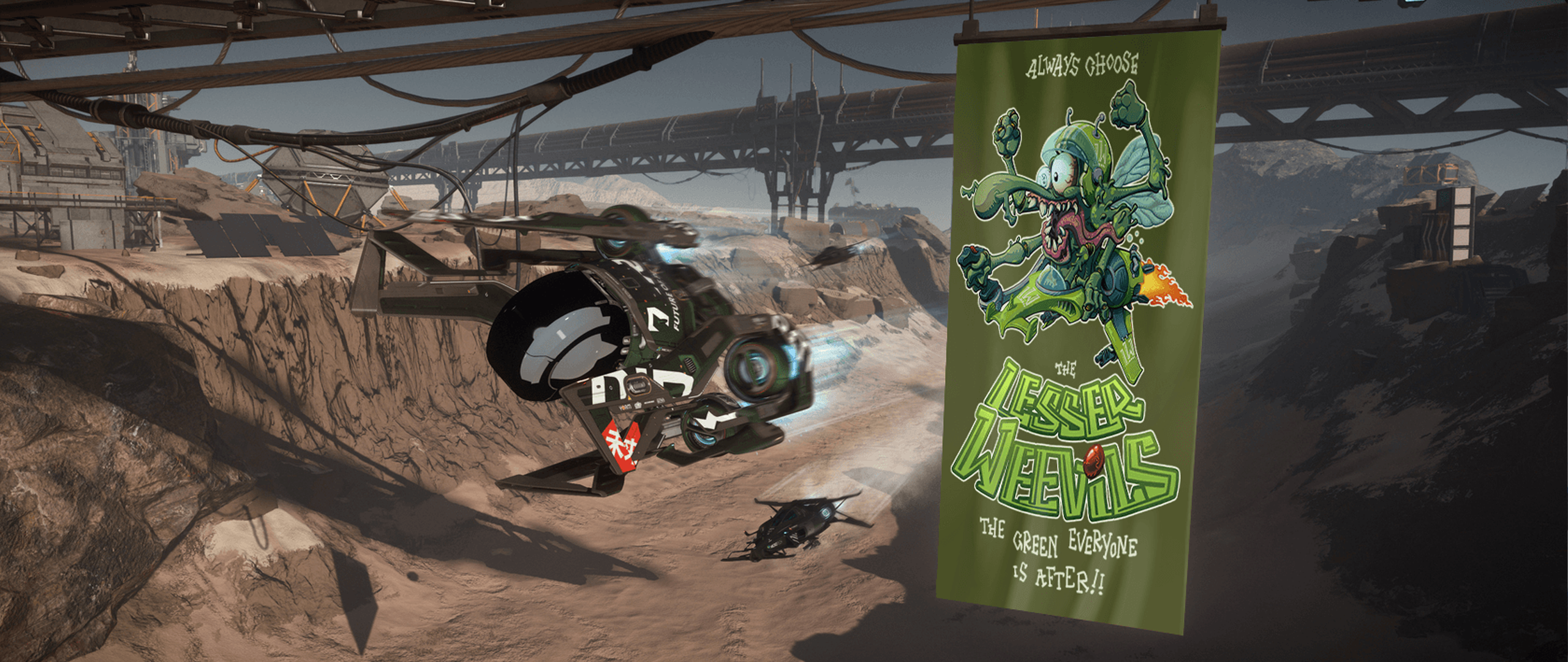
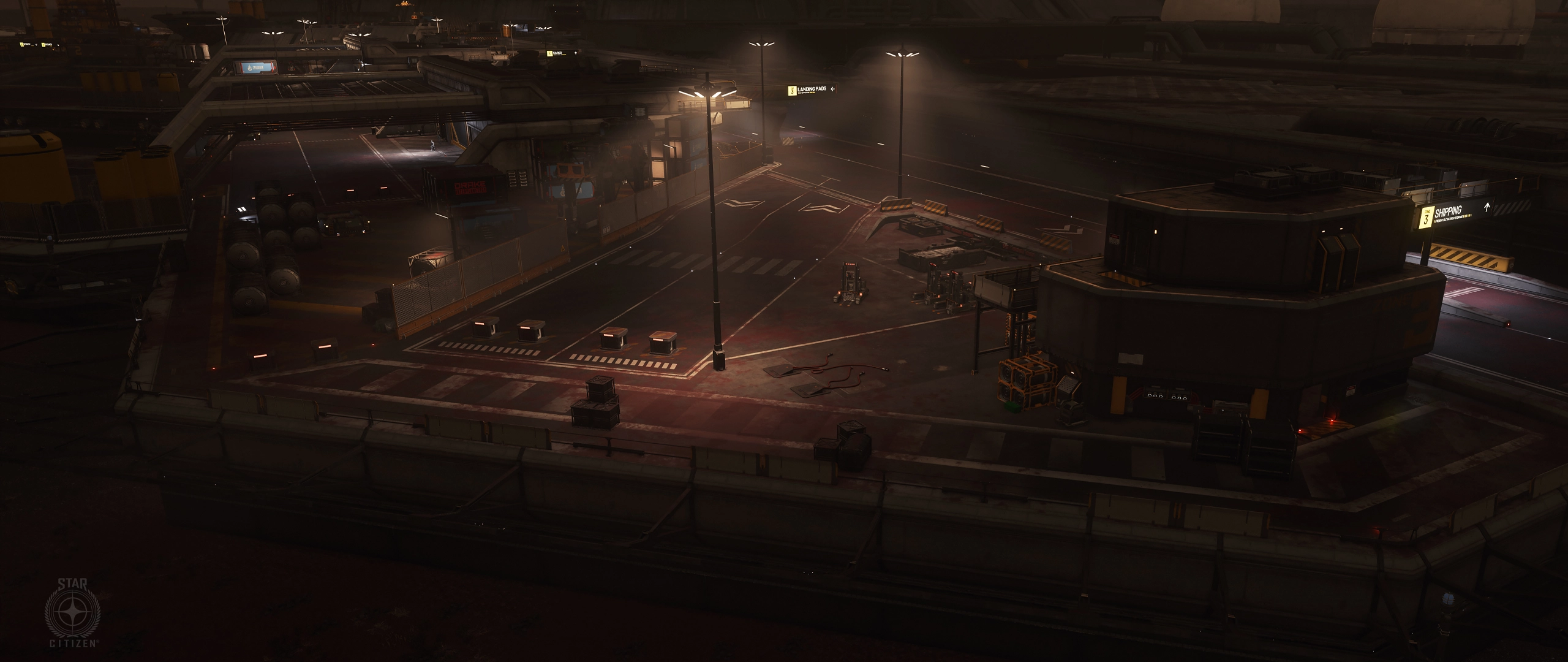
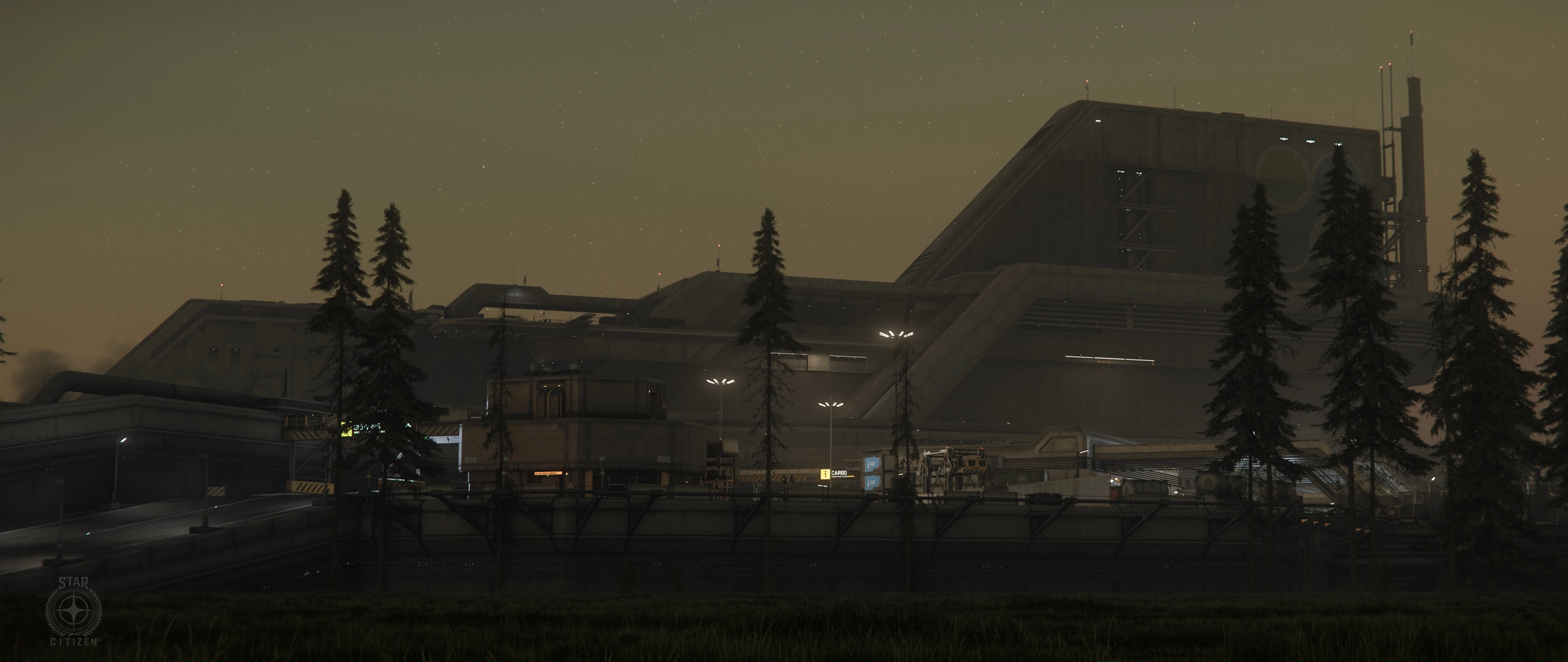
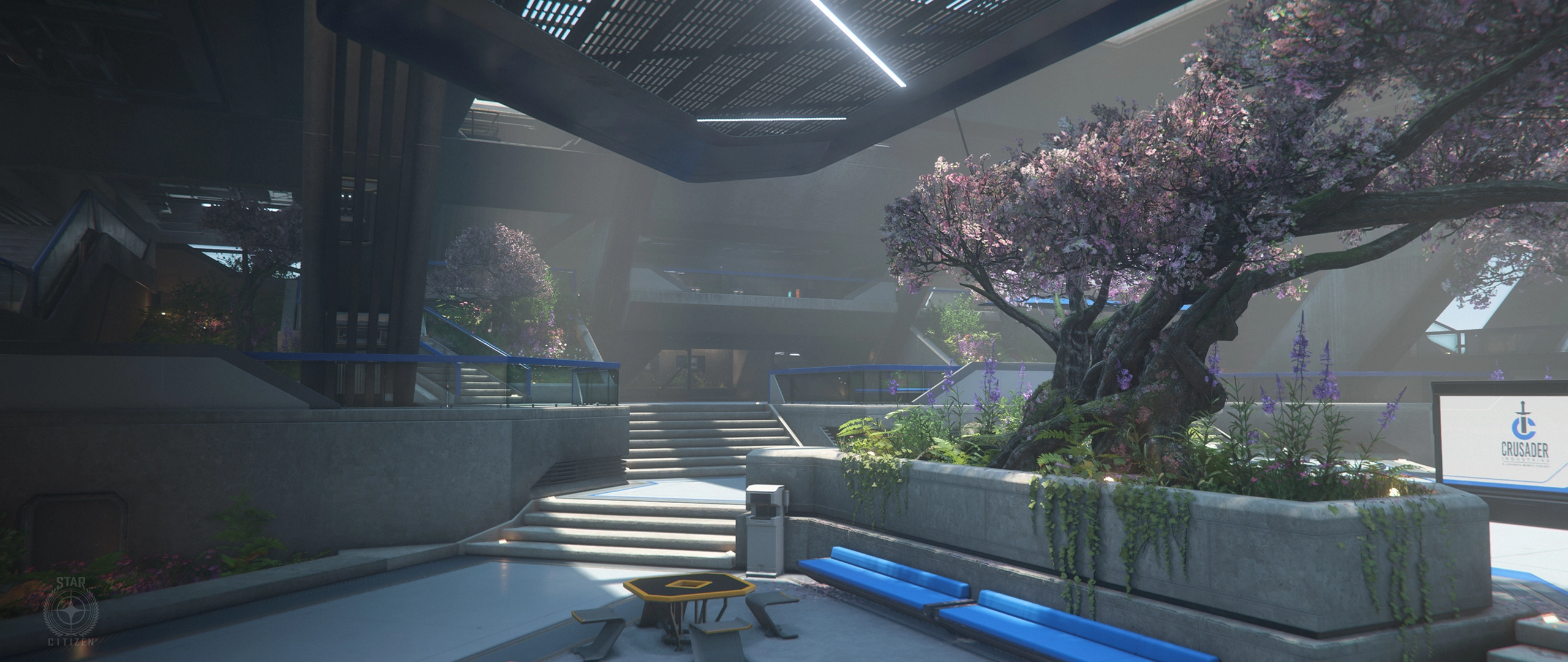
Metadata
- CIG ID
- 19869
- Channel
- Transmission
- Category
- Undefined
- Series
- None
- Comments
- 0
- Published
- 4 months ago (2026-05-25T12:00:00+00:00)