Whitley's Guide - Carrack
Spectrum Dispatch Undefined News UpdateContent
This article originally appeared in Jump Point 8.2.
Anvil Aerospace Carrack
THE SURPRISE
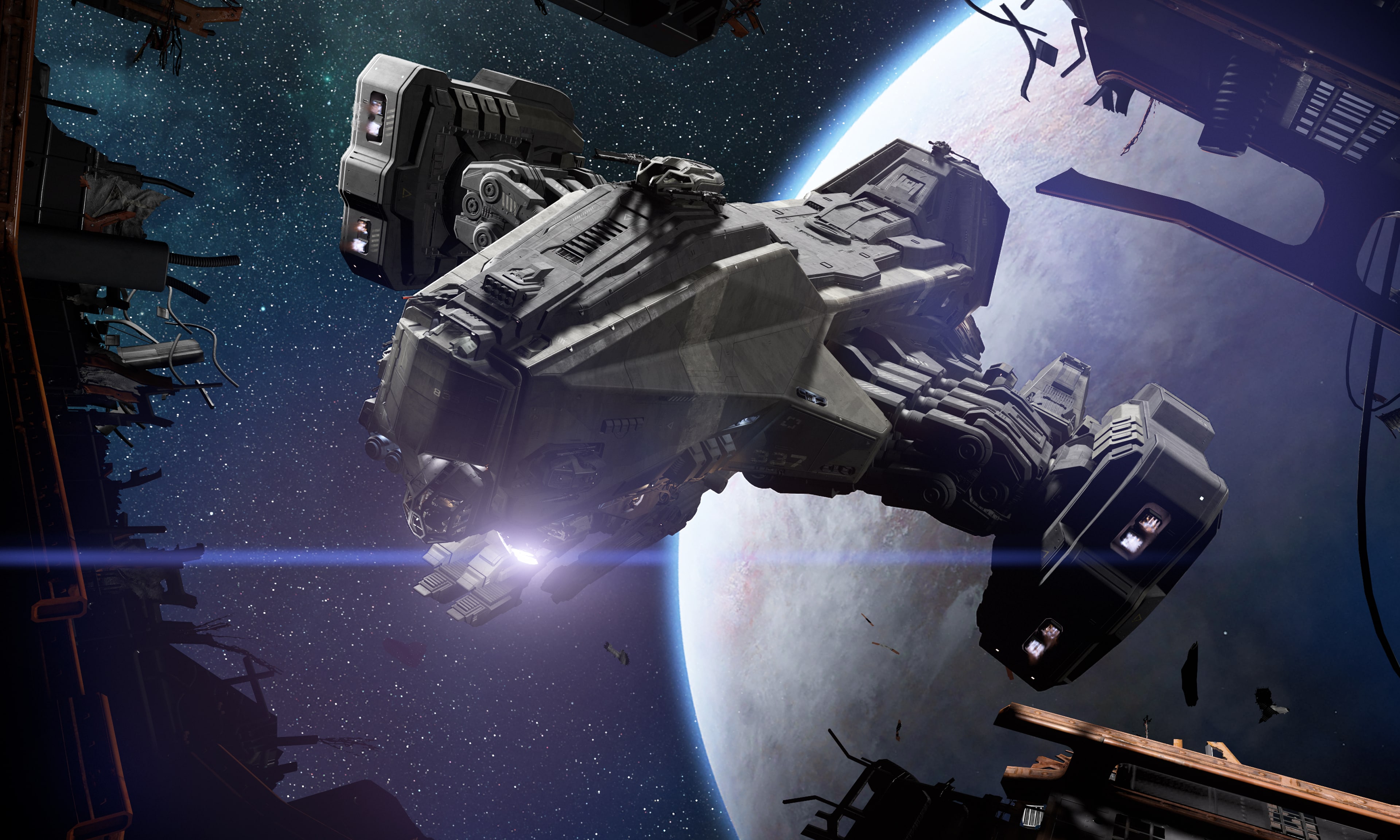
For over a century, the Anvil Carrack has been the most famous symbol of human exploration. Carrack-based explorers have pushed the boundaries of human civilization and made countless thrilling discoveries that have enhanced our knowledge of the universe. In 2822, however, its very existence was a shock to the system. Aerospace watchers were universally confused when the Carrack first appeared at the MacArthur Naval Base, Kilian; both because of the impressive nature of the ship and because of the sheer mystery as to where it had come from. While it’s not unusual for the military to sponsor the development of a spacecraft in secret, it’s such a difficult and expensive prospect that it’s only ever done when it can impact the balance of power. Here was the first ever corvette-sized, dedicated exploration ship in the Navy’s inventory and it had seemingly been birthed fully formed and ready for service. Speculation ran rampant that the Carrack must hide some sinister ulterior purpose, with suggestions including that it was a disguised electronic warfare ship or that it carried a powerful new type of bomb. None were correct: the classification, since revoked, was instead intended to cover the need for the ship in the first place. In 2815, the UEEN cruiser Carraway was lost with all hands after being dispatched to chart unusual transmissions detected in a dense asteroid field in the Tohil System. The situation was an embarrassment for the Admiralty, which had previously debated the value of using warships for exploratory missions. The loss of the warship was reported as an accident and warnings that its crew was not prepared for the mission were effectively covered up. A no-bid contract was awarded to Anvil Aerospace to secretly develop a dedicated explorer that could both replace and improve upon the missions, as they were currently being conducted by ships of the line. Wholly separate from the drama surrounding its creation, the UEEN Carracks immediately began what would become more than a century of expert survey work. Military Carracks logged hundreds of discoveries, including full surveys of countless moons, comets, jump points, and asteroid fields and they continue to be actively produced and used today. Built as an explorer first, the Carrack has the shipboard facilities and crew stations to allow for in-depth research missions while maintaining the lower profile and necessary performance for facing particularly hazardous and uncharted regions of space.
CIVILIAN SERVICE
The Carrack immediately attracted the attention of the galaxy as the perfect combination of military ruggedness and attractive, fully-featured spacecraft design. Within a month of the launch of the first Carrack in UEEN service, Anvil Aerospace had recorded over four thousand requests from organizations and individuals interested in their own ship. Anvil began petitioning the military to permit civilian sales at the conclusion of the initial 18-month construction contract in 2825. The initial answer was a surprising no due to the classified nature of its original design process. While Anvil considered the decision wrong and considered pushing for a review, they ultimately didn’t want to endanger their status as a prime contractor for projects like the Hornet. It would take the eventual ouster of the original staff officers who classified the Carraway’s destruction and several decades of waiting before the government would relent. In 2933, Anvil was finally authorized to develop a civilian-edition of the Carrack. However, several requirements were made by the UEEN, including that sensor software be rewritten from the ground up and that it could not be produced in the same facilities as the UEEN hulls. Development work began immediately but quickly lagged behind. The process of rebuilding the software proved difficult and teams ran into issues adapting the ship’s standard metrics (including aspects of seemingly simple things like the loading ramp’s dimensions) towards civilian equipment. Prospective captains were encouraged to place a deposit on the initial wave of civilian ships because the first production run was expected to be slow; this sparked something of a “Carrack craze” as planned future hull slots were purchased and traded. These owners carefully followed development of the civilian version through the various development delays. The first civilianized Carrack, later dubbed Sonny Boy by her crew, was handed over on February 21, 2938, which Carrack user groups annually celebrate as an unofficial “Carrack Day”. Civilian Carracks and their crews quickly became seen as a symbol of humanity’s best – spacefarers dedicated to the noble (and profitable) goal of exploration rather than commerce or defense.
CAPSULE HISTORIES
These capsule entries provide short histories of selected notable Carrack explorers. These are not comprehensive and do not represent the totality of the Carrack’s long history of exploration, which would necessitate a dedicated volume. Note also that the UEEN does not formally christen Carracks; instead, they are given either the designation R for ‘Research’ or S for ‘Survey’, followed by a numerical designation. The leading ‘1’ in the hull number identifies the size classification (65m or greater) and the following digits are issued numerically. Details of Carracks belonging to specialty and/or intelligence services are typically classified.
R-11 (“UEES Carrack”) – Launched in 2823, R-11 was the first ship off the line and informally referred to as ‘the Carrack’ by her crews in the first years of the UEEN’s formal exploration efforts (due to tool-and-die issues, she would not be joined by R-12 until 2825). R-11 made history by conducting the first-ever close survey of a star system’s icy exterior cloud, mapping thirty-seven distinct points in the Kilian System as part of a UEEN efforts to establish a new type of early warning system in aid of the military complex at MacArthur. No additional cloud surveys have been conducted since, indicating that the proposed system may not have been viable.
S-1132 (“GQ Twelve”) – Survey Carrack 132 entered service in 2831 and was assigned to long-distance survey missions along the Xi’an border at the former Perry Line. Popularly referred to by the callsign assigned for her final operation in 2836, Good Queen Twelve, the Carrack’s last reported communication was a buoy check-in from an assigned patrol en route to the outer reaches of the Osiris System. After missing its next two scheduled reports, mission organizers dispatched search and rescue spacecraft that found no trace of S-1132 in its assigned area. Thirty years later, the fully intact Carrack was discovered on a moon in the Indra System. All of the ship’s systems were found to be functional and her stores of food and medical supplies were largely intact, though there were no indications of the crew’s whereabouts.
Bocaccio – The Carrack explorer, Bocaccio, commissioned in 2940, is Doctor Lorraine Kent’s famed exploration ship. Bocaccio and her crew are famed for a series of historical wrecks discovered through what Kent describes as a combination of archival research, expert survey work, and sheer luck. Discoveries include the abandoned 22nd century colony transport Zephyr, the battlecruiser Braintree, and the impact site of Spidercat. Kent and her crew dedicate much of their time today to the search for and recovery of extrasolar military remains from past conflicts.
Gronald’s Hope – Gronald’s Hope was a 2948 civilian Carrack which was issued an unusual kill-on-site order by the Advocacy shortly after it entered service. The Carrack was identified entering the Kellog system three days after the issue was ordered and it was successfully intercepted by a contingent of mercenary pilots. Details of the reason for the kill order have never been released, although speculation is rampant that the government had received intelligence that the Gronald’s Hope’s crew had contracted some form of previously encountered plague.
Dieser Artikel erschien ursprünglich in Jump Point 8.2.
Amboss Luft- und Raumfahrt Carrack
DIE ÜBERRASCHUNG
Seit über einem Jahrhundert ist die Anvil Carrack das berühmteste Symbol für die menschliche Erforschung. Forscherinnen und Forscher auf der Carrack haben die Grenzen der menschlichen Zivilisation erweitert und unzählige spannende Entdeckungen gemacht, die unser Wissen über das Universum erweitert haben. Im Jahr 2822 jedoch war ihre Existenz ein Schock für das System. Raumfahrtbeobachter waren allgemein verwirrt, als die Carrack zum ersten Mal auf dem Marinestützpunkt MacArthur auf Kilian auftauchte; sowohl wegen der beeindruckenden Natur des Schiffes als auch wegen des schieren Geheimnisses, woher es gekommen war. Es ist zwar nicht ungewöhnlich, dass das Militär die Entwicklung eines Raumschiffs im Geheimen finanziert, aber das ist so schwierig und teuer, dass es nur gemacht wird, wenn es das Gleichgewicht der Macht beeinflussen kann. Hier war das erste Forschungsschiff in Korvettengröße im Bestand der Marine, das scheinbar voll ausgebildet und einsatzbereit war. Es wurde spekuliert, dass die Carrack irgendeinen finsteren Hintergedanken verbarg, z. B. dass es sich um ein getarntes Schiff für die elektronische Kriegsführung handelte oder dass es einen neuen, leistungsstarken Bombentyp an Bord hatte. Keiner dieser Vermutungen war richtig: Die Klassifizierung, die inzwischen aufgehoben wurde, sollte nur verdecken, warum das Schiff überhaupt gebraucht wurde. Im Jahr 2815 ging der UEEN-Kreuzer Carraway mit allen Mann verloren, nachdem er losgeschickt worden war, um in einem dichten Asteroidenfeld im Tohil-System ungewöhnliche Übertragungen aufzuzeichnen. Die Situation war peinlich für die Admiralität, die zuvor über den Wert des Einsatzes von Kriegsschiffen für Erkundungsmissionen debattiert hatte. Der Verlust des Kriegsschiffs wurde als Unfall gemeldet und Warnungen, dass die Besatzung nicht auf die Mission vorbereitet war, wurden effektiv vertuscht. Anvil Aerospace erhielt den Auftrag, im Geheimen ein spezielles Erkundungsflugzeug zu entwickeln, das die Missionen, die bisher von Linienschiffen durchgeführt wurden, ersetzen und verbessern sollte. Unabhängig von den dramatischen Ereignissen um ihre Entwicklung begannen die UEEN-Karacken sofort mit dem, was mehr als ein Jahrhundert an fachkundiger Vermessungsarbeit werden sollte. Die militärischen Carracks haben Hunderte von Entdeckungen gemacht, darunter die vollständige Vermessung unzähliger Monde, Kometen, Sprungpunkte und Asteroidenfelder. Die Carrack wurde in erster Linie als Forschungsschiff gebaut und verfügt über die nötigen Einrichtungen und Besatzungsstationen, um tiefgreifende Forschungsmissionen durchzuführen, während sie gleichzeitig ein niedriges Profil und die nötige Leistung für besonders gefährliche und unbekannte Regionen des Weltraums aufweist.
ZIVILER DIENST
Die Carrack zog sofort die Aufmerksamkeit der Galaxie auf sich, da sie die perfekte Kombination aus militärischer Robustheit und attraktivem, voll ausgestattetem Raumschiffdesign darstellte. Innerhalb eines Monats nach dem Start der ersten Carrack im UEEN-Dienst verzeichnete Anvil Aerospace über viertausend Anfragen von Organisationen und Einzelpersonen, die an einem eigenen Schiff interessiert waren. Anvil beantragte beim Militär, den zivilen Verkauf nach Ablauf des ersten 18-monatigen Bauvertrags im Jahr 2825 zu erlauben. Die anfängliche Antwort war ein überraschendes Nein aufgrund der geheimen Natur des ursprünglichen Entwurfsprozesses. Anvil hielt die Entscheidung zwar für falsch und erwog, auf eine Überprüfung zu drängen, wollte aber letztlich seinen Status als Hauptauftragnehmer für Projekte wie die Hornet nicht gefährden. Erst nach der Entlassung der ursprünglichen Stabsoffiziere, die die Zerstörung der Carraway angeordnet hatten, und nach mehreren Jahrzehnten des Wartens gab die Regierung nach. Im Jahr 2933 erhielt Anvil schließlich die Genehmigung, eine zivile Version der Carrack zu entwickeln. Die UEEN stellten jedoch mehrere Bedingungen, unter anderem, dass die Sensorsoftware von Grund auf neu geschrieben werden musste und dass sie nicht in denselben Anlagen wie die UEEN-Rümpfe hergestellt werden durfte. Die Entwicklungsarbeiten begannen sofort, hinkten aber schnell hinterher. Die Neuentwicklung der Software erwies sich als schwierig, und die Teams hatten Probleme, die Standard-Metriken des Schiffs (einschließlich scheinbar einfacher Dinge wie die Abmessungen der Laderampe) an die zivile Ausrüstung anzupassen. Potenzielle Kapitäne wurden ermutigt, eine Anzahlung auf die erste Welle von zivilen Schiffen zu leisten, da die erste Produktionsserie nur langsam vorankommen sollte; dies löste eine Art "Carrack-Wahn" aus, da geplante zukünftige Schiffsrümpfe gekauft und gehandelt wurden. Diese Besitzer verfolgten die Entwicklung der zivilen Version während der verschiedenen Entwicklungsverzögerungen aufmerksam. Die erste zivile Carrack, die von ihrer Besatzung später Sonny Boy genannt wurde, wurde am 21. Februar 2938 übergeben, den Carrack-Benutzergruppen jährlich als inoffiziellen "Carrack Day" feiern. Die zivilen Carracks und ihre Besatzungen wurden schnell zum Symbol für das Beste, was die Menschheit zu bieten hat - Raumfahrer, die sich dem edlen (und profitablen) Ziel der Erforschung und nicht dem Handel oder der Verteidigung verschrieben haben.
KAPSEL-GESCHICHTEN
Diese Kapsel-Einträge enthalten Kurzgeschichten ausgewählter bemerkenswerter Carrack-Forscher. Sie sind nicht vollständig und stellen nicht die gesamte lange Geschichte der Carrack dar, wofür ein eigener Band nötig wäre. Beachte auch, dass die UEEN die Karacken nicht offiziell tauft; stattdessen erhalten sie entweder die Bezeichnung R für "Research" (Forschung) oder S für "Survey" (Vermessung), gefolgt von einer numerischen Bezeichnung. Die führende "1" in der Rumpfnummer gibt die Größenklasse an (65 m oder mehr) und die folgenden Ziffern werden numerisch vergeben. Details zu Karacken, die zu Spezial- und/oder Nachrichtendiensten gehören, werden in der Regel klassifiziert.
R-11 ("UEES Carrack") - Die erste Carrack, die 2823 vom Stapel lief, wurde von ihren Besatzungen in den ersten Jahren der offiziellen Erkundungsbemühungen der UEEN informell als "die Carrack" bezeichnet (aufgrund von Werkzeugproblemen wurde sie erst 2825 von R-12 abgelöst). R-11 ging in die Geschichte ein, als sie zum ersten Mal die eisige Außenwolke eines Sternensystems aus nächster Nähe untersuchte und siebenunddreißig verschiedene Punkte im Kilian-System kartierte, um ein neuartiges Frühwarnsystem für den Militärkomplex MacArthur zu entwickeln. Seitdem wurden keine weiteren Wolkenvermessungen mehr durchgeführt, was darauf hindeutet, dass das vorgeschlagene System möglicherweise nicht realisierbar war.
S-1132 ("GQ Twelve") - Vermessungskaracke 132 wurde 2831 in Dienst gestellt und war für Fernvermessungsmissionen entlang der Xi'an-Grenze an der ehemaligen Perry-Linie zuständig. Die letzte gemeldete Meldung der Carrack war eine Bojenmeldung von einer Patrouille, die sich auf dem Weg in die äußeren Bereiche des Osiris-Systems befand. 2836 erhielt die Carrack das Rufzeichen "Good Queen Twelve". Nachdem die nächsten beiden geplanten Meldungen ausblieben, schickten die Missionsorganisatoren Such- und Rettungsraumschiffe los, die in ihrem Einsatzgebiet keine Spur von S-1132 fanden. Dreißig Jahre später wurde die völlig intakte Carrack auf einem Mond im Indra-System entdeckt. Alle Systeme des Schiffes waren funktionstüchtig und die Vorräte an Lebensmitteln und Medikamenten weitgehend intakt, aber es gab keine Hinweise auf den Verbleib der Besatzung.
Bocaccio - Der Carrack-Forscher Bocaccio, der 2940 in Dienst gestellt wurde, ist das berühmte Forschungsschiff von Doktor Lorraine Kent. Die Bocaccio und ihre Besatzung sind berühmt für eine Reihe historischer Wracks, die durch eine Kombination aus Archivrecherche, fachkundiger Vermessungsarbeit und schierem Glück entdeckt wurden. Zu den Entdeckungen gehören der verlassene Kolonialtransporter Zephyr aus dem 22. Jahrhundert, der Schlachtkreuzer Braintree und die Einschlagstelle der Spidercat. Heute widmen Kent und ihre Crew einen Großteil ihrer Zeit der Suche nach und Bergung von extrasolaren militärischen Überresten aus vergangenen Konflikten.
Gronald's Hope - Die Gronald's Hope war eine zivile Carrack aus dem Jahr 2948, die kurz nach ihrer Indienststellung einen ungewöhnlichen Tötungsbefehl von der Advocacy erhielt. Die Carrack wurde drei Tage nach dem Tötungsbefehl beim Einflug in das Kellog-System entdeckt und erfolgreich von einem Kontingent von Söldnerpiloten abgefangen. Der Grund für den Tötungsbefehl wurde nie bekannt gegeben, aber es wird spekuliert, dass die Regierung Informationen darüber erhalten hatte, dass sich die Besatzung der Gronald's Hope mit einer zuvor aufgetretenen Seuche infiziert hatte.
This article originally appeared in Jump Point 8.2.
Anvil Aerospace Carrack
THE SURPRISE
For over a century, the Anvil Carrack has been the most famous symbol of human exploration. Carrack-based explorers have pushed the boundaries of human civilization and made countless thrilling discoveries that have enhanced our knowledge of the universe. In 2822, however, its very existence was a shock to the system. Aerospace watchers were universally confused when the Carrack first appeared at the MacArthur Naval Base, Kilian; both because of the impressive nature of the ship and because of the sheer mystery as to where it had come from. While it’s not unusual for the military to sponsor the development of a spacecraft in secret, it’s such a difficult and expensive prospect that it’s only ever done when it can impact the balance of power. Here was the first ever corvette-sized, dedicated exploration ship in the Navy’s inventory and it had seemingly been birthed fully formed and ready for service. Speculation ran rampant that the Carrack must hide some sinister ulterior purpose, with suggestions including that it was a disguised electronic warfare ship or that it carried a powerful new type of bomb. None were correct: the classification, since revoked, was instead intended to cover the need for the ship in the first place. In 2815, the UEEN cruiser Carraway was lost with all hands after being dispatched to chart unusual transmissions detected in a dense asteroid field in the Tohil System. The situation was an embarrassment for the Admiralty, which had previously debated the value of using warships for exploratory missions. The loss of the warship was reported as an accident and warnings that its crew was not prepared for the mission were effectively covered up. A no-bid contract was awarded to Anvil Aerospace to secretly develop a dedicated explorer that could both replace and improve upon the missions, as they were currently being conducted by ships of the line. Wholly separate from the drama surrounding its creation, the UEEN Carracks immediately began what would become more than a century of expert survey work. Military Carracks logged hundreds of discoveries, including full surveys of countless moons, comets, jump points, and asteroid fields and they continue to be actively produced and used today. Built as an explorer first, the Carrack has the shipboard facilities and crew stations to allow for in-depth research missions while maintaining the lower profile and necessary performance for facing particularly hazardous and uncharted regions of space.
CIVILIAN SERVICE
The Carrack immediately attracted the attention of the galaxy as the perfect combination of military ruggedness and attractive, fully-featured spacecraft design. Within a month of the launch of the first Carrack in UEEN service, Anvil Aerospace had recorded over four thousand requests from organizations and individuals interested in their own ship. Anvil began petitioning the military to permit civilian sales at the conclusion of the initial 18-month construction contract in 2825. The initial answer was a surprising no due to the classified nature of its original design process. While Anvil considered the decision wrong and considered pushing for a review, they ultimately didn’t want to endanger their status as a prime contractor for projects like the Hornet. It would take the eventual ouster of the original staff officers who classified the Carraway’s destruction and several decades of waiting before the government would relent. In 2933, Anvil was finally authorized to develop a civilian-edition of the Carrack. However, several requirements were made by the UEEN, including that sensor software be rewritten from the ground up and that it could not be produced in the same facilities as the UEEN hulls. Development work began immediately but quickly lagged behind. The process of rebuilding the software proved difficult and teams ran into issues adapting the ship’s standard metrics (including aspects of seemingly simple things like the loading ramp’s dimensions) towards civilian equipment. Prospective captains were encouraged to place a deposit on the initial wave of civilian ships because the first production run was expected to be slow; this sparked something of a “Carrack craze” as planned future hull slots were purchased and traded. These owners carefully followed development of the civilian version through the various development delays. The first civilianized Carrack, later dubbed Sonny Boy by her crew, was handed over on February 21, 2938, which Carrack user groups annually celebrate as an unofficial “Carrack Day”. Civilian Carracks and their crews quickly became seen as a symbol of humanity’s best – spacefarers dedicated to the noble (and profitable) goal of exploration rather than commerce or defense.
CAPSULE HISTORIES
These capsule entries provide short histories of selected notable Carrack explorers. These are not comprehensive and do not represent the totality of the Carrack’s long history of exploration, which would necessitate a dedicated volume. Note also that the UEEN does not formally christen Carracks; instead, they are given either the designation R for ‘Research’ or S for ‘Survey’, followed by a numerical designation. The leading ‘1’ in the hull number identifies the size classification (65m or greater) and the following digits are issued numerically. Details of Carracks belonging to specialty and/or intelligence services are typically classified.
R-11 (“UEES Carrack”) – Launched in 2823, R-11 was the first ship off the line and informally referred to as ‘the Carrack’ by her crews in the first years of the UEEN’s formal exploration efforts (due to tool-and-die issues, she would not be joined by R-12 until 2825). R-11 made history by conducting the first-ever close survey of a star system’s icy exterior cloud, mapping thirty-seven distinct points in the Kilian System as part of a UEEN efforts to establish a new type of early warning system in aid of the military complex at MacArthur. No additional cloud surveys have been conducted since, indicating that the proposed system may not have been viable.
S-1132 (“GQ Twelve”) – Survey Carrack 132 entered service in 2831 and was assigned to long-distance survey missions along the Xi’an border at the former Perry Line. Popularly referred to by the callsign assigned for her final operation in 2836, Good Queen Twelve, the Carrack’s last reported communication was a buoy check-in from an assigned patrol en route to the outer reaches of the Osiris System. After missing its next two scheduled reports, mission organizers dispatched search and rescue spacecraft that found no trace of S-1132 in its assigned area. Thirty years later, the fully intact Carrack was discovered on a moon in the Indra System. All of the ship’s systems were found to be functional and her stores of food and medical supplies were largely intact, though there were no indications of the crew’s whereabouts.
Bocaccio – The Carrack explorer, Bocaccio, commissioned in 2940, is Doctor Lorraine Kent’s famed exploration ship. Bocaccio and her crew are famed for a series of historical wrecks discovered through what Kent describes as a combination of archival research, expert survey work, and sheer luck. Discoveries include the abandoned 22nd century colony transport Zephyr, the battlecruiser Braintree, and the impact site of Spidercat. Kent and her crew dedicate much of their time today to the search for and recovery of extrasolar military remains from past conflicts.
Gronald’s Hope – Gronald’s Hope was a 2948 civilian Carrack which was issued an unusual kill-on-site order by the Advocacy shortly after it entered service. The Carrack was identified entering the Kellog system three days after the issue was ordered and it was successfully intercepted by a contingent of mercenary pilots. Details of the reason for the kill order have never been released, although speculation is rampant that the government had received intelligence that the Gronald’s Hope’s crew had contracted some form of previously encountered plague.
This article originally appeared in Jump Point 8.2.
Anvil Aerospace Carrack
THE SURPRISE
For over a century, the Anvil Carrack has been the most famous symbol of human exploration. Carrack-based explorers have pushed the boundaries of human civilization and made countless thrilling discoveries that have enhanced our knowledge of the universe. In 2822, however, its very existence was a shock to the system. Aerospace watchers were universally confused when the Carrack first appeared at the MacArthur Naval Base, Kilian; both because of the impressive nature of the ship and because of the sheer mystery as to where it had come from. While it’s not unusual for the military to sponsor the development of a spacecraft in secret, it’s such a difficult and expensive prospect that it’s only ever done when it can impact the balance of power. Here was the first ever corvette-sized, dedicated exploration ship in the Navy’s inventory and it had seemingly been birthed fully formed and ready for service. Speculation ran rampant that the Carrack must hide some sinister ulterior purpose, with suggestions including that it was a disguised electronic warfare ship or that it carried a powerful new type of bomb. None were correct: the classification, since revoked, was instead intended to cover the need for the ship in the first place. In 2815, the UEEN cruiser Carraway was lost with all hands after being dispatched to chart unusual transmissions detected in a dense asteroid field in the Tohil System. The situation was an embarrassment for the Admiralty, which had previously debated the value of using warships for exploratory missions. The loss of the warship was reported as an accident and warnings that its crew was not prepared for the mission were effectively covered up. A no-bid contract was awarded to Anvil Aerospace to secretly develop a dedicated explorer that could both replace and improve upon the missions, as they were currently being conducted by ships of the line. Wholly separate from the drama surrounding its creation, the UEEN Carracks immediately began what would become more than a century of expert survey work. Military Carracks logged hundreds of discoveries, including full surveys of countless moons, comets, jump points, and asteroid fields and they continue to be actively produced and used today. Built as an explorer first, the Carrack has the shipboard facilities and crew stations to allow for in-depth research missions while maintaining the lower profile and necessary performance for facing particularly hazardous and uncharted regions of space.
CIVILIAN SERVICE
The Carrack immediately attracted the attention of the galaxy as the perfect combination of military ruggedness and attractive, fully-featured spacecraft design. Within a month of the launch of the first Carrack in UEEN service, Anvil Aerospace had recorded over four thousand requests from organizations and individuals interested in their own ship. Anvil began petitioning the military to permit civilian sales at the conclusion of the initial 18-month construction contract in 2825. The initial answer was a surprising no due to the classified nature of its original design process. While Anvil considered the decision wrong and considered pushing for a review, they ultimately didn’t want to endanger their status as a prime contractor for projects like the Hornet. It would take the eventual ouster of the original staff officers who classified the Carraway’s destruction and several decades of waiting before the government would relent. In 2933, Anvil was finally authorized to develop a civilian-edition of the Carrack. However, several requirements were made by the UEEN, including that sensor software be rewritten from the ground up and that it could not be produced in the same facilities as the UEEN hulls. Development work began immediately but quickly lagged behind. The process of rebuilding the software proved difficult and teams ran into issues adapting the ship’s standard metrics (including aspects of seemingly simple things like the loading ramp’s dimensions) towards civilian equipment. Prospective captains were encouraged to place a deposit on the initial wave of civilian ships because the first production run was expected to be slow; this sparked something of a “Carrack craze” as planned future hull slots were purchased and traded. These owners carefully followed development of the civilian version through the various development delays. The first civilianized Carrack, later dubbed Sonny Boy by her crew, was handed over on February 21, 2938, which Carrack user groups annually celebrate as an unofficial “Carrack Day”. Civilian Carracks and their crews quickly became seen as a symbol of humanity’s best – spacefarers dedicated to the noble (and profitable) goal of exploration rather than commerce or defense.
CAPSULE HISTORIES
These capsule entries provide short histories of selected notable Carrack explorers. These are not comprehensive and do not represent the totality of the Carrack’s long history of exploration, which would necessitate a dedicated volume. Note also that the UEEN does not formally christen Carracks; instead, they are given either the designation R for ‘Research’ or S for ‘Survey’, followed by a numerical designation. The leading ‘1’ in the hull number identifies the size classification (65m or greater) and the following digits are issued numerically. Details of Carracks belonging to specialty and/or intelligence services are typically classified.
R-11 (“UEES Carrack”) – Launched in 2823, R-11 was the first ship off the line and informally referred to as ‘the Carrack’ by her crews in the first years of the UEEN’s formal exploration efforts (due to tool-and-die issues, she would not be joined by R-12 until 2825). R-11 made history by conducting the first-ever close survey of a star system’s icy exterior cloud, mapping thirty-seven distinct points in the Kilian System as part of a UEEN efforts to establish a new type of early warning system in aid of the military complex at MacArthur. No additional cloud surveys have been conducted since, indicating that the proposed system may not have been viable.
S-1132 (“GQ Twelve”) – Survey Carrack 132 entered service in 2831 and was assigned to long-distance survey missions along the Xi’an border at the former Perry Line. Popularly referred to by the callsign assigned for her final operation in 2836, Good Queen Twelve, the Carrack’s last reported communication was a buoy check-in from an assigned patrol en route to the outer reaches of the Osiris System. After missing its next two scheduled reports, mission organizers dispatched search and rescue spacecraft that found no trace of S-1132 in its assigned area. Thirty years later, the fully intact Carrack was discovered on a moon in the Indra System. All of the ship’s systems were found to be functional and her stores of food and medical supplies were largely intact, though there were no indications of the crew’s whereabouts.
Bocaccio – The Carrack explorer, Bocaccio, commissioned in 2940, is Doctor Lorraine Kent’s famed exploration ship. Bocaccio and her crew are famed for a series of historical wrecks discovered through what Kent describes as a combination of archival research, expert survey work, and sheer luck. Discoveries include the abandoned 22nd century colony transport Zephyr, the battlecruiser Braintree, and the impact site of Spidercat. Kent and her crew dedicate much of their time today to the search for and recovery of extrasolar military remains from past conflicts.
Gronald’s Hope – Gronald’s Hope was a 2948 civilian Carrack which was issued an unusual kill-on-site order by the Advocacy shortly after it entered service. The Carrack was identified entering the Kellog system three days after the issue was ordered and it was successfully intercepted by a contingent of mercenary pilots. Details of the reason for the kill order have never been released, although speculation is rampant that the government had received intelligence that the Gronald’s Hope’s crew had contracted some form of previously encountered plague.
Links
No links available.

Metadata
- CIG ID
- 20067
- Channel
- Spectrum Dispatch
- Category
- Undefined
- Series
- News Update
- Comments
- 17
- Published
- 2 years ago (2024-07-23T00:00:00+00:00)