Star Citizen Monthly Report: November & December 2024
Transmission Undefined NoneContent
PU Monthly Report
November/December 2024
It’s the first Monthly Report of 2025! To kick off the reporting year, we’re looking back to the end of 2024, detailing everything done for the Persistent Universe in November and December. Read on for all the details behind Alpha 4.0’s development and beyond.
AI (Content)
The AI team ended 2024 progressing with tasks for Alpha 4.0. This involved adding and validating social AI behaviors across the new stations and outposts to ensure NPCs are positioned and path-find correctly through each space. This involved playing through the various stations and discussing where it was or wasn’t appropriate to place characters and what type of story is intended to be shown there.
As many players noticed, dynamic conversations have started to appear in-game, which began with tech from Squadron 42. To improve the experience, a small capture session was undertaken to enable new conversations specific to Pyro and Stanton.
“This is definitely something we want to leverage more in the future, potentially even allowing us to reference in-game events.” AI Team
The team also looked back at Stanton’s landing zones to upgrade their behaviors to the standard set in Pyro. For example, they tested population numbers to see how many NPCs could fit in a location without compromising performance. Though the numbers still aren’t where they would like, particular in the bustling metropolis of Area18, it provided valuable insight as they begin to experiment with creating environments with denser populations.
AI (Features)
In November and December, the AI Feature team progressed with combat for Pyro, particularly for Alpha 4.0’s Contested Zones. This led to improved server framerate and stability. For example, ammo-management spoofing is now functional in locations where ammo crates are yet to be balanced. As such, NPCs will reload, run out of ammo, and search for more from downed combatants to provide much-needed ebb and flow to the combat without needing to wait for a full looting rebalance.
Time was also put into polishing reloading and ammo-management animations and behaviors to ensure they’re ready for Alpha 4.0.
AI Features also improved the medic behavior that allows MedPen-equipped NPCs to revive their squad mates, providing an extra challenge to players. This also creates gameplay opportunities by allowing players to bait enemies into the open to heal their comrades.
The team also fixed issues when cover is compromised to ensure NPCs respond quickly when ambushed. Bugs in ‘defend areas’ were fixed too, which are used to shape the flow of combat and set up areas where enemies wait in cover to ambush players.
Work was then done to simplify and refactor the ‘investigate’ behavior, giving it additional fallback options and enabling it to work more sympathetically with the perception system. This functionality is used to drive searching behaviors across groups when the AI has not fully perceived something or has lost its target.
Significant work was also done to ensure that perception (particularly vision) checks using client calculations are efficient and correctly distribute checks to characters present at different LODs.
In addition, AI Features worked alongside Animation to introduce a new creature to the Star Citizen universe, the Quasi grazer.
“We’ve been working on this for some time now and are so happy to see the positive reaction from players to our bovine friend.” AI Features Team
Work also progressed on animation stances, which are used by the Quasi grazer when sleeping and grazing. These are particularly relevant to the day/night sleep cycle. A new charge attack type was also introduced.
AI (Tech)
AI Tech spent the last two months making performance improvements to AI systems and progressing with new features.
They began by enabling dynamic cover generation for planets and some locations chosen by the designers (this was part of the tech presented at CitizenCon). They also implemented a new exporter for dynamic cover generated as part of a location’s object container. For dynamic cover, fixes were made when reusing cover locations after a navigation tile regenerates without NPCs.
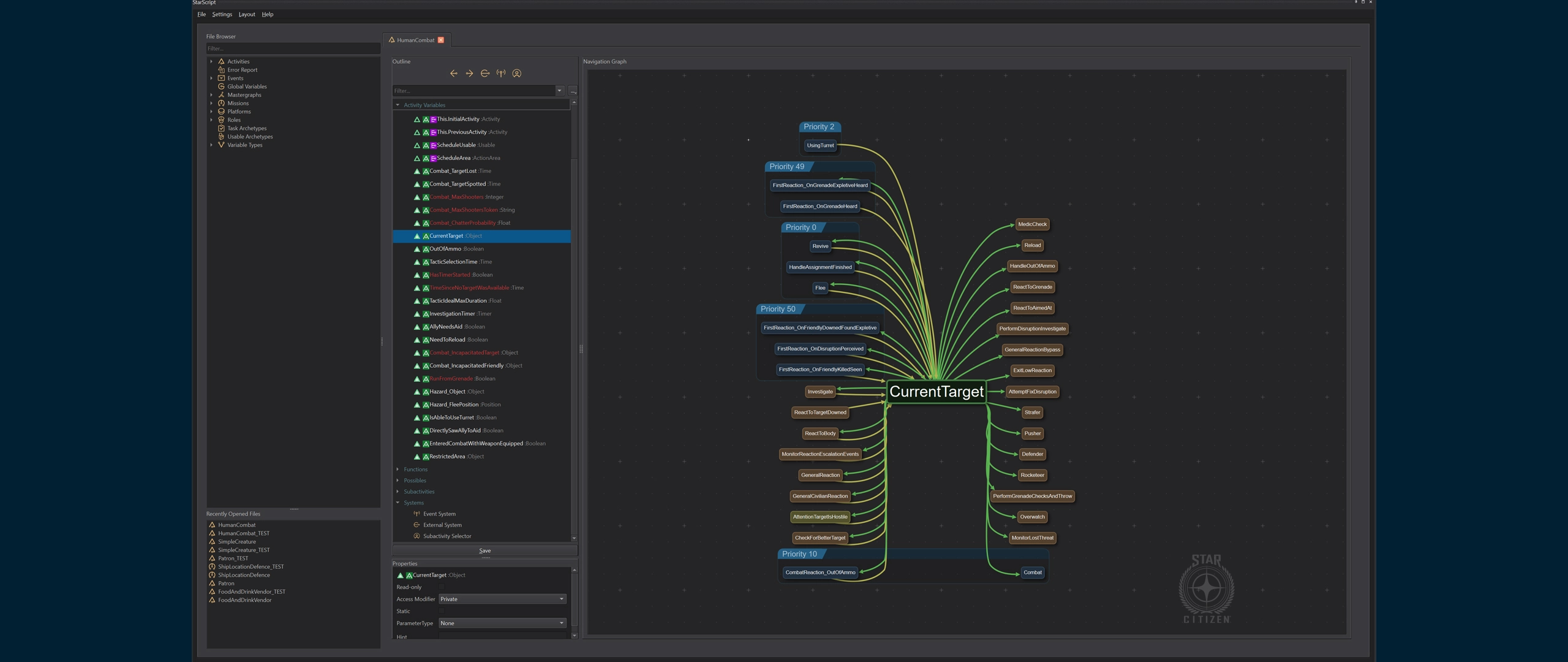
The StarScript design tool received numerous updates. This new tool inherits the logic from Apollo Subsumption and will be used by the designers to define and represent mission behaviors, NPC behaviors, and other design scenario scripts. It also has a modern UI and better functionality for debugging behaviors.
Multiple improvements were made to the ‘tactical point system’ to provide faster results when searching for usables, cover, or points on the navigation mesh with less impact on the frame-time budget.
The navigation system received numerous improvements for the Alpha 4.0 release. For example, the team updated how they compute navigation islands by utilizing more threads and splitting the navigation volume tiles into island groups. For planetary navigation, the devs optimized the way they send events that trigger navigation regeneration requests alongside the ability to link navigation area exclusion and navigation cost areas to planetary navigation mesh.
For boids tech, crashes were solved and the volume of synchronized data used between the server and client was optimized. For scripting reasons, new functionality to easily convert conversation behavior into a flowgraph node was implemented. Updates were made to audio propagation and how NPCs perceive audio events too.
Ship AI behaviors received a lot of attention, including improvements to quantum travel to better handle failures and updates to reinforcement behaviors and collision avoidance logic.
Finally, the team began implementing movement requests for chasing targets. This will include updates to how Pathfinder requests are solved and patch existing paths.
AI (Game Intelligence Development Team)
Throughout November and December, the Game Intelligence Development team continued to close down StarScript 1.1, updating the old Apollo documentation to the new UX and adding documentation to the new features. They also defined a QA testing process to detect and address crashes and bugs as early as possible. A ‘cheat sheet’ was then produced to highlight the differences between Subsumption/Apollo and StarScript, including using filters and smart query to quickly obtain results, how to use custom groups, and working with notes.
Following this, the game designers began using Starscript 1.1 and made requests for features and visual additions. The navigation graph was implemented for StarScript v1.5 alongside a selection of icons to represent key elements, such as the event system, external system, and sub-activity selector.
Animation
November saw the Animation team create player-interaction animations for hacking and door panels. They also worked on various creature animations for the kopion, Quasi grazer, and Valakaar, and prepped for upcoming creatures.
The devs then undertook several performance-capture shoots before solving the data and facial animations.
The end of the year was spent developing various animations for existing and upcoming creatures, while Facial Animation continued to create animations from the captured performances.
Art (Characters)
The Character Art team supported StarWear art debt and fixed bugs for the live releases. They’re currently working on two new armors alongside upcoming armor variants.
Art (Ships)
The Ship Art team spent the end of 2024 putting the finishing touches on upcoming vehicles that will be revealed or released this year.
Alongside unannounced vehicles, several upcoming vehicles progressed through the white and greybox stages, including the Consolidated Outland Pioneer, Drake Ironclad, Anvil Paladin, MISC Starlancer TAC, Argo CSV-FM, and RSI Apollo and Perseus.
Community
The Community team began the busy months of November and December with a recap of CitizenCon 2954 and by making all presentations from the event available on YouTube. They also supported IAE 2954 with an FAQ and manufacturer schedule for this year’s event, as well as the Intergalactic Photography Awards screenshot contest featuring nine unique categories.
The team published a Spectrum guide to support the Save Stanton Global Event as well as providing Q&As for the Crusader Intrepid, RSI Polaris, Anvil Terrapin Medic, Anvil Paladin, and MISC Starlancer TAC. November also saw the introduction of Star Citizen Comms-Dive, a new series designed to dive into hot topics and ongoing discussions within the community (more of these to come soon!)
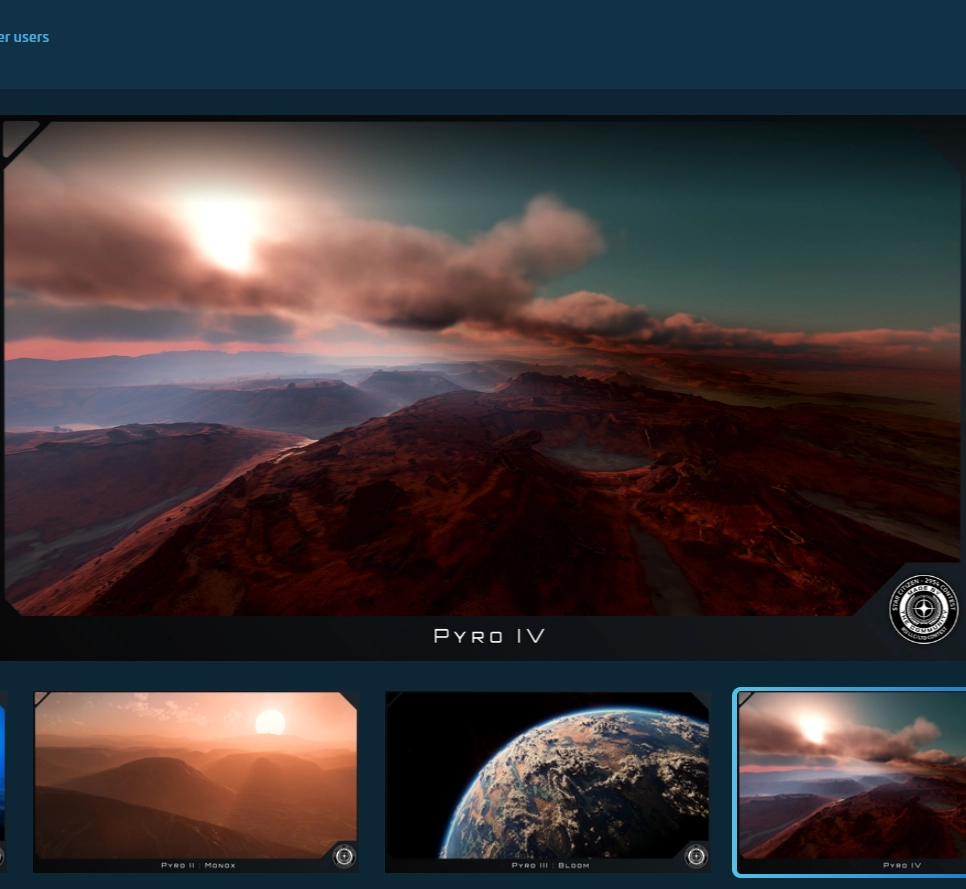
During December, Community helped spread the joy of Luminalia 2954 with a calendar of daily gifts, a referral bonus, and a Gift that Keeps on Giving video contest. They supported the release of Star Citizen Alpha 4.0 preview with a Beauty of Pyro screenshot contest highlighting the planets and moons of this new system, and by publishing three Patch Watch posts, which offered deeper insights into the updated economy, new mining opportunities in Pyro, and more.
Regular updates were also published for the community, including Roadmap Roundup, This Week in Star Citizen, and the Arena Commander Schedule.
And lastly, the team spent time focusing on event planning and upcoming activities being planned for the year.
Core Gameplay
All Core Gameplay teams were heavily involved in addressing stability and performance issues found during Alpha 4.0 PTU.
Alongside this, the programmers worked on jump points, which are critical to connecting Stanton with Pyro (and, later, other star systems). A lot of effort went into creating a strong visual experience and the feeling of controlling the spaceship inside the tunnel.
The new mission system received the final critical changes to prepare it for the new server-meshed environment. This overhaul is important to ensure missions persist as players cross between server boundaries, on server-crash recovery, and between different servers. As the system was completely overhauled and most of the scripting logic rules changed, all mission archetypes needed to be rewritten. A lot of teams supported the transition and setup of this content by helping locate and identify problems.
As the number of territories or regions served by one dedicated server increased, more features were found to have issues with authority transfer (unique problems caused by ownership of the entity moving from one server to another). These issues proved challenging to address, but the benefits of more territories made it worth the time investment.
The teams were also heavily involved in new content, including Contested Zones, and took the opportunity to begin making changes to the PU login flow, including allowing players to spawn directly into their persistent hangars at their home locations.
Work was done in support of an upcoming ship, fixing quality-of life issues with personal hangar and freight elevators, and a lot of bug fixing.
Economy
The end of 2024 saw the Economy team adjust the prices of quantum and hydrogen fuel to account for new tank sizes. Prices of vehicle components and ordnance were rebalanced with the aim of turning the use of a Size 10 bomb into a serious financial decision.
Vehicle repair costs were also rebalanced taking into account the new prices for components and commodities. For example, repairing a ship’s hull should now be a lot cheaper than replacing missing components.
Graphics, VFX Programming & Planet Tech
For the graphics department, the end of 2024 largely involved making significant performance and stability improvements to Alpha 4.0.
The team also finalized internal support for Vulkan and rolled it out as the default renderer for developers. This includes many stability improvements alongside multi-threading improvements to increase CPU performance on multi-core machines. These improvements are in the main branch, so they will reach the PU when the next major pull of the main code branch takes place.
R&D for global illumination, reflections, and Planet Tech v5 all progressed and will continue at full pace now that the team’s work on Alpha 4.0 is complete.
Interactables
Interactables developed assets for Contested Zones, such as keycards, server blades, and fuse slots, and completed a performance and bug pass.
Locations
The Locations team spent the end of 2024 supporting the Alpha 4.0 build, including polishing, optimizing, and bug-fixing Pyro’s Contested Zones and outposts.
Mission Design
The ongoing mission refactor continued, with bugs being prioritized and triaged. While analytics show high completion rates for missions, some users are still coming across issues. The team are currently attempting to reproduce and fix exactly what is causing them.
Along with this, Mission Design kicked off new content planned for 2025, more of which will be shared in the coming months.
Narrative
Over the past two months, the Narrative team focused on finishing mission content text for Alpha 4.0. The addition of Pyro meant that there were dozens of mission archetypes with different complexities and steps that needed to be applied to all mission providers in the system. Narrative also worked closely with the mission designers to support the Save Stanton missions.
Outside of that, evergreen work continued, including generating names and descriptions for items, liveries, weapons, and armor. The team also planned storytelling and character initiatives beginning in the new year.
On the website, the team released a fascinating Portfolio on the history of Luminalia, which gave insight into the Banu culture, and answered the community’s questions from the Ask a Dev forum in Loremakers.
Online Technology
In November and December, Online Services finalized the backend services crucial to several key features, including the mission-system refactor, the entity-subscription service/marker refactor, the scenario service, and various social services updates. Each of these enhancements played a vital role in the overarching goal of making Server Meshing a reality.
The team also devoted a considerable amount of time and resources to assist in unblocking accounts experiencing various issues. Furthermore, the team successfully released hotfixes to address these issues over the holidays.
The Live Tools team continued rolling out new features for Hex that had been in development for several months. The latest includes a tool to manage access and permissions in a more granular way and a new module to help manage in-game events and missions.
Existing modules continued to be improved to provide a better user experience. The team also worked on significant improvements for the error-reporting pipeline and other internal development tools.
R&D
In November and December, the R&D team continued to finalize the core system components for the first version of dynamic weather. The previously implemented weather-map support was extended to also include a rain accumulation map with physically plausible evaporation and percolation model. This uses a planet's temperature, humidity, and wind map (which also drive terrain and biome generation) as input. Support for rain clustering was added to limit rain to specific regions and types of clouds.
Similar controls were added for lightning and the quality of lightning event locations extracted from the weather map was improved. The temporal stability of weather was improved, while diffusion in the rain accumulation map (due to re-sampling historic data) was reduced.
Volumetric cloud shadow rendering was stabilized to further improve occasional stepping artifacts when the camera moved, especially with the sun at low angles above the horizon.
Additionally, various backend changes were implemented. This included introducing a dependency chain so that runtime-generated cloud and weather maps and their dependencies can update lazily. Also, weather animation states now propagate to all systems and threads working with them, so related gameplay and physics effects should be consistent with rendering.
Tech Art/Animation
The Technical Animation team continued with a range of long-term tasks to facilitate improvements across the board. For example, despite technical challenges, they made substantial progress toward finalizing several creatures, ensuring they’re ready to be deployed across various planets.
One of the team’s major milestones was the successful integration of new heads into the Character Customizer. This enhancement will offer players more variety and customization options, further enriching personalization.
A contingent of the Tech Animation team is currently invested in the development and upkeep of player interactions.
“Most recently, this included the fuse puzzles, which were trickier to implement than you might expect!” Technical Animation Team
Tech Design
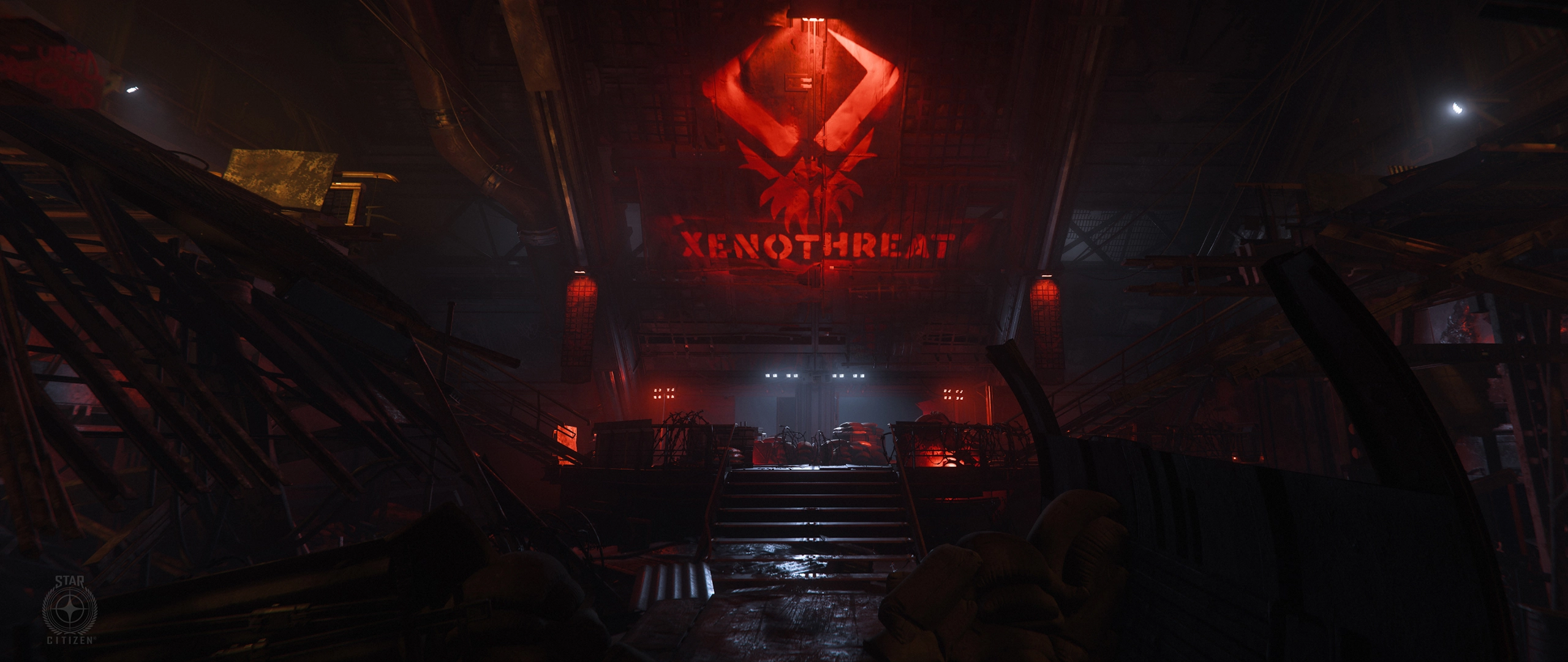
Throughout November and December, Tech Design primarily focused on the Contested Zones. Support ranged from setting up new entities, implementing gameplay and reward logic, fixing doors, hooking up lights and sound effects, and playtesting and iterating on the above.
They also set up entities for the CitizenCon Digital Goodies Pack and identified and resolved small and large workflow issues for themselves and other teams.
VFX
In November, VFX supported the Vehicle teams with the Mirai Guardian and the Locations teams with a variety of Pyro location work.
December saw further work on Pyro, including Contested Zones, rundown stations, asteroid bases, and the VFX-heavy jump points.
Image by
JadeStarwatcher Image by
AlexanderSynerImage by
JadeStarwatcherImage by
AlexanderSyner
PU-Monatsbericht
November/Dezember 2024
Das ist der erste Monatsbericht des Jahres 2025! Zum Auftakt des Berichtsjahres blicken wir auf das Ende des Jahres 2024 zurück und berichten über alles, was im November und Dezember im Persistent Universe passiert ist. Lies weiter, um alle Details über die Entwicklung von Alpha 4.0 und darüber hinaus zu erfahren.
KI (Inhalt)
Das KI-Team beendete das Jahr 2024 mit der Bearbeitung der Aufgaben für Alpha 4.0. Dazu gehörte das Hinzufügen und Validieren des sozialen KI-Verhaltens in den neuen Stationen und Außenposten, um sicherzustellen, dass die NSCs richtig positioniert sind und den richtigen Weg durch jeden Raum finden. Dazu mussten die verschiedenen Stationen durchgespielt und diskutiert werden, wo es sinnvoll ist, Charaktere zu platzieren und welche Art von Geschichte dort gezeigt werden soll.
Wie viele Spieler/innen bemerkt haben, sind dynamische Gespräche im Spiel aufgetaucht, die mit der Technik von Squadron 42 begonnen haben. Um das Erlebnis zu verbessern, wurde eine kleine Aufnahmesitzung durchgeführt, um neue Gespräche speziell für Pyro und Stanton zu ermöglichen.
"Das ist definitiv etwas, das wir in Zukunft noch stärker nutzen wollen, um vielleicht sogar auf Ereignisse im Spiel verweisen zu können. KI-Team
Das Team hat sich auch Stantons Landezonen angesehen, um deren Verhalten an den Standard von Pyro anzupassen. Sie testeten zum Beispiel die Bevölkerungszahlen, um herauszufinden, wie viele NSCs an einem Ort Platz finden, ohne dass die Leistung darunter leidet. Obwohl die Zahlen immer noch nicht so hoch sind, wie sie es gerne hätten, vor allem in der geschäftigen Metropole Area18, lieferten sie wertvolle Erkenntnisse, um mit der Schaffung von Umgebungen mit dichterer Bevölkerung zu experimentieren.
KI (Features)
Im November und Dezember hat das KI-Feature-Team die Kämpfe in Pyro weiterentwickelt, insbesondere in den umkämpften Zonen der Alpha 4.0. Dies führte zu einer verbesserten Framerate und Stabilität des Servers. Zum Beispiel funktioniert das Spoofing des Munitionsmanagements jetzt auch an Orten, an denen die Munitionskisten noch nicht ausbalanciert sind. So laden NSCs nach, wenn ihnen die Munition ausgeht, und suchen dann bei gefallenen Kämpfern nach neuer Munition, um den Kampf zu beleben, ohne dass sie auf ein vollständiges Rebalancing der Beute warten müssen.
Außerdem wurde an den Animationen und dem Verhalten beim Nachladen und Munitionsmanagement gefeilt, um sicherzustellen, dass sie für die Alpha 4.0 bereit sind.
Die KI-Features haben auch das Verhalten der Sanitäter verbessert, so dass NPCs mit MedPen ihre Kameraden wiederbeleben können, was für die Spieler eine zusätzliche Herausforderung darstellt. Dies schafft auch neue Spielmöglichkeiten, da die Spieler/innen Feinde ins Freie locken können, um ihre Kameraden zu heilen.
Das Team hat auch Probleme behoben, die auftreten, wenn die Deckung gefährdet ist, um sicherzustellen, dass NSCs schnell reagieren, wenn sie in einen Hinterhalt geraten. Außerdem wurden Fehler in den "Verteidigungsbereichen" behoben, die dazu dienen, den Kampfablauf zu gestalten und Bereiche einzurichten, in denen Feinde in Deckung warten, um Spieler/innen aus dem Hinterhalt anzugreifen.
Außerdem wurde das Verhalten "Erkunden" vereinfacht und überarbeitet, so dass es zusätzliche Ausweichmöglichkeiten bietet und besser mit dem Wahrnehmungssystem zusammenarbeitet. Diese Funktion wird genutzt, um das Suchverhalten in Gruppen zu steuern, wenn die KI etwas nicht vollständig wahrgenommen oder ihr Ziel verloren hat.
Es wurde auch viel Arbeit geleistet, um sicherzustellen, dass die Wahrnehmungsprüfung (insbesondere die Sichtprüfung) mit Hilfe von Client-Berechnungen effizient ist und die Prüfungen korrekt auf Charaktere mit unterschiedlichen LODs verteilt werden.
Außerdem arbeiteten die KI-Funktionen mit der Animation zusammen, um eine neue Kreatur in das Star Citizen-Universum einzuführen: den Quasi-Weidegänger.
"Wir haben schon seit einiger Zeit daran gearbeitet und freuen uns sehr über die positive Reaktion der Spieler/innen auf unseren bovinen Freund. AI Features Team
Die Arbeit an den Animationspositionen, die der Quasi-Weider beim Schlafen und Grasen einnimmt, wurde ebenfalls vorangetrieben. Diese sind besonders für den Tag-Nacht-Schlafzyklus relevant. Es wurde auch eine neue Angriffsart eingeführt.
KI (Tech)
Die KI-Abteilung hat in den letzten zwei Monaten die Leistung der KI-Systeme verbessert und neue Funktionen entwickelt.
Sie begannen damit, die dynamische Deckungserzeugung für Planeten und einige von den Designern ausgewählte Orte zu ermöglichen (dies war Teil der auf der CitizenCon vorgestellten Technologie). Außerdem wurde ein neuer Exporter für dynamische Deckung implementiert, die als Teil des Objektcontainers eines Ortes erzeugt wird. Für die dynamische Deckung wurden Korrekturen bei der Wiederverwendung von Deckungsorten vorgenommen, nachdem eine Navigationskachel ohne NSCs neu erstellt wurde.
Das StarScript-Entwurfswerkzeug erhielt zahlreiche Aktualisierungen. Dieses neue Tool übernimmt die Logik von Apollo Subsumption und wird von den Designern verwendet, um Missionsverhalten, NSC-Verhalten und andere Design-Szenario-Skripte zu definieren und darzustellen. Es hat außerdem eine moderne Benutzeroberfläche und bessere Funktionen zum Debuggen von Verhaltensweisen.
Mehrere Verbesserungen wurden am "taktischen Punktesystem" vorgenommen, um schnellere Ergebnisse bei der Suche nach nutzbaren Objekten, Deckung oder Punkten auf dem Navigationsnetz zu erzielen, die sich weniger auf das Frame-Time-Budget auswirken.
Das Navigationssystem wurde in der Alpha 4.0-Version mehrfach verbessert. Das Team hat zum Beispiel die Berechnung der Navigationsinseln aktualisiert, indem es mehr Threads verwendet und die Kacheln des Navigationsvolumens in Inselgruppen unterteilt hat. Für die planetarische Navigation optimierten die Entwickler die Art und Weise, wie Ereignisse gesendet werden, die Navigationsregenerationsanfragen auslösen, sowie die Möglichkeit, Navigationsbereichsausschlüsse und Navigationskostenbereiche mit dem planetarischen Navigationsnetz zu verknüpfen.
Für die Boids-Tech wurden Abstürze behoben und die Menge der synchronisierten Daten zwischen Server und Client optimiert. Für die Skripterstellung wurde eine neue Funktion implementiert, mit der das Gesprächsverhalten einfach in einen Flowgraph-Knoten umgewandelt werden kann. Auch die Audioausbreitung und die Art und Weise, wie NSCs Audioereignisse wahrnehmen, wurden aktualisiert.
Das Verhalten der Schiffs-KI erhielt viel Aufmerksamkeit, einschließlich Verbesserungen bei der Quantenreise, um Ausfälle besser bewältigen zu können, und Aktualisierungen des Verstärkungsverhaltens und der Kollisionsvermeidungslogik.
Schließlich hat das Team damit begonnen, Bewegungsanfragen für die Verfolgung von Zielen zu implementieren. Dazu gehören Aktualisierungen, wie Pfadfinderanfragen gelöst werden, und das Flicken bestehender Pfade.
KI (Game Intelligence Development Team)
Im November und Dezember setzte das Game Intelligence Development Team die Arbeiten an StarScript 1.1 fort, indem es die alte Apollo-Dokumentation auf die neue UX aktualisierte und die Dokumentation zu den neuen Funktionen hinzufügte. Außerdem legten sie einen QA-Testprozess fest, um Abstürze und Bugs so früh wie möglich zu erkennen und zu beheben. Dann wurde ein "Spickzettel" erstellt, der die Unterschiede zwischen Subsumption/Apollo und StarScript aufzeigt, z. B. die Verwendung von Filtern und intelligenten Abfragen, um schnell Ergebnisse zu erhalten, die Verwendung benutzerdefinierter Gruppen und die Arbeit mit Notizen.
Im Anschluss daran begannen die Spieldesigner mit der Verwendung von Starscript 1.1 und äußerten Wünsche zu Funktionen und visuellen Ergänzungen. Die Navigationsgrafik wurde in StarScript v1.5 zusammen mit einer Auswahl von Symbolen implementiert, die wichtige Elemente wie das Ereignissystem, das externe System und den Unteraktivitätsselektor darstellen.
Animation
Im November erstellte das Animationsteam Spielerinteraktionsanimationen für das Hacken und die Türfelder. Außerdem arbeiteten sie an verschiedenen Kreaturenanimationen für den Kopion, den Quasi-Grazer und den Valakaar und bereiteten sich auf kommende Kreaturen vor.
Anschließend haben die Entwickler mehrere Performance-Capture-Shootings durchgeführt, bevor sie die Daten- und Gesichtsanimationen gelöst haben.
Das Ende des Jahres wurde damit verbracht, verschiedene Animationen für bestehende und zukünftige Kreaturen zu entwickeln, während die Gesichtsanimation weiterhin Animationen aus den aufgenommenen Performances erstellte.
Kunst (Charaktere)
Das Character Art Team hat StarWear Art Debt unterstützt und Fehler für die Live-Veröffentlichungen behoben. Derzeit arbeiten sie an zwei neuen Rüstungen sowie an kommenden Rüstungsvarianten.
Kunst (Schiffe)
Das Schiffskunst-Team hat das Jahr 2024 damit verbracht, den kommenden Fahrzeugen, die dieses Jahr enthüllt oder veröffentlicht werden, den letzten Schliff zu geben.
Neben unangekündigten Fahrzeugen durchliefen mehrere kommende Fahrzeuge die White- und Greybox-Phasen, darunter der Consolidated Outland Pioneer, der Drake Ironclad, der Anvil Paladin, der MISC Starlancer TAC, der Argo CSV-FM und die RSI Apollo und Perseus.
Community
Das Community-Team begann die arbeitsreichen Monate November und Dezember mit einer Zusammenfassung der CitizenCon 2954 und stellte alle Präsentationen der Veranstaltung auf YouTube zur Verfügung. Außerdem unterstützten sie die IAE 2954 mit einer FAQ und einem Zeitplan der Hersteller für die diesjährige Veranstaltung sowie mit dem Screenshot-Wettbewerb der Intergalactic Photography Awards, der in neun verschiedenen Kategorien stattfand.
Das Team veröffentlichte einen Spectrum-Guide zur Unterstützung des Save Stanton Global Events und stellte Q&As für den Crusader Intrepid, RSI Polaris, Anvil Terrapin Medic, Anvil Paladin und MISC Starlancer TAC zur Verfügung. Im November wurde außerdem Star Citizen Comms-Dive eingeführt, eine neue Serie, die sich mit aktuellen Themen und Diskussionen innerhalb der Community beschäftigt (mehr davon in Kürze!).
Im Dezember half die Community dabei, die Freude über das Luminalia 2954 mit einem Kalender mit täglichen Geschenken, einem Empfehlungsbonus und einem "Gift that Keeps on Giving"-Videowettbewerb zu verbreiten. Sie unterstützte die Veröffentlichung der Star Citizen Alpha 4.0 Vorschau mit einem Beauty of Pyro Screenshot-Wettbewerb, der die Planeten und Monde dieses neuen Systems hervorhob, und durch die Veröffentlichung von drei Patch Watch Posts, die tiefere Einblicke in die aktualisierte Wirtschaft, neue Bergbaumöglichkeiten in Pyro und mehr boten.
Außerdem wurden regelmäßige Updates für die Community veröffentlicht, darunter Roadmap Roundup, This Week in Star Citizen und der Arena Commander Schedule.
Und schließlich widmete sich das Team der Eventplanung und den kommenden Aktivitäten, die für das Jahr geplant sind.
Core Gameplay
Alle Core Gameplay-Teams waren intensiv mit der Behebung von Stabilitäts- und Leistungsproblemen beschäftigt, die während der Alpha 4.0 PTU festgestellt wurden.
Außerdem arbeiteten die Programmierer an den Sprungpunkten, die für die Verbindung zwischen Stanton und Pyro (und später auch anderen Sternensystemen) entscheidend sind. Wir haben uns viel Mühe gegeben, um ein starkes visuelles Erlebnis zu schaffen und das Gefühl zu vermitteln, das Raumschiff im Tunnel zu steuern.
Das neue Missionssystem erhielt die letzten kritischen Änderungen, um es für die neue serververnetzte Umgebung vorzubereiten. Diese Überarbeitung ist wichtig, um sicherzustellen, dass die Missionen bestehen bleiben, wenn die Spieler/innen zwischen Servergrenzen, bei der Wiederherstellung nach einem Serverabsturz und zwischen verschiedenen Servern wechseln. Da das System komplett überarbeitet wurde und die meisten Regeln der Skriptlogik geändert wurden, mussten alle Missionsarchetypen neu geschrieben werden. Viele Teams unterstützten die Umstellung und den Aufbau dieser Inhalte, indem sie halfen, Probleme zu finden und zu identifizieren.
Als die Anzahl der Gebiete oder Regionen, die von einem dedizierten Server bedient wurden, zunahm, traten bei immer mehr Funktionen Probleme mit der Übertragung von Befugnissen auf (einzigartige Probleme, die dadurch entstehen, dass das Eigentum an einer Entität von einem Server auf einen anderen wechselt). Die Behebung dieser Probleme erwies sich als schwierig, aber die Vorteile einer größeren Anzahl von Gebieten lohnten die Zeitinvestition.
Die Teams beschäftigten sich auch intensiv mit neuen Inhalten wie den umkämpften Zonen und nutzten die Gelegenheit, um Änderungen am PU-Loginfluss vorzunehmen, z. B. die Möglichkeit, dass Spieler/innen direkt in ihren persistenten Hangars an ihren Heimatstandorten spawnen können.
Es wurde an einem neuen Schiff gearbeitet, Probleme mit der Lebensqualität in persönlichen Hangars und Frachtaufzügen behoben und eine Menge Fehler behoben.
Wirtschaft
Ende 2024 passte das Wirtschaftsteam die Preise für Quanten- und Wasserstofftreibstoff an, um die neuen Tankgrößen zu berücksichtigen. Die Preise für Fahrzeugkomponenten und Munition wurden neu ausbalanciert, damit der Einsatz einer Bombe der Größe 10 zu einer ernsthaften finanziellen Entscheidung wird.
Auch die Kosten für die Reparatur von Fahrzeugen wurden unter Berücksichtigung der neuen Preise für Komponenten und Rohstoffe neu ausbalanciert. Zum Beispiel sollte die Reparatur eines Schiffsrumpfes jetzt viel billiger sein als der Ersatz von fehlenden Komponenten.
Grafik, VFX-Programmierung & Planet Tech
Für die Grafikabteilung ging es Ende 2024 vor allem darum, erhebliche Leistungs- und Stabilitätsverbesserungen an Alpha 4.0 vorzunehmen.
Das Team hat außerdem die interne Unterstützung für Vulkan abgeschlossen und es als Standard-Renderer für Entwickler eingeführt. Dazu gehören viele Stabilitätsverbesserungen und Verbesserungen beim Multi-Threading, um die CPU-Leistung auf Multi-Core-Maschinen zu erhöhen. Diese Verbesserungen befinden sich im Hauptzweig, so dass sie beim nächsten großen Pull des Hauptzweigs die PU erreichen werden.
Die Forschungs- und Entwicklungsarbeiten an der globalen Beleuchtung, den Reflexionen und der Planet Tech v5 wurden vorangetrieben und werden mit voller Kraft fortgesetzt, nachdem das Team die Arbeit an Alpha 4.0 abgeschlossen hat.
Interactables
Interactables hat Assets für Contested Zones entwickelt, z. B. Keycards, Server Blades und Fuse Slots, und einen Performance- und Bug-Pass abgeschlossen.
Standorte
Das Locations-Team verbrachte das Jahr 2024 damit, die Alpha 4.0 zu unterstützen und die umkämpften Zonen und Außenposten von Pyro zu polieren, zu optimieren und Fehler zu beheben.
Missionsdesign
Die laufende Überarbeitung der Missionen wurde fortgesetzt, wobei Fehler priorisiert und behoben wurden. Obwohl die Analysen hohe Abschlussraten für die Missionen zeigen, stoßen einige Nutzer immer noch auf Probleme. Das Team versucht derzeit, die genaue Ursache für diese Probleme zu finden und zu beheben.
Außerdem gab das Missionsdesign den Startschuss für neue Inhalte, die für 2025 geplant sind und über die in den kommenden Monaten mehr bekannt gegeben wird.
Narrative
In den letzten zwei Monaten hat sich das Narrative Team darauf konzentriert, den Text für die Missionsinhalte der Alpha 4.0 fertigzustellen. Durch die Einführung von Pyro gab es Dutzende von Missionsarchetypen mit unterschiedlichen Komplexitäten und Schritten, die auf alle Missionsanbieter im System angewendet werden mussten. Narrative arbeitete auch eng mit den Missionsdesignern zusammen, um die Missionen zur Rettung von Stanton zu unterstützen.
Darüber hinaus wurde die Arbeit an den immergrünen Gegenständen fortgesetzt, z. B. bei der Erstellung von Namen und Beschreibungen für Gegenstände, Farben, Waffen und Rüstungen. Außerdem plante das Team für das neue Jahr Initiativen zum Geschichtenerzählen und zu den Charakteren.
Auf der Website veröffentlichte das Team ein faszinierendes Portfolio über die Geschichte von Luminalia, das einen Einblick in die Banu-Kultur gab, und beantwortete die Fragen der Community aus dem Ask a Dev-Forum in Loremakers.
Online-Technologie
Im November und Dezember stellten die Online-Dienste die Backend-Dienste fertig, die für mehrere wichtige Features entscheidend sind, darunter das Refactoring des Missionssystems, das Refactoring des Entity-Subscription-Service/Marker, der Szenario-Service und verschiedene Aktualisierungen der sozialen Dienste. Jede dieser Verbesserungen spielte eine wichtige Rolle für das übergeordnete Ziel, Server Meshing Wirklichkeit werden zu lassen.
Das Team hat auch viel Zeit und Ressourcen investiert, um Konten mit verschiedenen Problemen zu entsperren. Außerdem hat das Team über die Feiertage erfolgreich Hotfixes zur Behebung dieser Probleme veröffentlicht.
Das Live-Tools-Team hat die Einführung neuer Funktionen für Hex fortgesetzt, die bereits seit einigen Monaten in der Entwicklung waren. Zu den neuesten gehören ein Tool, mit dem sich Zugriff und Berechtigungen detaillierter verwalten lassen, sowie ein neues Modul, das bei der Verwaltung von Ereignissen und Missionen im Spiel hilft.
Bestehende Module wurden weiter verbessert, um die Benutzerfreundlichkeit zu erhöhen. Das Team arbeitete auch an wichtigen Verbesserungen für die Fehlermeldungs-Pipeline und andere interne Entwicklungswerkzeuge.
F&E
Im November und Dezember arbeitete das F&E-Team weiter an der Fertigstellung der zentralen Systemkomponenten für die erste Version des dynamischen Wetters. Die bereits implementierte Wetterkartenunterstützung wurde um eine Regenansammlungskarte mit einem physikalisch plausiblen Verdunstungs- und Versickerungsmodell erweitert. Diese Karte verwendet die Temperatur-, Luftfeuchtigkeits- und Windkarte eines Planeten (die auch das Terrain und die Biome generieren) als Input. Die Unterstützung für Regencluster wurde hinzugefügt, um Regen auf bestimmte Regionen und Wolkentypen zu beschränken.
Ähnliche Kontrollen wurden für Blitze hinzugefügt und die Qualität der aus der Wetterkarte extrahierten Blitzereignisse wurde verbessert. Die zeitliche Stabilität des Wetters wurde verbessert, während die Streuung in der Regenansammlungskarte (aufgrund der Neuabtastung historischer Daten) reduziert wurde.
Das Rendering des volumetrischen Wolkenschattens wurde stabilisiert, um gelegentliche Schritt-Artefakte bei Kamerabewegungen weiter zu verbessern, insbesondere wenn sich die Sonne in einem niedrigen Winkel über dem Horizont befindet.
Außerdem wurden verschiedene Änderungen am Backend vorgenommen. Dazu gehört die Einführung einer Abhängigkeitskette, damit die zur Laufzeit erzeugten Wolken- und Wetterkarten und ihre Abhängigkeiten langsam aktualisiert werden können. Außerdem werden die Zustände der Wetteranimation nun an alle Systeme und Threads weitergegeben, die mit ihnen arbeiten, sodass die damit verbundenen Gameplay- und Physikeffekte mit dem Rendering konsistent sind.
Tech Art/Animation
Das Team für technische Animation hat eine Reihe langfristiger Aufgaben übernommen, um Verbesserungen in allen Bereichen zu ermöglichen. Trotz technischer Herausforderungen hat das Team zum Beispiel erhebliche Fortschritte bei der Fertigstellung mehrerer Kreaturen gemacht, damit sie auf verschiedenen Planeten eingesetzt werden können.
Einer der wichtigsten Meilensteine des Teams war die erfolgreiche Integration neuer Köpfe in den Character Customizer. Diese Erweiterung bietet den Spieler/innen mehr Vielfalt und Anpassungsmöglichkeiten und bereichert die Personalisierung.
Ein Teil des Tech Animation-Teams ist derzeit mit der Entwicklung und Pflege der Spielerinteraktionen beschäftigt.
"Dazu gehörten zuletzt die Sicherungsrätsel, die schwieriger zu implementieren waren, als du vielleicht erwartest!" Technisches Animationsteam
Technisches Design
Im November und Dezember konzentrierte sich das Tech Design Team vor allem auf die Contested Zones. Die Unterstützung reichte von der Einrichtung neuer Objekte, über die Implementierung von Spiel- und Belohnungslogik, das Reparieren von Türen, das Anschließen von Lichtern und Soundeffekten bis hin zu Playtests und Iterationen.
Sie richteten auch Entitäten für das CitizenCon Digital Goodies Pack ein und identifizierten und lösten kleine und große Workflow-Probleme für sich und andere Teams.
VFX
Im November unterstützte VFX die Fahrzeug-Teams mit dem Mirai Guardian und die Locations-Teams mit einer Vielzahl von Pyro-Dreharbeiten.
Im Dezember wurde weiter an Pyro gearbeitet, unter anderem an umkämpften Zonen, heruntergekommenen Stationen, Asteroidenbasen und den VFX-lastigen Sprungpunkten.
PU Monthly Report
November/December 2024
It’s the first Monthly Report of 2025! To kick off the reporting year, we’re looking back to the end of 2024, detailing everything done for the Persistent Universe in November and December. Read on for all the details behind Alpha 4.0’s development and beyond.
AI (Content)
The AI team ended 2024 progressing with tasks for Alpha 4.0. This involved adding and validating social AI behaviors across the new stations and outposts to ensure NPCs are positioned and path-find correctly through each space. This involved playing through the various stations and discussing where it was or wasn’t appropriate to place characters and what type of story is intended to be shown there.
As many players noticed, dynamic conversations have started to appear in-game, which began with tech from Squadron 42. To improve the experience, a small capture session was undertaken to enable new conversations specific to Pyro and Stanton.
“This is definitely something we want to leverage more in the future, potentially even allowing us to reference in-game events.” AI Team
The team also looked back at Stanton’s landing zones to upgrade their behaviors to the standard set in Pyro. For example, they tested population numbers to see how many NPCs could fit in a location without compromising performance. Though the numbers still aren’t where they would like, particular in the bustling metropolis of Area18, it provided valuable insight as they begin to experiment with creating environments with denser populations.
AI (Features)
In November and December, the AI Feature team progressed with combat for Pyro, particularly for Alpha 4.0’s Contested Zones. This led to improved server framerate and stability. For example, ammo-management spoofing is now functional in locations where ammo crates are yet to be balanced. As such, NPCs will reload, run out of ammo, and search for more from downed combatants to provide much-needed ebb and flow to the combat without needing to wait for a full looting rebalance.
Time was also put into polishing reloading and ammo-management animations and behaviors to ensure they’re ready for Alpha 4.0.
AI Features also improved the medic behavior that allows MedPen-equipped NPCs to revive their squad mates, providing an extra challenge to players. This also creates gameplay opportunities by allowing players to bait enemies into the open to heal their comrades.
The team also fixed issues when cover is compromised to ensure NPCs respond quickly when ambushed. Bugs in ‘defend areas’ were fixed too, which are used to shape the flow of combat and set up areas where enemies wait in cover to ambush players.
Work was then done to simplify and refactor the ‘investigate’ behavior, giving it additional fallback options and enabling it to work more sympathetically with the perception system. This functionality is used to drive searching behaviors across groups when the AI has not fully perceived something or has lost its target.
Significant work was also done to ensure that perception (particularly vision) checks using client calculations are efficient and correctly distribute checks to characters present at different LODs.
In addition, AI Features worked alongside Animation to introduce a new creature to the Star Citizen universe, the Quasi grazer.
“We’ve been working on this for some time now and are so happy to see the positive reaction from players to our bovine friend.” AI Features Team
Work also progressed on animation stances, which are used by the Quasi grazer when sleeping and grazing. These are particularly relevant to the day/night sleep cycle. A new charge attack type was also introduced.
AI (Tech)
AI Tech spent the last two months making performance improvements to AI systems and progressing with new features.
They began by enabling dynamic cover generation for planets and some locations chosen by the designers (this was part of the tech presented at CitizenCon). They also implemented a new exporter for dynamic cover generated as part of a location’s object container. For dynamic cover, fixes were made when reusing cover locations after a navigation tile regenerates without NPCs.
The StarScript design tool received numerous updates. This new tool inherits the logic from Apollo Subsumption and will be used by the designers to define and represent mission behaviors, NPC behaviors, and other design scenario scripts. It also has a modern UI and better functionality for debugging behaviors.
Multiple improvements were made to the ‘tactical point system’ to provide faster results when searching for usables, cover, or points on the navigation mesh with less impact on the frame-time budget.
The navigation system received numerous improvements for the Alpha 4.0 release. For example, the team updated how they compute navigation islands by utilizing more threads and splitting the navigation volume tiles into island groups. For planetary navigation, the devs optimized the way they send events that trigger navigation regeneration requests alongside the ability to link navigation area exclusion and navigation cost areas to planetary navigation mesh.
For boids tech, crashes were solved and the volume of synchronized data used between the server and client was optimized. For scripting reasons, new functionality to easily convert conversation behavior into a flowgraph node was implemented. Updates were made to audio propagation and how NPCs perceive audio events too.
Ship AI behaviors received a lot of attention, including improvements to quantum travel to better handle failures and updates to reinforcement behaviors and collision avoidance logic.
Finally, the team began implementing movement requests for chasing targets. This will include updates to how Pathfinder requests are solved and patch existing paths.
AI (Game Intelligence Development Team)
Throughout November and December, the Game Intelligence Development team continued to close down StarScript 1.1, updating the old Apollo documentation to the new UX and adding documentation to the new features. They also defined a QA testing process to detect and address crashes and bugs as early as possible. A ‘cheat sheet’ was then produced to highlight the differences between Subsumption/Apollo and StarScript, including using filters and smart query to quickly obtain results, how to use custom groups, and working with notes.
Following this, the game designers began using Starscript 1.1 and made requests for features and visual additions. The navigation graph was implemented for StarScript v1.5 alongside a selection of icons to represent key elements, such as the event system, external system, and sub-activity selector.
Animation
November saw the Animation team create player-interaction animations for hacking and door panels. They also worked on various creature animations for the kopion, Quasi grazer, and Valakaar, and prepped for upcoming creatures.
The devs then undertook several performance-capture shoots before solving the data and facial animations.
The end of the year was spent developing various animations for existing and upcoming creatures, while Facial Animation continued to create animations from the captured performances.
Art (Characters)
The Character Art team supported StarWear art debt and fixed bugs for the live releases. They’re currently working on two new armors alongside upcoming armor variants.
Art (Ships)
The Ship Art team spent the end of 2024 putting the finishing touches on upcoming vehicles that will be revealed or released this year.
Alongside unannounced vehicles, several upcoming vehicles progressed through the white and greybox stages, including the Consolidated Outland Pioneer, Drake Ironclad, Anvil Paladin, MISC Starlancer TAC, Argo CSV-FM, and RSI Apollo and Perseus.
Community
The Community team began the busy months of November and December with a recap of CitizenCon 2954 and by making all presentations from the event available on YouTube. They also supported IAE 2954 with an FAQ and manufacturer schedule for this year’s event, as well as the Intergalactic Photography Awards screenshot contest featuring nine unique categories.
The team published a Spectrum guide to support the Save Stanton Global Event as well as providing Q&As for the Crusader Intrepid, RSI Polaris, Anvil Terrapin Medic, Anvil Paladin, and MISC Starlancer TAC. November also saw the introduction of Star Citizen Comms-Dive, a new series designed to dive into hot topics and ongoing discussions within the community (more of these to come soon!)
During December, Community helped spread the joy of Luminalia 2954 with a calendar of daily gifts, a referral bonus, and a Gift that Keeps on Giving video contest. They supported the release of Star Citizen Alpha 4.0 preview with a Beauty of Pyro screenshot contest highlighting the planets and moons of this new system, and by publishing three Patch Watch posts, which offered deeper insights into the updated economy, new mining opportunities in Pyro, and more.
Regular updates were also published for the community, including Roadmap Roundup, This Week in Star Citizen, and the Arena Commander Schedule.
And lastly, the team spent time focusing on event planning and upcoming activities being planned for the year.
Core Gameplay
All Core Gameplay teams were heavily involved in addressing stability and performance issues found during Alpha 4.0 PTU.
Alongside this, the programmers worked on jump points, which are critical to connecting Stanton with Pyro (and, later, other star systems). A lot of effort went into creating a strong visual experience and the feeling of controlling the spaceship inside the tunnel.
The new mission system received the final critical changes to prepare it for the new server-meshed environment. This overhaul is important to ensure missions persist as players cross between server boundaries, on server-crash recovery, and between different servers. As the system was completely overhauled and most of the scripting logic rules changed, all mission archetypes needed to be rewritten. A lot of teams supported the transition and setup of this content by helping locate and identify problems.
As the number of territories or regions served by one dedicated server increased, more features were found to have issues with authority transfer (unique problems caused by ownership of the entity moving from one server to another). These issues proved challenging to address, but the benefits of more territories made it worth the time investment.
The teams were also heavily involved in new content, including Contested Zones, and took the opportunity to begin making changes to the PU login flow, including allowing players to spawn directly into their persistent hangars at their home locations.
Work was done in support of an upcoming ship, fixing quality-of life issues with personal hangar and freight elevators, and a lot of bug fixing.
Economy
The end of 2024 saw the Economy team adjust the prices of quantum and hydrogen fuel to account for new tank sizes. Prices of vehicle components and ordnance were rebalanced with the aim of turning the use of a Size 10 bomb into a serious financial decision.
Vehicle repair costs were also rebalanced taking into account the new prices for components and commodities. For example, repairing a ship’s hull should now be a lot cheaper than replacing missing components.
Graphics, VFX Programming & Planet Tech
For the graphics department, the end of 2024 largely involved making significant performance and stability improvements to Alpha 4.0.
The team also finalized internal support for Vulkan and rolled it out as the default renderer for developers. This includes many stability improvements alongside multi-threading improvements to increase CPU performance on multi-core machines. These improvements are in the main branch, so they will reach the PU when the next major pull of the main code branch takes place.
R&D for global illumination, reflections, and Planet Tech v5 all progressed and will continue at full pace now that the team’s work on Alpha 4.0 is complete.
Interactables
Interactables developed assets for Contested Zones, such as keycards, server blades, and fuse slots, and completed a performance and bug pass.
Locations
The Locations team spent the end of 2024 supporting the Alpha 4.0 build, including polishing, optimizing, and bug-fixing Pyro’s Contested Zones and outposts.
Mission Design
The ongoing mission refactor continued, with bugs being prioritized and triaged. While analytics show high completion rates for missions, some users are still coming across issues. The team are currently attempting to reproduce and fix exactly what is causing them.
Along with this, Mission Design kicked off new content planned for 2025, more of which will be shared in the coming months.
Narrative
Over the past two months, the Narrative team focused on finishing mission content text for Alpha 4.0. The addition of Pyro meant that there were dozens of mission archetypes with different complexities and steps that needed to be applied to all mission providers in the system. Narrative also worked closely with the mission designers to support the Save Stanton missions.
Outside of that, evergreen work continued, including generating names and descriptions for items, liveries, weapons, and armor. The team also planned storytelling and character initiatives beginning in the new year.
On the website, the team released a fascinating Portfolio on the history of Luminalia, which gave insight into the Banu culture, and answered the community’s questions from the Ask a Dev forum in Loremakers.
Online Technology
In November and December, Online Services finalized the backend services crucial to several key features, including the mission-system refactor, the entity-subscription service/marker refactor, the scenario service, and various social services updates. Each of these enhancements played a vital role in the overarching goal of making Server Meshing a reality.
The team also devoted a considerable amount of time and resources to assist in unblocking accounts experiencing various issues. Furthermore, the team successfully released hotfixes to address these issues over the holidays.
The Live Tools team continued rolling out new features for Hex that had been in development for several months. The latest includes a tool to manage access and permissions in a more granular way and a new module to help manage in-game events and missions.
Existing modules continued to be improved to provide a better user experience. The team also worked on significant improvements for the error-reporting pipeline and other internal development tools.
R&D
In November and December, the R&D team continued to finalize the core system components for the first version of dynamic weather. The previously implemented weather-map support was extended to also include a rain accumulation map with physically plausible evaporation and percolation model. This uses a planet's temperature, humidity, and wind map (which also drive terrain and biome generation) as input. Support for rain clustering was added to limit rain to specific regions and types of clouds.
Similar controls were added for lightning and the quality of lightning event locations extracted from the weather map was improved. The temporal stability of weather was improved, while diffusion in the rain accumulation map (due to re-sampling historic data) was reduced.
Volumetric cloud shadow rendering was stabilized to further improve occasional stepping artifacts when the camera moved, especially with the sun at low angles above the horizon.
Additionally, various backend changes were implemented. This included introducing a dependency chain so that runtime-generated cloud and weather maps and their dependencies can update lazily. Also, weather animation states now propagate to all systems and threads working with them, so related gameplay and physics effects should be consistent with rendering.
Tech Art/Animation
The Technical Animation team continued with a range of long-term tasks to facilitate improvements across the board. For example, despite technical challenges, they made substantial progress toward finalizing several creatures, ensuring they’re ready to be deployed across various planets.
One of the team’s major milestones was the successful integration of new heads into the Character Customizer. This enhancement will offer players more variety and customization options, further enriching personalization.
A contingent of the Tech Animation team is currently invested in the development and upkeep of player interactions.
“Most recently, this included the fuse puzzles, which were trickier to implement than you might expect!” Technical Animation Team
Tech Design
Throughout November and December, Tech Design primarily focused on the Contested Zones. Support ranged from setting up new entities, implementing gameplay and reward logic, fixing doors, hooking up lights and sound effects, and playtesting and iterating on the above.
They also set up entities for the CitizenCon Digital Goodies Pack and identified and resolved small and large workflow issues for themselves and other teams.
VFX
In November, VFX supported the Vehicle teams with the Mirai Guardian and the Locations teams with a variety of Pyro location work.
December saw further work on Pyro, including Contested Zones, rundown stations, asteroid bases, and the VFX-heavy jump points.
Image by
JadeStarwatcher Image by
AlexanderSynerImage by
JadeStarwatcherImage by
AlexanderSyner
PU Monthly Report
November/December 2024
It’s the first Monthly Report of 2025! To kick off the reporting year, we’re looking back to the end of 2024, detailing everything done for the Persistent Universe in November and December. Read on for all the details behind Alpha 4.0’s development and beyond.
AI (Content)
The AI team ended 2024 progressing with tasks for Alpha 4.0. This involved adding and validating social AI behaviors across the new stations and outposts to ensure NPCs are positioned and path-find correctly through each space. This involved playing through the various stations and discussing where it was or wasn’t appropriate to place characters and what type of story is intended to be shown there.
As many players noticed, dynamic conversations have started to appear in-game, which began with tech from Squadron 42. To improve the experience, a small capture session was undertaken to enable new conversations specific to Pyro and Stanton.
“This is definitely something we want to leverage more in the future, potentially even allowing us to reference in-game events.” AI Team
The team also looked back at Stanton’s landing zones to upgrade their behaviors to the standard set in Pyro. For example, they tested population numbers to see how many NPCs could fit in a location without compromising performance. Though the numbers still aren’t where they would like, particular in the bustling metropolis of Area18, it provided valuable insight as they begin to experiment with creating environments with denser populations.
AI (Features)
In November and December, the AI Feature team progressed with combat for Pyro, particularly for Alpha 4.0’s Contested Zones. This led to improved server framerate and stability. For example, ammo-management spoofing is now functional in locations where ammo crates are yet to be balanced. As such, NPCs will reload, run out of ammo, and search for more from downed combatants to provide much-needed ebb and flow to the combat without needing to wait for a full looting rebalance.
Time was also put into polishing reloading and ammo-management animations and behaviors to ensure they’re ready for Alpha 4.0.
AI Features also improved the medic behavior that allows MedPen-equipped NPCs to revive their squad mates, providing an extra challenge to players. This also creates gameplay opportunities by allowing players to bait enemies into the open to heal their comrades.
The team also fixed issues when cover is compromised to ensure NPCs respond quickly when ambushed. Bugs in ‘defend areas’ were fixed too, which are used to shape the flow of combat and set up areas where enemies wait in cover to ambush players.
Work was then done to simplify and refactor the ‘investigate’ behavior, giving it additional fallback options and enabling it to work more sympathetically with the perception system. This functionality is used to drive searching behaviors across groups when the AI has not fully perceived something or has lost its target.
Significant work was also done to ensure that perception (particularly vision) checks using client calculations are efficient and correctly distribute checks to characters present at different LODs.
In addition, AI Features worked alongside Animation to introduce a new creature to the Star Citizen universe, the Quasi grazer.
“We’ve been working on this for some time now and are so happy to see the positive reaction from players to our bovine friend.” AI Features Team
Work also progressed on animation stances, which are used by the Quasi grazer when sleeping and grazing. These are particularly relevant to the day/night sleep cycle. A new charge attack type was also introduced.
AI (Tech)
AI Tech spent the last two months making performance improvements to AI systems and progressing with new features.
They began by enabling dynamic cover generation for planets and some locations chosen by the designers (this was part of the tech presented at CitizenCon). They also implemented a new exporter for dynamic cover generated as part of a location’s object container. For dynamic cover, fixes were made when reusing cover locations after a navigation tile regenerates without NPCs.
The StarScript design tool received numerous updates. This new tool inherits the logic from Apollo Subsumption and will be used by the designers to define and represent mission behaviors, NPC behaviors, and other design scenario scripts. It also has a modern UI and better functionality for debugging behaviors.
Multiple improvements were made to the ‘tactical point system’ to provide faster results when searching for usables, cover, or points on the navigation mesh with less impact on the frame-time budget.
The navigation system received numerous improvements for the Alpha 4.0 release. For example, the team updated how they compute navigation islands by utilizing more threads and splitting the navigation volume tiles into island groups. For planetary navigation, the devs optimized the way they send events that trigger navigation regeneration requests alongside the ability to link navigation area exclusion and navigation cost areas to planetary navigation mesh.
For boids tech, crashes were solved and the volume of synchronized data used between the server and client was optimized. For scripting reasons, new functionality to easily convert conversation behavior into a flowgraph node was implemented. Updates were made to audio propagation and how NPCs perceive audio events too.
Ship AI behaviors received a lot of attention, including improvements to quantum travel to better handle failures and updates to reinforcement behaviors and collision avoidance logic.
Finally, the team began implementing movement requests for chasing targets. This will include updates to how Pathfinder requests are solved and patch existing paths.
AI (Game Intelligence Development Team)
Throughout November and December, the Game Intelligence Development team continued to close down StarScript 1.1, updating the old Apollo documentation to the new UX and adding documentation to the new features. They also defined a QA testing process to detect and address crashes and bugs as early as possible. A ‘cheat sheet’ was then produced to highlight the differences between Subsumption/Apollo and StarScript, including using filters and smart query to quickly obtain results, how to use custom groups, and working with notes.
Following this, the game designers began using Starscript 1.1 and made requests for features and visual additions. The navigation graph was implemented for StarScript v1.5 alongside a selection of icons to represent key elements, such as the event system, external system, and sub-activity selector.
Animation
November saw the Animation team create player-interaction animations for hacking and door panels. They also worked on various creature animations for the kopion, Quasi grazer, and Valakaar, and prepped for upcoming creatures.
The devs then undertook several performance-capture shoots before solving the data and facial animations.
The end of the year was spent developing various animations for existing and upcoming creatures, while Facial Animation continued to create animations from the captured performances.
Art (Characters)
The Character Art team supported StarWear art debt and fixed bugs for the live releases. They’re currently working on two new armors alongside upcoming armor variants.
Art (Ships)
The Ship Art team spent the end of 2024 putting the finishing touches on upcoming vehicles that will be revealed or released this year.
Alongside unannounced vehicles, several upcoming vehicles progressed through the white and greybox stages, including the Consolidated Outland Pioneer, Drake Ironclad, Anvil Paladin, MISC Starlancer TAC, Argo CSV-FM, and RSI Apollo and Perseus.
Community
The Community team began the busy months of November and December with a recap of CitizenCon 2954 and by making all presentations from the event available on YouTube. They also supported IAE 2954 with an FAQ and manufacturer schedule for this year’s event, as well as the Intergalactic Photography Awards screenshot contest featuring nine unique categories.
The team published a Spectrum guide to support the Save Stanton Global Event as well as providing Q&As for the Crusader Intrepid, RSI Polaris, Anvil Terrapin Medic, Anvil Paladin, and MISC Starlancer TAC. November also saw the introduction of Star Citizen Comms-Dive, a new series designed to dive into hot topics and ongoing discussions within the community (more of these to come soon!)
During December, Community helped spread the joy of Luminalia 2954 with a calendar of daily gifts, a referral bonus, and a Gift that Keeps on Giving video contest. They supported the release of Star Citizen Alpha 4.0 preview with a Beauty of Pyro screenshot contest highlighting the planets and moons of this new system, and by publishing three Patch Watch posts, which offered deeper insights into the updated economy, new mining opportunities in Pyro, and more.
Regular updates were also published for the community, including Roadmap Roundup, This Week in Star Citizen, and the Arena Commander Schedule.
And lastly, the team spent time focusing on event planning and upcoming activities being planned for the year.
Core Gameplay
All Core Gameplay teams were heavily involved in addressing stability and performance issues found during Alpha 4.0 PTU.
Alongside this, the programmers worked on jump points, which are critical to connecting Stanton with Pyro (and, later, other star systems). A lot of effort went into creating a strong visual experience and the feeling of controlling the spaceship inside the tunnel.
The new mission system received the final critical changes to prepare it for the new server-meshed environment. This overhaul is important to ensure missions persist as players cross between server boundaries, on server-crash recovery, and between different servers. As the system was completely overhauled and most of the scripting logic rules changed, all mission archetypes needed to be rewritten. A lot of teams supported the transition and setup of this content by helping locate and identify problems.
As the number of territories or regions served by one dedicated server increased, more features were found to have issues with authority transfer (unique problems caused by ownership of the entity moving from one server to another). These issues proved challenging to address, but the benefits of more territories made it worth the time investment.
The teams were also heavily involved in new content, including Contested Zones, and took the opportunity to begin making changes to the PU login flow, including allowing players to spawn directly into their persistent hangars at their home locations.
Work was done in support of an upcoming ship, fixing quality-of life issues with personal hangar and freight elevators, and a lot of bug fixing.
Economy
The end of 2024 saw the Economy team adjust the prices of quantum and hydrogen fuel to account for new tank sizes. Prices of vehicle components and ordnance were rebalanced with the aim of turning the use of a Size 10 bomb into a serious financial decision.
Vehicle repair costs were also rebalanced taking into account the new prices for components and commodities. For example, repairing a ship’s hull should now be a lot cheaper than replacing missing components.
Graphics, VFX Programming & Planet Tech
For the graphics department, the end of 2024 largely involved making significant performance and stability improvements to Alpha 4.0.
The team also finalized internal support for Vulkan and rolled it out as the default renderer for developers. This includes many stability improvements alongside multi-threading improvements to increase CPU performance on multi-core machines. These improvements are in the main branch, so they will reach the PU when the next major pull of the main code branch takes place.
R&D for global illumination, reflections, and Planet Tech v5 all progressed and will continue at full pace now that the team’s work on Alpha 4.0 is complete.
Interactables
Interactables developed assets for Contested Zones, such as keycards, server blades, and fuse slots, and completed a performance and bug pass.
Locations
The Locations team spent the end of 2024 supporting the Alpha 4.0 build, including polishing, optimizing, and bug-fixing Pyro’s Contested Zones and outposts.
Mission Design
The ongoing mission refactor continued, with bugs being prioritized and triaged. While analytics show high completion rates for missions, some users are still coming across issues. The team are currently attempting to reproduce and fix exactly what is causing them.
Along with this, Mission Design kicked off new content planned for 2025, more of which will be shared in the coming months.
Narrative
Over the past two months, the Narrative team focused on finishing mission content text for Alpha 4.0. The addition of Pyro meant that there were dozens of mission archetypes with different complexities and steps that needed to be applied to all mission providers in the system. Narrative also worked closely with the mission designers to support the Save Stanton missions.
Outside of that, evergreen work continued, including generating names and descriptions for items, liveries, weapons, and armor. The team also planned storytelling and character initiatives beginning in the new year.
On the website, the team released a fascinating Portfolio on the history of Luminalia, which gave insight into the Banu culture, and answered the community’s questions from the Ask a Dev forum in Loremakers.
Online Technology
In November and December, Online Services finalized the backend services crucial to several key features, including the mission-system refactor, the entity-subscription service/marker refactor, the scenario service, and various social services updates. Each of these enhancements played a vital role in the overarching goal of making Server Meshing a reality.
The team also devoted a considerable amount of time and resources to assist in unblocking accounts experiencing various issues. Furthermore, the team successfully released hotfixes to address these issues over the holidays.
The Live Tools team continued rolling out new features for Hex that had been in development for several months. The latest includes a tool to manage access and permissions in a more granular way and a new module to help manage in-game events and missions.
Existing modules continued to be improved to provide a better user experience. The team also worked on significant improvements for the error-reporting pipeline and other internal development tools.
R&D
In November and December, the R&D team continued to finalize the core system components for the first version of dynamic weather. The previously implemented weather-map support was extended to also include a rain accumulation map with physically plausible evaporation and percolation model. This uses a planet's temperature, humidity, and wind map (which also drive terrain and biome generation) as input. Support for rain clustering was added to limit rain to specific regions and types of clouds.
Similar controls were added for lightning and the quality of lightning event locations extracted from the weather map was improved. The temporal stability of weather was improved, while diffusion in the rain accumulation map (due to re-sampling historic data) was reduced.
Volumetric cloud shadow rendering was stabilized to further improve occasional stepping artifacts when the camera moved, especially with the sun at low angles above the horizon.
Additionally, various backend changes were implemented. This included introducing a dependency chain so that runtime-generated cloud and weather maps and their dependencies can update lazily. Also, weather animation states now propagate to all systems and threads working with them, so related gameplay and physics effects should be consistent with rendering.
Tech Art/Animation
The Technical Animation team continued with a range of long-term tasks to facilitate improvements across the board. For example, despite technical challenges, they made substantial progress toward finalizing several creatures, ensuring they’re ready to be deployed across various planets.
One of the team’s major milestones was the successful integration of new heads into the Character Customizer. This enhancement will offer players more variety and customization options, further enriching personalization.
A contingent of the Tech Animation team is currently invested in the development and upkeep of player interactions.
“Most recently, this included the fuse puzzles, which were trickier to implement than you might expect!” Technical Animation Team
Tech Design
Throughout November and December, Tech Design primarily focused on the Contested Zones. Support ranged from setting up new entities, implementing gameplay and reward logic, fixing doors, hooking up lights and sound effects, and playtesting and iterating on the above.
They also set up entities for the CitizenCon Digital Goodies Pack and identified and resolved small and large workflow issues for themselves and other teams.
VFX
In November, VFX supported the Vehicle teams with the Mirai Guardian and the Locations teams with a variety of Pyro location work.
December saw further work on Pyro, including Contested Zones, rundown stations, asteroid bases, and the VFX-heavy jump points.
Image by
JadeStarwatcher Image by
AlexanderSynerImage by
JadeStarwatcherImage by
AlexanderSyner
Links
No links available.
Images
5

Metadata
- CIG ID
- 20377
- Channel
- Transmission
- Category
- Undefined
- Series
- None
- Comments
- 0
- Published
- 4 months ago (2026-05-25T11:00:00+00:00)