Star Citizen Monthly Report: February 2025
Transmission Undefined NoneContent
PU Monthly Report
February 2025
Welcome to February’s PU Monthly Report! Read on for all the latest updates from the developers working on the Persistent Universe, including the AI, Core Gameplay, Narrative, Missions, Tech Design, and UI teams.
AI (Content)
AI Content continued updating the broken air traffic controller behavior throughout the main landing zones, with fixes entering the QATR process for validation, stress testing, and to ensure they don’t break other areas of the game. Once successful, the team will begin scheduling it for inclusion in an upcoming patch.
The devs also worked with the Design, Environment, and Economy teams to iterate on a new character prototype. This included a performance-capture session to record new lines. Updates then continued on Grim HEX to match the behavior reworks done on Stanton’s other landing zones.
In new initiatives, the team began looking into improvements to the dogfighting experience based on discussions with the Design and Missions teams. AI Tech also tackled a handful of bugs logged by other teams and picked up from general playthroughs.
AI (Features)
Last month, AI Features improved and polished creature behaviors. New technology from AI Tech was added to close-range and melee attacks (as used by the kopion and Quasi grazer) to make them more reactive to moving targets. Rather than stopping or starting locomotion to begin, the attack is considered part of the locomotion request, allowing the creature to react at any point during locomotion or resume locomotion without delay if the target moves.
For Human AI, the team made a variety of improvements. For example, time was spent on first-reaction flow escalation, giving players direct feedback on an enemy’s awareness state so they can sneak past. This was supported by new callbacks to the mission functionality to allow the designers to script specific level scenarios when an enemy is spotted, such as when radioing for backup.
On top of this, various smaller bug fixes and improvements were made, which will reach the ‘verse soon. For example, accuracy scaling will now start from the beginning of combat rather than when the player is seen to give more grace time.
‘Aimed at’ perception was improved, which is used for detecting when an enemy is aiming at civilians, while new functionality was added so that background assignments only influence behaviors rather than completely change them.
Issues were fixed with overzealous vehicle-based friendly fire, which prevented NPCs from firing when friendly vehicles were close by, and pre-combat attack-area behaviors, including the AI not moving to the area and not attacking.
Additions were made to Subsumption behavior scripting to allow parallel nodes to terminate when ready, rather than being forced to terminate. This is useful in situations where the designers don’t want to force an animation to quit until the correct point. Updates were also made to the AI state machine to give better control over how to transition between states.
AI (Game Intelligence Development Team)
In February, the Game Intelligence Development team continued to fix StarScript crashes reported by the designers and QA testers. Due to the increasing number of users, the main priority is to stabilize the tool as quickly as possible.
The team also began analyzing the ongoing mission system refactor in preparation for a summit held in the Manchester studio. Topics include the declarative model, tag system, and the self-validation tool. The implementation of ‘views’ into StarScript 1.7 mentioned in last month’s report continued too.
Elsewhere, Game Intelligence continued exploring various designs to more clearly display the Mastergraph and its different state nodes. Pictograms were created to simplify the meaning of each state. They also began implementing the MasterGraph design into StarScript.
AI (Tech)
Last month, the AI Tech team progressed with work that will allow them to voxelize huge areas for 3D navigation. This will be used to create paths for AI ships and EVAing NPCs.
Planetary navigation mesh was extended to receive further information about tall buildings to give a more efficient evaluation of the terrain altitude while keeping track of manually placed object containers. The system to generate navigation for multiple agent types based on those present in the world, such as different-sized creatures and vehicles, was also extended.
February saw the team finalize the first steps of the spatial priority solver system, which will organize and order the different types of requests that need to be solved. For example, pathfinder and navigation-generation requests.
A lot of time was also dedicated to adding improved views and functionality to the Subsumption tool.
Animation
Animation progressed for creatures such as new movement for the kopion to give it more ability to traverse its environment. They also worked on facial animations for an upcoming release.
Art (Characters)
In February, the Character team kicked off a new creature, continued to work through StarWear art debt, and progressed with two new stealth armors.
The Concept art team explored ideas for in-game rewards and new armors.
Community
In early February, the Community team resumed their regular updates to the Roadmap, This Week in Star Citizen, and the Arena Commander Schedule, alongside general support for upcoming patches, sentiment/feedback tracking, and event planning.
As Red Festival 2955 wrapped up, Community announced the winners of the Envelop the 'Verse in Kindness screenshot contest, published a Q&A for the recently released MISC Fortune, and presented the second installment of the new Star Citizen Comms-Dive series.
In support of development’s broader commitment to improving quality of life, the team published a discussion thread to gather and compile a list of what players felt were the most impactful bugs and issues currently affecting the game.
The Community team also helped to spread the love during Coramor 2955 with a lighthearted How Not to Get a Date community contest, a catch-all page, and a Hornet Loadout Guide to accompany the release of the new Anvil Super Hornet Mk II.
The team then published the 2025 Bar Citizen World Tour.
“Check it out for upcoming events that will provide players with the chance to meet in person with staff members for drinks and shared camaraderie. We’re looking forward to connecting with many of you along the way!” Community Team
Community ended the month supporting the Supply or Die event. This included updates to Global Event messaging and a comprehensive catch-all post rounding out a month of significant developments.
Core Gameplay
In February, the Core Gameplay team (one of the primary drivers behind the stability and quality-of-life initiative) continued fixing numerous bugs.
Elsewhere, they supported upcoming content with smaller features to assist in the creation of missions, sandbox gameplay, and storytelling.
February concluded many of 2025’s planning tasks that will ensure the team correctly balances the need for bug fixing, quality-of-life updates, content support, and feature development.
Last month, the Core Gameplay team implemented minor misfires for rapid-fire FPS weapons. This includes a setting that allows the designers to control the duration of the delay until the weapon continues shooting.
General cooldowns were also added for minor and major misfires to control how much time must pass after a misfire before another of the same severity can happen. Planning was done toward a misfire system for ship components to unify the systems and avoid tech debt. The primary use case for this is engineering gameplay.
Overheat animations were added or improved for some VOLT weapons, while integrated code changes were added to unblock downstream dependencies.
For engineering gameplay, the team added panels to the engineering screen to show critical information when items are selected. They also adjusted presets to enable UI popups and reduce duplication and fixed various issues with presets and screen UI.
Improvements were made to the Resource Network debug tools and ItemPort localization setup to prevent errors. Various player-facing issues causing the Resource Network to not behave as players expected were fixed, while the coolant effectiveness calculation for items was updated.
Progress was made on base building, with the devs identifying and fixing various bugs, particularly in the client-server flow. Validation for buildings placed on land claims began and localization strings were implemented.
Regarding crafting, the core feature is now playable using the developer UI, including the use of blueprints, variable material quality, crafting timers, and resource-dependent item stats. A basic queue to craft multiple items at once was added too.
Elsewhere, the team Implemented basic AR marker grouping logic to reduce the amount of UI clutter in various situations. This is currently disabled internally but available for Design to validate edge cases.
A strike team was formed to deal with underlying issues affecting the transit system, while another continued with the ongoing refactor toward the new ‘transport system.’
As part of this, a new suite of debugging tools was created to identify the root causes of transit-carriage and transit-manager issues. The team then addressed multiple issues causing carriages to get stuck and the manager failing to correctly orchestrate transit schedules. With support from QA, more instances were uncovered, investigated, and fixed. The team is still working through a prioritized list of issues and have added mitigating factors to help self-repair aspects of the system where possible.
The Core Gameplay team is currently investigating poor performance in Pyro, which is caused by entities ending up at the center of the system, and dealing with issues with NPC loadouts, failing attachments, and object container setup.
The Core Gameplay team made numerous tech debt, performance, and quality-of-life updates. For example, failure positions now works consistently, the entrance UI no longer suddenly disappears, and control hints were improved.
The application of distortion damage to jump drives was made more consistent, some per-update ‘hacks’ were replaced with proper implementation, and tunnel-generation code was optimized (it now loops once over each spline point, which requires less caching). Various crashes were fixed and performance gains of up to 4ms per frame were achieved.
Elsewhere, the team continued the initiative to improve the flight model and Intelligent Flight Control System (IFCS).
“This will include many mechanical, balancing, and visual changes to improve the overall feel of flight. These will not immediately be implemented for the next Star Citizen release, but experimented with and iterated on internally until we feel they’re ready for feedback.” Core Gameplay Team
This involved adding ‘jerk’ to IFCS to improve the overall feel of flight and smooth out all forces. A retuning pass to various ship classes to account for the changes to the flight model was done too.
Extra g-force effects based on speed, not just acceleration, were added. While this doesn’t impact gameplay, it adds an extra layer of immersion. For example, via additional camera effects.
Different velocity limits per axis were implemented. Now, IFCS uses ‘goal time to max velocity’ with acceleration in that axis to define the velocity limit. This means that, for now, velocity limit shape is defined by acceleration limit.
Variable velocity limits per power assignment were added. Now, assigning different power changes the acceleration and, in turn, max velocity.
A prototype was designed for improvements to the proximity assist feature that limits speed based on proximity to other objects instead of just vehicle acceleration. Work is ongoing to make the automatic on/off trigger work smoothly, add a UI notification for when it’s active, and activate faster when using AB and/or the spacebrake.
Finally for the flight system, a ‘Core’ IFCS toggle was added to allow pilots to turn off various assists and fly fully decoupled. This is being used to experiment with a heavily stripped-back IFCS system.
Numerous bugs were fixed through February too. Now, quantum travel no longer overshoots short distances as the pre-ramp can be canceled early. Aiming fixes were also made, including aim assist being added to unmanned turrets, and some issues with prediction edge cases during fast movement.
February saw progress on the Radar and Scanning feature. Work included enabling delta-signature markers when detected, progress on a hand-held radar jammer, and exposing more options to change the visuals for highlighting detected contacts.
Core Gameplay also began work to allow vehicle interior components to be detectable and started a minor refactor of how nearby influencing signatures are handled.
They also began implementing additional hooks into the room system. This will enable the Design team to define background signatures, which can make radar detection stronger or weaker. For example, heavy PVP areas may have lots of background noise, reducing the effectiveness of the radar and equalizing the playing field to some degree.
Annunciators now start in the off-state and correctly handle missing vehicle components. Maelstrom movement constraints progressed too, which allows the devs to limit how far broken-off pieces can move.
The inventory UI rework progressed with new concept art. This is an ongoing initiative to address many visual and user-experience issues with the current inventory UI, including how players equip items on their character.
A few features were updated for Arena Commander too, such as the addition of assist scoring for crew members and AI, UI for the DNF timer, and loadout preset selection.
Core Gameplay wrote various technical design documents in February, including for a new mission giver and a new mechanic to communicate mission progress via the comm-calls system.
The team also worked on the Supply or Die Global Event, including allowing cargo deliveries over the expected SCU amount. They also added support for returning excess cargo when delivering more than expected and made sure delivery missions don’t count destroyed containers. The devs also enabled the designers to hide the ‘Complete’ button for specific hauling contracts (such as those in Supply or Die) and investigated issues with missing mission markers.
For the mission system refactor, the team fixed various issues with mission logic not proceeding and mission properties not working correctly. A variety of quality-of-life updates were added too.
Finally for Core Gameplay, the team worked on various issues affecting hangars, freight elevators, the fleet manager, and more that were exposed during Alpha 4.0 Preview and Alpha 4.0.1 Live.
Mission Design
Mission Design focused on updating some old missions that weren’t included in the recent refactor. This includes ensuring existing missions fit with the new factions content. For example, combat missions will fall under Foxwell Enforcement, with some of the new locations from Save Stanton used as forward-operating bases. Bounty contracts will also move under the Bounty Hunters Guild alongside the reintroduction of the hijacked Origin 890 Jump mission.
Focus was also given to the Supply or Die missions. Alongside fun content for the community, these missions will act as a test for balancing future resource-gathering events.
The team also began technical conversations with the ongoing prioritization of mission quality. These discussions are about how to improve the audio pipeline to get voiced missions and begin pushing higher-production-value events.
Narrative
A major highlight for Narrative in February was the recent performance-capture shoot focused on adding new narratives and characters. Thanks to ongoing refinements to the capture workflow, players should start seeing these narrative moments in the next few patches.
Additionally, the team began planning and writing scripts for the next shoot with the overall goal of greatly increasing the amount of dialogue in the ‘verse, both in and out of missions.
Another recent improvement was the new frontend loading screen for Alpha 4.0.2, which features an in-lore newspaper with headlines pertinent to the new content being released.
For Alpha 4.0.2, the team dedicated themselves to content and bug fixing, including the new resupply missions. Additionally, further missions are in progress for the rest of the year, including new standard-issue missions, special events, and more involved narrative-focused missions.
Online Technology
The Online Technology team began the year making tweaks and fixes to enable more in-game items to persist long-term.
For the ongoing mission system refactor, the team worked to allow missions to communicate between distributed locations.
The team also started finalizing the analytics endpoint rewrite, making improvements to network-error messaging to make them more descriptive.
Additional optimizations were made to the territory-assignment algorithm to improve robustness, while changes were made to how entities are bound over the network to lay the groundwork for use in a fully dynamic server mesh.
R&D
In February, work on the new method for large-scale soft-terrain shadow generation continued. Support was also given to the Engine team, who are currently taking steps to further parallelize rendering on the CPU side.
The ongoing work on ground-fog rendering mentioned in last month's report was temporarily put on hold to allow the team to focus on improving gas cloud detail rendering for a higher fidelity appearance.
Tech Design
In February, Tech Design worked closely with Mission Design on upcoming content releases that players will hear more about in the future.
They also prepared to set up items for scanning and began identifying what items should be scannable and what information they should reveal to the player.
A major focus last month was on gameplay triggers, a system that allows the designers to easily hook into and expose preexisting functionality.
“Usually, this kind of work could only be done by engineers, but our code-savvy tech designers have become proficient at creating new gameplay triggers. This allows us to create new gameplay with better player-facing feedback for the content teams to use. For example, easier ways to dynamically enable VFX and SFX and expose ways for the designers to apply effects to players within an area.” Tech Design Team
UI
February saw the UI team focus on bug fixing, user experience, and vehicles.
As part of this, they took an in-depth look into the upcoming social-universe features shown at CitizenCon, focusing on the user experience. This involved taking the original design, working out user-friendly layouts, and ensuring interactions are well thought out and easy to use.
The devs also began implementing UI for upcoming vehicles alongside concepting the final UI styles for two manufacturers. Various UI bugs and minor issues were fixed too.
The UI Tech spent time beta testing an improved 2D UI renderer, as the current version is difficult to improve on and bug fix.
Elsewhere, they worked on tech to support game localization and progressed with systems to allow players to navigate menus using a joystick or keyboard without a mouse.
VFX
VFX spent part of February prepping for content releasing later this year. They also supported Supply or Die, cleaned up various work from Alpha 4.0.0, and progressed with an upcoming creature.
Image by
DriftwoodBadger
Image by
DriftwoodBadger
PU-Monatsbericht
Februar 2025
Willkommen zum PU-Monatsbericht für Februar! Hier erfährst du die neuesten Updates von den Entwicklern, die am Persistent Universe arbeiten, darunter die Teams für KI, Core Gameplay, Narrative, Missionen, Tech Design und UI.
KI (Inhalt)
Das KI-Inhaltsteam hat die Aktualisierung des fehlerhaften Fluglotsenverhaltens in den Hauptlandezonen fortgesetzt. Die Korrekturen gehen in den QATR-Prozess zur Validierung und zum Stresstest, um sicherzustellen, dass sie keine anderen Bereiche des Spiels beeinträchtigen. Sobald die Korrekturen erfolgreich sind, wird das Team sie für einen kommenden Patch einplanen.
Die Entwickler haben auch mit den Teams für Design, Umwelt und Wirtschaft zusammengearbeitet, um einen neuen Charakterprototyp zu entwickeln. Dazu gehörte auch eine Performance-Capture-Session, um neue Zeilen aufzunehmen. Anschließend wurde Grim HEX weiter überarbeitet, um das Verhalten in den anderen Landezonen von Stanton zu verbessern.
Auf der Grundlage von Diskussionen mit den Design- und Missions-Teams begann das Team mit der Verbesserung des Dogfight-Erlebnisses. Außerdem hat die KI-Abteilung eine Reihe von Fehlern behoben, die von anderen Teams gemeldet wurden und bei allgemeinen Spieltests aufgefallen sind.
KI (Features)
Im letzten Monat hat AI Features das Verhalten der Kreaturen verbessert und aufpoliert. Eine neue Technologie von AI Tech wurde zu Nah- und Nahkampfangriffen hinzugefügt (wie sie von Kopion und Quasi Grazer verwendet werden), damit sie besser auf sich bewegende Ziele reagieren können. Anstatt die Fortbewegung zu stoppen oder zu starten, wird der Angriff als Teil der Fortbewegungsanforderung betrachtet, so dass die Kreatur zu jedem Zeitpunkt der Fortbewegung reagieren oder die Fortbewegung ohne Verzögerung wieder aufnehmen kann, wenn sich das Ziel bewegt.
Bei der menschlichen KI hat das Team eine Reihe von Verbesserungen vorgenommen. So wurde zum Beispiel viel Zeit auf die Eskalation des Erstreaktionsflusses verwendet, die den Spielern eine direkte Rückmeldung über den Bewusstseinszustand eines Gegners gibt, damit sie sich vorbeischleichen können. Dies wurde durch neue Rückrufe zur Missionsfunktionalität unterstützt, die es den Designern ermöglichen, bestimmte Levelszenarien zu skripten, wenn ein Feind entdeckt wird, z. B. wenn sie über Funk um Verstärkung bitten.
Darüber hinaus wurden verschiedene kleinere Fehlerbehebungen und Verbesserungen vorgenommen, die bald in das Spiel einfließen werden. Zum Beispiel beginnt die Skalierung der Genauigkeit jetzt mit dem Beginn des Kampfes und nicht mehr erst, wenn der Spieler gesehen wird, um mehr Zeit für die Gnade zu haben.
Die "Anvisiert"-Wahrnehmung wurde verbessert, um zu erkennen, wenn ein Feind auf Zivilisten zielt, und es wurde eine neue Funktion hinzugefügt, die dafür sorgt, dass Hintergrundzuweisungen das Verhalten nur beeinflussen und nicht komplett verändern.
Es wurden Probleme mit übereifrigem fahrzeugbasiertem Friendly Fire behoben, die verhinderten, dass NSCs feuerten, wenn sich befreundete Fahrzeuge in der Nähe befanden, und mit dem Verhalten vor dem Angriffsbereich, bei dem sich die KI nicht in den Bereich bewegte und nicht angriff.
Die Skripte für das Subsumption-Verhalten wurden erweitert, damit parallele Knoten beendet werden können, wenn sie bereit sind, und nicht gezwungen werden, zu beenden. Das ist in Situationen nützlich, in denen die Designer nicht wollen, dass eine Animation vor dem richtigen Zeitpunkt beendet wird. Außerdem wurde der KI-Zustandsautomat aktualisiert, um eine bessere Kontrolle über den Übergang zwischen den Zuständen zu ermöglichen.
KI (Game Intelligence Development Team)
Im Februar arbeitete das Game Intelligence Development Team weiter an der Behebung von StarScript-Abstürzen, die von den Designern und QA-Testern gemeldet wurden. Aufgrund der steigenden Nutzerzahlen hat es oberste Priorität, das Tool so schnell wie möglich zu stabilisieren.
Das Team begann außerdem mit der Analyse des laufenden Refactorings des Missionssystems in Vorbereitung auf ein Gipfeltreffen im Studio in Manchester. Zu den Themen gehören das deklarative Modell, das Tag-System und das Tool zur Selbstvalidierung. Die im letzten Bericht erwähnte Implementierung von "Views" in StarScript 1.7 wurde ebenfalls fortgesetzt.
An anderer Stelle erforschte Game Intelligence weiterhin verschiedene Designs, um den Mastergraph und seine verschiedenen Zustandsknoten deutlicher darzustellen. Es wurden Piktogramme erstellt, um die Bedeutung der einzelnen Zustände zu vereinfachen. Außerdem wurde damit begonnen, das MasterGraph-Design in StarScript zu implementieren.
KI (Technik)
Im letzten Monat hat das AI Tech-Team die Arbeit an der Voxelisierung großer Flächen für die 3D-Navigation vorangetrieben. Auf diese Weise können Wege für KI-Schiffe und EVAing-NSCs erstellt werden.
Das planetarische Navigationsnetz wurde erweitert, um weitere Informationen über hohe Gebäude zu erhalten, damit die Höhe des Geländes effizienter bewertet werden kann und gleichzeitig manuell platzierte Objektcontainer im Auge behalten werden können. Das System zur Generierung der Navigation für verschiedene Agententypen, die auf den in der Welt vorhandenen Objekten basieren, wie z. B. Kreaturen und Fahrzeuge unterschiedlicher Größe, wurde ebenfalls erweitert.
Im Februar schloss das Team die ersten Schritte des räumlichen Prioritätslösungssystems ab, das die verschiedenen Arten von Anfragen, die gelöst werden müssen, organisieren und ordnen wird. Zum Beispiel Pfadfinder- und Navigationsanfragen.
Viel Zeit wurde auch darauf verwendet, das Subsumptionstool um verbesserte Ansichten und Funktionen zu erweitern.
Animation
Die Animationen für Kreaturen wurden weiterentwickelt, wie z. B. neue Bewegungen für das Kopion, damit es sich besser in seiner Umgebung bewegen kann. Sie arbeiteten auch an Gesichtsanimationen für eine kommende Version.
Kunst (Charaktere)
Im Februar startete das Charakterteam mit einer neuen Kreatur, arbeitete weiter an der Kunstschuld von StarWear und machte Fortschritte bei zwei neuen Stealth-Rüstungen.
Das Konzeptkunst-Team hat Ideen für Belohnungen im Spiel und neue Rüstungen erforscht.
Community
Anfang Februar nahm das Community-Team seine regelmäßigen Updates für die Roadmap, Diese Woche in Star Citizen und den Zeitplan für die Arenaleiter wieder auf, ebenso wie die allgemeine Unterstützung für kommende Patches, die Verfolgung von Kommentaren und Feedback und die Planung von Events.
Zum Abschluss des Red Festival 2955 gab die Community die Gewinner des Screenshot-Wettbewerbs "Envelop the 'Verse in Kindness" bekannt, veröffentlichte ein Q&A zum kürzlich veröffentlichten MISC Fortune und präsentierte den zweiten Teil der neuen Star Citizen Comms-Dive-Serie.
Um das Engagement der Entwickler für die Verbesserung der Lebensqualität zu unterstützen, hat das Team einen Diskussionsfaden veröffentlicht, um eine Liste der nach Meinung der Spieler/innen wichtigsten Bugs und Probleme zu erstellen, die das Spiel derzeit beeinträchtigen.
Das Community-Team trug auch dazu bei, die Liebe während Coramor 2955 zu verbreiten, und zwar mit einem lustigen "How Not to Get a Date"-Community-Wettbewerb, einer "Catch-All"-Seite und einem Hornet Loadout Guide anlässlich der Veröffentlichung der neuen Anvil Super Hornet Mk II.
Dann veröffentlichte das Team die Bar Citizen World Tour 2025.
"Sieh dir die kommenden Events an, bei denen die Spieler/innen die Möglichkeit haben, sich persönlich mit den Mitarbeiter/innen auf einen Drink zu treffen und sich auszutauschen. Wir freuen uns darauf, uns mit vielen von euch auf dem Weg zu treffen!" Community-Team
Das Community-Team hat den Monat mit der Unterstützung des Supply or Die-Events abgeschlossen. Dazu gehörten Aktualisierungen der Nachrichten zum Globalen Ereignis und ein umfassender Sammelpost, der einen Monat voller wichtiger Entwicklungen abrundete.
Core Gameplay
Im Februar hat das Core Gameplay Team (eine der Haupttriebkräfte hinter der Stabilitäts- und Lebensqualitätsinitiative) weiterhin zahlreiche Fehler behoben.
Außerdem wurden die kommenden Inhalte mit kleineren Features unterstützt, die bei der Erstellung von Missionen, Sandbox-Gameplay und Storytelling helfen.
Im Februar wurden viele der Planungsaufgaben für 2025 abgeschlossen, die sicherstellen sollen, dass das Team die richtige Balance zwischen Fehlerbehebung, Qualitätsverbesserung, Inhaltsunterstützung und Funktionsentwicklung findet.
Im letzten Monat hat das Core Gameplay Team kleinere Fehlschüsse für Schnellfeuerwaffen in FPS implementiert. Dazu gehört eine Einstellung, die es den Designern ermöglicht, die Dauer der Verzögerung zu kontrollieren, bis die Waffe weiterschießt.
Außerdem wurden allgemeine Abklingzeiten für kleine und große Fehlzündungen hinzugefügt, um zu steuern, wie viel Zeit nach einer Fehlzündung vergehen muss, bevor eine weitere mit demselben Schweregrad passieren kann. Es wurde ein Fehlzündungssystem für Schiffskomponenten geplant, um die Systeme zu vereinheitlichen und Tech-Schulden zu vermeiden. Der Hauptanwendungsfall dafür ist das Spiel mit den Ingenieuren.
Für einige VOLT-Waffen wurden Überhitzungsanimationen hinzugefügt oder verbessert, während integrierte Codeänderungen hinzugefügt wurden, um nachgelagerte Abhängigkeiten freizugeben.
Für das Engineering Gameplay fügte das Team Panels zum Engineering-Bildschirm hinzu, um wichtige Informationen anzuzeigen, wenn Gegenstände ausgewählt werden. Außerdem wurden die Voreinstellungen angepasst, um UI-Popups zu aktivieren und Doppelungen zu vermeiden, und verschiedene Probleme mit Voreinstellungen und der Bildschirm-UI behoben.
Die Debug-Tools des Ressourcennetzwerks und die Lokalisierung der ItemPorts wurden verbessert, um Fehler zu vermeiden. Verschiedene spielerseitige Probleme, die dazu führten, dass sich das Ressourcennetzwerk nicht so verhielt, wie die Spieler/innen es erwarteten, wurden behoben, während die Berechnung der Kühlmittelwirkung für Gegenstände aktualisiert wurde.
Beim Basenbau wurden Fortschritte erzielt, indem die Entwickler verschiedene Fehler identifiziert und behoben haben, insbesondere im Client-Server-Flow. Die Validierung von Gebäuden, die auf Landansprüchen platziert werden, begann und Lokalisierungsstrings wurden implementiert.
Was das Crafting angeht, so ist das Kernfeature jetzt über die Entwickler-UI spielbar, einschließlich der Verwendung von Blaupausen, variabler Materialqualität, Crafting-Timern und ressourcenabhängigen Gegenstandsstatistiken. Außerdem wurde eine grundlegende Warteschlange hinzugefügt, mit der mehrere Gegenstände gleichzeitig hergestellt werden können.
An anderer Stelle hat das Team eine grundlegende Logik für die Gruppierung von AR-Markern implementiert, um das Durcheinander auf der Benutzeroberfläche in verschiedenen Situationen zu verringern. Diese Funktion ist derzeit intern deaktiviert, steht aber für das Design zur Verfügung, um Grenzfälle zu validieren.
Ein Strike-Team wurde gebildet, um sich mit den grundlegenden Problemen des Transitsystems zu befassen, während ein anderes Team mit dem Refactoring des neuen "Transportsystems" fortfuhr.
In diesem Zusammenhang wurde eine neue Reihe von Debugging-Tools entwickelt, um die Ursachen von Problemen bei den Transitwagen und Transitmanagern zu identifizieren. Das Team kümmerte sich dann um mehrere Probleme, die dazu führten, dass Waggons stecken blieben und der Manager die Fahrpläne nicht richtig orchestrieren konnte. Mit Unterstützung der Qualitätssicherung wurden weitere Probleme aufgedeckt, untersucht und behoben. Das Team arbeitet sich immer noch durch eine Liste von Problemen, die nach Prioritäten geordnet sind, und hat Faktoren hinzugefügt, die das System bei der Selbstreparatur unterstützen, wo dies möglich ist.
Das Core Gameplay Team untersucht derzeit die schlechte Leistung in Pyro, die dadurch verursacht wird, dass Objekte im Zentrum des Systems landen, und befasst sich mit Problemen bei der Beladung von NSCs, fehlgeschlagenen Anhängen und der Einrichtung von Objektcontainern.
Das Core Gameplay Team hat zahlreiche Updates zu technischen Problemen, Leistung und Lebensqualität vorgenommen. Zum Beispiel funktionieren die Fehlerpositionen jetzt einheitlich, das Eingangs-UI verschwindet nicht mehr plötzlich und die Steuerungshinweise wurden verbessert.
Die Anwendung des Verzerrungsschadens auf Sprungantriebe wurde konsistenter gemacht, einige "Hacks" wurden durch eine korrekte Implementierung ersetzt und der Code für die Tunnelgenerierung wurde optimiert (er wird jetzt einmal über jeden Spline-Punkt geschleift, was weniger Caching erfordert). Verschiedene Abstürze wurden behoben und eine Leistungssteigerung von bis zu 4 ms pro Frame erreicht.
An anderer Stelle hat das Team die Initiative zur Verbesserung des Flugmodells und des Intelligent Flight Control System (IFCS) fortgesetzt.
"Dazu gehören viele mechanische, ausgleichende und visuelle Änderungen, um das Fluggefühl insgesamt zu verbessern. Diese Änderungen werden nicht sofort für die nächste Star Citizen Version implementiert, sondern es wird mit ihnen experimentiert und sie werden intern überarbeitet, bis wir das Gefühl haben, dass sie bereit für Feedback sind." Core Gameplay Team
Dabei wurde das IFCS mit einem "Ruck" versehen, um das Fluggefühl insgesamt zu verbessern und alle Kräfte zu glätten. Außerdem wurden verschiedene Schiffsklassen neu abgestimmt, um die Änderungen am Flugmodell zu berücksichtigen.
Es wurden zusätzliche G-Kraft-Effekte hinzugefügt, die auf der Geschwindigkeit und nicht nur auf der Beschleunigung basieren. Das hat zwar keinen Einfluss auf das Gameplay, sorgt aber für eine zusätzliche Ebene der Immersion. Zum Beispiel durch zusätzliche Kameraeffekte.
Es wurden unterschiedliche Geschwindigkeitslimits pro Achse eingeführt. Jetzt verwendet IFCS die "Zielzeit bis zur maximalen Geschwindigkeit" mit der Beschleunigung in dieser Achse, um die Geschwindigkeitsgrenze zu definieren. Das bedeutet, dass die Form der Geschwindigkeitsgrenze jetzt durch die Beschleunigungsgrenze definiert wird.
Es wurden variable Geschwindigkeitsgrenzen pro Leistungszuweisung hinzugefügt. Wenn du jetzt eine andere Leistung zuweist, ändert sich die Beschleunigung und damit auch die maximale Geschwindigkeit.
Es wurde ein Prototyp für Verbesserungen des Abstandsassistenten entwickelt, der die Geschwindigkeit anhand der Nähe zu anderen Objekten und nicht nur anhand der Fahrzeugbeschleunigung begrenzt. Es wird daran gearbeitet, dass der automatische Ein- und Ausschalter reibungslos funktioniert, dass eine UI-Benachrichtigung hinzugefügt wird, wenn er aktiv ist, und dass er schneller aktiviert wird, wenn AB und/oder die Raumbremse verwendet werden.
Schließlich wurde für das Flugsystem ein "Core"-IFCS-Schalter hinzugefügt, mit dem die Piloten verschiedene Hilfen abschalten und vollständig entkoppelt fliegen können. Damit wird mit einem stark abgespeckten IFCS-System experimentiert.
Im Februar wurden auch zahlreiche Bugs behoben. Bei der Quantenfahrt werden kurze Strecken nicht mehr überflogen, da die Vorrampe frühzeitig abgebrochen werden kann. Auch beim Zielen wurden Fehler behoben, darunter die Zielhilfe für unbemannte Geschütztürme und einige Probleme mit Vorhersage-Edge Cases bei schnellen Bewegungen.
Im Februar wurden Fortschritte bei der Radar- und Scanfunktion gemacht. Dazu gehörten die Aktivierung von Delta-Signatur-Markierungen bei Entdeckung, Fortschritte bei einem handgeführten Radarstörsender und mehr Optionen zur Änderung der visuellen Hervorhebung von entdeckten Kontakten.
Im Kernspiel wurde außerdem damit begonnen, die Erkennbarkeit von Fahrzeuginnenraumkomponenten zu ermöglichen, und es wurde eine kleine Überarbeitung der Art und Weise vorgenommen, wie nahe gelegene Beeinflussungssignaturen behandelt werden.
Außerdem wurde damit begonnen, zusätzliche Hooks für das Raumsystem zu implementieren. Damit kann das Designteam Hintergrundsignaturen definieren, die die Radarerfassung stärker oder schwächer machen können. In Gebieten mit viel PVP kann es zum Beispiel viele Hintergrundgeräusche geben, die die Wirksamkeit des Radars verringern und das Spielfeld bis zu einem gewissen Grad ausgleichen.
Melder starten jetzt im Aus-Zustand und behandeln fehlende Fahrzeugkomponenten korrekt. Die Bewegungsbeschränkungen für den Mahlstrom wurden ebenfalls verbessert, so dass die Entwickler/innen nun festlegen können, wie weit sich abgebrochene Teile bewegen können.
Die Überarbeitung der Inventar-UI wurde mit neuen Konzeptzeichnungen vorangetrieben. Dies ist eine fortlaufende Initiative, um viele visuelle und benutzerfreundliche Probleme mit der aktuellen Inventaroberfläche zu beheben, einschließlich der Art und Weise, wie die Spieler/innen ihren Charakter mit Gegenständen ausstatten.
Auch für den Arena Commander wurden einige Funktionen aktualisiert, wie z. B. die Hinzufügung von Assist-Punkten für Crewmitglieder und KI, die Benutzeroberfläche für den DNF-Timer und die Auswahl der Ausrüstungsvoreinstellungen.
Core Gameplay hat im Februar verschiedene technische Designdokumente verfasst, u.a. für einen neuen Missionsgeber und eine neue Mechanik, um den Missionsfortschritt über das Comm-Calls-System zu kommunizieren.
Das Team hat auch am Supply or Die Global Event gearbeitet und unter anderem Frachtlieferungen über die erwartete SCU-Menge hinaus zugelassen. Außerdem wurde die Unterstützung für die Rückgabe überschüssiger Fracht hinzugefügt, wenn mehr als erwartet geliefert wird, und es wurde sichergestellt, dass bei Liefermissionen keine zerstörten Container gezählt werden. Die Entwickler ermöglichten es den Designern auch, die Schaltfläche "Abschließen" für bestimmte Transportaufträge (z. B. in Supply or Die) auszublenden und untersuchten Probleme mit fehlenden Missionsmarkern.
Beim Refactor des Missionssystems hat das Team verschiedene Probleme behoben, bei denen die Missionslogik nicht fortgesetzt wurde und die Eigenschaften der Missionen nicht richtig funktionierten. Außerdem wurde eine Reihe von Qualitätsverbesserungen vorgenommen.
Im Bereich Core Gameplay schließlich arbeitete das Team an verschiedenen Problemen mit Hangars, Lastenaufzügen, dem Flottenmanager und mehr, die während der Alpha 4.0 Preview und Alpha 4.0.1 Live aufgetreten waren.
Missionsdesign
Das Missionsdesign konzentrierte sich auf die Aktualisierung einiger alter Missionen, die nicht in der letzten Überarbeitung enthalten waren. Dazu gehört auch, dass die bestehenden Missionen zu den neuen Fraktionsinhalten passen. So werden zum Beispiel Kampfmissionen unter Foxwell Enforcement fallen, wobei einige der neuen Orte aus Save Stanton als vorgeschobene Operationsbasen genutzt werden. Kopfgeldaufträge werden ebenfalls in die Gilde der Kopfgeldjäger verschoben, ebenso wie die Wiedereinführung der entführten Mission Origin 890 Jump.
Auch die Missionen "Liefern oder Sterben" wurden in den Mittelpunkt gestellt. Neben unterhaltsamen Inhalten für die Community dienen diese Missionen als Test für das Balancing zukünftiger Ressourcen-Sammel-Events.
Das Team begann auch mit technischen Gesprächen, um die Qualität der Missionen weiter zu verbessern. In diesen Gesprächen geht es darum, wie die Audio-Pipeline verbessert werden kann, um vertonte Missionen zu erhalten und Ereignisse mit höherem Produktionswert voranzutreiben.
Narrative
Ein großes Highlight für Narrative im Februar war der jüngste Performance-Capture-Dreh, bei dem es darum ging, neue Erzählungen und Charaktere hinzuzufügen. Dank der laufenden Verfeinerung des Aufnahme-Workflows sollten die Spieler/innen diese erzählerischen Momente in den nächsten Patches zu sehen bekommen.
Außerdem hat das Team mit der Planung und dem Schreiben von Skripten für den nächsten Dreh begonnen, mit dem Ziel, die Anzahl der Dialoge im Spiel sowohl innerhalb als auch außerhalb der Missionen zu erhöhen.
Eine weitere Neuerung ist der neue Ladebildschirm für Alpha 4.0.2, der eine Zeitung mit Schlagzeilen zu den neuen Inhalten enthält, die gerade veröffentlicht werden.
In der Alpha 4.0.2 widmete sich das Team den Inhalten und der Fehlerbehebung, einschließlich der neuen Nachschubmissionen. Außerdem sind für den Rest des Jahres weitere Missionen in Arbeit, darunter neue Standardmissionen, besondere Ereignisse und Missionen, die sich mehr auf die Geschichte konzentrieren.
Online-Technologie
Das Team für Online-Technologie hat das Jahr damit begonnen, Optimierungen und Korrekturen vorzunehmen, damit mehr Gegenstände im Spiel langfristig bestehen bleiben.
Bei der laufenden Überarbeitung des Missionssystems arbeitete das Team daran, dass die Missionen zwischen verteilten Standorten kommunizieren können.
Außerdem begann das Team mit der Fertigstellung der Überarbeitung der Analyse-Endpunkte und verbesserte die Netzwerk-Fehlermeldungen, um sie anschaulicher zu machen.
Weitere Optimierungen wurden am Algorithmus für die Gebietszuweisung vorgenommen, um die Robustheit zu verbessern, und es wurden Änderungen an der Art und Weise vorgenommen, wie Entitäten über das Netzwerk gebunden werden, um die Grundlage für die Verwendung in einem vollständig dynamischen Server-Netzwerk zu schaffen.
F&E
Im Februar wurde die Arbeit an der neuen Methode zur Erzeugung von Schatten in großem Maßstab fortgesetzt. Außerdem wurde das Engine-Team unterstützt, das derzeit Schritte unternimmt, um das Rendering auf der CPU-Seite weiter zu parallelisieren.
Die im letzten Bericht erwähnte Arbeit am Rendering von Bodennebel wurde vorübergehend auf Eis gelegt, damit sich das Team auf die Verbesserung der Detaildarstellung von Gaswolken konzentrieren kann, um ein realistischeres Aussehen zu erreichen.
Technisches Design
Im Februar arbeitete das Tech Design eng mit dem Mission Design zusammen, um neue Inhalte zu entwickeln, über die die Spieler/innen in Zukunft mehr erfahren werden.
Außerdem bereiteten sie die Einrichtung von Gegenständen zum Scannen vor und legten fest, welche Gegenstände gescannt werden können und welche Informationen sie dem Spieler offenbaren sollen.
Ein Hauptaugenmerk lag im letzten Monat auf den Gameplay-Triggern, einem System, das es den Designern ermöglicht, bereits vorhandene Funktionen zu nutzen und freizuschalten.
"Normalerweise können diese Art von Arbeit nur von Ingenieuren erledigt werden, aber unsere Code-versierten Tech-Designer sind inzwischen sehr geübt darin, neue Gameplay-Trigger zu erstellen. So können wir neue Spielabläufe mit besserem Feedback für die Spieler/innen entwickeln, das die Content-Teams nutzen können. So können wir z. B. VFX und SFX dynamisch aktivieren und den Designern Wege aufzeigen, wie sie Effekte auf die Spieler in einem Gebiet anwenden können." Tech Design Team
UI
Im Februar konzentrierte sich das UI-Team auf Fehlerbehebung, Benutzererfahrung und Fahrzeuge.
Dazu gehörte auch ein eingehender Blick auf die kommenden Funktionen des sozialen Universums, die auf der CitizenCon vorgestellt wurden, wobei der Schwerpunkt auf dem Benutzererlebnis lag. Dabei ging es darum, das ursprüngliche Design zu übernehmen, benutzerfreundliche Layouts auszuarbeiten und sicherzustellen, dass die Interaktionen gut durchdacht und einfach zu bedienen sind.
Außerdem begannen die Entwickler mit der Implementierung der Benutzeroberfläche für kommende Fahrzeuge und entwarfen die endgültigen UI-Stile für zwei Hersteller. Außerdem wurden verschiedene UI-Bugs und kleinere Probleme behoben.
Das UI-Team verbrachte einige Zeit damit, einen verbesserten 2D-UI-Renderer zu testen, da die aktuelle Version nur schwer zu verbessern und Fehler zu beheben ist.
Außerdem arbeiteten sie an Technologien zur Unterstützung der Spiellokalisierung und entwickelten Systeme, die es den Spielern ermöglichen, mit einem Joystick oder einer Tastatur ohne Maus durch die Menüs zu navigieren.
VFX
Die VFX-Abteilung verbrachte einen Teil des Februars mit der Vorbereitung von Inhalten, die später in diesem Jahr veröffentlicht werden. Außerdem unterstützten sie Supply or Die, bereinigten verschiedene Arbeiten aus Alpha 4.0.0 und arbeiteten an einer neuen Kreatur.
PU Monthly Report
February 2025
Welcome to February’s PU Monthly Report! Read on for all the latest updates from the developers working on the Persistent Universe, including the AI, Core Gameplay, Narrative, Missions, Tech Design, and UI teams.
AI (Content)
AI Content continued updating the broken air traffic controller behavior throughout the main landing zones, with fixes entering the QATR process for validation, stress testing, and to ensure they don’t break other areas of the game. Once successful, the team will begin scheduling it for inclusion in an upcoming patch.
The devs also worked with the Design, Environment, and Economy teams to iterate on a new character prototype. This included a performance-capture session to record new lines. Updates then continued on Grim HEX to match the behavior reworks done on Stanton’s other landing zones.
In new initiatives, the team began looking into improvements to the dogfighting experience based on discussions with the Design and Missions teams. AI Tech also tackled a handful of bugs logged by other teams and picked up from general playthroughs.
AI (Features)
Last month, AI Features improved and polished creature behaviors. New technology from AI Tech was added to close-range and melee attacks (as used by the kopion and Quasi grazer) to make them more reactive to moving targets. Rather than stopping or starting locomotion to begin, the attack is considered part of the locomotion request, allowing the creature to react at any point during locomotion or resume locomotion without delay if the target moves.
For Human AI, the team made a variety of improvements. For example, time was spent on first-reaction flow escalation, giving players direct feedback on an enemy’s awareness state so they can sneak past. This was supported by new callbacks to the mission functionality to allow the designers to script specific level scenarios when an enemy is spotted, such as when radioing for backup.
On top of this, various smaller bug fixes and improvements were made, which will reach the ‘verse soon. For example, accuracy scaling will now start from the beginning of combat rather than when the player is seen to give more grace time.
‘Aimed at’ perception was improved, which is used for detecting when an enemy is aiming at civilians, while new functionality was added so that background assignments only influence behaviors rather than completely change them.
Issues were fixed with overzealous vehicle-based friendly fire, which prevented NPCs from firing when friendly vehicles were close by, and pre-combat attack-area behaviors, including the AI not moving to the area and not attacking.
Additions were made to Subsumption behavior scripting to allow parallel nodes to terminate when ready, rather than being forced to terminate. This is useful in situations where the designers don’t want to force an animation to quit until the correct point. Updates were also made to the AI state machine to give better control over how to transition between states.
AI (Game Intelligence Development Team)
In February, the Game Intelligence Development team continued to fix StarScript crashes reported by the designers and QA testers. Due to the increasing number of users, the main priority is to stabilize the tool as quickly as possible.
The team also began analyzing the ongoing mission system refactor in preparation for a summit held in the Manchester studio. Topics include the declarative model, tag system, and the self-validation tool. The implementation of ‘views’ into StarScript 1.7 mentioned in last month’s report continued too.
Elsewhere, Game Intelligence continued exploring various designs to more clearly display the Mastergraph and its different state nodes. Pictograms were created to simplify the meaning of each state. They also began implementing the MasterGraph design into StarScript.
AI (Tech)
Last month, the AI Tech team progressed with work that will allow them to voxelize huge areas for 3D navigation. This will be used to create paths for AI ships and EVAing NPCs.
Planetary navigation mesh was extended to receive further information about tall buildings to give a more efficient evaluation of the terrain altitude while keeping track of manually placed object containers. The system to generate navigation for multiple agent types based on those present in the world, such as different-sized creatures and vehicles, was also extended.
February saw the team finalize the first steps of the spatial priority solver system, which will organize and order the different types of requests that need to be solved. For example, pathfinder and navigation-generation requests.
A lot of time was also dedicated to adding improved views and functionality to the Subsumption tool.
Animation
Animation progressed for creatures such as new movement for the kopion to give it more ability to traverse its environment. They also worked on facial animations for an upcoming release.
Art (Characters)
In February, the Character team kicked off a new creature, continued to work through StarWear art debt, and progressed with two new stealth armors.
The Concept art team explored ideas for in-game rewards and new armors.
Community
In early February, the Community team resumed their regular updates to the Roadmap, This Week in Star Citizen, and the Arena Commander Schedule, alongside general support for upcoming patches, sentiment/feedback tracking, and event planning.
As Red Festival 2955 wrapped up, Community announced the winners of the Envelop the 'Verse in Kindness screenshot contest, published a Q&A for the recently released MISC Fortune, and presented the second installment of the new Star Citizen Comms-Dive series.
In support of development’s broader commitment to improving quality of life, the team published a discussion thread to gather and compile a list of what players felt were the most impactful bugs and issues currently affecting the game.
The Community team also helped to spread the love during Coramor 2955 with a lighthearted How Not to Get a Date community contest, a catch-all page, and a Hornet Loadout Guide to accompany the release of the new Anvil Super Hornet Mk II.
The team then published the 2025 Bar Citizen World Tour.
“Check it out for upcoming events that will provide players with the chance to meet in person with staff members for drinks and shared camaraderie. We’re looking forward to connecting with many of you along the way!” Community Team
Community ended the month supporting the Supply or Die event. This included updates to Global Event messaging and a comprehensive catch-all post rounding out a month of significant developments.
Core Gameplay
In February, the Core Gameplay team (one of the primary drivers behind the stability and quality-of-life initiative) continued fixing numerous bugs.
Elsewhere, they supported upcoming content with smaller features to assist in the creation of missions, sandbox gameplay, and storytelling.
February concluded many of 2025’s planning tasks that will ensure the team correctly balances the need for bug fixing, quality-of-life updates, content support, and feature development.
Last month, the Core Gameplay team implemented minor misfires for rapid-fire FPS weapons. This includes a setting that allows the designers to control the duration of the delay until the weapon continues shooting.
General cooldowns were also added for minor and major misfires to control how much time must pass after a misfire before another of the same severity can happen. Planning was done toward a misfire system for ship components to unify the systems and avoid tech debt. The primary use case for this is engineering gameplay.
Overheat animations were added or improved for some VOLT weapons, while integrated code changes were added to unblock downstream dependencies.
For engineering gameplay, the team added panels to the engineering screen to show critical information when items are selected. They also adjusted presets to enable UI popups and reduce duplication and fixed various issues with presets and screen UI.
Improvements were made to the Resource Network debug tools and ItemPort localization setup to prevent errors. Various player-facing issues causing the Resource Network to not behave as players expected were fixed, while the coolant effectiveness calculation for items was updated.
Progress was made on base building, with the devs identifying and fixing various bugs, particularly in the client-server flow. Validation for buildings placed on land claims began and localization strings were implemented.
Regarding crafting, the core feature is now playable using the developer UI, including the use of blueprints, variable material quality, crafting timers, and resource-dependent item stats. A basic queue to craft multiple items at once was added too.
Elsewhere, the team Implemented basic AR marker grouping logic to reduce the amount of UI clutter in various situations. This is currently disabled internally but available for Design to validate edge cases.
A strike team was formed to deal with underlying issues affecting the transit system, while another continued with the ongoing refactor toward the new ‘transport system.’
As part of this, a new suite of debugging tools was created to identify the root causes of transit-carriage and transit-manager issues. The team then addressed multiple issues causing carriages to get stuck and the manager failing to correctly orchestrate transit schedules. With support from QA, more instances were uncovered, investigated, and fixed. The team is still working through a prioritized list of issues and have added mitigating factors to help self-repair aspects of the system where possible.
The Core Gameplay team is currently investigating poor performance in Pyro, which is caused by entities ending up at the center of the system, and dealing with issues with NPC loadouts, failing attachments, and object container setup.
The Core Gameplay team made numerous tech debt, performance, and quality-of-life updates. For example, failure positions now works consistently, the entrance UI no longer suddenly disappears, and control hints were improved.
The application of distortion damage to jump drives was made more consistent, some per-update ‘hacks’ were replaced with proper implementation, and tunnel-generation code was optimized (it now loops once over each spline point, which requires less caching). Various crashes were fixed and performance gains of up to 4ms per frame were achieved.
Elsewhere, the team continued the initiative to improve the flight model and Intelligent Flight Control System (IFCS).
“This will include many mechanical, balancing, and visual changes to improve the overall feel of flight. These will not immediately be implemented for the next Star Citizen release, but experimented with and iterated on internally until we feel they’re ready for feedback.” Core Gameplay Team
This involved adding ‘jerk’ to IFCS to improve the overall feel of flight and smooth out all forces. A retuning pass to various ship classes to account for the changes to the flight model was done too.
Extra g-force effects based on speed, not just acceleration, were added. While this doesn’t impact gameplay, it adds an extra layer of immersion. For example, via additional camera effects.
Different velocity limits per axis were implemented. Now, IFCS uses ‘goal time to max velocity’ with acceleration in that axis to define the velocity limit. This means that, for now, velocity limit shape is defined by acceleration limit.
Variable velocity limits per power assignment were added. Now, assigning different power changes the acceleration and, in turn, max velocity.
A prototype was designed for improvements to the proximity assist feature that limits speed based on proximity to other objects instead of just vehicle acceleration. Work is ongoing to make the automatic on/off trigger work smoothly, add a UI notification for when it’s active, and activate faster when using AB and/or the spacebrake.
Finally for the flight system, a ‘Core’ IFCS toggle was added to allow pilots to turn off various assists and fly fully decoupled. This is being used to experiment with a heavily stripped-back IFCS system.
Numerous bugs were fixed through February too. Now, quantum travel no longer overshoots short distances as the pre-ramp can be canceled early. Aiming fixes were also made, including aim assist being added to unmanned turrets, and some issues with prediction edge cases during fast movement.
February saw progress on the Radar and Scanning feature. Work included enabling delta-signature markers when detected, progress on a hand-held radar jammer, and exposing more options to change the visuals for highlighting detected contacts.
Core Gameplay also began work to allow vehicle interior components to be detectable and started a minor refactor of how nearby influencing signatures are handled.
They also began implementing additional hooks into the room system. This will enable the Design team to define background signatures, which can make radar detection stronger or weaker. For example, heavy PVP areas may have lots of background noise, reducing the effectiveness of the radar and equalizing the playing field to some degree.
Annunciators now start in the off-state and correctly handle missing vehicle components. Maelstrom movement constraints progressed too, which allows the devs to limit how far broken-off pieces can move.
The inventory UI rework progressed with new concept art. This is an ongoing initiative to address many visual and user-experience issues with the current inventory UI, including how players equip items on their character.
A few features were updated for Arena Commander too, such as the addition of assist scoring for crew members and AI, UI for the DNF timer, and loadout preset selection.
Core Gameplay wrote various technical design documents in February, including for a new mission giver and a new mechanic to communicate mission progress via the comm-calls system.
The team also worked on the Supply or Die Global Event, including allowing cargo deliveries over the expected SCU amount. They also added support for returning excess cargo when delivering more than expected and made sure delivery missions don’t count destroyed containers. The devs also enabled the designers to hide the ‘Complete’ button for specific hauling contracts (such as those in Supply or Die) and investigated issues with missing mission markers.
For the mission system refactor, the team fixed various issues with mission logic not proceeding and mission properties not working correctly. A variety of quality-of-life updates were added too.
Finally for Core Gameplay, the team worked on various issues affecting hangars, freight elevators, the fleet manager, and more that were exposed during Alpha 4.0 Preview and Alpha 4.0.1 Live.
Mission Design
Mission Design focused on updating some old missions that weren’t included in the recent refactor. This includes ensuring existing missions fit with the new factions content. For example, combat missions will fall under Foxwell Enforcement, with some of the new locations from Save Stanton used as forward-operating bases. Bounty contracts will also move under the Bounty Hunters Guild alongside the reintroduction of the hijacked Origin 890 Jump mission.
Focus was also given to the Supply or Die missions. Alongside fun content for the community, these missions will act as a test for balancing future resource-gathering events.
The team also began technical conversations with the ongoing prioritization of mission quality. These discussions are about how to improve the audio pipeline to get voiced missions and begin pushing higher-production-value events.
Narrative
A major highlight for Narrative in February was the recent performance-capture shoot focused on adding new narratives and characters. Thanks to ongoing refinements to the capture workflow, players should start seeing these narrative moments in the next few patches.
Additionally, the team began planning and writing scripts for the next shoot with the overall goal of greatly increasing the amount of dialogue in the ‘verse, both in and out of missions.
Another recent improvement was the new frontend loading screen for Alpha 4.0.2, which features an in-lore newspaper with headlines pertinent to the new content being released.
For Alpha 4.0.2, the team dedicated themselves to content and bug fixing, including the new resupply missions. Additionally, further missions are in progress for the rest of the year, including new standard-issue missions, special events, and more involved narrative-focused missions.
Online Technology
The Online Technology team began the year making tweaks and fixes to enable more in-game items to persist long-term.
For the ongoing mission system refactor, the team worked to allow missions to communicate between distributed locations.
The team also started finalizing the analytics endpoint rewrite, making improvements to network-error messaging to make them more descriptive.
Additional optimizations were made to the territory-assignment algorithm to improve robustness, while changes were made to how entities are bound over the network to lay the groundwork for use in a fully dynamic server mesh.
R&D
In February, work on the new method for large-scale soft-terrain shadow generation continued. Support was also given to the Engine team, who are currently taking steps to further parallelize rendering on the CPU side.
The ongoing work on ground-fog rendering mentioned in last month's report was temporarily put on hold to allow the team to focus on improving gas cloud detail rendering for a higher fidelity appearance.
Tech Design
In February, Tech Design worked closely with Mission Design on upcoming content releases that players will hear more about in the future.
They also prepared to set up items for scanning and began identifying what items should be scannable and what information they should reveal to the player.
A major focus last month was on gameplay triggers, a system that allows the designers to easily hook into and expose preexisting functionality.
“Usually, this kind of work could only be done by engineers, but our code-savvy tech designers have become proficient at creating new gameplay triggers. This allows us to create new gameplay with better player-facing feedback for the content teams to use. For example, easier ways to dynamically enable VFX and SFX and expose ways for the designers to apply effects to players within an area.” Tech Design Team
UI
February saw the UI team focus on bug fixing, user experience, and vehicles.
As part of this, they took an in-depth look into the upcoming social-universe features shown at CitizenCon, focusing on the user experience. This involved taking the original design, working out user-friendly layouts, and ensuring interactions are well thought out and easy to use.
The devs also began implementing UI for upcoming vehicles alongside concepting the final UI styles for two manufacturers. Various UI bugs and minor issues were fixed too.
The UI Tech spent time beta testing an improved 2D UI renderer, as the current version is difficult to improve on and bug fix.
Elsewhere, they worked on tech to support game localization and progressed with systems to allow players to navigate menus using a joystick or keyboard without a mouse.
VFX
VFX spent part of February prepping for content releasing later this year. They also supported Supply or Die, cleaned up various work from Alpha 4.0.0, and progressed with an upcoming creature.
Image by
DriftwoodBadger
Image by
DriftwoodBadger
PU Monthly Report
February 2025
Welcome to February’s PU Monthly Report! Read on for all the latest updates from the developers working on the Persistent Universe, including the AI, Core Gameplay, Narrative, Missions, Tech Design, and UI teams.
AI (Content)
AI Content continued updating the broken air traffic controller behavior throughout the main landing zones, with fixes entering the QATR process for validation, stress testing, and to ensure they don’t break other areas of the game. Once successful, the team will begin scheduling it for inclusion in an upcoming patch.
The devs also worked with the Design, Environment, and Economy teams to iterate on a new character prototype. This included a performance-capture session to record new lines. Updates then continued on Grim HEX to match the behavior reworks done on Stanton’s other landing zones.
In new initiatives, the team began looking into improvements to the dogfighting experience based on discussions with the Design and Missions teams. AI Tech also tackled a handful of bugs logged by other teams and picked up from general playthroughs.
AI (Features)
Last month, AI Features improved and polished creature behaviors. New technology from AI Tech was added to close-range and melee attacks (as used by the kopion and Quasi grazer) to make them more reactive to moving targets. Rather than stopping or starting locomotion to begin, the attack is considered part of the locomotion request, allowing the creature to react at any point during locomotion or resume locomotion without delay if the target moves.
For Human AI, the team made a variety of improvements. For example, time was spent on first-reaction flow escalation, giving players direct feedback on an enemy’s awareness state so they can sneak past. This was supported by new callbacks to the mission functionality to allow the designers to script specific level scenarios when an enemy is spotted, such as when radioing for backup.
On top of this, various smaller bug fixes and improvements were made, which will reach the ‘verse soon. For example, accuracy scaling will now start from the beginning of combat rather than when the player is seen to give more grace time.
‘Aimed at’ perception was improved, which is used for detecting when an enemy is aiming at civilians, while new functionality was added so that background assignments only influence behaviors rather than completely change them.
Issues were fixed with overzealous vehicle-based friendly fire, which prevented NPCs from firing when friendly vehicles were close by, and pre-combat attack-area behaviors, including the AI not moving to the area and not attacking.
Additions were made to Subsumption behavior scripting to allow parallel nodes to terminate when ready, rather than being forced to terminate. This is useful in situations where the designers don’t want to force an animation to quit until the correct point. Updates were also made to the AI state machine to give better control over how to transition between states.
AI (Game Intelligence Development Team)
In February, the Game Intelligence Development team continued to fix StarScript crashes reported by the designers and QA testers. Due to the increasing number of users, the main priority is to stabilize the tool as quickly as possible.
The team also began analyzing the ongoing mission system refactor in preparation for a summit held in the Manchester studio. Topics include the declarative model, tag system, and the self-validation tool. The implementation of ‘views’ into StarScript 1.7 mentioned in last month’s report continued too.
Elsewhere, Game Intelligence continued exploring various designs to more clearly display the Mastergraph and its different state nodes. Pictograms were created to simplify the meaning of each state. They also began implementing the MasterGraph design into StarScript.
AI (Tech)
Last month, the AI Tech team progressed with work that will allow them to voxelize huge areas for 3D navigation. This will be used to create paths for AI ships and EVAing NPCs.
Planetary navigation mesh was extended to receive further information about tall buildings to give a more efficient evaluation of the terrain altitude while keeping track of manually placed object containers. The system to generate navigation for multiple agent types based on those present in the world, such as different-sized creatures and vehicles, was also extended.
February saw the team finalize the first steps of the spatial priority solver system, which will organize and order the different types of requests that need to be solved. For example, pathfinder and navigation-generation requests.
A lot of time was also dedicated to adding improved views and functionality to the Subsumption tool.
Animation
Animation progressed for creatures such as new movement for the kopion to give it more ability to traverse its environment. They also worked on facial animations for an upcoming release.
Art (Characters)
In February, the Character team kicked off a new creature, continued to work through StarWear art debt, and progressed with two new stealth armors.
The Concept art team explored ideas for in-game rewards and new armors.
Community
In early February, the Community team resumed their regular updates to the Roadmap, This Week in Star Citizen, and the Arena Commander Schedule, alongside general support for upcoming patches, sentiment/feedback tracking, and event planning.
As Red Festival 2955 wrapped up, Community announced the winners of the Envelop the 'Verse in Kindness screenshot contest, published a Q&A for the recently released MISC Fortune, and presented the second installment of the new Star Citizen Comms-Dive series.
In support of development’s broader commitment to improving quality of life, the team published a discussion thread to gather and compile a list of what players felt were the most impactful bugs and issues currently affecting the game.
The Community team also helped to spread the love during Coramor 2955 with a lighthearted How Not to Get a Date community contest, a catch-all page, and a Hornet Loadout Guide to accompany the release of the new Anvil Super Hornet Mk II.
The team then published the 2025 Bar Citizen World Tour.
“Check it out for upcoming events that will provide players with the chance to meet in person with staff members for drinks and shared camaraderie. We’re looking forward to connecting with many of you along the way!” Community Team
Community ended the month supporting the Supply or Die event. This included updates to Global Event messaging and a comprehensive catch-all post rounding out a month of significant developments.
Core Gameplay
In February, the Core Gameplay team (one of the primary drivers behind the stability and quality-of-life initiative) continued fixing numerous bugs.
Elsewhere, they supported upcoming content with smaller features to assist in the creation of missions, sandbox gameplay, and storytelling.
February concluded many of 2025’s planning tasks that will ensure the team correctly balances the need for bug fixing, quality-of-life updates, content support, and feature development.
Last month, the Core Gameplay team implemented minor misfires for rapid-fire FPS weapons. This includes a setting that allows the designers to control the duration of the delay until the weapon continues shooting.
General cooldowns were also added for minor and major misfires to control how much time must pass after a misfire before another of the same severity can happen. Planning was done toward a misfire system for ship components to unify the systems and avoid tech debt. The primary use case for this is engineering gameplay.
Overheat animations were added or improved for some VOLT weapons, while integrated code changes were added to unblock downstream dependencies.
For engineering gameplay, the team added panels to the engineering screen to show critical information when items are selected. They also adjusted presets to enable UI popups and reduce duplication and fixed various issues with presets and screen UI.
Improvements were made to the Resource Network debug tools and ItemPort localization setup to prevent errors. Various player-facing issues causing the Resource Network to not behave as players expected were fixed, while the coolant effectiveness calculation for items was updated.
Progress was made on base building, with the devs identifying and fixing various bugs, particularly in the client-server flow. Validation for buildings placed on land claims began and localization strings were implemented.
Regarding crafting, the core feature is now playable using the developer UI, including the use of blueprints, variable material quality, crafting timers, and resource-dependent item stats. A basic queue to craft multiple items at once was added too.
Elsewhere, the team Implemented basic AR marker grouping logic to reduce the amount of UI clutter in various situations. This is currently disabled internally but available for Design to validate edge cases.
A strike team was formed to deal with underlying issues affecting the transit system, while another continued with the ongoing refactor toward the new ‘transport system.’
As part of this, a new suite of debugging tools was created to identify the root causes of transit-carriage and transit-manager issues. The team then addressed multiple issues causing carriages to get stuck and the manager failing to correctly orchestrate transit schedules. With support from QA, more instances were uncovered, investigated, and fixed. The team is still working through a prioritized list of issues and have added mitigating factors to help self-repair aspects of the system where possible.
The Core Gameplay team is currently investigating poor performance in Pyro, which is caused by entities ending up at the center of the system, and dealing with issues with NPC loadouts, failing attachments, and object container setup.
The Core Gameplay team made numerous tech debt, performance, and quality-of-life updates. For example, failure positions now works consistently, the entrance UI no longer suddenly disappears, and control hints were improved.
The application of distortion damage to jump drives was made more consistent, some per-update ‘hacks’ were replaced with proper implementation, and tunnel-generation code was optimized (it now loops once over each spline point, which requires less caching). Various crashes were fixed and performance gains of up to 4ms per frame were achieved.
Elsewhere, the team continued the initiative to improve the flight model and Intelligent Flight Control System (IFCS).
“This will include many mechanical, balancing, and visual changes to improve the overall feel of flight. These will not immediately be implemented for the next Star Citizen release, but experimented with and iterated on internally until we feel they’re ready for feedback.” Core Gameplay Team
This involved adding ‘jerk’ to IFCS to improve the overall feel of flight and smooth out all forces. A retuning pass to various ship classes to account for the changes to the flight model was done too.
Extra g-force effects based on speed, not just acceleration, were added. While this doesn’t impact gameplay, it adds an extra layer of immersion. For example, via additional camera effects.
Different velocity limits per axis were implemented. Now, IFCS uses ‘goal time to max velocity’ with acceleration in that axis to define the velocity limit. This means that, for now, velocity limit shape is defined by acceleration limit.
Variable velocity limits per power assignment were added. Now, assigning different power changes the acceleration and, in turn, max velocity.
A prototype was designed for improvements to the proximity assist feature that limits speed based on proximity to other objects instead of just vehicle acceleration. Work is ongoing to make the automatic on/off trigger work smoothly, add a UI notification for when it’s active, and activate faster when using AB and/or the spacebrake.
Finally for the flight system, a ‘Core’ IFCS toggle was added to allow pilots to turn off various assists and fly fully decoupled. This is being used to experiment with a heavily stripped-back IFCS system.
Numerous bugs were fixed through February too. Now, quantum travel no longer overshoots short distances as the pre-ramp can be canceled early. Aiming fixes were also made, including aim assist being added to unmanned turrets, and some issues with prediction edge cases during fast movement.
February saw progress on the Radar and Scanning feature. Work included enabling delta-signature markers when detected, progress on a hand-held radar jammer, and exposing more options to change the visuals for highlighting detected contacts.
Core Gameplay also began work to allow vehicle interior components to be detectable and started a minor refactor of how nearby influencing signatures are handled.
They also began implementing additional hooks into the room system. This will enable the Design team to define background signatures, which can make radar detection stronger or weaker. For example, heavy PVP areas may have lots of background noise, reducing the effectiveness of the radar and equalizing the playing field to some degree.
Annunciators now start in the off-state and correctly handle missing vehicle components. Maelstrom movement constraints progressed too, which allows the devs to limit how far broken-off pieces can move.
The inventory UI rework progressed with new concept art. This is an ongoing initiative to address many visual and user-experience issues with the current inventory UI, including how players equip items on their character.
A few features were updated for Arena Commander too, such as the addition of assist scoring for crew members and AI, UI for the DNF timer, and loadout preset selection.
Core Gameplay wrote various technical design documents in February, including for a new mission giver and a new mechanic to communicate mission progress via the comm-calls system.
The team also worked on the Supply or Die Global Event, including allowing cargo deliveries over the expected SCU amount. They also added support for returning excess cargo when delivering more than expected and made sure delivery missions don’t count destroyed containers. The devs also enabled the designers to hide the ‘Complete’ button for specific hauling contracts (such as those in Supply or Die) and investigated issues with missing mission markers.
For the mission system refactor, the team fixed various issues with mission logic not proceeding and mission properties not working correctly. A variety of quality-of-life updates were added too.
Finally for Core Gameplay, the team worked on various issues affecting hangars, freight elevators, the fleet manager, and more that were exposed during Alpha 4.0 Preview and Alpha 4.0.1 Live.
Mission Design
Mission Design focused on updating some old missions that weren’t included in the recent refactor. This includes ensuring existing missions fit with the new factions content. For example, combat missions will fall under Foxwell Enforcement, with some of the new locations from Save Stanton used as forward-operating bases. Bounty contracts will also move under the Bounty Hunters Guild alongside the reintroduction of the hijacked Origin 890 Jump mission.
Focus was also given to the Supply or Die missions. Alongside fun content for the community, these missions will act as a test for balancing future resource-gathering events.
The team also began technical conversations with the ongoing prioritization of mission quality. These discussions are about how to improve the audio pipeline to get voiced missions and begin pushing higher-production-value events.
Narrative
A major highlight for Narrative in February was the recent performance-capture shoot focused on adding new narratives and characters. Thanks to ongoing refinements to the capture workflow, players should start seeing these narrative moments in the next few patches.
Additionally, the team began planning and writing scripts for the next shoot with the overall goal of greatly increasing the amount of dialogue in the ‘verse, both in and out of missions.
Another recent improvement was the new frontend loading screen for Alpha 4.0.2, which features an in-lore newspaper with headlines pertinent to the new content being released.
For Alpha 4.0.2, the team dedicated themselves to content and bug fixing, including the new resupply missions. Additionally, further missions are in progress for the rest of the year, including new standard-issue missions, special events, and more involved narrative-focused missions.
Online Technology
The Online Technology team began the year making tweaks and fixes to enable more in-game items to persist long-term.
For the ongoing mission system refactor, the team worked to allow missions to communicate between distributed locations.
The team also started finalizing the analytics endpoint rewrite, making improvements to network-error messaging to make them more descriptive.
Additional optimizations were made to the territory-assignment algorithm to improve robustness, while changes were made to how entities are bound over the network to lay the groundwork for use in a fully dynamic server mesh.
R&D
In February, work on the new method for large-scale soft-terrain shadow generation continued. Support was also given to the Engine team, who are currently taking steps to further parallelize rendering on the CPU side.
The ongoing work on ground-fog rendering mentioned in last month's report was temporarily put on hold to allow the team to focus on improving gas cloud detail rendering for a higher fidelity appearance.
Tech Design
In February, Tech Design worked closely with Mission Design on upcoming content releases that players will hear more about in the future.
They also prepared to set up items for scanning and began identifying what items should be scannable and what information they should reveal to the player.
A major focus last month was on gameplay triggers, a system that allows the designers to easily hook into and expose preexisting functionality.
“Usually, this kind of work could only be done by engineers, but our code-savvy tech designers have become proficient at creating new gameplay triggers. This allows us to create new gameplay with better player-facing feedback for the content teams to use. For example, easier ways to dynamically enable VFX and SFX and expose ways for the designers to apply effects to players within an area.” Tech Design Team
UI
February saw the UI team focus on bug fixing, user experience, and vehicles.
As part of this, they took an in-depth look into the upcoming social-universe features shown at CitizenCon, focusing on the user experience. This involved taking the original design, working out user-friendly layouts, and ensuring interactions are well thought out and easy to use.
The devs also began implementing UI for upcoming vehicles alongside concepting the final UI styles for two manufacturers. Various UI bugs and minor issues were fixed too.
The UI Tech spent time beta testing an improved 2D UI renderer, as the current version is difficult to improve on and bug fix.
Elsewhere, they worked on tech to support game localization and progressed with systems to allow players to navigate menus using a joystick or keyboard without a mouse.
VFX
VFX spent part of February prepping for content releasing later this year. They also supported Supply or Die, cleaned up various work from Alpha 4.0.0, and progressed with an upcoming creature.
Image by
DriftwoodBadger
Image by
DriftwoodBadger
Links
No links available.
Images
5

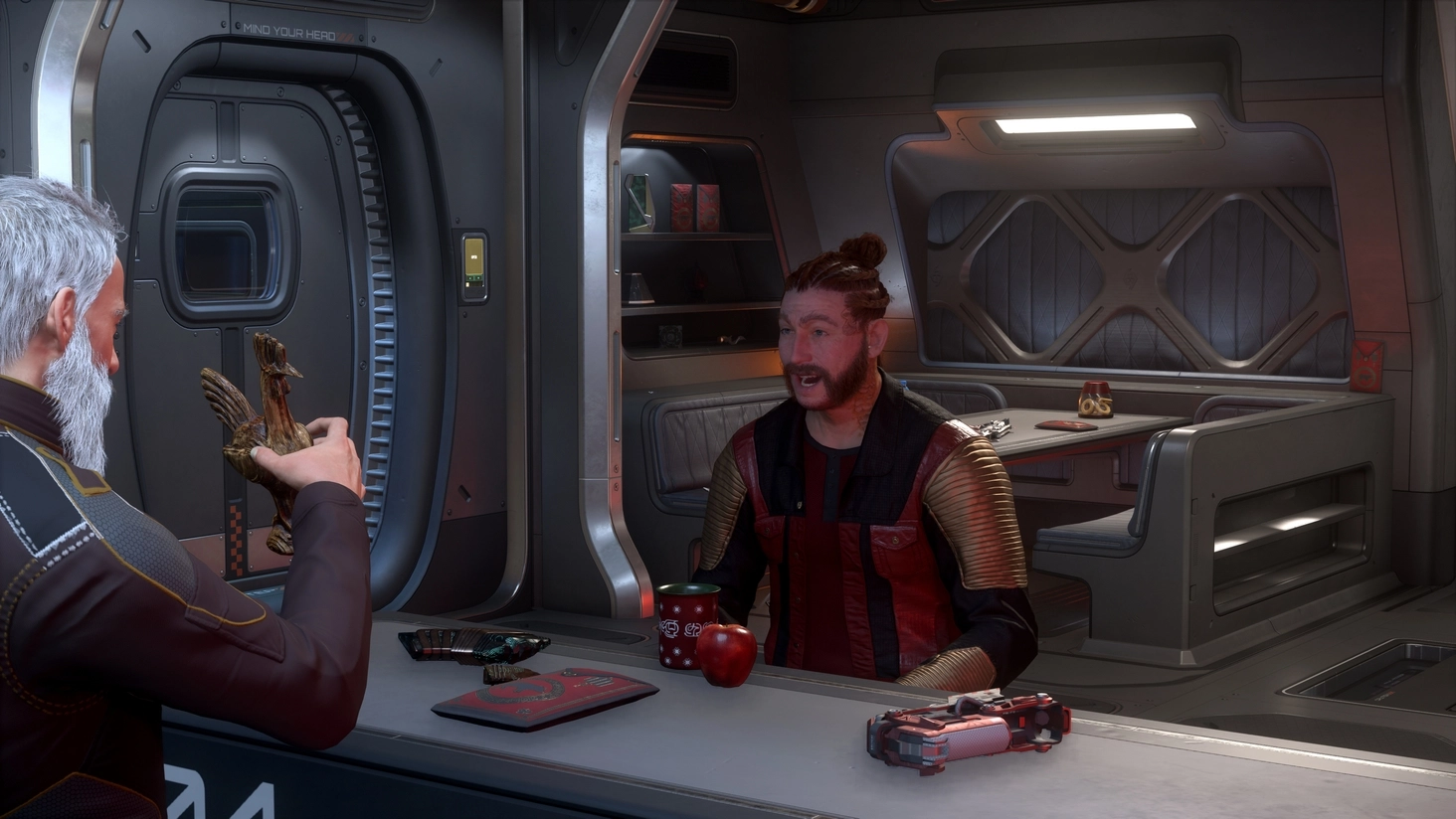


Metadata
- CIG ID
- 20450
- Channel
- Transmission
- Category
- Undefined
- Series
- None
- Comments
- 0
- Published
- 4 months ago (2026-05-25T11:00:00+00:00)