Star Citizen Monthly Report: April 2025
Transmission Undefined NoneContent
PU Monthly Report
April 2025
Welcome to April’s PU Monthly Report! With the UEEN Invictus fleet currently preparing to make the jump to Stanton, most teams touched on the upcoming festivities throughout the month. However, a lot of work was also done toward features and content coming later this year - read on for more details.
AI (Content)
AI Content spent the majority of April preparing the release of Alpha 4.1.1, including the communications that players can now receive from mission givers. Although seemingly straightforward, the underlying tech required to implement this within the various connected systems was highly complicated. The team also supported this development by preparing the captured audio and animation files in DataForge so the designers could implement them into the mission logic.
In keeping with the general directive of looking for more ways to convey the PU’s overarching stories, the team worked on a new approach that, when implemented, will be an exciting new way to update players on storylines and events.
AI Content also continued to refine NPC behavior packs and prototype lines for Design to incorporate into future mission events. Once refined, these scripts will be approved for capture.
AI (Features)
Last month, AI Features focused on refining the juvenile valakkar. Improvements included changes to its idle roam behavior and navigation mesh to reduce the likelihood of it getting stuck. A cooldown was added to its melee attacks, with the creature now reevaluating targets during the cooldown. Issues were fixed with the valakkar not looking at its target when emerging from the ground too.
Technology developed for the juvenile valakkar also proved useful throughout April. Now, values can be set up in DataForge (general purpose data editing tool) and passed to Subsumption (behavior scripting engine). Previously, these values would be set up in Subsumption itself, meaning that it was hard for the designers to adjust the setup and create variations. By exposing more behavior values, such as attack ranges, timeouts, and the use of specific melee and projectile attacks, the designers can rapidly create variants for specific scenarios and gameplay needs.
For Human combat AI, focus was on first reactions and escalation, including resolving bugs with the new system, adding and refining new reaction wildlines, and implementing new methods for controlling which events NPCs respond to. The latter is useful for specific combat scenarios where NPCs are required to focus on a particular task rather than getting drawn into combat.
Refinement and polish continued on compromised cover reactions, while new prototype technology was implemented to lower weapons when friendly fire is detected.
AI (Game Intelligence Development Team)
In April, the Game Intelligence Development (GID) team worked on various StarScript improvements, including allowing users to ‘right click’ task-extension links and search for an existing task to connect it to. They also added edge scrolling to the editor when dragging links and implemented the ability to add a task between two others without manually reconnecting them.
For StarScript, the first pass on MasterGraph visualization and editing was completed.
GID also delivered their vision for a new tool currently called the ‘density profiler.’ This prototype will help validate the visual presentation of the tool, the use of thresholds on metrics, and how to interact with multi-resolutions.
Finally, the team continued their research discussions on the ‘mission system.’ The objective remains to provide the designers with tools to help them easily create entertaining missions for players.
AI (Tech)
AI Tech progressed with the pathfinder system, making various improvements and cleaning up requests involving multiple start and end locations. Based on a path’s start orientation, the devs can now readjust the initial animation for better continuation when exiting a usable.
For the movement system, AI Tech are improving ‘chase target’ requests to allow the chasing of ground-vehicle targets alongside NPCs. The challenge with this is that the position of a ground vehicle could be outside of a navigation mesh triangle.
Multiple improvements were also made to both triangle mesh-based navigation and voxel 3D-based navigation. For triangle mesh, triangle generation issues were fixed that were propagating problems into pathfinding and navigation raycasts. For 3D voxel-based navigation, the team began utilizing the resulted voxels and mesh to improve Ship AI collision avoidance.
On the Subsumption side, the team continued to create a synchronizing and serializing Subsumption behavior state and behavior variables.
Various bugs were fixed for Ship AI (some relating to newly exposed functionality, like Flight Mode) and the spawning/despawning of boids.
Improvements were made to cover generation too, such as excluding door entities from the cover-generation process and reducing the amount generated for long walls. The team is currently checking ground surface inclination to discard cover in areas that are not almost flat.
A new ‘NavSpline creator’ tool was implemented that will allow the designers to record player ship movements and transform the captured data into a nav spline that can be utilized by Ship AI. StarScript functionality was also extended as requested by the designers creating new missions and behaviors.
Animation
Last month, the Animation team continued to support the studio-wide initiative of focusing on content for the PU. They also progressed with the valakkar, supported various new mission givers and world NPCs, and began working on a new creature.
Art (Ships)
In the EU, the team focused on closing out tasks for Invictus Launch Week, including three new ships planned for release at the event. The MISC Starlancer TAC was also completed for its upcoming flyable release.
Progress was also made on four unannounced vehicles. The first is progressing through whitebox toward full production, while the second is approaching its greybox review and LOD0-complete. The third, which was briefly shown on a recent episode of Inside Star Citizen, is progressing through concept. The fourth vehicle, the first in a while from an existing manufacturer, has been formally kicked off.
The Consolidated Outland Pioneer continued through the pre-production and whitebox phases. The modular kits were solidified alongside some structural changes to improve the flow and movement through the ship. The team also continued to define the core visual elements to inject the Consolidated Outland art style.
Numerous paints were also created for new and existing ships for release in coming events.
The North American Content team began closing out two new variants with polishing and bug fixing. An all-new ship progressed too, with recent decisions being made on cargo capacity and tractor-beam placement.
The RSI Apollo continued through the greybox phase, with new concepts for the med-bay area and bridge.
Finally for Ships, work continued on the RSI Perseus to define the interior look and feel and ensure it functions as intended.
Community
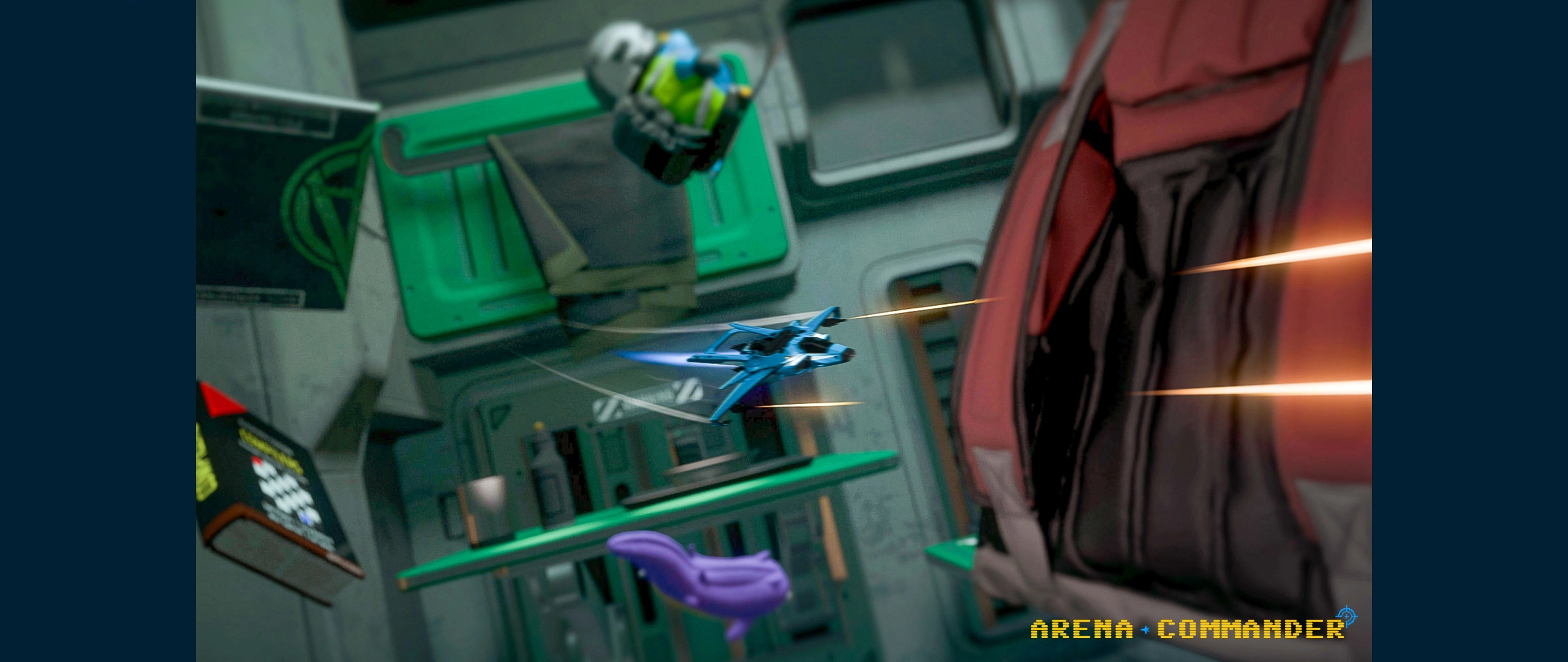
The Community team began April supporting Triggerfish, including the parody patch notes for the scaled-down EZ Hab Arena Commander Map. They also supported the Spring Celebration and Free Fly.
They then published the Alpha 4.0 Test Universe Champions, honoring the players whose testing efforts made the greatest impact during the PTU phase. The team then announced the first in a series of PTU Stress Tests, which provided valuable feedback to development as progress continued on the next major update. CitizenCon Direct was also announced, which will take the place of our traditional in-person event. The team is currently focused on planning and preparing for this exciting event alongside a variety of other events. Community continues to collaborate closely with Development, analyzing feedback from across channels and forwarding valuable insights to the appropriate teams. Meanwhile, efforts continue to provide general publishing support, ensuring cohesive messaging, consistency across public-facing channels, and the timely delivery of key beats.
In addition to evergreen tasks, such as This Week in Star Citizen, bi-weekly Roadmap Updates and Roundups, and the monthly refresh of the Arena Commander Schedule, the team also supported the ongoing System 7 race series presented by ATMO Esports.
Finally, Community supported the Squadron 42 Newsletter’s Vanduul Interpreter Contest, which yielded some truly creative (and terrifying) submissions as participants offered their best renditions of the Vanduul language.
Core Gameplay
Several of the Core Gameplay teams spent the month stabilizing and improving the new space-themed missions in Alpha 4.1.1. This included closing out the first iteration of several new features, such as communication notifications and new mission rewards.
Outside of new content, the team continued to monitor feedback from the PTU to address community concerns as quickly as possible.
“As always, we are infinitely thankful to the players who take their time to contribute to testing leading up to a release.” Core Gameplay Team
Recent tasks following feedback included investigating new issues with quantum travel and reoccurring problems with freight elevators, ship claiming, and inventory flow.
Elsewhere, the teams analyzed performance captures, seeing where gains could be made for both client and server frame rates, especially focusing on new content.
There are several more ongoing initiatives across the Core Gameplay teams that are either for the next few releases, longer-term, or for Squadron 42. However, much of the work done for Squadron 42 will also be relevant to Star Citizen, so these teams work across both projects.
Elsewhere, Core Gameplay added updates to the engineering UI screen, including countdown warnings for catastrophic explosions, and reinstated and advanced the diagnostic screen MFD.
Further improvements were then made to ship death. For example, fatal damage behaviors now require a significant impact. In addition, catastrophic misfires can now be triggered by nearby items failing due to severe damage. Improvements to deactivating soft death were also completed and its effects can be enabled separately.
For flight experience, the team enabled the new space flight mode in their feature streams. They’re currently resolving bugs related to AI ship motion alongside outstanding work on the takeoff and landing experience. Several new game modes were added to allow them to test the new flight model in the future. Due to the data setup, both the new and existing models can be tested separately without affecting each other.
An overhaul of control-surface tech began. As such, flying in atmosphere and especially gliding is now much more realistic thanks to believable aerodynamic behaviors, such as the nose falling in turns or accurate drag on large AOAs, especially in regards to changing atmospheric densities. There's still outstanding work on the control systems and interaction with thrusters and the AI systems.
April also saw an update to the new quantum tech. In addition to adding a slow-speed variant of quantum boosting, the devs resolved several bugs and improved reliability and performance. It also features improved ways for the mission designers to control the flow for AI ships. Further work will focus on improving the current experience and make it compatible with multiplayer.
Core Gameplay optimized the ScanWave mechanic to be as responsive as possible, with focus on overwhelming contact environments where hundreds or thousands of contacts are processed in a short period.
Alongside this, the team continued to polish FPS Radar & Scanning gameplay via regular playtests. April’s work included adjusting the detection formula, highlighting visuals, and disabling the ‘influence signature’ system to improve it to better serve the intended gameplay.
The team then made improvements to inclusion checks, such as adding a mechanic to skip checks for radar contacts within the same room. This allows for a smoother-flowing experience when searching for items or objectives out of direct line of sight, which would previously require a fully charged scan to detect.
Lastly, the team iterated on the boxout display for radar contacts, optimizing and refining the marker placement. Design also began setting up which objects will be detectable by radar and scanning in the PU.
Several major bugs were fixed, including one causing the MISC Hull C to spawn with its spindle extended, which prevented flight in certain ports. A commodities issue stopping ships being selectable as a destination was fixed too.
For refineries, the team added the location inventory to the list of sources and destinations, while refining no longer consumes the ore bag so that it can be reused. For cargo, items placed on grids now take item pivot into consideration if the data is available.
Economy
Last month, the Economy team were involved in the new content coming in Alpha 4.1.1, including items and vehicles for Invictus.
They also supported the design of several new mission archetypes, some of which have the chance to impact the universe in a more permanent manner.
The team then began looking into making the economy more dynamic, testing various things.
“We are studying different economic models from history and fiction to get a better impression of how the economy will feel when it is fully fledged.” Economy Team
The team also discussed the next iteration of Item Recovery and how it will influence the prices and exclusivity of different items. Work then continued on the backend shop refactor that will provide the tools to start building a better shopping experience.
Finally, the Economy and Data Solution teams continued to create a comprehensive data plan to provide better and faster information about what players like the most.
Mission Design
With most of their recent fundamental tech work complete, the team focused on improving mission quality. For example, players in the PTU will see the return of comms notifications. While the previous system (used for XenoThreat and Siege of Orison) was difficult to update and maintain, it’s now a lot easier to implement content into the game. The team are planning to slowly roll out this update across the game to globally improve mission quality.
Alpha 4.1.1 will see new mission types focused on PVE ship battles. These include ‘ambush,’ which sees players set up a trap to kill a priority target, and ‘patrol,’ where players travel between different coordinates and take on activities at each point.
Work on these missions also allowed the team to find and fix longstanding issues with spawning ship-based reinforcements, so ‘ship wave’ missions should now function better.
In April, a few of the designers began fixing missions that missed the Alpha 4.0 release.
“Hopefully some of these will be in a good enough state for a release soon, but we are committed to the quality and stability of the missions.” Mission Design
Updates were also made to Wikelo, including the things they are willing to trade. To prevent the farming of rare components, ships rewarded by Wikelo will now only feature their unique paint, while the components will be added to the Emporium.
Narrative
In April, the Narrative team’s main focus was on a suite of new missions and support for Invictus Launch Week.
Looking ahead, the team prepared for their next capture session, which involved confirming trigger lists with Design, writing scripts, casting actors, and coordinating with the various downstream departments tasked with processing the captured material. They will also be recording unique dialogue for an upcoming event as well as adding a new NPC archetype for use across multiple missions.
The team also entered the polish phase on locations that will be arriving later this year, improving the narrative flow of the area and helping the Branding team with the final signage pass to create a more immersive environment. Additionally, they continued to work on two new location archetypes, guiding the design and art with backstory elements to help drive the tone as well as establishing story details. Also, with 2025 well underway, the team dedicated time to progressing their 2026 planning, including new story opportunities.
Finally, the Narrative team made an appearance on Star Citizen Live to answer questions about this year’s ongoing storylines.
Online Technology
In April, the Live Tools team worked on various features, including new sanction types and improvements to scheduling global system messages.
The Network Team delivered the ‘entity teleport’ feature, which is used to move replicated entities that may or may not be streamed out. This enables systems, like respawn, to directly reparent a player to a medical bed without needing to wait for it to stream in, streamlining and simplifying the respawn process. The team is currently finalizing the related API.
R&D
In April, various improvements were made to the lightning evaluation that's part of the cloud and atmosphere raymarch. As such, the energy fall-off function was generalized and an extra highlight was added to separate the center of bright lightning from much dimmer long-range impact.
For dynamic weather, the temporal stability of the CPU-accessible weather map was improved, extra helpers for CPU weather queries were implemented, and robustness was improved when creating query contexts.
Work also began on adding texture streaming support for volumetric cloud and ground-fog rendering. Sun disc rendering behind sufficiently dense planetary clouds was improved and should result in softer transitions than before. Similarly, the sun disc behind gas clouds should occlude correctly again. This fix corrects animated noise and banding that was observable when looking at dense clouds with the sun shining through.
UI
Last month, the UI team worked to implement unique UI styles for several upcoming vehicles. They also supported upcoming events and created environmental UI to support the gameplay and storytelling.
VFX
Last month, VFX worked toward completing their tasks on vehicles and weapons for Invictus Launch Week.
Pre-production VFX work also began for an upcoming major release, including locations, creatures, and weather.
PU-Monatsbericht
April 2025
Willkommen zum PU-Monatsbericht für April! Da sich die UEEN Invictus-Flotte derzeit auf den Sprung nach Stanton vorbereitet, haben sich die meisten Teams im Laufe des Monats mit den bevorstehenden Feierlichkeiten beschäftigt. Es wurde aber auch viel an den Features und Inhalten gearbeitet, die später in diesem Jahr kommen werden - lies weiter, um mehr zu erfahren.
AI (Inhalt)
Das Team für KI-Inhalte verbrachte den größten Teil des Aprils mit den Vorbereitungen für die Veröffentlichung von Alpha 4.1.1, einschließlich der Kommunikation, die Spieler/innen jetzt von Missionsgebern erhalten können. Auch wenn es auf den ersten Blick einfach erscheint, war die zugrundeliegende Technik, die benötigt wird, um dies in den verschiedenen verbundenen Systemen zu implementieren, sehr kompliziert. Das Team unterstützte diese Entwicklung auch, indem es die aufgenommenen Audio- und Animationsdateien in DataForge vorbereitete, damit die Designer sie in die Missionslogik einbauen konnten.
Im Einklang mit der allgemeinen Richtlinie, nach mehr Möglichkeiten zu suchen, um die übergreifenden Geschichten des PU zu vermitteln, arbeitete das Team an einem neuen Ansatz, der, wenn er umgesetzt ist, eine aufregende neue Art sein wird, die Spieler/innen über Handlungsstränge und Ereignisse zu informieren.
Das Team für KI-Inhalte arbeitete außerdem an der Verfeinerung von NSC-Verhaltenspaketen und Prototypen für Design, die in zukünftige Missionsereignisse integriert werden sollen. Sobald diese Skripte verfeinert sind, werden sie für die Aufnahme freigegeben.
KI (Features)
Im letzten Monat lag der Schwerpunkt der KI-Features auf der Verbesserung des jungen Valakkar. Unter anderem wurden sein Verhalten im Leerlauf und sein Navigationsnetz verbessert, um die Wahrscheinlichkeit zu verringern, dass er stecken bleibt. Seine Nahkampfangriffe haben jetzt eine Abklingzeit, während der die Kreatur ihre Ziele neu einschätzt. Außerdem wurde das Problem behoben, dass der Valakkar sein Ziel nicht anschaut, wenn er aus dem Boden auftaucht.
Die für den jugendlichen Valakkar entwickelte Technologie erwies sich im April ebenfalls als nützlich. Jetzt können Werte in DataForge (Allzweckwerkzeug zur Datenbearbeitung) eingestellt und an Subsumption (Verhaltensskript-Engine) weitergegeben werden. Zuvor wurden diese Werte in Subsumption selbst festgelegt, was bedeutete, dass es für die Designer/innen schwierig war, die Einstellungen anzupassen und Variationen zu erstellen. Durch die Offenlegung von mehr Verhaltenswerten, wie z. B. Angriffsreichweiten, Zeitüberschreitungen und die Verwendung bestimmter Nahkampf- und Projektilangriffe, können die Designer/innen schnell Varianten für bestimmte Szenarien und Spielbedürfnisse erstellen.
Bei der menschlichen Kampf-KI lag der Schwerpunkt auf den ersten Reaktionen und der Eskalation, einschließlich der Behebung von Fehlern mit dem neuen System, dem Hinzufügen und Verfeinern neuer Reaktions-Wildlines und der Implementierung neuer Methoden zur Steuerung der Ereignisse, auf die NSCs reagieren. Letzteres ist nützlich für bestimmte Kampfszenarien, in denen sich NSCs auf eine bestimmte Aufgabe konzentrieren müssen, anstatt in einen Kampf hineingezogen zu werden.
Die Reaktionen auf kompromittierte Deckungen wurden weiter verfeinert, und es wurde ein neuer Prototyp implementiert, mit dem Waffen gesenkt werden können, wenn freundliches Feuer entdeckt wird.
KI (Game Intelligence Development Team)
Im April arbeitete das Game Intelligence Development (GID)-Team an verschiedenen StarScript-Verbesserungen, u. a. an der Möglichkeit, mit der rechten Maustaste auf die Links von Aufgabenerweiterungen zu klicken und nach einer bestehenden Aufgabe zu suchen, um sie damit zu verbinden. Außerdem wurde der Editor beim Ziehen von Links um einen Randscroller erweitert und die Möglichkeit eingeführt, eine Aufgabe zwischen zwei anderen hinzuzufügen, ohne sie manuell neu zu verbinden.
Für StarScript wurde der erste Durchgang der Visualisierung und Bearbeitung des MasterGraphs abgeschlossen.
Die GID stellte auch ihre Vision für ein neues Werkzeug vor, das derzeit als "Dichteprofiler" bezeichnet wird. Dieser Prototyp wird dazu beitragen, die visuelle Darstellung des Tools, die Verwendung von Schwellenwerten für Metriken und die Interaktion mit Mehrfachauflösungen zu validieren.
Schließlich setzte das Team seine Forschungsdiskussionen über das "Missionssystem" fort. Ziel ist es, den Designern Werkzeuge an die Hand zu geben, mit denen sie auf einfache Weise unterhaltsame Missionen für die Spieler erstellen können.
KI (Tech)
Die KI-Techniker haben das Pfadfindersystem weiterentwickelt, indem sie verschiedene Verbesserungen vorgenommen und Anfragen mit mehreren Start- und Endpunkten bereinigt haben. Basierend auf der Startausrichtung eines Pfades können die Entwickler jetzt die Anfangsanimation anpassen, damit es beim Verlassen eines nutzbaren Pfades besser weitergeht.
Für das Bewegungssystem verbessern die KI-Entwickler die "Verfolgungsziel"-Anfragen, um die Verfolgung von Bodenfahrzeugzielen neben NSCs zu ermöglichen. Die Herausforderung dabei ist, dass die Position eines Bodenfahrzeugs außerhalb des Dreiecks eines Navigationsnetzes liegen kann.
Außerdem wurden mehrere Verbesserungen sowohl an der dreieckigen Mesh-basierten Navigation als auch an der Voxel-3D-basierten Navigation vorgenommen. Bei der Dreiecksvermaschung wurden Probleme bei der Dreiecksgenerierung behoben, die sich auf die Pfadfindung und die Navigationsstrahlen auswirkten. Bei der voxelbasierten 3D-Navigation begann das Team, die entstandenen Voxel und das Mesh zu nutzen, um die Kollisionsvermeidung der SchiffskI zu verbessern.
Im Bereich Subsumption arbeitete das Team weiter an der Synchronisierung und Serialisierung von Subsumption-Verhaltenszuständen und Verhaltensvariablen.
Verschiedene Fehler wurden bei der SchiffskI behoben (einige im Zusammenhang mit neuen Funktionen wie dem Flugmodus) und beim Spawnen/Despawning von Boids.
Auch die Deckungsgenerierung wurde verbessert, z. B. durch den Ausschluss von Toren von der Deckungsgenerierung und die Reduzierung der generierten Menge für lange Wände. Das Team prüft derzeit die Neigung der Bodenoberfläche, um die Deckung in Bereichen zu verwerfen, die nicht fast eben sind.
Es wurde ein neues Tool "NavSpline Creator" implementiert, mit dem die Designer die Bewegungen der Spielerschiffe aufzeichnen und die erfassten Daten in einen Nav-Spline umwandeln können, der von der SchiffskI genutzt werden kann. Auch die StarScript-Funktionalität wurde auf Wunsch der Designer erweitert, um neue Missionen und Verhaltensweisen zu erstellen.
Animation
Im letzten Monat hat das Animationsteam die studioweite Initiative, sich auf Inhalte für das PU zu konzentrieren, weiter unterstützt. Außerdem wurden Fortschritte bei der Valakkar gemacht, verschiedene neue Missionsgeber und Welt-NSCs unterstützt und die Arbeit an einer neuen Kreatur begonnen.
Kunst (Schiffe)
In der EU konzentrierte sich das Team darauf, die Aufgaben für die Invictus Launch Week abzuschließen, darunter drei neue Schiffe, die auf dem Event veröffentlicht werden sollen. Das MISC Starlancer TAC wurde ebenfalls für die bevorstehende Veröffentlichung fertiggestellt.
Auch bei vier unangekündigten Fahrzeugen wurden Fortschritte erzielt. Das erste ist auf dem Weg von der Whitebox zur vollen Produktion, während das zweite kurz vor der Greybox-Überprüfung steht und LOD0-fertig ist. Das dritte Fahrzeug, das kürzlich in einer Episode von Inside Star Citizen kurz gezeigt wurde, befindet sich in der Konzeptphase. Das vierte Fahrzeug, das erste seit längerer Zeit von einem bestehenden Hersteller, wurde offiziell gestartet.
Der Consolidated Outland Pioneer durchlief die Vorproduktions- und Whitebox-Phase. Die modularen Baukästen wurden zusammen mit einigen strukturellen Änderungen gefestigt, um den Fluss und die Bewegung durch das Schiff zu verbessern. Das Team hat außerdem die wichtigsten visuellen Elemente festgelegt, um den Stil der Consolidated Outland zu prägen.
Außerdem wurden zahlreiche Anstriche für neue und bestehende Schiffe erstellt, die in den kommenden Events veröffentlicht werden.
Das nordamerikanische Content-Team begann mit der Fertigstellung von zwei neuen Varianten, die poliert und von Fehlern befreit wurden. Auch die Entwicklung eines völlig neuen Schiffes schritt voran, wobei kürzlich Entscheidungen über die Ladekapazität und die Platzierung des Traktorstrahls getroffen wurden.
Die RSI Apollo durchlief die Greybox-Phase mit neuen Konzepten für den Med-Bay-Bereich und die Brücke.
Bei den Schiffen schließlich wurde die Arbeit an der RSI Perseus fortgesetzt, um die Innenausstattung zu definieren und sicherzustellen, dass sie wie vorgesehen funktioniert.
Community
Das Community-Team unterstützte im April Triggerfish, einschließlich der Parodie-Patch Notes für die verkleinerte EZ Hab Arena Commander Map. Außerdem unterstützten sie das Frühlingsfest und Free Fly.
Dann wurden die Alpha 4.0 Test Universe Champions veröffentlicht, die die Spieler/innen ehren, die während der PTU-Phase am meisten getestet haben. Dann kündigte das Team den ersten einer Reihe von PTU-Stresstests an, die den Entwicklern wertvolles Feedback für die Entwicklung des nächsten großen Updates lieferten. Außerdem wurde die CitizenCon Direct angekündigt, die unser traditionelles persönliches Event ablösen wird. Das Team konzentriert sich derzeit auf die Planung und Vorbereitung dieses aufregenden Ereignisses sowie auf eine Vielzahl anderer Veranstaltungen. Die Community arbeitet weiterhin eng mit der Entwicklungsabteilung zusammen, analysiert das Feedback aus allen Kanälen und leitet wertvolle Erkenntnisse an die entsprechenden Teams weiter. In der Zwischenzeit wird weiterhin allgemeine Unterstützung bei der Veröffentlichung geleistet, um eine kohärente Nachrichtenübermittlung, Konsistenz auf allen öffentlichkeitswirksamen Kanälen und die rechtzeitige Bereitstellung wichtiger Informationen zu gewährleisten.
Neben immer wiederkehrenden Aufgaben wie "Diese Woche in Star Citizen", zweiwöchentlichen Roadmap-Updates und Roundups sowie der monatlichen Aktualisierung des Arena Commander Schedule unterstützte das Team auch die laufende System 7 Rennserie, die von ATMO Esports präsentiert wurde.
Und schließlich unterstützte die Community den Vanduul-Dolmetscher-Wettbewerb des Squadron 42 Newsletters, der einige wirklich kreative (und erschreckende) Beiträge hervorgebracht hat, in denen die Teilnehmer ihre beste Wiedergabe der Vanduul-Sprache zum Besten gaben.
Core Gameplay
Mehrere Teams des Core Gameplay-Teams haben den Monat damit verbracht, die neuen Weltraum-Missionen in Alpha 4.1.1 zu stabilisieren und zu verbessern. Dazu gehörte auch die Fertigstellung der ersten Iteration mehrerer neuer Funktionen, wie Kommunikationsbenachrichtigungen und neue Missionsbelohnungen.
Außerhalb der neuen Inhalte verfolgte das Team weiterhin das Feedback der PTU, um sich so schnell wie möglich um die Anliegen der Community zu kümmern.
"Wie immer sind wir den Spielerinnen und Spielern unendlich dankbar, dass sie sich die Zeit nehmen, zu den Tests im Vorfeld einer Veröffentlichung beizutragen." Core Gameplay Team
Zu den jüngsten Aufgaben, die auf das Feedback folgten, gehörte die Untersuchung neuer Probleme mit der Quantenreise und wiederkehrender Probleme mit Lastenaufzügen, Schiffsansprüchen und dem Inventarfluss.
Außerdem analysierten die Teams die Leistungsdaten, um herauszufinden, wo die Frameraten auf dem Client und dem Server verbessert werden können, und konzentrierten sich dabei besonders auf neue Inhalte.
In den Core Gameplay-Teams gibt es noch einige weitere laufende Initiativen, die entweder für die nächsten Versionen, längerfristig oder für Squadron 42 geplant sind. Ein Großteil der Arbeit, die für Squadron 42 geleistet wird, ist jedoch auch für Star Citizen relevant, sodass diese Teams an beiden Projekten arbeiten.
An anderer Stelle hat Core Gameplay die Benutzeroberfläche der Ingenieure aktualisiert, einschließlich der Countdown-Warnungen für katastrophale Explosionen, und den Diagnosebildschirm MFD wiederhergestellt und verbessert.
Weitere Verbesserungen wurden am Schiffstod vorgenommen. Zum Beispiel ist für tödlichen Schaden jetzt ein erheblicher Aufprall erforderlich. Außerdem können katastrophale Fehlzündungen jetzt dadurch ausgelöst werden, dass Gegenstände in der Nähe aufgrund von schweren Schäden ausfallen. Die Deaktivierung des sanften Todes wurde ebenfalls verbessert und seine Auswirkungen können separat aktiviert werden.
Für das Flugerlebnis hat das Team den neuen Weltraumflugmodus in den Feature Streams aktiviert. Neben der noch ausstehenden Arbeit am Start- und Landeerlebnis werden derzeit Bugs im Zusammenhang mit der Bewegung der KI-Schiffe behoben. Mehrere neue Spielmodi wurden hinzugefügt, damit sie das neue Flugmodell in Zukunft testen können. Aufgrund des Datenaufbaus können das neue und das bestehende Modell getrennt voneinander getestet werden, ohne sich gegenseitig zu beeinflussen.
Eine Überarbeitung der Kontrollflächentechnologie wurde begonnen. So ist das Fliegen in der Atmosphäre und vor allem das Gleiten jetzt viel realistischer dank glaubwürdiger aerodynamischer Verhaltensweisen, wie z. B. das Fallen der Nase in Kurven oder der genaue Luftwiderstand bei großen AOAs, vor allem im Hinblick auf wechselnde atmosphärische Dichten. An den Steuersystemen und der Interaktion mit den Triebwerken und den KI-Systemen muss noch gearbeitet werden.
Im April gab es auch ein Update für die neue Quantentechnologie. Die Entwickler haben nicht nur eine langsame Variante des Quanten-Boostings hinzugefügt, sondern auch mehrere Fehler behoben und die Zuverlässigkeit und Leistung verbessert. Außerdem wurden die Möglichkeiten für Missionsdesigner verbessert, den Fluss der KI-Schiffe zu kontrollieren. Weitere Arbeiten werden sich darauf konzentrieren, die aktuelle Erfahrung zu verbessern und sie mit dem Multiplayer kompatibel zu machen.
Core Gameplay optimierte die ScanWave-Mechanik, um so reaktionsschnell wie möglich zu sein. Der Fokus liegt dabei auf überwältigenden Kontaktumgebungen, in denen Hunderte oder Tausende von Kontakten in kurzer Zeit verarbeitet werden.
Parallel dazu hat das Team das FPS-Radar- und Scanning-Gameplay in regelmäßigen Playtests weiter verfeinert. Im April wurde unter anderem die Erkennungsformel angepasst, die Grafik hervorgehoben und das "Einfluss-Signatur"-System deaktiviert, um es für das beabsichtigte Gameplay zu verbessern.
Das Team hat dann Verbesserungen an den Einschlussprüfungen vorgenommen, wie z. B. das Hinzufügen einer Mechanik zum Überspringen von Prüfungen für Radarkontakte innerhalb desselben Raums. Dies ermöglicht ein flüssigeres Spielerlebnis bei der Suche nach Gegenständen oder Zielen, die sich außerhalb der direkten Sichtlinie befinden und für deren Entdeckung bisher ein voll aufgeladener Scan erforderlich war.
Schließlich hat das Team die Anzeige für Radarkontakte überarbeitet und die Platzierung der Marker optimiert und verfeinert. Außerdem wurde festgelegt, welche Objekte durch Radar und Scannen in der PU aufgespürt werden können.
Mehrere größere Fehler wurden behoben, darunter einer, der dazu führte, dass der MISC Rumpf C mit ausgefahrener Spindel spawnen konnte, was den Flug in bestimmten Häfen verhinderte. Außerdem wurde ein Fehler behoben, der verhinderte, dass Schiffe als Ziel ausgewählt werden konnten.
Bei Raffinerien fügte das Team das Standortinventar zur Liste der Quellen und Ziele hinzu, und beim Raffinieren wird der Erzsack nicht mehr verbraucht, sodass er wiederverwendet werden kann. Bei Fracht werden Gegenstände, die auf Gittern platziert werden, jetzt mit dem Gegenstandspivot berücksichtigt, wenn die Daten verfügbar sind.
Wirtschaft
Im letzten Monat war das Wirtschaftsteam an den neuen Inhalten der Alpha 4.1.1 beteiligt, darunter Gegenstände und Fahrzeuge für Invictus.
Außerdem haben sie an der Gestaltung mehrerer neuer Missionsarchetypen mitgewirkt, von denen einige die Chance haben, das Universum dauerhaft zu beeinflussen.
Dann begann das Team damit, die Wirtschaft dynamischer zu gestalten und testete verschiedene Dinge.
"Wir studieren verschiedene Wirtschaftsmodelle aus der Geschichte und der Fiktion, um einen besseren Eindruck davon zu bekommen, wie sich die Wirtschaft anfühlen wird, wenn sie voll ausgereift ist." Wirtschaftsteam
Das Team besprach auch die nächste Iteration der Item Recovery und wie sie die Preise und die Exklusivität der verschiedenen Gegenstände beeinflussen wird. Anschließend wurde die Arbeit an der Überarbeitung des Backend-Shops fortgesetzt, der die Werkzeuge für ein besseres Einkaufserlebnis bereitstellen wird.
Schließlich arbeiteten die Teams für Wirtschaft und Datenlösungen weiter an einem umfassenden Datenplan, um bessere und schnellere Informationen darüber zu erhalten, was die Spieler/innen am meisten mögen.
Mission Design
Nachdem die meisten der grundlegenden technischen Arbeiten abgeschlossen waren, konzentrierte sich das Team auf die Verbesserung der Missionsqualität. Zum Beispiel werden die Spieler/innen in der PTU die Rückkehr der Komm-Benachrichtigungen erleben. Während das vorherige System (das für XenoThreat und Siege of Orison verwendet wurde) schwierig zu aktualisieren und zu pflegen war, ist es jetzt viel einfacher, Inhalte in das Spiel zu implementieren. Das Team plant, dieses Update langsam im ganzen Spiel einzuführen, um die Qualität der Missionen insgesamt zu verbessern.
In der Alpha 4.1.1 wird es neue Missionstypen geben, die sich auf PVE-Schiffsgefechte konzentrieren. Dazu gehören der "Hinterhalt", bei dem die Spieler/innen eine Falle aufstellen, um ein vorrangiges Ziel zu töten, und die "Patrouille", bei der die Spieler/innen zwischen verschiedenen Koordinaten hin- und herreisen und an jedem Punkt Aktivitäten übernehmen.
Bei der Arbeit an diesen Missionen konnte das Team auch langjährige Probleme mit dem Spawnen von schiffsbasierter Verstärkung finden und beheben, so dass "Schiffswellen"-Missionen jetzt besser funktionieren sollten.
Im April begannen einige der Designer mit der Korrektur von Missionen, die in der Alpha 4.0 nicht veröffentlicht wurden.
"Wir hoffen, dass einige dieser Missionen bald in einem Zustand sind, der für eine Veröffentlichung ausreicht, aber wir setzen uns für die Qualität und Stabilität der Missionen ein. Missionsdesign
Auch Wikelo wurde überarbeitet, einschließlich der Dinge, die sie zu tauschen bereit sind. Um das Farmen von seltenen Komponenten zu verhindern, werden Schiffe, die von Wikelo belohnt werden, nur noch mit ihrer einzigartigen Farbe versehen, während die Komponenten dem Emporium hinzugefügt werden.
Narrative
Im April lag das Hauptaugenmerk des Narrative-Teams auf einer Reihe neuer Missionen und der Unterstützung der Invictus Launch Week.
Das Team bereitete sich auf die nächste Aufnahmesitzung vor, bei der es darum ging, die Triggerlisten mit dem Design abzustimmen, Drehbücher zu schreiben, Schauspieler zu casten und sich mit den verschiedenen nachgelagerten Abteilungen abzustimmen, die das aufgenommene Material verarbeiten sollen. Außerdem werden sie einzigartige Dialoge für ein bevorstehendes Event aufnehmen und einen neuen NSC-Archetyp hinzufügen, der in mehreren Missionen eingesetzt werden kann.
Das Team begann auch mit dem Feinschliff von Orten, die später in diesem Jahr erscheinen werden, verbesserte den Erzählfluss des Gebiets und unterstützte das Branding-Team beim letzten Durchgang der Beschilderung, um eine noch eindringlichere Umgebung zu schaffen. Außerdem arbeiteten sie weiter an zwei neuen Ortsarchetypen, wobei sie das Design und die Kunst mit Elementen der Hintergrundgeschichte unterstützten, um den Ton zu bestimmen und Details der Geschichte festzulegen. Da das Jahr 2025 bereits in vollem Gange ist, widmete sich das Team auch der Planung für das Jahr 2026, einschließlich neuer Storymöglichkeiten.
Zum Schluss war das Narrative Team bei Star Citizen Live zu Gast, um Fragen zu den laufenden Handlungssträngen dieses Jahres zu beantworten.
Online-Technologie
Im April arbeitete das Live-Tools-Team an verschiedenen Funktionen, darunter neue Sanktionstypen und Verbesserungen bei der Planung globaler Systemmeldungen.
Das Netzwerk-Team lieferte die Funktion "Entity Teleport", mit der replizierte Entitäten, die gestreamt werden können oder auch nicht, verschoben werden können. Dies ermöglicht es Systemen wie dem Respawn, einen Spieler direkt in ein medizinisches Bett zu bringen, ohne darauf warten zu müssen, dass der Stream hereinkommt, und vereinfacht so den Respawn-Prozess. Das Team arbeitet derzeit an der Fertigstellung der entsprechenden API.
F&E
Im April wurden verschiedene Verbesserungen an der Blitzauswertung vorgenommen, die Teil des Wolken- und Atmosphärenstrahls ist. So wurde die Funktion des Energieabfalls verallgemeinert und ein zusätzliches Highlight hinzugefügt, um das Zentrum des hellen Blitzes von dem viel schwächeren Ferneinschlag zu unterscheiden.
Für das dynamische Wetter wurde die zeitliche Stabilität der für die CPU zugänglichen Wetterkarte verbessert, zusätzliche Helfer für CPU-Wetterabfragen wurden implementiert und die Robustheit beim Erstellen von Abfragekontexten wurde verbessert.
Außerdem wurde damit begonnen, Textur-Streaming-Unterstützung für volumetrisches Wolken- und Bodennebel-Rendering hinzuzufügen. Das Rendering der Sonnenscheibe hinter ausreichend dichten planetarischen Wolken wurde verbessert und sollte zu weicheren Übergängen als bisher führen. Ebenso sollte die Sonnenscheibe hinter Gaswolken wieder korrekt verdeckt werden. Diese Korrektur behebt animiertes Rauschen und Banding, das beim Betrachten von dichten Wolken mit durchscheinender Sonne zu beobachten war.
UI
Im letzten Monat hat das UI-Team daran gearbeitet, einzigartige UI-Stile für mehrere neue Fahrzeuge zu implementieren. Außerdem haben sie anstehende Ereignisse unterstützt und eine Umwelt-UI erstellt, die das Gameplay und die Erzählung unterstützt.
VFX
Im letzten Monat arbeitete das VFX-Team an der Fertigstellung der Fahrzeuge und Waffen für die Invictus Launch Week.
Außerdem begannen die VFX-Arbeiten in der Vorproduktion für eine bevorstehende große Veröffentlichung, darunter Orte, Kreaturen und Wetter.
PU Monthly Report
April 2025
Welcome to April’s PU Monthly Report! With the UEEN Invictus fleet currently preparing to make the jump to Stanton, most teams touched on the upcoming festivities throughout the month. However, a lot of work was also done toward features and content coming later this year - read on for more details.
AI (Content)
AI Content spent the majority of April preparing the release of Alpha 4.1.1, including the communications that players can now receive from mission givers. Although seemingly straightforward, the underlying tech required to implement this within the various connected systems was highly complicated. The team also supported this development by preparing the captured audio and animation files in DataForge so the designers could implement them into the mission logic.
In keeping with the general directive of looking for more ways to convey the PU’s overarching stories, the team worked on a new approach that, when implemented, will be an exciting new way to update players on storylines and events.
AI Content also continued to refine NPC behavior packs and prototype lines for Design to incorporate into future mission events. Once refined, these scripts will be approved for capture.
AI (Features)
Last month, AI Features focused on refining the juvenile valakkar. Improvements included changes to its idle roam behavior and navigation mesh to reduce the likelihood of it getting stuck. A cooldown was added to its melee attacks, with the creature now reevaluating targets during the cooldown. Issues were fixed with the valakkar not looking at its target when emerging from the ground too.
Technology developed for the juvenile valakkar also proved useful throughout April. Now, values can be set up in DataForge (general purpose data editing tool) and passed to Subsumption (behavior scripting engine). Previously, these values would be set up in Subsumption itself, meaning that it was hard for the designers to adjust the setup and create variations. By exposing more behavior values, such as attack ranges, timeouts, and the use of specific melee and projectile attacks, the designers can rapidly create variants for specific scenarios and gameplay needs.
For Human combat AI, focus was on first reactions and escalation, including resolving bugs with the new system, adding and refining new reaction wildlines, and implementing new methods for controlling which events NPCs respond to. The latter is useful for specific combat scenarios where NPCs are required to focus on a particular task rather than getting drawn into combat.
Refinement and polish continued on compromised cover reactions, while new prototype technology was implemented to lower weapons when friendly fire is detected.
AI (Game Intelligence Development Team)
In April, the Game Intelligence Development (GID) team worked on various StarScript improvements, including allowing users to ‘right click’ task-extension links and search for an existing task to connect it to. They also added edge scrolling to the editor when dragging links and implemented the ability to add a task between two others without manually reconnecting them.
For StarScript, the first pass on MasterGraph visualization and editing was completed.
GID also delivered their vision for a new tool currently called the ‘density profiler.’ This prototype will help validate the visual presentation of the tool, the use of thresholds on metrics, and how to interact with multi-resolutions.
Finally, the team continued their research discussions on the ‘mission system.’ The objective remains to provide the designers with tools to help them easily create entertaining missions for players.
AI (Tech)
AI Tech progressed with the pathfinder system, making various improvements and cleaning up requests involving multiple start and end locations. Based on a path’s start orientation, the devs can now readjust the initial animation for better continuation when exiting a usable.
For the movement system, AI Tech are improving ‘chase target’ requests to allow the chasing of ground-vehicle targets alongside NPCs. The challenge with this is that the position of a ground vehicle could be outside of a navigation mesh triangle.
Multiple improvements were also made to both triangle mesh-based navigation and voxel 3D-based navigation. For triangle mesh, triangle generation issues were fixed that were propagating problems into pathfinding and navigation raycasts. For 3D voxel-based navigation, the team began utilizing the resulted voxels and mesh to improve Ship AI collision avoidance.
On the Subsumption side, the team continued to create a synchronizing and serializing Subsumption behavior state and behavior variables.
Various bugs were fixed for Ship AI (some relating to newly exposed functionality, like Flight Mode) and the spawning/despawning of boids.
Improvements were made to cover generation too, such as excluding door entities from the cover-generation process and reducing the amount generated for long walls. The team is currently checking ground surface inclination to discard cover in areas that are not almost flat.
A new ‘NavSpline creator’ tool was implemented that will allow the designers to record player ship movements and transform the captured data into a nav spline that can be utilized by Ship AI. StarScript functionality was also extended as requested by the designers creating new missions and behaviors.
Animation
Last month, the Animation team continued to support the studio-wide initiative of focusing on content for the PU. They also progressed with the valakkar, supported various new mission givers and world NPCs, and began working on a new creature.
Art (Ships)
In the EU, the team focused on closing out tasks for Invictus Launch Week, including three new ships planned for release at the event. The MISC Starlancer TAC was also completed for its upcoming flyable release.
Progress was also made on four unannounced vehicles. The first is progressing through whitebox toward full production, while the second is approaching its greybox review and LOD0-complete. The third, which was briefly shown on a recent episode of Inside Star Citizen, is progressing through concept. The fourth vehicle, the first in a while from an existing manufacturer, has been formally kicked off.
The Consolidated Outland Pioneer continued through the pre-production and whitebox phases. The modular kits were solidified alongside some structural changes to improve the flow and movement through the ship. The team also continued to define the core visual elements to inject the Consolidated Outland art style.
Numerous paints were also created for new and existing ships for release in coming events.
The North American Content team began closing out two new variants with polishing and bug fixing. An all-new ship progressed too, with recent decisions being made on cargo capacity and tractor-beam placement.
The RSI Apollo continued through the greybox phase, with new concepts for the med-bay area and bridge.
Finally for Ships, work continued on the RSI Perseus to define the interior look and feel and ensure it functions as intended.
Community
The Community team began April supporting Triggerfish, including the parody patch notes for the scaled-down EZ Hab Arena Commander Map. They also supported the Spring Celebration and Free Fly.
They then published the Alpha 4.0 Test Universe Champions, honoring the players whose testing efforts made the greatest impact during the PTU phase. The team then announced the first in a series of PTU Stress Tests, which provided valuable feedback to development as progress continued on the next major update. CitizenCon Direct was also announced, which will take the place of our traditional in-person event. The team is currently focused on planning and preparing for this exciting event alongside a variety of other events. Community continues to collaborate closely with Development, analyzing feedback from across channels and forwarding valuable insights to the appropriate teams. Meanwhile, efforts continue to provide general publishing support, ensuring cohesive messaging, consistency across public-facing channels, and the timely delivery of key beats.
In addition to evergreen tasks, such as This Week in Star Citizen, bi-weekly Roadmap Updates and Roundups, and the monthly refresh of the Arena Commander Schedule, the team also supported the ongoing System 7 race series presented by ATMO Esports.
Finally, Community supported the Squadron 42 Newsletter’s Vanduul Interpreter Contest, which yielded some truly creative (and terrifying) submissions as participants offered their best renditions of the Vanduul language.
Core Gameplay
Several of the Core Gameplay teams spent the month stabilizing and improving the new space-themed missions in Alpha 4.1.1. This included closing out the first iteration of several new features, such as communication notifications and new mission rewards.
Outside of new content, the team continued to monitor feedback from the PTU to address community concerns as quickly as possible.
“As always, we are infinitely thankful to the players who take their time to contribute to testing leading up to a release.” Core Gameplay Team
Recent tasks following feedback included investigating new issues with quantum travel and reoccurring problems with freight elevators, ship claiming, and inventory flow.
Elsewhere, the teams analyzed performance captures, seeing where gains could be made for both client and server frame rates, especially focusing on new content.
There are several more ongoing initiatives across the Core Gameplay teams that are either for the next few releases, longer-term, or for Squadron 42. However, much of the work done for Squadron 42 will also be relevant to Star Citizen, so these teams work across both projects.
Elsewhere, Core Gameplay added updates to the engineering UI screen, including countdown warnings for catastrophic explosions, and reinstated and advanced the diagnostic screen MFD.
Further improvements were then made to ship death. For example, fatal damage behaviors now require a significant impact. In addition, catastrophic misfires can now be triggered by nearby items failing due to severe damage. Improvements to deactivating soft death were also completed and its effects can be enabled separately.
For flight experience, the team enabled the new space flight mode in their feature streams. They’re currently resolving bugs related to AI ship motion alongside outstanding work on the takeoff and landing experience. Several new game modes were added to allow them to test the new flight model in the future. Due to the data setup, both the new and existing models can be tested separately without affecting each other.
An overhaul of control-surface tech began. As such, flying in atmosphere and especially gliding is now much more realistic thanks to believable aerodynamic behaviors, such as the nose falling in turns or accurate drag on large AOAs, especially in regards to changing atmospheric densities. There's still outstanding work on the control systems and interaction with thrusters and the AI systems.
April also saw an update to the new quantum tech. In addition to adding a slow-speed variant of quantum boosting, the devs resolved several bugs and improved reliability and performance. It also features improved ways for the mission designers to control the flow for AI ships. Further work will focus on improving the current experience and make it compatible with multiplayer.
Core Gameplay optimized the ScanWave mechanic to be as responsive as possible, with focus on overwhelming contact environments where hundreds or thousands of contacts are processed in a short period.
Alongside this, the team continued to polish FPS Radar & Scanning gameplay via regular playtests. April’s work included adjusting the detection formula, highlighting visuals, and disabling the ‘influence signature’ system to improve it to better serve the intended gameplay.
The team then made improvements to inclusion checks, such as adding a mechanic to skip checks for radar contacts within the same room. This allows for a smoother-flowing experience when searching for items or objectives out of direct line of sight, which would previously require a fully charged scan to detect.
Lastly, the team iterated on the boxout display for radar contacts, optimizing and refining the marker placement. Design also began setting up which objects will be detectable by radar and scanning in the PU.
Several major bugs were fixed, including one causing the MISC Hull C to spawn with its spindle extended, which prevented flight in certain ports. A commodities issue stopping ships being selectable as a destination was fixed too.
For refineries, the team added the location inventory to the list of sources and destinations, while refining no longer consumes the ore bag so that it can be reused. For cargo, items placed on grids now take item pivot into consideration if the data is available.
Economy
Last month, the Economy team were involved in the new content coming in Alpha 4.1.1, including items and vehicles for Invictus.
They also supported the design of several new mission archetypes, some of which have the chance to impact the universe in a more permanent manner.
The team then began looking into making the economy more dynamic, testing various things.
“We are studying different economic models from history and fiction to get a better impression of how the economy will feel when it is fully fledged.” Economy Team
The team also discussed the next iteration of Item Recovery and how it will influence the prices and exclusivity of different items. Work then continued on the backend shop refactor that will provide the tools to start building a better shopping experience.
Finally, the Economy and Data Solution teams continued to create a comprehensive data plan to provide better and faster information about what players like the most.
Mission Design
With most of their recent fundamental tech work complete, the team focused on improving mission quality. For example, players in the PTU will see the return of comms notifications. While the previous system (used for XenoThreat and Siege of Orison) was difficult to update and maintain, it’s now a lot easier to implement content into the game. The team are planning to slowly roll out this update across the game to globally improve mission quality.
Alpha 4.1.1 will see new mission types focused on PVE ship battles. These include ‘ambush,’ which sees players set up a trap to kill a priority target, and ‘patrol,’ where players travel between different coordinates and take on activities at each point.
Work on these missions also allowed the team to find and fix longstanding issues with spawning ship-based reinforcements, so ‘ship wave’ missions should now function better.
In April, a few of the designers began fixing missions that missed the Alpha 4.0 release.
“Hopefully some of these will be in a good enough state for a release soon, but we are committed to the quality and stability of the missions.” Mission Design
Updates were also made to Wikelo, including the things they are willing to trade. To prevent the farming of rare components, ships rewarded by Wikelo will now only feature their unique paint, while the components will be added to the Emporium.
Narrative
In April, the Narrative team’s main focus was on a suite of new missions and support for Invictus Launch Week.
Looking ahead, the team prepared for their next capture session, which involved confirming trigger lists with Design, writing scripts, casting actors, and coordinating with the various downstream departments tasked with processing the captured material. They will also be recording unique dialogue for an upcoming event as well as adding a new NPC archetype for use across multiple missions.
The team also entered the polish phase on locations that will be arriving later this year, improving the narrative flow of the area and helping the Branding team with the final signage pass to create a more immersive environment. Additionally, they continued to work on two new location archetypes, guiding the design and art with backstory elements to help drive the tone as well as establishing story details. Also, with 2025 well underway, the team dedicated time to progressing their 2026 planning, including new story opportunities.
Finally, the Narrative team made an appearance on Star Citizen Live to answer questions about this year’s ongoing storylines.
Online Technology
In April, the Live Tools team worked on various features, including new sanction types and improvements to scheduling global system messages.
The Network Team delivered the ‘entity teleport’ feature, which is used to move replicated entities that may or may not be streamed out. This enables systems, like respawn, to directly reparent a player to a medical bed without needing to wait for it to stream in, streamlining and simplifying the respawn process. The team is currently finalizing the related API.
R&D
In April, various improvements were made to the lightning evaluation that's part of the cloud and atmosphere raymarch. As such, the energy fall-off function was generalized and an extra highlight was added to separate the center of bright lightning from much dimmer long-range impact.
For dynamic weather, the temporal stability of the CPU-accessible weather map was improved, extra helpers for CPU weather queries were implemented, and robustness was improved when creating query contexts.
Work also began on adding texture streaming support for volumetric cloud and ground-fog rendering. Sun disc rendering behind sufficiently dense planetary clouds was improved and should result in softer transitions than before. Similarly, the sun disc behind gas clouds should occlude correctly again. This fix corrects animated noise and banding that was observable when looking at dense clouds with the sun shining through.
UI
Last month, the UI team worked to implement unique UI styles for several upcoming vehicles. They also supported upcoming events and created environmental UI to support the gameplay and storytelling.
VFX
Last month, VFX worked toward completing their tasks on vehicles and weapons for Invictus Launch Week.
Pre-production VFX work also began for an upcoming major release, including locations, creatures, and weather.
PU Monthly Report
April 2025
Welcome to April’s PU Monthly Report! With the UEEN Invictus fleet currently preparing to make the jump to Stanton, most teams touched on the upcoming festivities throughout the month. However, a lot of work was also done toward features and content coming later this year - read on for more details.
AI (Content)
AI Content spent the majority of April preparing the release of Alpha 4.1.1, including the communications that players can now receive from mission givers. Although seemingly straightforward, the underlying tech required to implement this within the various connected systems was highly complicated. The team also supported this development by preparing the captured audio and animation files in DataForge so the designers could implement them into the mission logic.
In keeping with the general directive of looking for more ways to convey the PU’s overarching stories, the team worked on a new approach that, when implemented, will be an exciting new way to update players on storylines and events.
AI Content also continued to refine NPC behavior packs and prototype lines for Design to incorporate into future mission events. Once refined, these scripts will be approved for capture.
AI (Features)
Last month, AI Features focused on refining the juvenile valakkar. Improvements included changes to its idle roam behavior and navigation mesh to reduce the likelihood of it getting stuck. A cooldown was added to its melee attacks, with the creature now reevaluating targets during the cooldown. Issues were fixed with the valakkar not looking at its target when emerging from the ground too.
Technology developed for the juvenile valakkar also proved useful throughout April. Now, values can be set up in DataForge (general purpose data editing tool) and passed to Subsumption (behavior scripting engine). Previously, these values would be set up in Subsumption itself, meaning that it was hard for the designers to adjust the setup and create variations. By exposing more behavior values, such as attack ranges, timeouts, and the use of specific melee and projectile attacks, the designers can rapidly create variants for specific scenarios and gameplay needs.
For Human combat AI, focus was on first reactions and escalation, including resolving bugs with the new system, adding and refining new reaction wildlines, and implementing new methods for controlling which events NPCs respond to. The latter is useful for specific combat scenarios where NPCs are required to focus on a particular task rather than getting drawn into combat.
Refinement and polish continued on compromised cover reactions, while new prototype technology was implemented to lower weapons when friendly fire is detected.
AI (Game Intelligence Development Team)
In April, the Game Intelligence Development (GID) team worked on various StarScript improvements, including allowing users to ‘right click’ task-extension links and search for an existing task to connect it to. They also added edge scrolling to the editor when dragging links and implemented the ability to add a task between two others without manually reconnecting them.
For StarScript, the first pass on MasterGraph visualization and editing was completed.
GID also delivered their vision for a new tool currently called the ‘density profiler.’ This prototype will help validate the visual presentation of the tool, the use of thresholds on metrics, and how to interact with multi-resolutions.
Finally, the team continued their research discussions on the ‘mission system.’ The objective remains to provide the designers with tools to help them easily create entertaining missions for players.
AI (Tech)
AI Tech progressed with the pathfinder system, making various improvements and cleaning up requests involving multiple start and end locations. Based on a path’s start orientation, the devs can now readjust the initial animation for better continuation when exiting a usable.
For the movement system, AI Tech are improving ‘chase target’ requests to allow the chasing of ground-vehicle targets alongside NPCs. The challenge with this is that the position of a ground vehicle could be outside of a navigation mesh triangle.
Multiple improvements were also made to both triangle mesh-based navigation and voxel 3D-based navigation. For triangle mesh, triangle generation issues were fixed that were propagating problems into pathfinding and navigation raycasts. For 3D voxel-based navigation, the team began utilizing the resulted voxels and mesh to improve Ship AI collision avoidance.
On the Subsumption side, the team continued to create a synchronizing and serializing Subsumption behavior state and behavior variables.
Various bugs were fixed for Ship AI (some relating to newly exposed functionality, like Flight Mode) and the spawning/despawning of boids.
Improvements were made to cover generation too, such as excluding door entities from the cover-generation process and reducing the amount generated for long walls. The team is currently checking ground surface inclination to discard cover in areas that are not almost flat.
A new ‘NavSpline creator’ tool was implemented that will allow the designers to record player ship movements and transform the captured data into a nav spline that can be utilized by Ship AI. StarScript functionality was also extended as requested by the designers creating new missions and behaviors.
Animation
Last month, the Animation team continued to support the studio-wide initiative of focusing on content for the PU. They also progressed with the valakkar, supported various new mission givers and world NPCs, and began working on a new creature.
Art (Ships)
In the EU, the team focused on closing out tasks for Invictus Launch Week, including three new ships planned for release at the event. The MISC Starlancer TAC was also completed for its upcoming flyable release.
Progress was also made on four unannounced vehicles. The first is progressing through whitebox toward full production, while the second is approaching its greybox review and LOD0-complete. The third, which was briefly shown on a recent episode of Inside Star Citizen, is progressing through concept. The fourth vehicle, the first in a while from an existing manufacturer, has been formally kicked off.
The Consolidated Outland Pioneer continued through the pre-production and whitebox phases. The modular kits were solidified alongside some structural changes to improve the flow and movement through the ship. The team also continued to define the core visual elements to inject the Consolidated Outland art style.
Numerous paints were also created for new and existing ships for release in coming events.
The North American Content team began closing out two new variants with polishing and bug fixing. An all-new ship progressed too, with recent decisions being made on cargo capacity and tractor-beam placement.
The RSI Apollo continued through the greybox phase, with new concepts for the med-bay area and bridge.
Finally for Ships, work continued on the RSI Perseus to define the interior look and feel and ensure it functions as intended.
Community
The Community team began April supporting Triggerfish, including the parody patch notes for the scaled-down EZ Hab Arena Commander Map. They also supported the Spring Celebration and Free Fly.
They then published the Alpha 4.0 Test Universe Champions, honoring the players whose testing efforts made the greatest impact during the PTU phase. The team then announced the first in a series of PTU Stress Tests, which provided valuable feedback to development as progress continued on the next major update. CitizenCon Direct was also announced, which will take the place of our traditional in-person event. The team is currently focused on planning and preparing for this exciting event alongside a variety of other events. Community continues to collaborate closely with Development, analyzing feedback from across channels and forwarding valuable insights to the appropriate teams. Meanwhile, efforts continue to provide general publishing support, ensuring cohesive messaging, consistency across public-facing channels, and the timely delivery of key beats.
In addition to evergreen tasks, such as This Week in Star Citizen, bi-weekly Roadmap Updates and Roundups, and the monthly refresh of the Arena Commander Schedule, the team also supported the ongoing System 7 race series presented by ATMO Esports.
Finally, Community supported the Squadron 42 Newsletter’s Vanduul Interpreter Contest, which yielded some truly creative (and terrifying) submissions as participants offered their best renditions of the Vanduul language.
Core Gameplay
Several of the Core Gameplay teams spent the month stabilizing and improving the new space-themed missions in Alpha 4.1.1. This included closing out the first iteration of several new features, such as communication notifications and new mission rewards.
Outside of new content, the team continued to monitor feedback from the PTU to address community concerns as quickly as possible.
“As always, we are infinitely thankful to the players who take their time to contribute to testing leading up to a release.” Core Gameplay Team
Recent tasks following feedback included investigating new issues with quantum travel and reoccurring problems with freight elevators, ship claiming, and inventory flow.
Elsewhere, the teams analyzed performance captures, seeing where gains could be made for both client and server frame rates, especially focusing on new content.
There are several more ongoing initiatives across the Core Gameplay teams that are either for the next few releases, longer-term, or for Squadron 42. However, much of the work done for Squadron 42 will also be relevant to Star Citizen, so these teams work across both projects.
Elsewhere, Core Gameplay added updates to the engineering UI screen, including countdown warnings for catastrophic explosions, and reinstated and advanced the diagnostic screen MFD.
Further improvements were then made to ship death. For example, fatal damage behaviors now require a significant impact. In addition, catastrophic misfires can now be triggered by nearby items failing due to severe damage. Improvements to deactivating soft death were also completed and its effects can be enabled separately.
For flight experience, the team enabled the new space flight mode in their feature streams. They’re currently resolving bugs related to AI ship motion alongside outstanding work on the takeoff and landing experience. Several new game modes were added to allow them to test the new flight model in the future. Due to the data setup, both the new and existing models can be tested separately without affecting each other.
An overhaul of control-surface tech began. As such, flying in atmosphere and especially gliding is now much more realistic thanks to believable aerodynamic behaviors, such as the nose falling in turns or accurate drag on large AOAs, especially in regards to changing atmospheric densities. There's still outstanding work on the control systems and interaction with thrusters and the AI systems.
April also saw an update to the new quantum tech. In addition to adding a slow-speed variant of quantum boosting, the devs resolved several bugs and improved reliability and performance. It also features improved ways for the mission designers to control the flow for AI ships. Further work will focus on improving the current experience and make it compatible with multiplayer.
Core Gameplay optimized the ScanWave mechanic to be as responsive as possible, with focus on overwhelming contact environments where hundreds or thousands of contacts are processed in a short period.
Alongside this, the team continued to polish FPS Radar & Scanning gameplay via regular playtests. April’s work included adjusting the detection formula, highlighting visuals, and disabling the ‘influence signature’ system to improve it to better serve the intended gameplay.
The team then made improvements to inclusion checks, such as adding a mechanic to skip checks for radar contacts within the same room. This allows for a smoother-flowing experience when searching for items or objectives out of direct line of sight, which would previously require a fully charged scan to detect.
Lastly, the team iterated on the boxout display for radar contacts, optimizing and refining the marker placement. Design also began setting up which objects will be detectable by radar and scanning in the PU.
Several major bugs were fixed, including one causing the MISC Hull C to spawn with its spindle extended, which prevented flight in certain ports. A commodities issue stopping ships being selectable as a destination was fixed too.
For refineries, the team added the location inventory to the list of sources and destinations, while refining no longer consumes the ore bag so that it can be reused. For cargo, items placed on grids now take item pivot into consideration if the data is available.
Economy
Last month, the Economy team were involved in the new content coming in Alpha 4.1.1, including items and vehicles for Invictus.
They also supported the design of several new mission archetypes, some of which have the chance to impact the universe in a more permanent manner.
The team then began looking into making the economy more dynamic, testing various things.
“We are studying different economic models from history and fiction to get a better impression of how the economy will feel when it is fully fledged.” Economy Team
The team also discussed the next iteration of Item Recovery and how it will influence the prices and exclusivity of different items. Work then continued on the backend shop refactor that will provide the tools to start building a better shopping experience.
Finally, the Economy and Data Solution teams continued to create a comprehensive data plan to provide better and faster information about what players like the most.
Mission Design
With most of their recent fundamental tech work complete, the team focused on improving mission quality. For example, players in the PTU will see the return of comms notifications. While the previous system (used for XenoThreat and Siege of Orison) was difficult to update and maintain, it’s now a lot easier to implement content into the game. The team are planning to slowly roll out this update across the game to globally improve mission quality.
Alpha 4.1.1 will see new mission types focused on PVE ship battles. These include ‘ambush,’ which sees players set up a trap to kill a priority target, and ‘patrol,’ where players travel between different coordinates and take on activities at each point.
Work on these missions also allowed the team to find and fix longstanding issues with spawning ship-based reinforcements, so ‘ship wave’ missions should now function better.
In April, a few of the designers began fixing missions that missed the Alpha 4.0 release.
“Hopefully some of these will be in a good enough state for a release soon, but we are committed to the quality and stability of the missions.” Mission Design
Updates were also made to Wikelo, including the things they are willing to trade. To prevent the farming of rare components, ships rewarded by Wikelo will now only feature their unique paint, while the components will be added to the Emporium.
Narrative
In April, the Narrative team’s main focus was on a suite of new missions and support for Invictus Launch Week.
Looking ahead, the team prepared for their next capture session, which involved confirming trigger lists with Design, writing scripts, casting actors, and coordinating with the various downstream departments tasked with processing the captured material. They will also be recording unique dialogue for an upcoming event as well as adding a new NPC archetype for use across multiple missions.
The team also entered the polish phase on locations that will be arriving later this year, improving the narrative flow of the area and helping the Branding team with the final signage pass to create a more immersive environment. Additionally, they continued to work on two new location archetypes, guiding the design and art with backstory elements to help drive the tone as well as establishing story details. Also, with 2025 well underway, the team dedicated time to progressing their 2026 planning, including new story opportunities.
Finally, the Narrative team made an appearance on Star Citizen Live to answer questions about this year’s ongoing storylines.
Online Technology
In April, the Live Tools team worked on various features, including new sanction types and improvements to scheduling global system messages.
The Network Team delivered the ‘entity teleport’ feature, which is used to move replicated entities that may or may not be streamed out. This enables systems, like respawn, to directly reparent a player to a medical bed without needing to wait for it to stream in, streamlining and simplifying the respawn process. The team is currently finalizing the related API.
R&D
In April, various improvements were made to the lightning evaluation that's part of the cloud and atmosphere raymarch. As such, the energy fall-off function was generalized and an extra highlight was added to separate the center of bright lightning from much dimmer long-range impact.
For dynamic weather, the temporal stability of the CPU-accessible weather map was improved, extra helpers for CPU weather queries were implemented, and robustness was improved when creating query contexts.
Work also began on adding texture streaming support for volumetric cloud and ground-fog rendering. Sun disc rendering behind sufficiently dense planetary clouds was improved and should result in softer transitions than before. Similarly, the sun disc behind gas clouds should occlude correctly again. This fix corrects animated noise and banding that was observable when looking at dense clouds with the sun shining through.
UI
Last month, the UI team worked to implement unique UI styles for several upcoming vehicles. They also supported upcoming events and created environmental UI to support the gameplay and storytelling.
VFX
Last month, VFX worked toward completing their tasks on vehicles and weapons for Invictus Launch Week.
Pre-production VFX work also began for an upcoming major release, including locations, creatures, and weather.
Links
No links available.
Images
3
Metadata
- CIG ID
- 20581
- Channel
- Transmission
- Category
- Undefined
- Series
- None
- Comments
- 0
- Published
- 4 months ago (2026-05-25T10:00:00+00:00)