Star Citizen Monthly Report: May 2025
Transmission Undefined NoneContent
PU Monthly Report
May 2025
Alpha 4.2: Storm Breaker is live in the Public Test Universe! There’s still a lot to do behind the scenes as the new content gets pushed to the breaking point in preparation for Live release. Alongside patch fixes and other various changes, many teams touched on tech, locations, and updates coming later this year. Read on for all the latest info.
AI Content
AI Content continued to support Star Citizen’s monthly release cadence.
“It was exciting to see the comms calls start to make their way into the game as well as finally unveiling the NewsFlash content around the landing zones. These little updates will help provide players updates about the events happening around the ’verse.” AI Content Team
As they continued to develop these features, the devs requested additional functionality to allow for new features, such as scheduling, as well as scope-out work to make things like channels.
AI Content also continued to support the Mission teams as they integrated new comms content alongside new lines for Wikelo.
On larger-scale initiatives, the team worked alongside Combat AI to devise a new collection of wildline triggers for combatants and how they could (or whether they should) plug into the proposed line set for generic population NPCs.
The team also reviewed and standardized the trigger list used by behaviors across the game to ensure that there’s a single list of context words that everyone is operating with. This will prevent confusion when building behaviors or structuring missions.
AI (Features)
In May, AI Features ensured Human combat is in an optimal state in several key areas: ammo management and behavior, cover usage, first reactions and perception, attack and defend areas, investigations, grenade use, tactics, and medical behavior. The main focus is to stabilize and reach ‘gold standard’ for each.
In pursuit of the above, various issues were fixed, including NPCs looting ammo too close to hostiles, NPCs handling light switch disruption, and first reactions triggering simultaneously and putting the AI into an unresponsive state. A bug was also fixed that caused NPCs to incorrectly count ammo and evaluate remaining resources, causing them to loot more than necessary.
Various improvements were made too, including how NPCs select and use cover for shooting. They also made it easier to add new information to the AIWeaponComponent debug, and improved the ‘investigate’ flow to work better over a range of conditions with multiple NPCs at different awareness levels.
The devs also customized the friendly-fire check so that it can be balanced to give NPCs the desired behavior and prevent them from shooting when players feel they shouldn’t.
The wildlines setup channel was updated to enable the devs to mute and suppress already queued lines after the death of an NPC.
Defend-area and combat-movement queries were also updated to ensure NPCs don’t get stuck in spawn closets. For example, if too many NPCs are set to enter a 3m x 6m area, they will get stuck.
New tech and features were implemented too, including logic to prevent low-to-medium priority wildlines from triggering during TrackView sequences that NPCs are involved in.
Logic was also added for switching the aim target location to the visible element of the body while considering aiming priority (torso then head).
AI Features also finished work to ensure NPCs animatedly react to compromised cover, cleaned up the NPC-medic flow to make it more robust and improve the visuals, added additional debugging to balance first reaction times for audio and visual events, and added ‘trait debugging’ to prevent conflicting behavior traits.
A fix was added for placed dead bodies to prevent them from causing the AI to react when, from a story perspective, they already exist in the world.
Finally for AI Features, the team added audio proc clips to takedown animations so that nearby AI are alerted. They also added debug logging to disturbance events to prevent AI from reacting before the level has started properly.
AI (Game Intelligence Development Team)
In May, the Game Intelligence Development team began work on the UI prototype for Mission System v2; specifically the ‘outline header’ design, including the mission object properties design, the outline infrastructure, and a generic outline panel. This also involved creating UI visuals for the outline with all its components.
Alongside this, the team also fixed small bugs and worked on features requested by the game designers to improve StarScript.
AI (Tech)
Last month, AI Tech continued to improve how navigation links connect to external zones. The team are currently updating links that utilize motion warp, such as mantle or jumping down, to rely on specific metrics, which will enable them to be utilized by different categories of creatures. Updates were also made to the chase movement request to allow multiple destinations around bigger targets, like ground vehicles or apex creatures.
The first stage of ongoing improvements to 3D navigation was completed. This involved voxelizing custom areas and allowing them to define granularity. Currently, the voxelization data is being used to improve collision avoidance during AI ship flight.
The core work for serializing Subsumption variables was completed, which is used for network synchronization and the save-and-load mechanism.
For the Subsumption conversation feature, a clustering algorithm was added to split participants into more meaningful groups. This group data will be used to create avoidance obstacles, meaning NPCs will be able to avoid others already in a conversation group.
On the tools side, multiple usability improvements were made to StarScript, such as allowing bulk node deletion and the discarding of invalid sub-platforms when loading a platform or marking a document as modified when re-ordering variables.
Animation
The Facial Animation team recorded and processed content for upcoming releases for both new and existing mission givers, including Wikelo. They also continued to provide new voice packs that will populate generic NPCs throughout the ‘verse and began supporting the recently added NewsFlash content. Animations were developed for an upcoming creature, too.
Art (Characters)
May saw the Character Art team progress with new creatures, a heavy armor, and gameplay rewards. They also kicked off a light armor.
The Concept Art team prepared handoff sheets and explored future in-game armor rewards.
Art (Ships)
As usual, May was extremely busy for the Vehicle Content teams as they supported new releases, progressed with upcoming vehicles, and kicked off projects for the next year or so.
In Europe, four unannounced ships progressed. The first officially entered production, while the second progressed toward its upcoming whitebox review gate. The third continued down the production pipeline, with the artists currently awaiting feedback from the LOD0 review. The fourth received considerable attention during its whitebox phase, particularly around the cockpit entry requirements, as it will receive entirely new enter and exit animations (something rarely done to this level).
For already announced ships, the Anvil Paladin progressed through greybox, benefiting from the recent work on the Asgard to help speed up its creation.
The Consolidated Outland Pioneer continued its long and extensive whitebox phase.
“The sheer scale and complexity of this ship mean this is a longer-than-normal phase!” Vehicle Content Team
Then, after a short pause to help close out the Invictus ships, work resumed on the Ironclad, with a focus on blocking out every room with the appropriate Drake kits.
With the Guardian MX live, the North American teams moved onto closing out an upcoming variant for its impending release, with the ship successfully passing its final review. Another unannounced vehicle passed its whitebox review following minor adjustments to one of its key mechanics.
The RSI Apollo Medivac and Triage passed their greybox reviews, with a focus on ensuring each med-bed module tier is distinct without being disruptively different to use. The RSI Perseus continued through greybox ready for its gate review early this month.
Community
The Community team spent much of May breaking down Community feedback/sentiment across all platforms and ensuring its delivery to the right teams internally. The team published the Save the Date announcement for Invictus Launch Week 2955, as well as providing Spectrum support with an informative guide and FAQ. They also advised the community of the new opportunity for Idris owners to name their ship, and made players aware of the changes introduced with Alpha 4.1.1.
Support for Invictus and the accompanying Free Fly also included multiple Comm-Links, such as the manufacturer schedule, a referral bonus promotion, and Q&As for the Greycat MTC, Mirai Guardian MX and Anvil Asgard. The team also supported a social media selfie screenshot contest, which allowed players to show off their best looks at a variety of exotic locales around the ‘verse.
Throughout May, the team connected with the community as part of the 2025 Bar Citizen World Tour. This included venues in the United States, Korea, China, Spain, Germany, and France. The team published an invitation to the upcoming International Bar Citizen Weekend 2025, and have plans to visit additional locations throughout the year. Correspondingly, submissions were announced for CitizenCon Direct Watch Parties that will pair the camaraderie of Bar Citizen with the energy of CitizenCon! The team is currently deep in planning for this year's event, which is shaping up to be a fun one!
Finally, alongside evergreen tasks such as This Week in Star Citizen, the bi-weekly Roadmap Updates and Roundups, Monthly Reports (like this one!) and the monthly refresh of the Arena Commander Schedule, the Community team supported the epic conclusion to the System 7 race series presented by ATMO esports.
Core Gameplay
Core Gameplay are currently working through a long list of weapon improvements to further modernize the FPS experience for both Squadron 42 and Star Citizen, including tweaking how disruptive weapon raising is to the flow of combat. Engineering and Design collaborated to iterate on these improvements and provide more polished combat gameplay.
Work on hacking continued, which involved highlighting suggested abilities for certain gameplay situations. Abilities are also now disabled when they’re not applicable in a specific situation to better explain hacking gameplay. The hacking terminal now also supports color-coded terminal output for better clarity.
The team also wrapped up work on the new Argo ATLS IKTI and GEO IKTI, both of which support weapons instead of their utility attachments. Additional bug fixes and polish are underway, but the team is excited to further expand the ATLS platform and provide players with more options on the battlefield.
For Engineering, the team reviewed feedback and outstanding work before dividing the feature into smaller milestones. The first milestone primarily covers core gameplay mechanics, such as the engineering screen and its ability to manipulate power distribution and item states. A recent internal review provided feedback and polish that will be addressed before the feature reaches players. The diagnostics screen also received new functionality and utility.
As part of the ongoing quality-of-life initiative, Core Gameplay are working on improvements to the harvestable and loot systems. This is to address various performance issues and, more importantly, give the designers more control over how harvestables and loot are spawned.
For Alpha 4.1.1 the devs enabled the ability for players to quantum travel to their own vehicles, which was received positively by the community.
Item Recovery is currently progressing, with tasks for tier 1 progressing.
As part of the space combat-focused content in Alpha 4.1.1, Core Gameplay supported Design in tweaking and tuning recoil for vehicle weapons. In collaboration with SFX, VFX, and Vehicle Content, they made a concerted push to polish the combat experience in cockpits and turrets and are hoping to expand this to more weapons soon.
As an additional stepping stone toward the new vehicle radar and scanning system, changes were made to the information available to players before a ship is scanned. The team are currently reviewing the feedback that came from this change and are looking to implement improvements that smooth out that flow.
Quantum interdiction is also being reworked to be more compatible with Server Meshing, leveraging tech developed for Alpha 4.1 to communicate across different volumes on different servers. This rework is primarily about reliability, not the mechanic itself.
“We recognize that there’s an imbalance between lawful and unlawful gameplay and want to ensure players on both ends have the tools needed to contend with the other.” Core Gameplay Team
The recent work on control surfaces reached a major milestone, with most of the atmospheric flight model behaviors now in first-pass implementation. As part of this, ships will now more accurately reflect the expected flight behavior based on lift, drag, angle of attack, and other factors. Thrusters currently activate smoothly to compensate for different atmospheric densities, while hovering feels more natural.
The Core Gameplay team fixed numerous issues related to cargo crates intersecting with each other alongside the ability to retrieve multiple vehicles from a hangar. Players now also receive a warning when their ship accumulates distortion damage.
For upcoming gameplay, medical beds now heal radiation damage. A pass was also done to ensure players receive proper visual feedback on radiation in the environment.
The transit rework (internally referred to as the ‘transport system’) continued toward the first playable version for internal validation. The team moved transport from ‘push system’ to ‘serialized variables’ on the Transport Manager for improved reliability. To validate the new system, Design trialed the transport system in the New Babbage habs. They’re currently addressing feedback and issues resulting from the test.
For the Apex Valakkar, Core Gameplay supported the Character and AI teams on multiple fronts. For example, the irradiated Apex Valakkar’s projectiles will now spawn hazard volumes that damage the player over time. The apex creature also spawns a “mole hill” wherever it exits or enters the ground.
FPS radar and scanning also progressed. The devs can now specify if contacts should remain visible for extended periods after they have been first scanned, which is useful to the designers in curated situations. Additionally, they can now reduce the signature of a contact if it’s considered dead. For example, dead NPCs are no longer detectable from the same distances as living ones.
As part of the upcoming patch release, a lot of feedback was received around the reliability and quality of the new comms notifications. As a result, the team is working through various improvements to ensure mission givers appear at their best and don’t awkwardly look at players.
Finally for Core Gameplay, the team are currently supporting an upcoming Global Event, including new ways to track and display player progress.
Lighting
Lighting supported all recent and upcoming patch releases, including adding environmental and dynamic lighting to interactable event locations in Pyro.
Locations
The Locations teams continued to support the ongoing monthly content releases. Last month, there was a particular focus on Invictus Launch Week, with the devs looking forward to releases in July and August alongside updates to Wikelo.
Narrative
May brought with it a flurry of activity for the Narrative team. The top of the month saw them tackling bugs found in Alpha 4.1.1 PTU in preparation for the patch’s full release. Simultaneously, members of the team finalized new content that will be heavily narrative focused and even feature audio recordings for players to discover.
Beyond that, dozens of new mission contracts were created for upcoming gameplay to not only provide players with critical information but a sense of character as well. The writers also worked on scripts for new mission providers who will be making an appearance later this year.
“Because of the time involved with writing, recording, and processing performances, there’s an interesting balance of locking down a script while allowing for the Design team to continue refining the gameplay as they continue development. This often means that we record alternate lines that would be useful in case the scope or design of a new mission needs to be adjusted closer to release.” Narrative Team
Finally, the team solidified the story plans for next year, taking the initial high-level outline and pulling in more details to help other teams continue with their planning.
Online Technology
In May, the Network team continued work on Dynamic Server Meshing, separating the DGS assignment from the territory manager. The objective is to base territory runtime redistribution on several factors, including entity and player distribution and overall shard occupancy. Subsequent work will remove territories from the equation altogether, allowing compute resources to be deployed exactly where they're needed.
The Live Tools team worked on improving moderation tools to provide a better user experience for everyone. They also improved the solution that allows the Publishing team to schedule in-game messages and continued to add smaller improvements to the various tools used across development. New infrastructure was deployed to better handle game crashes and errors too.
Online Services continued work on the Item Imprint system, including the design aspects, and progressed with diffusion removal to lay the groundwork for the social refactor. Online Services also continued to help fix various issues that were discovered by players alongside minor improvements to the mission-system tools.
UI
In May, the team completed the UI for an upcoming event, creating various screens to support the narrative and gameplay. Once completed, the Design teams kicked off plans for the next one.
The new Mirai UI was also finished, which the team kept quiet until the launch of the Guardian MX.
“Mirai uses vibrant colors and dynamic shapes, which were great fun to work on and mark an interesting departure from the retro sci-fi look of our other styles, like Drake and Aegis.” UI Team
The new layout and shapes were a challenge to implement with the existing setup. So, the team assessed the problems and rewrote the UI core to make it easier to create more interesting styles in the future.
Elsewhere, performance improvements continued, with the team investigating spreading UI processing across multiple cores. Visual prototypes were also worked on for some interesting but currently confidential 3D interactive UIs to replace one of the older systems in the game.
Image by
yoyoMeg
Bar Citizen Beijing
Image by
yoyoMegBar Citizen Beijing
PU-Monatsbericht
Mai 2025
Alpha 4.2: Storm Breaker ist im öffentlichen Testuniversum live! Hinter den Kulissen gibt es noch eine Menge zu tun, denn die neuen Inhalte werden in Vorbereitung auf die Live-Veröffentlichung bis zum Äußersten getrieben. Neben Patch-Fixes und anderen Änderungen haben viele Teams auch über Technologien, Orte und Updates gesprochen, die noch in diesem Jahr erscheinen werden. Lies weiter, um die neuesten Informationen zu erhalten.
KI-Inhalte
Die KI-Inhalte unterstützen weiterhin die monatliche Veröffentlichungsrate von Star Citizen.
"Es war aufregend zu sehen, wie sich die Kommunikationsanrufe ihren Weg ins Spiel bahnten und wie die NewsFlash-Inhalte in den Landezonen enthüllt wurden. Diese kleinen Updates werden den Spielern helfen, sich über die Ereignisse im Verse zu informieren." KI-Inhaltsteam
Im Zuge der Entwicklung dieser Features haben die Entwickler zusätzliche Funktionen angefordert, um neue Features wie die Zeitplanung zu ermöglichen und um Dinge wie Kanäle zu erstellen.
Das AI Content Team unterstützte die Missionsteams auch weiterhin bei der Integration neuer Kommunikationsinhalte und neuer Zeilen für Wikelo.
Bei größeren Initiativen arbeitete das Team mit der Kampf-KI zusammen, um eine neue Sammlung von Wildline-Auslösern für Kämpfer zu entwickeln und zu überlegen, wie sie in das vorgeschlagene Line-Set für allgemeine Bevölkerungs-NSCs integriert werden können (oder sollten).
Das Team hat außerdem die Liste der Auslöser, die von den Verhaltensweisen im gesamten Spiel verwendet werden, überprüft und vereinheitlicht, um sicherzustellen, dass es eine einzige Liste von Kontextwörtern gibt, mit denen alle arbeiten. So wird Verwirrung bei der Erstellung von Verhaltensweisen oder der Strukturierung von Missionen vermieden.
KI (Features)
Im Mai haben die KI-Features dafür gesorgt, dass sich der menschliche Kampf in mehreren Schlüsselbereichen in einem optimalen Zustand befindet: Munitionsmanagement und -verhalten, Deckungsnutzung, erste Reaktionen und Wahrnehmung, Angriffs- und Verteidigungsbereiche, Untersuchungen, Granateneinsatz, Taktik und medizinisches Verhalten. Das Hauptaugenmerk liegt auf der Stabilisierung und dem Erreichen des "Goldstandards" für jeden Bereich.
Zu diesem Zweck wurden verschiedene Probleme behoben, z. B. dass NSCs Munition zu nah an Gegnern plündern, dass NSCs mit Lichtschalterunterbrechungen umgehen und dass erste Reaktionen gleichzeitig ausgelöst werden und die KI in einen reaktionslosen Zustand versetzen. Außerdem wurde ein Fehler behoben, der dazu führte, dass NSCs die Munition falsch zählten und die verbleibenden Ressourcen falsch bewerteten, wodurch sie mehr plünderten als nötig.
Außerdem wurden verschiedene Verbesserungen vorgenommen, z. B. wie NSCs Deckung zum Schießen auswählen und nutzen. Außerdem wurde es einfacher, dem AIWeaponComponent-Debug neue Informationen hinzuzufügen, und der Erkundungsablauf wurde verbessert, damit er unter verschiedenen Bedingungen mit mehreren NSCs auf unterschiedlichen Bewusstseinsstufen besser funktioniert.
Die Entwickler haben auch den Friendly-Fire-Check angepasst, damit er so ausbalanciert werden kann, dass NSCs das gewünschte Verhalten zeigen und nicht schießen, wenn die Spieler meinen, dass sie es nicht sollten.
Der Einrichtungskanal für Wildnislinien wurde aktualisiert, damit die Entwickler nach dem Tod eines NSCs bereits anstehende Linien stummschalten und unterdrücken können.
Die Abfragen zum Verteidigungsbereich und zur Kampfbewegung wurden ebenfalls aktualisiert, um sicherzustellen, dass NSCs nicht in Spawn-Schränken feststecken. Wenn z.B. zu viele NSCs einen 3m x 6m großen Bereich betreten sollen, bleiben sie stecken.
Es wurden auch neue Technologien und Funktionen implementiert, darunter eine Logik, die verhindert, dass Wildlinien mit niedriger bis mittlerer Priorität während TrackView-Sequenzen ausgelöst werden, an denen NSCs beteiligt sind.
Außerdem wurde eine Logik hinzugefügt, mit der die Zielposition auf das sichtbare Körperelement umgestellt wird, wobei die Zielpriorität berücksichtigt wird (Torso vor Kopf).
Die KI-Features haben außerdem dafür gesorgt, dass NSCs animiert auf gefährdete Deckung reagieren. Außerdem wurde der Fluss zwischen NSC und Medikus aufgeräumt, um ihn robuster zu machen und die Optik zu verbessern, und zusätzliches Debugging hinzugefügt, um die ersten Reaktionszeiten für Audio- und visuelle Ereignisse auszugleichen.
Es wurde ein Fix für platzierte Leichen hinzugefügt, um zu verhindern, dass sie die KI zu einer Reaktion veranlassen, wenn sie aus Sicht der Story bereits in der Welt existieren.
Bei den KI-Features schließlich hat das Team Audio-Proc-Clips zu Takedown-Animationen hinzugefügt, damit die KI in der Nähe gewarnt wird. Außerdem wurde ein Debug-Logging für Störungsereignisse hinzugefügt, um zu verhindern, dass die KI reagiert, bevor der Level richtig begonnen hat.
KI (Game Intelligence Development Team)
Im Mai begann das Game Intelligence Development Team mit der Arbeit am UI-Prototyp für das Missionssystem v2, insbesondere mit dem Entwurf des "Outline Headers", einschließlich des Entwurfs der Missionsobjekteigenschaften, der Outline-Infrastruktur und eines allgemeinen Outline-Panels. Dazu gehörte auch die Erstellung von UI-Visualisierungen für die Gliederung mit all ihren Komponenten.
Daneben hat das Team auch kleine Fehler behoben und an Funktionen gearbeitet, die von den Spieldesignern zur Verbesserung von StarScript gewünscht wurden.
KI (Tech)
Im letzten Monat hat die KI-Abteilung weiter daran gearbeitet, die Verbindung zwischen Navigationslinks und externen Zonen zu verbessern. Das Team aktualisiert derzeit Links, die den Bewegungs-Warp nutzen, wie z. B. den Mantel oder den Absprung, so dass sie auf bestimmten Metriken beruhen, die es ermöglichen, dass sie von verschiedenen Kategorien von Kreaturen genutzt werden können. Außerdem wurde die Anforderung zur Verfolgungsbewegung aktualisiert, um mehrere Ziele in der Nähe größerer Ziele, wie Bodenfahrzeuge oder Apex-Kreaturen, zu ermöglichen.
Die erste Phase der laufenden Verbesserungen der 3D-Navigation wurde abgeschlossen. Dabei wurden benutzerdefinierte Bereiche voxelisiert und die Granularität festgelegt. Derzeit werden die Voxelisierungsdaten verwendet, um die Kollisionsvermeidung während des KI-Schiffsflugs zu verbessern.
Die Kernarbeit zur Serialisierung von Subsumption-Variablen wurde abgeschlossen, die für die Netzwerksynchronisation und den Speichern-und-Laden-Mechanismus verwendet wird.
Für die Subsumption-Konversationsfunktion wurde ein Clustering-Algorithmus hinzugefügt, um die Teilnehmer/innen in sinnvollere Gruppen einzuteilen. Diese Gruppendaten werden verwendet, um Vermeidungshindernisse zu schaffen, d.h. NSCs können andere, die sich bereits in einer Gesprächsgruppe befinden, vermeiden.
Auf der Seite der Tools wurden mehrere Verbesserungen an der Benutzerfreundlichkeit von StarScript vorgenommen, z. B. die Möglichkeit, Knoten in großen Mengen zu löschen und ungültige Unterplattformen zu verwerfen, wenn eine Plattform geladen wird, oder ein Dokument als geändert zu markieren, wenn Variablen neu angeordnet werden.
Animation
Das Team für Gesichtsanimation hat Inhalte für kommende Veröffentlichungen für neue und bestehende Missionsgeber, einschließlich Wikelo, aufgenommen und bearbeitet. Außerdem wurden neue Sprachpakete erstellt, die generische NSCs im gesamten Verse bevölkern werden, und es wurde mit der Unterstützung der kürzlich hinzugefügten NewsFlash-Inhalte begonnen. Außerdem wurden Animationen für eine neue Kreatur entwickelt.
Kunst (Charaktere)
Im Mai hat das Character Art Team neue Kreaturen, eine schwere Rüstung und Gameplay-Belohnungen entwickelt. Außerdem haben sie eine leichte Rüstung entwickelt.
Das Concept Art Team bereitete Übergabebögen vor und erforschte zukünftige Belohnungen für Rüstungen im Spiel.
Kunst (Schiffe)
Wie immer war der Mai für die Teams für Fahrzeuginhalte sehr arbeitsreich, denn sie unterstützten neue Veröffentlichungen, arbeiteten an kommenden Fahrzeugen und starteten Projekte für das nächste Jahr.
In Europa wurden vier unangekündigte Schiffe weiterentwickelt. Das erste ging offiziell in die Produktion, während das zweite sich auf die bevorstehende Whitebox-Prüfung vorbereitete. Das dritte befand sich weiter in der Produktionspipeline und die Künstler/innen warten derzeit auf das Feedback des LOD0-Reviews. Dem vierten Schiff wurde in der Whitebox-Phase viel Aufmerksamkeit gewidmet, insbesondere den Anforderungen an den Cockpit-Einstieg, da es völlig neue Ein- und Ausstiegsanimationen erhalten wird (etwas, das auf diesem Niveau selten gemacht wird).
Was die bereits angekündigten Schiffe angeht, so hat der Anvil Paladin die Greybox-Phase durchlaufen und von der jüngsten Arbeit an der Asgard profitiert, um ihre Erstellung zu beschleunigen.
Der Consolidated Outland Pioneer setzte seine lange und umfangreiche Whitebox-Phase fort.
"Aufgrund des Umfangs und der Komplexität dieses Schiffes dauert diese Phase länger als üblich! Fahrzeug-Content-Team
Nach einer kurzen Pause zur Fertigstellung der Invictus-Schiffe wurde die Arbeit an der Ironclad fortgesetzt, wobei der Schwerpunkt darauf lag, jeden Raum mit den entsprechenden Drake-Kits auszustatten.
Nachdem die Guardian MX in Betrieb genommen wurde, machten sich die nordamerikanischen Teams daran, eine neue Variante für die bevorstehende Veröffentlichung fertig zu stellen, und das Schiff bestand erfolgreich die letzte Prüfung. Ein weiteres unangekündigtes Fahrzeug hat die Whitebox-Prüfung bestanden, nachdem kleinere Anpassungen an einer der wichtigsten Mechaniken vorgenommen wurden.
Die RSI Apollo Medivac und Triage haben ihre Greybox-Reviews bestanden, wobei der Schwerpunkt darauf lag, sicherzustellen, dass sich die einzelnen Ebenen der Med-Bett-Module voneinander unterscheiden, ohne dabei störend aufzufallen. Der RSI Perseus durchlief die Greybox-Prüfung und ist bereit für die Gate-Prüfung Anfang des Monats.
Community
Das Community-Team verbrachte einen Großteil des Monats Mai damit, das Feedback der Community auf allen Plattformen zu analysieren und sicherzustellen, dass es intern an die richtigen Teams weitergeleitet wird. Das Team veröffentlichte die Ankündigung des Termins für die Invictus Launch Week 2955 und unterstützte Spectrum mit einem informativen Leitfaden und einer FAQ. Außerdem informierte das Team die Community über die neue Möglichkeit für Idris-Besitzer, ihrem Schiff einen Namen zu geben, und machte die Spieler auf die Änderungen aufmerksam, die mit Alpha 4.1.1 eingeführt wurden.
Der Support für Invictus und die begleitende Free Fly umfasste auch mehrere Comm-Links, wie z.B. den Herstellerplan, eine Empfehlungsbonus-Aktion und Q&As für die Greycat MTC, Mirai Guardian MX und Anvil Asgard. Das Team unterstützte auch einen Selfie-Screenshot-Wettbewerb in den sozialen Medien, bei dem die Spieler/innen ihr bestes Aussehen an einer Reihe von exotischen Orten rund um das Verse zeigen konnten.
Den ganzen Mai über war das Team im Rahmen der 2025 Bar Citizen World Tour mit der Community in Kontakt. Die Tour fand in den Vereinigten Staaten, Korea, China, Spanien, Deutschland und Frankreich statt. Das Team hat eine Einladung für das kommende internationale Bar Citizen Weekend 2025 veröffentlicht und plant, im Laufe des Jahres weitere Orte zu besuchen. Außerdem wurden Einreichungen für CitizenCon Direct Watch Parties bekannt gegeben, die die Kameradschaft der Bar Citizen mit der Energie der CitizenCon verbinden werden! Das Team steckt derzeit mitten in den Planungen für die diesjährige Veranstaltung, die ein großer Spaß werden soll!
Neben immer wiederkehrenden Aufgaben wie Diese Woche in Star Citizen, den zweiwöchentlichen Roadmap-Updates und Roundups, den monatlichen Berichten (wie diesem hier!) und der monatlichen Aktualisierung des Arena Commander Schedule hat das Community-Team auch den epischen Abschluss der System 7 Rennserie unterstützt, die von ATMO esports präsentiert wurde.
Core Gameplay
Das Core Gameplay-Team arbeitet derzeit an einer langen Liste von Waffenverbesserungen, um das FPS-Erlebnis sowohl für Squadron 42 als auch für Star Citizen weiter zu modernisieren, u.a. um den Einfluss von Waffenerhöhungen auf den Kampfablauf zu optimieren. Technik und Design haben gemeinsam an diesen Verbesserungen gearbeitet, um ein ausgefeilteres Kampf-Gameplay zu ermöglichen.
Die Arbeit am Hacking wurde fortgesetzt, indem vorgeschlagene Fähigkeiten für bestimmte Spielsituationen hervorgehoben wurden. Fähigkeiten werden jetzt auch deaktiviert, wenn sie in einer bestimmten Situation nicht anwendbar sind, um das Hacking-Gameplay besser zu erklären. Das Hacking-Terminal unterstützt jetzt auch farbcodierte Terminalausgaben für mehr Klarheit.
Das Team hat außerdem die Arbeit an den neuen Argo ATLS IKTI und GEO IKTI abgeschlossen, die beide Waffen anstelle ihrer Hilfsmittelaufsätze unterstützen. Das Team freut sich darauf, die ATLS-Plattform weiter auszubauen und den Spielern mehr Möglichkeiten auf dem Schlachtfeld zu bieten.
Für die Technik hat das Team das Feedback und die ausstehenden Arbeiten geprüft, bevor es das Feature in kleinere Meilensteine aufgeteilt hat. Der erste Meilenstein betrifft vor allem zentrale Spielmechaniken wie den Ingenieursbildschirm und die Möglichkeit, die Energieverteilung und den Status von Gegenständen zu manipulieren. Eine kürzlich durchgeführte interne Überprüfung lieferte Feedback und Verbesserungsvorschläge, die vor der Veröffentlichung des Features an die Spieler/innen weitergegeben werden. Auch der Diagnosebildschirm erhielt neue Funktionen und Nutzen.
Als Teil der laufenden Initiative zur Verbesserung der Lebensqualität arbeitet Core Gameplay an Verbesserungen des Ernte- und Beutesystems. Damit sollen verschiedene Leistungsprobleme behoben werden und, was noch wichtiger ist, den Designern mehr Kontrolle darüber geben, wie Erntegut und Beute gespawnt werden.
Für die Alpha 4.1.1 haben die Entwickler die Möglichkeit geschaffen, dass Spieler/innen mit Quanten zu ihren eigenen Fahrzeugen reisen können, was von der Community positiv aufgenommen wurde.
Die Wiederbeschaffung von Gegenständen macht derzeit Fortschritte, wobei die Aufgaben für Stufe 1 voranschreiten.
Als Teil der auf den Weltraumkampf ausgerichteten Inhalte in Alpha 4.1.1 unterstützte Core Gameplay das Design bei der Optimierung des Rückstoßes von Fahrzeugwaffen. In Zusammenarbeit mit SFX, VFX und Vehicle Content wurde das Kampferlebnis in Cockpits und Geschütztürmen optimiert und wir hoffen, dies bald auf weitere Waffen ausweiten zu können.
Als weiterer Schritt in Richtung des neuen Fahrzeugradar- und Scansystems wurden die Informationen, die den Spielern zur Verfügung stehen, bevor ein Schiff gescannt wird, geändert. Das Team prüft derzeit die Rückmeldungen zu dieser Änderung und will Verbesserungen einführen, um den Spielfluss zu verbessern.
Die Quantum Interdiction wird außerdem überarbeitet, um besser mit dem Server Meshing kompatibel zu sein. Dabei wird die für Alpha 4.1 entwickelte Technologie genutzt, um zwischen verschiedenen Volumes auf verschiedenen Servern zu kommunizieren. Bei dieser Überarbeitung geht es in erster Linie um die Zuverlässigkeit, nicht um die Mechanik selbst.
"Wir sind uns bewusst, dass es ein Ungleichgewicht zwischen legalem und illegalem Spiel gibt und wollen sicherstellen, dass Spieler/innen auf beiden Seiten die nötigen Werkzeuge haben, um gegen die jeweils andere Seite anzutreten. Core Gameplay Team
Die jüngste Arbeit an den Steuerflächen hat einen wichtigen Meilenstein erreicht: Die meisten Verhaltensweisen des atmosphärischen Flugmodells sind nun im ersten Durchgang implementiert. Dadurch werden die Schiffe das erwartete Flugverhalten basierend auf Auftrieb, Widerstand, Anstellwinkel und anderen Faktoren genauer widerspiegeln. Die Schubdüsen werden jetzt sanft aktiviert, um unterschiedliche atmosphärische Dichten auszugleichen, und der Schwebeflug fühlt sich natürlicher an.
Das Core Gameplay-Team hat zahlreiche Probleme behoben, die damit zusammenhingen, dass sich Frachtkisten überschnitten haben und dass man mehrere Fahrzeuge aus einem Hangar holen konnte. Außerdem erhalten die Spieler/innen jetzt eine Warnung, wenn ihr Schiff Verzerrungsschaden anhäuft.
Für das kommende Gameplay heilen medizinische Betten nun Strahlungsschäden. Außerdem wurde eine Überarbeitung vorgenommen, um sicherzustellen, dass die Spieler/innen ein angemessenes visuelles Feedback zur Strahlung in der Umgebung erhalten.
Die Überarbeitung des Transports (intern als "Transportsystem" bezeichnet) wurde zur internen Validierung in Richtung der ersten spielbaren Version fortgesetzt. Das Team stellte das Transportsystem von "Push-System" auf "serialisierte Variablen" im Transportmanager um, um die Zuverlässigkeit zu verbessern. Um das neue System zu validieren, testete Design das Transportsystem in den New Babbage Habs. Das Team arbeitet derzeit an den Rückmeldungen und Problemen, die sich aus dem Test ergeben haben.
Für die Apex Valakkar unterstützte Core Gameplay das Charakter- und KI-Team an mehreren Fronten. Zum Beispiel spawnen die Geschosse des verstrahlten Apex Valakkar jetzt Hazard-Volumes, die dem Spieler mit der Zeit Schaden zufügen. Die Apex-Kreatur erzeugt außerdem überall dort, wo sie den Boden verlässt oder betritt, einen "Maulwurfshügel".
Der FPS-Radar und das Scannen wurden ebenfalls verbessert. Die Entwickler können jetzt festlegen, ob Kontakte nach dem ersten Scannen noch längere Zeit sichtbar bleiben sollen, was für die Designer in kurvigen Situationen nützlich ist. Außerdem können sie jetzt die Signatur eines Kontakts reduzieren, wenn er als tot gilt. Zum Beispiel sind tote NSCs nicht mehr aus denselben Entfernungen erkennbar wie lebende.
Im Rahmen der bevorstehenden Patch-Veröffentlichung gab es viel Feedback zur Zuverlässigkeit und Qualität der neuen Komm-Benachrichtigungen. Daher arbeitet das Team an verschiedenen Verbesserungen, um sicherzustellen, dass die Missionsgeber in Bestform erscheinen und die Spieler/innen nicht unbeholfen ansehen.
Im Bereich Core Gameplay unterstützt das Team derzeit ein bevorstehendes globales Event, das neue Möglichkeiten zur Verfolgung und Anzeige des Spielerfortschritts beinhaltet.
Beleuchtung
Die Beleuchtung unterstützt alle aktuellen und kommenden Patches, einschließlich der Hinzufügung von Umgebungs- und dynamischer Beleuchtung für interaktive Ereignisorte in Pyro.
Orte
Die Locations-Teams haben weiterhin die laufenden monatlichen Inhaltsveröffentlichungen unterstützt. Im letzten Monat lag ein besonderer Schwerpunkt auf der Invictus Launch Week. Die Entwickler freuen sich auf die Veröffentlichungen im Juli und August sowie auf die Updates für Wikelo.
Narrative
Im Mai gab es für das Narrative-Team eine Menge zu tun. Zu Beginn des Monats wurden Bugs in der Alpha 4.1.1 PTU behoben, um die Veröffentlichung des Patches vorzubereiten. Gleichzeitig haben die Teammitglieder neue Inhalte fertiggestellt, die sich stark auf die Erzählung konzentrieren und sogar Audioaufnahmen enthalten, die die Spieler/innen entdecken können.
Darüber hinaus wurden Dutzende von neuen Missionsverträgen für das kommende Gameplay erstellt, die den Spielern nicht nur wichtige Informationen liefern, sondern auch ein Gefühl für den Charakter vermitteln. Die Autoren arbeiteten auch an Skripten für neue Missionsanbieter, die später in diesem Jahr auftauchen werden.
"Aufgrund des hohen Zeitaufwands für das Schreiben, Aufnehmen und Bearbeiten von Performances gibt es ein interessantes Gleichgewicht zwischen der Fixierung eines Skripts und der Möglichkeit für das Designteam, das Gameplay im Laufe der Entwicklung weiter zu verfeinern. Das bedeutet oft, dass wir alternative Zeilen aufnehmen, die nützlich sind, falls der Umfang oder das Design einer neuen Mission kurz vor der Veröffentlichung angepasst werden muss." Narrative Team
Schließlich hat das Team die Storypläne für das nächste Jahr gefestigt, indem es den ersten groben Entwurf in weitere Details zerlegt hat, um den anderen Teams bei ihrer Planung zu helfen.
Online-Technologie
Im Mai setzte das Netzwerkteam die Arbeit am Dynamic Server Meshing fort und trennte die DGS-Zuweisung vom Gebietsmanager. Ziel ist es, die Umverteilung der Gebiete zur Laufzeit auf mehrere Faktoren zu stützen, darunter die Verteilung von Entitäten und Spielern und die Gesamtbelegung der Shards. Spätere Arbeiten werden die Territorien ganz aus der Gleichung entfernen, so dass die Rechenressourcen genau dort eingesetzt werden können, wo sie gebraucht werden.
Das Live-Tools-Team hat an der Verbesserung der Moderationswerkzeuge gearbeitet, um ein besseres Benutzererlebnis für alle zu schaffen. Außerdem wurde die Lösung verbessert, mit der das Veröffentlichungsteam In-Game-Nachrichten planen kann, und es wurden weitere kleinere Verbesserungen an den verschiedenen Tools vorgenommen, die in der Entwicklung eingesetzt werden. Außerdem wurde eine neue Infrastruktur eingerichtet, um Spielabstürze und Fehler besser zu behandeln.
Die Online-Dienste setzten die Arbeit am Item-Impressum-System fort, einschließlich der Design-Aspekte, und machten Fortschritte bei der Entfernung von Diffusionen, um die Grundlage für den sozialen Refactor zu schaffen. Die Online-Dienste halfen auch weiterhin bei der Behebung verschiedener Probleme, die von Spielern entdeckt wurden, und verbesserten die Werkzeuge des Missionssystems.
UI
Im Mai stellte das Team die Benutzeroberfläche für ein bevorstehendes Event fertig, indem es verschiedene Bildschirme zur Unterstützung der Erzählung und des Gameplays erstellte. Nach der Fertigstellung begannen die Designteams mit der Planung für das nächste Event.
Auch die neue Mirai-Benutzeroberfläche wurde fertiggestellt, die das Team bis zum Start der Guardian MX geheim hielt.
"Mirai verwendet leuchtende Farben und dynamische Formen, an denen zu arbeiten viel Spaß gemacht hat und die eine interessante Abkehr vom Retro-Sci-Fi-Look unserer anderen Stile wie Drake und Aegis darstellen. UI-Team
Das neue Layout und die neuen Formen waren eine Herausforderung für die Umsetzung mit dem bestehenden System. Das Team analysierte die Probleme und schrieb den UI-Kern um, damit es in Zukunft einfacher wird, interessantere Stile zu erstellen.
An anderer Stelle wurde die Leistung weiter verbessert, indem das Team untersuchte, wie die UI-Verarbeitung auf mehrere Kerne verteilt werden kann. Außerdem wurde an visuellen Prototypen für einige interessante, aber derzeit noch vertrauliche interaktive 3D-Benutzeroberflächen gearbeitet, die eines der älteren Systeme im Spiel ersetzen sollen.
PU Monthly Report
May 2025
Alpha 4.2: Storm Breaker is live in the Public Test Universe! There’s still a lot to do behind the scenes as the new content gets pushed to the breaking point in preparation for Live release. Alongside patch fixes and other various changes, many teams touched on tech, locations, and updates coming later this year. Read on for all the latest info.
AI Content
AI Content continued to support Star Citizen’s monthly release cadence.
“It was exciting to see the comms calls start to make their way into the game as well as finally unveiling the NewsFlash content around the landing zones. These little updates will help provide players updates about the events happening around the ’verse.” AI Content Team
As they continued to develop these features, the devs requested additional functionality to allow for new features, such as scheduling, as well as scope-out work to make things like channels.
AI Content also continued to support the Mission teams as they integrated new comms content alongside new lines for Wikelo.
On larger-scale initiatives, the team worked alongside Combat AI to devise a new collection of wildline triggers for combatants and how they could (or whether they should) plug into the proposed line set for generic population NPCs.
The team also reviewed and standardized the trigger list used by behaviors across the game to ensure that there’s a single list of context words that everyone is operating with. This will prevent confusion when building behaviors or structuring missions.
AI (Features)
In May, AI Features ensured Human combat is in an optimal state in several key areas: ammo management and behavior, cover usage, first reactions and perception, attack and defend areas, investigations, grenade use, tactics, and medical behavior. The main focus is to stabilize and reach ‘gold standard’ for each.
In pursuit of the above, various issues were fixed, including NPCs looting ammo too close to hostiles, NPCs handling light switch disruption, and first reactions triggering simultaneously and putting the AI into an unresponsive state. A bug was also fixed that caused NPCs to incorrectly count ammo and evaluate remaining resources, causing them to loot more than necessary.
Various improvements were made too, including how NPCs select and use cover for shooting. They also made it easier to add new information to the AIWeaponComponent debug, and improved the ‘investigate’ flow to work better over a range of conditions with multiple NPCs at different awareness levels.
The devs also customized the friendly-fire check so that it can be balanced to give NPCs the desired behavior and prevent them from shooting when players feel they shouldn’t.
The wildlines setup channel was updated to enable the devs to mute and suppress already queued lines after the death of an NPC.
Defend-area and combat-movement queries were also updated to ensure NPCs don’t get stuck in spawn closets. For example, if too many NPCs are set to enter a 3m x 6m area, they will get stuck.
New tech and features were implemented too, including logic to prevent low-to-medium priority wildlines from triggering during TrackView sequences that NPCs are involved in.
Logic was also added for switching the aim target location to the visible element of the body while considering aiming priority (torso then head).
AI Features also finished work to ensure NPCs animatedly react to compromised cover, cleaned up the NPC-medic flow to make it more robust and improve the visuals, added additional debugging to balance first reaction times for audio and visual events, and added ‘trait debugging’ to prevent conflicting behavior traits.
A fix was added for placed dead bodies to prevent them from causing the AI to react when, from a story perspective, they already exist in the world.
Finally for AI Features, the team added audio proc clips to takedown animations so that nearby AI are alerted. They also added debug logging to disturbance events to prevent AI from reacting before the level has started properly.
AI (Game Intelligence Development Team)
In May, the Game Intelligence Development team began work on the UI prototype for Mission System v2; specifically the ‘outline header’ design, including the mission object properties design, the outline infrastructure, and a generic outline panel. This also involved creating UI visuals for the outline with all its components.
Alongside this, the team also fixed small bugs and worked on features requested by the game designers to improve StarScript.
AI (Tech)
Last month, AI Tech continued to improve how navigation links connect to external zones. The team are currently updating links that utilize motion warp, such as mantle or jumping down, to rely on specific metrics, which will enable them to be utilized by different categories of creatures. Updates were also made to the chase movement request to allow multiple destinations around bigger targets, like ground vehicles or apex creatures.
The first stage of ongoing improvements to 3D navigation was completed. This involved voxelizing custom areas and allowing them to define granularity. Currently, the voxelization data is being used to improve collision avoidance during AI ship flight.
The core work for serializing Subsumption variables was completed, which is used for network synchronization and the save-and-load mechanism.
For the Subsumption conversation feature, a clustering algorithm was added to split participants into more meaningful groups. This group data will be used to create avoidance obstacles, meaning NPCs will be able to avoid others already in a conversation group.
On the tools side, multiple usability improvements were made to StarScript, such as allowing bulk node deletion and the discarding of invalid sub-platforms when loading a platform or marking a document as modified when re-ordering variables.
Animation
The Facial Animation team recorded and processed content for upcoming releases for both new and existing mission givers, including Wikelo. They also continued to provide new voice packs that will populate generic NPCs throughout the ‘verse and began supporting the recently added NewsFlash content. Animations were developed for an upcoming creature, too.
Art (Characters)
May saw the Character Art team progress with new creatures, a heavy armor, and gameplay rewards. They also kicked off a light armor.
The Concept Art team prepared handoff sheets and explored future in-game armor rewards.
Art (Ships)
As usual, May was extremely busy for the Vehicle Content teams as they supported new releases, progressed with upcoming vehicles, and kicked off projects for the next year or so.
In Europe, four unannounced ships progressed. The first officially entered production, while the second progressed toward its upcoming whitebox review gate. The third continued down the production pipeline, with the artists currently awaiting feedback from the LOD0 review. The fourth received considerable attention during its whitebox phase, particularly around the cockpit entry requirements, as it will receive entirely new enter and exit animations (something rarely done to this level).
For already announced ships, the Anvil Paladin progressed through greybox, benefiting from the recent work on the Asgard to help speed up its creation.
The Consolidated Outland Pioneer continued its long and extensive whitebox phase.
“The sheer scale and complexity of this ship mean this is a longer-than-normal phase!” Vehicle Content Team
Then, after a short pause to help close out the Invictus ships, work resumed on the Ironclad, with a focus on blocking out every room with the appropriate Drake kits.
With the Guardian MX live, the North American teams moved onto closing out an upcoming variant for its impending release, with the ship successfully passing its final review. Another unannounced vehicle passed its whitebox review following minor adjustments to one of its key mechanics.
The RSI Apollo Medivac and Triage passed their greybox reviews, with a focus on ensuring each med-bed module tier is distinct without being disruptively different to use. The RSI Perseus continued through greybox ready for its gate review early this month.
Community
The Community team spent much of May breaking down Community feedback/sentiment across all platforms and ensuring its delivery to the right teams internally. The team published the Save the Date announcement for Invictus Launch Week 2955, as well as providing Spectrum support with an informative guide and FAQ. They also advised the community of the new opportunity for Idris owners to name their ship, and made players aware of the changes introduced with Alpha 4.1.1.
Support for Invictus and the accompanying Free Fly also included multiple Comm-Links, such as the manufacturer schedule, a referral bonus promotion, and Q&As for the Greycat MTC, Mirai Guardian MX and Anvil Asgard. The team also supported a social media selfie screenshot contest, which allowed players to show off their best looks at a variety of exotic locales around the ‘verse.
Throughout May, the team connected with the community as part of the 2025 Bar Citizen World Tour. This included venues in the United States, Korea, China, Spain, Germany, and France. The team published an invitation to the upcoming International Bar Citizen Weekend 2025, and have plans to visit additional locations throughout the year. Correspondingly, submissions were announced for CitizenCon Direct Watch Parties that will pair the camaraderie of Bar Citizen with the energy of CitizenCon! The team is currently deep in planning for this year's event, which is shaping up to be a fun one!
Finally, alongside evergreen tasks such as This Week in Star Citizen, the bi-weekly Roadmap Updates and Roundups, Monthly Reports (like this one!) and the monthly refresh of the Arena Commander Schedule, the Community team supported the epic conclusion to the System 7 race series presented by ATMO esports.
Core Gameplay
Core Gameplay are currently working through a long list of weapon improvements to further modernize the FPS experience for both Squadron 42 and Star Citizen, including tweaking how disruptive weapon raising is to the flow of combat. Engineering and Design collaborated to iterate on these improvements and provide more polished combat gameplay.
Work on hacking continued, which involved highlighting suggested abilities for certain gameplay situations. Abilities are also now disabled when they’re not applicable in a specific situation to better explain hacking gameplay. The hacking terminal now also supports color-coded terminal output for better clarity.
The team also wrapped up work on the new Argo ATLS IKTI and GEO IKTI, both of which support weapons instead of their utility attachments. Additional bug fixes and polish are underway, but the team is excited to further expand the ATLS platform and provide players with more options on the battlefield.
For Engineering, the team reviewed feedback and outstanding work before dividing the feature into smaller milestones. The first milestone primarily covers core gameplay mechanics, such as the engineering screen and its ability to manipulate power distribution and item states. A recent internal review provided feedback and polish that will be addressed before the feature reaches players. The diagnostics screen also received new functionality and utility.
As part of the ongoing quality-of-life initiative, Core Gameplay are working on improvements to the harvestable and loot systems. This is to address various performance issues and, more importantly, give the designers more control over how harvestables and loot are spawned.
For Alpha 4.1.1 the devs enabled the ability for players to quantum travel to their own vehicles, which was received positively by the community.
Item Recovery is currently progressing, with tasks for tier 1 progressing.
As part of the space combat-focused content in Alpha 4.1.1, Core Gameplay supported Design in tweaking and tuning recoil for vehicle weapons. In collaboration with SFX, VFX, and Vehicle Content, they made a concerted push to polish the combat experience in cockpits and turrets and are hoping to expand this to more weapons soon.
As an additional stepping stone toward the new vehicle radar and scanning system, changes were made to the information available to players before a ship is scanned. The team are currently reviewing the feedback that came from this change and are looking to implement improvements that smooth out that flow.
Quantum interdiction is also being reworked to be more compatible with Server Meshing, leveraging tech developed for Alpha 4.1 to communicate across different volumes on different servers. This rework is primarily about reliability, not the mechanic itself.
“We recognize that there’s an imbalance between lawful and unlawful gameplay and want to ensure players on both ends have the tools needed to contend with the other.” Core Gameplay Team
The recent work on control surfaces reached a major milestone, with most of the atmospheric flight model behaviors now in first-pass implementation. As part of this, ships will now more accurately reflect the expected flight behavior based on lift, drag, angle of attack, and other factors. Thrusters currently activate smoothly to compensate for different atmospheric densities, while hovering feels more natural.
The Core Gameplay team fixed numerous issues related to cargo crates intersecting with each other alongside the ability to retrieve multiple vehicles from a hangar. Players now also receive a warning when their ship accumulates distortion damage.
For upcoming gameplay, medical beds now heal radiation damage. A pass was also done to ensure players receive proper visual feedback on radiation in the environment.
The transit rework (internally referred to as the ‘transport system’) continued toward the first playable version for internal validation. The team moved transport from ‘push system’ to ‘serialized variables’ on the Transport Manager for improved reliability. To validate the new system, Design trialed the transport system in the New Babbage habs. They’re currently addressing feedback and issues resulting from the test.
For the Apex Valakkar, Core Gameplay supported the Character and AI teams on multiple fronts. For example, the irradiated Apex Valakkar’s projectiles will now spawn hazard volumes that damage the player over time. The apex creature also spawns a “mole hill” wherever it exits or enters the ground.
FPS radar and scanning also progressed. The devs can now specify if contacts should remain visible for extended periods after they have been first scanned, which is useful to the designers in curated situations. Additionally, they can now reduce the signature of a contact if it’s considered dead. For example, dead NPCs are no longer detectable from the same distances as living ones.
As part of the upcoming patch release, a lot of feedback was received around the reliability and quality of the new comms notifications. As a result, the team is working through various improvements to ensure mission givers appear at their best and don’t awkwardly look at players.
Finally for Core Gameplay, the team are currently supporting an upcoming Global Event, including new ways to track and display player progress.
Lighting
Lighting supported all recent and upcoming patch releases, including adding environmental and dynamic lighting to interactable event locations in Pyro.
Locations
The Locations teams continued to support the ongoing monthly content releases. Last month, there was a particular focus on Invictus Launch Week, with the devs looking forward to releases in July and August alongside updates to Wikelo.
Narrative
May brought with it a flurry of activity for the Narrative team. The top of the month saw them tackling bugs found in Alpha 4.1.1 PTU in preparation for the patch’s full release. Simultaneously, members of the team finalized new content that will be heavily narrative focused and even feature audio recordings for players to discover.
Beyond that, dozens of new mission contracts were created for upcoming gameplay to not only provide players with critical information but a sense of character as well. The writers also worked on scripts for new mission providers who will be making an appearance later this year.
“Because of the time involved with writing, recording, and processing performances, there’s an interesting balance of locking down a script while allowing for the Design team to continue refining the gameplay as they continue development. This often means that we record alternate lines that would be useful in case the scope or design of a new mission needs to be adjusted closer to release.” Narrative Team
Finally, the team solidified the story plans for next year, taking the initial high-level outline and pulling in more details to help other teams continue with their planning.
Online Technology
In May, the Network team continued work on Dynamic Server Meshing, separating the DGS assignment from the territory manager. The objective is to base territory runtime redistribution on several factors, including entity and player distribution and overall shard occupancy. Subsequent work will remove territories from the equation altogether, allowing compute resources to be deployed exactly where they're needed.
The Live Tools team worked on improving moderation tools to provide a better user experience for everyone. They also improved the solution that allows the Publishing team to schedule in-game messages and continued to add smaller improvements to the various tools used across development. New infrastructure was deployed to better handle game crashes and errors too.
Online Services continued work on the Item Imprint system, including the design aspects, and progressed with diffusion removal to lay the groundwork for the social refactor. Online Services also continued to help fix various issues that were discovered by players alongside minor improvements to the mission-system tools.
UI
In May, the team completed the UI for an upcoming event, creating various screens to support the narrative and gameplay. Once completed, the Design teams kicked off plans for the next one.
The new Mirai UI was also finished, which the team kept quiet until the launch of the Guardian MX.
“Mirai uses vibrant colors and dynamic shapes, which were great fun to work on and mark an interesting departure from the retro sci-fi look of our other styles, like Drake and Aegis.” UI Team
The new layout and shapes were a challenge to implement with the existing setup. So, the team assessed the problems and rewrote the UI core to make it easier to create more interesting styles in the future.
Elsewhere, performance improvements continued, with the team investigating spreading UI processing across multiple cores. Visual prototypes were also worked on for some interesting but currently confidential 3D interactive UIs to replace one of the older systems in the game.
Image by
yoyoMeg
Bar Citizen Beijing
Image by
yoyoMegBar Citizen Beijing
PU Monthly Report
May 2025
Alpha 4.2: Storm Breaker is live in the Public Test Universe! There’s still a lot to do behind the scenes as the new content gets pushed to the breaking point in preparation for Live release. Alongside patch fixes and other various changes, many teams touched on tech, locations, and updates coming later this year. Read on for all the latest info.
AI Content
AI Content continued to support Star Citizen’s monthly release cadence.
“It was exciting to see the comms calls start to make their way into the game as well as finally unveiling the NewsFlash content around the landing zones. These little updates will help provide players updates about the events happening around the ’verse.” AI Content Team
As they continued to develop these features, the devs requested additional functionality to allow for new features, such as scheduling, as well as scope-out work to make things like channels.
AI Content also continued to support the Mission teams as they integrated new comms content alongside new lines for Wikelo.
On larger-scale initiatives, the team worked alongside Combat AI to devise a new collection of wildline triggers for combatants and how they could (or whether they should) plug into the proposed line set for generic population NPCs.
The team also reviewed and standardized the trigger list used by behaviors across the game to ensure that there’s a single list of context words that everyone is operating with. This will prevent confusion when building behaviors or structuring missions.
AI (Features)
In May, AI Features ensured Human combat is in an optimal state in several key areas: ammo management and behavior, cover usage, first reactions and perception, attack and defend areas, investigations, grenade use, tactics, and medical behavior. The main focus is to stabilize and reach ‘gold standard’ for each.
In pursuit of the above, various issues were fixed, including NPCs looting ammo too close to hostiles, NPCs handling light switch disruption, and first reactions triggering simultaneously and putting the AI into an unresponsive state. A bug was also fixed that caused NPCs to incorrectly count ammo and evaluate remaining resources, causing them to loot more than necessary.
Various improvements were made too, including how NPCs select and use cover for shooting. They also made it easier to add new information to the AIWeaponComponent debug, and improved the ‘investigate’ flow to work better over a range of conditions with multiple NPCs at different awareness levels.
The devs also customized the friendly-fire check so that it can be balanced to give NPCs the desired behavior and prevent them from shooting when players feel they shouldn’t.
The wildlines setup channel was updated to enable the devs to mute and suppress already queued lines after the death of an NPC.
Defend-area and combat-movement queries were also updated to ensure NPCs don’t get stuck in spawn closets. For example, if too many NPCs are set to enter a 3m x 6m area, they will get stuck.
New tech and features were implemented too, including logic to prevent low-to-medium priority wildlines from triggering during TrackView sequences that NPCs are involved in.
Logic was also added for switching the aim target location to the visible element of the body while considering aiming priority (torso then head).
AI Features also finished work to ensure NPCs animatedly react to compromised cover, cleaned up the NPC-medic flow to make it more robust and improve the visuals, added additional debugging to balance first reaction times for audio and visual events, and added ‘trait debugging’ to prevent conflicting behavior traits.
A fix was added for placed dead bodies to prevent them from causing the AI to react when, from a story perspective, they already exist in the world.
Finally for AI Features, the team added audio proc clips to takedown animations so that nearby AI are alerted. They also added debug logging to disturbance events to prevent AI from reacting before the level has started properly.
AI (Game Intelligence Development Team)
In May, the Game Intelligence Development team began work on the UI prototype for Mission System v2; specifically the ‘outline header’ design, including the mission object properties design, the outline infrastructure, and a generic outline panel. This also involved creating UI visuals for the outline with all its components.
Alongside this, the team also fixed small bugs and worked on features requested by the game designers to improve StarScript.
AI (Tech)
Last month, AI Tech continued to improve how navigation links connect to external zones. The team are currently updating links that utilize motion warp, such as mantle or jumping down, to rely on specific metrics, which will enable them to be utilized by different categories of creatures. Updates were also made to the chase movement request to allow multiple destinations around bigger targets, like ground vehicles or apex creatures.
The first stage of ongoing improvements to 3D navigation was completed. This involved voxelizing custom areas and allowing them to define granularity. Currently, the voxelization data is being used to improve collision avoidance during AI ship flight.
The core work for serializing Subsumption variables was completed, which is used for network synchronization and the save-and-load mechanism.
For the Subsumption conversation feature, a clustering algorithm was added to split participants into more meaningful groups. This group data will be used to create avoidance obstacles, meaning NPCs will be able to avoid others already in a conversation group.
On the tools side, multiple usability improvements were made to StarScript, such as allowing bulk node deletion and the discarding of invalid sub-platforms when loading a platform or marking a document as modified when re-ordering variables.
Animation
The Facial Animation team recorded and processed content for upcoming releases for both new and existing mission givers, including Wikelo. They also continued to provide new voice packs that will populate generic NPCs throughout the ‘verse and began supporting the recently added NewsFlash content. Animations were developed for an upcoming creature, too.
Art (Characters)
May saw the Character Art team progress with new creatures, a heavy armor, and gameplay rewards. They also kicked off a light armor.
The Concept Art team prepared handoff sheets and explored future in-game armor rewards.
Art (Ships)
As usual, May was extremely busy for the Vehicle Content teams as they supported new releases, progressed with upcoming vehicles, and kicked off projects for the next year or so.
In Europe, four unannounced ships progressed. The first officially entered production, while the second progressed toward its upcoming whitebox review gate. The third continued down the production pipeline, with the artists currently awaiting feedback from the LOD0 review. The fourth received considerable attention during its whitebox phase, particularly around the cockpit entry requirements, as it will receive entirely new enter and exit animations (something rarely done to this level).
For already announced ships, the Anvil Paladin progressed through greybox, benefiting from the recent work on the Asgard to help speed up its creation.
The Consolidated Outland Pioneer continued its long and extensive whitebox phase.
“The sheer scale and complexity of this ship mean this is a longer-than-normal phase!” Vehicle Content Team
Then, after a short pause to help close out the Invictus ships, work resumed on the Ironclad, with a focus on blocking out every room with the appropriate Drake kits.
With the Guardian MX live, the North American teams moved onto closing out an upcoming variant for its impending release, with the ship successfully passing its final review. Another unannounced vehicle passed its whitebox review following minor adjustments to one of its key mechanics.
The RSI Apollo Medivac and Triage passed their greybox reviews, with a focus on ensuring each med-bed module tier is distinct without being disruptively different to use. The RSI Perseus continued through greybox ready for its gate review early this month.
Community
The Community team spent much of May breaking down Community feedback/sentiment across all platforms and ensuring its delivery to the right teams internally. The team published the Save the Date announcement for Invictus Launch Week 2955, as well as providing Spectrum support with an informative guide and FAQ. They also advised the community of the new opportunity for Idris owners to name their ship, and made players aware of the changes introduced with Alpha 4.1.1.
Support for Invictus and the accompanying Free Fly also included multiple Comm-Links, such as the manufacturer schedule, a referral bonus promotion, and Q&As for the Greycat MTC, Mirai Guardian MX and Anvil Asgard. The team also supported a social media selfie screenshot contest, which allowed players to show off their best looks at a variety of exotic locales around the ‘verse.
Throughout May, the team connected with the community as part of the 2025 Bar Citizen World Tour. This included venues in the United States, Korea, China, Spain, Germany, and France. The team published an invitation to the upcoming International Bar Citizen Weekend 2025, and have plans to visit additional locations throughout the year. Correspondingly, submissions were announced for CitizenCon Direct Watch Parties that will pair the camaraderie of Bar Citizen with the energy of CitizenCon! The team is currently deep in planning for this year's event, which is shaping up to be a fun one!
Finally, alongside evergreen tasks such as This Week in Star Citizen, the bi-weekly Roadmap Updates and Roundups, Monthly Reports (like this one!) and the monthly refresh of the Arena Commander Schedule, the Community team supported the epic conclusion to the System 7 race series presented by ATMO esports.
Core Gameplay
Core Gameplay are currently working through a long list of weapon improvements to further modernize the FPS experience for both Squadron 42 and Star Citizen, including tweaking how disruptive weapon raising is to the flow of combat. Engineering and Design collaborated to iterate on these improvements and provide more polished combat gameplay.
Work on hacking continued, which involved highlighting suggested abilities for certain gameplay situations. Abilities are also now disabled when they’re not applicable in a specific situation to better explain hacking gameplay. The hacking terminal now also supports color-coded terminal output for better clarity.
The team also wrapped up work on the new Argo ATLS IKTI and GEO IKTI, both of which support weapons instead of their utility attachments. Additional bug fixes and polish are underway, but the team is excited to further expand the ATLS platform and provide players with more options on the battlefield.
For Engineering, the team reviewed feedback and outstanding work before dividing the feature into smaller milestones. The first milestone primarily covers core gameplay mechanics, such as the engineering screen and its ability to manipulate power distribution and item states. A recent internal review provided feedback and polish that will be addressed before the feature reaches players. The diagnostics screen also received new functionality and utility.
As part of the ongoing quality-of-life initiative, Core Gameplay are working on improvements to the harvestable and loot systems. This is to address various performance issues and, more importantly, give the designers more control over how harvestables and loot are spawned.
For Alpha 4.1.1 the devs enabled the ability for players to quantum travel to their own vehicles, which was received positively by the community.
Item Recovery is currently progressing, with tasks for tier 1 progressing.
As part of the space combat-focused content in Alpha 4.1.1, Core Gameplay supported Design in tweaking and tuning recoil for vehicle weapons. In collaboration with SFX, VFX, and Vehicle Content, they made a concerted push to polish the combat experience in cockpits and turrets and are hoping to expand this to more weapons soon.
As an additional stepping stone toward the new vehicle radar and scanning system, changes were made to the information available to players before a ship is scanned. The team are currently reviewing the feedback that came from this change and are looking to implement improvements that smooth out that flow.
Quantum interdiction is also being reworked to be more compatible with Server Meshing, leveraging tech developed for Alpha 4.1 to communicate across different volumes on different servers. This rework is primarily about reliability, not the mechanic itself.
“We recognize that there’s an imbalance between lawful and unlawful gameplay and want to ensure players on both ends have the tools needed to contend with the other.” Core Gameplay Team
The recent work on control surfaces reached a major milestone, with most of the atmospheric flight model behaviors now in first-pass implementation. As part of this, ships will now more accurately reflect the expected flight behavior based on lift, drag, angle of attack, and other factors. Thrusters currently activate smoothly to compensate for different atmospheric densities, while hovering feels more natural.
The Core Gameplay team fixed numerous issues related to cargo crates intersecting with each other alongside the ability to retrieve multiple vehicles from a hangar. Players now also receive a warning when their ship accumulates distortion damage.
For upcoming gameplay, medical beds now heal radiation damage. A pass was also done to ensure players receive proper visual feedback on radiation in the environment.
The transit rework (internally referred to as the ‘transport system’) continued toward the first playable version for internal validation. The team moved transport from ‘push system’ to ‘serialized variables’ on the Transport Manager for improved reliability. To validate the new system, Design trialed the transport system in the New Babbage habs. They’re currently addressing feedback and issues resulting from the test.
For the Apex Valakkar, Core Gameplay supported the Character and AI teams on multiple fronts. For example, the irradiated Apex Valakkar’s projectiles will now spawn hazard volumes that damage the player over time. The apex creature also spawns a “mole hill” wherever it exits or enters the ground.
FPS radar and scanning also progressed. The devs can now specify if contacts should remain visible for extended periods after they have been first scanned, which is useful to the designers in curated situations. Additionally, they can now reduce the signature of a contact if it’s considered dead. For example, dead NPCs are no longer detectable from the same distances as living ones.
As part of the upcoming patch release, a lot of feedback was received around the reliability and quality of the new comms notifications. As a result, the team is working through various improvements to ensure mission givers appear at their best and don’t awkwardly look at players.
Finally for Core Gameplay, the team are currently supporting an upcoming Global Event, including new ways to track and display player progress.
Lighting
Lighting supported all recent and upcoming patch releases, including adding environmental and dynamic lighting to interactable event locations in Pyro.
Locations
The Locations teams continued to support the ongoing monthly content releases. Last month, there was a particular focus on Invictus Launch Week, with the devs looking forward to releases in July and August alongside updates to Wikelo.
Narrative
May brought with it a flurry of activity for the Narrative team. The top of the month saw them tackling bugs found in Alpha 4.1.1 PTU in preparation for the patch’s full release. Simultaneously, members of the team finalized new content that will be heavily narrative focused and even feature audio recordings for players to discover.
Beyond that, dozens of new mission contracts were created for upcoming gameplay to not only provide players with critical information but a sense of character as well. The writers also worked on scripts for new mission providers who will be making an appearance later this year.
“Because of the time involved with writing, recording, and processing performances, there’s an interesting balance of locking down a script while allowing for the Design team to continue refining the gameplay as they continue development. This often means that we record alternate lines that would be useful in case the scope or design of a new mission needs to be adjusted closer to release.” Narrative Team
Finally, the team solidified the story plans for next year, taking the initial high-level outline and pulling in more details to help other teams continue with their planning.
Online Technology
In May, the Network team continued work on Dynamic Server Meshing, separating the DGS assignment from the territory manager. The objective is to base territory runtime redistribution on several factors, including entity and player distribution and overall shard occupancy. Subsequent work will remove territories from the equation altogether, allowing compute resources to be deployed exactly where they're needed.
The Live Tools team worked on improving moderation tools to provide a better user experience for everyone. They also improved the solution that allows the Publishing team to schedule in-game messages and continued to add smaller improvements to the various tools used across development. New infrastructure was deployed to better handle game crashes and errors too.
Online Services continued work on the Item Imprint system, including the design aspects, and progressed with diffusion removal to lay the groundwork for the social refactor. Online Services also continued to help fix various issues that were discovered by players alongside minor improvements to the mission-system tools.
UI
In May, the team completed the UI for an upcoming event, creating various screens to support the narrative and gameplay. Once completed, the Design teams kicked off plans for the next one.
The new Mirai UI was also finished, which the team kept quiet until the launch of the Guardian MX.
“Mirai uses vibrant colors and dynamic shapes, which were great fun to work on and mark an interesting departure from the retro sci-fi look of our other styles, like Drake and Aegis.” UI Team
The new layout and shapes were a challenge to implement with the existing setup. So, the team assessed the problems and rewrote the UI core to make it easier to create more interesting styles in the future.
Elsewhere, performance improvements continued, with the team investigating spreading UI processing across multiple cores. Visual prototypes were also worked on for some interesting but currently confidential 3D interactive UIs to replace one of the older systems in the game.
Image by
yoyoMeg
Bar Citizen Beijing
Image by
yoyoMegBar Citizen Beijing
Links
No links available.
Images
7
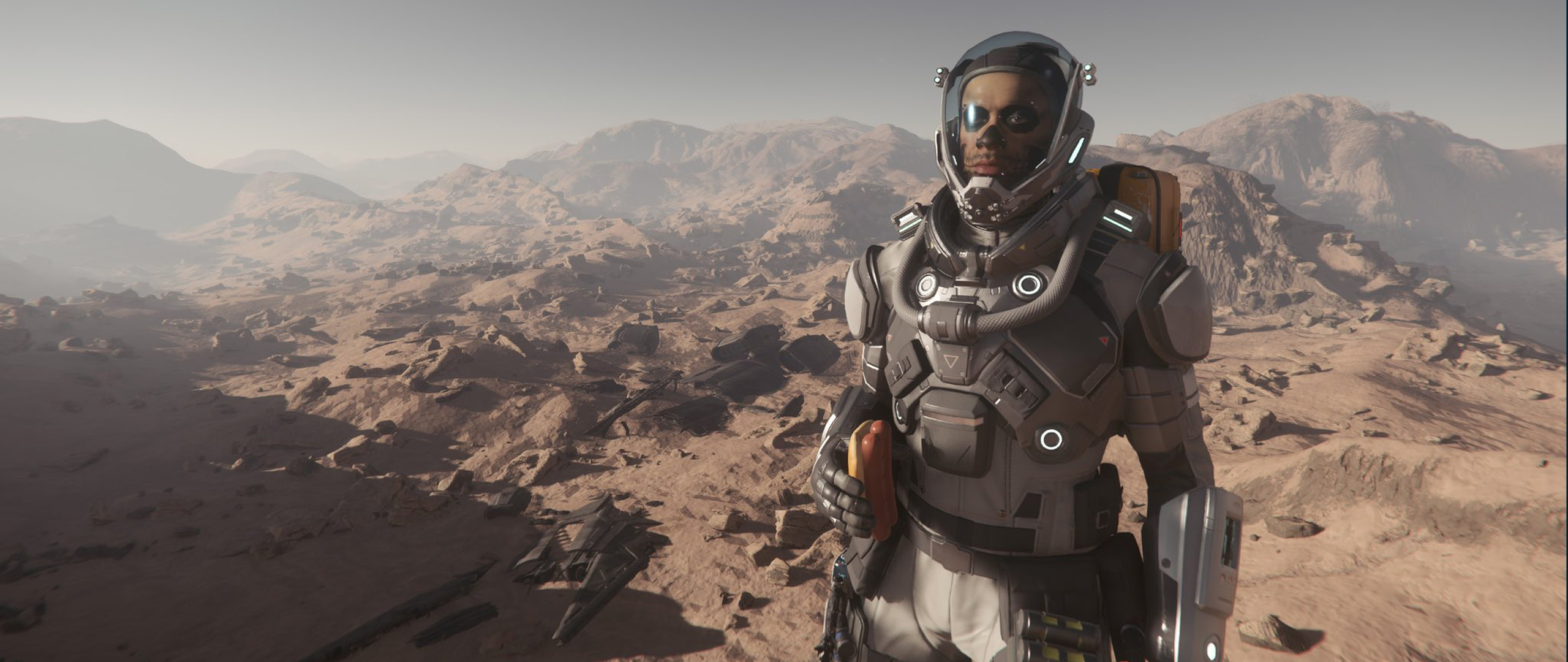
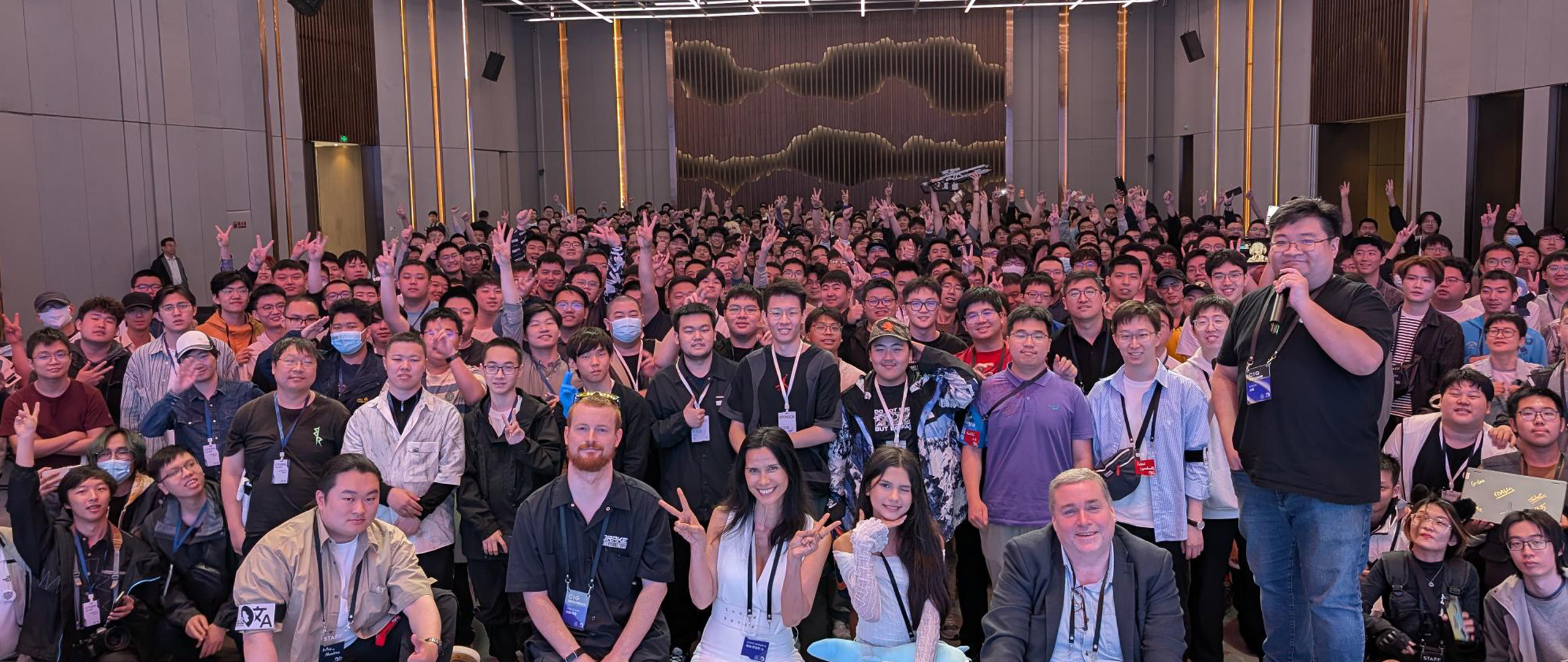
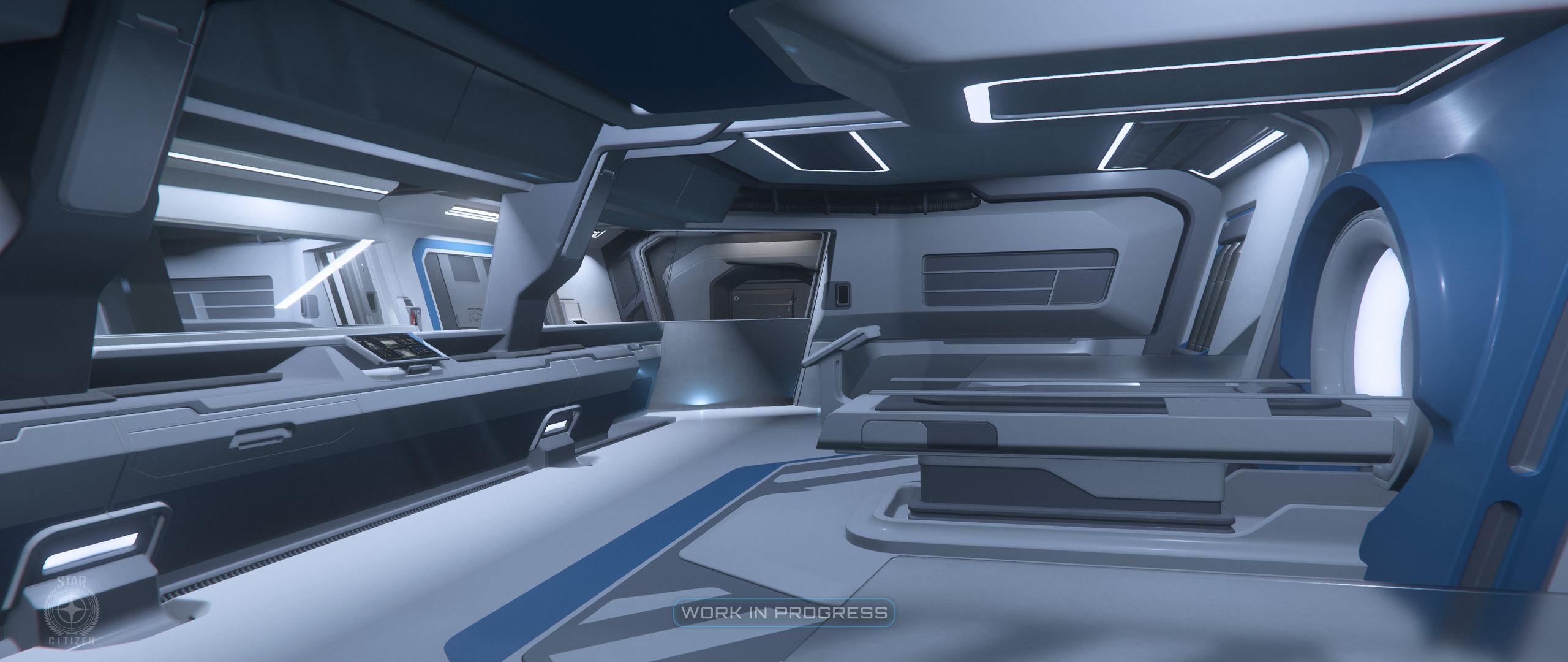
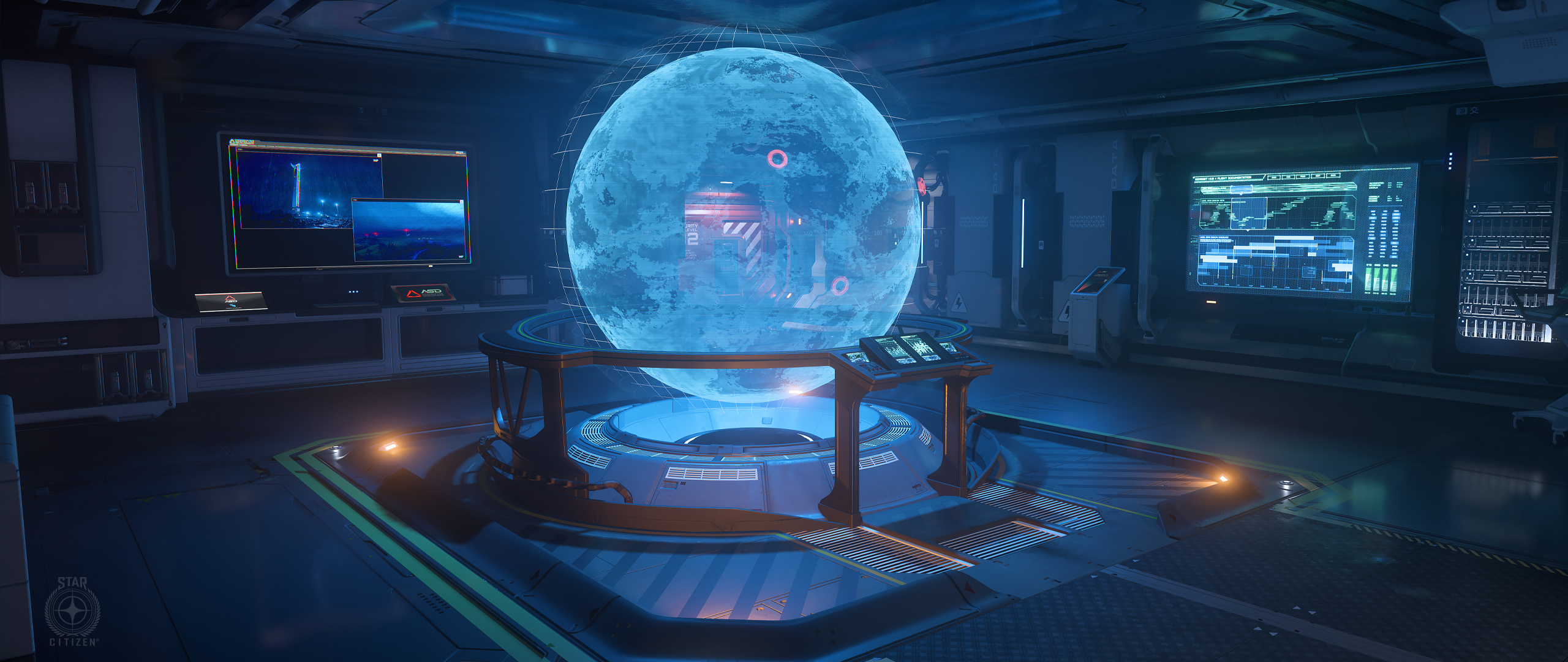
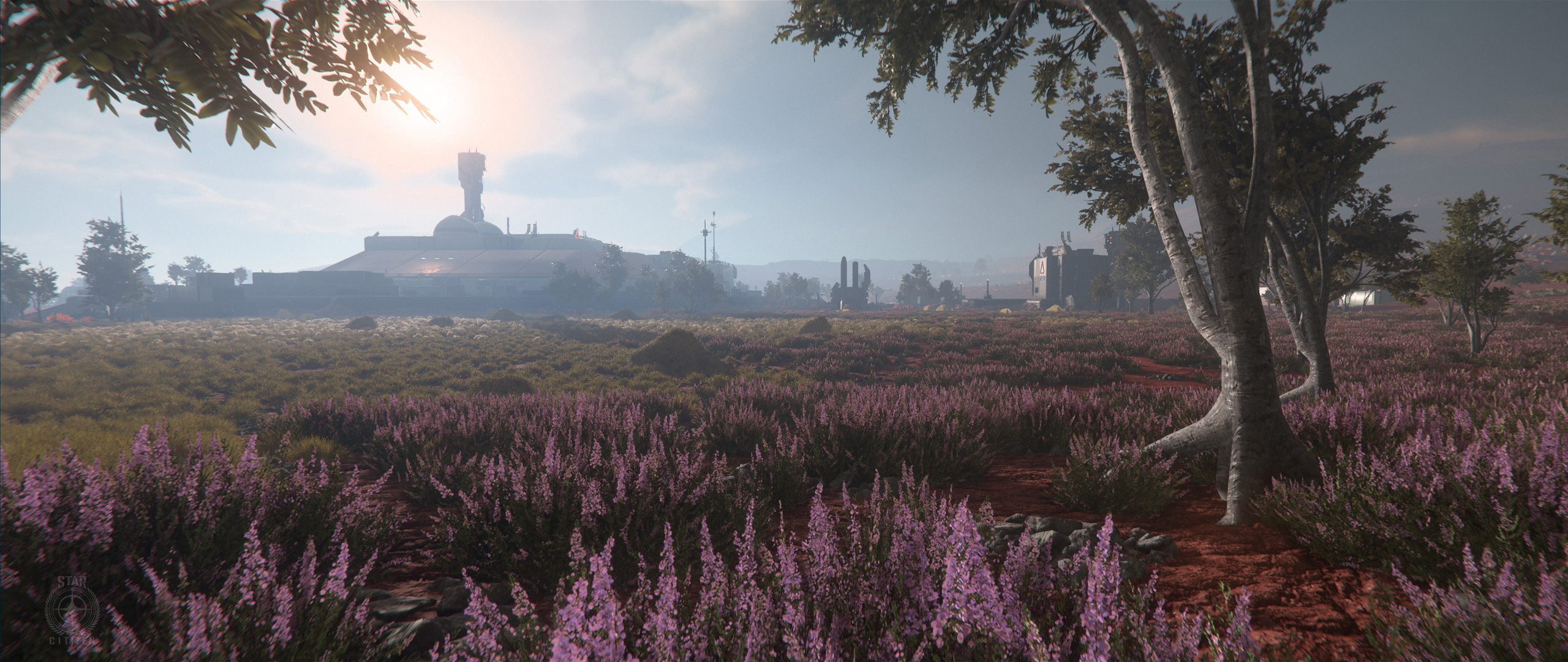
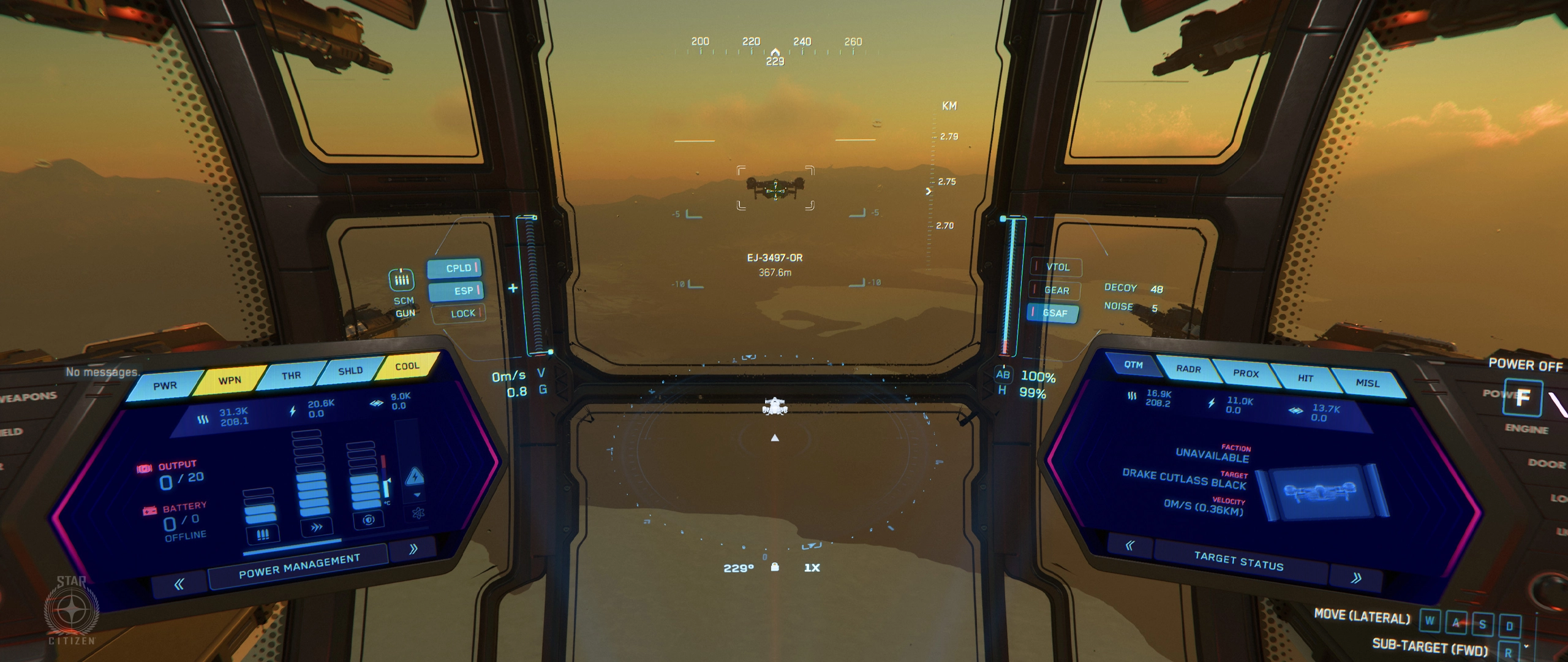
Metadata
- CIG ID
- 20620
- Channel
- Transmission
- Category
- Undefined
- Series
- None
- Comments
- 0
- Published
- 4 months ago (2026-05-25T10:00:00+00:00)