Star Citizen Monthly Report: October 2025
Transmission Undefined NoneContent
PU Monthly Report
October 2025
Welcome to the latest PU Monthly Report! Read on for all the behind-the-scenes details of development throughout October, including progress on Nyx, upcoming ships, AI behaviors, the in-game economy, and more.
AI Content
In October, the Narrative and Social AI teams supported several initiatives for the upcoming Alpha 4.4 patch, including landing zone fixes. While technical issues prevented the complete implementation of these updates, they will be added in a future patch.
As unveiled at CitizenCon Direct, the team supported the social AI setup for Levski. They also captured and supported the setup of additional voice packs to support future social and mission content.
Discussions with the Combat AI team kicked off combat voice packs, with the plan to capture new ones in the upcoming year based on the latest version of the behavior. The goal with this new approach is to consolidate FPS and dogfighting triggers while specializing recordings to focus on specific groups.
AI (Features)
Last month, AI Features continued to iterate on first reaction and usable animations. In particular, those where items are being carried.
They also fixed crashes relating to Human combat, changed how NPCs are scanned, and how they react. Accuracy calculations were simplified, while the values used to tweak them are now easier to understand. This will also include a fix to the firerate of burst and single-shot weapons.
Numerous bugs were fixed for the Yormandi, included those introduced by late-in-the-day action refining and the implementation of arena-reset functionality. The team also supported serialization of the skill extenders and began to support the early design considerations for a boss variant.
The Yormandi’s animation set was also vastly improved, including the beam, bite, death, and emerge sequences. The timing, posing, and blending of attacks were enhanced to feel more natural and threatening. Technical and visual bugs were also addressed, such as the weak spots, jitters, and animation playbacks.
AI (Tech)
The AI Team made improvements to navigation-mesh generation, including to the generation algorithm. They also updated navigation links, specifically to the traversal behavior when NPCs go through manual doors, elevators, and interruptibles.
The team then implemented the first working version of the flight pathfinder through the voxel grid.
The first pass of the system that manages AI agent scripting in the flowgraph was completed. This enforces the validation of the action sequence to ensure the correct execution context is set in the systemic activities, providing a more reliable way to manually script agents and an extra guarantee that actions are validated and executed correctly. This included work on the critical flow mode for AI agents as well. While in this mode, failures in action execution are still reported as errors but can be handled with fallbacks, allowing the flow to proceed instead of failing and potentially stalling.
AI (Game Intelligence Development Team)
In October 2025, the Game Intelligence Development team worked toward the next milestone for Mission System v2, focusing on implementing ‘outline properties’, the first pass of a prototype property window for selecting an outline item.
They also continued implementing the ‘outline declaration,’ which is based on a declarative system where the designers first declare the resources that will be needed for the mission and the context in which they will be used. For example, resources global to the mission are first declared.
The GID team then elaborated on the preliminary technical design for the entity-scripting topic. Furthermore, they fixed issues with the Apollo tool, allowing them to continue debugging StarScript.
The devs are currently analyzing Mannequin to propose UI visuals to improve reading and simplify the overall use of the tool. Finally, bugs were fixed and new features were worked on for StarScript as suggested by the designers.
Animation
Animation worked on the Yormandi throughout October alongside improvements to the kopion. They also discussed dog capture with animal trainers.
Last month saw a major push within the Facial Animation team to complete the new content for Alpha 4.4. This included new animations for the returning ATC character mentioned in September's report.
At the start of the month, the team attended another shoot with the Narrative and Motion Capture teams. This time, they captured content for a new mission giver as well as multiple voice packs for NPCs throughout the Nyx system. These will be released as part of Alpha 4.4, though the mission giver will not appear until a future patch.
Art (Characters)
The Character Art team finalized various armors for a new gang and in-game rewards, and progressed with a new heavy armor and clothing items.
The Concept Art team finalized handoff sheets and began exploring directions for a new gang.
Art (Ships)
In the UK, the Ships team supported the release of the Anvil Paladin, Esperia Stinger, and Grey’s Market Shiv at CitizenCon Direct.
Work on the Aegis Hammerhead and RSI Aurora continued to bring them up to modern standards. For the Hammerhead, Design are currently setting up the revisions, including the addition of blast doors throughout the corridors and updated component placement. The Aurora is currently awaiting downstream support, particularly for audio and VFX, as these feature some of the oldest in-game assets.
The Hull B is currently being prepared for its whitebox review, with the final touches being made to ensure it hits the required functionality criteria.
Both Drake Ironclad models and the Command Module progressed well into greybox, with geometry and lighting updates to the modular kits helping set the interior tone throughout.
Four unannounced ships progressed through October. The first is on track for its final review in early November, while the second is art-complete and currently with the downstream teams.
The third, an upcoming variant, passed its LOD0 review. Following this, the downstream teams began their tasks ahead of its final review.
Art was also completed for an all-new ship before it continued down the pipeline, with paints being created alongside a full pass from QA.
Another new vehicle, the Greycat UTV (which was briefly shown during the introduction of the STV), entered its whitebox phase.
Finally for the UK team, pre-production kicked off for the Anvil Liberator. This phase is before official production begins and aims to get a solid base for the wider team to use for further estimation and concept requests to aid in smoother delivery.
The North American team progressed with two unannounced vehicles. One is currently with downstream teams for closeout ahead of its final review, while the second is approaching its greybox review in early November.
Elsewhere, the RSI Perseus had a large-scale developer and QA playtest this month to check its robustness and intent in combat, which was a great success.
Whitebox work continued on the Drake Kraken, with more developers moving onto it as other projects were completed.
Community
October began with the return of Day of the Vara, the ‘verse’s spirited fall event, which the Community team supported with an informative thread and a pair of creepy contests. Players were invited to create ghastly gourds for a Pumpkin Decorating Contest and to unravel the mystery of the Vara with a Horror Story Contest.
After months of careful planning and working closely with community organizers, one of Star Citizen’s biggest events of the year finally arrived, CitizenCon Direct, which kicked off on October 11. In the lead-up to the big show, the Community team showcased the winners of the recent video contest, airing these creative commercials just prior to the official broadcast. The team also supported CitizenCon Direct both during and after the show by helping coordinate watch parties, as well as through social media and by publishing a Q&A for the new Anvil Paladin and Esperia Stinger.
"We want to give a huge THANK YOU to everyone who made this CitizenCon Direct special - whether you gathered at watch parties, organized events in your community, or tuned in from home on Twitch or YouTube. You made it a day to remember." - Community Team
Star Citizen Alpha 4.3.2: Fractured Frontiers released to the PU last month, and the Community team published a Patch Watch post about the Structural Salvage Update in preparation for the changes the patch would bring. They further supported the release with a helpful guide to the Frontier Fighters Finale and a catch-all thread. As with every release, the team continues to coordinate across multiple aspects of development, ensuring player feedback from Spectrum and social media reaches the appropriate channels.
Additionally, Community published the September PU Monthly Report and 2026 Buy Back Token Schedule, and continued their evergreen tasks, including This Week in Star Citizen, the Roadmap Update and Roundup, the Arena Commander schedule update, and detailed feedback collection, analysis, and distribution.
Finally, in preparation for the arrival of the Nyx system in Alpha 4.4, the team prepared a Traveler’s Guide to Nyx to close out the month.
Core Gameplay
The Core Gameplay teams pushed forward on the inventory revamp. This involved working on the equipment area where players can add weapons, mods, and equipment, including tractor beams and medical guns.
“We are bringing back the ability to have two weapons stored on your back while you hold a third one in your hands.” Core Gameplay Team
The team also worked on the different inventory tabs and floating item slots, and kicked off the early stages of capital ship repair, rearm, and refueling. This involved getting started on technical documentation to properly break down the necessary tasks.
Economy
The team spent last month building the economy of Nyx and giving the system character. As part of this, mining, refining, and shops received passes to ensure the right story is told through balance and numbers.
For freelance cargo trading, besides the usual changes and new trade routes, the team worked on a journal entry to steer players in the right direction and give insight into how they think about trading.
Several missions were adjusted based on the Salvage career developments. For example, missions should now spawn ships that give fairer rewards for the buy-in, time, and effort invested.
Following positive feedback on the faction competition missions, the team provided support for new missions and events currently in production. At the same time, they continued looking into ways to incentivize cooperative gameplay.
Graphics, VFX Programming & Planet Tech
Folllowing the Preview Channel testing of Vulkan, the graphics team fixed many performance issues, the vast majority of which were caused by running out of video memory.
With Vulkan, all memory is managed manually by the game rather than the driver. In-engine, there were several features that didn’t have a memory cap or correctly report their expected memory usage. This meant that, in the graphics options menu, a lower video memory usage was reported than the reality. And, once players ran out, performance declined significantly. Most of these issues were addressed. However, video memory usage is still higher than desired, so several optimizations are underway to address it.
Alongside Vulkan, the team’s other major PU initiative is the planet-tech aspect of Genesis. While this is still ongoing, the devs are starting to achieve the desired visual quality in a variety of areas, as demonstrated at CitizenCon Direct. In parallel, there are several in-progress systems that will bring performance and memory usage to the desired level.
Mission Design
Mission Design worked on the recent limited-time event, the Frontier Fighters Finale. This included missions in Pyro and Stanton, along with changes to the tracking tech introduced in the Resource Drive event, which allows players to contribute to phases of contracts and earn rewards.
The team also completed a major loot refresh, with the devs updating the UGF and Distribution Centers to give greater future control and bring them up to par with the current design. This is something Missions and Level Design will continue to update each time they use older locations.
The devs also added several more locations, including the space-based ship graveyard, which was updated to support the Ship Ambush archetype. Additional ship graveyards and UGFs were added to generate more missions, supporting the increased player cap and new players.
The Mission team also completed their work on the ‘accept from world' feature. This will allow players to accept missions from physical items in the ‘verse instead of having to just use the Contract Broker (Wikelo’s Emporium is the test case for this). This will enable missions outside of mission providers to improve immersion. For example, it could enable a physical jobs board offering missions around a specific location.
The team also set up the new courier tech at existing locations to make them more robust when they go online. The missions in Pyro were the first step in testing this system.
Work also progressed on the features shown at CitizenCon Direct. System-to-system hauling progressed well, with the devs adding new missions that will require players to take items between star systems. These missions will expand the Hauling career until Reputation v2 is implemented.
Some existing missions will move over to the Nyx system with new narrative elements, while some older content will return, including Missing Person, Blackbox Recovery, and Retrieve Cargo. The upcoming Welcome to Nyx mission progressed well, too.
Finally, a design review was done for Siege of Orison, with the team looking at player feedback and seeing how to improve the event to support instancing.
Narrative
Last month, the Narrative team focused on the final preparations for the release of Nyx.
“Since Levski was first added to the Stanton system years ago, we have been eagerly awaiting the egalitarian society settling into its proper place among the stars. We have been coordinating with Design not only on the featured mission shown off at CitizenCon, but on dozens of other contracts that will become available to players once they enter the system.” Narrative Team
Narrative also worked alongside the Branding and Environment Art teams to create unique environmental storytelling and signage throughout the new locations.
The team then spent time on several future initiatives that will be coming in later patches alongside planning for next year’s new content.
Finally, members of the Narrative team attended the CitizenCon watch party in León, Spain, and were thrilled to have met so many wonderful people who support the project.
Online Technology
October saw the Online Services team progress with Item Recovery T1 and the early stages of instancing. They also finalized ‘stow context’ and fixed bugs.
With the error-reporting pipeline currently live on staging, the Live Tools team spent time making the final few adjustments. Deployment to production is scheduled for November, alongside the initial release of the new web-app tool. This will allow teams to create, update, and delete crash ownership rules based on the stream where the crash occurred.
For Hex, the ‘audit logs’ feature was fully implemented and is set for deployment in December. The devs are currently monitoring recent changes to item recovery and the new contact service, with the goal of integrating the updates into the Network Operation Center.
The Network team progressed toward the first iteration of their new Server Meshing technology, which will be moving into initial testing in early November. While players will not experience any significant changes, this is an important first step in laying the groundwork toward Dynamic Server Meshing.
R&D
In October, the R&D team worked on engine optimizations that will eventually make their way into the PU. For example, the bit-field decompression of animation key data was optimized utilizing the CPU's SSE instruction set. Tangent reconstruction was also optimized to reduce the need for runtime allocations and to execute faster. Strings embedded in model animation headers were replaced with name table entries to allow cheap, shallow copies that don't trigger excessive runtime allocations.
For rendering, material constant update processing was improved, while related internal structures were optimized to cut down on memory cost, saving dozens of MB of system memory. Gas cloud light updates were refactored to remove the need for temporary memory allocations, which often introduced intermittent stutter, and to significantly optimize the CPU processing cost.
Several key optimizations were implemented to cut down on the number of draw calls as well as the number of vertices being sent to the vertex shader each frame, resulting in triangles outside the current viewport. The first batch of updates relates to the submission of casters in shadow-map render passes. This will generate a more efficient hull to cull sunlight shadow casters during shadow map rendering. This helps with the shadow rendering cost on planets, culling hundreds of unnecessary draw calls at high level and avoids rendering of millions of irrelevant triangles.
Hull culling was also implemented for shadow casters of point, projector, and area lights. As above, this helps indoors areas with many local lights, cutting down both the CPU and GPU processing cost.
The team also added support for hull culling in the cube map and static shadow map gen passes. They also implemented a projected pixel area estimator to cull objects if the projected area of their bounds is below a configurable pixel threshold.
The second batch of optimizations concern the sub-object culling of complex meshes to reduce draw call and poly count in general and shadow passes. Previously, the engine aimed to merge complex meshes as much as possible, taking material boundaries into account. This helped reduce draw call counts massively but also meant that a lot of sub parts were processed by the GPU, even if they were outside the current viewport. The new approach tests visibility of sub parts first and then uses a heuristic approach to decide whether to render the merged mesh or its individual sub parts. While this slightly increases draw call count, it saves processing 10s of millions of triangles by the GPU when many shadow casting lights are active in dense scenes, such as indoors.
Lastly, 4MB of video memory was saved for the planet terrain height map render target. Some of these optimizations were added to the Star Citizen alpha streams and will be available in PU. Others will appear in the next SQ42-to-Star Citizen integration. Various smaller optimizations were also implemented to improve runtime performance, memory usage, and load times.
VFX
VFX supported all of the game’s upcoming vehicles, with some standouts being the Shiv and Stinger.
The Yormandi was a huge achievement for the VFX team. In particular, the beam attack and body emissions required additional care to bring them up to quality.
PU-Monatsbericht
Oktober 2025
Willkommen zum neuesten PU-Monatsbericht! Lies weiter, um alle Details über die Entwicklung im Oktober zu erfahren, darunter Fortschritte bei Nyx, neue Schiffe, das Verhalten der KI, die Wirtschaft im Spiel und vieles mehr.
KI-Inhalte
Im Oktober haben die Teams für Narrative und Soziale KI mehrere Initiativen für den kommenden Patch Alpha 4.4 unterstützt, darunter auch Korrekturen an der Landezone. Technische Probleme verhinderten zwar die vollständige Umsetzung dieser Updates, sie werden aber in einem zukünftigen Patch nachgereicht.
Wie auf der CitizenCon Direct vorgestellt, unterstützte das Team die Einrichtung der sozialen KI für Levski. Außerdem haben sie die Einrichtung zusätzlicher Sprachpakete für zukünftige soziale und Missionsinhalte erfasst und unterstützt.
In Gesprächen mit dem Kampf-KI-Team wurde der Startschuss für die Kampf-Sprachpakete gegeben, und es ist geplant, im kommenden Jahr neue Sprachpakete auf der Grundlage der neuesten Version des Verhaltens zu erfassen. Das Ziel dieses neuen Ansatzes ist es, FPS- und Dogfighting-Trigger zu konsolidieren und gleichzeitig die Aufnahmen auf bestimmte Gruppen zu spezialisieren.
KI (Features)
Im letzten Monat haben die KI-Features weiter an der ersten Reaktion und den nutzbaren Animationen gefeilt. Vor allem die, bei denen Gegenstände getragen werden.
Außerdem wurden Abstürze im Zusammenhang mit menschlichen Kämpfen behoben und die Art und Weise geändert, wie NSCs gescannt werden und wie sie reagieren. Die Genauigkeitsberechnungen wurden vereinfacht und die Werte, mit denen sie angepasst werden, sind jetzt leichter zu verstehen. Außerdem wurde die Feuerrate von Serien- und Einzelschusswaffen verbessert.
Für die Yormandi wurden zahlreiche Fehler behoben, darunter solche, die durch die späte Verfeinerung der Aktionen und die Implementierung der Arenarücksetzfunktion entstanden sind. Das Team unterstützte auch die Serialisierung der Fertigkeitserweiterungen und begann, die ersten Designüberlegungen für eine Bossvariante zu unterstützen.
Die Animationen der Yormandi wurden ebenfalls stark verbessert, einschließlich der Strahl-, Biss-, Todes- und Auftauchsequenzen. Das Timing, die Pose und die Überblendung der Angriffe wurden verbessert, damit sie natürlicher und bedrohlicher wirken. Auch technische und visuelle Fehler wurden behoben, z. B. die Schwachstellen, das Zittern und die Animationswiedergabe.
KI (Technik)
Das KI-Team hat die Generierung von Navigationsmaschen verbessert, einschließlich des Generierungsalgorithmus. Außerdem wurden die Navigationsverbindungen aktualisiert, insbesondere das Verhalten beim Durchqueren von NSCs durch manuelle Türen, Aufzüge und Unterbrechungsmöglichkeiten.
Dann implementierte das Team die erste funktionierende Version des Flugwegfinders durch das Voxel-Gitter.
Der erste Durchlauf des Systems, das das Skripting der KI-Agenten im Flowgraph verwaltet, wurde abgeschlossen. Es erzwingt die Validierung der Aktionssequenz, um sicherzustellen, dass der korrekte Ausführungskontext in den systemischen Aktivitäten gesetzt wird, und bietet eine zuverlässigere Möglichkeit, Agenten manuell zu skripten und eine zusätzliche Garantie, dass Aktionen validiert und korrekt ausgeführt werden. Dazu gehörte auch die Arbeit am kritischen Flussmodus für KI-Agenten. In diesem Modus werden Fehler bei der Ausführung von Aktionen immer noch als Fehler gemeldet, aber sie können mit Fallbacks behandelt werden, sodass der Ablauf fortgesetzt werden kann, anstatt zu scheitern und möglicherweise ins Stocken zu geraten.
KI (Game Intelligence Development Team)
Im Oktober 2025 arbeitete das Game Intelligence Development Team am nächsten Meilenstein für Mission System v2 und konzentrierte sich dabei auf die Implementierung von "Umriss-Eigenschaften", dem ersten Durchgang eines Prototyps eines Eigenschaftsfensters für die Auswahl eines Umriss-Elements.
Außerdem setzten sie die Implementierung der "Gliederungsdeklaration" fort, die auf einem deklarativen System basiert, bei dem die Designer/innen zunächst die Ressourcen angeben, die für die Mission benötigt werden, und den Kontext, in dem sie verwendet werden sollen. So werden zum Beispiel zuerst die globalen Ressourcen für die Mission deklariert.
Das GID-Team hat dann das vorläufige technische Design für das Thema Entity-Skripting ausgearbeitet. Außerdem haben sie Probleme mit dem Apollo-Tool behoben, sodass sie mit der Fehlersuche in StarScript fortfahren konnten.
Die Entwickler analysieren derzeit Mannequin, um Vorschläge für die visuelle Gestaltung der Benutzeroberfläche zu machen, die das Lesen und die Nutzung des Tools insgesamt vereinfachen. Schließlich wurden Fehler behoben und neue Funktionen für StarScript entwickelt, die von den Entwicklern vorgeschlagen wurden.
Animation
Den ganzen Oktober über arbeiteten die Animatoren am Yormandi und verbesserten das Kopion. Außerdem diskutierten sie mit Tiertrainern über das Einfangen von Hunden.
Im letzten Monat arbeitete das Team für Gesichtsanimation mit Hochdruck an der Fertigstellung der neuen Inhalte für Alpha 4.4. Dazu gehörten auch neue Animationen für den ATC-Charakter, der im Septemberbericht erwähnt wurde.
Anfang des Monats nahm das Team an einem weiteren Dreh mit den Teams für Narrative und Motion Capture teil. Diesmal wurden Inhalte für einen neuen Missionsgeber sowie mehrere Voice Packs für NSCs im gesamten Nyx-System aufgenommen. Diese werden als Teil der Alpha 4.4 veröffentlicht, obwohl der Missionsgeber erst in einem späteren Patch erscheinen wird.
Kunst (Charaktere)
Das Character Art Team hat verschiedene Rüstungen für eine neue Gang und Spielbelohnungen fertiggestellt und eine neue schwere Rüstung und Kleidungsstücke entwickelt.
Das Concept Art Team hat die Übergabebögen fertiggestellt und mit der Erkundung von Richtungen für eine neue Gang begonnen.
Kunst (Schiffe)
In Großbritannien unterstützte das Schiffsteam die Veröffentlichung des Anvil Paladin, des Esperia Stinger und des Grey's Market Shiv auf der CitizenCon Direct.
Die Arbeiten an der Aegis Hammerhead und der RSI Aurora wurden fortgesetzt, um sie auf den neuesten Stand zu bringen. Die Hammerhead wird derzeit überarbeitet, u. a. durch das Hinzufügen von Sprengtüren in den Korridoren und eine neue Anordnung der Komponenten. Die Aurora wartet derzeit auf Downstream-Support, insbesondere für Audio und VFX, da sie einige der ältesten Assets im Spiel enthält.
Der Rumpf B wird derzeit für die Whitebox-Prüfung vorbereitet und erhält den letzten Schliff, um sicherzustellen, dass er die erforderlichen Funktionskriterien erfüllt.
Sowohl die Drake Ironclad-Modelle als auch das Kommandomodul machten gute Fortschritte in der Greybox, wobei Geometrie- und Beleuchtungsupdates an den modularen Bausätzen dazu beitrugen, die Innenausstattung zu verbessern.
Vier unangekündigte Schiffe wurden im Oktober fertiggestellt. Das erste wird voraussichtlich Anfang November fertiggestellt, während das zweite bereits fertiggestellt ist und derzeit von den nachgelagerten Teams bearbeitet wird.
Das dritte, eine zukünftige Variante, hat die LOD0-Prüfung bestanden. Danach begannen die nachgelagerten Teams mit ihren Aufgaben vor der endgültigen Überprüfung.
Auch das Design eines neuen Schiffes wurde fertiggestellt, bevor es die Pipeline weiter durchlief und die Farben erstellt wurden, während die QA es vollständig überprüfte.
Ein weiteres neues Fahrzeug, das Greycat UTV (das bei der Einführung der STV kurz gezeigt wurde), ging in die Whitebox-Phase.
Schließlich begann das britische Team mit der Vorproduktion des Anvil Liberator. Diese Phase findet vor dem offiziellen Produktionsbeginn statt und dient dazu, eine solide Basis für das breitere Team zu schaffen, die für weitere Schätzungen und Konzeptanfragen genutzt werden kann, um eine reibungslosere Lieferung zu ermöglichen.
Das nordamerikanische Team kam mit zwei unangekündigten Fahrzeugen voran. Eines davon befindet sich derzeit bei den nachgelagerten Teams zur abschließenden Prüfung, während das zweite Anfang November zur Greybox-Prüfung ansteht.
Der RSI Perseus wurde in diesem Monat von den Entwicklern und der Qualitätssicherung in großem Umfang getestet, um seine Robustheit und seinen Einsatz im Kampf zu prüfen - ein großer Erfolg.
Die Whitebox-Arbeiten am Drake Kraken wurden fortgesetzt, und weitere Entwickler arbeiteten daran, während andere Projekte abgeschlossen wurden.
Community
Der Oktober begann mit der Rückkehr des Day of the Vara, dem temperamentvollen Herbst-Event des Verses, das das Community-Team mit einem informativen Thread und zwei gruseligen Wettbewerben unterstützte. Die Spielerinnen und Spieler waren eingeladen, schaurige Kürbisse für einen Kürbisdekorationswettbewerb zu kreieren und das Geheimnis der Vara in einem Gruselgeschichten-Wettbewerb zu lüften.
Nach Monaten sorgfältiger Planung und enger Zusammenarbeit mit den Community-Organisatoren fand am 11. Oktober die CitizenCon Direct statt, eines der größten Events des Jahres in Star Citizen. Im Vorfeld der großen Show stellte das Community-Team die Gewinner des letzten Videowettbewerbs vor und strahlte diese kreativen Werbespots kurz vor der offiziellen Ausstrahlung aus. Das Team unterstützte die CitizenCon Direct auch während und nach der Show, indem es bei der Koordinierung von Watch-Partys half und in den sozialen Medien ein Q&A für den neuen Anvil Paladin und Esperia Stinger veröffentlichte.
"Wir möchten uns bei allen bedanken, die die CitizenCon Direct zu etwas Besonderem gemacht haben - egal, ob ihr euch auf Watchpartys versammelt, Veranstaltungen in eurer Gemeinde organisiert oder von zu Hause aus auf Twitch oder YouTube zugeschaltet habt. Ihr habt diesen Tag unvergesslich gemacht." - Community-Team
Star Citizen Alpha 4.3.2: Fractured Frontiers wurde letzten Monat veröffentlicht und das Community Team hat einen Patch Watch Post über das Structural Salvage Update veröffentlicht, um sich auf die Änderungen vorzubereiten, die der Patch mit sich bringen würde. Außerdem haben sie die Veröffentlichung mit einem hilfreichen Leitfaden für das Frontier Fighters Finale und einem Sammelthread unterstützt. Wie bei jeder Veröffentlichung koordiniert das Team auch weiterhin die verschiedenen Aspekte der Entwicklung und stellt sicher, dass das Feedback der Spieler/innen aus Spectrum und den sozialen Medien die richtigen Kanäle erreicht.
Darüber hinaus hat die Community den Monatsbericht September PU und den Zeitplan für den Token-Rückkauf 2026 veröffentlicht und ihre immergrünen Aufgaben fortgesetzt, wie z.B. Diese Woche in Star Citizen, das Roadmap-Update und die Zusammenfassung, das Zeitplan-Update für den Arena Commander und die detaillierte Sammlung, Analyse und Verteilung von Feedback.
In Vorbereitung auf die Ankunft des Nyx-Systems in Alpha 4.4 hat das Team zum Abschluss des Monats einen Reiseführer für Nyx erstellt.
Core Gameplay
Die Teams für das Kernspiel haben die Überarbeitung des Inventars vorangetrieben. Dazu gehörte die Überarbeitung des Ausrüstungsbereichs, in dem die Spieler/innen Waffen, Mods und Ausrüstung hinzufügen können, darunter Traktorstrahlen und medizinische Waffen.
"Wir bringen die Möglichkeit zurück, zwei Waffen auf dem Rücken zu tragen, während man eine dritte in der Hand hält. Core Gameplay Team
Das Team hat außerdem an den verschiedenen Inventar-Tabs und den freien Gegenstandsplätzen gearbeitet und die ersten Schritte zur Reparatur, Aufrüstung und Betankung von Großkampfschiffen eingeleitet. Dazu musste die technische Dokumentation erstellt werden, um die notwendigen Aufgaben richtig aufzuschlüsseln.
Wirtschaft
Das Team hat den letzten Monat damit verbracht, die Wirtschaft von Nyx aufzubauen und dem System Charakter zu verleihen. In diesem Zusammenhang wurden Bergbau, Raffinerie und Geschäfte überarbeitet, um sicherzustellen, dass die richtige Geschichte durch Balance und Zahlen erzählt wird.
Für den freien Frachthandel hat das Team neben den üblichen Änderungen und neuen Handelsrouten an einem Tagebucheintrag gearbeitet, um die Spieler in die richtige Richtung zu lenken und ihnen einen Einblick in ihre Gedanken zum Handel zu geben.
Mehrere Missionen wurden auf der Grundlage der Entwicklungen in der Bergungskarriere angepasst. Zum Beispiel sollten die Missionen jetzt Schiffe spawnen, die fairere Belohnungen für den investierten Aufwand an Zeit und Mühe bieten.
Nach dem positiven Feedback zu den Fraktionswettbewerbsmissionen hat das Team neue Missionen und Events unterstützt, die sich derzeit in Produktion befinden. Gleichzeitig wurde weiter nach Möglichkeiten gesucht, Anreize für kooperatives Spielen zu schaffen.
Grafik, VFX-Programmierung & Planet Tech
Im Anschluss an die Vulkan-Tests im Vorschaukanal hat das Grafikteam viele Leistungsprobleme behoben, von denen die meisten durch zu wenig Videospeicher verursacht wurden.
Mit Vulkan wird der gesamte Speicher manuell vom Spiel und nicht vom Treiber verwaltet. In der Engine gab es einige Funktionen, die keine Speicherbegrenzung hatten oder ihren erwarteten Speicherverbrauch nicht korrekt meldeten. Das bedeutete, dass im Menü der Grafikoptionen eine geringere Nutzung des Videospeichers angezeigt wurde als in Wirklichkeit. Und wenn die Spieler nicht mehr genug haben, sinkt die Leistung erheblich. Die meisten dieser Probleme wurden behoben. Allerdings ist die Nutzung des Videospeichers immer noch höher als erwünscht, weshalb mehrere Optimierungen in Arbeit sind, um dies zu beheben.
Neben Vulkan ist die andere große PU-Initiative des Teams der planetentechnische Aspekt von Genesis. Diese Arbeiten sind noch nicht abgeschlossen, aber die Entwickler/innen erreichen bereits die gewünschte visuelle Qualität in verschiedenen Bereichen, wie sie auf der CitizenCon Direct gezeigt haben. Parallel dazu sind mehrere Systeme in Arbeit, die die Leistung und Speichernutzung auf das gewünschte Niveau bringen werden.
Missionsdesign
Das Missionsdesign arbeitete an dem kürzlich stattgefundenen zeitlich begrenzten Event, dem Frontier Fighters Finale. Dazu gehörten Missionen in Pyro und Stanton sowie Änderungen an der Tracking-Technologie, die im Event Resource Drive eingeführt wurde und es den Spielern ermöglicht, zu Phasen von Verträgen beizutragen und Belohnungen zu verdienen.
Außerdem hat das Team die UGF und die Distributionszentren überarbeitet, um eine bessere Kontrolle über die Zukunft zu ermöglichen und sie auf den neuesten Stand zu bringen. Die Missionen und das Leveldesign werden weiterhin jedes Mal aktualisiert, wenn sie ältere Orte verwenden.
Die Entwickler haben außerdem einige weitere Orte hinzugefügt, darunter den weltraumbasierten Schiffsfriedhof, der aktualisiert wurde, um den Archetyp Schiffsüberfall zu unterstützen. Zusätzliche Schiffsfriedhöfe und UGFs wurden hinzugefügt, um mehr Missionen zu generieren und die erhöhte Spielerzahl und neue Spieler zu unterstützen.
Das Missionsteam hat außerdem die Arbeit an der Funktion "Von der Welt annehmen" abgeschlossen. Damit können Spieler Missionen von physischen Gegenständen in der Welt annehmen, anstatt nur den Vertragsvermittler zu benutzen (Wikelo's Emporium ist der Testfall für diese Funktion). Dies wird Missionen außerhalb der Missionsanbieter ermöglichen, um die Immersion zu verbessern. Es könnte zum Beispiel eine physische Jobtafel geben, die Missionen rund um einen bestimmten Ort anbietet.
Das Team hat auch die neue Kurier-Technologie an bestehenden Orten eingerichtet, um sie robuster zu machen, wenn sie online gehen. Die Missionen in Pyro waren der erste Schritt, um dieses System zu testen.
Die Arbeit an den Funktionen, die auf der CitizenCon Direct gezeigt wurden, ging ebenfalls voran. Die Entwickler haben neue Missionen hinzugefügt, bei denen die Spieler/innen Gegenstände zwischen den Sternensystemen transportieren müssen. Diese Missionen werden die Hauling-Karriere erweitern, bis Ruf v2 eingeführt wird.
Einige bestehende Missionen werden mit neuen erzählerischen Elementen in das Nyx-System übertragen, während einige ältere Inhalte zurückkehren, darunter "Vermisste Person", "Blackbox bergen" und "Fracht bergen". Auch die kommende Mission Welcome to Nyx hat sich gut entwickelt.
Das Team hat sich das Feedback der Spieler/innen angeschaut und überlegt, wie das Event verbessert werden kann, um Instanzierung zu unterstützen.
Narrative
Im letzten Monat konzentrierte sich das Narrative-Team auf die letzten Vorbereitungen für die Veröffentlichung von Nyx.
"Seit Levski vor Jahren zum ersten Mal dem Stanton-System hinzugefügt wurde, warten wir sehnsüchtig darauf, dass die egalitäre Gesellschaft ihren Platz zwischen den Sternen einnimmt. Wir haben mit Design nicht nur an der auf der CitizenCon vorgestellten Mission gearbeitet, sondern auch an Dutzenden von anderen Aufträgen, die den Spielern zur Verfügung stehen werden, sobald sie das System betreten." Narrative Team
Das Narrative Team hat auch mit den Branding- und Environment Art-Teams zusammengearbeitet, um einzigartige Umweltgeschichten und Beschilderungen an den neuen Orten zu entwerfen.
Das Team verbrachte dann Zeit mit verschiedenen zukünftigen Initiativen, die in späteren Patches erscheinen werden, sowie mit der Planung der neuen Inhalte für das nächste Jahr.
Schließlich nahmen Mitglieder des Narrative-Teams an der CitizenCon-Watchparty in León, Spanien, teil und waren begeistert, so viele wunderbare Menschen zu treffen, die das Projekt unterstützen.
Online-Technologie
Im Oktober machte das Team der Online-Dienste Fortschritte bei der Wiederherstellung von Gegenständen (Item Recovery T1) und den ersten Phasen der Instanzierung. Außerdem wurde der "Stow Context" fertiggestellt und Bugs behoben.
Das Live-Tools-Team nahm die letzten Anpassungen vor, während die Fehlermeldungs-Pipeline im Staging-Modus läuft. Die Einführung in die Produktion ist für November geplant, zusammen mit der ersten Veröffentlichung des neuen Web-App-Tools. Damit können Teams Regeln für die Zuweisung von Abstürzen erstellen, aktualisieren und löschen, je nachdem, in welchem Stream der Absturz aufgetreten ist.
Für Hex wurde die Funktion "Audit Logs" vollständig implementiert und soll im Dezember bereitgestellt werden. Die Entwickler beobachten derzeit die jüngsten Änderungen bei der Wiederherstellung von Gegenständen und dem neuen Kontaktdienst mit dem Ziel, die Aktualisierungen in das Network Operation Center zu integrieren.
Das Netzwerkteam hat die erste Iteration der neuen Server-Meshing-Technologie fertiggestellt, die Anfang November in die ersten Tests gehen wird. Auch wenn sich für die Spieler/innen keine wesentlichen Änderungen ergeben werden, ist dies ein wichtiger erster Schritt auf dem Weg zum Dynamic Server Meshing.
F&E
Im Oktober hat das F&E-Team an Optimierungen der Engine gearbeitet, die schließlich in das PU einfließen werden. So wurde zum Beispiel die Bitfeld-Dekomprimierung von Animations-Schlüsseldaten unter Verwendung des SSE-Befehlssatzes der CPU optimiert. Auch die Tangentenrekonstruktion wurde optimiert, um den Bedarf an Laufzeitzuweisungen zu verringern und die Ausführung zu beschleunigen. In den Kopfzeilen der Modellanimationen eingebettete Zeichenketten wurden durch Namenstabelleneinträge ersetzt, um billige, flache Kopien zu ermöglichen, die keine übermäßigen Laufzeitzuweisungen auslösen.
Beim Rendering wurde die Verarbeitung von Materialkonstanten verbessert, während die zugehörigen internen Strukturen optimiert wurden, um die Speicherkosten zu senken und so Dutzende von MB an Systemspeicher einzusparen. Die Aktualisierungen der Gaswolkenbeleuchtung wurden überarbeitet, um die Notwendigkeit temporärer Speicherzuweisungen zu beseitigen, die oft zu zeitweiligem Stottern führten, und um die CPU-Verarbeitungskosten deutlich zu optimieren.
Es wurden mehrere wichtige Optimierungen vorgenommen, um die Anzahl der Zeichenaufrufe und die Anzahl der Eckpunkte, die pro Frame an den Vertex-Shader gesendet werden und zu Dreiecken außerhalb des aktuellen Viewports führen, zu reduzieren. Die erste Gruppe von Aktualisierungen betrifft die Übermittlung von Castern in Schattenkarten-Rendering-Passes. Dadurch wird eine effizientere Hülle erzeugt, um die Schattenwerfer des Sonnenlichts beim Rendering der Schattenkarte zu entfernen. Dies hilft bei den Kosten für das Rendering von Schatten auf Planeten, indem Hunderte von unnötigen Draw-Aufrufen auf hoher Ebene entfernt werden und das Rendering von Millionen irrelevanter Dreiecke vermieden wird.
Hull Culling wurde auch für Schattenwerfer von Punkt-, Projektor- und Flächenlichtern implementiert. Wie oben beschrieben, hilft dies bei Innenräumen mit vielen lokalen Lichtern und senkt sowohl die CPU- als auch die GPU-Verarbeitungskosten.
Das Team fügte außerdem Unterstützung für Hull Culling in den Gen-Passes der Cube Map und der statischen Shadow Map hinzu. Außerdem wurde ein Schätzer für die projizierte Pixelfläche implementiert, der Objekte ausschließt, wenn die projizierte Fläche ihrer Begrenzungen unter einem konfigurierbaren Pixelschwellenwert liegt.
Die zweite Gruppe von Optimierungen betrifft das Culling von Unterobjekten in komplexen Meshes, um die Anzahl der Zeichnungsaufrufe und die Anzahl der Polygone in den allgemeinen und den Schattenpasses zu reduzieren. Zuvor war die Engine bestrebt, komplexe Meshes so weit wie möglich zu verschmelzen und dabei die Materialgrenzen zu berücksichtigen. Das half, die Anzahl der Draw Calls massiv zu reduzieren, bedeutete aber auch, dass viele Unterteile von der GPU verarbeitet wurden, selbst wenn sie sich außerhalb des aktuellen Viewports befanden. Der neue Ansatz prüft zunächst die Sichtbarkeit der Unterteile und entscheidet dann anhand einer Heuristik, ob das zusammengefasste Mesh oder die einzelnen Unterteile gerendert werden sollen. Dadurch erhöht sich zwar die Anzahl der Zeichenaufrufe, aber die GPU spart sich die Verarbeitung von mehreren 10 Millionen Dreiecken, wenn in dichten Szenen, z. B. in Innenräumen, viele schattenwerfende Lichter aktiv sind.
Schließlich wurden 4 MB Videospeicher für das Rendering-Ziel der Planet Terrain Height Map eingespart. Einige dieser Optimierungen wurden in die Star Citizen Alpha-Streams aufgenommen und werden in PU verfügbar sein. Andere werden in der nächsten SQ42-zu-Star Citizen-Integration erscheinen. Außerdem wurden verschiedene kleinere Optimierungen vorgenommen, um die Laufzeitleistung, die Speichernutzung und die Ladezeiten zu verbessern.
VFX
Die VFX unterstützten alle kommenden Fahrzeuge des Spiels, wobei der Shiv und der Stinger besonders hervorzuheben sind.
Der Yormandi war ein großer Erfolg für das VFX-Team. Vor allem der Strahlenangriff und die Körperemissionen erforderten zusätzliche Sorgfalt, um sie auf ein hohes Niveau zu bringen.
PU Monthly Report
October 2025
Welcome to the latest PU Monthly Report! Read on for all the behind-the-scenes details of development throughout October, including progress on Nyx, upcoming ships, AI behaviors, the in-game economy, and more.
AI Content
In October, the Narrative and Social AI teams supported several initiatives for the upcoming Alpha 4.4 patch, including landing zone fixes. While technical issues prevented the complete implementation of these updates, they will be added in a future patch.
As unveiled at CitizenCon Direct, the team supported the social AI setup for Levski. They also captured and supported the setup of additional voice packs to support future social and mission content.
Discussions with the Combat AI team kicked off combat voice packs, with the plan to capture new ones in the upcoming year based on the latest version of the behavior. The goal with this new approach is to consolidate FPS and dogfighting triggers while specializing recordings to focus on specific groups.
AI (Features)
Last month, AI Features continued to iterate on first reaction and usable animations. In particular, those where items are being carried.
They also fixed crashes relating to Human combat, changed how NPCs are scanned, and how they react. Accuracy calculations were simplified, while the values used to tweak them are now easier to understand. This will also include a fix to the firerate of burst and single-shot weapons.
Numerous bugs were fixed for the Yormandi, included those introduced by late-in-the-day action refining and the implementation of arena-reset functionality. The team also supported serialization of the skill extenders and began to support the early design considerations for a boss variant.
The Yormandi’s animation set was also vastly improved, including the beam, bite, death, and emerge sequences. The timing, posing, and blending of attacks were enhanced to feel more natural and threatening. Technical and visual bugs were also addressed, such as the weak spots, jitters, and animation playbacks.
AI (Tech)
The AI Team made improvements to navigation-mesh generation, including to the generation algorithm. They also updated navigation links, specifically to the traversal behavior when NPCs go through manual doors, elevators, and interruptibles.
The team then implemented the first working version of the flight pathfinder through the voxel grid.
The first pass of the system that manages AI agent scripting in the flowgraph was completed. This enforces the validation of the action sequence to ensure the correct execution context is set in the systemic activities, providing a more reliable way to manually script agents and an extra guarantee that actions are validated and executed correctly. This included work on the critical flow mode for AI agents as well. While in this mode, failures in action execution are still reported as errors but can be handled with fallbacks, allowing the flow to proceed instead of failing and potentially stalling.
AI (Game Intelligence Development Team)
In October 2025, the Game Intelligence Development team worked toward the next milestone for Mission System v2, focusing on implementing ‘outline properties’, the first pass of a prototype property window for selecting an outline item.
They also continued implementing the ‘outline declaration,’ which is based on a declarative system where the designers first declare the resources that will be needed for the mission and the context in which they will be used. For example, resources global to the mission are first declared.
The GID team then elaborated on the preliminary technical design for the entity-scripting topic. Furthermore, they fixed issues with the Apollo tool, allowing them to continue debugging StarScript.
The devs are currently analyzing Mannequin to propose UI visuals to improve reading and simplify the overall use of the tool. Finally, bugs were fixed and new features were worked on for StarScript as suggested by the designers.
Animation
Animation worked on the Yormandi throughout October alongside improvements to the kopion. They also discussed dog capture with animal trainers.
Last month saw a major push within the Facial Animation team to complete the new content for Alpha 4.4. This included new animations for the returning ATC character mentioned in September's report.
At the start of the month, the team attended another shoot with the Narrative and Motion Capture teams. This time, they captured content for a new mission giver as well as multiple voice packs for NPCs throughout the Nyx system. These will be released as part of Alpha 4.4, though the mission giver will not appear until a future patch.
Art (Characters)
The Character Art team finalized various armors for a new gang and in-game rewards, and progressed with a new heavy armor and clothing items.
The Concept Art team finalized handoff sheets and began exploring directions for a new gang.
Art (Ships)
In the UK, the Ships team supported the release of the Anvil Paladin, Esperia Stinger, and Grey’s Market Shiv at CitizenCon Direct.
Work on the Aegis Hammerhead and RSI Aurora continued to bring them up to modern standards. For the Hammerhead, Design are currently setting up the revisions, including the addition of blast doors throughout the corridors and updated component placement. The Aurora is currently awaiting downstream support, particularly for audio and VFX, as these feature some of the oldest in-game assets.
The Hull B is currently being prepared for its whitebox review, with the final touches being made to ensure it hits the required functionality criteria.
Both Drake Ironclad models and the Command Module progressed well into greybox, with geometry and lighting updates to the modular kits helping set the interior tone throughout.
Four unannounced ships progressed through October. The first is on track for its final review in early November, while the second is art-complete and currently with the downstream teams.
The third, an upcoming variant, passed its LOD0 review. Following this, the downstream teams began their tasks ahead of its final review.
Art was also completed for an all-new ship before it continued down the pipeline, with paints being created alongside a full pass from QA.
Another new vehicle, the Greycat UTV (which was briefly shown during the introduction of the STV), entered its whitebox phase.
Finally for the UK team, pre-production kicked off for the Anvil Liberator. This phase is before official production begins and aims to get a solid base for the wider team to use for further estimation and concept requests to aid in smoother delivery.
The North American team progressed with two unannounced vehicles. One is currently with downstream teams for closeout ahead of its final review, while the second is approaching its greybox review in early November.
Elsewhere, the RSI Perseus had a large-scale developer and QA playtest this month to check its robustness and intent in combat, which was a great success.
Whitebox work continued on the Drake Kraken, with more developers moving onto it as other projects were completed.
Community
October began with the return of Day of the Vara, the ‘verse’s spirited fall event, which the Community team supported with an informative thread and a pair of creepy contests. Players were invited to create ghastly gourds for a Pumpkin Decorating Contest and to unravel the mystery of the Vara with a Horror Story Contest.
After months of careful planning and working closely with community organizers, one of Star Citizen’s biggest events of the year finally arrived, CitizenCon Direct, which kicked off on October 11. In the lead-up to the big show, the Community team showcased the winners of the recent video contest, airing these creative commercials just prior to the official broadcast. The team also supported CitizenCon Direct both during and after the show by helping coordinate watch parties, as well as through social media and by publishing a Q&A for the new Anvil Paladin and Esperia Stinger.
"We want to give a huge THANK YOU to everyone who made this CitizenCon Direct special - whether you gathered at watch parties, organized events in your community, or tuned in from home on Twitch or YouTube. You made it a day to remember." - Community Team
Star Citizen Alpha 4.3.2: Fractured Frontiers released to the PU last month, and the Community team published a Patch Watch post about the Structural Salvage Update in preparation for the changes the patch would bring. They further supported the release with a helpful guide to the Frontier Fighters Finale and a catch-all thread. As with every release, the team continues to coordinate across multiple aspects of development, ensuring player feedback from Spectrum and social media reaches the appropriate channels.
Additionally, Community published the September PU Monthly Report and 2026 Buy Back Token Schedule, and continued their evergreen tasks, including This Week in Star Citizen, the Roadmap Update and Roundup, the Arena Commander schedule update, and detailed feedback collection, analysis, and distribution.
Finally, in preparation for the arrival of the Nyx system in Alpha 4.4, the team prepared a Traveler’s Guide to Nyx to close out the month.
Core Gameplay
The Core Gameplay teams pushed forward on the inventory revamp. This involved working on the equipment area where players can add weapons, mods, and equipment, including tractor beams and medical guns.
“We are bringing back the ability to have two weapons stored on your back while you hold a third one in your hands.” Core Gameplay Team
The team also worked on the different inventory tabs and floating item slots, and kicked off the early stages of capital ship repair, rearm, and refueling. This involved getting started on technical documentation to properly break down the necessary tasks.
Economy
The team spent last month building the economy of Nyx and giving the system character. As part of this, mining, refining, and shops received passes to ensure the right story is told through balance and numbers.
For freelance cargo trading, besides the usual changes and new trade routes, the team worked on a journal entry to steer players in the right direction and give insight into how they think about trading.
Several missions were adjusted based on the Salvage career developments. For example, missions should now spawn ships that give fairer rewards for the buy-in, time, and effort invested.
Following positive feedback on the faction competition missions, the team provided support for new missions and events currently in production. At the same time, they continued looking into ways to incentivize cooperative gameplay.
Graphics, VFX Programming & Planet Tech
Folllowing the Preview Channel testing of Vulkan, the graphics team fixed many performance issues, the vast majority of which were caused by running out of video memory.
With Vulkan, all memory is managed manually by the game rather than the driver. In-engine, there were several features that didn’t have a memory cap or correctly report their expected memory usage. This meant that, in the graphics options menu, a lower video memory usage was reported than the reality. And, once players ran out, performance declined significantly. Most of these issues were addressed. However, video memory usage is still higher than desired, so several optimizations are underway to address it.
Alongside Vulkan, the team’s other major PU initiative is the planet-tech aspect of Genesis. While this is still ongoing, the devs are starting to achieve the desired visual quality in a variety of areas, as demonstrated at CitizenCon Direct. In parallel, there are several in-progress systems that will bring performance and memory usage to the desired level.
Mission Design
Mission Design worked on the recent limited-time event, the Frontier Fighters Finale. This included missions in Pyro and Stanton, along with changes to the tracking tech introduced in the Resource Drive event, which allows players to contribute to phases of contracts and earn rewards.
The team also completed a major loot refresh, with the devs updating the UGF and Distribution Centers to give greater future control and bring them up to par with the current design. This is something Missions and Level Design will continue to update each time they use older locations.
The devs also added several more locations, including the space-based ship graveyard, which was updated to support the Ship Ambush archetype. Additional ship graveyards and UGFs were added to generate more missions, supporting the increased player cap and new players.
The Mission team also completed their work on the ‘accept from world' feature. This will allow players to accept missions from physical items in the ‘verse instead of having to just use the Contract Broker (Wikelo’s Emporium is the test case for this). This will enable missions outside of mission providers to improve immersion. For example, it could enable a physical jobs board offering missions around a specific location.
The team also set up the new courier tech at existing locations to make them more robust when they go online. The missions in Pyro were the first step in testing this system.
Work also progressed on the features shown at CitizenCon Direct. System-to-system hauling progressed well, with the devs adding new missions that will require players to take items between star systems. These missions will expand the Hauling career until Reputation v2 is implemented.
Some existing missions will move over to the Nyx system with new narrative elements, while some older content will return, including Missing Person, Blackbox Recovery, and Retrieve Cargo. The upcoming Welcome to Nyx mission progressed well, too.
Finally, a design review was done for Siege of Orison, with the team looking at player feedback and seeing how to improve the event to support instancing.
Narrative
Last month, the Narrative team focused on the final preparations for the release of Nyx.
“Since Levski was first added to the Stanton system years ago, we have been eagerly awaiting the egalitarian society settling into its proper place among the stars. We have been coordinating with Design not only on the featured mission shown off at CitizenCon, but on dozens of other contracts that will become available to players once they enter the system.” Narrative Team
Narrative also worked alongside the Branding and Environment Art teams to create unique environmental storytelling and signage throughout the new locations.
The team then spent time on several future initiatives that will be coming in later patches alongside planning for next year’s new content.
Finally, members of the Narrative team attended the CitizenCon watch party in León, Spain, and were thrilled to have met so many wonderful people who support the project.
Online Technology
October saw the Online Services team progress with Item Recovery T1 and the early stages of instancing. They also finalized ‘stow context’ and fixed bugs.
With the error-reporting pipeline currently live on staging, the Live Tools team spent time making the final few adjustments. Deployment to production is scheduled for November, alongside the initial release of the new web-app tool. This will allow teams to create, update, and delete crash ownership rules based on the stream where the crash occurred.
For Hex, the ‘audit logs’ feature was fully implemented and is set for deployment in December. The devs are currently monitoring recent changes to item recovery and the new contact service, with the goal of integrating the updates into the Network Operation Center.
The Network team progressed toward the first iteration of their new Server Meshing technology, which will be moving into initial testing in early November. While players will not experience any significant changes, this is an important first step in laying the groundwork toward Dynamic Server Meshing.
R&D
In October, the R&D team worked on engine optimizations that will eventually make their way into the PU. For example, the bit-field decompression of animation key data was optimized utilizing the CPU's SSE instruction set. Tangent reconstruction was also optimized to reduce the need for runtime allocations and to execute faster. Strings embedded in model animation headers were replaced with name table entries to allow cheap, shallow copies that don't trigger excessive runtime allocations.
For rendering, material constant update processing was improved, while related internal structures were optimized to cut down on memory cost, saving dozens of MB of system memory. Gas cloud light updates were refactored to remove the need for temporary memory allocations, which often introduced intermittent stutter, and to significantly optimize the CPU processing cost.
Several key optimizations were implemented to cut down on the number of draw calls as well as the number of vertices being sent to the vertex shader each frame, resulting in triangles outside the current viewport. The first batch of updates relates to the submission of casters in shadow-map render passes. This will generate a more efficient hull to cull sunlight shadow casters during shadow map rendering. This helps with the shadow rendering cost on planets, culling hundreds of unnecessary draw calls at high level and avoids rendering of millions of irrelevant triangles.
Hull culling was also implemented for shadow casters of point, projector, and area lights. As above, this helps indoors areas with many local lights, cutting down both the CPU and GPU processing cost.
The team also added support for hull culling in the cube map and static shadow map gen passes. They also implemented a projected pixel area estimator to cull objects if the projected area of their bounds is below a configurable pixel threshold.
The second batch of optimizations concern the sub-object culling of complex meshes to reduce draw call and poly count in general and shadow passes. Previously, the engine aimed to merge complex meshes as much as possible, taking material boundaries into account. This helped reduce draw call counts massively but also meant that a lot of sub parts were processed by the GPU, even if they were outside the current viewport. The new approach tests visibility of sub parts first and then uses a heuristic approach to decide whether to render the merged mesh or its individual sub parts. While this slightly increases draw call count, it saves processing 10s of millions of triangles by the GPU when many shadow casting lights are active in dense scenes, such as indoors.
Lastly, 4MB of video memory was saved for the planet terrain height map render target. Some of these optimizations were added to the Star Citizen alpha streams and will be available in PU. Others will appear in the next SQ42-to-Star Citizen integration. Various smaller optimizations were also implemented to improve runtime performance, memory usage, and load times.
VFX
VFX supported all of the game’s upcoming vehicles, with some standouts being the Shiv and Stinger.
The Yormandi was a huge achievement for the VFX team. In particular, the beam attack and body emissions required additional care to bring them up to quality.
PU Monthly Report
October 2025
Welcome to the latest PU Monthly Report! Read on for all the behind-the-scenes details of development throughout October, including progress on Nyx, upcoming ships, AI behaviors, the in-game economy, and more.
AI Content
In October, the Narrative and Social AI teams supported several initiatives for the upcoming Alpha 4.4 patch, including landing zone fixes. While technical issues prevented the complete implementation of these updates, they will be added in a future patch.
As unveiled at CitizenCon Direct, the team supported the social AI setup for Levski. They also captured and supported the setup of additional voice packs to support future social and mission content.
Discussions with the Combat AI team kicked off combat voice packs, with the plan to capture new ones in the upcoming year based on the latest version of the behavior. The goal with this new approach is to consolidate FPS and dogfighting triggers while specializing recordings to focus on specific groups.
AI (Features)
Last month, AI Features continued to iterate on first reaction and usable animations. In particular, those where items are being carried.
They also fixed crashes relating to Human combat, changed how NPCs are scanned, and how they react. Accuracy calculations were simplified, while the values used to tweak them are now easier to understand. This will also include a fix to the firerate of burst and single-shot weapons.
Numerous bugs were fixed for the Yormandi, included those introduced by late-in-the-day action refining and the implementation of arena-reset functionality. The team also supported serialization of the skill extenders and began to support the early design considerations for a boss variant.
The Yormandi’s animation set was also vastly improved, including the beam, bite, death, and emerge sequences. The timing, posing, and blending of attacks were enhanced to feel more natural and threatening. Technical and visual bugs were also addressed, such as the weak spots, jitters, and animation playbacks.
AI (Tech)
The AI Team made improvements to navigation-mesh generation, including to the generation algorithm. They also updated navigation links, specifically to the traversal behavior when NPCs go through manual doors, elevators, and interruptibles.
The team then implemented the first working version of the flight pathfinder through the voxel grid.
The first pass of the system that manages AI agent scripting in the flowgraph was completed. This enforces the validation of the action sequence to ensure the correct execution context is set in the systemic activities, providing a more reliable way to manually script agents and an extra guarantee that actions are validated and executed correctly. This included work on the critical flow mode for AI agents as well. While in this mode, failures in action execution are still reported as errors but can be handled with fallbacks, allowing the flow to proceed instead of failing and potentially stalling.
AI (Game Intelligence Development Team)
In October 2025, the Game Intelligence Development team worked toward the next milestone for Mission System v2, focusing on implementing ‘outline properties’, the first pass of a prototype property window for selecting an outline item.
They also continued implementing the ‘outline declaration,’ which is based on a declarative system where the designers first declare the resources that will be needed for the mission and the context in which they will be used. For example, resources global to the mission are first declared.
The GID team then elaborated on the preliminary technical design for the entity-scripting topic. Furthermore, they fixed issues with the Apollo tool, allowing them to continue debugging StarScript.
The devs are currently analyzing Mannequin to propose UI visuals to improve reading and simplify the overall use of the tool. Finally, bugs were fixed and new features were worked on for StarScript as suggested by the designers.
Animation
Animation worked on the Yormandi throughout October alongside improvements to the kopion. They also discussed dog capture with animal trainers.
Last month saw a major push within the Facial Animation team to complete the new content for Alpha 4.4. This included new animations for the returning ATC character mentioned in September's report.
At the start of the month, the team attended another shoot with the Narrative and Motion Capture teams. This time, they captured content for a new mission giver as well as multiple voice packs for NPCs throughout the Nyx system. These will be released as part of Alpha 4.4, though the mission giver will not appear until a future patch.
Art (Characters)
The Character Art team finalized various armors for a new gang and in-game rewards, and progressed with a new heavy armor and clothing items.
The Concept Art team finalized handoff sheets and began exploring directions for a new gang.
Art (Ships)
In the UK, the Ships team supported the release of the Anvil Paladin, Esperia Stinger, and Grey’s Market Shiv at CitizenCon Direct.
Work on the Aegis Hammerhead and RSI Aurora continued to bring them up to modern standards. For the Hammerhead, Design are currently setting up the revisions, including the addition of blast doors throughout the corridors and updated component placement. The Aurora is currently awaiting downstream support, particularly for audio and VFX, as these feature some of the oldest in-game assets.
The Hull B is currently being prepared for its whitebox review, with the final touches being made to ensure it hits the required functionality criteria.
Both Drake Ironclad models and the Command Module progressed well into greybox, with geometry and lighting updates to the modular kits helping set the interior tone throughout.
Four unannounced ships progressed through October. The first is on track for its final review in early November, while the second is art-complete and currently with the downstream teams.
The third, an upcoming variant, passed its LOD0 review. Following this, the downstream teams began their tasks ahead of its final review.
Art was also completed for an all-new ship before it continued down the pipeline, with paints being created alongside a full pass from QA.
Another new vehicle, the Greycat UTV (which was briefly shown during the introduction of the STV), entered its whitebox phase.
Finally for the UK team, pre-production kicked off for the Anvil Liberator. This phase is before official production begins and aims to get a solid base for the wider team to use for further estimation and concept requests to aid in smoother delivery.
The North American team progressed with two unannounced vehicles. One is currently with downstream teams for closeout ahead of its final review, while the second is approaching its greybox review in early November.
Elsewhere, the RSI Perseus had a large-scale developer and QA playtest this month to check its robustness and intent in combat, which was a great success.
Whitebox work continued on the Drake Kraken, with more developers moving onto it as other projects were completed.
Community
October began with the return of Day of the Vara, the ‘verse’s spirited fall event, which the Community team supported with an informative thread and a pair of creepy contests. Players were invited to create ghastly gourds for a Pumpkin Decorating Contest and to unravel the mystery of the Vara with a Horror Story Contest.
After months of careful planning and working closely with community organizers, one of Star Citizen’s biggest events of the year finally arrived, CitizenCon Direct, which kicked off on October 11. In the lead-up to the big show, the Community team showcased the winners of the recent video contest, airing these creative commercials just prior to the official broadcast. The team also supported CitizenCon Direct both during and after the show by helping coordinate watch parties, as well as through social media and by publishing a Q&A for the new Anvil Paladin and Esperia Stinger.
"We want to give a huge THANK YOU to everyone who made this CitizenCon Direct special - whether you gathered at watch parties, organized events in your community, or tuned in from home on Twitch or YouTube. You made it a day to remember." - Community Team
Star Citizen Alpha 4.3.2: Fractured Frontiers released to the PU last month, and the Community team published a Patch Watch post about the Structural Salvage Update in preparation for the changes the patch would bring. They further supported the release with a helpful guide to the Frontier Fighters Finale and a catch-all thread. As with every release, the team continues to coordinate across multiple aspects of development, ensuring player feedback from Spectrum and social media reaches the appropriate channels.
Additionally, Community published the September PU Monthly Report and 2026 Buy Back Token Schedule, and continued their evergreen tasks, including This Week in Star Citizen, the Roadmap Update and Roundup, the Arena Commander schedule update, and detailed feedback collection, analysis, and distribution.
Finally, in preparation for the arrival of the Nyx system in Alpha 4.4, the team prepared a Traveler’s Guide to Nyx to close out the month.
Core Gameplay
The Core Gameplay teams pushed forward on the inventory revamp. This involved working on the equipment area where players can add weapons, mods, and equipment, including tractor beams and medical guns.
“We are bringing back the ability to have two weapons stored on your back while you hold a third one in your hands.” Core Gameplay Team
The team also worked on the different inventory tabs and floating item slots, and kicked off the early stages of capital ship repair, rearm, and refueling. This involved getting started on technical documentation to properly break down the necessary tasks.
Economy
The team spent last month building the economy of Nyx and giving the system character. As part of this, mining, refining, and shops received passes to ensure the right story is told through balance and numbers.
For freelance cargo trading, besides the usual changes and new trade routes, the team worked on a journal entry to steer players in the right direction and give insight into how they think about trading.
Several missions were adjusted based on the Salvage career developments. For example, missions should now spawn ships that give fairer rewards for the buy-in, time, and effort invested.
Following positive feedback on the faction competition missions, the team provided support for new missions and events currently in production. At the same time, they continued looking into ways to incentivize cooperative gameplay.
Graphics, VFX Programming & Planet Tech
Folllowing the Preview Channel testing of Vulkan, the graphics team fixed many performance issues, the vast majority of which were caused by running out of video memory.
With Vulkan, all memory is managed manually by the game rather than the driver. In-engine, there were several features that didn’t have a memory cap or correctly report their expected memory usage. This meant that, in the graphics options menu, a lower video memory usage was reported than the reality. And, once players ran out, performance declined significantly. Most of these issues were addressed. However, video memory usage is still higher than desired, so several optimizations are underway to address it.
Alongside Vulkan, the team’s other major PU initiative is the planet-tech aspect of Genesis. While this is still ongoing, the devs are starting to achieve the desired visual quality in a variety of areas, as demonstrated at CitizenCon Direct. In parallel, there are several in-progress systems that will bring performance and memory usage to the desired level.
Mission Design
Mission Design worked on the recent limited-time event, the Frontier Fighters Finale. This included missions in Pyro and Stanton, along with changes to the tracking tech introduced in the Resource Drive event, which allows players to contribute to phases of contracts and earn rewards.
The team also completed a major loot refresh, with the devs updating the UGF and Distribution Centers to give greater future control and bring them up to par with the current design. This is something Missions and Level Design will continue to update each time they use older locations.
The devs also added several more locations, including the space-based ship graveyard, which was updated to support the Ship Ambush archetype. Additional ship graveyards and UGFs were added to generate more missions, supporting the increased player cap and new players.
The Mission team also completed their work on the ‘accept from world' feature. This will allow players to accept missions from physical items in the ‘verse instead of having to just use the Contract Broker (Wikelo’s Emporium is the test case for this). This will enable missions outside of mission providers to improve immersion. For example, it could enable a physical jobs board offering missions around a specific location.
The team also set up the new courier tech at existing locations to make them more robust when they go online. The missions in Pyro were the first step in testing this system.
Work also progressed on the features shown at CitizenCon Direct. System-to-system hauling progressed well, with the devs adding new missions that will require players to take items between star systems. These missions will expand the Hauling career until Reputation v2 is implemented.
Some existing missions will move over to the Nyx system with new narrative elements, while some older content will return, including Missing Person, Blackbox Recovery, and Retrieve Cargo. The upcoming Welcome to Nyx mission progressed well, too.
Finally, a design review was done for Siege of Orison, with the team looking at player feedback and seeing how to improve the event to support instancing.
Narrative
Last month, the Narrative team focused on the final preparations for the release of Nyx.
“Since Levski was first added to the Stanton system years ago, we have been eagerly awaiting the egalitarian society settling into its proper place among the stars. We have been coordinating with Design not only on the featured mission shown off at CitizenCon, but on dozens of other contracts that will become available to players once they enter the system.” Narrative Team
Narrative also worked alongside the Branding and Environment Art teams to create unique environmental storytelling and signage throughout the new locations.
The team then spent time on several future initiatives that will be coming in later patches alongside planning for next year’s new content.
Finally, members of the Narrative team attended the CitizenCon watch party in León, Spain, and were thrilled to have met so many wonderful people who support the project.
Online Technology
October saw the Online Services team progress with Item Recovery T1 and the early stages of instancing. They also finalized ‘stow context’ and fixed bugs.
With the error-reporting pipeline currently live on staging, the Live Tools team spent time making the final few adjustments. Deployment to production is scheduled for November, alongside the initial release of the new web-app tool. This will allow teams to create, update, and delete crash ownership rules based on the stream where the crash occurred.
For Hex, the ‘audit logs’ feature was fully implemented and is set for deployment in December. The devs are currently monitoring recent changes to item recovery and the new contact service, with the goal of integrating the updates into the Network Operation Center.
The Network team progressed toward the first iteration of their new Server Meshing technology, which will be moving into initial testing in early November. While players will not experience any significant changes, this is an important first step in laying the groundwork toward Dynamic Server Meshing.
R&D
In October, the R&D team worked on engine optimizations that will eventually make their way into the PU. For example, the bit-field decompression of animation key data was optimized utilizing the CPU's SSE instruction set. Tangent reconstruction was also optimized to reduce the need for runtime allocations and to execute faster. Strings embedded in model animation headers were replaced with name table entries to allow cheap, shallow copies that don't trigger excessive runtime allocations.
For rendering, material constant update processing was improved, while related internal structures were optimized to cut down on memory cost, saving dozens of MB of system memory. Gas cloud light updates were refactored to remove the need for temporary memory allocations, which often introduced intermittent stutter, and to significantly optimize the CPU processing cost.
Several key optimizations were implemented to cut down on the number of draw calls as well as the number of vertices being sent to the vertex shader each frame, resulting in triangles outside the current viewport. The first batch of updates relates to the submission of casters in shadow-map render passes. This will generate a more efficient hull to cull sunlight shadow casters during shadow map rendering. This helps with the shadow rendering cost on planets, culling hundreds of unnecessary draw calls at high level and avoids rendering of millions of irrelevant triangles.
Hull culling was also implemented for shadow casters of point, projector, and area lights. As above, this helps indoors areas with many local lights, cutting down both the CPU and GPU processing cost.
The team also added support for hull culling in the cube map and static shadow map gen passes. They also implemented a projected pixel area estimator to cull objects if the projected area of their bounds is below a configurable pixel threshold.
The second batch of optimizations concern the sub-object culling of complex meshes to reduce draw call and poly count in general and shadow passes. Previously, the engine aimed to merge complex meshes as much as possible, taking material boundaries into account. This helped reduce draw call counts massively but also meant that a lot of sub parts were processed by the GPU, even if they were outside the current viewport. The new approach tests visibility of sub parts first and then uses a heuristic approach to decide whether to render the merged mesh or its individual sub parts. While this slightly increases draw call count, it saves processing 10s of millions of triangles by the GPU when many shadow casting lights are active in dense scenes, such as indoors.
Lastly, 4MB of video memory was saved for the planet terrain height map render target. Some of these optimizations were added to the Star Citizen alpha streams and will be available in PU. Others will appear in the next SQ42-to-Star Citizen integration. Various smaller optimizations were also implemented to improve runtime performance, memory usage, and load times.
VFX
VFX supported all of the game’s upcoming vehicles, with some standouts being the Shiv and Stinger.
The Yormandi was a huge achievement for the VFX team. In particular, the beam attack and body emissions required additional care to bring them up to quality.
Links
No links available.
Images
7
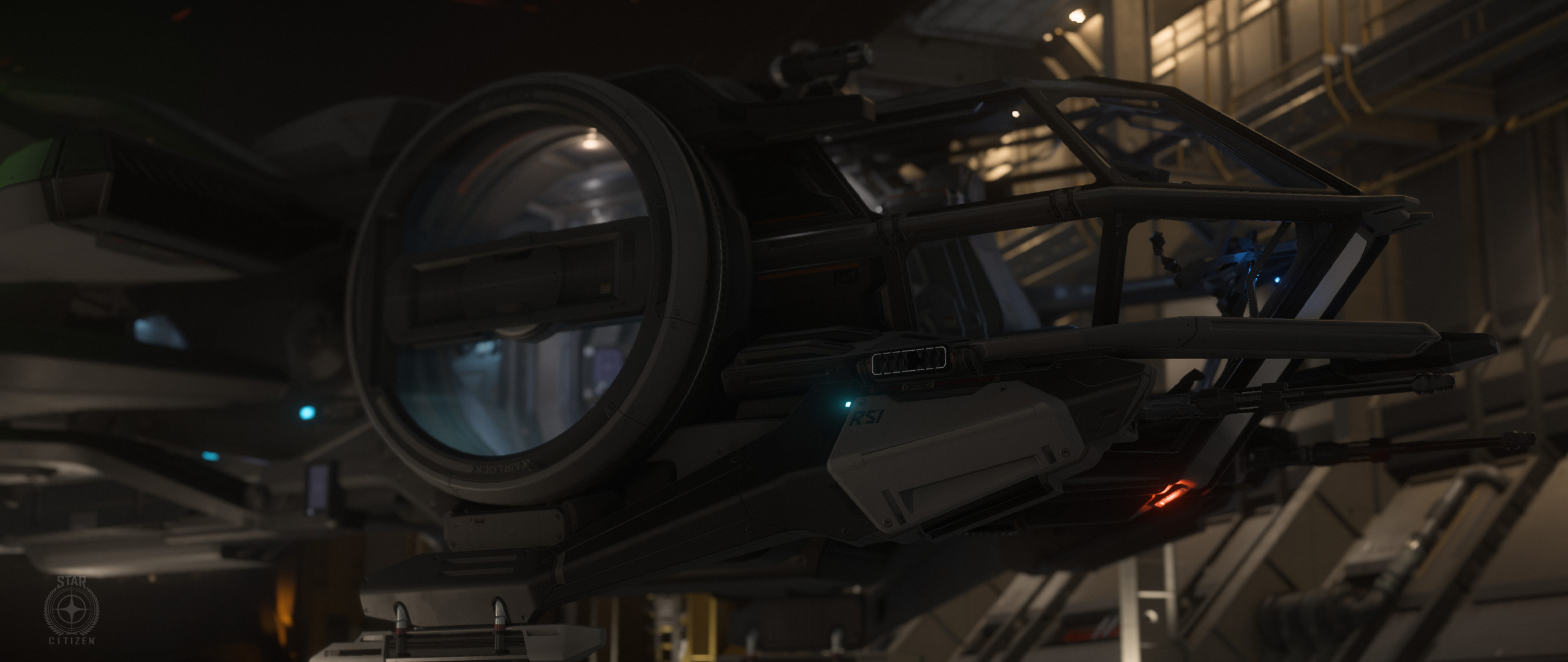
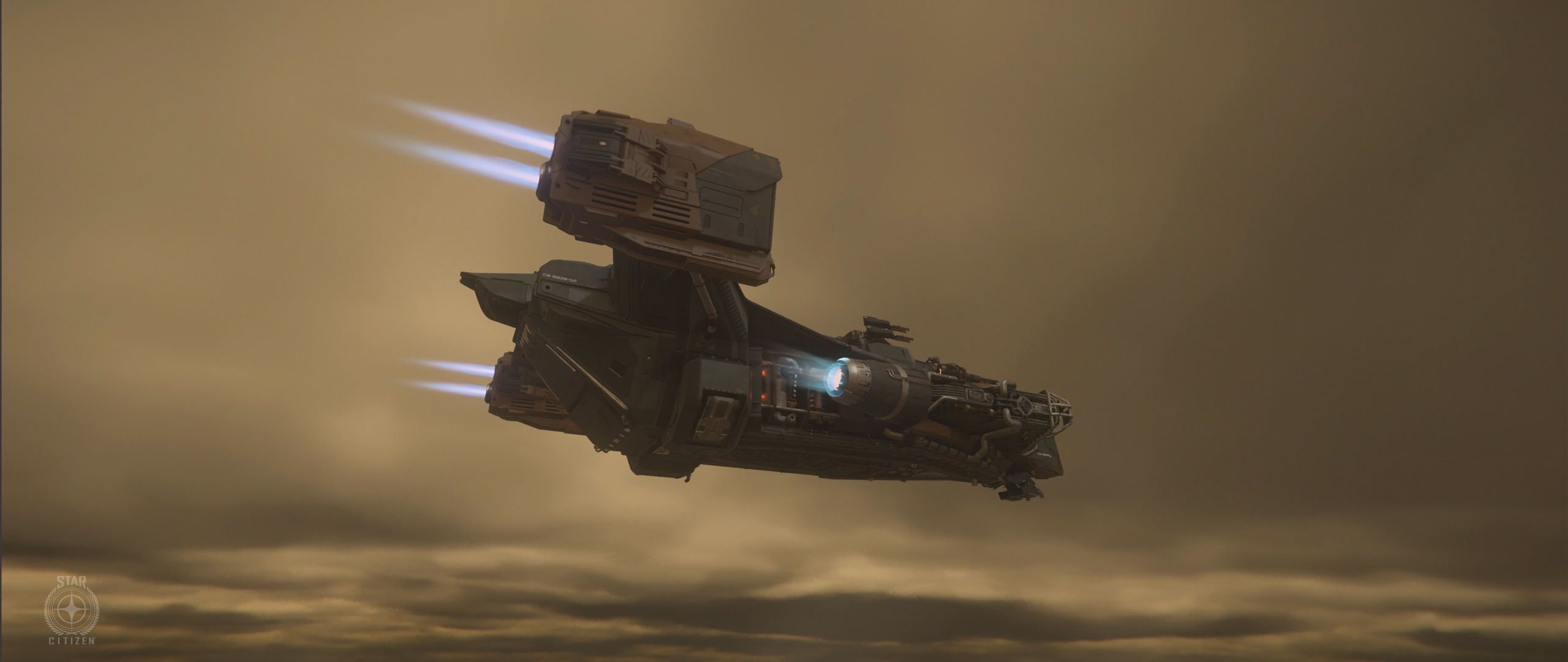
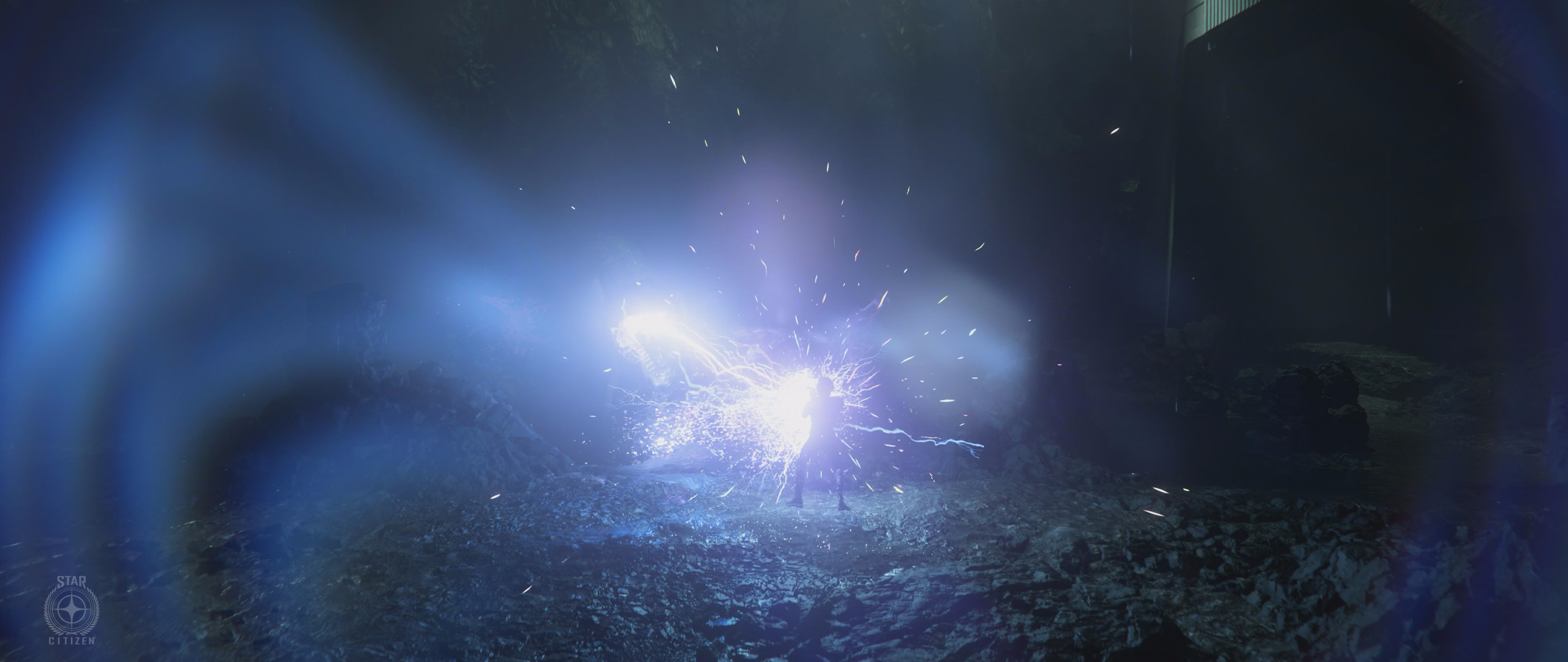
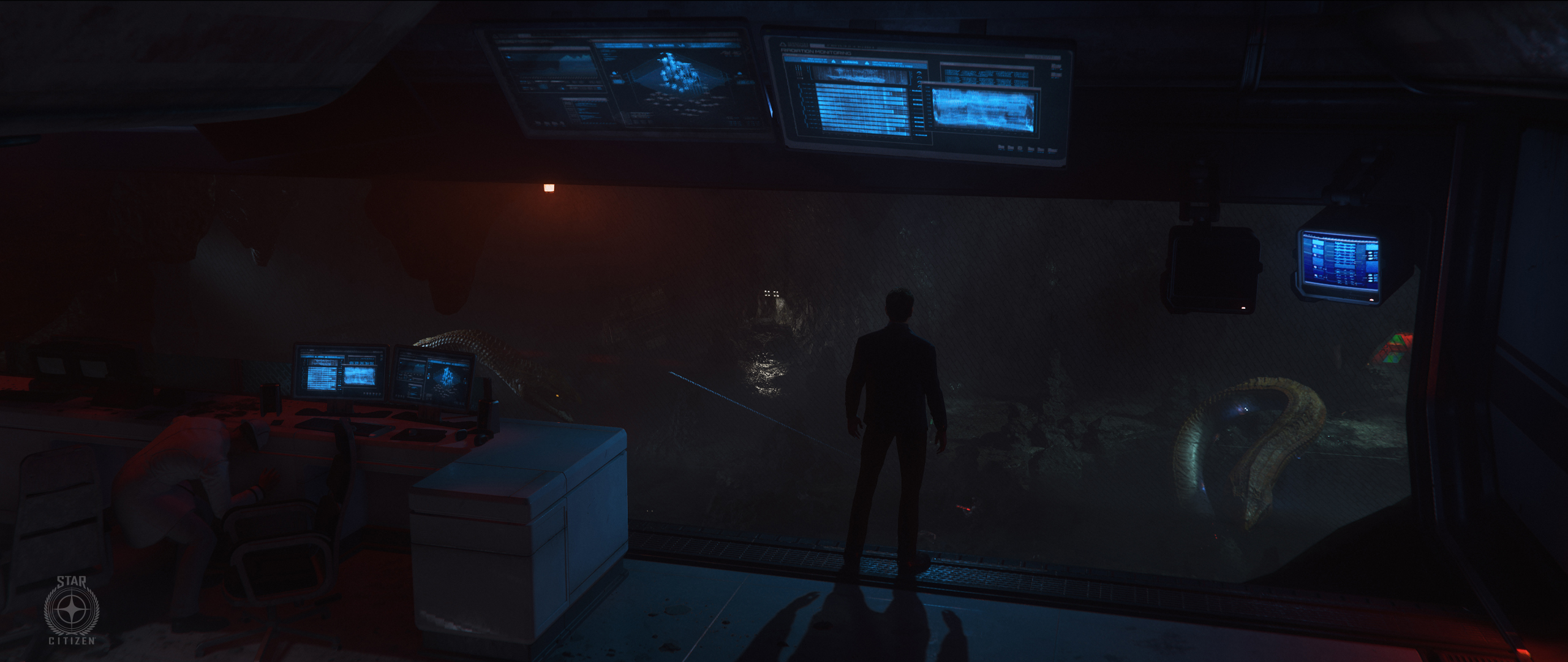
Metadata
- CIG ID
- 20874
- Channel
- Transmission
- Category
- Undefined
- Series
- None
- Comments
- 0
- Published
- 4 months ago (2026-05-25T10:00:00+00:00)