Galactic Guide: Vega System
Spectrum Dispatch Undefined Galactic GuideContent
Editor’s Note: This Galactic Guide article was written prior to the horrific Vanduul attacks on Aremis. To honor the memory of this tragedy, we here at the Galactic Guide have decided to reprint this article in its original form. Let it be a reminder to how great a planet Aremis was, and hopefully, an inspiration for what it can become again.
On the surface, Vega is an unassuming four-planet system orbiting a G-type Main Sequence star. Once seen as a potential centerpiece for rapid Human expansion that might someday compete with the likes of Earth and Terra, Vega has suffered as it has found itself on the front lines of the Vanduul conflict.
Discovered in 2402, the system was first settled in seven years later. Two planets in the green zone, Aremis and Selene, were quickly terraformed. The system’s population expanded, constructed cities, mined the asteroid field and Selene gained its first UEE representative in rapid succession.
That growth ceased with the fall of Armitage in the late 27th century. Suddenly finding themselves on a front line and fearing an organized, ongoing Vanduul campaign, the system’s population decreased suddenly as those with the means to do so retreated to inner worlds. Real estate prices plummeted to almost nothing, and the tenor of the system’s populace that stayed changed overnight. In the blink of an eye, the most profitable work on Vega became figuring out how to leave it.
The imagined Vanduul invasion has not, as of yet, occurred. Beyond the occasional rapidly defeated reconnaissance foray, the aliens have not made a solid push to take or significantly ravage Vega. Even so, the constant threat of invasion still looms over the populace.
While native Vegans consider themselves to be on the front line of the war effort, few in the military do: with the existing infrastructure and the connection directly to the home worlds, an assignment to Vega feels nothing like being forward deployed elsewhere.
Within the last decade, the system has begun to turn around. People feeling the effects of the difficult economy have begun to flow to Vega to take advantage of the cheap real estate. Even though the early warning systems will occasionally lock the system down as Vanduul Clans are detected roaming through Virgil, clearly that threat doesn’t outweigh the appreciation some have for cheap rent.
Vega I
Vega I is a dwarf planet located close to the system’s star. No attempt at habitation has ever been made, and no interesting resources have ever been discovered. A single unmanned probe was all it took for geologists to discount the planet as a potential source of commerce or science.
Vega II (Aremis)
Truly stunning for an inhabited world, Aremis is orbited by a set of planetary rings that contain a number of small shepherd moons. The planet’s biosphere, while adapted for Human comfort in the terraformation process, evolved naturally and gave rise to a significant amount of flora and fauna which still survive.
Aremis was the second planet settled in the Vega system. For most of its ‘life,’ Vega II existed as home for a series of naval and other military bases, as well as a popular location for shore leave. The planet plays host to significant bases for all three services, including one of the oldest Army facilities, Camp [General Chester C.] Manheim. That dynamic has changed in recent years. Aremis has benefited the most from the recent population boom, resulting in several small cities of note and the development of much farmland.
This influx of population has invigorated the system after being named a ‘planet to watch’ by the New United newsOrg. The city of New Corvo is currently the largest on the world, and is where most off-world commerce occurs; it is becoming quite the center of culinary science within the UEE. Many economists speculate that Vega II will surpass its sister planet, Selene, within a few years, and soon exceed Selene’s stature even back in the height of its expansion. The local Governors Council has also aggressively been pursuing an application for recognition by the Senate [ed. Note: Aremis was officially recognized on 2945-11-10]. They have even taken steps to procure freelance mercenaries to support and reinforce local police and militia in an effort to diminish their crime stats.
Vega III (Selene)
Selene is the heart of the Vega system, though many suspect it will not hold that title for long. Although its population is down significantly from the system’s heyday, it still maintains a population an order of magnitude above other border worlds. Selene is properly represented in the UEE Senate, with a seat considered significantly influential.
The largest city and main landout is Titus, a sprawling megalopolis that seems to dream of former glories. While the city center is quite developed, a rusting sprawl of construction projects enacted but never completed rings the cityscape. Of late, these have been purchased by outside interests in the hopes of revitalizing the region; the success or failure of that initiative is yet to be determined.
One particular segment of the population is of interest: the descendants of survivors from the Orion system. Generally living far away from civilization and with little to their names, these groups frequently band together to support harrowing vengeance strikes into Vanduul space. These missions pay little and are extremely dangerous, but are considered particularly satisfying accomplishments for true mercenary dogfighters.
Asteroid Belt & Vega IV
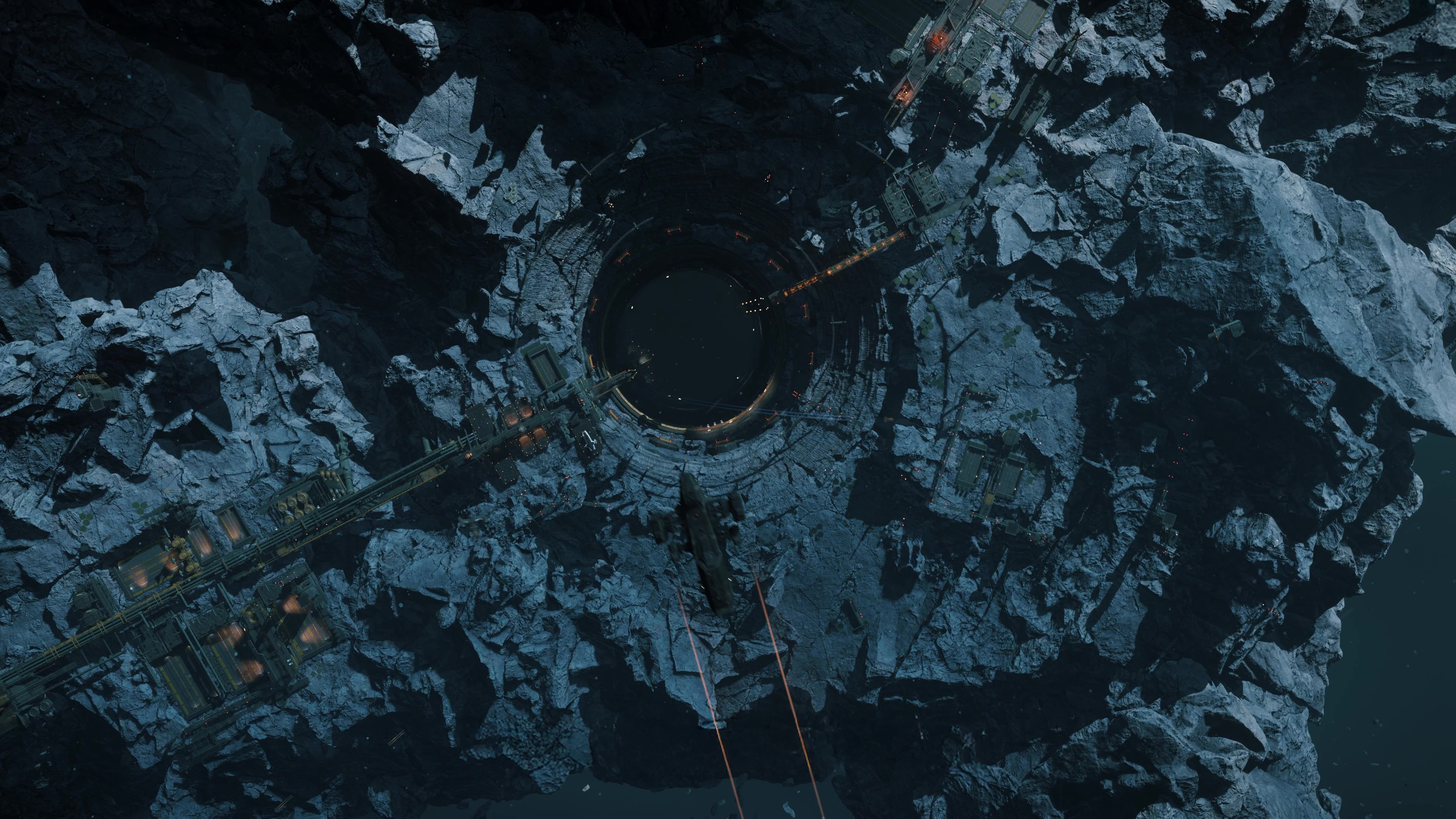
Beyond Selene lies the system’s dense asteroid belt. Officially owned by the UEE government, the belt is not patrolled and has been heavily mined. Independent contractors without mining claims of their own often frequent the region; while it lacks particularly valuable minerals, it is considered something of a training run for aspiring miners. The final world in the system, Vega IV is a standard gas giant. A massive, dense, reddish-brown world, Vega IV will never compete with the likes of Jupiter or Rhetor V for beauty. What it does provide is a reasonable stop-over for those seeking to fuel larger spacecraft. Independently-owned refineries dot the planet’s orbit, and the outer layer of hydrogen is generally pure enough for individual sampling.
Travel Warning
Don’t let the local attitude fool you — Vega is on the front line. Vanduul traveling parties have been known to transit the system and traveling beyond Vega will place civilians in imminent danger of encountering raiders.
Heard in the Wind
“Even though I spent three days in the brig, was down two week’s pay and didn’t remember half of it, I’ll swear to it to anyone who asks, the best part of being in the Navy was that weekend shore leave on Aremis.”
- Lt. Donald Hywanti, Gunnery Officer, Retired
“I worked on a landing zone, I’ve talked to people from all over the ’Verse, and the more I met, the more I was sure that I’d never live anywhere outside of Vega. Sure you got Humans outside of the system, but Vega for me is the only place that’s got people.”
- Terri Santos, Cargolympics Champion
Anmerkung des Herausgebers: Dieser Artikel zum Galaktischen Leitfaden wurde vor den schrecklichen Vanduul-Angriffen auf Aremis geschrieben. Um das Andenken an diese Tragödie zu ehren, haben wir hier im Galaktischen Führer beschlossen, diesen Artikel in seiner ursprünglichen Form neu zu drucken. Möge es eine Erinnerung daran sein, wie groß ein Planet Aremis war, und hoffentlich eine Inspiration für das, was er wieder werden kann.
An der Oberfläche ist Vega ein unscheinbares Vier-Planeten-System, das einen Stern der Hauptsequenz vom Typ G umkreist. Einst als potenzielles Herzstück der schnellen menschlichen Expansion gesehen, das eines Tages mit solchen wie Erde und Terra konkurrieren könnte, hat Vega gelitten, als sie sich an der Front des Vanduul-Konflikts befand.
Das 2402 entdeckte System wurde sieben Jahre später erstmals besiedelt. Zwei Planeten in der grünen Zone, Aremis und Selene, wurden schnell terraformed. Die Bevölkerung des Systems wuchs, baute Städte, berührte das Asteroidenfeld und Selene gewann in rascher Folge seinen ersten UEE-Repräsentanten.
Dieses Wachstum hörte mit dem Fall von Armitage im späten 27. Jahrhundert auf. Plötzlich befand sie sich an vorderster Front und fürchtete eine organisierte, andauernde Vanduul-Kampagne. Die Bevölkerung des Systems nahm plötzlich ab, als sich diejenigen, die die Mittel dazu hatten, in die inneren Welten zurückzogen. Die Immobilienpreise sanken auf fast Null, und der Tenor der Bevölkerung des Systems, die über Nacht blieb, änderte sich. Im Handumdrehen wurde die profitabelste Arbeit an Vega herausgefunden, wie man sie verlassen kann.
Die imaginäre Vanduul-Invasion ist bisher noch nicht erfolgt. Abgesehen von dem gelegentlichen, schnell besiegten Erkundungsausflug haben die Außerirdischen keinen festen Anstoß gegeben, Vega einzunehmen oder erheblich zu verwüsten. Dennoch droht die ständige Bedrohung durch Invasionen immer noch über der Bevölkerung.
Während sich die einheimischen Veganer an vorderster Front der Kriegsanstrengungen befinden, tun es nur wenige im Militär: Mit der vorhandenen Infrastruktur und der Anbindung direkt an die Heimatwelten fühlt sich ein Einsatz an Vega nicht wie ein Einsatz an einem anderen Ort an.
Innerhalb der letzten zehn Jahre hat das System begonnen, sich zu drehen. Die Menschen, die die Auswirkungen der schwierigen Wirtschaft spüren, haben begonnen, nach Vega zu fließen, um die Vorteile der billigen Immobilien zu nutzen. Auch wenn die Frühwarnsysteme das System gelegentlich blockieren, da Vanduul Clans beim Roaming durch Virgil entdeckt werden, ist klar, dass die Bedrohung die Wertschätzung, die einige für billige Miete haben, nicht überwiegen wird.
Wega I
Wega I ist ein Zwergplanet, der sich in der Nähe des Sterns des Systems befindet. Es wurde noch nie ein Wohnversuch unternommen, und es wurden noch nie interessante Ressourcen entdeckt. Eine einzige unbemannte Sonde war alles, was Geologen brauchten, um den Planeten als potenzielle Quelle für Handel oder Wissenschaft zu nutzen.
Vega II (Aremis)
Aremis ist für eine bewohnte Welt wirklich atemberaubend und wird von einer Reihe von Planetenringen umkreist, die eine Reihe von kleinen Hirtenmonden enthalten. Die Biosphäre des Planeten entwickelte sich zwar an den menschlichen Komfort im Terrassenbildungsprozess angepasst, entwickelte sich aber auf natürliche Weise und führte zu einer beträchtlichen Menge an Flora und Fauna, die noch immer überlebt.
Aremis war der zweite Planet, der im Vega-System angesiedelt war. Während des größten Teils seines "Lebens" existierte Vega II als Heimat für eine Reihe von Marine- und anderen Militärbasen sowie als beliebter Ort für den Landgang. Der Planet beherbergt bedeutende Stützpunkte für alle drei Dienste, darunter eine der ältesten Armeeeinrichtungen, Camp[General Chester C.] Manheim. Diese Dynamik hat sich in den letzten Jahren verändert. Aremis hat am meisten vom jüngsten Bevölkerungsboom profitiert, der zu mehreren bedeutenden Kleinstädten und der Entwicklung von viel Ackerland führte.
Dieser Bevölkerungszustrom hat das System belebt, nachdem es von der New United newsOrg als "zu beobachtender Planet" bezeichnet wurde. Die Stadt New Corvo ist derzeit die größte der Welt und der Ort, an dem der meiste Handel außerhalb der Welt stattfindet; sie wird zum Zentrum der Kochwissenschaft innerhalb der UEE. Viele Ökonomen spekulieren, dass Vega II innerhalb weniger Jahre seinen Schwesterplaneten Selene übertreffen und Selenes Statur bald noch weiter übertreffen wird, sogar in der Höhe seiner Expansion. Der Rat der lokalen Gouverneure hat auch einen Antrag auf Anerkennung durch den Senat aggressiv verfolgt[Anmerkung: Aremis wurde am 2945-11-10 offiziell anerkannt]. Sie haben sogar Schritte unternommen, um freiberufliche Söldner zu beschaffen, um die lokale Polizei und Miliz zu unterstützen und zu verstärken, um ihre Kriminalitätswerte zu verringern.
Vega III (Selene)
Selene ist das Herzstück des Vega-Systems, obwohl viele vermuten, dass es diesen Titel nicht lange halten wird. Obwohl seine Bevölkerung seit der Blütezeit des Systems deutlich zurückgegangen ist, hält es immer noch eine Bevölkerung, die eine Größenordnung über anderen Grenzwelten liegt. Selene ist im UEE-Senat angemessen vertreten, mit einem Sitz, der als wesentlich einflussreich angesehen wird.
Die größte Stadt und das Hauptland ist Titus, eine weitläufige Megalopolis, die von früheren Ruhmesgeschichten zu träumen scheint. Während das Stadtzentrum gut erschlossen ist, prägt eine rostige Ausbreitung von Bauprojekten, die zwar durchgeführt, aber noch nicht abgeschlossen sind, das Stadtbild. In letzter Zeit wurden diese von externen Interessen erworben, in der Hoffnung, die Region wiederzubeleben; der Erfolg oder Misserfolg dieser Initiative steht noch nicht fest.
Ein bestimmtes Bevölkerungssegment ist von Interesse: die Nachkommen von Überlebenden aus dem Orion-System. Diese Gruppen, die im Allgemeinen weit weg von der Zivilisation und mit wenig Namen leben, schließen sich häufig zusammen, um verheerende Racheaktionen im Vanduul-Raum zu unterstützen. Diese Missionen sind wenig bezahlbar und extrem gefährlich, gelten aber als besonders befriedigende Leistungen für echte Söldnerkämpfer.
Asteroidengürtel & Vega IV
Hinter Selene liegt der dichte Asteroidengürtel des Systems. Der Gürtel, der sich offiziell im Besitz der UEE-Regierung befindet, ist nicht patrouilliert und wurde stark abgebaut. Selbständige Unternehmer ohne eigene Bergbauansprüche kommen oft in die Region; obwohl es an besonders wertvollen Mineralien mangelt, gilt es als eine Art Ausbildungslauf für angehende Bergleute. Die letzte Welt im System, Vega IV, ist ein Standardgasriese. Vega IV ist eine massive, dichte, rotbraune Welt und wird nie mit Jupiter oder Rhetor V um Schönheit konkurrieren. Was es bietet, ist ein vernünftiger Zwischenstopp für diejenigen, die größere Raumfahrzeuge betanken wollen. Unabhängige Raffinerien befinden sich auf der Umlaufbahn des Planeten, und die äußere Wasserstoffschicht ist im Allgemeinen rein genug für eine individuelle Probenahme.
Reisewarnung
Lassen Sie sich von der lokalen Einstellung nicht täuschen - Vega steht an vorderster Front. Vanduul-Reisegruppen sind dafür bekannt, das System zu durchqueren, und die Reise über die Vega hinaus wird die Zivilbevölkerung in unmittelbare Gefahr bringen, Raider zu treffen.
Im Wind gehört
"Obwohl ich drei Tage im Knast verbracht habe, zwei Wochenlohn gesenkt habe und mich nicht an die Hälfte davon erinnere, schwöre ich jedem, der fragt, das Beste daran, in der Marine zu sein, war der Landgang am Wochenende auf Aremis."
- Leutnant Donald Hywanti, Geschützoffizier im Ruhestand.
"Ich arbeitete an einer Landezone, ich habe mit Leuten aus dem ganzen Vers gesprochen, und je mehr ich traf, desto mehr war ich mir sicher, dass ich nie irgendwo außerhalb von Vega leben würde. Sicher, dass du Menschen außerhalb des Systems hast, aber Wega ist für mich der einzige Ort, an dem es Menschen gibt."
- Terri Santos, Cargolympics Champion
Editor’s Note: This Galactic Guide article was written prior to the horrific Vanduul attacks on Aremis. To honor the memory of this tragedy, we here at the Galactic Guide have decided to reprint this article in its original form. Let it be a reminder to how great a planet Aremis was, and hopefully, an inspiration for what it can become again.
On the surface, Vega is an unassuming four-planet system orbiting a G-type Main Sequence star. Once seen as a potential centerpiece for rapid Human expansion that might someday compete with the likes of Earth and Terra, Vega has suffered as it has found itself on the front lines of the Vanduul conflict.
Discovered in 2402, the system was first settled in seven years later. Two planets in the green zone, Aremis and Selene, were quickly terraformed. The system’s population expanded, constructed cities, mined the asteroid field and Selene gained its first UEE representative in rapid succession.
That growth ceased with the fall of Armitage in the late 27th century. Suddenly finding themselves on a front line and fearing an organized, ongoing Vanduul campaign, the system’s population decreased suddenly as those with the means to do so retreated to inner worlds. Real estate prices plummeted to almost nothing, and the tenor of the system’s populace that stayed changed overnight. In the blink of an eye, the most profitable work on Vega became figuring out how to leave it.
The imagined Vanduul invasion has not, as of yet, occurred. Beyond the occasional rapidly defeated reconnaissance foray, the aliens have not made a solid push to take or significantly ravage Vega. Even so, the constant threat of invasion still looms over the populace.
While native Vegans consider themselves to be on the front line of the war effort, few in the military do: with the existing infrastructure and the connection directly to the home worlds, an assignment to Vega feels nothing like being forward deployed elsewhere.
Within the last decade, the system has begun to turn around. People feeling the effects of the difficult economy have begun to flow to Vega to take advantage of the cheap real estate. Even though the early warning systems will occasionally lock the system down as Vanduul Clans are detected roaming through Virgil, clearly that threat doesn’t outweigh the appreciation some have for cheap rent.
Vega I
Vega I is a dwarf planet located close to the system’s star. No attempt at habitation has ever been made, and no interesting resources have ever been discovered. A single unmanned probe was all it took for geologists to discount the planet as a potential source of commerce or science.
Vega II (Aremis)
Truly stunning for an inhabited world, Aremis is orbited by a set of planetary rings that contain a number of small shepherd moons. The planet’s biosphere, while adapted for Human comfort in the terraformation process, evolved naturally and gave rise to a significant amount of flora and fauna which still survive.
Aremis was the second planet settled in the Vega system. For most of its ‘life,’ Vega II existed as home for a series of naval and other military bases, as well as a popular location for shore leave. The planet plays host to significant bases for all three services, including one of the oldest Army facilities, Camp [General Chester C.] Manheim. That dynamic has changed in recent years. Aremis has benefited the most from the recent population boom, resulting in several small cities of note and the development of much farmland.
This influx of population has invigorated the system after being named a ‘planet to watch’ by the New United newsOrg. The city of New Corvo is currently the largest on the world, and is where most off-world commerce occurs; it is becoming quite the center of culinary science within the UEE. Many economists speculate that Vega II will surpass its sister planet, Selene, within a few years, and soon exceed Selene’s stature even back in the height of its expansion. The local Governors Council has also aggressively been pursuing an application for recognition by the Senate [ed. Note: Aremis was officially recognized on 2945-11-10]. They have even taken steps to procure freelance mercenaries to support and reinforce local police and militia in an effort to diminish their crime stats.
Vega III (Selene)
Selene is the heart of the Vega system, though many suspect it will not hold that title for long. Although its population is down significantly from the system’s heyday, it still maintains a population an order of magnitude above other border worlds. Selene is properly represented in the UEE Senate, with a seat considered significantly influential.
The largest city and main landout is Titus, a sprawling megalopolis that seems to dream of former glories. While the city center is quite developed, a rusting sprawl of construction projects enacted but never completed rings the cityscape. Of late, these have been purchased by outside interests in the hopes of revitalizing the region; the success or failure of that initiative is yet to be determined.
One particular segment of the population is of interest: the descendants of survivors from the Orion system. Generally living far away from civilization and with little to their names, these groups frequently band together to support harrowing vengeance strikes into Vanduul space. These missions pay little and are extremely dangerous, but are considered particularly satisfying accomplishments for true mercenary dogfighters.
Asteroid Belt & Vega IV
Beyond Selene lies the system’s dense asteroid belt. Officially owned by the UEE government, the belt is not patrolled and has been heavily mined. Independent contractors without mining claims of their own often frequent the region; while it lacks particularly valuable minerals, it is considered something of a training run for aspiring miners. The final world in the system, Vega IV is a standard gas giant. A massive, dense, reddish-brown world, Vega IV will never compete with the likes of Jupiter or Rhetor V for beauty. What it does provide is a reasonable stop-over for those seeking to fuel larger spacecraft. Independently-owned refineries dot the planet’s orbit, and the outer layer of hydrogen is generally pure enough for individual sampling.
Travel Warning
Don’t let the local attitude fool you — Vega is on the front line. Vanduul traveling parties have been known to transit the system and traveling beyond Vega will place civilians in imminent danger of encountering raiders.
Heard in the Wind
“Even though I spent three days in the brig, was down two week’s pay and didn’t remember half of it, I’ll swear to it to anyone who asks, the best part of being in the Navy was that weekend shore leave on Aremis.”
- Lt. Donald Hywanti, Gunnery Officer, Retired
“I worked on a landing zone, I’ve talked to people from all over the ’Verse, and the more I met, the more I was sure that I’d never live anywhere outside of Vega. Sure you got Humans outside of the system, but Vega for me is the only place that’s got people.”
- Terri Santos, Cargolympics Champion
Editor’s Note: This Galactic Guide article was written prior to the horrific Vanduul attacks on Aremis. To honor the memory of this tragedy, we here at the Galactic Guide have decided to reprint this article in its original form. Let it be a reminder to how great a planet Aremis was, and hopefully, an inspiration for what it can become again.
On the surface, Vega is an unassuming four-planet system orbiting a G-type Main Sequence star. Once seen as a potential centerpiece for rapid Human expansion that might someday compete with the likes of Earth and Terra, Vega has suffered as it has found itself on the front lines of the Vanduul conflict.
Discovered in 2402, the system was first settled in seven years later. Two planets in the green zone, Aremis and Selene, were quickly terraformed. The system’s population expanded, constructed cities, mined the asteroid field and Selene gained its first UEE representative in rapid succession.
That growth ceased with the fall of Armitage in the late 27th century. Suddenly finding themselves on a front line and fearing an organized, ongoing Vanduul campaign, the system’s population decreased suddenly as those with the means to do so retreated to inner worlds. Real estate prices plummeted to almost nothing, and the tenor of the system’s populace that stayed changed overnight. In the blink of an eye, the most profitable work on Vega became figuring out how to leave it.
The imagined Vanduul invasion has not, as of yet, occurred. Beyond the occasional rapidly defeated reconnaissance foray, the aliens have not made a solid push to take or significantly ravage Vega. Even so, the constant threat of invasion still looms over the populace.
While native Vegans consider themselves to be on the front line of the war effort, few in the military do: with the existing infrastructure and the connection directly to the home worlds, an assignment to Vega feels nothing like being forward deployed elsewhere.
Within the last decade, the system has begun to turn around. People feeling the effects of the difficult economy have begun to flow to Vega to take advantage of the cheap real estate. Even though the early warning systems will occasionally lock the system down as Vanduul Clans are detected roaming through Virgil, clearly that threat doesn’t outweigh the appreciation some have for cheap rent.
Vega I
Vega I is a dwarf planet located close to the system’s star. No attempt at habitation has ever been made, and no interesting resources have ever been discovered. A single unmanned probe was all it took for geologists to discount the planet as a potential source of commerce or science.
Vega II (Aremis)
Truly stunning for an inhabited world, Aremis is orbited by a set of planetary rings that contain a number of small shepherd moons. The planet’s biosphere, while adapted for Human comfort in the terraformation process, evolved naturally and gave rise to a significant amount of flora and fauna which still survive.
Aremis was the second planet settled in the Vega system. For most of its ‘life,’ Vega II existed as home for a series of naval and other military bases, as well as a popular location for shore leave. The planet plays host to significant bases for all three services, including one of the oldest Army facilities, Camp [General Chester C.] Manheim. That dynamic has changed in recent years. Aremis has benefited the most from the recent population boom, resulting in several small cities of note and the development of much farmland.
This influx of population has invigorated the system after being named a ‘planet to watch’ by the New United newsOrg. The city of New Corvo is currently the largest on the world, and is where most off-world commerce occurs; it is becoming quite the center of culinary science within the UEE. Many economists speculate that Vega II will surpass its sister planet, Selene, within a few years, and soon exceed Selene’s stature even back in the height of its expansion. The local Governors Council has also aggressively been pursuing an application for recognition by the Senate [ed. Note: Aremis was officially recognized on 2945-11-10]. They have even taken steps to procure freelance mercenaries to support and reinforce local police and militia in an effort to diminish their crime stats.
Vega III (Selene)
Selene is the heart of the Vega system, though many suspect it will not hold that title for long. Although its population is down significantly from the system’s heyday, it still maintains a population an order of magnitude above other border worlds. Selene is properly represented in the UEE Senate, with a seat considered significantly influential.
The largest city and main landout is Titus, a sprawling megalopolis that seems to dream of former glories. While the city center is quite developed, a rusting sprawl of construction projects enacted but never completed rings the cityscape. Of late, these have been purchased by outside interests in the hopes of revitalizing the region; the success or failure of that initiative is yet to be determined.
One particular segment of the population is of interest: the descendants of survivors from the Orion system. Generally living far away from civilization and with little to their names, these groups frequently band together to support harrowing vengeance strikes into Vanduul space. These missions pay little and are extremely dangerous, but are considered particularly satisfying accomplishments for true mercenary dogfighters.
Asteroid Belt & Vega IV
Beyond Selene lies the system’s dense asteroid belt. Officially owned by the UEE government, the belt is not patrolled and has been heavily mined. Independent contractors without mining claims of their own often frequent the region; while it lacks particularly valuable minerals, it is considered something of a training run for aspiring miners. The final world in the system, Vega IV is a standard gas giant. A massive, dense, reddish-brown world, Vega IV will never compete with the likes of Jupiter or Rhetor V for beauty. What it does provide is a reasonable stop-over for those seeking to fuel larger spacecraft. Independently-owned refineries dot the planet’s orbit, and the outer layer of hydrogen is generally pure enough for individual sampling.
Travel Warning
Don’t let the local attitude fool you — Vega is on the front line. Vanduul traveling parties have been known to transit the system and traveling beyond Vega will place civilians in imminent danger of encountering raiders.
Heard in the Wind
“Even though I spent three days in the brig, was down two week’s pay and didn’t remember half of it, I’ll swear to it to anyone who asks, the best part of being in the Navy was that weekend shore leave on Aremis.”
- Lt. Donald Hywanti, Gunnery Officer, Retired
“I worked on a landing zone, I’ve talked to people from all over the ’Verse, and the more I met, the more I was sure that I’d never live anywhere outside of Vega. Sure you got Humans outside of the system, but Vega for me is the only place that’s got people.”
- Terri Santos, Cargolympics Champion
Links
No links available.
Images
4


Metadata
- CIG ID
- 14558
- Channel
- Spectrum Dispatch
- Category
- Undefined
- Series
- Galactic Guide
- Comments
- 90
- Published
- 11 years ago (2015-04-22T00:00:00+00:00)