Monthly Studio Report: October 2015
Transmission Undefined Monthly ReportsContent
Greetings Citizens,
October was a busy month! The worldwide Star Citizen development team is hard at work getting Alpha 2.0 out the door, and we’re very excited about getting this one into your hands. In the past, our module releases have each shown a small part of the picture: ship configuration in the Hangar, social interaction in ArcCorp, single-seat dogfighting in Arena Commander… and now we’re leaping ahead and giving everyone a very early preview of Star Citizen’s beating heart. From multicrew ships to first person combat on the ground, Alpha 2.0 is our first serious look at how the puzzle pieces fit together.
We’re eager to share it, and to collect your feedback… because this isn’t the end of the road, it’s the start of a process that will culminate in the launch of the Persistent Universe. On top of the base that is Alpha 2.0, we’ll be building everything else necessary to creating a living, breathing ‘Verse… and we’re truly looking forward to sharing that process with the community. The following monthly report will update you on exactly what each of our teams has been doing to help reach this very important milestone!
Hey everyone!
What a month October has been. So many accomplishments leading us through another strong month has gotten us excited about what’s coming your way. The amount of work being completed and released is motivating us to push through to our next major milestone. The in-depth Santa Monica update is below so please look it over and let us know what you think!
Engineering
This month the Engineering team has been working closely with our UK office and the Santa Monica Designers to continue pushing the boundaries of what is possible.
Lead Engineer Paul Reindell has strategized how our Item System is being revamped and made excellent progress towards its completion. The “ItemSystem 2.0” is designed to be more lightweight, and therefore less resource intensive. Rather than implementing all of the common functionalities into one CItem class, the Engineers have split the functionalities into standalone GameObjectExtensions (GOE’s), allowing them to remain self-contained. By accomplishing this, those systems can and will intercommunicate with one another. As an example, if a different character model is loaded, the effects can then be re-attached to the new model at the GOE level.
AI Programmer Chad Zamzow has made improvements to how the radar works by fine tuning the system to be much more effective at how it represents (or excludes) occluded or partially hidden objects. Further tuning has also been made to the rotational limits of turret hardpoints. He has created a smarter, more realistic system by allowing the Tech Designers to specify rotational ranges of each turret hardpoint. This will prevent turrets from unsightly/immersion breaking clipping through a ship’s hull mesh and any broken gameplay effects or exploits that might accompany such behavior.
Our Flight Engineer John Pritchett nd Designer Pete Mackay have been implementing the new flight modes to our IFCS. These new flight modes not only give players greater control over their velocities, but also provide a means to accelerate to the awesome looking Quantum Travel. Furthermore, John has also been working on integrating the IFCS system into player EVA movement, giving players fine-tuned control over how characters will move around in the near-zero gravity environment of space.
From the UI/HUD team, we have been busy at work completing the 16:9 diegetic screens for the multi-crew-capable ships. This format gives multi-crew screens improved real estate over which information can be passed on to other stations as well as broader details for each respective role, such as a ship’s engineer. We’re really excited about what we accomplished and hope you will be too.
Design
With the Multi-Crew/Large-World release targeted within our sights, the Santa Monica design team has been hard at work, meeting several important milestones that will make it the most epic one yet.
For the Multi-crew release, we’ve prioritized recent design efforts around how the redesigned Constellation will handle during flight. As the Constellation is one of the most anticipated ships in the game, Lead Technical Designer Kirk Tome has been overseeing the tech setup of the Constellation, tuning the flight characteristics and center of mass. The lessons learned during this process will provide the pathfinding R&D needed to manage flight and control over ships in the Constellation’s size group generally.
Beyond the Star Citizen Alpha 2.0 release, the Design team has been making sure plenty of upcoming content will keep everyone excited and happy with their personal favorite ships. Designer Randy Vazquez has written the technical documentation on how the Salvage mechanic will work in-game hand-in-hand with designing the Crucible salvage-capable craft. Other ships that have met progress milestones this month are the Reliant and Xi’An Scout.
Investigations into new combat mechanics have been spearheaded by designers Matt Sherman and Calix Reneau, not least of which is the EMP weapon system and how ship systems can be affected by other types of attacks such as disruption to heat dispersion or disrupting the flow of energy to various ship components. This Distortion Damage is specifically designed to disrupt and drain power from nearby components. We know that the disruption cannons haven’t been very popular in Arena Commander so far because the disruption effect was still being designed – but that’s going to change for the better! As you can see, we achieve many of our larger milestones this month and are ready for another excellent month!
Art
This month has been an incredibly productive month for our art team. We’ve put the finishing touches on the baseline Constellation asset, finalized ship and character concepts, completed rigged and animated character models, and more!
We achieved some major accomplishments and even large tasks for major ships like the Constellation and the Reliant. We finished the functional animations for the maneuvering thrusters, landing gear, missile launcher, escape pods, docking collar, turret doors, to mention a few – all needed to prepare this amazing ship for its first large world release.
Delivering Admiral Bishop was a major milestone for our character pipeline. We took him through all the steps needed to populate Star Citizen full of rich and animated characters. Everything detailed in our character pipeline video revealed this month shows off just one of the several steps to bringing our characters to life.
We delivered several needed concepts that are fueling production of Squadron 42 which we’re really excited to show you as soon as possible.
That does it for our art team this month and looking forward to sharing more next month.
Writing
Well, now we can talk about what the writing team has been up to the past few months.
Starmap!
So much Starmap.
As you can now see, we had over ninety systems and over three hundred planets to work out. While Dave has been chipping away at the systems since the project began, there were still a lot to figure out. Will, Cherie, Adam and Dave would set aside time each day to discuss the unexplored systems to figure out the basic information (star type, number and type of planets, other points of interest, etc.) but more importantly try to get a sense of what the character of the system would be. They’d ask questions like, what was the system adding to the Star Citizen universe? What kind of narrative potential could exist there? They also worked closely with Benoit and Turbulent to input the systems into the map itself. As we got closer and closer to release, they shifted onto double-checking the data, doing final sweeps for any typos and basking in the Galactus-like power of manipulating a universe.
After its release, they’ve been continuing to tweak the descriptions and working with the science consultants to generate the more detailed astronomical data for the systems and planets, but mostly we’ve been working on PU needs which have been coming in hard and fast.
At the same time, Dave has been over in the UK to sit in with Chris for editing selects for Squadron 42, while the team continues the push to help provide narrative and dialogue for the Crusader map. Specifically… dammit… can’t talk about that either.
Happy Halloween from your Star Citizen Santa Monica team! And that’s it. The end of October brings another month of immense progress from Santa Monica and ever closer to the final product of Star Citizen. Thank you for working alongside us as we bring this expansive world to life and see you in the verse!
Greetings Citizens,
During the month of October the Austin studio has been hard at work and there have been a number of accomplishments. The team worked very hard to support many parts of the game that were demonstrated at Citizen Con, and we are very excited to be in the later stages of testing Star Citizen Alpha 2.0 and the Crusader System for upcoming release to the PTU. We’ve had a number of team members visit other studios for collaboration, and we’ve been focused on some internal reorganization to adapt to CIG’s evolving global footprint. Here are detailed reports from each team.
Persistent Universe Team
This month our PU team has been looking ahead towards upcoming releases, working on brand new features that will add to the Social Module experience. Mark Skelton and the PU Art Team have been putting the finishing touches on the Million Mile High Club. Complete with a dance floor, fish tanks, and Bartender and Doorman NPC’s, this luxury lounge will go out to a select group of backers and we expect it will be the envy of all who come to visit.
We’ve also shifted the Environment Team’s focus from Stanton to Nyx for a time, and we’ve got BHVR working to complete the Levski landing zone to get it in your hands soon. We’ve been going back and forth on the blueprint for certain areas of Levski, particularly the bazaar marketplace area, to make sure it is laid out exactly the way Tony wants. Levski is going to be completely different from Area18, and being the first Frontier world we will have released we hope it will scratch a mischievous itch amongst the community.
Additionally, we’ve been working on an additional shop in preparation for our Shopping Milestone. Casaba Outlet, once released, will introduce the first iteration of the in-game store and purchasing experiences. Tony, Zane, and Karl Jones have been working together on creating the brand new Shopping UI and it is looking really fantastic. The environment itself has had a design/layout pass by Rob Reininger and is now undergoing art polish right now by the team at BHVR. Casaba Outlet is a clothing shop so naturally it requires the creation of several new civilian clothing assets. We’ve partnered up with CGBot for this purpose to bust out some clothing assets from the Terra>Fashion Casual line.
We’re also recommencing discussion on how Character Customization will work in Star Citizen. We’ve had several ideas tossed about, and we expect to have an initial iteration ready for you guys to go along with Shopping. Sean Tracy has been working on a prototype to pass off to BHVR to take to fruition. We’ve also been generating more content to go along with this first iteration, including Billy Lord creating more hairstyles, and the clothing assets mentioned above.
We’re also in the process of adding new animations to the game for use by NPC’s in preparation for when we get Subsumption (our Peaceful NPC AI system) up and running for our NPC’s. David Peng and Vanessa Landeros have been working on Nightclub and Medical Unit animations, respectively. Bryan Brewer has also been polishing our Male Locomotion Sets and will be moving onto Female Locomotion Sets soon.
As always, it’s been a busy month for the PU Engineering team. A lot of work went into getting our recent SC Alpha 1.3.0 release out live, including a few pushes to PTU leading up to that release. With that release we introduced some new features into ArcCorp….namely the buggies and the respawn functionality needed to handle the multitude of insane deaths caused by buggies. A lot of work dealing with physics and collision issues went into this release (we knew you’d be putting those to the test!). We also increased the player count for ArcCorp up to 40 from 25, which was accompanied by some significant performance optimizations to ArcCorp. But that’s not all! We got in some new chat functionality, such as the private chat channels, so players can chat privately with their cohorts. These improvements were the result of a great cross-studio effort between our various CIG studios and friends at Behaviour and Wyrmbyte.
We’ve also maintained a heavy focus on upcoming releases that are planned for the coming months. Working closely with Behaviour, we have been putting together our party system and additional functionality for the hangar elevator interface. A ton of work has been put into optimizing performance throughout various area of the game, as well as strengthening our existing backend services and adding new services. We’ve been working hard on character networking optimizations…and all sorts of under-the-hood work that will greatly improve the player experience.
A series of networking meetings over the past several weeks have wrapped up, allowing us to begin getting together technical documentation needed for some of our longer term planning and road-mapping for essential networking systems.
Last but not least, in addition to tackling the many bugs that came with launching the recent live release, we’ve has been busy knocking out tools and editor bugs to help support a variety of developers in creating new content for Star Citizen!
Until next time, we hope you survive the post-Halloween candy comas! We can’t wait to get our next release out to you.
Live Operations
QA
QA charged into the month of October at full speed. The first part of the month was devoted to testing our live demo for CitizenCon. We were very happy to see the presentation go as smoothly as it did and are extremely excited to get Alpha 2.0 in everyone’s hands.
Immediately following CitizenCon, we shifted our testing to the live deployment of Star Citizen Alpha 1.3.0. After five deployments to the Public Test Universe, we had a potential candidate to release to the live environment. There was some discussion to potentially release an additional patch to address some remaining outstanding issues. But the decision was made to focus on Star Citizen Alpha 2.0 and roll any potential 1.3.0 fixes into that release.
The remainder of the month has primarily been focused on testing Alpha 2.0 and the Crusader system. Our counterpart QA team in Foundry 42 has been conducting in depth performance testing and providing the information to our engineers in their efforts to optimize Crusader as much as possible.
Our ship expert Andrew Hesse has been working very closely with Designer Pete Mackey and Physics programmer John Pritchett testing the newly implemented IFCS modes for each flyable ship. Additionally the team has been working with Technical Designer Calix Reneau in his efforts to balance ship flight. Each ship’s flight characteristics were tested in 1.3.0 and then again in our SC Alpha 2.0 code branches. Calix is now able to compare ship flight in both environments which will help him to more effectively tune each ships’ flight characteristics in the progressing SC Alpha 2.0 branch to his intended specifications.
This month we have a new addition to the US QA team, Vincent Sinatra! Vincent will be filling the role of QA Lead in our LA studio. Vincent has a wealth of experience as project lead on multiple titles. Some of which include Doom3, Quake4, Enemy Territory: Quake Wars, Call of Duty Black Ops and Call of Duty Elite 2.0. Vincent will be focusing on testing each ship for proper flight characteristics and system functionality as well as any special projects requested by development in the LA Studio.
This month we also had our engine and editor expert Melissa Estrada travel to our Frankfurt office. Melissa spent a week training Senior QA Christopher Speak on our various Star Citizen specific processes and procedures. They also spent time discussing our automated testing development in detail. It was a very productive trip!
Right now we are continuing to focus our testing on Star Citizen Alpha 2.0’s internal test builds and the Crusader system. We are having a lot of fun with it and very much look forward to getting it out to everyone as soon as possible.
Game Support
The Game Support team continues its work serving players, and yes, we’ve been just as excited as you about CitizenCon and everything that was shown there!
We’ve been continuing to assist players with technical support issues, and we’ve turned out attention to incoming reports of hacked accounts. A note to those reading: We’ve started to see a rise in unauthorized access to accounts, so make sure you are keeping your information secure and don’t share with anyone!
On a side note, we’re just as thrilled with the rollout and usage of the Issue Council as everyone else! While largely maintained by our QA team, we’ve been making sure the most pressing issues get attention, and with the 1.3.0 release, we saw our first bug reports entered in by players and fixed by the dev team. We’re excited to continue this process as getting player feedback is absolutely essential to building the BDSSE. Over the next few updates, we’ll start publishing those results for you so that you can see how this has affected the dev cycle.
As we have pushed out 1.3.0 to players, we’re extremely excited for what’s on the horizon for 2.0. As the needs of the game and community grow, so does the demand on the team. We’re very close to bringing on our first team members in Manchester which will expand our hours of operation and help lower the response time for when you send in a ticket to us.
Speaking of 2.0, we’ll be holding controlled PTU play sessions with players as we did for the Social Module. We’ll slowly ramp that up over time, and we will have a special place for those players to provide feedback and bugs. This will be an essential process to collecting information on the 2.0 release, and we’re very excited to help make this good as it can be before going to Live.
IT/Operations
The month of October flew by for the IT team and as usual we got a chance to roll out some new services and a number of upgrades. As the pace of builds continues to increase we still need to keep up with the data delivery between all studios. Fortunately we keep finding new ways to improve our long haul transfer times to levels we couldn’t have expected the month before.
Moritz joined the IT team as our new Systems Engineer in the Frankfurt studio. Moritz has deep roots in Germany and brings many valuable vendor and service provider connections along with him. He had to hit the ground running because we were all too busy supporting CitizenCon to show him the ropes when he arrived. After the show we worked closely with Moritz to lay in some substantial improvements to the Frankfurt studio. Paul came over from the Austin studio and with the help of other members of the IT team throughout the company we implemented a new phone system as well as a sizable storage upgrade. Most importantly, we finally got the fiber internet upgrade installed which will make a major difference for the team in Germany as well as the rest of the company.
Last month our friends from Intel brought us a prototype server for performance testing of their latest SSD drives. This server is incredibly fast in every test we’ve thrown at it so far this month. We’re super excited to have the opportunity to performance test their new drives in various RAID configurations and can’t wait to put this server to the torture test of our game build and publishing environment.
Dev Ops
For the month of October, DevOps supported the new and improved Build system, added more analytics to the Launcher and supported CitizenCon!
Since changing to the new build system, we’ve been able to push more builds out than ever before (and you can see how this has enhanced the feedback and deployment cycle for Alpha patch 1.3. We couldn’t have done that before)! We’ve also added a feature that grants QA and Production the ability to deploy game servers for specific builds. This allows any member of our team around the world to now kick and deploy builds “On demand”. They no longer have to wait on someone else to deploy a server to a build that they’re working on. We are continuing to improve the state of the new build system with “nice-to-have’s” as the core functionality of the build system has been fully implemented.
We also made improvements to our internal builds page that allows devs to check the status of all builds, monitor builds, and copy builds without the need of opening additional tools. One central location for all of your build needs! DevOps improving the way we upload our game data to Amazon for a faster and smoother distribution to all of you wonderful people. We updated our launcher with some bug fixes and added some analytics to help improve our services.
Greetings Citizens,
It was wonderful to see so many of you at CitizenCon earlier this month, and gratifying to hear that so many people around the world tuned in for the show! We hope you had a good time seeing first-hand some of our work, and there’s plenty more to come. Here’s the breakdown of what we did in October:
Design
October is done and CitizenCon is out of the way, now all the focus here is on getting the first phase Crusader build into your hands. We are working flat out to get it in a stable enough state to give you an impression of the scope of this incredible game. There are still issues we are closing out that need to be in a better state for release, such as EVA which is going to be an integral part of Star Citizen.
Quantum Fuel is also going to be a factor for players to manage and consider, adding a layer of realism and strategy to travelling around the universe. Service stations, run by Cry-Astro have begun to pop up around the Crusader map allowing players to refuel, rearm and repair; for simplicity and convenience in testing the Alpha 2.0 build, these will initially be free, but when REC comes online in future builds it will give players more to think about.
We have implemented several starter missions for Players to tackle that are dotted around the map, and as we continue to fixup the FPS gameplay we now have a specific location that will host FPS combat for those brave enough to dive in. All in all we hope to deliver enough content to keep you busy for a while.
Another happy side effect from all the focus on the Star Citizen 2.0 build is that we have been able to move design resources back on to Squadron 42 now that a number of critical blockers have been removed. We have been making great progress on the AI system with the team looking at getting something into future Star Citizen – Live releases in the form of an asteroid base for you to tackle.
All in all, another exciting month on Star Citizen where we are really starting to feel things coming together after all the time consuming, but essential technology work that the engineers have been doing to allow us to deliver the experience that you demand. As always thank you so much for allowing us to do what we do to make this fantastic game happen.
Audio
This last month has been somewhat split into two as far as our main focuses (foci?!) of attention in audio have been concerned.
Firstly, we had CitizenCon, which was massive of course, and to varying degrees occupied the whole CIG Audio team right up until the event itself. Apart from the solid work that was done, i.e. the material that’s all going forward into the game, we put in an awful lot of work to try to make sure it was the best sounding event as far as the live streaming aspect was concerned. From our perspective, we weren’t altogether satisfied with Gamescom and there was a lot more we could do about CitizenCon’s audio quality and prep; making sure it all went smoothly was so important to us. Stefan Rutherford has to take a lot of credit for that, he was there throughout assisting the audio engineers and I feel that it really paid off.
It was awesome finally to show parts of Squadron 42 which has been something we’ve been working hard on for some time, our Dialogue Specialist Bob Rissolo put in some serious work to make sure that the Bishop’s Speech and Morrow Tour came across as well as they did on the vocal side of things. Talking of the Morrow Tour (also another facet of Squadron 42) – that featured sound design from most of the team but honourable mention to Ross Tregenza who owned that and ensured it all came together. Geoff Zanelli’s music was great to hear for all the Squadron 42 sections too. I have to mention Darren Lambourne, Luke Hatton, Jason Cobb, and our audio code team Sam Hall, Mikhail Korotyaev and Graham Phillipson who all put in so much effort to get it all across the line.
Hopefully you all saw (and heard) the StarMap which Phil Smallwood and Matteo Cerquone owned and pushed forward with on the audio side. Some great music from Pedro Macedo Camacho there for that too.
After CitizenCon, our second big focus for this last month has been SC Alpha 2.0, which features a lot of what was shown off at CitizenCon and more besides. E.g. on the dialogue front, we’ve been carrying out sessions for updated ship computer material and a whole host of requirements for various points of interest. We’ve also been continuing work on the many points of interest that you will be able to explore.
As well as the Alpha 2.0 work, we’ve been continuing on the sound for the Social Module, with audio also now being started on for the Million Mile High Club. Somehow we’ll get some ‘luxury’ sound in there! Also the FPS work has continued, esp. on the Foley side, and we’re now really looking to improve the EVA sound-scheme to contrast with the in-ship audio direction.
Of course ships are a massive aspect of our game and we’ve been both improving how we approach these, as well as creating whole sets of new pass-bys for specific ships and manufacturers. So they won’t just sound cool as they thunder past you, they’ll hopefully be more readily identifiable. This concept of ensuring consistent characters to different ship types is fuelling much of our 2.0 ship audio approach.
We’ve also been continuing to evaluate 3D Audio tech with a view to choosing an ideal solution for VR and headphones. We get a lot of posts about binaural audio and that has some bearing here, clearly.
Thanks for listening!
Animation
After a big push on getting the pcap pipeline up and running in order to support the Squadron 42 “Morrow Tour” demo that was shown at Citizen Con, the UK animation team has now joined in with supporting the SC Alpha 2.0 release by getting any of the FPS animations in order – this has involved R+D work for some of the team here to get to know the ropes, and then polishing up existing assets and supporting the Design and Code team with what they need.
We’ve also been spending time getting the new animator, Oscar, settled in to the team in Frankfurt and getting him up to speed with the tech so that he can work fulltime with the FPS team in Germany for the duration of the project.
QA
The QA team in the UK have been doing the usual of juggling the requests from Dev and supporting the live releases such as 1.3.0. Earlier in the month we even had some of the CitizenCon limelight when our team demoed Crusader, the Morrow Tour and the ARK Starmap live on stage to the sell-out capacity crowd which was quite a bit of pressure!
We’re now testing the hell out of SC Alpha 2.0 to get that ship shape for its introduction!
Also we’ve grown in size, with a new addition to the team in Ben Hickton and have another tester on the way next month so we’re looking forward to having more hands on deck. In part this is to replace the void that Assistant QA Manager, Geoff Coffin and his lovely beard have left in the team after making a switch to Tech Design.
Graphics
This month the graphics team have been putting the finishing touches to a number of features such as distant shadows, multi-crew ship damage, the improved LOD system, advanced face wrinkle shader. We’ve covered many of these in previous reports but as we get closer to releasing the next version of Arena Commander we’ve had to stress test these systems and fix all the bugs to ensure the backers get a good user experience. We’ve also been looking at lots of performance issues because as we’ve been expanding our maps we’ve been stress-testing the engine in ways it hasn’t experienced before. These have mainly been CPU optimisations rather than GPU optimisations as larger maps don’t necessarily results in more objects on screen, but do mean we need to process a lot more objects to check whether they’re visible and also to update their gameplay/AI.
One of the next features we’ll be focussing on is more improvements to the face shader. We’re getting some great results from the advanced face rigs we have, but the memory cost is currently pretty high and so we’re trialling a new technique that will vastly reduce the memory cost to just a small fraction of what it is currently, with the bonus of actually achieving more detail, so we’re excited to get this tested and hopefully in-game soon. We’re also going to start a major re-work of both the UI rendering and shield shader. Both of these were written very early in the project and as the design of the game has become more finalised it’s become clear they need an upgrade in order to do everything we’ll need in the final PU. For the UI we’ll be integrating it more closely into the rest of the rendering pipeline which will allow it to fit better into the scene and also be slightly cheaper to render. For the shield shader the technique will get a major visual and performance improvement which we’re excited to get started on!
Engineering
Just a short update from the UK this month. After a really successful CitizenCon at the beginning of the month we’re now working hard to get the large world map out and released into the wild. A lot of this is polishing up what we already have, bug fixing and performance improvements, but cumulative small polish is critical for delivering a game that plays smoothly, even on a powerful computer.
This doesn’t mean we’re not doing any new features. We’re looking at improving the Retaliator’s damage so you can get it to split in two, which is a bigger task than might be expected. When a piece breaks off a ship like the Retaliator then what the game recognises as the interior also has to be broken in two and a new instance created. Also our debris system wasn’t network synced as the pieces from a fighter were small enough not to really be concerned about. This obviously changes when you have a piece of Retaliator debris bigger than the ships you’ve flown so far, then we have to start worrying about it being in the same position on all clients. We could have just hacked a fix in for this build, but we want to do things properly which has meant making that whole system more robust and future proof going forwards. Takes more time in the short term but you benefit in the long run.
There is a lot more going in which we hope to be able to show you shortly, but we’re now at the stage where it’s just a case of working hard fixing up all the current issues.
Art
A lot of time has been focussed into hiring again this month, artists across the board, from all over the world and we are still going – if only we could add another level to this building like the environment guys do! Concept team has grown by two and given us a good boost in being able to dial in concept work Xi’an Scout, MISC Freelancer and Starlancer. We have a welcome Senior Character artist added to the team and they has been a flurry of activity on characters for SQ42 and heads for promo pieces (giving nothing away here!)
VFX
It’s been full steam (and other ambient effects!) ahead for Alpha 2.0 release. Specifically this means we have continued to polish and optimise the ship damage effects as well as ironing out some functionality concerns we had regarding how the interior effects trigger in relation to receiving exterior damage. That’s all coming together very nicely.
Also we did a fully sanity check on ship thruster effects to make sure they were still behaving as expected post-IFCS update. Fingers crossed, all good!
Aside from the ships, there have been lots of ambient environment effects polish and optimisation for the new map – leaking coolant, steam, airlock effects, holomaps and general space dust/debris to name but a few. There’s been a real focus on making sure these effects are as efficient as possible due to the sheer quantity required to populate such a massive area. We place these on a per-location basis, but as there are several locations within a single map, the overall particle entity count can get pretty huge. Thankfully we have a plethora of optimisation settings to play with, so within reason the effects shouldn’t cause too big a performance hit.
We’ve also been working with the graphics engineer to ensure our particles are being correctly lit/shadowed based on location/placement within visareas.
We also began R&D on a new type of ship weapon – can’t say too much about this but its effects requirements present us with some unique challenges. Looking forward to seeing this one take shape in the near future!
Ship Team
Ship team has been growing, we have an influx of new starters, here we always start them on props to get used to the pipeline and then add them into the production process of the ships. So, to the meat of it – Starfarer Interior, it’s ongoing, pushing to establish hero areas of the interior of the ship which then serves as the kit foundation of all other areas within the ship.
For the exterior, we continuing to establish the MISC exterior shader set / style, working up thrusters and landing gear in tandem. Additionally, the AEGIS Vanguard is marching forward to Hangar ready, using existing shaders and mesh parts established during the Retaliator production.
The Freelancer interior and exterior: still early days but the ship is really taking shape and giving off the MISC vibes, cockpit fitting, UI and cockpit fitting have worked hard to come up with something new and interesting yet functional for this ship so watch out for further updates.
The Sabre, currently being Greyboxed to establish a solid mesh foundation to build from at this stage, we’ll give this to ship tech to take through its paces and identify any snags before going into final production.
The Prop Team
Now Citizencon is out in the public I can talk a bit more freely about what the Prop team have been focused on. Citizencon was used as a test bed for how we are approaching dressing the larger multicrew ships. The hangar dressing was a main focus, we concentrated on building all the engineering and diagnostic tools that the engineers need to keep their fleet in working order. A lot of work was also put into supporting the animations and performance captures, we have a good understanding of the technical set up required for getting the props working with the animation data. There is still a lot of work to be done on the smaller scale human props that we want to deliver, to really sell that lived-in feeling when you step on board these ships and environments, but the engineers are now geared up to fix any battle scars your fleet of fighters may receive!
The prop team is now focusing on 2 major areas, the ship components and the shopping experience. The ship components are super exciting for us, it’s going to pave the way in terms of ship customisation and performance. We are supporting the design team and making sure that all the options they want to give to the players from a game play point of view are viable from an art standpoint. So far its super exciting, the concepts are fantastic and we hope to have the first couple completed soon. Once we have the foundations in place we should be delivering new component artwork on a regular basis.
The shopping experience is part of the social module, it’s all about giving the players more options. I don’t want to give away just yet what shop is our focus but nailing that immersive shopping experience is our priority, making the shop feel alive and used when you walk and purchase your wares.
Summing this month up in two words, it would be dressing and customisation!
Environment Art
Optimise, test, polish, bug, repeat. This has been the mantra for the environment team since the demo you saw of SCA2.0 at Citizencon. It’s not the most fun part of game development but is an absolutely crucial step to ensure then end experience for the user is as good as possible.
The final level of dressing has been added to the scenes, everything from personal belongings left behind to half eaten boxes of Big Benny’s noodles – this process lets us tell small stories within the environment and hopefully adds the human element to the scene.
SCA2.0 has been the perfect proof of concept for large world environments and space stations for both the PU and SQ42, its shown how modular building sets can work and how amazing it can be to create space stations real time in the editor – simply amazing tech!
The environment team can’t wait to see you guys play 2.0, we want to see lots of videos of you guys exploring, and having fun within the sandbox
Greetings Citizens,
Frankfurt is getting a bit colder this month, and the leaves are starting to fall off the trees. The team here is 30 strong now and we have numerous candidates across multiple disciplines that we’re in discussion with. We appreciate all the support we’ve been getting from the community. Here’s a breakdown of some of the stuff we’ve been up to this month.
Weapons
The Weapon Art team has been working on a prototype for new scope attachments and experimenting with lens shaders.
The picture is the current result of this, showing the prototype geometry (not featured in the game, purely made for testing) from a couple of different angles as well as in ADS view.
We’ve also continued to develop the manufacturer style guides and the high level production pipeline for ship and personal weapons.
Design
On the level design side, Andreas and Clement have been looking into best practices of creating modular elements that can be used to build space-station-like-structures and experimenting with various ways of combining those into environments that, while allowing us to quickly build new areas, are still meeting our high standards of artistic & gameplay quality. This system also gives us the flexibility to quickly alter the flavour and content of an environment, changing it from something like a UEE to a pirate/smuggler space station.
On the system design side we have been focused on multiple things. Chris has been busy working with the Character Art, Tech Art & Animation departments ensuring our new character setup fits the new modular suit design. This needs to be done as soon as possible, as it affects all future FPS characters we will have from now on and doing it correctly now instead of waiting until later will pay off. He also worked closely with Francesco (AI) on finalizing the systems we need for our AI to function properly.
Another big task that is taking a lot of our time right now is re-visiting our Careers (both old and new ones), fleshing them out and trying to reorganize them each into component Player Activities and then split each Activity into its base Systems/Mechanics. There’s a lot of documentation work here but once done we will be able to have a clear picture of all the things the player can do in the Star Citizen Universe and what are the required systems are for it. This will also help production as we will be able to see what systems are needed for which career, allowing us to prioritise them.
Todd has been working with everyone involved in the FPS part of the 2.0 Baby Persistent Universe release, ensuring the quality of the FPS stays on par with what the backers are accustomed to seeing from Star Citizen.
FX
This past month, VFX has been working hard towards adding and polishing effects for the persistent universe and arena commander module updates that will be released soon. Some of the effects included are improvements to the quantum drive spool up and effects for the new repair drone. We have also been making libraries of various types of space dust to place around asteroid fields. Everything from thick fog, to various densities of dust and even some hot plasma gasses.
On the tech side we have recently had some improvements to the particle refraction. This removes the ghosting artifacts that were possible with the old technique. It also adds a new feature, the ability to blur the refraction. This is important to pull off certain effects such as heat haze.
The gif is a close up of the repair drones welding torch effect that was shown in the CitizenCon demo.
Cinematics
Cinematics did some clean-up to the UEE senate scene so we can revisit it once Admiral Bishop’s dress uniform costume and other character details are finalized. (What you saw at CitizenCon was not fully final of course! We enjoyed sharing it but there’s more we want to do.) We also did some work on finishing the senate hall environment, including texture work and modelling the senate hall pieces with tables and so on.
We also reported and addressed issues like the lacking bone link dialogue in Sandbox and other cinematic related issues. Doing these highly polished bits once in a while is good for setting ourselves into “final” mindset and finding bugs or issues and address them early on.
After this we switched gears to another part of the SQ42 intro cinematics: A giant outdoor set involving an even bigger capital ship and our beloved Bishop. The scale of this set is seriously enormous.
We also started working on the first scene with Mark Hamill’s character and to say it is like a dream come true would be an understatement. We have a first version of the UEE pilot helmet on him that he & other pilots including the player will use and it just looks so cool!
We continued working on the McArthur Skydock, focusing on getting the textures where we’d like them, making normal maps and finishing up the diffuse and gloss textures, and built some new parts such as the huge columns and claws that hold the ship.
AI
During the first part of the month we have been focusing a lot on the Morrow Tour experience, improving and polishing the AISequences and how those are connected with the AI behaviors.
We introduced the possibility for level designers to requests activities in parallel like walking and talking, and we also made a pass on the Usables to properly utilize them as navigation links and started our iterations on Subsumption to create basic routines for AI NPCs.
After CitizenCon we moved our focus on mainly two areas: FPS AI and multicrew ships controlled by AI.
FPS AI – First of all we have extended the zone system to be able to register general AIZoneObject so that we can have multiple AI objects connected with the zone system without really polluting the zone system API.
We started with the cover information so that behaviors can query correctly cover spots in the ‘Verse.
At the moment are currently working on the first version of our systemic combat behavior creating basic tactics the AI can select during the combat behaviors.
Spoiler alert!! :) I can share with you guys a little snippet of the behavior tree where the AI selects a cover spot that has a shooting posture and it then sprints towards the cover location.
Audio
Focused mainly on bugfixes and small features for me this month. One thing the players might notice is the improved pass-by sound effect logic for the space flight. With the new and improved mathematical basis for the game logic, we were able to tighten the ship flyby sound effect timing, which in turn allowed us to make the sound much more detailed and focussed, especially for the really close ones.
Build
DevOps kept refining the build system, making it more stable and bullet proof. In particular a lot of effort has been put in the buildmonkey front end page. Instead of having someone from DevOps deploy servers, QA can now do that on their own just by clicking a button. We’re heading towards the point where there is less involvement from a DevOps Engineer to handle simple everyday tasks.
We’ve been experimenting a lot with docker and how that can help improve our tools’ stability. Our build system (which is on github now) is going to have its own continuous integration system. Even though it’s far from being done, right now whenever there’s a new pull request or commit on the master branch, we get that change and spin up a new build server within a docker container on a completely automated fashion.
We also got visited by Alex P from the ATX studio. Within CIG he’s one of the most knowledgeable individuals for server automation, chef and general live service management. That week’s been very productive in terms of getting deeper knowledge into certain systems.
Engineering – Chris Bolte
Hi Everyone, during the past month my main focus was on upping the quality of our two October releases: CitizenCon and SC 1.3.
During this time I worked on several optimizations, mostly around the ZoneSystem and CPU side object culling. Besides those, my second focus was on improving our thread backend to be more optimal for a PC only game.
CPU Performance has changed a lot over the recent years. In the old times, optimization was straight forward, there was only a single execution unit inside the CPU which did all the computations. In addition, there was an active GHz race, causing your code to automatically run faster by each new released CPU. Nowadays, the GHz of CPUs don’t change much anymore (single core performance still increases, but not on the level as it did before) and CPUs have gone “wide”, by providing more execution units.
This puts more burden on the programmer, as concurrent programming can be very complex. Since games have (by their nature) are very sequential execution; each frame first must update the state of the world, and then send this state to the GPU for rendering, It is hard to parallelize those in a way that actually gets you any performance gain. To do this, one of the most prominent models used for Games is a so called Main Thread. This Main Thread can be assumed to be like a regular game loop from the single core CPU times. The other cores are then used during a frame to help the Main Thread. If for example, we must update the state of 100 particle systems, we can distribute those over all CPU cores, to reduce the latency between beginning to update the state and being done with it. See the attached picture for a simplified example how this distribution helps.
To make all of this even more complex, the PC platform has to be more general than consoles. On consoles, the game normally has all the resources exclusively and on a known hardware set. On a PC, the game has to share the resources dynamically with an unknown number of processes running at the same time on an unknown hardware platform.
So to better utilize the PC platform, we switch the thread backend to batch oriented work stealing approach. By using this new model, we can massively reduce the cost to communicate with different threads as we only need to send a signal once per batch, and not once per entry. We also reduced the contention between the worker threads (important to scale to a higher number of CPUs), by utilizing work stealing so that threads communicate with each other instead of over a central queue.
This whole threading change was one of the major improvements for performance for 1.3, which also causes a higher CPU usage (which is good, as we now actually make use of the cores inside your CPU). Currently, nearly all legacy jobs are already ported over to this system, as well as all CPU side culling of the ZoneSystem. In the future this system will be used to parallelize parts of the game code, as well as a few additional things.
Engineering – Physics
On the physics side we encapsulated the physical parameters from the animation hierarchy and moved the entire code and all data structures into the physical hierarchy. We also invested some time into a radical cleanup of the synchronization-code between the animation- and the physics-module and added new debugging features to display the physical state of articulated entities.
On the animation side we helped the fps-team to build a new animation rig which makes full use of existing engine features like animation driven IK, which in turn makes it possible to have “runtime retargeting” and “procedural motion warping” on animated characters. In parallel we added several new debug features to visualize the primarily joints of the rig and to display the inner workings of animation driven IK. There’s a future design gain from getting this to work – more ship cockpits and crew stations could be able to have more of an individual feel and not seem artificially or excessively ‘templated’ on each other.
Engineering – Everyone Else
The rest of the core engine team have been busy on numerous fronts. It’s a bit premature to go into all the details, but rest assured you’ll hear more moving forward both in our monthly updates as well as our weekly ATV segment.
To all the reckless drivers on ArcCorp,
We were all quite impress with your driving skills and your unstoppable determination to drive a buggy inside G-Loc Bar. You created enough scrap metal from those damaged buggies to build an Idris. While you were driving around, here’s what the team in Montreal has been working on.
Design
The design team is hard at work with Austin to take the next step for the shopping experience. A new shop is coming up for ArcCorp, while we are working on the stores for upcoming new locations. We are also working on giving you more feature for the character customisation system.
Art
Digging into a massive asteroid, the art team is setting up amazing vistas for the next location you will be able to explore soon. We’ve also finished the final art pass on a very special club. Be kind with every citizen. You don’t know who might be owning one and you want to make sure you are on that VIP guest list. We are only waiting for the engineers to hook it up to an elevator so you can access it … No buggy allowed this time.
Code
This month we completed a lot of the development that was started last month. Most of these features were delivered to the user via the recent Alpha-1.3.0 Release.
We polished and completed our first iteration of the Loadout Selector Usable Item, please try it and give us your feedback! You’ll also see a lot of new features added to the Chat, most notably the possibility to create private conversations as well as filtered conversations. The Transport Elevator Console modifications have also been completed. The list of destinations is now populated directly by the Location Service (Backend). It’s now possible for players to have access to different instances of Area18 and player will be able to choose which one they want to go to based on how many of their contacts are in a specific instance. This information is now displayed in the console.
We’ve also put in a lot of work on features for future Releases. We’ve worked on the Ship Selector Usable Item that will enable players to spawn a selected vehicle on a landing pad. The list of ships available to a player will reflect the list of ships he currently has. We are also working on adding a Party-forming functionality through the Contact List as well as fixing various Scoreboard Issues for Star Marine. We’re also in the process of working on a framework that allows for some UI Elements (i.e. Chat, Contact List) to adapt when a player passes from First Person View to Third Person View.
We’ve also provided some support for the production of Flair Items that will be awarded to certain Backers as part of the Referral program that was launched at CitizenCon 2015.
Last but not least, we’ve continued working on a UI Development Toolset and are currently in the process of having it tested by different team members to catch any Issues before we roll it out to other studios.
‘til next time!
Greetings Citizens,
This was a super busy month for all teams, as we work towards the 2.0 release. On the Moon Collider side, we were mainly providing support and doing some bugfixes for a few interesting issues that cropped up with ships, such as some scripting issues in the tutorial, and some behavior tweaks for encounters on the Crusader map. However, for the most part, ship AI has been quite solid, so we were able to do a lot of cool feature work that won’t be in 2.0, but will appear in the following release.
So, what have we been working on?
We’ve made a couple of nice improvements to spline flying for ships. As you may know, ships mostly fly freely in combat, but we do sometimes have them use splines to achieve results that we can’t otherwise get easily. For example, if we want a ship to fly close to other objects or through small gaps, their obstacle avoidance usually won’t allow it, and so we can markup maps with splines to guide ships through these kinds of areas.
The benefits of splines here can also create a problem though: if we’re not using avoidance on splines, then what happens if an object ends up floating into the path of a spline? Up to now, the AI would just collide with the object. This is great if you’re thinking of playing a game of chicken with an AI on a spline, but it would be nice if the AI could be a bit smarter. Now, AIs have the ability to avoid obstacles on their splines, while still allowing for them to ignore the obstacles that the splines bring them close to (such as the big space station they are flying through). There is also an ability to provide extra markup in places where veering off the spline to avoid an obstacle will make the ship crash, so that it can be smart about when to avoid, and when to just plow through. Now you really might end up in a game of chicken and not know if the AI is going to blink first. Are you feeling lucky?
The other thing we’ve improved with splines is to make them work better when they’re attached to moving objects. Up to now, if you had a spline attached to a moving object, like a rotating space station, it would rotate with the object, but when an AI went to fly that spline, it would actually fly a stationary copy of the spline, fixed at the moment the ship started down it. This has been limiting some of the scenarios in which we can make use of splines. Now, we’ve made it so that if a spline is moving, its position will continue to be updated even as a ship is flying along it, and the ship will do its best to stay on it. If a spline is aggressive enough to be just within the capabilities of the ship flying it, then this might not work and the ship will struggle with the additional movement of the spline, but under most normal usage it works fine, so you should be seeing AI ships maneuvering expertly around large moving structures in the future.
Death spirals are a feature that we mentioned starting on last month and that we continued working on a lot this month. This has turned out to be quite an involved task, and we’ve expanded it to the more general concept of “death flourishes”. The idea is to have a generalized framework to sometimes delay the destruction of an AI ship when it has become fatally damaged, so that we can have it do something interesting, such as perform a death spiral, before it is destroyed. But it also needs to be smart, and not make the ship invulnerable to further damage while doing its death flourish. You don’t want it to fly a death spiral into an asteroid and NOT explode!
As part of this feature, we looked at three different ways of doing death spirals. The first one was to allow designers to place special splines in maps to help make ships fly into structures and explode on death. While we may look into this one further in the future, we realized that in practice, for it to look reasonable, the spline needs to be near enough to the ship that it can start flying on it within a couple of seconds, and that’s going to end up happening very rarely in games. So we might end up using it as a rare option when the situation is just right, but it’s never going to be a common case.
The second option we tried was using maneuver splines to fly death spirals. These are special splines that can be placed in front of a ship at any time and it can then follow. Originally created to prototype allowing AI to fly fancy combat maneuvers, they are an obvious candidate for death spirals. So far they are working fairly well, but we found an interesting problem with them that will require further work to resolve. AI controls ships via simulating the same control inputs as human players, so it can’t cheat by doing things that human players can’t do. But we’ve found that when trying to make a ship fly a really aggressive spiral spline to make it look like it has gone out of control, IFCS will kick in and limit how extreme the control inputs can be. This means that we can make the ships fly moderate spirals, but so far they have been unable to keep up with really cool looking ones. We will need to do more work looking into how we can get better results for this.
Finally, we tried a very simple but surprisingly effective option of just jamming one of the ship’s thrusters on! If you pick the right one, a ship will quickly go into an uncontrollable spin. It works well, though it’s a bit limited in variety, so we will use this along with the spline flying option, and have tunable probabilities for seeing these things happen before a ship is destroyed. Over time, we hope to expand the list of possible death flourishes with other ideas, which could even allow for unique deaths for certain types of enemies. There’s a lot of fun to be had here, and the end result should mean more satisfying kills during dogfights.
The last thing to mention this month is a refactoring we’ve been doing on the ship takeoff and landing system. We’ve been reworking several aspects of it to use Kythera behaviors for control during all but the final vertical descent/ascent to the landing pad. This has allowed us to integrate takeoff and landing splines into landing pads, and ships will automatically choose the best spline for their approach direction. Up to now designers have been needing to manually script a lot of this, which is time consuming. With these changes, landing areas will now be a lot easier to setup and will be more robust. This means designers can build maps faster, which means more content, and that makes us all happy!
Greetings from Montreal!
Here’s what we’ve been up to in the last month:
October was a very exciting month, with CitizenCon taking place in Manchester this year. To coincide with this event, Turbulent delivered many new updates to the website.
The Referral Program was unveiled at CitizenCon. It allows Citizens to invite their friends to play Star Citizen. The new system not only gives rewards to the new recruits, but also implements unique rewards to be given to backers every time that someone used their referral code to create an account and purchase a game package. The more recruits that you invite, the more rewards that you can access. In the future, we will reveal higher-level rewards.
We were also thrilled to be part of the unveiling of Squadron 42. We added a new landing page on the website to introduce this exciting new single player module to Star Citizen. An amazing cast was announced, but we will have to wait and see where they fit in the Squadron 42 storyline. Stay tuned for future updates on the cast and the game.
CitizenCon also saw the introduction of a new ship, the Aegis Sabre: a lightweight fighter to be used as a “rapid responder”. With its sleek, performance-oriented design, the Sabre was a hot item, rivaling the sales and community excitement of much larger ships.
Finally, Turbulent was proud to unveil the long-anticipated Starmap and we were thrilled about how you the community have embraced it. We are continually collecting your feedback to help us plan future versions of the Starmap, as we work to make it as polished, realistic and comprehensive as possible. Not only did the Starmap catch the imagination of our community, as to what their game universe would look like, but it also caught the eye of the web design industry. The Starmap already has been the nominee and recipient of many awards for web design/development excellence, including being featured on Google’s Chrome Experiments, as well as winning the FWA (Favorite Website Awards) Site of the Day (October 30) and AWWWards Site of the Day (October 30), CSSDA (CSS Design Awards) Website of the Day (October 20).
With CitizenCon done and 2016 on the way, there is no rest for the wicked here at Turbulent as we are currently planning our next projects for Star Citizen and cannot wait to present to you what we will do next!
Diese wurden sehr früh im Projekt geschrieben und als das Design des Spiels abgeschlossen ist, ist klar geworden, dass sie ein Upgrade benötigen, um alles zu tun, was wir in der letzten PU benötigen. Für die Benutzeroberfläche werden wir sie enger in den Rest der Rendering-Pipeline integrieren, so dass sie sich besser in die Szene einfügt und auch etwas billiger zu rendern ist. Für den Schildschattierer wird die Technik eine wesentliche visuelle und Leistungssteigerung bringen, die wir mit Spannung erwarten!
Ingenieurwesen
Nur ein kurzes Update aus Großbritannien diesen Monat. Nach einer wirklich erfolgreichen CitizenCon Anfang des Monats arbeiten wir nun hart daran, die große Weltkarte herauszubringen und in die Wildnis zu bringen. Vieles davon ist das Polieren dessen, was wir bereits haben, Fehlerbehebung und Leistungsverbesserungen, aber kumulativer kleiner Feinschliff ist entscheidend für die Bereitstellung eines Spiels, das reibungslos läuft, selbst auf einem leistungsstarken Computer.
Das bedeutet nicht, dass wir keine neuen Funktionen entwickeln. Wir sind dabei, den Schaden des Vergelters zu verbessern, damit du ihn in zwei Teile aufteilen kannst, was eine größere Aufgabe ist, als man erwarten könnte. Wenn eine Figur ein Schiff wie den Vergelter abtrennt, dann muss auch das, was das Spiel als das Innere erkennt, in zwei Teile gebrochen und eine neue Instanz erstellt werden. Auch unser Trümmersystem wurde nicht netzwerksynchronisiert, da die Teile eines Kämpfers klein genug waren, um nicht wirklich besorgt zu sein. Das ändert sich offensichtlich, wenn man ein Stück Vergeltungsschutt hat, das größer ist als die Schiffe, die man bisher geflogen ist, dann müssen wir anfangen, uns Sorgen zu machen, dass es bei allen Kunden in der gleichen Position ist. Wir hätten gerade eine Lösung für diesen Build hacken können, aber wir wollen die Dinge richtig machen, was bedeutet hat, dass dieses ganze System robuster und zukunftssicherer wird. Nimmt kurzfristig mehr Zeit in Anspruch, aber Sie profitieren langfristig.
Es gibt noch viel mehr, von dem wir hoffen, dass wir es Ihnen in Kürze zeigen können, aber wir sind jetzt in der Phase, in der es nur darum geht, hart daran zu arbeiten, alle aktuellen Probleme zu lösen.
Kunst
Es wurde viel Zeit darauf verwendet, diesen Monat wieder Künstler aus der ganzen Welt einzustellen, und wir sind immer noch dabei - wenn wir nur dieses Gebäude um eine weitere Ebene erweitern könnten, wie es die Umweltmenschen tun! Das Konzeptteam ist um zwei Personen gewachsen und hat uns einen guten Schub gegeben, um die Konzeptarbeit Xi'an Scout, MISC Freelancer und Starlancer einwählen zu können. Wir haben einen willkommenen Senior Character Künstler ins Team aufgenommen und sie waren ein reges Treiben bei den Charakteren für SQ42 und Köpfe für Promo-Stücke (hier wird nichts verraten!).
VFX
Es war Volldampf (und andere Umgebungseffekte!) vor der Veröffentlichung von Alpha 2.0. Konkret bedeutet dies, dass wir die Schiffsschadenseffekte weiter poliert und optimiert haben und einige funktionale Bedenken, die wir hinsichtlich der Auslösung der Inneneffekte in Bezug auf die Aufnahme von Außenschäden hatten, ausräumen. Das passt alles sehr gut zusammen.
Außerdem haben wir eine vollständige Überprüfung der Schiffsantriebswirkung durchgeführt, um sicherzustellen, dass sie sich nach dem IFCS-Update immer noch wie erwartet verhalten. Die Daumen gekreuzt, alles gut!
Abgesehen von den Schiffen gab es für die neue Karte viele Polier- und Optimierungsarbeiten an Umgebungseffekten - undichte Kühlmittel, Dampf, Schleuseneffekte, Holomaps und allgemeine Weltraumstäube/Debris, um nur einige zu nennen. Es wurde ein echter Fokus darauf gelegt, sicherzustellen, dass diese Effekte so effizient wie möglich sind, da die Menge, die benötigt wird, um ein so riesiges Gebiet zu bevölkern, schier unendlich ist. Wir platzieren diese auf einer standortbezogenen Basis, aber da es mehrere Standorte innerhalb einer einzigen Karte gibt, kann die Gesamtzahl der Partikeleinheiten ziemlich groß werden. Glücklicherweise haben wir eine Vielzahl von Optimierungseinstellungen, mit denen wir spielen können, so dass die Effekte in angemessenem Rahmen keinen zu großen Performance-Schaden verursachen sollten.
Wir haben auch mit dem Grafikingenieur zusammengearbeitet, um sicherzustellen, dass unsere Partikel basierend auf dem Standort bzw. der Platzierung in Visabereichen korrekt beleuchtet bzw. beschattet werden.
Wir haben auch mit der Forschung und Entwicklung an einer neuen Art von Schiffswaffe begonnen - ich kann nicht viel darüber sagen, aber die Anforderungen an die Auswirkungen stellen uns vor einige einzigartige Herausforderungen. Ich freue mich darauf, dass dieser in naher Zukunft Gestalt annehmen wird!
Schiffsteam
Das Schiffsteam ist gewachsen, wir haben einen Zufluss an neuen Startern, hier beginnen wir sie immer mit Requisiten, um uns an die Pipeline zu gewöhnen und sie dann in den Produktionsprozess der Schiffe einzubringen. Also, zum Fleisch davon - Starfarer Interior, es ist im Gange und drängt darauf, Heldenbereiche im Inneren des Schiffes zu etablieren, die dann als Bausatzgrundlage für alle anderen Bereiche innerhalb des Schiffes dienen.
Für den Außenbereich haben wir den MISC Exterior Shader Set / Style weiter etabliert und die Triebwerke und das Fahrwerk gemeinsam aufgebaut. Darüber hinaus marschiert die AEGIS Vanguard mit bestehenden Shadern und Mesh-Teilen, die während der Retaliator-Produktion entstanden sind, zum Hangar.
Der Freelancer Interieur und Exterieur: noch in den Anfängen, aber das Schiff nimmt wirklich Form an und gibt die MISC-Vibes, Cockpit-Anpassung, UI und Cockpit-Anpassung ab, haben hart gearbeitet, um etwas Neues und Interessantes und doch Funktionales für dieses Schiff zu entwickeln, also achten Sie auf weitere Updates.
Der Säbel, der derzeit in der Graubox steht, um ein solides Mesh-Fundament zu schaffen, aus dem in diesem Stadium aufgebaut werden kann, werden wir dies dem Schiffstechnologieunternehmen zur Verfügung stellen, um seine Schritte durchzugehen und eventuelle Schwachstellen zu identifizieren, bevor es in die endgültige Produktion geht.
Das Requisiten-Team
Jetzt, da Citizencon in der Öffentlichkeit ist, kann ich etwas freier darüber sprechen, worauf sich das Prop-Team konzentriert hat. Citizencon wurde als Prüfstand genutzt, um zu testen, wie wir uns der Ausstattung der größeren Mehrbesatzungsschiffe nähern. Die Hangarverkleidung war ein Schwerpunkt, wir konzentrierten uns auf den Bau aller technischen und diagnostischen Werkzeuge, die die Ingenieure benötigen, um ihre Flotte funktionstüchtig zu halten. Es wurde auch viel Arbeit in die Unterstützung der Animationen und Performance-Captures investiert, wir haben ein gutes Verständnis für die technische Einrichtung, die erforderlich ist, um die Requisiten mit den Animationsdaten arbeiten zu lassen. Es gibt noch viel zu tun bei den kleineren menschlichen Requisiten, die wir liefern wollen, um das gelebte Gefühl wirklich zu verkaufen, wenn man an Bord dieser Schiffe und Umgebungen geht, aber die Ingenieure sind jetzt darauf vorbereitet, alle Kampfnarben zu beheben, die Ihre Flotte von Kämpfern erhalten kann!
Das Requisiteteam konzentriert sich nun auf 2 Hauptbereiche, die Schiffskomponenten und das Einkaufserlebnis. Die Schiffskomponenten sind für uns super spannend, sie werden den Weg in Bezug auf Schiffsanpassung und Leistung ebnen. Wir unterstützen das Designteam und stellen sicher, dass alle Optionen, die sie den Spielern aus spielerischer Sicht bieten wollen, aus künstlerischer Sicht realisierbar sind. Bis jetzt ist es super spannend, die Konzepte sind fantastisch und wir hoffen, dass das erste Paar bald fertig sein wird. Sobald wir die Grundlagen geschaffen haben, sollten wir regelmäßig neue Komponenten-Artworks liefern.
Das Einkaufserlebnis ist Teil des Sozialmoduls, es geht darum, den Spielern mehr Möglichkeiten zu geben. Ich möchte noch nicht verraten, welcher Shop unser Fokus ist, aber das Nageln, dass ein immersives Einkaufserlebnis unsere Priorität ist, damit sich der Shop lebendig und genutzt fühlt, wenn Sie gehen und Ihre Waren kaufen.
Zusammenfassend lässt sich dieser Monat in zwei Worten zusammenfassen: Es wäre Kleidung und Maßanfertigung!
Umwelt Kunst
Optimieren, testen, polieren, bug, wiederholen. Dies ist das Mantra für das Umweltteam seit der Demo von SCA2.0 auf der Citizencon. Es ist nicht der lustigste Teil der Spieleentwicklung, sondern ein absolut wichtiger Schritt, um sicherzustellen, dass das Enderlebnis für den Benutzer so gut wie möglich ist.
Die letzte Ebene der Kleidung wurde den Szenen hinzugefügt, alles von persönlichen Gegenständen, die zurückgelassen wurden, bis hin zu halb gegessenen Schachteln mit Big Bennys Nudeln - dieser Prozess lässt uns kleine Geschichten in der Umgebung erzählen und fügt hoffentlich das menschliche Element der Szene hinzu.
SCA2.0 war der perfekte Proof of Concept für große Weltumgebungen und Raumstationen sowohl für den PU als auch für den SQ42, es wurde gezeigt, wie modulare Baukästen funktionieren können und wie erstaunlich es sein kann, Raumstationen in Echtzeit im Editor zu erstellen - einfach erstaunliche Technik!
Das Umweltteam kann es kaum erwarten, euch Jungs 2.0 spielen zu sehen, wir wollen viele Videos von euch sehen, die ihr erkundet und Spaß im Sandkasten habt.
Grüße Bürger,
Frankfurt wird diesen Monat etwas kälter, und die Blätter fallen von den Bäumen. Das Team hier ist jetzt 30 Mann stark und wir haben zahlreiche Kandidaten aus verschiedenen Disziplinen, mit denen wir im Gespräch sind. Wir schätzen die Unterstützung, die wir von der Community erhalten haben. Hier ist eine Übersicht über einige der Dinge, die wir diesen Monat gemacht haben.
Waffen
Das Team von Weapon Art arbeitet an einem Prototyp für neue Scope-Aufsätze und experimentiert mit Objektivblenden.
Das Bild ist das aktuelle Ergebnis davon und zeigt die Prototyp-Geometrie (nicht im Spiel enthalten, rein zum Testen gedacht) aus verschiedenen Blickwinkeln sowie in der ADS-Ansicht.
Wir haben auch die Style Guides der Hersteller und die hochrangige Produktionspipeline für Schiffs- und Personalwaffen weiterentwickelt.
Design
Auf der Ebene des Designs haben Andreas und Clement nach Best Practices gesucht, um modulare Elemente zu schaffen, die zum Bau von raumstationähnlichen Strukturen verwendet werden können, und mit verschiedenen Möglichkeiten experimentiert, diese zu Umgebungen zu kombinieren, die es uns zwar ermöglichen, schnell neue Bereiche zu bauen, aber dennoch unseren hohen Ansprüchen an die künstlerische und spielerische Qualität genügen. Dieses System gibt uns auch die Flexibilität, den Geschmack und den Inhalt einer Umgebung schnell zu verändern und sie von einer Art UEE zu einer Raumstation für Piraten/Schmuggler zu machen.
Auf der Seite des Systemdesigns haben wir uns auf mehrere Dinge konzentriert. Chris hat intensiv mit den Abteilungen Character Art, Tech Art & Animation gearbeitet, um sicherzustellen, dass unser neues Charakter-Setup dem neuen modularen Anzugdesign entspricht. Dies muss so schnell wie möglich geschehen, da es sich auf alle zukünftigen FPS-Charaktere auswirkt, die wir von nun an haben werden, und es jetzt richtig macht, anstatt bis später zu warten, wird sich auszahlen. Er arbeitete auch eng mit Francesco (AI) zusammen, um die Systeme zu entwickeln, die wir benötigen, damit unsere KI ordnungsgemäß funktioniert.
Eine weitere große Aufgabe, die uns im Moment viel Zeit in Anspruch nimmt, ist es, unsere Karrieren (alte und neue) erneut zu besuchen, sie zu konkretisieren und zu versuchen, sie jeweils in Komponenten Spieleraktivitäten zu organisieren und dann jede Aktivität in ihre Basissysteme/Mechanik aufzuteilen. Es gibt hier eine Menge Dokumentationsarbeit, aber sobald wir das erledigt haben, werden wir ein klares Bild von all den Dingen haben, die der Spieler im Star Citizen Universe tun kann und was die erforderlichen Systeme dafür sind. Dies wird auch der Produktion helfen, da wir sehen können, welche Systeme für welche Karriere benötigt werden, so dass wir sie priorisieren können.
Todd hat mit allen Beteiligten des FPS-Teils der Version 2.0 Baby Persistent Universe zusammengearbeitet, um sicherzustellen, dass die Qualität des FPS auf dem Niveau dessen bleibt, was die Geldgeber von Star Citizen gewohnt sind.
FX
Im vergangenen Monat hat VFX hart daran gearbeitet, Effekte für die persistenten Aktualisierungen des Universums und des Arena Commander Moduls hinzuzufügen und zu verbessern, die in Kürze veröffentlicht werden. Einige der enthaltenen Effekte sind Verbesserungen an der Quantenantriebsspule und Effekte für die neue Reparaturdrohne. Wir haben auch Bibliotheken mit verschiedenen Arten von Weltraumstaub erstellt, die um Asteroidenfelder herum platziert werden können. Alles von dichtem Nebel über verschiedene Staubdichten bis hin zu heißen Plasmagasen.
Auf der technischen Seite haben wir in letzter Zeit einige Verbesserungen bei der Partikelbrechung vorgenommen. Dadurch werden die Geisterartefakte entfernt, die mit der alten Technik möglich waren. Es fügt auch ein neues Feature hinzu, die Fähigkeit, die Brechung zu verwischen. Dies ist wichtig, um bestimmte Effekte wie z.B. Hitzetrübung zu erzielen.
Das gif ist eine Nahaufnahme des Reparaturdrohnen-Schweißbrennereffekts, der in der CitizenCon-Demo gezeigt wurde.
Kinematiken
Cinematics hat einige Aufräumarbeiten an der UEE-Senatsszene durchgeführt, so dass wir sie erneut besuchen können, sobald das Uniformkostüm von Admiral Bishop und andere Charakterdetails fertig gestellt sind. (Was Sie auf der CitizenCon gesehen haben, war natürlich nicht ganz final! Wir haben es genossen, es zu teilen, aber es gibt noch mehr, was wir tun wollen.) Wir haben auch einige Arbeiten an der Fertigstellung der Senatssaalumgebung durchgeführt, einschließlich Texturarbeiten und der Modellierung der Stücke des Senatssaals mit Tischen und so weiter.
Wir haben auch über Probleme wie den fehlenden Knochenverbindungsdialog in der Sandbox und andere filmische Probleme berichtet und diese angesprochen. Diese hochglanzpolierten Bits ab und zu zu zu machen, ist gut, um uns in eine "endgültige" Denkweise zu versetzen und Fehler oder Probleme zu finden und sie frühzeitig zu beheben.
Danach haben wir das Getriebe auf einen anderen Teil der SQ42 Intro-Kinematik umgestellt: Ein riesiges Outdoor-Set mit einem noch größeren Hauptschiff und unserem geliebten Bishop. Der Umfang dieses Sets ist enorm.
Wir haben auch mit Mark Hamills Charakter an der ersten Szene gearbeitet und zu sagen, dass es wie ein Traum ist, der wahr wird, wäre eine Untertreibung. Wir haben eine erste Version des UEE-Pilothelms auf ihm, den er und andere Piloten, einschließlich des Spielers, benutzen werden und er sieht einfach so cool aus!
Wir setzten die Arbeit am McArthur Skydock fort, wobei wir uns darauf konzentrierten, die Texturen dort zu bekommen, wo wir sie haben möchten, normale Karten zu erstellen und die diffusen und glänzenden Texturen zu vervollständigen, und bauten einige neue Teile wie die riesigen Säulen und Krallen, die das Schiff halten.
KI
Während des ersten Teils des Monats haben wir uns sehr auf die Erfahrung der Morrow Tour konzentriert, die Verbesserung und das Polieren der KISequenzen und wie diese mit dem Verhalten der KI verbunden sind.
Wir haben die Möglichkeit eingeführt, dass Leveldesigner parallel Aktivitäten wie Gehen und Reden anfordern können, und wir haben auch die Usables weitergegeben, um sie richtig als Navigationslinks zu verwenden, und unsere Iterationen über Subsumption gestartet, um grundlegende Routinen für KI-NSCs zu erstellen.
Nach der CitizenCon haben wir uns auf zwei Bereiche konzentriert: FPS KI und Multicrew-Schiffe, die von der KI kontrolliert werden.
FPS AI - Zunächst einmal haben wir das Zonensystem erweitert, um das allgemeine AIZoneObject registrieren zu können, so dass wir mehrere KI-Objekte mit dem Zonensystem verbinden können, ohne das Zonensystem API wirklich zu verschmutzen.
Wir haben mit den Cover-Informationen begonnen, damit das Verhalten die Cover-Spots im'Vers' korrekt abfragen kann.
Im Moment arbeiten wir an der ersten Version unseres systemischen Kampfverhaltens, die grundlegende Taktiken schafft, die die KI während des Kampfverhaltens auswählen kann.
Spoiler-Alarm!!!! :) Ich kann mit euch Jungs einen kleinen Ausschnitt aus dem Verhaltensbaum teilen, wo die KI einen Deckungspunkt auswählt, der eine Aufnahmehaltung hat und dann zur Deckungsposition sprintet.
Audio
Hauptaugenmerk lag in diesem Monat auf Bugfixes und kleinen Features für mich. Eine Sache, die den Spielern auffallen dürfte, ist die verbesserte Pass-by-Soundeffekt-Logik für die Raumfahrt. Mit der neuen und verbesserten mathematischen Grundlage für die Spiellogik konnten wir das Sound-Effekt-Timing des Schiffes straffen, was es uns wiederum ermöglichte, den Sound viel detaillierter und fokussierter zu machen, insbesondere für die wirklich Nahen.
Bauen
DevOps hat das Build-System ständig weiterentwickelt, um es stabiler und kugelsicherer zu machen. Insbesondere bei der Buildmonkey-Frontend-Seite wurde viel Aufwand betrieben. Anstatt jemanden von DevOps mit der Bereitstellung von Servern zu beauftragen, kann die Qualitätssicherung dies nun selbstständig per Mausklick erledigen. Wir gehen zu dem Punkt, an dem es weniger Beteiligung eines DevOps-Ingenieurs an einfachen Alltagsaufgaben gibt.
Wir haben viel mit Docker experimentiert und wie das zur Verbesserung der Stabilität unserer Werkzeuge beitragen kann. Unser Build-System (das sich jetzt auf github befindet) wird über ein eigenes kontinuierliches Integrationssystem verfügen. Auch wenn es noch lange nicht getan ist, bekommen wir jetzt, wann immer es eine neue Pull-Anfrage gibt oder eine Commit auf den Master-Zweig, diese Änderung und drehen einen neuen Build-Server innerhalb eines Docker-Containers auf eine vollständig automatisierte Weise.
Wir wurden auch von Alex P. aus dem ATX-Studio besucht. Innerhalb von CIG ist er einer der erfahrensten Experten für Serverautomatisierung, Küchenchefs und allgemeines Live-Service-Management. Diese Woche war sehr produktiv im Hinblick auf die Vertiefung des Wissens über bestimmte Systeme.
Ingenieurwesen - Chris Bolte
Hallo zusammen, während des letzten Monats lag mein Hauptaugenmerk darauf, die Qualität unserer beiden Oktober-Releases zu steigern: CitizenCon und SC 1.3.
Während dieser Zeit habe ich an verschiedenen Optimierungen gearbeitet, hauptsächlich im Bereich des ZoneSystem und des CPU-seitigen Objekt-Cullings. Außerdem war mein zweiter Schwerpunkt die Verbesserung unseres Thread-Backends, um für ein reines PC-Spiel optimaler zu sein.
Die CPU-Leistung hat sich in den letzten Jahren stark verändert. In den alten Zeiten war die Optimierung einfach, es gab nur eine einzige Ausführungseinheit innerhalb der CPU, die alle Berechnungen durchführte. Darüber hinaus gab es ein aktives GHz-Rennen, wodurch Ihr Code automatisch von jeder neu freigegebenen CPU schneller ausgeführt wird. Heutzutage ändert sich das GHz der CPUs nicht mehr viel (die Single-Core-Leistung steigt immer noch, aber nicht auf dem Niveau von früher) und die CPUs sind durch die Bereitstellung von mehr Ausführungseinheiten "weit" gegangen.
Dies bedeutet eine höhere Belastung für den Programmierer, da die gleichzeitige Programmierung sehr komplex sein kann. Da Spiele (von Natur aus) sehr sequentiell ausgeführt werden; jeder Frame muss zuerst den Zustand der Welt aktualisieren und dann diesen Zustand zum Rendern an den Grafikprozessor senden, ist es schwierig, diese auf eine Weise zu parallelisieren, die Ihnen tatsächlich einen Performancegewinn bringt. Zu diesem Zweck ist eines der bekanntesten Modelle für Spiele ein sogenannter Main Thread. Dieser Haupt-Thread kann als eine normale Spieleschleife aus den Single-Core CPU-Zeiten angenommen werden. Die anderen Kerne werden dann während eines Rahmens verwendet, um dem Hauptgewinde zu helfen. Wenn wir zum Beispiel den Zustand von 100 Partikelsystemen aktualisieren müssen, können wir diese auf alle CPU-Kerne verteilen, um die Latenzzeit zwischen dem Beginn der Aktualisierung des Zustands und der Ausführung zu reduzieren. Siehe das beigefügte Bild für ein vereinfachtes Beispiel, wie diese Verteilung hilft.
Um dies alles noch komplexer zu machen, muss die PC-Plattform allgemeiner sein als Konsolen. Auf Konsolen hat das Spiel in der Regel alle Ressourcen ausschließlich und auf einer bekannten Hardware. Auf einem PC muss das Spiel die Ressourcen dynamisch mit einer unbekannten Anzahl von Prozessen teilen, die gleichzeitig auf einer unbekannten Hardwareplattform laufen.
Um die PC-Plattform besser ausnutzen zu können, stellen wir das Thread-Backend auf den batchorientierten Work-Diealing-Ansatz um. Durch die Verwendung dieses neuen Modells können wir die Kosten für die Kommunikation mit verschiedenen Threads massiv reduzieren, da wir ein Signal nur einmal pro Batch und nicht einmal pro Eintrag senden müssen. Wir haben auch den Streit zwischen den Worker-Threads reduziert (wichtig für die Skalierung auf eine höhere Anzahl von CPUs), indem wir Work Stealing eingesetzt haben, so dass Threads miteinander kommunizieren und nicht über eine zentrale Warteschlange.
Diese ganze Threading Änderung war eine der wichtigsten Verbesserungen für die Performance für 1.3, was auch zu einer höheren CPU-Auslastung führt (was gut ist, da wir jetzt tatsächlich die Kerne in Ihrer CPU nutzen). Derzeit sind fast alle Legacy-Aufträge bereits auf dieses System portiert, ebenso wie das gesamte CPU-seitige Culling des ZoneSystems. In Zukunft wird dieses System verwendet, um Teile des Spielcodes sowie ein paar zusätzliche Dinge zu parallelisieren.
Ingenieurwesen - Physik
Auf der physikalischen Seite haben wir die physikalischen Parameter aus der Animationshierarchie gekapselt und den gesamten Code und alle Datenstrukturen in die physikalische Hierarchie verschoben. Wir haben auch einige Zeit in eine radikale Bereinigung des Synchronisationscodes zwischen dem Animations- und dem Physik-Modul investiert und neue Debugging-Funktionen hinzugefügt, um den physikalischen Zustand von artikulierten Entitäten anzuzeigen.
Auf der Animationsseite haben wir dem fps-Team geholfen, ein neues Animations-Rigg zu bauen, das die vorhandenen Engine Features wie animationsgesteuertes IK voll ausschöpft, was wiederum "Runtime Retargeting" und "procedural Motion Warping" bei animierten Charakteren ermöglicht. Parallel dazu haben wir mehrere neue Debug-Funktionen hinzugefügt, um die primären Verbindungen des Rigs zu visualisieren und das Innenleben von animationsgetriebenem IK darzustellen. Es gibt einen zukünftigen Designgewinn, wenn man das zum Laufen bringt - mehr Schiffscockpits und Crew-Stationen könnten in der Lage sein, mehr individuelles Gefühl zu haben und nicht künstlich oder übermäßig "templatisiert" aufeinander zu wirken.
Technik - Jeder sonst
Der Rest des Kerntriebwerksteams war an zahlreichen Fronten beschäftigt. Es ist etwas verfrüht, auf alle Details einzugehen, aber seien Sie versichert, dass Sie sowohl in unseren monatlichen Updates als auch in unserem wöchentlichen ATV-Segment mehr Fortschritte hören werden.
An alle rücksichtslosen Fahrer von ArcCorp,
Wir waren alle ziemlich beeindruckt von deinen Fahrkünste und deiner unaufhaltsamen Entschlossenheit, einen Buggy in der G-Loc Bar zu fahren. Du hast genug Schrott von diesen beschädigten Buggys erzeugt, um einen Idris zu bauen. Während Sie unterwegs waren, hat das Team in Montreal an folgendem gearbeitet.
Design
Das Designteam arbeitet hart mit Austin zusammen, um den nächsten Schritt für das Einkaufserlebnis zu machen. Für ArcCorp steht ein neuer Shop an, während wir an den Filialen für die kommenden neuen Standorte arbeiten. Wir arbeiten auch daran, Ihnen mehr Funktionen für das Charakteranpassungssystem zu bieten.
Kunst
Das Kunstteam gräbt sich in einen riesigen Asteroiden und richtet erstaunliche Ausblicke auf den nächsten Ort ein, den Sie bald erkunden können. Wir haben auch den letzten Kunstpass für einen ganz besonderen Club fertig gestellt. Sei freundlich zu jedem Bürger. Du weißt nicht, wer einen besitzen könnte, und du möchtest sichergehen, dass du auf dieser VIP-Gästeliste bist. Wir warten nur darauf, dass die Ingenieure ihn an einen Aufzug anschließen, damit Sie ihn erreichen können.... Diesmal ist kein Buggy erlaubt.
Code
Diesen Monat haben wir einen Großteil der Entwicklung abgeschlossen, die letzten Monat begonnen wurde. Die meisten dieser Funktionen wurden dem Benutzer mit dem aktuellen Alpha-1.3.0 Release zur Verfügung gestellt.
Wir haben unsere erste Iteration des Loadout Selector Usable Item poliert und abgeschlossen, bitte versuchen Sie es und geben Sie uns Ihr Feedback! Sie werden auch viele neue Funktionen in den Chat integriert sehen, vor allem die Möglichkeit, sowohl private als auch gefilterte Gespräche zu erstellen. Auch die Modifikationen der Transport Elevator Console sind abgeschlossen. Die Liste der Ziele wird nun direkt vom Location Service (Backend) gefüllt. Es ist nun möglich, dass Spieler Zugang zu verschiedenen Instanzen von Area18 haben und der Spieler kann wählen, zu welcher er gehen möchte, basierend darauf, wie viele seiner Kontakte in einer bestimmten Instanz vorhanden sind. Diese Informationen werden nun in der Konsole angezeigt.
Wir haben auch viel Arbeit an den Features für zukünftige Releases geleistet. Wir haben am Ship Selector Usable Item gearbeitet, mit dem Spieler ein ausgewähltes Fahrzeug auf einem Landeplatz spawnen können. Die Liste der einem Spieler zur Verfügung stehenden Schiffe spiegelt die Liste der Schiffe wider, die er derzeit hat. Wir arbeiten auch daran, eine parteibildende Funktionalität über die Kontaktliste hinzuzufügen und verschiedene Scoreboard-Probleme für Star Marine zu beheben. Wir sind auch dabei, an einem Framework zu arbeiten, das es einigen UI-Elementen (z.B. Chat, Kontaktliste) ermöglicht, sich anzupassen, wenn ein Spieler von der First Person View zur Third Person View wechselt.
Wir haben auch einige Unterstützung für die Produktion von Flair-Artikeln geleistet, die im Rahmen des Empfehlungsprogramms, das auf der CitizenCon 2015 gestartet wurde, an bestimmte Geldgeber vergeben werden.
Last but not least haben wir die Arbeit an einem UI Development Toolset fortgesetzt und sind derzeit dabei, es von verschiedenen Teammitgliedern testen zu lassen, um Probleme zu lösen, bevor wir es in andere Studios ausrollen.
Bis zum nächsten Mal!
Grüße Bürger,
Dies war ein sehr arbeitsreicher Monat für alle Teams, da wir auf das Release 2.0 hinarbeiten. Auf der Seite des Moon Colliders haben wir hauptsächlich Unterstützung geleistet und einige Bugfixes für einige interessante Probleme gemacht, die bei Schiffen aufgetreten sind, wie z.B. einige Scripting-Probleme im Tutorial und einige Verhaltensoptimierungen für Begegnungen auf der Kreuzfahrerkarte. Allerdings war die SchiffskI größtenteils recht solide, so dass wir viele coole Featurearbeiten durchführen konnten, die nicht in 2.0, sondern in der folgenden Version erscheinen werden.
Also, woran haben wir gearbeitet?
Wir haben einige schöne Verbesserungen am Spline Flying für Schiffe vorgenommen. Wie du vielleicht weißt, fliegen Schiffe im Kampf meist frei, aber wir lassen sie manchmal Splines verwenden, um Ergebnisse zu erzielen, die wir sonst nicht so leicht erreichen können. Wenn wir zum Beispiel wollen, dass ein Schiff in der Nähe anderer Objekte oder durch kleine Lücken fliegt, wird es seine Hindernisvermeidung normalerweise nicht zulassen, und so können wir Karten mit Splines auszeichnen, um Schiffe durch diese Art von Gebieten zu führen.
Die Vorteile von Splines können hier aber auch ein Problem darstellen: Wenn wir keine Vermeidung bei Splines verwenden, was passiert dann, wenn ein Objekt in den Pfad einer Spline schwebt? Bisher kollidierte die KI nur mit dem Objekt. Dies ist großartig, wenn Sie daran denken, ein Spiel von Huhn mit einer KI auf einer Spline zu spielen, aber es wäre schön, wenn die KI etwas intelligenter wäre. Jetzt haben KI die Fähigkeit, Hindernisse auf ihren Splines zu umgehen, während sie gleichzeitig die Hindernisse ignorieren können, an die sie sich durch die Splines nähern (wie z.B. die große Raumstation, durch die sie fliegen). Es gibt auch die Möglichkeit, einen zusätzlichen Aufschlag an Stellen bereitzustellen, an denen ein Abwenden der Spline, um ein Hindernis zu vermeiden, das Schiff zum Absturz bringt, so dass es intelligent sein kann, wann es zu vermeiden ist und wann es einfach durchpflügt werden muss. Jetzt könntest du wirklich in einem Spiel mit Huhn enden und nicht wissen, ob die KI zuerst blinzeln wird. Hast du Glück gehabt?
Die andere Sache, die wir mit Splines verbessert haben, ist, dass sie besser funktionieren, wenn sie an bewegliche Objekte angehängt sind. Bisher, wenn Sie einen Spline an einem sich bewegenden Objekt befestigt hätten, wie z.B. eine rotierende Raumstation, würde er sich mit dem Objekt drehen, aber wenn eine KI diesen Spline fliegen würde, würde sie tatsächlich eine stationäre Kopie des Spline fliegen, die in dem Moment fixiert ist, in dem das Schiff ihn gestartet hat. Dies hat einige der Szenarien, in denen wir Splines einsetzen können, eingeschränkt. Nun haben wir es so gemacht, dass, wenn sich eine Spline bewegt, ihre Position weiterhin aktualisiert wird, auch wenn ein Schiff entlangfliegt, und das Schiff sein Bestes tut, um auf ihr zu bleiben. Wenn eine Spline aggressiv genug ist, um gerade innerhalb der Möglichkeiten des Schiffes zu sein, das sie fliegt, dann könnte dies nicht funktionieren und das Schiff wird mit der zusätzlichen Bewegung der Spline kämpfen, aber bei den meisten normalen Anwendungen funktioniert es gut, also sollten Sie sehen, wie KI-Schiffe in Zukunft professionell um große bewegliche Strukturen herum manövrieren.
Todesspiralen sind ein Merkmal, das wir ab dem letzten Monat erwähnt haben und an dem wir diesen Monat weiter gearbeitet haben. Das hat sich als sehr aufwendige Aufgabe herausgestellt, und wir haben sie auf den allgemeineren Begriff "Todesblüten" ausgedehnt. Die Idee ist, einen allgemeinen Rahmen zu haben, um die Zerstörung eines KI-Schiffes manchmal zu verzögern, wenn es tödlich beschädigt wurde, so dass wir es dazu bringen können, etwas Interessantes zu tun, wie zum Beispiel eine Todesspirale durchzuführen, bevor es zerstört wird. Aber es muss auch klug sein und das Schiff nicht unverwundbar für weiteren Schaden machen, während es seinen Tod tut. Du willst nicht, dass es eine Todesspirale in einen Asteroiden fliegt und NICHT explodiert!
Als Teil dieses Features haben wir drei verschiedene Arten von Todesspiralen untersucht. Die erste bestand darin, den Designern zu erlauben, spezielle Splines in Karten zu platzieren, um Schiffe dazu zu bringen, in Strukturen zu fliegen und beim Tod zu explodieren. Während wir dies in Zukunft weiter untersuchen werden, haben wir festgestellt, dass in der Praxis, damit es vernünftig aussieht, die Spline nahe genug am Schiff sein muss, dass sie innerhalb weniger Sekunden damit beginnen kann, darauf zu fliegen, und das wird sehr selten in Spielen passieren. So könnten wir es am Ende als eine seltene Option verwenden, wenn die Situation genau richtig ist, aber es wird nie ein häufiger Fall sein.
Die zweite Option, die wir ausprobiert haben, war die Verwendung von Manöver-Splines, um Todesspiralen zu fliegen. Dies sind spezielle Splines, die jederzeit vor einem Schiff platziert werden können und dann folgen können. Ursprünglich als Prototyp entwickelt, der es der KI ermöglicht, ausgefallene Kampfmanöver zu fliegen, sind sie ein offensichtlicher Kandidat für Todesspiralen. Bisher arbeiten sie ziemlich gut, aber wir haben mit ihnen ein interessantes Problem gefunden, das weitere Arbeiten erfordert. Die KI steuert Schiffe, indem sie die gleichen Steuereingaben wie menschliche Spieler simuliert, so dass sie nicht betrügen kann, indem sie Dinge tut, die menschliche Spieler nicht tun können. Aber wir haben festgestellt, dass der IFCS beim Versuch, ein Schiff dazu zu bringen, eine wirklich aggressive Spiralverzahnung zu fliegen, um es so aussehen zu lassen, als ob es außer Kontrolle geraten wäre, einschaltet und begrenzt, wie extrem die Steuereingaben sein können. Das bedeutet, dass wir die Schiffe moderate Spiralen fliegen lassen können, aber bisher waren sie nicht in der Lage, mit wirklich cool aussehenden Spiralen mitzuhalten. Wir werden noch mehr Arbeit leisten müssen, um zu prüfen, wie wir dafür bessere Ergebnisse erzielen können.
Schließlich haben wir eine sehr einfache, aber überraschend effektive Möglichkeit ausprobiert, einfach nur eines der Triebwerke des Schiffes anzumachen! Wenn Sie den richtigen wählen, wird ein Schiff schnell in einen unkontrollierbaren Spin geraten. Es funktioniert gut, obwohl es in der Vielfalt etwas eingeschränkt ist, also werden wir dies zusammen mit der Spline-Flugoption verwenden und haben abstimmbare Wahrscheinlichkeiten, diese Dinge passieren zu sehen, bevor ein Schiff zerstört wird. Im Laufe der Zeit hoffen wir, die Liste der möglichen Todesfälle mit anderen Ideen zu erweitern, die sogar einzigartige Todesfälle für bestimmte Arten von Feinden ermöglichen könnten. Es gibt viel Spaß hier zu haben, und das Endergebnis sollte befriedigendere Kills im Luftkampf bedeuten.
Das Letzte, was diesen Monat erwähnt werden muss, ist ein Refactoring, das wir am Start- und Zielsystem für Schiffe durchgeführt haben. Wir haben mehrere Aspekte davon überarbeitet, um Kythera-Verhalten zur Kontrolle während des gesamten vertikalen Abstiegs/Aufstiegs zum Landeplatz zu nutzen. Dies hat es uns ermöglicht, Start- und Lande-Splines in Landeplätze zu integrieren, und die Schiffe wählen automatisch die beste Spline für ihre Anflugrichtung. Bisher mussten Designer viel davon manuell skripten, was sehr zeitaufwendig ist. Mit diesen Änderungen werden die Landeplätze nun wesentlich einfacher einzurichten und robuster. Das bedeutet, dass Designer Karten schneller erstellen können, was wiederum mehr Inhalte bedeutet, und das macht uns alle glücklich!
Grüße aus Montreal!
Hier ist, was wir im letzten Monat gemacht haben:
Der Oktober war ein sehr aufregender Monat, denn die CitizenCon fand dieses Jahr in Manchester statt. Pünktlich zu dieser Veranstaltung lieferte Turbulent viele neue Updates für die Website.
Das Referral-Programm wurde auf der CitizenCon vorgestellt. Es ermöglicht es den Bürgern, ihre Freunde zum Spielen von Star Citizen einzuladen. Das neue System belohnt nicht nur die neuen Rekruten, sondern implementiert auch einzigartige Belohnungen, die den Geldgebern jedes Mal gewährt werden, wenn jemand seinen Empfehlungscode verwendet, um ein Konto zu erstellen und ein Spielepaket zu kaufen. Je mehr Rekruten Sie einladen, desto mehr Belohnungen können Sie erhalten. In Zukunft werden wir höherwertige Belohnungen offenbaren.
Wir waren auch begeistert, an der Enthüllung von Squadron 42 teilzunehmen. Wir haben eine neue Landing Page auf der Website hinzugefügt, um Star Citizen dieses aufregende neue Einzelspieler-Modul vorzustellen. Eine erstaunliche Besetzung wurde angekündigt, aber wir werden abwarten müssen, wo sie in die Handlung von Squadron 42 passen. Bleiben Sie auf dem Laufenden, um zukünftige Updates über die Besetzung und das Spiel zu erhalten.
CitizenCon stellte auch ein neues Schiff vor, die Aegis Sabre: ein leichtes Jagdflugzeug, das als "Rapid Responder" eingesetzt werden kann. Mit ihrem schlanken, leistungsorientierten Design war die Sabre ein heißes Eisen und konkurrierte mit dem Verkauf und der Begeisterung der Gemeinschaft bei viel größeren Schiffen.
Schließlich war Turbulent stolz darauf, die lang erwartete Starmap zu enthüllen, und wir waren begeistert, wie Sie, die Gemeinschaft, sie angenommen haben. Wir sammeln kontinuierlich Ihr Feedback, um zukünftige Versionen der Starmap zu planen, da wir daran arbeiten, sie so ausgefeilt, realistisch und umfassend wie möglich zu gestalten. Der Starmap hat nicht nur die Phantasie unserer Community geweckt, wie ihr Spieluniversum aussehen würde, sondern auch die Aufmerksamkeit der Webdesignbranche auf sich gezogen. Die Starmap war bereits der Kandidat und Empfänger vieler Auszeichnungen für Webdesign/Entwicklungsexzellenz, darunter die Auszeichnung auf Googles Chrome Experiments, sowie der Gewinn der FWA (Favorite Website Awards) Site of the Day (30. Oktober) und AWWWards Site of the Day (30. Oktober), CSSDA (CSS Design Awards) Website of the Day (20. Oktober).
Mit CitizenCon fertig und 2016 auf dem Weg, gibt es keine Ruhe für die Bösen hier bei Turbulent, da wir derzeit unsere nächsten Projekte für Star Citizen planen und es kaum erwarten können, Ihnen zu präsentieren, was wir als nächstes tun werden! Grüße Bürger,
Der Oktober war ein arbeitsreicher Monat! Das weltweite Star Citizen-Entwicklungsteam arbeitet hart daran, Alpha 2.0 vor die Tür zu bekommen, und wir freuen uns sehr, dieses Produkt in Ihre Hände zu bekommen. In der Vergangenheit haben unsere Modul-Releases jeweils einen kleinen Teil des Bildes gezeigt: Schiffskonfiguration im Hangar, soziale Interaktion in ArcCorp, einsitzige Luftkämpfe im Arena Commander.... und jetzt springen wir weiter und geben jedem eine sehr frühe Vorschau auf das schlagende Herz von Star Citizen. Von Multicrew-Schiffen bis hin zu First-Person-Kämpfen am Boden - Alpha 2.0 ist unser erster ernsthafter Blick darauf, wie die Puzzleteile zusammenpassen.
Wir sind bestrebt, es zu teilen und Ihr Feedback zu sammeln.... denn dies ist nicht das Ende des Weges, es ist der Beginn eines Prozesses, der in der Einführung des Persistenten Universums gipfeln wird. Auf der Basis von Alpha 2.0 werden wir alles andere aufbauen, um einen lebendigen, atmenden Vers zu schaffen.... und wir freuen uns wirklich darauf, diesen Prozess mit der Gemeinschaft zu teilen. Der folgende Monatsbericht informiert Sie darüber, was jedes unserer Teams getan hat, um diesen sehr wichtigen Meilenstein zu erreichen!
Hey zusammen!
Was für ein Monat Oktober war. So viele Errungenschaften, die uns durch einen weiteren starken Monat führen, haben uns begeistert, was auf uns zukommt. Der Umfang der Arbeiten, die abgeschlossen und freigegeben werden, motiviert uns, unseren nächsten großen Meilenstein zu erreichen. Das ausführliche Santa Monica-Update finden Sie unten, also schauen Sie es sich bitte an und lassen Sie uns wissen, was Sie davon halten!
Ingenieurwesen
In diesem Monat hat das Engineering-Team eng mit unserem britischen Büro und den Santa Monica Designers zusammengearbeitet, um die Grenzen des Machbaren weiter zu verschieben.
Lead Engineer Paul Reindell hat die Strategie entwickelt, wie unser Artikel-System überarbeitet wird und hat ausgezeichnete Fortschritte bei der Fertigstellung gemacht. Das "ItemSystem 2.0" ist so konzipiert, dass es leichter und damit weniger ressourcenintensiv ist. Anstatt alle gängigen Funktionalitäten in einer CItem-Klasse zu implementieren, haben die Ingenieure die Funktionalitäten in eigenständige GameObjectExtensions (GOE's) aufgeteilt, so dass sie in sich geschlossen bleiben. Auf diese Weise können und werden diese Systeme miteinander kommunizieren. Wenn beispielsweise ein anderes Zeichenmodell geladen wird, können die Effekte dann auf GOE-Ebene wieder an das neue Modell angehängt werden.
Der KI-Programmierer Chad Zamzow hat die Funktionsweise des Radars verbessert, indem er das System so feinabstimmt, dass es viel effektiver ist, wie es verschlossene oder teilweise versteckte Objekte darstellt (oder ausschließt). Es wurde auch eine weitere Abstimmung auf die Rotationsgrenzen der Turnhärtepunkte vorgenommen. Er hat ein intelligenteres, realistischeres System geschaffen, indem er es den Tech Designern ermöglicht hat, die Drehbereiche jedes Turm-Härtpunkts festzulegen. Dies wird verhindern, dass Geschütztürme unansehnlich/eintauchend durch das Wannengeflecht eines Schiffes brechen und alle kaputten Gameplay-Effekte oder Exploits, die mit einem solchen Verhalten einhergehen könnten.
Unser Flugingenieur John Pritchett und Designer Pete Mackay haben die neuen Flugmodi in unserem IFCS implementiert. Diese neuen Flugmodi geben den Spielern nicht nur mehr Kontrolle über ihre Geschwindigkeiten, sondern bieten auch die Möglichkeit, auf das fantastisch aussehende Quantum Travel zu beschleunigen. Darüber hinaus hat John auch an der Integration des IFCS-Systems in die EVA-Bewegung des Spielers gearbeitet, um den Spielern eine fein abgestimmte Kontrolle darüber zu geben, wie sich die Charaktere in der nahezu unbelasteten Umgebung des Weltraums bewegen werden.
Aus dem UI/HUD-Team waren wir mit der Fertigstellung der 16:9 Diegetic Screens für die multicrewfähigen Schiffe beschäftigt. Dieses Format bietet Multi-Crew-Screens verbesserte Immobilien, über die Informationen an andere Stationen weitergegeben werden können, sowie umfassendere Details für die jeweilige Rolle, wie beispielsweise einen Schiffsingenieur. Wir freuen uns sehr über das, was wir erreicht haben und hoffen, dass du es auch sein wirst.
Design
Mit der Multi-Crew/Large-World-Veröffentlichung, die wir im Visier haben, hat das Santa Monica-Designteam hart gearbeitet und einige wichtige Meilensteine erreicht, die es zum bisher epischsten machen werden.
Für das Multi-Crew-Release haben wir die jüngsten Designarbeiten darauf ausgerichtet, wie die neu gestaltete Constellation während des Fluges funktionieren wird. Da die Constellation eines der am meisten erwarteten Schiffe im Spiel ist, hat der leitende technische Designer Kirk Tome den technischen Aufbau der Constellation überwacht und die Flugeigenschaften und den Schwerpunkt eingestellt. Die bei diesem Prozess gewonnenen Erkenntnisse werden die wegweisende Forschung und Entwicklung liefern, die für das Management von Flug und Kontrolle von Schiffen in der Größengruppe der Constellation im Allgemeinen erforderlich ist.
Über die Veröffentlichung von Star Citizen Alpha 2.0 hinaus hat das Designteam dafür gesorgt, dass viele neue Inhalte alle mit ihren persönlichen Lieblingsschiffen begeistern und glücklich machen werden. Der Designer Randy Vazquez hat die technische Dokumentation darüber geschrieben, wie der Bergungsmechaniker im Spiel Hand in Hand mit dem Entwurf des bergungsfähigen Schiffes für den Tiegel arbeiten wird. Andere Schiffe, die in diesem Monat Meilensteine erreicht haben, sind die Reliant und Xi'An Scout.
Die Konstrukteure Matt Sherman und Calix Reneau haben die Erforschung neuer Kampfmechaniken vorangetrieben, nicht zuletzt das EMP-Waffensystem und die Frage, wie Schiffssysteme von anderen Arten von Angriffen wie Störungen der Wärmeverteilung oder Störungen des Energieflusses zu verschiedenen Schiffskomponenten beeinflusst werden können. Dieser Verformungsschaden wurde speziell entwickelt, um die Stromversorgung von nahegelegenen Komponenten zu unterbrechen und zu unterbrechen. Wir wissen, dass die Störungskanonen in Arena Commander bisher nicht sehr beliebt waren, da der Störungseffekt noch in der Entwicklung war - aber das wird sich zum Besseren wenden! Wie Sie sehen können, erreichen wir viele unserer größeren Meilensteine in diesem Monat und sind bereit für einen weiteren ausgezeichneten Monat!
Kunst
Dieser Monat war ein unglaublich produktiver Monat für unser Kunstteam. Wir haben den letzten Schliff an der Basislinie Constellation vorgenommen, Schiffs- und Charakterkonzepte fertiggestellt, manipulierte und animierte Charaktermodelle erstellt und vieles mehr!
Wir haben einige große Erfolge und sogar große Aufgaben für Großschiffe wie die Konstellation und den Relianten erreicht. Wir haben die funktionalen Animationen für die Manövriertriebwerke, das Fahrwerk, den Raketenwerfer, die Fluchtkapseln, den Andockring, die Turmtüren und vieles mehr fertig gestellt, um dieses erstaunliche Schiff auf seine erste große Weltversion vorzubereiten.
Die Übergabe von Admiral Bishop war ein wichtiger Meilenstein für unsere Charakterpipeline. Wir führten ihn durch alle Schritte, die notwendig waren, um den Sternenbürger voller reicher und animierter Charaktere zu bevölkern. Alles, was in unserem in diesem Monat veröffentlichten Charakterpipeline-Video detailliert beschrieben wird, zeigt nur einen der vielen Schritte, um unsere Charaktere zum Leben zu erwecken.
Wir haben mehrere benötigte Konzepte geliefert, die die Produktion der Staffel 42 antreiben, was wir Ihnen so schnell wie möglich zeigen werden.
Das war's für unser Kunstteam diesen Monat und freut sich darauf, im nächsten Monat mehr zu teilen.
Schreiben
Nun, jetzt können wir darüber sprechen, was das Autorenteam in den letzten Monaten gemacht hat.
Starmap!
So viel Starmap.
Wie Sie jetzt sehen können, hatten wir über neunzig Systeme und über dreihundert Planeten zu entwickeln. Während Dave seit Beginn des Projekts an den Systemen herumgepfuscht hat, gab es noch viel zu klären. Will, Cherie, Adam und Dave würden sich jeden Tag Zeit nehmen, um die unerforschten Systeme zu besprechen, um die grundlegenden Informationen (Sterntyp, Anzahl und Art der Planeten, andere interessante Orte usw.) herauszufinden, aber noch wichtiger ist es, einen Eindruck davon zu bekommen, was der Charakter des Systems sein würde. Sie stellten Fragen wie: Was hat das System dem Star Citizen-Universum hinzugefügt? Welches narrative Potenzial könnte es dort geben? Sie arbeiteten auch eng mit Benoit und Turbulent zusammen, um die Systeme in die Karte selbst einzugeben. Als wir uns der Veröffentlichung näherten, verlagerten sie sich auf die doppelte Überprüfung der Daten, machten letzte Suchvorgänge nach Tippfehlern und sonnten sich in der galaktusartigen Kraft der Manipulation eines Universums.
Nach der Veröffentlichung haben sie weiterhin an den Beschreibungen gearbeitet und mit den Wissenschaftsberatern zusammengearbeitet, um die detaillierteren astronomischen Daten für die Systeme und Planeten zu generieren, aber vor allem haben wir an den Bedürfnissen der PU gearbeitet, die hart und schnell kamen.
Gleichzeitig war Dave in Großbritannien, um bei Chris für die Bearbeitung von Auswahlen für die Staffel 42 dabei zu sein, während das Team weiterhin darum bemüht ist, der Kreuzritterkarte Erzählungen und Dialoge zu liefern. Konkret... verdammt... kann ich auch nicht darüber reden.
Und das ist alles. Ende Oktober bringt ein weiterer Monat immenser Fortschritte von Santa Monica und immer näher an das Endprodukt von Star Citizen. Danke, dass du mit uns zusammengearbeitet hast, während wir diese weitläufige Welt zum Leben erwecken und dich in den Versen sehen!
Grüße Bürger,
Während des Monats Oktober war das Austin Studio hart bei der Arbeit und es gab eine Reihe von Erfolgen. Das Team hat sehr hart gearbeitet, um viele Teile des Spiels zu unterstützen, die auf der Citizen Con demonstriert wurden, und wir freuen uns sehr, in den späteren Phasen des Testens von Star Citizen Alpha 2.0 und dem Crusader-System für die bevorstehende Veröffentlichung in der PTU dabei zu sein. Wir haben eine Reihe von Teammitgliedern andere Studios zur Zusammenarbeit besuchen lassen, und wir haben uns auf eine interne Reorganisation konzentriert, um uns an die sich entwickelnde globale Präsenz von CIG anzupassen. Hier sind detaillierte Berichte von jedem Team.
Hartnäckiges Universumsteam
Diesen Monat hat sich unser PU-Team auf die kommenden Versionen vorbereitet und an brandneuen Funktionen gearbeitet, die die Erfahrung mit dem Sozialmodul erweitern werden. Mark Skelton und das PU Art Team haben dem Million Mile High Club den letzten Schliff gegeben. Komplett mit einer Tanzfläche, Fischbecken und Barkeeper- und Türsteher-NSCs, wird diese luxuriöse Lounge an eine ausgewählte Gruppe von Unterstützern vergeben, und wir erwarten, dass es der Neid aller sein wird, die zu Besuch kommen.
Wir haben auch den Fokus des Umweltteams eine Zeit lang von Stanton auf Nyx verlagert, und wir haben BHVR beauftragt, die Levski-Landezone fertigzustellen, um sie Ihnen bald in die Hände zu geben. Wir haben den Bauplan für bestimmte Gebiete von Levski, insbesondere den Basar-Marktplatz, hin und her verschoben, um sicherzustellen, dass er genau so gestaltet ist, wie Tony es wünscht. Levski wird sich völlig von Area18 unterscheiden, und da wir die erste Frontier-Welt sind, die wir veröffentlicht haben, hoffen wir, dass sie einen bösartigen Juckreiz in der Gemeinschaft auslösen wird.
Darüber hinaus haben wir in Vorbereitung auf unseren Shopping-Meilenstein an einem weiteren Shop gearbeitet. Casaba Outlet, sobald es veröffentlicht wurde, wird die erste Iteration des In-Game-Shops und der Einkaufserfahrungen vorstellen. Tony, Zane und Karl Jones haben gemeinsam an der Entwicklung der brandneuen Shopping UI gearbeitet und es sieht wirklich fantastisch aus. Die Umgebung selbst hat einen Design-/Layoutpass von Rob Reininger erhalten und wird derzeit vom Team von BHVR künstlerisch verfeinert. Casaba Outlet ist ein Bekleidungsgeschäft, so dass es natürlich die Schaffung mehrerer neuer ziviler Bekleidungsbestände erfordert. Wir haben uns zu diesem Zweck mit CGBot zusammengetan, um einige Kleidungsstücke aus der Terra>Fashion Casual Linie herauszuholen.
Wir beginnen auch mit der Diskussion darüber, wie die Charakteranpassung in Star Citizen funktionieren wird. Wir hatten mehrere Ideen, über die wir gesprochen haben, und wir erwarten, dass eine erste Iteration fertig ist, damit ihr mit dem Einkaufen weitermachen könnt. Sean Tracy hat an einem Prototyp gearbeitet, der an BHVR übergeben wird, um ihn in die Tat umzusetzen. Wir haben auch mehr Inhalt generiert, um dieser ersten Iteration zu folgen, einschließlich Billy Lord, der mehr Frisuren kreiert, und den oben erwähnten Kleidungsstücken.
Wir sind auch dabei, neue Animationen zum Spiel hinzuzufügen, die von NSCs verwendet werden, um uns darauf vorzubereiten, wann wir Subsumption (unser Friedliches NSC-KI-System) für unsere NSCs in Betrieb nehmen. David Peng und Vanessa Landeros haben an Animationen für Nachtclubs und medizinische Einheiten gearbeitet. Bryan Brewer hat auch unsere Male Locomotion Sets poliert und wird bald auf Female Locomotion Sets umsteigen.
Wie immer war es ein arbeitsreicher Monat für das PU Engineering Team. Es wurde viel Arbeit geleistet, um unser aktuelles SC Alpha 1.3.0 Release live zu bringen, einschließlich einiger Pushes zu PTU im Vorfeld dieses Releases. Mit dieser Version haben wir einige neue Funktionen in ArcCorp eingeführt.....nämlich die Buggies und die Respawn-Funktionalität, die benötigt werden, um die Vielzahl von verrückten Todesfällen durch Buggies zu bewältigen. Eine Menge Arbeit, die sich mit Physik und Kollisionsfragen beschäftigt, ist in diese Version eingeflossen (wir wussten, dass Sie diese auf die Probe stellen würden!). Wir haben auch die Spielerzahl für ArcCorp von 25 auf 40 erhöht, was mit einigen bedeutenden Leistungsoptimierungen für ArcCorp einherging. Aber das ist noch nicht alles! Wir haben einige neue Chat-Funktionen eingeführt, wie z.B. die privaten Chat-Kanäle, damit Spieler privat mit ihren Kollegen chatten können. Diese Verbesserungen waren das Ergebnis einer großen Studio-übergreifenden Arbeit zwischen unseren verschiedenen CIG-Studios und Freunden von Behaviour und Wyrmbyte.
Wir haben uns auch weiterhin intensiv auf die kommenden Releases konzentriert, die für die kommenden Monate geplant sind. In enger Zusammenarbeit mit Behaviour haben wir unser Gruppensystem und zusätzliche Funktionen für die Schnittstelle zum Hangaraufzug zusammengestellt. Es wurde viel Arbeit in die Optimierung der Leistung in verschiedenen Bereichen des Spiels gesteckt, ebenso wie in die Stärkung unserer bestehenden Backend-Services und das Hinzufügen neuer Services. Wir haben hart an der Optimierung des Charakternetzwerks gearbeitet....und an allen möglichen Arbeiten unter der Haube, die das Spielerlebnis erheblich verbessern werden.
Eine Reihe von Netzwerktreffen der letzten Wochen sind abgeschlossen, so dass wir mit der Zusammenstellung der technischen Dokumentation beginnen können, die für einige unserer längerfristigen Planungen und Roadmaps für wesentliche Netzwerksysteme benötigt wird.
Last but not least, zusätzlich zu den vielen Bugs, die mit dem Start der aktuellen Live-Veröffentlichung einhergingen, haben wir uns damit beschäftigt, Tools und Editor-Bugs auszuschalten, um eine Vielzahl von Entwicklern bei der Erstellung neuer Inhalte für Star Citizen zu unterstützen!
Bis zum nächsten Mal hoffen wir, dass du die Süßigkeiten nach Halloween überlebst! Wir können es kaum erwarten, unsere nächste Version an Sie herauszugeben.
Live-Betrieb
QA
QS in den Monat Oktober mit voller Geschwindigkeit geladen. Der erste Teil des Monats war dem Testen unserer Live-Demo für CitizenCon gewidmet. Wir waren sehr froh, dass die Präsentation so reibungslos verlief wie bisher und sind sehr gespannt, Alpha 2.0 in die Hände aller zu bekommen.
Unmittelbar nach der CitizenCon haben wir unsere Tests auf den Live-Einsatz von Star Citizen Alpha 1.3.0 umgestellt. Nach fünf Implementierungen im Public Test Universe hatten wir einen potenziellen Kandidaten, den wir in die Live-Umgebung freigeben konnten. Es gab einige Diskussionen über die mögliche Veröffentlichung eines zusätzlichen Patches zur Lösung einiger noch offener Probleme. Aber die Entscheidung wurde getroffen, sich auf Star Citizen Alpha 2.0 zu konzentrieren und alle potenziellen 1.3.0-Fixes in diese Version zu integrieren.
Der Rest des Monats konzentrierte sich hauptsächlich auf das Testen von Alpha 2.0 und des Crusader-Systems. Unser QS-Team in der Gießerei 42 hat eingehende Leistungstests durchgeführt und unsere Ingenieure mit Informationen versorgt, um Crusader so weit wie möglich zu optimieren.
Unser Schiffsexperte Andrew Hesse hat sehr eng mit dem Designer Pete Mackey und dem Physikprogrammierer John Pritchett zusammengearbeitet und die neu implementierten IFCS-Modi für jedes fliegende Schiff getestet. Darüber hinaus hat das Team mit dem Technischen Designer Calix Reneau zusammengearbeitet, um die Balance zwischen Schiffsflügen zu verbessern. Die Flugeigenschaften jedes Schiffes wurden in 1.3.0 und dann wieder in unseren SC Alpha 2.0 Code Niederlassungen getestet. Calix ist nun in der Lage, den Schiffsverkehr in beiden Umgebungen zu vergleichen, was ihm helfen wird, die Flugeigenschaften jedes Schiffes im fortschreitenden SC Alpha 2.0 Zweig besser auf seine beabsichtigten Spezifikationen abzustimmen.
Diesen Monat haben wir eine neue Ergänzung zum US QA-Team, Vincent Sinatra! Vincent wird die Rolle des QA Lead in unserem LA-Studio übernehmen. Vincent verfügt über einen reichen Erfahrungsschatz als Projektleiter für mehrere Titel. Einige davon sind Doom3, Quake4, Enemy Territory: Quake Wars, Call of Duty Black Ops und Call of Duty Elite 2.0. Vincent wird sich darauf konzentrieren, jedes Schiff auf die richtigen Flugeigenschaften und Systemfunktionen zu testen, sowie auf alle speziellen Projekte, die von der Entwicklung im LA Studio angefordert werden.
In diesem Monat haben wir auch unsere Motor- und Redakteurin Melissa Estrada in unser Frankfurter Büro reisen lassen. Melissa verbrachte eine Woche damit, Senior QA Christopher Speak über unsere verschiedenen Star Citizen-spezifischen Prozesse und Verfahren zu schulen. Sie verbrachten auch Zeit damit, unsere Entwicklung für automatisierte Tests im Detail zu diskutieren. Es war eine sehr produktive Reise!
Im Moment konzentrieren wir unsere Tests weiterhin auf die internen Testbuilds von Star Citizen Alpha 2.0 und das Crusader-System. Wir haben viel Spaß damit und freuen uns sehr darauf, es so schnell wie möglich an alle weiterzugeben.
Spielunterstützung
Das Game Support Team setzt seine Arbeit im Dienste der Spieler fort, und ja, wir waren genauso begeistert wie Sie von CitizenCon und allem, was dort gezeigt wurde!
Wir haben den Spielern weiterhin bei technischen Supportfragen geholfen, und wir haben uns auf eingehende Berichte über gehackte Konten konzentriert. Eine Notiz zu den Lesern: Wir haben begonnen, einen Anstieg des unbefugten Zugriffs auf Konten zu beobachten, also stellen Sie sicher, dass Sie Ihre Daten sicher aufbewahren und nicht mit anderen teilen!
Nebenbei bemerkt, wir sind genauso begeistert von der Einführung und Nutzung des Issue Council wie alle anderen! Während wir größtenteils von unserem QA-Team betreut werden, haben wir dafür gesorgt, dass die dringendsten Probleme Beachtung finden, und mit der Version 1.3.0 sahen wir unsere ersten Fehlerberichte, die von Spielern eingegeben und vom Entwicklungsteam behoben wurden. Wir freuen uns, diesen Prozess fortzusetzen, da die Rückmeldung der Spieler für den Aufbau des BDSSE unerlässlich ist. In den nächsten Updates werden wir damit beginnen, diese Ergebnisse für Sie zu veröffentlichen, damit Sie sehen können, wie sich dies auf den Entwicklungszyklus ausgewirkt hat.
Da wir 1.3.0 an die Spieler ausgegeben haben, sind wir sehr gespannt auf das, was für 2.0 am Horizont liegt. Mit den Bedürfnissen des Spiels und der Community wachsen auch die Anforderungen an das Team. Wir sind sehr nah dran, unsere ersten Teammitglieder in Manchester zu engagieren, die unsere Öffnungszeiten verlängern und die Reaktionszeit verkürzen werden, wenn Sie ein Ticket an uns schicken.
Apropos 2.0, wir werden wie beim Sozialmodul kontrollierte PTU-Spielsitzungen mit Spielern durchführen. Wir werden das im Laufe der Zeit langsam hochfahren, und wir werden einen besonderen Platz für diese Spieler haben, um Feedback und Fehler zu geben. Dies wird ein wesentlicher Prozess sein, um Informationen über die Version 2.0 zu sammeln, und wir freuen uns sehr, Ihnen helfen zu können, dies so gut wie möglich zu machen, bevor wir zu Live gehen.
IT/Betrieb
Der Monat Oktober verging für das IT-Team und wie immer hatten wir die Möglichkeit, einige neue Services und eine Reihe von Upgrades einzuführen. Da das Tempo der Builds immer schneller wird, müssen wir immer noch mit der Datenübermittlung zwischen allen Studios Schritt halten. Glücklicherweise finden wir immer wieder neue Wege, um unsere Langstrecken-Transferzeiten auf ein Niveau zu verbessern, das wir im Vormonat nicht erwartet hatten.
Moritz ist als neuer Systems Engineer im Frankfurter Studio in das IT-Team eingetreten. Moritz ist tief in Deutschland verwurzelt und bringt viele wertvolle Lieferanten- und Dienstleisterverbindungen mit. Er musste den Boden unter den Füßen erreichen, weil wir alle zu sehr damit beschäftigt waren, CitizenCon zu unterstützen, um ihm bei seiner Ankunft die Seile zu zeigen. Nach der Show arbeiteten wir eng mit Moritz zusammen, um einige wesentliche Verbesserungen am Frankfurter Studio vorzunehmen. Paul kam aus dem Austin-Studio und mit Hilfe anderer Mitglieder des IT-Teams im gesamten Unternehmen implementierten wir eine neue Telefonanlage sowie ein umfangreiches Storage-Upgrade. Am wichtigsten ist, dass wir endlich das Glasfaser-Internet-Upgrade installiert haben, das sowohl für das Team in Deutschland als auch für den Rest des Unternehmens einen großen Unterschied machen wird.
Letzten Monat haben uns unsere Freunde von Intel einen Prototyp-Server für den Leistungstest ihrer neuesten SSD-Laufwerke mitgebracht. Dieser Server ist in jedem Test, den wir diesen Monat bisher durchgeführt haben, unglaublich schnell. Wir freuen uns sehr, die Möglichkeit zu haben, ihre neuen Laufwerke in verschiedenen RAID-Konfigurationen zu testen und können es kaum erwarten, diesen Server auf die Probe zu stellen.
Dev Ops
Für den Monat Oktober unterstützte DevOps das neue und verbesserte Build-System, fügte dem Launcher weitere Analysen hinzu und unterstützte CitizenCon!
Seit dem Umstieg auf das neue Build-System konnten wir mehr Builds als je zuvor herausbringen (und Sie können sehen, wie dies das Feedback und den Bereitstellungszyklus für Alpha Patch 1.3 verbessert hat. Das hätten wir vorher nicht machen können)! Wir haben auch eine Funktion hinzugefügt, die QA und Produktion die Möglichkeit gibt, Spielserver für bestimmte Builds einzusetzen. Dies ermöglicht es jedem Mitglied unseres Teams auf der ganzen Welt, Builds "On Demand" zu starten und einzusetzen. Sie müssen nicht mehr darauf warten, dass jemand anderes einen Server für einen Build bereitstellt, an dem sie gerade arbeiten. Wir verbessern den Zustand des neuen Build-Systems kontinuierlich mit "nice to have's", da die Kernfunktionalität des Build-Systems vollständig implementiert ist.
Wir haben auch unsere interne Builds-Seite verbessert, die es Entwicklern ermöglicht, den Status aller Builds zu überprüfen, Builds zu überwachen und zu kopieren, ohne zusätzliche Tools öffnen zu müssen. Ein zentraler Standort für alle Ihre Baubedürfnisse! DevOps verbessert die Art und Weise, wie wir unsere Spieldaten zu Amazon hochladen, um eine schnellere und reibungslosere Verteilung an alle wunderbaren Menschen zu ermöglichen. Wir haben unseren Launcher mit einigen Bugfixes aktualisiert und einige Analysen hinzugefügt, um unseren Service zu verbessern.
Grüße Bürger,
Es war wunderbar, so viele von Ihnen auf der CitizenCon Anfang des Monats zu sehen, und es war schön zu hören, dass sich so viele Menschen auf der ganzen Welt für die Show begeistert haben! Wir hoffen, dass Sie eine gute Zeit hatten, einige unserer Arbeiten aus erster Hand zu sehen, und es werden noch viele weitere folgen. Hier ist die Aufschlüsselung dessen, was wir im Oktober getan haben:
Design
Der Oktober ist vorbei und CitizenCon ist aus dem Weg, jetzt liegt der Fokus hier nur noch darauf, die erste Phase des Kreuzritterbaus in Ihre Hände zu bekommen. Wir arbeiten mit Hochdruck daran, es in einen stabilen Zustand zu versetzen, um Ihnen einen Eindruck vom Umfang dieses unglaublichen Spiels zu vermitteln. Es gibt immer noch Probleme, die wir ausschließen, die einen besseren Zustand für die Freigabe benötigen, wie z.B. EVA, das ein integraler Bestandteil von Star Citizen sein wird.
Quantum Fuel wird auch ein Faktor für die Spieler sein, den sie managen und berücksichtigen müssen, indem es dem Reisen durch das Universum eine Ebene des Realismus und der Strategie verleiht. Servicestationen, die von Cry-Astro betrieben werden, tauchen nun rund um die Kreuzfahrtkarte auf, so dass die Spieler auftanken, aufrüsten und reparieren können; der Einfachheit halber und bequemer beim Testen des Alpha 2.0 Build werden diese zunächst kostenlos sein, aber wenn REC in zukünftigen Builds online geht, wird es den Spielern mehr Zeit zum Nachdenken geben.
Wir haben mehrere Startmissionen für Spieler implementiert, die auf der Karte verteilt sind, und während wir das FPS-Gameplay weiter verbessern, haben wir jetzt einen bestimmten Ort, an dem der FPS-Kampf für diejenigen stattfindet, die mutig genug sind, um einzutauchen. Alles in allem hoffen wir, genügend Inhalte zu liefern, um Sie für eine Weile zu beschäftigen.
Ein weiterer positiver Nebeneffekt der Fokussierung auf den Star Citizen 2.0 Build ist, dass wir die Design-Ressourcen wieder auf die Staffel 42 übertragen konnten, nachdem eine Reihe kritischer Blocker entfernt wurden. Wir haben große Fortschritte beim KI-System gemacht, wobei das Team daran interessiert ist, etwas in zukünftige Star Citizen - Live Releases in Form einer Asteroidenbasis zu bringen, die Sie in Angriff nehmen können.
Alles in allem ein weiterer aufregender Monat auf Star Citizen, in dem wir wirklich anfangen zu spüren, wie die Dinge zusammenkommen, nach all der zeitaufwendigen, aber wichtigen Technologiearbeit, die die Ingenieure geleistet haben, damit wir die von Ihnen gewünschte Erfahrung liefern können. Wie immer vielen Dank, dass du uns erlaubt hast, das zu tun, was wir tun, um dieses fantastische Spiel zu verwirklichen.
Audio
Dieser letzte Monat wurde in Bezug auf unsere Schwerpunkte (Schwerpunkte?!) der Aufmerksamkeit im Audio-Bereich etwas in zwei Hälften geteilt.
Erstens hatten wir die CitizenCon, die natürlich massiv war und das gesamte CIG Audio Team bis zur Veranstaltung selbst in unterschiedlichem Maße beschäftigte. Abgesehen von der soliden Arbeit, die geleistet wurde, d.h. dem Material, das alles in das Spiel einfließt, haben wir eine Menge Arbeit investiert, um sicherzustellen, dass es das am besten klingende Ereignis war, was den Aspekt des Live-Streaming betrifft. Aus unserer Sicht waren wir mit der Gamescom nicht ganz zufrieden und es gab noch viel mehr zu tun, was die Audioqualität und die Vorbereitung von CitizenCon angeht; es war uns so wichtig, dass alles reibungslos verlief. Stefan Rutherford muss sich dafür eine Menge Anerkennung verdienen, er war während der gesamten Unterstützung der Toningenieure dabei und ich denke, dass es sich wirklich gelohnt hat.
Es war fantastisch, endlich Teile der Staffel 42 zu zeigen, an denen wir schon seit einiger Zeit hart gearbeitet haben, unser Dialogspezialist Bob Rissolo hat ernsthaft daran gearbeitet, dass die Bishop's Speech and Morrow Tour so gut ankam, wie sie es auf der gesanglichen Seite der Dinge getan hat. Apropos Morrow Tour (auch eine weitere Facette von Squadron 42) - das war Sound Design vom größten Teil des Teams, aber die ehrenvolle Erwähnung an Ross Tregenza, der das besaß und dafür sorgte, dass alles zusammen kam. Geoff Zanellis Musik war auch für alle Squadron 42 Sektionen großartig zu hören. Ich muss Darren Lambourne, Luke Hatton, Jason Cobb und unser Audio-Code-Team Sam Hall, Mikhail Korotyaev und Graham Phillipson erwähnen, die sich alle so sehr bemüht haben, es über die Linie zu bringen.
Hoffentlich habt ihr alle die StarMap gesehen (und gehört), die Phil Smallwood und Matteo Cerquone besaßen und auf der Audio-Seite vorantreiben. Dazu gibt es auch tolle Musik von Pedro Macedo Camacho.
Nach der CitizenCon war unser zweiter großer Schwerpunkt für diesen letzten Monat der SC Alpha 2.0, der viele der auf der CitizenCon präsentierten Produkte und vieles mehr enthält. So haben wir z.B. im Dialog Sitzungen mit aktualisiertem Schiffscomputermaterial und einer Vielzahl von Anforderungen für verschiedene Points of Interest durchgeführt. Wir haben auch die Arbeit an den vielen interessanten Punkten fortgesetzt, die Sie erkunden können.
Neben der Arbeit an Alpha 2.0 haben wir den Sound für das Social Module weiter entwickelt, und auch für den Million Mile High Club wurde nun mit dem Audio begonnen. Irgendwie werden wir da drin einen "luxuriösen" Sound erzeugen! Auch die FPS-Arbeiten wurden fortgesetzt, insbesondere auf der Foley-Seite, und wir sind nun wirklich bestrebt, das EVA-Soundschema zu verbessern, um es mit der schiffseigenen Audio-Regie zu vergleichen.
Natürlich sind Schiffe ein massiver Aspekt unseres Spiels, und wir haben sowohl die Art und Weise, wie wir damit umgehen, verbessert als auch eine ganze Reihe neuer Vorbeiflüge für bestimmte Schiffe und Hersteller geschaffen. So klingen sie nicht nur cool, wenn sie an dir vorbei donnern, sie sind hoffentlich auch besser erkennbar. Dieses Konzept, einheitliche Charaktere für verschiedene Schiffstypen zu gewährleisten, trägt wesentlich zu unserem 2.0 Ship Audio Ansatz bei.
Wir haben auch weiterhin die 3D-Audiotechnologie evaluiert, um eine ideale Lösung für VR und Kopfhörer zu finden. Wir bekommen viele Beiträge über binaurales Audio und das hat hier einen gewissen Einfluss, eindeutig.
Danke fürs Zuhören!
Animation
Nach einem großen Schritt in Richtung Inbetriebnahme der pcap-Pipeline, um die Squadron 42 "Morrow Tour"-Demo zu unterstützen, die bei Citizen Con gezeigt wurde, hat sich das britische Animationsteam nun der Unterstützung des SC Alpha 2.0-Release angeschlossen, indem es eine der FPS-Animationen in Ordnung gebracht hat - dies beinhaltete F+E-Arbeiten für einen Teil des Teams hier, um die Seile kennenzulernen, und dann das Polieren bestehender Assets und die Unterstützung des Design- und Code-Teams bei dem, was sie brauchen.
Wir haben auch viel Zeit damit verbracht, den neuen Animator Oscar in das Frankfurter Team einzuarbeiten und ihn mit der Technik vertraut zu machen, damit er für die Dauer des Projekts Vollzeit mit dem FPS-Team in Deutschland arbeiten kann.
QA
Das QA-Team in Großbritannien hat das Übliche getan, um die Anfragen von Dev zu jonglieren und die Live-Versionen wie 1.3.0 zu unterstützen. Anfang des Monats hatten wir sogar etwas von der CitizenCon im Rampenlicht, als unser Team Crusader, die Morrow Tour und die ARK Starmap live auf der Bühne vor dem ausverkauften Publikum präsentierte, was ein ziemlicher Druck war!
Wir testen jetzt die Hölle aus SC Alpha 2.0 heraus, um die Schiffsform für die Einführung zu erhalten!
Außerdem sind wir größer geworden, mit einer Neuzugang im Team in Ben Hickton und haben nächsten Monat einen weiteren Tester auf dem Weg, so dass wir uns darauf freuen, mehr Hände an Deck zu haben. Teilweise soll damit die Lücke ersetzt werden, die der stellvertretende QA-Manager Geoff Coffin und sein schöner Bart nach einem Wechsel zu Tech Design im Team hinterlassen haben.
Grafiken
In diesem Monat hat das Grafikteam einer Reihe von Features wie entfernten Schatten, Schiffsschäden mit mehreren Besatzungen, dem verbesserten LOD-System, dem erweiterten Gesichtsfalten-Shader den letzten Schliff gegeben. Wir haben viele davon in früheren Berichten behandelt, aber als wir der Veröffentlichung der nächsten Version von Arena Commander näher kommen, mussten wir diese Systeme stresstesten und alle Fehler beheben, um sicherzustellen, dass die Geldgeber eine gute Benutzererfahrung erhalten. Wir haben uns auch mit vielen Performance-Problemen beschäftigt, denn während wir unsere Karten erweitern, haben wir den Motor auf eine Weise getestet, die er noch nie zuvor erlebt hat. Dies waren hauptsächlich CPU-Optimierungen und nicht GPU-Optimierungen, da größere Karten nicht unbedingt zu mehr Objekten auf dem Bildschirm führen, aber das bedeutet, dass wir viel mehr Objekte verarbeiten müssen, um zu überprüfen, ob sie sichtbar sind, und auch um ihr Gameplay/AI zu aktualisieren.
Eines der nächsten Features, auf das wir uns konzentrieren werden, sind weitere Verbesserungen am Face Shader. Wir erhalten einige großartige Ergebnisse von den fortschrittlichen Face Rigs, die wir haben, aber die Speicherkosten sind derzeit ziemlich hoch und so testen wir eine neue Technik, die die Speicherkosten auf nur einen kleinen Bruchteil dessen, was sie derzeit sind, erheblich reduziert, mit dem Bonus, tatsächlich mehr Details zu erreichen, also sind wir gespannt darauf, diesen Test und hoffentlich bald im Spiel zu erhalten. Wir werden auch mit einer umfassenden Überarbeitung des UI-Renderings und des Shaders beginnen. Beide von
Greetings Citizens,
October was a busy month! The worldwide Star Citizen development team is hard at work getting Alpha 2.0 out the door, and we’re very excited about getting this one into your hands. In the past, our module releases have each shown a small part of the picture: ship configuration in the Hangar, social interaction in ArcCorp, single-seat dogfighting in Arena Commander… and now we’re leaping ahead and giving everyone a very early preview of Star Citizen’s beating heart. From multicrew ships to first person combat on the ground, Alpha 2.0 is our first serious look at how the puzzle pieces fit together.
We’re eager to share it, and to collect your feedback… because this isn’t the end of the road, it’s the start of a process that will culminate in the launch of the Persistent Universe. On top of the base that is Alpha 2.0, we’ll be building everything else necessary to creating a living, breathing ‘Verse… and we’re truly looking forward to sharing that process with the community. The following monthly report will update you on exactly what each of our teams has been doing to help reach this very important milestone!
Hey everyone!
What a month October has been. So many accomplishments leading us through another strong month has gotten us excited about what’s coming your way. The amount of work being completed and released is motivating us to push through to our next major milestone. The in-depth Santa Monica update is below so please look it over and let us know what you think!
Engineering
This month the Engineering team has been working closely with our UK office and the Santa Monica Designers to continue pushing the boundaries of what is possible.
Lead Engineer Paul Reindell has strategized how our Item System is being revamped and made excellent progress towards its completion. The “ItemSystem 2.0” is designed to be more lightweight, and therefore less resource intensive. Rather than implementing all of the common functionalities into one CItem class, the Engineers have split the functionalities into standalone GameObjectExtensions (GOE’s), allowing them to remain self-contained. By accomplishing this, those systems can and will intercommunicate with one another. As an example, if a different character model is loaded, the effects can then be re-attached to the new model at the GOE level.
AI Programmer Chad Zamzow has made improvements to how the radar works by fine tuning the system to be much more effective at how it represents (or excludes) occluded or partially hidden objects. Further tuning has also been made to the rotational limits of turret hardpoints. He has created a smarter, more realistic system by allowing the Tech Designers to specify rotational ranges of each turret hardpoint. This will prevent turrets from unsightly/immersion breaking clipping through a ship’s hull mesh and any broken gameplay effects or exploits that might accompany such behavior.
Our Flight Engineer John Pritchett nd Designer Pete Mackay have been implementing the new flight modes to our IFCS. These new flight modes not only give players greater control over their velocities, but also provide a means to accelerate to the awesome looking Quantum Travel. Furthermore, John has also been working on integrating the IFCS system into player EVA movement, giving players fine-tuned control over how characters will move around in the near-zero gravity environment of space.
From the UI/HUD team, we have been busy at work completing the 16:9 diegetic screens for the multi-crew-capable ships. This format gives multi-crew screens improved real estate over which information can be passed on to other stations as well as broader details for each respective role, such as a ship’s engineer. We’re really excited about what we accomplished and hope you will be too.
Design
With the Multi-Crew/Large-World release targeted within our sights, the Santa Monica design team has been hard at work, meeting several important milestones that will make it the most epic one yet.
For the Multi-crew release, we’ve prioritized recent design efforts around how the redesigned Constellation will handle during flight. As the Constellation is one of the most anticipated ships in the game, Lead Technical Designer Kirk Tome has been overseeing the tech setup of the Constellation, tuning the flight characteristics and center of mass. The lessons learned during this process will provide the pathfinding R&D needed to manage flight and control over ships in the Constellation’s size group generally.
Beyond the Star Citizen Alpha 2.0 release, the Design team has been making sure plenty of upcoming content will keep everyone excited and happy with their personal favorite ships. Designer Randy Vazquez has written the technical documentation on how the Salvage mechanic will work in-game hand-in-hand with designing the Crucible salvage-capable craft. Other ships that have met progress milestones this month are the Reliant and Xi’An Scout.
Investigations into new combat mechanics have been spearheaded by designers Matt Sherman and Calix Reneau, not least of which is the EMP weapon system and how ship systems can be affected by other types of attacks such as disruption to heat dispersion or disrupting the flow of energy to various ship components. This Distortion Damage is specifically designed to disrupt and drain power from nearby components. We know that the disruption cannons haven’t been very popular in Arena Commander so far because the disruption effect was still being designed – but that’s going to change for the better! As you can see, we achieve many of our larger milestones this month and are ready for another excellent month!
Art
This month has been an incredibly productive month for our art team. We’ve put the finishing touches on the baseline Constellation asset, finalized ship and character concepts, completed rigged and animated character models, and more!
We achieved some major accomplishments and even large tasks for major ships like the Constellation and the Reliant. We finished the functional animations for the maneuvering thrusters, landing gear, missile launcher, escape pods, docking collar, turret doors, to mention a few – all needed to prepare this amazing ship for its first large world release.
Delivering Admiral Bishop was a major milestone for our character pipeline. We took him through all the steps needed to populate Star Citizen full of rich and animated characters. Everything detailed in our character pipeline video revealed this month shows off just one of the several steps to bringing our characters to life.
We delivered several needed concepts that are fueling production of Squadron 42 which we’re really excited to show you as soon as possible.
That does it for our art team this month and looking forward to sharing more next month.
Writing
Well, now we can talk about what the writing team has been up to the past few months.
Starmap!
So much Starmap.
As you can now see, we had over ninety systems and over three hundred planets to work out. While Dave has been chipping away at the systems since the project began, there were still a lot to figure out. Will, Cherie, Adam and Dave would set aside time each day to discuss the unexplored systems to figure out the basic information (star type, number and type of planets, other points of interest, etc.) but more importantly try to get a sense of what the character of the system would be. They’d ask questions like, what was the system adding to the Star Citizen universe? What kind of narrative potential could exist there? They also worked closely with Benoit and Turbulent to input the systems into the map itself. As we got closer and closer to release, they shifted onto double-checking the data, doing final sweeps for any typos and basking in the Galactus-like power of manipulating a universe.
After its release, they’ve been continuing to tweak the descriptions and working with the science consultants to generate the more detailed astronomical data for the systems and planets, but mostly we’ve been working on PU needs which have been coming in hard and fast.
At the same time, Dave has been over in the UK to sit in with Chris for editing selects for Squadron 42, while the team continues the push to help provide narrative and dialogue for the Crusader map. Specifically… dammit… can’t talk about that either.
Happy Halloween from your Star Citizen Santa Monica team! And that’s it. The end of October brings another month of immense progress from Santa Monica and ever closer to the final product of Star Citizen. Thank you for working alongside us as we bring this expansive world to life and see you in the verse!
Greetings Citizens,
During the month of October the Austin studio has been hard at work and there have been a number of accomplishments. The team worked very hard to support many parts of the game that were demonstrated at Citizen Con, and we are very excited to be in the later stages of testing Star Citizen Alpha 2.0 and the Crusader System for upcoming release to the PTU. We’ve had a number of team members visit other studios for collaboration, and we’ve been focused on some internal reorganization to adapt to CIG’s evolving global footprint. Here are detailed reports from each team.
Persistent Universe Team
This month our PU team has been looking ahead towards upcoming releases, working on brand new features that will add to the Social Module experience. Mark Skelton and the PU Art Team have been putting the finishing touches on the Million Mile High Club. Complete with a dance floor, fish tanks, and Bartender and Doorman NPC’s, this luxury lounge will go out to a select group of backers and we expect it will be the envy of all who come to visit.
We’ve also shifted the Environment Team’s focus from Stanton to Nyx for a time, and we’ve got BHVR working to complete the Levski landing zone to get it in your hands soon. We’ve been going back and forth on the blueprint for certain areas of Levski, particularly the bazaar marketplace area, to make sure it is laid out exactly the way Tony wants. Levski is going to be completely different from Area18, and being the first Frontier world we will have released we hope it will scratch a mischievous itch amongst the community.
Additionally, we’ve been working on an additional shop in preparation for our Shopping Milestone. Casaba Outlet, once released, will introduce the first iteration of the in-game store and purchasing experiences. Tony, Zane, and Karl Jones have been working together on creating the brand new Shopping UI and it is looking really fantastic. The environment itself has had a design/layout pass by Rob Reininger and is now undergoing art polish right now by the team at BHVR. Casaba Outlet is a clothing shop so naturally it requires the creation of several new civilian clothing assets. We’ve partnered up with CGBot for this purpose to bust out some clothing assets from the Terra>Fashion Casual line.
We’re also recommencing discussion on how Character Customization will work in Star Citizen. We’ve had several ideas tossed about, and we expect to have an initial iteration ready for you guys to go along with Shopping. Sean Tracy has been working on a prototype to pass off to BHVR to take to fruition. We’ve also been generating more content to go along with this first iteration, including Billy Lord creating more hairstyles, and the clothing assets mentioned above.
We’re also in the process of adding new animations to the game for use by NPC’s in preparation for when we get Subsumption (our Peaceful NPC AI system) up and running for our NPC’s. David Peng and Vanessa Landeros have been working on Nightclub and Medical Unit animations, respectively. Bryan Brewer has also been polishing our Male Locomotion Sets and will be moving onto Female Locomotion Sets soon.
As always, it’s been a busy month for the PU Engineering team. A lot of work went into getting our recent SC Alpha 1.3.0 release out live, including a few pushes to PTU leading up to that release. With that release we introduced some new features into ArcCorp….namely the buggies and the respawn functionality needed to handle the multitude of insane deaths caused by buggies. A lot of work dealing with physics and collision issues went into this release (we knew you’d be putting those to the test!). We also increased the player count for ArcCorp up to 40 from 25, which was accompanied by some significant performance optimizations to ArcCorp. But that’s not all! We got in some new chat functionality, such as the private chat channels, so players can chat privately with their cohorts. These improvements were the result of a great cross-studio effort between our various CIG studios and friends at Behaviour and Wyrmbyte.
We’ve also maintained a heavy focus on upcoming releases that are planned for the coming months. Working closely with Behaviour, we have been putting together our party system and additional functionality for the hangar elevator interface. A ton of work has been put into optimizing performance throughout various area of the game, as well as strengthening our existing backend services and adding new services. We’ve been working hard on character networking optimizations…and all sorts of under-the-hood work that will greatly improve the player experience.
A series of networking meetings over the past several weeks have wrapped up, allowing us to begin getting together technical documentation needed for some of our longer term planning and road-mapping for essential networking systems.
Last but not least, in addition to tackling the many bugs that came with launching the recent live release, we’ve has been busy knocking out tools and editor bugs to help support a variety of developers in creating new content for Star Citizen!
Until next time, we hope you survive the post-Halloween candy comas! We can’t wait to get our next release out to you.
Live Operations
QA
QA charged into the month of October at full speed. The first part of the month was devoted to testing our live demo for CitizenCon. We were very happy to see the presentation go as smoothly as it did and are extremely excited to get Alpha 2.0 in everyone’s hands.
Immediately following CitizenCon, we shifted our testing to the live deployment of Star Citizen Alpha 1.3.0. After five deployments to the Public Test Universe, we had a potential candidate to release to the live environment. There was some discussion to potentially release an additional patch to address some remaining outstanding issues. But the decision was made to focus on Star Citizen Alpha 2.0 and roll any potential 1.3.0 fixes into that release.
The remainder of the month has primarily been focused on testing Alpha 2.0 and the Crusader system. Our counterpart QA team in Foundry 42 has been conducting in depth performance testing and providing the information to our engineers in their efforts to optimize Crusader as much as possible.
Our ship expert Andrew Hesse has been working very closely with Designer Pete Mackey and Physics programmer John Pritchett testing the newly implemented IFCS modes for each flyable ship. Additionally the team has been working with Technical Designer Calix Reneau in his efforts to balance ship flight. Each ship’s flight characteristics were tested in 1.3.0 and then again in our SC Alpha 2.0 code branches. Calix is now able to compare ship flight in both environments which will help him to more effectively tune each ships’ flight characteristics in the progressing SC Alpha 2.0 branch to his intended specifications.
This month we have a new addition to the US QA team, Vincent Sinatra! Vincent will be filling the role of QA Lead in our LA studio. Vincent has a wealth of experience as project lead on multiple titles. Some of which include Doom3, Quake4, Enemy Territory: Quake Wars, Call of Duty Black Ops and Call of Duty Elite 2.0. Vincent will be focusing on testing each ship for proper flight characteristics and system functionality as well as any special projects requested by development in the LA Studio.
This month we also had our engine and editor expert Melissa Estrada travel to our Frankfurt office. Melissa spent a week training Senior QA Christopher Speak on our various Star Citizen specific processes and procedures. They also spent time discussing our automated testing development in detail. It was a very productive trip!
Right now we are continuing to focus our testing on Star Citizen Alpha 2.0’s internal test builds and the Crusader system. We are having a lot of fun with it and very much look forward to getting it out to everyone as soon as possible.
Game Support
The Game Support team continues its work serving players, and yes, we’ve been just as excited as you about CitizenCon and everything that was shown there!
We’ve been continuing to assist players with technical support issues, and we’ve turned out attention to incoming reports of hacked accounts. A note to those reading: We’ve started to see a rise in unauthorized access to accounts, so make sure you are keeping your information secure and don’t share with anyone!
On a side note, we’re just as thrilled with the rollout and usage of the Issue Council as everyone else! While largely maintained by our QA team, we’ve been making sure the most pressing issues get attention, and with the 1.3.0 release, we saw our first bug reports entered in by players and fixed by the dev team. We’re excited to continue this process as getting player feedback is absolutely essential to building the BDSSE. Over the next few updates, we’ll start publishing those results for you so that you can see how this has affected the dev cycle.
As we have pushed out 1.3.0 to players, we’re extremely excited for what’s on the horizon for 2.0. As the needs of the game and community grow, so does the demand on the team. We’re very close to bringing on our first team members in Manchester which will expand our hours of operation and help lower the response time for when you send in a ticket to us.
Speaking of 2.0, we’ll be holding controlled PTU play sessions with players as we did for the Social Module. We’ll slowly ramp that up over time, and we will have a special place for those players to provide feedback and bugs. This will be an essential process to collecting information on the 2.0 release, and we’re very excited to help make this good as it can be before going to Live.
IT/Operations
The month of October flew by for the IT team and as usual we got a chance to roll out some new services and a number of upgrades. As the pace of builds continues to increase we still need to keep up with the data delivery between all studios. Fortunately we keep finding new ways to improve our long haul transfer times to levels we couldn’t have expected the month before.
Moritz joined the IT team as our new Systems Engineer in the Frankfurt studio. Moritz has deep roots in Germany and brings many valuable vendor and service provider connections along with him. He had to hit the ground running because we were all too busy supporting CitizenCon to show him the ropes when he arrived. After the show we worked closely with Moritz to lay in some substantial improvements to the Frankfurt studio. Paul came over from the Austin studio and with the help of other members of the IT team throughout the company we implemented a new phone system as well as a sizable storage upgrade. Most importantly, we finally got the fiber internet upgrade installed which will make a major difference for the team in Germany as well as the rest of the company.
Last month our friends from Intel brought us a prototype server for performance testing of their latest SSD drives. This server is incredibly fast in every test we’ve thrown at it so far this month. We’re super excited to have the opportunity to performance test their new drives in various RAID configurations and can’t wait to put this server to the torture test of our game build and publishing environment.
Dev Ops
For the month of October, DevOps supported the new and improved Build system, added more analytics to the Launcher and supported CitizenCon!
Since changing to the new build system, we’ve been able to push more builds out than ever before (and you can see how this has enhanced the feedback and deployment cycle for Alpha patch 1.3. We couldn’t have done that before)! We’ve also added a feature that grants QA and Production the ability to deploy game servers for specific builds. This allows any member of our team around the world to now kick and deploy builds “On demand”. They no longer have to wait on someone else to deploy a server to a build that they’re working on. We are continuing to improve the state of the new build system with “nice-to-have’s” as the core functionality of the build system has been fully implemented.
We also made improvements to our internal builds page that allows devs to check the status of all builds, monitor builds, and copy builds without the need of opening additional tools. One central location for all of your build needs! DevOps improving the way we upload our game data to Amazon for a faster and smoother distribution to all of you wonderful people. We updated our launcher with some bug fixes and added some analytics to help improve our services.
Greetings Citizens,
It was wonderful to see so many of you at CitizenCon earlier this month, and gratifying to hear that so many people around the world tuned in for the show! We hope you had a good time seeing first-hand some of our work, and there’s plenty more to come. Here’s the breakdown of what we did in October:
Design
October is done and CitizenCon is out of the way, now all the focus here is on getting the first phase Crusader build into your hands. We are working flat out to get it in a stable enough state to give you an impression of the scope of this incredible game. There are still issues we are closing out that need to be in a better state for release, such as EVA which is going to be an integral part of Star Citizen.
Quantum Fuel is also going to be a factor for players to manage and consider, adding a layer of realism and strategy to travelling around the universe. Service stations, run by Cry-Astro have begun to pop up around the Crusader map allowing players to refuel, rearm and repair; for simplicity and convenience in testing the Alpha 2.0 build, these will initially be free, but when REC comes online in future builds it will give players more to think about.
We have implemented several starter missions for Players to tackle that are dotted around the map, and as we continue to fixup the FPS gameplay we now have a specific location that will host FPS combat for those brave enough to dive in. All in all we hope to deliver enough content to keep you busy for a while.
Another happy side effect from all the focus on the Star Citizen 2.0 build is that we have been able to move design resources back on to Squadron 42 now that a number of critical blockers have been removed. We have been making great progress on the AI system with the team looking at getting something into future Star Citizen – Live releases in the form of an asteroid base for you to tackle.
All in all, another exciting month on Star Citizen where we are really starting to feel things coming together after all the time consuming, but essential technology work that the engineers have been doing to allow us to deliver the experience that you demand. As always thank you so much for allowing us to do what we do to make this fantastic game happen.
Audio
This last month has been somewhat split into two as far as our main focuses (foci?!) of attention in audio have been concerned.
Firstly, we had CitizenCon, which was massive of course, and to varying degrees occupied the whole CIG Audio team right up until the event itself. Apart from the solid work that was done, i.e. the material that’s all going forward into the game, we put in an awful lot of work to try to make sure it was the best sounding event as far as the live streaming aspect was concerned. From our perspective, we weren’t altogether satisfied with Gamescom and there was a lot more we could do about CitizenCon’s audio quality and prep; making sure it all went smoothly was so important to us. Stefan Rutherford has to take a lot of credit for that, he was there throughout assisting the audio engineers and I feel that it really paid off.
It was awesome finally to show parts of Squadron 42 which has been something we’ve been working hard on for some time, our Dialogue Specialist Bob Rissolo put in some serious work to make sure that the Bishop’s Speech and Morrow Tour came across as well as they did on the vocal side of things. Talking of the Morrow Tour (also another facet of Squadron 42) – that featured sound design from most of the team but honourable mention to Ross Tregenza who owned that and ensured it all came together. Geoff Zanelli’s music was great to hear for all the Squadron 42 sections too. I have to mention Darren Lambourne, Luke Hatton, Jason Cobb, and our audio code team Sam Hall, Mikhail Korotyaev and Graham Phillipson who all put in so much effort to get it all across the line.
Hopefully you all saw (and heard) the StarMap which Phil Smallwood and Matteo Cerquone owned and pushed forward with on the audio side. Some great music from Pedro Macedo Camacho there for that too.
After CitizenCon, our second big focus for this last month has been SC Alpha 2.0, which features a lot of what was shown off at CitizenCon and more besides. E.g. on the dialogue front, we’ve been carrying out sessions for updated ship computer material and a whole host of requirements for various points of interest. We’ve also been continuing work on the many points of interest that you will be able to explore.
As well as the Alpha 2.0 work, we’ve been continuing on the sound for the Social Module, with audio also now being started on for the Million Mile High Club. Somehow we’ll get some ‘luxury’ sound in there! Also the FPS work has continued, esp. on the Foley side, and we’re now really looking to improve the EVA sound-scheme to contrast with the in-ship audio direction.
Of course ships are a massive aspect of our game and we’ve been both improving how we approach these, as well as creating whole sets of new pass-bys for specific ships and manufacturers. So they won’t just sound cool as they thunder past you, they’ll hopefully be more readily identifiable. This concept of ensuring consistent characters to different ship types is fuelling much of our 2.0 ship audio approach.
We’ve also been continuing to evaluate 3D Audio tech with a view to choosing an ideal solution for VR and headphones. We get a lot of posts about binaural audio and that has some bearing here, clearly.
Thanks for listening!
Animation
After a big push on getting the pcap pipeline up and running in order to support the Squadron 42 “Morrow Tour” demo that was shown at Citizen Con, the UK animation team has now joined in with supporting the SC Alpha 2.0 release by getting any of the FPS animations in order – this has involved R+D work for some of the team here to get to know the ropes, and then polishing up existing assets and supporting the Design and Code team with what they need.
We’ve also been spending time getting the new animator, Oscar, settled in to the team in Frankfurt and getting him up to speed with the tech so that he can work fulltime with the FPS team in Germany for the duration of the project.
QA
The QA team in the UK have been doing the usual of juggling the requests from Dev and supporting the live releases such as 1.3.0. Earlier in the month we even had some of the CitizenCon limelight when our team demoed Crusader, the Morrow Tour and the ARK Starmap live on stage to the sell-out capacity crowd which was quite a bit of pressure!
We’re now testing the hell out of SC Alpha 2.0 to get that ship shape for its introduction!
Also we’ve grown in size, with a new addition to the team in Ben Hickton and have another tester on the way next month so we’re looking forward to having more hands on deck. In part this is to replace the void that Assistant QA Manager, Geoff Coffin and his lovely beard have left in the team after making a switch to Tech Design.
Graphics
This month the graphics team have been putting the finishing touches to a number of features such as distant shadows, multi-crew ship damage, the improved LOD system, advanced face wrinkle shader. We’ve covered many of these in previous reports but as we get closer to releasing the next version of Arena Commander we’ve had to stress test these systems and fix all the bugs to ensure the backers get a good user experience. We’ve also been looking at lots of performance issues because as we’ve been expanding our maps we’ve been stress-testing the engine in ways it hasn’t experienced before. These have mainly been CPU optimisations rather than GPU optimisations as larger maps don’t necessarily results in more objects on screen, but do mean we need to process a lot more objects to check whether they’re visible and also to update their gameplay/AI.
One of the next features we’ll be focussing on is more improvements to the face shader. We’re getting some great results from the advanced face rigs we have, but the memory cost is currently pretty high and so we’re trialling a new technique that will vastly reduce the memory cost to just a small fraction of what it is currently, with the bonus of actually achieving more detail, so we’re excited to get this tested and hopefully in-game soon. We’re also going to start a major re-work of both the UI rendering and shield shader. Both of these were written very early in the project and as the design of the game has become more finalised it’s become clear they need an upgrade in order to do everything we’ll need in the final PU. For the UI we’ll be integrating it more closely into the rest of the rendering pipeline which will allow it to fit better into the scene and also be slightly cheaper to render. For the shield shader the technique will get a major visual and performance improvement which we’re excited to get started on!
Engineering
Just a short update from the UK this month. After a really successful CitizenCon at the beginning of the month we’re now working hard to get the large world map out and released into the wild. A lot of this is polishing up what we already have, bug fixing and performance improvements, but cumulative small polish is critical for delivering a game that plays smoothly, even on a powerful computer.
This doesn’t mean we’re not doing any new features. We’re looking at improving the Retaliator’s damage so you can get it to split in two, which is a bigger task than might be expected. When a piece breaks off a ship like the Retaliator then what the game recognises as the interior also has to be broken in two and a new instance created. Also our debris system wasn’t network synced as the pieces from a fighter were small enough not to really be concerned about. This obviously changes when you have a piece of Retaliator debris bigger than the ships you’ve flown so far, then we have to start worrying about it being in the same position on all clients. We could have just hacked a fix in for this build, but we want to do things properly which has meant making that whole system more robust and future proof going forwards. Takes more time in the short term but you benefit in the long run.
There is a lot more going in which we hope to be able to show you shortly, but we’re now at the stage where it’s just a case of working hard fixing up all the current issues.
Art
A lot of time has been focussed into hiring again this month, artists across the board, from all over the world and we are still going – if only we could add another level to this building like the environment guys do! Concept team has grown by two and given us a good boost in being able to dial in concept work Xi’an Scout, MISC Freelancer and Starlancer. We have a welcome Senior Character artist added to the team and they has been a flurry of activity on characters for SQ42 and heads for promo pieces (giving nothing away here!)
VFX
It’s been full steam (and other ambient effects!) ahead for Alpha 2.0 release. Specifically this means we have continued to polish and optimise the ship damage effects as well as ironing out some functionality concerns we had regarding how the interior effects trigger in relation to receiving exterior damage. That’s all coming together very nicely.
Also we did a fully sanity check on ship thruster effects to make sure they were still behaving as expected post-IFCS update. Fingers crossed, all good!
Aside from the ships, there have been lots of ambient environment effects polish and optimisation for the new map – leaking coolant, steam, airlock effects, holomaps and general space dust/debris to name but a few. There’s been a real focus on making sure these effects are as efficient as possible due to the sheer quantity required to populate such a massive area. We place these on a per-location basis, but as there are several locations within a single map, the overall particle entity count can get pretty huge. Thankfully we have a plethora of optimisation settings to play with, so within reason the effects shouldn’t cause too big a performance hit.
We’ve also been working with the graphics engineer to ensure our particles are being correctly lit/shadowed based on location/placement within visareas.
We also began R&D on a new type of ship weapon – can’t say too much about this but its effects requirements present us with some unique challenges. Looking forward to seeing this one take shape in the near future!
Ship Team
Ship team has been growing, we have an influx of new starters, here we always start them on props to get used to the pipeline and then add them into the production process of the ships. So, to the meat of it – Starfarer Interior, it’s ongoing, pushing to establish hero areas of the interior of the ship which then serves as the kit foundation of all other areas within the ship.
For the exterior, we continuing to establish the MISC exterior shader set / style, working up thrusters and landing gear in tandem. Additionally, the AEGIS Vanguard is marching forward to Hangar ready, using existing shaders and mesh parts established during the Retaliator production.
The Freelancer interior and exterior: still early days but the ship is really taking shape and giving off the MISC vibes, cockpit fitting, UI and cockpit fitting have worked hard to come up with something new and interesting yet functional for this ship so watch out for further updates.
The Sabre, currently being Greyboxed to establish a solid mesh foundation to build from at this stage, we’ll give this to ship tech to take through its paces and identify any snags before going into final production.
The Prop Team
Now Citizencon is out in the public I can talk a bit more freely about what the Prop team have been focused on. Citizencon was used as a test bed for how we are approaching dressing the larger multicrew ships. The hangar dressing was a main focus, we concentrated on building all the engineering and diagnostic tools that the engineers need to keep their fleet in working order. A lot of work was also put into supporting the animations and performance captures, we have a good understanding of the technical set up required for getting the props working with the animation data. There is still a lot of work to be done on the smaller scale human props that we want to deliver, to really sell that lived-in feeling when you step on board these ships and environments, but the engineers are now geared up to fix any battle scars your fleet of fighters may receive!
The prop team is now focusing on 2 major areas, the ship components and the shopping experience. The ship components are super exciting for us, it’s going to pave the way in terms of ship customisation and performance. We are supporting the design team and making sure that all the options they want to give to the players from a game play point of view are viable from an art standpoint. So far its super exciting, the concepts are fantastic and we hope to have the first couple completed soon. Once we have the foundations in place we should be delivering new component artwork on a regular basis.
The shopping experience is part of the social module, it’s all about giving the players more options. I don’t want to give away just yet what shop is our focus but nailing that immersive shopping experience is our priority, making the shop feel alive and used when you walk and purchase your wares.
Summing this month up in two words, it would be dressing and customisation!
Environment Art
Optimise, test, polish, bug, repeat. This has been the mantra for the environment team since the demo you saw of SCA2.0 at Citizencon. It’s not the most fun part of game development but is an absolutely crucial step to ensure then end experience for the user is as good as possible.
The final level of dressing has been added to the scenes, everything from personal belongings left behind to half eaten boxes of Big Benny’s noodles – this process lets us tell small stories within the environment and hopefully adds the human element to the scene.
SCA2.0 has been the perfect proof of concept for large world environments and space stations for both the PU and SQ42, its shown how modular building sets can work and how amazing it can be to create space stations real time in the editor – simply amazing tech!
The environment team can’t wait to see you guys play 2.0, we want to see lots of videos of you guys exploring, and having fun within the sandbox
Greetings Citizens,
Frankfurt is getting a bit colder this month, and the leaves are starting to fall off the trees. The team here is 30 strong now and we have numerous candidates across multiple disciplines that we’re in discussion with. We appreciate all the support we’ve been getting from the community. Here’s a breakdown of some of the stuff we’ve been up to this month.
Weapons
The Weapon Art team has been working on a prototype for new scope attachments and experimenting with lens shaders.
The picture is the current result of this, showing the prototype geometry (not featured in the game, purely made for testing) from a couple of different angles as well as in ADS view.
We’ve also continued to develop the manufacturer style guides and the high level production pipeline for ship and personal weapons.
Design
On the level design side, Andreas and Clement have been looking into best practices of creating modular elements that can be used to build space-station-like-structures and experimenting with various ways of combining those into environments that, while allowing us to quickly build new areas, are still meeting our high standards of artistic & gameplay quality. This system also gives us the flexibility to quickly alter the flavour and content of an environment, changing it from something like a UEE to a pirate/smuggler space station.
On the system design side we have been focused on multiple things. Chris has been busy working with the Character Art, Tech Art & Animation departments ensuring our new character setup fits the new modular suit design. This needs to be done as soon as possible, as it affects all future FPS characters we will have from now on and doing it correctly now instead of waiting until later will pay off. He also worked closely with Francesco (AI) on finalizing the systems we need for our AI to function properly.
Another big task that is taking a lot of our time right now is re-visiting our Careers (both old and new ones), fleshing them out and trying to reorganize them each into component Player Activities and then split each Activity into its base Systems/Mechanics. There’s a lot of documentation work here but once done we will be able to have a clear picture of all the things the player can do in the Star Citizen Universe and what are the required systems are for it. This will also help production as we will be able to see what systems are needed for which career, allowing us to prioritise them.
Todd has been working with everyone involved in the FPS part of the 2.0 Baby Persistent Universe release, ensuring the quality of the FPS stays on par with what the backers are accustomed to seeing from Star Citizen.
FX
This past month, VFX has been working hard towards adding and polishing effects for the persistent universe and arena commander module updates that will be released soon. Some of the effects included are improvements to the quantum drive spool up and effects for the new repair drone. We have also been making libraries of various types of space dust to place around asteroid fields. Everything from thick fog, to various densities of dust and even some hot plasma gasses.
On the tech side we have recently had some improvements to the particle refraction. This removes the ghosting artifacts that were possible with the old technique. It also adds a new feature, the ability to blur the refraction. This is important to pull off certain effects such as heat haze.
The gif is a close up of the repair drones welding torch effect that was shown in the CitizenCon demo.
Cinematics
Cinematics did some clean-up to the UEE senate scene so we can revisit it once Admiral Bishop’s dress uniform costume and other character details are finalized. (What you saw at CitizenCon was not fully final of course! We enjoyed sharing it but there’s more we want to do.) We also did some work on finishing the senate hall environment, including texture work and modelling the senate hall pieces with tables and so on.
We also reported and addressed issues like the lacking bone link dialogue in Sandbox and other cinematic related issues. Doing these highly polished bits once in a while is good for setting ourselves into “final” mindset and finding bugs or issues and address them early on.
After this we switched gears to another part of the SQ42 intro cinematics: A giant outdoor set involving an even bigger capital ship and our beloved Bishop. The scale of this set is seriously enormous.
We also started working on the first scene with Mark Hamill’s character and to say it is like a dream come true would be an understatement. We have a first version of the UEE pilot helmet on him that he & other pilots including the player will use and it just looks so cool!
We continued working on the McArthur Skydock, focusing on getting the textures where we’d like them, making normal maps and finishing up the diffuse and gloss textures, and built some new parts such as the huge columns and claws that hold the ship.
AI
During the first part of the month we have been focusing a lot on the Morrow Tour experience, improving and polishing the AISequences and how those are connected with the AI behaviors.
We introduced the possibility for level designers to requests activities in parallel like walking and talking, and we also made a pass on the Usables to properly utilize them as navigation links and started our iterations on Subsumption to create basic routines for AI NPCs.
After CitizenCon we moved our focus on mainly two areas: FPS AI and multicrew ships controlled by AI.
FPS AI – First of all we have extended the zone system to be able to register general AIZoneObject so that we can have multiple AI objects connected with the zone system without really polluting the zone system API.
We started with the cover information so that behaviors can query correctly cover spots in the ‘Verse.
At the moment are currently working on the first version of our systemic combat behavior creating basic tactics the AI can select during the combat behaviors.
Spoiler alert!! :) I can share with you guys a little snippet of the behavior tree where the AI selects a cover spot that has a shooting posture and it then sprints towards the cover location.
Audio
Focused mainly on bugfixes and small features for me this month. One thing the players might notice is the improved pass-by sound effect logic for the space flight. With the new and improved mathematical basis for the game logic, we were able to tighten the ship flyby sound effect timing, which in turn allowed us to make the sound much more detailed and focussed, especially for the really close ones.
Build
DevOps kept refining the build system, making it more stable and bullet proof. In particular a lot of effort has been put in the buildmonkey front end page. Instead of having someone from DevOps deploy servers, QA can now do that on their own just by clicking a button. We’re heading towards the point where there is less involvement from a DevOps Engineer to handle simple everyday tasks.
We’ve been experimenting a lot with docker and how that can help improve our tools’ stability. Our build system (which is on github now) is going to have its own continuous integration system. Even though it’s far from being done, right now whenever there’s a new pull request or commit on the master branch, we get that change and spin up a new build server within a docker container on a completely automated fashion.
We also got visited by Alex P from the ATX studio. Within CIG he’s one of the most knowledgeable individuals for server automation, chef and general live service management. That week’s been very productive in terms of getting deeper knowledge into certain systems.
Engineering – Chris Bolte
Hi Everyone, during the past month my main focus was on upping the quality of our two October releases: CitizenCon and SC 1.3.
During this time I worked on several optimizations, mostly around the ZoneSystem and CPU side object culling. Besides those, my second focus was on improving our thread backend to be more optimal for a PC only game.
CPU Performance has changed a lot over the recent years. In the old times, optimization was straight forward, there was only a single execution unit inside the CPU which did all the computations. In addition, there was an active GHz race, causing your code to automatically run faster by each new released CPU. Nowadays, the GHz of CPUs don’t change much anymore (single core performance still increases, but not on the level as it did before) and CPUs have gone “wide”, by providing more execution units.
This puts more burden on the programmer, as concurrent programming can be very complex. Since games have (by their nature) are very sequential execution; each frame first must update the state of the world, and then send this state to the GPU for rendering, It is hard to parallelize those in a way that actually gets you any performance gain. To do this, one of the most prominent models used for Games is a so called Main Thread. This Main Thread can be assumed to be like a regular game loop from the single core CPU times. The other cores are then used during a frame to help the Main Thread. If for example, we must update the state of 100 particle systems, we can distribute those over all CPU cores, to reduce the latency between beginning to update the state and being done with it. See the attached picture for a simplified example how this distribution helps.
To make all of this even more complex, the PC platform has to be more general than consoles. On consoles, the game normally has all the resources exclusively and on a known hardware set. On a PC, the game has to share the resources dynamically with an unknown number of processes running at the same time on an unknown hardware platform.
So to better utilize the PC platform, we switch the thread backend to batch oriented work stealing approach. By using this new model, we can massively reduce the cost to communicate with different threads as we only need to send a signal once per batch, and not once per entry. We also reduced the contention between the worker threads (important to scale to a higher number of CPUs), by utilizing work stealing so that threads communicate with each other instead of over a central queue.
This whole threading change was one of the major improvements for performance for 1.3, which also causes a higher CPU usage (which is good, as we now actually make use of the cores inside your CPU). Currently, nearly all legacy jobs are already ported over to this system, as well as all CPU side culling of the ZoneSystem. In the future this system will be used to parallelize parts of the game code, as well as a few additional things.
Engineering – Physics
On the physics side we encapsulated the physical parameters from the animation hierarchy and moved the entire code and all data structures into the physical hierarchy. We also invested some time into a radical cleanup of the synchronization-code between the animation- and the physics-module and added new debugging features to display the physical state of articulated entities.
On the animation side we helped the fps-team to build a new animation rig which makes full use of existing engine features like animation driven IK, which in turn makes it possible to have “runtime retargeting” and “procedural motion warping” on animated characters. In parallel we added several new debug features to visualize the primarily joints of the rig and to display the inner workings of animation driven IK. There’s a future design gain from getting this to work – more ship cockpits and crew stations could be able to have more of an individual feel and not seem artificially or excessively ‘templated’ on each other.
Engineering – Everyone Else
The rest of the core engine team have been busy on numerous fronts. It’s a bit premature to go into all the details, but rest assured you’ll hear more moving forward both in our monthly updates as well as our weekly ATV segment.
To all the reckless drivers on ArcCorp,
We were all quite impress with your driving skills and your unstoppable determination to drive a buggy inside G-Loc Bar. You created enough scrap metal from those damaged buggies to build an Idris. While you were driving around, here’s what the team in Montreal has been working on.
Design
The design team is hard at work with Austin to take the next step for the shopping experience. A new shop is coming up for ArcCorp, while we are working on the stores for upcoming new locations. We are also working on giving you more feature for the character customisation system.
Art
Digging into a massive asteroid, the art team is setting up amazing vistas for the next location you will be able to explore soon. We’ve also finished the final art pass on a very special club. Be kind with every citizen. You don’t know who might be owning one and you want to make sure you are on that VIP guest list. We are only waiting for the engineers to hook it up to an elevator so you can access it … No buggy allowed this time.
Code
This month we completed a lot of the development that was started last month. Most of these features were delivered to the user via the recent Alpha-1.3.0 Release.
We polished and completed our first iteration of the Loadout Selector Usable Item, please try it and give us your feedback! You’ll also see a lot of new features added to the Chat, most notably the possibility to create private conversations as well as filtered conversations. The Transport Elevator Console modifications have also been completed. The list of destinations is now populated directly by the Location Service (Backend). It’s now possible for players to have access to different instances of Area18 and player will be able to choose which one they want to go to based on how many of their contacts are in a specific instance. This information is now displayed in the console.
We’ve also put in a lot of work on features for future Releases. We’ve worked on the Ship Selector Usable Item that will enable players to spawn a selected vehicle on a landing pad. The list of ships available to a player will reflect the list of ships he currently has. We are also working on adding a Party-forming functionality through the Contact List as well as fixing various Scoreboard Issues for Star Marine. We’re also in the process of working on a framework that allows for some UI Elements (i.e. Chat, Contact List) to adapt when a player passes from First Person View to Third Person View.
We’ve also provided some support for the production of Flair Items that will be awarded to certain Backers as part of the Referral program that was launched at CitizenCon 2015.
Last but not least, we’ve continued working on a UI Development Toolset and are currently in the process of having it tested by different team members to catch any Issues before we roll it out to other studios.
‘til next time!
Greetings Citizens,
This was a super busy month for all teams, as we work towards the 2.0 release. On the Moon Collider side, we were mainly providing support and doing some bugfixes for a few interesting issues that cropped up with ships, such as some scripting issues in the tutorial, and some behavior tweaks for encounters on the Crusader map. However, for the most part, ship AI has been quite solid, so we were able to do a lot of cool feature work that won’t be in 2.0, but will appear in the following release.
So, what have we been working on?
We’ve made a couple of nice improvements to spline flying for ships. As you may know, ships mostly fly freely in combat, but we do sometimes have them use splines to achieve results that we can’t otherwise get easily. For example, if we want a ship to fly close to other objects or through small gaps, their obstacle avoidance usually won’t allow it, and so we can markup maps with splines to guide ships through these kinds of areas.
The benefits of splines here can also create a problem though: if we’re not using avoidance on splines, then what happens if an object ends up floating into the path of a spline? Up to now, the AI would just collide with the object. This is great if you’re thinking of playing a game of chicken with an AI on a spline, but it would be nice if the AI could be a bit smarter. Now, AIs have the ability to avoid obstacles on their splines, while still allowing for them to ignore the obstacles that the splines bring them close to (such as the big space station they are flying through). There is also an ability to provide extra markup in places where veering off the spline to avoid an obstacle will make the ship crash, so that it can be smart about when to avoid, and when to just plow through. Now you really might end up in a game of chicken and not know if the AI is going to blink first. Are you feeling lucky?
The other thing we’ve improved with splines is to make them work better when they’re attached to moving objects. Up to now, if you had a spline attached to a moving object, like a rotating space station, it would rotate with the object, but when an AI went to fly that spline, it would actually fly a stationary copy of the spline, fixed at the moment the ship started down it. This has been limiting some of the scenarios in which we can make use of splines. Now, we’ve made it so that if a spline is moving, its position will continue to be updated even as a ship is flying along it, and the ship will do its best to stay on it. If a spline is aggressive enough to be just within the capabilities of the ship flying it, then this might not work and the ship will struggle with the additional movement of the spline, but under most normal usage it works fine, so you should be seeing AI ships maneuvering expertly around large moving structures in the future.
Death spirals are a feature that we mentioned starting on last month and that we continued working on a lot this month. This has turned out to be quite an involved task, and we’ve expanded it to the more general concept of “death flourishes”. The idea is to have a generalized framework to sometimes delay the destruction of an AI ship when it has become fatally damaged, so that we can have it do something interesting, such as perform a death spiral, before it is destroyed. But it also needs to be smart, and not make the ship invulnerable to further damage while doing its death flourish. You don’t want it to fly a death spiral into an asteroid and NOT explode!
As part of this feature, we looked at three different ways of doing death spirals. The first one was to allow designers to place special splines in maps to help make ships fly into structures and explode on death. While we may look into this one further in the future, we realized that in practice, for it to look reasonable, the spline needs to be near enough to the ship that it can start flying on it within a couple of seconds, and that’s going to end up happening very rarely in games. So we might end up using it as a rare option when the situation is just right, but it’s never going to be a common case.
The second option we tried was using maneuver splines to fly death spirals. These are special splines that can be placed in front of a ship at any time and it can then follow. Originally created to prototype allowing AI to fly fancy combat maneuvers, they are an obvious candidate for death spirals. So far they are working fairly well, but we found an interesting problem with them that will require further work to resolve. AI controls ships via simulating the same control inputs as human players, so it can’t cheat by doing things that human players can’t do. But we’ve found that when trying to make a ship fly a really aggressive spiral spline to make it look like it has gone out of control, IFCS will kick in and limit how extreme the control inputs can be. This means that we can make the ships fly moderate spirals, but so far they have been unable to keep up with really cool looking ones. We will need to do more work looking into how we can get better results for this.
Finally, we tried a very simple but surprisingly effective option of just jamming one of the ship’s thrusters on! If you pick the right one, a ship will quickly go into an uncontrollable spin. It works well, though it’s a bit limited in variety, so we will use this along with the spline flying option, and have tunable probabilities for seeing these things happen before a ship is destroyed. Over time, we hope to expand the list of possible death flourishes with other ideas, which could even allow for unique deaths for certain types of enemies. There’s a lot of fun to be had here, and the end result should mean more satisfying kills during dogfights.
The last thing to mention this month is a refactoring we’ve been doing on the ship takeoff and landing system. We’ve been reworking several aspects of it to use Kythera behaviors for control during all but the final vertical descent/ascent to the landing pad. This has allowed us to integrate takeoff and landing splines into landing pads, and ships will automatically choose the best spline for their approach direction. Up to now designers have been needing to manually script a lot of this, which is time consuming. With these changes, landing areas will now be a lot easier to setup and will be more robust. This means designers can build maps faster, which means more content, and that makes us all happy!
Greetings from Montreal!
Here’s what we’ve been up to in the last month:
October was a very exciting month, with CitizenCon taking place in Manchester this year. To coincide with this event, Turbulent delivered many new updates to the website.
The Referral Program was unveiled at CitizenCon. It allows Citizens to invite their friends to play Star Citizen. The new system not only gives rewards to the new recruits, but also implements unique rewards to be given to backers every time that someone used their referral code to create an account and purchase a game package. The more recruits that you invite, the more rewards that you can access. In the future, we will reveal higher-level rewards.
We were also thrilled to be part of the unveiling of Squadron 42. We added a new landing page on the website to introduce this exciting new single player module to Star Citizen. An amazing cast was announced, but we will have to wait and see where they fit in the Squadron 42 storyline. Stay tuned for future updates on the cast and the game.
CitizenCon also saw the introduction of a new ship, the Aegis Sabre: a lightweight fighter to be used as a “rapid responder”. With its sleek, performance-oriented design, the Sabre was a hot item, rivaling the sales and community excitement of much larger ships.
Finally, Turbulent was proud to unveil the long-anticipated Starmap and we were thrilled about how you the community have embraced it. We are continually collecting your feedback to help us plan future versions of the Starmap, as we work to make it as polished, realistic and comprehensive as possible. Not only did the Starmap catch the imagination of our community, as to what their game universe would look like, but it also caught the eye of the web design industry. The Starmap already has been the nominee and recipient of many awards for web design/development excellence, including being featured on Google’s Chrome Experiments, as well as winning the FWA (Favorite Website Awards) Site of the Day (October 30) and AWWWards Site of the Day (October 30), CSSDA (CSS Design Awards) Website of the Day (October 20).
With CitizenCon done and 2016 on the way, there is no rest for the wicked here at Turbulent as we are currently planning our next projects for Star Citizen and cannot wait to present to you what we will do next!
Greetings Citizens,
October was a busy month! The worldwide Star Citizen development team is hard at work getting Alpha 2.0 out the door, and we’re very excited about getting this one into your hands. In the past, our module releases have each shown a small part of the picture: ship configuration in the Hangar, social interaction in ArcCorp, single-seat dogfighting in Arena Commander… and now we’re leaping ahead and giving everyone a very early preview of Star Citizen’s beating heart. From multicrew ships to first person combat on the ground, Alpha 2.0 is our first serious look at how the puzzle pieces fit together.
We’re eager to share it, and to collect your feedback… because this isn’t the end of the road, it’s the start of a process that will culminate in the launch of the Persistent Universe. On top of the base that is Alpha 2.0, we’ll be building everything else necessary to creating a living, breathing ‘Verse… and we’re truly looking forward to sharing that process with the community. The following monthly report will update you on exactly what each of our teams has been doing to help reach this very important milestone!
Hey everyone!
What a month October has been. So many accomplishments leading us through another strong month has gotten us excited about what’s coming your way. The amount of work being completed and released is motivating us to push through to our next major milestone. The in-depth Santa Monica update is below so please look it over and let us know what you think!
Engineering
This month the Engineering team has been working closely with our UK office and the Santa Monica Designers to continue pushing the boundaries of what is possible.
Lead Engineer Paul Reindell has strategized how our Item System is being revamped and made excellent progress towards its completion. The “ItemSystem 2.0” is designed to be more lightweight, and therefore less resource intensive. Rather than implementing all of the common functionalities into one CItem class, the Engineers have split the functionalities into standalone GameObjectExtensions (GOE’s), allowing them to remain self-contained. By accomplishing this, those systems can and will intercommunicate with one another. As an example, if a different character model is loaded, the effects can then be re-attached to the new model at the GOE level.
AI Programmer Chad Zamzow has made improvements to how the radar works by fine tuning the system to be much more effective at how it represents (or excludes) occluded or partially hidden objects. Further tuning has also been made to the rotational limits of turret hardpoints. He has created a smarter, more realistic system by allowing the Tech Designers to specify rotational ranges of each turret hardpoint. This will prevent turrets from unsightly/immersion breaking clipping through a ship’s hull mesh and any broken gameplay effects or exploits that might accompany such behavior.
Our Flight Engineer John Pritchett nd Designer Pete Mackay have been implementing the new flight modes to our IFCS. These new flight modes not only give players greater control over their velocities, but also provide a means to accelerate to the awesome looking Quantum Travel. Furthermore, John has also been working on integrating the IFCS system into player EVA movement, giving players fine-tuned control over how characters will move around in the near-zero gravity environment of space.
From the UI/HUD team, we have been busy at work completing the 16:9 diegetic screens for the multi-crew-capable ships. This format gives multi-crew screens improved real estate over which information can be passed on to other stations as well as broader details for each respective role, such as a ship’s engineer. We’re really excited about what we accomplished and hope you will be too.
Design
With the Multi-Crew/Large-World release targeted within our sights, the Santa Monica design team has been hard at work, meeting several important milestones that will make it the most epic one yet.
For the Multi-crew release, we’ve prioritized recent design efforts around how the redesigned Constellation will handle during flight. As the Constellation is one of the most anticipated ships in the game, Lead Technical Designer Kirk Tome has been overseeing the tech setup of the Constellation, tuning the flight characteristics and center of mass. The lessons learned during this process will provide the pathfinding R&D needed to manage flight and control over ships in the Constellation’s size group generally.
Beyond the Star Citizen Alpha 2.0 release, the Design team has been making sure plenty of upcoming content will keep everyone excited and happy with their personal favorite ships. Designer Randy Vazquez has written the technical documentation on how the Salvage mechanic will work in-game hand-in-hand with designing the Crucible salvage-capable craft. Other ships that have met progress milestones this month are the Reliant and Xi’An Scout.
Investigations into new combat mechanics have been spearheaded by designers Matt Sherman and Calix Reneau, not least of which is the EMP weapon system and how ship systems can be affected by other types of attacks such as disruption to heat dispersion or disrupting the flow of energy to various ship components. This Distortion Damage is specifically designed to disrupt and drain power from nearby components. We know that the disruption cannons haven’t been very popular in Arena Commander so far because the disruption effect was still being designed – but that’s going to change for the better! As you can see, we achieve many of our larger milestones this month and are ready for another excellent month!
Art
This month has been an incredibly productive month for our art team. We’ve put the finishing touches on the baseline Constellation asset, finalized ship and character concepts, completed rigged and animated character models, and more!
We achieved some major accomplishments and even large tasks for major ships like the Constellation and the Reliant. We finished the functional animations for the maneuvering thrusters, landing gear, missile launcher, escape pods, docking collar, turret doors, to mention a few – all needed to prepare this amazing ship for its first large world release.
Delivering Admiral Bishop was a major milestone for our character pipeline. We took him through all the steps needed to populate Star Citizen full of rich and animated characters. Everything detailed in our character pipeline video revealed this month shows off just one of the several steps to bringing our characters to life.
We delivered several needed concepts that are fueling production of Squadron 42 which we’re really excited to show you as soon as possible.
That does it for our art team this month and looking forward to sharing more next month.
Writing
Well, now we can talk about what the writing team has been up to the past few months.
Starmap!
So much Starmap.
As you can now see, we had over ninety systems and over three hundred planets to work out. While Dave has been chipping away at the systems since the project began, there were still a lot to figure out. Will, Cherie, Adam and Dave would set aside time each day to discuss the unexplored systems to figure out the basic information (star type, number and type of planets, other points of interest, etc.) but more importantly try to get a sense of what the character of the system would be. They’d ask questions like, what was the system adding to the Star Citizen universe? What kind of narrative potential could exist there? They also worked closely with Benoit and Turbulent to input the systems into the map itself. As we got closer and closer to release, they shifted onto double-checking the data, doing final sweeps for any typos and basking in the Galactus-like power of manipulating a universe.
After its release, they’ve been continuing to tweak the descriptions and working with the science consultants to generate the more detailed astronomical data for the systems and planets, but mostly we’ve been working on PU needs which have been coming in hard and fast.
At the same time, Dave has been over in the UK to sit in with Chris for editing selects for Squadron 42, while the team continues the push to help provide narrative and dialogue for the Crusader map. Specifically… dammit… can’t talk about that either.
Happy Halloween from your Star Citizen Santa Monica team! And that’s it. The end of October brings another month of immense progress from Santa Monica and ever closer to the final product of Star Citizen. Thank you for working alongside us as we bring this expansive world to life and see you in the verse!
Greetings Citizens,
During the month of October the Austin studio has been hard at work and there have been a number of accomplishments. The team worked very hard to support many parts of the game that were demonstrated at Citizen Con, and we are very excited to be in the later stages of testing Star Citizen Alpha 2.0 and the Crusader System for upcoming release to the PTU. We’ve had a number of team members visit other studios for collaboration, and we’ve been focused on some internal reorganization to adapt to CIG’s evolving global footprint. Here are detailed reports from each team.
Persistent Universe Team
This month our PU team has been looking ahead towards upcoming releases, working on brand new features that will add to the Social Module experience. Mark Skelton and the PU Art Team have been putting the finishing touches on the Million Mile High Club. Complete with a dance floor, fish tanks, and Bartender and Doorman NPC’s, this luxury lounge will go out to a select group of backers and we expect it will be the envy of all who come to visit.
We’ve also shifted the Environment Team’s focus from Stanton to Nyx for a time, and we’ve got BHVR working to complete the Levski landing zone to get it in your hands soon. We’ve been going back and forth on the blueprint for certain areas of Levski, particularly the bazaar marketplace area, to make sure it is laid out exactly the way Tony wants. Levski is going to be completely different from Area18, and being the first Frontier world we will have released we hope it will scratch a mischievous itch amongst the community.
Additionally, we’ve been working on an additional shop in preparation for our Shopping Milestone. Casaba Outlet, once released, will introduce the first iteration of the in-game store and purchasing experiences. Tony, Zane, and Karl Jones have been working together on creating the brand new Shopping UI and it is looking really fantastic. The environment itself has had a design/layout pass by Rob Reininger and is now undergoing art polish right now by the team at BHVR. Casaba Outlet is a clothing shop so naturally it requires the creation of several new civilian clothing assets. We’ve partnered up with CGBot for this purpose to bust out some clothing assets from the Terra>Fashion Casual line.
We’re also recommencing discussion on how Character Customization will work in Star Citizen. We’ve had several ideas tossed about, and we expect to have an initial iteration ready for you guys to go along with Shopping. Sean Tracy has been working on a prototype to pass off to BHVR to take to fruition. We’ve also been generating more content to go along with this first iteration, including Billy Lord creating more hairstyles, and the clothing assets mentioned above.
We’re also in the process of adding new animations to the game for use by NPC’s in preparation for when we get Subsumption (our Peaceful NPC AI system) up and running for our NPC’s. David Peng and Vanessa Landeros have been working on Nightclub and Medical Unit animations, respectively. Bryan Brewer has also been polishing our Male Locomotion Sets and will be moving onto Female Locomotion Sets soon.
As always, it’s been a busy month for the PU Engineering team. A lot of work went into getting our recent SC Alpha 1.3.0 release out live, including a few pushes to PTU leading up to that release. With that release we introduced some new features into ArcCorp….namely the buggies and the respawn functionality needed to handle the multitude of insane deaths caused by buggies. A lot of work dealing with physics and collision issues went into this release (we knew you’d be putting those to the test!). We also increased the player count for ArcCorp up to 40 from 25, which was accompanied by some significant performance optimizations to ArcCorp. But that’s not all! We got in some new chat functionality, such as the private chat channels, so players can chat privately with their cohorts. These improvements were the result of a great cross-studio effort between our various CIG studios and friends at Behaviour and Wyrmbyte.
We’ve also maintained a heavy focus on upcoming releases that are planned for the coming months. Working closely with Behaviour, we have been putting together our party system and additional functionality for the hangar elevator interface. A ton of work has been put into optimizing performance throughout various area of the game, as well as strengthening our existing backend services and adding new services. We’ve been working hard on character networking optimizations…and all sorts of under-the-hood work that will greatly improve the player experience.
A series of networking meetings over the past several weeks have wrapped up, allowing us to begin getting together technical documentation needed for some of our longer term planning and road-mapping for essential networking systems.
Last but not least, in addition to tackling the many bugs that came with launching the recent live release, we’ve has been busy knocking out tools and editor bugs to help support a variety of developers in creating new content for Star Citizen!
Until next time, we hope you survive the post-Halloween candy comas! We can’t wait to get our next release out to you.
Live Operations
QA
QA charged into the month of October at full speed. The first part of the month was devoted to testing our live demo for CitizenCon. We were very happy to see the presentation go as smoothly as it did and are extremely excited to get Alpha 2.0 in everyone’s hands.
Immediately following CitizenCon, we shifted our testing to the live deployment of Star Citizen Alpha 1.3.0. After five deployments to the Public Test Universe, we had a potential candidate to release to the live environment. There was some discussion to potentially release an additional patch to address some remaining outstanding issues. But the decision was made to focus on Star Citizen Alpha 2.0 and roll any potential 1.3.0 fixes into that release.
The remainder of the month has primarily been focused on testing Alpha 2.0 and the Crusader system. Our counterpart QA team in Foundry 42 has been conducting in depth performance testing and providing the information to our engineers in their efforts to optimize Crusader as much as possible.
Our ship expert Andrew Hesse has been working very closely with Designer Pete Mackey and Physics programmer John Pritchett testing the newly implemented IFCS modes for each flyable ship. Additionally the team has been working with Technical Designer Calix Reneau in his efforts to balance ship flight. Each ship’s flight characteristics were tested in 1.3.0 and then again in our SC Alpha 2.0 code branches. Calix is now able to compare ship flight in both environments which will help him to more effectively tune each ships’ flight characteristics in the progressing SC Alpha 2.0 branch to his intended specifications.
This month we have a new addition to the US QA team, Vincent Sinatra! Vincent will be filling the role of QA Lead in our LA studio. Vincent has a wealth of experience as project lead on multiple titles. Some of which include Doom3, Quake4, Enemy Territory: Quake Wars, Call of Duty Black Ops and Call of Duty Elite 2.0. Vincent will be focusing on testing each ship for proper flight characteristics and system functionality as well as any special projects requested by development in the LA Studio.
This month we also had our engine and editor expert Melissa Estrada travel to our Frankfurt office. Melissa spent a week training Senior QA Christopher Speak on our various Star Citizen specific processes and procedures. They also spent time discussing our automated testing development in detail. It was a very productive trip!
Right now we are continuing to focus our testing on Star Citizen Alpha 2.0’s internal test builds and the Crusader system. We are having a lot of fun with it and very much look forward to getting it out to everyone as soon as possible.
Game Support
The Game Support team continues its work serving players, and yes, we’ve been just as excited as you about CitizenCon and everything that was shown there!
We’ve been continuing to assist players with technical support issues, and we’ve turned out attention to incoming reports of hacked accounts. A note to those reading: We’ve started to see a rise in unauthorized access to accounts, so make sure you are keeping your information secure and don’t share with anyone!
On a side note, we’re just as thrilled with the rollout and usage of the Issue Council as everyone else! While largely maintained by our QA team, we’ve been making sure the most pressing issues get attention, and with the 1.3.0 release, we saw our first bug reports entered in by players and fixed by the dev team. We’re excited to continue this process as getting player feedback is absolutely essential to building the BDSSE. Over the next few updates, we’ll start publishing those results for you so that you can see how this has affected the dev cycle.
As we have pushed out 1.3.0 to players, we’re extremely excited for what’s on the horizon for 2.0. As the needs of the game and community grow, so does the demand on the team. We’re very close to bringing on our first team members in Manchester which will expand our hours of operation and help lower the response time for when you send in a ticket to us.
Speaking of 2.0, we’ll be holding controlled PTU play sessions with players as we did for the Social Module. We’ll slowly ramp that up over time, and we will have a special place for those players to provide feedback and bugs. This will be an essential process to collecting information on the 2.0 release, and we’re very excited to help make this good as it can be before going to Live.
IT/Operations
The month of October flew by for the IT team and as usual we got a chance to roll out some new services and a number of upgrades. As the pace of builds continues to increase we still need to keep up with the data delivery between all studios. Fortunately we keep finding new ways to improve our long haul transfer times to levels we couldn’t have expected the month before.
Moritz joined the IT team as our new Systems Engineer in the Frankfurt studio. Moritz has deep roots in Germany and brings many valuable vendor and service provider connections along with him. He had to hit the ground running because we were all too busy supporting CitizenCon to show him the ropes when he arrived. After the show we worked closely with Moritz to lay in some substantial improvements to the Frankfurt studio. Paul came over from the Austin studio and with the help of other members of the IT team throughout the company we implemented a new phone system as well as a sizable storage upgrade. Most importantly, we finally got the fiber internet upgrade installed which will make a major difference for the team in Germany as well as the rest of the company.
Last month our friends from Intel brought us a prototype server for performance testing of their latest SSD drives. This server is incredibly fast in every test we’ve thrown at it so far this month. We’re super excited to have the opportunity to performance test their new drives in various RAID configurations and can’t wait to put this server to the torture test of our game build and publishing environment.
Dev Ops
For the month of October, DevOps supported the new and improved Build system, added more analytics to the Launcher and supported CitizenCon!
Since changing to the new build system, we’ve been able to push more builds out than ever before (and you can see how this has enhanced the feedback and deployment cycle for Alpha patch 1.3. We couldn’t have done that before)! We’ve also added a feature that grants QA and Production the ability to deploy game servers for specific builds. This allows any member of our team around the world to now kick and deploy builds “On demand”. They no longer have to wait on someone else to deploy a server to a build that they’re working on. We are continuing to improve the state of the new build system with “nice-to-have’s” as the core functionality of the build system has been fully implemented.
We also made improvements to our internal builds page that allows devs to check the status of all builds, monitor builds, and copy builds without the need of opening additional tools. One central location for all of your build needs! DevOps improving the way we upload our game data to Amazon for a faster and smoother distribution to all of you wonderful people. We updated our launcher with some bug fixes and added some analytics to help improve our services.
Greetings Citizens,
It was wonderful to see so many of you at CitizenCon earlier this month, and gratifying to hear that so many people around the world tuned in for the show! We hope you had a good time seeing first-hand some of our work, and there’s plenty more to come. Here’s the breakdown of what we did in October:
Design
October is done and CitizenCon is out of the way, now all the focus here is on getting the first phase Crusader build into your hands. We are working flat out to get it in a stable enough state to give you an impression of the scope of this incredible game. There are still issues we are closing out that need to be in a better state for release, such as EVA which is going to be an integral part of Star Citizen.
Quantum Fuel is also going to be a factor for players to manage and consider, adding a layer of realism and strategy to travelling around the universe. Service stations, run by Cry-Astro have begun to pop up around the Crusader map allowing players to refuel, rearm and repair; for simplicity and convenience in testing the Alpha 2.0 build, these will initially be free, but when REC comes online in future builds it will give players more to think about.
We have implemented several starter missions for Players to tackle that are dotted around the map, and as we continue to fixup the FPS gameplay we now have a specific location that will host FPS combat for those brave enough to dive in. All in all we hope to deliver enough content to keep you busy for a while.
Another happy side effect from all the focus on the Star Citizen 2.0 build is that we have been able to move design resources back on to Squadron 42 now that a number of critical blockers have been removed. We have been making great progress on the AI system with the team looking at getting something into future Star Citizen – Live releases in the form of an asteroid base for you to tackle.
All in all, another exciting month on Star Citizen where we are really starting to feel things coming together after all the time consuming, but essential technology work that the engineers have been doing to allow us to deliver the experience that you demand. As always thank you so much for allowing us to do what we do to make this fantastic game happen.
Audio
This last month has been somewhat split into two as far as our main focuses (foci?!) of attention in audio have been concerned.
Firstly, we had CitizenCon, which was massive of course, and to varying degrees occupied the whole CIG Audio team right up until the event itself. Apart from the solid work that was done, i.e. the material that’s all going forward into the game, we put in an awful lot of work to try to make sure it was the best sounding event as far as the live streaming aspect was concerned. From our perspective, we weren’t altogether satisfied with Gamescom and there was a lot more we could do about CitizenCon’s audio quality and prep; making sure it all went smoothly was so important to us. Stefan Rutherford has to take a lot of credit for that, he was there throughout assisting the audio engineers and I feel that it really paid off.
It was awesome finally to show parts of Squadron 42 which has been something we’ve been working hard on for some time, our Dialogue Specialist Bob Rissolo put in some serious work to make sure that the Bishop’s Speech and Morrow Tour came across as well as they did on the vocal side of things. Talking of the Morrow Tour (also another facet of Squadron 42) – that featured sound design from most of the team but honourable mention to Ross Tregenza who owned that and ensured it all came together. Geoff Zanelli’s music was great to hear for all the Squadron 42 sections too. I have to mention Darren Lambourne, Luke Hatton, Jason Cobb, and our audio code team Sam Hall, Mikhail Korotyaev and Graham Phillipson who all put in so much effort to get it all across the line.
Hopefully you all saw (and heard) the StarMap which Phil Smallwood and Matteo Cerquone owned and pushed forward with on the audio side. Some great music from Pedro Macedo Camacho there for that too.
After CitizenCon, our second big focus for this last month has been SC Alpha 2.0, which features a lot of what was shown off at CitizenCon and more besides. E.g. on the dialogue front, we’ve been carrying out sessions for updated ship computer material and a whole host of requirements for various points of interest. We’ve also been continuing work on the many points of interest that you will be able to explore.
As well as the Alpha 2.0 work, we’ve been continuing on the sound for the Social Module, with audio also now being started on for the Million Mile High Club. Somehow we’ll get some ‘luxury’ sound in there! Also the FPS work has continued, esp. on the Foley side, and we’re now really looking to improve the EVA sound-scheme to contrast with the in-ship audio direction.
Of course ships are a massive aspect of our game and we’ve been both improving how we approach these, as well as creating whole sets of new pass-bys for specific ships and manufacturers. So they won’t just sound cool as they thunder past you, they’ll hopefully be more readily identifiable. This concept of ensuring consistent characters to different ship types is fuelling much of our 2.0 ship audio approach.
We’ve also been continuing to evaluate 3D Audio tech with a view to choosing an ideal solution for VR and headphones. We get a lot of posts about binaural audio and that has some bearing here, clearly.
Thanks for listening!
Animation
After a big push on getting the pcap pipeline up and running in order to support the Squadron 42 “Morrow Tour” demo that was shown at Citizen Con, the UK animation team has now joined in with supporting the SC Alpha 2.0 release by getting any of the FPS animations in order – this has involved R+D work for some of the team here to get to know the ropes, and then polishing up existing assets and supporting the Design and Code team with what they need.
We’ve also been spending time getting the new animator, Oscar, settled in to the team in Frankfurt and getting him up to speed with the tech so that he can work fulltime with the FPS team in Germany for the duration of the project.
QA
The QA team in the UK have been doing the usual of juggling the requests from Dev and supporting the live releases such as 1.3.0. Earlier in the month we even had some of the CitizenCon limelight when our team demoed Crusader, the Morrow Tour and the ARK Starmap live on stage to the sell-out capacity crowd which was quite a bit of pressure!
We’re now testing the hell out of SC Alpha 2.0 to get that ship shape for its introduction!
Also we’ve grown in size, with a new addition to the team in Ben Hickton and have another tester on the way next month so we’re looking forward to having more hands on deck. In part this is to replace the void that Assistant QA Manager, Geoff Coffin and his lovely beard have left in the team after making a switch to Tech Design.
Graphics
This month the graphics team have been putting the finishing touches to a number of features such as distant shadows, multi-crew ship damage, the improved LOD system, advanced face wrinkle shader. We’ve covered many of these in previous reports but as we get closer to releasing the next version of Arena Commander we’ve had to stress test these systems and fix all the bugs to ensure the backers get a good user experience. We’ve also been looking at lots of performance issues because as we’ve been expanding our maps we’ve been stress-testing the engine in ways it hasn’t experienced before. These have mainly been CPU optimisations rather than GPU optimisations as larger maps don’t necessarily results in more objects on screen, but do mean we need to process a lot more objects to check whether they’re visible and also to update their gameplay/AI.
One of the next features we’ll be focussing on is more improvements to the face shader. We’re getting some great results from the advanced face rigs we have, but the memory cost is currently pretty high and so we’re trialling a new technique that will vastly reduce the memory cost to just a small fraction of what it is currently, with the bonus of actually achieving more detail, so we’re excited to get this tested and hopefully in-game soon. We’re also going to start a major re-work of both the UI rendering and shield shader. Both of these were written very early in the project and as the design of the game has become more finalised it’s become clear they need an upgrade in order to do everything we’ll need in the final PU. For the UI we’ll be integrating it more closely into the rest of the rendering pipeline which will allow it to fit better into the scene and also be slightly cheaper to render. For the shield shader the technique will get a major visual and performance improvement which we’re excited to get started on!
Engineering
Just a short update from the UK this month. After a really successful CitizenCon at the beginning of the month we’re now working hard to get the large world map out and released into the wild. A lot of this is polishing up what we already have, bug fixing and performance improvements, but cumulative small polish is critical for delivering a game that plays smoothly, even on a powerful computer.
This doesn’t mean we’re not doing any new features. We’re looking at improving the Retaliator’s damage so you can get it to split in two, which is a bigger task than might be expected. When a piece breaks off a ship like the Retaliator then what the game recognises as the interior also has to be broken in two and a new instance created. Also our debris system wasn’t network synced as the pieces from a fighter were small enough not to really be concerned about. This obviously changes when you have a piece of Retaliator debris bigger than the ships you’ve flown so far, then we have to start worrying about it being in the same position on all clients. We could have just hacked a fix in for this build, but we want to do things properly which has meant making that whole system more robust and future proof going forwards. Takes more time in the short term but you benefit in the long run.
There is a lot more going in which we hope to be able to show you shortly, but we’re now at the stage where it’s just a case of working hard fixing up all the current issues.
Art
A lot of time has been focussed into hiring again this month, artists across the board, from all over the world and we are still going – if only we could add another level to this building like the environment guys do! Concept team has grown by two and given us a good boost in being able to dial in concept work Xi’an Scout, MISC Freelancer and Starlancer. We have a welcome Senior Character artist added to the team and they has been a flurry of activity on characters for SQ42 and heads for promo pieces (giving nothing away here!)
VFX
It’s been full steam (and other ambient effects!) ahead for Alpha 2.0 release. Specifically this means we have continued to polish and optimise the ship damage effects as well as ironing out some functionality concerns we had regarding how the interior effects trigger in relation to receiving exterior damage. That’s all coming together very nicely.
Also we did a fully sanity check on ship thruster effects to make sure they were still behaving as expected post-IFCS update. Fingers crossed, all good!
Aside from the ships, there have been lots of ambient environment effects polish and optimisation for the new map – leaking coolant, steam, airlock effects, holomaps and general space dust/debris to name but a few. There’s been a real focus on making sure these effects are as efficient as possible due to the sheer quantity required to populate such a massive area. We place these on a per-location basis, but as there are several locations within a single map, the overall particle entity count can get pretty huge. Thankfully we have a plethora of optimisation settings to play with, so within reason the effects shouldn’t cause too big a performance hit.
We’ve also been working with the graphics engineer to ensure our particles are being correctly lit/shadowed based on location/placement within visareas.
We also began R&D on a new type of ship weapon – can’t say too much about this but its effects requirements present us with some unique challenges. Looking forward to seeing this one take shape in the near future!
Ship Team
Ship team has been growing, we have an influx of new starters, here we always start them on props to get used to the pipeline and then add them into the production process of the ships. So, to the meat of it – Starfarer Interior, it’s ongoing, pushing to establish hero areas of the interior of the ship which then serves as the kit foundation of all other areas within the ship.
For the exterior, we continuing to establish the MISC exterior shader set / style, working up thrusters and landing gear in tandem. Additionally, the AEGIS Vanguard is marching forward to Hangar ready, using existing shaders and mesh parts established during the Retaliator production.
The Freelancer interior and exterior: still early days but the ship is really taking shape and giving off the MISC vibes, cockpit fitting, UI and cockpit fitting have worked hard to come up with something new and interesting yet functional for this ship so watch out for further updates.
The Sabre, currently being Greyboxed to establish a solid mesh foundation to build from at this stage, we’ll give this to ship tech to take through its paces and identify any snags before going into final production.
The Prop Team
Now Citizencon is out in the public I can talk a bit more freely about what the Prop team have been focused on. Citizencon was used as a test bed for how we are approaching dressing the larger multicrew ships. The hangar dressing was a main focus, we concentrated on building all the engineering and diagnostic tools that the engineers need to keep their fleet in working order. A lot of work was also put into supporting the animations and performance captures, we have a good understanding of the technical set up required for getting the props working with the animation data. There is still a lot of work to be done on the smaller scale human props that we want to deliver, to really sell that lived-in feeling when you step on board these ships and environments, but the engineers are now geared up to fix any battle scars your fleet of fighters may receive!
The prop team is now focusing on 2 major areas, the ship components and the shopping experience. The ship components are super exciting for us, it’s going to pave the way in terms of ship customisation and performance. We are supporting the design team and making sure that all the options they want to give to the players from a game play point of view are viable from an art standpoint. So far its super exciting, the concepts are fantastic and we hope to have the first couple completed soon. Once we have the foundations in place we should be delivering new component artwork on a regular basis.
The shopping experience is part of the social module, it’s all about giving the players more options. I don’t want to give away just yet what shop is our focus but nailing that immersive shopping experience is our priority, making the shop feel alive and used when you walk and purchase your wares.
Summing this month up in two words, it would be dressing and customisation!
Environment Art
Optimise, test, polish, bug, repeat. This has been the mantra for the environment team since the demo you saw of SCA2.0 at Citizencon. It’s not the most fun part of game development but is an absolutely crucial step to ensure then end experience for the user is as good as possible.
The final level of dressing has been added to the scenes, everything from personal belongings left behind to half eaten boxes of Big Benny’s noodles – this process lets us tell small stories within the environment and hopefully adds the human element to the scene.
SCA2.0 has been the perfect proof of concept for large world environments and space stations for both the PU and SQ42, its shown how modular building sets can work and how amazing it can be to create space stations real time in the editor – simply amazing tech!
The environment team can’t wait to see you guys play 2.0, we want to see lots of videos of you guys exploring, and having fun within the sandbox
Greetings Citizens,
Frankfurt is getting a bit colder this month, and the leaves are starting to fall off the trees. The team here is 30 strong now and we have numerous candidates across multiple disciplines that we’re in discussion with. We appreciate all the support we’ve been getting from the community. Here’s a breakdown of some of the stuff we’ve been up to this month.
Weapons
The Weapon Art team has been working on a prototype for new scope attachments and experimenting with lens shaders.
The picture is the current result of this, showing the prototype geometry (not featured in the game, purely made for testing) from a couple of different angles as well as in ADS view.
We’ve also continued to develop the manufacturer style guides and the high level production pipeline for ship and personal weapons.
Design
On the level design side, Andreas and Clement have been looking into best practices of creating modular elements that can be used to build space-station-like-structures and experimenting with various ways of combining those into environments that, while allowing us to quickly build new areas, are still meeting our high standards of artistic & gameplay quality. This system also gives us the flexibility to quickly alter the flavour and content of an environment, changing it from something like a UEE to a pirate/smuggler space station.
On the system design side we have been focused on multiple things. Chris has been busy working with the Character Art, Tech Art & Animation departments ensuring our new character setup fits the new modular suit design. This needs to be done as soon as possible, as it affects all future FPS characters we will have from now on and doing it correctly now instead of waiting until later will pay off. He also worked closely with Francesco (AI) on finalizing the systems we need for our AI to function properly.
Another big task that is taking a lot of our time right now is re-visiting our Careers (both old and new ones), fleshing them out and trying to reorganize them each into component Player Activities and then split each Activity into its base Systems/Mechanics. There’s a lot of documentation work here but once done we will be able to have a clear picture of all the things the player can do in the Star Citizen Universe and what are the required systems are for it. This will also help production as we will be able to see what systems are needed for which career, allowing us to prioritise them.
Todd has been working with everyone involved in the FPS part of the 2.0 Baby Persistent Universe release, ensuring the quality of the FPS stays on par with what the backers are accustomed to seeing from Star Citizen.
FX
This past month, VFX has been working hard towards adding and polishing effects for the persistent universe and arena commander module updates that will be released soon. Some of the effects included are improvements to the quantum drive spool up and effects for the new repair drone. We have also been making libraries of various types of space dust to place around asteroid fields. Everything from thick fog, to various densities of dust and even some hot plasma gasses.
On the tech side we have recently had some improvements to the particle refraction. This removes the ghosting artifacts that were possible with the old technique. It also adds a new feature, the ability to blur the refraction. This is important to pull off certain effects such as heat haze.
The gif is a close up of the repair drones welding torch effect that was shown in the CitizenCon demo.
Cinematics
Cinematics did some clean-up to the UEE senate scene so we can revisit it once Admiral Bishop’s dress uniform costume and other character details are finalized. (What you saw at CitizenCon was not fully final of course! We enjoyed sharing it but there’s more we want to do.) We also did some work on finishing the senate hall environment, including texture work and modelling the senate hall pieces with tables and so on.
We also reported and addressed issues like the lacking bone link dialogue in Sandbox and other cinematic related issues. Doing these highly polished bits once in a while is good for setting ourselves into “final” mindset and finding bugs or issues and address them early on.
After this we switched gears to another part of the SQ42 intro cinematics: A giant outdoor set involving an even bigger capital ship and our beloved Bishop. The scale of this set is seriously enormous.
We also started working on the first scene with Mark Hamill’s character and to say it is like a dream come true would be an understatement. We have a first version of the UEE pilot helmet on him that he & other pilots including the player will use and it just looks so cool!
We continued working on the McArthur Skydock, focusing on getting the textures where we’d like them, making normal maps and finishing up the diffuse and gloss textures, and built some new parts such as the huge columns and claws that hold the ship.
AI
During the first part of the month we have been focusing a lot on the Morrow Tour experience, improving and polishing the AISequences and how those are connected with the AI behaviors.
We introduced the possibility for level designers to requests activities in parallel like walking and talking, and we also made a pass on the Usables to properly utilize them as navigation links and started our iterations on Subsumption to create basic routines for AI NPCs.
After CitizenCon we moved our focus on mainly two areas: FPS AI and multicrew ships controlled by AI.
FPS AI – First of all we have extended the zone system to be able to register general AIZoneObject so that we can have multiple AI objects connected with the zone system without really polluting the zone system API.
We started with the cover information so that behaviors can query correctly cover spots in the ‘Verse.
At the moment are currently working on the first version of our systemic combat behavior creating basic tactics the AI can select during the combat behaviors.
Spoiler alert!! :) I can share with you guys a little snippet of the behavior tree where the AI selects a cover spot that has a shooting posture and it then sprints towards the cover location.
Audio
Focused mainly on bugfixes and small features for me this month. One thing the players might notice is the improved pass-by sound effect logic for the space flight. With the new and improved mathematical basis for the game logic, we were able to tighten the ship flyby sound effect timing, which in turn allowed us to make the sound much more detailed and focussed, especially for the really close ones.
Build
DevOps kept refining the build system, making it more stable and bullet proof. In particular a lot of effort has been put in the buildmonkey front end page. Instead of having someone from DevOps deploy servers, QA can now do that on their own just by clicking a button. We’re heading towards the point where there is less involvement from a DevOps Engineer to handle simple everyday tasks.
We’ve been experimenting a lot with docker and how that can help improve our tools’ stability. Our build system (which is on github now) is going to have its own continuous integration system. Even though it’s far from being done, right now whenever there’s a new pull request or commit on the master branch, we get that change and spin up a new build server within a docker container on a completely automated fashion.
We also got visited by Alex P from the ATX studio. Within CIG he’s one of the most knowledgeable individuals for server automation, chef and general live service management. That week’s been very productive in terms of getting deeper knowledge into certain systems.
Engineering – Chris Bolte
Hi Everyone, during the past month my main focus was on upping the quality of our two October releases: CitizenCon and SC 1.3.
During this time I worked on several optimizations, mostly around the ZoneSystem and CPU side object culling. Besides those, my second focus was on improving our thread backend to be more optimal for a PC only game.
CPU Performance has changed a lot over the recent years. In the old times, optimization was straight forward, there was only a single execution unit inside the CPU which did all the computations. In addition, there was an active GHz race, causing your code to automatically run faster by each new released CPU. Nowadays, the GHz of CPUs don’t change much anymore (single core performance still increases, but not on the level as it did before) and CPUs have gone “wide”, by providing more execution units.
This puts more burden on the programmer, as concurrent programming can be very complex. Since games have (by their nature) are very sequential execution; each frame first must update the state of the world, and then send this state to the GPU for rendering, It is hard to parallelize those in a way that actually gets you any performance gain. To do this, one of the most prominent models used for Games is a so called Main Thread. This Main Thread can be assumed to be like a regular game loop from the single core CPU times. The other cores are then used during a frame to help the Main Thread. If for example, we must update the state of 100 particle systems, we can distribute those over all CPU cores, to reduce the latency between beginning to update the state and being done with it. See the attached picture for a simplified example how this distribution helps.
To make all of this even more complex, the PC platform has to be more general than consoles. On consoles, the game normally has all the resources exclusively and on a known hardware set. On a PC, the game has to share the resources dynamically with an unknown number of processes running at the same time on an unknown hardware platform.
So to better utilize the PC platform, we switch the thread backend to batch oriented work stealing approach. By using this new model, we can massively reduce the cost to communicate with different threads as we only need to send a signal once per batch, and not once per entry. We also reduced the contention between the worker threads (important to scale to a higher number of CPUs), by utilizing work stealing so that threads communicate with each other instead of over a central queue.
This whole threading change was one of the major improvements for performance for 1.3, which also causes a higher CPU usage (which is good, as we now actually make use of the cores inside your CPU). Currently, nearly all legacy jobs are already ported over to this system, as well as all CPU side culling of the ZoneSystem. In the future this system will be used to parallelize parts of the game code, as well as a few additional things.
Engineering – Physics
On the physics side we encapsulated the physical parameters from the animation hierarchy and moved the entire code and all data structures into the physical hierarchy. We also invested some time into a radical cleanup of the synchronization-code between the animation- and the physics-module and added new debugging features to display the physical state of articulated entities.
On the animation side we helped the fps-team to build a new animation rig which makes full use of existing engine features like animation driven IK, which in turn makes it possible to have “runtime retargeting” and “procedural motion warping” on animated characters. In parallel we added several new debug features to visualize the primarily joints of the rig and to display the inner workings of animation driven IK. There’s a future design gain from getting this to work – more ship cockpits and crew stations could be able to have more of an individual feel and not seem artificially or excessively ‘templated’ on each other.
Engineering – Everyone Else
The rest of the core engine team have been busy on numerous fronts. It’s a bit premature to go into all the details, but rest assured you’ll hear more moving forward both in our monthly updates as well as our weekly ATV segment.
To all the reckless drivers on ArcCorp,
We were all quite impress with your driving skills and your unstoppable determination to drive a buggy inside G-Loc Bar. You created enough scrap metal from those damaged buggies to build an Idris. While you were driving around, here’s what the team in Montreal has been working on.
Design
The design team is hard at work with Austin to take the next step for the shopping experience. A new shop is coming up for ArcCorp, while we are working on the stores for upcoming new locations. We are also working on giving you more feature for the character customisation system.
Art
Digging into a massive asteroid, the art team is setting up amazing vistas for the next location you will be able to explore soon. We’ve also finished the final art pass on a very special club. Be kind with every citizen. You don’t know who might be owning one and you want to make sure you are on that VIP guest list. We are only waiting for the engineers to hook it up to an elevator so you can access it … No buggy allowed this time.
Code
This month we completed a lot of the development that was started last month. Most of these features were delivered to the user via the recent Alpha-1.3.0 Release.
We polished and completed our first iteration of the Loadout Selector Usable Item, please try it and give us your feedback! You’ll also see a lot of new features added to the Chat, most notably the possibility to create private conversations as well as filtered conversations. The Transport Elevator Console modifications have also been completed. The list of destinations is now populated directly by the Location Service (Backend). It’s now possible for players to have access to different instances of Area18 and player will be able to choose which one they want to go to based on how many of their contacts are in a specific instance. This information is now displayed in the console.
We’ve also put in a lot of work on features for future Releases. We’ve worked on the Ship Selector Usable Item that will enable players to spawn a selected vehicle on a landing pad. The list of ships available to a player will reflect the list of ships he currently has. We are also working on adding a Party-forming functionality through the Contact List as well as fixing various Scoreboard Issues for Star Marine. We’re also in the process of working on a framework that allows for some UI Elements (i.e. Chat, Contact List) to adapt when a player passes from First Person View to Third Person View.
We’ve also provided some support for the production of Flair Items that will be awarded to certain Backers as part of the Referral program that was launched at CitizenCon 2015.
Last but not least, we’ve continued working on a UI Development Toolset and are currently in the process of having it tested by different team members to catch any Issues before we roll it out to other studios.
‘til next time!
Greetings Citizens,
This was a super busy month for all teams, as we work towards the 2.0 release. On the Moon Collider side, we were mainly providing support and doing some bugfixes for a few interesting issues that cropped up with ships, such as some scripting issues in the tutorial, and some behavior tweaks for encounters on the Crusader map. However, for the most part, ship AI has been quite solid, so we were able to do a lot of cool feature work that won’t be in 2.0, but will appear in the following release.
So, what have we been working on?
We’ve made a couple of nice improvements to spline flying for ships. As you may know, ships mostly fly freely in combat, but we do sometimes have them use splines to achieve results that we can’t otherwise get easily. For example, if we want a ship to fly close to other objects or through small gaps, their obstacle avoidance usually won’t allow it, and so we can markup maps with splines to guide ships through these kinds of areas.
The benefits of splines here can also create a problem though: if we’re not using avoidance on splines, then what happens if an object ends up floating into the path of a spline? Up to now, the AI would just collide with the object. This is great if you’re thinking of playing a game of chicken with an AI on a spline, but it would be nice if the AI could be a bit smarter. Now, AIs have the ability to avoid obstacles on their splines, while still allowing for them to ignore the obstacles that the splines bring them close to (such as the big space station they are flying through). There is also an ability to provide extra markup in places where veering off the spline to avoid an obstacle will make the ship crash, so that it can be smart about when to avoid, and when to just plow through. Now you really might end up in a game of chicken and not know if the AI is going to blink first. Are you feeling lucky?
The other thing we’ve improved with splines is to make them work better when they’re attached to moving objects. Up to now, if you had a spline attached to a moving object, like a rotating space station, it would rotate with the object, but when an AI went to fly that spline, it would actually fly a stationary copy of the spline, fixed at the moment the ship started down it. This has been limiting some of the scenarios in which we can make use of splines. Now, we’ve made it so that if a spline is moving, its position will continue to be updated even as a ship is flying along it, and the ship will do its best to stay on it. If a spline is aggressive enough to be just within the capabilities of the ship flying it, then this might not work and the ship will struggle with the additional movement of the spline, but under most normal usage it works fine, so you should be seeing AI ships maneuvering expertly around large moving structures in the future.
Death spirals are a feature that we mentioned starting on last month and that we continued working on a lot this month. This has turned out to be quite an involved task, and we’ve expanded it to the more general concept of “death flourishes”. The idea is to have a generalized framework to sometimes delay the destruction of an AI ship when it has become fatally damaged, so that we can have it do something interesting, such as perform a death spiral, before it is destroyed. But it also needs to be smart, and not make the ship invulnerable to further damage while doing its death flourish. You don’t want it to fly a death spiral into an asteroid and NOT explode!
As part of this feature, we looked at three different ways of doing death spirals. The first one was to allow designers to place special splines in maps to help make ships fly into structures and explode on death. While we may look into this one further in the future, we realized that in practice, for it to look reasonable, the spline needs to be near enough to the ship that it can start flying on it within a couple of seconds, and that’s going to end up happening very rarely in games. So we might end up using it as a rare option when the situation is just right, but it’s never going to be a common case.
The second option we tried was using maneuver splines to fly death spirals. These are special splines that can be placed in front of a ship at any time and it can then follow. Originally created to prototype allowing AI to fly fancy combat maneuvers, they are an obvious candidate for death spirals. So far they are working fairly well, but we found an interesting problem with them that will require further work to resolve. AI controls ships via simulating the same control inputs as human players, so it can’t cheat by doing things that human players can’t do. But we’ve found that when trying to make a ship fly a really aggressive spiral spline to make it look like it has gone out of control, IFCS will kick in and limit how extreme the control inputs can be. This means that we can make the ships fly moderate spirals, but so far they have been unable to keep up with really cool looking ones. We will need to do more work looking into how we can get better results for this.
Finally, we tried a very simple but surprisingly effective option of just jamming one of the ship’s thrusters on! If you pick the right one, a ship will quickly go into an uncontrollable spin. It works well, though it’s a bit limited in variety, so we will use this along with the spline flying option, and have tunable probabilities for seeing these things happen before a ship is destroyed. Over time, we hope to expand the list of possible death flourishes with other ideas, which could even allow for unique deaths for certain types of enemies. There’s a lot of fun to be had here, and the end result should mean more satisfying kills during dogfights.
The last thing to mention this month is a refactoring we’ve been doing on the ship takeoff and landing system. We’ve been reworking several aspects of it to use Kythera behaviors for control during all but the final vertical descent/ascent to the landing pad. This has allowed us to integrate takeoff and landing splines into landing pads, and ships will automatically choose the best spline for their approach direction. Up to now designers have been needing to manually script a lot of this, which is time consuming. With these changes, landing areas will now be a lot easier to setup and will be more robust. This means designers can build maps faster, which means more content, and that makes us all happy!
Greetings from Montreal!
Here’s what we’ve been up to in the last month:
October was a very exciting month, with CitizenCon taking place in Manchester this year. To coincide with this event, Turbulent delivered many new updates to the website.
The Referral Program was unveiled at CitizenCon. It allows Citizens to invite their friends to play Star Citizen. The new system not only gives rewards to the new recruits, but also implements unique rewards to be given to backers every time that someone used their referral code to create an account and purchase a game package. The more recruits that you invite, the more rewards that you can access. In the future, we will reveal higher-level rewards.
We were also thrilled to be part of the unveiling of Squadron 42. We added a new landing page on the website to introduce this exciting new single player module to Star Citizen. An amazing cast was announced, but we will have to wait and see where they fit in the Squadron 42 storyline. Stay tuned for future updates on the cast and the game.
CitizenCon also saw the introduction of a new ship, the Aegis Sabre: a lightweight fighter to be used as a “rapid responder”. With its sleek, performance-oriented design, the Sabre was a hot item, rivaling the sales and community excitement of much larger ships.
Finally, Turbulent was proud to unveil the long-anticipated Starmap and we were thrilled about how you the community have embraced it. We are continually collecting your feedback to help us plan future versions of the Starmap, as we work to make it as polished, realistic and comprehensive as possible. Not only did the Starmap catch the imagination of our community, as to what their game universe would look like, but it also caught the eye of the web design industry. The Starmap already has been the nominee and recipient of many awards for web design/development excellence, including being featured on Google’s Chrome Experiments, as well as winning the FWA (Favorite Website Awards) Site of the Day (October 30) and AWWWards Site of the Day (October 30), CSSDA (CSS Design Awards) Website of the Day (October 20).
With CitizenCon done and 2016 on the way, there is no rest for the wicked here at Turbulent as we are currently planning our next projects for Star Citizen and cannot wait to present to you what we will do next!
Links
| Text | URL |
|---|---|
| a new landing page | https://robertsspaceindustries.com/squadron42 |
Images
30


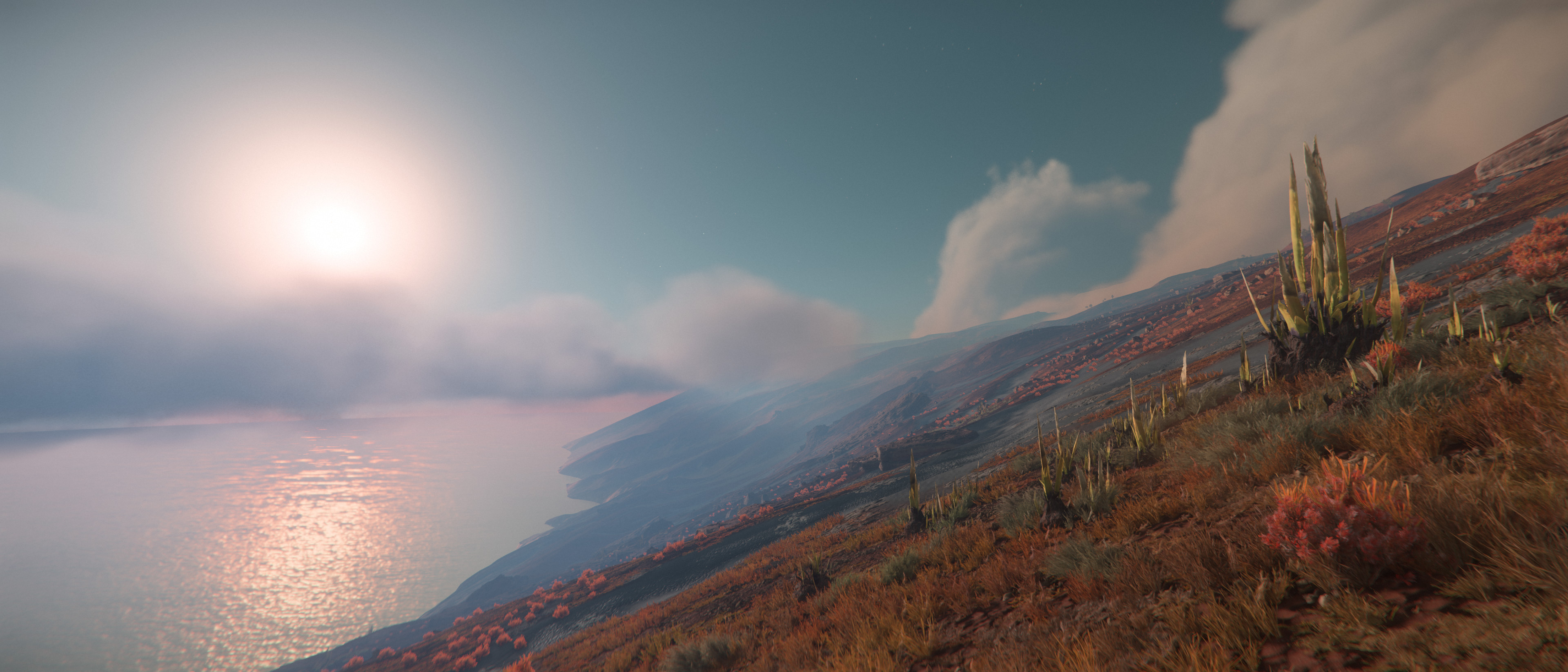
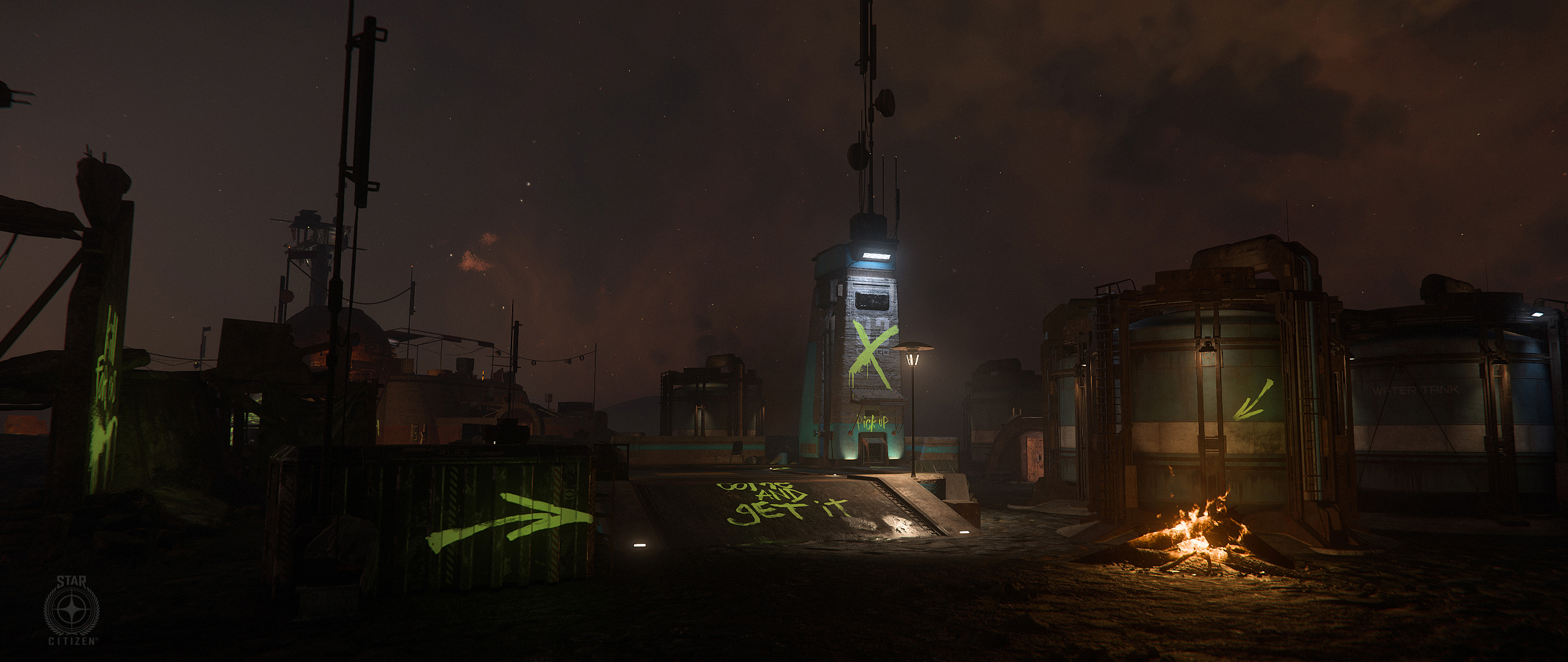
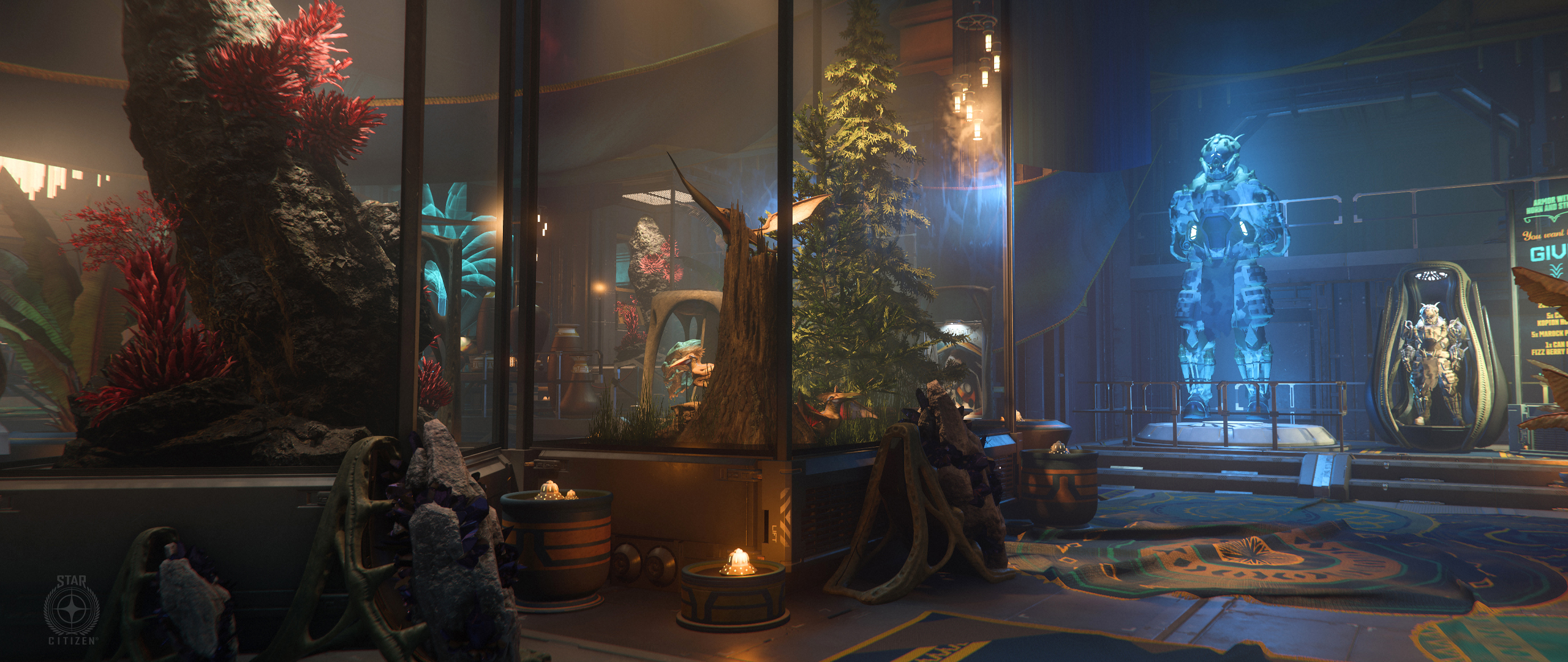
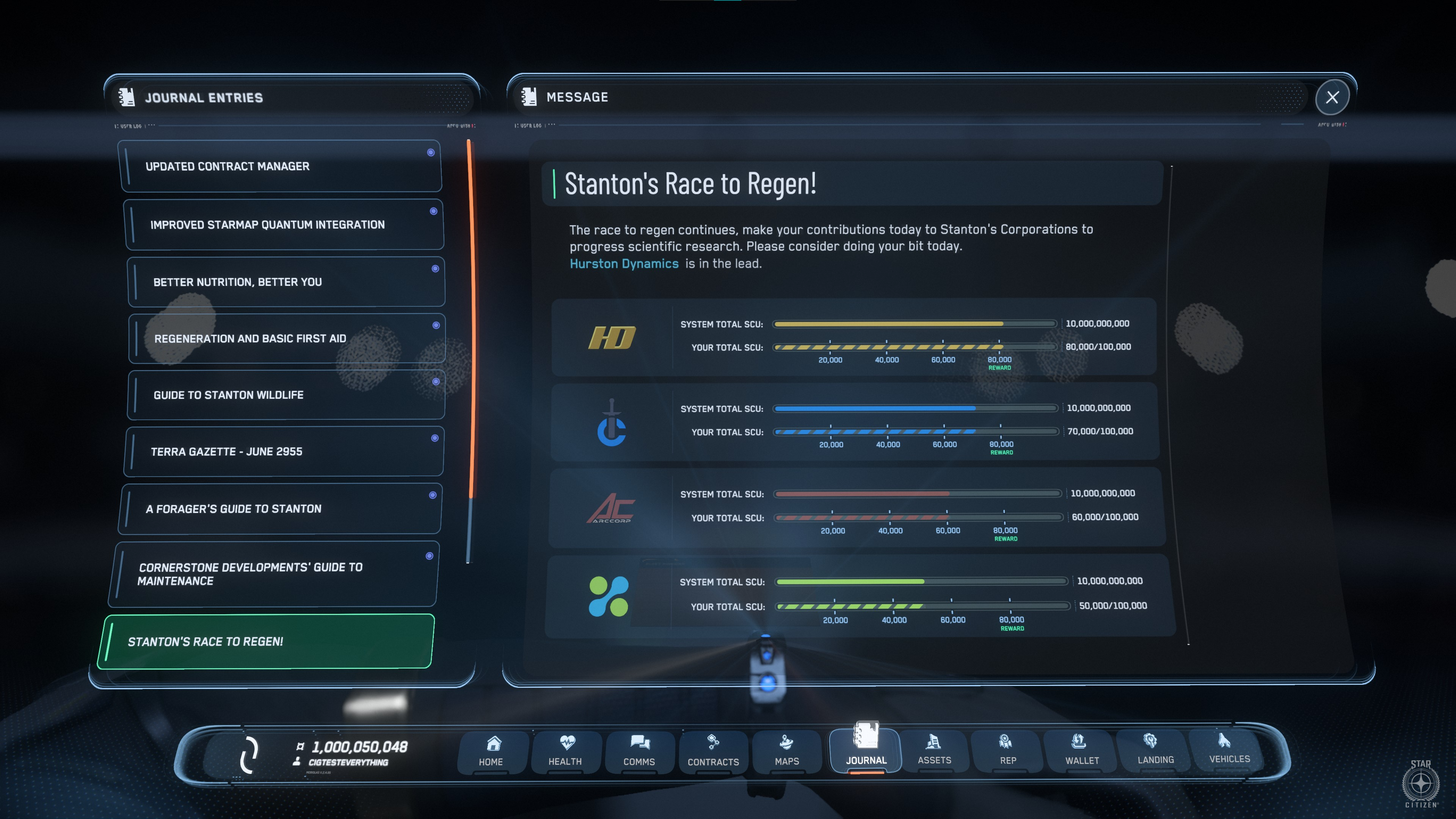
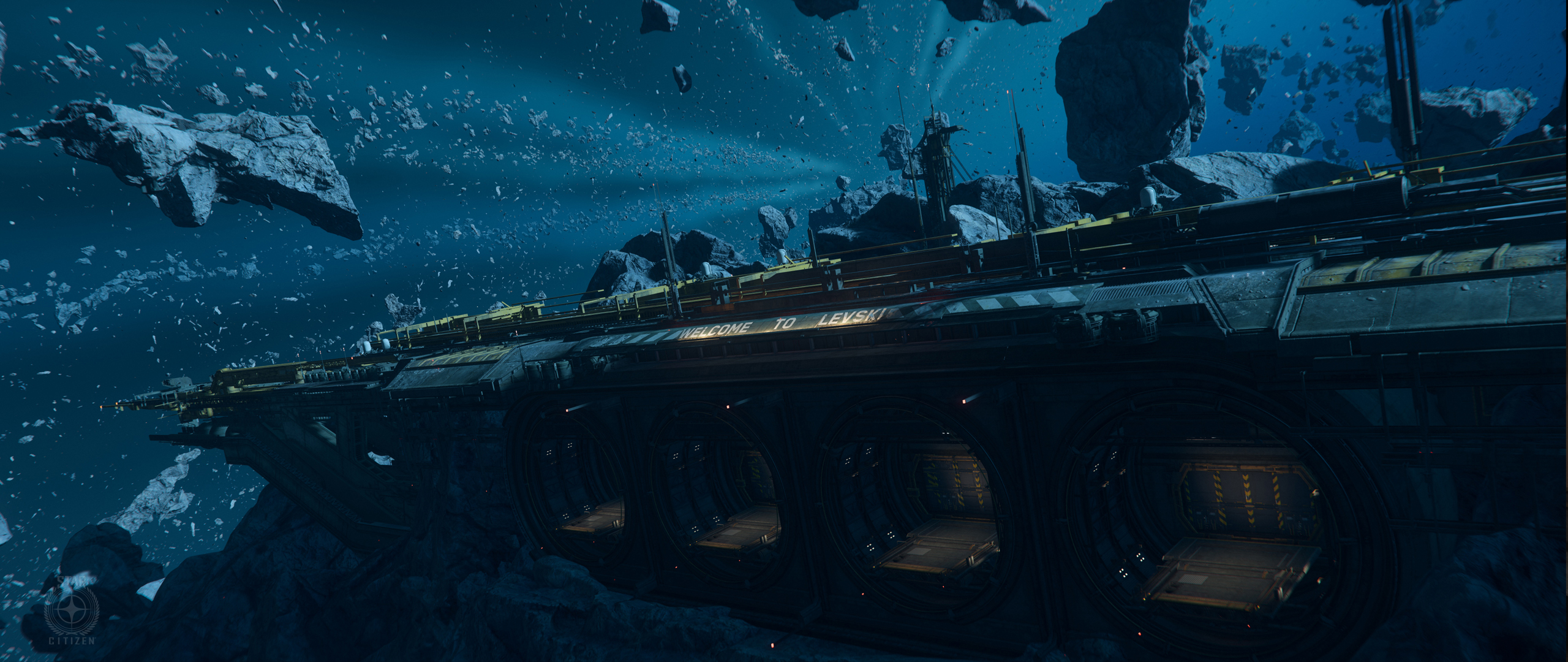
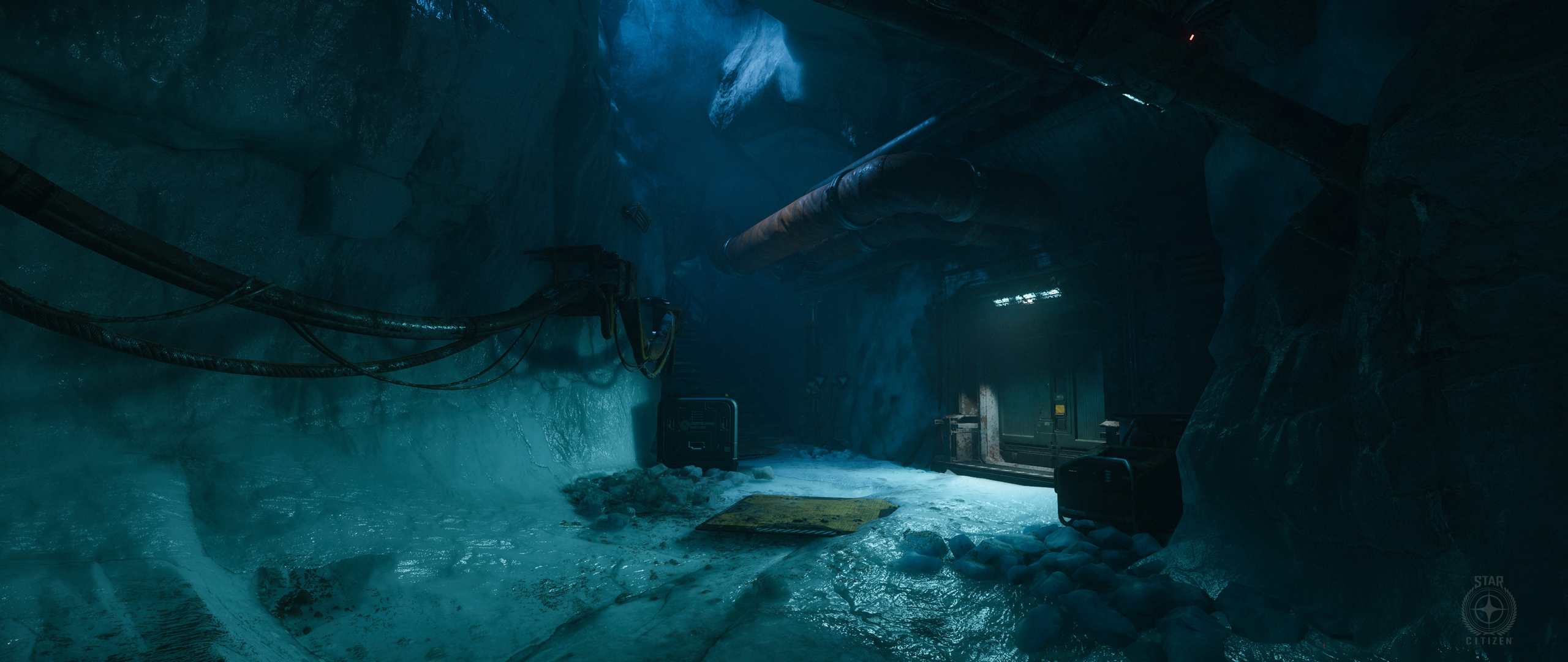
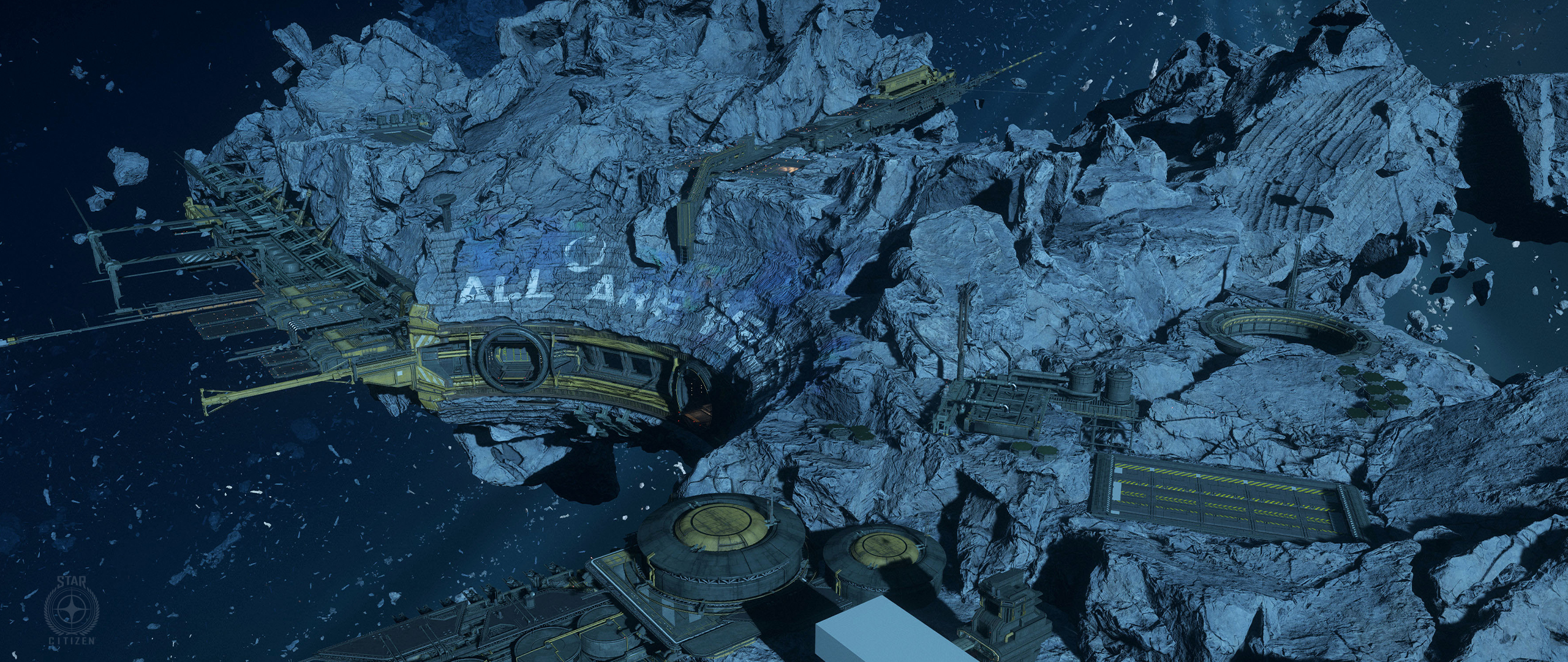
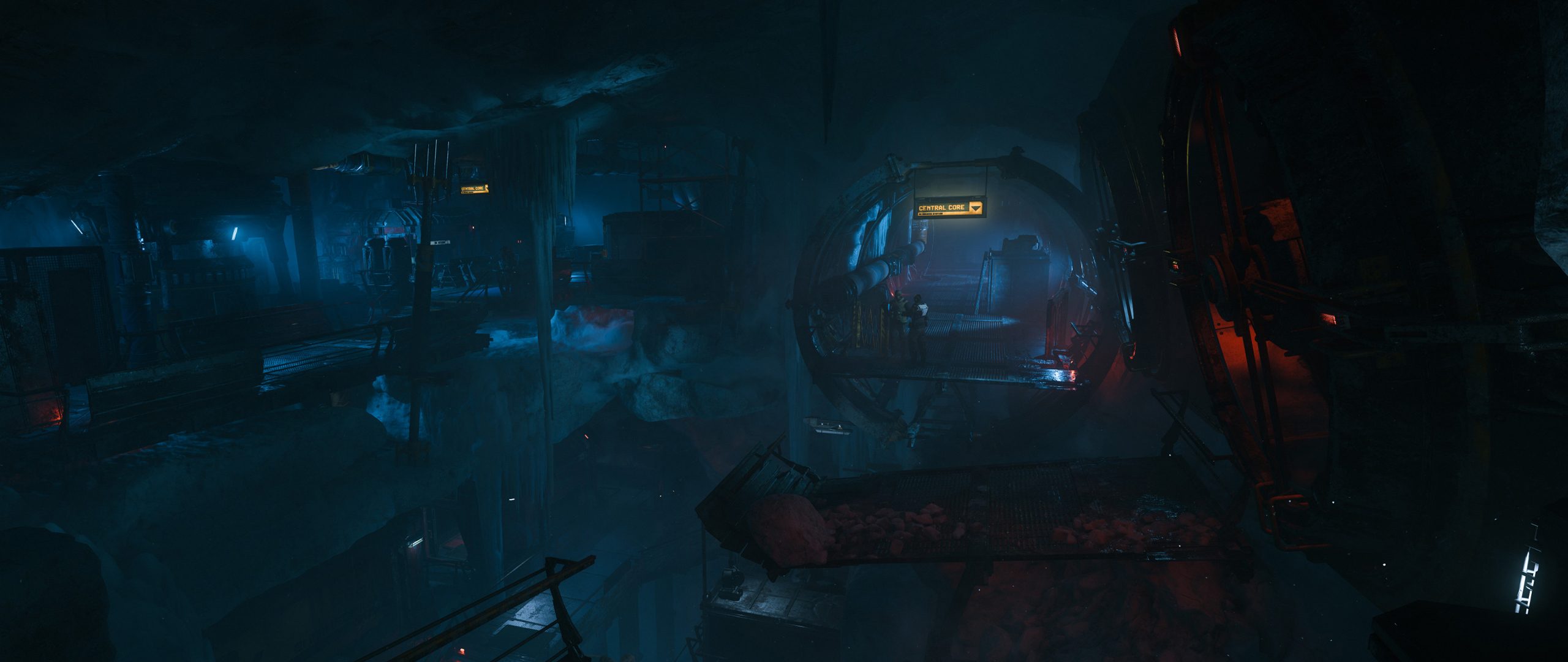
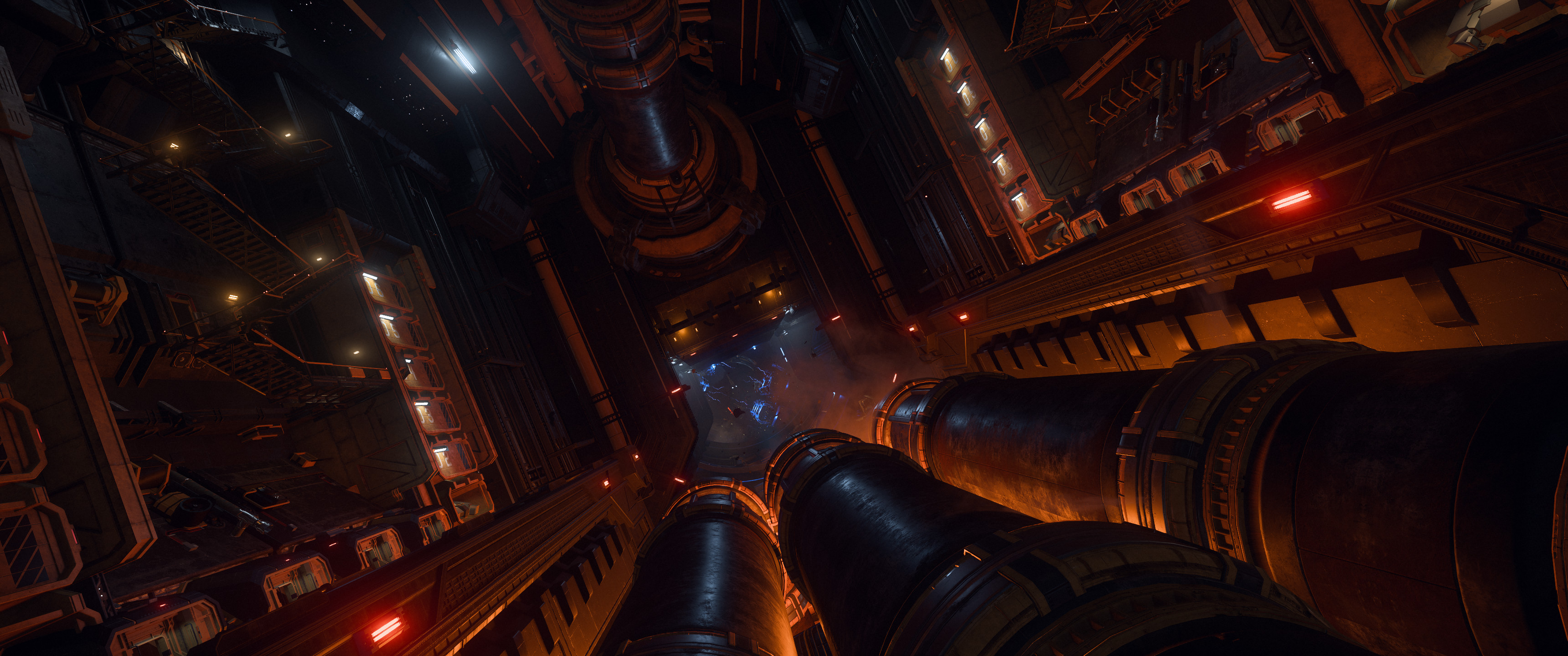
Metadata
- CIG ID
- 15043
- Channel
- Transmission
- Category
- Undefined
- Series
- Monthly Reports
- Comments
- 163
- Published
- 10 years ago (2015-11-07T00:00:00+00:00)