KAIZEN: Mobilizing Militias
Spectrum Dispatch Undefined News UpdateContent
START TRANSMISSION:
Welcome to another episode of Kaizen. My name is Aaron Schere and I’m here to help guide you through the jump point to financial solvency.
Today, we’ll talk to Vladimir Millar about the rise of militias across the Empire and discuss if this is a long-term trend worth investing in or just a momentary spike. But, before that, let’s take a look at the latest news — time for Market Breakdown.
Past performance is not indicative of future results. Neither Schere, Kaizen nor Farnes Media Partners guarantees any specific outcome or profit. Before acting on information in this program, you should strongly consider seeking advice from your own financial or investment adviser.
Yesterday, Aciedo announced a series of modifications they’ll be making to the construction pipeline of their comm relay stations. The new design won’t look much different from the stations currently seen across the Empire, but the company insists the changes will be well worth it. The relays will be constructed with new alloys to make the frames both lighter and more durable, as well as incorporate a more modular fabrication technique. Though the updated method does cost more per relay, Aciedo claims it will allow for faster assembly of stations, quicker repair and reduced long-term costs. If it works, Aciedo comm stations may become an even more common sight around the Empire.
Now to the Vega System. Even though the system’s overall economy has lagged since last year’s Vanduul attack, there are growing glimmers of hope. First and foremost, Kastak Arms: the Selene-based personal weapon and armor manufacturer has seen profits surge the last few quarters.
Yesterday, the company announced a handful of initiatives that show the company is not one to simply sit on success. Instead, Kastak revealed that it has bought multiple properties in industrial sectors of Aremis that were heavily damaged or completely destroyed in the Vanduul attack. The company has pledged to use local workers to build and staff their new factories at these locations. This appears to be a win for the company, which has suffered product shortages due to high demand, and the people of Aremis, who desperately want to get back to work.
Kastak Arms also announced a six month extension of its “Homegrown Heroes” initiative. The program deeply discounts their weapons and armor to residents of the Vega System. Their newest ad campaign, which features survivors explaining how they used Kastak products to protect themselves and their family during the Vanduul attack, has been testing extremely well. Residents of the Vega System have bought their products in record numbers due to the deep discounts and reported all-time low confidence in the government’s ability to protect them.
That last sentiment is not reserved for Vega alone. Across the Empire, militia membership is on the rise, eclipsing Navy recruitment numbers in some areas. Here to talk about this trend, and how it’s already affecting the market, is Vladimir Millar. As a research fellow at the Kilian-based Empire Defense Initiative (EDI), he specializes in the intersection of public policy and private security forces. Thanks for joining us, Vladimir.
Vladimir Millar: My pleasure.
Let’s jump right into it. What do you think is responsible for this trend? Many seem to ascribe this to the recent Vanduul attacks.
Vladimir Millar: There are definitely many who are signing up to do their part defending the Empire, but in my eyes, citing the Vanduul as the only driving force oversimplifies the situation. It absolutely is a factor, but so were many other things leading up to the attack, such as the Polo Initiative. The prospect of reduced military spending got a lot of people worried about how the UEE would protect their homeworld. Even though the initiative ultimately failed, many still joined or established militias out of concern that the government would nevertheless reduce funding to the military at some point in the future.
Of course, the opposite has happened since the attack on Vega. Military spending has increased, now becoming a bigger percentage of the UEE’s overall GDP than ever before. Wouldn’t that have alleviated private citizen concerns about their system’s protection?
Vladimir Millar: Not at all. Those in systems behind the lines that already saw the military’s efforts as ineffectual have been able to dismiss the higher budget by claiming that military resources are leaving their system for places like Vega or Elysium. The most extreme segment of the militia movement even believes the extra funds aren’t being spent on protecting the Empire and are, instead, lining the pockets of corrupt businessmen and bureaucrats.
Meanwhile, militia membership in systems on the Vanduul front has also increased dramatically. So, even those seeing an increased military presence are following the trend.
Any clue as to their motivation?
Vladimir Millar: Some are just anxious to help. They see the Vanduul and crime as the main threats to the Empire and are devoted to helping stop them. The Navy itself has been actively cooperating with these militia groups and many in the military see them as another asset in the ongoing war effort.
Others militias simply see the military as ineffectual or incompetent. They point to the sharp rise in Vanduul aggressions last year as proof that the military isn’t up to the task alone.
To follow up then with an obvious question —
Vladimir Millar: Why not join the actual military?
Exactly.
Vladimir Millar: In many cases the hurdles for joining a militia are significantly lower than for joining the Navy or the Army. Outside of physical standards and other skill requirements, signing up for the military is often seen as a major commitment. You have to leave your home, train for months, if not years, and you may be assigned to serve anywhere in the Empire. With militias, people can serve, maintain their home life and even have another job.
Then why not join security contractors or another type of mercenary group?
Vladimir Millar: For many of these people, even if they’re receiving a salary, they are fighting for an ideology rather than for profit. They’re not interested in protecting some mining outfit’s shipment of ore, but rather making sure that people like them can live safe and secure lives.
This is fascinating stuff, but let’s pivot to how the uptick in militias could affect the market. Earlier, I mentioned Kastak Arms’ soaring profits. It’s not hard to see why they’re doing well in the current climate. So, the question I want to ask is if we’ve enter a personal security bubble? Do you believe this enthusiasm for militias is a short or a long term trend?
Vladimir Millar: As a researcher, I’m not in the business of making predictions. I collect data, analyze it and try to contextualize it. That said, in all my years at the EDI, I’ve never seen people so eager to take security into their own hands.
Obviously, in the short term, this benefits companies like Kastak Arms that provide those products, yet it could also have long terms effects on how companies sell their products to the public.
How so?
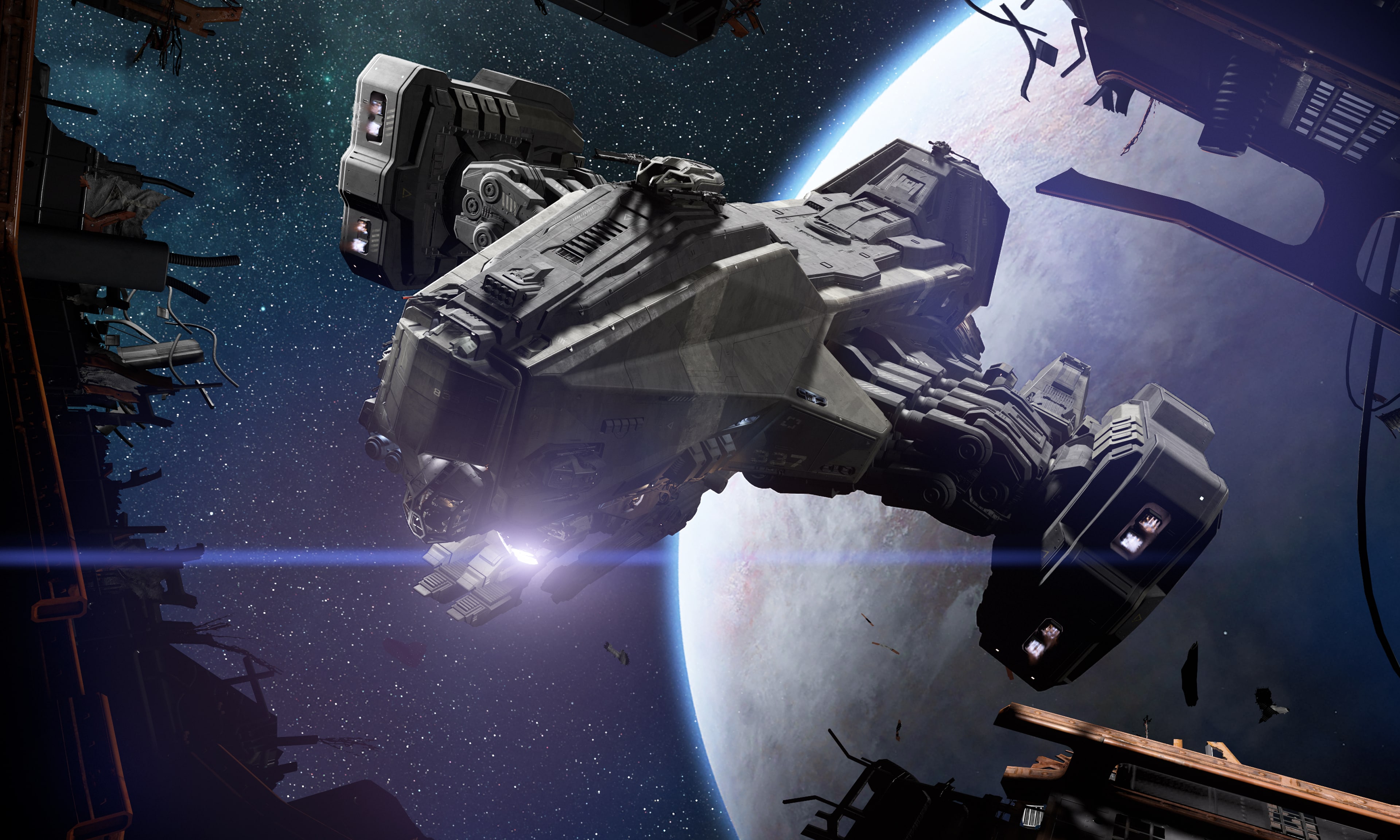
Vladimir Millar: Take RSI as an example, and their newest line of capital ships, the Polaris. The ship’s size would normally mean that the Navy would be its primary purchaser, but RSI realized very early on that it would also be ideal for militias. They brought in consultants from various militias to consult on the design of the ship. RSI wouldn’t do that unless they believed there’s a significant civilian market out there for a ship this size.
Investors certainly think so too. RSI’s stock has been on the rise since the recent reveal of the Polaris. One last question, how long do you see this surge in militias lasting?
Vladimir Millar: That’s a complicated one. There are people joining militias because they don’t have faith in the UEE to protect them, and there are people joining because they want to help and support the military. Since there’s significant pro-militia momentum on both sides of this issue, I’ve got a feeling they’ll be here to stay for a while.
Thanks to Vladimir from the Empire Defense Initiative for joining us today. We need to go to commercial. When we come back, we’ll see if microTech’s latest line of mobi are meeting investor expectations. That and more when Kaizen returns.
END TRANSMISSION
ÜBERTRAGUNG STARTEN:
Willkommen zu einer weiteren Episode von Kaizen. Mein Name ist Aaron Schere und ich bin hier, um Sie durch den Sprungpunkt zur finanziellen Zahlungsfähigkeit zu führen.
Heute werden wir mit Vladimir Millar über den Aufstieg der Milizen im ganzen Reich sprechen und darüber diskutieren, ob es sich um einen langfristigen Trend handelt, in den es sich lohnt zu investieren oder nur um eine momentane Spitze. Aber vorher werfen wir einen Blick auf die neuesten Nachrichten - Zeit für die Marktanalyse.
Die Wertentwicklung in der Vergangenheit ist kein Indikator für zukünftige Ergebnisse. Weder Schere, Kaizen noch Farnes Media Partners garantieren ein bestimmtes Ergebnis oder einen bestimmten Gewinn. Bevor Sie nach Informationen in diesem Programm handeln, sollten Sie dringend erwägen, Rat von Ihrem eigenen Finanz- oder Anlageberater einzuholen.
Gestern hat Aciedo eine Reihe von Änderungen angekündigt, die sie an der Baupipeline ihrer Kommunikationsrelaisstationen vornehmen werden. Das neue Design wird sich nicht wesentlich von den Stationen unterscheiden, die derzeit im gesamten Imperium zu sehen sind, aber das Unternehmen besteht darauf, dass die Änderungen es wert sein werden. Die Relais werden mit neuen Legierungen konstruiert, um die Rahmen leichter und langlebiger zu machen, sowie mit einer modulareren Fertigungstechnik. Obwohl die aktualisierte Methode mehr pro Relais kostet, behauptet Aciedo, dass sie eine schnellere Montage der Stationen, eine schnellere Reparatur und geringere langfristige Kosten ermöglicht. Wenn es funktioniert, könnten die Aciedo-Kommissionsstationen im ganzen Reich zu einem noch häufigeren Ziel werden.
Nun zum Vega-System. Auch wenn die Gesamtwirtschaft des Systems seit dem Angriff von Vanduul im vergangenen Jahr hinterherhinkt, gibt es immer mehr Hoffnungsschimmer. In erster Linie Kastak Arms: Der in Selene ansässige Hersteller von persönlichen Waffen und Rüstungen hat in den letzten Quartalen einen Gewinnsprung erlebt.
Gestern kündigte das Unternehmen eine Handvoll Initiativen an, die zeigen, dass das Unternehmen nicht nur auf Erfolg setzt. Stattdessen enthüllte Kastak, dass es mehrere Grundstücke in Industriegebieten von Aremis gekauft hat, die durch den Angriff der Vanduul stark beschädigt oder vollständig zerstört wurden. Das Unternehmen hat sich verpflichtet, lokale Mitarbeiter einzusetzen, um ihre neuen Fabriken an diesen Standorten zu bauen und zu besetzen. Dies scheint ein Gewinn für das Unternehmen, das aufgrund der hohen Nachfrage unter Produktmangel leidet, und die Menschen in Aremis zu sein, die verzweifelt wieder an die Arbeit gehen wollen.
Kastak Arms kündigte auch eine Verlängerung der Initiative "Homegrown Heroes" um sechs Monate an. Das Programm gewährt den Bewohnern des Vega-Systems tiefe Rabatte auf ihre Waffen und Rüstungen. Ihre neueste Werbekampagne, in der Überlebende erklären, wie sie Kastak-Produkte zum Schutz von sich und ihrer Familie während des Angriffs auf Vanduul einsetzten, wurde sehr gut getestet. Einwohner des Vega-Systems haben ihre Produkte aufgrund der hohen Rabatte in Rekordzahlen gekauft und berichteten von einem allzeit geringen Vertrauen in die Fähigkeit der Regierung, sie zu schützen.
Diese letzte Empfindung ist nicht nur für Vega reserviert. Im gesamten Imperium steigt die Zahl der Milizzugehörigkeit und verdunkelt die Rekrutierungszahlen der Marine in einigen Gebieten. Um über diesen Trend zu sprechen und wie er sich bereits auf den Markt auswirkt, ist Vladimir Millar hier. Als wissenschaftlicher Mitarbeiter an der Empire Defense Initiative (EDI) in Kilian ist er auf die Schnittstelle von öffentlicher Ordnung und privaten Sicherheitskräften spezialisiert. Danke, dass du dich uns angeschlossen hast, Vladimir.
Vladimir Millar: War mir ein Vergnügen.
Lasst uns direkt hinein springen. Was ist Ihrer Meinung nach für diesen Trend verantwortlich? Viele scheinen dies auf die jüngsten Vanduul-Angriffe zurückzuführen zu sein.
Vladimir Millar: Es gibt definitiv viele, die sich verpflichten, ihren Teil zur Verteidigung des Imperiums beizutragen, aber meiner Meinung nach macht es die Tatsache, die Vanduul als einzige treibende Kraft zu nennen, noch komplizierter. Es ist absolut ein Faktor, aber auch viele andere Dinge, die vor dem Angriff standen, wie die Polo-Initiative. Die Aussicht auf reduzierte Militärausgaben machte vielen Menschen Sorgen, wie die UEE ihre Heimatwelt schützen würde. Auch wenn die Initiative letztendlich scheiterte, schlossen sich viele immer noch Milizen an oder gründeten Milizen aus Sorge, dass die Regierung dennoch irgendwann in der Zukunft die Mittel für das Militär reduzieren würde.
Natürlich ist das Gegenteil seit dem Angriff auf Vega geschehen. Die Militärausgaben sind gestiegen und haben sich zu einem größeren Anteil am gesamten BIP der UEE entwickelt als je zuvor. Hätte das nicht die Bedenken der Privatpersonen über den Schutz ihres Systems zerstreut?
Vladimir Millar: Überhaupt nicht. Diejenigen in den Systemen hinter den Linien, die die Bemühungen des Militärs bereits als ineffektiv betrachteten, konnten den höheren Haushalt ablehnen, indem sie behaupteten, dass militärische Ressourcen ihr System für Orte wie Vega oder Elysium verlassen. Das extremste Segment der Milizbewegung glaubt sogar, dass die zusätzlichen Mittel nicht für den Schutz des Imperiums ausgegeben werden, sondern in die Taschen korrupter Geschäftsleute und Bürokraten fließen.
Unterdessen hat sich auch die Mitgliedschaft der Miliz in den Systemen der Vanduul-Front dramatisch erhöht. So folgen auch diejenigen, die eine verstärkte militärische Präsenz sehen, dem Trend.
Irgendein Hinweis auf ihre Motivation?
Vladimir Millar: Einige sind nur darauf bedacht zu helfen. Sie sehen die Vandule und das Verbrechen als die Hauptbedrohungen für das Imperium und widmen sich der Aufgabe, sie zu stoppen. Die Marine selbst hat aktiv mit diesen Milizgruppen zusammengearbeitet, und viele im Militär sehen sie als einen weiteren Vorteil bei den laufenden Kriegsanstrengungen.
Andere Milizen sehen das Militär einfach als ineffektiv oder inkompetent an. Sie verweisen auf den starken Anstieg der Vanduul-Aggressionen im vergangenen Jahr als Beweis dafür, dass das Militär nicht allein der Aufgabe gewachsen ist.
Um dann mit einer offensichtlichen Frage weiterzumachen -
Vladimir Millar: Warum nicht dem eigentlichen Militär beitreten?
Genau.
Vladimir Millar: In vielen Fällen sind die Hürden für den Beitritt zu einer Miliz deutlich geringer als für den Beitritt zur Marine oder zur Armee. Abgesehen von physischen Standards und anderen Qualifikationsanforderungen wird die Aufnahme in das Militär oft als eine große Verpflichtung angesehen. Du musst dein Zuhause verlassen, monatelang, wenn nicht sogar jahrelang trainieren, und du kannst zugewiesen werden, überall im Imperium zu dienen. Mit Milizen können Menschen dienen, ihr Privatleben aufrechterhalten und sogar einen anderen Job haben.
Warum sollten Sie sich dann nicht den Sicherheitsdienstleistern oder einer anderen Art von Söldnergruppe anschließen?
Vladimir Millar: Für viele dieser Menschen, auch wenn sie ein Gehalt erhalten, kämpfen sie für eine Ideologie und nicht für Profit. Sie sind nicht daran interessiert, die Erzlieferung einer Minengesellschaft zu schützen, sondern dafür zu sorgen, dass Menschen wie sie ein sicheres und geschütztes Leben führen können.
Dieses ist faszinierendes Material, aber lassen Sie uns an drehen, wie der Aufwärtstrend in den Milizen den Markt beeinflussen könnte. Vorhin habe ich die steigenden Gewinne von Kastak Arms erwähnt. Es ist nicht schwer zu verstehen, warum es ihnen in der aktuellen Situation gut geht. Also, die Frage, die ich stellen möchte, ist, ob wir eine persönliche Sicherheitsblase betreten haben? Glauben Sie, dass diese Begeisterung für Milizen ein kurz- oder langfristiger Trend ist?
Vladimir Millar: Als Forscher bin ich nicht in der Lage, Vorhersagen zu machen. Ich sammle Daten, analysiere sie und versuche, sie zu kontextualisieren. Allerdings habe ich in all meinen Jahren bei der EDI noch nie Menschen gesehen, die so begierig darauf sind, die Sicherheit in die eigenen Hände zu nehmen.
Kurzfristig profitieren davon natürlich Unternehmen wie Kastak Arms, die diese Produkte anbieten, aber es könnte auch langfristige Auswirkungen darauf haben, wie Unternehmen ihre Produkte an die Öffentlichkeit verkaufen.
Wie das?
Vladimir Millar: Nehmen Sie RSI als Beispiel und ihre neueste Großschiffslinie, die Polaris. Die Größe des Schiffes würde normalerweise bedeuten, dass die Marine ihr Hauptabnehmer sein würde, aber RSI erkannte sehr früh, dass es auch für Milizen ideal sein würde. Sie holten Berater verschiedener Milizen hinzu, um sich über das Design des Schiffes zu beraten. RSI würde das nicht tun, wenn sie nicht glauben würden, dass es einen bedeutenden zivilen Markt für ein Schiff dieser Größe gibt.
Das denken auch die Investoren. Die RSI-Aktie befindet sich seit der jüngsten Veröffentlichung des Polaris im Aufwärtstrend. Eine letzte Frage: Wie lange wird dieser Anstieg der Milizen Ihrer Meinung nach anhalten?
Vladimir Millar: Das ist eine komplizierte Sache. Es gibt Menschen, die sich Milizen anschließen, weil sie nicht an die UEE glauben, um sie zu schützen, und es gibt Menschen, die sich anschließen, weil sie dem Militär helfen und es unterstützen wollen. Da es auf beiden Seiten dieses Themas eine signifikante pro-militärische Dynamik gibt, habe ich das Gefühl, dass sie für eine Weile hier bleiben werden.
Vielen Dank an Vladimir von der Empire Defense Initiative, dass er heute zu uns gekommen ist. Wir müssen zur Werbung gehen. Wenn wir wiederkommen, werden wir sehen, ob die neueste Mobi-Linie von microTech die Erwartungen der Investoren erfüllt. Das und mehr, wenn Kaizen zurückkehrt.
ENDÜBERTRAGUNG
START TRANSMISSION:
Welcome to another episode of Kaizen. My name is Aaron Schere and I’m here to help guide you through the jump point to financial solvency.
Today, we’ll talk to Vladimir Millar about the rise of militias across the Empire and discuss if this is a long-term trend worth investing in or just a momentary spike. But, before that, let’s take a look at the latest news — time for Market Breakdown.
Past performance is not indicative of future results. Neither Schere, Kaizen nor Farnes Media Partners guarantees any specific outcome or profit. Before acting on information in this program, you should strongly consider seeking advice from your own financial or investment adviser.
Yesterday, Aciedo announced a series of modifications they’ll be making to the construction pipeline of their comm relay stations. The new design won’t look much different from the stations currently seen across the Empire, but the company insists the changes will be well worth it. The relays will be constructed with new alloys to make the frames both lighter and more durable, as well as incorporate a more modular fabrication technique. Though the updated method does cost more per relay, Aciedo claims it will allow for faster assembly of stations, quicker repair and reduced long-term costs. If it works, Aciedo comm stations may become an even more common sight around the Empire.
Now to the Vega System. Even though the system’s overall economy has lagged since last year’s Vanduul attack, there are growing glimmers of hope. First and foremost, Kastak Arms: the Selene-based personal weapon and armor manufacturer has seen profits surge the last few quarters.
Yesterday, the company announced a handful of initiatives that show the company is not one to simply sit on success. Instead, Kastak revealed that it has bought multiple properties in industrial sectors of Aremis that were heavily damaged or completely destroyed in the Vanduul attack. The company has pledged to use local workers to build and staff their new factories at these locations. This appears to be a win for the company, which has suffered product shortages due to high demand, and the people of Aremis, who desperately want to get back to work.
Kastak Arms also announced a six month extension of its “Homegrown Heroes” initiative. The program deeply discounts their weapons and armor to residents of the Vega System. Their newest ad campaign, which features survivors explaining how they used Kastak products to protect themselves and their family during the Vanduul attack, has been testing extremely well. Residents of the Vega System have bought their products in record numbers due to the deep discounts and reported all-time low confidence in the government’s ability to protect them.
That last sentiment is not reserved for Vega alone. Across the Empire, militia membership is on the rise, eclipsing Navy recruitment numbers in some areas. Here to talk about this trend, and how it’s already affecting the market, is Vladimir Millar. As a research fellow at the Kilian-based Empire Defense Initiative (EDI), he specializes in the intersection of public policy and private security forces. Thanks for joining us, Vladimir.
Vladimir Millar: My pleasure.
Let’s jump right into it. What do you think is responsible for this trend? Many seem to ascribe this to the recent Vanduul attacks.
Vladimir Millar: There are definitely many who are signing up to do their part defending the Empire, but in my eyes, citing the Vanduul as the only driving force oversimplifies the situation. It absolutely is a factor, but so were many other things leading up to the attack, such as the Polo Initiative. The prospect of reduced military spending got a lot of people worried about how the UEE would protect their homeworld. Even though the initiative ultimately failed, many still joined or established militias out of concern that the government would nevertheless reduce funding to the military at some point in the future.
Of course, the opposite has happened since the attack on Vega. Military spending has increased, now becoming a bigger percentage of the UEE’s overall GDP than ever before. Wouldn’t that have alleviated private citizen concerns about their system’s protection?
Vladimir Millar: Not at all. Those in systems behind the lines that already saw the military’s efforts as ineffectual have been able to dismiss the higher budget by claiming that military resources are leaving their system for places like Vega or Elysium. The most extreme segment of the militia movement even believes the extra funds aren’t being spent on protecting the Empire and are, instead, lining the pockets of corrupt businessmen and bureaucrats.
Meanwhile, militia membership in systems on the Vanduul front has also increased dramatically. So, even those seeing an increased military presence are following the trend.
Any clue as to their motivation?
Vladimir Millar: Some are just anxious to help. They see the Vanduul and crime as the main threats to the Empire and are devoted to helping stop them. The Navy itself has been actively cooperating with these militia groups and many in the military see them as another asset in the ongoing war effort.
Others militias simply see the military as ineffectual or incompetent. They point to the sharp rise in Vanduul aggressions last year as proof that the military isn’t up to the task alone.
To follow up then with an obvious question —
Vladimir Millar: Why not join the actual military?
Exactly.
Vladimir Millar: In many cases the hurdles for joining a militia are significantly lower than for joining the Navy or the Army. Outside of physical standards and other skill requirements, signing up for the military is often seen as a major commitment. You have to leave your home, train for months, if not years, and you may be assigned to serve anywhere in the Empire. With militias, people can serve, maintain their home life and even have another job.
Then why not join security contractors or another type of mercenary group?
Vladimir Millar: For many of these people, even if they’re receiving a salary, they are fighting for an ideology rather than for profit. They’re not interested in protecting some mining outfit’s shipment of ore, but rather making sure that people like them can live safe and secure lives.
This is fascinating stuff, but let’s pivot to how the uptick in militias could affect the market. Earlier, I mentioned Kastak Arms’ soaring profits. It’s not hard to see why they’re doing well in the current climate. So, the question I want to ask is if we’ve enter a personal security bubble? Do you believe this enthusiasm for militias is a short or a long term trend?
Vladimir Millar: As a researcher, I’m not in the business of making predictions. I collect data, analyze it and try to contextualize it. That said, in all my years at the EDI, I’ve never seen people so eager to take security into their own hands.
Obviously, in the short term, this benefits companies like Kastak Arms that provide those products, yet it could also have long terms effects on how companies sell their products to the public.
How so?
Vladimir Millar: Take RSI as an example, and their newest line of capital ships, the Polaris. The ship’s size would normally mean that the Navy would be its primary purchaser, but RSI realized very early on that it would also be ideal for militias. They brought in consultants from various militias to consult on the design of the ship. RSI wouldn’t do that unless they believed there’s a significant civilian market out there for a ship this size.
Investors certainly think so too. RSI’s stock has been on the rise since the recent reveal of the Polaris. One last question, how long do you see this surge in militias lasting?
Vladimir Millar: That’s a complicated one. There are people joining militias because they don’t have faith in the UEE to protect them, and there are people joining because they want to help and support the military. Since there’s significant pro-militia momentum on both sides of this issue, I’ve got a feeling they’ll be here to stay for a while.
Thanks to Vladimir from the Empire Defense Initiative for joining us today. We need to go to commercial. When we come back, we’ll see if microTech’s latest line of mobi are meeting investor expectations. That and more when Kaizen returns.
END TRANSMISSION
START TRANSMISSION:
Welcome to another episode of Kaizen. My name is Aaron Schere and I’m here to help guide you through the jump point to financial solvency.
Today, we’ll talk to Vladimir Millar about the rise of militias across the Empire and discuss if this is a long-term trend worth investing in or just a momentary spike. But, before that, let’s take a look at the latest news — time for Market Breakdown.
Past performance is not indicative of future results. Neither Schere, Kaizen nor Farnes Media Partners guarantees any specific outcome or profit. Before acting on information in this program, you should strongly consider seeking advice from your own financial or investment adviser.
Yesterday, Aciedo announced a series of modifications they’ll be making to the construction pipeline of their comm relay stations. The new design won’t look much different from the stations currently seen across the Empire, but the company insists the changes will be well worth it. The relays will be constructed with new alloys to make the frames both lighter and more durable, as well as incorporate a more modular fabrication technique. Though the updated method does cost more per relay, Aciedo claims it will allow for faster assembly of stations, quicker repair and reduced long-term costs. If it works, Aciedo comm stations may become an even more common sight around the Empire.
Now to the Vega System. Even though the system’s overall economy has lagged since last year’s Vanduul attack, there are growing glimmers of hope. First and foremost, Kastak Arms: the Selene-based personal weapon and armor manufacturer has seen profits surge the last few quarters.
Yesterday, the company announced a handful of initiatives that show the company is not one to simply sit on success. Instead, Kastak revealed that it has bought multiple properties in industrial sectors of Aremis that were heavily damaged or completely destroyed in the Vanduul attack. The company has pledged to use local workers to build and staff their new factories at these locations. This appears to be a win for the company, which has suffered product shortages due to high demand, and the people of Aremis, who desperately want to get back to work.
Kastak Arms also announced a six month extension of its “Homegrown Heroes” initiative. The program deeply discounts their weapons and armor to residents of the Vega System. Their newest ad campaign, which features survivors explaining how they used Kastak products to protect themselves and their family during the Vanduul attack, has been testing extremely well. Residents of the Vega System have bought their products in record numbers due to the deep discounts and reported all-time low confidence in the government’s ability to protect them.
That last sentiment is not reserved for Vega alone. Across the Empire, militia membership is on the rise, eclipsing Navy recruitment numbers in some areas. Here to talk about this trend, and how it’s already affecting the market, is Vladimir Millar. As a research fellow at the Kilian-based Empire Defense Initiative (EDI), he specializes in the intersection of public policy and private security forces. Thanks for joining us, Vladimir.
Vladimir Millar: My pleasure.
Let’s jump right into it. What do you think is responsible for this trend? Many seem to ascribe this to the recent Vanduul attacks.
Vladimir Millar: There are definitely many who are signing up to do their part defending the Empire, but in my eyes, citing the Vanduul as the only driving force oversimplifies the situation. It absolutely is a factor, but so were many other things leading up to the attack, such as the Polo Initiative. The prospect of reduced military spending got a lot of people worried about how the UEE would protect their homeworld. Even though the initiative ultimately failed, many still joined or established militias out of concern that the government would nevertheless reduce funding to the military at some point in the future.
Of course, the opposite has happened since the attack on Vega. Military spending has increased, now becoming a bigger percentage of the UEE’s overall GDP than ever before. Wouldn’t that have alleviated private citizen concerns about their system’s protection?
Vladimir Millar: Not at all. Those in systems behind the lines that already saw the military’s efforts as ineffectual have been able to dismiss the higher budget by claiming that military resources are leaving their system for places like Vega or Elysium. The most extreme segment of the militia movement even believes the extra funds aren’t being spent on protecting the Empire and are, instead, lining the pockets of corrupt businessmen and bureaucrats.
Meanwhile, militia membership in systems on the Vanduul front has also increased dramatically. So, even those seeing an increased military presence are following the trend.
Any clue as to their motivation?
Vladimir Millar: Some are just anxious to help. They see the Vanduul and crime as the main threats to the Empire and are devoted to helping stop them. The Navy itself has been actively cooperating with these militia groups and many in the military see them as another asset in the ongoing war effort.
Others militias simply see the military as ineffectual or incompetent. They point to the sharp rise in Vanduul aggressions last year as proof that the military isn’t up to the task alone.
To follow up then with an obvious question —
Vladimir Millar: Why not join the actual military?
Exactly.
Vladimir Millar: In many cases the hurdles for joining a militia are significantly lower than for joining the Navy or the Army. Outside of physical standards and other skill requirements, signing up for the military is often seen as a major commitment. You have to leave your home, train for months, if not years, and you may be assigned to serve anywhere in the Empire. With militias, people can serve, maintain their home life and even have another job.
Then why not join security contractors or another type of mercenary group?
Vladimir Millar: For many of these people, even if they’re receiving a salary, they are fighting for an ideology rather than for profit. They’re not interested in protecting some mining outfit’s shipment of ore, but rather making sure that people like them can live safe and secure lives.
This is fascinating stuff, but let’s pivot to how the uptick in militias could affect the market. Earlier, I mentioned Kastak Arms’ soaring profits. It’s not hard to see why they’re doing well in the current climate. So, the question I want to ask is if we’ve enter a personal security bubble? Do you believe this enthusiasm for militias is a short or a long term trend?
Vladimir Millar: As a researcher, I’m not in the business of making predictions. I collect data, analyze it and try to contextualize it. That said, in all my years at the EDI, I’ve never seen people so eager to take security into their own hands.
Obviously, in the short term, this benefits companies like Kastak Arms that provide those products, yet it could also have long terms effects on how companies sell their products to the public.
How so?
Vladimir Millar: Take RSI as an example, and their newest line of capital ships, the Polaris. The ship’s size would normally mean that the Navy would be its primary purchaser, but RSI realized very early on that it would also be ideal for militias. They brought in consultants from various militias to consult on the design of the ship. RSI wouldn’t do that unless they believed there’s a significant civilian market out there for a ship this size.
Investors certainly think so too. RSI’s stock has been on the rise since the recent reveal of the Polaris. One last question, how long do you see this surge in militias lasting?
Vladimir Millar: That’s a complicated one. There are people joining militias because they don’t have faith in the UEE to protect them, and there are people joining because they want to help and support the military. Since there’s significant pro-militia momentum on both sides of this issue, I’ve got a feeling they’ll be here to stay for a while.
Thanks to Vladimir from the Empire Defense Initiative for joining us today. We need to go to commercial. When we come back, we’ll see if microTech’s latest line of mobi are meeting investor expectations. That and more when Kaizen returns.
END TRANSMISSION
Links
No links available.


Metadata
- CIG ID
- 15538
- Channel
- Spectrum Dispatch
- Category
- Undefined
- Series
- News Update
- Comments
- 52
- Published
- 10 years ago (2016-09-27T00:00:00+00:00)