Showdown: "Historical Context"
Spectrum Dispatch Undefined News UpdateContent
SHOWDOWN
Auto-Transcript for S&P and NFSC Submission
EP:61:12 : “Historical Context”
ERIA QUINT: Welcome to Showdown, an examination of the Empire’s most important issues broken down from multiple angles. I’m Eria Quint. Today’s topic takes us to Jata, the beating heart of the Davien system. From the first Human city visited by the Banu to the infamous terrorist attacks of 2546 that paved the way for Ivar Messer’s ascension, Jata’s tumultuous past has left an indelible impression on the Empire. But now, a vigorous debate has erupted regarding the question of how best to remember that history.
The Jata Historical Society (JHS) came under fire following a February 11th meeting where they debated what to name of the city’s newest park. The JHS Board of Directors eventually voted to dedicate the park to influential Aegis Dynamics CEO Hana Chan, a move that has local activists outraged and demanding that the JHS reconsider their decision.
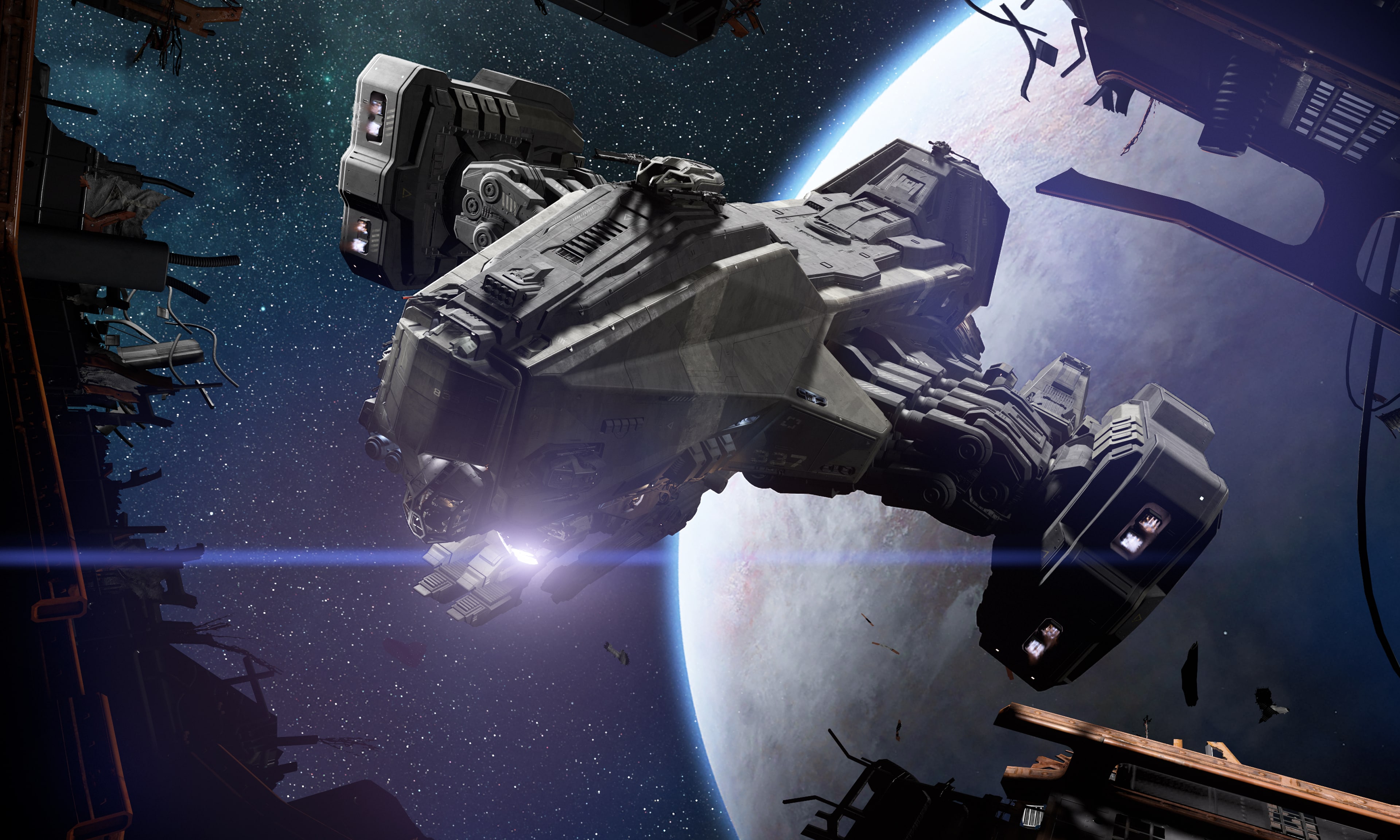
Even among Aegis enthusiasts, Chan’s legacy could best be described as problematic. Her 65-year reign from 2643 to 2708, the longest ever among Aegis’ CEOs, featured an impressive list of accomplishments, including the development of the Javelin-class destroyer still in use by the Navy. Yet Chan’s cozy relationship with the Messer regime became a stain on both her legacy and the company’s.
Joining us today to discuss the controversial decision is Jata-based activist and author of The People’s History of Davien, Theo Raja.
THEO RAJA: Hi, Eria. Great to have Showdown taking on such an important subject. On the surface, this might appear to be a local issue, but addressing how we present our history affects generations to come.
ERIA QUINT: Also with us today is Simone Maruyama. She’s a history professor at the University of Jata and a member of the Jata Historical Society’s Board of Directors. Let’s start with you, Ms. Maruyama. How has the JHS responded to the criticism over naming the park after Hana Chan?
SIMONE MARUYAMA: Ever since her name was proposed, there has been a vocal contingent against naming the park after Chan. We’ve been listening to those concerns during every step of the process, but ultimately, a majority of the board felt Chan’s impact on the Empire’s history was worthy of the recognition.
ERIA QUINT: And you disagree, Mr. Raja?
THEO RAJA: To put it mildly? Because it celebrates a woman whose allegiance to the Messers helped them systematically persecute people. I could go into more detail, but what else needs to be said? That alone should be enough to disqualify anyone from having a park named after them, especially when there are so many other worthy candidates to choose from.
SIMONE MARUYAMA: Let me make a few things clear. First, I am not here to defend Hana Chan. Believe me when I say that I find many of her actions questionable.
Second, the view of Ms. Chan expressed by Mr. Raja is overly simplistic and fails to take into account the many positive contributions she made to the UEE. There’s widespread consensus that her stewardship of Aegis lead to many advancements within the aerospace industry.
THEO RAJA: Good and evil aren’t checkmarks on opposite sides of a ledger. Maybe that’s why I can’t so easily disregard whole swaths of Ms. Chan’s life. I mean, one, she considered Illyana Messer VI to be a close personal friend, and two, she leveraged that relationship into massive government contracts, knowing full well that the ships she produced would be used against civilian populations.
She literally helped the government terrorize the people. What good could possibly offset that?
ERIA QUINT: Ms. Maruyama, your response?
SIMONE MARUYAMA: Who would deserve recognition if we only examined the bad parts of their life?
What Mr. Raja fails to acknowledge is Ms. Chan’s important role in developing the Javelin as a battle platform that could go toe-to-toe with the Vanduul. Even more importantly, she was essential to making diamond laminate standard in ship cockpits. Today, people don’t realize just how vital diamond laminate was to improving ship safety. Before its widespread use, many, many more people died every year from their ships getting vented due to cracks in the cockpit.
THEO RAJA: I’m not saying that Ms. Chan doesn’t deserve recognition for her accomplishments. I just don’t believe Jata should openly celebrate someone with such a troubled history.
ERIA QUINT: Mr. Raja, you believe another historical figure from Jata deserves to have the park named after him. Can you tell us about who you’d like it named after?
THEO RAJA: Of course. On September 23, 2546, Terrell Milner was a medic and one of the first responders to arrive on scene after the terrorist bombing. He fearlessly rushed into a building to aid those in need, only to die when a secondary device exploded and the building crumbled around him. Milner threw himself across Alex Tinifel before the building collapsed, saving the young boy’s life from the falling debris. This park would be an ideal spot to celebrate his sacrifice, and make this little known hero of Jata a household name.
SIMONE MARUYAMA: Terrell Milner was on the shortlist of potential names for the park and given serious consideration. When making the final decision though, the JHS had to keep a few things in mind.
One, Mr. Milner’s bravery and sacrifice are already addressed on the historical marker covering the “Atrocity at Jata.” Second, Ms. Chan’s impact on Empire-wide history simply exceeds that of Mr. Milner. For good or bad, the JHS has never acknowledged Ms. Chan’s accomplishments, and we hoped this would be a good chance to do it, warts and all.
ERIA QUINT: Warts and all?
SIMONE MARUYAMA: Yes, the language adopted by the JHS for the park’s historical marker will specifically mention both good and bad aspects of her legacy.
THEO RAJA: Barely …
ERIA QUINT: What was that, Mr. Raja?
THEO RAJA: Yeah, I’ve seen the text, and the negative parts of her legacy appear almost as an afterthought. It says, and I’m directly quoting here, “Ties to the Messer regime cloud her legacy.” That’s it.
Anyone with more than a passing knowledge of Jata’s history knows that’s a grossly inadequate description. Even worse, someone who’s hearing about Chan for the first time walks away with a distorted view of her true impact on the Empire. By recording only a partial history, the JHS are making moral judgements regarding what they deem important.
SIMONE MARUYAMA: Are you suggesting that because we don’t inscribe a full biography onto a marker, the whole thing is meritless?
THEO RAJA: I’m suggesting that you are sanitizing the facts in order to make history more consumable for tourists. Chan’s legacy is deeply entwined with both the Messers and a major corporation that’s been around for hundreds of years. That connection must be made crystal clear before her impact on it can be fully understood. That would probably be best achieved with a permanent exhibit at the Jata History Museum.
Of course, there’s absolutely no chance that Aegis Dynamics would allow such an exhibit to exist in Jata. Trust me, I’ve tried and come up against the full force of their political and economic power. Aegis acknowledges their relationship to the Messers, but they sure as hell don’t want it under a microscope. Particularly in their own backyard.
ERIA QUINT: Ms. Maruyama, a similar question to you. Do you believe a historical marker in this park is the ideal way to present Hana Chan’s complicated legacy?
SIMONE MARUYAMA: I believe our job isn’t to define her legacy. As historians, our job is to present the facts, provide the proper context, and encourage people to think freely and come to their own conclusion.
ERIA QUINT: Thanks to both you for joining us today. We need to take a quick break. When Showdown returns, we’re off to the Corel System to debate whether increased scrutiny at customs checkpoints are deterring businesses from delivering there. Stick around to find out more.
ANZEIGE
Automatische Übertragung für S&P- und NFSC-Einreichungen
EP:61:12 : " Historischer Kontext ".
ERIA QUINT: Welcome to Showdown, eine Untersuchung der wichtigsten Themen des Imperiums, die aus verschiedenen Blickwinkeln betrachtet werden. Ich bin Eria Quint. Das heutige Thema führt uns zu Jata, dem schlagenden Herzen des Davien-Systems. Von der ersten von den Banu besuchten Stadt der Menschen bis hin zu den berüchtigten Terroranschlägen von 2545, die den Weg für den Aufstieg von Ivar Messer ebneten, hat Jata's turbulente Vergangenheit einen unauslöschlichen Eindruck auf das Reich hinterlassen. Aber jetzt ist eine heftige Debatte über die Frage entbrannt, wie man sich am besten an diese Geschichte erinnern kann.
Die Jata Historical Society (JHS) geriet nach einem Treffen am 11. Februar unter Beschuss, bei dem sie darüber diskutierten, was der Name des neuesten Parks der Stadt ist. Der JHS-Vorstand stimmte schließlich dafür, den Park dem einflussreichen CEO von Aegis Dynamics, Hana Chan, zu widmen, ein Schritt, der lokale Aktivisten empört und fordert, dass das JHS ihre Entscheidung überdenkt.
Selbst unter den Aegis-Enthusiasten könnte man Chans Erbe am besten als problematisch bezeichnen. Ihre 65-jährige Regierungszeit von 2643 bis 2708, die längste unter den CEOs von Aegis, umfasste eine beeindruckende Liste von Errungenschaften, darunter die Entwicklung des Zerstörers der Javelin-Klasse, der noch immer von der Marine eingesetzt wird. Doch Chans gemütliche Beziehung zum Messer-Regime wurde zu einem Makel für ihr Erbe und das des Unternehmens.
Der in Jata lebende Aktivist und Autor der Daviener Volksgeschichte, Theo Raja, schließt sich uns heute an, um die umstrittene Entscheidung zu diskutieren.
THEO RAJA: Hi, Eria. Schön, dass Showdown sich mit einem so wichtigen Thema beschäftigt. An der Oberfläche mag dies ein lokales Problem erscheinen, aber die Auseinandersetzung mit der Art und Weise, wie wir unsere Geschichte präsentieren, beeinflusst die kommenden Generationen.
ERIA QUINT: Auch bei uns ist heute Simone Maruyama. Sie ist Geschichtsprofessorin an der Universität von Jata und Mitglied des Vorstands der Jata Historical Society. Beginnen wir mit Ihnen, Ms. Maruyama. Wie hat das JHS auf die Kritik reagiert, den Park nach Hana Chan benannt zu haben?
SIMONE MARUYAMA: Seitdem ihr Name vorgeschlagen wurde, gibt es ein Stimmkontingent, das den Park nach Chan benennt. Wir haben diese Bedenken in jedem Schritt des Prozesses gehört, aber letztendlich war eine Mehrheit des Vorstands der Meinung, dass Chans Einfluss auf die Geschichte des Imperiums diese Anerkennung verdient.
ERIA QUINT: Und Sie sind anderer Meinung, Mr. Raja?
THEO RAJA: Um es milde auszudrücken? Weil es eine Frau feiert, deren Treue zu den Messers ihnen geholfen hat, Menschen systematisch zu verfolgen. Ich könnte noch näher darauf eingehen, aber was gibt es noch zu sagen? Das allein sollte ausreichen, um jeden davon abzuhalten, einen Park nach ihm benennen zu lassen, besonders wenn es so viele andere würdige Kandidaten gibt, aus denen man wählen kann.
SIMONE MARUYAMA: Lassen Sie mich ein paar Dinge klarstellen. Erstens bin ich nicht hier, um Hana Chan zu verteidigen. Glaub mir, wenn ich sage, dass ich viele ihrer Handlungen für fragwürdig halte.
Zweitens ist die von Herrn Raja geäußerte Ansicht von Frau Chan zu einfach und berücksichtigt nicht die vielen positiven Beiträge, die sie zur UEE geleistet hat. Es besteht weitgehender Konsens darüber, dass ihre Führung von Aegis zu vielen Fortschritten in der Luft- und Raumfahrtindustrie geführt hat.
THEO RAJA: Gut und Böse sind keine Häkchen auf den gegenüberliegenden Seiten eines Buches. Vielleicht kann ich deshalb nicht so leicht ganze Bahnen von Frau Chans Leben ignorieren. Ich meine, erstens, sie hielt Illyana Messer VI für eine enge persönliche Freundin, und zweitens, sie nutzte diese Beziehung zu massiven Regierungsverträgen und wusste sehr wohl, dass die von ihr produzierten Schiffe gegen die Zivilbevölkerung eingesetzt werden würden.
Sie half der Regierung buchstäblich, die Menschen zu terrorisieren. Was nützt das, wenn man das kompensieren kann?
ERIA QUINT: Ms. Maruyama, Ihre Antwort?
SIMONE MARUYAMA: Wer würde Anerkennung verdienen, wenn wir nur die schlechten Teile ihres Lebens untersuchen würden?
Was Herr Raja nicht anerkennt, ist die wichtige Rolle von Frau Chan bei der Entwicklung des Speerwurfes als Kampfplattform, die mit der Vanduul auf Augenhöhe gehen könnte. Noch wichtiger war, dass sie unerlässlich war, um Diamant-Laminat im Schiffscockpit zum Standard zu machen. Heute ist den Menschen nicht mehr bewusst, wie wichtig Diamant-Laminat für die Verbesserung der Schiffssicherheit war. Vor seinem weit verbreiteten Einsatz starben jedes Jahr viele, viel mehr Menschen daran, dass ihre Schiffe aufgrund von Rissen im Cockpit entlüftet wurden.
THEO RAJA: Ich sage nicht, dass Frau Chan keine Anerkennung für ihre Leistungen verdient. Ich glaube einfach nicht, dass Jata offen jemanden mit einer so schwierigen Geschichte feiern sollte.
ERIA QUINT: Herr Raja, Sie glauben, dass eine andere historische Figur aus Jata es verdient, den Park nach ihm benennen zu lassen. Können Sie uns sagen, nach wem Sie es benennen möchten?
THEO RAJA: Natürlich. Am 15. Dezember 2545 war Terrell Milner ein Arzt und einer der ersten Helfer, der nach dem terroristischen Bombenanschlag vor Ort ankam. Er eilte furchtlos in ein Gebäude, um den Bedürftigen zu helfen, nur um zu sterben, als ein zweites Gerät explodierte und das Gebäude um ihn herum zusammenbrach. Milner warf sich über Alex Tinifel, bevor das Gebäude einstürzte, und rettete das Leben des Jungen vor den herunterfallenden Trümmern. Dieser Park wäre ein idealer Ort, um sein Opfer zu feiern und diesen wenig bekannten Helden von Jata zu einem Begriff zu machen.
SIMONE MARUYAMA: Terrell Milner stand auf der Shortlist der möglichen Namen für den Park und wurde ernsthaft in Betracht gezogen. Bei der endgültigen Entscheidung musste das JHS jedoch einige Dinge im Hinterkopf behalten.
Erstens, Mr. Milner's Tapferkeit und Opfer werden bereits auf dem historischen Marker über die "Grausamkeit in Jata" angesprochen. Zweitens übersteigt der Einfluss von Frau Chan auf die Geschichte des gesamten Imperiums einfach den von Herrn Milner. Ob gut oder schlecht, das JHS hat die Leistungen von Frau Chan nie anerkannt, und wir hofften, dass dies eine gute Gelegenheit sein würde, es zu tun, Warzen und alles.
ERIA QUINT: Warzen und alles?
SIMONE MARUYAMA: Ja, die vom JHS für den historischen Marker des Parks gewählte Sprache wird sowohl gute als auch schlechte Aspekte ihres Erbes ausdrücklich erwähnen.
THEO RAJA: Kaum .....
ERIA QUINT: Was war das, Mr. Raja?
THEO RAJA: Ja, ich habe den Text gesehen, und die negativen Teile ihres Erbes erscheinen fast wie ein Nachkömmling. Da steht, und ich zitiere hier direkt: "Verbindungen zum Messer-Regime trüben ihr Erbe." Das ist es. Das ist es.
Jeder, der mehr als nur ein passendes Wissen über Jata's Geschichte hat, weiß, dass das eine äußerst unzureichende Beschreibung ist. Schlimmer noch, jemand, der zum ersten Mal von Chan hört, geht mit einem verzerrten Blick auf ihren wahren Einfluss auf das Imperium weg. Indem sie nur eine Teilgeschichte aufzeichnen, treffen die JHS moralische Urteile darüber, was sie für wichtig halten.
SIMONE MARUYAMA: Schlägst du vor, dass, weil wir keine vollständige Biographie auf einen Marker schreiben, die ganze Sache wertlos ist?
THEO RAJA: Ich schlage vor, dass Sie die Fakten desinfizieren, um die Geschichte für Touristen konsumierbarer zu machen. Chans Vermächtnis ist tief verwoben mit den Messers und einem großen Unternehmen, das es seit Jahrhunderten gibt. Dieser Zusammenhang muss kristallklar gemacht werden, bevor ihr Einfluss auf ihn vollständig verstanden werden kann. Das wäre wahrscheinlich am besten mit einer Dauerausstellung im Jata History Museum zu erreichen.
Natürlich gibt es absolut keine Chance, dass Aegis Dynamics zulässt, dass eine solche Ausstellung in Jata existiert. Glaub mir, ich habe versucht, auf die volle Kraft ihrer politischen und wirtschaftlichen Macht zu treffen. Aegis erkennt ihre Beziehung zu den Messers an, aber sie wollen es sicher nicht unter dem Mikroskop. Vor allem in ihrem eigenen Hinterhof.
ERIA QUINT: Frau Maruyama, eine ähnliche Frage an Sie. Glauben Sie, dass ein historischer Marker in diesem Park der ideale Weg ist, um das komplizierte Erbe von Hana Chan zu präsentieren?
SIMONE MARUYAMA: Ich glaube, unsere Aufgabe ist es nicht, ihr Vermächtnis zu definieren. Als Historiker ist es unsere Aufgabe, die Fakten darzustellen, den richtigen Kontext zu schaffen und die Menschen zu ermutigen, frei zu denken und zu ihrem eigenen Schluss zu kommen.
ERIA QUINT: Vielen Dank an beide, dass Sie sich uns heute angeschlossen haben. Wir müssen eine kurze Pause einlegen. Wenn Showdown zurückkehrt, gehen wir zum Corel-System, um zu diskutieren, ob eine verstärkte Kontrolle an den Zollkontrollstellen die Unternehmen davon abhält, dort zu liefern. Bleiben Sie in der Nähe, um mehr zu erfahren.
SHOWDOWN
Auto-Transcript for S&P and NFSC Submission
EP:61:12 : “Historical Context”
ERIA QUINT: Welcome to Showdown, an examination of the Empire’s most important issues broken down from multiple angles. I’m Eria Quint. Today’s topic takes us to Jata, the beating heart of the Davien system. From the first Human city visited by the Banu to the infamous terrorist attacks of 2546 that paved the way for Ivar Messer’s ascension, Jata’s tumultuous past has left an indelible impression on the Empire. But now, a vigorous debate has erupted regarding the question of how best to remember that history.
The Jata Historical Society (JHS) came under fire following a February 11th meeting where they debated what to name of the city’s newest park. The JHS Board of Directors eventually voted to dedicate the park to influential Aegis Dynamics CEO Hana Chan, a move that has local activists outraged and demanding that the JHS reconsider their decision.
Even among Aegis enthusiasts, Chan’s legacy could best be described as problematic. Her 65-year reign from 2643 to 2708, the longest ever among Aegis’ CEOs, featured an impressive list of accomplishments, including the development of the Javelin-class destroyer still in use by the Navy. Yet Chan’s cozy relationship with the Messer regime became a stain on both her legacy and the company’s.
Joining us today to discuss the controversial decision is Jata-based activist and author of The People’s History of Davien, Theo Raja.
THEO RAJA: Hi, Eria. Great to have Showdown taking on such an important subject. On the surface, this might appear to be a local issue, but addressing how we present our history affects generations to come.
ERIA QUINT: Also with us today is Simone Maruyama. She’s a history professor at the University of Jata and a member of the Jata Historical Society’s Board of Directors. Let’s start with you, Ms. Maruyama. How has the JHS responded to the criticism over naming the park after Hana Chan?
SIMONE MARUYAMA: Ever since her name was proposed, there has been a vocal contingent against naming the park after Chan. We’ve been listening to those concerns during every step of the process, but ultimately, a majority of the board felt Chan’s impact on the Empire’s history was worthy of the recognition.
ERIA QUINT: And you disagree, Mr. Raja?
THEO RAJA: To put it mildly? Because it celebrates a woman whose allegiance to the Messers helped them systematically persecute people. I could go into more detail, but what else needs to be said? That alone should be enough to disqualify anyone from having a park named after them, especially when there are so many other worthy candidates to choose from.
SIMONE MARUYAMA: Let me make a few things clear. First, I am not here to defend Hana Chan. Believe me when I say that I find many of her actions questionable.
Second, the view of Ms. Chan expressed by Mr. Raja is overly simplistic and fails to take into account the many positive contributions she made to the UEE. There’s widespread consensus that her stewardship of Aegis lead to many advancements within the aerospace industry.
THEO RAJA: Good and evil aren’t checkmarks on opposite sides of a ledger. Maybe that’s why I can’t so easily disregard whole swaths of Ms. Chan’s life. I mean, one, she considered Illyana Messer VI to be a close personal friend, and two, she leveraged that relationship into massive government contracts, knowing full well that the ships she produced would be used against civilian populations.
She literally helped the government terrorize the people. What good could possibly offset that?
ERIA QUINT: Ms. Maruyama, your response?
SIMONE MARUYAMA: Who would deserve recognition if we only examined the bad parts of their life?
What Mr. Raja fails to acknowledge is Ms. Chan’s important role in developing the Javelin as a battle platform that could go toe-to-toe with the Vanduul. Even more importantly, she was essential to making diamond laminate standard in ship cockpits. Today, people don’t realize just how vital diamond laminate was to improving ship safety. Before its widespread use, many, many more people died every year from their ships getting vented due to cracks in the cockpit.
THEO RAJA: I’m not saying that Ms. Chan doesn’t deserve recognition for her accomplishments. I just don’t believe Jata should openly celebrate someone with such a troubled history.
ERIA QUINT: Mr. Raja, you believe another historical figure from Jata deserves to have the park named after him. Can you tell us about who you’d like it named after?
THEO RAJA: Of course. On September 23, 2546, Terrell Milner was a medic and one of the first responders to arrive on scene after the terrorist bombing. He fearlessly rushed into a building to aid those in need, only to die when a secondary device exploded and the building crumbled around him. Milner threw himself across Alex Tinifel before the building collapsed, saving the young boy’s life from the falling debris. This park would be an ideal spot to celebrate his sacrifice, and make this little known hero of Jata a household name.
SIMONE MARUYAMA: Terrell Milner was on the shortlist of potential names for the park and given serious consideration. When making the final decision though, the JHS had to keep a few things in mind.
One, Mr. Milner’s bravery and sacrifice are already addressed on the historical marker covering the “Atrocity at Jata.” Second, Ms. Chan’s impact on Empire-wide history simply exceeds that of Mr. Milner. For good or bad, the JHS has never acknowledged Ms. Chan’s accomplishments, and we hoped this would be a good chance to do it, warts and all.
ERIA QUINT: Warts and all?
SIMONE MARUYAMA: Yes, the language adopted by the JHS for the park’s historical marker will specifically mention both good and bad aspects of her legacy.
THEO RAJA: Barely …
ERIA QUINT: What was that, Mr. Raja?
THEO RAJA: Yeah, I’ve seen the text, and the negative parts of her legacy appear almost as an afterthought. It says, and I’m directly quoting here, “Ties to the Messer regime cloud her legacy.” That’s it.
Anyone with more than a passing knowledge of Jata’s history knows that’s a grossly inadequate description. Even worse, someone who’s hearing about Chan for the first time walks away with a distorted view of her true impact on the Empire. By recording only a partial history, the JHS are making moral judgements regarding what they deem important.
SIMONE MARUYAMA: Are you suggesting that because we don’t inscribe a full biography onto a marker, the whole thing is meritless?
THEO RAJA: I’m suggesting that you are sanitizing the facts in order to make history more consumable for tourists. Chan’s legacy is deeply entwined with both the Messers and a major corporation that’s been around for hundreds of years. That connection must be made crystal clear before her impact on it can be fully understood. That would probably be best achieved with a permanent exhibit at the Jata History Museum.
Of course, there’s absolutely no chance that Aegis Dynamics would allow such an exhibit to exist in Jata. Trust me, I’ve tried and come up against the full force of their political and economic power. Aegis acknowledges their relationship to the Messers, but they sure as hell don’t want it under a microscope. Particularly in their own backyard.
ERIA QUINT: Ms. Maruyama, a similar question to you. Do you believe a historical marker in this park is the ideal way to present Hana Chan’s complicated legacy?
SIMONE MARUYAMA: I believe our job isn’t to define her legacy. As historians, our job is to present the facts, provide the proper context, and encourage people to think freely and come to their own conclusion.
ERIA QUINT: Thanks to both you for joining us today. We need to take a quick break. When Showdown returns, we’re off to the Corel System to debate whether increased scrutiny at customs checkpoints are deterring businesses from delivering there. Stick around to find out more.
SHOWDOWN
Auto-Transcript for S&P and NFSC Submission
EP:61:12 : “Historical Context”
ERIA QUINT: Welcome to Showdown, an examination of the Empire’s most important issues broken down from multiple angles. I’m Eria Quint. Today’s topic takes us to Jata, the beating heart of the Davien system. From the first Human city visited by the Banu to the infamous terrorist attacks of 2546 that paved the way for Ivar Messer’s ascension, Jata’s tumultuous past has left an indelible impression on the Empire. But now, a vigorous debate has erupted regarding the question of how best to remember that history.
The Jata Historical Society (JHS) came under fire following a February 11th meeting where they debated what to name of the city’s newest park. The JHS Board of Directors eventually voted to dedicate the park to influential Aegis Dynamics CEO Hana Chan, a move that has local activists outraged and demanding that the JHS reconsider their decision.
Even among Aegis enthusiasts, Chan’s legacy could best be described as problematic. Her 65-year reign from 2643 to 2708, the longest ever among Aegis’ CEOs, featured an impressive list of accomplishments, including the development of the Javelin-class destroyer still in use by the Navy. Yet Chan’s cozy relationship with the Messer regime became a stain on both her legacy and the company’s.
Joining us today to discuss the controversial decision is Jata-based activist and author of The People’s History of Davien, Theo Raja.
THEO RAJA: Hi, Eria. Great to have Showdown taking on such an important subject. On the surface, this might appear to be a local issue, but addressing how we present our history affects generations to come.
ERIA QUINT: Also with us today is Simone Maruyama. She’s a history professor at the University of Jata and a member of the Jata Historical Society’s Board of Directors. Let’s start with you, Ms. Maruyama. How has the JHS responded to the criticism over naming the park after Hana Chan?
SIMONE MARUYAMA: Ever since her name was proposed, there has been a vocal contingent against naming the park after Chan. We’ve been listening to those concerns during every step of the process, but ultimately, a majority of the board felt Chan’s impact on the Empire’s history was worthy of the recognition.
ERIA QUINT: And you disagree, Mr. Raja?
THEO RAJA: To put it mildly? Because it celebrates a woman whose allegiance to the Messers helped them systematically persecute people. I could go into more detail, but what else needs to be said? That alone should be enough to disqualify anyone from having a park named after them, especially when there are so many other worthy candidates to choose from.
SIMONE MARUYAMA: Let me make a few things clear. First, I am not here to defend Hana Chan. Believe me when I say that I find many of her actions questionable.
Second, the view of Ms. Chan expressed by Mr. Raja is overly simplistic and fails to take into account the many positive contributions she made to the UEE. There’s widespread consensus that her stewardship of Aegis lead to many advancements within the aerospace industry.
THEO RAJA: Good and evil aren’t checkmarks on opposite sides of a ledger. Maybe that’s why I can’t so easily disregard whole swaths of Ms. Chan’s life. I mean, one, she considered Illyana Messer VI to be a close personal friend, and two, she leveraged that relationship into massive government contracts, knowing full well that the ships she produced would be used against civilian populations.
She literally helped the government terrorize the people. What good could possibly offset that?
ERIA QUINT: Ms. Maruyama, your response?
SIMONE MARUYAMA: Who would deserve recognition if we only examined the bad parts of their life?
What Mr. Raja fails to acknowledge is Ms. Chan’s important role in developing the Javelin as a battle platform that could go toe-to-toe with the Vanduul. Even more importantly, she was essential to making diamond laminate standard in ship cockpits. Today, people don’t realize just how vital diamond laminate was to improving ship safety. Before its widespread use, many, many more people died every year from their ships getting vented due to cracks in the cockpit.
THEO RAJA: I’m not saying that Ms. Chan doesn’t deserve recognition for her accomplishments. I just don’t believe Jata should openly celebrate someone with such a troubled history.
ERIA QUINT: Mr. Raja, you believe another historical figure from Jata deserves to have the park named after him. Can you tell us about who you’d like it named after?
THEO RAJA: Of course. On September 23, 2546, Terrell Milner was a medic and one of the first responders to arrive on scene after the terrorist bombing. He fearlessly rushed into a building to aid those in need, only to die when a secondary device exploded and the building crumbled around him. Milner threw himself across Alex Tinifel before the building collapsed, saving the young boy’s life from the falling debris. This park would be an ideal spot to celebrate his sacrifice, and make this little known hero of Jata a household name.
SIMONE MARUYAMA: Terrell Milner was on the shortlist of potential names for the park and given serious consideration. When making the final decision though, the JHS had to keep a few things in mind.
One, Mr. Milner’s bravery and sacrifice are already addressed on the historical marker covering the “Atrocity at Jata.” Second, Ms. Chan’s impact on Empire-wide history simply exceeds that of Mr. Milner. For good or bad, the JHS has never acknowledged Ms. Chan’s accomplishments, and we hoped this would be a good chance to do it, warts and all.
ERIA QUINT: Warts and all?
SIMONE MARUYAMA: Yes, the language adopted by the JHS for the park’s historical marker will specifically mention both good and bad aspects of her legacy.
THEO RAJA: Barely …
ERIA QUINT: What was that, Mr. Raja?
THEO RAJA: Yeah, I’ve seen the text, and the negative parts of her legacy appear almost as an afterthought. It says, and I’m directly quoting here, “Ties to the Messer regime cloud her legacy.” That’s it.
Anyone with more than a passing knowledge of Jata’s history knows that’s a grossly inadequate description. Even worse, someone who’s hearing about Chan for the first time walks away with a distorted view of her true impact on the Empire. By recording only a partial history, the JHS are making moral judgements regarding what they deem important.
SIMONE MARUYAMA: Are you suggesting that because we don’t inscribe a full biography onto a marker, the whole thing is meritless?
THEO RAJA: I’m suggesting that you are sanitizing the facts in order to make history more consumable for tourists. Chan’s legacy is deeply entwined with both the Messers and a major corporation that’s been around for hundreds of years. That connection must be made crystal clear before her impact on it can be fully understood. That would probably be best achieved with a permanent exhibit at the Jata History Museum.
Of course, there’s absolutely no chance that Aegis Dynamics would allow such an exhibit to exist in Jata. Trust me, I’ve tried and come up against the full force of their political and economic power. Aegis acknowledges their relationship to the Messers, but they sure as hell don’t want it under a microscope. Particularly in their own backyard.
ERIA QUINT: Ms. Maruyama, a similar question to you. Do you believe a historical marker in this park is the ideal way to present Hana Chan’s complicated legacy?
SIMONE MARUYAMA: I believe our job isn’t to define her legacy. As historians, our job is to present the facts, provide the proper context, and encourage people to think freely and come to their own conclusion.
ERIA QUINT: Thanks to both you for joining us today. We need to take a quick break. When Showdown returns, we’re off to the Corel System to debate whether increased scrutiny at customs checkpoints are deterring businesses from delivering there. Stick around to find out more.
Links
No links available.


Metadata
- CIG ID
- 16425
- Channel
- Spectrum Dispatch
- Category
- Undefined
- Series
- News Update
- Comments
- 37
- Published
- 8 years ago (2018-02-21T00:00:00+00:00)