Monthly Studio Report: February 2018
Transmission Undefined Monthly ReportsContent
Welcome to February’s Monthly Studio Report with updates from all of our studios to give some insight into what they’ve been working on this past month. As our first quarterly release date approaches, the team’s been collectively hard at work completing the features for 3.1 while pushing forward on the continued development of Squadron 42. With that said, let’s get to it. CLOUD IMPERIUM: LOS ANGELES
NARRATIVE
On the PU front, the Narrative Team spent the month working with Design and Audio to polish up some scripts for a few new characters that might be coming down the pipe. The main tasks this month have been defining a new system for the Generic NPC line sets as well as outlining the narrative experience for some of the locations, trying to figure out how to sell the flavor and character of an area for the players walking around it. To do this in a way that’s scalable, the team started constructing a template that calls out the various characters, stores/locations and story moments that would be specific to this location. Once complete, this document could be distributed to the various departments building the area, so everyone’s working off a cohesive vision of the location.
On the Squadron 42 front, work has continued on a handful of other documents and breakdowns that address some of the upcoming text needs for the game. Unfortunately, as this is a Spoiler Free zone, details will have to be furnished at a later date.
CHARACTERS
The Character Team knocked out a tremendous amount of work since the last update on the Persistent Universe and Squadron 42. They’ve been pressing forward on all kinds of uniforms, armor, and clothes, such as the upcoming Port Olisar Collection. Several pieces from that collection have gone from high poly to in-game mesh and will soon be headed to texturing, rigging and implementation in-game around Port Olisar.
The Legacy Light Outlaw moved to the in-game mesh stage. Part of this work involves the creation of a low poly version to help with performance while maintaining maximum quality. Once complete, it will move into final texturing, rigging, and final implementation. The medium and heavy legacy outlaw sets just started their high poly phase, which allows for the heavy detail work, before getting it ready for final texturing. The legacy light marine armor has also entered high poly phase and will soon also go into in-game low poly modeling, texturing and rigging.
Several other PU characters are in various states of production. The team started working on some high-quality mission givers, as well as character concepts for future releases.
One of the newly formed feature teams is focusing on the new Character Customizer, which introduces player customization into the game and builds on the great work that was done last year. This first implementation will include the ability to choose a head, skin tone, eye color, hairstyle and hair color for your character. The team is also putting the finishing touches on the backend functionality so the player’s choices persist.
The team also implemented a facial rig designed to translate human performances onto the alien characters. This rig will allow more of the actor’s performances to translate into a very different morphology.
TECH CONTENT
In the ongoing mission to simplify procedures within the development, the team created a unified tool installer, which allows for a single installer to automatically update each of the tools artists and designers use.
Another tool the team implemented was to integrate support for loadouts into the 3D modeling software, Maya. This new tool allows animators to polish and preview their character animation work with the characters wearing the particular loadout that they’re intended to wear in the final game. Since clothing and armor vary in size and material, it’s important for animators to know when an awkward character movement or interaction point is actually an error in the animation or simply because they’re wearing bulky armor. Since these poses change dramatically when polishing animations, the team can now see the final loadout ahead of time in Maya, rather than waiting to see it rendered in-game.
The team is always researching or prototyping work prior to committing final resources to complete it. One feature that they’re very passionate about is the director’s camera mode. After collecting feedback from the community, the team has started to revisit this mode to make it more robust and user-friendly by creating more intuitive and obvious controls.
SHIPS
The Ship Team spent the past month getting as many ships and vehicles through the pipeline as quickly as possible thanks to an updated production practice. The base model of the Tumbril Cyclone entered the prep stage which is one of the last steps in getting any ship (or vehicle in this case) ready for operation. In this phase, the team’s creating the vehicle’s damage states and generating the LOD versions that allow the best performance possible.
The Anvil Hurricane has also entered the final art stage, so work is being done to generate UVs, apply custom normals as well as final materials and decals, and finalizing the animations. The other departments are finishing their work before the Hurricane enters flight prep. Overall, the ship is on track to hit our Alpha 3.2 goal as seen on the public roadmap.
Revisions to the Mustang are still in progress and entering the final art stages before continuing through the pipeline. The updated starter ship from Consolidated Outland is planned for delivery in the Alpha 3.2 patch in Q2.
The last ship currently being worked on in Los Angeles is the Anvil Terrapin. The ship is currently having the final animations implemented, which includes the player getting in and out of the pilot seat, the door opening and closing, landing gear folding in and out, as well as the armored shell.
Finally, LA’s Vehicle Feature Team implemented a huge number of ship optimizations to help increase performance. As mentioned in the Studio Update, the goal with optimizations is to find improvements wherever you can, completing fixes that bring milliseconds down to microseconds rather than looking for a single ‘catch-all’ fix. The team also spent time converting items from Item 1.0 to Item 2.0 such as missiles, missile racks, object databank, EMP and various bugs and crashes to increase client performance. CLOUD IMPERIUM: AUSTIN
DESIGN
This month, ATX designers worked on a few key things. One was the Service Beacon, which facilitates player generated content. The plan for 3.1 is to allow players to pay others for services such as “Personal Transport” or “Combat Assistance.” Once a contract is accepted, QT Markers will be created on the Contract Initiator so the Contract Provider can easily get to them. Both parties will be able to see where the other is person is while the contract is active. Either party involved in the contract can cancel at any time, but be warned, players will be able to rate the other person where contract completion is not easily determined. (For instance, when does combat assistance end?) The team is close to finishing the second sprint on this feature, and it is currently in the scope of the Alpha 3.1 release.
ATX designers are currently organizing the work involved for the next three mission givers. This entails prioritizing their animations, and figuring out how to evolve their functionality. These mission givers exist in locations already in game, as the Object Container Streaming tech to add new locations is slated for the 3.3 release. These mission givers are: • Luca Brunt: Who organizes races at Grim Hex and collects bets on the races.
• Recco Battaglia: Who organizes much of the mining tasks that are coming and going out of Levski.
• Wallace Klim: Is a drug chemist that has set up shop in the tunnels of Levski.
The new mission givers have not been committed to a specific release, but since they populate locations already in the game, they will be released when ready.
ART
Work on the Constellation Phoenix made steady progress this month. The ship is coming along nicely with the modeling of ‘fancy’ trims and interior ‘set pieces’ (chairs, tables, bottles for the bar, etc.) being a focus of late. Following a positive Whitebox-Design review, the ship is pretty much functional in-game right now. Next on the agenda for the Constellation Phoenix is finishing up the UVs, a material pass and a start on the fine detail.
BACKEND SERVICES
This month, the team provided support for the new Service Beacon system by allowing the backend services to manage all aspects of Service Beacon contracts and states. They’ve also been marching forward on bringing the fully diffusionized services online. During the process, they’ve made a number of extensions to the Ooz Language and core framework. The end result may not be as visually attractive as a new ship or planetside content, but Diffusion is the system that connects the players to these beautiful things. In addition, the Backend Service Team provided general support for 3.1 on both the game side and with DevOps.
ANIMATION
Over the last month, ATX Animation shifted from working on Usables to bringing Persistent Universe Mission Givers to life. Good progress was made and the first two mission givers should be completed soon, allowing the team to move onto others. The team is also putting some finishing touches on the Shopkeeper characters (both friendly and gruff, male and female) and the Admin Office Worker.
Ship Animation finished work on the upcoming ships for 3.1, including the Tumbril Cyclone, MISC Razor, Anvil Terrapin, and Aegis Reclaimer.
OPERATIONS
DevOps has been supporting the Engineering and QA Teams with their performance and testing work. Additional effort has been focused on optimizing all aspects of server communication and data storage and retrieval efficiency, including network and database optimizations. The BuildOps portion of the team has continued to work closely with the IT group, expanding the build system to accommodate more granular build types. This will allow feature teams to work on their features independently, with less reliance on other teams, allowing for more rapid iteration of key feature development.
February has been a big ramp-up for ATX QA. The team has been cleaning up its remaining backlog from 3.0 and working with the designers in Austin on 3.1 preparations. They’ve been testing several shopping and commodity changes in anticipation of an economy playtest with Evocati. They have also been doing extensive test passes on probability volume, interdiction, Subsumption, insurance and NPC animations in collaboration with various departments.
On the operational side, the ATX QA Leads Team completed annual reviews and is now focused on collaborating with overseas counterparts on quality-of-life updates for the department. On the 3.1 front, the branch is up and running, which means that QA is in the thick of checking inclusions and completing a smoke to locate any bugs beyond those already found on Game-Dev. A large amount of playtest time has been spent on performance – with all the optimizations, refactoring and cleanup of old code going on, regular captures must be provided to the engineers for progress. New missions have begun to hit QA, along with new debugging tools to diagnose and log problems for developers. The team also started testing the MISC Razor, several ship weapon reworks and updates to the player chase cam. Last but far from least, QA has been very excited to get their hands on the Character Customizer and really start breaking it.
The Player Relations Team coordinated with several other teams to get 3.0.1 out to players, which helped alleviate the golf ball bug and other persistence related issues. As teams continue to work on resolving one-off issues, they’ve also shifted efforts to some overdue project work, such as creating a proper knowledge base and starting the process of adding new Evocati for upcoming 3.1 testing. FOUNDRY 42: UK
SHIPS
The Origin 600i is nearing art completion. The exterior is at final art polish with the turret and access doors now complete. Final polish on the interior focused on the captain’s quarters, cargo room, hub area and dorms to get the ship ready for handover to tech design.
The team has also been working hard on the Hammerhead interior. The corridors, turrets and cargo bay are complete. Meanwhile, work has begun on the bridge, captain’s quarters and lift sections. Also, the Reclaimer is now art complete, and will be featured during March’s episode of Ship Shape.
The team has also been tirelessly working on concept ships. Not much can be said about them without ruining the reveal, but they are progressing really well. The Aegis Vulcan promo images were finished for the sale, and a new contract concept artist was brought on board to keep up with demands for future work.
AUDIO
In February, CIG Audio focused on optimizing and stabilizing code to improve performance for the 3.1 release. Both CPU and memory usage have been reduced, and one of the main initiatives in this area has been Dynamic Media Loading. This is still undergoing some testing internally with Audio QA to ensure nothing falls between the cracks, but if all goes well, it should reduce the memory footprint of audio by more than fifty percent. This is in addition to existing tech, such as streaming, which is already employed.
On the content side, sound design creation and implementation has progressed for rest stops and derelicts, and more sound effects were added to the new ships/vehicles that will be available in the 3.1 release. The Grim HEX and Levski locations’ sound design have undergone additional polish, with music logic and additional content on the way for those areas. Also, human-scale weapons (i.e. guns) received an overhaul, especially where the NPC perspectives are concerned, improving and iterating sonically upon the gameplay experience.
Where Squadron 42 is concerned the team has been in ‘pre-post production’, planning how coverage of cinematic sequences will work when the CIG Audio Team switches ‘modes’ and becomes akin to a sound post house after all the cinematic sequences land. Audio has also been lining up more raw source requirements to provide fresh material; building out the Squadron 42 internal Sound FX library was a big initiative this month. To that end, the team will soon be sourcing props and recording all kinds of ‘wild track’ material, as it’s technically known.
Also noteworthy were some big improvements to dialogue spatialisation and more advanced debugging tools to assist dialogue implementation across the PU and Squadron 42. Debug display is never thought of as particularly glamorous but it is invaluable in helping our teams deliver the best experience possible.
GRAPHICS
This month, the Graphics Team has been focusing on three main areas: the UI, performance, and gas clouds. The UI Team has been fixing various quality issues with anti-aliasing and render-to-texture resolution to ensure displays are as crisp as possible. They’ve also been making several improvements to the ship targeting displays, adding back older features into the RTT system such as edge-highlighting and electrical interference. On the performance front, some major improvements have been made to the multi-threading within the editor, which in many cases have doubled the frame-rate on complex environments such as the Squadron 42 Idris. For the gas cloud system, the team has been extending it to support multiple gas clouds at once, with the aim of allowing them to be embedded within one another. There has also been work done on debugging tools for gas clouds to help analyze the complex volumetric data sets and understand how the artists are using the system and where memory and performance can be saved.
UI
This month, the UI Team has been working with two teams to bring new features and polish to both ship combat and the PMA/VMA. The UI Visuals Team has focused on polishing up the look of the OwnShip/Target status displays, including adding these to the ship MFD screens and improving the overall visual look of the holoshader and surrounding UI. The team is working closely with the Graphics Team to dial-in shader requirements, which aim to improve the legibility of the holograms themselves, as well as the UI in general when projected upon bright backgrounds. The team has also been working on updating the Combat Markers on Item2.0 ships from the brackets that were present within 3.0 with some new geometry and fresh animations.
Alongside the UI Visual Team, the EU-1 Gameplay Team has had UI involvement with the team focusing on polishing up the VMA and PMA mobiGlas apps. For these two apps, a strong focus has been put on improving the overall user-experience by fixing bugs present in the current iteration, as well as overhauling the mobiGlas layout in general to make more use of screen real estate and breaking the menu layout into a more intuitive structure. On the engineering side, the Star Marine Loadout Customization screen in the Front End has been converted to use the PMA code. This will make fixing issues on this screen much easier, as the PMA replaces the custom code that was previously released.
The Art Team, while primarily supporting these two features, has also spent time fixing issues raised in 3.0 and continued work on Chemline Solutions screens for Squadron 42.
ANIMATION
Animation has continued to work on the bespoke assets for a wide variety of the supporting cast for Squadron 42, including crewmembers that serve alongside you. Animation work for the firing and reloading has continued on: • Gemini R97 ballistic shotgun
• Gemini F55 ballistic light machine gun
• Klaus & Werner Demeco laser light machine gun
• Kastak Arms Scalpel ballistic sniper rifle
Female background exercise sets have been brought up to final quality pass, pending sign off review. Usable animation sets continue to be refined, eliminating bugs and tidying up popping issues on things like cup, plate and tray attachments.
Chakma continues to have his animation assets finalized, and the team has identified the remaining issues that need to be resolved before closing him out for good.
Player mechanics have been worked on for the newly implemented leaning system, allowing lean right and lean left actions in all stances.
ENGINEERING
Steady progress is being made on object container streaming. The team has been ploughing through the conversion of all the component’s creation routines, so that they can be run on a background thread. To give an indication of how much work is involved there are around 400 of them in total, of which 218 have now been converted, so still some way to go. The streaming can now be turned on, creating everything that is marked as thread safe in the background and everything else on the main thread, so the team can test whether everything is still working as they progress. At this stage it does slow down loading considerably, as it has to wait and switch between the two threads, but that will improve as more components are converted.
One FPS Feature Team is prototyping a new lean mechanic for the player, particularly designed for when a player is in cover. Because of the way a lot of the environments are built, the contextual cover system doesn’t always work that well, especially when trying to look around a corner with walls that aren’t straight-edged. Rather than locking players into a cover mechanic, the team is trying out more of a player-driven cover system, where the player is given the ability to manually lean around left and right, giving them more control and response.
A new feature team sprint has been kicked off on the first version of mining. The team is deciding how to setup different types of rocks with their mineral composition, how they will absorb energy, how players can extract the minerals, and break into them.
GAMEPLAY STORY
The team continued to work on animations for a range of scenes and enjoyed working more closely with design. As a result, animations are beginning to appear in-game and the scenes are developing overall. A new technical animator has also been brought on board to help implement more scenes in-game, and will be joining CIG in April.
ENVIRONMENT ART
Testing and refinement of the interior layout tool has continued. The team now has a locked down library of rooms, corridors and hero spaces to use for an initial version of rest stop interiors and art has now begun refinement of these assets to bring them up to a high visual standard. There is now a large range of different layouts artists can pick and choose from to decide which are the best to go into a first iteration of the complete rest stop. While none of said assets are final yet, the tool has proven itself in its ability to produce a great deal of variety, producing close to 200 different layouts from only one layout graph during testing.
Work continued on the utilitarian hangars and refinements made to the rest stop exterior. These elements were brought together in a final location to create the bones of a finished rest stop with design, audio and visual refinement continuing forward.
VFX
This month, the VFX Team made a “flight-ready” pass on three new ships: the Anvil Terrapin, MISC Razor and Aegis Reclaimer. Also, the Tumbril Cyclone received its VFX first Pass.
Two new weapons also went through the VFX pipeline: the Gemini R97 and Preacher Armament Distortion Scattergun. The Apocalypse Arms Scourge Railgun’s impact effects were revisited following a Design requested to more correctly portray the type of damage dealt out by this weapon.
The team also began some initial investigations into VFX-specific material improvements. They will be working closely with the Graphics and Tech Art departments to create a versatile material template that will provide many cool options for the team. Plans were further fleshed out for the core features the team hopes to move forward with this year, including the previously mentioned signed-distance-field integration, an improved lightning/electricity editor, and location-specific camera-bound VFX.
DERBY ANIMATION
The Facial Team was busy with the remaining face animations for Squadron 42. The next phase will be polishing and improving the animations, once they’re seen in-game. On the PU front, most of the Mission Giver faces have been completed up to an implementation pass and are ready to go in-game for further work.
The first Derby Studio tour occurred at the end of January. Two backers were scanned and should eventually make their way into the game. There were some serious and some NOT so serious scans! Prep work has started for the next tour, which is planned for March 8th and is exclusive to community subscribers. Improvements to the face scanner are being planned too, which should make it quicker and easier to get through a higher number of scans. Also, the scanner will be moved to another area in the studio. This will enable the team to shoot Motion Capture and Head Scan simultaneously.
FOUNDRY 42: DE
ENVIRONMENT ART
This DE Environment Art Team continued to update the look of procedural planets. With recent tech improvements in place, they updated some of the existing content to make the best use of the advancements, which includes more intelligent color and material breakup, overall improved terrain, and better orbit to ground transitioning. They applied a large amount of these changes to Yela, and will use what they learned in the process on other locations moving forward. A small Environment Art strike team focused on the landing zones in Lorville. They worked closely with Designers and Concept Artists to dial in the look and feel of the locations. The whiteboxing and layout phases are almost complete, and the team is preparing to push these areas towards final art.
QA
Engineering helped DE QA track down the potential causes of performance issues occurring on Live. Each week DE QA participated in a 50-player cross-studio play test with their UK and ATX counterparts, plus some development team members to get the headcount to 50. A new automatic RAD capture system was implemented to perform a RAD capture when the client framerate drops below 15fps for at least 20 frames. This automatic capture process is enabled via CVar, and was whitelisted for use on Shipping builds. The threshold for the capturing system can also be tweaked by Engineering to capture even lower fps drops. Ultimately, this provides further details in an effort to more quickly address performance issues by defining more of the variables.
The team also started the initial testing of the Perforce Integration for Subsumption. This support for merging and integration via Perforce is necessary to allow sustainable workflows when new streams are created and worked in for various releases. Testing is in its early stages, but regular updates to the process are being made as new versions become available. DE QA also provided support for the Engine Tools Team by ensuring Editor issues were tagged with the appropriate Epic links, components, and sent to the correct Assignees. The Editor dashboard and Editor bug writing guides also received a revamp to ensure they have the most relevant and up-to-date information accessible by the Engine Tools Team and QA support.
VFX
The DE VFX Team continued R&D on VDB gas cloud tech. They’ve been experimenting with new ways to create VDBs by using particles that are being pushed around by velocity forces instead of hollowing out geometry. Using several hundred million particles can create very organic looking volumes that can be converted into a VDB and imported into the engine. They will likely use a combination of both particles and geometry to create the final assets. They’ve also been working with the Cinematics Team on effects for Squadron 42. This includes destruction R&D in Houdini, bringing it into the engine and dressing it with particles to give it the desired final look.
SYSTEM DESIGN
In February, the System Design Team worked mostly on AI related features. For FPS combat, they polished low cover mechanics and timings, and added high cover functionality, which enables the AI to make better use of the environment by using both as they see fit. They also considered how the Vanduul work and feel in-game, and how they use their weapons and gear in Human environments, which are not their natural habitat.
For ship AI, the team focused on integrating the first layer of skills and traits. They worked closely with Engineers to figure out how it affected an AI’s behavior and how readable it was to the player. Since the list of parameters is extensive, they focused on the ones that provide the best effect that the player can understand. Once those are working, they’ll move on to skills and traits that are a bit subtler but add a nice flavor to the fights.
On the non-combat side of FPS AI, they worked with all the existing and upcoming locations to figure out what special actions and behaviors the population needs to feel like it belongs to that specific place. The goal is to tell a story, give the player the feeling that these AI actually live and work on there, and that their actions are affected by the location and vice versa. Ideally, once this work is done, all our locations should get a big boost in the level of immersion and believability. Additionally, they worked on the mining system, focusing on mining material deposits on the surface of planets and moons with a Prospector. The designs are still in the early phase, but they are looking into developing them in a way that easily expands to other forms, like space rocks, gas/liquid mining, comets etc. Mining is just one part of the economy, but once it’s in and functional, they can build the adjacent systems that will make Star Citizen’s economy feel alive.
TECH ART
This month, the Tech Art Team supported other teams, fixed bugs, improved existing pipelines, and prototyped new tools. For weapons support, they created a final preVis rig for the Klaus & Werner Demeco LMG and Kastak Arms Scalpel sniper rifle. Now that the rig is completed and implemented in engine it enables other departments to provide feedback at a very early stage in development. They also updated the Torral Aggregate Kahix Missile Launcher with a final art and animation rig.
They supported the Usables Team to make AI interaction more believable and the Cinematics Team with various implementation tasks. They also improved existing tools to make the animation pipeline faster and more stable. On sandbox and other R&D work, they worked on the Sandbox Editor-to-Maya live link implementation. They also started prototyping next-gen character customization tech. It will feature a runtime ‘wrap deformer’ that makes skin attachments such as beards, eyebrows, haircuts, caps, hats, helmets and similar objects deform realistically on customized/morphed heads even during animations. While this technique is commonly used in VFX and animated feature films, it is not usually (if ever) used in games. This implementation combines the unique strengths and features of this deformation method with the speed of traditional deformers like skinning and blendshapes. This tech, in combination with ‘gene splicing’, will allow Artists and Designers to populate both Squadron 42 and the PU using a quasi-infinite number of unique-looking NPCs.
ENGINE
The Engine Team focused on game code optimization, which is an ongoing process that will continue past the 3.1 release. As an important pillar, they started developing a telemetry system that allows them to gather, analyze, and present performance data continuously and across the company (eventually even in the PTU and PU). This way they should automatically get valuable hints on performance aspects to help optimize all aspects of the game.
They also worked on signed distance field for vehicle physics, made significant improvements to skin rendering, and continued work on object container streaming. They also created a roadmap for work on the procedural systems throughout 2018.
WEAPONS
This month, the DE Weapon Art Team finished the rework of the UltiFlex FSK-8 Combat Knife, and continued work on the Kastak Arms Scalpel sniper rifle and Klaus & Werner Demeco LMG. Quite a few weapon concepts from the Klaus and Werner and Behring were signed off on and added to the weapon production pipeline. Work was also completed on the Gemini SMG and the reimagining of Joker Engineering continued.
BUILD
The DE Build Team worked with the Engineering Team to get incremental build compilations closer to purely incremental, where the build system adds cache functionality to allow switching compilation configs without compromising the pre-existing build cache. This allowed Engineers to focus on streamlining how the code files link between one another to avoid any unnecessary linkages and re-compilations. They also isolated compilation stats, which are now being pushed to ElasticSearch for viewing through Kibana. The isolated compilation stats are built on a specific machine that is not participating in any distributed computation, so as each code change is pushed to the code-base they can verify if the change introduced a timing bubble for compilation. They also worked on various things such as troubleshooting our Dev-ops/build tools, moving the DataCoreBinaryExporter process back into WAF-data, and assisting Tech Animators to resolve a problem with how DBAs get compiled by WAF.
LEVEL DESIGN
The DE Level Design Team worked on common elements, procedural rest stops, and flagship landing zones for the PU. Work on the common elements progressed nicely, and they finished a whitebox pass on the modular train platforms. Next up are admin offices, customs and ATC. They also worked on integrating the rest stops with the procedural tech. The rest stop will be the test bed to create multiple “base” pieces that the procedural tool will use to create the final layouts. On the planetary side, they worked on Lorville to make sure it has the required functionality. This meant whiteboxing train stations, terminals and space ports, all of these being common elements as well. Finally, they pushed to get the transit system tech functioning properly. This tech is essential for the Level Designers to be able to fully build the locations. The transit system is a background system handling everything from elevators to trains, and will be an integral part of most locations.
CINEMATICS
This past month, the Cinematics Team had the Gameplay Narrative Animation Lead from the UK come over for a knowledge exchange about scene setup involving AI characters. They were also busy with interior scenes from the first chapter of Squadron 42 that involve an Aegis Javelin. The Javelin underwent mesh improvements, including a viewing corridor to watch the stars, and that meant slight tweaks to the performance capture animation for a scene at that location. They also made progress on other scenes. With the pipeline still maturing, there is a need to revisit sequences from time to time. Cinematic environment art also progressed on several smaller sets needed for Squadron 42’s spectrum shows, as well as Vanduul interior environments.
LIGHTING
The Lighting Team continued to work on legacy tasks and volumetric fog conversion. The focus was on finalizing Grim HEX and converting the Star Marine maps of Demien and Echo11. In addition, they’ve been polishing and improving the look of the admin office so that they read better. Finally, they supported the Character Creation tool by providing a high-quality lighting rig that shows off all the detail in the models and textures when players create their character.
AI
The AI Team continued to work on Subsumption implementation which resulted in more challenging ship AI. The team will be adding tweakable parameters for designers so players don’t face impossible challenges. While creating this basic ship AI, they also improved other AI aspects, like Quantum Travel, so AI ships can move freely around the universe in the future.
For ship combat, they’ve been busy developing a baseline Subsumption activity for dogfighting and expanding the existing dogfighting behavior already seen during the December holiday special. Now, AI pilots have a better awareness of the state of the available weapons, and will fire those that have a better chance to hit the target based on the hit prediction computed by the weapon controller. The player goes through a similar process when locking on a target based on the state of the reticles displayed in the cockpit UI. AI pilots now have access to the heating state of the weapons. This enables AI to stop firing a weapon as soon as there’s a risk of overheating, thus avoiding waiting for a longer cooldown period when the weapon isn’t available.
They also did numerous tasks related to AI FPS combat. They added support for using high cover. Now AI can smoothly transition into low cover or high cover, peek, and shoot at the enemy or riposte using blind fire. They made improvements on cover surface generation to reduce computation time and increase robustness for the system. Other small improvements where done on exiting cover behavior, such as when the cover gets compromised and the AI needs to leave quickly. Finally, they also spent time addressing and fixing bugs and optimizing existing code. TURBULENT
February was an opportunity to catch up on some backend bugs and errors, as well as introduce a new, more regimented structure for code review, QA and deployment process. This much needed reflection of the team’s internal process will only make it more efficient throughout 2018.
SPECTRUM
Turbulent has been working on the block/ignore feature with backend work starting to match the design and front-end work already complete.
The Custom Roles & Custom Emojis features are having small code reworks after an intensive code review. Diligence in keeping the code in order will only benefit the project as features are added. Expect releases to PTU with these features.
The team has also been working on the Spectrum overlay in-game, and is in close communication with CIG’s game-dev team. This work is laying the foundation for additional features, such as Spectrum Voice chat, planned for later this year.
LAUNCHER
The team is currently working on version 1.0.1-alpha. This version will add consistency checks, specific to hunting down the p4k bug that has so far been impossible to reproduce. The aim is to have the new release in PTU hands before the 3.1 launch to Evocati.
RSI PLATFORM
A month after release, community feedback is still being reviewed on the additions to RSI. The design (contrast & colors) inside the platform bar has been revisited, and the team has been working on changes to increase readability for all users. The feedback has also provided UX with direction regarding navigation, and small steps have been made to help users find the items they are looking for on the site. Expect to see these changes soon.
In the meantime, the team has taken the opportunity to solve some existing account/billing & subscription errors that PR has been dealing with. The hope is to reduce issues over time, which will reduce the queues and wait times.
Work has been ongoing on a new version of the weekly newsletter. It will feature all the expected weekly content, an update on the roadmap, and a sleek new design allowing for better readability on different devices. Coming soon to your inbox!
Platform is introducing a necessary tie in to RSI backend services Diffusion. This long-awaited backend work will give platform and the game the bridge needed for future features. The first of these features will be a UEC to AUEC ledger, connecting your UEC credit purchases on platform to allow for in-game purchases
KNOWLEDGE BASE
The Player Relations Team has been curating and writing the many articles to appear in the new Knowledge Base. This library of articles is intended to help backers when they run into an issue. This will replace the current support page, and provide additional information to the ‘How to Play’ section that debuted last month.
From this Knowledge Base page, users will be able to search for relevant articles, access and submit tickets. This massive increase to accessible information will be a boon to both players and the Player Relations Team.
Turbulent will be leveraging the Zendesk backend, however they are currently working on a redesign of the knowledge base interface, creating a flat and simple UI. Designs are only in a preliminary stage, and hope to be complete in the near future.
VULCAN CONCEPT REVEAL
The Turbulent Team supported the concept reveal of the Aegis Dynamics Vulcan. They had fun putting together the concept ship page and have been happy to hear the feedback it’s been receiving. The Vulcan concept ship event will continue until April 2nd.
You can visit the pledge page here. Community
February was a great month for the Star Citizen community. By this point, you have likely come to know the new show schedule, which includes Calling All Devs, an updated Reverse the Verse, and a refreshing new take on Ship Shape. Along with Around the Verse, also enjoying a slight revamp in format, these shows continue to bring you the latest and greatest information about Star Citizen and Squadron 42. The team has also been taking the time to monitor feedback closely, so they can iterate on how to communicate directly with you, the Star Citizen backer.
There’s no better way to get an answer about the game than straight from the mouth of the developers themselves, and Calling All Devs provides loads of great information while minimally impacting the development of Star Citizen and Squadron 42. In February alone our devs discussed a wide variety of topics on the show, including Org tools, mag boots, persistence, scanning, weather, the Evocati, and even the illustrious Tessa Bannister. Curious which questions will be answered next? Make sure to tune in!
February also brought another installment of Loremaker’s Guide to the Galaxy. From the natural beauty of Xis and its protected species to the harsh brutality of QuarterDeck and the hardened prisoners who call it home, the episode provided a guided tour of the Kellog System.
Last month also brought two new episodes of Bugsmashers! This show pulls back the curtain on the nitty-gritty details of game development, and even included a sneak peek of the Origin 600i. The Aegis Vulcan was introduced, and is now available through April 2nd. You can learn all about the Vulcan and its trifecta of support functions in the latest installment of Ship Shape here, or from a previous live broadcast of Reverse the Verse here. Distinctly based on your feedback, the Vulcan is also available in three liveries symbolizing its core functions: the base model bears military green for rearming, hazard yellow represents repairing, and CTR’s distinct blue signifies refueling. Intrigued? Find out more about this limited promotion here. More questions? Post them in the Q&A thread on Spectrum, and the top voted ones will be addressed in an upcoming Q&A Comm-Link scheduled for release on March 14th.
Throughout February, the team has seen a tremendous amount of awe-inspiring content submitted to our Community Hub. If you haven’t stopped by and explored the hub recently, the team encourages you to check it out. However, they are not responsible for getting Yela Yell stuck in your head.
Lastly, the Community Team is putting finishing touches on an official Request-a-Developer form that will make it easier to submit requests for developers to appear on streams/podcasts/videos. The team is excited to share how this process will work in the very near future. WE’LL SEE YOU NEXT MONTH…
Daten kontinuierlich und unternehmensweit (eventuell sogar in der PTU und PU). Auf diese Weise sollten sie automatisch wertvolle Hinweise auf Leistungsaspekte erhalten, um alle Aspekte des Spiels zu optimieren.
Sie arbeiteten auch an einem signierten Abstandsfeld für die Fahrzeugphysik, machten signifikante Verbesserungen beim Skin-Rendering und setzten ihre Arbeit am Object Container Streaming fort. Sie erstellten auch einen Fahrplan für die Arbeit an den Verfahrenssystemen im Jahr 2018.
WEAPONS
In diesem Monat beendete das DE Weapon Art Team die Überarbeitung des UltiFlex FSK-8 Kampfmessers und setzte die Arbeit an dem Kastak Arms Skalpellscharfschützengewehr und Klaus & Werner Demeco LMG fort. Einige Waffenkonzepte der Klaus und Werner und Behring wurden unterzeichnet und in die Waffenproduktionspipeline aufgenommen. Die Arbeiten an der Gemini SMG wurden ebenfalls abgeschlossen und die Neukonzeption des Joker Engineering fortgesetzt.
BAUEN
Das DE Build-Team arbeitete mit dem Engineering-Team zusammen, um inkrementelle Build-Kompilationen näher an rein inkrementelle Kompilierungen heranzuführen, bei denen das Build-System Cache-Funktionalität hinzufügt, um das Wechseln von Kompilierungskonfiguration ohne Beeinträchtigung des bereits vorhandenen Build-Cache zu ermöglichen.This ermöglichte es Ingenieuren, sich auf die Optimierung der Verknüpfung der Code-Dateien untereinander zu konzentrieren, um unnötige Verknüpfungen und Neukompilationen zu vermeiden. Sie isolierten auch Kompilierungsstatistiken, die nun an ElasticSearch weitergeleitet werden, um sie durch Kibana zu betrachten.The isolierte Kompilierungsstatistiken basieren auf einer bestimmten Maschine, die nicht an einer verteilten Berechnung teilnimmt, so dass jede Code-Änderung auf die Code-Basis übertragen wird und sie überprüfen können, ob die Änderung eine Zeitblase für die Kompilierung eingeführt hat. Sie arbeiteten auch an verschiedenen Dingen wie der Fehlerbehebung bei unseren Dev-ops/Build-Tools, der Rückführung des DataCoreBinaryExporter-Prozesses in WAF-Daten und der Unterstützung von Tech-Animatoren bei der Lösung eines Problems, wie DBAs von WAF zusammengestellt werden.
LEVEL DESIGN
Das DE Level Design Team arbeitete an gemeinsamen Elementen, prozeduralen Raststätten und Flaggschiff-Landezonen für die PU. Die Arbeiten an den gemeinsamen Elementen kamen gut voran, und sie fertigten einen Whitebox-Pass auf den modularen Bahnsteigen. Als nächstes folgen Verwaltungsbüros, Zoll und ATC. Sie arbeiteten auch an der Integration der Raststätten in die Verfahrenstechnik. Die Raststätte wird der Prüfstand sein, um mehrere "Basisstücke" zu erstellen, mit denen das Verfahrenswerkzeug die endgültigen Layouts erstellt. Auf der planetarischen Seite arbeiteten sie an Lorville, um sicherzustellen, dass es die erforderliche Funktionalität hat. Dies bedeutete die Whiteboxierung von Bahnhöfen, Terminals und Raumhäfen, die ebenfalls gemeinsame Elemente waren. Schließlich drängten sie darauf, dass die Technologie des Verkehrssystems richtig funktioniert. Diese Technologie ist für die Leveldesigner unerlässlich, um die Standorte vollständig aufbauen zu können. Das Transitsystem ist ein Hintergrundsystem, das vom Aufzug bis zum Zug alles steuert und an den meisten Standorten integraler Bestandteil sein wird.
KINEMATIK
Im vergangenen Monat ließ das Cinematics Team den Gameplay Narrative Animation Lead aus Großbritannien zu einem Wissensaustausch über den Szenenaufbau mit KI-Charakteren kommen. Sie waren auch mit Innenszenen aus dem ersten Kapitel der Staffel 42 beschäftigt, die einen Aegis Speerwerfer beinhalten. Der Speerwerfer wurde durch Netzoptimierungen, einschließlich eines Sichtkorridors zur Beobachtung der Sterne, verbessert, was bedeutete, dass die Performance-Capture-Animation für eine Szene an diesem Ort leicht angepasst wurde. Auch bei anderen Szenen machten sie Fortschritte. Da die Pipeline noch reif ist, ist es notwendig, die Sequenzen von Zeit zu Zeit zu überprüfen. Die filmische Environment-Kunst entwickelte sich auch bei mehreren kleineren Sets, die für die Spektrum-Shows der Staffel 42 sowie für die Vanduul-Innenräume benötigt wurden.
LICHT
Das Beleuchtungsteam arbeitete weiter an Legacy-Aufgaben und der volumetrischen Nebelumwandlung. Der Schwerpunkt lag auf der Fertigstellung von Grim HEX und der Konvertierung der Star Marine Karten von Demien und Echo11. Darüber hinaus haben sie das Aussehen des Verwaltungsbüros poliert und verbessert, damit sie besser lesen. Schließlich unterstützten sie das Charaktererstellungswerkzeug, indem sie ein hochwertiges Lichtrigg lieferten, das alle Details in den Modellen und Texturen zeigt, wenn Spieler ihren Charakter erschaffen.
KI
Das KI-Team arbeitete weiter an der Implementierung der Subsumption, was zu einer anspruchsvolleren SchiffskI führte. Das Team wird für Designer veränderliche Parameter hinzufügen, damit die Spieler nicht vor unmöglichen Herausforderungen stehen. Bei der Entwicklung dieser grundlegenden SchiffskI wurden auch andere KI-Aspekte, wie Quantum Travel, verbessert, so dass sich KI-Schiffe in Zukunft frei im Universum bewegen können.
Für den Schiffskampf waren sie damit beschäftigt, eine grundlegende Subsumption-Aktivität für den Luftkampf zu entwickeln und das bestehende Luftkampfverhalten zu erweitern, das bereits während des Dezember-Feiertagsspecials beobachtet wurde. Jetzt haben KI-Piloten ein besseres Bewusstsein für den Zustand der verfügbaren Waffen und feuern diejenigen, die eine bessere Chance haben, das Ziel zu treffen, basierend auf der vom Waffenkontrolleur berechneten Trefferprognose. Der Spieler durchläuft einen ähnlichen Prozess, wenn er sich auf ein Ziel fixiert, basierend auf dem Zustand der Absehen, die in der Cockpit-Benutzeroberfläche angezeigt werden. KI-Piloten haben nun Zugriff auf den Heizzustand der Waffen. Dies ermöglicht es der KI, den Schuss einer Waffe einzustellen, sobald die Gefahr einer Überhitzung besteht, und vermeidet so das Warten auf eine längere Abklingzeit, wenn die Waffe nicht verfügbar ist.
Sie erledigten auch zahlreiche Aufgaben im Zusammenhang mit dem KI-FPS-Kampf. Sie haben Unterstützung für die Verwendung von hoher Abdeckung hinzugefügt. Jetzt kann die KI sanft in eine niedrige oder hohe Deckung übergehen, schauen und mit blindem Feuer auf den Feind oder Riposte schießen. Sie haben Verbesserungen bei der Erzeugung von Deckflächen vorgenommen, um die Rechenzeit zu verkürzen und die Robustheit des Systems zu erhöhen. Andere kleine Verbesserungen wurden beim Verlassen des Deckungsverhaltens vorgenommen, z.B. wenn die Deckung gefährdet wird und die KI schnell gehen muss. Schließlich verbrachten sie auch Zeit damit, Fehler zu beheben und zu beheben und bestehenden Code zu optimieren.
TURBULENT
Der Februar war eine Gelegenheit, sich über einige Backend-Bugs und -Fehler zu informieren und eine neue, stärker reglementierte Struktur für Code Review, QA und Deployment Prozess einzuführen. Diese dringend erforderliche Reflexion des internen Prozesses des Teams wird ihn erst 2018 effizienter machen.
SPEZTRUM
Turbulent hat an der Block-/Ignorierfunktion gearbeitet, wobei die Backend-Arbeiten beginnen, mit dem Design und den bereits abgeschlossenen Frontend-Arbeiten übereinzustimmen.
Die Funktionen für benutzerdefinierte Rollen und benutzerdefinierte Emojis werden nach einer intensiven Codeüberprüfung mit kleinen Codeüberarbeitungen versehen. Die Sorgfalt, mit der der Code in Ordnung gehalten wird, kommt dem Projekt nur zugute, wenn neue Funktionen hinzugefügt werden. Erwarten Sie Versionen für PTU mit diesen Funktionen.
Das Team hat auch an dem Spectrum Overlay im Spiel gearbeitet und steht in engem Kontakt mit dem Game-Dev-Team der CIG. Diese Arbeit legt den Grundstein für zusätzliche Funktionen, wie z.B. den Spectrum Voice Chat, der für Ende dieses Jahres geplant ist.
LAUNCHER
Das Team arbeitet derzeit an der Version 1.0.1-alpha. Diese Version wird Konsistenzprüfungen hinzufügen, speziell um den p4k-Bug zu finden, der bisher nicht reproduzierbar war. Ziel ist es, das neue Release vor dem 3.1-Start bei Evocati in den Händen von PTU zu haben.
RSI PLATTFORM
Einen Monat nach der Veröffentlichung wird das Feedback der Community zu den Erweiterungen des RSI noch geprüft. Das Design (Kontrast & Farben) innerhalb der Plattformleiste wurde überarbeitet, und das Team hat an Änderungen gearbeitet, um die Lesbarkeit für alle Benutzer zu verbessern. Das Feedback hat UX auch eine Orientierung in Bezug auf die Navigation gegeben, und es wurden kleine Schritte unternommen, um den Benutzern zu helfen, die gesuchten Artikel auf der Website zu finden. Erwarten Sie, dass diese Änderungen bald zu sehen sind.
In der Zwischenzeit hat das Team die Gelegenheit genutzt, einige bestehende Account-, Rechnungs- und Abonnementfehler zu beheben, mit denen PR zu tun hat. Die Hoffnung besteht darin, die Probleme im Laufe der Zeit zu reduzieren, was die Warteschlangen und Wartezeiten reduziert.
An einer neuen Version des wöchentlichen Newsletters wird derzeit gearbeitet. Es wird alle erwarteten wöchentlichen Inhalte, ein Update der Roadmap und ein schlankes neues Design enthalten, das eine bessere Lesbarkeit auf verschiedenen Geräten ermöglicht. Ich komme bald in deinen Posteingang!
Platform führt eine notwendige Anbindung an die RSI-Backend-Services Diffusion ein. Diese lang erwartete Backend-Arbeit wird der Plattform und dem Spiel die nötige Brücke für zukünftige Features geben. Das erste dieser Features ist ein UEC zu AUEC Ledger, das Ihre UEC Credit Käufe auf der Plattform verbindet, um In-Game-Käufe zu ermöglichen.
WISSENSDATENBANK
Das Player Relations Team hat die vielen Artikel kuratiert und geschrieben, die in der neuen Knowledge Base erscheinen werden. Diese Bibliothek von Artikeln soll den Geldgebern helfen, wenn sie auf ein Problem stoßen. Dies ersetzt die aktuelle Supportseite und bietet zusätzliche Informationen für den Abschnitt "How to Play", der im letzten Monat erstmals veröffentlicht wurde.
Auf dieser Knowledge Base-Seite können Benutzer nach relevanten Artikeln suchen, auf Tickets zugreifen und diese einreichen. Diese massive Zunahme an zugänglichen Informationen wird sowohl für die Spieler als auch für das Player Relations Team ein Segen sein.
Turbulent wird das Zendesk-Backend nutzen, aber sie arbeiten derzeit an einem Redesign der Wissensdatenbankoberfläche, um eine flache und einfache Benutzeroberfläche zu schaffen. Die Entwürfe befinden sich nur in der Vorphase und hoffen, in naher Zukunft abgeschlossen zu sein.
VULKAN-KONZEPT ENTHÜLLT
Das Turbulent Team unterstützte die Konzeptfindung des Aegis Dynamics Vulcan. Sie hatten Spaß daran, die Konzept-Schiffseite zusammenzustellen und waren froh, das Feedback zu hören, das sie erhalten haben. Das vulkanische Konzept-Schiffsereignis dauert bis zum 2. April.
Sie können die Pfandseite hier besuchen. Community
Der Februar war ein großartiger Monat für die Star Citizen Gemeinschaft. Zu diesem Zeitpunkt haben Sie wahrscheinlich den neuen Showplan kennengelernt, der Calling All Devs, eine aktualisierte Reverse the Vers und eine erfrischende neue Übernahme von Ship Shape beinhaltet. Zusammen mit Around the Vers, das auch eine leichte Überarbeitung des Formats genießt, bringen Ihnen diese Shows weiterhin die neuesten und besten Informationen über Star Citizen und Squadron 42. Das Team hat sich auch die Zeit genommen, das Feedback genau zu überwachen, damit es darüber nachdenken kann, wie es direkt mit Ihnen, dem Star Citizen Geldgeber, kommunizieren kann.
Es gibt keinen besseren Weg, eine Antwort auf das Spiel zu bekommen, als direkt aus dem Mund der Entwickler selbst, und Calling All Devs liefert viele großartige Informationen und hat gleichzeitig minimale Auswirkungen auf die Entwicklung von Star Citizen und Squadron 42. Allein im Februar diskutierten unsere Entwickler eine Vielzahl von Themen auf der Show, darunter Org-Tools, Mag Boots, Persistenz, Scannen, Wetter, die Evocati und sogar die berühmte Tessa Bannister. Neugierig, welche Fragen als nächstes beantwortet werden? Stellen Sie sicher, dass Sie sich einschalten!
Im Februar gab es auch eine weitere Ausgabe des Loremaker's Guide to the Galaxy. Von der natürlichen Schönheit von Xis und seinen geschützten Arten bis hin zur harten Brutalität von QuarterDeck und den verhärteten Gefangenen, die es ihr Zuhause nennen, bot die Episode eine Führung durch das Kellog-System.
Letzten Monat gab es auch zwei neue Episoden von Bugsmashers! Diese Show zieht den Vorhang für die wesentlichen Details der Spieleentwicklung zurück und beinhaltete sogar einen kurzen Blick auf den Origin 600i. Der Aegis Vulcan wurde eingeführt und ist nun bis zum 2. April erhältlich. Alles über den Vulkan und seine drei Unterstützungsfunktionen erfahren Sie in der neuesten Ausgabe von Ship Shape hier oder aus einer früheren Live-Übertragung von Reverse the Vers hier. Basierend auf Ihrem Feedback ist der Vulcan auch in drei Farben erhältlich, die seine Kernfunktionen symbolisieren: Das Basismodell trägt militärisches Grün zum Aufrüsten, Gefahrengelb steht für Reparieren und das deutliche Blau der CTR bedeutet Tanken. Fasziniert? Mehr über diese begrenzte Promotion erfahren Sie hier. Noch mehr Fragen? Veröffentlichen Sie sie im Q&A-Thread auf Spectrum, und die am besten bewerteten werden in einem kommenden Q&A Comm-Link behandelt, der am 14. März veröffentlicht werden soll.
Im Laufe des Monats Februar hat das Team eine enorme Menge an beeindruckenden Inhalten gesehen, die an unserem Community Hub eingereicht wurden. Wenn Sie in letzter Zeit nicht vorbeigekommen sind und den Hub erkundet haben, ermutigt Sie das Team, ihn sich anzusehen. Sie sind jedoch nicht dafür verantwortlich, dass Yela Yell in deinem Kopf steckt.
Schließlich arbeitet das Community-Team an der Fertigstellung eines offiziellen Antragsformulars, das es Entwicklern erleichtern soll, Anträge auf Veröffentlichung in Streams/Podcasts/Videos zu stellen. Das Team freut sich, Ihnen mitzuteilen, wie dieser Prozess in naher Zukunft ablaufen wird. WIR SEHEN UNS NÄCHSTEN MONAT..... Willkommen zum monatlichen Studio-Report vom Februar mit Updates aus allen unseren Studios, um einen Einblick zu geben, woran sie im letzten Monat gearbeitet haben. Als sich unser erster vierteljährlicher Veröffentlichungstermin nähert, hat das Team gemeinsam hart an der Fertigstellung der Features für 3.1 gearbeitet und gleichzeitig die Weiterentwicklung von Squadron 42 vorangetrieben. Wenn das so ist, kommen wir zur Sache. WOLKENIMPERIUM: LOS ANGELES
NARRATIV
Auf der PU-Seite verbrachte das Narrative Team den Monat damit, mit Design und Audio zusammenzuarbeiten, um einige Skripte für ein paar neue Charaktere aufzupolieren, die möglicherweise aus der Leitung kommen. Die Hauptaufgaben in diesem Monat waren die Definition eines neuen Systems für die generischen NSC-Liniensets sowie die Darstellung der Erzählweise für einige der Standorte und der Versuch, herauszufinden, wie man den Geschmack und den Charakter eines Bereichs für die Spieler, die um ihn herum laufen, verkaufen kann. Um dies auf eine skalierbare Weise zu erreichen, begann das Team mit der Erstellung einer Vorlage, die die verschiedenen Charaktere, Geschäfte/Orte und Geschichten, die für diesen Ort spezifisch sind, aufruft. Nach Fertigstellung könnte dieses Dokument an die verschiedenen Abteilungen verteilt werden, die das Gebiet bauen, so dass jeder eine zusammenhängende Vision des Standorts erarbeiten kann.
An der Front der Staffel 42 wurde an einer Handvoll weiterer Dokumente und Aufschlüsselungen gearbeitet, die einige der anstehenden Textanforderungen für das Spiel abdecken. Da es sich um eine Spoilerfreie Zone handelt, müssen die Details leider zu einem späteren Zeitpunkt mitgeteilt werden.
CHARAKTERS
Das Charakter-Team hat seit dem letzten Update über das Persistente Universum und die Staffel 42 eine gewaltige Menge Arbeit geleistet. Sie haben alle Arten von Uniformen, Rüstungen und Kleidern, wie die kommende Port Olisar Collection, vorangetrieben. Mehrere Stücke aus dieser Kollektion sind von High Poly zu In-Game-Mesh übergegangen und werden bald auf Texturierung, Rigging und Implementierung im Spiel um Port Olisar ausgerichtet sein.
Der Legacy Light Outlaw ging in die Mesh-Phase im Spiel über. Ein Teil dieser Arbeit beinhaltet die Erstellung einer Low-Poly-Version, um die Leistung bei maximaler Qualität zu unterstützen. Nach der Fertigstellung wird es in die endgültige Texturierung, Rigging und Implementierung übergehen. Die mittelgroßen und schweren Legacy Outlaw Sets haben gerade erst mit ihrer High Poly Phase begonnen, die die schwere Detailarbeit ermöglicht, bevor sie für die endgültige Texturierung vorbereitet wurden. Die alte leichte Marinepanzerung ist ebenfalls in die High-Poly-Phase eingetreten und wird bald auch in das Low-Poly-Modellieren, Texturieren und Rigging im Spiel einsteigen.
Mehrere weitere PU-Charaktere befinden sich in verschiedenen Produktionszuständen. Das Team begann mit der Arbeit an einigen hochwertigen Missionsgebern sowie Charakterkonzepten für zukünftige Versionen.
Eines der neu gebildeten Teams konzentriert sich auf den neuen Character Customizer, der die Spieleranpassung in das Spiel einführt und auf der großartigen Arbeit des letzten Jahres aufbaut. Diese erste Implementierung beinhaltet die Möglichkeit, einen Kopf, Hautton, Augenfarbe, Frisur, Frisur und Haarfarbe für Ihren Charakter auszuwählen. Das Team legt auch den letzten Schliff an der Backend-Funktionalität an, damit die Entscheidungen des Spielers bestehen bleiben.
Das Team implementierte auch ein Gesichtsgerät, das entwickelt wurde, um menschliche Leistungen auf die fremden Charaktere zu übertragen. Dieses Rigg wird es ermöglichen, dass mehr der Darstellungen des Schauspielers in eine ganz andere Morphologie übergehen.
TECH INHALT
Im Rahmen der laufenden Mission, die Abläufe innerhalb der Entwicklung zu vereinfachen, hat das Team einen einheitlichen Tool-Installer entwickelt, der es einem einzelnen Installer ermöglicht, jedes der von Künstlern und Designern verwendeten Tools automatisch zu aktualisieren.
Ein weiteres Werkzeug, das das Team implementierte, war die Integration der Unterstützung von Loadouts in die 3D-Modellierungssoftware Maya. Dieses neue Tool ermöglicht es Animatoren, ihre Charakteranimationsarbeit mit den Charakteren zu verfeinern und in einer Vorschau zu betrachten, die die jeweilige Auslastung tragen, die sie im letzten Spiel tragen sollen. Da Kleidung und Rüstung in Größe und Material variieren, ist es für Animatoren wichtig zu wissen, wann eine unangenehme Charakterbewegung oder ein Interaktionspunkt tatsächlich ein Fehler in der Animation ist oder einfach weil sie eine sperrige Rüstung tragen. Da sich diese Posen beim Polieren von Animationen dramatisch ändern, kann das Team nun die endgültige Auslastung vorab in Maya sehen, anstatt darauf zu warten, sie im Spiel zu rendern.
Das Team forscht immer an Forschungsarbeiten oder Prototypen, bevor es endgültige Ressourcen einsetzt, um sie abzuschließen. Ein Merkmal, das sie sehr leidenschaftlich mag, ist der Kameramodus des Regisseurs. Nachdem das Team Feedback von der Community gesammelt hat, hat es begonnen, diesen Modus erneut zu besuchen, um ihn robuster und benutzerfreundlicher zu gestalten, indem es intuitivere und offensichtlichere Bedienelemente entwickelt hat.
SCHIFFE
Das Schiffsteam verbrachte den letzten Monat damit, dank einer aktualisierten Produktionspraxis so viele Schiffe und Fahrzeuge wie möglich durch die Pipeline zu bringen. Das Basismodell des Tumbril-Zyklons hat die Vorbereitungsstufe erreicht, die einer der letzten Schritte ist, um ein Schiff (oder in diesem Fall ein Fahrzeug) betriebsbereit zu machen. In dieser Phase erstellt das Team die Schadenszustände des Fahrzeugs und generiert die LOD-Versionen, die eine bestmögliche Leistung ermöglichen.
Der Anvil Hurricane hat auch die letzte Kunstphase erreicht, so dass an der Erzeugung von UV-Strahlen, der Anwendung kundenspezifischer Normen sowie an den Endmaterialien und Abziehbildern und der Fertigstellung der Animationen gearbeitet wird. Die anderen Abteilungen beenden ihre Arbeit, bevor der Hurrikan in die Flugvorbereitung eintritt. Insgesamt ist das Schiff auf Kurs, um unser Alpha 3.2-Ziel zu erreichen, wie auf der öffentlichen Roadmap zu sehen ist.
Die Überarbeitung des Mustang ist noch im Gange und geht in die letzte Kunststufe, bevor er durch die Pipeline geht. Das aktualisierte Startschiff von Consolidated Outland ist für die Auslieferung im Alpha 3.2 Patch im zweiten Quartal geplant.
Das letzte Schiff, an dem derzeit in Los Angeles gearbeitet wird, ist die Anvil Terrapin. Auf dem Schiff werden derzeit die finalen Animationen implementiert, zu denen der Spieler das Ein- und Aussteigen aus dem Pilotsitz, das Öffnen und Schließen der Tür, das Ein- und Ausklappen des Fahrwerks sowie die Panzerschale gehören.
Schließlich hat das Vehicle Feature Team von LA eine Vielzahl von Schiffsoptimierungen durchgeführt, um die Leistung zu steigern. Wie im Studio-Update erwähnt, ist das Ziel der Optimierungen, Verbesserungen zu finden, wo immer Sie können, und Fehler zu beheben, die Millisekunden auf Mikrosekunden reduzieren, anstatt nach einem einzigen "catch-all"-Fix zu suchen. Das Team verbrachte auch Zeit damit, Elemente von Element 1.0 in Element 2.0 umzuwandeln, wie z.B. Raketen, Raketenracks, Objektdatenbank, EMP und verschiedene Fehler und Abstürze, um die Leistung des Clients zu erhöhen.
WOLKENIMPERIUM: AUSTIN
DESIGN
Diesen Monat haben die ATX-Designer an einigen wichtigen Dingen gearbeitet. Eine davon war das Service Beacon, das von Spielern generierte Inhalte erleichtert. Der Plan für 3.1 sieht vor, dass Spieler andere für Dienstleistungen wie "Persönlicher Transport" oder "Kampfunterstützung" bezahlen können. Sobald ein Vertrag angenommen wird, werden auf dem Vertragsinitiator QT-Marker erstellt, so dass der Vertragsanbieter leicht zu ihnen gelangen kann. Beide Parteien können sehen, wo sich die andere Person befindet, während der Vertrag aktiv ist. Jede der am Vertrag beteiligten Parteien kann jederzeit kündigen, aber seien Sie gewarnt, die Spieler können die andere Person bewerten, bei der der Vertragsabschluss nicht leicht festzustellen ist. (Zum Beispiel, wann endet die Kampfassistenz?) Das Team ist kurz davor, den zweiten Sprint für dieses Feature zu beenden, und es befindet sich derzeit im Rahmen der Alpha 3.1-Version.
ATX-Designer organisieren derzeit die Arbeit für die nächsten drei Missionsgeber. Dazu gehört es, ihre Animationen zu priorisieren und herauszufinden, wie man ihre Funktionalität weiterentwickelt. Diese Missionsgeber gibt es an Orten, die bereits im Spiel sind, da die Object Container Streaming-Technologie zum Hinzufügen neuer Standorte für die Version 3.3 vorgesehen ist. Diese Missionsgeber sind es:
- Luca Brunt: Wer organisiert Rennen bei Grim Hex und sammelt Wetten auf die Rennen.
- Recco Battaglia: Wer organisiert einen Großteil der Bergbauaufgaben, die von Levski kommen und gehen.
- Wallace Klim: Ist ein Drogenchemiker, der sich in den Tunneln von Levski niedergelassen hat.
Die neuen Missionsgeber wurden nicht auf eine bestimmte Version festgelegt, aber da sie bereits im Spiel vorhandene Orte besetzen, werden sie nach ihrer Fertigstellung veröffentlicht.
KUNST
Die Arbeiten an der Sternbild Phoenix haben in diesem Monat stetig zugenommen. Das Schiff kommt gut voran, wobei in letzter Zeit die Modellierung von ausgefallenen" Verkleidungen und Innenausstattungen (Stühle, Tische, Flaschen für die Bar usw.) im Mittelpunkt stand. Nach einem positiven Whitebox-Design-Review ist das Schiff im Moment so ziemlich funktionsfähig im Spiel. Als nächstes steht auf der Agenda für die Constellation Phoenix die Fertigstellung der UVs, ein Materialpass und ein Start ins Detail.
BACKEND-SERVICES
In diesem Monat unterstützte das Team das neue Service Beacon-System, indem es den Backend-Diensten die Verwaltung aller Aspekte der Service Beacon-Verträge und -Staaten ermöglichte. Sie haben auch Fortschritte bei der Online-Bereitstellung der vollständig verbreiteten Dienste gemacht. Während des Prozesses haben sie eine Reihe von Erweiterungen an der Ooz Language und dem Core-Framework vorgenommen. Das Endergebnis mag nicht so visuell attraktiv sein wie ein neuer Schiffs- oder Planeteninhalt, aber Diffusion ist das System, das die Spieler mit diesen schönen Dingen verbindet. Darüber hinaus leistete das Backend Service Team allgemeinen Support für 3.1 sowohl auf der Spielseite als auch mit DevOps.
ANIMATION
Im Laufe des letzten Monats hat sich ATX Animation von der Arbeit an Usables zu Persistent Universe Mission Givers entwickelt. Es wurden gute Fortschritte erzielt, und die ersten beiden Missionsgeber sollten bald abgeschlossen sein, so dass das Team auf andere übergehen kann. Das Team arbeitet auch an der Vervollständigung der Shopkeeper-Charaktere (freundlich und schroff, männlich und weiblich) und des Admin Office Workers.
Ship Animation beendete die Arbeiten an den kommenden Schiffen für 3.1, darunter der Tumbril Cyclone, MISC Razor, Anvil Terrapin und Aegis Reclaimer.
BETRIEB
DevOps unterstützt die Engineering- und QA-Teams bei ihren Leistungs- und Testarbeiten. Zusätzliche Anstrengungen wurden auf die Optimierung aller Aspekte der Serverkommunikation und der Datenspeicherung und -abrufeffizienz konzentriert, einschließlich der Optimierung von Netzwerken und Datenbanken. Der BuildOps-Teil des Teams hat weiterhin eng mit der IT-Gruppe zusammengearbeitet und das Build-System erweitert, um granularere Build-Typen zu ermöglichen. Dies wird es den Feature-Teams ermöglichen, unabhängig voneinander an ihren Features zu arbeiten, wobei sie sich weniger auf andere Teams verlassen müssen, was eine schnellere Wiederholung der Entwicklung wichtiger Features ermöglicht.
Der Februar war ein großer Hochlauf für den ATX QA. Das Team hat seinen verbleibenden Rückstand aus 3.0 bereinigt und mit den Designern in Austin an den 3.1-Vorbereitungen gearbeitet. Sie haben mehrere Einkaufs- und Rohstoffänderungen in Erwartung eines Spartests mit Evocati getestet. Sie haben auch umfangreiche Testdurchläufe zu Wahrscheinlichkeitsvolumen, Verbot, Unterordnung, Versicherung und NPC-Animationen in Zusammenarbeit mit verschiedenen Abteilungen durchgeführt.
Auf der operativen Seite hat das ATX QA Leads Team jährliche Überprüfungen durchgeführt und konzentriert sich nun auf die Zusammenarbeit mit ausländischen Partnern bei der Aktualisierung der Lebensqualität für die Abteilung. Auf der 3.1-Front ist der Zweig in Betrieb, was bedeutet, dass die QA mittendrin ist, Einschlüsse zu überprüfen und einen Rauch abzuschließen, um Fehler zu finden, die über die bereits auf Game-Dev gefundenen hinausgehen. Eine große Menge an Zeit wurde mit der Performance verbracht - bei all den Optimierungen, dem Refactoring und der Bereinigung von altem Code müssen den Ingenieuren regelmäßige Aufzeichnungen für den Fortschritt zur Verfügung gestellt werden. Neue Missionen haben begonnen, die QA zu erreichen, zusammen mit neuen Debugging-Tools zur Diagnose und Protokollierung von Problemen für Entwickler. Das Team begann auch mit dem Testen des MISC Rasierers, mehreren Überarbeitungen von Schiffswaffen und Aktualisierungen der Spielerverfolgungskamera. Zu guter Letzt war die QA sehr aufgeregt, den Character Customizer in die Finger zu bekommen und ihn wirklich zu brechen.
Die Spieler-Verhältnis-Mannschaft koordinierte mit einigen anderen Mannschaften, um 3.0.1 heraus an Spieler zu gelangen, die halfen, den Golfkugelbug und andere hartnäckige in Verbindung stehende Ausgaben zu vermindern. Während die Teams weiterhin an der Lösung einmaliger Probleme arbeiten, haben sie auch ihre Bemühungen auf einige überfällige Projektarbeiten verlagert, wie z.B. die Erstellung einer geeigneten Wissensdatenbank und den Start des Prozesses zum Hinzufügen neuer Evocati für die bevorstehenden 3.1-Tests. GIEßEREI 42: GROßBRITANNIEN
SCHIFFE
Der Origin 600i steht kurz vor der Fertigstellung der Kunst. Das Äußere ist auf Hochglanz poliert, der Turm und die Zugangstüren sind nun fertig. Der letzte Schliff im Inneren konzentrierte sich auf die Kapitänsunterkünfte, den Frachtraum, den Hub-Bereich und die Schlafsäle, um das Schiff für die Übergabe an das technische Design vorzubereiten.
Das Team hat auch hart an der Innenausstattung des Hammerheads gearbeitet. Die Korridore, Türme und der Laderaum sind komplett. Unterdessen haben die Arbeiten an der Brücke, den Kapitänsquartieren und den Aufzugsabschnitten begonnen. Außerdem ist der Reclaimer jetzt kunstvoll ausgestattet und wird während der März-Episode von Ship Shape gezeigt.
Das Team hat auch unermüdlich an Konzeptschiffen gearbeitet. Man kann nicht viel über sie sagen, ohne die Offenbarung zu ruinieren, aber sie kommen wirklich gut voran. Die Promo-Bilder von Aegis Vulcan wurden für den Verkauf fertiggestellt, und ein neuer Vertragskonzeptkünstler wurde an Bord geholt, um mit den Anforderungen an die zukünftige Arbeit Schritt zu halten.
AUDIO
Im Februar konzentrierte sich CIG Audio auf die Optimierung und Stabilisierung von Code zur Leistungssteigerung für die Version 3.1. Sowohl der CPU- als auch der Speicherverbrauch wurden reduziert, und eine der wichtigsten Initiativen in diesem Bereich war das dynamische Laden von Medien. Dies wird derzeit noch intern mit Audio QA getestet, um sicherzustellen, dass nichts zwischen die Risse fällt, aber wenn alles gut geht, sollte es den Speicherbedarf von Audio um mehr als fünfzig Prozent reduzieren. Dies geschieht zusätzlich zu den bestehenden Technologien, wie z.B. Streaming, die bereits eingesetzt werden.
Auf der Inhaltsseite sind die Erstellung und Umsetzung des Sounddesigns für Raststätten und Verliese vorangekommen, und die neuen Schiffe/Fahrzeuge, die in der Version 3.1 verfügbar sein werden, wurden um weitere Soundeffekte erweitert. Das Sound-Design der Standorte Grim HEX und Levski wurde zusätzlich verfeinert, mit Musiklogik und zusätzlichen Inhalten für diese Bereiche. Auch Waffen menschlichen Ausmaßes (d.h. Geschütze) wurden überarbeitet, insbesondere was die NSC-Perspektiven betrifft, indem sie sich klanglich nach dem Gameplay-Erlebnis verbessern und wiederholen.
Was die Staffel 42 betrifft, so war das Team in der "Pre-Post-Produktion" und plante, wie die Abdeckung von Filmsequenzen funktionieren wird, wenn das CIG Audio Team die Modi wechselt und nach der Landung aller Filmsequenzen zu einem Sound-Posthouse wird. Audio hat auch mehr Rohquellenanforderungen gestellt, um frisches Material bereitzustellen; der Aufbau der internen Sound FX-Bibliothek der Squadron 42 war diesen Monat eine große Initiative. Zu diesem Zweck wird das Team in Kürze Requisiten beschaffen und alle Arten von "wild track"-Material, wie es technisch bekannt ist, aufnehmen.
Bemerkenswert waren auch einige große Verbesserungen bei der Dialogverräumlichung und fortschrittlichere Debugging-Tools, um die Dialogumsetzung in der gesamten PU und Staffel 42 zu unterstützen. Die Debug-Anzeige wird nie als besonders glamourös angesehen, aber sie ist von unschätzbarem Wert, um unseren Teams zu helfen, das bestmögliche Ergebnis zu erzielen.
GRAFIK
In diesem Monat hat sich das Grafik-Team auf drei Hauptbereiche konzentriert: die Benutzeroberfläche, Performance und Gaswolken. Das UI-Team hat verschiedene Qualitätsprobleme mit Anti-Aliasing und Render-to-Texture-Auflösung behoben, um sicherzustellen, dass die Displays so scharf wie möglich sind. Sie haben auch mehrere Verbesserungen an den Schiffszielanzeigen vorgenommen und ältere Funktionen wie Kantenbeleuchtung und elektrische Störungen wieder in das RTT-System integriert. Auf der Leistungsseite wurden einige wesentliche Verbesserungen am Multithreading innerhalb des Editors vorgenommen, die in vielen Fällen die Bildrate in komplexen Umgebungen wie der Squadron 42 Idris verdoppelt haben. Für das Gaswolken-System hat das Team es so erweitert, dass es mehrere Gaswolken auf einmal unterstützt, mit dem Ziel, sie ineinander zu integrieren. Es wurde auch an Debugging-Tools für Gaswolken gearbeitet, um die komplexen volumetrischen Datensätze zu analysieren und zu verstehen, wie die Künstler das System nutzen und wo Speicher und Leistung gespeichert werden können.
UI
In diesem Monat hat das UI-Team mit zwei Teams zusammengearbeitet, um neue Funktionen und Verbesserungen sowohl im Schiffskampf als auch im PMA/VMA zu implementieren. Das UI Visuals Team hat sich darauf konzentriert, das Aussehen der OwnShip/Target Statusanzeigen zu verbessern, einschließlich der Hinzufügung dieser Anzeigen zu den MFD-Bildschirmen des Schiffes und der Verbesserung des visuellen Gesamtbildes des Holoshaders und der umgebenden Benutzeroberfläche. Das Team arbeitet eng mit dem Grafik-Team zusammen, um die Anforderungen an den Einwahl-Shader zu erfüllen, die darauf abzielen, die Lesbarkeit der Hologramme selbst sowie der Benutzeroberfläche im Allgemeinen zu verbessern, wenn sie auf helle Hintergründe projiziert werden. Das Team hat auch daran gearbeitet, die Kampfmarkierungen auf Item2.0-Schiffen aus den Halterungen, die in 3.0 vorhanden waren, mit einigen neuen Geometrien und frischen Animationen zu aktualisieren.
Neben dem UI Visual Team war das EU-1 Gameplay Team auch an der Benutzeroberfläche beteiligt, wobei der Schwerpunkt auf dem Polieren der VMA und PMA mobiGlas Apps lag. Bei diesen beiden Apps wurde ein starker Fokus auf die Verbesserung des gesamten Benutzererlebnisses gelegt, indem Fehler in der aktuellen Iteration behoben wurden, sowie auf die Überarbeitung des mobiGlas-Layouts im Allgemeinen, um die Bildschirmfläche stärker zu nutzen und das Menü-Layout in eine intuitivere Struktur zu überführen. Auf der technischen Seite wurde der Star Marine Loadout Customization Bildschirm im Frontend in den PMA-Code umgewandelt. Dies erleichtert die Behebung von Problemen auf diesem Bildschirm erheblich, da der PMA den zuvor freigegebenen benutzerdefinierten Code ersetzt.
Das Art Team, das in erster Linie diese beiden Funktionen unterstützt, hat auch Zeit damit verbracht, die in 3.0 aufgeworfenen Probleme zu beheben und die Arbeit an Chemline-Screens für die Staffel 42 fortzusetzen.
ANIMATION
Animation hat weiterhin an den maßgeschneiderten Assets für eine Vielzahl der Supportmitglieder von Squadron 42 gearbeitet, einschließlich der Crewmitglieder, die an Ihrer Seite arbeiten. Die Animationsarbeiten für das Brennen und Nachladen wurden fortgesetzt:
- Gemini R97 ballistische Schrotflinte
- Gemini F55 ballistisches leichtes Maschinengewehr
- Klaus & Werner Demeco Laserlicht Maschinengewehr
- Kastak Arme Skalpell ballistisches Scharfschützengewehr
Weibliche Hintergrundübungs-Sets wurden auf den endgültigen Qualitätspass gebracht, bis zur Unterschriftsprüfung. Benutzerfreundliche Animations-Sets werden weiter verfeinert, um Fehler zu vermeiden und Probleme beim Auftauchen von Bechern, Teller- und Tablettaufsätzen zu beheben.
Chakma hat seine Animationsbestände weiterhin finalisiert, und das Team hat die verbleibenden Probleme identifiziert, die gelöst werden müssen, bevor es ihn endgültig schließt.
Für das neu implementierte Lean-System wurde an der Spielmechanik gearbeitet, die Lean Right und Lean Left Aktionen in allen Positionen ermöglicht.
MASCHINENBAU
Beim Streaming von Objektcontainern werden kontinuierliche Fortschritte erzielt. Das Team hat die Konvertierung aller Erstellungsroutinen der Komponente durchgearbeitet, so dass sie auf einem Hintergrund-Thread ausgeführt werden können. Um einen Hinweis darauf zu geben, wie viel Arbeit damit verbunden ist, gibt es insgesamt etwa 400 von ihnen, von denen 218 inzwischen umgebaut wurden, also noch ein weiter Weg. Das Streaming kann nun eingeschaltet werden und erzeugt alles, was im Hintergrund als threadsicher und alles andere auf dem Hauptthread markiert ist, so dass das Team testen kann, ob alles noch funktioniert. In dieser Phase verlangsamt es die Belastung erheblich, da es warten und zwischen den beiden Threads wechseln muss, aber das wird sich verbessern, wenn mehr Komponenten konvertiert werden.
Ein FPS Feature Team entwickelt einen neuen Lean-Mechaniker für den Spieler, der speziell für den Fall entwickelt wurde, dass ein Spieler in Deckung ist. Aufgrund der Art und Weise, wie viele der Umgebungen aufgebaut sind, funktioniert das kontextbezogene Abdeckungssystem nicht immer so gut, besonders wenn man versucht, um eine Ecke zu schauen, mit Wänden, die nicht gerade geschnitten sind. Anstatt die Spieler in einen Abdeckungsmechaniker zu sperren, probiert das Team mehr ein spielergesteuertes Abdeckungssystem aus, bei dem der Spieler die Möglichkeit erhält, sich manuell nach links und rechts zu lehnen, was ihm mehr Kontrolle und Reaktionsfähigkeit verleiht.
Ein neuer Feature-Team-Sprint wurde mit der ersten Version des Mining gestartet. Das Team entscheidet, wie verschiedene Arten von Gesteinen mit ihrer Mineralzusammensetzung aufgebaut werden, wie sie Energie aufnehmen, wie Spieler die Mineralien gewinnen und in sie eindringen können.
GAMEPLAY-GESCHICHTE
Das Team arbeitete weiterhin an Animationen für verschiedene Szenen und genoss eine engere Zusammenarbeit mit dem Design. Infolgedessen beginnen Animationen im Spiel zu erscheinen und die Szenen entwickeln sich insgesamt. Ein neuer technischer Animateur wurde ebenfalls an Bord geholt, der bei der Umsetzung weiterer Szenen im Spiel hilft und im April der CIG beitreten wird.
UMWELTKUNST
Die Prüfung und Verfeinerung des Innenausbauwerkzeugs wurde fortgesetzt. Das Team verfügt nun über eine abgeschlossene Bibliothek von Räumen, Gängen und Heldenräumen, die für eine erste Version von Raststätteneinrichtungen genutzt werden können, und die Kunst hat nun mit der Verfeinerung dieser Objekte begonnen, um sie auf einen hohen visuellen Standard zu bringen. Es gibt jetzt eine große Auswahl an verschiedenen Layouts, aus denen Künstler wählen können, um zu entscheiden, welche die besten sind, um in eine erste Iteration der kompletten Raststätte zu gehen. Obwohl keine der genannten Assets noch final ist, hat sich das Tool in seiner Fähigkeit bewiesen, eine große Vielfalt zu produzieren und während des Tests fast 200 verschiedene Layouts aus nur einem Layoutdiagramm zu erzeugen.
Die Arbeiten an den zweckmäßigen Hangars und die Verfeinerungen an der Außenseite der Raststätte wurden fortgesetzt. Diese Elemente wurden an einem endgültigen Ort zusammengeführt, um die Knochen einer fertigen Raststätte zu schaffen, wobei Design, Audio und visuelle Verfeinerung voranschreiten.
VFX
In diesem Monat hat das VFX-Team drei neue Schiffe "flugbereit" übergeben: die Anvil Terrapin, den MISC Rasierer und den Aegis Reclaimer. Außerdem erhielt der Tumbril-Zyklon seinen VFX First Pass.
Zwei neue Waffen gingen auch durch die VFX-Pipeline: die Gemini R97 und die Preacher Armament Distortion Scattergun. Die Auswirkungen der Apokalypse Arms Scourge Railgun wurden erneut untersucht, nachdem ein Design gefordert wurde, um die Art des Schadens, der durch diese Waffe verursacht wurde, korrekter darzustellen.
Das Team begann auch mit ersten Untersuchungen zu VFX-spezifischen Materialverbesserungen. Sie werden eng mit den Abteilungen Grafik und Tech Art zusammenarbeiten, um eine vielseitige Materialvorlage zu erstellen, die dem Team viele tolle Möglichkeiten bietet. Die Pläne für die Kernfeatures, mit denen das Team in diesem Jahr weiter voranschreiten will, wurden weiter konkretisiert, darunter die bereits erwähnte Integration von signierten Distanzfeldern, ein verbesserter Blitz-/Stromeditor und ein standortspezifischer kamerabasierter VFX.
DERBY-ANIMATION
Das Facial Team war mit den restlichen Gesichtsanimationen für Staffel 42 beschäftigt. Die nächste Phase ist das Polieren und Verbessern der Animationen, sobald sie im Spiel gesehen werden. Auf der PU-Front sind die meisten der Missionsgeber-Flächen bis zu einem Implementierungspass fertiggestellt und bereit, im Spiel für weitere Arbeiten zu gehen.
Die erste Derby Studio Tour fand Ende Januar statt. Zwei Backer wurden gescannt und sollten schließlich den Weg ins Spiel finden. Es gab einige ernsthafte und einige NICHT so ernsthafte Scans! Die Vorbereitungsarbeiten für die nächste Tour, die für den 8. März geplant ist und ausschließlich für Community-Abonnenten bestimmt ist, haben begonnen. Auch Verbesserungen am Gesichtsscanner sind in Planung, die es schneller und einfacher machen sollen, eine höhere Anzahl von Scans zu bewältigen. Außerdem wird der Scanner in einen anderen Bereich im Studio verschoben. Auf diese Weise kann das Team Motion Capture und Head Scan gleichzeitig aufnehmen.
GIEßEREI 42: DE
UMWELTKUNST
Dieses DE Environment Art Team hat das Aussehen der Prozessplaneten weiter aktualisiert. Mit den jüngsten technischen Verbesserungen aktualisierten sie einige der vorhandenen Inhalte, um die Fortschritte optimal zu nutzen, zu denen intelligentere Farb- und Materialauflösungen, insgesamt verbessertes Terrain und ein besserer Übergang vom Orbit zum Boden gehören. Sie haben einen großen Teil dieser Veränderungen auf Yela übertragen und werden das im Prozess Gelernte an anderen Orten anwenden. Ein kleines Environment Art Streikteam konzentrierte sich auf die Landezonen in Lorville. Sie arbeiteten eng mit Designern und Konzeptkünstlern zusammen, um das Look-and-Feel der Locations einzugeben. Die Whiteboxing- und Layoutphasen sind fast abgeschlossen, und das Team bereitet sich darauf vor, diese Bereiche in Richtung finale Kunst zu bringen.
QA
Das Engineering half DE QA, die möglichen Ursachen für Performance-Probleme bei Live aufzuspüren. Jede Woche nahm DE QA an einem 50-Spieler-Cross-Studio-Spieltest mit ihren britischen und ATX-Pendants sowie einigen Mitgliedern des Entwicklungsteams teil, um die Mitarbeiterzahl auf 50 zu erhöhen. Ein neues automatisches RAD-Erfassungssystem wurde implementiert, um eine RAD-Erfassung durchzuführen, wenn die Client-Framerate für mindestens 20 Bilder unter 15 Bilder/s fällt. Dieser automatische Erfassungsprozess wird über CVar aktiviert und wurde für die Verwendung in Versandhäusern auf die Whitelist gesetzt. Der Schwellenwert für das Erfassungssystem kann auch vom Engineering angepasst werden, um noch niedrigere fps-Tropfen zu erfassen. Letztendlich liefert dies weitere Details, um Performance-Probleme schneller anzugehen, indem mehr Variablen definiert werden.
Das Team begann auch mit dem ersten Test der Perforce Integration for Subsumption. Diese Unterstützung für die Zusammenführung und Integration über Perforce ist notwendig, um nachhaltige Workflows zu ermöglichen, wenn neue Streams erstellt und für verschiedene Releases eingearbeitet werden. Das Testen befindet sich noch in einem frühen Stadium, aber es werden regelmäßige Updates des Prozesses durchgeführt, sobald neue Versionen verfügbar werden. DE QA unterstützte auch das Engine Tools Team, indem es sicherstellte, dass Editor-Probleme mit den entsprechenden epischen Links, Komponenten und Komponenten versehen und an die richtigen Assignees gesendet wurden. Das Editor Dashboard und die Editor Bug Writing Guides wurden ebenfalls überarbeitet, um sicherzustellen, dass sie über die relevantesten und aktuellsten Informationen verfügen, die vom Engine Tools Team und dem QA-Support zugänglich sind.
VFX
Das DE VFX Team hat die Forschung und Entwicklung im Bereich VDB Gas Cloud Technologie fortgesetzt. Sie haben mit neuen Möglichkeiten experimentiert, VDBs zu erzeugen, indem sie Partikel verwenden, die von Geschwindigkeitskräften herumgeschoben werden, anstatt die Geometrie auszuhöhlen. Die Verwendung von mehreren hundert Millionen Partikeln kann sehr organische Volumen erzeugen, die in einen VDB umgewandelt und in den Motor importiert werden können. Sie werden wahrscheinlich eine Kombination aus Partikeln und Geometrie verwenden, um die endgültigen Vermögenswerte zu erstellen. Sie haben auch mit dem Cinematics Team an Effekten für Squadron 42 gearbeitet. Dazu gehört die Zerstörung der Forschung und Entwicklung in Houdini, die Einbringung in den Motor und die Ausstattung mit Partikeln, um ihm den gewünschten endgültigen Look zu verleihen.
SYSTEM-DESIGN
Im Februar arbeitete das System Design Team hauptsächlich an KI-bezogenen Funktionen. Für den FPS-Kampf haben sie die Mechanik und die Timings der niedrigen Abdeckung ausgefeilt und eine hohe Abdeckung hinzugefügt, die es der KI ermöglicht, die Umgebung besser zu nutzen, indem sie beide nach Belieben verwendet. Sie überlegten auch, wie die Vanduul im Spiel arbeiten und sich fühlen, und wie sie ihre Waffen und Ausrüstung in menschlichen Umgebungen einsetzen, die nicht ihr natürlicher Lebensraum sind.
Bei der SchiffskI konzentrierte sich das Team auf die Integration der ersten Ebene der Fähigkeiten und Eigenschaften. Sie arbeiteten eng mit den Ingenieuren zusammen, um herauszufinden, wie sich dies auf das Verhalten einer KI auswirkte und wie lesbar es für den Spieler war. Da die Liste der Parameter umfangreich ist, konzentrierten sie sich auf diejenigen, die den besten Effekt bieten, den der Spieler verstehen kann. Sobald diese arbeiten, werden sie zu Fähigkeiten und Eigenschaften übergehen, die etwas subtiler sind, aber den Kämpfen einen schönen Geschmack verleihen.
Auf der nicht kämpferischen Seite des FÖD KI arbeiteten sie mit allen bestehenden und zukünftigen Standorten zusammen, um herauszufinden, welche besonderen Aktionen und Verhaltensweisen die Bevölkerung braucht, um sich so zu fühlen, als ob sie zu diesem spezifischen Ort gehört. Ziel ist es, eine Geschichte zu erzählen, dem Spieler das Gefühl zu geben, dass diese KI dort tatsächlich leben und arbeiten und dass ihre Handlungen vom Ort beeinflusst werden und umgekehrt. Im Idealfall sollten alle unsere Standorte nach Abschluss dieser Arbeit eine große Steigerung des Niveaus der Immersion und Glaubwürdigkeit erfahren. Darüber hinaus arbeiteten sie am Bergbausystem und konzentrierten sich dabei auf die Gewinnung von Materialablagerungen auf der Oberfläche von Planeten und Monden mit einem Prospektor. Die Entwürfe befinden sich noch in der Anfangsphase, aber sie versuchen, sie so zu entwickeln, dass sie sich leicht auf andere Formen wie Weltraumgesteine, Gas/Flüssigkeitsbergbau, Kometen usw. ausdehnen können. Der Bergbau ist nur ein Teil der Wirtschaft, aber sobald er einmal in Betrieb und funktionsfähig ist, können sie die angrenzenden Systeme bauen, die der Wirtschaft von Star Citizen ein lebendiges Gefühl geben.
TECH ART
In diesem Monat unterstützte das Tech Art Team andere Teams, bearbeitete Fehler, verbesserte bestehende Pipelines und prototypisierte neue Tools. Für die Waffenunterstützung erstellten sie ein letztes preVis-Rig für das Klaus & Werner Demeco LMG und das Kastak Arms Scalpel Scharfschützengewehr. Nach der Fertigstellung und Implementierung des Rigs im Motor können andere Abteilungen bereits in einem sehr frühen Entwicklungsstadium Feedback geben. Sie aktualisierten auch den Torral Aggregate Kahix Raketenwerfer mit einem endgültigen Kunst- und Animationssystem.
Sie unterstützten das Usables-Team, um die KI-Interaktion glaubwürdiger zu gestalten, und das Cinematics-Team bei verschiedenen Implementierungsaufgaben. Sie verbesserten auch die vorhandenen Tools, um die Animationspipeline schneller und stabiler zu machen. Bei Sandbox und anderen F&E-Arbeiten arbeiteten sie an der Live-Link-Implementierung von Sandbox Editor-to-Maya. Sie begannen auch mit der Prototypenerstellung der nächsten Generation von Charakteranpassungstechnologien. Es wird einen runtime 'wrap deformer' that makes skin makes skin Anhänge wie Bärte, Augenbrauen, Haarschnitte, Mützen, Hüte, Helme und ähnliches objects deform realistisch auf maßgeschneiderten/geformten Köpfen auch während der Animationen zeigen. Während diese Technik häufig in VFX- und animated feature-Filmen verwendet wird, wird it is normalerweise (wenn überhaupt) nicht in Spielen verwendet. Diese Implementierung kombiniert die einzigartigen Stärken and features of diese Verformung method with die Geschwindigkeit der traditionellen Verformer wie Skinning und Blendshapes. Diese Technologie, in Kombination mit "Gene Spleißen", will allow Artists und Designern, um sowohl die Staffel 42 als auch die PU using a quasi unendlich zu besiedeln number of einzigartig aussehende NSCs.
MOTOR
Das Engine-Team konzentrierte sich auf die Optimierung des Spielcodes, ein laufender Prozess, der auch nach dem Release 3.1 fortgesetzt wird. Als wichtige Säule begannen sie mit der Entwicklung eines Telemetriesystems, das es ihnen ermöglicht, Leistungen zu sammeln, zu analysieren und zu präsentieren.
Welcome to February’s Monthly Studio Report with updates from all of our studios to give some insight into what they’ve been working on this past month. As our first quarterly release date approaches, the team’s been collectively hard at work completing the features for 3.1 while pushing forward on the continued development of Squadron 42. With that said, let’s get to it. CLOUD IMPERIUM: LOS ANGELES
NARRATIVE
On the PU front, the Narrative Team spent the month working with Design and Audio to polish up some scripts for a few new characters that might be coming down the pipe. The main tasks this month have been defining a new system for the Generic NPC line sets as well as outlining the narrative experience for some of the locations, trying to figure out how to sell the flavor and character of an area for the players walking around it. To do this in a way that’s scalable, the team started constructing a template that calls out the various characters, stores/locations and story moments that would be specific to this location. Once complete, this document could be distributed to the various departments building the area, so everyone’s working off a cohesive vision of the location.
On the Squadron 42 front, work has continued on a handful of other documents and breakdowns that address some of the upcoming text needs for the game. Unfortunately, as this is a Spoiler Free zone, details will have to be furnished at a later date.
CHARACTERS
The Character Team knocked out a tremendous amount of work since the last update on the Persistent Universe and Squadron 42. They’ve been pressing forward on all kinds of uniforms, armor, and clothes, such as the upcoming Port Olisar Collection. Several pieces from that collection have gone from high poly to in-game mesh and will soon be headed to texturing, rigging and implementation in-game around Port Olisar.
The Legacy Light Outlaw moved to the in-game mesh stage. Part of this work involves the creation of a low poly version to help with performance while maintaining maximum quality. Once complete, it will move into final texturing, rigging, and final implementation. The medium and heavy legacy outlaw sets just started their high poly phase, which allows for the heavy detail work, before getting it ready for final texturing. The legacy light marine armor has also entered high poly phase and will soon also go into in-game low poly modeling, texturing and rigging.
Several other PU characters are in various states of production. The team started working on some high-quality mission givers, as well as character concepts for future releases.
One of the newly formed feature teams is focusing on the new Character Customizer, which introduces player customization into the game and builds on the great work that was done last year. This first implementation will include the ability to choose a head, skin tone, eye color, hairstyle and hair color for your character. The team is also putting the finishing touches on the backend functionality so the player’s choices persist.
The team also implemented a facial rig designed to translate human performances onto the alien characters. This rig will allow more of the actor’s performances to translate into a very different morphology.
TECH CONTENT
In the ongoing mission to simplify procedures within the development, the team created a unified tool installer, which allows for a single installer to automatically update each of the tools artists and designers use.
Another tool the team implemented was to integrate support for loadouts into the 3D modeling software, Maya. This new tool allows animators to polish and preview their character animation work with the characters wearing the particular loadout that they’re intended to wear in the final game. Since clothing and armor vary in size and material, it’s important for animators to know when an awkward character movement or interaction point is actually an error in the animation or simply because they’re wearing bulky armor. Since these poses change dramatically when polishing animations, the team can now see the final loadout ahead of time in Maya, rather than waiting to see it rendered in-game.
The team is always researching or prototyping work prior to committing final resources to complete it. One feature that they’re very passionate about is the director’s camera mode. After collecting feedback from the community, the team has started to revisit this mode to make it more robust and user-friendly by creating more intuitive and obvious controls.
SHIPS
The Ship Team spent the past month getting as many ships and vehicles through the pipeline as quickly as possible thanks to an updated production practice. The base model of the Tumbril Cyclone entered the prep stage which is one of the last steps in getting any ship (or vehicle in this case) ready for operation. In this phase, the team’s creating the vehicle’s damage states and generating the LOD versions that allow the best performance possible.
The Anvil Hurricane has also entered the final art stage, so work is being done to generate UVs, apply custom normals as well as final materials and decals, and finalizing the animations. The other departments are finishing their work before the Hurricane enters flight prep. Overall, the ship is on track to hit our Alpha 3.2 goal as seen on the public roadmap.
Revisions to the Mustang are still in progress and entering the final art stages before continuing through the pipeline. The updated starter ship from Consolidated Outland is planned for delivery in the Alpha 3.2 patch in Q2.
The last ship currently being worked on in Los Angeles is the Anvil Terrapin. The ship is currently having the final animations implemented, which includes the player getting in and out of the pilot seat, the door opening and closing, landing gear folding in and out, as well as the armored shell.
Finally, LA’s Vehicle Feature Team implemented a huge number of ship optimizations to help increase performance. As mentioned in the Studio Update, the goal with optimizations is to find improvements wherever you can, completing fixes that bring milliseconds down to microseconds rather than looking for a single ‘catch-all’ fix. The team also spent time converting items from Item 1.0 to Item 2.0 such as missiles, missile racks, object databank, EMP and various bugs and crashes to increase client performance. CLOUD IMPERIUM: AUSTIN
DESIGN
This month, ATX designers worked on a few key things. One was the Service Beacon, which facilitates player generated content. The plan for 3.1 is to allow players to pay others for services such as “Personal Transport” or “Combat Assistance.” Once a contract is accepted, QT Markers will be created on the Contract Initiator so the Contract Provider can easily get to them. Both parties will be able to see where the other is person is while the contract is active. Either party involved in the contract can cancel at any time, but be warned, players will be able to rate the other person where contract completion is not easily determined. (For instance, when does combat assistance end?) The team is close to finishing the second sprint on this feature, and it is currently in the scope of the Alpha 3.1 release.
ATX designers are currently organizing the work involved for the next three mission givers. This entails prioritizing their animations, and figuring out how to evolve their functionality. These mission givers exist in locations already in game, as the Object Container Streaming tech to add new locations is slated for the 3.3 release. These mission givers are: • Luca Brunt: Who organizes races at Grim Hex and collects bets on the races.
• Recco Battaglia: Who organizes much of the mining tasks that are coming and going out of Levski.
• Wallace Klim: Is a drug chemist that has set up shop in the tunnels of Levski.
The new mission givers have not been committed to a specific release, but since they populate locations already in the game, they will be released when ready.
ART
Work on the Constellation Phoenix made steady progress this month. The ship is coming along nicely with the modeling of ‘fancy’ trims and interior ‘set pieces’ (chairs, tables, bottles for the bar, etc.) being a focus of late. Following a positive Whitebox-Design review, the ship is pretty much functional in-game right now. Next on the agenda for the Constellation Phoenix is finishing up the UVs, a material pass and a start on the fine detail.
BACKEND SERVICES
This month, the team provided support for the new Service Beacon system by allowing the backend services to manage all aspects of Service Beacon contracts and states. They’ve also been marching forward on bringing the fully diffusionized services online. During the process, they’ve made a number of extensions to the Ooz Language and core framework. The end result may not be as visually attractive as a new ship or planetside content, but Diffusion is the system that connects the players to these beautiful things. In addition, the Backend Service Team provided general support for 3.1 on both the game side and with DevOps.
ANIMATION
Over the last month, ATX Animation shifted from working on Usables to bringing Persistent Universe Mission Givers to life. Good progress was made and the first two mission givers should be completed soon, allowing the team to move onto others. The team is also putting some finishing touches on the Shopkeeper characters (both friendly and gruff, male and female) and the Admin Office Worker.
Ship Animation finished work on the upcoming ships for 3.1, including the Tumbril Cyclone, MISC Razor, Anvil Terrapin, and Aegis Reclaimer.
OPERATIONS
DevOps has been supporting the Engineering and QA Teams with their performance and testing work. Additional effort has been focused on optimizing all aspects of server communication and data storage and retrieval efficiency, including network and database optimizations. The BuildOps portion of the team has continued to work closely with the IT group, expanding the build system to accommodate more granular build types. This will allow feature teams to work on their features independently, with less reliance on other teams, allowing for more rapid iteration of key feature development.
February has been a big ramp-up for ATX QA. The team has been cleaning up its remaining backlog from 3.0 and working with the designers in Austin on 3.1 preparations. They’ve been testing several shopping and commodity changes in anticipation of an economy playtest with Evocati. They have also been doing extensive test passes on probability volume, interdiction, Subsumption, insurance and NPC animations in collaboration with various departments.
On the operational side, the ATX QA Leads Team completed annual reviews and is now focused on collaborating with overseas counterparts on quality-of-life updates for the department. On the 3.1 front, the branch is up and running, which means that QA is in the thick of checking inclusions and completing a smoke to locate any bugs beyond those already found on Game-Dev. A large amount of playtest time has been spent on performance – with all the optimizations, refactoring and cleanup of old code going on, regular captures must be provided to the engineers for progress. New missions have begun to hit QA, along with new debugging tools to diagnose and log problems for developers. The team also started testing the MISC Razor, several ship weapon reworks and updates to the player chase cam. Last but far from least, QA has been very excited to get their hands on the Character Customizer and really start breaking it.
The Player Relations Team coordinated with several other teams to get 3.0.1 out to players, which helped alleviate the golf ball bug and other persistence related issues. As teams continue to work on resolving one-off issues, they’ve also shifted efforts to some overdue project work, such as creating a proper knowledge base and starting the process of adding new Evocati for upcoming 3.1 testing. FOUNDRY 42: UK
SHIPS
The Origin 600i is nearing art completion. The exterior is at final art polish with the turret and access doors now complete. Final polish on the interior focused on the captain’s quarters, cargo room, hub area and dorms to get the ship ready for handover to tech design.
The team has also been working hard on the Hammerhead interior. The corridors, turrets and cargo bay are complete. Meanwhile, work has begun on the bridge, captain’s quarters and lift sections. Also, the Reclaimer is now art complete, and will be featured during March’s episode of Ship Shape.
The team has also been tirelessly working on concept ships. Not much can be said about them without ruining the reveal, but they are progressing really well. The Aegis Vulcan promo images were finished for the sale, and a new contract concept artist was brought on board to keep up with demands for future work.
AUDIO
In February, CIG Audio focused on optimizing and stabilizing code to improve performance for the 3.1 release. Both CPU and memory usage have been reduced, and one of the main initiatives in this area has been Dynamic Media Loading. This is still undergoing some testing internally with Audio QA to ensure nothing falls between the cracks, but if all goes well, it should reduce the memory footprint of audio by more than fifty percent. This is in addition to existing tech, such as streaming, which is already employed.
On the content side, sound design creation and implementation has progressed for rest stops and derelicts, and more sound effects were added to the new ships/vehicles that will be available in the 3.1 release. The Grim HEX and Levski locations’ sound design have undergone additional polish, with music logic and additional content on the way for those areas. Also, human-scale weapons (i.e. guns) received an overhaul, especially where the NPC perspectives are concerned, improving and iterating sonically upon the gameplay experience.
Where Squadron 42 is concerned the team has been in ‘pre-post production’, planning how coverage of cinematic sequences will work when the CIG Audio Team switches ‘modes’ and becomes akin to a sound post house after all the cinematic sequences land. Audio has also been lining up more raw source requirements to provide fresh material; building out the Squadron 42 internal Sound FX library was a big initiative this month. To that end, the team will soon be sourcing props and recording all kinds of ‘wild track’ material, as it’s technically known.
Also noteworthy were some big improvements to dialogue spatialisation and more advanced debugging tools to assist dialogue implementation across the PU and Squadron 42. Debug display is never thought of as particularly glamorous but it is invaluable in helping our teams deliver the best experience possible.
GRAPHICS
This month, the Graphics Team has been focusing on three main areas: the UI, performance, and gas clouds. The UI Team has been fixing various quality issues with anti-aliasing and render-to-texture resolution to ensure displays are as crisp as possible. They’ve also been making several improvements to the ship targeting displays, adding back older features into the RTT system such as edge-highlighting and electrical interference. On the performance front, some major improvements have been made to the multi-threading within the editor, which in many cases have doubled the frame-rate on complex environments such as the Squadron 42 Idris. For the gas cloud system, the team has been extending it to support multiple gas clouds at once, with the aim of allowing them to be embedded within one another. There has also been work done on debugging tools for gas clouds to help analyze the complex volumetric data sets and understand how the artists are using the system and where memory and performance can be saved.
UI
This month, the UI Team has been working with two teams to bring new features and polish to both ship combat and the PMA/VMA. The UI Visuals Team has focused on polishing up the look of the OwnShip/Target status displays, including adding these to the ship MFD screens and improving the overall visual look of the holoshader and surrounding UI. The team is working closely with the Graphics Team to dial-in shader requirements, which aim to improve the legibility of the holograms themselves, as well as the UI in general when projected upon bright backgrounds. The team has also been working on updating the Combat Markers on Item2.0 ships from the brackets that were present within 3.0 with some new geometry and fresh animations.
Alongside the UI Visual Team, the EU-1 Gameplay Team has had UI involvement with the team focusing on polishing up the VMA and PMA mobiGlas apps. For these two apps, a strong focus has been put on improving the overall user-experience by fixing bugs present in the current iteration, as well as overhauling the mobiGlas layout in general to make more use of screen real estate and breaking the menu layout into a more intuitive structure. On the engineering side, the Star Marine Loadout Customization screen in the Front End has been converted to use the PMA code. This will make fixing issues on this screen much easier, as the PMA replaces the custom code that was previously released.
The Art Team, while primarily supporting these two features, has also spent time fixing issues raised in 3.0 and continued work on Chemline Solutions screens for Squadron 42.
ANIMATION
Animation has continued to work on the bespoke assets for a wide variety of the supporting cast for Squadron 42, including crewmembers that serve alongside you. Animation work for the firing and reloading has continued on: • Gemini R97 ballistic shotgun
• Gemini F55 ballistic light machine gun
• Klaus & Werner Demeco laser light machine gun
• Kastak Arms Scalpel ballistic sniper rifle
Female background exercise sets have been brought up to final quality pass, pending sign off review. Usable animation sets continue to be refined, eliminating bugs and tidying up popping issues on things like cup, plate and tray attachments.
Chakma continues to have his animation assets finalized, and the team has identified the remaining issues that need to be resolved before closing him out for good.
Player mechanics have been worked on for the newly implemented leaning system, allowing lean right and lean left actions in all stances.
ENGINEERING
Steady progress is being made on object container streaming. The team has been ploughing through the conversion of all the component’s creation routines, so that they can be run on a background thread. To give an indication of how much work is involved there are around 400 of them in total, of which 218 have now been converted, so still some way to go. The streaming can now be turned on, creating everything that is marked as thread safe in the background and everything else on the main thread, so the team can test whether everything is still working as they progress. At this stage it does slow down loading considerably, as it has to wait and switch between the two threads, but that will improve as more components are converted.
One FPS Feature Team is prototyping a new lean mechanic for the player, particularly designed for when a player is in cover. Because of the way a lot of the environments are built, the contextual cover system doesn’t always work that well, especially when trying to look around a corner with walls that aren’t straight-edged. Rather than locking players into a cover mechanic, the team is trying out more of a player-driven cover system, where the player is given the ability to manually lean around left and right, giving them more control and response.
A new feature team sprint has been kicked off on the first version of mining. The team is deciding how to setup different types of rocks with their mineral composition, how they will absorb energy, how players can extract the minerals, and break into them.
GAMEPLAY STORY
The team continued to work on animations for a range of scenes and enjoyed working more closely with design. As a result, animations are beginning to appear in-game and the scenes are developing overall. A new technical animator has also been brought on board to help implement more scenes in-game, and will be joining CIG in April.
ENVIRONMENT ART
Testing and refinement of the interior layout tool has continued. The team now has a locked down library of rooms, corridors and hero spaces to use for an initial version of rest stop interiors and art has now begun refinement of these assets to bring them up to a high visual standard. There is now a large range of different layouts artists can pick and choose from to decide which are the best to go into a first iteration of the complete rest stop. While none of said assets are final yet, the tool has proven itself in its ability to produce a great deal of variety, producing close to 200 different layouts from only one layout graph during testing.
Work continued on the utilitarian hangars and refinements made to the rest stop exterior. These elements were brought together in a final location to create the bones of a finished rest stop with design, audio and visual refinement continuing forward.
VFX
This month, the VFX Team made a “flight-ready” pass on three new ships: the Anvil Terrapin, MISC Razor and Aegis Reclaimer. Also, the Tumbril Cyclone received its VFX first Pass.
Two new weapons also went through the VFX pipeline: the Gemini R97 and Preacher Armament Distortion Scattergun. The Apocalypse Arms Scourge Railgun’s impact effects were revisited following a Design requested to more correctly portray the type of damage dealt out by this weapon.
The team also began some initial investigations into VFX-specific material improvements. They will be working closely with the Graphics and Tech Art departments to create a versatile material template that will provide many cool options for the team. Plans were further fleshed out for the core features the team hopes to move forward with this year, including the previously mentioned signed-distance-field integration, an improved lightning/electricity editor, and location-specific camera-bound VFX.
DERBY ANIMATION
The Facial Team was busy with the remaining face animations for Squadron 42. The next phase will be polishing and improving the animations, once they’re seen in-game. On the PU front, most of the Mission Giver faces have been completed up to an implementation pass and are ready to go in-game for further work.
The first Derby Studio tour occurred at the end of January. Two backers were scanned and should eventually make their way into the game. There were some serious and some NOT so serious scans! Prep work has started for the next tour, which is planned for March 8th and is exclusive to community subscribers. Improvements to the face scanner are being planned too, which should make it quicker and easier to get through a higher number of scans. Also, the scanner will be moved to another area in the studio. This will enable the team to shoot Motion Capture and Head Scan simultaneously.
FOUNDRY 42: DE
ENVIRONMENT ART
This DE Environment Art Team continued to update the look of procedural planets. With recent tech improvements in place, they updated some of the existing content to make the best use of the advancements, which includes more intelligent color and material breakup, overall improved terrain, and better orbit to ground transitioning. They applied a large amount of these changes to Yela, and will use what they learned in the process on other locations moving forward. A small Environment Art strike team focused on the landing zones in Lorville. They worked closely with Designers and Concept Artists to dial in the look and feel of the locations. The whiteboxing and layout phases are almost complete, and the team is preparing to push these areas towards final art.
QA
Engineering helped DE QA track down the potential causes of performance issues occurring on Live. Each week DE QA participated in a 50-player cross-studio play test with their UK and ATX counterparts, plus some development team members to get the headcount to 50. A new automatic RAD capture system was implemented to perform a RAD capture when the client framerate drops below 15fps for at least 20 frames. This automatic capture process is enabled via CVar, and was whitelisted for use on Shipping builds. The threshold for the capturing system can also be tweaked by Engineering to capture even lower fps drops. Ultimately, this provides further details in an effort to more quickly address performance issues by defining more of the variables.
The team also started the initial testing of the Perforce Integration for Subsumption. This support for merging and integration via Perforce is necessary to allow sustainable workflows when new streams are created and worked in for various releases. Testing is in its early stages, but regular updates to the process are being made as new versions become available. DE QA also provided support for the Engine Tools Team by ensuring Editor issues were tagged with the appropriate Epic links, components, and sent to the correct Assignees. The Editor dashboard and Editor bug writing guides also received a revamp to ensure they have the most relevant and up-to-date information accessible by the Engine Tools Team and QA support.
VFX
The DE VFX Team continued R&D on VDB gas cloud tech. They’ve been experimenting with new ways to create VDBs by using particles that are being pushed around by velocity forces instead of hollowing out geometry. Using several hundred million particles can create very organic looking volumes that can be converted into a VDB and imported into the engine. They will likely use a combination of both particles and geometry to create the final assets. They’ve also been working with the Cinematics Team on effects for Squadron 42. This includes destruction R&D in Houdini, bringing it into the engine and dressing it with particles to give it the desired final look.
SYSTEM DESIGN
In February, the System Design Team worked mostly on AI related features. For FPS combat, they polished low cover mechanics and timings, and added high cover functionality, which enables the AI to make better use of the environment by using both as they see fit. They also considered how the Vanduul work and feel in-game, and how they use their weapons and gear in Human environments, which are not their natural habitat.
For ship AI, the team focused on integrating the first layer of skills and traits. They worked closely with Engineers to figure out how it affected an AI’s behavior and how readable it was to the player. Since the list of parameters is extensive, they focused on the ones that provide the best effect that the player can understand. Once those are working, they’ll move on to skills and traits that are a bit subtler but add a nice flavor to the fights.
On the non-combat side of FPS AI, they worked with all the existing and upcoming locations to figure out what special actions and behaviors the population needs to feel like it belongs to that specific place. The goal is to tell a story, give the player the feeling that these AI actually live and work on there, and that their actions are affected by the location and vice versa. Ideally, once this work is done, all our locations should get a big boost in the level of immersion and believability. Additionally, they worked on the mining system, focusing on mining material deposits on the surface of planets and moons with a Prospector. The designs are still in the early phase, but they are looking into developing them in a way that easily expands to other forms, like space rocks, gas/liquid mining, comets etc. Mining is just one part of the economy, but once it’s in and functional, they can build the adjacent systems that will make Star Citizen’s economy feel alive.
TECH ART
This month, the Tech Art Team supported other teams, fixed bugs, improved existing pipelines, and prototyped new tools. For weapons support, they created a final preVis rig for the Klaus & Werner Demeco LMG and Kastak Arms Scalpel sniper rifle. Now that the rig is completed and implemented in engine it enables other departments to provide feedback at a very early stage in development. They also updated the Torral Aggregate Kahix Missile Launcher with a final art and animation rig.
They supported the Usables Team to make AI interaction more believable and the Cinematics Team with various implementation tasks. They also improved existing tools to make the animation pipeline faster and more stable. On sandbox and other R&D work, they worked on the Sandbox Editor-to-Maya live link implementation. They also started prototyping next-gen character customization tech. It will feature a runtime ‘wrap deformer’ that makes skin attachments such as beards, eyebrows, haircuts, caps, hats, helmets and similar objects deform realistically on customized/morphed heads even during animations. While this technique is commonly used in VFX and animated feature films, it is not usually (if ever) used in games. This implementation combines the unique strengths and features of this deformation method with the speed of traditional deformers like skinning and blendshapes. This tech, in combination with ‘gene splicing’, will allow Artists and Designers to populate both Squadron 42 and the PU using a quasi-infinite number of unique-looking NPCs.
ENGINE
The Engine Team focused on game code optimization, which is an ongoing process that will continue past the 3.1 release. As an important pillar, they started developing a telemetry system that allows them to gather, analyze, and present performance data continuously and across the company (eventually even in the PTU and PU). This way they should automatically get valuable hints on performance aspects to help optimize all aspects of the game.
They also worked on signed distance field for vehicle physics, made significant improvements to skin rendering, and continued work on object container streaming. They also created a roadmap for work on the procedural systems throughout 2018.
WEAPONS
This month, the DE Weapon Art Team finished the rework of the UltiFlex FSK-8 Combat Knife, and continued work on the Kastak Arms Scalpel sniper rifle and Klaus & Werner Demeco LMG. Quite a few weapon concepts from the Klaus and Werner and Behring were signed off on and added to the weapon production pipeline. Work was also completed on the Gemini SMG and the reimagining of Joker Engineering continued.
BUILD
The DE Build Team worked with the Engineering Team to get incremental build compilations closer to purely incremental, where the build system adds cache functionality to allow switching compilation configs without compromising the pre-existing build cache. This allowed Engineers to focus on streamlining how the code files link between one another to avoid any unnecessary linkages and re-compilations. They also isolated compilation stats, which are now being pushed to ElasticSearch for viewing through Kibana. The isolated compilation stats are built on a specific machine that is not participating in any distributed computation, so as each code change is pushed to the code-base they can verify if the change introduced a timing bubble for compilation. They also worked on various things such as troubleshooting our Dev-ops/build tools, moving the DataCoreBinaryExporter process back into WAF-data, and assisting Tech Animators to resolve a problem with how DBAs get compiled by WAF.
LEVEL DESIGN
The DE Level Design Team worked on common elements, procedural rest stops, and flagship landing zones for the PU. Work on the common elements progressed nicely, and they finished a whitebox pass on the modular train platforms. Next up are admin offices, customs and ATC. They also worked on integrating the rest stops with the procedural tech. The rest stop will be the test bed to create multiple “base” pieces that the procedural tool will use to create the final layouts. On the planetary side, they worked on Lorville to make sure it has the required functionality. This meant whiteboxing train stations, terminals and space ports, all of these being common elements as well. Finally, they pushed to get the transit system tech functioning properly. This tech is essential for the Level Designers to be able to fully build the locations. The transit system is a background system handling everything from elevators to trains, and will be an integral part of most locations.
CINEMATICS
This past month, the Cinematics Team had the Gameplay Narrative Animation Lead from the UK come over for a knowledge exchange about scene setup involving AI characters. They were also busy with interior scenes from the first chapter of Squadron 42 that involve an Aegis Javelin. The Javelin underwent mesh improvements, including a viewing corridor to watch the stars, and that meant slight tweaks to the performance capture animation for a scene at that location. They also made progress on other scenes. With the pipeline still maturing, there is a need to revisit sequences from time to time. Cinematic environment art also progressed on several smaller sets needed for Squadron 42’s spectrum shows, as well as Vanduul interior environments.
LIGHTING
The Lighting Team continued to work on legacy tasks and volumetric fog conversion. The focus was on finalizing Grim HEX and converting the Star Marine maps of Demien and Echo11. In addition, they’ve been polishing and improving the look of the admin office so that they read better. Finally, they supported the Character Creation tool by providing a high-quality lighting rig that shows off all the detail in the models and textures when players create their character.
AI
The AI Team continued to work on Subsumption implementation which resulted in more challenging ship AI. The team will be adding tweakable parameters for designers so players don’t face impossible challenges. While creating this basic ship AI, they also improved other AI aspects, like Quantum Travel, so AI ships can move freely around the universe in the future.
For ship combat, they’ve been busy developing a baseline Subsumption activity for dogfighting and expanding the existing dogfighting behavior already seen during the December holiday special. Now, AI pilots have a better awareness of the state of the available weapons, and will fire those that have a better chance to hit the target based on the hit prediction computed by the weapon controller. The player goes through a similar process when locking on a target based on the state of the reticles displayed in the cockpit UI. AI pilots now have access to the heating state of the weapons. This enables AI to stop firing a weapon as soon as there’s a risk of overheating, thus avoiding waiting for a longer cooldown period when the weapon isn’t available.
They also did numerous tasks related to AI FPS combat. They added support for using high cover. Now AI can smoothly transition into low cover or high cover, peek, and shoot at the enemy or riposte using blind fire. They made improvements on cover surface generation to reduce computation time and increase robustness for the system. Other small improvements where done on exiting cover behavior, such as when the cover gets compromised and the AI needs to leave quickly. Finally, they also spent time addressing and fixing bugs and optimizing existing code. TURBULENT
February was an opportunity to catch up on some backend bugs and errors, as well as introduce a new, more regimented structure for code review, QA and deployment process. This much needed reflection of the team’s internal process will only make it more efficient throughout 2018.
SPECTRUM
Turbulent has been working on the block/ignore feature with backend work starting to match the design and front-end work already complete.
The Custom Roles & Custom Emojis features are having small code reworks after an intensive code review. Diligence in keeping the code in order will only benefit the project as features are added. Expect releases to PTU with these features.
The team has also been working on the Spectrum overlay in-game, and is in close communication with CIG’s game-dev team. This work is laying the foundation for additional features, such as Spectrum Voice chat, planned for later this year.
LAUNCHER
The team is currently working on version 1.0.1-alpha. This version will add consistency checks, specific to hunting down the p4k bug that has so far been impossible to reproduce. The aim is to have the new release in PTU hands before the 3.1 launch to Evocati.
RSI PLATFORM
A month after release, community feedback is still being reviewed on the additions to RSI. The design (contrast & colors) inside the platform bar has been revisited, and the team has been working on changes to increase readability for all users. The feedback has also provided UX with direction regarding navigation, and small steps have been made to help users find the items they are looking for on the site. Expect to see these changes soon.
In the meantime, the team has taken the opportunity to solve some existing account/billing & subscription errors that PR has been dealing with. The hope is to reduce issues over time, which will reduce the queues and wait times.
Work has been ongoing on a new version of the weekly newsletter. It will feature all the expected weekly content, an update on the roadmap, and a sleek new design allowing for better readability on different devices. Coming soon to your inbox!
Platform is introducing a necessary tie in to RSI backend services Diffusion. This long-awaited backend work will give platform and the game the bridge needed for future features. The first of these features will be a UEC to AUEC ledger, connecting your UEC credit purchases on platform to allow for in-game purchases
KNOWLEDGE BASE
The Player Relations Team has been curating and writing the many articles to appear in the new Knowledge Base. This library of articles is intended to help backers when they run into an issue. This will replace the current support page, and provide additional information to the ‘How to Play’ section that debuted last month.
From this Knowledge Base page, users will be able to search for relevant articles, access and submit tickets. This massive increase to accessible information will be a boon to both players and the Player Relations Team.
Turbulent will be leveraging the Zendesk backend, however they are currently working on a redesign of the knowledge base interface, creating a flat and simple UI. Designs are only in a preliminary stage, and hope to be complete in the near future.
VULCAN CONCEPT REVEAL
The Turbulent Team supported the concept reveal of the Aegis Dynamics Vulcan. They had fun putting together the concept ship page and have been happy to hear the feedback it’s been receiving. The Vulcan concept ship event will continue until April 2nd.
You can visit the pledge page here. Community
February was a great month for the Star Citizen community. By this point, you have likely come to know the new show schedule, which includes Calling All Devs, an updated Reverse the Verse, and a refreshing new take on Ship Shape. Along with Around the Verse, also enjoying a slight revamp in format, these shows continue to bring you the latest and greatest information about Star Citizen and Squadron 42. The team has also been taking the time to monitor feedback closely, so they can iterate on how to communicate directly with you, the Star Citizen backer.
There’s no better way to get an answer about the game than straight from the mouth of the developers themselves, and Calling All Devs provides loads of great information while minimally impacting the development of Star Citizen and Squadron 42. In February alone our devs discussed a wide variety of topics on the show, including Org tools, mag boots, persistence, scanning, weather, the Evocati, and even the illustrious Tessa Bannister. Curious which questions will be answered next? Make sure to tune in!
February also brought another installment of Loremaker’s Guide to the Galaxy. From the natural beauty of Xis and its protected species to the harsh brutality of QuarterDeck and the hardened prisoners who call it home, the episode provided a guided tour of the Kellog System.
Last month also brought two new episodes of Bugsmashers! This show pulls back the curtain on the nitty-gritty details of game development, and even included a sneak peek of the Origin 600i. The Aegis Vulcan was introduced, and is now available through April 2nd. You can learn all about the Vulcan and its trifecta of support functions in the latest installment of Ship Shape here, or from a previous live broadcast of Reverse the Verse here. Distinctly based on your feedback, the Vulcan is also available in three liveries symbolizing its core functions: the base model bears military green for rearming, hazard yellow represents repairing, and CTR’s distinct blue signifies refueling. Intrigued? Find out more about this limited promotion here. More questions? Post them in the Q&A thread on Spectrum, and the top voted ones will be addressed in an upcoming Q&A Comm-Link scheduled for release on March 14th.
Throughout February, the team has seen a tremendous amount of awe-inspiring content submitted to our Community Hub. If you haven’t stopped by and explored the hub recently, the team encourages you to check it out. However, they are not responsible for getting Yela Yell stuck in your head.
Lastly, the Community Team is putting finishing touches on an official Request-a-Developer form that will make it easier to submit requests for developers to appear on streams/podcasts/videos. The team is excited to share how this process will work in the very near future. WE’LL SEE YOU NEXT MONTH…
Welcome to February’s Monthly Studio Report with updates from all of our studios to give some insight into what they’ve been working on this past month. As our first quarterly release date approaches, the team’s been collectively hard at work completing the features for 3.1 while pushing forward on the continued development of Squadron 42. With that said, let’s get to it. CLOUD IMPERIUM: LOS ANGELES
NARRATIVE
On the PU front, the Narrative Team spent the month working with Design and Audio to polish up some scripts for a few new characters that might be coming down the pipe. The main tasks this month have been defining a new system for the Generic NPC line sets as well as outlining the narrative experience for some of the locations, trying to figure out how to sell the flavor and character of an area for the players walking around it. To do this in a way that’s scalable, the team started constructing a template that calls out the various characters, stores/locations and story moments that would be specific to this location. Once complete, this document could be distributed to the various departments building the area, so everyone’s working off a cohesive vision of the location.
On the Squadron 42 front, work has continued on a handful of other documents and breakdowns that address some of the upcoming text needs for the game. Unfortunately, as this is a Spoiler Free zone, details will have to be furnished at a later date.
CHARACTERS
The Character Team knocked out a tremendous amount of work since the last update on the Persistent Universe and Squadron 42. They’ve been pressing forward on all kinds of uniforms, armor, and clothes, such as the upcoming Port Olisar Collection. Several pieces from that collection have gone from high poly to in-game mesh and will soon be headed to texturing, rigging and implementation in-game around Port Olisar.
The Legacy Light Outlaw moved to the in-game mesh stage. Part of this work involves the creation of a low poly version to help with performance while maintaining maximum quality. Once complete, it will move into final texturing, rigging, and final implementation. The medium and heavy legacy outlaw sets just started their high poly phase, which allows for the heavy detail work, before getting it ready for final texturing. The legacy light marine armor has also entered high poly phase and will soon also go into in-game low poly modeling, texturing and rigging.
Several other PU characters are in various states of production. The team started working on some high-quality mission givers, as well as character concepts for future releases.
One of the newly formed feature teams is focusing on the new Character Customizer, which introduces player customization into the game and builds on the great work that was done last year. This first implementation will include the ability to choose a head, skin tone, eye color, hairstyle and hair color for your character. The team is also putting the finishing touches on the backend functionality so the player’s choices persist.
The team also implemented a facial rig designed to translate human performances onto the alien characters. This rig will allow more of the actor’s performances to translate into a very different morphology.
TECH CONTENT
In the ongoing mission to simplify procedures within the development, the team created a unified tool installer, which allows for a single installer to automatically update each of the tools artists and designers use.
Another tool the team implemented was to integrate support for loadouts into the 3D modeling software, Maya. This new tool allows animators to polish and preview their character animation work with the characters wearing the particular loadout that they’re intended to wear in the final game. Since clothing and armor vary in size and material, it’s important for animators to know when an awkward character movement or interaction point is actually an error in the animation or simply because they’re wearing bulky armor. Since these poses change dramatically when polishing animations, the team can now see the final loadout ahead of time in Maya, rather than waiting to see it rendered in-game.
The team is always researching or prototyping work prior to committing final resources to complete it. One feature that they’re very passionate about is the director’s camera mode. After collecting feedback from the community, the team has started to revisit this mode to make it more robust and user-friendly by creating more intuitive and obvious controls.
SHIPS
The Ship Team spent the past month getting as many ships and vehicles through the pipeline as quickly as possible thanks to an updated production practice. The base model of the Tumbril Cyclone entered the prep stage which is one of the last steps in getting any ship (or vehicle in this case) ready for operation. In this phase, the team’s creating the vehicle’s damage states and generating the LOD versions that allow the best performance possible.
The Anvil Hurricane has also entered the final art stage, so work is being done to generate UVs, apply custom normals as well as final materials and decals, and finalizing the animations. The other departments are finishing their work before the Hurricane enters flight prep. Overall, the ship is on track to hit our Alpha 3.2 goal as seen on the public roadmap.
Revisions to the Mustang are still in progress and entering the final art stages before continuing through the pipeline. The updated starter ship from Consolidated Outland is planned for delivery in the Alpha 3.2 patch in Q2.
The last ship currently being worked on in Los Angeles is the Anvil Terrapin. The ship is currently having the final animations implemented, which includes the player getting in and out of the pilot seat, the door opening and closing, landing gear folding in and out, as well as the armored shell.
Finally, LA’s Vehicle Feature Team implemented a huge number of ship optimizations to help increase performance. As mentioned in the Studio Update, the goal with optimizations is to find improvements wherever you can, completing fixes that bring milliseconds down to microseconds rather than looking for a single ‘catch-all’ fix. The team also spent time converting items from Item 1.0 to Item 2.0 such as missiles, missile racks, object databank, EMP and various bugs and crashes to increase client performance. CLOUD IMPERIUM: AUSTIN
DESIGN
This month, ATX designers worked on a few key things. One was the Service Beacon, which facilitates player generated content. The plan for 3.1 is to allow players to pay others for services such as “Personal Transport” or “Combat Assistance.” Once a contract is accepted, QT Markers will be created on the Contract Initiator so the Contract Provider can easily get to them. Both parties will be able to see where the other is person is while the contract is active. Either party involved in the contract can cancel at any time, but be warned, players will be able to rate the other person where contract completion is not easily determined. (For instance, when does combat assistance end?) The team is close to finishing the second sprint on this feature, and it is currently in the scope of the Alpha 3.1 release.
ATX designers are currently organizing the work involved for the next three mission givers. This entails prioritizing their animations, and figuring out how to evolve their functionality. These mission givers exist in locations already in game, as the Object Container Streaming tech to add new locations is slated for the 3.3 release. These mission givers are: • Luca Brunt: Who organizes races at Grim Hex and collects bets on the races.
• Recco Battaglia: Who organizes much of the mining tasks that are coming and going out of Levski.
• Wallace Klim: Is a drug chemist that has set up shop in the tunnels of Levski.
The new mission givers have not been committed to a specific release, but since they populate locations already in the game, they will be released when ready.
ART
Work on the Constellation Phoenix made steady progress this month. The ship is coming along nicely with the modeling of ‘fancy’ trims and interior ‘set pieces’ (chairs, tables, bottles for the bar, etc.) being a focus of late. Following a positive Whitebox-Design review, the ship is pretty much functional in-game right now. Next on the agenda for the Constellation Phoenix is finishing up the UVs, a material pass and a start on the fine detail.
BACKEND SERVICES
This month, the team provided support for the new Service Beacon system by allowing the backend services to manage all aspects of Service Beacon contracts and states. They’ve also been marching forward on bringing the fully diffusionized services online. During the process, they’ve made a number of extensions to the Ooz Language and core framework. The end result may not be as visually attractive as a new ship or planetside content, but Diffusion is the system that connects the players to these beautiful things. In addition, the Backend Service Team provided general support for 3.1 on both the game side and with DevOps.
ANIMATION
Over the last month, ATX Animation shifted from working on Usables to bringing Persistent Universe Mission Givers to life. Good progress was made and the first two mission givers should be completed soon, allowing the team to move onto others. The team is also putting some finishing touches on the Shopkeeper characters (both friendly and gruff, male and female) and the Admin Office Worker.
Ship Animation finished work on the upcoming ships for 3.1, including the Tumbril Cyclone, MISC Razor, Anvil Terrapin, and Aegis Reclaimer.
OPERATIONS
DevOps has been supporting the Engineering and QA Teams with their performance and testing work. Additional effort has been focused on optimizing all aspects of server communication and data storage and retrieval efficiency, including network and database optimizations. The BuildOps portion of the team has continued to work closely with the IT group, expanding the build system to accommodate more granular build types. This will allow feature teams to work on their features independently, with less reliance on other teams, allowing for more rapid iteration of key feature development.
February has been a big ramp-up for ATX QA. The team has been cleaning up its remaining backlog from 3.0 and working with the designers in Austin on 3.1 preparations. They’ve been testing several shopping and commodity changes in anticipation of an economy playtest with Evocati. They have also been doing extensive test passes on probability volume, interdiction, Subsumption, insurance and NPC animations in collaboration with various departments.
On the operational side, the ATX QA Leads Team completed annual reviews and is now focused on collaborating with overseas counterparts on quality-of-life updates for the department. On the 3.1 front, the branch is up and running, which means that QA is in the thick of checking inclusions and completing a smoke to locate any bugs beyond those already found on Game-Dev. A large amount of playtest time has been spent on performance – with all the optimizations, refactoring and cleanup of old code going on, regular captures must be provided to the engineers for progress. New missions have begun to hit QA, along with new debugging tools to diagnose and log problems for developers. The team also started testing the MISC Razor, several ship weapon reworks and updates to the player chase cam. Last but far from least, QA has been very excited to get their hands on the Character Customizer and really start breaking it.
The Player Relations Team coordinated with several other teams to get 3.0.1 out to players, which helped alleviate the golf ball bug and other persistence related issues. As teams continue to work on resolving one-off issues, they’ve also shifted efforts to some overdue project work, such as creating a proper knowledge base and starting the process of adding new Evocati for upcoming 3.1 testing. FOUNDRY 42: UK
SHIPS
The Origin 600i is nearing art completion. The exterior is at final art polish with the turret and access doors now complete. Final polish on the interior focused on the captain’s quarters, cargo room, hub area and dorms to get the ship ready for handover to tech design.
The team has also been working hard on the Hammerhead interior. The corridors, turrets and cargo bay are complete. Meanwhile, work has begun on the bridge, captain’s quarters and lift sections. Also, the Reclaimer is now art complete, and will be featured during March’s episode of Ship Shape.
The team has also been tirelessly working on concept ships. Not much can be said about them without ruining the reveal, but they are progressing really well. The Aegis Vulcan promo images were finished for the sale, and a new contract concept artist was brought on board to keep up with demands for future work.
AUDIO
In February, CIG Audio focused on optimizing and stabilizing code to improve performance for the 3.1 release. Both CPU and memory usage have been reduced, and one of the main initiatives in this area has been Dynamic Media Loading. This is still undergoing some testing internally with Audio QA to ensure nothing falls between the cracks, but if all goes well, it should reduce the memory footprint of audio by more than fifty percent. This is in addition to existing tech, such as streaming, which is already employed.
On the content side, sound design creation and implementation has progressed for rest stops and derelicts, and more sound effects were added to the new ships/vehicles that will be available in the 3.1 release. The Grim HEX and Levski locations’ sound design have undergone additional polish, with music logic and additional content on the way for those areas. Also, human-scale weapons (i.e. guns) received an overhaul, especially where the NPC perspectives are concerned, improving and iterating sonically upon the gameplay experience.
Where Squadron 42 is concerned the team has been in ‘pre-post production’, planning how coverage of cinematic sequences will work when the CIG Audio Team switches ‘modes’ and becomes akin to a sound post house after all the cinematic sequences land. Audio has also been lining up more raw source requirements to provide fresh material; building out the Squadron 42 internal Sound FX library was a big initiative this month. To that end, the team will soon be sourcing props and recording all kinds of ‘wild track’ material, as it’s technically known.
Also noteworthy were some big improvements to dialogue spatialisation and more advanced debugging tools to assist dialogue implementation across the PU and Squadron 42. Debug display is never thought of as particularly glamorous but it is invaluable in helping our teams deliver the best experience possible.
GRAPHICS
This month, the Graphics Team has been focusing on three main areas: the UI, performance, and gas clouds. The UI Team has been fixing various quality issues with anti-aliasing and render-to-texture resolution to ensure displays are as crisp as possible. They’ve also been making several improvements to the ship targeting displays, adding back older features into the RTT system such as edge-highlighting and electrical interference. On the performance front, some major improvements have been made to the multi-threading within the editor, which in many cases have doubled the frame-rate on complex environments such as the Squadron 42 Idris. For the gas cloud system, the team has been extending it to support multiple gas clouds at once, with the aim of allowing them to be embedded within one another. There has also been work done on debugging tools for gas clouds to help analyze the complex volumetric data sets and understand how the artists are using the system and where memory and performance can be saved.
UI
This month, the UI Team has been working with two teams to bring new features and polish to both ship combat and the PMA/VMA. The UI Visuals Team has focused on polishing up the look of the OwnShip/Target status displays, including adding these to the ship MFD screens and improving the overall visual look of the holoshader and surrounding UI. The team is working closely with the Graphics Team to dial-in shader requirements, which aim to improve the legibility of the holograms themselves, as well as the UI in general when projected upon bright backgrounds. The team has also been working on updating the Combat Markers on Item2.0 ships from the brackets that were present within 3.0 with some new geometry and fresh animations.
Alongside the UI Visual Team, the EU-1 Gameplay Team has had UI involvement with the team focusing on polishing up the VMA and PMA mobiGlas apps. For these two apps, a strong focus has been put on improving the overall user-experience by fixing bugs present in the current iteration, as well as overhauling the mobiGlas layout in general to make more use of screen real estate and breaking the menu layout into a more intuitive structure. On the engineering side, the Star Marine Loadout Customization screen in the Front End has been converted to use the PMA code. This will make fixing issues on this screen much easier, as the PMA replaces the custom code that was previously released.
The Art Team, while primarily supporting these two features, has also spent time fixing issues raised in 3.0 and continued work on Chemline Solutions screens for Squadron 42.
ANIMATION
Animation has continued to work on the bespoke assets for a wide variety of the supporting cast for Squadron 42, including crewmembers that serve alongside you. Animation work for the firing and reloading has continued on: • Gemini R97 ballistic shotgun
• Gemini F55 ballistic light machine gun
• Klaus & Werner Demeco laser light machine gun
• Kastak Arms Scalpel ballistic sniper rifle
Female background exercise sets have been brought up to final quality pass, pending sign off review. Usable animation sets continue to be refined, eliminating bugs and tidying up popping issues on things like cup, plate and tray attachments.
Chakma continues to have his animation assets finalized, and the team has identified the remaining issues that need to be resolved before closing him out for good.
Player mechanics have been worked on for the newly implemented leaning system, allowing lean right and lean left actions in all stances.
ENGINEERING
Steady progress is being made on object container streaming. The team has been ploughing through the conversion of all the component’s creation routines, so that they can be run on a background thread. To give an indication of how much work is involved there are around 400 of them in total, of which 218 have now been converted, so still some way to go. The streaming can now be turned on, creating everything that is marked as thread safe in the background and everything else on the main thread, so the team can test whether everything is still working as they progress. At this stage it does slow down loading considerably, as it has to wait and switch between the two threads, but that will improve as more components are converted.
One FPS Feature Team is prototyping a new lean mechanic for the player, particularly designed for when a player is in cover. Because of the way a lot of the environments are built, the contextual cover system doesn’t always work that well, especially when trying to look around a corner with walls that aren’t straight-edged. Rather than locking players into a cover mechanic, the team is trying out more of a player-driven cover system, where the player is given the ability to manually lean around left and right, giving them more control and response.
A new feature team sprint has been kicked off on the first version of mining. The team is deciding how to setup different types of rocks with their mineral composition, how they will absorb energy, how players can extract the minerals, and break into them.
GAMEPLAY STORY
The team continued to work on animations for a range of scenes and enjoyed working more closely with design. As a result, animations are beginning to appear in-game and the scenes are developing overall. A new technical animator has also been brought on board to help implement more scenes in-game, and will be joining CIG in April.
ENVIRONMENT ART
Testing and refinement of the interior layout tool has continued. The team now has a locked down library of rooms, corridors and hero spaces to use for an initial version of rest stop interiors and art has now begun refinement of these assets to bring them up to a high visual standard. There is now a large range of different layouts artists can pick and choose from to decide which are the best to go into a first iteration of the complete rest stop. While none of said assets are final yet, the tool has proven itself in its ability to produce a great deal of variety, producing close to 200 different layouts from only one layout graph during testing.
Work continued on the utilitarian hangars and refinements made to the rest stop exterior. These elements were brought together in a final location to create the bones of a finished rest stop with design, audio and visual refinement continuing forward.
VFX
This month, the VFX Team made a “flight-ready” pass on three new ships: the Anvil Terrapin, MISC Razor and Aegis Reclaimer. Also, the Tumbril Cyclone received its VFX first Pass.
Two new weapons also went through the VFX pipeline: the Gemini R97 and Preacher Armament Distortion Scattergun. The Apocalypse Arms Scourge Railgun’s impact effects were revisited following a Design requested to more correctly portray the type of damage dealt out by this weapon.
The team also began some initial investigations into VFX-specific material improvements. They will be working closely with the Graphics and Tech Art departments to create a versatile material template that will provide many cool options for the team. Plans were further fleshed out for the core features the team hopes to move forward with this year, including the previously mentioned signed-distance-field integration, an improved lightning/electricity editor, and location-specific camera-bound VFX.
DERBY ANIMATION
The Facial Team was busy with the remaining face animations for Squadron 42. The next phase will be polishing and improving the animations, once they’re seen in-game. On the PU front, most of the Mission Giver faces have been completed up to an implementation pass and are ready to go in-game for further work.
The first Derby Studio tour occurred at the end of January. Two backers were scanned and should eventually make their way into the game. There were some serious and some NOT so serious scans! Prep work has started for the next tour, which is planned for March 8th and is exclusive to community subscribers. Improvements to the face scanner are being planned too, which should make it quicker and easier to get through a higher number of scans. Also, the scanner will be moved to another area in the studio. This will enable the team to shoot Motion Capture and Head Scan simultaneously.
FOUNDRY 42: DE
ENVIRONMENT ART
This DE Environment Art Team continued to update the look of procedural planets. With recent tech improvements in place, they updated some of the existing content to make the best use of the advancements, which includes more intelligent color and material breakup, overall improved terrain, and better orbit to ground transitioning. They applied a large amount of these changes to Yela, and will use what they learned in the process on other locations moving forward. A small Environment Art strike team focused on the landing zones in Lorville. They worked closely with Designers and Concept Artists to dial in the look and feel of the locations. The whiteboxing and layout phases are almost complete, and the team is preparing to push these areas towards final art.
QA
Engineering helped DE QA track down the potential causes of performance issues occurring on Live. Each week DE QA participated in a 50-player cross-studio play test with their UK and ATX counterparts, plus some development team members to get the headcount to 50. A new automatic RAD capture system was implemented to perform a RAD capture when the client framerate drops below 15fps for at least 20 frames. This automatic capture process is enabled via CVar, and was whitelisted for use on Shipping builds. The threshold for the capturing system can also be tweaked by Engineering to capture even lower fps drops. Ultimately, this provides further details in an effort to more quickly address performance issues by defining more of the variables.
The team also started the initial testing of the Perforce Integration for Subsumption. This support for merging and integration via Perforce is necessary to allow sustainable workflows when new streams are created and worked in for various releases. Testing is in its early stages, but regular updates to the process are being made as new versions become available. DE QA also provided support for the Engine Tools Team by ensuring Editor issues were tagged with the appropriate Epic links, components, and sent to the correct Assignees. The Editor dashboard and Editor bug writing guides also received a revamp to ensure they have the most relevant and up-to-date information accessible by the Engine Tools Team and QA support.
VFX
The DE VFX Team continued R&D on VDB gas cloud tech. They’ve been experimenting with new ways to create VDBs by using particles that are being pushed around by velocity forces instead of hollowing out geometry. Using several hundred million particles can create very organic looking volumes that can be converted into a VDB and imported into the engine. They will likely use a combination of both particles and geometry to create the final assets. They’ve also been working with the Cinematics Team on effects for Squadron 42. This includes destruction R&D in Houdini, bringing it into the engine and dressing it with particles to give it the desired final look.
SYSTEM DESIGN
In February, the System Design Team worked mostly on AI related features. For FPS combat, they polished low cover mechanics and timings, and added high cover functionality, which enables the AI to make better use of the environment by using both as they see fit. They also considered how the Vanduul work and feel in-game, and how they use their weapons and gear in Human environments, which are not their natural habitat.
For ship AI, the team focused on integrating the first layer of skills and traits. They worked closely with Engineers to figure out how it affected an AI’s behavior and how readable it was to the player. Since the list of parameters is extensive, they focused on the ones that provide the best effect that the player can understand. Once those are working, they’ll move on to skills and traits that are a bit subtler but add a nice flavor to the fights.
On the non-combat side of FPS AI, they worked with all the existing and upcoming locations to figure out what special actions and behaviors the population needs to feel like it belongs to that specific place. The goal is to tell a story, give the player the feeling that these AI actually live and work on there, and that their actions are affected by the location and vice versa. Ideally, once this work is done, all our locations should get a big boost in the level of immersion and believability. Additionally, they worked on the mining system, focusing on mining material deposits on the surface of planets and moons with a Prospector. The designs are still in the early phase, but they are looking into developing them in a way that easily expands to other forms, like space rocks, gas/liquid mining, comets etc. Mining is just one part of the economy, but once it’s in and functional, they can build the adjacent systems that will make Star Citizen’s economy feel alive.
TECH ART
This month, the Tech Art Team supported other teams, fixed bugs, improved existing pipelines, and prototyped new tools. For weapons support, they created a final preVis rig for the Klaus & Werner Demeco LMG and Kastak Arms Scalpel sniper rifle. Now that the rig is completed and implemented in engine it enables other departments to provide feedback at a very early stage in development. They also updated the Torral Aggregate Kahix Missile Launcher with a final art and animation rig.
They supported the Usables Team to make AI interaction more believable and the Cinematics Team with various implementation tasks. They also improved existing tools to make the animation pipeline faster and more stable. On sandbox and other R&D work, they worked on the Sandbox Editor-to-Maya live link implementation. They also started prototyping next-gen character customization tech. It will feature a runtime ‘wrap deformer’ that makes skin attachments such as beards, eyebrows, haircuts, caps, hats, helmets and similar objects deform realistically on customized/morphed heads even during animations. While this technique is commonly used in VFX and animated feature films, it is not usually (if ever) used in games. This implementation combines the unique strengths and features of this deformation method with the speed of traditional deformers like skinning and blendshapes. This tech, in combination with ‘gene splicing’, will allow Artists and Designers to populate both Squadron 42 and the PU using a quasi-infinite number of unique-looking NPCs.
ENGINE
The Engine Team focused on game code optimization, which is an ongoing process that will continue past the 3.1 release. As an important pillar, they started developing a telemetry system that allows them to gather, analyze, and present performance data continuously and across the company (eventually even in the PTU and PU). This way they should automatically get valuable hints on performance aspects to help optimize all aspects of the game.
They also worked on signed distance field for vehicle physics, made significant improvements to skin rendering, and continued work on object container streaming. They also created a roadmap for work on the procedural systems throughout 2018.
WEAPONS
This month, the DE Weapon Art Team finished the rework of the UltiFlex FSK-8 Combat Knife, and continued work on the Kastak Arms Scalpel sniper rifle and Klaus & Werner Demeco LMG. Quite a few weapon concepts from the Klaus and Werner and Behring were signed off on and added to the weapon production pipeline. Work was also completed on the Gemini SMG and the reimagining of Joker Engineering continued.
BUILD
The DE Build Team worked with the Engineering Team to get incremental build compilations closer to purely incremental, where the build system adds cache functionality to allow switching compilation configs without compromising the pre-existing build cache. This allowed Engineers to focus on streamlining how the code files link between one another to avoid any unnecessary linkages and re-compilations. They also isolated compilation stats, which are now being pushed to ElasticSearch for viewing through Kibana. The isolated compilation stats are built on a specific machine that is not participating in any distributed computation, so as each code change is pushed to the code-base they can verify if the change introduced a timing bubble for compilation. They also worked on various things such as troubleshooting our Dev-ops/build tools, moving the DataCoreBinaryExporter process back into WAF-data, and assisting Tech Animators to resolve a problem with how DBAs get compiled by WAF.
LEVEL DESIGN
The DE Level Design Team worked on common elements, procedural rest stops, and flagship landing zones for the PU. Work on the common elements progressed nicely, and they finished a whitebox pass on the modular train platforms. Next up are admin offices, customs and ATC. They also worked on integrating the rest stops with the procedural tech. The rest stop will be the test bed to create multiple “base” pieces that the procedural tool will use to create the final layouts. On the planetary side, they worked on Lorville to make sure it has the required functionality. This meant whiteboxing train stations, terminals and space ports, all of these being common elements as well. Finally, they pushed to get the transit system tech functioning properly. This tech is essential for the Level Designers to be able to fully build the locations. The transit system is a background system handling everything from elevators to trains, and will be an integral part of most locations.
CINEMATICS
This past month, the Cinematics Team had the Gameplay Narrative Animation Lead from the UK come over for a knowledge exchange about scene setup involving AI characters. They were also busy with interior scenes from the first chapter of Squadron 42 that involve an Aegis Javelin. The Javelin underwent mesh improvements, including a viewing corridor to watch the stars, and that meant slight tweaks to the performance capture animation for a scene at that location. They also made progress on other scenes. With the pipeline still maturing, there is a need to revisit sequences from time to time. Cinematic environment art also progressed on several smaller sets needed for Squadron 42’s spectrum shows, as well as Vanduul interior environments.
LIGHTING
The Lighting Team continued to work on legacy tasks and volumetric fog conversion. The focus was on finalizing Grim HEX and converting the Star Marine maps of Demien and Echo11. In addition, they’ve been polishing and improving the look of the admin office so that they read better. Finally, they supported the Character Creation tool by providing a high-quality lighting rig that shows off all the detail in the models and textures when players create their character.
AI
The AI Team continued to work on Subsumption implementation which resulted in more challenging ship AI. The team will be adding tweakable parameters for designers so players don’t face impossible challenges. While creating this basic ship AI, they also improved other AI aspects, like Quantum Travel, so AI ships can move freely around the universe in the future.
For ship combat, they’ve been busy developing a baseline Subsumption activity for dogfighting and expanding the existing dogfighting behavior already seen during the December holiday special. Now, AI pilots have a better awareness of the state of the available weapons, and will fire those that have a better chance to hit the target based on the hit prediction computed by the weapon controller. The player goes through a similar process when locking on a target based on the state of the reticles displayed in the cockpit UI. AI pilots now have access to the heating state of the weapons. This enables AI to stop firing a weapon as soon as there’s a risk of overheating, thus avoiding waiting for a longer cooldown period when the weapon isn’t available.
They also did numerous tasks related to AI FPS combat. They added support for using high cover. Now AI can smoothly transition into low cover or high cover, peek, and shoot at the enemy or riposte using blind fire. They made improvements on cover surface generation to reduce computation time and increase robustness for the system. Other small improvements where done on exiting cover behavior, such as when the cover gets compromised and the AI needs to leave quickly. Finally, they also spent time addressing and fixing bugs and optimizing existing code. TURBULENT
February was an opportunity to catch up on some backend bugs and errors, as well as introduce a new, more regimented structure for code review, QA and deployment process. This much needed reflection of the team’s internal process will only make it more efficient throughout 2018.
SPECTRUM
Turbulent has been working on the block/ignore feature with backend work starting to match the design and front-end work already complete.
The Custom Roles & Custom Emojis features are having small code reworks after an intensive code review. Diligence in keeping the code in order will only benefit the project as features are added. Expect releases to PTU with these features.
The team has also been working on the Spectrum overlay in-game, and is in close communication with CIG’s game-dev team. This work is laying the foundation for additional features, such as Spectrum Voice chat, planned for later this year.
LAUNCHER
The team is currently working on version 1.0.1-alpha. This version will add consistency checks, specific to hunting down the p4k bug that has so far been impossible to reproduce. The aim is to have the new release in PTU hands before the 3.1 launch to Evocati.
RSI PLATFORM
A month after release, community feedback is still being reviewed on the additions to RSI. The design (contrast & colors) inside the platform bar has been revisited, and the team has been working on changes to increase readability for all users. The feedback has also provided UX with direction regarding navigation, and small steps have been made to help users find the items they are looking for on the site. Expect to see these changes soon.
In the meantime, the team has taken the opportunity to solve some existing account/billing & subscription errors that PR has been dealing with. The hope is to reduce issues over time, which will reduce the queues and wait times.
Work has been ongoing on a new version of the weekly newsletter. It will feature all the expected weekly content, an update on the roadmap, and a sleek new design allowing for better readability on different devices. Coming soon to your inbox!
Platform is introducing a necessary tie in to RSI backend services Diffusion. This long-awaited backend work will give platform and the game the bridge needed for future features. The first of these features will be a UEC to AUEC ledger, connecting your UEC credit purchases on platform to allow for in-game purchases
KNOWLEDGE BASE
The Player Relations Team has been curating and writing the many articles to appear in the new Knowledge Base. This library of articles is intended to help backers when they run into an issue. This will replace the current support page, and provide additional information to the ‘How to Play’ section that debuted last month.
From this Knowledge Base page, users will be able to search for relevant articles, access and submit tickets. This massive increase to accessible information will be a boon to both players and the Player Relations Team.
Turbulent will be leveraging the Zendesk backend, however they are currently working on a redesign of the knowledge base interface, creating a flat and simple UI. Designs are only in a preliminary stage, and hope to be complete in the near future.
VULCAN CONCEPT REVEAL
The Turbulent Team supported the concept reveal of the Aegis Dynamics Vulcan. They had fun putting together the concept ship page and have been happy to hear the feedback it’s been receiving. The Vulcan concept ship event will continue until April 2nd.
You can visit the pledge page here. Community
February was a great month for the Star Citizen community. By this point, you have likely come to know the new show schedule, which includes Calling All Devs, an updated Reverse the Verse, and a refreshing new take on Ship Shape. Along with Around the Verse, also enjoying a slight revamp in format, these shows continue to bring you the latest and greatest information about Star Citizen and Squadron 42. The team has also been taking the time to monitor feedback closely, so they can iterate on how to communicate directly with you, the Star Citizen backer.
There’s no better way to get an answer about the game than straight from the mouth of the developers themselves, and Calling All Devs provides loads of great information while minimally impacting the development of Star Citizen and Squadron 42. In February alone our devs discussed a wide variety of topics on the show, including Org tools, mag boots, persistence, scanning, weather, the Evocati, and even the illustrious Tessa Bannister. Curious which questions will be answered next? Make sure to tune in!
February also brought another installment of Loremaker’s Guide to the Galaxy. From the natural beauty of Xis and its protected species to the harsh brutality of QuarterDeck and the hardened prisoners who call it home, the episode provided a guided tour of the Kellog System.
Last month also brought two new episodes of Bugsmashers! This show pulls back the curtain on the nitty-gritty details of game development, and even included a sneak peek of the Origin 600i. The Aegis Vulcan was introduced, and is now available through April 2nd. You can learn all about the Vulcan and its trifecta of support functions in the latest installment of Ship Shape here, or from a previous live broadcast of Reverse the Verse here. Distinctly based on your feedback, the Vulcan is also available in three liveries symbolizing its core functions: the base model bears military green for rearming, hazard yellow represents repairing, and CTR’s distinct blue signifies refueling. Intrigued? Find out more about this limited promotion here. More questions? Post them in the Q&A thread on Spectrum, and the top voted ones will be addressed in an upcoming Q&A Comm-Link scheduled for release on March 14th.
Throughout February, the team has seen a tremendous amount of awe-inspiring content submitted to our Community Hub. If you haven’t stopped by and explored the hub recently, the team encourages you to check it out. However, they are not responsible for getting Yela Yell stuck in your head.
Lastly, the Community Team is putting finishing touches on an official Request-a-Developer form that will make it easier to submit requests for developers to appear on streams/podcasts/videos. The team is excited to share how this process will work in the very near future. WE’LL SEE YOU NEXT MONTH…
Links
Images
47


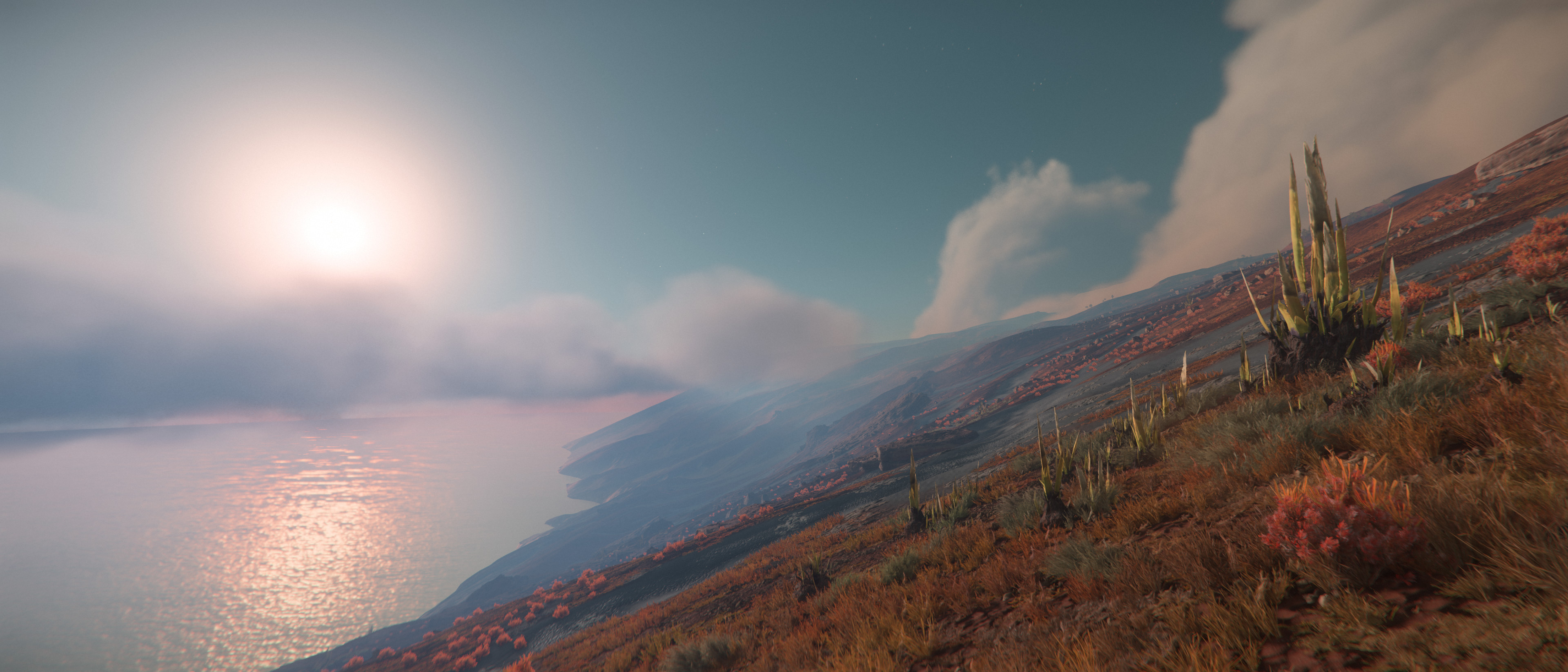
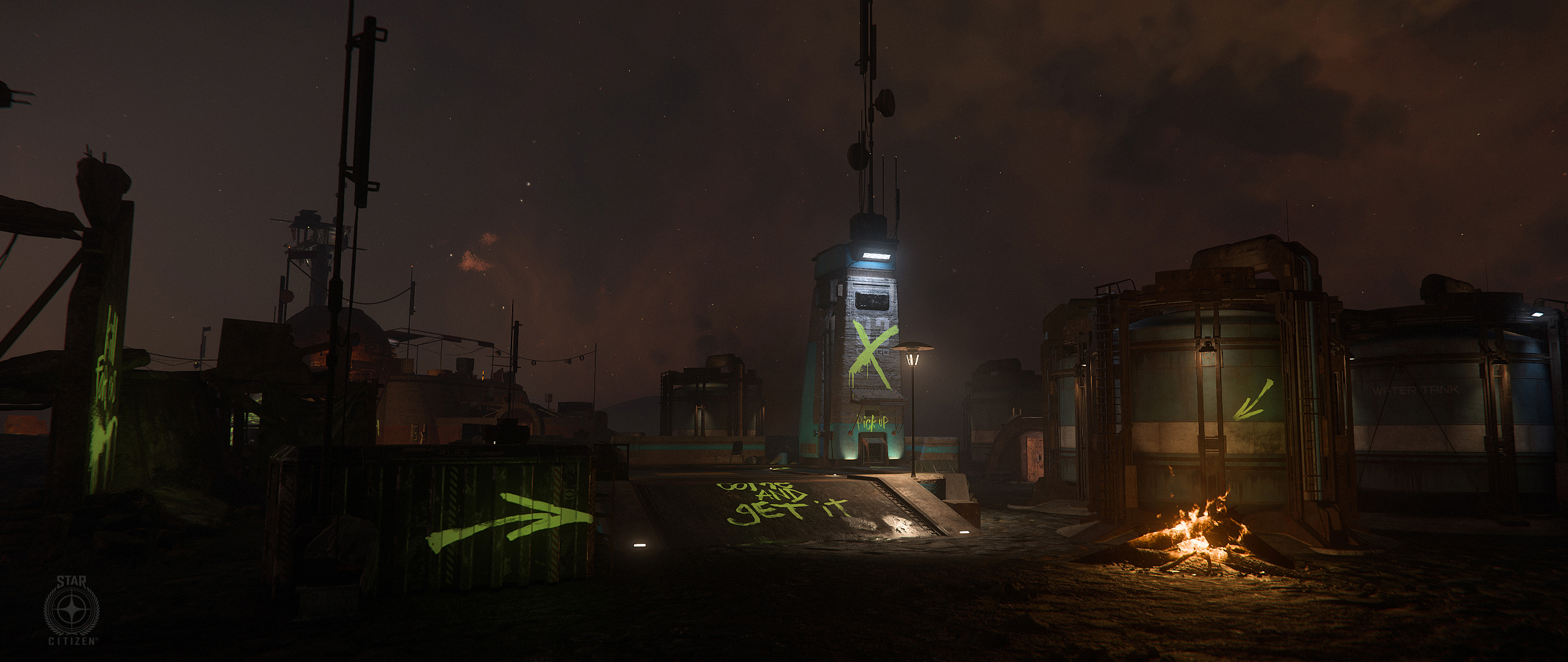
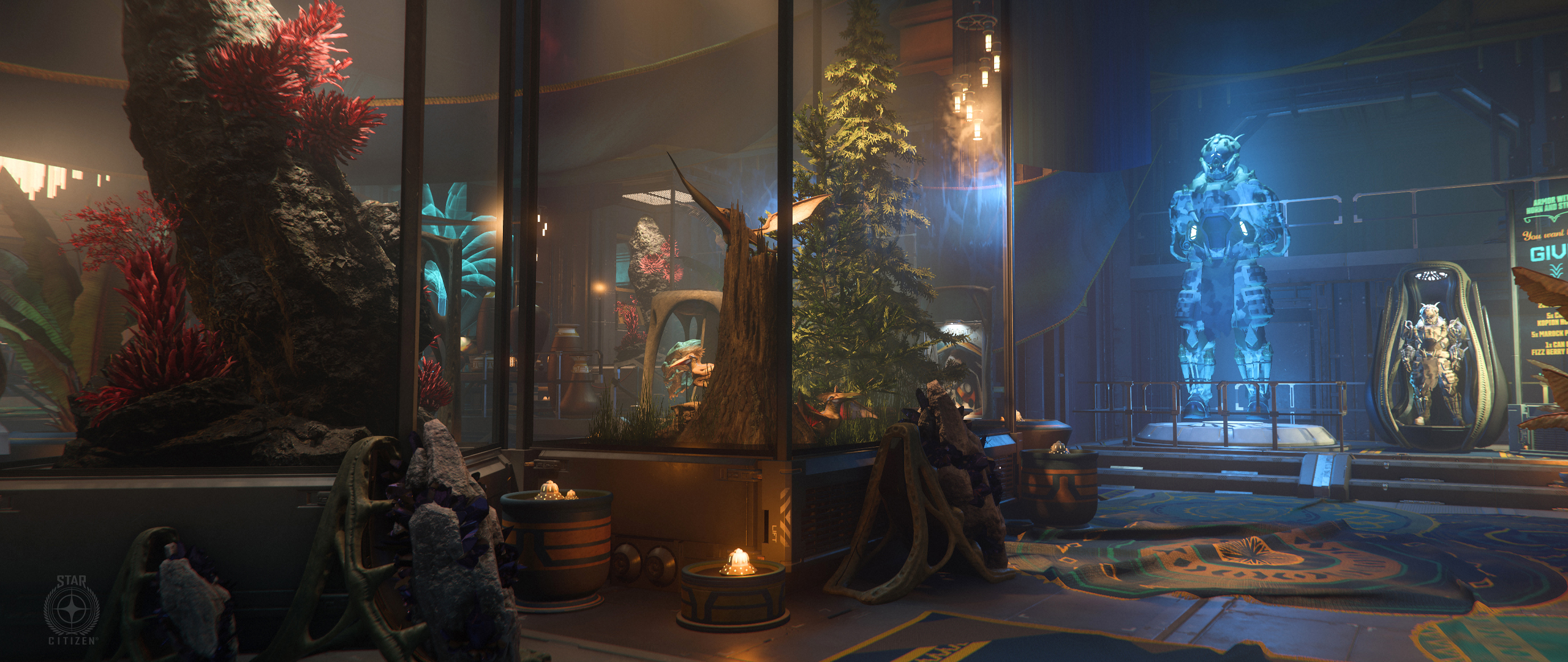
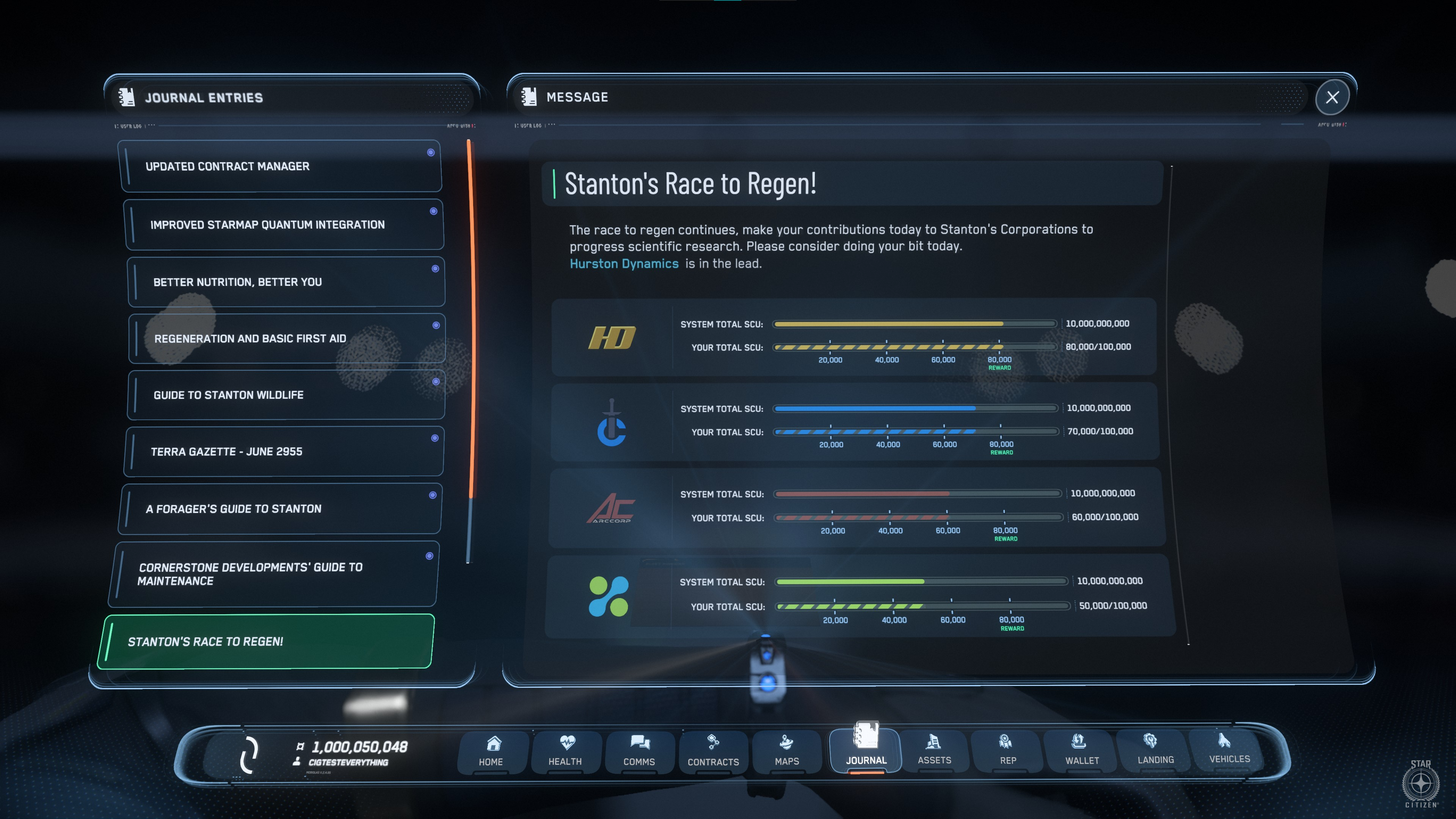
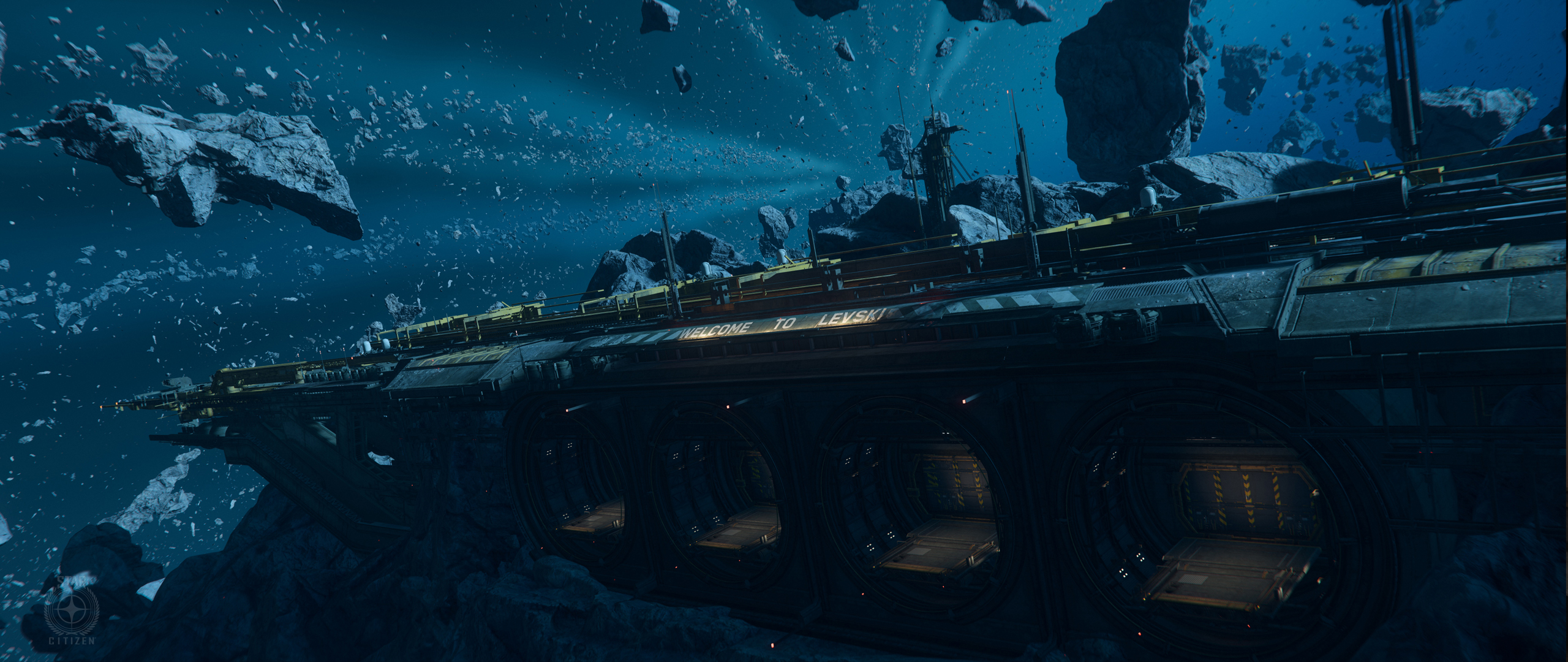
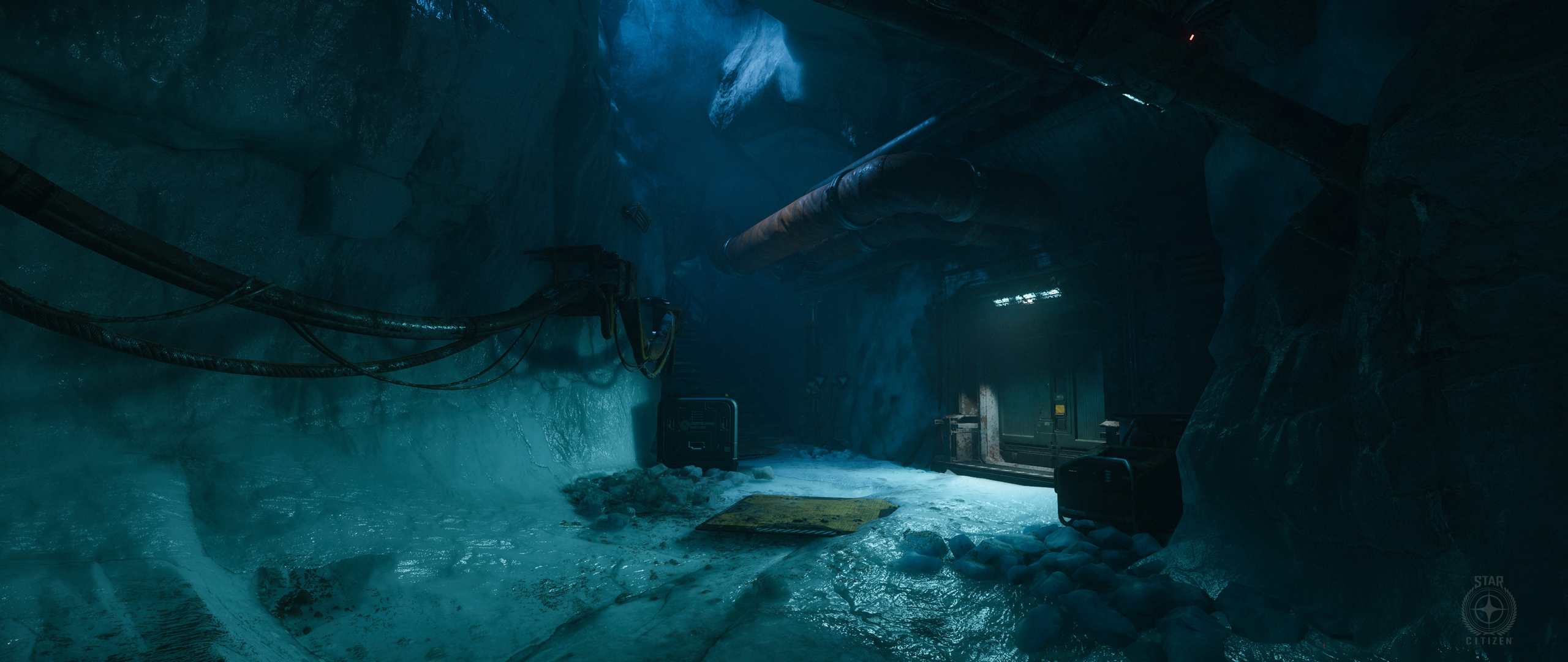
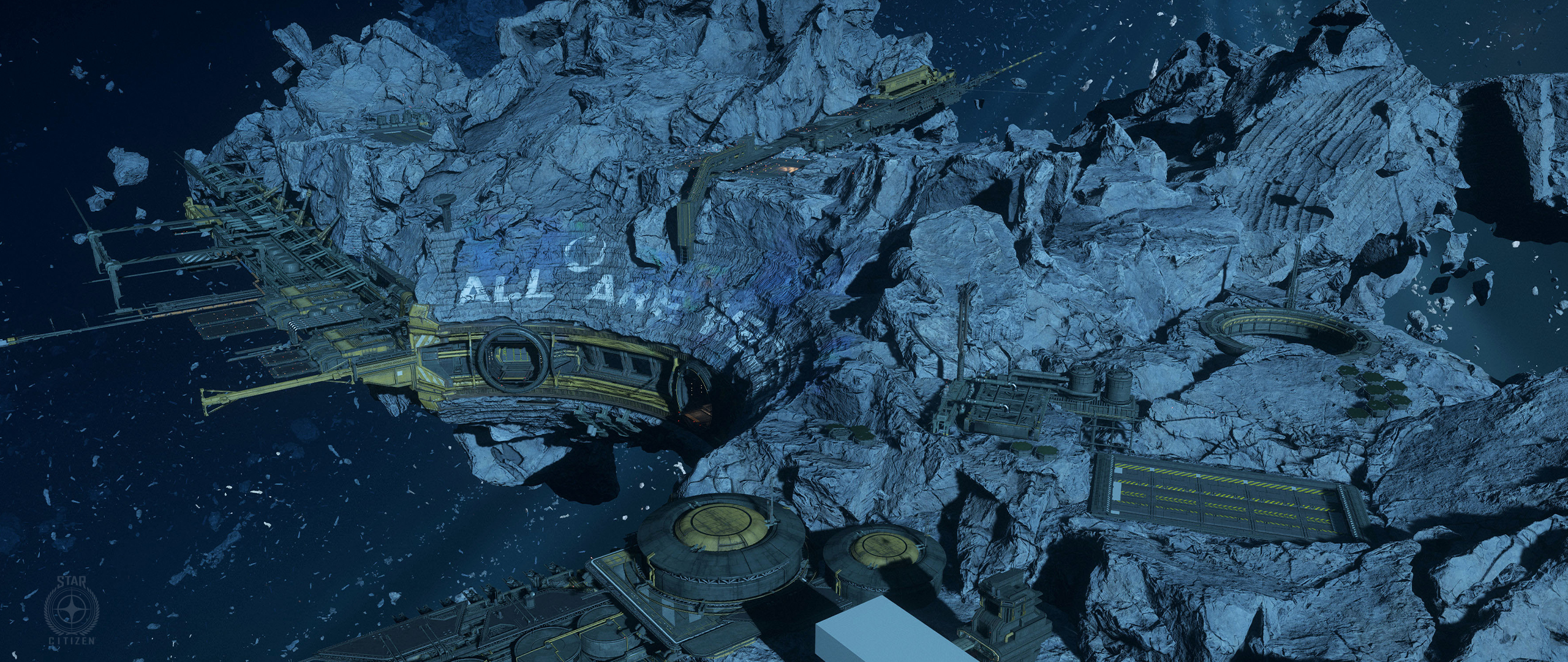
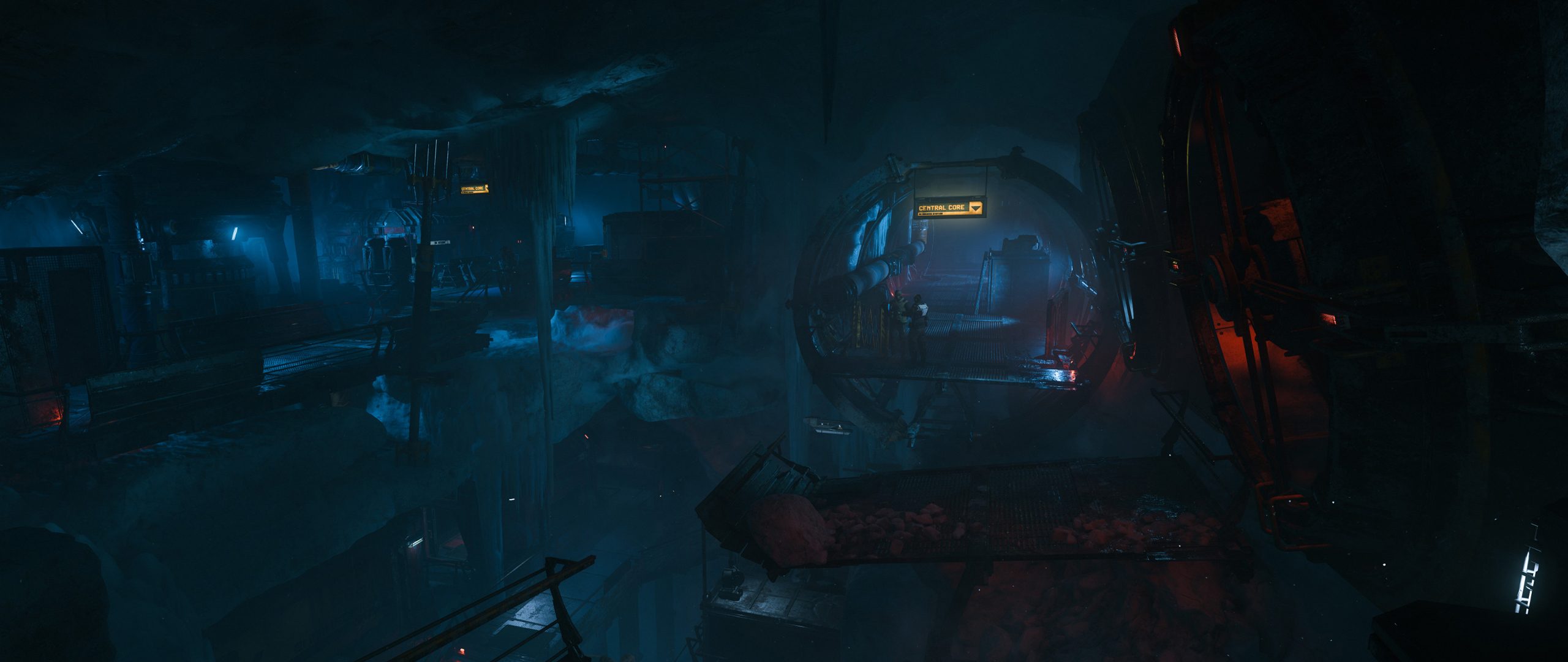
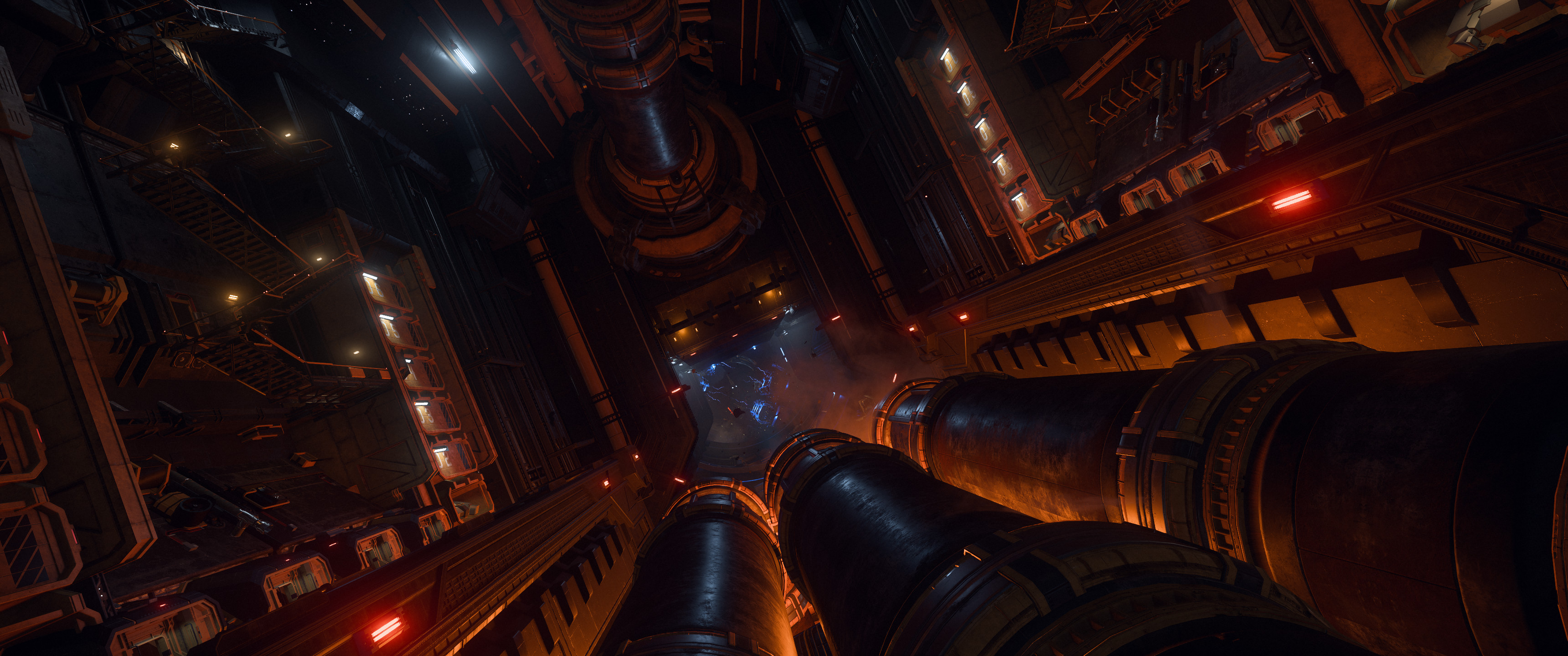
Metadata
- CIG ID
- 16438
- Channel
- Transmission
- Category
- Undefined
- Series
- Monthly Reports
- Comments
- 34
- Published
- 8 years ago (2018-03-01T00:00:00+00:00)