Star Citizen Monthly Report: February 2019
Transmission Undefined Monthly ReportsContent
February saw Cloud Imperium devs around the world working hard to deliver the incredible content for the soon-to-be-released Alpha 3.5 patch. Progress was made everywhere, from locations like ArcCorp to the gameplay developments afforded by the New Flight Model. Read on for the full lowdown from February’s global workload.
AI – Character
February’s roundup starts with the AI Team, who made improvements to the existing character collision avoidance system. The changes began with adjustments to the smooth locomotion path, with the data now coming from the collision avoidance calculation to make sure the character has enough free space. Time was spent generalizing the options a vendor can use so that designers no longer have to write them into the behaviors. Instead, the correct options are automatically selected based on the environment and (eventually) from the shop services. They’re also restricting combat behavior to allow better scalability when adding new tactics and are investigating some of the bugs found in the Alpha 3.4 release.
AI – Ships
Throughout February, the AI Team improved various aspects of dogfighting gameplay, including evasive maneuvers. Now, when an AI pilot has an enemy on its tail, it will try to utilize different break-aways with increasing and varied angles. It will also try to keep momentum and chain together attack maneuvers. To achieve this, the team exposed new ‘SmoothTurning’ subsumption tasks to the behavior logic. When detecting enemy fire, AI pilots will utilize evasive maneuvers to create a diversion. They also implemented automatic incoming/outgoing ship traffic over planetary landing areas. They are currently generalizing ship behaviors to enable the designers to easily set up traffic on multiple cities, capital ships, and so on.
Animation
Last month, Animation provided the remaining animation sets for previous characters already found in the Persistent Universe (PU), including Hurston, Battaglia, and Pacheco. They also finished off a new batch of animations for the ship dealer. Work continues on animations for future yet-to-be-announced characters too, which includes getting approval for the initial poses and animations before going forward with the final clean-up. American Sign Language (ASL) emotes are being added to the game and are currently being improved with the addition of facial animations. Finally, Animation is currently syncing with Cinematics for a few interesting segments that backers will get to enjoy soon…
Art – Tech
Tech Art invested significant effort into optimizing rig assets so that they work better with the facial runtime rig logic and the ‘look at’ and ‘mocap’ re-direction components. Since eye contact is one of the fundamental means of human communication, any error or tiny deviation can cause the ‘uncanny valley’ effect and immediately break immersion. “If the eyes of an actor converge just slightly too much, they appear cross-eyed. However, if they don’t converge enough, they appear to look through you, as if distracted. If the eyelids occlude the character’s iris just a little too much, which, depending on the distance, could amount to just 2-3 pixels vertically, they look sleepy or bored. Conversely, if they expose too much of the cornea, they appear more alert, surprised, or outright creepy.” So, the alignment of the virtual skeleton’s eye joints with respect to the eyeball and eyelid geometry is of utmost importance. Likewise, the ‘look-at’ system needs to control all relevant rig parameters and corrective blendshapes (not just the rotation of the eyeballs themselves) to create truly-believable runtime re-directions of the mocap animations. Alongside facial work, the team completed several weapons-related tasks, such as fixing offsets during reload animations and locomotion issues for the pistol set. They also completed R&D related to playing animations in sync with character usables within cinematic scenes and helped Design to unify the character tags in Mannequin.
Art – Environment
Predictably, the Environment Team is racing towards the completion of ArcCorp and Area 18 – they’re currently working with and implementing the custom advertising provided by the UI department. The planet itself is in the final art stage and now includes skyscrapers rising above the no-fly zone to provide the player with landing opportunities and interesting buildings to fly around. Concurrently, the ‘Hi-Tech’ common elements are steadily progressing, with the transit, habitation, and security areas all moving to the art pass stage. Players will see these common elements (alongside garages and hangars) when they’re added to microTech’s landing zone, New Babbage. The new transit connection between Lorville’s Teasa spaceport and the Central Business District (CBD) is almost ready for travellers. This route will allow players to move directly between the two locations and bypass L19, cutting travel time for high-end shoppers. Work on organics is ongoing, as are improvements to planet tech, with the artists hard at work creating a library of exotic-looking flora to fill the biomes of New Babbage with. Players can see it for themselves towards the end of the year. The community can also look forward to upcoming information on the early work the team has done on procedural caves.
Audio
Both the Audio Code Team and the sound designers finished their work on the new camera-shake and ship-vibration systems. Now, when an engine kicks in, the ship shakes and hums. This also extends to the player, with events like a ship powering up causing minor camera shake. The sound designers also added new sound samples to a range of ships as part of the rollout of the New Flight Model. By adding ‘one-shot’ samples to each of the various thrusters, they brought out more complexity in the sounds heard during flight. The Audio Team spent the majority of the month creating the sounds of Area 18. Due to the melting pot of ideas and themes present in the new area, the sound designers tested new methods to bring out the unique atmosphere. Additionally, they created the sound profiles and samples for the Gemini S71 assault rifle and Kastak Arms CODA pistol, both of which will appear in the PU and SQ42. Currently, the Audio Code Team is working towards an updated tool that better allows the sound designers to implement created assets in-engine whilst simultaneously testing how they sound.
Backend Services
Backend Services continued to lay the foundation for the new diffusion network to help scalability for the backend structure of the game. Emphasis is on ensuring the Dedicated Game Servers (DGS) correctly connect to the new diffusion services, particularly the variable, leaderboard, and account services. February marked the near-end of work on the new Item Cache Service (a massive portion of the backend has now turned micro-service) and began the end-point between DGS and this service, too. As work is completed on the new diffusion services, testing will ensure a smooth transition to the new network. Support was also added for subsumption services to read directly into the DataCore P4k system for increased efficiency and unification. With the approaching publish of Alpha 3.5, Backend Services began work on logistics, syncing closely with DevOps to ensure that new services are up and running correctly while maintaining legacy services where necessary.
Community
The team celebrated Valentine’s Day with community-made cards and limited-time ship offers, including Anvil’s F7C-M Heartseeker – a special version of the Super Hornet shooting straight for the heart. During the Be my Valentine greeting card contest, most Citizens got creative with their favorite image editing software, though some went old-school with scissors and crayons to create fantastic crafts to share their love across the galaxy. Also this month, Argo Astronautics released their latest addition to the ‘verse, the SRV. The ‘Standard Recovery Vehicle’ is built for tugging ships, ground vehicles, and massive cargo containers through the stars using its integrated tractor tech. If you’re looking for more information about this rough and rugged ship, head to the Q&A that answers questions voted-on by the community. As a bonus, Shipmaster General John Crewe stopped by Reverse the Verse LIVE for some in-depth tug-talk. In the February issue of Jump Point (our subscriber-exclusive magazine), Ben Lesnick took a detailed dive into the ARGO SRV’s design process and went on a worker’s tour of Hurston. The Narrative Team also introduced us to the Human holiday Stella Fortuna and shed light on the history of the revered Rust Society. A major update to the Star Citizen roadmap gave a look at what’s coming to the Persistent Universe in 2019 and what can be expected in upcoming releases. Released in January, but worthy of another mention, is the official Star Citizen Fankit, which was put together to help all of you share your enthusiasm and engagement. Star Citizen lives by the support it receives from the community, so take a look at this treasure trove of assets and get creating! The team is also excited to announce that our physical merchandise will soon be receiving a well-deserved face-lift. Having received a lot of feedback over the years, it’s clear that Citizens are passionate about merch and to make the store experience the best it can be, your input was needed. Thanks to everyone who contributed feedback to our thread on Spectrum!
Content – Characters
The Character Team revisited the hair development pipeline in February. With the help of the Graphics Team, they developed new tools and shader tech to improve the realism of hair while maintaining quality and performance. More work went into mission-giver Pacheco, including textures and rigging, with her hairstyle being used to trial the new hair pipeline. Work continues on the assets required for DNA implementation and the female player character, while refinement of the Xi’an concept is making great progress.
Design
Throughout February, Design focused on implementing Area 18’s shops, NPCs, and usables. Last month marked the end of implementation, with March being used for polish to ensure a believable and immersive experience upon release. The team also gained a new member to help with mission implementation and improvement, who is currently setting their sights on the Emergency Communication Network (ECN) mission set. Regarding the economy, the US Design Team worked with their UK counterparts on the objective criteria and value of objects in-game, laying down the track for acquiring item properties and their values. A system was built to help create an abstract representation, which is both robust and modular enough to allow easy adjustment in the future when the details are finalized.
DevOps
DevOps had a busy month working on the build system and pipeline that supports feature stream development. After several long nights, they rolled out the upgrades and have been happy with the results so far – internal systems are running smoothly without errors and each evolution improves efficiency and storage consumption. They’re now attempting to further compress existing data which, when multiplied by hundreds of thousands of individual files, will make a real impact to the dev’s daily development efforts.
Engineering
February saw the Engine Team spend time on general Alpha 3.5 support, such as profiling, optimization, and bug fixing. They also improved the instance system used in compute skinning and refactored it on the CPU and shader for better maintainability, created a budget-based output-buffer system for skinning results (so they only have to skin once per frame), made more tangent reconstruction optimizations, and worked on wrap-deformation using the color stream. Basic HDR display support was added to the editor, as was a new hue-preserving display mapping curve suitable for HDR display output. The team provided material layer support for planet tech v4 and continued to improve character hair, which included initial hair mask, support for edge masking, and pixel depth offset. Game physics is progressing with Projectile Manager 2.0, as well as optimizations to wrapped grids and state updates. Support was added for ocean Fast Fourier Transform (FFT) wave generation to physics buoyancy calculations, as well as exposed optimized terrain meshes. A major system initialization clean-up was completed as part of an initiative to share core engine functionality with PU services, work began on the lockless job manager (a complete overhaul for faster response in high-load scenarios), and a new load time profiler was created. The team are currently wrapping up the ‘ImGUI’ integration and introducing a temporary allocator for more efficiency when containers are used on stack. They made the switch to the Clang 6 compiler to build Linux targets (including compilation cleanup of the entire code base) and plan to switch to the latest stable release (Clang 8.x) in the near future. Finally, they finished a ‘create compile time’ analysis tool (utilizing new Visual C++ front and backend profiler flags) to gather, condense, and visualize reasons for slow compile and link times. As a result, various improvements have already been submitted and further action-items defined.
Features – Gameplay
A large portion of Gameplay Feature’s month was dedicated to implementing the new DNA feature into the character customizer. In addition, the team was responsible for creating and setting up the user interface (UI) and accommodating the female playable character, both of which are scheduled for Alpha 3.5. Another major focus was on video streaming for comms calls, which consisted of a refactor of the comms component to utilize the voice service call mechanism. Research was made into the VP9 streaming format and video streaming improvements were completed that will be rolled out in the upcoming release. Lastly, support was given to the US-based Vehicle Features Team, with updates to the turret sensitivity HUD, gimbal assist UI, and the shopping service entity registration.
Features – Vehicles
Gimbal Assist and its related HUD improvements were finalized and polished, allowing for better balancing of this new weapon control scheme. Turrets were also improved, as the team added a HUD and keybinds for input sensitivity, implemented adjustable speeds for gimbal target movement based on proximity to center aim, and fixed bugs with snapping and erratic movement. A lot of work went into scanning improvements, which included adjusting the area for navpoint scanning, enabling use of the navpoint hierarchy, and adding a Boolean to opt into the scanning data. This endeavor also covered adjustments to make scanning more involving by setting up AI turrets to generate signatures and be scannable and adding specific icons for scanned/unscanned targets. Ping and blob were implemented to display on the radar too, including focus angle and ping fire. To round out the month, they continuing to make item port tech optimizations, developed tech for utilizing geometry component tags in the paint system, and fixed a handful of crash bugs.
Graphics
Last month, the Graphics Team’s work on the PU was spread between several smaller tasks. There were many shader requests from the artists, such as adding new features to the hard surface shader and ISO support for decals in the forward rendering pipeline. The team also continued with the CPU optimizations from last month. This included a 3x performance saving on the cost of building per-instance data buffers for the GPU and better support for the depth pre-pass to help occlude hidden parts of the frame with less CPU overheads. To help the artists optimize their content, the team worked on an improved render-debugging tool that reports how many draw instructions (draw-call) a particular object requires along with a breakdown of why each instruction was needed. Once complete, this will allow the artists to dig into their material and mesh setups to save valuable CPU time.
Level Design
The Level Design Team soldiered on with ArcCorp’s Area 18, bringing the designer whitebox up to greybox. They began planning the modular space stations that will be built this year too, including looking at the libraries, rooms, and content that goes into them. The procedural tool is also now at a stage where they can slowly start ramping up the modular station production.
Live Design
The Live Team refactored existing missions to make them scalable to make more content available in the planetary system (other than Crusader). Significant progress was made on a new drug-stealing mission for Twitch Pacheco, as well as a BlackJack Security counter-mission that tasks less morally-corrupt players with destroying the stash. Another focus was on implementing a variety of encounters with security forces and bounty hunters when the player holds a high crime stat. As well as practical work, time was taken to define the next tier of many aspects of the law system, such as punishment, paying fines, bounty hunting, and so on.
Lighting
Last month, the Lighting Team focused on developing the look of Area 18. Lighting Area 18 is a mixture of clean-up work from the previous versions to match new standards and lighting the new exterior layout to a series of targets set by the Art Director. The team is working closely with the Environment Art and VFX teams to ensure that new advertising assets and visual effects ‘pop’ from the environment and provide interesting and varied visuals.
Narrative
Working closely with the Environment Art and Mission Design teams, February saw the Narrative Team further fleshing out of lore relating to ArcCorp and its moons. From new mission giver contract text to the catchy slogans gracing Area 18’s numerous billboards, a lot of additional lore was created to bring these locations to life. Additionally, expanded wildline sets for security pilots, bounty hunters, and combat assist pilots were scripted and recorded. The AI and Mission teams will use these sets to begin prototyping and testing out new gameplay for inclusion in future builds. Also, the Narrative Team made progress on generating the specific text needed for on-screen mission objectives. Currently, this is placeholder text from the designers who worked on levels, but moving forward, the hope is to begin using the proper in-lore objectives.
Player Relations
The Player Relations Team was busy preparing for Alpha 3.5 (including getting ready to test the New Flight Model) as well as boxing off the work created over the holiday period. “As always, we’d like to point all players to our growing Knowledge Base, which now has 120+ articles and saw almost 450,000 visitors this month! We will continue to grow this by adding more ‘How To’ articles, patch notes, and live service notifications there as well as on Spectrum.”
Props
February saw headway into Area 18’s props: the core street furniture is now in and the team has moved onto the dressing pass, adding in new assets to give life to the streets, alleyways, and landing zone. As the month closed out, the team jumped into release mode to get a head start squashing bugs and generally tightening up the upcoming release.
QA
Things ramped up on the publishing side in February as the team prepared Alpha 3.5 for the Evocati and PTU. Testing continues on the New Flight Model and other systems as they come online, such as the new weapons, ships, and locations. QA leadership continues to train the newer testers and improve the overall testing process. The AI Feature Team kept the Frankfurt-based QA testers busy with new features, such as the improved avoidance system and new break-away maneuvers. Testing mainly consists of making sure they’re working as intended, as well as noting visible improvements to what was already in place (in the case of the avoidance system). Combat AI received perception updates which were tested by QA to address issues where the FPS AI would not recognize the player being present in their vicinity. On the backend, changes to the subsumption visualizer are being tested to ensure no new issues have been introduced in preparation for their full integration into the editor. Testing for ArcCorp and Area 18 is currently underway too. The Universe Team discovered that mining entities were not appearing in the client due to discrepancies in how they were spawned in the server. This was tracked down and fixed, though testing will continue to make sure it’s working as intended.
Ships
The Vehicle Content Team wrapped up the MISC Reliant Mako, Tana, and Sen variants for Alpha 3.5. They’re now in testing with QA who are addressing bugs before the vehicles go live. The designers and tech artists have been busy with the Origin 300i, which will reach QA for testing in the near future. Back in the UK, the team continued production on the 890 Jump, bringing more rooms into the final art stage from greybox (including the hangar area). The Carrack is heading towards a greybox-complete state and select areas are being polished for review. Development continues on the Banu Defender which is utilizing a new style of production that caters to its organic art style. ZBrush is being used to sculpt the interior before transferring the high-density model to 3ds Max, where it is then rebuilt (low-poly) for the game engine. A large portion of the exterior greybox is complete and looking fantastic. Last but by no means least, the interior updates to the Vanguard wrapped up with essentially the entire area from the cockpit seat backwards being completely redone. This is more than was initially anticipated, but the team feels that it’s worth it. Now that the interior rework has been finalized and the framework for the variants agreed upon, the Ship Team can start on the exterior changes to accommodate them and continue with the variant-specific items.
System Design
The System Design Team is working on improving and upgrading the no-fly zones used across ArcCorp. Since the existing system now needs to support an entire planet, it has proven quite a challenge. For social AI, the team’s working on unifying vendor behaviors and making sure they’re built in a modular fashion. For example, the team can easily graft new actions onto the base behavior of a shop keeper to allow them to pick up objects, give them to the player, and interact with things on the counter without having to build new ones from scratch. As with social AI, the team focused on restructuring FPS AI behaviors to make them more modular, with the goal to make it easier to implement specific chunks of logic. For mining, they added new mineable rocks on ArcCorp’s moons. Wala in particular will have a new type of rock that fits better with the crystalline formations available on the moon. Finally for System Design, AI traffic over Area 18 is currently being developed. The team’s starting small, with a few ships landing and taking off around the spaceport, but they’re also investigating ways to expand it while being mindful of performance.
Turbulent
RSI Platform: On February 14th, Turbulent supported the announcement of a new flyable variant of the Super Hornet, the F7C-M Heartseeker. They also made major updates to the CMS backend which required all hands on deck. Services: This month’s game service work was focused around developing support for transporting video streams over the comms channels. This will allow the streaming of a user’s face/in-game texture to another player outside of the bind culling bubble, enabling in-game video calls over wider distances. This method also enables the transmission of in-game video streams to web clients. Turbulent spent considerable time standardizing services to enable them to run within a new local development environment. This will allow the entire Star Citizen universe’s services to run locally on dev systems to develop and iterate with the entire stack. The Turbulent Services Team also began work on an administration interface for game designers and game operators to display real-time information about the state of the universe. This application can display information about groups, lobbies, and voice channels along with details of online players, quantum routes, and probability volumes.
UI
As in January, UI supported the Environment Team with in-fiction advertising and branding for Area 18, including animation and hologram textures. They also made headway on the 3D area map using the concepts shown last month as visual targets. Finally, they began working out how to bring the rental functionality from the Arena Commander frontend to in-game consoles in Area 18.
VFX
The VFX Team updated the existing particle lighting system to a more modern system. The previous version was based on tessellation, which increased the rendering cost and had limitations on shadow resolution. The new one is a global change that will remove the need for tessellation and improve shadow receiving for crisper, smoother shadows. ArcCorp’s Lyria and Wala will be the first moons to use this new particle lighting system when it’s ready for deployment. It will help the particles integrate into the moons more realistically and address issues when the particles have long shadows going through them, such as during sunrise and sunset. They also continued to iterate on thruster damage effects and began rolling it out to all ships. Several new weapon effects were worked on, including a new ballistic hand cannon and ballistic assault rifle. They also carried out extensive visual exploration for the new Tachyon energy weapon class. Finally, significant time was invested in improving the VFX editor’s UI layout and functionality. Although not as glamorous as planet dressing and effects, improving the quality-of-life for artists is important and helps them to work faster too.
Weapons
The Weapon Art Team completed the Gemini S71, Kastak Arms Coda, Banu Singe Tachyon cannons, Gallenson Tactical ballistic cannon reworks, and five variants of the Aegis Vanguard nose guns. WE’LL SEE YOU NEXT MONTH…
Im Februar arbeiteten Cloud Imperium Entwickler auf der ganzen Welt hart daran, die unglaublichen Inhalte für den bald erscheinenden Alpha 3.5 Patch bereitzustellen. Überall wurden Fortschritte erzielt, von Standorten wie ArcCorp bis hin zu den Gameplay-Entwicklungen des New Flight Model. Lesen Sie weiter für den vollständigen Tiefpunkt der globalen Arbeitsbelastung vom Februar.
KI - Charakter
Die Razzia im Februar beginnt mit dem KI-Team, das das bestehende System zur Vermeidung von Charakterkollisionen verbessert hat. Die Änderungen begannen mit Anpassungen des reibungslosen Bewegungspfades, wobei die Daten nun aus der Kollisionsvermeidungsberechnung stammen, um sicherzustellen, dass der Charakter genügend Freiraum hat. Die Zeit wurde damit verbracht, die Optionen zu verallgemeinern, die ein Anbieter nutzen kann, so dass Designer sie nicht mehr in das Verhalten schreiben müssen. Stattdessen werden die richtigen Optionen je nach Umgebung und (eventuell) aus den Shop-Services automatisch ausgewählt. Sie schränken auch das Kampfverhalten ein, um eine bessere Skalierbarkeit beim Hinzufügen neuer Taktiken zu ermöglichen, und untersuchen einige der Fehler, die in der Alpha 3.4-Version gefunden wurden.
KI - Schiffe
Im Laufe des Monats Februar verbesserte das KI-Team verschiedene Aspekte des Dogfighting-Gameplays, einschließlich Ausweichmanöver. Nun, wenn ein KI-Pilot einen Feind im Visier hat, wird er versuchen, verschiedene Break-Aways mit zunehmenden und variierenden Winkeln zu nutzen. Es wird auch versuchen, den Schwung aufrechtzuerhalten und Angriffsmanöver zu ketten. Um dies zu erreichen, hat das Team neue "SmoothTurning"-Aufgaben der Verhaltenslogik hinzugefügt. Bei der Erkennung von feindlichem Feuer werden die KI-Piloten Ausweichmanöver einsetzen, um eine Ablenkung zu schaffen. Sie implementierten auch den automatischen ein- und ausgehenden Schiffsverkehr über planetarische Landeplätze. Sie verallgemeinern derzeit das Schiffsverhalten, damit die Designer den Verkehr auf mehreren Städten, Großschiffen usw. einfach einrichten können.
Animation
Letzten Monat lieferte Animation die restlichen Animationssets für frühere Charaktere, die bereits im Persistent Universe (PU) gefunden wurden, einschließlich Hurston, Battaglia und Pacheco. Sie beendeten auch eine neue Reihe von Animationen für den Schiffshändler. Die Arbeit an Animationen für zukünftige, noch zu ankündigende Charaktere wird ebenfalls fortgesetzt, einschließlich der Genehmigung der ersten Posen und Animationen, bevor mit der endgültigen Bereinigung begonnen wird. American Sign Language (ASL) Emotes werden dem Spiel hinzugefügt und derzeit durch Gesichtsanimationen verbessert. Schließlich synchronisiert sich Animation derzeit mit Cinematics für einige interessante Segmente, die den Geldgebern bald gefallen werden.....
Kunst - Technik
Tech Art investierte erhebliche Anstrengungen in die Optimierung der Rigg-Assets, damit sie besser mit der Logik der fazialen Laufzeit-Riggs und den Komponenten "look at" und "mocap" zur Umleitung funktionieren. Da Blickkontakt eines der grundlegenden Mittel der menschlichen Kommunikation ist, kann jeder Fehler oder jede winzige Abweichung den Effekt des "unheimlichen Tals" verursachen und das Eintauchen sofort unterbrechen. "Wenn die Augen eines Schauspielers nur geringfügig zu sehr zusammenlaufen, wirken sie schielend. Wenn sie jedoch nicht genug zusammenlaufen, scheinen sie durch dich hindurchzuschauen, als ob sie abgelenkt wären. Wenn die Augenlider die Iris des Charakters nur ein wenig zu sehr verschließen, was je nach Entfernung nur 2-3 Pixel vertikal betragen kann, wirken sie schläfrig oder gelangweilt. Umgekehrt, wenn sie zu viel von der Hornhaut freilegen, wirken sie wacher, überrascht oder geradezu gruselig." Daher ist die Ausrichtung der Augengelenke des virtuellen Skeletts in Bezug auf Augapfel und Augenlidgeometrie von größter Bedeutung. Ebenso muss das "look-at"-System alle relevanten Rig-Parameter und Korrekturmischungen steuern (nicht nur die Rotation der Augäpfel selbst), um wirklich unglaubliche Laufzeitumlenkungen der Mocap-Animationen zu erzeugen. Neben der Gesichtsarbeit erledigte das Team mehrere waffenbezogene Aufgaben, wie z.B. das Fixieren von Offsets während des Nachladens von Animationen und Bewegungsprobleme beim Pistolensatz. Sie schlossen auch die Forschung und Entwicklung im Zusammenhang mit dem Abspielen von Animationen ab, die mit Charakter-Usables in Filmszenen synchronisiert sind, und halfen Design, die Charakter-Tags in Mannequin zu vereinheitlichen.
Kunst - Umwelt
Vorhersehbar ist, dass das Umweltteam auf die Fertigstellung von ArcCorp und Area 18 zusteuert - sie arbeiten derzeit mit der kundenspezifischen Werbung der UI-Abteilung und setzen diese um. Der Planet selbst befindet sich in der letzten Kunstphase und beinhaltet nun Wolkenkratzer, die sich über die Flugverbotszone erheben, um dem Spieler Landemöglichkeiten und interessante Gebäude zum Umherfliegen zu bieten. Gleichzeitig schreiten die gemeinsamen Elemente der "Hi-Tech" stetig voran, wobei die Bereiche Transit, Wohnen und Sicherheit alle auf die Phase des Kunstpasses übergehen. Die Spieler werden diese gemeinsamen Elemente (neben Garagen und Hangars) sehen, wenn sie der Landezone von microTech, New Babbage, hinzugefügt werden. Die neue Transitverbindung zwischen dem Raumfahrthafen Teasa in Lorville und dem Central Business District (CBD) ist für Reisende fast fertig. Auf dieser Route können die Spieler direkt zwischen den beiden Standorten wechseln und L19 umgehen, was die Reisezeit für High-End-Käufer verkürzt. Die Arbeit an organischen Produkten ist im Gange, ebenso wie die Verbesserung der Planetentechnologie, wobei die Künstler hart daran arbeiten, eine Bibliothek mit exotisch aussehender Flora zu schaffen, mit der sie die Biome von New Babbage füllen können. Gegen Ende des Jahres können sich die Spieler davon selbst überzeugen. Die Community kann sich auch auf kommende Informationen über die frühen Arbeiten des Teams an prozeduralen Höhlen freuen.
Audio
Sowohl das Audio Code Team als auch die Sounddesigner haben ihre Arbeit an den neuen Kamera-Shake- und Schiffsvibrationssystemen abgeschlossen. Jetzt, wenn ein Motor anspringt, zittert und summt das Schiff. Dies gilt auch für den Spieler, wobei Ereignisse wie das Hochfahren eines Schiffes zu leichten Kameraverwacklungen führen. Im Rahmen des Rollouts des neuen Flugmodells haben die Sound-Designer auch neue Sound-Samples in eine Reihe von Schiffen integriert. Durch das Hinzufügen von One-Shot-Samples zu jedem der verschiedenen Triebwerke wurde die Komplexität der während des Fluges hörbaren Geräusche erhöht. Das Audio-Team verbrachte den größten Teil des Monats damit, die Sounds von Area 18 zu erstellen. Durch den Schmelztiegel der im neuen Bereich vorhandenen Ideen und Themen erprobten die Sound-Designer neue Methoden, um die einzigartige Atmosphäre hervorzuheben. Zusätzlich erstellten sie die Klangprofile und Samples für das Gemini S71 Sturmgewehr und die Kastak Arms CODA Pistole, die beide in der PU und SQ42 erscheinen werden. Derzeit arbeitet das Audio Code Team an einem aktualisierten Tool, das es den Sound Designern besser ermöglicht, die erstellten Assets direkt im Motor zu implementieren und gleichzeitig zu testen, wie sie klingen.
Backend Services
Backend Services legte weiterhin den Grundstein für das neue Diffusionsnetzwerk, um die Skalierbarkeit der Backend-Struktur des Spiels zu verbessern. Der Schwerpunkt liegt auf der Sicherstellung, dass sich die Dedicated Game Server (DGS) korrekt mit den neuen Diffusionsdiensten verbinden, insbesondere mit den Variablen-, Leaderboard- und Account-Diensten. Im Februar war die Arbeit am neuen Item Cache Service kurz vor dem Abschluss (ein großer Teil des Backends ist inzwischen zum Micro-Service geworden) und begann mit dem Endpunkt zwischen DGS und diesem Service. Da die Arbeiten an den neuen Diffusionsdiensten abgeschlossen sind, werden die Tests einen reibungslosen Übergang zum neuen Netz gewährleisten. Darüber hinaus wurde die Unterstützung für Abonnementdienste hinzugefügt, die direkt in das DataCore P4k-System eingelesen werden können, um die Effizienz und Vereinheitlichung zu erhöhen. Mit der bevorstehenden Veröffentlichung von Alpha 3.5 begann Backend Services mit der Arbeit an der Logistik und synchronisierte sich eng mit DevOps, um sicherzustellen, dass neue Dienste korrekt gestartet und ausgeführt werden, während gleichzeitig bei Bedarf ältere Dienste gepflegt werden.
Community
Das Team feierte den Valentinstag mit Gemeinschaftskarten und zeitlich begrenzten Schiffsangeboten, darunter Anvils F7C-M Heartseeker - eine Sonderversion der Super Hornet, die direkt ins Herz schoss. Während des Be my Valentine Grußkartenwettbewerbs wurden die meisten Bürger kreativ mit ihrer Lieblings-Bildbearbeitungssoftware, obwohl einige mit Scheren und Buntstiften in die alte Schule gingen, um fantastische Kunsthandwerke zu entwickeln, die ihre Liebe in der ganzen Galaxie teilen. Ebenfalls diesen Monat veröffentlichte Argo Astronautics seinen neuesten Zusatz zum Vers, dem SRV. Das "Standard-Rettungsfahrzeug" ist für das Schleppen von Schiffen, Bodenfahrzeugen und riesigen Frachtcontainern durch die Sterne mit seiner integrierten Traktortechnik konzipiert. Wenn Sie nach weiteren Informationen über dieses raue und robuste Schiff suchen, besuchen Sie die Fragen und Antworten, die von der Community beantwortet werden. Als Bonus hielt Shipmaster General John Crewe bei Reverse the Vers LIVE an, um ein ausführliches Tauziehen zu ermöglichen. In der Februar-Ausgabe von Jump Point (unserem abonnentenexklusiven Magazin) tauchte Ben Lesnick ausführlich in den Designprozess des ARGO SRV ein und machte eine Arbeitertour durch Hurston. Das Narrative Team stellte uns auch den Human Holiday Stella Fortuna vor und beleuchtete die Geschichte der verehrten Rust Society. Ein größeres Update der Star Citizen-Roadmap gab einen Einblick in das, was 2019 in das Persistent Universe kommt und was in den kommenden Releases zu erwarten ist. Im Januar veröffentlicht, aber einer weiteren Erwähnung wert, ist der offizielle Star Citizen Fankit, der zusammengestellt wurde, um euch allen zu helfen, eure Begeisterung und euer Engagement zu teilen. Star Citizen lebt von der Unterstützung, die es von der Gemeinschaft erhält, also werfen Sie einen Blick auf diese Schatzkammer von Vermögenswerten und lassen Sie sich inspirieren! Das Team freut sich auch, bekannt zu geben, dass unsere physischen Waren bald ein wohlverdientes Facelifting erhalten werden. Nachdem wir im Laufe der Jahre viele Rückmeldungen erhalten haben, ist es klar, dass die Bürgerinnen und Bürger eine Leidenschaft für Merchandise haben und dass Ihr Input notwendig war, um das Erlebnis im Geschäft so gut wie möglich zu gestalten. Vielen Dank an alle, die Feedback zu unserem Thread auf Spectrum gegeben haben!
Inhalt - Charaktere
Das Character Team besuchte im Februar die Haarentwicklungspipeline erneut. Mit Hilfe des Grafik-Teams entwickelten sie neue Tools und Shader-Technologie, um den Realismus des Haares zu verbessern und gleichzeitig Qualität und Leistung zu erhalten. Mehr Arbeit floss in den Missionsspender Pacheco, einschließlich Texturen und Takelage, wobei ihre Frisur verwendet wurde, um die neue Haarpipeline zu testen. Die Arbeiten an den für die DNA-Implementierung erforderlichen Ressourcen und dem weiblichen Spielercharakter werden fortgesetzt, während die Weiterentwicklung des Xi'an-Konzepts große Fortschritte macht.
Design
Im Laufe des Monats Februar konzentrierte sich Design auf die Implementierung von Area 18's Shops, NPCs und Usables. Der letzte Monat markierte das Ende der Implementierung, wobei März für die Politur verwendet wurde, um eine glaubwürdige und immersive Erfahrung nach der Veröffentlichung zu gewährleisten. Das Team gewann auch ein neues Mitglied, das bei der Umsetzung und Verbesserung der Mission hilft, die derzeit auf die Mission des Emergency Communication Network (ECN) setzt. Was die Wirtschaft betrifft, so arbeitete das US-Designteam mit seinen britischen Kollegen an den objektiven Kriterien und dem Wert von Objekten im Spiel und legte den Weg für den Erwerb von Objekteigenschaften und deren Werten fest. Ein System wurde entwickelt, um eine abstrakte Darstellung zu erstellen, die sowohl robust als auch modular genug ist, um in Zukunft eine einfache Anpassung nach Fertigstellung der Details zu ermöglichen.
DevOps
DevOps hatte einen arbeitsreichen Monat lang an dem Build-System und der Pipeline gearbeitet, die die Entwicklung von Feature-Streams unterstützt. Nach mehreren langen Nächten führten sie die Upgrades ein und waren mit den bisherigen Ergebnissen zufrieden - interne Systeme laufen fehlerfrei und jede Evolution verbessert die Effizienz und den Speicherverbrauch. Sie versuchen nun, bestehende Daten weiter zu komprimieren, die, wenn sie mit Hunderttausenden von Einzeldateien multipliziert werden, einen echten Einfluss auf die tägliche Entwicklungsarbeit der Entwickler haben.
Ingenieurwesen
Im Februar verbrachte das Engine Team Zeit mit der allgemeinen Unterstützung von Alpha 3.5, wie z.B. Profilerstellung, Optimierung und Fehlerbehebung. Sie verbesserten auch das Instanzensystem, das beim Compute Skinning verwendet wurde, und überarbeiteten es auf der CPU und dem Shader für eine bessere Wartbarkeit, erstellten ein budgetbasiertes Ausgabepuffersystem für Skinning-Ergebnisse (so dass sie nur einmal pro Frame skinnen müssen), machten tangentiale Rekonstruktions-Optimierungen und arbeiteten an der Wrap-Verformung mit dem Farbstrom. Der Editor wurde um grundlegende HDR-Anzeigeunterstützung erweitert, ebenso wie um eine neue, farberhaltende Display-Mapping-Kurve, die für die Ausgabe von HDR-Displays geeignet ist. Das Team unterstützte die Materialschicht für planet tech v4 und verbesserte weiterhin das Charakterhaar, einschließlich der anfänglichen Haarmaske, der Unterstützung für die Kantenmaskierung und des Pixeltiefenversatzes. Die Spielphysik schreitet mit Projectile Manager 2.0 voran, ebenso wie die Optimierung von verpackten Rastern und Zustandsaktualisierungen. Es wurde Unterstützung für die Wellengenerierung der Ozean-Fast Fourier Transform (FFT)-Wellen zur physikalischen Auftriebsberechnung sowie für freiliegende optimierte Geländemaschen hinzugefügt. Eine umfangreiche Bereinigung der Systeminitialisierung wurde im Rahmen einer Initiative zur gemeinsamen Nutzung der Kerntriebwerksfunktionalität mit PU-Diensten durchgeführt, die Arbeiten am lockless Job Manager (eine komplette Überarbeitung für schnellere Reaktionen in Hochlastszenarien) begonnen und ein neuer Load Time Profiler erstellt. Das Team arbeitet derzeit an der Integration von ImGUI und führt einen temporären Allokator für mehr Effizienz ein, wenn Container am Stapel eingesetzt werden. Sie haben den Wechsel zum Clang 6 Compiler vorgenommen, um Linux-Ziele zu erstellen (einschließlich der Kompilierung der gesamten Codebasis) und planen, in naher Zukunft auf die neueste stabile Version (Clang 8.x) umzusteigen. Schließlich beendeten sie ein Analysetool zur Erstellung der Kompilierzeit (unter Verwendung neuer Visual C++ Front- und Backend-Profiler-Flags), um Gründe für langsame Kompilier- und Linkzeiten zu sammeln, zu verdichten und zu visualisieren. Infolgedessen wurden bereits verschiedene Verbesserungen eingereicht und weitere Handlungsfelder definiert.
Funktionen - Gameplay
Ein großer Teil des Monats des Gameplay Feature widmete sich der Implementierung der neuen DNA-Funktion in den Charakter-Customizer. Darüber hinaus war das Team für die Erstellung und Einrichtung der Benutzeroberfläche (UI) und die Unterbringung der weiblichen spielbaren Figur verantwortlich, die beide für Alpha 3.5 geplant sind. Ein weiterer Schwerpunkt lag auf dem Video-Streaming für Comms-Anrufe, das aus einem Refactor der Comms-Komponente zur Nutzung des Voice Service Call Mechanismus bestand. Es wurde nach dem VP9-Streaming-Format geforscht und die Verbesserungen beim Video-Streaming wurden abgeschlossen, die im kommenden Release eingeführt werden. Schließlich wurde das in den USA ansässige Vehicle Features Team mit Aktualisierungen der Turmsensitivität HUD, der Kardanwellenunterstützung UI und der Registrierung der Einkaufsdienstleister unterstützt.
Merkmale - Fahrzeuge
Der Gimbal Assist und die damit verbundenen HUD-Verbesserungen wurden fertiggestellt und poliert, was eine bessere Balance dieses neuen Waffenkontrollschemas ermöglicht. Auch die Geschütztürme wurden verbessert, da das Team ein HUD und Tastenbindungen für die Eingabesensitivität hinzufügte, einstellbare Geschwindigkeiten für die kardanische Zielbewegung basierend auf der Nähe zum Zentrumsziel implementierte und Fehler mit Schnapp- und unregelmäßigen Bewegungen behebt. Viel Arbeit wurde in die Verbesserung des Scannens gesteckt, darunter die Anpassung des Bereichs für das Scannen von Navigationspunkten, die Verwendung der Navigationspunkte-Hierarchie und das Hinzufügen eines Boolean zur Option in die Scandaten. Dieses Bestreben umfasste auch Anpassungen, um das Scannen durch die Einrichtung von KI-Revolvern zur Erzeugung von Unterschriften und Scanfähigkeiten sowie das Hinzufügen spezifischer Symbole für gescannte/ungescannte Ziele zu vereinfachen. Ping und Blob wurden implementiert, um auch auf dem Radar anzuzeigen, einschließlich Fokuswinkel und Ping-Feuer. Um den Monat abzurunden, führten sie weiterhin Optimierungen der Item-Port-Technologie durch, entwickelten Technologien zur Verwendung von Geometriekomponenten-Tags im Lacksystem und beendeten eine Handvoll Crash-Bugs.
Grafiken
Im vergangenen Monat war die Arbeit des Grafikteams an der PU auf mehrere kleinere Aufgaben verteilt. Es gab viele Shader-Anfragen von den Künstlern, wie z.B. das Hinzufügen neuer Funktionen zum Hard Surface Shader und ISO-Unterstützung für Decals in der Forward Rendering Pipeline. Das Team setzte auch die CPU-Optimierungen des letzten Monats fort. Dies beinhaltete eine 3-fache Leistungseinsparung bei den Kosten für den Aufbau von Pro-Instanz-Datenpuffern für den Grafikprozessor und eine bessere Unterstützung für den Tiefenvorlauf, um versteckte Teile des Rahmens mit weniger CPU-Overheads zu verschleiern. Um den Künstlern bei der Optimierung ihrer Inhalte zu helfen, arbeitete das Team an einem verbesserten Render-Debugging-Tool, das berichtet, wie viele Zeichenanweisungen (Draw-Call) ein bestimmtes Objekt benötigt, zusammen mit einer Aufschlüsselung, warum jede Anweisung benötigt wurde. Nach Abschluss der Arbeiten können die Künstler in ihr Material und ihre Mesh-Setups eindringen, um wertvolle CPU-Zeit zu sparen.
Leveldesign
Das Level Design Team setzte sich mit Arccorps Area 18 auseinander und brachte die Designer-Whitebox in die Greybox. Sie begannen mit der Planung der modularen Raumstationen, die auch in diesem Jahr gebaut werden, einschließlich der Bibliotheken, Räume und Inhalte, die in sie einfließen. Das Verfahrenswerkzeug befindet sich nun ebenfalls in einem Stadium, in dem sie langsam mit dem Hochfahren der modularen Stationsproduktion beginnen können.
Live-Design
Das Live-Team hat bestehende Missionen überarbeitet, um sie skalierbar zu machen, damit mehr Inhalte im Planetensystem (außer Kreuzritter) verfügbar sind. Bedeutende Fortschritte wurden bei einer neuen Drogendiebstahlmission für Twitch Pacheco sowie bei einer BlackJack Security Gegenmission erzielt, die weniger moralisch korrupte Spieler mit der Zerstörung des Versteckes beauftragt. Ein weiterer Schwerpunkt lag auf der Umsetzung einer Vielzahl von Begegnungen mit Sicherheitskräften und Kopfgeldjägern, wenn der Spieler einen hohen Kriminalitätsstatus hat. Neben der praktischen Arbeit wurde Zeit genommen, um die nächste Stufe vieler Aspekte des Rechtssystems zu definieren, wie z.B. Bestrafung, Zahlung von Geldbußen, Kopfgeldjagd und so weiter.
Beleuchtung
Im vergangenen Monat konzentrierte sich das Beleuchtungsteam auf die Entwicklung des Aussehens von Area 18. Der Beleuchtungsbereich 18 ist eine Mischung aus Aufräumarbeiten aus den Vorgängerversionen, die neuen Standards entsprechen, und der Beleuchtung des neuen Außenlayouts nach einer Reihe von Vorgaben des Art Directors. Das Team arbeitet eng mit den Teams von Environment Art und VFX zusammen, um sicherzustellen, dass neue Werbeträger und visuelle Effekte aus der Umgebung "pop" werden und interessante und abwechslungsreiche Grafiken liefern.
Narrativ
In enger Zusammenarbeit mit den Teams für Umweltkunst und Missionsdesign wurde das Narrative Team im Februar durch die Überlieferung über ArcCorp und seine Monde weiter ergänzt. Vom neuen Vertragstext des Missionsgebers bis hin zu den einprägsamen Slogans, die die zahlreichen Plakate der Area 18 schmücken, wurde eine Menge zusätzlicher Überlieferungen geschaffen, um diese Orte zum Leben zu erwecken. Zusätzlich wurden erweiterte Wildline-Sets für Sicherheitspiloten, Kopfgeldjäger und Kampfunterstützungspiloten geschrieben und aufgezeichnet. Die KI- und Missionsteams werden diese Sets verwenden, um mit dem Prototyping zu beginnen und neues Gameplay zu testen, das in zukünftige Builds integriert werden soll. Außerdem machte das Narrative Team Fortschritte bei der Erstellung des spezifischen Textes, der für die Missionsziele auf dem Bildschirm benötigt wird. Derzeit ist dies ein Platzhaltertext von den Designern, die an Ebenen gearbeitet haben, aber wenn man vorankommt, ist die Hoffnung, dass man mit der Verwendung der richtigen In-Lore Ziele beginnt.
Spielerbeziehungen
Das Player Relations Team war damit beschäftigt, sich auf Alpha 3.5 vorzubereiten (einschließlich der Vorbereitung auf das Testen des neuen Flugmodells) und die in den Ferien entstandenen Arbeiten zu verpacken. "Wie immer möchten wir alle Spieler auf unsere wachsende Wissensdatenbank hinweisen, die nun über 120 Artikel hat und diesen Monat fast 450.000 Besucher verzeichnete! Wir werden dies weiter ausbauen, indem wir weitere "How To"-Artikel, Patch-Notizen und Live-Service-Benachrichtigungen dort sowie auf Spectrum hinzufügen.
Requisiten
Im Februar ging es weiter mit den Requisiten von Area 18: Die zentrale Stadtmöblierung ist nun fertig und das Team ist auf den Dressing Pass gezogen, um neue Assets hinzuzufügen, die den Straßen, Gassen und Landeplätzen Leben einhauchen. Als der Monat zu Ende ging, sprang das Team in den Release-Modus, um einen Vorsprung zu erhalten, indem es Fehler zerquetschte und die bevorstehende Version generell straffte.
QA
Auf der Verlagsseite kam es im Februar zu einem Anstieg, als das Team Alpha 3.5 für die Evocati und PTU vorbereitete. Die Tests mit dem neuen Flugmodell und anderen Systemen, wie den neuen Waffen, Schiffen und Standorten, werden fortgesetzt. Die Leitung der Qualitätssicherung schult weiterhin die neueren Tester und verbessert den gesamten Testprozess. Das KI Feature Team beschäftigte die Frankfurter QA-Tester mit neuen Features wie dem verbesserten Ausweichsystem und neuen Break-Away-Manövern. Das Testen besteht hauptsächlich darin, sicherzustellen, dass sie wie vorgesehen funktionieren, und sichtbare Verbesserungen an dem zu erkennen, was bereits vorhanden war (im Falle des Vermeidungssystems). Combat AI erhielt Wahrnehmungsupdates, die von der QA getestet wurden, um Probleme zu beheben, bei denen die FPS AI den Spieler in seiner Nähe nicht erkennen würde. Im Backend werden Änderungen am Subsumption Visualizer getestet, um sicherzustellen, dass keine neuen Probleme eingeführt wurden, um die vollständige Integration in den Editor vorzubereiten. Derzeit laufen auch Tests für ArcCorp und Area 18. Das Universumsteam entdeckte, dass Bergbaueinheiten im Client nicht auftauchten, da es Unterschiede in der Art und Weise gab, wie sie auf dem Server gelaicht wurden. Dies wurde aufgedeckt und behoben, obwohl die Tests weiterhin sicherstellen werden, dass es wie vorgesehen funktioniert.
Schiffe
Das Vehicle Content Team hat die MISC Reliant Mako, Tana und Sen Varianten für Alpha 3.5 verpackt. Sie sind jetzt im Test mit QA, die Fehler beheben, bevor die Fahrzeuge in Betrieb gehen. Die Designer und Tech-Künstler waren mit dem Origin 300i beschäftigt, der in naher Zukunft die QS für Tests erreichen wird. Zurück in Großbritannien setzte das Team die Produktion des 890 Jump fort und brachte weitere Räume von der Greybox (einschließlich des Hangarbereichs) in die letzte Kunststufe. Der Carrack steuert auf einen Greybox-Komplettzustand zu und ausgewählte Bereiche werden zur Überprüfung poliert. Die Entwicklung des Banu Defender geht weiter, der einen neuen Produktionsstil verwendet, der seinem organischen Kunststil gerecht wird. ZBrush wird für die Innenarchitektur verwendet, bevor das High-Density-Modell auf 3ds Max übertragen wird, wo es dann für die Game-Engine wieder aufgebaut wird (Low-Poly). Ein großer Teil der äußeren Graukiste ist komplett und sieht fantastisch aus. Last but not least aktualisiert sich das Interieur der Vanguard, wobei im Wesentlichen der gesamte Bereich vom Cockpitsitz nach hinten komplett neu gestaltet wird. Das ist mehr als ursprünglich erwartet, aber das Team ist der Meinung, dass es sich lohnt. Nach Abschluss der Innenausbauarbeiten und der Festlegung des Rahmens für die Varianten kann das Schiffsteam nun mit den äußeren Änderungen beginnen und mit den variantenspezifischen Positionen fortfahren.
Systemdesign
Das System Design Team arbeitet an der Verbesserung und Modernisierung der Flugverbotszonen, die in ArcCorp verwendet werden. Da das bestehende System nun einen ganzen Planeten unterstützen muss, hat es sich als echte Herausforderung erwiesen. Für die soziale KI arbeitet das Team daran, das Verhalten der Anbieter zu vereinheitlichen und sicherzustellen, dass sie modular aufgebaut sind. Zum Beispiel kann das Team leicht neue Aktionen auf das Basisverhalten eines Ladenbesitzers übertragen, damit er Objekte aufnehmen, an den Spieler weitergeben und mit Dingen auf der Theke interagieren kann, ohne neue von Grund auf neu bauen zu müssen. Wie bei der sozialen KI konzentrierte sich das Team auf die Umstrukturierung des Verhaltens der FPS-KI, um sie modularer zu gestalten, mit dem Ziel, die Implementierung bestimmter Logikbausteine zu erleichtern. Für den Bergbau fügten sie neue abbaubare Gesteine auf den Monden von ArcCorp hinzu. Vor allem Wala wird eine neue Gesteinsart haben, die besser zu den kristallinen Formationen auf dem Mond passt. Schließlich wird für das Systemdesign derzeit der KI-Verkehr über den Bereich 18 entwickelt. Das Team beginnt klein, mit ein paar Schiffen, die rund um den Raumhafen landen und starten, aber sie untersuchen auch Möglichkeiten, ihn zu erweitern und dabei auf Leistung zu achten.
Turbulent
RSI-Plattform: Am 14. Februar unterstützte Turbulent die Ankündigung einer neuen fliegbaren Variante der Super Hornet, der F7C-M Heartseeker. Sie haben auch wichtige Updates für das CMS-Backend vorgenommen, das alle Hände an Deck erforderte. Dienstleistungen: In diesem Monat konzentrierte sich die Arbeit des Spielservice auf die Entwicklung von Unterstützung für den Transport von Videostreams über die Kommunikationskanäle. Dies ermöglicht das Streaming der Gesichts-/Spieltextur eines Benutzers an einen anderen Spieler außerhalb der Blase und ermöglicht Videoanrufe im Spiel über größere Entfernungen. Dieses Verfahren ermöglicht auch die Übertragung von In-Game-Videostreams an Webclients. Turbulent verbrachte viel Zeit damit, Dienste zu standardisieren, damit sie in einer neuen lokalen Entwicklungsumgebung ausgeführt werden konnten. Dies wird es den Diensten des gesamten Star Citizen Universums ermöglichen, lokal auf Entwicklungssystemen zu laufen, die mit dem gesamten Stapel entwickelt und iteriert werden. Das Turbulent Services Team begann auch mit der Arbeit an einer Verwaltungsoberfläche für Gamedesigner und Spielebetreiber, um Echtzeitinformationen über den Zustand des Universums anzuzeigen. Diese Anwendung kann Informationen über Gruppen, Lobbys und Sprachkanäle zusammen mit Details über Online-Spieler, Quantenwege und Wahrscheinlichkeitsvolumina anzeigen.
UI
Wie bereits im Januar unterstützte UI das Umweltteam mit fiktiver Werbung und Branding für den Bereich 18, einschließlich Animation und Hologrammtexturen. Auch auf der 3D-Gebietskarte sind sie mit den im vergangenen Monat gezeigten Konzepten als visuelle Ziele vorangekommen. Schließlich begannen sie mit der Ausarbeitung, wie sie die Mietfunktionalität vom Arena Commander Frontend auf die In-Game-Konsolen in Area 18 übertragen können.
VFX
Das VFX-Team hat die bestehende Partikelbeleuchtungsanlage auf ein moderneres System umgestellt. Die vorherige Version basierte auf Tessellierung, was die Rendering-Kosten erhöhte und Einschränkungen bei der Schattenauflösung mit sich brachte. Die neue ist eine globale Änderung, die die Notwendigkeit einer Mosaikierung überflüssig macht und den Schattenempfang für klarere, glattere Schatten verbessert. Lyria und Wala von ArcCorp werden die ersten Monde sein, die dieses neue Partikelbeleuchtungssystem einsetzen, wenn es einsatzbereit ist. Es wird den Partikeln helfen, sich realistischer in die Monde zu integrieren und Probleme zu lösen, wenn die Partikel lange Schatten haben, die durch sie hindurchgehen, wie zum Beispiel bei Sonnenauf- und -untergang. Sie fuhren auch fort, über die Auswirkungen von Triebwerkschäden zu iterieren und begannen, es auf alle Schiffe auszurollen. Mehrere neue Waffeneffekte wurden entwickelt, darunter eine neue ballistische Handkanone und ein ballistisches Sturmgewehr. Sie führten auch umfangreiche visuelle Untersuchungen für die neue Tachyon Energiewaffenklasse durch. Schließlich wurde viel Zeit in die Verbesserung des Oberflächenlayouts und der Funktionalität des VFX-Editors investiert. Obwohl nicht so glamourös wie Planet Dressing und Effekte, ist die Verbesserung der Lebensqualität für Künstler wichtig und hilft ihnen, auch schneller zu arbeiten.
Waffen
Das Waffenkunstteam fertigte die Gemini S71, Kastak Arms Coda, Banu Singe Tachyon Kanonen, Gallenson Tactical ballistische Kanonenüberarbeitungen und fünf Varianten der Aegis Vanguard Bugwaffen. WIR SEHEN UNS NÄCHSTEN MONAT.....
February saw Cloud Imperium devs around the world working hard to deliver the incredible content for the soon-to-be-released Alpha 3.5 patch. Progress was made everywhere, from locations like ArcCorp to the gameplay developments afforded by the New Flight Model. Read on for the full lowdown from February’s global workload.
AI – Character
February’s roundup starts with the AI Team, who made improvements to the existing character collision avoidance system. The changes began with adjustments to the smooth locomotion path, with the data now coming from the collision avoidance calculation to make sure the character has enough free space. Time was spent generalizing the options a vendor can use so that designers no longer have to write them into the behaviors. Instead, the correct options are automatically selected based on the environment and (eventually) from the shop services. They’re also restricting combat behavior to allow better scalability when adding new tactics and are investigating some of the bugs found in the Alpha 3.4 release.
AI – Ships
Throughout February, the AI Team improved various aspects of dogfighting gameplay, including evasive maneuvers. Now, when an AI pilot has an enemy on its tail, it will try to utilize different break-aways with increasing and varied angles. It will also try to keep momentum and chain together attack maneuvers. To achieve this, the team exposed new ‘SmoothTurning’ subsumption tasks to the behavior logic. When detecting enemy fire, AI pilots will utilize evasive maneuvers to create a diversion. They also implemented automatic incoming/outgoing ship traffic over planetary landing areas. They are currently generalizing ship behaviors to enable the designers to easily set up traffic on multiple cities, capital ships, and so on.
Animation
Last month, Animation provided the remaining animation sets for previous characters already found in the Persistent Universe (PU), including Hurston, Battaglia, and Pacheco. They also finished off a new batch of animations for the ship dealer. Work continues on animations for future yet-to-be-announced characters too, which includes getting approval for the initial poses and animations before going forward with the final clean-up. American Sign Language (ASL) emotes are being added to the game and are currently being improved with the addition of facial animations. Finally, Animation is currently syncing with Cinematics for a few interesting segments that backers will get to enjoy soon…
Art – Tech
Tech Art invested significant effort into optimizing rig assets so that they work better with the facial runtime rig logic and the ‘look at’ and ‘mocap’ re-direction components. Since eye contact is one of the fundamental means of human communication, any error or tiny deviation can cause the ‘uncanny valley’ effect and immediately break immersion. “If the eyes of an actor converge just slightly too much, they appear cross-eyed. However, if they don’t converge enough, they appear to look through you, as if distracted. If the eyelids occlude the character’s iris just a little too much, which, depending on the distance, could amount to just 2-3 pixels vertically, they look sleepy or bored. Conversely, if they expose too much of the cornea, they appear more alert, surprised, or outright creepy.” So, the alignment of the virtual skeleton’s eye joints with respect to the eyeball and eyelid geometry is of utmost importance. Likewise, the ‘look-at’ system needs to control all relevant rig parameters and corrective blendshapes (not just the rotation of the eyeballs themselves) to create truly-believable runtime re-directions of the mocap animations. Alongside facial work, the team completed several weapons-related tasks, such as fixing offsets during reload animations and locomotion issues for the pistol set. They also completed R&D related to playing animations in sync with character usables within cinematic scenes and helped Design to unify the character tags in Mannequin.
Art – Environment
Predictably, the Environment Team is racing towards the completion of ArcCorp and Area 18 – they’re currently working with and implementing the custom advertising provided by the UI department. The planet itself is in the final art stage and now includes skyscrapers rising above the no-fly zone to provide the player with landing opportunities and interesting buildings to fly around. Concurrently, the ‘Hi-Tech’ common elements are steadily progressing, with the transit, habitation, and security areas all moving to the art pass stage. Players will see these common elements (alongside garages and hangars) when they’re added to microTech’s landing zone, New Babbage. The new transit connection between Lorville’s Teasa spaceport and the Central Business District (CBD) is almost ready for travellers. This route will allow players to move directly between the two locations and bypass L19, cutting travel time for high-end shoppers. Work on organics is ongoing, as are improvements to planet tech, with the artists hard at work creating a library of exotic-looking flora to fill the biomes of New Babbage with. Players can see it for themselves towards the end of the year. The community can also look forward to upcoming information on the early work the team has done on procedural caves.
Audio
Both the Audio Code Team and the sound designers finished their work on the new camera-shake and ship-vibration systems. Now, when an engine kicks in, the ship shakes and hums. This also extends to the player, with events like a ship powering up causing minor camera shake. The sound designers also added new sound samples to a range of ships as part of the rollout of the New Flight Model. By adding ‘one-shot’ samples to each of the various thrusters, they brought out more complexity in the sounds heard during flight. The Audio Team spent the majority of the month creating the sounds of Area 18. Due to the melting pot of ideas and themes present in the new area, the sound designers tested new methods to bring out the unique atmosphere. Additionally, they created the sound profiles and samples for the Gemini S71 assault rifle and Kastak Arms CODA pistol, both of which will appear in the PU and SQ42. Currently, the Audio Code Team is working towards an updated tool that better allows the sound designers to implement created assets in-engine whilst simultaneously testing how they sound.
Backend Services
Backend Services continued to lay the foundation for the new diffusion network to help scalability for the backend structure of the game. Emphasis is on ensuring the Dedicated Game Servers (DGS) correctly connect to the new diffusion services, particularly the variable, leaderboard, and account services. February marked the near-end of work on the new Item Cache Service (a massive portion of the backend has now turned micro-service) and began the end-point between DGS and this service, too. As work is completed on the new diffusion services, testing will ensure a smooth transition to the new network. Support was also added for subsumption services to read directly into the DataCore P4k system for increased efficiency and unification. With the approaching publish of Alpha 3.5, Backend Services began work on logistics, syncing closely with DevOps to ensure that new services are up and running correctly while maintaining legacy services where necessary.
Community
The team celebrated Valentine’s Day with community-made cards and limited-time ship offers, including Anvil’s F7C-M Heartseeker – a special version of the Super Hornet shooting straight for the heart. During the Be my Valentine greeting card contest, most Citizens got creative with their favorite image editing software, though some went old-school with scissors and crayons to create fantastic crafts to share their love across the galaxy. Also this month, Argo Astronautics released their latest addition to the ‘verse, the SRV. The ‘Standard Recovery Vehicle’ is built for tugging ships, ground vehicles, and massive cargo containers through the stars using its integrated tractor tech. If you’re looking for more information about this rough and rugged ship, head to the Q&A that answers questions voted-on by the community. As a bonus, Shipmaster General John Crewe stopped by Reverse the Verse LIVE for some in-depth tug-talk. In the February issue of Jump Point (our subscriber-exclusive magazine), Ben Lesnick took a detailed dive into the ARGO SRV’s design process and went on a worker’s tour of Hurston. The Narrative Team also introduced us to the Human holiday Stella Fortuna and shed light on the history of the revered Rust Society. A major update to the Star Citizen roadmap gave a look at what’s coming to the Persistent Universe in 2019 and what can be expected in upcoming releases. Released in January, but worthy of another mention, is the official Star Citizen Fankit, which was put together to help all of you share your enthusiasm and engagement. Star Citizen lives by the support it receives from the community, so take a look at this treasure trove of assets and get creating! The team is also excited to announce that our physical merchandise will soon be receiving a well-deserved face-lift. Having received a lot of feedback over the years, it’s clear that Citizens are passionate about merch and to make the store experience the best it can be, your input was needed. Thanks to everyone who contributed feedback to our thread on Spectrum!
Content – Characters
The Character Team revisited the hair development pipeline in February. With the help of the Graphics Team, they developed new tools and shader tech to improve the realism of hair while maintaining quality and performance. More work went into mission-giver Pacheco, including textures and rigging, with her hairstyle being used to trial the new hair pipeline. Work continues on the assets required for DNA implementation and the female player character, while refinement of the Xi’an concept is making great progress.
Design
Throughout February, Design focused on implementing Area 18’s shops, NPCs, and usables. Last month marked the end of implementation, with March being used for polish to ensure a believable and immersive experience upon release. The team also gained a new member to help with mission implementation and improvement, who is currently setting their sights on the Emergency Communication Network (ECN) mission set. Regarding the economy, the US Design Team worked with their UK counterparts on the objective criteria and value of objects in-game, laying down the track for acquiring item properties and their values. A system was built to help create an abstract representation, which is both robust and modular enough to allow easy adjustment in the future when the details are finalized.
DevOps
DevOps had a busy month working on the build system and pipeline that supports feature stream development. After several long nights, they rolled out the upgrades and have been happy with the results so far – internal systems are running smoothly without errors and each evolution improves efficiency and storage consumption. They’re now attempting to further compress existing data which, when multiplied by hundreds of thousands of individual files, will make a real impact to the dev’s daily development efforts.
Engineering
February saw the Engine Team spend time on general Alpha 3.5 support, such as profiling, optimization, and bug fixing. They also improved the instance system used in compute skinning and refactored it on the CPU and shader for better maintainability, created a budget-based output-buffer system for skinning results (so they only have to skin once per frame), made more tangent reconstruction optimizations, and worked on wrap-deformation using the color stream. Basic HDR display support was added to the editor, as was a new hue-preserving display mapping curve suitable for HDR display output. The team provided material layer support for planet tech v4 and continued to improve character hair, which included initial hair mask, support for edge masking, and pixel depth offset. Game physics is progressing with Projectile Manager 2.0, as well as optimizations to wrapped grids and state updates. Support was added for ocean Fast Fourier Transform (FFT) wave generation to physics buoyancy calculations, as well as exposed optimized terrain meshes. A major system initialization clean-up was completed as part of an initiative to share core engine functionality with PU services, work began on the lockless job manager (a complete overhaul for faster response in high-load scenarios), and a new load time profiler was created. The team are currently wrapping up the ‘ImGUI’ integration and introducing a temporary allocator for more efficiency when containers are used on stack. They made the switch to the Clang 6 compiler to build Linux targets (including compilation cleanup of the entire code base) and plan to switch to the latest stable release (Clang 8.x) in the near future. Finally, they finished a ‘create compile time’ analysis tool (utilizing new Visual C++ front and backend profiler flags) to gather, condense, and visualize reasons for slow compile and link times. As a result, various improvements have already been submitted and further action-items defined.
Features – Gameplay
A large portion of Gameplay Feature’s month was dedicated to implementing the new DNA feature into the character customizer. In addition, the team was responsible for creating and setting up the user interface (UI) and accommodating the female playable character, both of which are scheduled for Alpha 3.5. Another major focus was on video streaming for comms calls, which consisted of a refactor of the comms component to utilize the voice service call mechanism. Research was made into the VP9 streaming format and video streaming improvements were completed that will be rolled out in the upcoming release. Lastly, support was given to the US-based Vehicle Features Team, with updates to the turret sensitivity HUD, gimbal assist UI, and the shopping service entity registration.
Features – Vehicles
Gimbal Assist and its related HUD improvements were finalized and polished, allowing for better balancing of this new weapon control scheme. Turrets were also improved, as the team added a HUD and keybinds for input sensitivity, implemented adjustable speeds for gimbal target movement based on proximity to center aim, and fixed bugs with snapping and erratic movement. A lot of work went into scanning improvements, which included adjusting the area for navpoint scanning, enabling use of the navpoint hierarchy, and adding a Boolean to opt into the scanning data. This endeavor also covered adjustments to make scanning more involving by setting up AI turrets to generate signatures and be scannable and adding specific icons for scanned/unscanned targets. Ping and blob were implemented to display on the radar too, including focus angle and ping fire. To round out the month, they continuing to make item port tech optimizations, developed tech for utilizing geometry component tags in the paint system, and fixed a handful of crash bugs.
Graphics
Last month, the Graphics Team’s work on the PU was spread between several smaller tasks. There were many shader requests from the artists, such as adding new features to the hard surface shader and ISO support for decals in the forward rendering pipeline. The team also continued with the CPU optimizations from last month. This included a 3x performance saving on the cost of building per-instance data buffers for the GPU and better support for the depth pre-pass to help occlude hidden parts of the frame with less CPU overheads. To help the artists optimize their content, the team worked on an improved render-debugging tool that reports how many draw instructions (draw-call) a particular object requires along with a breakdown of why each instruction was needed. Once complete, this will allow the artists to dig into their material and mesh setups to save valuable CPU time.
Level Design
The Level Design Team soldiered on with ArcCorp’s Area 18, bringing the designer whitebox up to greybox. They began planning the modular space stations that will be built this year too, including looking at the libraries, rooms, and content that goes into them. The procedural tool is also now at a stage where they can slowly start ramping up the modular station production.
Live Design
The Live Team refactored existing missions to make them scalable to make more content available in the planetary system (other than Crusader). Significant progress was made on a new drug-stealing mission for Twitch Pacheco, as well as a BlackJack Security counter-mission that tasks less morally-corrupt players with destroying the stash. Another focus was on implementing a variety of encounters with security forces and bounty hunters when the player holds a high crime stat. As well as practical work, time was taken to define the next tier of many aspects of the law system, such as punishment, paying fines, bounty hunting, and so on.
Lighting
Last month, the Lighting Team focused on developing the look of Area 18. Lighting Area 18 is a mixture of clean-up work from the previous versions to match new standards and lighting the new exterior layout to a series of targets set by the Art Director. The team is working closely with the Environment Art and VFX teams to ensure that new advertising assets and visual effects ‘pop’ from the environment and provide interesting and varied visuals.
Narrative
Working closely with the Environment Art and Mission Design teams, February saw the Narrative Team further fleshing out of lore relating to ArcCorp and its moons. From new mission giver contract text to the catchy slogans gracing Area 18’s numerous billboards, a lot of additional lore was created to bring these locations to life. Additionally, expanded wildline sets for security pilots, bounty hunters, and combat assist pilots were scripted and recorded. The AI and Mission teams will use these sets to begin prototyping and testing out new gameplay for inclusion in future builds. Also, the Narrative Team made progress on generating the specific text needed for on-screen mission objectives. Currently, this is placeholder text from the designers who worked on levels, but moving forward, the hope is to begin using the proper in-lore objectives.
Player Relations
The Player Relations Team was busy preparing for Alpha 3.5 (including getting ready to test the New Flight Model) as well as boxing off the work created over the holiday period. “As always, we’d like to point all players to our growing Knowledge Base, which now has 120+ articles and saw almost 450,000 visitors this month! We will continue to grow this by adding more ‘How To’ articles, patch notes, and live service notifications there as well as on Spectrum.”
Props
February saw headway into Area 18’s props: the core street furniture is now in and the team has moved onto the dressing pass, adding in new assets to give life to the streets, alleyways, and landing zone. As the month closed out, the team jumped into release mode to get a head start squashing bugs and generally tightening up the upcoming release.
QA
Things ramped up on the publishing side in February as the team prepared Alpha 3.5 for the Evocati and PTU. Testing continues on the New Flight Model and other systems as they come online, such as the new weapons, ships, and locations. QA leadership continues to train the newer testers and improve the overall testing process. The AI Feature Team kept the Frankfurt-based QA testers busy with new features, such as the improved avoidance system and new break-away maneuvers. Testing mainly consists of making sure they’re working as intended, as well as noting visible improvements to what was already in place (in the case of the avoidance system). Combat AI received perception updates which were tested by QA to address issues where the FPS AI would not recognize the player being present in their vicinity. On the backend, changes to the subsumption visualizer are being tested to ensure no new issues have been introduced in preparation for their full integration into the editor. Testing for ArcCorp and Area 18 is currently underway too. The Universe Team discovered that mining entities were not appearing in the client due to discrepancies in how they were spawned in the server. This was tracked down and fixed, though testing will continue to make sure it’s working as intended.
Ships
The Vehicle Content Team wrapped up the MISC Reliant Mako, Tana, and Sen variants for Alpha 3.5. They’re now in testing with QA who are addressing bugs before the vehicles go live. The designers and tech artists have been busy with the Origin 300i, which will reach QA for testing in the near future. Back in the UK, the team continued production on the 890 Jump, bringing more rooms into the final art stage from greybox (including the hangar area). The Carrack is heading towards a greybox-complete state and select areas are being polished for review. Development continues on the Banu Defender which is utilizing a new style of production that caters to its organic art style. ZBrush is being used to sculpt the interior before transferring the high-density model to 3ds Max, where it is then rebuilt (low-poly) for the game engine. A large portion of the exterior greybox is complete and looking fantastic. Last but by no means least, the interior updates to the Vanguard wrapped up with essentially the entire area from the cockpit seat backwards being completely redone. This is more than was initially anticipated, but the team feels that it’s worth it. Now that the interior rework has been finalized and the framework for the variants agreed upon, the Ship Team can start on the exterior changes to accommodate them and continue with the variant-specific items.
System Design
The System Design Team is working on improving and upgrading the no-fly zones used across ArcCorp. Since the existing system now needs to support an entire planet, it has proven quite a challenge. For social AI, the team’s working on unifying vendor behaviors and making sure they’re built in a modular fashion. For example, the team can easily graft new actions onto the base behavior of a shop keeper to allow them to pick up objects, give them to the player, and interact with things on the counter without having to build new ones from scratch. As with social AI, the team focused on restructuring FPS AI behaviors to make them more modular, with the goal to make it easier to implement specific chunks of logic. For mining, they added new mineable rocks on ArcCorp’s moons. Wala in particular will have a new type of rock that fits better with the crystalline formations available on the moon. Finally for System Design, AI traffic over Area 18 is currently being developed. The team’s starting small, with a few ships landing and taking off around the spaceport, but they’re also investigating ways to expand it while being mindful of performance.
Turbulent
RSI Platform: On February 14th, Turbulent supported the announcement of a new flyable variant of the Super Hornet, the F7C-M Heartseeker. They also made major updates to the CMS backend which required all hands on deck. Services: This month’s game service work was focused around developing support for transporting video streams over the comms channels. This will allow the streaming of a user’s face/in-game texture to another player outside of the bind culling bubble, enabling in-game video calls over wider distances. This method also enables the transmission of in-game video streams to web clients. Turbulent spent considerable time standardizing services to enable them to run within a new local development environment. This will allow the entire Star Citizen universe’s services to run locally on dev systems to develop and iterate with the entire stack. The Turbulent Services Team also began work on an administration interface for game designers and game operators to display real-time information about the state of the universe. This application can display information about groups, lobbies, and voice channels along with details of online players, quantum routes, and probability volumes.
UI
As in January, UI supported the Environment Team with in-fiction advertising and branding for Area 18, including animation and hologram textures. They also made headway on the 3D area map using the concepts shown last month as visual targets. Finally, they began working out how to bring the rental functionality from the Arena Commander frontend to in-game consoles in Area 18.
VFX
The VFX Team updated the existing particle lighting system to a more modern system. The previous version was based on tessellation, which increased the rendering cost and had limitations on shadow resolution. The new one is a global change that will remove the need for tessellation and improve shadow receiving for crisper, smoother shadows. ArcCorp’s Lyria and Wala will be the first moons to use this new particle lighting system when it’s ready for deployment. It will help the particles integrate into the moons more realistically and address issues when the particles have long shadows going through them, such as during sunrise and sunset. They also continued to iterate on thruster damage effects and began rolling it out to all ships. Several new weapon effects were worked on, including a new ballistic hand cannon and ballistic assault rifle. They also carried out extensive visual exploration for the new Tachyon energy weapon class. Finally, significant time was invested in improving the VFX editor’s UI layout and functionality. Although not as glamorous as planet dressing and effects, improving the quality-of-life for artists is important and helps them to work faster too.
Weapons
The Weapon Art Team completed the Gemini S71, Kastak Arms Coda, Banu Singe Tachyon cannons, Gallenson Tactical ballistic cannon reworks, and five variants of the Aegis Vanguard nose guns. WE’LL SEE YOU NEXT MONTH…
February saw Cloud Imperium devs around the world working hard to deliver the incredible content for the soon-to-be-released Alpha 3.5 patch. Progress was made everywhere, from locations like ArcCorp to the gameplay developments afforded by the New Flight Model. Read on for the full lowdown from February’s global workload.
AI – Character
February’s roundup starts with the AI Team, who made improvements to the existing character collision avoidance system. The changes began with adjustments to the smooth locomotion path, with the data now coming from the collision avoidance calculation to make sure the character has enough free space. Time was spent generalizing the options a vendor can use so that designers no longer have to write them into the behaviors. Instead, the correct options are automatically selected based on the environment and (eventually) from the shop services. They’re also restricting combat behavior to allow better scalability when adding new tactics and are investigating some of the bugs found in the Alpha 3.4 release.
AI – Ships
Throughout February, the AI Team improved various aspects of dogfighting gameplay, including evasive maneuvers. Now, when an AI pilot has an enemy on its tail, it will try to utilize different break-aways with increasing and varied angles. It will also try to keep momentum and chain together attack maneuvers. To achieve this, the team exposed new ‘SmoothTurning’ subsumption tasks to the behavior logic. When detecting enemy fire, AI pilots will utilize evasive maneuvers to create a diversion. They also implemented automatic incoming/outgoing ship traffic over planetary landing areas. They are currently generalizing ship behaviors to enable the designers to easily set up traffic on multiple cities, capital ships, and so on.
Animation
Last month, Animation provided the remaining animation sets for previous characters already found in the Persistent Universe (PU), including Hurston, Battaglia, and Pacheco. They also finished off a new batch of animations for the ship dealer. Work continues on animations for future yet-to-be-announced characters too, which includes getting approval for the initial poses and animations before going forward with the final clean-up. American Sign Language (ASL) emotes are being added to the game and are currently being improved with the addition of facial animations. Finally, Animation is currently syncing with Cinematics for a few interesting segments that backers will get to enjoy soon…
Art – Tech
Tech Art invested significant effort into optimizing rig assets so that they work better with the facial runtime rig logic and the ‘look at’ and ‘mocap’ re-direction components. Since eye contact is one of the fundamental means of human communication, any error or tiny deviation can cause the ‘uncanny valley’ effect and immediately break immersion. “If the eyes of an actor converge just slightly too much, they appear cross-eyed. However, if they don’t converge enough, they appear to look through you, as if distracted. If the eyelids occlude the character’s iris just a little too much, which, depending on the distance, could amount to just 2-3 pixels vertically, they look sleepy or bored. Conversely, if they expose too much of the cornea, they appear more alert, surprised, or outright creepy.” So, the alignment of the virtual skeleton’s eye joints with respect to the eyeball and eyelid geometry is of utmost importance. Likewise, the ‘look-at’ system needs to control all relevant rig parameters and corrective blendshapes (not just the rotation of the eyeballs themselves) to create truly-believable runtime re-directions of the mocap animations. Alongside facial work, the team completed several weapons-related tasks, such as fixing offsets during reload animations and locomotion issues for the pistol set. They also completed R&D related to playing animations in sync with character usables within cinematic scenes and helped Design to unify the character tags in Mannequin.
Art – Environment
Predictably, the Environment Team is racing towards the completion of ArcCorp and Area 18 – they’re currently working with and implementing the custom advertising provided by the UI department. The planet itself is in the final art stage and now includes skyscrapers rising above the no-fly zone to provide the player with landing opportunities and interesting buildings to fly around. Concurrently, the ‘Hi-Tech’ common elements are steadily progressing, with the transit, habitation, and security areas all moving to the art pass stage. Players will see these common elements (alongside garages and hangars) when they’re added to microTech’s landing zone, New Babbage. The new transit connection between Lorville’s Teasa spaceport and the Central Business District (CBD) is almost ready for travellers. This route will allow players to move directly between the two locations and bypass L19, cutting travel time for high-end shoppers. Work on organics is ongoing, as are improvements to planet tech, with the artists hard at work creating a library of exotic-looking flora to fill the biomes of New Babbage with. Players can see it for themselves towards the end of the year. The community can also look forward to upcoming information on the early work the team has done on procedural caves.
Audio
Both the Audio Code Team and the sound designers finished their work on the new camera-shake and ship-vibration systems. Now, when an engine kicks in, the ship shakes and hums. This also extends to the player, with events like a ship powering up causing minor camera shake. The sound designers also added new sound samples to a range of ships as part of the rollout of the New Flight Model. By adding ‘one-shot’ samples to each of the various thrusters, they brought out more complexity in the sounds heard during flight. The Audio Team spent the majority of the month creating the sounds of Area 18. Due to the melting pot of ideas and themes present in the new area, the sound designers tested new methods to bring out the unique atmosphere. Additionally, they created the sound profiles and samples for the Gemini S71 assault rifle and Kastak Arms CODA pistol, both of which will appear in the PU and SQ42. Currently, the Audio Code Team is working towards an updated tool that better allows the sound designers to implement created assets in-engine whilst simultaneously testing how they sound.
Backend Services
Backend Services continued to lay the foundation for the new diffusion network to help scalability for the backend structure of the game. Emphasis is on ensuring the Dedicated Game Servers (DGS) correctly connect to the new diffusion services, particularly the variable, leaderboard, and account services. February marked the near-end of work on the new Item Cache Service (a massive portion of the backend has now turned micro-service) and began the end-point between DGS and this service, too. As work is completed on the new diffusion services, testing will ensure a smooth transition to the new network. Support was also added for subsumption services to read directly into the DataCore P4k system for increased efficiency and unification. With the approaching publish of Alpha 3.5, Backend Services began work on logistics, syncing closely with DevOps to ensure that new services are up and running correctly while maintaining legacy services where necessary.
Community
The team celebrated Valentine’s Day with community-made cards and limited-time ship offers, including Anvil’s F7C-M Heartseeker – a special version of the Super Hornet shooting straight for the heart. During the Be my Valentine greeting card contest, most Citizens got creative with their favorite image editing software, though some went old-school with scissors and crayons to create fantastic crafts to share their love across the galaxy. Also this month, Argo Astronautics released their latest addition to the ‘verse, the SRV. The ‘Standard Recovery Vehicle’ is built for tugging ships, ground vehicles, and massive cargo containers through the stars using its integrated tractor tech. If you’re looking for more information about this rough and rugged ship, head to the Q&A that answers questions voted-on by the community. As a bonus, Shipmaster General John Crewe stopped by Reverse the Verse LIVE for some in-depth tug-talk. In the February issue of Jump Point (our subscriber-exclusive magazine), Ben Lesnick took a detailed dive into the ARGO SRV’s design process and went on a worker’s tour of Hurston. The Narrative Team also introduced us to the Human holiday Stella Fortuna and shed light on the history of the revered Rust Society. A major update to the Star Citizen roadmap gave a look at what’s coming to the Persistent Universe in 2019 and what can be expected in upcoming releases. Released in January, but worthy of another mention, is the official Star Citizen Fankit, which was put together to help all of you share your enthusiasm and engagement. Star Citizen lives by the support it receives from the community, so take a look at this treasure trove of assets and get creating! The team is also excited to announce that our physical merchandise will soon be receiving a well-deserved face-lift. Having received a lot of feedback over the years, it’s clear that Citizens are passionate about merch and to make the store experience the best it can be, your input was needed. Thanks to everyone who contributed feedback to our thread on Spectrum!
Content – Characters
The Character Team revisited the hair development pipeline in February. With the help of the Graphics Team, they developed new tools and shader tech to improve the realism of hair while maintaining quality and performance. More work went into mission-giver Pacheco, including textures and rigging, with her hairstyle being used to trial the new hair pipeline. Work continues on the assets required for DNA implementation and the female player character, while refinement of the Xi’an concept is making great progress.
Design
Throughout February, Design focused on implementing Area 18’s shops, NPCs, and usables. Last month marked the end of implementation, with March being used for polish to ensure a believable and immersive experience upon release. The team also gained a new member to help with mission implementation and improvement, who is currently setting their sights on the Emergency Communication Network (ECN) mission set. Regarding the economy, the US Design Team worked with their UK counterparts on the objective criteria and value of objects in-game, laying down the track for acquiring item properties and their values. A system was built to help create an abstract representation, which is both robust and modular enough to allow easy adjustment in the future when the details are finalized.
DevOps
DevOps had a busy month working on the build system and pipeline that supports feature stream development. After several long nights, they rolled out the upgrades and have been happy with the results so far – internal systems are running smoothly without errors and each evolution improves efficiency and storage consumption. They’re now attempting to further compress existing data which, when multiplied by hundreds of thousands of individual files, will make a real impact to the dev’s daily development efforts.
Engineering
February saw the Engine Team spend time on general Alpha 3.5 support, such as profiling, optimization, and bug fixing. They also improved the instance system used in compute skinning and refactored it on the CPU and shader for better maintainability, created a budget-based output-buffer system for skinning results (so they only have to skin once per frame), made more tangent reconstruction optimizations, and worked on wrap-deformation using the color stream. Basic HDR display support was added to the editor, as was a new hue-preserving display mapping curve suitable for HDR display output. The team provided material layer support for planet tech v4 and continued to improve character hair, which included initial hair mask, support for edge masking, and pixel depth offset. Game physics is progressing with Projectile Manager 2.0, as well as optimizations to wrapped grids and state updates. Support was added for ocean Fast Fourier Transform (FFT) wave generation to physics buoyancy calculations, as well as exposed optimized terrain meshes. A major system initialization clean-up was completed as part of an initiative to share core engine functionality with PU services, work began on the lockless job manager (a complete overhaul for faster response in high-load scenarios), and a new load time profiler was created. The team are currently wrapping up the ‘ImGUI’ integration and introducing a temporary allocator for more efficiency when containers are used on stack. They made the switch to the Clang 6 compiler to build Linux targets (including compilation cleanup of the entire code base) and plan to switch to the latest stable release (Clang 8.x) in the near future. Finally, they finished a ‘create compile time’ analysis tool (utilizing new Visual C++ front and backend profiler flags) to gather, condense, and visualize reasons for slow compile and link times. As a result, various improvements have already been submitted and further action-items defined.
Features – Gameplay
A large portion of Gameplay Feature’s month was dedicated to implementing the new DNA feature into the character customizer. In addition, the team was responsible for creating and setting up the user interface (UI) and accommodating the female playable character, both of which are scheduled for Alpha 3.5. Another major focus was on video streaming for comms calls, which consisted of a refactor of the comms component to utilize the voice service call mechanism. Research was made into the VP9 streaming format and video streaming improvements were completed that will be rolled out in the upcoming release. Lastly, support was given to the US-based Vehicle Features Team, with updates to the turret sensitivity HUD, gimbal assist UI, and the shopping service entity registration.
Features – Vehicles
Gimbal Assist and its related HUD improvements were finalized and polished, allowing for better balancing of this new weapon control scheme. Turrets were also improved, as the team added a HUD and keybinds for input sensitivity, implemented adjustable speeds for gimbal target movement based on proximity to center aim, and fixed bugs with snapping and erratic movement. A lot of work went into scanning improvements, which included adjusting the area for navpoint scanning, enabling use of the navpoint hierarchy, and adding a Boolean to opt into the scanning data. This endeavor also covered adjustments to make scanning more involving by setting up AI turrets to generate signatures and be scannable and adding specific icons for scanned/unscanned targets. Ping and blob were implemented to display on the radar too, including focus angle and ping fire. To round out the month, they continuing to make item port tech optimizations, developed tech for utilizing geometry component tags in the paint system, and fixed a handful of crash bugs.
Graphics
Last month, the Graphics Team’s work on the PU was spread between several smaller tasks. There were many shader requests from the artists, such as adding new features to the hard surface shader and ISO support for decals in the forward rendering pipeline. The team also continued with the CPU optimizations from last month. This included a 3x performance saving on the cost of building per-instance data buffers for the GPU and better support for the depth pre-pass to help occlude hidden parts of the frame with less CPU overheads. To help the artists optimize their content, the team worked on an improved render-debugging tool that reports how many draw instructions (draw-call) a particular object requires along with a breakdown of why each instruction was needed. Once complete, this will allow the artists to dig into their material and mesh setups to save valuable CPU time.
Level Design
The Level Design Team soldiered on with ArcCorp’s Area 18, bringing the designer whitebox up to greybox. They began planning the modular space stations that will be built this year too, including looking at the libraries, rooms, and content that goes into them. The procedural tool is also now at a stage where they can slowly start ramping up the modular station production.
Live Design
The Live Team refactored existing missions to make them scalable to make more content available in the planetary system (other than Crusader). Significant progress was made on a new drug-stealing mission for Twitch Pacheco, as well as a BlackJack Security counter-mission that tasks less morally-corrupt players with destroying the stash. Another focus was on implementing a variety of encounters with security forces and bounty hunters when the player holds a high crime stat. As well as practical work, time was taken to define the next tier of many aspects of the law system, such as punishment, paying fines, bounty hunting, and so on.
Lighting
Last month, the Lighting Team focused on developing the look of Area 18. Lighting Area 18 is a mixture of clean-up work from the previous versions to match new standards and lighting the new exterior layout to a series of targets set by the Art Director. The team is working closely with the Environment Art and VFX teams to ensure that new advertising assets and visual effects ‘pop’ from the environment and provide interesting and varied visuals.
Narrative
Working closely with the Environment Art and Mission Design teams, February saw the Narrative Team further fleshing out of lore relating to ArcCorp and its moons. From new mission giver contract text to the catchy slogans gracing Area 18’s numerous billboards, a lot of additional lore was created to bring these locations to life. Additionally, expanded wildline sets for security pilots, bounty hunters, and combat assist pilots were scripted and recorded. The AI and Mission teams will use these sets to begin prototyping and testing out new gameplay for inclusion in future builds. Also, the Narrative Team made progress on generating the specific text needed for on-screen mission objectives. Currently, this is placeholder text from the designers who worked on levels, but moving forward, the hope is to begin using the proper in-lore objectives.
Player Relations
The Player Relations Team was busy preparing for Alpha 3.5 (including getting ready to test the New Flight Model) as well as boxing off the work created over the holiday period. “As always, we’d like to point all players to our growing Knowledge Base, which now has 120+ articles and saw almost 450,000 visitors this month! We will continue to grow this by adding more ‘How To’ articles, patch notes, and live service notifications there as well as on Spectrum.”
Props
February saw headway into Area 18’s props: the core street furniture is now in and the team has moved onto the dressing pass, adding in new assets to give life to the streets, alleyways, and landing zone. As the month closed out, the team jumped into release mode to get a head start squashing bugs and generally tightening up the upcoming release.
QA
Things ramped up on the publishing side in February as the team prepared Alpha 3.5 for the Evocati and PTU. Testing continues on the New Flight Model and other systems as they come online, such as the new weapons, ships, and locations. QA leadership continues to train the newer testers and improve the overall testing process. The AI Feature Team kept the Frankfurt-based QA testers busy with new features, such as the improved avoidance system and new break-away maneuvers. Testing mainly consists of making sure they’re working as intended, as well as noting visible improvements to what was already in place (in the case of the avoidance system). Combat AI received perception updates which were tested by QA to address issues where the FPS AI would not recognize the player being present in their vicinity. On the backend, changes to the subsumption visualizer are being tested to ensure no new issues have been introduced in preparation for their full integration into the editor. Testing for ArcCorp and Area 18 is currently underway too. The Universe Team discovered that mining entities were not appearing in the client due to discrepancies in how they were spawned in the server. This was tracked down and fixed, though testing will continue to make sure it’s working as intended.
Ships
The Vehicle Content Team wrapped up the MISC Reliant Mako, Tana, and Sen variants for Alpha 3.5. They’re now in testing with QA who are addressing bugs before the vehicles go live. The designers and tech artists have been busy with the Origin 300i, which will reach QA for testing in the near future. Back in the UK, the team continued production on the 890 Jump, bringing more rooms into the final art stage from greybox (including the hangar area). The Carrack is heading towards a greybox-complete state and select areas are being polished for review. Development continues on the Banu Defender which is utilizing a new style of production that caters to its organic art style. ZBrush is being used to sculpt the interior before transferring the high-density model to 3ds Max, where it is then rebuilt (low-poly) for the game engine. A large portion of the exterior greybox is complete and looking fantastic. Last but by no means least, the interior updates to the Vanguard wrapped up with essentially the entire area from the cockpit seat backwards being completely redone. This is more than was initially anticipated, but the team feels that it’s worth it. Now that the interior rework has been finalized and the framework for the variants agreed upon, the Ship Team can start on the exterior changes to accommodate them and continue with the variant-specific items.
System Design
The System Design Team is working on improving and upgrading the no-fly zones used across ArcCorp. Since the existing system now needs to support an entire planet, it has proven quite a challenge. For social AI, the team’s working on unifying vendor behaviors and making sure they’re built in a modular fashion. For example, the team can easily graft new actions onto the base behavior of a shop keeper to allow them to pick up objects, give them to the player, and interact with things on the counter without having to build new ones from scratch. As with social AI, the team focused on restructuring FPS AI behaviors to make them more modular, with the goal to make it easier to implement specific chunks of logic. For mining, they added new mineable rocks on ArcCorp’s moons. Wala in particular will have a new type of rock that fits better with the crystalline formations available on the moon. Finally for System Design, AI traffic over Area 18 is currently being developed. The team’s starting small, with a few ships landing and taking off around the spaceport, but they’re also investigating ways to expand it while being mindful of performance.
Turbulent
RSI Platform: On February 14th, Turbulent supported the announcement of a new flyable variant of the Super Hornet, the F7C-M Heartseeker. They also made major updates to the CMS backend which required all hands on deck. Services: This month’s game service work was focused around developing support for transporting video streams over the comms channels. This will allow the streaming of a user’s face/in-game texture to another player outside of the bind culling bubble, enabling in-game video calls over wider distances. This method also enables the transmission of in-game video streams to web clients. Turbulent spent considerable time standardizing services to enable them to run within a new local development environment. This will allow the entire Star Citizen universe’s services to run locally on dev systems to develop and iterate with the entire stack. The Turbulent Services Team also began work on an administration interface for game designers and game operators to display real-time information about the state of the universe. This application can display information about groups, lobbies, and voice channels along with details of online players, quantum routes, and probability volumes.
UI
As in January, UI supported the Environment Team with in-fiction advertising and branding for Area 18, including animation and hologram textures. They also made headway on the 3D area map using the concepts shown last month as visual targets. Finally, they began working out how to bring the rental functionality from the Arena Commander frontend to in-game consoles in Area 18.
VFX
The VFX Team updated the existing particle lighting system to a more modern system. The previous version was based on tessellation, which increased the rendering cost and had limitations on shadow resolution. The new one is a global change that will remove the need for tessellation and improve shadow receiving for crisper, smoother shadows. ArcCorp’s Lyria and Wala will be the first moons to use this new particle lighting system when it’s ready for deployment. It will help the particles integrate into the moons more realistically and address issues when the particles have long shadows going through them, such as during sunrise and sunset. They also continued to iterate on thruster damage effects and began rolling it out to all ships. Several new weapon effects were worked on, including a new ballistic hand cannon and ballistic assault rifle. They also carried out extensive visual exploration for the new Tachyon energy weapon class. Finally, significant time was invested in improving the VFX editor’s UI layout and functionality. Although not as glamorous as planet dressing and effects, improving the quality-of-life for artists is important and helps them to work faster too.
Weapons
The Weapon Art Team completed the Gemini S71, Kastak Arms Coda, Banu Singe Tachyon cannons, Gallenson Tactical ballistic cannon reworks, and five variants of the Aegis Vanguard nose guns. WE’LL SEE YOU NEXT MONTH…
Links
| Text | URL |
|---|---|
| Be my Valentine | https://robertsspaceindustries.com/spectrum/community/SC/forum/3/thread/share-the-love |
| Q&A | https://robertsspaceindustries.com/comm-link/engineering/16987-Q-A-ARGO-SRV |
| Reverse the Verse LIVE | https://www.youtube.com/watch?v=ODDREvwE_g8 |
| Star Citizen roadmap | https://robertsspaceindustries.com/roadmap/board/1-Star-Citizen |
Images
31


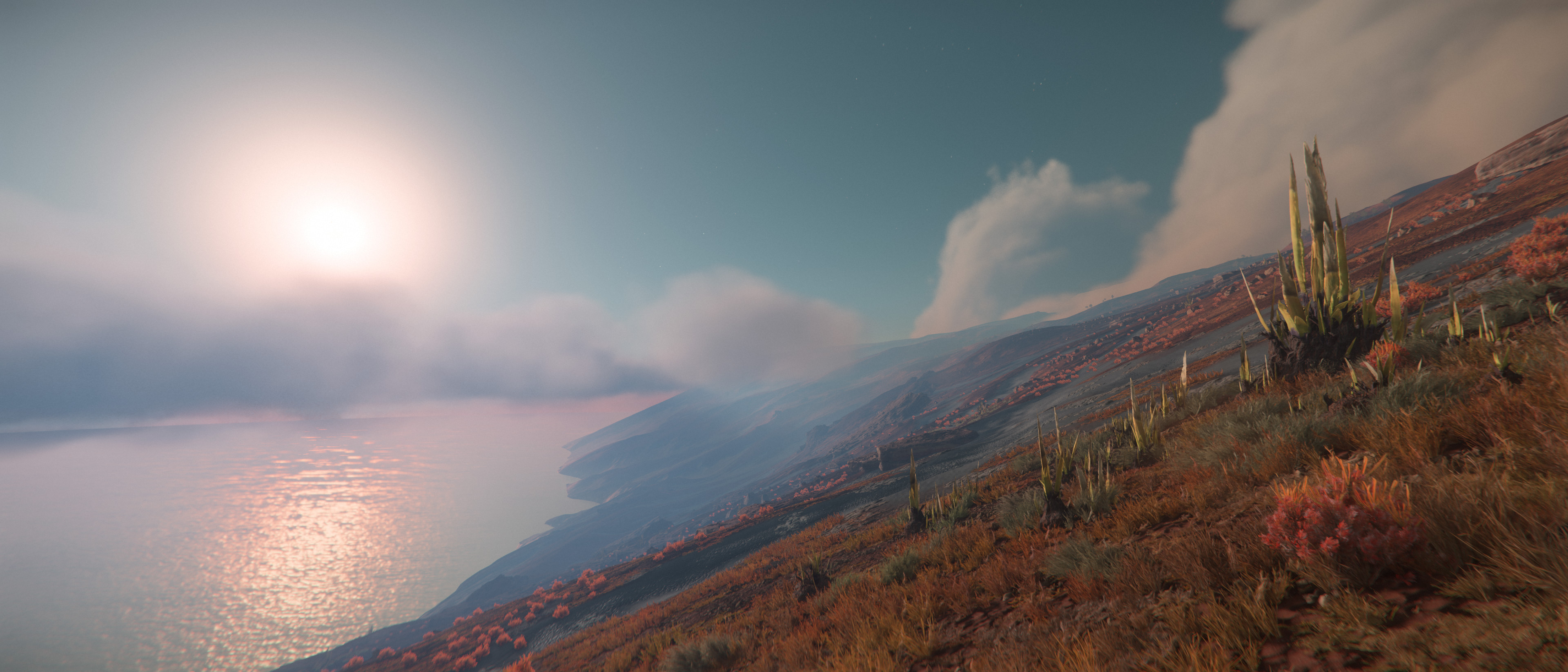
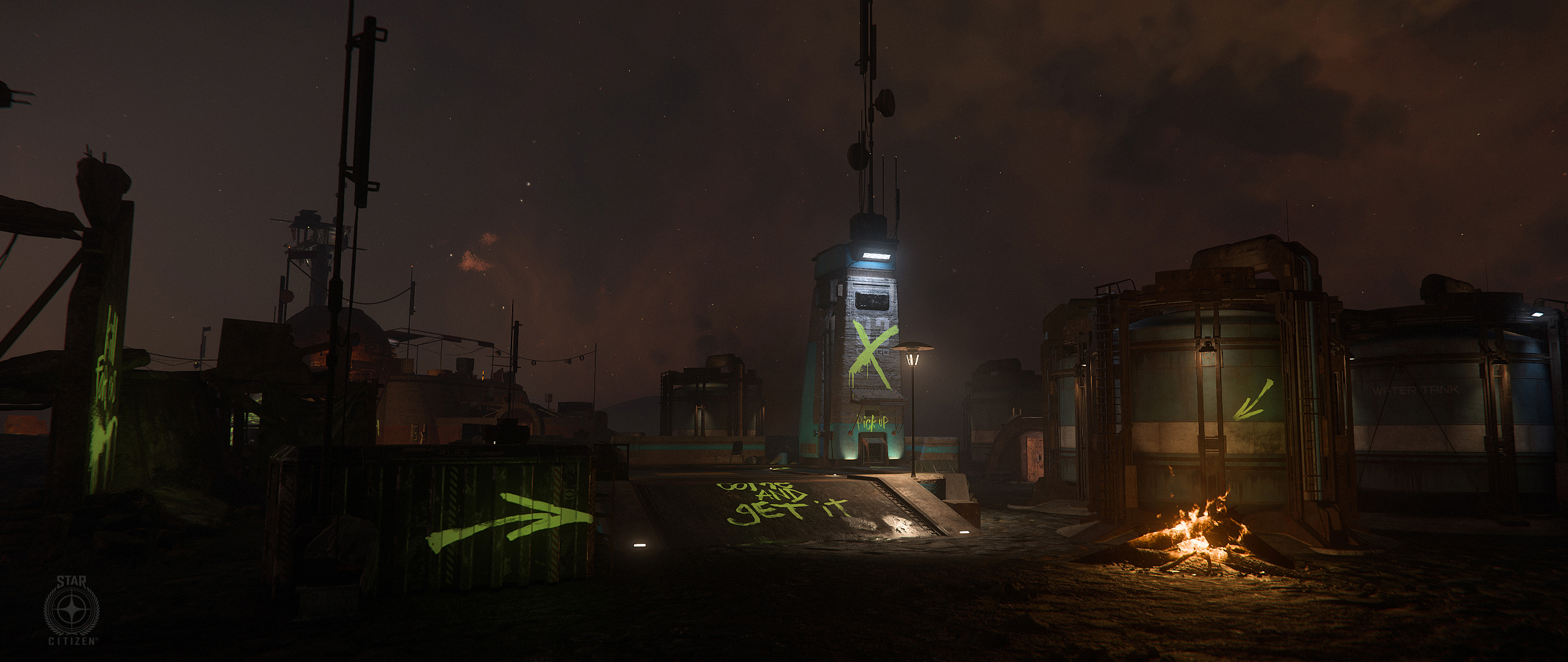
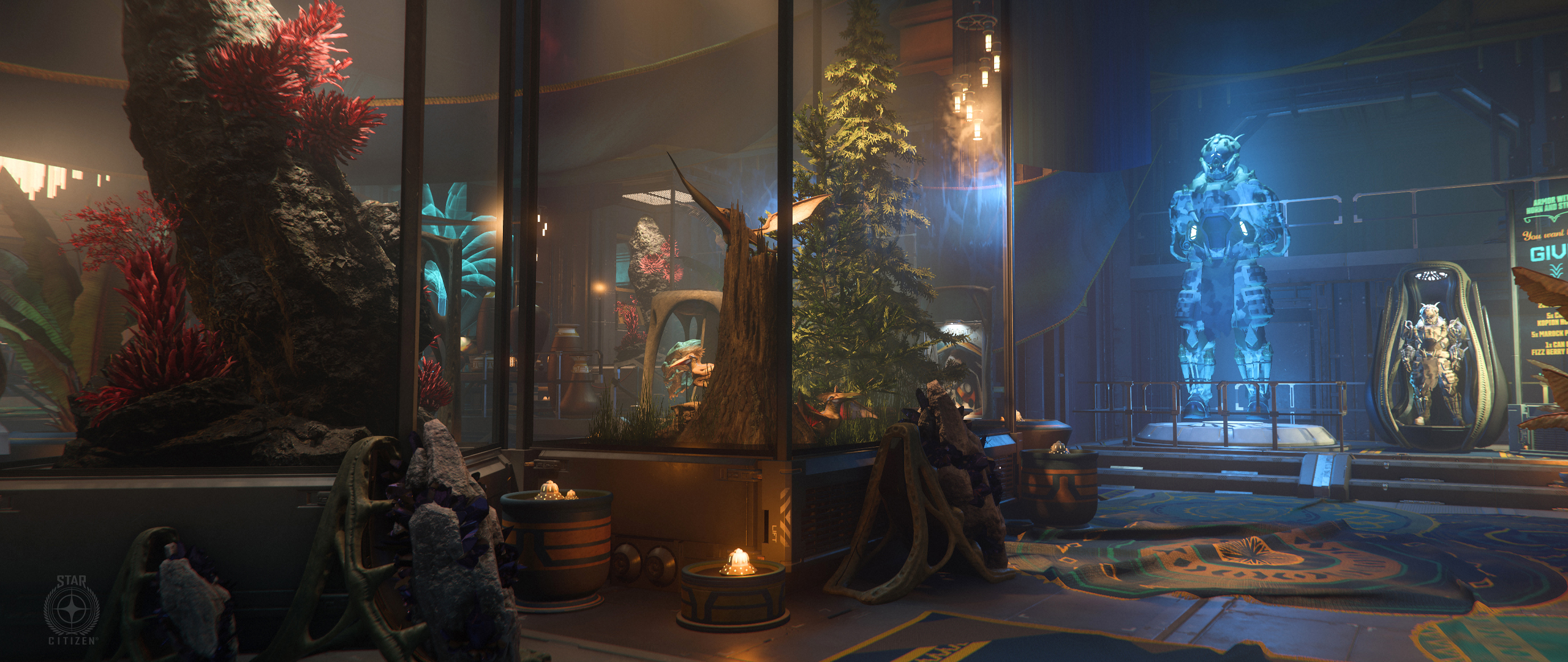
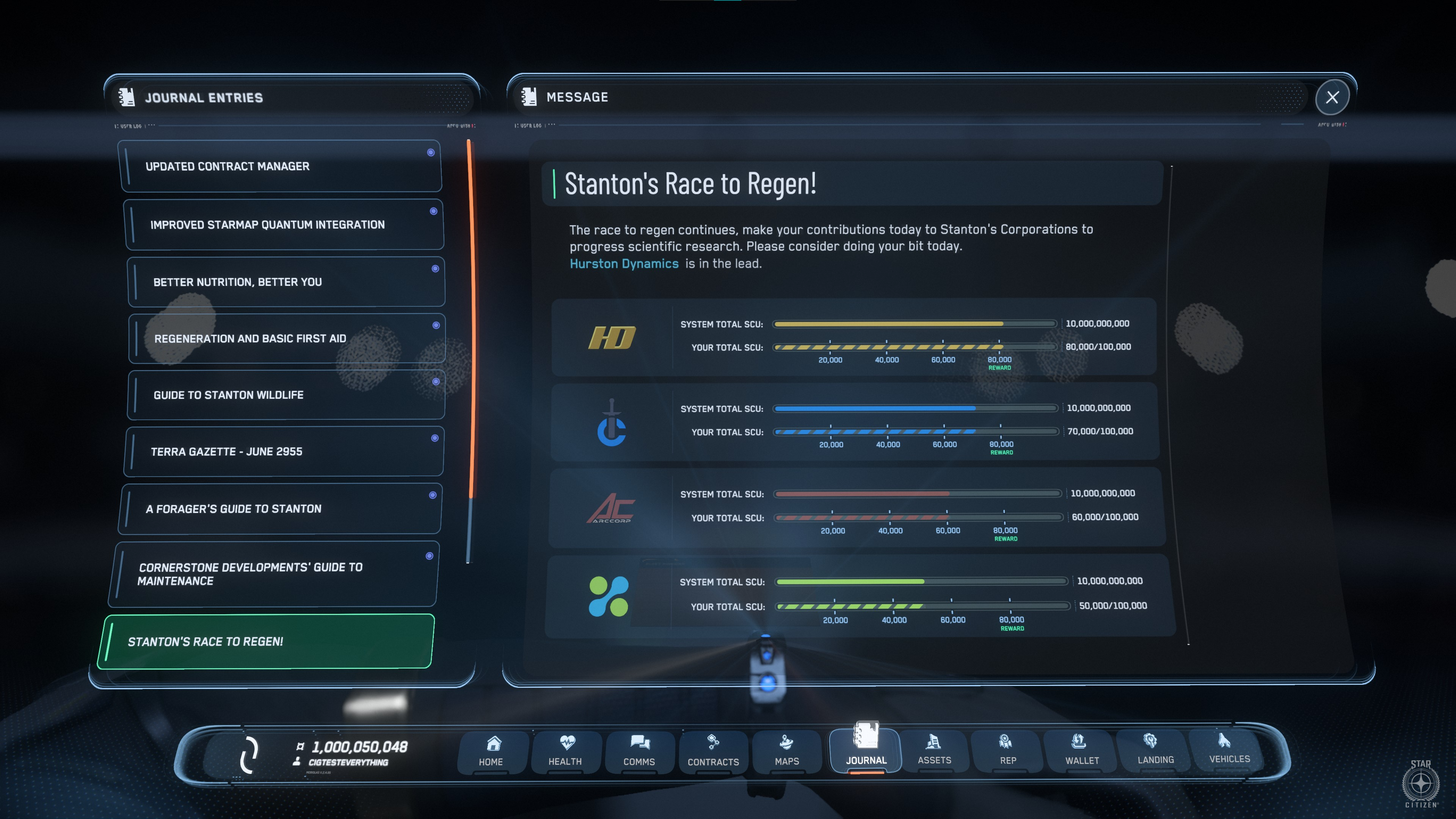
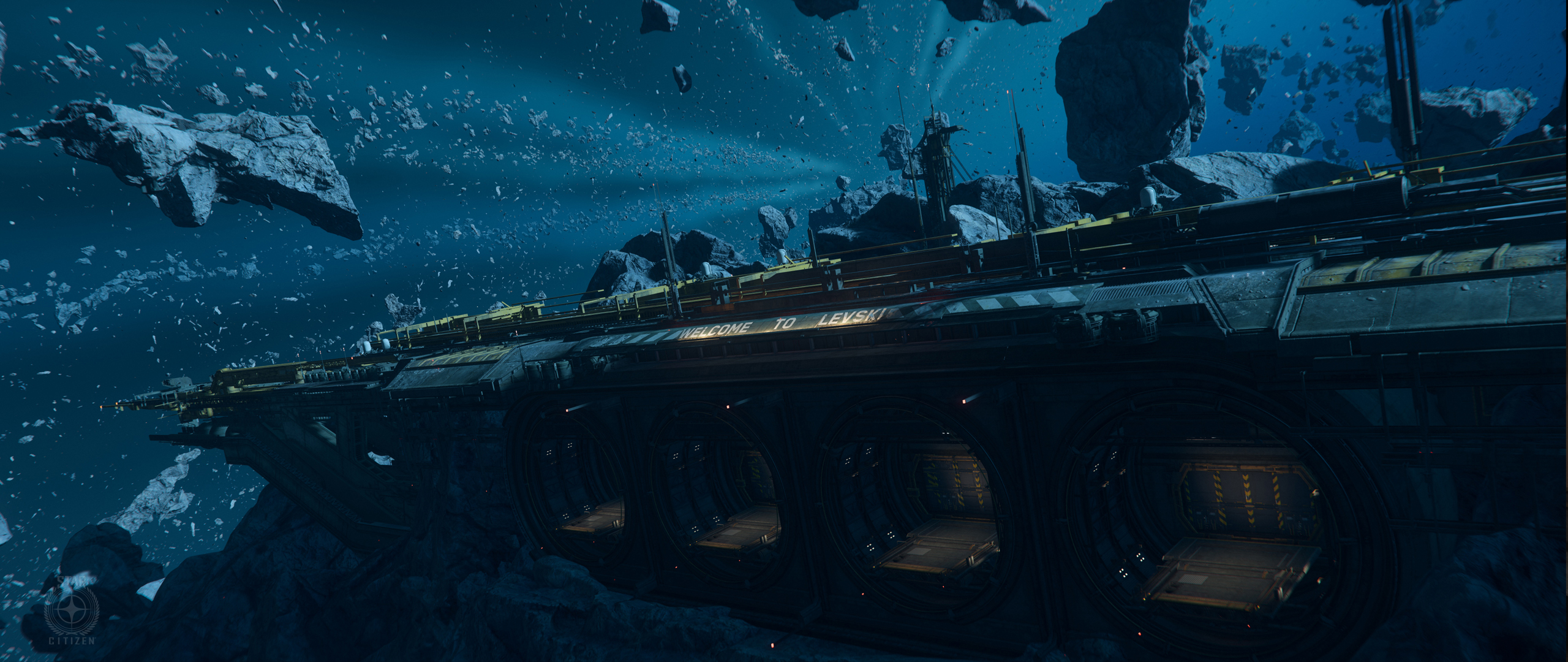
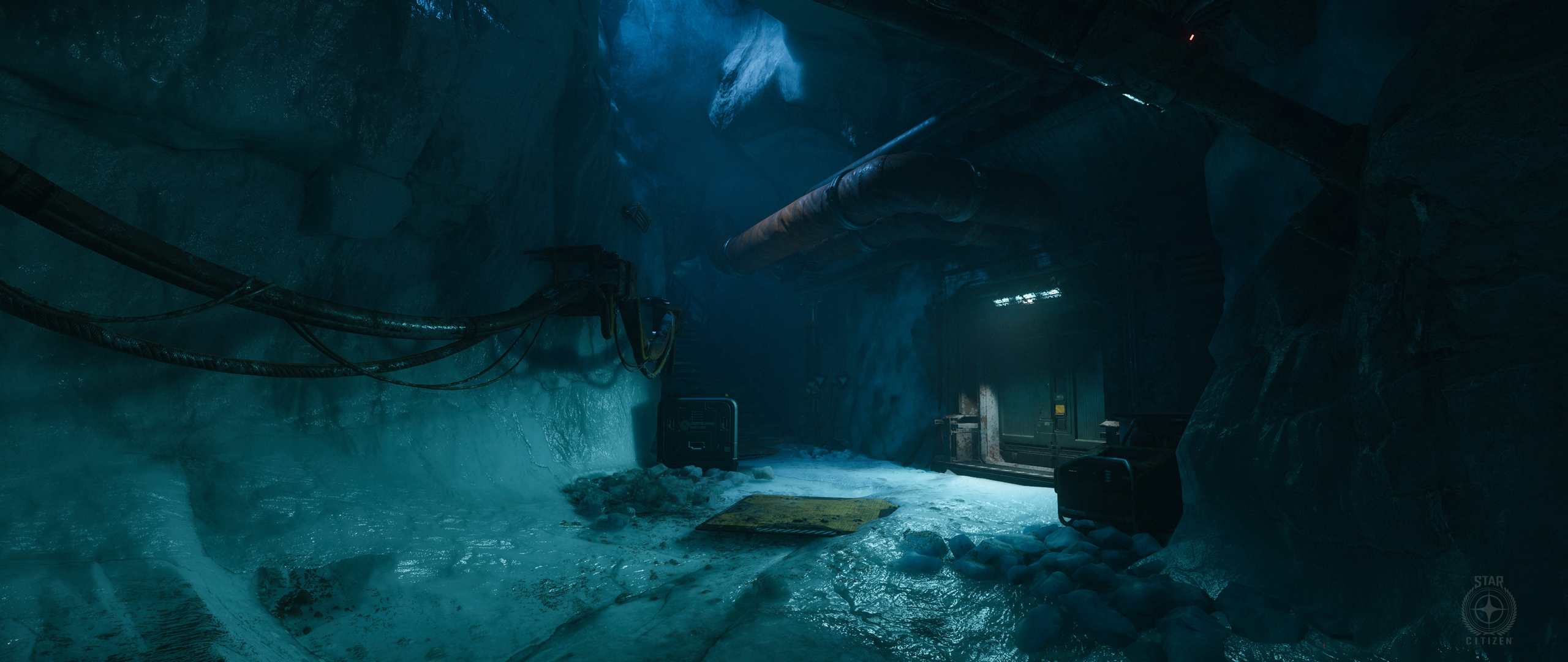
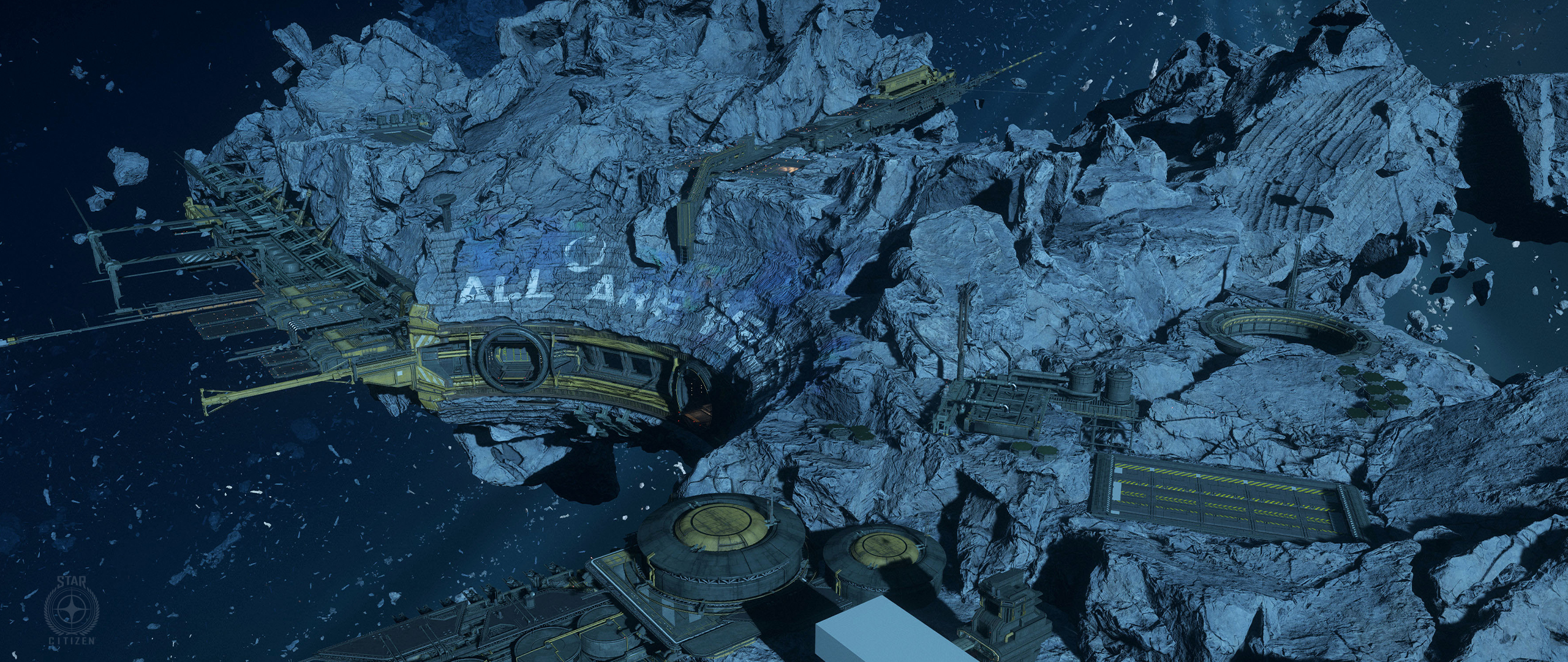
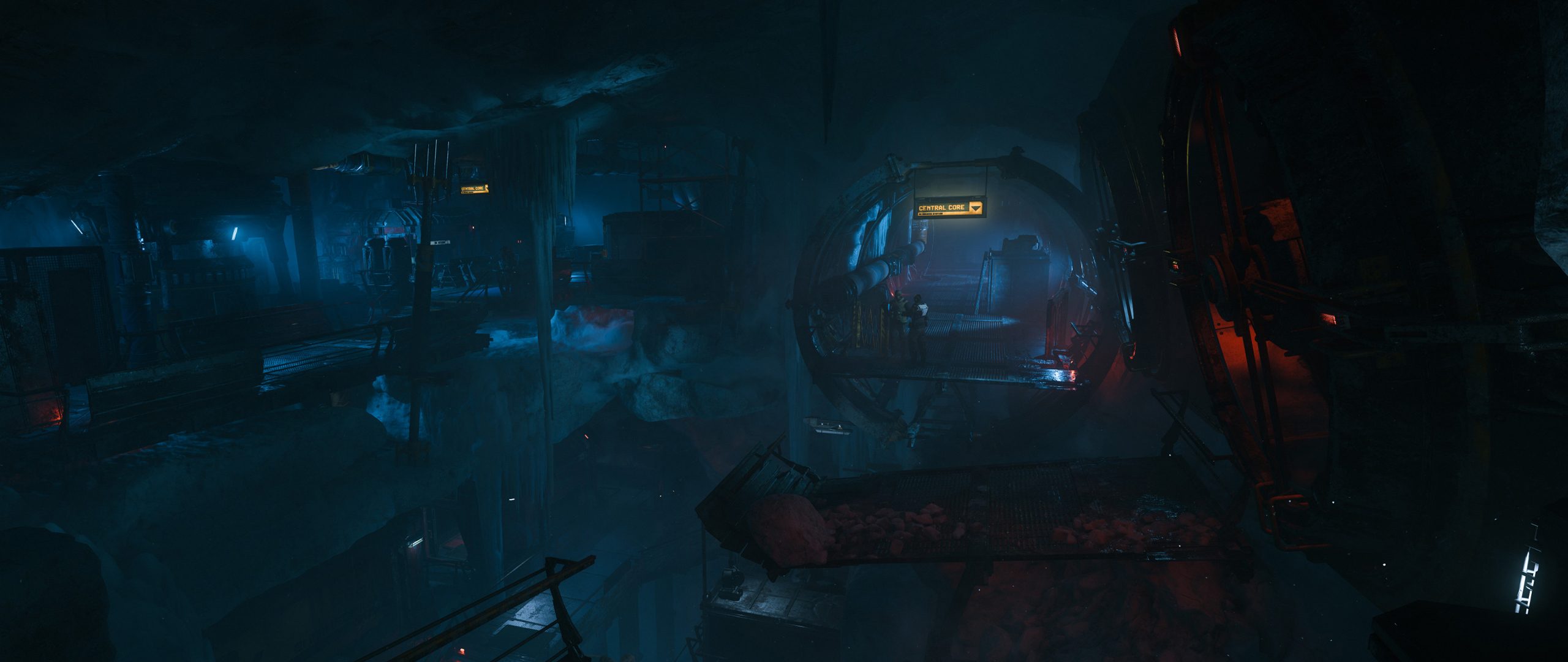
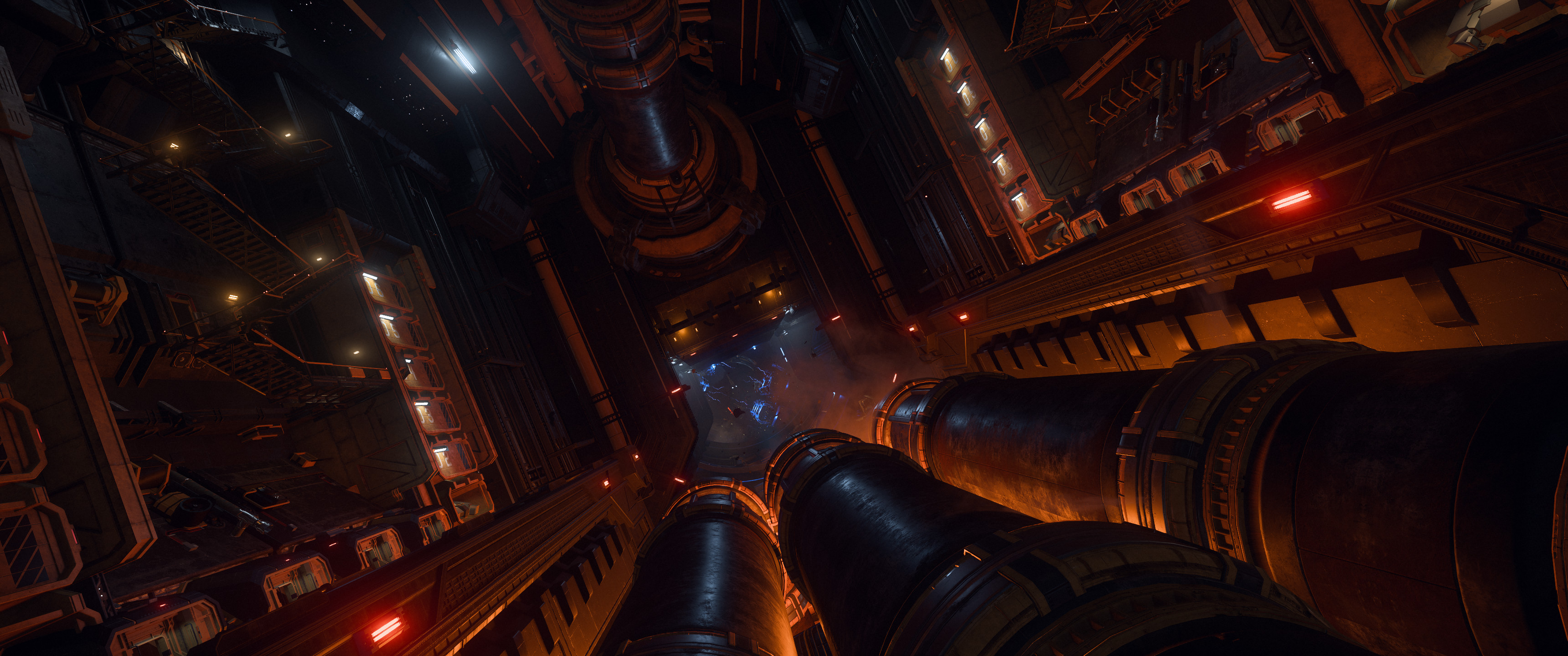
Metadata
- CIG ID
- 16999
- Channel
- Transmission
- Category
- Undefined
- Series
- Monthly Reports
- Comments
- 26
- Published
- 7 years ago (2019-03-14T00:00:00+00:00)